KitGuru KitGuru.net – Tech News | Hardware News | Hardware Reviews | IOS | Mobile | Gaming | Graphics Cards


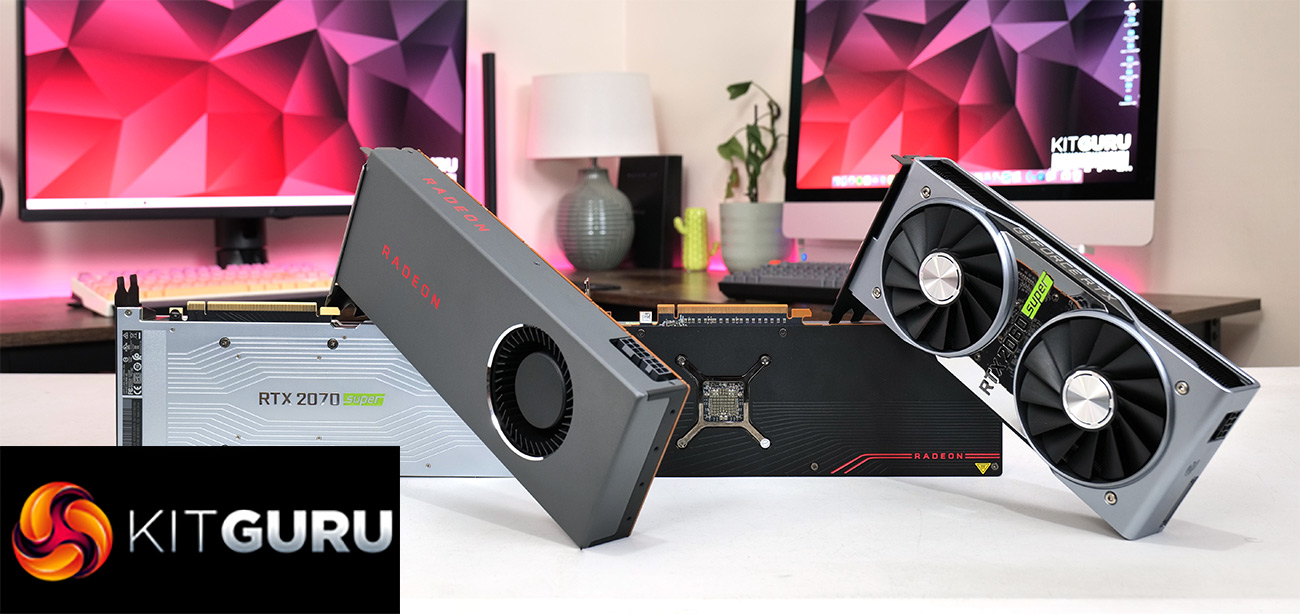
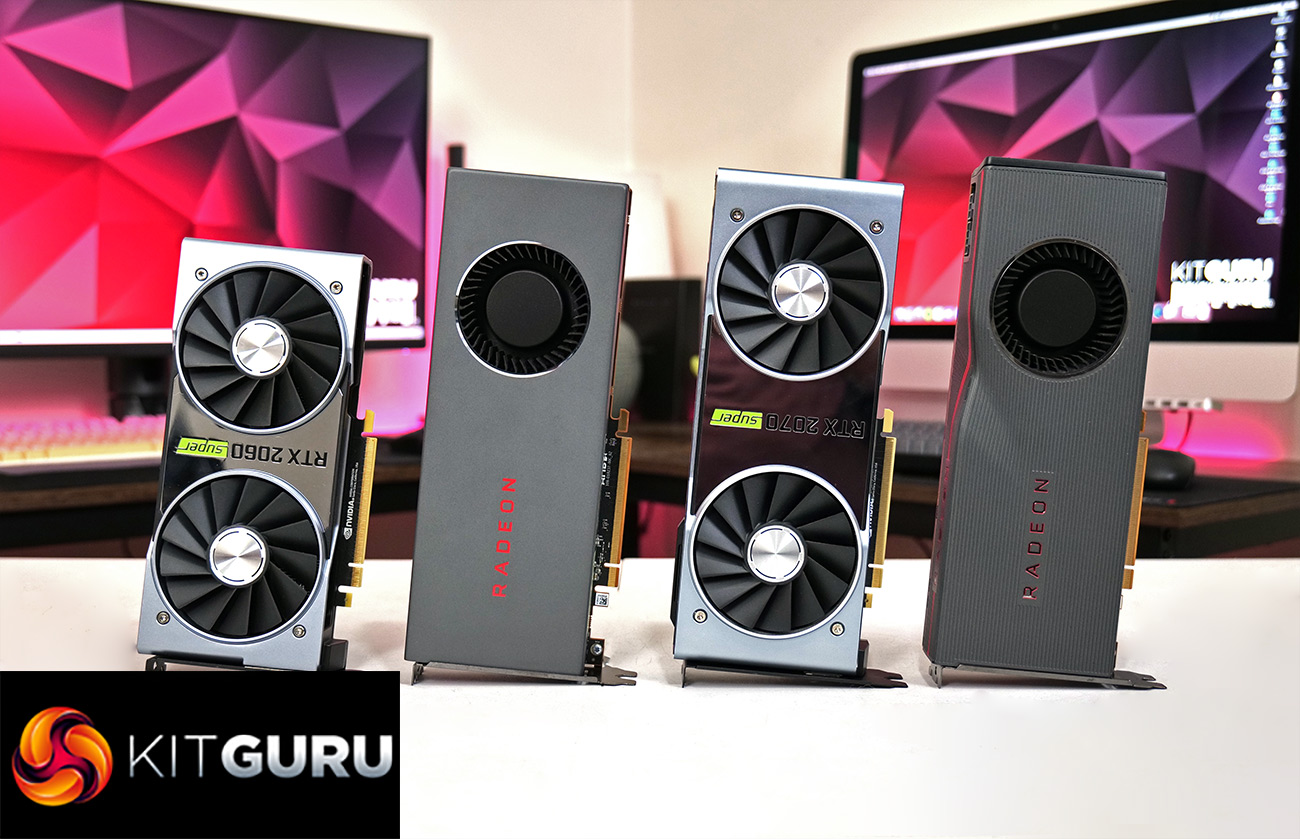
Today we are taking a step back in time to revisit the mid-2019 battle between AMD's RX 5700 and RX 5700 XT, and Nvidia's RTX 2060 Super and RTX 2070 Super. When AMD released its RX 5700-series GPUs, they debuted with the company's first new graphics architecture in years. The RTX Super series, however, was a mere refresh of the Turing line-up that had launched only months prior. We put all four GPUs head-to-head today, to see which cards have aged the best almost two and a half years on.
I was first inspired to do this testing after seeing a Reddit post asking which of the RX 5700 XT or RTX 2070 Super had aged the best. ‘That's a good question', I thought to myself, and began testing both GPUs across more than 25 modern games to find out the answer.
About halfway through this testing, I came to the realisation that comparing just those two cards wouldn't be telling the whole story. After all, the RTX 2070 Super launched at £475, compared to the £379 MSRP of the RX 5700 XT, and even though we saw very competitive performance from Team Red back in our launch day review, the RX 5700 XT was never really positioned to go head-to-head with the RTX 2070 Super.
It still made sense to keep the RTX 2070 Super as part of the testing, but we also decided to include the RTX 2060 Super, itself arriving with a £379 MSRP as well. And at that point, we figured we may as well go all in and add the RX 5700 to the comparison as well. All four GPUs were launched within days of each other in July 2019, so it's only right that we brought them all back for this testing today.
So, to find out exactly how all four of these GPUs perform today, across a total of 27 games, over 20 game engines and three different APIs – please read on! I do also want to make it clear that we are testing both 1080p and 1440p resolutions, but not 4K. While some games will be playable at 4K with these graphics cards, the majority won't, and these cards were never intended to be 4K gaming GPUs to begin with. Adding in 4K resolution testing, then, would have taken significantly more time, while only being of limited practical use.
Driver Notes
- AMD GPUs were benchmarked with the 21.12.1 driver.
- Nvidia GPUs were benchmarked with the 497.09 driver.
Test System
We test using a custom built system from PCSpecialist, based on Intel’s Comet Lake-S platform. You can read more about it over HERE, and configure your own system from PCSpecialist HERE.
| CPU |
Intel Core i9-10900K
Overclocked to 5.1GHz on all cores |
| Motherboard |
ASUS ROG Maximus XII Hero Wi-Fi
|
| Memory |
Corsair Vengeance DDR4 3600MHz (4 X 8GB)
CL 18-22-22-42
|
| Graphics Card |
Varies
|
| System Drive |
500GB Samsung 970 Evo Plus M.2
|
| Games Drive | 2TB Samsung 860 QVO 2.5″ SSD |
| Chassis | Fractal Meshify S2 Blackout Tempered Glass |
| CPU Cooler |
Corsair H115i RGB Platinum Hydro Series
|
| Power Supply |
Corsair 1200W HX Series Modular 80 Plus Platinum
|
| Operating System |
Windows 10 21H2
|
Game list:
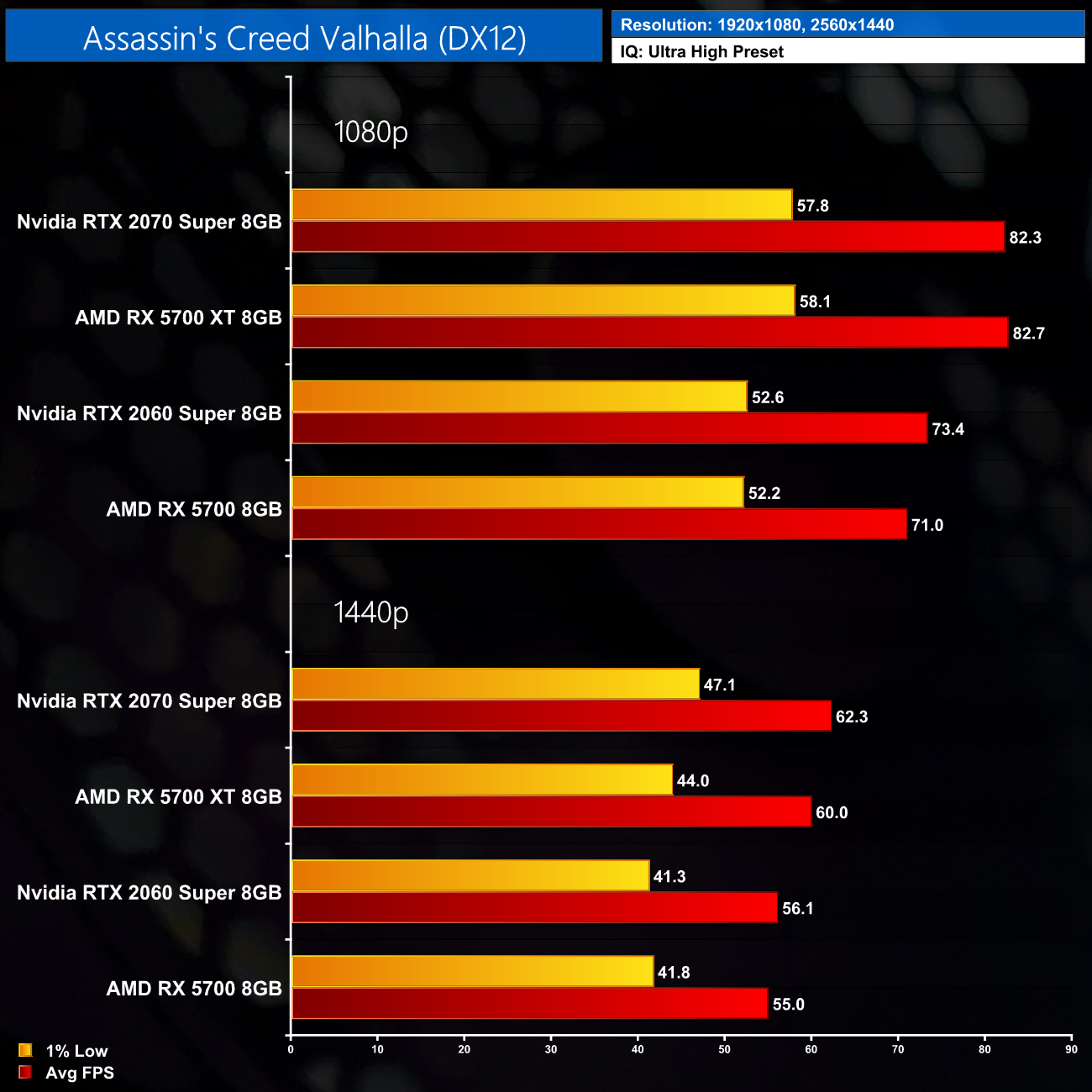
- Assassin's Creed Valhalla (DX12)
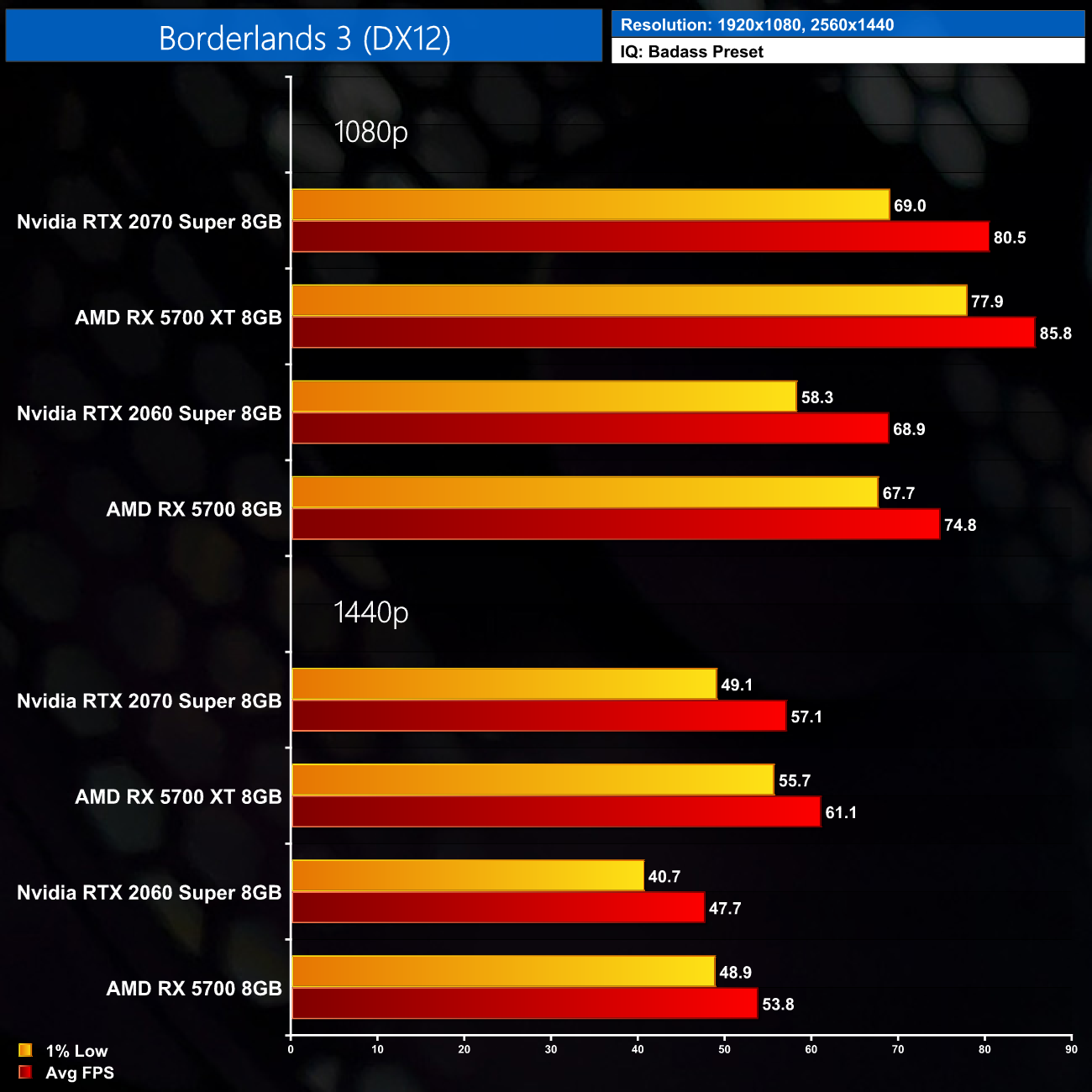
- Borderlands 3 (DX12)
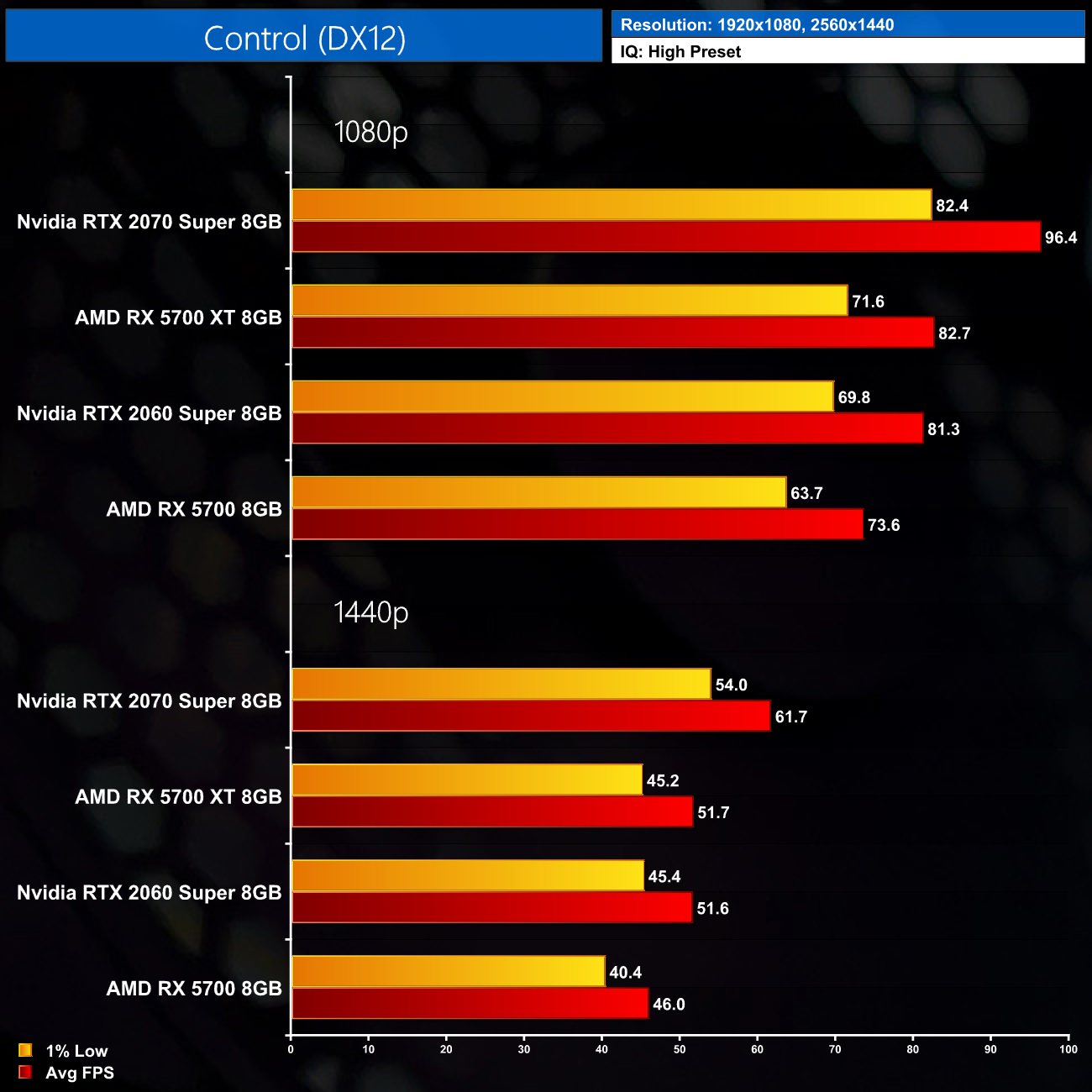
- Control (DX12)
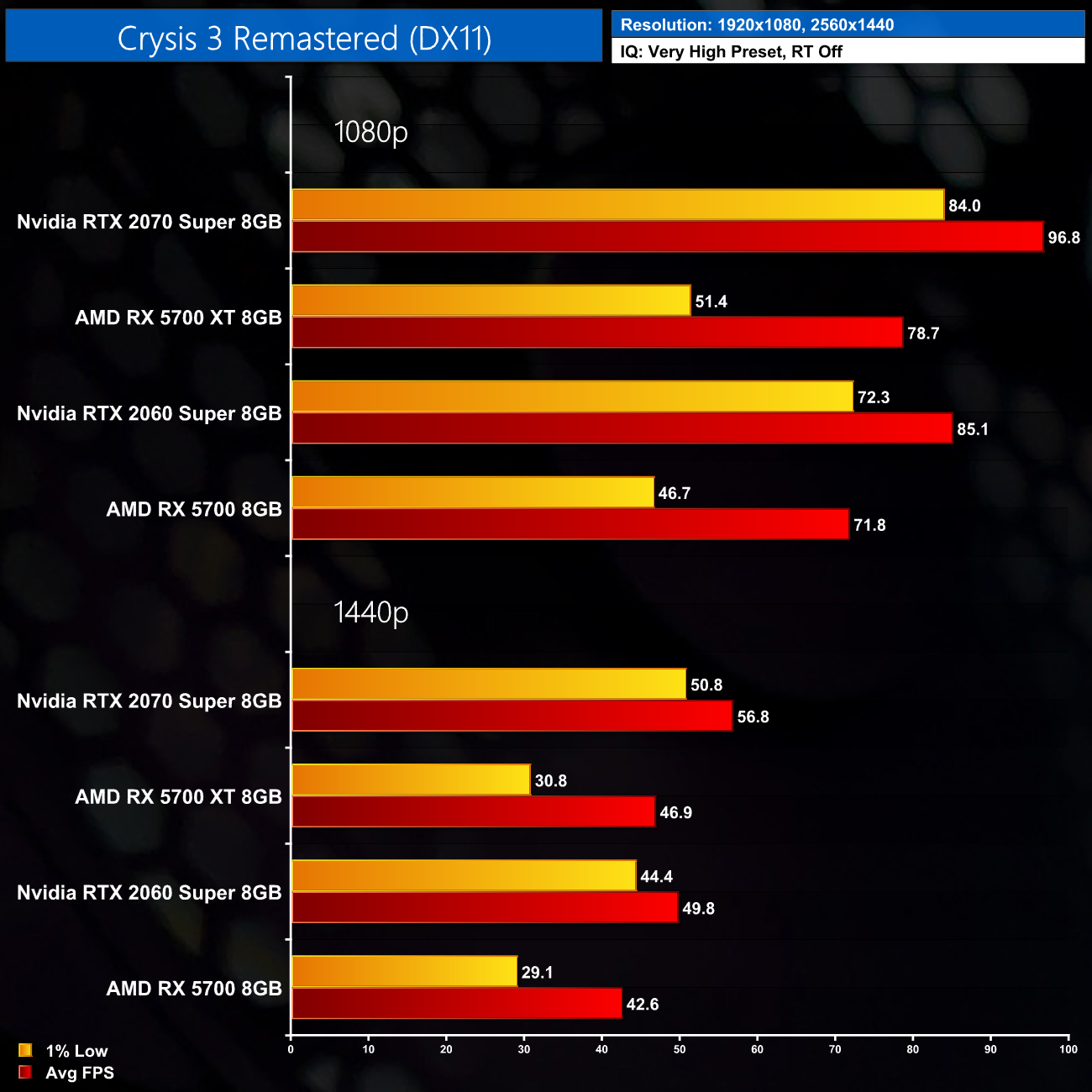
- Crysis 3 Remastered (DX11)
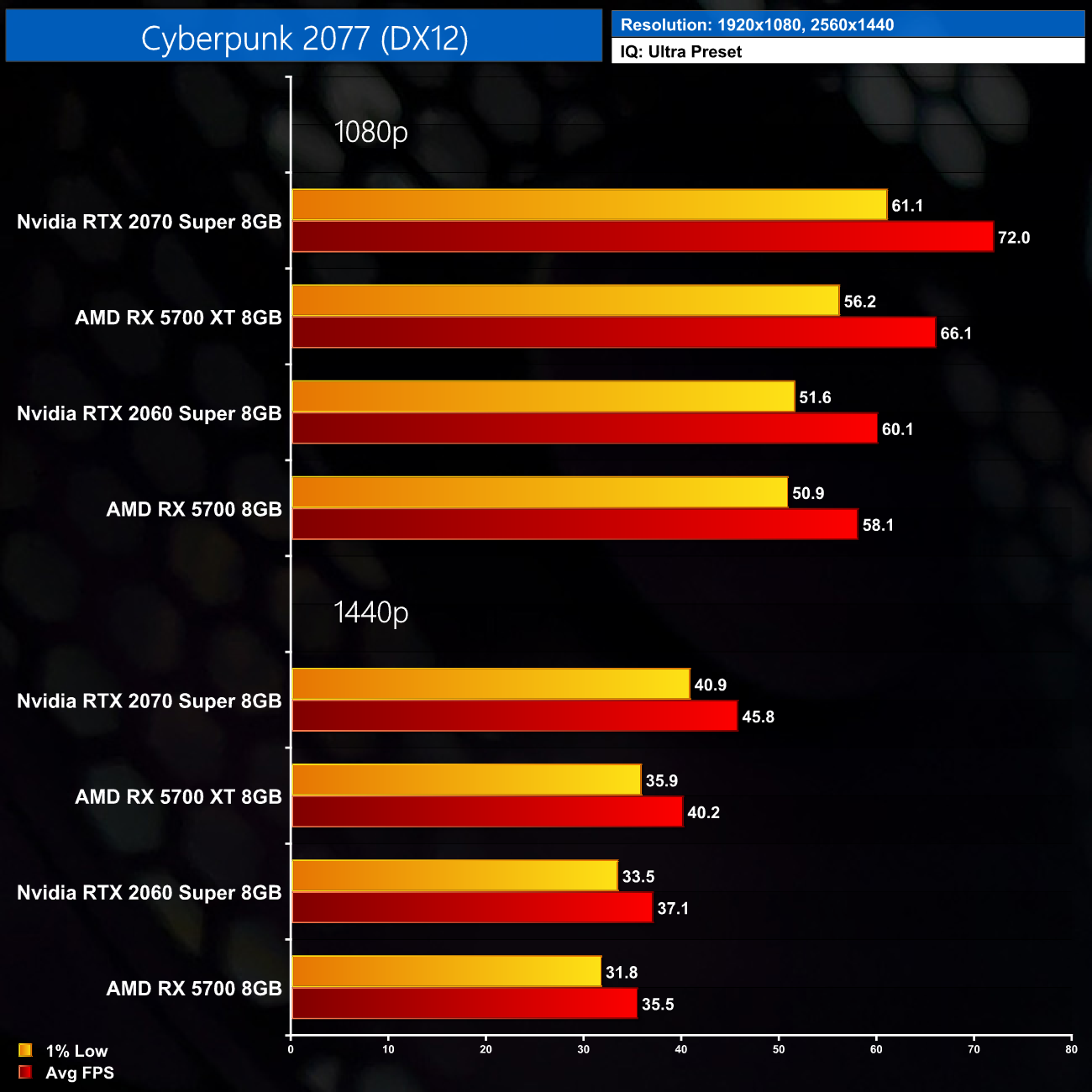
- Cyberpunk 2077 (DX12)
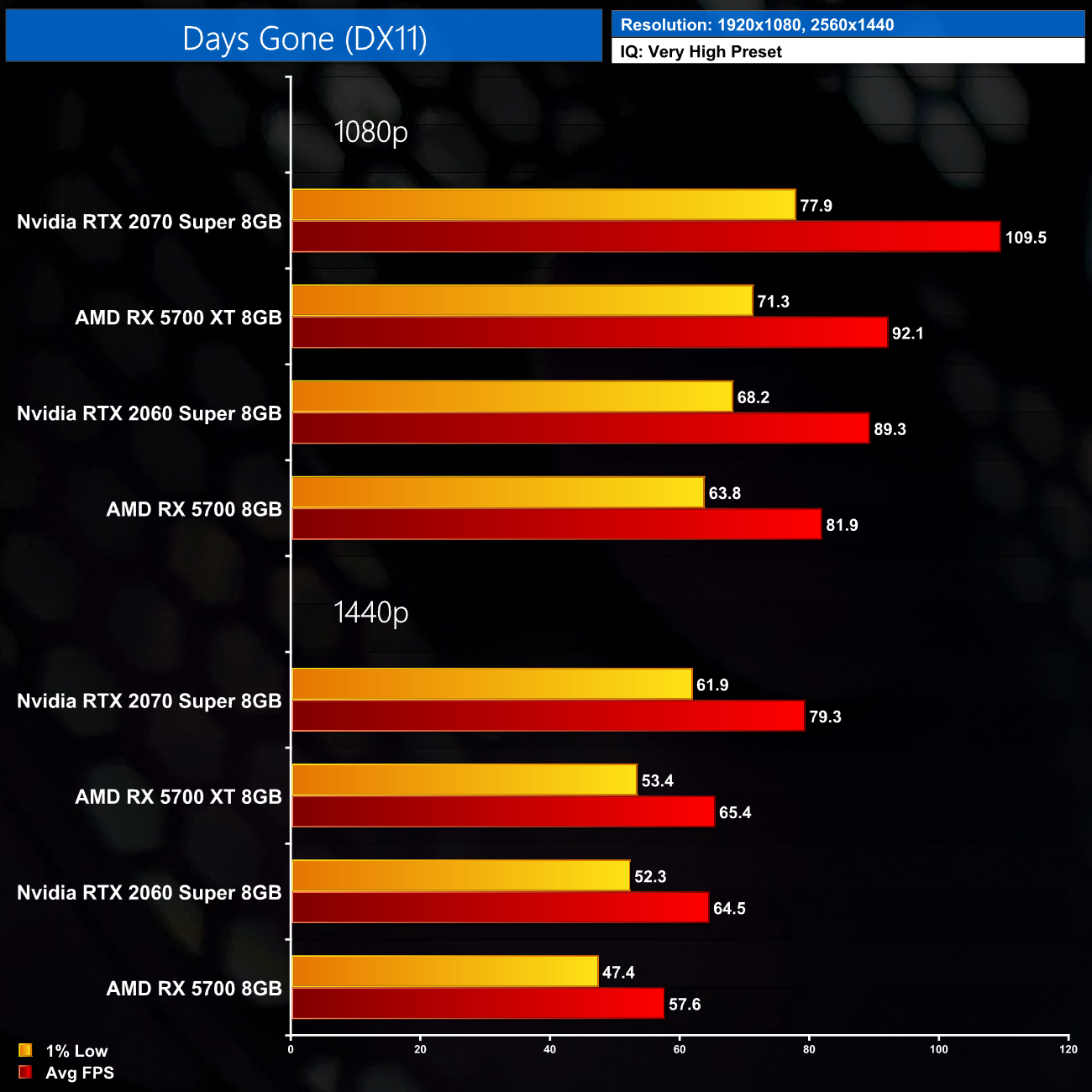
- Days Gone (DX11)
- Death Stranding (DX12)
- Deathloop (DX12)
- Dirt 5 (DX12)
- The Division 2 (DX12)
- Doom Eternal (Vulkan)
- F1 2021 (DX12)
- Far Cry 6 (DX12)
- Forza Horizon 5 (DX12)
- Gears 5 (DX12)
- Hitman 3 (DX12)
- Horizon Zero Dawn (DX12)
- Kena: Bridge of Spirits (DX12)
- Marvel's Guardians of the Galaxy (DX12)
- Metro Exodus (DX12)
- Red Dead Redemption 2 (Vulkan)
- Resident Evil Village (DX12)
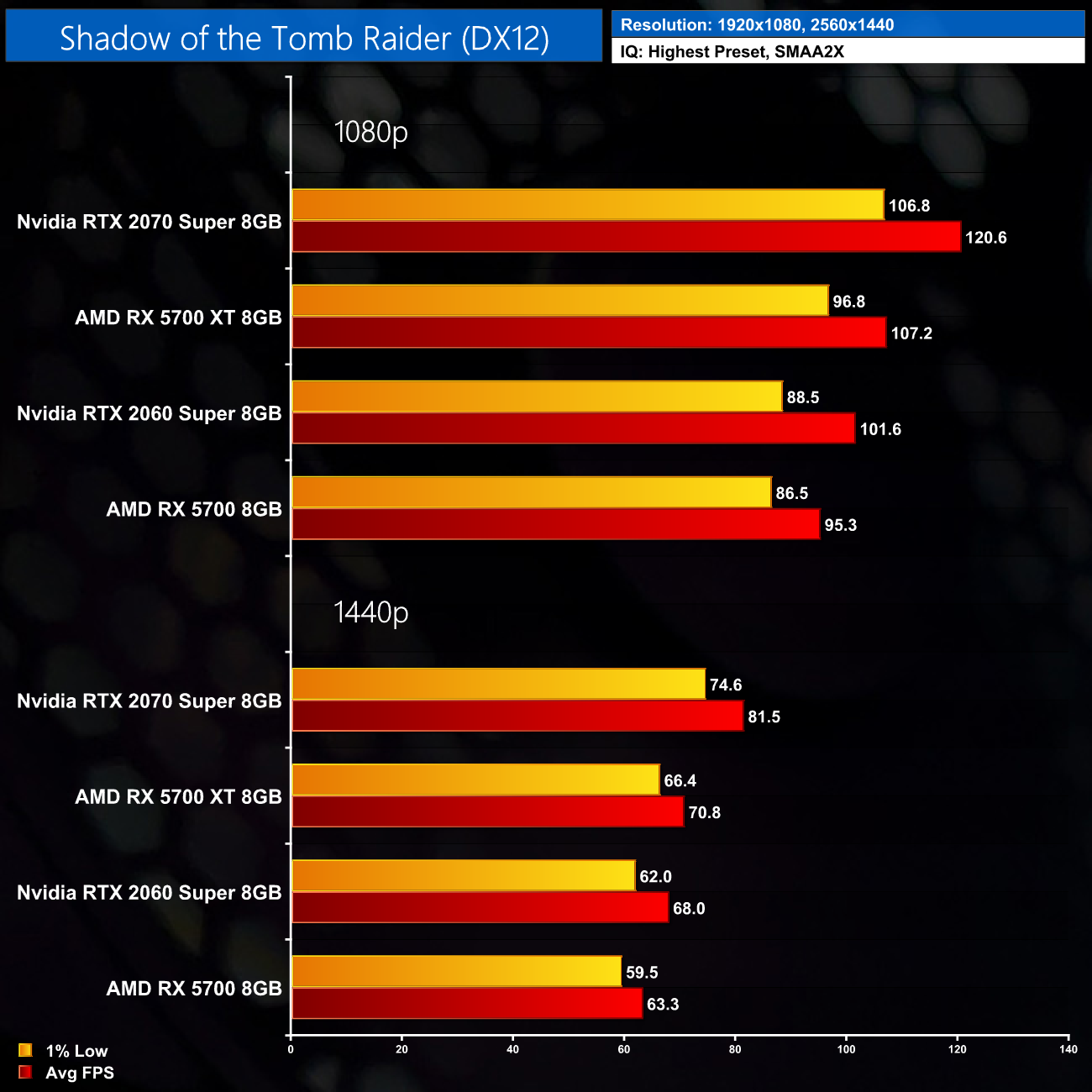
- Shadow of the Tomb Raider (DX12)
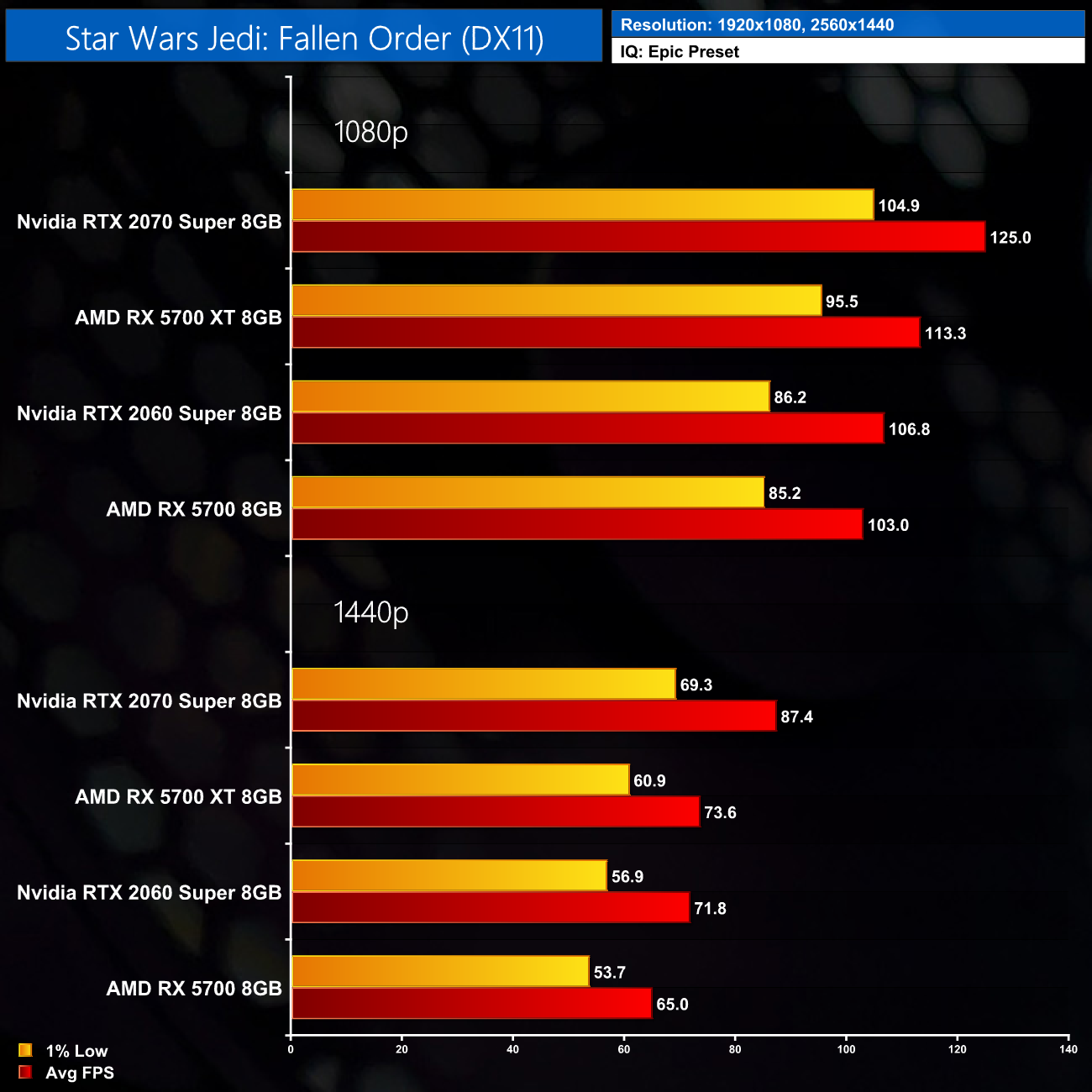
- Star Wars Jedi: Fallen Order (DX11)
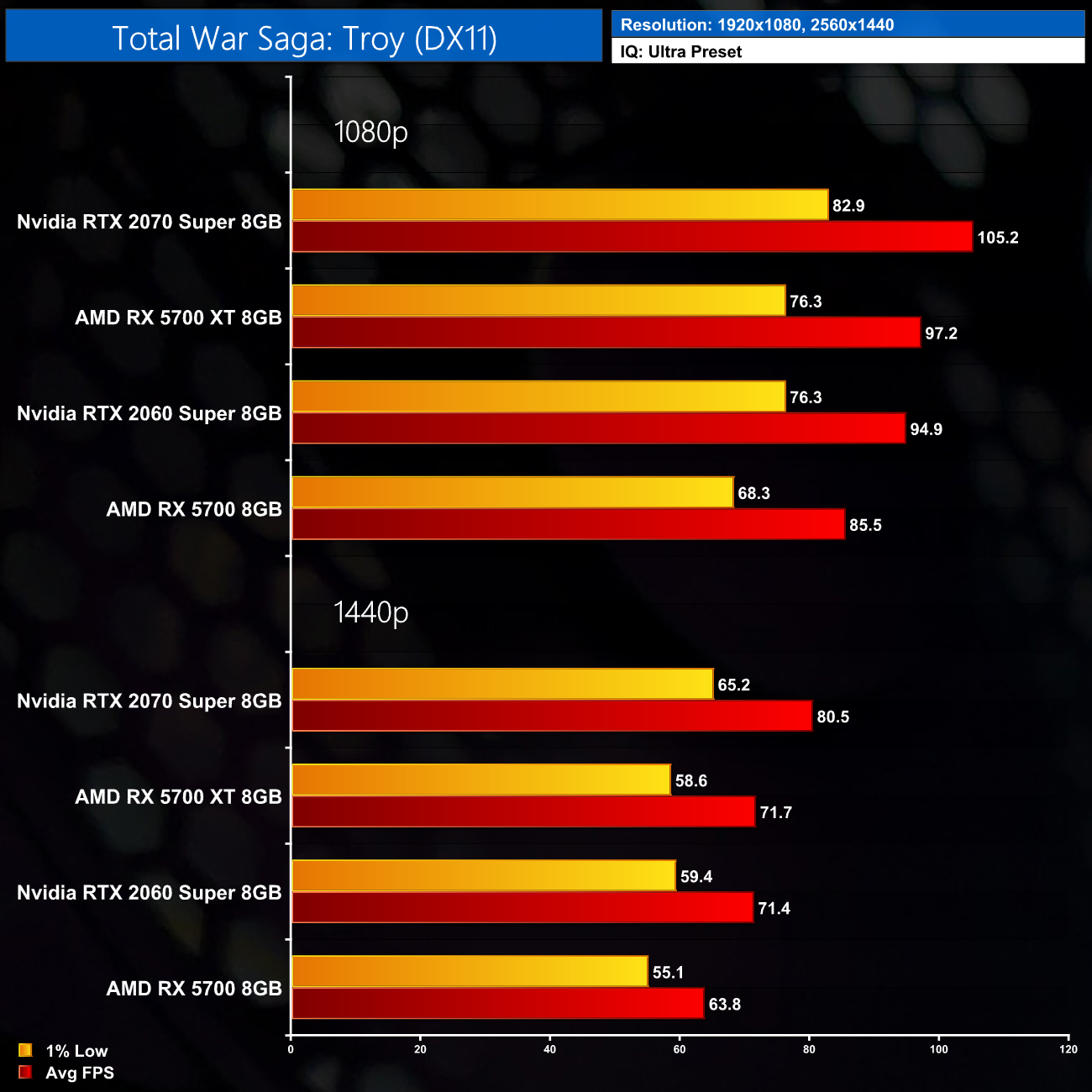
- Total War Saga: Troy (DX11)
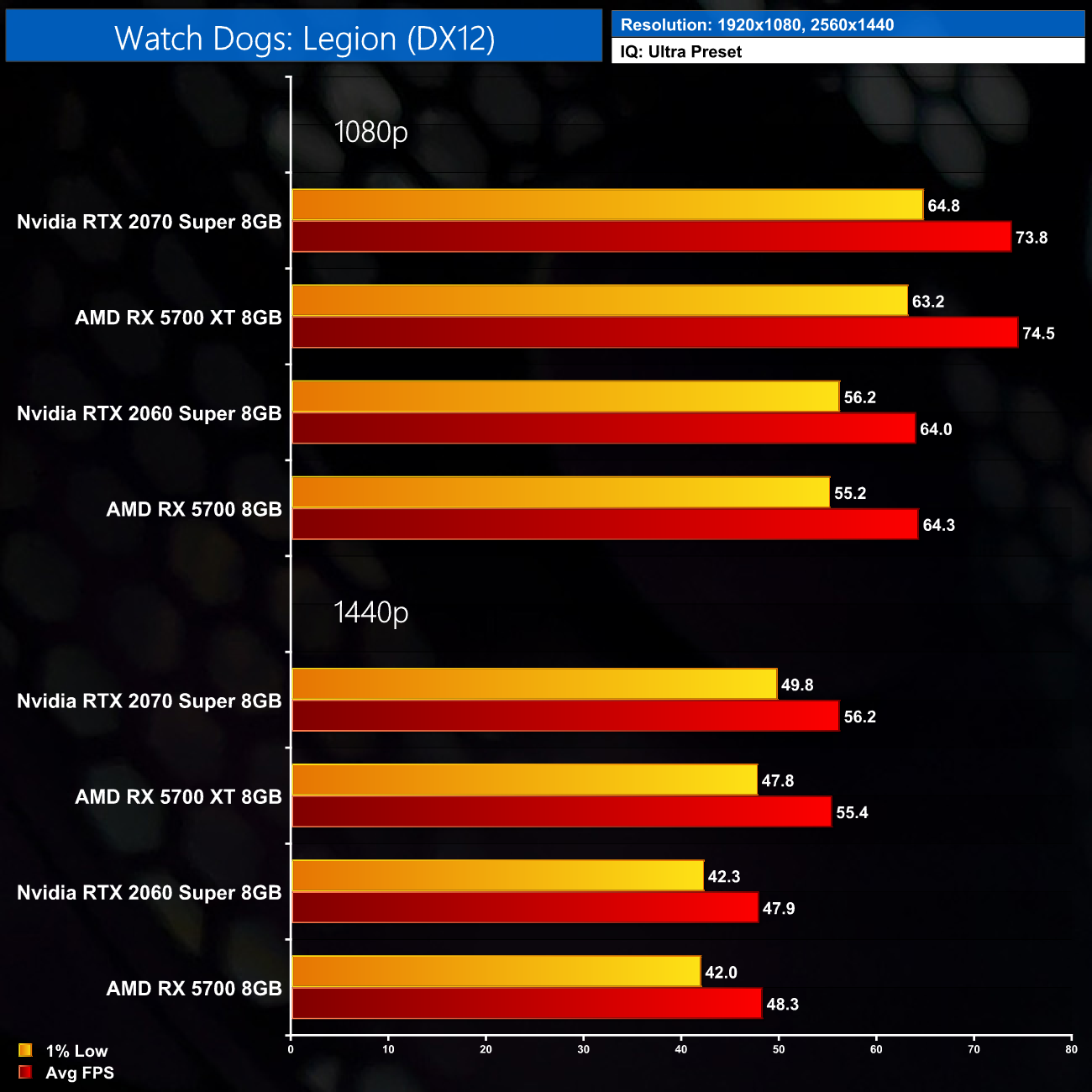
- Watch Dogs: Legion (DX12)
- Wolfenstein Youngblood (Vulkan)
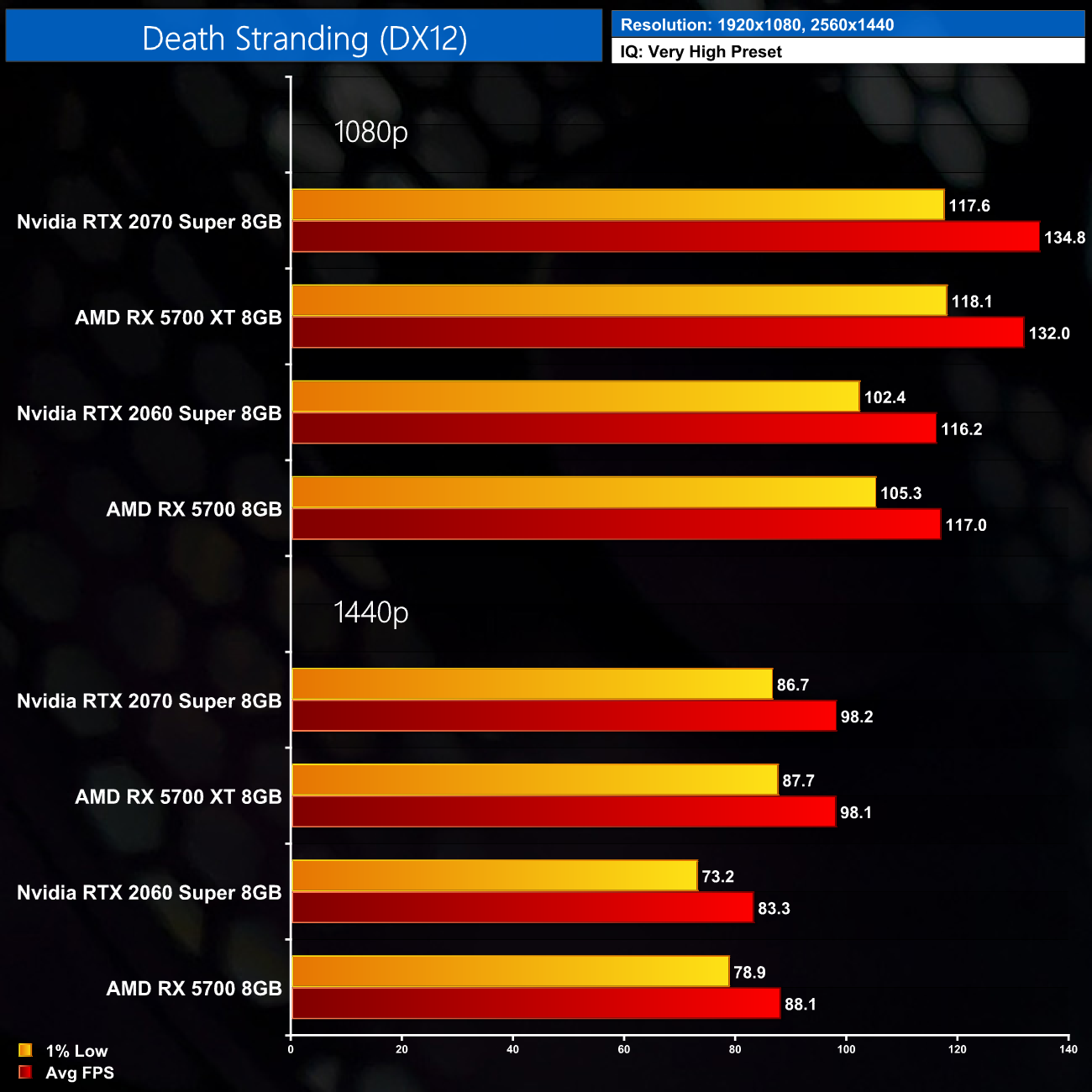
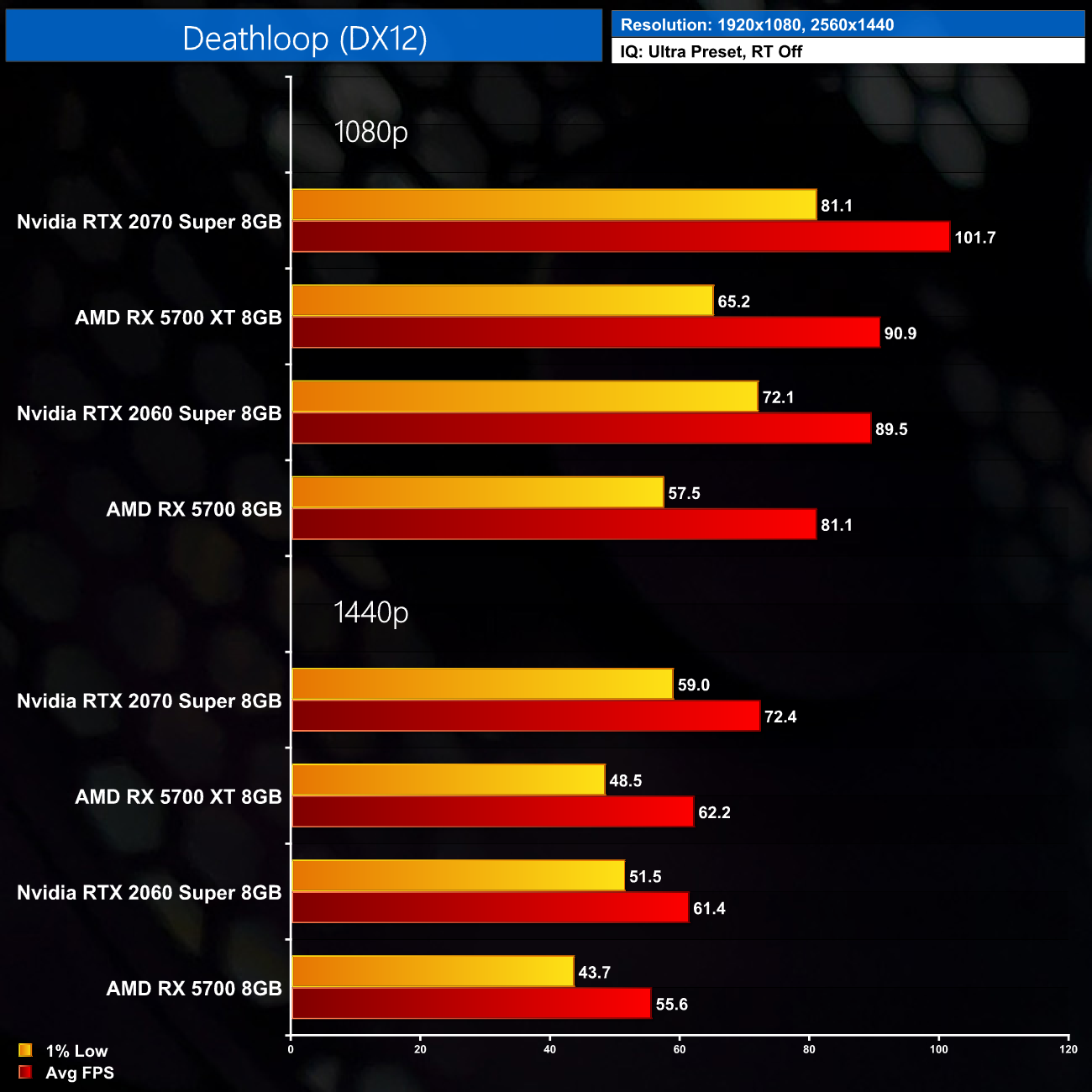
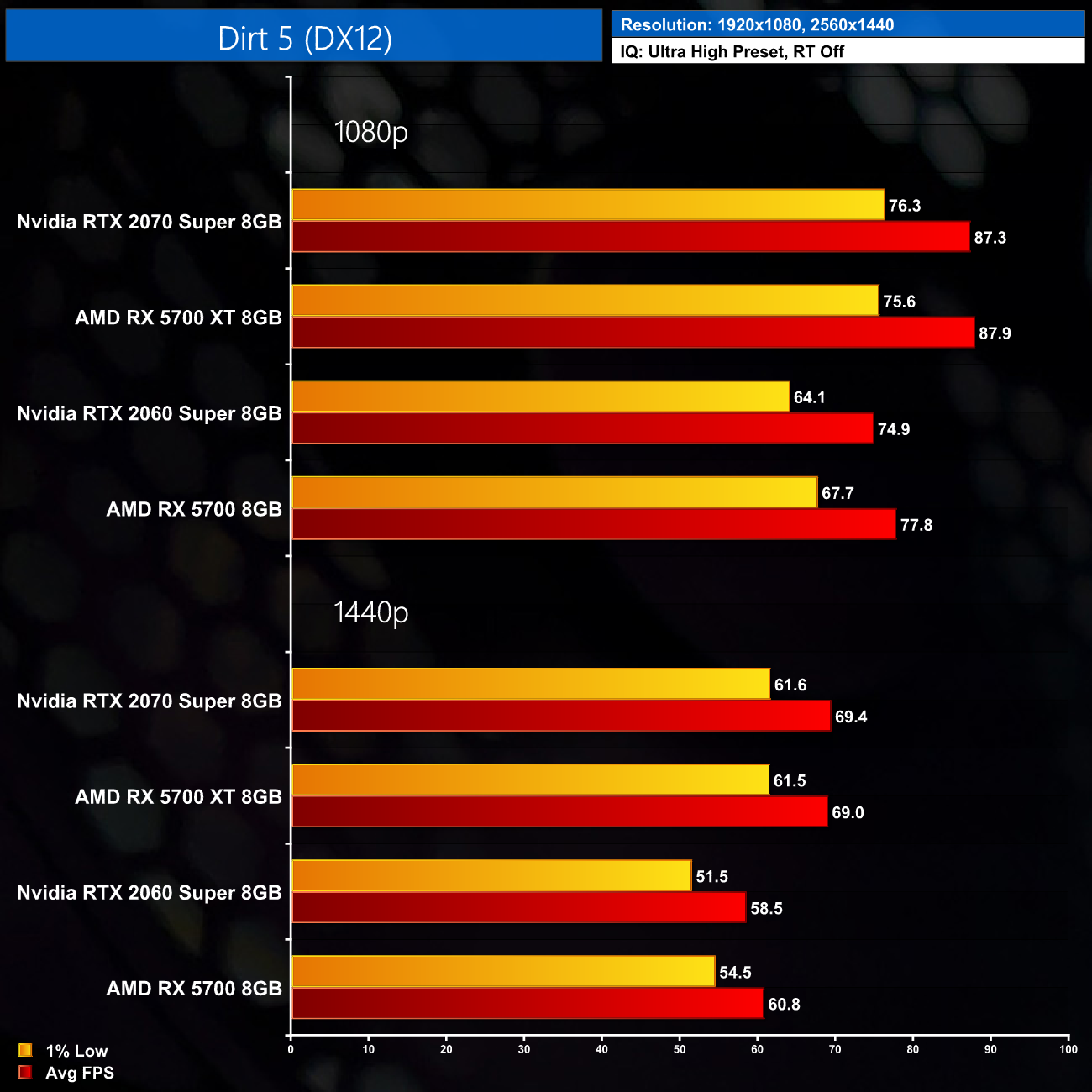
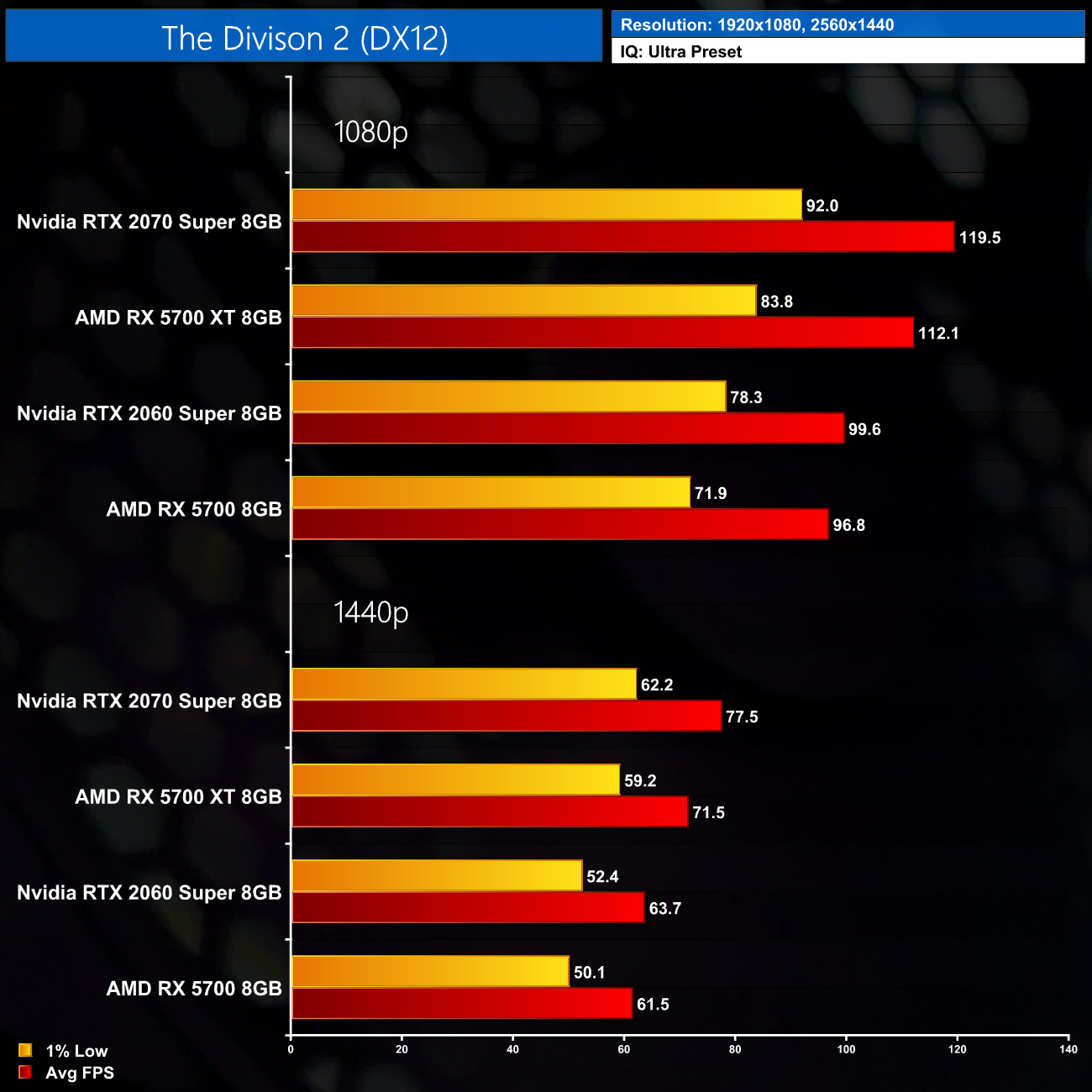
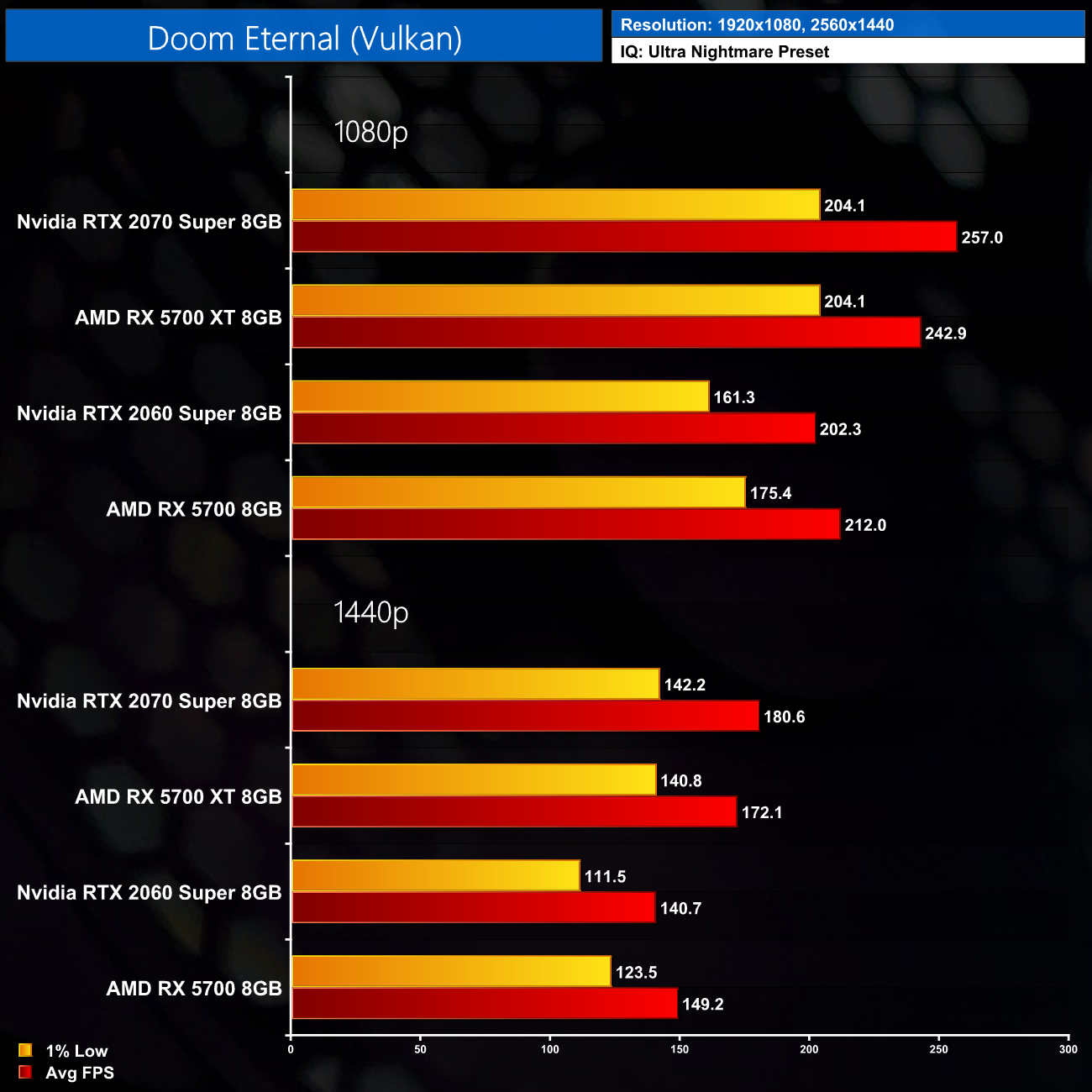
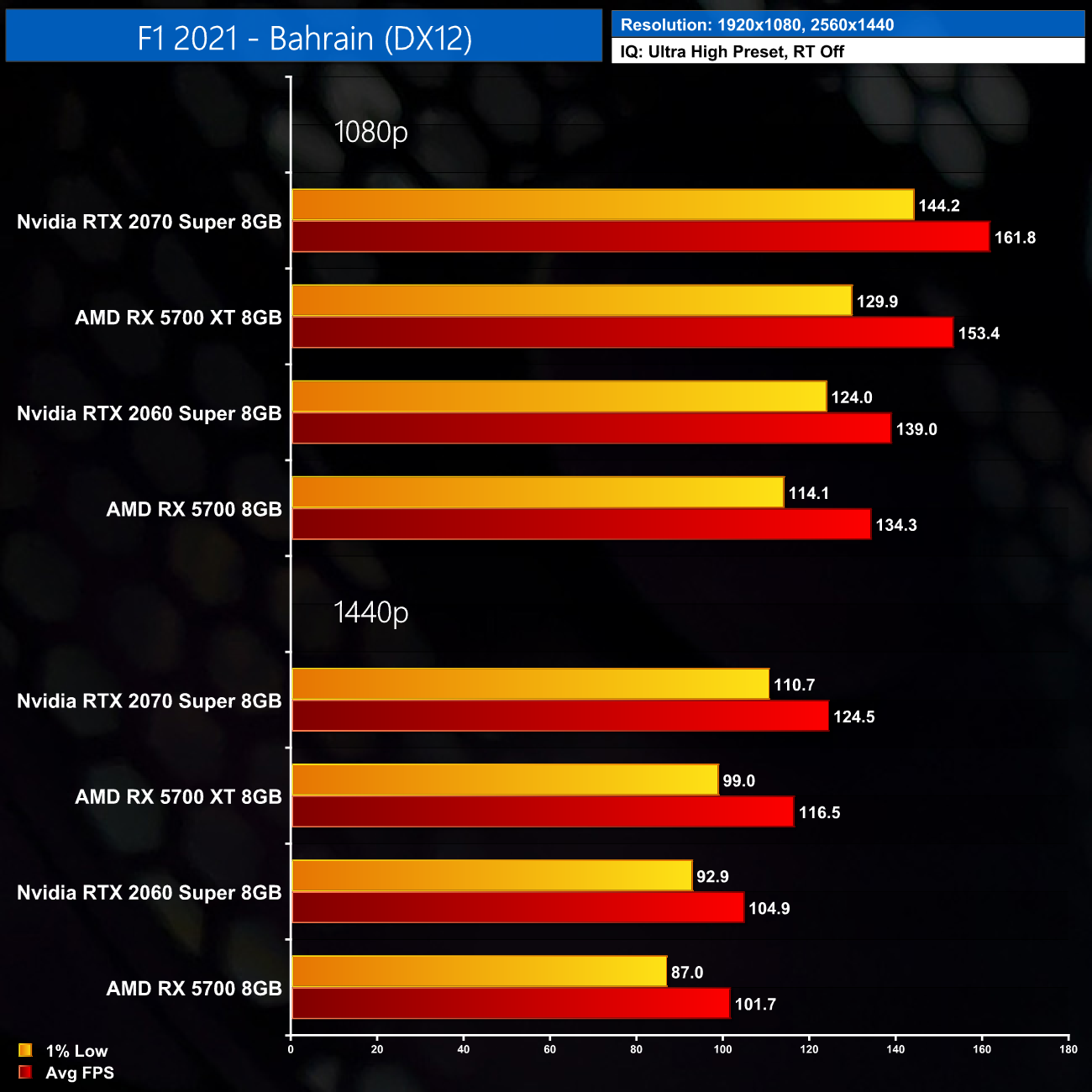
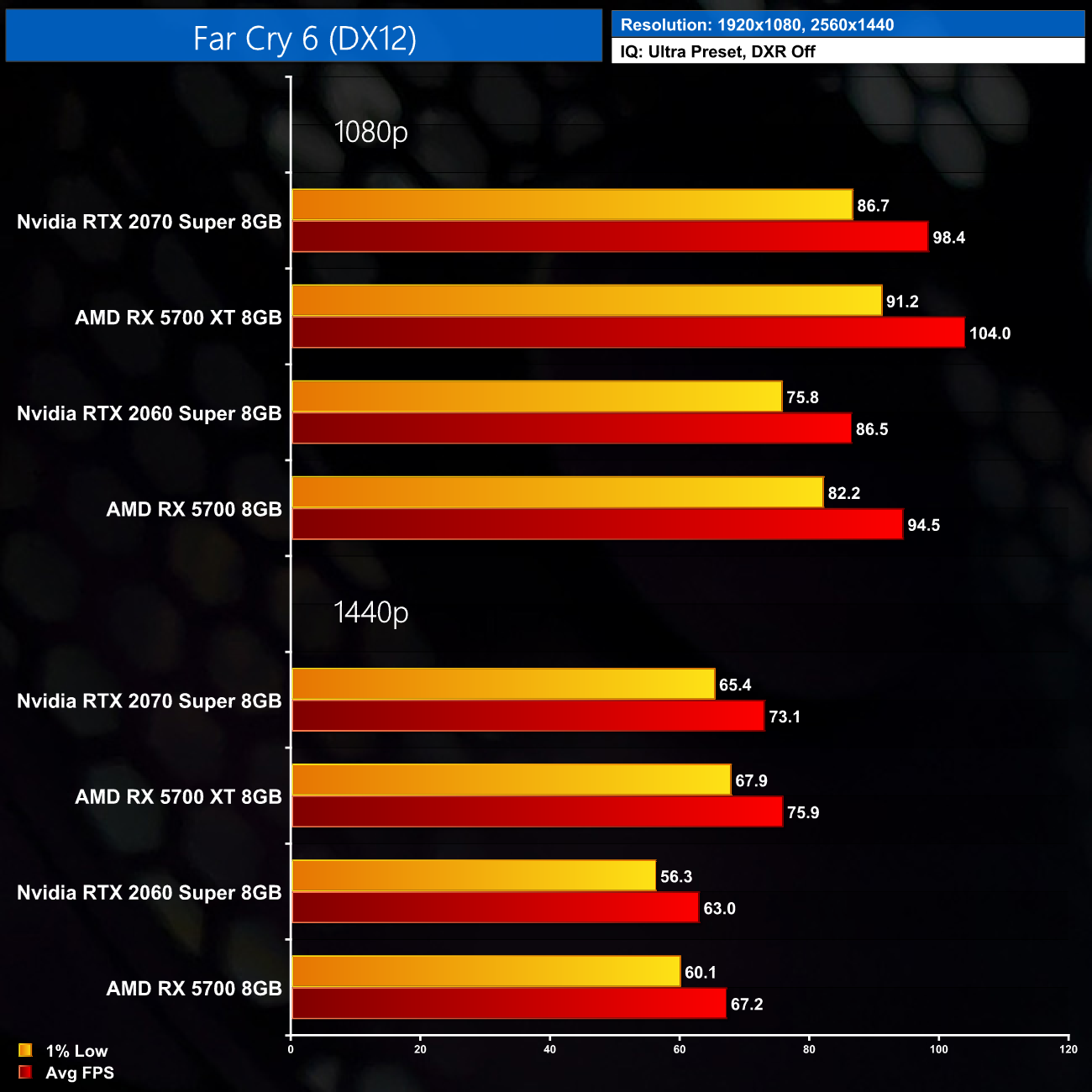
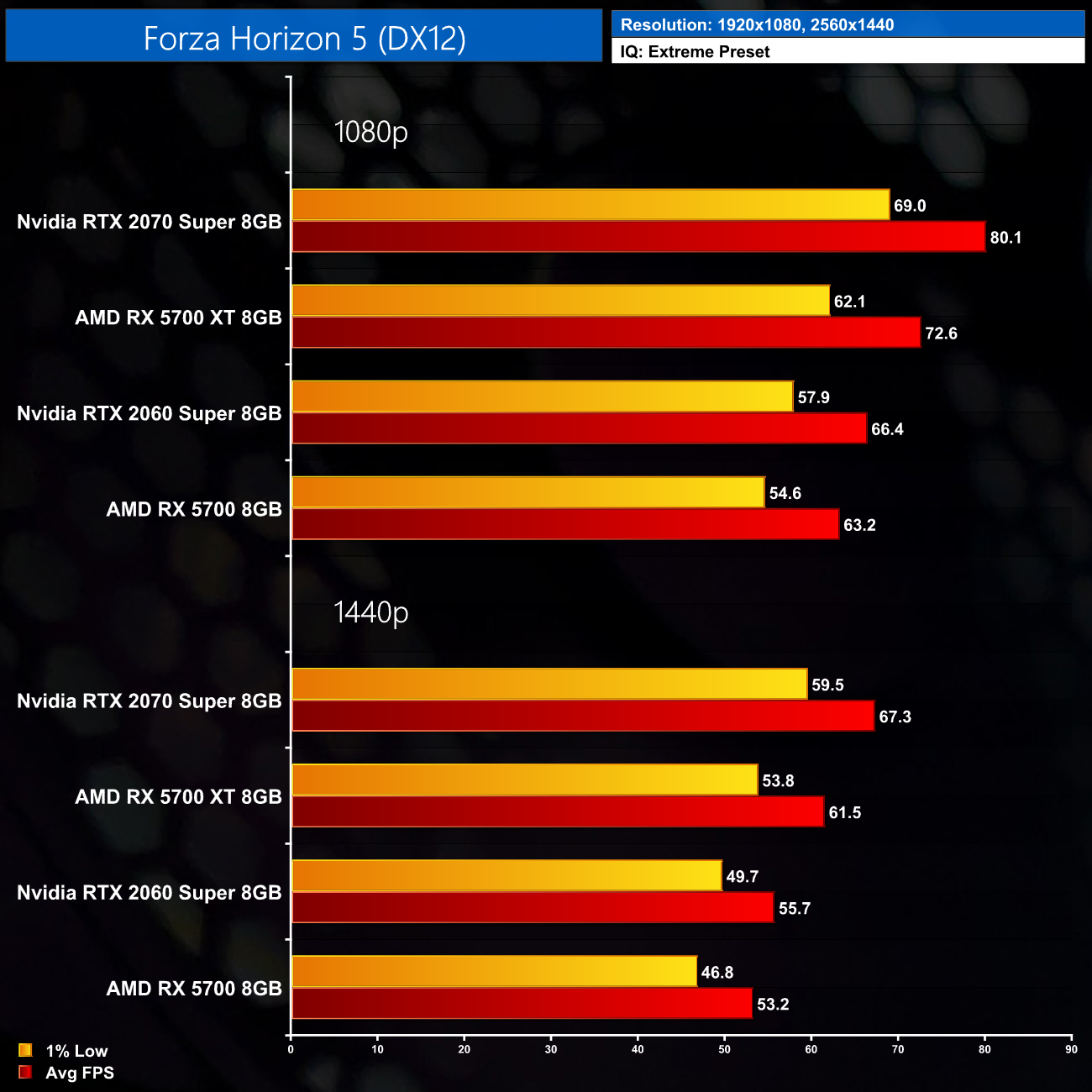
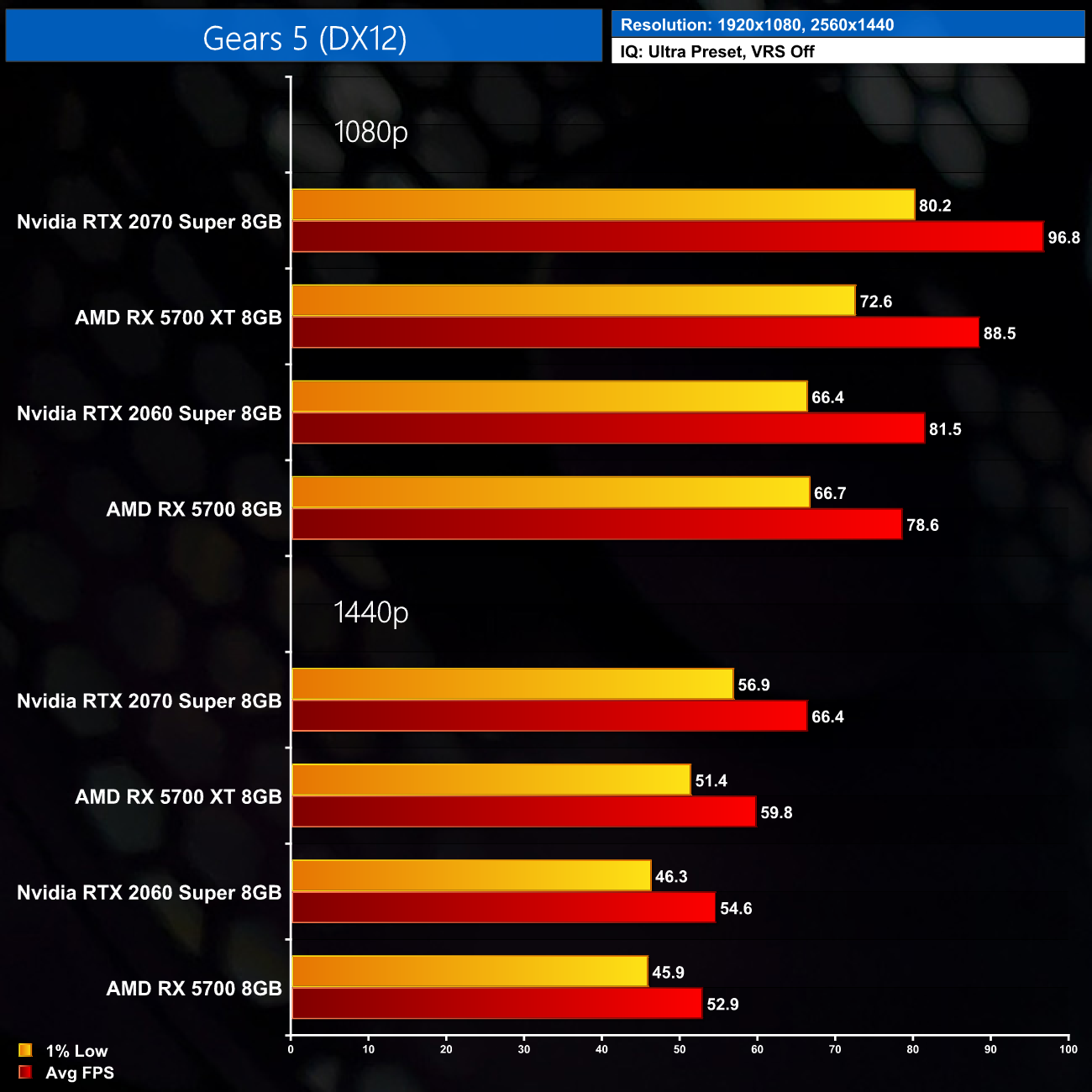
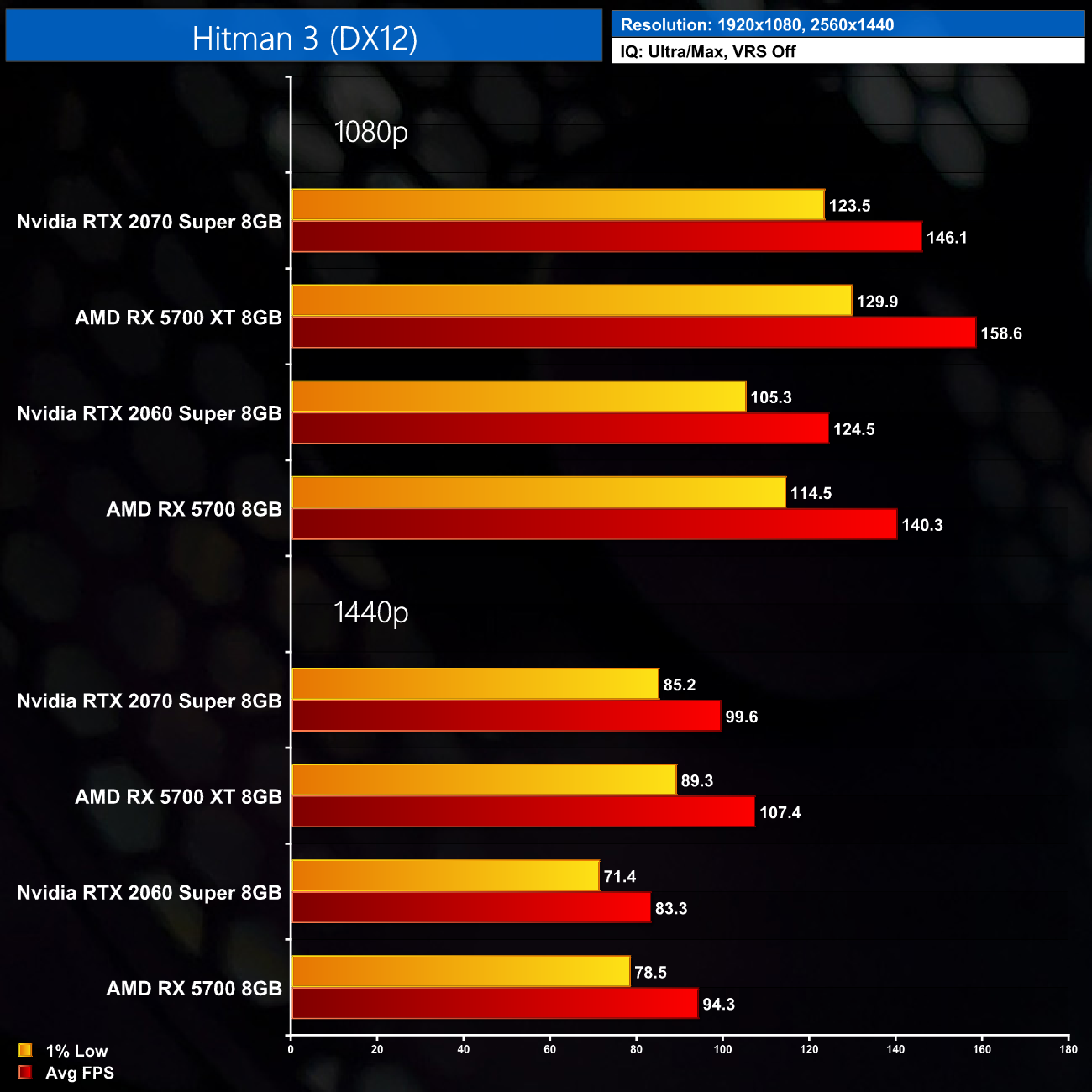
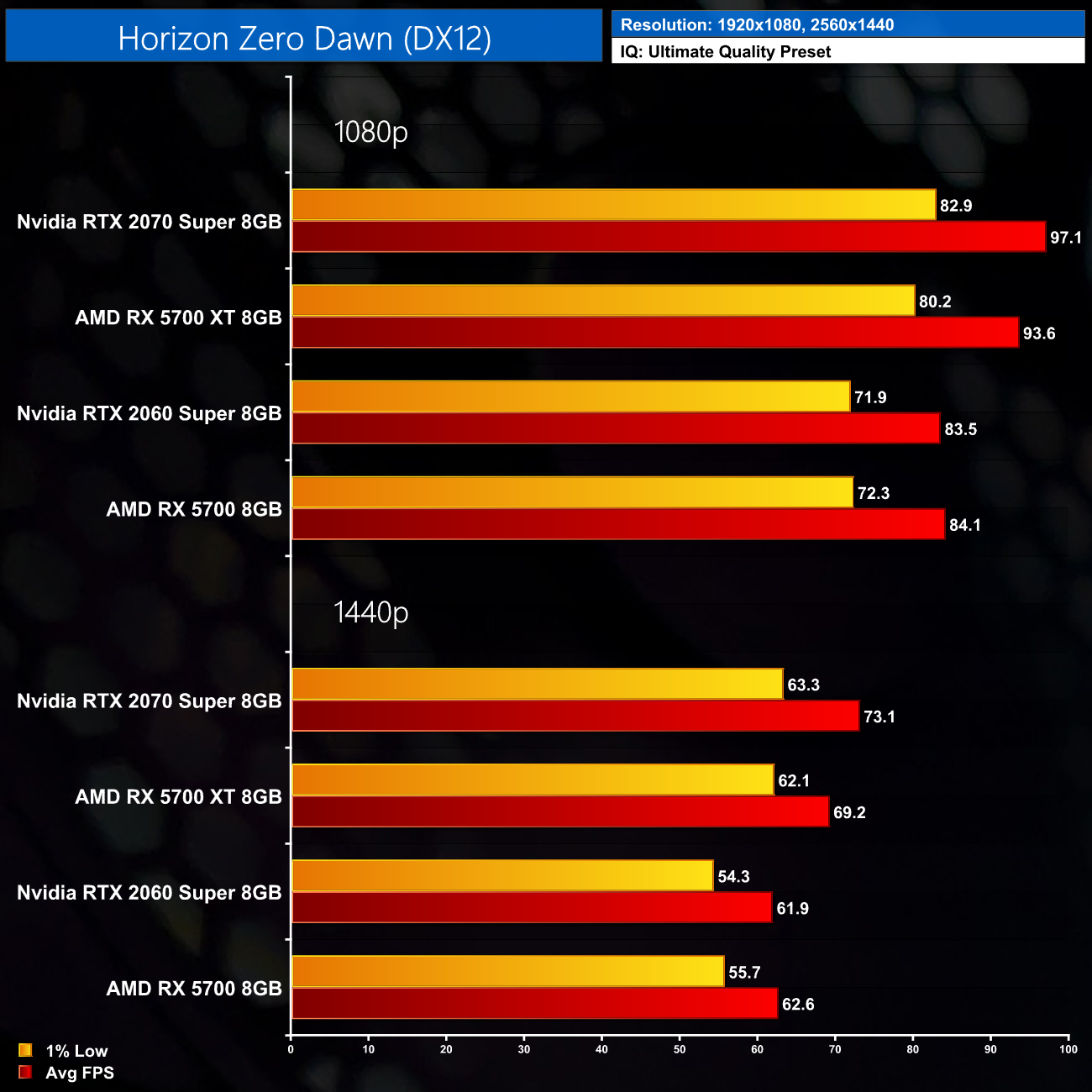
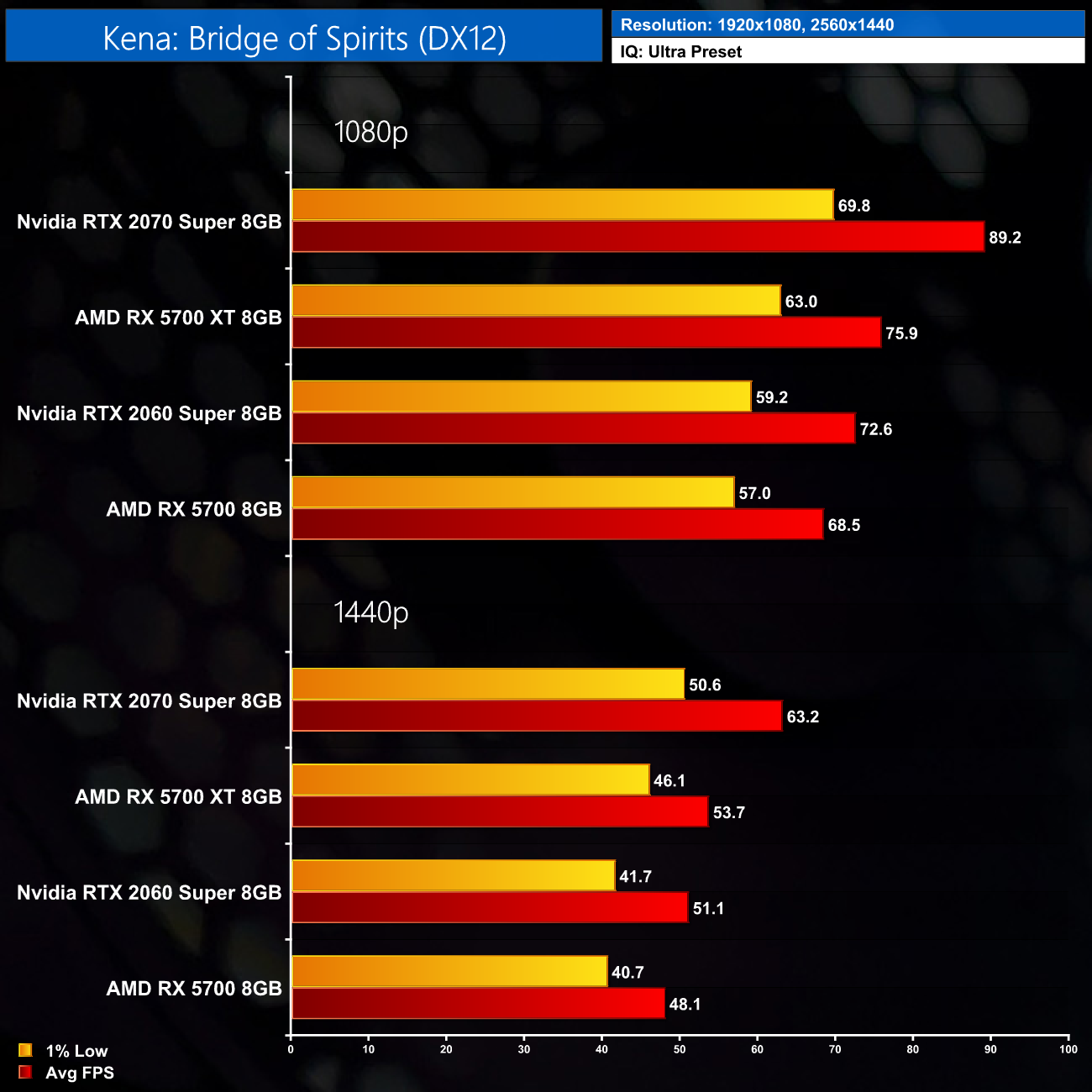
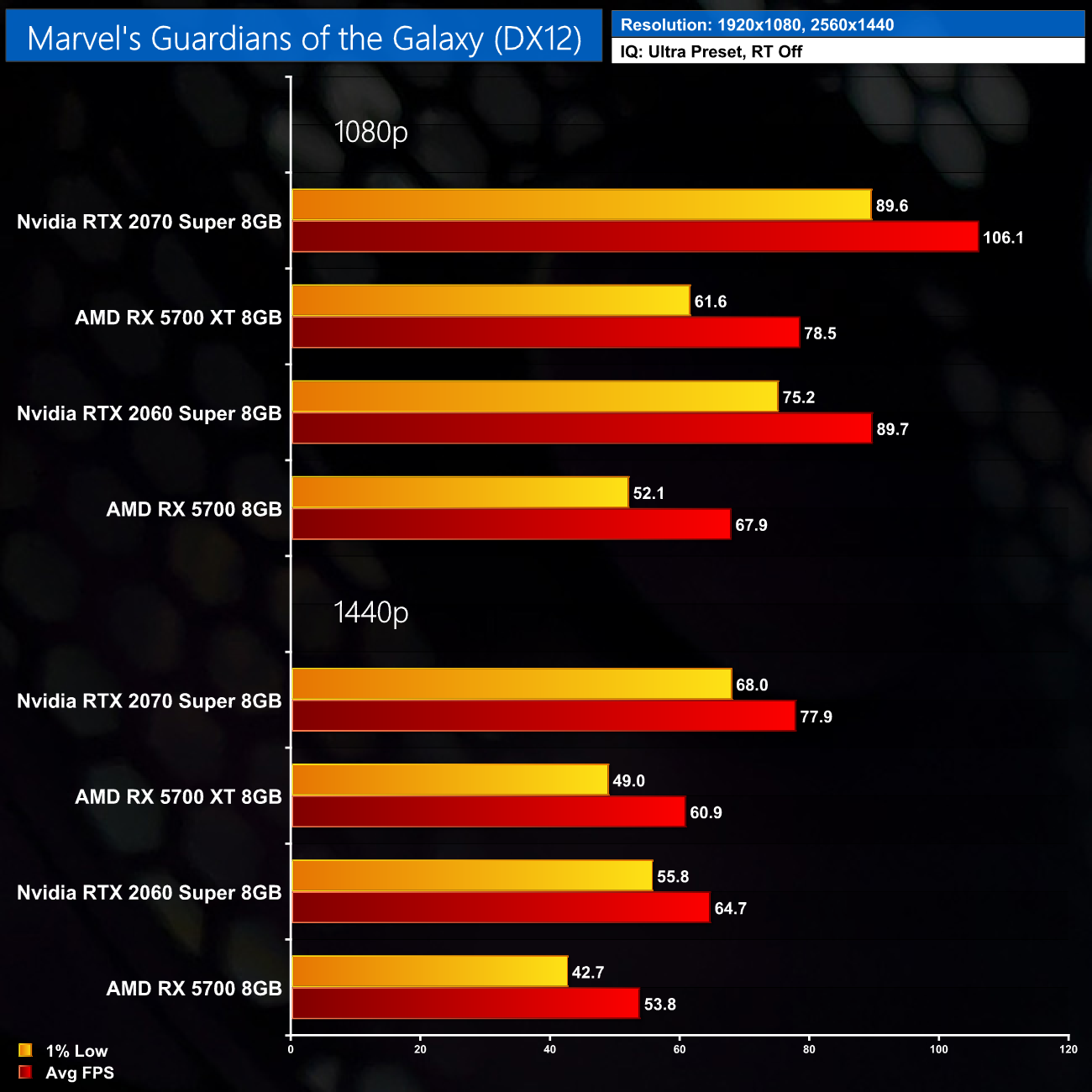
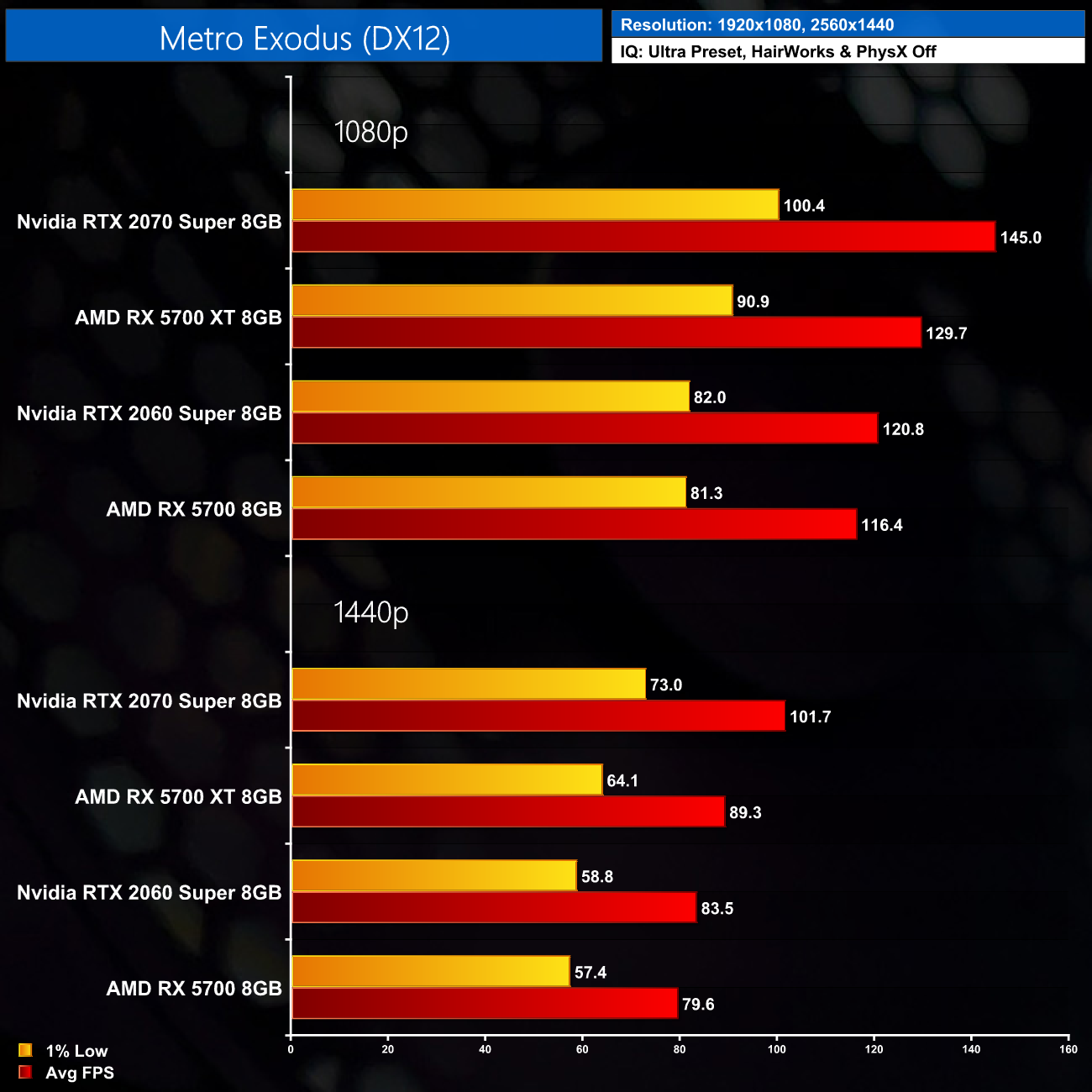
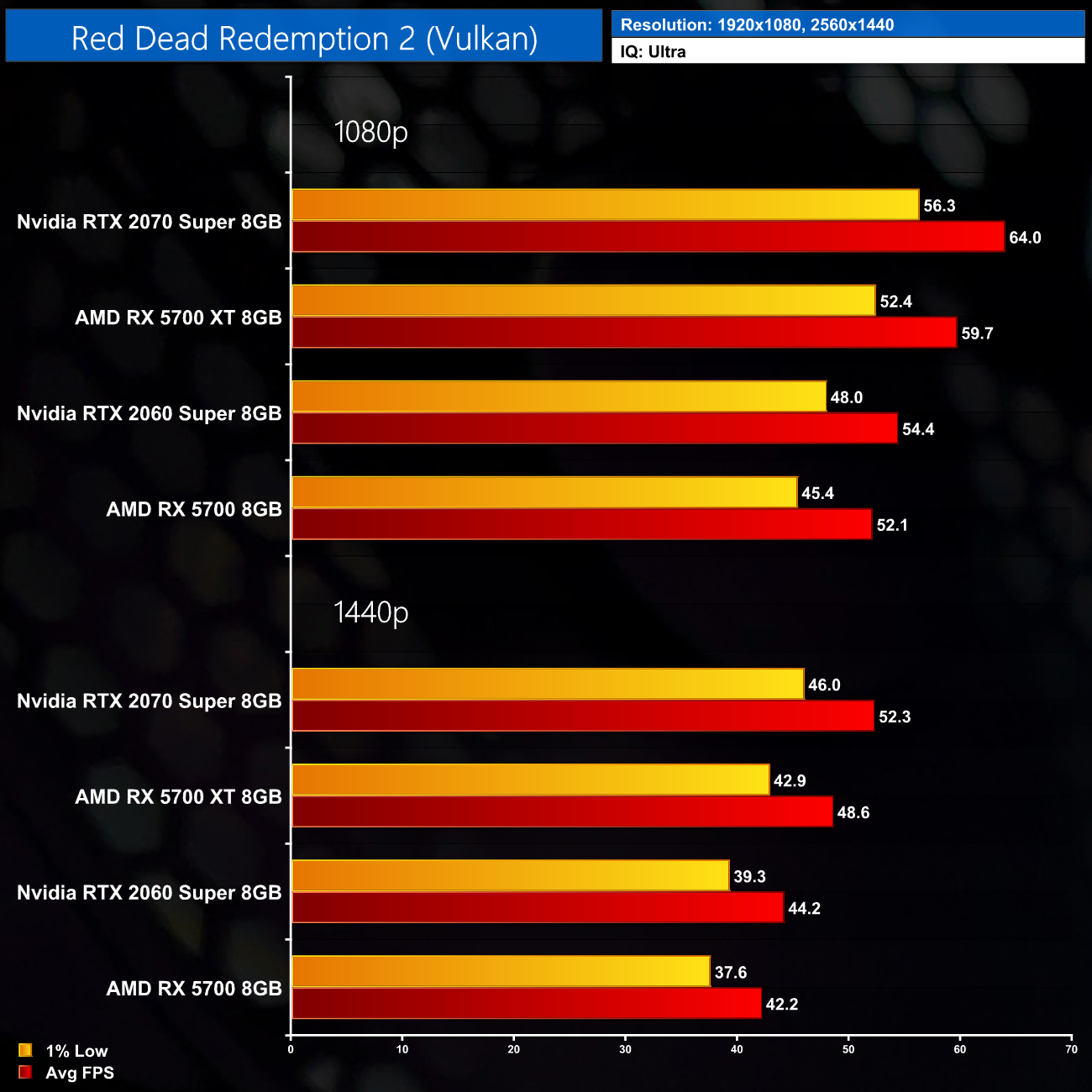
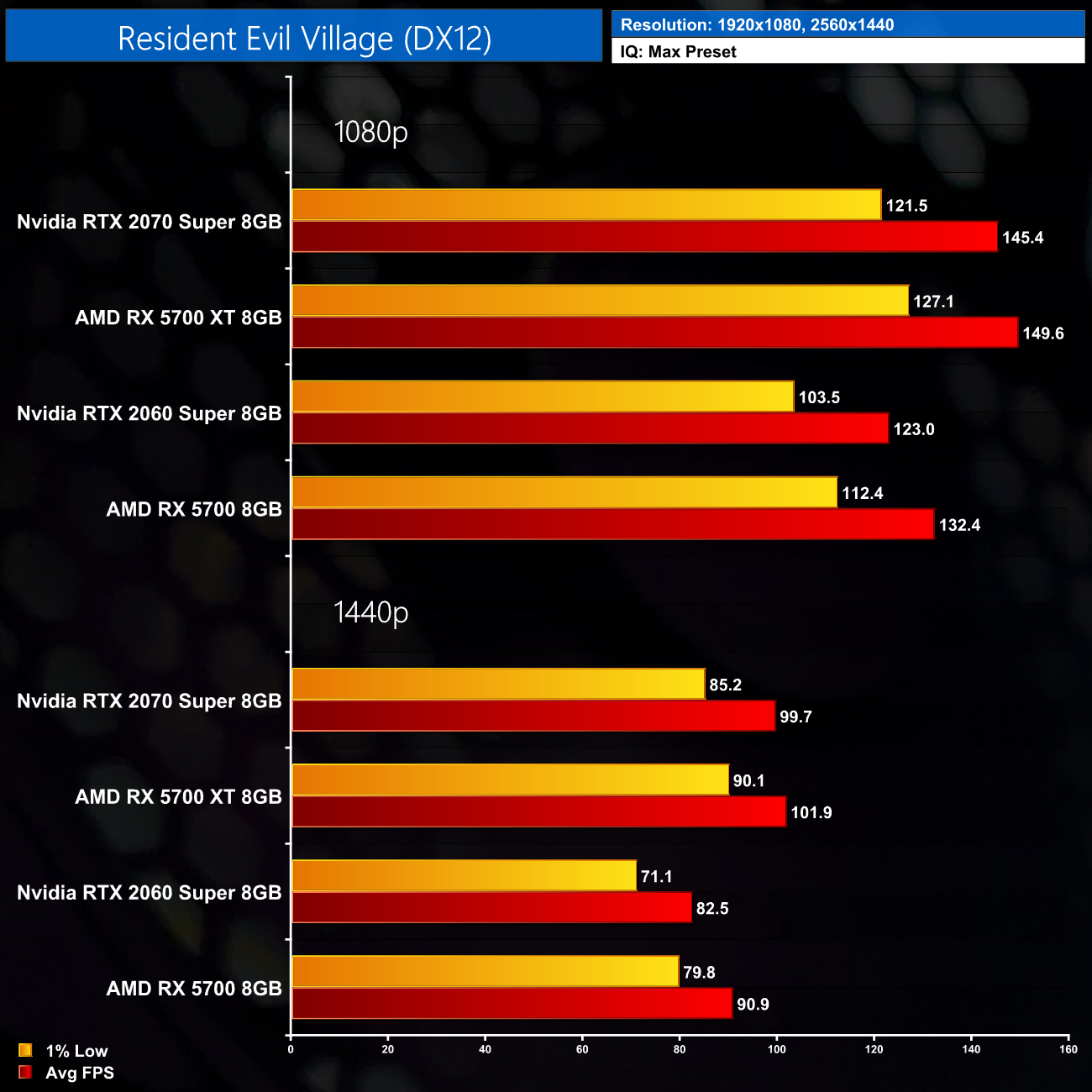
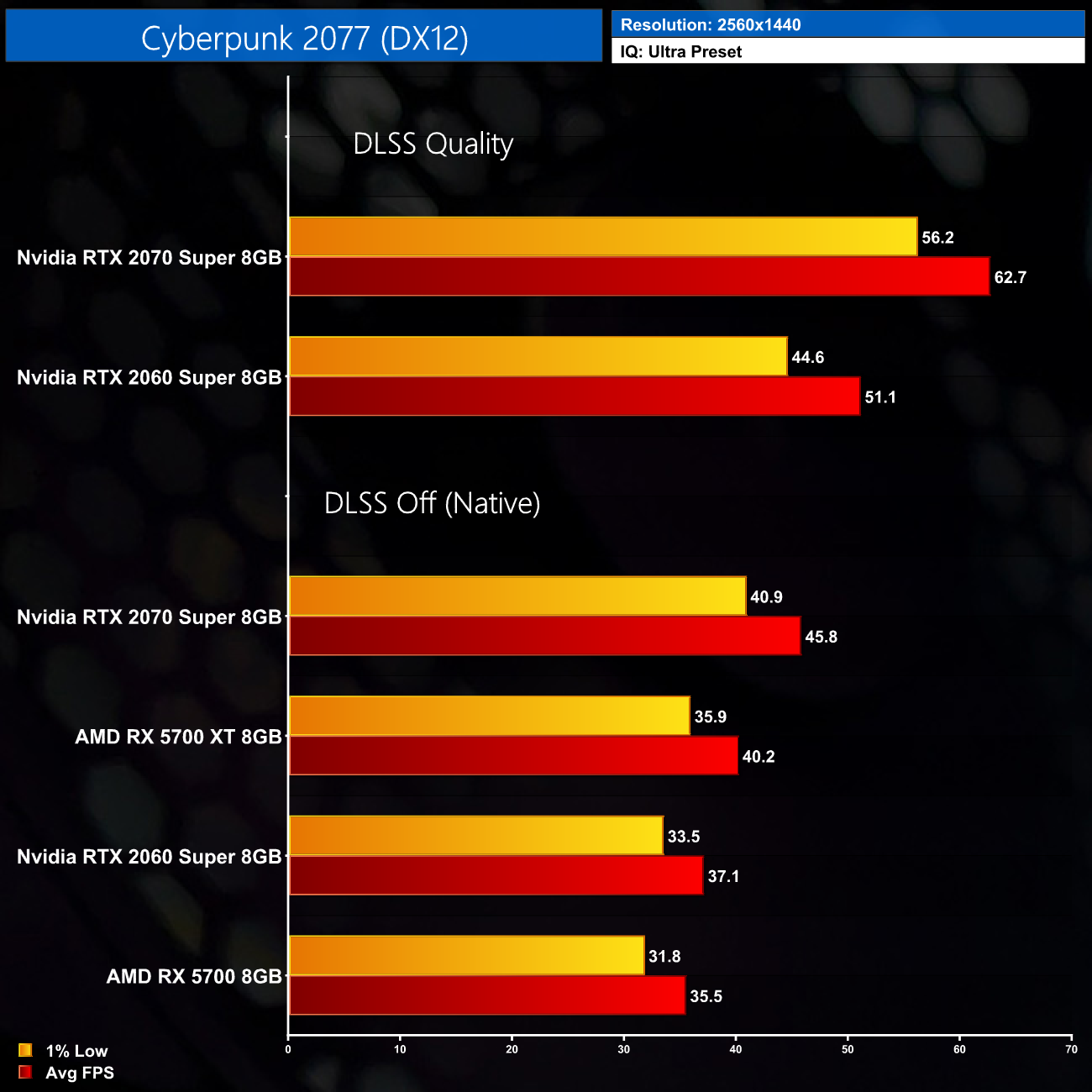
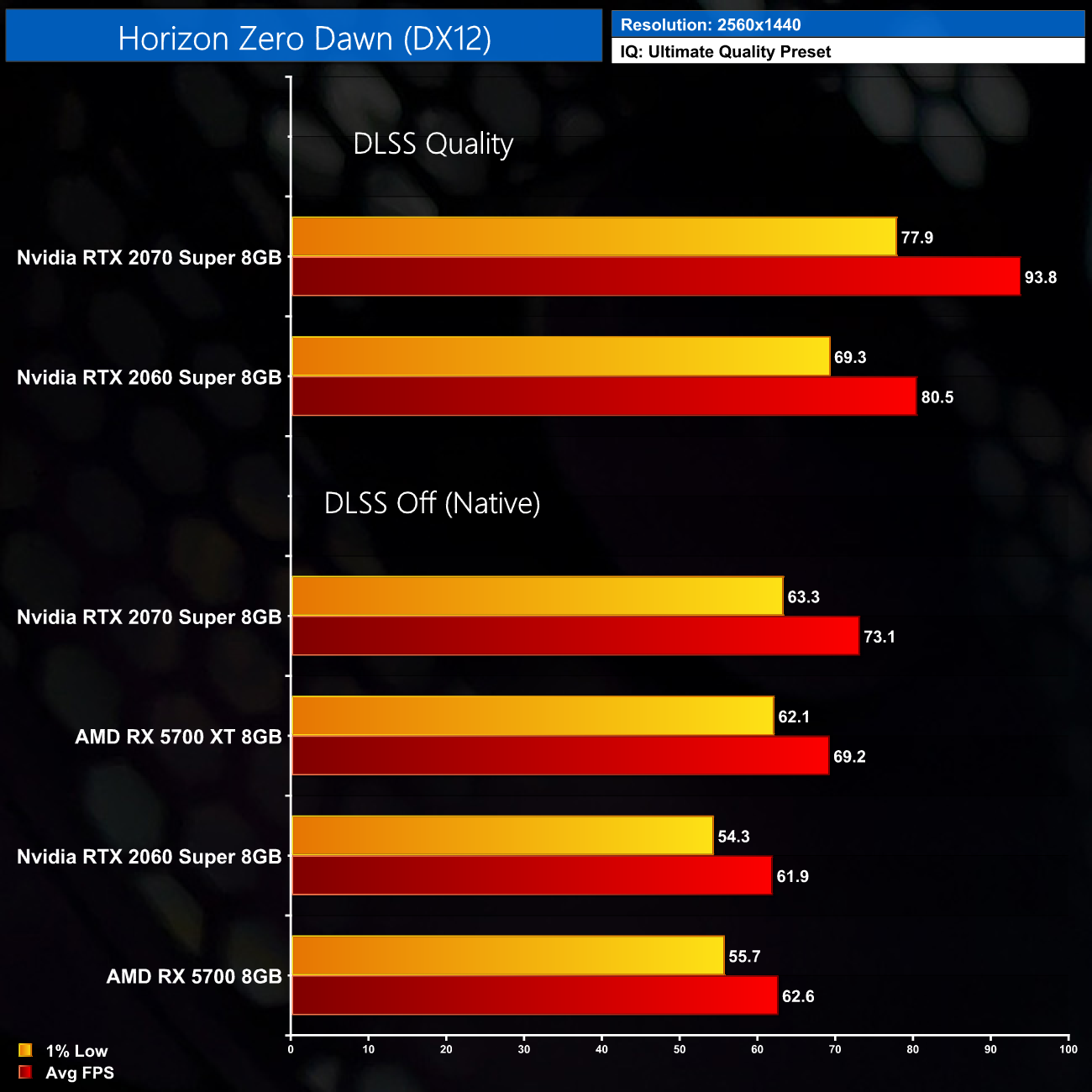
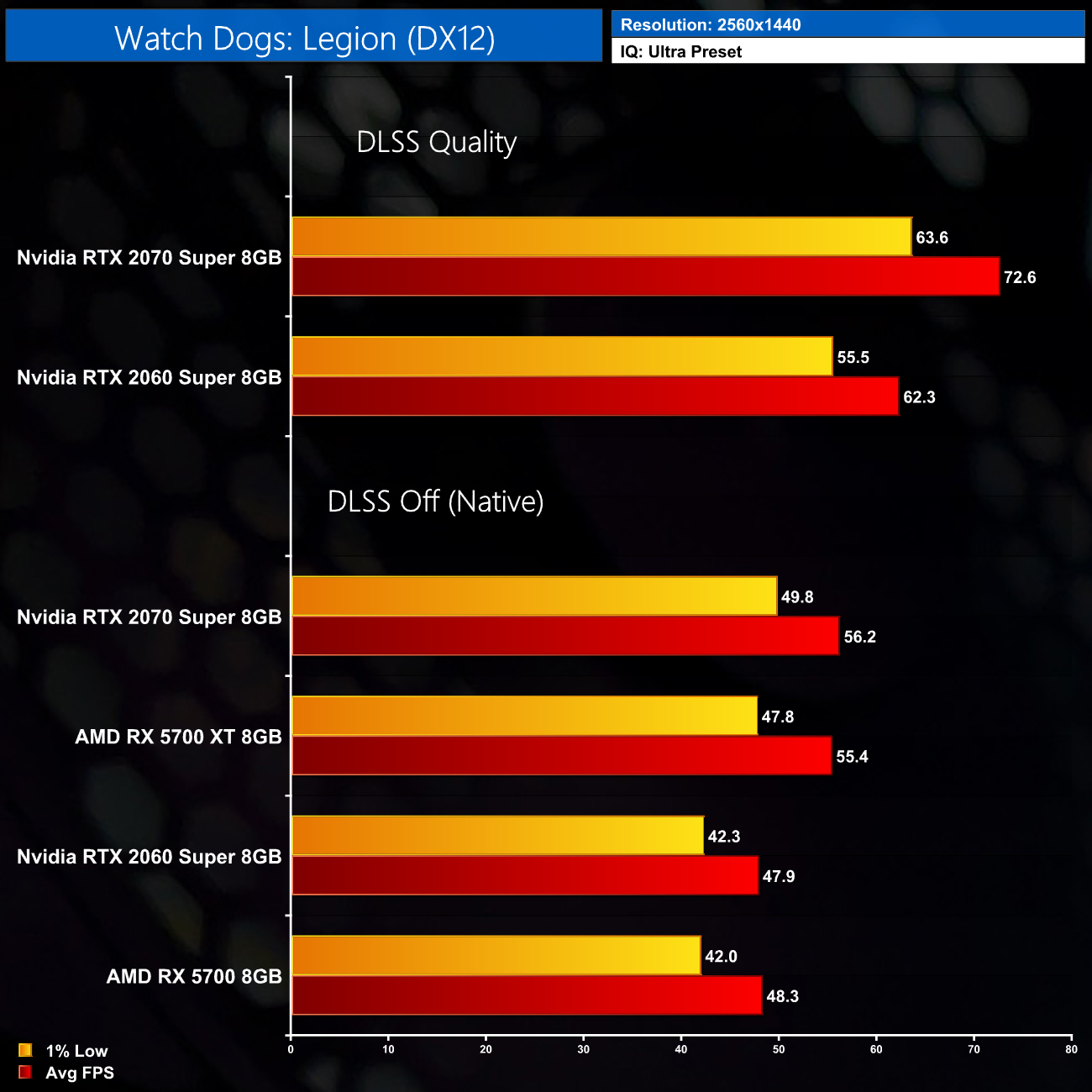
One key advantage for the RTX 20-series GPUs is the fact that they support Nvidia's Deep Learning Super-Sampling (DLSS) technology. While, at the time, DLSS was only of very limited utility, the ensuing two and a half years have seen DLSS get better and better, and get into more and more games, to the point where it is arguably the most important selling point for Nvidia's GPUs.
We didn't want to spend too much time testing DLSS performance further, as it is something we have looked at extensively since 2018 (see our various game analyses including Death Stranding, Cyberpunk 2077, Guardian's of the Galaxy, Doom Eternal and more).
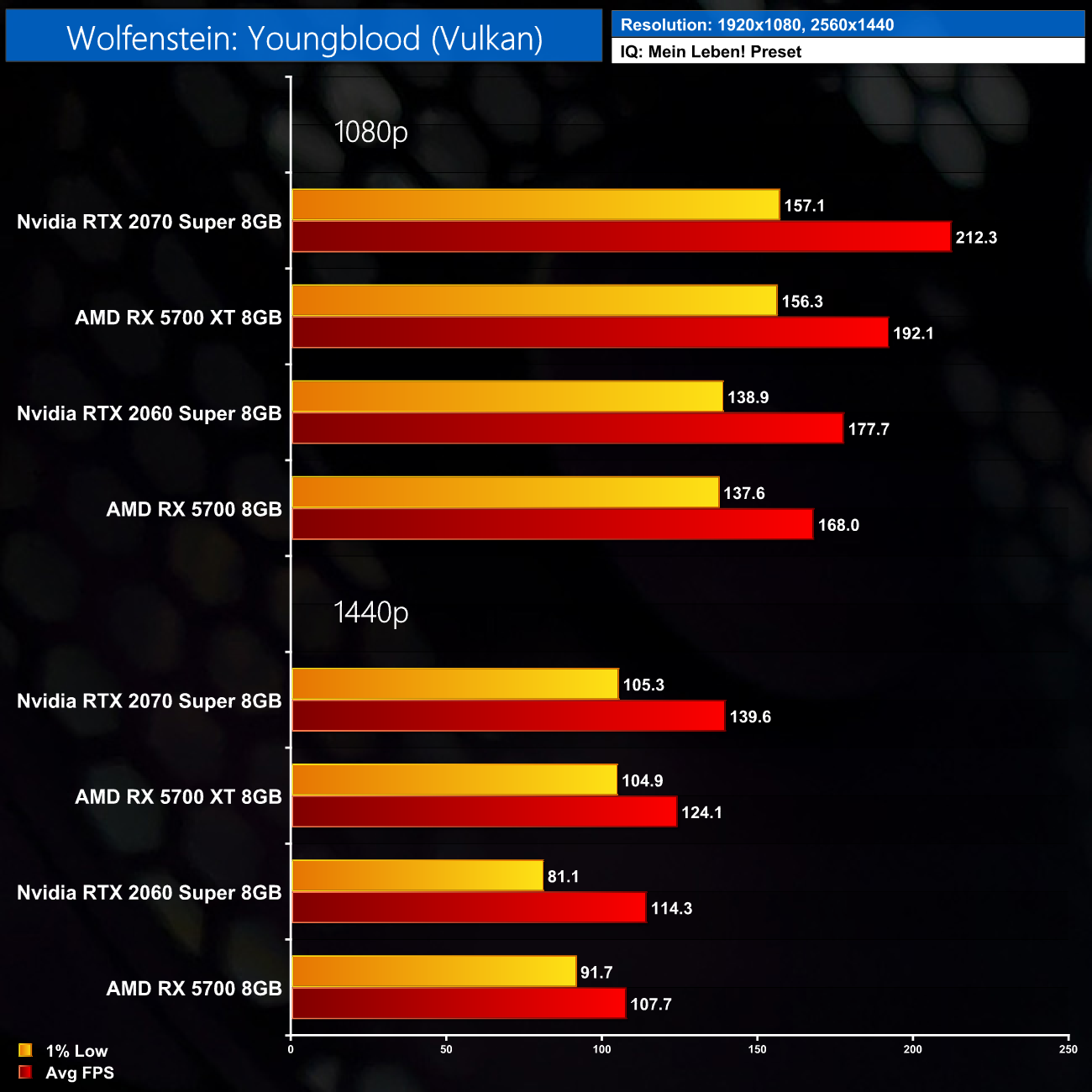
We did, however, test three games at 1440p resolution, showing the performance with DLSS off (i.e. a native 1440p resolution), and then with DLSS Quality mode enabled for the RTX 2060 Super and RTX 2070 Super. Even when using the best quality DLSS mode (therefore giving the smallest performance boost), frame rates still jumped by 28-39% depending on the game. With so many modern titles now supporting the technology as well, it becomes impossible to revisit these GPUs without placing a strong emphasis on the importance of DLSS.
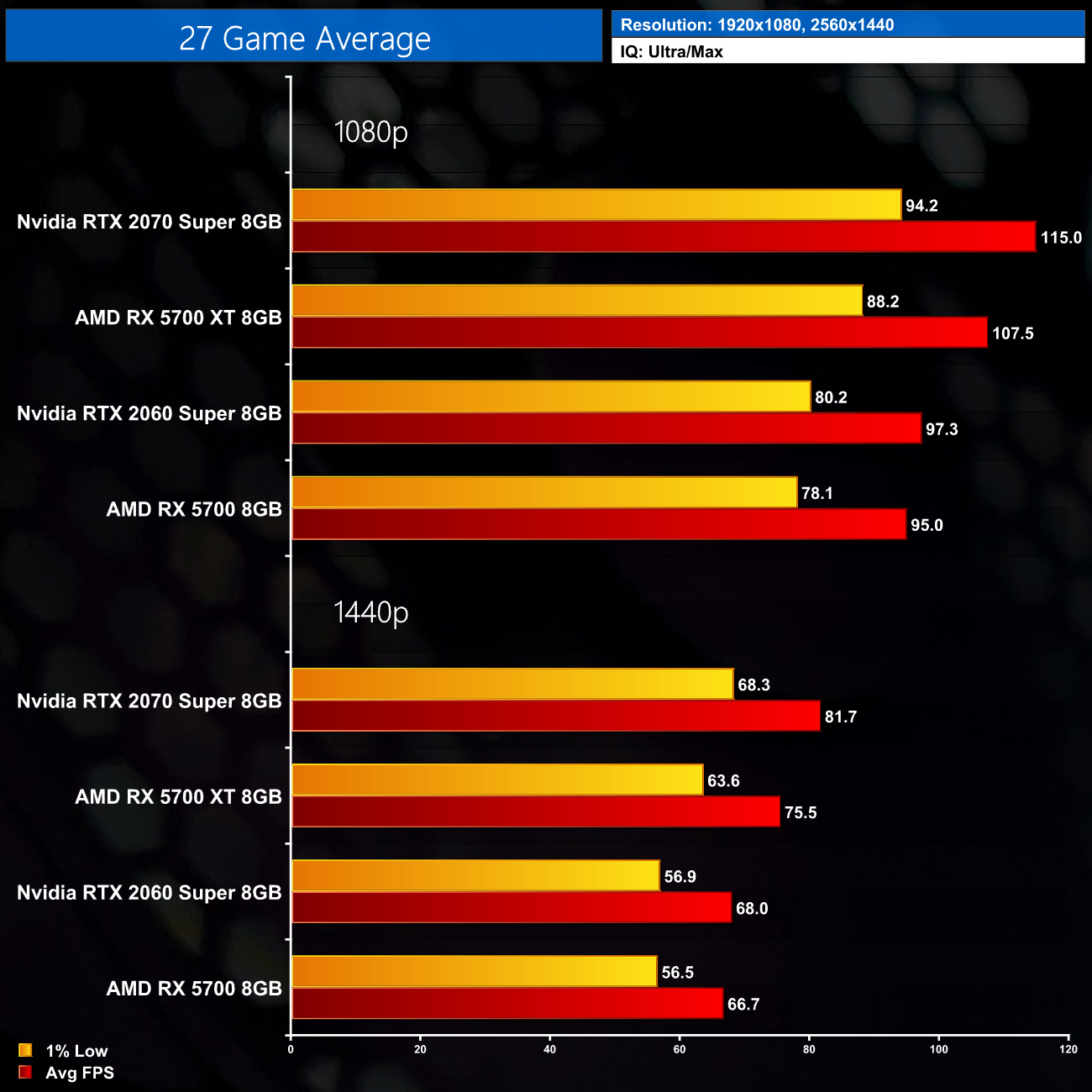
Taking a look at the average performance of all four GPUs across 1080p and 1440p resolution, we can see that the RTX 2070 Super is indeed faster than the RX 5700 XT, by 7% at 1080p and 8% at 1440p. The RX 5700 XT is itself 10% faster than the RTX 2060 Super at 1080p, and 11% faster at 1440p. Meanwhile, the RX 5700 is neck-and-neck with the RTX 2060 Super, proving just 2% slower on average at both 1080p and 1440p.
For a more detailed breakdown, below we plot the performance differences between GPUs on a per-game basis.
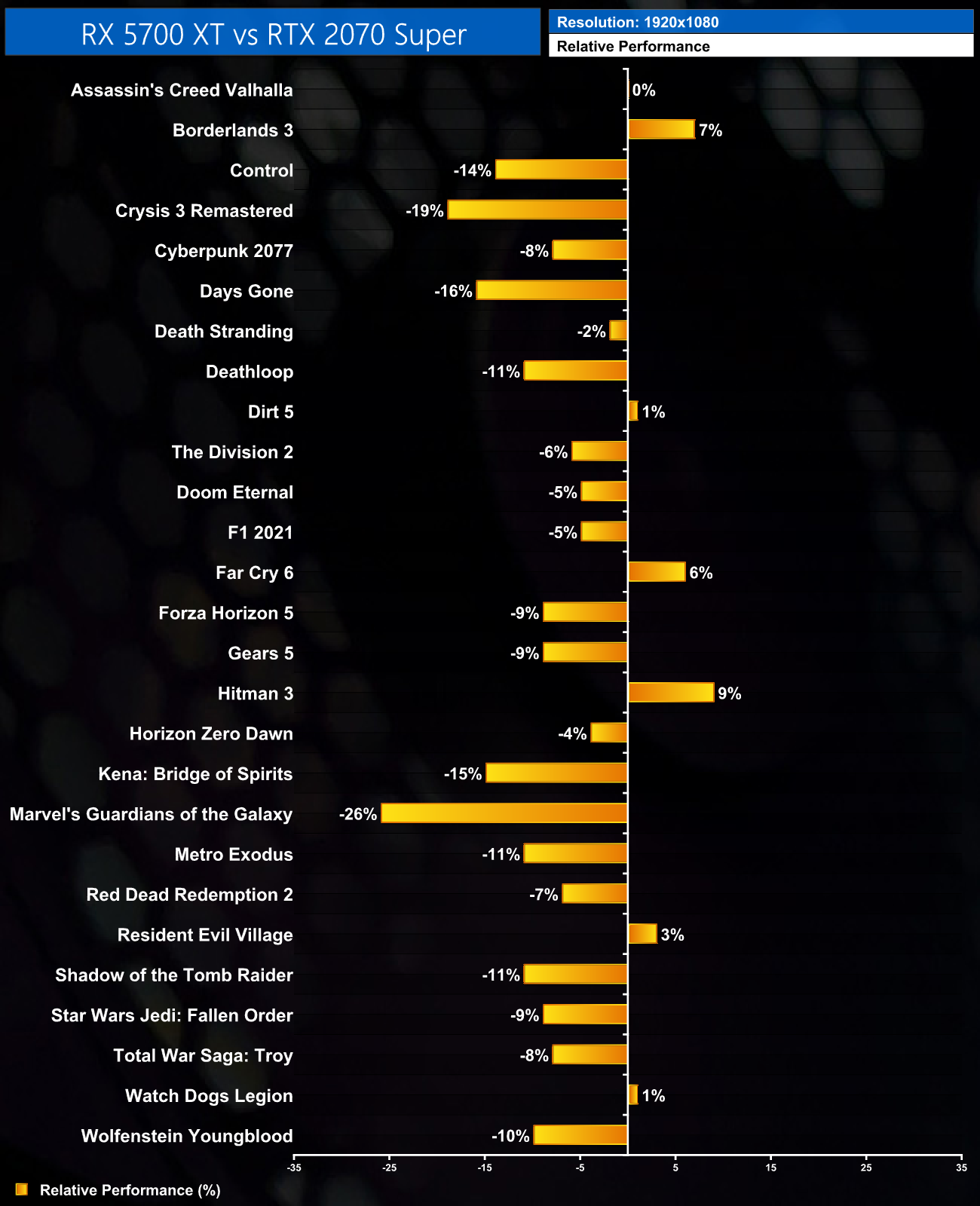
Starting with the RX 5700 XT's performance relative to the RTX 2070 Super at 1080p, we can see the RX 5700 XT is clearly the slower of the two. Not always by a lot, and it is still faster in six of the twenty-seven games we tested. There are a few significant losses however, most notably in Guardians of the Galaxy, while Unreal Engine 4 titles – including Days Gone and Kena: Bridge of Spirits – also show sizeable performance deficits.
Still, across the twenty games (of twenty-seven) where the RX 5700 XT proved slower than the RTX 2070 Super, the margin was by 10% or less in twelve of those games, so overall performance generally isn't far behind the RTX 2070 Super at all – and certainly not when considering the RX 5700 XT launched with a price tag 20% lower than its Nvidia rival.
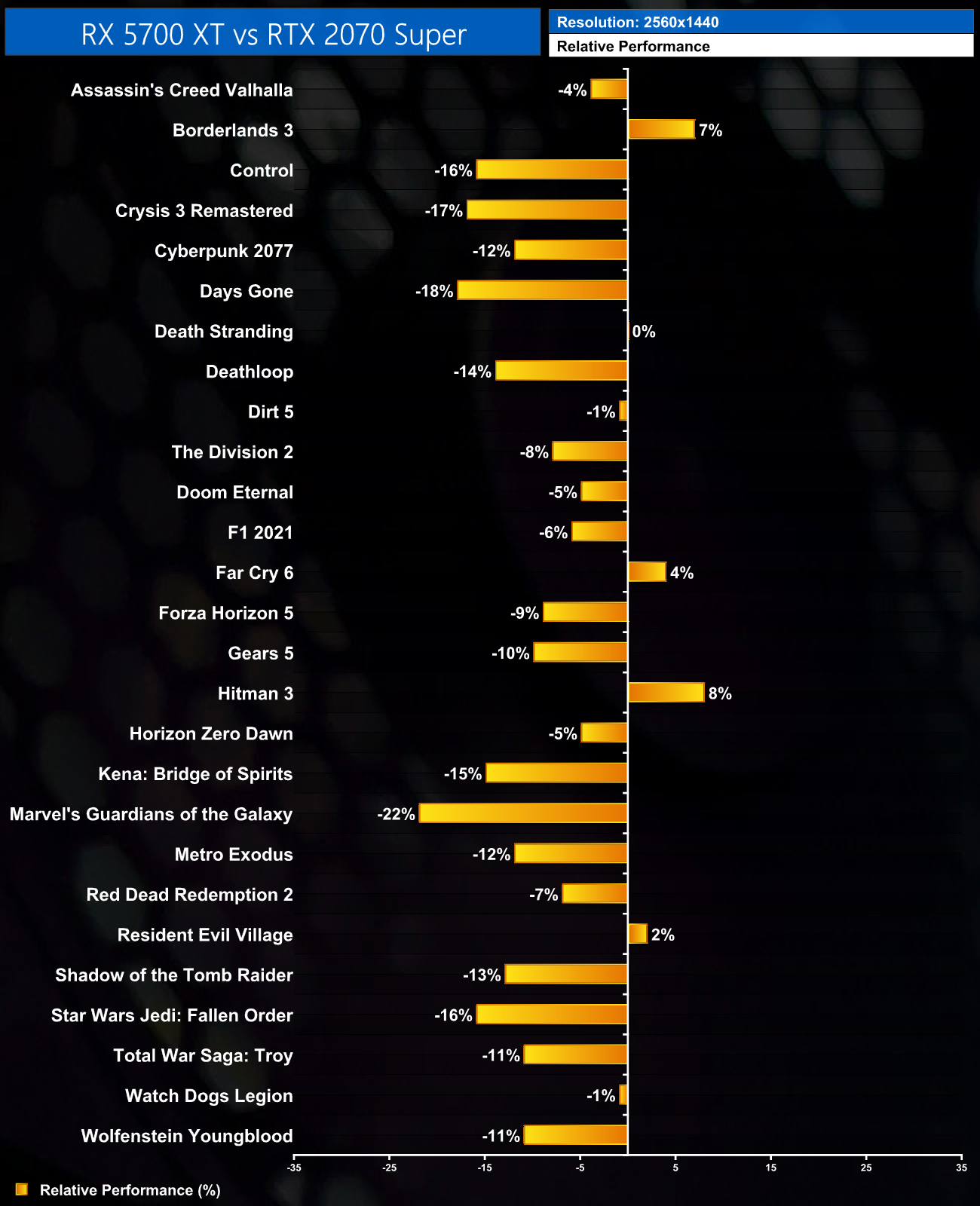
Stepping up to 1440p does see the RX 5700 XT fall slightly further behind, but not by massive amounts – it's now only faster than the RTX 2070 Super in four of the games tested, while it's more than 10% slower in twelve of the twenty-size games tested.
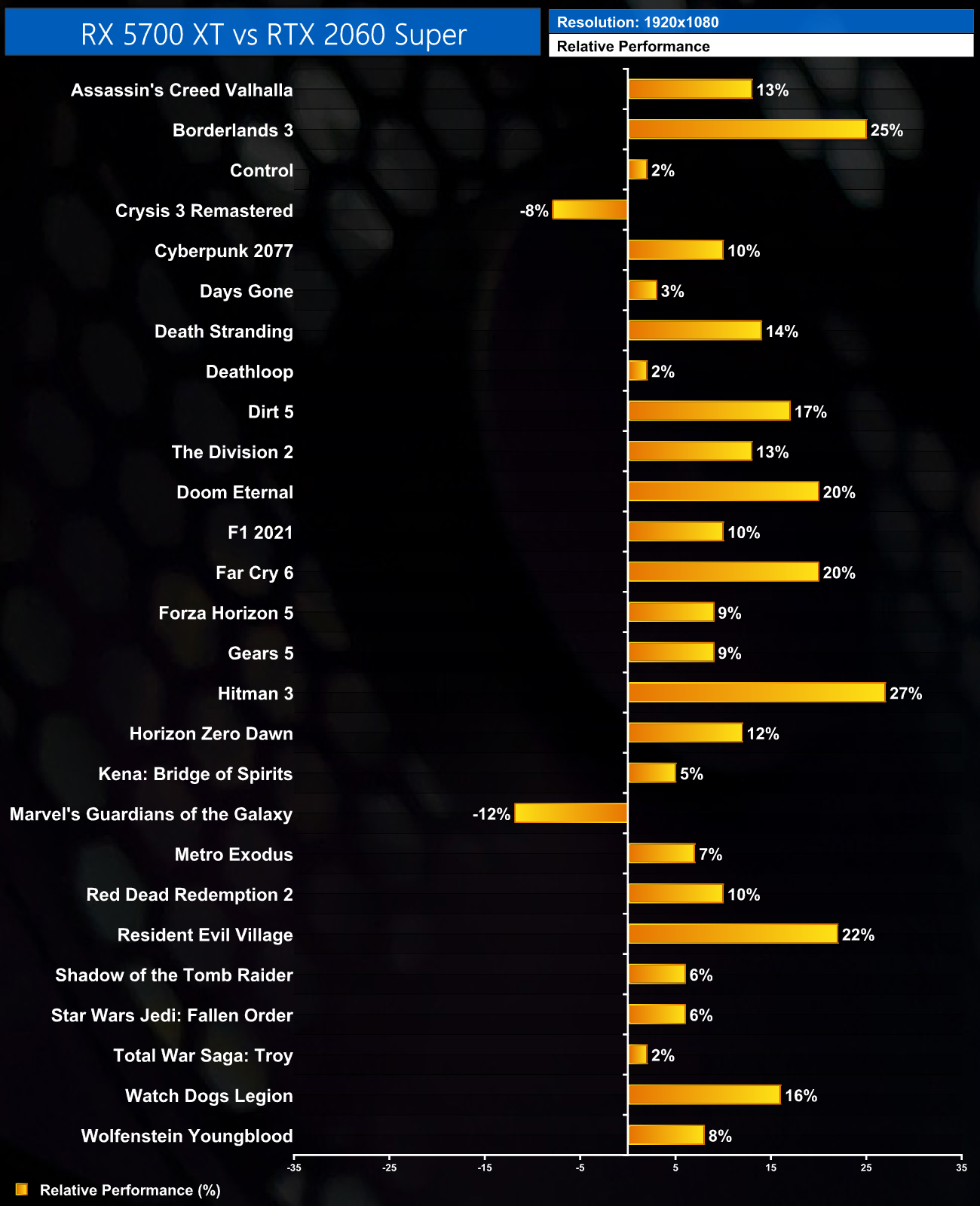
Comparing the RX 5700 XT to the RTX 2060 Super however, shows a different story. Here, the 5700 XT is only slower than the Nvidia GPU in two of the games we tested, while it is up to 27% faster in Hitman 3. In fourteen different games, the 5700 XT proved faster by 10% or more.
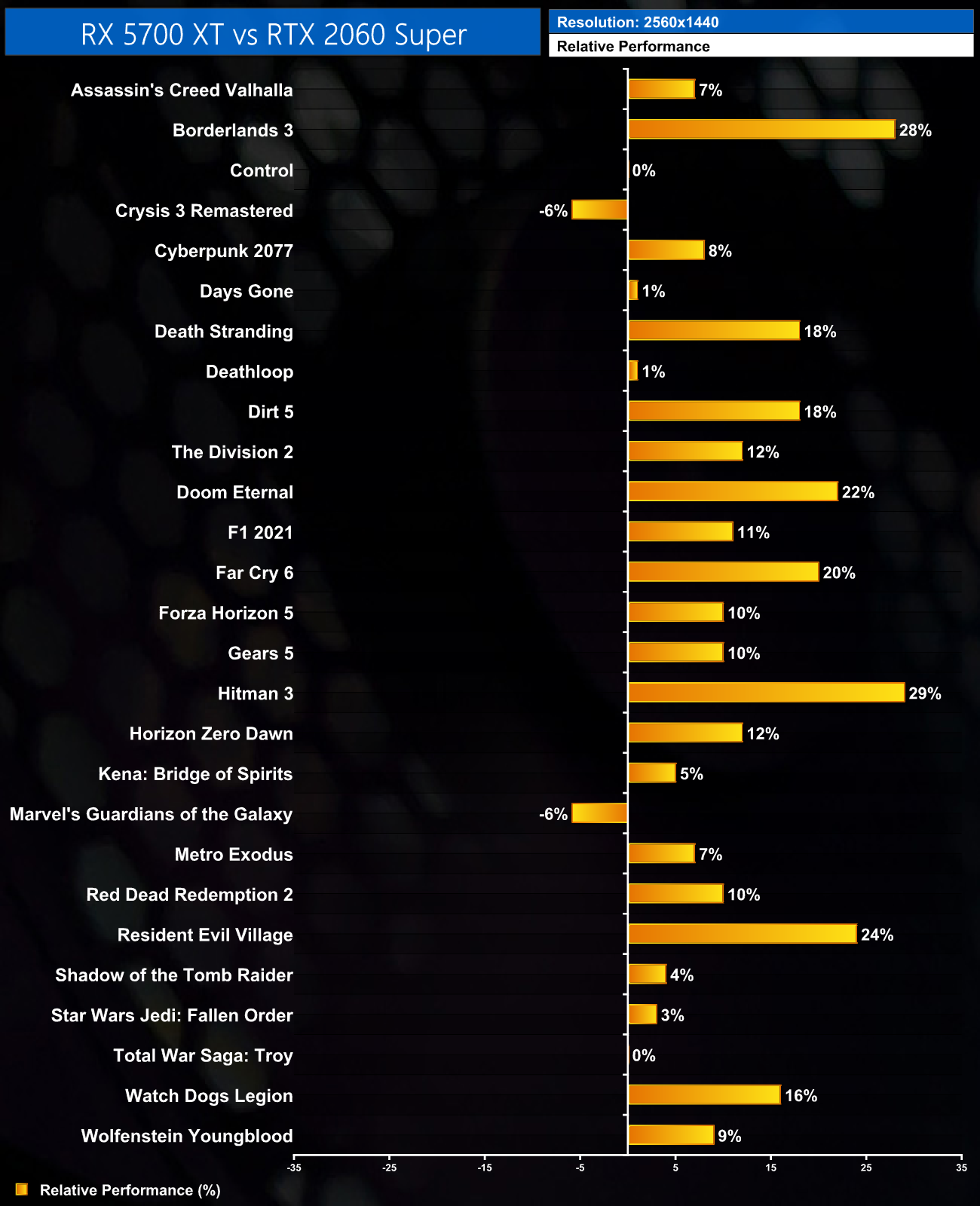
The RX 5700 XT does slightly better against the RTX 2060 Super once we step up to 1440p as well. Here, in the two games where it is slower, the deficit is cut to just 6% in both instances. On the other side, the 5700 XT is 28% and 29% faster in Borderlands 3 and Hitman 3, respectively.
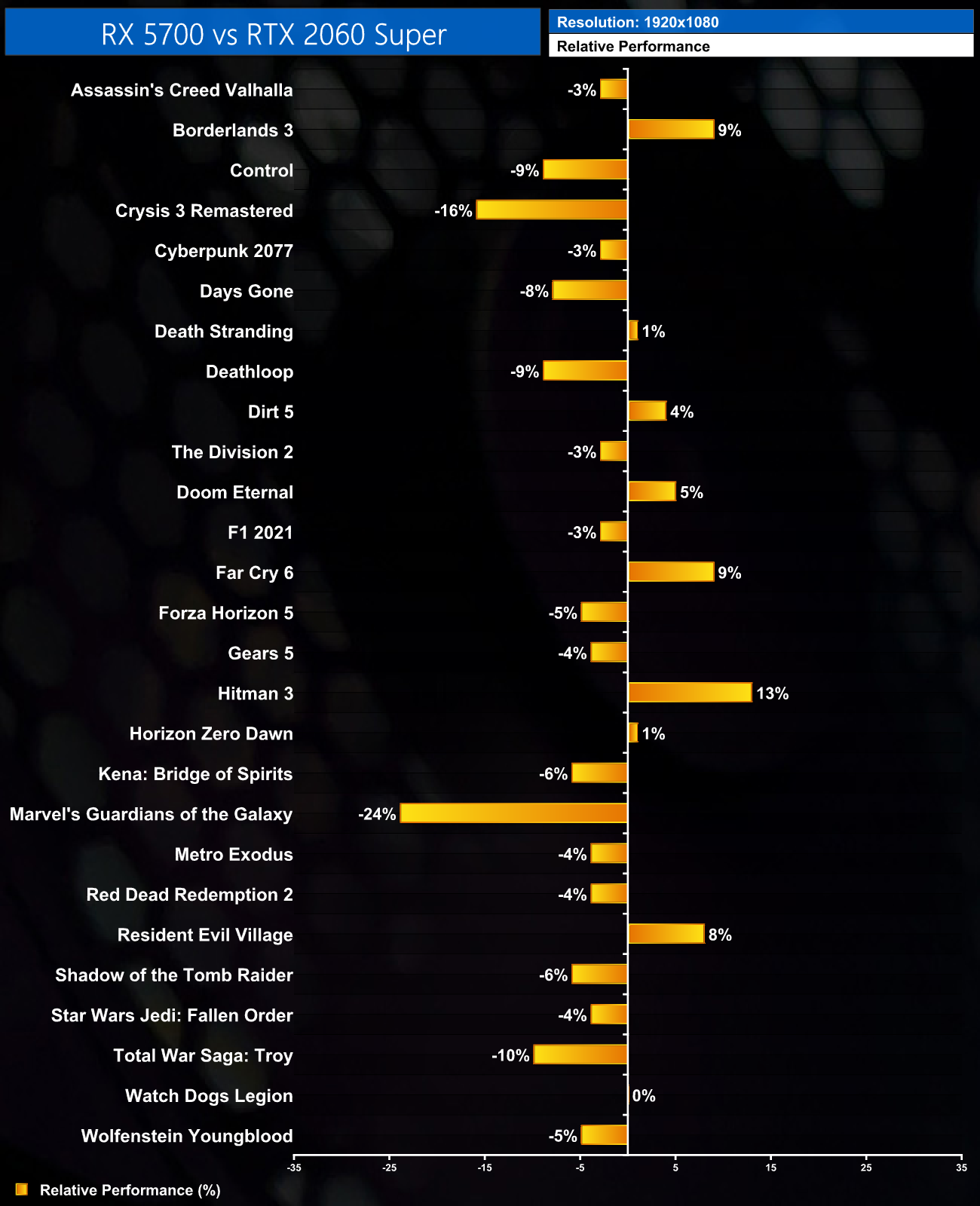
Moving on, we are now looking at the RX 5700 (non-XT) up against the RTX 2060 Super. Despite the RX 5700 launching at £329, making it £50 cheaper than the RTX 2060 Super, things are generally neck-and-neck across our testing. There are a few results where we see significant performance swings – like Crysis 3 Remastered, Hitman 3 and Guardian's of the Galaxy – but twenty-three of the games tested see less than a 10% difference either way, and fifteen of those show a difference of 5% or less.
 \
\
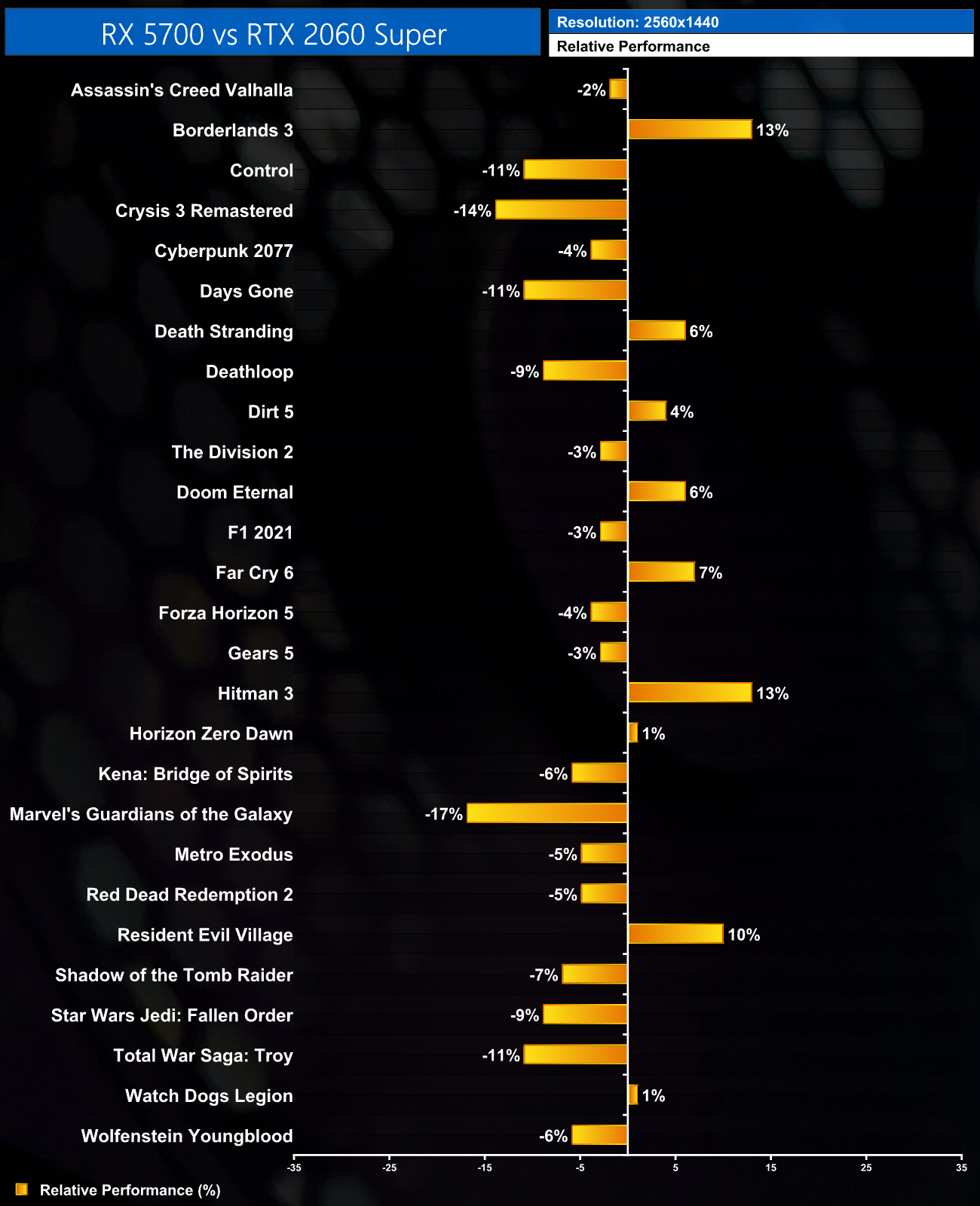
Not a whole lot changes at 1440p, too. There's still a handful of titles where we can see a significant difference in relative performance, but by and large the performance split is quite even. The RTX 2060 Super is still 2% faster on average, but that's more than close enough to call things a draw, as in most titles you wouldn't be able to tell these two GPUs apart.
That brings us to the end of this GPU revisit article. We set out with no agenda in regards to this testing – two and a half years on, I just wanted to see exactly how things lie between Nvidia's RTX Super GPUs, when compared head-to-head with AMD's first generation RDNA graphics cards.
Firstly, and arguably most importantly, it is clear from this testing that all four GPUs tested remain very viable options for 1080p and 1440p gaming as we head into 2022. In fact, if you bought one of these GPUs when they were actually available at their respective MSRPs, then I bet you are feeling very good about your purchase right now, considering all the weak launches and absurd GPU prices we have seen in 2021.
Still, we can draw some conclusions from the data shown in this article. The RTX 2070 Super, for instance, is clearly the fastest GPU of the bunch, but we would expect that considering it was the most expensive back at launch. Arguably more impressive is that the RX 5700 XT pushes it so close, despite launching at almost £100 (or 20%) cheaper – the RTX 2070 Super is only 8% faster on average at 1440p despite its much higher price-tag.
When comparing the RX 5700 XT and the RTX 2060 Super, which both launched at £379, we can see a clear win for Team Red – the RX 5700 XT is faster in all but two of the games we tested today, at either 1080p or 1440p, and is on average 10% and 11% faster, respectively.
Interestingly, we could have seen the numbers favour AMD even more, but I actually noticed a couple of scenarios where either game updates or driver optimisations appear to have won back some performance for Nvidia. In my RX 6600 XT review for instance, the RX 5700 XT proved faster than the RTX 2070 Super in Assassin's Creed Valhalla and F1 2021. In this testing today, the 2070 Super is about level with the 5700 XT in Assassin's Creed, but faster in F1 2021.
We can't end this revisit without mentioning DLSS, however. Back in mid-2019, the RTX featureset as a whole was still a bit of a gamble, and I know many are still not convinced about hardware accelerated ray tracing performance even as we head into 2022. DLSS, on the other hand, has gone from strength to strength and is now a key feature for RTX GPUs. The technology is in a wide array of games and more are announced practically every week, so we have to give Nvidia credit for sticking with, and improving, this technology after its rocky start.
When using the technology with the 2060 Super and 2070 Super as part of today's testing, we saw performance boosts from 28-39% at 1440p when using DLSS Quality mode, with scope for further gains if opting for either the Balanced or Performance modes. It really is quite a game changer – in a couple of years, say the 2060 Super can't deliver a locked 60FPS at 1440p like it can in most games today, it's great to know that all you would need to do is flick the DLSS switch to win back a significant chunk of performance, with – in most cases – very little sacrificed in terms of image quality.
That is it for this revisit article, and I hope you found it interesting to look back on the performance of these four GPUs over a wide range of games. If you want us to look at something similar with a particular GPU (or GPUs…), do let us know down in the comments or over on Facebook.
Discuss on our Facebook page HERE.
KitGuru says: No doubt about it, if you have any of the four GPUs tested today, you are in a very good spot for either 1080p or 1440p gaming for years to come.