KitGuru KitGuru.net – Tech News | Hardware News | Hardware Reviews | IOS | Mobile | Gaming | Graphics Cards


Today we are examining a couple of DDR4 4GHz kits from Essencore KLEVV – which is effectively the retail arm of memory giant SK Hynix. The Bolt XR is a commodity DDR4 kit with low profile heatspreader design that could be ideal for users with large CPU coolers. The Cras XR RGB is, as the name suggests, equipped with an RGB lightbar atop the heatspreader to add colourful flair to the modules.
Video Timestamps
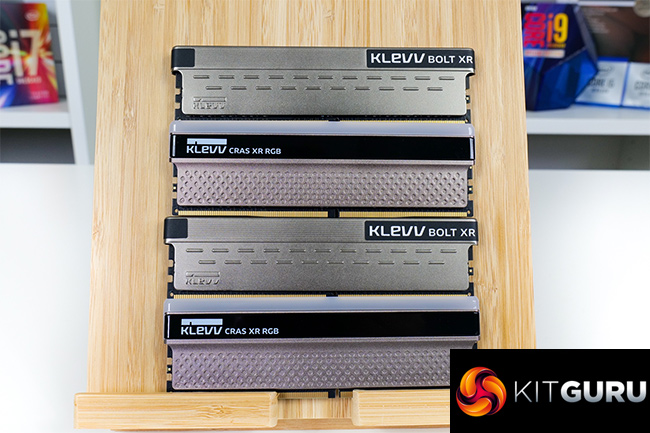
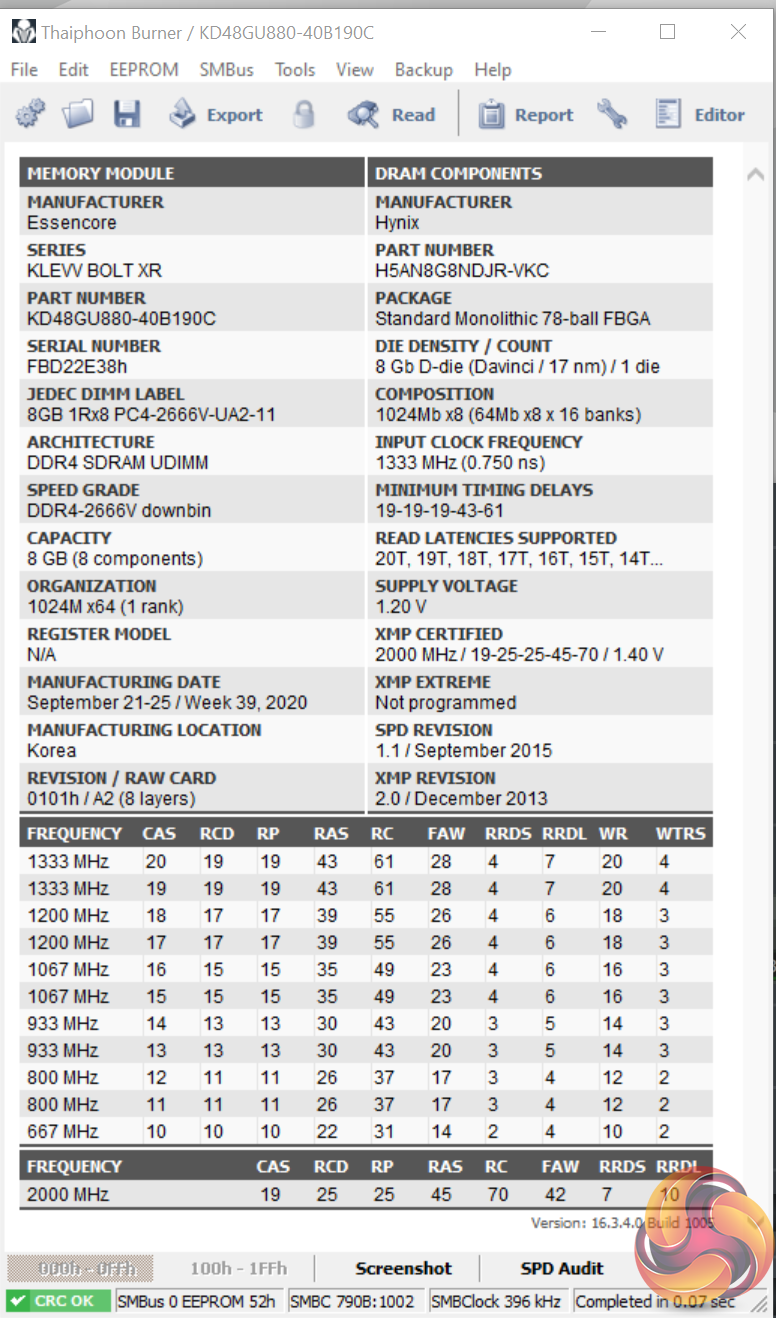
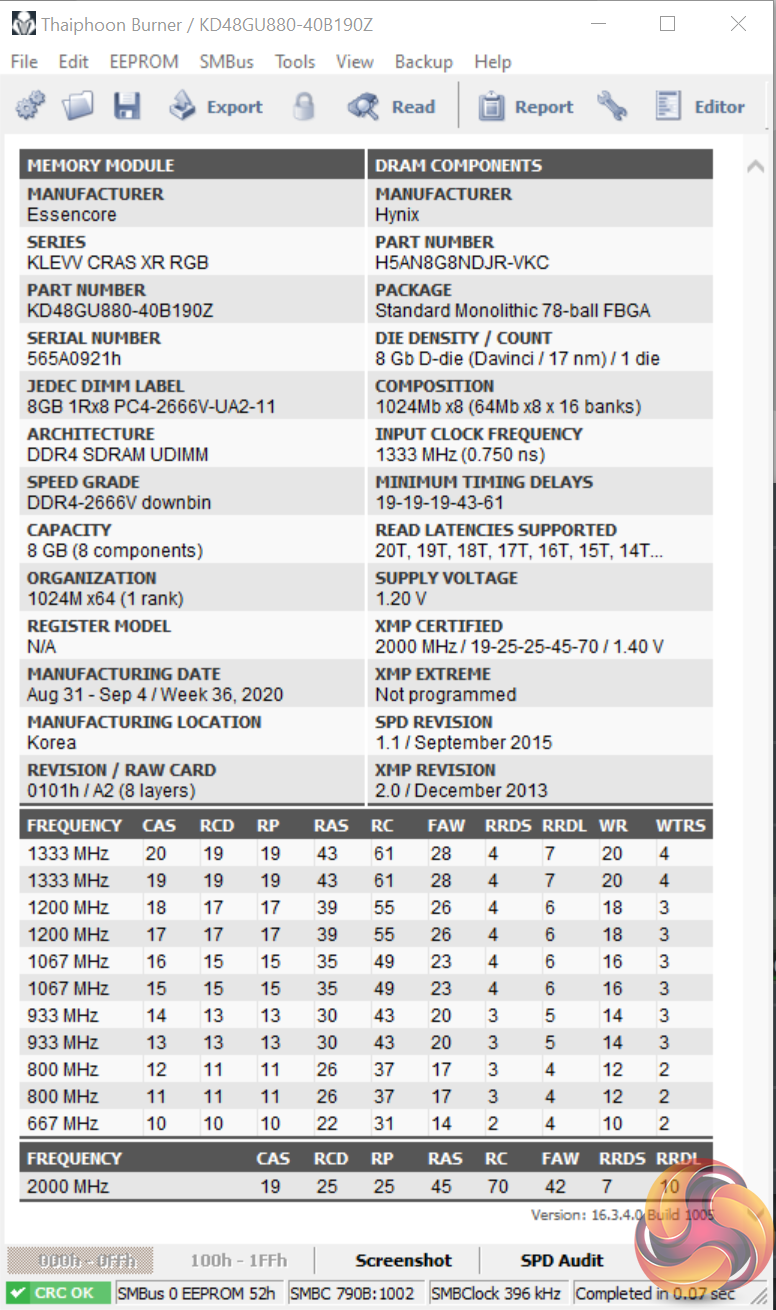
The specific kits that we are looking at today are DDR4 4000MHz operating frequency supporting XMP, dual channel 2x8GB 16GB kits using single rank modules, and 19-25-25-45 rated timings at 1.4V operating voltage. SK Hynix DJR memory ICs are used in the aforementioned single-rank configuration for the 8GB DIMMs.
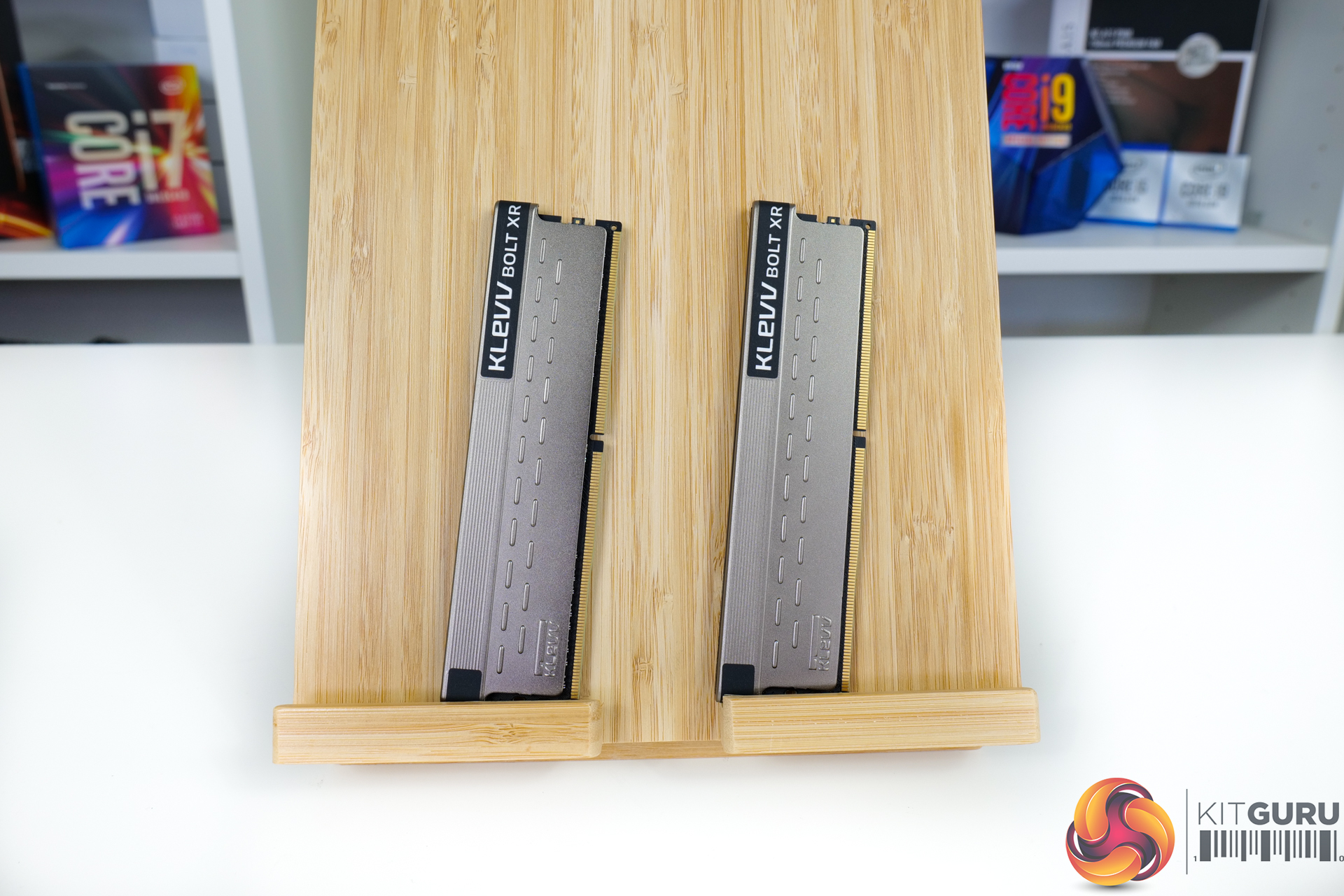
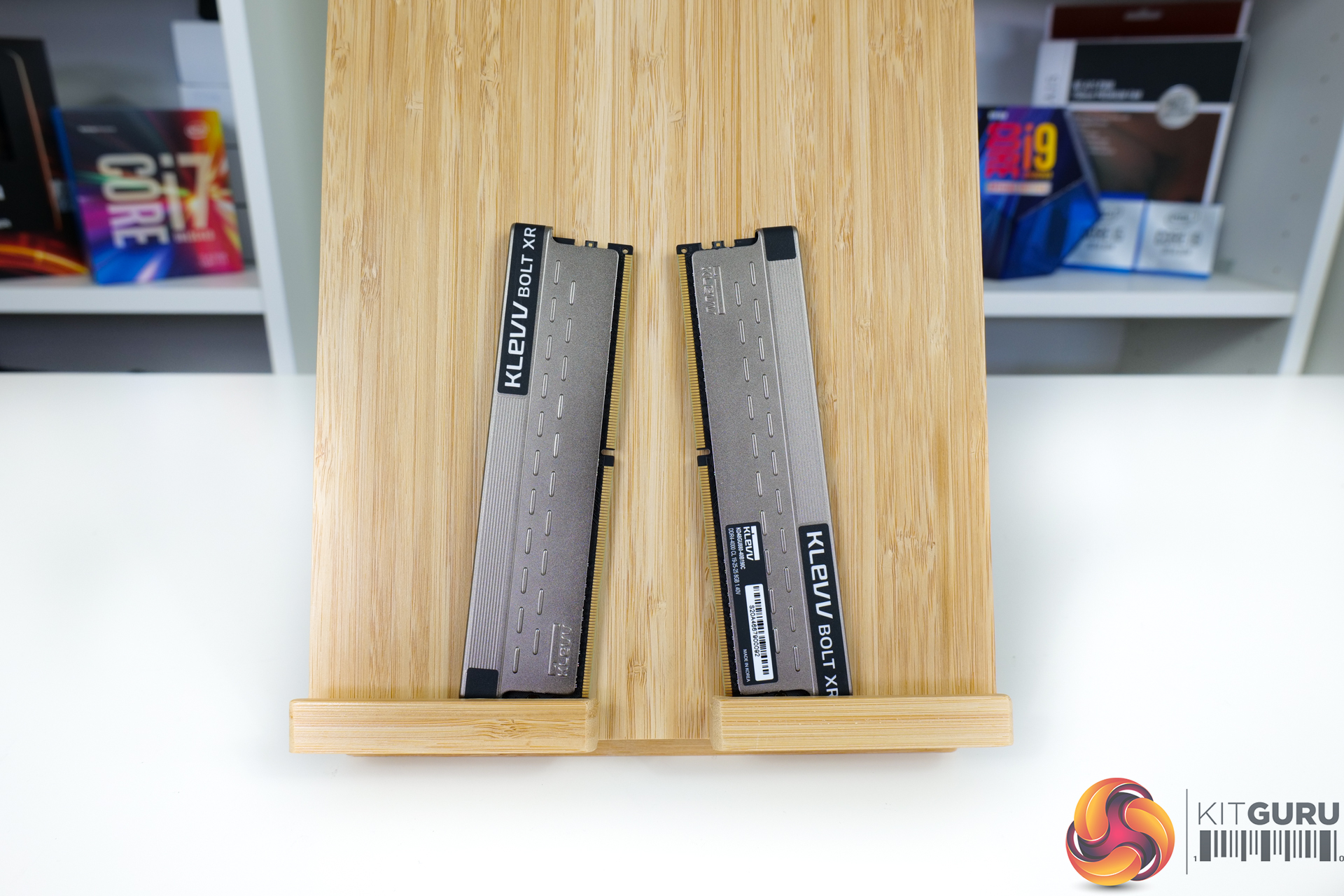
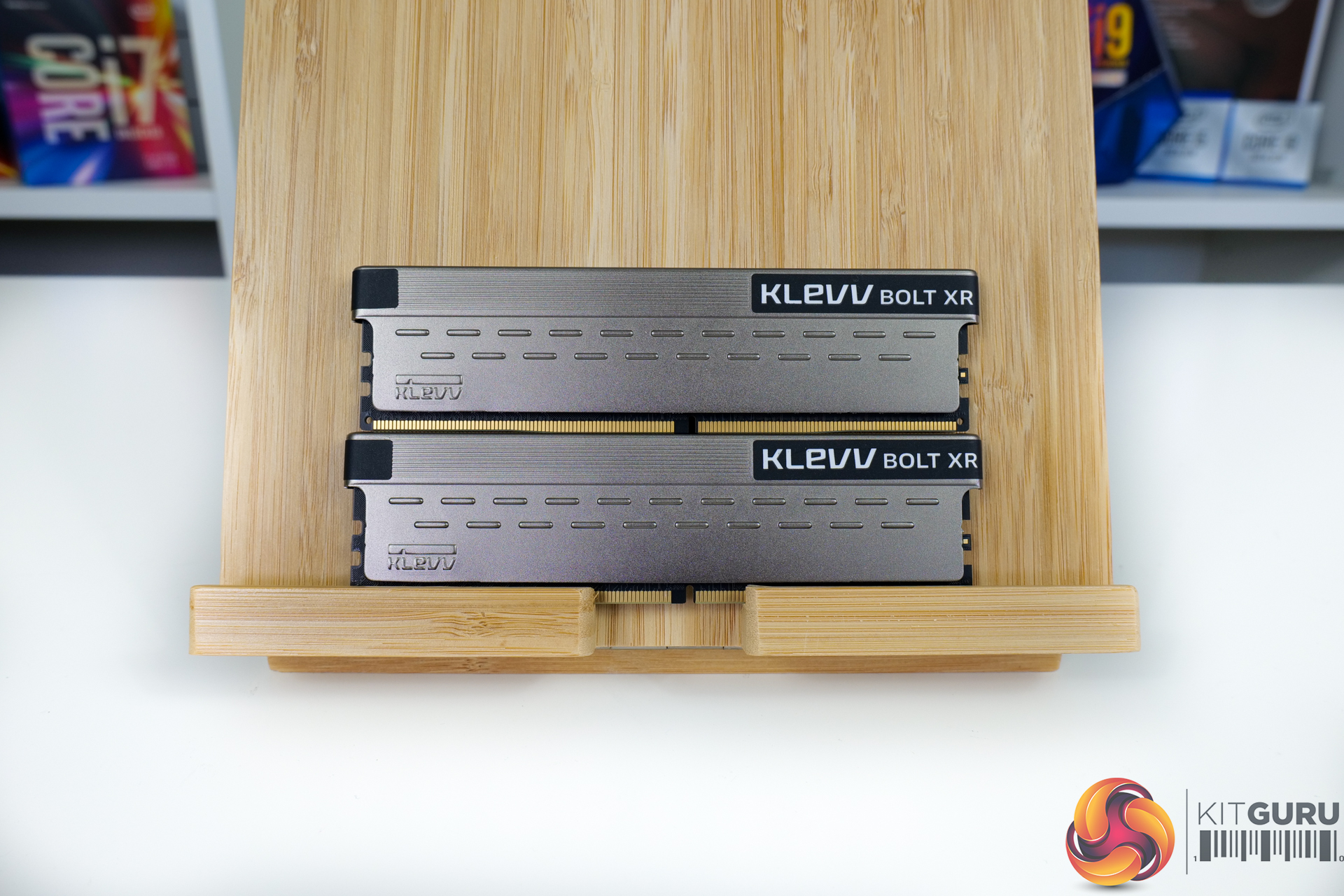
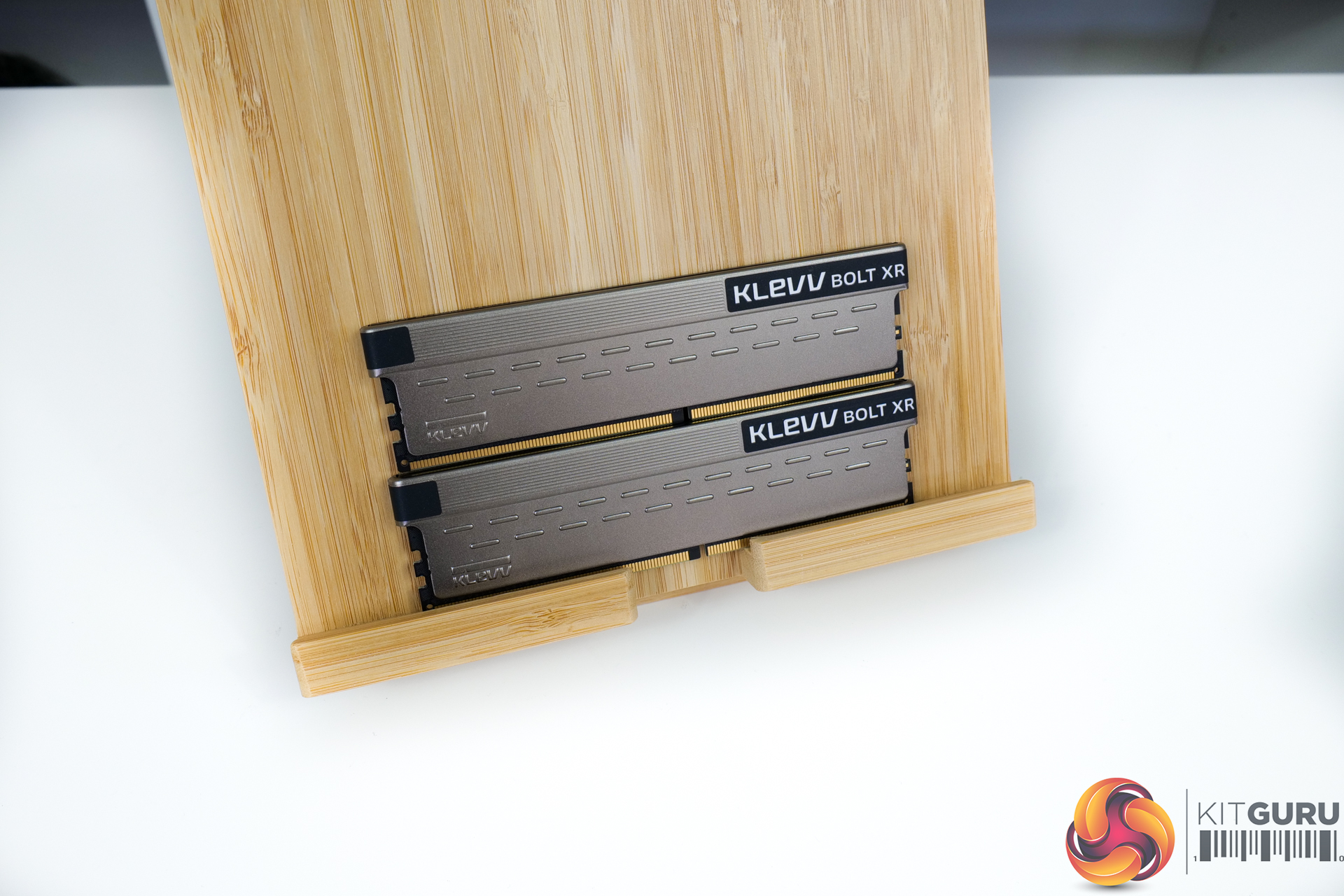
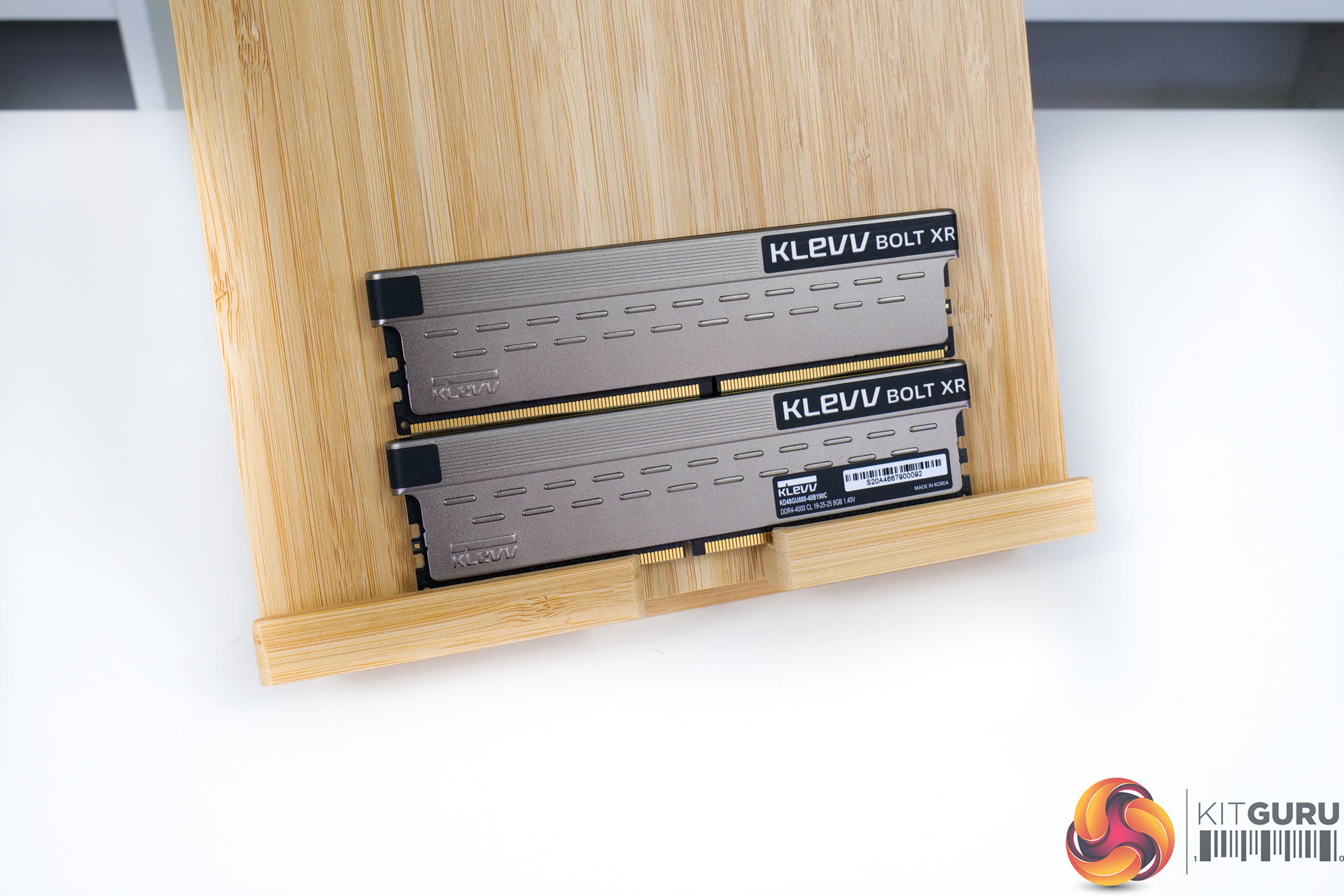
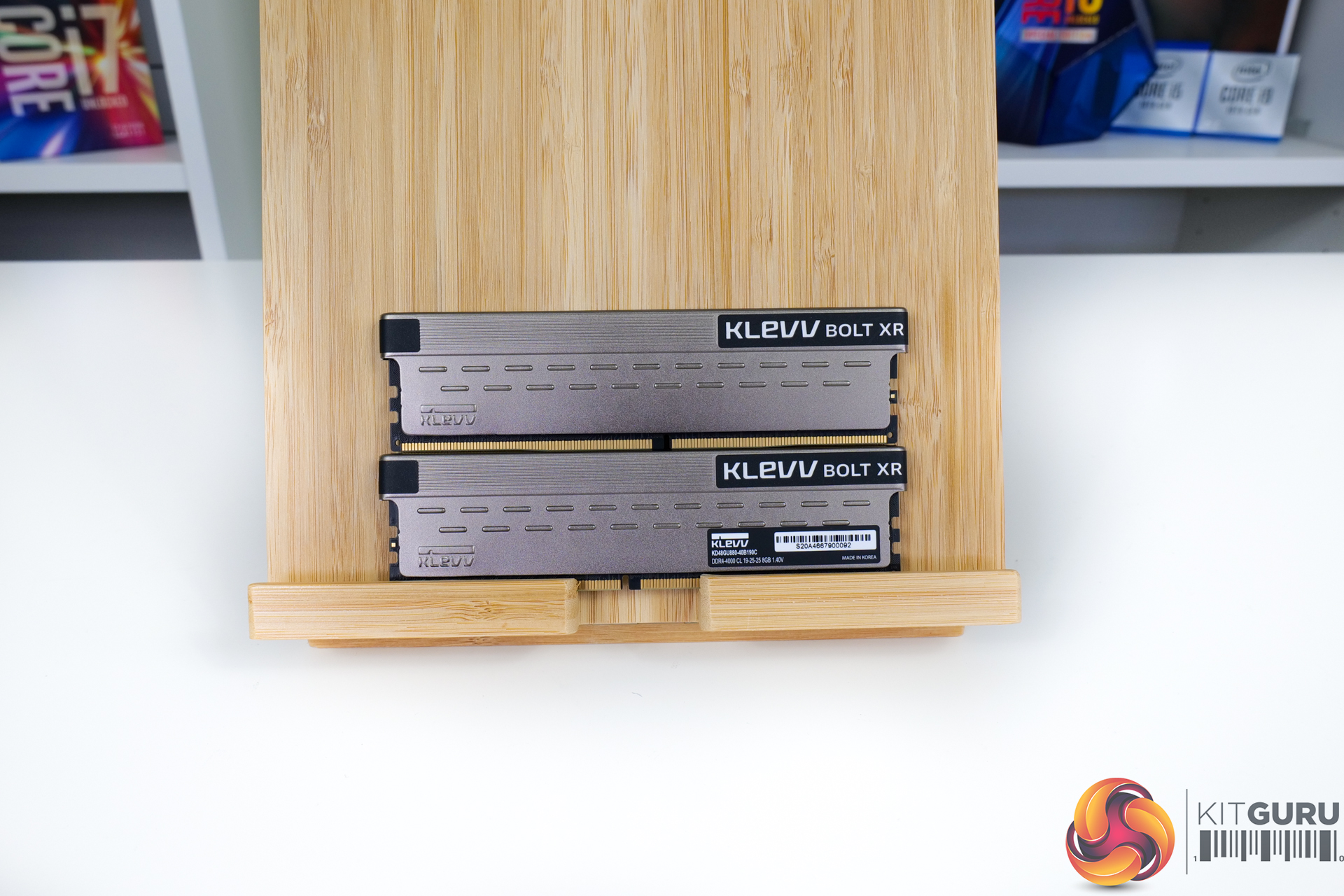
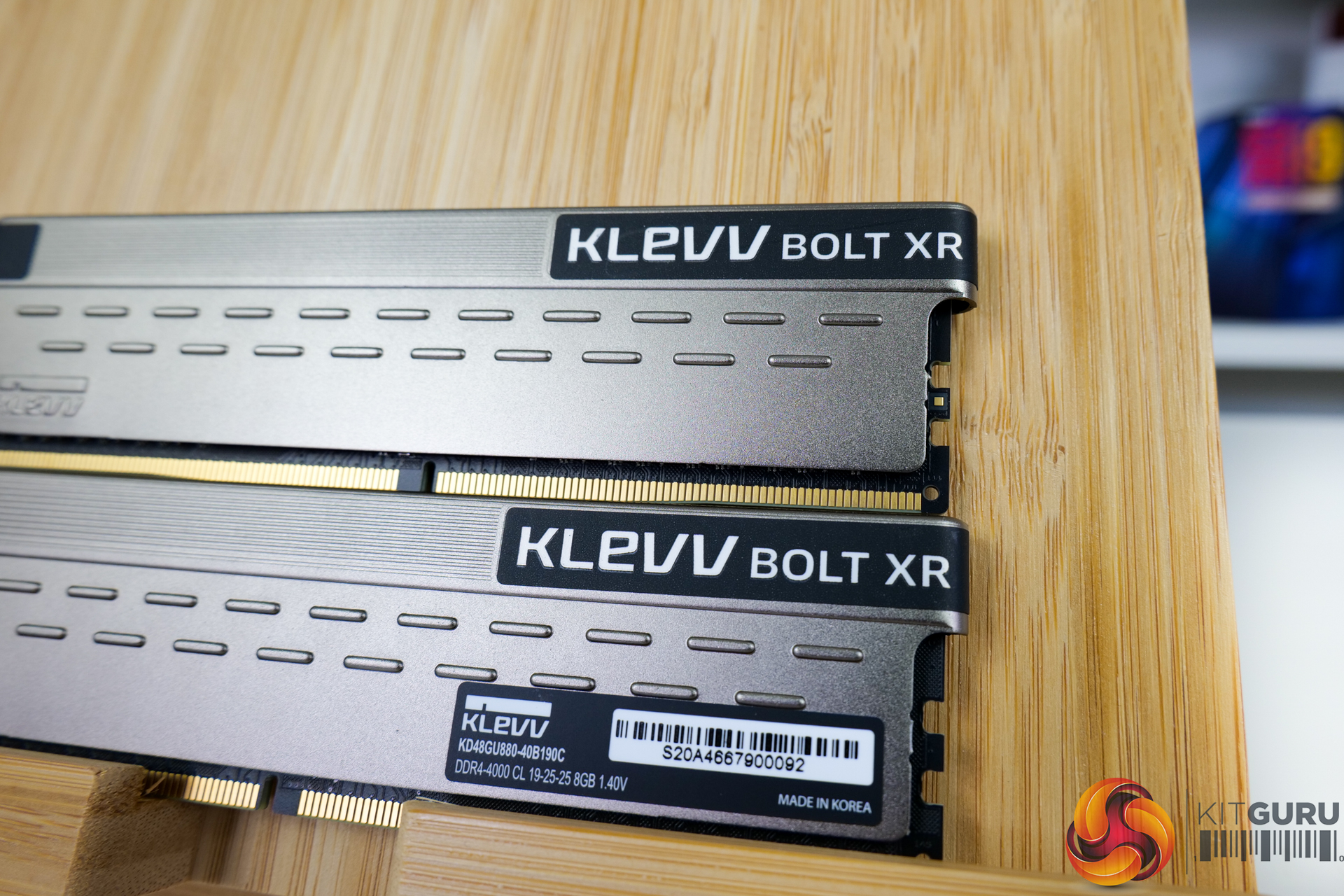
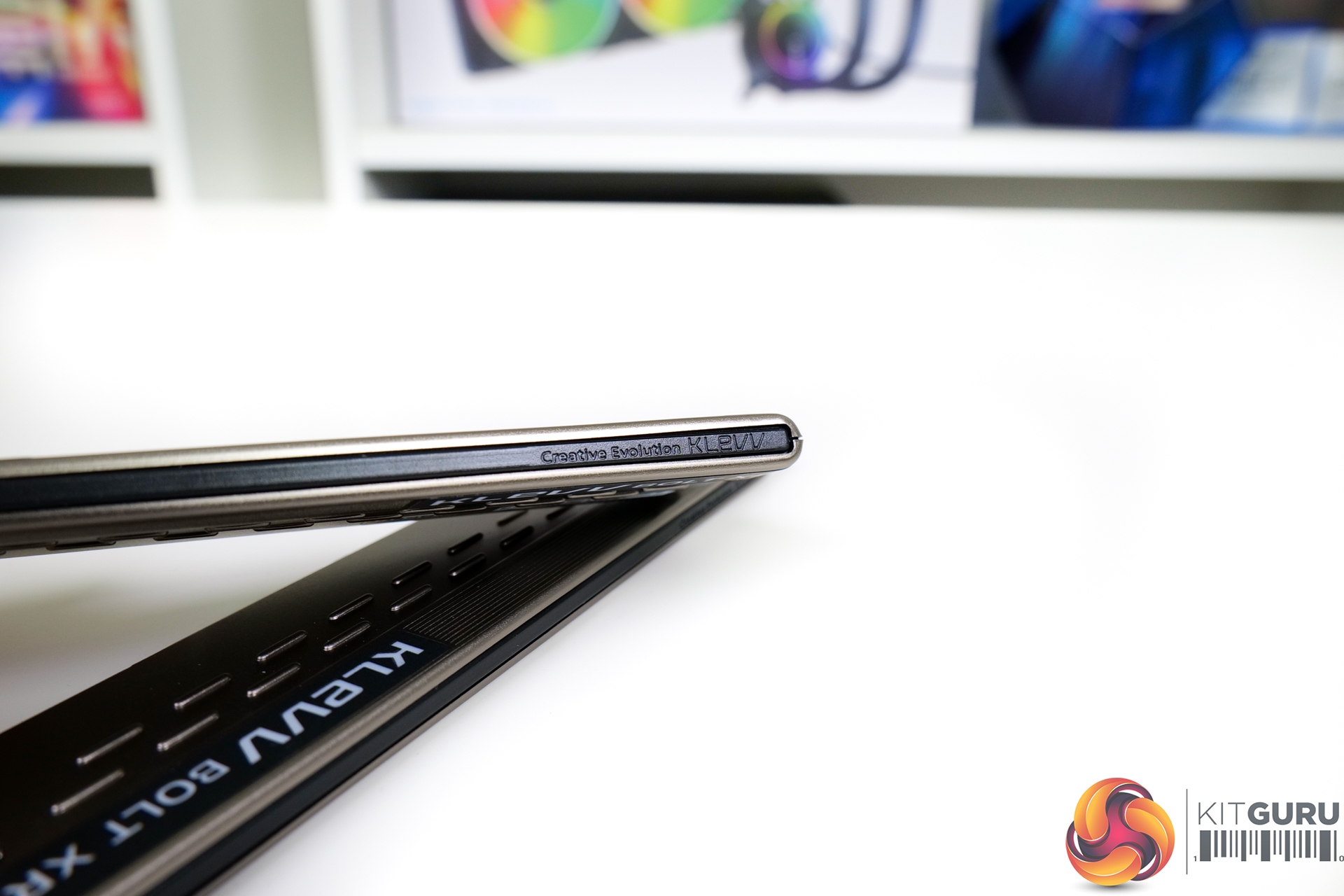
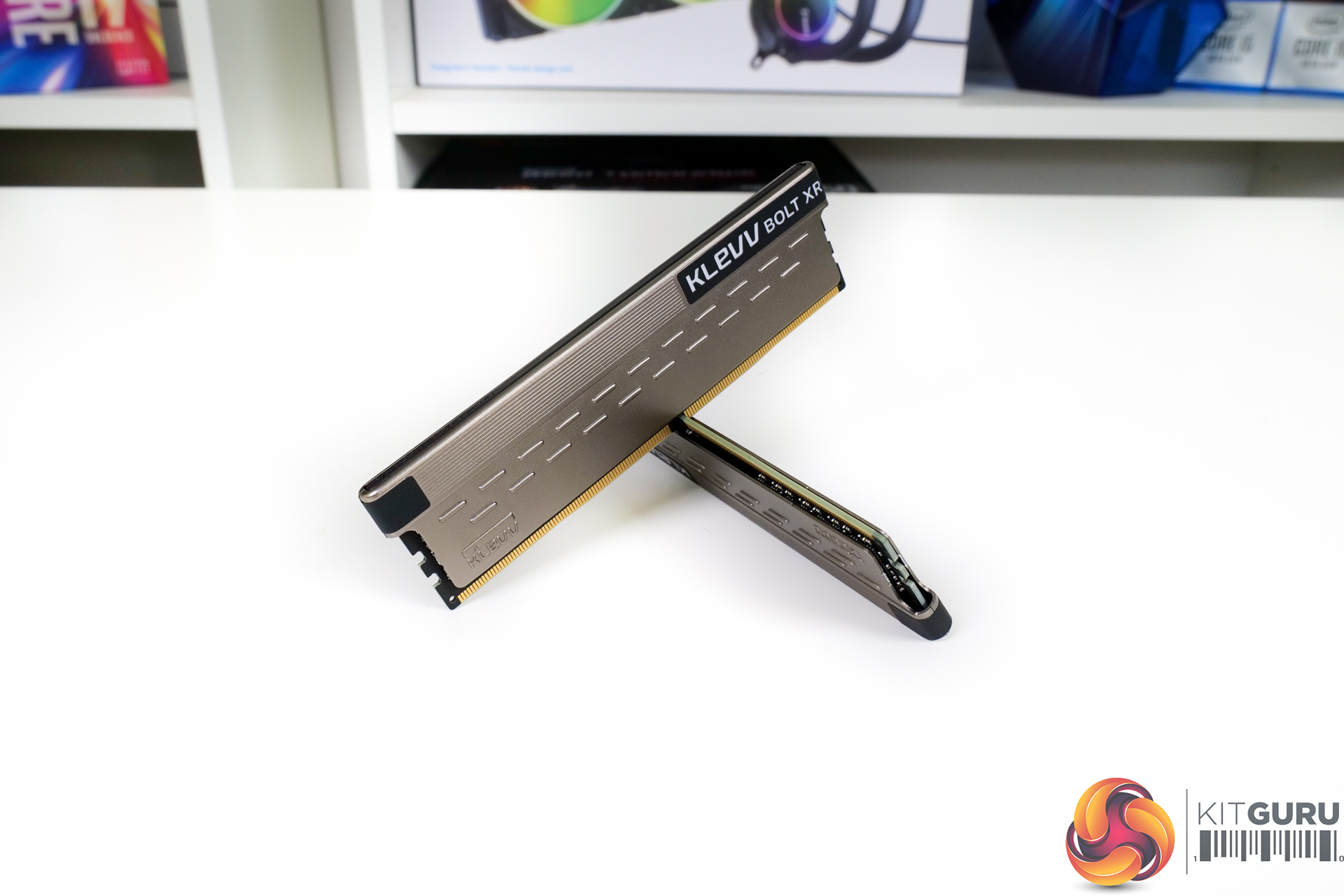
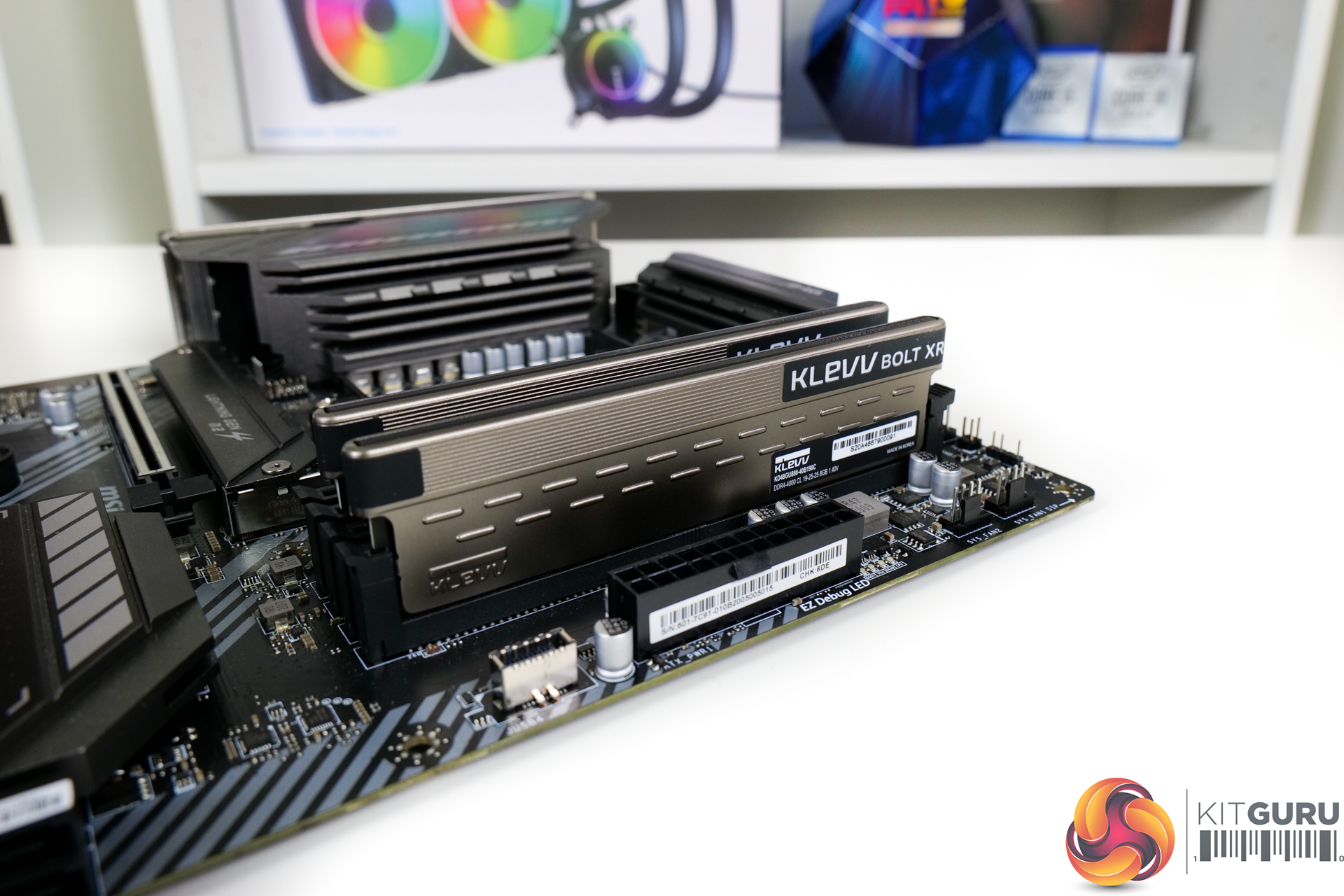
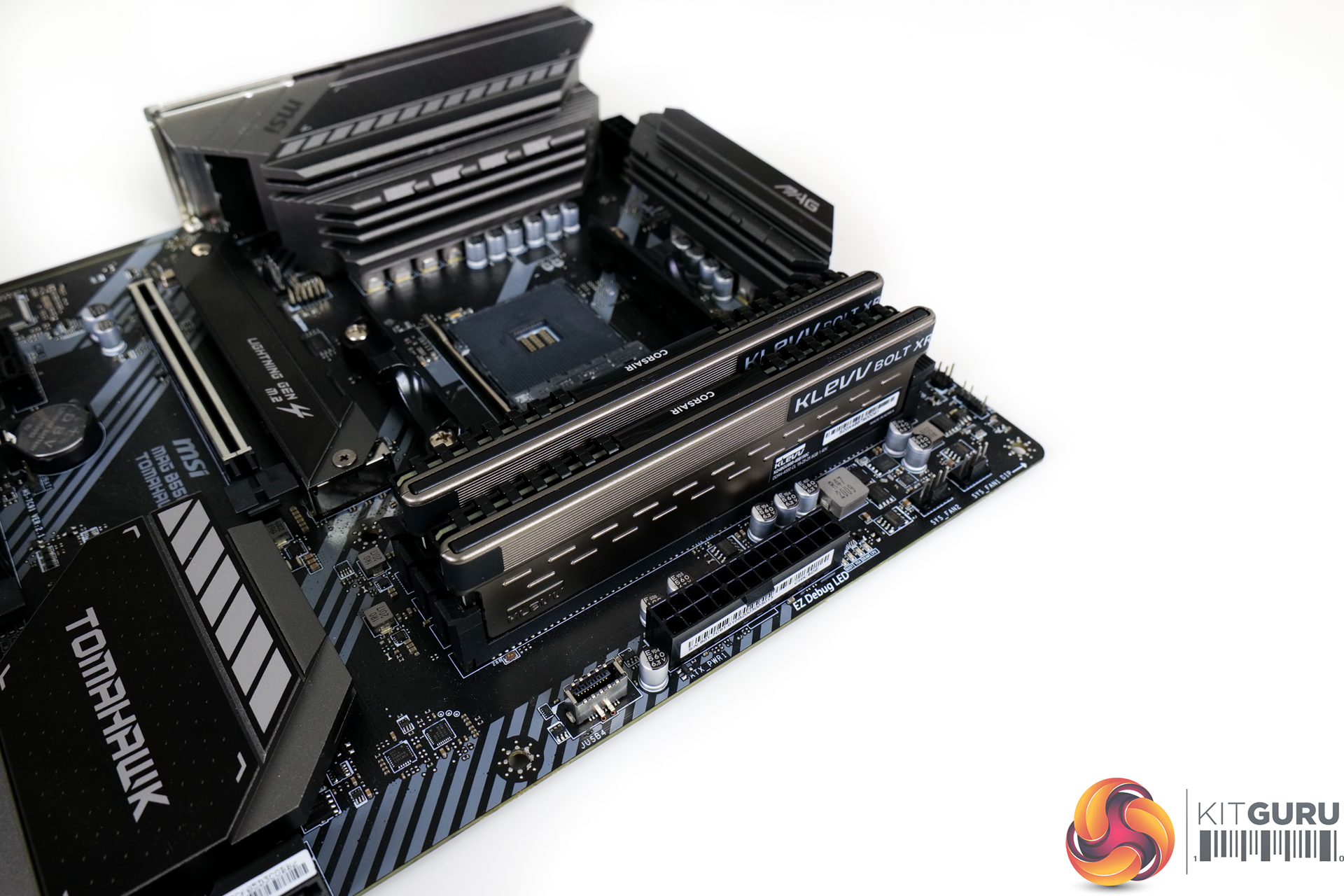
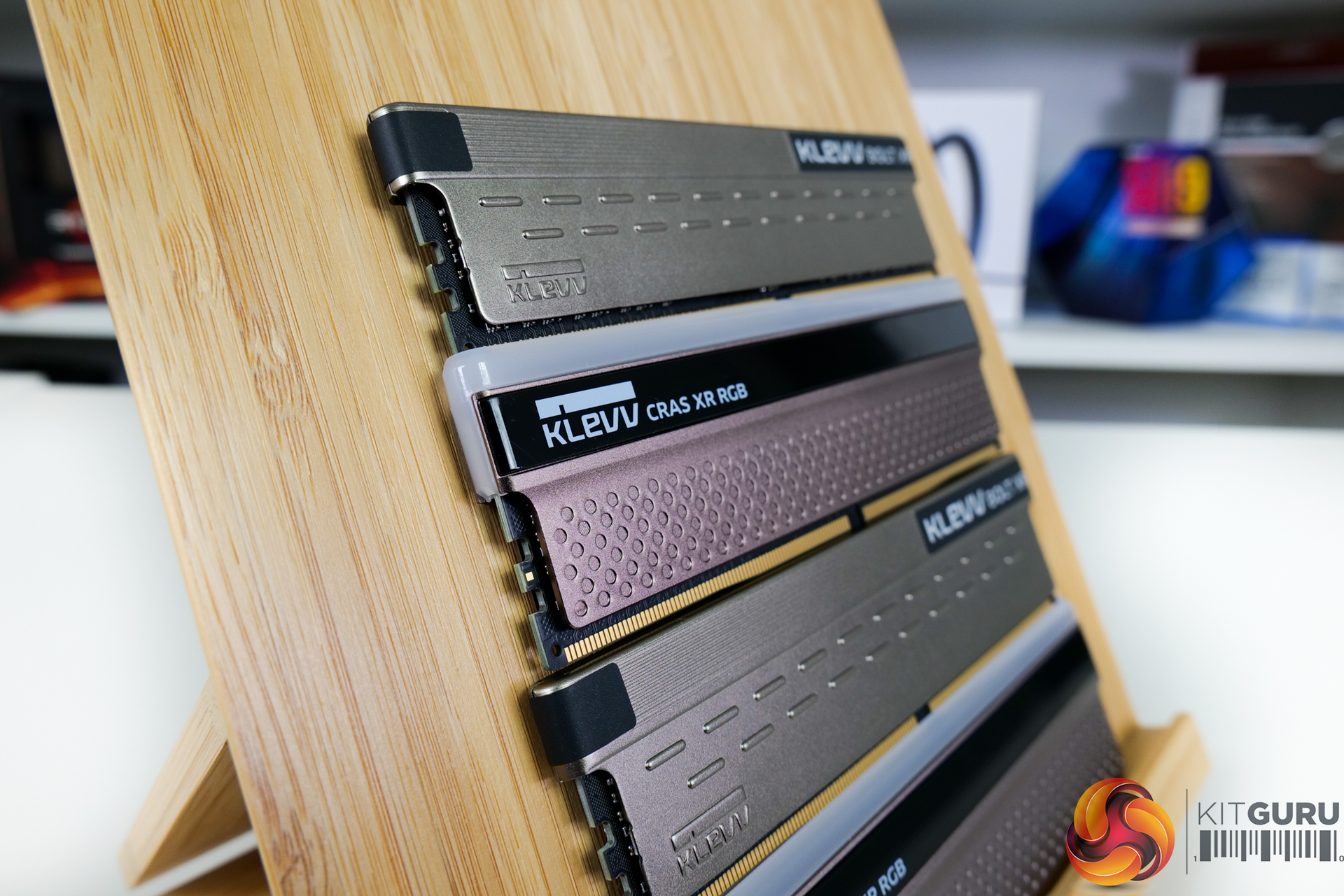
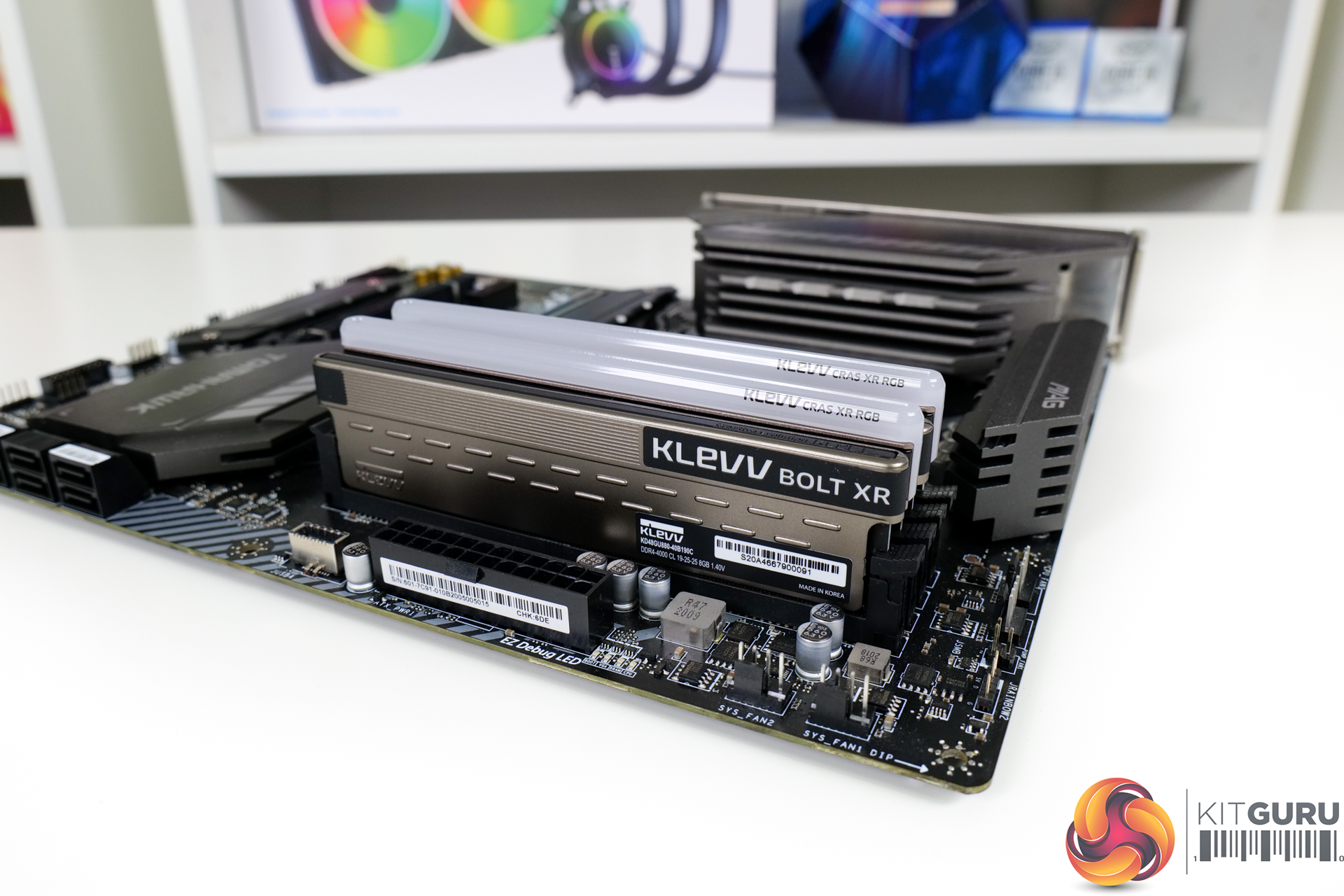
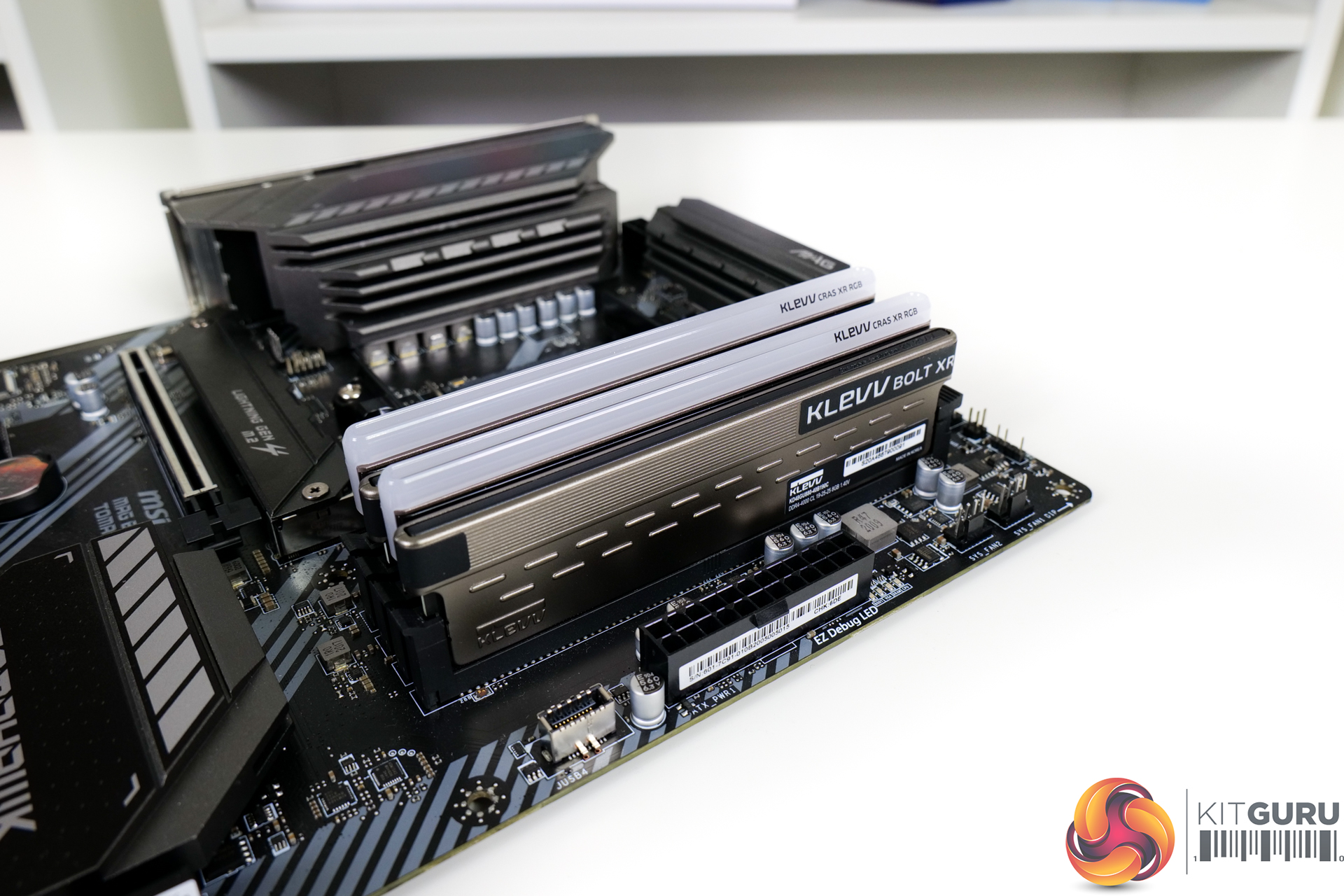
Starting out with Bolt XR modules, KLEVV uses an aluminium heatspreader that is primarily gunmetal-type grey in colour. That sits atop the black PCB. The modules have some physical design tweaks to add a touch of visual flair; these come in the form of notches and grooves which simply adjust the sheet of aluminium away from being a basic flat plate.
You also get the thicker rounded section and a little bit of colour contrast at the top of the module which features the KLEVV Bolt XR product name.
Overall, we would say that the Bolt XR modules are nothing particularly fancy in terms of design. I would compare these to something like Corsair’s Vengeance LPX modules which are intended to be commodity sticks without excess expenditure on fancy heatspreaders and RGB lighting.
Of course, this also has the benefit of excellent CPU cooler and motherboard compatibility as the Bolt XR modules only measure just under 37mm tall thus limiting their interference potential. For reference, Corsair Vengeance LPX is 33.5 mm tall and is generally considered to have excellent cooler height compatibility.
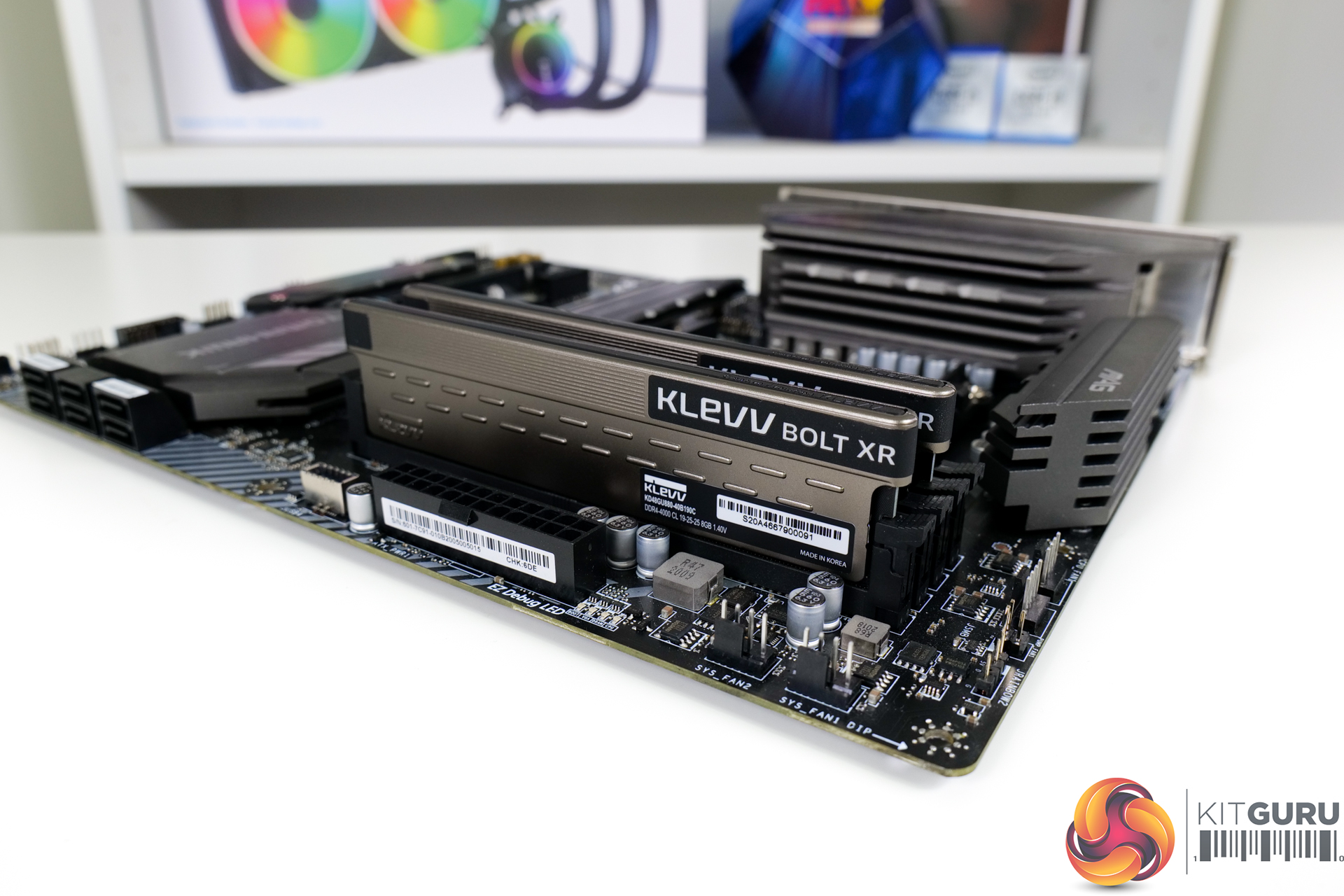
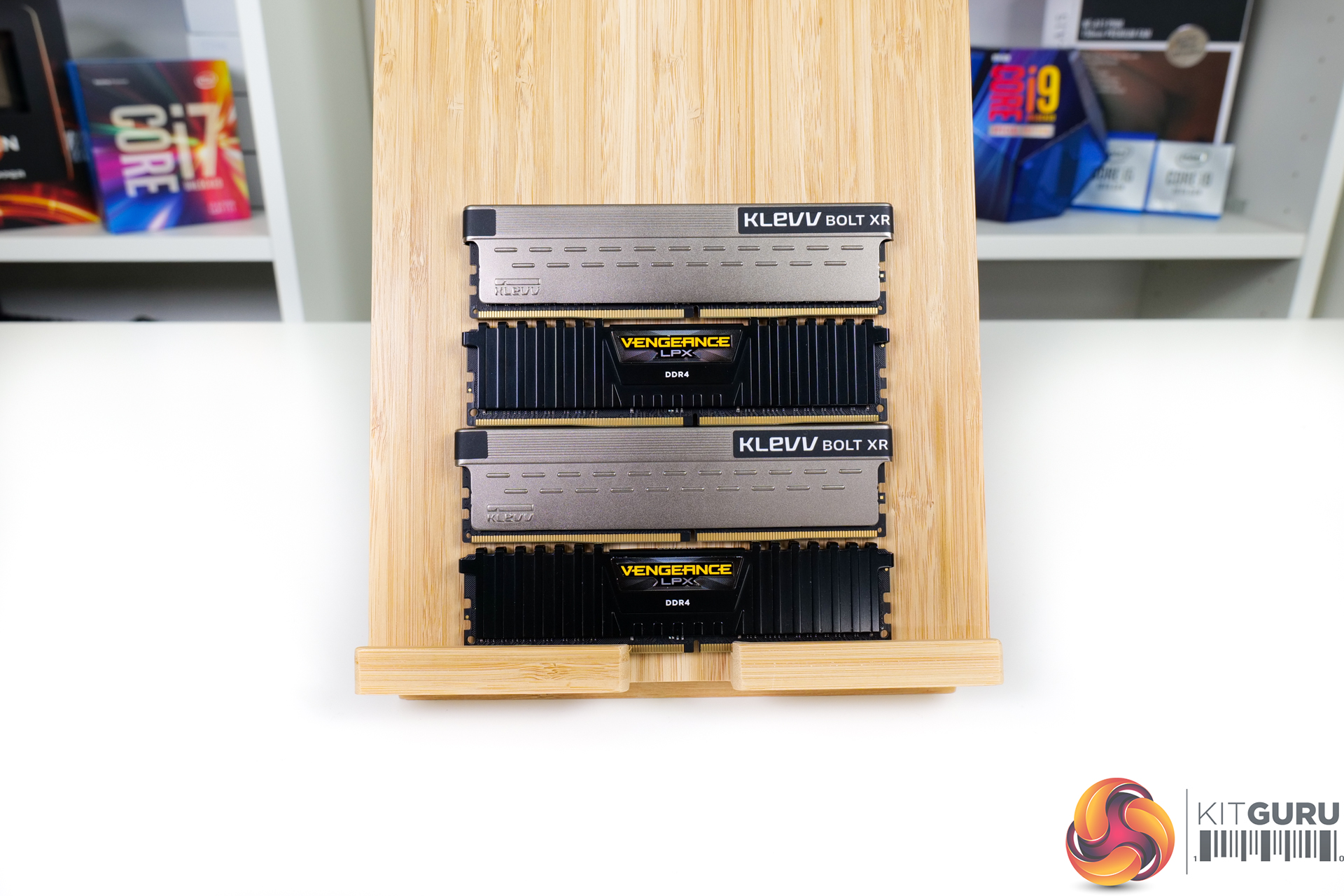
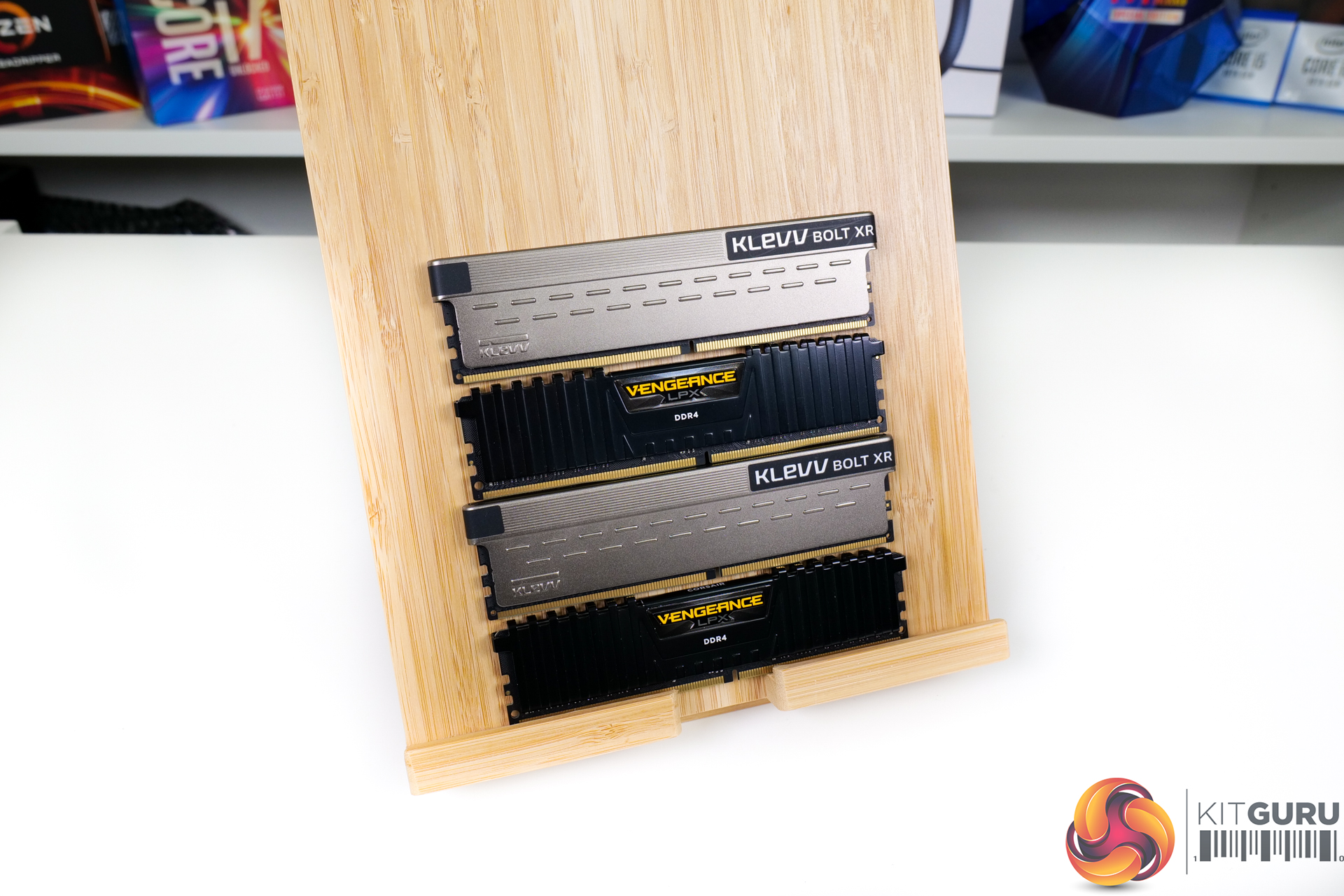
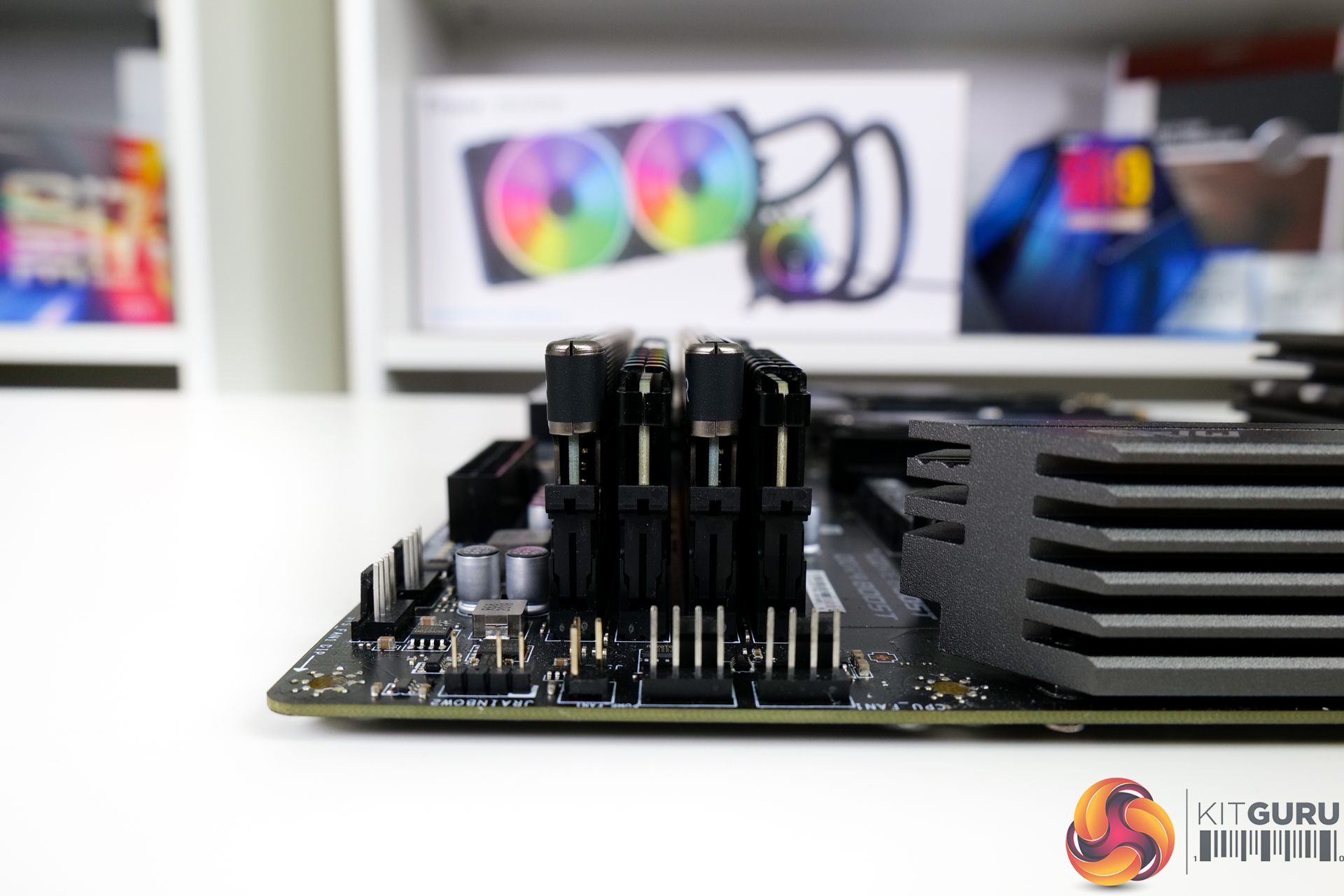
Alternative notable capacities and frequencies available include 2x8GB or 2x16GB kits at 3600 CL18, which is common for SK Hynix memory ICs from competing vendors. The 4000MHz CL19 16GB kit that we are testing comes in at just over £130 currently with the poor availability seemingly limited to just Amazon or some eBay sellers. £130 puts Klevv’s kit directly against Corsair’s Vengeance LPX 4GHz 16GB competitor.
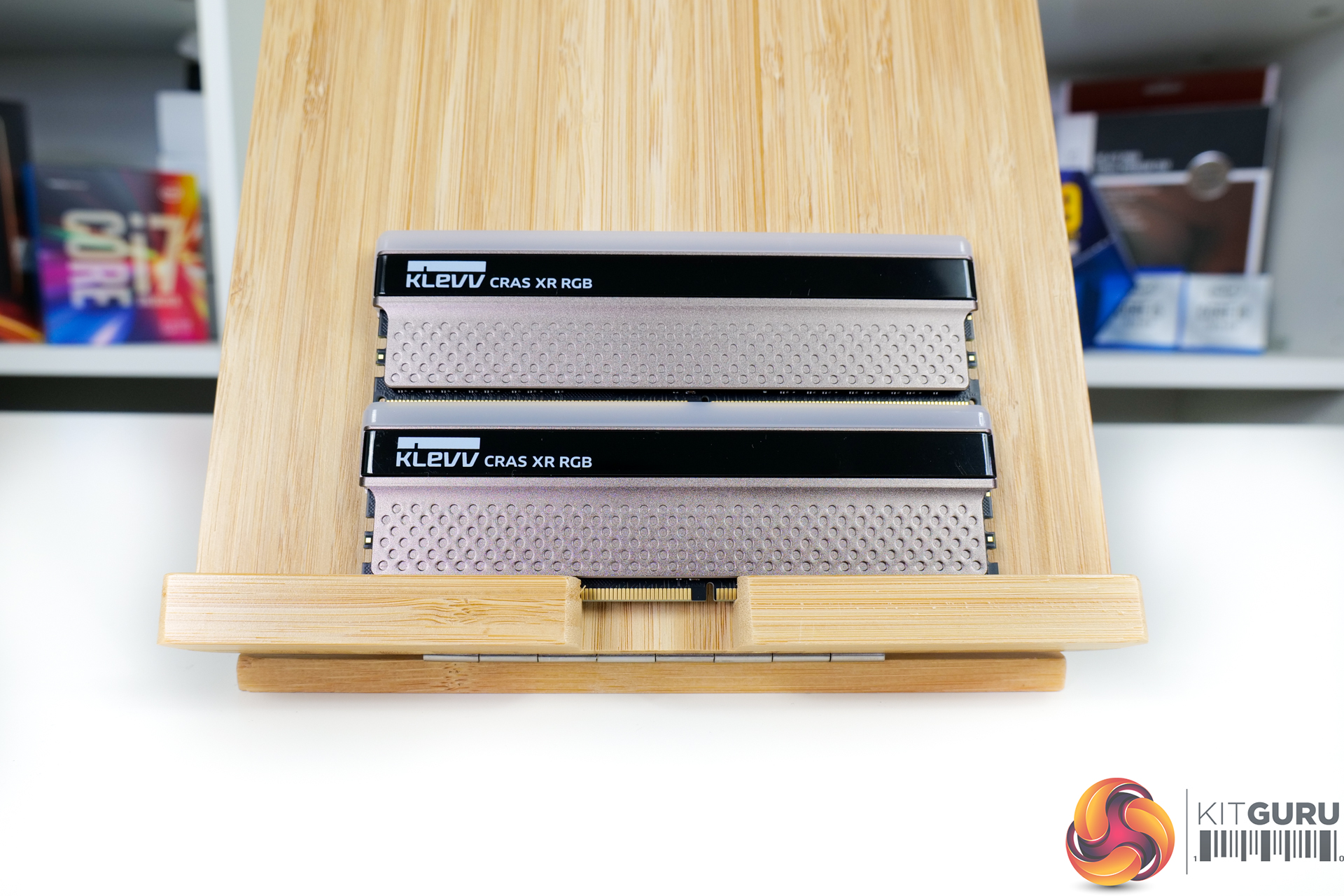
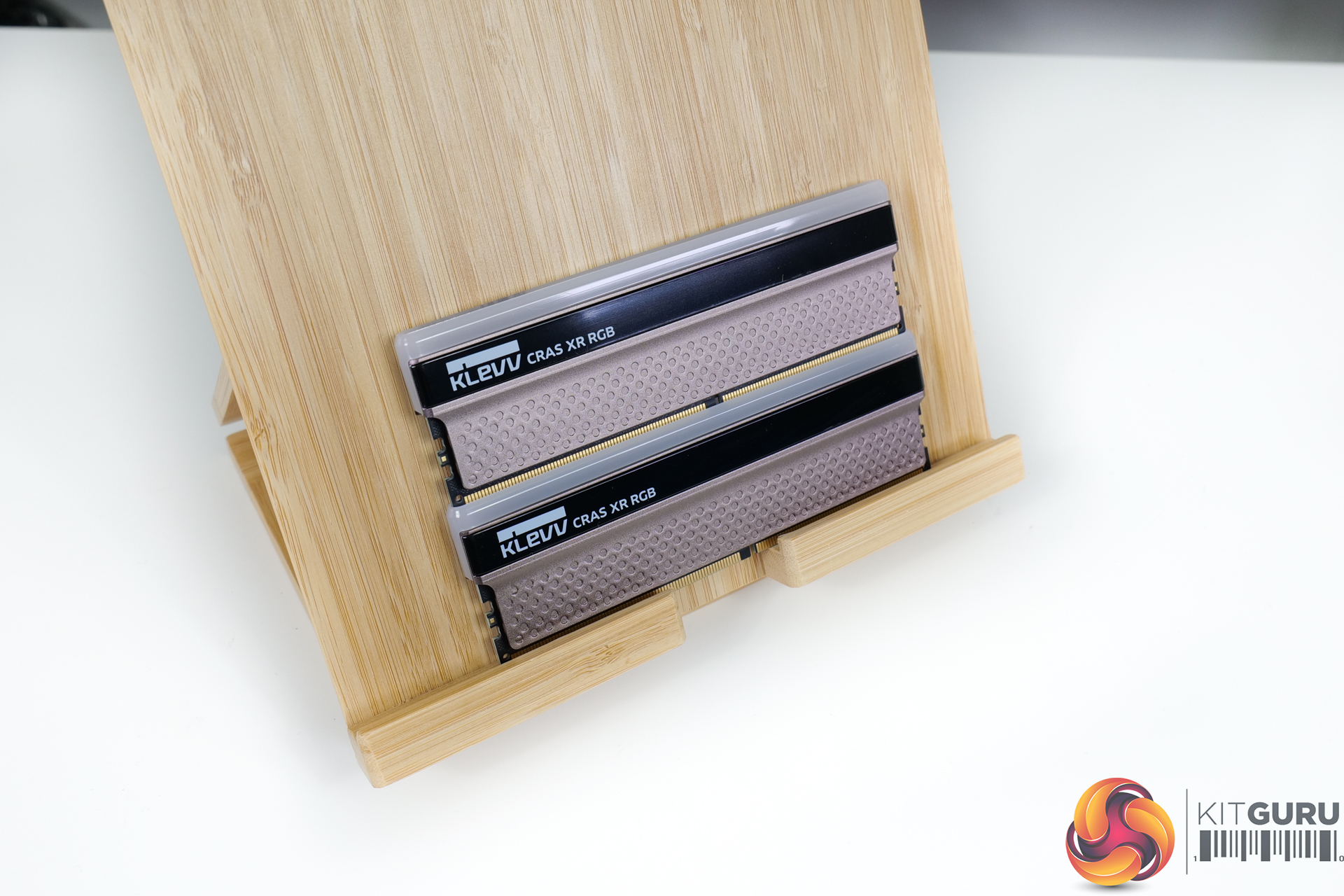
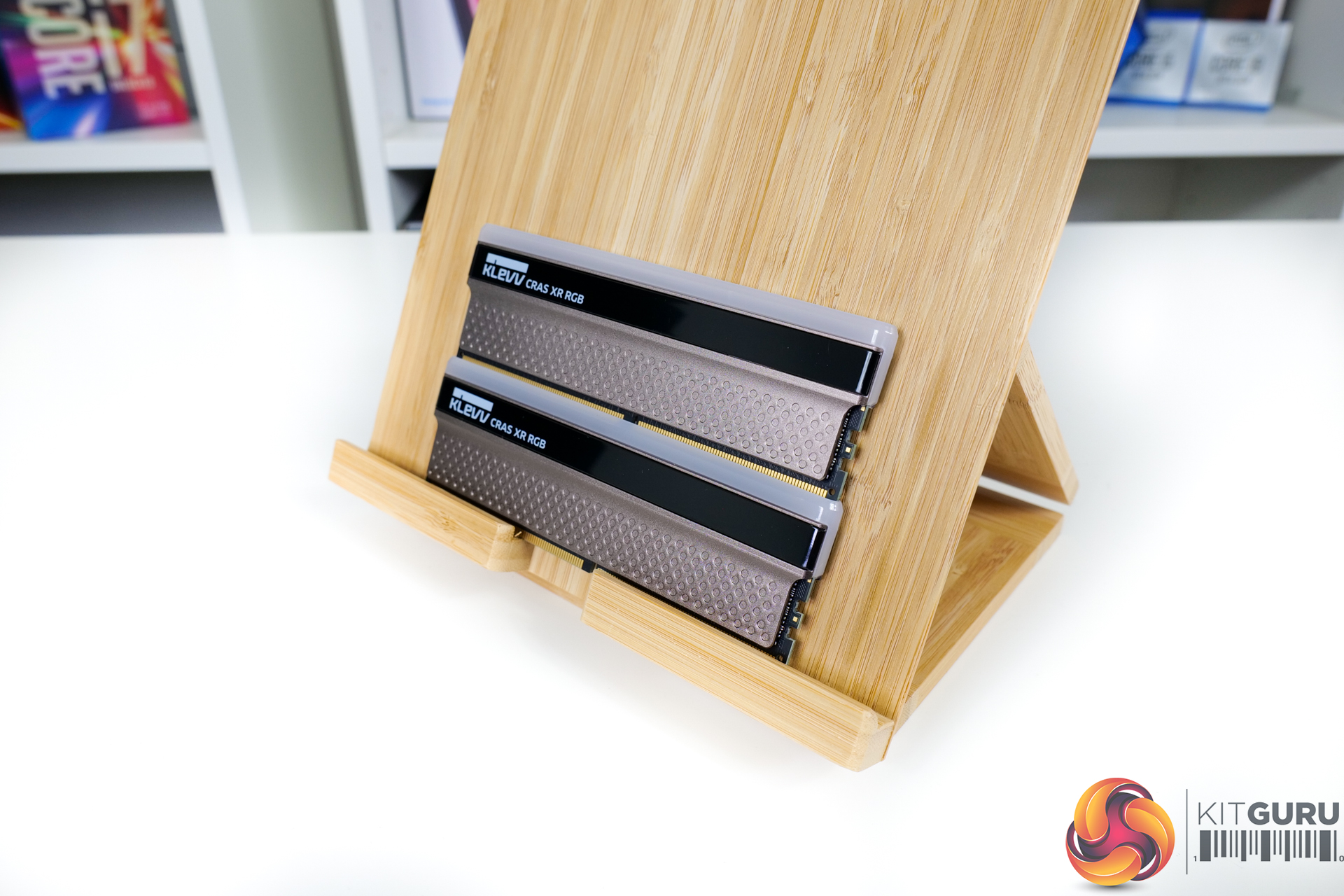
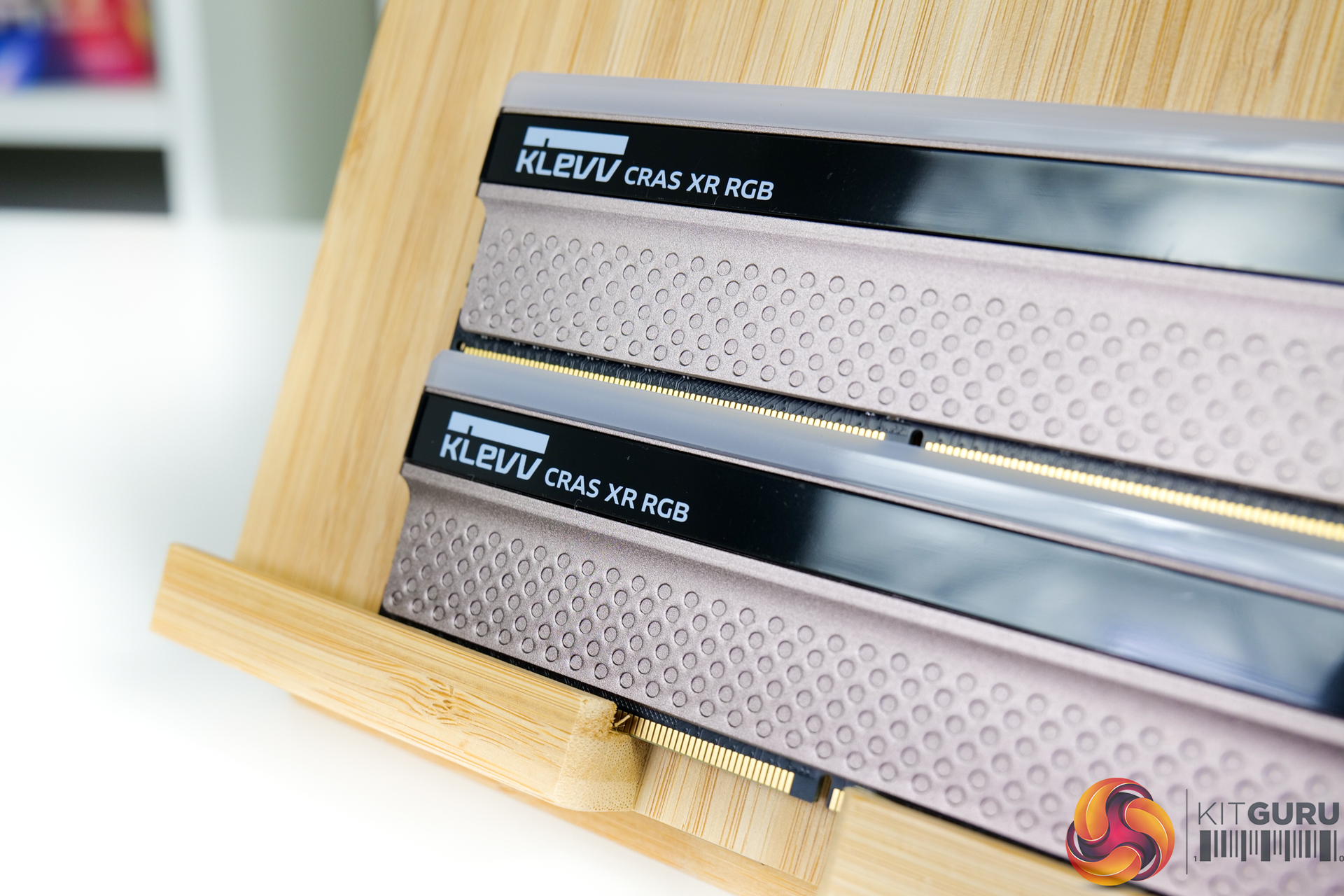
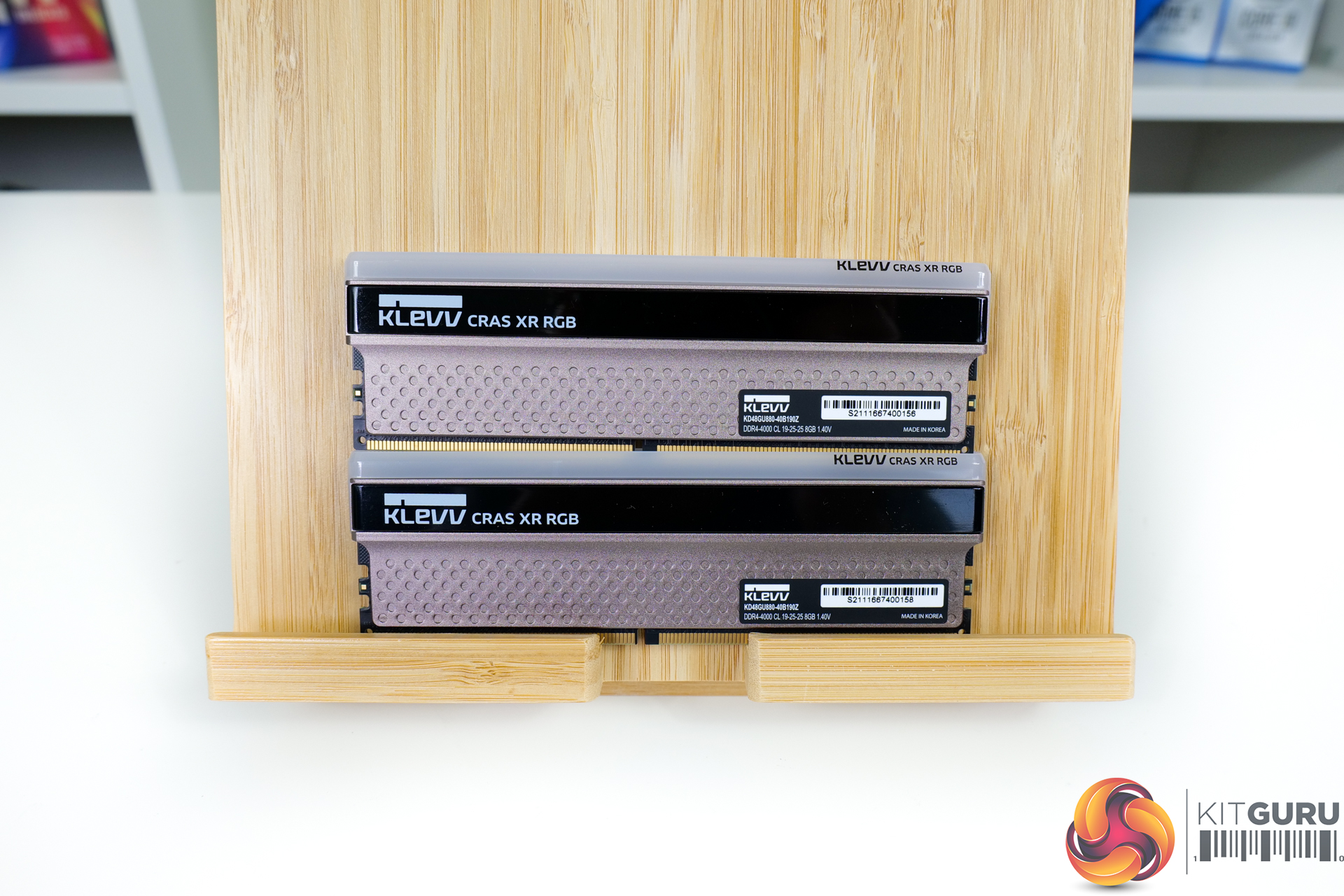
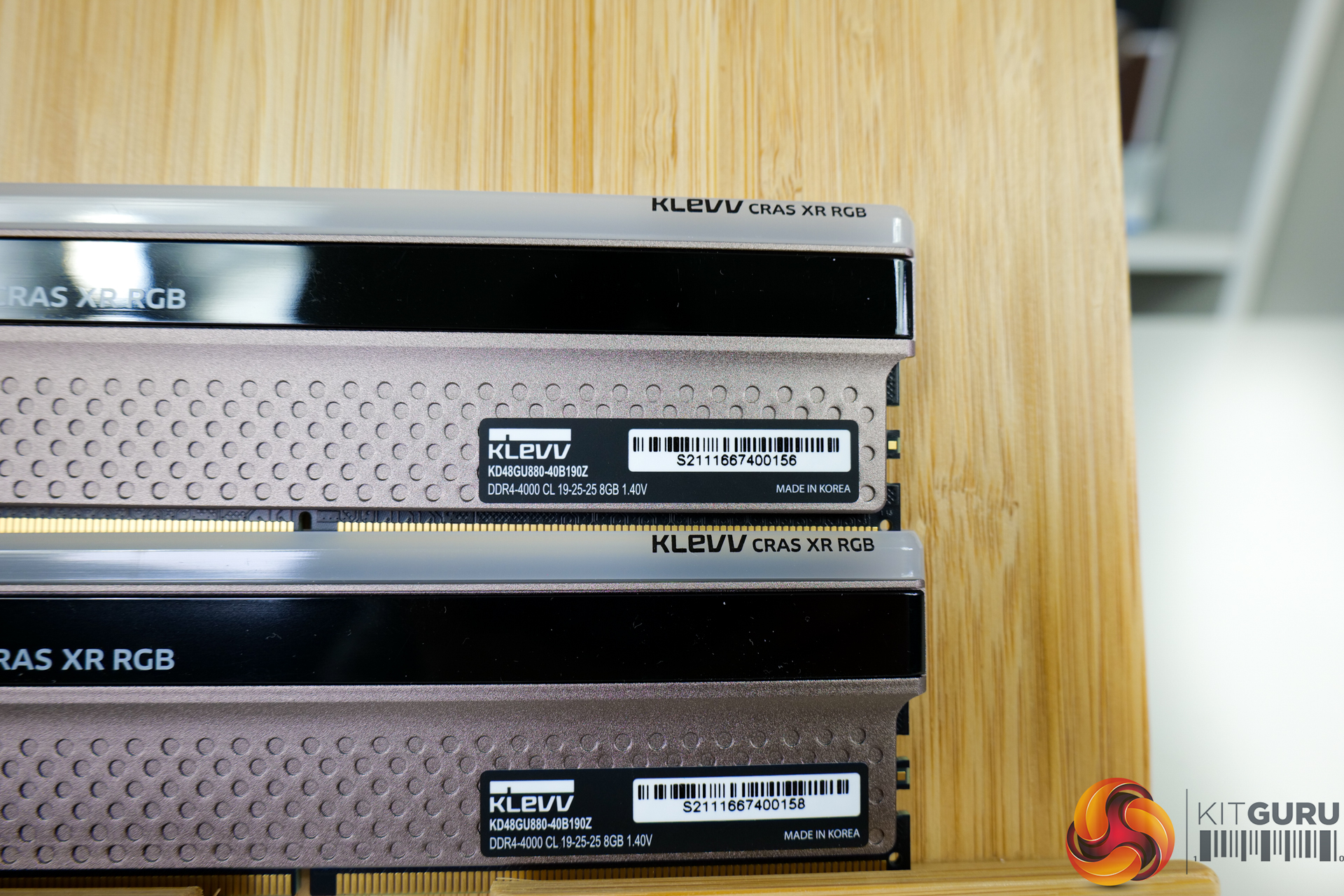
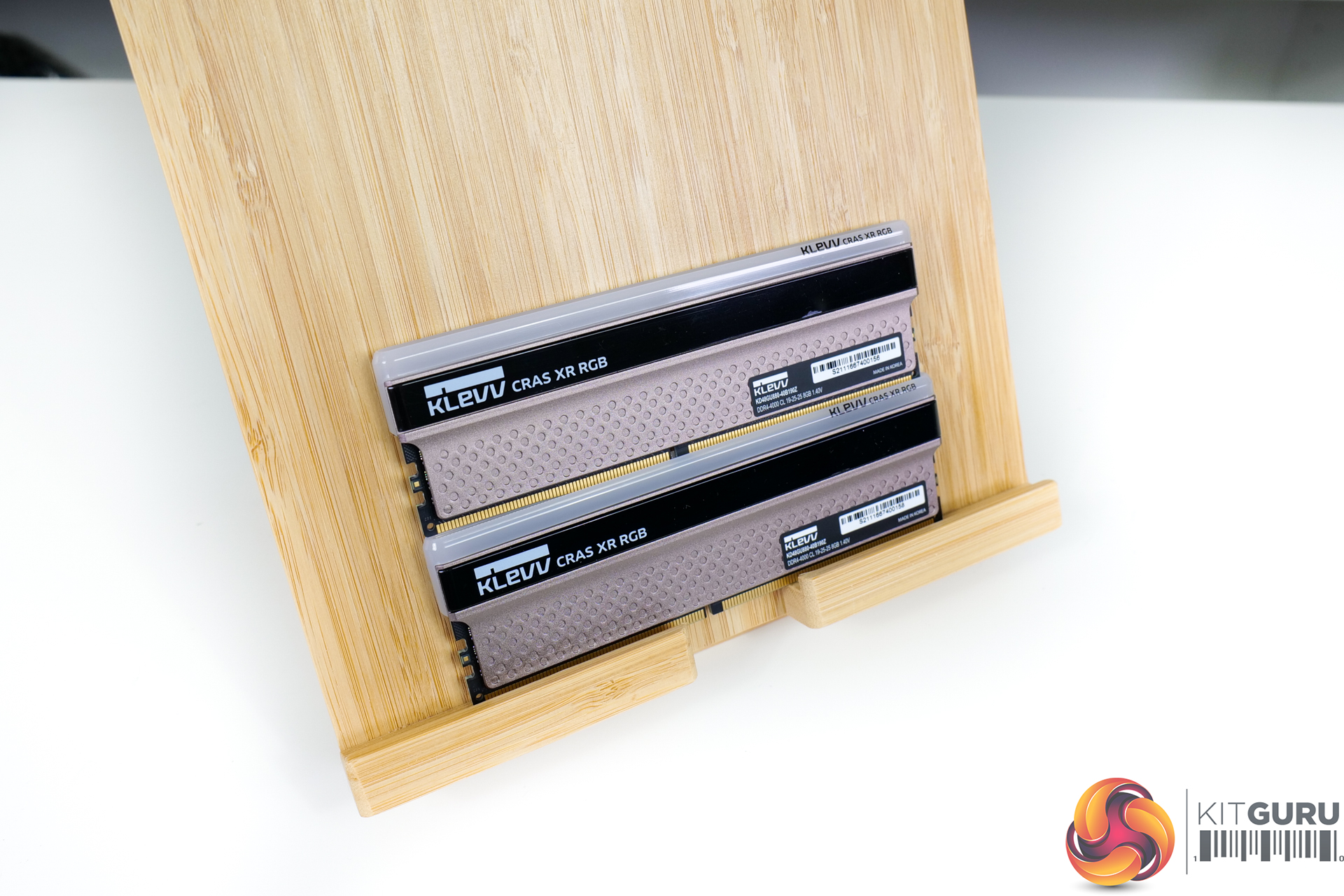
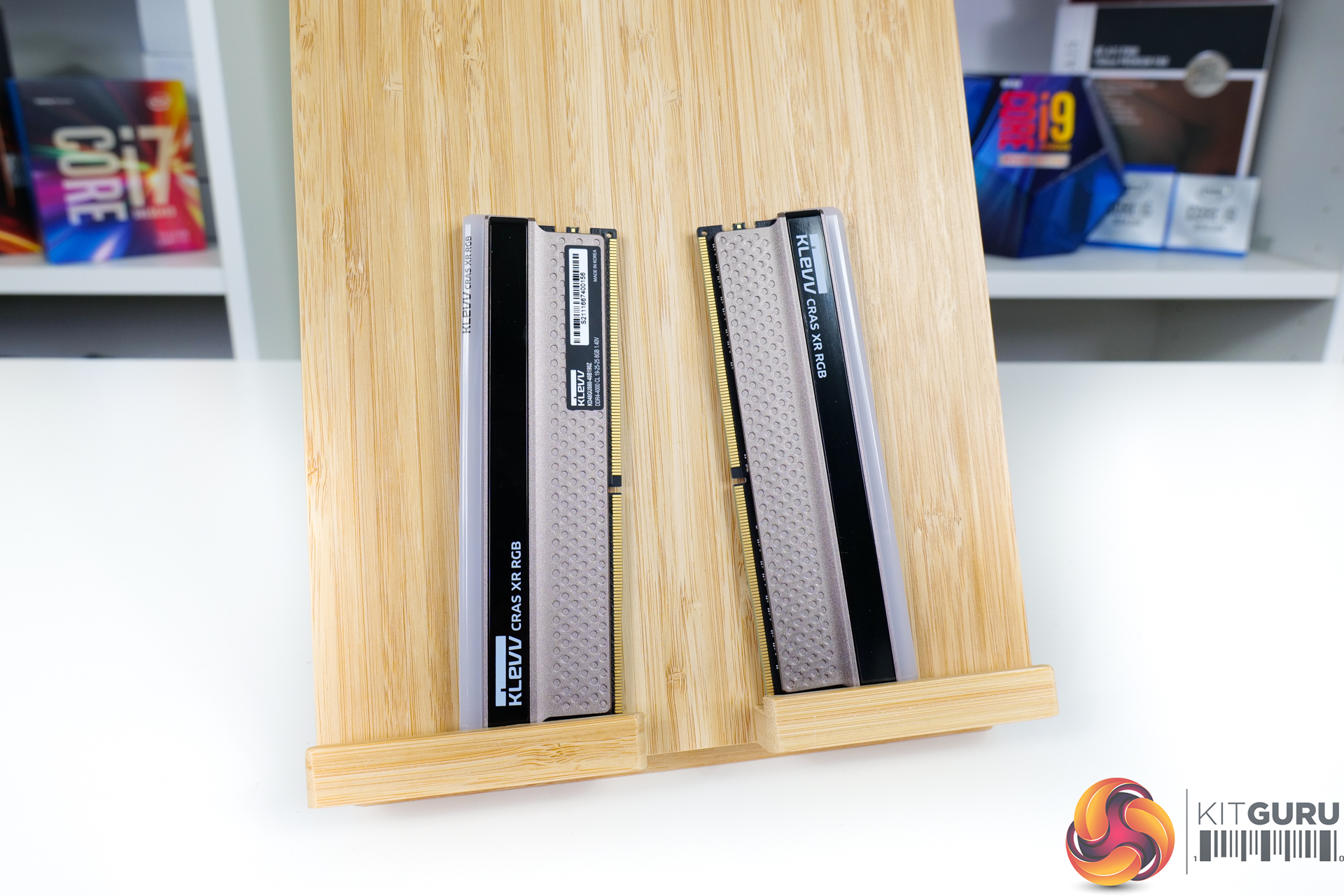
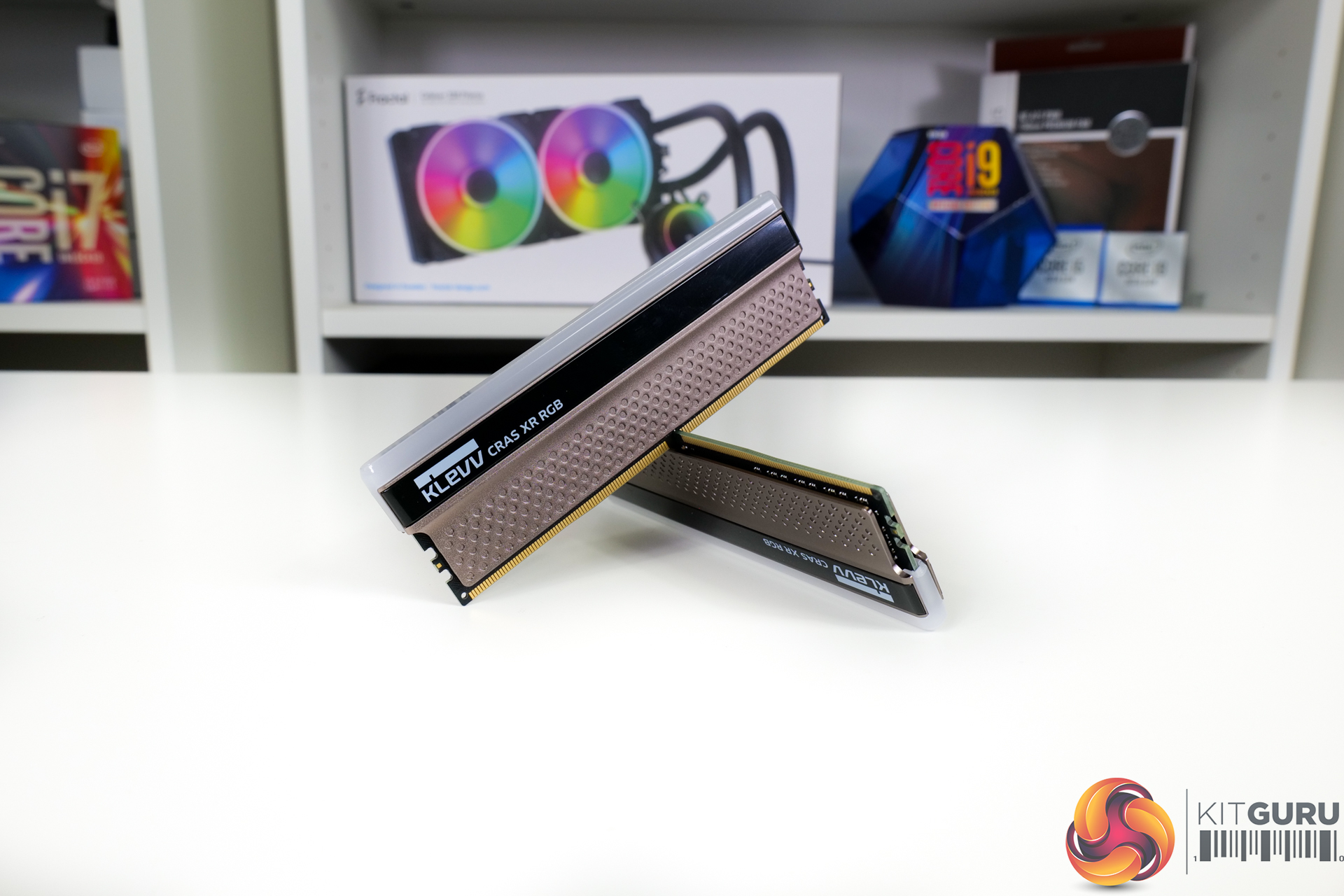
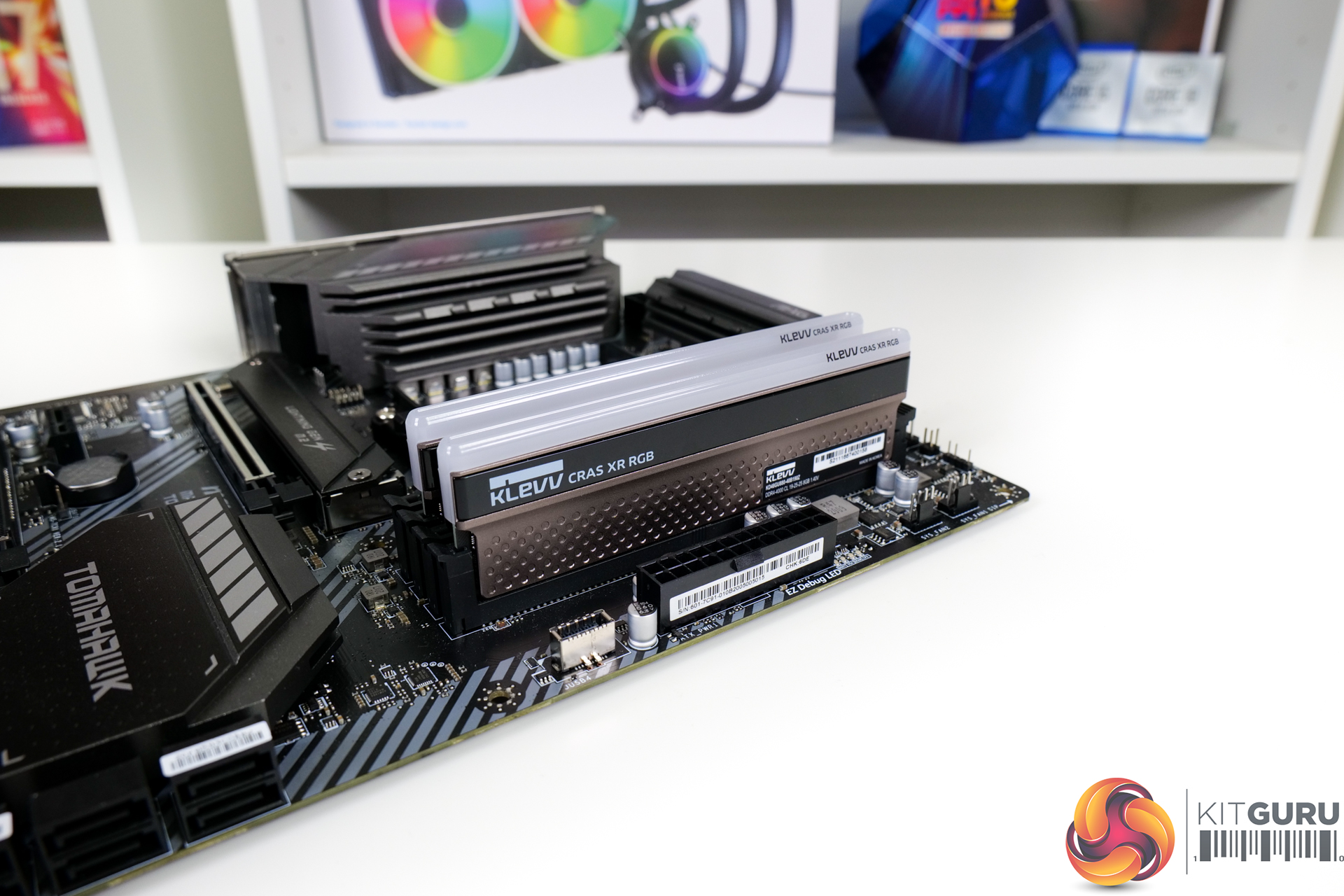
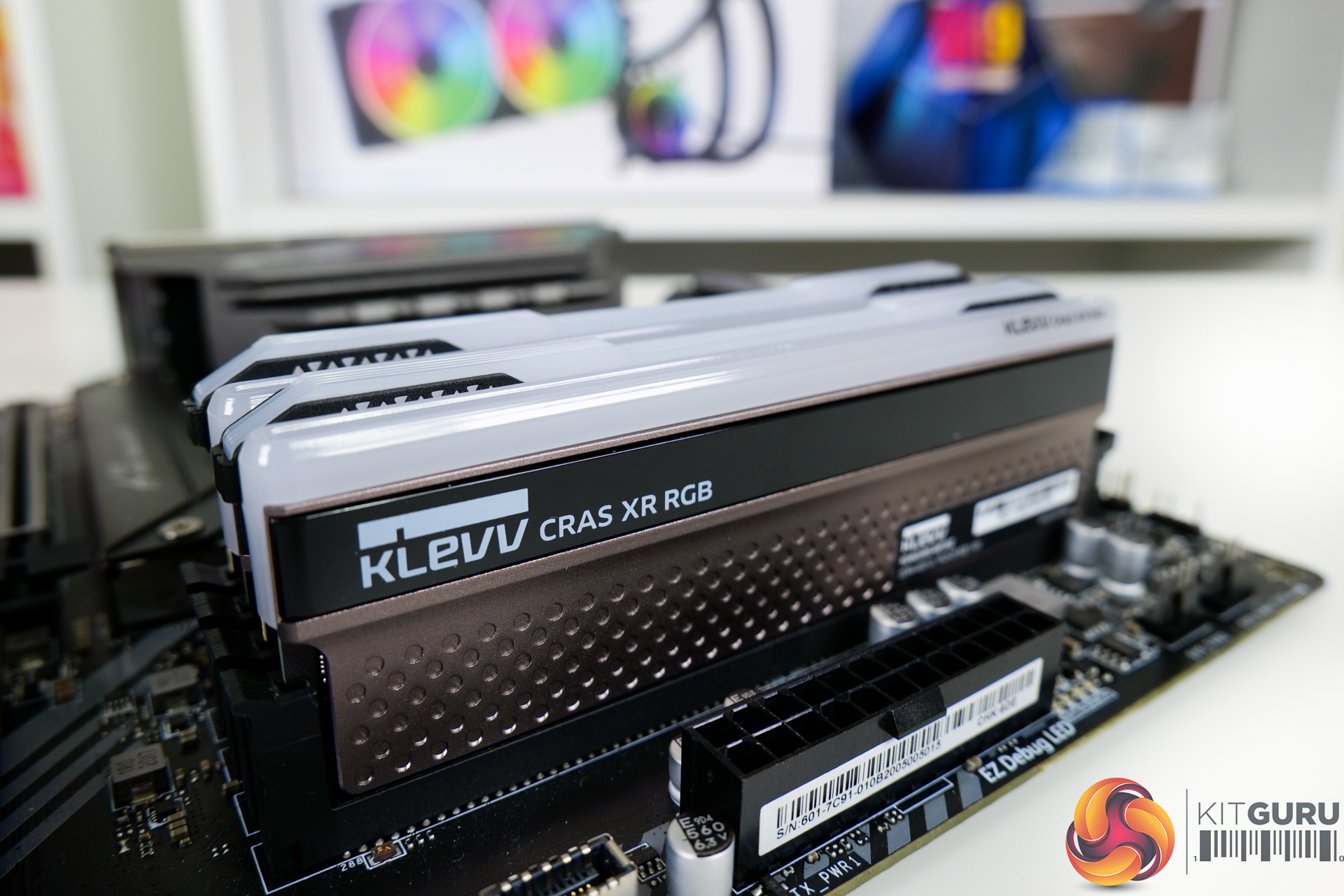
Now focusing on the Cras XR RGB modules, which of course run at the same settings, the key variation comes in the heatspreader – and therefore overall module – design. Klevv still uses an aluminium heatspreader, but this time the design is changed to a dotted style that I personally prefer over the Bolt XR’s notches.
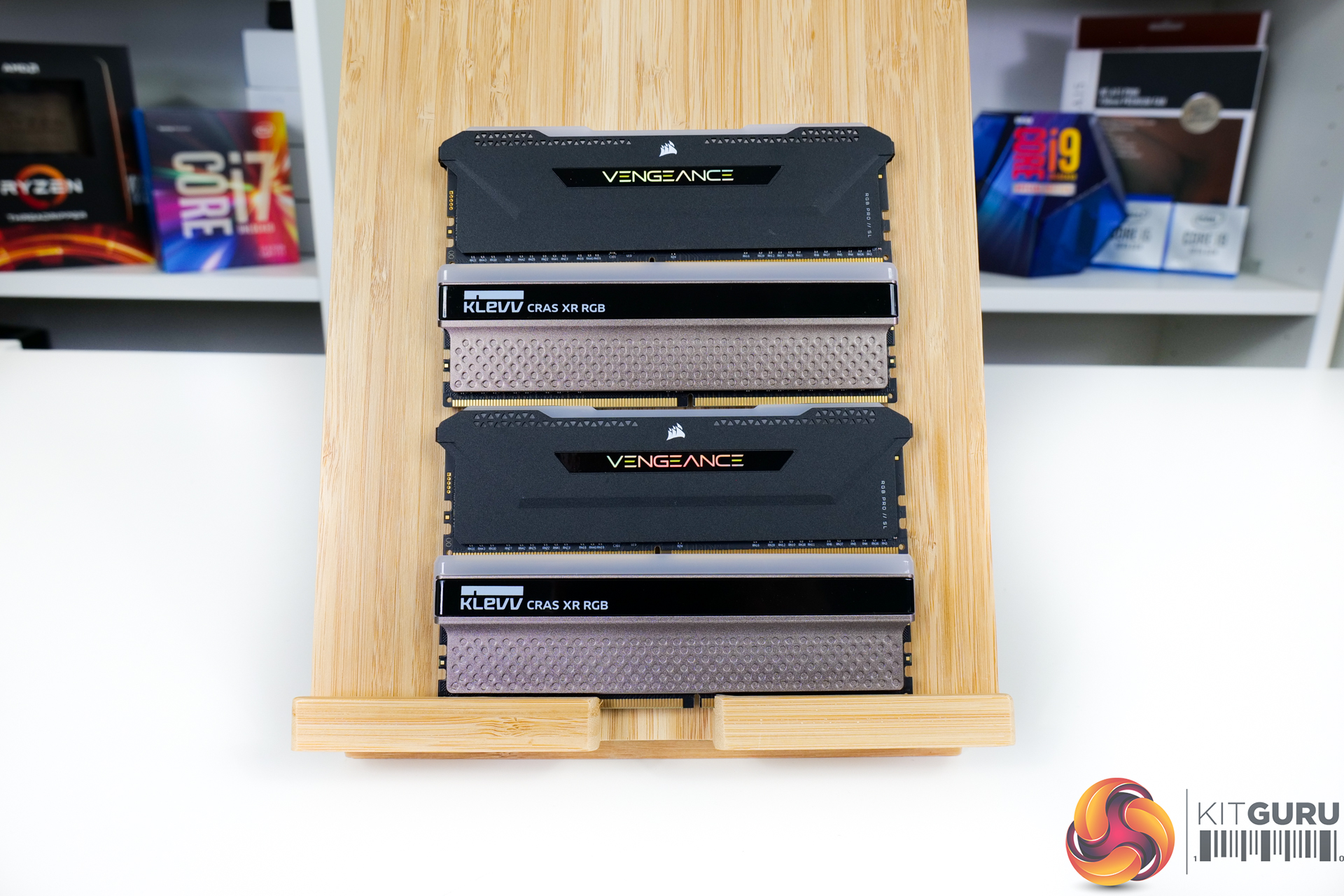
You will also note that the colouring of the RGB module’s heatspreader is different due to a colour tint that leans slightly more towards a dark / grey / rose gold highlight in person. Module height is now 42.5mm and this is due to the inclusion of an RGB LED light bar.
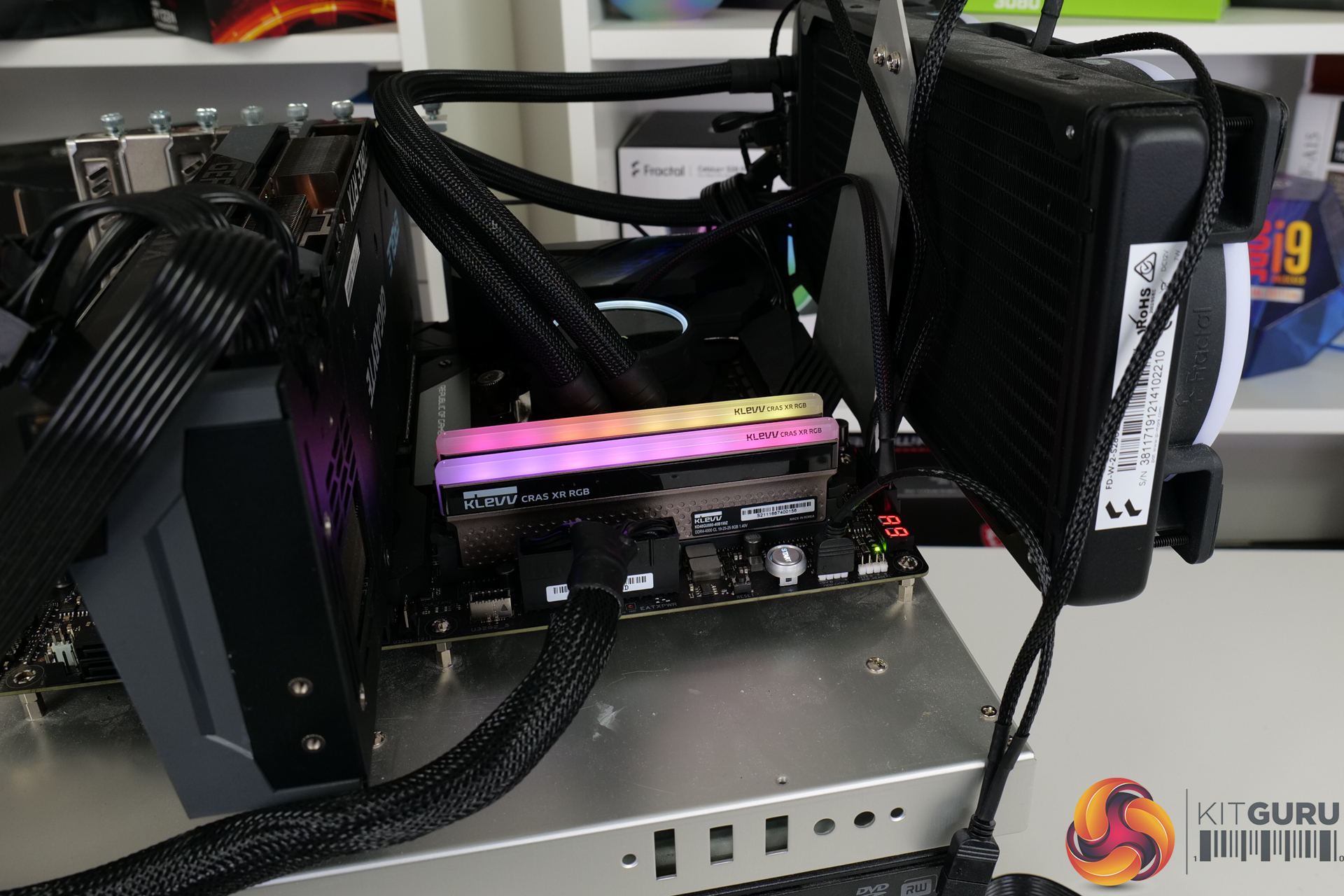
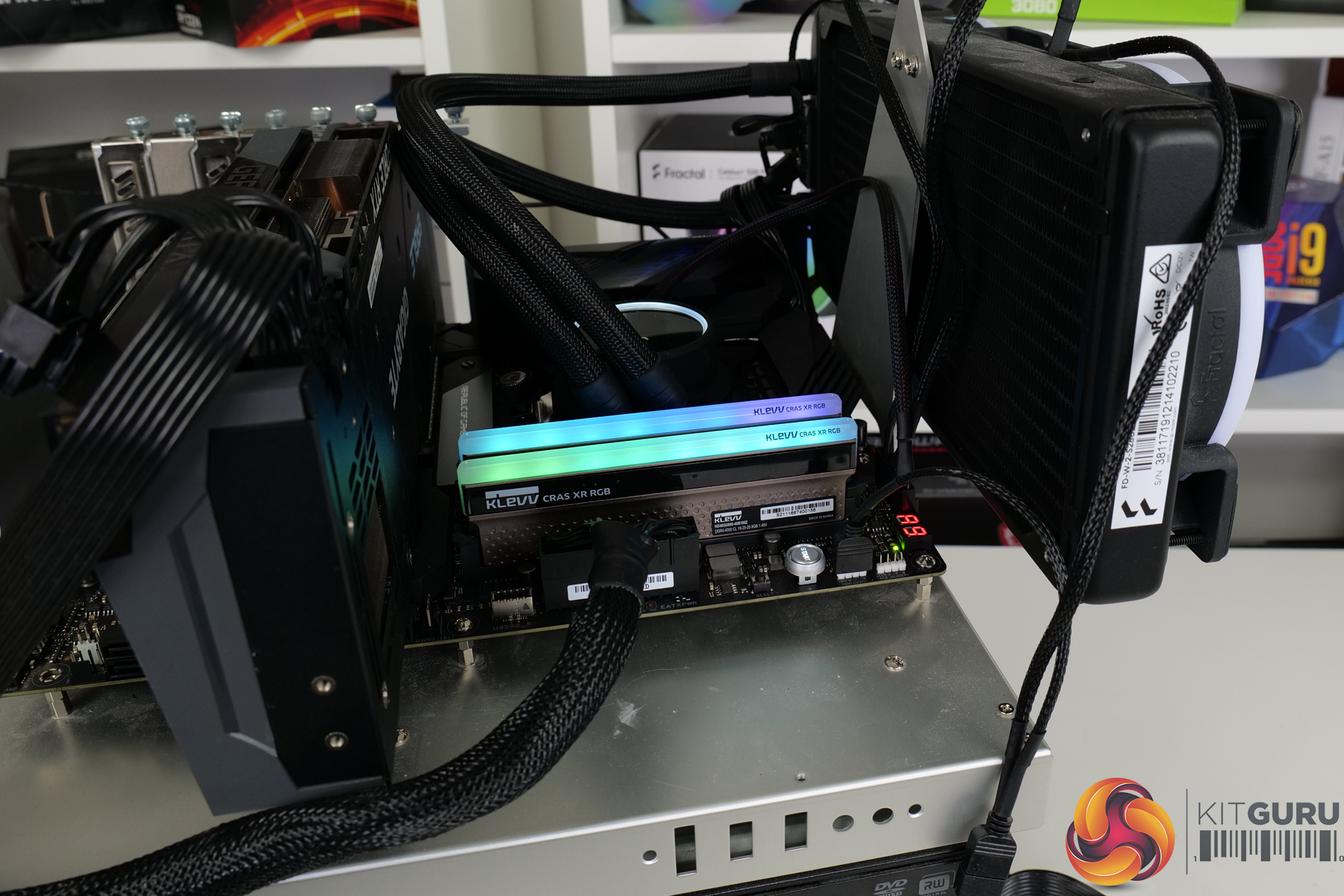
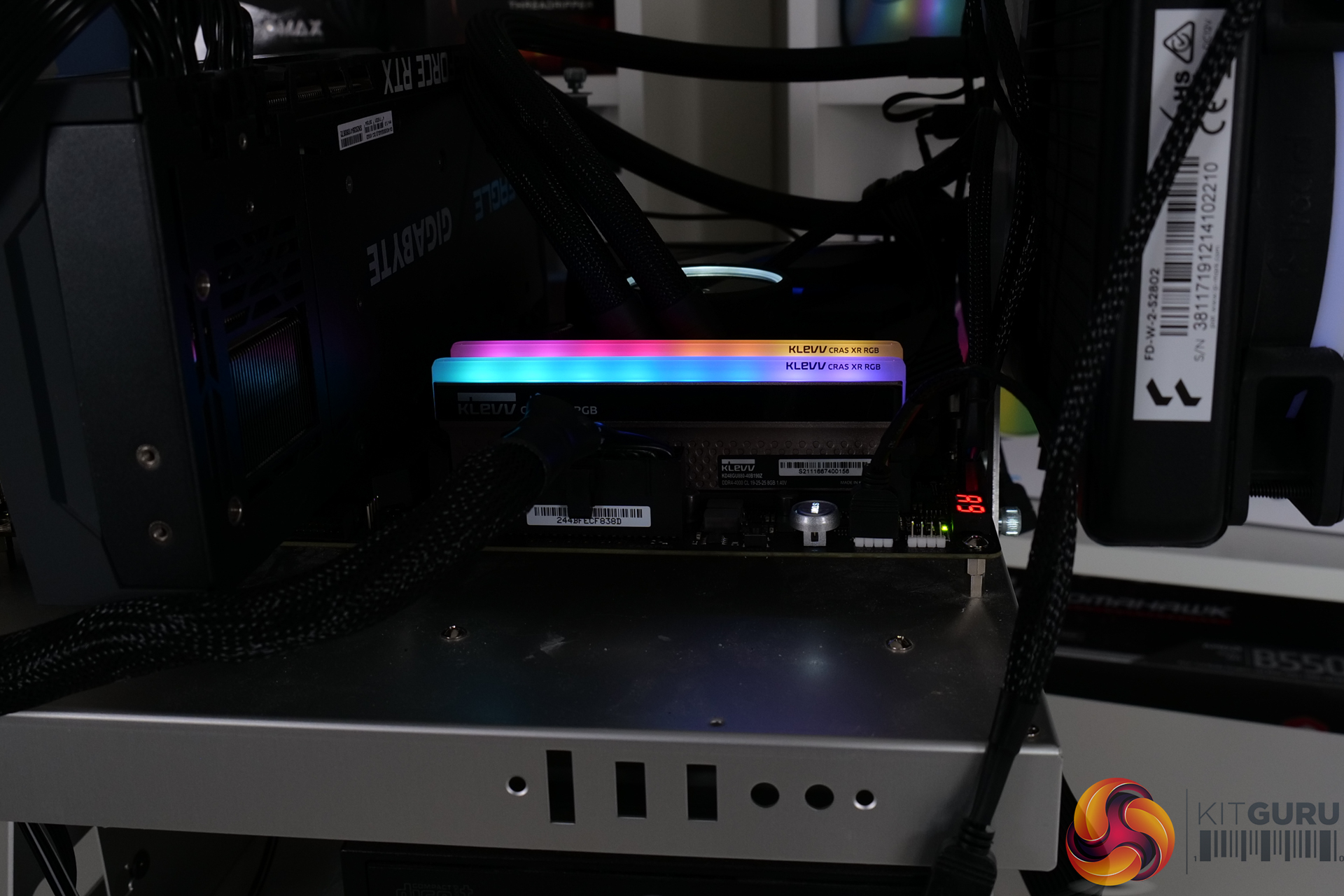
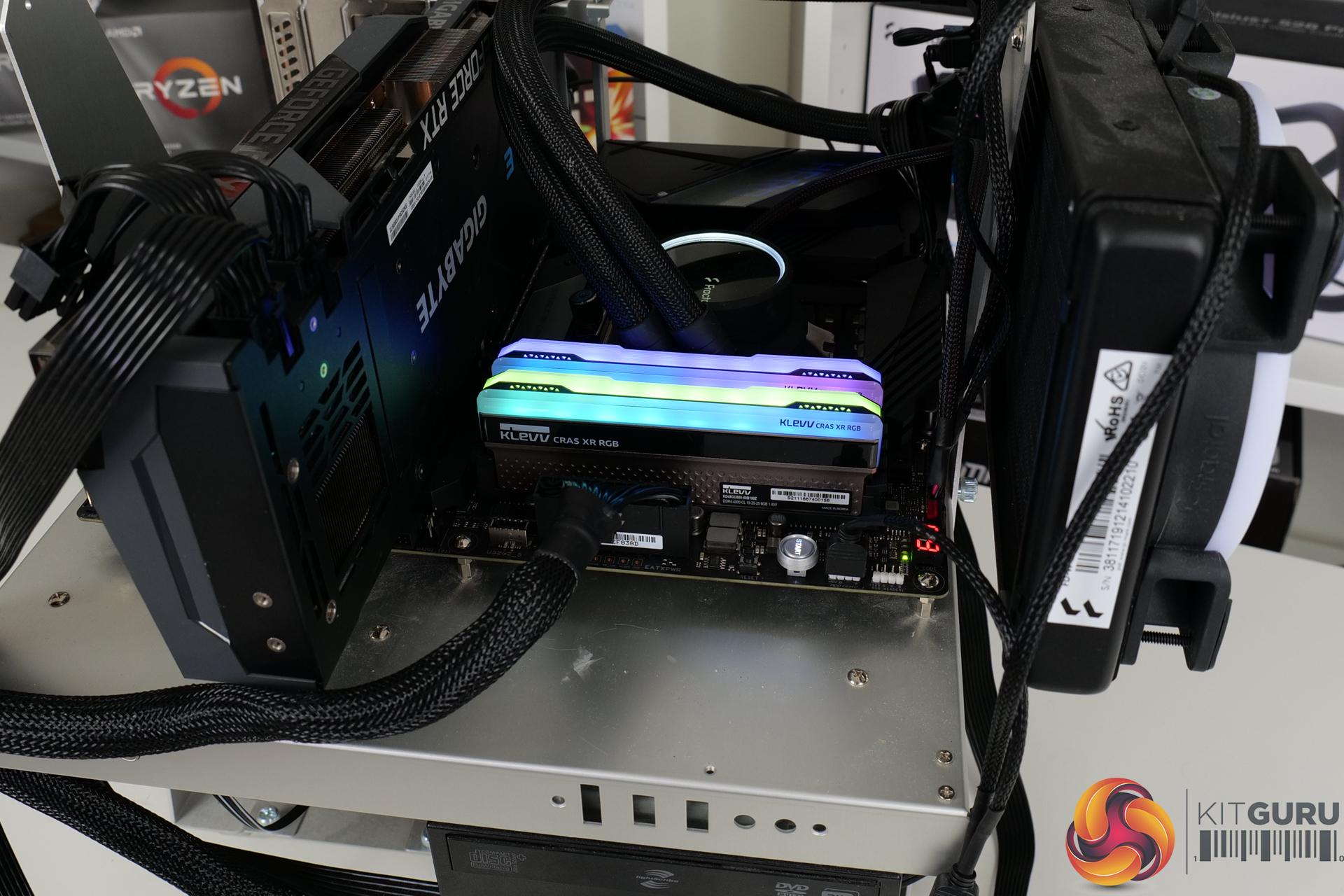
Klevv provides good lighting quality overall from the top-side wrap-around lightbar. I like that the oval type bar structure leaves a gap in the centre which gives the illusion of more lighting compared to a bigger, solid bar. The lighting brightness is good and the individual LEDs are not glaringly clear to the point where light diffusion is a problem. The lighting smoothness is good.
Versus Corsair Vengeance RGB Pro SL, the Klevv modules do not appear quite as bright and the smoothness is not quite as granular. However, the wrap-around style of the Klevv lightbar is beneficial for better blending of different colours either side of the centreline. That’s a comparison versus one of the market leaders, and Klevv gets close enough to Vengeance RGB Pro SL to keep me happy, especially with the 2mm smaller module height.
Control for the RGB lighting is left to sync with motherboard manufacturer software rather than Klevv’s own tool, and this is smart. This beats having another piece of software to download for lighting control. It allows for easy sync through ASUS, ASRock, Gigabyte, MSI, and Razer utilities.
However, it is limited to the pros and cons of controllability from those utilities. This is my preferred approach, personally, but I do appreciate the value of in-depth utilities such as Corsair iCUE.

Alternative capacities and frequencies include a 2x16GB kit at 3600MHz C18 and 4266MHz C19 kits using 8GB DIMMs. Price is around £145 on Amazon with similar limited current availability to the Bolt XR.
At around £15 extra versus the Bolt XR for this level of RGB lighting, that’s a reasonable price to pay in our opinion and actually makes Klevv’s pricing reasonably competitive versus other 4GHz range RGB kits such as Corsair Vengeance RGB Pro.
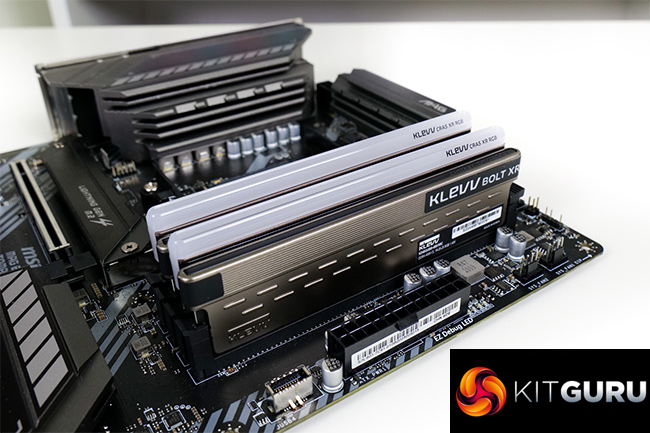
Bolt XR, left, compared to Cras XR, right.
- Model Number: KD48GU880-40B190C & KD48GU880-40B190Z
- Capacity: 16GB (2x 8GB)
- Rated Frequency: DDR4-4000MHz
- Rated Timings: 19-25-25-45
- Voltage: 1.4V
- Format: Non-ECC Unbuffered 288-pin DIMM
We will be outlining the Klevv Bolt XR and Cras XR RGB DDR4 memory kits performance with the AMD Ryzen 9 5950X CPU, ASUS ROG Crosshair VIII Hero motherboard, and a Gigabyte RTX 3080 Eagle OC graphics card.
The processor is overclocked to a static 4.6GHz to take any clock speed variability from Precision Boost 2 out of the performance equation.
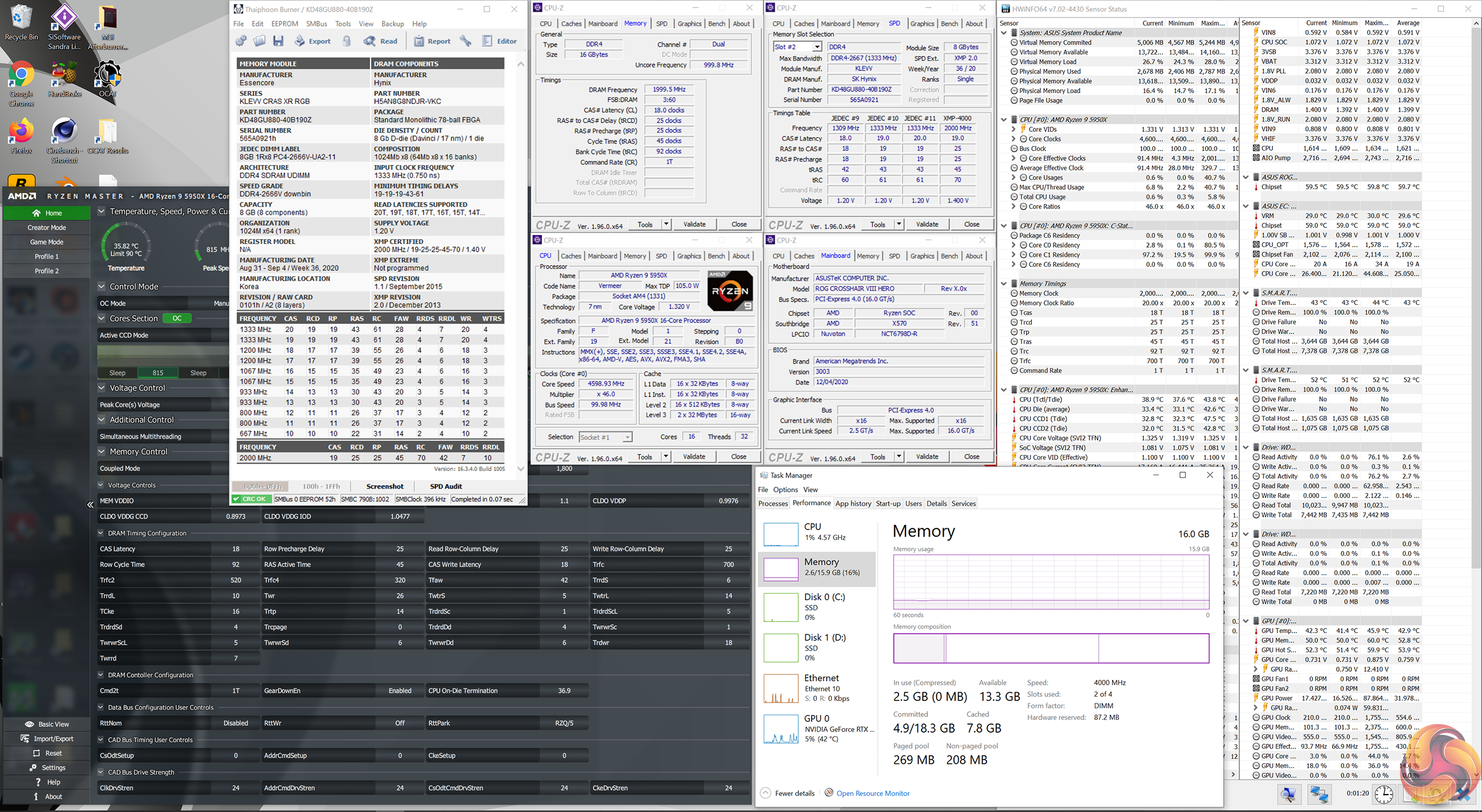
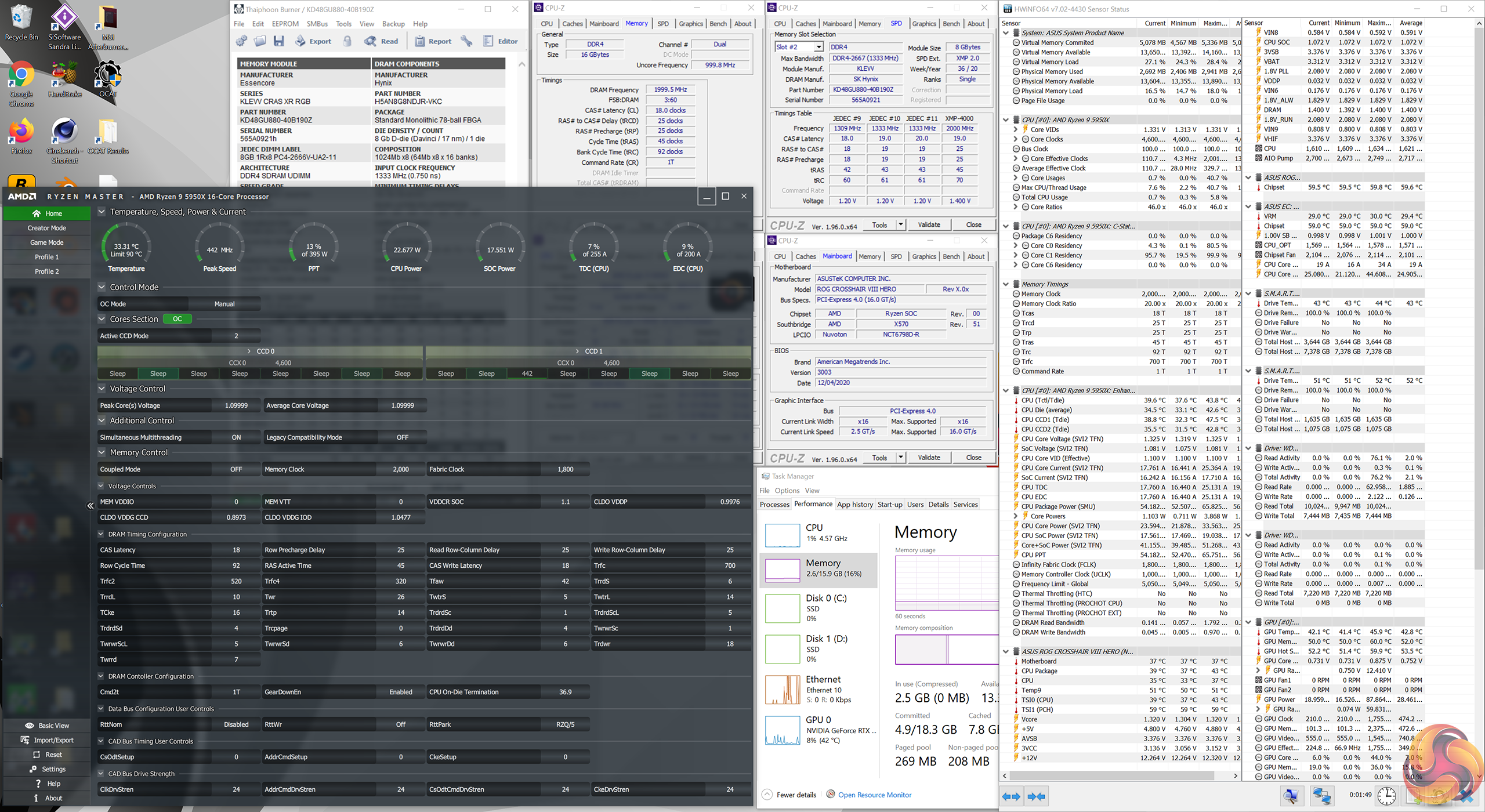
By default on AMD, 4000MHz memory will deliver a 2000MHz memory clock and therefore a 1000MHz memory controller clock due to the 2:1 divider.
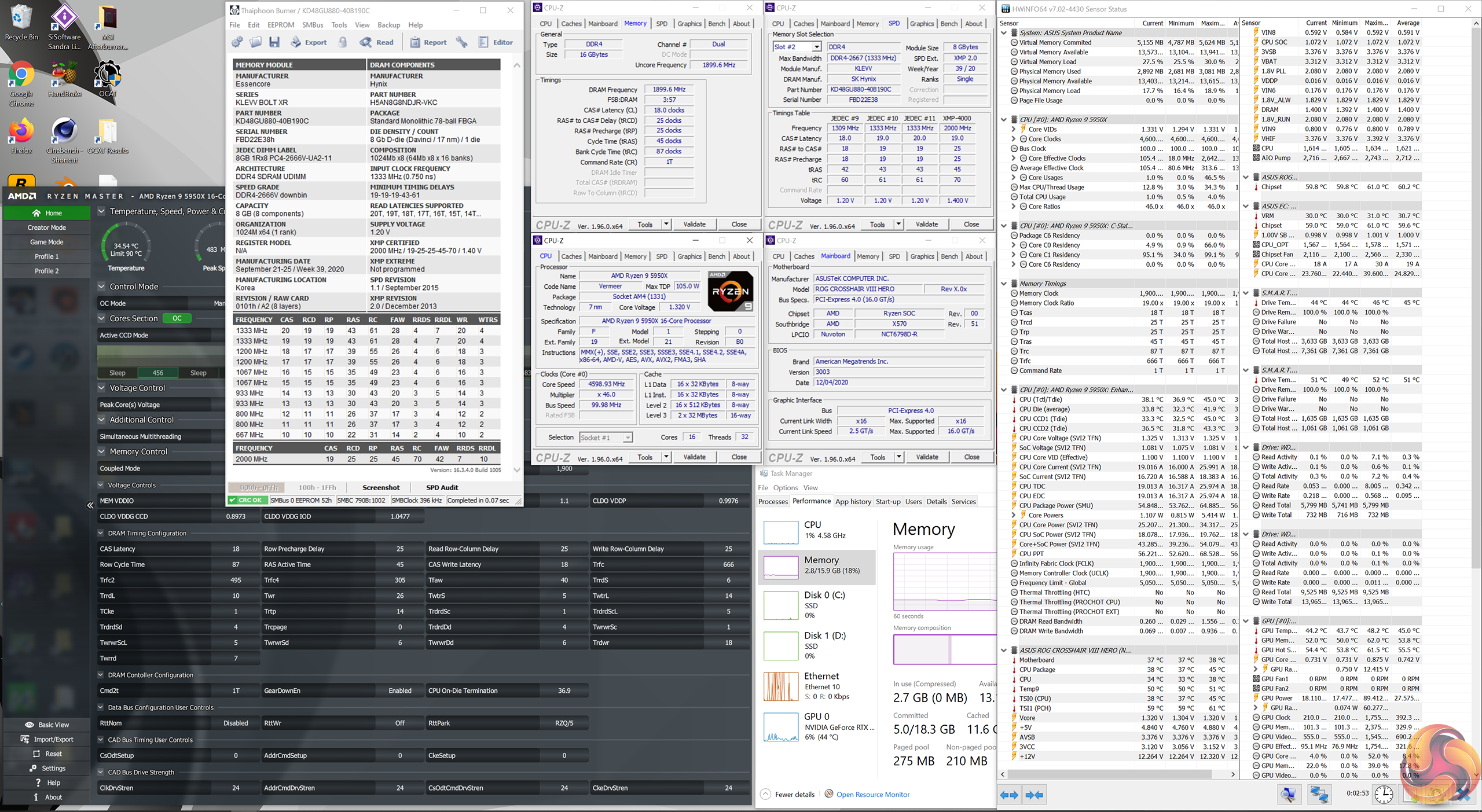
If, however, we can get the Infinity Fabric clock to match the memory clock, we can also run the memory controller clock at the same speed and remove the 2:1 divider latency penalty. Unfortunately, our 5950X doesn’t want to seem to go higher than 1900 MHz for the Fabric Clock.
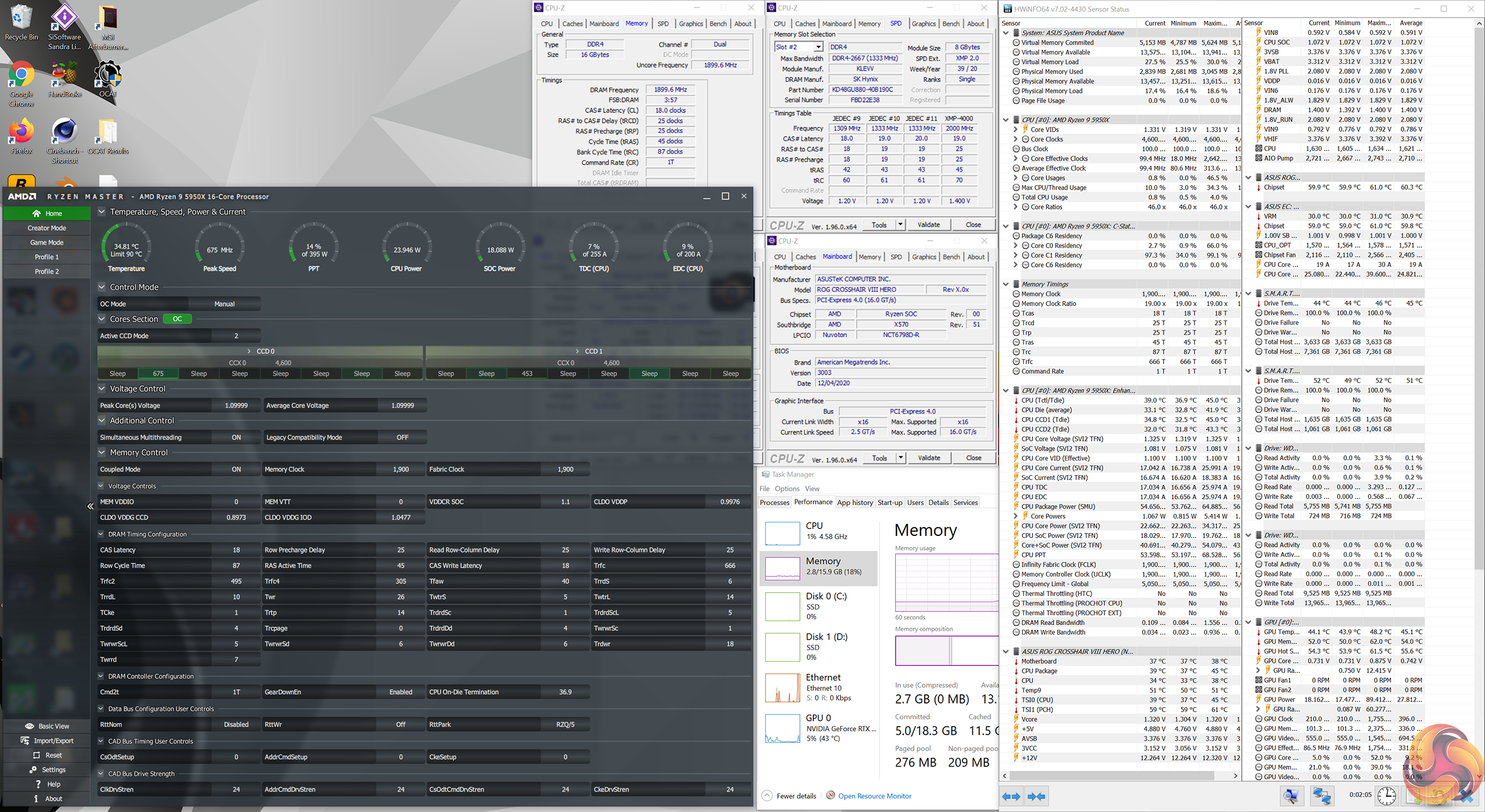
This means that we have two test procedures:
- We test the kit at stock 4000MHz XMP with the Ryzen system running without adjustment beyond a 4.6GHz CPU OC. This results in 1800MHz Fabric clock, 2000MHz memory clock, and 1000MHz memory controller clock.
- We also test with the memory running alongside a CPU configuration better tuned for high speed memory. This is 1900MHz Fabric clock, 1900MHz memory clock, and 1900MHz memory controller clock. Here, the memory was running at DDR4-3800MHz speeds.
It will be interesting to see how the higher memory speed but lower processor clock configuration will affect performance. Running 1900MHz Fabric Clock 1:1:1 is another benefit that high speed memory such as these KLEVV kits give us over the typical recommendation of DDR4 3600MHz kits.
Another minor point is that our ASUS motherboard refused to acknowledge CL19 despite the XMP settings being programmed correctly. As such, we manually tuned the kit to run at CL18 by default. This is technically an overclock but it was perfectly stable and gave us a reasonable workaround.
Test System:
- Processor: AMD Ryzen 9 5950X overclocked to 4.6GHz all core.
- Motherboard: ASUS ROG Crosshair VIII Hero.
- Graphics Card: Gigabyte RTX 3080 Eagle OC.
- System Drive: WD_Black SN750 SSD.
- CPU Cooler: Fractal Celsius+ S28 Prisma 280mm AIO.
- Power Supply: Seasonic Prime TX-1000 1000W.
- Case: Lian Li Open-air Test Bench.
- Operating System: Windows 10 Pro 64-bit.
Comparison Memory Kits (1:1:1 FCLK:UCLK:MCLK where applicable):
- 2x16GB Patriot Viper Steel RGB 3600MHz 20-26-26-46 (Hynix AFR ICs, dual rank configuration)
- 4x8GB Corsair Dominator Platinum RGB (White) 3600MHz 18-19-19-39 (Micron E-die ICs, effective dual rank configuration)
- 2x32GB Patriot Viper Steel 3600MHz 18-22-22-42 (SpecTek MT40 ICs, dual rank configuration)
- 2x16GB Corsair Vengeance RGB Pro SL 3600MHz 18-22-22-42 (Micron D9XPF B-die ICs, single rank configuration)
Tests:
- 7-Zip – Built-in 7-Zip benchmark test (CPU & Memory)
- Cinebench R20 – All-core & single-core CPU benchmark (CPU & Memory)
- Blender 2.90 – All-core rendering of the Classroom benchmark (CPU & Memory)
- SiSoft Sandra – Memory bandwidth (Memory)
- AIDA64 – Memory bandwidth, memory latency (Memory)
- 3DMark TimeSpy – Time Spy (1440p) test (Gaming)
- Shadow of the Tomb Raider – 1920 x 1080, Highest quality preset, no AA, DX12 version (Gaming)
Compute and Productivity Tests
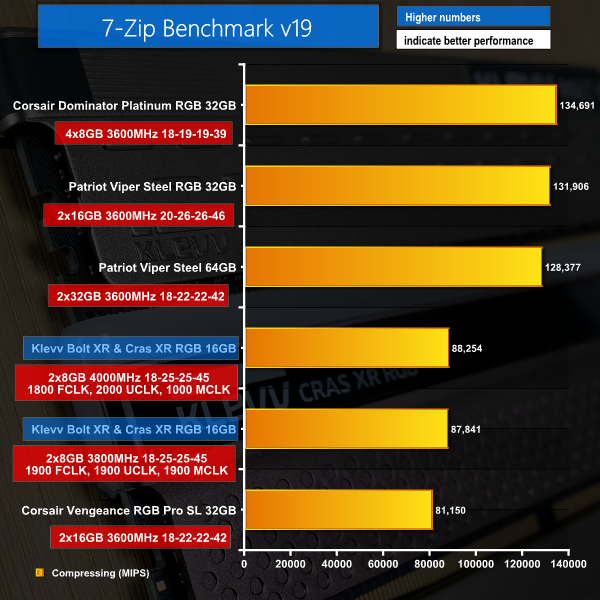
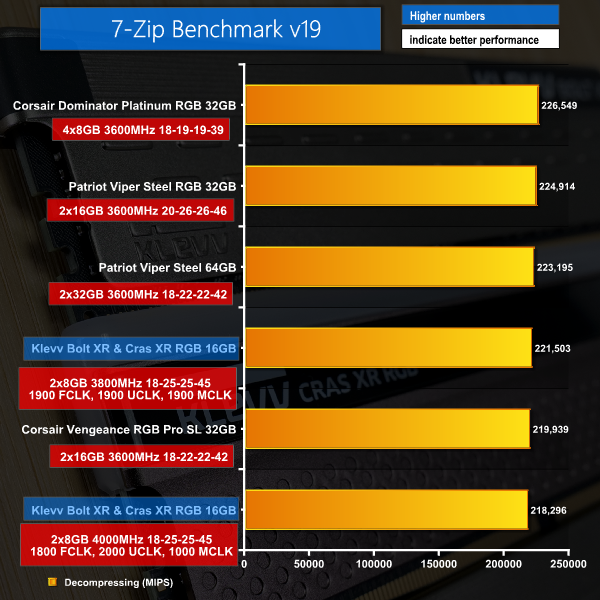
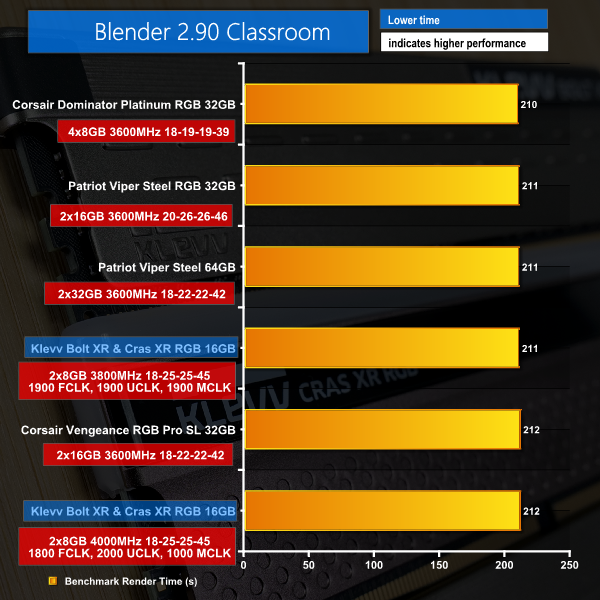
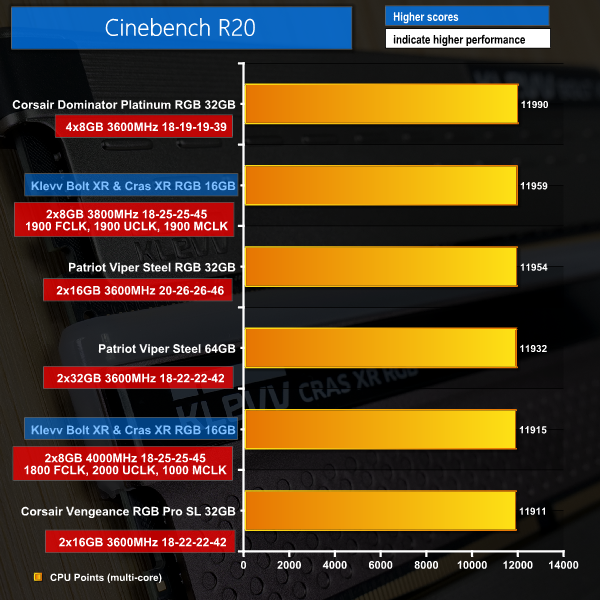
Thanks in large to its single-rank IC configuration, Klevv’s 4GHz and 3800MHz setups cannot compete with the higher capacity dual-rank kits in 7-Zip compression. Corsair’s single-rank 3600MHz Vengeance RGB Pro SL modules are outperformed by Klevv’s faster set, though, provided capacity differences are not a concern.
7-Zip decompression is more favourable on the 3800MHz setup with Klevv’s kit whereas the out-of-the-box 4000MHz configuration drops to bottom place. This is thanks to the improved memory controller performance for the 1900MHz FCLK and UCLK configuration.
Blender is also best on the 3800MHz setting whereby Klevv modules match higher capacity and tighter latency Patriot sets. The 4000MHz setting is left towards the chart bottom, joining Corsair’s single-rank 3600MHz modules.
Cinebench again does well with the 1900MHz FCLK and UCLK benefit of the 3800MHz DDR4 mode. This once again highlights the benefits that higher speed memory – through increased Fabric Clock flexibility – can bring. 4000MHz mode on Klevv with the slower memory controller clock still manages to outperform Corsair’s chart bottom.
Memory Benchmarks
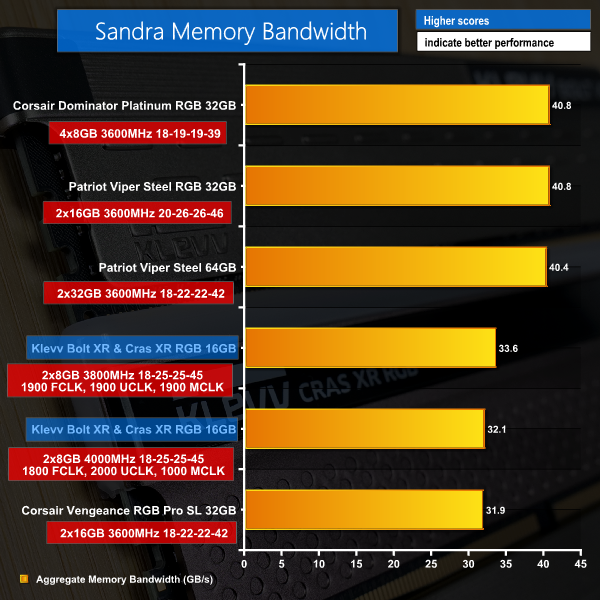
Raw memory bandwidth in Sandra prefers the 3800MHz mode as the 4000MHz configuration shows little improvement over Corsair 3600MHz sticks.
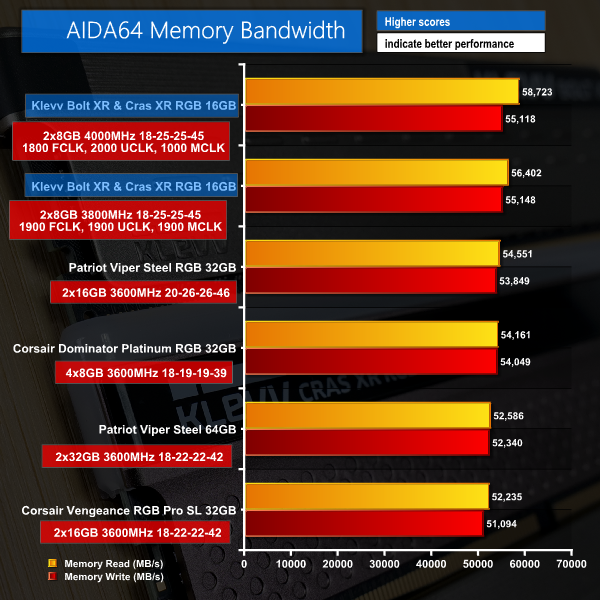
AIDA’s memory bandwidth test switches up the chart and this time has the Klevv kit at the chart top thanks to their higher operational DDR4 frequencies. This test does not seem to care for memory controller clock speed deficits.
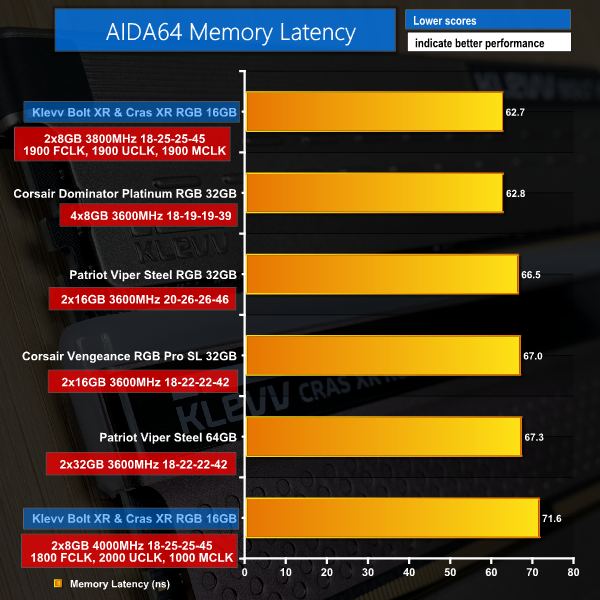
Improvements to the memory controller clock help latency in AIDA, as shown by the chart-topping 3800MHz Klevv configuration. Conversely, the 2:1 divider for the CPU’s memory controller imparts a huge latency penalty when running the Klevv kit at 4GHz mode.
Gaming Tests
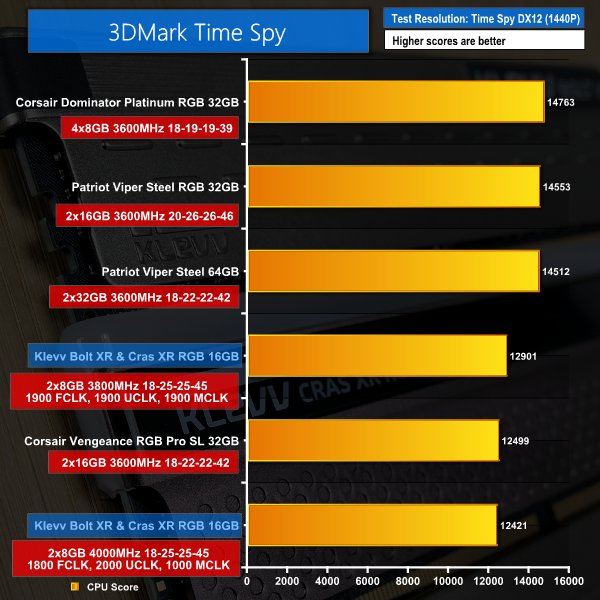
3DMark Time Spy continues the same trend that we saw from CPU-biased performance tests. The 3800MHz configuration proves beneficial and the 4000MHz setting with Klevv DDR4 is almost matching Corsair’s single-rank sticks.
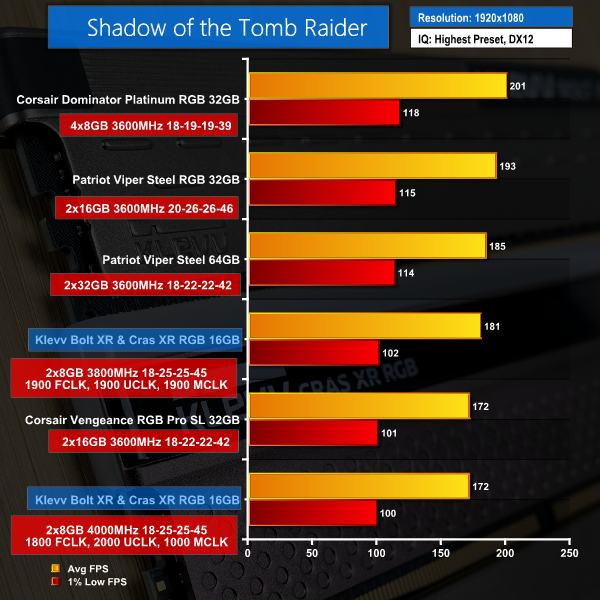
Shadow of the Tomb Raider shows this same trend, but the 4GHz memory mode for Klevv roughly matches the technically lower clock Corsair set.
Overclocking
In terms of overclocking, we actually had a very good deal of success from the Klevv Cras XR RGB modules.
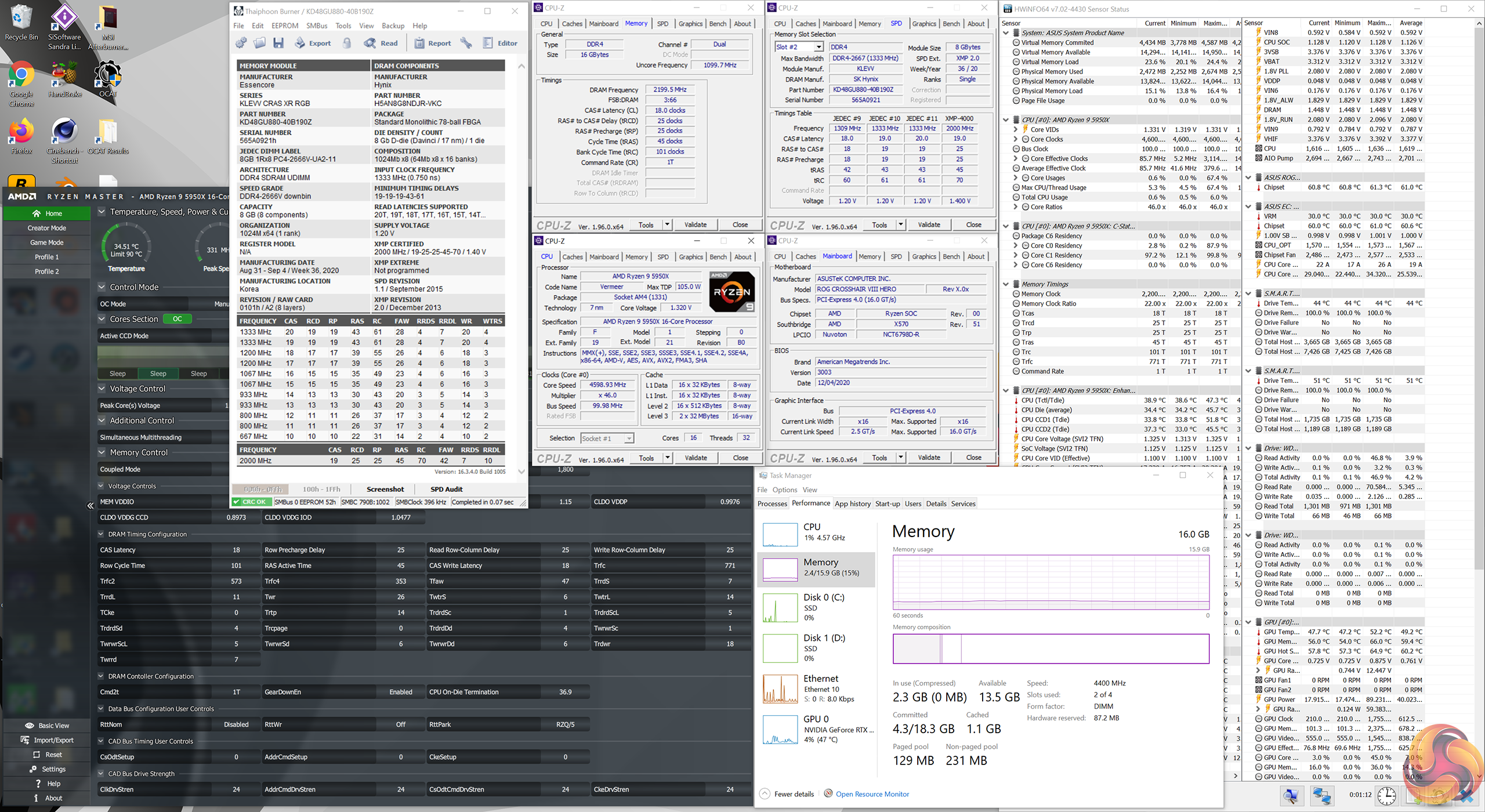
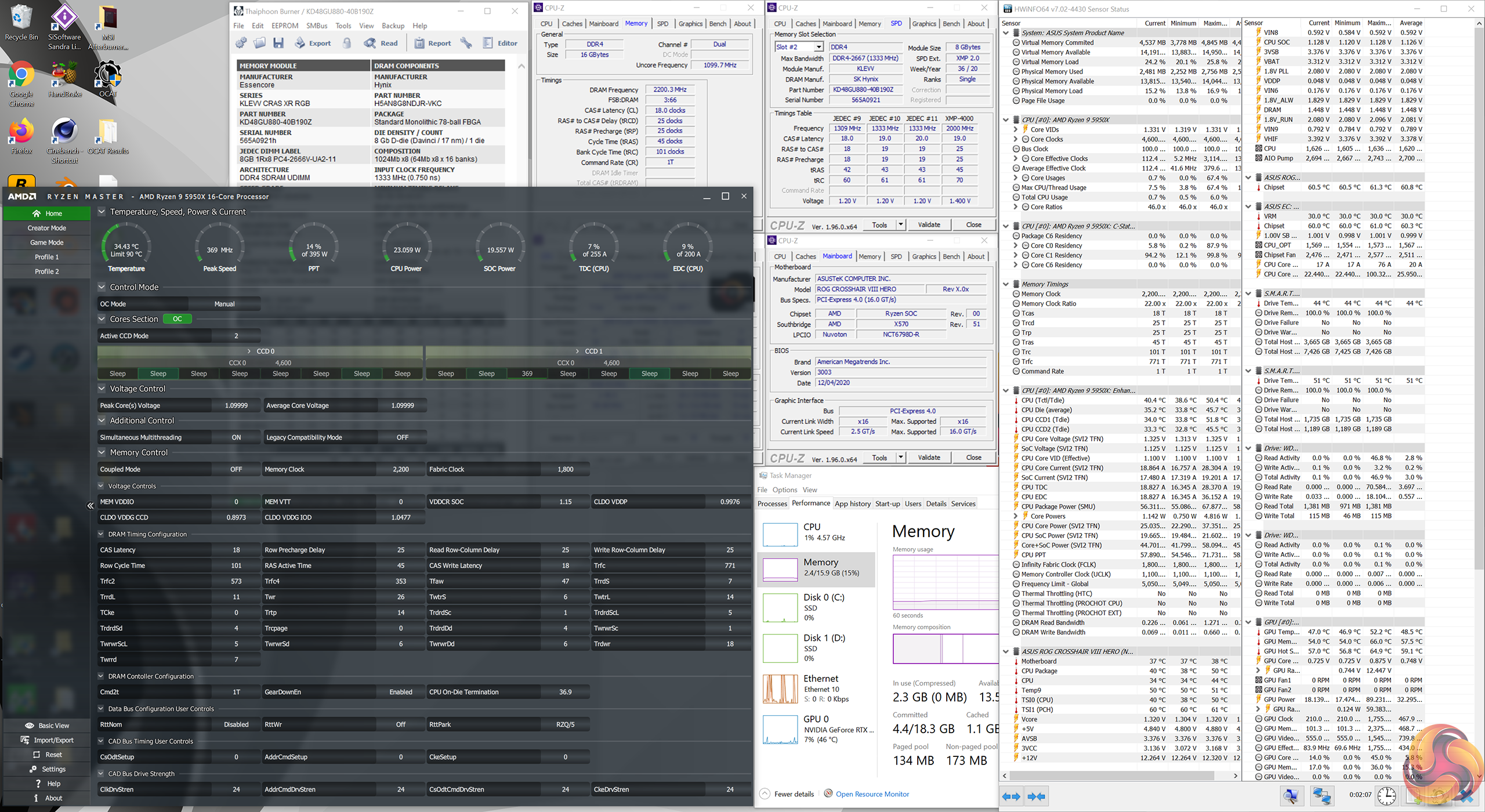
With the stock-ish timings of 18-25-25-45 retained, the default processor FCLK and UCLK under XMP, and the DRAM voltage bumped up to 1.45V, we first focused on enhancing frequency.
This presented us with 4400MHz from the 4GHz-rated kit which is a solid 10% improvement. Any higher than 4.4GHz was not possible with our test setup.
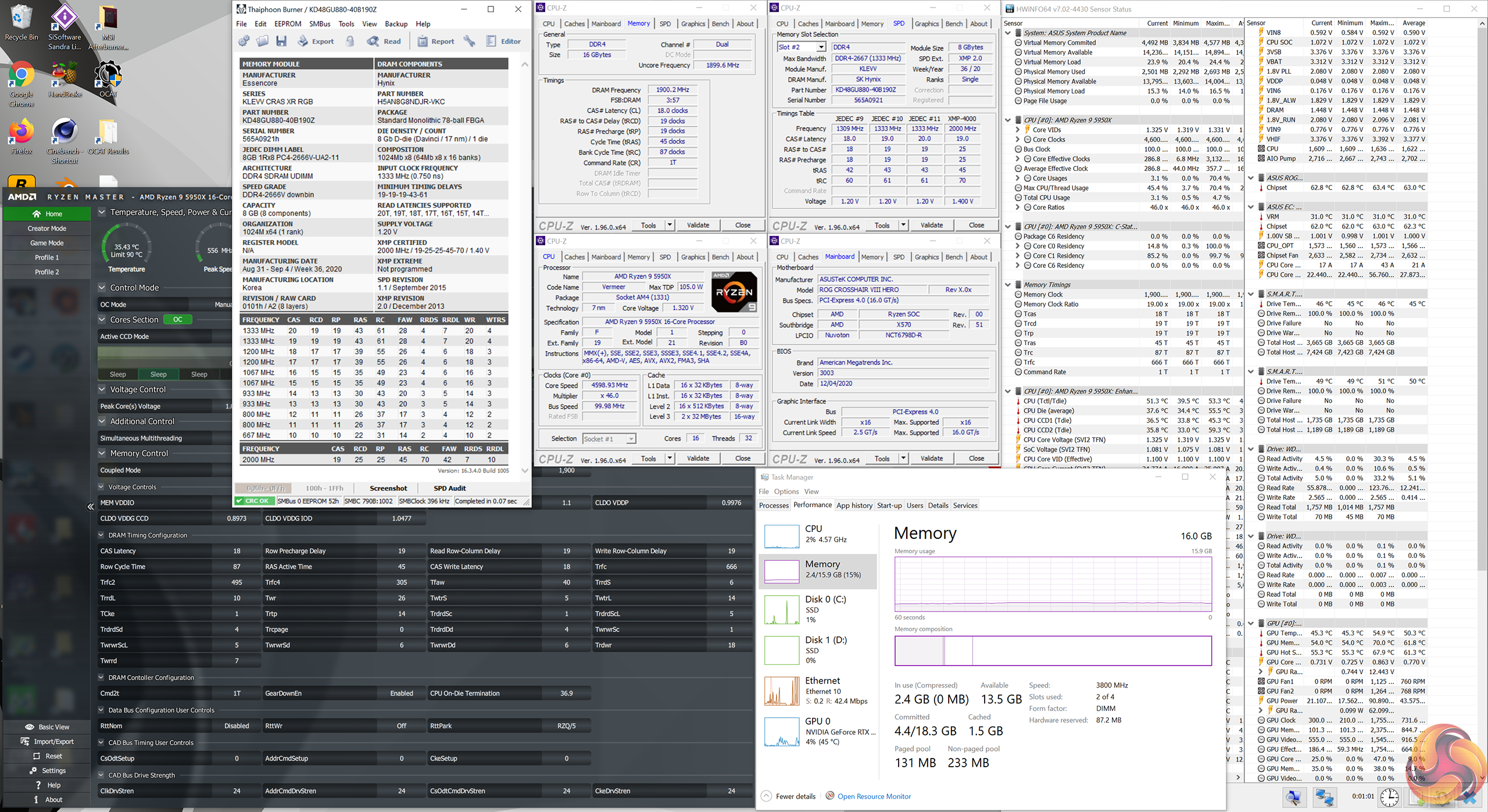
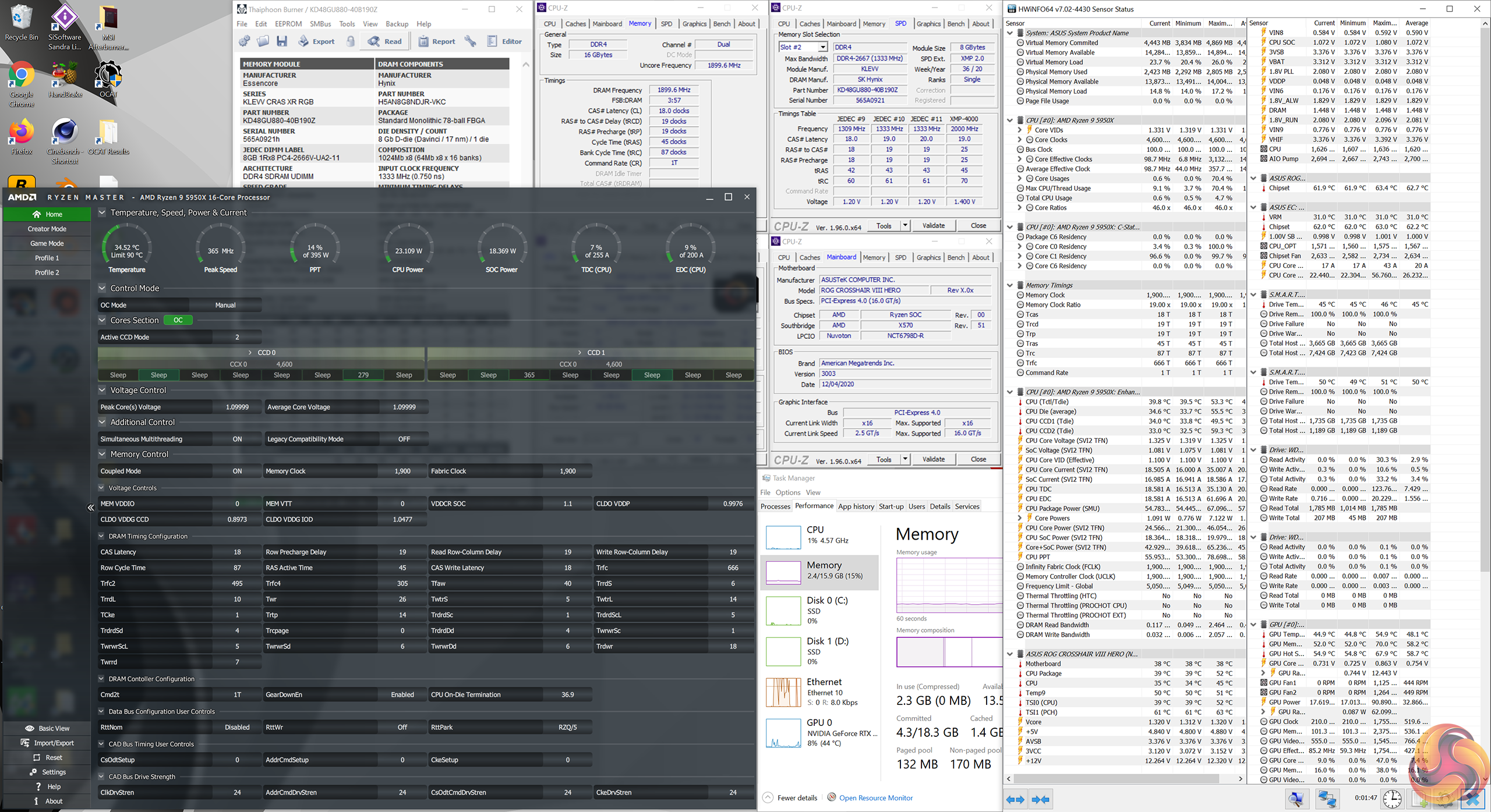
Switching focus to tightening the timings, we stuck to our preferential 3800MHz DDR4 clock with 1900MHz Fabric and memory controller clocks. DRAM voltage was again bumped up to 1.45V.
This presented us with timings tightened to 18-19-19-45 as the best result, which signals a large improvement over the stock 19-25-25-45 albeit at 4000MHz instead.
Put simply, our overclocking results were very positive.
If you’re on an Intel platform and want high DDR4 frequency, the Klevv kit delivered us a solid 4400MHz with 18-25-25-45 timings. And if you’re on AMD and want a balance between the Fabric Clock and Memory Controller clock links whilst improving memory performance, the Klevv kit delivered us a solid 3800MHz with 18-19-19-45 timings.
We certainly cannot argue with those results from the Hynix DJR ICs bumped up to 1.45V.
Klevv’s 4000MHz 16GB memory kits’ performance overall is reasonable enough and generally trades blows against 3600MHz single-rank kits with tighter timings. This may sound like a rather underwhelming performance result, but our 3800MHz testing with the Klevv kit effectively downclocked shows signs of strong performance improvement over 3600MHz single-rank DDR4 with tighter latencies.
This is particularly useful to users who want the flexibility to push their Ryzen CPU’s Fabric and Memory Controller clocks beyond the 1800MHz limit that DDR4-3600MHz kits permit. There are performance improvements to be had with this tuning method, and that’s why memory such as Klevv’s that can run stable at higher-than-3800MHz proves useful.
Cras XR RGB has a good RGB light system with solid control without the need for additional software. The brightness and smoothness is nearing Corsair Vengeance RGB Pro SL quality levels, so that is very strong praise. And the oval-style lightbar design will appeal to many, especially with the tolerable module height.
Bolt XR is a commodity type design comparable to Corsair Vengeance LPX and serves a purpose if you want low-profile, no-frills DIMMs.
Neither kit is really priced in dual-rank DDR4-3600MHz 32GB kit territory – which is very strong for AMD Ryzen performance – so that’s a harsh battle that Klevv thankfully does not have to fight.
The Cras XR RGB is the better buy of the two when looking at its market positioning. £145 for a 4GHz kit of this calibre is actually quite reasonable, particularly when comparisons versus the similarly-priced Corsair Vengeance RGB Pro are favourable. Notable competitors from G.SKILL and Crucial tend to be higher priced. And you’re likely limited to Thermaltake or ADATA if you want a cheaper set.
The Bolt XR feels a little on the high side of pricing at £130. That is because Patriot is offering a Viper Steel 4GHz 16GB kit for around £100-110, and some flashier Thermaltake 4GHz and even ADATA 4133MHz kits are sub-£120 at eBuyer. However, that Patriot memory perhaps uses less preferential SpekTek ICs based on our recent testing of Viper Steel (though we cannot validate that exact kit). And we can’t speak for IC quality of the other cheaper kits.
Comparable 16GB 4GHz kits from the Corsair Vengeance LPX range, for example, are also around £130 at the likes of Scan. So Klevv’s pricing seems perhaps tolerable if you specifically want 4GHz 16GB DDR4 with guaranteed Hynix ICs and a non-obtrusive heatspreader.
Klevv’s Bolt XR and Cras XR RGB are two well-designed single-rank 16GB kits. You get a solid performance offering from the 4GHz Hynix DJR memory ICs. The Cras XR RGB in particular looks like a pretty good buy at its price point of around £145 if you simply don’t fancy Corsair Vengeance RGB Pro for whatever reason, such as personal or module height or iCUE reservations.
Discuss on our Facebook page HERE.
Pros:
- Strong performance flexibility with Zen 3.
- Excellent frequency and latencies OC results.
- Non-intrusive design, especially in terms of height.
- Good RGB lighting system from the Cras XR RGB.
- Cras XR RGB Pricing seems OK in the UK.
Cons:
- Bolt XR pricing is mediocre.
- Out-of-the-box timings are unflattering.
- Not ideal for usage with Ryzen using default XMP mode (due to FCLK/UCLK operation).
Bolt XR Award & Score:

Cras XR RGB Award & Score:

KitGuru says: Two solid memory kits with good overclocking headroom and plenty of frequency flexibility. The Cras XR RGB in particular is an impressive option with its lighting and reasonable price.