 KitGuru KitGuru.net – Tech News | Hardware News | Hardware Reviews | IOS | Mobile | Gaming | Graphics Cards


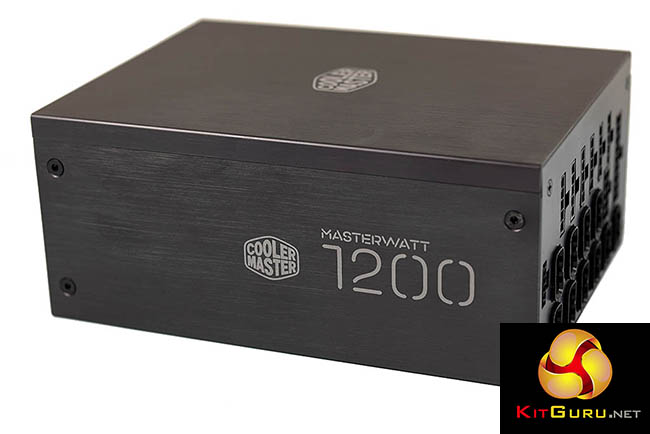
Today we are analysing the new Cooler Master MasterWatt Maker 1200, a power supply firmly targeting the wealthy enthusiast audience with sizeable disposal income. Available as a ‘Golden Product' not available to the channel, it can be purchased for an eye popping 399 euros direct from the Cooler Master store. It is a pure modular design featuring a brushed aluminium exterior, Titanium class efficiency, a Bluetooth dongle and it ships with a bunch of other features. Read on for the full review…
Right now, the MasterWatt Maker 1200 watt model is the only unit in this prestigious flagship family, but Cooler Master have plans to release a 1500 watt model, at a later date.
For those interested in OEM partners, Cooler Master are working with Enhance on the release of this product. This is not what we would consider a ‘typical' Enhance mid range design. They are pushing their technical skills to the limit with a feature set targeting flagship models from leading manufacturers.
This power supply can be monitored and even somewhat controlled from a mobile device over BlueTooth 3.0. We have never seen a power supply which features BlueTooth support before, so this already makes it an interesting proposition.
Feature Overview:
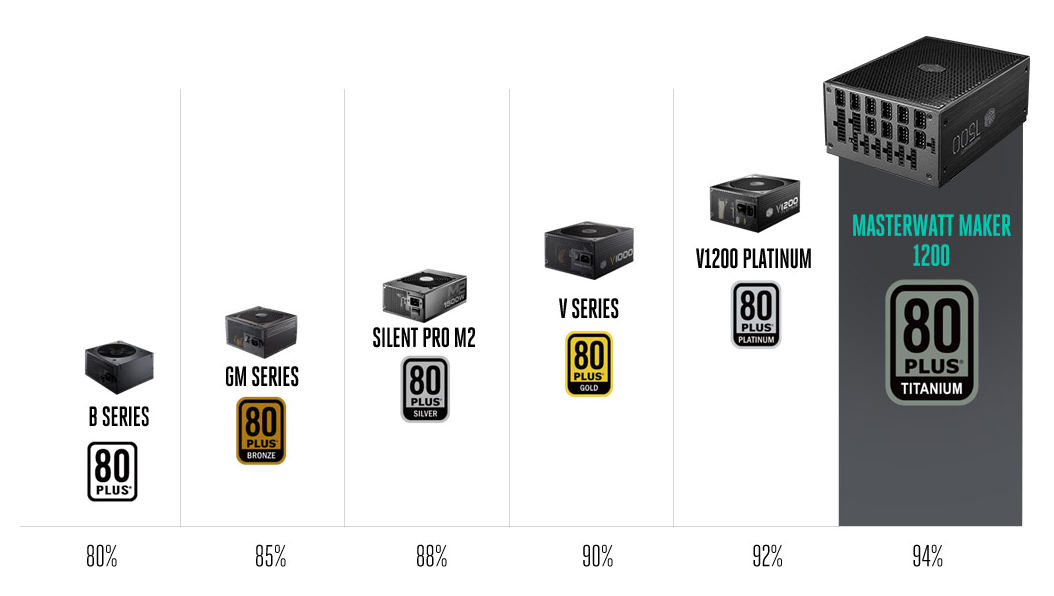
- 80 Plus Titanium Efficiency up to 94%
- Display and Control live power statistics
- Power Form Correction: Active PFC
- Mobile remote control
- Silencio FP 135mm PWM fan with 70,000 hour life expectancy
- 7 year warranty
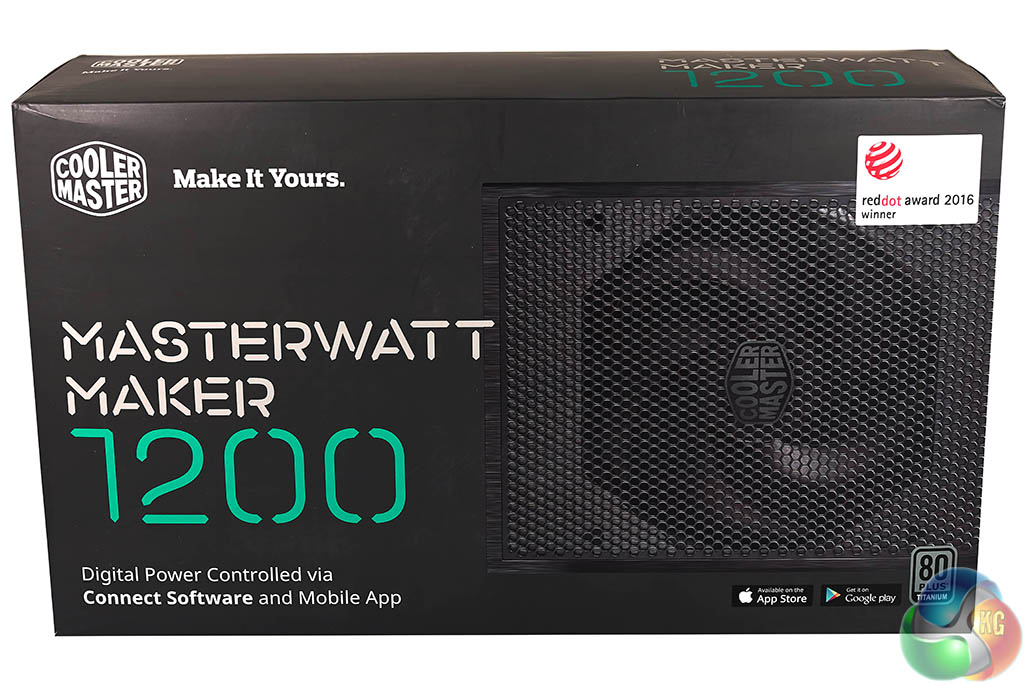
The Cooler Master MasterWatt Maker 1200 arrives in a huge box which features an artistic representation of the unit at the side. The box weighs 5.35kg. The box also proudly displays the Red Dot Design award logo. This is an 80 Plus Titanium certified power supply, as indicated by the logo bottom right at the front of the box.
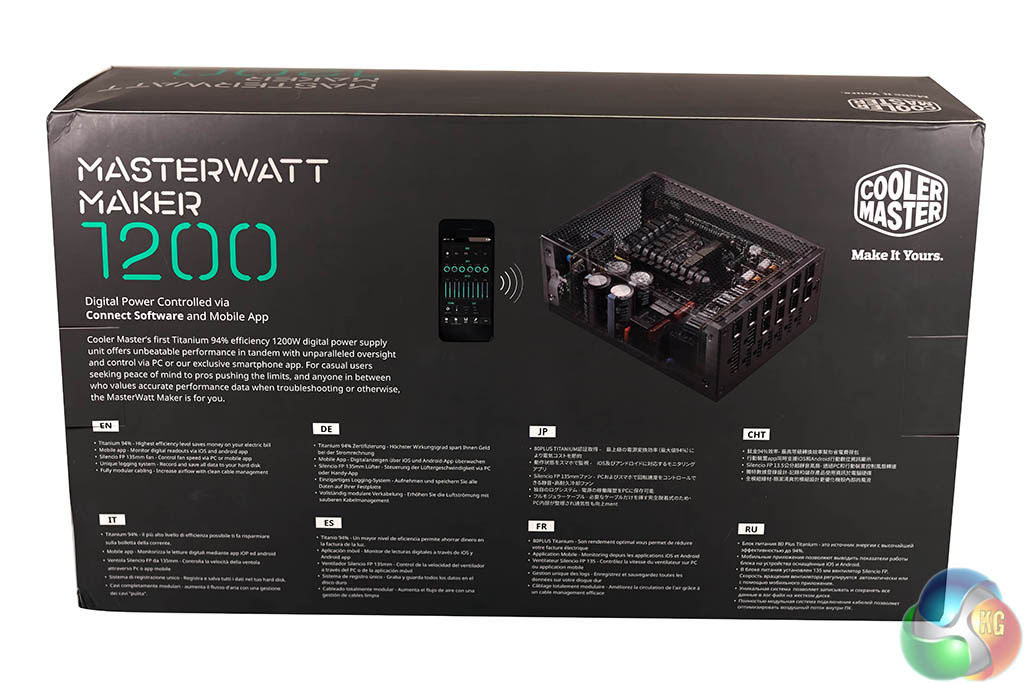
Cooler Master detail some of the specifications on the rear of the box.
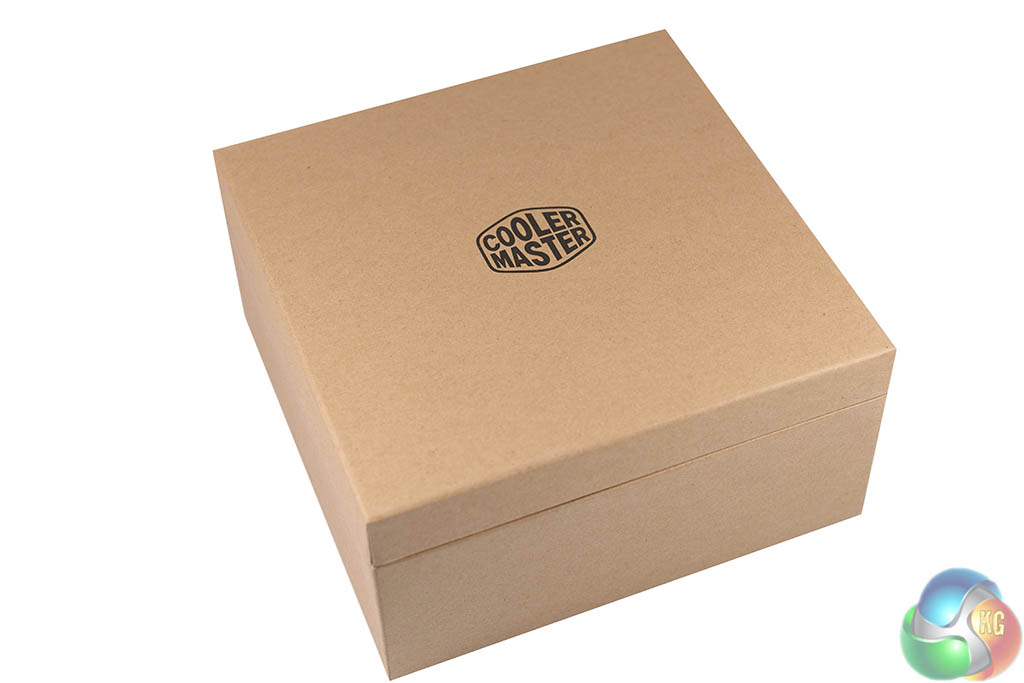
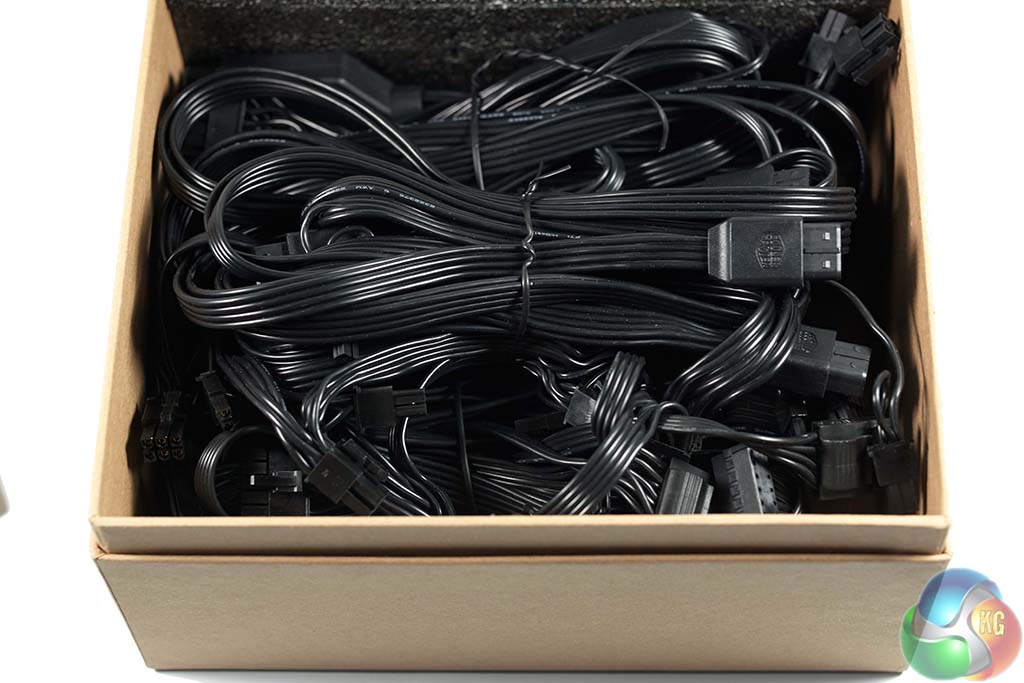
All of the cables are hidden inside a brown box with the Cooler Master logo clearly seen on top.
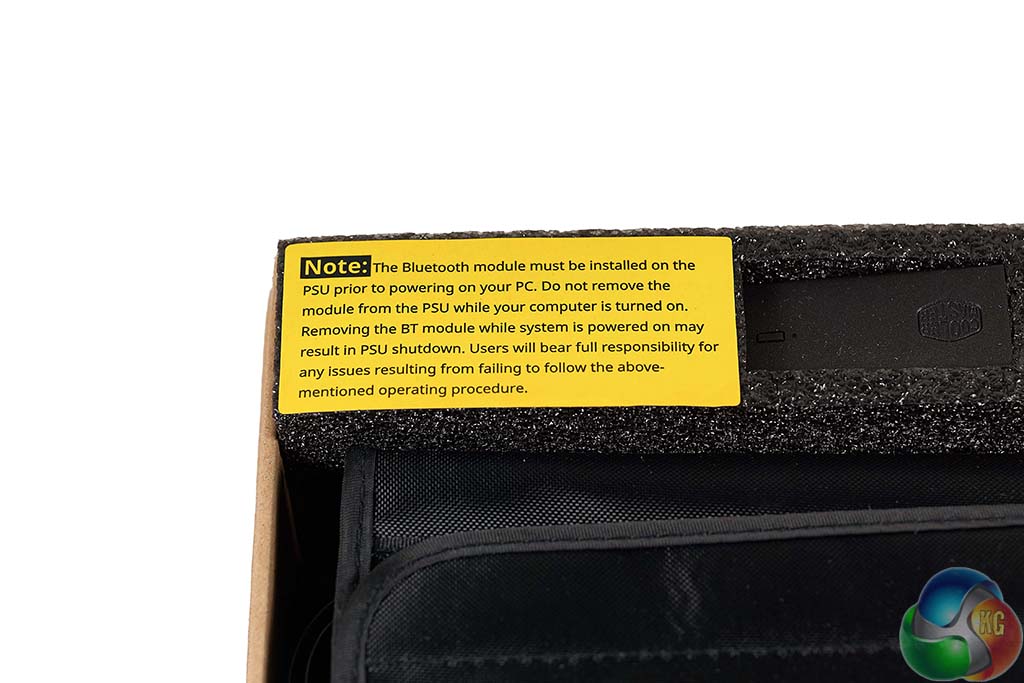
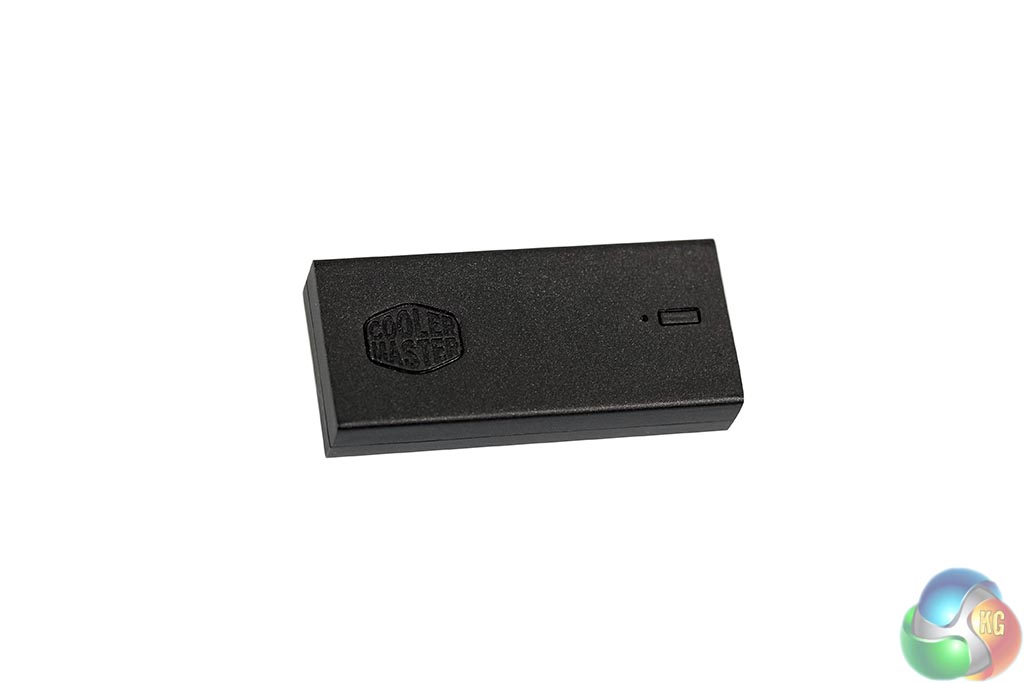
A yellow sticker explains the use of the BlueTooth module. You do not remove the Bluetooth module during operation, or it can cause the power supply to shut down.
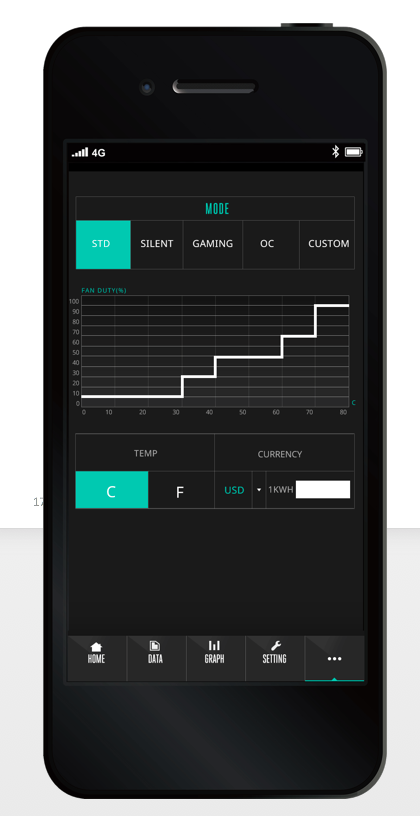
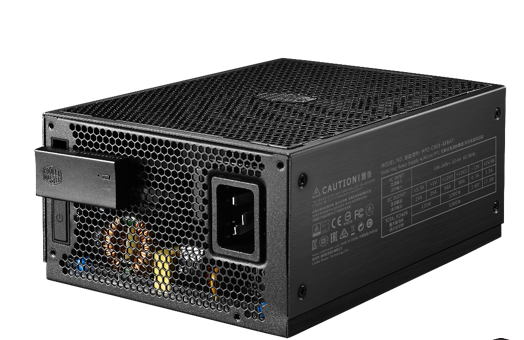
With the BlueTooth module installed you are able to control aspects of the power supply from your mobile phone. The application is available on the Google Store and the Apple App Store.
- Standard: set it and let CM Connect do the rest
- Silent: supports fanless and ultra-quiet modes
- Gaming: safely push your graphics to the limit
- Overclocking (OC): handles even the highest loads
- Custom: tweak your settings as you see fit

Cooler Master have developed a software package available for desktop Windows based PC's and for iOS and Android mobile devices. The power supply will communicate with the system via a USB cable or BlueTooth 3.0 connection via the supplied dongle.
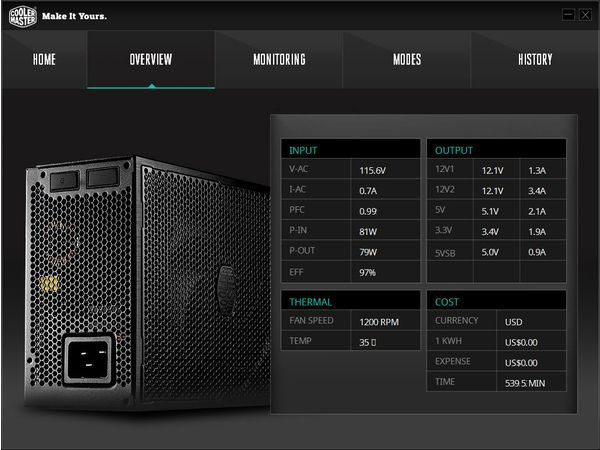
Most of the interesting settings are available via the POWER menu on the first page. The design is fine and fairly intuitive to follow. The overview tab details the thermal setup, input and output and rough cost calculations. The monitoring section allows the user to check PSU status.
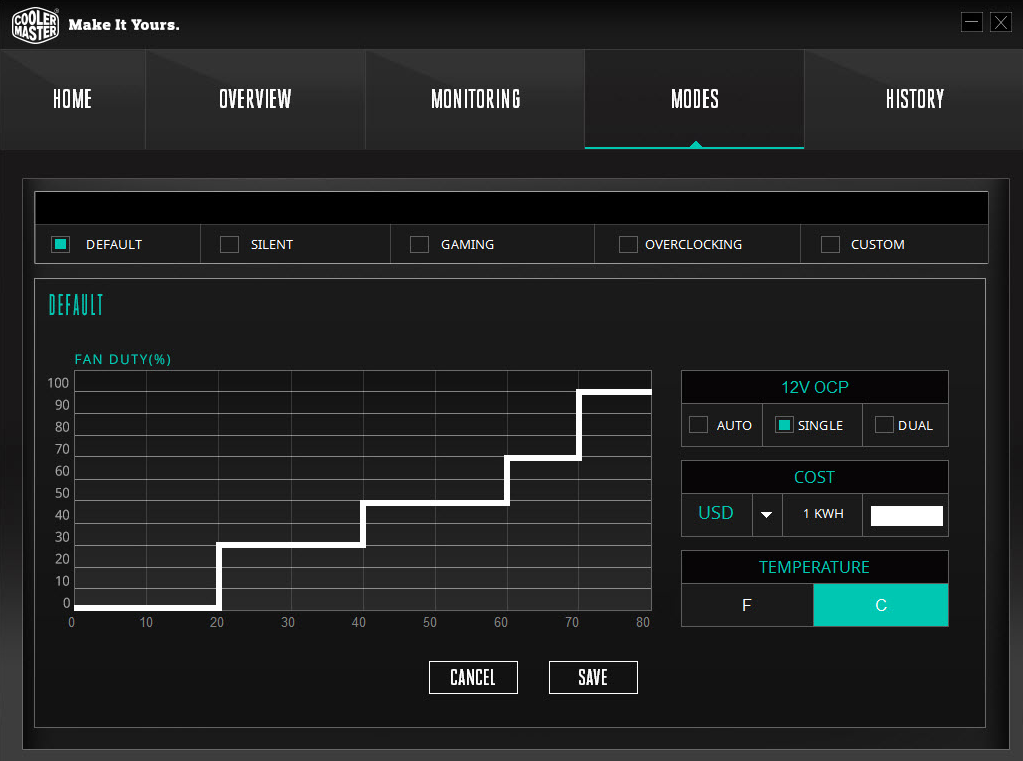
The modes window is the most important as you can change profiles to load one of five modes. You are also allowed to disable OCP on the +12V rail.
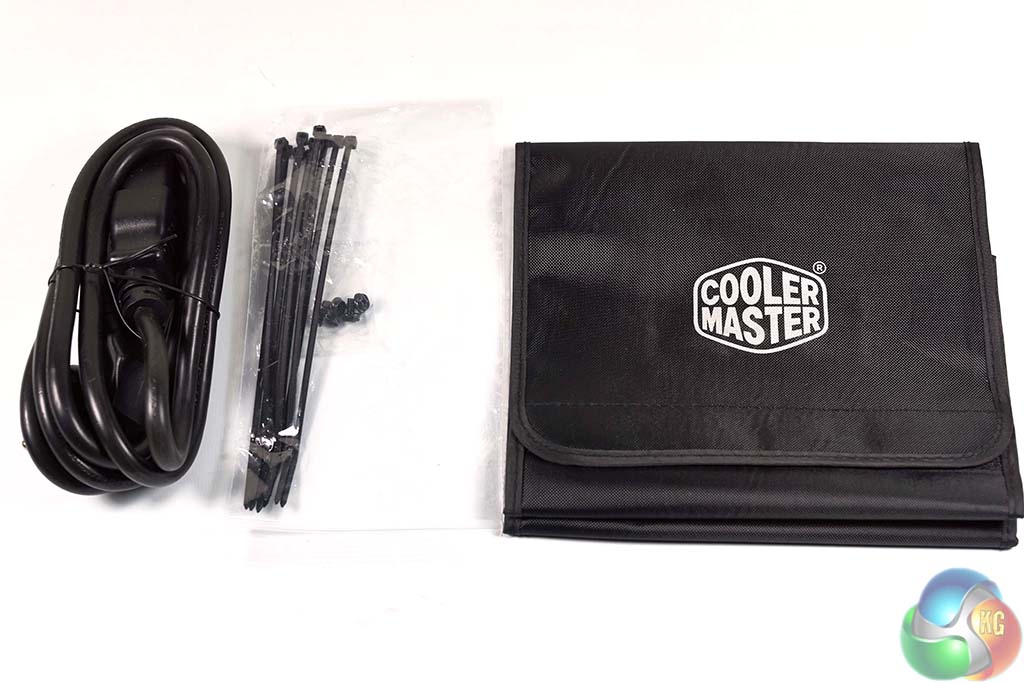
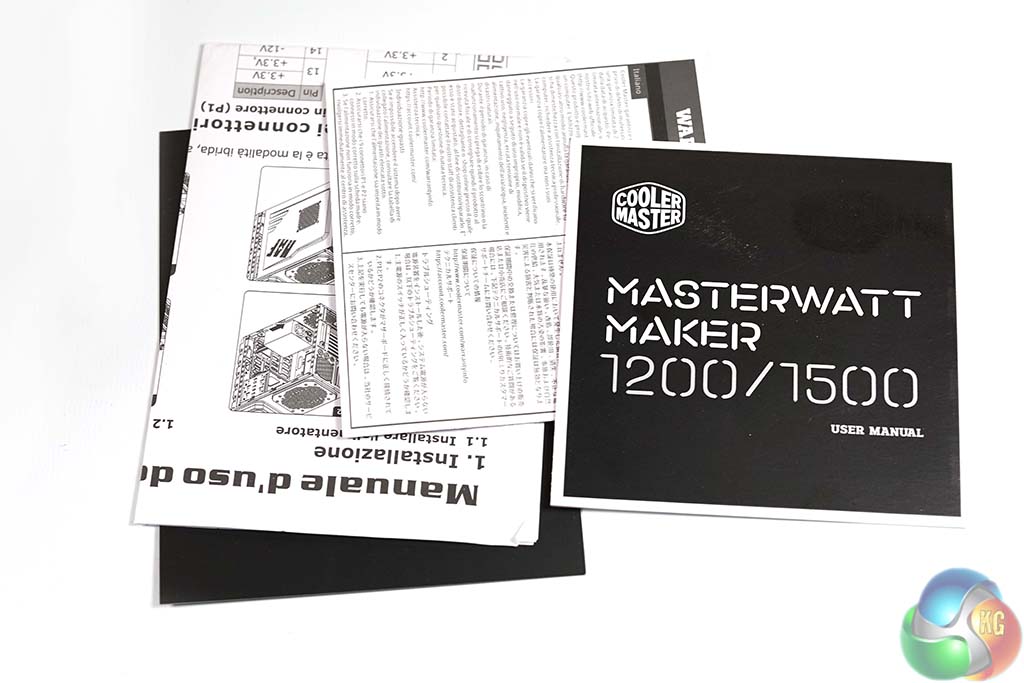
Cooler Master include a regional specific power cable (c19 heavy duty power cord which can handle up to 16A), cable ties, mounting screws and a nice little felt storage pouch. They also include a lot of literature with the product, including a handy little user manual. I was quite surprised that Cooler Master didn't include a little branded case badge as often seen in flagship products of competitors.

The power supply is well protected inside a soft bag, shown above. The box does offer plenty of protection for the unit itself, which is reassuring to see.

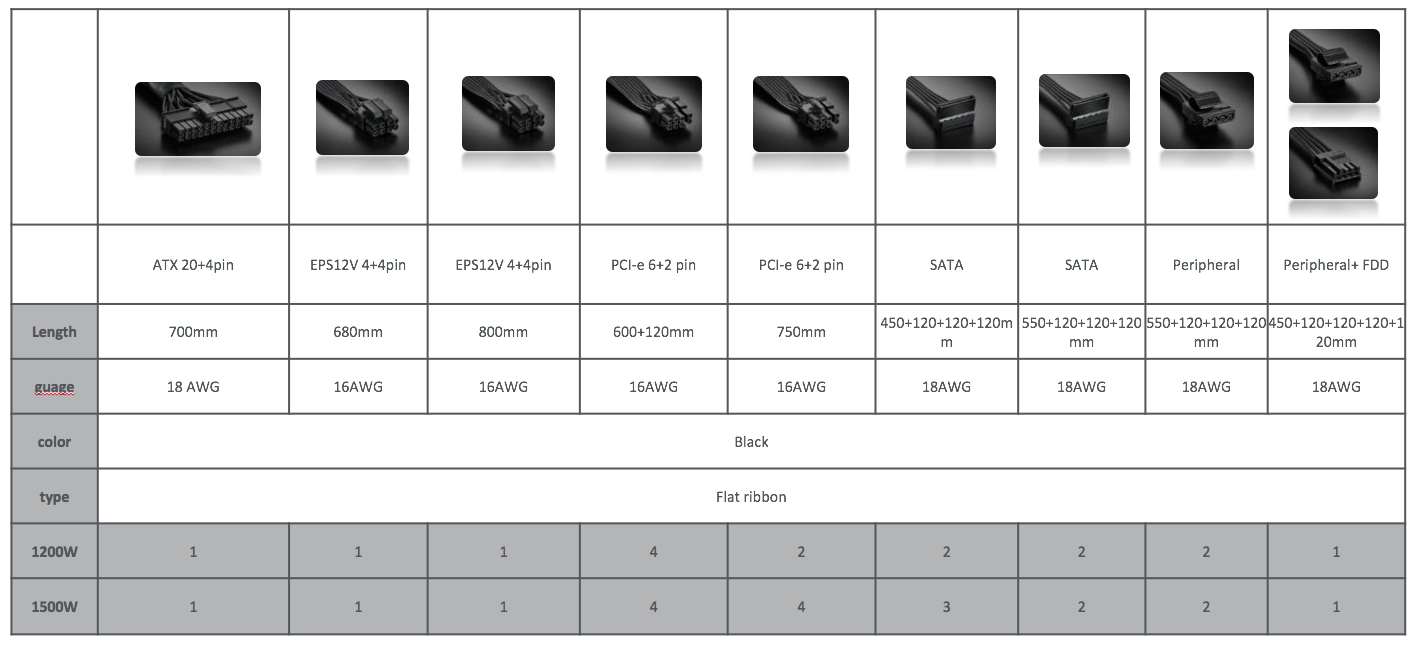
The cables are a mixture of 16 AWG (EPS and PCIe) and 18 AWG and all are flat ribbon style for ease of routing inside a system chassis. This 1200w unit has a total of 10 PCIe connectors, which offers plenty of support for both high end SLi and Crossfire systems. There are 16 SATA connectors and 12 peripheral connectors available as well.
Cooler Master claim these connectors via the larger pins on the modular bay can deliver 150% more current than on a standard power supply.
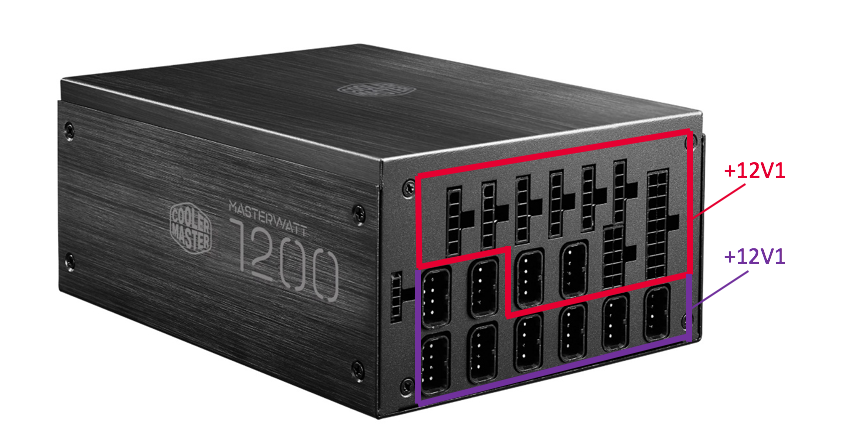
The Cooler Master MasterWatt Maker 1200 can switch between single and Multi (Dual) rail with the Cooler Master Connect software. The default setting is dual rail. The Pin/Connector layout per rail is shown in the image above.
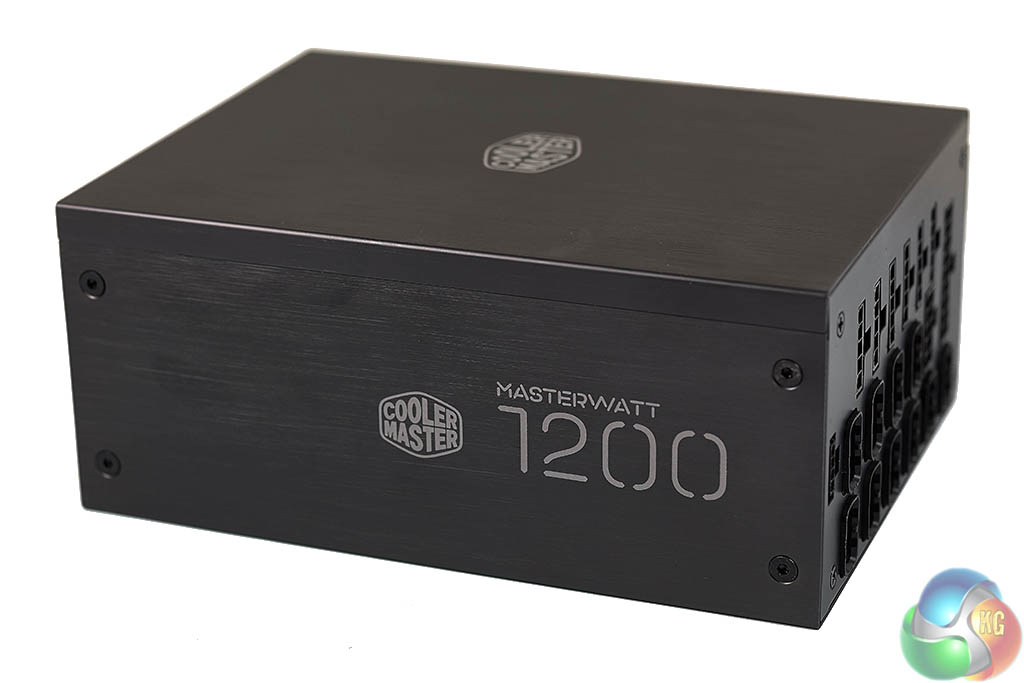
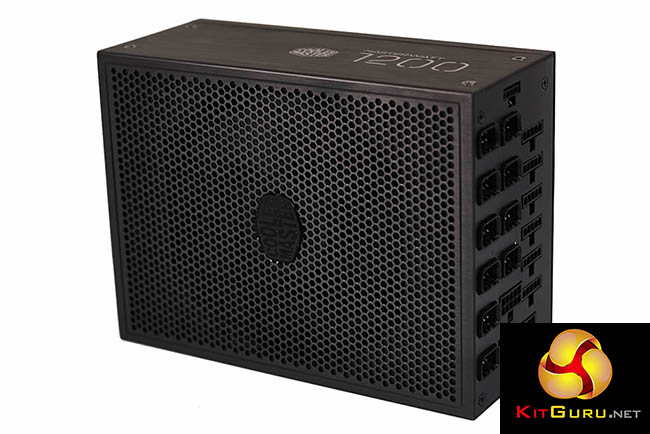
The Cooler Master MasterWatt Maker 1200 is certainly very attractively designed. The brushed aluminium finish is eye catching yet quite simplistic looking. I tend to prefer simple looking power supplies which don't feature multi coloured stickers. One tick for Cooler Master.
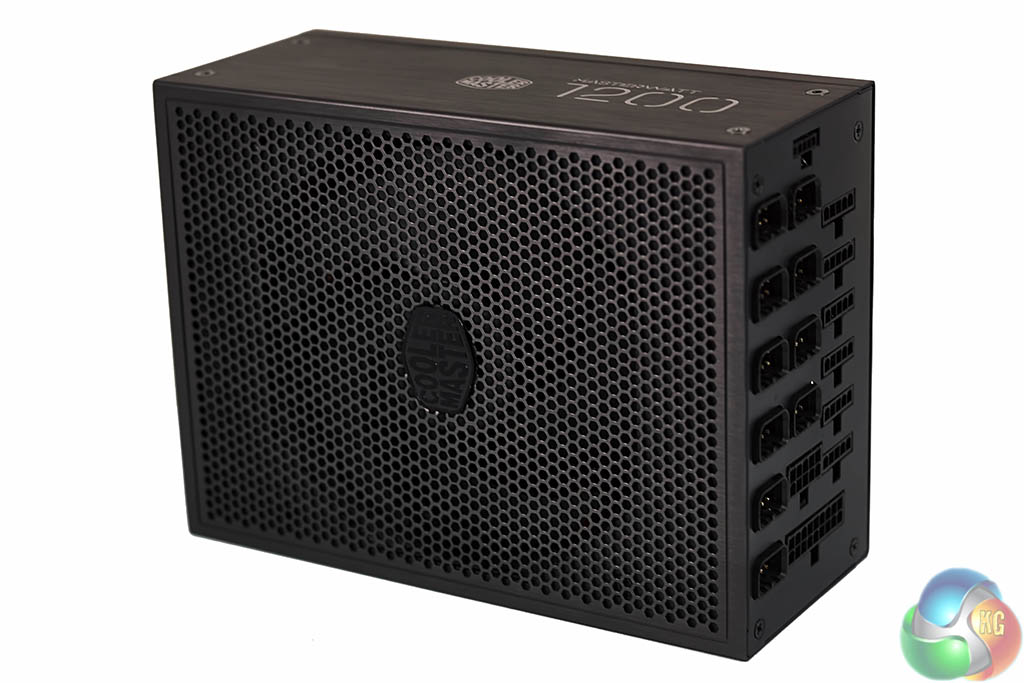
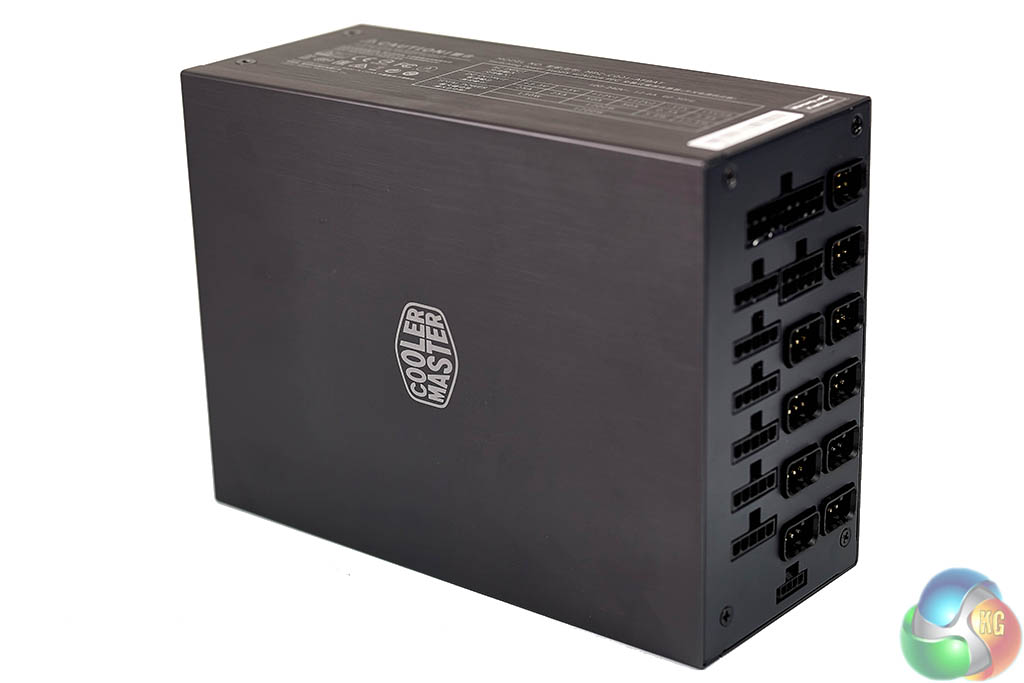
It really is a fantastic looking unit, from all angles. Branding is simple, yet effective too.
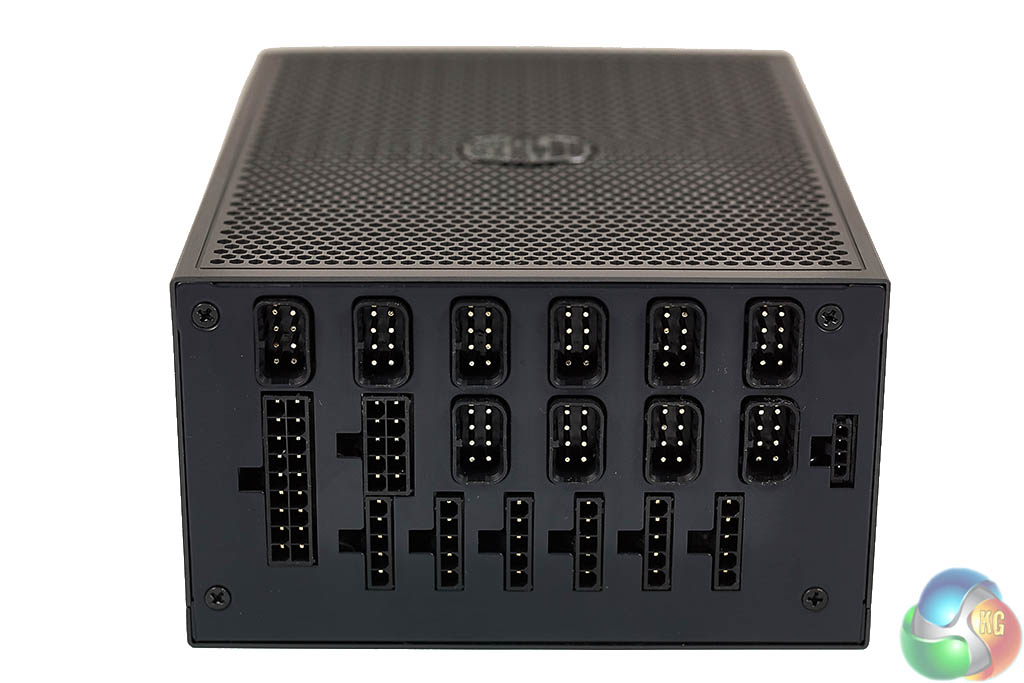
The modular panel is home to custom designed sockets which feature thicker pins, able to deal with increased amperage. A good safety measure from Cooler Master.
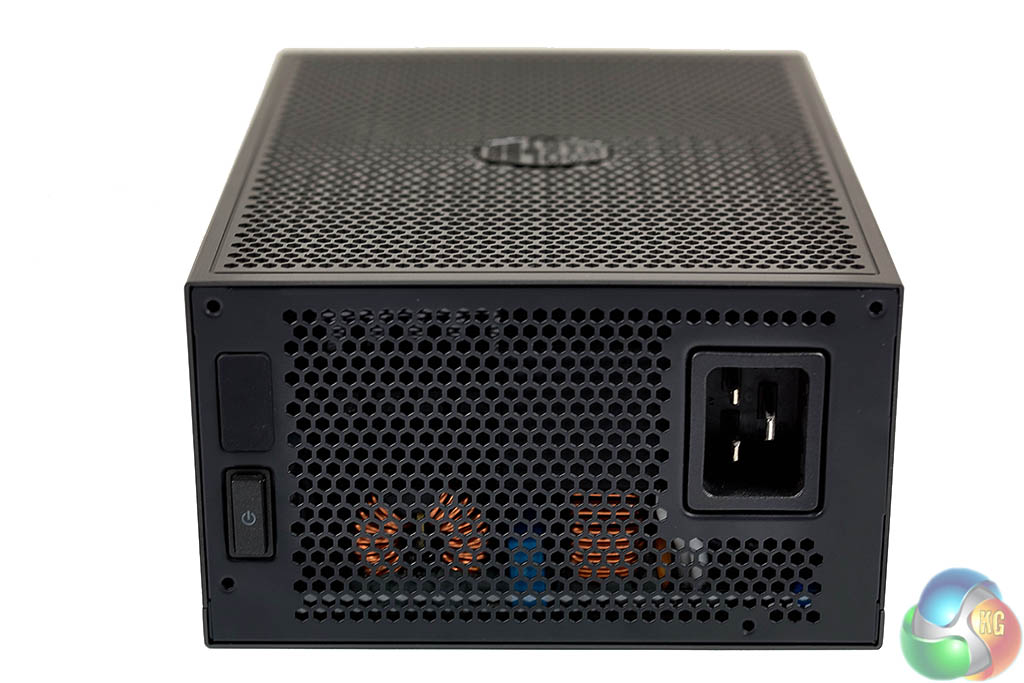
The socket for the BlueTooth module is above the power switch. They are using a push button spring switch instead of a rocker switch. The power connector is on the other side.
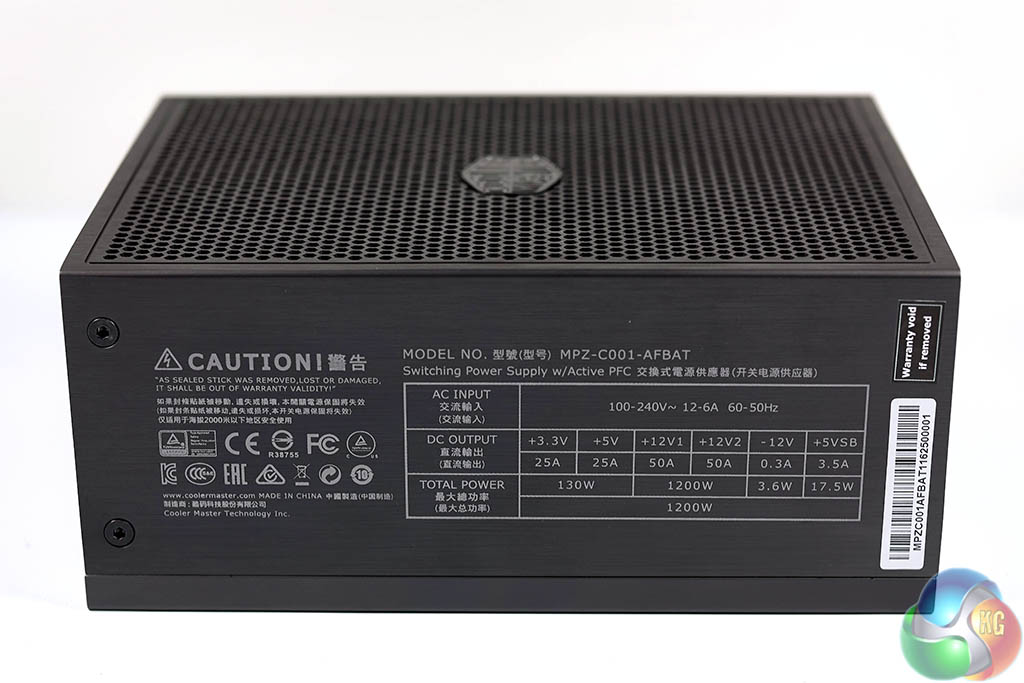
| Cooler Master MasterWatt Maker 1200 | ||||||
|
DC Output
|
+3.3V
|
+5V
|
+12V1 | +12V2 |
-12V
|
+5Vsb
|
|
Max Output
|
25A
|
25A
|
50A | 50A |
0.3A
|
3.5A
|
| Total Power | 130W | 1200W | 3.6W | 17.5W | ||
| 1200W | ||||||
There is plenty of power on tap for the most demanding systems, with 50A available to both +12V1 and +12V2.
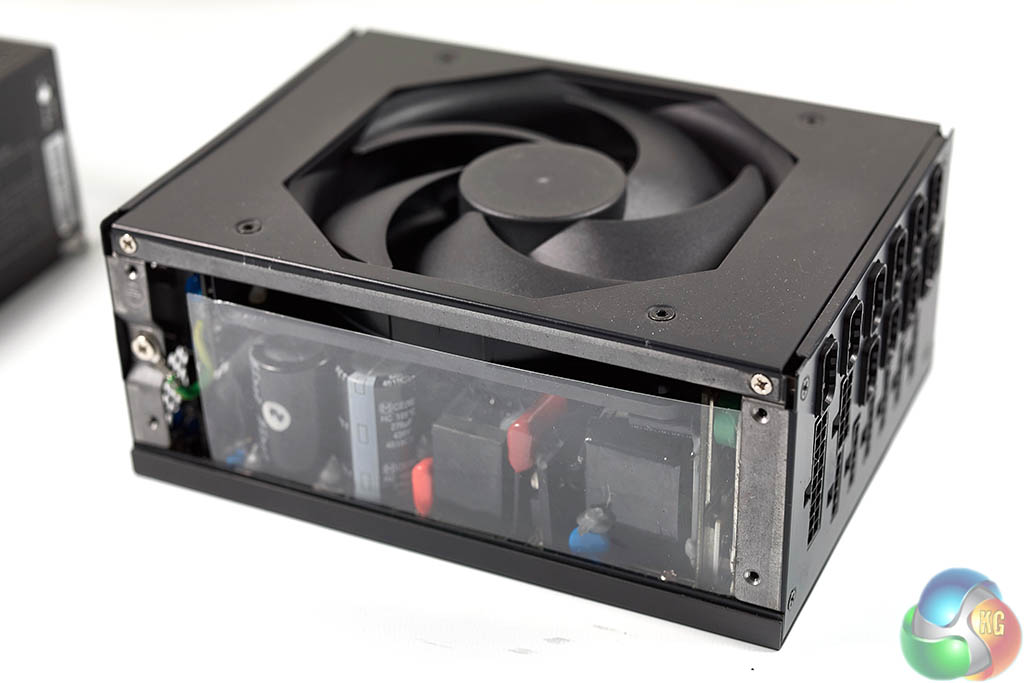
The outer aluminium shell is the first thing to remove. Then we can get a closer look at the components inside.
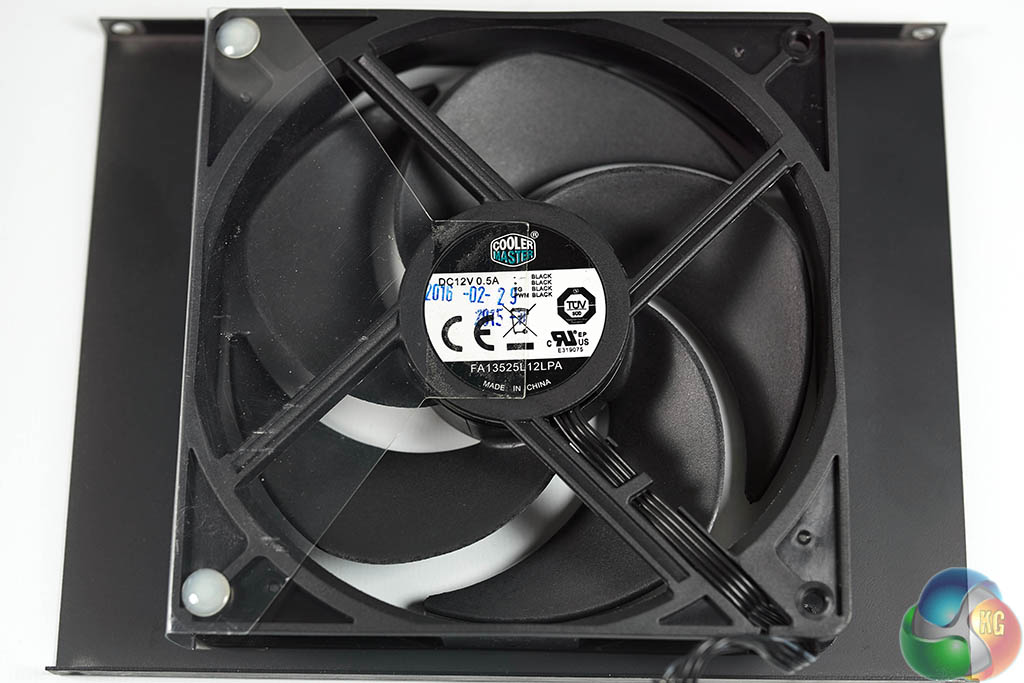
Cooler Master are using a 135mm FA13525L12LPA fan, this is a loop dynamic bearing fan with a rated life span of around 160,000 hours. The maximum speed is close to 3,000 rpm.
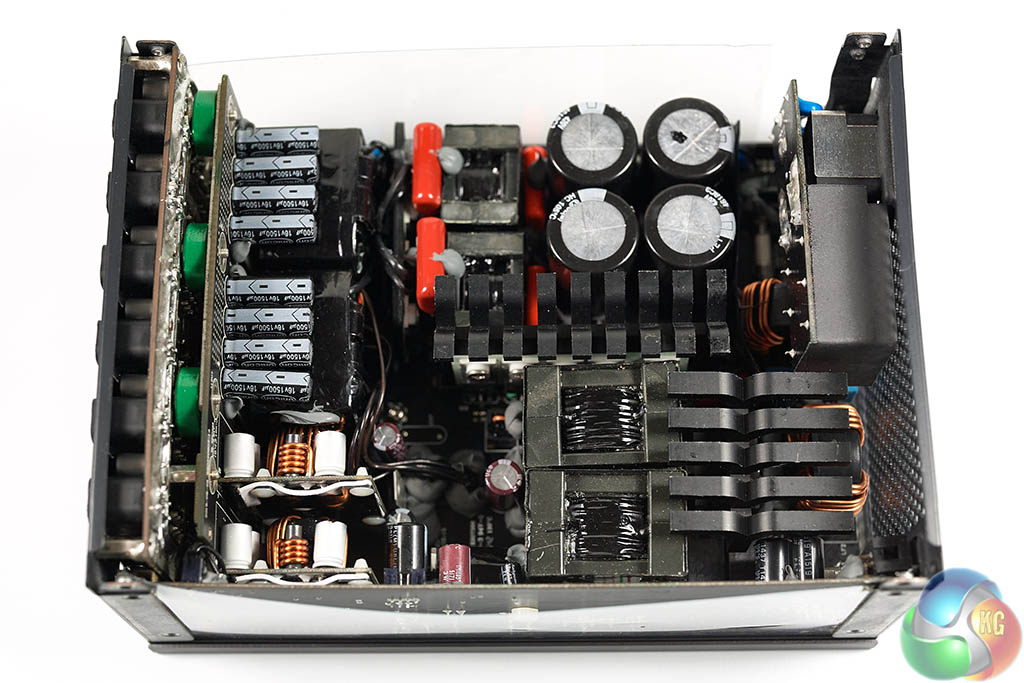
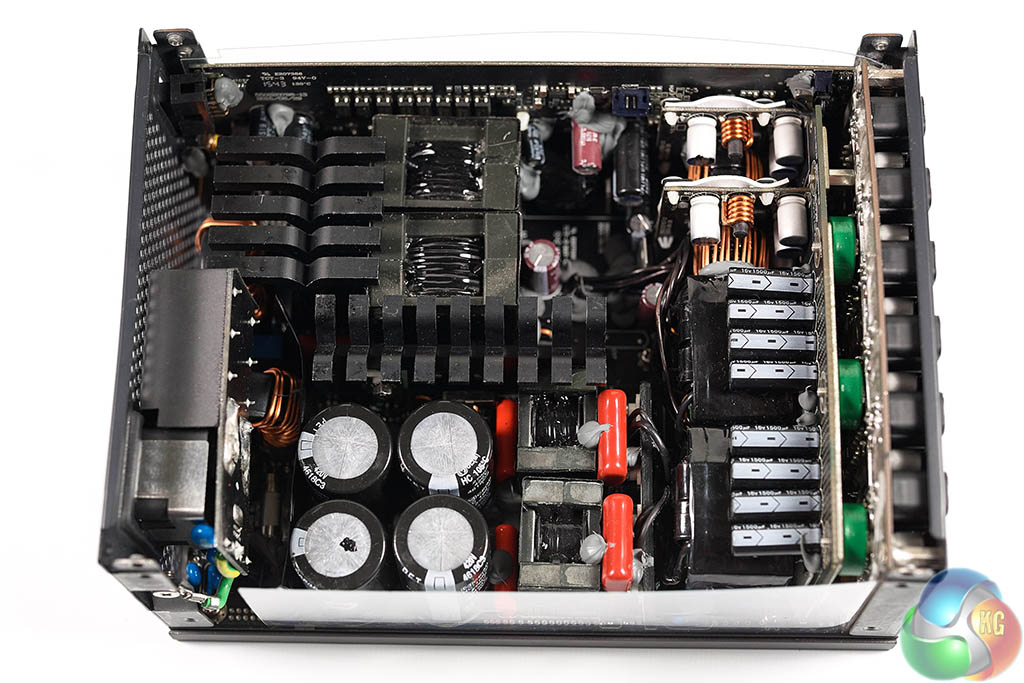
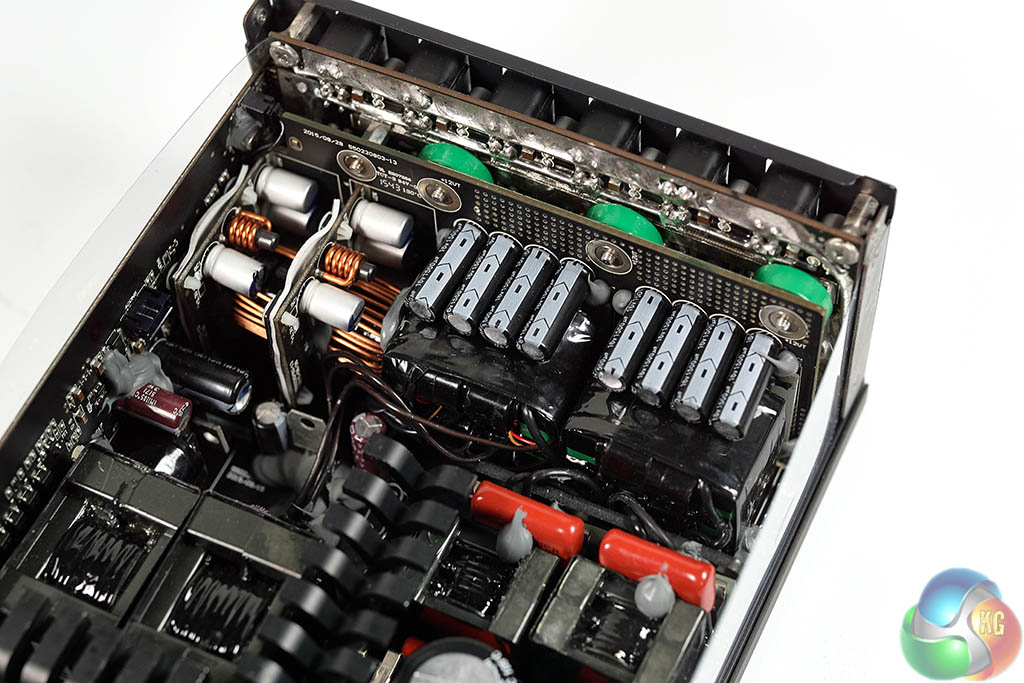
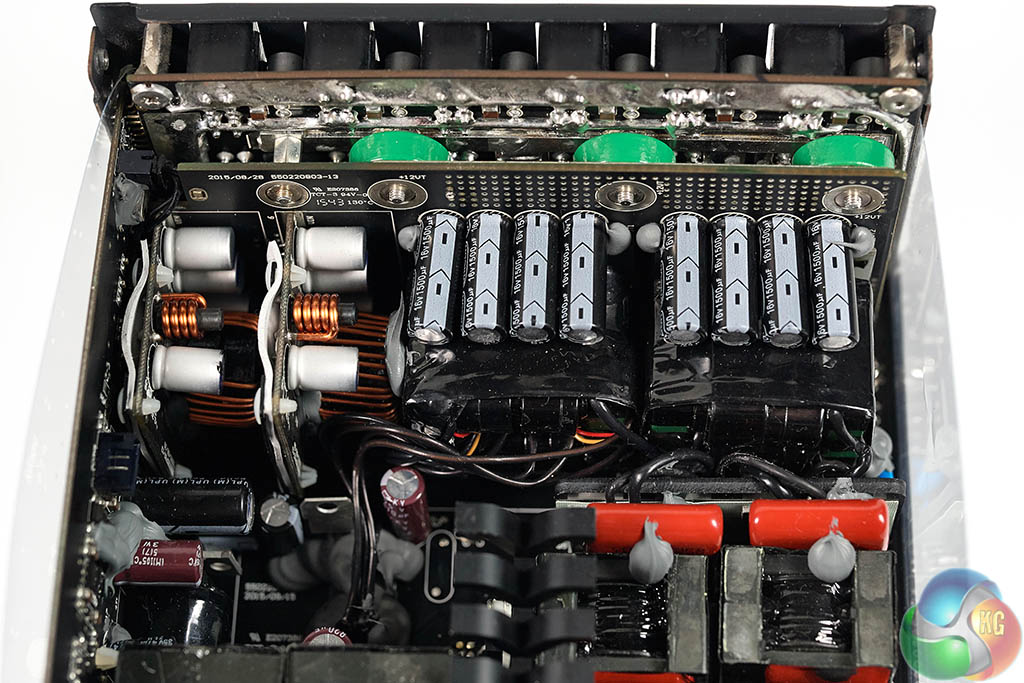
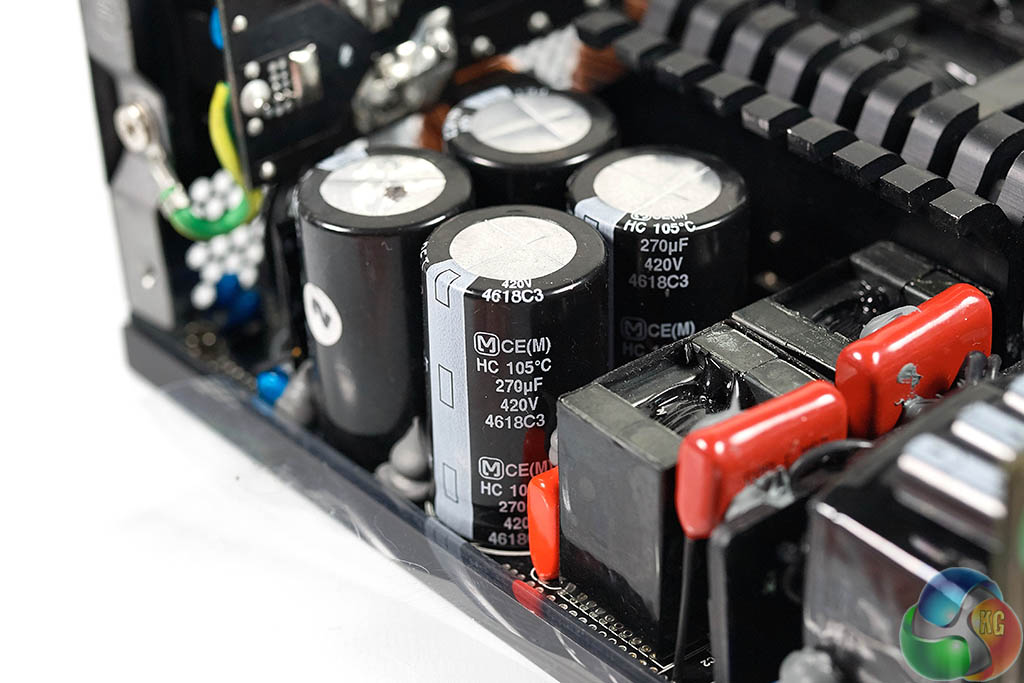
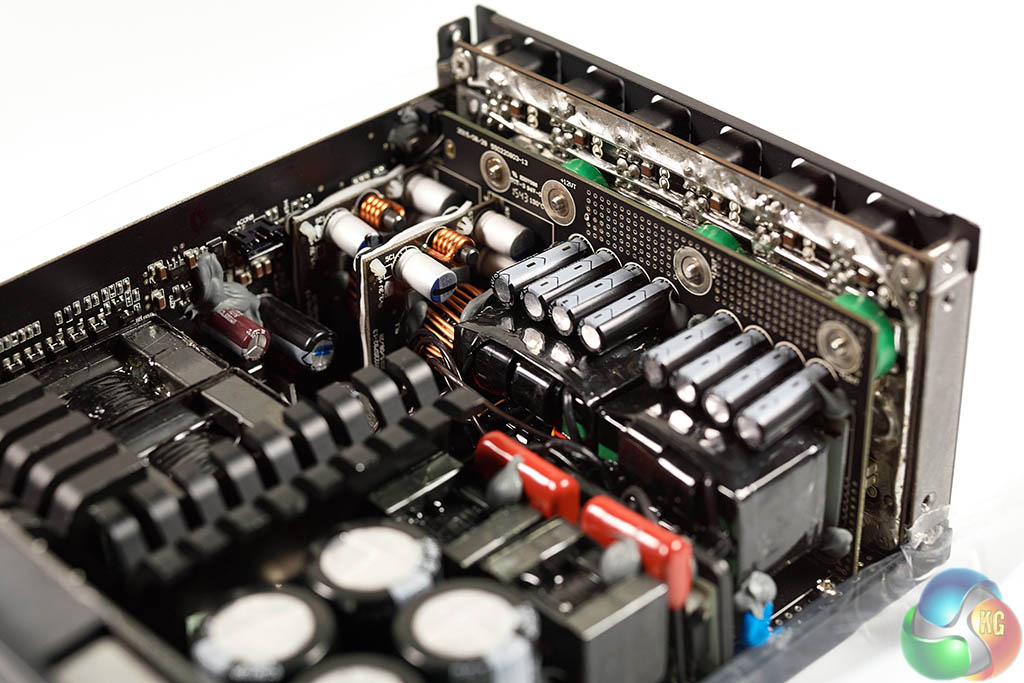
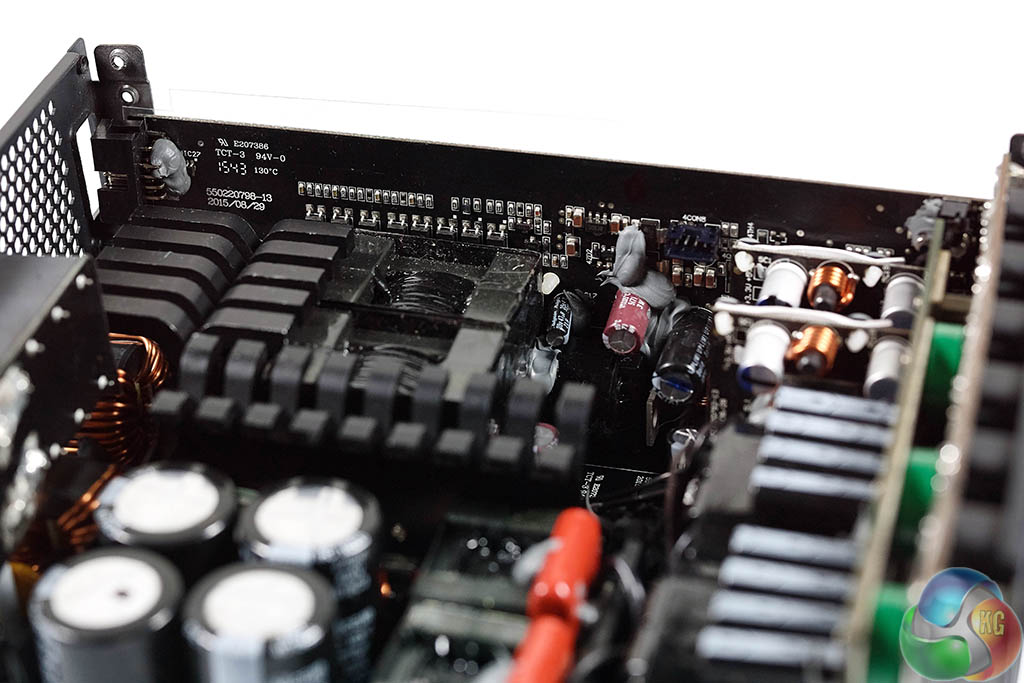
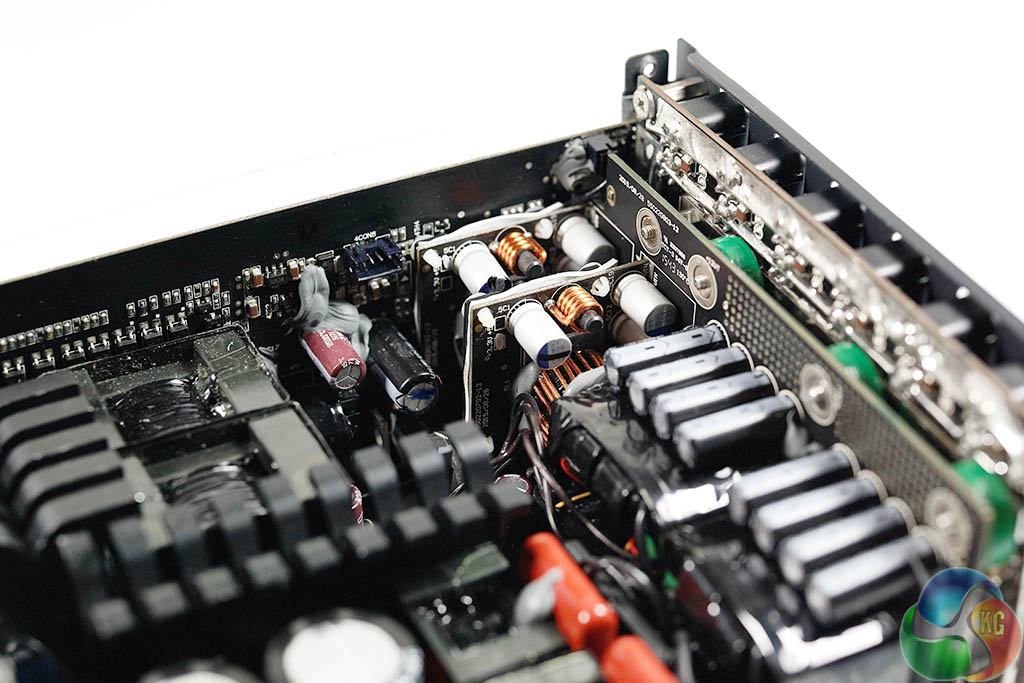
As we detailed earlier in the review, Cooler Master are using Enhance as the OEM partner for the design of this power supply. I have to say I was more impressed by the manufacturing quality of this unit than any other Enhance design I have reviewed in previous years. Considering the Titanium efficiency I was surprised Enhance had opted for such large heatsinks. Never a bad thing mind you.
Enhance have cleverly placed a large PCB hosting the FET's behind the modular board. This regulates the +12V rail. The primary transformers are very close to the +12V FETS along with the modular board. This helps reduce energy losses as the current obviously moves across shorter distances with less resistance.
PCB soldering is very high indeed with no noticeable issues apparent.
As the images above show, the design of this power supply is very condensed, there is very little room for airflow. We noticed that Cooler Master have positioned the bulk caps and the electrolytic capacitors on the secondary side to get some air flow, which was wise.
The first stage of the transient filtering starts at the AC receptacle and comprises a pair of Y caps and three X caps. This moves onto the main PCB with an extra X cap, two Y caps, an MOV and two CM chokes. Nichicon supply the polymer filtering caps.
Regular readers will remember our review some time ago of the Corsair AX1500i which was a pure digital platform design. This Cooler Master MasterWatt power supply utilises an MCU as a link to communicate and for monitoring duties. APFC and switching control are dealt with by analog controllers not digital circuitry. While we could debate the use of analog parts in this design, the effectiveness of the design will be rated against the results.
The primary side incorporates an APFC converter as well as full bridge topology – and two DC-DC converters generate the minor rails. FETS to regulate the +12V rail are installed on a little board set close by to the main transformers.
It is good to see the capacitors are Japanese, supplied by Rubycon and Nippon Chemi Con – rated at 105c. They are using four in the primary stage to help split the demand.Correctly testing power supplies is a complex procedure and KitGuru have configured a test bench which can deliver up to a 2,000 watt DC load.
Due to public requests we have changed our temperature settings recently – previously we rated with ambient temperatures at 25C, we have increased ambient temperatures by 10c (to 35c) in our environment to greater reflect warmer internal chassis conditions.
We use combinations of the following hardware:
• SunMoon SM-268
• CSI3710A Programmable DC load (+3.3V and +5V outputs)
• CSI3711A Programmable DC load (+12V1, +12V2, +12V3, and +12V4)
• Extech Power Analyzer
• Extech MultiMaster MM570 digital multimeter
• Extech digital sound level meter
• Digital oscilloscope (20M S/s with 12 Bit ADC)
• Variable Autotransformer, 1.4 KVA
|
DC Output Load Regulation
|
||||||||||
|
Combined DC Load |
+3.3V
|
+5V
|
+12V
|
+5VSB
|
-12V | |||||
|
A
|
V
|
A
|
V
|
A
|
V
|
A
|
V
|
A | V | |
|
100W
|
1.55
|
3.35
|
1.75
|
5.03
|
6.65
|
12.09
|
0.50
|
5.01
|
0.20
|
-12.03
|
|
200W
|
3.13
|
3.35
|
3.50
|
5.02
|
13.50
|
12.07
|
1.00
|
5.01
|
0.20
|
-12.03
|
| 400W |
6.40
|
3.34
|
7.05
|
5.02
|
27.50
|
12.06
|
1.50
|
5.01
|
0.30
|
-12.04
|
| 600W |
9.80
|
3.34
|
10.77
|
5.02
|
41.70
|
12.05
|
2.00
|
5.00
|
0.30
|
-12.04
|
|
800W
|
13.25
|
3.34
|
14.55
|
5.01
|
56.40
|
12.05
|
2.50
|
5.00
|
0.50
|
-12.03
|
| 1000W | 16.55 | 3.33 | 15.75 | 5.01 | 71.40 | 12.03 | 3.00 | 5.00 | 0.60 | -12.04 |
| 1200W | 22.01 | 3.33 | 22.01 | 5.01 | 85.00 | 12.01 | 3.60 | 5.00 | 0.80 | -12.04 |
Load regulation is very good indeed, holding within 1%.
| Cooler Master MasterWatt Maker 1200 | Maximum Load |
| 1332Watts |
We managed to get another 132 watts from the power supply before the protection circuitry kicked in. The supply was undamaged and it was ready to fire up again when we dropped the load to a more realistic level.
Next we want to try Cross Loading. This basically means loads which are not balanced. If a PC for instance needs 500W on the +12V outputs but something like 30W via the combined 3.3V and +5V outputs then the voltage regulation can fluctuate badly.
| Cross Load Testing | +3.3V | +5V | +12V | -12V | +5VSB | |||||
| A | V | A | V | A | V | A | V | A | V | |
| 1190W | 4.0 | 3.34 | 3.0 | 5.03 | 88.0 | 12.00 | 0.2 | -12.02 | 0.50 | 5.00 |
| 240W | 19.0 | 3.33 | 22.0 | 5.01 | 2.5 | 12.08 | 0.2 | -12.03 | 0.50 | 5.01 |
The Cooler Master MasterWatt Maker 1200 power supply delivered a great set of results in the demanding Cross load test, as shown above.
We then used an oscilloscope to measure AC ripple and noise present on the DC outputs. We set the oscilloscope time base to check for AC ripple at both high and low ends of the spectrum. ATX12V V2.2 specification for DC output ripple and noise is defined in the ATX 12V power supply design guide.
|
ATX12V Ver 2.2 Noise/Ripple Tolerance
|
|
|
Output
|
Ripple (mV p-p)
|
|
+3.3V
|
50
|
|
+5V
|
50
|
|
+12V1
|
120
|
|
+12V2
|
120
|
|
-12V
|
120
|
|
+5VSB
|
50
|
Obviously when measuring AC noise and ripple on the DC outputs the cleaner (less recorded) means we have a better end result. We measured this AC signal amplitude to see how closely the unit complied with the ATX standard.
| AC Ripple (mV p-p) | ||||
| DC Load | +3.3V | +5V | +12V | 5VSB |
| 100W | 5 | 5 | 10 | 5 |
| 200W | 5 | 5 | 10 | 5 |
| 400W | 5 | 10 | 10 | 5 |
| 600W | 10 | 10 | 15 | 5 |
| 800W | 10 | 15 | 15 | 10 |
| 1000W | 15 | 15 | 20 | 10 |
| 1200W | 15 | 20 | 20 | 15 |
Fantastic results – all rails hold well within the industry rated tolerance levels.
|
Efficiency (%)
|
|
|
100W
|
86.2
|
|
200W
|
89.6
|
|
400W
|
94.4
|
|
600W
|
94.5
|
|
800W
|
94.1
|
| 1000W | 93.4 |
| 1200W | 92.8 |
The overall efficiency results are excellent, peaking at 94.5% at 600W. This drops to 92.8% efficiency at full load, a very impressive result overall.
We take the issue of noise very seriously at KitGuru and this is why we have built a special home brew system as a reference point when we test noise levels of various components. Why do this? Well this means we can eliminate secondary noise pollution in the test room and concentrate on components we are testing. It also brings us slightly closer to industry standards, such as DIN 45635.
Today to test the Power Supply we have taken it into our acoustics room environment and have set our SkyTronic DSL 2 Digital Sound Level Meter (6-130dBa) one meter away from the unit. We have no other fans running so we can effectively measure just the noise from the unit itself.
As this can be a little confusing for people, here are various dBa ratings in with real world situations to help describe the various levels.
KitGuru noise guide
10dBA – Normal Breathing/Rustling Leaves
20-25dBA – Whisper
30dBA – High Quality Computer fan
40dBA – A Bubbling Brook, or a Refrigerator
50dBA – Normal Conversation
60dBA – Laughter
70dBA – Vacuum Cleaner or Hairdryer
80dBA – City Traffic or a Garbage Disposal
90dBA – Motorcycle or Lawnmower
100dBA – MP3 Player at maximum output
110dBA – Orchestra
120dBA – Front row rock concert/Jet Engine
130dBA – Threshold of Pain
140dBA – Military Jet takeoff/Gunshot (close range)
160dBA – Instant Perforation of eardrum
|
Noise (dBA)
|
|
|
100W
|
<28.0
|
|
200W
|
<28.0
|
|
400W
|
<28.0
|
|
600W
|
30.5
|
| 800W | 31.4 |
| 1000W | 32.9 |
| 1200W | 34.4 |
The Cooler Master MasterWatt Maker 1200 is a very quiet power supply and the fan was never intrusive, even under heavy load. When the load rises, the fan starts to spin faster, although noise levels are never a concern.
|
Temperature (c)
|
||
|
Intake
|
Exhaust
|
|
|
100W
|
35
|
37
|
|
200W
|
35
|
38
|
|
400W
|
37
|
42
|
|
650W
|
43
|
44
|
|
800W
|
45
|
52
|
| 1000W | 47 | 56 |
| 1200W | 50 | 61 |
Temperatures are well controlled as the fan spins actively once load hits 900W and beyond.
|
Maximum load
|
Efficiency
|
|
1332W
|
92.2
|
Pushing the power supply above its rated limits generates an efficiency level of around 92.2%. This is not a viable ‘real world’ situation, but its interesting nonetheless.The Cooler Master MasterWatt Maker 1200 is undoubtedly an impressive power supply and OEM partner Enhance have raised their game to a level necessary to justify the 400 euro asking price.
We love the appearance of the power supply, it is actually one of my favourite units from a purely aesthetic point of view. The large fan is completely hidden behind the outer grill, which is a bonus in my book.
First impressions are very positive. The bundle included with the power supply is both extensive and of a quality befitting a flagship product.
The unique modular panel incorporates larger pins that can handle 1.5 times more amperage when compared against other high end models on the market. This is a fantastic safety feature as it can help prevent melted connectors and even potential shorts in extreme situations.
The BlueTooth 3.0 functionality works well, and will attract the attention of a select audience. Personally I wouldn't bother using it myself, but it does seem rather unfair to fault Cooler Master for trying to bring something new to market. As far as I know this is the first desktop power supply that adopts a BlueTooth interface.
Comparisons will be drawn against Corsair, for their pure digital AX1500i power supply (review HERE), developed with Flextronics. The Cooler Master software interface is not quite as sophisticated as that available via Corsair Link, however Corsair have quite a few years advantage in regards to development and implementation.
Many people will find the option to monitor and control their power supply via a mobile phone an interesting concept, but I would be interested to get feedback from our readers as to whether this feature would be a priority. Nonetheless this will likely be appropriated on some level by competitors in the coming months.
Technically, the MasterWatt Maker 1200 PSU delivers a stellar set of results. Efficiency rates very high throughout the range, holding above 93 percent throughout a huge range of power delivery, peaking at 94.5%. The unit also passed the demanding cross load test without breaking a sweat.
Ripple suppression is fantastic with all rails holding between 15mV and 20mV under full load conditions. Fan noise is also very low under most situations, aided by the very high efficiency of the unit. This is not a hot running power supply, even when load hits 800-1000 watts.
The only downside we can see is the high asking price. 400 euros is a lot to pay for any power supply, even one with BlueTooth 3.0 functionality and everything but the kitchen sink thrown in. This works out at £340 for our UK audience, putting this unit directly in competition with flagship products such as the Corsair AX1500i (HERE) and even the Super Flower Leadex Titanium 1600W 80 Plus Titanium (HERE).
We feel technically that the MasterWatt Maker 1200 is batting right at the highest level against flagship products from the likes of Corsair, SuperFlower and Seasonic. When we factor in the superb build quality, exceptional feature-set which includes BlueTooth 3.0 support for mobile devices and the reassuring 7 year warranty we feel the Cooler Master flagship wholeheartedly deserves our highest award.
Discuss on our Facebook page, over HERE.
Buy direct from the Cooler Master store for €399,95 HERE
Pros:
- class leading build quality.
- BlueTooth 3.0 support for mobile devices.
- superb cabling.
- modular bay is the market leader.
- delivered over 1,300 watts before shutting down.
- quiet fan.
- 94.5% efficiency.
Cons:
- Its expensive.
Kitguru says: The Cooler Master MasterWatt Maker 1200 is one of the finest power supplies we have tested. It may be expensive, but it delivers class leading performance.


While im still not quite ready to leave my beloved Superflower PSU behind i’m curious why they went with Bluetooth 3.0. I know its a feature that very few people will use (bring on the world psu over clocking championships…. With ln2 is booooooom) i’d have thought having bluetooth 4.0 or with the advent of iot bluetooth 4.1 on the box would have made a better marketing gimmick?
Other than that another strong product in CM’s growing Maker lineup.
<<hp. ★★✫★★✫★★✫★★✫★★✫★★✫★★✫★★✫★★✫★★✫★★✫★★✫★★✫★★✫★★✫★★✫★★✫★★::::::!ir265m:….,……