KitGuru KitGuru.net – Tech News | Hardware News | Hardware Reviews | IOS | Mobile | Gaming | Graphics Cards


Kingston's latest DC500R SSD is a drive designed for read-centric workloads in data centres and features 64-layer 3D TLC NAND, an 8-channel controller and hardware based power protection.
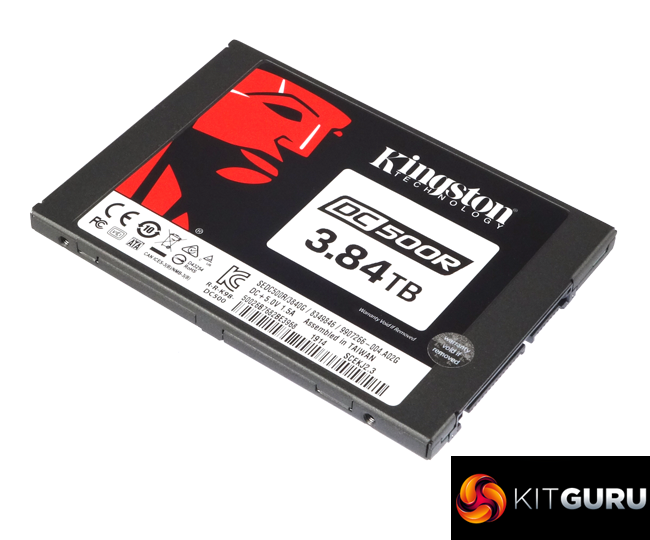
The Kingston DC500R range consists of four capacities; 480GB, 960GB, 1.92TB and the flagship 3.84TB drive we are reviewing here. Quoted Sequential read performance across the range is up to 555MB/s. Sequential write performance for the entry-level 480GB drive is 500MB/s, both the 960GB and 1.92TB drives have a 525MB/s rating while the flagship 3.84TB drive is up to 520MB/s.
Random 4K read performance is quoted as up to 98,000 IOPS for all four drives. When it comes to random writes the 480GB drive is rated up to 12,000 IOPS, the 980GB drive up to 20,000 IOPS, while the 1.92TB and 3.84TB drives are rated at up to 24,000 IOPS and 28,000 IOPS respectively.
The drives use a combination of Phison's latest PS3112-S12DC 8-channel controller and 3D TLC NAND, and although the NAND carries Kingston branding, it's Intel 64-layer 3D TLC NAND.
Official power ratings for the drive are 1.56W idle, 1.8W for maximum reads and 7.5W for maximum writes. The endurance of the 3.84TB DC500R is quoted as 3504TBW (0.5 DWPD) and Kingston back the drive with a 5-year warranty.
Physical Specifications:
Usable Capacities: 3.84TB.
NAND Components: Intel 64-L 3D TLC NAND.
NAND Controller: Phison S12DC 8-channel.
Cache: Micron DDR4-2666.
Interface: Serial ATA (SATA) 6Gb/s (SATA III).
Form Factor: 2.5in, 7mm.
Dimensions: 69.9 x 100 x 7mm.
Drive Weight: 92.34g.
Firmware Version: SCEKJ2.3
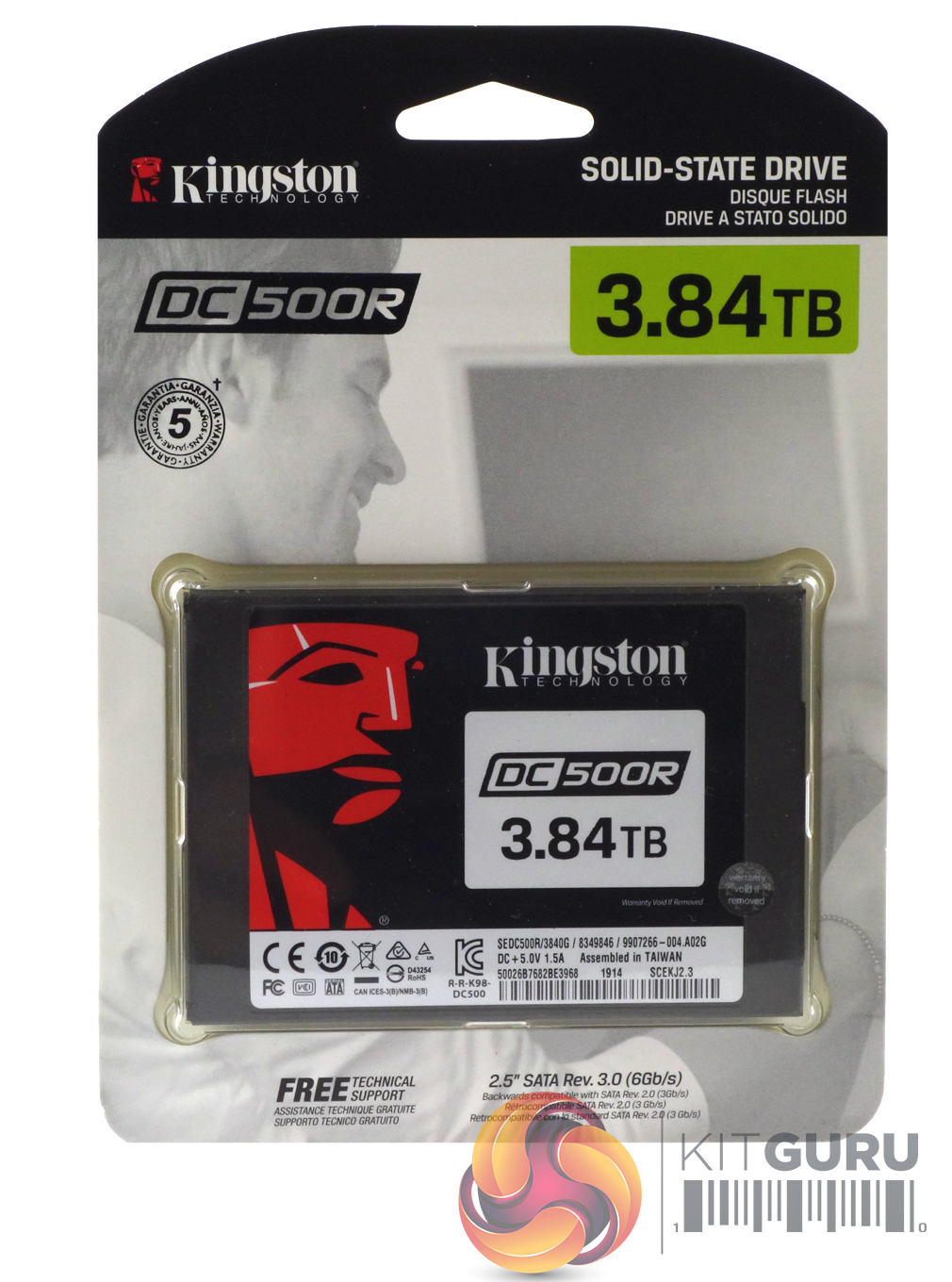
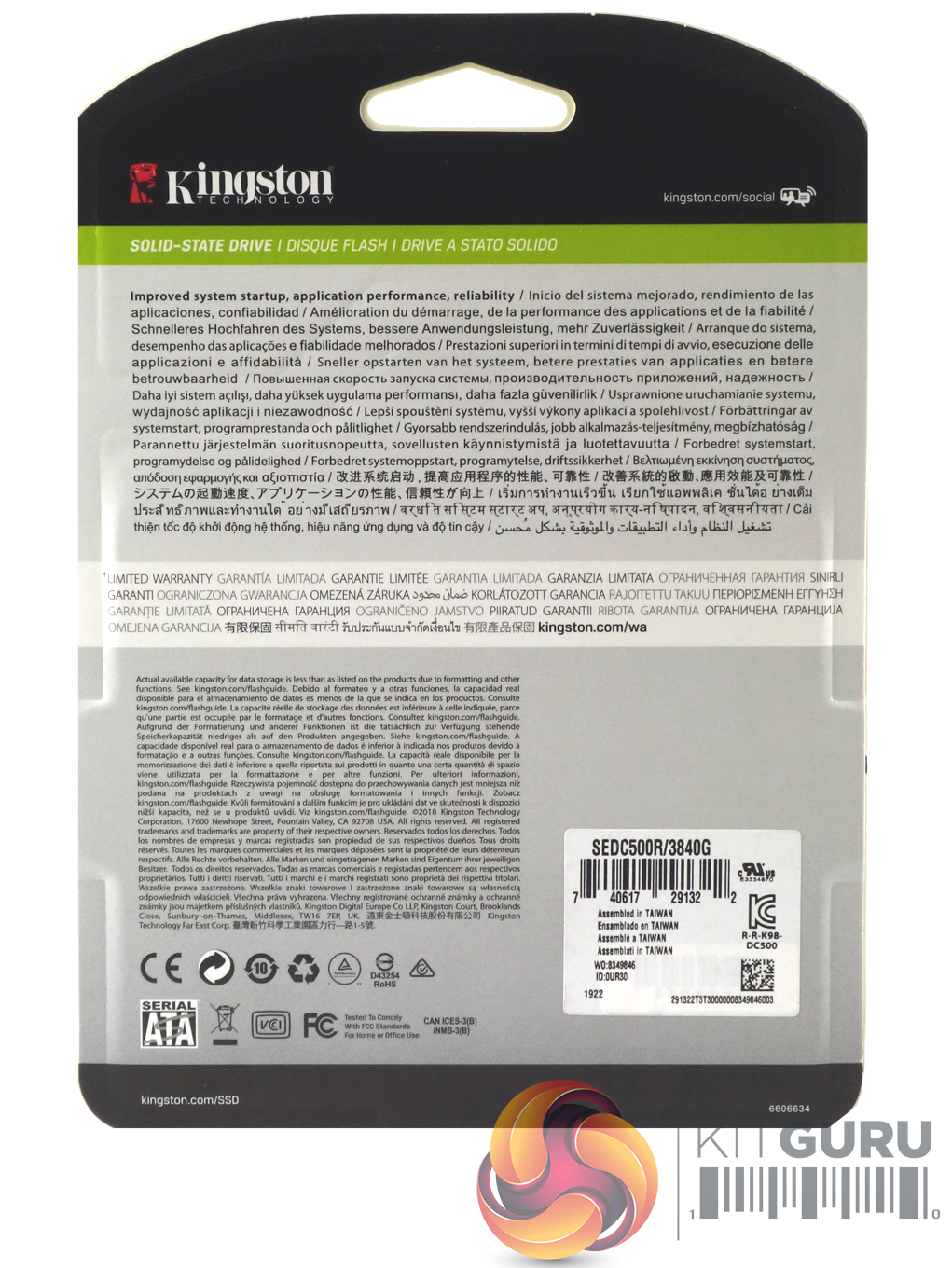
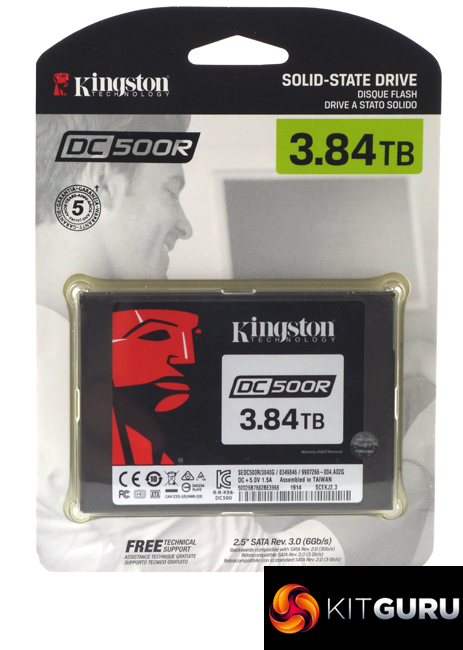
The DC500R ships in a blister pack with the drive's capacity clearly labelled on the front while the rear has multilingual marketing and warranty notes on it.
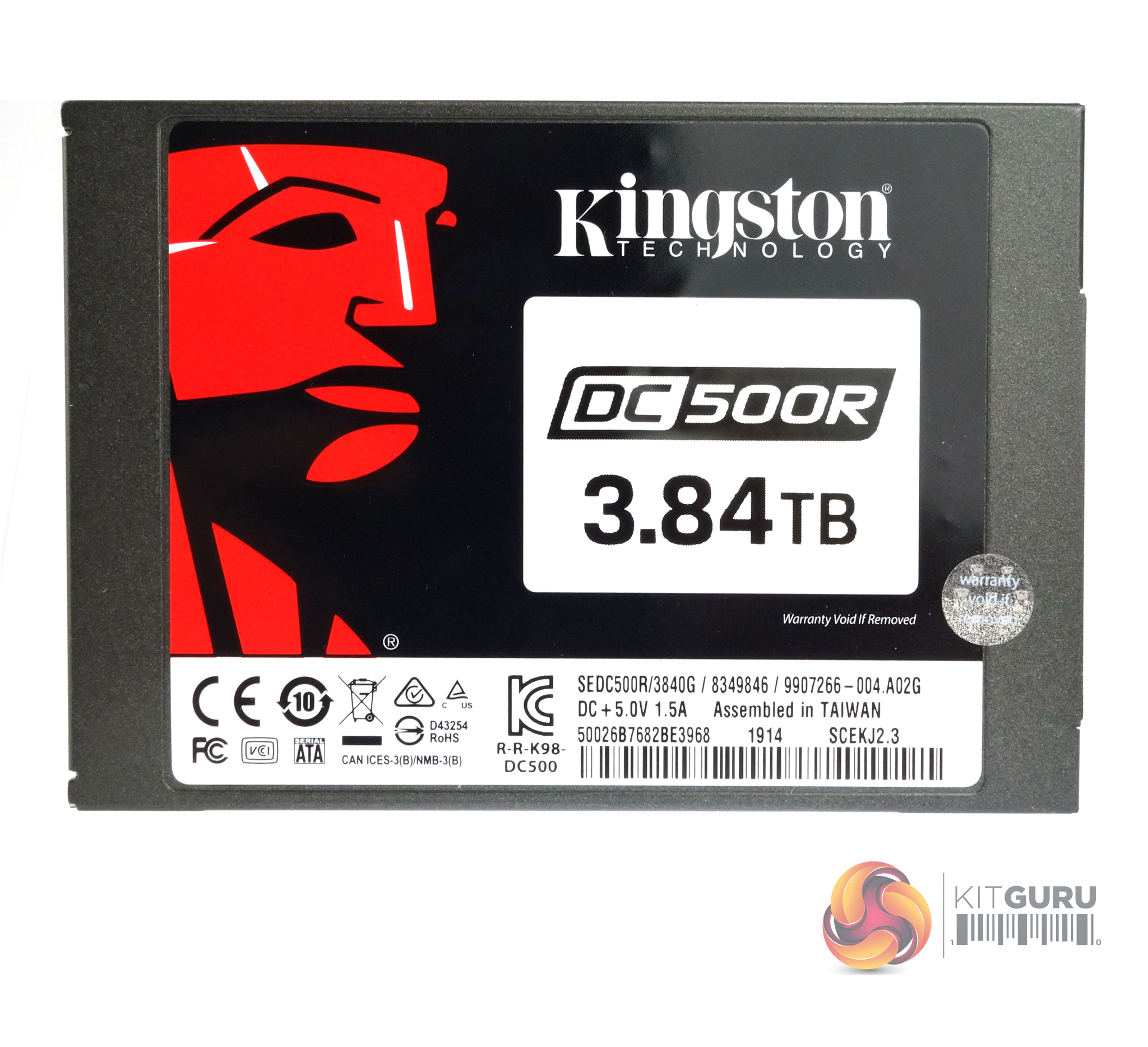
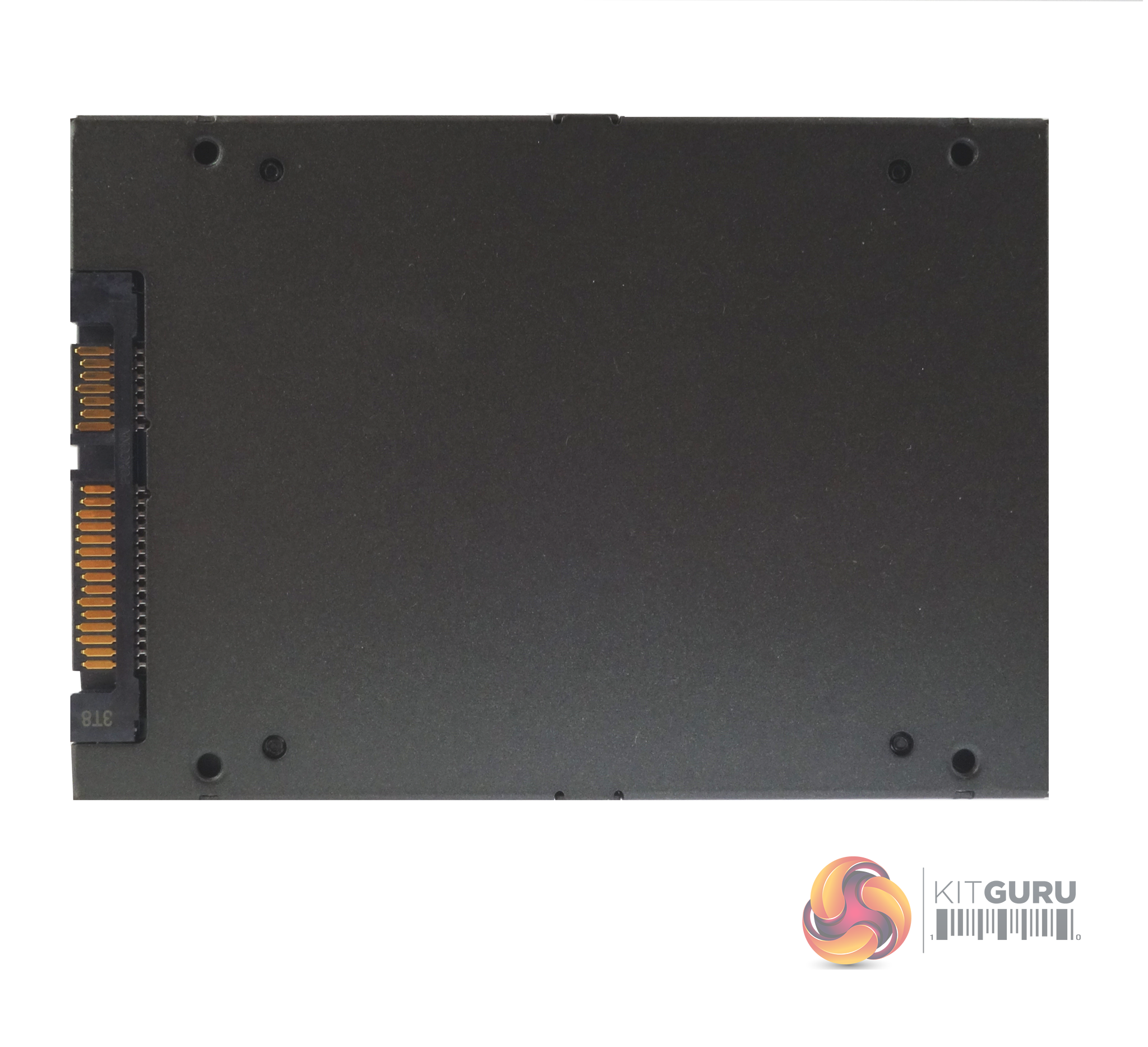
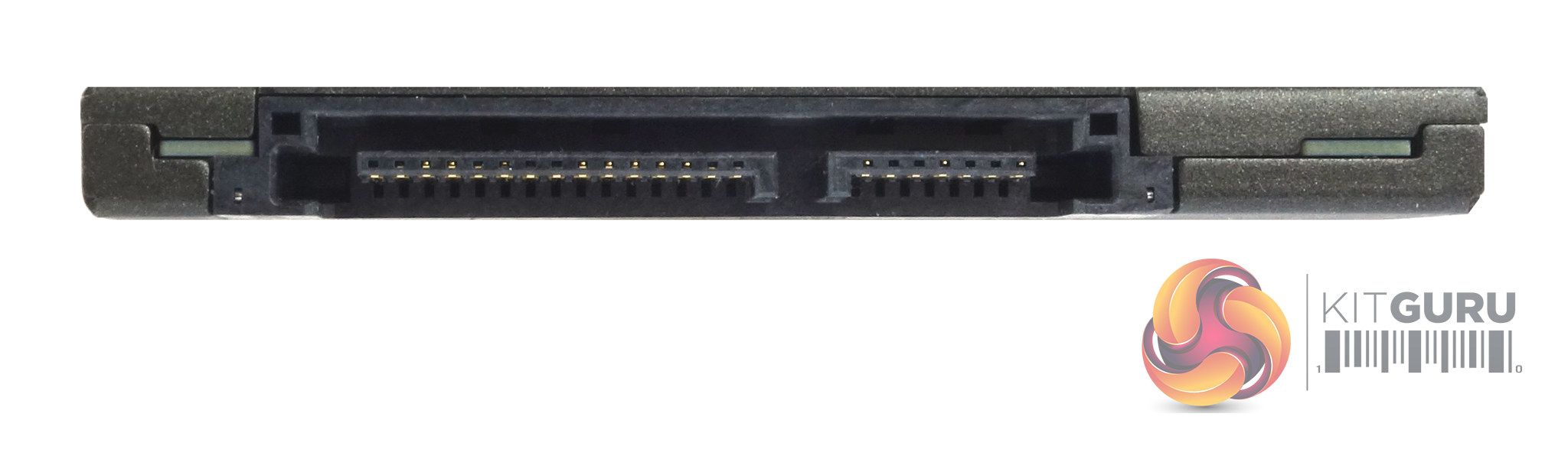
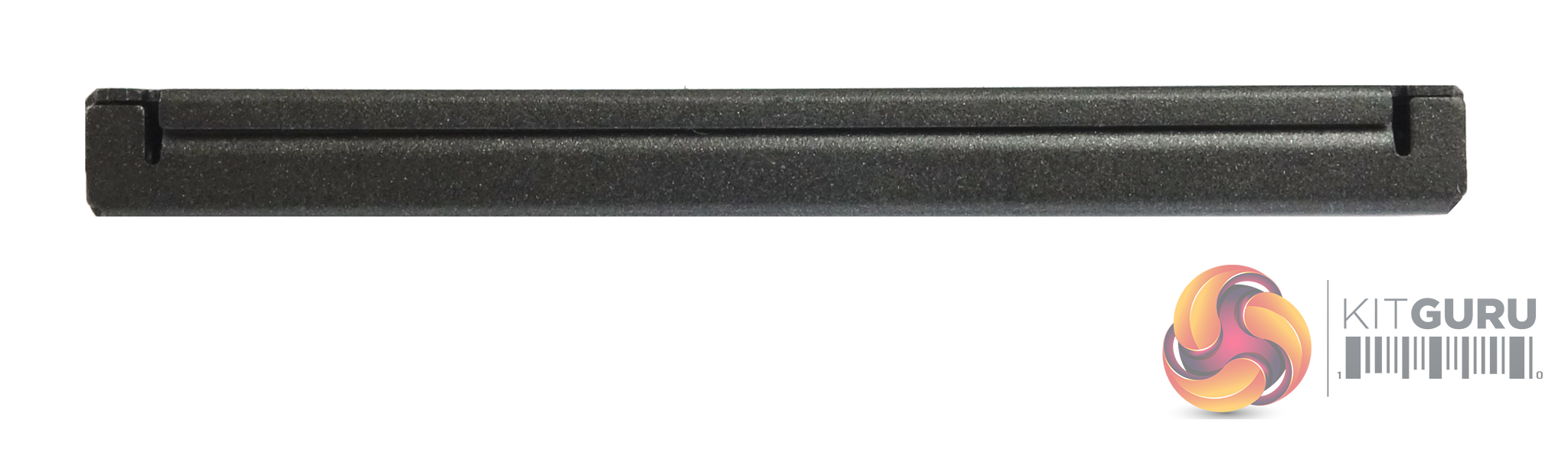
The DC500R is built on a standard 2.5in, 7mm format using a metal enclosure, held together with four Torx security screws hidden under the front label.
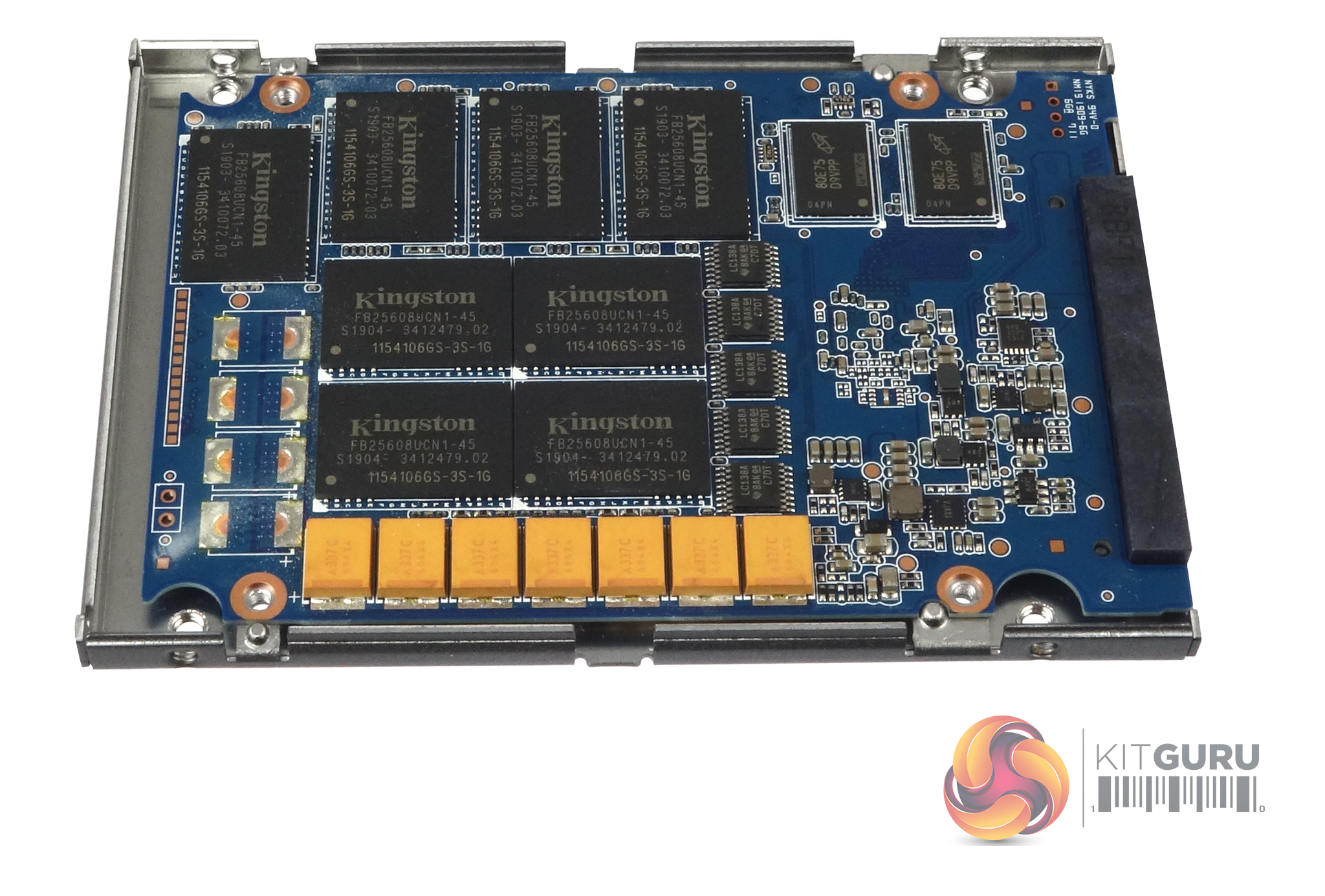
Both sides of the PCB are crammed with components. There is a thermal pad between the case and the controller to help dissipate heat from the controller through the enclosure. The only time the drive felt really warm in use was when it was being pushed hard during benchmarking runs.
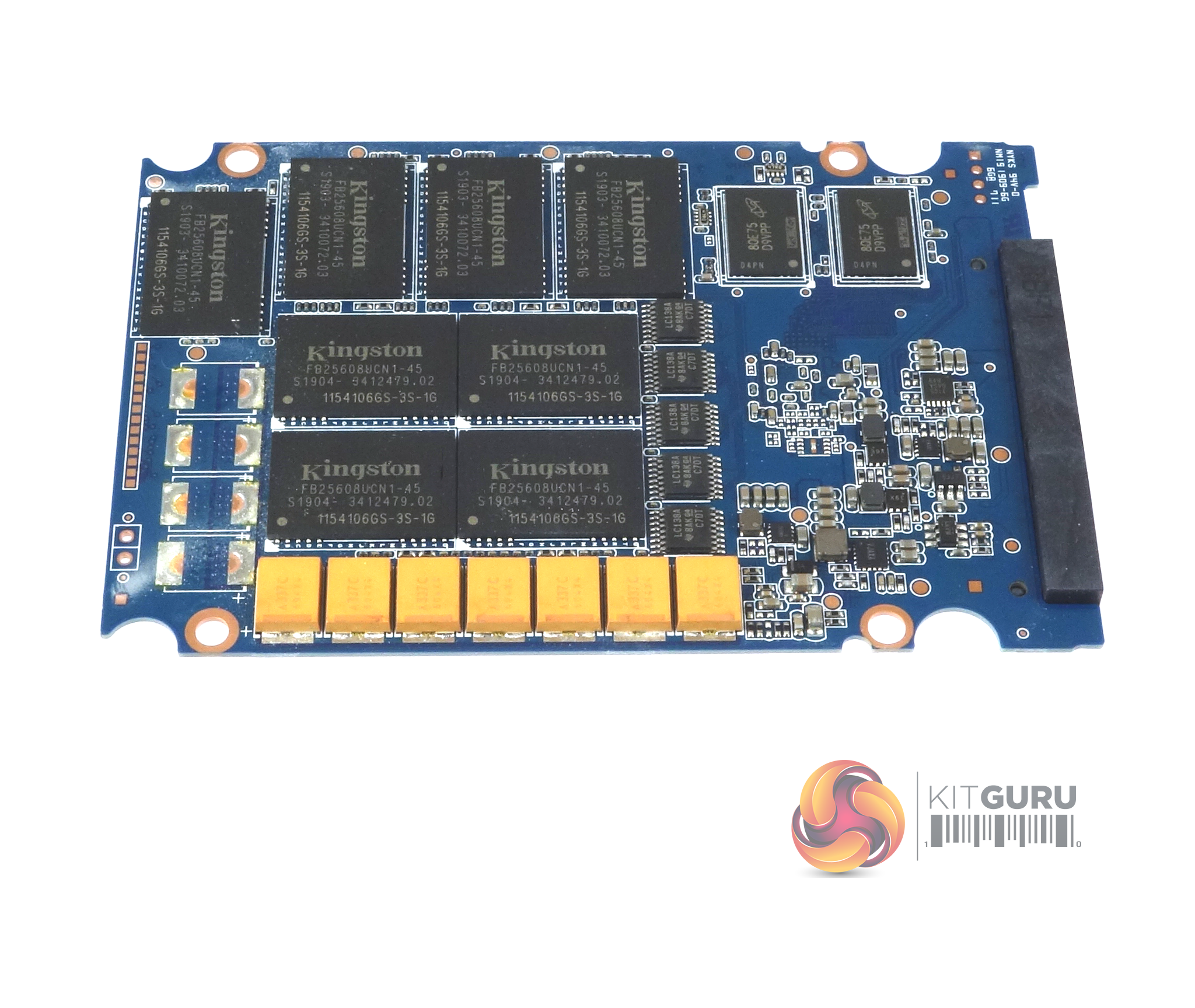
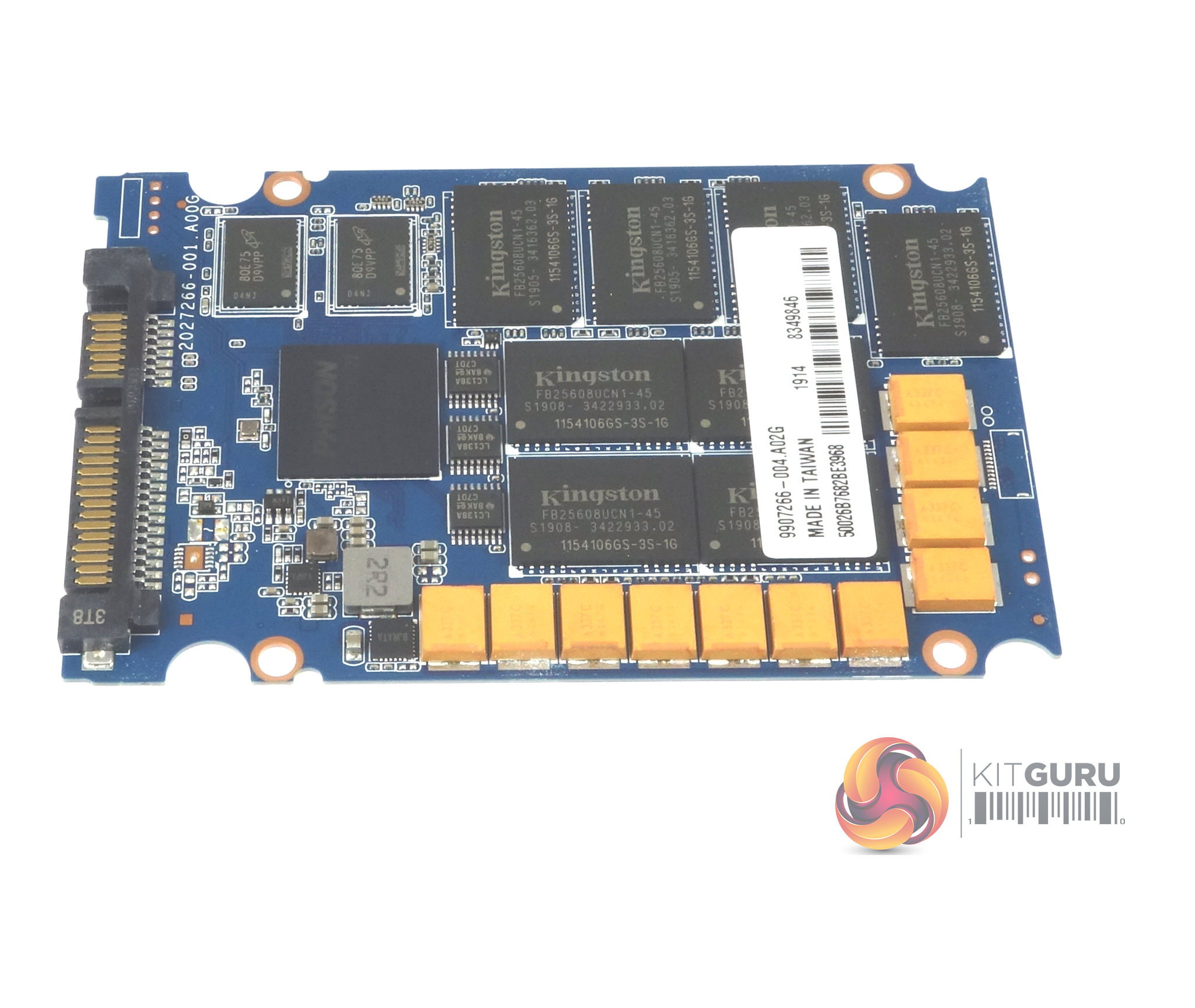
On one side of the PCB sit eight 256GB packages of Kingston branded Intel 64-layer 3D TLC NAND along with a pair of Micron DDR4-2666 DRAM chips. Also on side of the PCB are a row of tantalum capacitors for power loss protection. The other side of the board has yet more tantalum caps, eight further NAND packages, a couple more cache IC's and the Phison PS3112-S12DC controller.
Built on a 28nm process, the eight-channel PS3112-S12DC is Phison's latest SATA III controllers supporting drives up to 8TB. It features Phison’s 3rd generation LDPC ECC engine and supports AES 256 bit encryption.

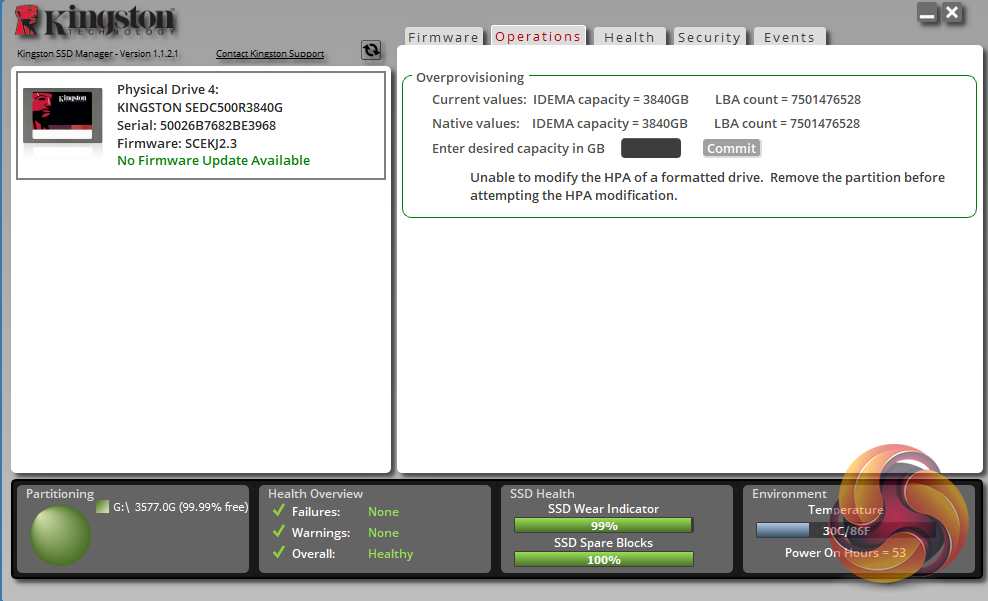
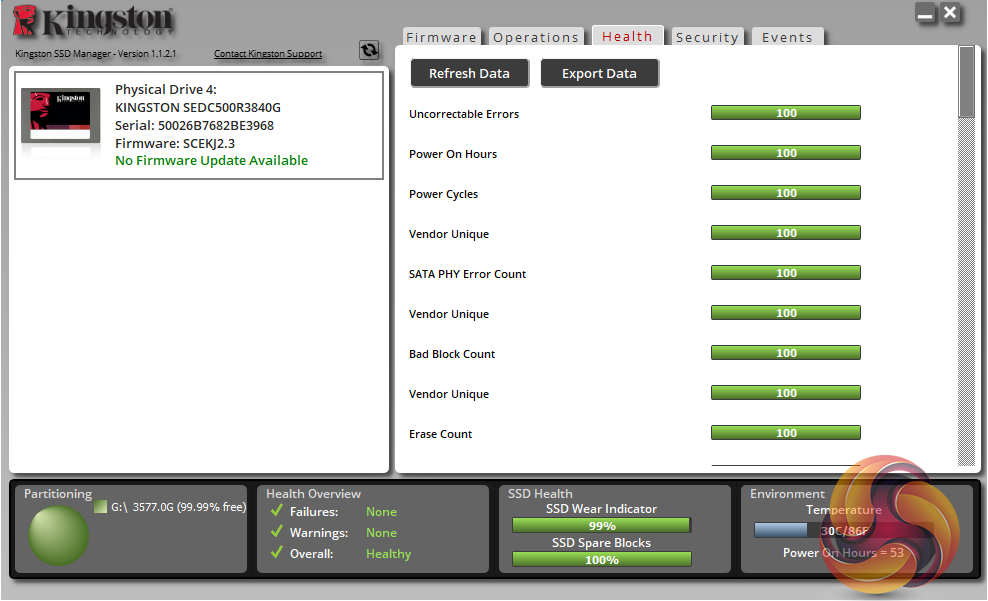
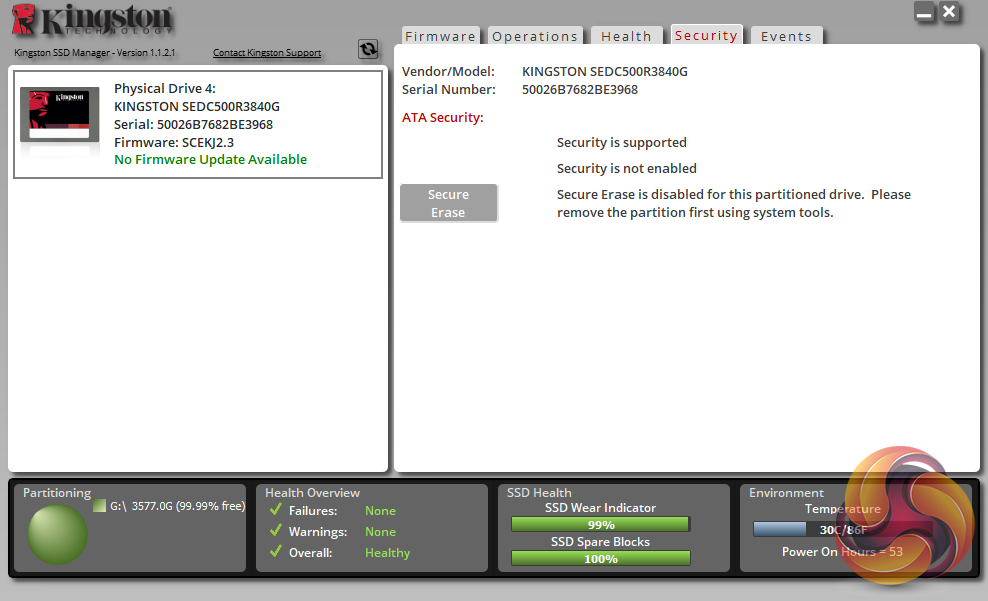
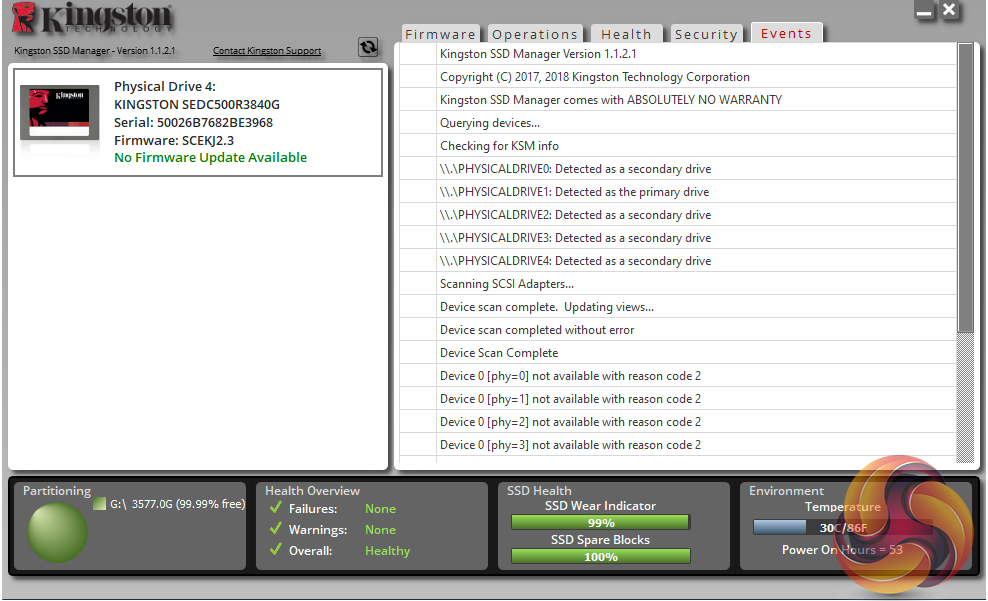
Kingston’s SSD management software utility is simply called SSD Manager. With it, you can monitor the health of the drive and how it’s being used, check the drive’s SMART data and update the firmware as well as securely erasing the drive. You can also adjust and manage the over-provisioning of the drive
For testing, the drives are all wiped and reset to factory settings by HDDerase V4. We try to use free or easily available programs and some real-world testing so you can compare our findings against your own system.
This is a good way to measure potential upgrade benefits.
Main system:
Intel Core i7-7700K with 16GB of DDR4-3200 RAM, Sapphire R9 390 Nitro and an Asus Prime Z270-A motherboard.
Other Drives
Crucial BX100 1TB
Crucial BX200 960GB
Crucial M550 1TB
Crucial MX200 1TB
Crucial MX300 2TB
Crucial MX300 Limited Edition 750GB
Integral SVR-PRO 100 4TB
Kingston SSDNow V310 960GB
Kingston UV500 960GB
Samsung 840 EVO 1TB
Samsung 850 EVO 1TB
Samsung 860 EVO 4TB
Samsung 860 QVO 4TB
Samsung 860 PRO 4TB
SK hynix SE3010 960GB
Toshiba TR200 960GB
Ultima Pro X 960GB
Software:
Atto Disk Benchmark 3.5.
IOMeter.
Futuremark PC Mark 8
All our results were achieved by running each test five times with every configuration this ensures that any glitches are removed from the results. Trim is confirmed as running by typing fsutil behaviour query disabledeletenotify into the command line. A response of disabledeletenotify =0 confirms TRIM is active.
CrystalDiskMark is a useful benchmark to measure theoretical performance levels of hard drives and SSD’s. We are using v6.0.
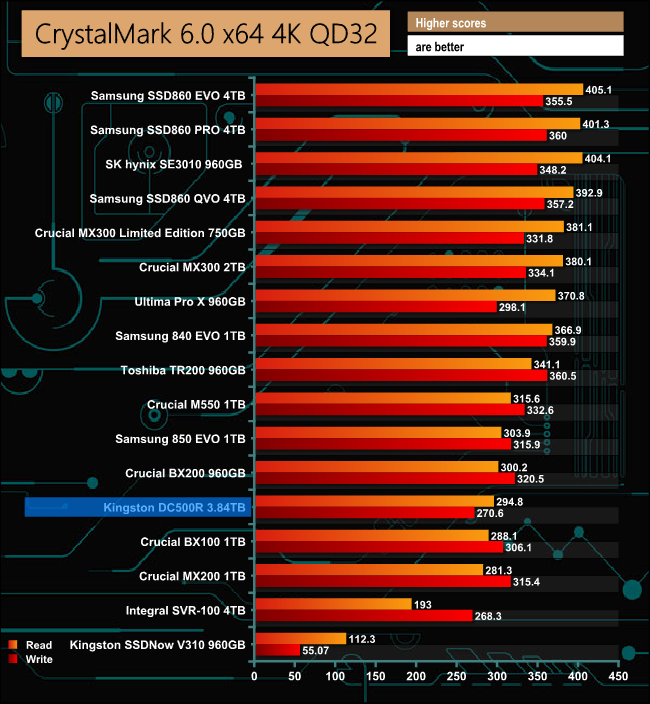
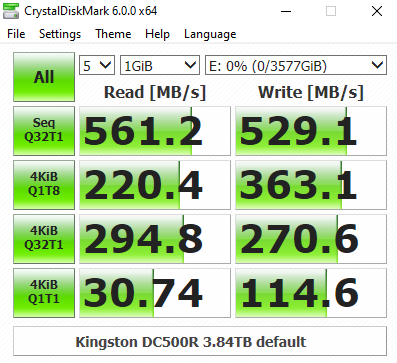
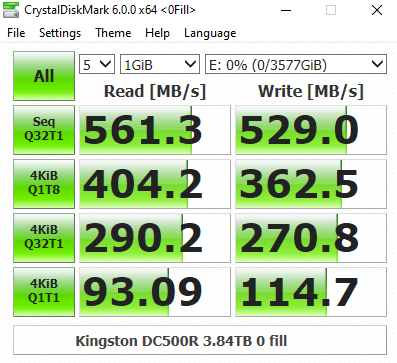
The DC500R doesn't handle the CrystalDiskMark benchmark too well at any queue depth.
The ATTO Disk Benchmark performance measurement tool is compatible with Microsoft Windows. Measure your storage systems performance with various transfer sizes and test lengths for reads and writes. Several options are available to customize your performance measurement including queue depth, overlapped I/O and even a comparison mode with the option to run continuously.
Use ATTO Disk Benchmark to test any manufacturers RAID controllers, storage controllers, host adapters, hard drives and SSD drives and notice that ATTO products will consistently provide the highest level of performance to your storage.
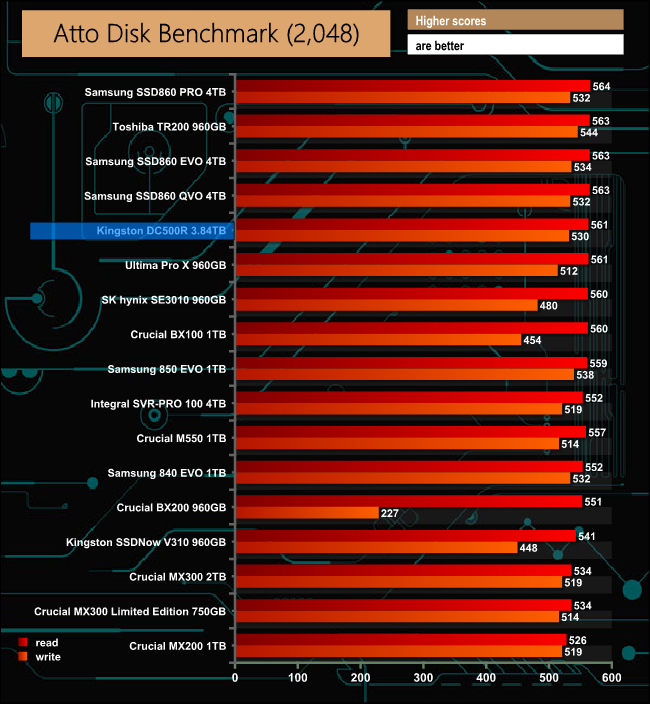
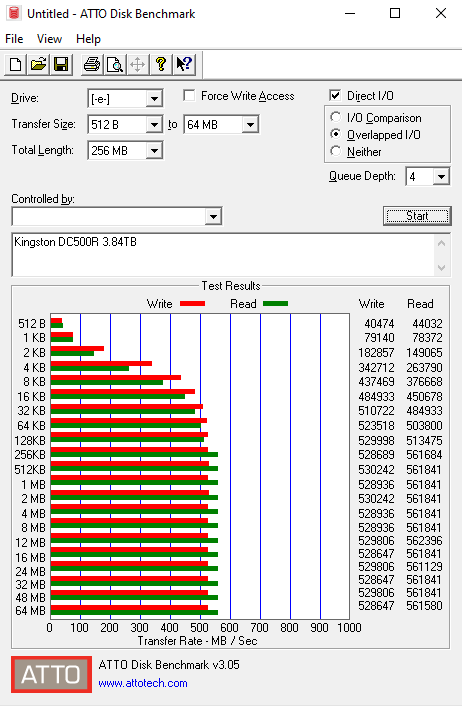
Kingston's official Sequential read and write figures for the drive are up to 555MB/s for reads and up to 520MB/s for writes. With the ATTO benchmark, we managed to squeeze a little more out of the drive with a 561MB/s figure for reads with writes coming in at 530MB/s.
AS SSD is a great free tool designed just for benching Solid State Drives. It performs an array of sequential read and write tests, as well as random read and write tests with sequential access times over a portion of the drive. AS SSD includes a sub suite of benchmarks with various file pattern algorithms but this is difficult in trying to judge accurate performance figures.
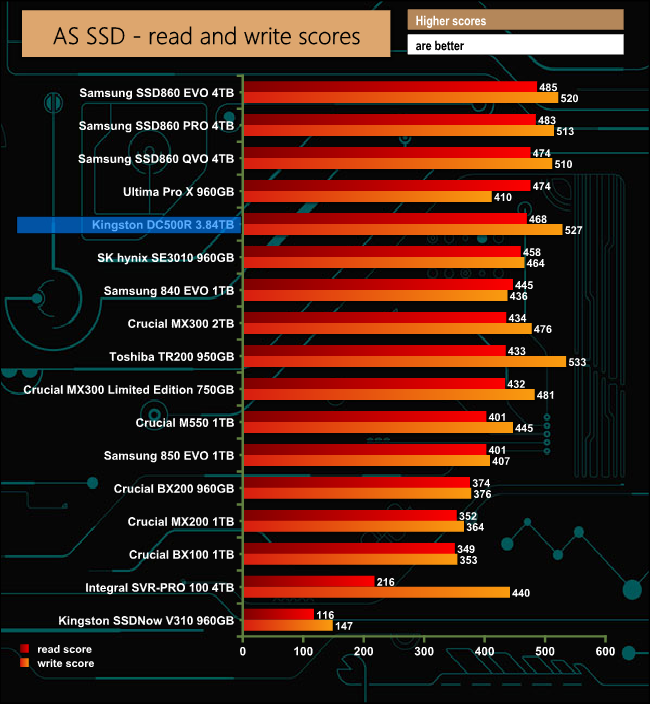

The ASSSD read score of 468 for the DC500R is enough to put the drive into fifth place in our results chart, but more impressive especially for a read-centric drive is the write score of 527, the second-fastest score we have seen for this group of SATA SSDs.
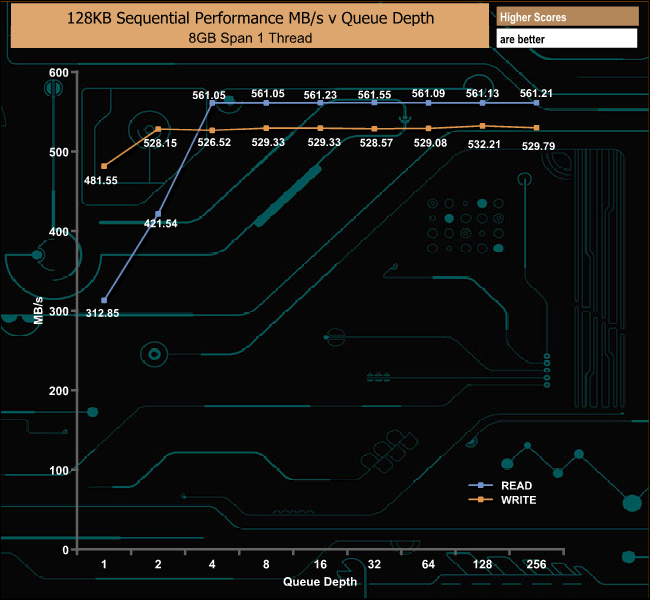
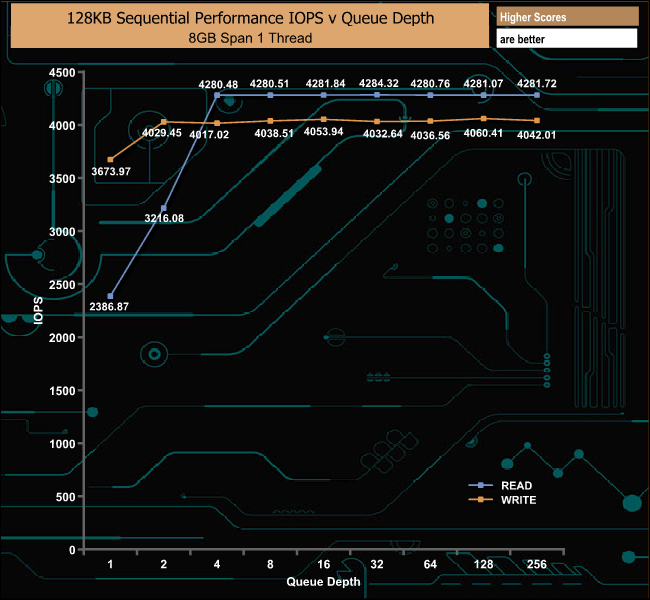
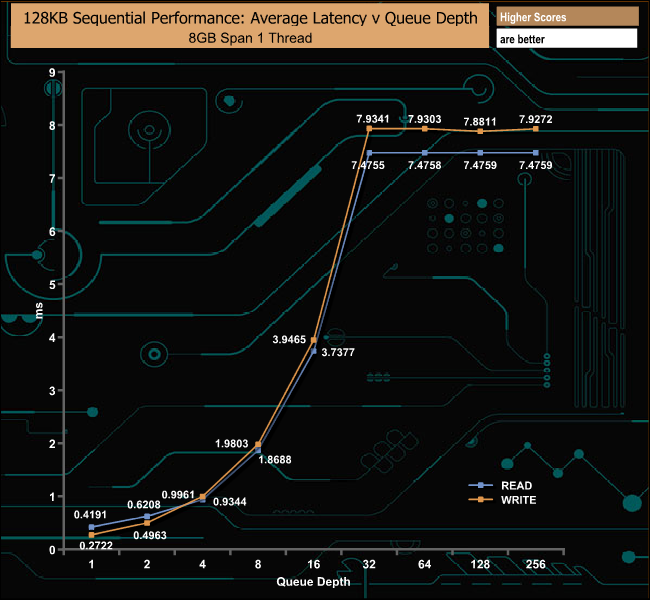
As with the ATTO test, we managed to get slightly higher read/write figures than the official numbers with our own Sequential tests. The peak read figure was 561.55MB/s with writes at 532.21MB/s. As you would expect from a drive aimed at the data centre, the drive's performance, after the initial burst, is very consistent for both reads and writes.
4K Sustained Random Read Performance.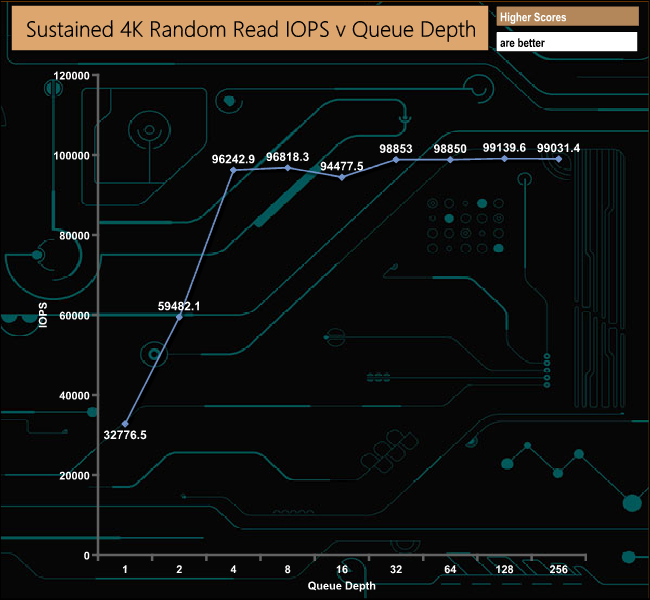
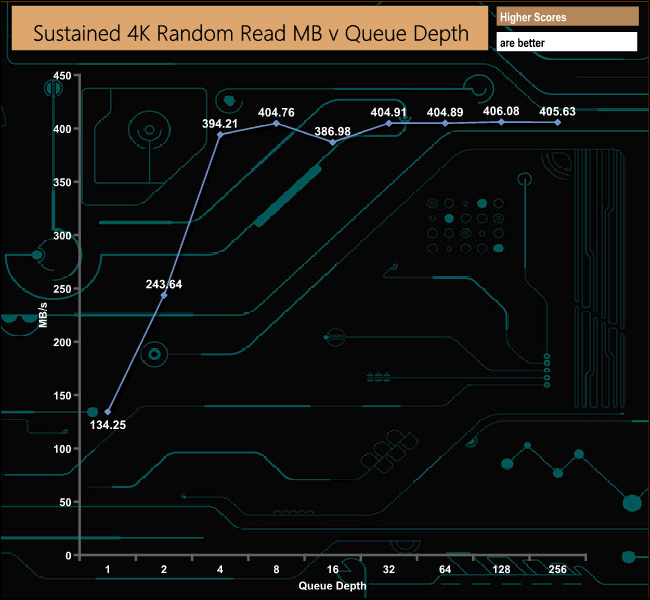

The official random read IOPS rating for the 3.84TB DC500R is up to 98,000 IOPS a figure that we could confirm with our 4K random read test, the drive peaking at 99,139.60 IOPS at a QD of 128.
4K Sustained Random Write Performance.
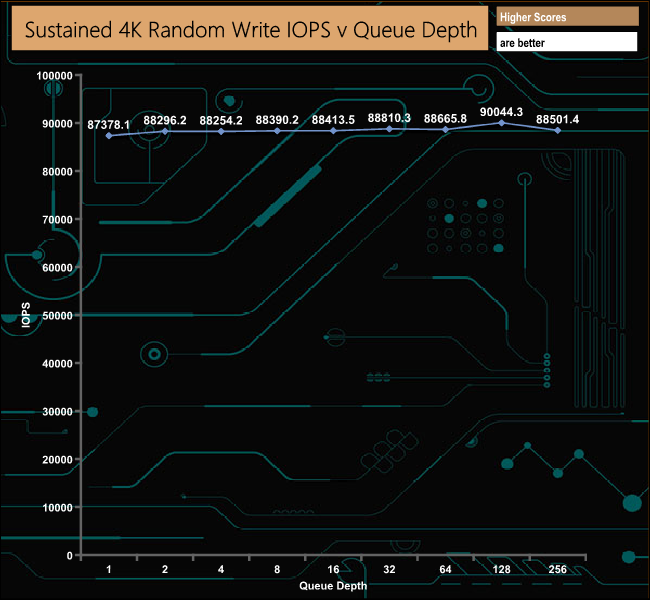
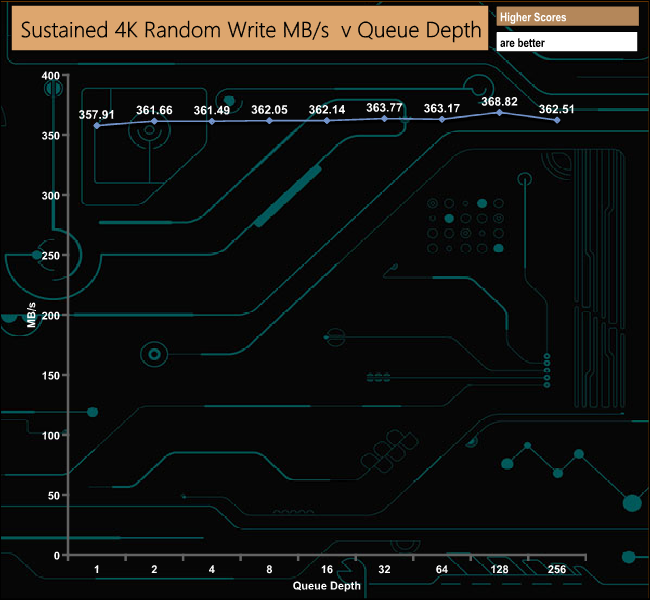
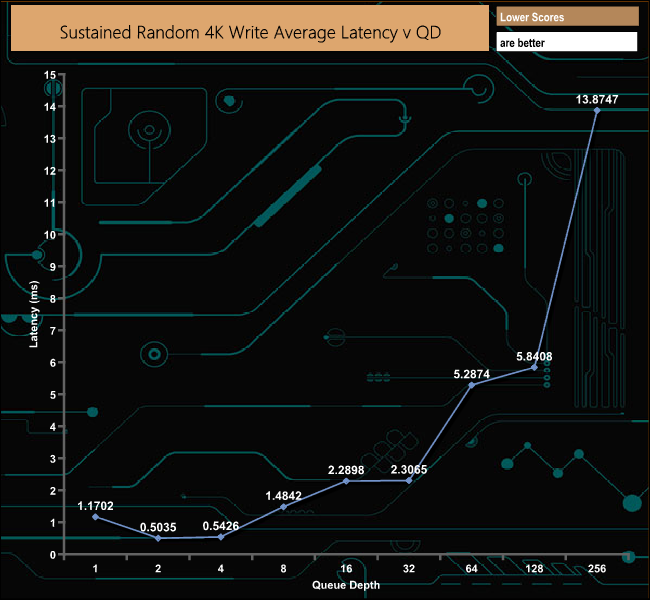
The official 4K random write performance for the drive is up to 28,000 IOPS. However, with our 4 threads, 8GB span write test, the drive sailed past this figure, peaking at 90,044 IOPS. We then tested again using 1 thread at a QD of 1 across the whole drive, the resulting 34,571 IOPS is lot closer to the official figure.
8K Sustained Random Read Performance.
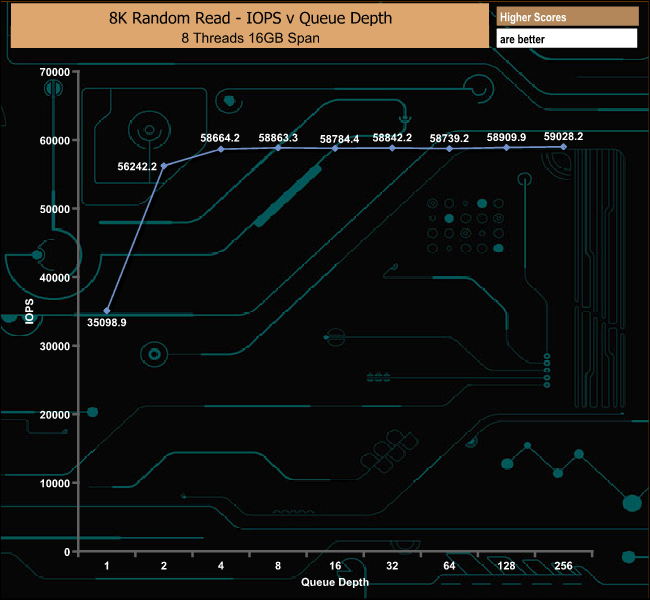
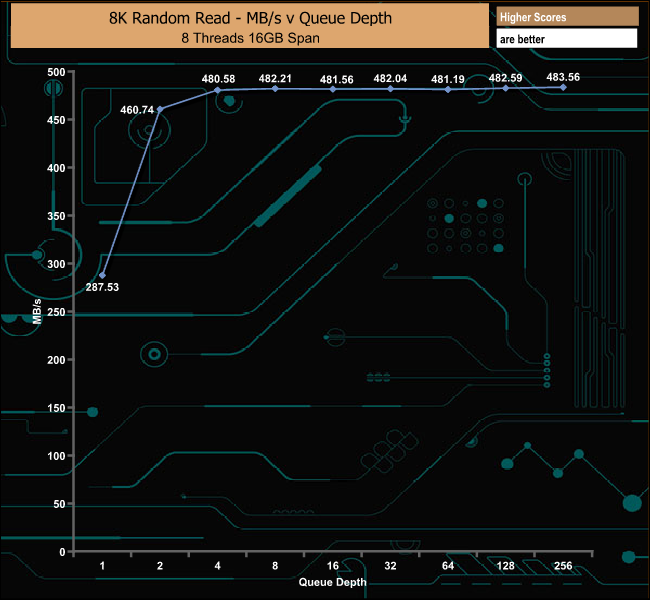
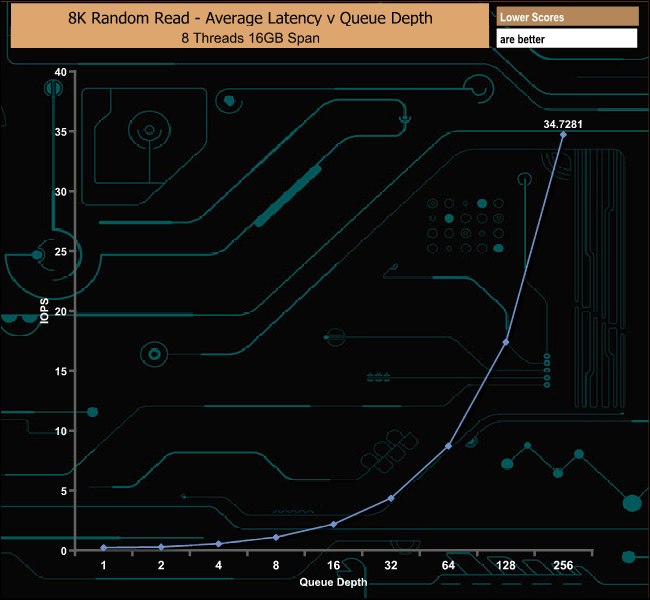
We also pushed the drive a bit harder by testing at 8K (8 threads, 16GB span) to see how it would perform. The read performance peaks at 59,028 IOPS (483.56MB/s). Once again after the initial burst, it remained very consistent across the tested queue depth, the only downside is the very high latency while doing it.
8K Sustained Random Write Performance.
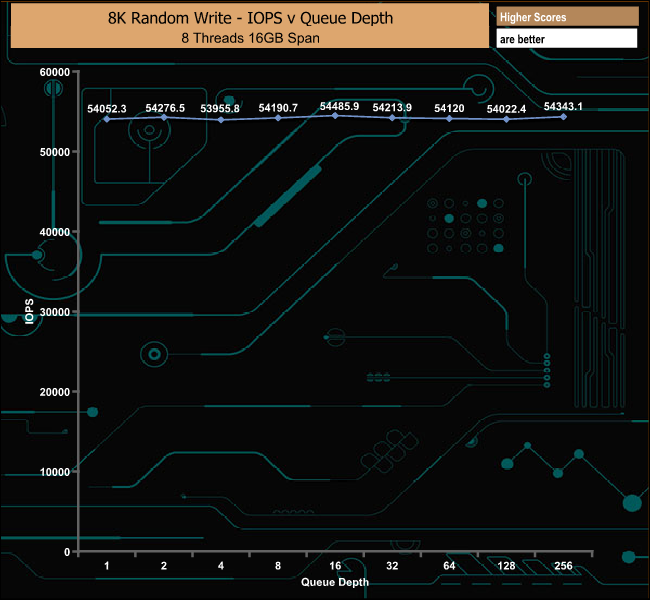
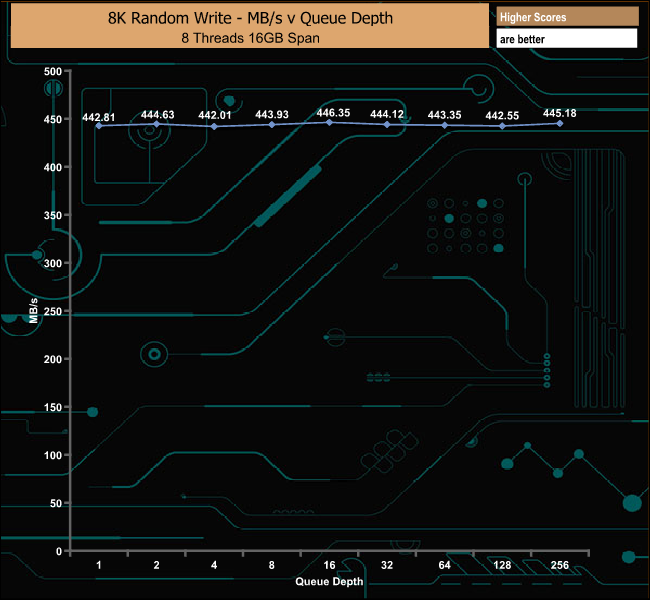
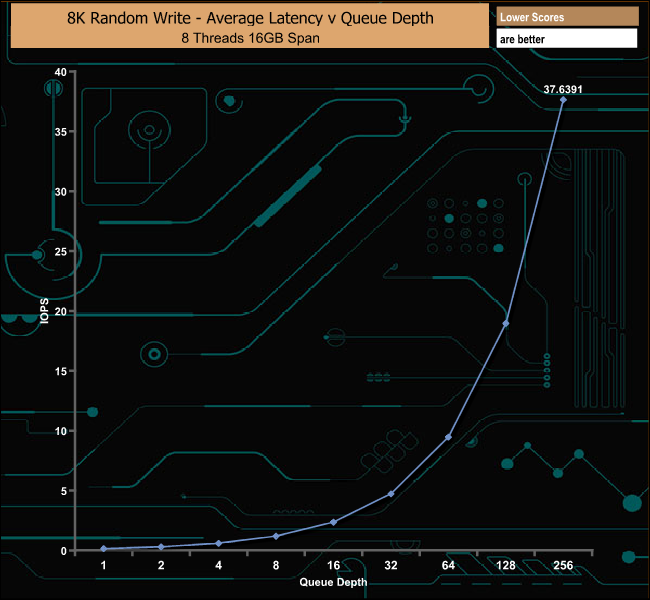
In the 8K random write test, the drive peaked at 54,485 IOPS at a QD of 16. But as with the 8K random read results the latency figures are very high.
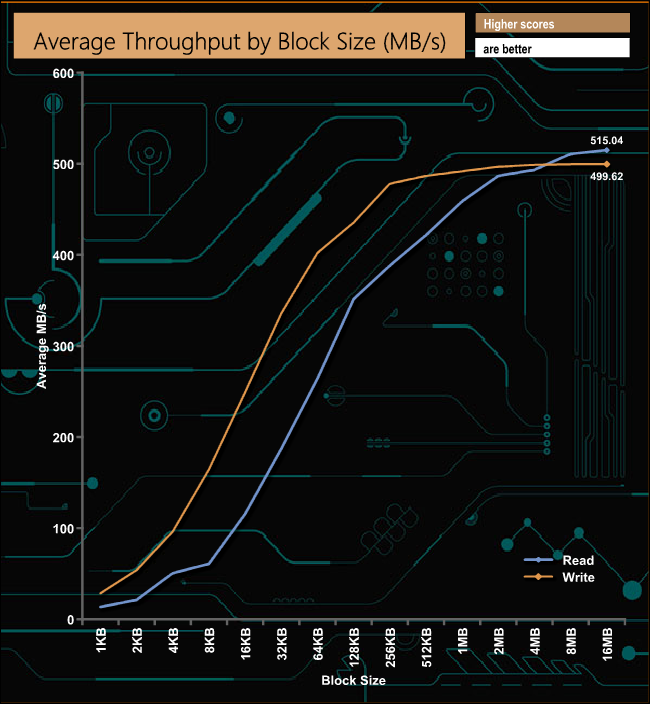
The peak average read/write performance came at the end of the test with reads at 515MB/s and writes at 499MB/s, both figures a wee bit shy of the official maximums of 555MB/s and 520MB/s for reads and writes respectively.
We also tested the drive in a number of workload scenarios that it might face in real life. The IOMeter settings we used to test with are listed below:-
Database 8K 8Threads QD64
Transfer Size: 8K Reads: 67% Writes: 33% Random: 100%
Boundary: 4K Outstanding IO: 64 Threads/Workers: 8
Decision Support DB
Transfer Size: 1MB Reads: 100% Writes: 0% Random: 100%
Boundary: 4K Outstanding IO: 64 Threads/Workers: 8
Digital Video Surveillance
Transfer Size: 512K Reads: 90% Writes: 10% Sequential: 100%
Boundary: 512K Outstanding IO: 64 Threads/Workers:8
Exchange Server 2007
Transfer Size: 8K Reads: 67% Writes: 33% Random: 100%
Boundary: 8K Outstanding IO: 60 Threads/Workers: 1
Mail Server
Transfer Size: 32K Reads: 58% Writes: 42% Random: 95%
Boundary: 4K Outstanding IO: 64 Threads/Workers: 8
Microsoft VM
Transfer Size: 4K Reads: 100% Writes: 0% Random: 80%
Boundary: 2K Outstanding IO: 64 Threads/Workers: 1
OS Paging
Transfer Size: 64K Reads: 90% Writes: 10% Sequential: 100%
Boundary: 4K Outstanding IO: 64 Threads/Workers:1
Video On Demand
Transfer Size: 128K Reads: 100% Writes: 0% Random: 100%
Boundary: 4K Outstanding IO: 512 Threads/Workers: 8
Web File Server 64KB
Transfer Size: 64K Reads: 95% Writes: 5% Random: 75%
Boundary: 4K Outstanding IO: 64 Threads/Workers: 8
Web File Server 8KB
Transfer Size: 8K Reads: 95% Writes: 5% Random: 75%
Boundary: 4K Outstanding IO: 64 Threads/Workers: 8
Web File Server 4KB
Transfer Size: 4K Reads: 95% Writes: 5% Random: 75%
Boundary: 4K Outstanding IO: 64 Threads/Workers: 8
Workstation
Transfer Size: 8K Reads: 80% Writes: 20% Random: 80%
Boundary: 8K Outstanding IO: 64 Threads/Workers: 4
VDI Light
Transfer Size:10K Reads: 15% Writes: 85% Random: 100%
Boundary: 2K Outstanding IO: 4 Threads/Workers: 1
VDI Medium
Transfer Size:10K Reads: 15% Writes: 85% Random: 100%
Boundary: 2K Outstanding IO: 8 Threads/Workers: 1
VDI Heavy
Transfer Size:10K Reads: 15% Writes: 85% Random: 100%
Boundary: 2K Outstanding IO:12 Threads/Workers: 1
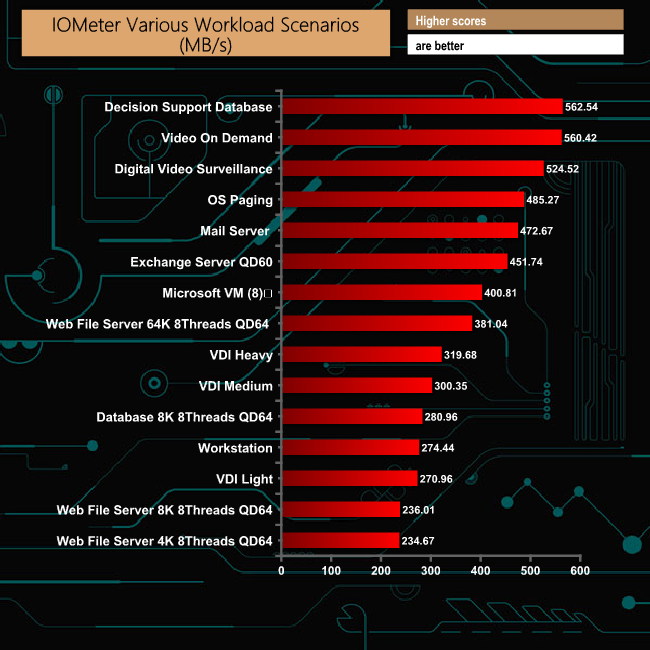
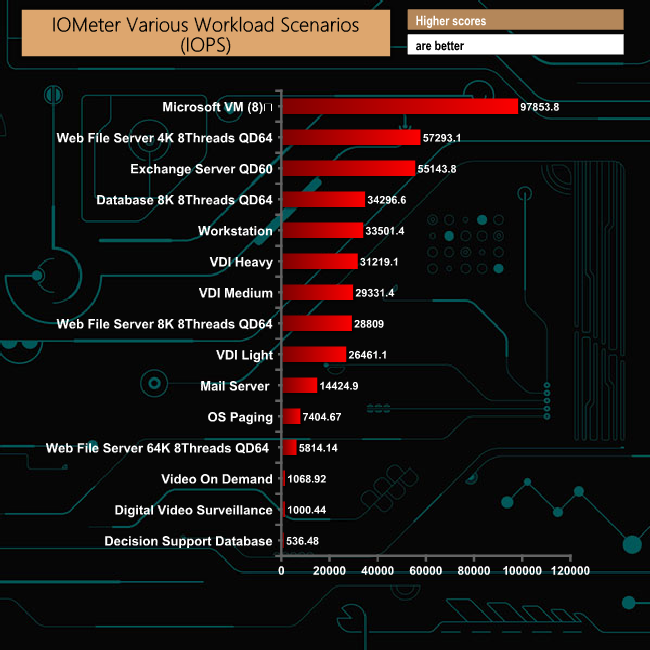
Overall the DC500R performs well when dealing with these scenarios with the best performance being the 562MB/s result for the Decision Support DB test run.
Futuremark’s PCMark 8 Standard Storage test saves a large amount of performance data. The default test runs through the test suite of 10 applications three times. Here we show the total bandwidth performance for each of the individual test suites for the third and final benchmark run.
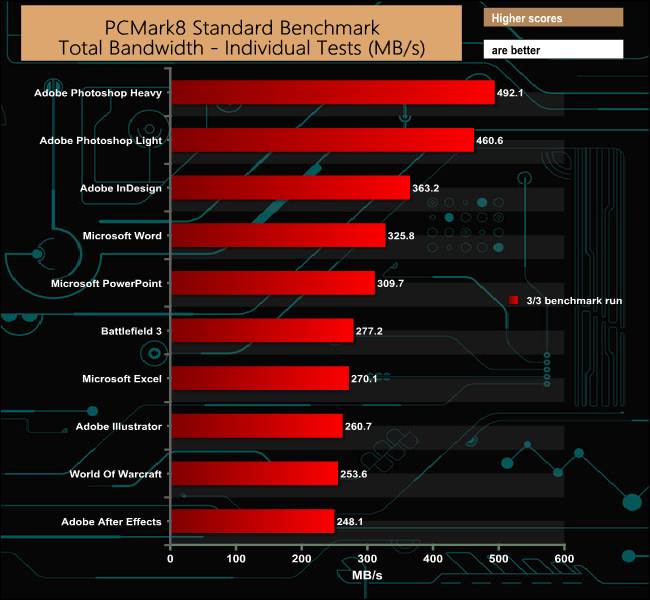
The DC500R handles PCMark 08's Standard Storage test very well with pretty strong performance throughout.
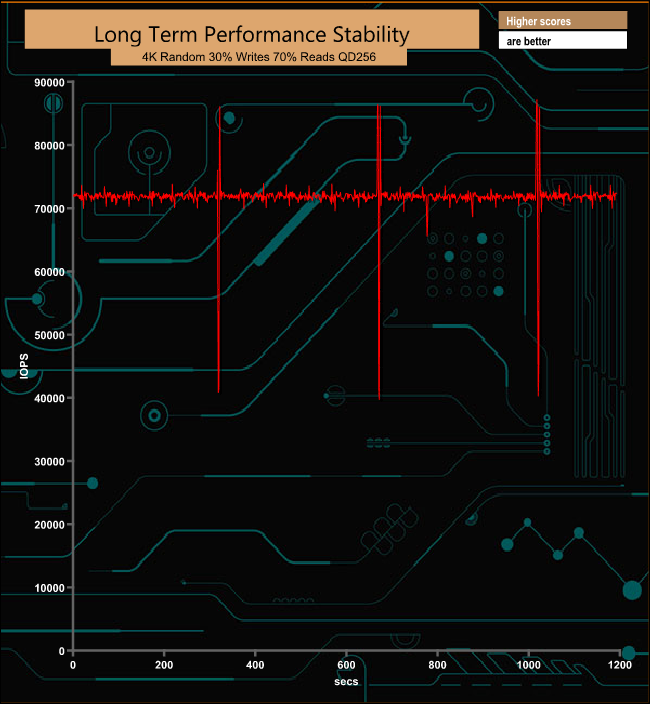
For the long term performance stability test, we set the drive up to run a 20-minute 4K random test with a 30% write, 70% read split, at a Queue Depth of 256 over the entire disk. The 3.84TB DC500R averaged 71,812 IOPS for the test with a performance stability of 93%, a figure you should expect from a drive aimed firmly at use in data centres.
To test real-life performance of a drive we use a mix of folder/file types and by using the FastCopy utility (which gives a time as well as MB/s result) we record the performance of drive reading from & writing to a 256GB Samsung SSD850 PRO.
100GB data file.
60GB iso image.
50GB File folder – 28,523 files.
21GB 8K Movie demos.
11GB 4K Raw Movie Clips (8 MP4V files).
4.25GB 3D Printer File Folder (mostly .STL).
1GB AutoCAD File Folder (.dwg and .dxf).
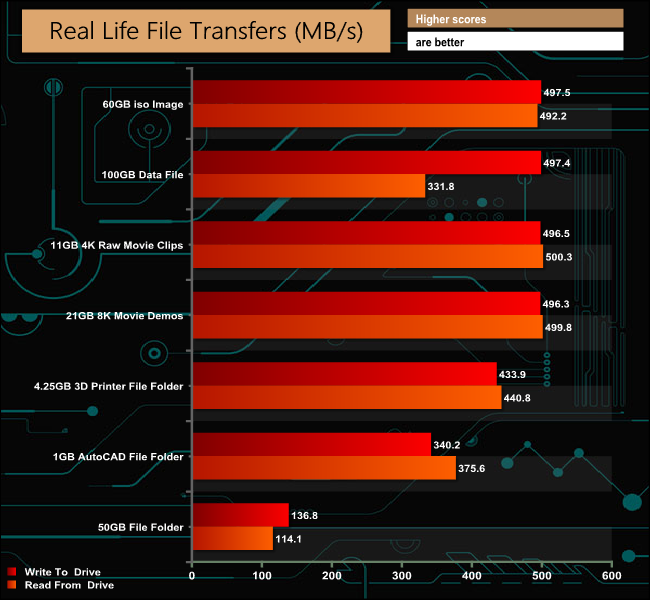
Our real-life file transfer tests posed little problem for the DC500R as it handled most of them very efficiently. As always it's the 50GB file folder transfer that slows down the drive.
Kingston's DC500R, (the DC stands for Data Centre) has been designed as a highly optimised SSD for read-centric workloads in data centres. The drive implements Kingston’s QoS (Quality of Service) requirements to ensure predictable random I/O performance and low latencies over a wide range of read and write workloads.
At the heart of the DC500R is a Phison PS3112-S12DC 8-channel controller which looks after, in the case of the 3.84TB drive, 16 256GB packages of Intel 64-layer 3D TLC NAND. The 3.84TB drive also comes with four Micron 1GB DDR4 DRAM ICs for caching duties.
Kingston quote Sequential read/write figures for the 3.84TB DC500R as up to 555MB/s and 520MB/s respectively. Using both the ATTO benchmark and our own Sequential tests we managed to squeeze a little more read/write performance from the drive, reads coming in at 561MB/s and writes at 530MB/s with ATTO. Our own tests provided much the same results with reads at 561.21MB/s and writes of 529.79MB/s.
Random 4K performance for the drive is quoted as 98,000 IOPS for reads and 28,000 IOPS for writes with the drive-in steady-state. We could confirm that read figure as the drive produced a peak score of 99,139 IOPS when tested. When we tested random writes with our usual 4 threads, 8GB span test we got a result of 90,044 IOPS, far, far exceeding the official number.
However, when we re-tested the drive across the whole capacity with a single thread at a QD of 1 the resulting score of 34,571 IOPS was a lot closer to that official figure.
The ability via the SSD Manager utility to manually adjust the Over Positioning segment, above the factory default (approx 7%) allows data centre managers to better tune the drive depending on what workload or application that it’s being used with. This ability gives the drive more flexibility as to which environments it can be used in.
The DC500R comes with proper power protection in the shape of tantalum capacitors built on the PCB and power loss protection features built into the firmware. The drive also supports AES 256-bit encryption.
We found the 3.84TB Kingston DC500R on Span.com for £672 (inc VAT) HERE.
Pros
- Overall Performance.
- Endurance.
Cons
- Drive suffers from high latencies when under some loads.
Kitguru says: Kingston's DC500R offers large capacities, hardware power protection and end to end data protection together with the enterprise-grade performance stability IT managers demand of this class of drive.