KitGuru KitGuru.net – Tech News | Hardware News | Hardware Reviews | IOS | Mobile | Gaming | Graphics Cards


IOMeter is another open source synthetic benchmarking tool which is able to simulate the various loads placed on hard drive and solid state drive technology.
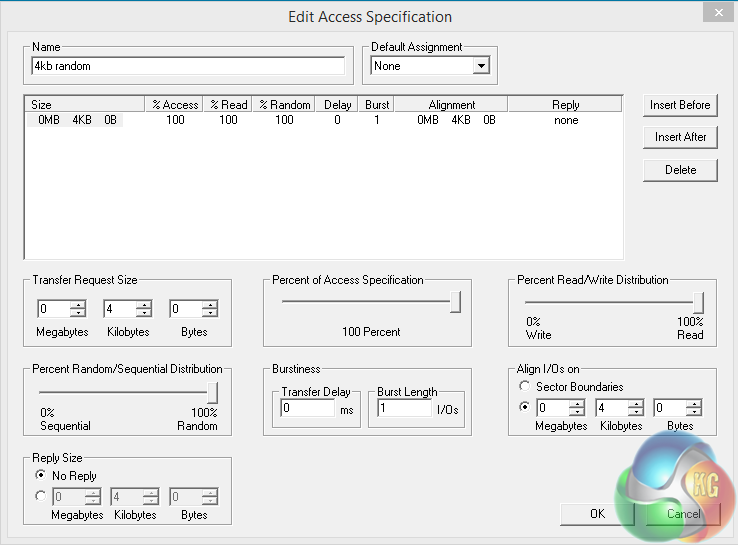
We test with both random read and write 4k tests, as shown above. There are many ways to measure the IOPS performance of a Solid State Drive, so our results will sometimes differ from manufacturer’s quoted ratings. We do test all drives in exactly the same way, so the results are directly comparable.
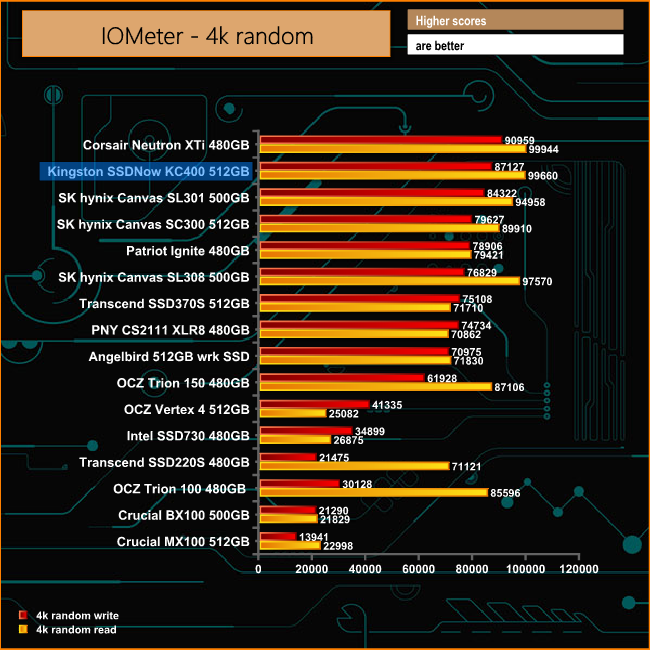
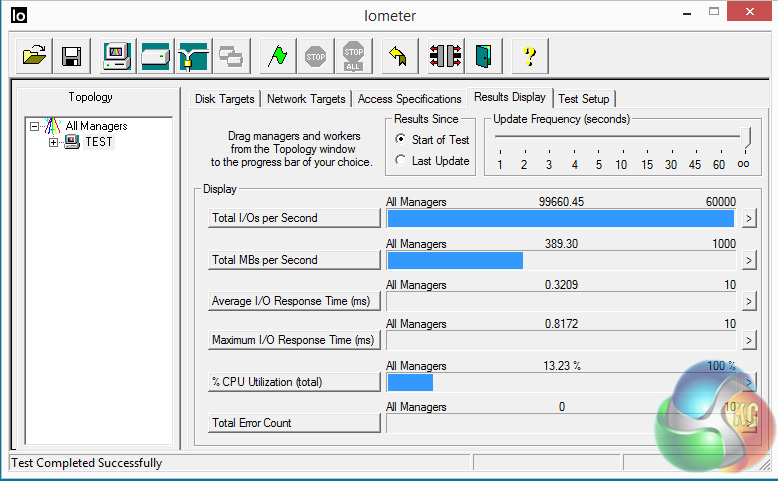
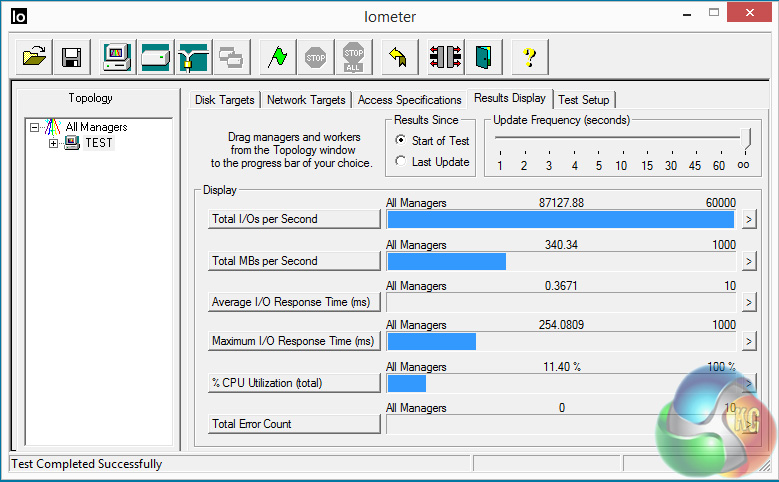
The up to 86,000 IOPS random 4K read performance figures that Kingston quote for the drive seem a little conservative when you consider that the test drive produced a figure of 99,660 IOPS. But the writes were pretty much spot on with the quoted up to 88,000 IOPS figure, at 87,127 IOPS.