KitGuru KitGuru.net – Tech News | Hardware News | Hardware Reviews | IOS | Mobile | Gaming | Graphics Cards


Corsair introduced its One system in the middle of 2017, and it was immediately impressive: superb performance, inside a chassis that was smaller, smarter and quieter than almost anything else. Now we have the One Elite, but can it live up to its predecessor's reputation?
Corsair has taken that original machine and turbo-charged the internals, with beefed-up silicon in almost every department. That bodes well for performance, but the design remains unchanged – so we’re intrigued to see if the enclosure will cope.
We’re also intrigued to see how the Corsair One compares to rival machines. This is one of the smallest full-power desktops on the market, which means it’s punching swell above its weight – whether it’s compared with productivity PCs or gaming rigs.
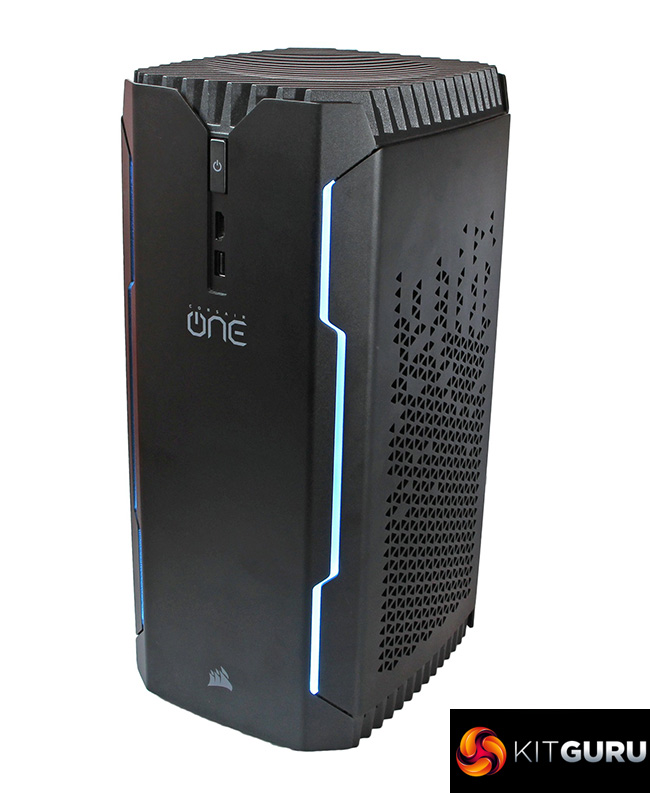
Specifications:
- CPU: Intel Core i7-8700K (3.7Ghz – 4.7GHz)
- CPU cooling: Bespoke 120mm water-cooling radiator
- Motherboard: MSI Z370I Gaming Pro Carbon AC
- Memory: 32GB Corsair Vengeance 2,666MHz DDR4
- Graphics Chipset: Nvidia GeForce GTX 1080 Ti 11GB
- Graphics cooling: Bespoke 120mm water-cooling radiator
- Storage: 512GB Samsung PM961 M.2 SSD, 2TB Seagate Barracuda HDD
- Case: Corsair One
- Front ports: 1 x USB 3, 1 x HDMI
- Rear ports: 3 x USB 3.1, 1 x USB 3.1 Type-C, 2 x USB 2.0, 1 x Gigabit Ethernet, 1 x optical S/PDIF, 5 x audio
- Networking: Gigabit Ethernet, dual-band 802.11ac WiFi
- Power supply: Corsair SF500
- Operating system: Microsoft Windows 10 Pro 64-bit
- Warranty: 2yr RTB
Total cost £2,799 inc vat.