KitGuru KitGuru.net – Tech News | Hardware News | Hardware Reviews | IOS | Mobile | Gaming | Graphics Cards


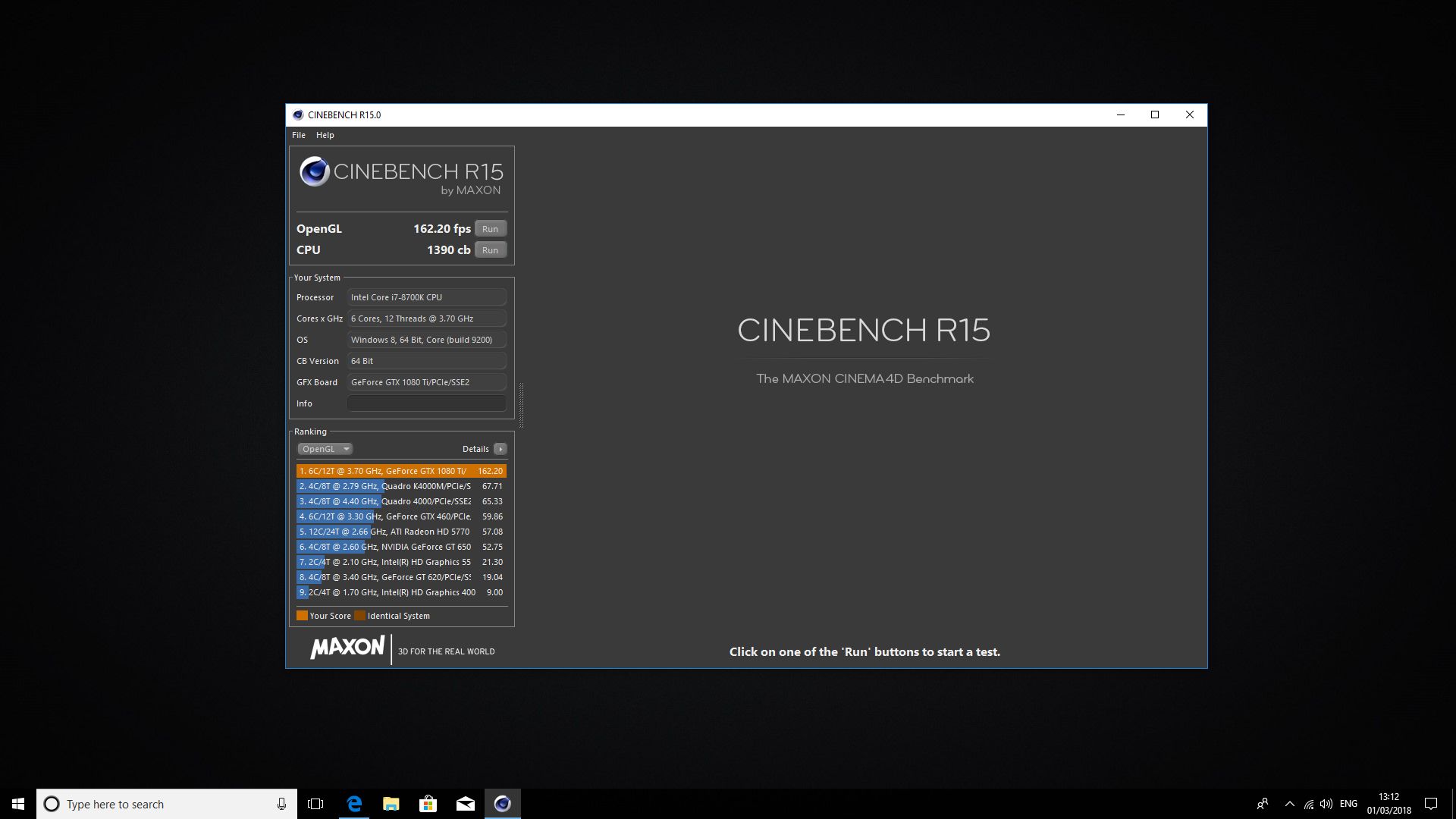
CINEBENCH R15 is a cross-platform testing suite that measures hardware performance and is the de facto standard benchmarking tool for leading companies and trade journals for conducting real-world hardware performance tests. With the new Release 15, systems with up to 256 threads can be tested.
CINEBENCH is available for both Windows and OS X and is used by almost all hardware manufacturers and trade journals for comparing CPUs and graphics cards.
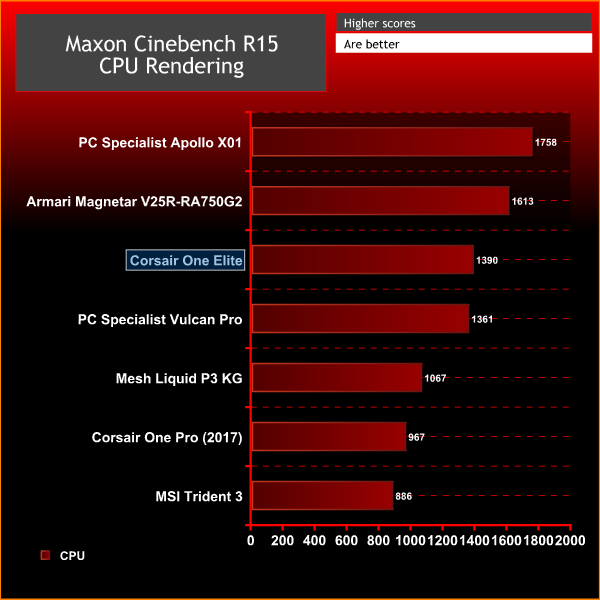
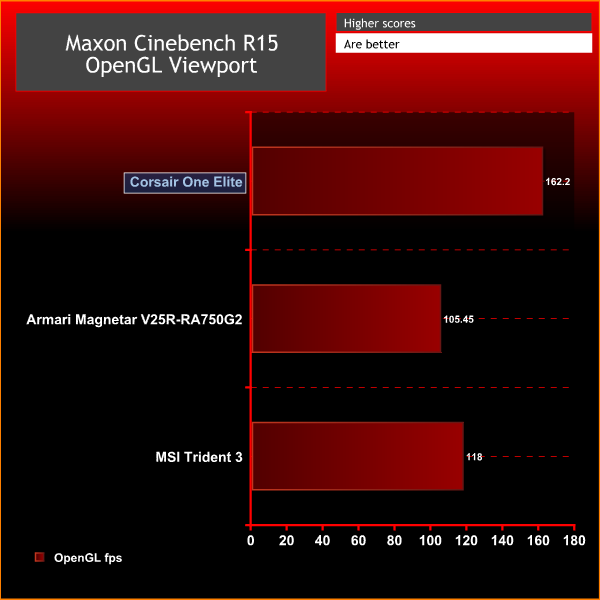
The Corsair’s upgrade to Coffee Lake – and its two extra cores – delivers a big leap in benchmark performance. Last year’s quad-core model scored 967cb in the Cinebench test, while the six-core part inside this new machine scored 1,390cb.
The Corsair is also faster than the Mesh, which still relied on last year’s Core i7 chip, and it’s on par with the Coffee Lake PC Specialist system.
It’s impressive pace that will handle any current game and most productivity tasks – if you run photo editing, office or database tools, you’ll be fine.
Only a handful of chips are faster. The eight-core AMD Ryzen 7 1800X inside the Armari system scored 1,613cb, and the eight-core i7-7820X inside the PC Specialist Apollo was almost 150 points beyond that.