KitGuru KitGuru.net – Tech News | Hardware News | Hardware Reviews | IOS | Mobile | Gaming | Graphics Cards


One of the biggest weaknesses of Stadia so far has been the number of devices able to access the service. Since launch, users have been limited to Pixel-series smartphones, Google Chrome on PC or using a Google Chromecast Ultra on a TV. That will begin to change next week though, as Google is finally rolling out Stadia to more Android smartphones.
Most importantly, Stadia will be supporting the Samsung Galaxy lineup, meaning the service will reach tens of millions of new users. The Galaxy S8 series all the way up to the latest Galaxy S20 devices will be able to stream Stadia games.
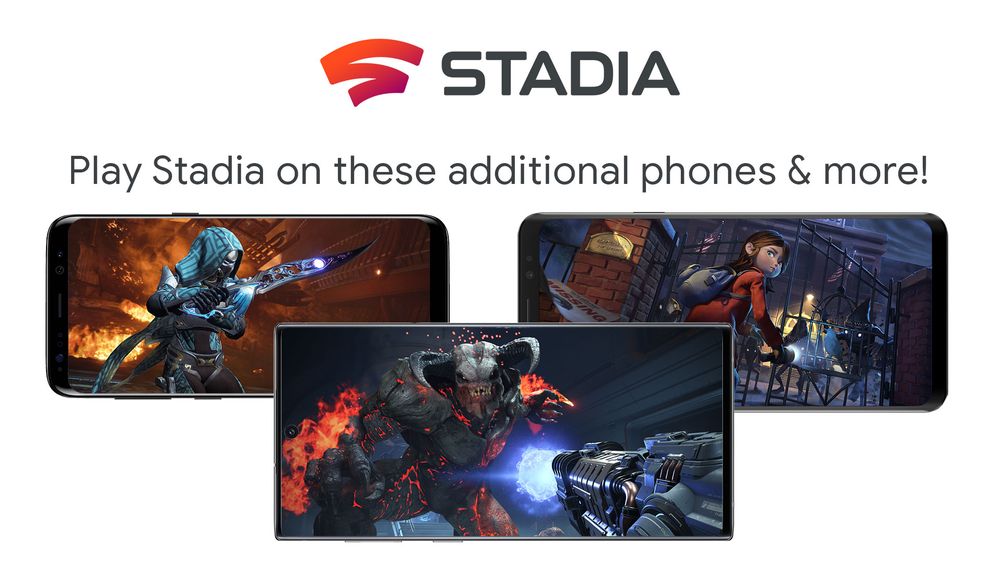
Here is the full list of new compatible phones:
- Samsung Galaxy S8
- Samsung Galaxy S8+
- Samsung Galaxy S8 Active
- Samsung Galaxy Note8
- Samsung Galaxy S9
- Samsung Galaxy S9+
- Samsung Galaxy Note9
- Samsung Galaxy S10
- Samsung Galaxy S10E
- Samsung Galaxy S10+
- Samsung Galaxy Note10
- Samsung Galaxy Note10+
- Samsung Galaxy S20
- Samsung Galaxy S20+
- Samsung Galaxy S20 Ultra
- Razer Phone
- Razer Phone 2
- ASUS ROG Phone
- ASUS ROG Phone II
With the Razer and ASUS ROG phones being primarily marketed as gaming smartphones, their addition to the list also makes good sense. Hopefully Google will continue to expand the list of supported devices in the months to come as well.
Discuss on our Facebook page, HERE.
KitGuru Says: Getting Stadia running on Samsung Galaxy devices is a no-brainer, as they continue to be the most popular Android smartphones on the market. Support for iOS is still a big gap in the market for most major streaming services though. Are any of you thinking of testing out Stadia on one of the newly supported smartphones?