 KitGuru KitGuru.net – Tech News | Hardware News | Hardware Reviews | IOS | Mobile | Gaming | Graphics Cards


On friday AMD launched the first in their new series of 6 series graphics cards, namely the HD6870 and HD6850. We reviewed many partner cards on launch day, and the resounding feedback across the net was positive. The only downside that KitGuru commented on was a pricing fiasco throughout Europe.
Unfortunately in the aftermath of initial reviews it was discovered that some of the HD6850 cards reviewed actually had the same shader count as the HD6870's, that being – 1120 instead of 960. Thankfully we noticed this beforehand and were sure to use the correct cards in our review (we were given a 1120 card), but it appears other publications didn't.
This has caused a lot of confusion with people wondering if the HD6850's are worth the money. You can easily check our reviews on KitGuru to get accurate results but we decided that it was time to put some cold, hard facts onto paper (well, your screens in this case), by comparing two identically reference clocked HD6850's – one with 960 shaders and the other with 1120. We happen to have two HD6850's with 960 and 1120 shaders at hand so it was a pretty straightforward task.
While we will use a mixture of synthetic benchmarks today, we also wanted to judge this in ‘real world' terms by using DX9, DX10 and DX11 games for direct comparison. Synthetic benchmarks often don't tell the whole story. While we normally test ‘real world' via Fraps, today we are using games inbuilt benchmark systems, this will make it easier to analyse performance differences directly related to shader power.


So the big question is, how much do the ‘missing' 160 unifed shaders really make to your gaming experience? Let's find out.
For this article today (you couldn't really call it a review), we are using a Core i7 970 system at reference clock speeds, with 6GB of Crucial DDR3 @ 1600mhz.
Processor: Intel Core i7 970
Cooler: Arctic Cooling Freezer 13
Motherboard: Asus Rampage III Extreme
Memory: Crucial Ballistix Tracer 1600mhz 6GB (3x2GB)
Power Supply: Corsair AX1200
Chassis: Thermaltake Level 10
Monitor: Dell Ultrasharp U2410 (A00)
Software:
Windows 7 Ultimate 64 bit
Unigine Heaven Benchmark
3DMark Vantage
Catalyst 10.9 & 10.10 Driver (12th October WHQL) /ati_catalyst_10.9a_appprofile
Steam Client
Forceware 260.89 beta
Tessmark
Shader Toy
Games:
Resident Evil 5
Lost Planet 2
Far Cry 2
Tom Clancy H.A.W.X.
Alien V Predator
Mafia 2
Futuremark released 3DMark Vantage, on April 28, 2008. It is a benchmark based upon DirectX 10, and therefore will only run under Windows Vista (Service Pack 1 is stated as a requirement) and Windows 7.
This is the first edition where the feature-restricted, free of charge version could not be used any number of times. 1280×1024 resolution was used with performance settings.


Our results show a 8.1 percent difference when increasing the unifed shaders from 960 to 1120, a considerable improvement from 12,520 points to 13,541 points.
Unigine provides an interesting way to test hardware. It can be easily adapted to various projects due to its elaborated software design and flexible toolset. A lot of their customers claim that they have never seen such extremely-effective code, which is so easy to understand.
Heaven Benchmark is a DirectX 11 GPU benchmark based on advanced Unigine engine from Unigine Corp. It reveals the enchanting magic of floating islands with a tiny village hidden in the cloudy skies. Interactive mode provides emerging experience of exploring the intricate world of steampunk.
Efficient and well-architected framework makes Unigine highly scalable:
- Multiple API (DirectX 9 / DirectX 10 / DirectX 11 / OpenGL) render
- Cross-platform: MS Windows (XP, Vista, Windows 7) / Linux
- Full support of 32bit and 64bit systems
- Multicore CPU support
- Little / big endian support (ready for game consoles)
- Powerful C++ API
- Comprehensive performance profiling system
- Flexible XML-based data structures


Once again we can see a 6 percent increase between the card models when we change to the 1120 unified shader model.
This new GPU tool, called TessMark, is small synthetic graphics benchmark focused on one of the main features of Direct3D 11 and OpenGL 4 capable cards, focusing on GPU tessellation.
Like Unigine Heaven, TessMark allows to select the level of tessellation. The small difference is that TessMark offers four different levels
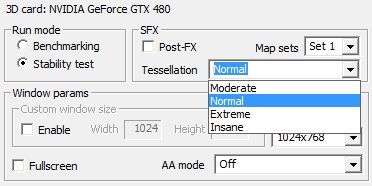
- moderate = tessellation factor of 8
- normal = tessellation factor of 16
- extreme = tessellation factor of 32
- insane = tessellation factor of 64
Moderate and normal levels are levels we’ll find in real world applications like games. Extreme and insane levels are not really realistic ‘real world’ tests. We are using the normal and moderate settings today.

The extra 160 shaders really aid Tessmark's performance levels, especially with the moderate setting, seeing a huge 36.8 percent increase over the stock 13,675 result with 960 unified shaders onboard. When the tessellation factor is increased from 8 to 16, the percentage increase drops to 14.3 percent.
ShaderToyMark is an OpenGL benchmark, developed with GeeXLab, and focused on pixel shaders only. ShaderToyMark? is a WebGL tool for testing GLSL shaders. Shadertoy utilises several of these shaders running at the same time in the same 3D window.
The contributors of Shader Toy are all famous demomakers and their shaders are real gems. It’s just amazing to see what can clever people do with some sin/cos and other math tricks. ShaderToyMark can be seen as a modest tribute to their fantastic and sometime unreal work.
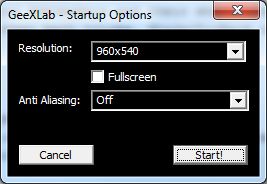


ShaderToymark is a very intensive benchmark tool which directly targets hardware shaders. We can see a 16.6 percent increase at the same settings, with identical clocks. The extra 160 unified shaders gives a 16.6 percent performance increase.
Far Cry 2 (commonly abbreviated as “FC2 or “fc2″) is an open-ended first-person shooter developed by Ubisoft Montreal and published by Ubisoft. It was released on October 21, 2008 in North America and on October 23, 2008 in Europe and Australia. It was made available on Steam on October 22, 2008. Crytek, the developers of the original game, were not involved in the development of Far Cry 2.
Ubisoft has marketed Far Cry 2 as the true sequel to Far Cry, though the sequel has very few noticeable similarities to the original game. Instead, it features completely new characters and setting, as well as a new style of gameplay that allows the player greater freedom to explore different African landscapes such as deserts, jungles, and savannas. The game takes place in a modern-day East African nation in a state of anarchy and civil war. The player takes control of a mercenary on a lengthy journey to locate and assassinate “The Jackal,” a notorious arms dealer.
Far Cry 2 is still a popular game and the open world environment can be taxing on even the latest hardware available today.
Our settings: 1920×1200 (60Hz), D3D10, Fixed Time Step(No), Disable Artificial Intelligence(No), Full Screen, Anti-Aliasing(4x), VSync(No), Overall Quality(Optimal), Vegetation(High), Shading(High), Terrain(High), Geometry(High), Post FX(High), Texture(High), Shadow(High), Ambient(High), Hdr(Yes), Bloom(Yes), Fire(Very High), Physics(Very High), RealTrees(Very High).

Far Cry 2 shows performance differences of around 4 frames per second at our choosen settings, which translates to a 6.7 percent increase when adding the extra 160 unified shaders to the hardware.
Resident Evil 5, known in Japan as Biohazard 5, is a survival horror third-person shooter video game developed and published by Capcom. The game is the seventh installment in the Resident Evil survival horror series, and was released on March 5, 2009 in Japan and on March 13, 2009 in North America and Europe for the PlayStation 3 and Xbox 360. A Windows version of the game was released on September 15, 2009 in North America, September 17 in Japan and September 18 in Europe. Resident Evil 5 revolves around Chris Redfield and Sheva Alomar as they investigate a terrorist threat in Kijuju, a fictional town in Africa.
Within its first three weeks of release, the game sold over 2 million units worldwide and became the best-selling game of the franchise in the United Kingdom. As of December, 2009, Resident Evil 5 has sold 5.3 million copies worldwide since launch, becoming the best selling Resident Evil game ever made.

There is a 4 frame per second difference between the two cards, translating to a 5.21% increase with the power of the extra 160 unified shaders.
Aliens V Predator has proved to be a big seller since the release and Sega have taken the franchise into new territory after taking it from Sierra. AVP is a Direct X 11 supported title and delivers not only advanced shadow rendering but high quality tessellation for the cards on test today.
To test the cards we used a 1080p resolution with DX11, Texture Quality Very High, MSAA Samples 1, 16x AF, ambient occlusion on, shadow complexity high, motion blur on. We use this with most of our graphics card testing so cards are comparable throughout reviews.

Alien V Predator is a very shader intensive title and the 160 unified shaders help to boost performance by almost 10 percent, which is a considerable increase.
Mafia II is a gritty drama which chronicles the rise of World War II veteran Vito Scaletta, the son of Sicilian immigrants. As the game progresses, Vito will join the Falcone Crime Family and become a made man. There are 15 chapters in the game, connected into one storyline.
We tested at 1080p with fullscreen: on, antialiasing:on , Anisotrophic filtering: 16x, Shadow Quality: High, Ambient Occlusion: on, Geometry Detail: High and APEX PhysX: off.

Mafia 2 isn't affected on the same scale as Alien V Predator on the last page. with only 2 frames per second being added, or a 4.7 percent increase between cards. It is worth pointing out however that the minimum frame rate difference would be more important, as it rises from 21 frames per second to around 24 frames per second, this smooths out the more intensive game sections.
Lost Planet 2 is a third-person shooter video game developed and published by Capcom. The game is the sequel to Lost Planet: Extreme Condition which is also made by Capcom, taking place ten years after the events of the first game, on the same fictional planet. The story takes place back on E.D.N. III 10 years after the events of the first game. The snow has melted to reveal jungles and more tropical areas that have taken the place of more frozen regions. The plot begins with Mercenaries fighting against Jungle Pirates.
After destroying a mine, the Mercenaries continue on to evacuate the area, in which a Category-G Akrid appears and attacks them. After being rescued, they find out their evacuation point (Where the Category-G appeared) was a set-up and no pick up team awaited them. Lost Planet 2 runs on the MT-Framework 2.0, an updated version of the engine used in several Capcom-developed games.
We are testing in DX11 mode and for this particular test today we cranked the Direct X 11 features to high.


Lost Planet 2 was tested in full Direct X 11 mode and the differences are some of the largest recorded in the games today. a 12.2 percent increase with the extra 160 unified shaders from 33.6 fps to 37.7 fps. More importantly the minimum frame rate figures were increased from 21.3 to 24.2 which helps to smooth out more intensive sections.
Tom Clancy HAWX is set in the same universe as Tom Clancy’s Ghost Recon Advanced Warfighter; as Captain Scott Mitchell, the Ghost leader, is featured in a few missions of the missions. Plot elements are carried over from other Tom Clancy games such as the missile defense system found in Tom Clancy’s EndWar. G4′s interview with H.A.W.X’s lead designer Thomas Simon reveals that the game takes place in between Tom Clancy’s Ghost Recon Advanced Warfighter 2 and Tom Clancy’s EndWar.
The player begins the game in 2014 as the player assumes the role of former U.S. Air Force pilot, David Crenshaw, who is part of an elite unit called H.A.W.X (“High Altitude Warfare eXperimental squadron”), provides fire-support missions for the Ghost team carrying out covert operations in Ciudad Juárez, Mexico. However, shortly after the mission, the Air Force decides to deactivate the H.A.W.X squadron and its pilots, including Crenshaw, are recruited into the PMC Artemis Global Security.
We are testing : DX 10.1 with shadows high, sun shafts high, ambient occlusion (SSAO) very high. view distance high, forest high, environment high, texture quality high, HDR on, Engine heat on and DOF on. We used a different section for testing today than we normally use.

Tom Clancy HAWX shows a 8.3 percent performance increase between the two boards, rising from 72 fps to 78 fps.
Sadly AMD's HD6850 launch was marred a little by European pricing issues and again later when it was found out that some publications had a version of the card with 1120 unified shaders. Some of the early HD 6850 samples were built with pre-production ASICs that have the higher number of 1120 Stream Processors enabled, like the HD 6870. These ASICs were supplied by the manufacturer as Pro (HD 6850) parts together with a BIOS for them running at Pro clocks.
There has been somewhat of a frenzy online saying that all reviews are worthless and that everyone needs to reissue their content. Thankfully our own testing wasn't tainted by the shader discrepancies and the results today show just how important these missing 160 unified shaders can be in terms of outright performance.
So how badly tainted are the reviews featuring HD6850's with 1120 shaders onboard?

The synthetic tests are improved considerably, especially Tessmark when running at moderate settings (a 36.8% increase). Alien V Predator and Lost Planet 2 also show huge gains (9.6 and 12.2%) from the extra 160 unified shaders.
KitGuru says: The HD6850 and HD6870 are both worthy gold award winners, and we hope this article today has helped clear up performance differences between the cards. AMD partners seem genuinely embarassed by this mistake and are offering to reissue samples to publications who wish to retest.
Fascinating stuff Zardon. thanks for the info, I feel more educated now 😉
Excellent, the 960 performance is great, but I can see how the 1120 shaders can enhance the results, thats for sure.
I ordered a 6870 on Friday, good reading thanks 🙂
If a few of these get leaked outside review sites they would be worth some money in the future, as a product never released 🙂
Very interesting, and ive never seen a ‘shader’ based review before. they really do make a difference, depending on the engine.
fascinating read, thank you.
3dmark gets a nice boost of a 1000 points or so, nice.
Heh, shame they didnt start selling these !
This is a lesson in shader power and how important it is. would have been awesome if they had sold these in stores for the same price 🙂 a quick OC and its 6870 goodness at less money.
Great to get facts rather than speculation. testing is really useful.
Can AMD hardlock cards from being overclocked? I thought they could. they should have sold t he 6850 at the same price with 1120 shaders, but hardlocked it so it couldnt be overclocked.
Only downside with that Garry is that people would be able to hack the bioses to get the clock speeds up. then they basically could get a 6870 for 140 quid rather than 200. but i like the idea. a locked 775 core 6850 with shader power of 6870 which would be clocked at 900mhz and able to be overclocked. i think they would sell more, but it might stop sales of 6870 long term.
The Tessmark result is strange. How can you get a 36.8% performance increase with 16.7% more shaders? Must be something else at play.
Absolutely – no idea, but ive asked the program author to comment.
Amazes me at times how many sites do little research, I saw one other writer saying kitguru had run tests with a 1120 shader HD6850 in previous reviews. Yet here we are looking at this article and the 960 shader results in this match the sapphire and XFX reviews published last week for the 960 cards. the 1120 cards are clearly much better performers. Thanks for the info, very good read.
I think the news here on kitguru, while controversial and funny at times tends to damage the amazing quality of the reviews.
Thanks, my HD6850 arrived and my results are much the same as the 960 core version in this article. Bit of a bummer they didn’t let a few 1120 shader versions out into the wild as the differences are quiet noticeable.