 KitGuru KitGuru.net – Tech News | Hardware News | Hardware Reviews | IOS | Mobile | Gaming | Graphics Cards


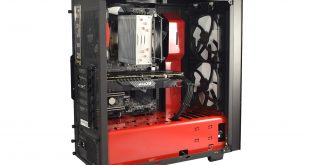
Given that Ryzen 7 CPUs launched just over a month ago, system integrators have been quick to start building new PCs based on the Ryzen platform. The system in for review today from AWD-IT is one such example, as their Phoenix system is built around the 1700X chip and the Aorus AX370 Gaming 5 motherboard. With the inclusion of a GTX 1080 alongside the 1700X, could the AWD-IT Phoenix be the perfect Ryzen PC?
The second PC I have seen from the folks at AWD-IT, what makes the Phoenix interesting is its use of a Ryzen 7 1700X chip. If you have read our review of this chip over HERE, then you will know the 1700X is a great choice for those who regularly execute heavily multi-threaded tasks – its performance is similar if not better than competing X99 CPUs, while it only a fraction of the cost those Intel HEDT chips.
Our focus today is not just on the CPU, though, as we need to see how well AWD-IT can build a system around the Ryzen platform. Read on as we assess the Phoenix's build quality, performance and value.
Specification
- Aorus AX370 Gaming 5
- Ryzen 7 1700X
- 16GB Corsair Vengeance LPX 3000MHz
- NZXT S340 Elite Black/Red (Custom Laser Etched Panel)
- Arctic Freezer 33 Cooling
- Nvidia GTX 1080 8GB (Inno3D)
- Intel 256GB 600P NVMe M.2 SSD
- Seagate 2TB ST2000DM006 HDD
- EVGA 650W GQ PSU
Price: £1599
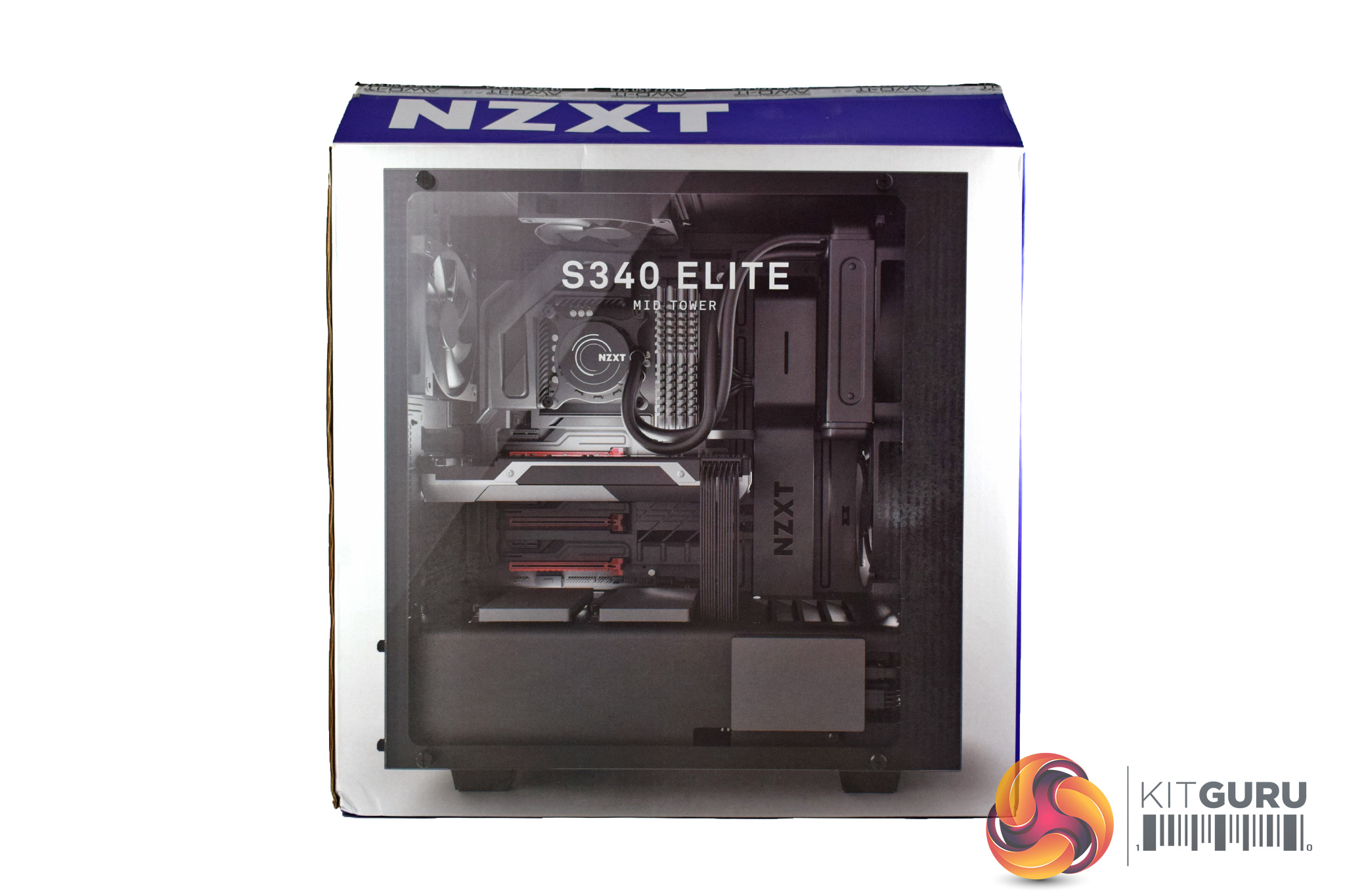
The AWD-IT Phoenix ships well-protected in the NZXT S340 Elite case box.
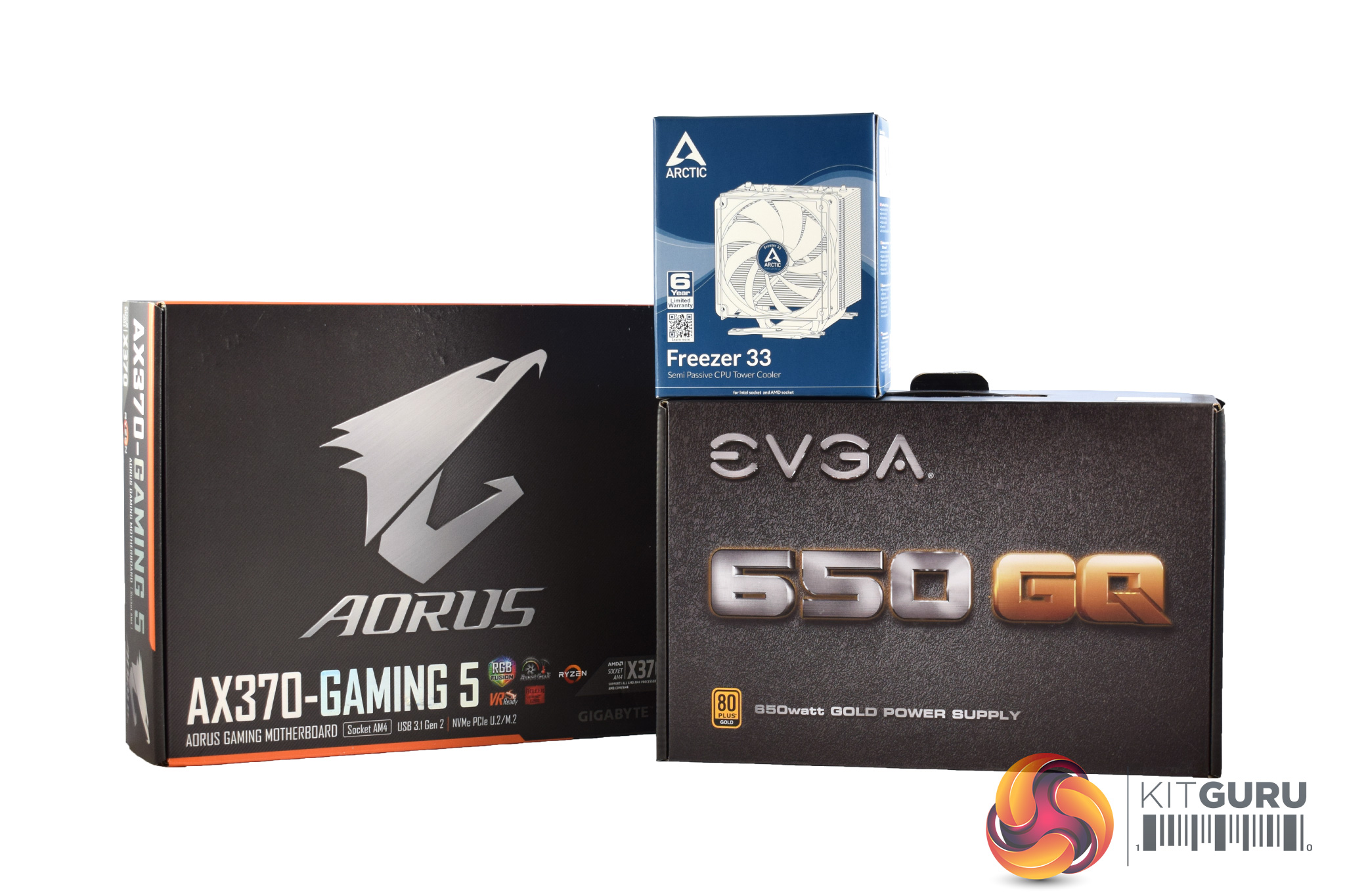
Also included in the bundle are the motherboard, PSU and CPU cooler boxes, as these have some extra accessories (like SATA or PSU cables) that you might want later on.
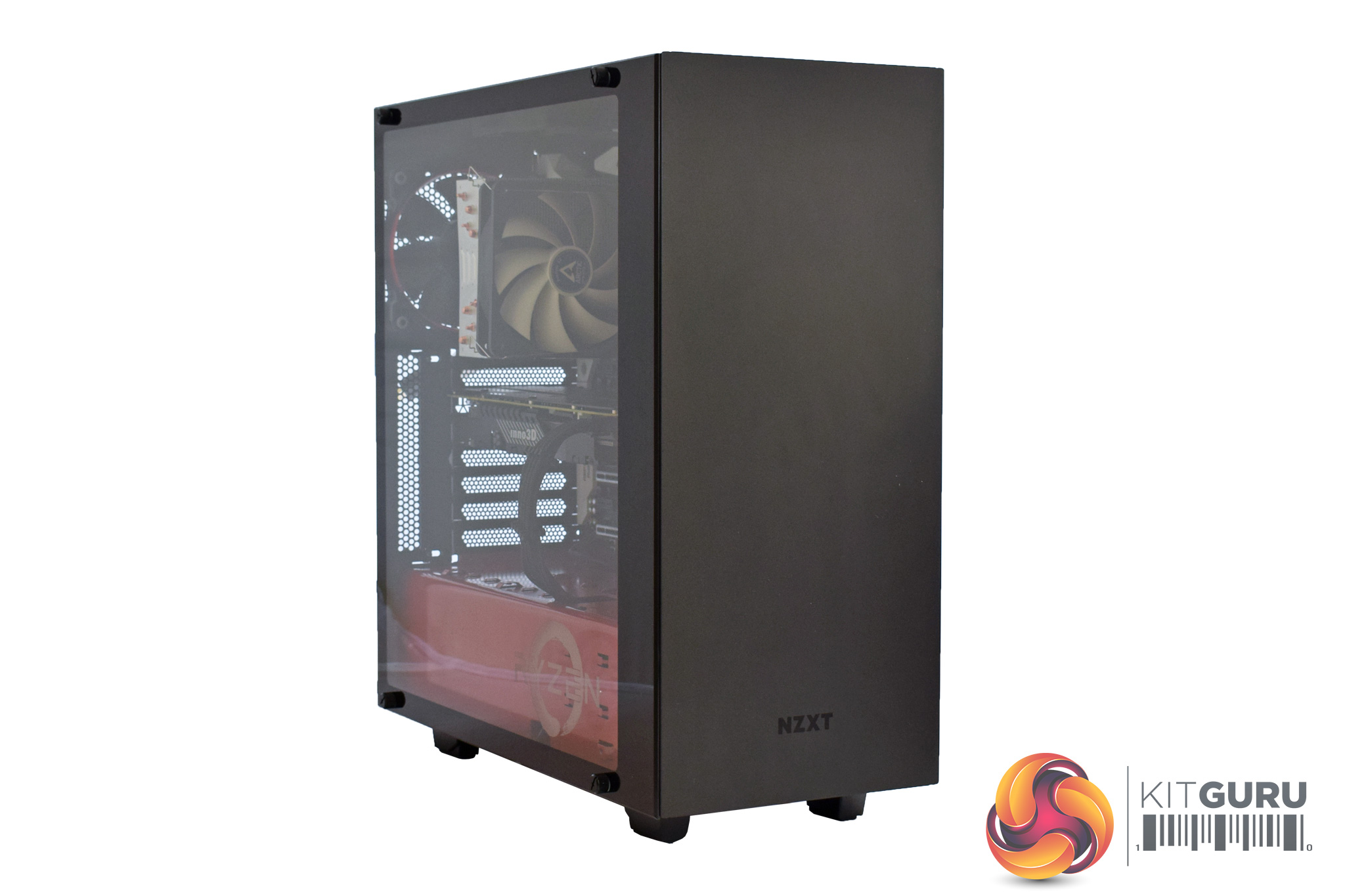
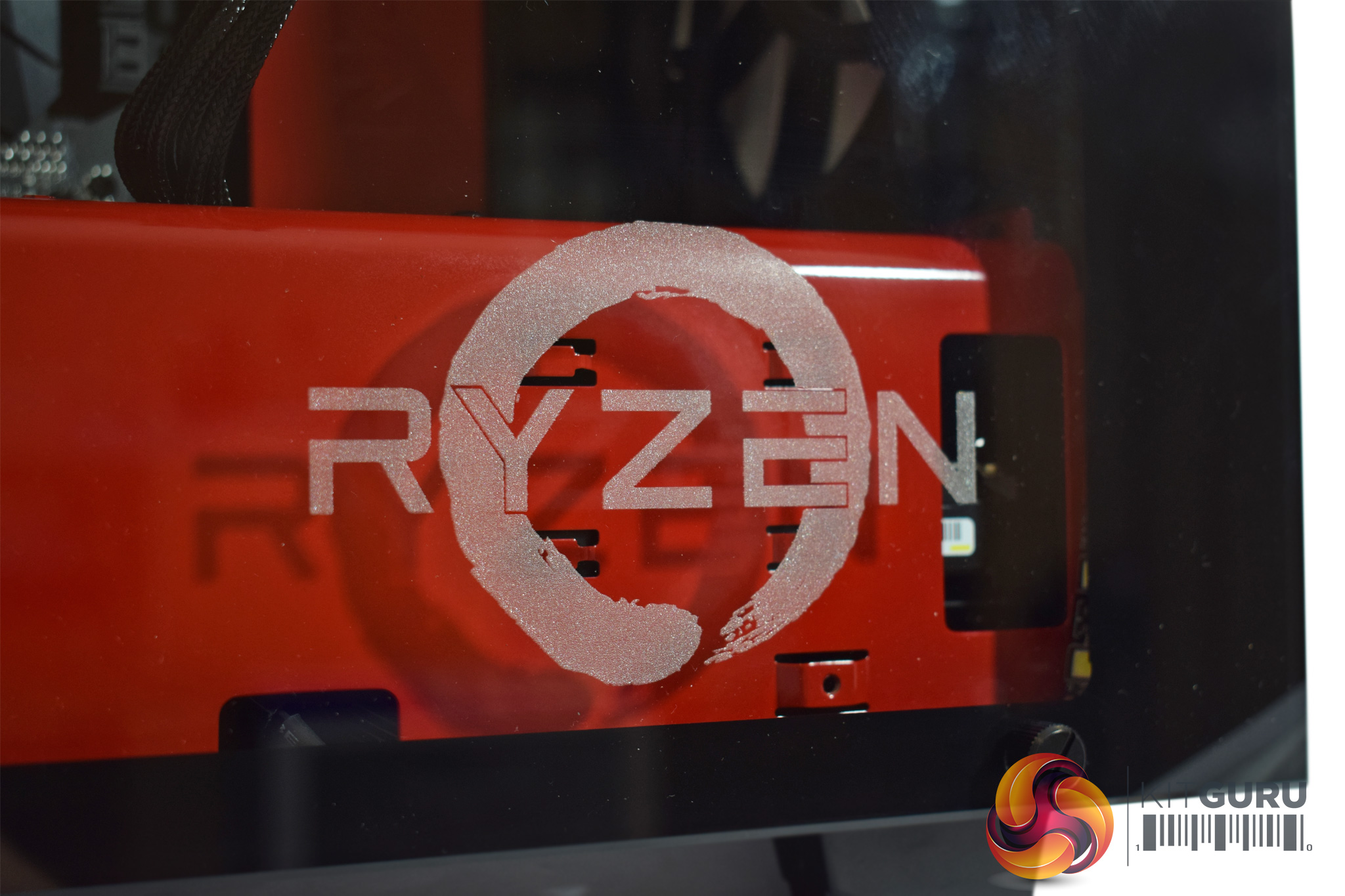
The first thing to note is that the NZXT S340 Elite has a tempered glass panel, as is the current market trend.
However, AWD-IT have taken things a step further by custom-etching the Ryzen logo onto the glass panel. I think this looks pretty cool and is definitely something that helps AWD-IT systems stand-out from the crowd.
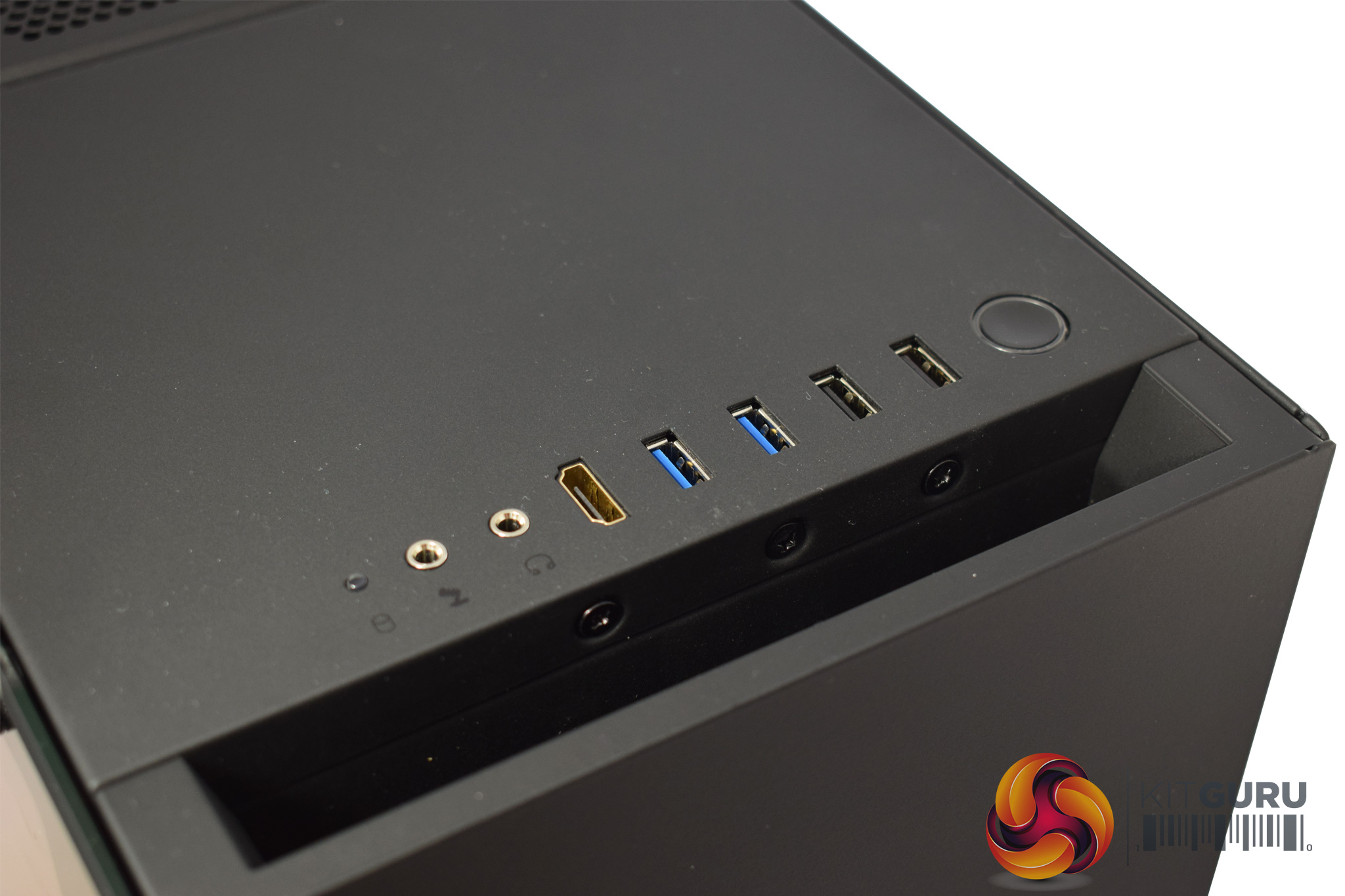
Before diving into the innards of the system, it is worth looking at the front-panel I/O. Here we find 2x USB 3.0, 2x USB 2.0, audio jacks and an HDMI pass-through port (great for VR users), so definitely a full set of connectivity options.
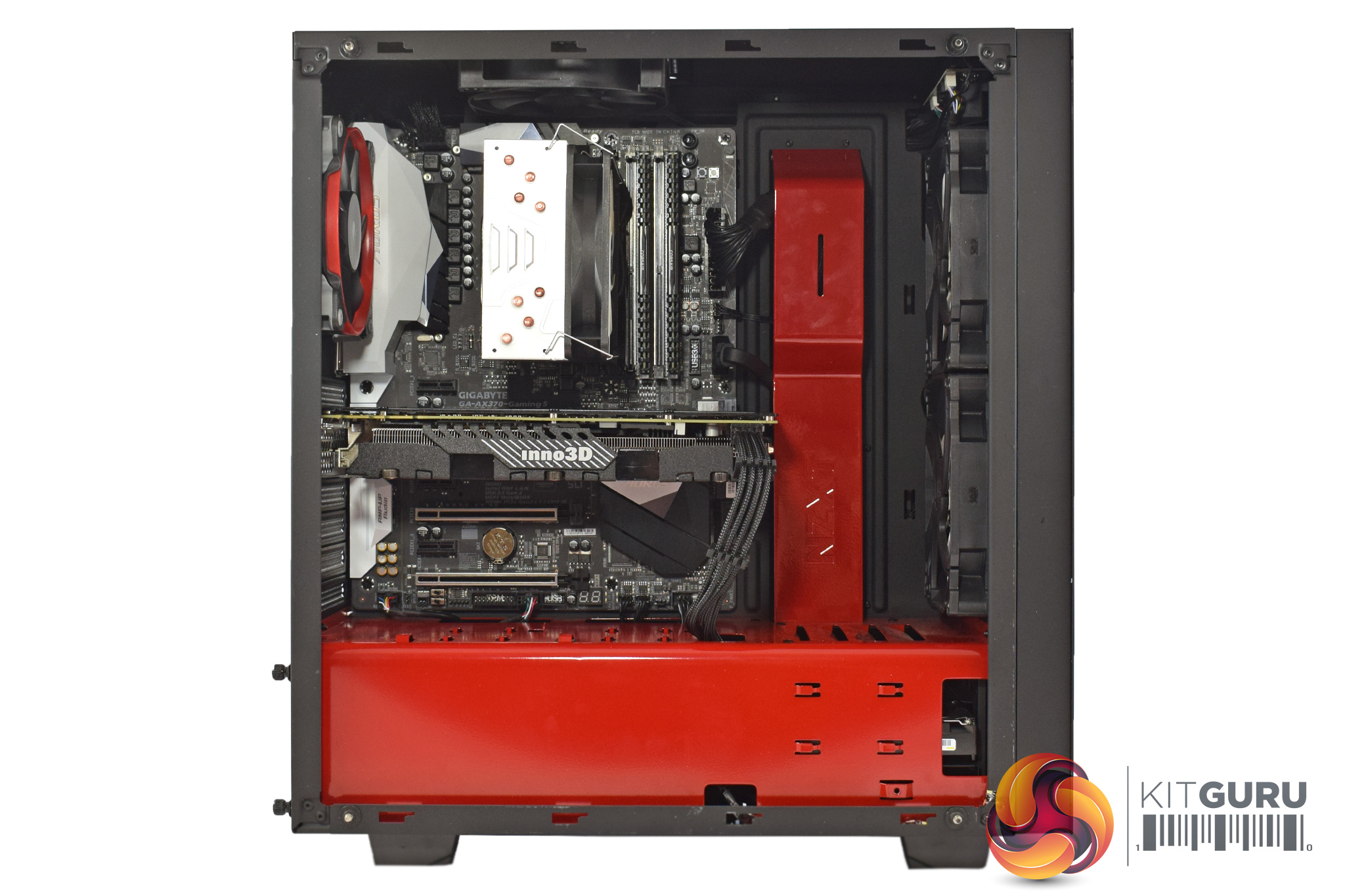
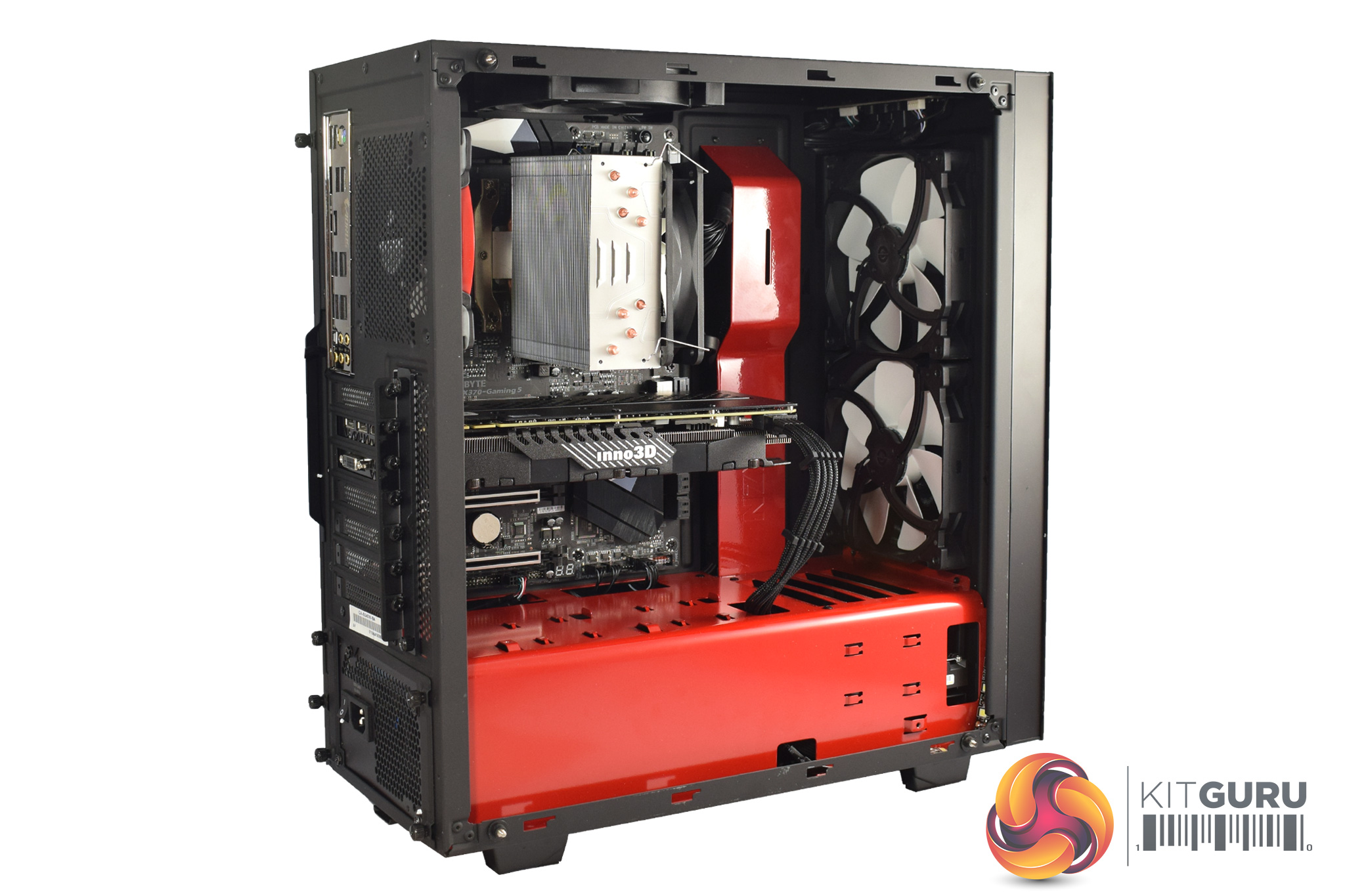
Prising off the glass side panel, we get our first look at the system itself.
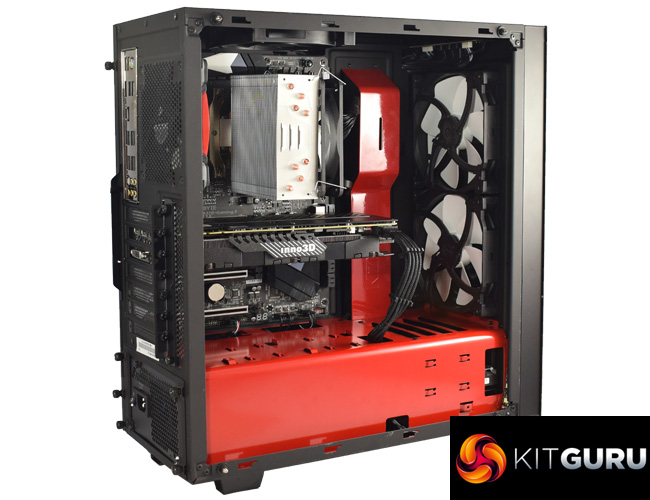
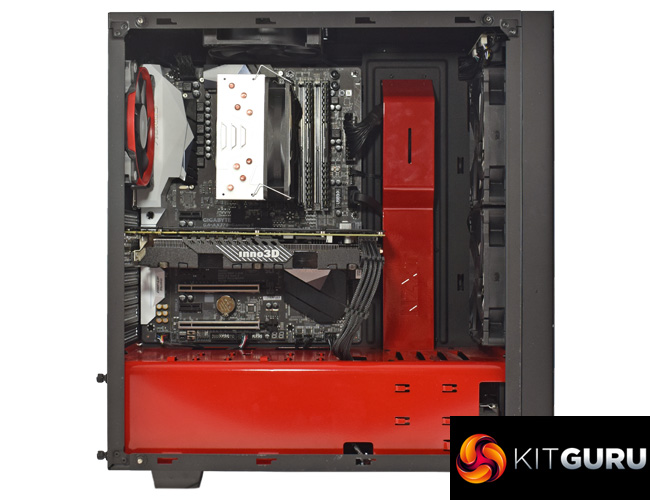
Other than the glossy red accents that come from the case, the first thing to note is that the system is nice and tidy, with no exposed cabling or anything like that. The interior also benefits from the use of all-black cables – none of that ugly ketchup-and-mustard cabling here.
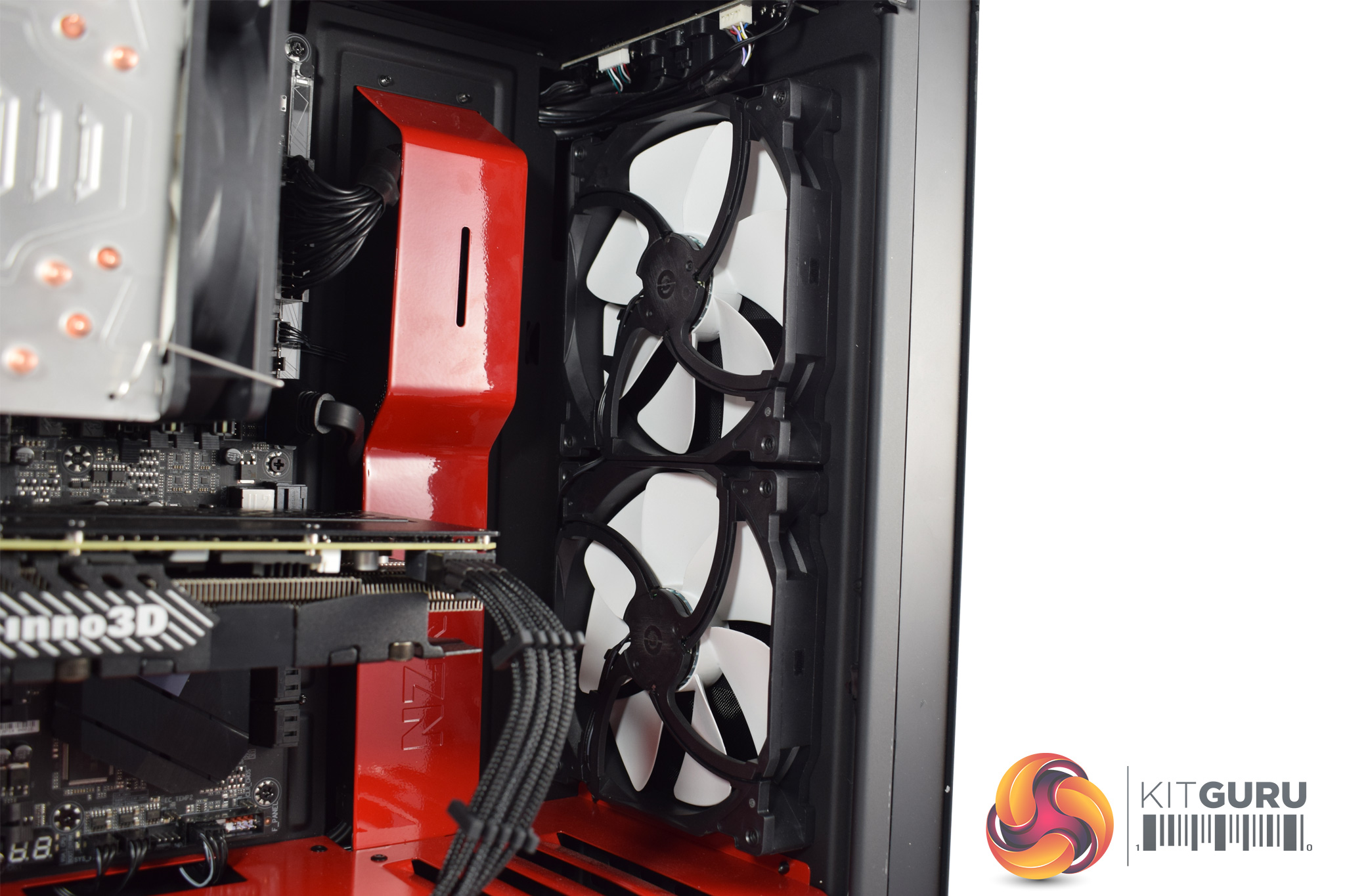
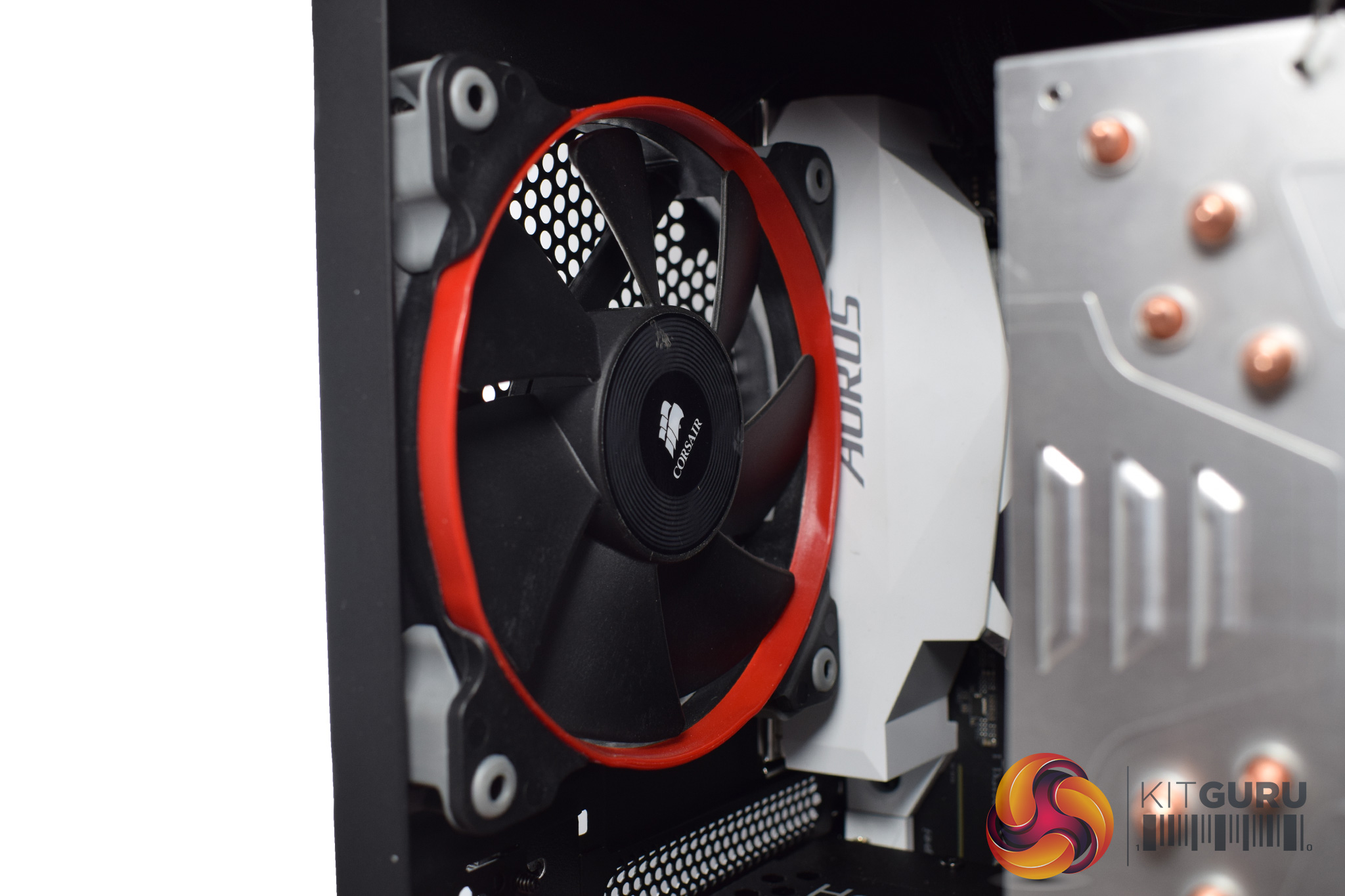
In terms of cooling, AWD-IT have put a fan in every possible location: two 140mm intakes at the front, a single 120mm exhaust in the roof, and there is even a Corsair 120mm spinner at the back.
We will assess system thermals later in the review, but on the face of it, we can expect temperatures to be just fine due to the number of fans and the sheer amount of air that we can expect them to move through the chassis.
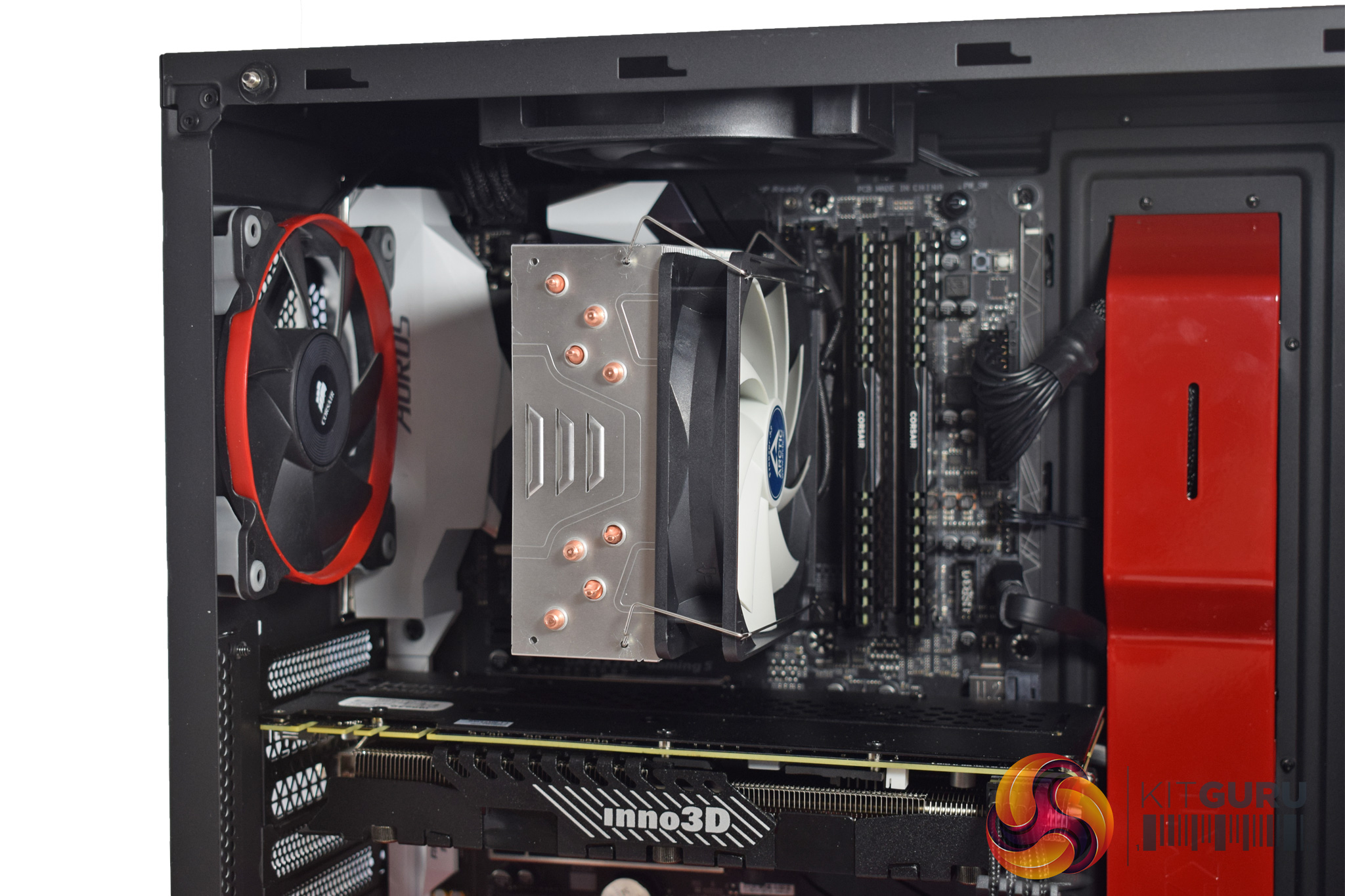
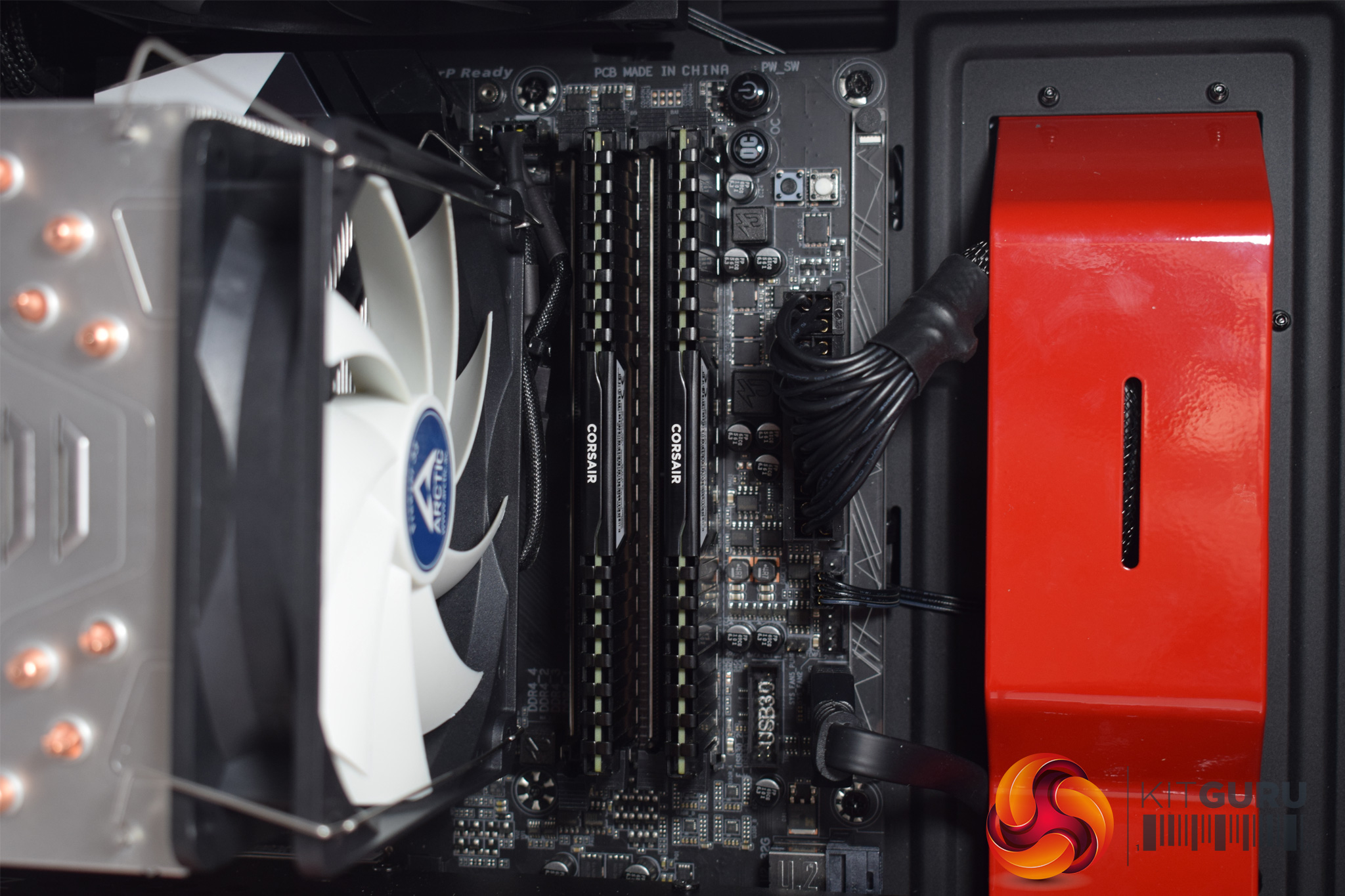
Cooling the Ryzen 1700X chip is a new cooler from Arctic: the Freezer 33. I actually have this cooler on-hand for a stand-alone review, so stay tuned for that.
System memory is provided by a 2x8GB kit of Corsair Vengeance LPX 3000MHz DDR4.
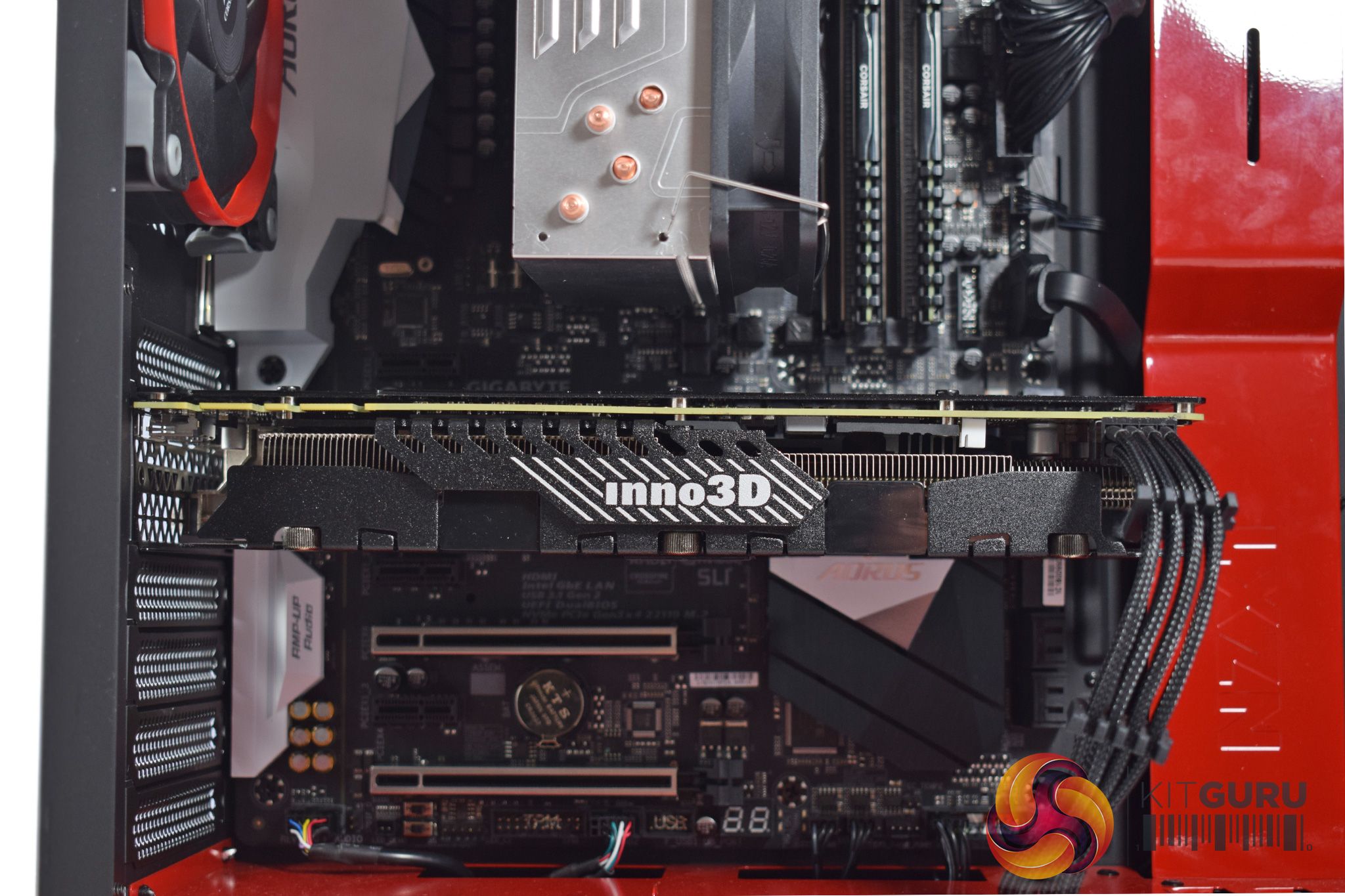
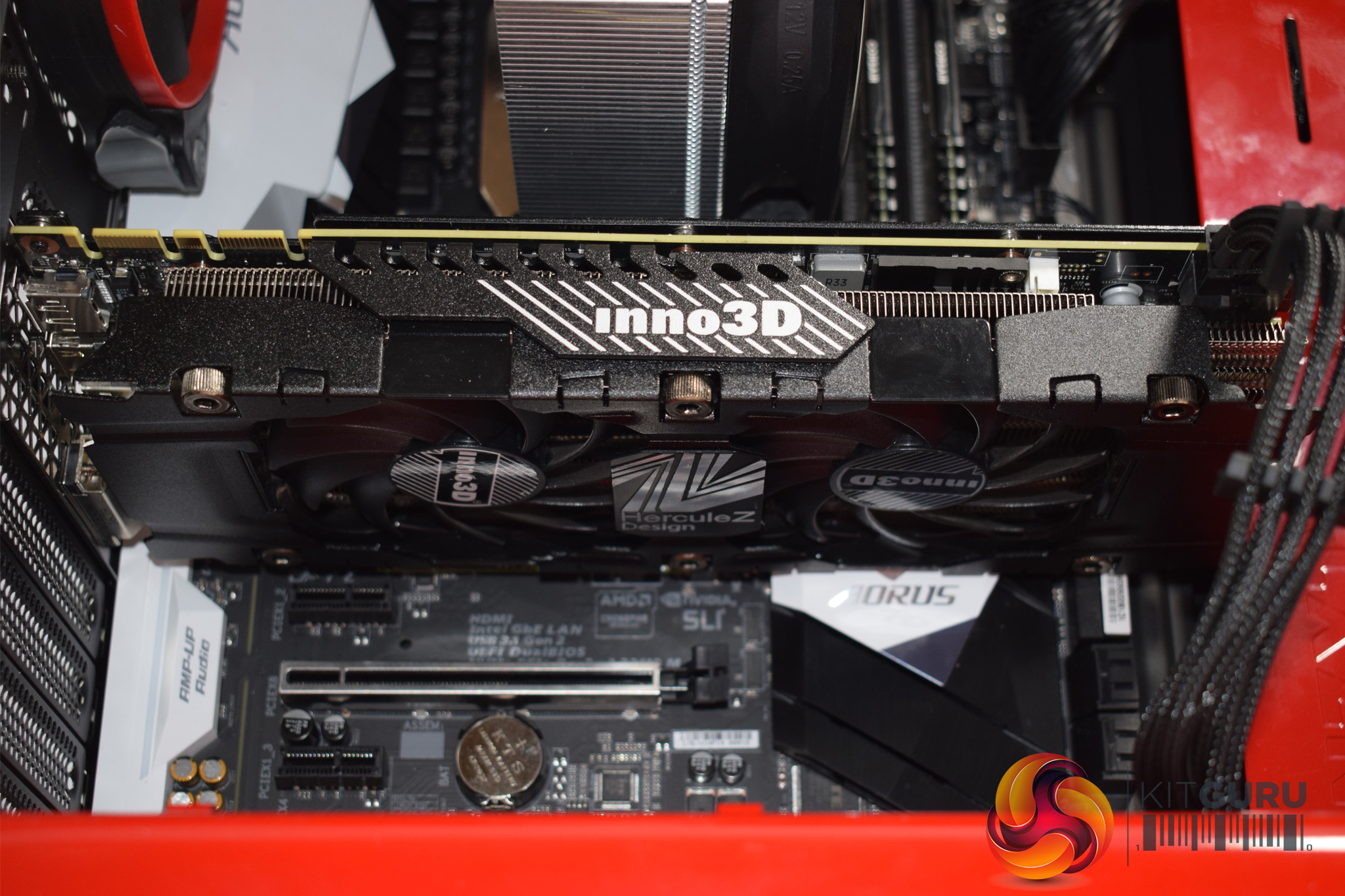
Moving down, the graphics card is a GTX 1080 – in this case, an Inno3D Twin X2 model has been used. As the name suggests, it uses a double-fan cooling solution, and should offer great frame rates across the board.
Also in this area is the M.2 SSD, although you cannot actually see it as it is obscured by the graphics card (Aorus placed the M.2 connector just below the first PCIe slot). AWD-IT have fitted a 256GB Intel 600p NVME drive here, though, and we will assess its speeds later in this review.
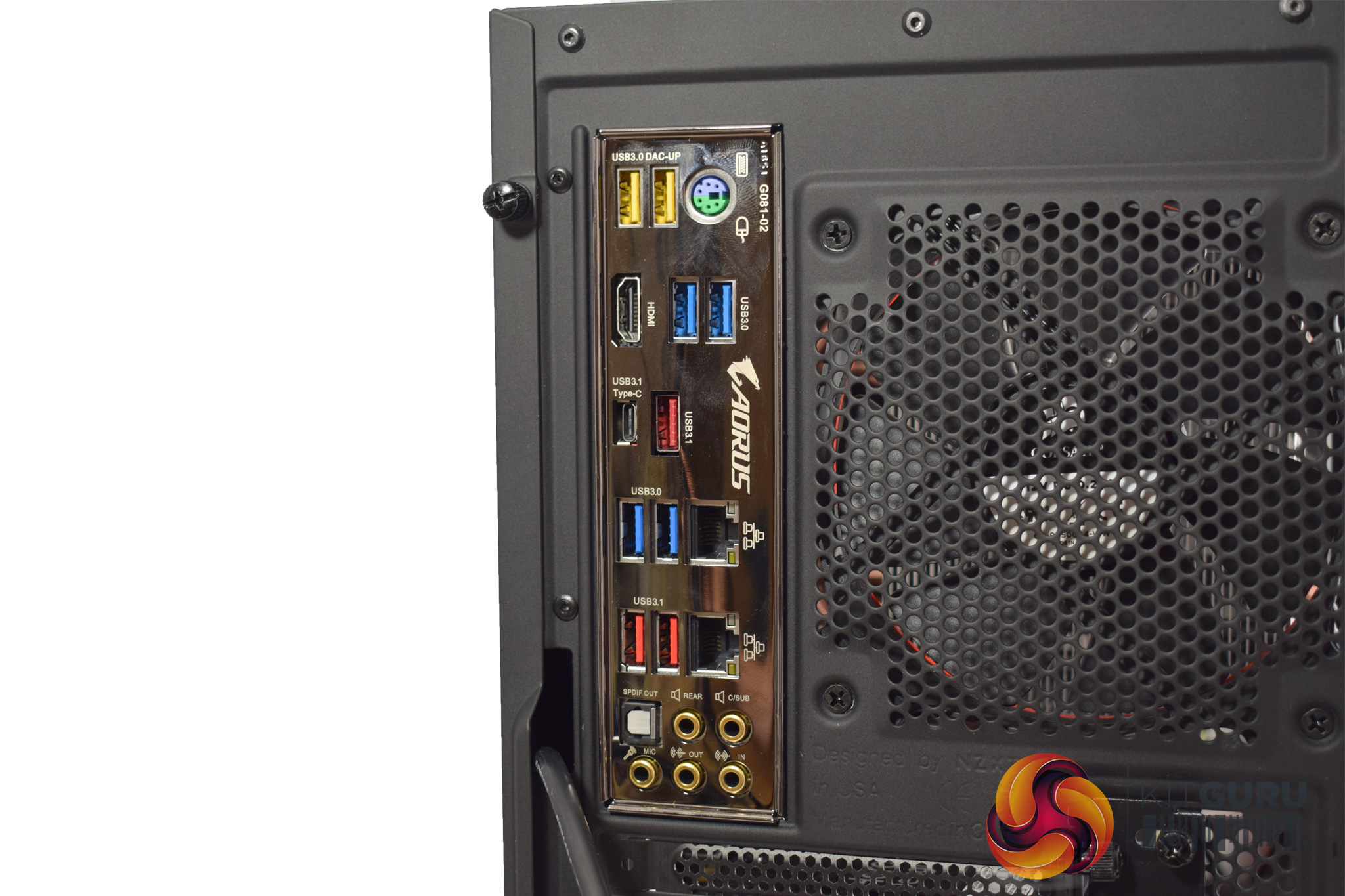
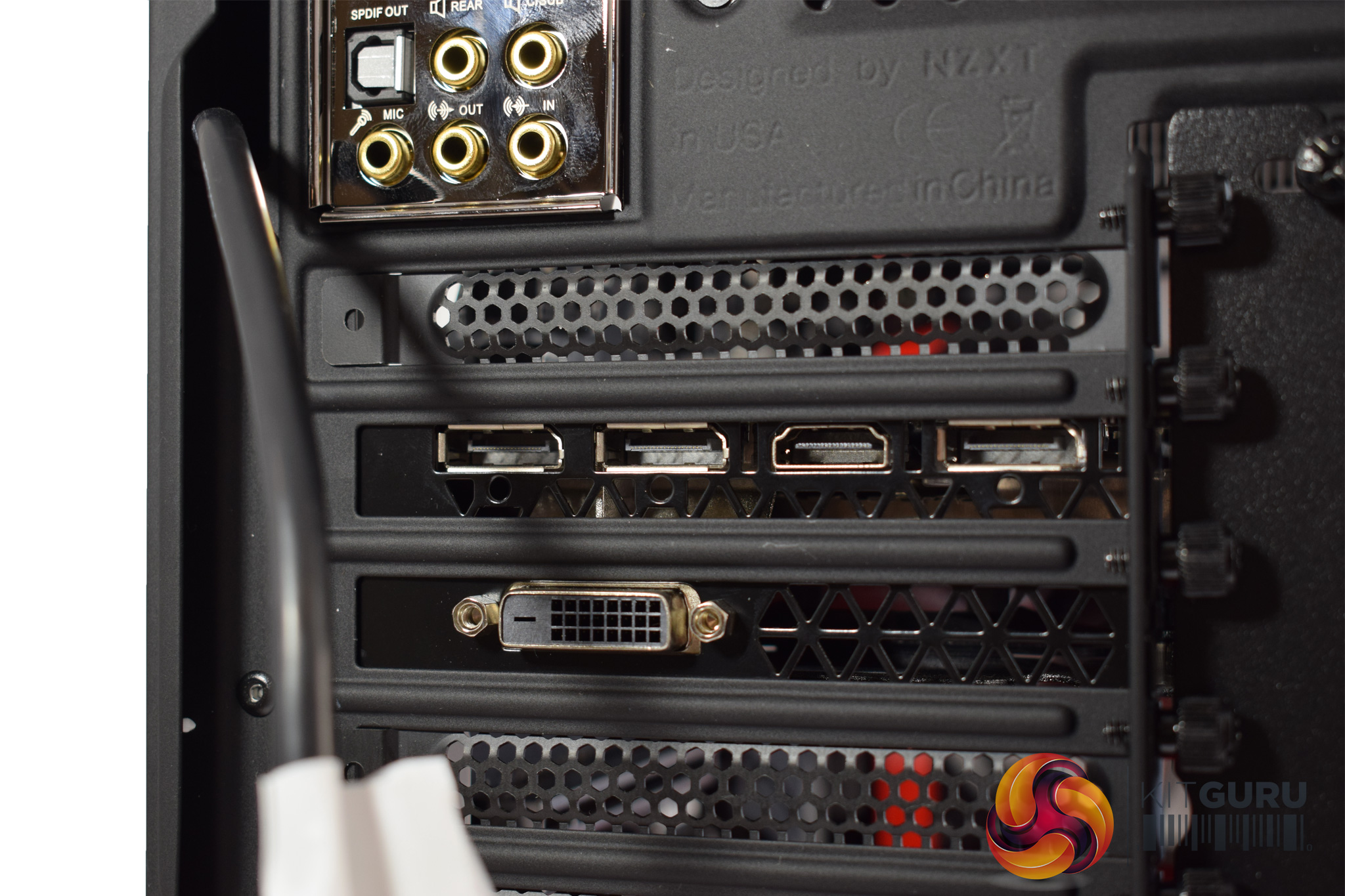
Before moving behind the motherboard tray, we will look at the motherboard's I/O. The Aorus AX370 Gaming 5 has the following ports and connectors: 1 x PS/2 keyboard/mouse port, 1 x HDMI port, 1 x USB Type-C port, with USB 3.1 Gen 2 support, 3 x USB 3.1 Gen 2 Type-A ports (red), 6 x USB 3.1 Gen 1 ports, 2 x RJ-45 ports, 1 x optical S/PDIF Out connector and 5 x audio jacks (Center/Subwoofer Speaker Out, Rear Speaker Out, Line In, Line Out, Mic In).
The GTX 1080 has the standard array of 3x DisplayPort, 1x HDMI and 1x DVI ports.
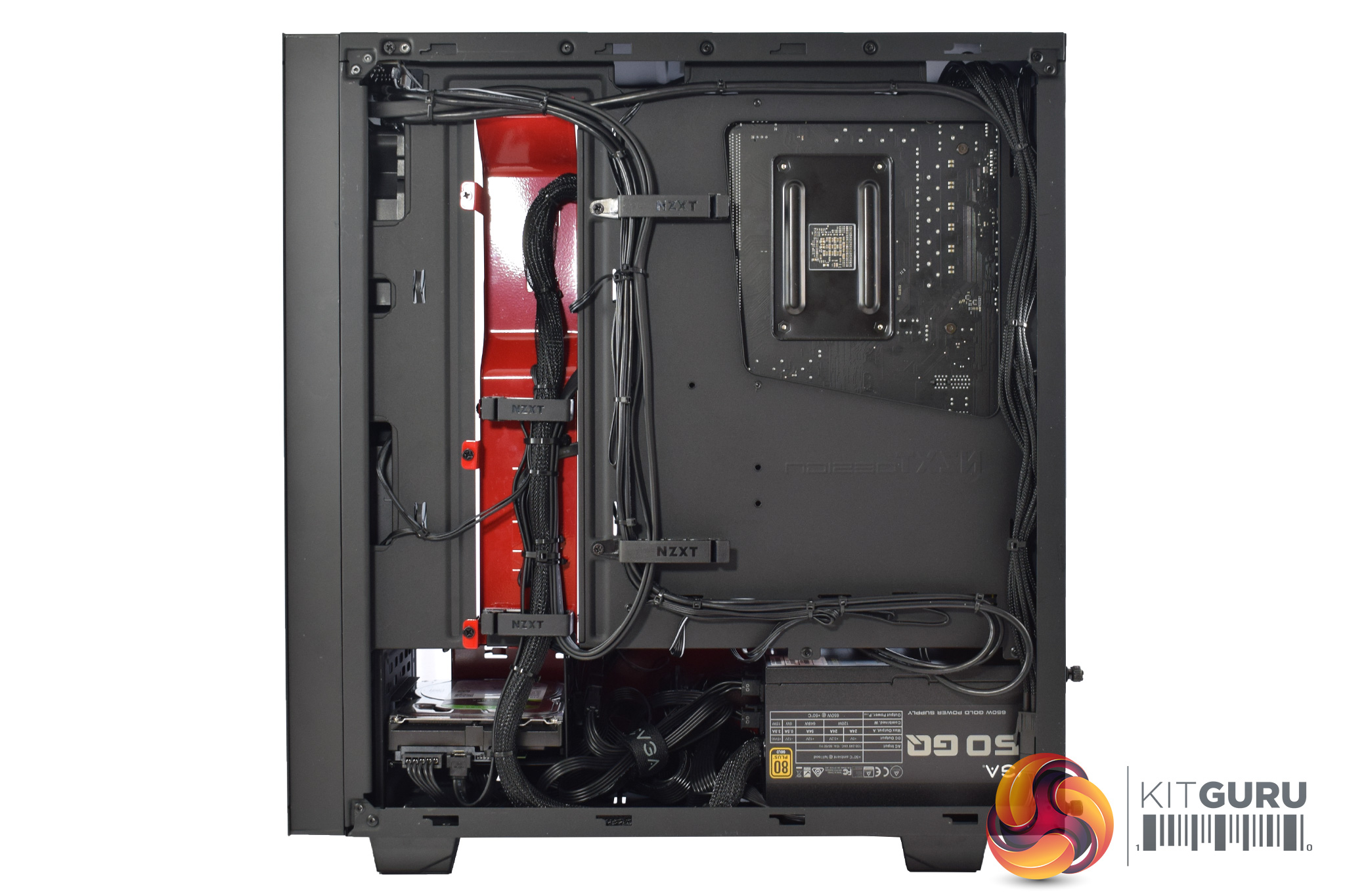
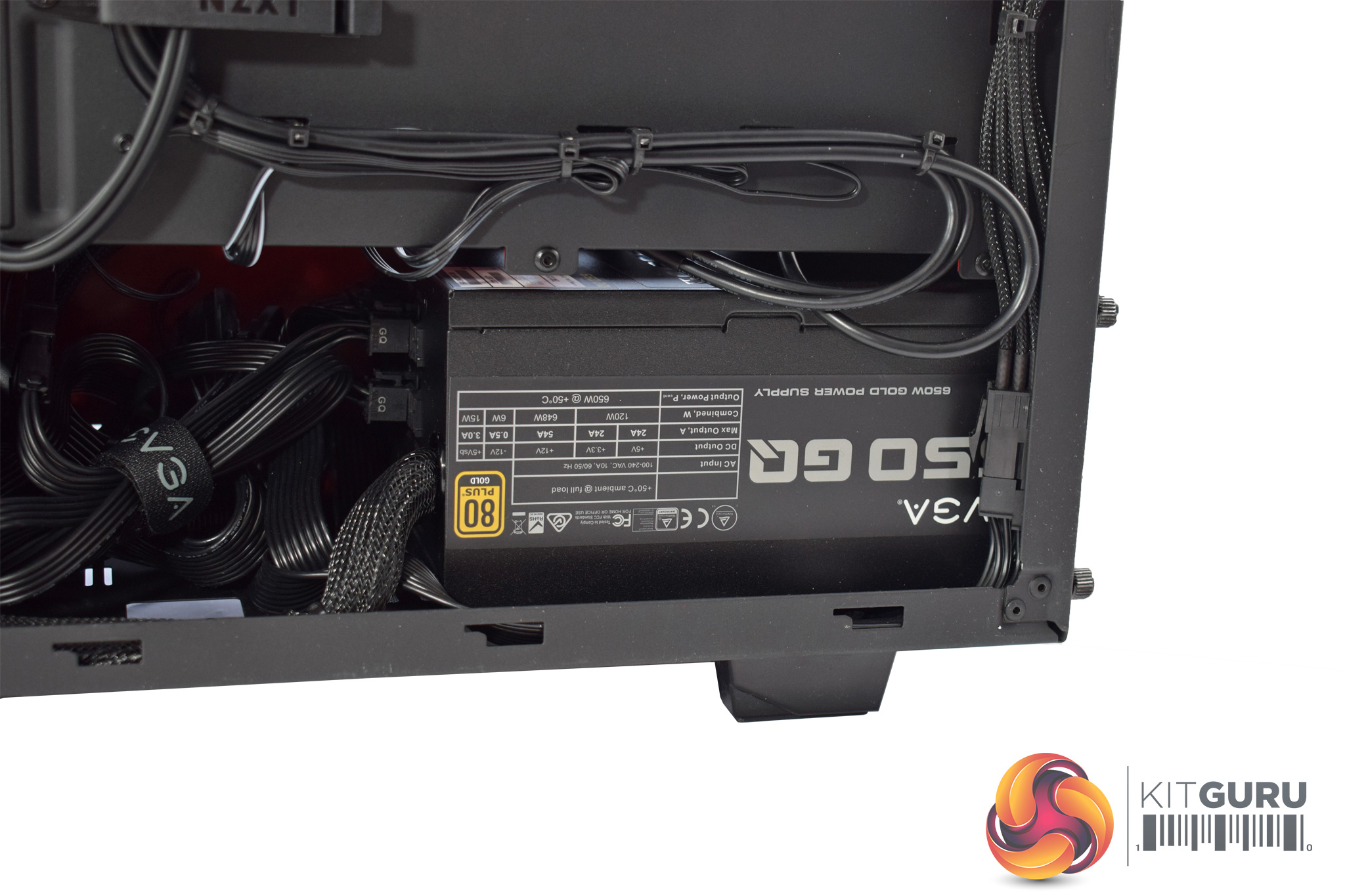
Concluding our look at the system, the area behind the motherboard tray has been kept very tidy, with everything neatly tied out of the way.
In the bottom left-hand corner AWD-IT has also placed a 2TB Seagate Barracuda HDD, while the PSU is EVGA's 650 GQ – an 80+ Gold, semi-modular unit.
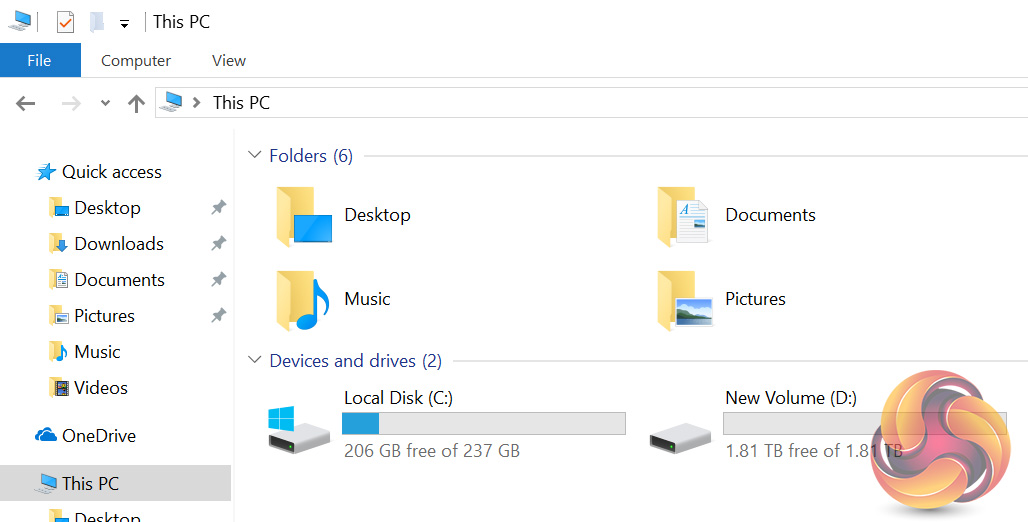
First of all, it is worth noting that the system ships with 206GB free SSD space, while the 2TB HDD has 1.81TB available.
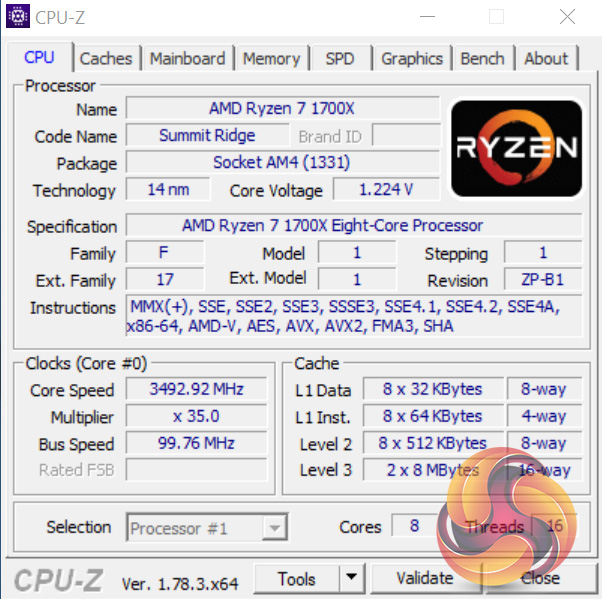
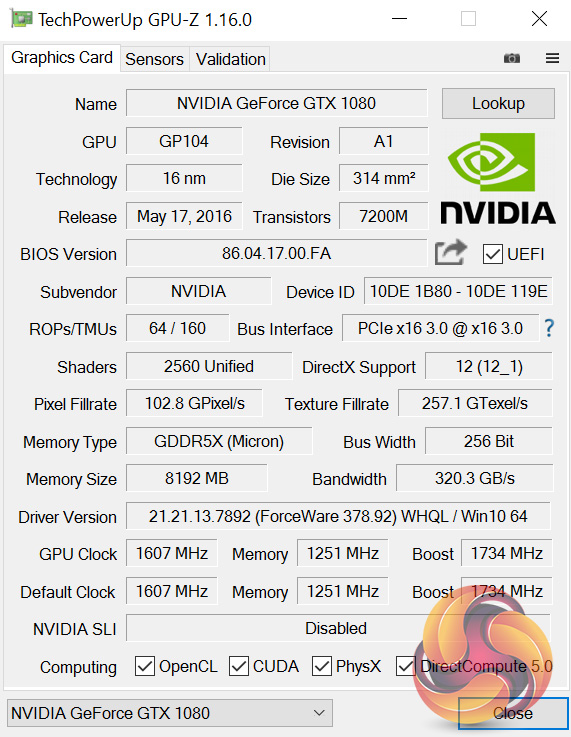
Here we get an overview of the CPU and GPU, courtesy of CPU-Z and GPU-Z, respectively.
The Ryzen 7 1700X is a octa-core chip that supports SMT, giving it a total of 16 threads. AWD-IT have left it at stock clocks, with a 3.4GHz base clock, while it boosts to 3.8GHz. Using XFR, it may boost higher, but only if there is sufficient thermal headroom.
The Inno3D GTX 1080 is equipped with 8GB of GDDR5X VRAM, and it has been left at stock frequencies: 1607MHz base clock, 1734MHz boost clock. GPU Boost 3.0 should take it well above those frequencies, though.
Comparison systems
- Intel Core i7-6700HQ
- Nvidia GTX 960M
- 16GB Dual-Channel 1600MHz DDR3 RAM
- 128GB SSD + 1TB HDD
- Intel Bay Trail-M Celeron N2808 SoC
- Intel HD Graphics
- 4GB DDR3L RAM
- 64GB eMMc storage
- Intel Braswell N3050 SoC
- Intel HD Graphics
- 2GB DDR3L RAM
- 32GB eMMC storage
- Intel Core i3 i3-5010U
- Intel HD Graphics 5500
- 8GB Kingston SODIMM DDR3 1600MHz (1 x 8GB)
- 240GB Kingston V300 SSD
- Intel Core™ m5-6Y57
- Intel HD Graphics 515
- 8GB LPDDR3 1866MHz Memory
- 256GB Solid State Drive M2 2280 PCIe
- Intel Core i5-6500
- Asus Turbo GTX 960
- 8GB Corsair Vengeance LPX 2400MHz DDR4 RAM
- 500GB Samsung 850 EVO SSD
- Intel Core i7-6820HK
- Nvidia GTX 980 (desktop)
- 32GB DDR4 2400MHz RAM
- 2x 256GB Samsung SM951 PCIe SSDs in RAID0
- AMD FX-8320
- AMD RX-480
- 16GB DDR3 2133MHz RAM
- 240GB Adata Premier SP550
PCSpecialist Defiance III 17.3
- Intel i7-6700HQ
- Nvidia GTX 1060
- 16GB HyperX DDR4 2133MHz RAM
- 512GB SanDisk X400 M.2 SATA SSD
- Intel i7-6700HQ
- Nvidia GTX 950
- 16GB Crucial DDR4 2133MHz RAM
- 512GB Samsung Pro M.2 SSD
- Intel i7-7500U
- Intel HD Graphics 620
- 16GB G.Skill DDR4 2133MHz RAM
- 256GB Toshiba OCZ RD400 M.2 SSD
- Intel i7-6700K
- Nvidia GTX 1070
- 16GB Corsair Vengeance 3000MHz DDR4 RAM
- 500GB Samsung 750 EVO SSD
- Intel i5-6402P
- Nvidia GTX 1060
- 16GB Corsair Vengeance LED 3000MHz DDR4 RAM
- 256GB Intel 600p M.2 SSD
- Intel i5-6200U
- Intel HD Graphics 520
- 16GB G.Skill Ripjaws 1600MHz DDR3 RAM
- 256GB Toshiba OCZ RD400 M.2 SSD
- Intel i5-6600K
- Nvidia GTX 1070
- 16GB Corsair Vengeance 3000MHz DDR4 RAM
- 256GB Intel 600p M.2 SSD
- Intel i5-7600K
- Nvidia GTX 1060
- 16GB HyperX 2133MHz DDR4 RAM
- 250GB SK Hynix SL308 SSD
- Intel i7-7500U
- Intel HD Graphics 620
- 8GB 1866MHz DDR3L RAM
- 256GB PCIe SSD
- Intel i5-7600K
- Nvidia GTX 1060
- 16GB Corsair Vengeance 3000MHz DDR4 RAM
- 250GB WD Blue M.2 SSD
- Intel i5-7200U
- Intel HD Graphics 620
- 8GB 2133MHz DDR3L RAM
- 512GB SATA M.2 SSD
And lastly my personal desktop with a Core i3-4160, 8GB 1866MHz DDR3 and a GTX 960.
Test software
- SiSoft Sandra
- Cinebench R15
- Handbrake
- CrystalDiskMark
- ATTO Disk Benchmark
- 3DMark 11
- 3DMark
- VRMark
- Prime 95 (version 26.6)
- CPUID HWMonitor
- AIDA64 Engineer
- Fraps
Test games
- The Witcher 3: Wild Hunt
- Grand Theft Auto V
- Doom (2016)
- Deus EX: Mankind Divided
- Tom Clancy's Ghost Recon: Wildlands
Today we are testing the Phoenix at 1080p, 1440p and 2160p (Ultra HD 4K). All tests were conducted using the Nvidia GeForce 378.92 driver, the latest at the time of writing.SiSoftware Sandra (the System ANalyser, Diagnostic and Reporting Assistant) is an information & diagnostic utility. It should provide most of the information (including undocumented) you need to know about your hardware, software and other devices whether hardware or software.
Sandra is a (girls’) name of Greek origin that means “defender”, “helper of mankind”. We think that’s quite fitting.
It works along the lines of other Windows utilities, however it tries to go beyond them and show you more of what’s really going on. Giving the user the ability to draw comparisons at both a high and low-level. You can get information about the CPU, chipset, video adapter, ports, printers, sound card, memory, network, Windows internals, AGP, PCI, PCI-X, PCIe (PCI Express), database, USB, USB2, 1394/Firewire, etc.
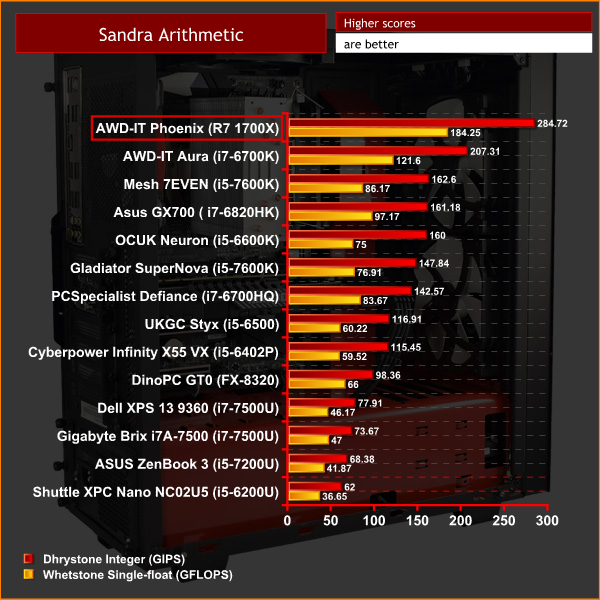
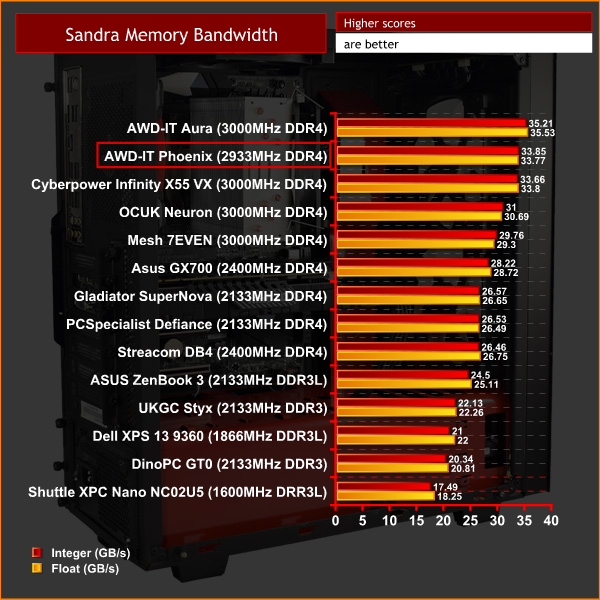
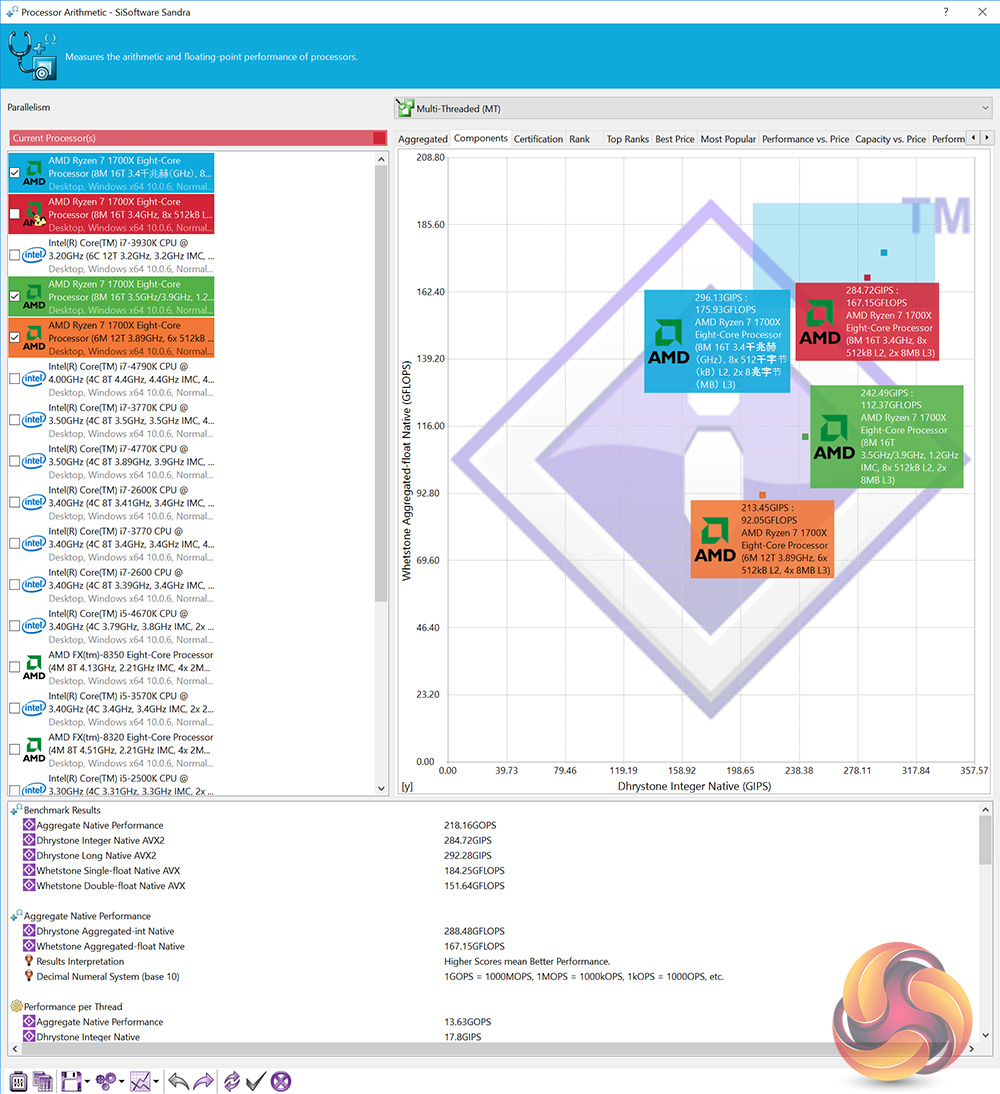
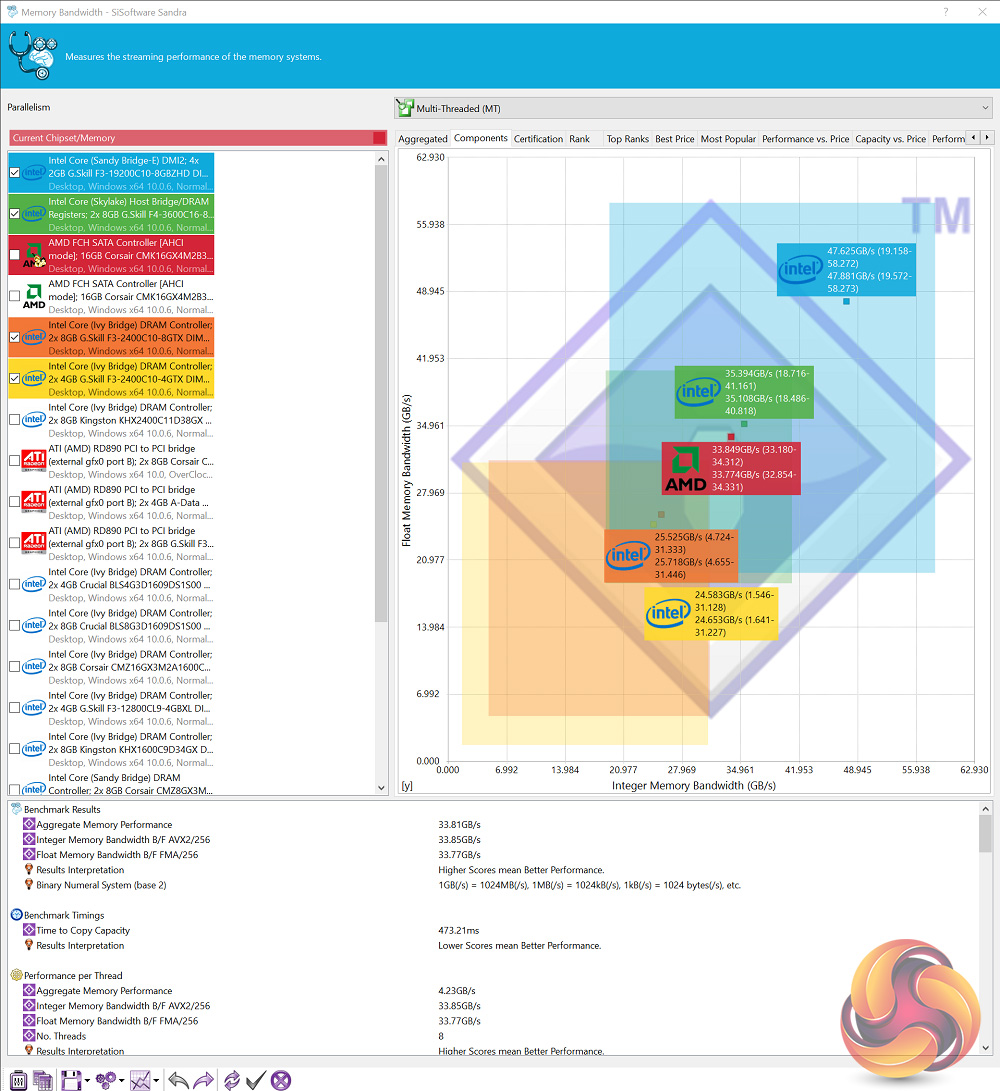
A great start for the Phoenix here.
The octa-core 1700X romps to the top of the Sandra Arithmetic thanks to its core-count advantage over the other chips.
The 16GB of DRR4 also provides a high amount of throughput at its 2933MHz frequency.CINEBENCH R15 is a cross-platform testing suite that measures hardware performance and is the de facto standard benchmarking tool for leading companies and trade journals for conducting real-world hardware performance tests. With the new Release 15, systems with up to 256 threads can be tested.
CINEBENCH is available for both Windows and OS X and is used by almost all hardware manufacturers and trade journals for comparing CPUs and graphics cards.
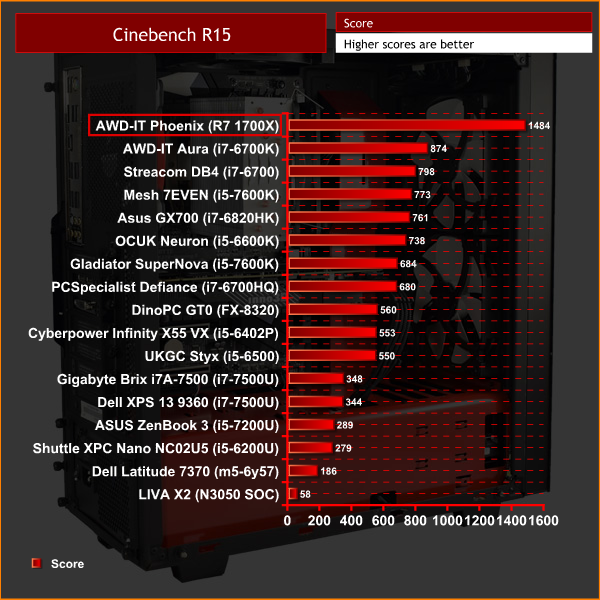
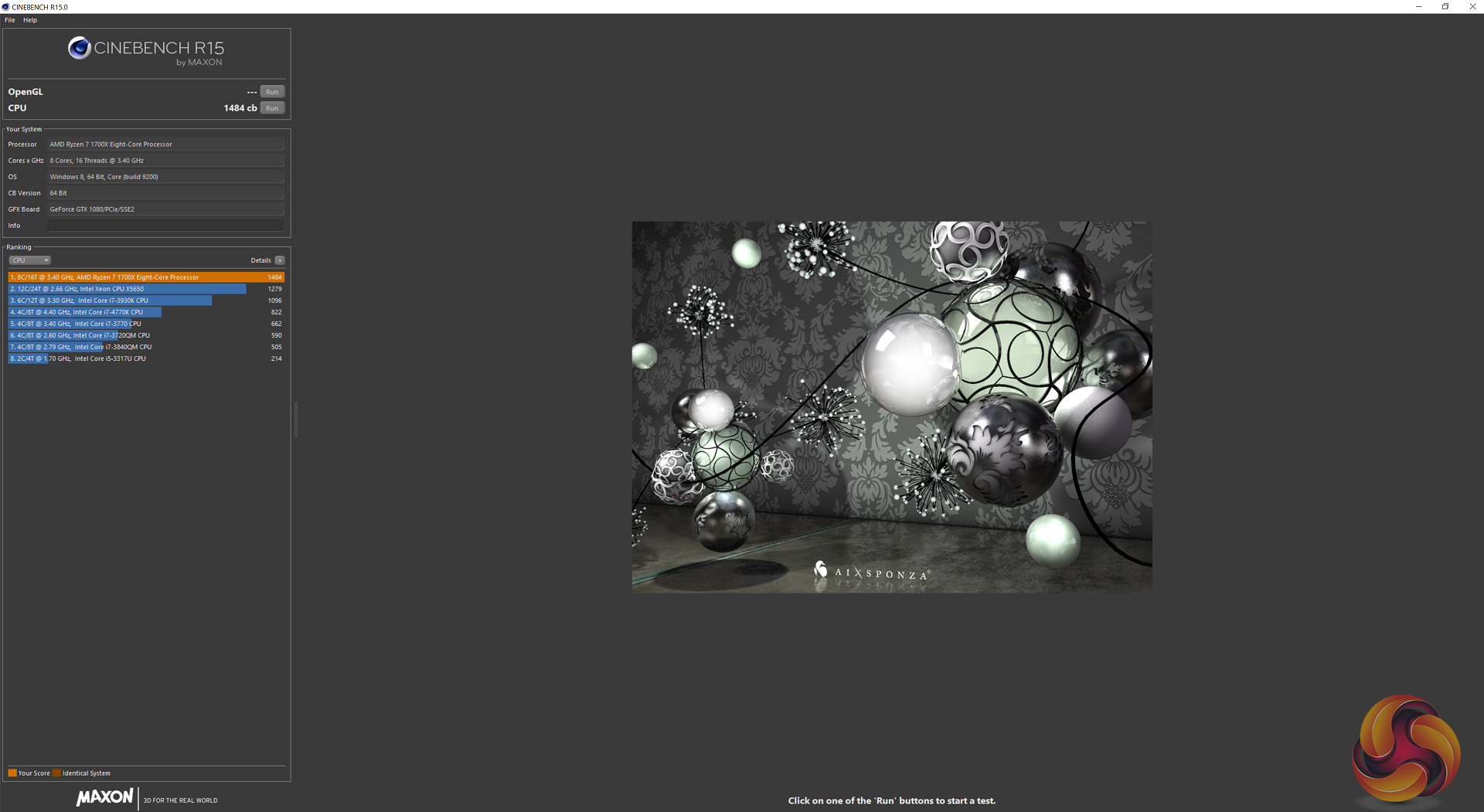
While we would see even higher scores from an overclocked 1700X chip, its 8 cores are still more than enough to blow away the rest of the competition in Cinebench.HandBrake is a tool for converting video from nearly any format to a selection of modern, widely supported codecs.
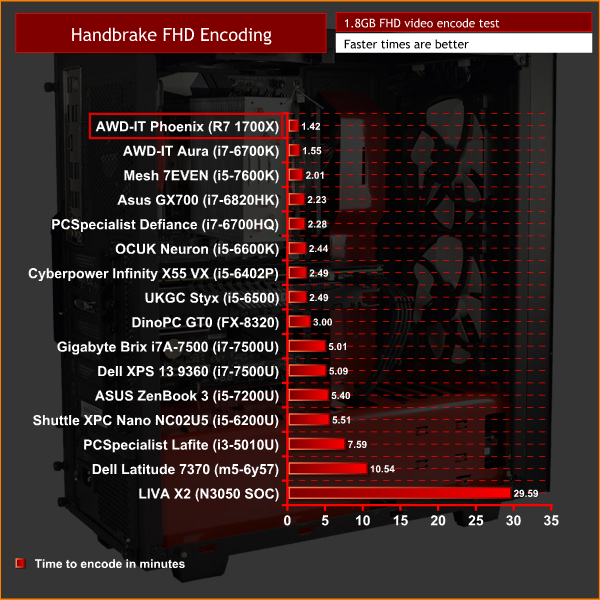
As we would expect, the 1700X also takes top-spot in our Handbrake encoding test.
Clearly, as we pointed out in our review of the 1700X, it is a great chip for those who regularly execute various computational tasks, as the high core-count can be used to devastating effect.Here we test the Phoenix’s storage performance, using CrystalDiskMark 5.1.1 and ATTO Disk Benchmark 2.47.
SSD Performance
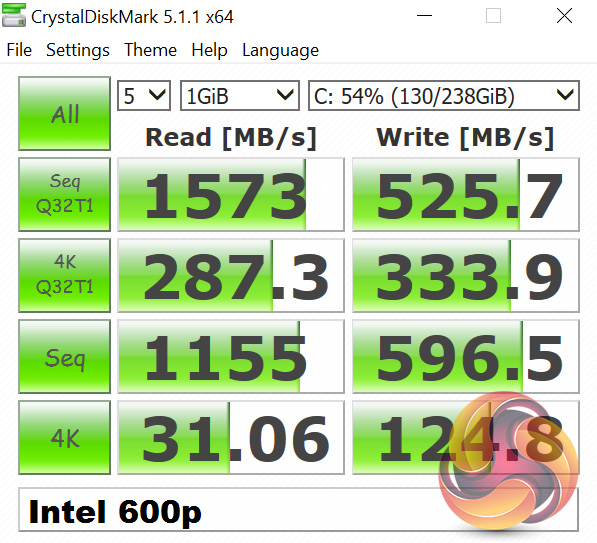
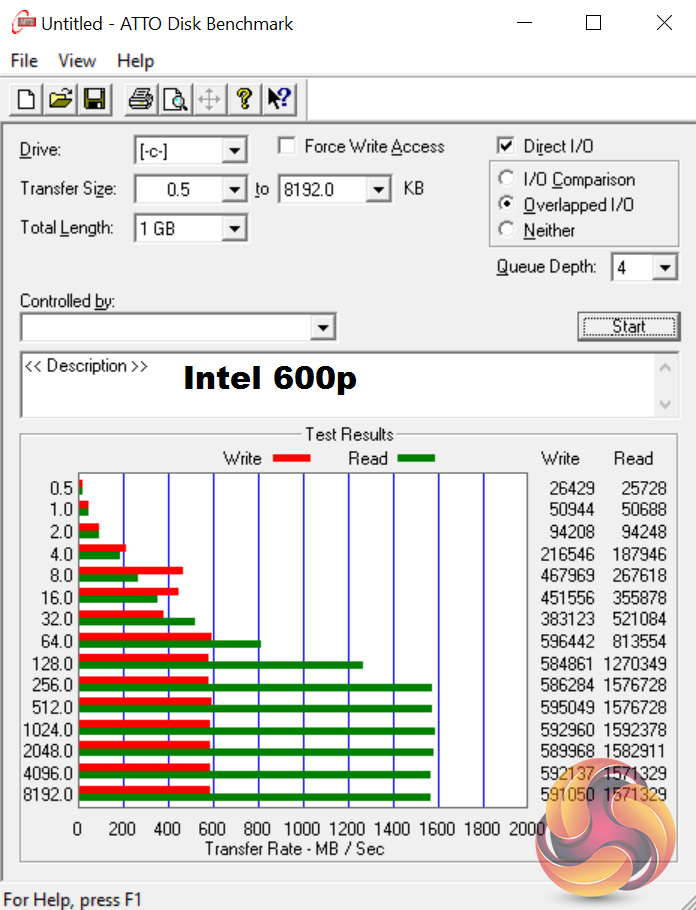
The Intel 600p is an interesting SSD – it uses the NVMe protocol but is significantly slower than other NVMe drives, such as the Samsung 960 EVO or OCZ RD400. That being said, it is quite a lot cheaper, and still faster than a traditional SATA-based SSD, so it is good to have in this system.
HDD Performance
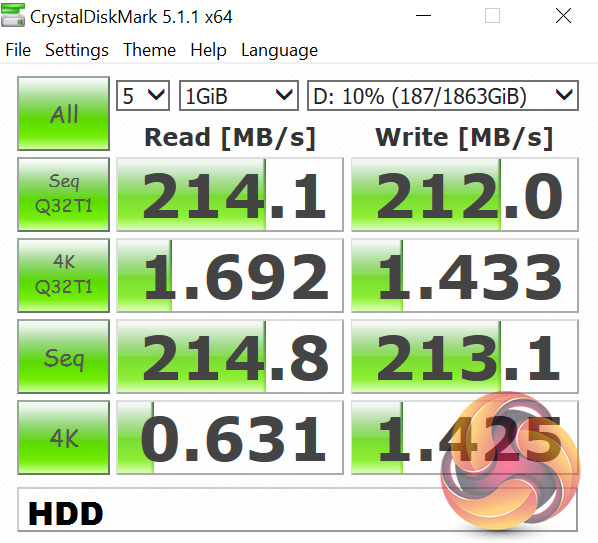
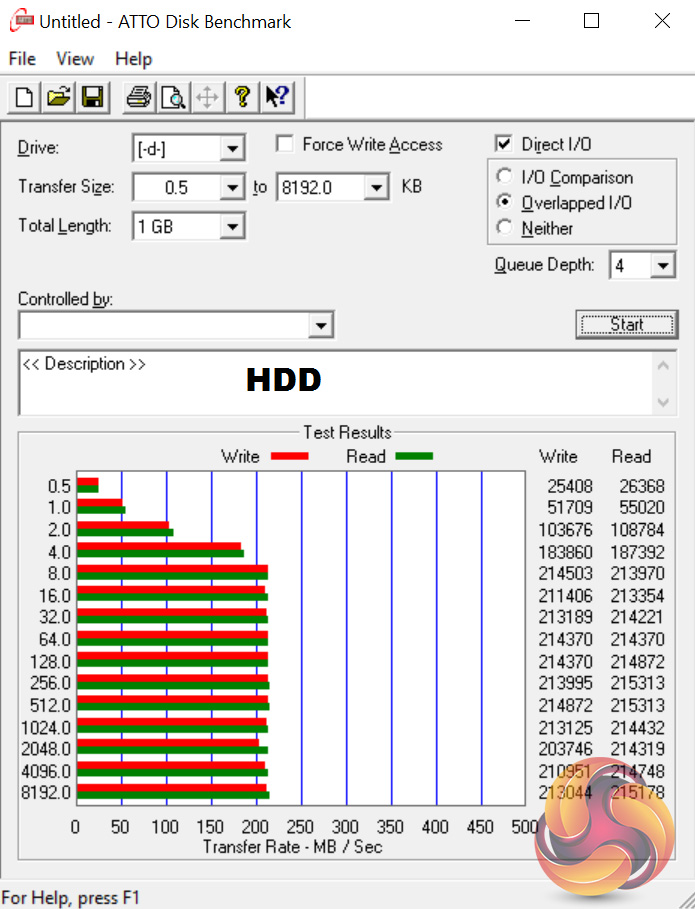
As we would expect, the 2TB HDD does not win any awards for raw speed. However, it provides plenty of space for large Steam/media collections.To test the USB 3.0 ports on the Phoenix, I plugged in an OCZ Trion 150 SSD via a SATA-to-USB 3.0 5Gbps adapter, which uses the ASMedia ASM1053 controller. We reviewed the SSD HERE, finding it delivers good speed at a budget price.
Most importantly, it is capable of saturating the USB 3.0 bus, allowing us to test the speeds the USB 3.0 ports deliver. To test this, I ran both CrystalDiskMark and ATTO Disk Benchmark on the Trion 150 drive.
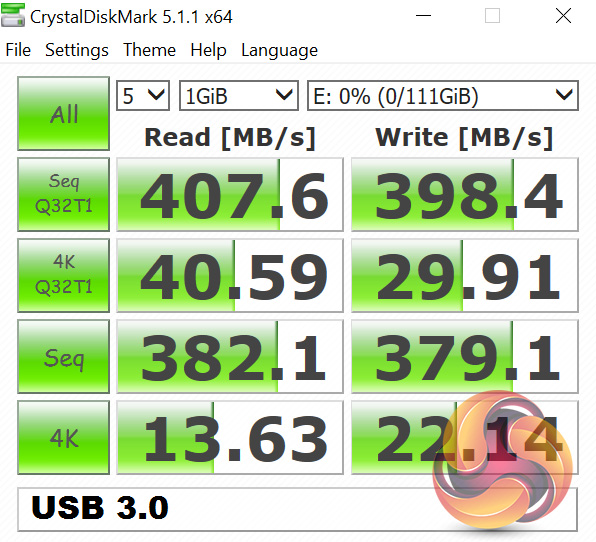
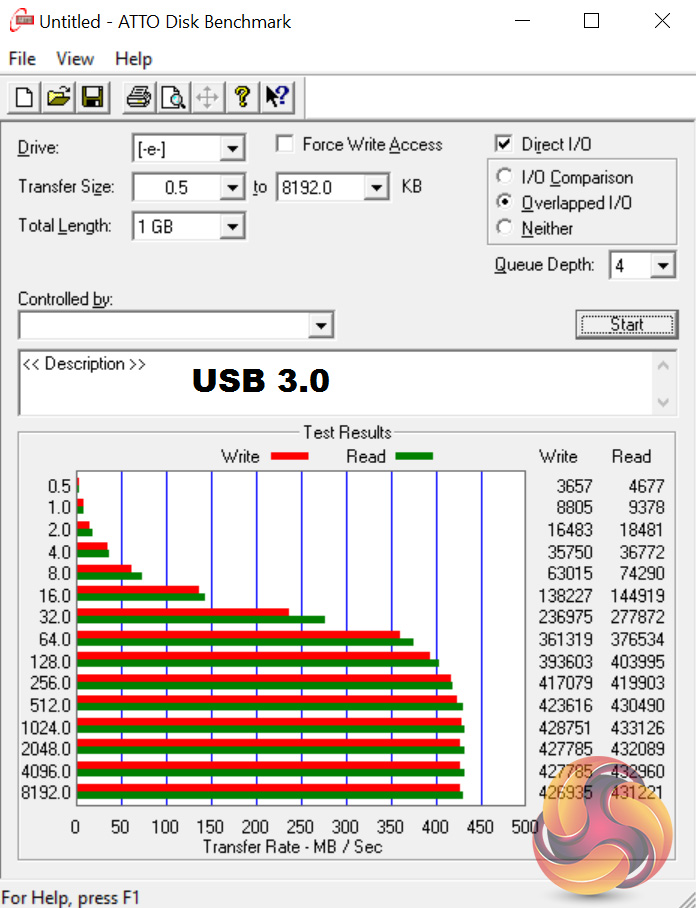
No issues here as the USB 3.0 speeds are right at the 5Gbps limit.3DMark 11 is designed for testing DirectX 11 hardware running on Windows 7 and Windows Vista. The benchmark includes six all new benchmark tests that make extensive use of all the new features in DirectX 11 including tessellation, compute shaders and multi-threading.
After running the tests 3DMark gives your system a score with larger numbers indicating better performance. Trusted by gamers worldwide to give accurate and unbiased results, 3DMark 11 is the best way to test DirectX 11 under game-like loads.
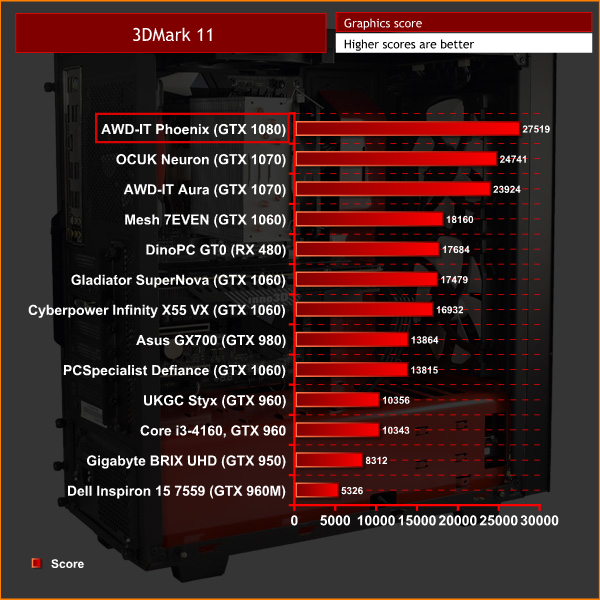
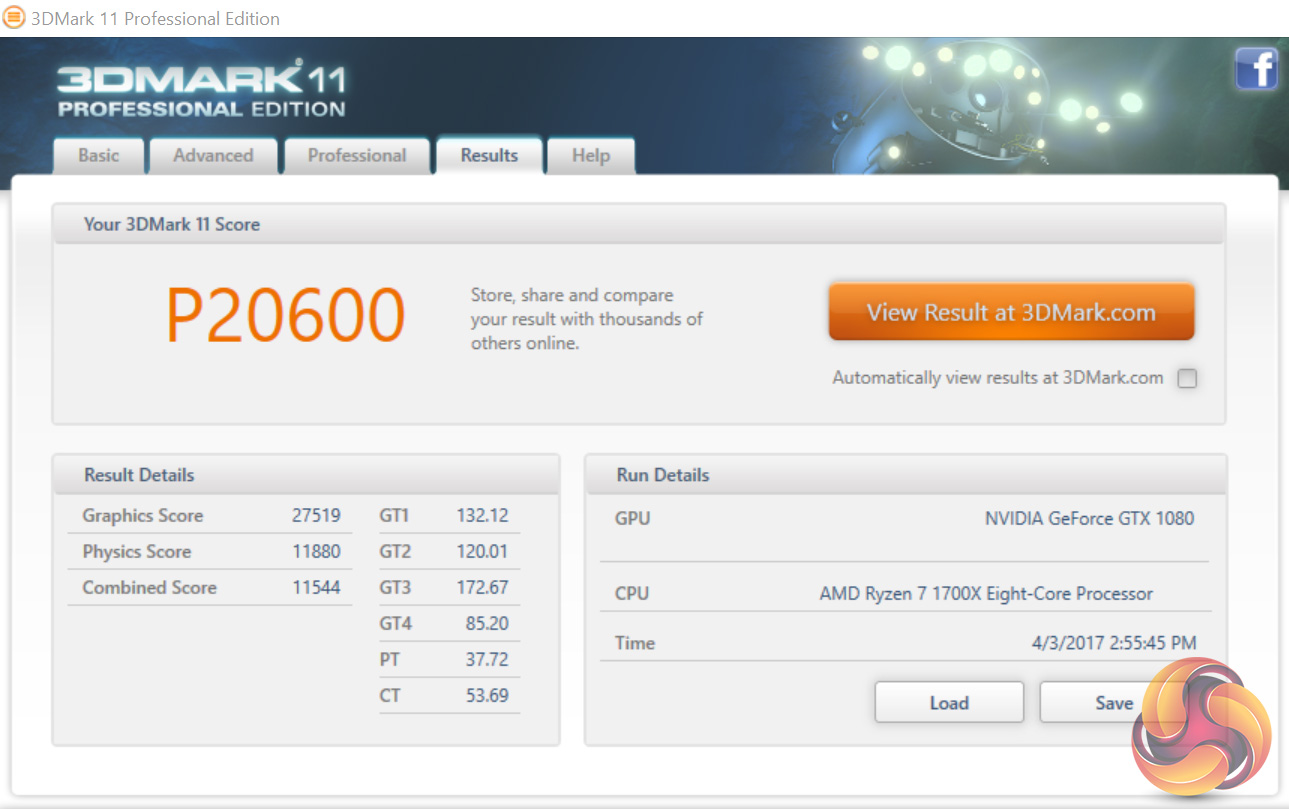
As expected, the Phoenix goes straight to the top of the 3DMark 11 charts thanks to its fast GTX 1080.3DMark is an essential tool used by millions of gamers, hundreds of hardware review sites and many of the world’s leading manufacturers to measure PC gaming performance. Futuremark say “Use it to test your PC’s limits and measure the impact of overclocking and tweaking your system. Search our massive results database and see how your PC compares or just admire the graphics and wonder why all PC games don’t look this good. To get more out of your PC, put 3DMark in your PC.”
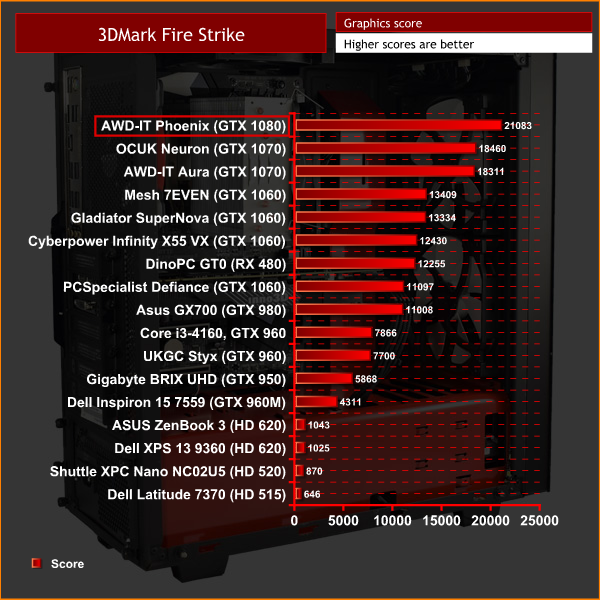
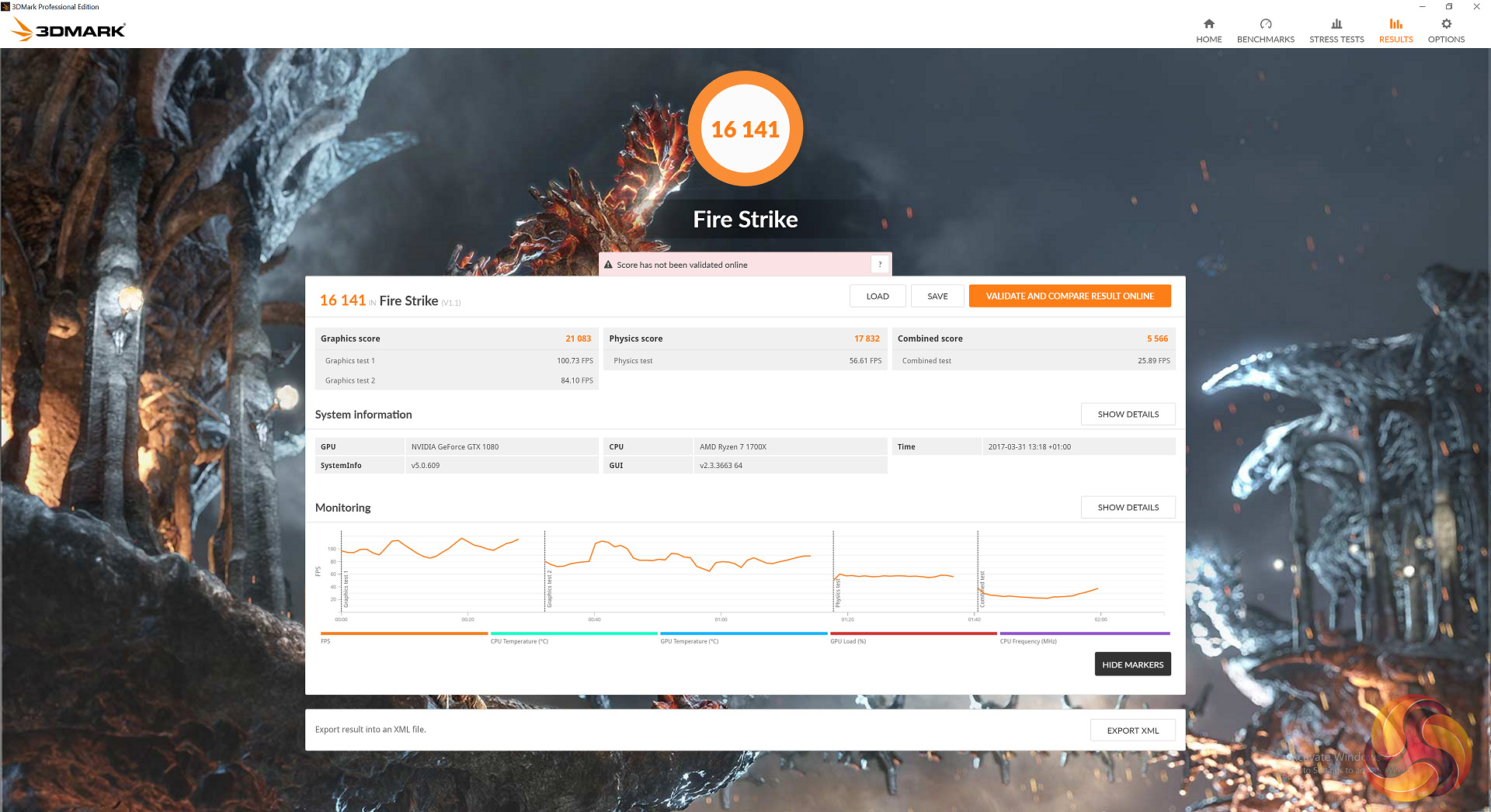
Again, in Fire Strike, the GTX 1080 pushes the Phoenix to the top of the chart. That being said, a graphics score of ~21000 is a little on the low side for Fire Strike, and I would say that this is likely due to the lack of factory overclock on the Inno3D card. I have definitely seen some faster GTX 1080s which can deliver 22000 or even 23000 in Fire Strike.VRMark is a benchmark designed specifically with virtual reality gaming in mind. Futuremark say: ‘the performance requirements for VR games are much higher than for typical PC games. So if you’re thinking about buying an HTC Vive or an Oculus Rift, wouldn’t it be good to know that your PC is ready for VR? VRMark includes two VR benchmark tests that run on your monitor, no headset required, or on a connected HMD. At the end of each test, you’ll see whether your PC is VR ready, and if not, how far it falls short.’
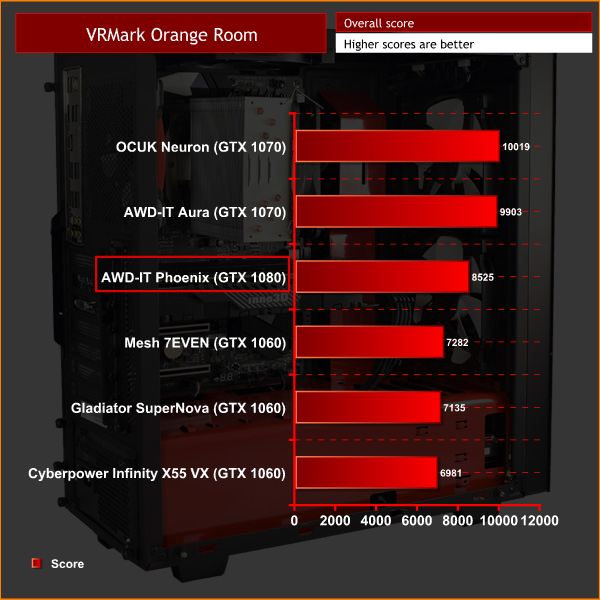
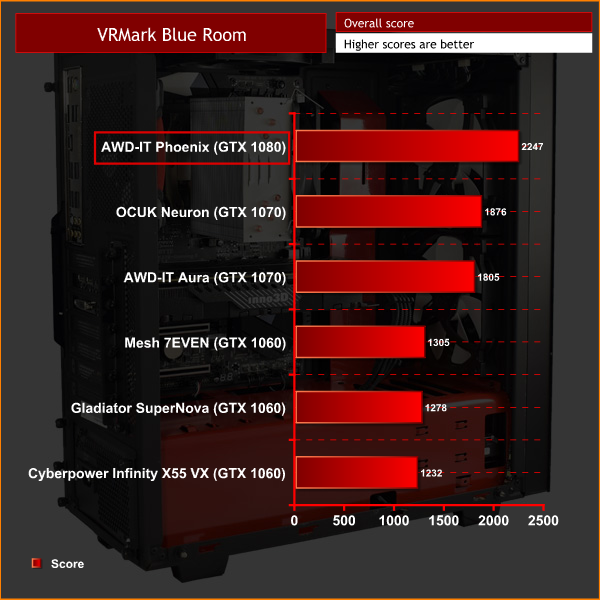
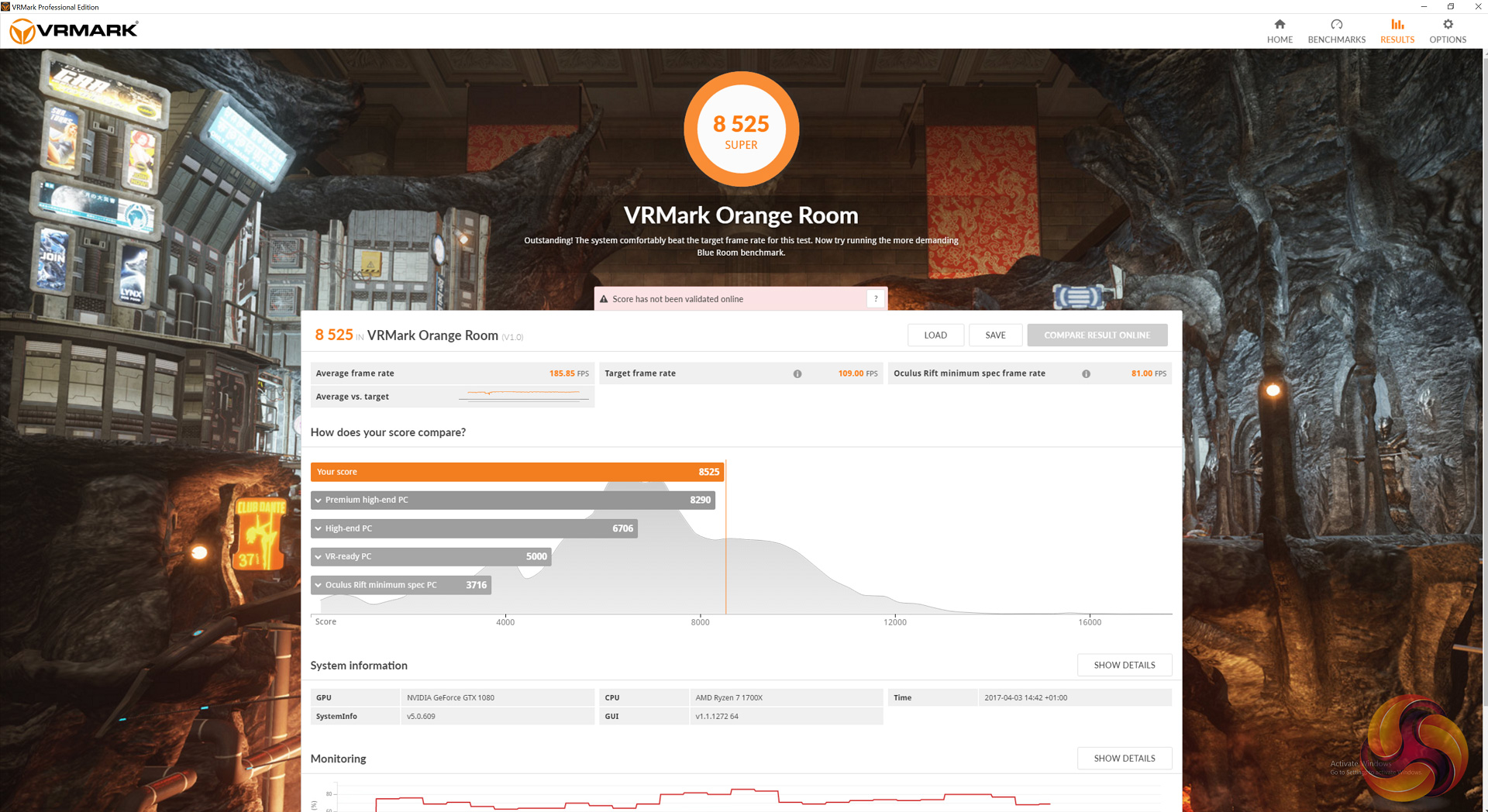
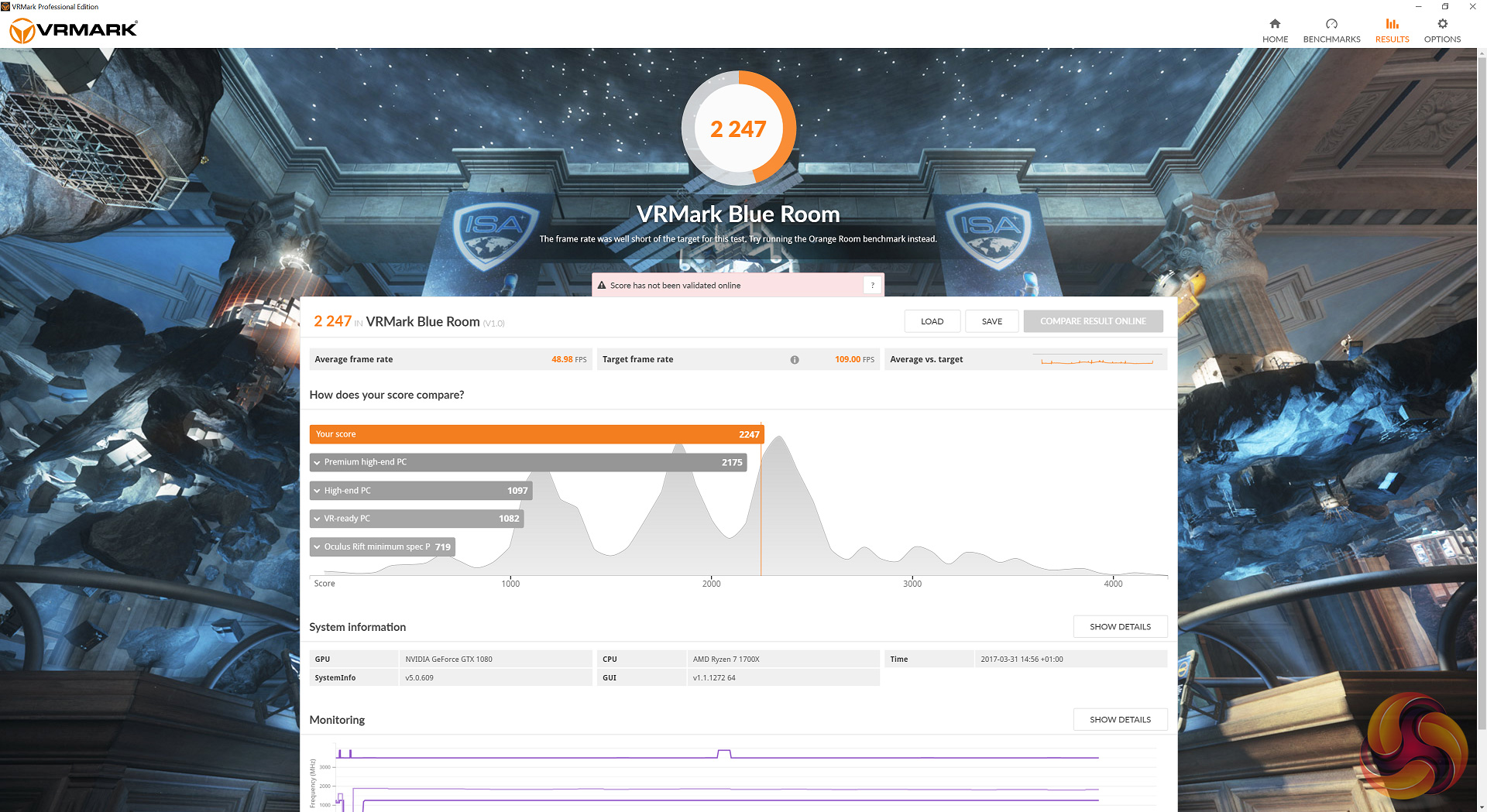
A new addition to our benchmarking suite, VRMark looks like one of the few valid ways of testing the VR capabilities of a PC. Consisting of two ‘rooms’, or benchmark tests, the Orange Room is the standard test, while the Blue Room is much more demanding.
Interestingly, the Phoenix struggles with the Orange Room, proving unable to beat the two GTX 1070-based systems I have compared it to. This is likely because of the stock-clocked 1700X – both of the faster GTX 1070 systems featured overclocked CPUs which would have helped significantly.
However, in the Blue Room, the Phoenix does beat-out all the other systems. This is most likely because the Blue Room renders using a much higher resolution (5120 × 2880) than the Orange Room (2264 × 1348), so graphics horsepower runs out well before we encounter any CPU bottlenecking.The Witcher 3: Wild Hunt concludes the story of the witcher Geralt of Rivia, whose story to date has been covered in the previous titles. Continuing from The Witcher 2, Geralt seeks to move on with his own life, embarking on a new and personal mission while the world order itself is coming to a change. (Wikipedia).
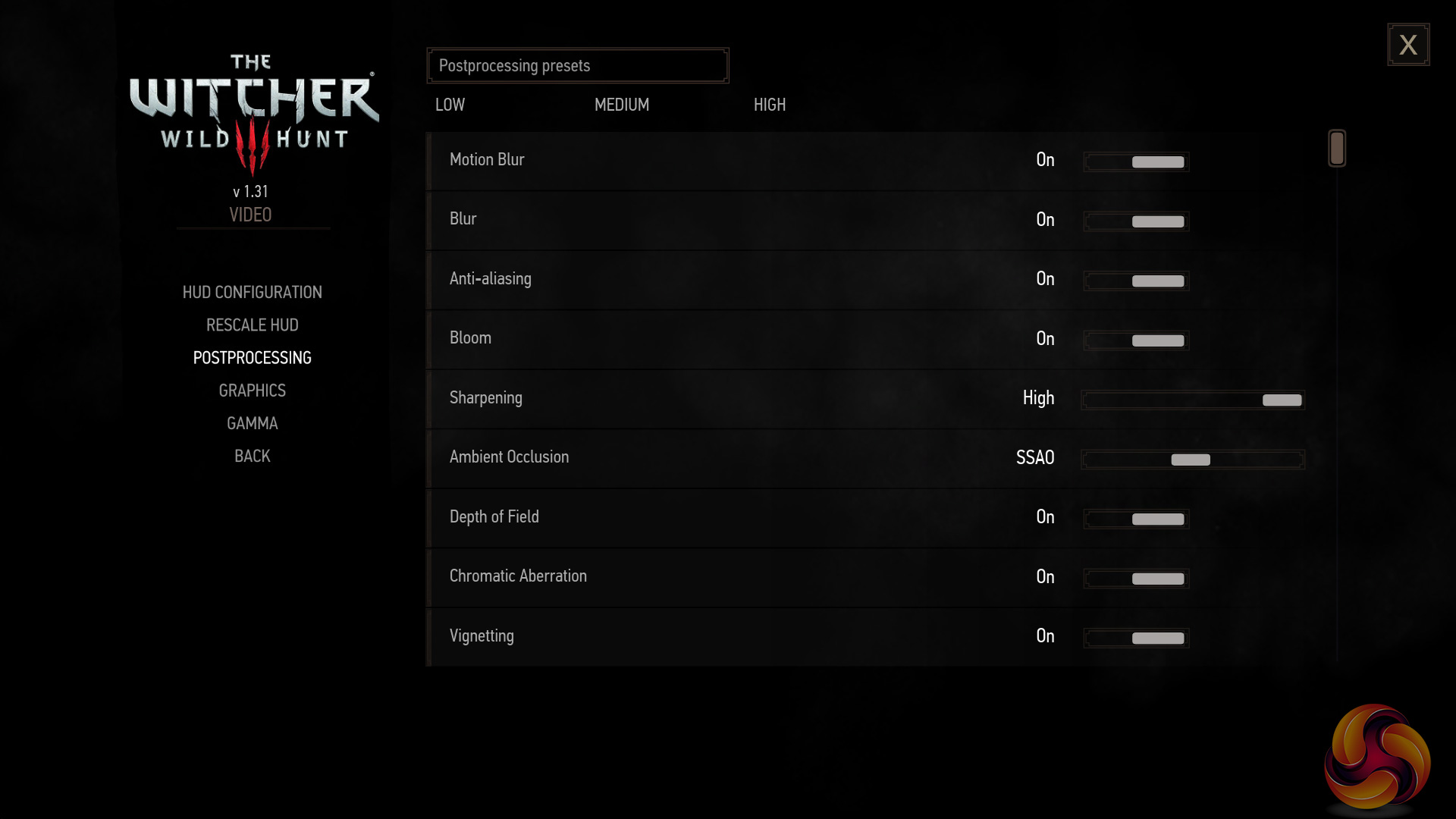
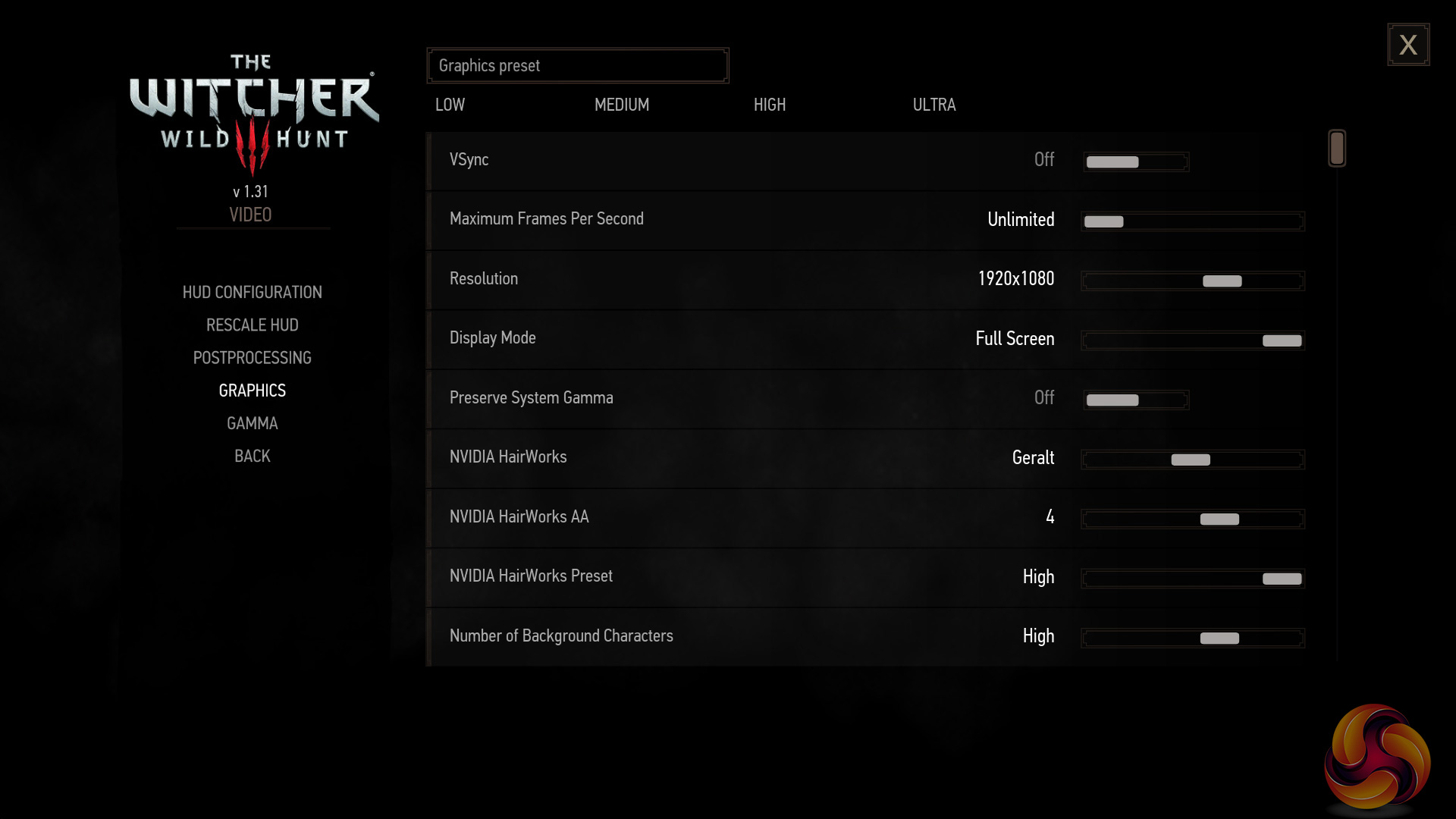
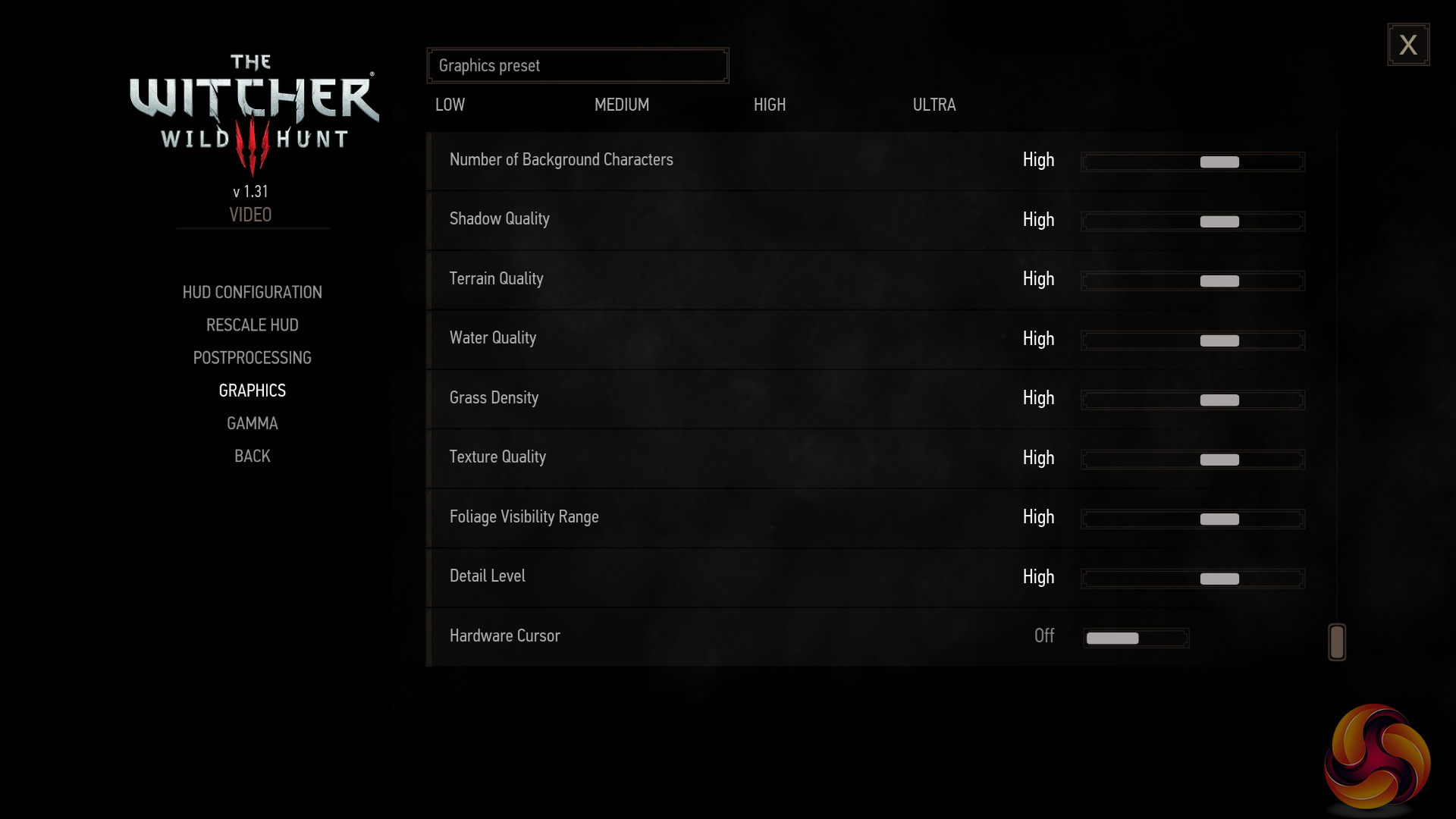
We test using the ‘high’ preset. Given The Witcher 3 does not have its own in-built benchmark, I tested near the beginning of the game with Geralt riding through White Orchard on his horse, before dismounting and carrying on on-foot. I benchmarked 3 closely-matched runs and then took the average figures from those runs to present here.
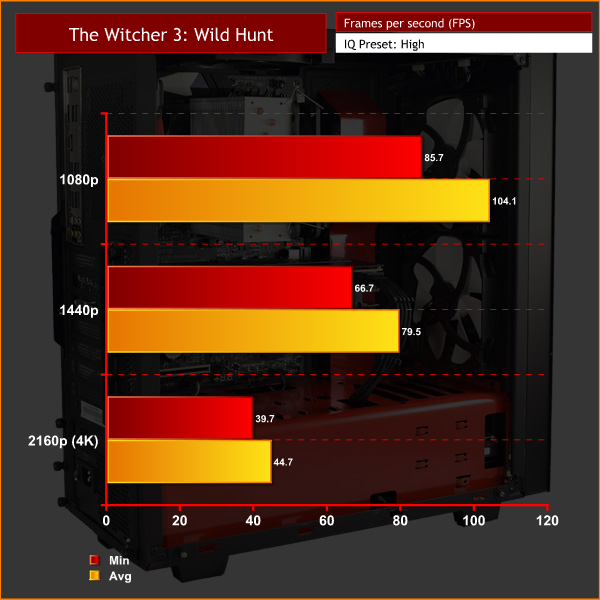
The Phoenix delivers very healthy frame-rates in The Witcher 3. A minimum of 39.7 FPS at 4K is particularly impressive. Of course, the settings could also be tweaked to ensure even smoother 4K gameplay.Grand Theft Auto V is an action-adventure game played from either a first-person or third-person view. Players complete missions—linear scenarios with set objectives—to progress through the story. Outside of missions, players may freely roam the open world. Composed of the San Andreas open countryside area and the fictional city of Los Santos, the world is much larger in area than earlier entries in the series. It may be fully explored after the game’s beginning without restriction, although story progress unlocks more gameplay content.
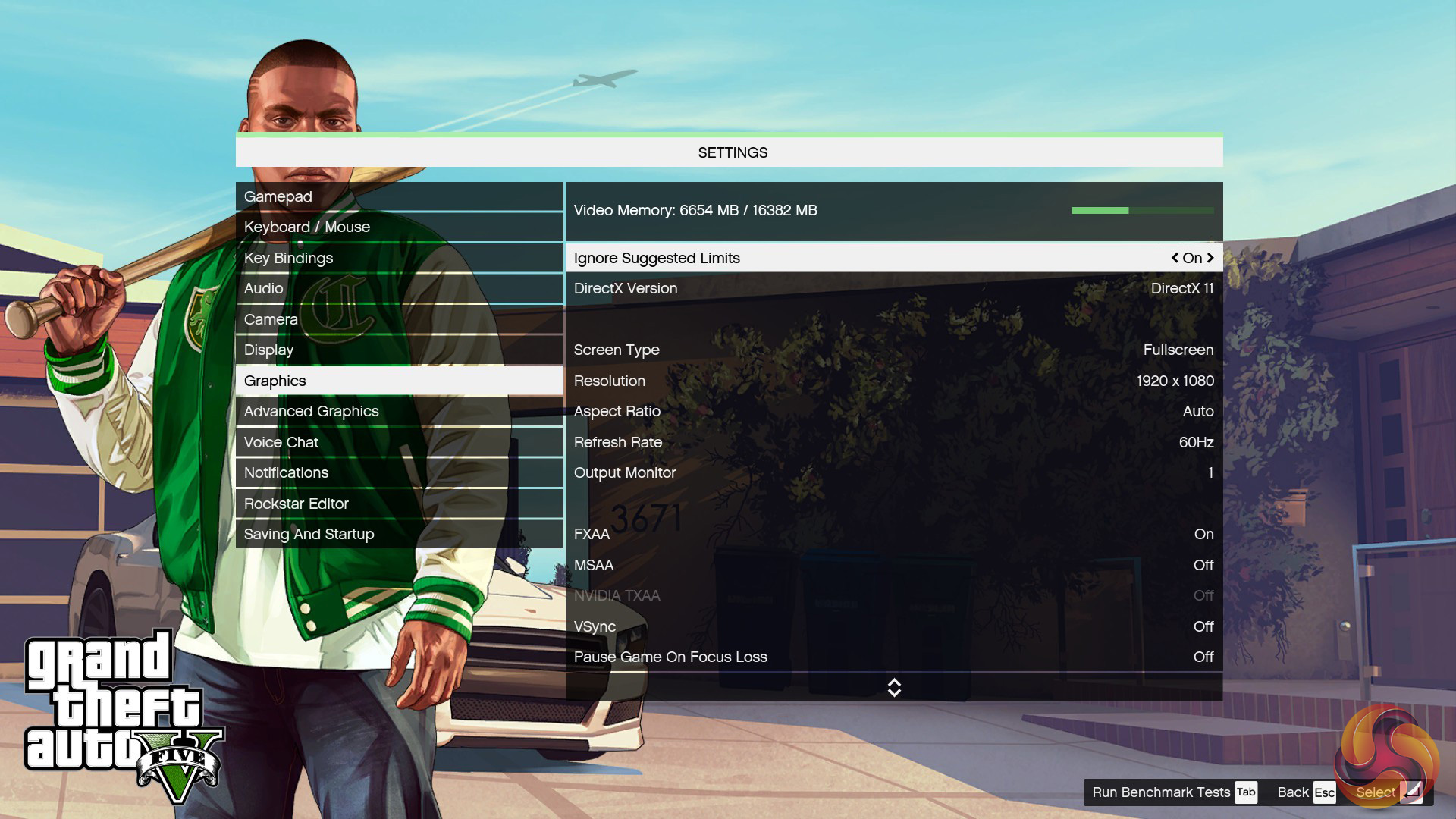
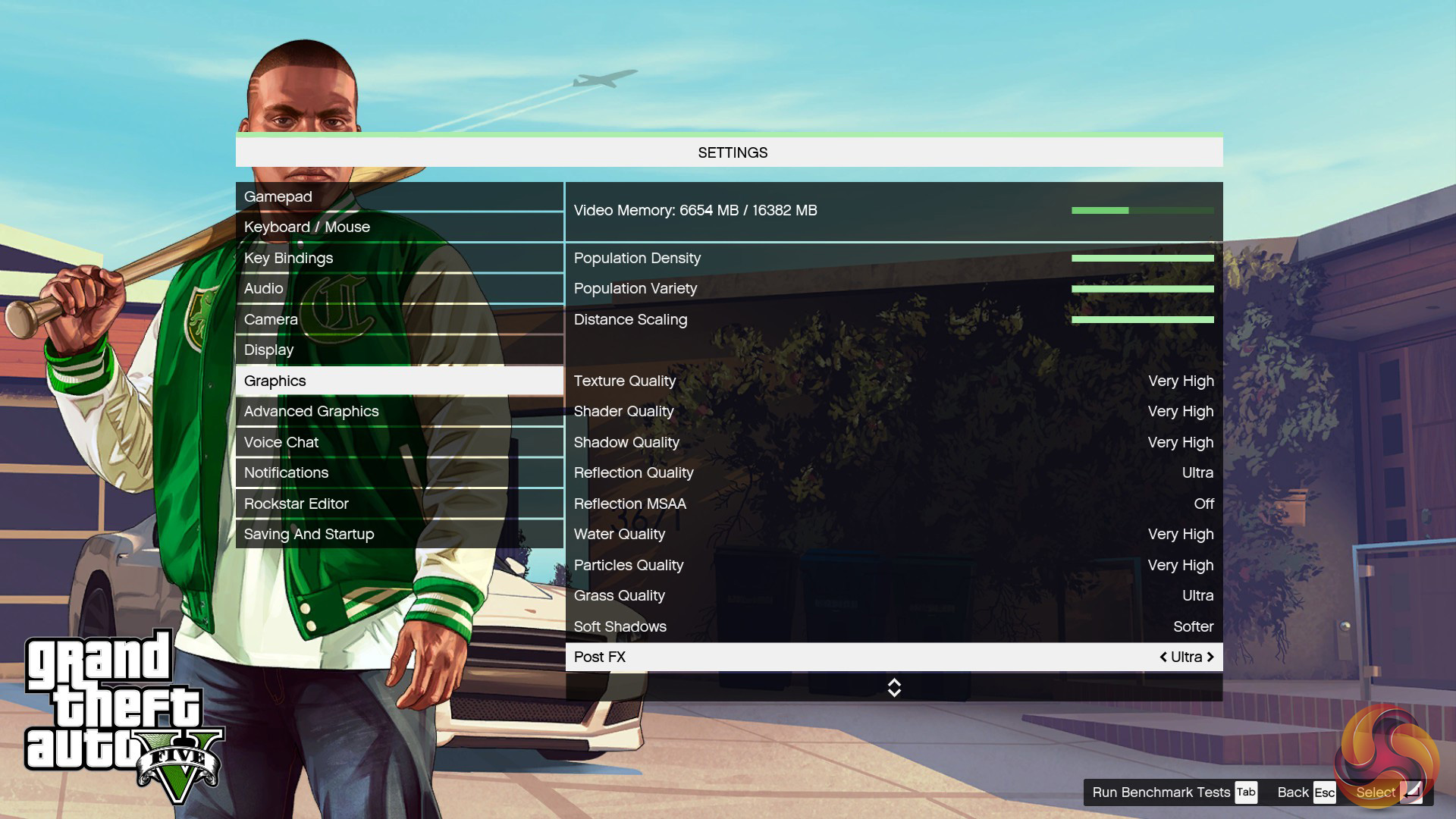
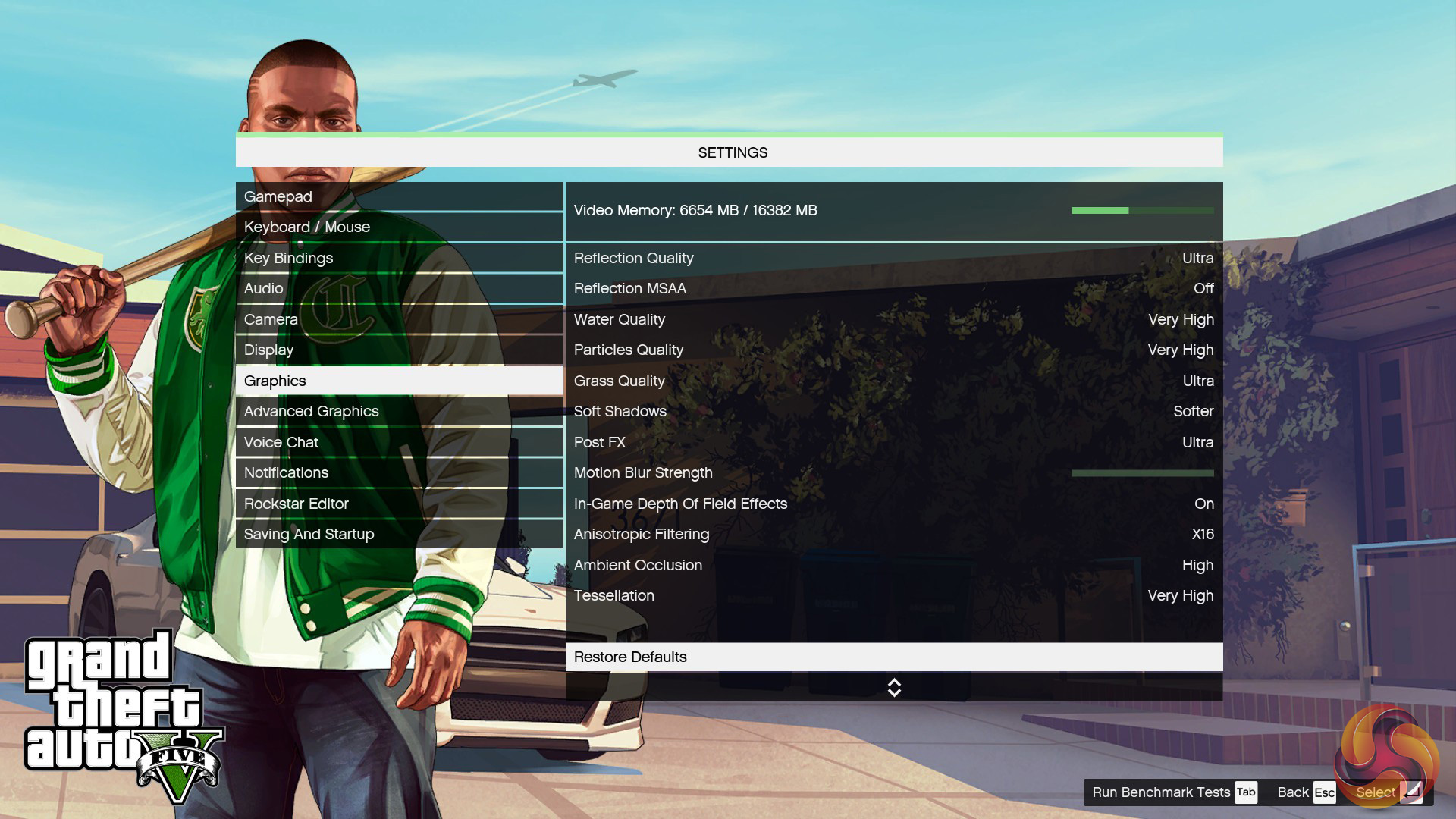
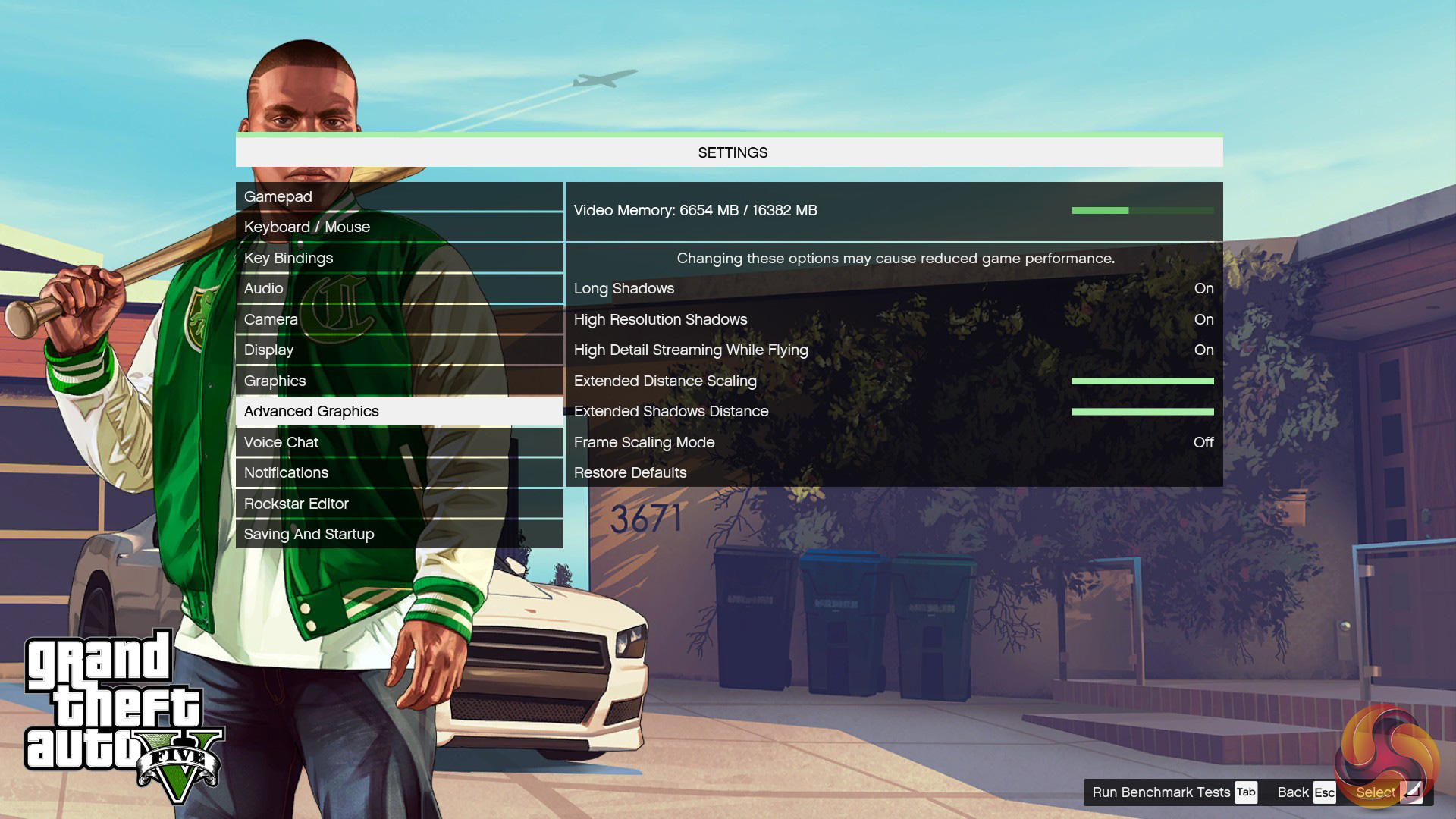
We maximise every setting but leave MSAA disabled.
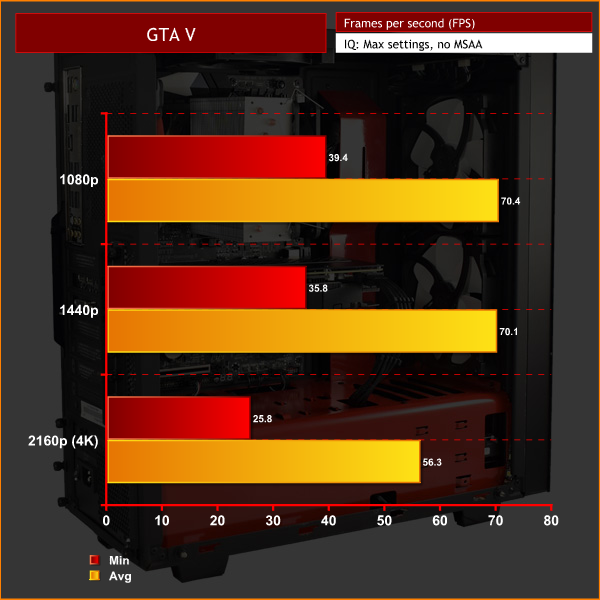
In GTA V we experience some significant CPU bottlenecking as the 1080p and 1440p results are essentially identical. This is down to the fact that although GTA V can utilise extra cores, it definitely favours Intel chips, and our 1700X clearly does not quite cut it here. The lack of overclock on the 1700X also does not help matters.DOOM is a science fiction horror first-person shooter video game developed by id Software and published by Bethesda Softworks. It is a reboot of the Doom series and is the first major instalment in the series since the release of Doom 3 in 2004 and the fourth title in the main series of games.
The game is played entirely from a first-person perspective, with players’ taking the role of an unnamed marine, as he battles demonic forces from Hell that have been unleashed by the Union Aerospace Corporation on a future-set colonised planet Mars.
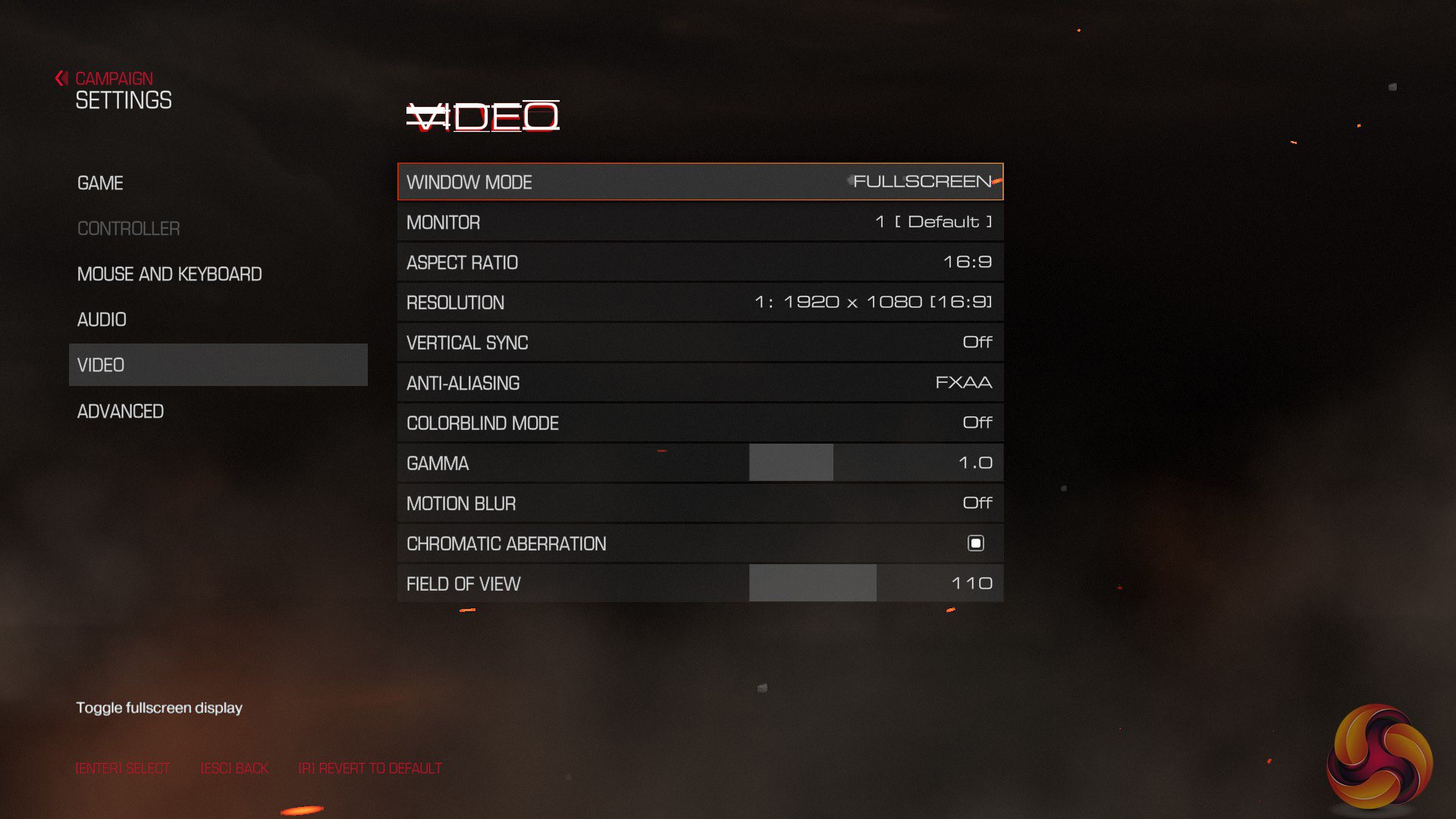
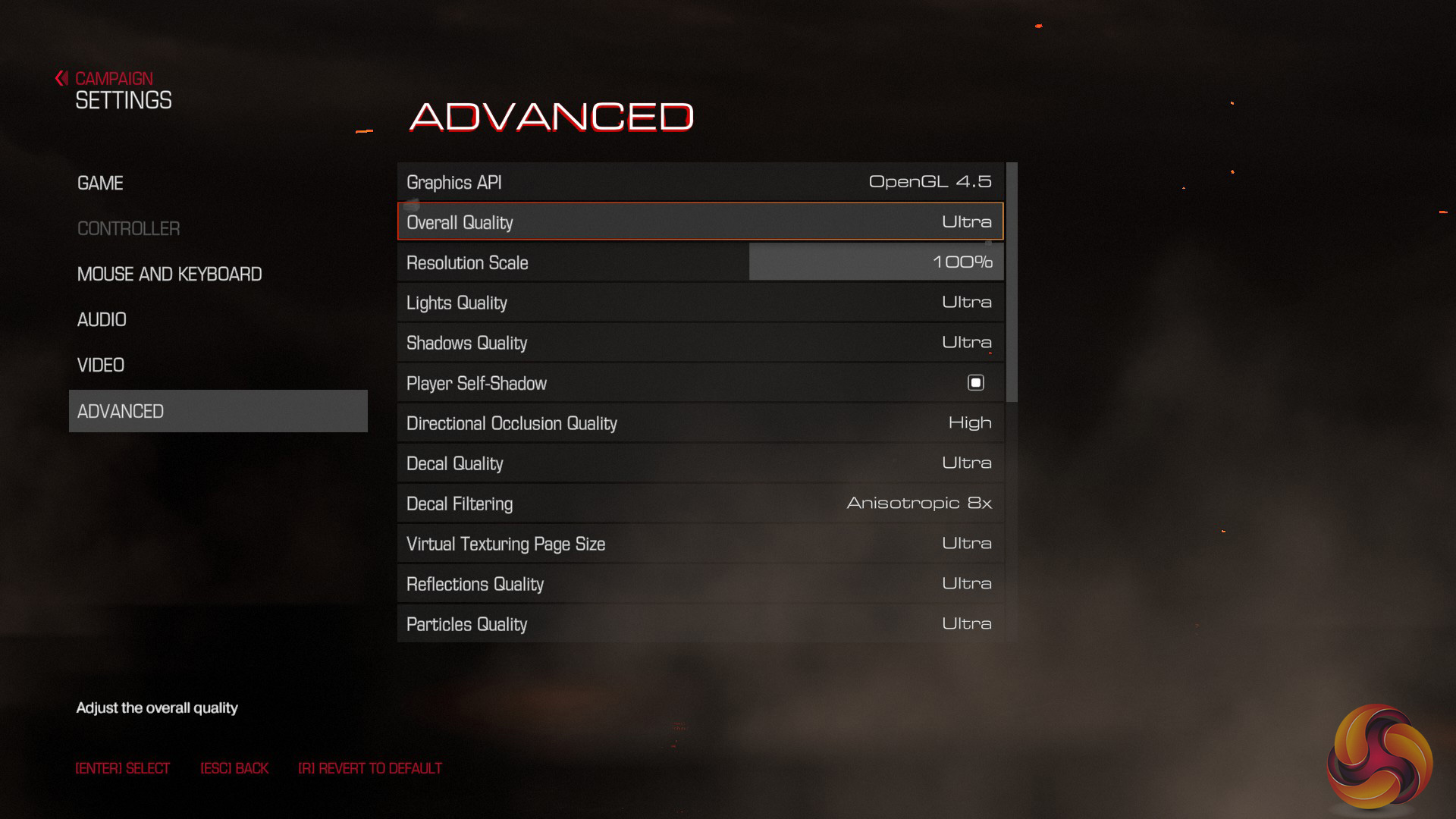
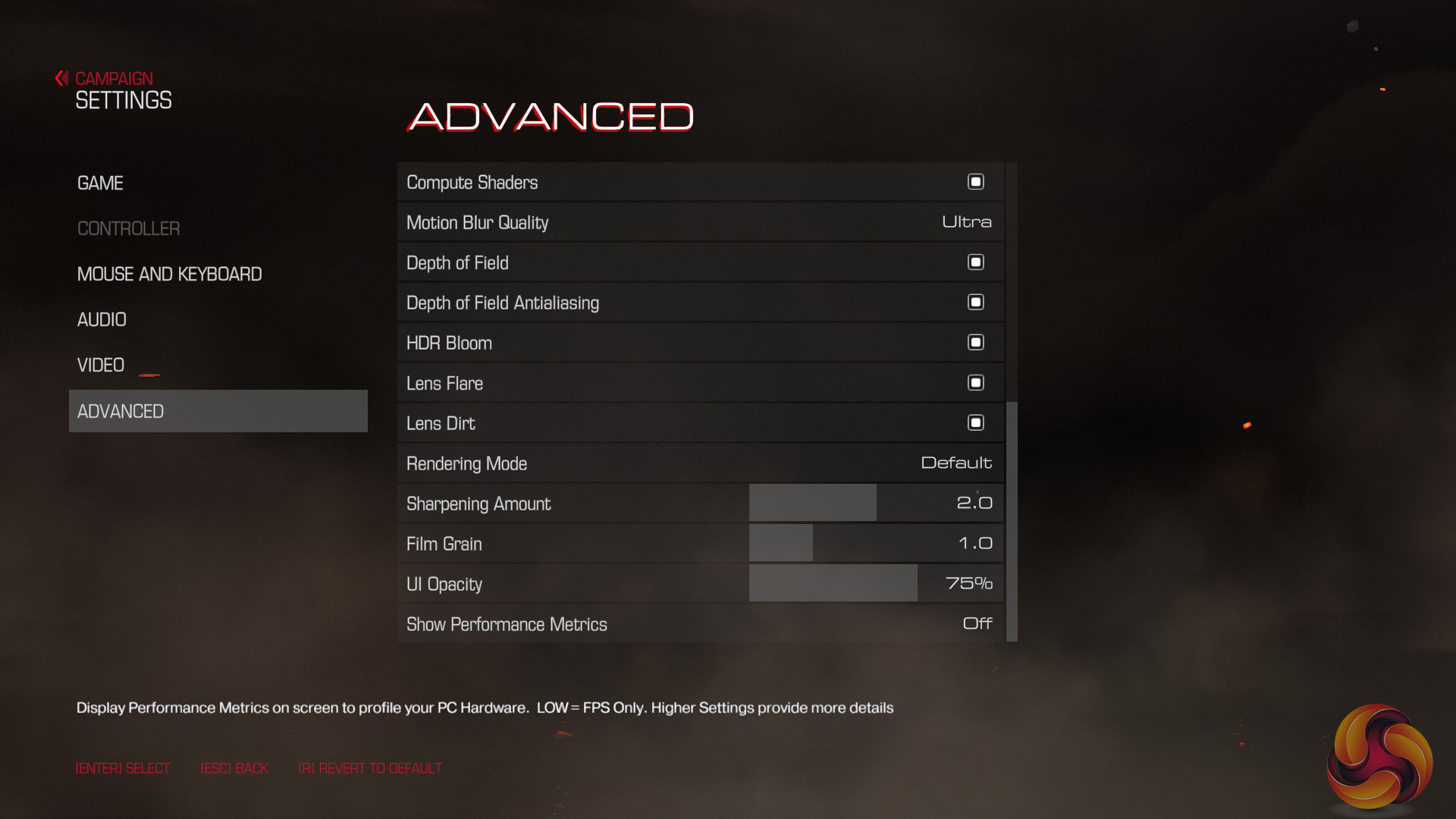
We test using the ‘ultra’ preset. Given Doom does not have its own in-built benchmark, I tested at the beginning of the game as the player destroys the very first Gore Nest. I benchmarked 3 closely-matched runs and then took the average figures from those runs to present here.
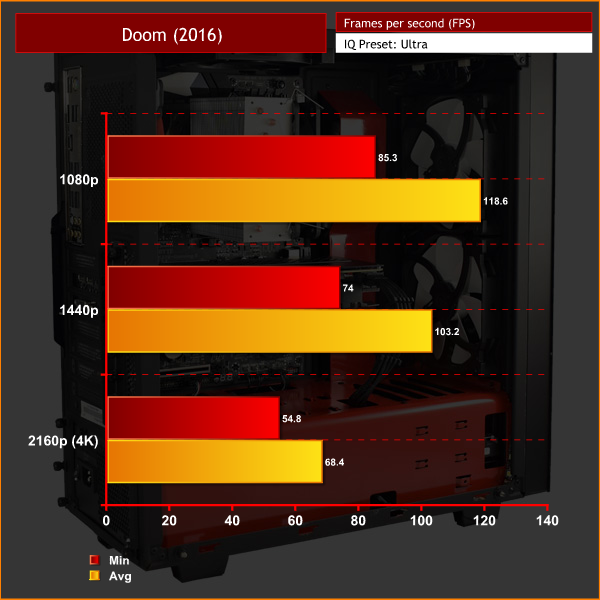
Doom is a well-optimised title and scales very well with the Phoenix. All the frame rates are great, especially at the lower resolutions where you would definitely be able to utilise a high-refresh rate monitor.Deus Ex: Mankind Divided is set in the year 2029, two years after the events of Human Revolution and the “Aug Incident”—an event in which mechanically augmented humans became uncontrollable and lethally violent.
Unbeknownst to the public, the affected augmented received implanted technology designed to control them by the shadowy Illuminati, which is abused by a rogue member of the group to discredit augmentations completely. (Wikipedia).
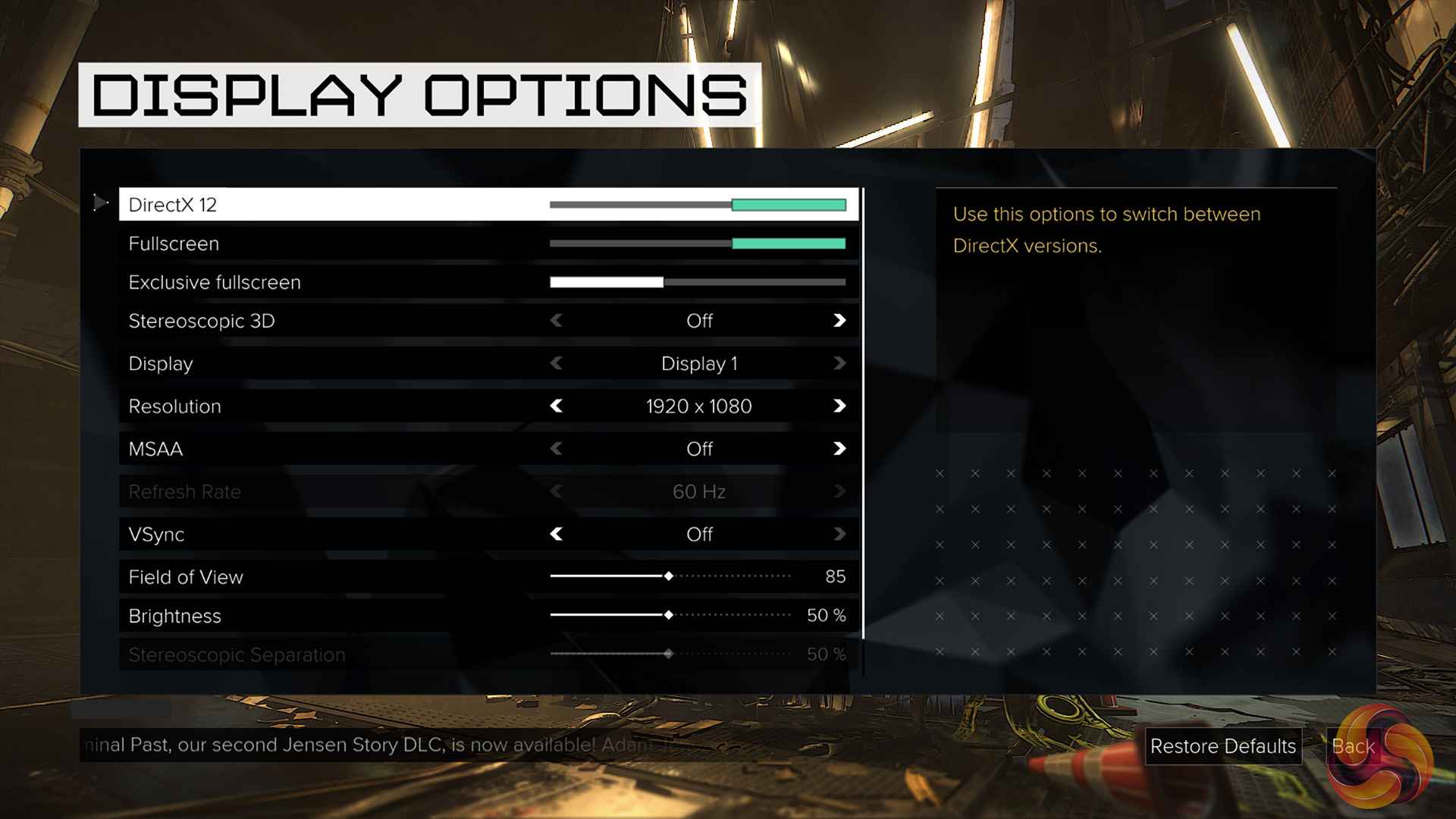
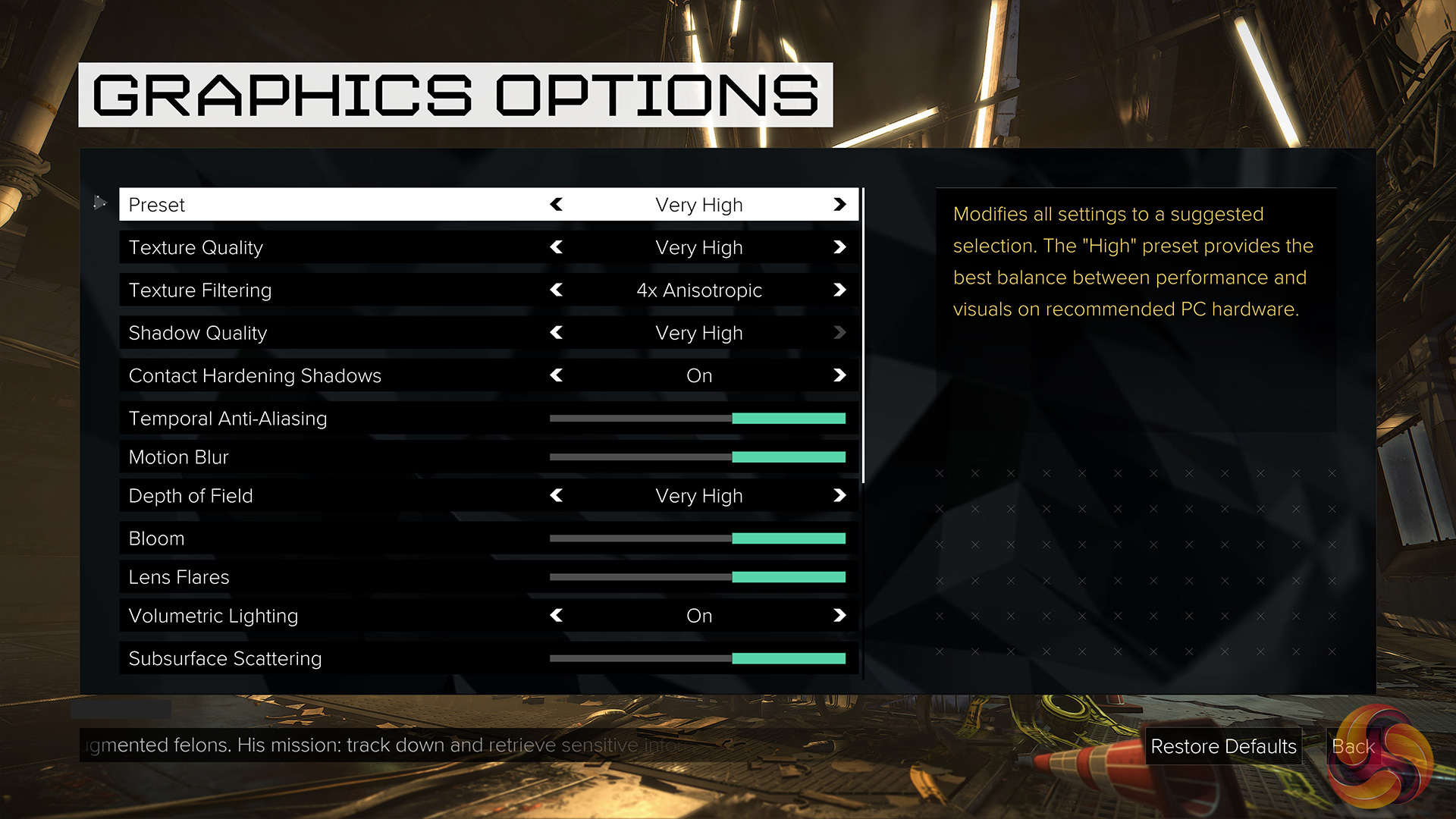
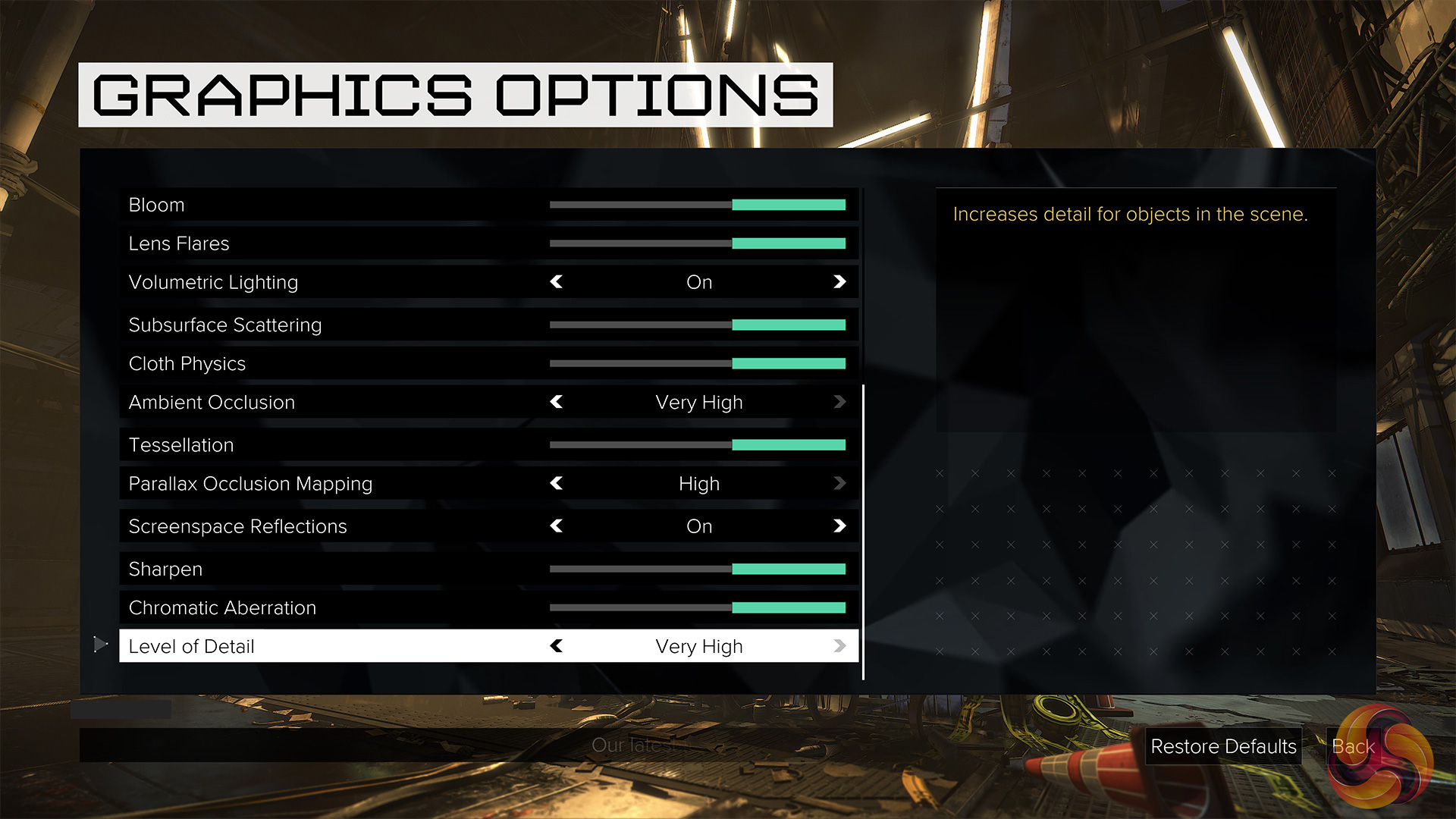
We test using the ‘very high' preset and the DX12 API.
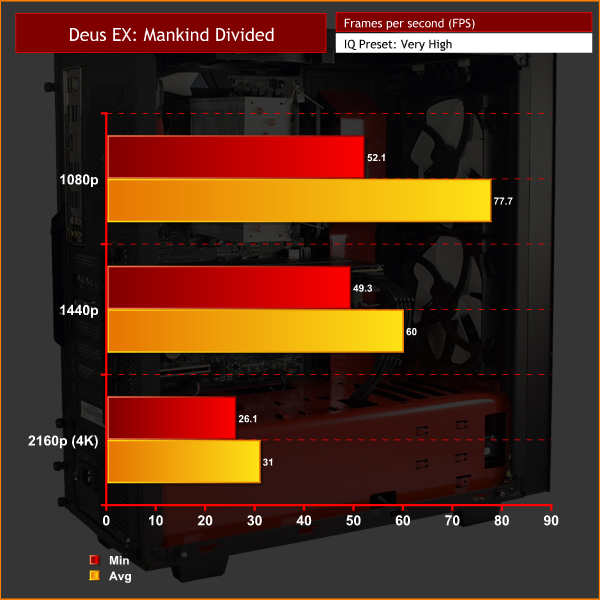
Deus Ex: Mankind Divided is known to be quite hard to run and you can see that truth reflected in the results above. Even at 1080p, a minimum of 52.1 FPS is quite low considering the GTX 1080 being used here. Still, the game is definitely playable at 1080p and 1440p, though gaming at 4K would require a fair few settings to be tweaked in order for gameplay to be smooth.Tom Clancy's Ghost Recon Wildlands is an open world tactical shooter video game developed by Ubisoft Paris. It is the tenth instalment in the Tom Clancy's Ghost Recon franchise and is the first Ghost Recon game to feature an open world environment. Ubisoft described it as one of the biggest open world games that they have ever published, with the game world including a wide variety of environments such as mountains, forests, deserts and salt flats. The game was released on March 7, 2017 for Microsoft Windows, PlayStation 4 and Xbox One. (Wikipedia).
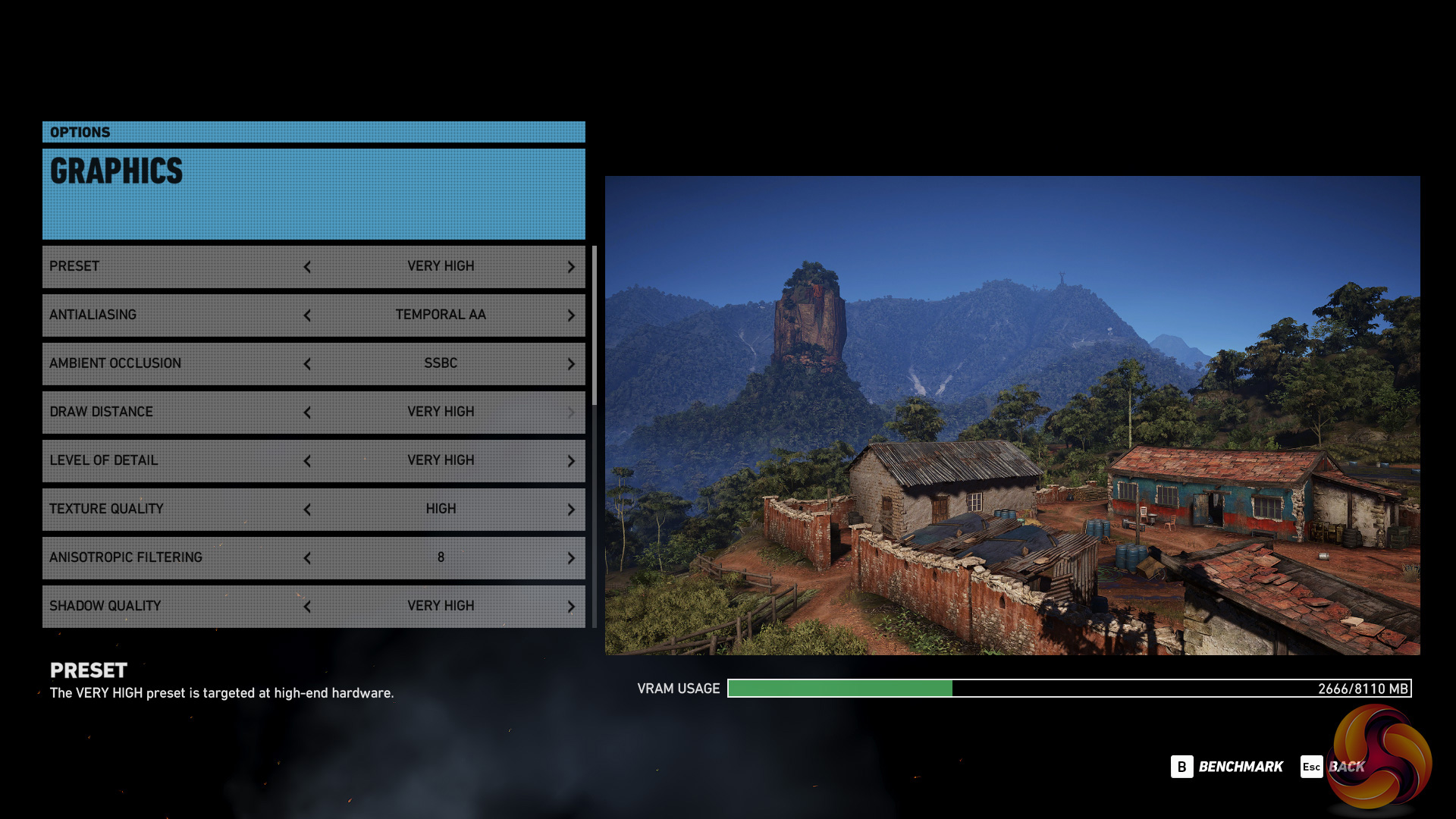
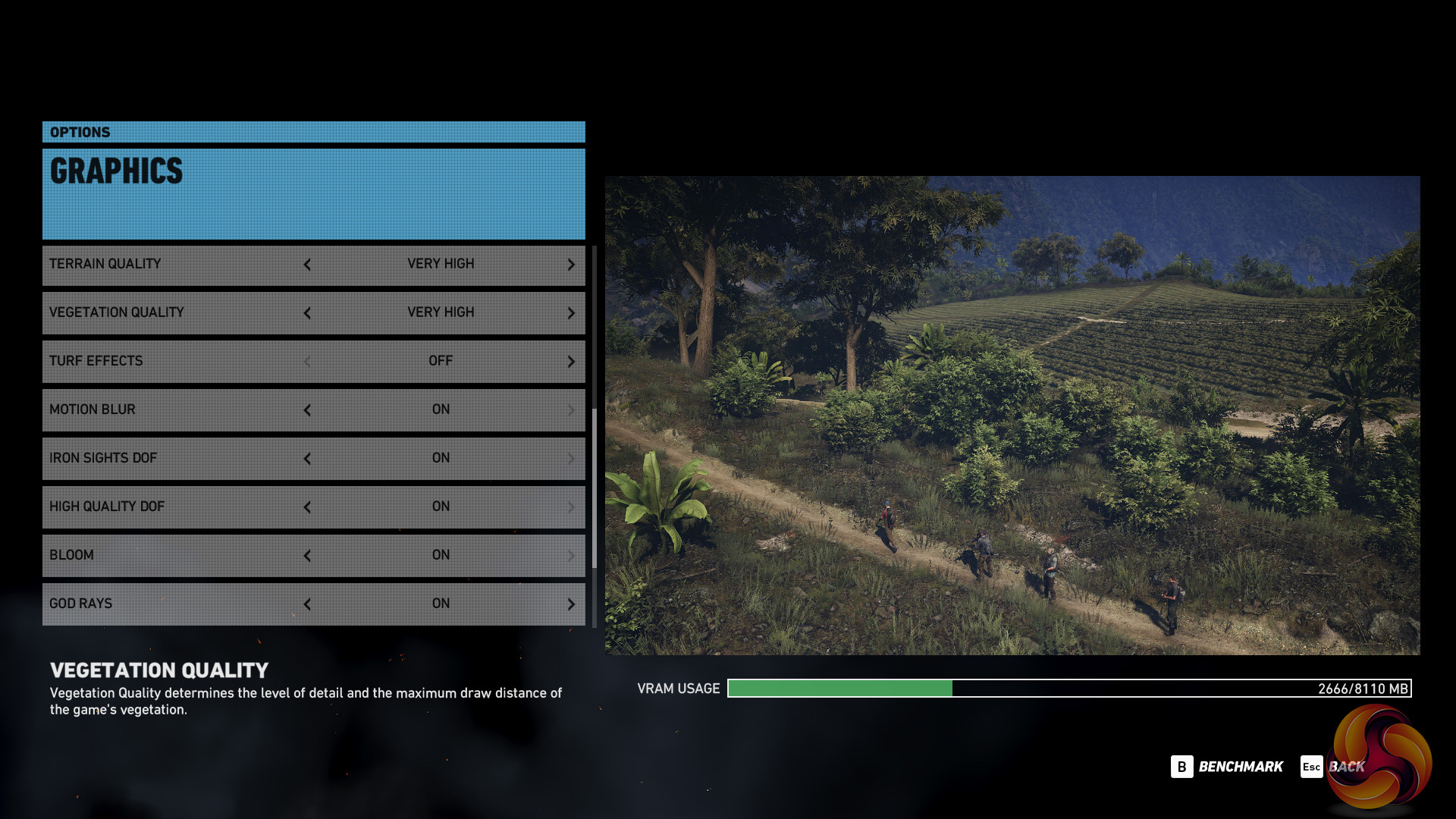
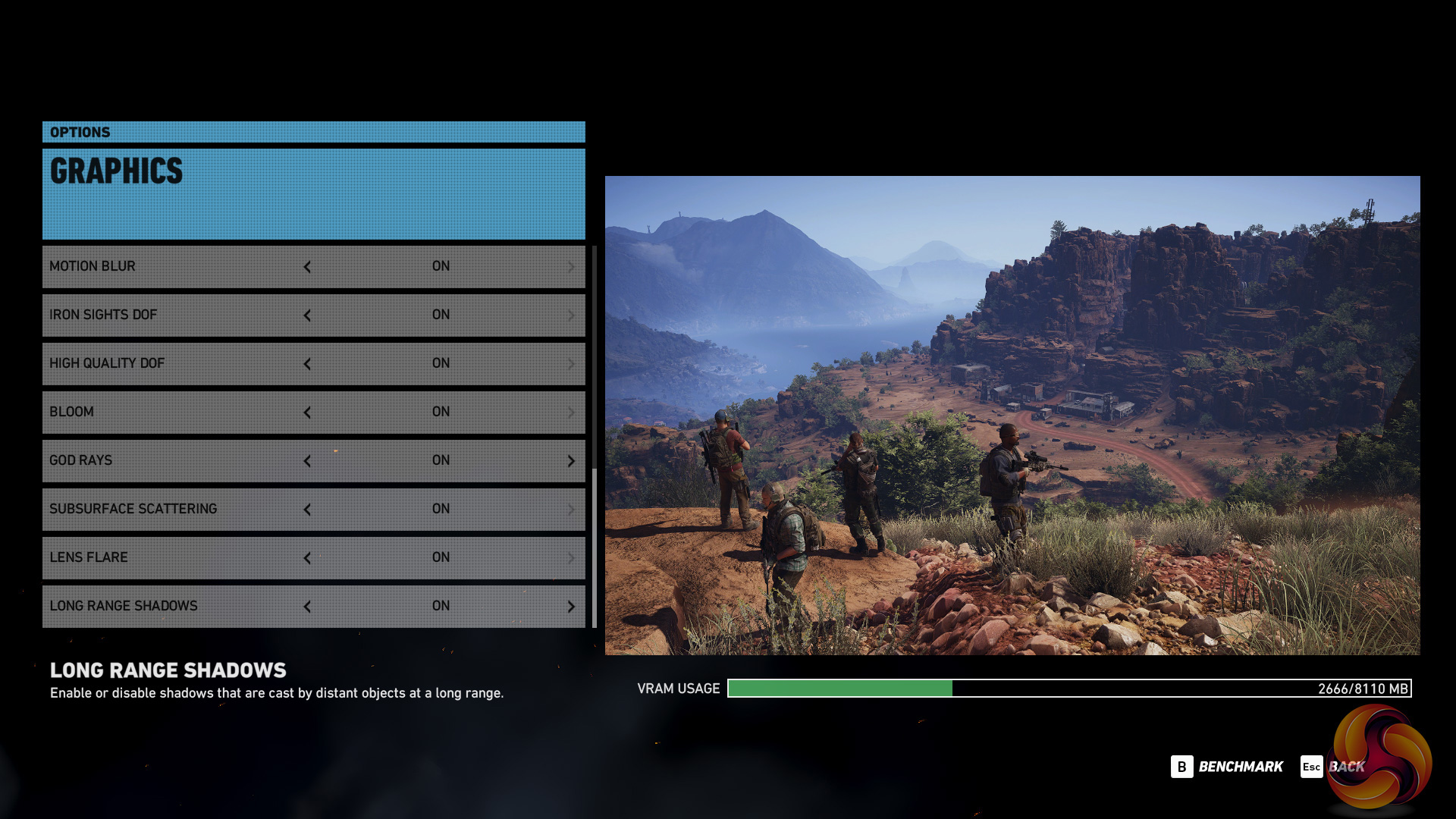
We test using the ‘very high' preset.
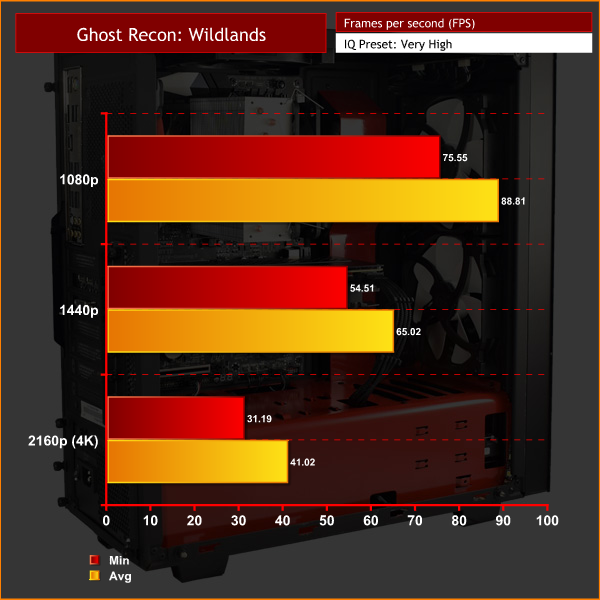
Performance at 1080p and 1440p is generally pretty solid, though 1440p gamers may wish to tweak the settings a little bit to achieve 60 FPS minimums. 4K is less smooth but remains above 30 FPS at all times so many would still consider this playable.Thermal dynamics
To measure idle temperatures, a reading was taken after having Windows open on the desktop for 30 minutes. A reading under load was taken with Prime 95’s SmallFFt test running alongside 3DMark Fire Strike.
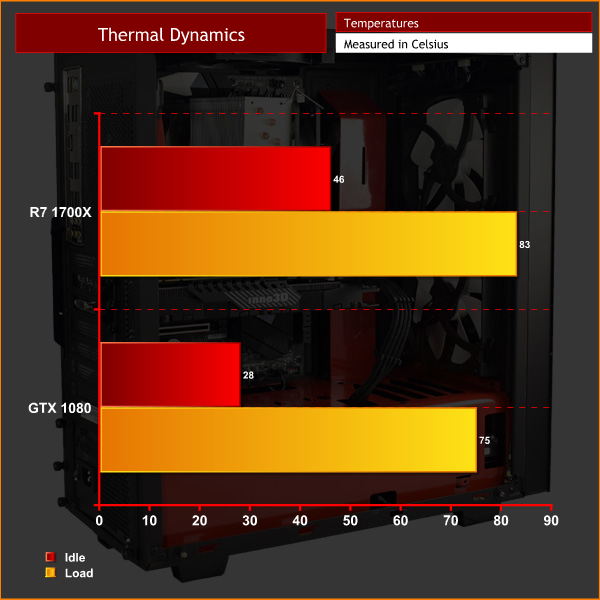
Here, it is important to note we used Ryzen Master to take our temperature readings for the 1700X. You also may have read that Ryzen 7 strangely reports the temperature to be 20 degrees higher than what it actually is, so that is also worth bearing in-mind.
That being said, the thermals are perfectly acceptable for an air-cooled system. The GPU's peak of 75 degrees shows it certainly benefited from the 2x 140mm intake fans which bring a good supply of fresh air into the chassis.
Acoustics
Acoustically, the Phoenix is far from loud. It is audible when the system is idling, but it does not seem like the case fans ramp up at all when stressed, so in my book, that is a victory.For ‘idle’ power draw, a reading was taken after having Windows open on the desktop for 30 minutes. A reading under load was taken with Prime 95’s SmallFFt test running alongside 3DMark Fire Strike.
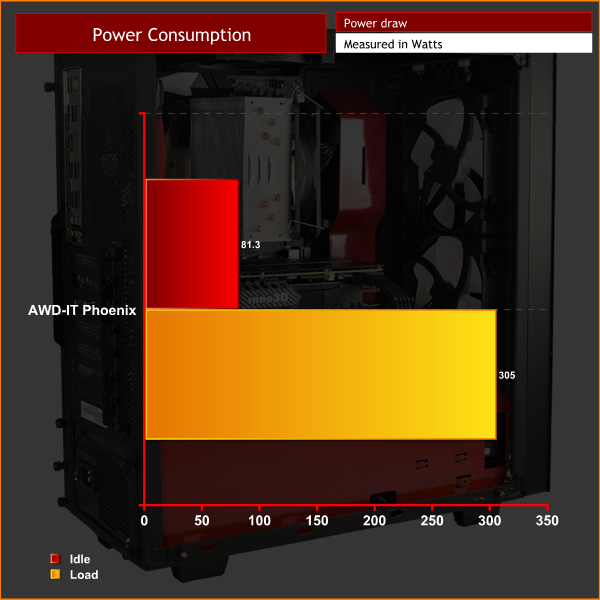
Power consumption is low, peaking at less than half of the PSU's rated 650W capacity. This means there is even room for a second GTX 1080 for SLI down-the-line.All-in-all, the AWD-IT Phoenix is a solid gaming PC that has the added benefit of strong multi-threaded performance.
To start, the system is well-built, with great cable management and an inoffensive colour scheme. The tempered glass panel of the NZXT S340 Elite even has the Ryzen logo etched in, which definitely looks great.
The Ryzen 1700X is the star of the show, and it does offer excellent performance in heavily multi-threaded applications. This makes it great for content creators and streamers, as the added CPU horsepower is useful for things like video editing or encoding.
As a gaming PC, the Phoenix also benefits from the raw power of the GTX 1080. The 1080 made sure every game we tested was playable at 1080p and 1440p, while most games still delivered above 30 FPS at 4K. I would just say that the GTX 1080 could do with a factory overclock – it has been left at stock clocks and, as such, it is not the fastest GTX 1080 I have tested.
If you are considering the Phoenix just for gaming, you would get better frame rates from a i7-7700K-based system, too, as that chip is still the fastest when it comes to pure gaming. The advantage of a 1700X system, though, comes from the added versatility that the extra cores provide, but it is still worth noting that faster systems are out there if you are only interested in gaming.
On the whole, though, there is not a lot wrong with the AWD-IT Phoenix. I can't say it blows my mind, but it definitely offers good value for money at £1599 (according to my calculations, this is only about £50 more than the cost of building the system yourself) and it is very functional thanks to its 1700X and GTX 1080.
You can buy one from directly from AWD-IT for £1599 inc. VAT HERE.
Discuss on our Facebook page, over HERE.
Pros
- Tidy system.
- 1700X is good for those who want to game and run multi-threaded applications.
- GTX 1080 provides a good gaming experience.
- Good value.
Cons
- i7-7700K-based systems are faster for pure gaming.
- Lacks the ‘wow-factor'.
- An extra hundred Megahertz or two overclock for the CPU wouldn't hurt.
- GTX 1080 lacks a factory overclock.
KitGuru says: The AWD-IT Phoenix is a very solid Ryzen-based PC. The 1700X and GTX 1080 combo makes it great for those looking for a system to use for ‘work and play'.

Great review, flawed system. It hurts me to see such high end components put in what was always meant to be a cheap budget bottom end case, just because they put a tempered glass window on the side doesn’t change it. I had the case and could only tolerate it for a month. It really is paper thin rubbish and the CPU and GPU cooling on that system both exhaust back into the case. This could have been so much better with something like a Be Quiet Silent Base 600 Tempered Glass Which Retails for around the same price.
Google is paying $97 per hour! Work for few hours & have longer with friends and family! !wr187c:
On monday I got a great new mclaren f1 from having earned $12778 this last four weeks.. 3 to 5 hours of work a day… Weekly paychecks… Bonus opportunities…Its the most-financialy rewarding I’ve had.. It sounds unbelievable but you wont forgive yourself if you don’t check it
!wr187c:
➽➽
➽➽➽➽ http://GoogleFinancialCashJobs187LifeSuper/GetPaid$97/Hour… ★✫★★✫★✫★★✫★✫★★✫★✫★★✫★✫★★✫★✫★★✫★✫★★✫★✫★★✫★✫★★✫★✫★★✫★✫★★✫:::!wr187u:……..
I emailed AWD to ask a few questions about a PC kit they were selling a few years ago. Never heard back from them so wasn’t impressed. Lost me as a customer then, funny how that works…..
Hopefully they have changed.