KitGuru KitGuru.net – Tech News | Hardware News | Hardware Reviews | IOS | Mobile | Gaming | Graphics Cards


Heralded as the ultimate GPU for 1440p gaming, today we are putting AMD's RX 6700 XT through its paces. As the fourth RDNA 2-based GPU to hit the market, the RX 6700 XT is also the cheapest with an MSRP of £419.99/$479, putting it head to head with Nvidia's RTX 3070 and RTX 3060 Ti graphics cards. Let's see how AMD's Navi 22 silicon can compare to its Ampere-based rivals.
As we alluded to, AMD's RX 6700 XT is built on a completely new GPU. So far, all the RDNA 2 GPUs we have seen – the RX 6900 XT, RX 6800 XT and RX 6800 – use the same Navi 21 GPU, but with slightly differing configurations of that GPU. With the RX 6700 XT, AMD has debuted its smaller Navi 22 GPU, which offers 40 Compute Units when fully populated.
Compared to the RX 6800, the RX 6700 XT sports 33% fewer cores, which would suggest a fairly large gap in performance between the two. AMD has also significantly increased clock speeds with the 6700 XT, however, with its rated game clock over 600MHz faster than its bigger brother. We test this new GPU in 12 games to see exactly how it stacks up against the RX 6800, and also Nvidia's RTX 3070 and RTX 3060 Ti.
| RX 6900 XT | RX 6800 XT | RX 6800 | RX 6700 XT | RX 5700 XT | |
| Architecture | RDNA 2 | RDNA 2 | RDNA 2 | RDNA 2 | RDNA |
| Manufacturing Process | 7nm | 7nm | 7nm | 7nm | 7nm |
| Transistor Count | 26.8 billion | 26.8 billion | 26.8 billion | 17.2 billion | 10.3 billion |
| Die Size | 519 mm² | 519 mm² | 519 mm² | 336 mm² | 251 mm² |
| Ray Accelerators | 80 | 72 | 60 | 40 | n/a |
| Compute Units | 80 | 72 | 60 | 40 | 40 |
| Stream Processors | 5120 | 4608 | 3840 | 2560 | 2560 |
| Game GPU Clock | Up to 2015MHz | Up to 2015MHz | Up to 1815MHz | Up to 2424MHz | Up to 1755MHz |
| Boost GPU Clock | Up to 2250MHz | Up to 2250MHz | Up to 2105MHz | Up to 2581MHz | Up to 1905MHz |
| Peak SP Performance | Up to 23.04 TFLOPS | Up to 20.74 TFLOPS | Up to 16.17 TFLOPS | Up to 13.21 TFLOPS | Up to 9.75 TFLOPS |
| Peak Half Precision Performance | Up to 46.08 TFLOPS | Up to 41.47 TFLOPS | Up to 32.33 TFLOPS | Up to 26.43 TFLOPS | Up to 19.5 TFLOPS |
| Peak Texture Fill-Rate | Up to 720 GT/s | Up to 648.0 GT/s | Up to 505.2 GT/s | Up to 413.0 GT/s | Up to 304.8 GT/s |
| ROPs | 128 | 128 | 96 | 64 | 64 |
| Peak Pixel Fill-Rate | Up to 288.0 GP/s | Up to 288.0 GP/s | Up to 202.1 GP/s | Up to 165.2 GP/s | Up to 121.9 GP/s |
| AMD Infinity Cache | 128MB | 128MB | 128MB | 96MB | n/a |
| Memory | 16GB GDDR6 | 16GB GDDR6 | 16GB GDDR6 | 12GB GDDR6 | 8GB GDDR6 |
| Memory Bandwidth | 512 GB/s | 512 GB/s | 512 GB/s | 384 GB/s | 448 GB/s |
| Memory Interface | 256-bit | 256-bit | 256-bit | 192-bit | 256-bit |
| Board Power | 300W | 300W | 250W | 230W | 225W |
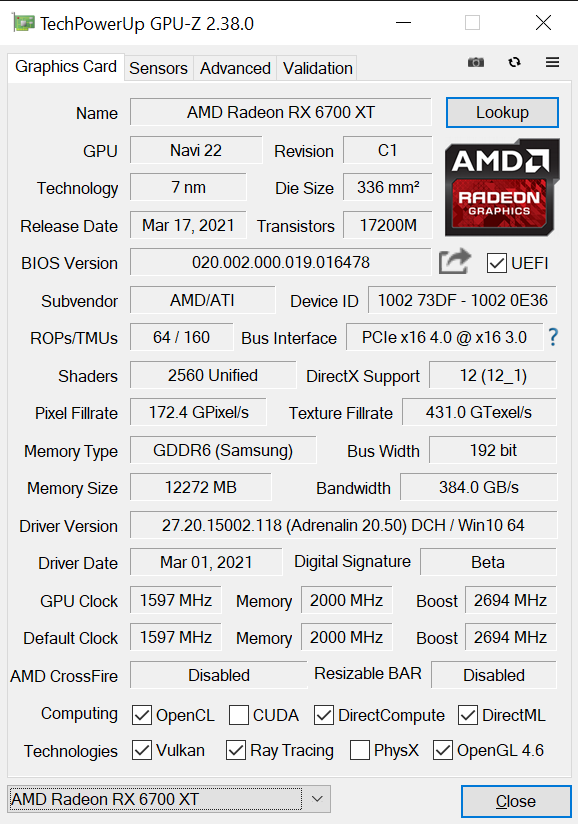
As a spec recap, RX 6700 XT is built using the Navi 22 GPU, a physically smaller die than Navi 21, measuring 336 mm². It houses 40 Compute Units (CUs), with 64 stream processors per CU, giving a total of 2560. RX 6700 XT features a fully populated Navi 22 GPU, but we can expect cut-down versions to appear with the RX 6700, and potentially RX 6600 XT if that comes to market.
RDNA 2 houses one ray accelerator per CU, so there's a total of 40 with the RX 6700 XT. Four texture units per CU gives a total of 160, while there's also 64 ROPs. Clock speed sees a significant bump, even when compared to the RX 6800 series, with a rated game clock of 2424MHz, compared to 1815MHz for the RX 6800.
As for the memory configuration, AMD has opted to use a 192-bit memory interface paired with 12GB of GDDR6 memory. Using 16Gbps modules, total memory bandwidth hits 384 GB/s, which is lower than its predecessor, the RX 5700 XT. RDNA 2 GPUs, however, have the benefit of AMD's Infinity Cache, with a 96MB cache used here.
Lastly, total board power (TBP) is rated at 230W, which is an 8% reduction compared to the 250W RX 6800. We test this later in the review, while also looking at overall efficiency of the graphics card.

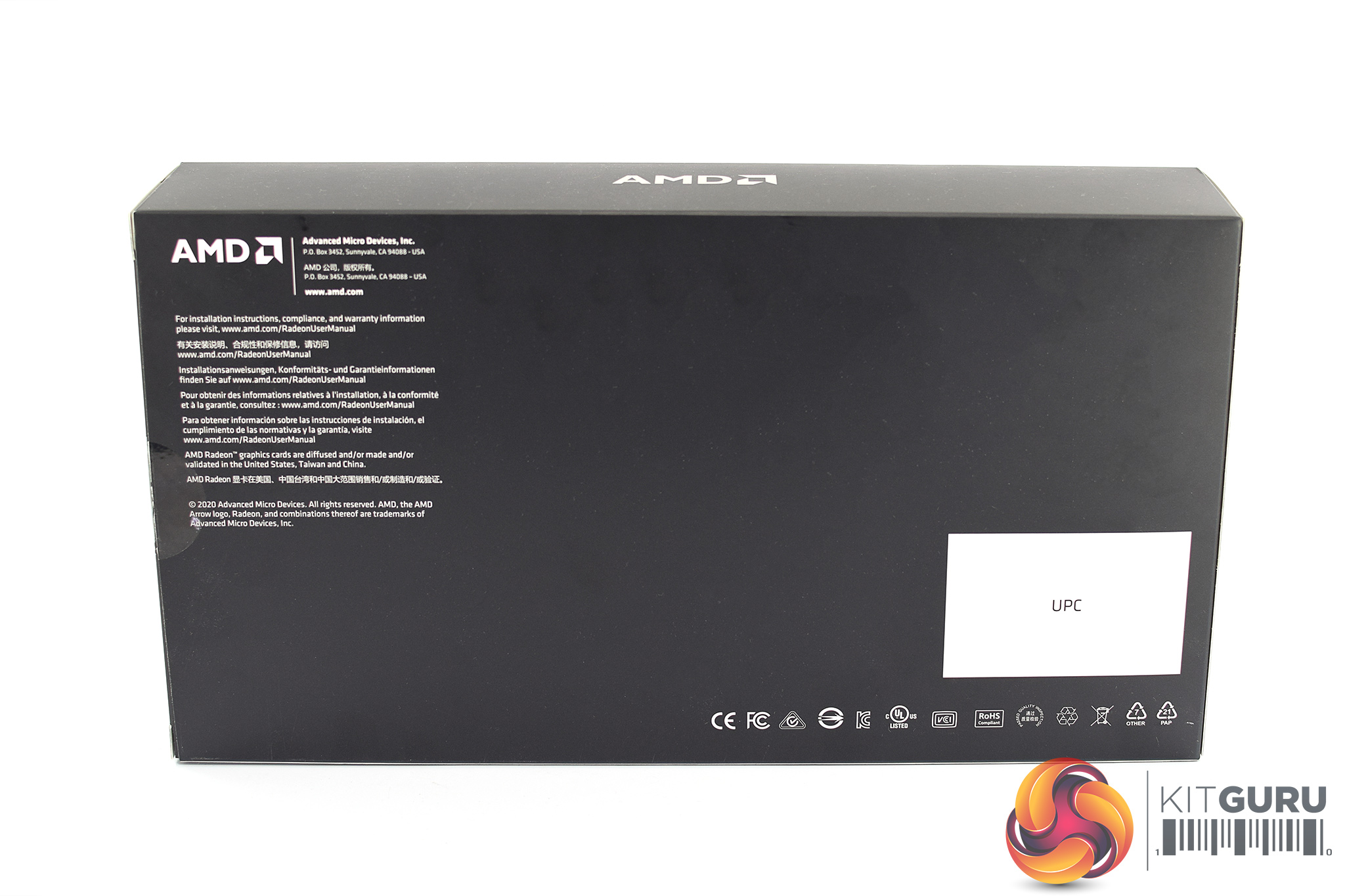
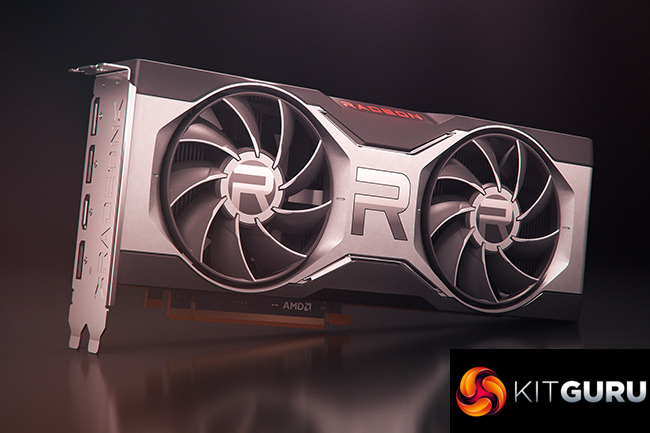
The AMD RX 6700 XT reference card ships in the same style of box as the RX 6800. It's compact and almost entirely black, with a semi-obscured image of the graphics card's shroud visible on the front. The back is left mostly bare, apart from a few paragraphs of text in the upper left corner.
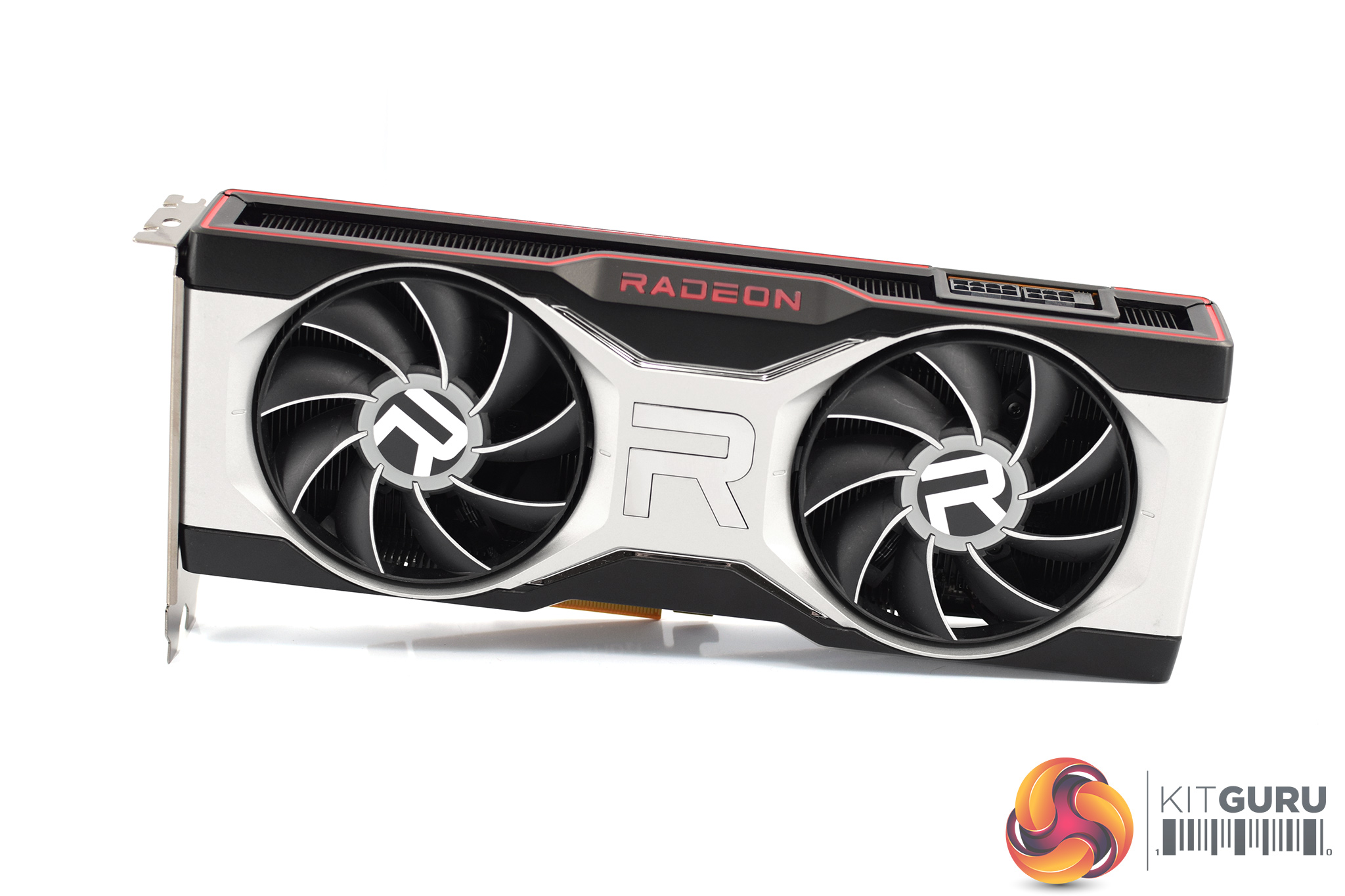
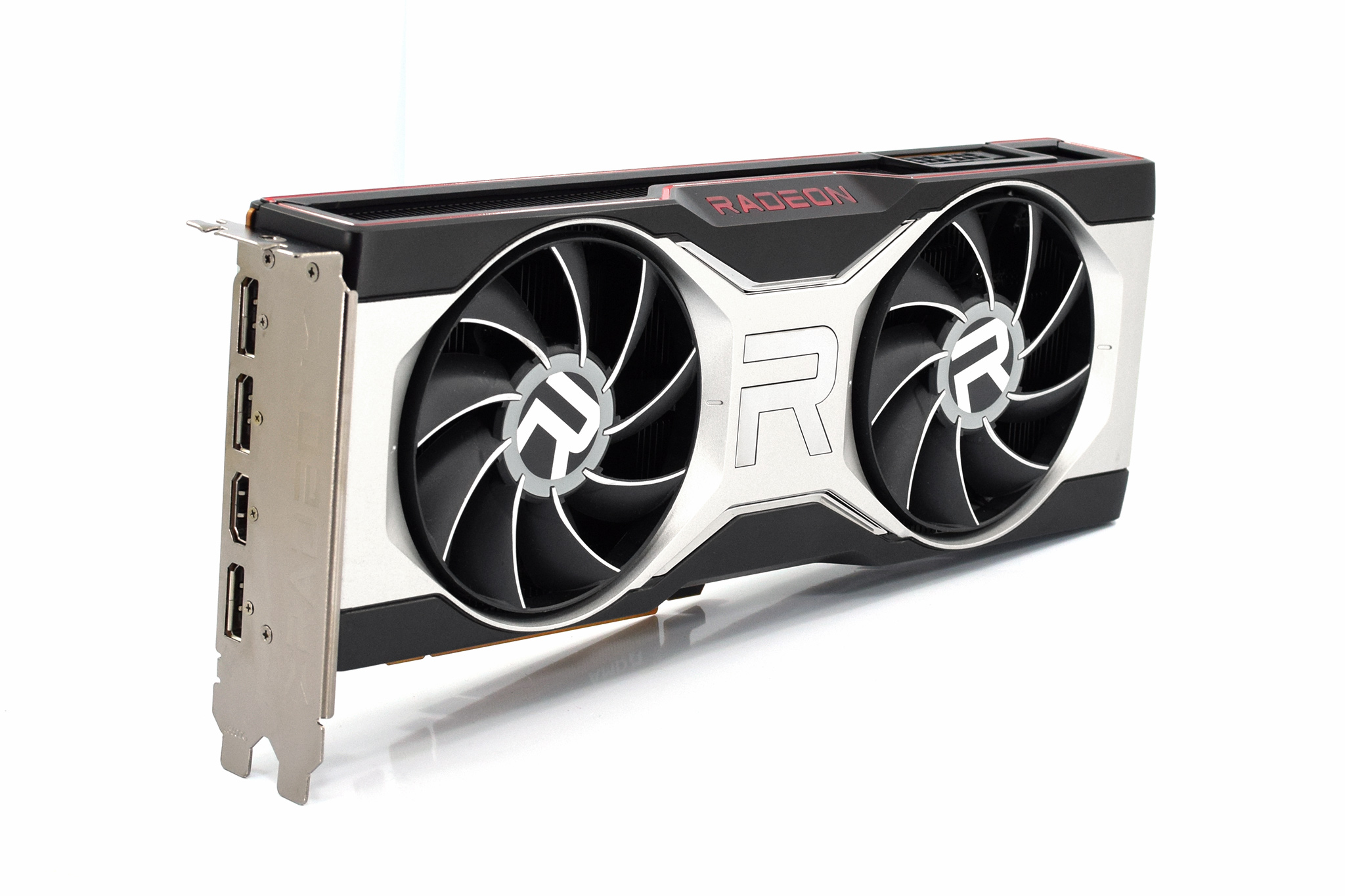
The reference card itself has very similar design language to the other RX 6000 series cards we have already reviewed. This means a premium metal shroud, using a combination of silver and black sections for a fairly striking overall appearance. The obvious difference with the RX 6700 XT is that it utilises a dual-fan cooler, compared to the triple-fan models seen with the RX 6800. The fans used here are slightly larger however, measuring 85mm compared to the 80mm fans as found on the RX 6800.
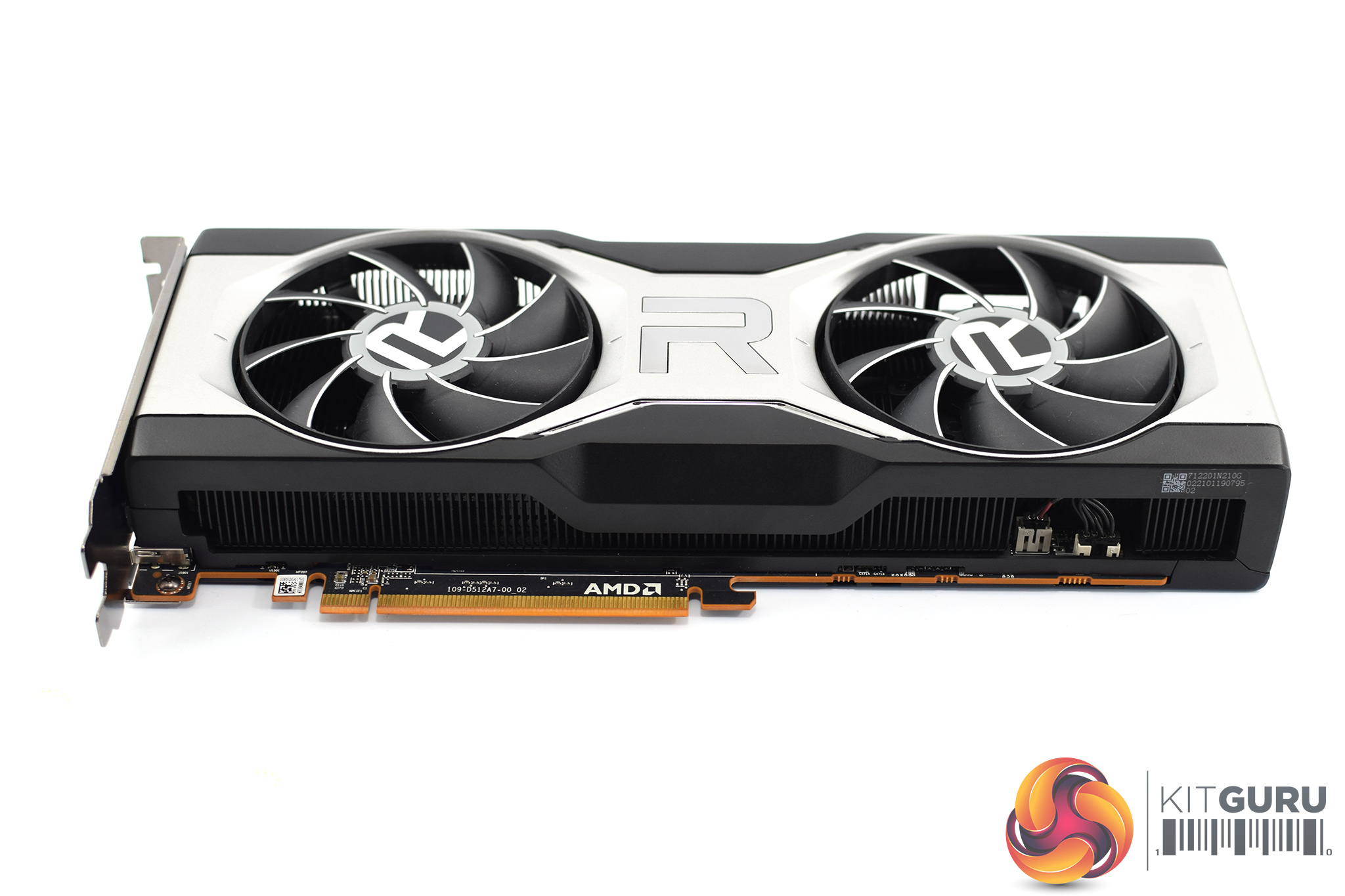
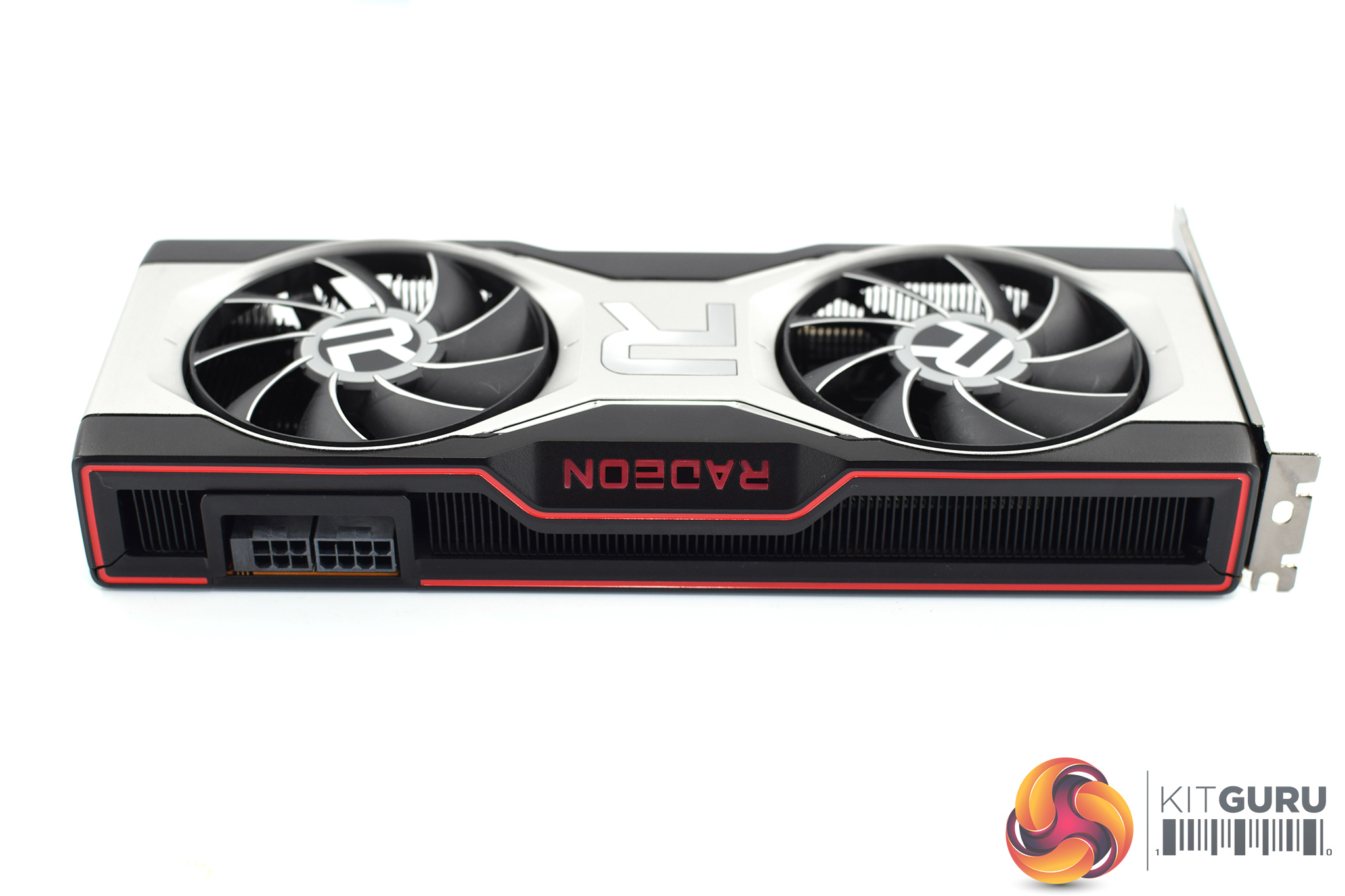
Dimensions of the card are more or less identical to the RX 6800. It's 266.7mm long – 10.5inches – and is a standard dual-slot thickness. The height of the card however has been slightly reduced compared to the RX 6800, but we're only talking a difference of a few milimetres.
One very noticeable area of difference between the 6700 XT and 6800 is weight. The 6700 XT weighs 891g on our scales, compared to 1390g for the 6800, indicating a pretty sizeable reduction in heatsink mass.
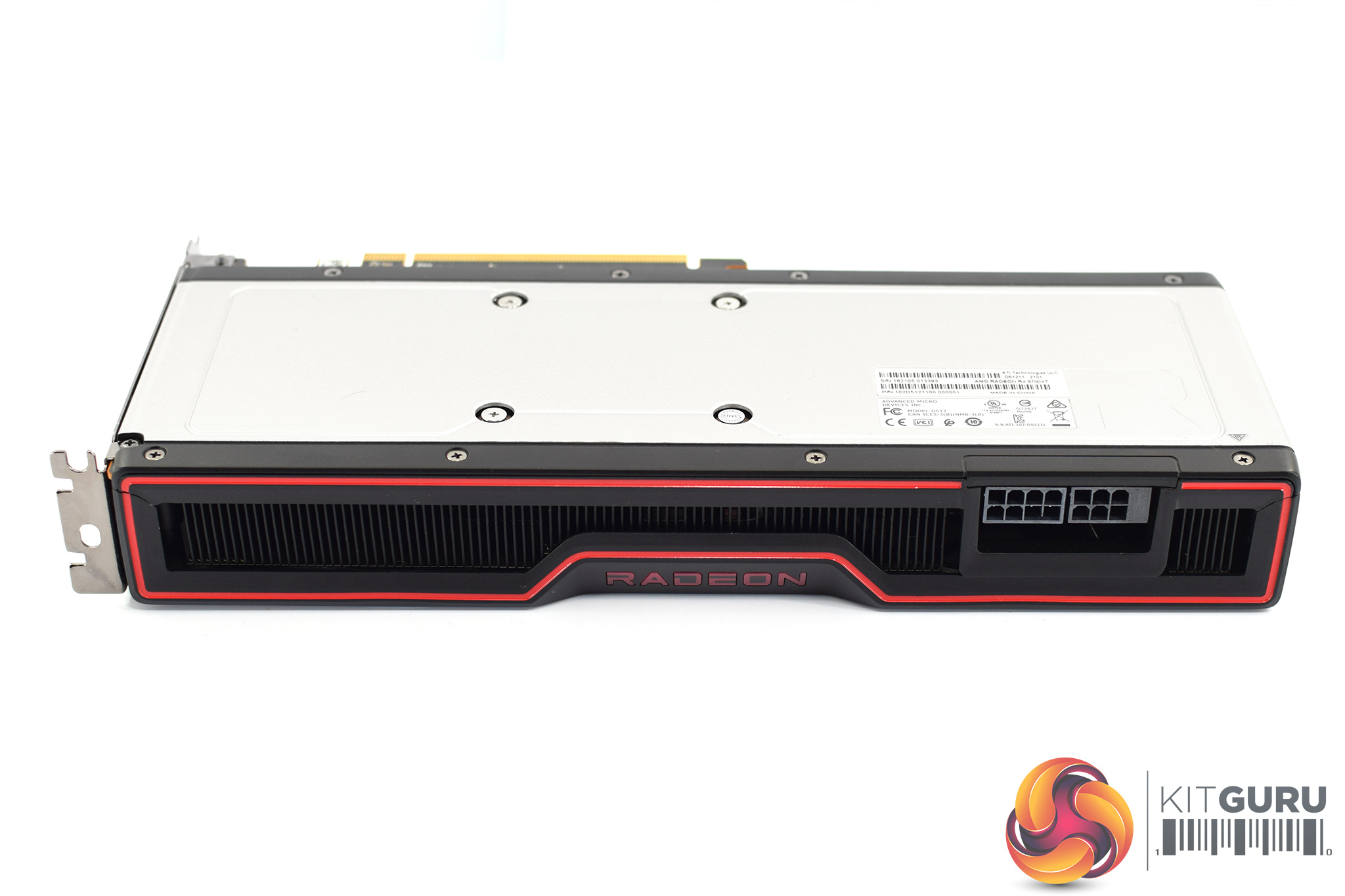
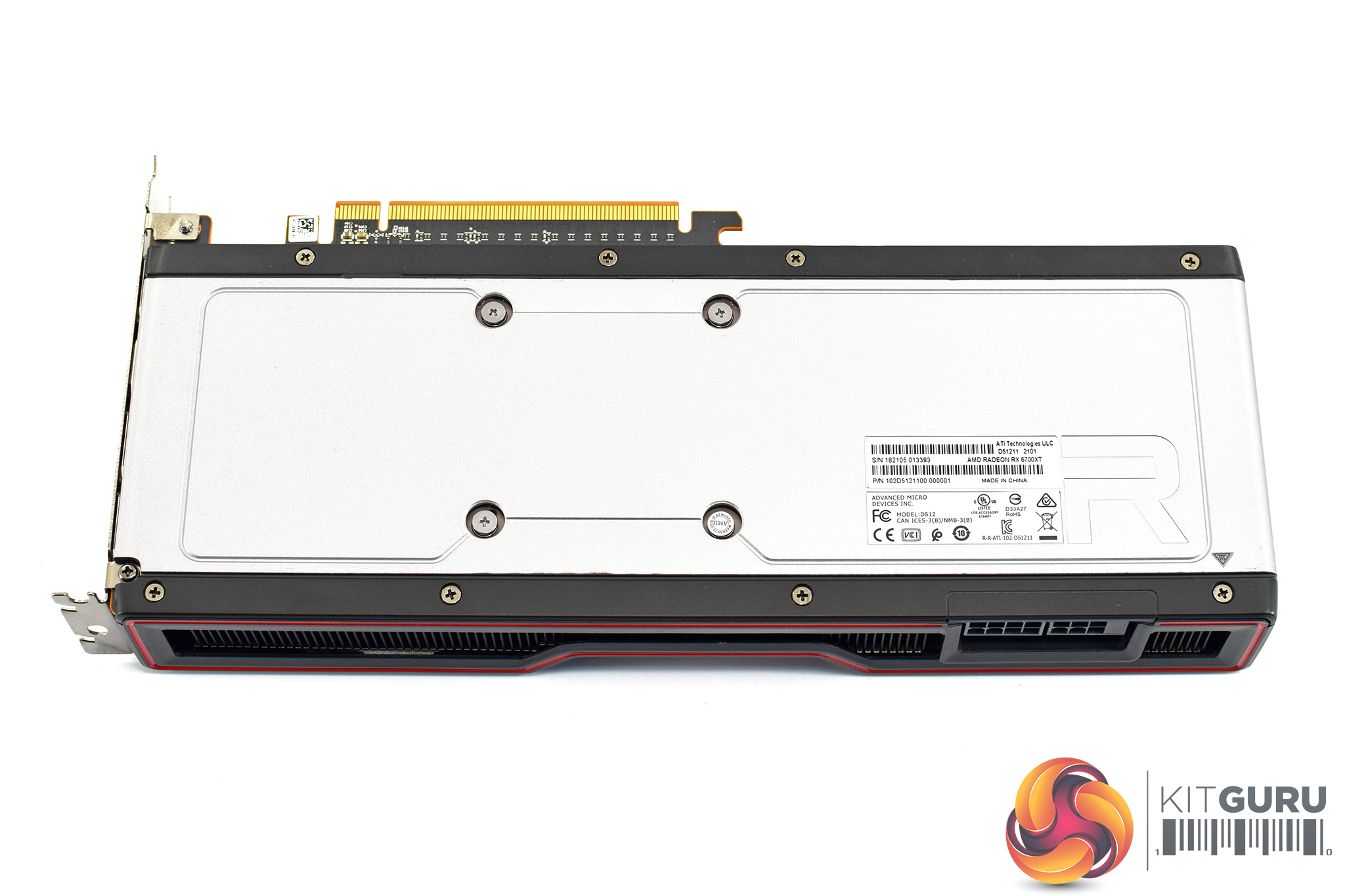
On the front side of the card, we can see the same red trim going around the edge of the shroud as found on the RX 6800. The backplate, too, is the same silver and black metal, though there isn't a cut-out behind the GPU die now – it's a full piece of metal, with just four small holes for the GPU mounting screws.
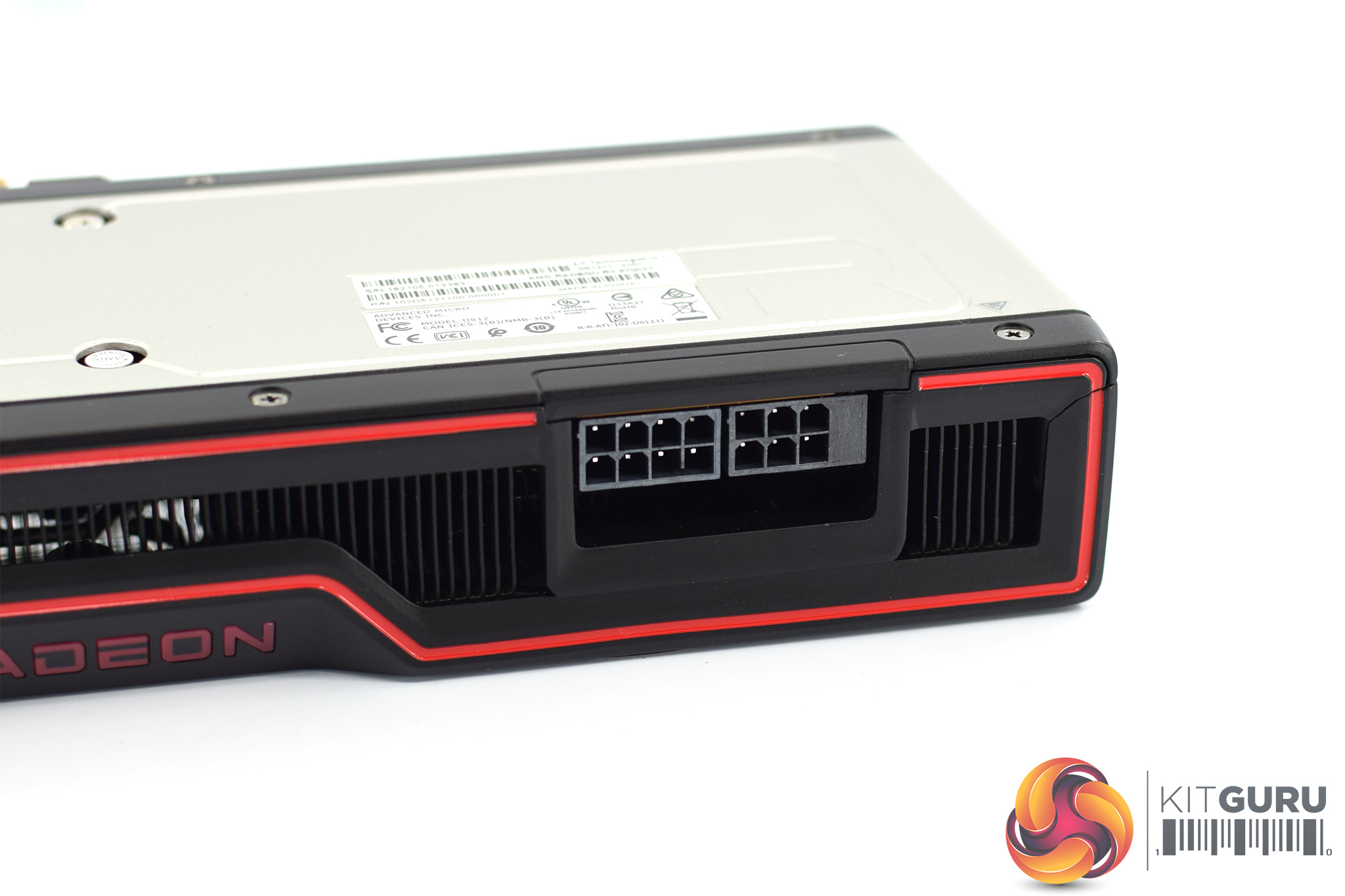
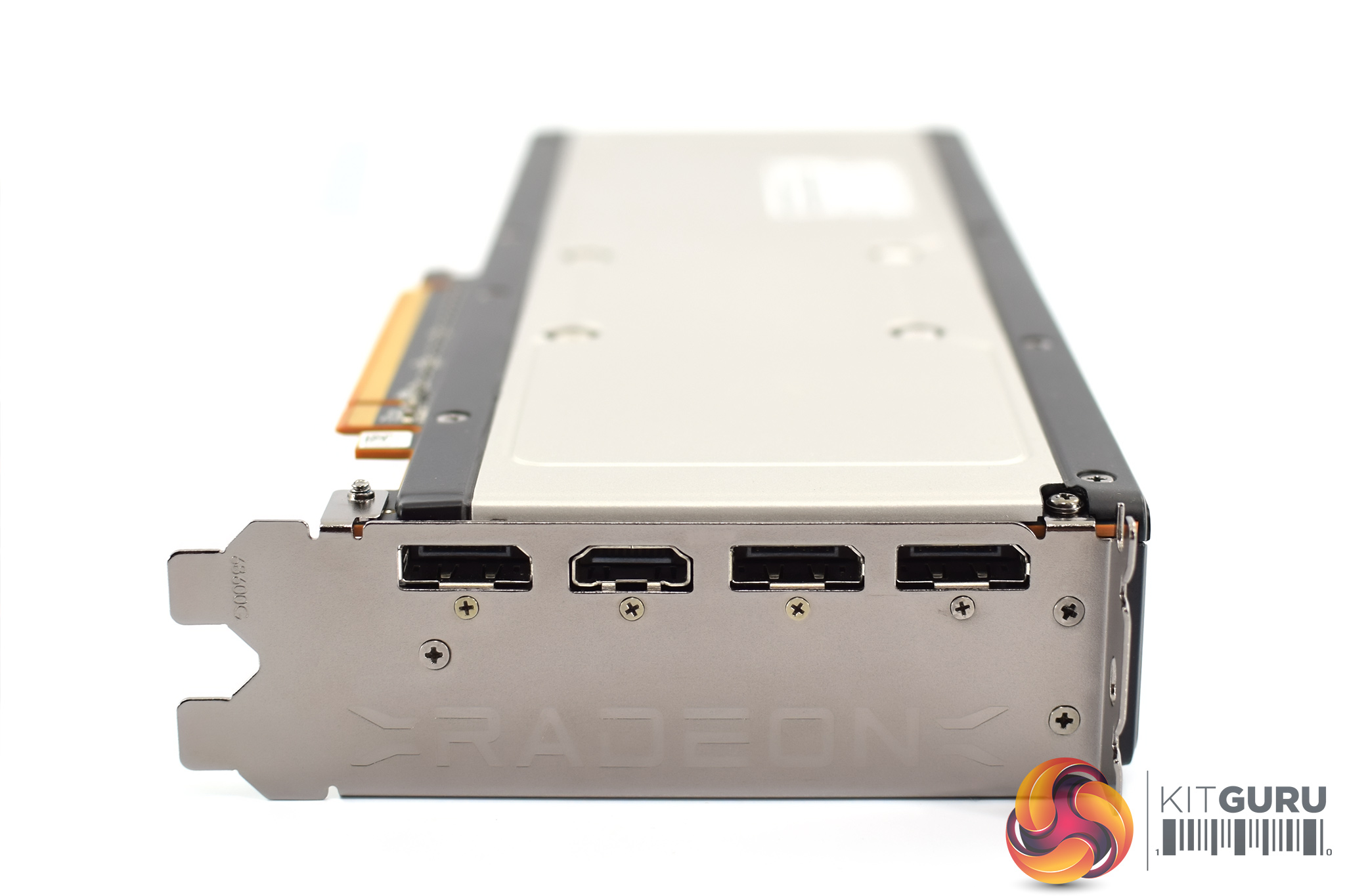
For power inputs, AMD has gone for 1x 8-pin and 1x 6-pin, the same configuration as the RX 5700 XT, comfortably enough for the 230W TBP. As for display outputs, there's 3x DisplayPort and 1x HDMI.
Driver Notes
- All Nvidia GPUs (except RTX 3060) were benchmarked with the 461.40 driver.
- RTX 3060 was benchmarked with the 461.64 driver supplied to press.
- All AMD GPUs (except RX 6700 XT) were benchmarked with the Adrenalin 21.2.2 driver.
- RX 6700 XT was benchmarked with the Adrenalin 20.50 driver supplied to press.
Test System
We test using the a custom built system from PCSpecialist, based on Intel's Comet Lake-S platform. You can read more about it over HERE, and configure your own system from PCSpecialist HERE.
| CPU |
Intel Core i9-10900K
Overclocked to 5.1GHz on all cores |
| Motherboard |
ASUS ROG Maximus XII Hero Wi-Fi
|
| Memory |
Corsair Vengeance DDR4 3600MHz (4 X 8GB)
CL 18-22-22-42
|
| Graphics Card |
Varies
|
| System Drive |
500GB Samsung 970 Evo Plus M.2
|
| Games Drive | 2TB Samsung 860 QVO 2.5″ SSD |
| Chassis | Fractal Meshify S2 Blackout Tempered Glass |
| CPU Cooler |
Corsair H115i RGB Platinum Hydro Series
|
| Power Supply |
Corsair 1200W HX Series Modular 80 Plus Platinum
|
| Operating System |
Windows 10 2004
|
Comparison Graphics Cards List
- Nvidia RTX 3070 FE 8GB
- Nvidia RTX 3060 Ti FE 8GB
- Gigabyte RTX 3060 Gaming OC 12GB
- Nvidia RTX 2070 Super FE 8GB
- Nvidia RTX 2060 Super FE 8GB
- Nvidia RTX 2060 FE 6GB
- AMD RX 6800 16GB
- AMD RX 5700 XT 8GB
- AMD RX 5700 8GB
- Sapphire RX 5600 XT Pulse 6GB
Software and Games List
- 3DMark Fire Strike & Fire Strike Ultra (DX11 Synthetic)
- 3DMark Time Spy (DX12 Synthetic)
- 3DMark Raytracing Feature Test (DXR Synthetic)
- Assassin's Creed Valhalla (DX12)
- Control (DX12)
- Cyberpunk 2077 (DX12)
- Dirt 5 (DX12)
- The Division 2 (DX12)
- F1 2020 (DX12)
- Gears 5 (DX12)
- Hitman 3 (DX12)
- Metro: Exodus (DX12)
- Red Dead Redemption 2 (Vulkan)
- Total War Saga: Troy (DX11)
- Watch Dogs: Legion (DX12)
We run each benchmark/game three times, and present mean averages in our graphs. We use OCAT to measure average frame rates as well as 1% low values across our three runs.
Fire Strike is a showcase DirectX 11 benchmark for modern gaming PCs. Its ambitious real-time graphics are rendered with detail and complexity far beyond other DirectX 11 benchmarks and games. Fire Strike includes two graphics tests, a physics test and a combined test that stresses the CPU and GPU. (UL).
3DMark Time Spy is a DirectX 12 benchmark test for Windows 10 gaming PCs. Time Spy is one of the first DirectX 12 apps to be built the right way from the ground up to fully realize the performance gains that the new API offers. With its pure DirectX 12 engine, which supports new API features like asynchronous compute, explicit multi-adapter, and multi-threading, Time Spy is the ideal test for benchmarking the latest graphics cards. (UL).
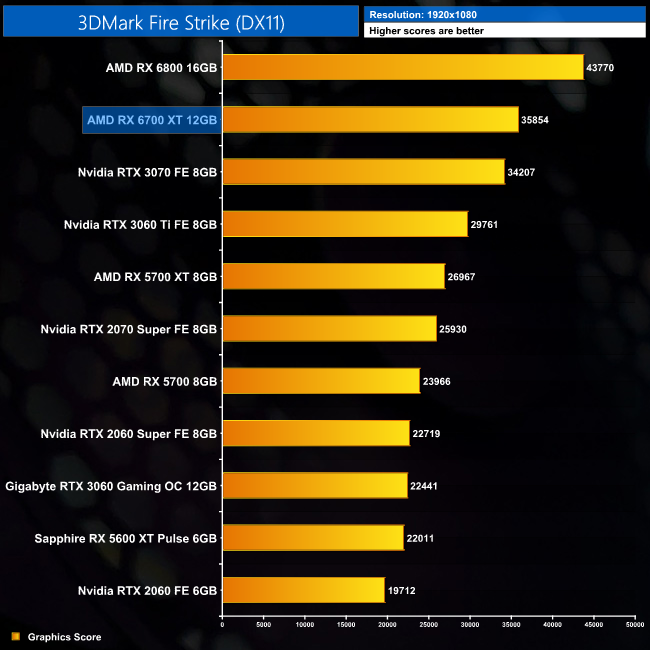
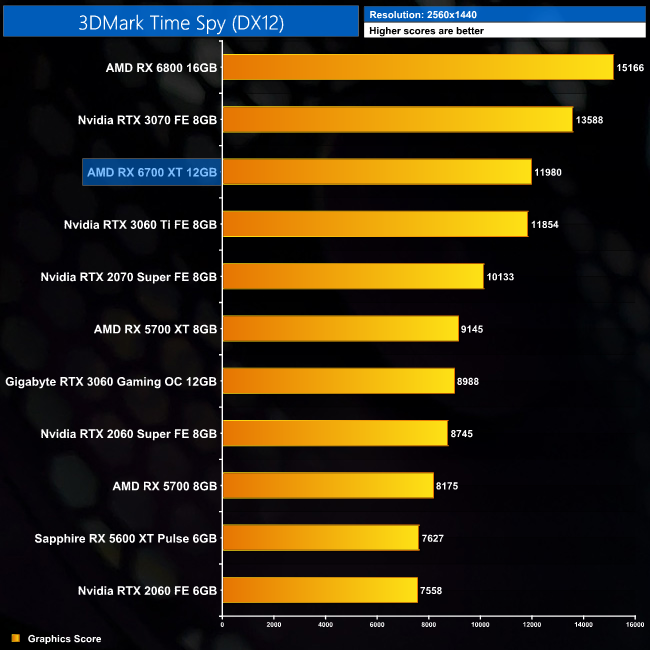
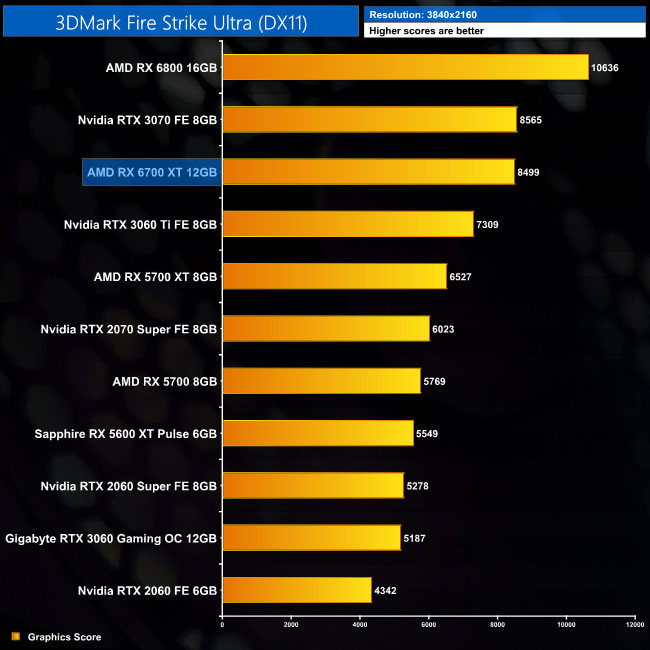
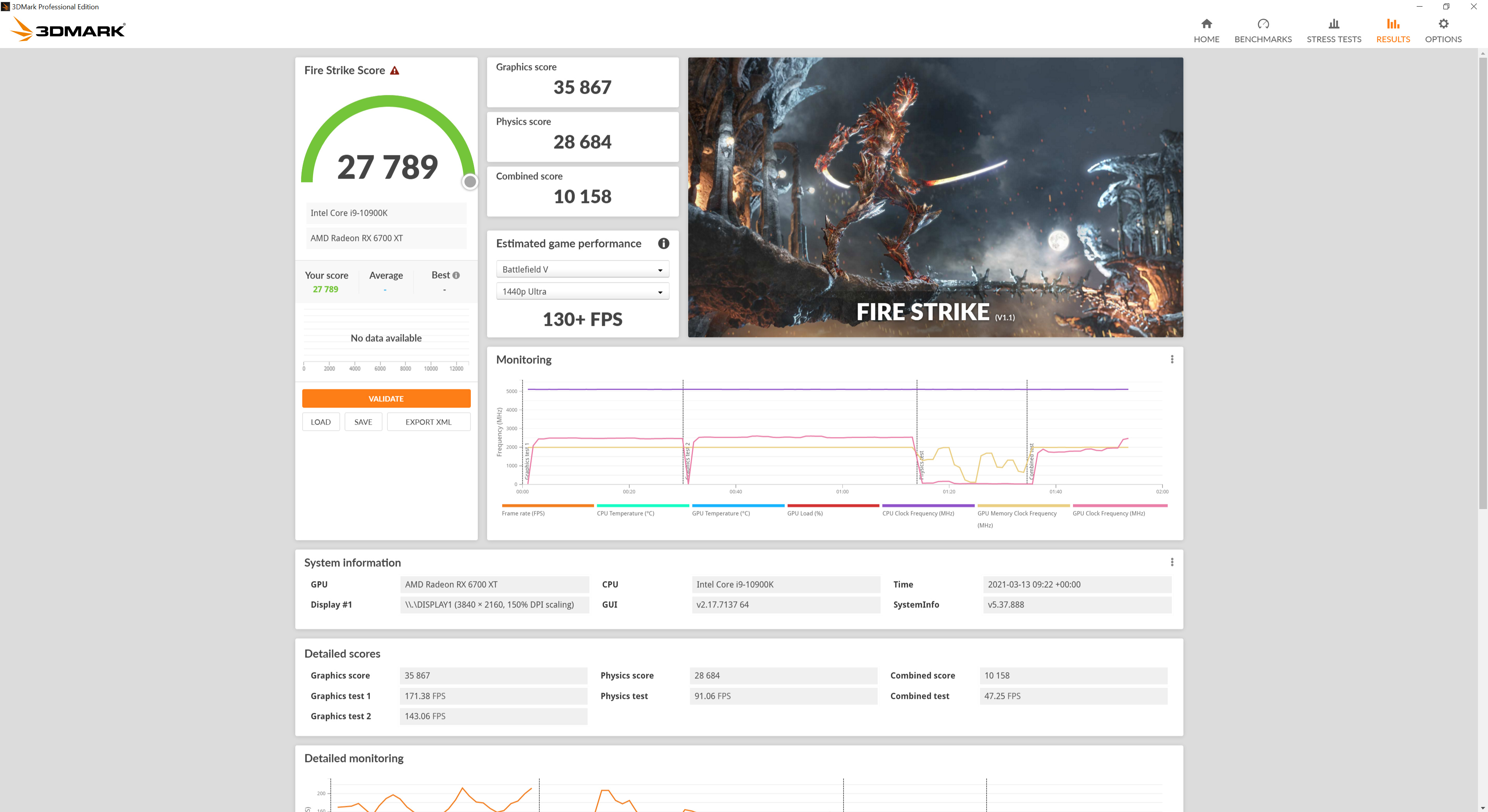

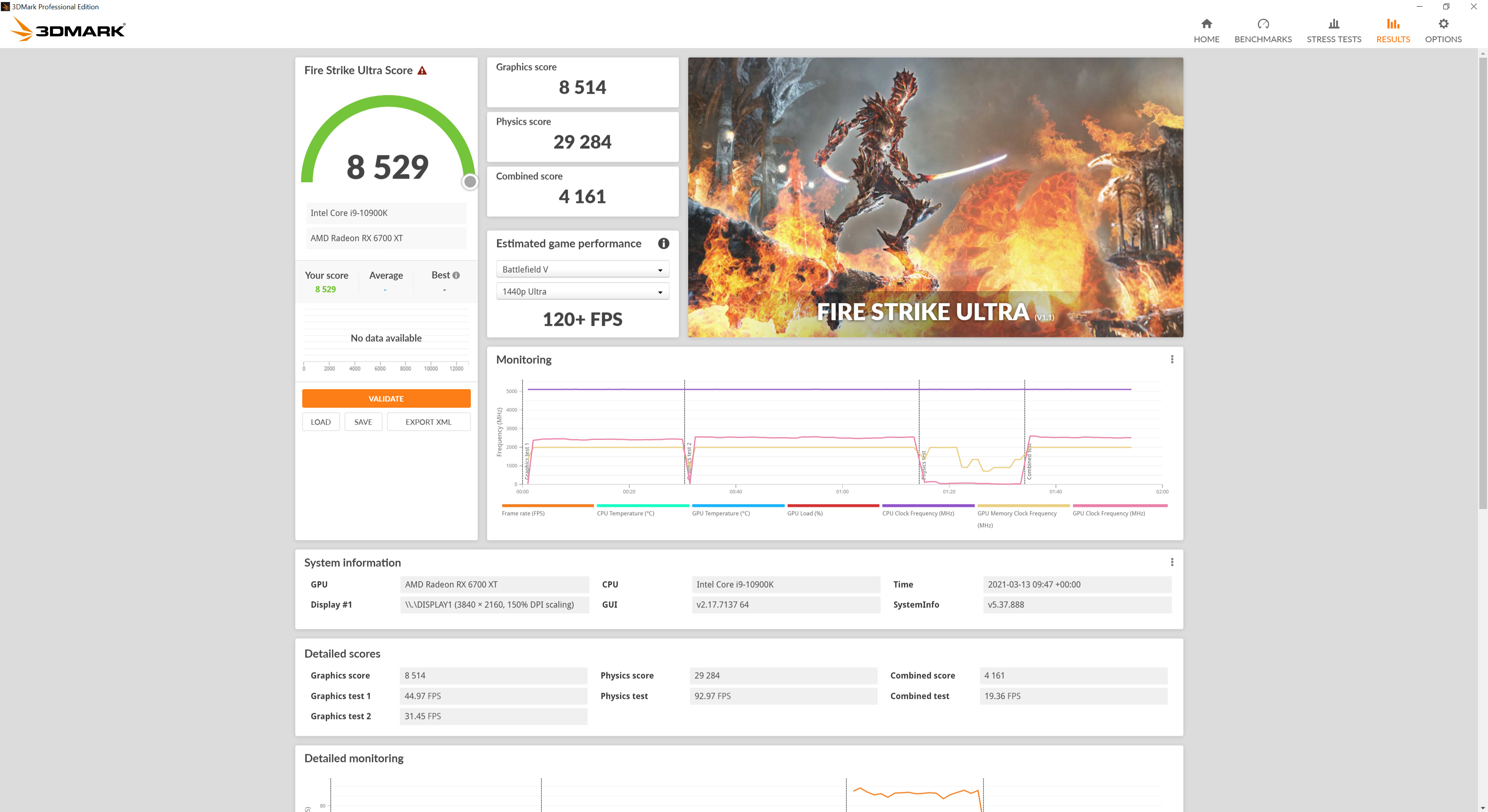
Initial 3DMark scores are promising. The RX 6700 XT is 5% faster than the RTX 3070 in Fire Strike, though it is 12% slower in Time Spy. Compared to the RX 6800, we're looking at scores between 18-21% lower.
Real-time ray tracing is incredibly demanding. The latest graphics cards have dedicated hardware that’s optimized for ray-tracing. The 3DMark DirectX Raytracing feature test measures the performance of this dedicated hardware. Instead of using traditional rendering techniques, the whole scene is ray-traced and drawn in one pass. The result of the test depends entirely on ray-tracing performance. (UL).
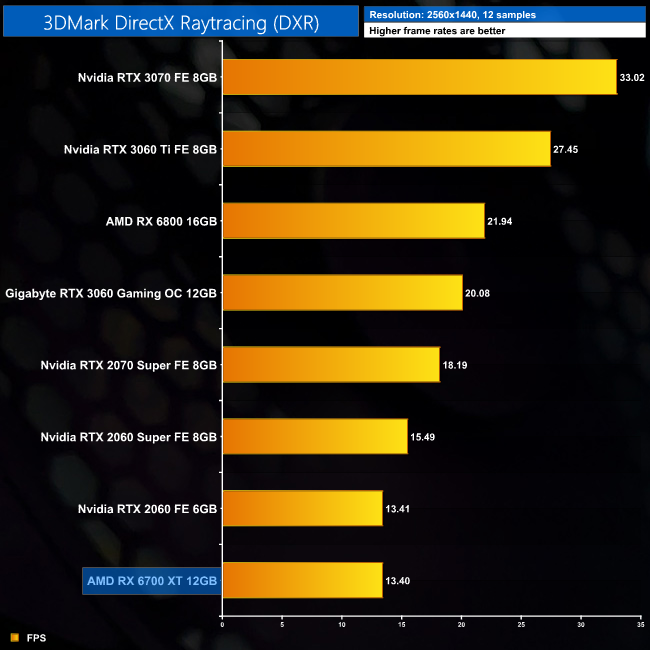
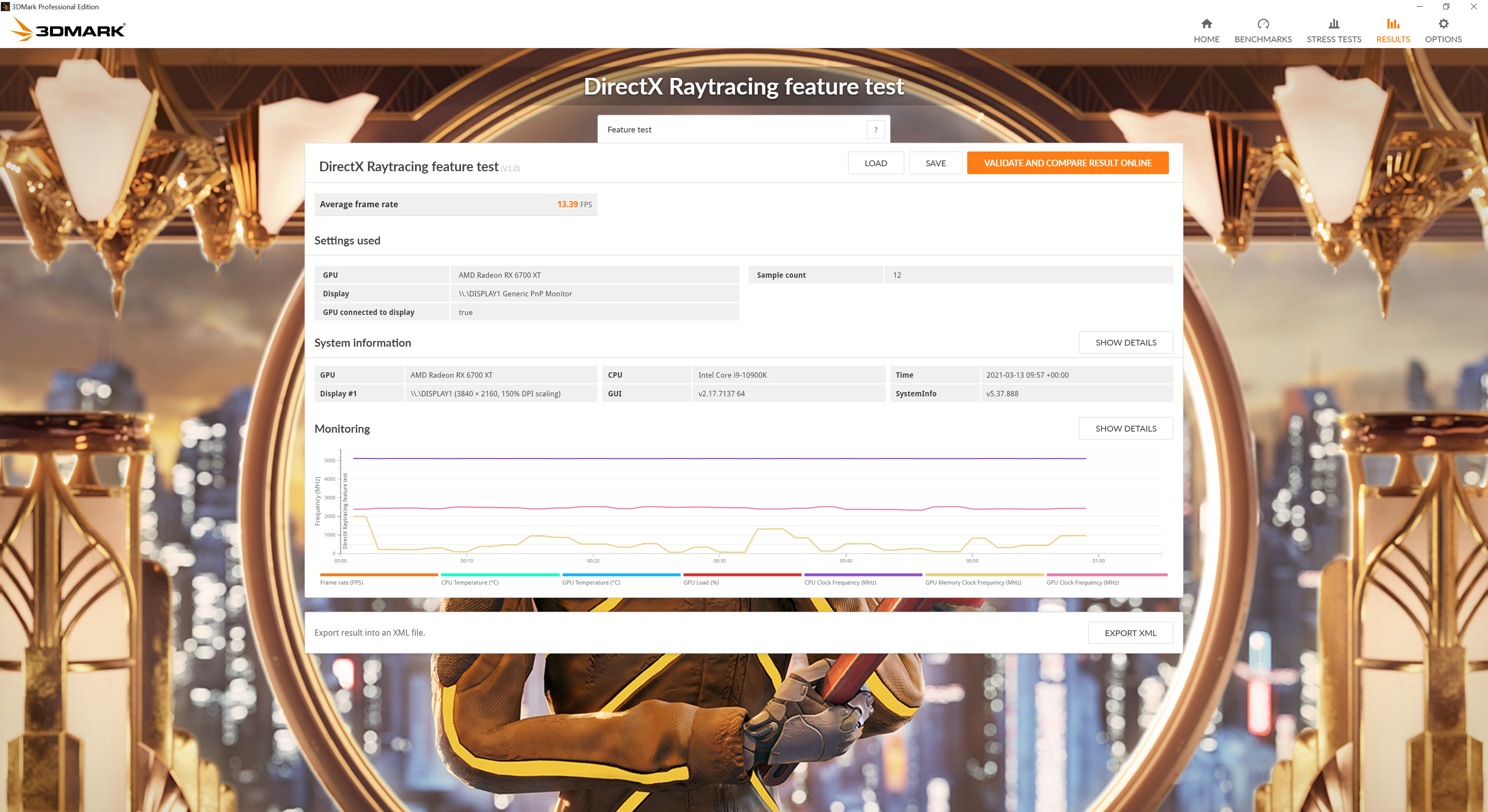
Our first indication of ray tracing performance is… not good. In the 3DMark DXR feature test, the RX 6700 XT is matching the RTX 2060, Nvidia's lowest-end GPU from its first generation of RTX hardware. This test is entirely ray traced, so it doesn't tell us how the card will perform in hybrid-rendered scenarios (which is the majority of games that use ray tracing right now), but from a pure ray tracing perspective, it's significantly slower than any Ampere GPU on the market.
Assassin's Creed Valhalla is an action role-playing video game developed by Ubisoft Montreal and published by Ubisoft. It is the twelfth major installment and the twenty-second release in the Assassin's Creed series, and a successor to the 2018's Assassin's Creed Odyssey. The game was released on November 10, 2020, for Microsoft Windows, PlayStation 4, Xbox One, Xbox Series X and Series S, and Stadia, while the PlayStation 5 version was released on November 12. (Wikipedia.)
Engine: AnvilNext 2.0. We test using the Ultra High preset, DX12 API.
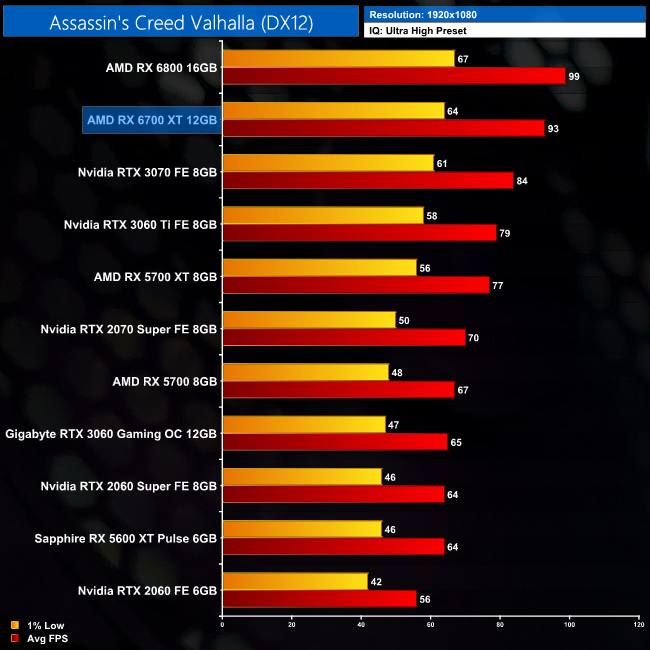
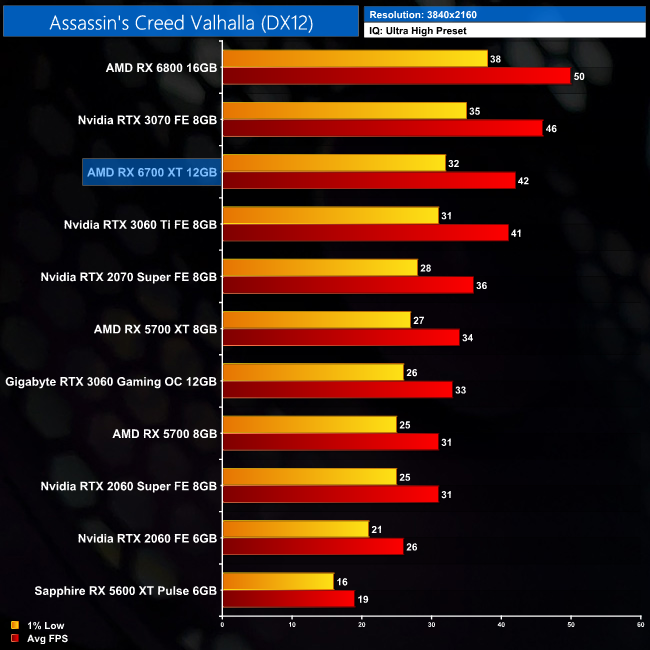
Getting things started with Assassin's Creed Valhalla, believe it or not this is actually the game where we saw the RX 6700 XT do its best versus the RTX 3070 and RTX 3060 Ti. At 1080p, for instance, its average of 93FPS is 11% ahead of the RTX 3070 and 18% faster than the RTX 3060 Ti.
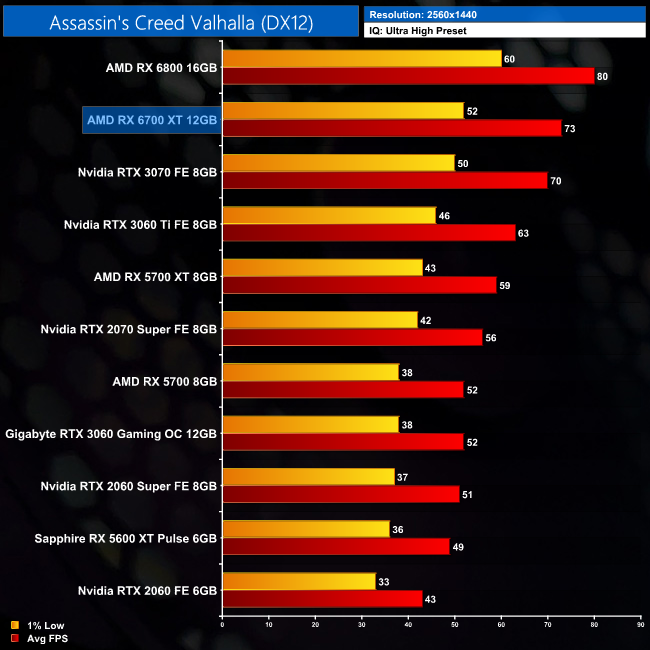
Up at 1440p, the Nvidia GPUs do catch up though. Here, the 6700 XT averaged 73FPS, which is now just 4% faster than the RTX 3070 but still 16% faster than the RTX 3060 Ti. Compared to the RX 6800, it's 9% slower.
Control is an action-adventure video game developed by Remedy Entertainment and published by 505 Games. Control was released on 27 August 2019 for Microsoft Windows, PlayStation 4, and Xbox One. (Wikipedia).
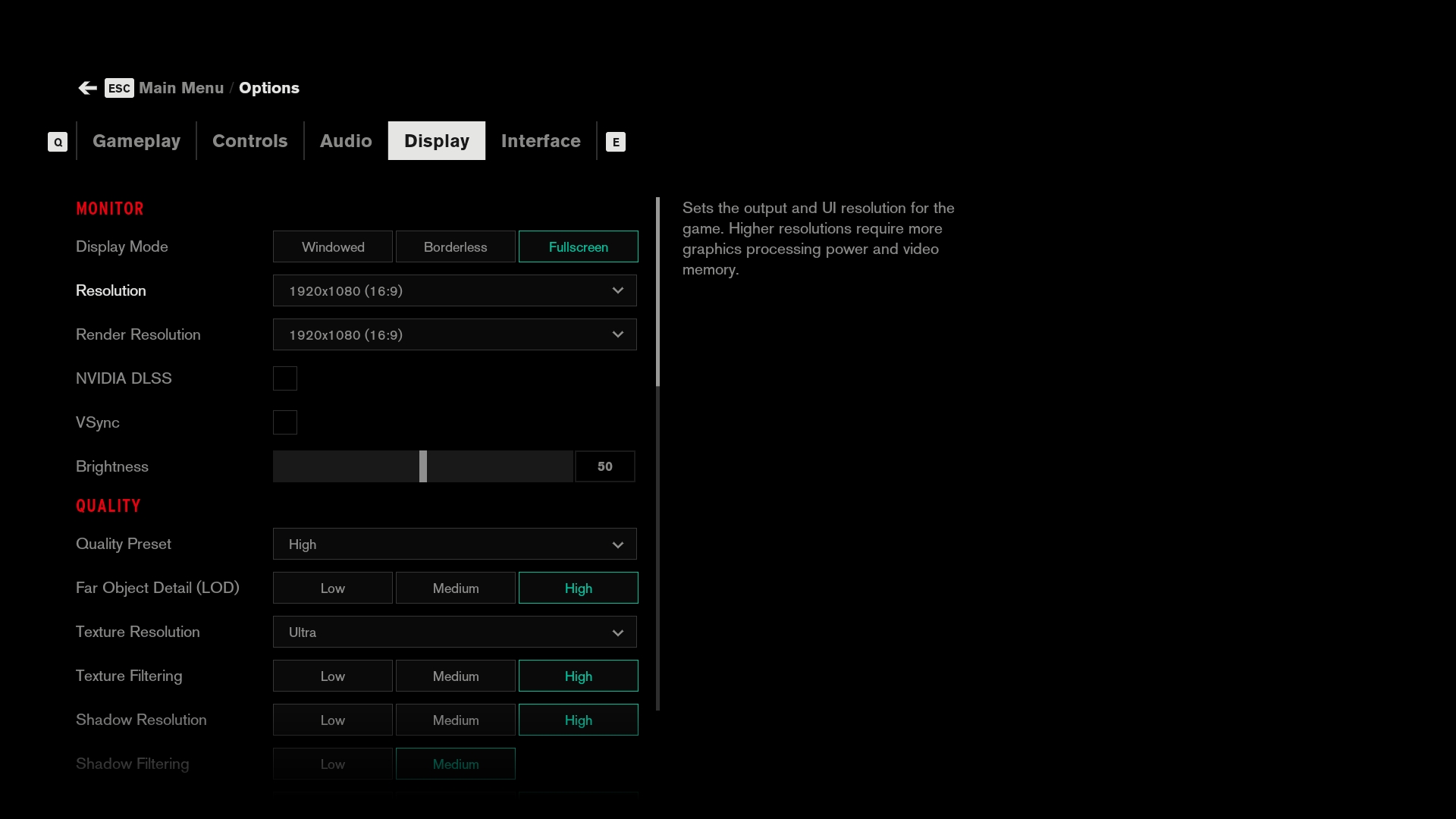
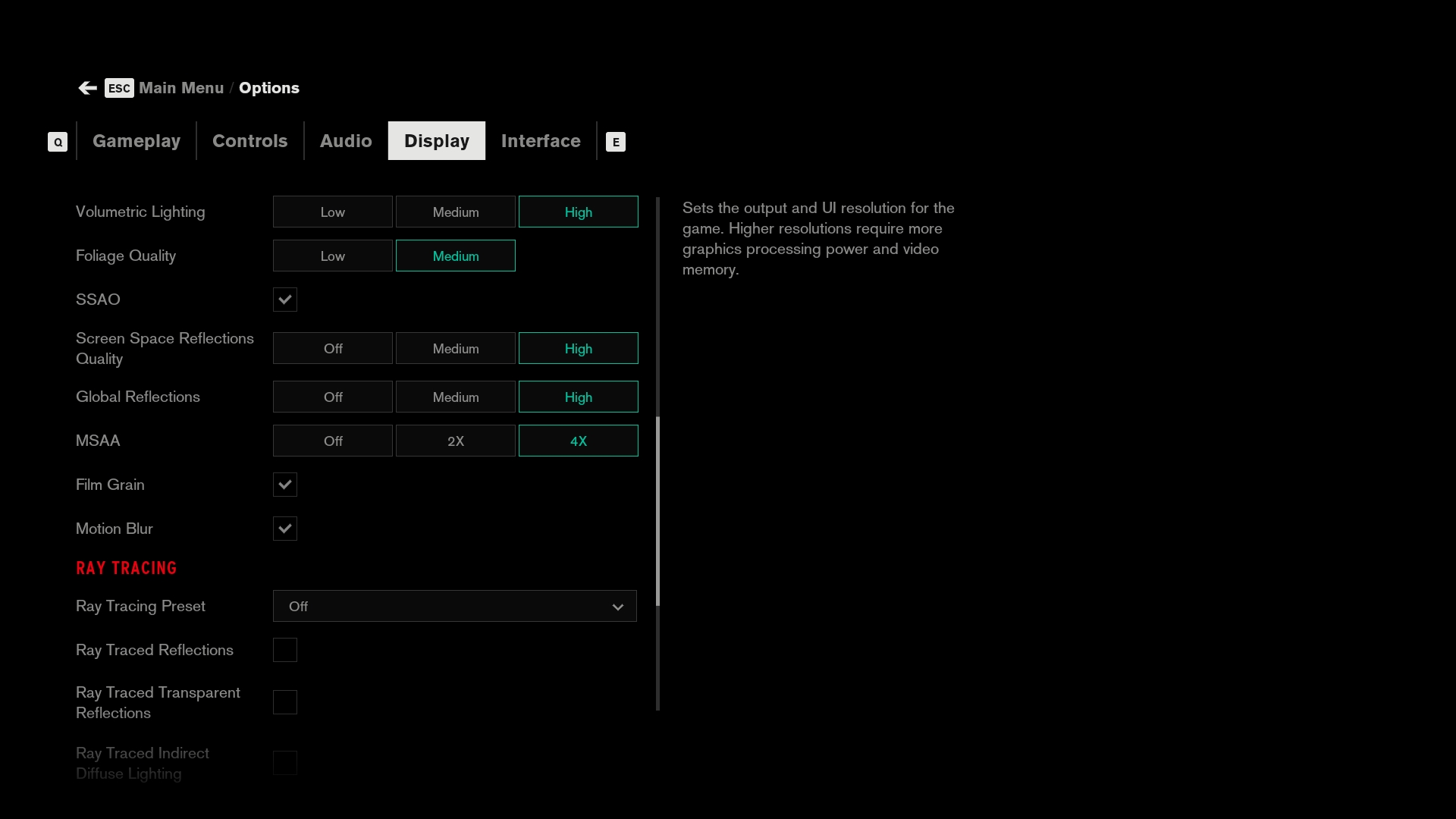
Engine: Northlight Engine. We test using the High preset, with 4x MSAA, DX12 API.
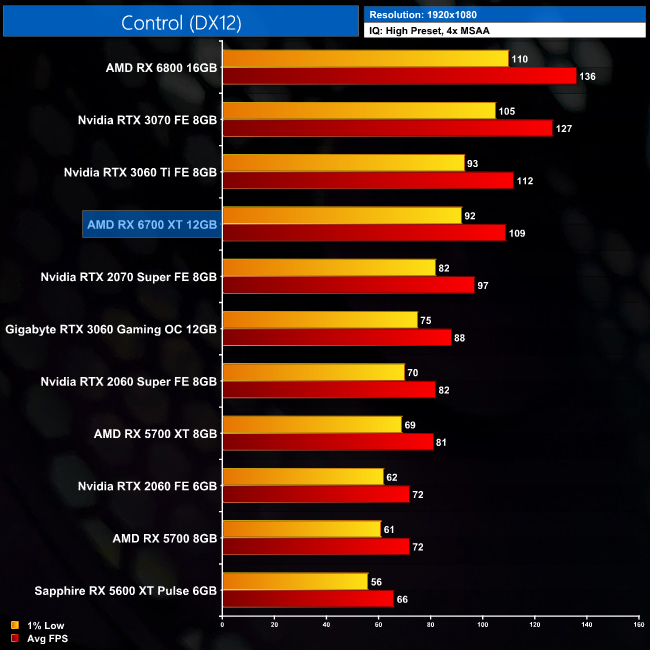
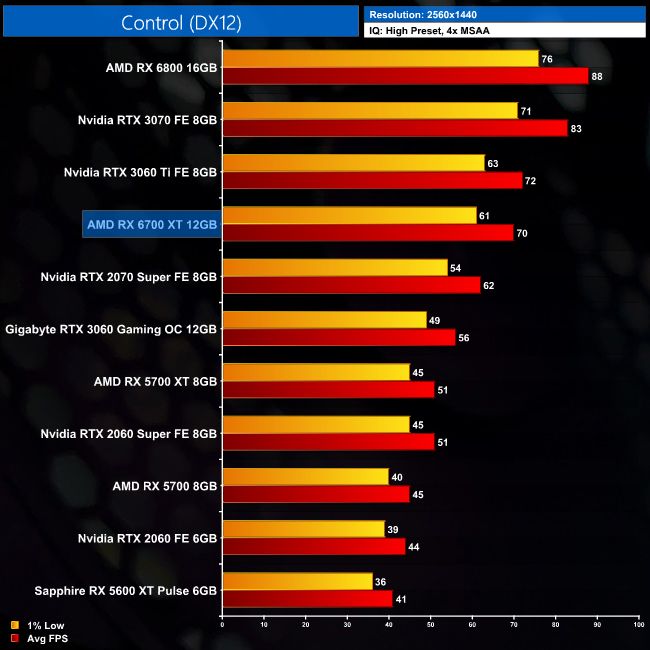
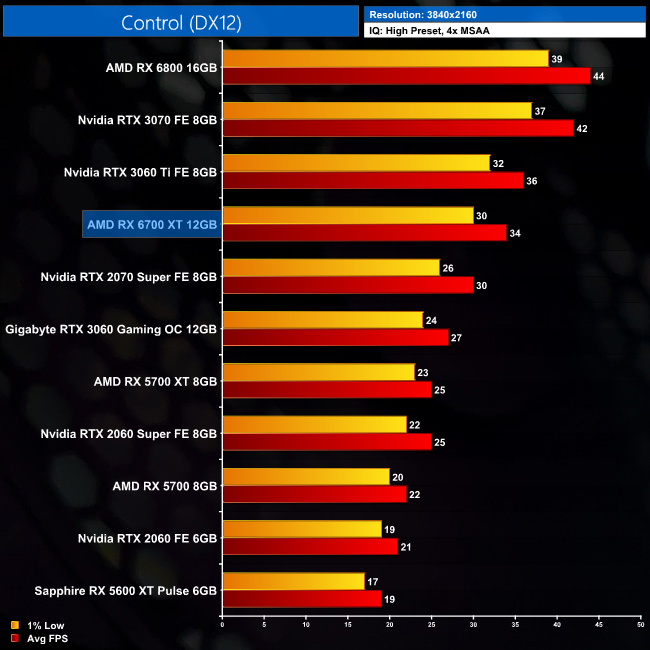
Control is the polar opposite of what we saw from AC Valhalla. At 1080p, the RX 6700 XT is 3FPS slower than the RTX 3060 Ti, averaging 109FPS. That makes it 16% slower than the RTX 3070, and 20% slower than its big brother, the RX 6800. Quite the turnaround!
As for 1440p, the 6700 XT is still very playable here, averaging 70FPS, but that makes it 3% slower than the RTX 3060 Ti – a GPU which should cost about £50 less, based on MSRP prices at least.
Cyberpunk 2077 is a 2020 action role-playing video game developed and published by CD Projekt. The story takes place in Night City, an open world set in the Cyberpunk universe. Players assume the first-person perspective of a customisable mercenary known as V, who can acquire skills in hacking and machinery with options for melee and ranged combat. Cyberpunk 2077 was released for Microsoft Windows, PlayStation 4, Stadia, and Xbox One on 10 December 2020. (Wikipedia)
Engine: REDengine 4. We test using the Ultra preset, DX12 API.
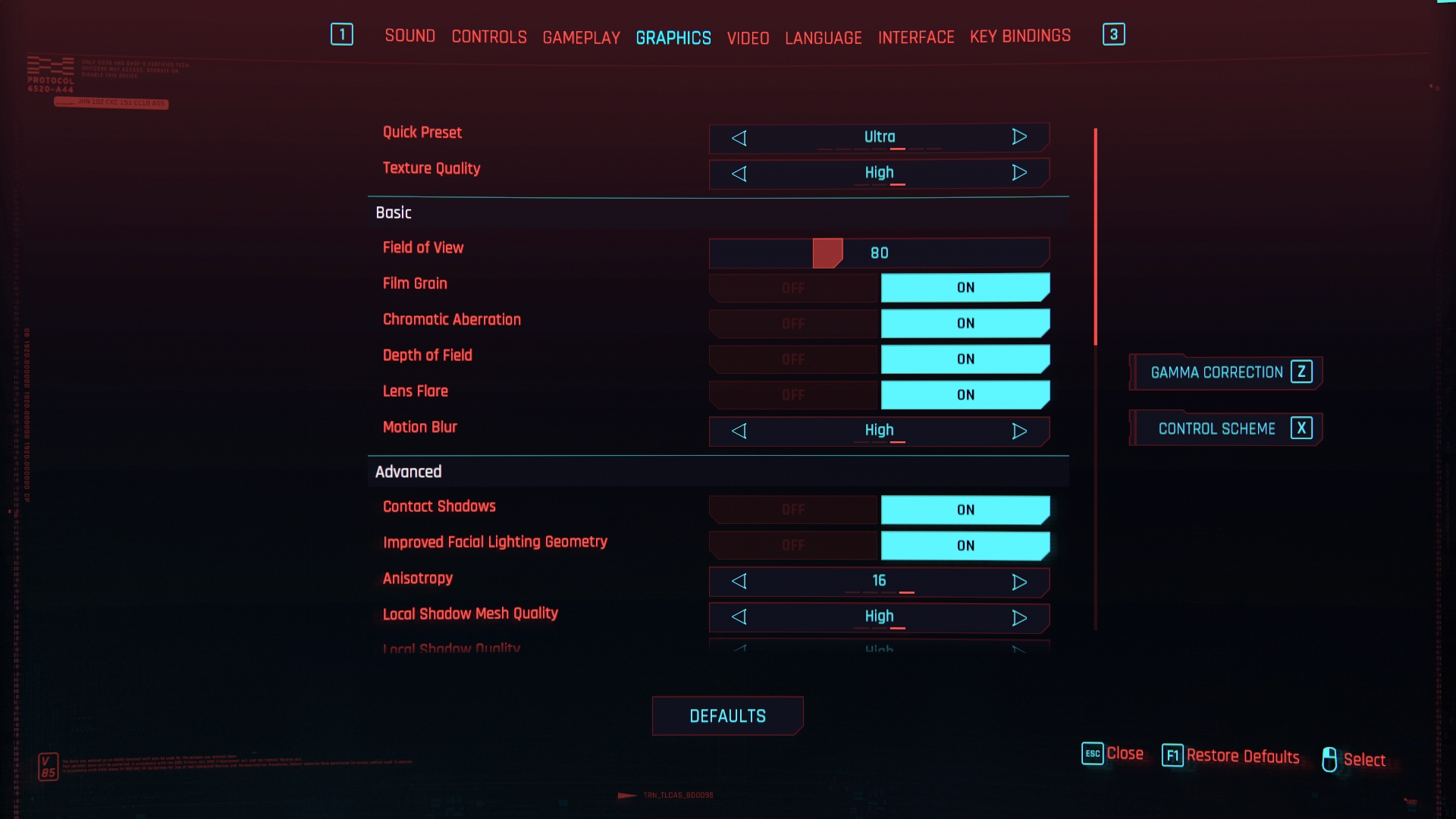
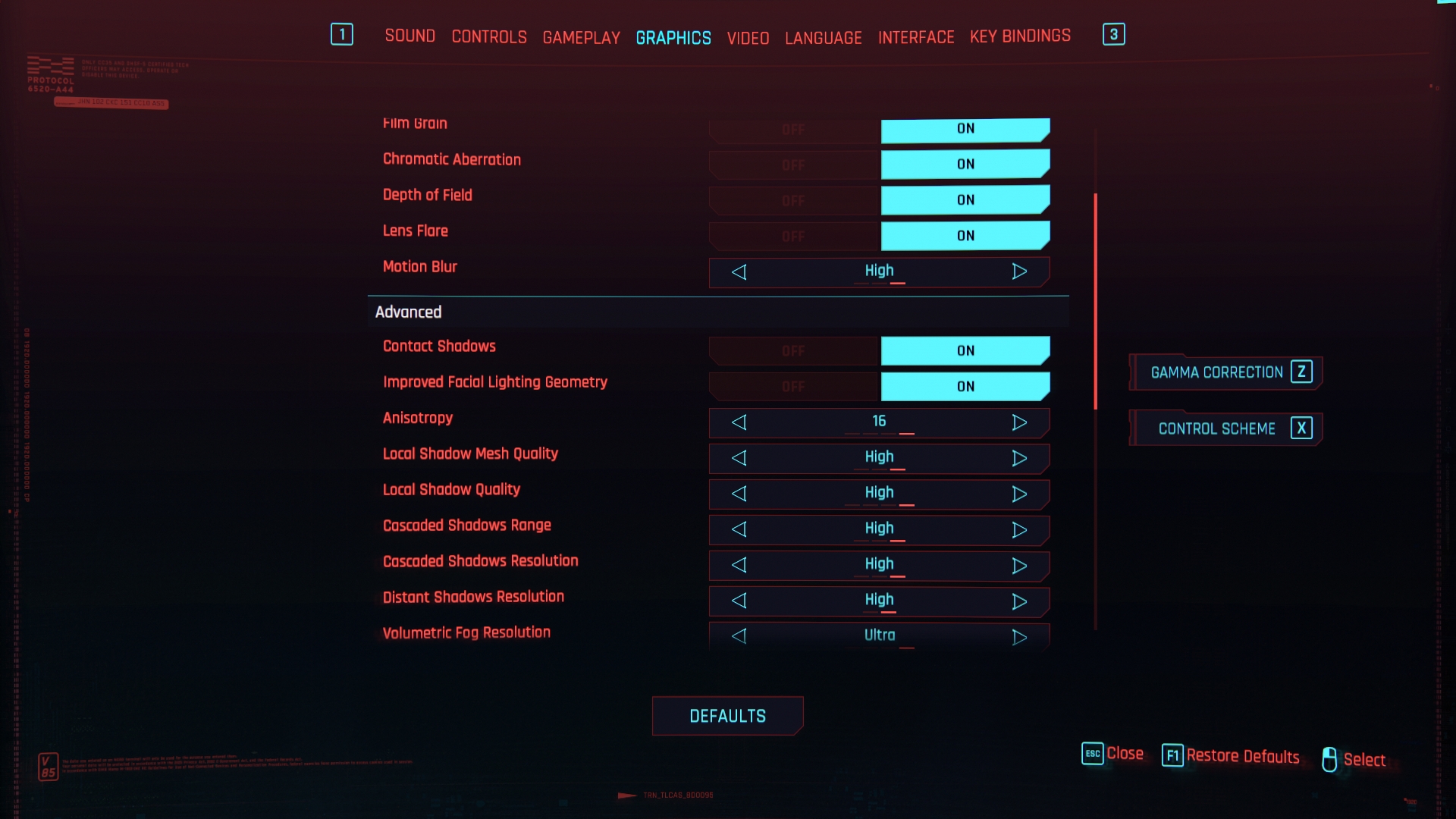
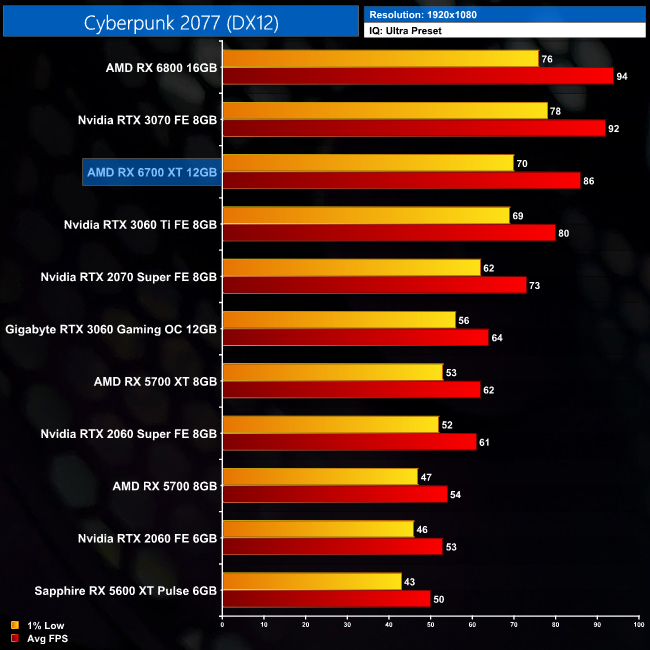
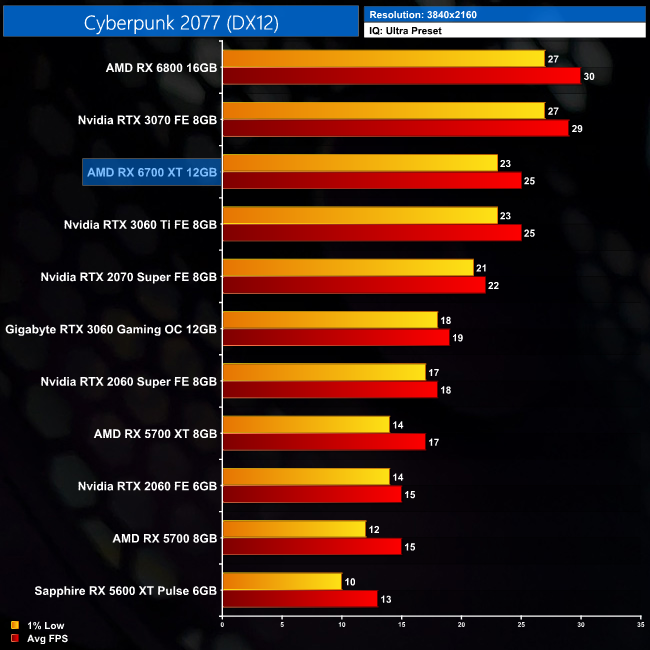
Next up we come to Cyberpunk 2077, the most demanding game of the 12 we're testing today. At 1080p, the RX 6700 XT delivers 86FPS on average, meaning it sits pretty neatly between the 3060 Ti and the 3070.
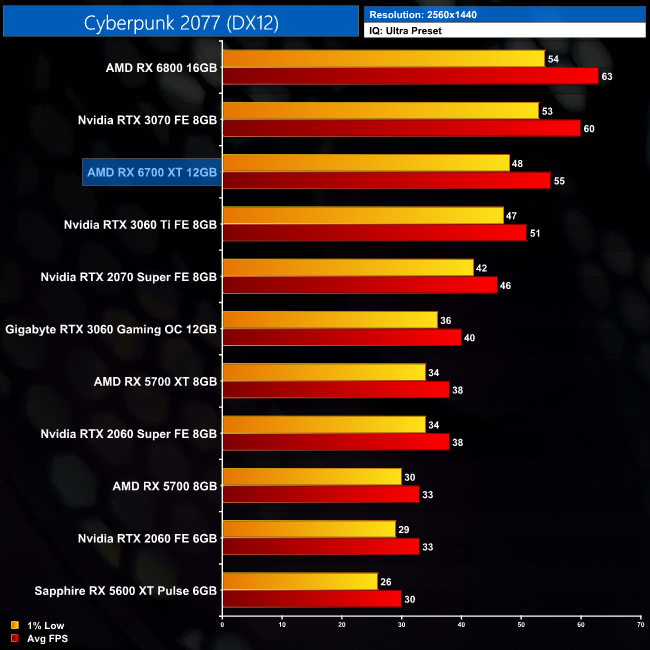
That scaling also holds at 1440p, where the 6700 XT is 8% slower than the RTX 3070, but 8% faster than the RTX 3060 Ti. It can't quite manage 60FPS here though, coming in 5 frames shy of that mark.
Dirt 5 (stylised as DIRT5) is a racing video game developed and published by Codemasters. It is the fourteenth game in the Colin McRae Rally series and the eighth game to carry the Dirt title. The game was released for Microsoft Windows, PlayStation 4 and Xbox One on 6 November 2020. (Wikipedia).
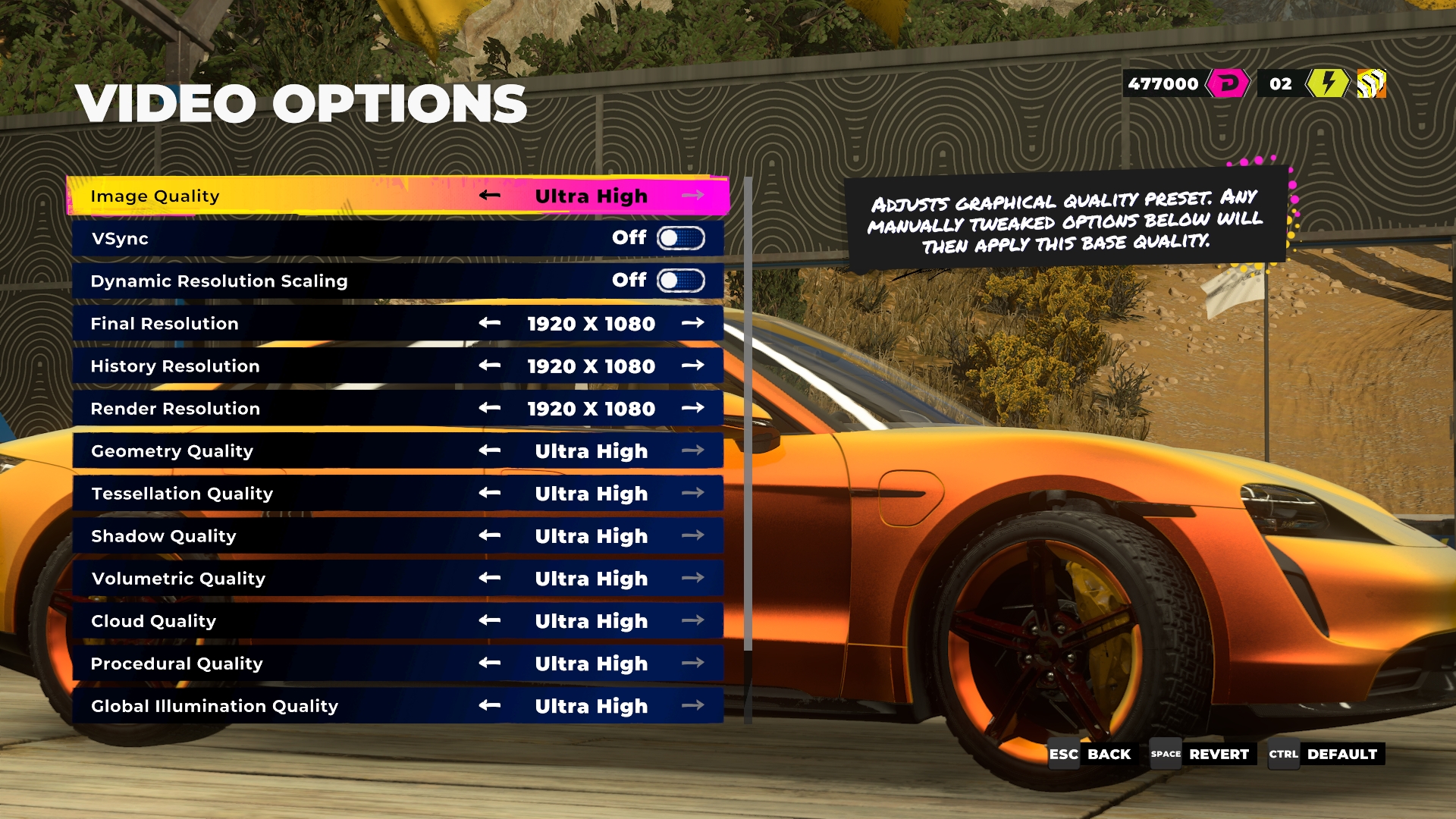
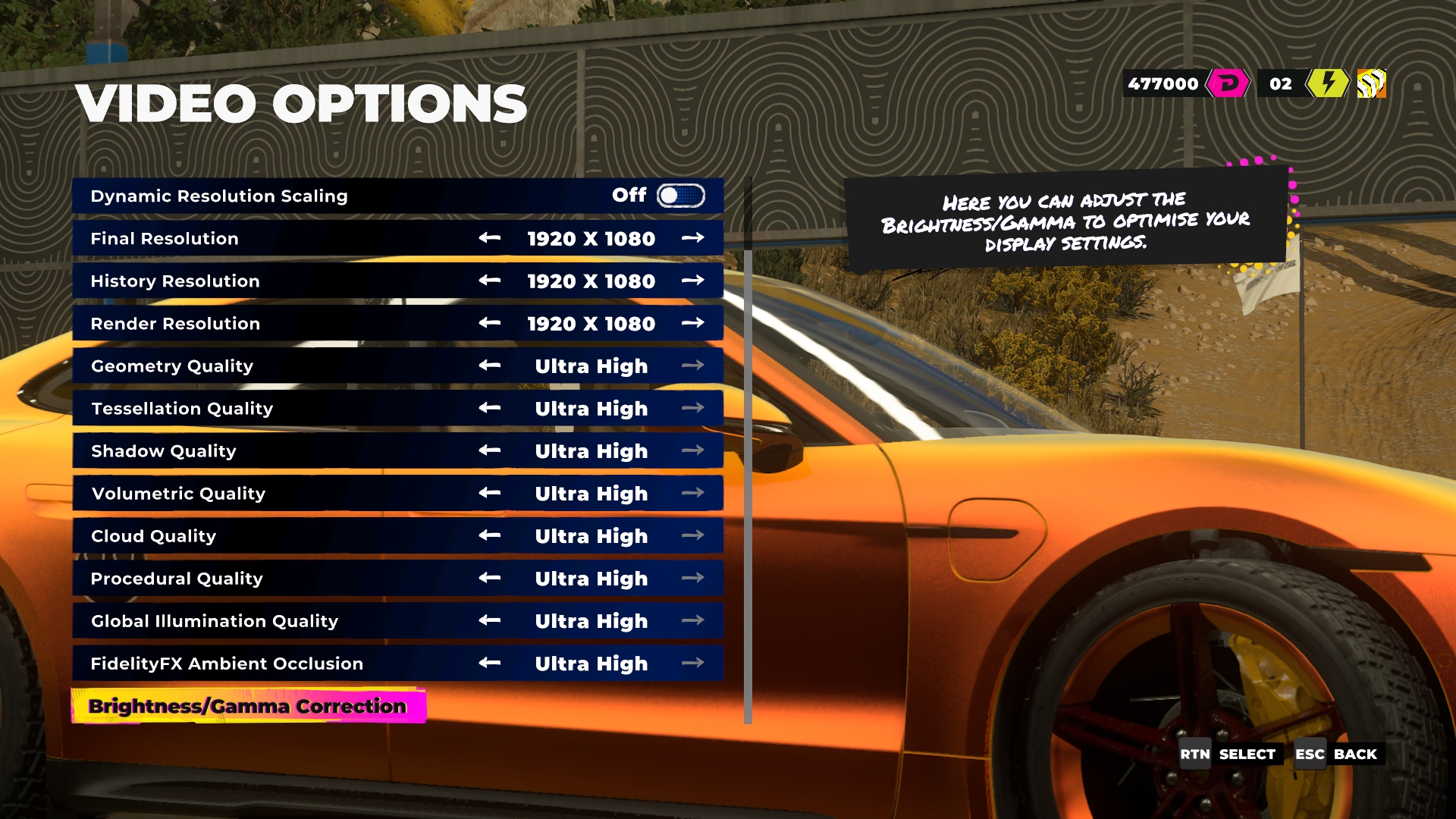
Engine: Onrush. We test using the Ultra High preset, DX12 API.
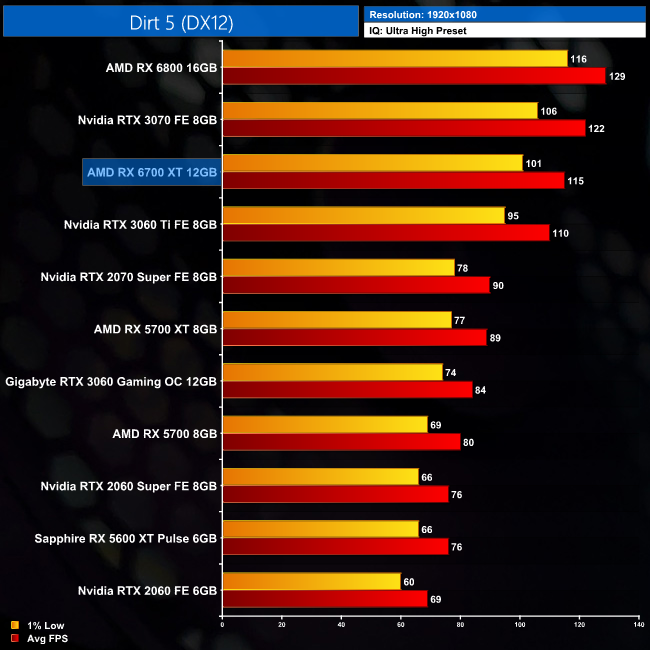
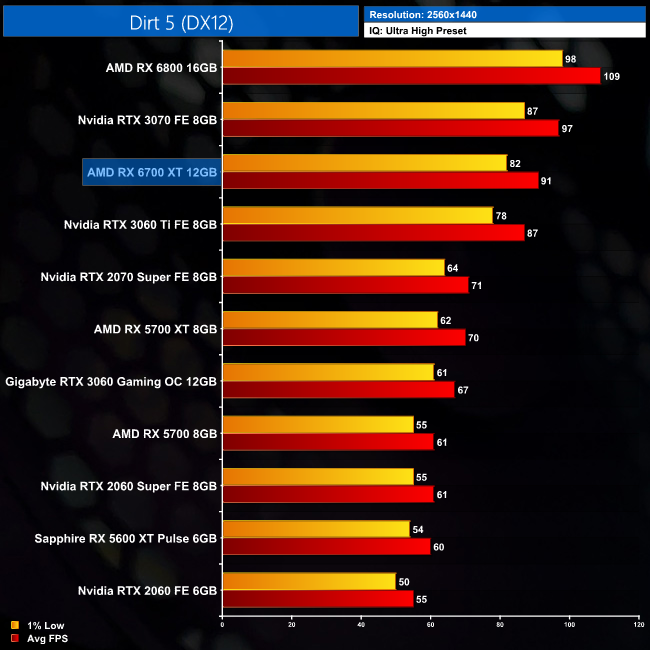
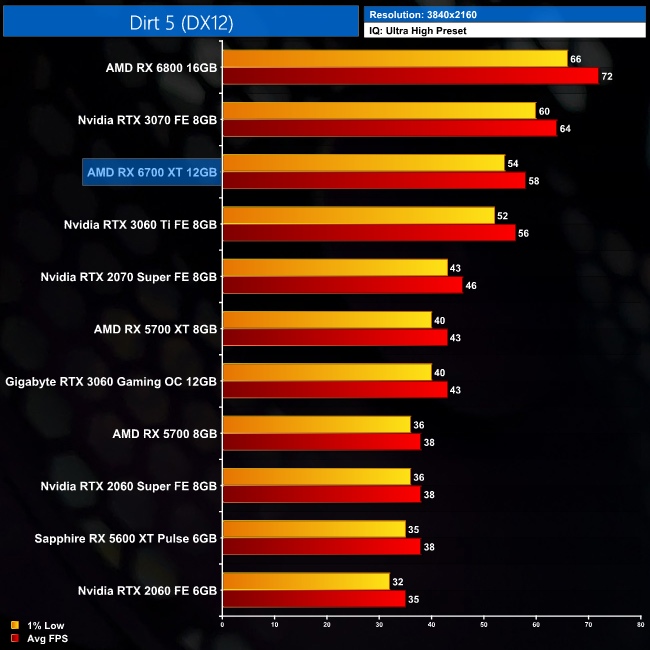
Moving onto Dirt 5, at 1080p the RX 6700 XT comes in 11% slower than the RX 6800, delivering 115FPS on average. That's just an extra 5 frames compared to the RTX 3060 Ti, while it's also 6% behind the RTX 3070.
Up at 1440p now, the scaling hasn't changed at all, as the 6700 XT is still 5% faster than the 3060 Ti, but 6% slower than the RTX 3070. Either way, an average frame rate of 91FPS is still very smooth at this resolution.
Tom Clancy's The Division 2 is an online action role-playing video game developed by Massive Entertainment and published by Ubisoft. The sequel to Tom Clancy's The Division (2016), it is set in a near-future Washington, D.C. in the aftermath of a smallpox pandemic, and follows an agent of the Strategic Homeland Division as they try to rebuild the city. (Wikipedia).
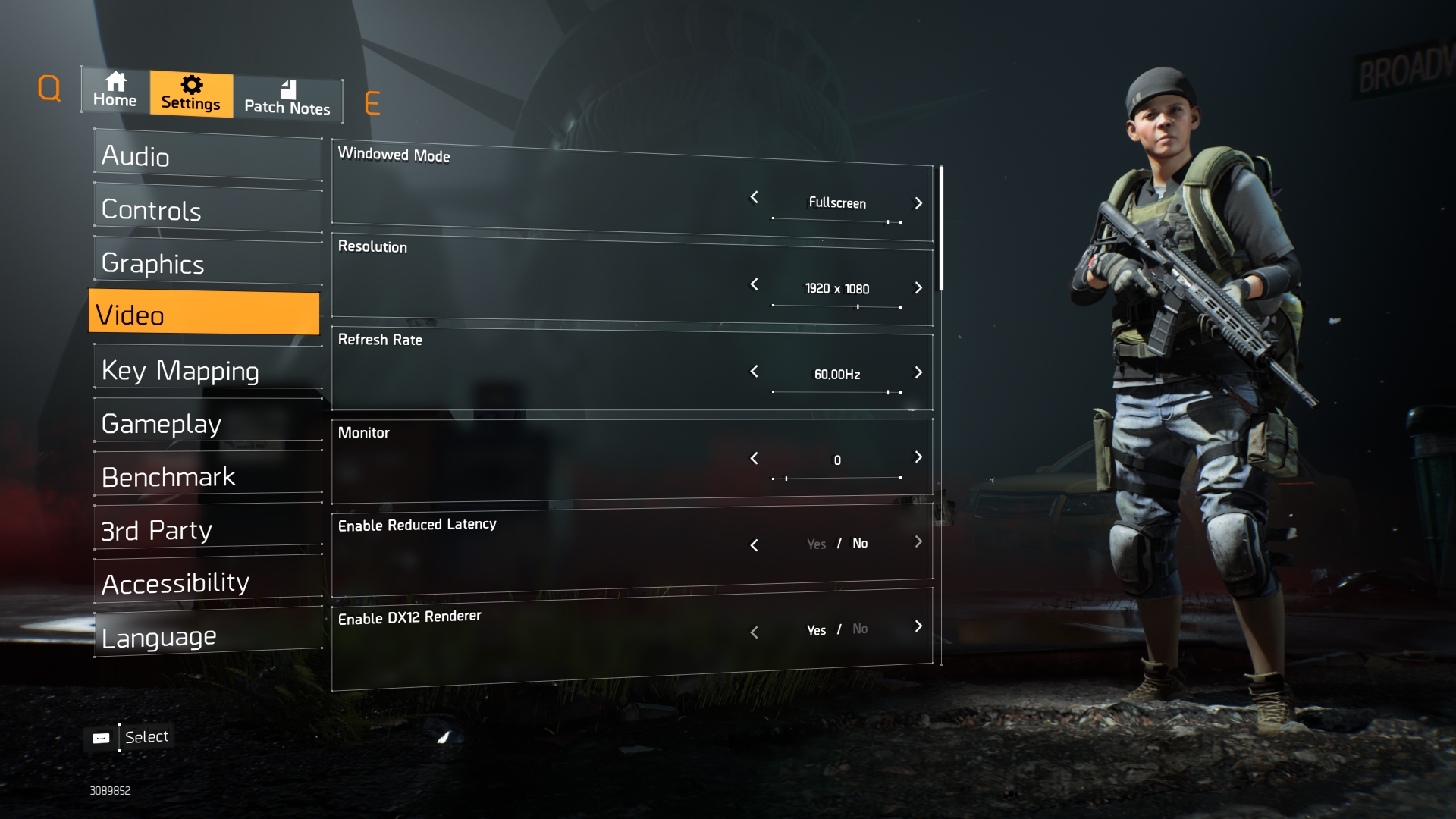
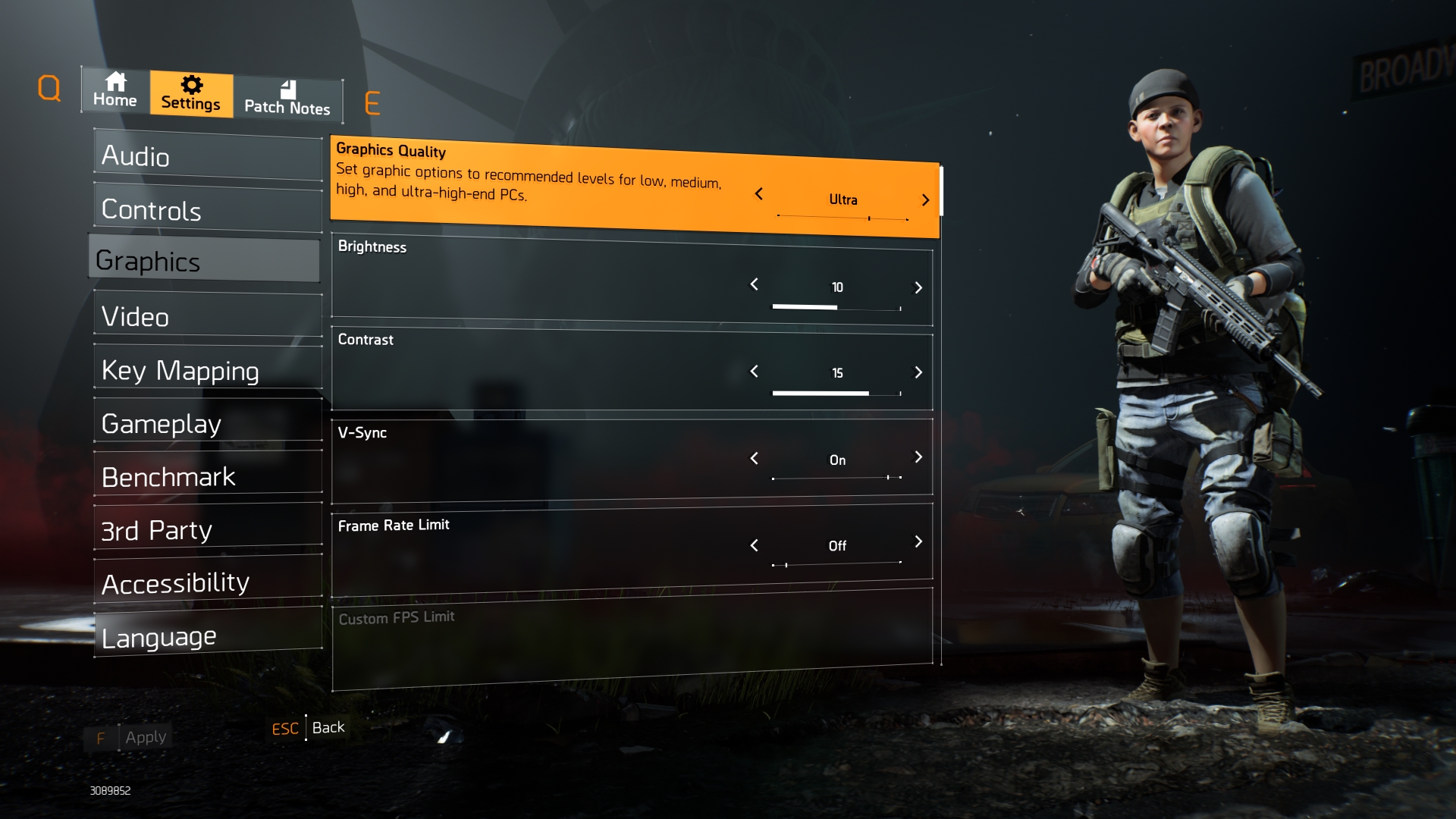
Engine: Snowdrop. We test using the Ultra preset, but with V-Sync disabled, DX12 API.
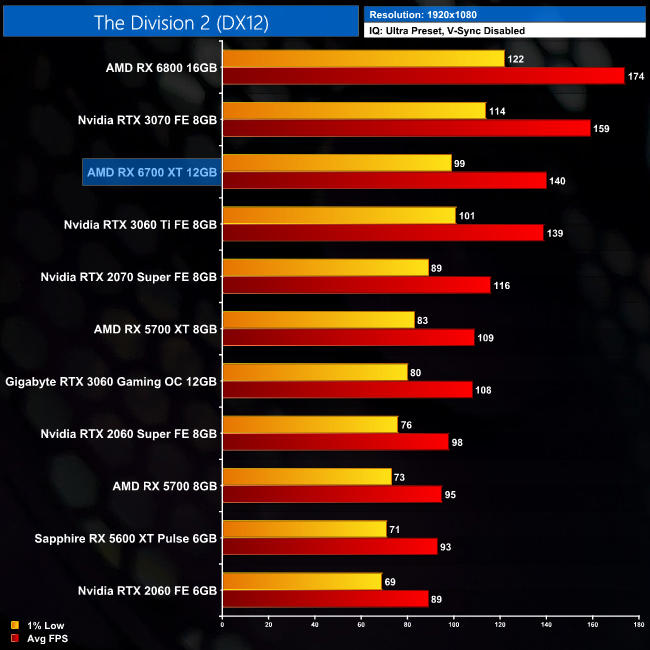
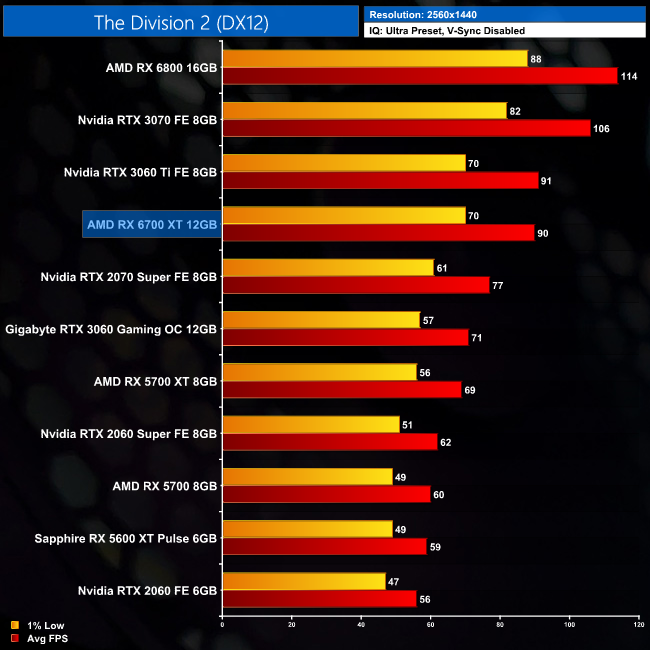
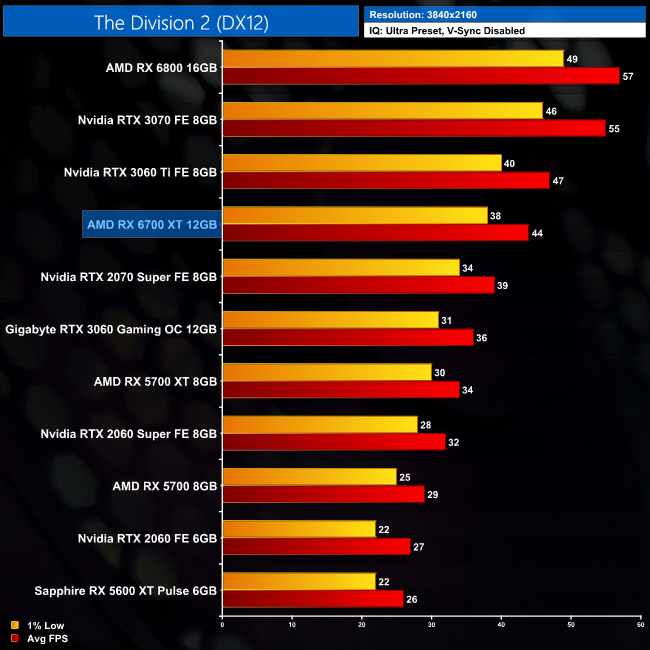
As for The Division 2, despite being an AMD title, at 1080p we can see the 6700 XT is trailing the RTX 3070 by a 12% margin, while it's also just a single frame faster than the RTX 3060 Ti. Against the RX 6800, we're looking at a pretty large 20% gap between the two.
At 1440p, the 6700 XT even falls behind the RTX 3060 Ti, hitting 90FPS on average. It's hardly a big difference there, but it's also now 15% slower than the RTX 3070, when the difference was 12% at 1080p.
F1 2020 is the official video game of the 2020 Formula 1 and Formula 2 Championships developed and published by Codemasters. It is the thirteenth title in the Formula 1 series developed by the studio and was released on 7 July 2020 for pre-orders of the Michael Schumacher Edition and 10 July 2020 for the Seventy Edition on Microsoft Windows, PlayStation 4, Xbox One. (Wikipedia).
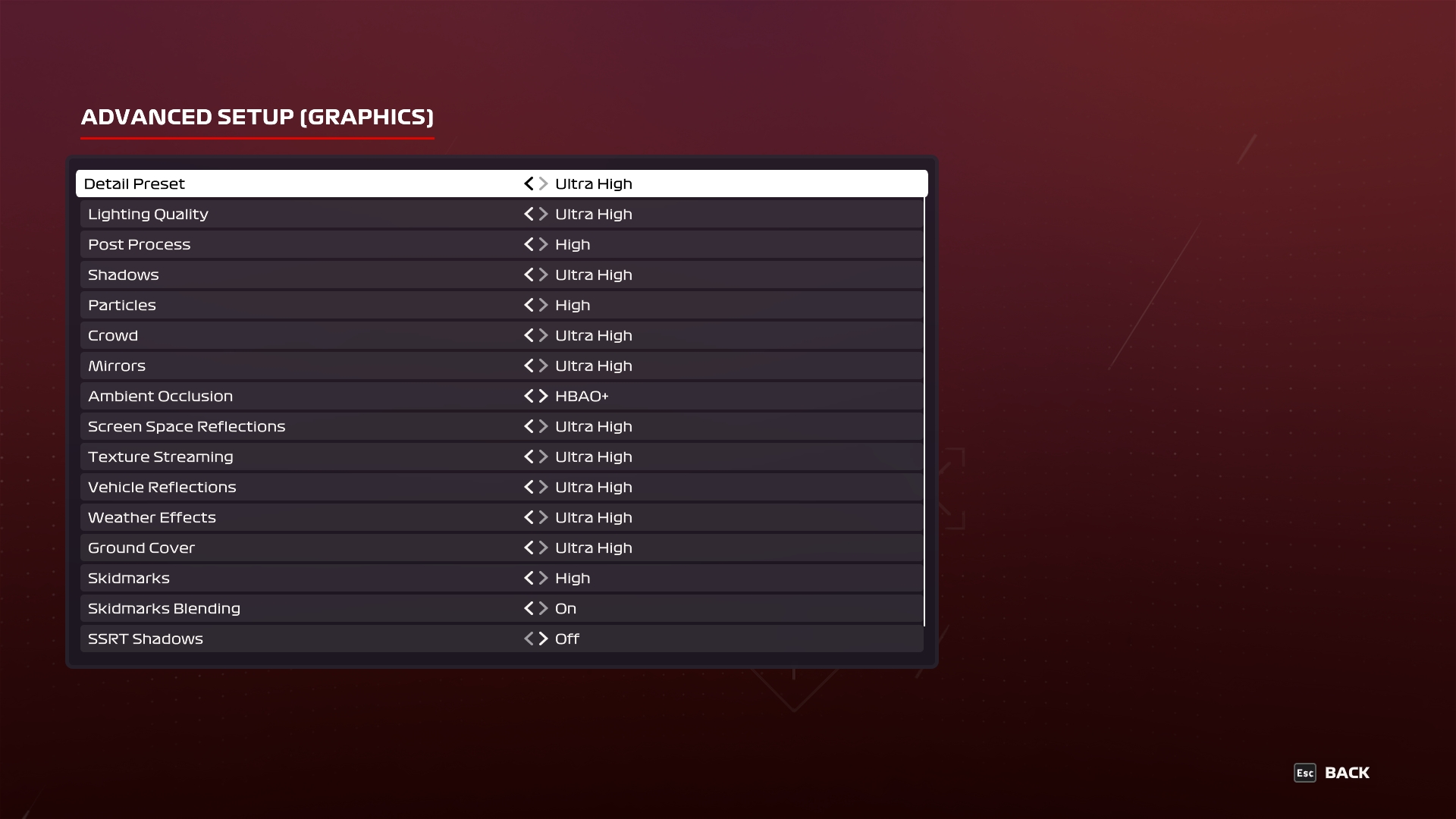
Engine: EGO. We test using the Ultra High preset, DX12 API.
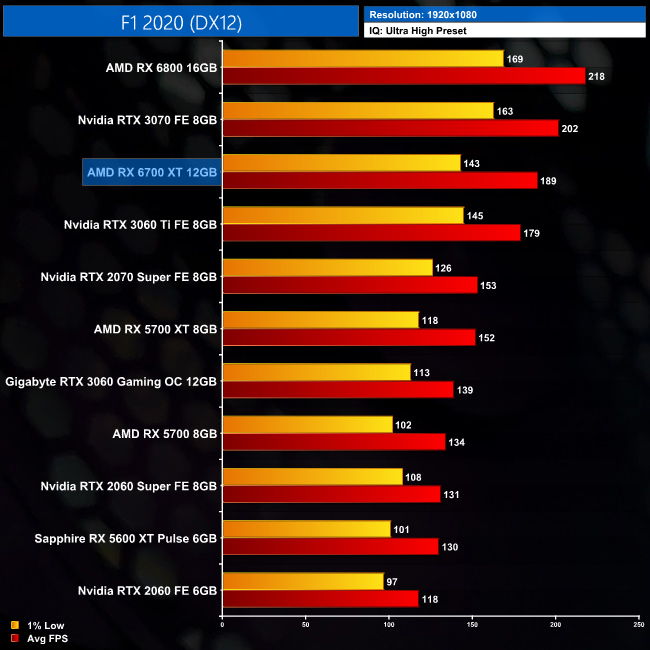
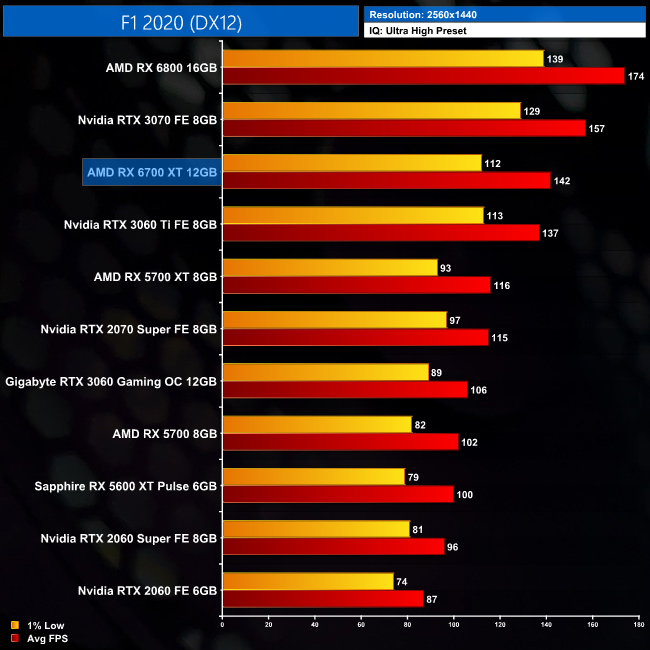
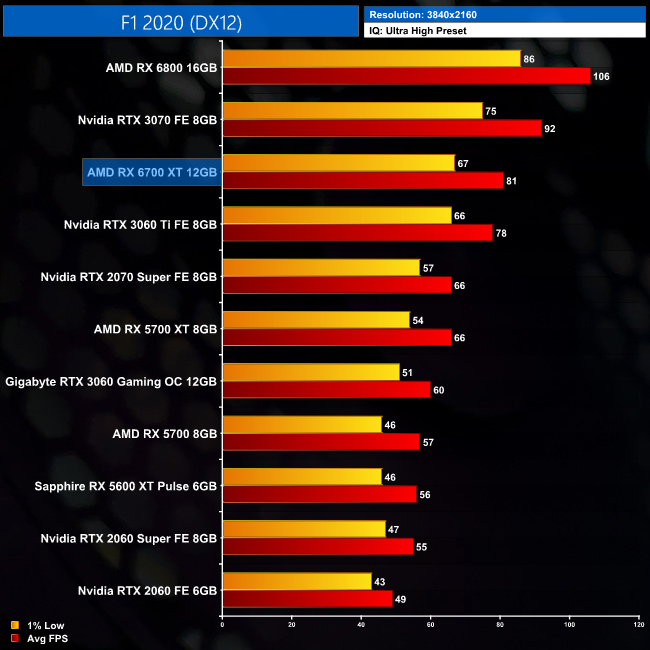
One of the least demanding games we test, F1 2020 sees the 6700 XT average 189FPS at 1080p, where it's just 6% behind the RTX 3070. It's also 6% faster than the RTX 3060 Ti, so it is bang in the middle between those two GeForce GPUs.
The 6700 XT does fall away at 1440p though, where it hits 142FPS on average, meaning it is now 10% slower than the RTX 3070. The 5FPS lead it has over the RTX 3060 Ti is a difference of just 4%.Gears 5 is a third-person shooter video game developed by The Coalition and published by Xbox Game Studios for Xbox One, Microsoft Windows and Xbox Series X. It is the fifth installment of the Gears of War series and the sequel to Gears of War 4. The ultimate edition was released on September 6, 2019, while the standard edition of the game was released worldwide on September 10, 2019. (Wikipedia).
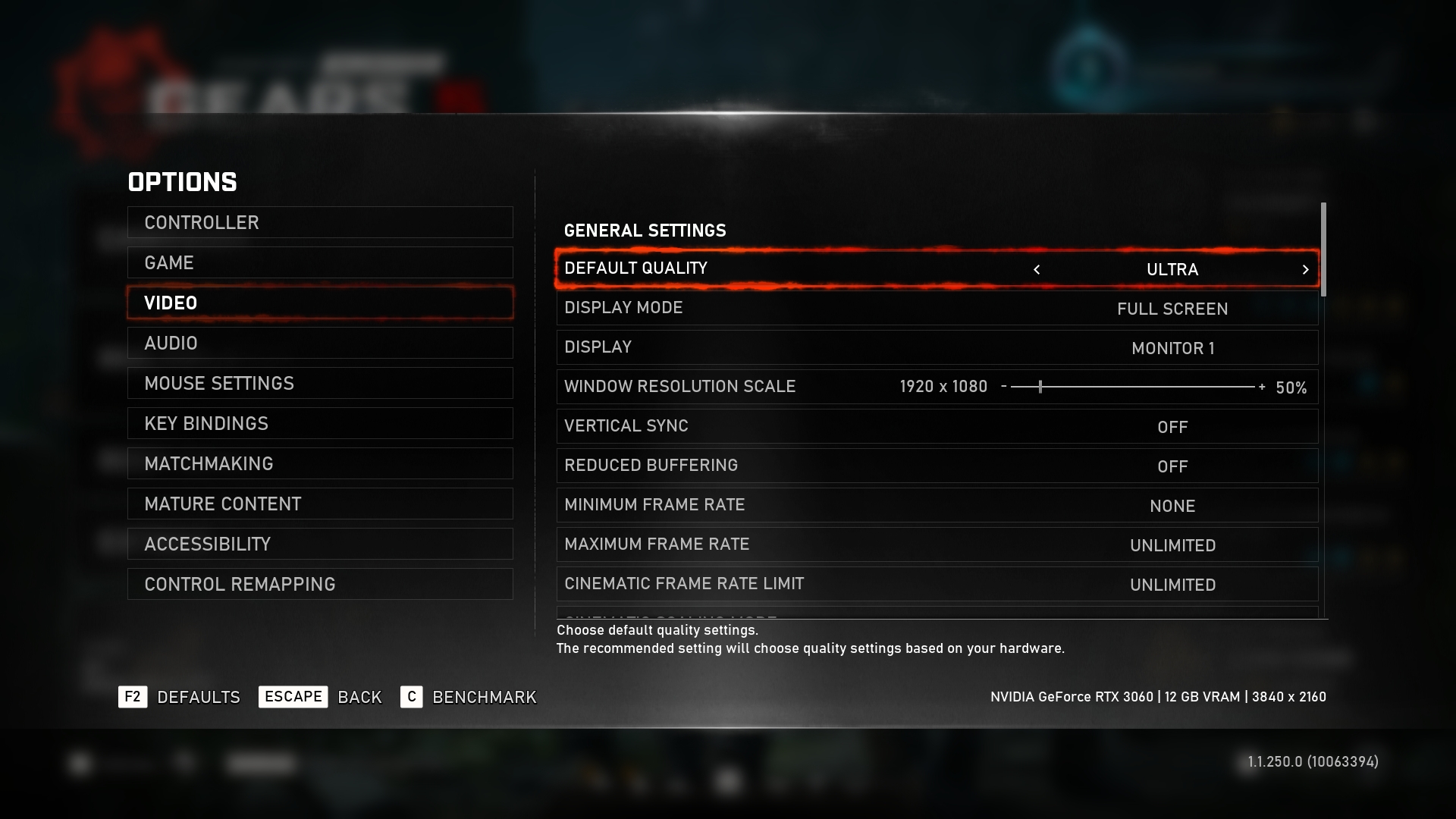
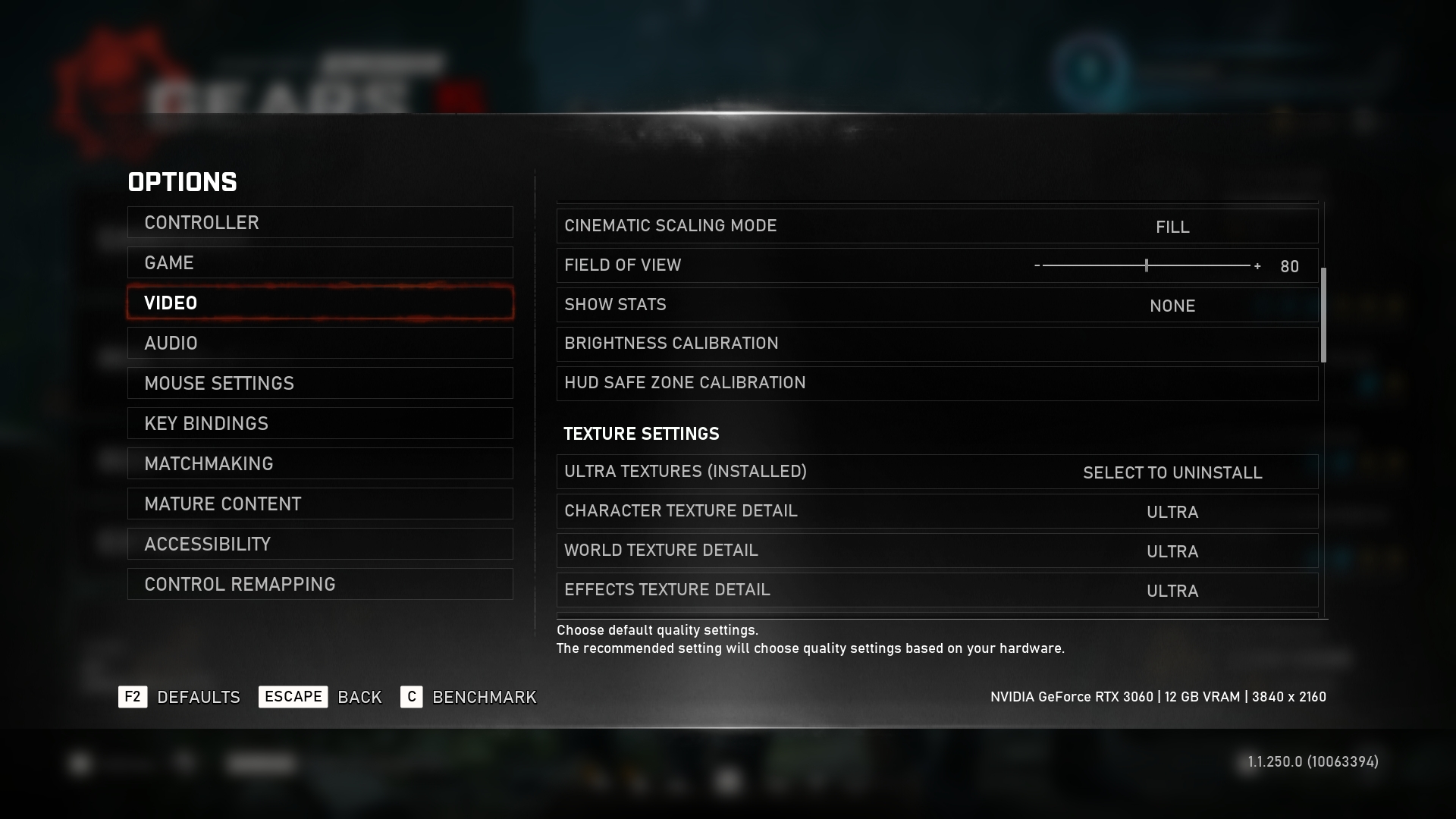
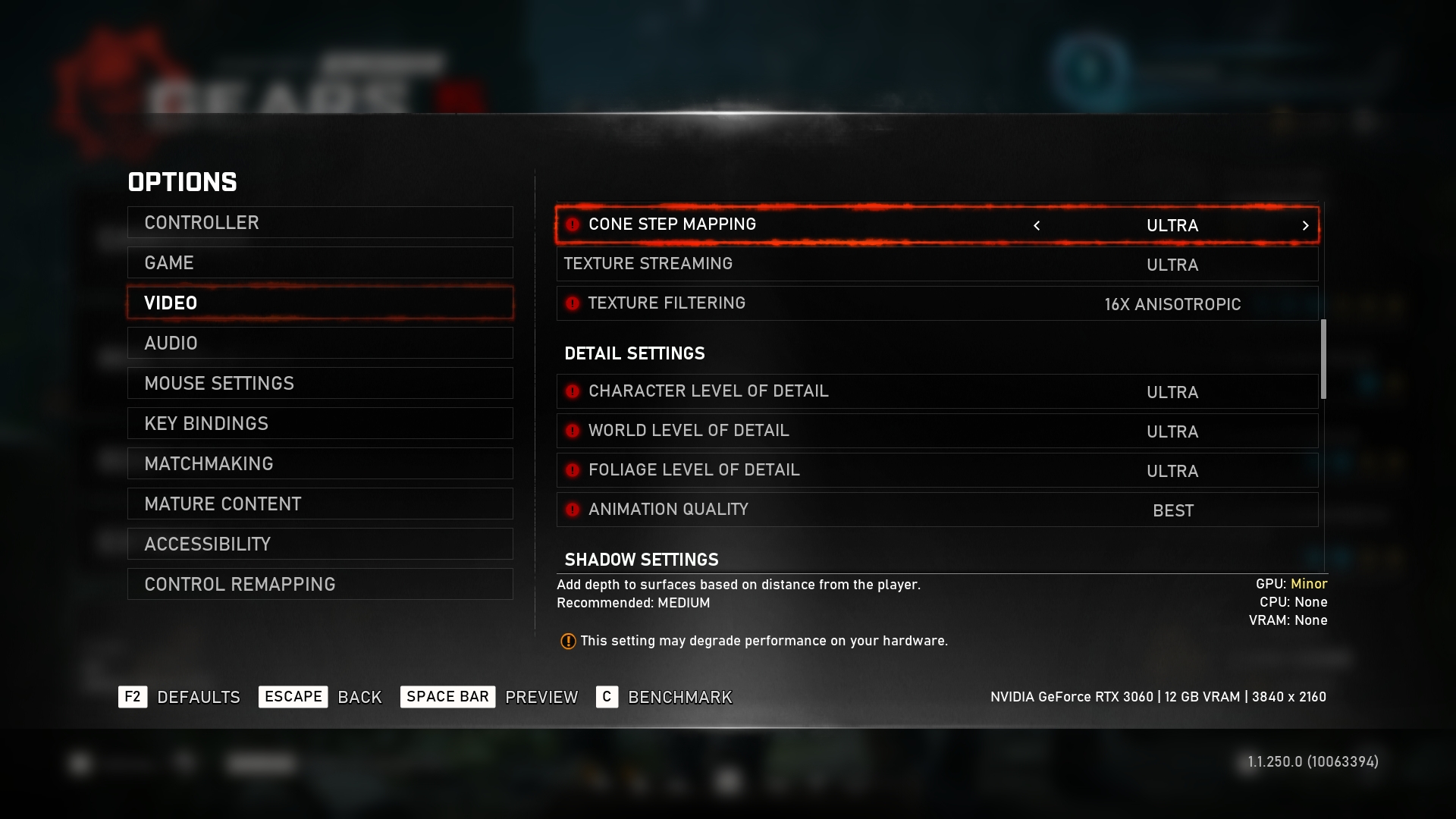
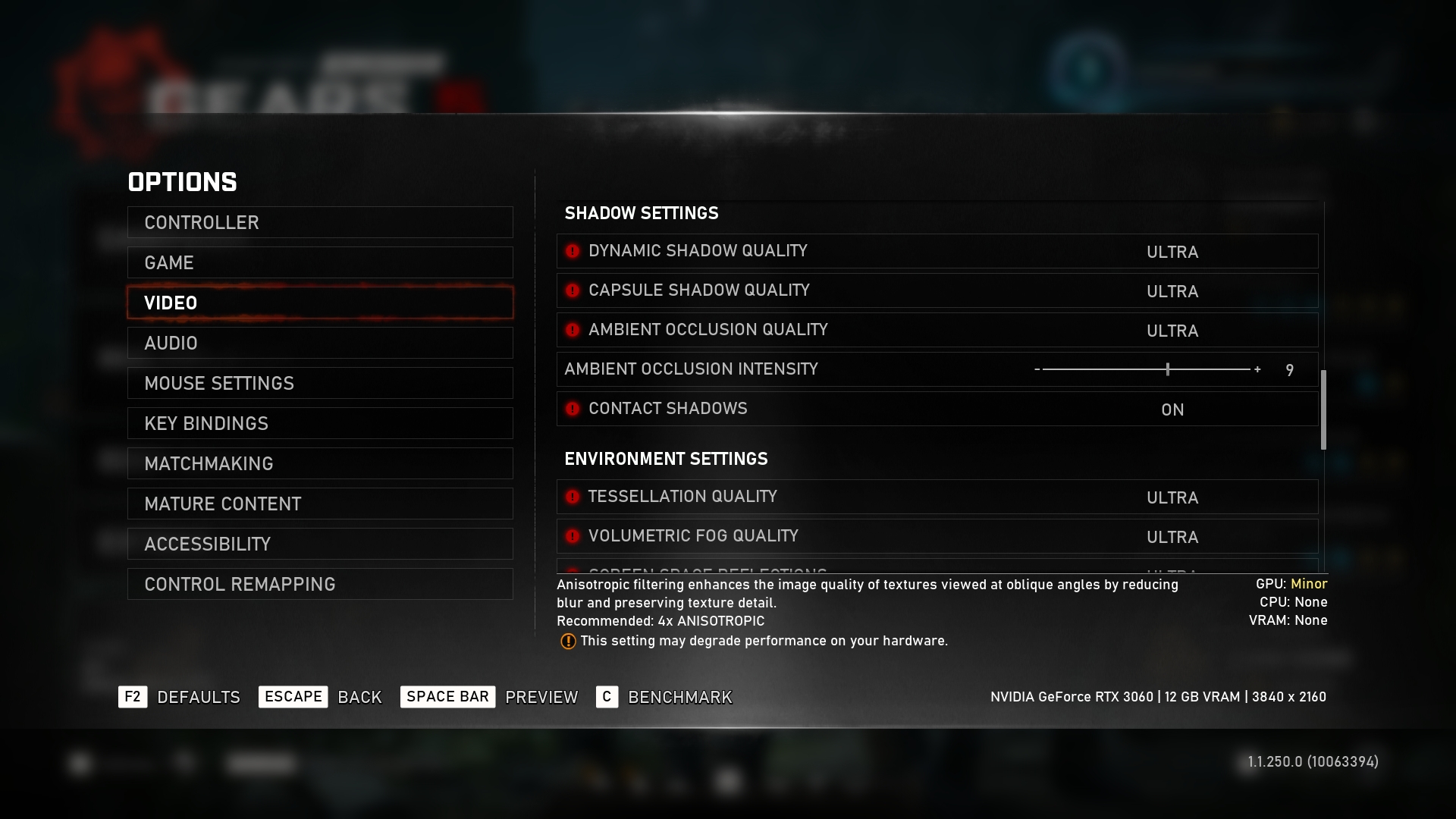
Engine: Unreal Engine 4. We test using the Ultra preset, with Best Animation Quality (instead of Auto), VRS disabled, DX12 API.
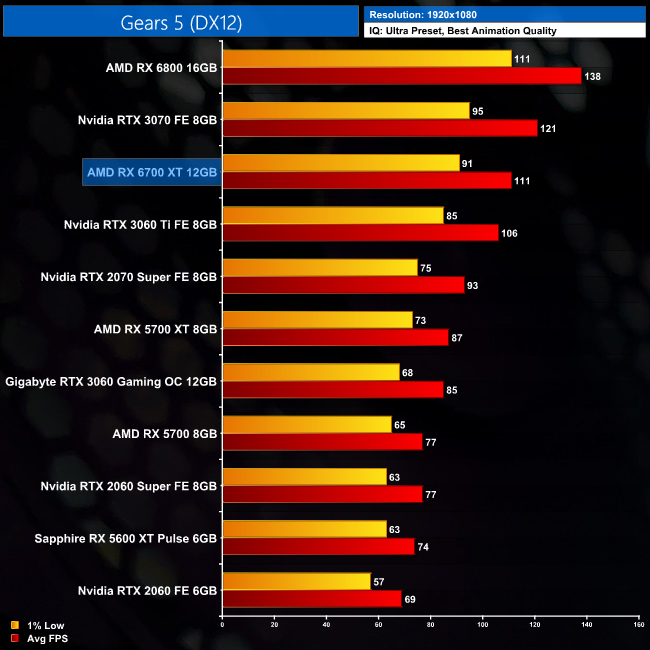
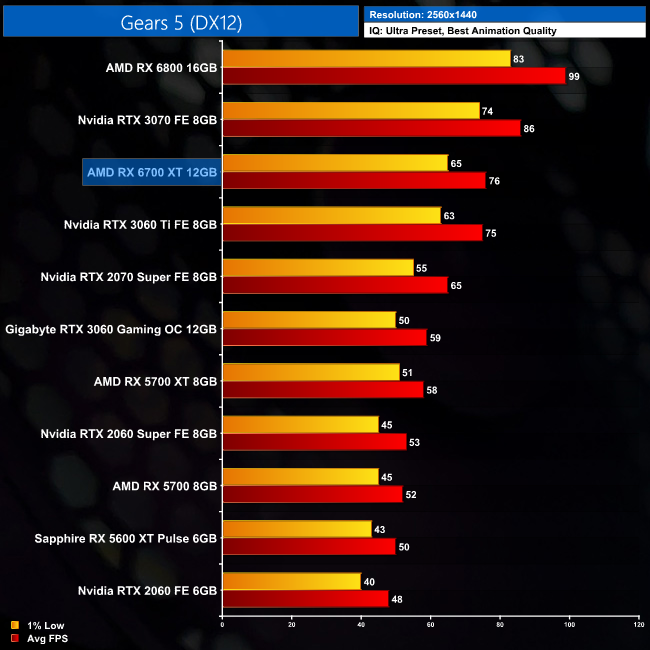
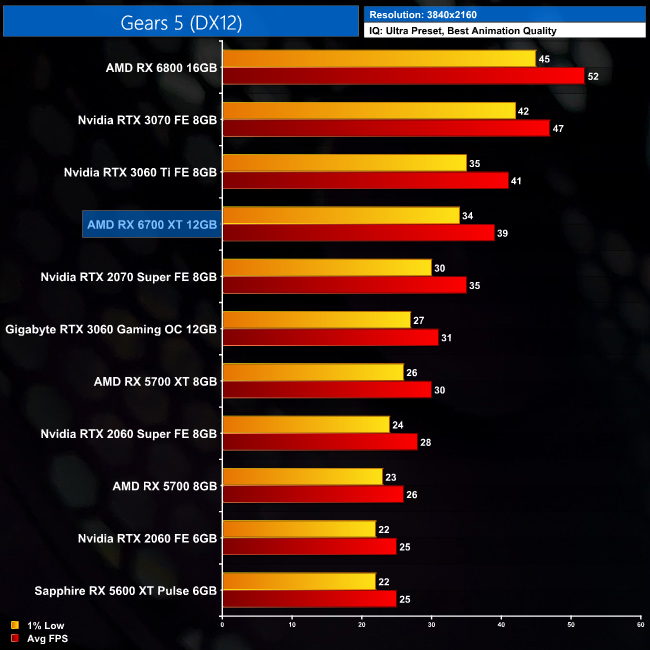
Gears 5 is another AMD title, but just like the Division 2, the 6700 XT isn't doing so hot here. The performance is still solid at 1080p, delivering 111FPS on average, which is 5% more frame than the RTX 3060 Ti.
At 1440p though, it drops off, to the point where there's only a single frame between the 6700 XT and 3060 Ti. Compared to the RTX 3070, AMD's new mid-range GPU is 12% slower.
Hitman 3 (stylized as HITMAN III) is a stealth game developed and published by IO Interactive for Microsoft Windows, PlayStation 4, PlayStation 5, Xbox One, Xbox Series X/S, Stadia (under the title Hitman: World of Assassination), and Nintendo Switch on 20 January 2021. It is the eighth main installment in the Hitman series and the final entry in the World of Assassination trilogy, following Hitman (2016) and Hitman 2 (2018). (Wikipedia).
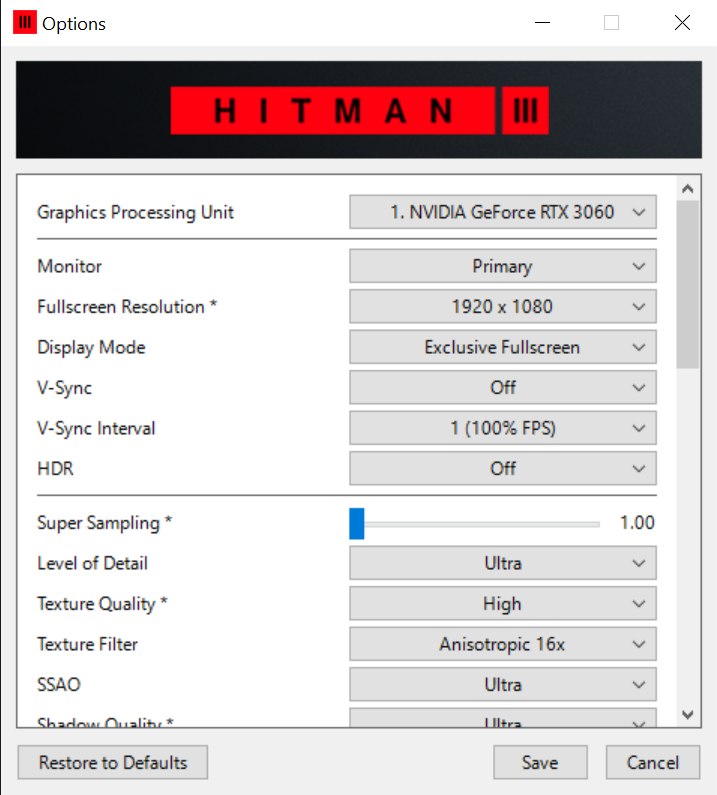
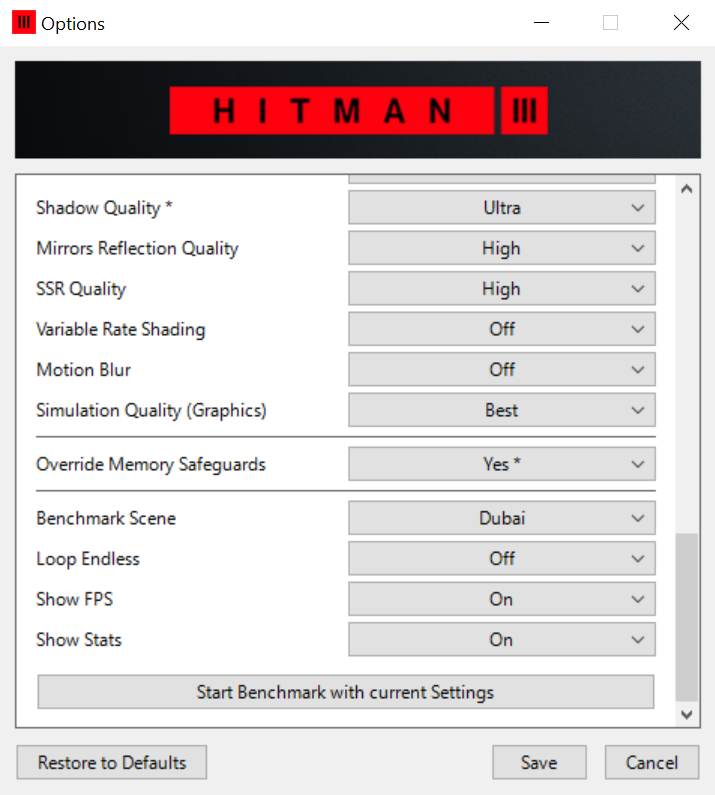
Engine: Glacier. We test using Ultra settings (or High where Ultra is not available), VRS off, DX12 API.
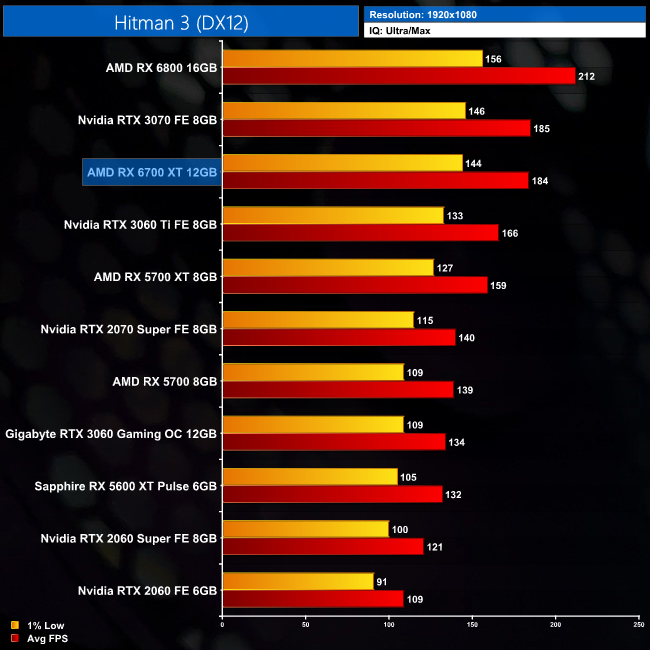
Hitman 3 is an AMD-friendly title though, and at 1080p the RX 6700 XT is effectively matching the RTX 3070, with only a single frame difference between the two. It's also 11% faster than the RTX 3060 Ti, which managed 166FPS.
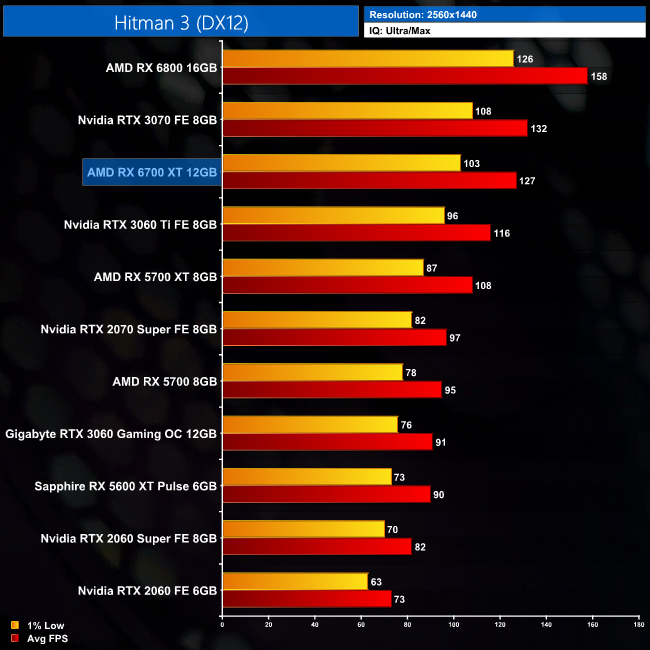
As for 1440p, it's again very close, though the 6700 XT is 4% slower than the RTX 3070. I'd still call that close enough to be irrelevant though, while we can also see a 9% lead over the RTX 3060 Ti.
Metro Exodus is a first-person shooter video game developed by 4A Games and published by Deep Silver in 2019. It is the third instalment in the Metro video game series based on Dmitry Glukhovsky's novels, following the events of Metro 2033 and Metro: Last Light. (Wikipedia).
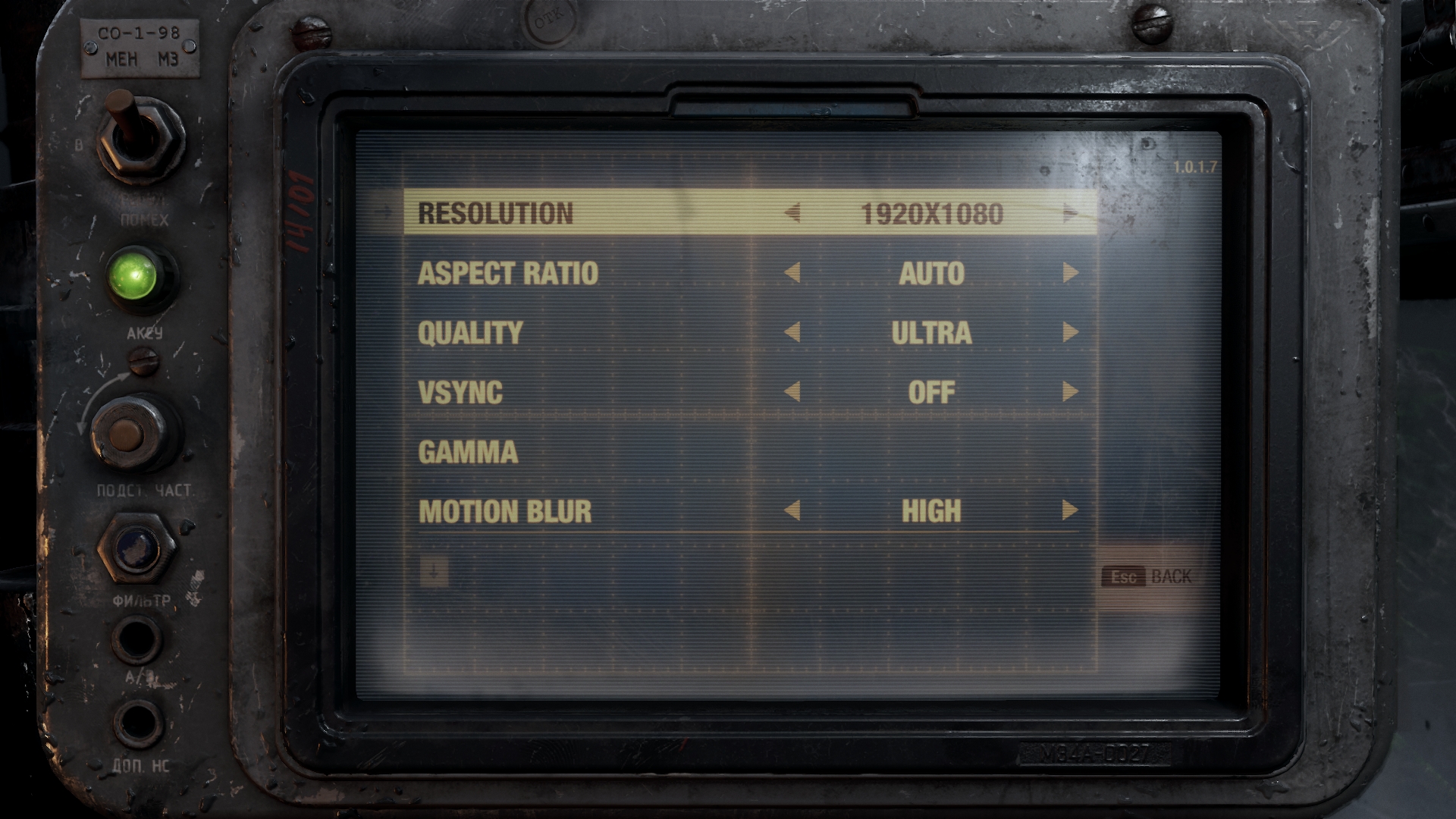
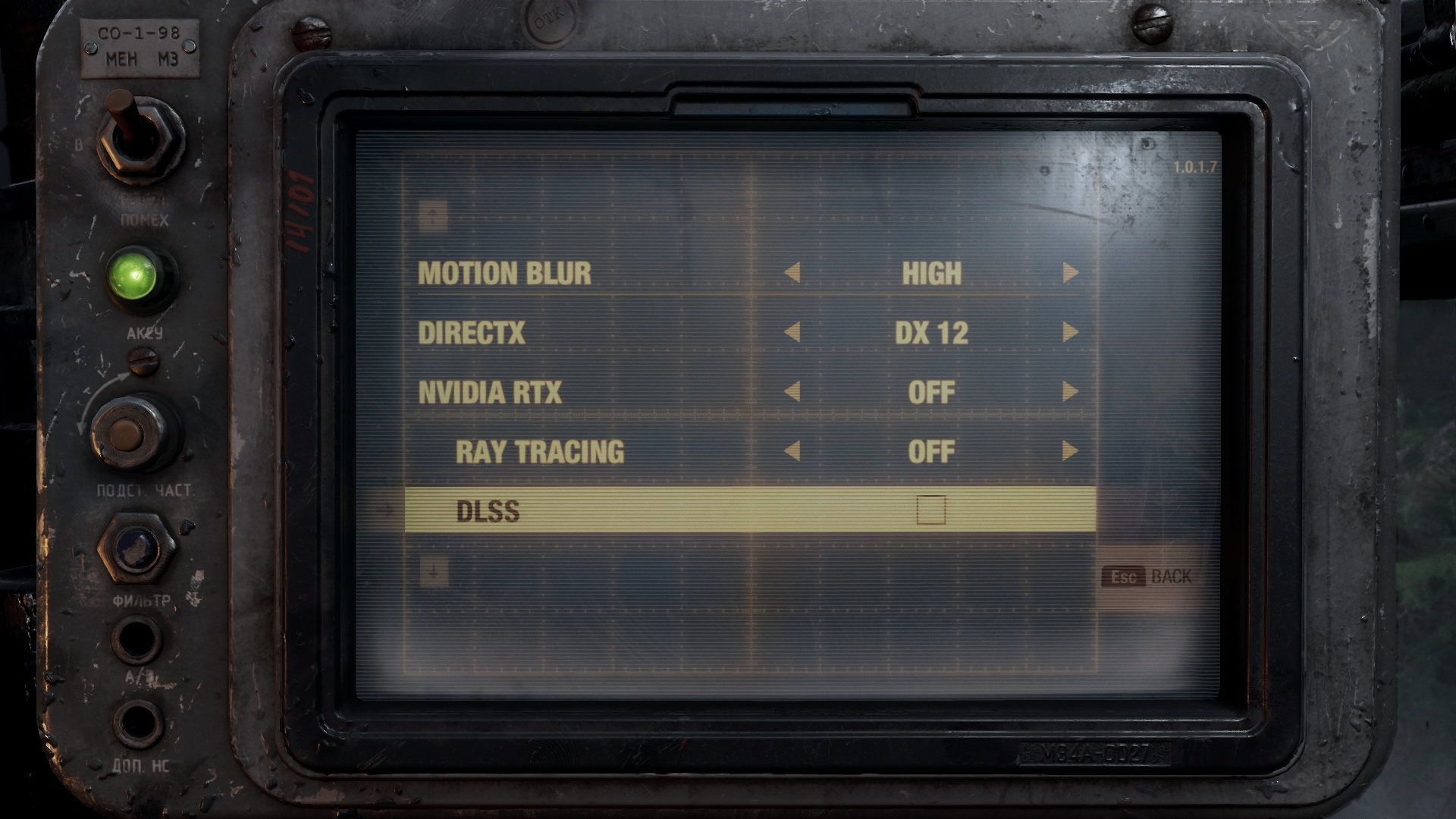
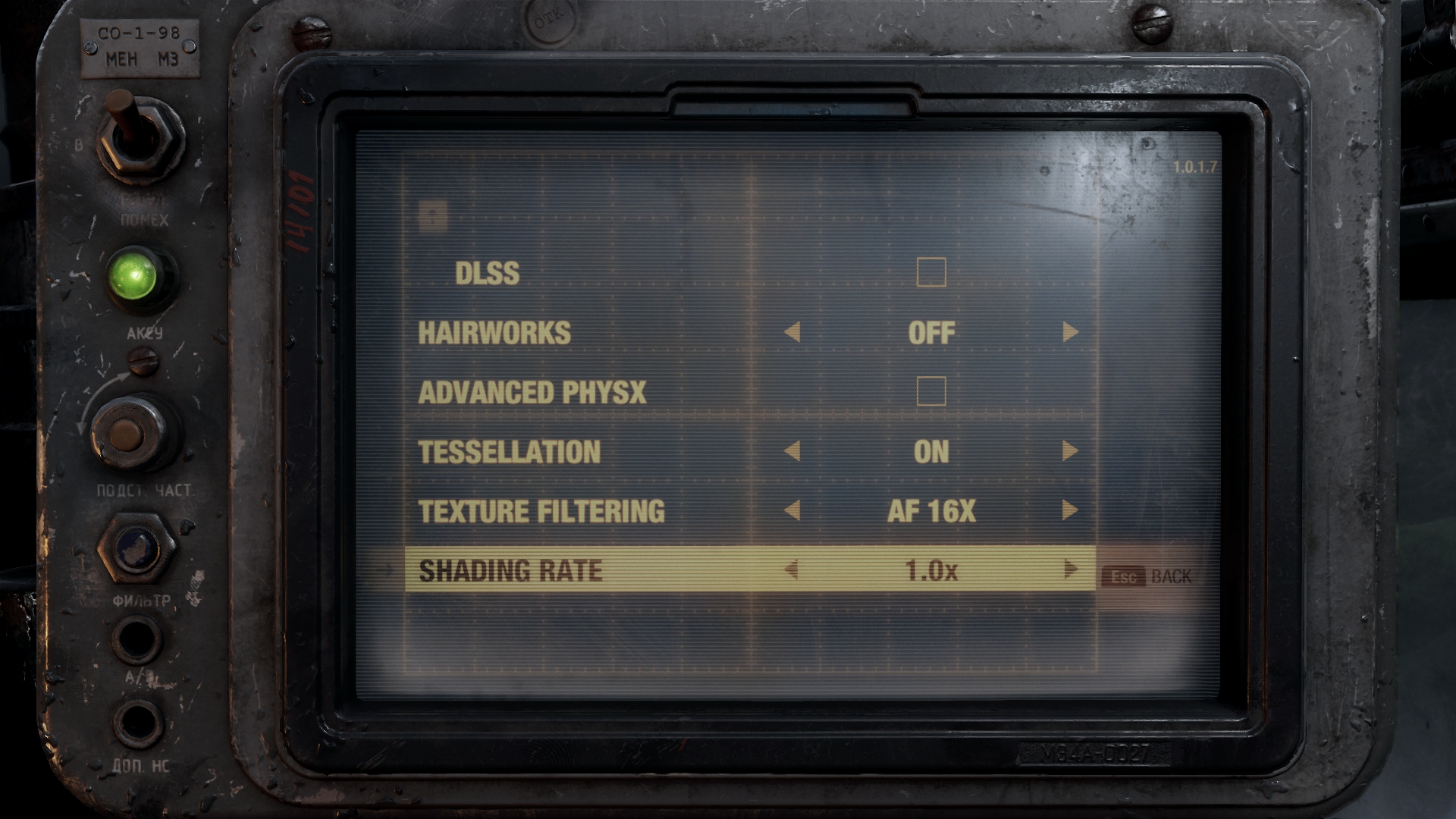
Engine: 4A Engine. We test using the Ultra preset, but with Hairworks and Advanced PhysX turned off, DX12 API.
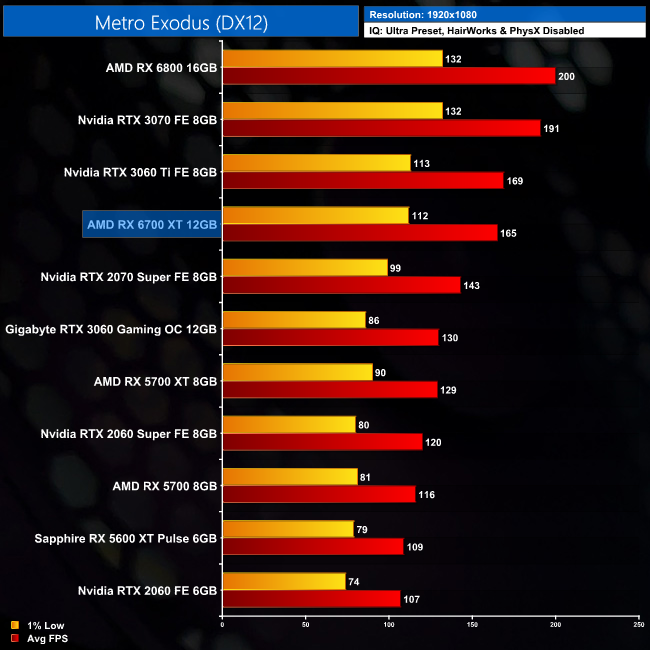
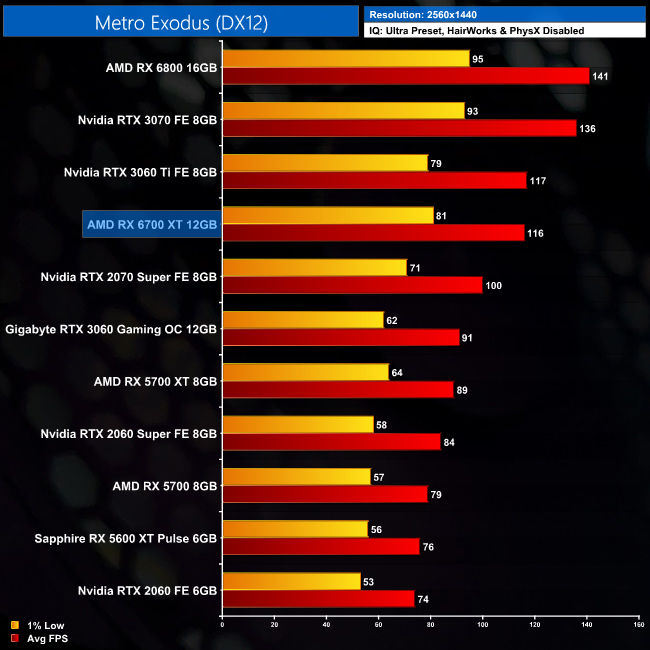
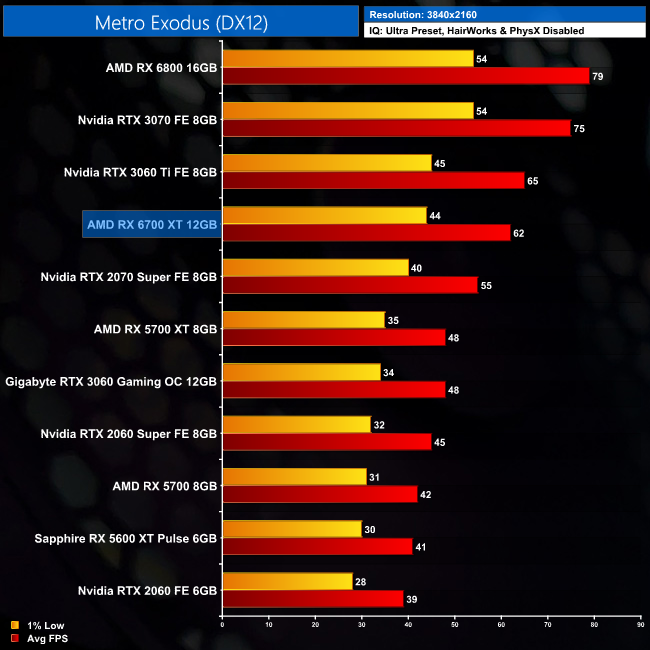
Moving on from one AMD-friendly game, to a title that definitely favours GeForce hardware. At 1080p in Metro Exodus, the RX 6700 XT is 14% slower than the RTX 3070, and is even a touch behind the RTX 3060 Ti. It's still delivering great frame rates, but we'd have hoped for better compared to Nvidia's cards.
The same goes for the 1440p data. Here, the 6700 XT is soundly beaten by the RTX 3070, to the tune of 15%, while it just about matches the RTX 3060 Ti, with both around the 116FPS mark. We're also looking at a 20% deficit compared to the RX 6800.
Red Dead Redemption 2 is a 2018 action-adventure game developed and published by Rockstar Games. The game is the third entry in the Red Dead series and is a prequel to the 2010 game Red Dead Redemption. Red Dead Redemption 2 was released for the PlayStation 4 and Xbox One in October 2018, and for Microsoft Windows and Stadia in November 2019. (Wikipedia).
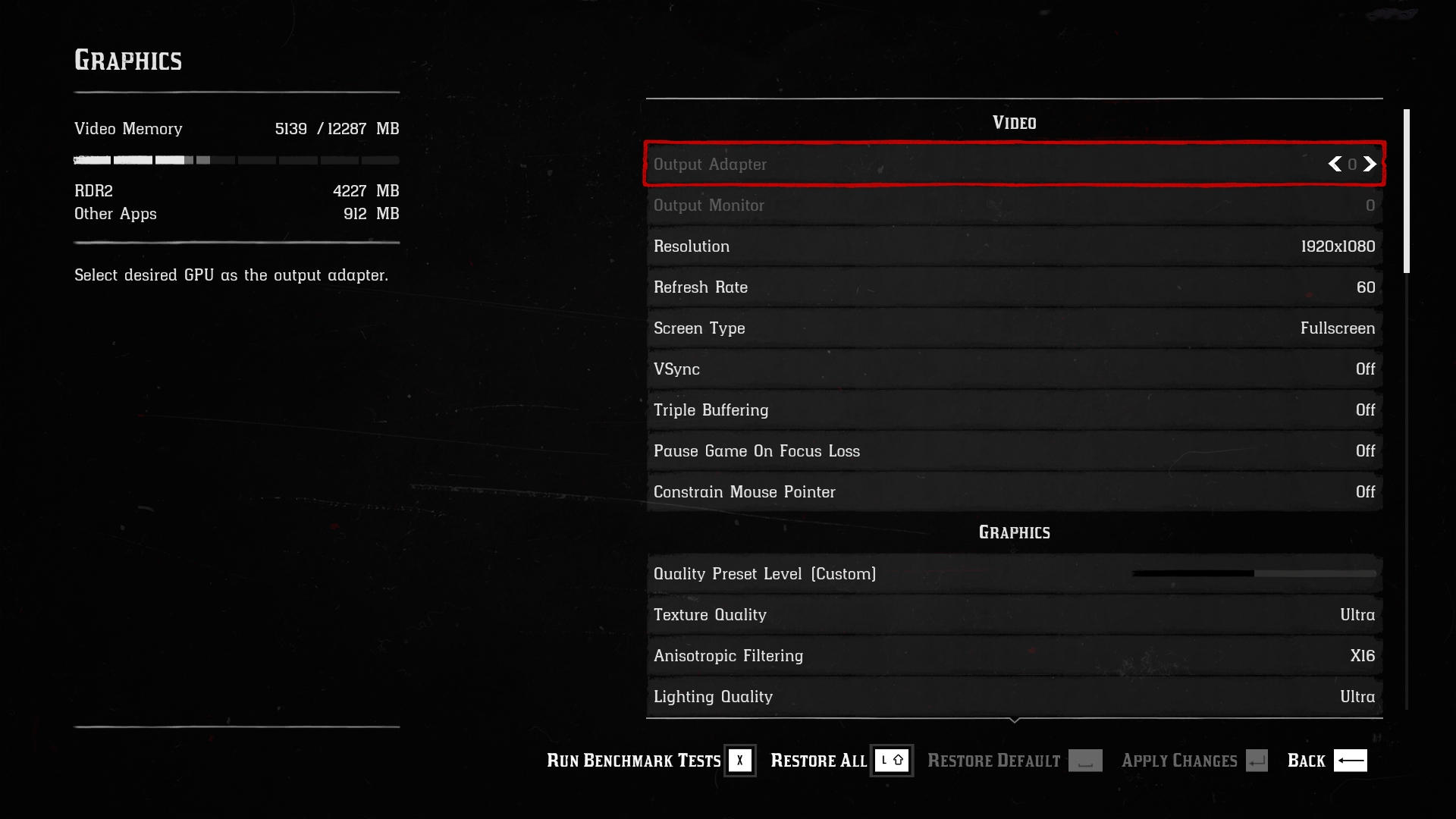
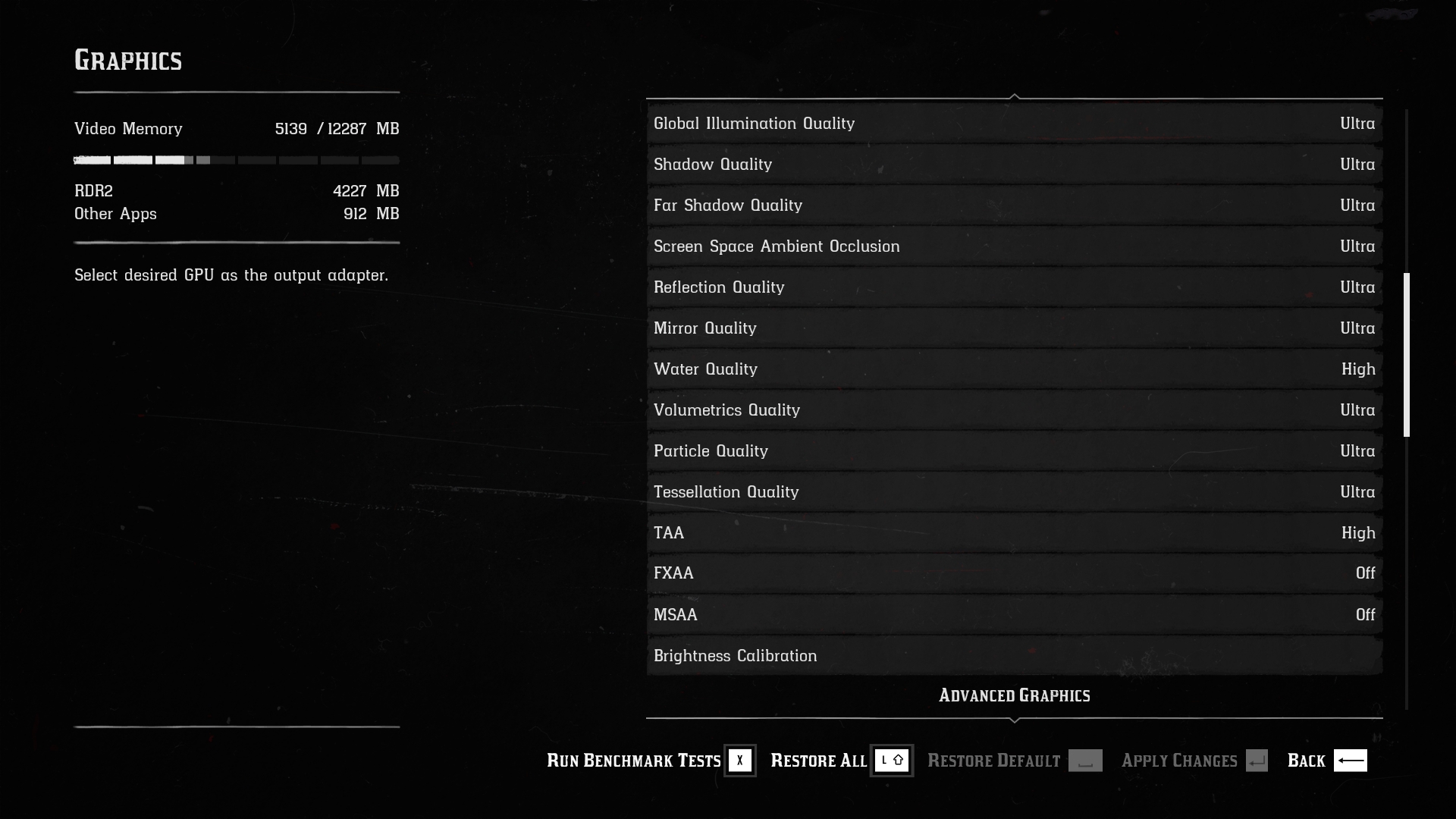
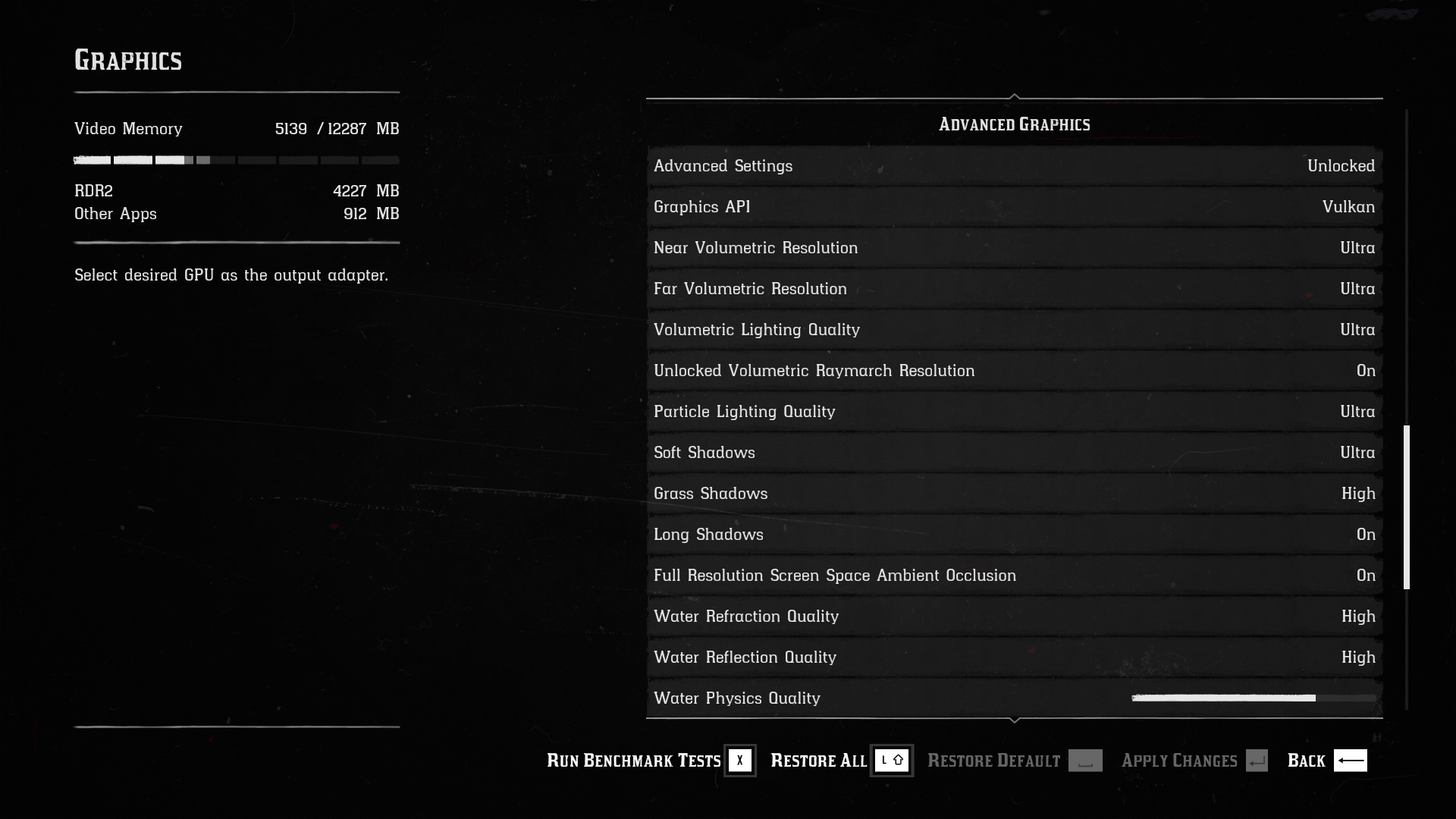
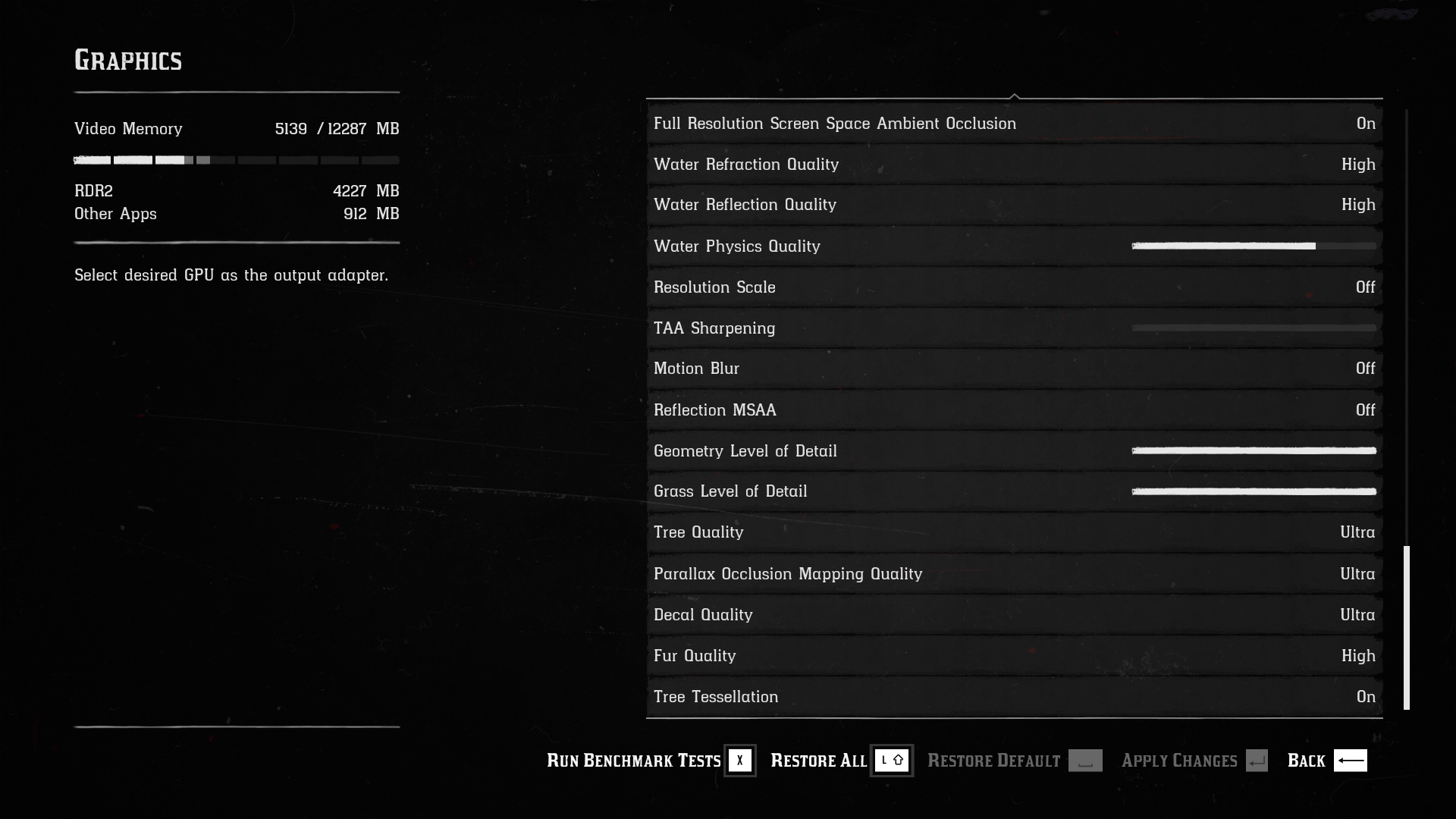
Engine: Rockstar Advance Game Engine (RAGE). We test by manually selecting Ultra settings (or High where Ultra is not available), TAA, Vulkan API.
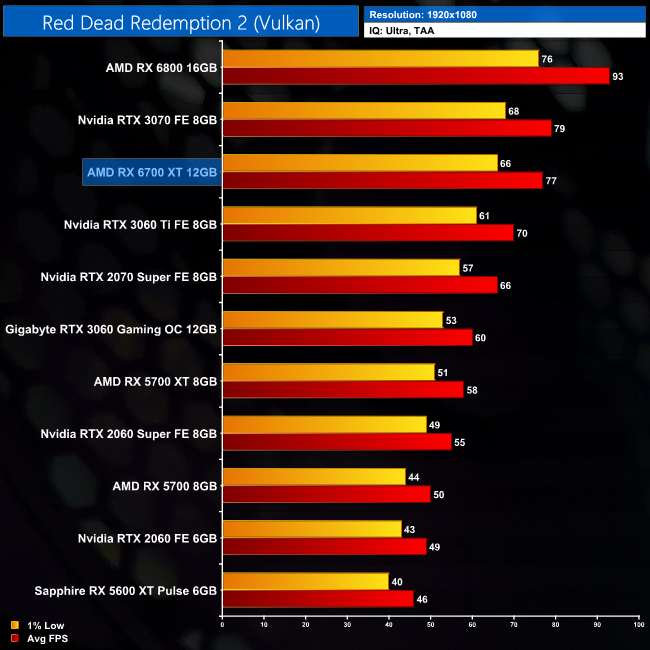
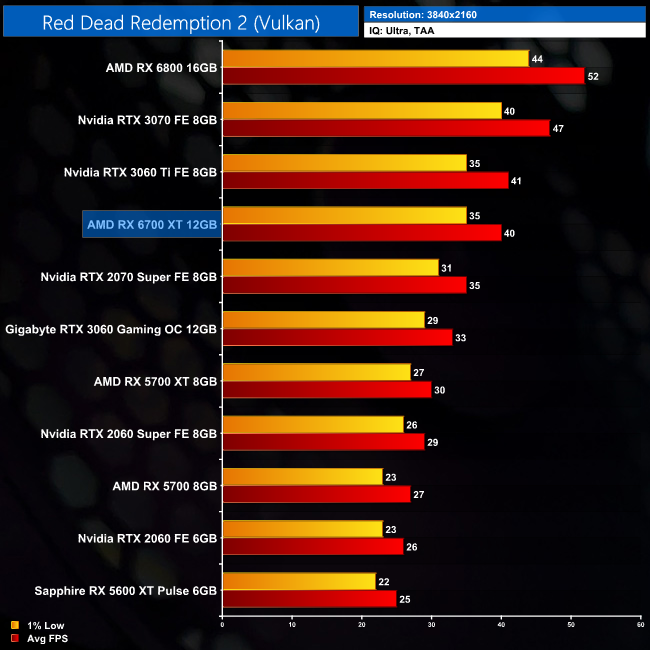
Red Dead Redemption 2 is another very demanding title when using Ultra settings, but at 1080p the RX 6700 XT is doing well. Its average of 77FPS is pretty much on par with the RTX 3070, and it's also a solid 10% ahead of the RTX 3060 Ti, so not bad at all for AMD's latest GPU.
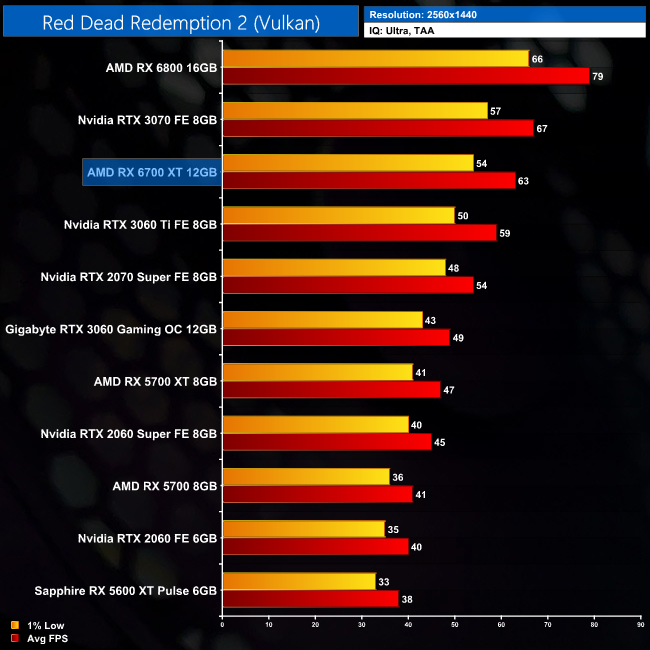
As we have seen from a number of games though, at 1440p the 6700 XT does fall away slightly relative to its competition. Here, it's average of 63FPS is 6% slower than the RTX 3070, when it was 3% slower at 1080p. It's not a big difference, but it's a pretty reliable trend from across our testing.
Total War Saga: Troy is a 2020 turn-based strategy video game developed by Creative Assembly Sofia and published by Sega. The game was released for Windows on 13 August 2020 as the second installment in the Total War Saga subseries, succeeding Thrones of Britannia (2018). (Wikipedia).
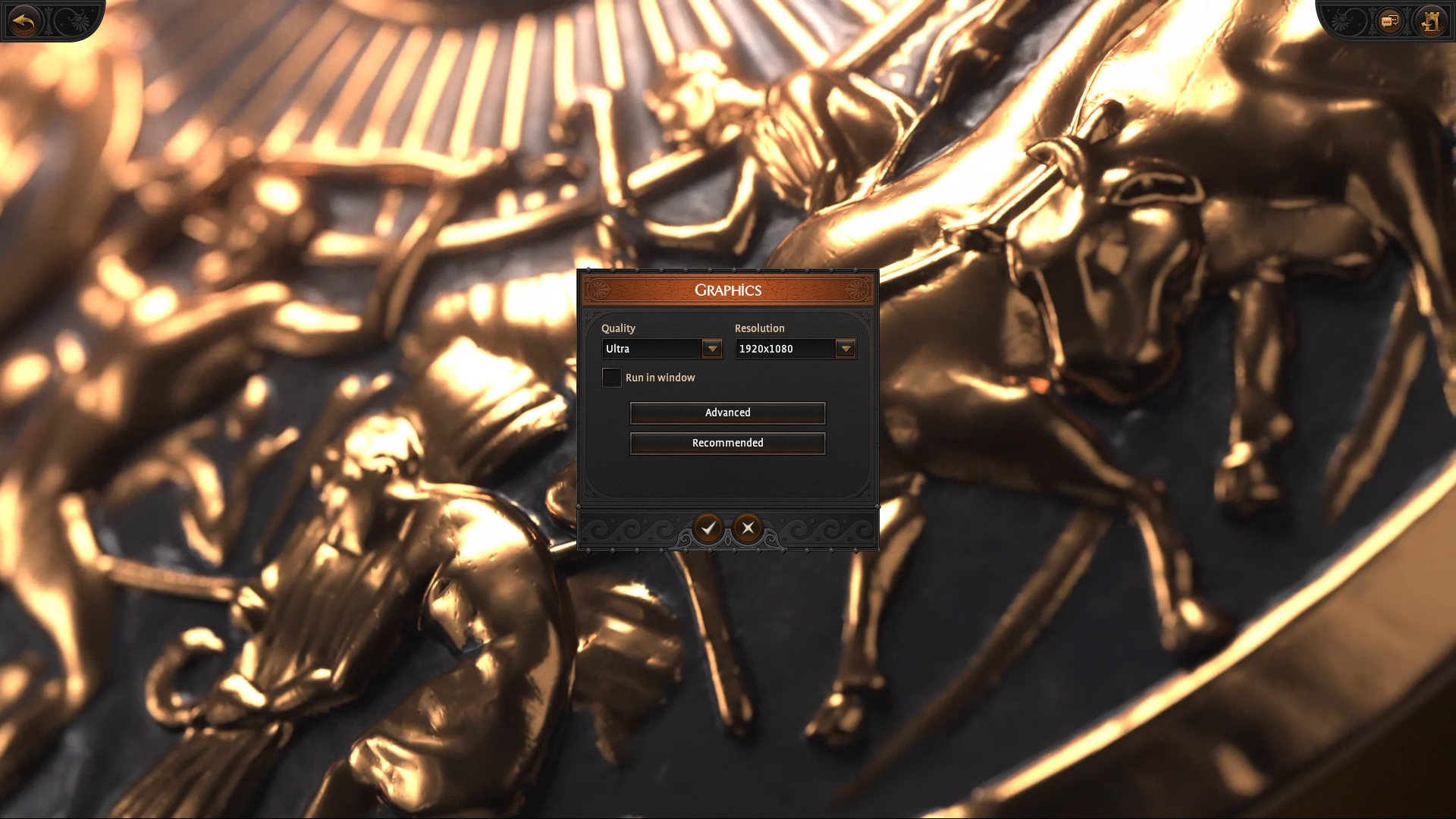
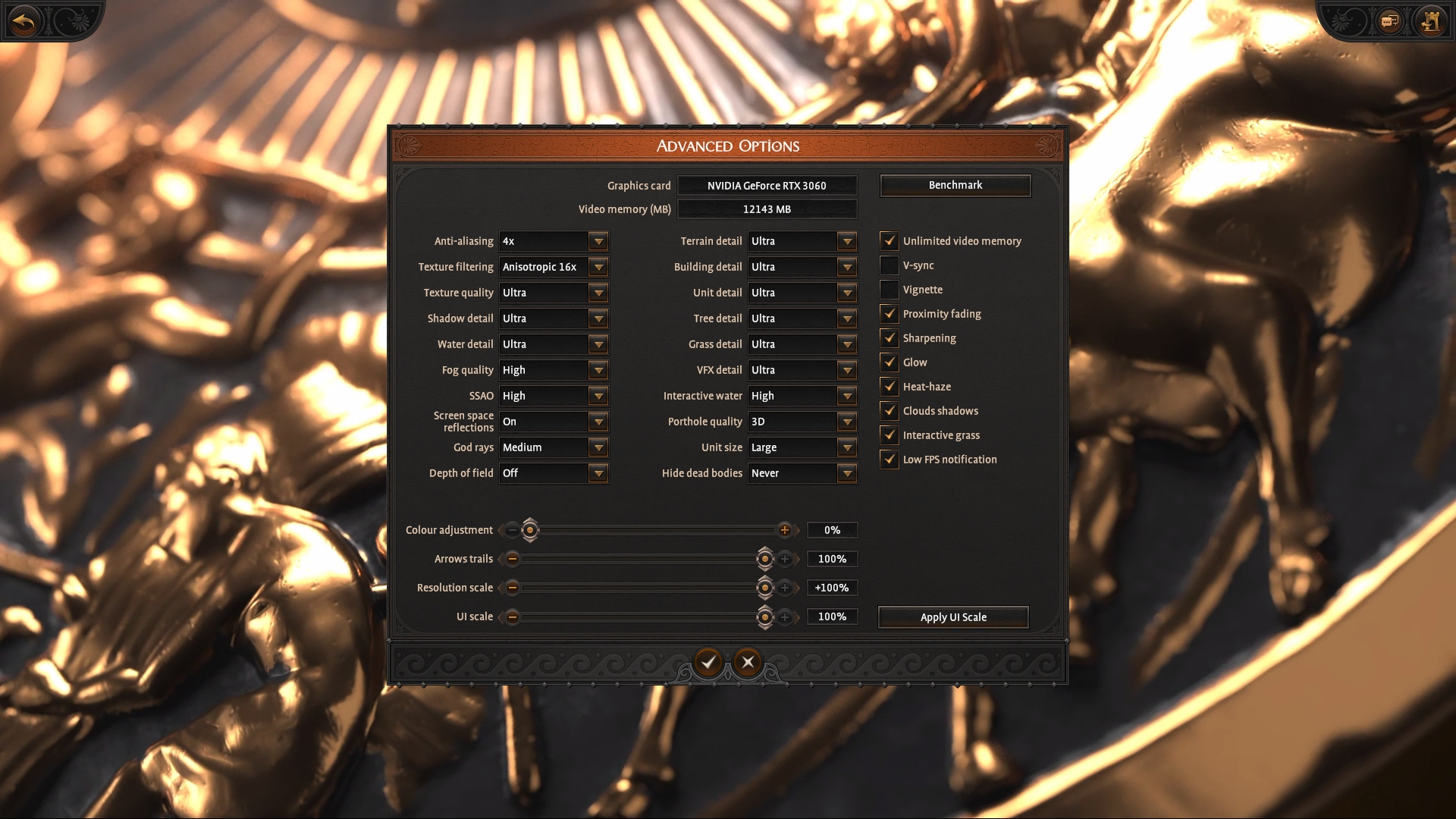
Engine: TW 3 Engine. We test using the Ultra preset, with unlimited video memory enabled, DX11 API.
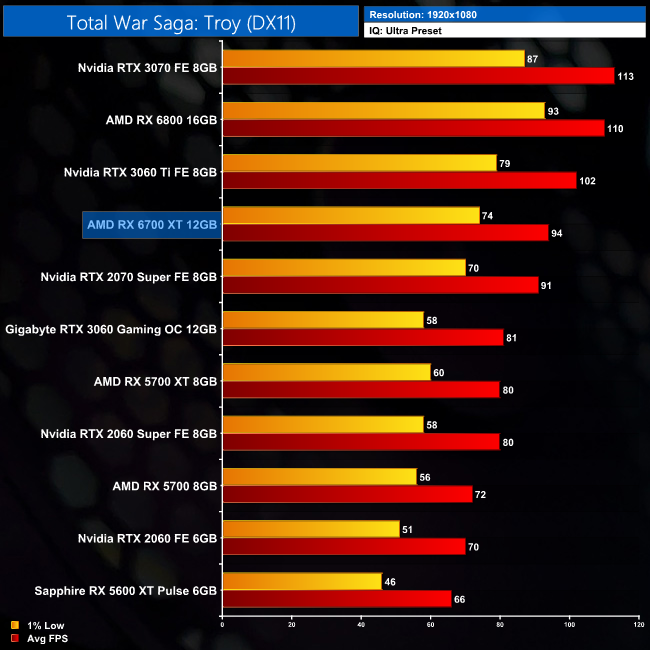
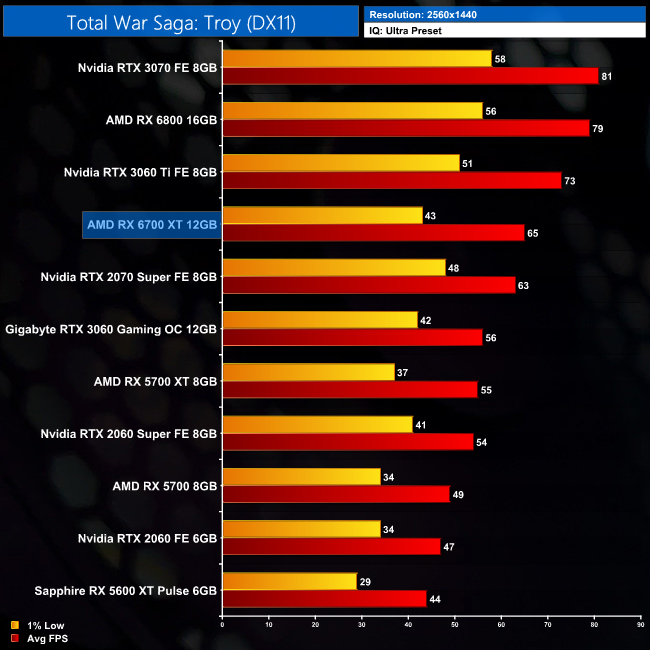
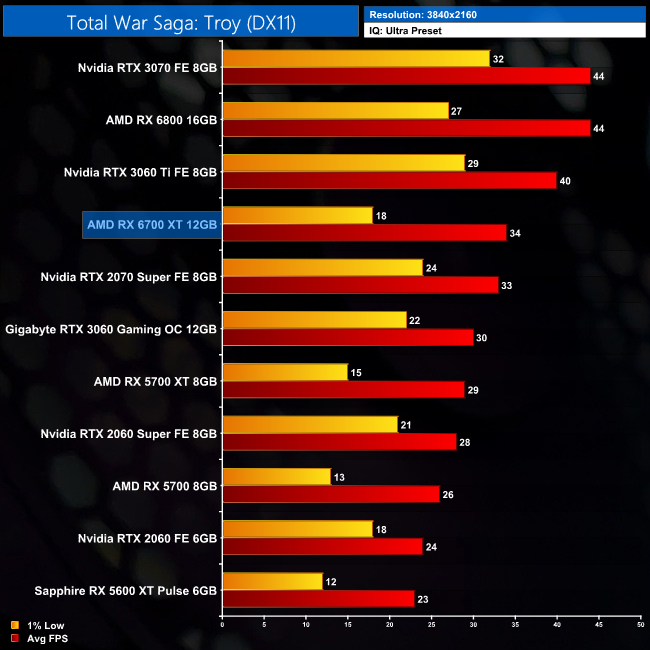
As for Total War Saga: Troy, AMD GPUs rarely do well in this game, and unfortunately for Team Red that is again the case here. At 1080p, the 6700 XT is averaging 94FPS, which isn't bad in itself, but it is 17% slower than the RTX 3070, and even 8% behind the RTX 3060 Ti, a card which is meant to be £50 cheaper.
Up at 1440p, things get even worse, as the gap between the 6700 XT and RTX 3070 has widened to 20%, while we're also looking at an 11% deficit compared to the RTX 3060 Ti.
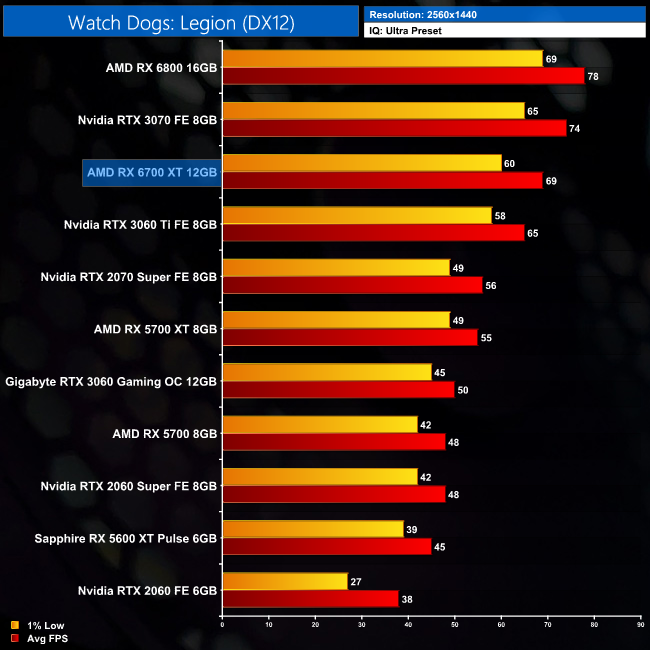
Watch Dogs: Legion is a 2020 action-adventure game published by Ubisoft and developed by its Toronto studio. It is the third instalment in the Watch Dogs series, and the sequel to 2016's Watch Dogs 2. Legion was released on October 29, 2020 for Microsoft Windows, PlayStation 4, Xbox One, and Stadia. (Wikipedia).
Engine: Disrupt. We test using the Ultra preset, DX12 API.
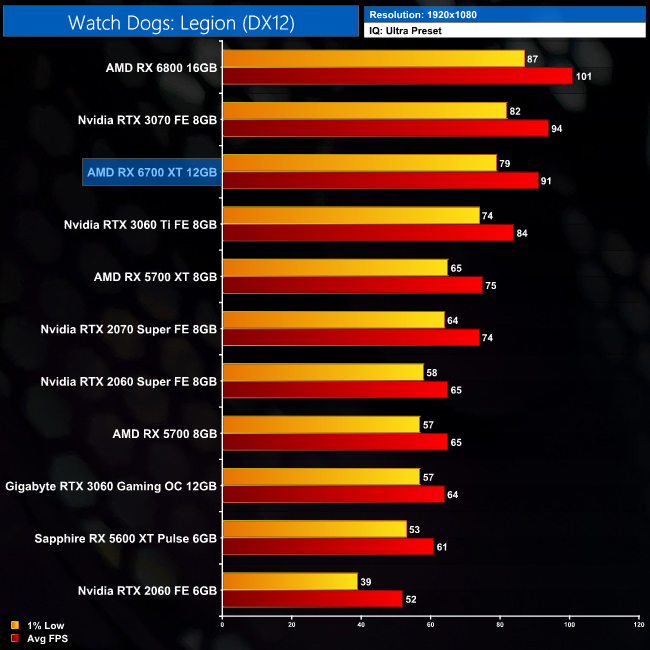
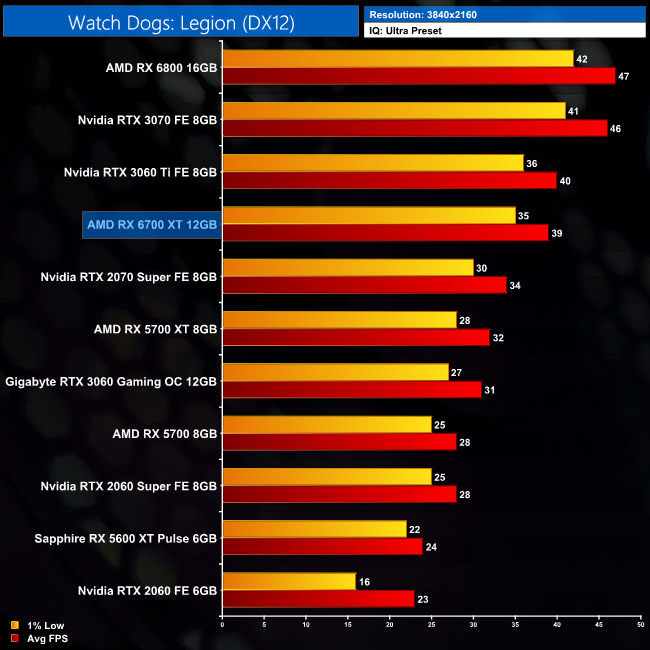
Finally we come to Watch Dogs: Legion. Despite being an Nvidia-sponsored title, the results for the 6700 XT aren't bad at all. It's only 3FPS slower than the RTX 3070 at 1080p, and sits 8% above the RTX 3060 Ti.
As for 1440p, the 6700 XT averaged just below 70FPS, which means it is now 7% slower than the RTX 3070. It still holds a small lead over the RTX 3060 Ti however, and is 12% slower than the RX 6800.
Here we present frame rate figures for each graphics card, averaged across all 12 games on test today. These figures can disguise significant variations in performance from game to game, but provide a useful overview of the sort of performance you can expect at each resolution tested.
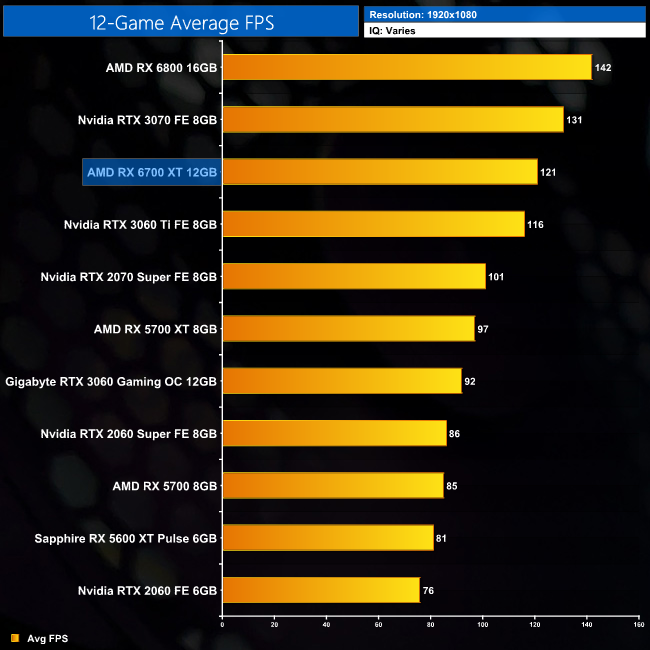
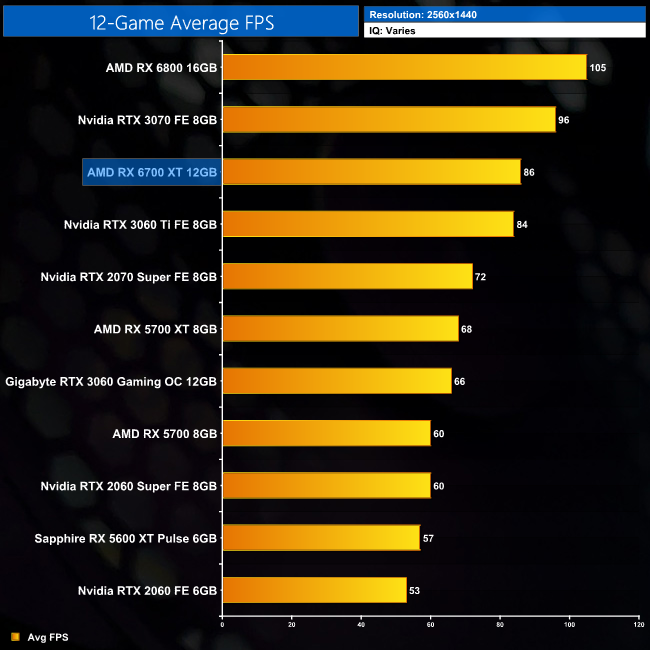
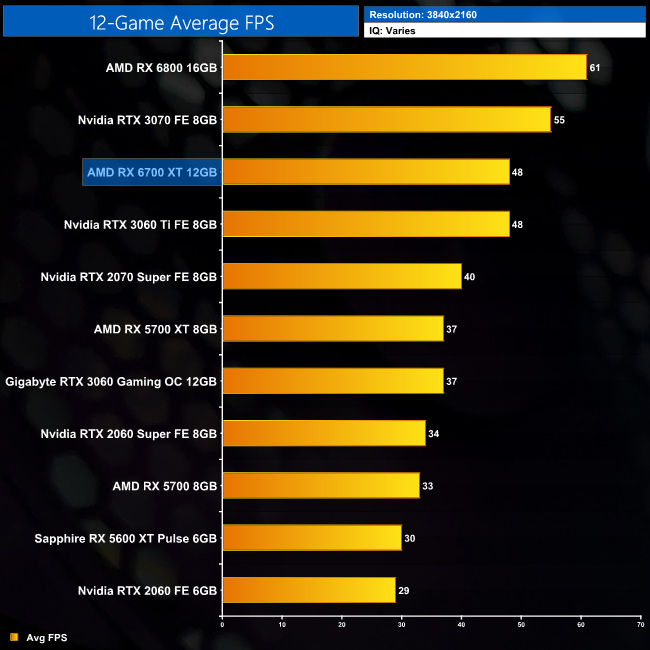
Looking at the big picture overview with our 12-game average FPS, we'll start with the 1080p data. Here we can see the RX 6700 XT is on average 8% slower than the RTX 3070, and 4% faster than the RTX 3060 Ti. It's also 15% slower than its big brother, the RX 6800, and compared to the RX 5700 XT, we're looking at a generational uplift of 25%.
As for 1440p, here we can see the RX 6700 XT is 10% slower than the RTX 3070 and just 2% ahead of the RTX 3060 Ti. It's also 18% slower than the RX 6800, and against the RX 5700 XT it delivers an extra 26% performance.
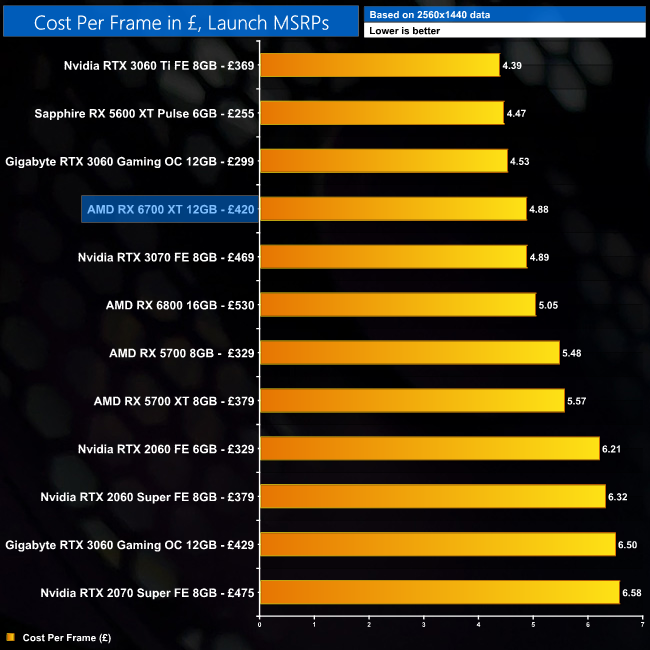
Using the average frame rate data presented on the previous page, here we look at the cost per frame using the UK MSRP launch prices for each GPU.
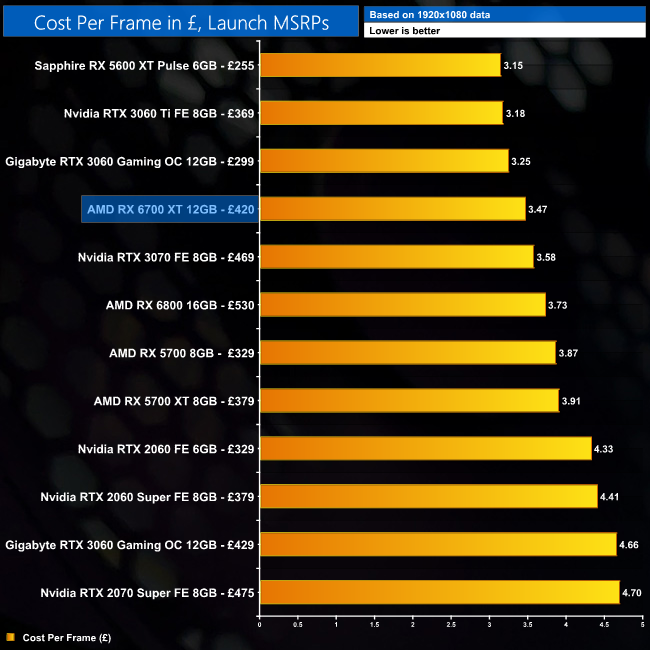
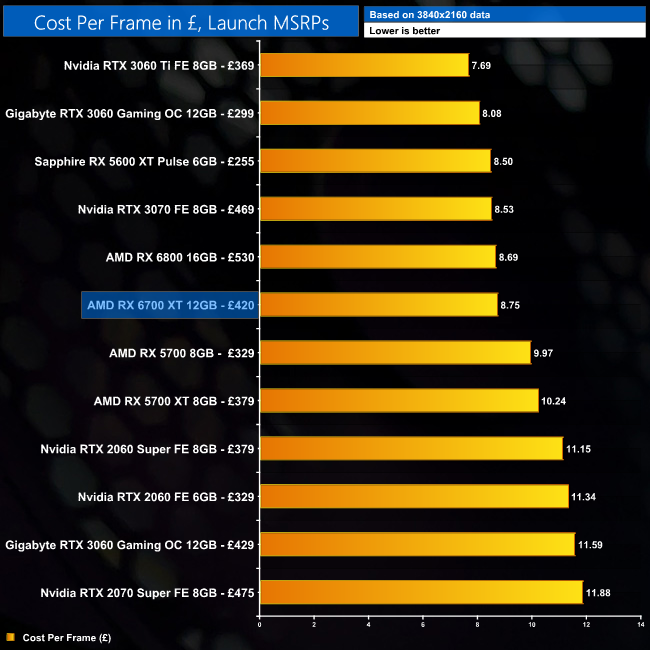
Using the £419.99 UK MSRP, we can take a look at cost per frame. This is fairly academic at the minute since MSRP doesn't really mean a lot, but it tells us how AMD is trying to position the product. At 1080p, the 6700 XT delivers a cost per frame of £3.47, which is 3% better value than the RTX 3070. Compared to the RTX 3060 Ti however, the 6700 XT is 9% more expensive per frame.
Using the 1440p data now, here the RTX 3070 and RX 6700 XT converge to the point where the cost per frame values differ by just 1p, an irrelevant margin. Again though, nothing is beating the value offered by the 3060 Ti, as the 6700 XT is now 11% more expensive per frame.
The thing I'd say here too, is that the 6700 XT has been thrown a lifeline by the UK pricing. Using the dollar pricing, the 6700 XT is actually worse value than the RTX 3070 across the board, and its relative value gets worse compared to the 3060 Ti. KitGuru is a UK publication so we're going to use the given price in GBP, but for those in other countries it's something to bear in mind that the value proposition may vary.
Here we revisit Control, this time testing with the in-game ray tracing effects set to their highest values.
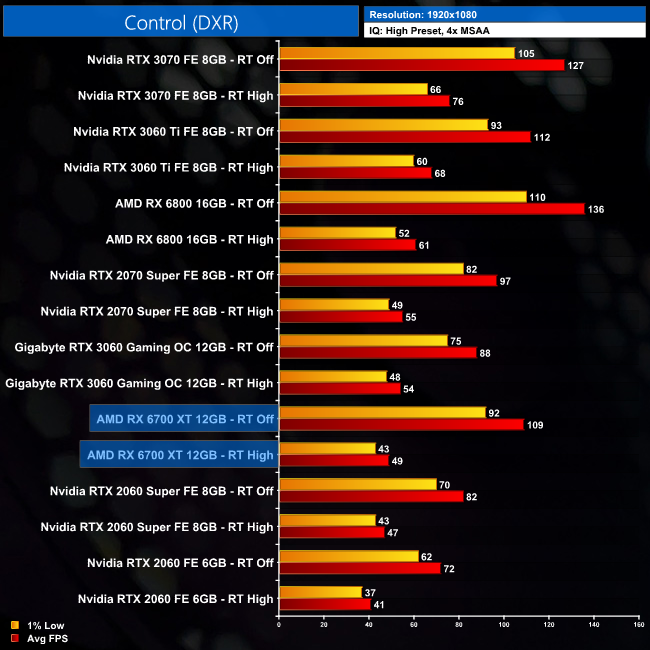
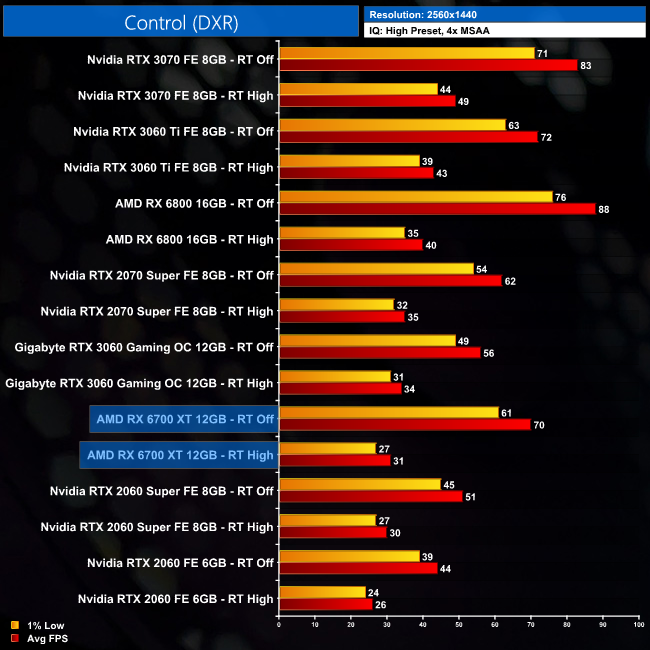
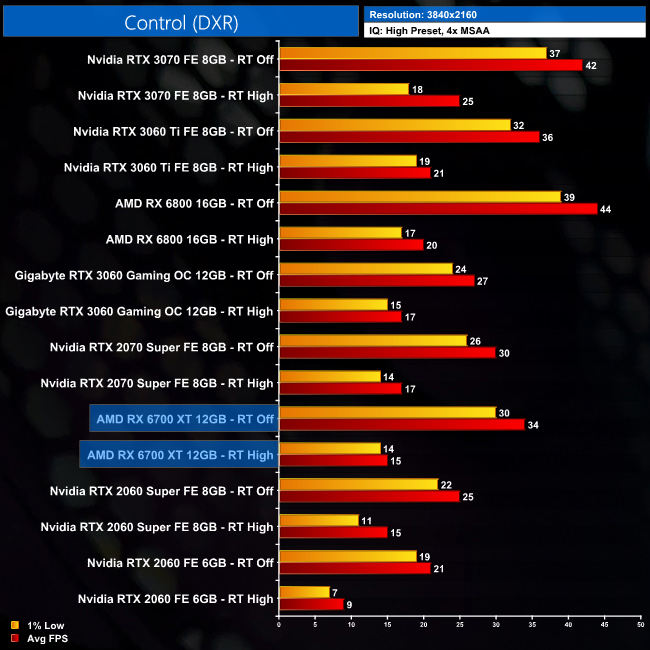
Looking now at ray tracing performance for the RX 6700 XT, we'll start with Control. Here, the 6700 XT only delivers a playable frame rate at 1080p, offering 49FPS on average with ray tracing set to High. That's a huge frame rate drop compared to playing with ray tracing disabled however, as we're looking at a 55% hit. The 6700 XT is only just faster than the RTX 2060 Super here, a £379 GPU from mid-2019.
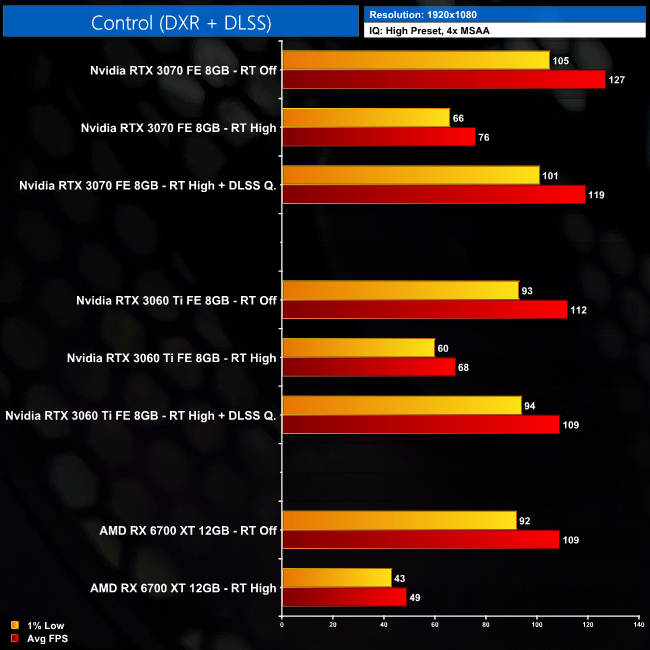
Nvidia GPUs do have the option of DLSS in Control as well, something AMD currently has no answer for. At 1080p, we can see the RTX 3060 Ti is able to hit 109FPS on average using DLSS quality mode with ray tracing set to high. That's the same level of performance as the RX 6700 XT running with no ray tracing at all, so it's a clear advantage for Nvidia in this title.
Here we revisit Metro Exodus, this time testing with the in-game ray tracing effects set to their highest values.
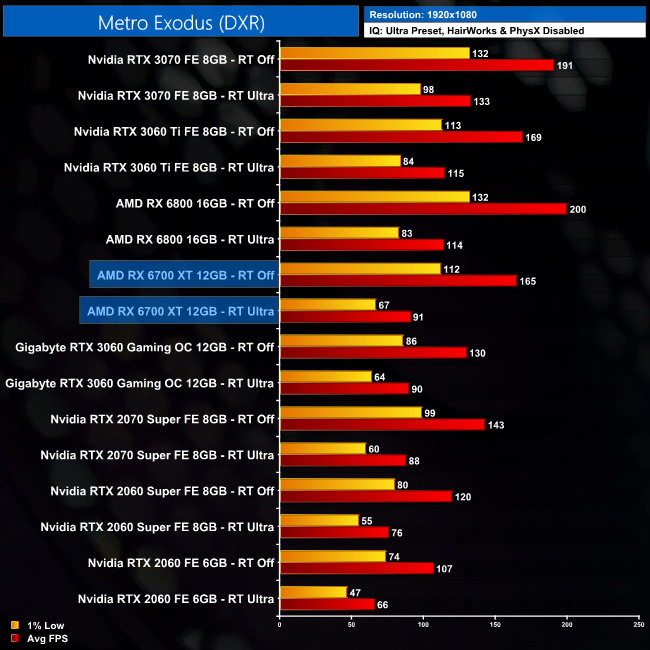
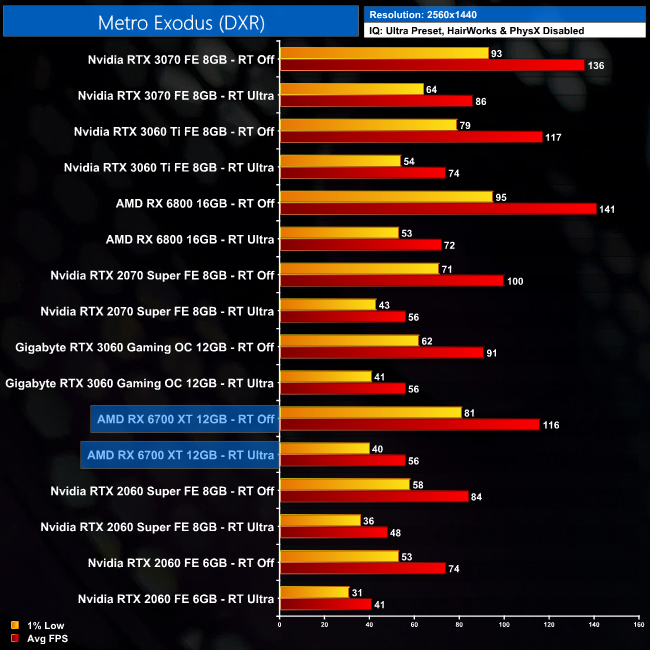
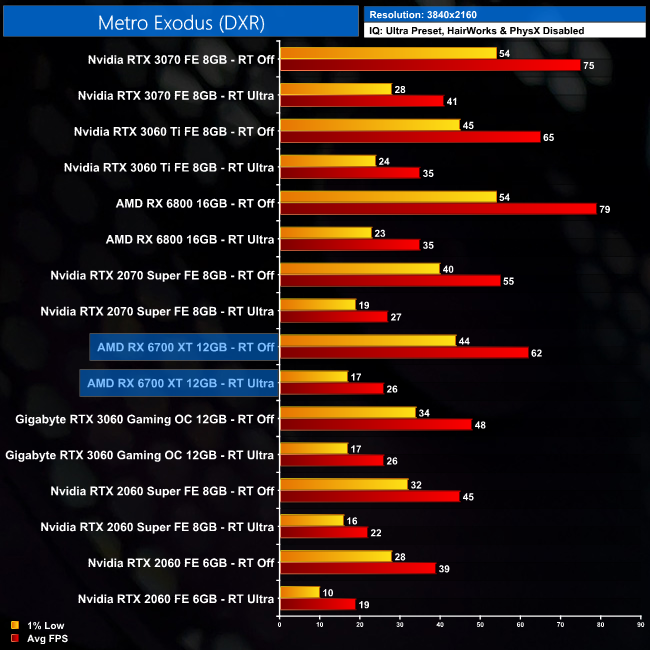
As for Metro Exodus, we experienced a number of crashes when using DXR in this game, but eventually we gathered the necessary data for comparison. At 1080p, the RX 6700 XT averaged 91FPS with ray tracing set to Ultra, putting it on par with the RTX 3060 and RTX 2070 Super. Compared to the RTX 3060 Ti, however, it's 20% slower.
I'd say 1440p gaming is possible here too, with the 6700 XT averaging 56FPS, though the 1% lows drop down to 40FPS. Compared to the RTX 3060 Ti however, AMD's GPU is 24% slower with ray tracing enabled.
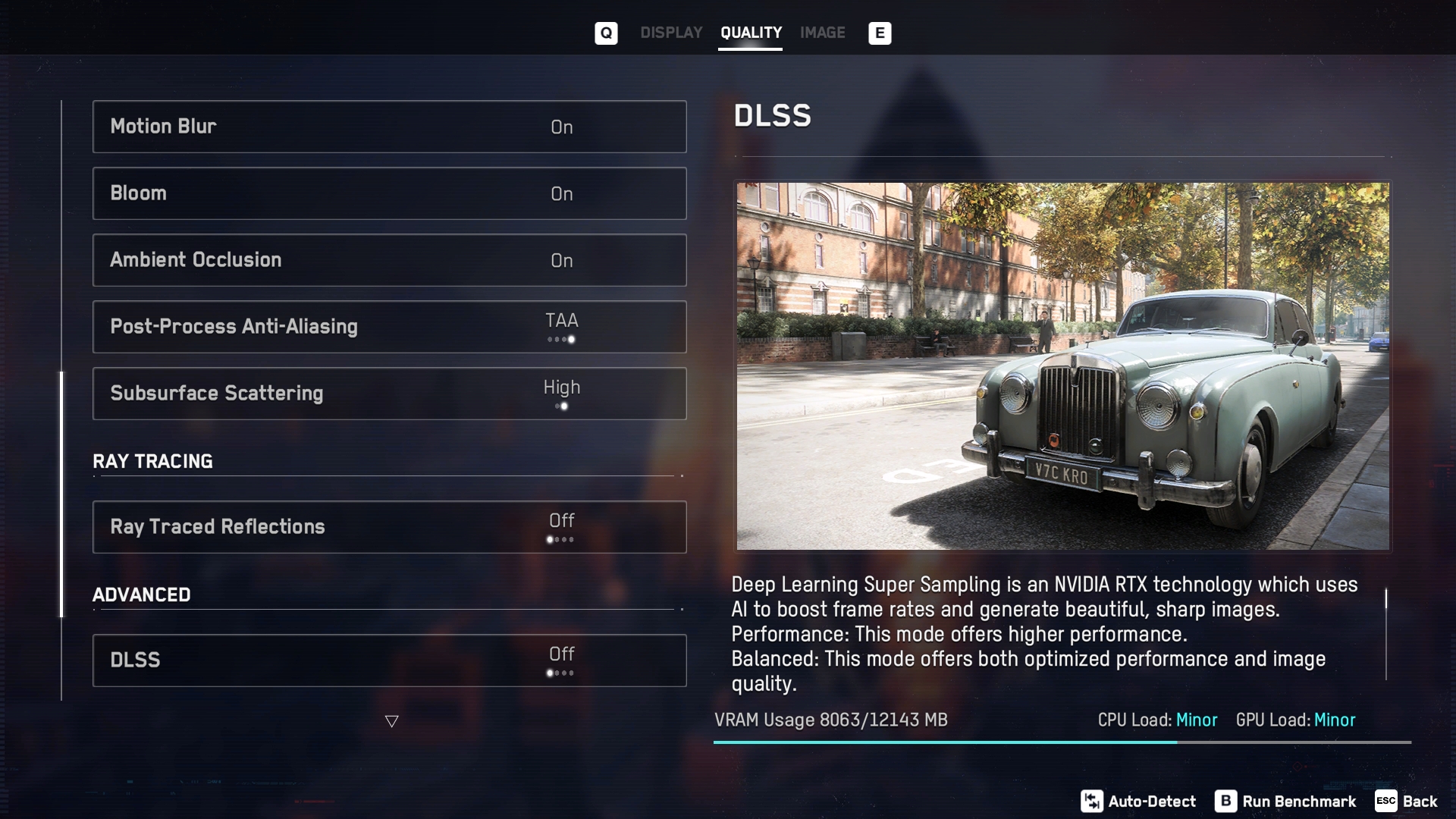
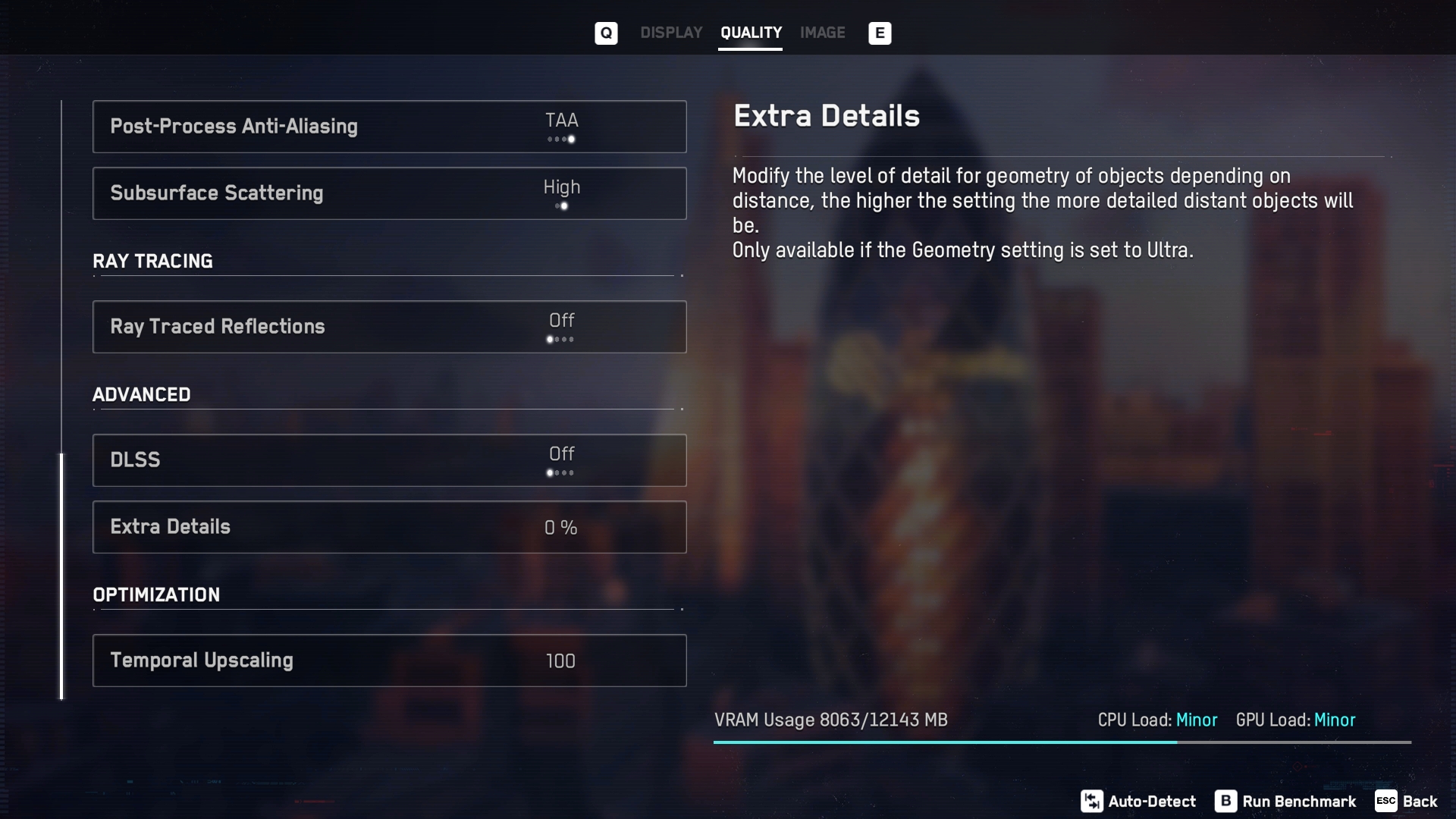
Here we revisit Watch Dogs: Legion, this time testing with the in-game ray tracing effects set to their highest values.
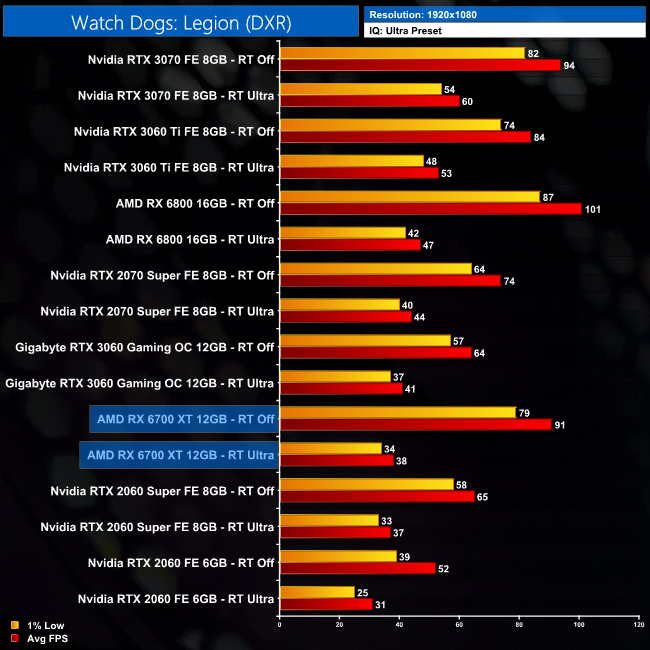
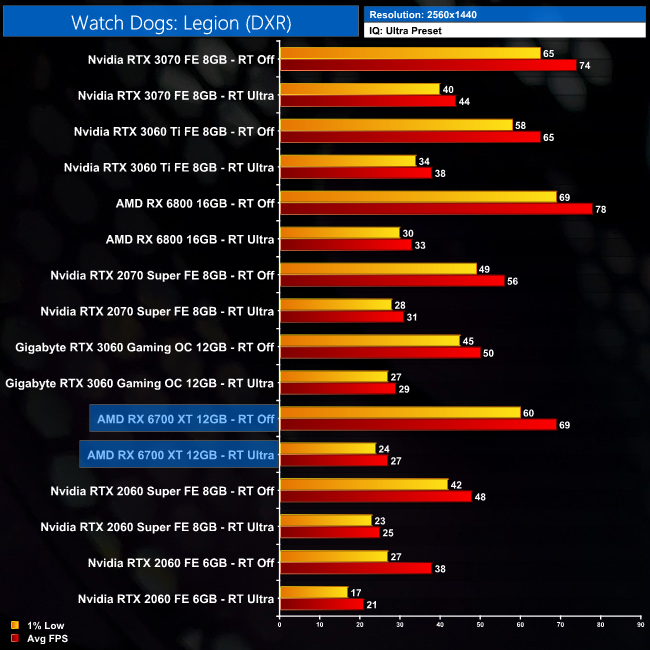
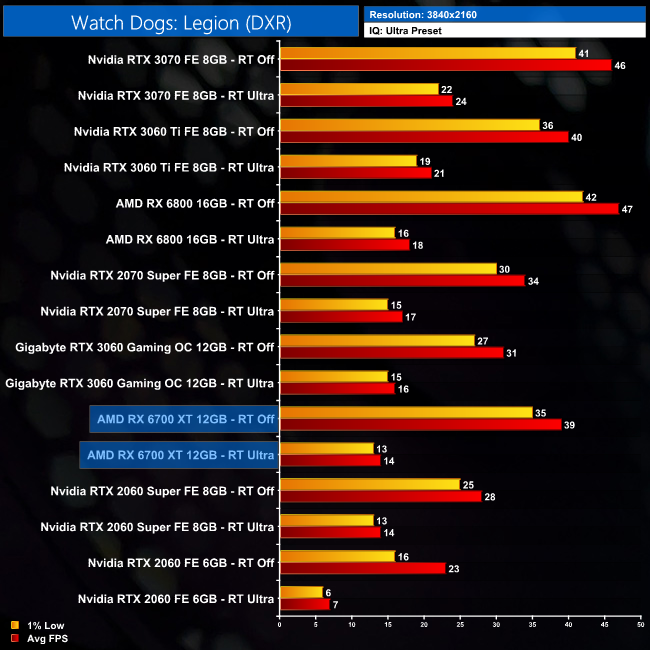
Finally, Watch Dogs: Legion with ray tracing is pretty punishing for the RX 6700 XT. The frame rate drops by 58% when setting those ray traced reflections to Ultra, and even then the RTX 3060 is still the faster GPU, with the 6700 XT barely ahead of the RTX 2060 Super. It's also a huge 28% slower than the RTX 3060 Ti here.
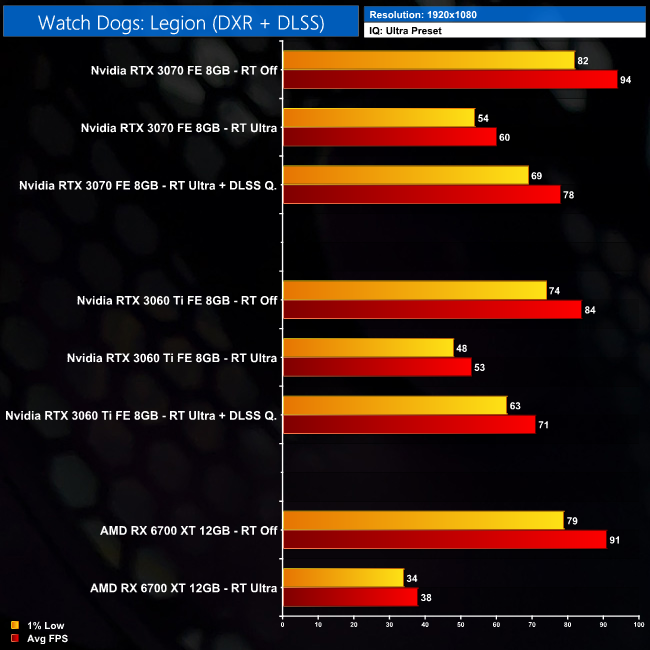
That margin can also be extended by the RTX 3060 Ti thanks to DLSS 2.0. Using that technology in tandem with ray tracing sees the 3060 Ti come in 87% faster at 1080p, for very little difference in visual quality. DLSS really is a big value-add for Ampere GPUs, and it's something we need a response to from AMD.
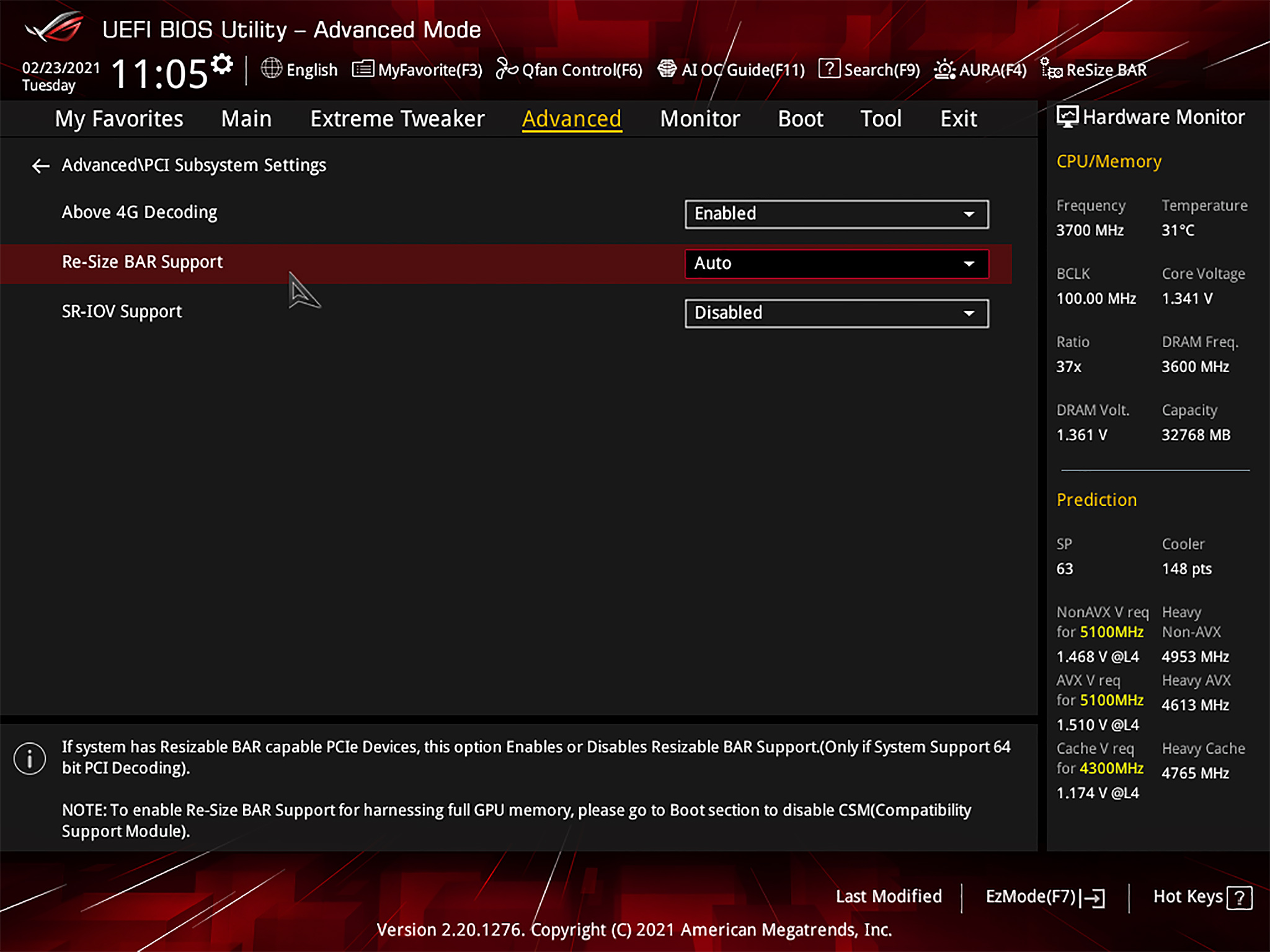
The RX 6700 XT also offers support for AMD's Smart Access Memory (SAM), which is essentially AMD's implementation for resizable BAR, a PCIe feature that's been around for a few years, but has only just started seeing mainstream adoption.
According to AMD, a Ryzen 3000/5000 CPU is required to use SAM, as is a 500-series motherboard. However, my ASUS ROG Maximus XII Hero offers support for resizable BAR on the Z490 platform, so I put it to the test with the RX 6700 XT. To be clear, this hardware combination isn't officially supported by AMD, so the results may vary when compared to a Ryzen-based system, but we can still take a look.
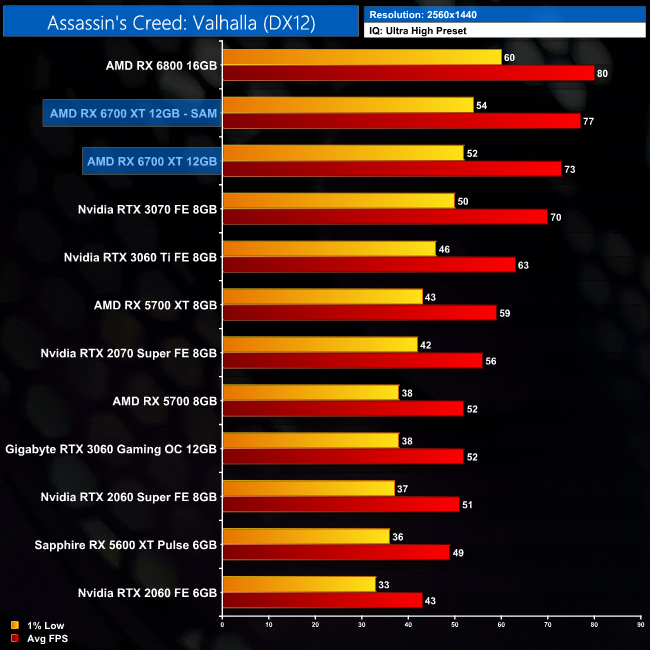
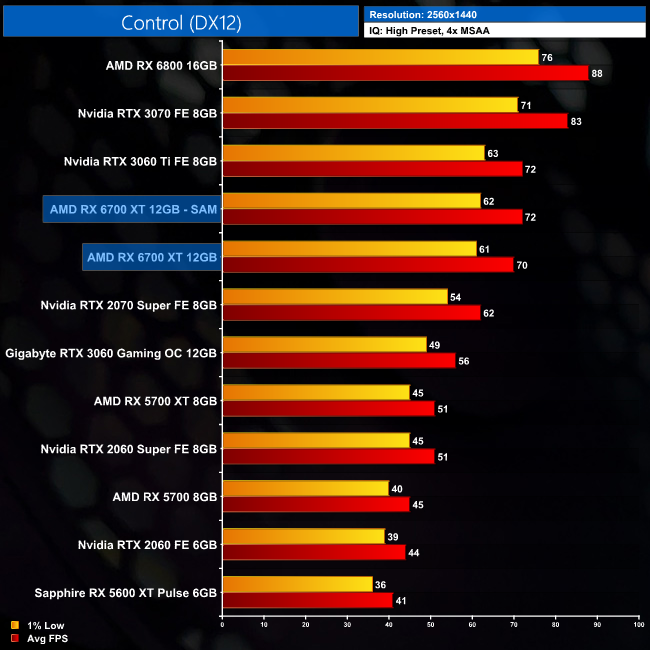
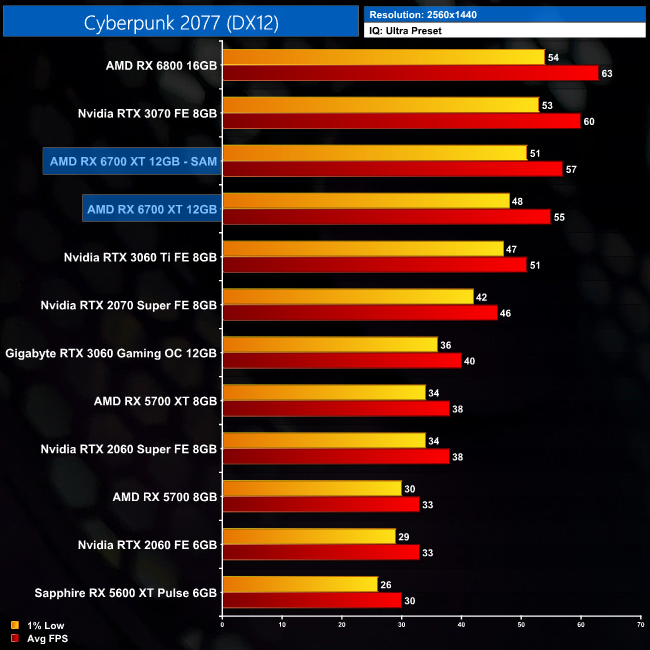
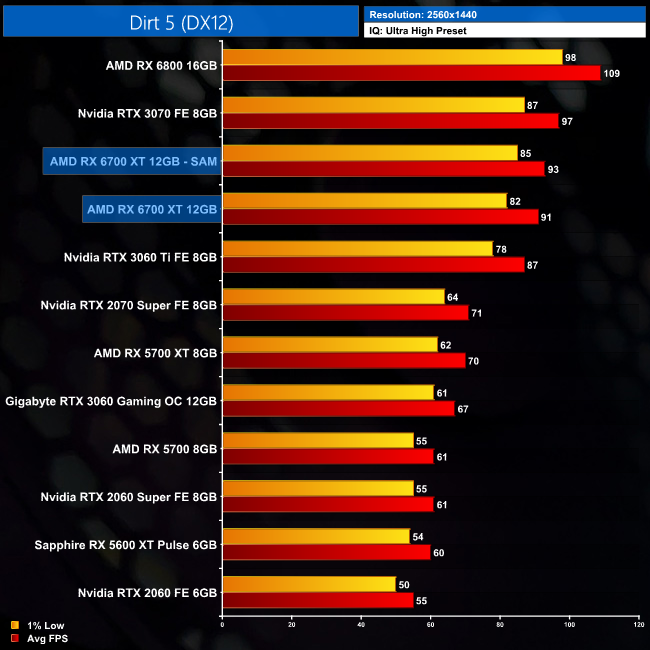
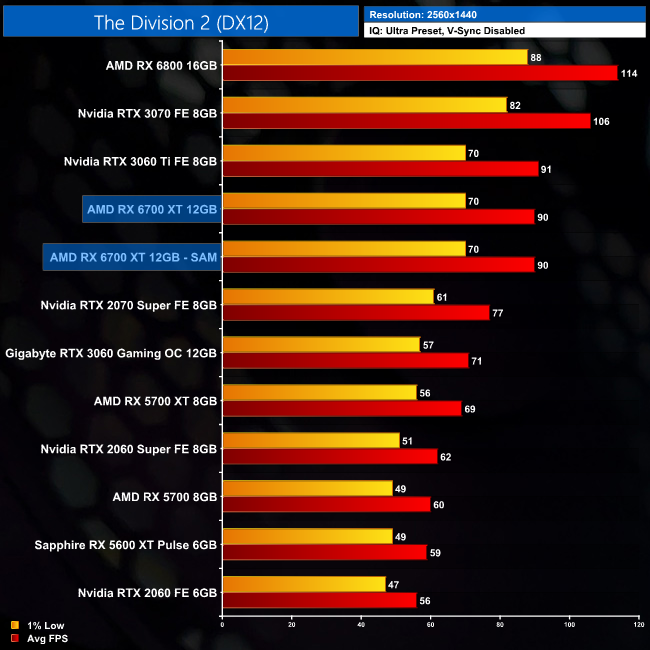
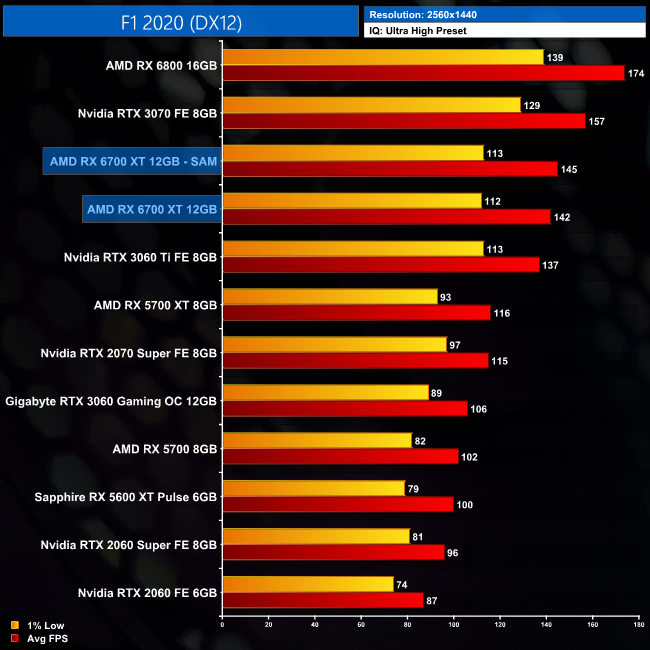
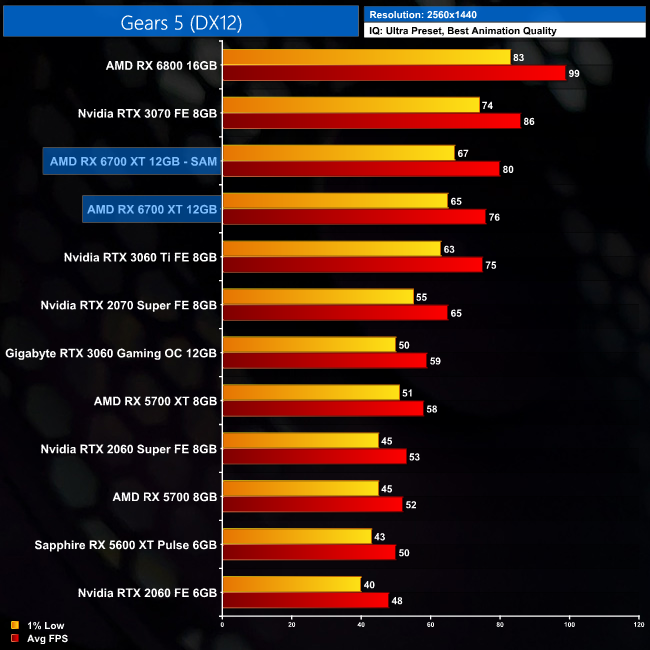
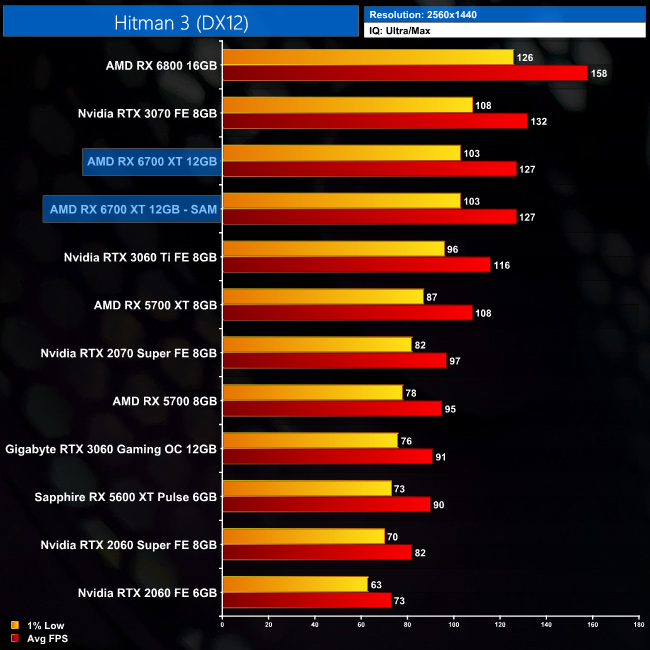
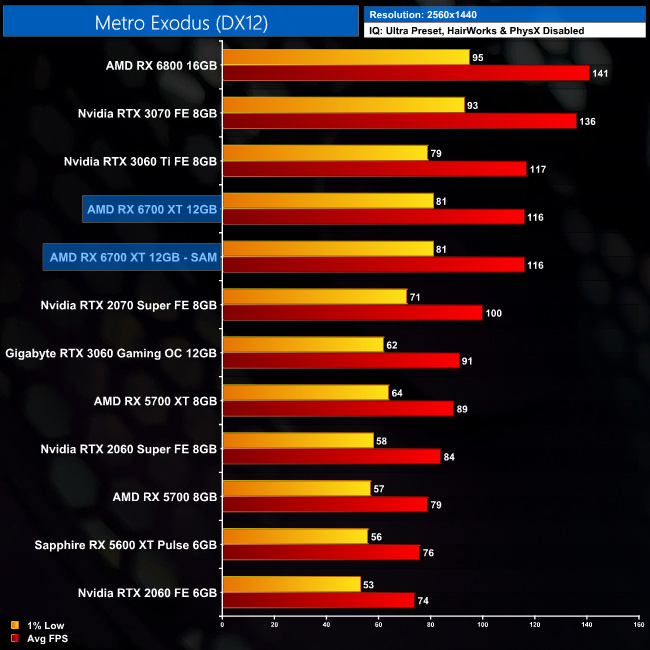
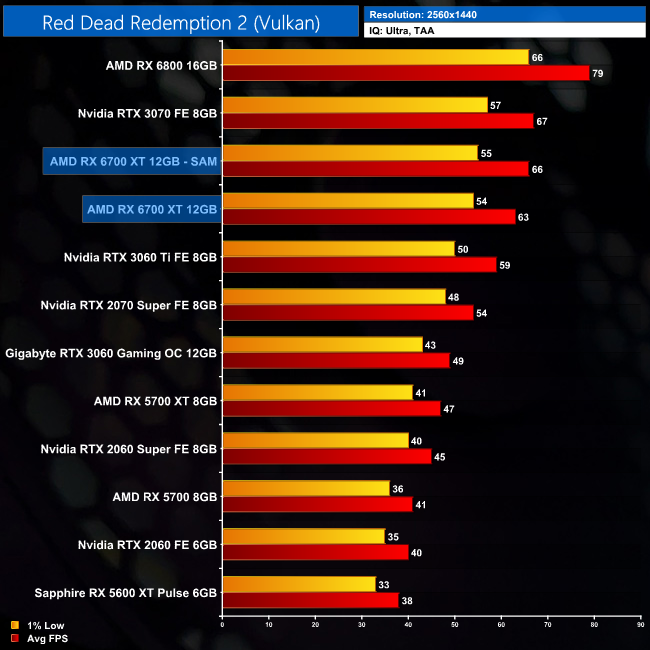
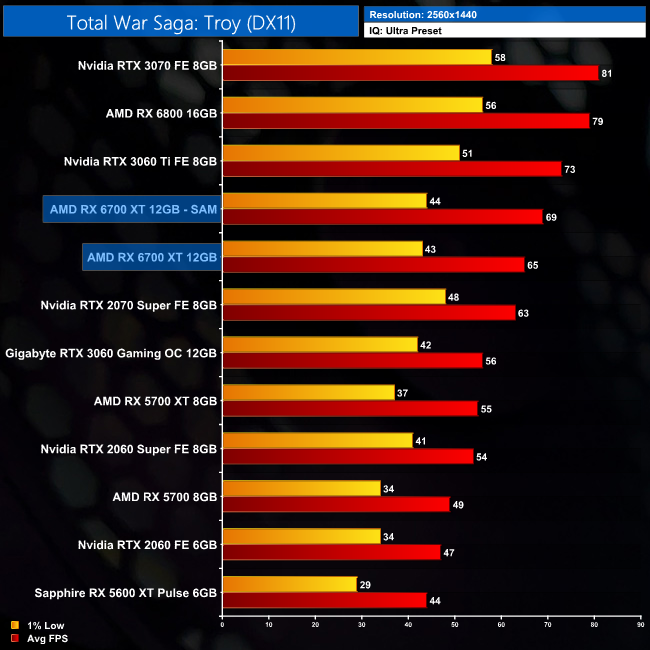
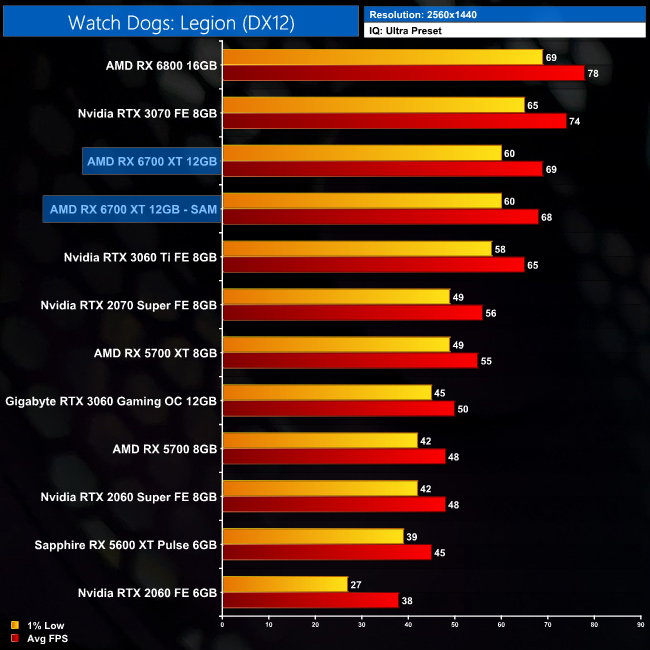
Re-testing the twelve games in our test suite at 1440p, we found performance of the RX 6700 XT increased by up to 6% with SAM enabled, and the only game where performance degraded was in Watch Dogs: Legion, and that was only a difference of a single frame. Gears 5, Red Dead Redemption 2 and Assassin's Creed Valhalla all saw 5% improvements, though three of our games did not see any benefit at all.
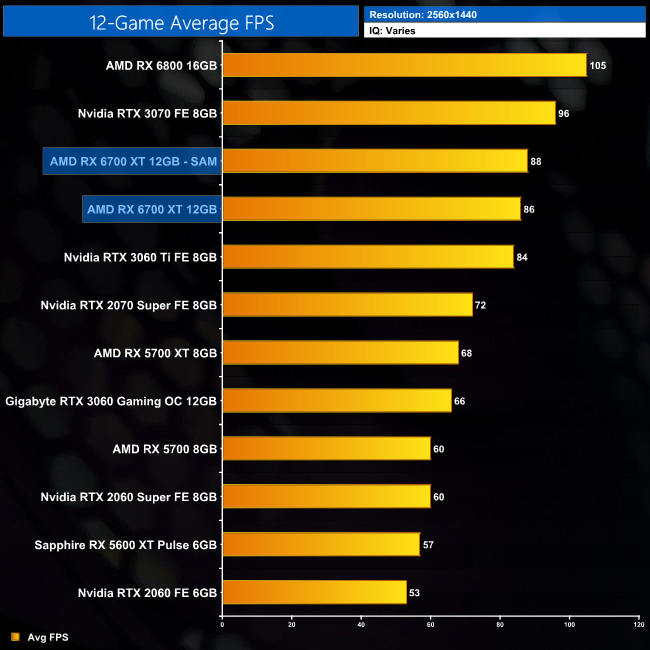
Overall, average performance of the RX 6700 XT improved by 2% with SAM enabled. It's hardly a significant difference and certainly isn't enough to change our conclusion, but it is something.
We run Blender's 2.91.2 benchmark tool, using the Classroom scene. Nvidia GPUs are testing using CUDA and OPTIX, while AMD GPUs are tested using OpenCL.

OpenCL rendering times in Blender are fine, but do lag behind the RTX 3060 Ti – with the scene rendering 18% slower with the AMD GPU compared to the GeForce GPU using CUDA. Nvidia cards can call upon OptiX however, making the 3060 Ti almost twice as quick as the 6700 XT.
Here we present the average clock speed for each graphics card while running Cyberpunk 2077 for 30 minutes. We use GPU-Z to record the GPU core frequency during gameplay. We calculate the average core frequency during the 30 minute run to present here.
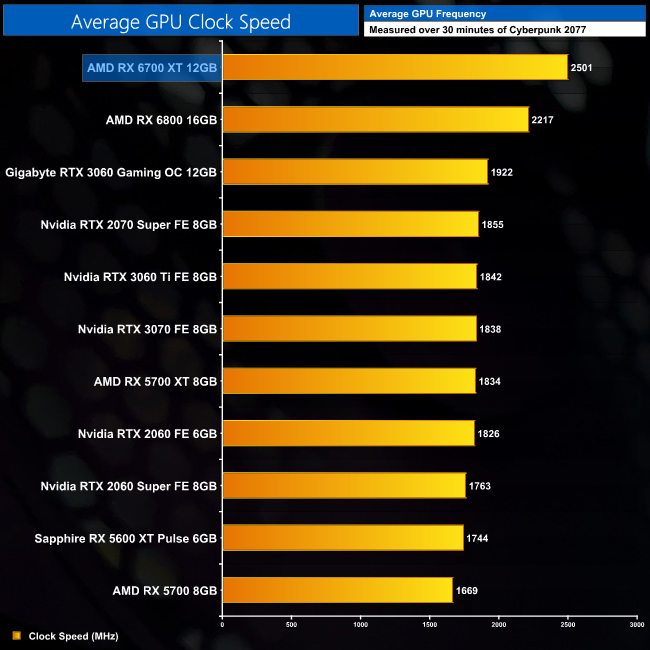
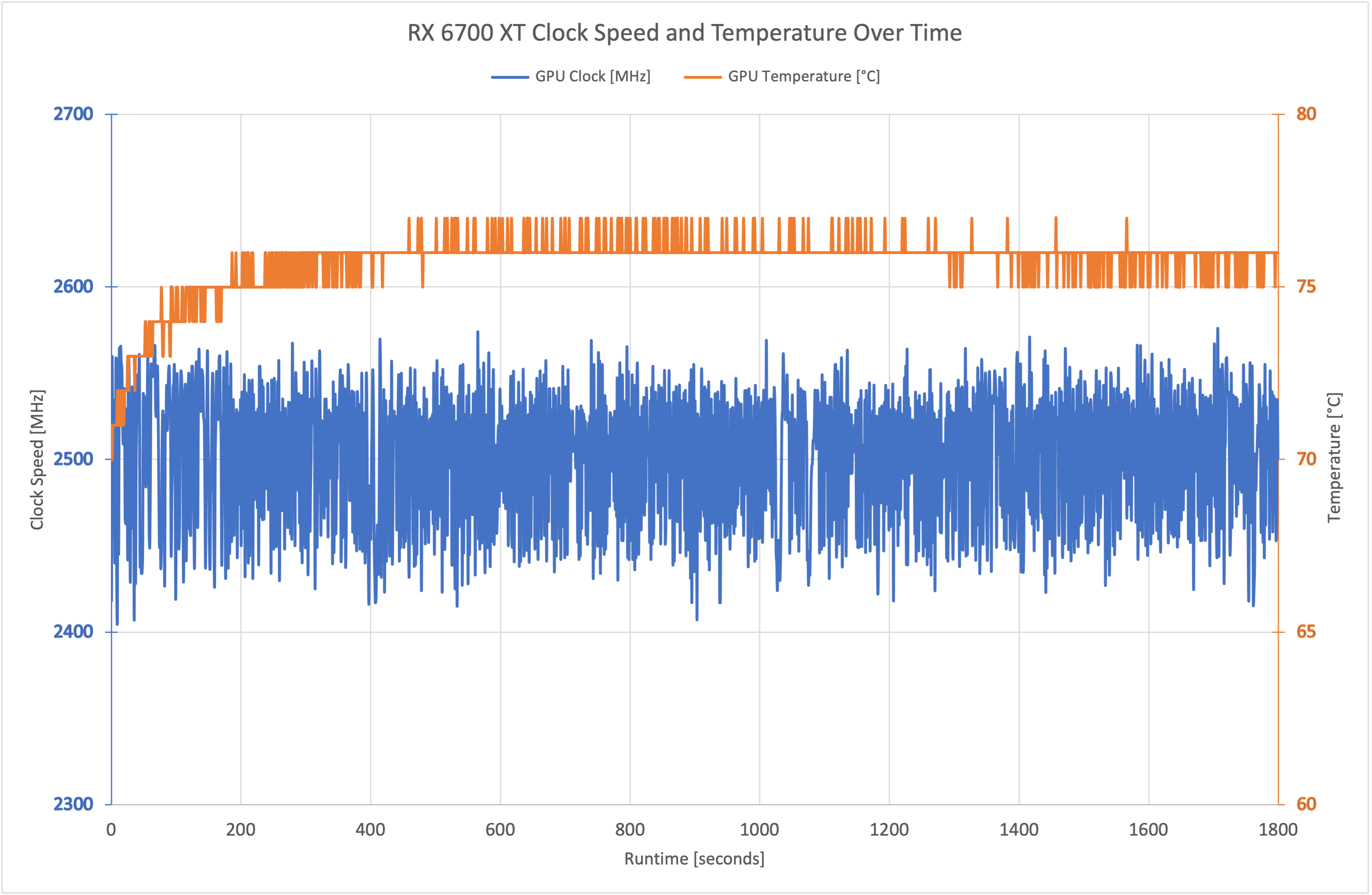
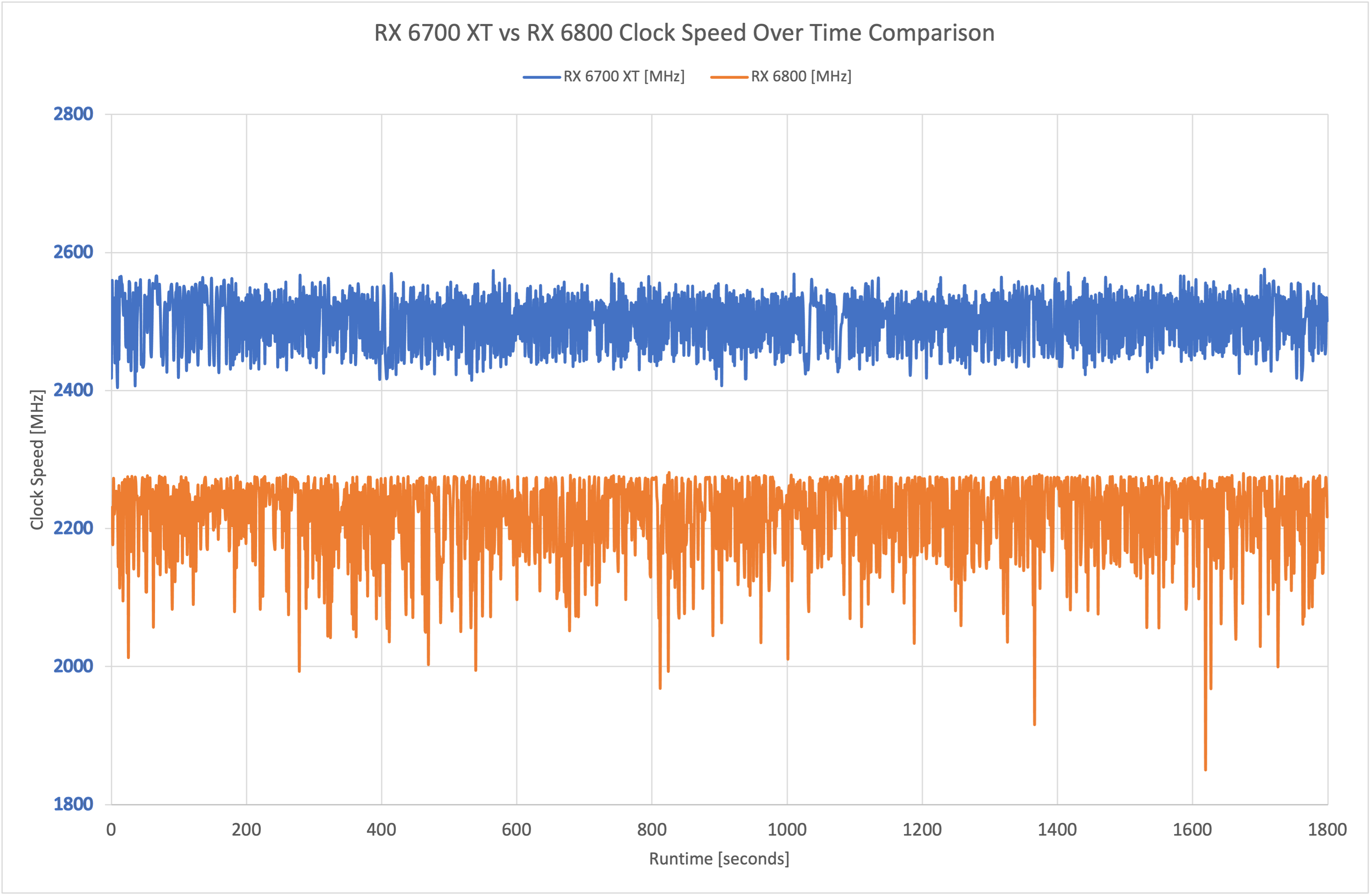
Looking at the operating speeds of the RX 6700 XT, it is no surprise to see the GPU running at a much higher clock than any other GPU we've tested. AMD claims a game clock of 2424MHz, and over the duration of our 30 minute stress test we saw an average frequency of 2501MHz. Compared to the RX 6800 in our scatter graph, we can also see the frequency certainly seems more stable, with fewer and less significant downward spikes.
For our temperature testing, we measure the peak GPU core temperature under load. A reading under load comes from running Cyberpunk 2077 for 30 minutes.
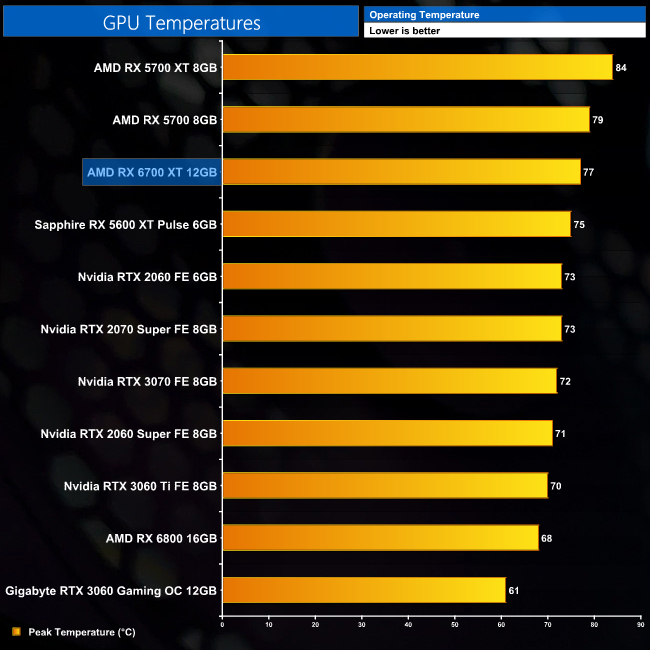
As for default thermal performance, the reference RX 6700 XT saw a GPU edge temperature of 77C during our testing. That is a few degrees hotter than the RX 6800, but the cooler is substantially lighter despite just an 8% reduction in rated power draw. We've not charted the hot spot temperature as currently we've only tested one 6700 XT, but for reference it hit 98C.
We take our noise measurements with the sound meter positioned 1 foot from the graphics card. I measured the noise floor to be 32 dBA, thus anything above this level can be attributed to the graphics cards. The power supply is passive for the entire power output range we tested all graphics cards in, while all CPU and system fans were disabled. A reading under load comes from running Cyberpunk 2077 for 30 minutes.
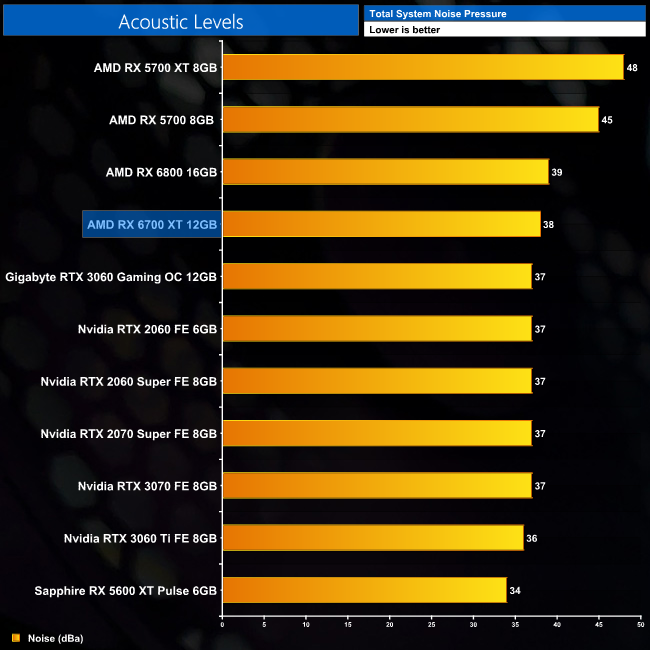
Moving onto noise levels, default behaviour saw the two fans spin up to 49%, or around 1680rpm. That means the 6700 XT is fractionally quieter than the RX 6800, but only by 1dBa. Either way, for a reference card it is a solid result and marks a 10dBa reduction in noise compared to the RX 5700 XT, so AMD's coolers have clearly come a long way from the blower-style cards of old.
Following on from our stock thermal and acoustic testing, here we re-test the operating temperature of the GPU, but with noise levels normalised to 40dBa. This allows us to measure the efficiency of the overall cooling solution as varying noise levels as a result of more aggressive fan curves are no longer a factor.
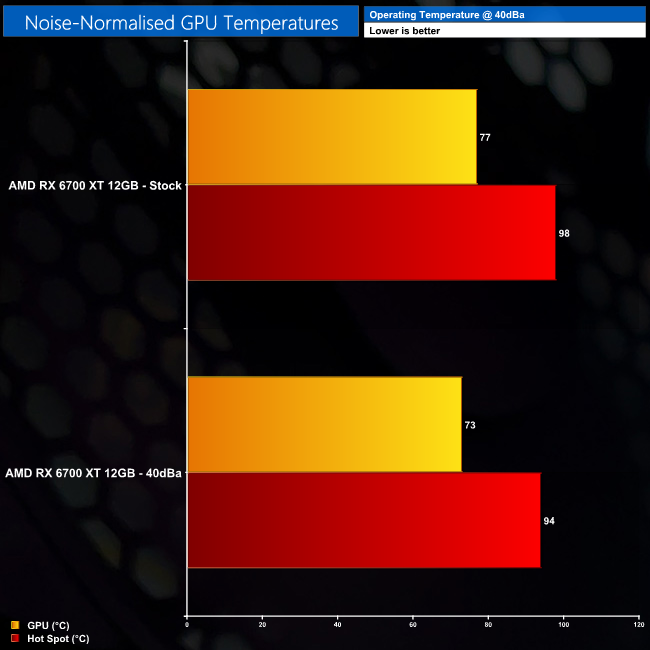
With stock noise levels hitting 38dBa, there is some room to increase fan speed when noise-normalising, therefore reducing temperatures. In this case, we had to increase fan speed to 54%, or 1850rpm. That reduced both the edge temperature and the hot spot by 4C, which isn't much but it's better than nothing. We will see how custom cards from the likes of Sapphire and Gigabyte will compare in the coming weeks.
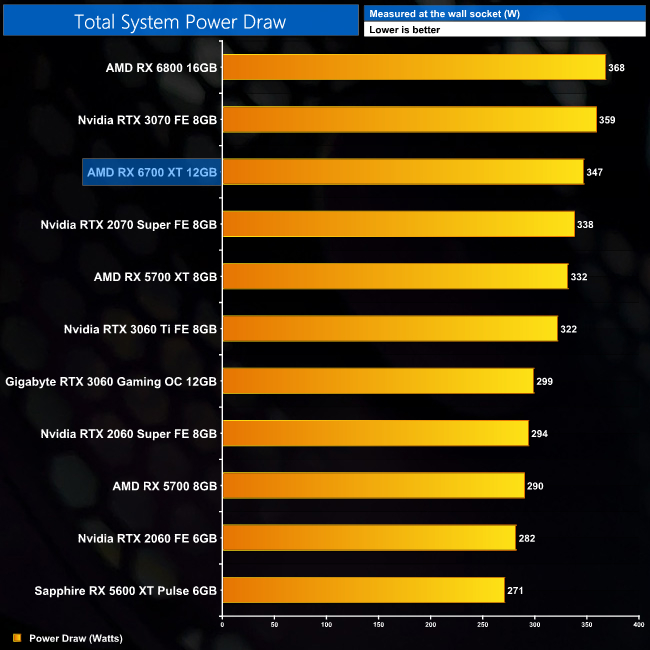
We measure system-wide power draw from the wall while running the 3DMark Time Spy stress test for 30 minutes.
We also use Nvidia PCAT to measure power draw of the graphics card only, with readings from both the PCIe slot and the PCIe power cables combined into a single figure. This provides us with significantly more accurate data to work with as it is measuring only the GPU power, and not total system power which is a fundamentally imprecise measurement.
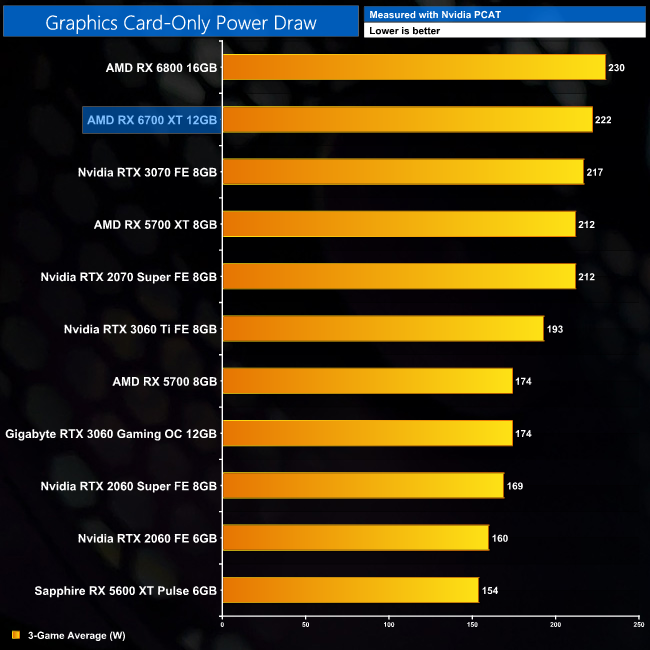
Graphics card-only power draw for the RX 6700 XT averaged 222W over our testing, which is just an 8W reduction versus the RX 6800. That puts it 5W higher than the RTX 3070, though that doesn't bode well for overall efficiency considering the RTX 3070 is the faster card.
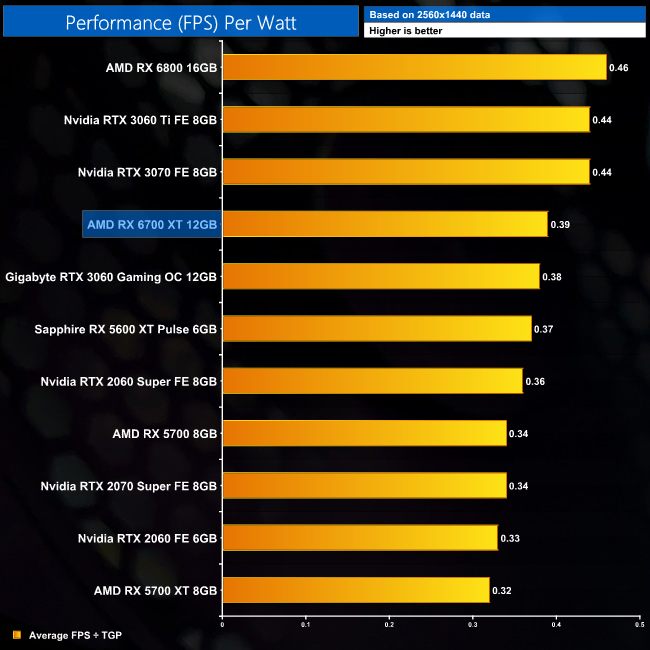
By using our GPU-only power data in conjunction with the 12-game average FPS data we presented earlier in this review, we can work out performance per Watt for each graphics card. This is presented as FPS per Watt.
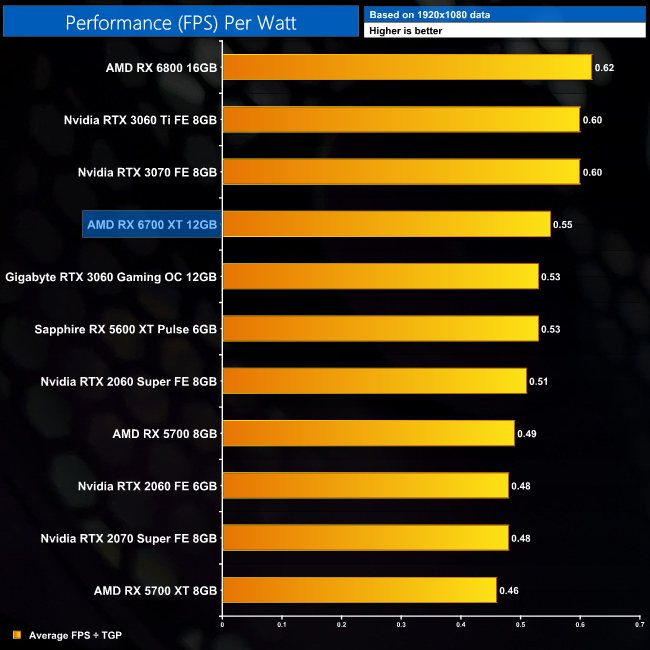
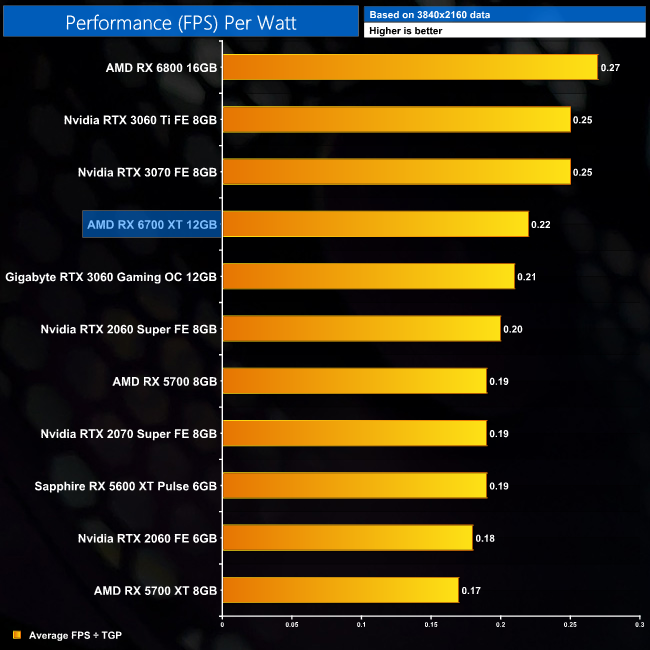
As expected, performance per Watt for the RX 6700 XT is good, but definitely behind its nearest rivals. At 1080p, we're looking at a reduction in efficiency of 8% compared to the RTX 3070 and RTX 3060 Ti, while that increases to 11% versus the RX 6800.
At 1440p too, the 6700 XT is delivering 11% less performance per Watt than both the 3060 Ti and the 3070, while it lags behind the RX 6800 by 15%. It's definitely a generational improvement for AMD, with perf-per-Watt up 22% compared to the RX 5700 XT, but it can't quite match its current-generation competitors.
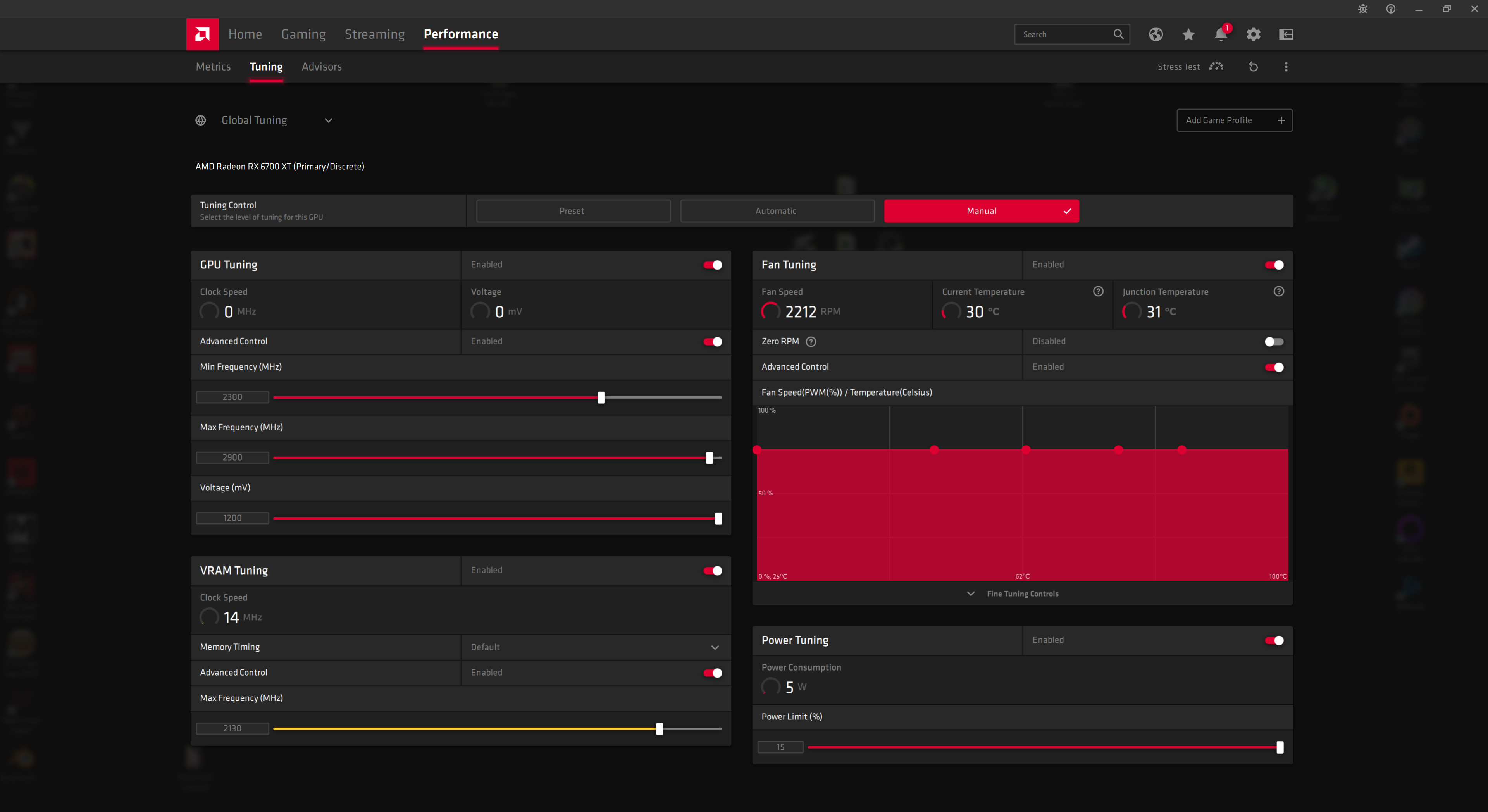
Manual overclocking headroom for the RX 6700 XT is decent, despite the GPU clocks already being significantly higher compared to the RX 6800. Using AMD's driver-based software, I maximised the power limit at 115%, and could then increase the GPU frequency slider up to 2900MHz, with the memory set to 2130MHz.
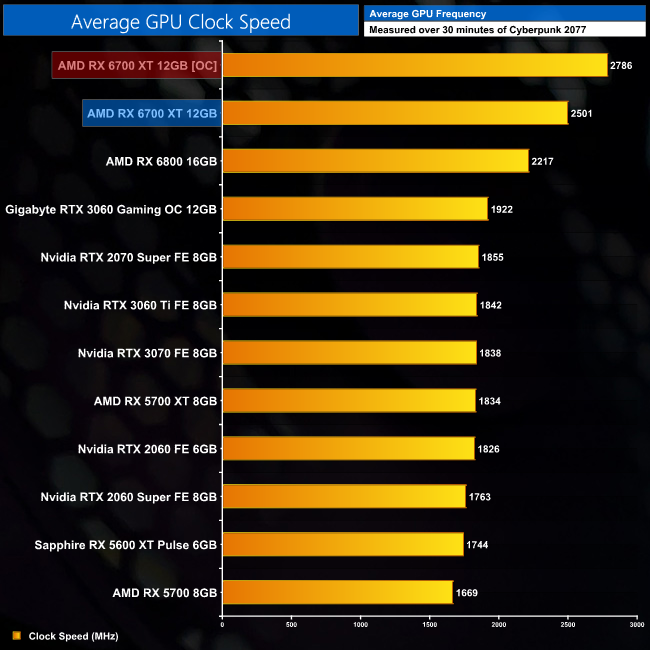
This increased our real-world average clock speed by 285MHz, very nearly reaching 2.8GHz on the core.
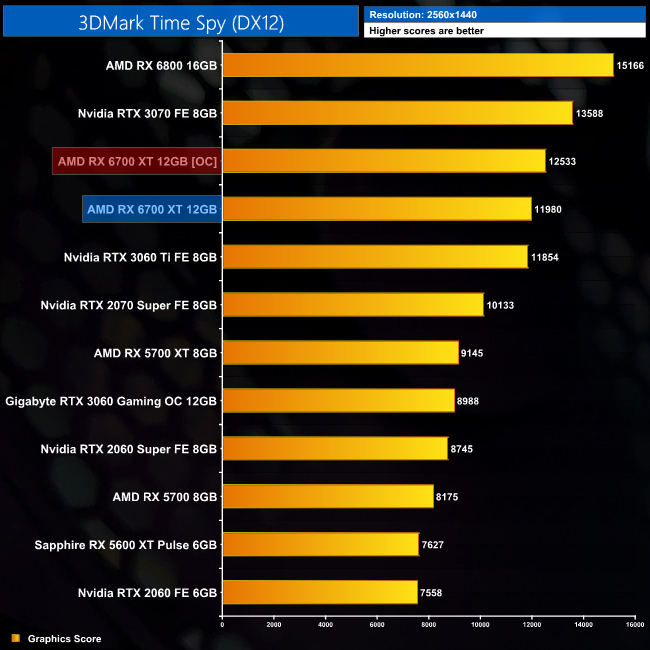
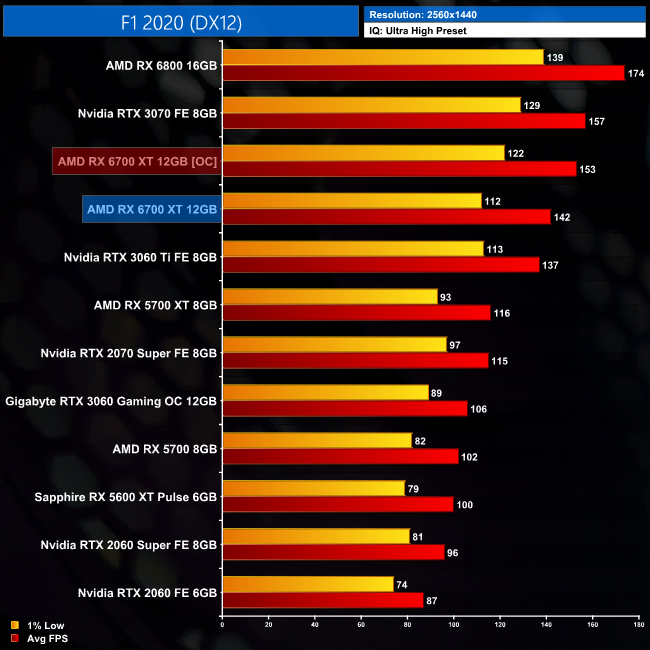
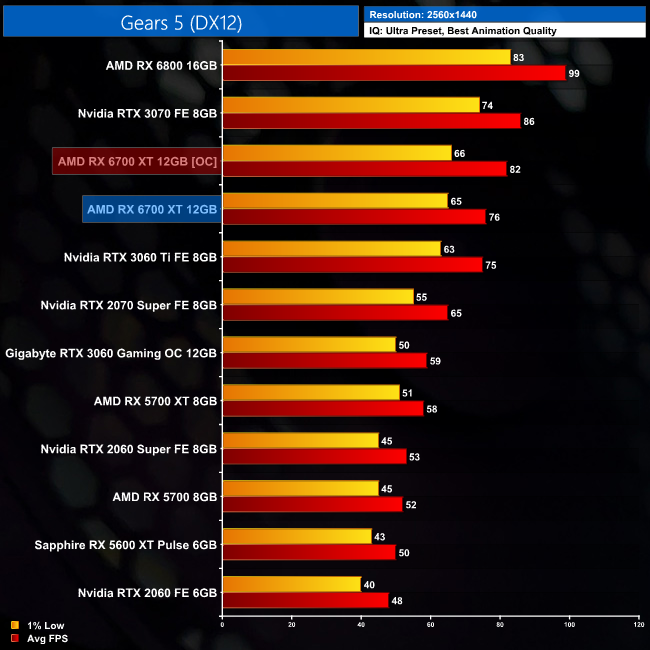
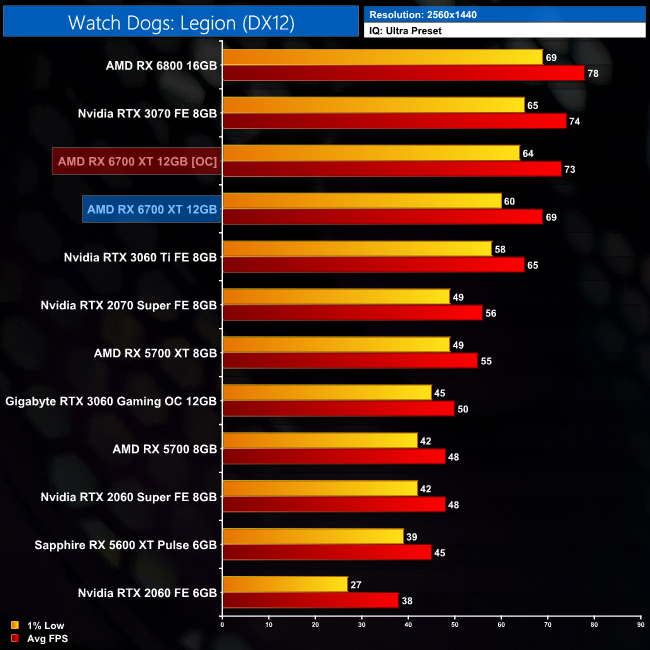
As a result of this increased frequency, we saw an 8% boost to frame rates in both F1 2020 and Gears 5, when testing at 1440p. In Watch Dogs: Legion, we saw an extra 6%.
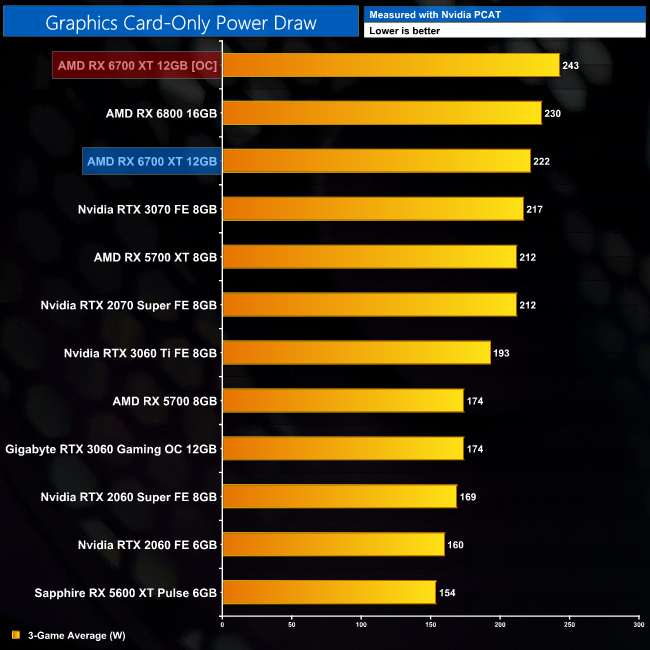
Meanwhile, power draw increased by 21W, or an extra 9% compared to stock behaviour.
We've been hearing about it since the launch of the RX 6800 series back in November but AMD's RX 6700 XT has now arrived, and it's targeting 1440p gamers while the MSRP hits £419.99/$479. It's certainly not cheap, but it brings RDNA 2 down to the mid-range for the first time.
The RX 6700 XT is aimed squarely at gamers who want to use a 1440p monitor without compromising any image quality settings. In that regard, the card is certainly succesful, averaging over 60FPS in all but one of the twelve games we tested when using Ultra settings at 1440p. As it happens, the one game where we couldn't quite manage 60FPS was Cyberpunk 2077, which is as demanding as it gets right now.
Relative to its competition, I was pretty hopeful that the RX 6700 XT would indeed match, or even beat, Nvidia's RTX 3070 based on the initial performance numbers shown by AMD. Across the twelve games we tested though, the 6700 XT is only faster in one of those, and by a 4% margin. There's a few other close calls, but on average the 6700 XT is 10% slower at 1440p. Against the RTX 3060 Ti, it's 2% faster on average, while it delivers a generation uplift of 26% when compared to its direct predecessor, the RX 5700 XT.
I also found the performance margins when compared against the RX 6800 to be fascinating. Generally we'd expect pretty consistent scaling when comparing two GPUs of the same architecture – the RX 5700 XT, for instance, is always between 12-15% faster than the RX 5700 in the twelve games we've tested. Comparing the 6700 XT to the RX 6800 sees the margins vary quite significantly, as it's anywhere from 9-23% slower at 1440p. I would suggest this is due to the 6700 XT having a third fewer cores than the 6800, but significantly higher clocks, meaning the margins of difference can vary depending on whether a certain game is more clock sensitive, or if it favours an increased core count.
Rasterisation performance aside, the RX 6700 XT's ray tracing numbers are disappointing. It manages playable frame rates at 1080p when ray tracing is enabled, but it is soundly beaten by the RTX 3060 Ti, and it's not even close. In Control and Watch Dogs: Legion, ray tracing performance is actually closer to the RTX 2060 Super than it is to the RTX 3060 Ti, and that's without factoring in DLSS, which boosts Nvidia's advantage even further. I am still of the opinion that ray tracing performance alone isn't a big enough selling point yet to solely determine your buying decision, but it certainly doesn't help AMD when its £420 GPU is comprehensively outperformed by Nvidia's £369 RTX 3060 Ti in ray traced workloads.
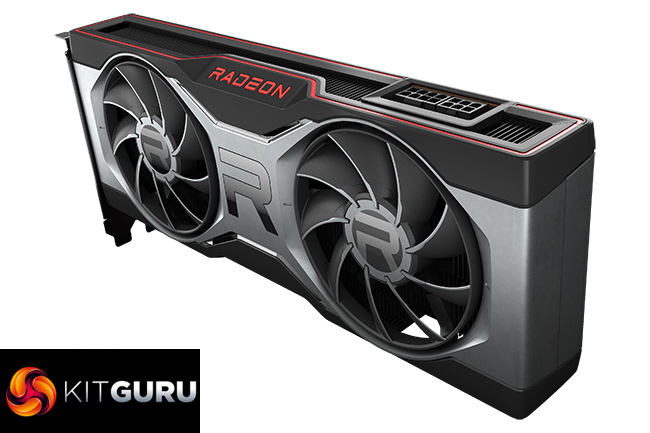
In terms of AMD's reference cooler, it is an impressive piece of work. Despite being about half a kilogram lighter than the RX 6800, thermals are kept in check, hitting a peak of 77C based on our testing. The two fans also stay quiet, producing 38dBa, which is right in line with AMD's other reference cards of this generation. Noise-normalised thermals didn't show a big improvement compared to out of the box behaviour, but we will see how AMD's partners can improve on the reference design in the coming weeks.
Overall efficiency of this GPU isn't as good as we have come to expect from RDNA 2. Drawing 222W on average across our testing, performance per Watt is 15% lower than the RX 6800 at 1440p, and also lags behind Nvidia's RTX 3060 Ti and RTX 3070 by 11%. Compared to the first generation RDNA architecture, we're still looking at an increase in performance per Watt of 22% compared to the RX 5700 XT, but the 6700 XT is a slight backwards step compared to the RX 6800.
Cost per frame also paints an interesting picture. This is based on launch MSRPs, and while ‘MSRP' means very little these days, it does tell us how AMD is trying to position the product. At 1440p, cost per frame is effectively dead-level with the RTX 3070, but comes in 11% more expensive per frame when compared to the RTX 3060 Ti. Even more interesting is the fact that when using the $479 USD MSRP, overall value is worse than here in the UK when using the £419.99 MSRP. Based on dollar pricing, the 6700 XT is actually 7% more expensive per frame than the RTX 3070, and that increases to 17% versus the RTX 3060 Ti.
In my opinion, the RX 6700 XT really needed to deliver better value against the RTX 3060 Ti when looking at rasterisation performance, simply to counteract ray tracing and DLSS performance, which currently gives Nvidia GPUs an edge against anything from Team Red. It doesn't make sense for the RX 6700 XT to deliver worse value than the RTX 3060 Ti, while also not being able to match it in those other areas.
Ultimately, for whatever reason, AMD has set the price too high for this GPU. It's £50 more expensive than the RTX 3060 Ti and £40 more than what the RX 5700 XT launched for. I think it would definitely be an option to consider if pricing dropped, as it is still a fast GPU capable of solid frame rates for 1440p gaming. As things stand, the RTX 3060 Ti can deliver 98% of the 1440p performance, but for 88% of the price, while also offering far superior ray tracing performance as well as DLSS support.
We don't yet have a buy link for the RX 6700 XT specifically, but we expect some availability on AMD.com tomorrow, March 18th.
Discuss on our Facebook page HERE.
Pros
- Solid performer for 1440p gaming.
- Cool and quiet reference card.
- We saw up to a 6% FPS boost when using Smart Access Memory.
Cons
- Ray tracing performance is significantly slower than the competition.
- Cost per frame is 11% higher than RTX 3060 Ti, with worse ray tracing performance and no DLSS.
- Not as efficient as RX 6800.
KitGuru says: The RX 6700 XT performs well in rasterised games, but the price needs to be adjusted to make it competitive. Currently the RTX 3060 Ti is cheaper per frame, while also offering significantly better ray tracing performance alongside DLSS, which AMD still has no answer to.