KitGuru KitGuru.net – Tech News | Hardware News | Hardware Reviews | IOS | Mobile | Gaming | Graphics Cards


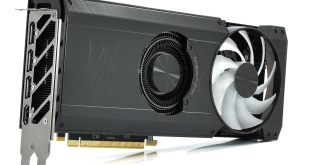
You may have read my launch-day reviews of Intel's Arc A750 and A770 graphics cards, where I praised the potential of Intel's hardware, but also noted a number of significant issues on the driver side. Well, Intel has been hard at work and is claiming some serious improvements with its newest drivers, so it is time to put that to the test today, where we'll also be analysing Acer's Predator BiFrost A770 custom card.
Watch video via Vimeo (below) or over on YouTube at 2160p HERE
Timestamps
00:00 Intro
00:59 Test setup
02:55 Performance testing
07:34 12-game Average results
09:48 A look at the Acer Predator BiFrost A770
12:08 Thermals and acoustics
13:42 Power and FPS vs LE
14:28 Closing Thoughts
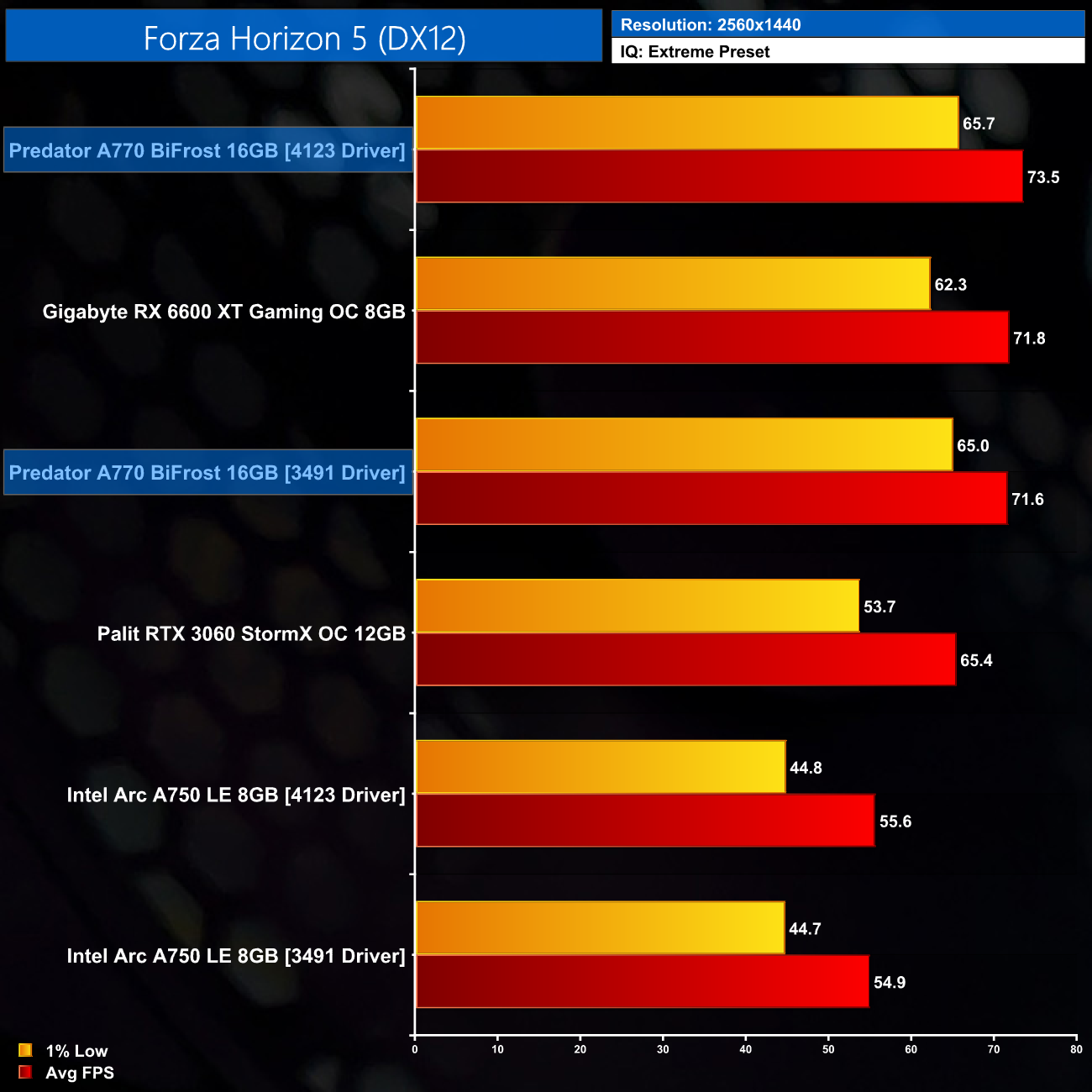
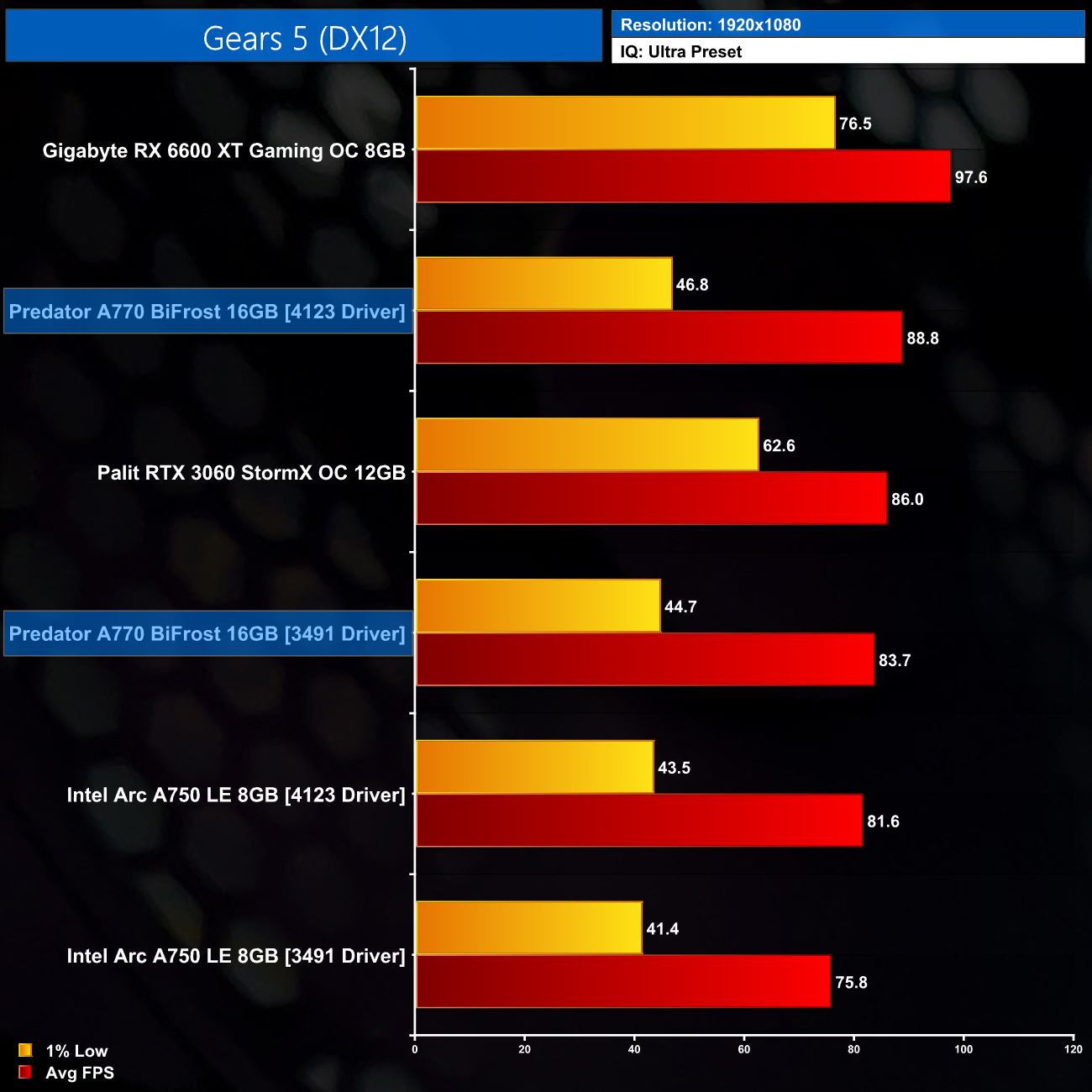
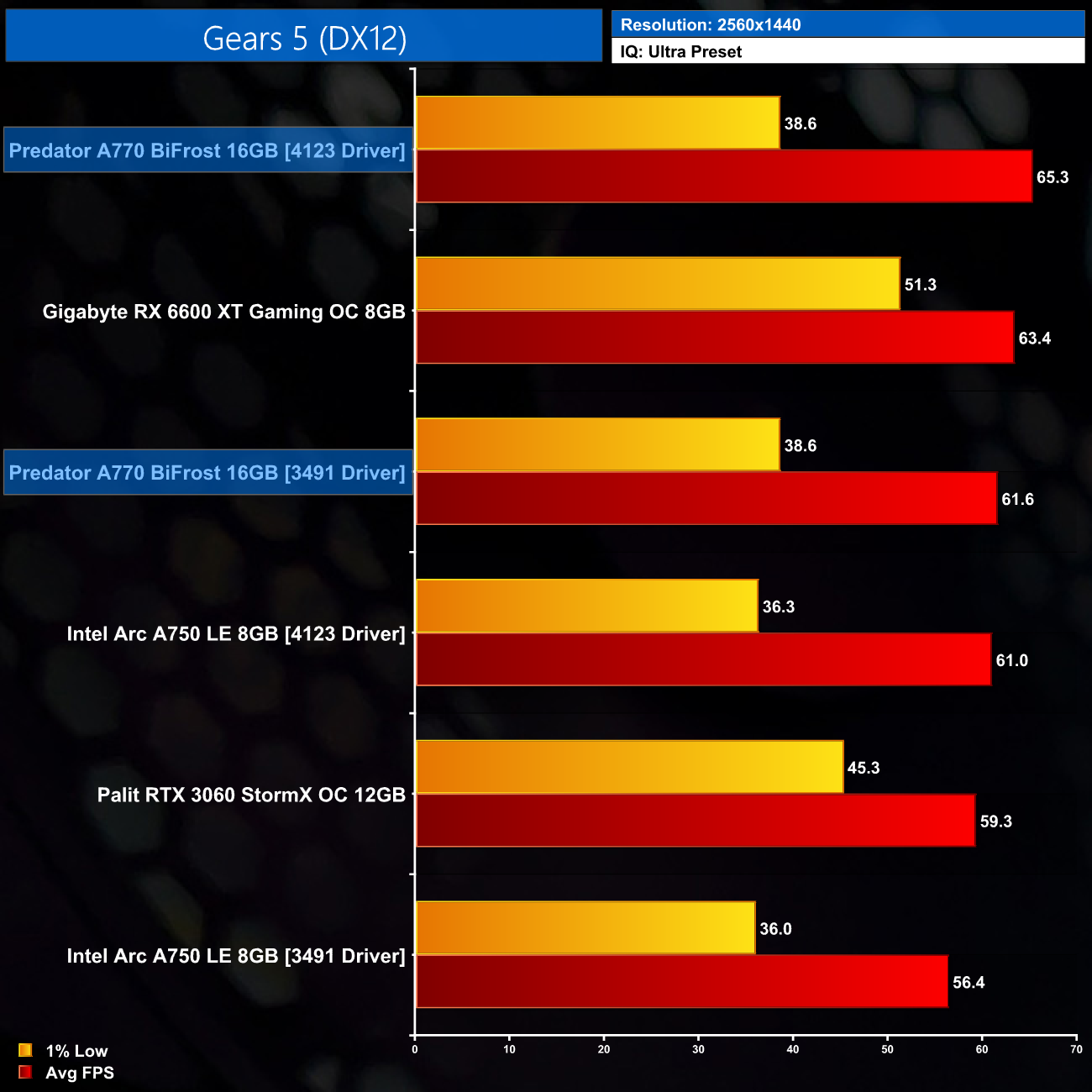
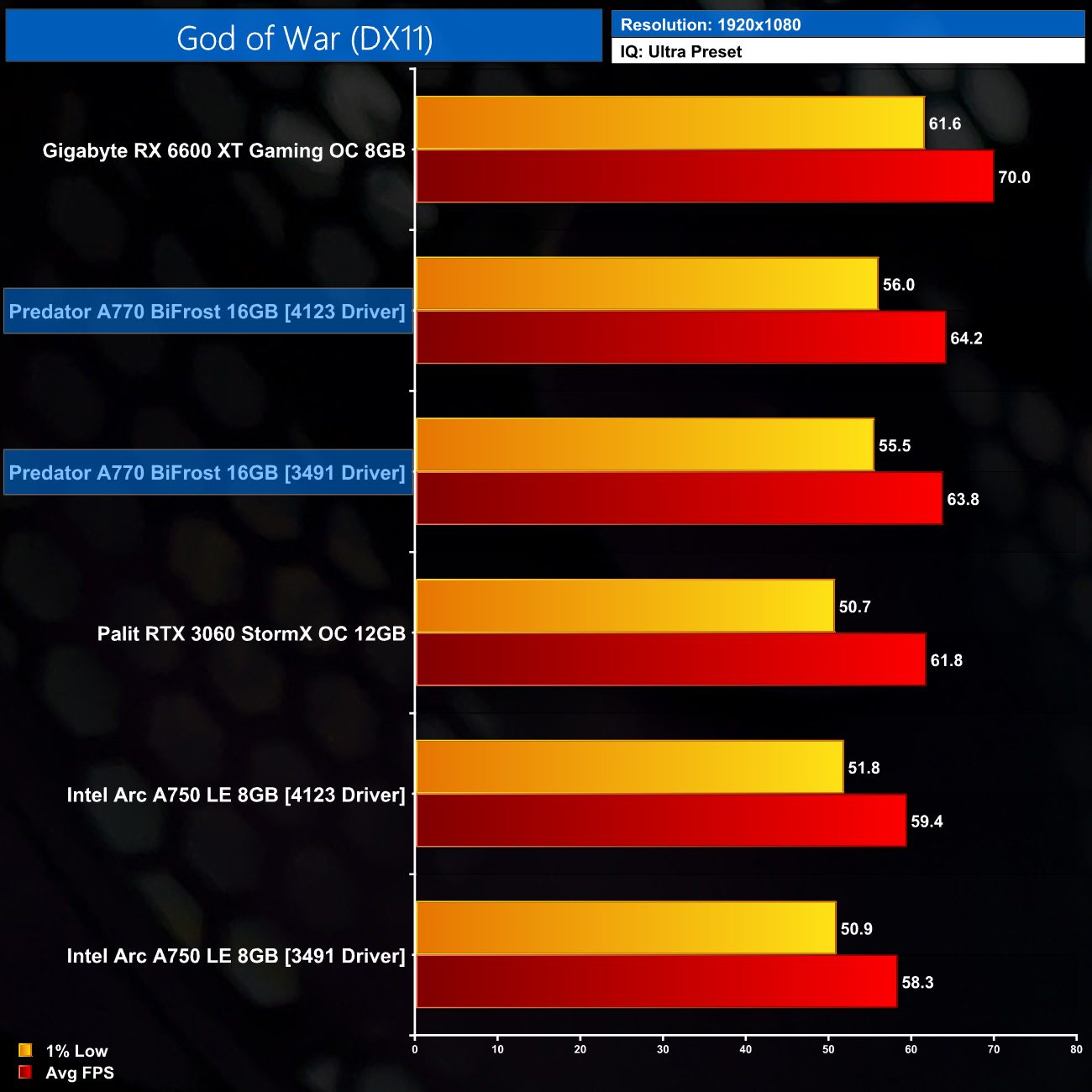
In order to analyse the difference made by Intel's newest drivers, we tested both the A750 and A770 using the 3491 driver from back in October, as well as with the 4123 driver released in February. This gives us two data points per Arc GPU, so we can see exactly how things have changed in the last few months. Testing 12 games in total, we also include comparisons against the RX 6600 XT and RTX 3060.
Later in this article, we take a closer look at the Acer Predator BiFrost A770 custom card and compare its performance, thermals and more against Intel's own Limited Edition model.
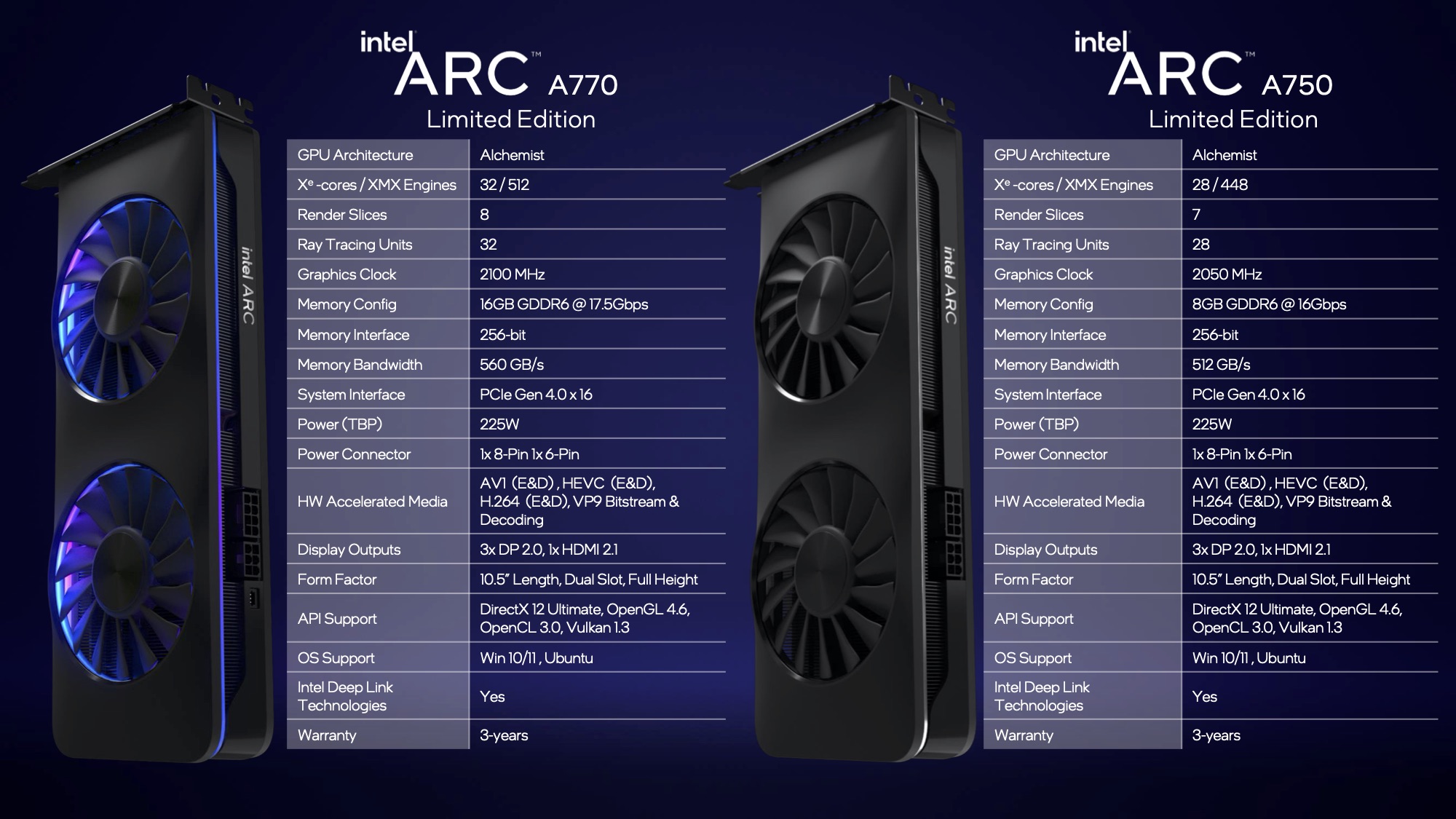
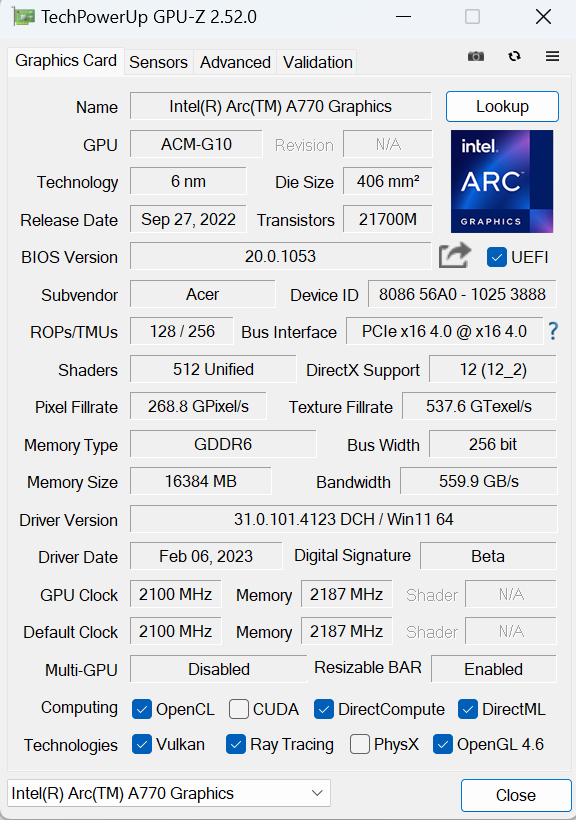
We've taken a look at the Xe HPG architecture in the past, but to remind ourselves of what we are looking at today, above we can see a comparison of the core spec of the A750 and A770. Both SKUs are built on Intel's ACM-G10 silicon, but the A750 is shaved down slightly. The full die offers 32 Xe cores for the A770 however, where each core offers 16 vector engines, with each vector engine housing 8 FP32 ALUs, for a grand total of 4096.
Each Xe core is accompanied by a Ray Tracing Unit, while we also find 224 TMUs and 112 ROPs. A 256-bit memory interface is used for both A750 and A770, but 16Gbps GDDR6 memory is used for the A750, giving total memory bandwidth of 512 GB/s. Intel also rates the A770 for 2100MHz graphics clock, and 225W total board power.
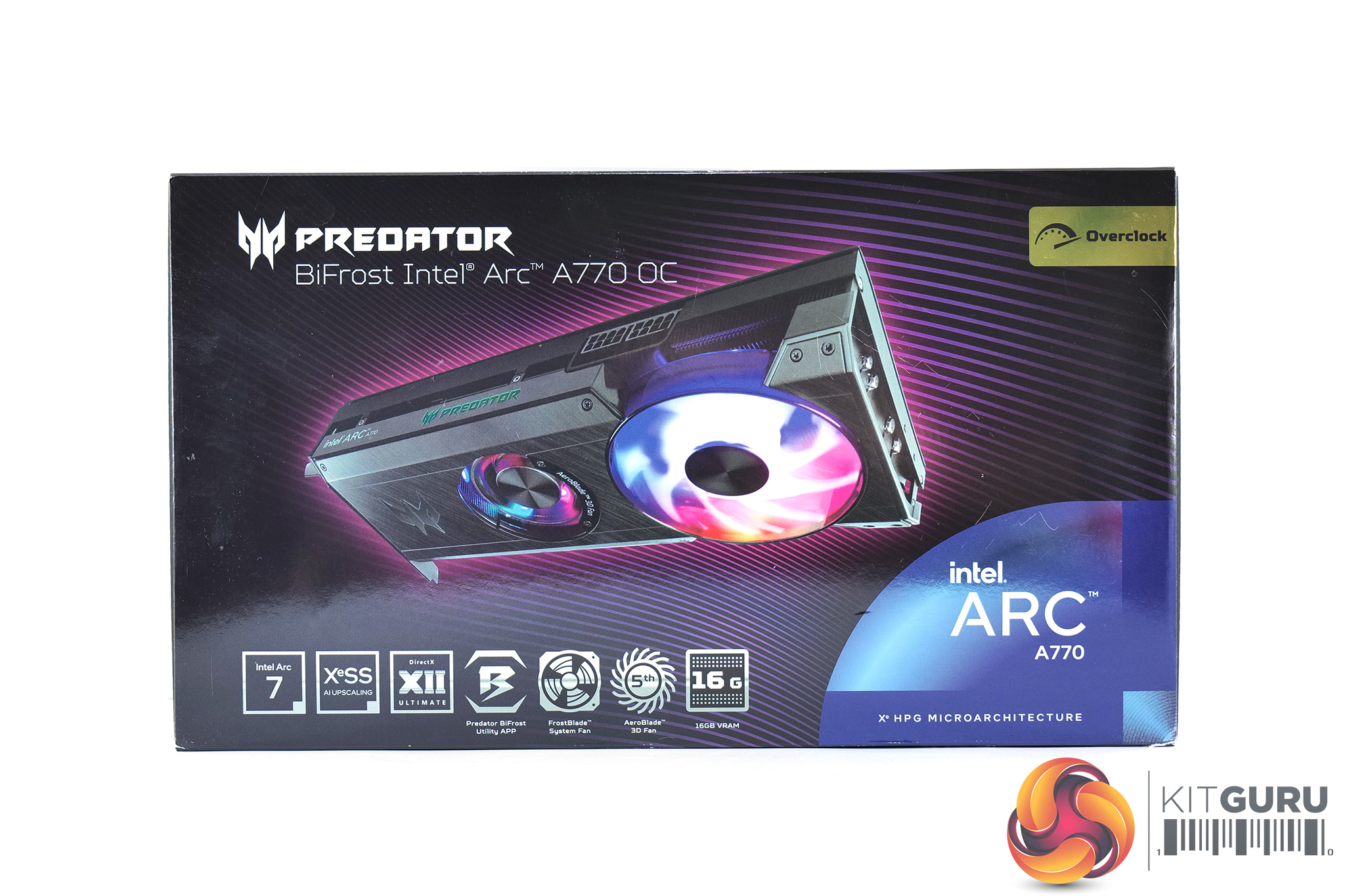
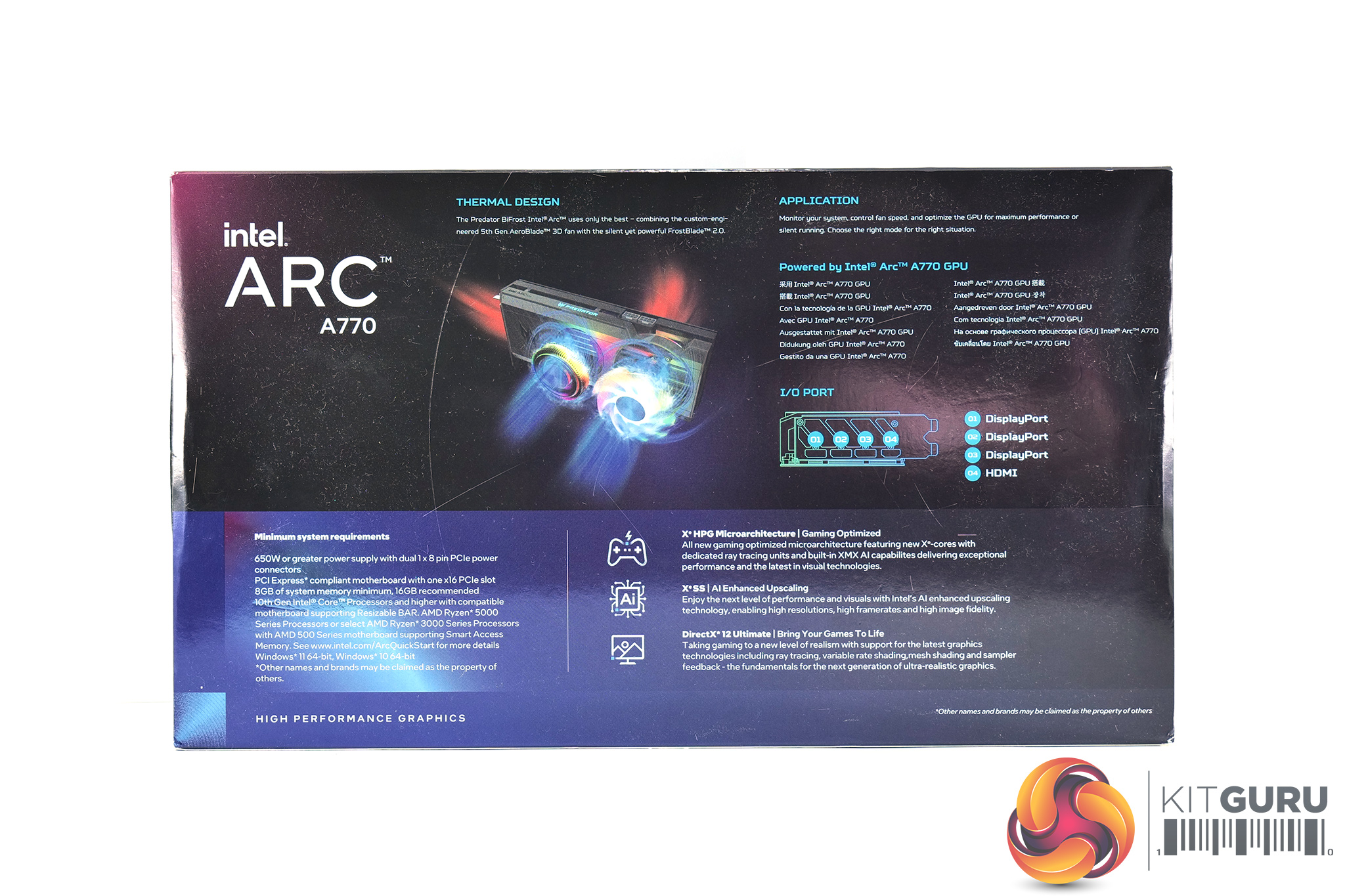
The Acer Predator BiFrost A770 ships in a compact box, with an image of the graphics card positioned front and centre. On the back, the company highlights a couple of key features around the cooler design, as well as the I/O and software application used to tweak RGB lighting and fan control.
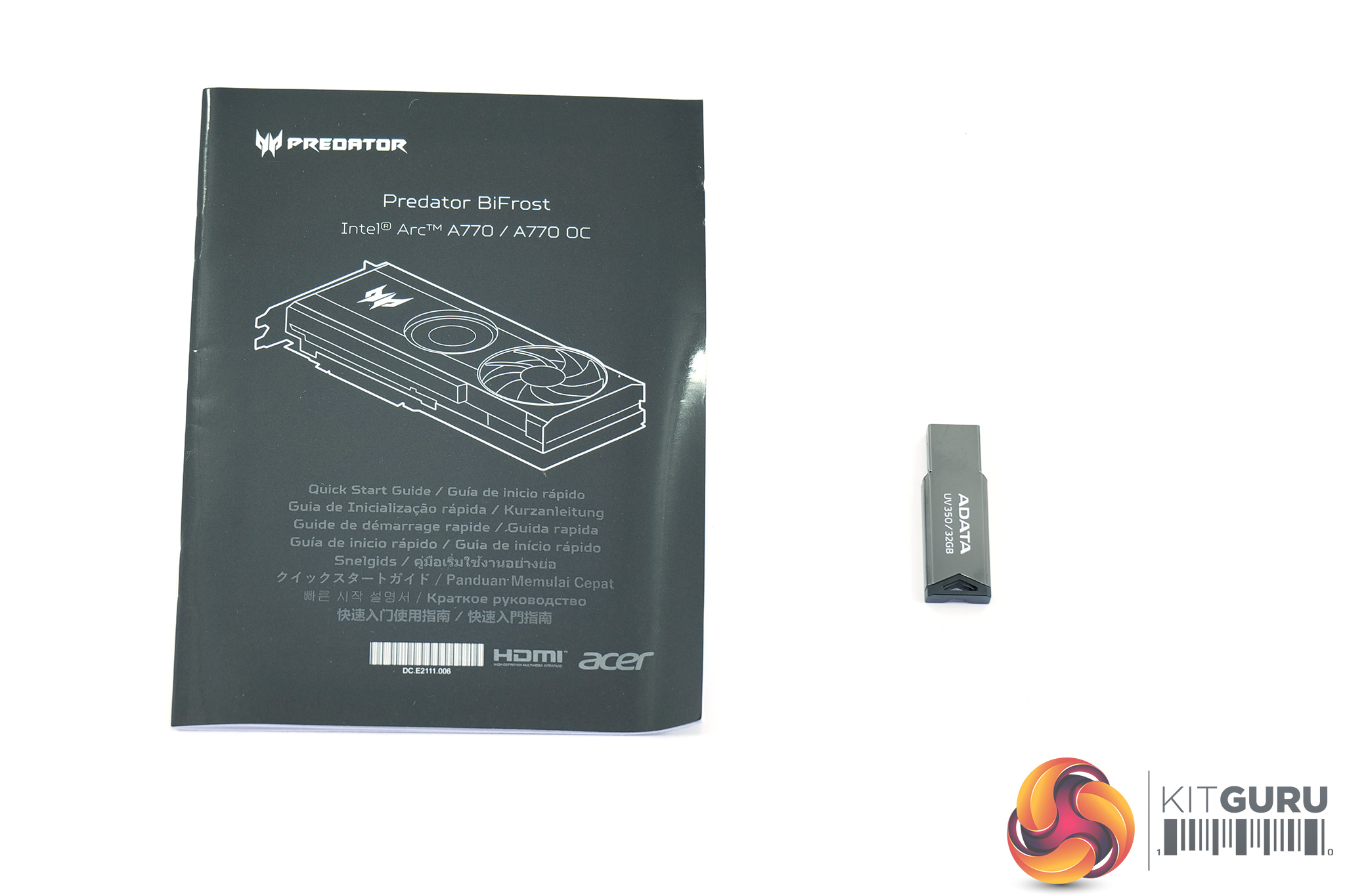
Inside the box, a quick start guide is included, as well as a 32GB USB stick that includes a driver and install files for the BiFrost software application.
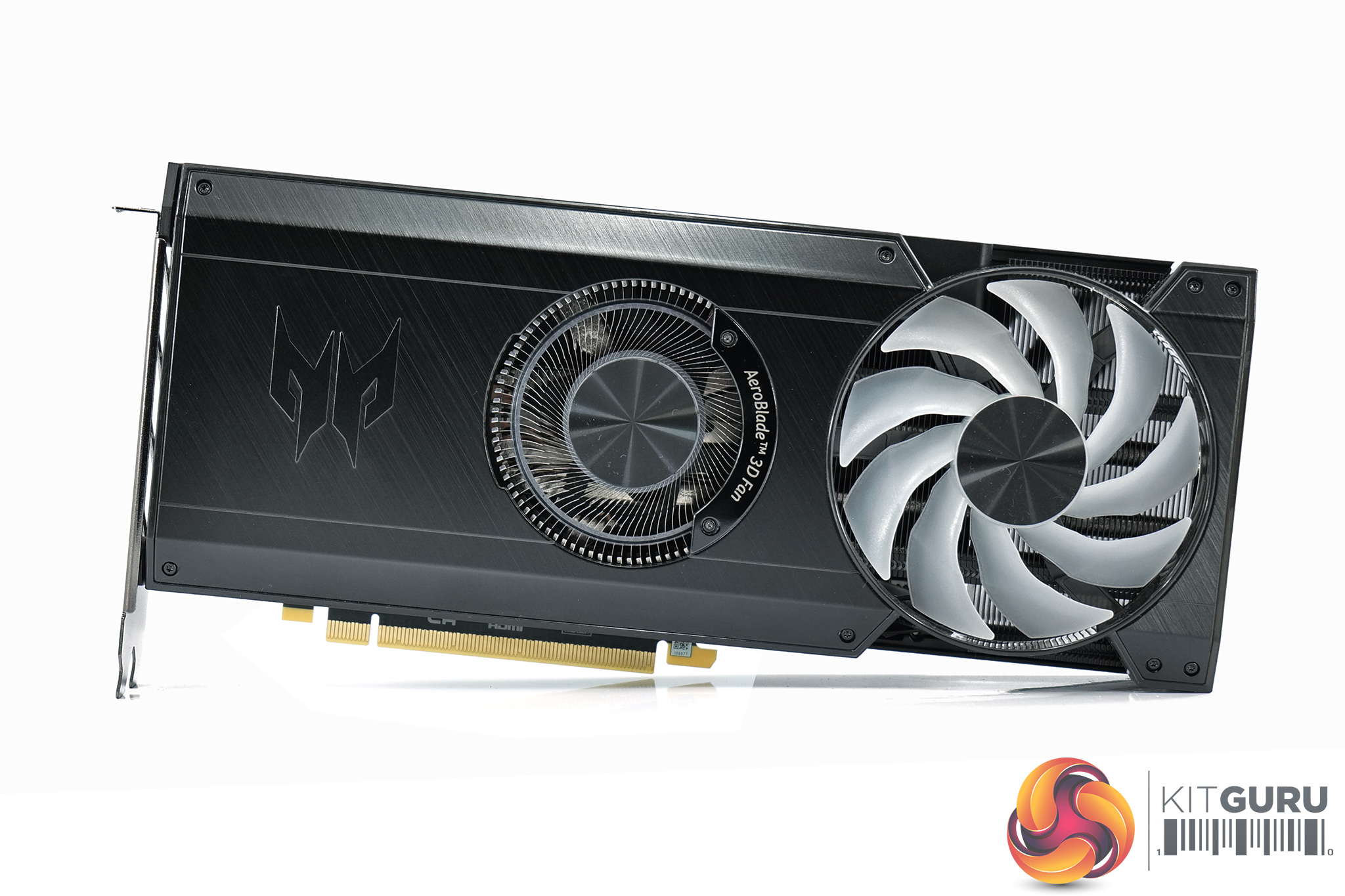
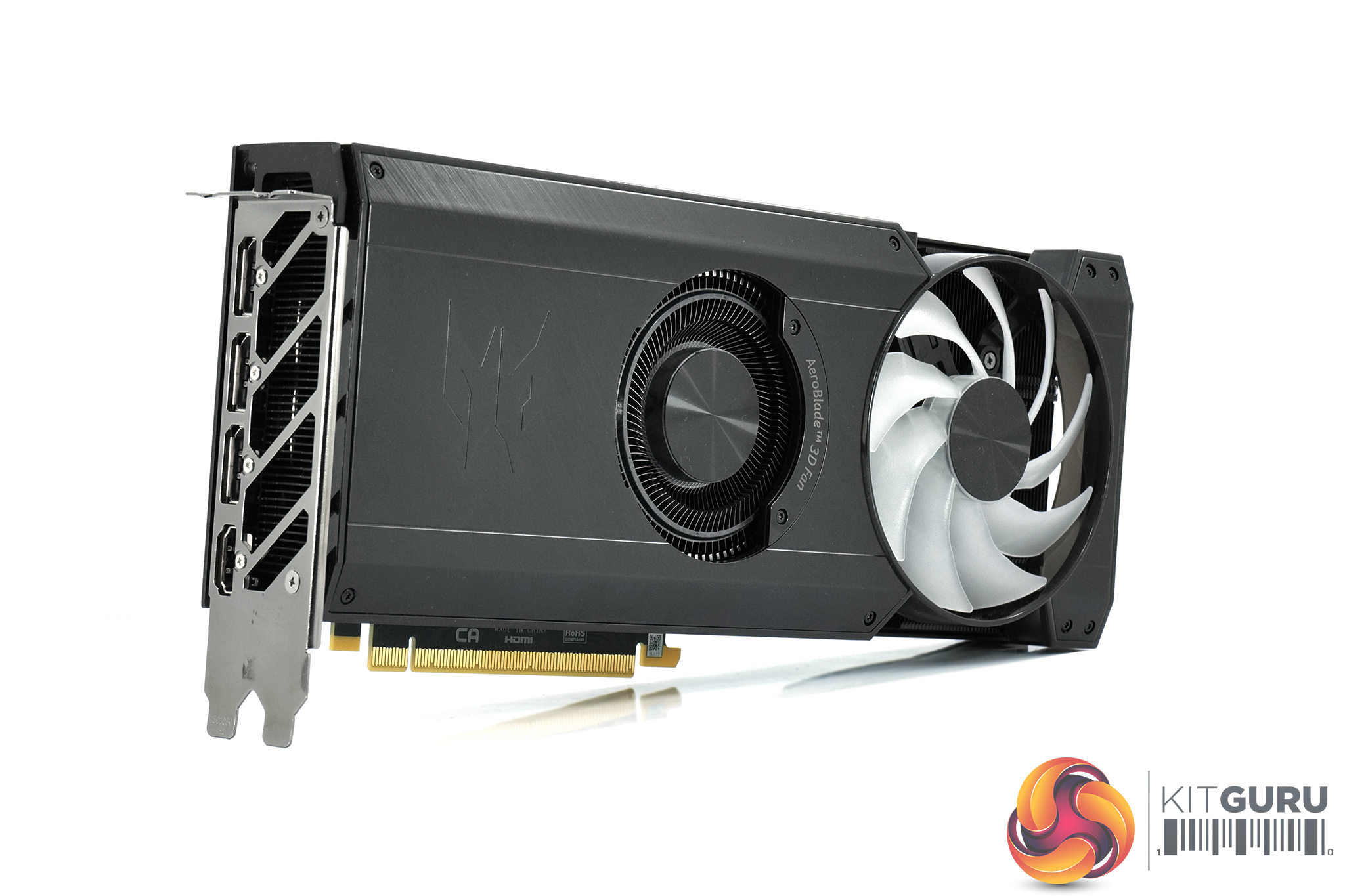
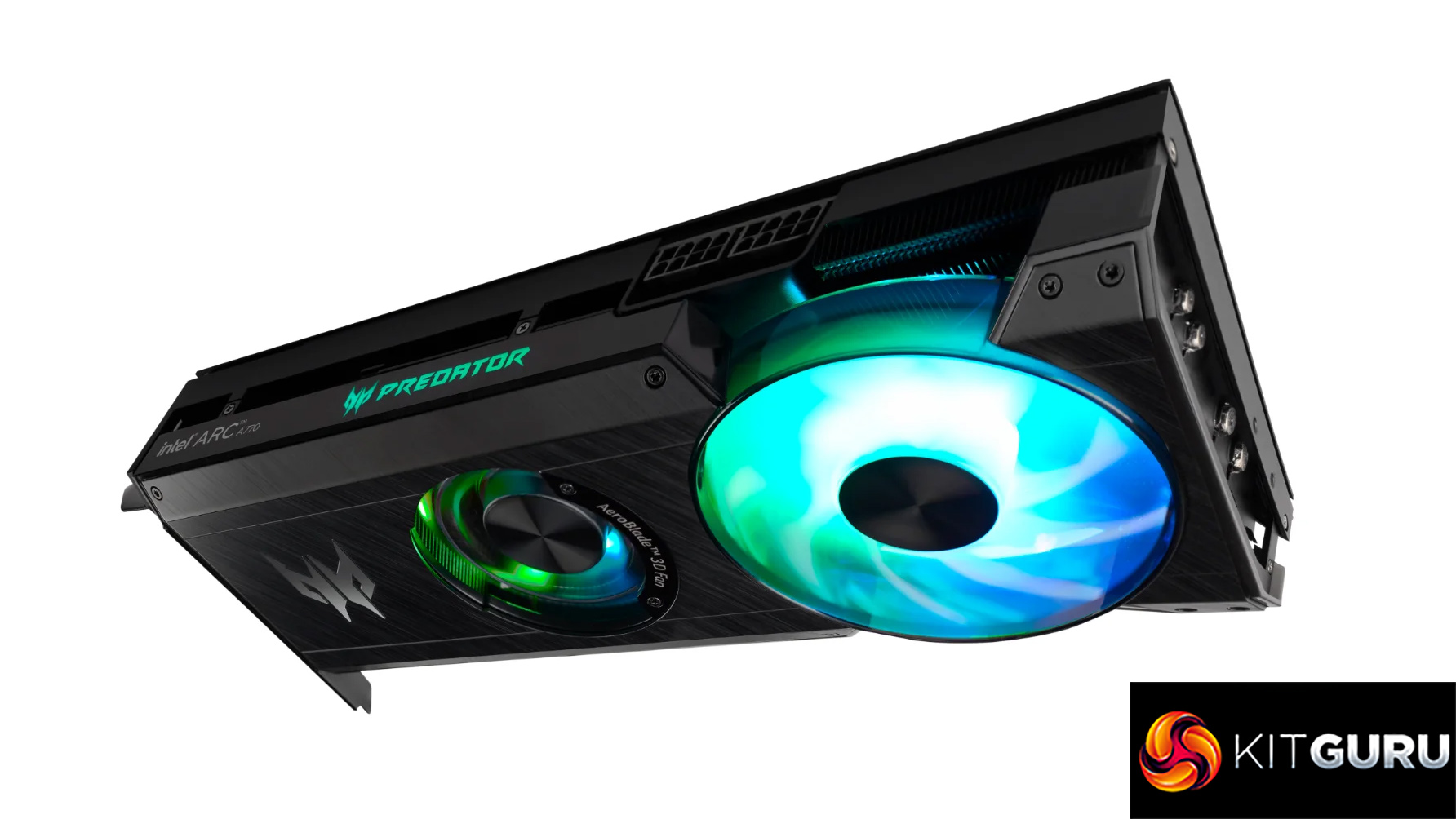
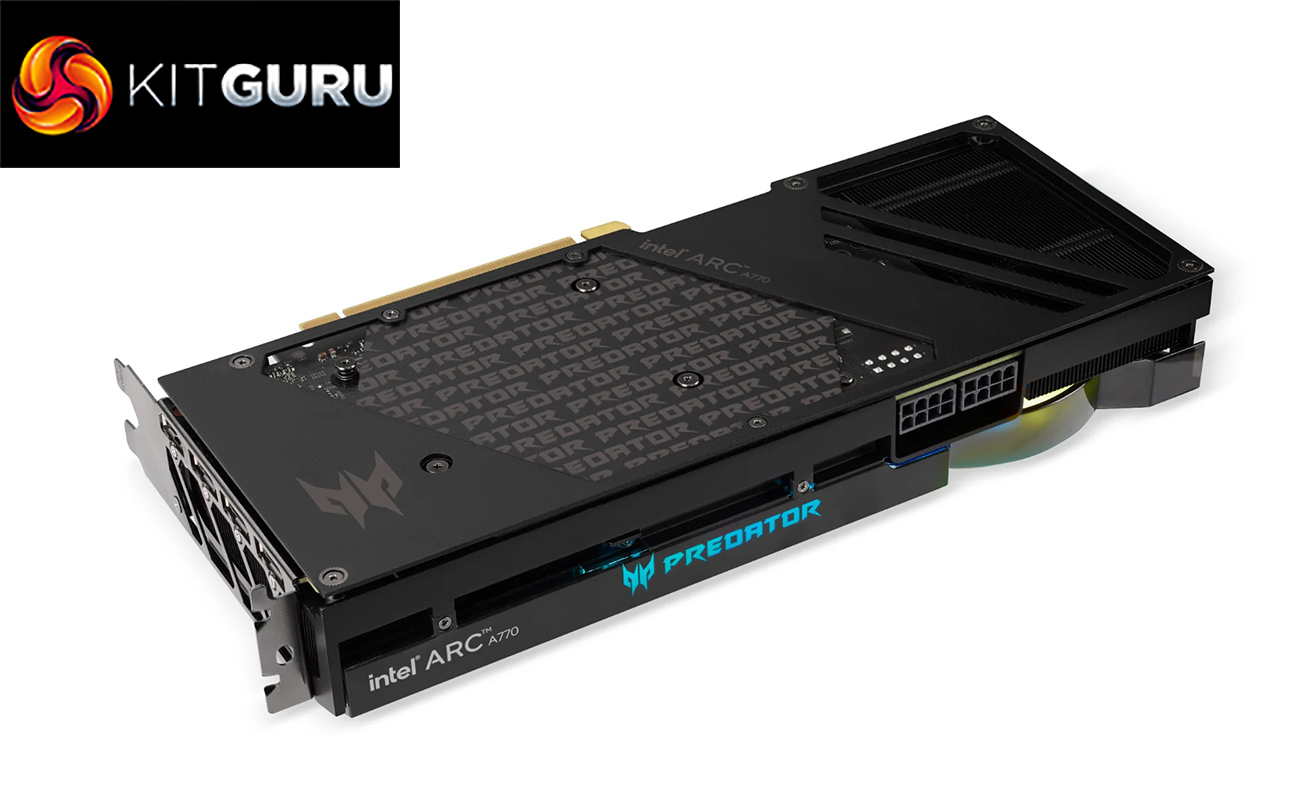
As for the card itself, you've likely already seen the design online over the past few months but it is safe to say the BiFrost is rather unconventional with its approach. It uses a hybrid design, with one 70mm blower-style fan, and one 90mm axial fan, all housed in a brushed metal shroud. It's certainly not a cooling setup we have seen before so it'll be interesting to see how the cooler performs later in this article.
The BiFrost is reassuringly well-built however – we already mentioned the metal shroud which adds a premium feel, though the aesthetics may not be for everyone!
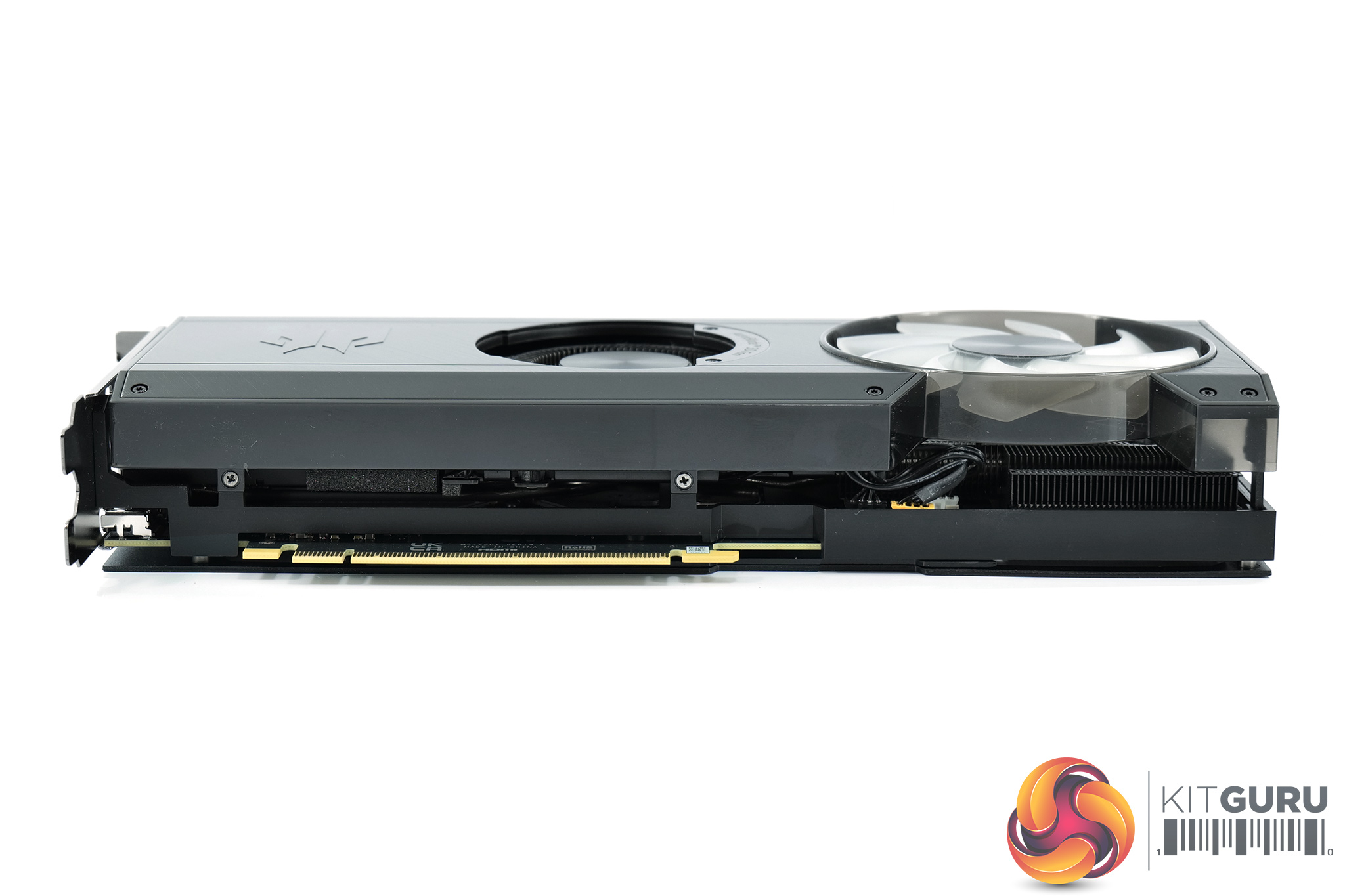
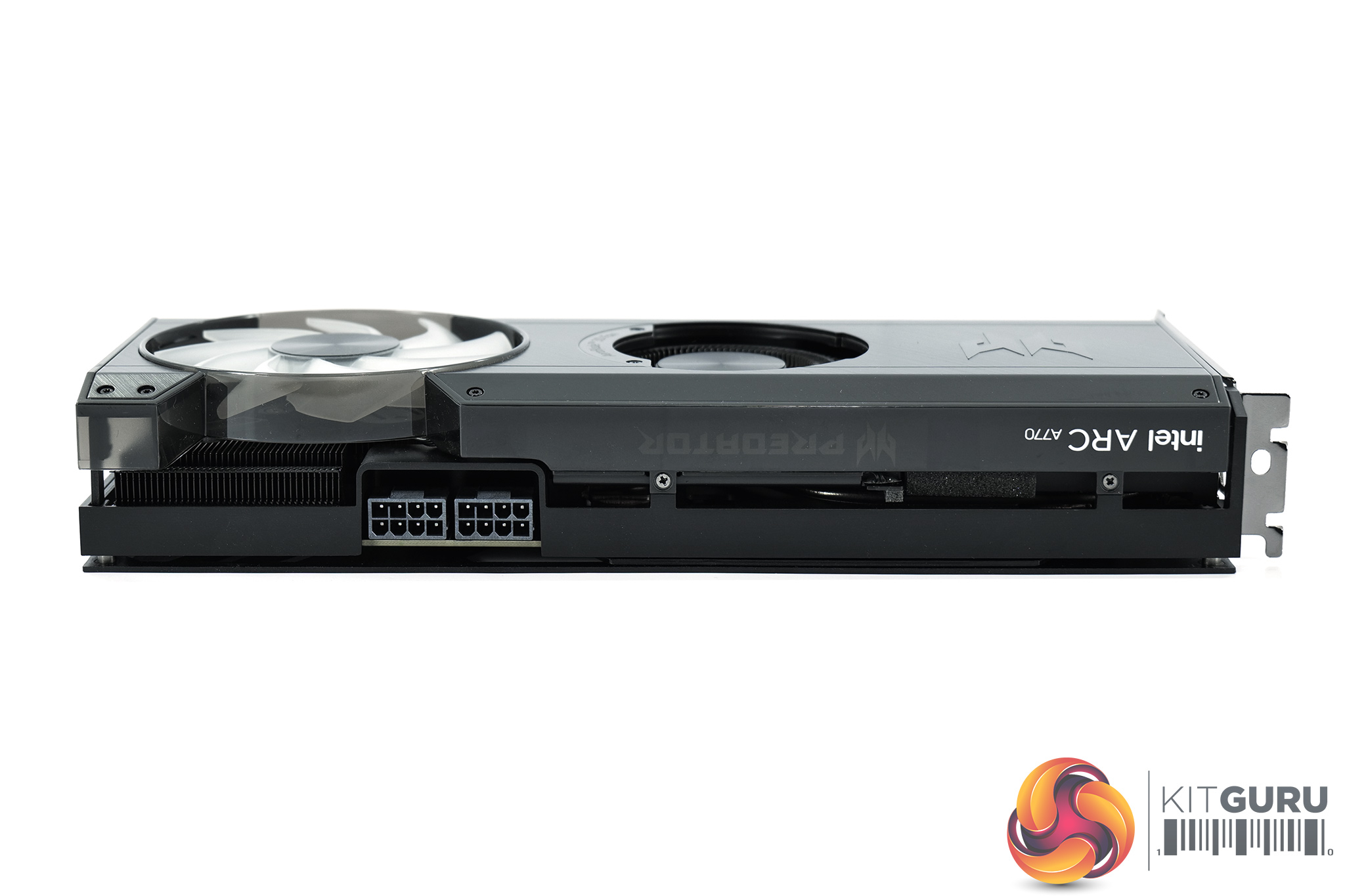
The card is also relatively compact by modern standards, measuring 267mm x 117.8mm, and is a standard dual-slot thickness. It weighs in at 1.16 Kg on my scales, making it barely any heavier than Intel's own Limited Edition model.
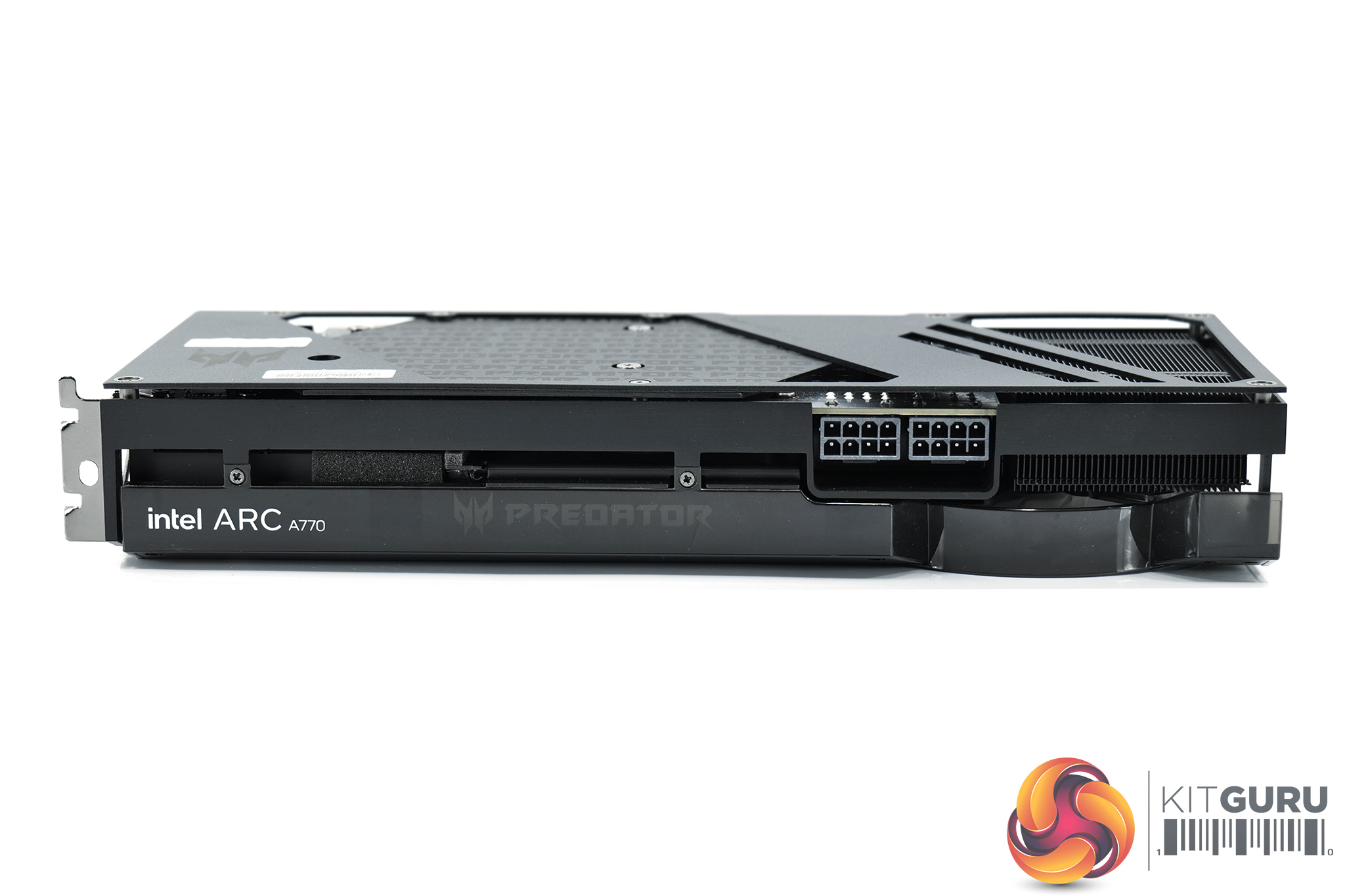
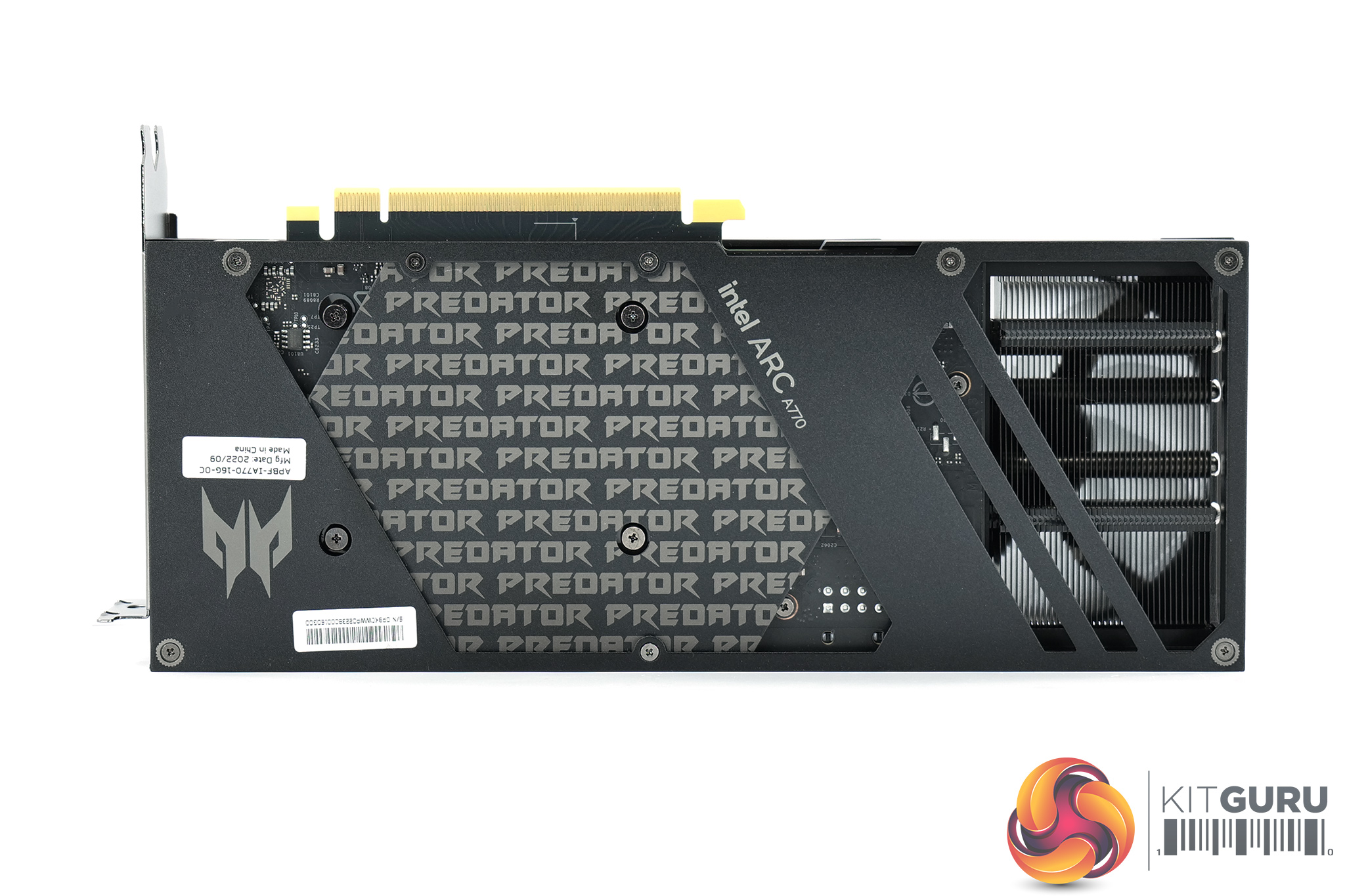
The front side of the card is home to both the Intel Arc logo and the Predator logo, the latter of which is illuminated by RGB LEDs when the system is powered on. We also find a metal backplate, with a large section of repeating text in the middle – if you didn't know this was a Predator card already, you sure do now! There's also a few cut-outs in the backplate at the end to allow airflow to pass directly though the heatsink.
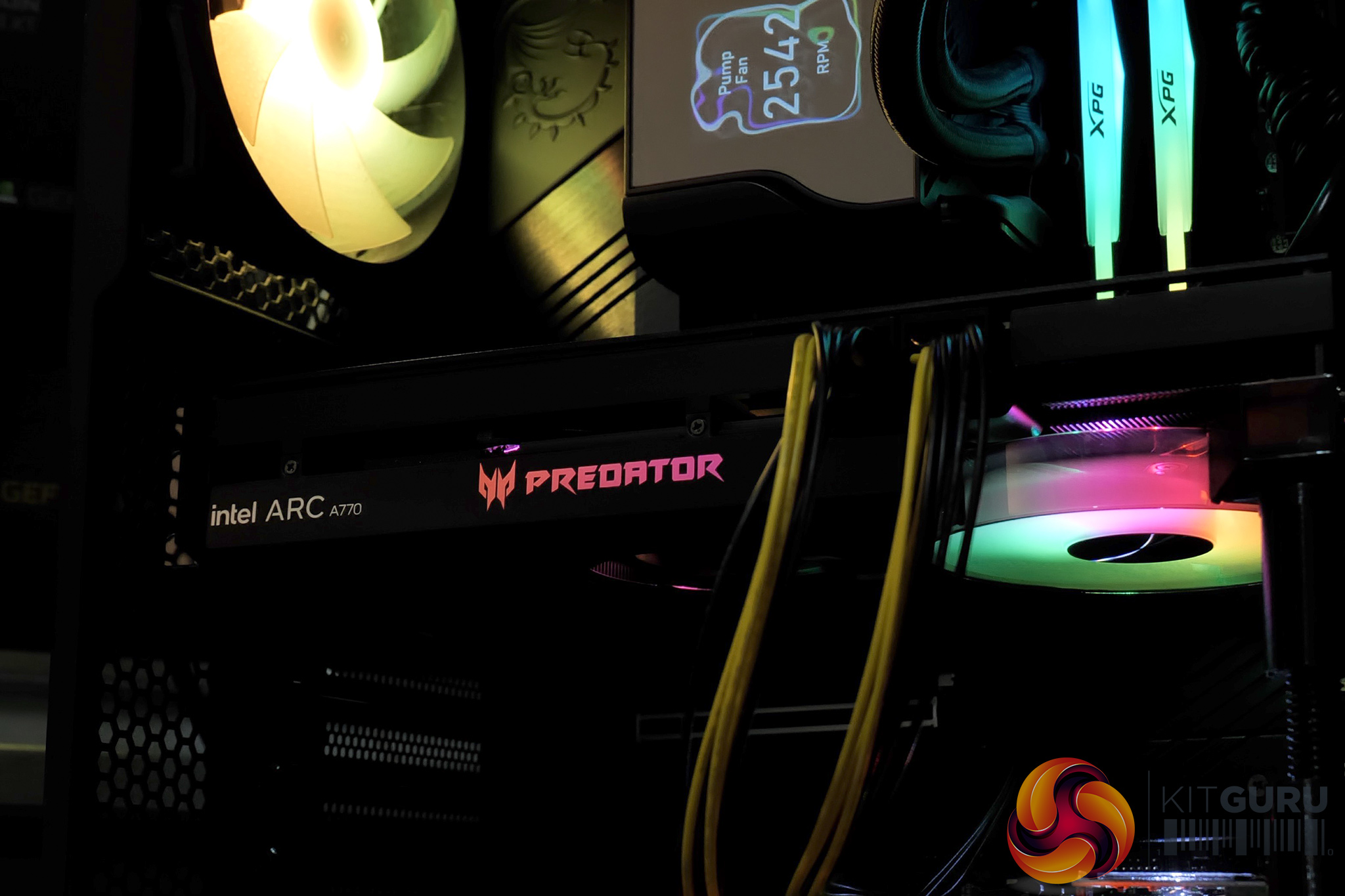
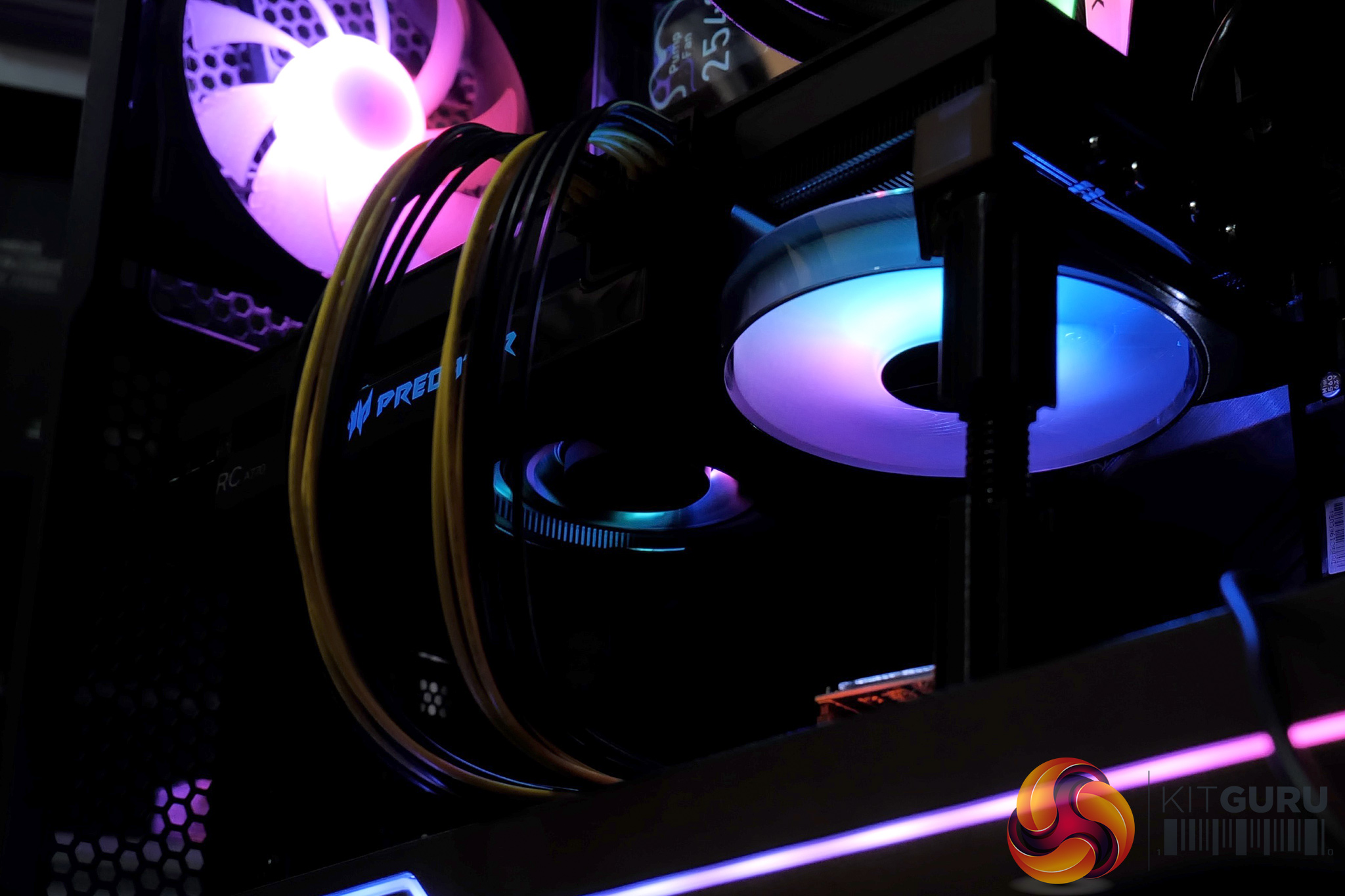
Speaking of RGB, above we can see the three different zones in action – the Predator logo, the blower fan, and then the axial fan. It's certainly a clean-looking implementation and it offers extensive customisation options via the BiFrost software application.
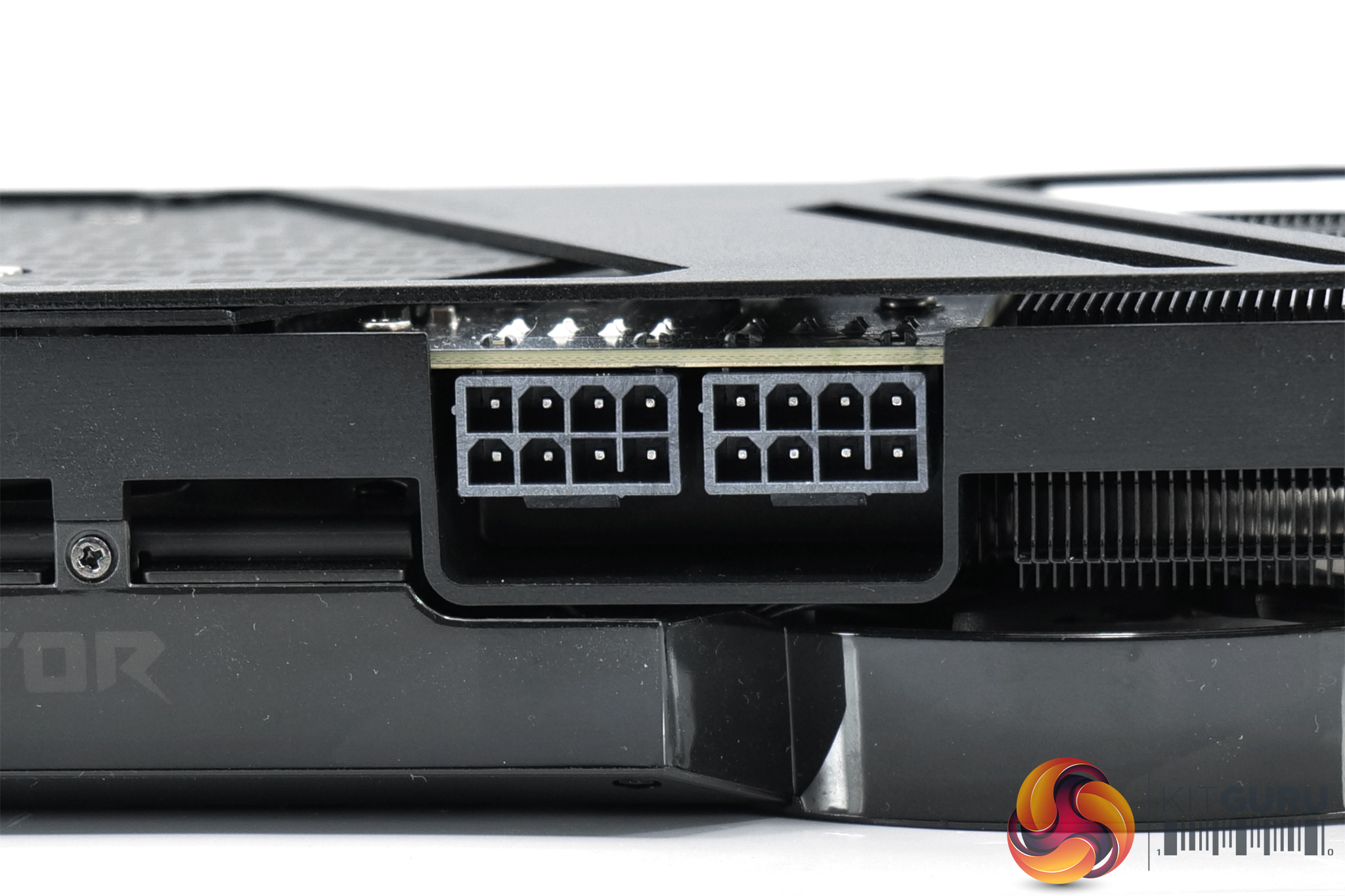
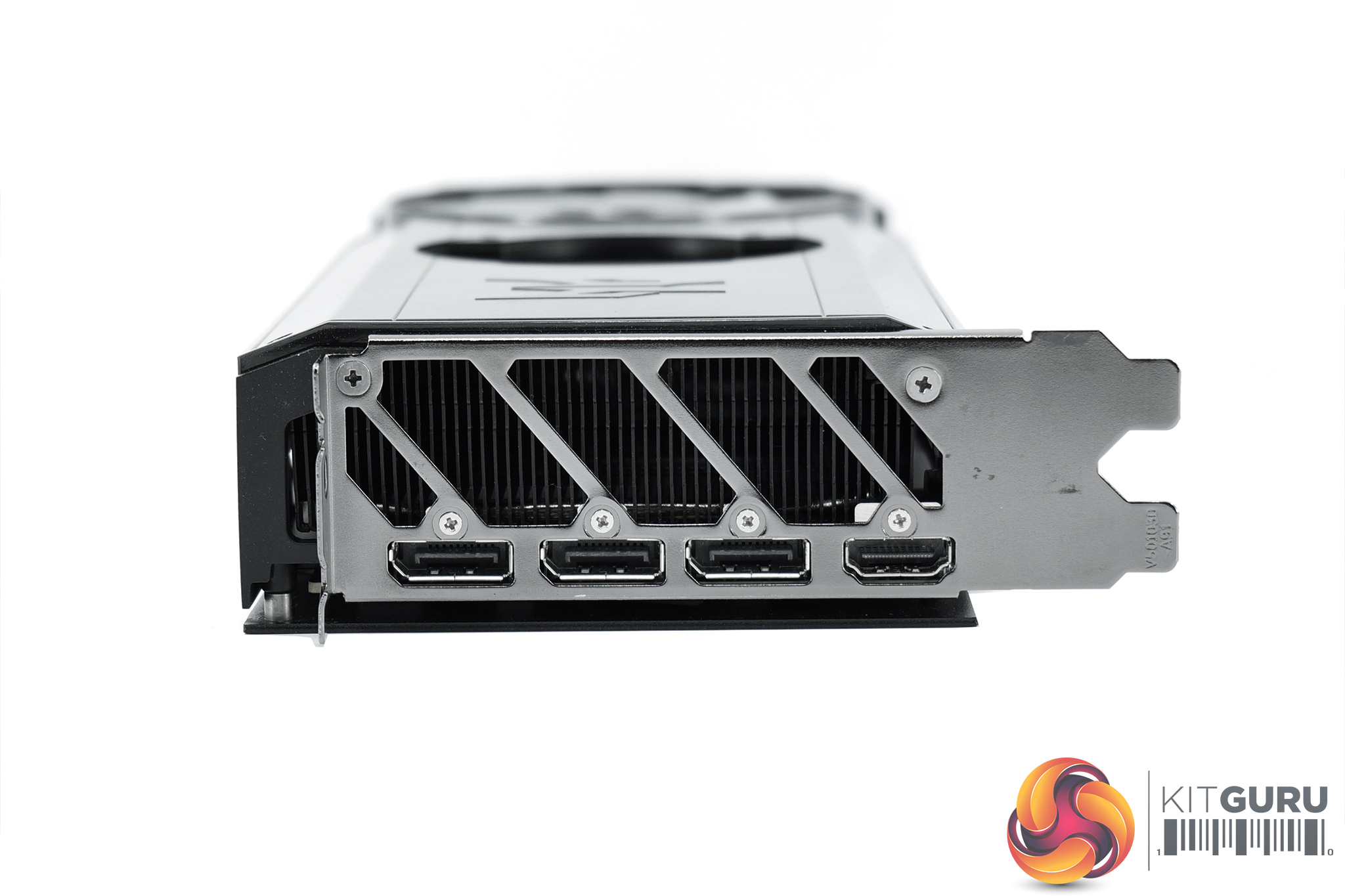
Power requirements consist of 2x 8pin connectors. For reference, the Limited Edition model requires 1x 8-pin and 1x 6-pin. We also find 3x DisplayPort 2.0 video outputs, and 1x HDMI 2.
Driver Notes
- All Intel GPUs were benchmarked with the 3491 and 4123 driver.
- All Nvidia GPUs were benchmarked with the 528.48 driver.
- All AMD GPUs were benchmarked with the 23.2.1 driver.
Test System:
We test using a custom built system powered by MSI, based on Intel’s Alder Lake platform. You can read more about this system HERE and check out MSI on the CCL webstore HERE.
| CPU |
Intel Core i9-12900K
|
| Motherboard |
MSI MEG Z690 Unify
|
| Memory |
32GB (2x16GB) ADATA XPG Lancer DDR5 6000MHz
CL 40-40-40
|
| Graphics Card |
Varies
|
| SSD |
2TB MSI Spatium M480
|
| Chassis | MSI MPG Velox 100P Airflow |
| CPU Cooler |
MSI MEG CoreLiquid S360
|
| Power Supply |
Corsair 1200W HX Series Modular 80 Plus Platinum
|
| Operating System |
Windows 11 Pro 21H2
|
| Monitor |
MSI Optix MPG321UR-QD
|
| Resizable BAR |
Enabled for all supported GPUs
|
Comparison Graphics Cards List
- Palit RTX 3060 StormX OC 12GB
- Gigabyte RX 6600 XT Gaming Pro OC 8GB
- Intel Arc A750 Limited Edition 8GB
- Acer Predator BiFrost A770 16GB
All cards were tested at reference specifications.
Software and Games List
- Assassin's Creed Valhalla (DX12)
- Counter-Strike: Global Offensive (DX9)
- Cyberpunk 2077 (DX12)
- Forza Horizon 5 (DX12)
- God of War (DX11)
- Gears 5 (DX12)
- Horizon Zero Dawn (DX12)
- Marvel's Spider-Man Remastered (DX12)
- A Plague Tale: Requiem (DX12)
- Red Dead Redemption 2 (DX12)
- Resident Evil Village (DX12)
- Total War: Warhammer III (DX11)
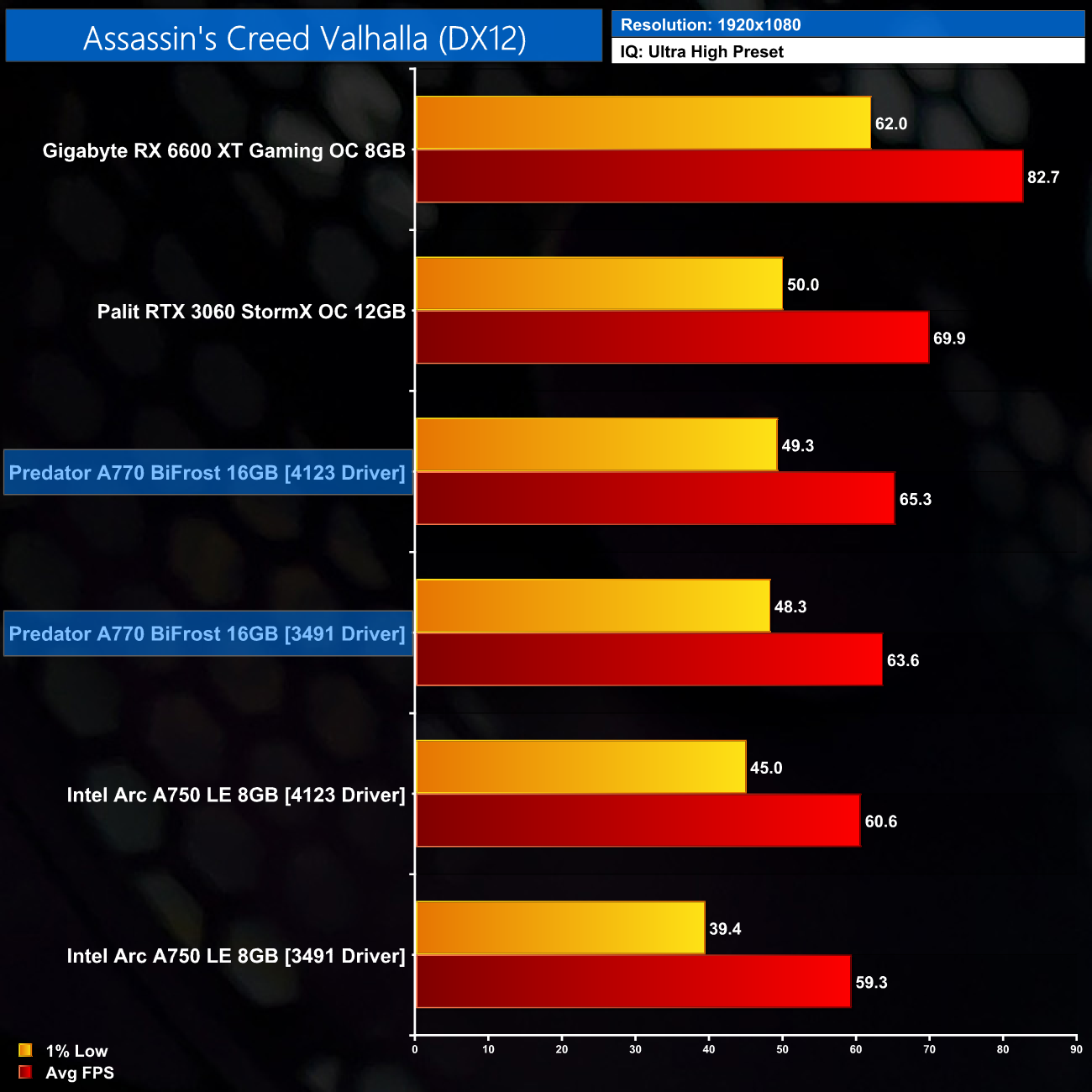
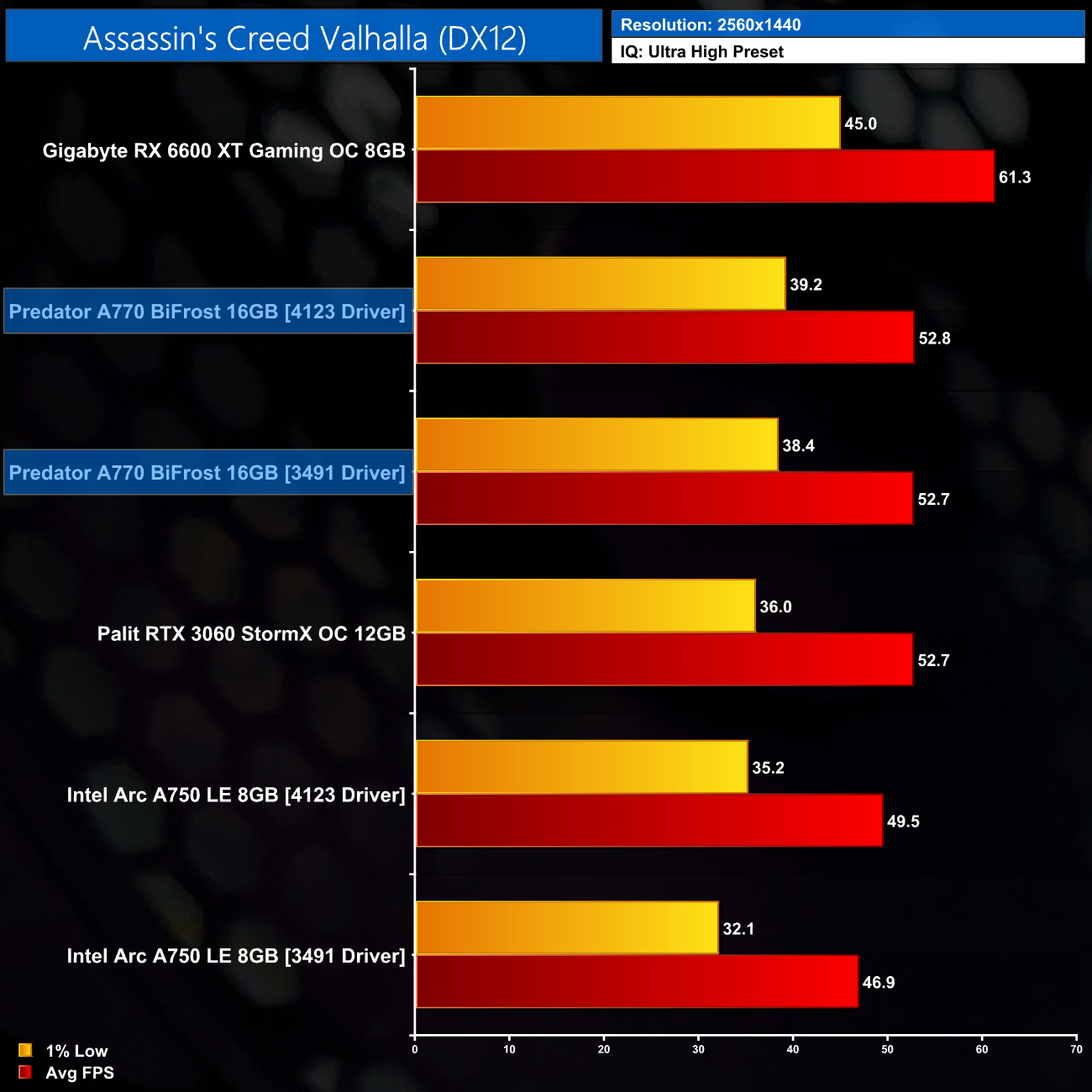
We run each benchmark/game three times, and present mean averages in our graphs. We use FrameView to measure average frame rates as well as 1% low values across our three runs.
Assassin's Creed Valhalla
Counter Strike: Global Offensive
Cyberpunk 2077
Forza Horizon 5
Gears 5
God of War
Horizon Zero Dawn
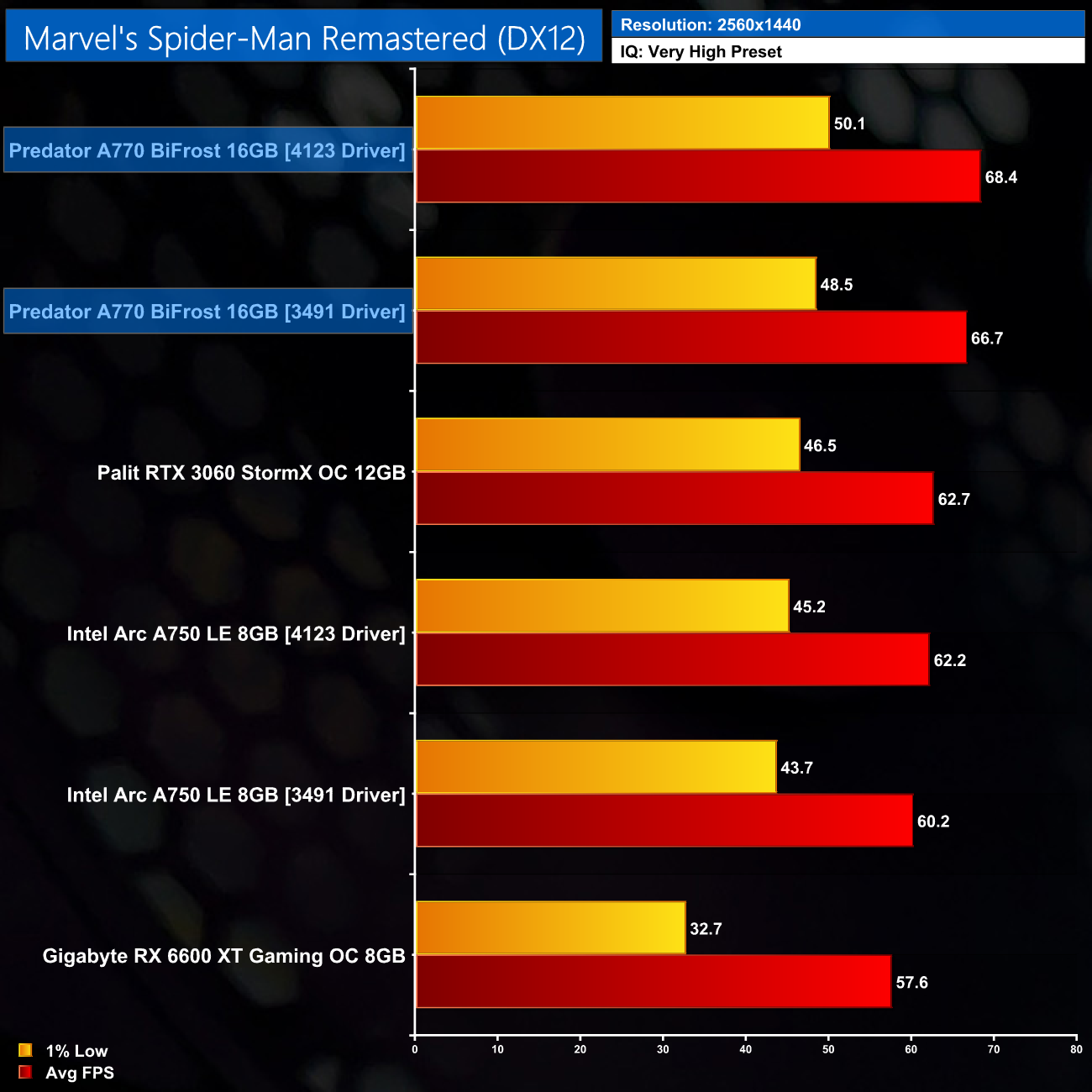
Marvel's Spider-Man Remastered
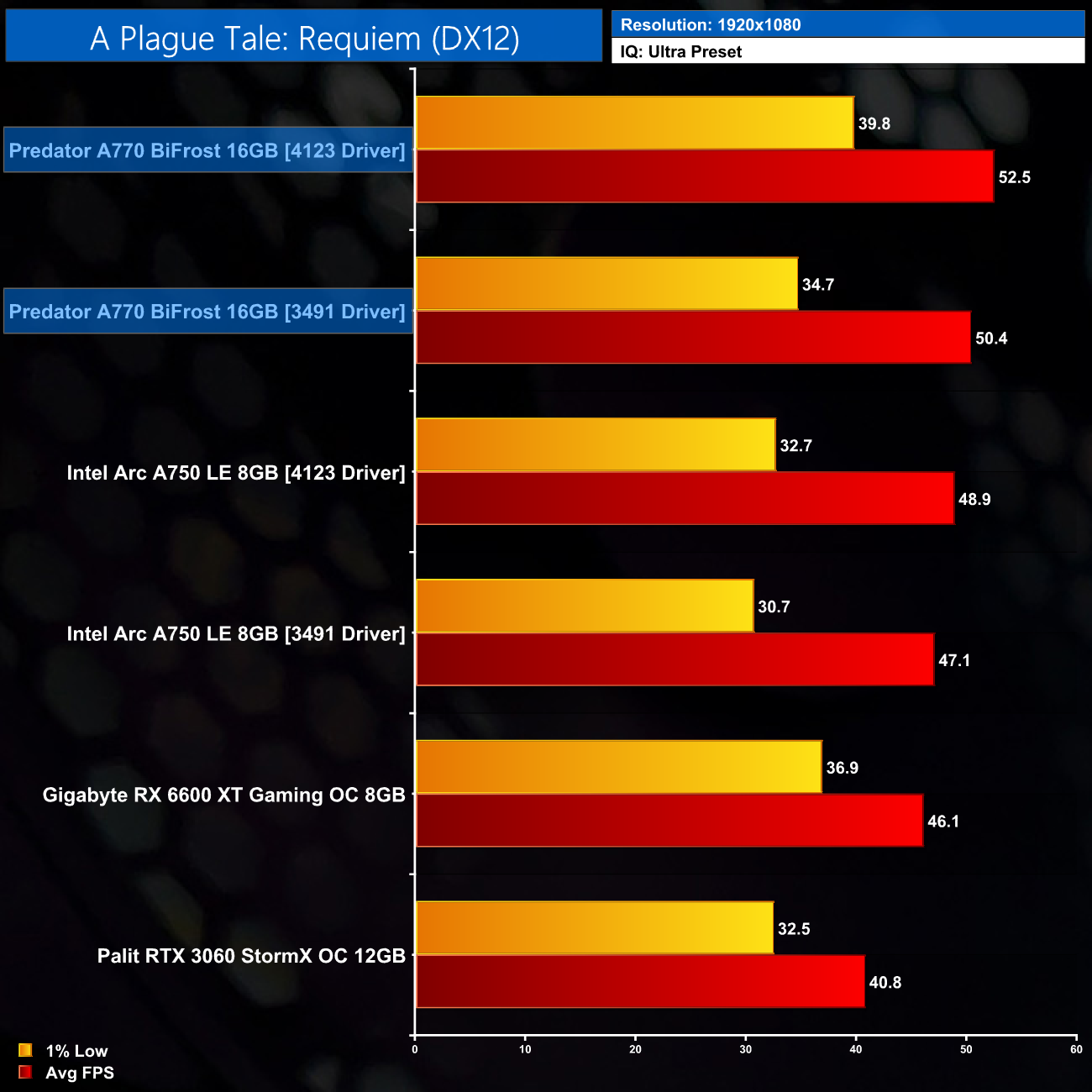
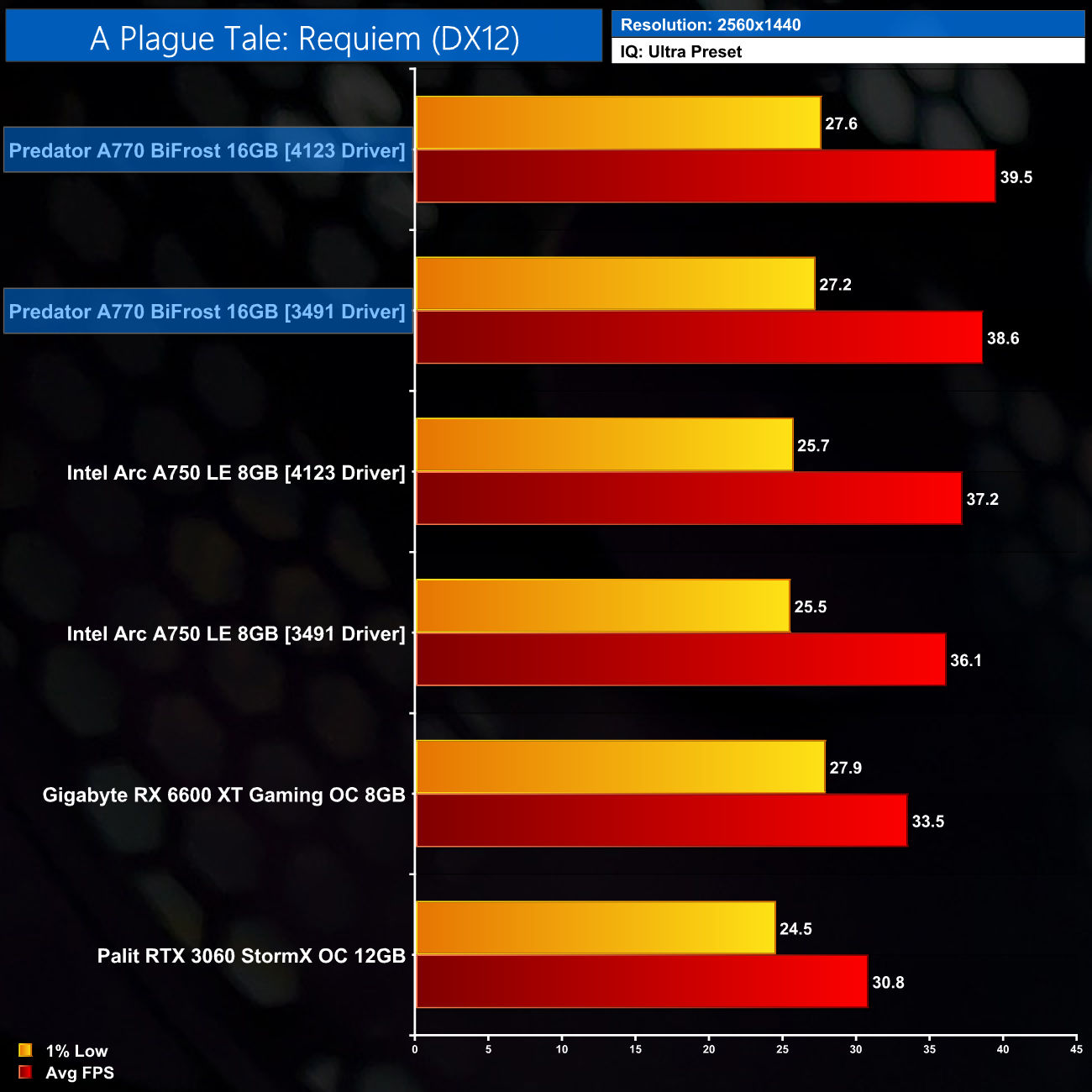
A Plague Tale: Requiem
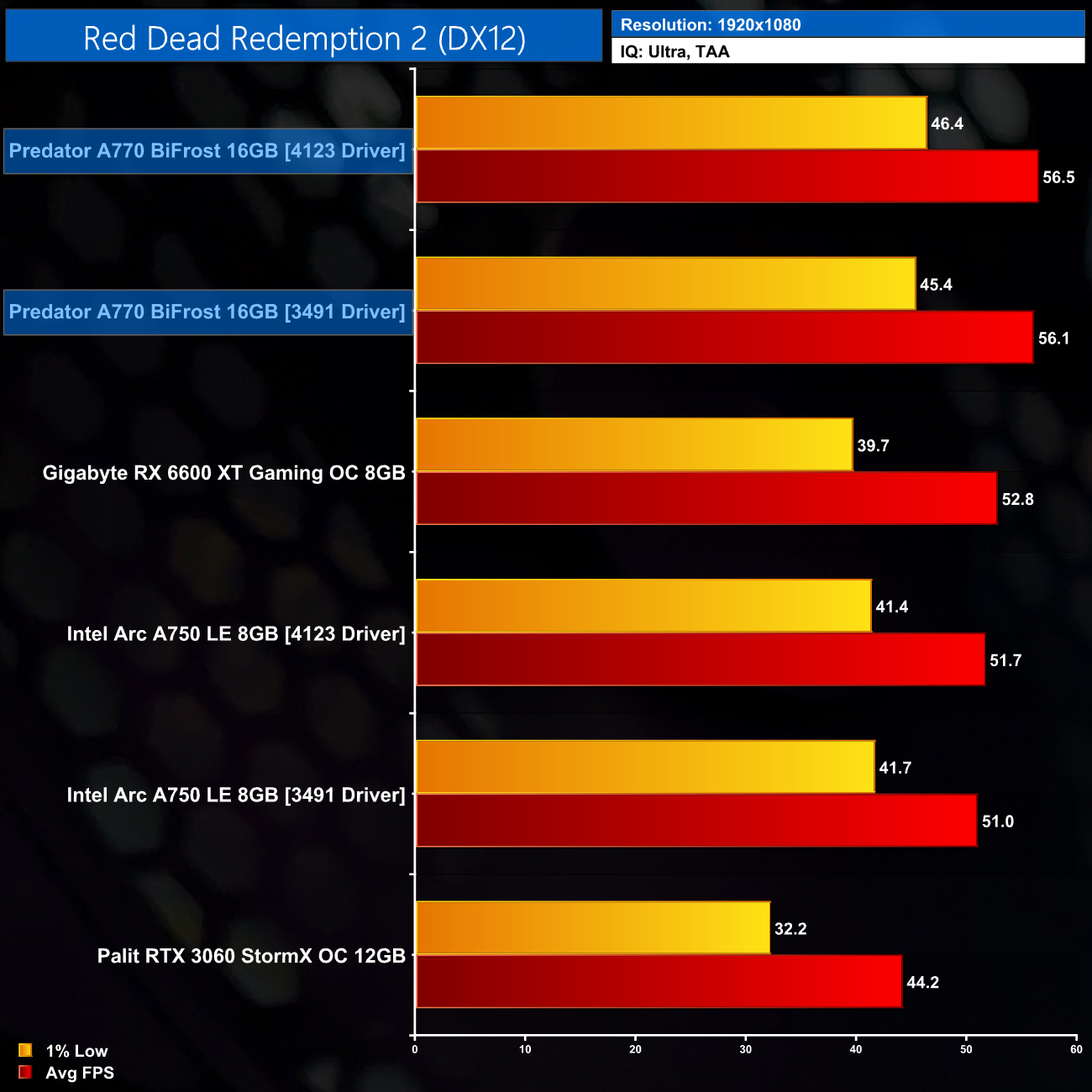
Red Dead Redemption 2
Resident Evil Village
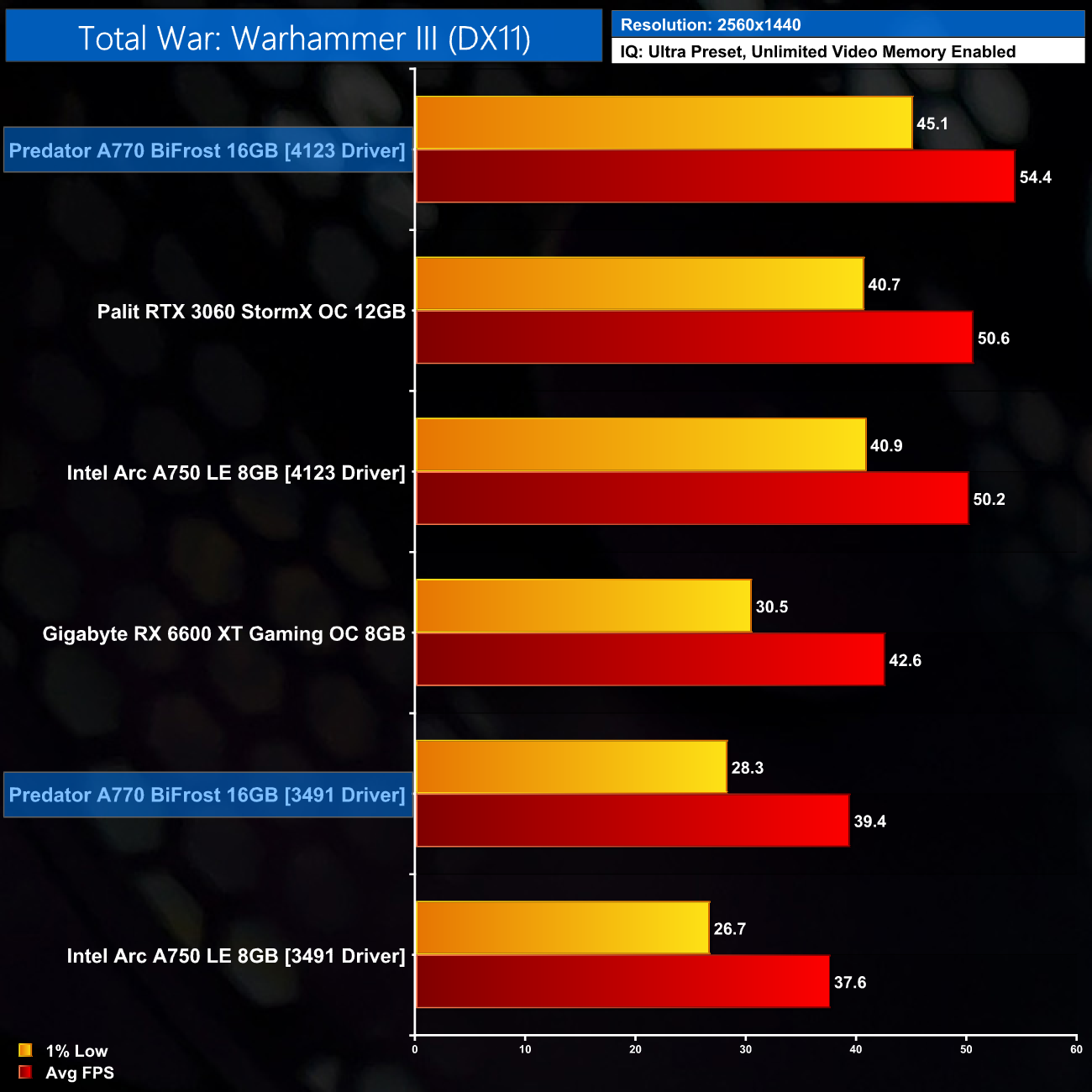
Total War: Warhammer III
12-Game Breakdown
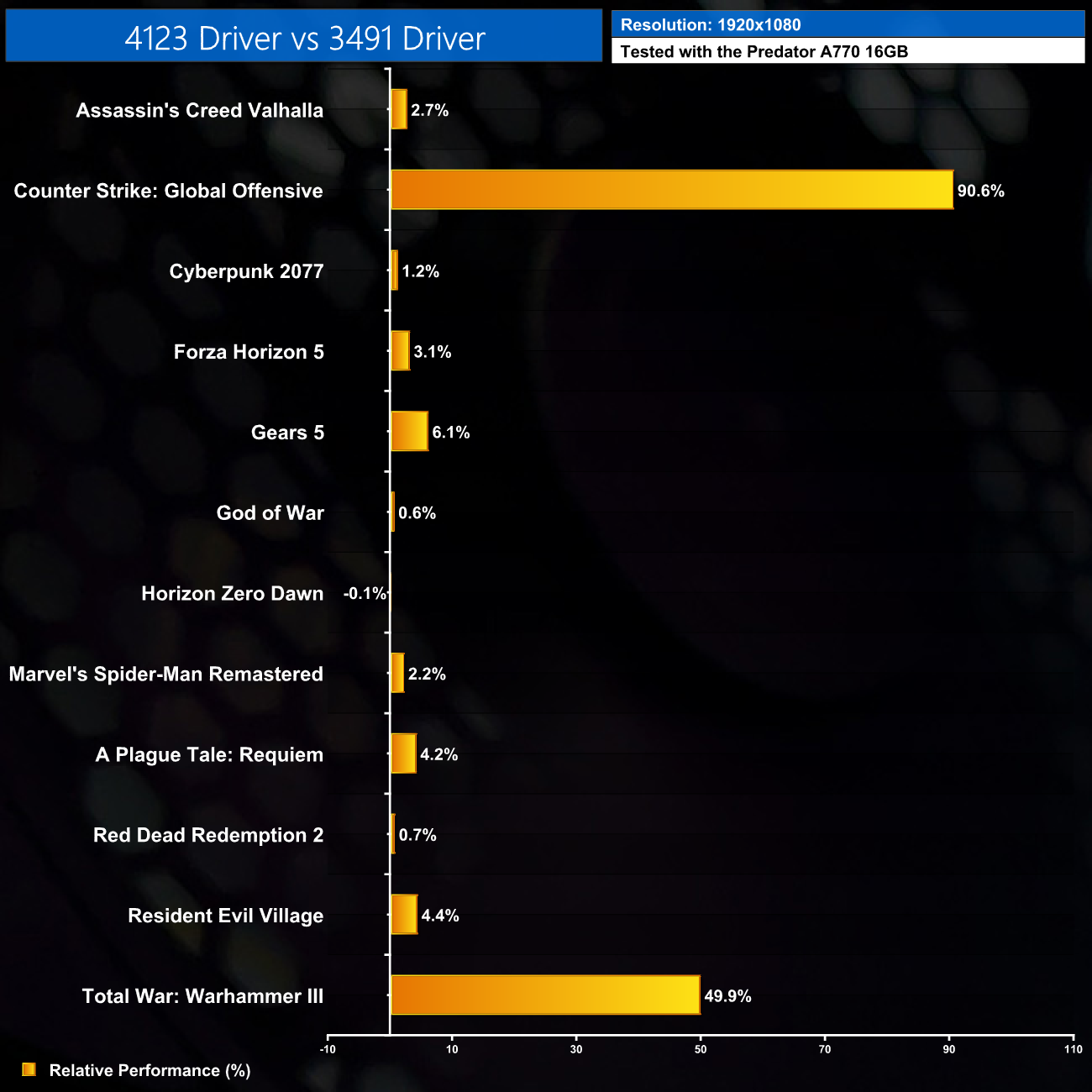

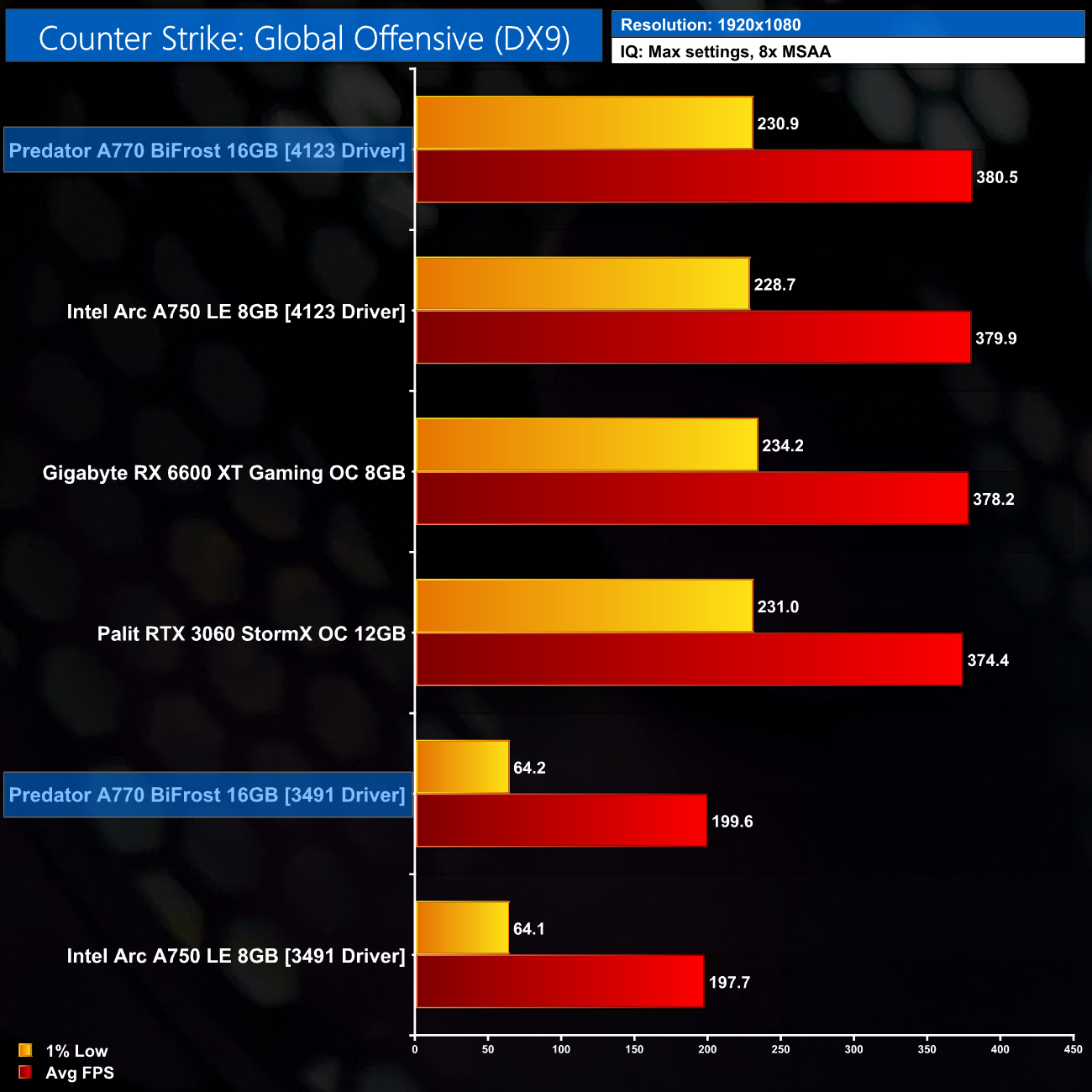
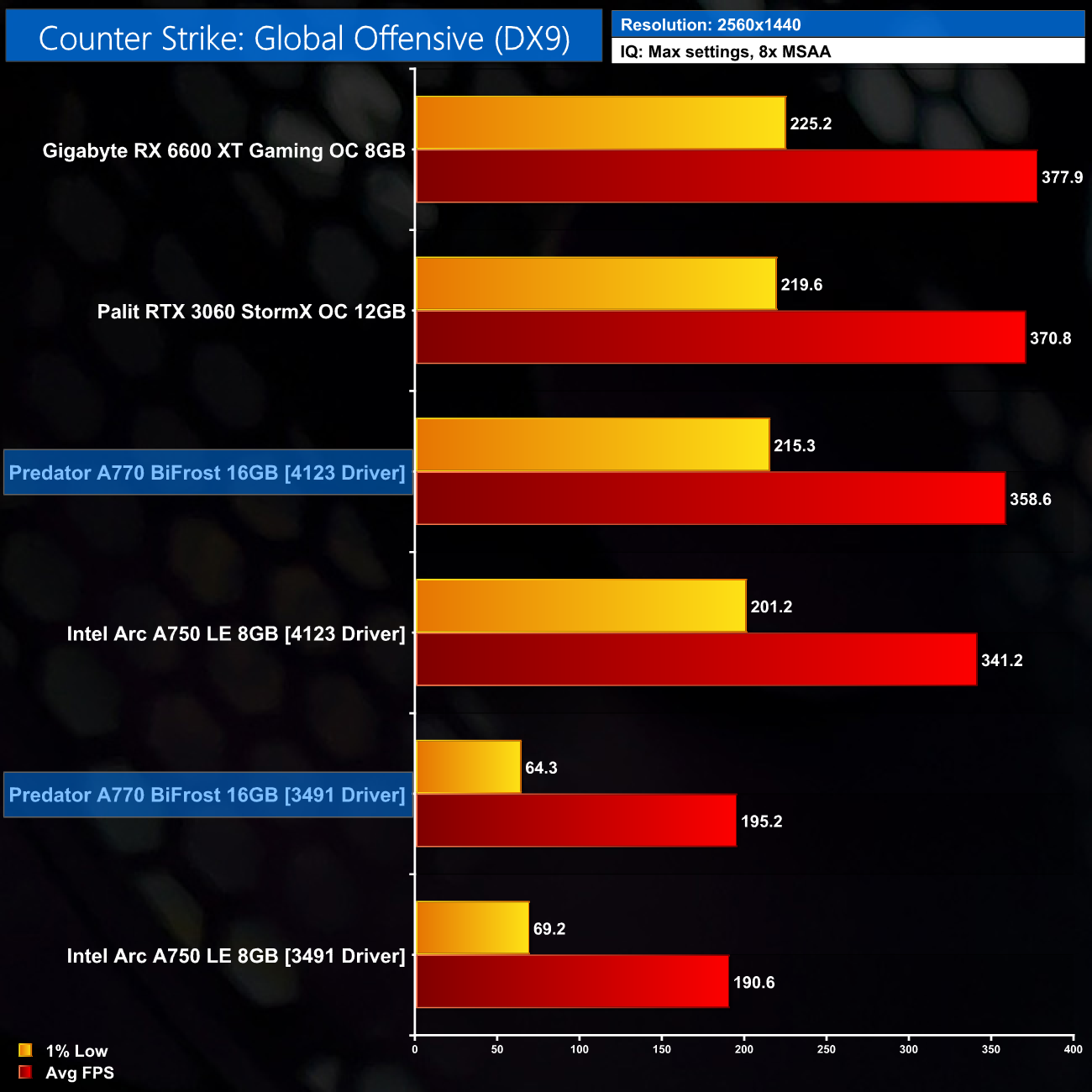
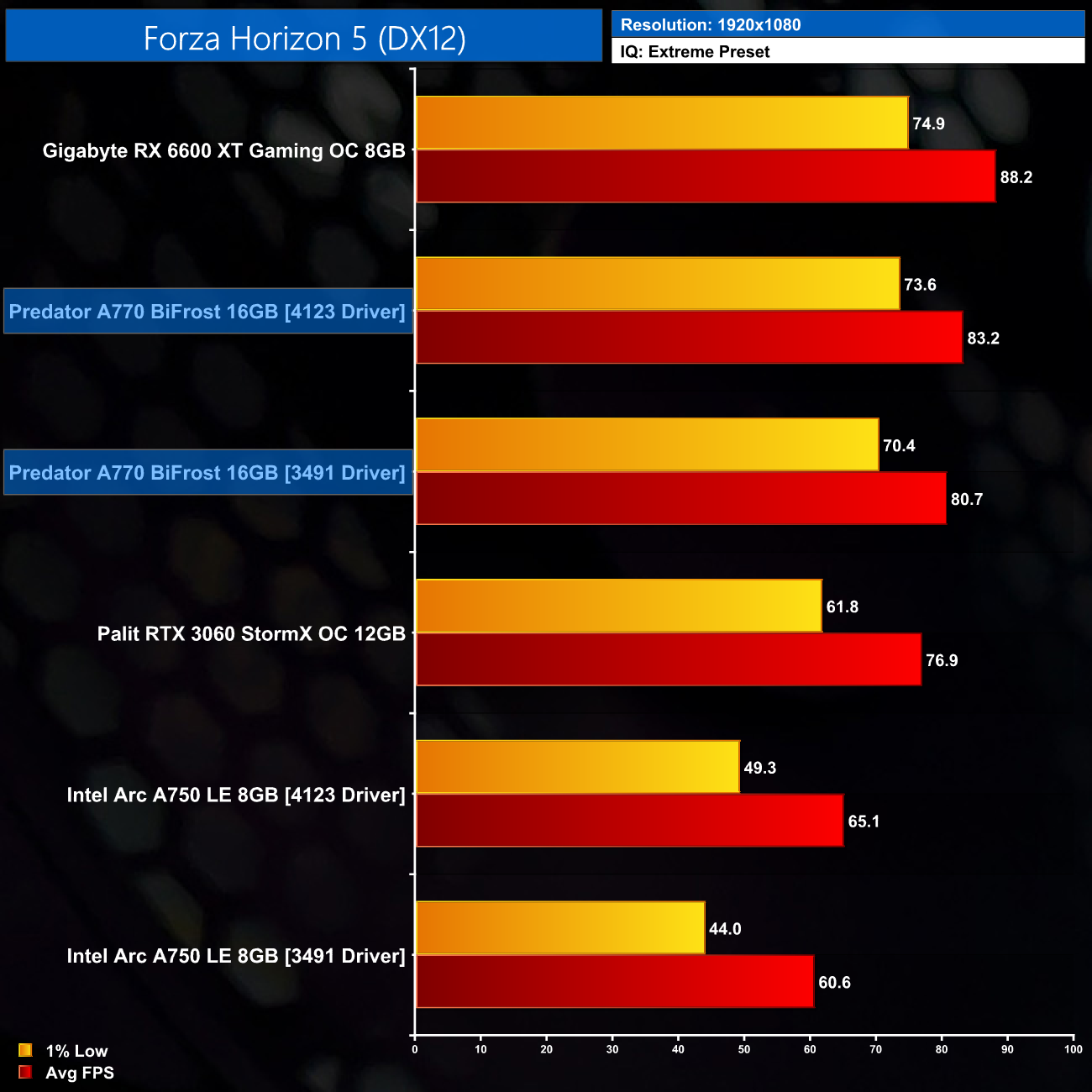
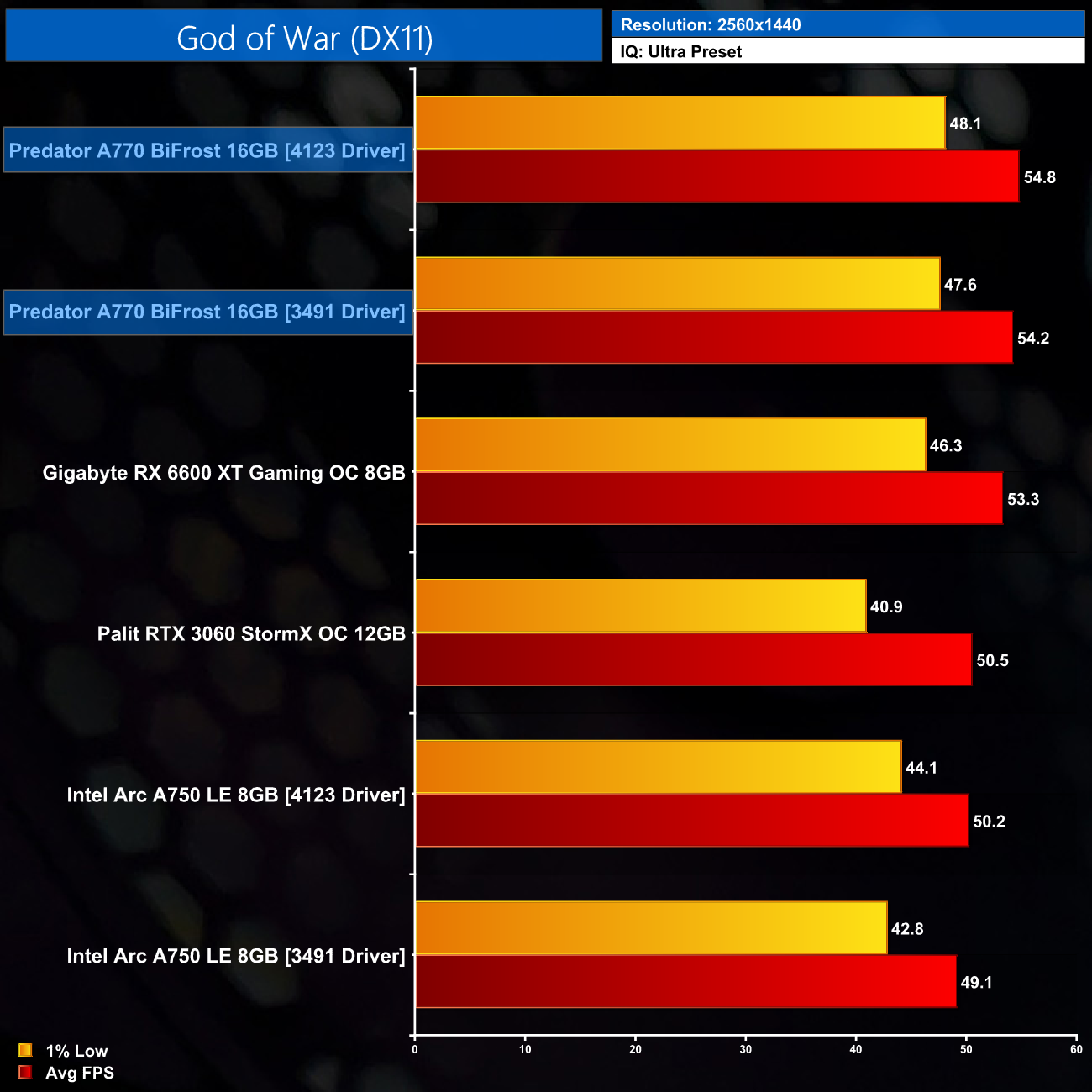
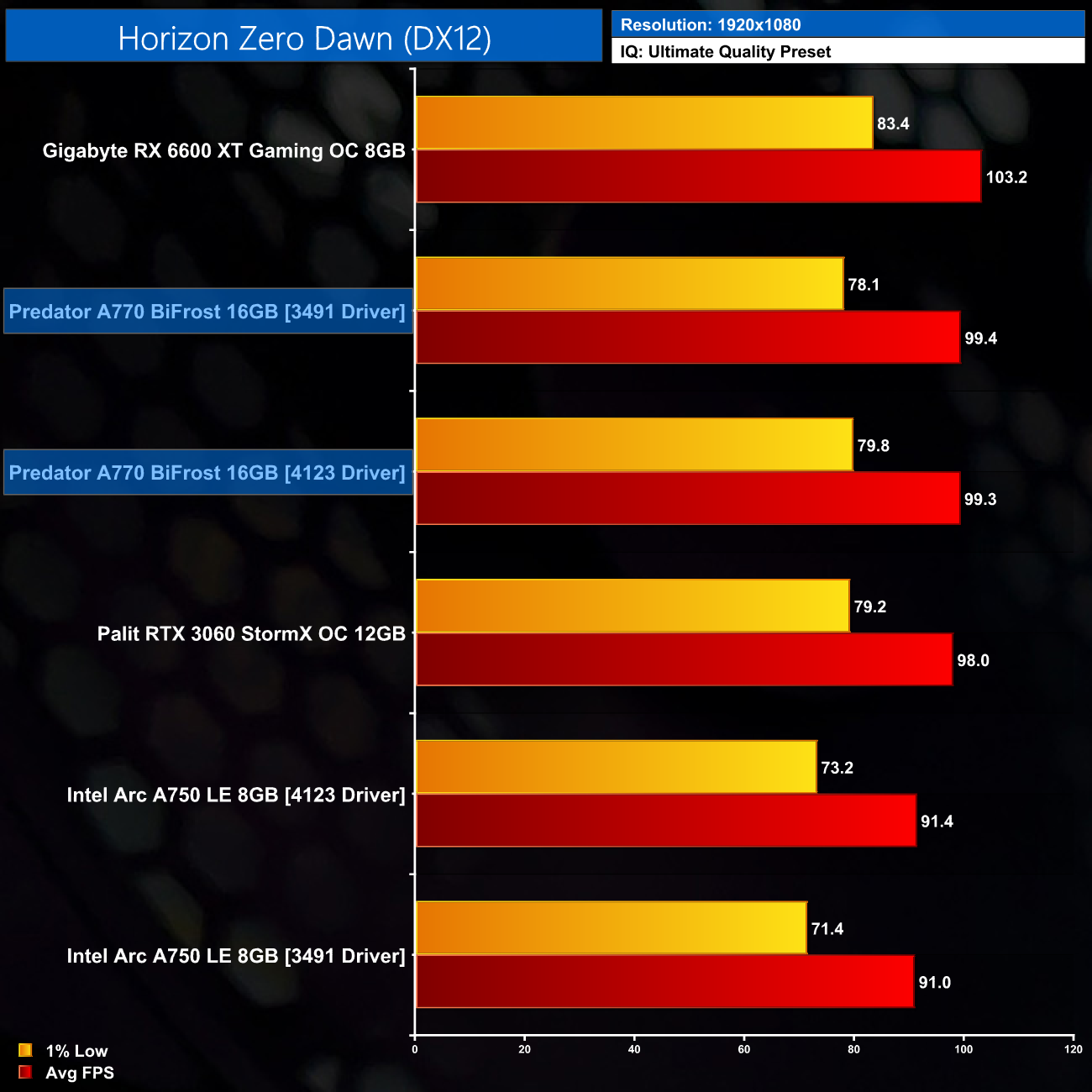
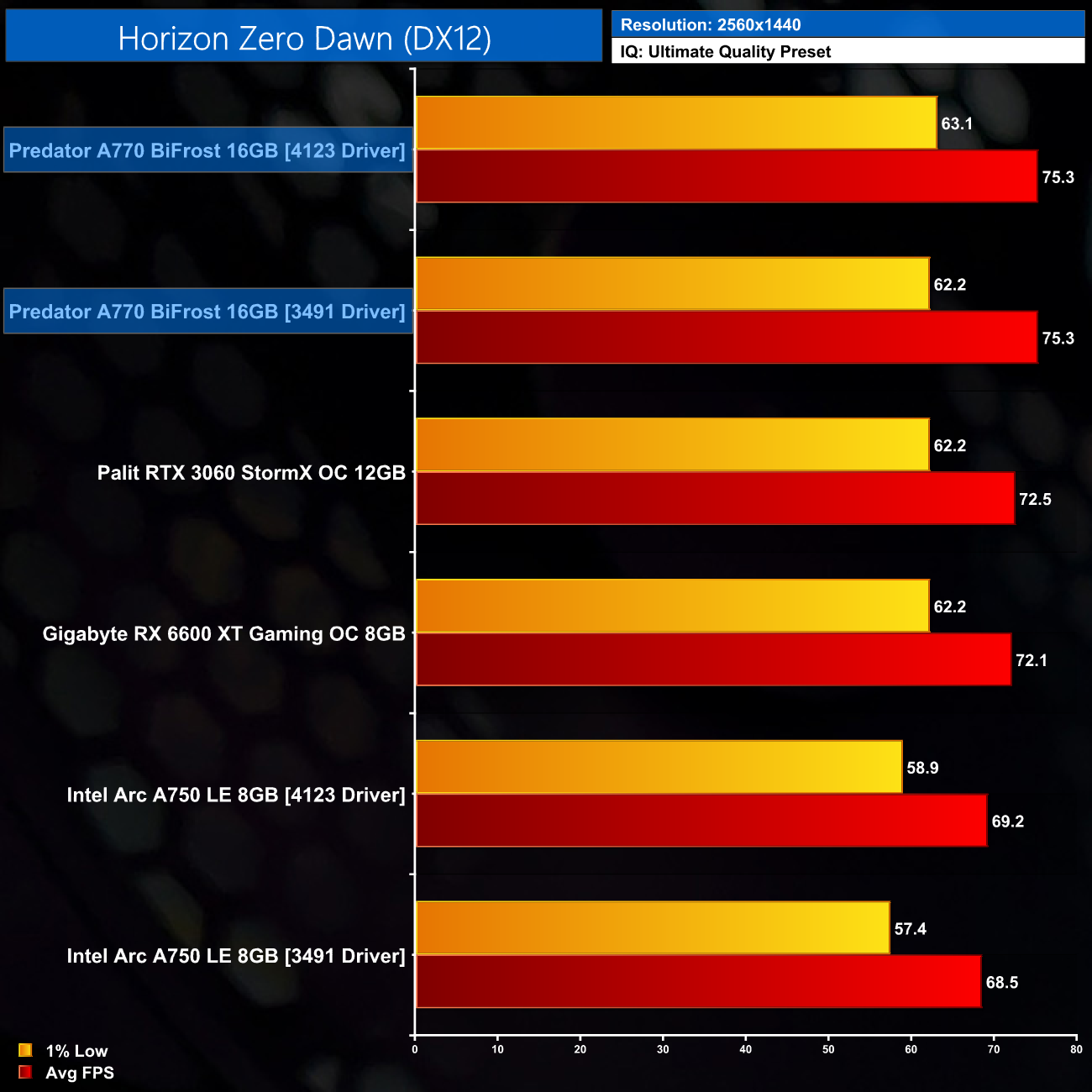
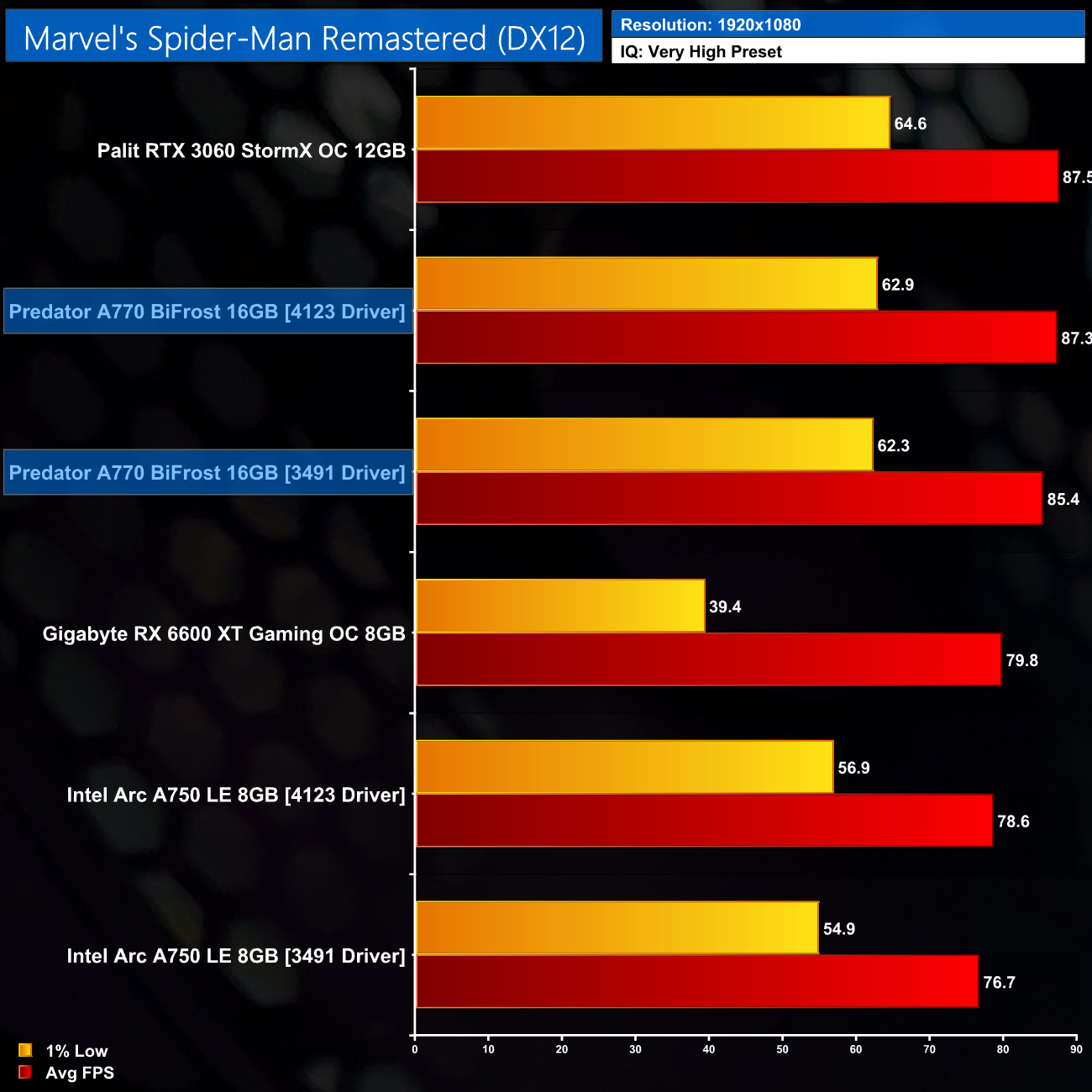
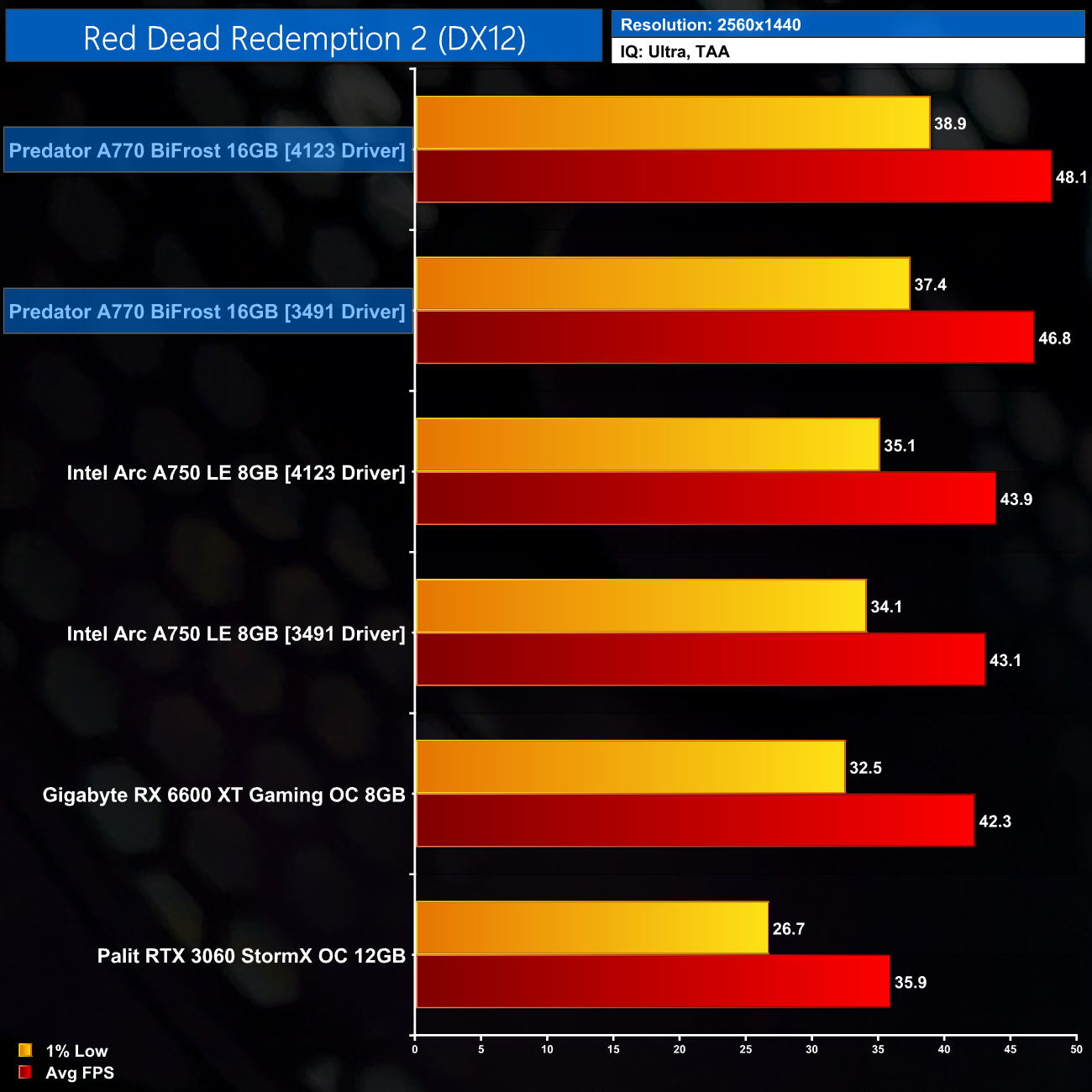
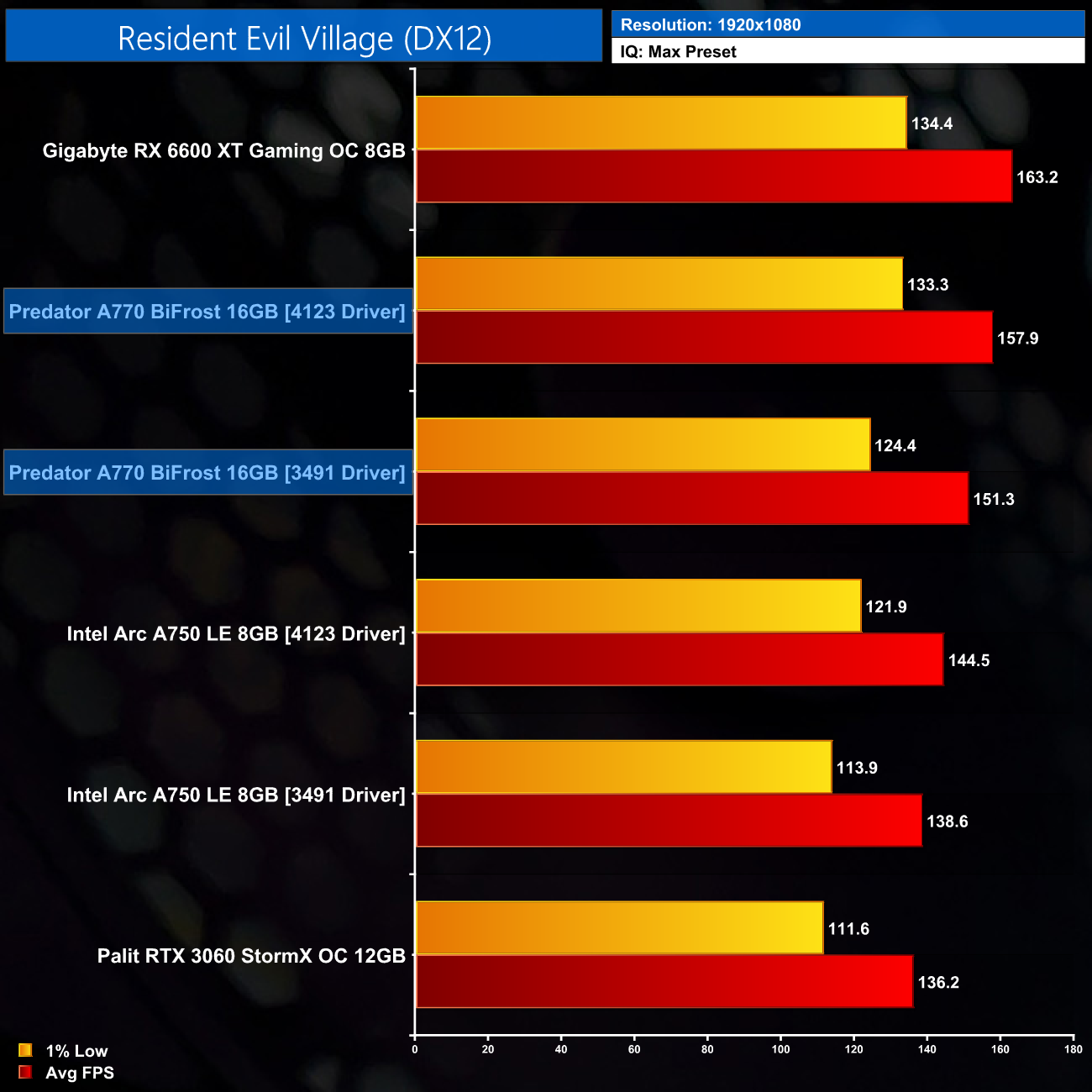
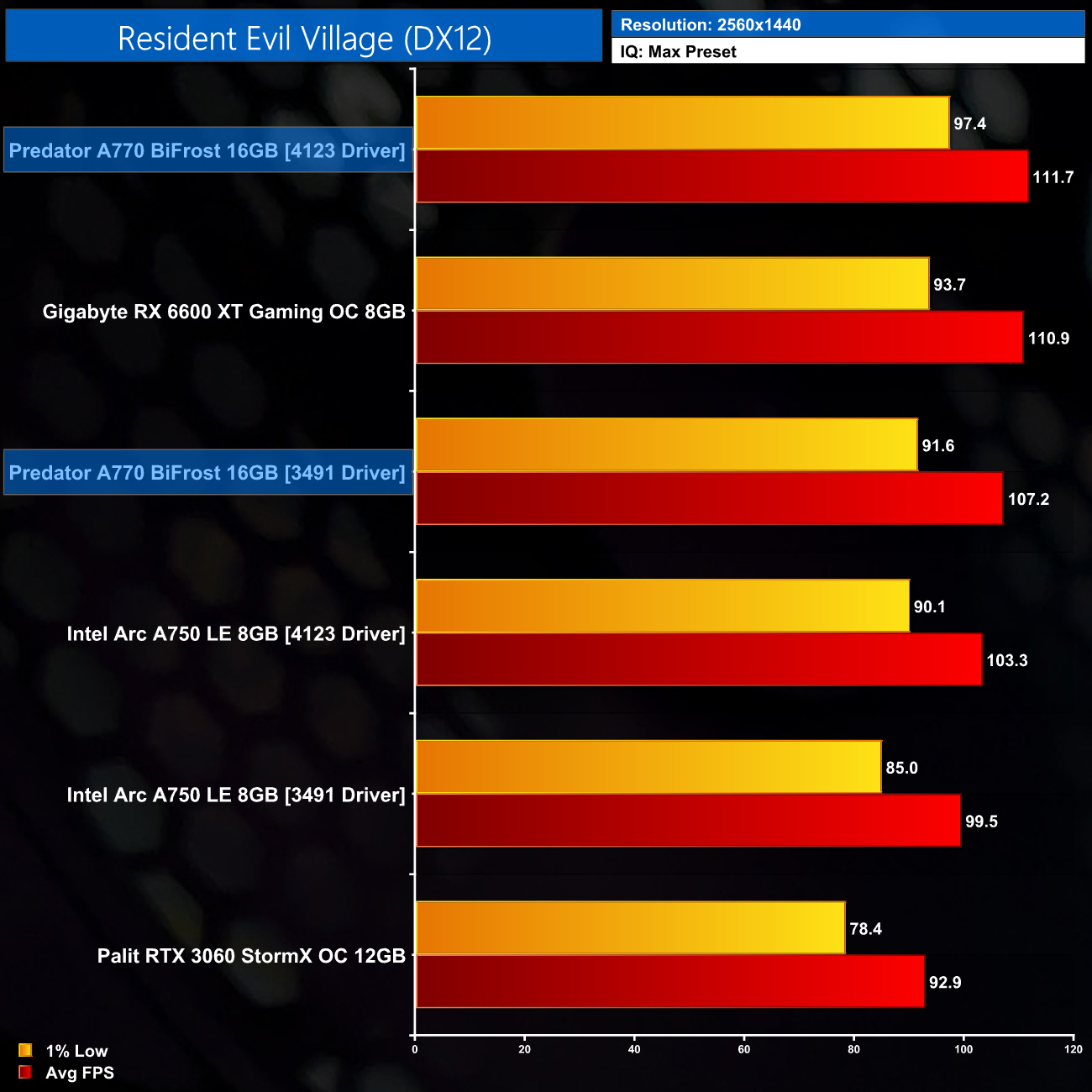
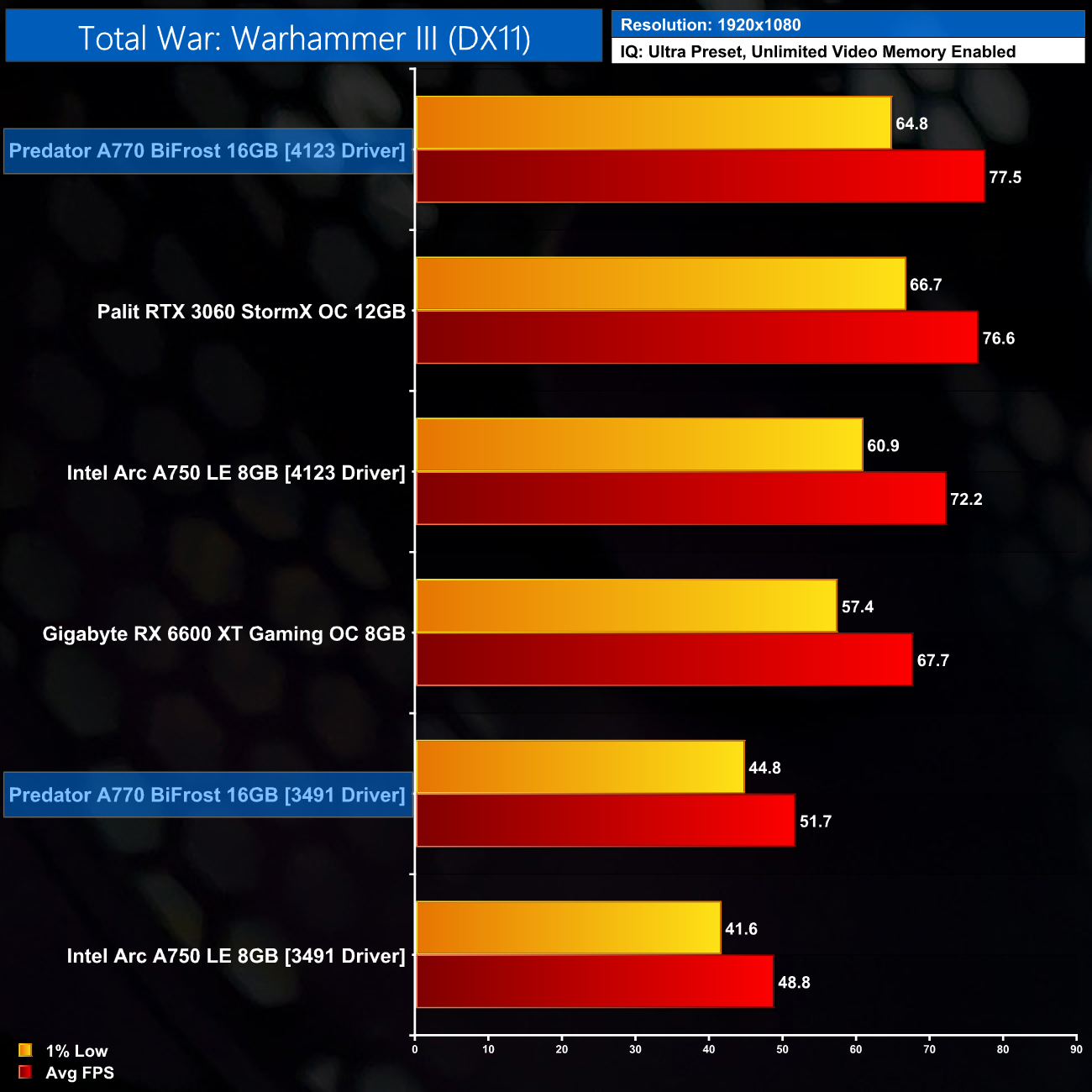
Overall, across the 12 games tested, it's clear that the gains in CSGO and Total War: Warhammer III stand out the most, with huge gains seen in those DX9 and DX11 titles. There are still a few other examples where average frame rates improved by between 4-6%, but plenty of other DX12 games didn't see much difference at all.
Not much changes at 1440p, either. The good news is no games that I tested saw a performance decrease, and in these 12 games tested, I didn't encounter any weird driver bugs. In fact, Total War: WH3 and Spider-Man Remastered both had game-breaking visual glitches when I first tested Arc back in October, but thankfully these issues are long since fixed.
12-Game Average
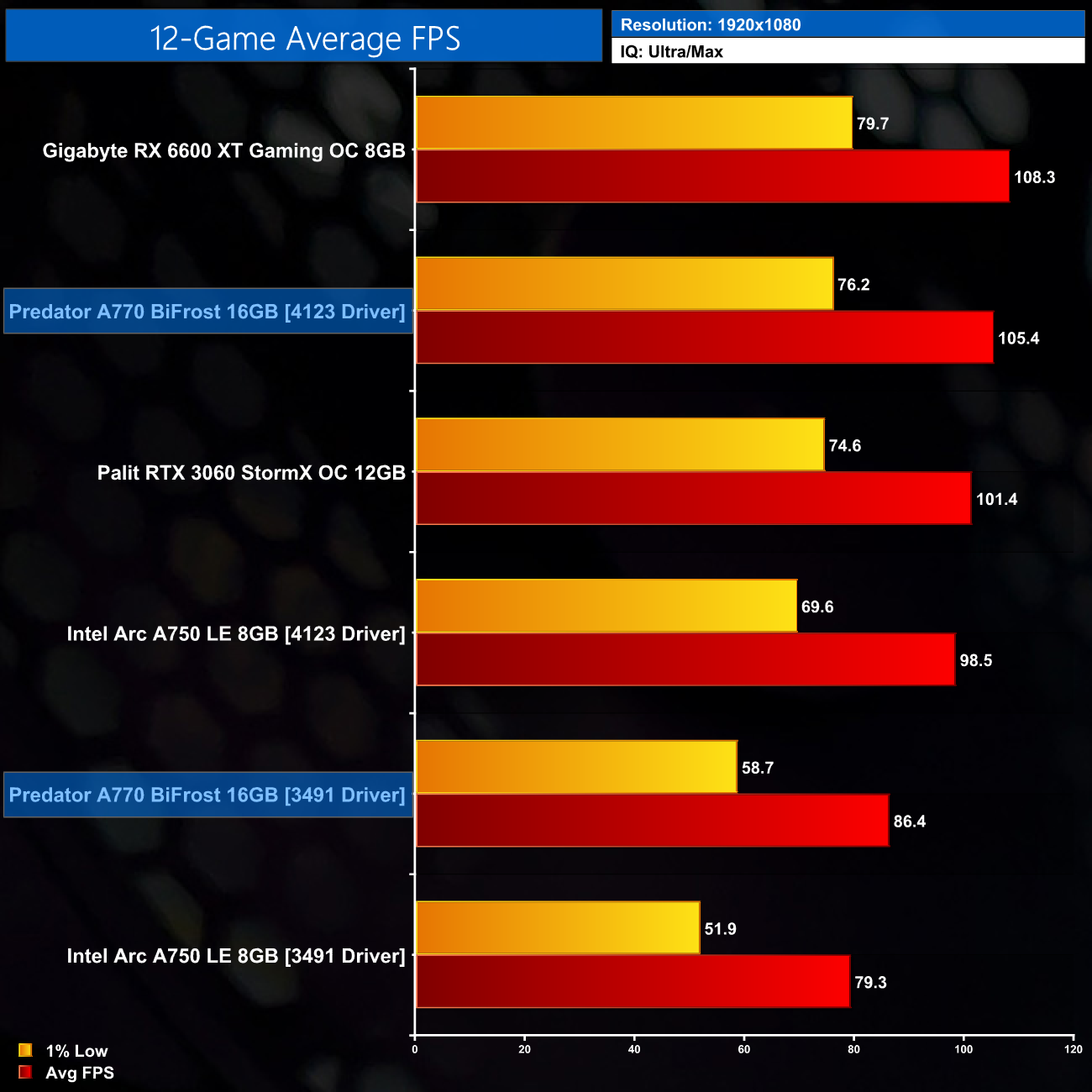

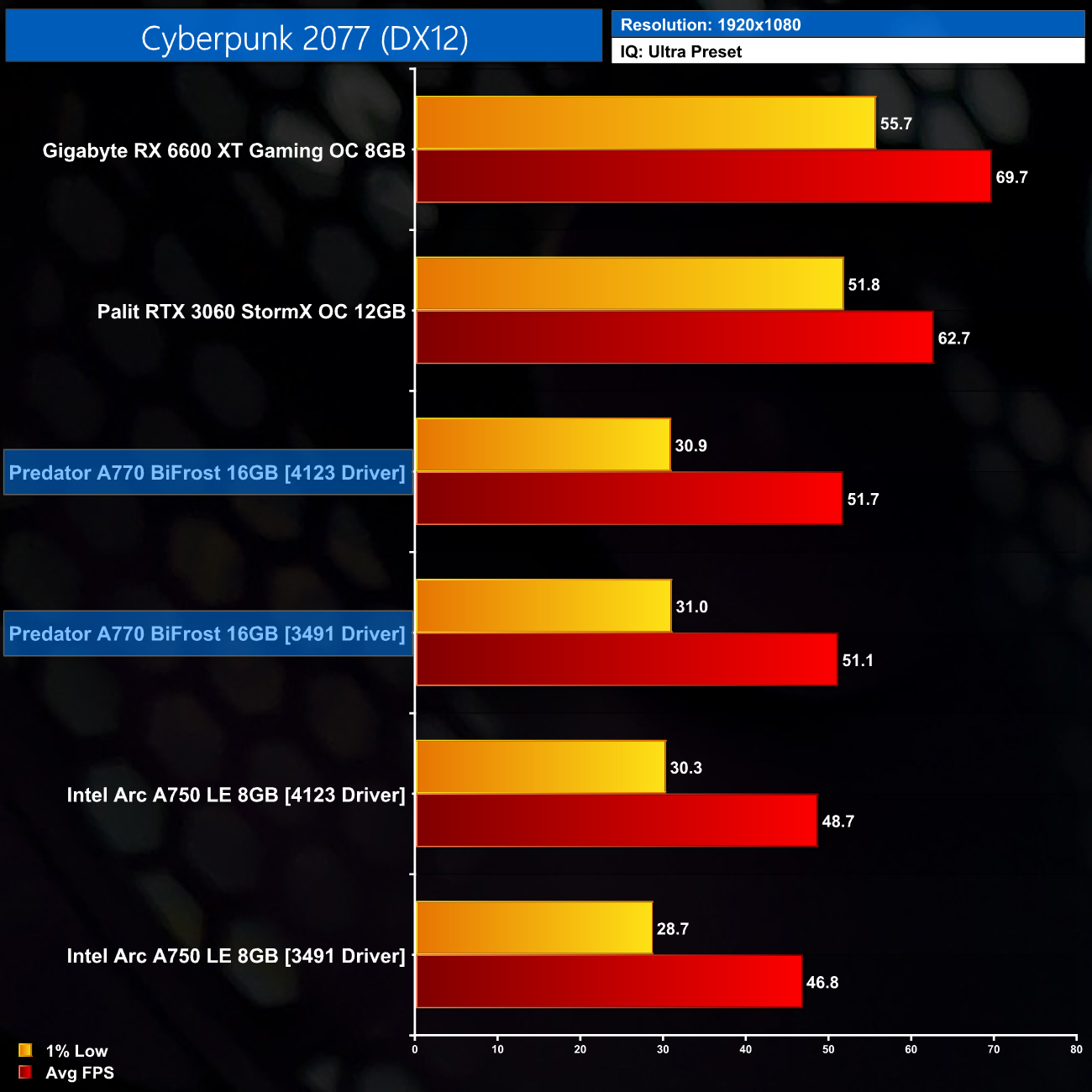
What these gains mean for Arc versus its competition is quite significant. Based on the 3491 driver, the Intel A770 made next to no sense when positioned against Nvidia's RTX 3060 – using that older driver, it came in 15% slower on average at 1080p. With the 4123 driver however, it’s on par if not marginally faster overall, while it is just behind AMD's RX 6600 XT in terms of overall performance at 1080p.
We know the A770 scales better at 1440p however, where it climbs to the top of the chart using the 4123 driver, now offering a 7% improvement to the 1% lows versus the RTX 3060.
Cost Per Frame
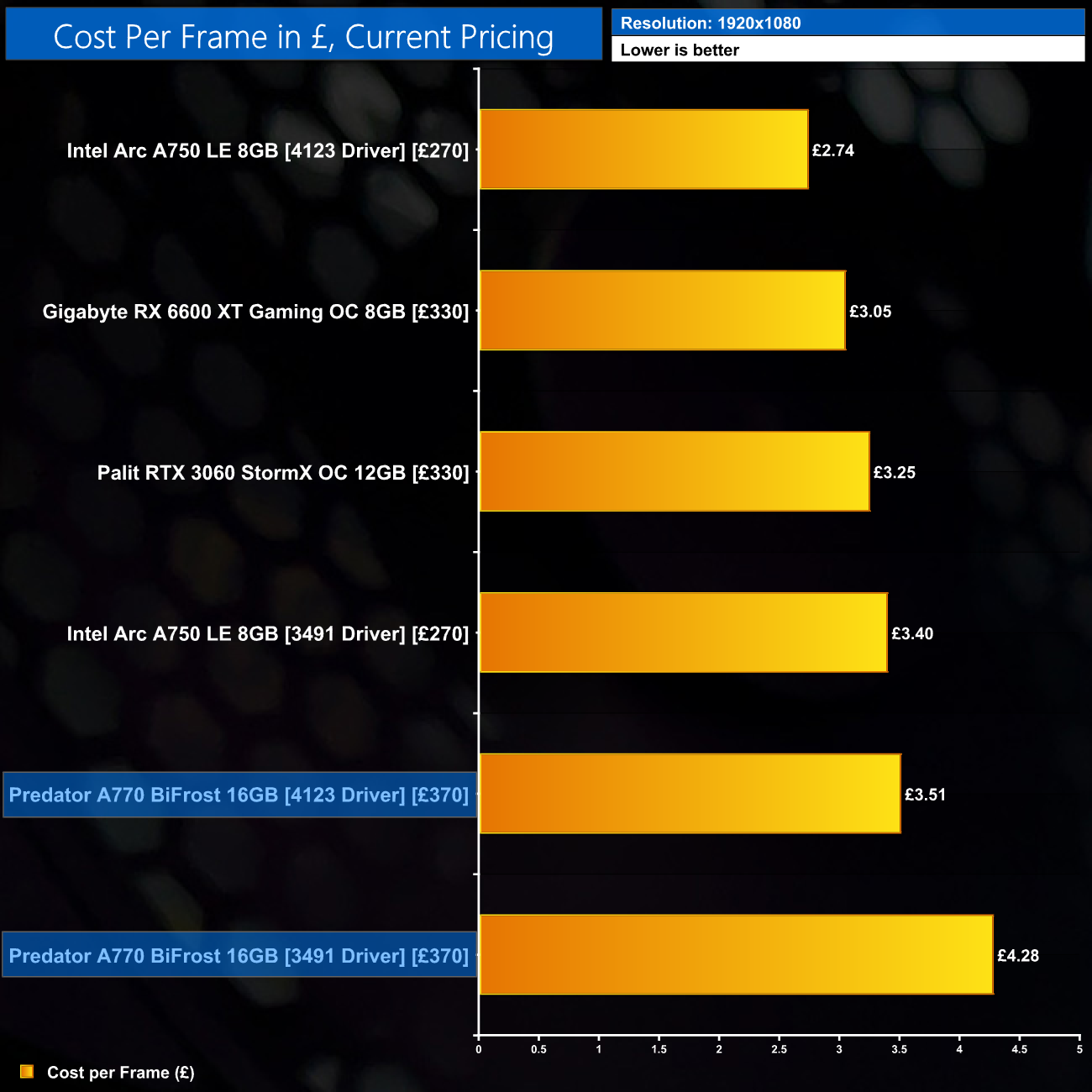
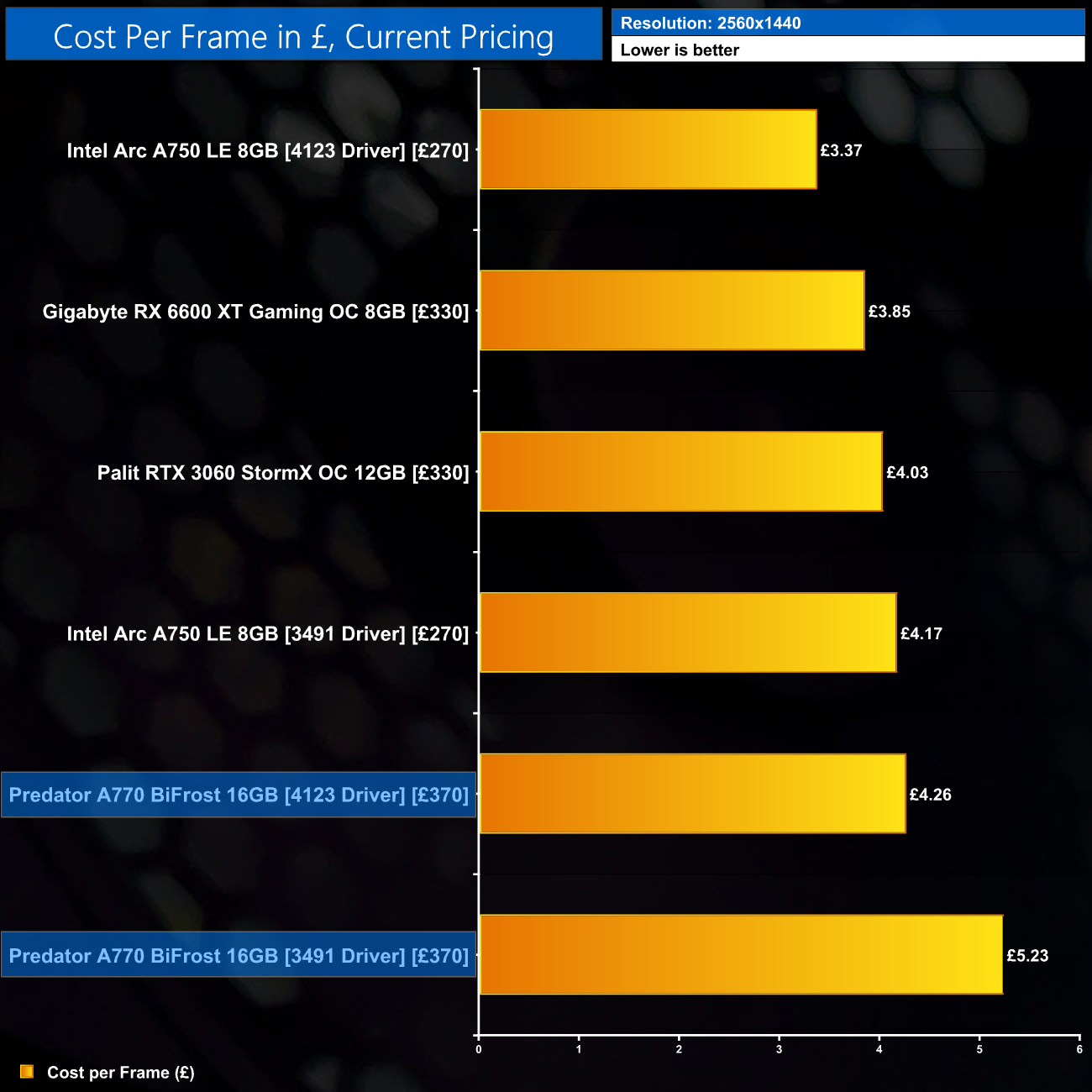
Naturally, the significant performance improvements shown on the previous page mean a big improvement in cost per frame for the Arc GPUs. The A770 is retailing for £370 at the time of writing, and with the 4123 driver, it marks an 18% reduction in cost per frame versus the 3491 driver. The A750 is the star of the show here, however, offering class leading value at 1080p.
Likewise at 1440p, we’re looking at a 19% reduction in cost per frame for the A770 versus the 3491 driver, purely due to the extra performance on offer from the 4123 driver. It may not be quite as good value as the RTX 3060, but it’s certainly a significant improvement from the launch driver.
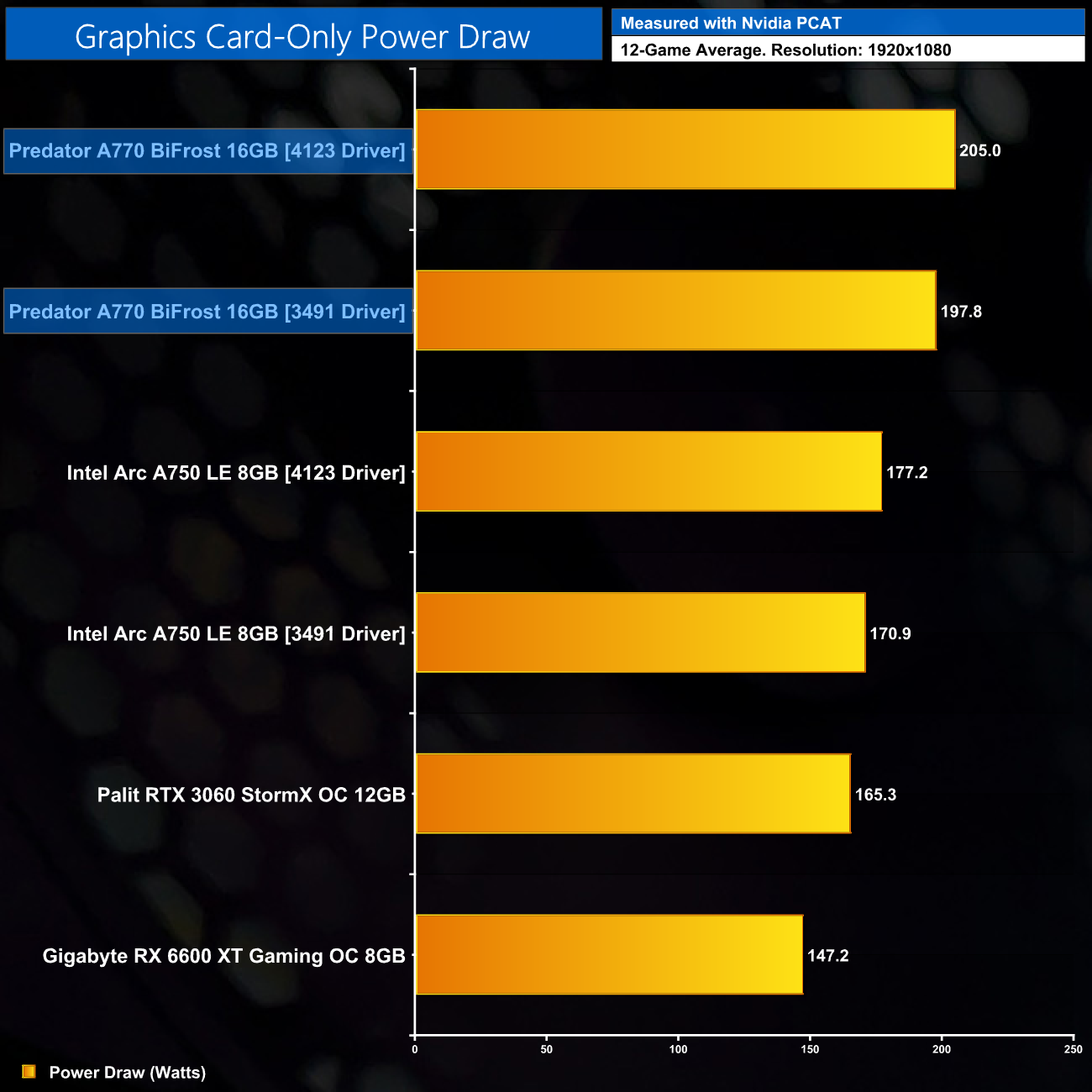
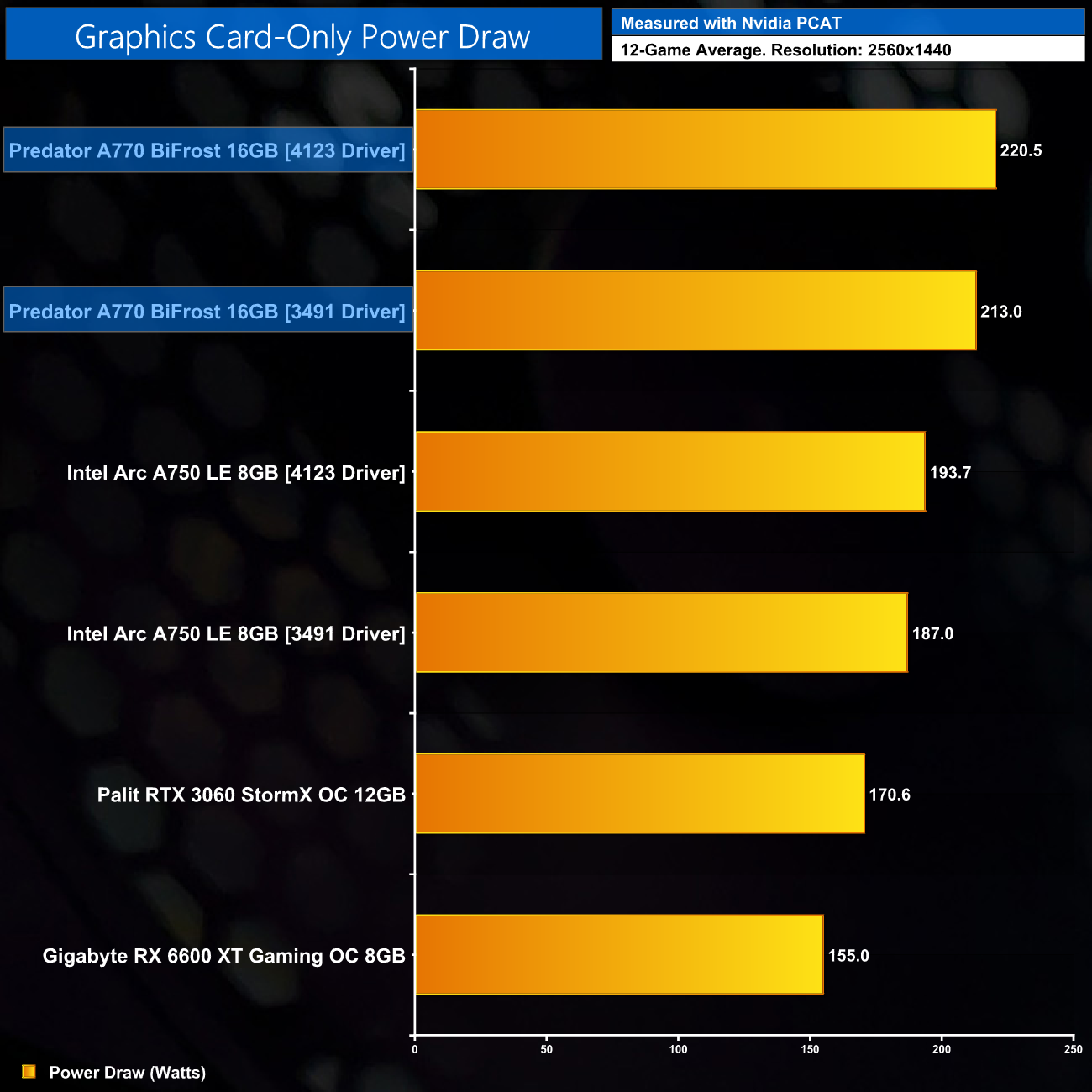
It's also interesting to see how the 4123 driver brings with it an increase in power consumption for the Intel cards. Not by much – the A770 draws just 7.5W more at 1440p with the 4123 driver than with 3491 – but there were a number of occasions across the 12 games where a large performance increase had a direct correlation with a power draw increase, suggesting the GPU wasn't being fully utilised previously.
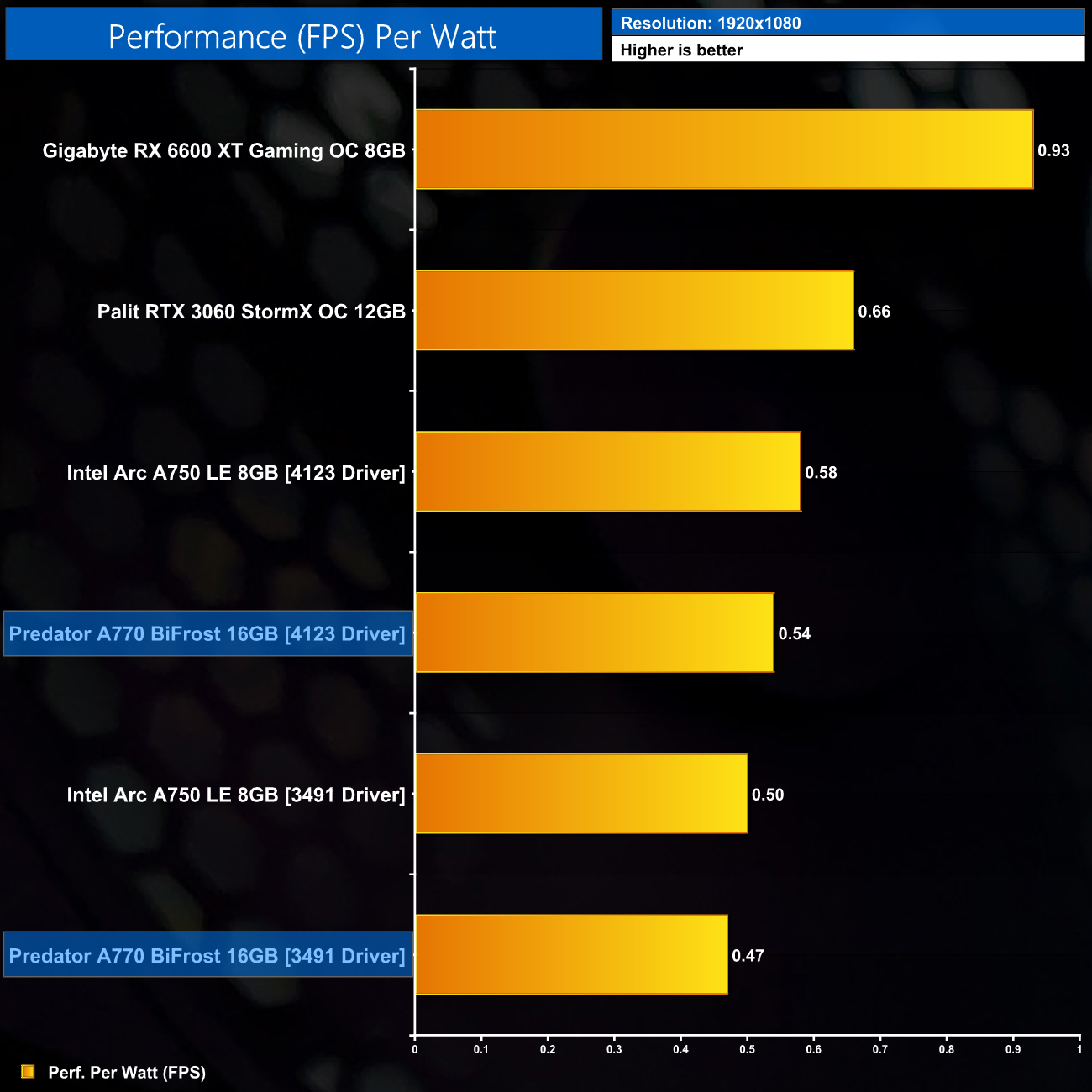
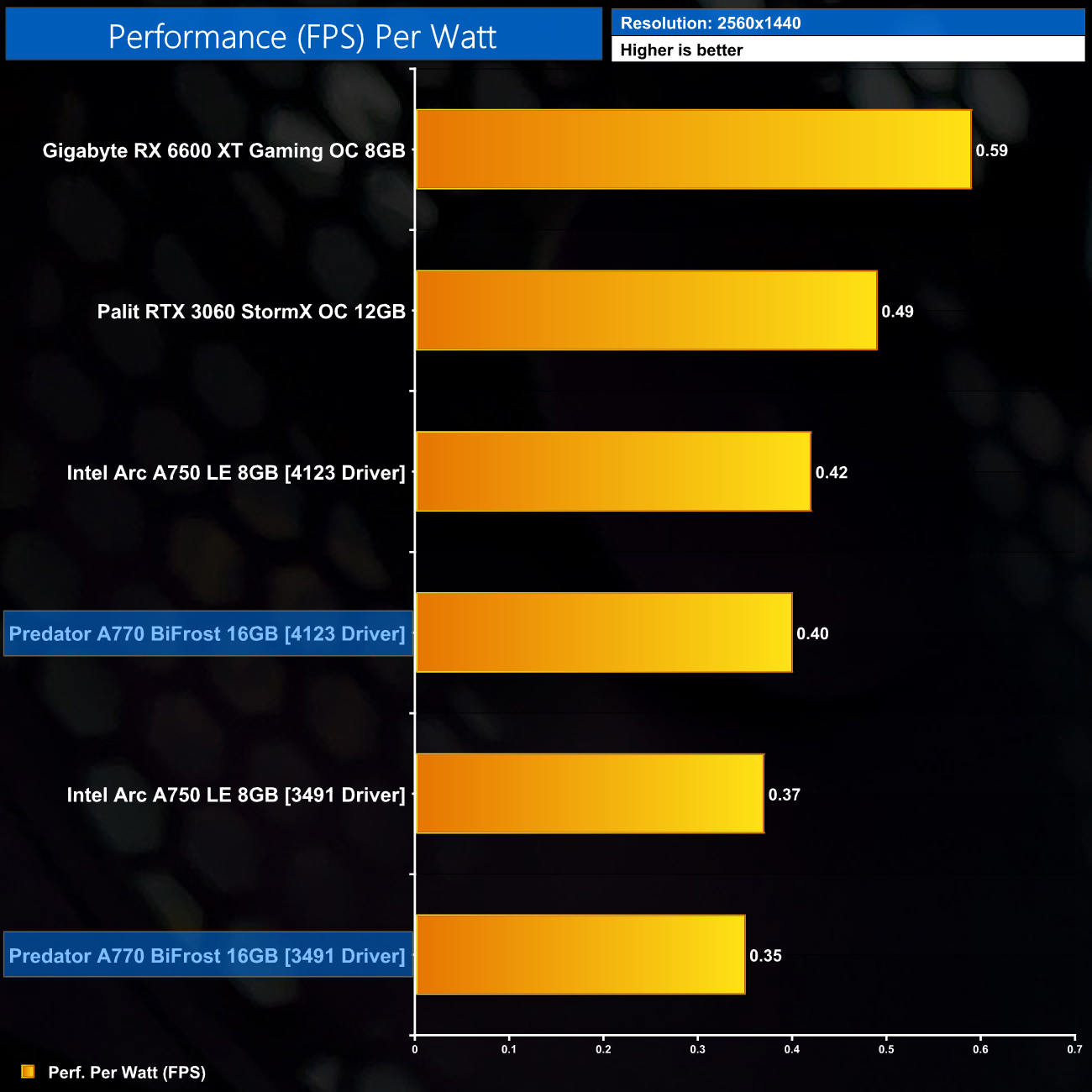
Naturally, while power draw did increase slightly, the performance gains on offer for the 4123 driver were far more significant, resulting in an improvement to performance per Watt for the Arc GPUs. Is it enough to catch up to the Ampere and RDNA 2 competition? Not quite, but it does make us more optimistic for Intel's 2nd Generation Battlemage hardware.
On this page we present some further benchmarks, directly comparing the Acer Predator BiFrost A770 16GB against Intel's A770 Limited Edition 16GB. For the Acer Predator card, we tested both the Default and Turbo profiles within the BiFrost software.
Power draw
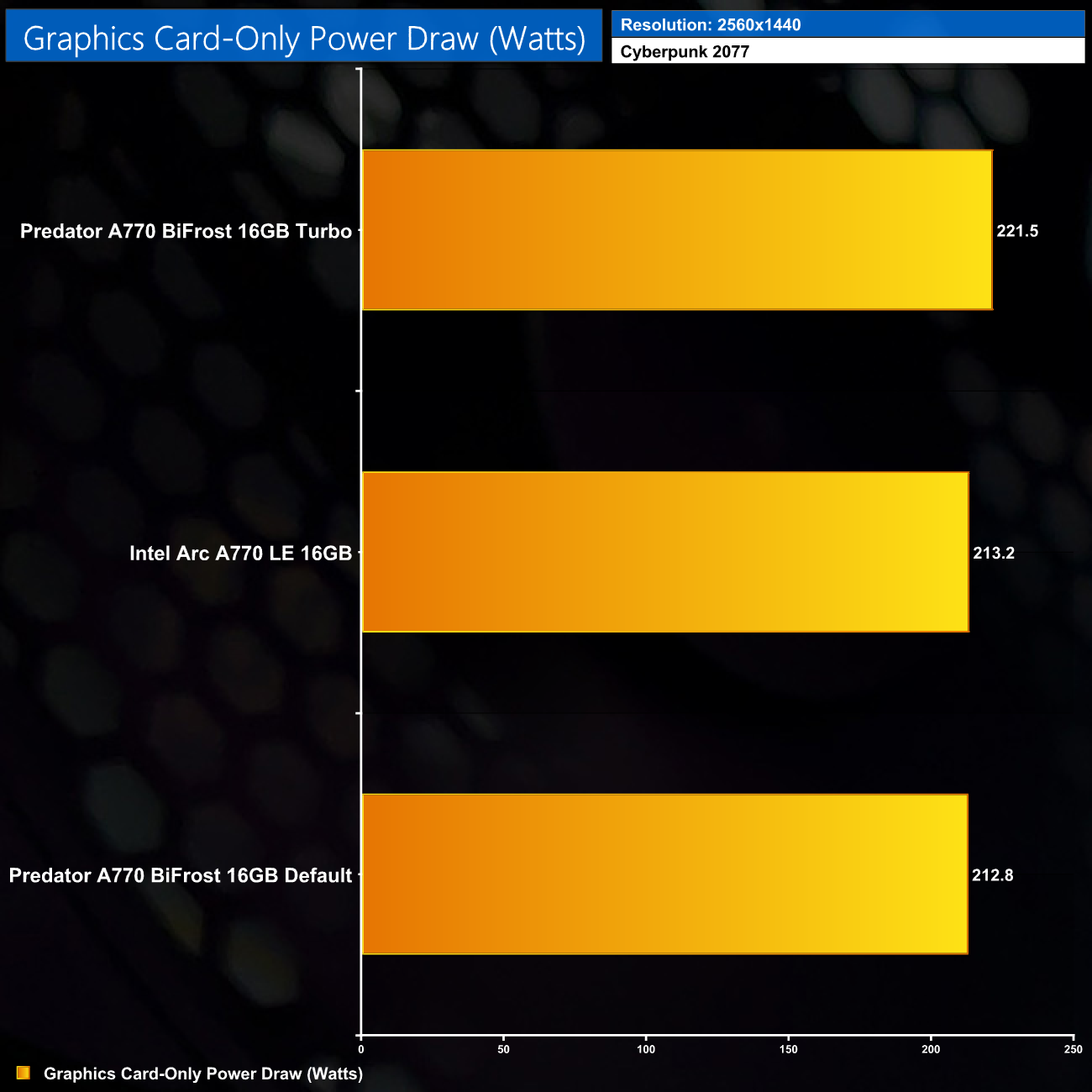
There's a minimal difference, at best, in terms of power draw under load between the BiFrost and the Intel Limited Edition (LE). Even when using the Turbo mode, the BiFrost only drew 221.5W, so just 8 or-so Watts more than the LE. And when using the Default profile, power consumption was basically identical.
Clock speed
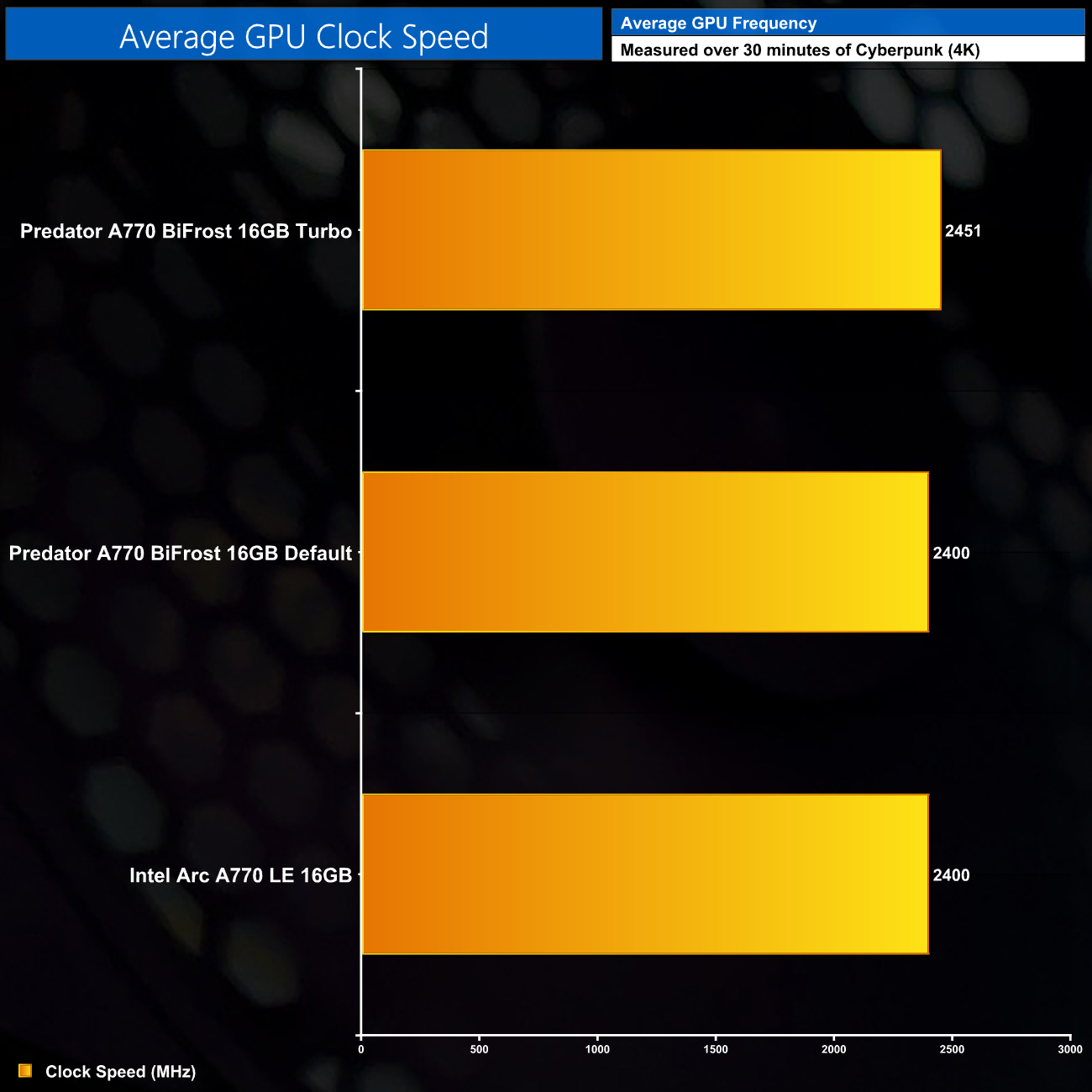
The small differences in power draw translate direct into clock speed. We saw no difference in average operating clock speed between the Intel LE and BiFrost when using the Default profile, as both hit 2400MHz. Using the Turbo mode did increase speeds fractionally, but only up to 2451MHz, so just a 2% difference.
Cyberpunk 2077
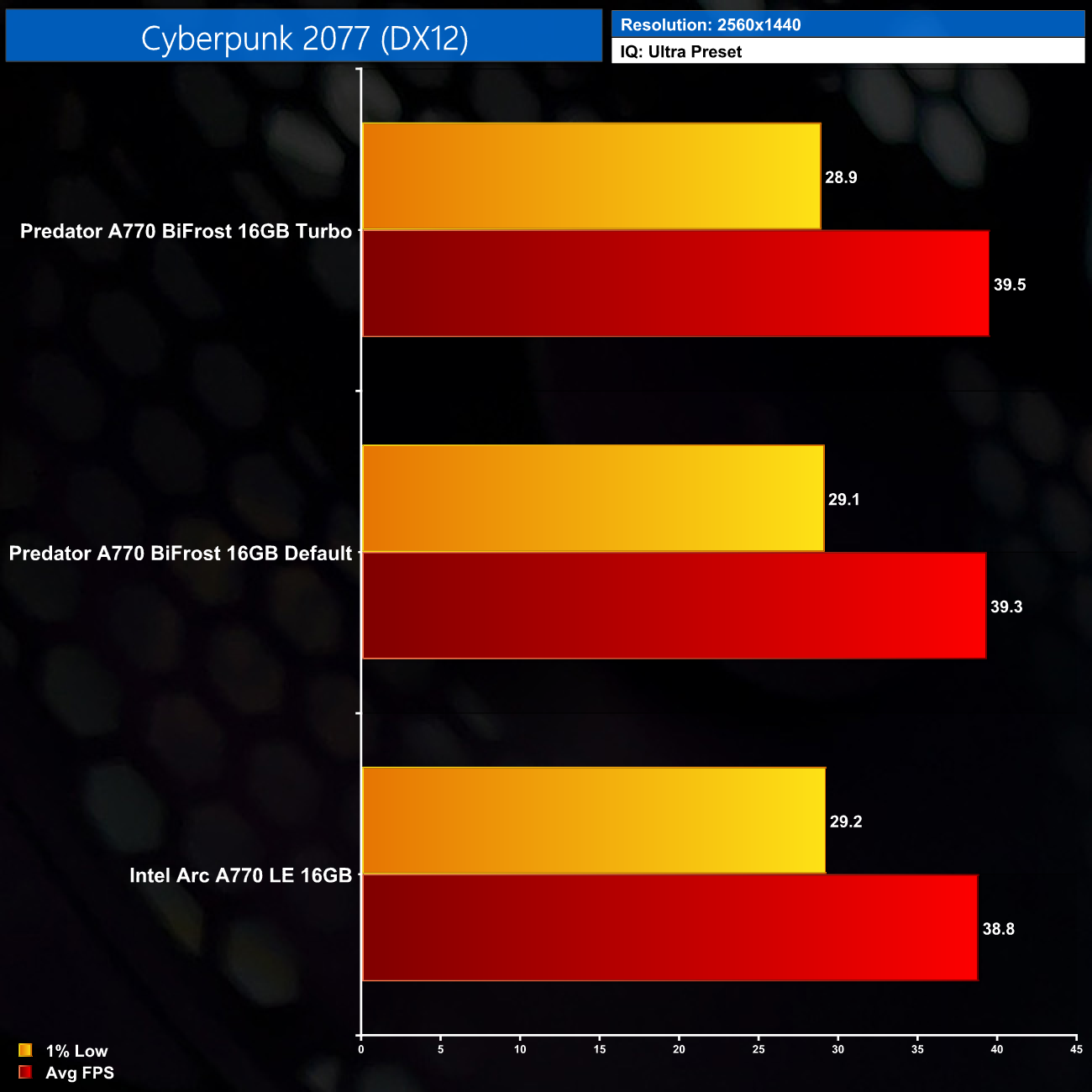
As expected, such trivial differences in clock speed means the real-world gaming performance of the two cards is functionally identical. We observed less than a single frame of difference comparing the LE to the BiFrost, even when using the Turbo mode, so there's no way you could tell the difference between the two cards while gaming.
For our temperature testing, we measure the peak GPU core temperature under load. A reading under load comes from running Cyberpunk 2077 for 30 minutes.
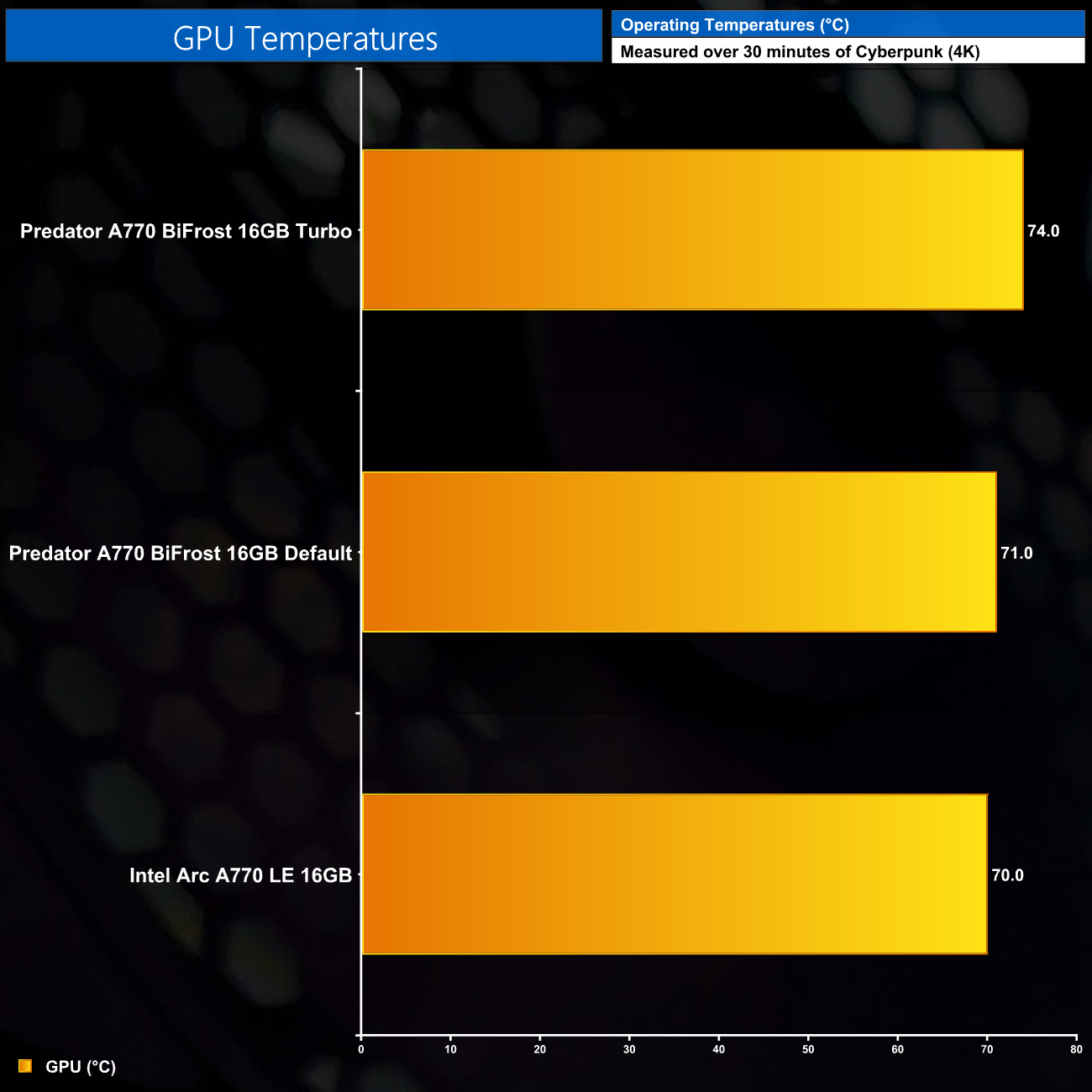
As for thermal performance, there’s again very little between the two cards. Out of the box, the BiFrost hit 71C under load, while it ran 3c hotter in the Turbo mode, likely due to increased power consumption. Intel’s Limited Edition card remains a very well built model however, and peaked at just 70C.For our temperature testing, we measure the peak memory temperature under load. A reading under load comes from running Cyberpunk 2077 for 30 minutes.
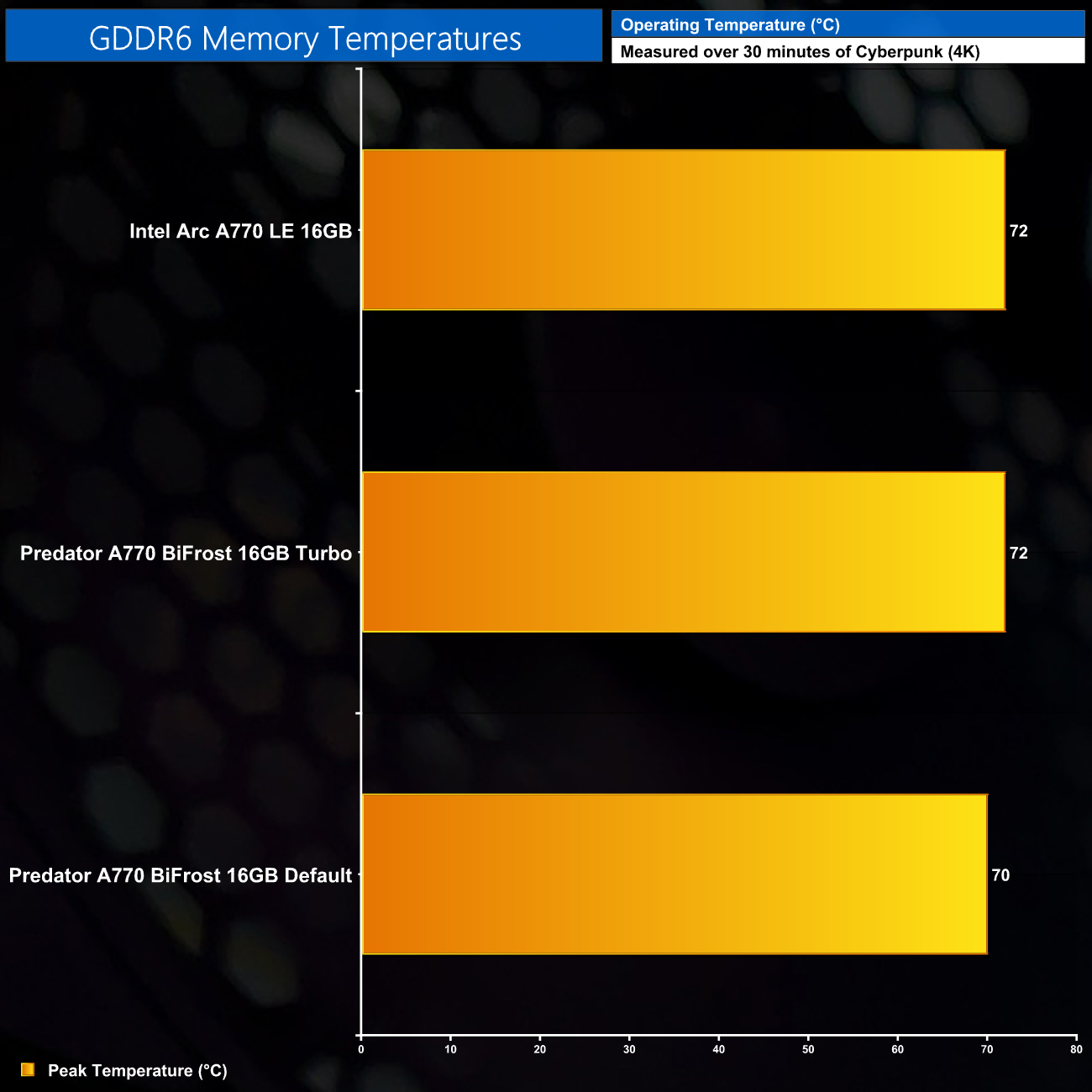
Memory temperatures also show very similar performance The BiFrost, using its Default mode, hit 70C, while the Intel LE ran just 2C hotter, which really is a negligible difference.
We take our noise measurements with the sound meter positioned 1 foot from the graphics card. I measured the noise floor to be 32 dBA, thus anything above this level can be attributed to the graphics cards. The power supply is passive for the entire power output range we tested all graphics cards in, while all CPU and system fans were disabled. A reading under load comes from running Cyberpunk 2077 for 30 minutes.
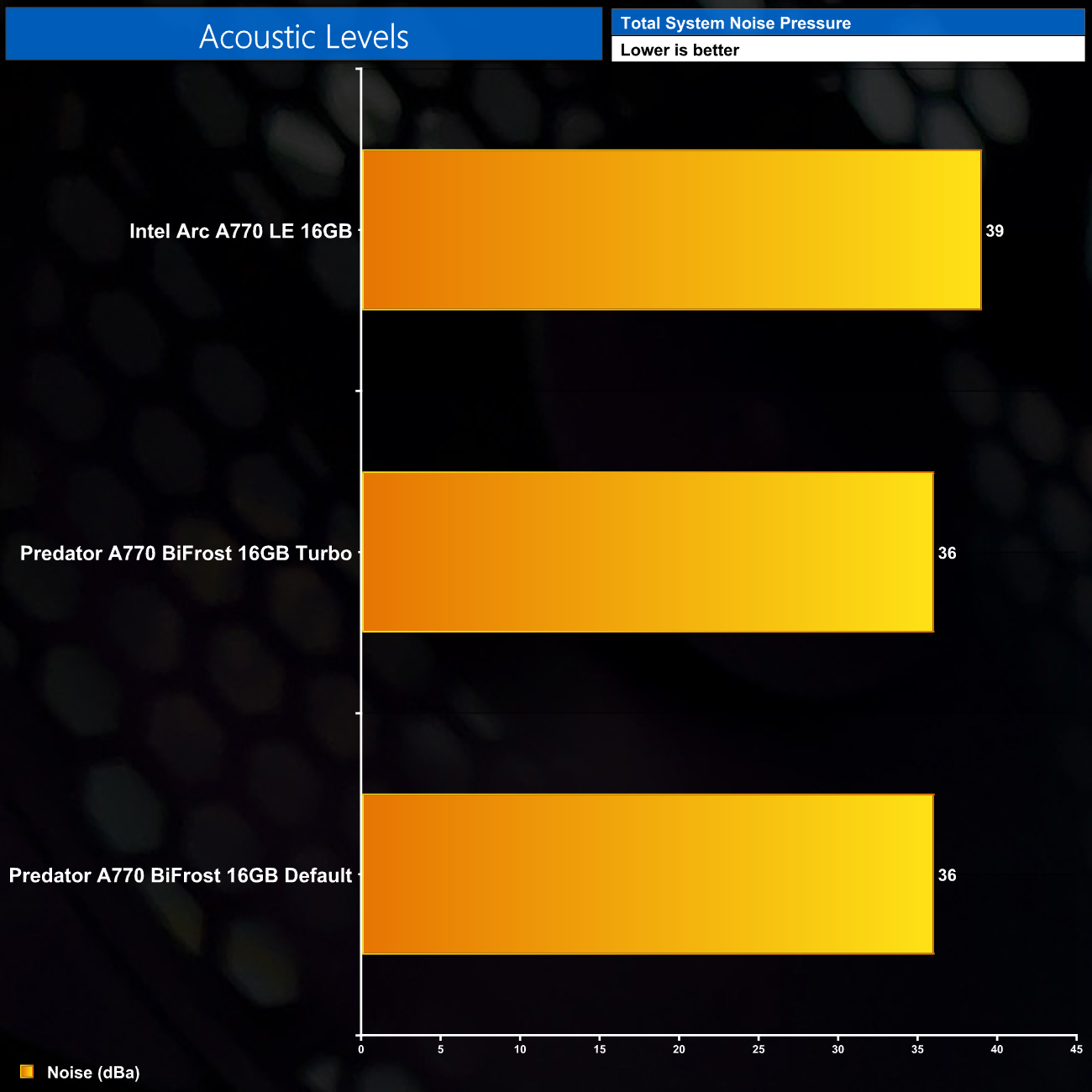
The main benefit to the BiFrost is that it does run a fair bit quieter than Intel's Limited Edition card. I measured it operating at just 36dBa, marking a 3dBa reduction against the LE. Weirdly though, the Turbo mode operated with the same exact fan speeds as the Default profile, peaking at 1490rpm. As we show in the video, fan control as a whole is still a bit funny on Intel Arc, even with the 4123 driver. Using Acer’s software, users can adjust fan speed in 10% steps, but even when I selected a fixed 30% fan speed, the reported fan rpm still fluctuated up and down by 100rpm, so there are still some hysteresis issues going on.
There's no doubt in my mind that Intel Arc has come a long way from the launch of the A750 and A770 back in October. At launch, it was quite challenging to review both Arc products due to the sheer amount of driver issues, but my latest test has been far more successful.
For one, Intel's latest drivers can offer huge performance increases in certain games. We saw this in Counter-Strike: Global Offensive, where the company has reaped the reward of its new DXVK implementation – average frame rates are improved by almost 100%, and the frame times (1% lows) are better still. Likewise in Total War: Warhammer III, we see another game-changing improvement, with more consistent frame times and a huge uplift to the average frame rate.
Of course, not every game has seen such an improvement, but over the 12 titles we tested, Intel Arc is now much more competitive with the likes of the RTX 3060 and RX 6600 XT than it was back at launch.
It's also pleasing that overall system stability is improved. I had just one crash during the entirety of my testing with Arc GPUs, while it's great to see Intel has tweaked the Control Centre software so it is no longer an overlay.
Of course, the latest drivers aren't a magic instant fix for all of Arc's problems. There are still issues, including high idle power draw (at 47W for the A770 versus 12W for RTX 3060), buggy fan control, and a number of games tested still show erratic frame times. It is clear, however, that this is a huge step in the right direction, and according to Intel's Tom Petersen, the first of several updates they hope to present over Alchemist's lifetime.
As for the Acer Predator BiFrost A770 we have also tested as part of this article, as Acer's first-ever DIY GPU, I have been impressed during my testing with it. It may not be the best custom card I've ever used, but it is a close match for the Intel Limited Edition model, with similar thermal and gaming performance. The key benefit to the BiFrost is its lower-noise operation, as we clocked it in running 3dBa quieter than the Limited Edition.
That said, retailing for £400 direct from Acer UK (£449 with a £50 discount at the time of writing), the BiFrost comes in £40 more expensive than the A770 Limited Edition, which can be found for £360 from Ebuyer. I'm not convinced the BiFrost is worth an extra £40 for its cooler alone, though it does have the advantage of being quieter under load. It's certainly not a bad first GPU from Acer however, so if you are particularly taken with the aesthetics or RGB, you could do a lot worse.
You can get the BiFrost direct from Acer HERE.
Discuss on our Facebook page HERE.
Pros
- Very well built card.
- Quieter than Intel's Limited Edition under load.
- Unique aesthetic.
- Bright RGB.
- Much more competitive now that Intel's drivers have improved.
Cons
- Fan control is slightly buggy.
- £40 premium over Limited Edition.
- Drivers still have room to improve.
KitGuru says: Intel's drivers have come a long way. They're not perfect, but Arc feels significantly more viable now than it did five months ago.