KitGuru KitGuru.net – Tech News | Hardware News | Hardware Reviews | IOS | Mobile | Gaming | Graphics Cards


Today Nvidia has announced three new graphics cards – RTX 2060, 2070 and 2080 SUPER. RTX 2080 SUPER isn't coming until later this month, but today we have reviews of both the 2060 and 2070 SUPER editions. This review is focused solely on the latter card, so if you want to read about 2060 SUPER, head over to our full review of that card over here.
What we're focused on here, however, is what RTX 2070 SUPER can bring to the table. Nvidia tells us it is faster than a GTX 1080 Ti, so could it be the new mid-range king?
Unlike the RTX 2060 SUPER – which is actually closer to the RTX 2070 than its namesake, the 2060, in terms of specs – Nvidia's RTX 2070 SUPER is more of a true ‘2070 Ti' card, as it slots neatly in between the 2070 and 2080. That said, as RTX 2070 is a full implementation of the TU106 GPU, Nvidia had to take TU104 – the basis for RTX 2080 – and cut it down to 36 SMs, and 2560 CUDA cores, to make RTX 2070 SUPER.
Priced at £475 here in the UK, it marks a £16 price increase over the original RTX 2070 MSRP, or 3%. The MSRP in the US, however, is the same for the 2070 SUPER as the original 2070, at $499 – so the slight increase for those in the UK is simply due to changing dollar-to-pound conversion rates. In any case, £475 is the baseline MSRP, so custom cards will be coming in with higher prices.
| GPU | RTX 2080 (FE) | RTX 2070 SUPER | RTX 2070 (FE) | RTX 2060 SUPER | RTX 2060 (FE) |
| SMs | 46 | 40 | 36 | 34 | 30 |
| CUDA Cores | 2944 | 2560 | 2304 | 2176 | 1920 |
| Tensor Cores | 368 | 320 | 288 | 272 | 240 |
| Tensor FLOPS | 85 | 72 | 63 | 57.4 | 51.6 |
| RT Cores | 46 | 40 | 36 | 34 | 30 |
| Texture Units | 184 | 160 | 144 | 136 | 120 |
| ROPs | 64 | 64 | 64 | 64 | 48 |
| Rays Cast | 8 Giga Rays | 7 Giga Rays | 6 Giga Rays | 6 Giga Rays | 5 Giga Rays |
| GPU Boost Clock | 1800 MHz | 1770 MHz | 1710 MHz | 1650 MHz | 1680 MHz |
| Memory Data Rate | 14 Gbps | 14 Gbps | 14 Gbps | 14 Gbps | 14 Gbps |
| Total Video Memory | 8GB GDDR6 | 8GB GDDR6 | 8GB GDDR6 | 8GB GDDR6 | 6GB GDDR6 |
| Memory Interface | 256-bit | 256-bit | 256-bit | 256-bit | 192-bit |
| Memory Bandwidth | 448 GB/sec | 448 GB/sec | 448 GB/sec | 448 GB/sec | 336.1 GB/sec |
| TDP | 225W | 215W | 185W | 175W | 160W |
On top of the fact that RTX 2070 SUPER uses the TU104 GPU, it's also interesting that Nvidia's specs claim it has ‘5 or 6' Graphics Processing Clusters (GPCs). This is noteworthy because, for TU104, each GPC houses 4 Texture Processing Clusters (TPCs) – and the specs are very clear that RTX 2070 SUPER has 20 TPCs. So basic maths says the GPU should have 5 GPCs. So why the ‘5 or 6'?
Well, it turns out not all RTX 2070 SUPERs are made quite the same. They will all have 40 SMs (two SMs per TPC), but these may be spread across 5 or 6 GPCs – i.e. some GPCs will not be fully populated with 4 TPCs if you get a 2070 SUPER with 6 GPCs. Nvidia's Rick Napier, Senior Technical Product Manager, told us:
‘We [Nvidia] sweep in a variety of ways, and as a result some RTX 2070 GPUs have 5 GPCs, and some contain 6. The performance difference between 5 GPC vs 6 GPC GPUs is negligible. Ultimately because we’ve outfitted the GPU with 20 TPCs and higher clocks, the RTX 2070 SUPER is on average 16% faster than RTX 2070.'
So while it may not mean much to the everyday gamer when looking at a FPS counter, I think it is interesting to note how Nvidia is achieving its 40 SMs for the RTX 2070 SUPER.
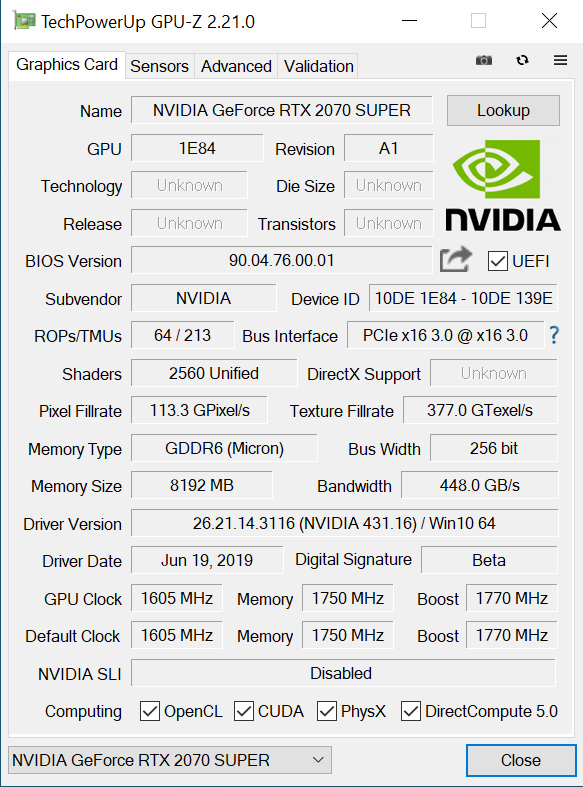
Elsewhere, we can note the relatively high 1770MHz rated boost clock. Nvidia told us that RTX 2070 SUPER is not a factory overclocked card, so 1770MHz is reference speed for this card. It will be interesting to see how far custom cards will push the clock speed.
Lastly, just like both the RTX 2070 and 2080, RTX 2070 SUPER still has 8GB GDDR6 memory clocked at 1750MHz (14000MHz effective).
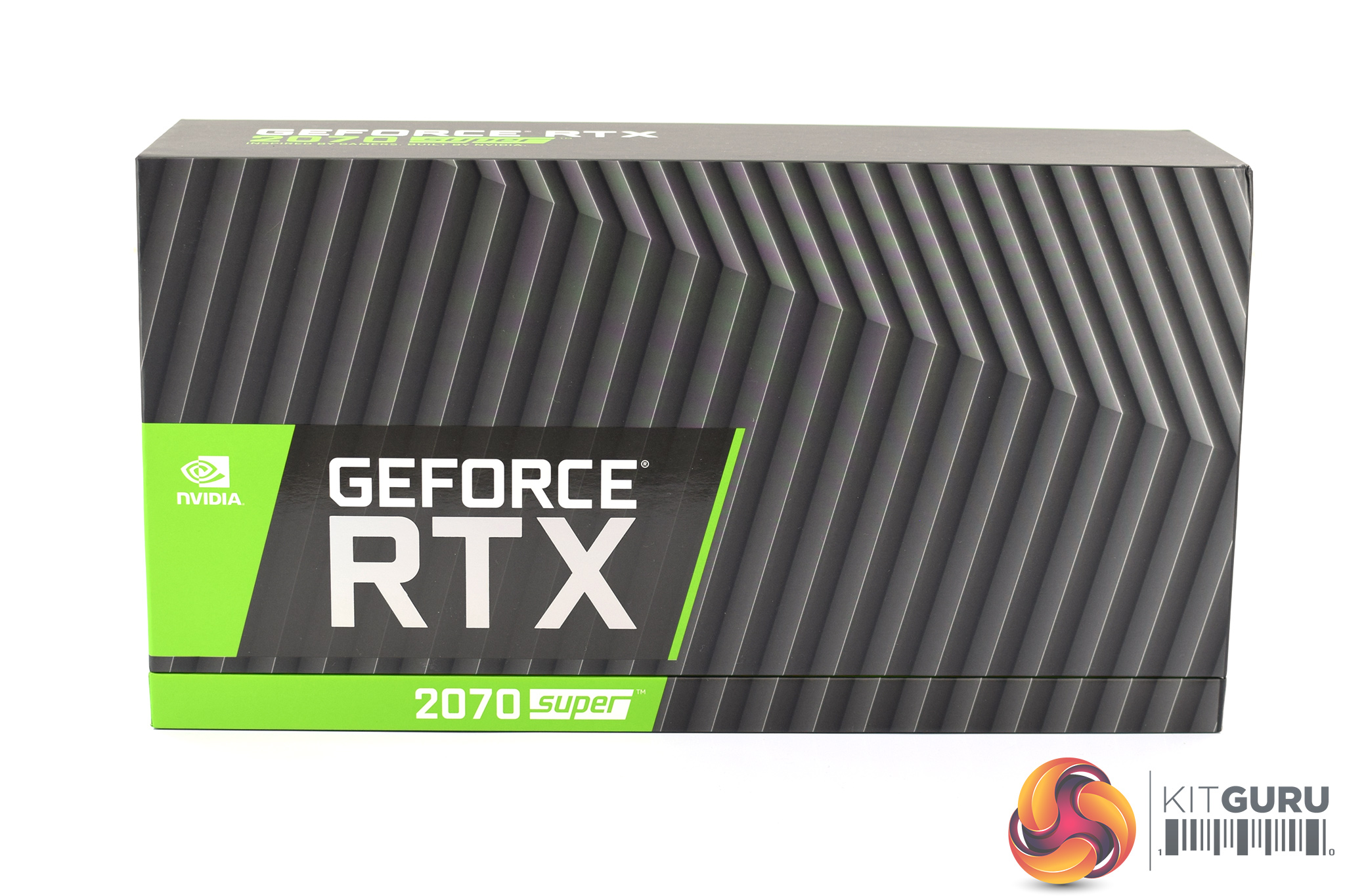
The Nvidia RTX 2070 SUPER Founders Edition ships in the same box we've seen for the other RTX cards, meaning it sports a striped pattern with GeForce branding in the corner.
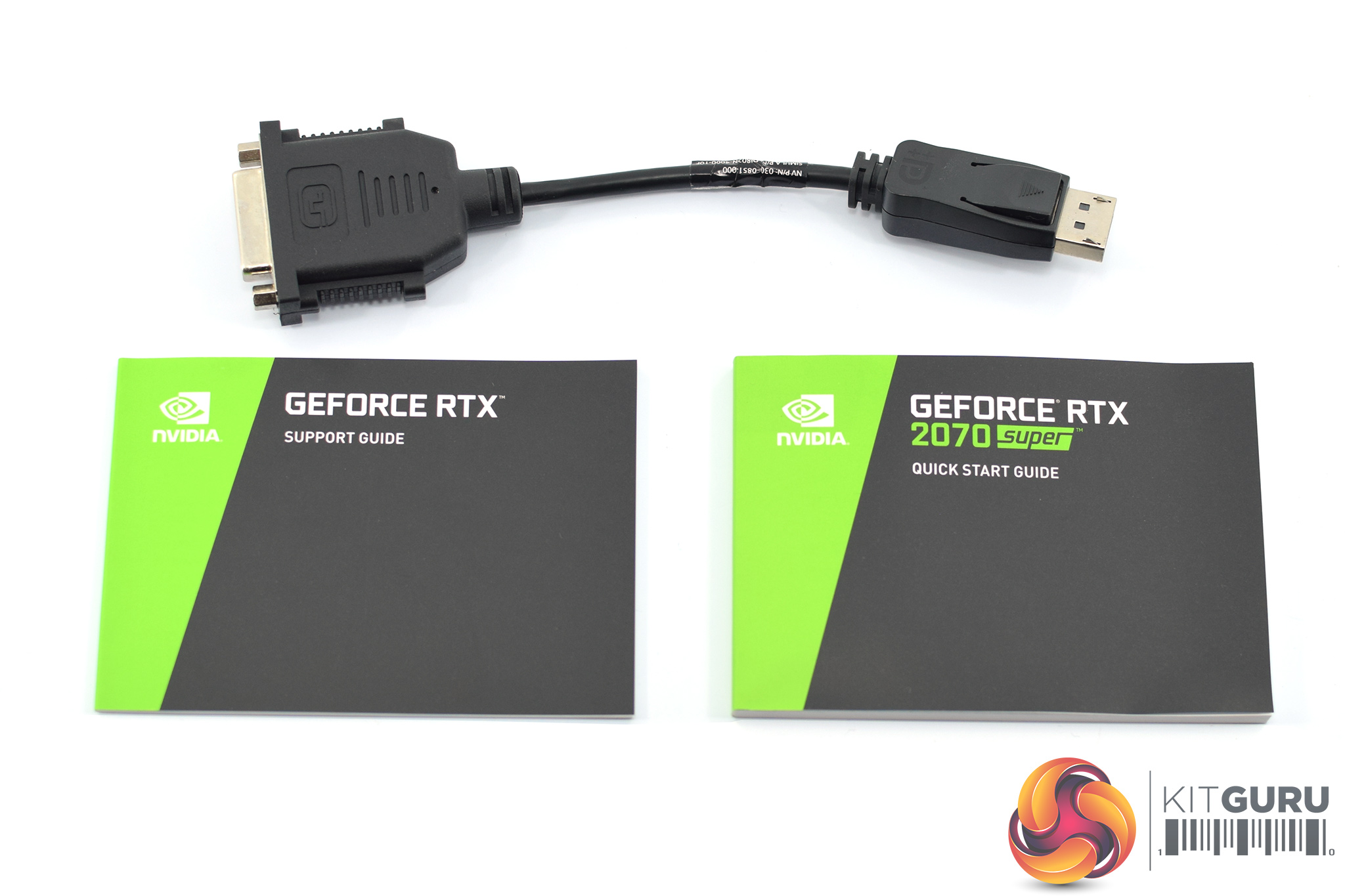
Inside, we find a support guide and a quick start guide, alongside a DisplayPort to DVI-D adapter.
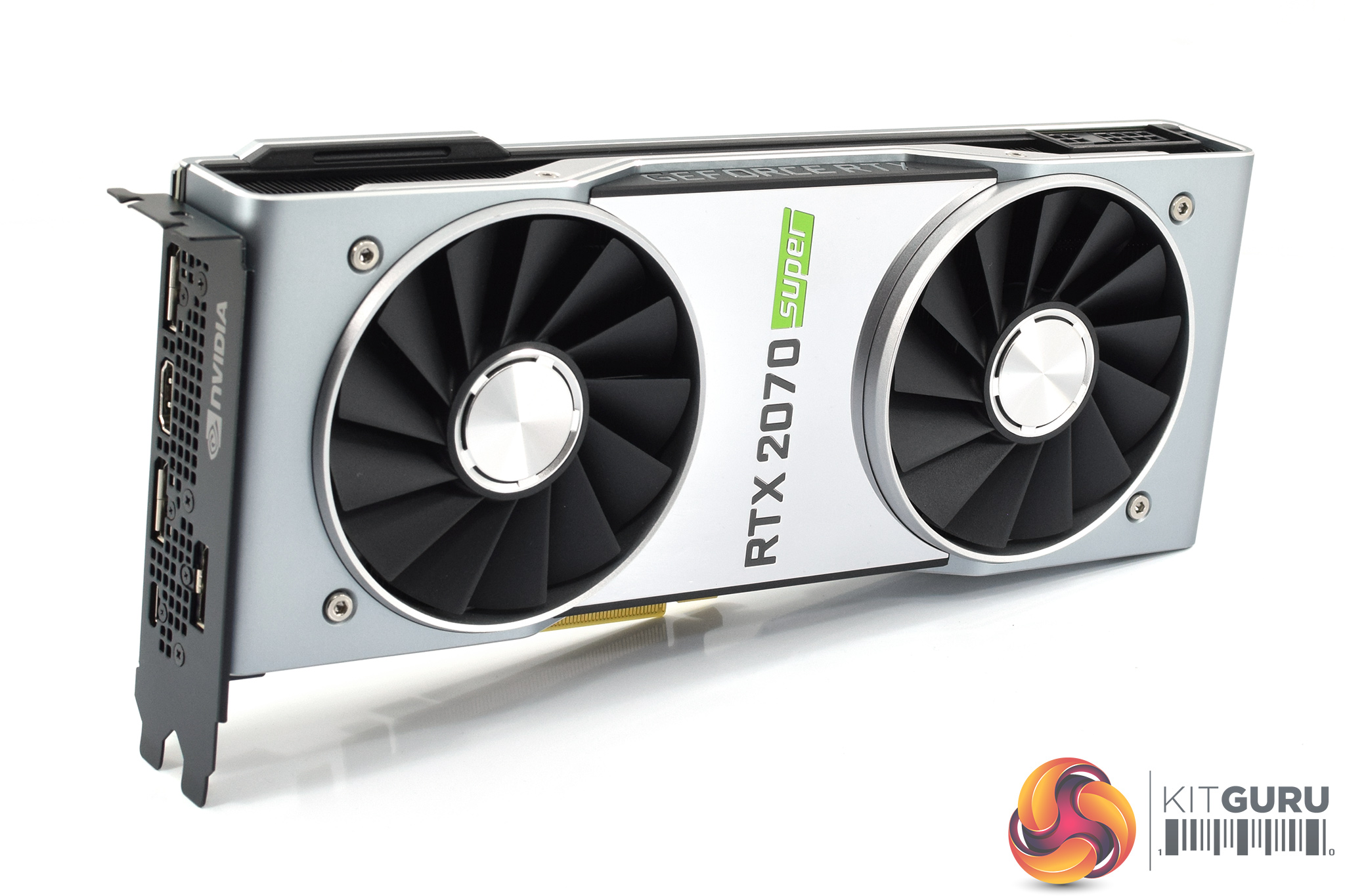
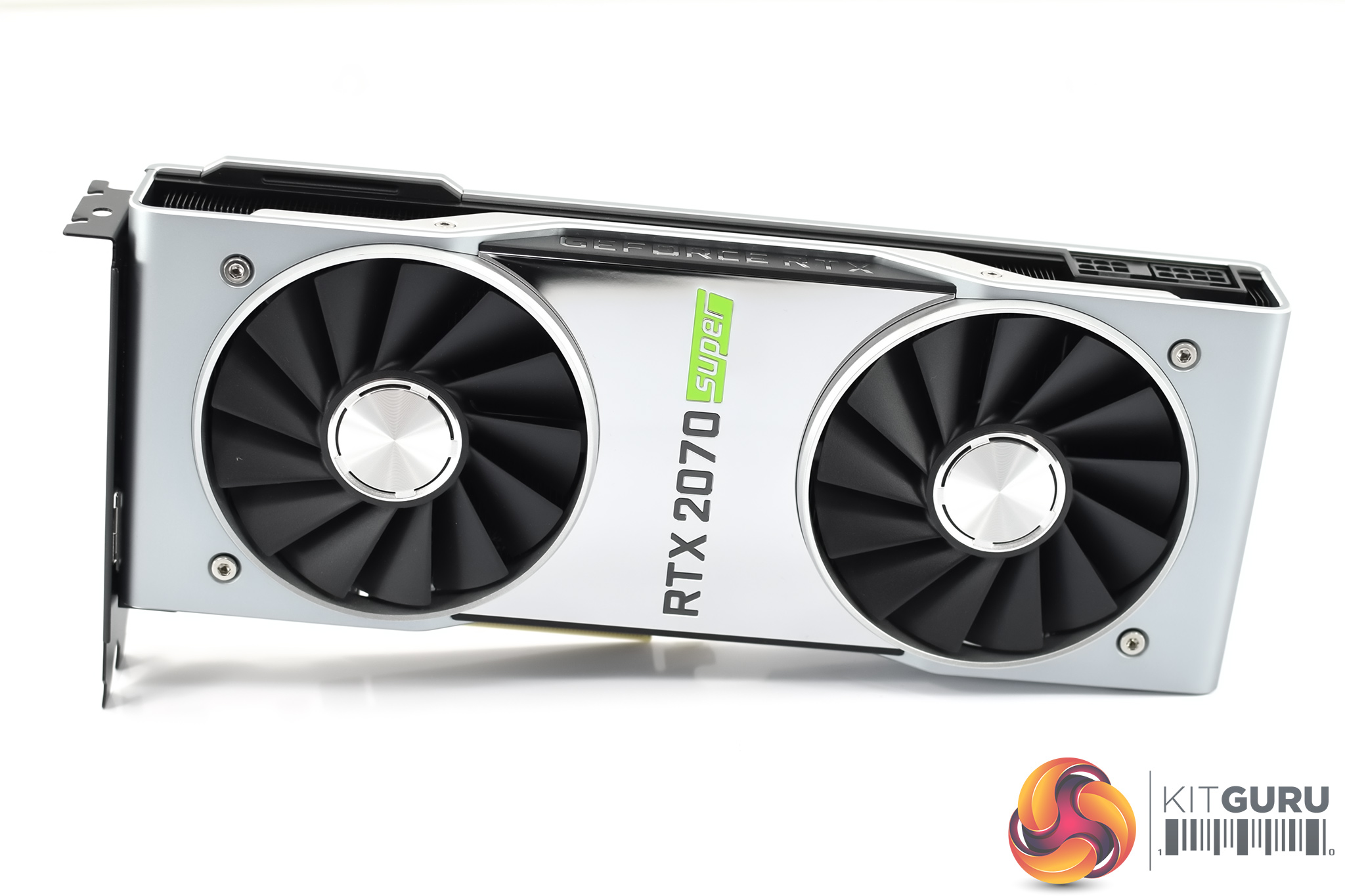
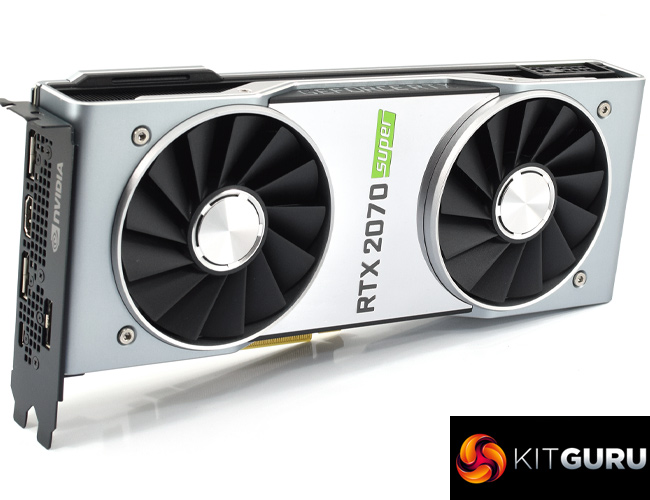
As for the card itself, functionally it is exactly the same as the RTX 2080 Founders Edition. You will notice that, cosmetically, the SUPER model has a couple of differences however. The main thing is the new mirror-finish section in between the two fans, as this was previously black. There's also a green ‘SUPER' logo printed here to add a bit of pizzazz.
It still feels exceptionally well-built, with its heavy aluminium shroud, and I have to say it is a very good looking card. If you were expecting a re-design, however, you will be disappointed.
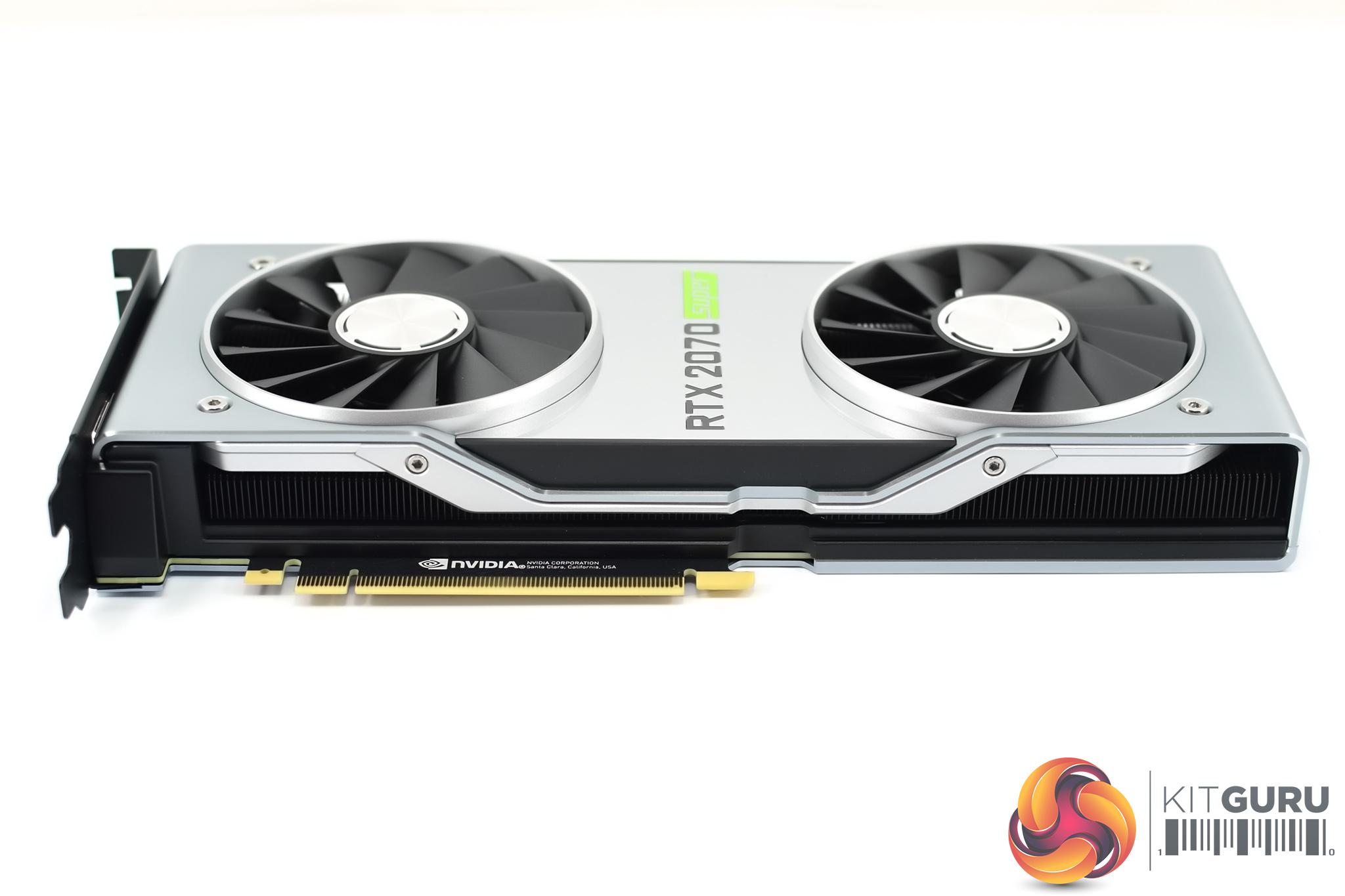
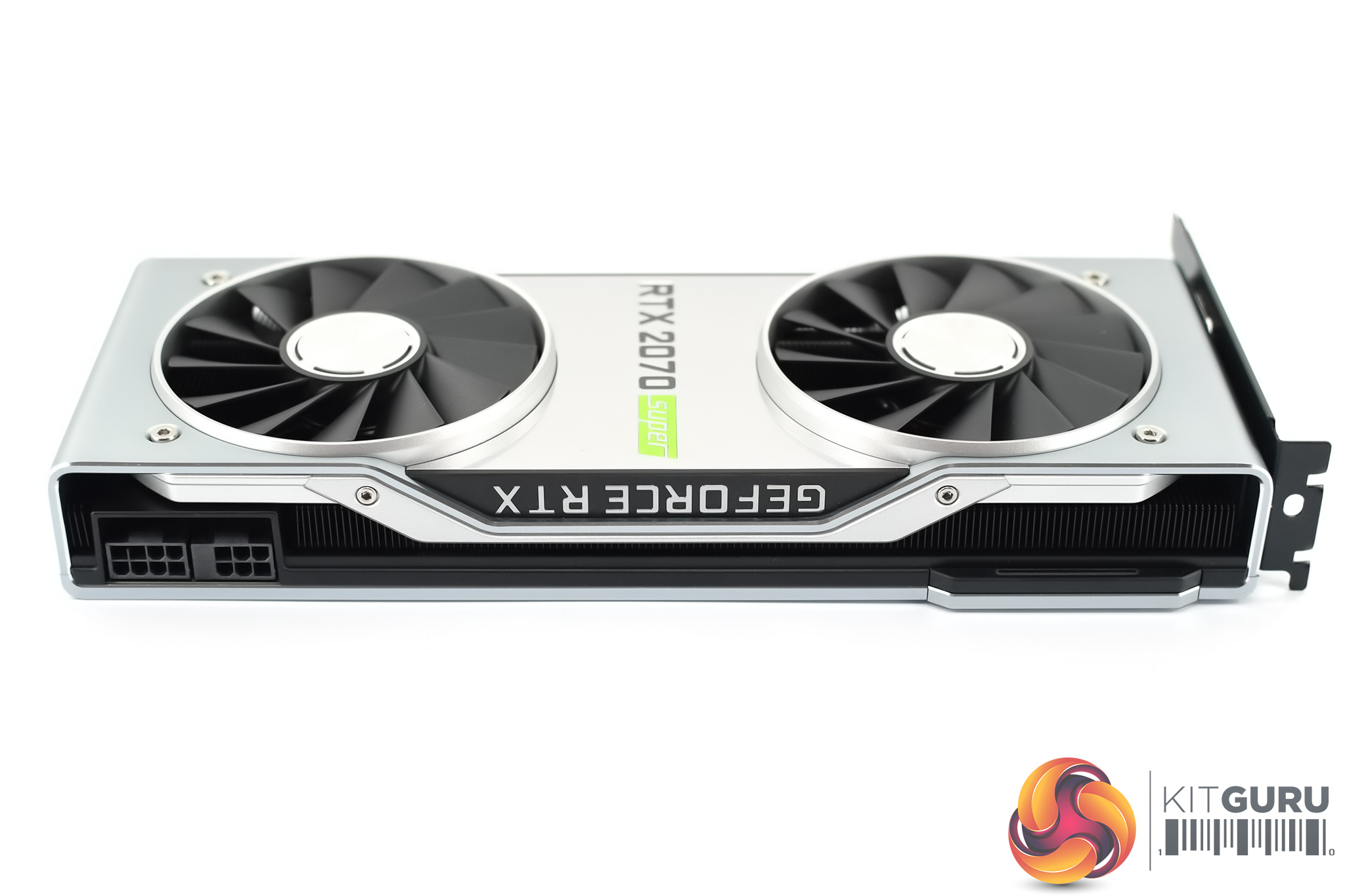
As for dimensions, it's the same as the 2080 – making it 266.74mm long and 115.7mm tall, while the card remains 2-slots thick. Compared to most aftermarket RTX cards, this is relatively small – it won't fit in every ITX case on the market, but nor is it a 3-slot monster measuring over 30cm long.
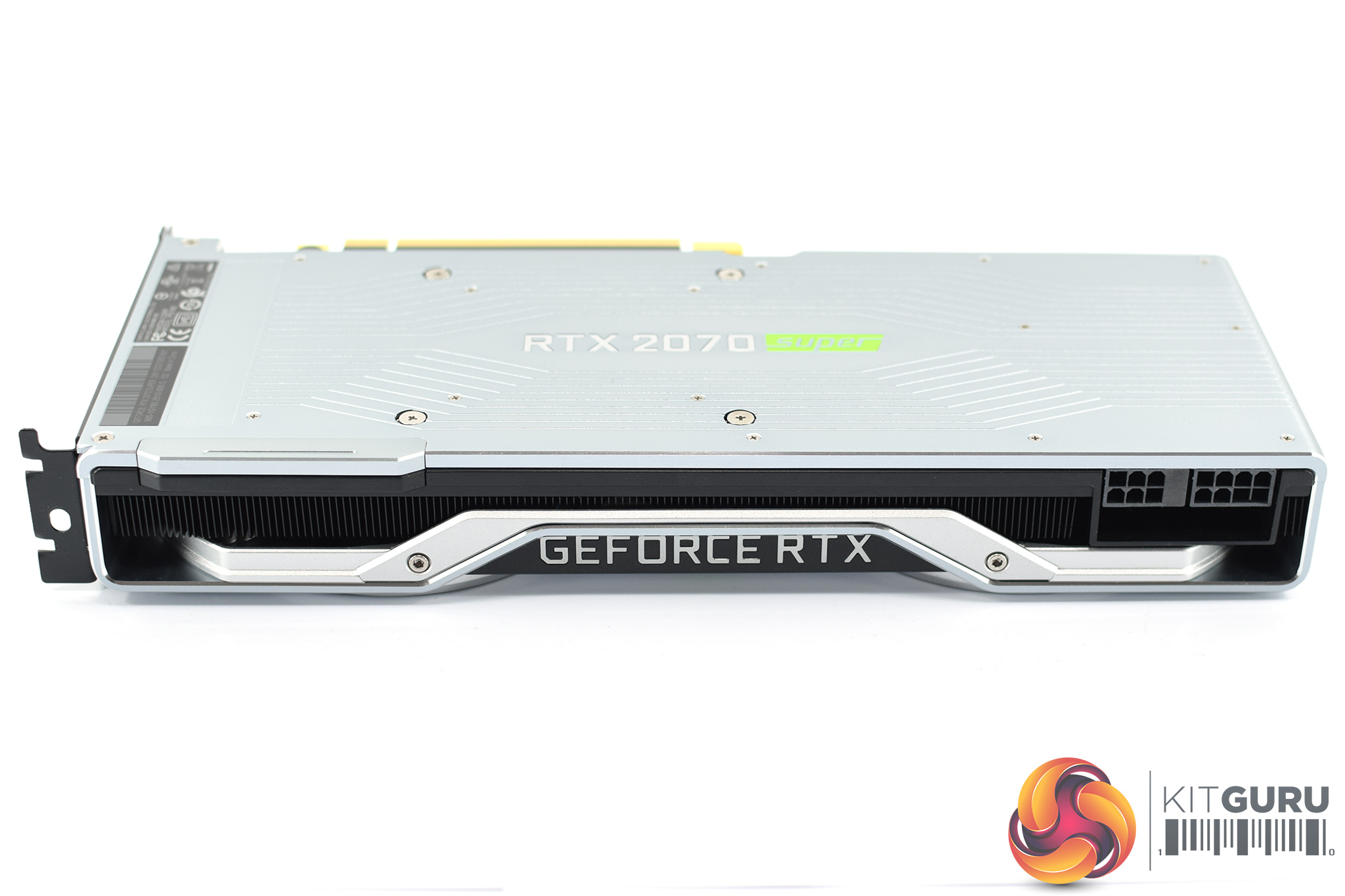
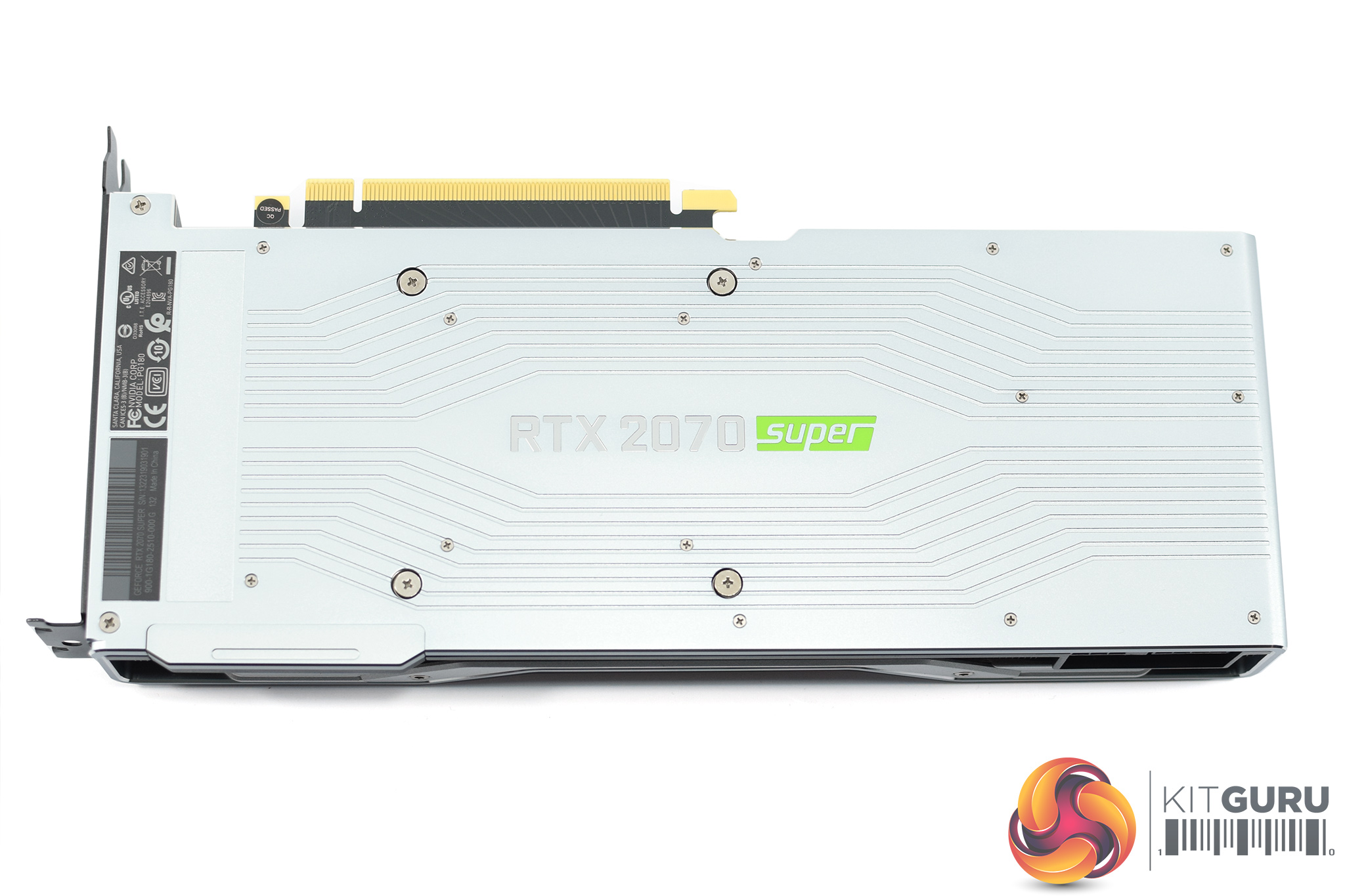
There's a full-length silver backplate, too, with more green ‘SUPER' branding positioned in the middle. Just in case you forget what card you bought!
As for that ‘GeForce RTX' logo on the front of the shroud, this is of course illuminated by green LEDs when your system is powered on.
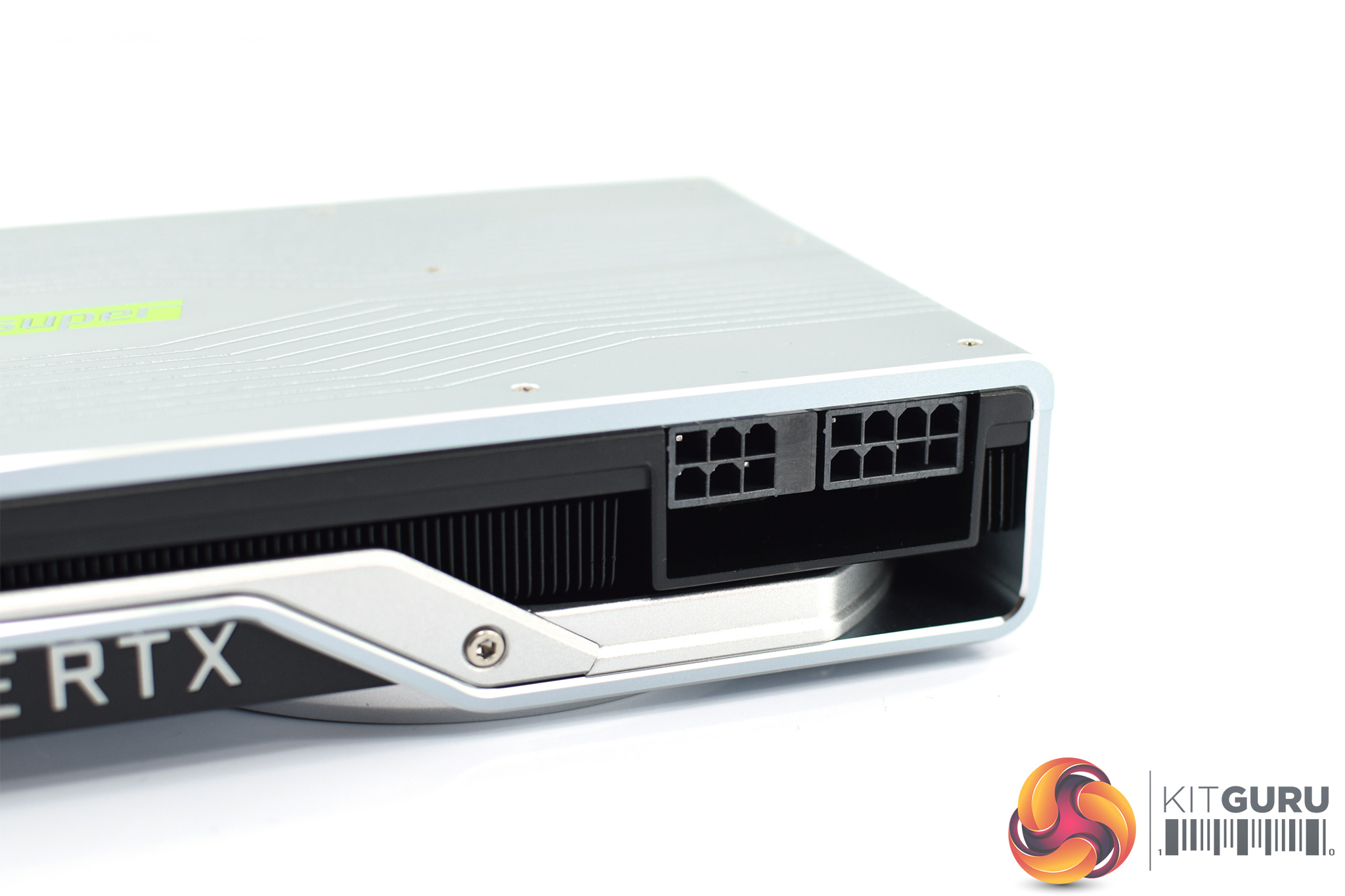
Just like RTX 2080, the 2070 SUPER requires 1x 6-pin and 1x 8-pin for power, while its TDP is rated at 215W – 10W less than 2080 Founders Edition, but 30W more than its RTX 2070 sibling.
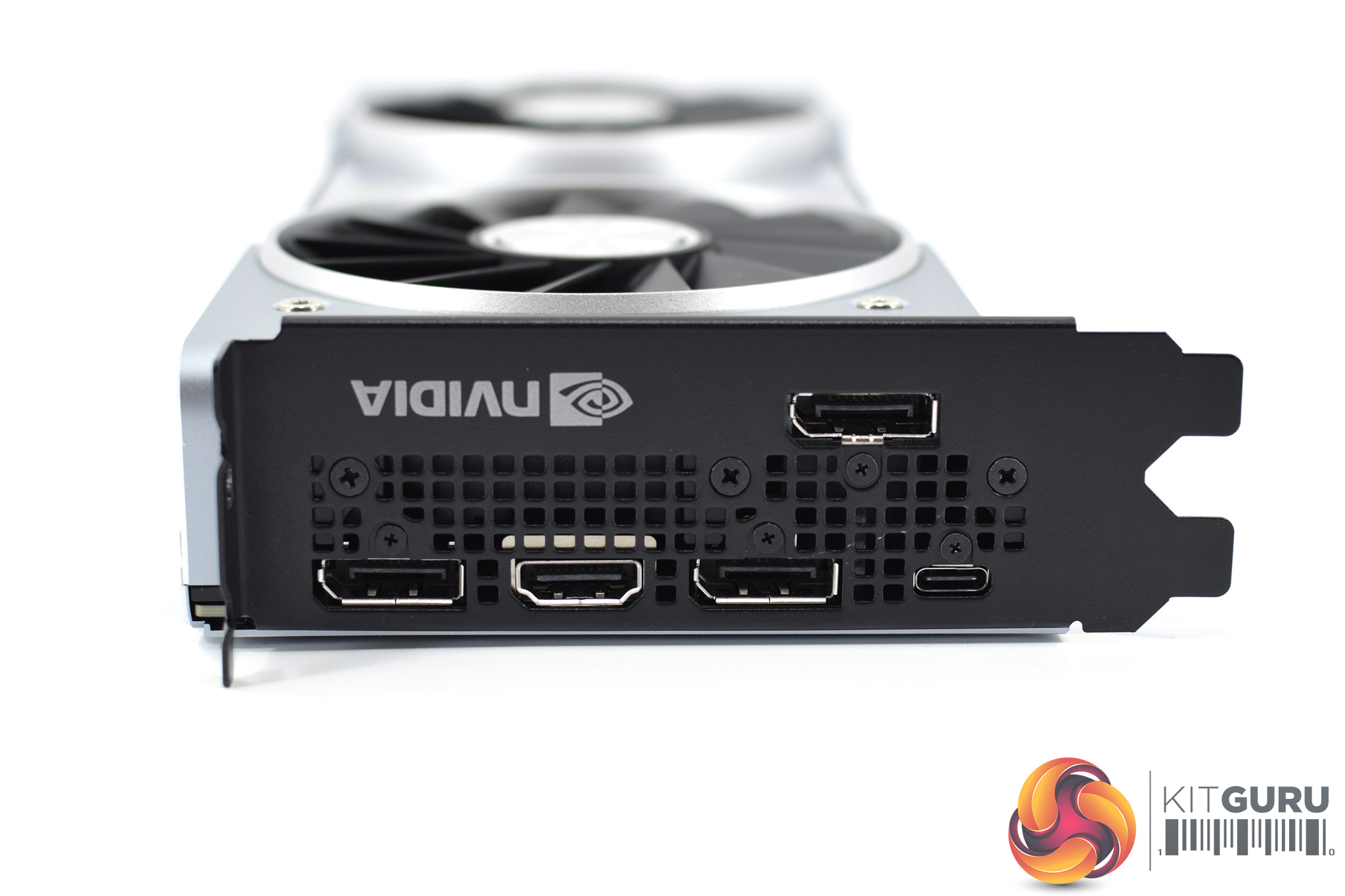
Display outputs are also unchanged, with 3x DisplayPort, 1x HDMI and 1x USB-C VirtualLink connectors.
Our newest GPU test procedure has been built with the intention of benchmarking high-end graphics cards. We test at 1920×1080 (1080p), 2560×1440 (1440p), and 3840×2160 (4K UHD) resolutions.
We try to test using the DX12 API if titles offer support. This gives us an interpretation into the graphics card performance hierarchy in the present time and the near future, when DX12 becomes more prevalent. After all, graphics cards of this expense may stay in a gamer’s system for a number of product generations/years before being upgraded.
We tested the RX Vega64 and Vega56 using the ‘Turbo‘ power mode in AMD’s WattMan software. This prioritises all-out performance over power efficiency, noise output, and lower thermals.
RTX 2070 SUPER is a reference card, with a 1770MHz rated boost clock and memory clocked at 1750MHz (14000MHz effective).
Driver Notes
- All AMD graphics cards were benchmarked with the Adrenalin 19.6.2 driver.
- All Nvidia graphics cards (except 2060/2070 SUPER) were benchmarked with the Nvidia 430.86 driver.
- Nvidia RTX 2060/2070 SUPER cards were benchmarked with the 431.16 driver supplied to press ahead of launch.
Test System
We test using the Overclockers UK Germanium pre-built system, though it has been re-housed into an open-air test bench. You can read more about it over HERE.
| CPU |
Intel Core i7-8700K
Overclocked to 4.8GHz |
| Motherboard |
ASUS ROG Strix Z370-F Gaming
|
| Memory |
Team Group Dark Hawk RGB
16GB (2x8GB) @ 3200MHz 16-18-18-38 |
| Graphics Card |
Varies
|
| System Drive |
Samsung 960 EVO 500GB
|
| Games Drive | Crucial M4 512GB |
| Chassis | Streacom ST-BC1 Bench |
| CPU Cooler |
OCUK TechLabs 240mm AIO
|
| Power Supply |
Corsair AX1500i 80+ Titanium PSU
|
| Operating System |
Windows 10 1903
|
Comparison Graphics Cards List
- Nvidia RTX 2080 Ti Founders Edition (FE) 11GB
- Nvidia RTX 2080 Founders Edition (FE) 8GB
- MSI RTX 2070 Armor 8GB
- Nvidia RTX 2060 Founders Edition (FE) 6GB
- Gigabyte GTX 1660 Ti OC 6G
- Gigabyte GTX 1660 Gaming OC 6G
- Palit GTX 1650 StormX OC 4GB
- Nvidia GTX 1080 Ti Founders Edition (FE) 11GB
- Gigabyte GTX 1080 G1 Gaming 8GB
- Palit GTX 1070 Ti Super JetStream 8GB
- Nvidia GTX 1070 Founders Edition (FE) 8GB
- Nvidia GTX 1060 Founders Edition (FE) 6GB
- AMD Radeon VII 16GB
- AMD RX Vega 64 Air 8GB
- AMD RX Vega 56 8GB
- Sapphire RX 590 Nitro+ SE 8GB
- Sapphire RX 580 Pulse 8GB
- ASUS RX 570 ROG Strix Gaming OC 4GB
Software and Games List
- 3DMark Fire Strike & Fire Strike Ultra (DX11 Synthetic)
- 3DMark Time Spy (DX12 Synthetic)
- 3DMark Port Royal (DXR Synthetic)
- Battlefield V (DX12)
- Deus Ex: Mankind Divided (DX12)
- Far Cry 5 (DX11)
- Tom Clancy’s Ghost Recon: Wildlands (DX11)
- Metro: Exodus (DX12)
- Middle Earth: Shadow of War (DX11)
- Shadow of the Tomb Raider (DX12)
We run each benchmark/game three times, and present averages in our graphs.3DMark Fire Strike is a showcase DirectX 11 benchmark designed for today’s high-performance gaming PCs. It is our [FutureMark’s] most ambitious and technical benchmark ever, featuring real-time graphics rendered with detail and complexity far beyond what is found in other benchmarks and games today.
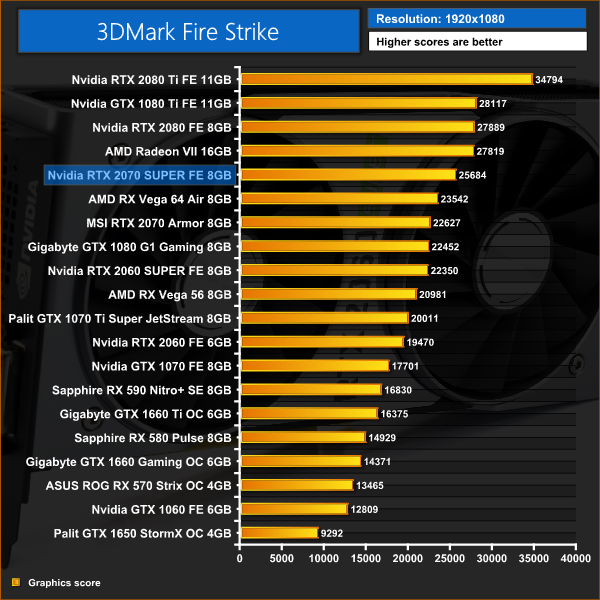
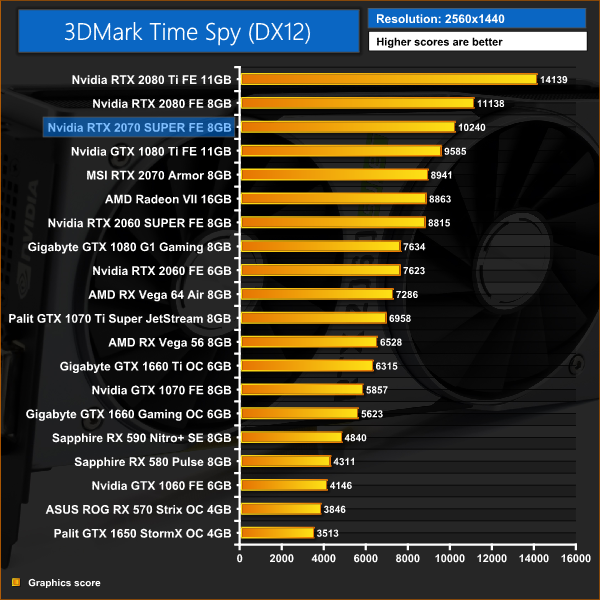
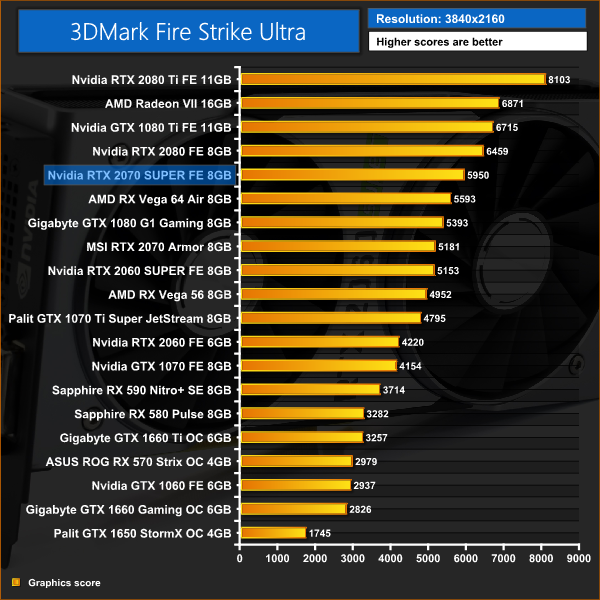
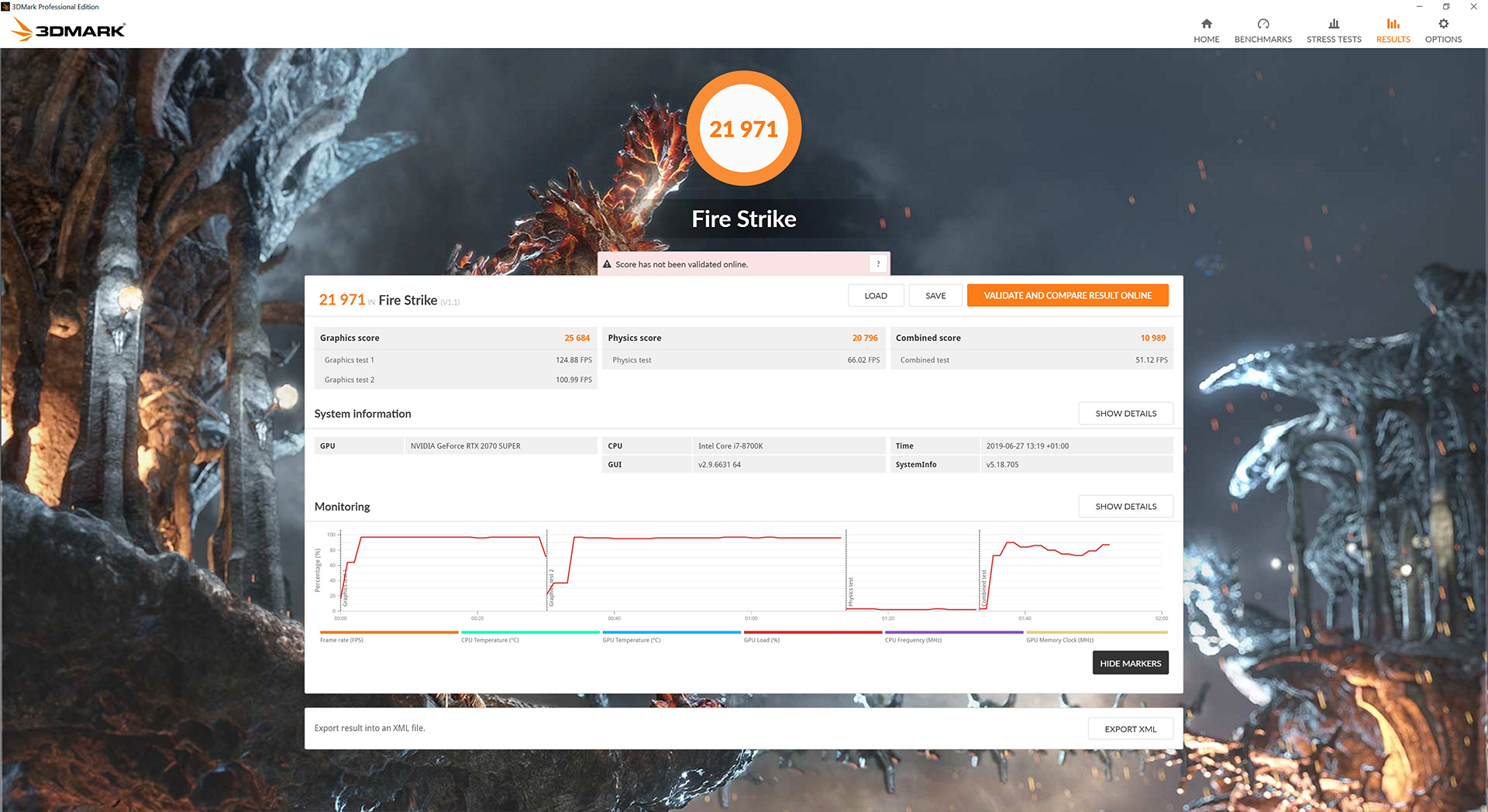
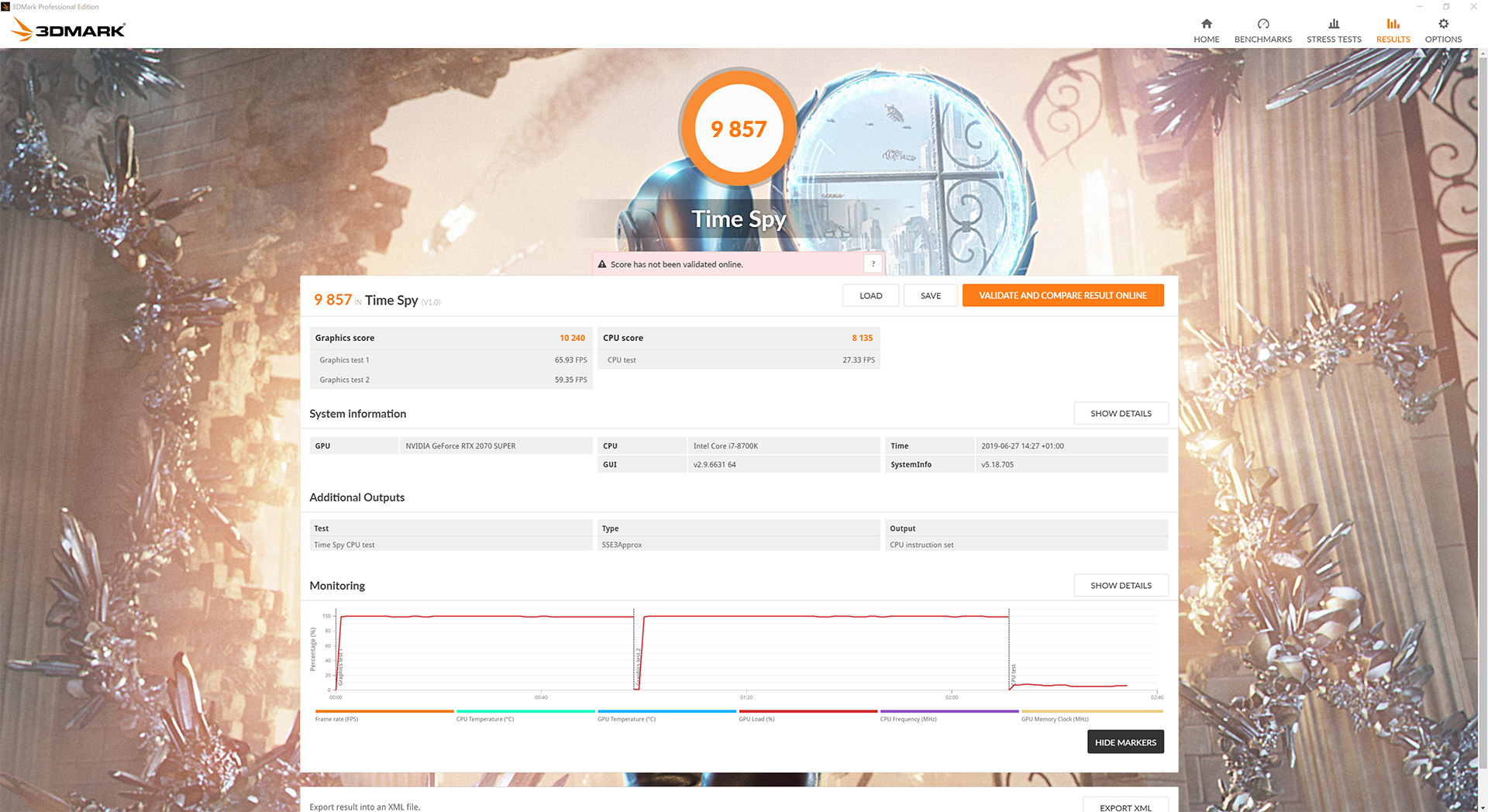
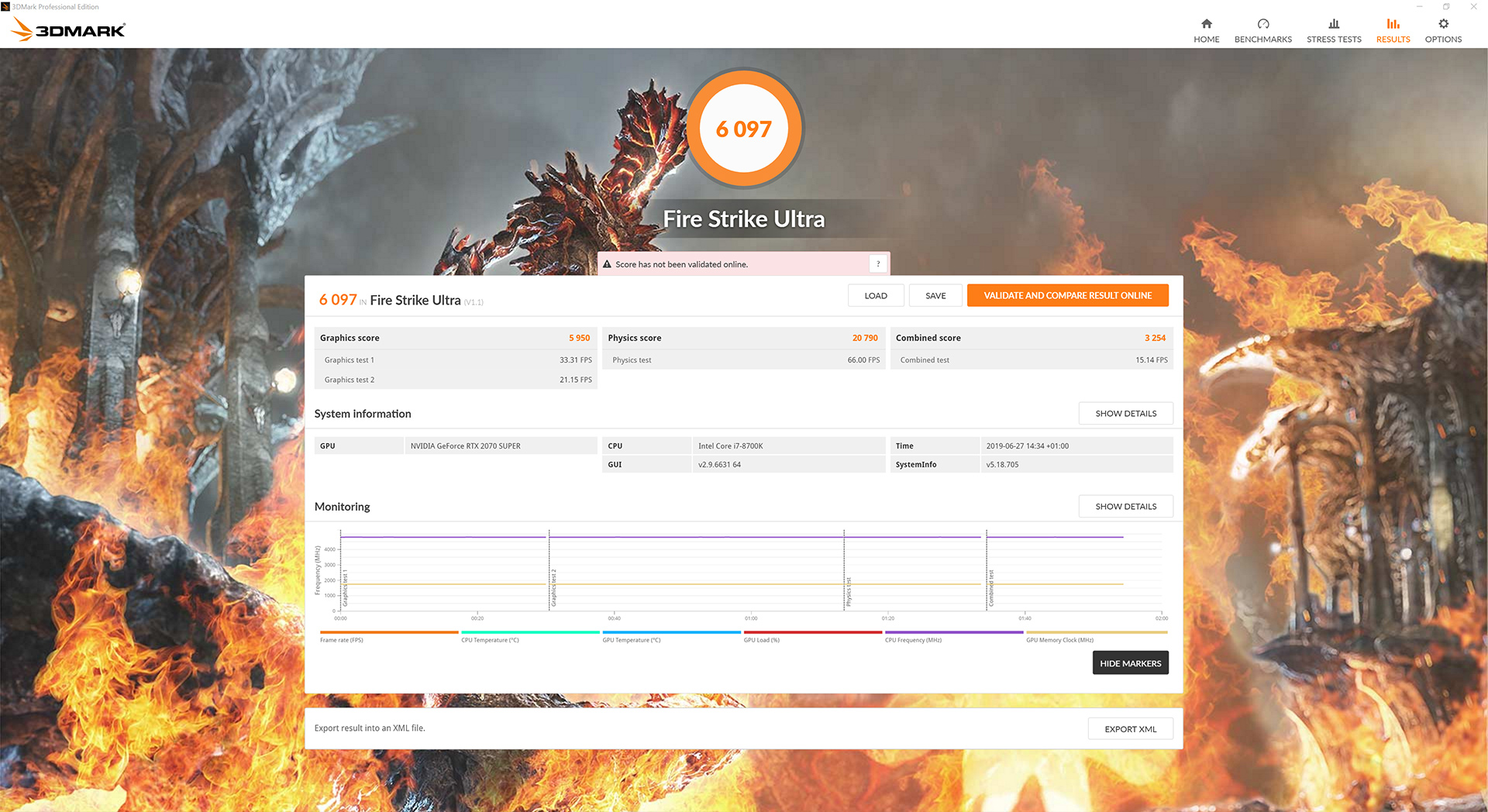
Our initial 3DMark findings are as expected – the RTX 2070 SUPER slots neatly in between the 2070 and 2080 across all three benchmarks. It does better in the DX12 Time Spy test, however, where it beats the GTX 1080 Ti, but that Pascal card scores higher in the Fire Strike and Fire Strike Ultra benchmarks.
3DMark Port Royal is the world’s first dedicated real-time ray tracing benchmark for gamers. You can use Port Royal to test and compare the real-time ray tracing performance of any graphics card that supports Microsoft DirectX Raytracing. As well as benchmarking performance, 3DMark Port Royal provides a realistic and practical example of what to expect from ray tracing in upcoming games.
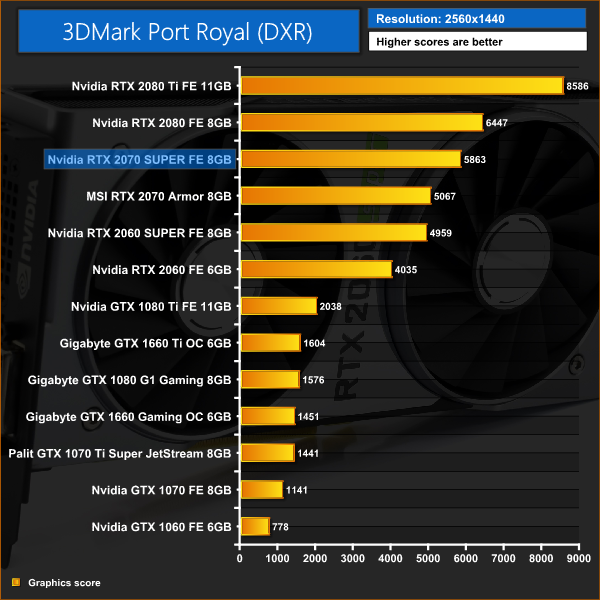
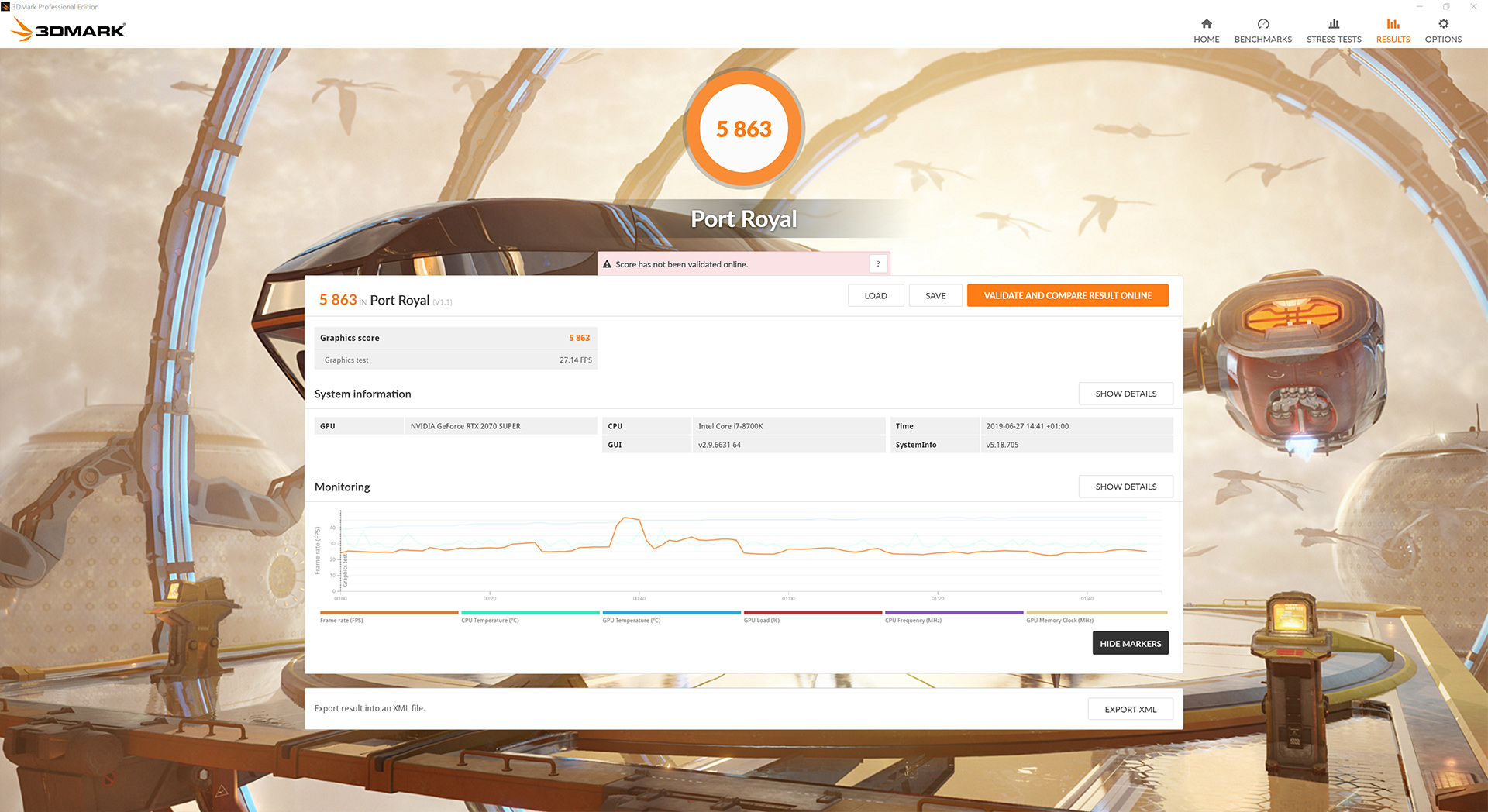
As for Port Royal, this is a specifically-designed benchmark to test a card's ray tracing abilities. Here, the 2070 SUPER slots almost exactly in the middle of the RTX 2070 and 2080.
Battlefield V is a first-person shooter video game developed by EA DICE and published by Electronic Arts. Battlefield V is the sixteenth instalment in the Battlefield series. It was released worldwide for Microsoft Windows, PlayStation 4, and Xbox One on November 20, 2018. (Wikipedia).
We test using the Ultra preset with the DX12 API.
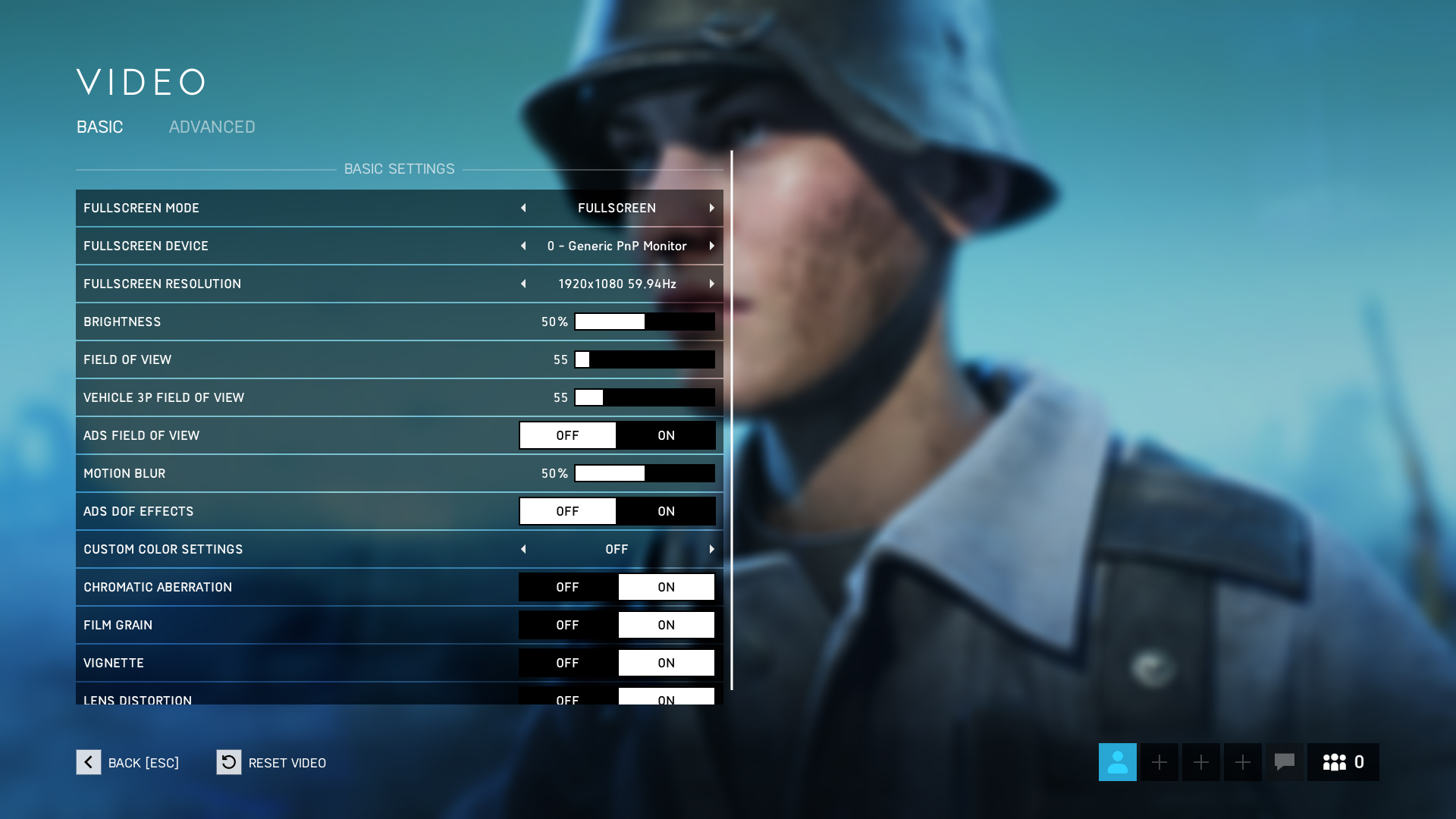
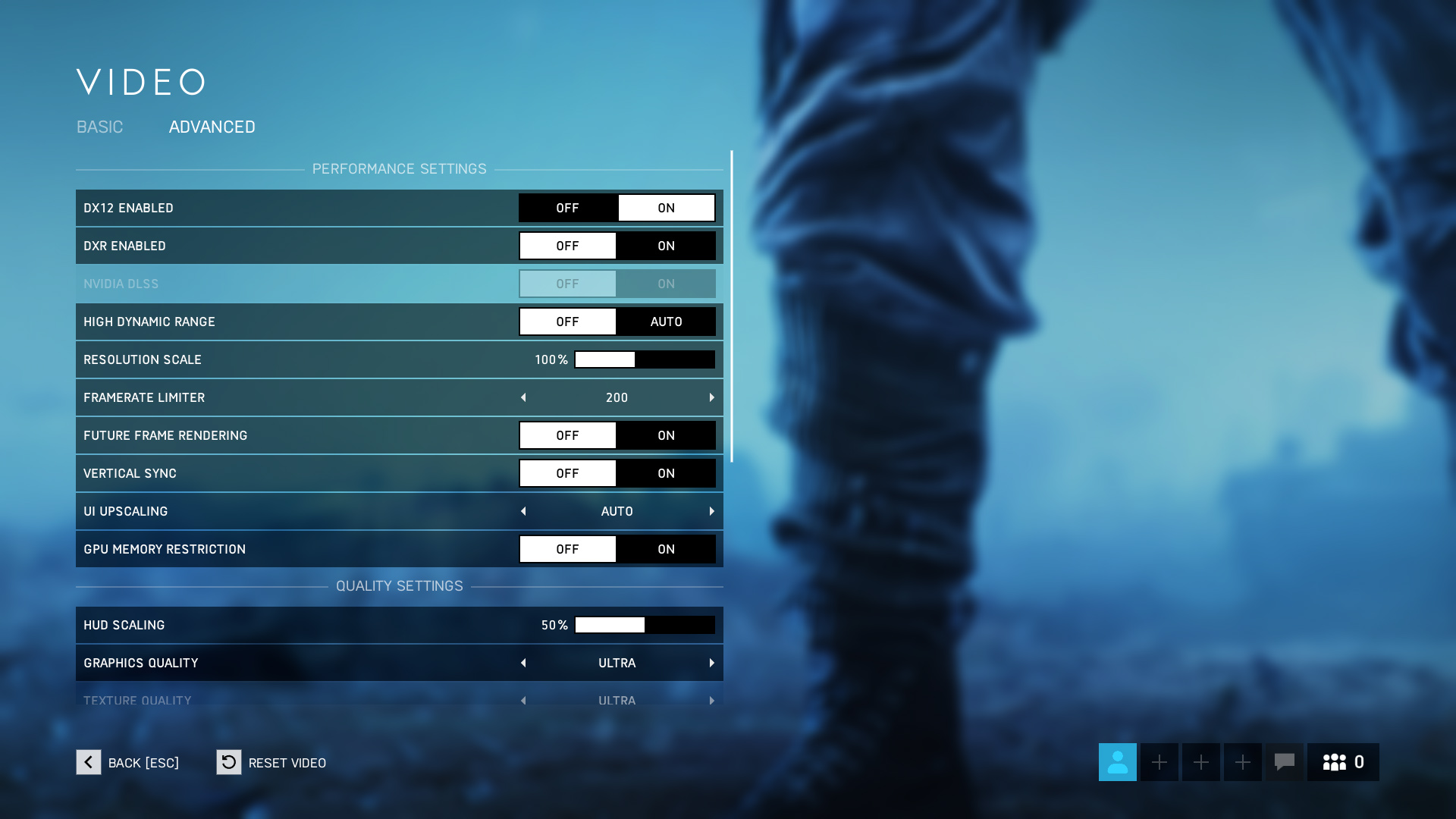
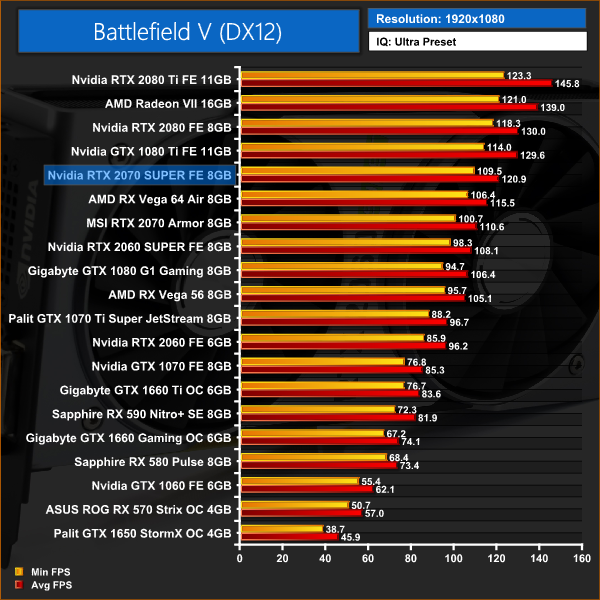
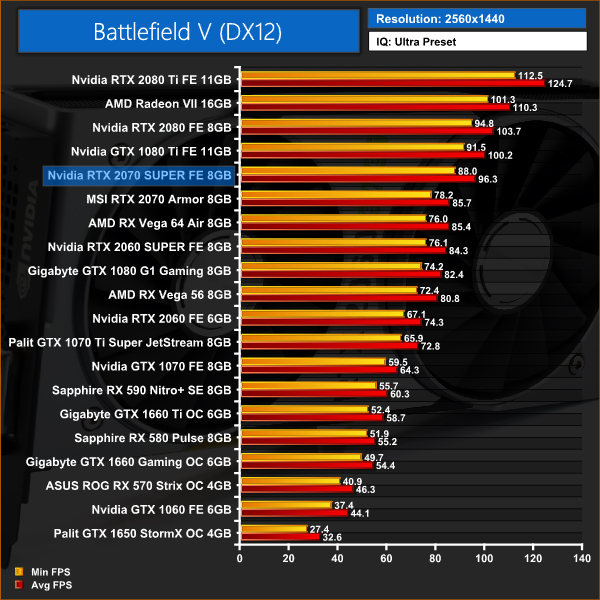
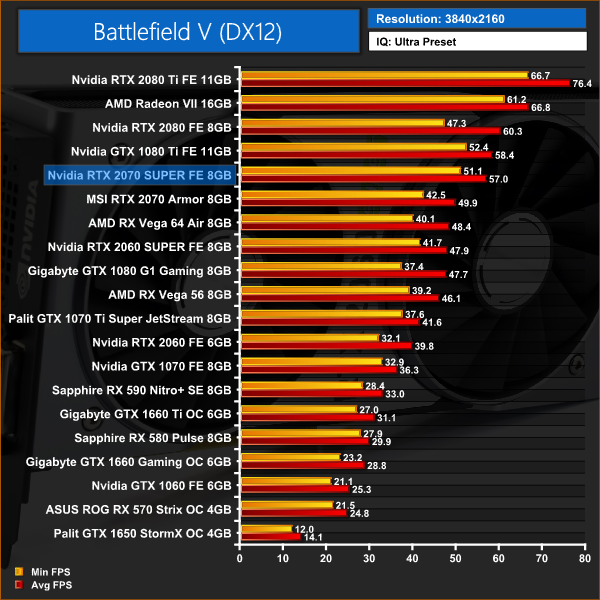
In Battlefield V, we see the same trend we observed from Port Royal – the RTX 2070 SUPER is sitting pretty tidily right in between the RTX 2070 and RTX 2080. That means it can't quite edge out the GTX 1080 Ti in this title, but it is comfortably faster than Vega 64.
Deus Ex: Mankind Divided is set in the year 2029, two years after the events of Human Revolution and the “Aug Incident”—an event in which mechanically augmented humans became uncontrollable and lethally violent. Unbeknownst to the public, the affected augmented received implanted technology designed to control them by the shadowy Illuminati, which is abused by a rogue member of the group to discredit augmentations completely. (Wikipedia).
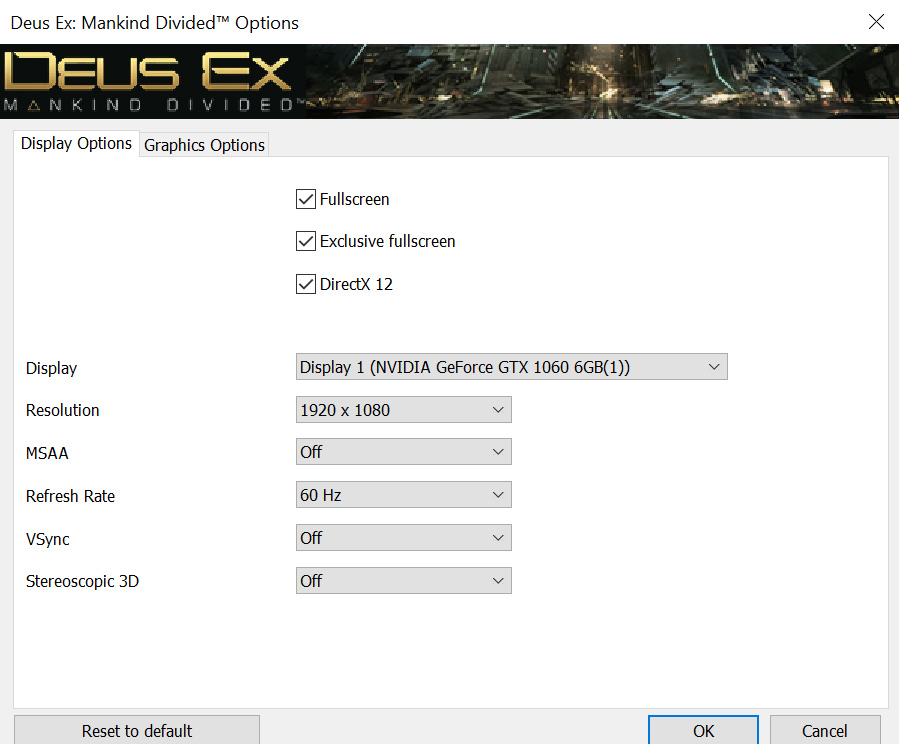
We test using the Very High preset, with MSAA disabled. We test using the DX12 API.
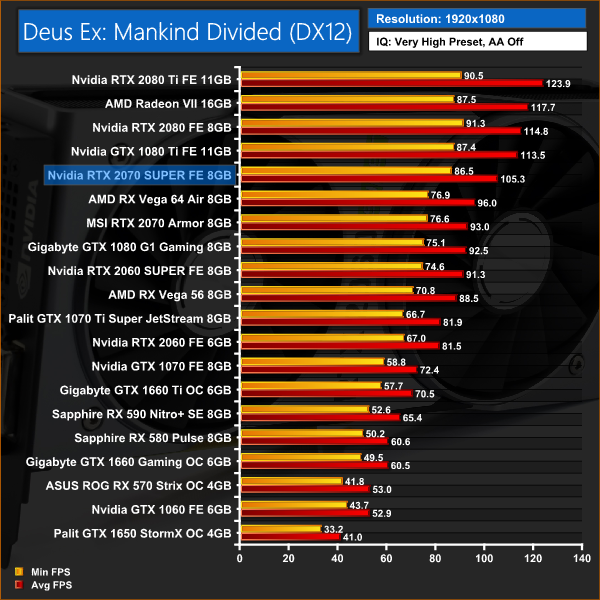
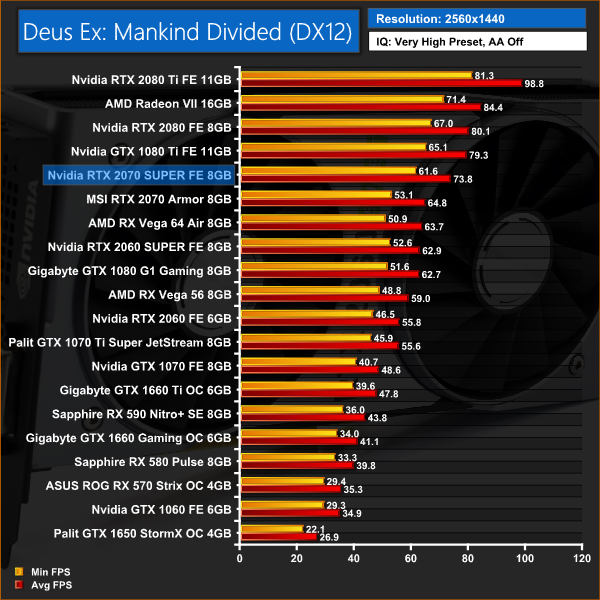
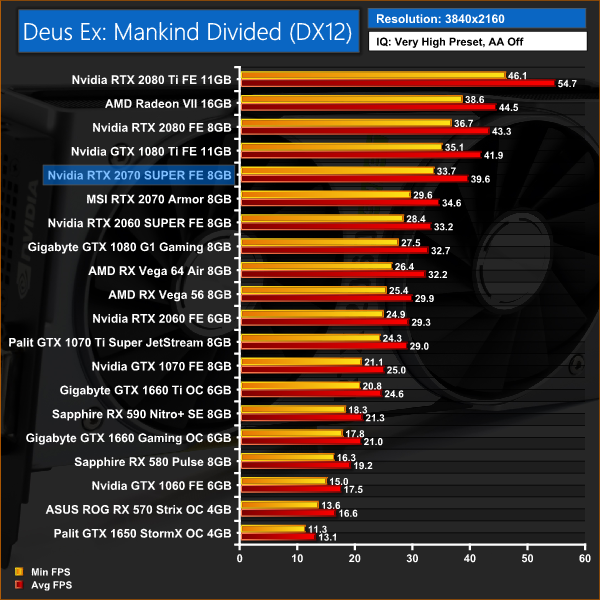
It's more of the same in Deus Ex: Mankind Divided. GTX 1080 Ti pips RTX 2070 SUPER to the post once more, but this SUPER card is noticeably faster than regular RTX 2070.
Far Cry 5 is an action-adventure first-person shooter game developed by Ubisoft Montreal and Ubisoft Toronto and published by Ubisoft for Microsoft Windows, PlayStation 4 and Xbox One. It is the eleventh entry and the fifth main title in the Far Cry series, and was released on March 27, 2018.
The game takes place in the fictional Hope County, Montana, where charismatic preacher Joseph Seed and his cult Project at Eden’s Gate holds a dictatorial rule over the area. The story follows an unnamed junior deputy sheriff, who becomes trapped in Hope County and works alongside factions of a resistance to liberate the county from Eden’s Gate. (Wikipedia).
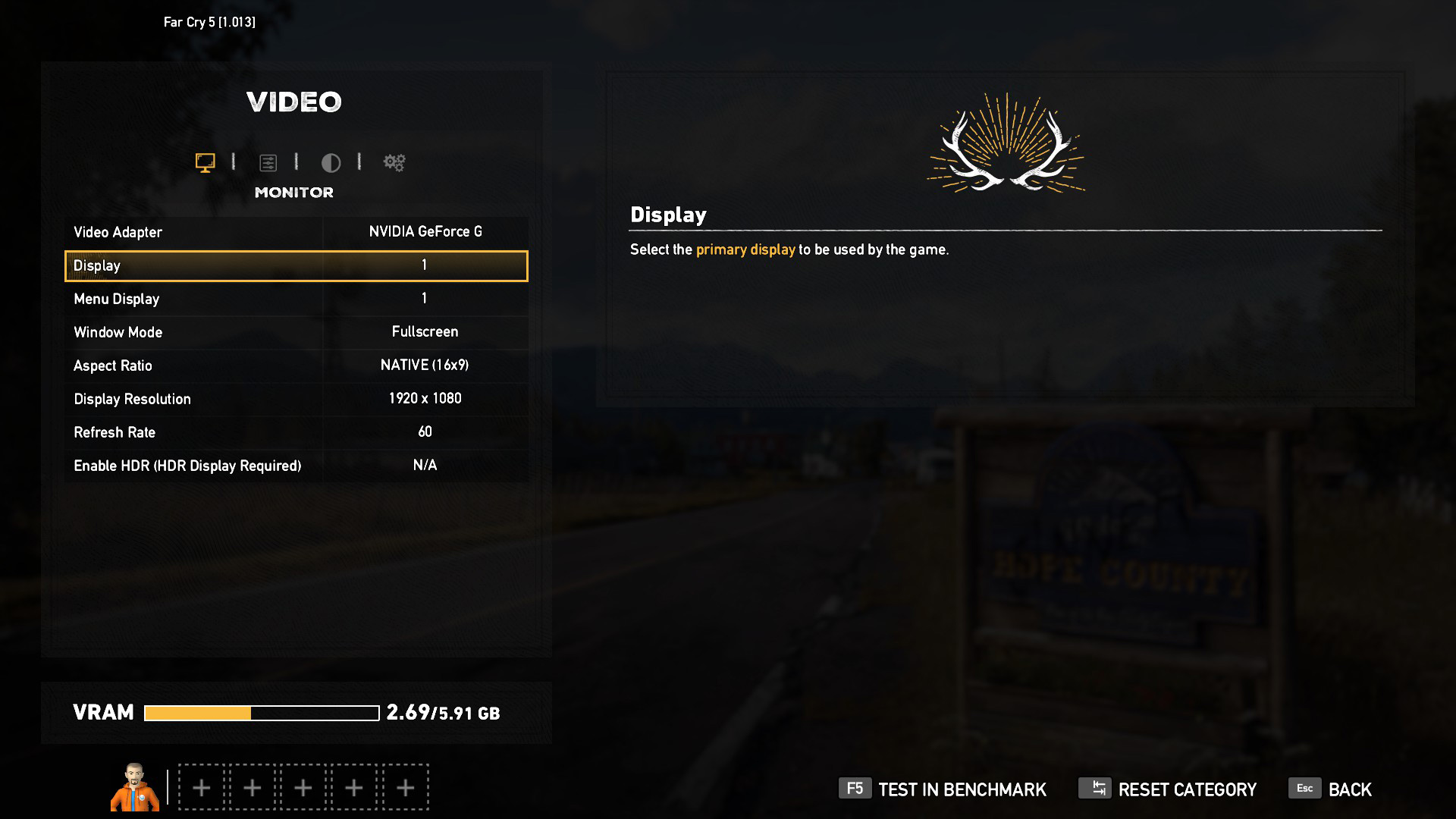
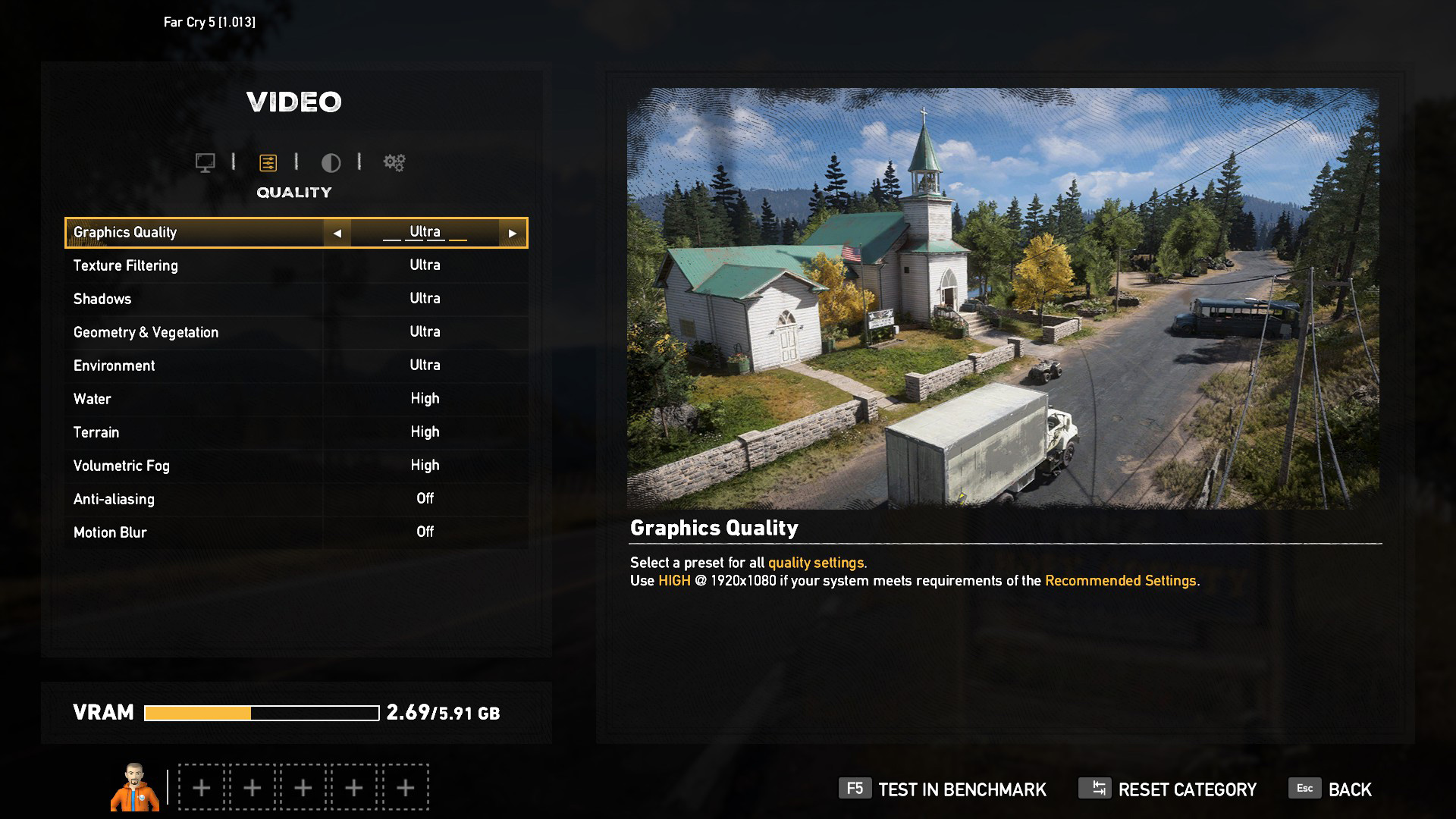
We test using the Ultra preset, with AA and motion blur disabled.
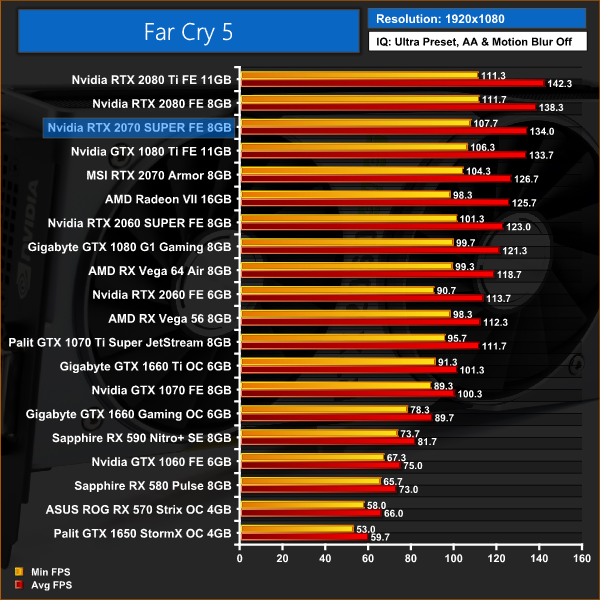
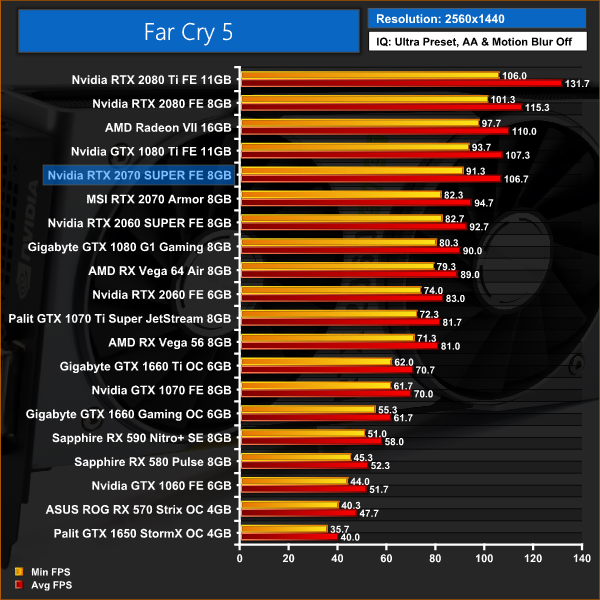
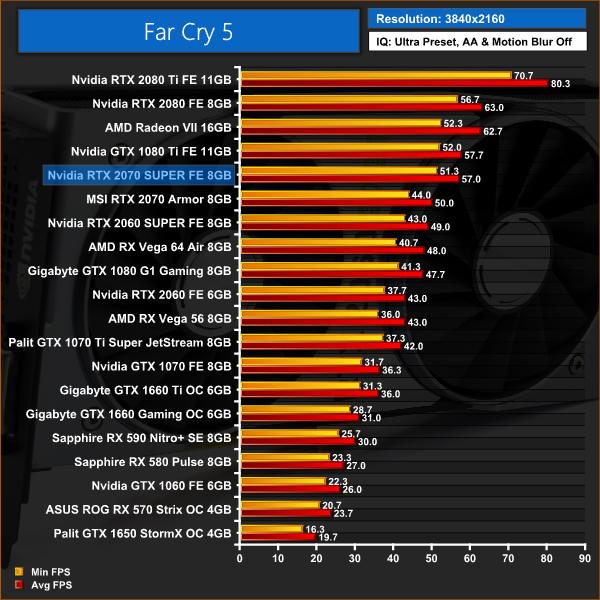
Far Cry 5, at 1080p, gives RTX 2070 SUPER its first win over GTX 1080 Ti, but it falls behind again at 1440p and 4K. Aside from that, it is business as usual for the 2070 SUPER – meaning, yes, it performs right between the 2070 and 2080 as expected.
Tom Clancy’s Ghost Recon Wildlands is a tactical shooter video game developed by Ubisoft Paris and published by Ubisoft. It was released worldwide on March 7, 2017, for Microsoft Windows, PlayStation 4 and Xbox One, as the tenth instalment in the Tom Clancy’s Ghost Recon franchise and is the first game in the Ghost Recon series to feature an open world environment. (Wikipedia).
We test using the Very High preset.
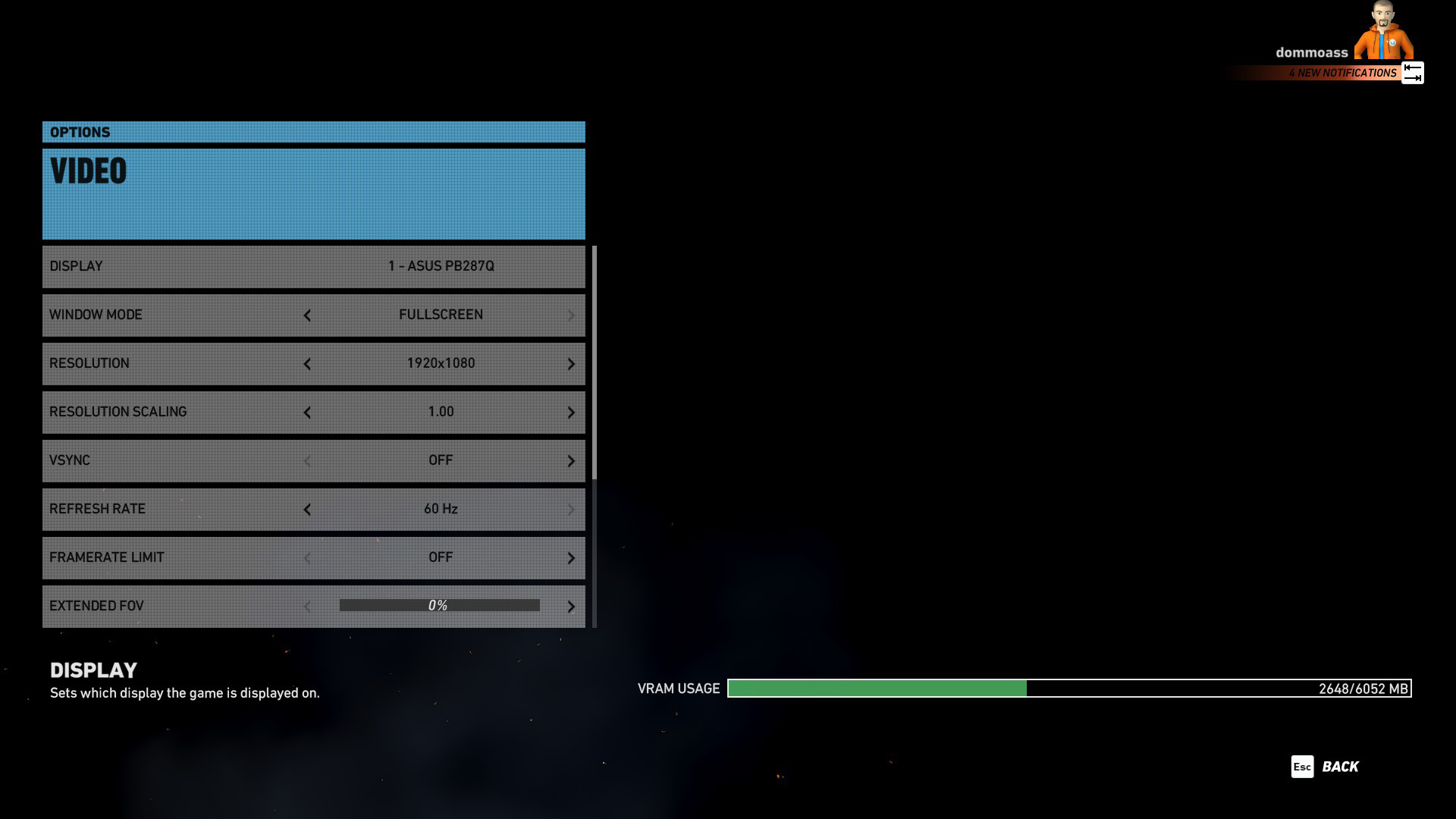
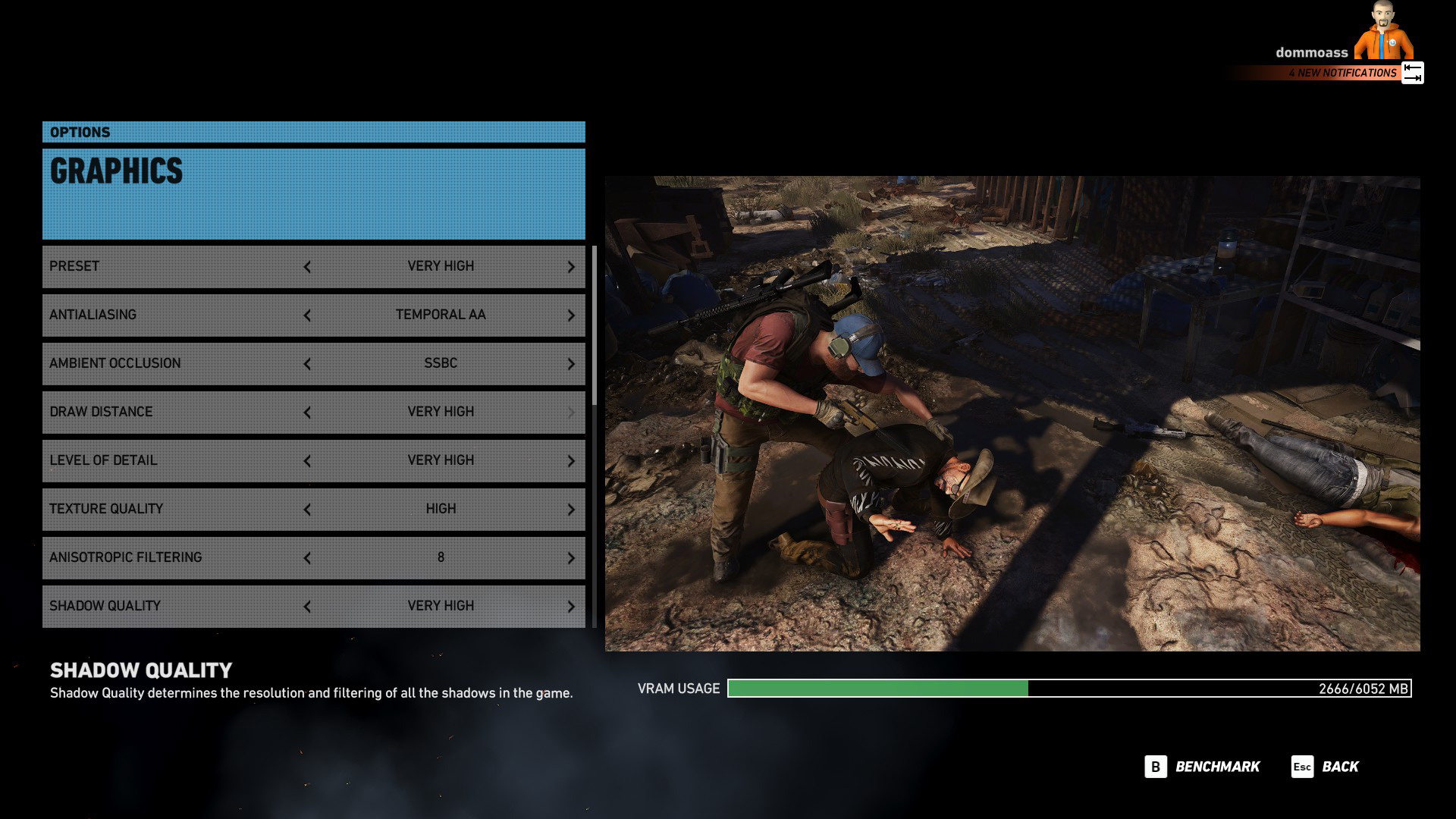
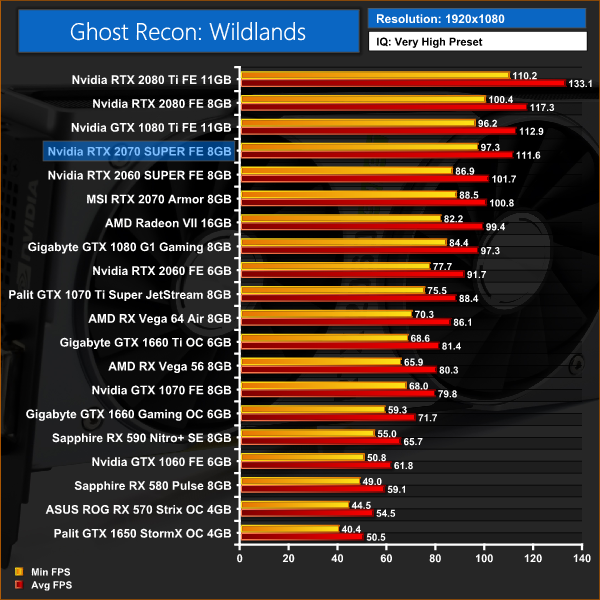
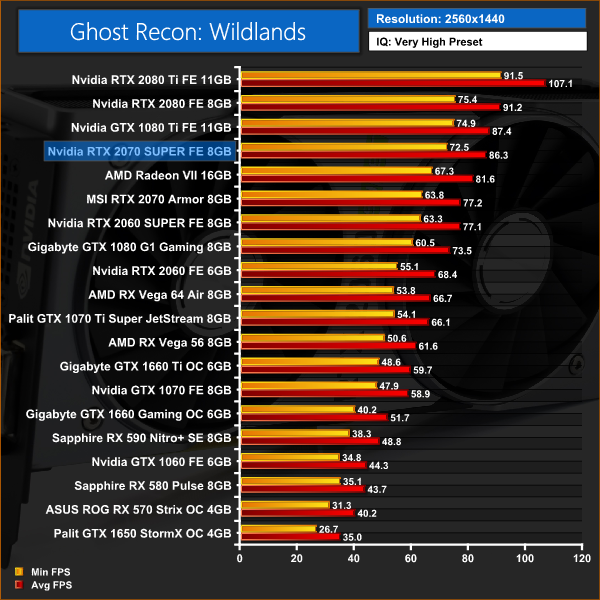
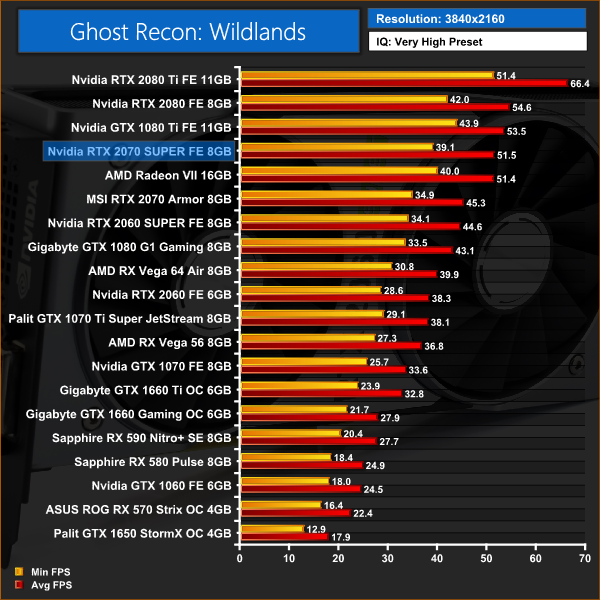
Ghost Recon: Wildlands has the 2070 SUPER performing closer to the 2080 than it does the 2070 – but it's still positioned between the two. While it comes very close, it's not quite faster than the 1080 Ti in this game either.
Metro Exodus is a first-person shooter video game developed by 4A Games and published by Deep Silver in 2019. It is the third instalment in the Metro video game series based on Dmitry Glukhovsky's novels, following the events of Metro 2033 and Metro: Last Light. (Wikipedia)
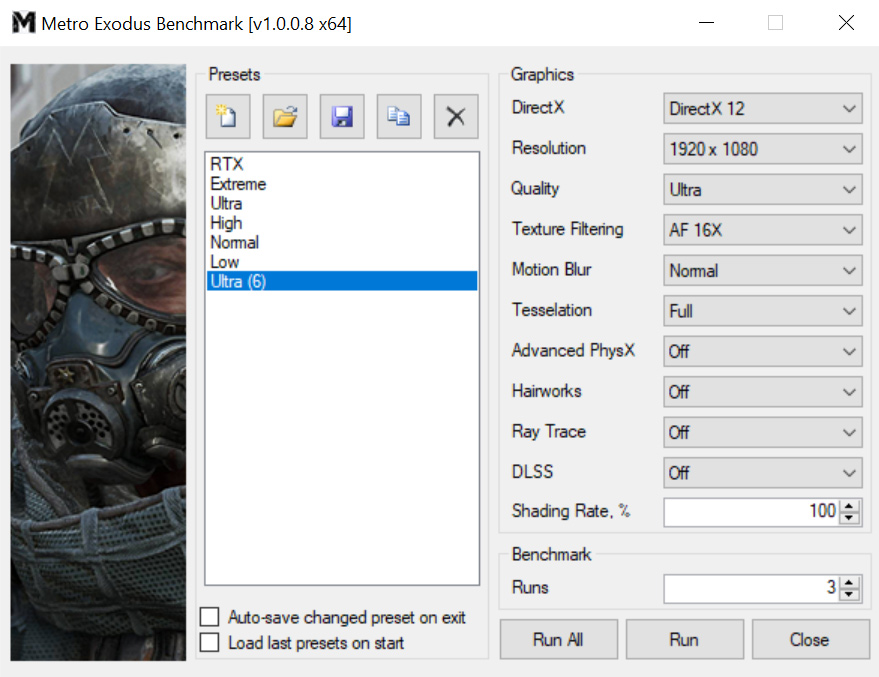
We test using the Ultra preset, but with Hairworks and Advanced PhysX turned off. We test using the DX12 API.
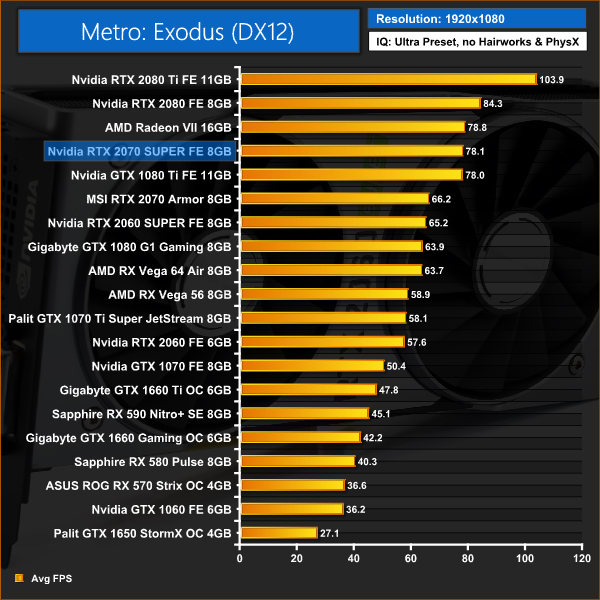
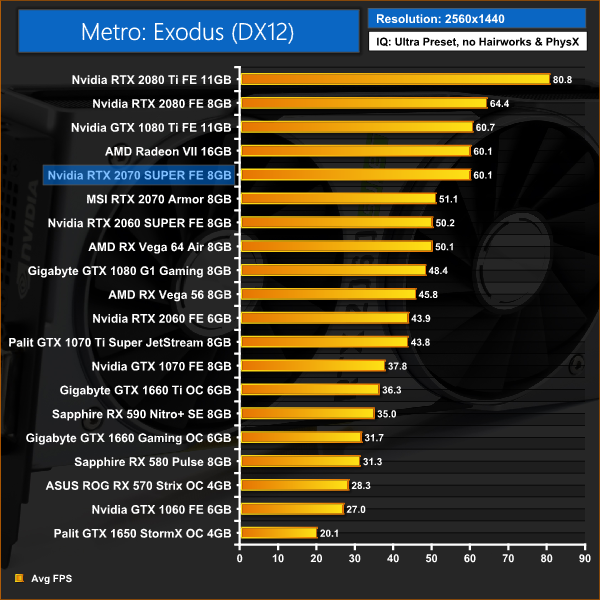
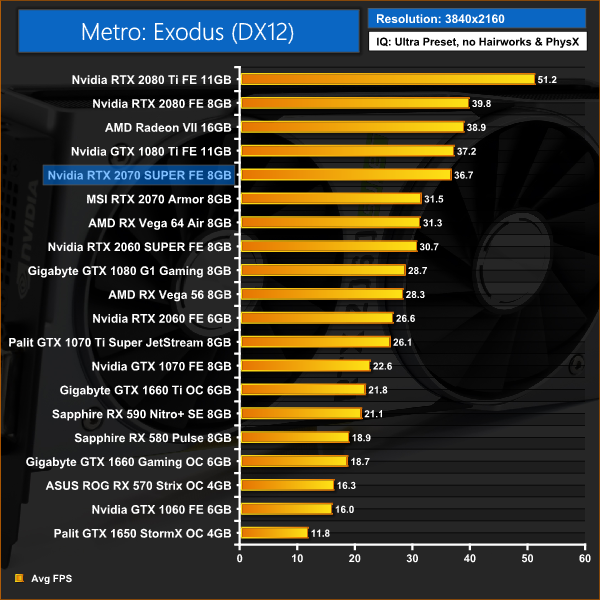
Metro Exodus again has the 2070 SUPER performing closer to the RTX 2080 than to the 2070. It is also just faster than the GTX 1080 Ti at 1080p, but the Pascal flagship comes back at 1440p and 4K to nudge in front.
Middle-earth: Shadow of War is an action role-playing video game developed by Monolith Productions and published by Warner Bros. Interactive Entertainment. It is the sequel to 2014’s Middle-earth: Shadow of Mordor, and was released worldwide for Microsoft Windows, PlayStation 4, and Xbox One on October 10, 2017. (Wikipedia).
We test using the Very High preset.
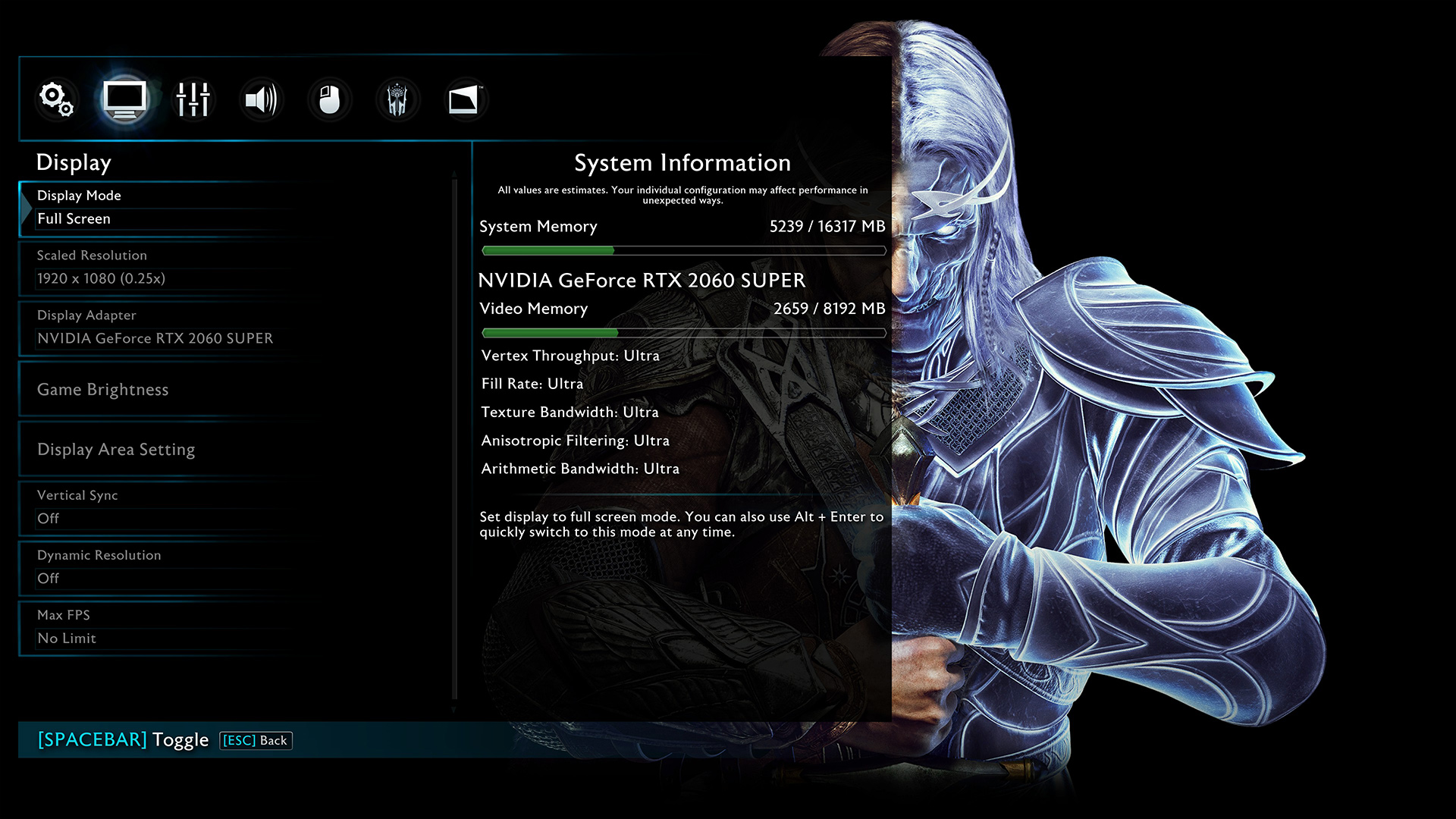
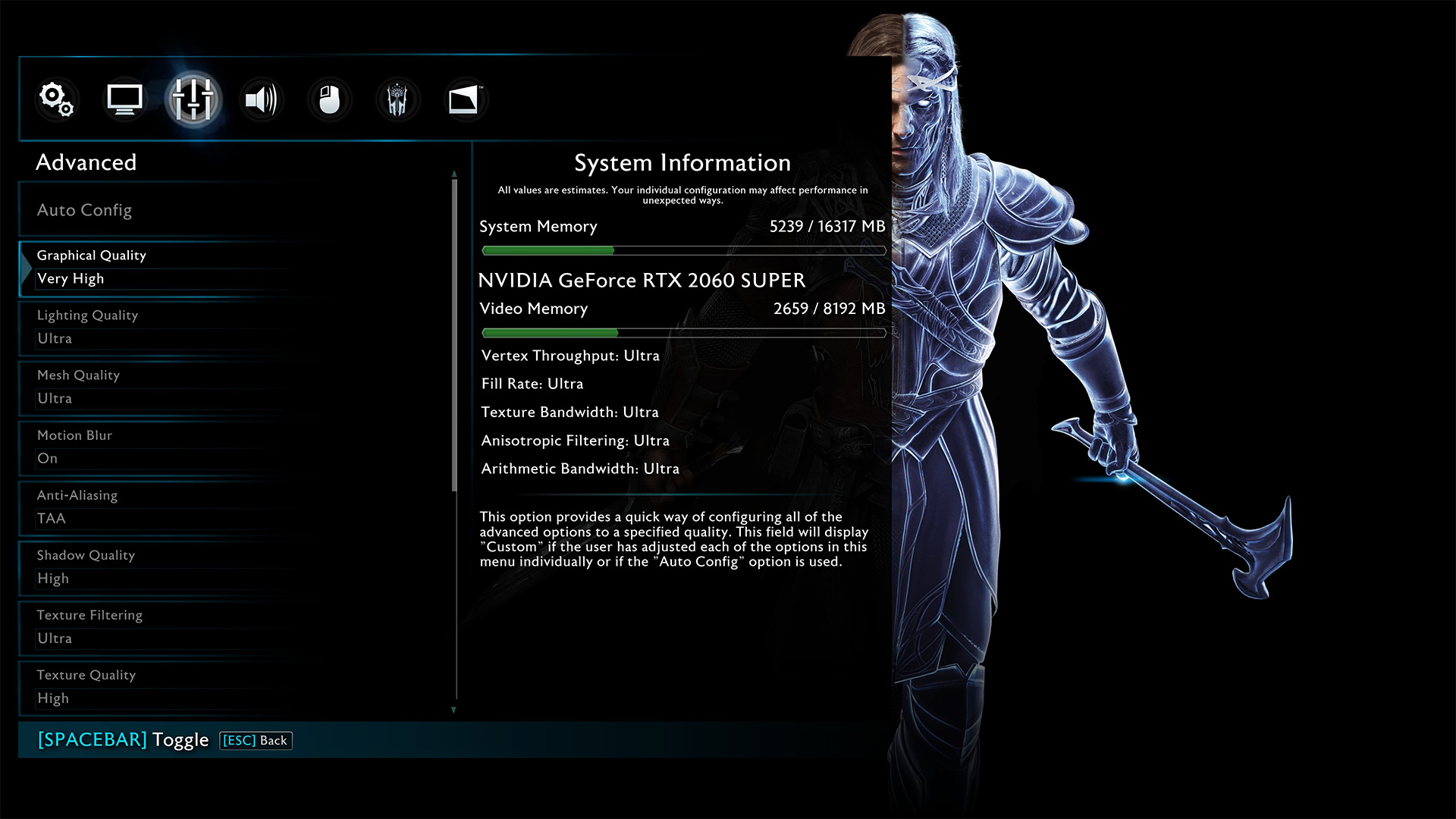
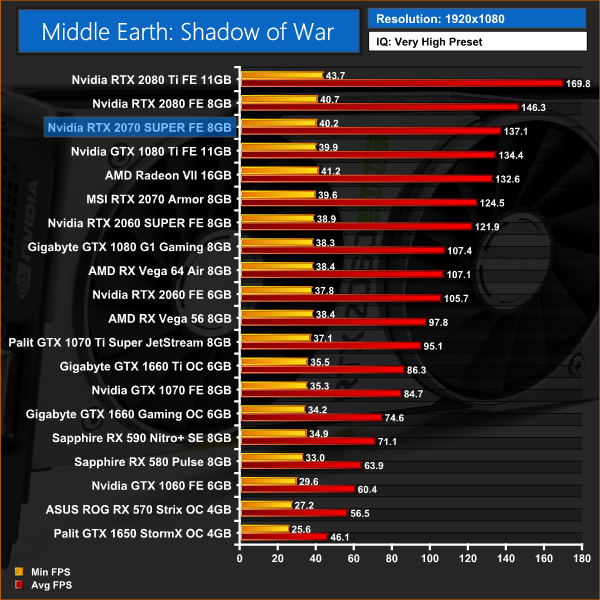
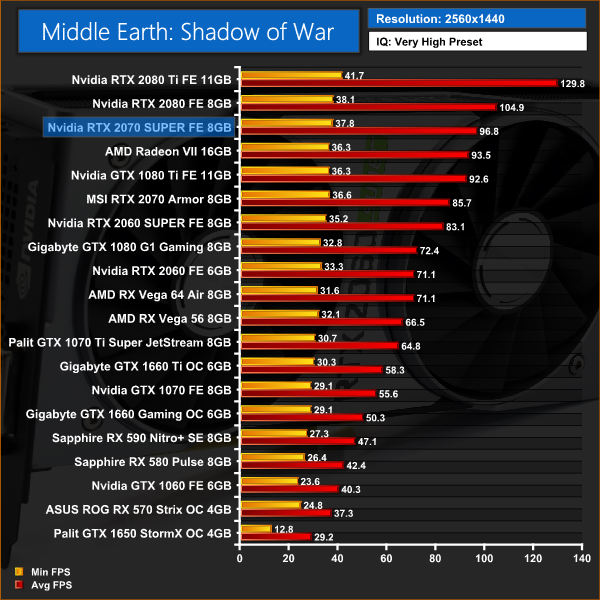
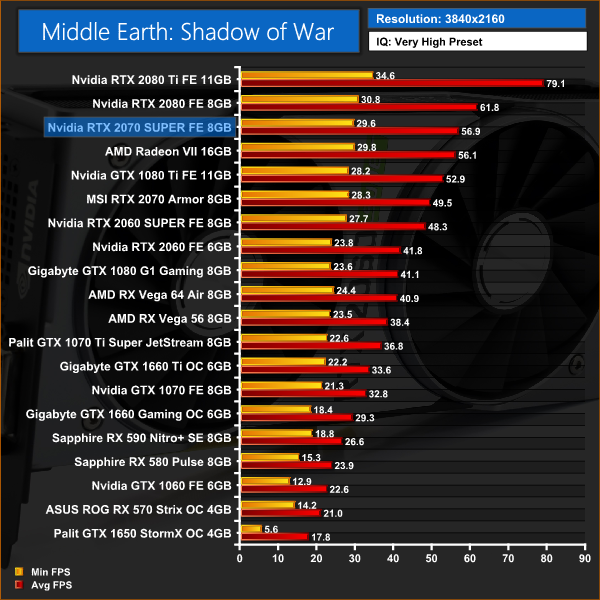
Middle Earth: Shadow of War is the first game where the 2070 SUPER is consistently faster than the GTX 1080 Ti across all three resolutions tested, while it also has the nudge on AMD's flagship Radeon VII.
Shadow of the Tomb Raider is an action-adventure video game developed by Eidos Montréal in conjunction with Crystal Dynamics and published by Square Enix. It continues the narrative from the 2013 game Tomb Raider and its sequel Rise of the Tomb Raider, and is the twelfth mainline entry in the Tomb Raider series. The game released worldwide on 14 September 2018 for Microsoft Windows, PlayStation 4 and Xbox One. (Wikipedia).
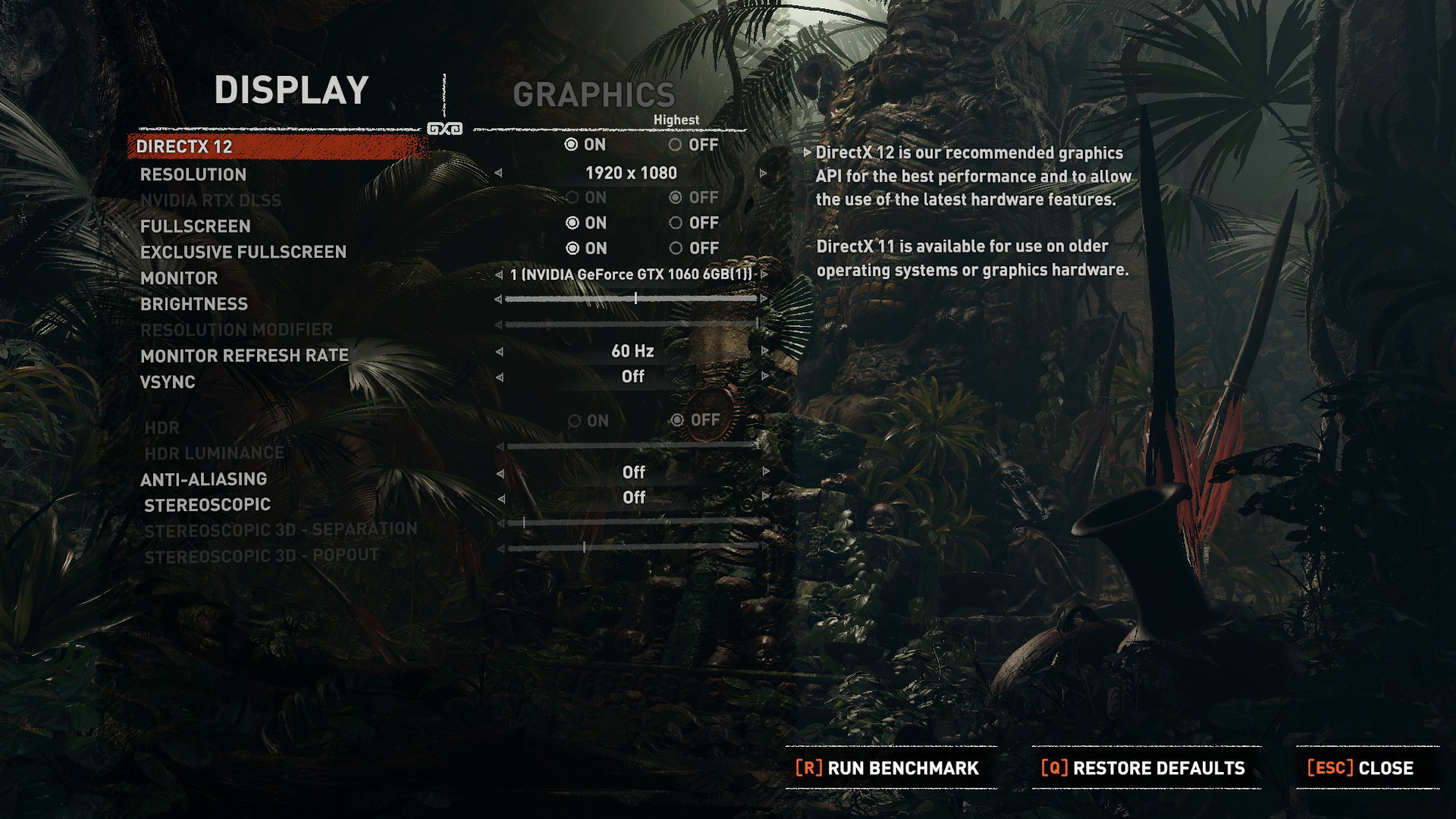
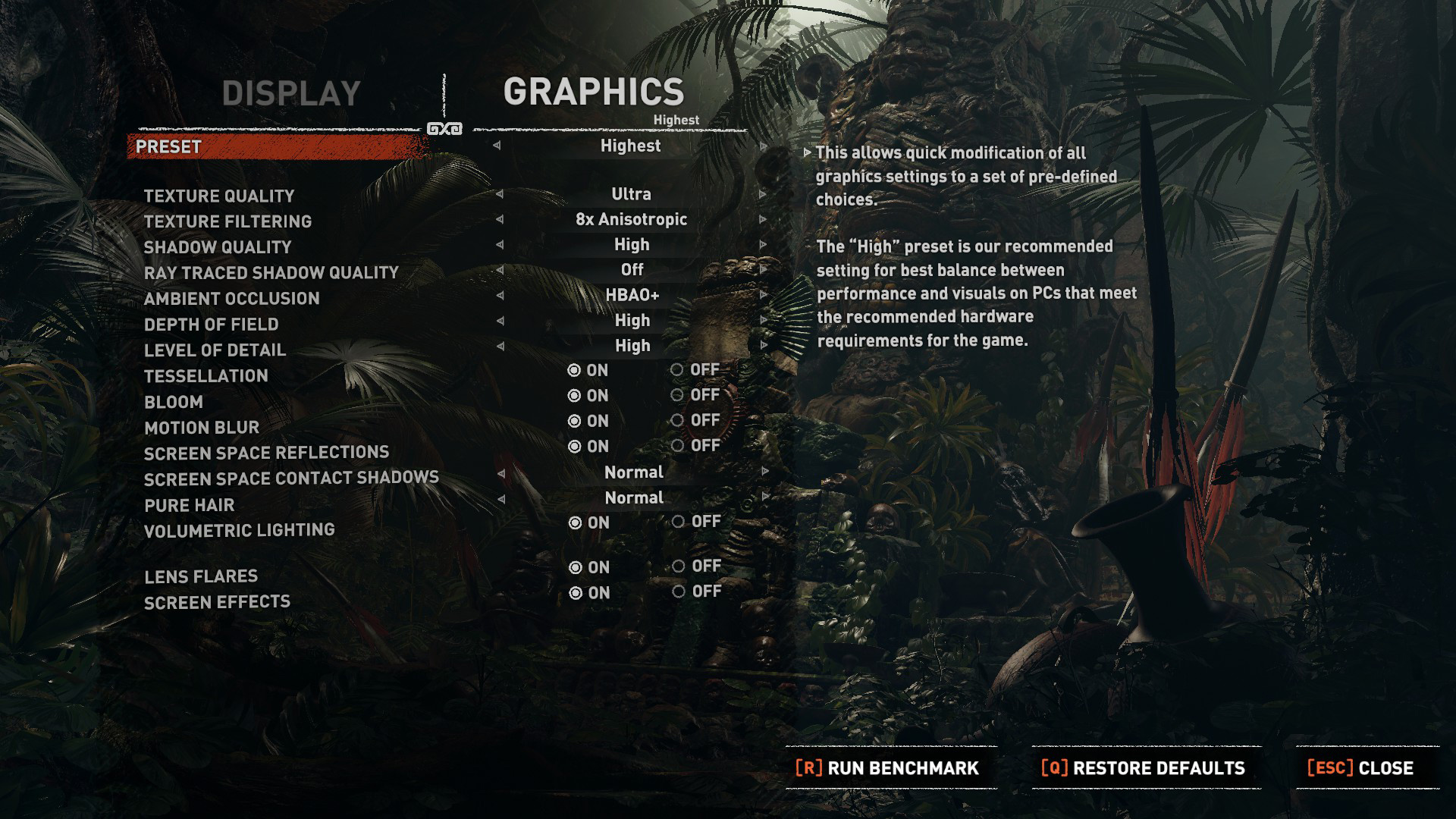
We test using the Highest preset, with AA disabled. We test using the DX12 API.
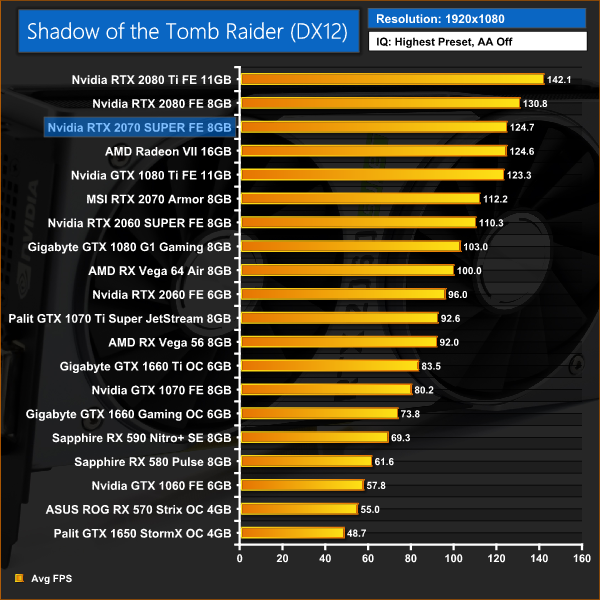
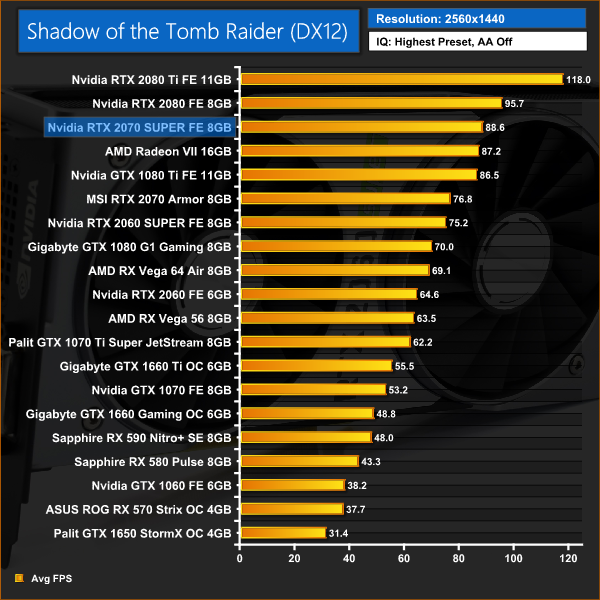
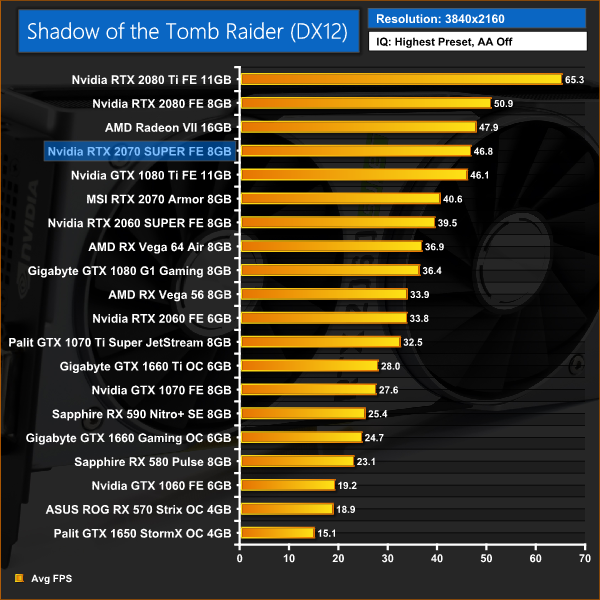
Shadow of the Tomb Raider picks up where Shadow of War left off, as the 2070 SUPER is again faster than a 1080 Ti across all three resolutions tested. It is also faster than Radeon VII at 1080p and 1440p, but the AMD card comes back at 4K to regain the lead.
Battlefield V is a first-person shooter video game developed by EA DICE and published by Electronic Arts. Battlefield V is the sixteenth instalment in the Battlefield series. It was released worldwide for Microsoft Windows, PlayStation 4, and Xbox One on November 20, 2018. (Wikipedia).
We test using the Ultra preset with the DX12 API. Battlefield V was the first game released with Nvidia RTX ray tracing features (called DXR in game) and we present average frame rates for the game with DXR Off, and then again with DXR set to Ultra.
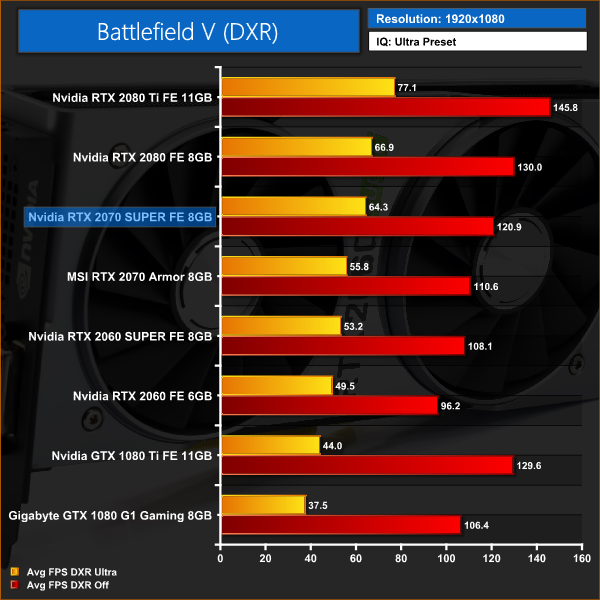
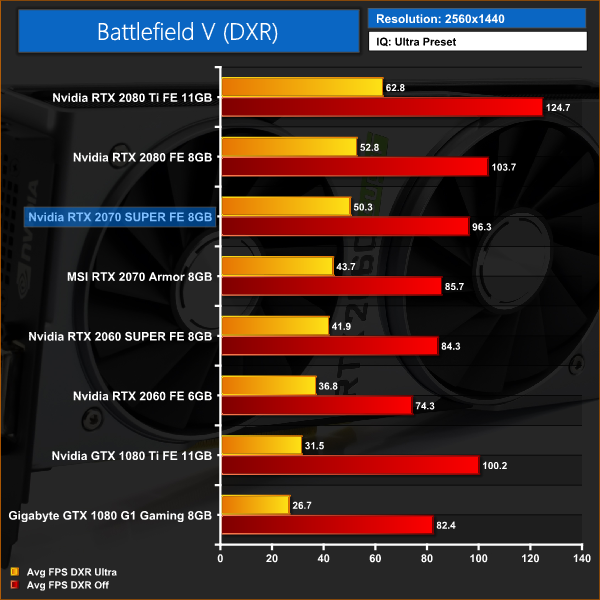
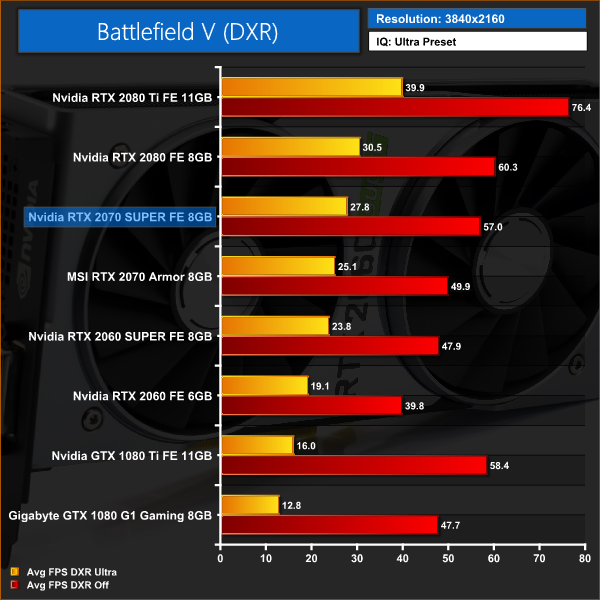
Battlefield V, with its ray traced reflections, hits frame rates hard – the 2070 SUPER averaged 64FPS with DXR Ultra, versus 120FPS with DXR off. You can still play with DXR on at 1080p and 1440p with this card, but performance isn't even close to what you get with DXR off.
Shadow of the Tomb Raider is an action-adventure video game developed by Eidos Montréal in conjunction with Crystal Dynamics and published by Square Enix. It continues the narrative from the 2013 game Tomb Raider and its sequel Rise of the Tomb Raider, and is the twelfth mainline entry in the Tomb Raider series. The game released worldwide on 14 September 2018 for Microsoft Windows, PlayStation 4 and Xbox One. (Wikipedia).
We test using the Highest preset, with AA disabled. We test using the DX12 API. For these ray tracing benchmarks, we present average frame rates for the game with ray traces shadows (DXR) off, and then again with ray traced shadows set to Ultra.
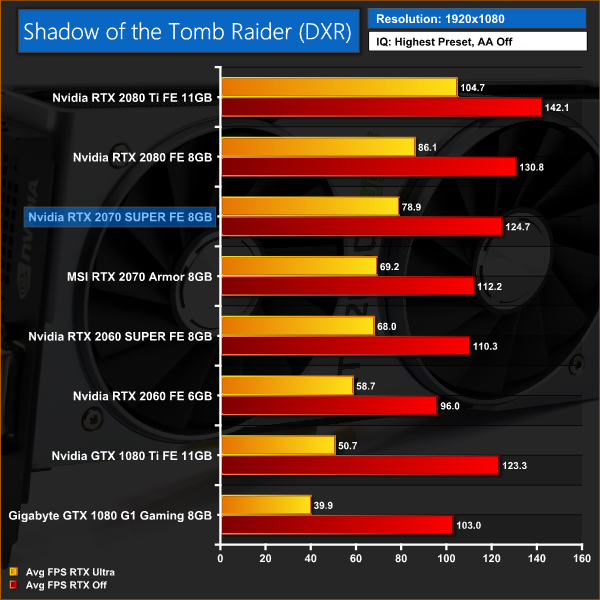
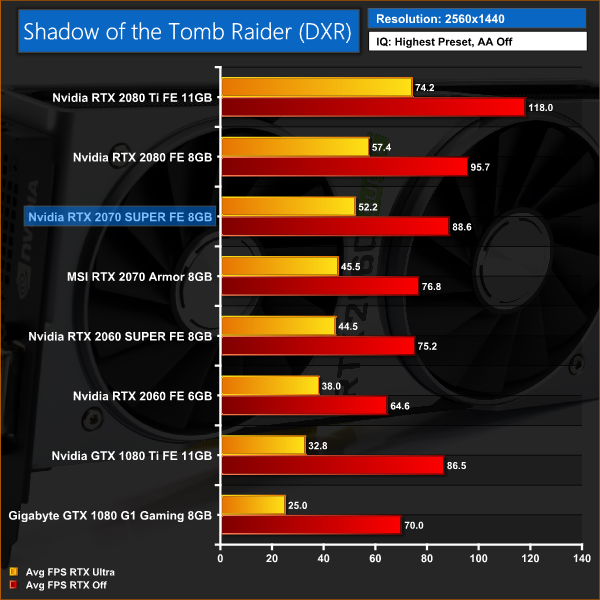
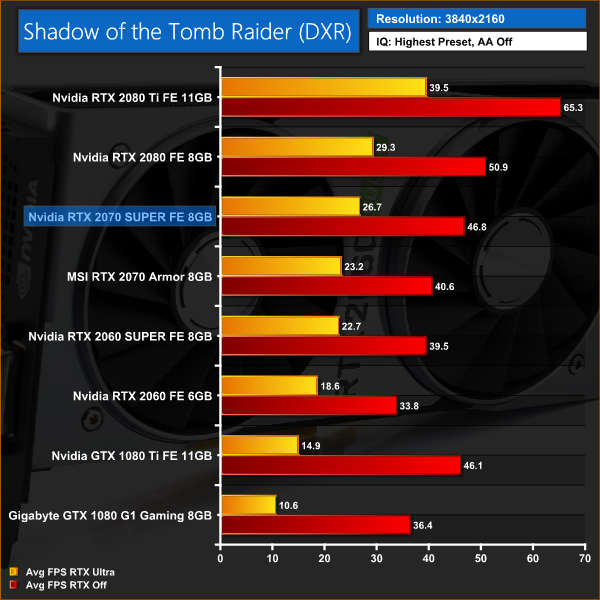
It's a similar story with Shadow of the Tomb Raider. Its implementation of ray tracing is less punishing, but still hits frame rates hard. You can play with those ray traced shadows enabled at 1080p and 1440p, but 4K is far too much for this GPU to handle.
Here we present the average clock speed for each graphics card while running the 3DMark Fire Strike Ultra stress test 20 times. We use GPU-Z to record the GPU core frequency during the Fire Strike Ultra runs. We calculate the average core frequency during the entire 20-run test to present here.
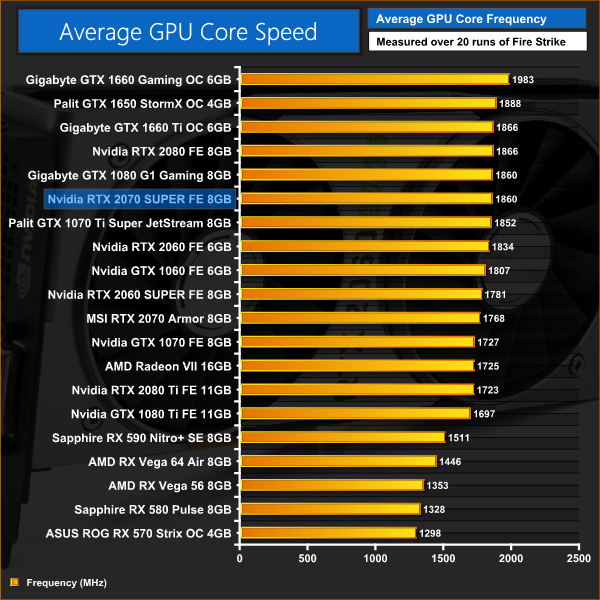
With a relatively high clock speed – it is rated at 1770MHz boost – we saw the RTX 2070 SUPER run even faster in the real world, with its core averaging 1860MHz during our 3DMark testing. It will be interesting to see what Nvidia's partners can do to push this further – 2GHz speeds out of the box is something I would definitely like to see!
For our temperature testing, we measure the peak GPU core temperature under load, as well as the GPU temperature with the card idling on the desktop. A reading under load comes from running the 3DMark Fire Strike Ultra stress test 20 times. An idle reading comes after leaving the system on the Windows desktop for 30 minutes.
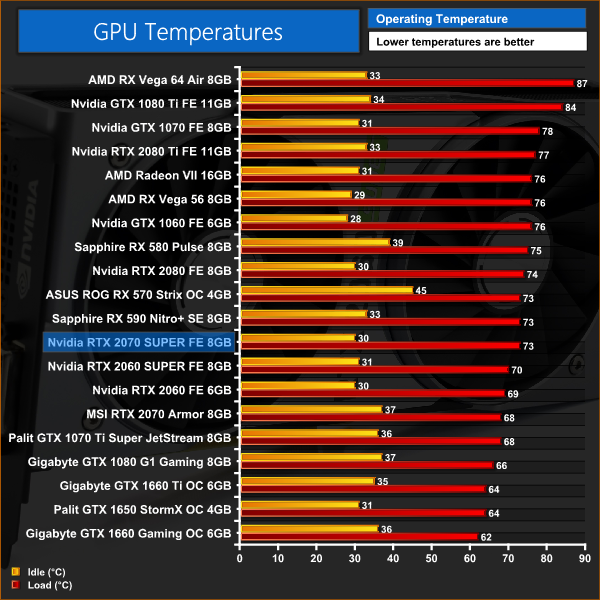
Nvidia's current generation Founders Edition cards have impressed me greatly with how well they cool their respective GPUs, and things are no different for this 2070 SUPER. The core peaked at just 73C under load, making it 1C cooler than the RTX 2080 Founders Edition – that makes sense, considering it's the same cooler for both GPUs, only the 2070 SUPER has fewer cores.
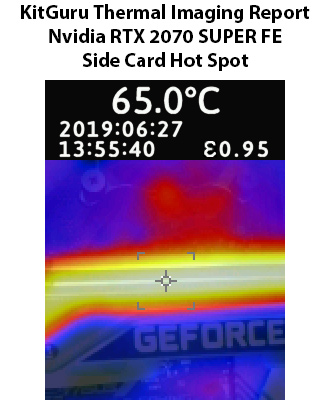
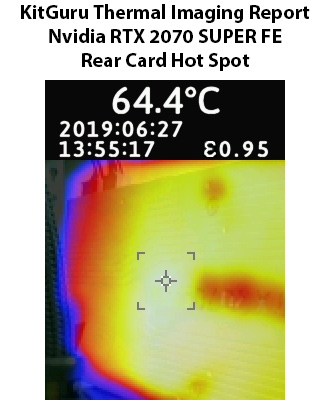
Things are looking good with our thermal imaging camera, too. We saw hot spots between 64-65C on the side and back of the card which is nothing at all to worry about. This is a high quality reference cooler.
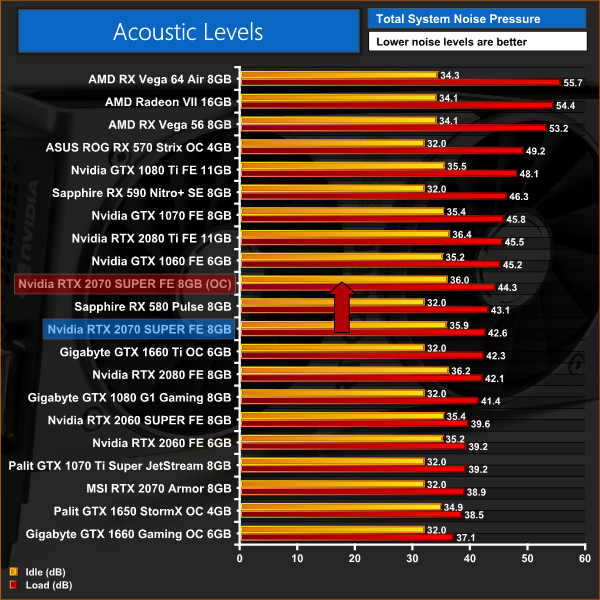
We take our noise measurements with the sound meter positioned 1 foot from the graphics card. I measured the noise floor to be 32 dBA, thus anything above this level can be attributed to the graphics cards. The power supply is passive for the entire power output range we tested all graphics cards in, while all CPU and system fans were disabled.
A reading under load comes from running the 3DMark Fire Strike Ultra stress test 20 times. An idle reading comes after leaving the system on the Windows desktop for 30 minutes.
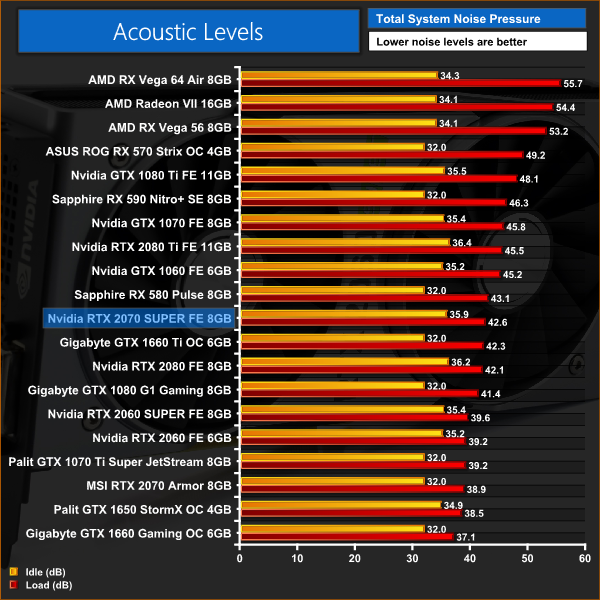
Noise levels recorded on our sound meter came in just above what we recorded with the RTX 2080, but the difference wasn't noticeable to my ears – just the sound meter! In any case, it is far from a loud card. You will be able to hear the fans spinning, but compared to the 10-series Founders Edition cards, not to mention Vega 56/64, it is very easy on the ears. I would expect partner cards to be able to make effectively silent 2070 SUPER models, but we will have to see about that.
There is one more point to mention, however, and that is the fans don't switch off during idle or light loads. There's no doubt that Nvidia could do it – they are likely just being over-cautious – but it is a feature I, and many other enthusiasts, would like to see.
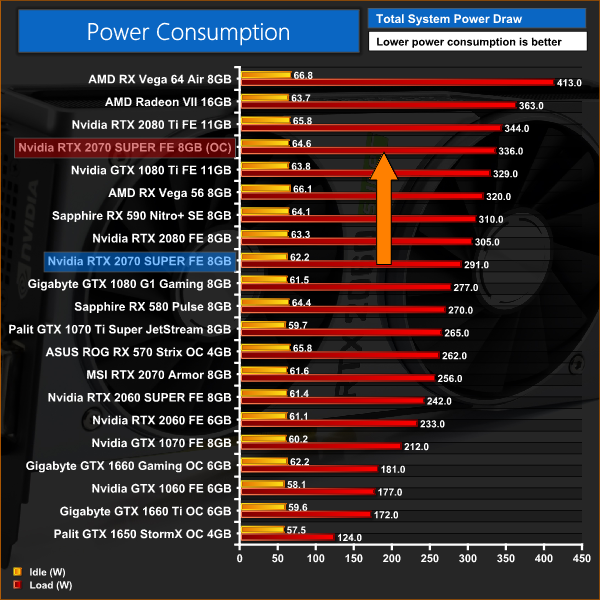
We measure system-wide power draw from the wall while the card is sat idling at the Windows 10 desktop for 30 minutes. A reading under load comes from running the 3DMark Fire Strike Ultra stress test 20 times.
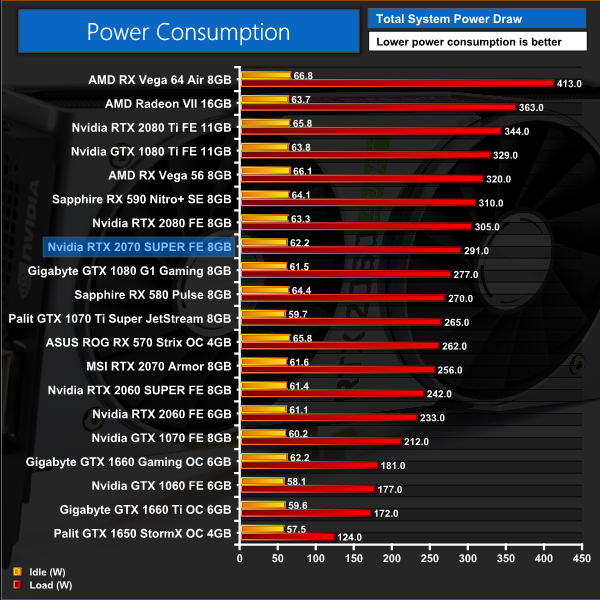
Power consumption for the system came in at 291W, which is 14W shy of the RTX 2080 but 35W more than reference-clocked RTX 2070. How power hungry AMD's upcoming Navi cards will be, we don't yet know for certain – but Turing has Vega easily beat in terms of power efficiency.
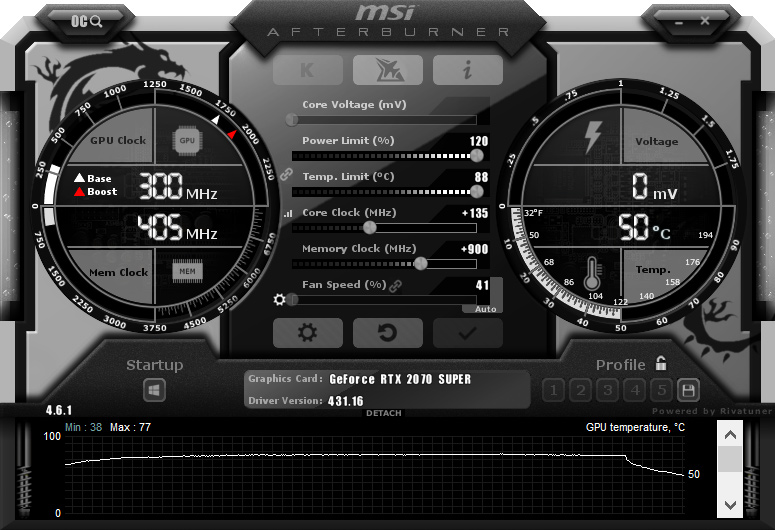
We used MSI Afterburner to overclock the 2070 SUPER. Our best result came with +135MHz to the GPU core, and +900MHz to the memory. I did have +150MHz stable on the GPU core, but Time Spy showed noticeable artificating so I pulled things back slightly.
Average clock speed under load
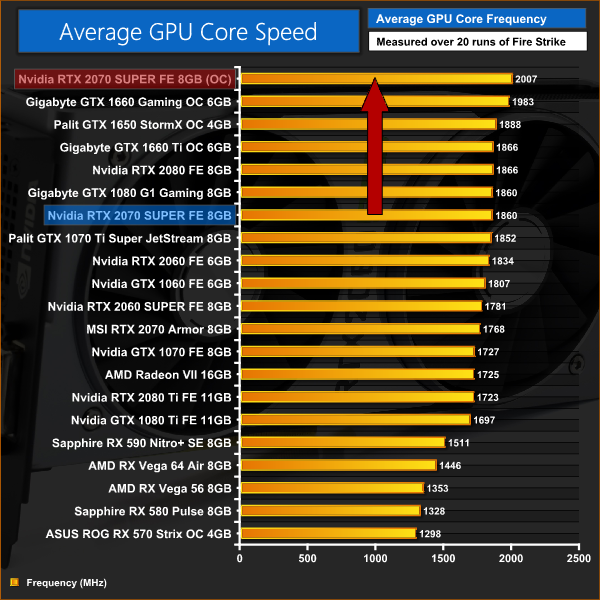
This overclock took our clock speed beyond 2GHz, averaging 2007MHz in our 3DMark testing.
3DMark and games
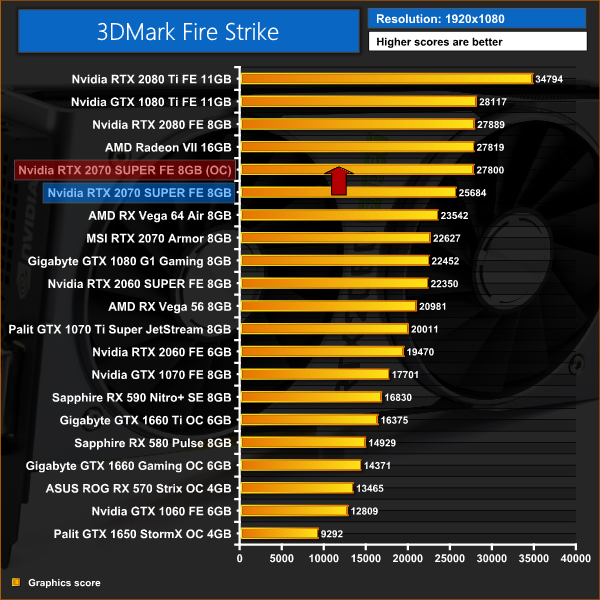
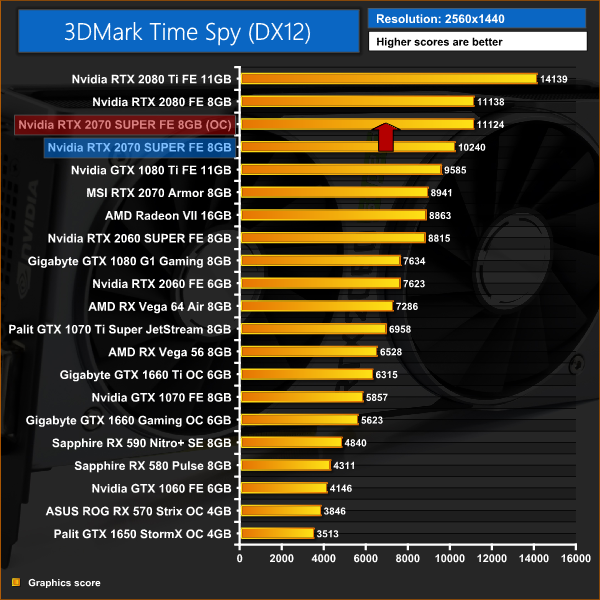
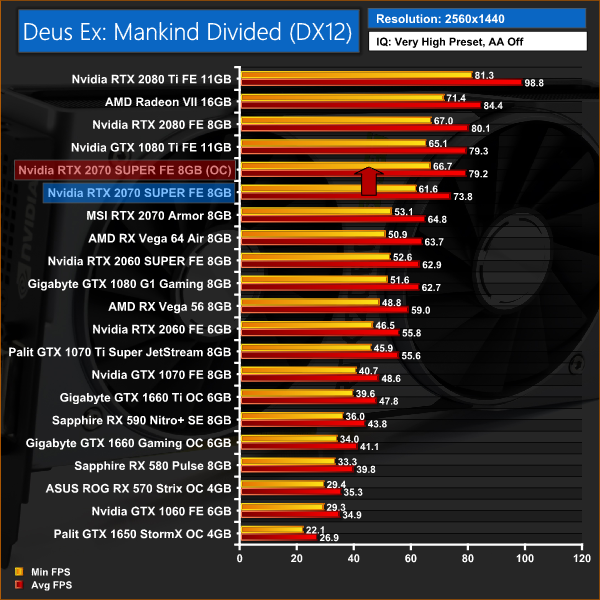
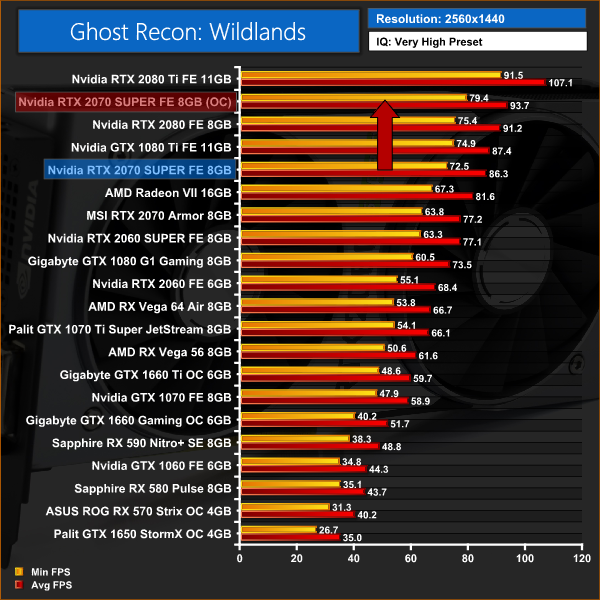
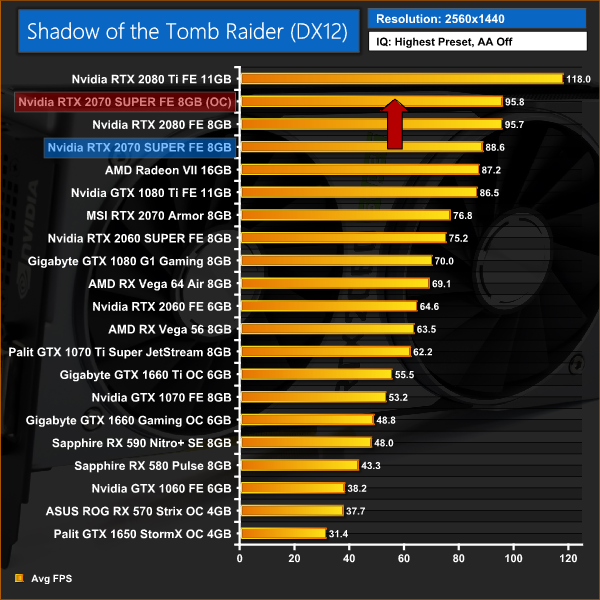
This brought decent gains in our 1440p game testing – our overclocked 2070 SUPER was now effectively matching, and in some case beating, the RTX 2080 for performance. Our Fire Strike score also improved by over 2000 points, so overall a very decent overclock.
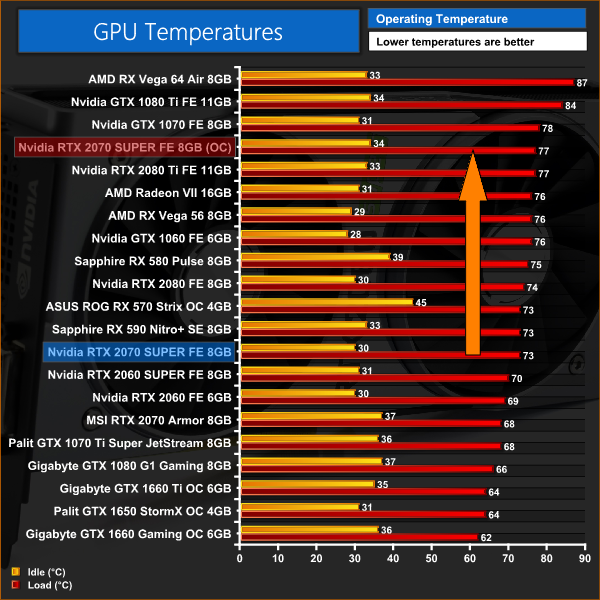
Here, we take a further look at the impact of our overclock, looking at the increased temperatures, acoustics and power draw.
Temperatures
Acoustics
Power consumption
Overview
The card doesn't suffer too badly from this overclock – temperatures increased by 4C, but even then the core is not pushing past 77C which is still very respectable. Noise levels did also rise, but not by more than 2dB. Power draw shot up a fair bit, however, to almost RTX 2080 Ti levels, but overall the card dealt with the extra frequency well.
Launching alongside the RTX 2060 SUPER, Nvidia's RTX 2070 SUPER is the second card being announced today with the aim of taking the fight directly to AMD's soon-to-be released RX 5700 and RX 5700 XT. If you want to see our in-depth review of the RTX 2060 SUPER, be sure to read more over here.
As for RTX 2070 SUPER, this is positioned in between the RTX 2070 and RTX 2080. It uses a cut-down version of the TU104 GPU, with 40 SMs and 2560 CUDA cores. RTX 2080 has 2944 CUDA cores, and RTX 2070 has 2304, so 2070 SUPER slots neatly in the middle. It is also clocked quite high out of the box with a reference speed of 1770MHz.
This high clock speed helps performance of the 2070 SUPER fall a little closer to the 2080 than the 2070, but not by much. On average, across all of our benchmarks, Nvidia's RTX 2080 Founders Edition is 7% faster, while a reference-clocked RTX 2070 is 11% slower.
That means RTX 2070 SUPER effectively matches the performance of the GTX 1080 Ti – with the Pascal flagship proving to be just 1% faster on average across our testing. Accordingly, Radeon VII is barely 3% faster than 2070 SUPER.
So as a gaming graphics card, it is a great option for those with 1440p monitors targeting high frame rates – we saw average frame rates pushing 100FPS at that resolution. 4K gaming is possible, but not at a constant 60FPS unless you opt to lower some image quality settings.
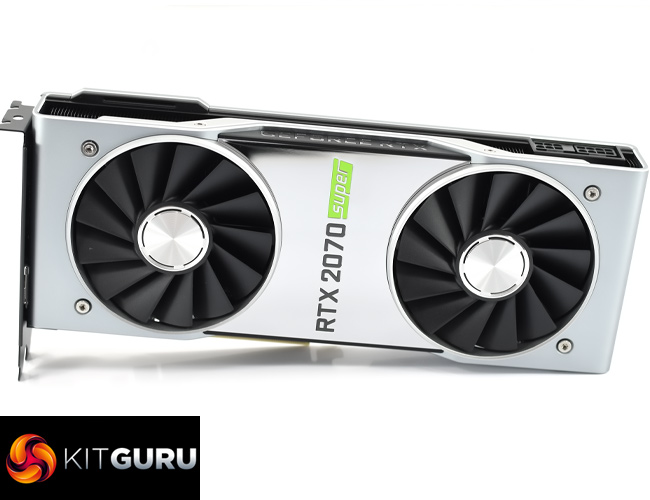
Nvidia's Founders Edition card is another excellent design – though considering it is effectively the same card (minus the added ‘SUPER' bling) as the 2080 Founders, this is to be expected. Temperatures peaked at just 73C on the core which is great for a reference card, while noise levels also proved very innocuous. I look forward to testing a range of (hopefully heavily overclocked) partner cards in the coming weeks.
As for pricing, this is where SUPER makes most sense, as 2070 SUPER is a direct replacement for RTX 2070. In the UK, RTX 2070 started at £459 and 2070 SUPER starts at £475 – so there is a marginal price increase due to changing dollar-to-pound conversion rates, but we're still getting 12% extra performance for 3% higher cost. It's not a particularly exciting launch as a cut-down TU104 isn't anything new, but it represents good value for consumers.
That said, and I said the same in my 2060 SUPER review, the SUPER refresh as a whole doesn't paint Nvidia in the best light. It's taken a direct threat (or a perceived threat, at least) to their market share from AMD's Navi cards for this to happen. But considering the parts themselves are not new – SUPER so far is a cut-down TU106 and cut-down TU104 – that means there was nothing stopping Nvidia releasing these parts in the first place. It's not a new architecture or a new GPU layout, just cut-down versions of what we already had.
Of course, it makes complete business sense. People were buying RTX cards anyway, and now SUPER has a greater chance of mitigating the threat from Navi. From a consumer perspective, however, this is unlikely to help with gamers' overall perceptions of Nvidia and the RTX series.
To be clear, it is good that SUPER is happening now – consumers are now getting better products than what they would've otherwise got for the same money. Could Nvidia have launched these cards as the original RTX models, however? Absolutely.
RTX 2070 SUPER Founders Edition has a UK MSRP of £475, and will be available from July 9.
Pros
- Better bang-for-buck than RTX 2070 it replaces.
- Technically proficient Founders Edition card.
- Decent overclocker.
- Power efficiency beats AMD offerings all day long.
Cons
- It's a refresh, not anything new.
- SUPER makes sense from a business perspective, but RTX early adopters will feel like it's a kick in the teeth.
KitGuru says: RTX 2070 SUPER is a better card than RTX 2070, for essentially the same money. We'll have to see what AMD can bring to the table with its RX 5700 XT later this week.