 KitGuru KitGuru.net – Tech News | Hardware News | Hardware Reviews | IOS | Mobile | Gaming | Graphics Cards


The 5820K has shown that a strong boost in CPU performance can be obtained for a reasonable price increase over the LGA 1150 Core i7 CPUs. And many of the X99 motherboards sit well below £200, making them affordable to enthusiast buyers. But where that entire value logic of Intel's X99 platform starts to fall short is at the expense of DDR4 memory.
One way of keeping costs to a minimum is by opting for a slower (therefore cheaper) memory kit. We test ADATA's 2400MHz XPG Z1 16GB DDR4 kit to see how it stacks up against the higher-priced, faster alternatives.
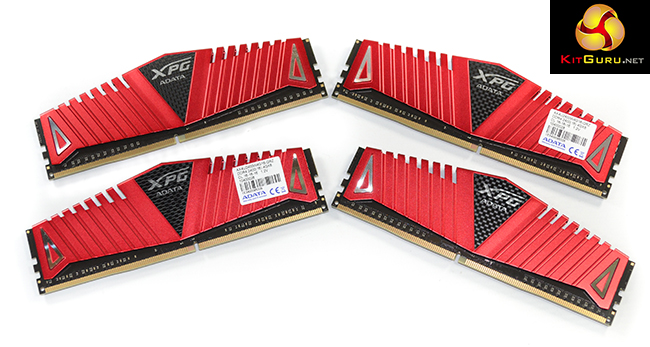
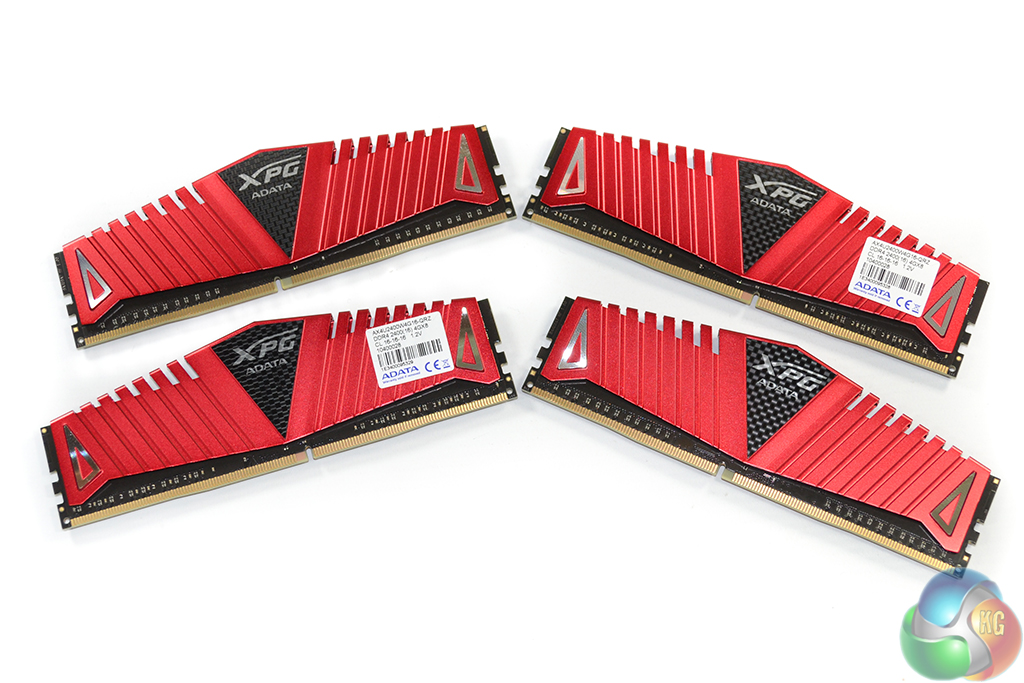
ADATA‘s brightly-coloured XPG Z1 memory modules are optimised for an Extreme Memory Profile (XMP) configuration of 2400MHz with a DRAM voltage of 1.2V. Primary timings are set at 16-16-16, which is looser than average for DDR4. Many of the faster – 2666MHz and 3000MHz – kits that we have encountered run with the technology's JEDEC timings of 15-15-15.
Different capacities of the XPG Z1 kit are available, although the set that we are testing uses four 4GB DIMMs to give a 16GB capacity with a quad-channel link.
Asus' trustworthy memory QVL for the X99-Deluxe motherboard suggests that Hynix MFR-based memory chips are found under the hood of ADATA's modules.
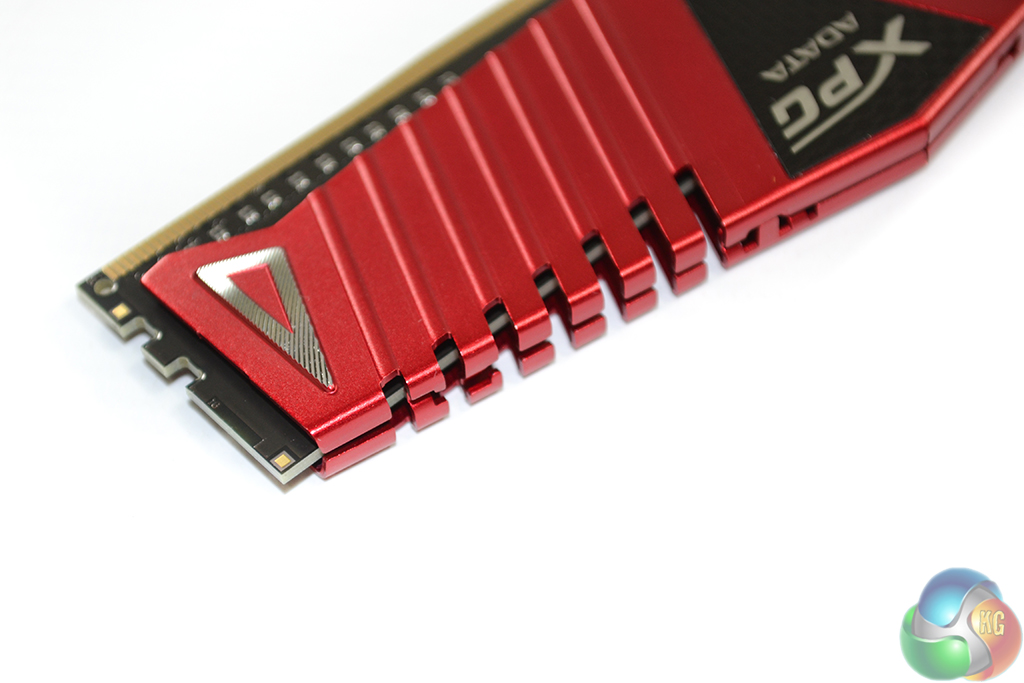
Two strips of metals converge atop the DRAM PCB to form ADATA's stylish heatsink. By using two separate strips of metal, rather than a single block, the heatsinks are easy to remove. That's good for overclockers who fancy their chances on the silicon lottery.
A gradient increasing towards the centre gives each memory module a maximum height of 44mm. While this is around 13mm taller than the bare PCB height, it is still short enough to minimise CPU cooler interference.
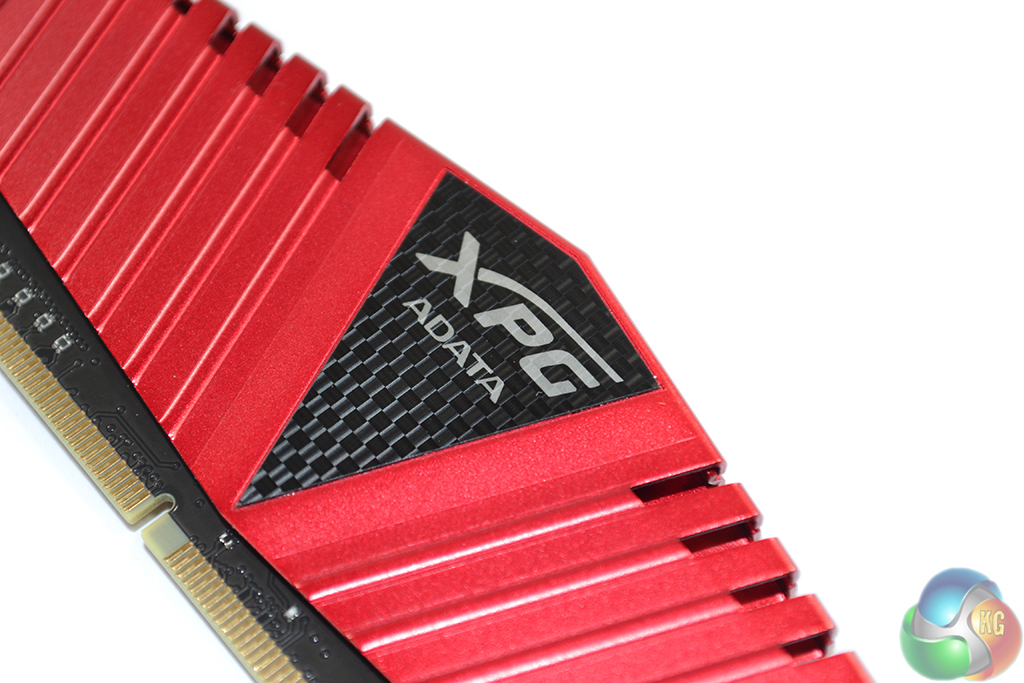
A carbon fiber effect is given to the XPG logo and provides a welcomed section of contrast against the bright red surroundings. ADATA doesn't let the kit's aesthetics slip elsewhere, either; the PCB is pure black – there's no ugly green in sight.

Specifications:
- Model Number: AX4U2400W4G16-QRZ.
- Compatible with Intel X99 chipset and Haswell-E processors.
- Frequency: 2400MHz (PC4-19200).
- Timings: 16-16-16.
- Voltage: 1.20V.
- Quad Channel Kit: (4x 4GB).
- XMP 2.0 Ready.
- Lifetime Warranty.
We are using the Asus X99-Deluxe motherboard to test today's memory kit. It supports RAM from many manufacturers and gives us a large amount of flexibility to tinker with memory multiplier, base clock, and timings settings. It has also reached the highest DRAM frequency of all the X99 motherboards that we have tested.
Our full review of the Asus X99 Deluxe motherboard can be read here.
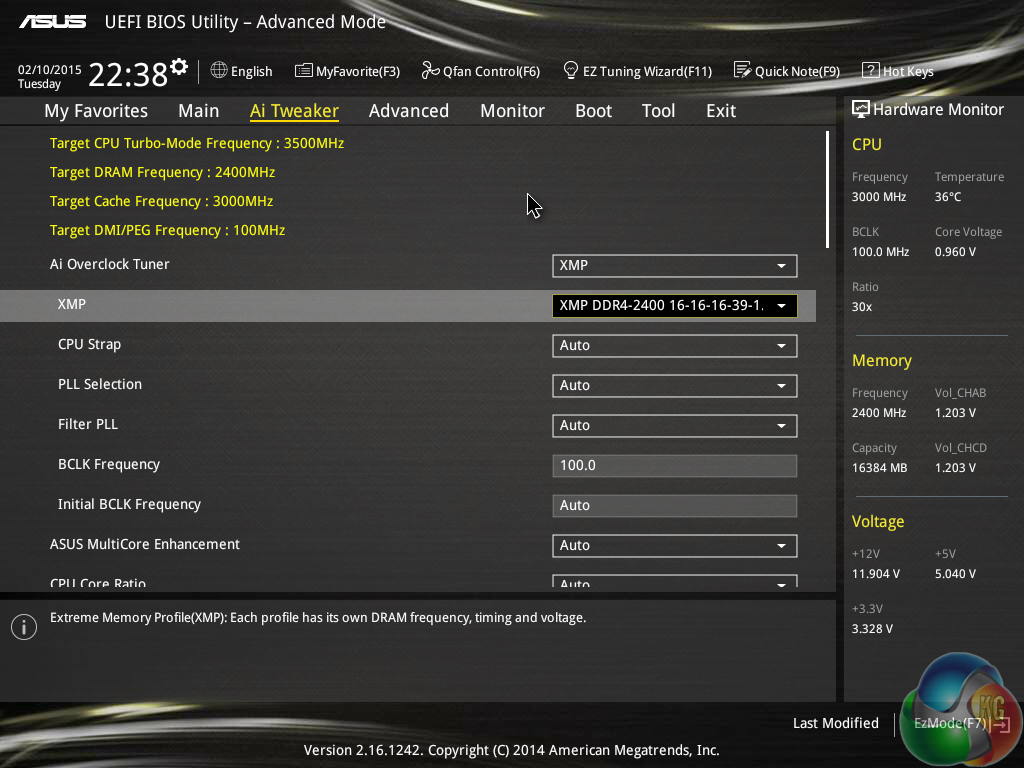
Getting ADATA's kit to run at 2400MHz in the Asus motherboard's UEFI was as simple as selecting the XMP configuration.
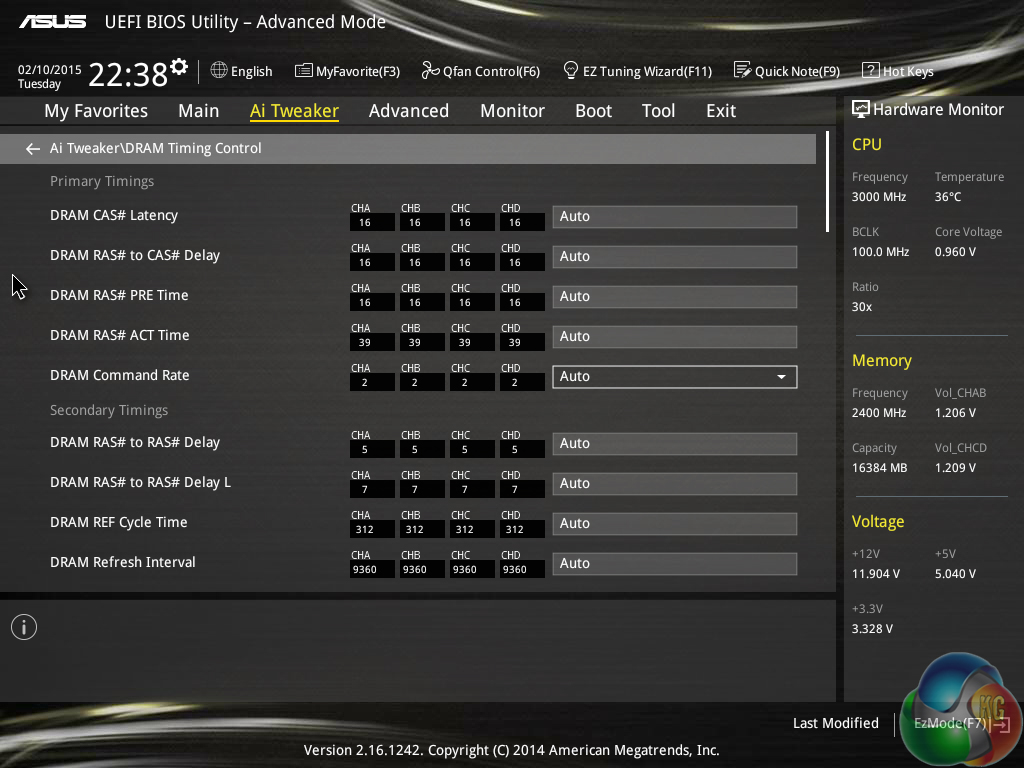
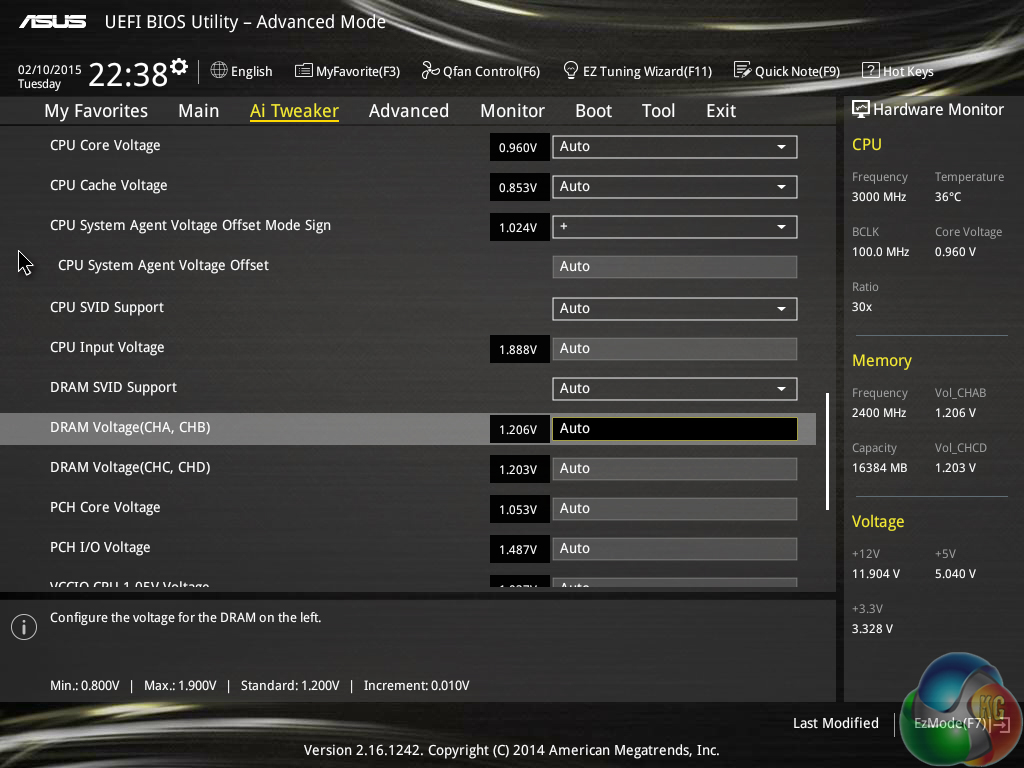
The fully-functioning XMP 2.0 configuration set the memory kit at its correct timings and voltage levels.
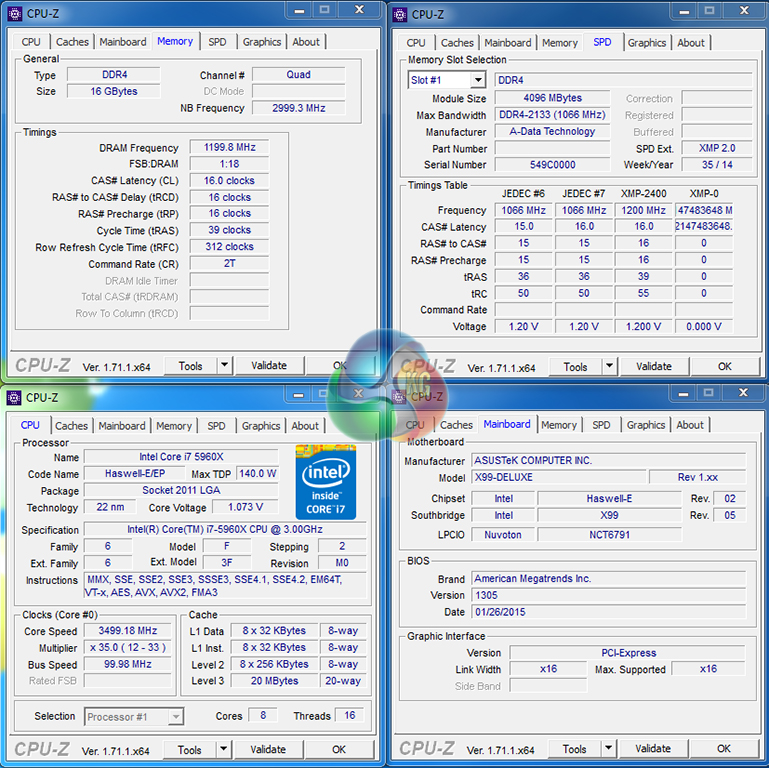
Windows and CPU-Z registered the memory's functioning settings as correct.
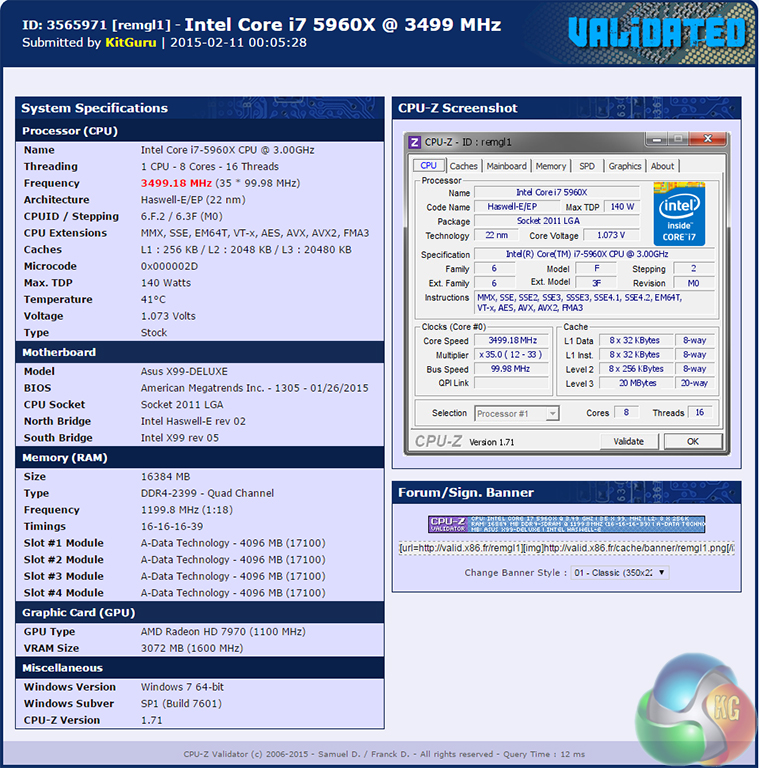
Our system's CPU-Z validation running at a 2400MHz DRAM frequency can be found here.
Our testing is conducted using an Intel Core i7 5960X processor with an Asus X99-Deluxe motherboard.
The ADATA XPG Z1 memory kit's XMP configuration is: 2400MHz 16-16-16-39-2T @ 1.20V.
DDR4 Memory Test System:
- Processor: Intel Core i7 5960X Engineering Sample (3.5GHz).
- Motherboard: Asus X99-Deluxe (BIOS 1305).
- Graphics Card: Asus R9 280X Matrix Platinum 3GB.
- System Drive: 500GB Samsung 840 SSD.
- Power Supply: Seasonic Platinum 1000W.
- Operating System: Windows 7 Professional with SP1 64-bit.
Comparison memory:
Tests:
- SiSoft Sandra 2014 SP2 – Memory bandwidth test.
- AIDA64 Engineer 5.00.3300 – Memory latency test.
- Cinebench R15 – All-core CPU benchmark.
- Super Pi – 32M test.
- HandBrake 0.9.9 – Convert 4.36GB 720P MKV to MP4.
- 3DMark 1.3.708 – Fire Strike.
- Bioshock Infinite – 1920 x 1080, ultra quality.
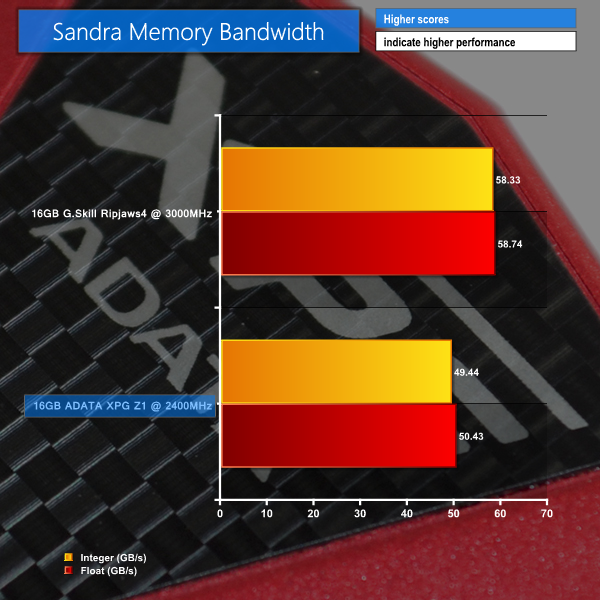
Sandra Memory Bandwidth
AIDA64 Memory Latency
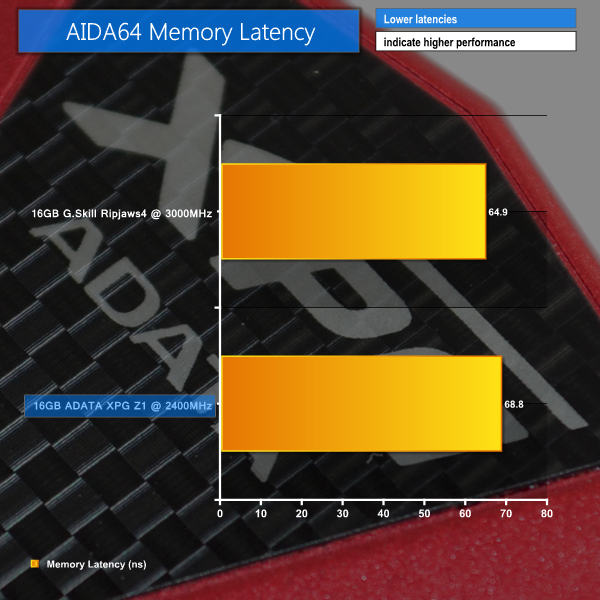
It comes as no surprise that ADATA's slower kit trails in synthetic benchmarks. The system usage benchmarks are more relevant to real-world performance.
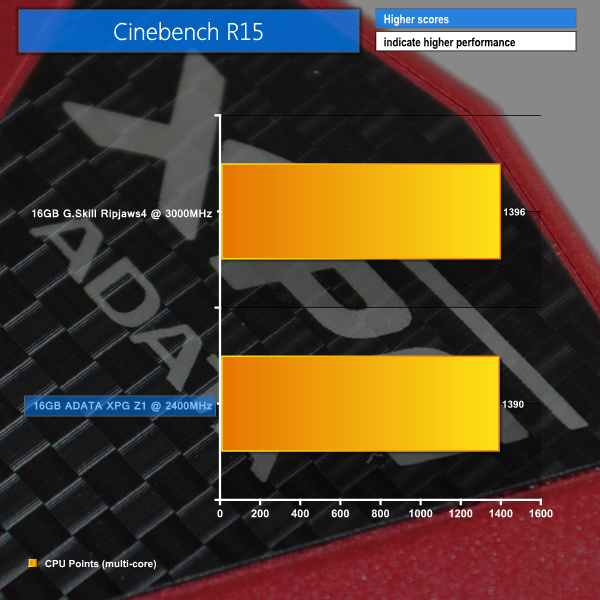
Cinebench R15
We used the ‘CPU’ test built into Cinebench R15 to measure the effect that system memory has on computational performance.
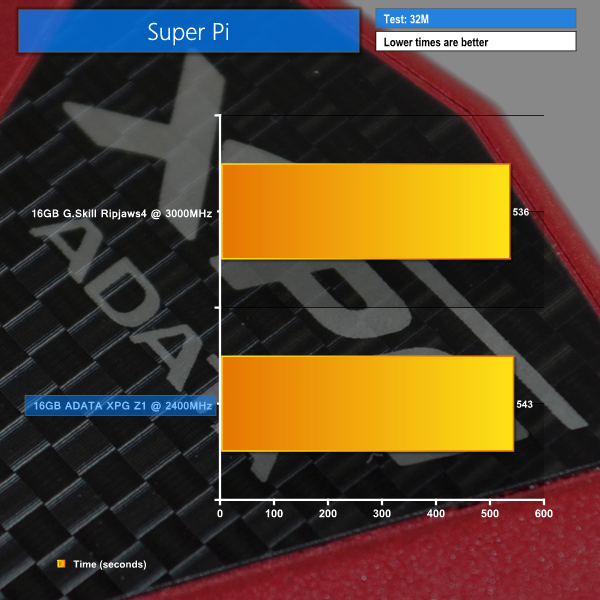
Super Pi 32M
We used the '32M' test in Super Pi to analyse the effect that system memory has on single-threaded performance.
Handbrake Conversion
We measured the average frame rate achieved for a task of converting a 4.36GB 720P H.264 movie (in the MKV container) to one in the MP4 container.

While the 600MHz frequency deficit of ADATA's memory kit leaves it trailing the performance of G.Skill's 3GHz sticks, the differences are far smaller than the speed variations.
Super Pi and Cinebench show performance benefits with faster memory (albeit at small levels), however Handbrake gains almost no performance from a 600MHz speed difference between the kits.
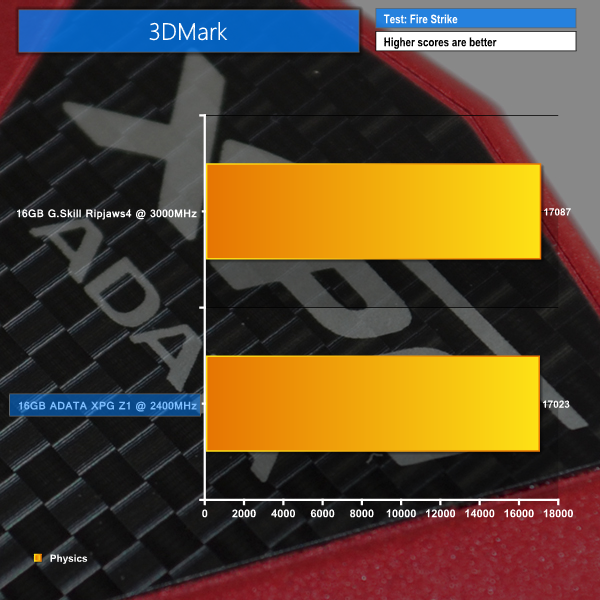
3DMark
We used 3DMark‘s ‘Fire Strike’ benchmark which is designed to be used on gaming PCs. We opted for the Normal setting, NOT the Extreme mode.
Bioshock Infinite
We used the Bioshock Infinite demanding ‘Ultra’ setting and a 1920×1080 resolution to push today’s gaming hardware. Our data was recorded using a section of the game, not the built-in benchmark.

3DMark's Physics test benefits from higher DRAM data rates, but Bioshock Infinite implies that game frame rates are not sensitive to memory speeds.
For overclocking, we will test a number of higher memory operating frequencies based off motherboard dividers. Memory overclocking can be a never-ending balance procedure when the tweaking of timings and voltage is taken into account. As such, we have decided to see what frequency the memory is capable of when running at pre-determined timings and voltages. This represents a ‘quick-and-easy' overclock.
Stability is certified by running a session of Prime95 in its Blend mode, Sandra's intensive Memory Bandwidth benchmark, AIDA64's latency test, and Bioshock Infinite. When we reach the maximum speed our kit looks to be capable of, we run MemTest to certify its stability.
We initially use the XMP timings configuration and see how high frequency can go based on these settings. DRAM voltage is set at 1.35V and the memory power saving settings are disabled.
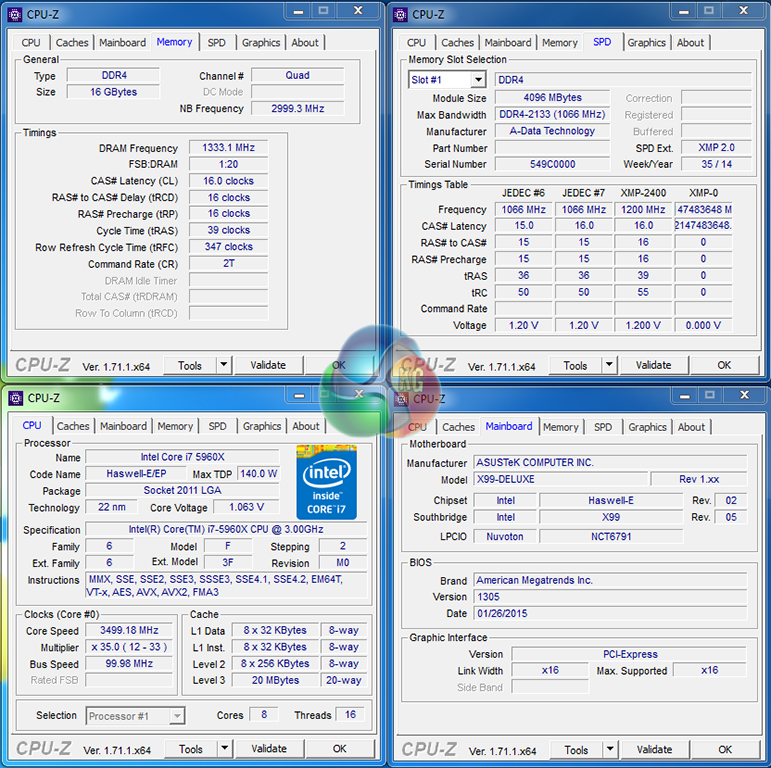
We had no problem hitting 2666MHz on stock timings, before we were forced to step up to the 125MHz BCLK setting. Our sample of ADATA's kit clearly has more overclocking headroom, so we will further tune the settings and push on.
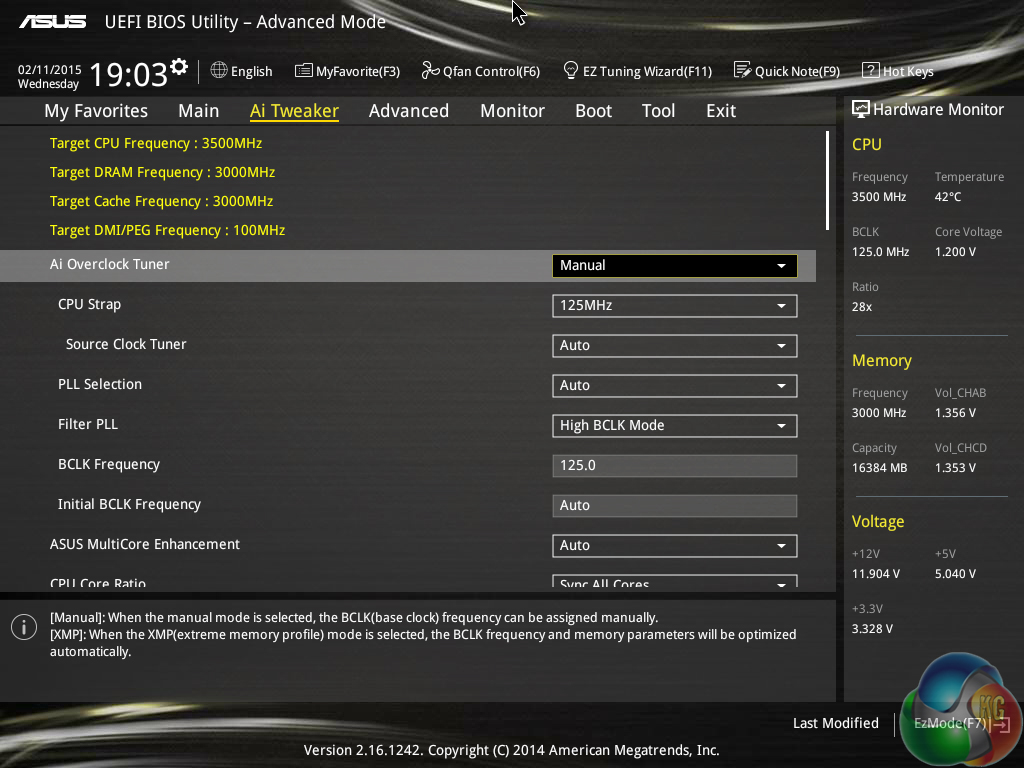
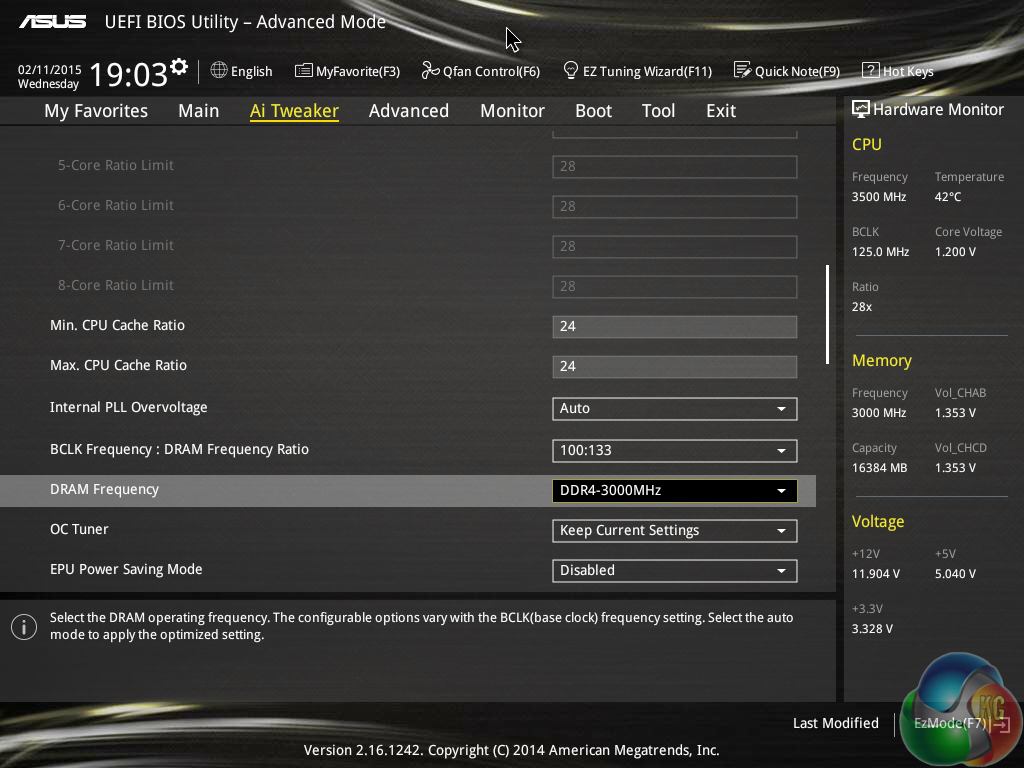
Gunning for memory frequencies past 2666MHz necessitates the 125MHz base clock operating from a 1.25x BCLK ratio (unless you go well above 3000MHz).
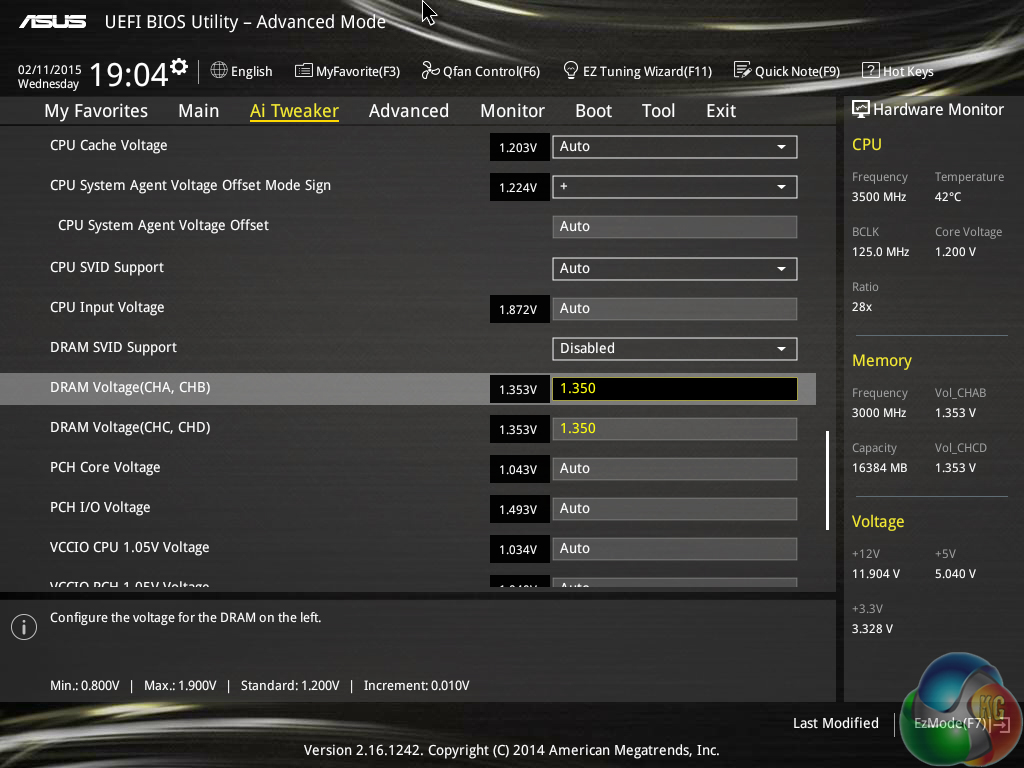
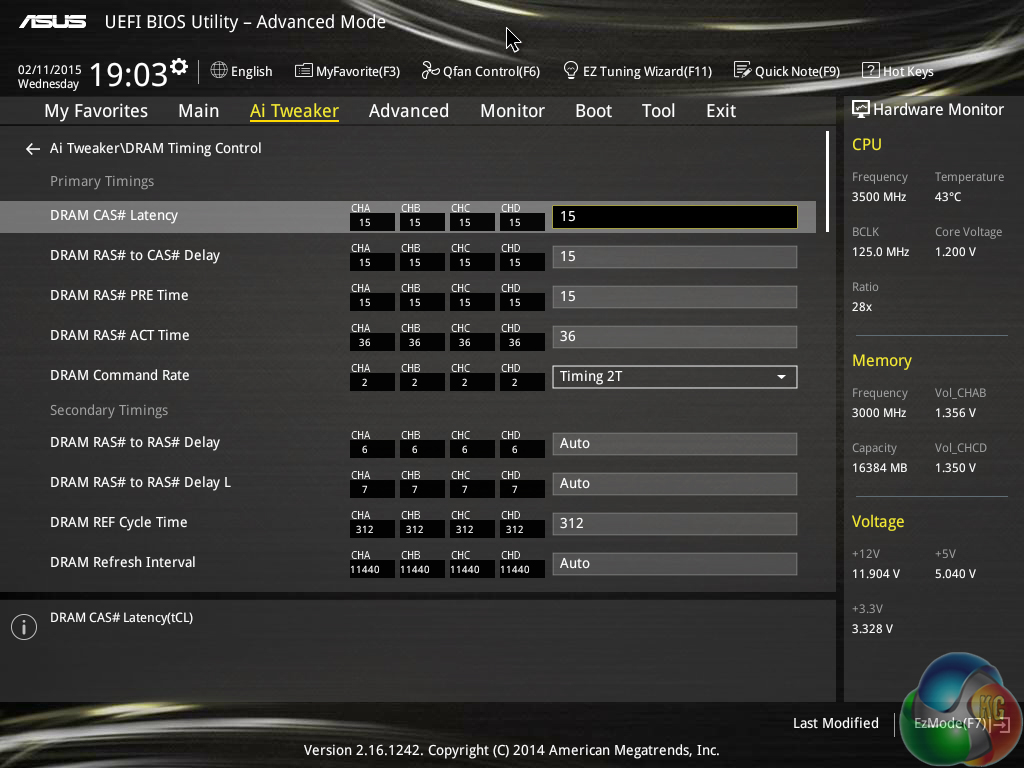
We use the common 15-15-15-36-2T timings configuration and test how high the memory frequency can go based on these settings. DRAM voltage is set at 1.35V and the memory power saving settings are disabled.
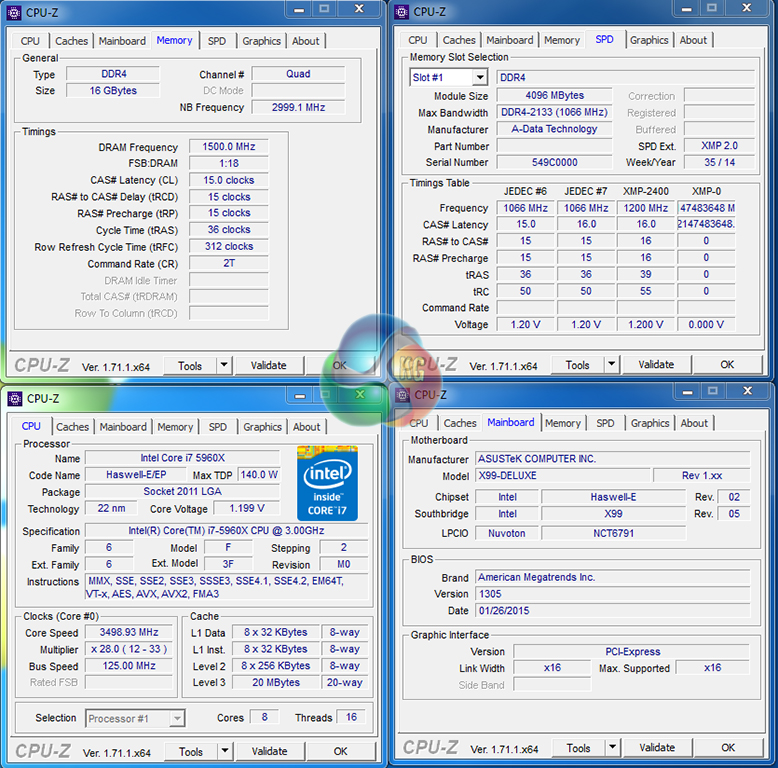
We managed to achieve a stable memory overclock of 3000MHz. This consisted of a 125MHz base clock, 100:133 BCLK:DRAM frequency ratio, and an 18x memory divider. Going past 3000MHz will require meticulous fine-tuning from a BCLK level.
It was possible for our kit to boot at a memory frequency of 3200MHz using a 100MHz base clock and loosened timings. However, this setting was proven unstable by quickly throwing up numerous errors in MemTest.
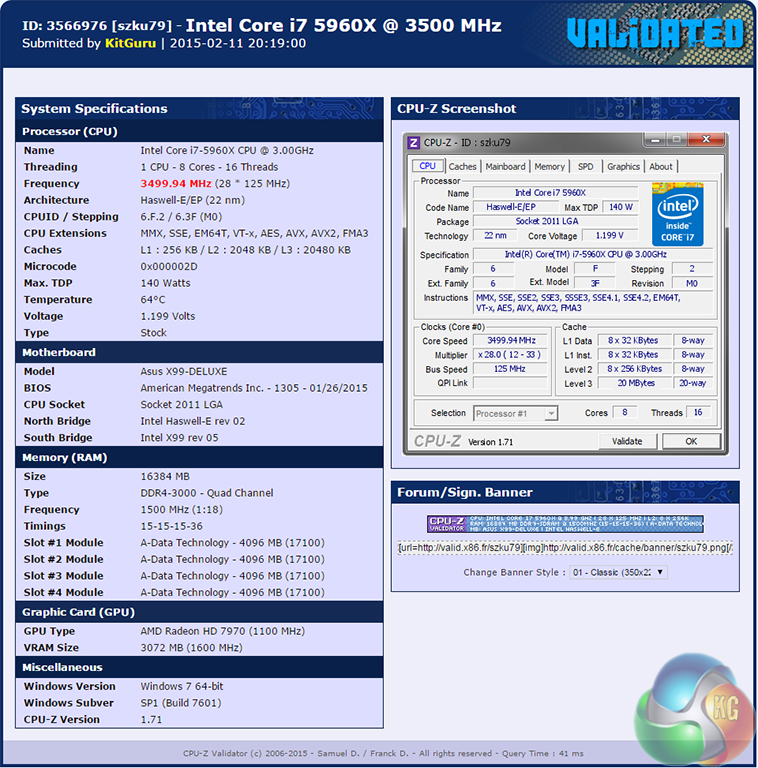
Our validation running at a 3000MHz DRAM frequency can be viewed here.
We test the memory kit's performance at the overclocked settings. The stock speed results are graphed to show the performance gains (if any) that are obtained from overclocking.
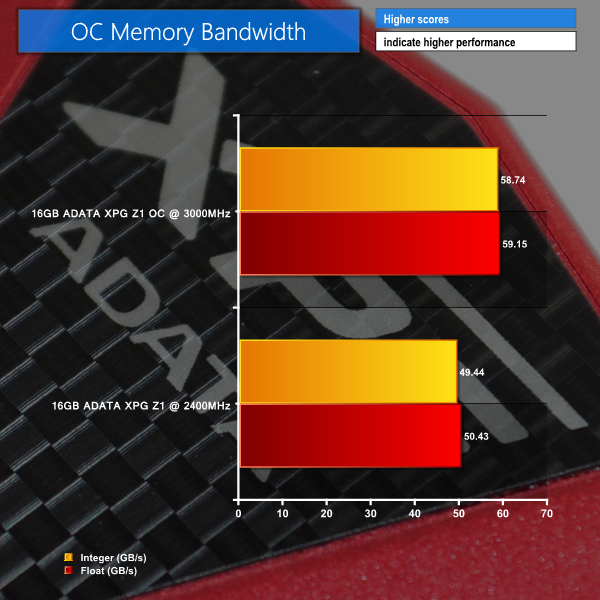
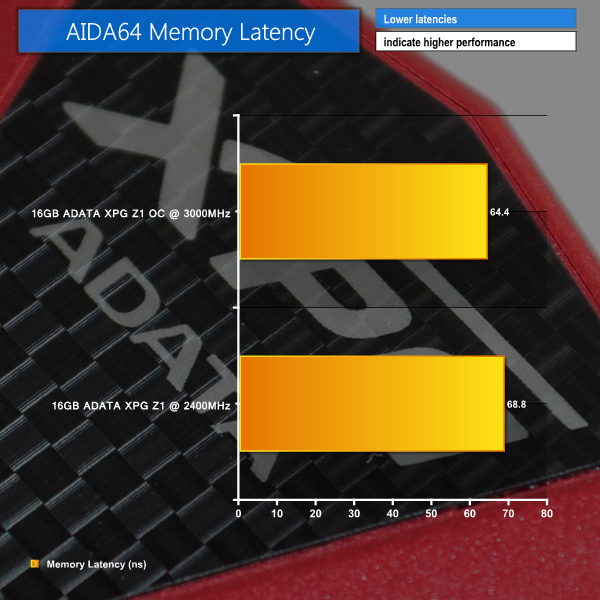
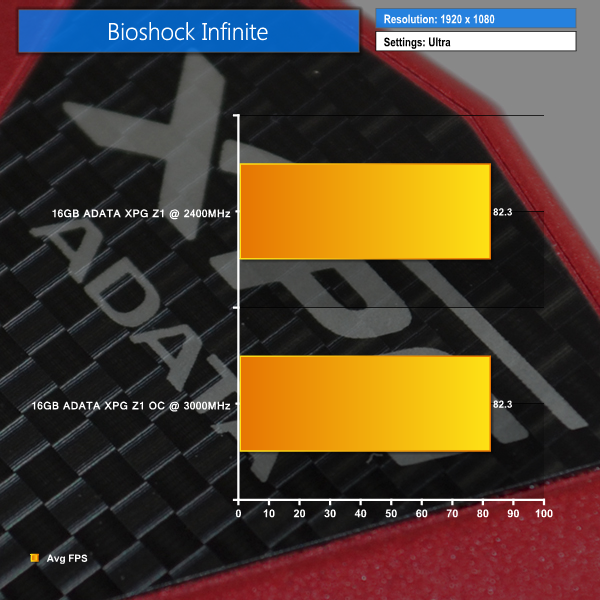
While overclocking increases the effective memory bandwidth and decreases latency, the enhanced speed and tighter timings have no impact on Bioshock Infinite's frame rates.
The ADATA XPG Z1 16GB 2400MHz DDR4 memory kit that we tested showed particularly strong overclocking potential, and solid all-round performance.
Despite a 20% speed deficit compared to G.Skill's 3GHz Ripjaws4 kit, the 2.4GHz ADATA memory was able to maintain its competitiveness in a variety of tests. This just goes to show that a number of general usage, consumer workloads do not show tangible benefits from vastly increased memory frequencies.
The overclocking potential shown by our kit was excellent. We had the Hynix MFR-based sticks running at 3000MHz, with tightened timings, by using a 15mV voltage boost. We actually hit 3200MHz at one point, but that frequency was not stable.
Obviously results will vary from kit to kit, hence why I am wary about putting an overly large emphasis on the overclocking potential with a sample size of one. But our frequency-boosting experience shows that there could be some positive overclocks to be had, even if you choose to take a chance with parts segregated as slower speed at the binning process.
Overall design of the memory is good. Bright red heatsinks are easy to match with any number of gaming motherboards, and ADATA ensures that they aren't so ridiculously oversized that they cause continuous CPU cooler interference. A black PCB is another design choice that will be welcomed by system builders concerned with appearance.
Priced at £199.99 from OverclockersUK, ADATA's XPG Z1 16GB set is one of the more expensive 2400MHz kits on sale. The £200 border region is treading awfully close to 2666MHz territory. But with the potential for sizeable frequency gains, if you get lucky with the silicon lottery, there's no harm in taking a punt with ADATA's XPG Z1 16GB 2400MHz DDR4 memory kit.
Pros:
- Positive motherboard compatibility with 2400MHz XMP 2.0 setting.
- Attractive design, with black PCB.
- Heatspreaders short enough to cause little CPU cooler interference.
- Potential for high overclocks.
Cons:
- Similar price to 2666MHz kits.
- Looser timings than many competing 2400MHz kits, and more expensive.
KitGuru says: If you're willing to gamble on the premise of strong overclocking potential, ADATA's 2400MHz XPG Z1 kit is worth the punt. Otherwise, you are likely to be tempted by a faster out-of-the-box kit for an almost identical asking fee.


Seems like all of the low binned Hynix-based kits all top out around 3000 C15.
ADATA sucks! CPU-Z sucks! Press SHIFT+DEL to delete cpu-z. I have never seen such bullshit at its SPD tab. I would not demonstrate buggy screenshots. The “XMP-0” profile looks just fine!
I have ADATA ram in my current system and never once had an issue and my system was built in late 2012