 KitGuru KitGuru.net – Tech News | Hardware News | Hardware Reviews | IOS | Mobile | Gaming | Graphics Cards


ATTO Disk Benchmark
The ATTO disk benchmark is a Windows-based utility for testing storage performance of any storage drive or controller. We use the default benchmark setup.
M.2 PCIe Performance
For M.2 testing we use a Toshiba OCZ RD400 256GB M.2 PCIe NVMe SSD.
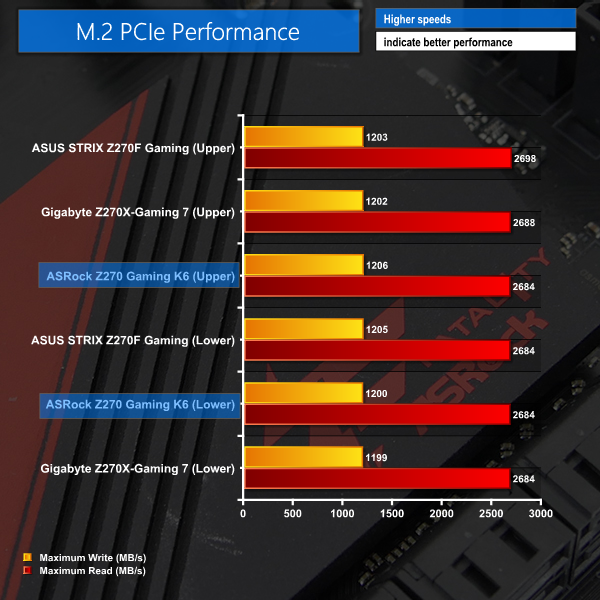
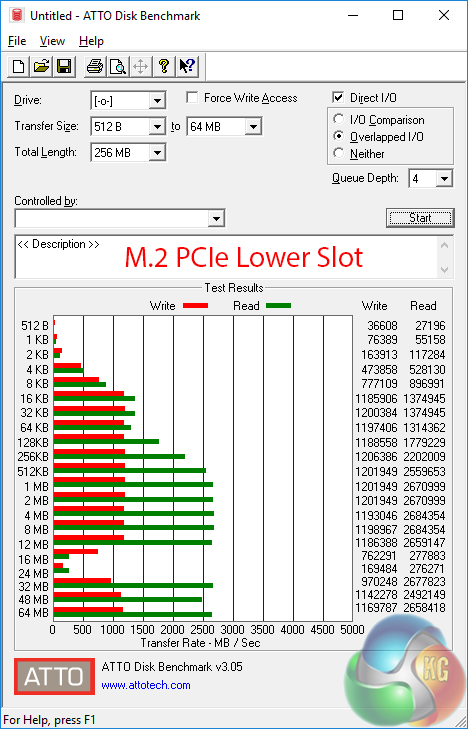
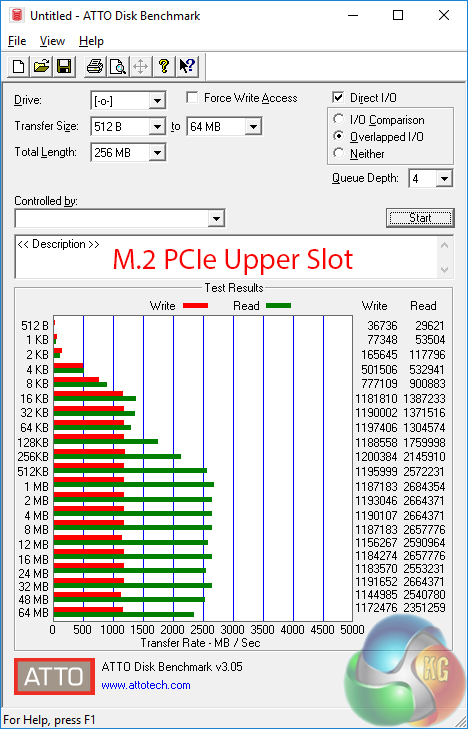
M.2 PCIe performance is adequate for preventing bottlenecking with the market's leading M.2 SSDs. With that said, the lower slot position was susceptible to thermal throttling from the SSD in our open-air test conditions. The upper-slot received airflow from the nearby CPU cooler and was able to prevent SSD thermal throttling.
In a chassis environment with decent airflow, the thermal throttling difference between either slot is likely to be less glaring. But it is certainly something to consider when building your system, especially when competing offerings from MSI and ASUS have M.2 cooling solutions.
USB 3.1 Performance
We test USB 3.1 performance using a pair of Corsair Force LE 120GB SSDs in RAID 0 connected to an Icy Box RD2253-U31 2-bay USB 3.1 enclosure powered by an ASMedia ASM1352R controller.
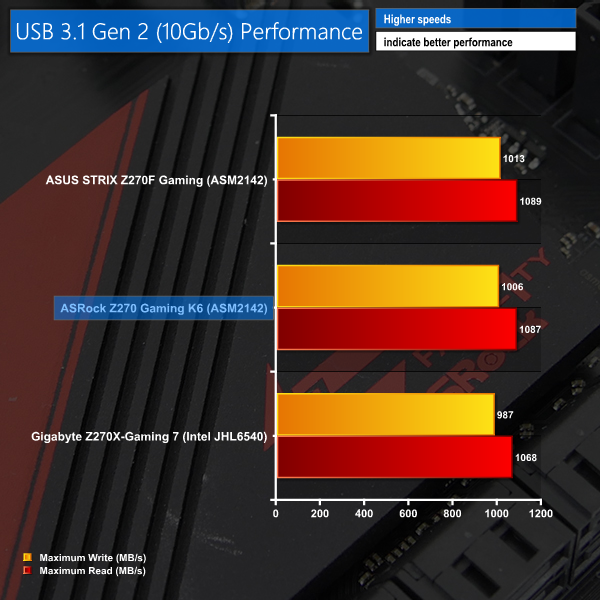
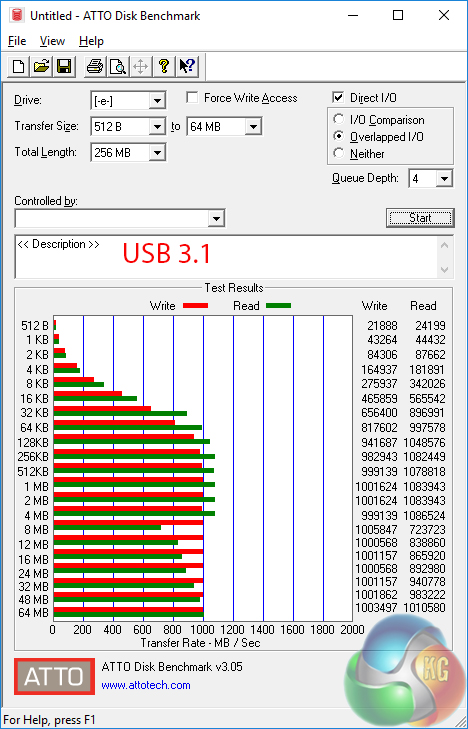
Over 1000MBps is possible using the ASRock board's ASM2142-powered USB 3.1 ports.
SATA 6Gbps Performance
For SATA 6Gbps testing we use a SK Hynix SE3010 960GB SSD.
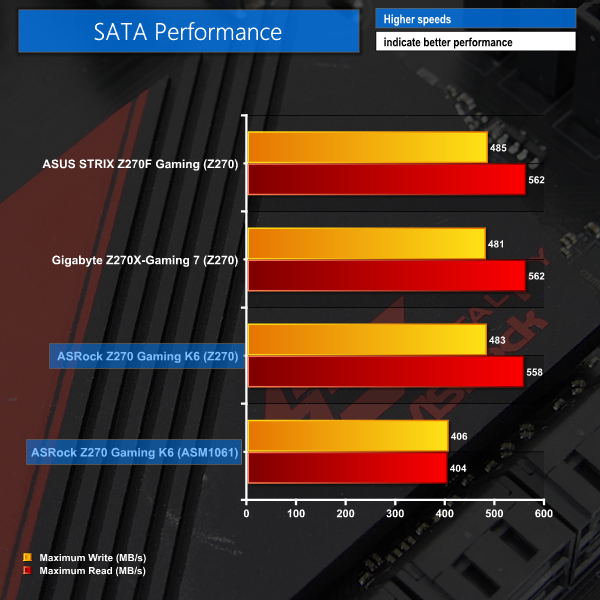
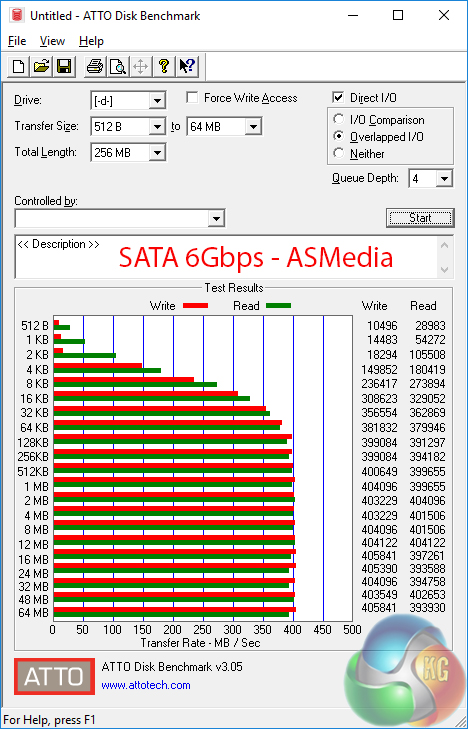
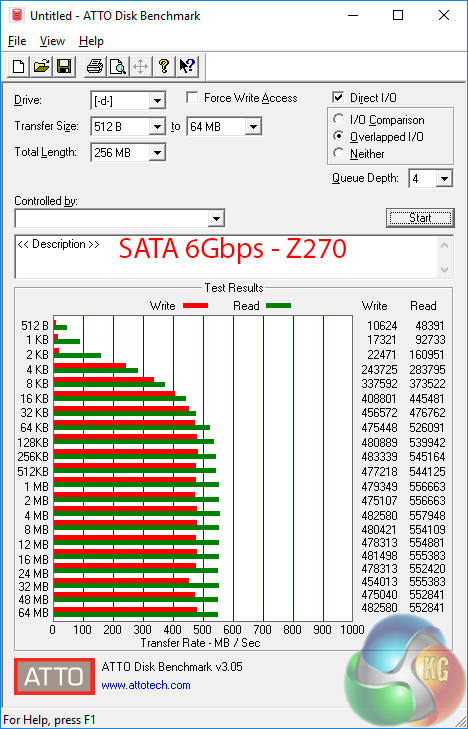
Speed from the Z270 SATA ports leaves no cause for concern. The ASM1061-powered ports are slow and should only be used for mechanical storage when no Z270 ports are available. I do, however, like ASRock's decision to include additional SATA ports; a pair of M.2 SSDs will steal bandwidth from a total of four Z270 SATA ports, leaving the ASM chipset as a good solution for extending the number of options for mass storage.
Audio
Rightmark Audio Analyser is a freeware benchmarking utility designed to objectively test the performance characteristics of audio solutions. We setup a line-in line-out loop and execute the record/playback test before generating the results report you see below. A sampling mode of 24-bit, 192 kHz was tested.
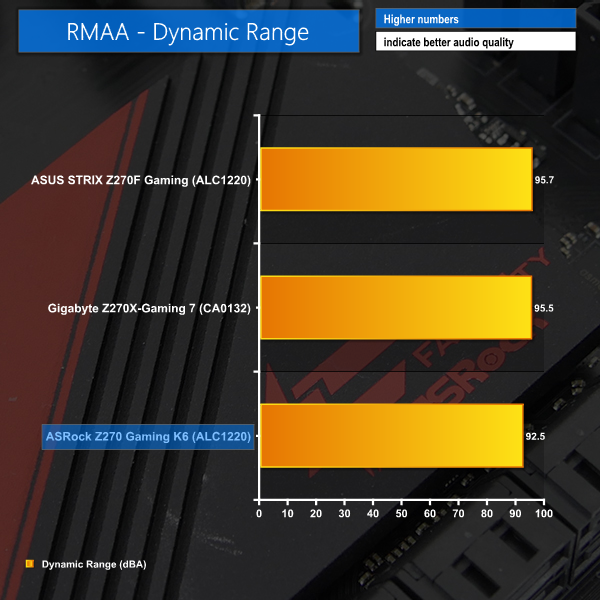
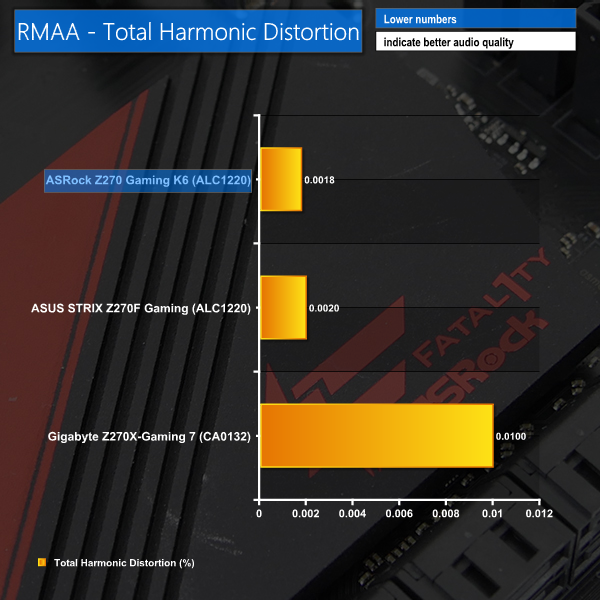
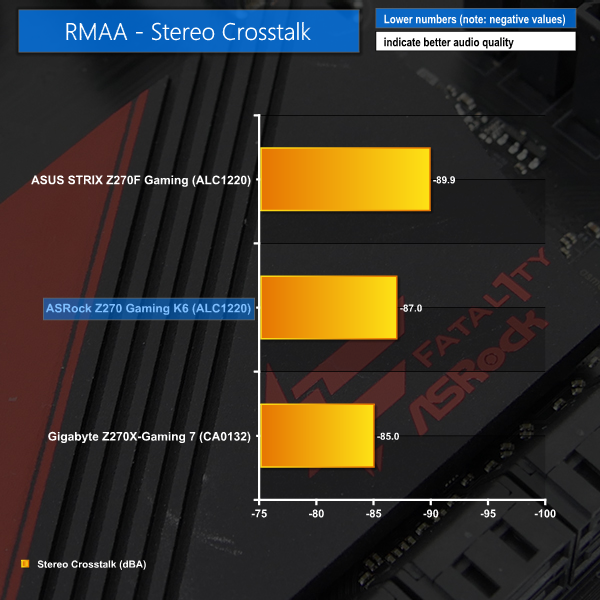
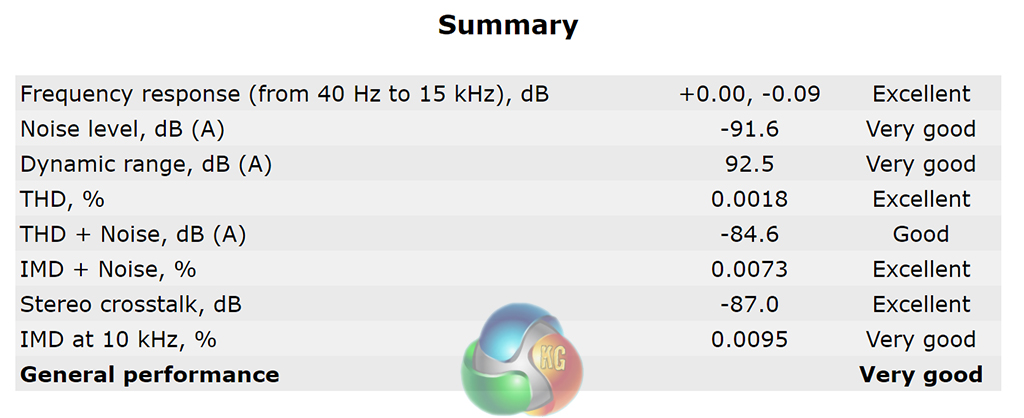
Audio performance from the ALC1220-powered solution is Very Good according to Right Mark Audio Analyzer. Gigabyte's solution makes for a difficult comparison as it uses a completely difference Creative chipset.
However, ASUS' STRIX Z270F Gaming uses the same ALC1220 codec but generally offers slightly better performance than ASRock's Z270 Gaming K6. This is likely due to the different strategy for audio capacitors and codec shielding.

Good board! Looking to buy this one or the xtreme! any reviews soon?
The Fatal1ty is superior… but you cannot go wrong with either of them 😉