KitGuru KitGuru.net – Tech News | Hardware News | Hardware Reviews | IOS | Mobile | Gaming | Graphics Cards


Today we take a look at a budget oriented power supply from Corsair, sitting within the company's CX range. These power supplies are 80 Plus Bronze rated and ship with Japanese capacitors in the primary stage. As with everything Corsair related in 2020, these power supplies are RGB capable and they are available in black or white colour schemes.
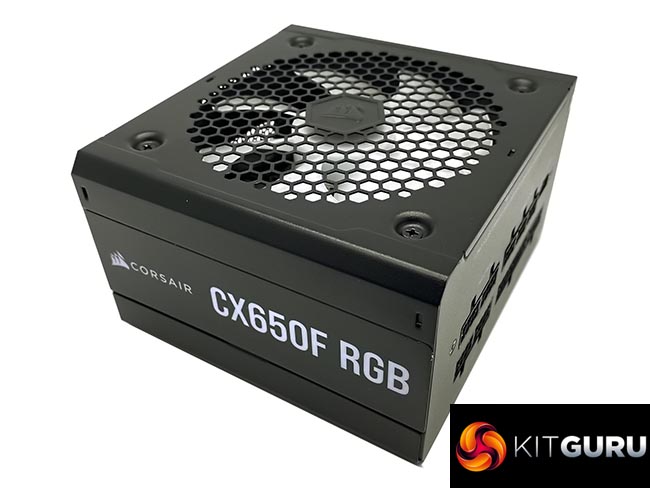
KitGuru doesn't often get Bronze rated power supplies to review, most companies tend to focus on 80 Plus Gold or higher in 2020 for product reviews, so I was surprised to be sent one of these. It is, however, a fully modular unit, which is good to see as this eliminates any unnecessary cable clutter.
There are three models in the range, with Corsair offering a 550W, 650W and 750W supply. Prices are set at £69.99, £79.99 and £89.99 respectively.
Key Features:
- 80 PLUS Bronze Certified: Provides up to 88% operational efficiency, generating less heat and lowering your energy costs.
- 120mm RGB Fan: Control eight individually addressable RGB LEDs at the push of a button, with ten preset lighting modes.
- Available in Black or Brilliant White, with Matching Cables: Match the look of your system.
- iCUE and Motherboard RGB Compatible: Connect to a CORSAIR iCUE RGB Lighting Controller (sold separately) or motherboard via the included 5V ARGB adapter for advanced RGB lighting control.
- Optimized for Low Noise: A dedicated fan curve is specially calculated to keep noise levels down.
- 105°C Rated Japanese Primary Capacitors: For consistent, reliable power and superb electrical performance.
- Microsoft Modern Standby Support: Enables extremely fast wake-from-sleep times and better low-load efficiency.
- Fully Modular: Reduce cable clutter by only connecting the cables that your system needs.
- Compact 140mm-Long Casing: Ensures an easy fit in almost all modern enthusiast PC cases.
- Five-Year Warranty: For complete peace of mind.
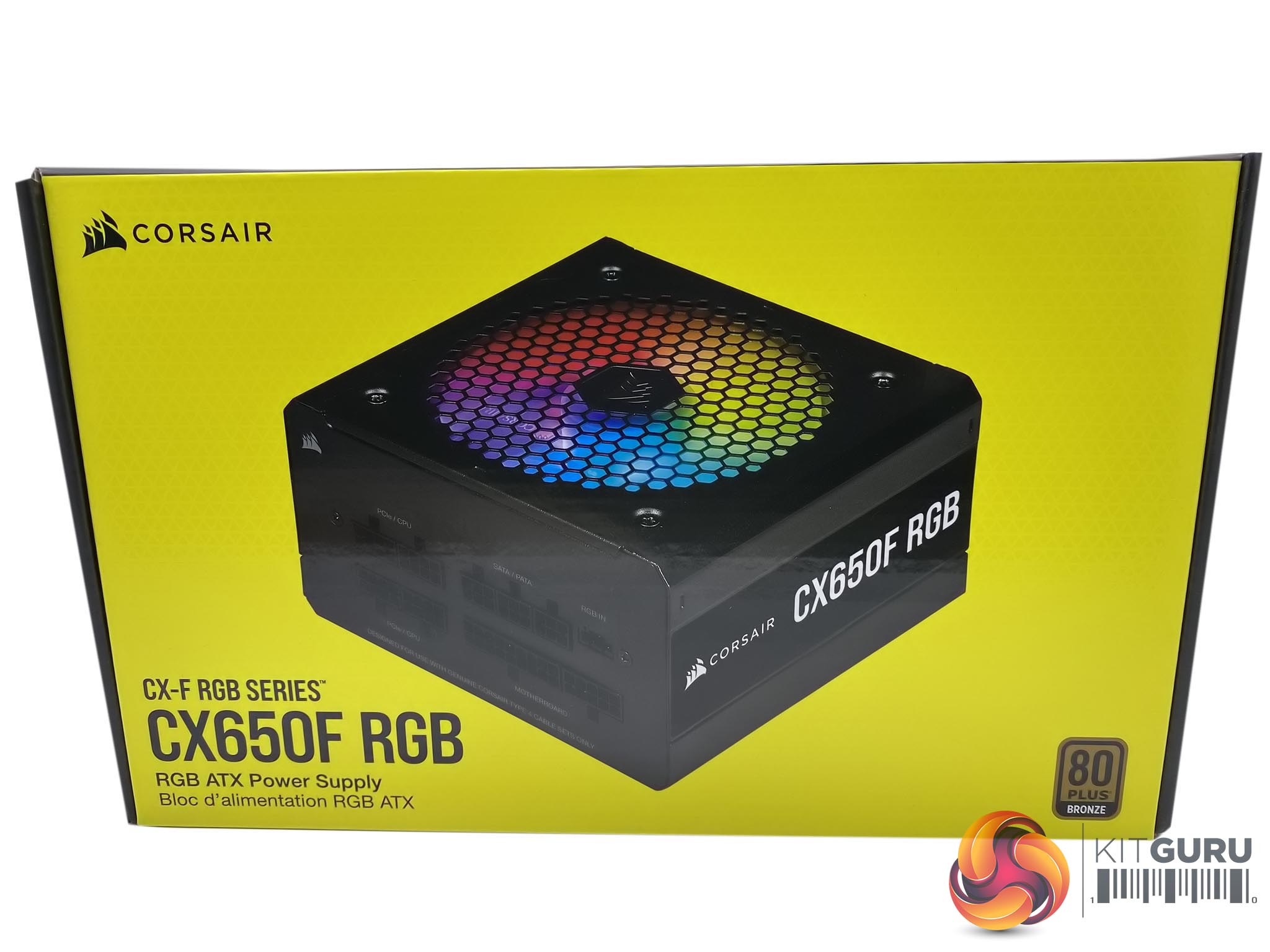
The Corsair CX650F RGB ships in a bright yellow box, which is rather gaudy to my eye. The focus is on the RGB fan and lighting. Yes, we now have RGB in a power supply.
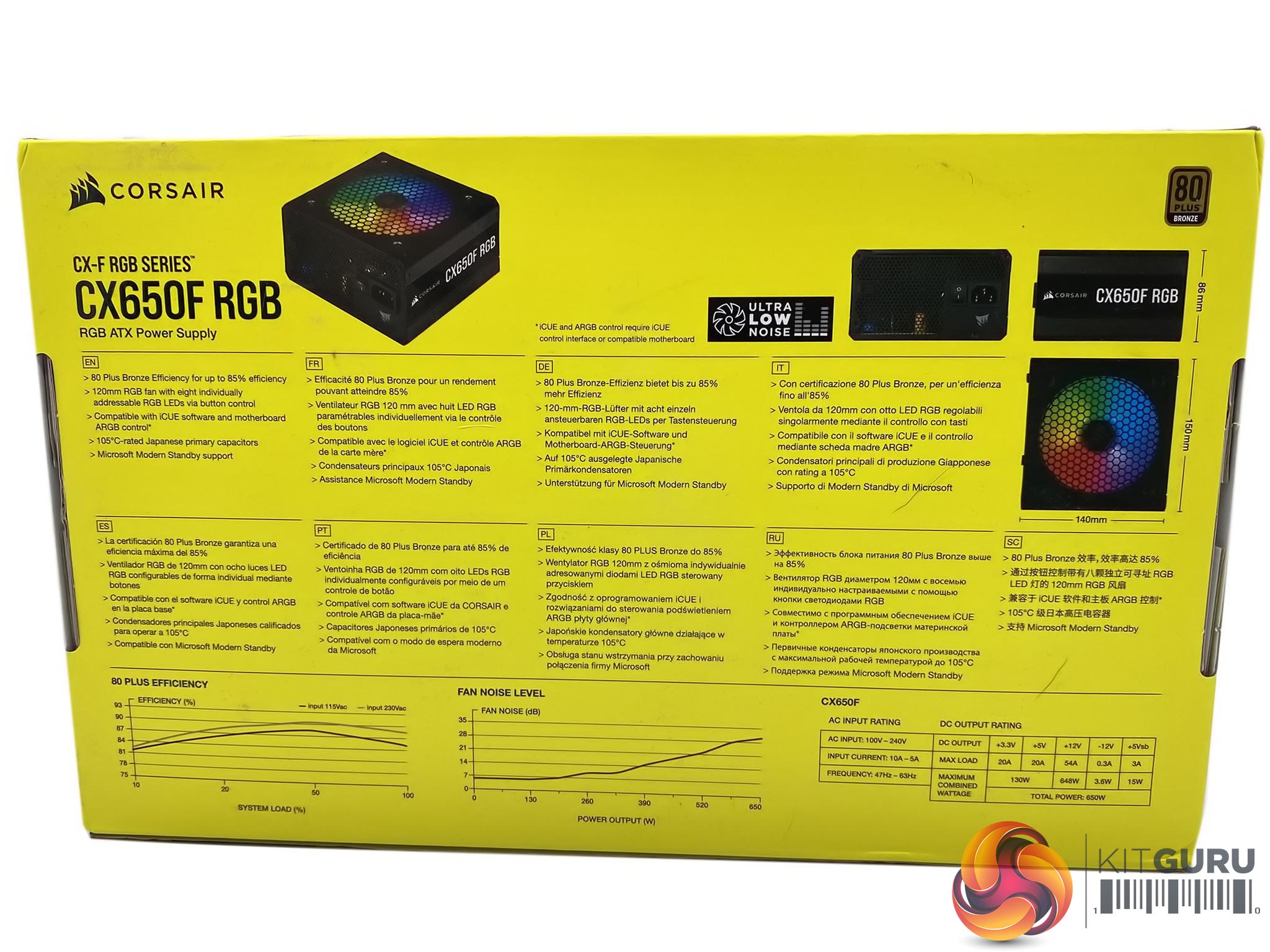
The rear of the box showcases some key selling points, if you were browsing in a retail store. We still have retail stores, right?
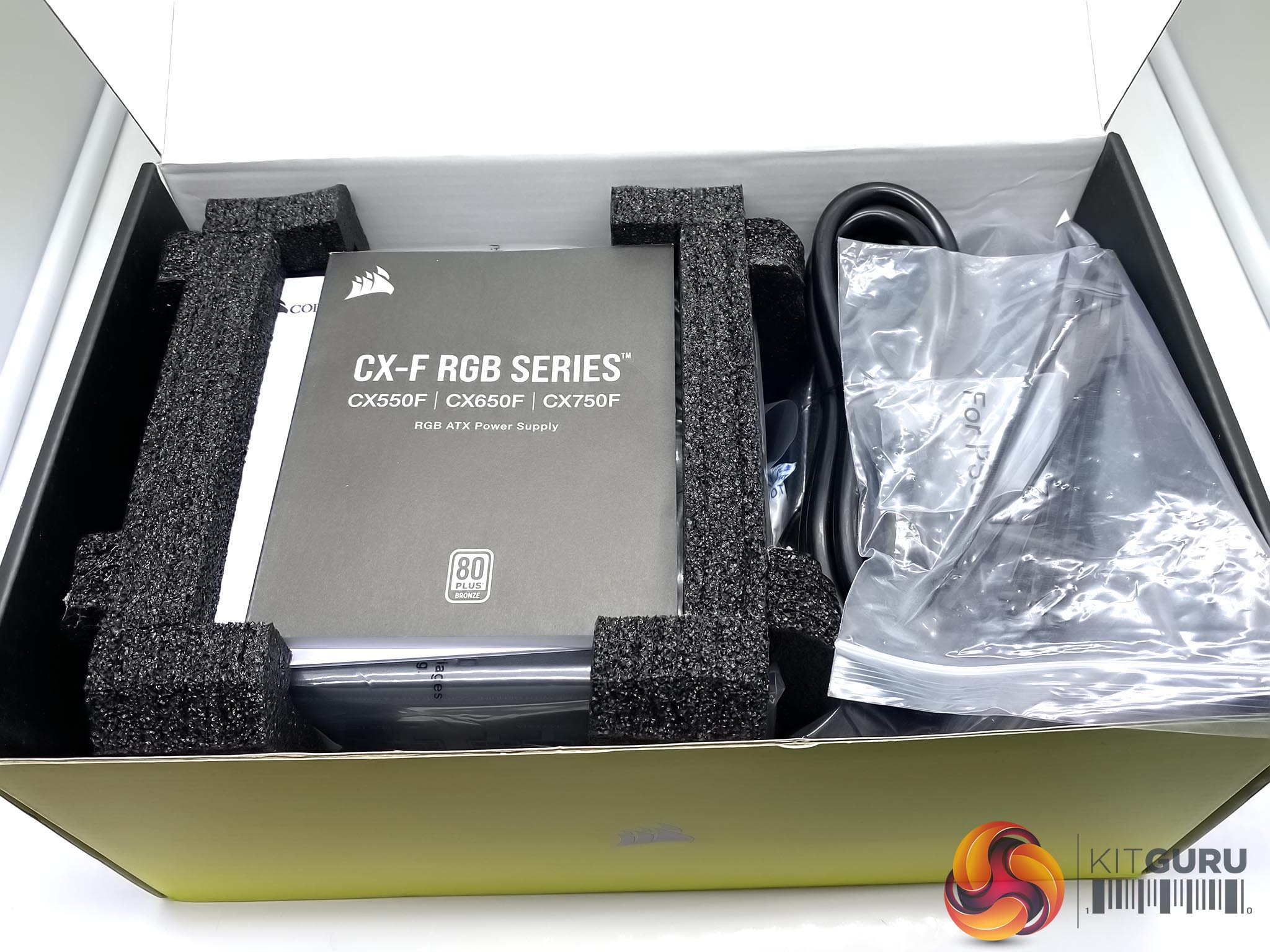
The power supply is sandwiched between thick pieces of foam. The accessories are on the right side of the box. A user manual is also supplied.
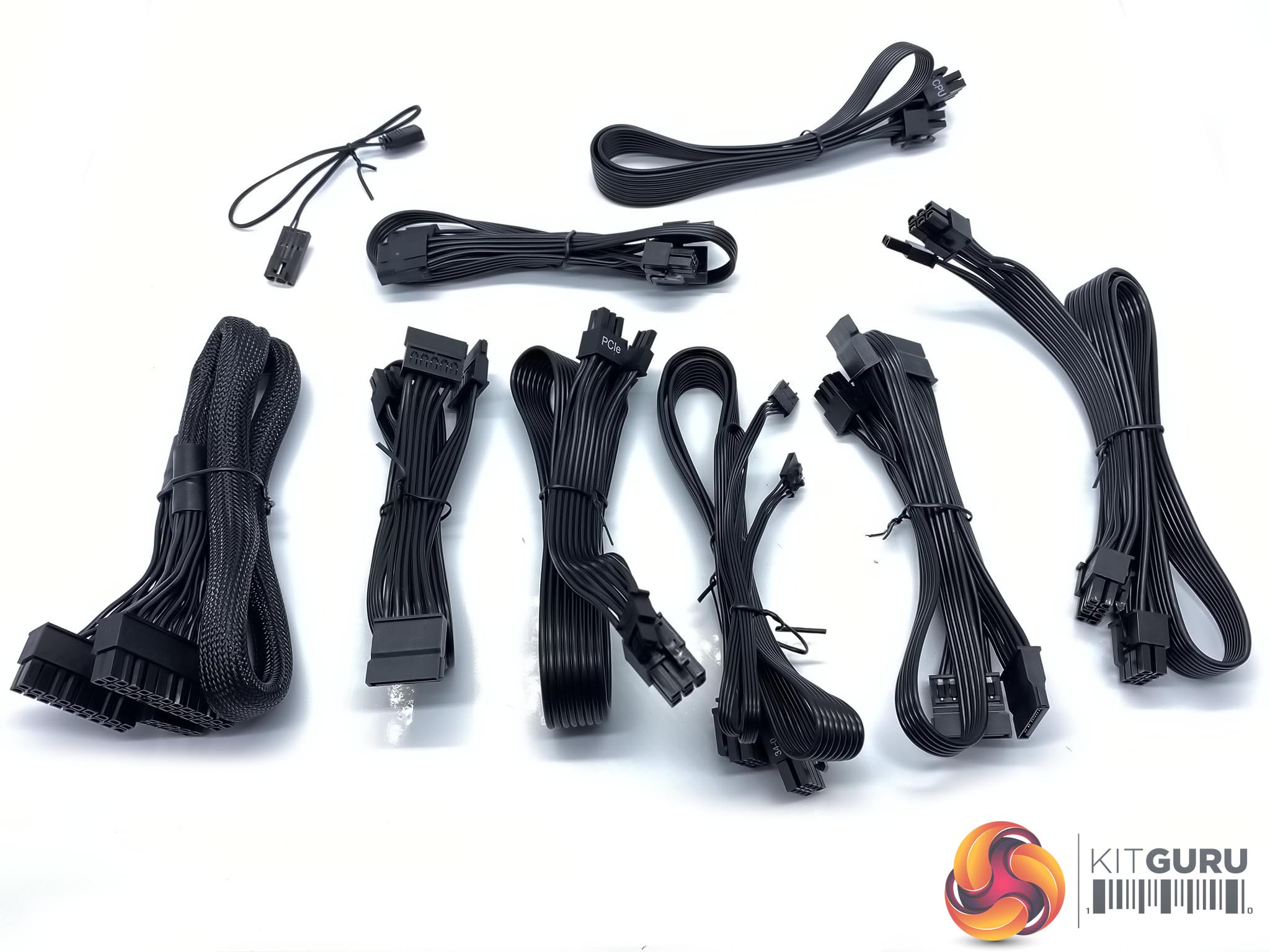
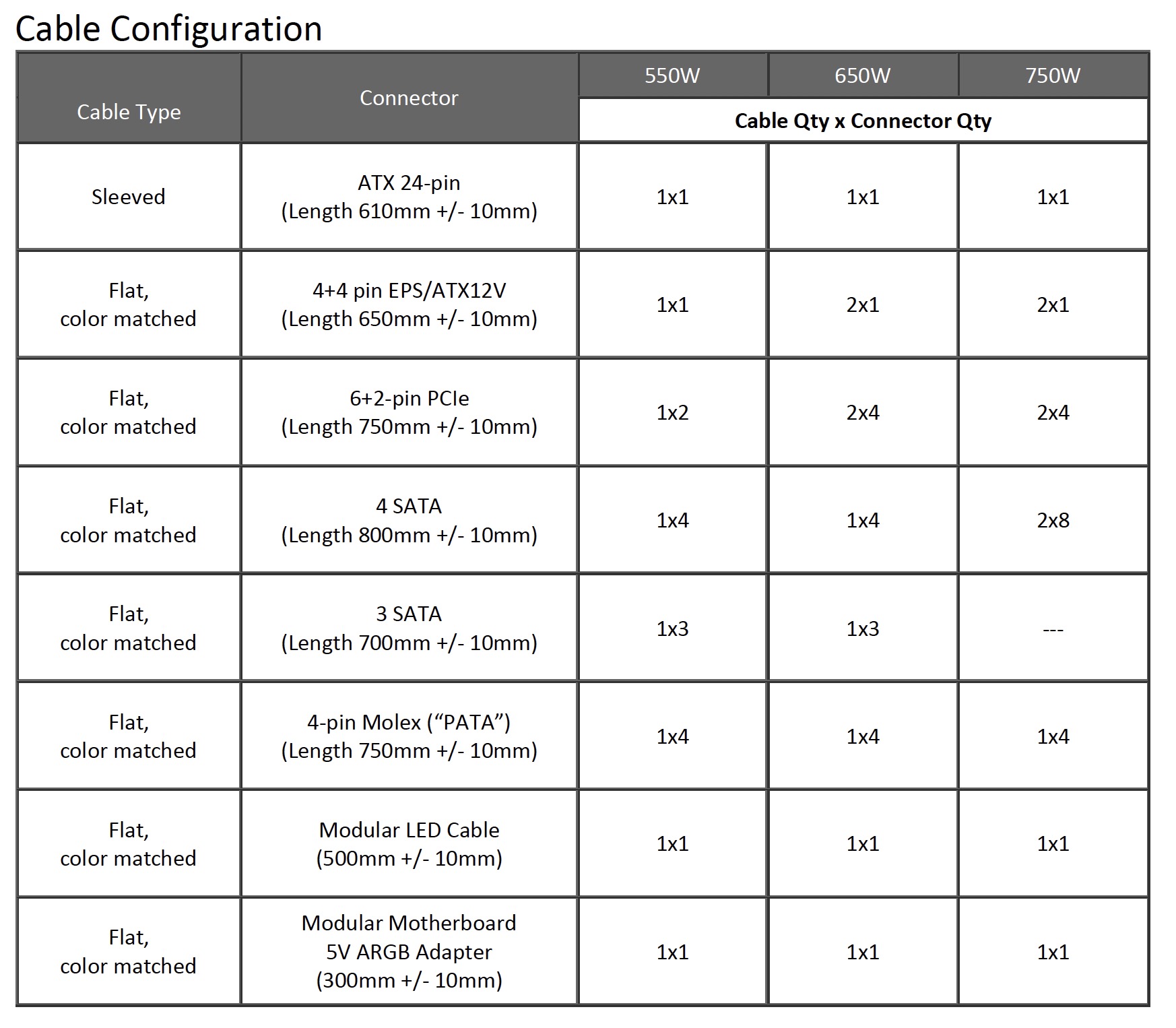
The only cable that is sleeved is the main ATX cable. All the others are thin ribbon style for ease of routing. The cable quality is perfectly fine for a budget supply.
There are two EPS and four PCIe connectors as well as four Molex and seven SATA cables included. Corsair supply an iCUE RGB cable to hook into a compatible RGB controller as well as a shorter ARGB cable to connect to your supported motherboard.
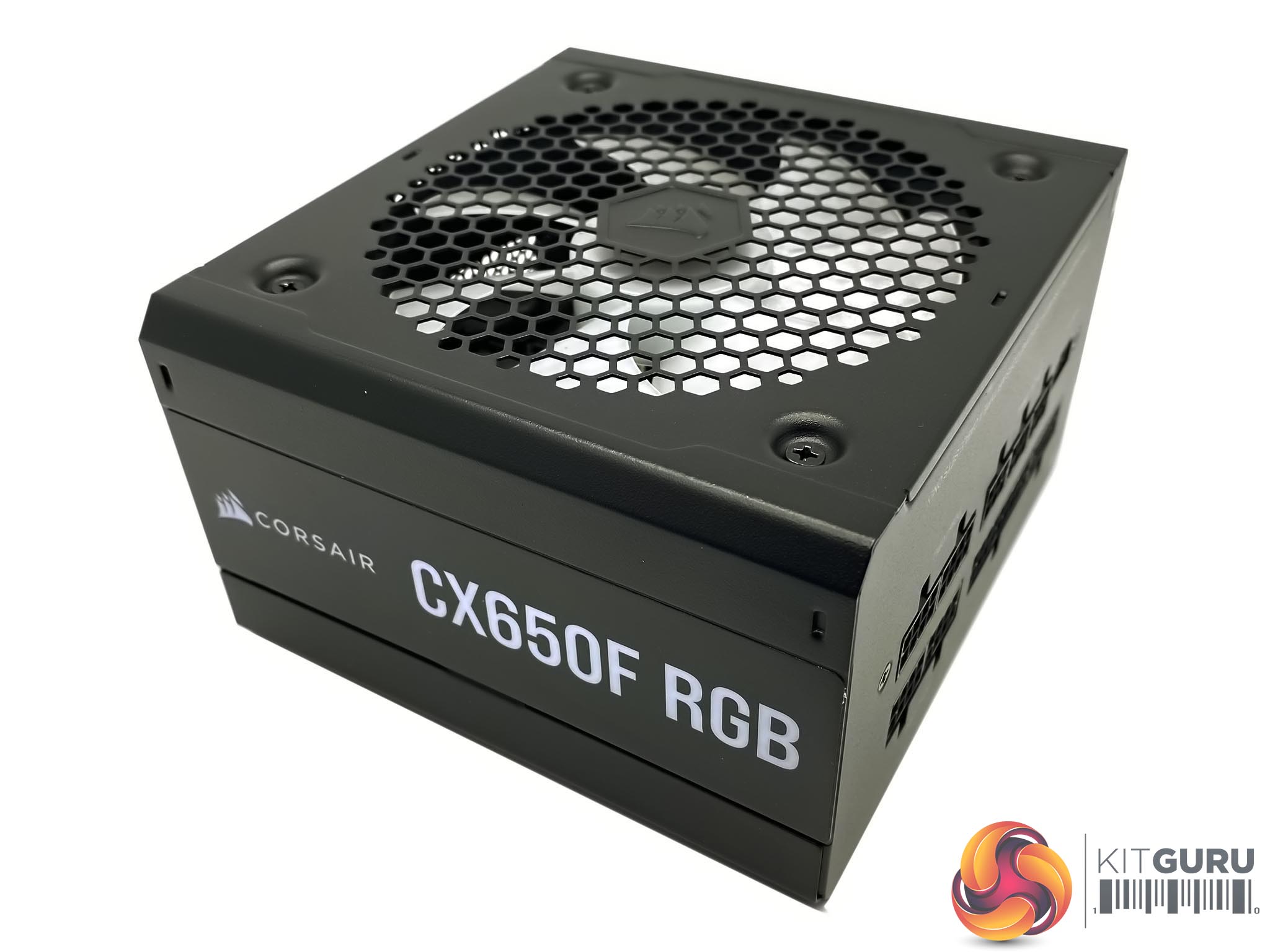
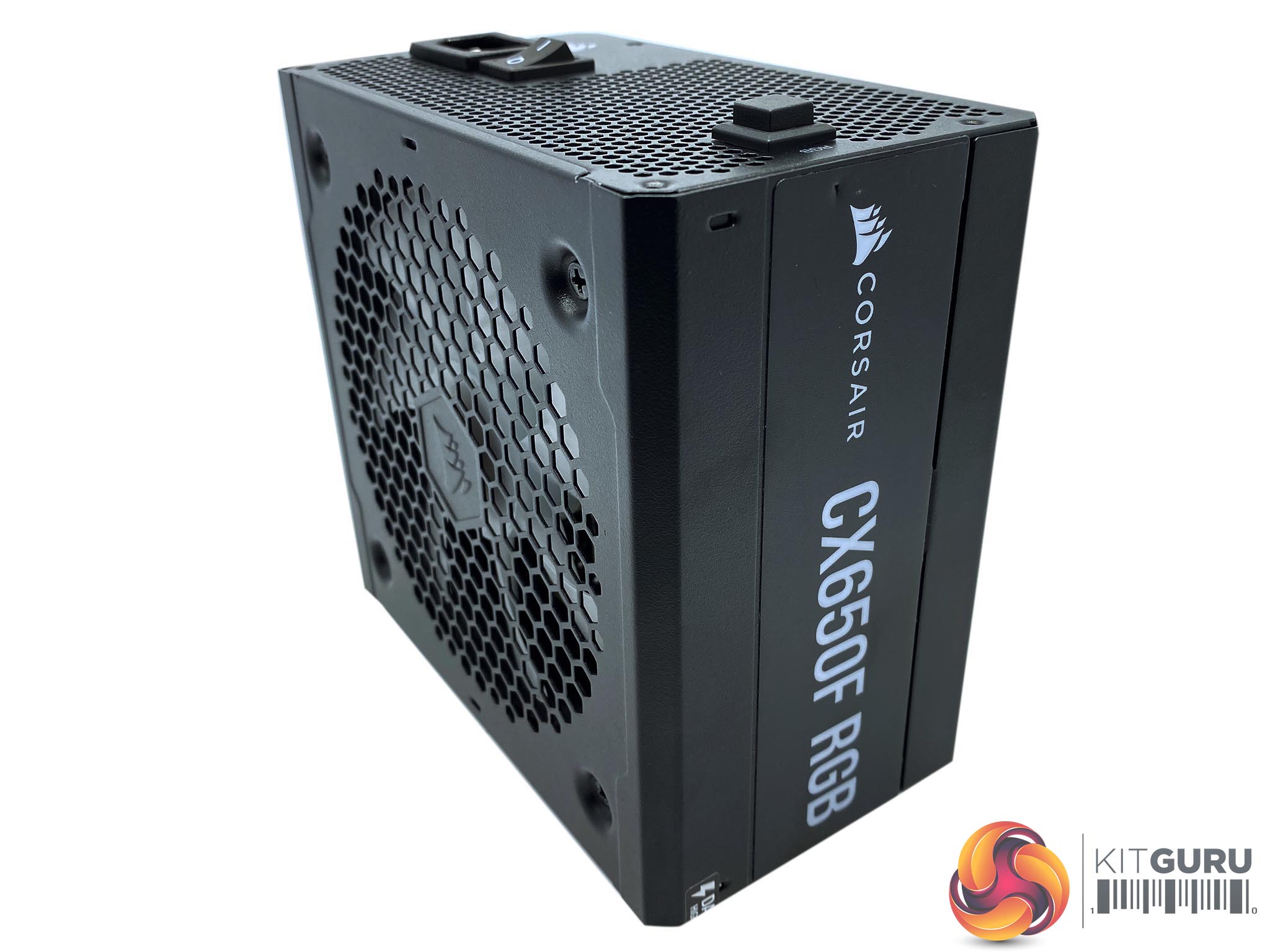
The Corsair CX650F is finished to decent standards – thankfully there are no ultra bright yellow stickers in line with the box artwork. The name of the supply is subtly listed along the sides of the chassis.
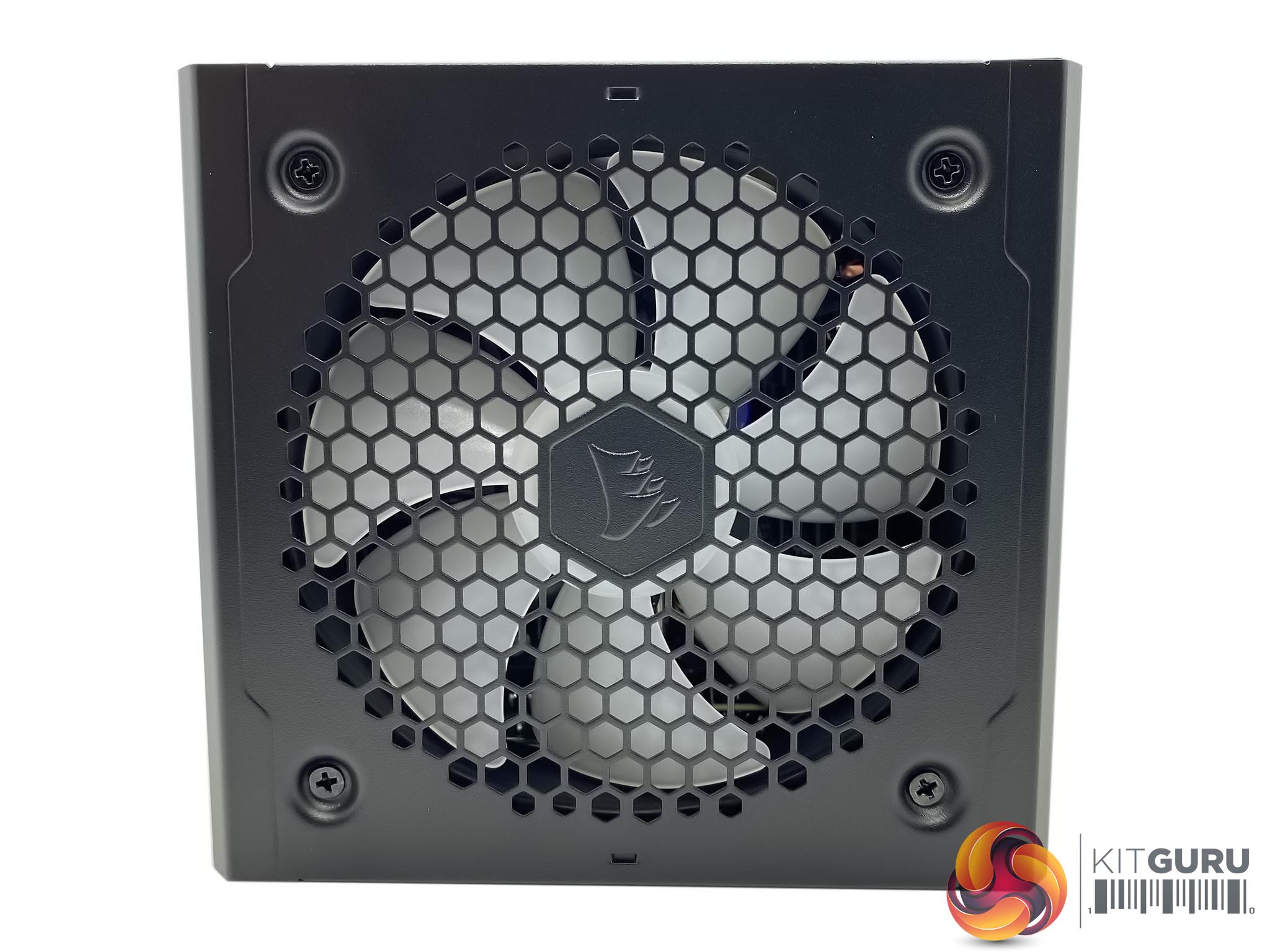
A large RGB fan is showcased behind a metal grill on the top of the unit. We will take a closer look at this when we open it up later.
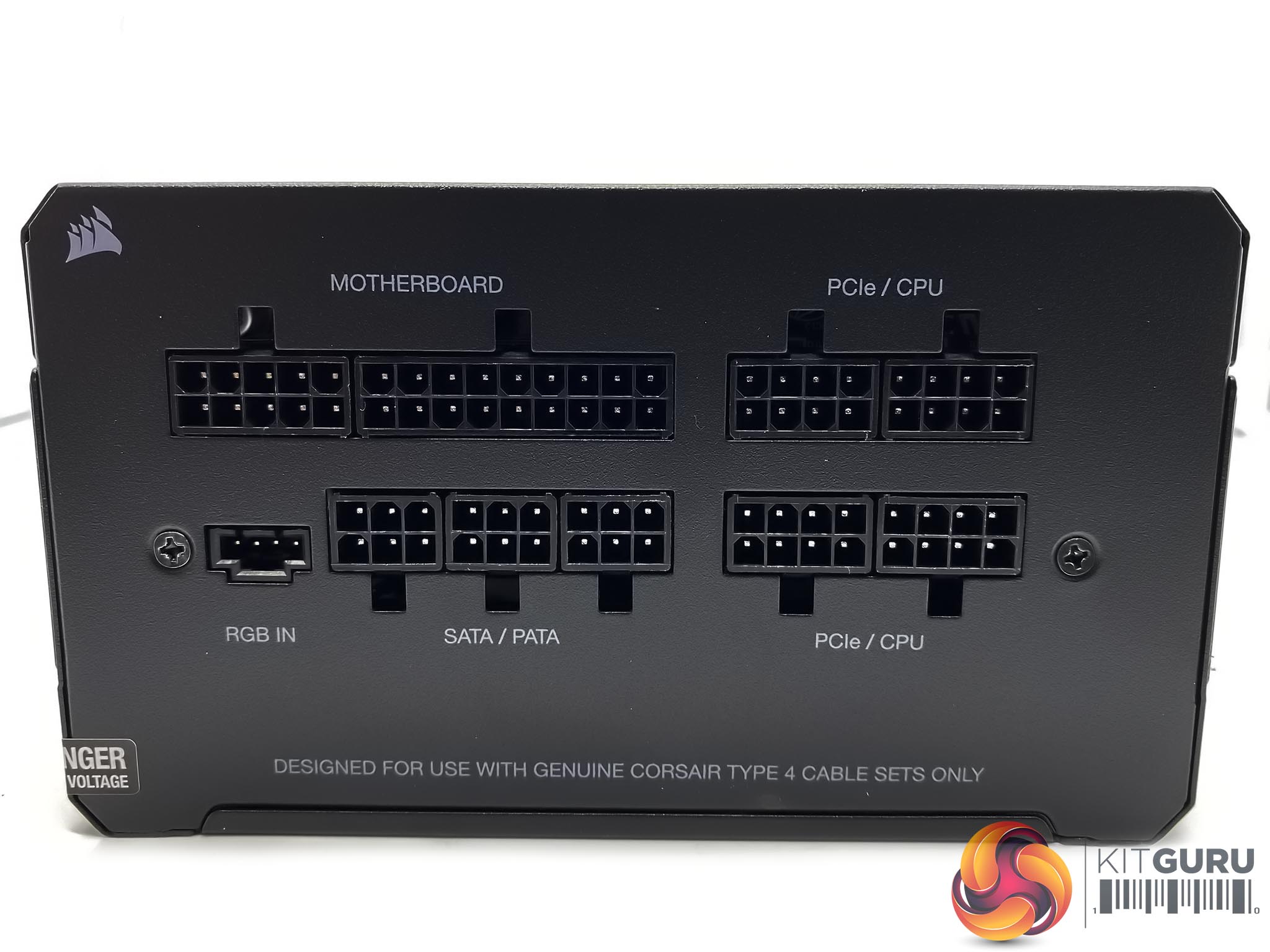
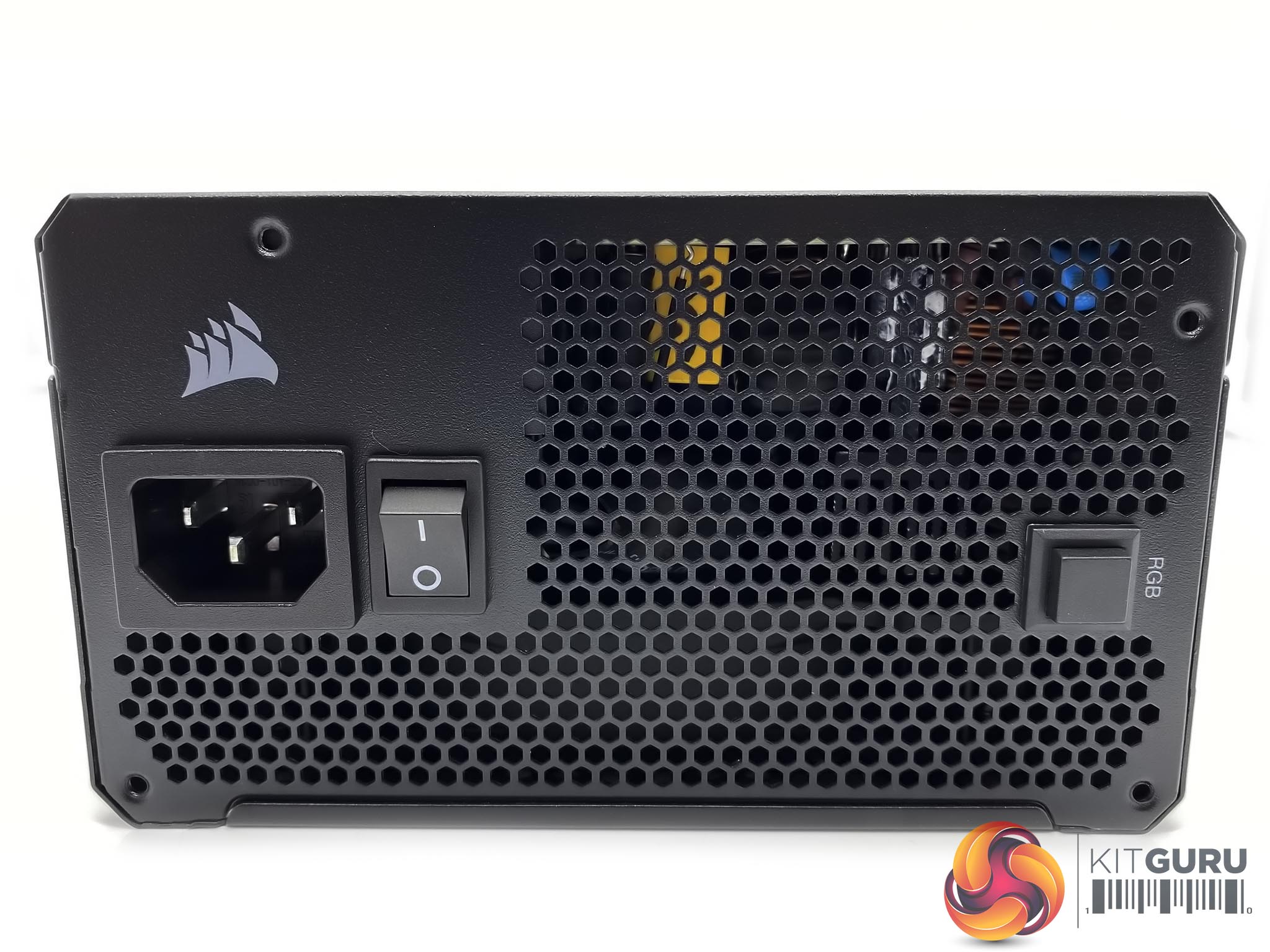
One side of the supply is home to the modular bay which is clearly labelled. There is also a header for the RGB cable. This is ARGB supported and controllable in iCUE with Windows 10 operating system. According to Corsair you can manually control RGB with the RGB button which is on the other side, along with a power connector and power button.
You can cycle through lighting modes with this button if you do not have an ARGB cable motherboard (or don't want to install the software). You hold the RGB button down for three seconds to switch between lighting modes and a short press will let you cycle through colours if the mode is not rainbow.
Modes:
- Rainbow Wave
- Rainbow
- Rainbow breathe
- Rainbow Blink
- Sequential
- Solid
- Single Blink
- Pulse
A final push will turn RGB off completely, if you so wish.
I am not going to get into the RGB fan colour adjustments within this technical written review today, we plan on getting another unit from Corsair to one of our YouTube team in the coming weeks for feature in a build video.
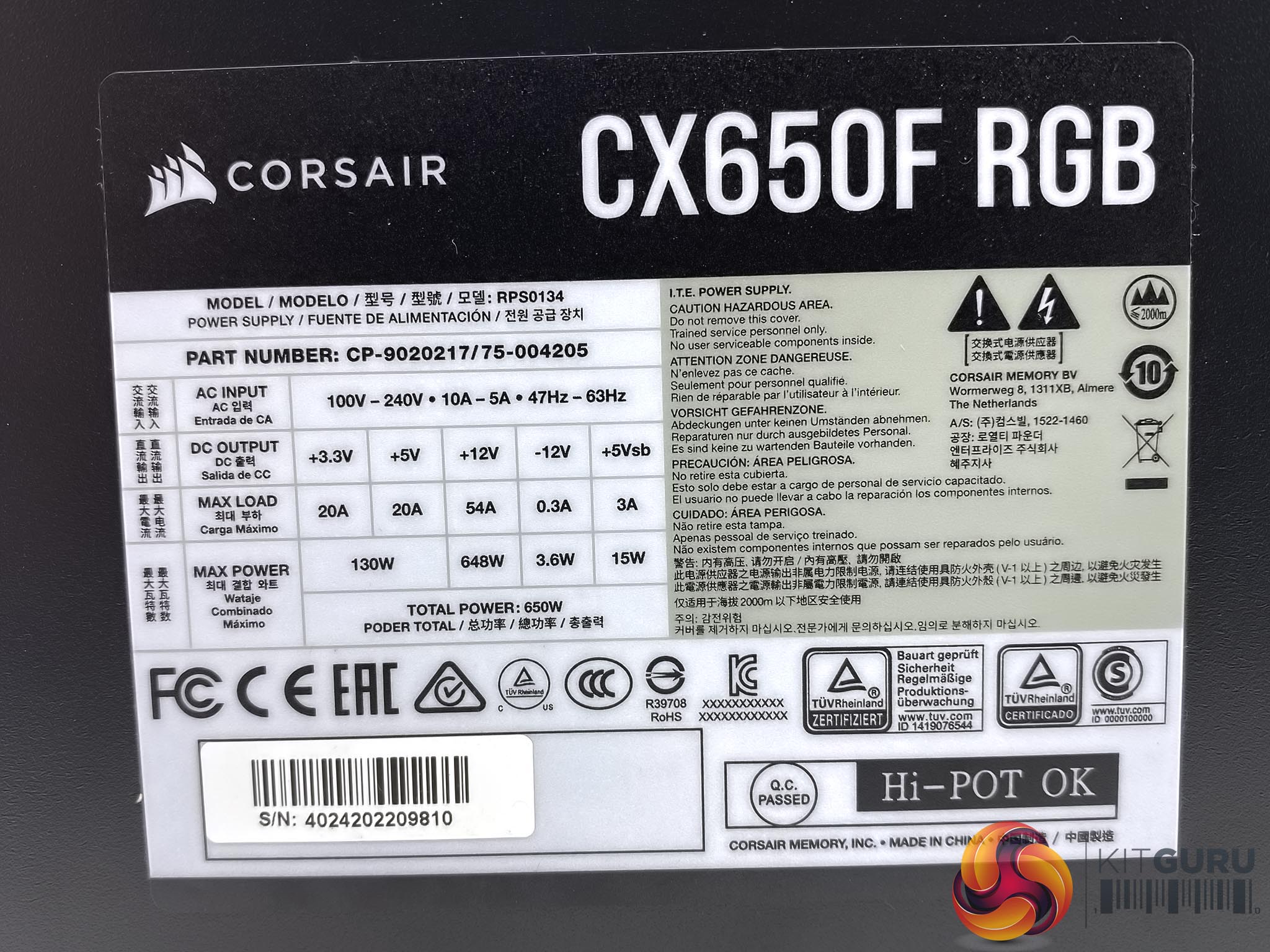
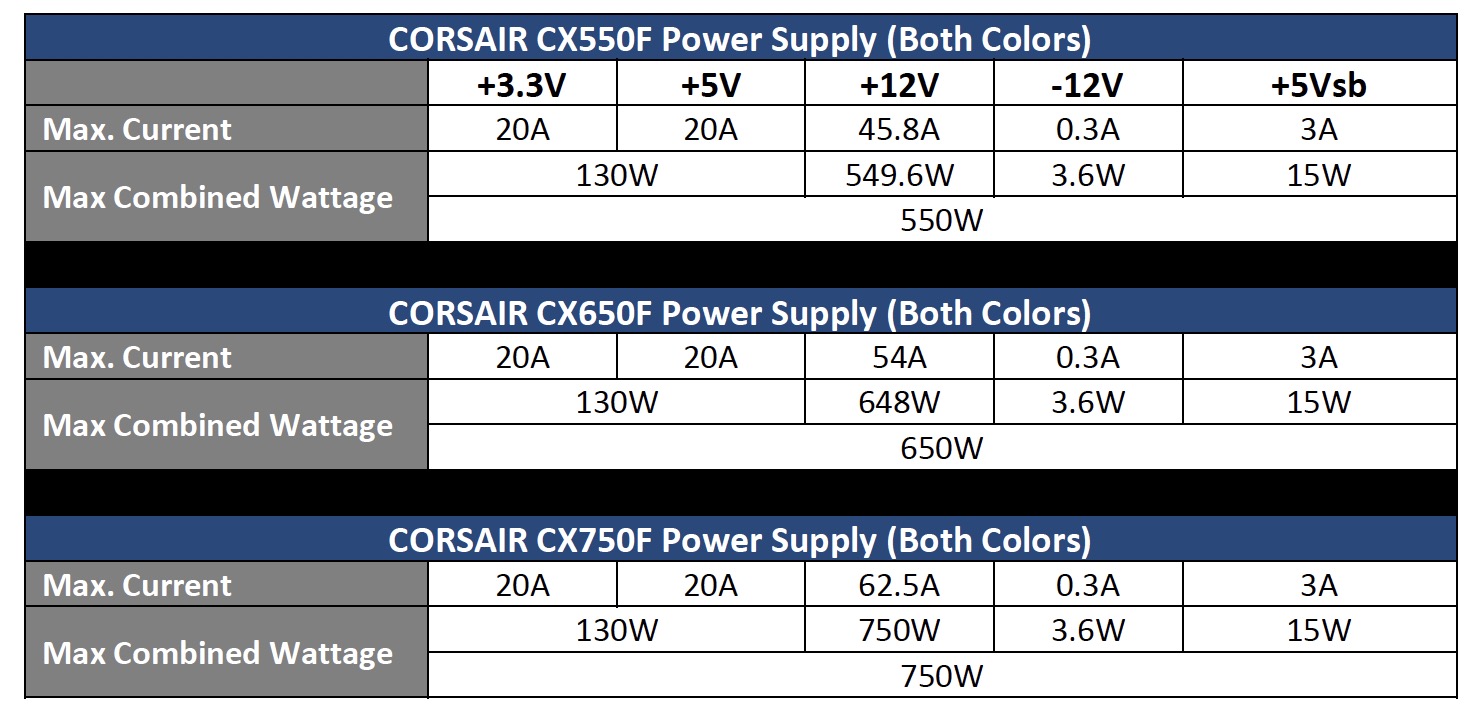
The CX650F model we review today is capable of delivering 54A to the +12V rail for 648W of the total output.
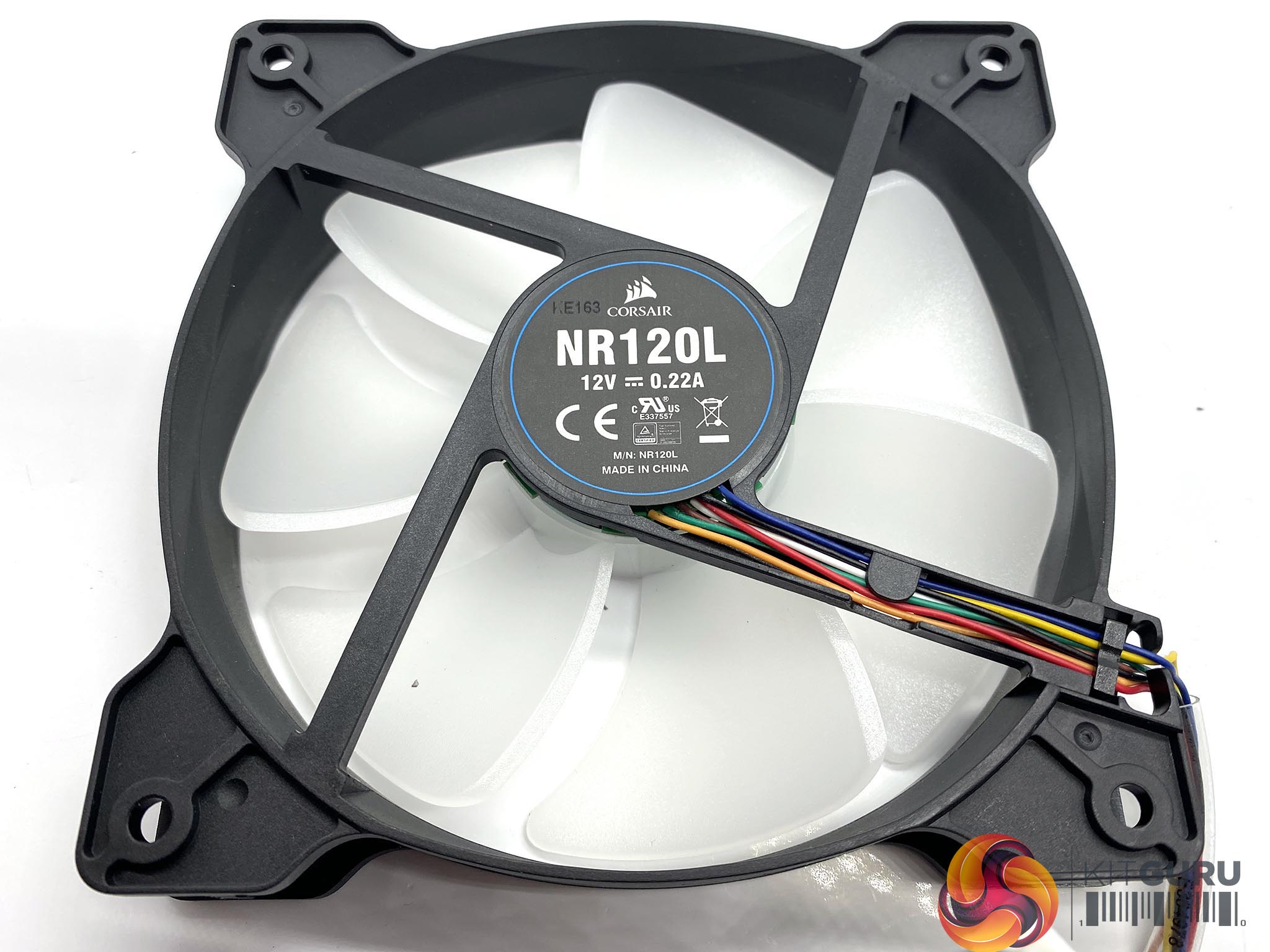
Corsair are using an NR120L (120mm) fan in this supply. Its a seven blade rifle bearing model with a 50,000 hour life rating. Rated 12V 0.22A. These are not a widely sold fan, but if you look hard you can find them online for around AUS$18 (approx. £9.80).
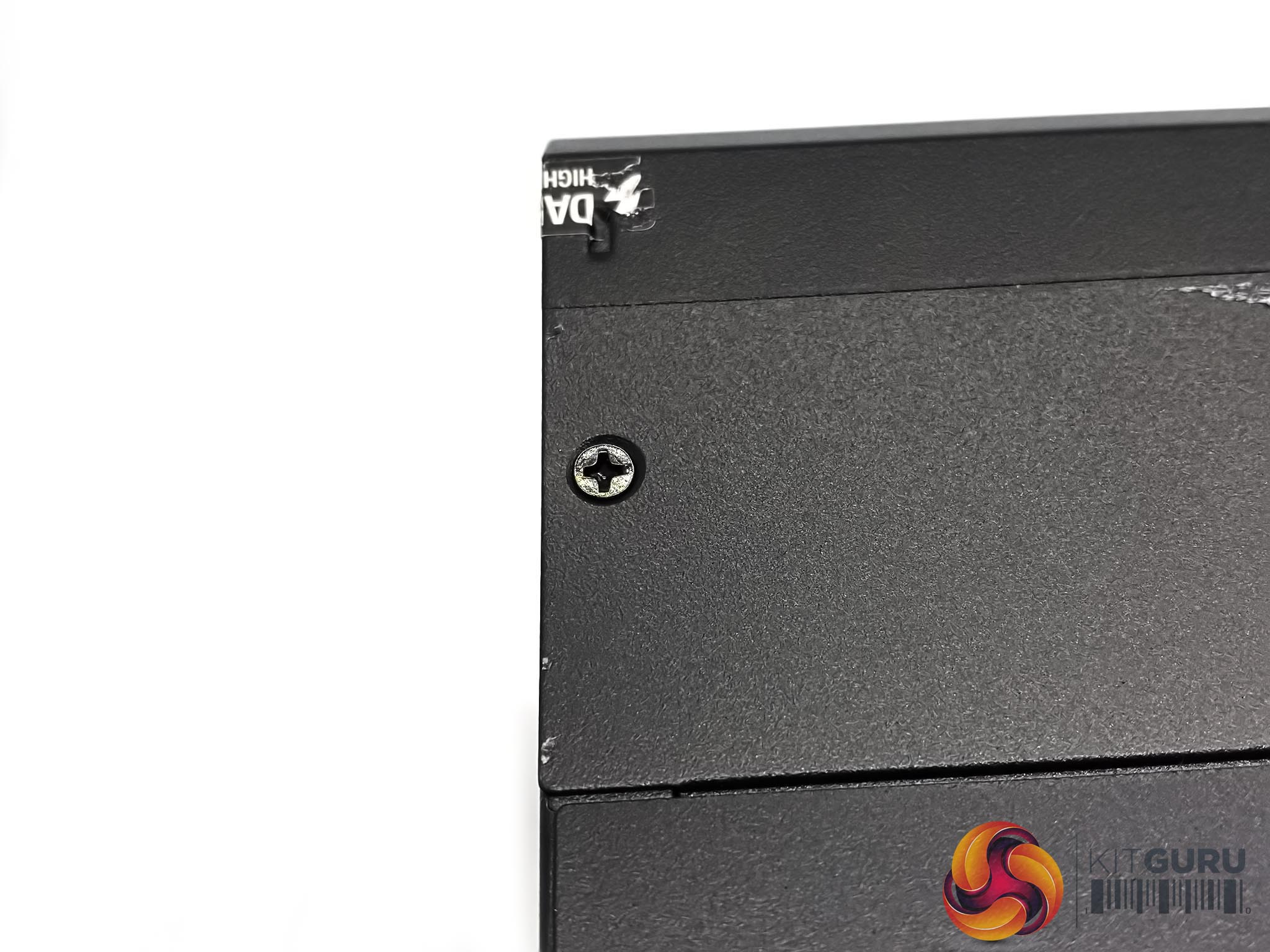
Corsair really do not want you opening this power supply – some of the screws are hidden under the product stickers on the sides, so you have to basically trash the whole unit to get inside it. I did that for you.
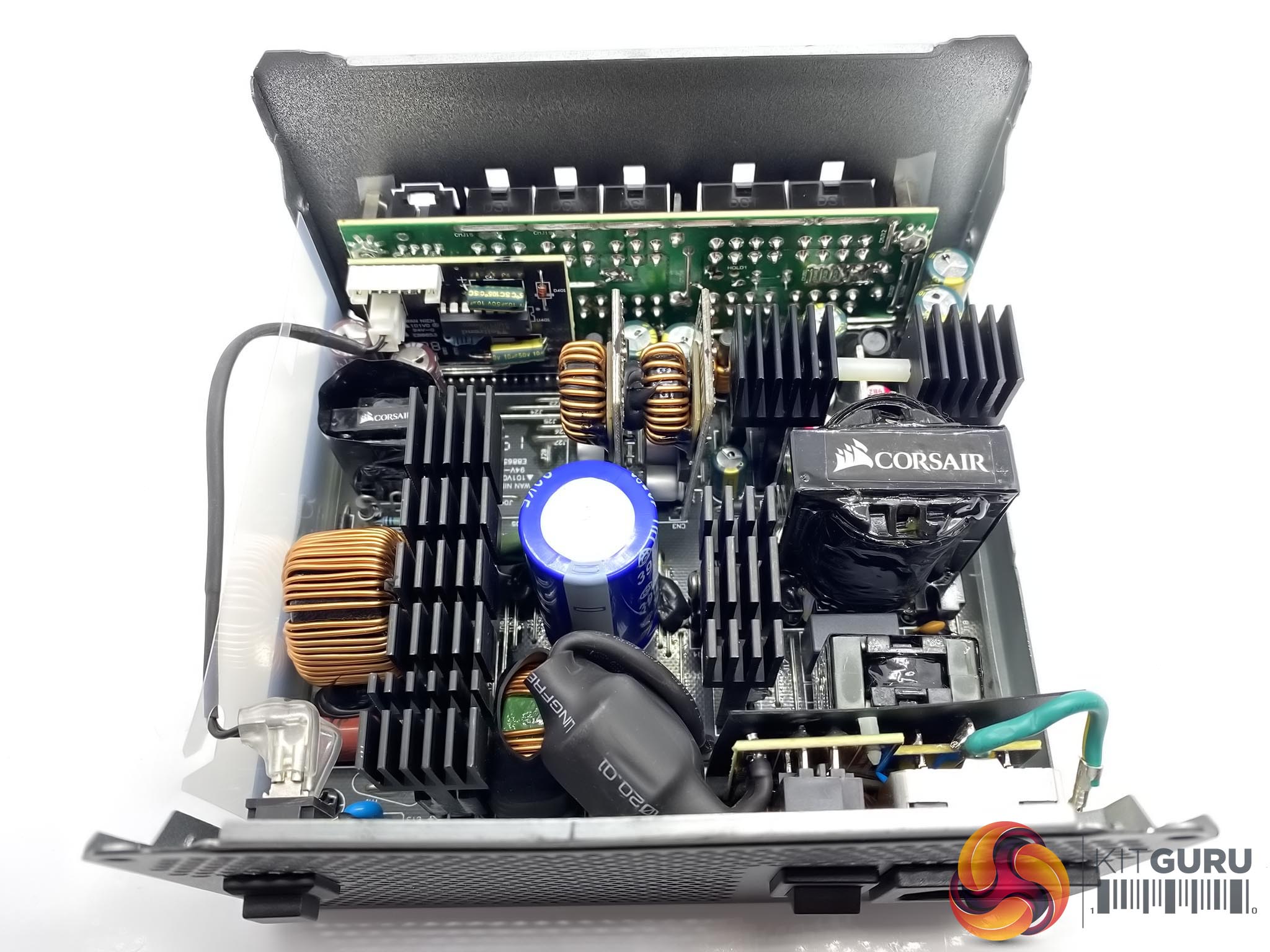
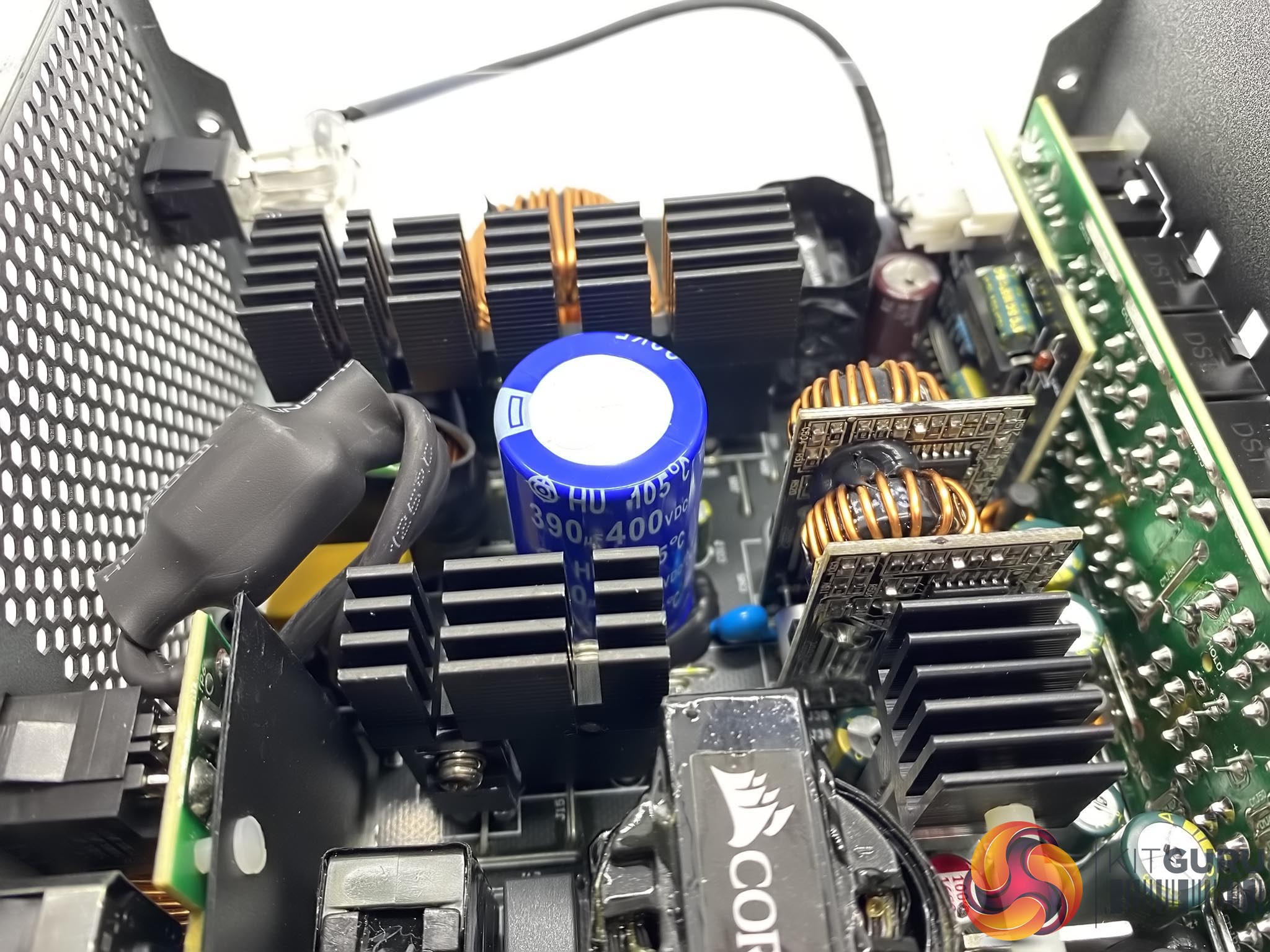
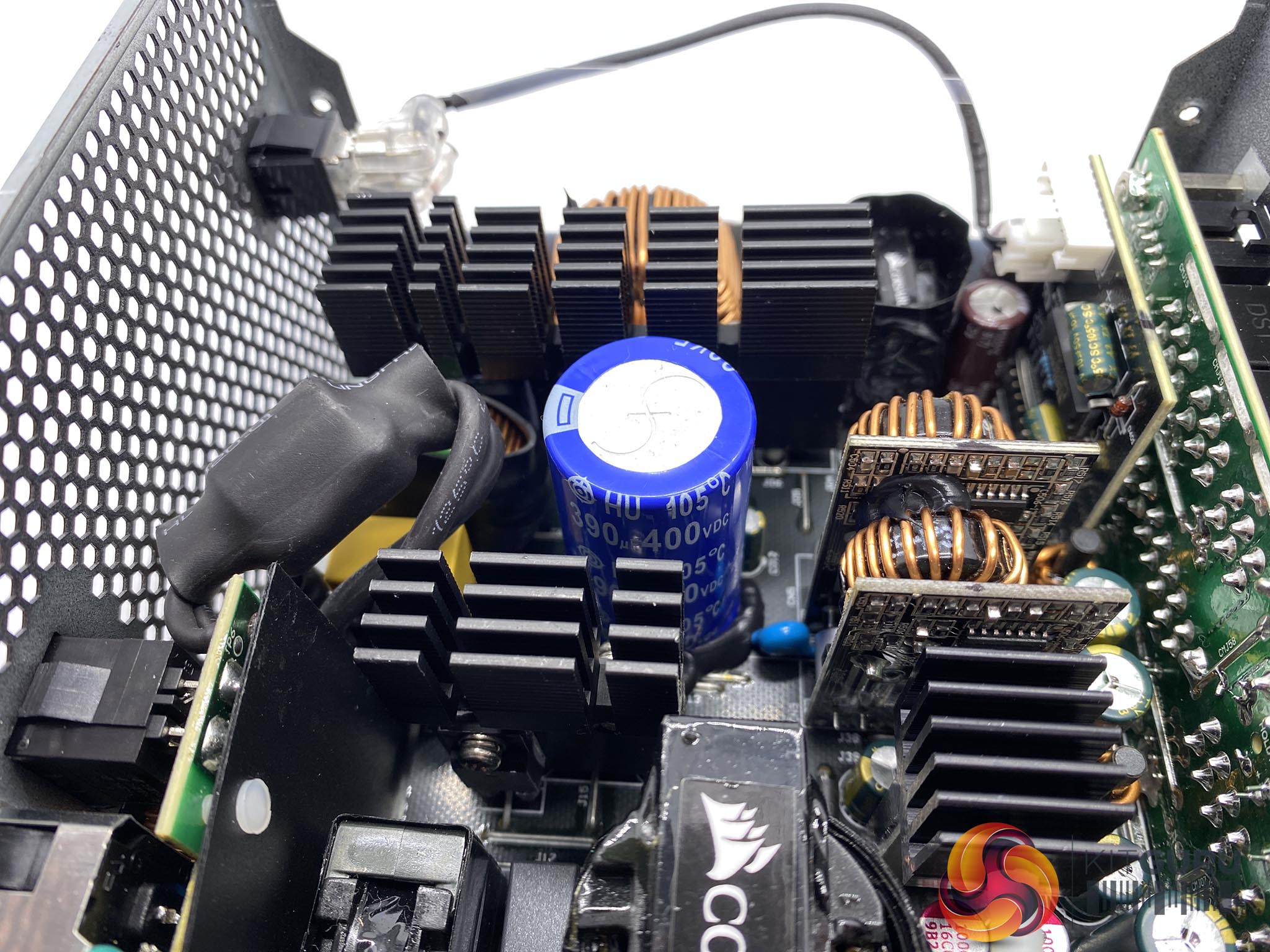
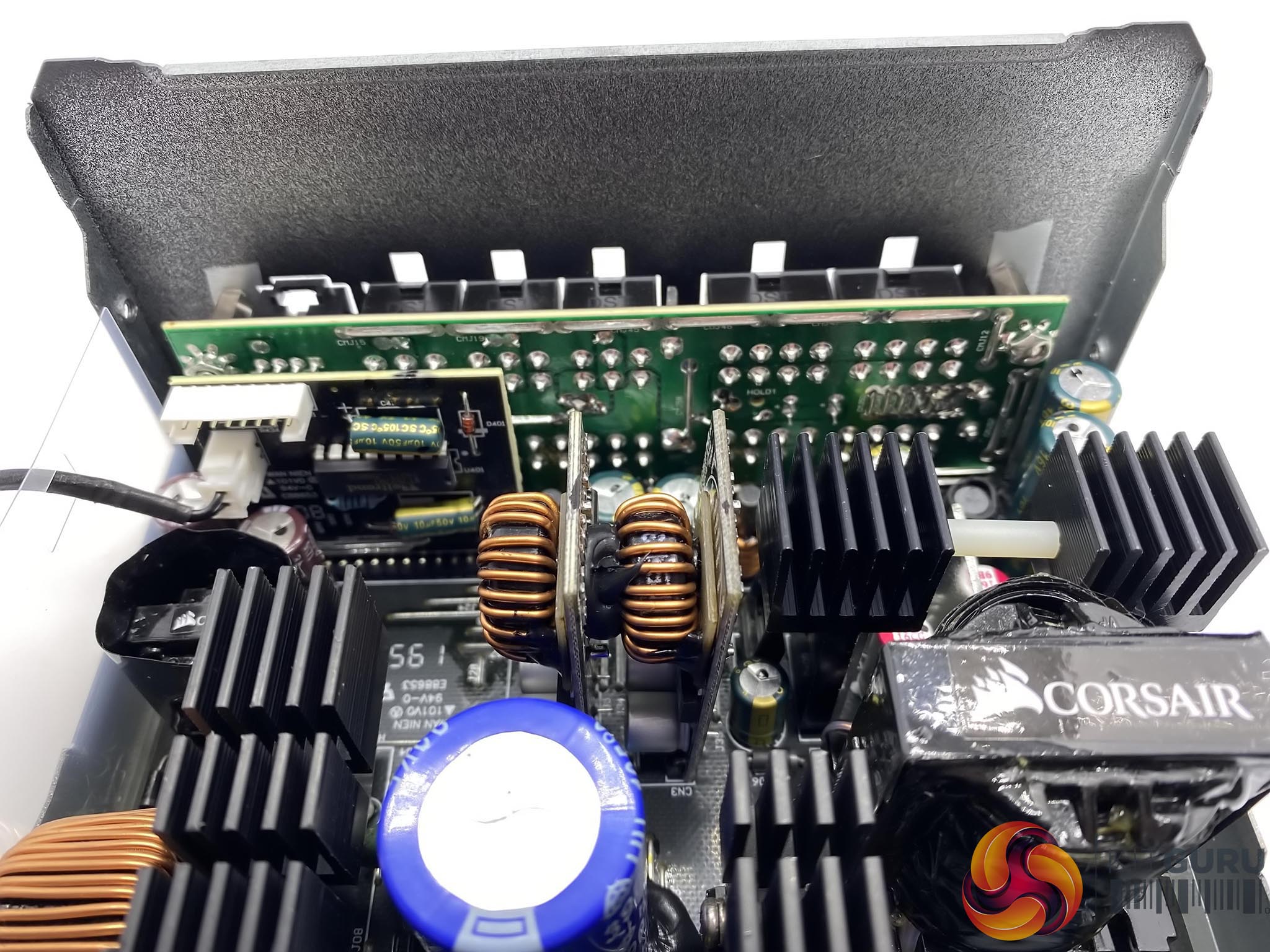
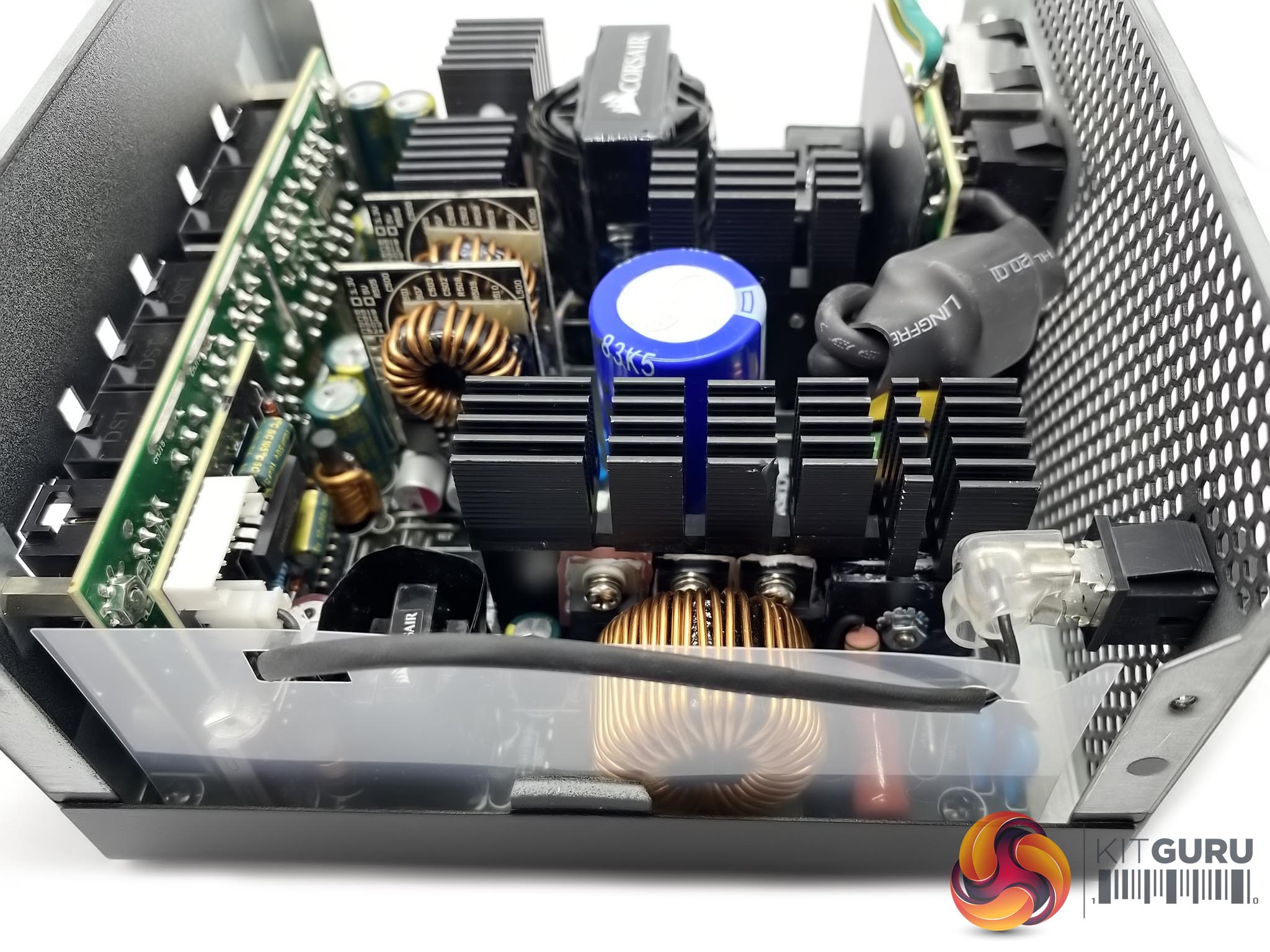
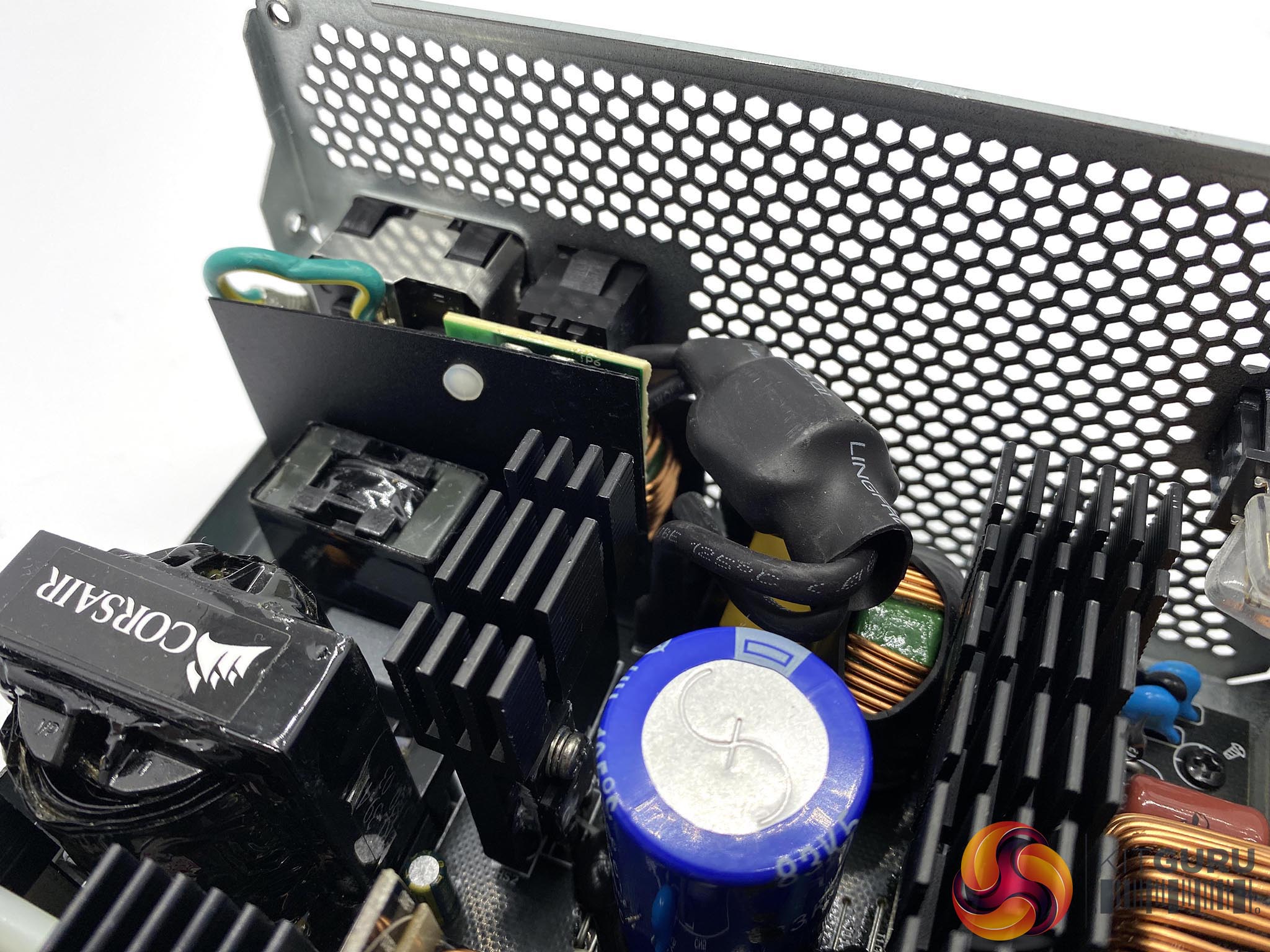
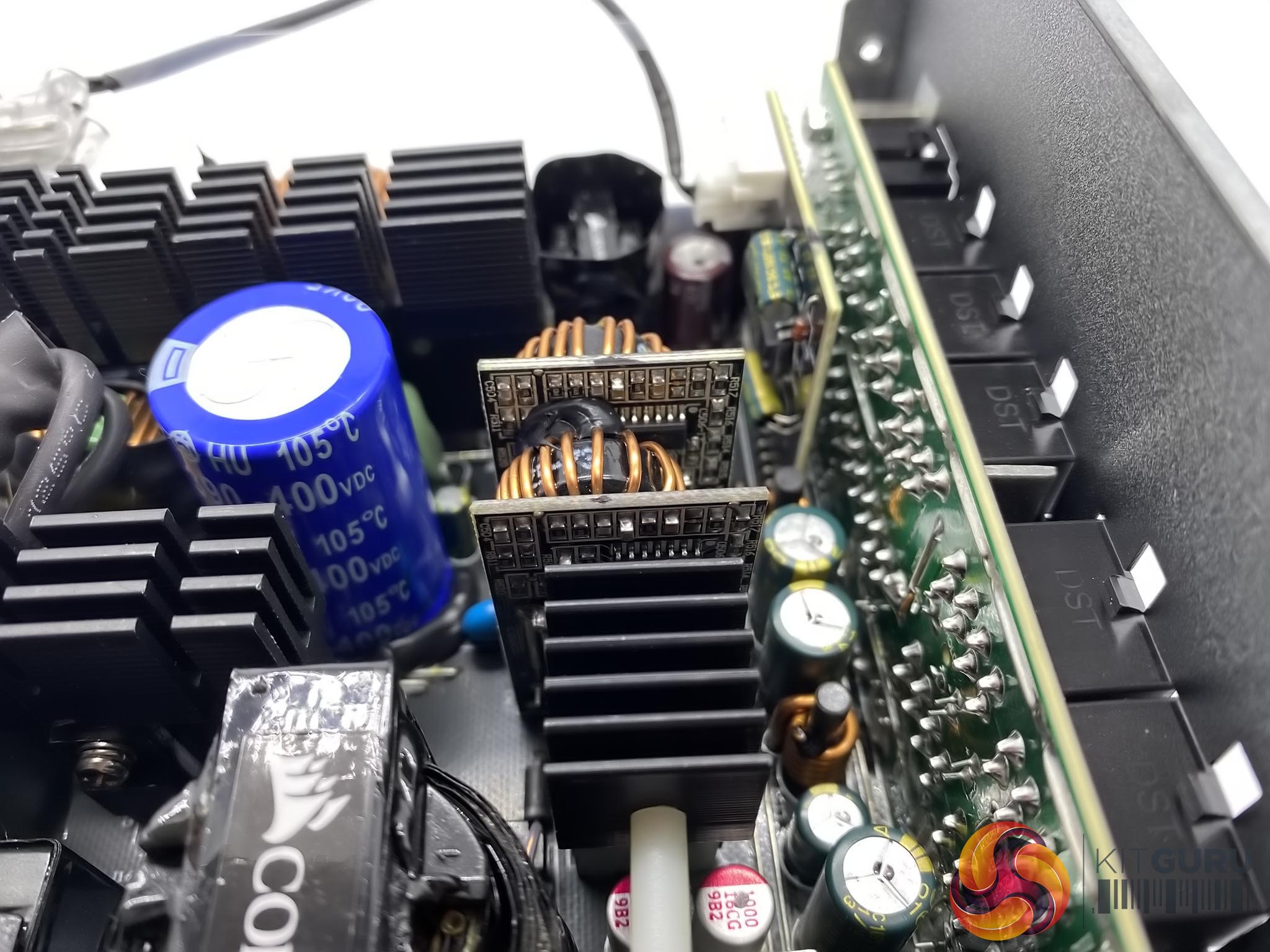
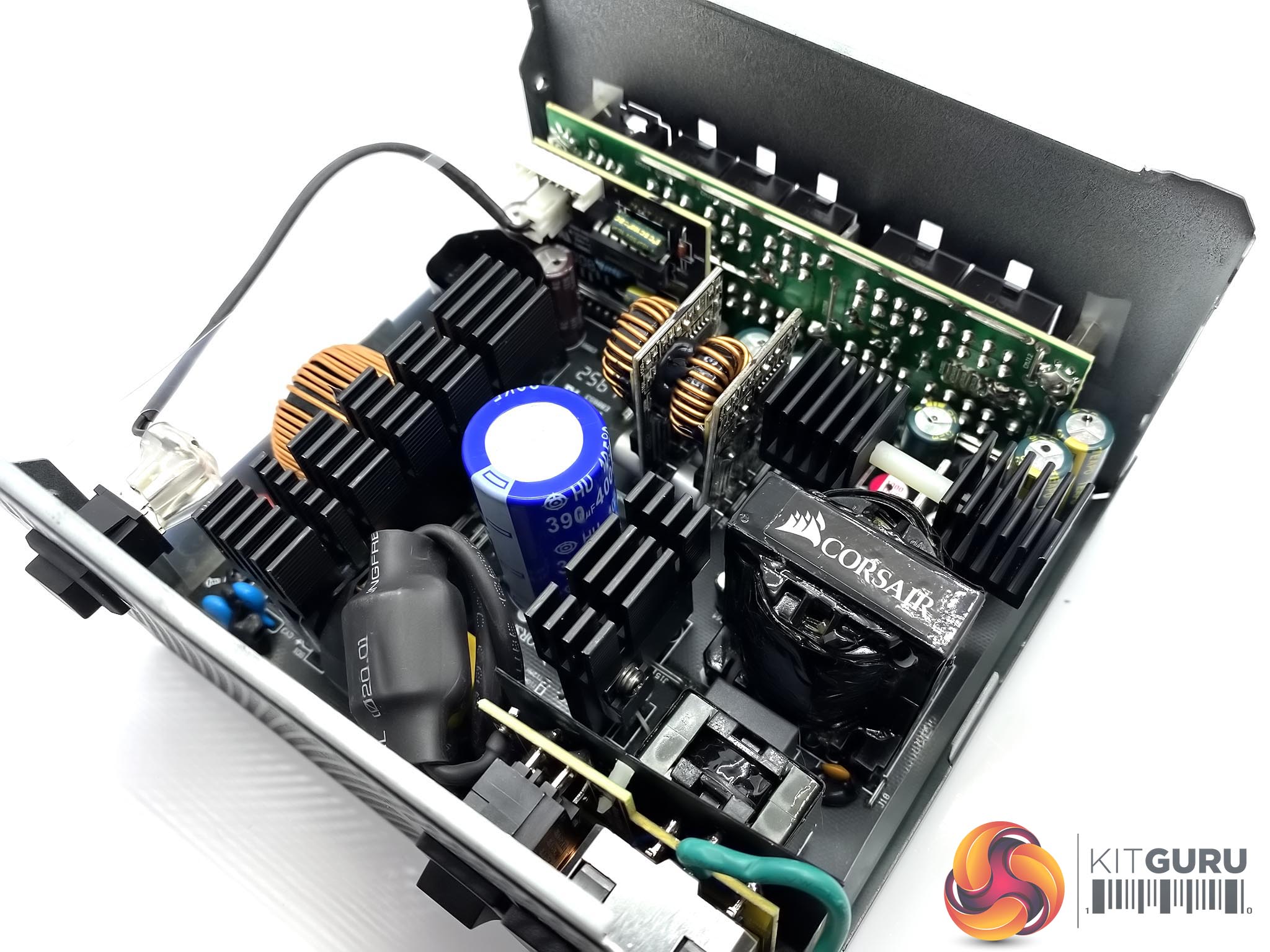
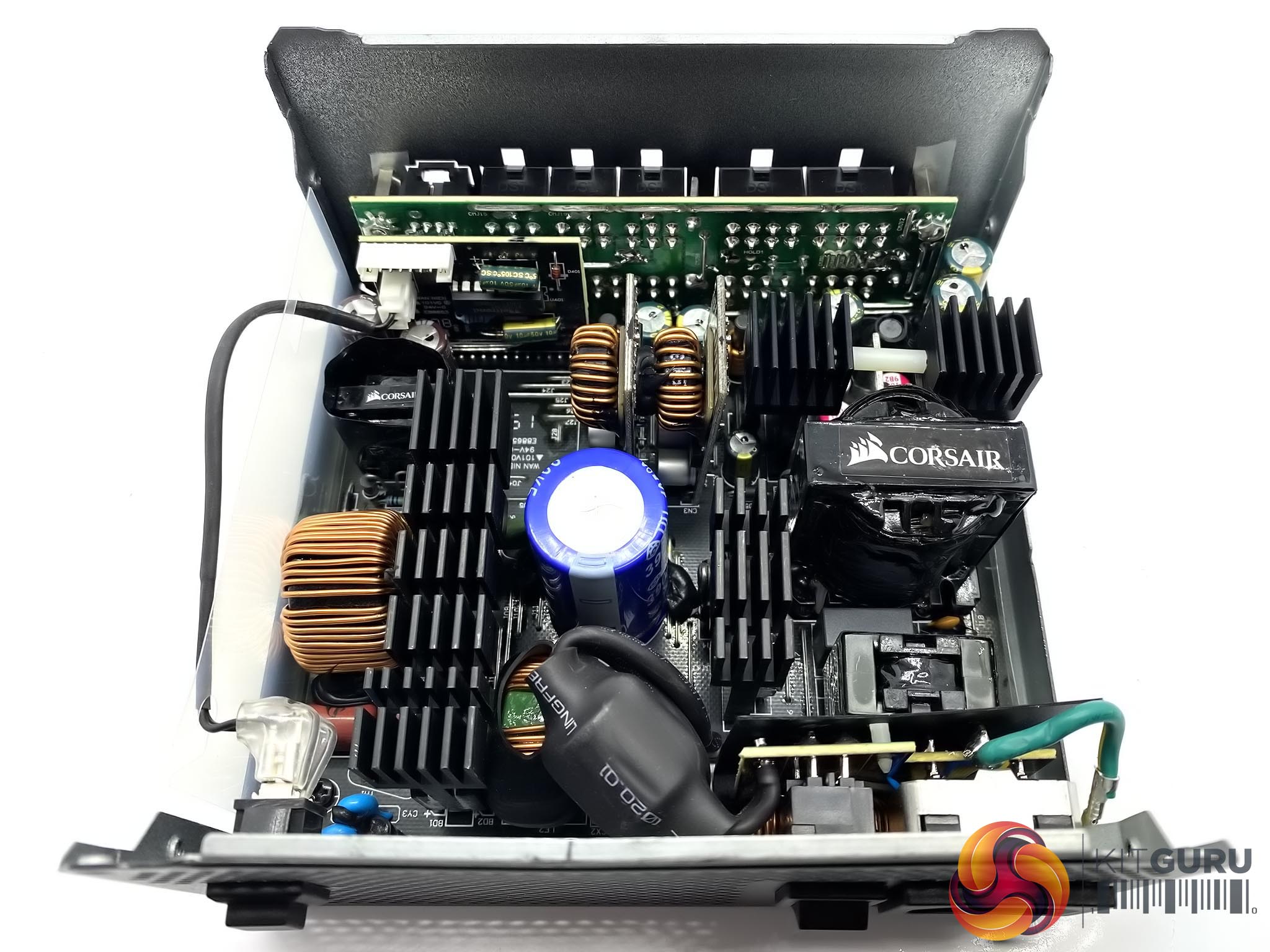
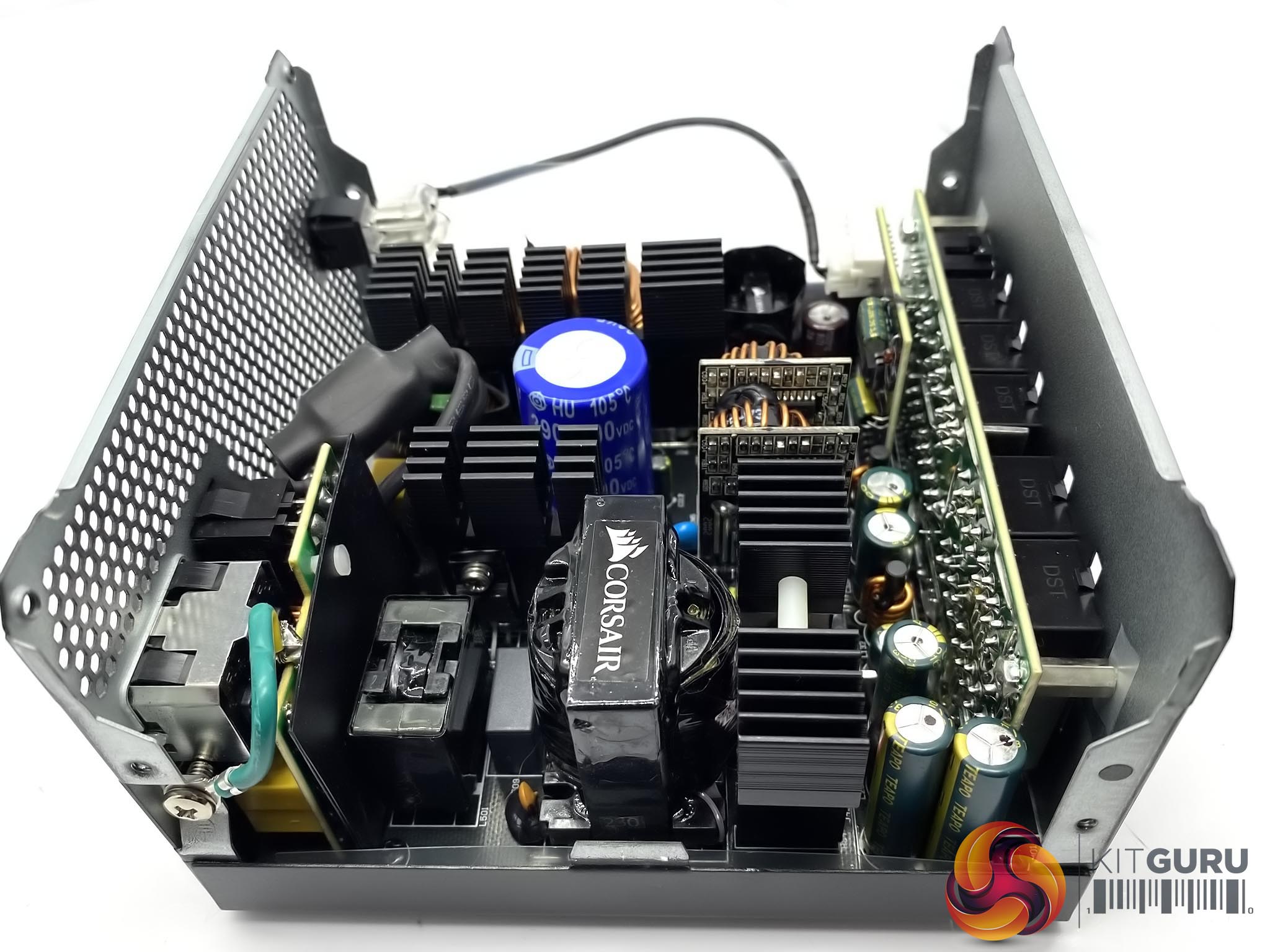
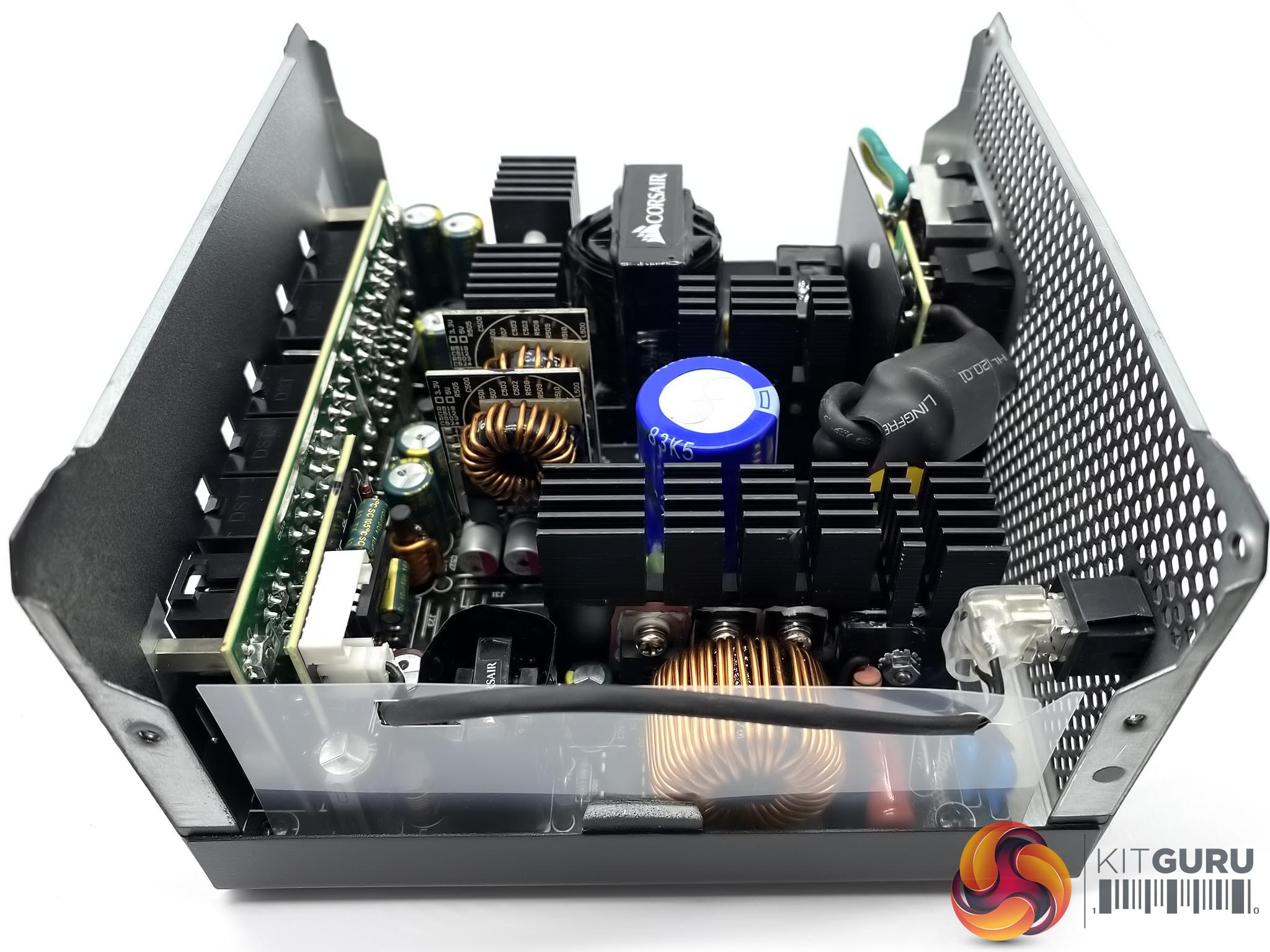
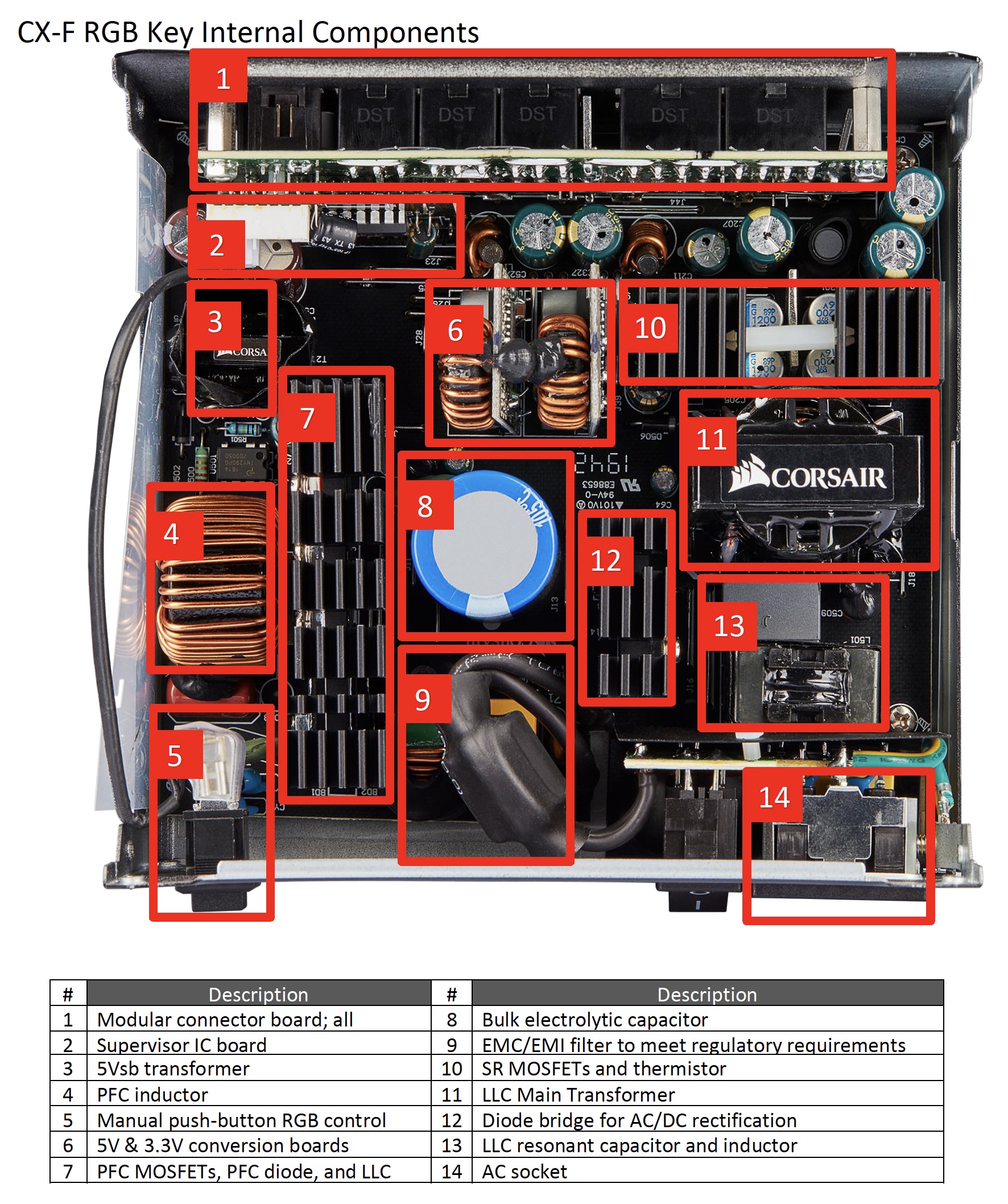
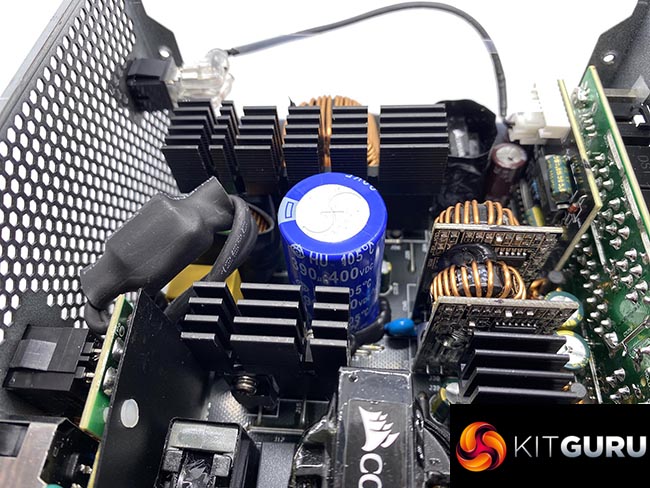
Corsair have partnered up with HEC for this unit. This is a half bridge topology with an LLC resonant converter. We are happy to see Corsair using a 105c rated Japanese capacitor in the primary stage , rated 390uF at 400V. The electrolytic filtering caps on the secondary side are supplied by TEAPO. Soldering quality throughout is really good. There is a pair of bridge rectifiers capable of handling 16 amperes of current.
The unit has OCP, OPP, OTP, OVP, SCP and UVP protection built into it.
We often see capacitors rated around 320uF in lower priced 650W units from the likes of FSP and others, so Corsair have opted for a slightly better solution in this unit. There are several rows of heatsinks across key components to ensure adequate cooling.
Correctly testing power supplies is a complex procedure and KitGuru have configured a test bench which can deliver up to a 2,000 watt DC load. We run at 35c in our environment to greater reflect warmer internal chassis conditions.
We use combinations of the following hardware:
• SunMoon SM-268
• CSI3710A Programmable DC load (+3.3V and +5V outputs)
• CSI3711A Programmable DC load (+12V1, +12V2, +12V3, and +12V4)
• Extech Power Analyzer
• Extech MultiMaster MM570 digital multimeter
• Extech digital sound level meter
• Digital oscilloscope (20M S/s with 12 Bit ADC)
• Variable Autotransformer, 1.4 KVA
We test in a single +12V configuration.
|
DC Output Load Regulation
|
||||||||||
|
Combined DC Load |
+3.3V
|
+5V
|
+12V
|
+5VSB
|
-12V | |||||
|
A
|
V
|
A
|
V
|
A
|
V
|
A
|
V
|
A | V | |
|
65W
|
0.92
|
3.32
|
0.88
|
5.00
|
4.42
|
12.04 |
0.50
|
5.02
|
0.20
|
-12.02
|
|
130W
|
1.63
|
3.32
|
1.65
|
5.00
|
9.18
|
12.02
|
0.50
|
5.01
|
0.20
|
-12.01
|
|
325W
|
2.93
|
3.31
|
3.00
|
5.00
|
24.25
|
12.00 |
1.50
|
5.01
|
0.20
|
-12.01
|
| 490W |
4.04
|
3.31
|
4.10
|
4.99
|
36.90
|
11.96
|
2.00
|
5.00 |
0.30
|
-12.01
|
|
650W
|
5.00
|
3.30
|
5.30
|
4.98
|
49.67
|
11.93
|
2.50
|
4.99
|
0.30
|
-12.00
|
Load regulation is pretty good across the board.
| Corsair CX650F RGB | Maximum Load |
| 692 watts |
We managed to get the PSU to deliver 692 Watts before it would shut down, delivering just over 40 Watts more than the rated specifications.
Next we want to try Cross Loading. This basically means loads which are not balanced. If a PC for instance needs 500W on the +12V outputs but something like 30W via the combined 3.3V and +5V outputs then the voltage regulation can fluctuate badly.
| Cross Load Testing | +3.3V | +5V | +12V | -12V | +5VSB | |||||
| A | V | A | V | A | V | A | V | A | V | |
| 590W | 1.0 | 3.32 | 1.0 | 5.00 | 48.0 | 11.90 | 0.2 | -12.02 | 0.50 | 5.00 |
| 145W | 12.0 | 3.27 | 15.0 | 4.98 | 2.0 | 12.04 | 0.2 | -12.01 | 0.50 | 5.01 |
The unit passed our cross load test, but there was quite a noticeable swing across both +5V and +12V rails.
We then used an oscilloscope to measure AC ripple and noise present on the DC outputs. We set the oscilloscope time base to check for AC ripple at both high and low ends of the spectrum. ATX12V V2.2 specification for DC output ripple and noise is defined in the ATX 12V power supply design guide.
|
ATX12V Ver 2.2 Noise/Ripple Tolerance
|
|
|
Output
|
Ripple (mV p-p)
|
|
+3.3V
|
50
|
|
+5V
|
50
|
|
+12V1
|
120
|
|
+12V2
|
120
|
|
-12V
|
120
|
|
+5VSB
|
50
|
Obviously when measuring AC noise and ripple on the DC outputs the cleaner (less recorded) means we have a better end result. We measured this AC signal amplitude to see how closely the unit complied with the ATX standard.
| AC Ripple (mV p-p) | ||||
| DC Load | +3.3V | +5V | +12V | 5VSB |
| 152W | 10 | 10 | 10 | 10 |
| 270W | 10 | 10 | 25 | 10 |
| 400W | 10 | 15 | 35 | 10 |
| 523W | 15 | 15 | 40 | 15 |
| 650W | 20 | 25 | 45 | 20 |
Ripple suppression is quite good, hitting 20mV and 25mV on the +3.3V and +5V rails respectively at full load. The +12V rail hit 45mV at full load, well within industry rated specifications.
|
Efficiency (%)
|
|
|
152W
|
83.4
|
|
270W
|
85.8
|
|
400W
|
85.2
|
|
523W
|
84.5
|
|
650W
|
83.6
|
Efficiency peaked at just over 85%, falling to 83.6% at full load. Solid results for an 80 Plus Bronze unit.
We take the issue of noise very seriously at KitGuru and this is why we have built a special home brew system as a reference point when we test noise levels of various components. Why do this? Well this means we can eliminate secondary noise pollution in the test room and concentrate on components we are testing. It also brings us slightly closer to industry standards, such as DIN 45635.
Today to test the Power Supply we have taken it into our acoustics room environment and have set our SkyTronic DSL 2 Digital Sound Level Meter (6-130dBa) one meter away from the unit. We have no other fans running so we can effectively measure just the noise from the unit itself.
As this can be a little confusing for people, here are various dBa ratings in with real world situations to help describe the various levels.
KitGuru noise guide
10dBA – Normal Breathing/Rustling Leaves
20-25dBA – Whisper
30dBA – High Quality Computer fan
40dBA – A Bubbling Brook, or a Refrigerator
50dBA – Normal Conversation
60dBA – Laughter
70dBA – Vacuum Cleaner or Hairdryer
80dBA – City Traffic or a Garbage Disposal
90dBA – Motorcycle or Lawnmower
100dBA – MP3 Player at maximum output
110dBA – Orchestra
120dBA – Front row rock concert/Jet Engine
130dBA – Threshold of Pain
140dBA – Military Jet takeoff/Gunshot (close range)
160dBA – Instant Perforation of eardrum
|
Noise (dBA)
|
|
|
152W
|
31.3
|
|
270W
|
33.4
|
|
400W
|
35.8
|
|
523W
|
37.7
|
| 650W | 39.6 |
Noise levels are not really noticeable until around 450 Watts are demanded from the unit. The fan quickly starts to spin up to compensate for rising temperatures inside the chassis. At around 500 Watts load the fan ramps up, generating around 37dBa. Corsair are clearly ensuring adequate airflow inside the chassis due to lower efficiency levels.
|
Temperature (c)
|
||
|
Intake
|
Exhaust
|
|
|
152W
|
37
|
43
|
|
270W
|
40
|
47
|
|
400W
|
43
|
52
|
|
523W
|
46
|
57
|
|
650W
|
48
|
65
|
At full load we measured temperatures around 65c.
|
Maximum load
|
Efficiency
|
|
692 watts
|
83.0
|
At 692 Watts, the efficiency level measures 83%. Not a practical situation to be running 24/7, but worth noting.It has been a long time since I reviewed an 80 Plus Bronze rated power supply, so when Corsair offered me the CX650F I wasn't really expecting to be bowled over.
Corsair have worked with HEC to create a very capable unit, based around a modern design featuring a half bridge topology with an LLC resonant converter. Technically it doesn't exhibit any major weaknesses and overall performance is certainly pretty good.
Ripple suppression is worth noting, as the +3.3V and +5V rails peak at 20mV and 25mV respectively, with the +12V rail hitting 45mV at full load. Not class leading, but well within rated industry tolerance levels and better than we might expect at this price point.
The hot topic of conversation with our audience will be the RGB capability – but let's be honest, Corsair have always been at the forefront of RGB releases, so it makes sense for them to cater to the enthusiast audience demanding even more RGB in a new build. At this point it is clear to me that RGB is not the fad that many hoped it would be. RGB products seem to sell very well for companies such as Corsair and Razer.
The five year warranty is certainly not close to the class leading 12 years offered by some competitors, but I think for the majority of people considering this unit, 5 years is enough to last a couple of system builds and upgrades. The fact it is fully modular will suit a wide audience wanting the cleanest possible build.
Corsair are using a quality Japanese primary capacitor, but have cut some costs by using lower grade TEAPO capacitors on the secondary side. They are clearly trying to achieve a certain price point while incorporating RGB features to appeal to a select audience, and for the most part we feel they have succeeded.

Corsair offer this power supply in both white and black versions – identically priced. You can get them both from Overclockers UK for £82.99 over HERE.
Discuss on our Facebook page HERE.
Pros:
- Corsair have nailed the RGB implementation.
- Good efficiency.
- White or black colour schemes at same price.
- Japanese primary capacitor.
- High build quality.
- Technically very capable.
- 5 year warranty.
- Fully modular.
Cons:
- Chinese secondary capacitors.
- Pricing could be a little better as it is still 80 Plus Bronze.
KitGuru says: This is a very capable power supply with customisable RGB features. For around £80 it's a solid purchase for a new mid-range system.