 KitGuru KitGuru.net – Tech News | Hardware News | Hardware Reviews | IOS | Mobile | Gaming | Graphics Cards


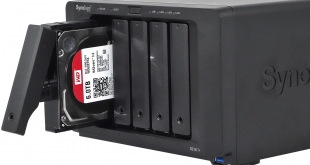
The last member of Synology's DiskStation Plus series of NAS drives we looked at was the 4-bay DS916+. This time we have the more business orientated DiskStation DS1517+, a quad core powered 5-bay NAS which has been designed to handle data intensive tasks such as on-the-fly encryption in the Workgroup & SMD market segments.
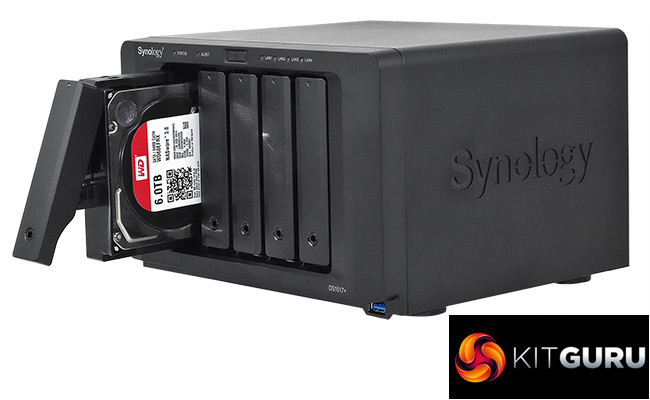
Synology's Plus series of NAS incorporates 2-bay to 12-bay desktop tower designs as well as 4-bay and 12-bay rack mounted units.
At the heart of the DS1517+ is an Intel Atom C2538 CPU running at 2.4GHz. The C2538 is a 22nm quad core processor with 2MB of cache and a TDP of 15W. Memory wise the DS1517+ comes pre-installed with either 2GB or 8GB of DDR3 and it was the latter version that Synology supplied for this review. Should you require more memory, the DS1517+ supports up to 16GB of memory via two SO-DIMM slots. There also four Gigabit Ethernet Ports that support Link Aggregation for faster network connections and failure protection.
Synology has also built in a degree of future proofing into the DS1517+ in the shape of a PCIe slot. This Gen 2 x8 slot (x4 link speed) PCIe slot currently supports Synology's M2D17 dual M.2 SATA adapter card or a 10GbE NIC.
Specifications
- Intel Atom 2.4GHz CPU
- 8GB Memory.
- AES-NI hardware-accelerated encryption.
- PCIe slot.
- 4 Gigabit Ethernet Ports.
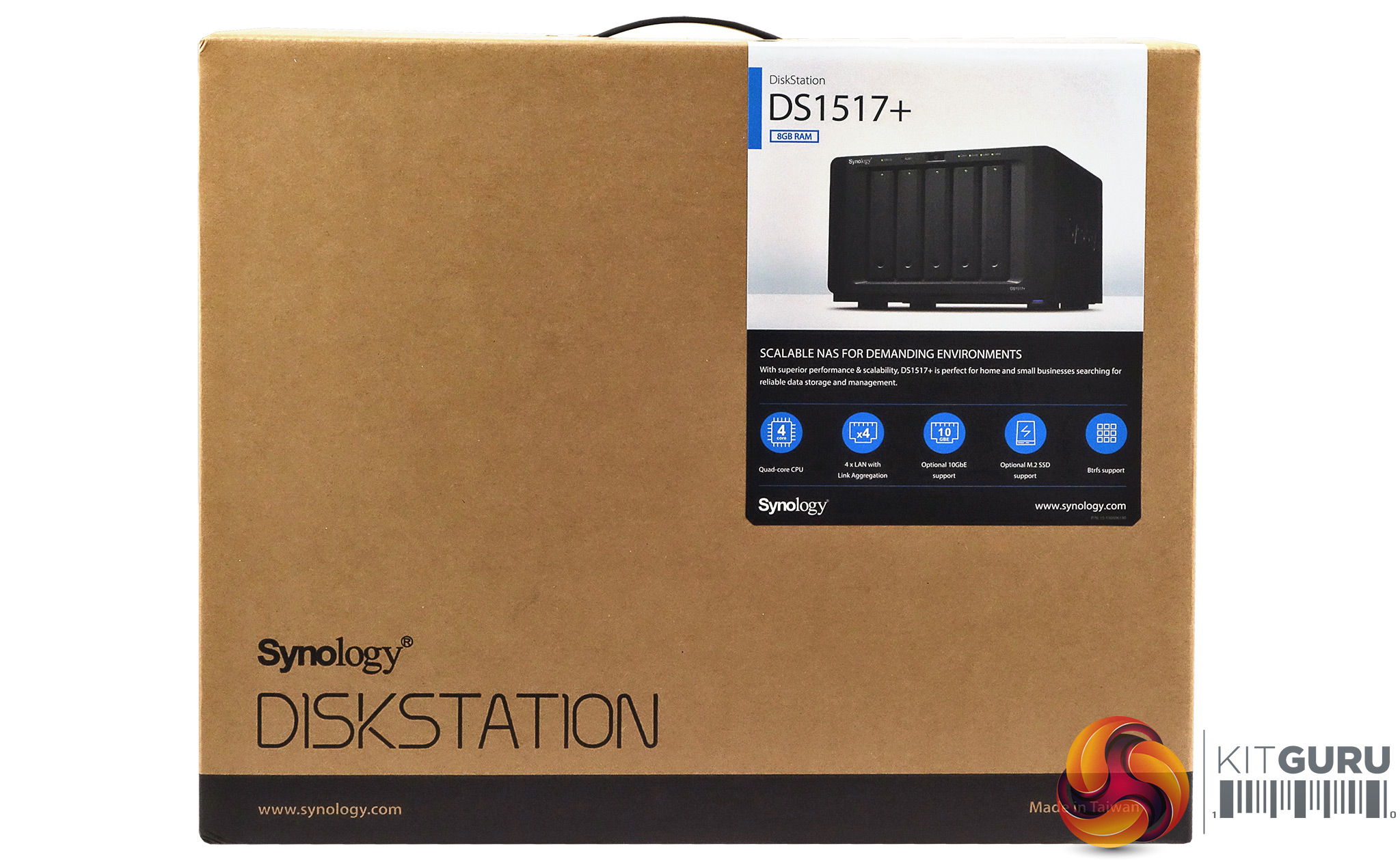
The front of the box has a label in the top left corner with an image of the drive on it along with the unit version and which memory model it is. Under this image is a row of five icons describing the CPU, the number of LAN ports, options for the PCIe slot and the fact that the DS1517+ supports the Btrfs file system.
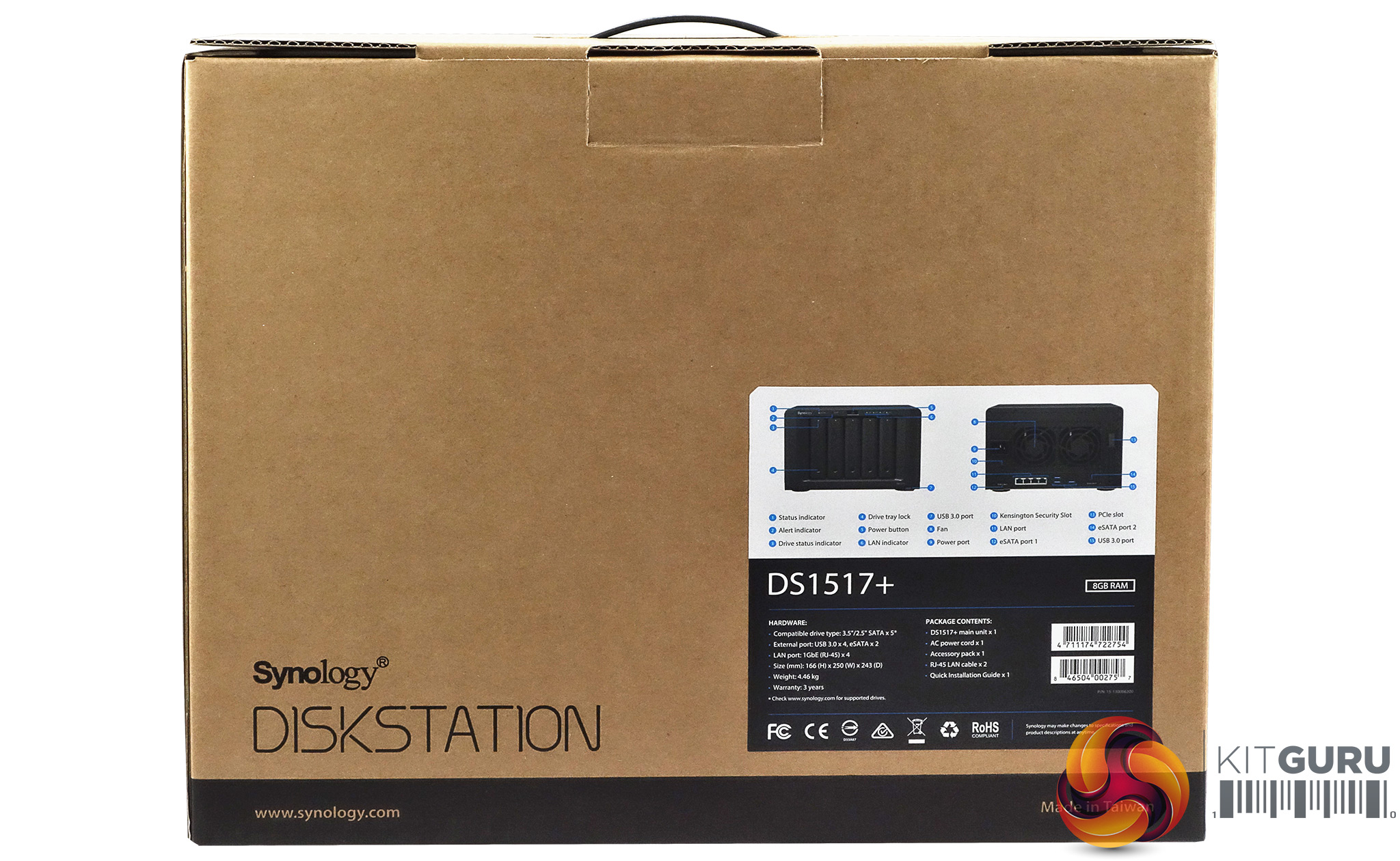
The rear of the box has a label in the bottom left with front and rear images of the unit along with a numbered list of its features and ports.
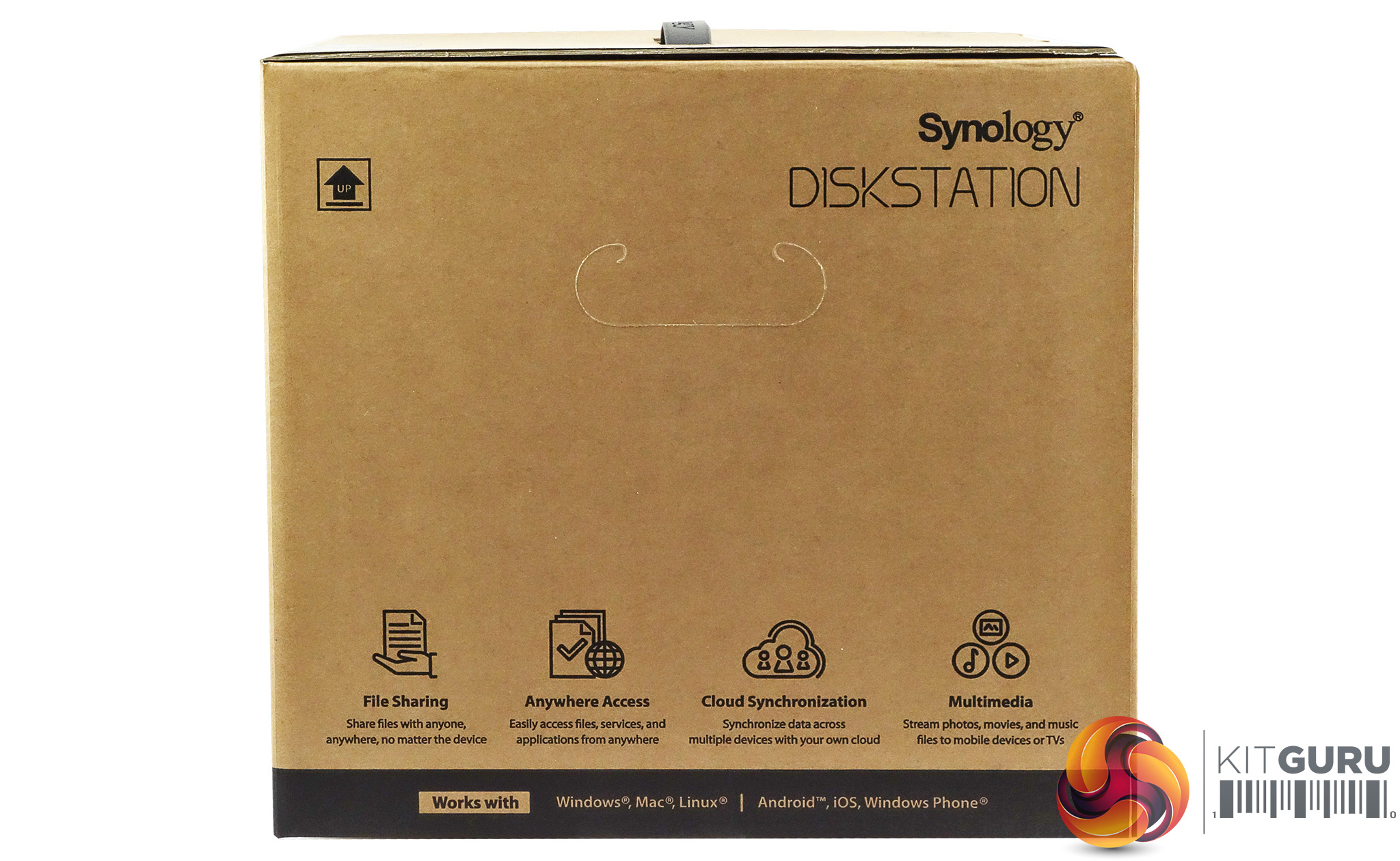
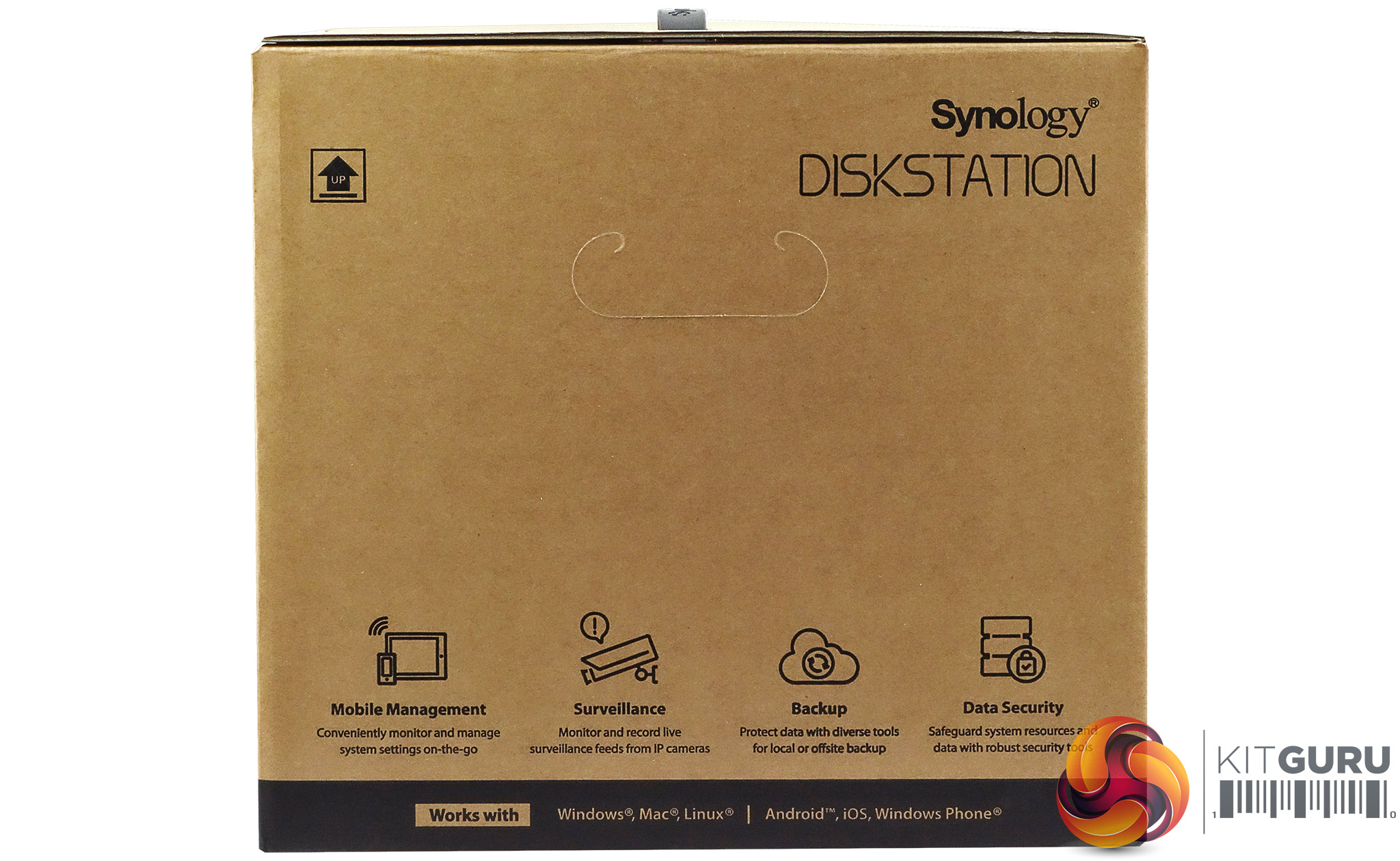
Both sides of the box feature a row of feature icons along the bottom. One side these display icons for Mobile Management, Surveillance, Backup, Data Security while the other side features File Sharing, Anywhere Access, Cloud Synchronization and Multimedia.
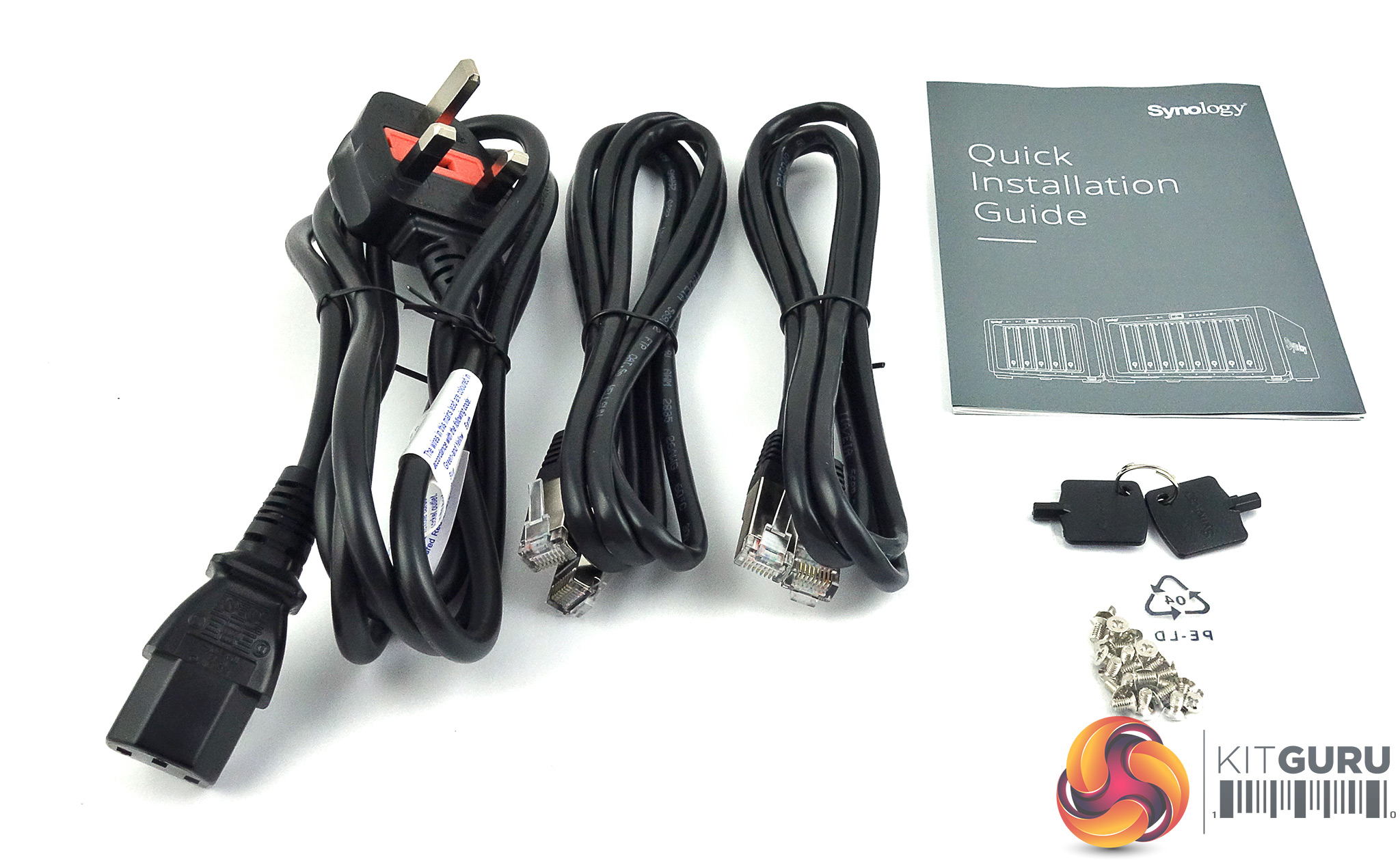
The box bundle is a simple affair with just a mains cable, a pair of good quality Ethernet cables, two keys for the drive bay locks and mounting screws if 2.5in drives are being used. There also Quick Installation guide included.
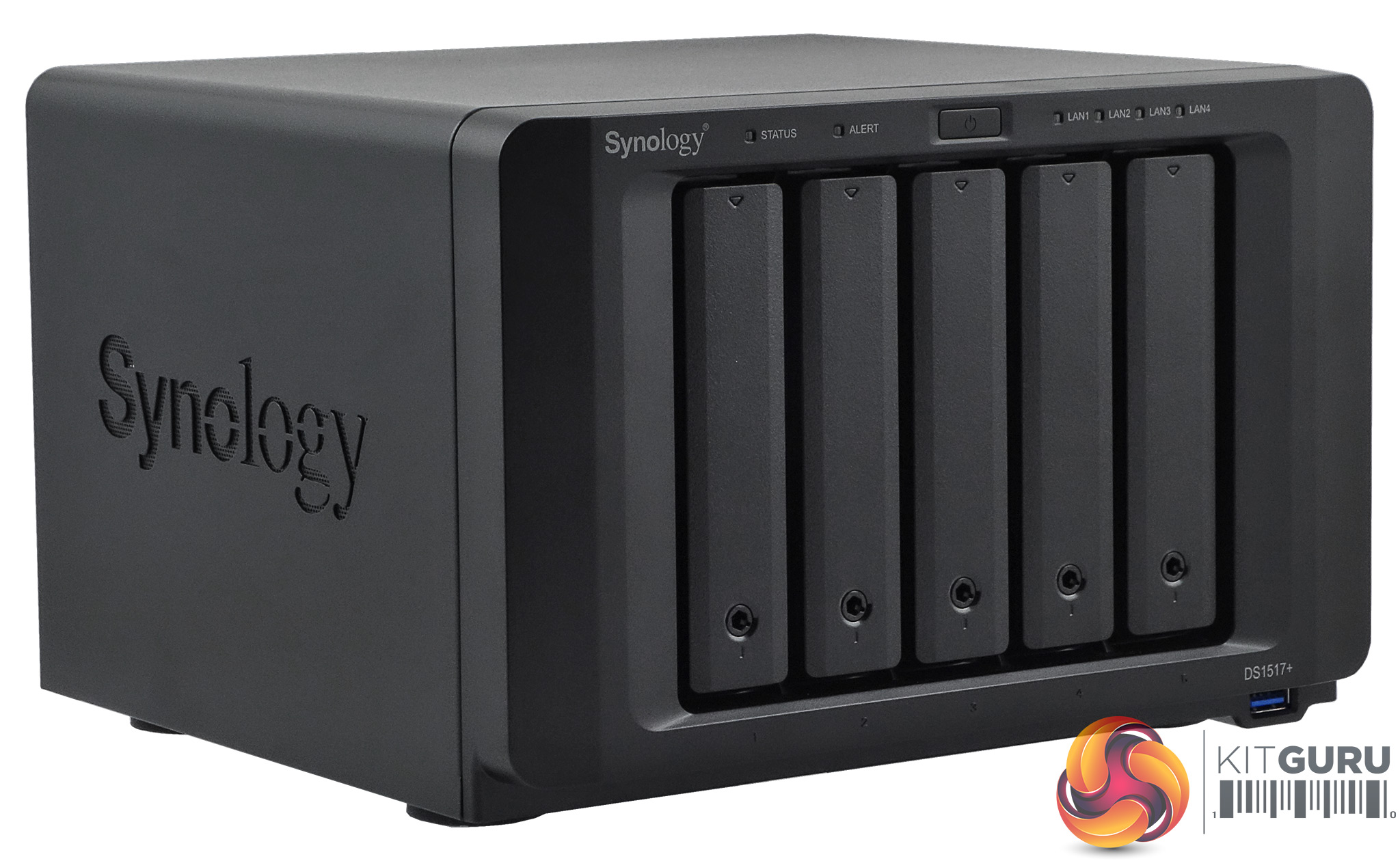
The Synology DiskStation DS1517+ is a compact designed 5-bay NAS measuring just 243 x 250 x 166 mm with an overall black finish, the cover is metal while a decent quality plastic is used for the front bezel.
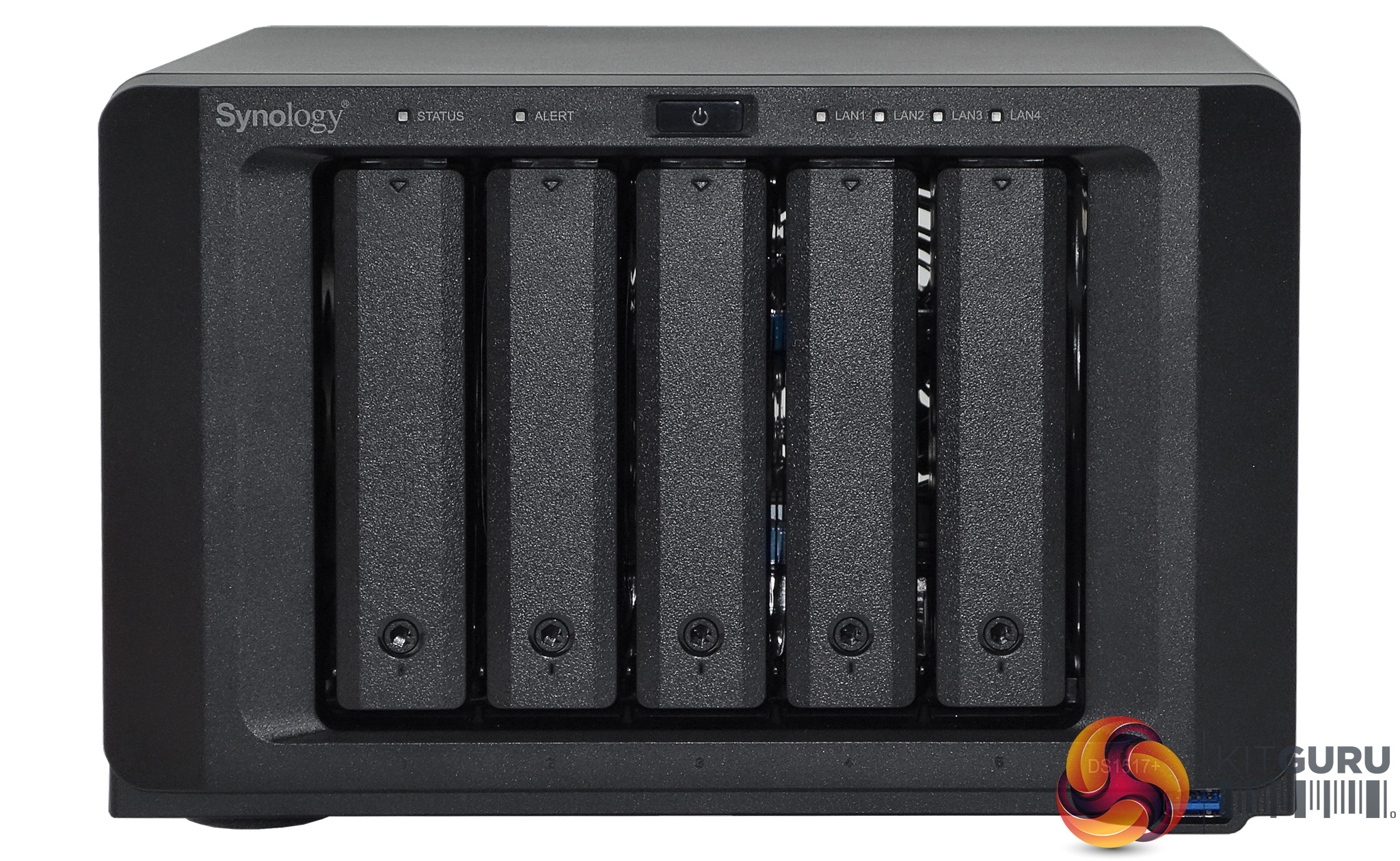
The indicator LEDs sit above the drive bays, either side of the power button. The two to the left display Status and Alerts while the four to the right display network activity. At the bottom right of the front bezel is a single USB 3.0 port.
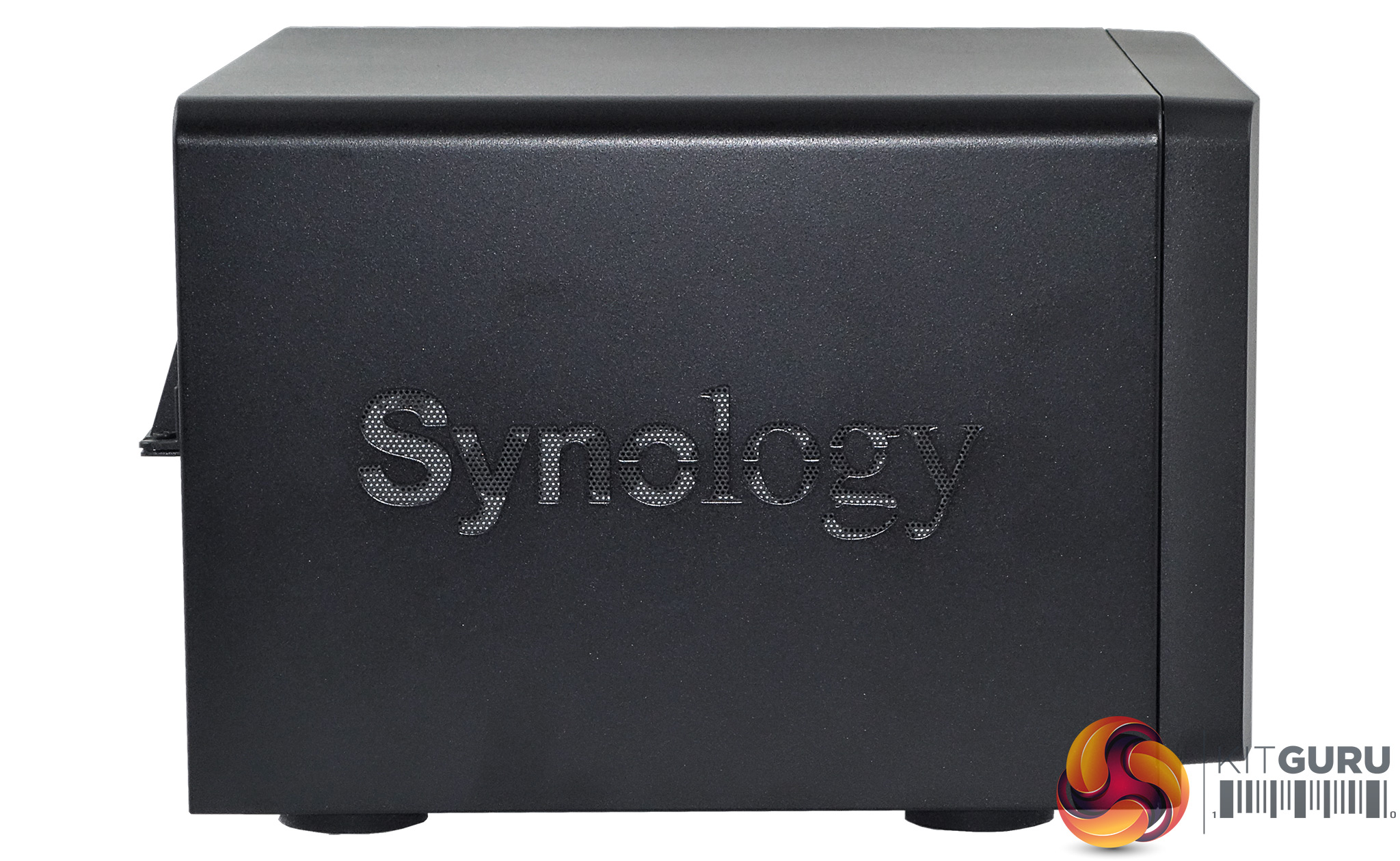
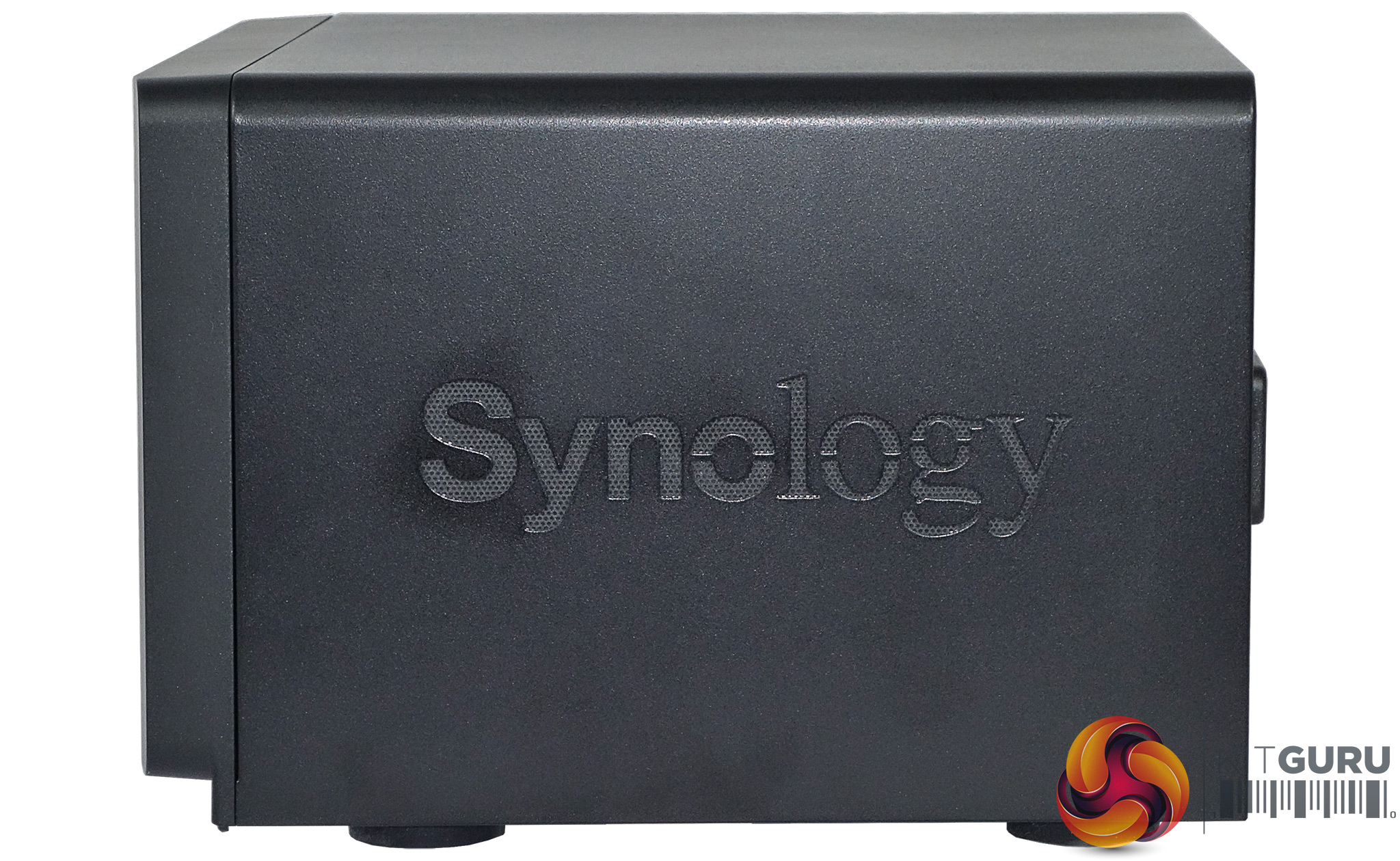
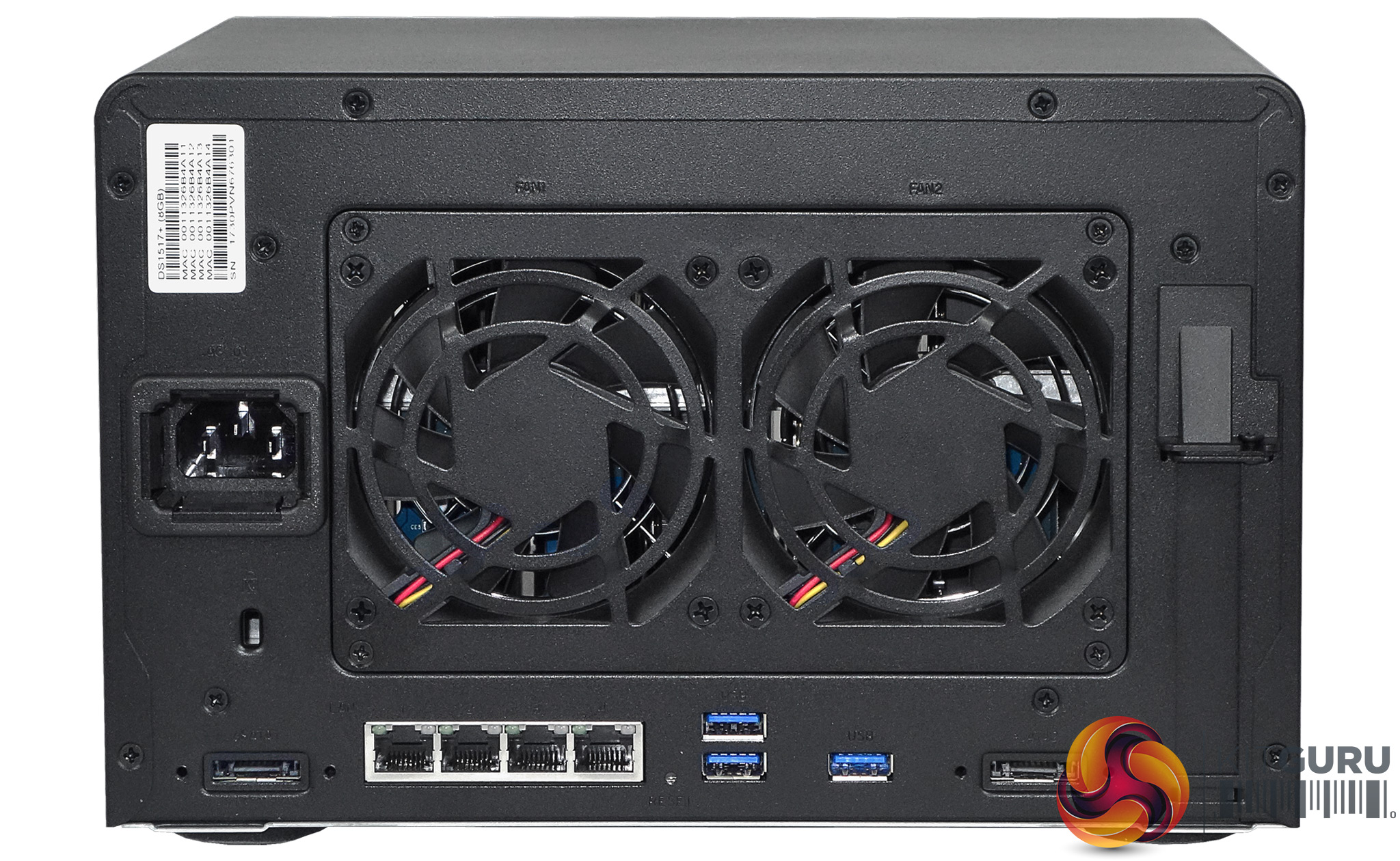
The rear panel of the unit is dominated by the grills for a pair of YS Tech FD128020HL 80mm cooling fans. The FD128020HL spins at 2,900rpm producing a airflow of 30.7CFM with a rated noise level of 29.1dB(A). Handily, if you need to clean these fans they are mounted on a plate which can be removed from the rear panel.
To the right of the fans is the blanking plate for the PCIe slot while under them sit the four LAN ports and three USB 3.0 ports together with the reset button. To either side of these ports is an eSATA port.
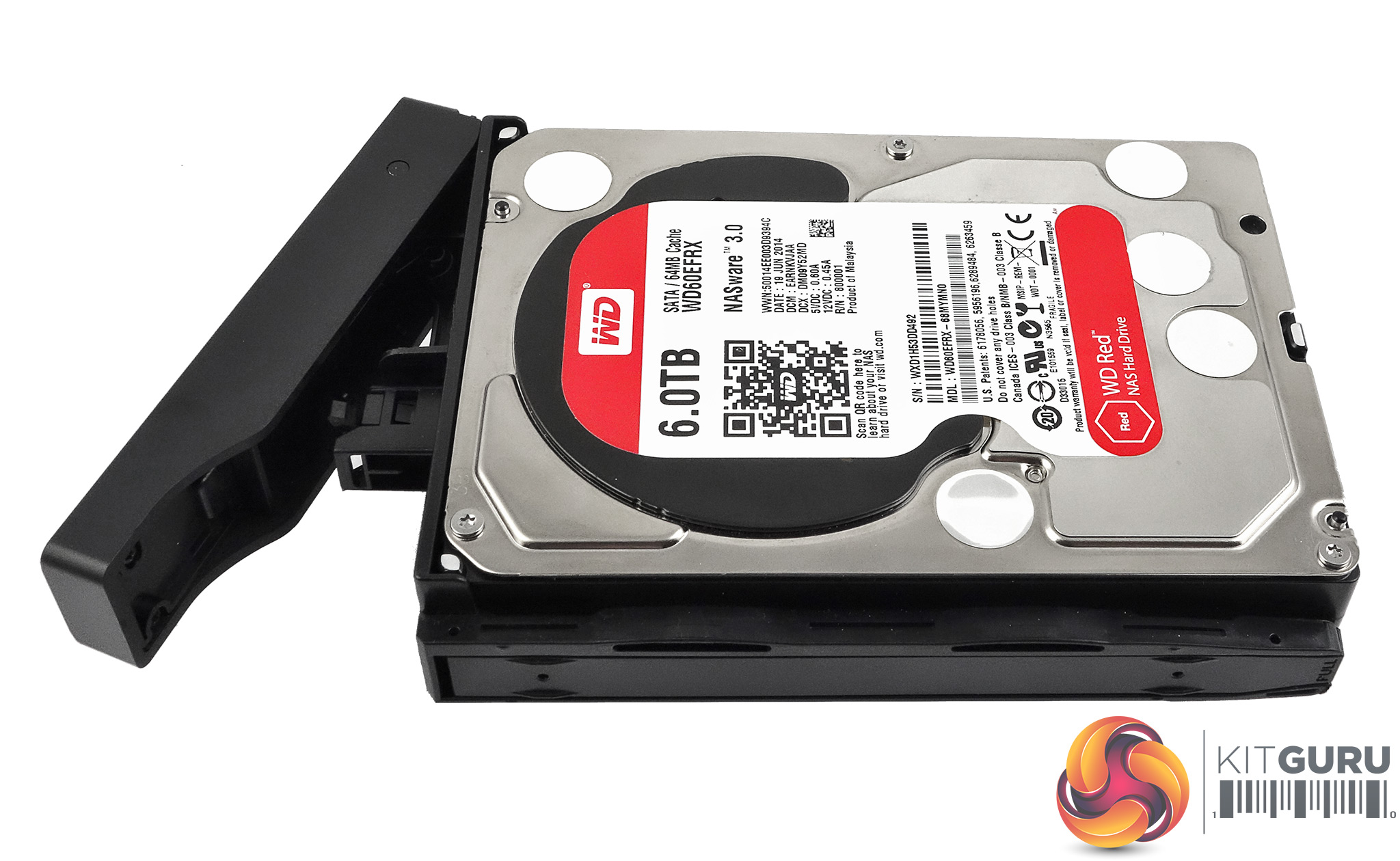
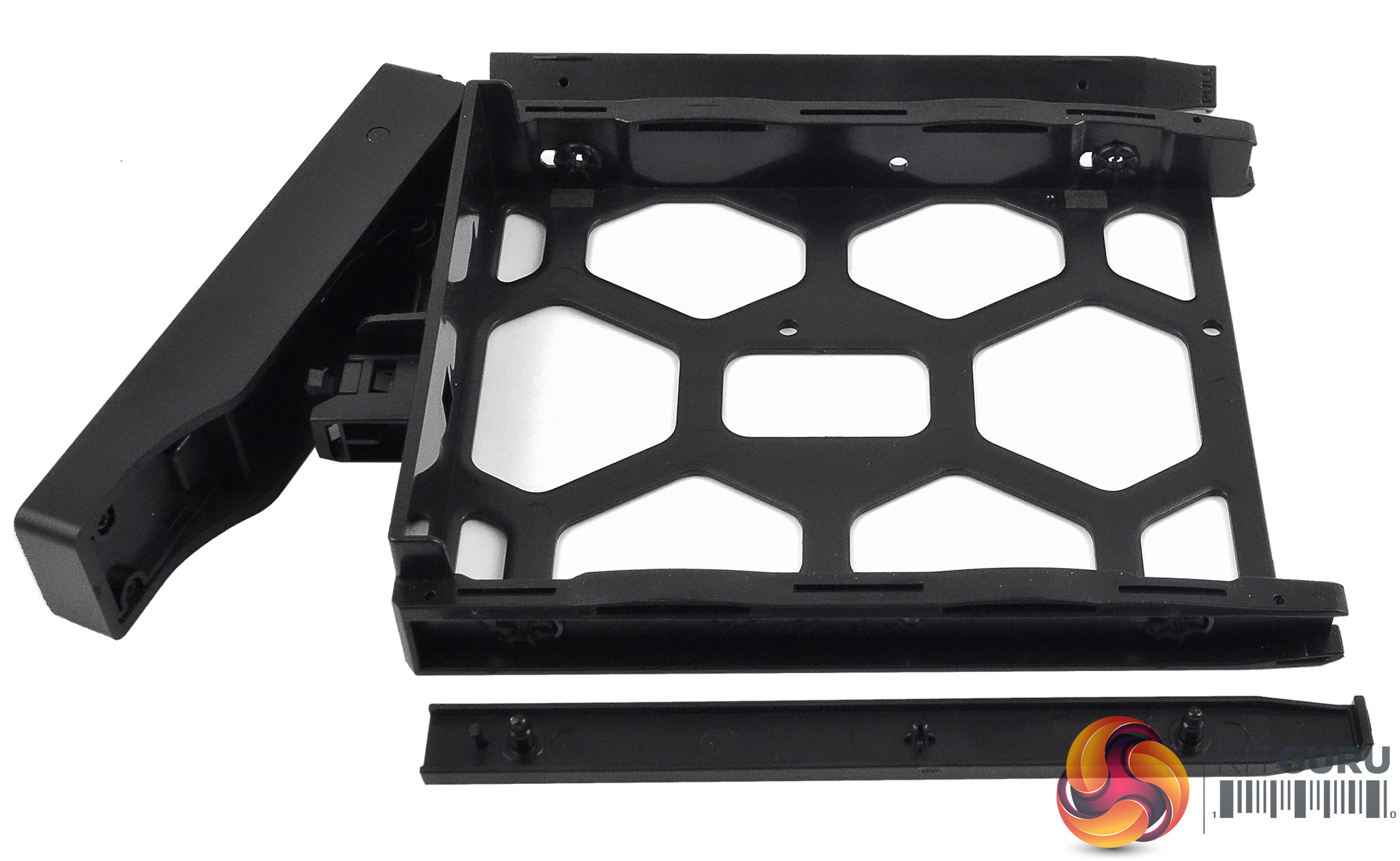
The drive trays have physical locks and activity LEDs built into the tray doors. The trays are constructed from plastic and are tool free for 3.5in drives with drives being held in place by plastic strips that have moulded spikes on them which fit through rubber grommeted holes in the drive tray sides and into the drive. 2.5in drives are fitted via screw holes in the tray base.
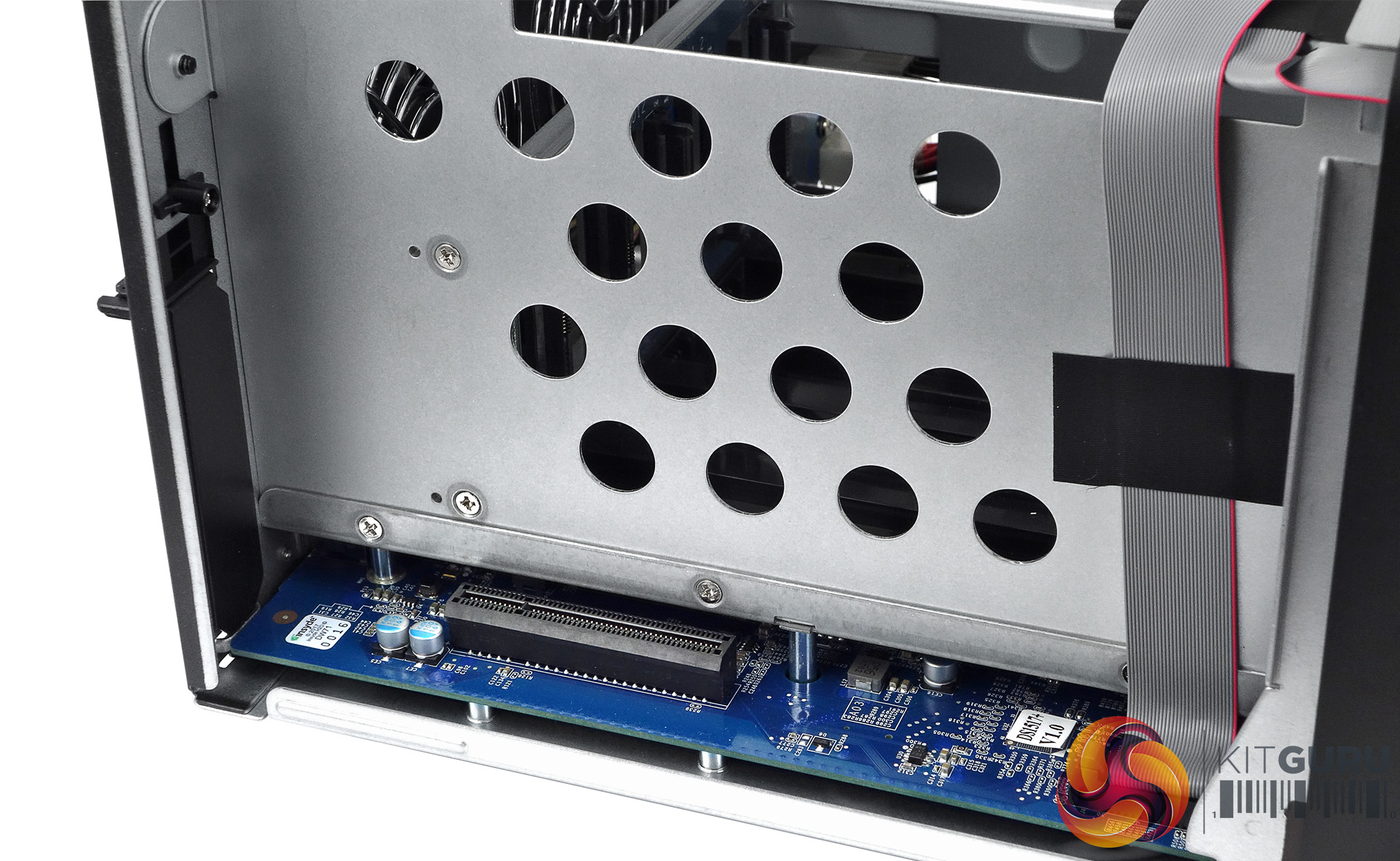
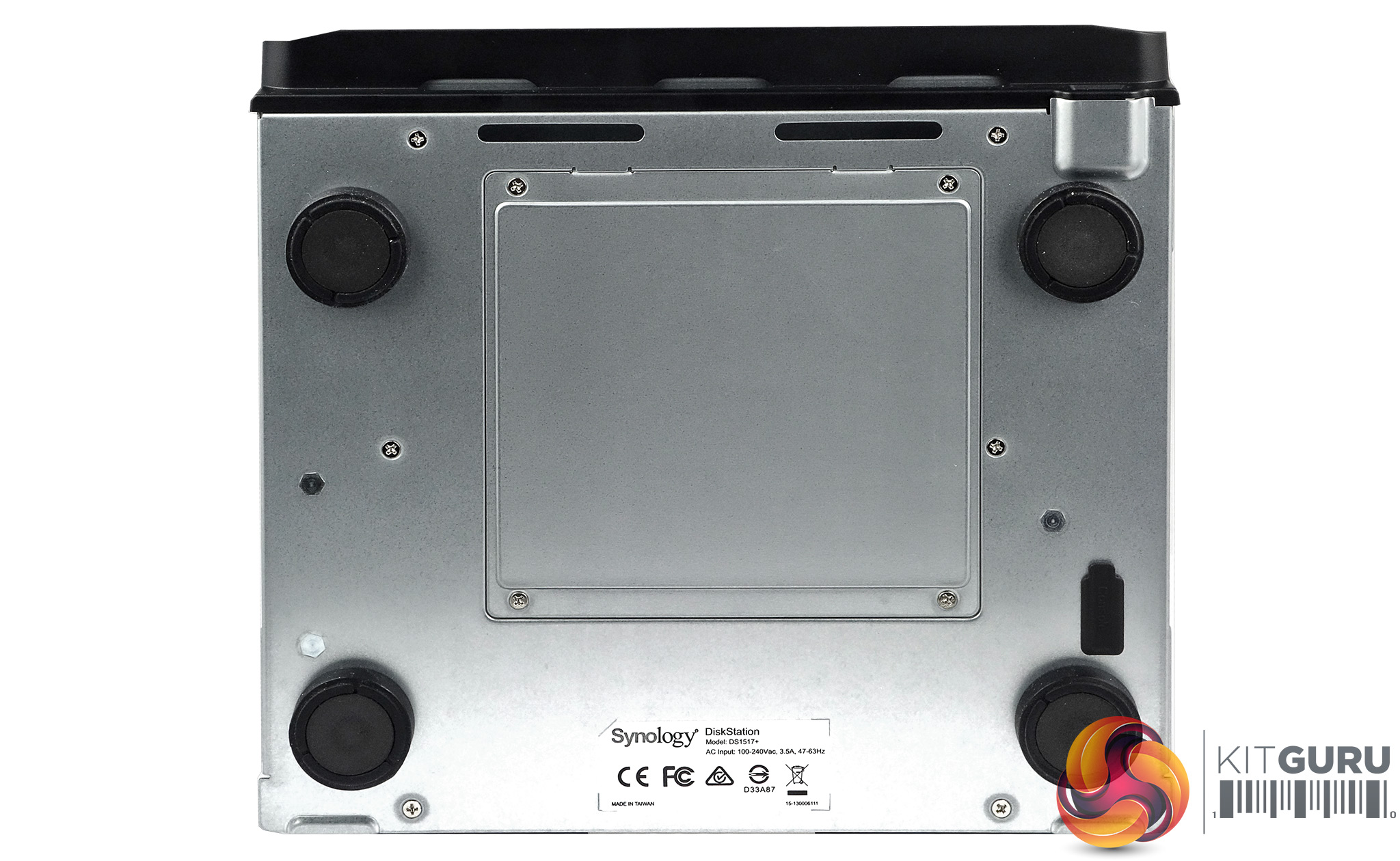
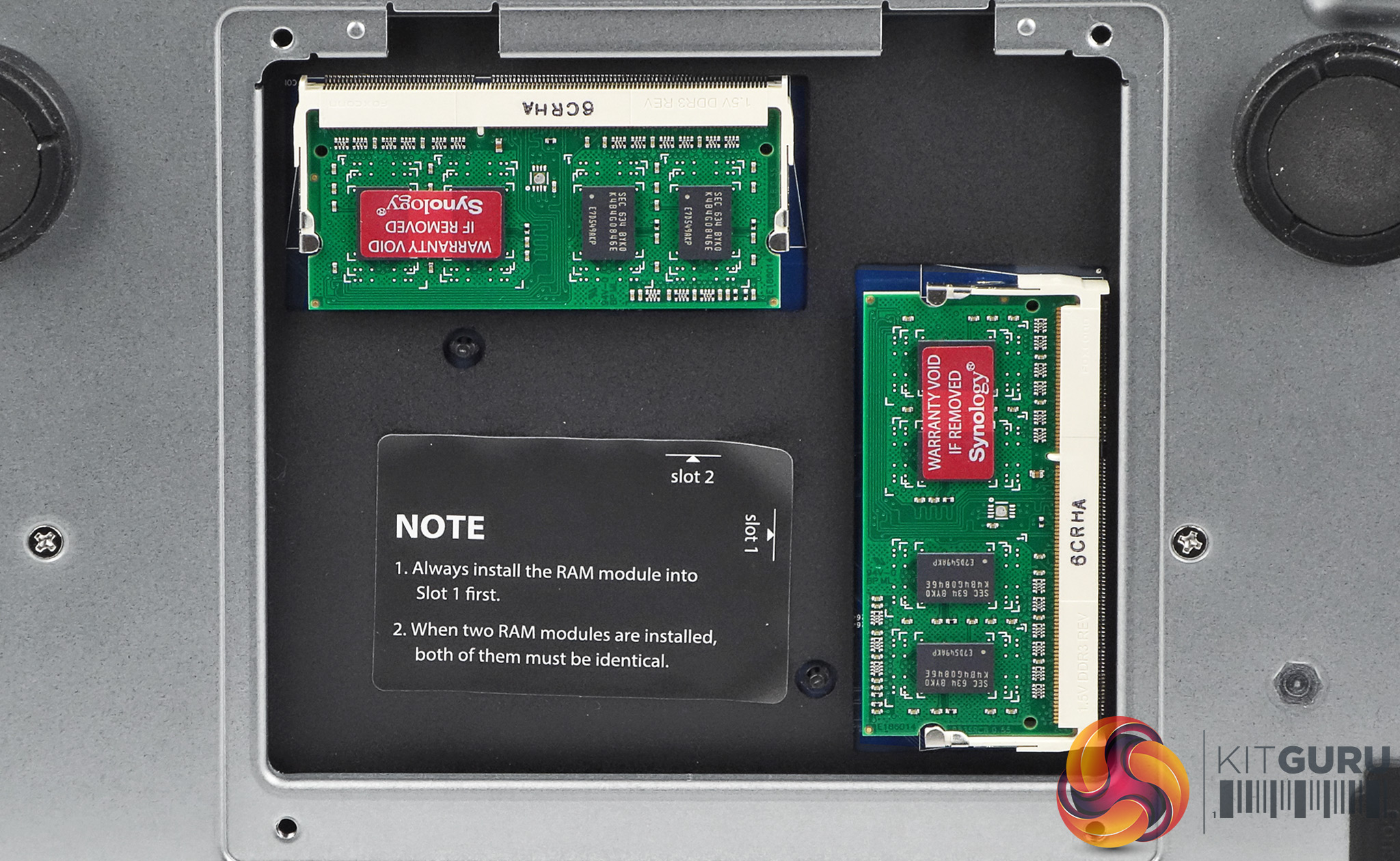
To access the PCIe slot you need to remove the cover which is held on by six screws in the rear panel. Access to the pair of SO-DIMM slots is via a removable plate (held in place with 4 screws) in the base of the unit.
Physical Specifications
Processor: Intel Atom C2538 (2.4 GHz)
Memory: 8GB
Gigabit Ethernet Ports: 4
Front panel connectors: 1 x USB 3.0
Rear panel connectors: 4 x Gigabit Ethernet (supporting Link Aggregation), 3 x USB 3.0, 2 x eSATA
RAID support: Synology Hybrid RAID, RAID 0, 1, 5, 6, 10
Cooling: Active – 2 x 80mm fans
Maximum hard drive size supported: 10TB
Maximum Capacity: 50TB
Dimensions (D x W x H) 243 x 250 x 166 mm.
Weight 4.46kg.
We reviewed the DS1517+ with the very latest version of Synology’s DSM (DiskStation Manger) OS, version 6.1. DSM has always been one of the top NAS OS around and Synology keeps updating it at regular intervals to add more features and apps.
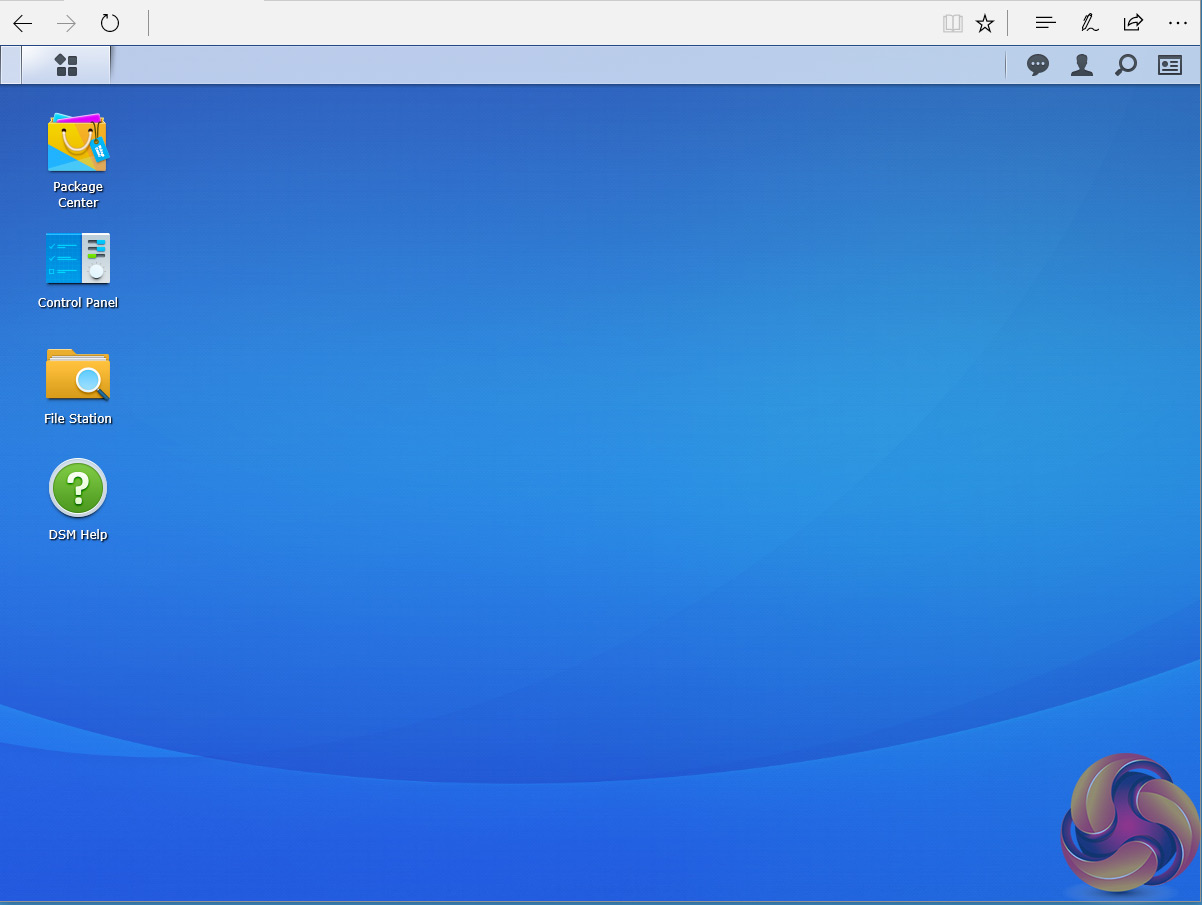
DSM has a graphically rich interface with all the major features of the OS clearly listed. The basic start page just lists four items; Package Center, Control Panel, File Station and DSM help.
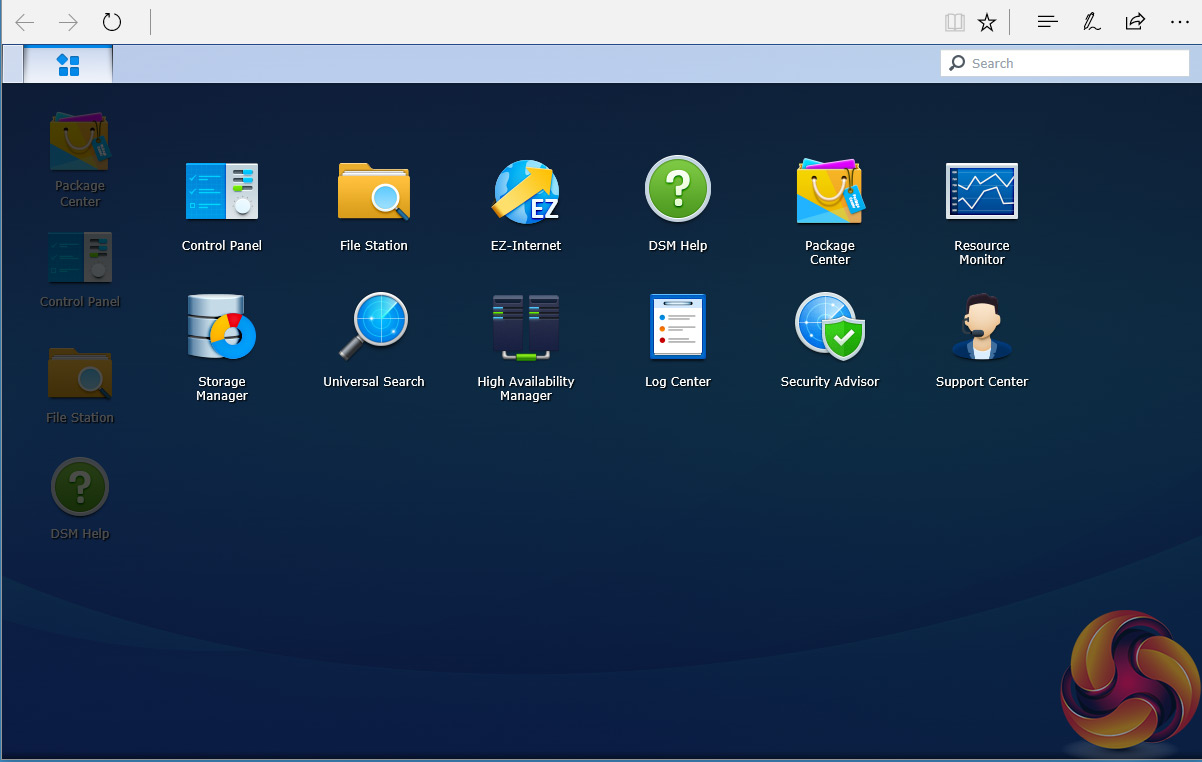
Clicking on the left-hand top tab opens a more advanced start page which displays a lot more menu choices than the basic one. Clicking on the furthest right-hand icon at the top of the window opens the System Health and Resource Monitor widgets.
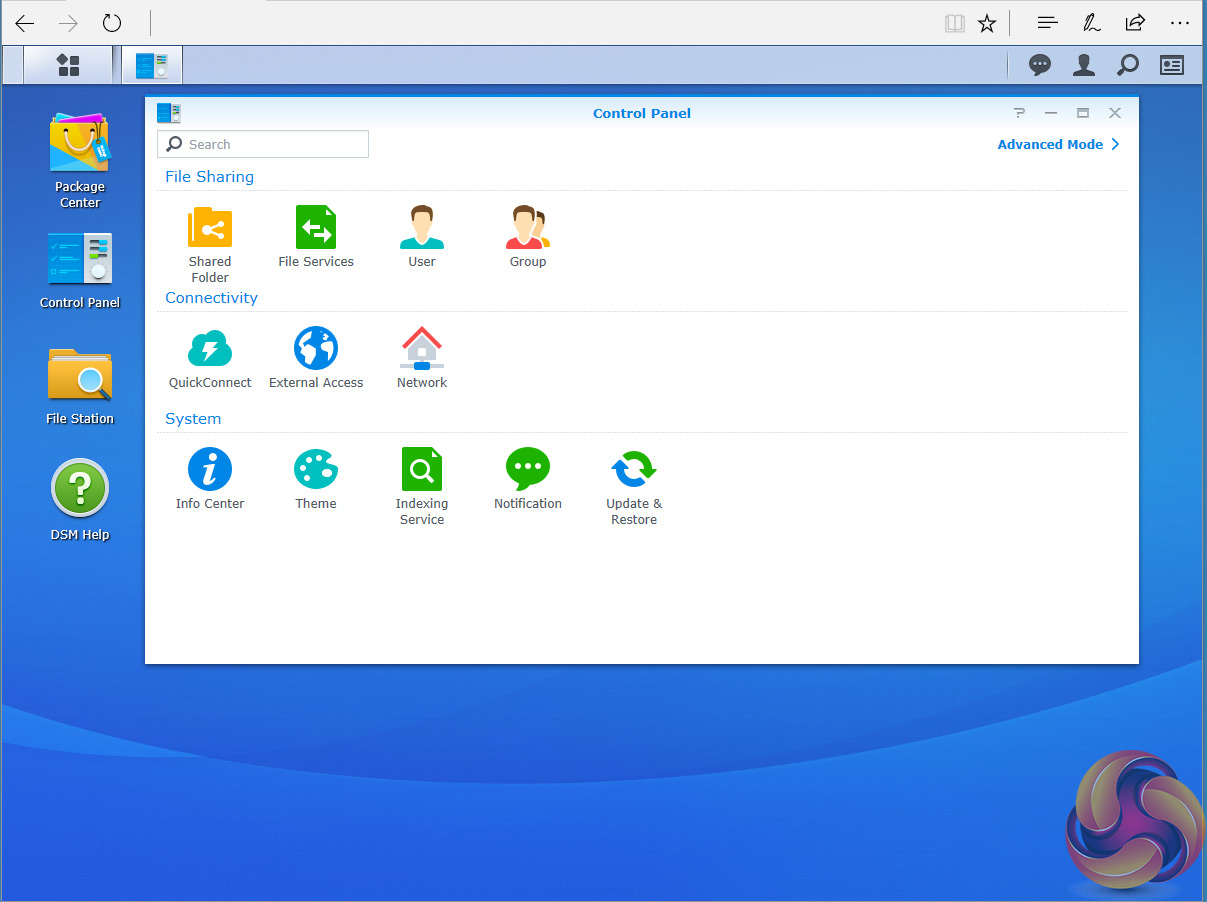
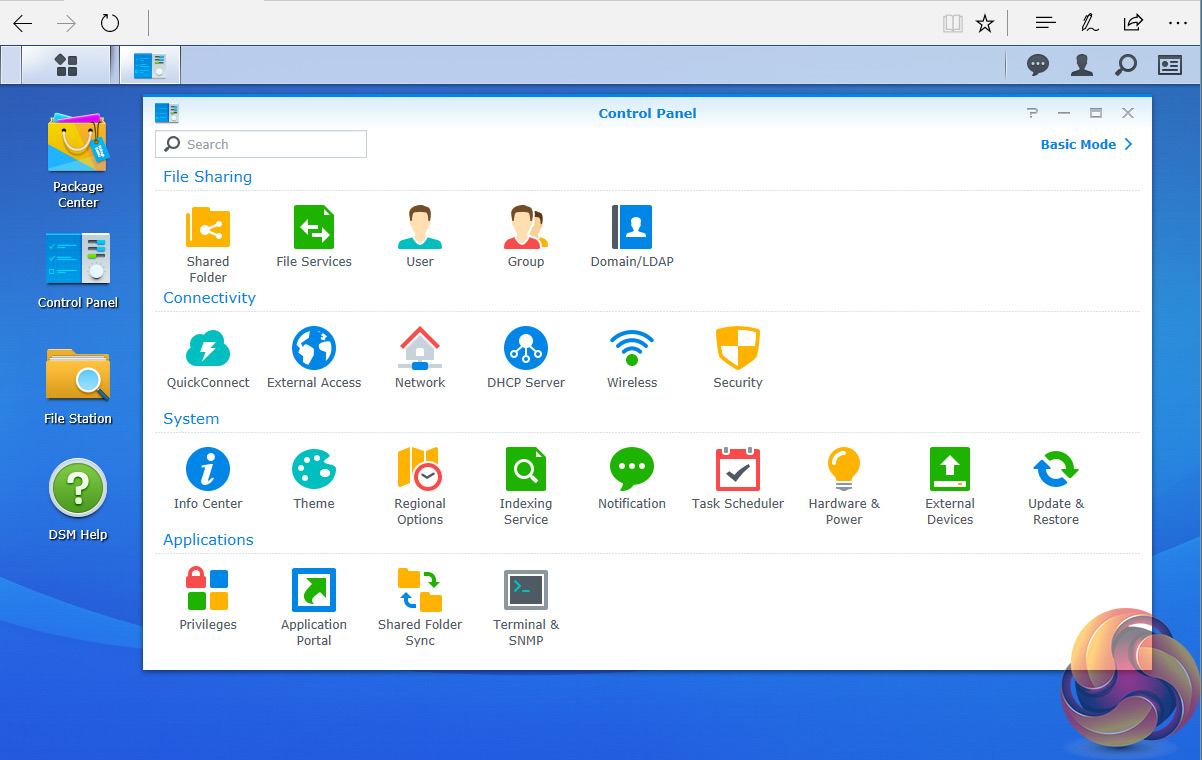
There’s a choice of control panels, Basic which displays the features most people will want to get to grips with while the Advanced option offers plenty of scope for those that want to delve deeper into the system.
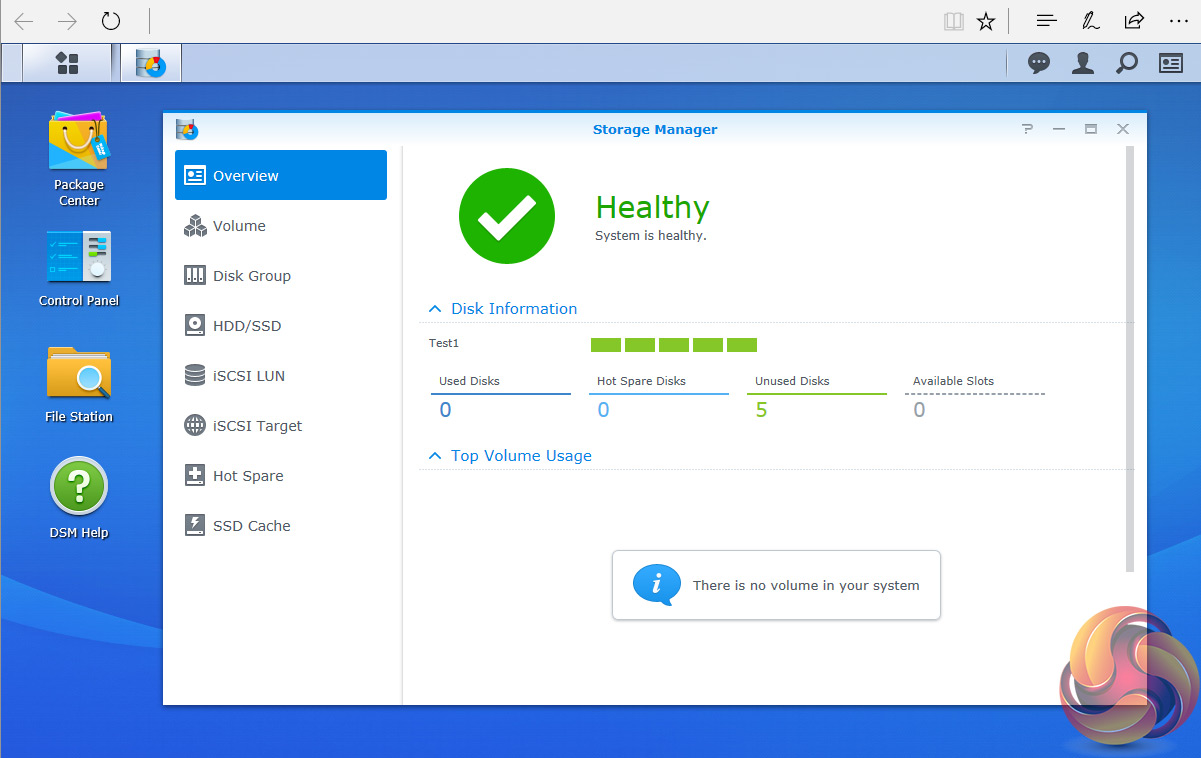
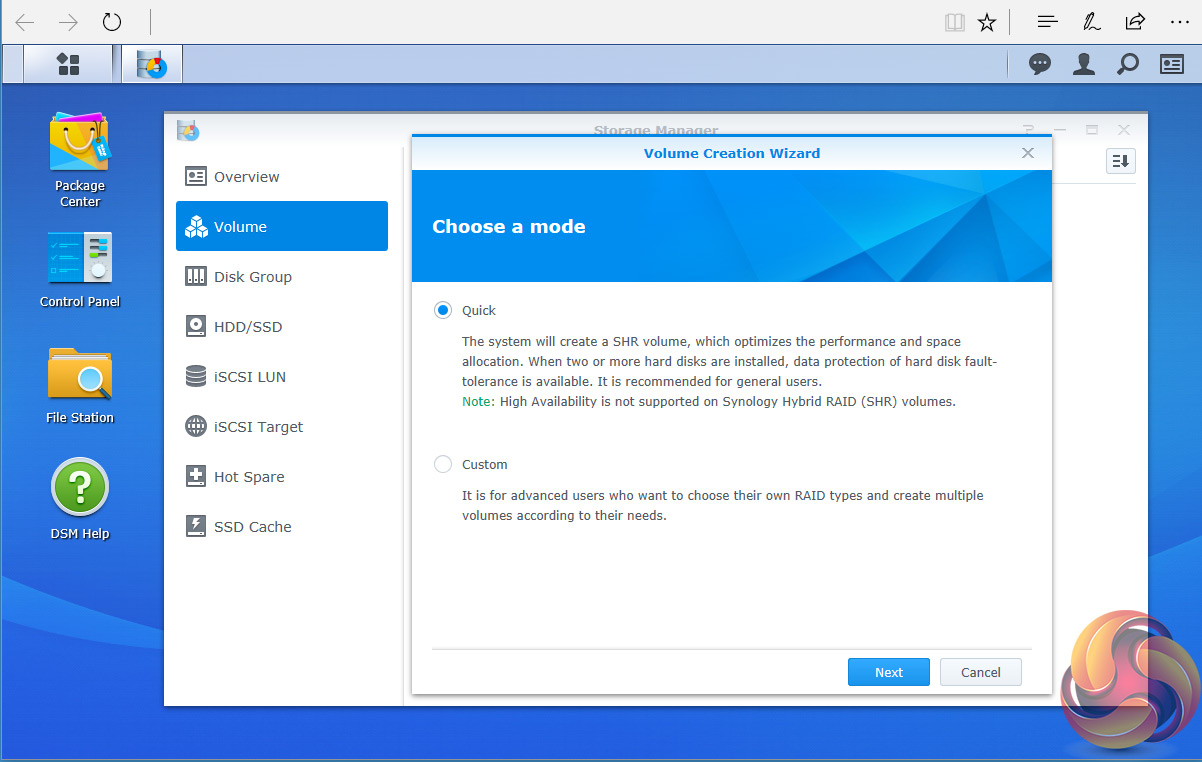
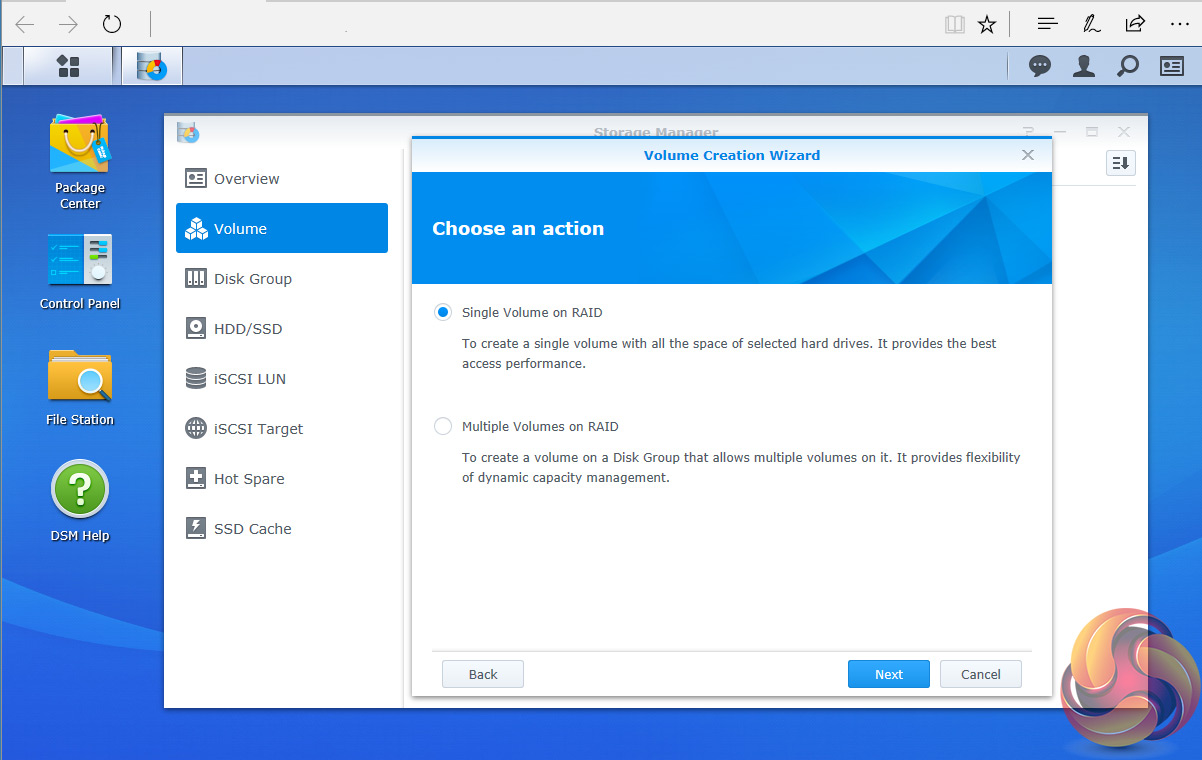
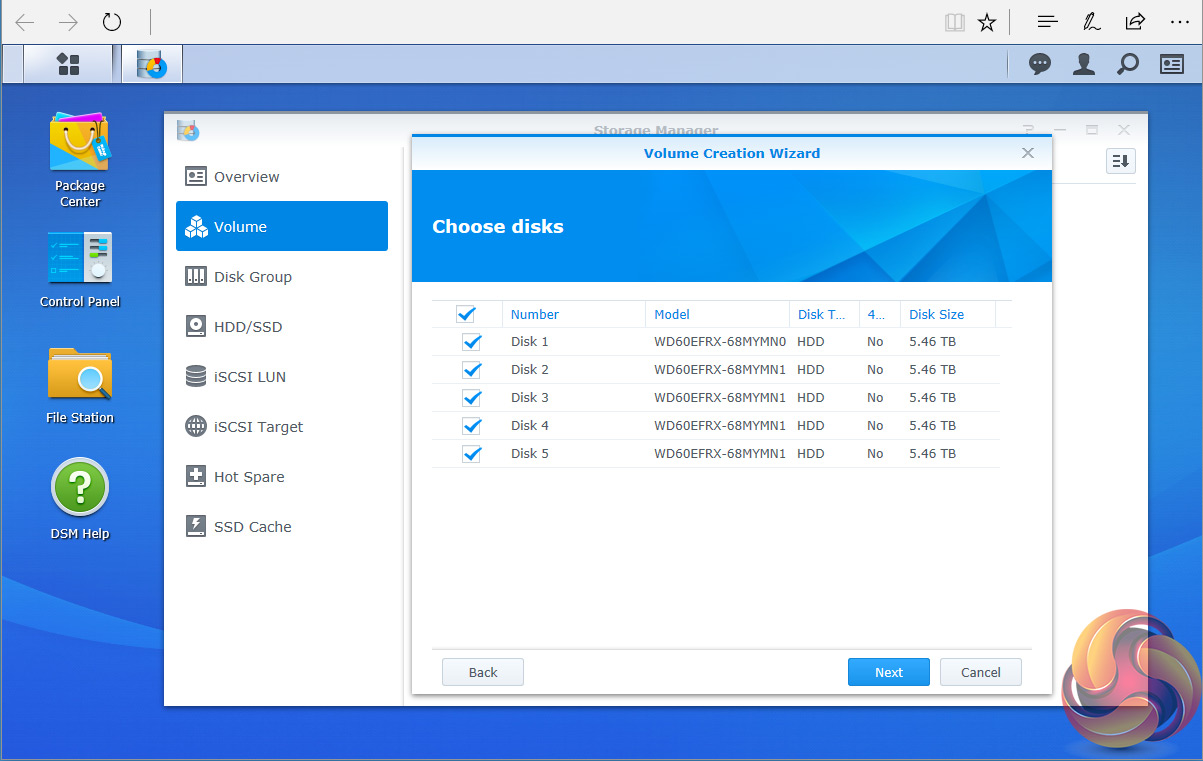
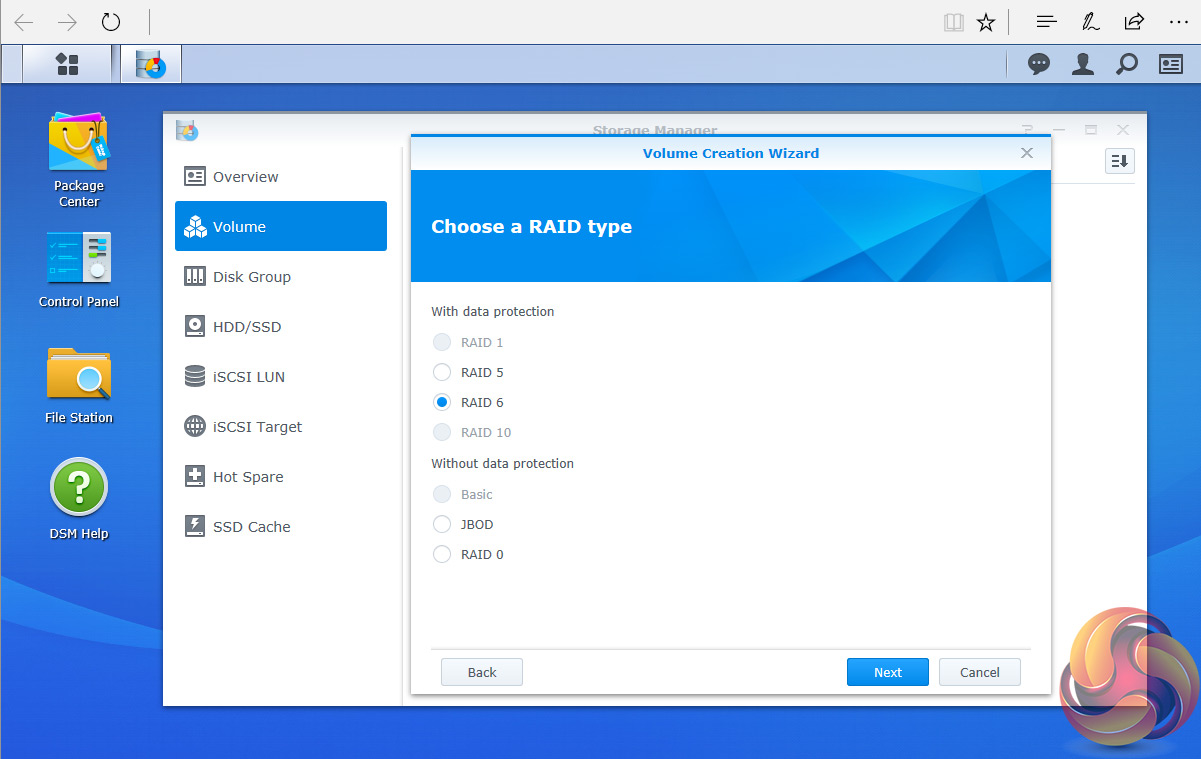
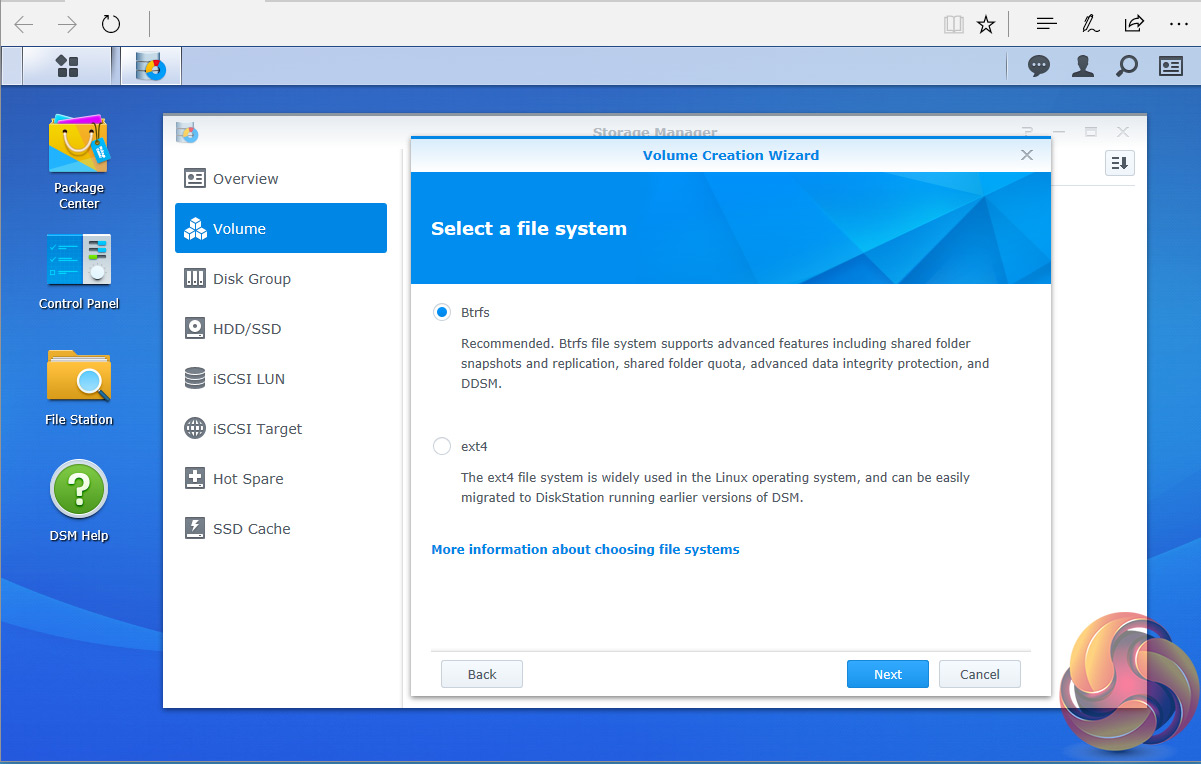
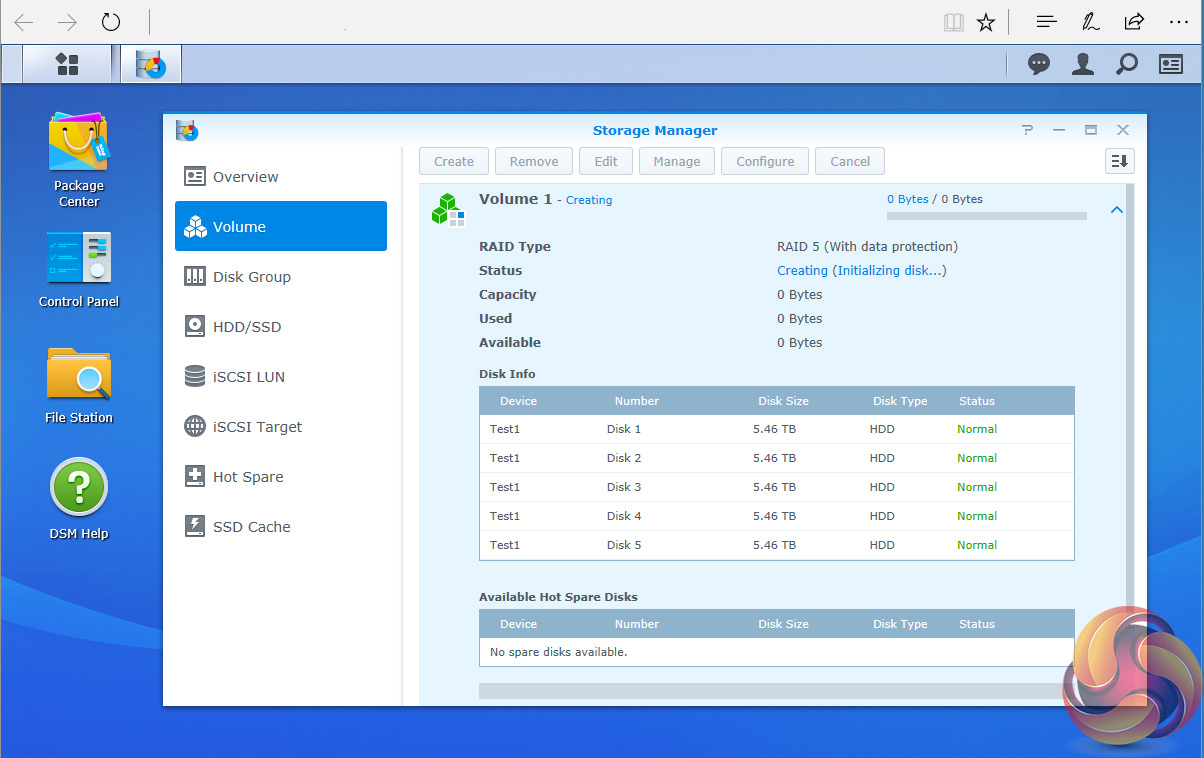
At the heart of DSM is Storage Manager. Storage Manager looks after RAID setups, volume creation (choose between Btrfs or ex4) and all other disk management duties.
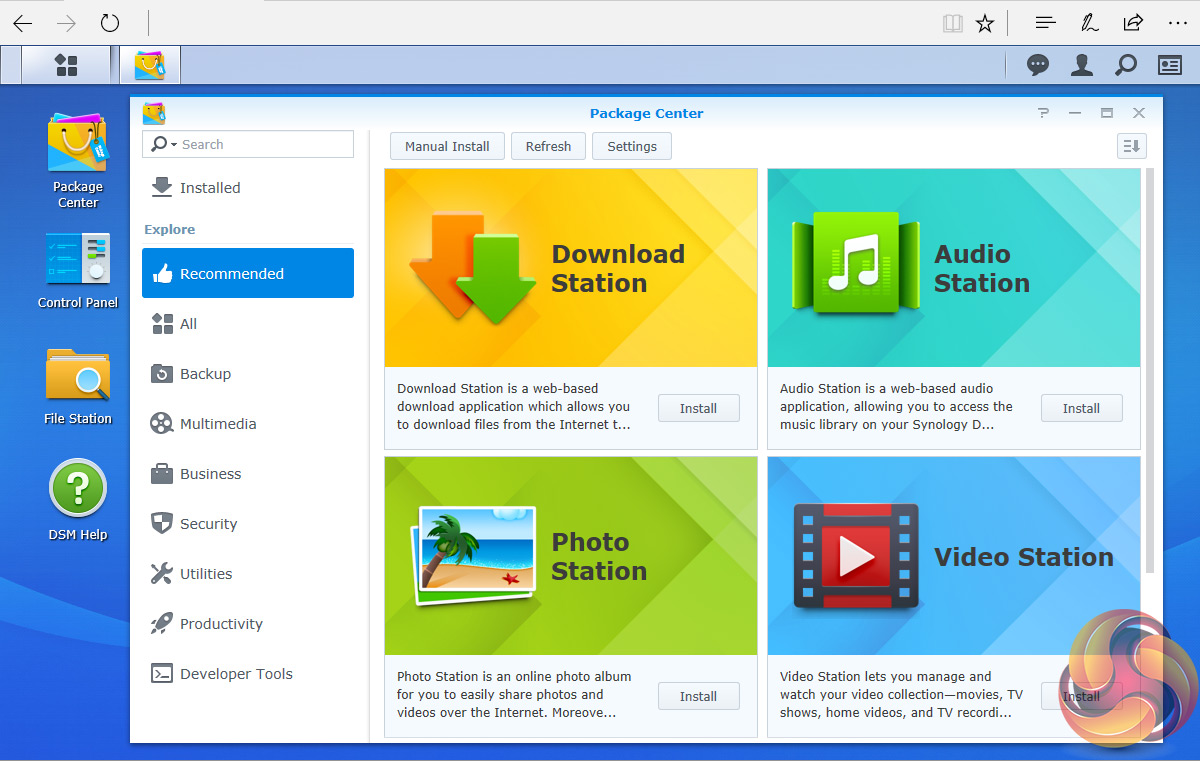
Package Center is where you’ll find all the add-in apps and there is an extensive list to choose from, 123 to be exact, allowing the DS1517+ to be customised to your own requirements. One of the updates 6.1 brings is Package Center auto repair to fix apps that might have been broken by a DSM update.
DSM 6.1 brings some new features as well as refinements to existing utilities. Top of the list is that with DSM 6.1, more Synology models now have support for the Btrfs file system. Many of the other new features and improvements are aimed more towards business users but a couple that home users may find useful are Synology Universal Search and USB Copy 2.0.
Synology Universal Search is a new search tool that includes multimedia files and apps and offers previews of metadata and contents of files with just a mouse click. USB Copy 2.0 Auto copies data to a from a USB storage device and can be configured to set backup destinations, copy mode and any file filters.
On the business side of things, Active Server Directory has been added to DSM. ASR allows a NAS to be used as a domain controller and can help streamline a company’s IT maintenance duties as it allows for the creation of policies to install software or system updates across a range of computers without the need to visit each one in turn.
There have been updates to Snapshot Replication (now includes encrypted shared folder replication, local replication for extra security and automatic pause/resume during replication), Hyper Backup, Synology High Availability and Virtual DSM Manager.
Features
Btrfs file support
File Station
Photo Station
Audio Station
Video Station
Download Station
Cloud Station, Cloud Station Backup, Cloud Station ShareSync and DS Cloud.
Synology Universal Search
Note Station
Web Clipper
Spreadsheet
USB Copy 2.0
Snapshot Replication
Active Directory Server
Hyper Backup
Synology High Availability
Virtual DSM Manager
The first part of setting up the DS1517+ as with all Synology NAS units is to go to http://find.synology.com which launches Web Assistant. This app searches for all DiskStations on the network so you can begin the install. If this method fails to find the NAS, the App has a link to the Synology Download Center where you can download Synology Assistant to your PC to search again for the NAS.
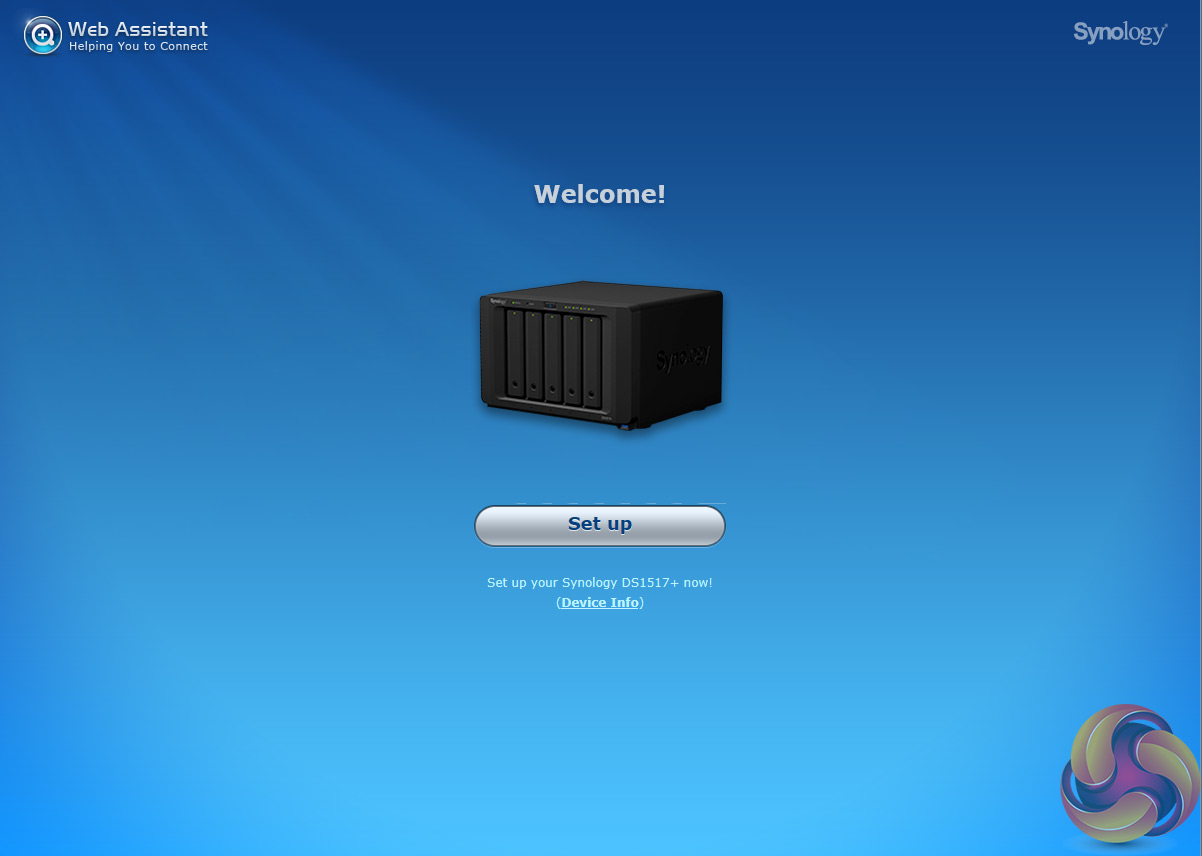
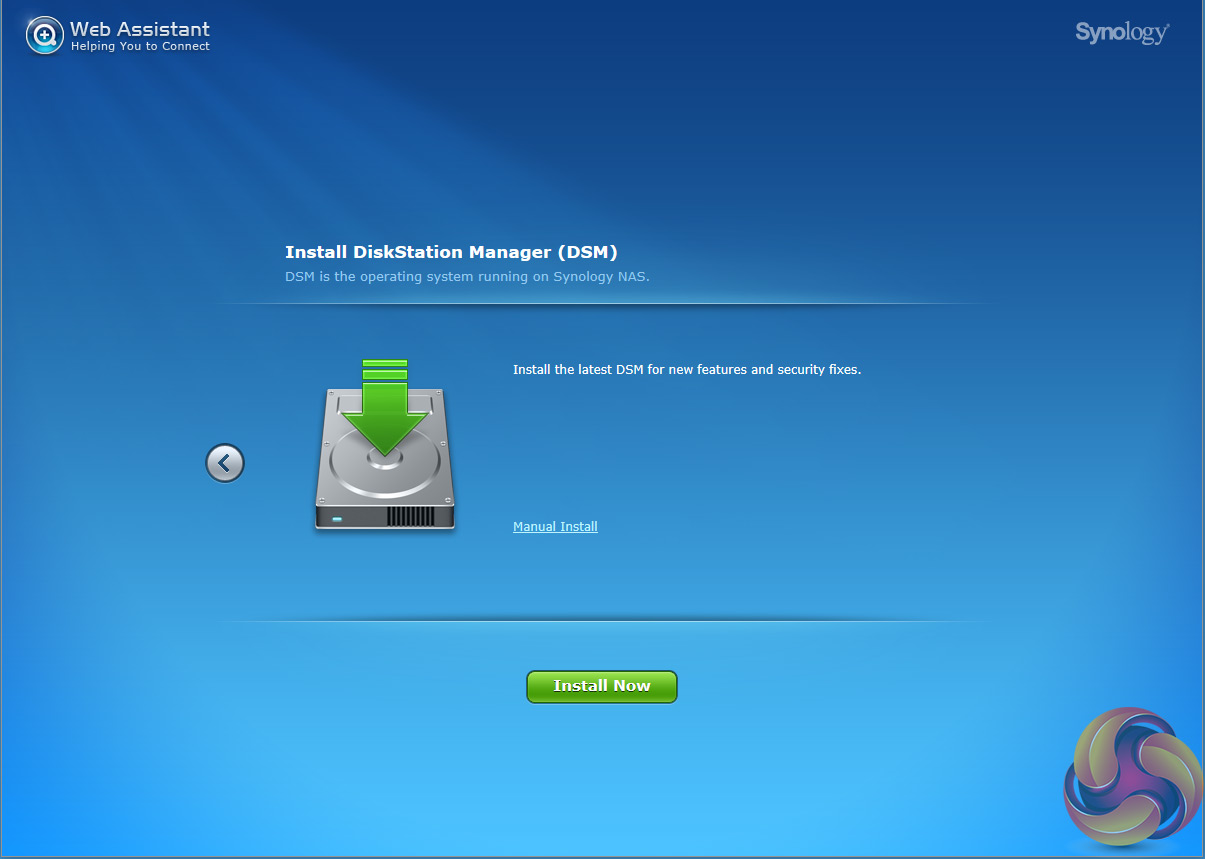
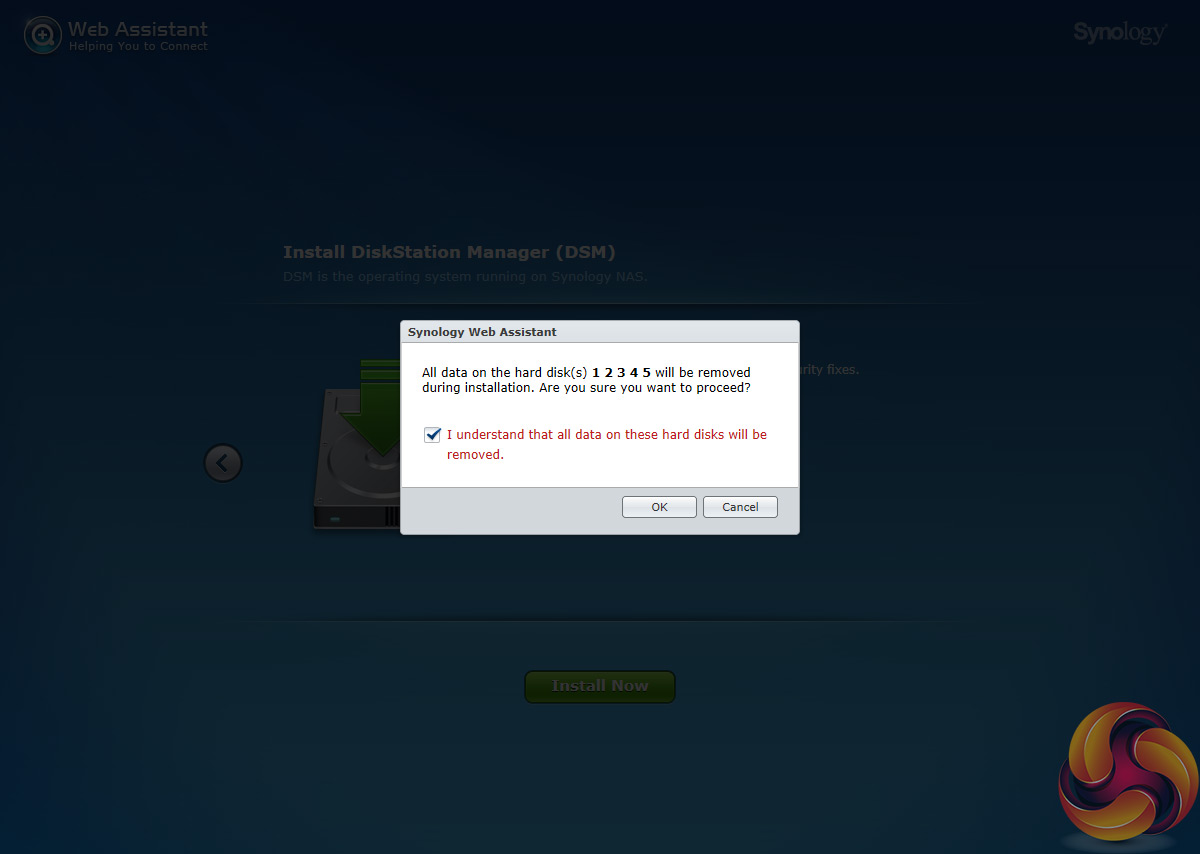
Once the NAS is found, the first window of the DSM setup wizard appears. Pressing install (there’s also a manual install option to install a downloaded instance of DSM ) automatically downloads the latest version of DSM and starts installing it after reminding you that any data on the hard disks will be deleted.
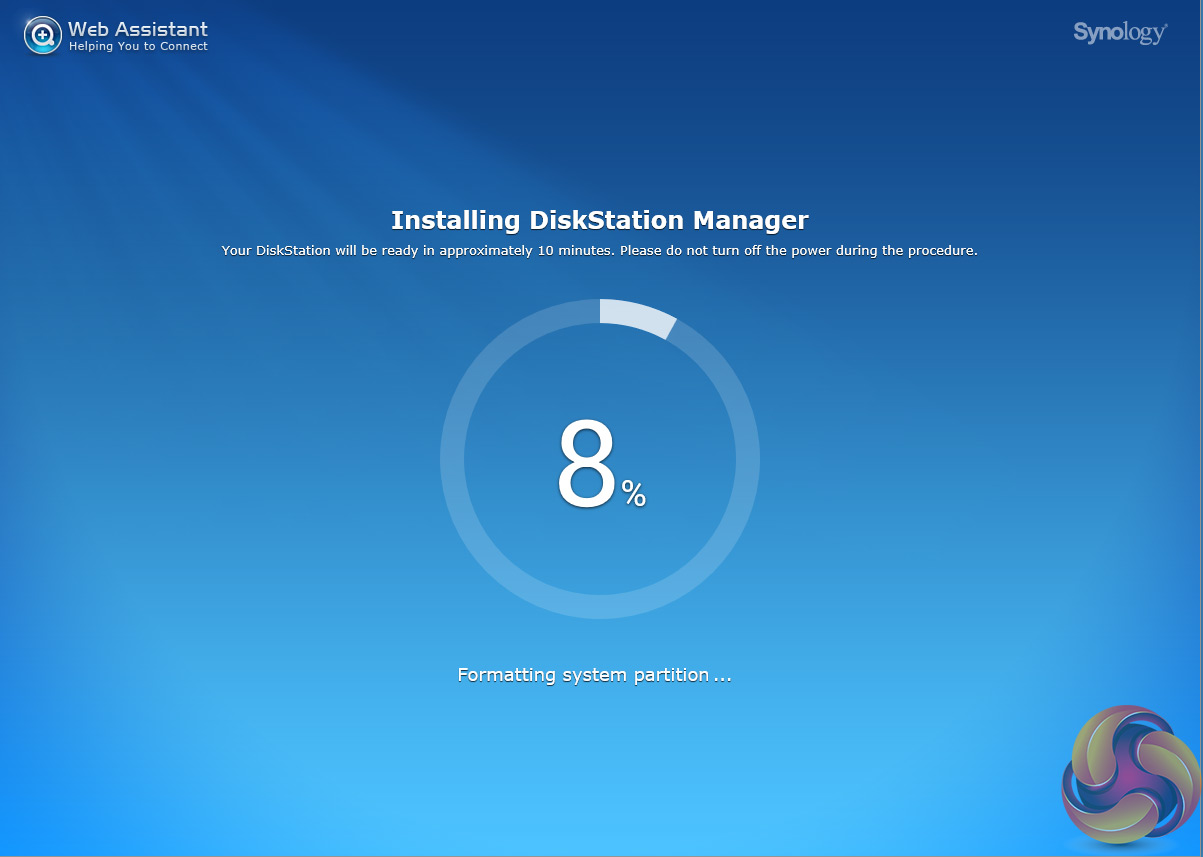
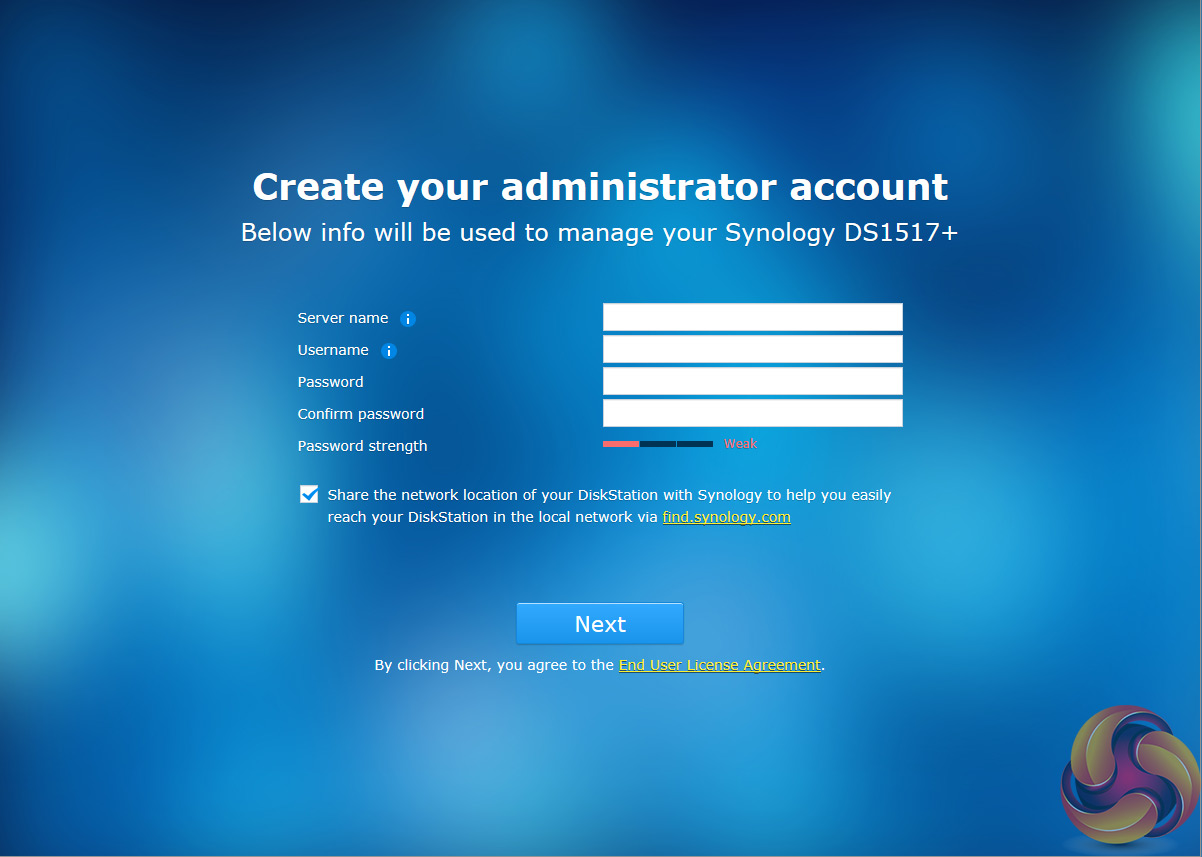
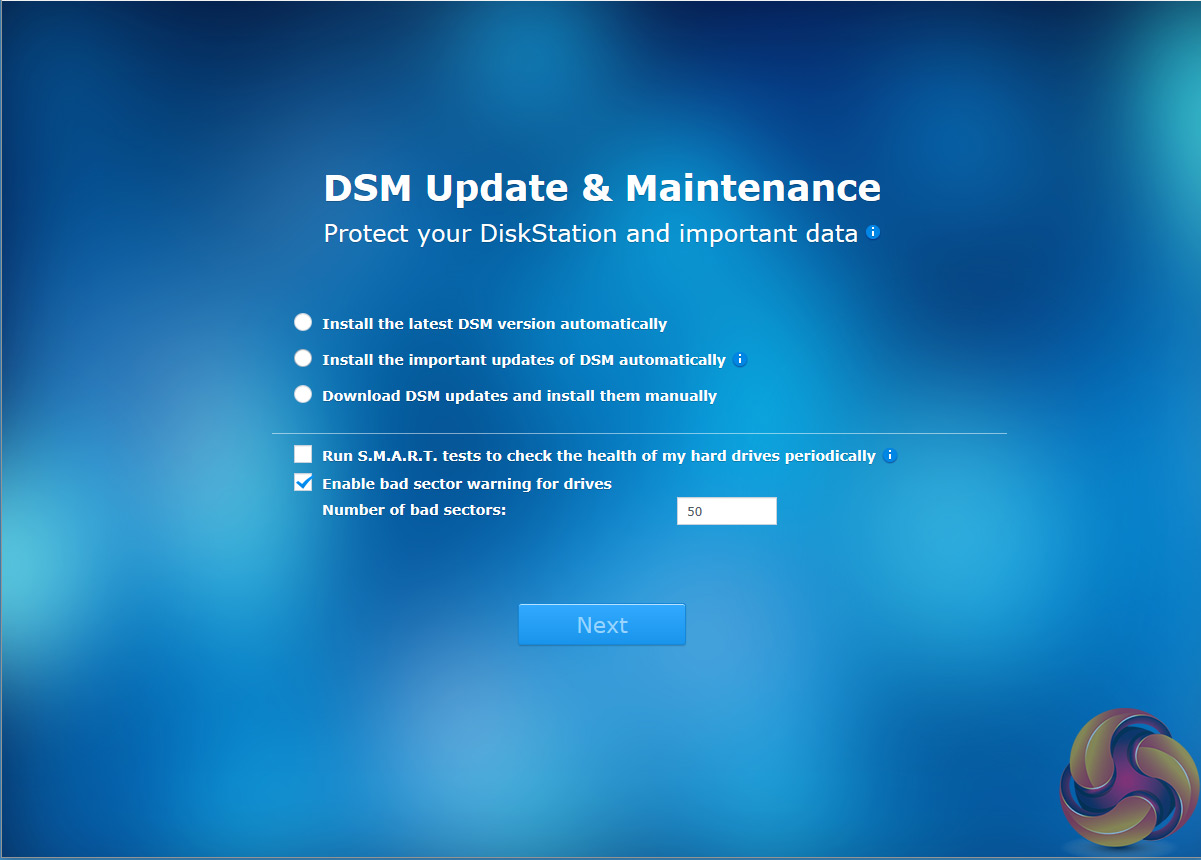
After the basic install has finished, the NAS is restarted and next up comes the setting up of the NAS management, where you assign a server name, admin user name and password. The next window is where the DSM update settings are set.
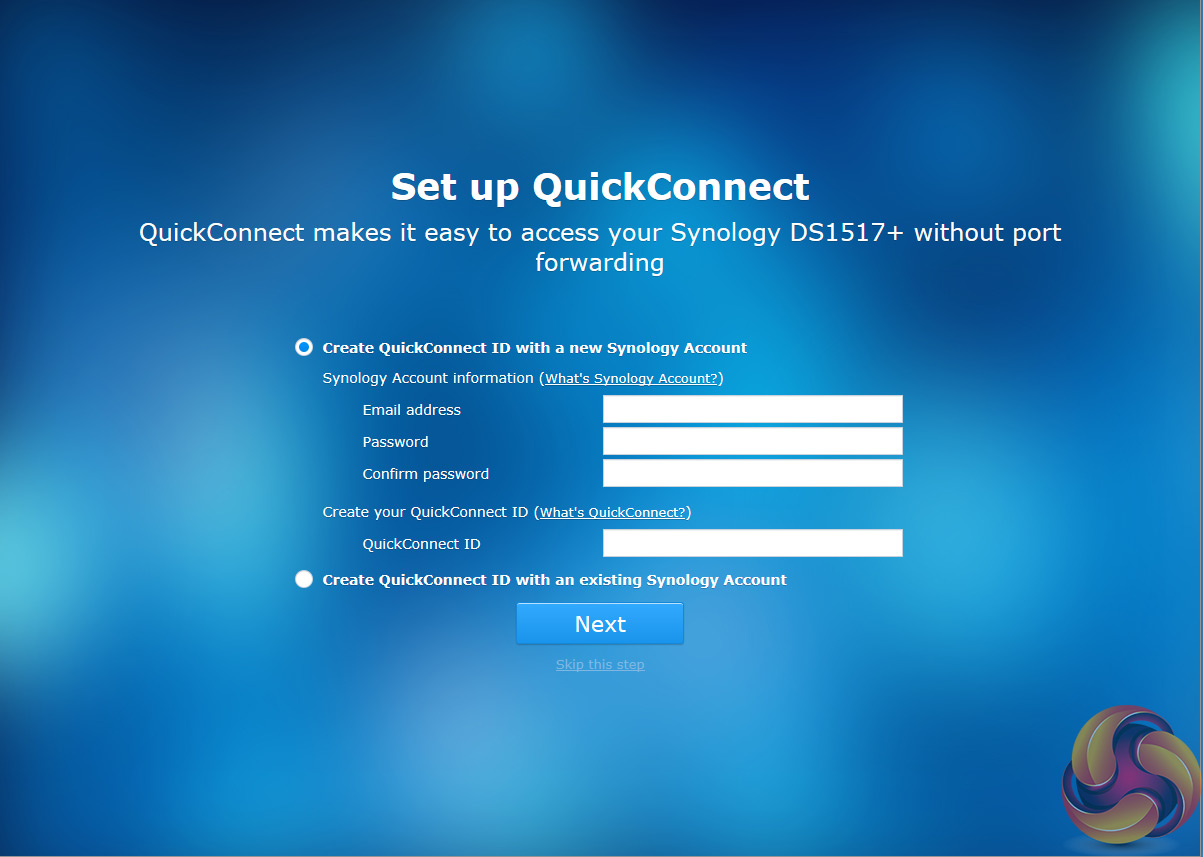
Next you can set up Quick Connect (remote access to the DiskStation) or skip it and set it up later as you can with the install of Synology’s recommended packages; Photo, Video, Audio and Download Stations and Media and cloud Station Servers as well as Hyper Backup and that’s the setup complete.
To test the Synology DiskStation DS1517+ we used five 6TB Red drives (WD60EFRX, 5,400rpm class, 64MB cache),built into all the RAID arrays supported by the device; RAID 0,1, 5.6 and 10 using the default Btrfs file system and then tested.
Software:
Atto Disk Benchmark.
CrystalMark 3.0.3.
IOMeter.
Intel NASPT.
To test real life file/folder performance we use a number of different file/folder combinations to test the read and write performance of the NAS device. Using the FastCopy utility to get a MB/s and time taken for each transfer, the data is written from and read back to a 240GB SSD.
60GB iso image
60GB Steam folder: 29,521 files.
50GB Files folder: 28,523 files.
12GB Movie folder: 24 files – mix of Blu-ray and 4K files.
10GB Photo folder: 621 files – mix of .png, .raw and .jpeg images.
10GB Audio folder: 1,483 files – mix of .mp3 and .flac files.
CrystalDiskMark is a useful benchmark to measure theoretical performance levels of hard drives, SSD’s and other storage devices.We are using V3.0.3.
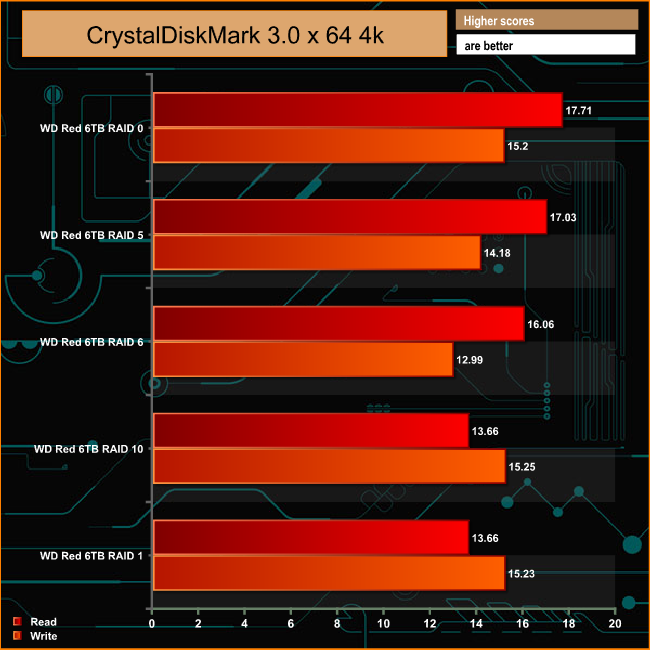
The DS1517+ shows good 4K read performance in RAID's 5 & 6, although slightly better write peformance comes from RAID 1 and RAID 10.
The ATTO Disk Benchmark performance measurement tool is compatible with Microsoft Windows. Measure your storage systems performance with various transfer sizes and test lengths for reads and writes. Several options are available to customize your performance measurement including queue depth, overlapped I/O and even a comparison mode with the option to run continuously.
Use ATTO Disk Benchmark to test any manufacturers RAID controllers, storage controllers, host adapters, hard drives and SSD drives and notice that ATTO products will consistently provide the highest level of performance to your storage.
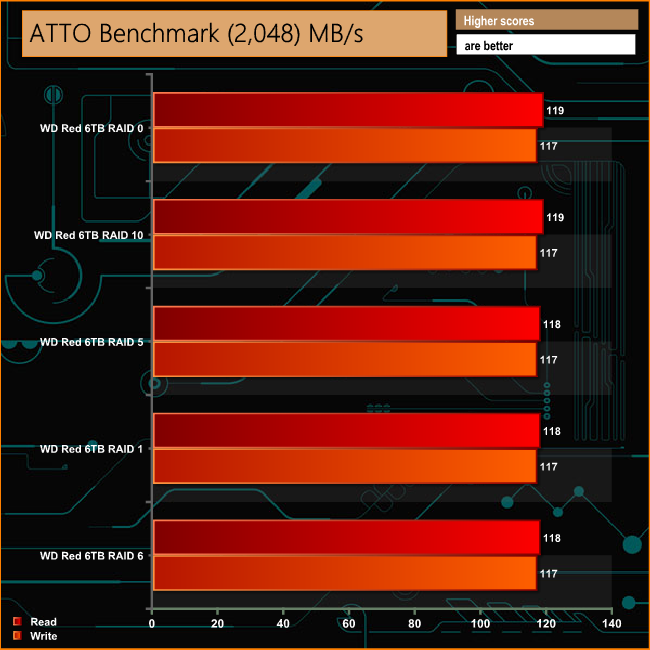
A combination of a quad core proccessor and a good chunk of memory gives the DS1517+ good Sequential performance which is very consistent across the arrays.
Intel’s NASPT (NAS Performance Toolkit ) is a benchmark tool designed to enable direct measurement of home network attached storage (NAS) performance. NASPT uses a set of real world workload traces (high definition video playback and recording, video rendering/content creation and office productivity) gathered from typical digital home applications to emulate the behaviour of an actual application.
We’ve used some of the video and office apps results to highlight a NAS device’s performance.
HD Video Playback
This trace represents the playback of a 1.3GB HD video file at 720p using Windows Media Player. The files are accessed sequentially with 256kB user level reads.
4x HD Playback
This trace is built from four copies of the Video Playback test with around 11% sequential accesses.
HD Video Record
Trace writes an 720p MPEG-2 video file to the NAS. The single 1.6GB file is written sequentially using 256kB accesses.
HD Playback and Record. Tests the NAS with simultaneous reads and writes of a 1GB HD Video file in the 720p format.
Content Creation
This trace simulates the creation of a video file using both video and photo editing software using a mix of file types and sizes. 90% of the operations are writes to the NAS with around 40% of these being sequential.
Office Productivity
A trace of typical workday operations. 2.8GB of data made up of 600 files of varying lengths is divided equally between read and writes. 80% of the accesses are sequential.
Photo Album
This simulates the opening and viewing of 169 photos (aprrox 1.2GB). It tests how the NAS deals with a multitude of small files.
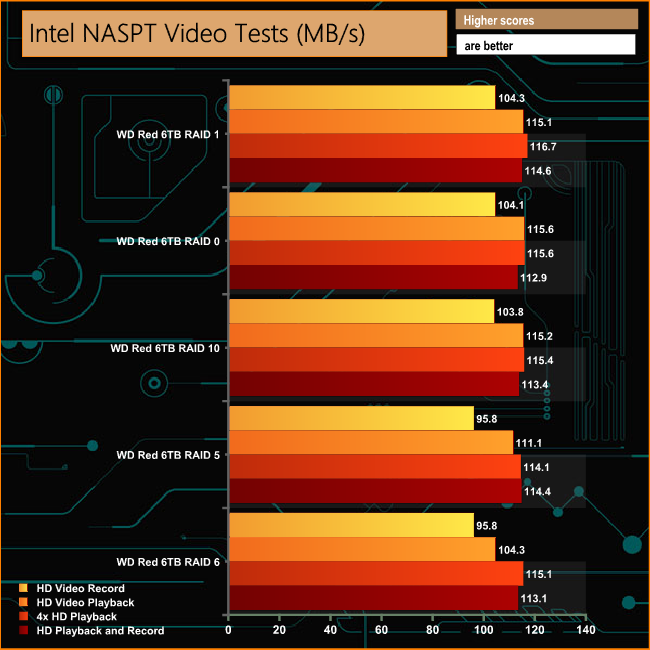
The DS1517+ shows very good and consistent peformance in Intel's NASPT benchmark's video tests producing over 100MB/s performance in all bar two of the test runs. Even then the HD Video Record tests in RAID 5 & 6 are only just below the 100MB/s mark.
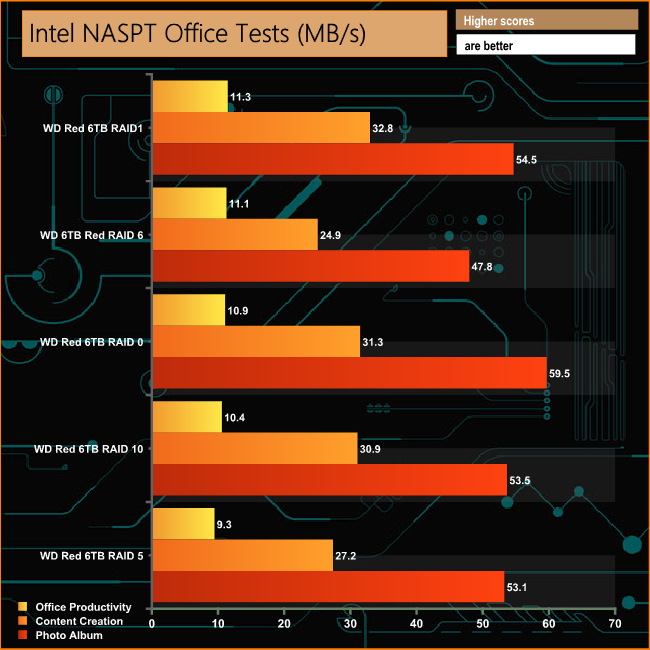
While the DS1517+ shows no problems dealing with the multitude of small files in the Photo Album test in the Office part of the NASPT benchmark it finds the Office Productivity test much more of a problem averaging just 10.6MB/s across all five array types.
IOMeter is another open source synthetic benchmarking tool which is able to simulate the various loads placed on hard drive and solid state drive technology.
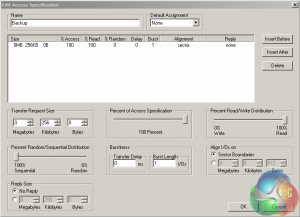
We set IOmeter up (as shown above) to test both backup and restore performance on a 100GB partition.
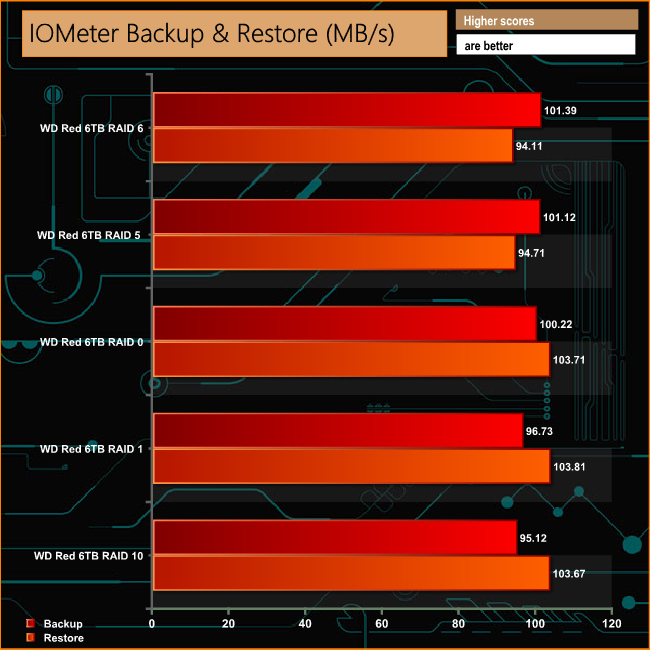
The DS1517+ has no problems dealing with the 100GB file used for the backing up and restore test averaging 99.02MB/s for the backup phase and 100MB/s during the restore runs.
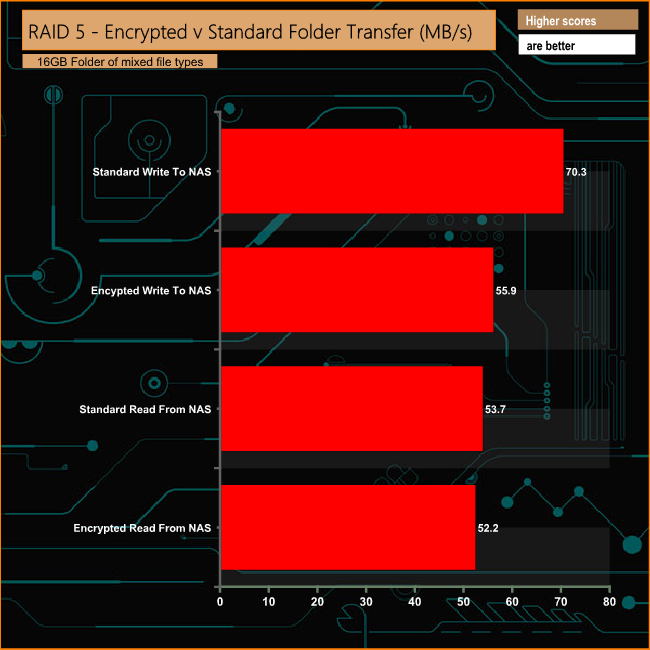
Thanks to the DS1517+ built in encryption engine there's only a 14MB/s drop in performance writing an encrypted folder to the NAS. Reading the encrypted data back there's hardly any loss in performance.
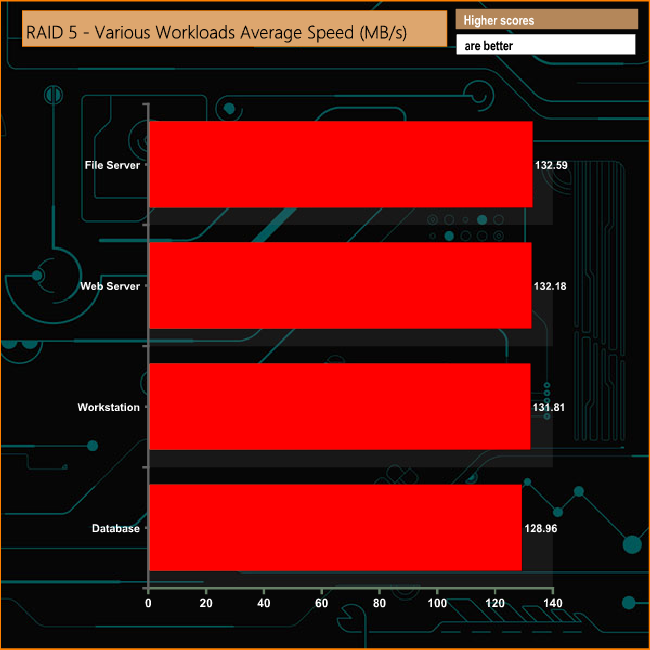
When tested with the various workloads that the DS1517+ might be used for in a RAID 5 setup, the NAS shows strong and very consistent performance across the workload scenarios.
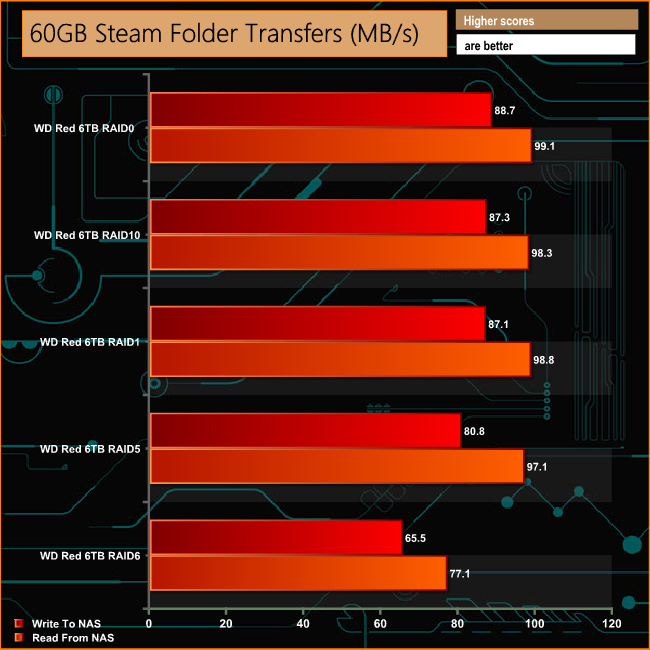
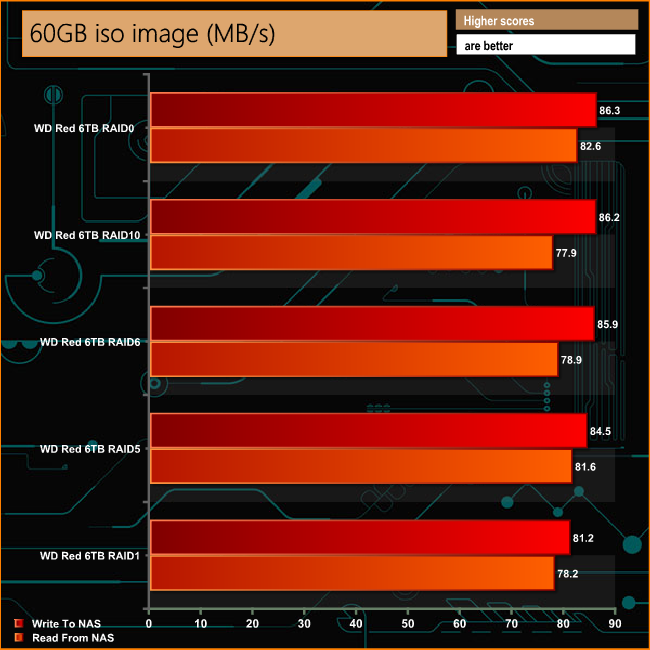
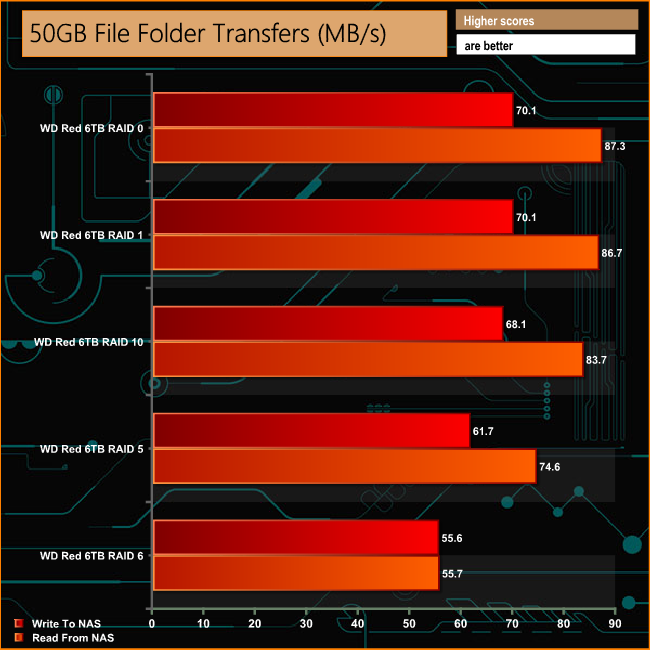
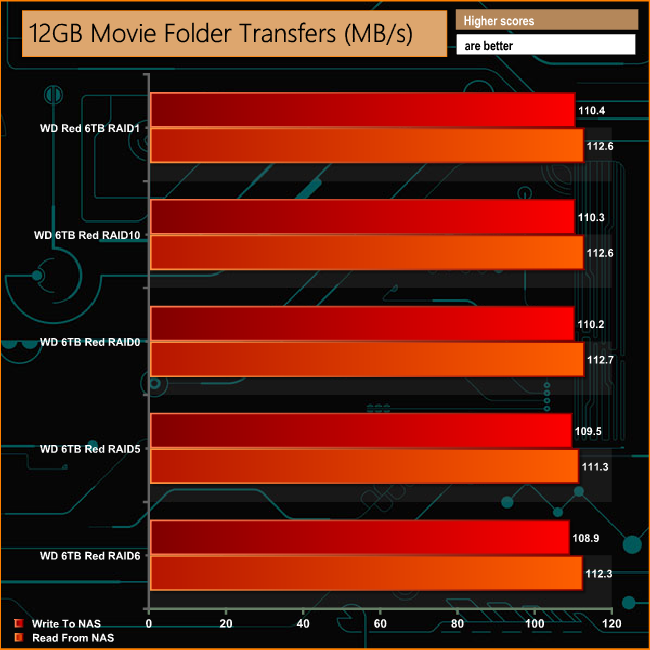
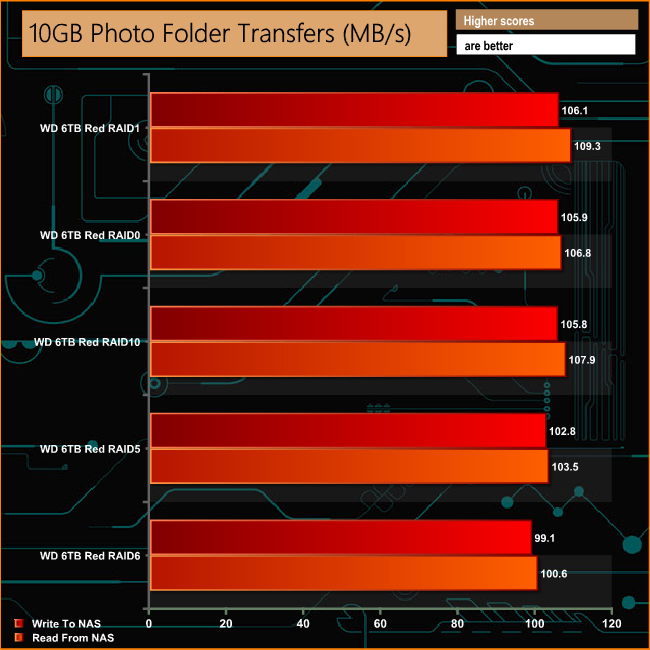
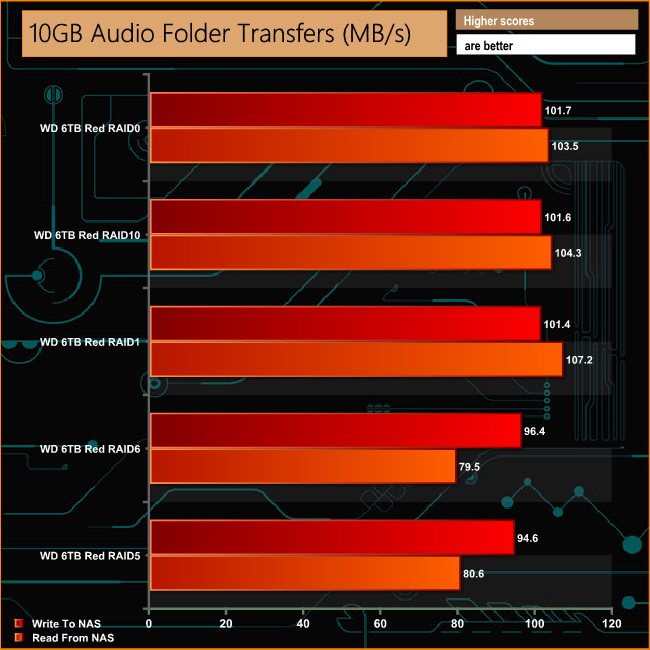
The Synology DS1517+ performed well in all our real life transfer tests. During the 60GB Steam folder test it got very close to the 100MB/s mark for reads and over 80MB/s for writes for all arrays except RAID 6 where the performance dropped off for both reads and writes. It was the same story in the 50GB File folder transfer with pretty good performance across the arrays apart from RAID 6.
We tested the peak power consumption of a NAS at the wall during a run of CrystalDiskMark 5.0.2 as this version of the benchmark runs the read and write benchmark suites separately so its easier to monitor what power the device is using during each function.
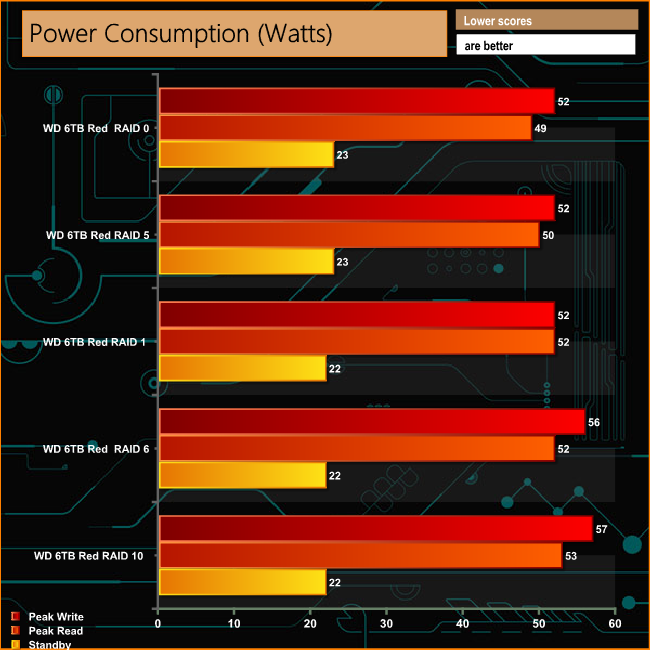
With a CPU that has a TDP of 15W, choice of hard drives will be important if you want to keep the power demands of the DS1517+ as frugal as possible. The 6TB WD Red drives used to test the NAS are rated at 5.3W for active read/writes, 3.4W in idle and just 0.4W when in standby/sleep mode.
For a 5-bay NAS, Synology's DiskStation DS1517+ is a pretty compact desktop design due to the vertically mounted drive bays. Powered by an Intel Atom C2538 2.4GHz CPU, the DS1517+ comes in two memory options an entry level 2MB version and the flagship 8MB unit. Whichever memory option you choose it can be upgraded if you feel you need more grunt as the DS1517+ supports up to 16GB of memory via the two SO-DIMM slots that sit under an easy to get to hatch in the base of the unit.
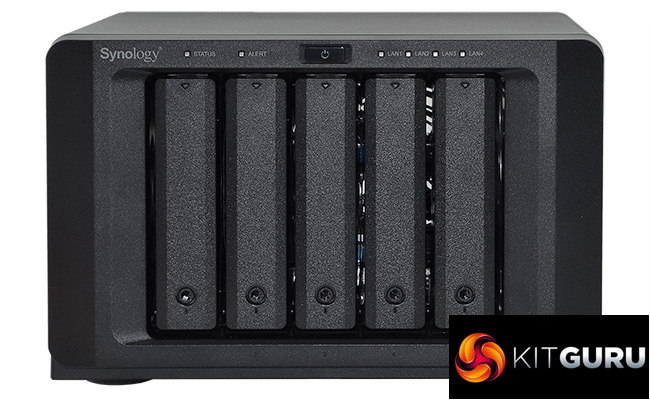
The DS1517+ has a degree of future proofing built into it in the shape of a PCIe slot. This slot currently supports Synology's M2D17 dual SATA adapter card supporting a pair of M.2 SATA drives or a 10GbE network add-in card so should you need to boost performance with SSD caching or need faster networking speeds you have the ability to upgrade but with only one slot the decision has to be made which one is more important.
The NAS itself provides up to 50TB (5 x 10TB drives) of storage space but should you need even more, the unit can support a pair of Synology DX517 five bay expansion units via the two eSATA ports in the rear panel giving a total capacity of 150TB, which should be enough for small to medium sized businesses.
Synology’s DSM (DiskStation Manger) is one of the best NAS O/S out there, quick and easy to install, feature rich and with a large collection of apps in the Package Center to expand what the device can do. It's being constantly updated with Synology adding even more features and apps to an already feature rich NAS O/S.
The latest 6.1 version of DSM brings Btrfs file system support to more models in Synology’s product line (there’s a full list of compatible units available on Synology’s site). Amongst Btrfs many features are auto-detection of corrupted files (silent data corruption) and repair. It does this providing checksums for the data and metadata, generating two copies of the latter and then verifies the checksums during each read. Any reported mismatch sees the metadata being repaired.

We found the Synology DiskStation DS1517+ available brought to order at Overclockers UK for £784.99 HERE
Pros
- DSM OS.
- Btrfs file system support.
- Capacity can be expanded using Synology Expansion units.
- PCIe slot.
- Easy to access memory slots.
Cons
- Pricey.
Kitguru says: The DS1517+ is a powerful 5-bay NAS for small business although there is no reason it couldn't be used in for SOHO enviroment. By adding a PCIe slot, Synology has given it a good deal of future proofing allowing for the addition of fast disk caching or fast networking options.

Somehow the benchmark results do not make a lot of sense to me ie looking at the throughput benchmarks most of them hover around 100 MB/sec despite the different RAID set-ups ie one would expect for example a noticeable difference between RAID-0 and RAID-5….
My guess is that you connected the NAS and/or workstation via a standard 1 Gigabit Ethernet to the Network and therefore the LAN became the bottleneck at around 100 MB/sec ie 1 Gigabit …
In a 10 Gigabit LAN with 5 HDs installed I would expect that you should get close to 400 – 500 Megybytes/sec (at least thats my experience with Synology although I am not familiar with this specific model, so there might be otehr bottleneckes in the specific set-up, also 10 Gigabit needs a little bit of tuning until you get good throughput).