KitGuru KitGuru.net – Tech News | Hardware News | Hardware Reviews | IOS | Mobile | Gaming | Graphics Cards


Following on from the RX 6600 that hit the market back in October, today sees the launch of AMD's lowest-end RDNA 2 GPU, the RX 6500 XT. Designed to offer a solid 1080p gaming experience for $199, or £180, can a GPU with just 4GB VRAM, a 64-bit memory bus and a PCIe 4.0 x4 interface really prove a success? As it turns out, the answer is ‘no', and quite an emphatic one at that.
Announced as part of AMD's keynote at CES 2022, the RX 6500 XT sits at the bottom of the RDNA 2 stack. Using brand new Navi 24 silicon, fabbed on a new 6nm process from TSMC, this is likely the lowest-end – and last – RDNA 2 GPU, completing the family which first appeared with the RX 6800 XT in November 2020.
That means it is also set to be the most affordable, with an MSRP of $199 announced during the CES keynote. Meanwhile, we are told UK pricing will start at £179.99, which is also the price the Gigabyte RX 6500 XT Eagle card in for testing today is expected to launch at.
For that cash, AMD has aimed the RX 6500 XT squarely for 1080p gaming, and at lower than Ultra settings, too. That's an interesting move considering previous cards at this price-point were designed to be 1080p Ultra gaming champs, and both the RX 480 and RX 580 hold up exceptionally well, even today. Let's get into it.
| RX 6800 | RX 6700 XT | RX 6600 XT | RX 6600 | RX 6500 XT | |
| Architecture | RDNA 2 | RDNA 2 | RDNA 2 | RDNA 2 | RDNA 2 |
| Manufacturing Process | 7nm | 7nm | 7nm | 7nm | 6nm |
| Transistor Count | 26.8 billion | 17.2 billion | 11.1 billion | 11.1 billion | 5.4 billion |
| Die Size | 519 mm² | 336 mm² | 237 mm² | 237 mm² | 107 mm² |
| Ray Accelerators | 60 | 40 | 32 | 28 | 16 |
| Compute Units | 60 | 40 | 32 | 28 | 16 |
| Stream Processors | 3840 | 2560 | 2048 | 1792 | 1024 |
| Game GPU Clock | Up to 1815MHz | Up to 2424MHz | Up to 2359MHz | Up to 2044 MHz | Up to 2685 MHz |
| Boost GPU Clock | Up to 2105MHz | Up to 2581MHz | Up to 2589MHz | Up to 2491MHz | Up to 2825MHz |
| ROPs | 96 | 64 | 64 | 64 | 32 |
| AMD Infinity Cache | 128MB | 96MB | 32MB | 32MB | 16MB |
| Memory | 16GB GDDR6 | 12GB GDDR6 | 8GB GDDR6 | 8GB GDDR6 | 4GB GDDR6 |
| Memory Bandwidth | 512 GB/s | 384 GB/s | 256 GB/s | 224 GB/s | 144 GB/s |
| Memory Interface | 256-bit | 192-bit | 128-bit | 128-bit | 64-bit |
| Board Power | 250W | 230W | 160W | 132W | 107W |
Let’s first look over the key specifications of the GPU. Using the new Navi 24 GPU, measuring an incredibly small 107 mm², the RX 6500 XT is – more or less – half of the RX 6600 XT. It sports 16 Compute Units, for a total of 1024 stream processors.
RDNA 2 houses one ray accelerator per CU, so there’s a total of 16 with the RX 6500 XT. Four texture units per CU gives a total of 64, while there’s also 32 ROPs. Likely thanks to the new 6nm node, clock speed has been increased to its highest level yet for RDNA 2, with a rated boost clock of 2825 MHz.
As for the memory configuration, this is the hardest pill to swallow, with an exceptionally narrow 64-bit memory interface paired with just 4GB of GDDR6 memory. The memory itself is clocked slower at 18Gbps, resulting in total memory bandwidth hitting 144GB/s, though AMD claims an ‘effective' memory bandwidth of 231.6GB/s thanks to 16MB of Infinity Cache. Crucially, the PCIe interface is limited to x4, which will reduce bandwidth further when used on a PCIe 3.0 platform.
Lastly, total board power (TBP) is rated at 107W, a reduction of 25W, or 19%, compared to the RX 6600. We are using our new GPU power testing methodology in this review, so read on for our most detailed power and efficiency testing yet.

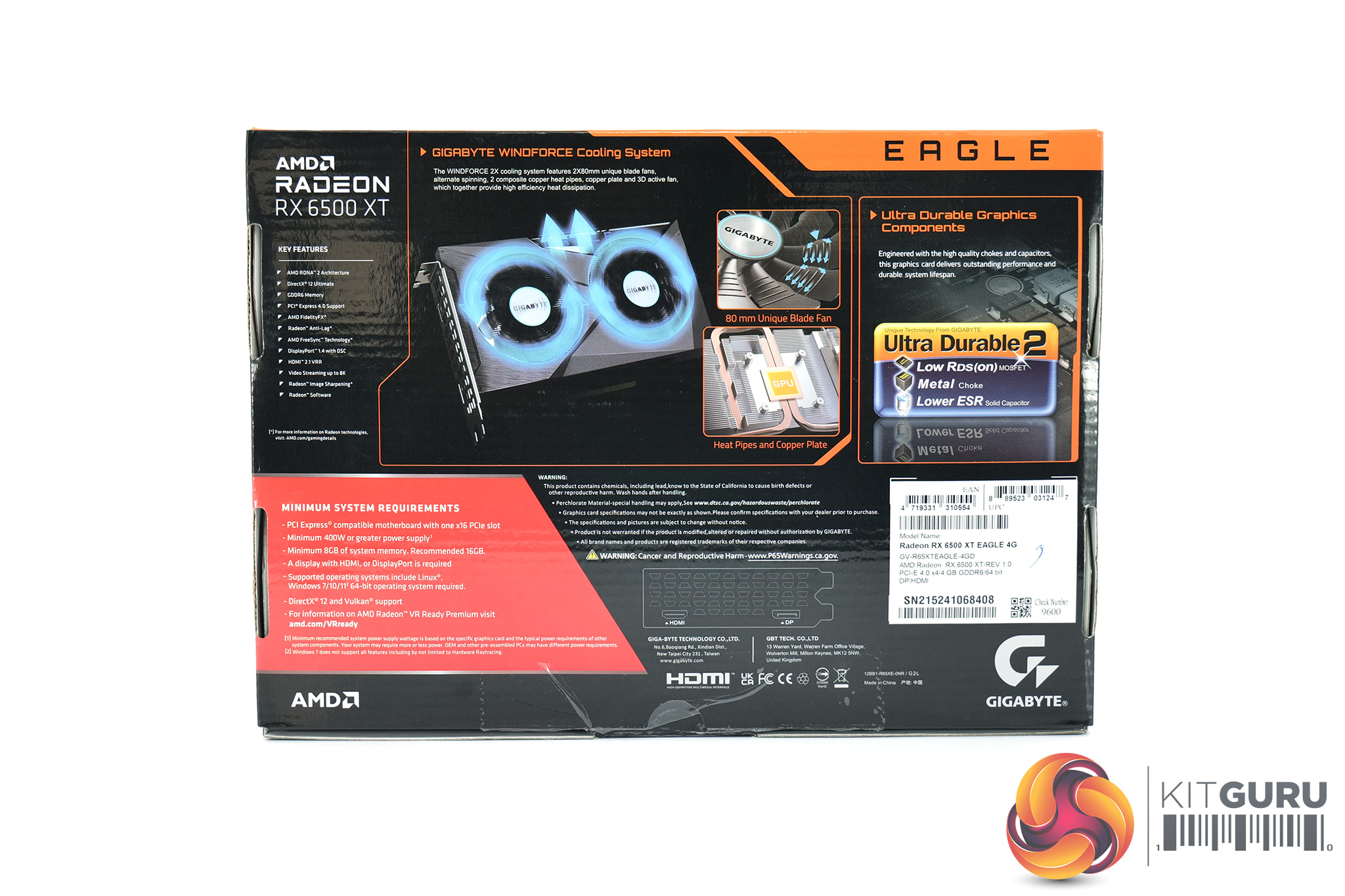
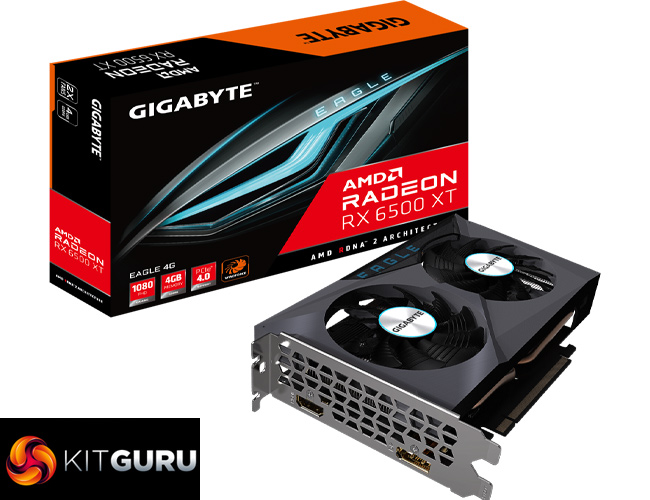
For today's review, AMD sampled us with the Gigabyte RX 6500 XT Eagle. It ships in a black box with Gigabyte's robotic eye logo visible on the front.
On the back, the company highlights various key features of the design, including the fans, direct heatpipe contact and ‘durable' PCB components.
The only included accessory is a basic quick start guide.
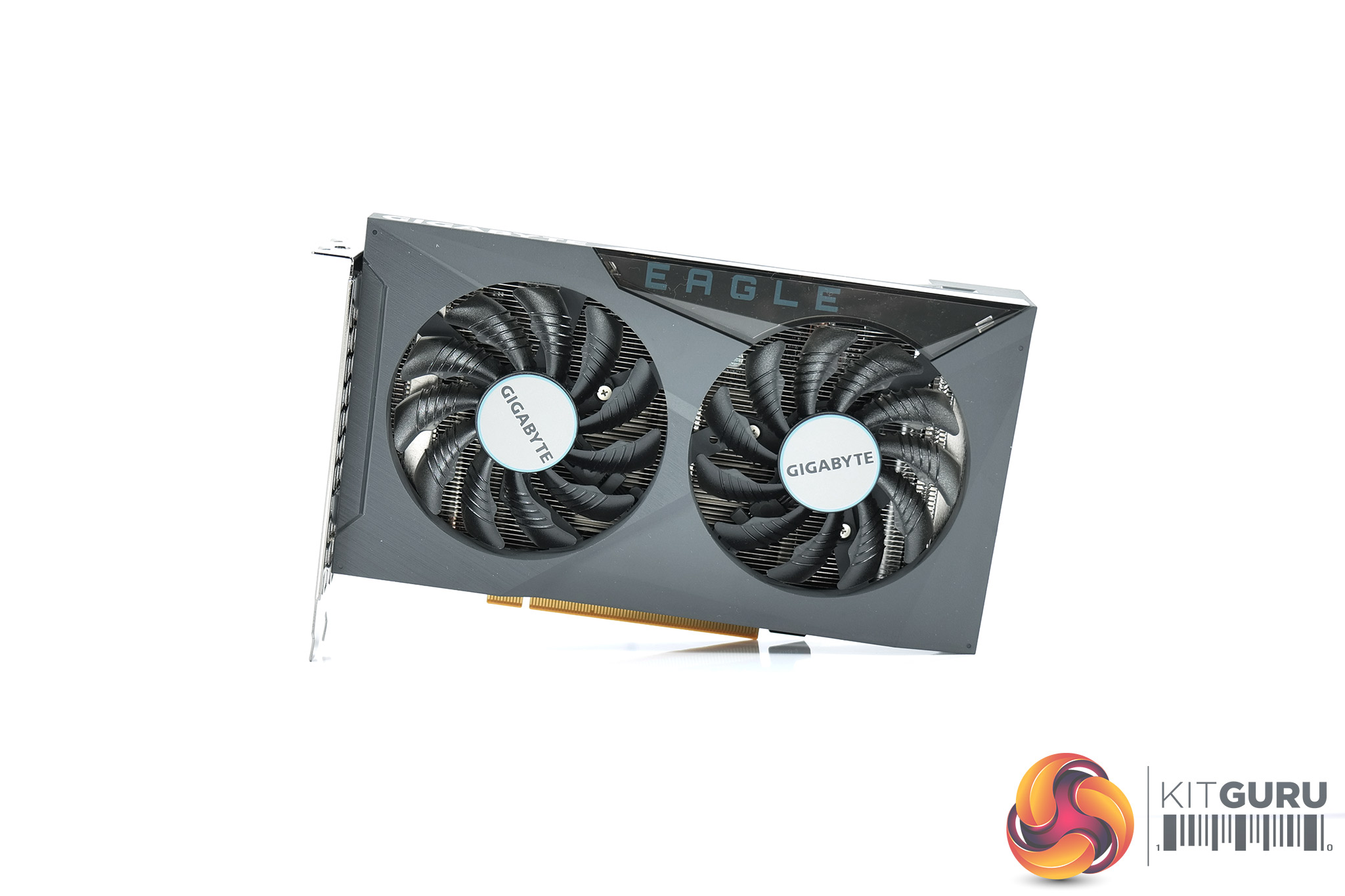
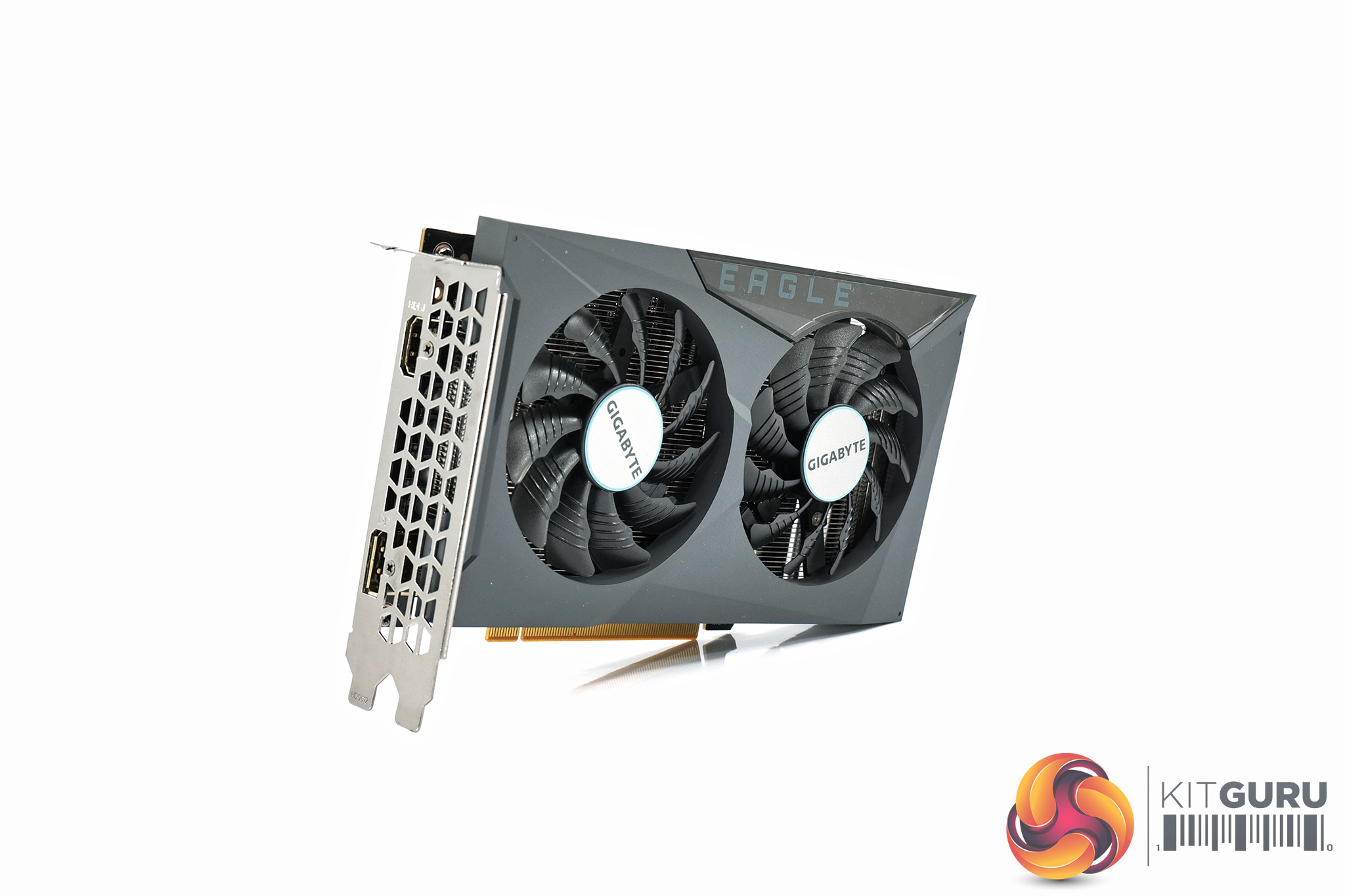
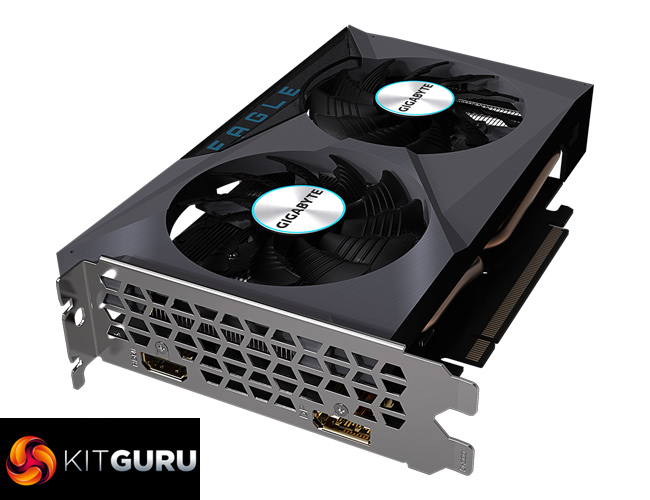
As for the card itself, it's a fairly basic design overall which is to be expected for a GPU of this class. The overall shroud design is very much in keeping with other Eagle models we have reviewed in the past, meaning it is made of grey plastic and is quite blocky in its shape.
The fans measure 80mm across, and as we'd expect, they feature Gigabyte's ‘alternate spinning technology', meaning one fan spins clockwise while the other spins anti-clockwise, which Gigabyte claims helps to reduce air turbulence, and thus direct more air down onto the heatsink.
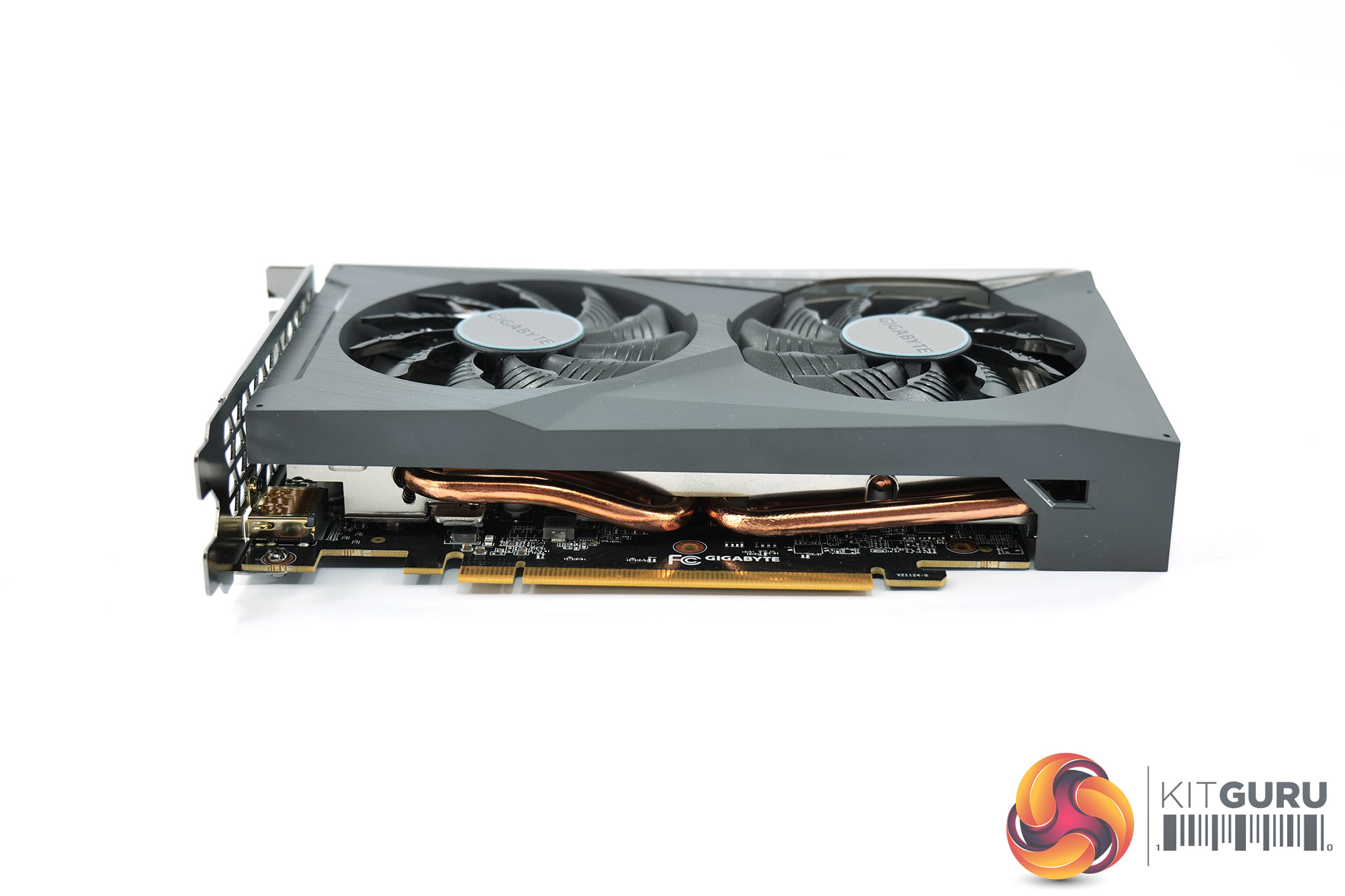

If it's not apparent from the photos as well, this is quite a diminutive card, measuring 192 x 117 x 38mm. It's not quite as small as the Palit RTX 3060 StormX OC we looked at last year, but it would still be a suitable option for most Mini-ITX cases.
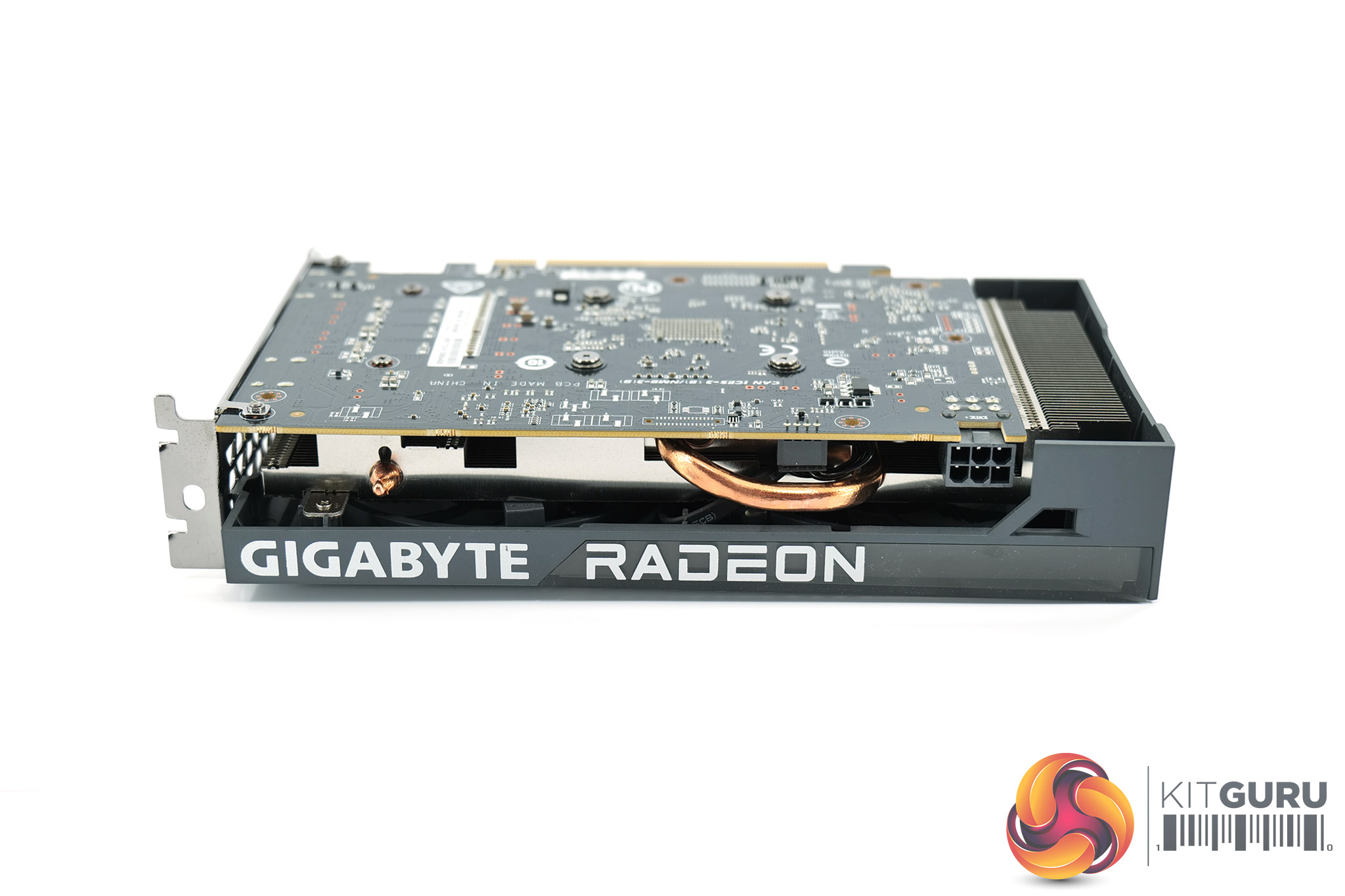

The front side of the card is also basic to look at, with the Gigabyte and Radeon logos visible, but not much else. There's no backplate as mentioned – not even a plastic one – so instead we get a direct view of the back of the PCB.

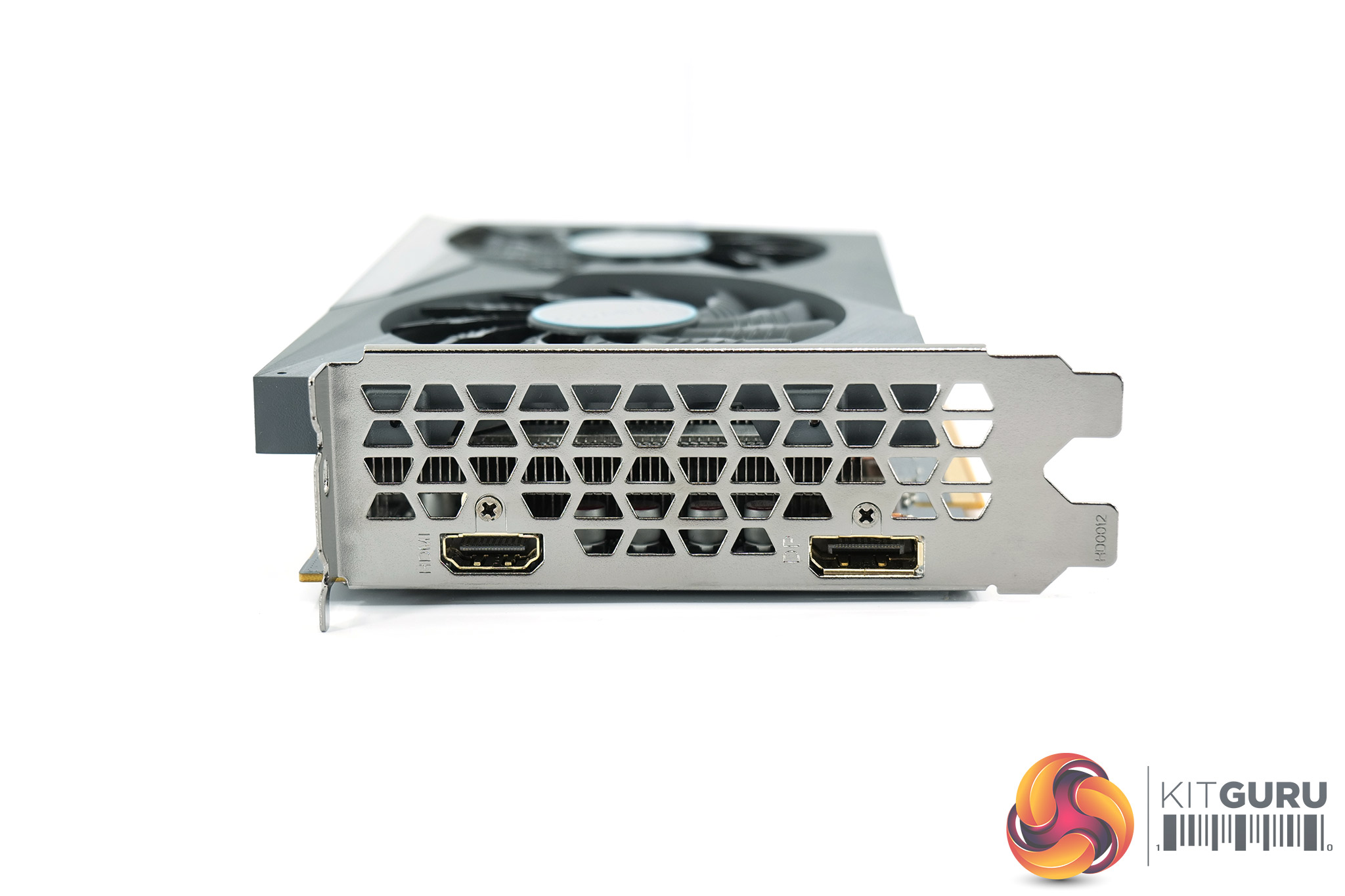
All RX 6500 XT cards will require a single 6-pin connector as the 107W TGP is above the 75W that can be supplied through the PCIe x16 slot alone.
Meanwhile, display outputs are sparse, with a single HDMI 2.1 port and one DisplayPort 1.4a connector.
PCIe Testing
For our benchmarks today, we tested the RX 6500 XT at both PCIe 4.0 and PCIe 3.0 speeds. We feel this is crucial as the majority of those interested in a GPU of this class will likely be using a PCIe 3.0 platform.
For all of our 1080p benchmarks, we therefore tested the RX 6500 XT twice – once with PCIe 4.0 and once with PCIe 3.0. This will be reflected in the charts you see on the following pages. Due to time pressures we were unable to do the same for 1440p, where we only tested with PCIe 4.0, but as I think you all will agree, this is certainly not a 1440p card to begin with so those charts are really just a ‘bonus'.
Driver Notes
- All Nvidia GPUs were benchmarked with the 511.23 driver.
- All AMD GPUs (except RX 6500 XT) were benchmarked with the public Adrenalin 22.1.1 driver.
- RX 6500 XT was benchmarked with the Adrenalin 22.1.1 driver supplied to press.
Test System
We test using the a custom built system from Cyberpower, based on Intel's Alder Lake platform. You can buy your own system from Cyberpower HERE.
| CPU |
Intel Core i9-12900K
|
| Motherboard |
MSI MPG Z690 CARBON WIFI
|
| Memory |
Corsair Dominator Platinum RGB DDR5 5200MHz (2 X 16GB)
CL 40-40-40-77
|
| Graphics Card |
Varies
|
| SSD |
2TB Seagate FireCuda 530
|
| Chassis | Corsair 5000D Airflow |
| CPU Cooler |
Corsair H150i RGB Pro XT
|
| Power Supply |
Corsair 1200W HX Series Modular 80 Plus Platinum
|
| Operating System |
Windows 11 21H2
|
Resizable BAR is enabled for all supported graphics cards.
Comparison Graphics Cards List
- ASRock RX 5500 XT Challenger 8GB
- Sapphire RX 5500 XT Pulse 4GB
- Sapphire RX 580 Pulse 8GB
- ASUS ROG RX 570 Strix OC 4GB
- Gigabyte GTX 1660 Super Gaming 6GB
- Palit GTX 1650 Super StormX OC 4GB
- Gigabyte GTX 1650 Gaming OC 4GB
- Nvidia GTX 1060 Founders Edition (FE) 6GB
Software and Games List
- 3DMark Fire Strike & Fire Strike Ultra (DX11 Synthetic)
- 3DMark Time Spy (DX12 Synthetic)
- Assassin's Creed Valhalla (DX12)
- Cyberpunk 2077 (DX12)
- Death Stranding (DX12)
- Far Cry 6 (DX12)
- Forza Horizon 5 (DX12)
- Hitman 3 (DX12)
- Horizon Zero Dawn (DX12)
- Marvel's Guardians of the Galaxy (DX12)
- Metro Exodus Enhanced Edition (DXR)
- Red Dead Redemption 2 (DX12)
- Resident Evil Village (DX12)
- Total War Saga: Troy (DX11)
- Watch Dogs: Legion (DX12)
We run each benchmark/game three times, and present mean averages in our graphs. We use FrameView to measure average frame rates as well as 1% low values across our three runs.
Fire Strike is a showcase DirectX 11 benchmark for modern gaming PCs. Its ambitious real-time graphics are rendered with detail and complexity far beyond other DirectX 11 benchmarks and games. Fire Strike includes two graphics tests, a physics test and a combined test that stresses the CPU and GPU. (UL).
3DMark Time Spy is a DirectX 12 benchmark test for Windows 10 gaming PCs. Time Spy is one of the first DirectX 12 apps to be built the right way from the ground up to fully realize the performance gains that the new API offers. With its pure DirectX 12 engine, which supports new API features like asynchronous compute, explicit multi-adapter, and multi-threading, Time Spy is the ideal test for benchmarking the latest graphics cards. (UL).
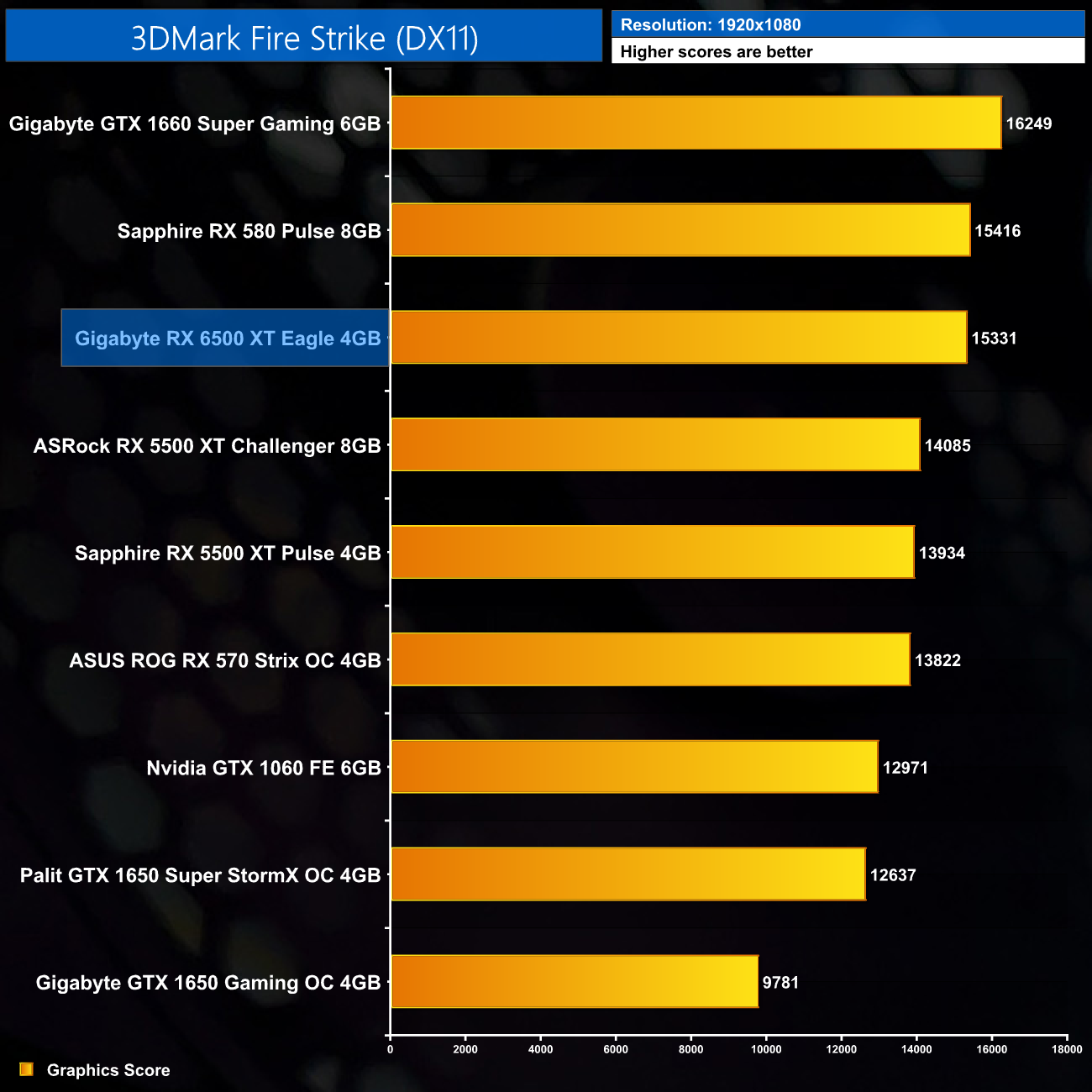
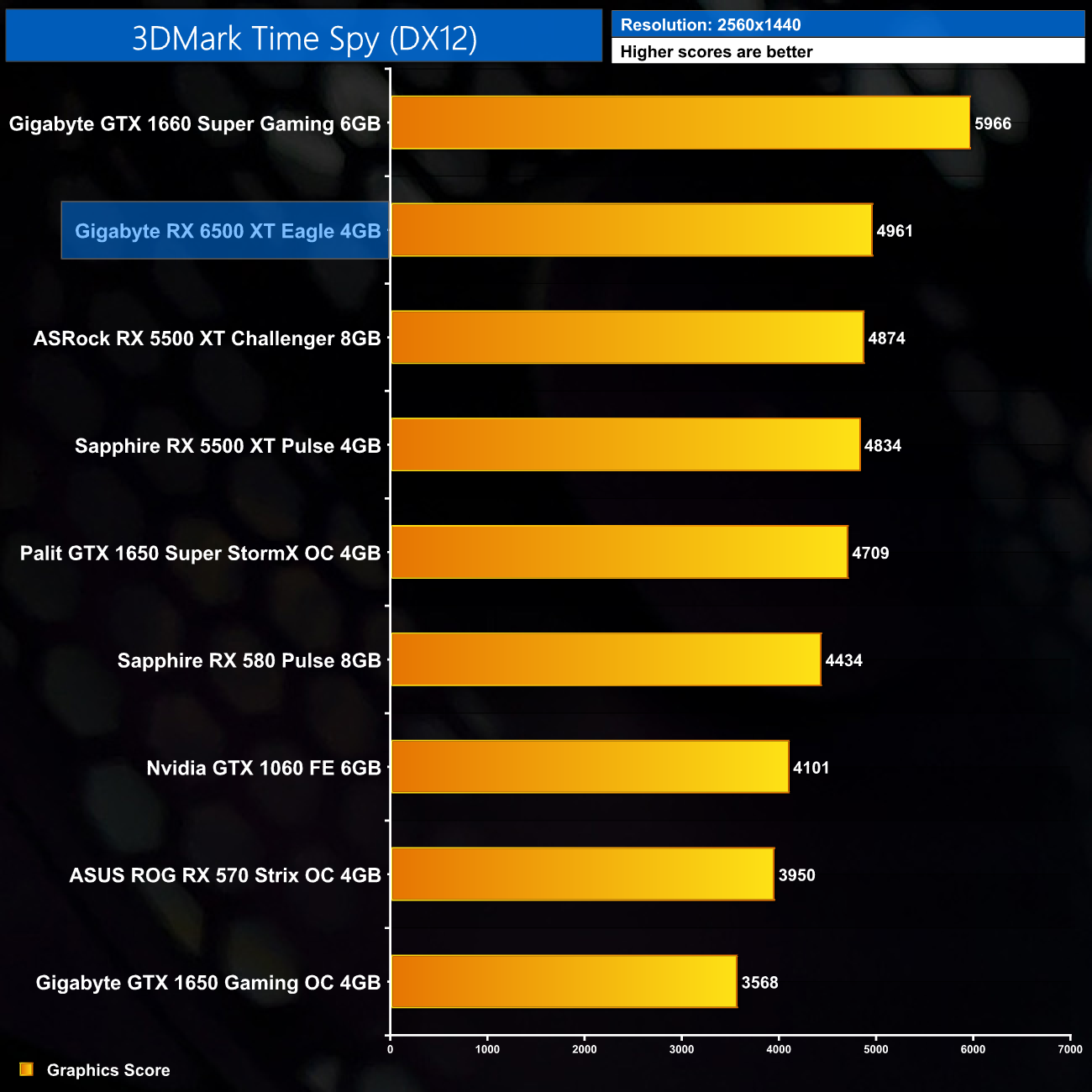
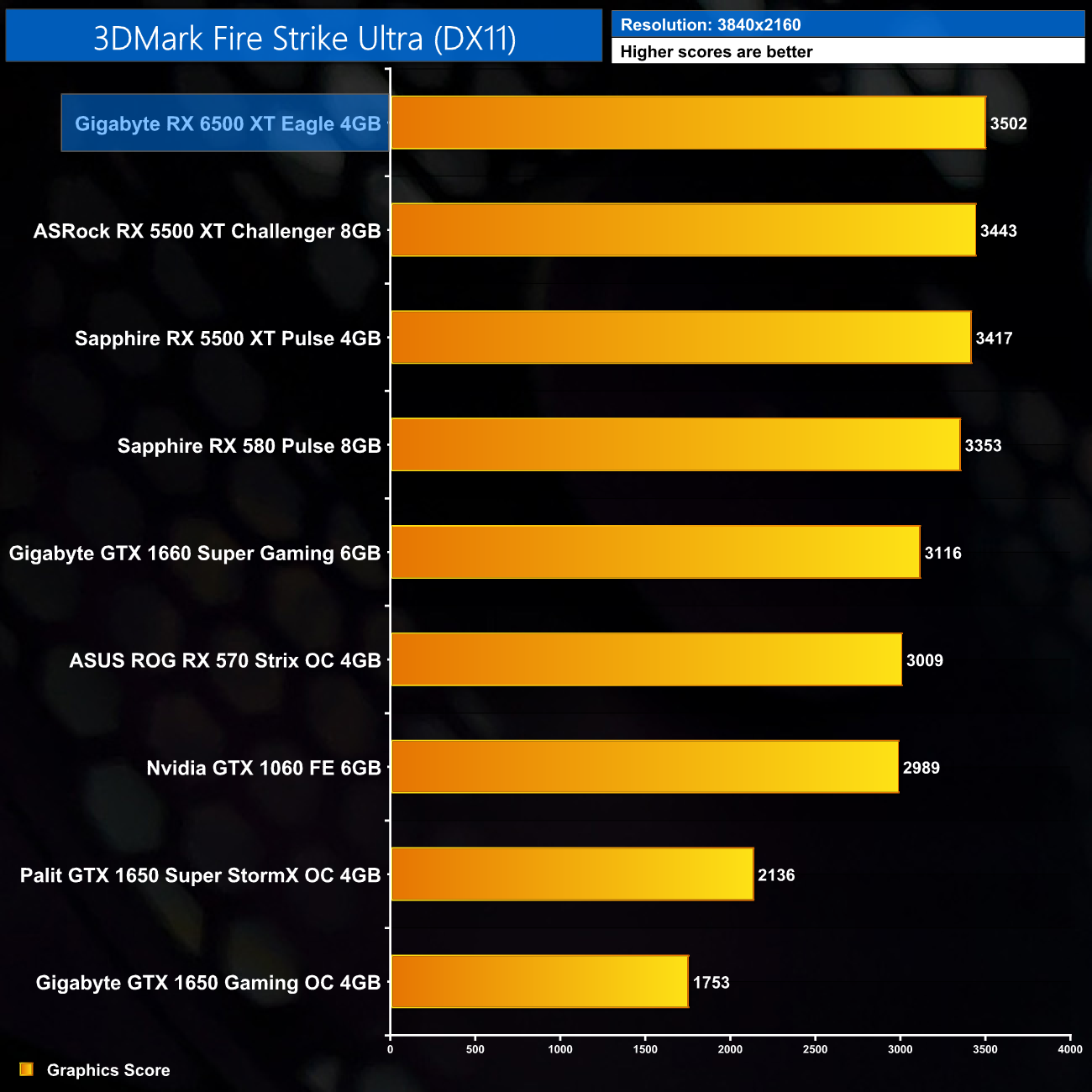
Things get off to a reasonable start in 3DMark, depending how you look at it. The RX 6500 XT is 9% faster than the RX 5500 XT 8GB in Fire Strike, for instance, but still marginally slower than the ageing RX 580. In Time Spy, it's about on par with the 5500 XT, but only the GTX 1660 Super is clearly faster.
Assassin's Creed Valhalla is an action role-playing video game developed by Ubisoft Montreal and published by Ubisoft. It is the twelfth major installment and the twenty-second release in the Assassin's Creed series, and a successor to the 2018's Assassin's Creed Odyssey. The game was released on November 10, 2020, for Microsoft Windows, PlayStation 4, Xbox One, Xbox Series X and Series S, and Stadia, while the PlayStation 5 version was released on November 12. (Wikipedia).
Engine: AnvilNext 2.0. We test using the Very High preset, DX12 API.
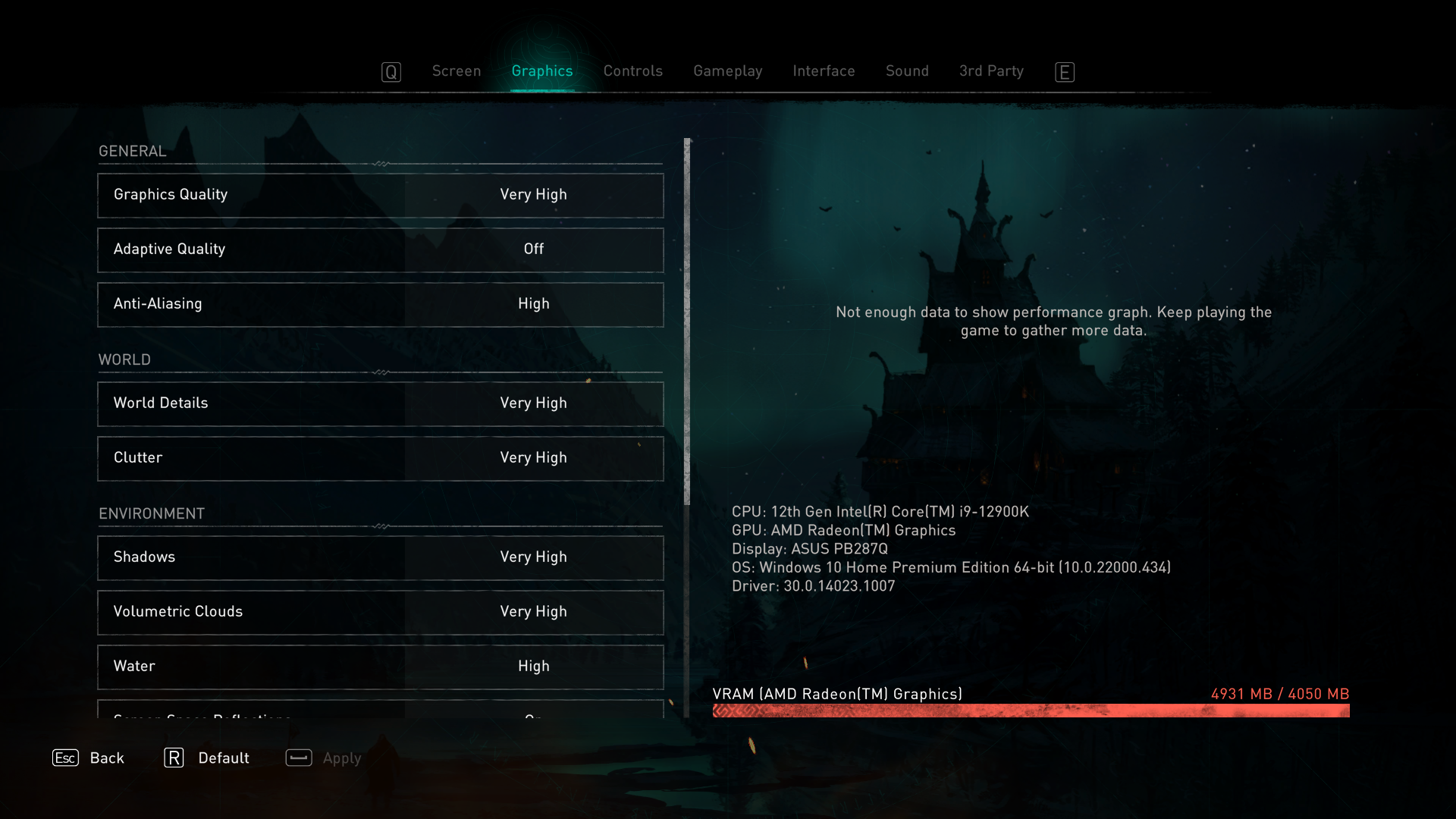
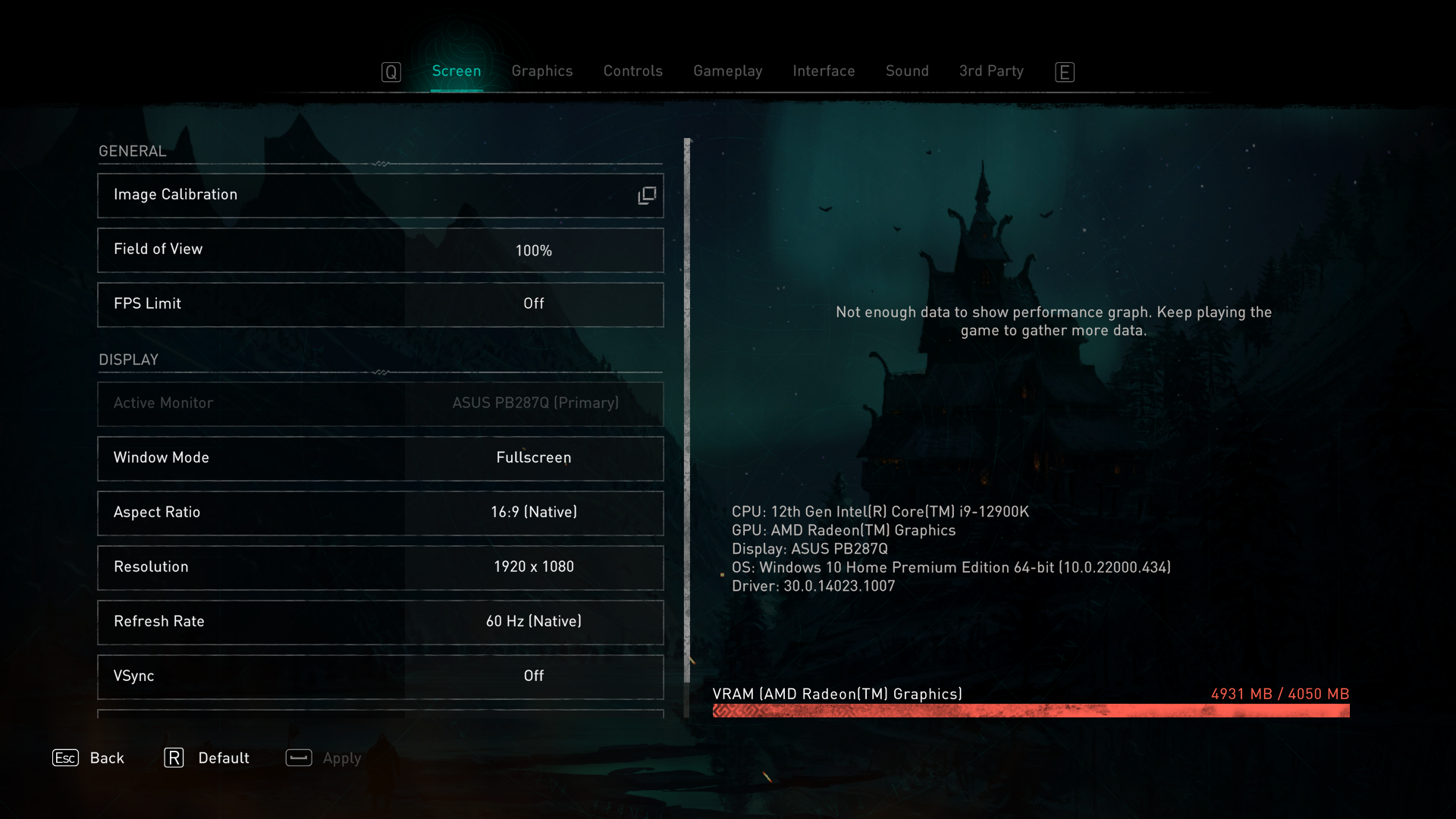
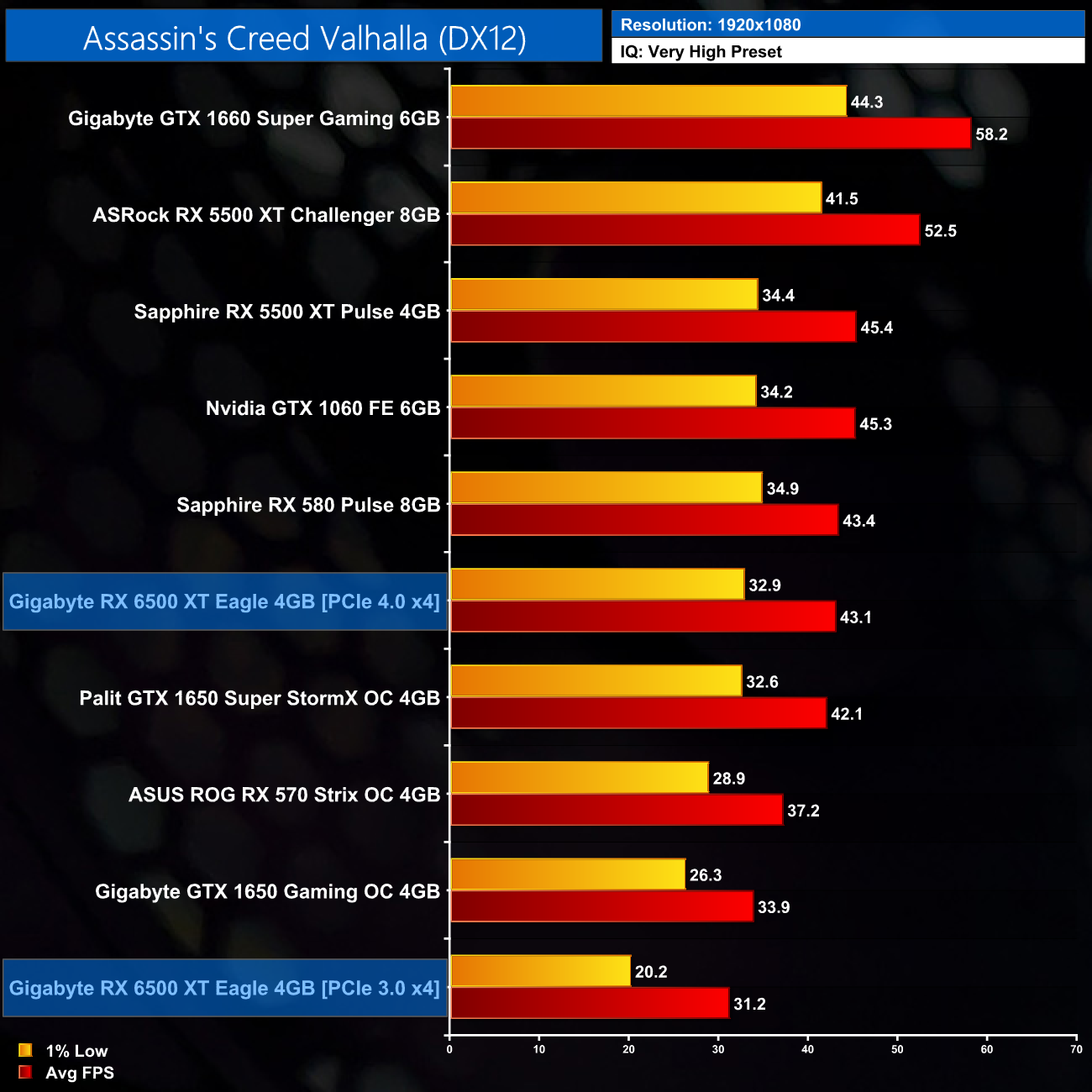
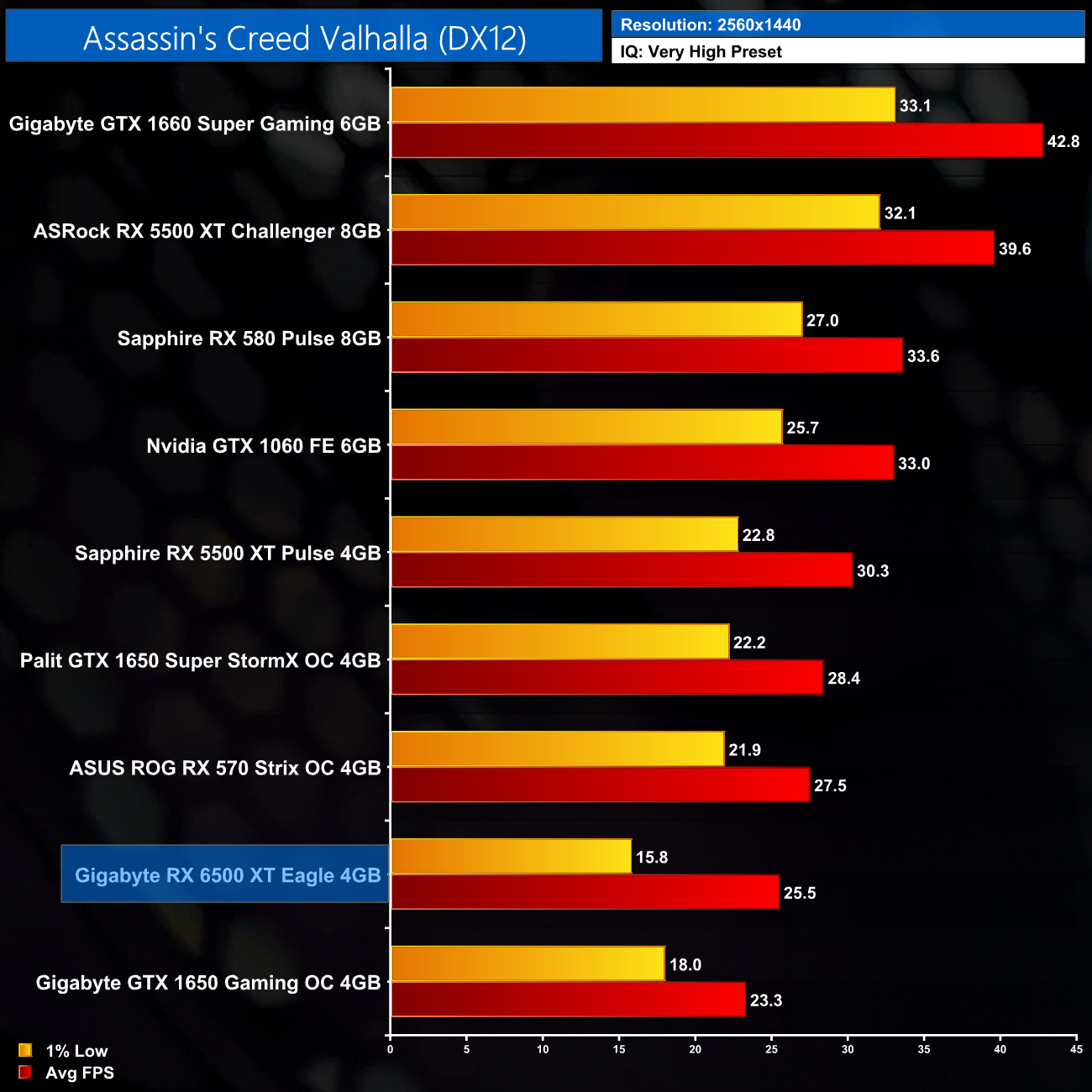
It’s a pretty poor start for the 6500 XT in Assassin’s Creed Valhalla. Performance is basically identical to an RX 580 and is actually slower than the GTX 1060, with AMD's latest GPU delivering 43FPS on average. Dropping down to PCIe 3.0, however, delivers a hammer blow for the 6500 XT, as the frame rate drops to just 31FPS, making it slower than even the lowly GTX 1650.
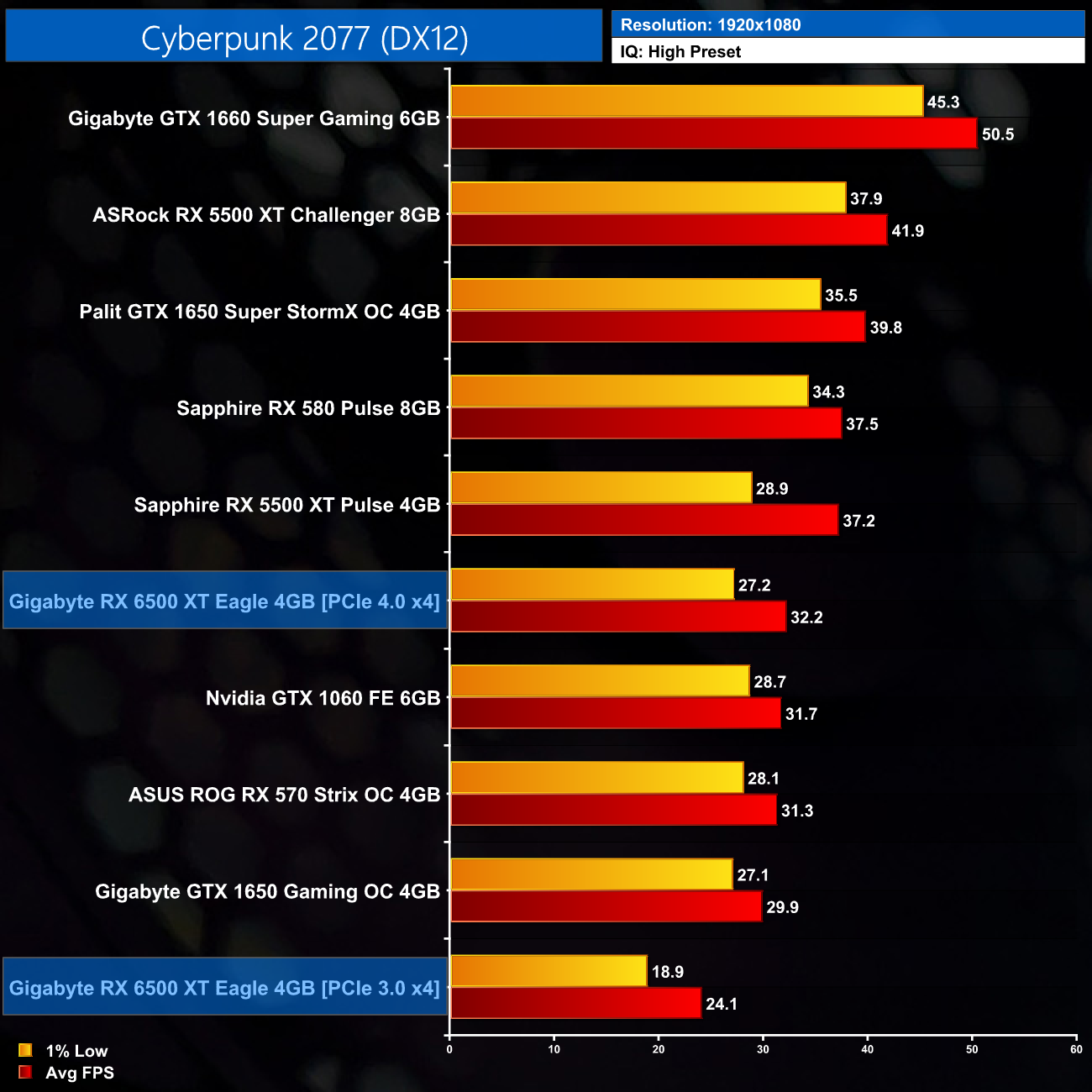
Cyberpunk 2077 is a 2020 action role-playing video game developed and published by CD Projekt. The story takes place in Night City, an open world set in the Cyberpunk universe. Players assume the first-person perspective of a customisable mercenary known as V, who can acquire skills in hacking and machinery with options for melee and ranged combat. Cyberpunk 2077 was released for Microsoft Windows, PlayStation 4, Stadia, and Xbox One on 10 December 2020. (Wikipedia).
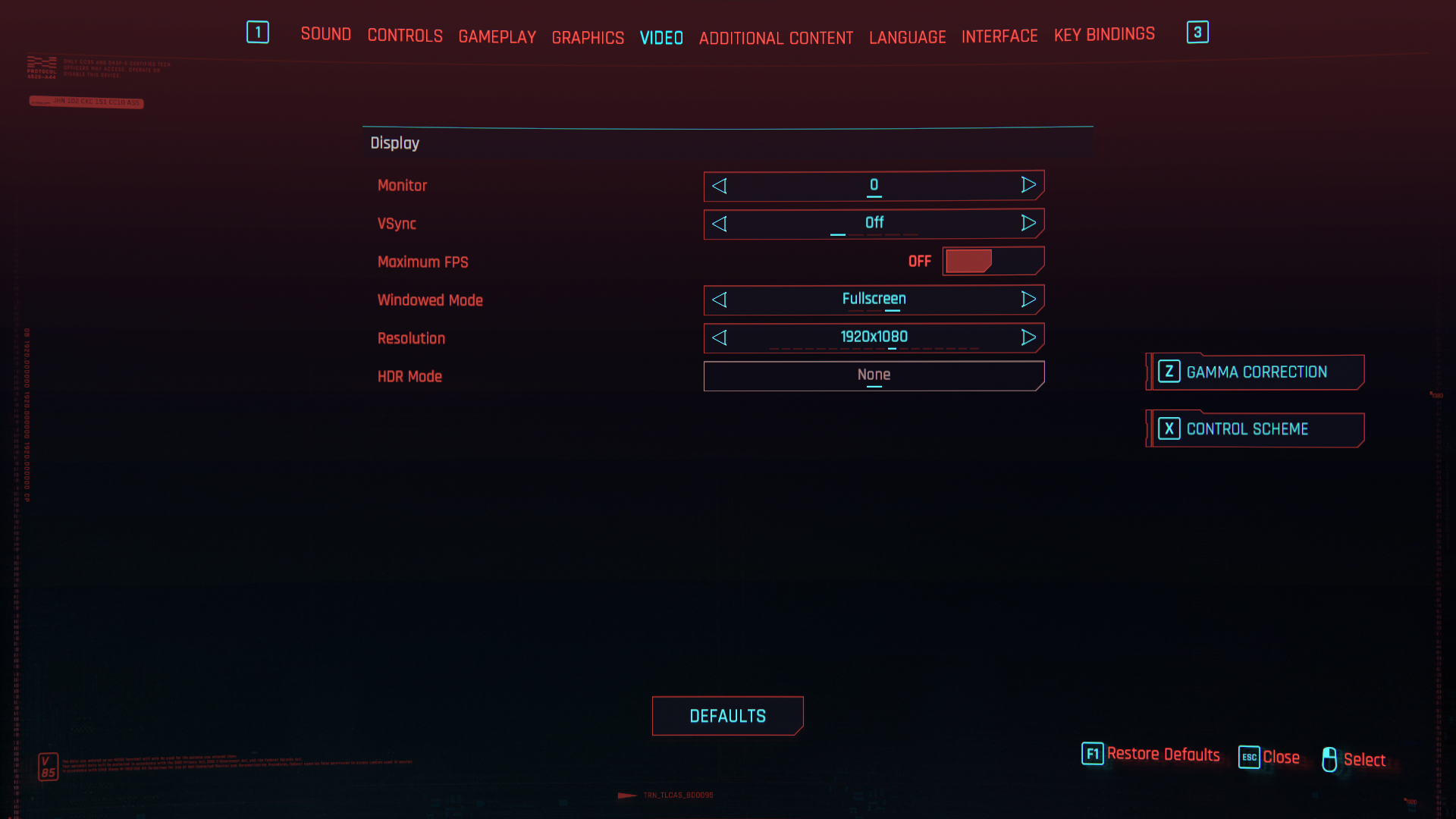
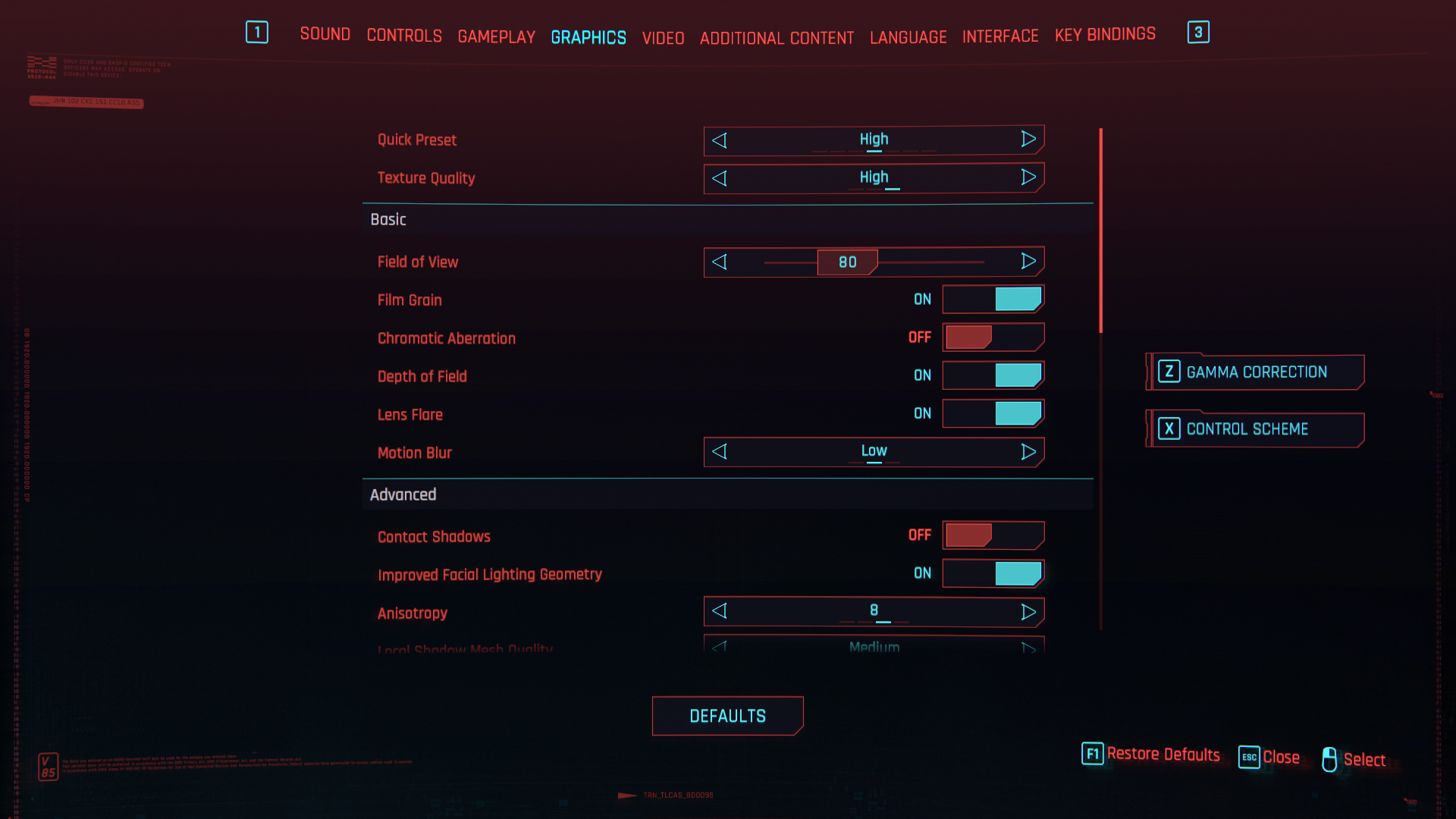
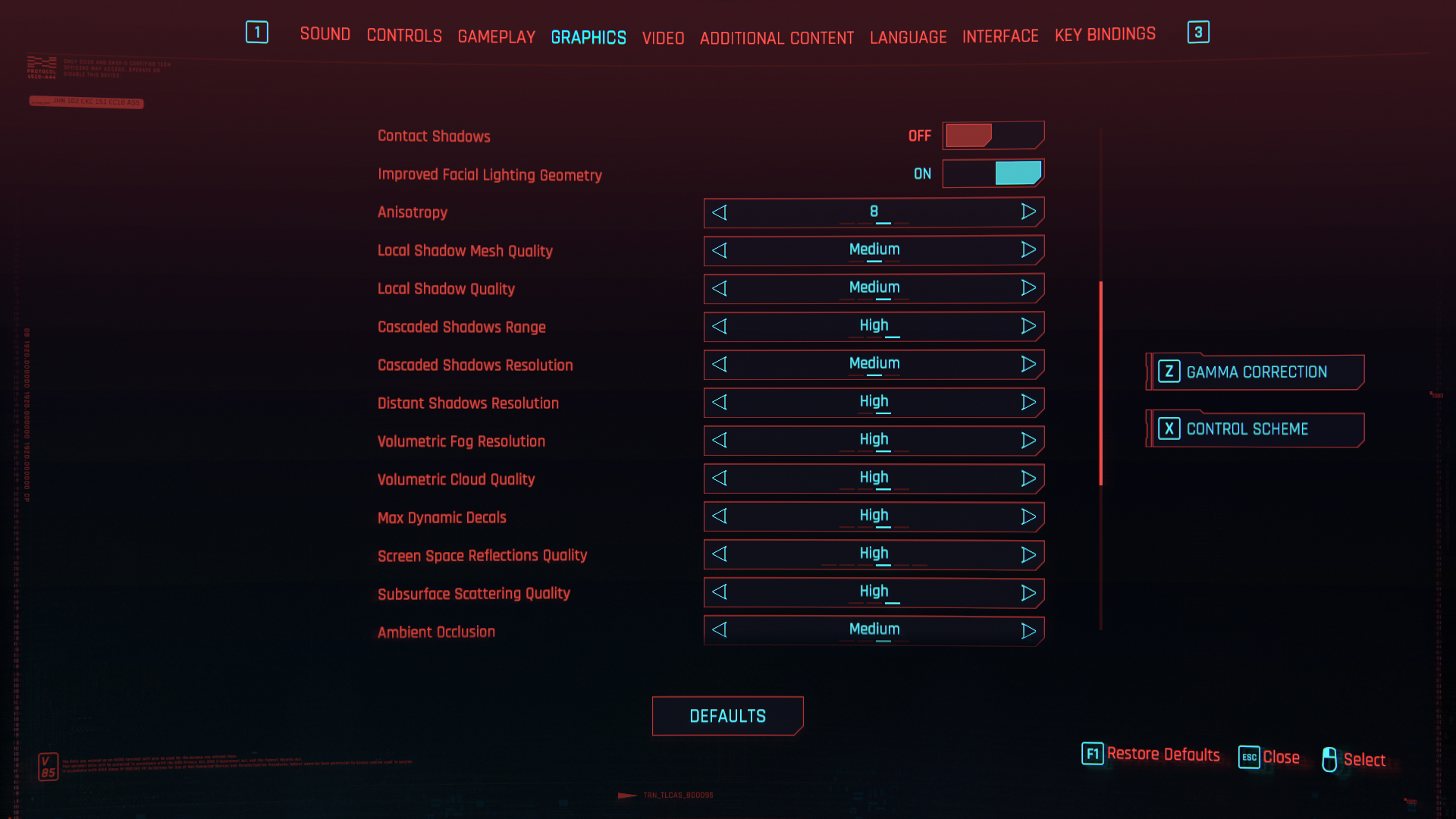
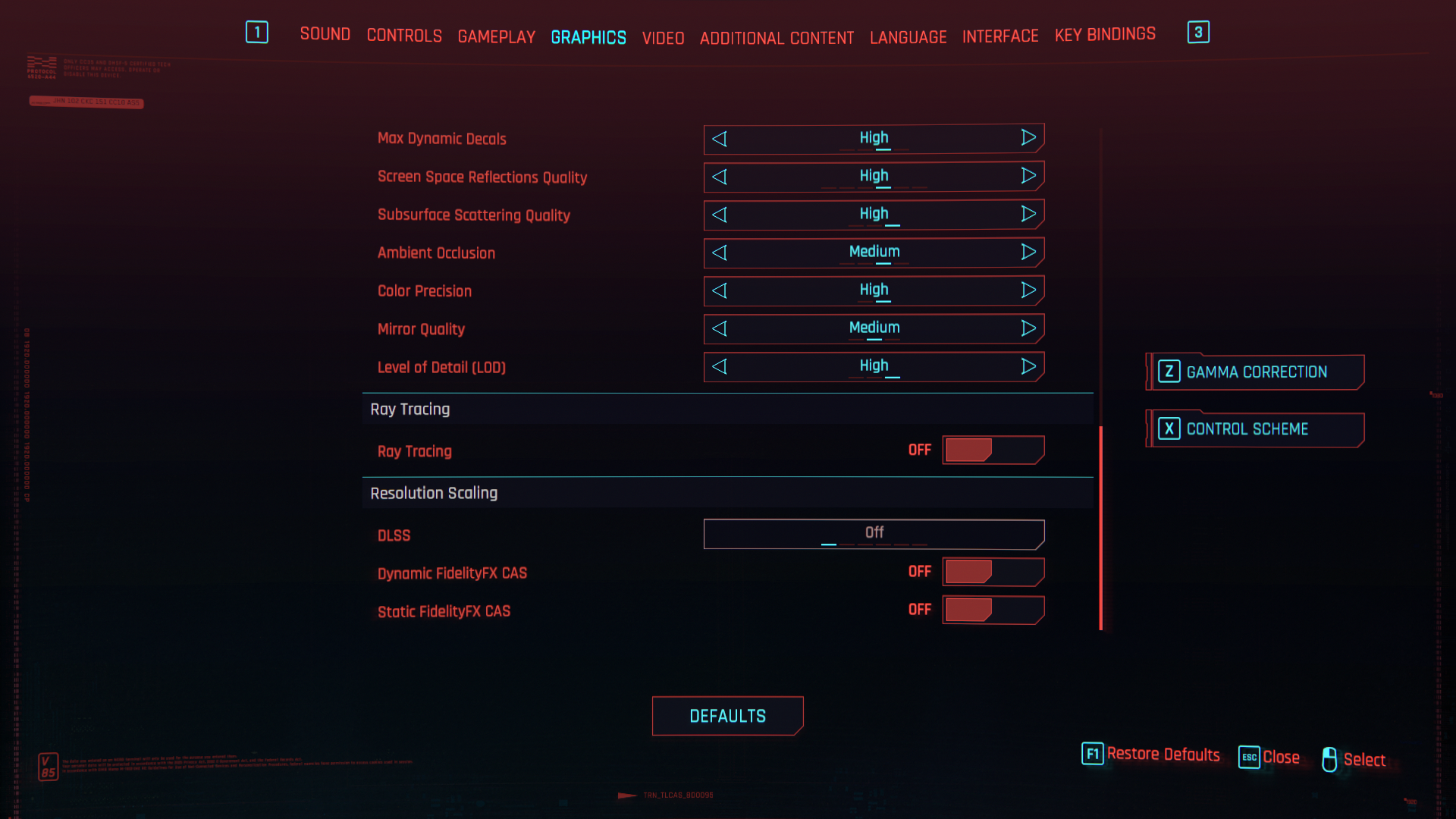
Engine: REDengine 4. We test using the High preset, DX12 API.
 •
•
Unfortunately, Cyberpunk 2077 shows us the exact same thing. Performance is really no better than what we get from a GTX 1060 6GB, and it is actually 13% worse than the 5500 XT 4GB, a GPU which launched at £160 over two years ago. And then when we test at PCIe 3.0, you can knock off another 25% of the 6500 XT’s performance, for a lovely 24FPS experience…
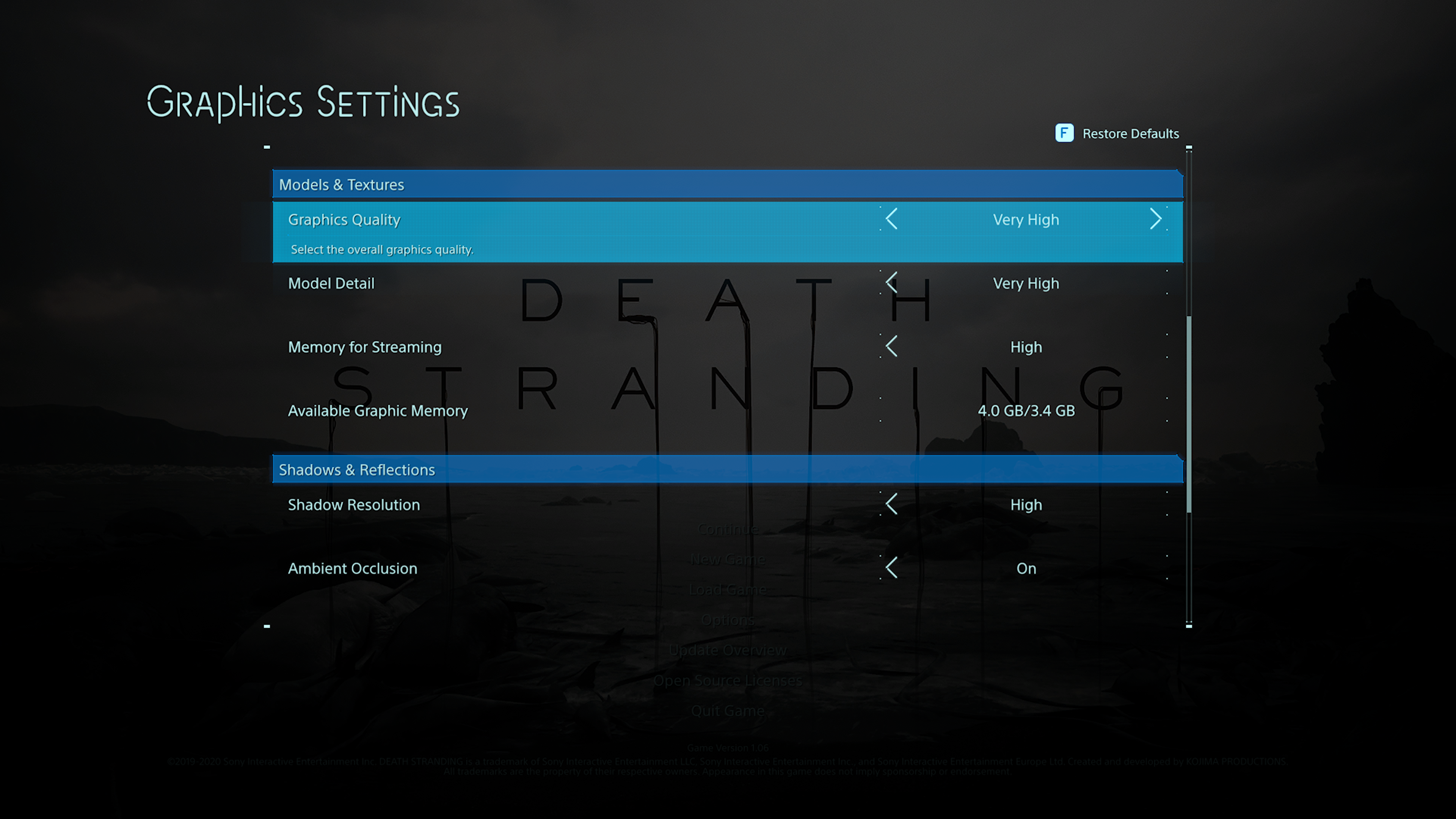
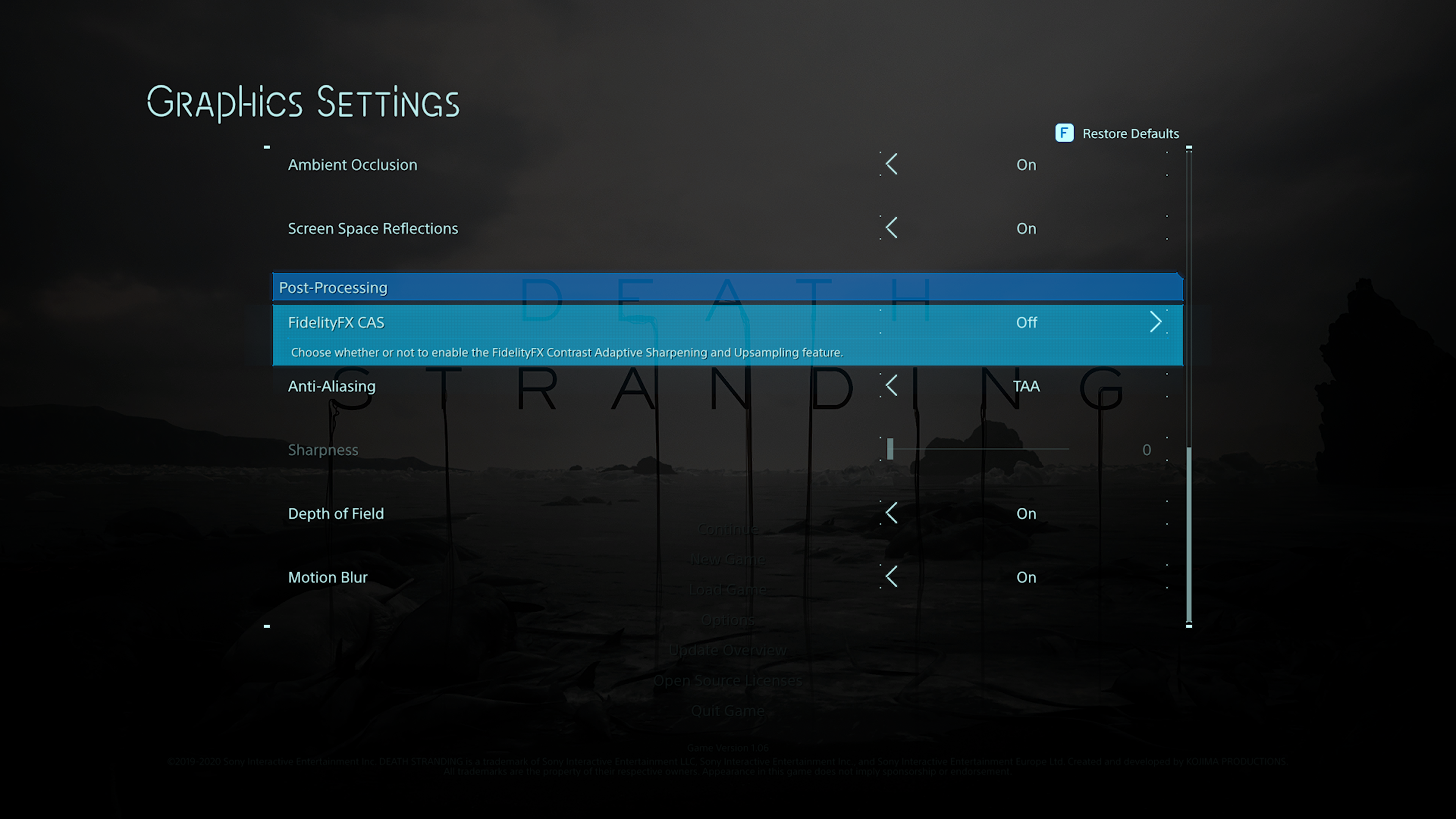
Death Stranding is a 2019 action game developed by Kojima Productions. It is the first game from director Hideo Kojima and Kojima Productions after their split from Konami in 2015. It was published by Sony Interactive Entertainment for the PlayStation 4 in November 2019 and by 505 Games for Windows in July 2020. (Wikipedia).
Engine: Decima. We test using the Very High preset, DX12 API.
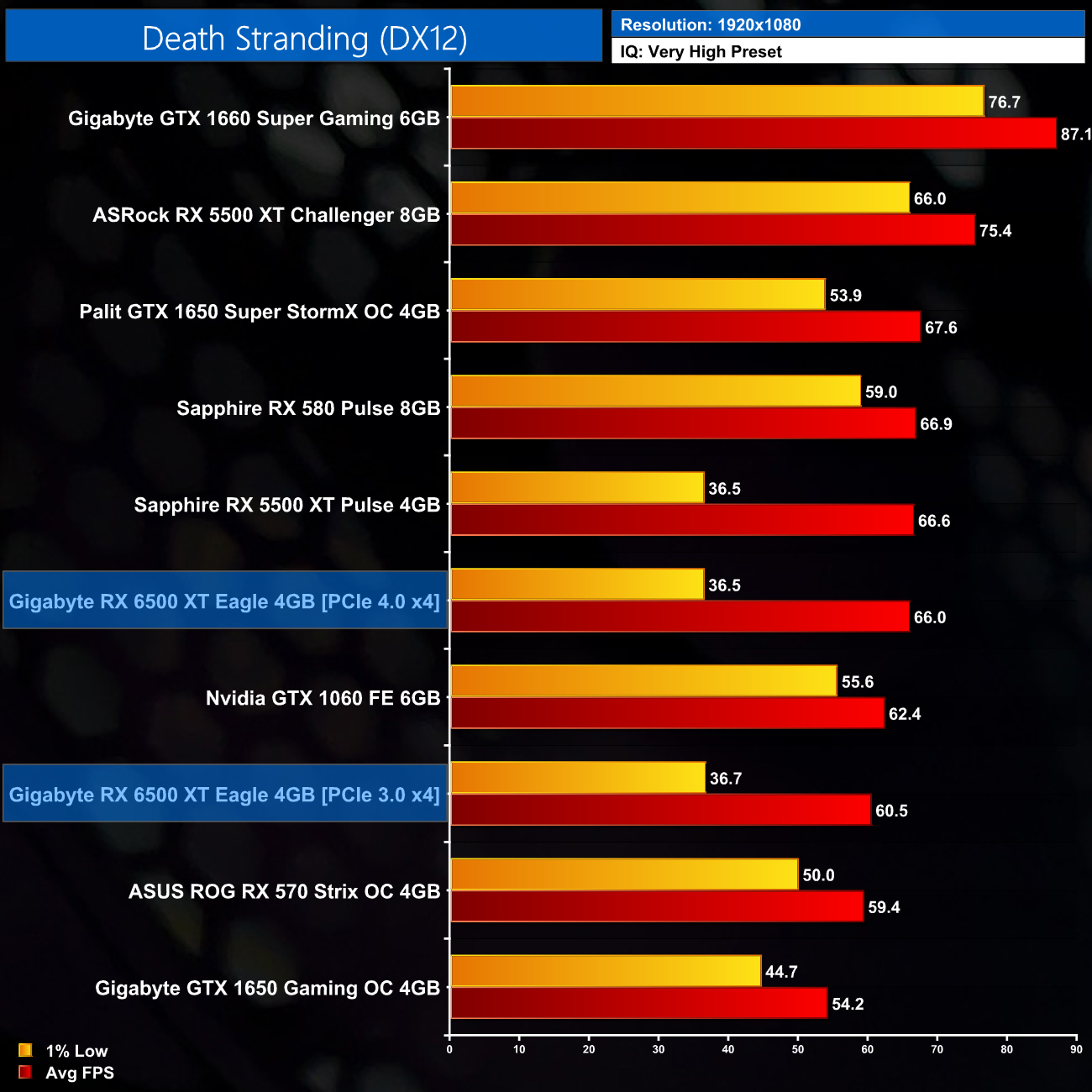
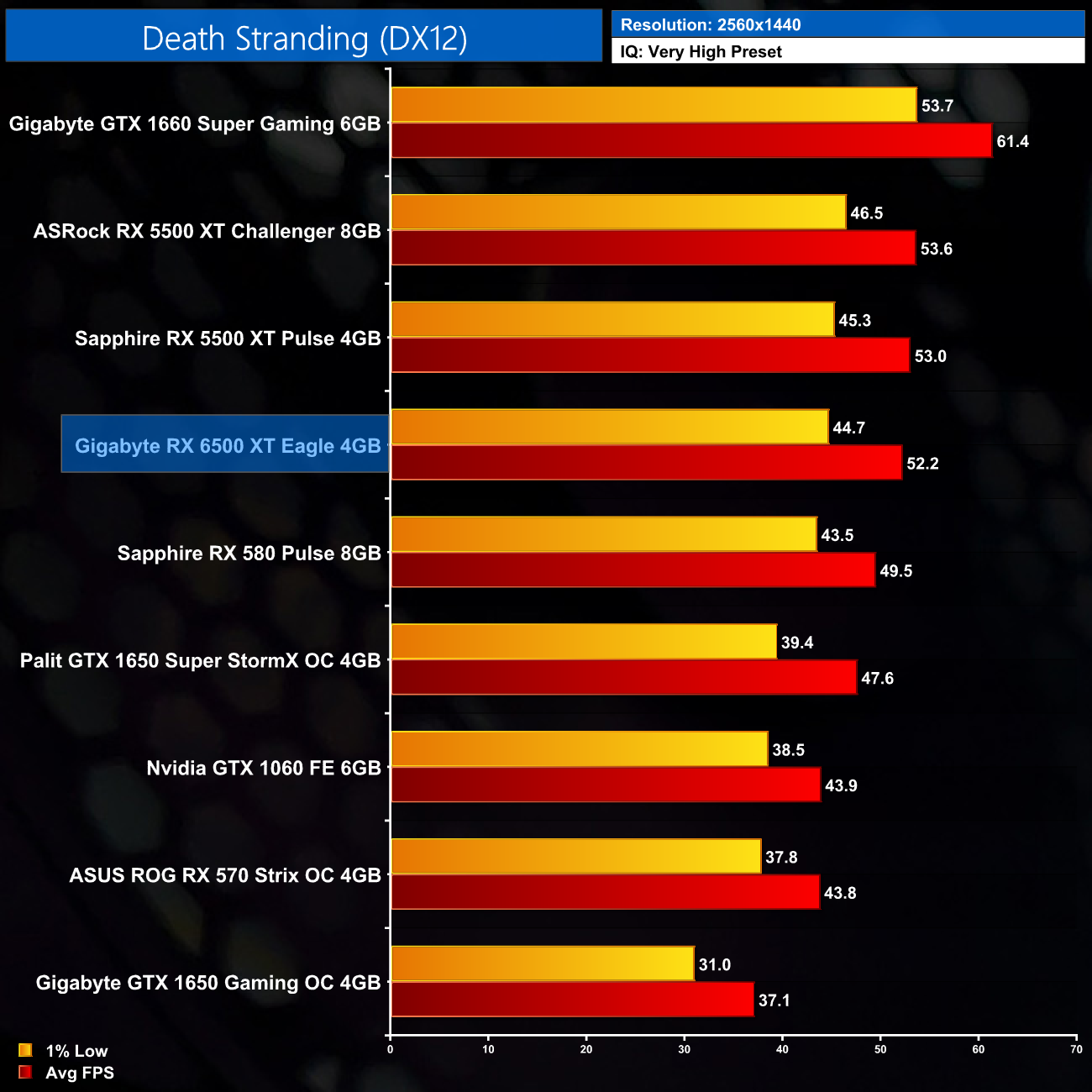
Death Stranding is next and the average frame rate here is actually not dreadful. It’s no better than the RX 580 however, which is a big disappointment. We can see significantly reduced 1% performance too, though this was also the case for the 4GB RX 5500 XT which makes me think it’s likely a memory or PCIe bandwidth issue for both of those cards. Cutting PCIe bandwidth to Gen3 here doesn't result in as drastic performance losses as our first two games, but the 1% lows are still poor and the average frame rate is down by 8%.
Far Cry 6 is a 2021 action-adventure first-person shooter game developed by Ubisoft Toronto and published by Ubisoft. It is the sixth main installment in the Far Cry series and the successor to 2018's Far Cry 5. The game was released on October 7, 2021, for Microsoft Windows, PlayStation 4, PlayStation 5, Xbox One, Xbox Series X/S, Stadia, and Amazon Luna. (Wikipedia).
Engine: Dunia Engine. We test using the Ultra preset, HD Textures off, DX12 API.
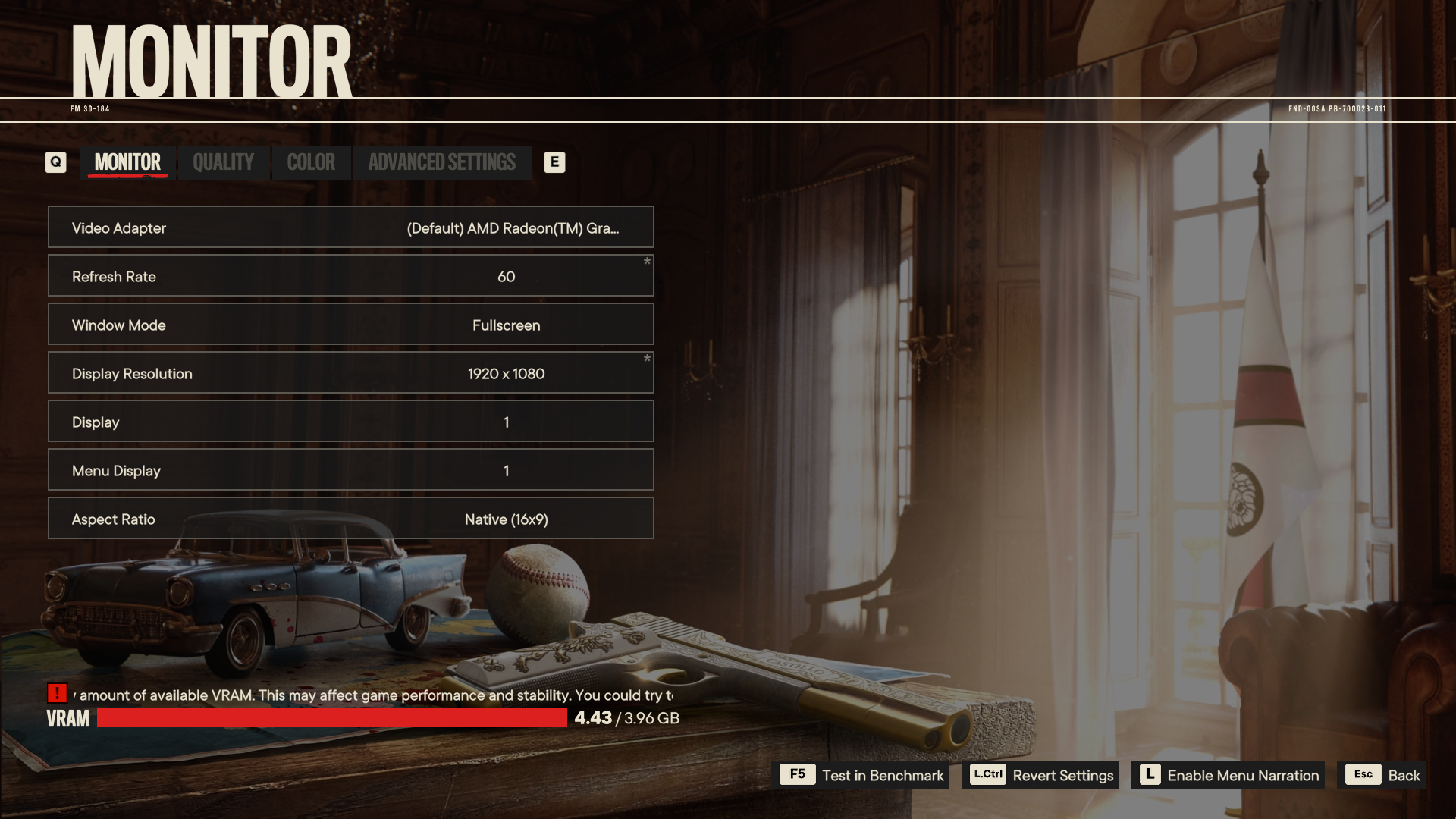
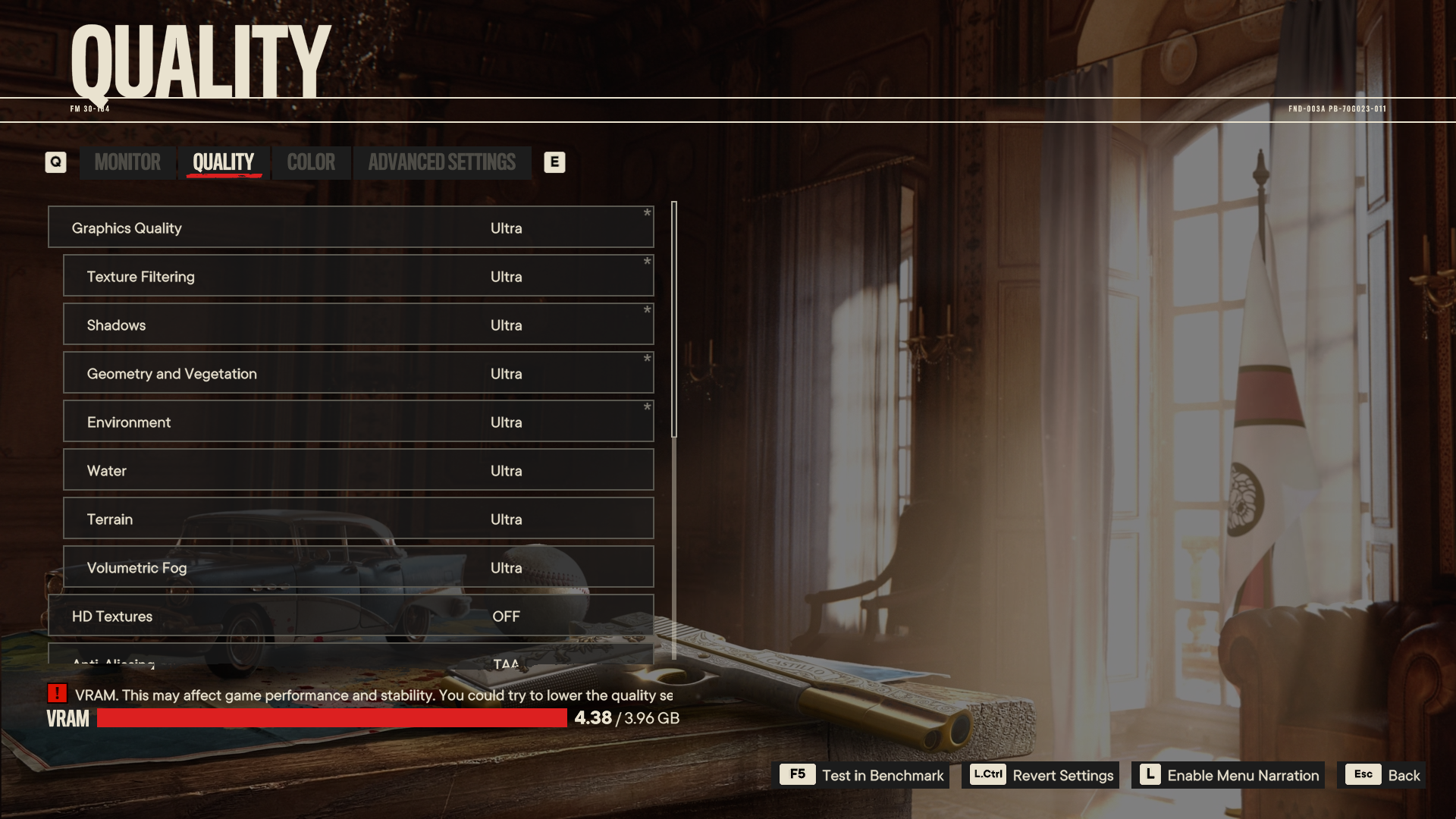
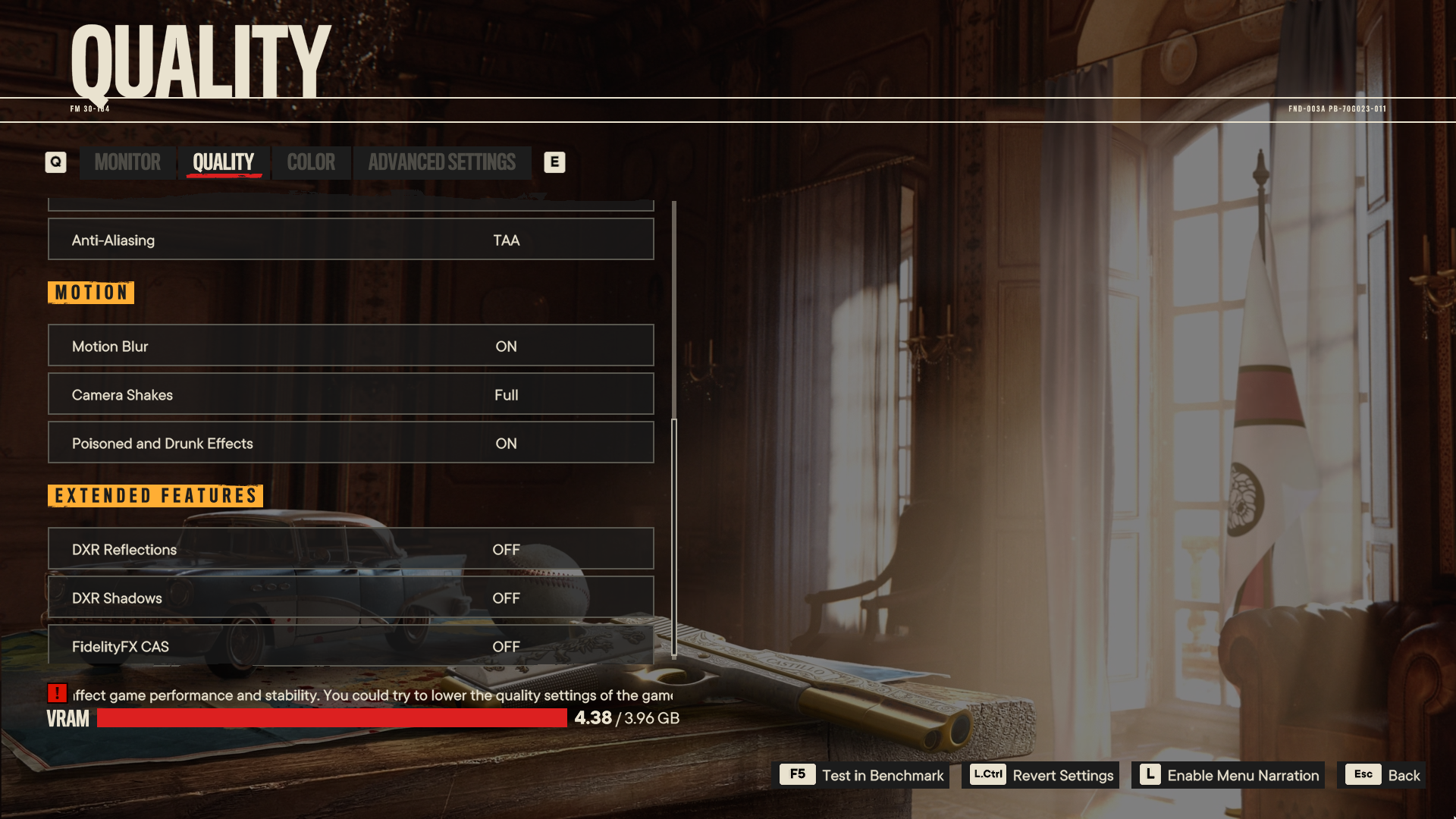
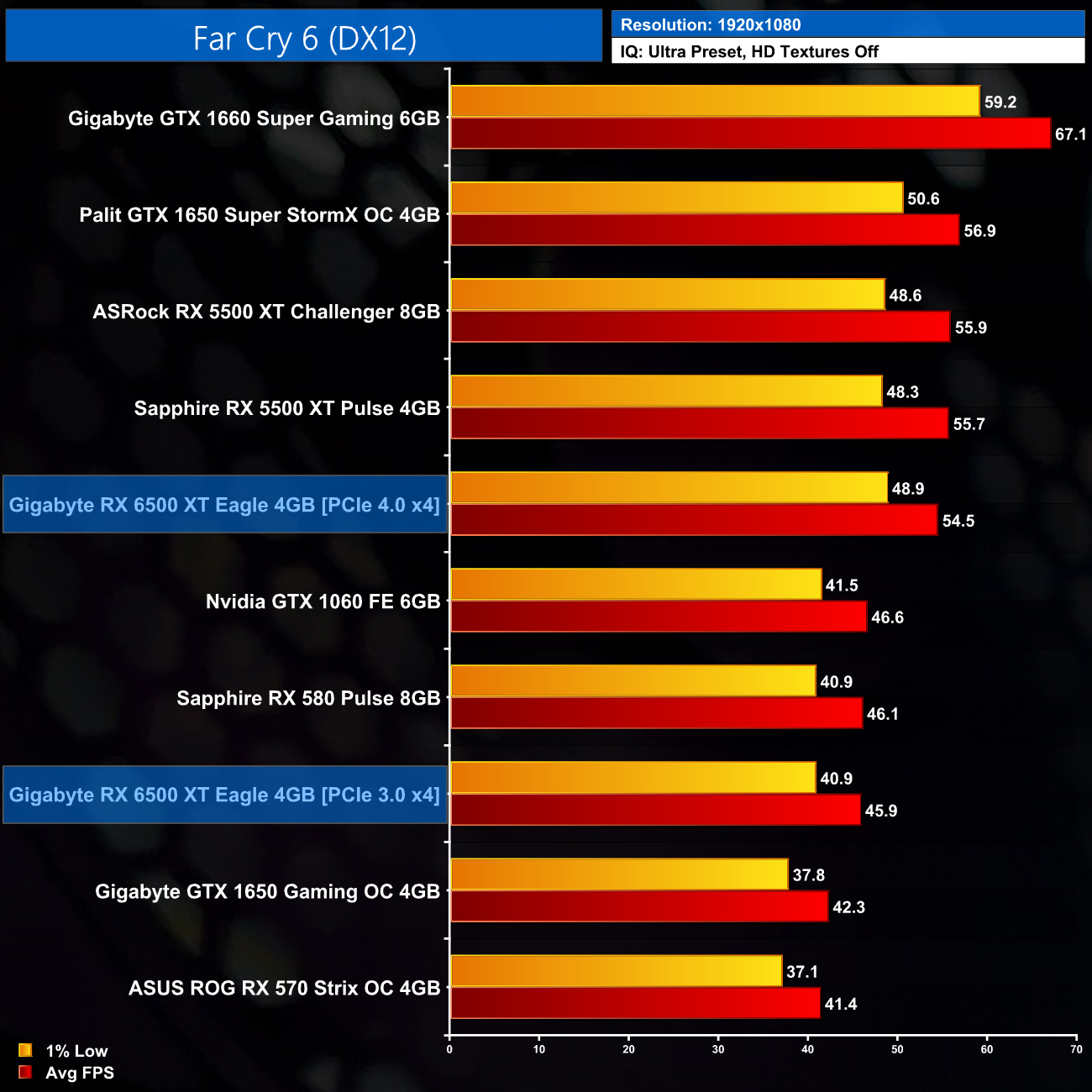
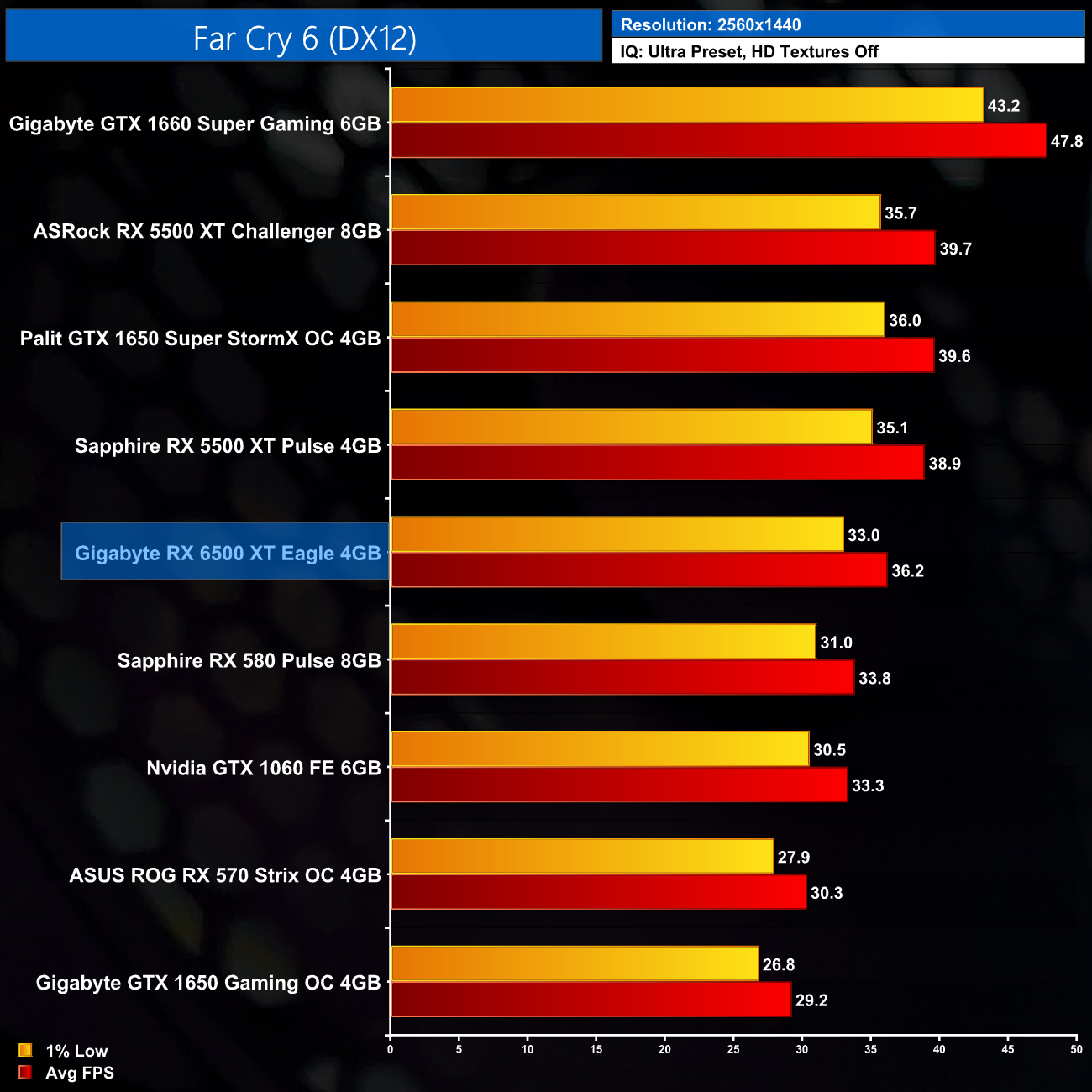
Next is Far Cry 6 and would you believe it, the 6500 XT is actually faster than the RX 580 here, delivering about 55FPS on average. It’s no better than the 5500 XT however, and actually when we do test with PCIe 3.0 speeds, performance is back at RX 580 levels. It's hardly great progress.
Forza Horizon 5 is a 2021 racing video game developed by Playground Games and published by Xbox Game Studios. The twelfth main instalment of the Forza series, the game is set in a fictionalised representation of Mexico. It was released on 9 November 2021 for Microsoft Windows, Xbox One, and Xbox Series X/S. (Wikipedia).
Engine: ForzaTech. We test using the Ultra preset, DX12 API.
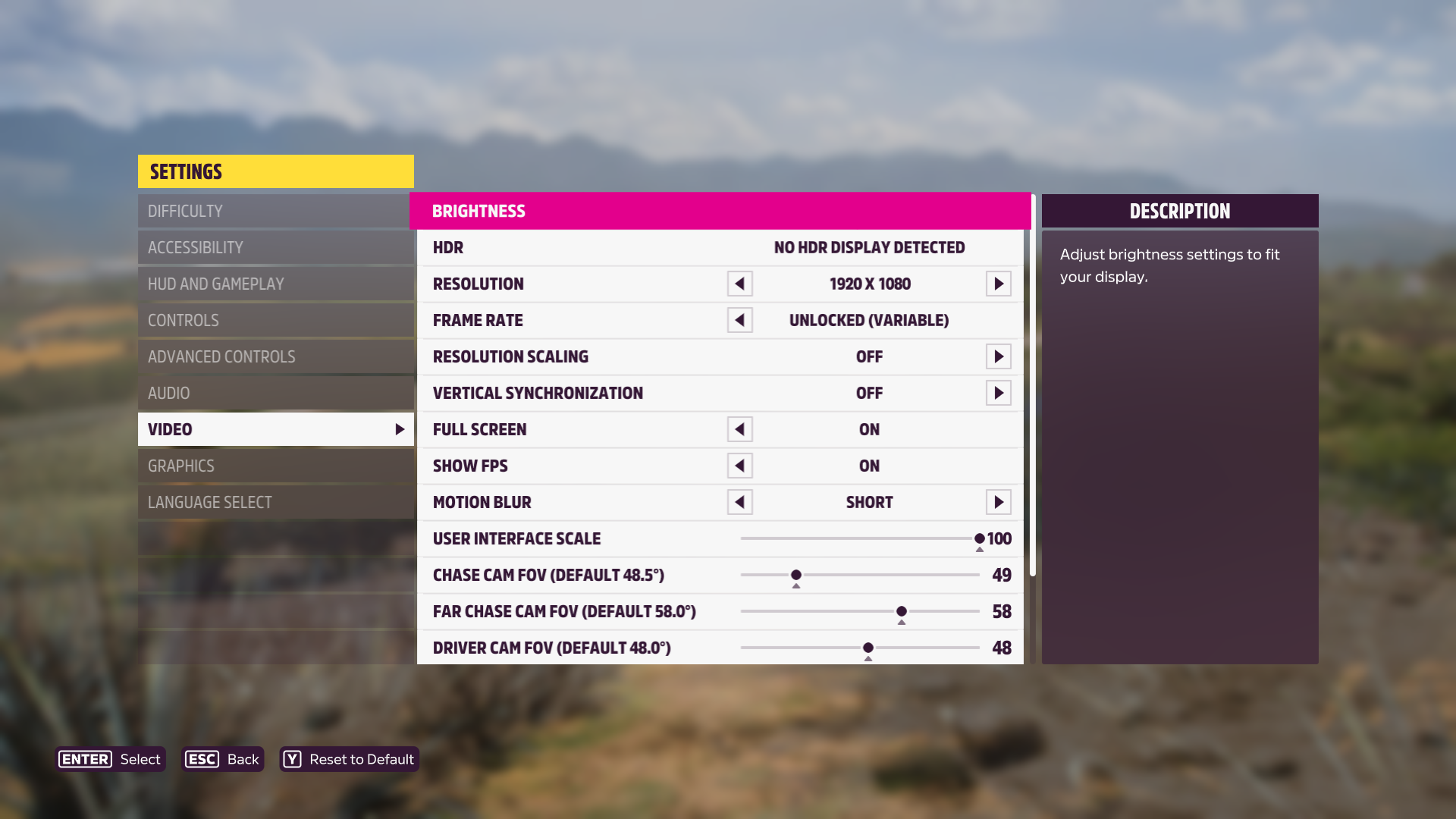
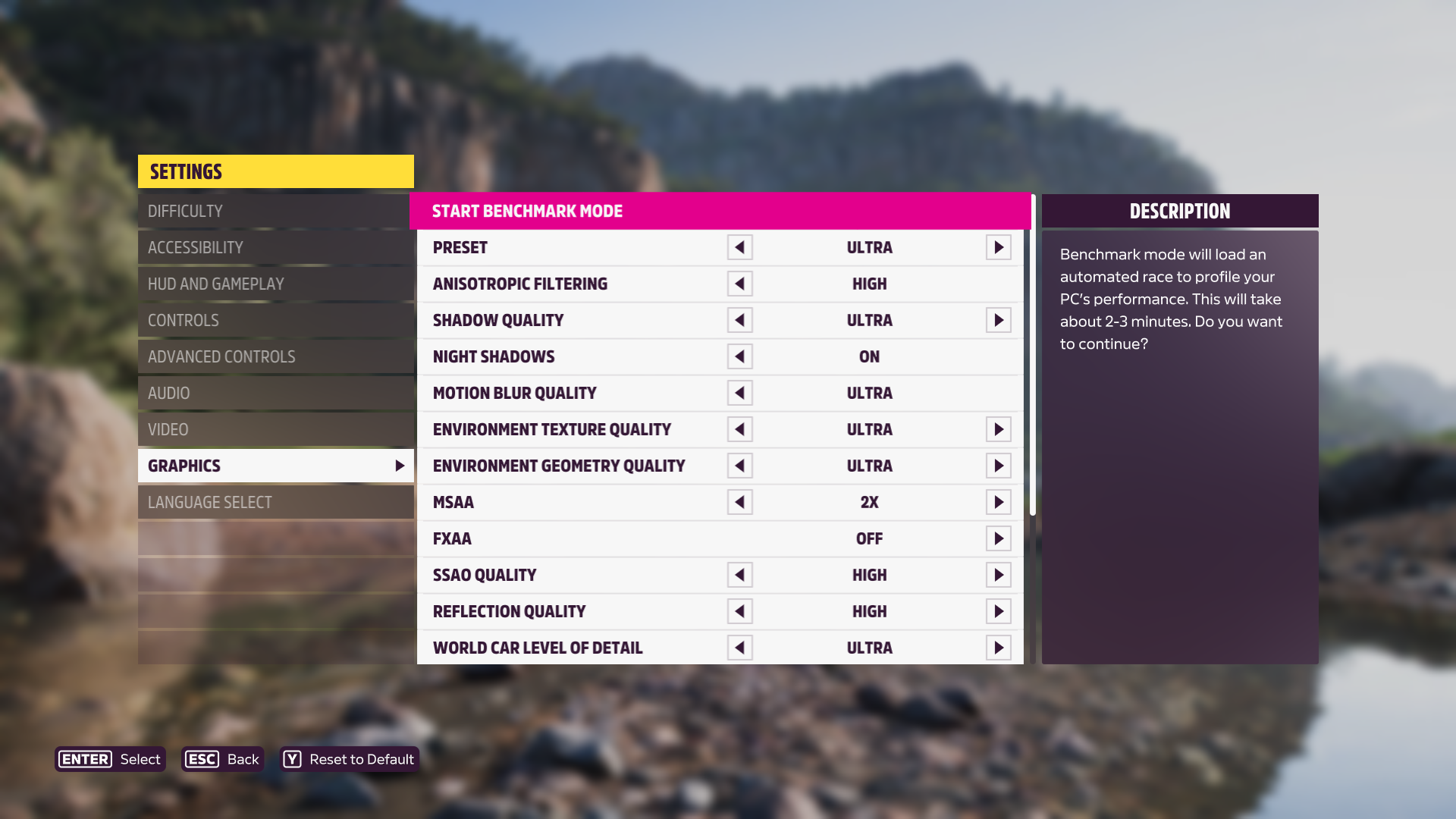
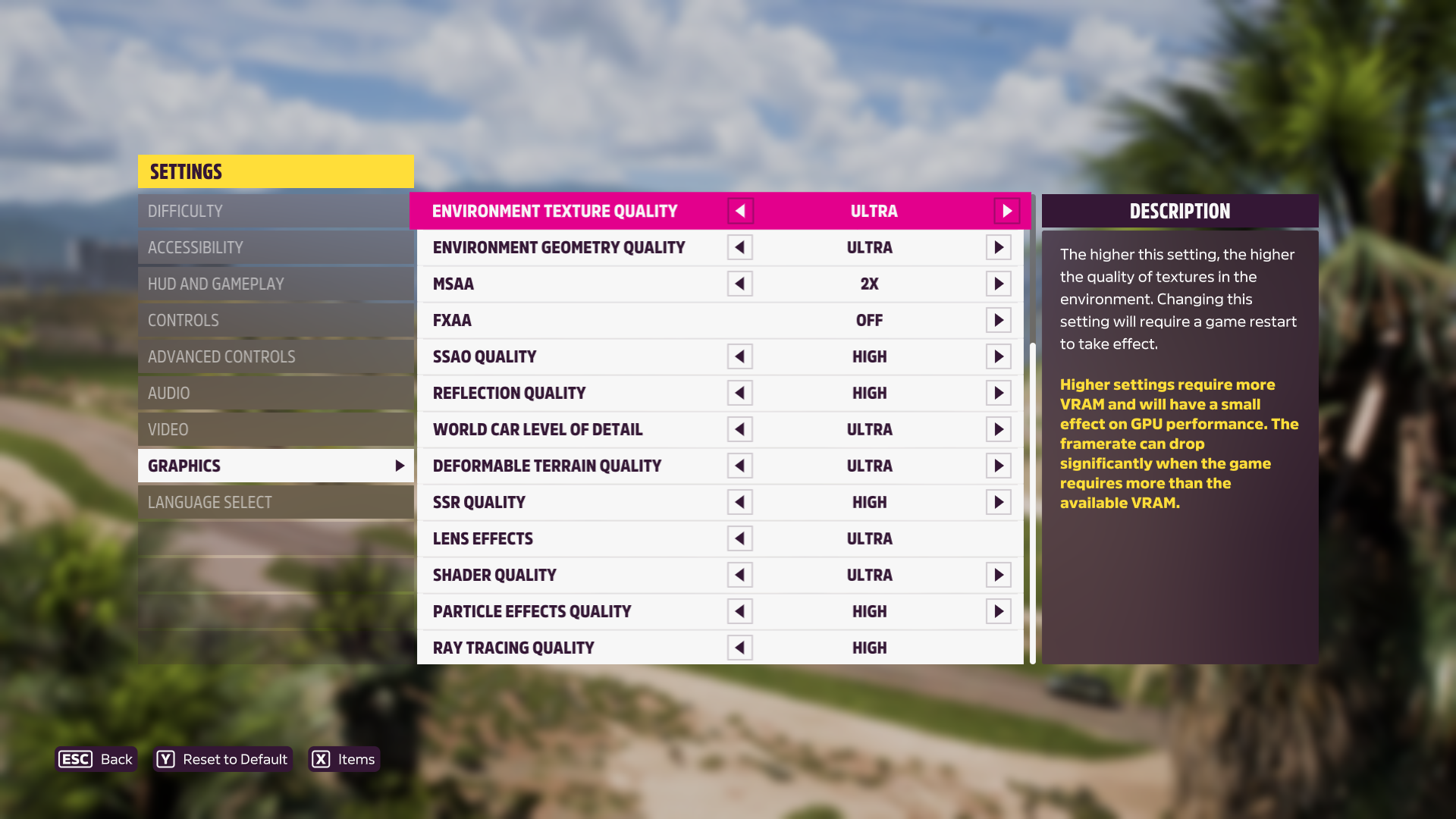
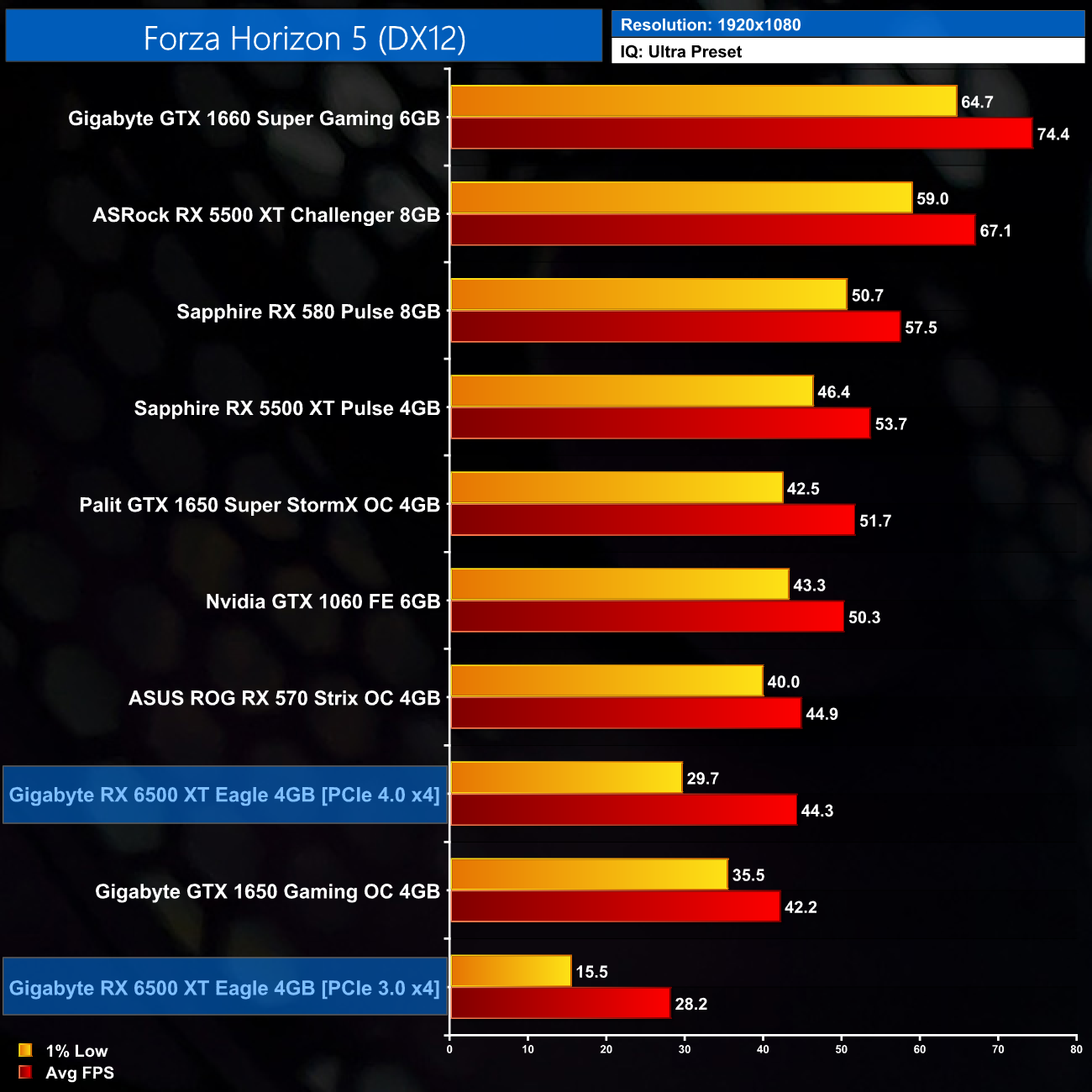
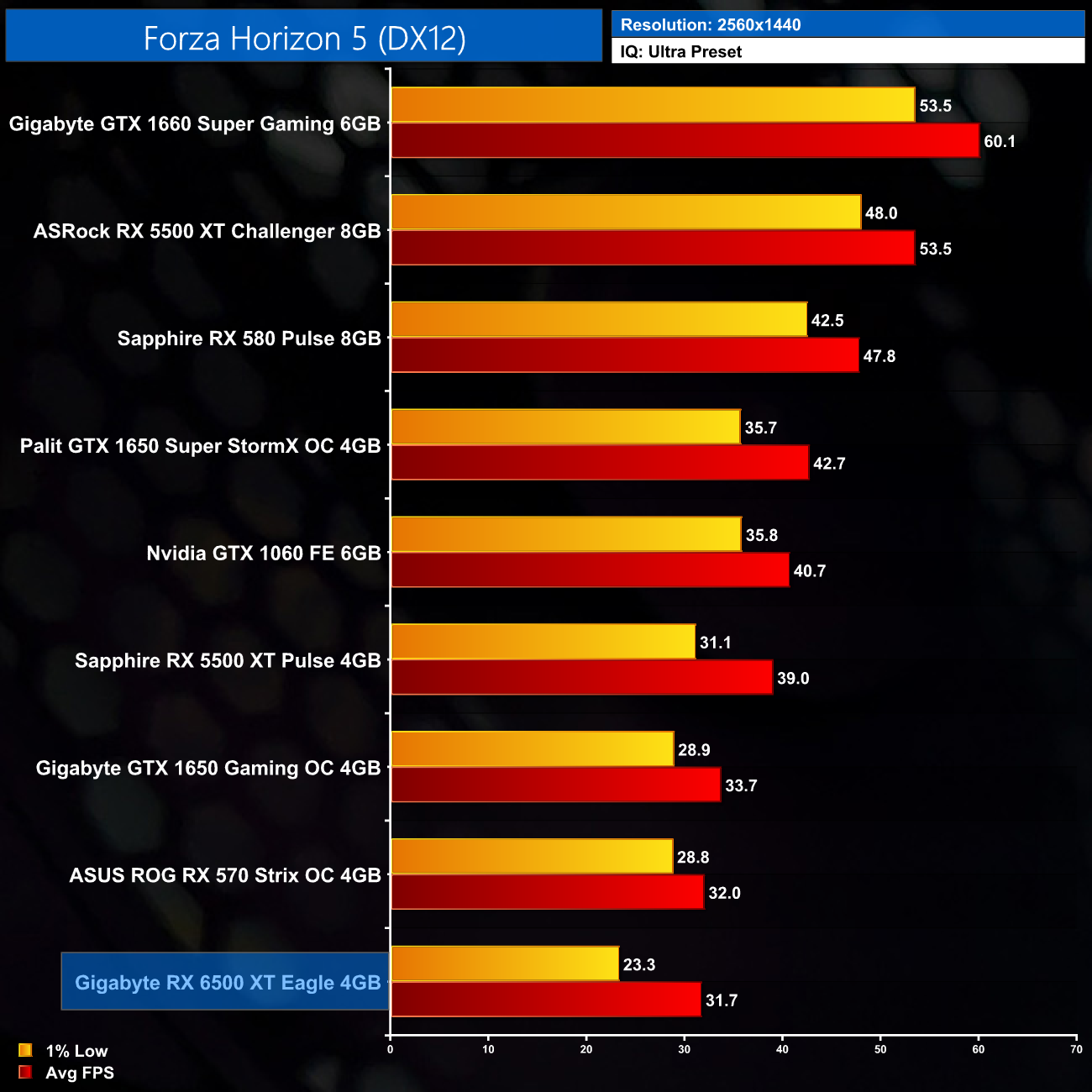
As for Forza Horizon 5, this game perfectly illustrates the fundamental flaws of the 6500 XT. We know it’s a very VRAM-hungry title, but if you look at the data above, the 4GB 5500 XT is still delivering solid performance at these settings. In what’s likely a combination of the four PCIe lanes and incredibly limited memory bandwidth however, the 6500 XT performance drops off a cliff, and then drops off another one when we test with PCIe 3.0.
Hitman 3 (stylized as HITMAN III) is a stealth game developed and published by IO Interactive for Microsoft Windows, PlayStation 4, PlayStation 5, Xbox One, Xbox Series X/S, Stadia (under the title Hitman: World of Assassination), and Nintendo Switch on 20 January 2021. It is the eighth main instalment in the Hitman series and the final entry in the World of Assassination trilogy, following Hitman (2016) and Hitman 2 (2018). (Wikipedia).
Engine: Glacier. We test using Ultra settings (or High where Ultra is not available), VRS off, DX12 API.
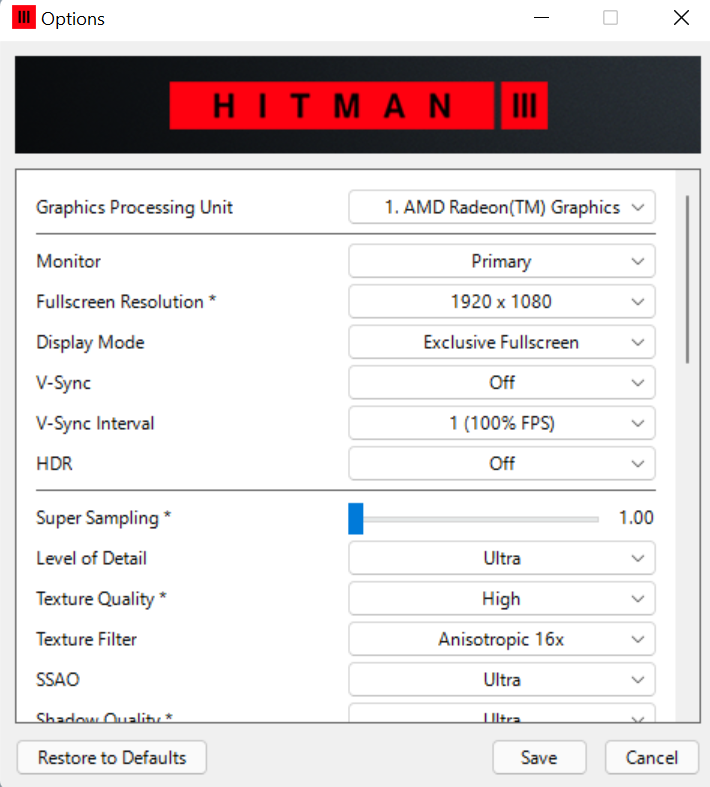
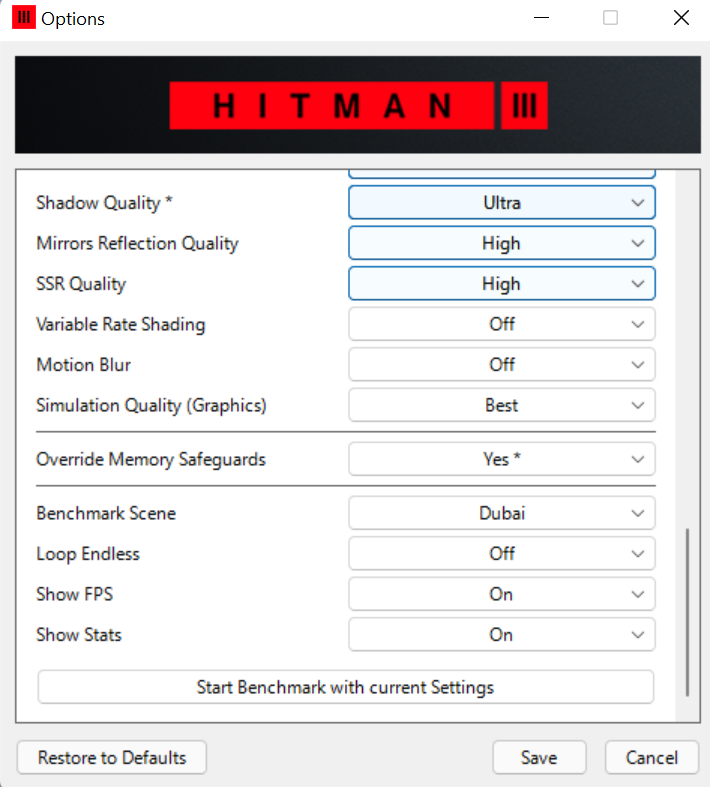
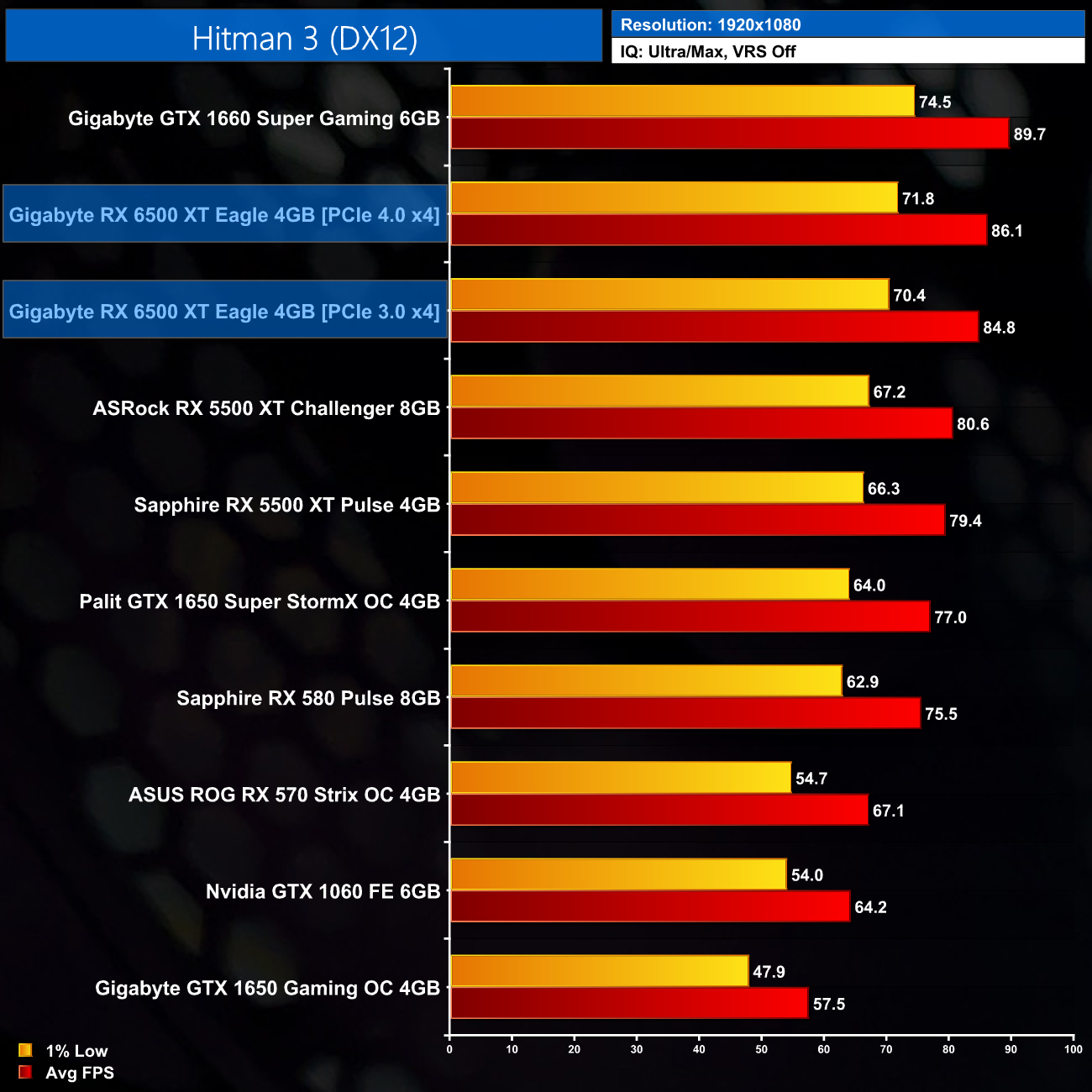
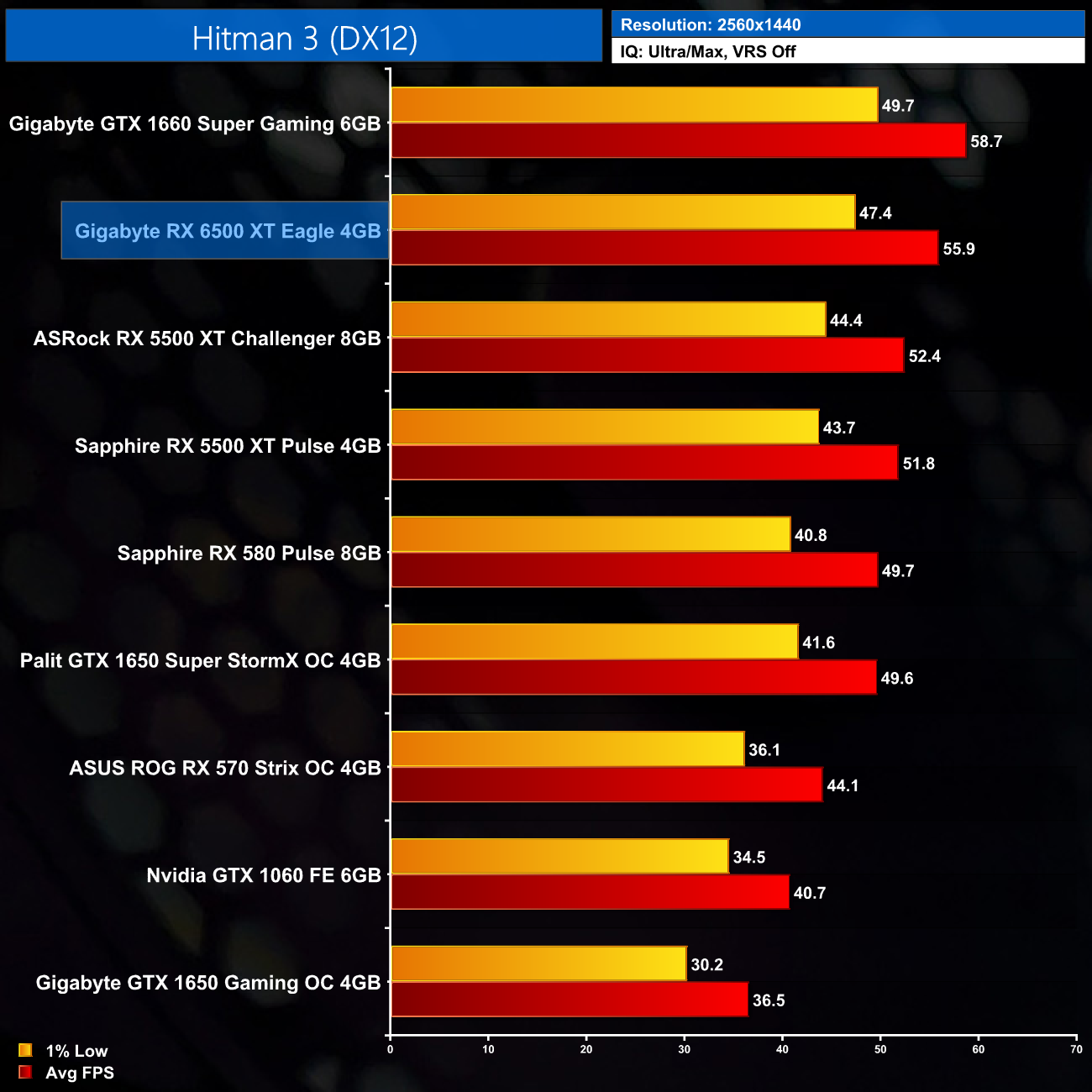
Of the 12 games we tested, the RX 6500 XT does best – and by quite a long way – in Hitman 3. For starters, we see basically no difference between PCIe 3 or 4 in this title, and the 6500 XT is not far at all from matching the 1660 Super. Then again, it’s still only 8% faster than the 5500 XT 4GB, but considering how things have been going so far, this is a much better result.
Horizon Zero Dawn is an action role-playing game developed by Guerrilla Games and published by Sony Interactive Entertainment. The plot follows Aloy, a hunter in a world overrun by machines, who sets out to uncover her past. It was released for the PlayStation 4 in 2017 and Microsoft Windows in 2020. (Wikipedia).
Engine: Decima. We test using the Ultimate Quality preset, DX12 API.
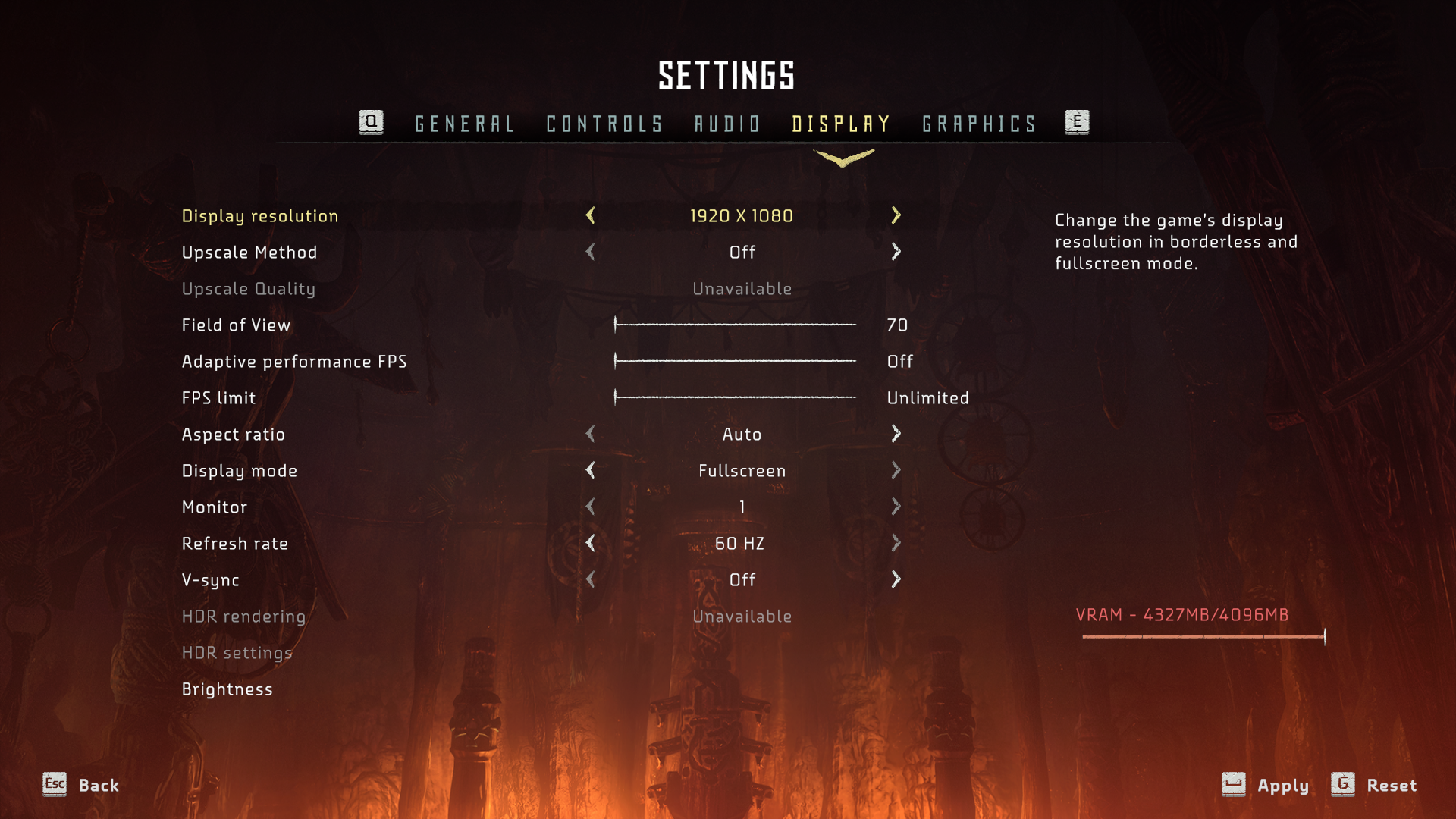
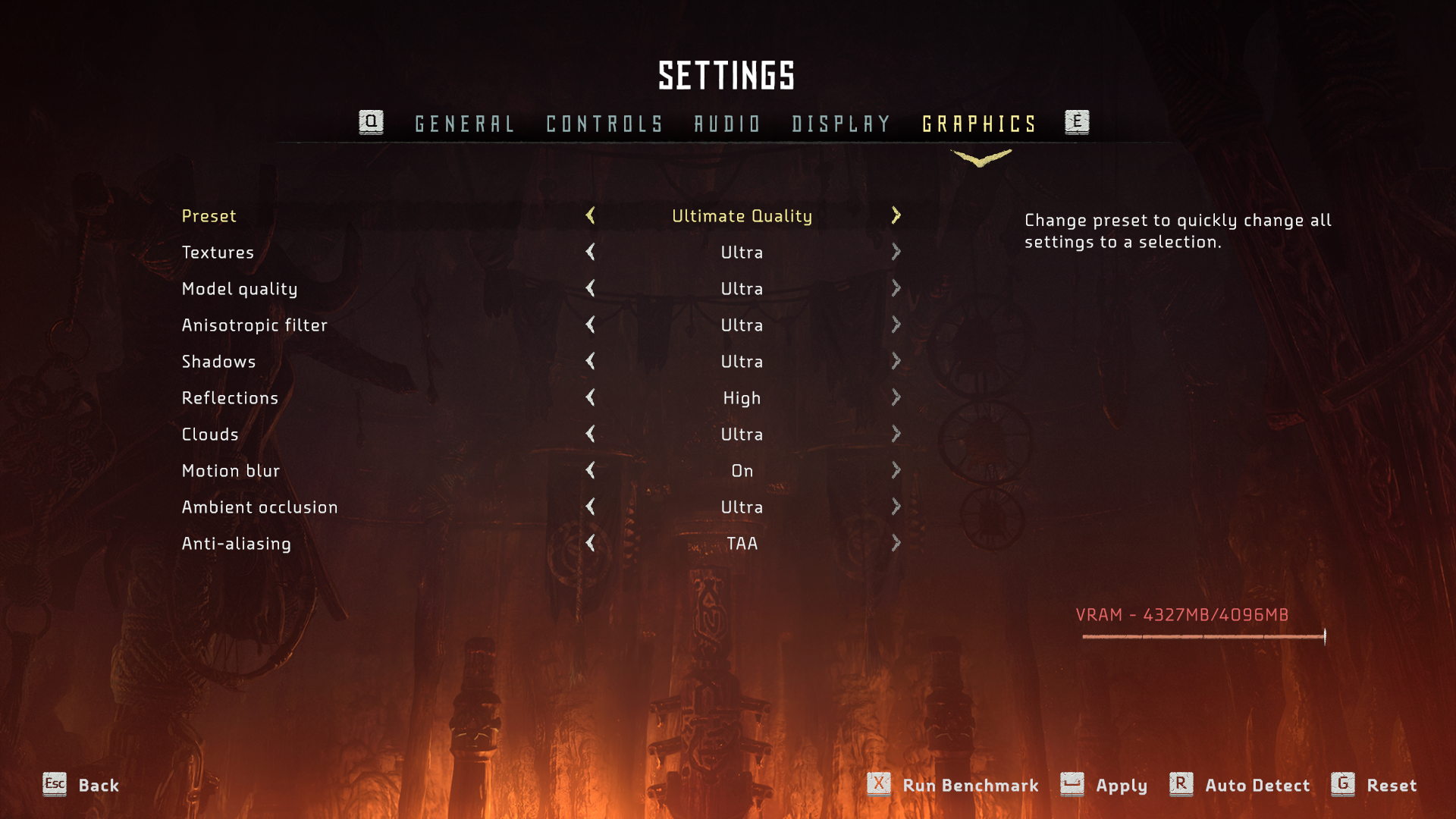
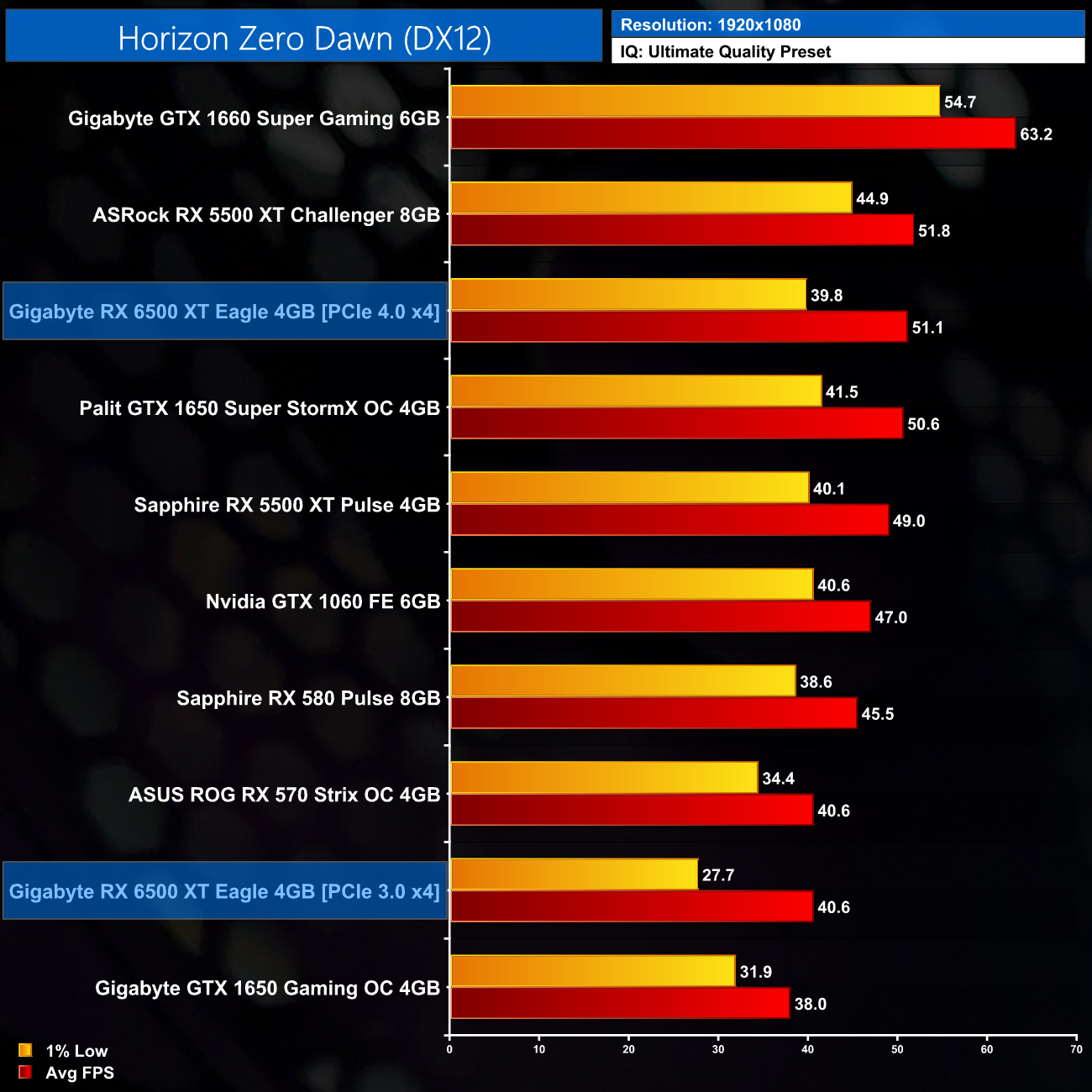
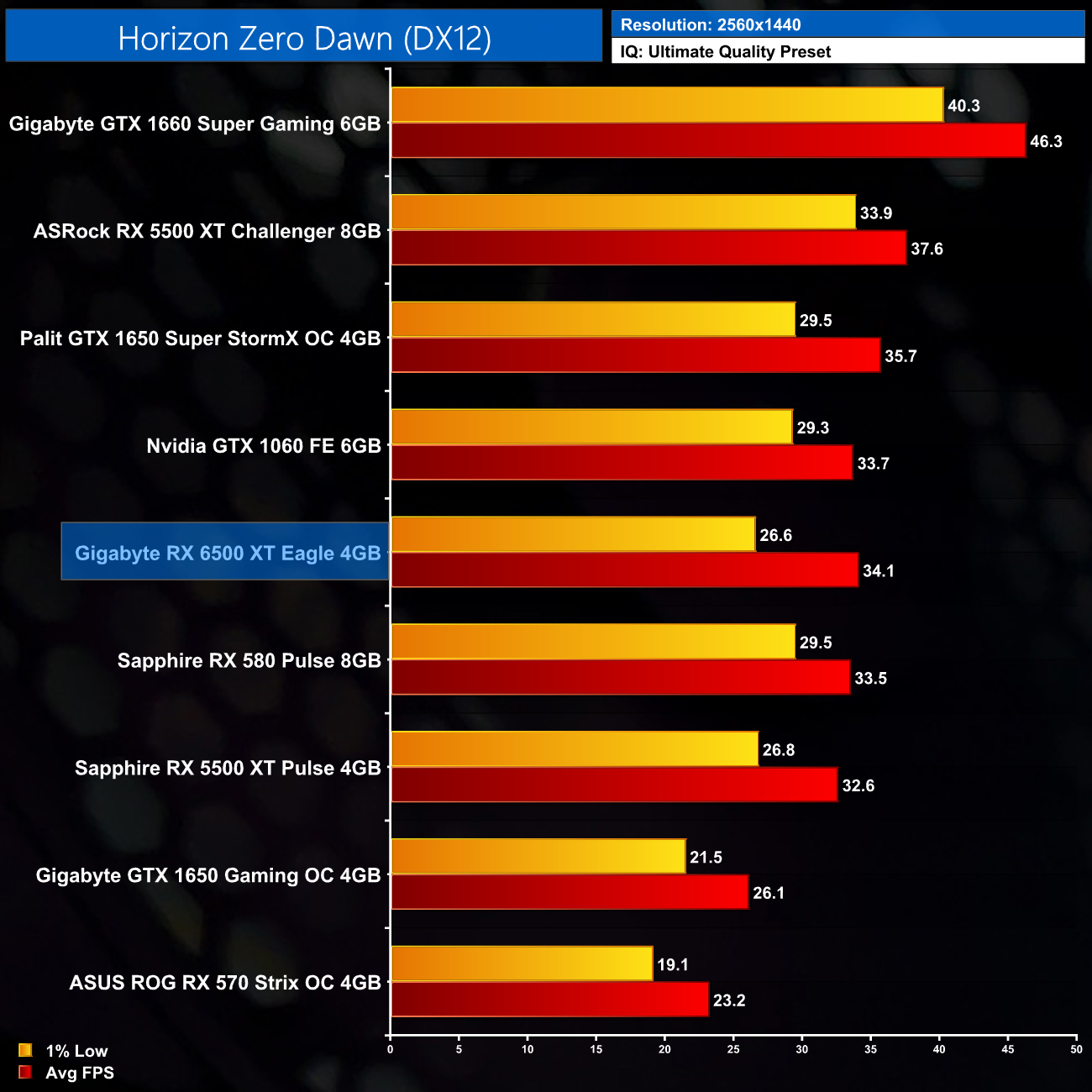
Moving onto Horizon Zero Dawn, here the 6500 XT matches the 1650 Super and 5500 XT 8GB, making it just a handful of frames faster than the GTX 1060 and RX 580. That is, until we test with PCIe 3.0, at which point it delivers the same average FPS as the RX 570, but with significantly worse 1% lows.
Marvel's Guardians of the Galaxy is a 2021 action-adventure game developed by Eidos-Montréal and published by Square Enix. Based on the Marvel Comics superhero team Guardians of the Galaxy, the game was released for Microsoft Windows, Nintendo Switch, PlayStation 4, PlayStation 5, Xbox One, and Xbox Series X/S on October 26, 2021. (Wikipedia).
Engine: Dawn Engine. We test using the Very High preset, DX12 API.
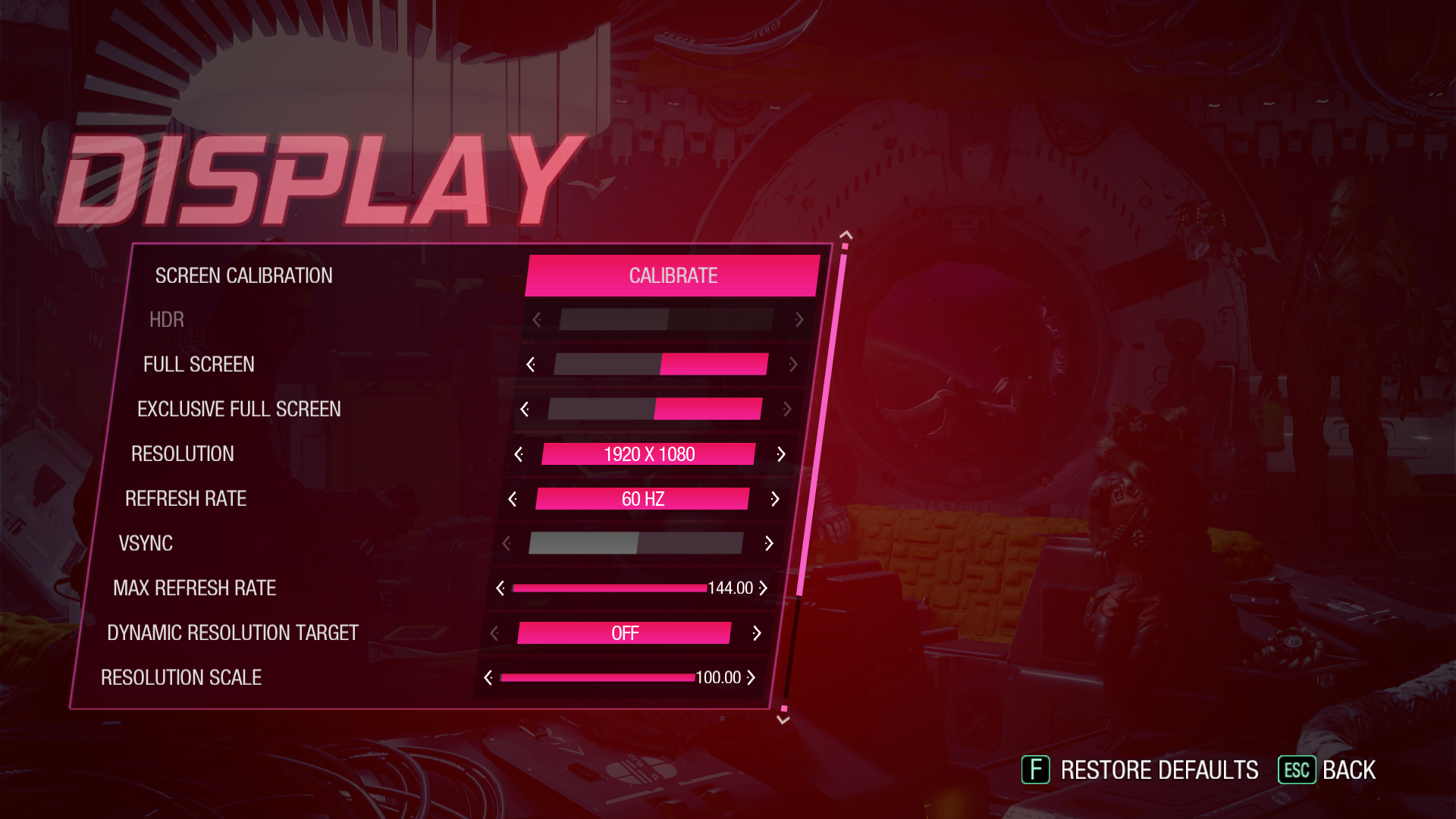
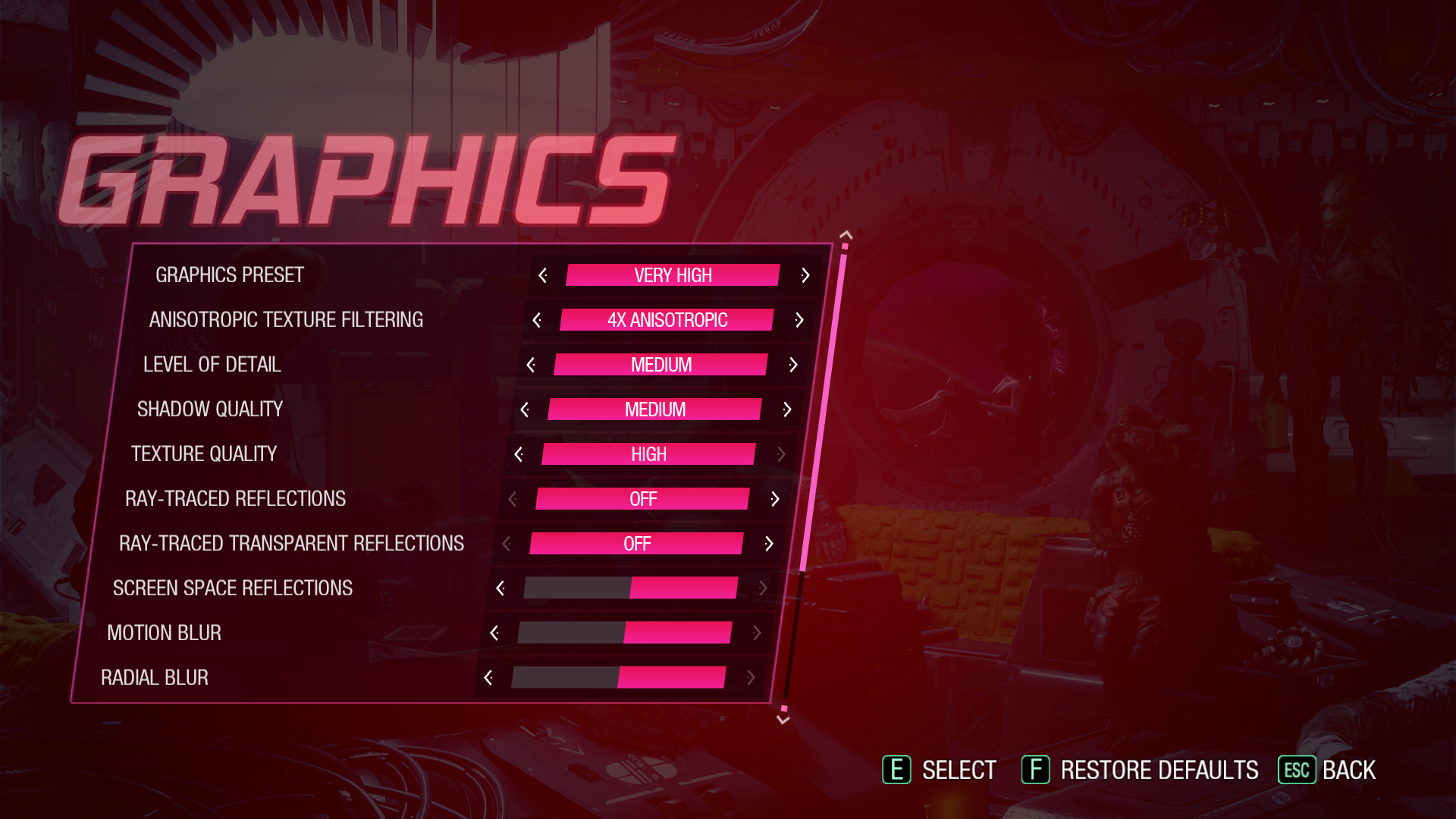
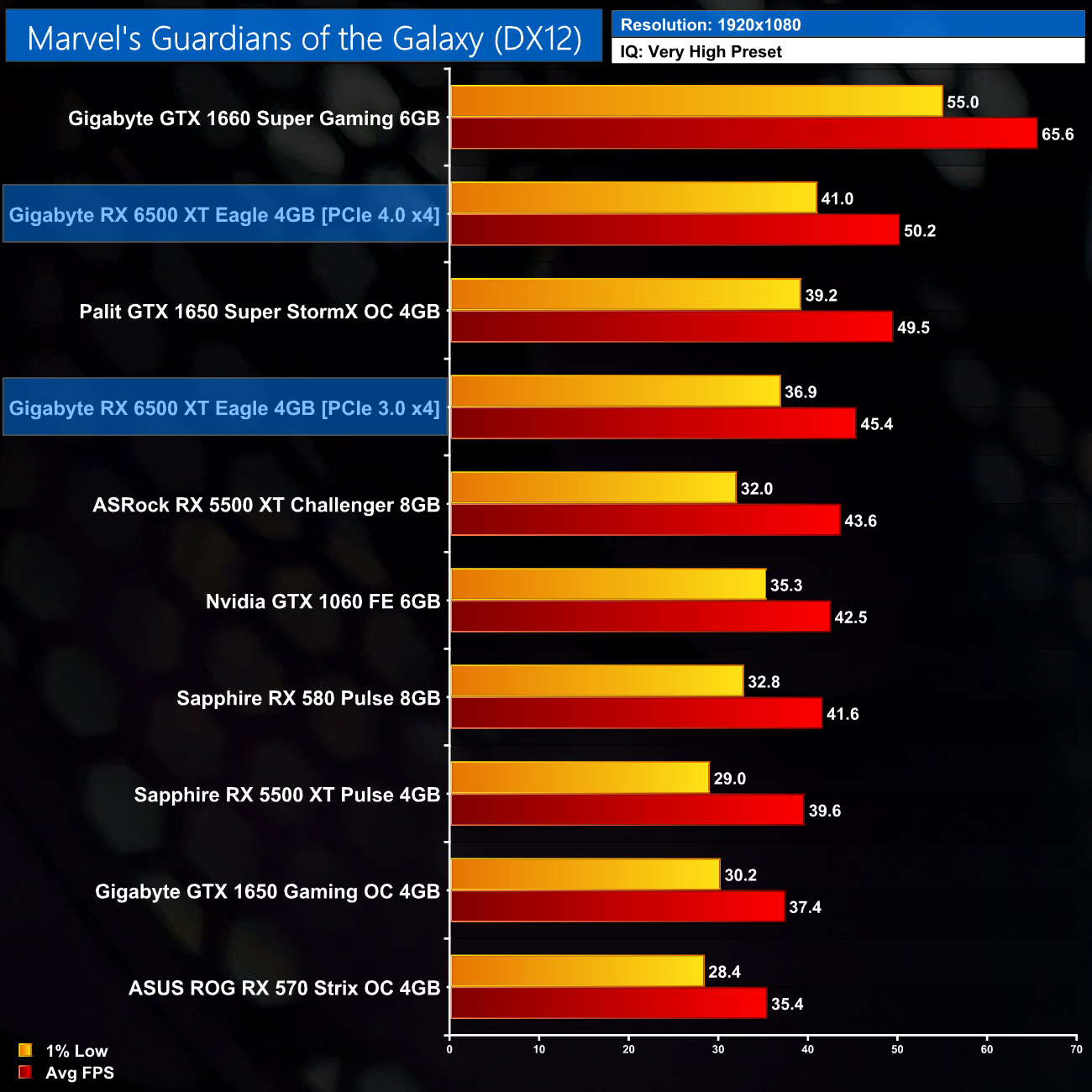
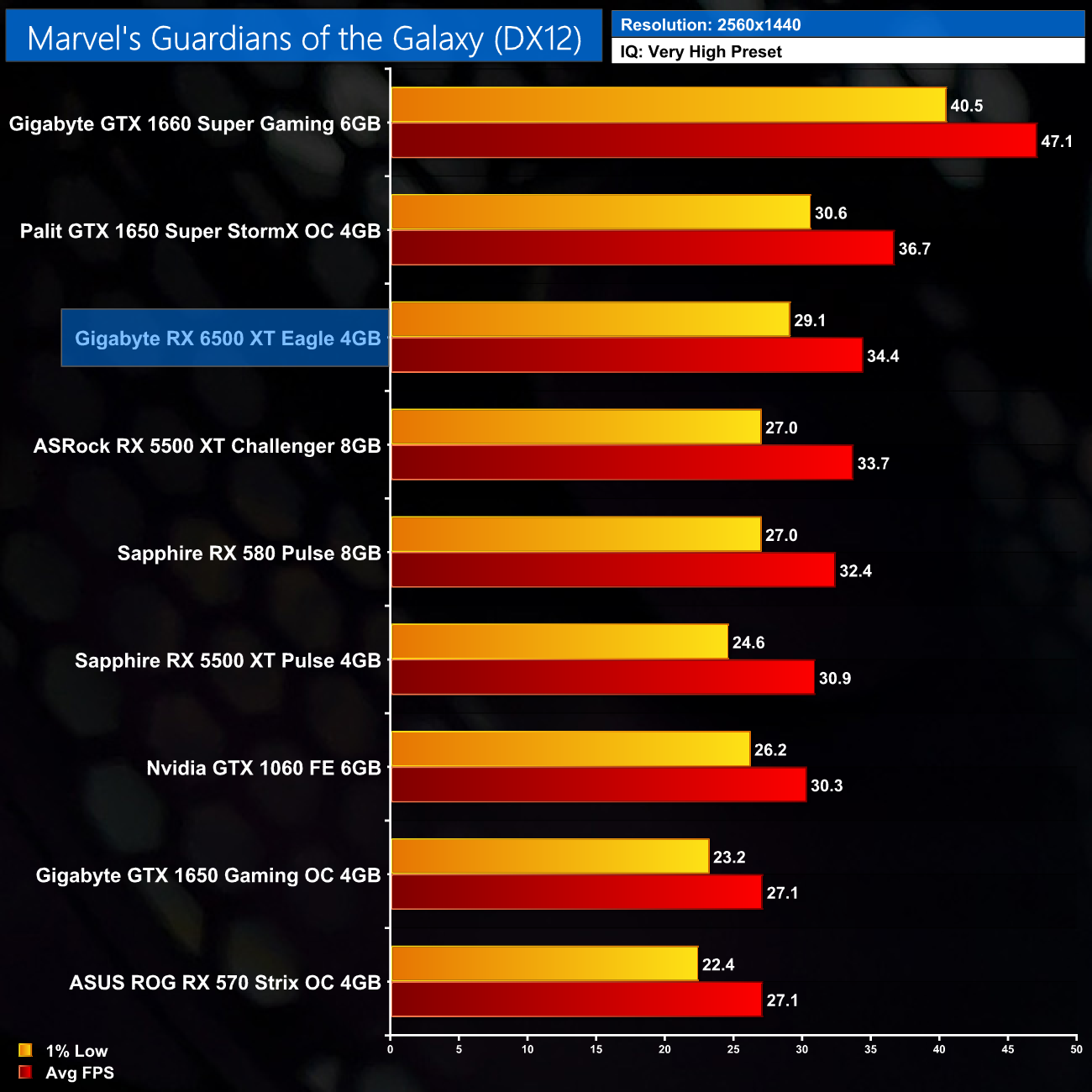
Marvel's Guardians of the Galaxy is another game where, perhaps surprisingly, the 6500 XT does OK. I mean, even at it’s best with PCIe 4.0, it’s no faster than the GTX 1650 Super so we’re not exactly look at much, but it is actually a decent bit faster than the other AMD GPUs. Performance does drop by 10% when using PCIe 3.0 however, putting it just above the 5500 XT 8GB.
Red Dead Redemption 2 is a 2018 action-adventure game developed and published by Rockstar Games. The game is the third entry in the Red Dead series and is a prequel to the 2010 game Red Dead Redemption. Red Dead Redemption 2 was released for the PlayStation 4 and Xbox One in October 2018, and for Microsoft Windows and Stadia in November 2019. (Wikipedia).
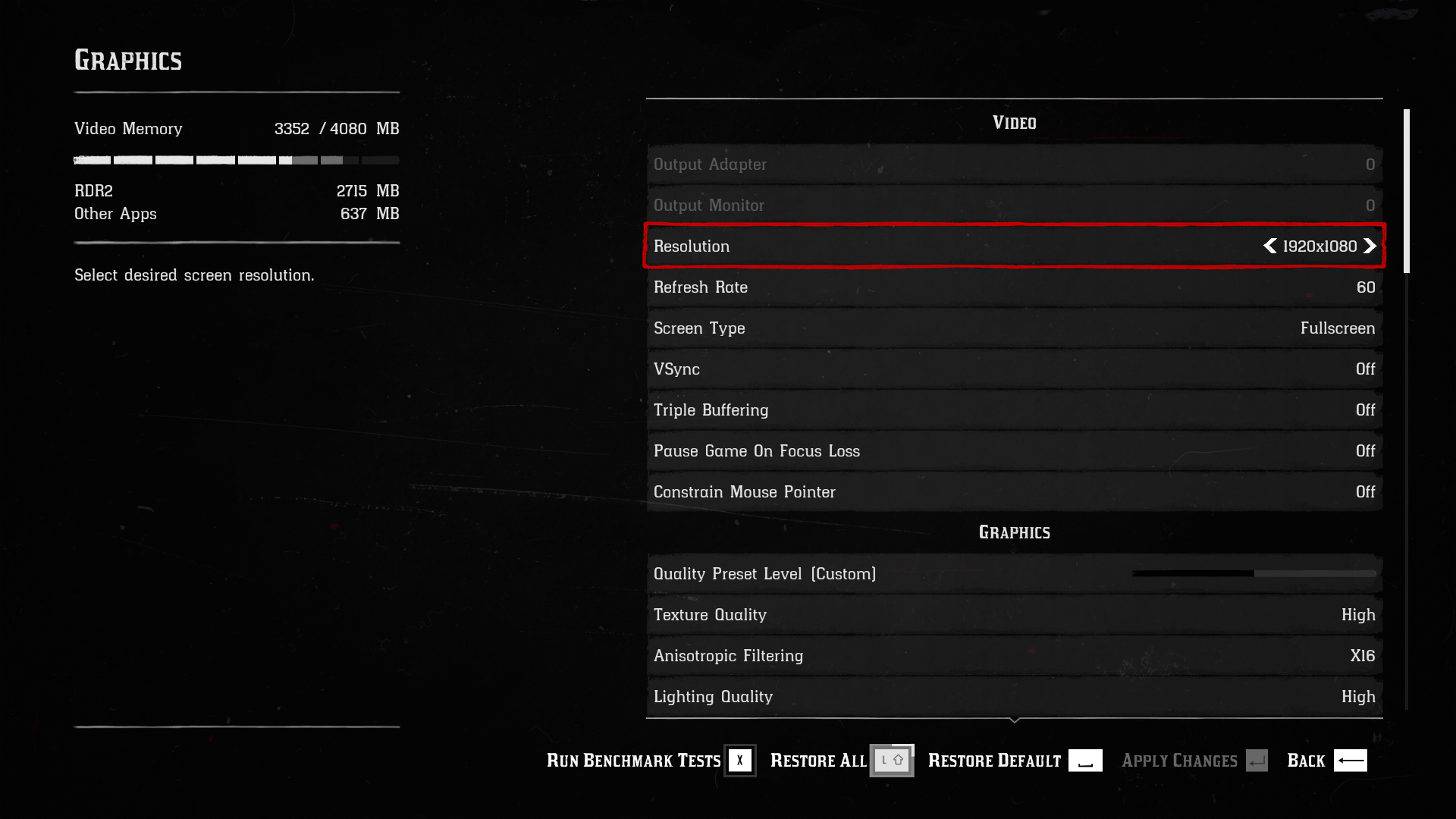
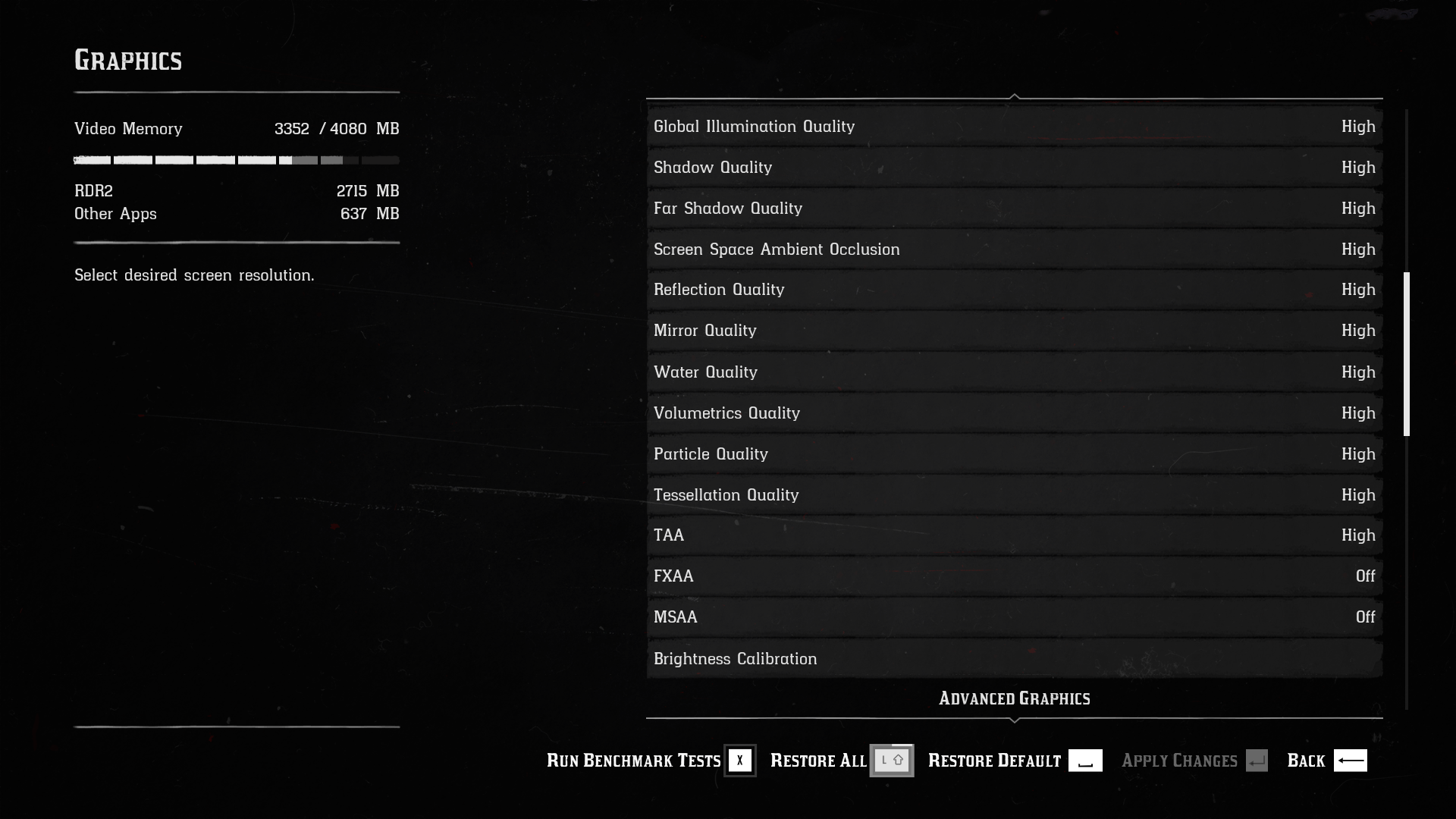
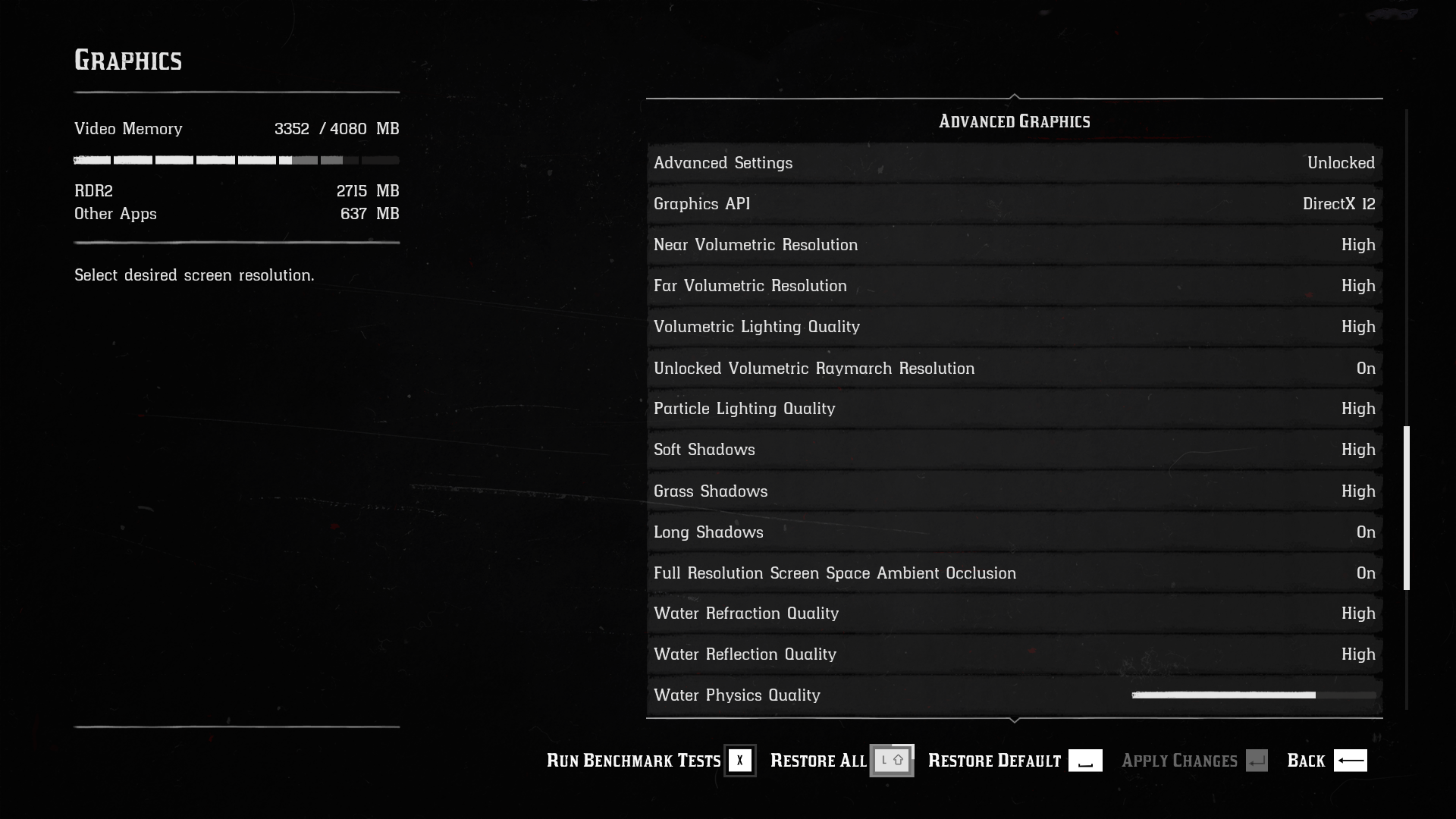
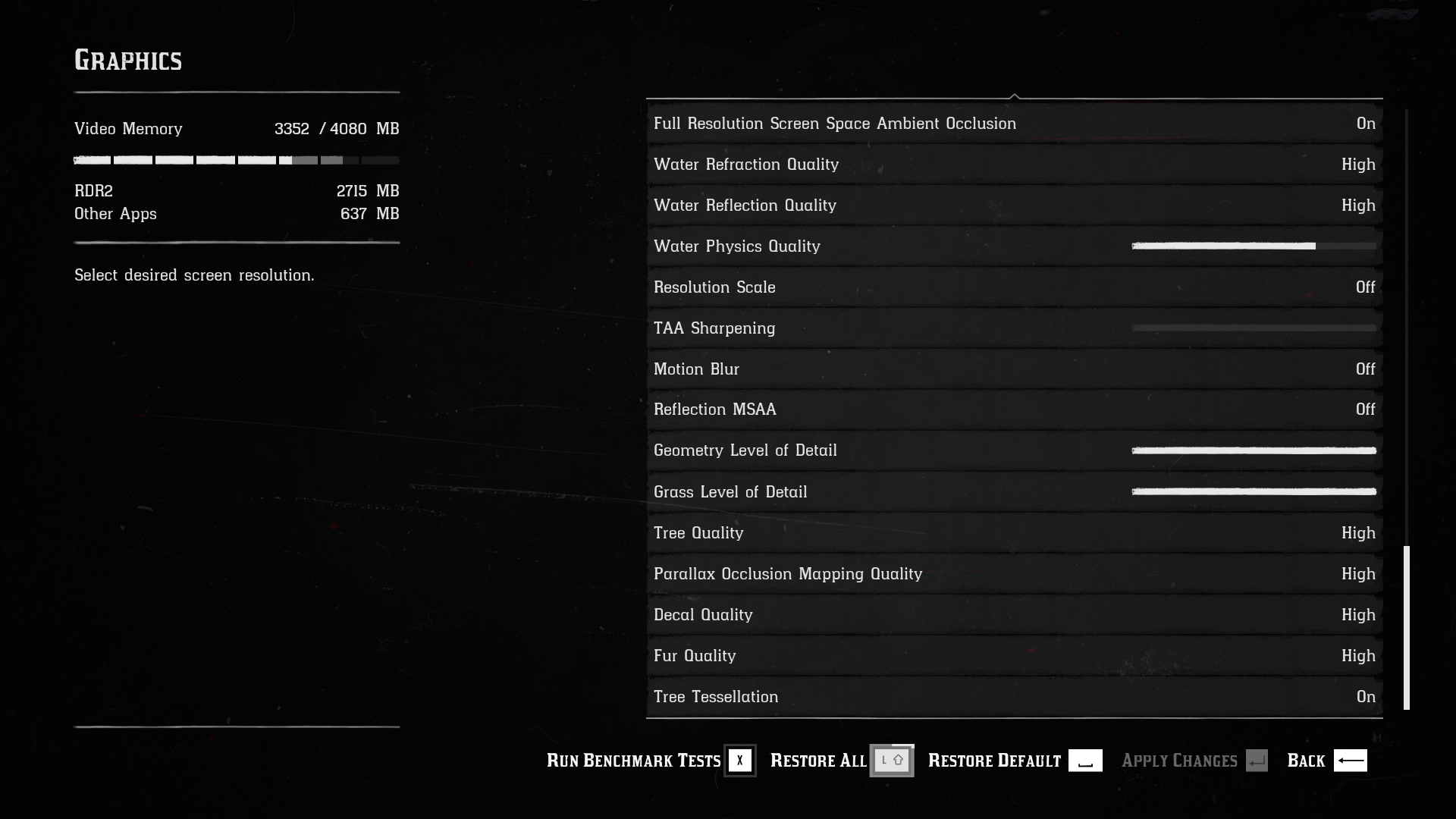
Engine: Rockstar Advance Game Engine (RAGE). We test by manually selecting High settings, TAA, DX12 API.
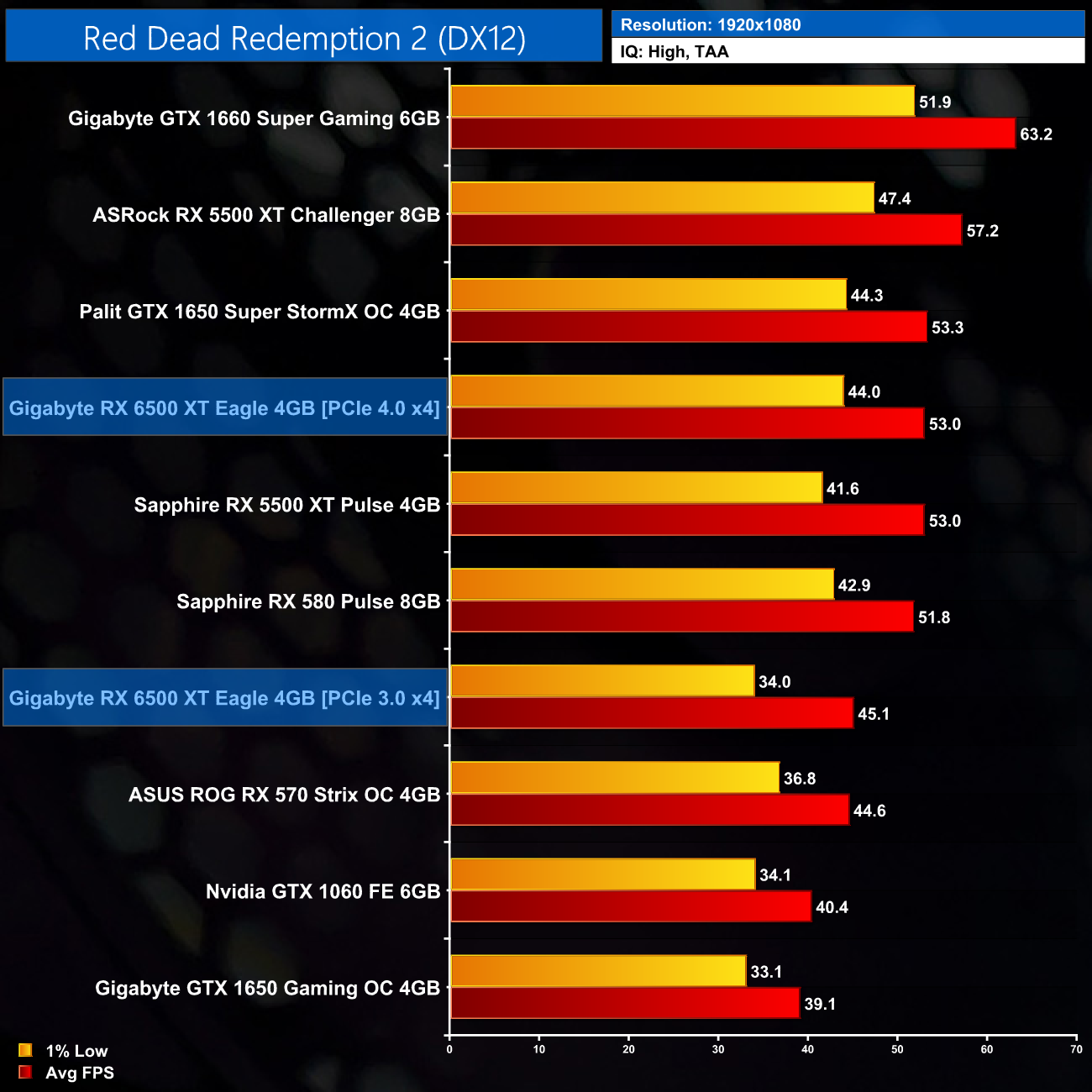
Then we have Red Dead Redemption 2 with yet more lacklustre performance, the 6500 XT delivers the same average frame rate as the 1650 Super and 5500 XT 4GB, two cards that both launched for less money over 2 years ago. And of course, PCIe 3.0 just makes things worse, this time by 15% on average, with performance now equal to the RX 570.
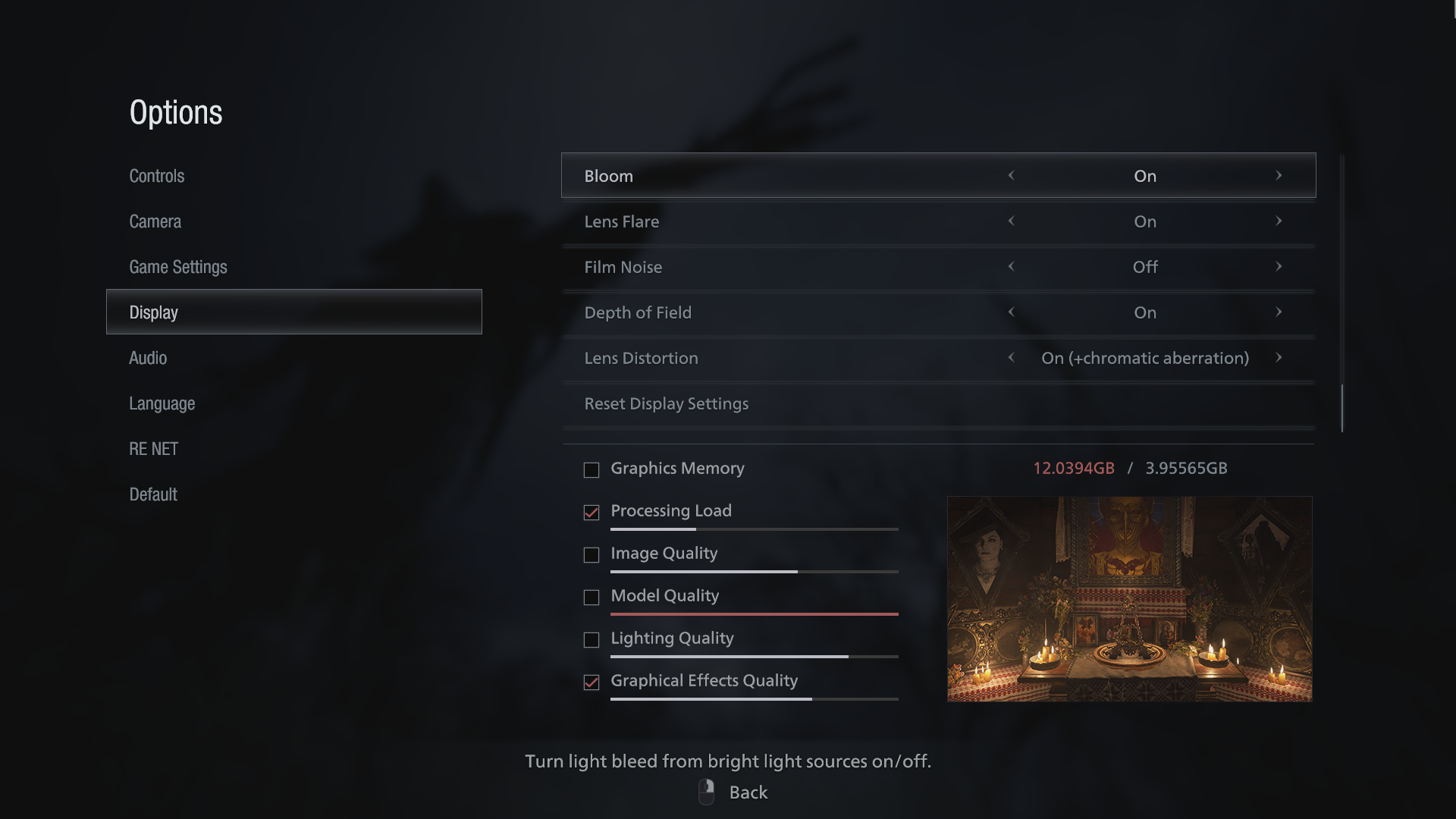
Resident Evil Village is a survival horror game developed and published by Capcom. The sequel to Resident Evil 7: Biohazard (2017), players control Ethan Winters, who is searching for his kidnapped daughter; after a fateful encounter with Chris Redfield, he finds himself in a village filled with mutant creatures. The game was announced at the PlayStation 5 reveal event in June 2020 and was released on May 7, 2021, for Windows, PlayStation 4, PlayStation 5, Xbox One, Xbox Series X/S and Stadia. (Wikipedia).
Engine: RE Engine. We test using the Max preset, with V-Sync disabled, DX12 API.
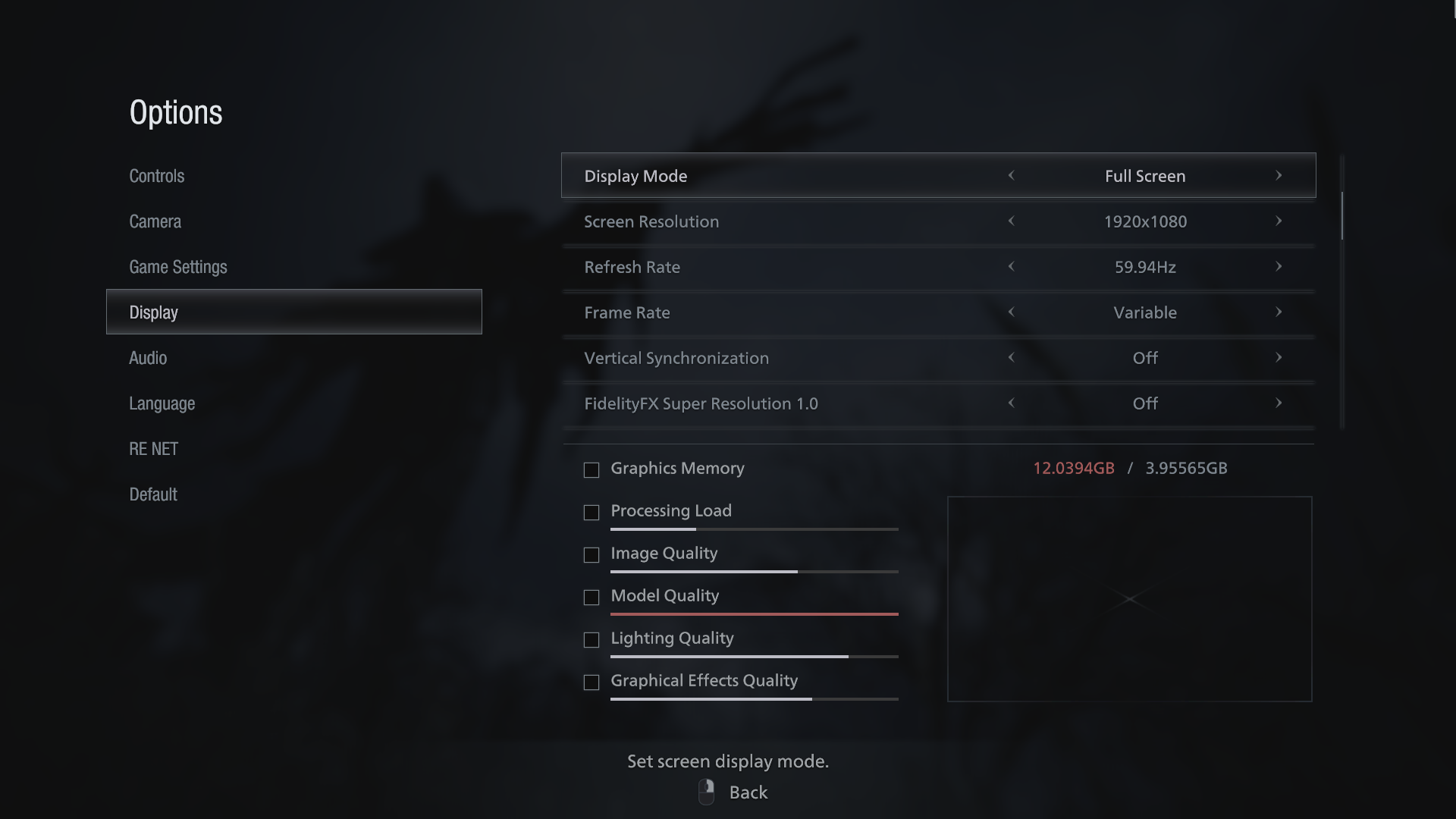
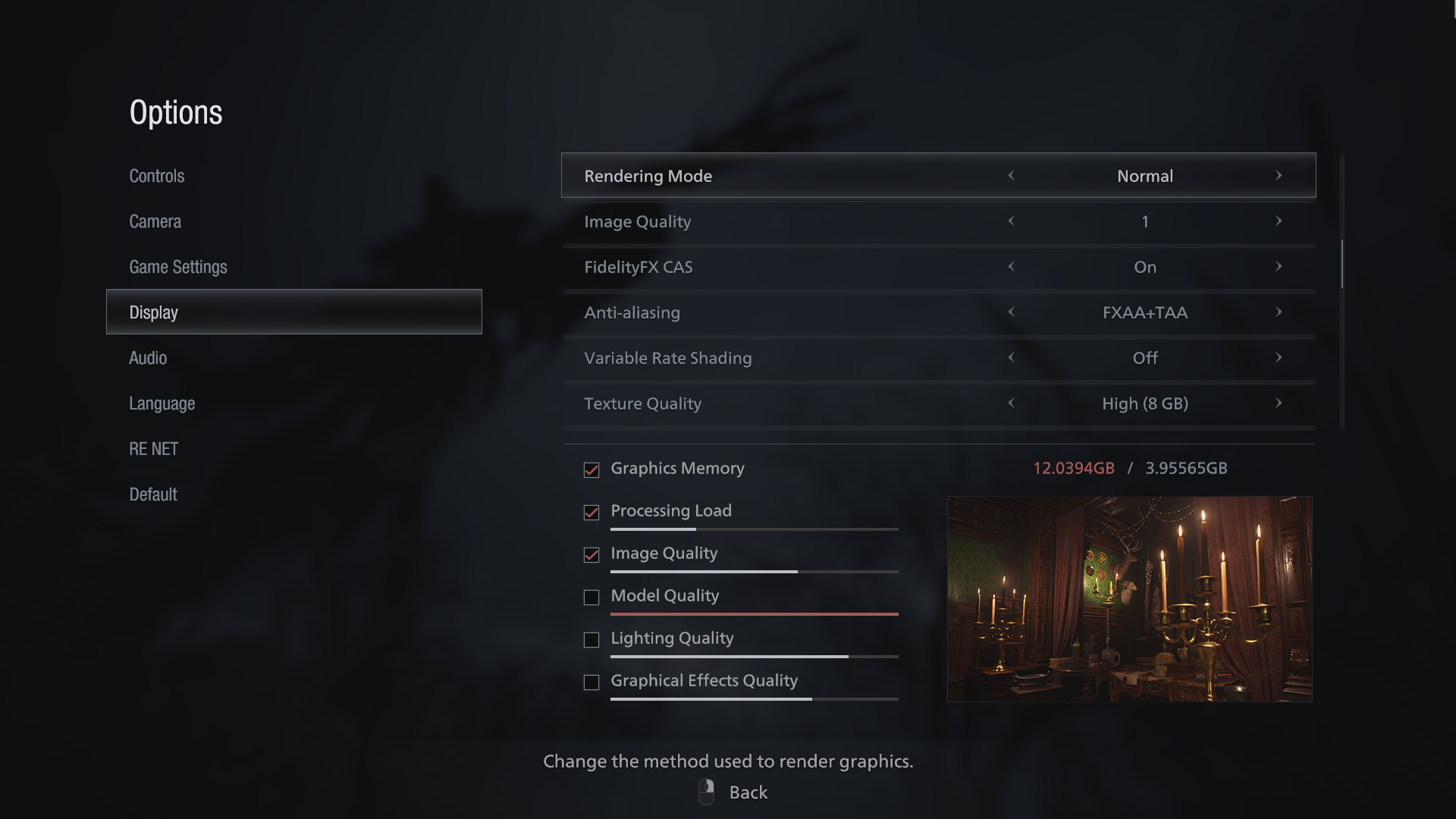
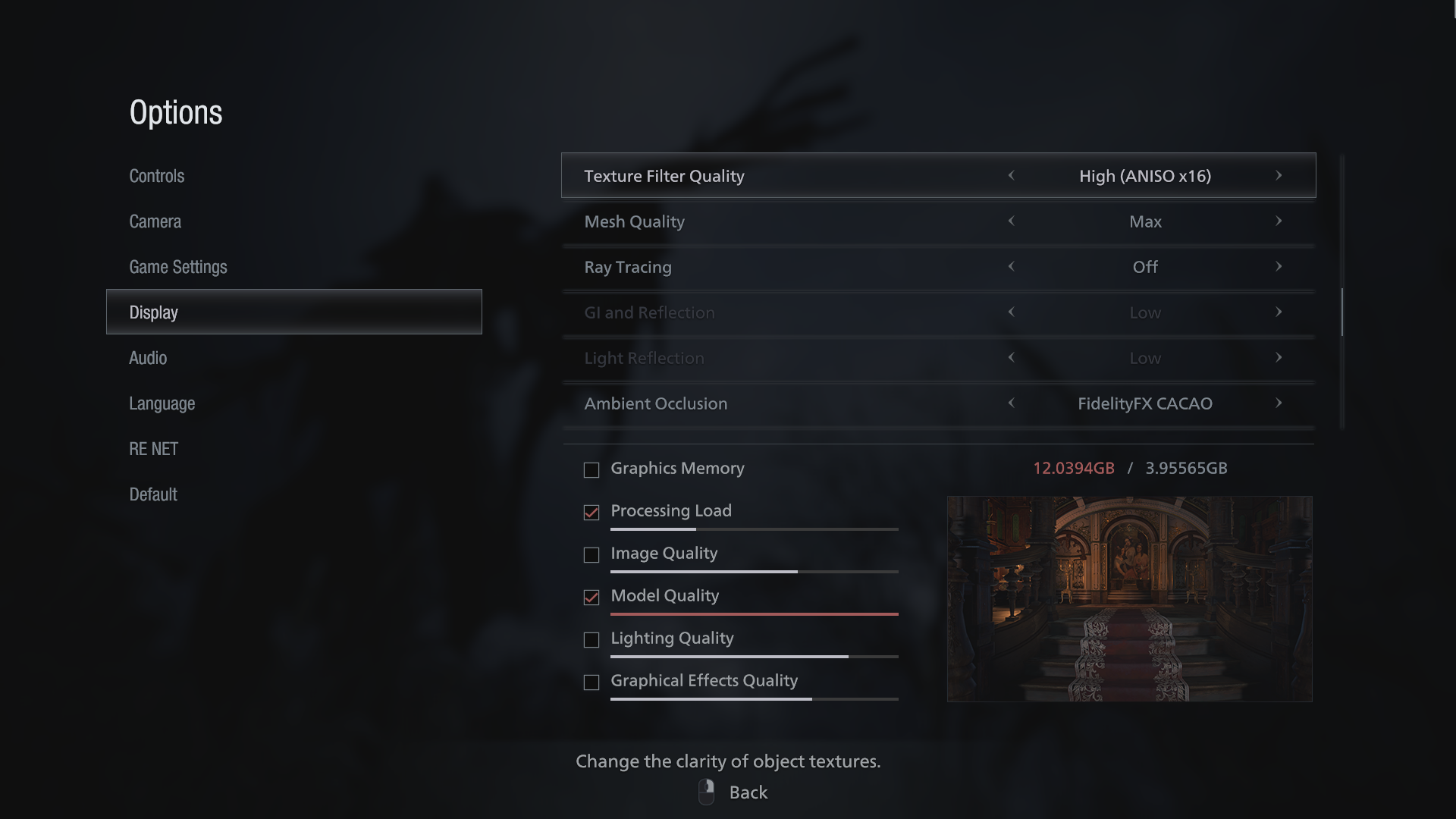
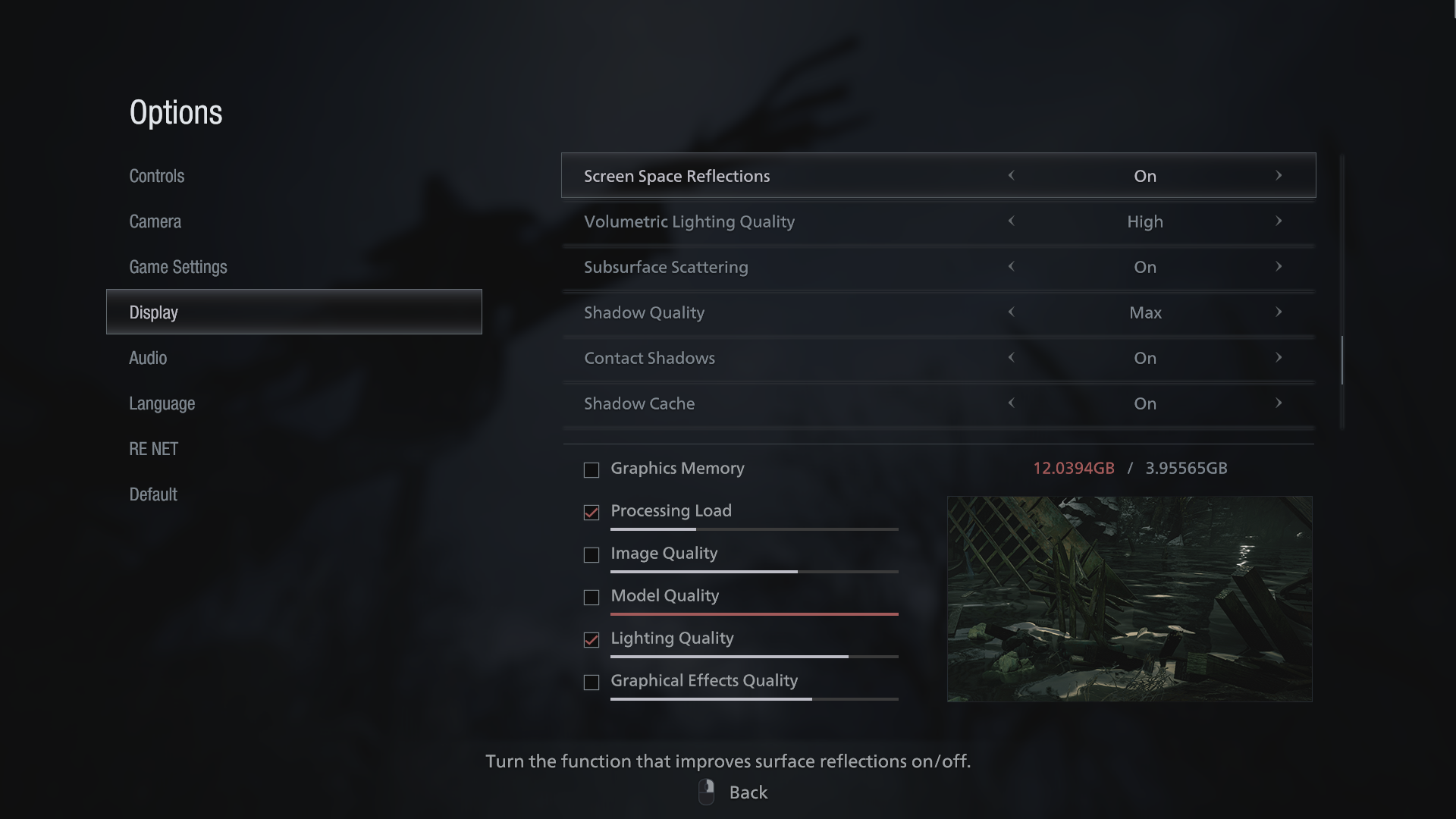
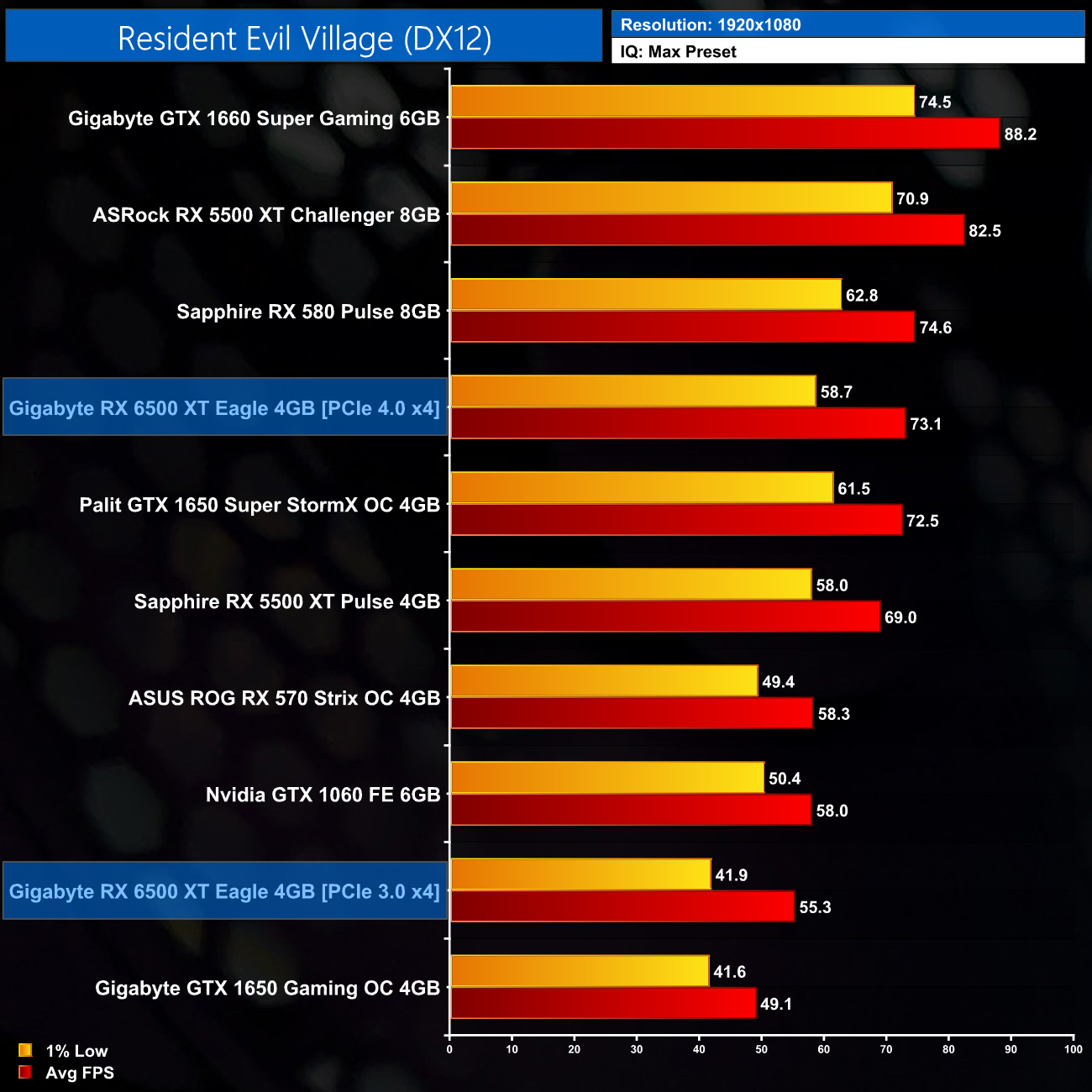
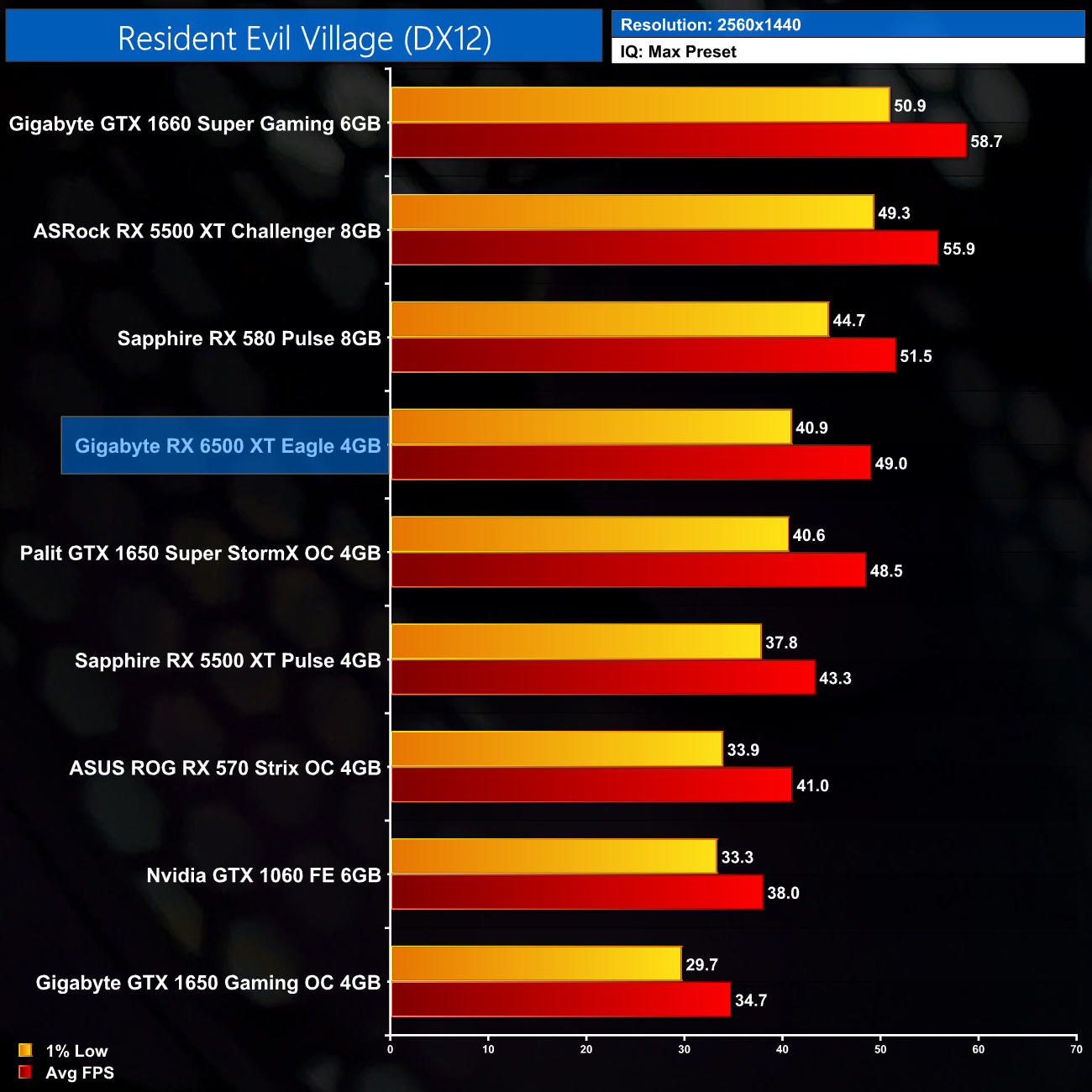
It’s more of the same in Resident Evil Village, where the RX 580 is actually faster than the 6500 XT out of the gate, with performance also on par with the 1650 Super. Tested with PCIe Gen3 however, performance drops to below even the GTX 1060, and it isn’t much ahead of the GTX 1650 at all.
Total War Saga: Troy is a 2020 turn-based strategy video game developed by Creative Assembly Sofia and published by Sega. The game was released for Windows on 13 August 2020 as the second installment in the Total War Saga subseries, succeeding Thrones of Britannia (2018). (Wikipedia).
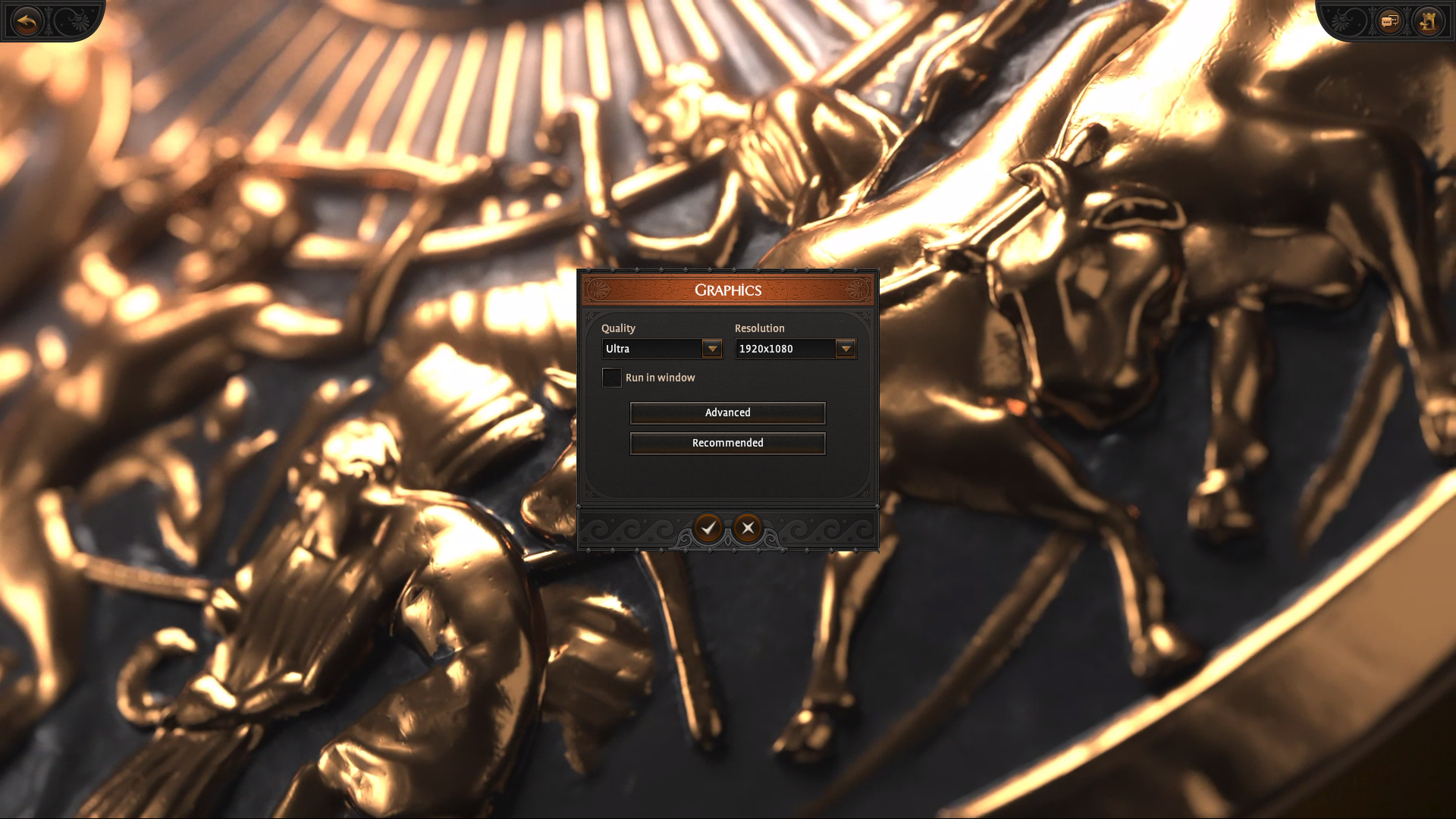
Engine: TW Engine 3 (Warscape). We test using the Ultra preset, with unlimited video memory enabled, DX11 API.
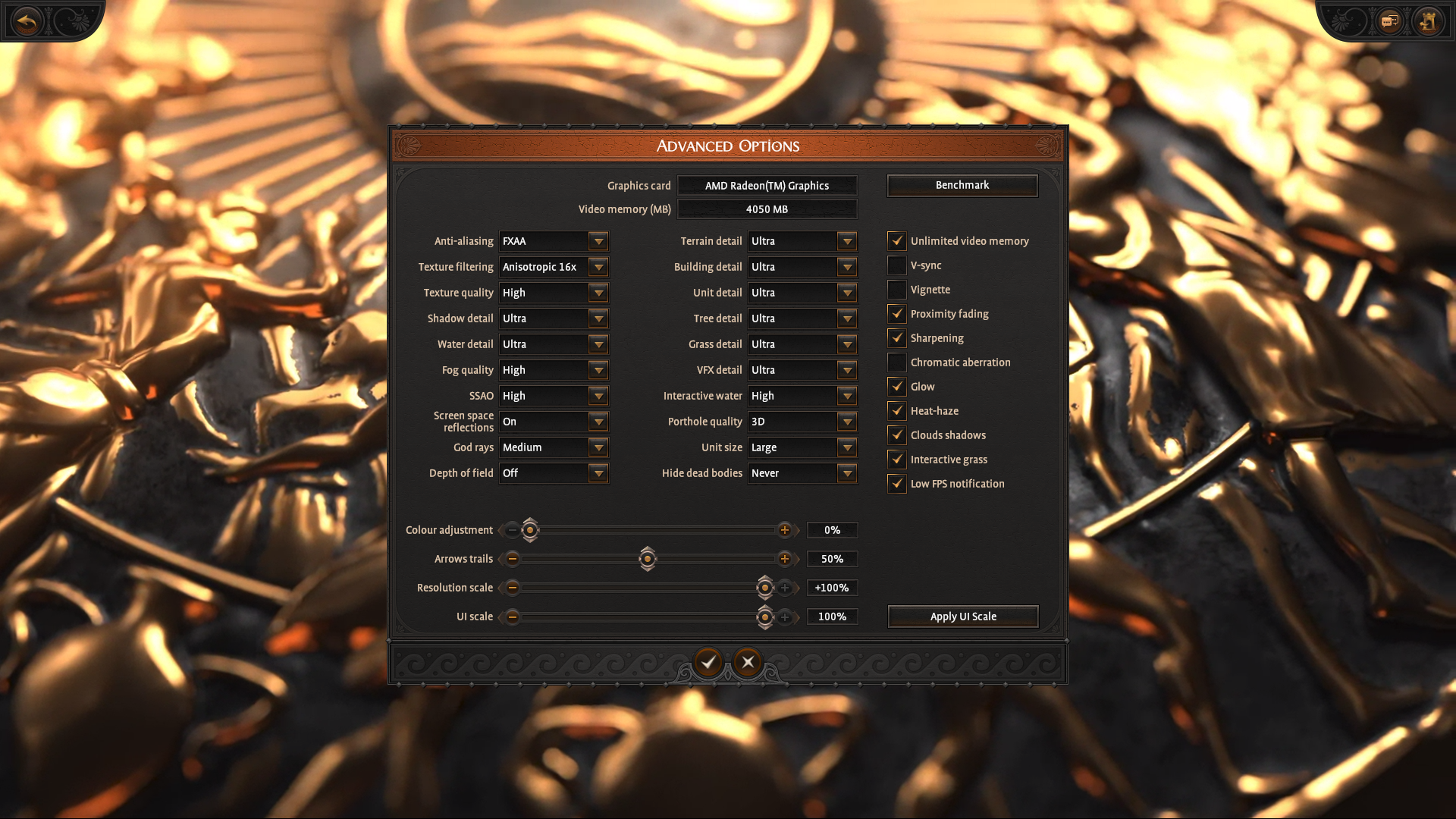
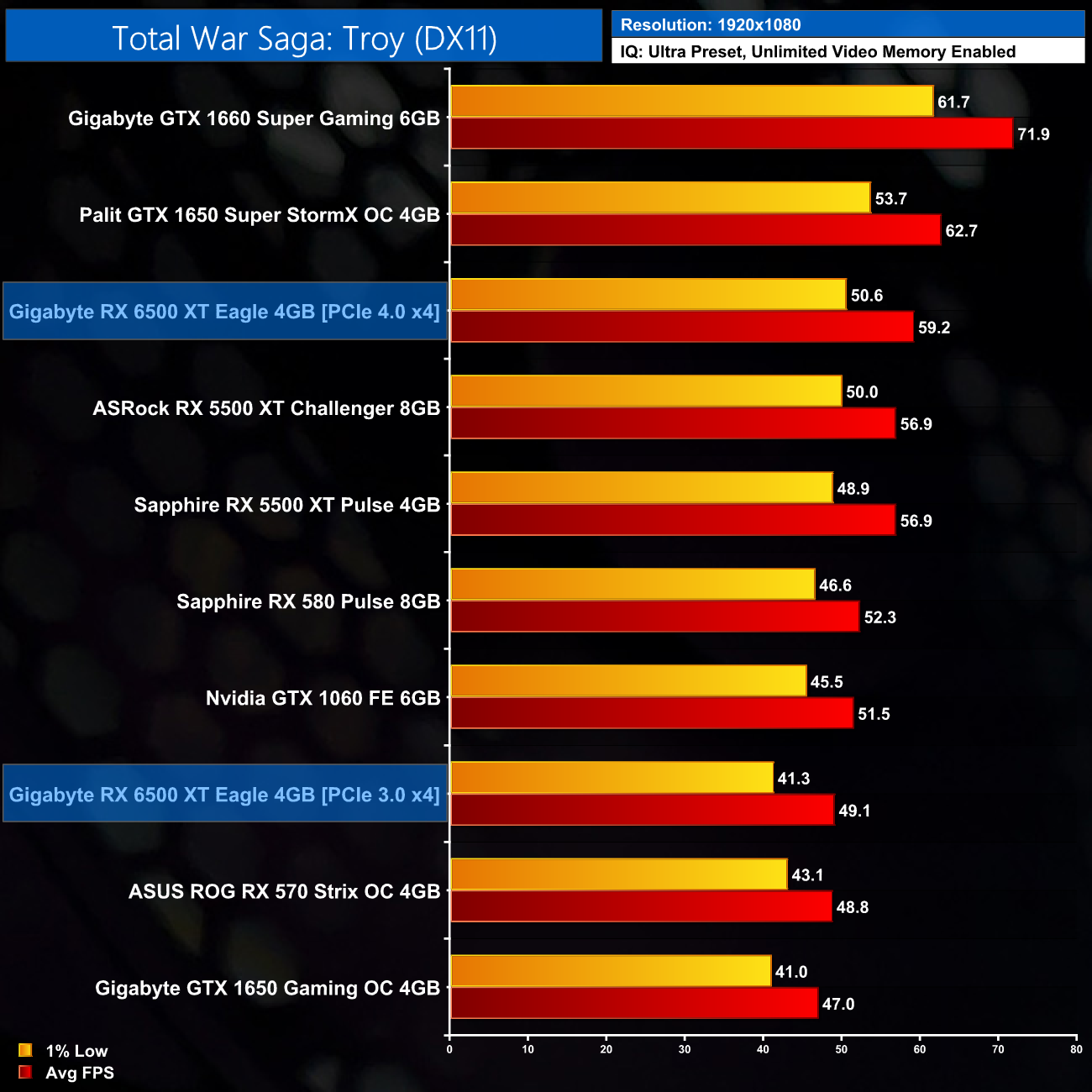
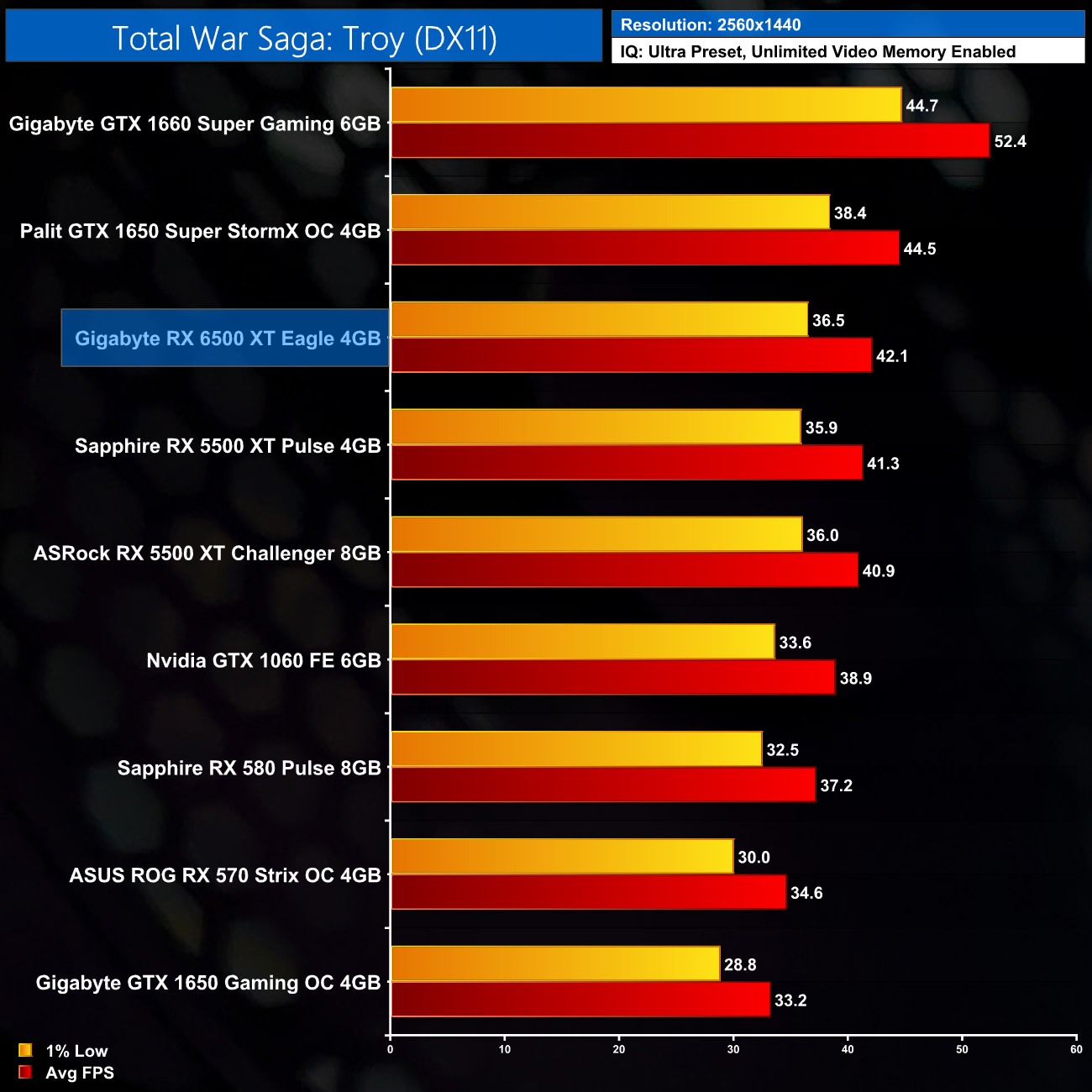
Likewise, for our penultimate game test we come to Total War Saga: Troy. Performance isn't too bad at first glance, the 6500 XT is still slower than the 1650 Super but it’s averaging just under 60FPS which is always a good start. PCIe 3.0 lops off 17% of the performance though, at which point you are once more better off with a GTX 1060, while an RX 570 also delivers the same average performance but with slightly better 1% lows.
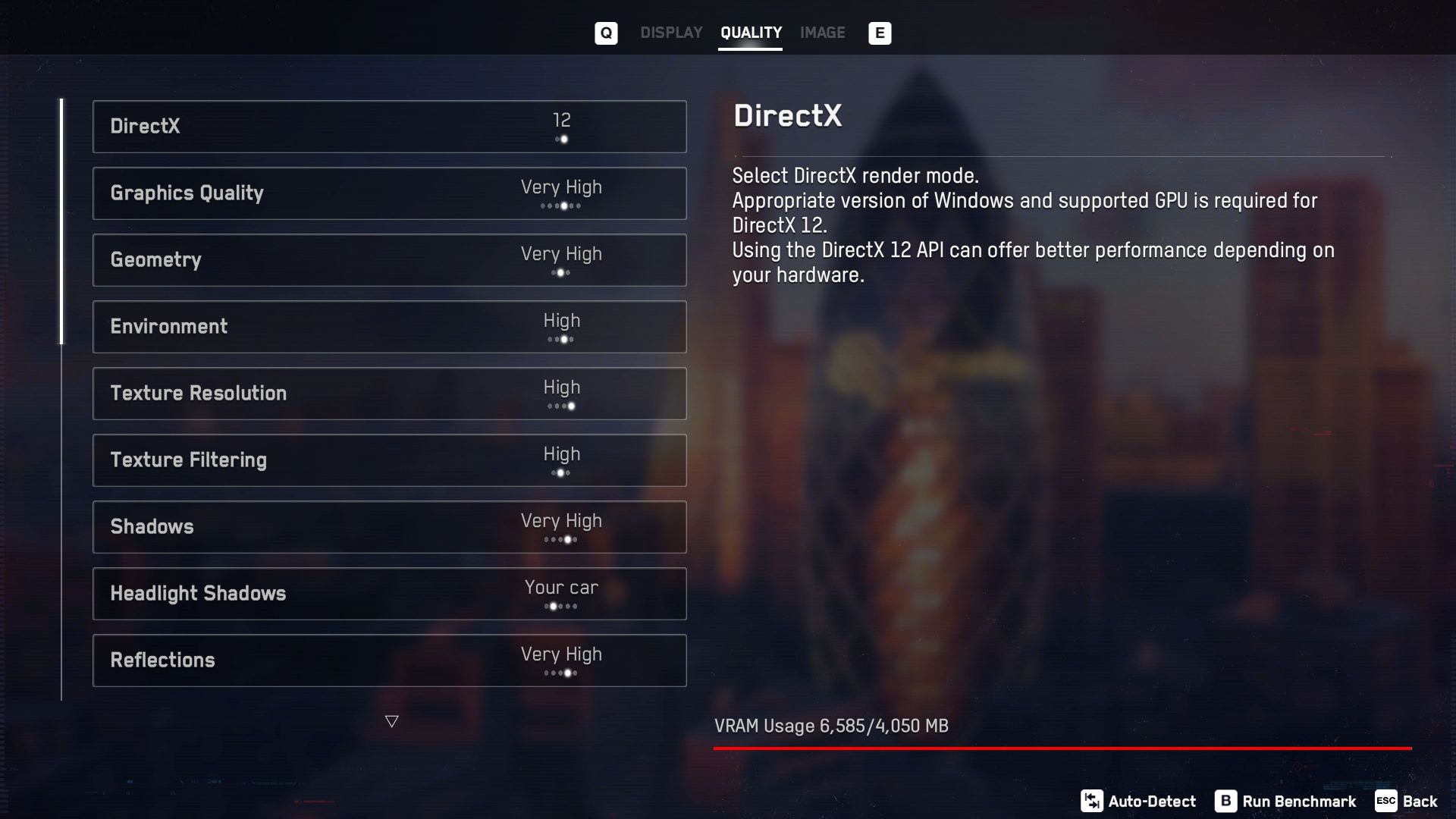
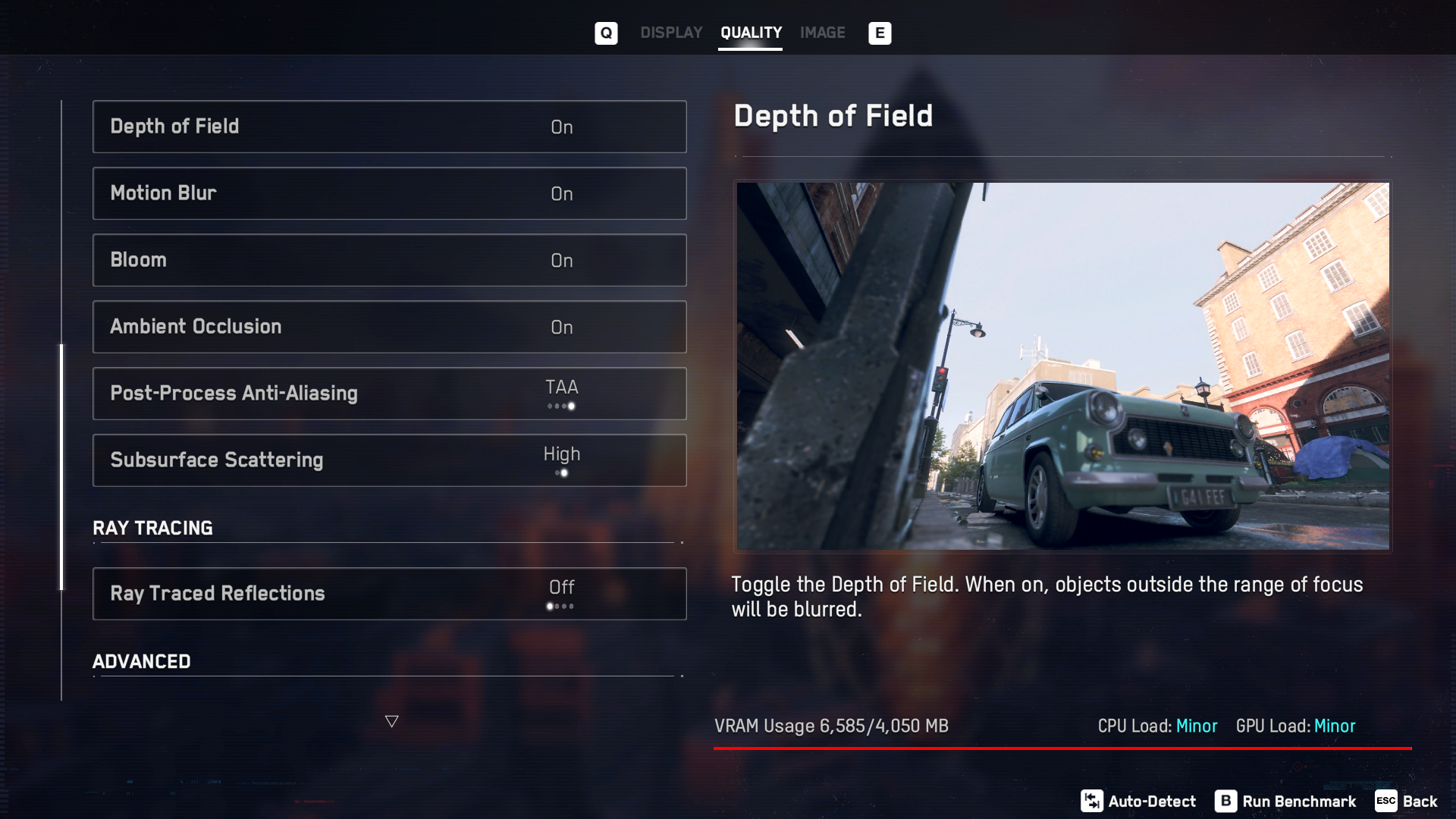
Watch Dogs: Legion is a 2020 action-adventure game published by Ubisoft and developed by its Toronto studio. It is the third instalment in the Watch Dogs series, and the sequel to 2016's Watch Dogs 2. Legion was released on October 29, 2020 for Microsoft Windows, PlayStation 4, Xbox One, and Stadia. (Wikipedia).
Engine: Disrupt. We test using the Very High preset, DX12 API.
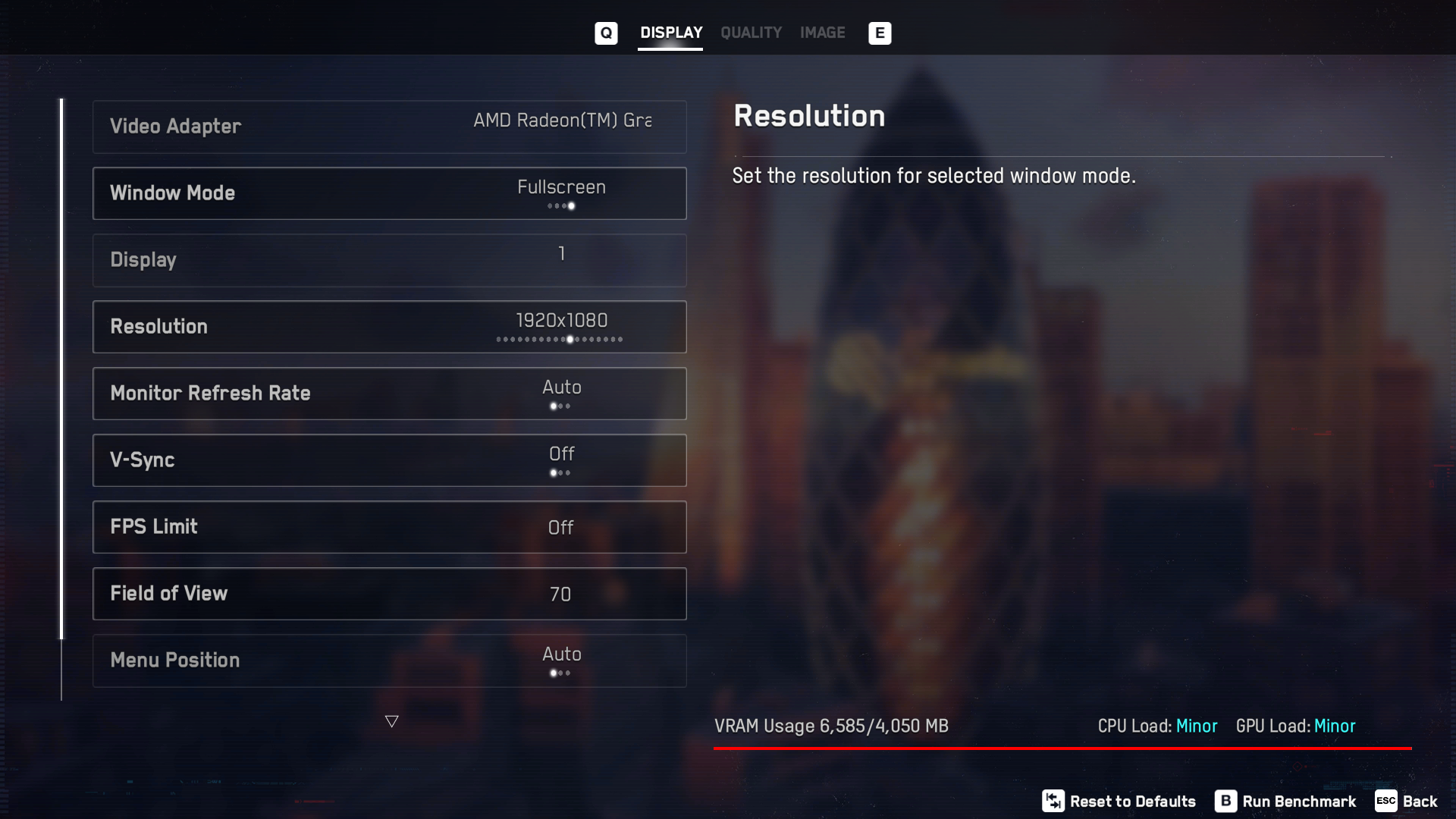

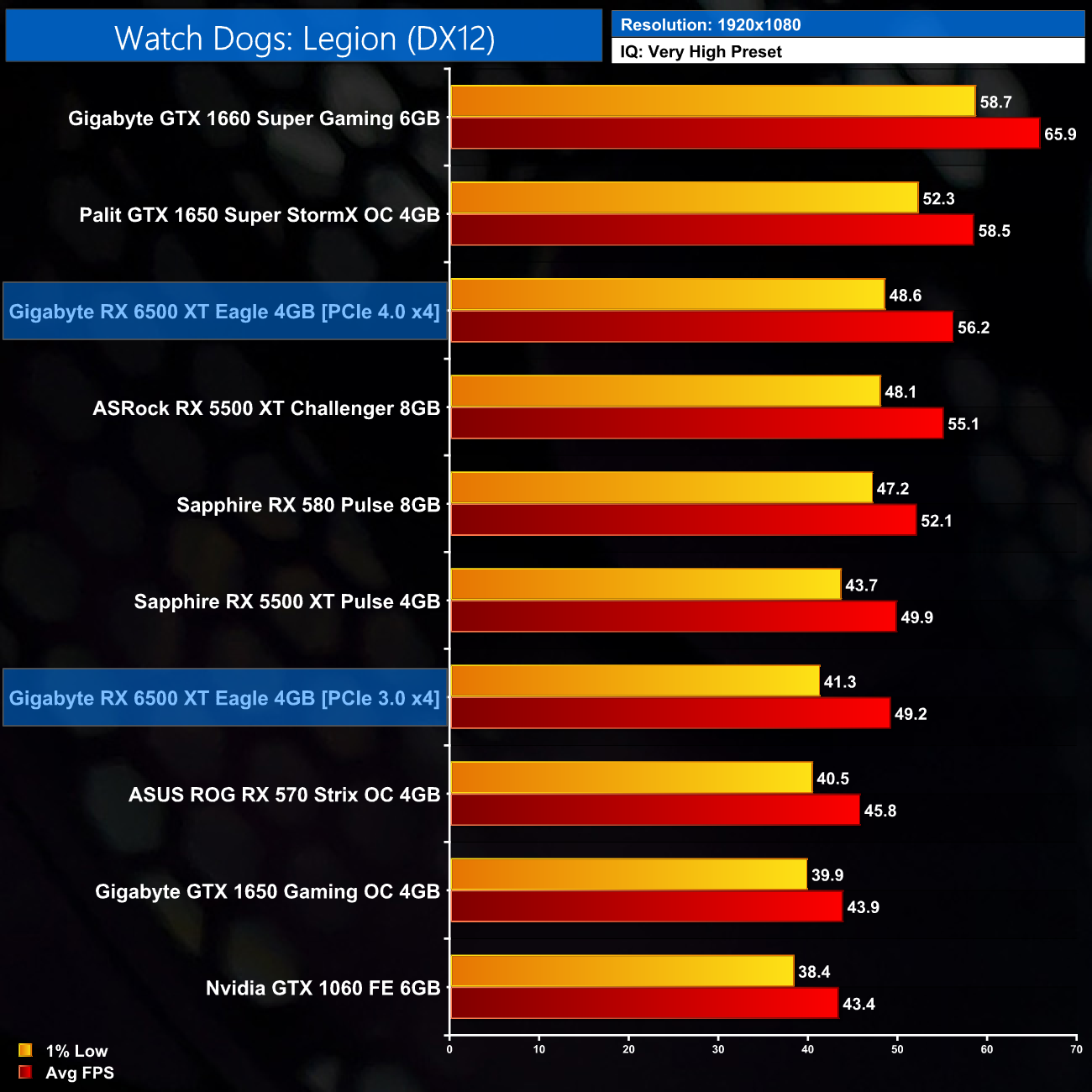
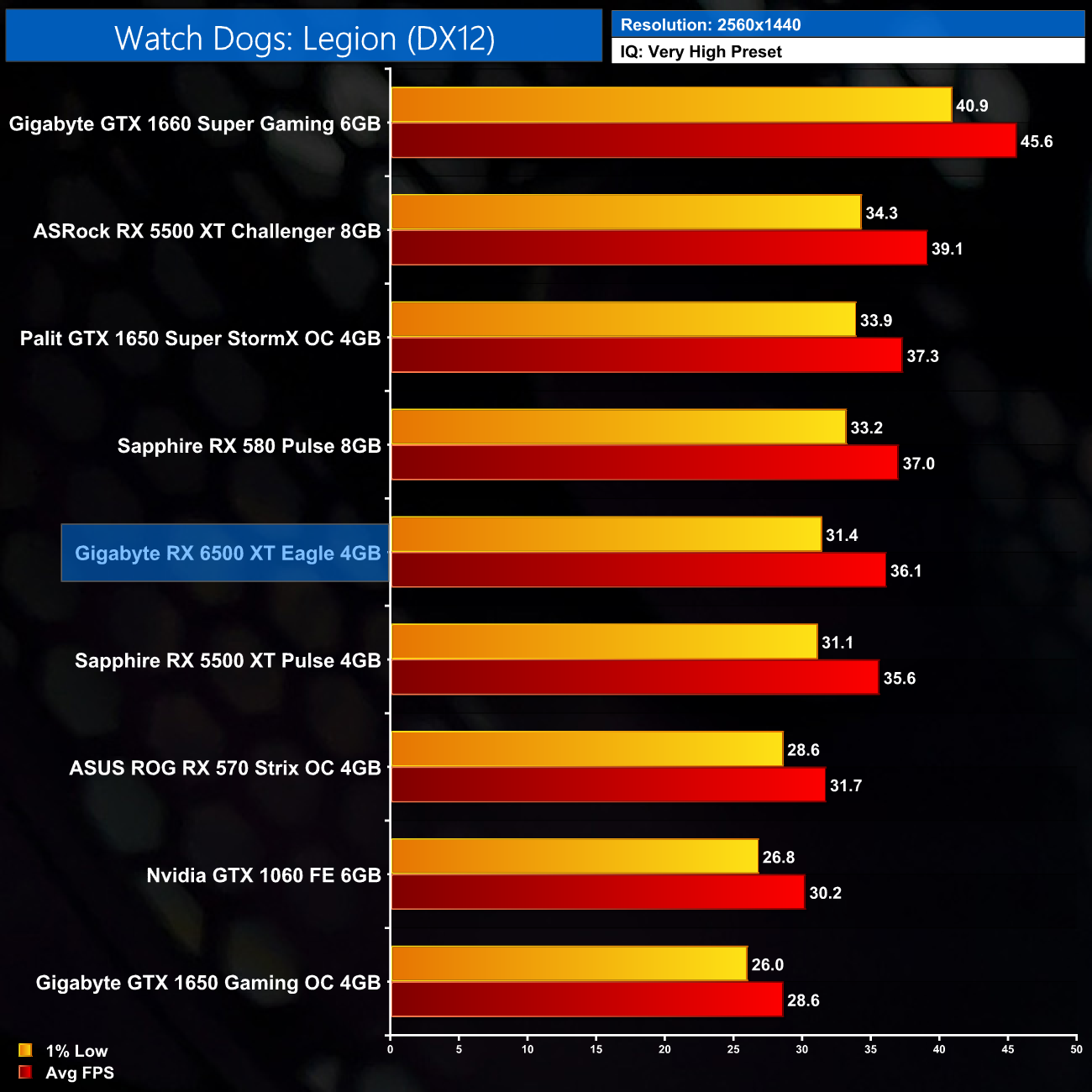
Lastly, we finish up the benchmarks with Watch Dogs: Legion, and by now it won't come as a surprise that the 6500 XT is delivering disappointing results. At best, it’s still slower than the 1650 Super by a couple of frames, but at worst – when using PCIe 3 – it is slower than the RX 580 and just as fast as a 5500 XT 4GB.
To really illustrate the difference made by running the RX 6500 XT on a PCIe 3.0 x4 interface, instead of PCIe 4.0 x4, below we can see a chart showing the RX 6500 XT's PCIe 3.0 performance, relative to its PCIe 4.0 performance.
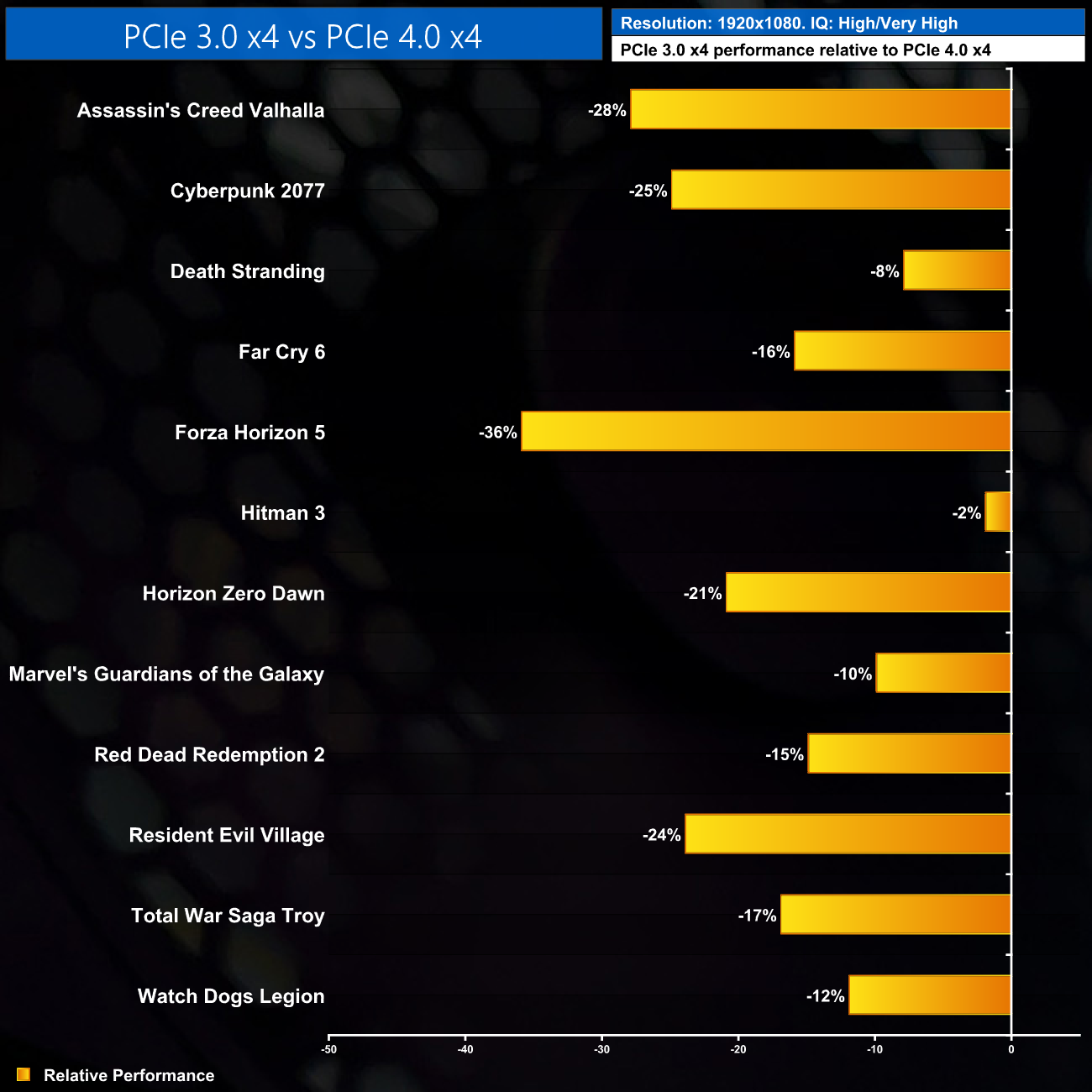
The results are not pleasant viewing. Apart from Hitman 3, where we saw basically no difference between the two PCIe modes, the RX 6500 XT shows clear performance deficits when ran at PCIe 3.0. Forza Horizon 5 is the worst offender, showing a 36% deficit in PCIe 3.0 versus PCIe 4.0, but ten of the twelve games we tested also show double-digit performance losses.
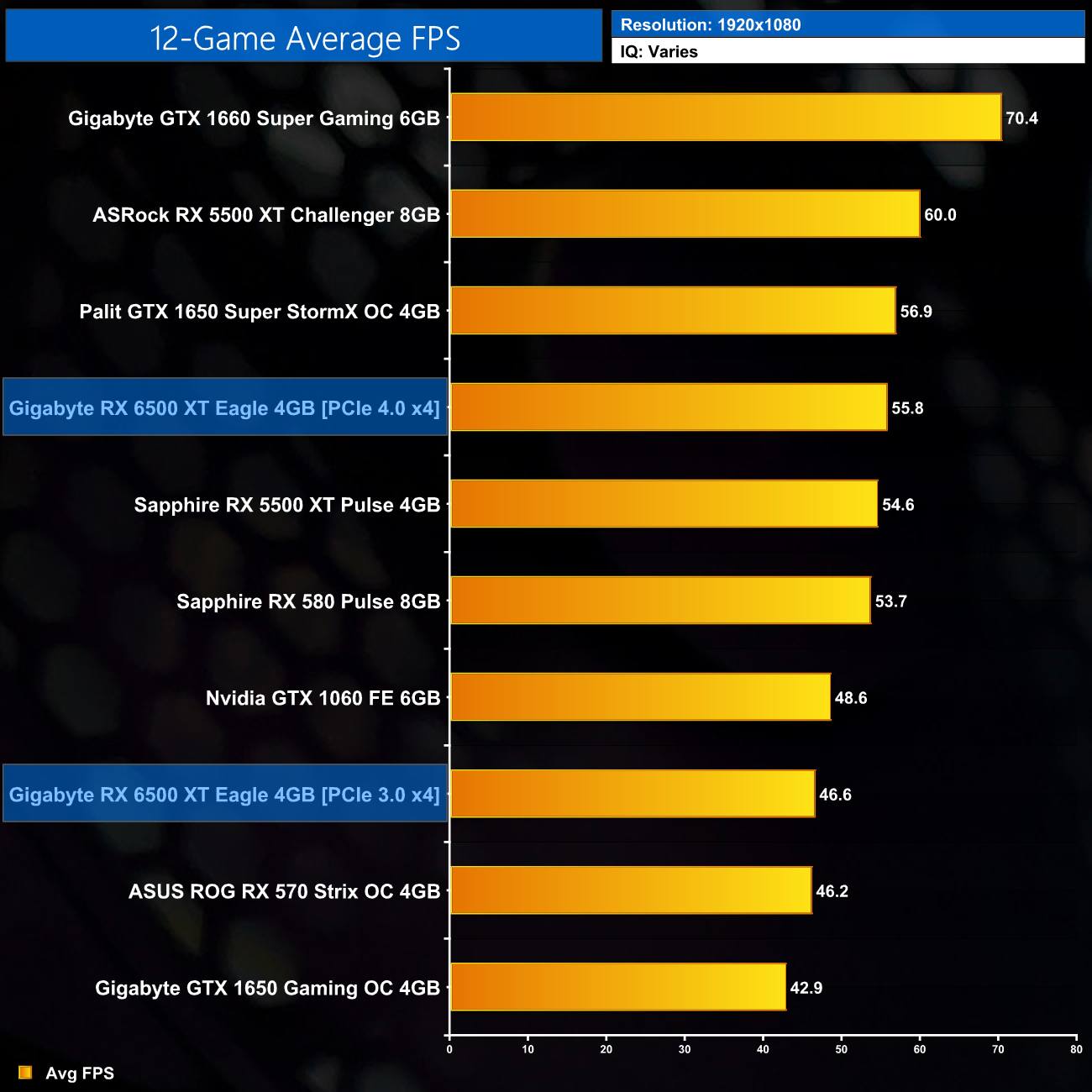
Taking a look at average performance then across all twelve games we tested, we'll start by talking about the RX 6500 XT on PCIe 4.0. Even in that best case scenario, it's a very disappointing release – performance is worse than the GTX 1650 Super which launched in 2019 for £150, and it's basically the same as the RX 5500 XT 4GB. We're only looking at a 4% boost over the RX 580, a card that hit the market in 2017 (and was basically just a re-released RX 480 from 2016), and frankly that's such a negligible difference it that I'd call the two effectively as fast as each other.
And then when we assess average performance on the card on PCIe 3.0 – which I stress, is likely to be the case for majority of people interested in buying such a card – it gets even worse. The 6500 XT is 17% slower on average when tested with PCIe 3.0 vs PCIe 4.0, meaning the GTX 1060 6GB is actually the faster card. PCIe 3.0 performance is also on-par with the RX 570, though I did note numerous occasions where the RX 570 offered more stable 1% lows than the 6500 XT, too.
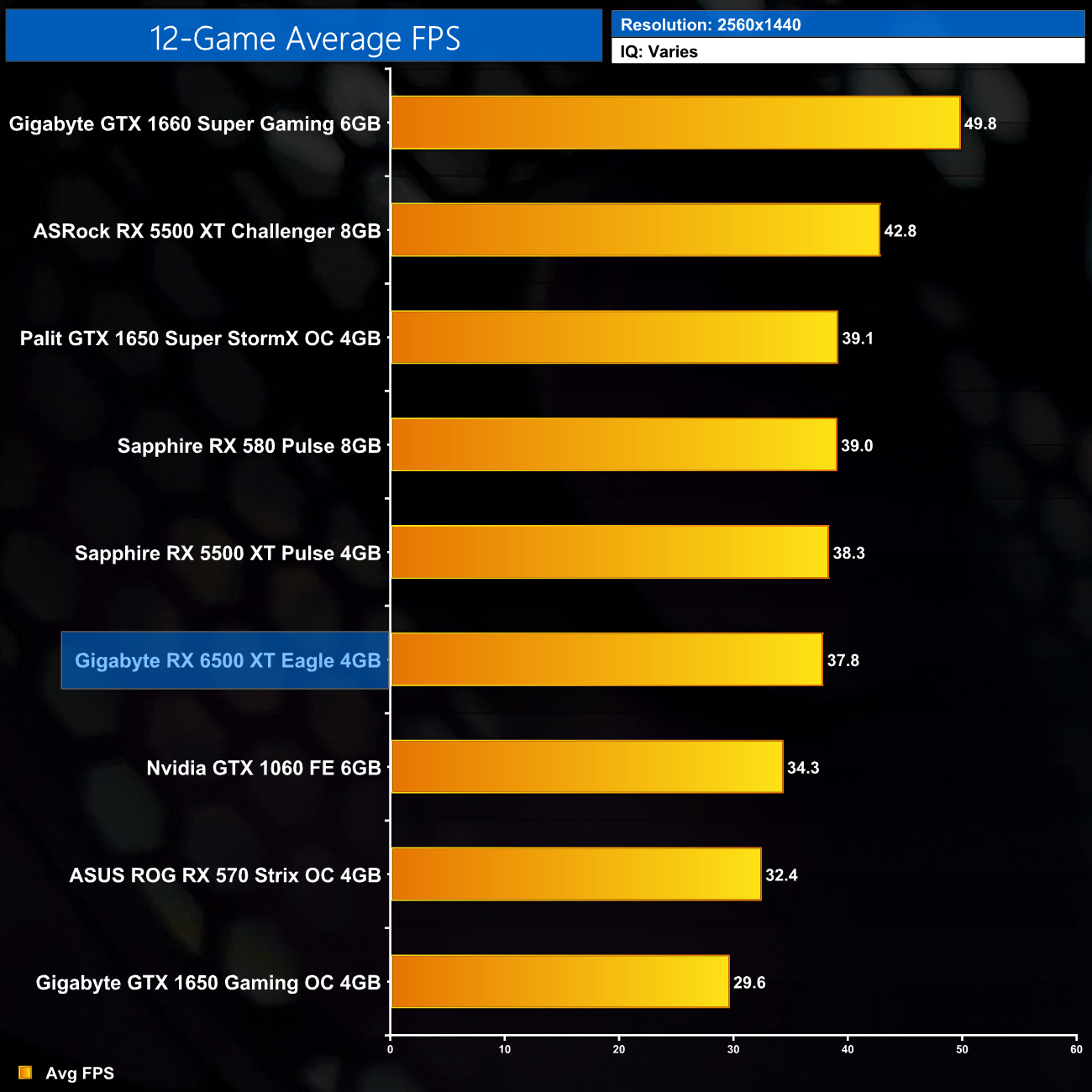
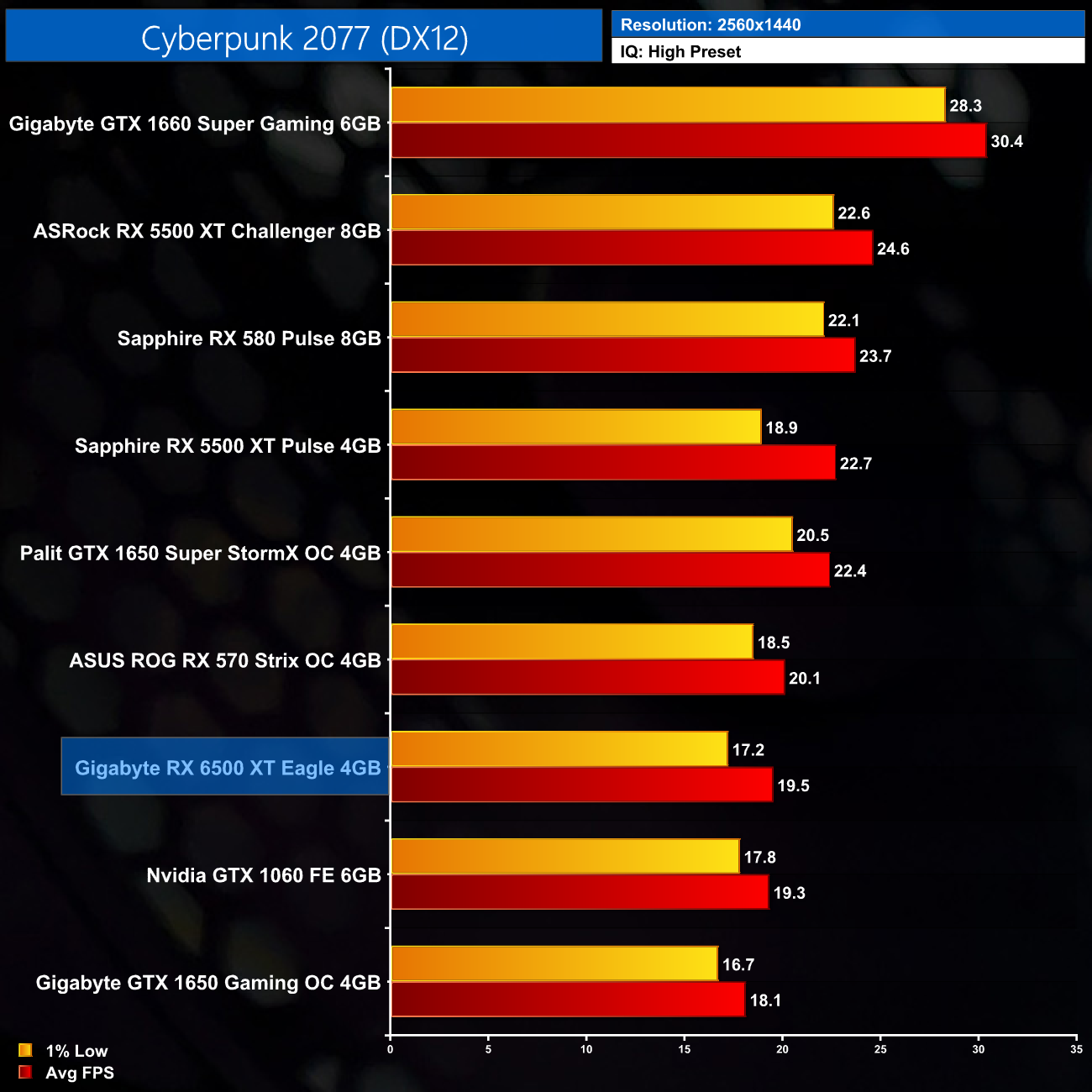
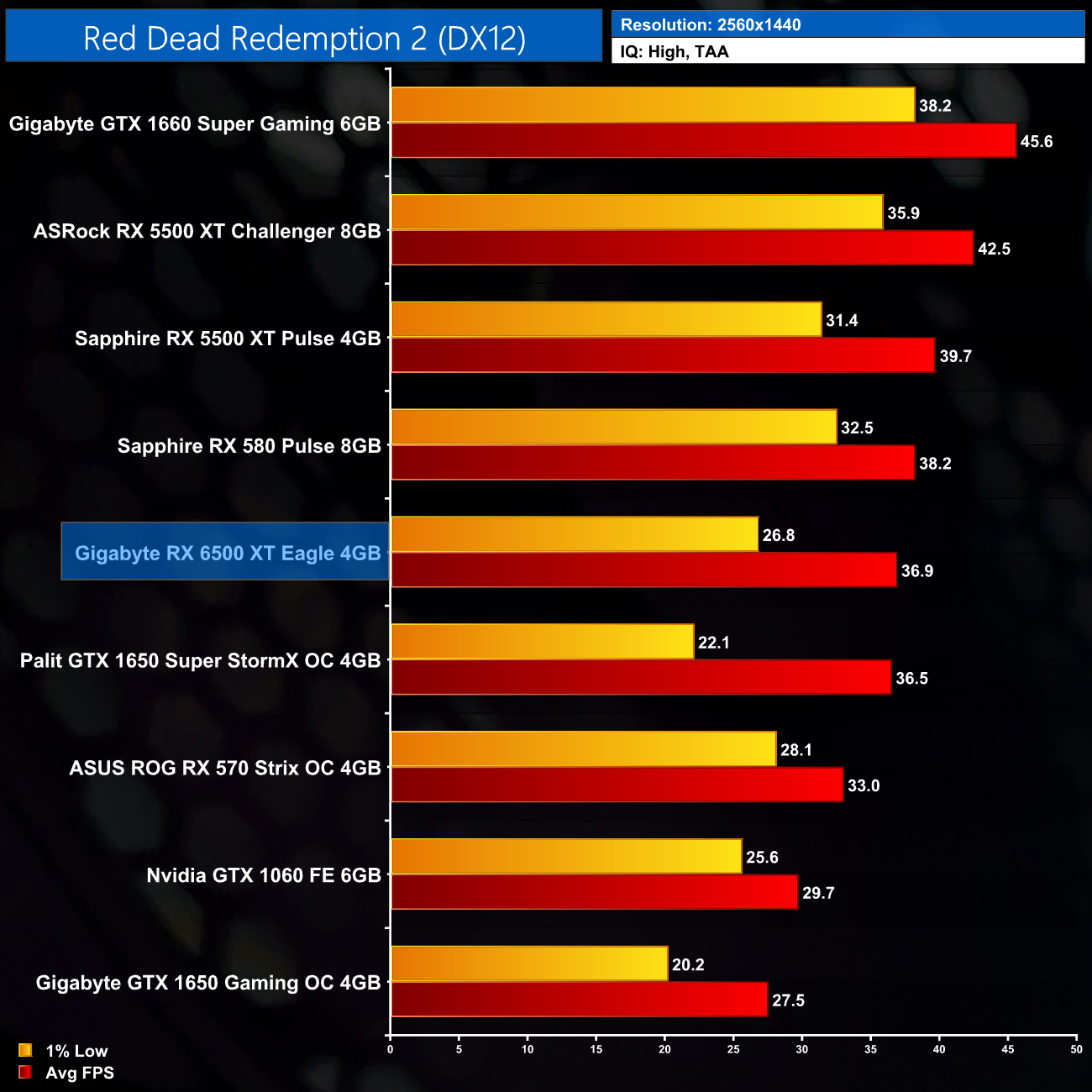
For a quick look at 1440p performance, this is really just a ‘bonus' chart as the 6500 XT is not designed for anything above 1080p. The average frame rate is not great and not shown are the 1% low figures, which also suffered at the higher resolution.
To assess the RX 6500 XT's ray tracing, we tested it in Cyberpunk 2077, Metro Exodus Enhanced Edition and Resident Evil Village. In each case, ray tracing was set to its lowest in-game setting:
- Cyberpunk 2077: Ray Traced Lighting at Medium. Ray traced reflections and ray traced shadows turned off.
- Metro Exodus Enhanced Edition: Ray Tracing set to Normal.
- Resident Evil Village: Ray traced reflections and shadows set to Low.
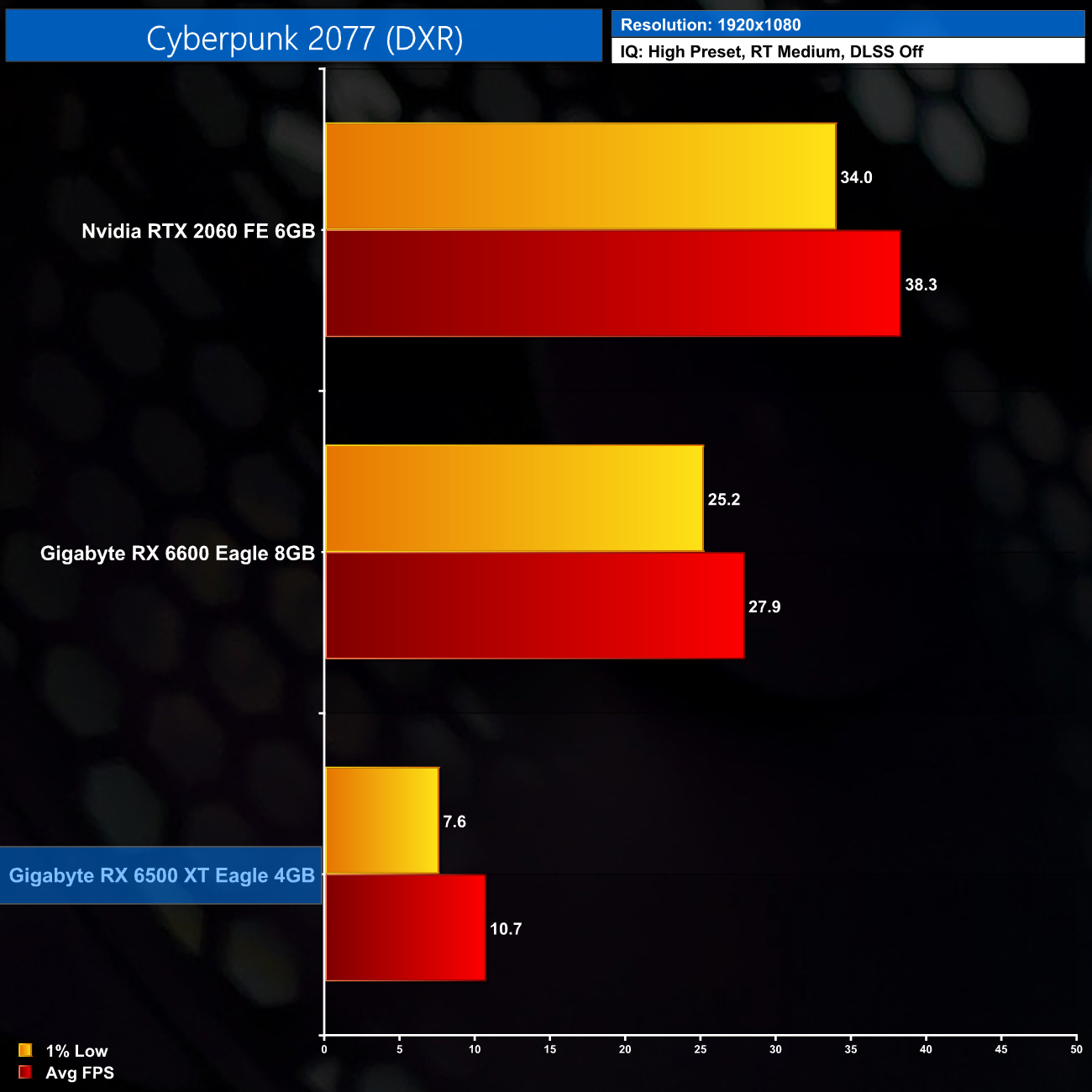
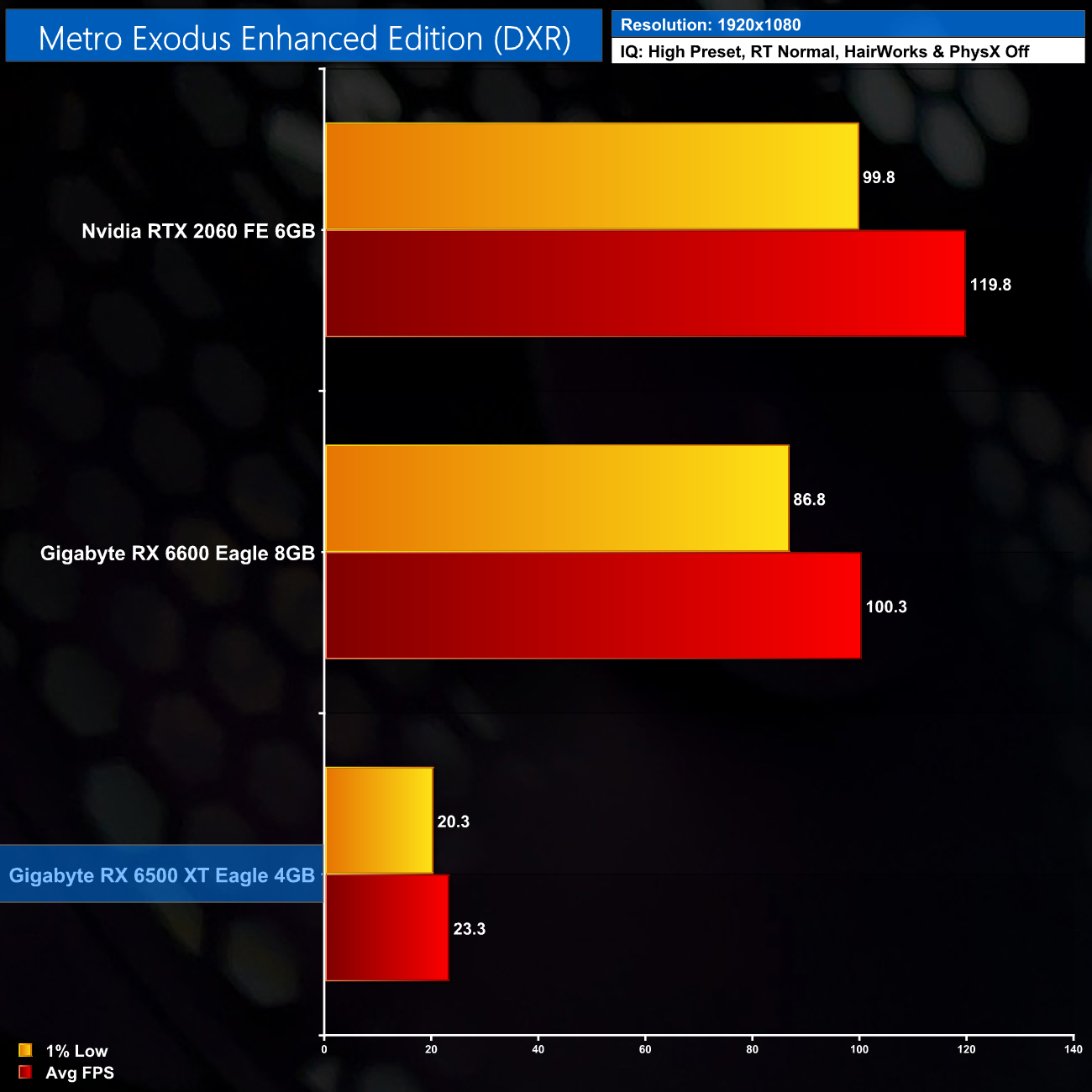
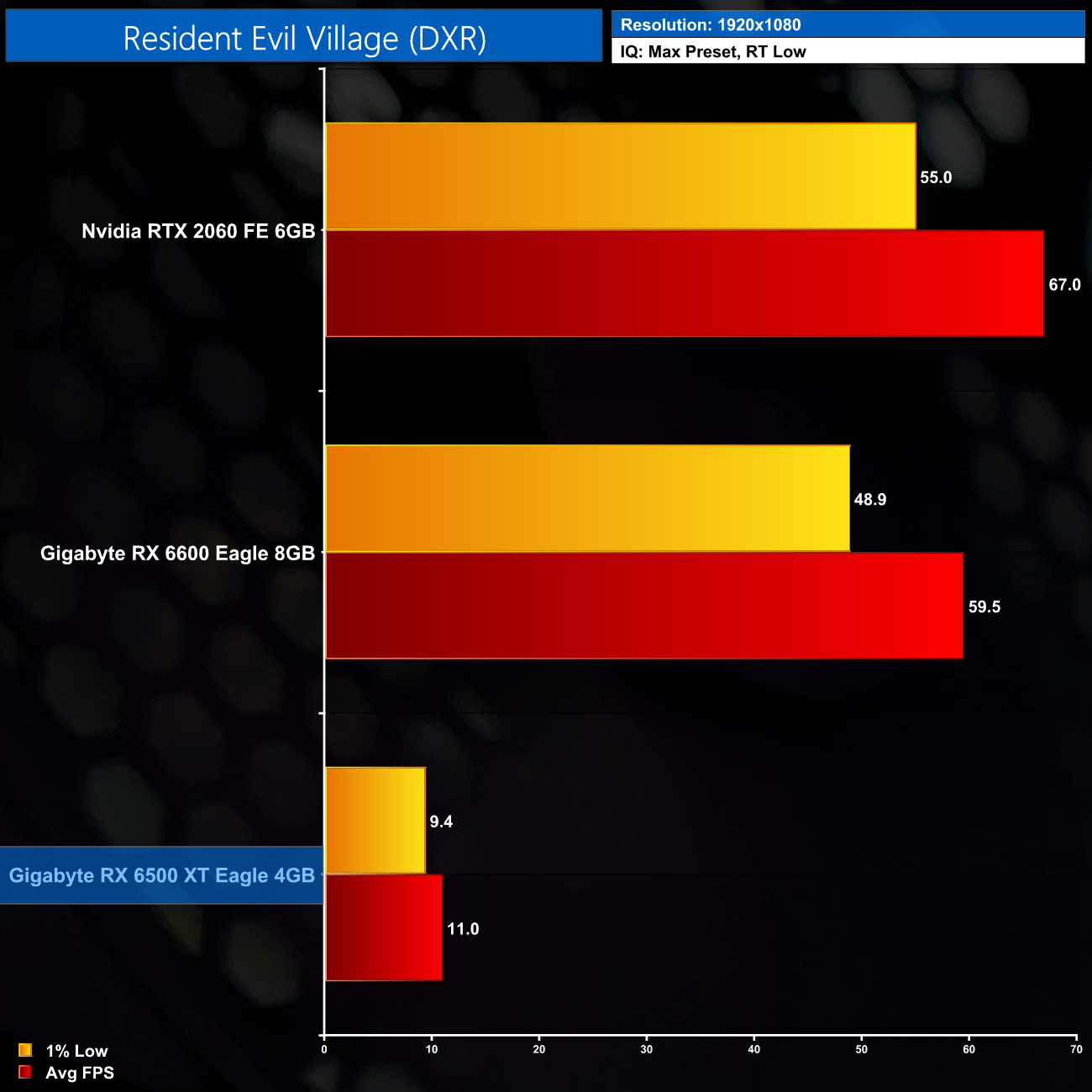
As we can see, even with such low ray tracing settings, we could not get a playable frame rate from the RX 6500 XT with RT enabled. We know AMD's overall ray tracing support isn't as strong as Nvidia's, but also ray tracing is very VRAM intensive too. I suspect that such low performance is a combination of the two, with 4GB VRAM really struggling here.
Using the average frame rate data presented earlier in the review, here we look at the cost per frame using the USD ($) MSRP launch prices for each GPU.
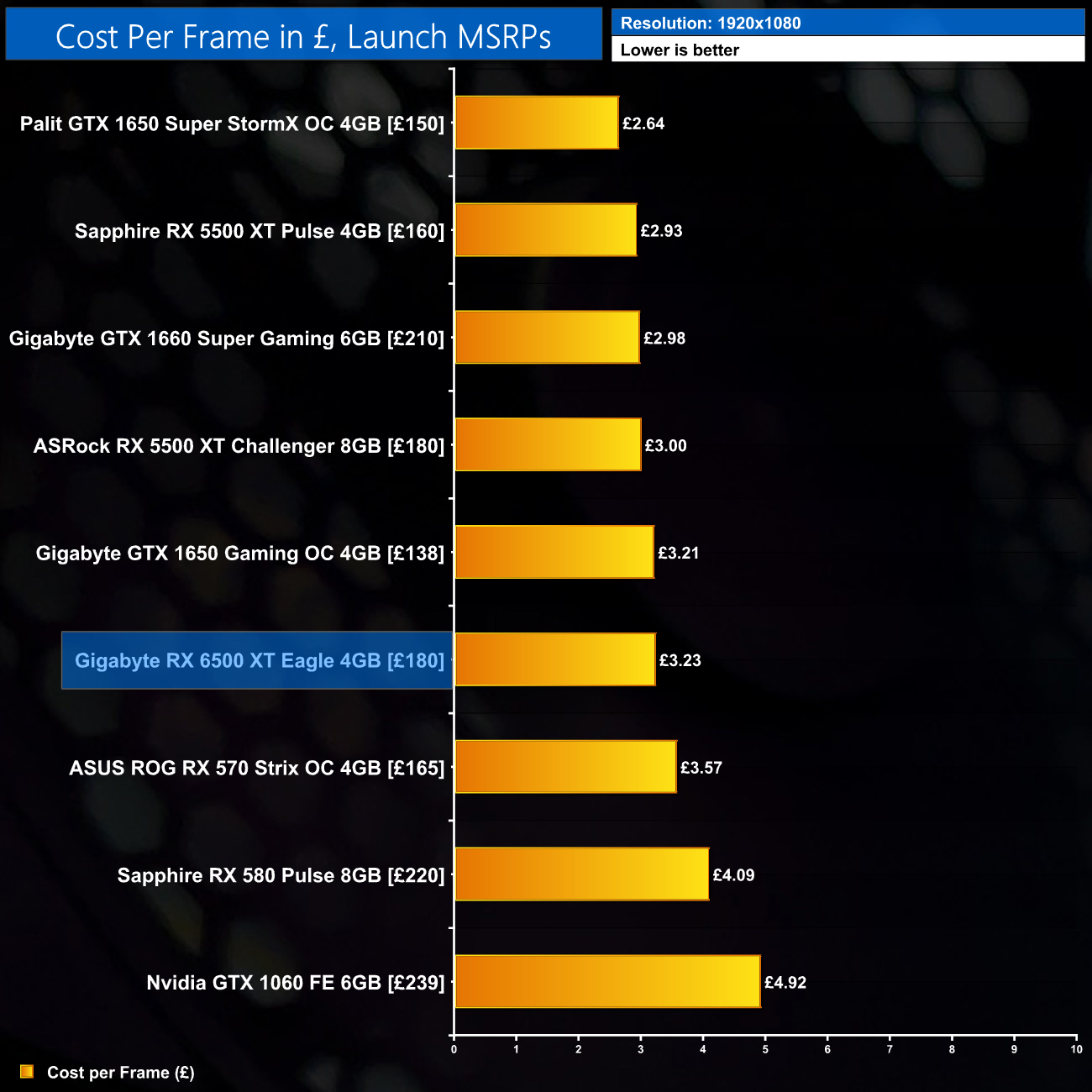
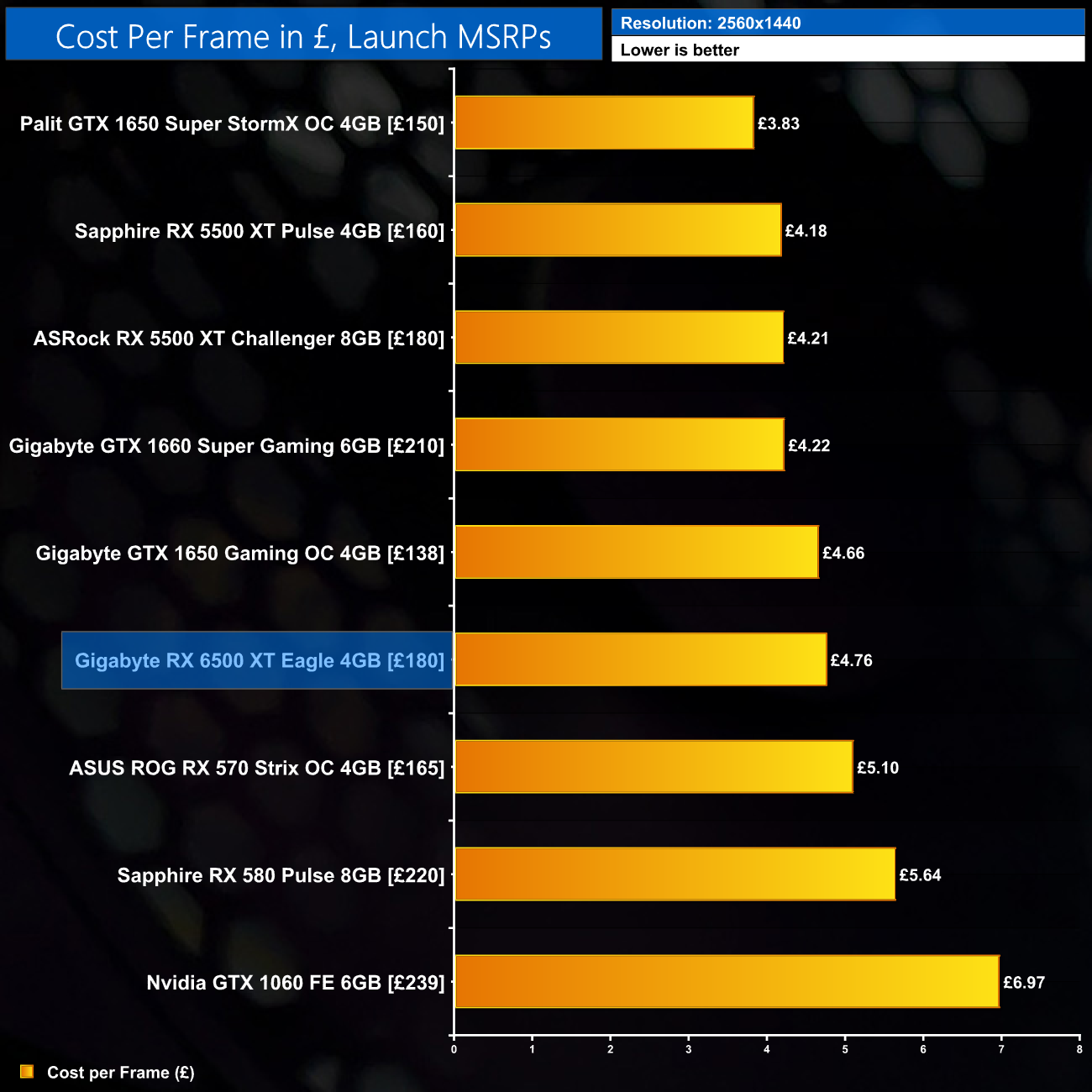
For a quick look at cost per frame, these values are calculated with launch MSRPs, so their usefulness is mainly ‘academic' at this point. We've already seen rumours of the RX 6500 XT retailing for well over the $199 MSRP, but even taking that figure at face value it offers worse value than the GTX 1650, GTX 1650 Super, GTX 1660 Super, RX 5500 XT 4GB and RX 5500 XT 8GB…
Here we present the average clock speed for each graphics card while running Cyberpunk 2077 for 30 minutes. We use GPU-Z to record the GPU core frequency during gameplay. We calculate the average core frequency during the 30 minute run to present here.
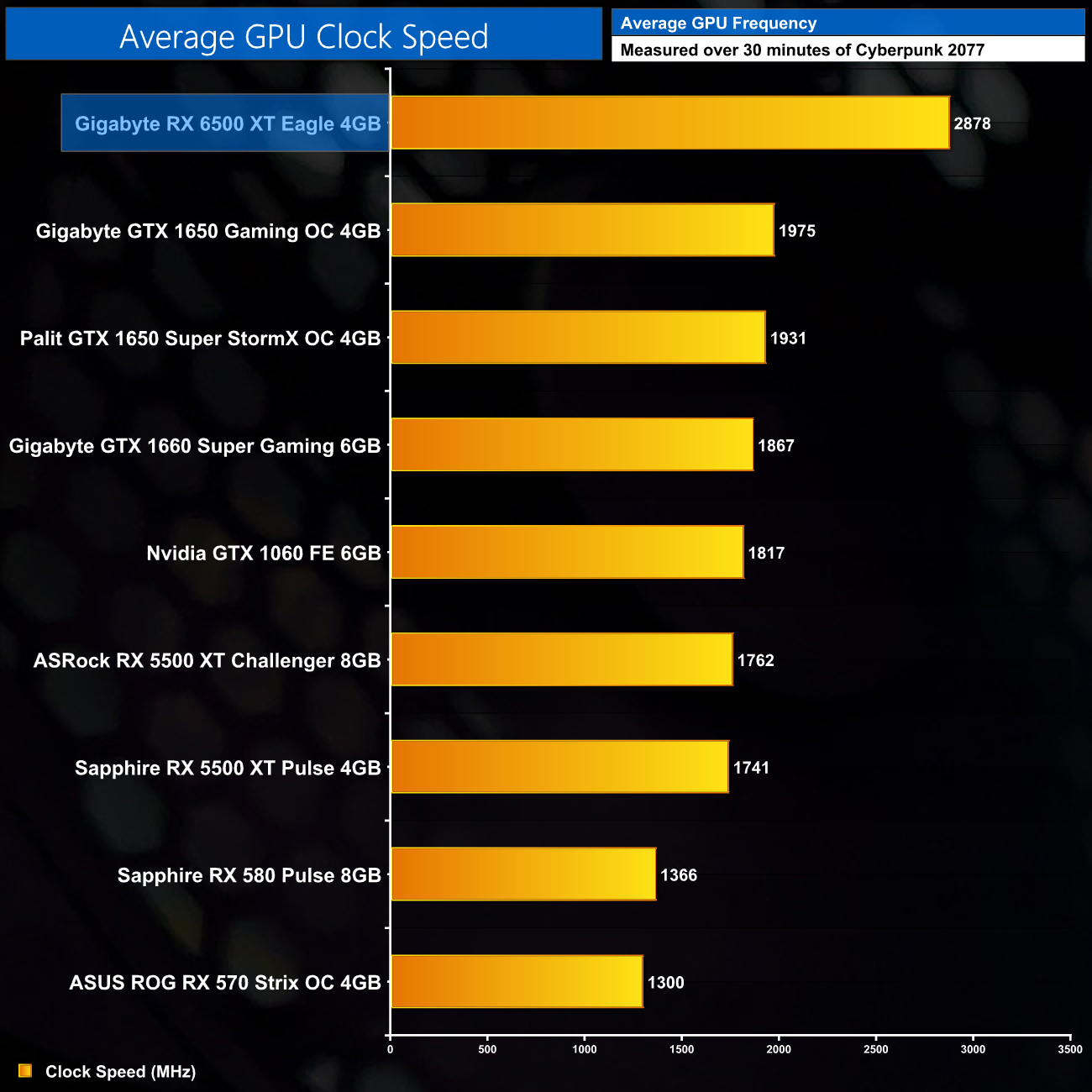
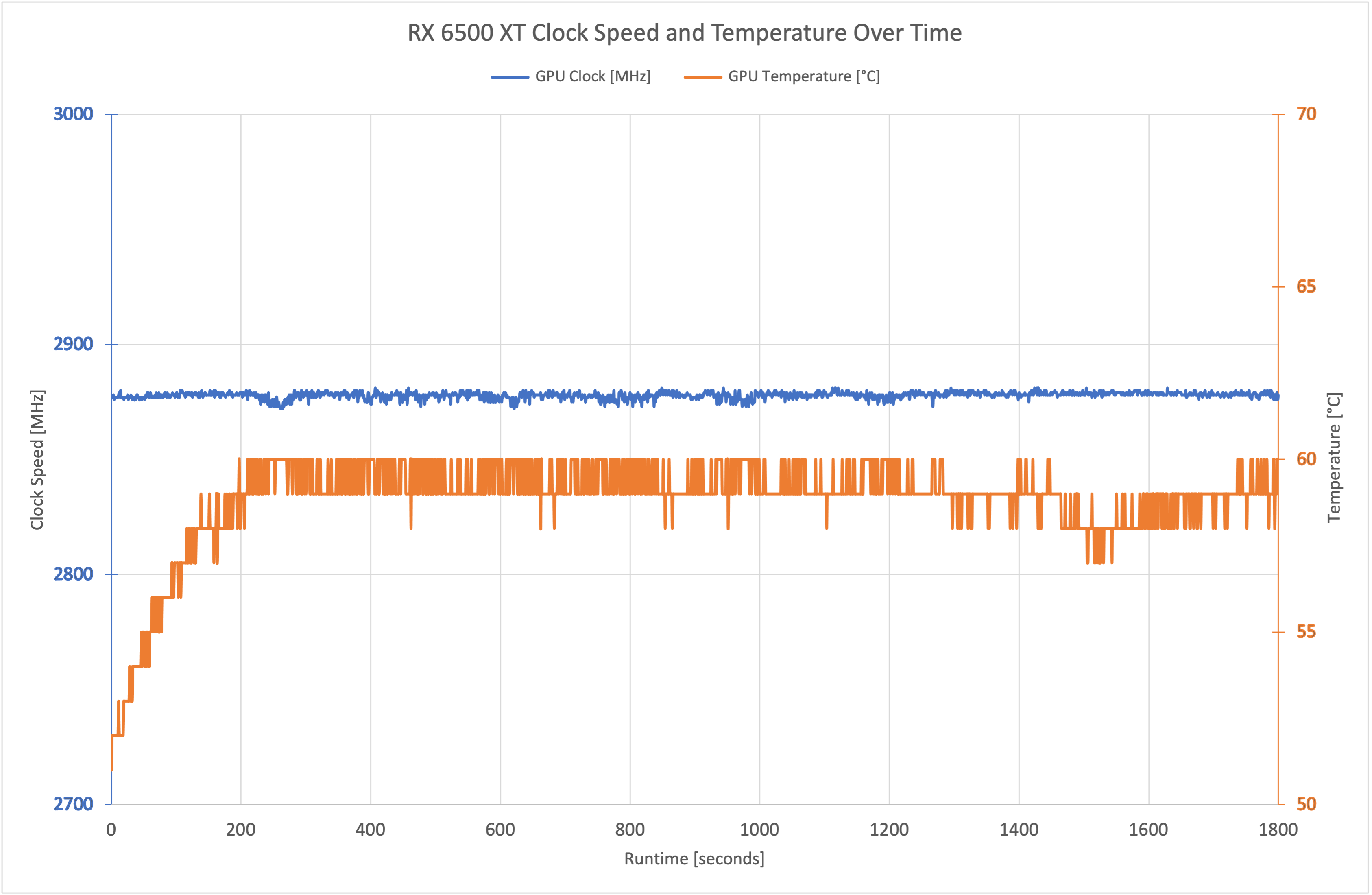
Moving onto our technical tests, one area of note for the RX 6500 XT is its very high clock speeds. The Gigabyte RX 6500 XT Eagle that we tested did very well here, offering incredibly stable clock speeds – it averaged 2878MHz over our 30-minute stress test, with absolutely minimal fluctuation in frequency, as can be seen above.
For our temperature testing, we measure the peak GPU core temperature under load. A reading under load comes from running Cyberpunk 2077 for 30 minutes.
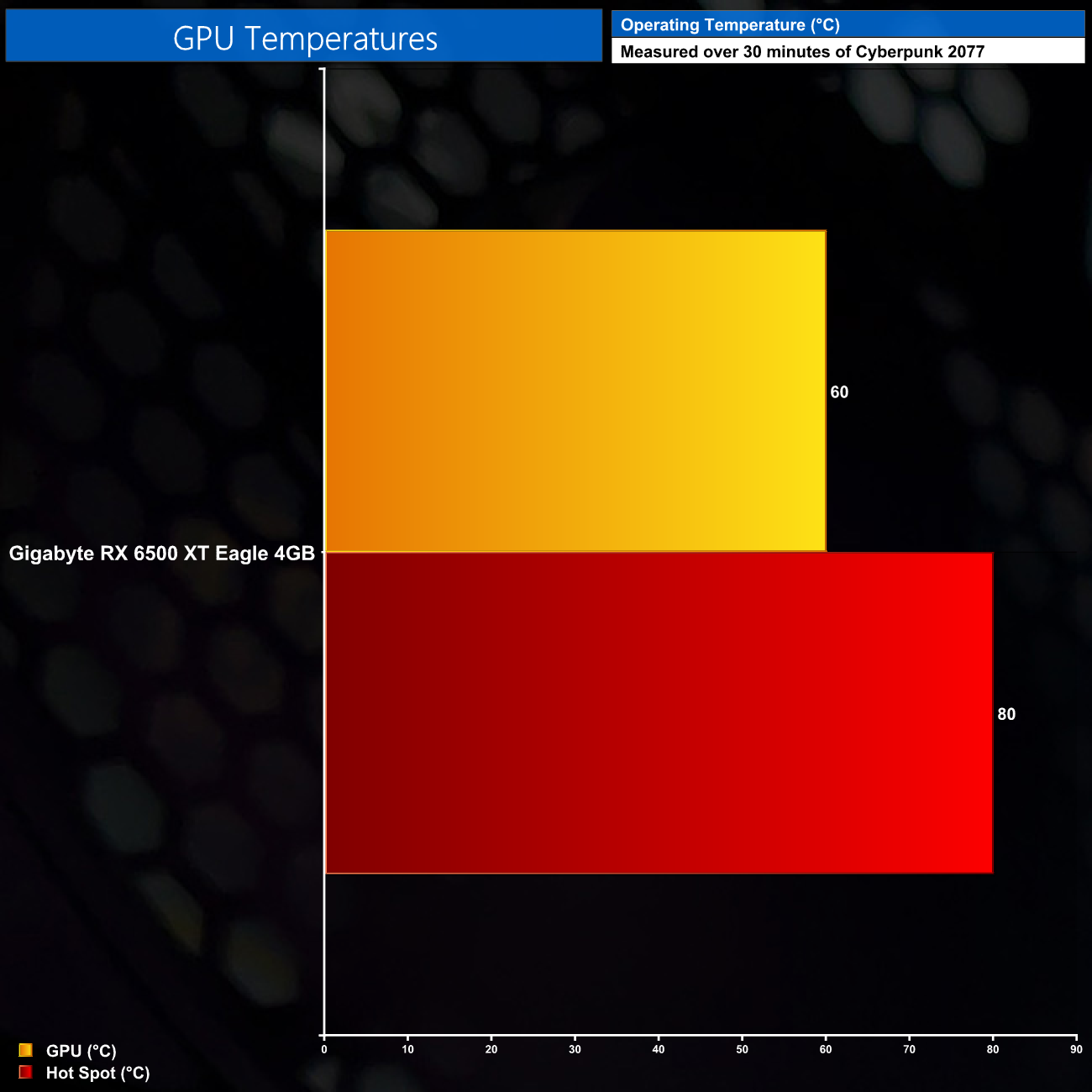
We've only tested the one RX 6500 XT model, but we can't complain at all about the Eagle's thermal performance – the GPU peaked at just 60C, with the hot spot at 80C.
We take our noise measurements with the sound meter positioned 1 foot from the graphics card. I measured the noise floor to be 32 dBA, thus anything above this level can be attributed to the graphics cards. The power supply is passive for the entire power output range we tested all graphics cards in, while all CPU and system fans were disabled. A reading under load comes from running Cyberpunk 2077 for 30 minutes.
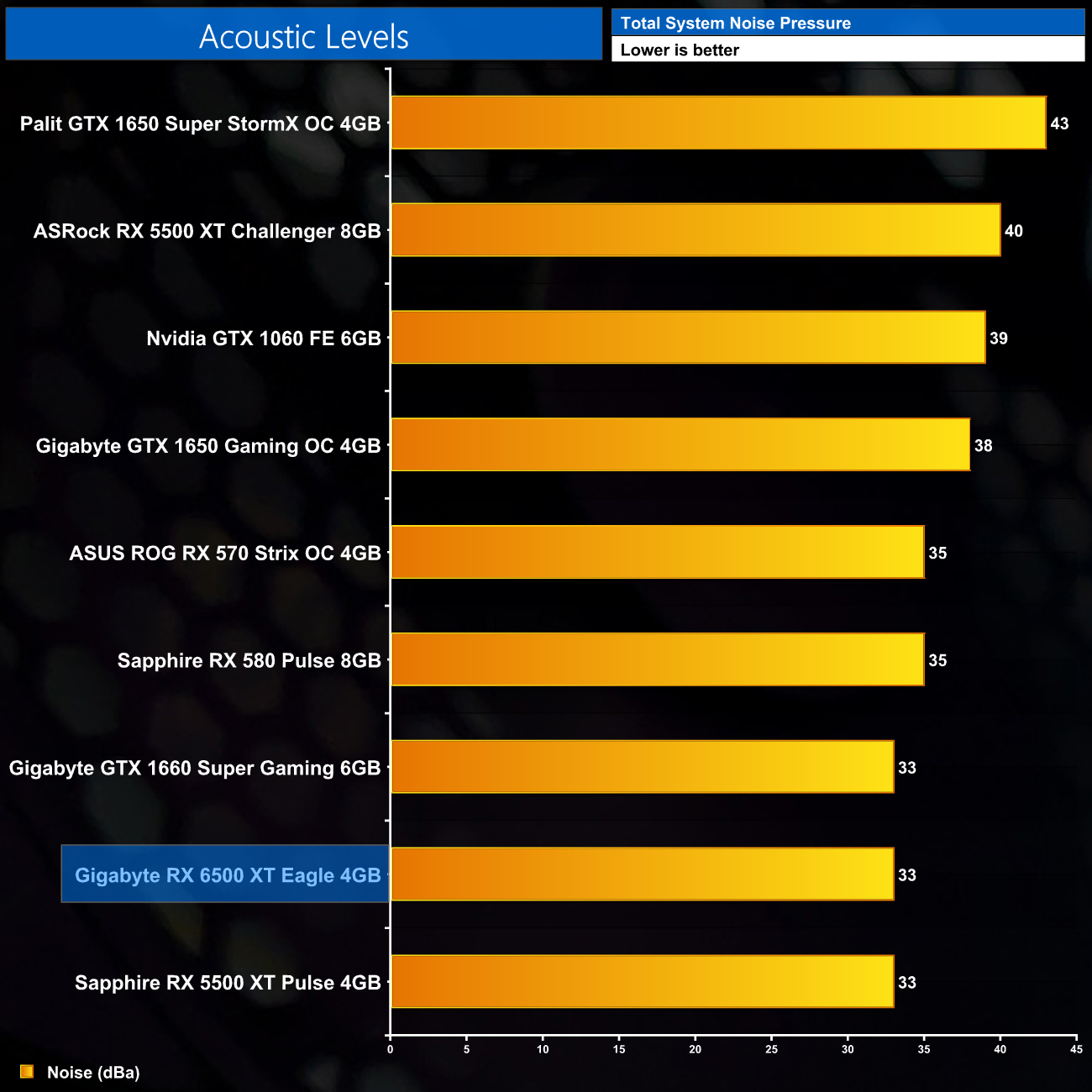
Overall noise from the Eagle proved very innocuous. The fans spun at just 36%, or 1280rpm, making it whisper quiet – I could only really hear the card when I pressed my ear right up against the side of the case.
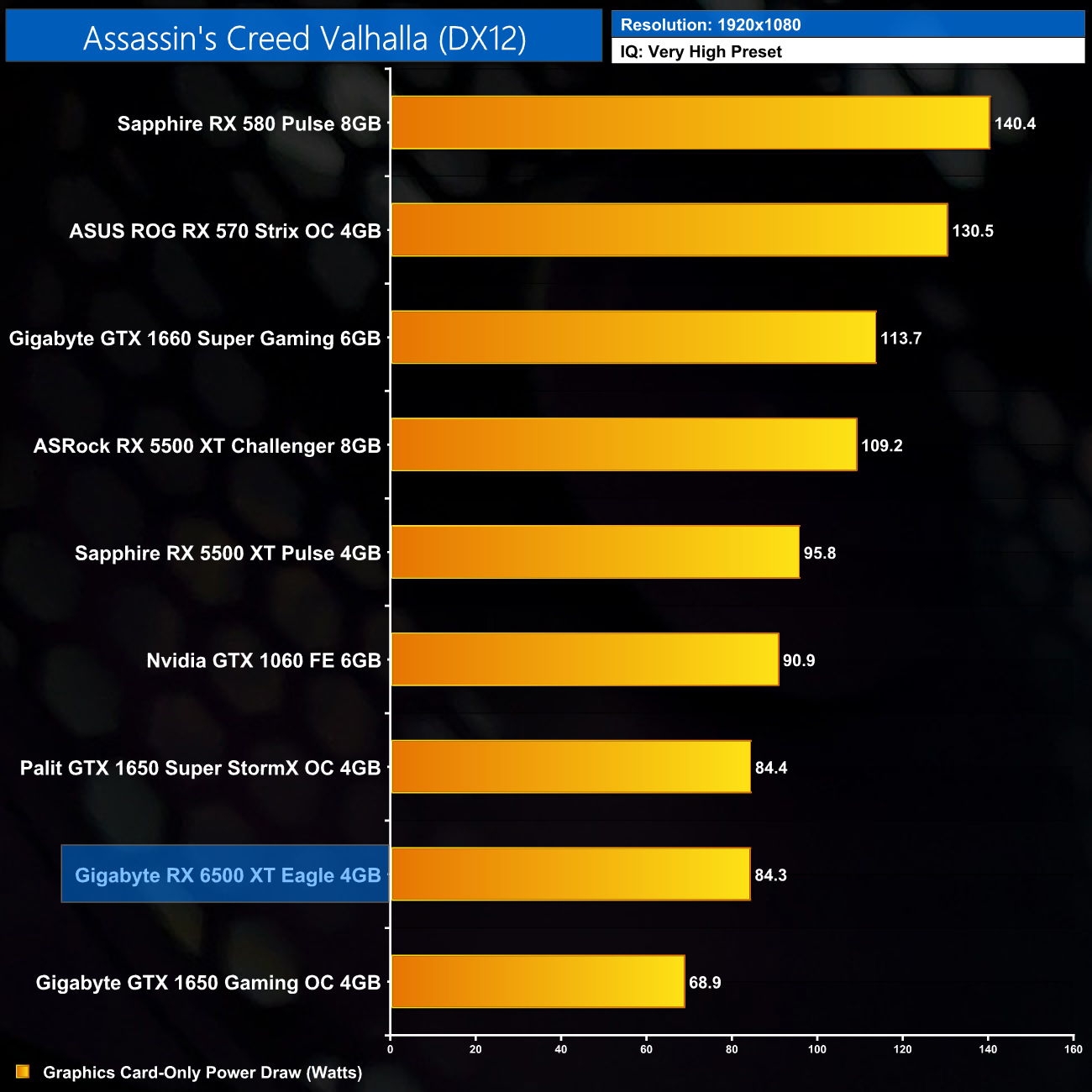
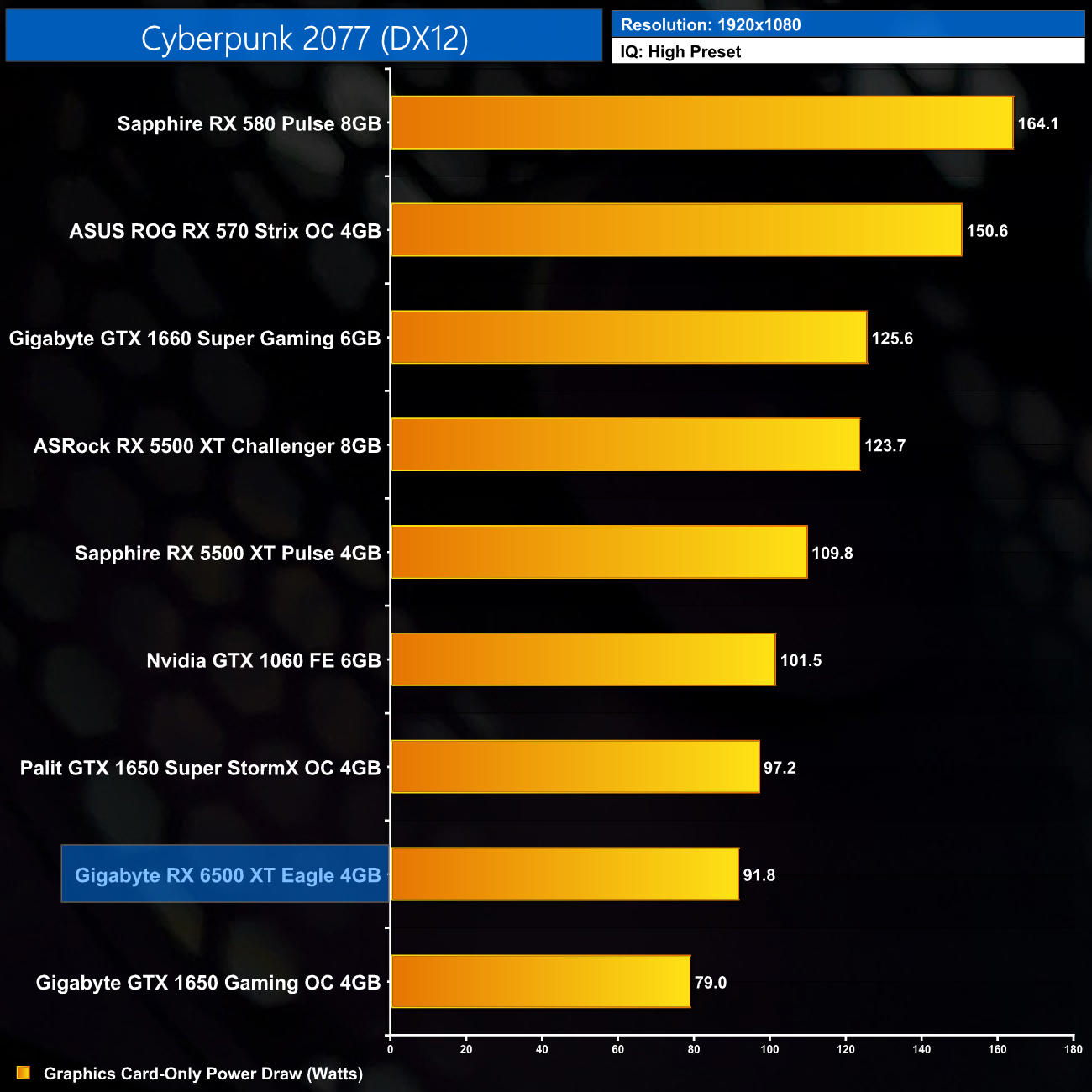
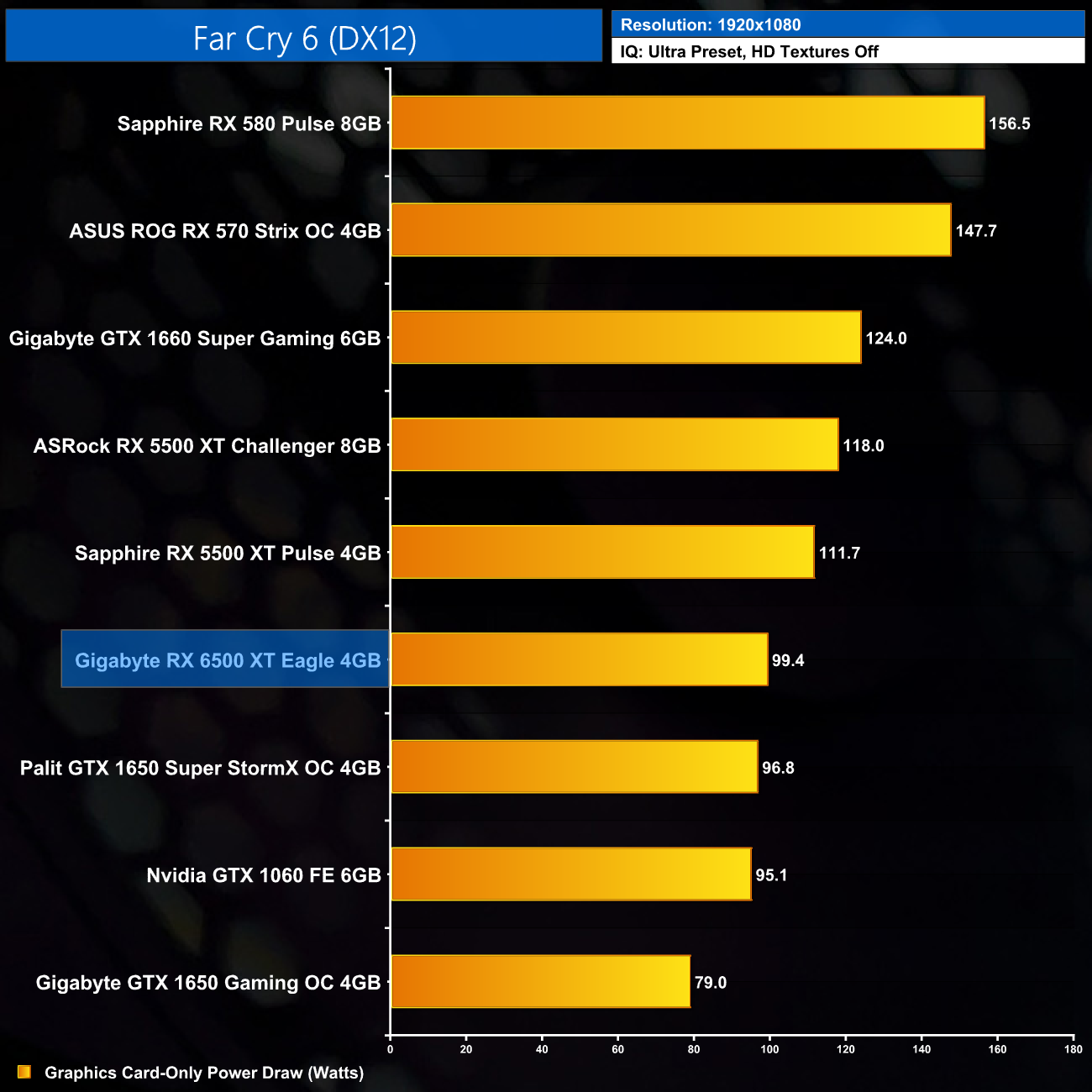
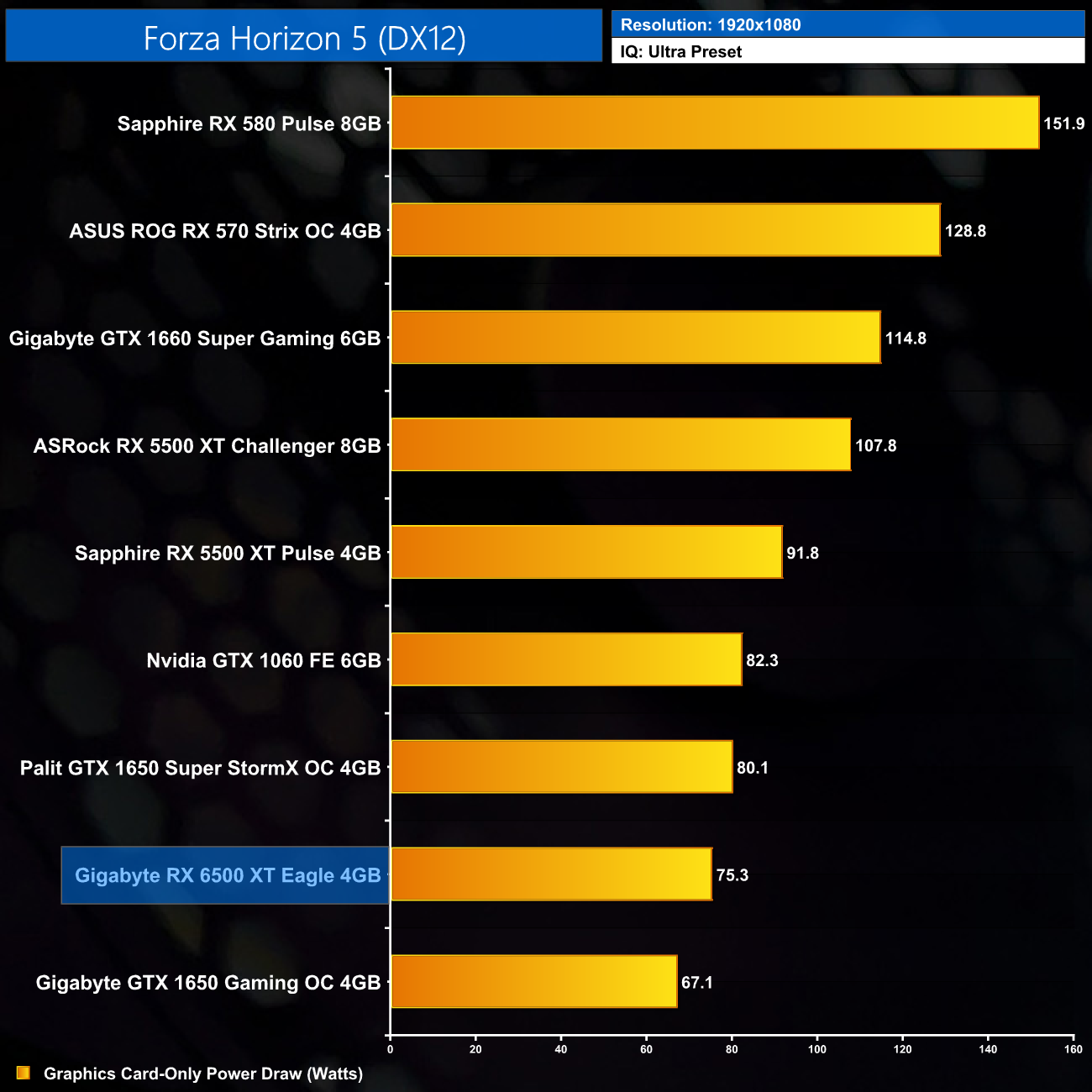
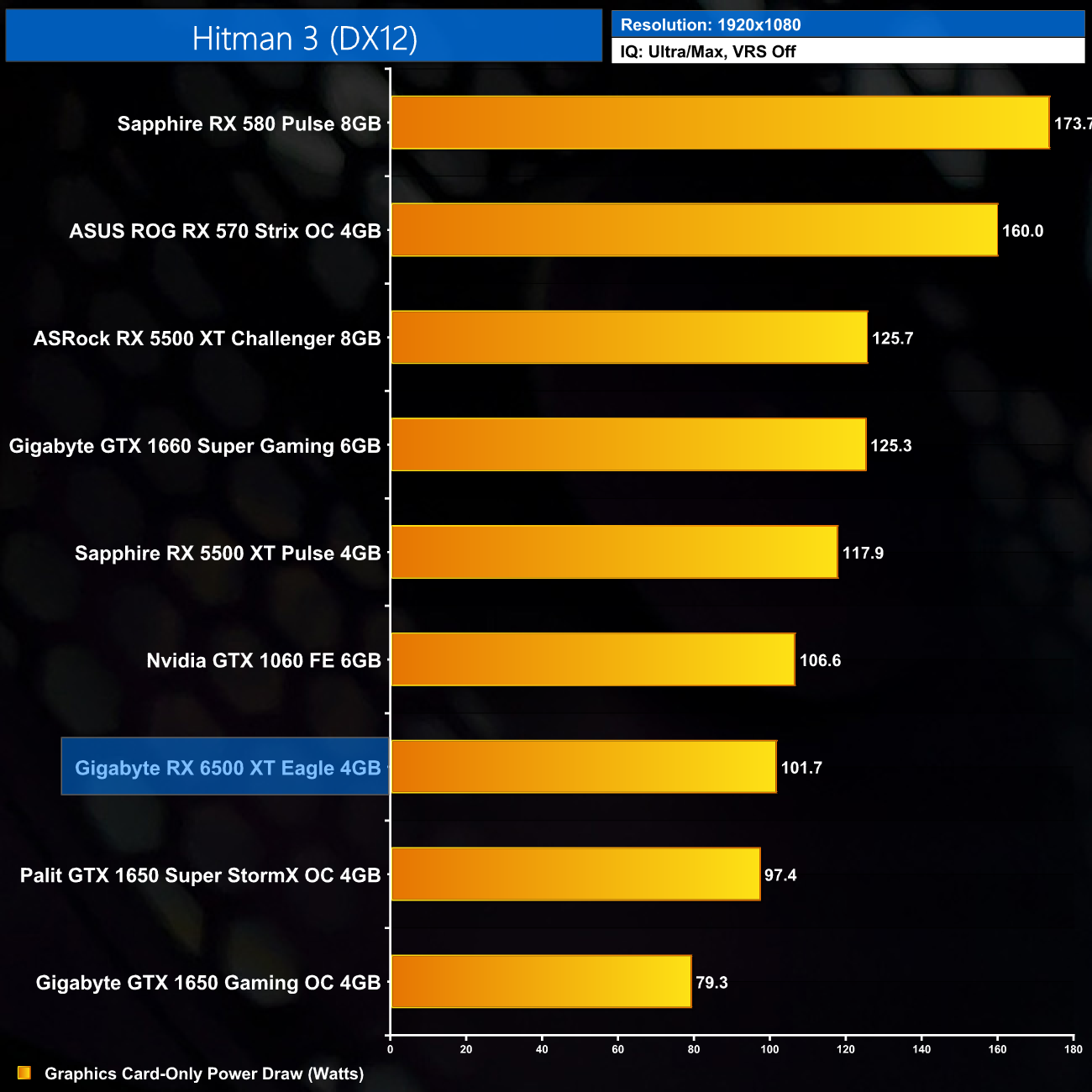
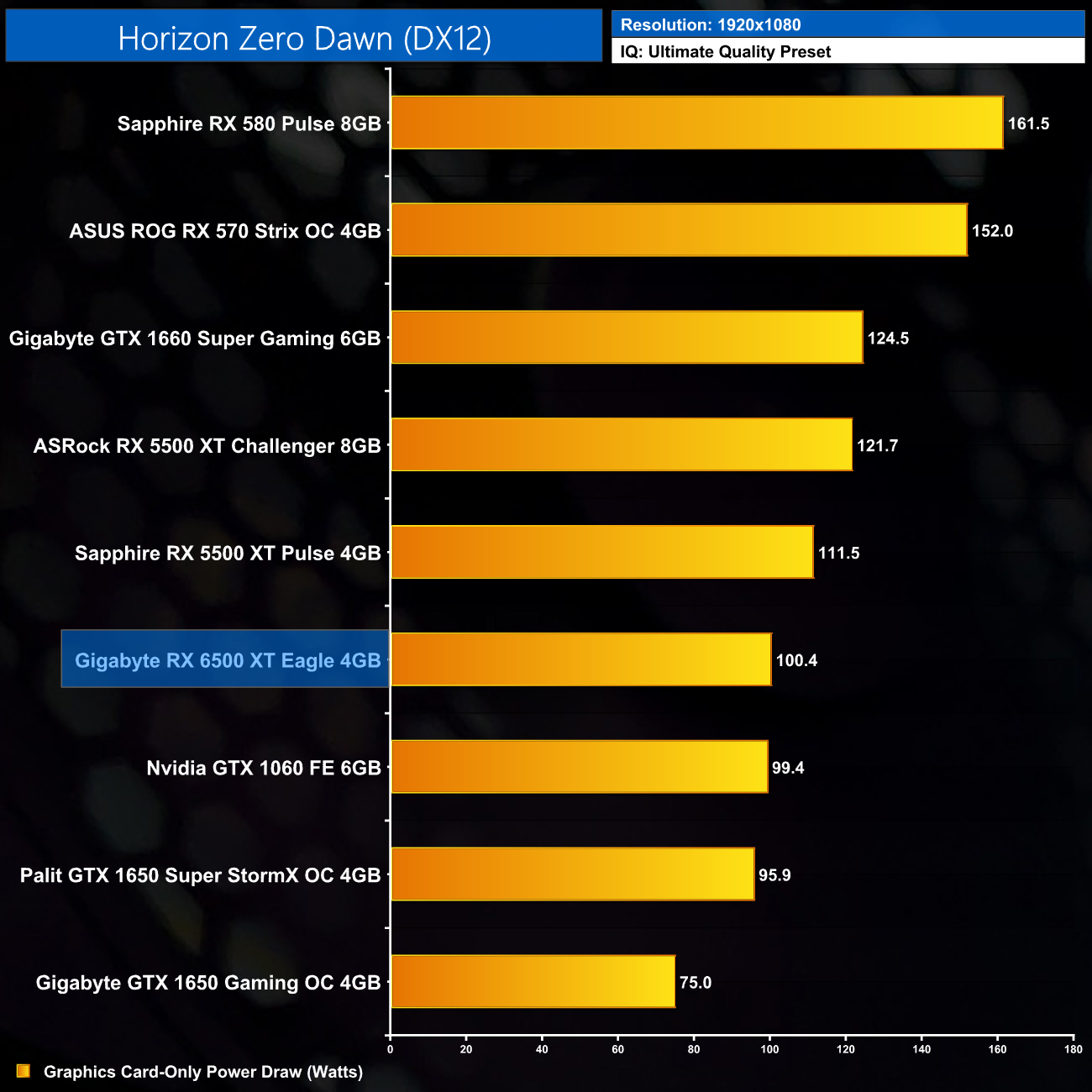
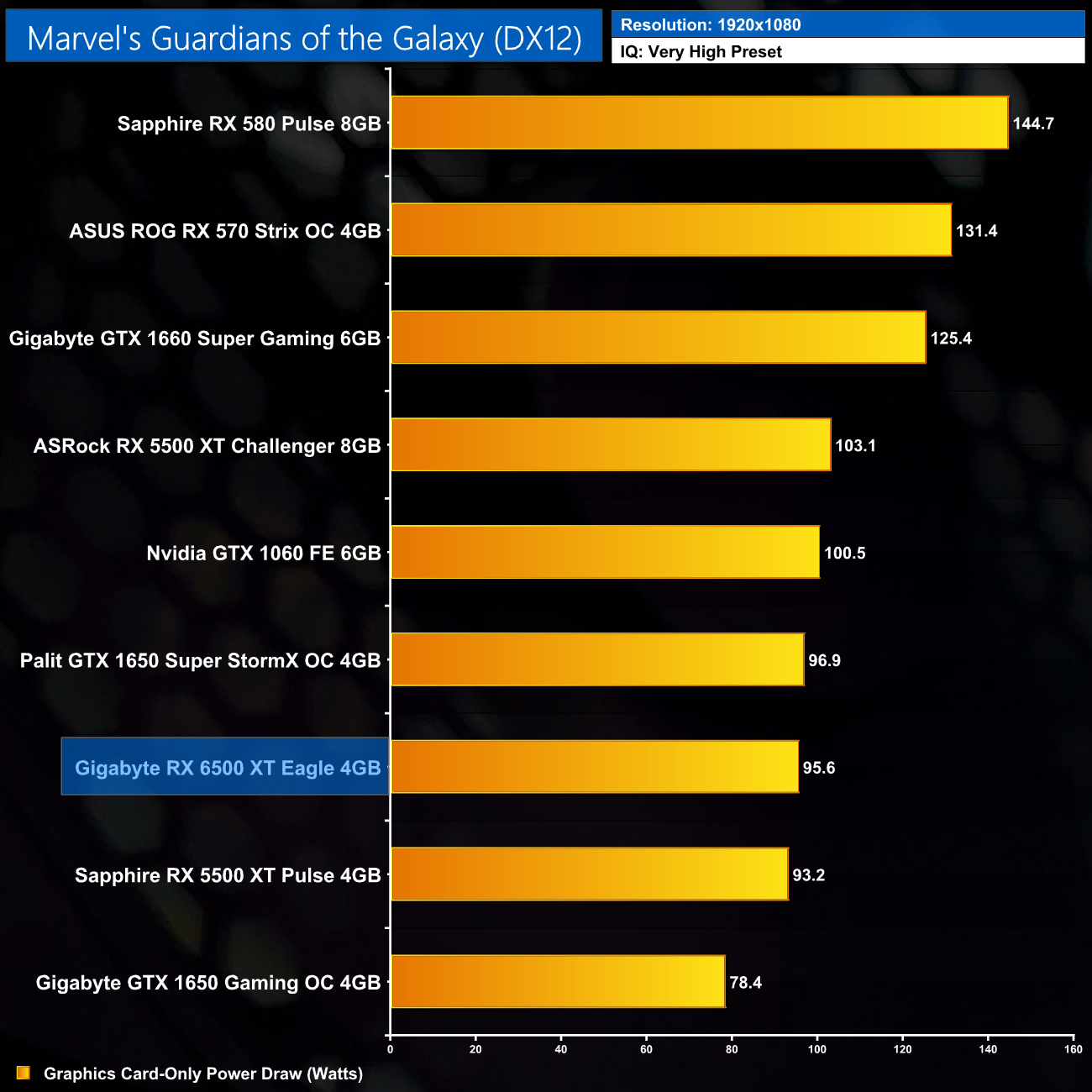
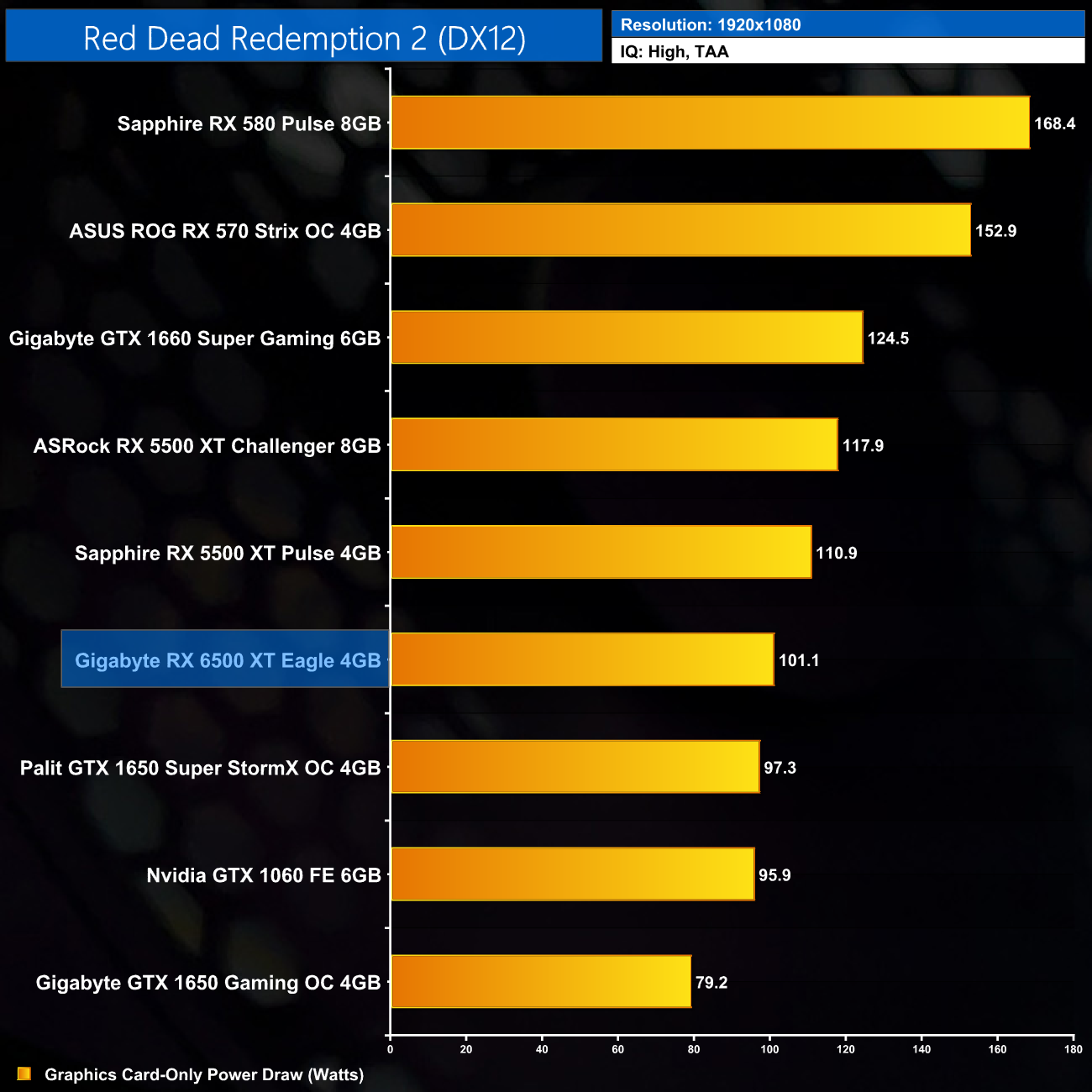
Here we present power draw figures for the graphics card-only, on a per-game basis for all twelve games we tested at 1080p. This is measured using Nvidia's Power Capture Analysis Tool, also known as PCAT. You can read more about our updated power draw testing methodology HERE.
Per-Game Results at 1080p:

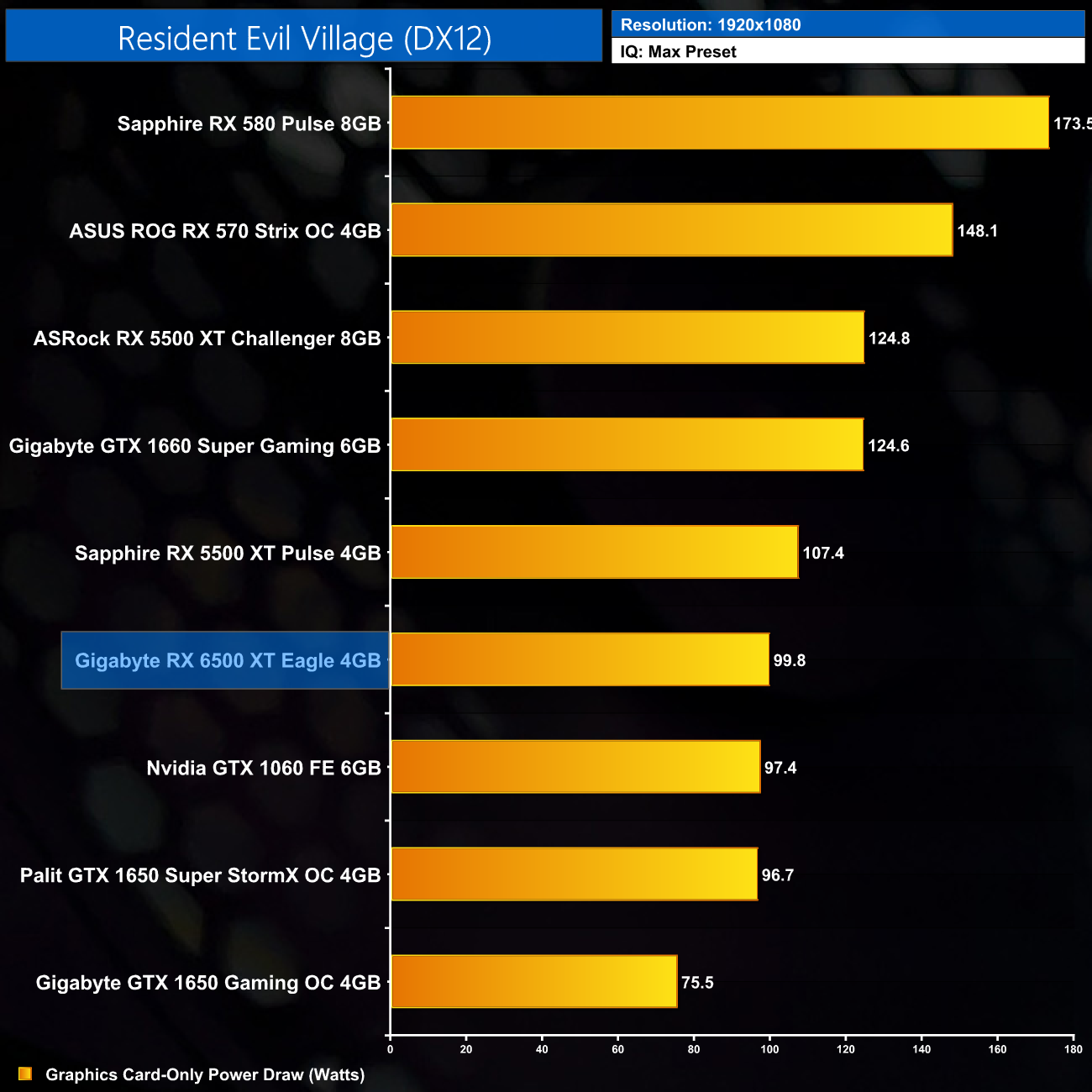
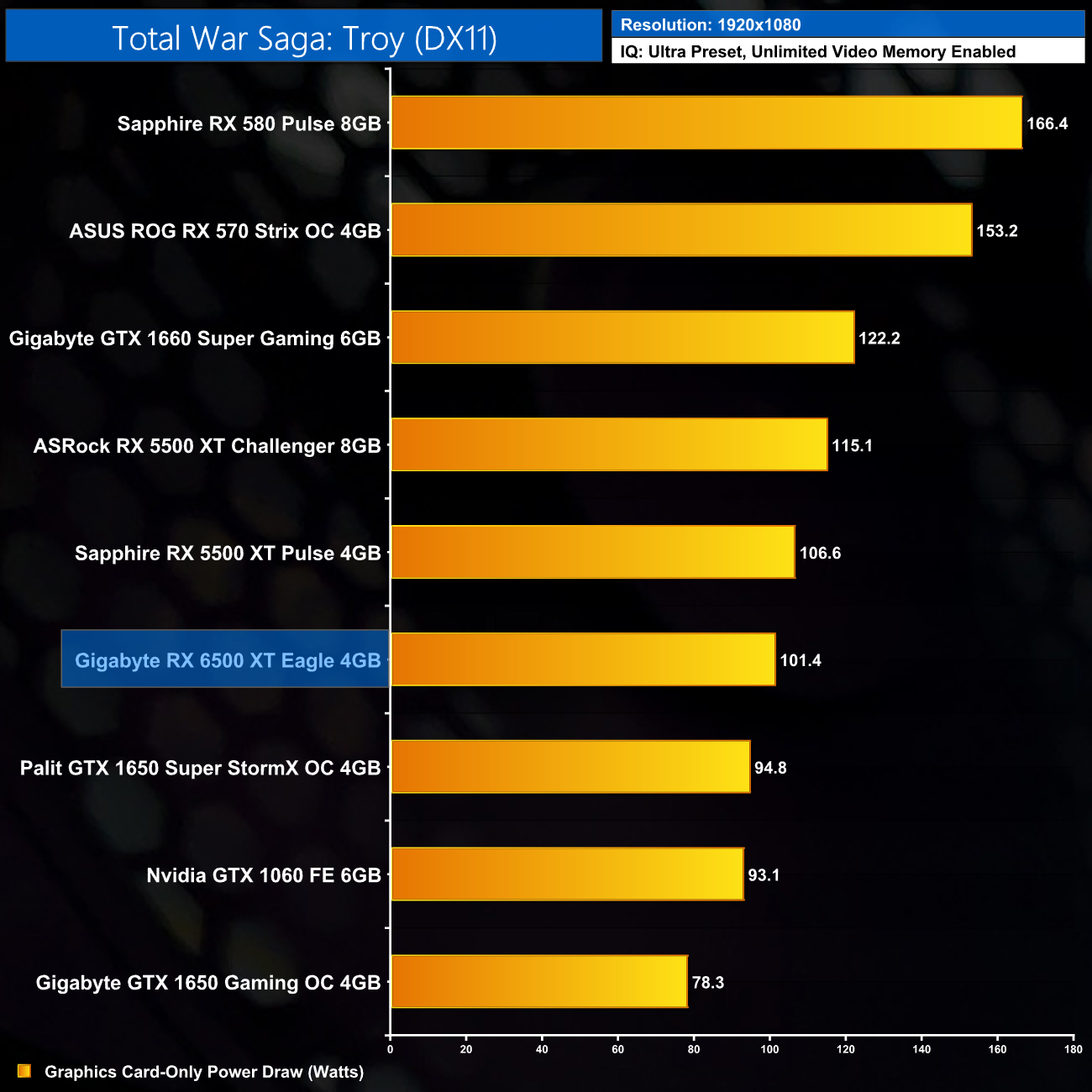
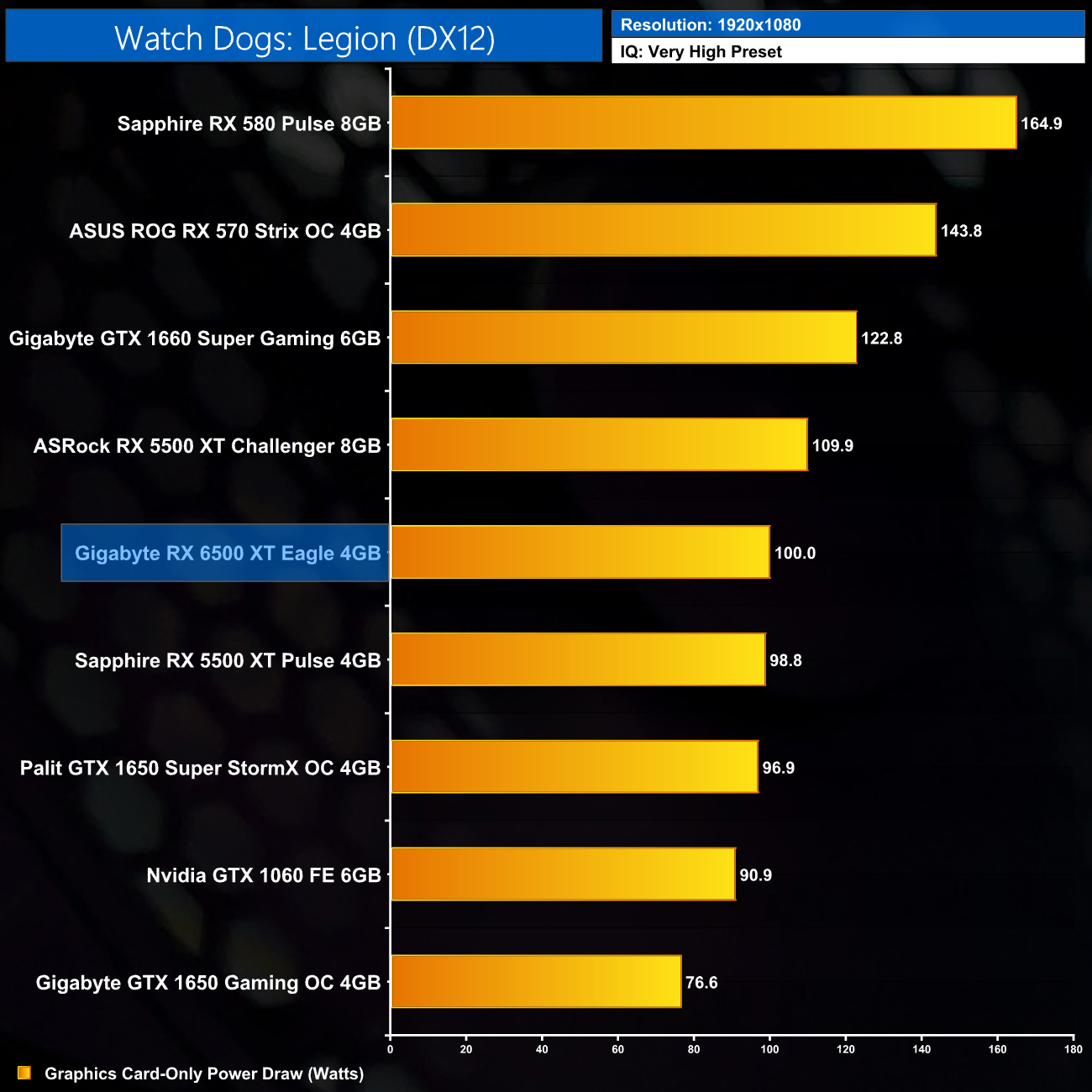
Click to enlarge.
12-Game Average at 1080p:
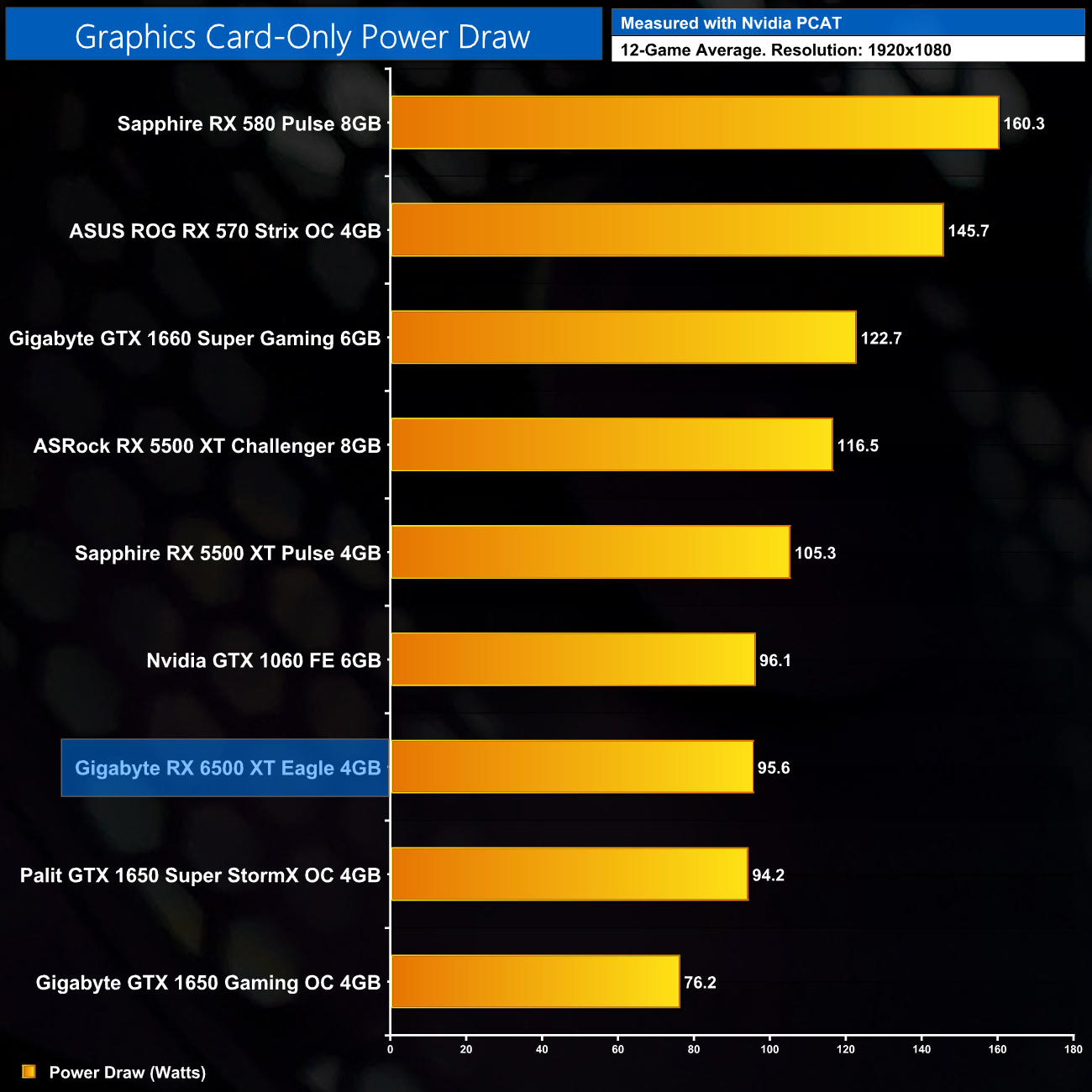
Power draw is low for the RX 6500 XT. It has a rated TBP of 107W, and we came close to that in a handful of games, but on average we saw the card draw just under 96 Watts at 1080p.
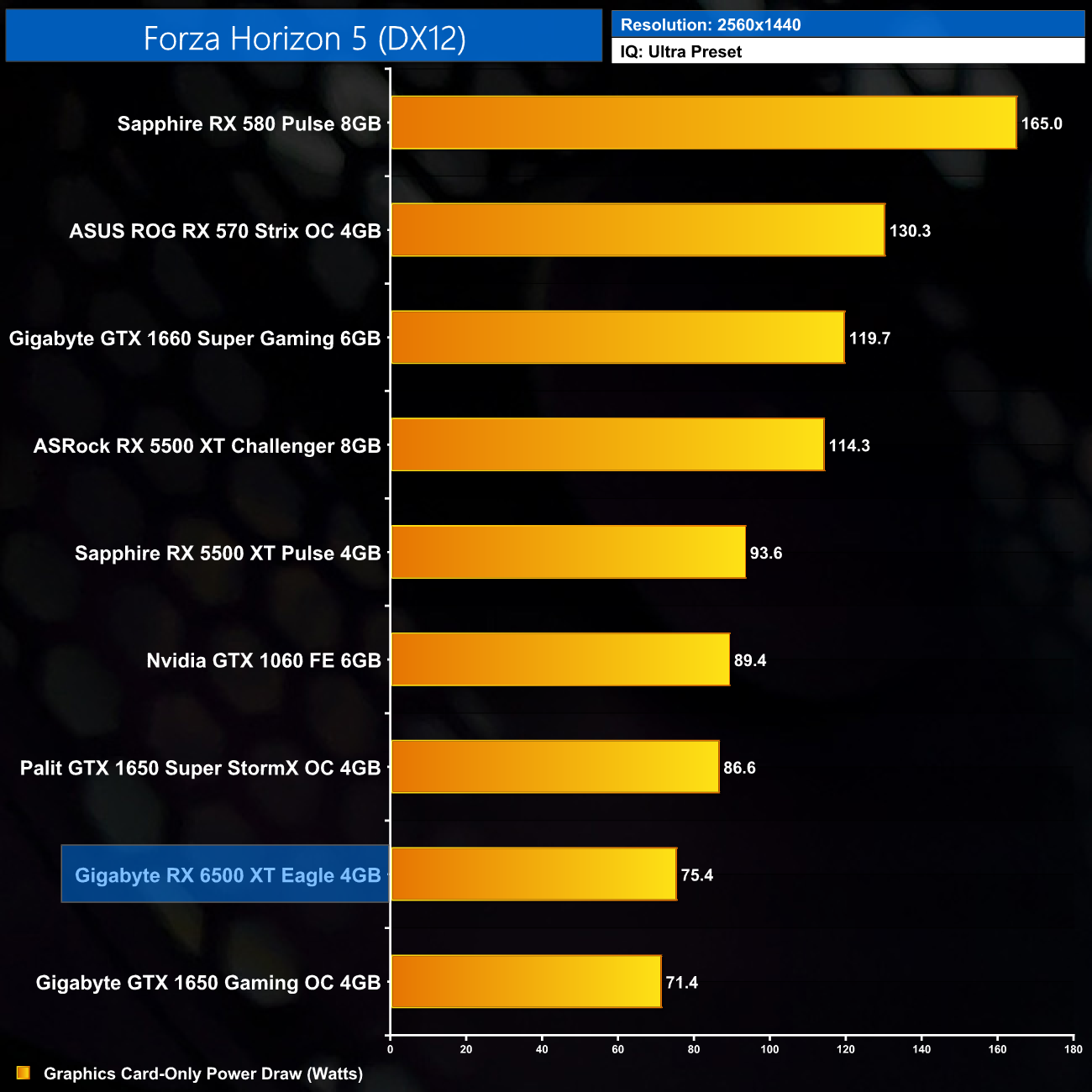
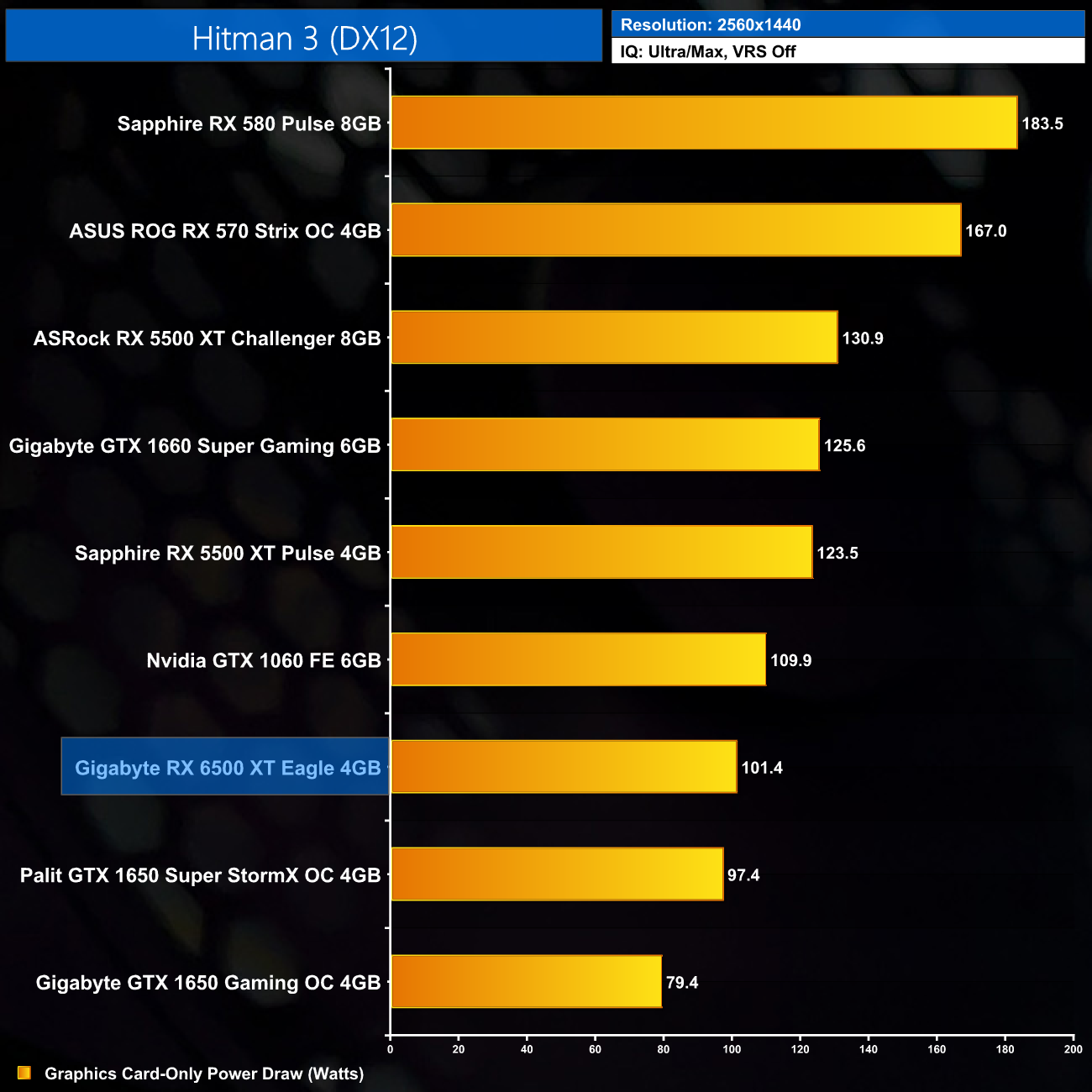
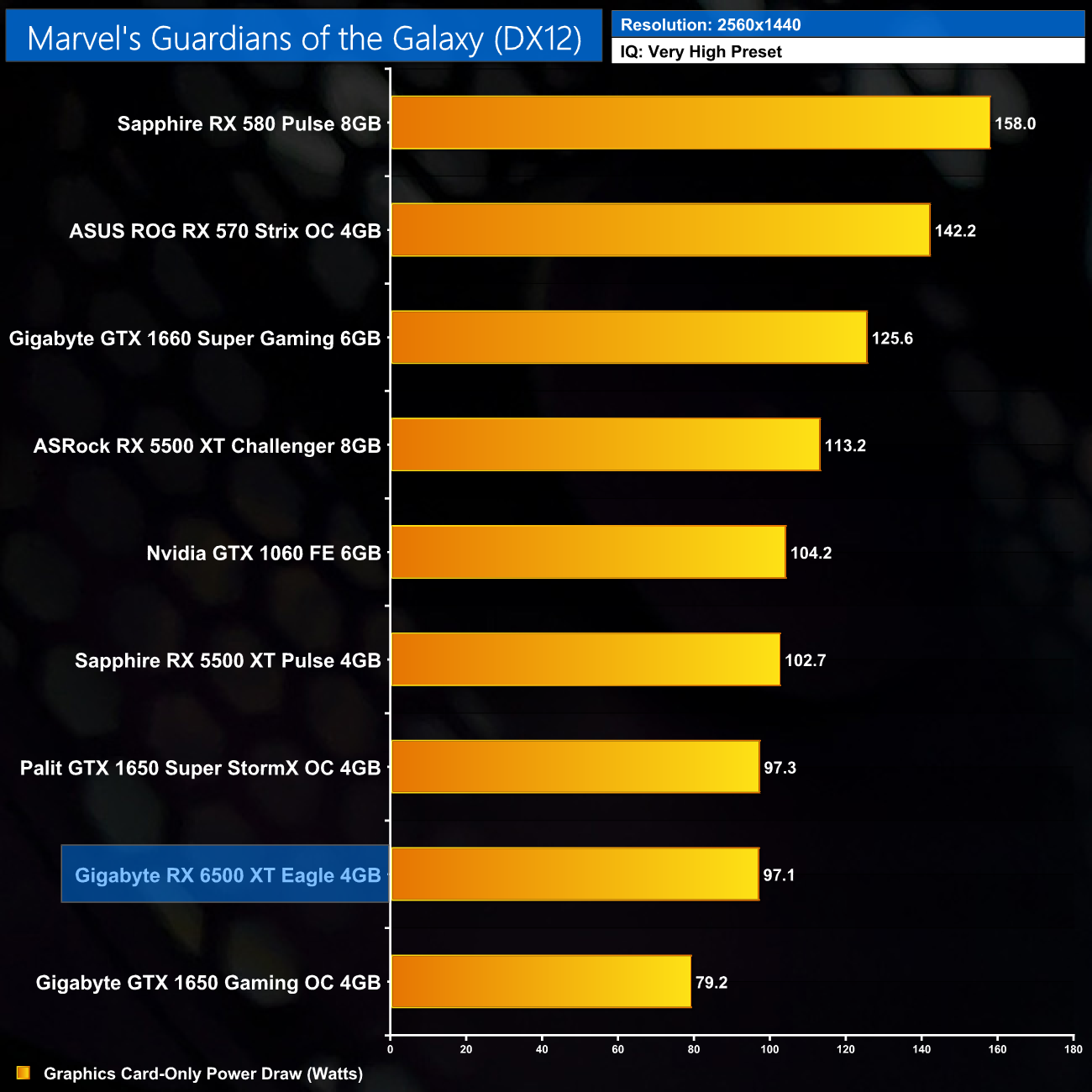
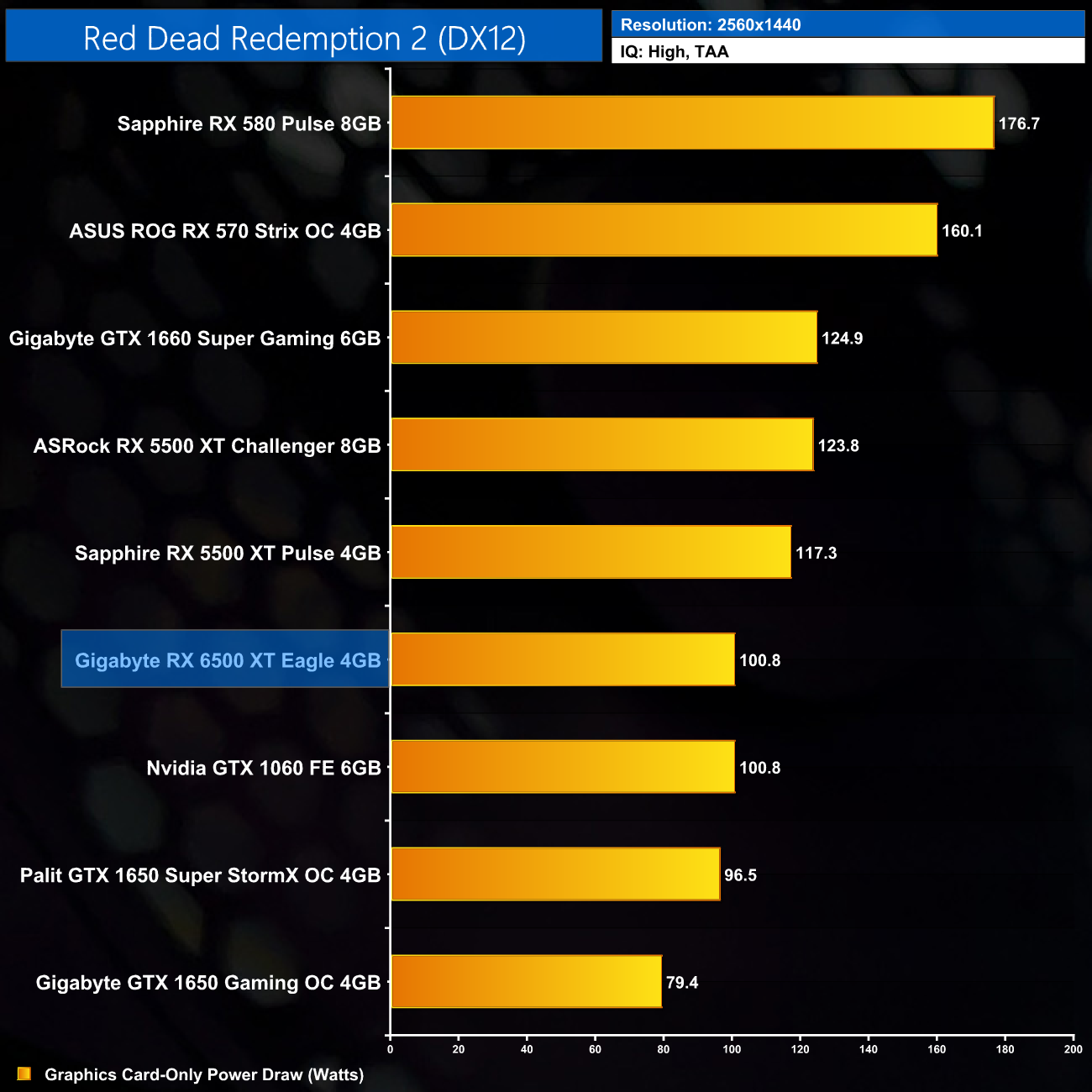
Here we present power draw figures for the graphics card-only, on a per-game basis for all twelve games we tested at 1440p. This is measured using Nvidia's Power Capture Analysis Tool, also known as PCAT. You can read more about our updated power draw testing methodology HERE.
Per-Game Results at 1440p:
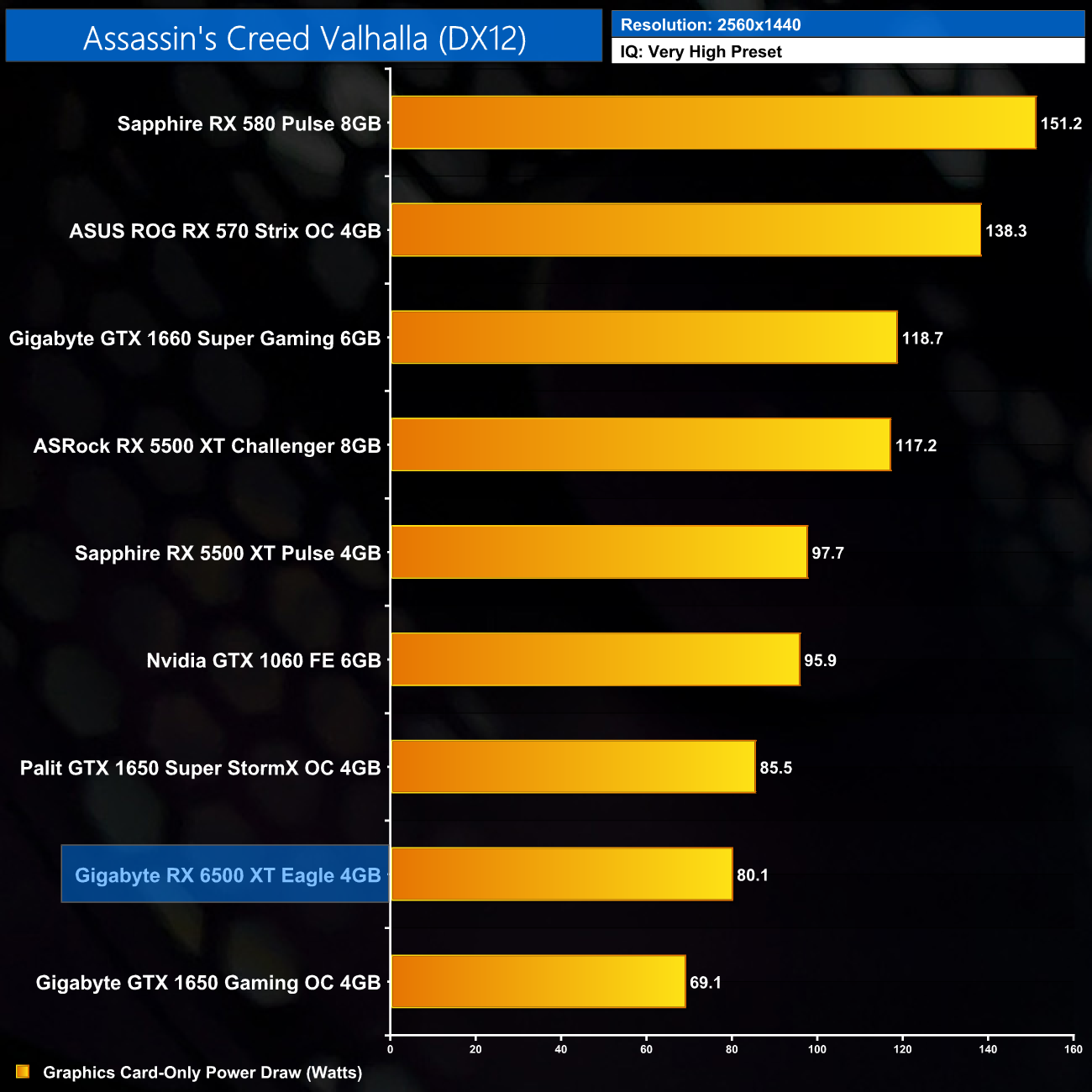
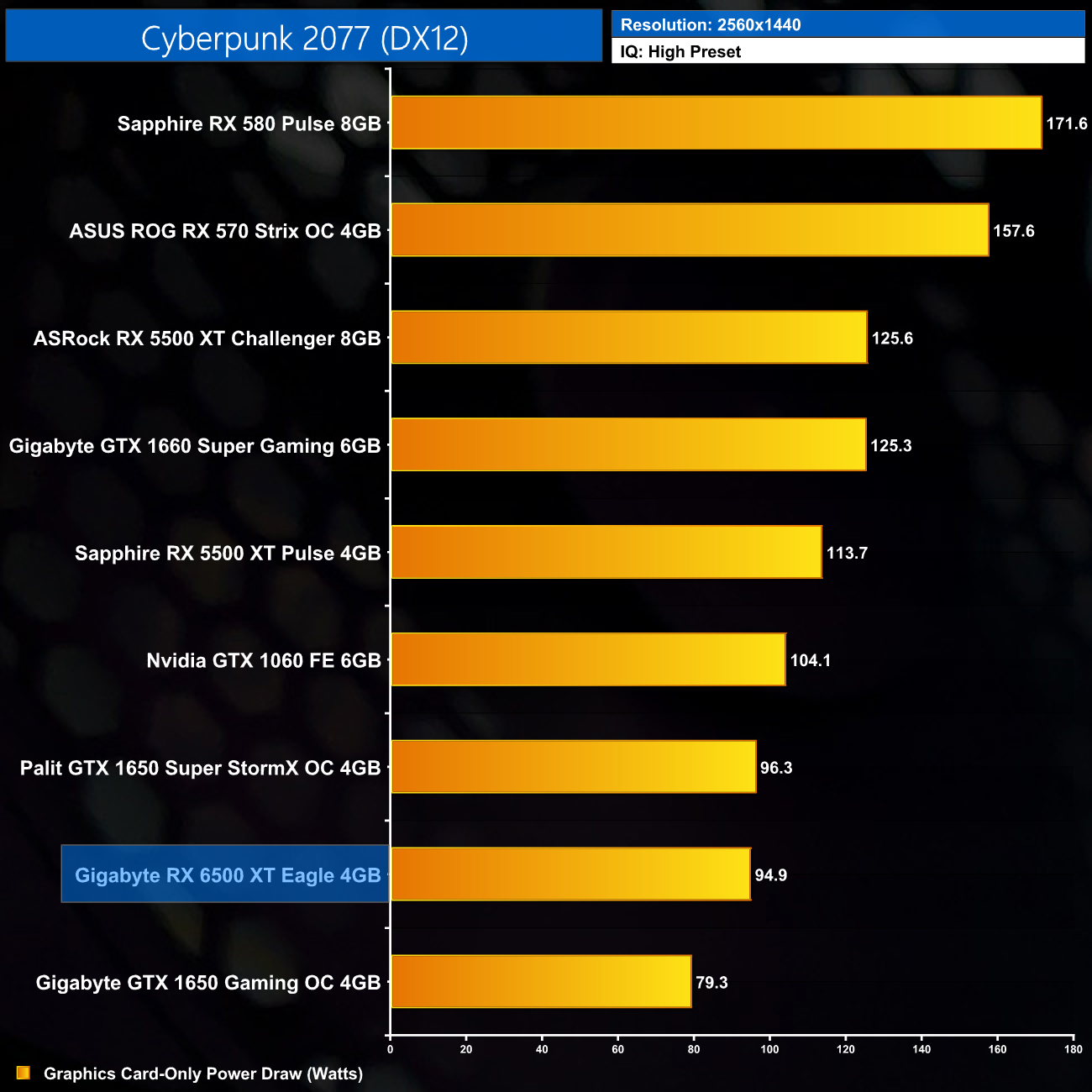
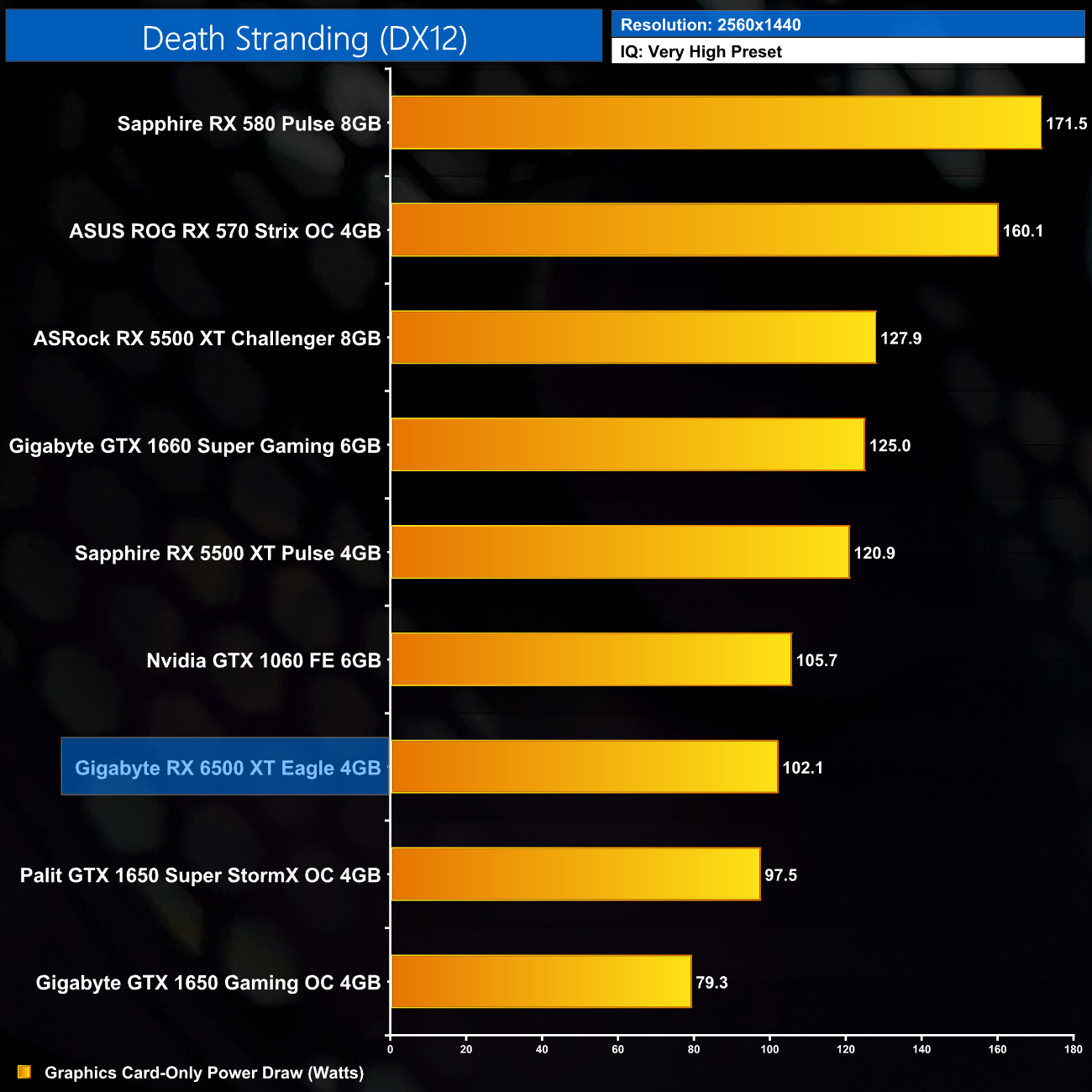
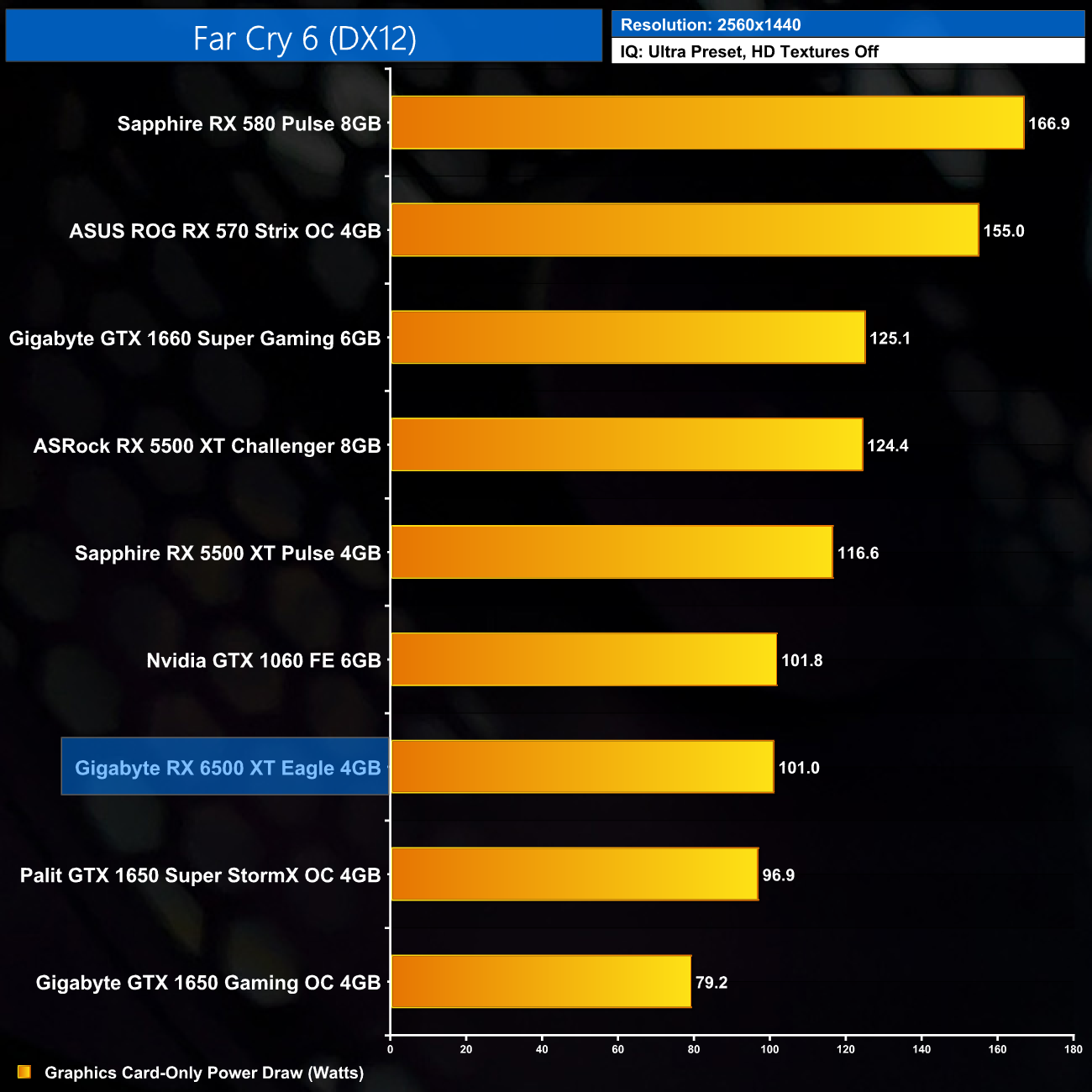


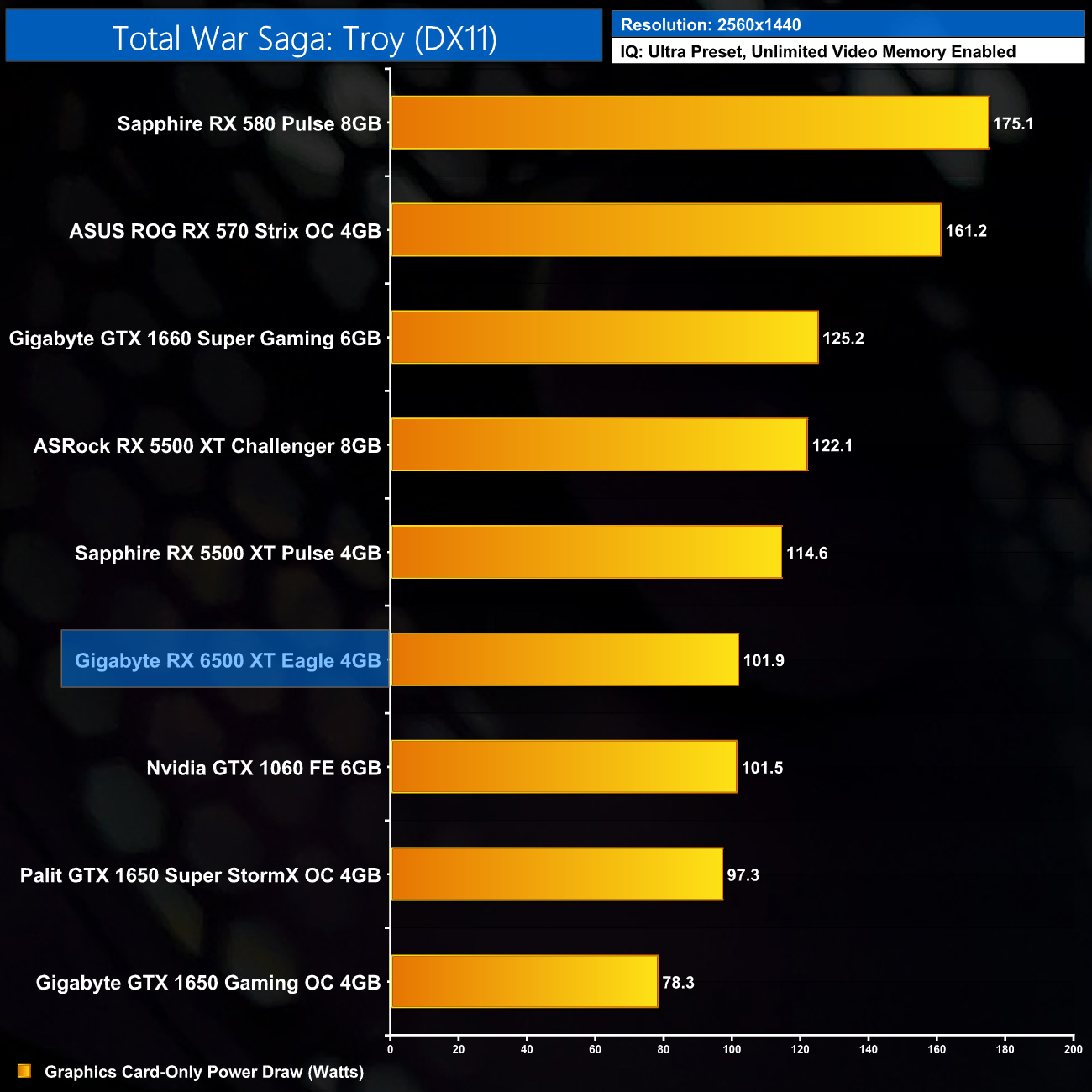
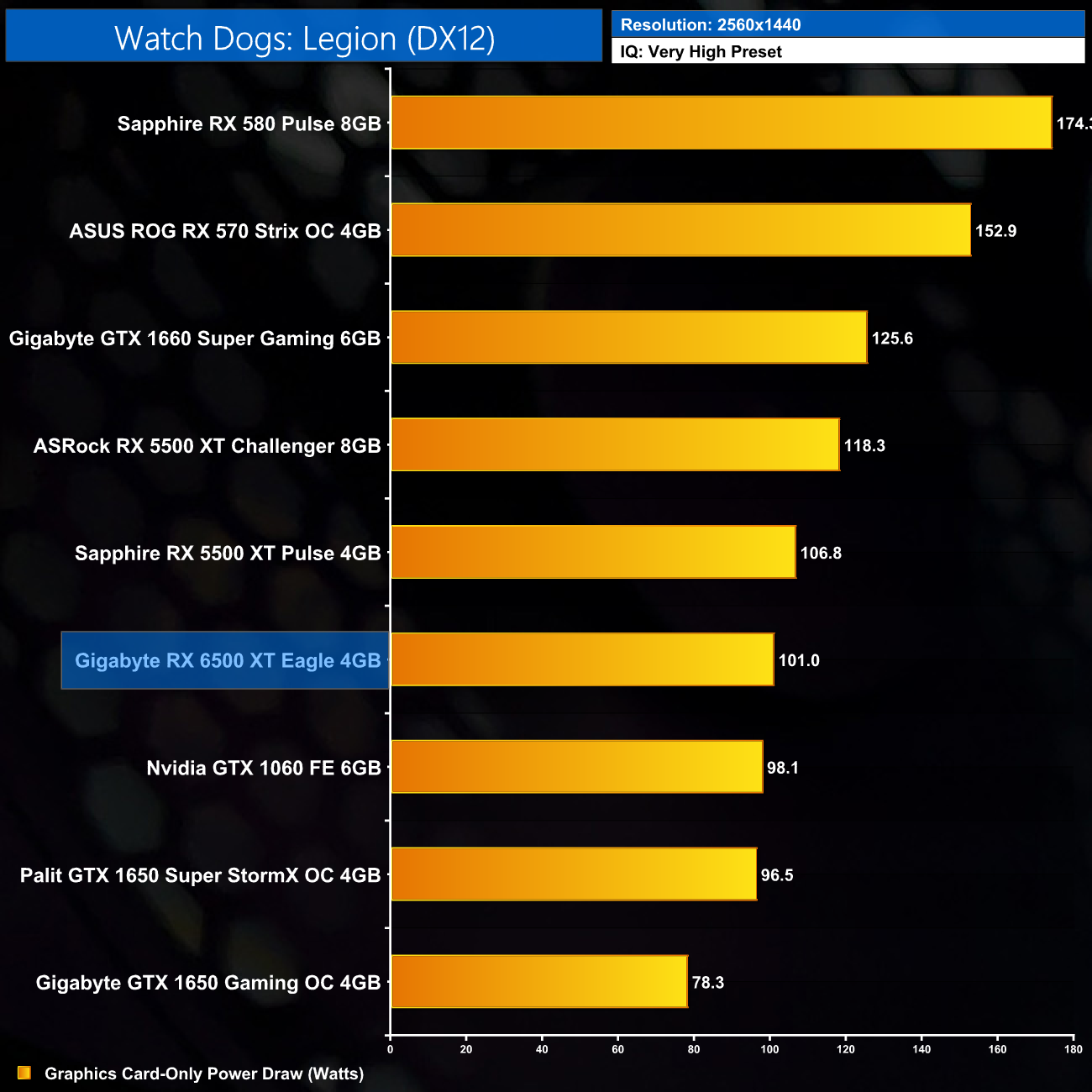
Click to enlarge.
12-Game Average at 1440p:
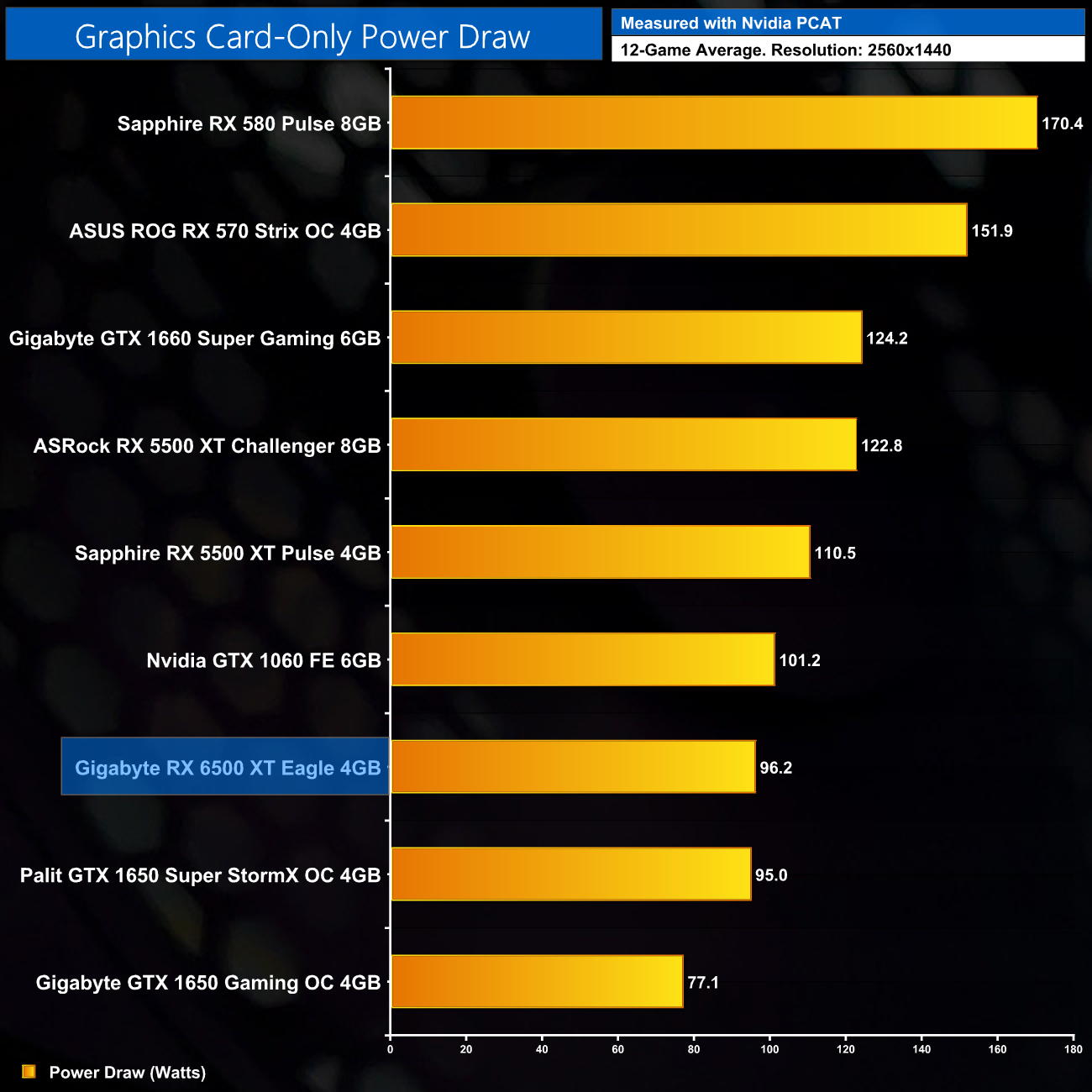
Stepping up to 1440p doesn't see power draw increase by as whole lot, as it's now averaging 96.2 Watts.
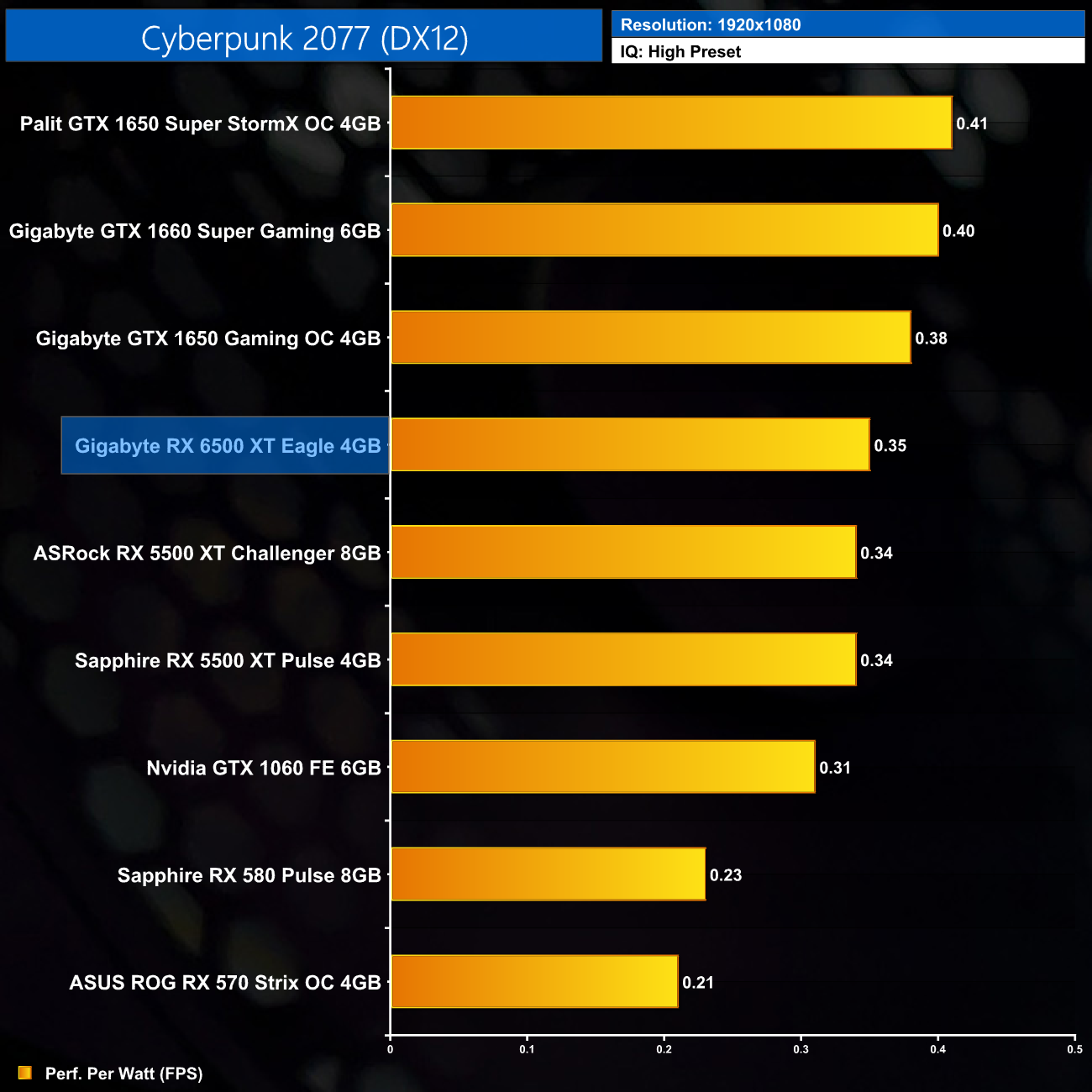
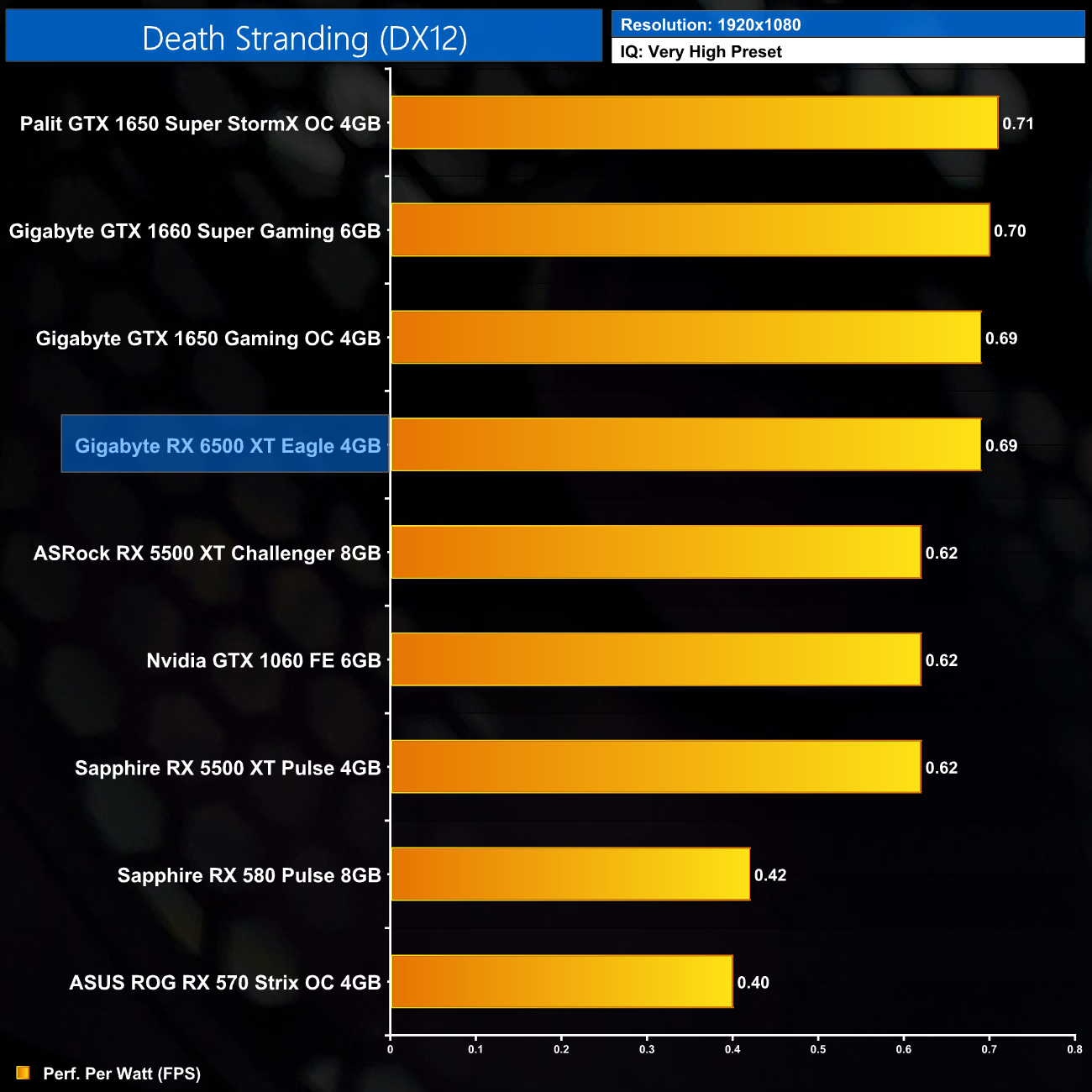
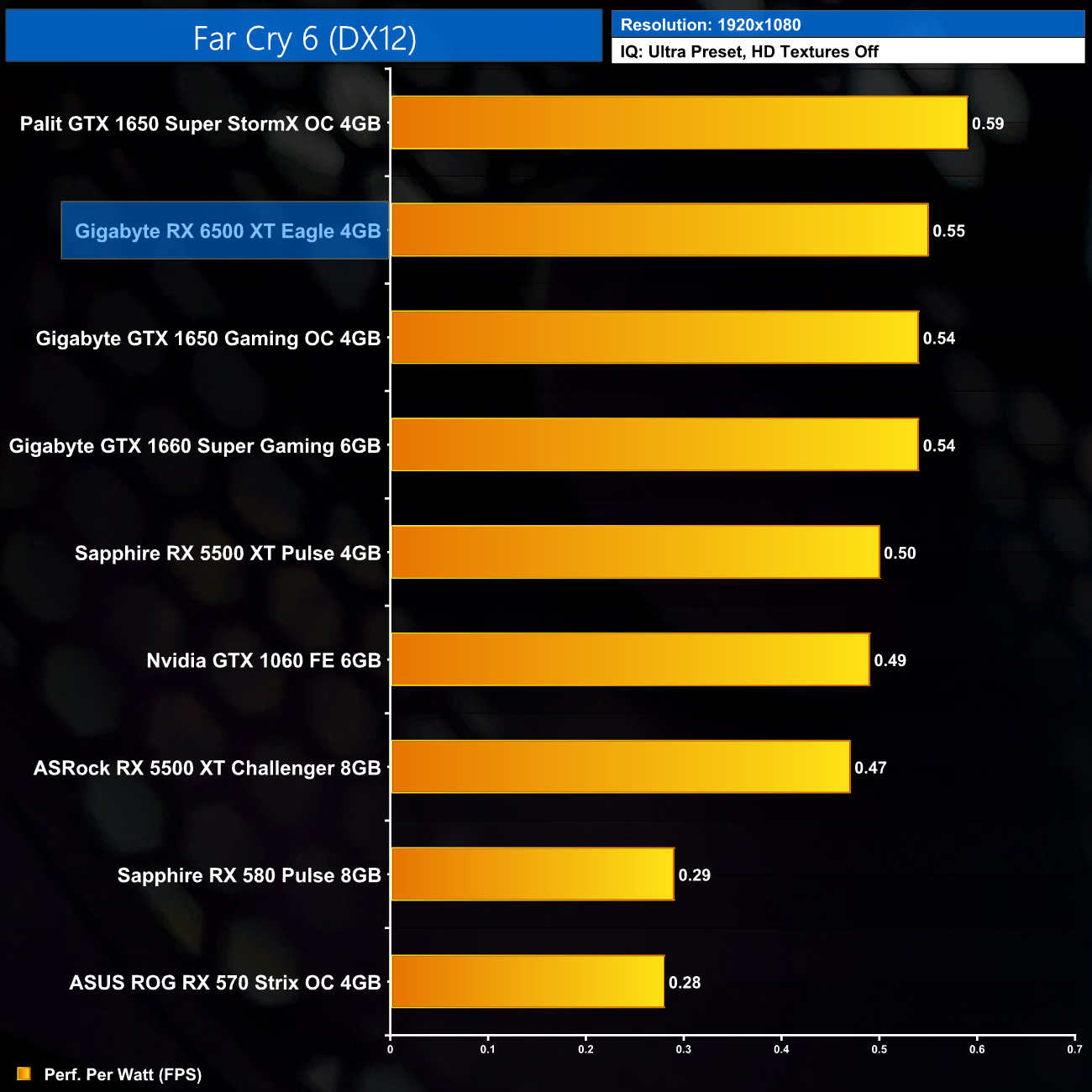
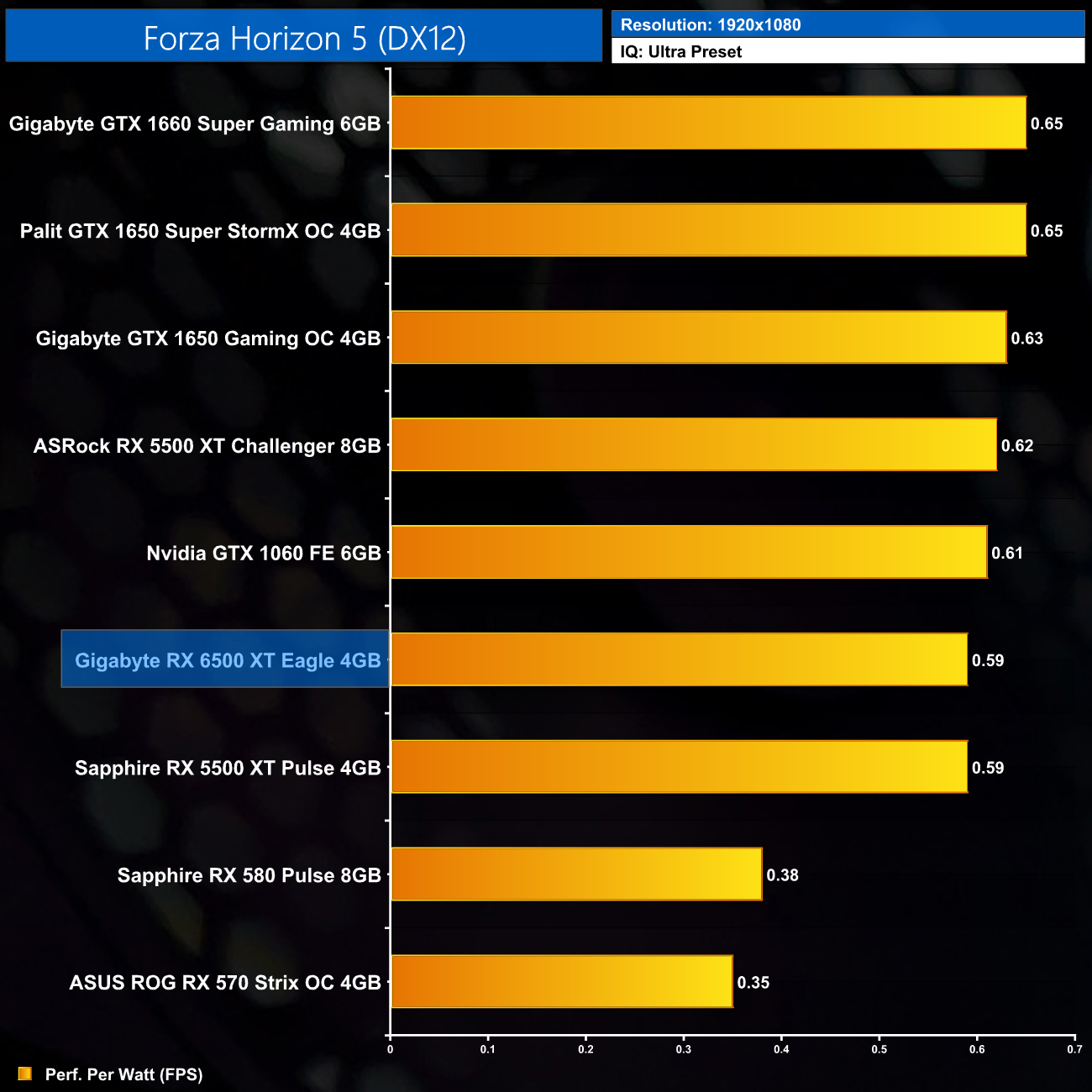
Using the graphics card-only power draw figures presented earlier in the review, here we present performance per Watt on a per-game basis for all twelve games we tested at 1080p.
Per-Game Results at 1080p:
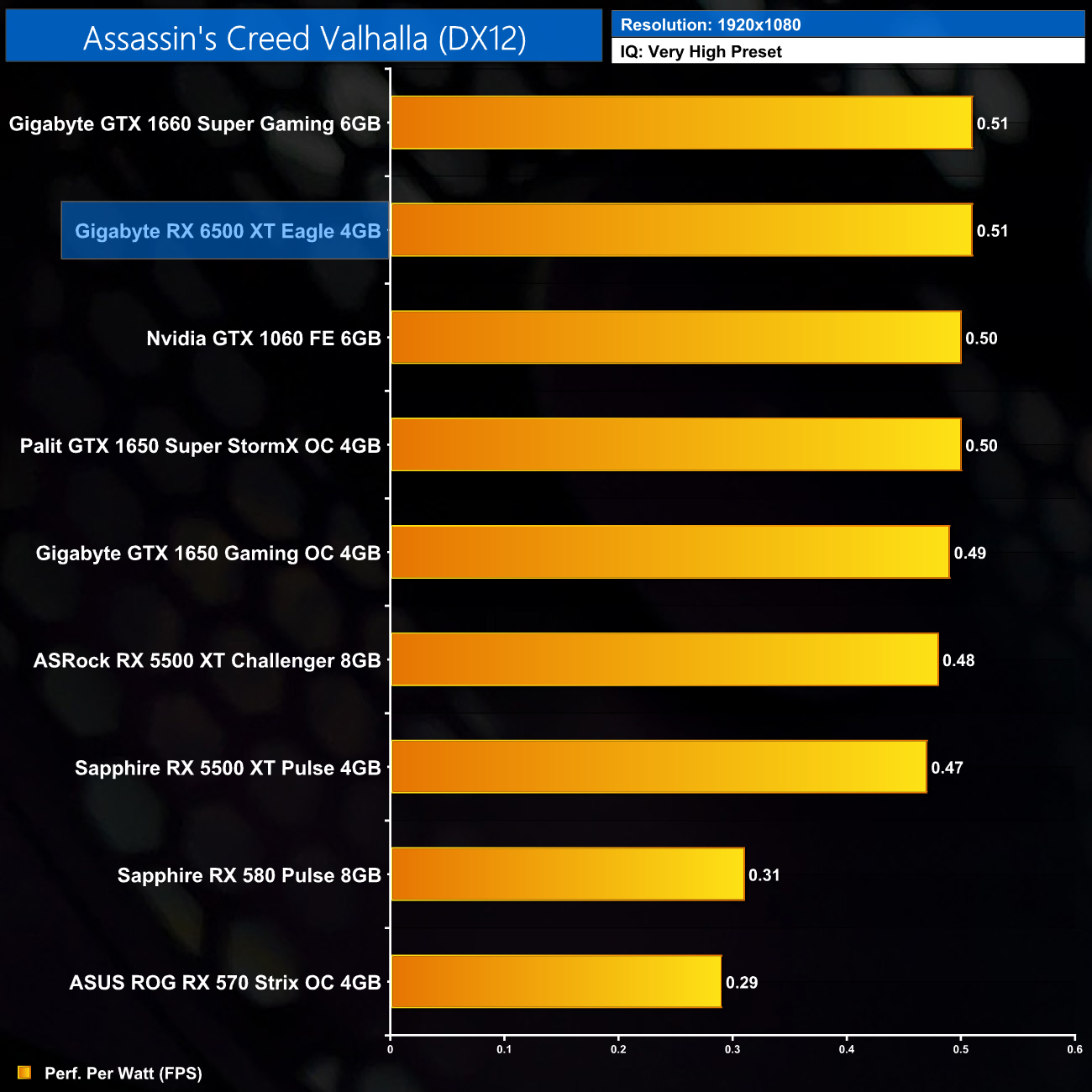
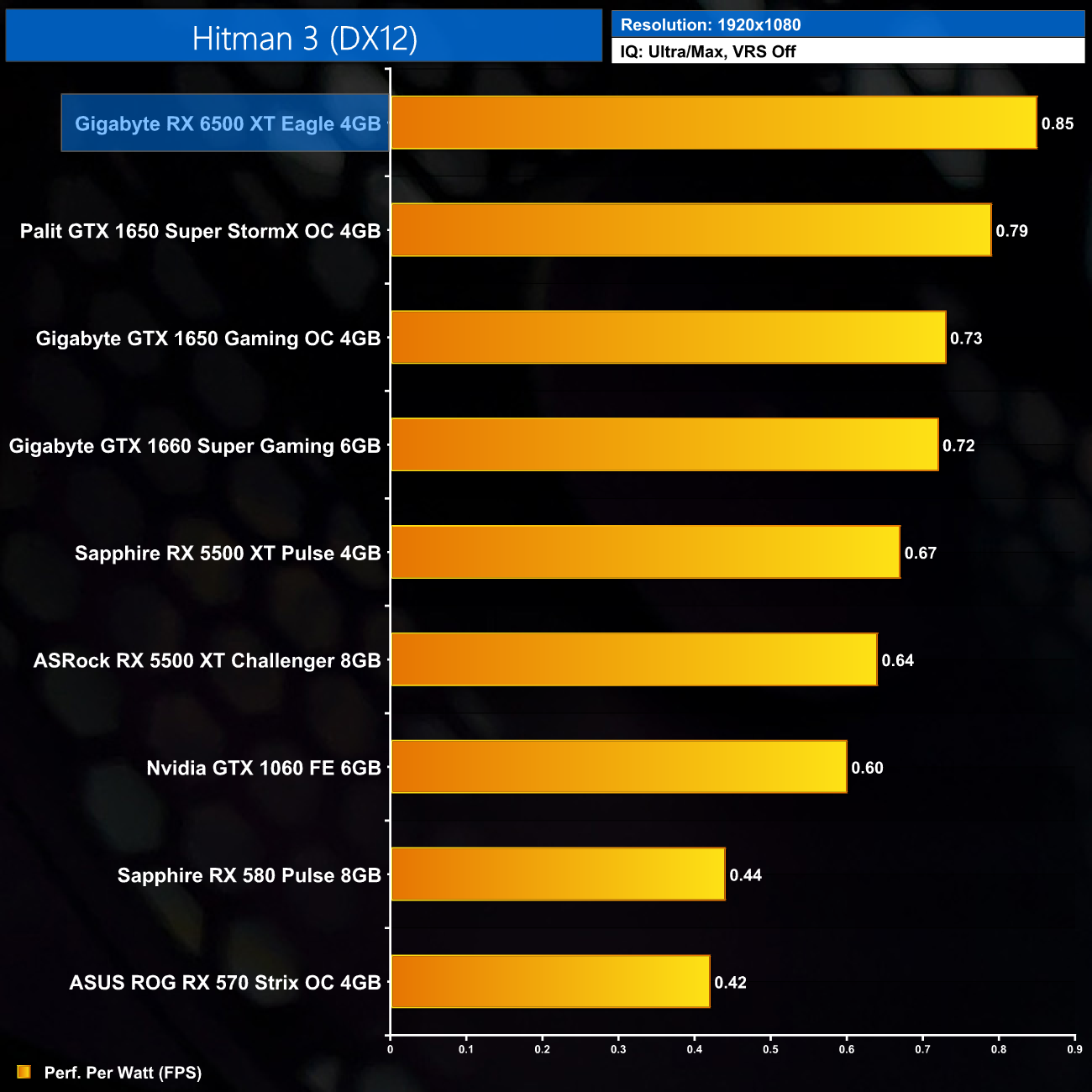
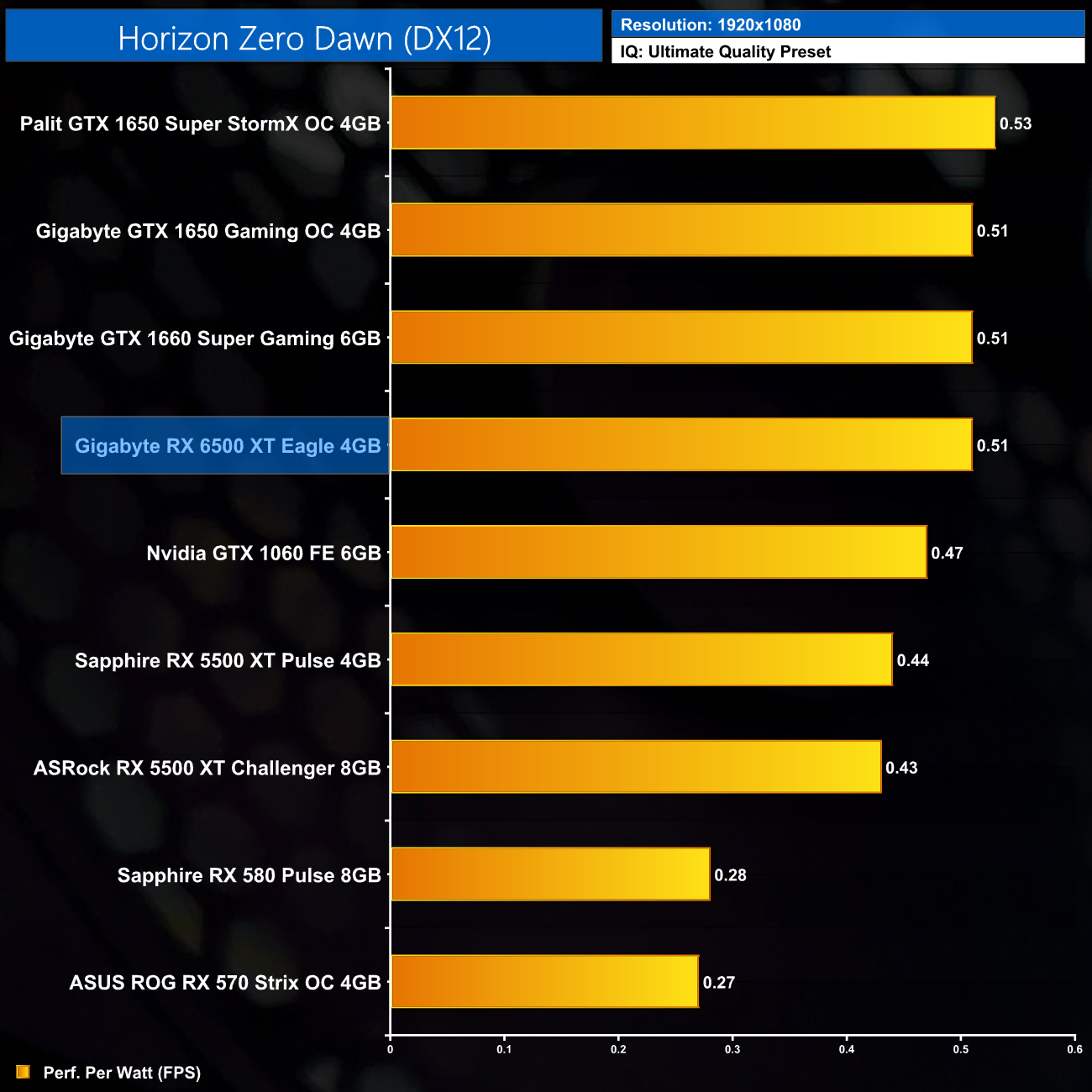
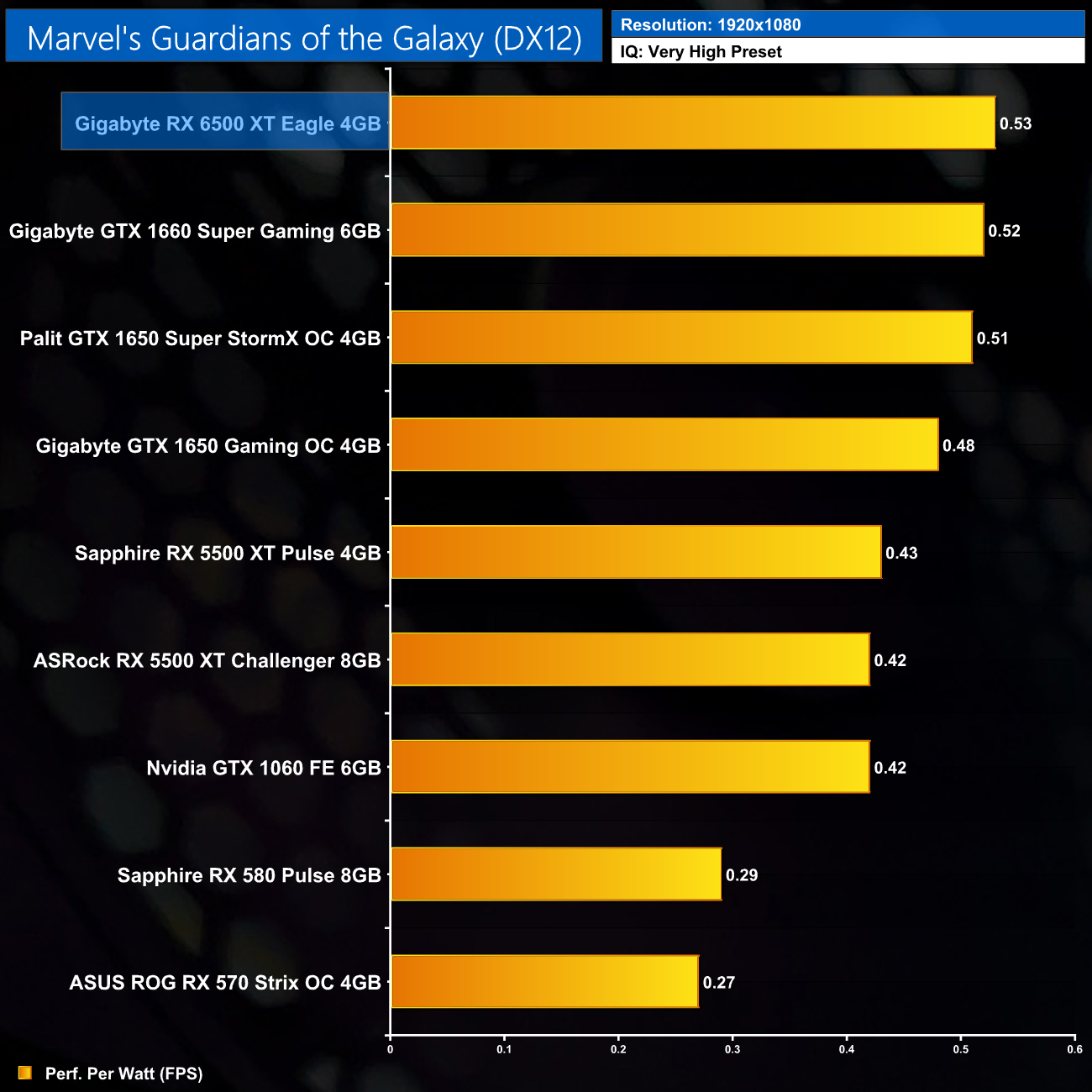

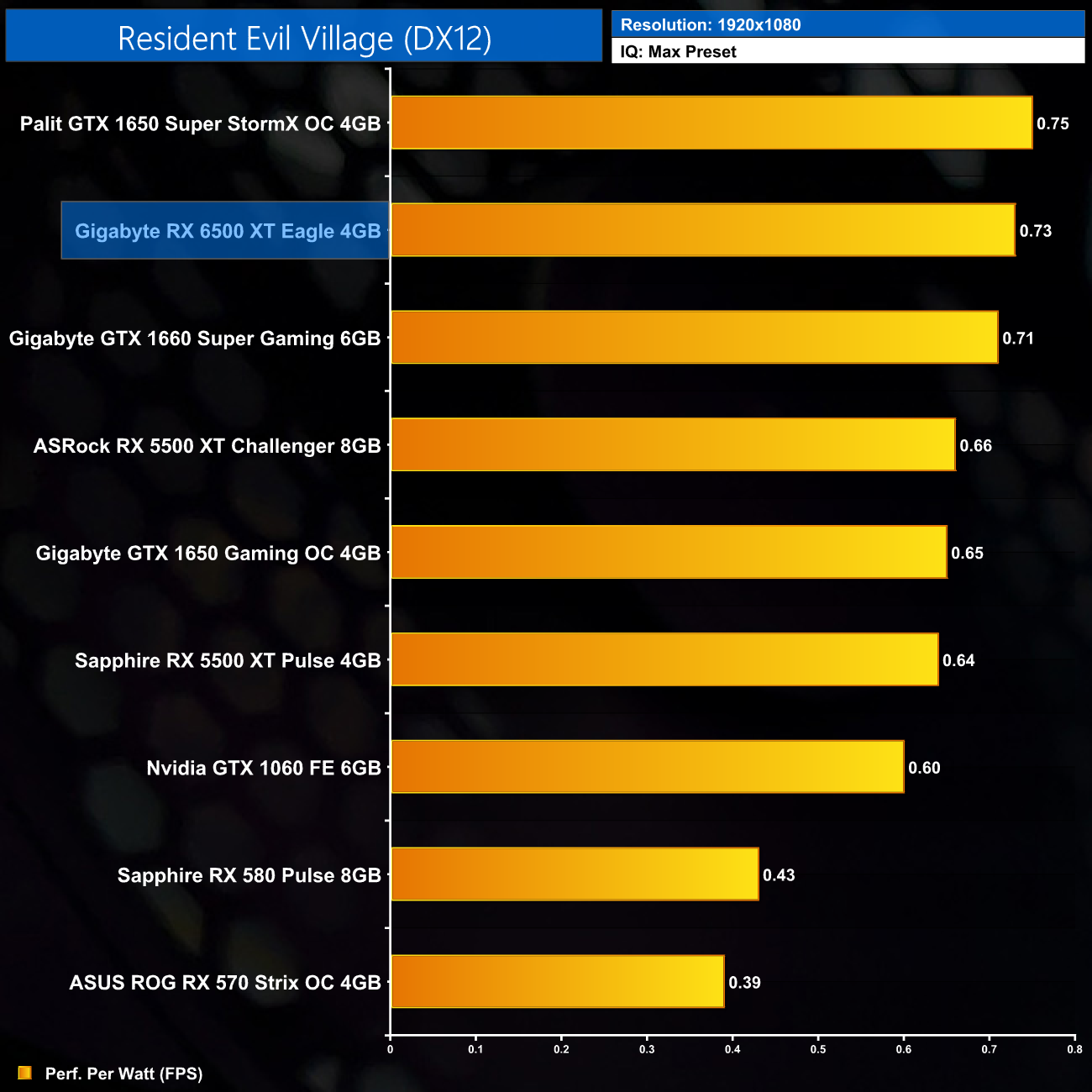
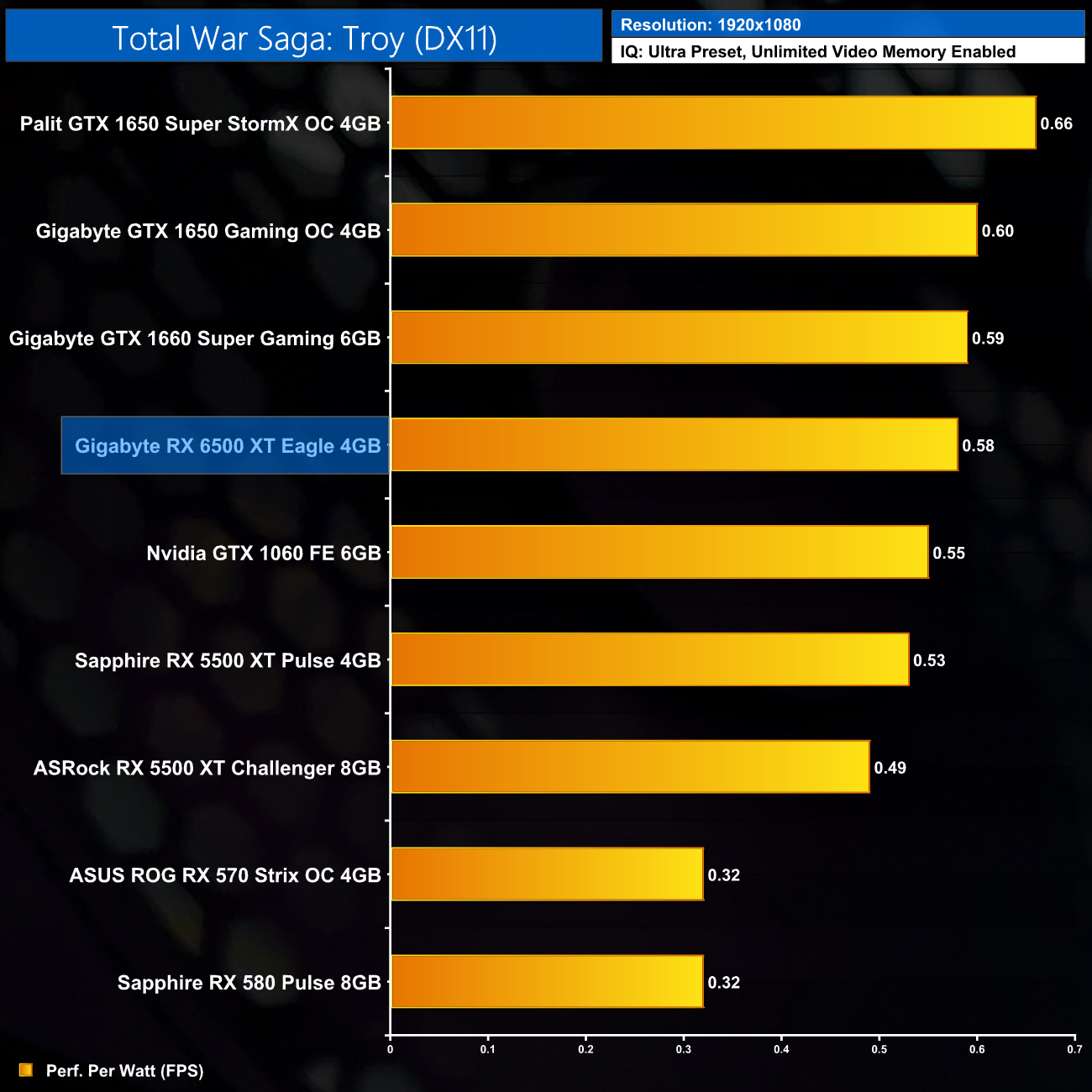
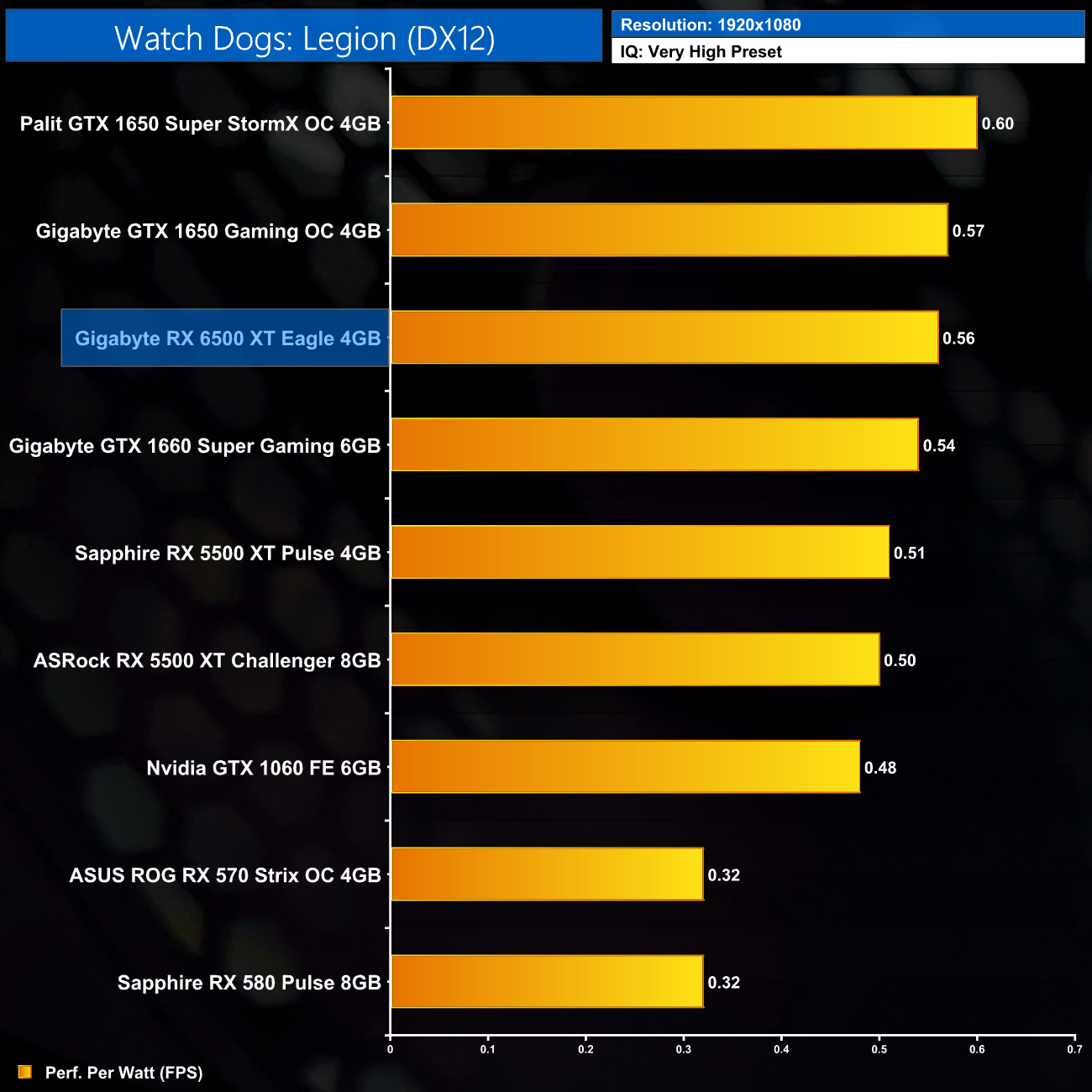
Click to enlarge.
12-Game Average at 1080p:
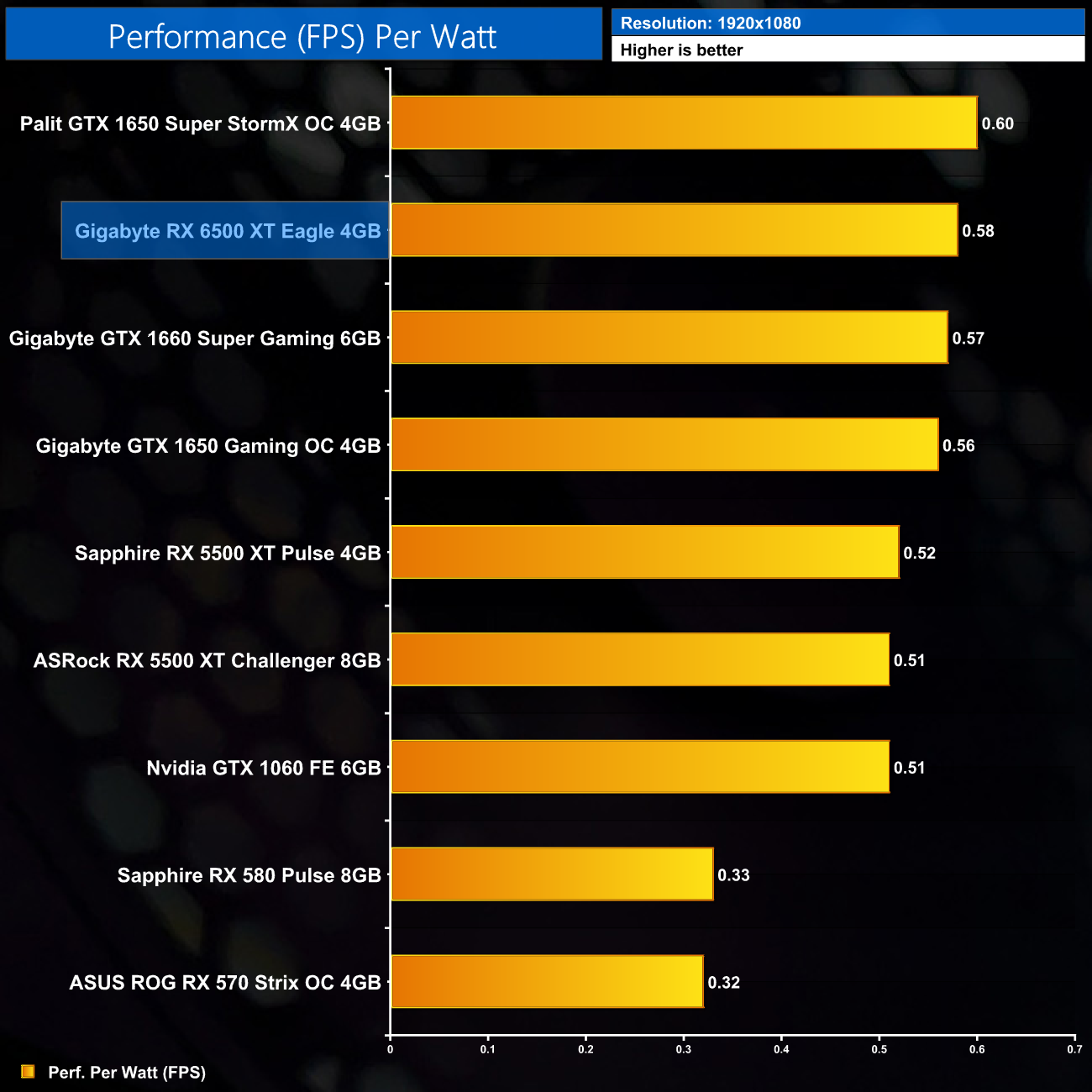
Despite the low power draw observed earlier in the review, the RX 6500 XT is no more efficient that other GPUs of its class that launched over two years ago. The GTX 1650 Super offers slightly better performance per Watt, for instance, while the GTX 1660 Super and GTX 1650 are just fractionally behind. Compared to AMD's RX 5500 XT 4GB we are looking at an increase in efficiency of 15%, but it's still not a big step forward.
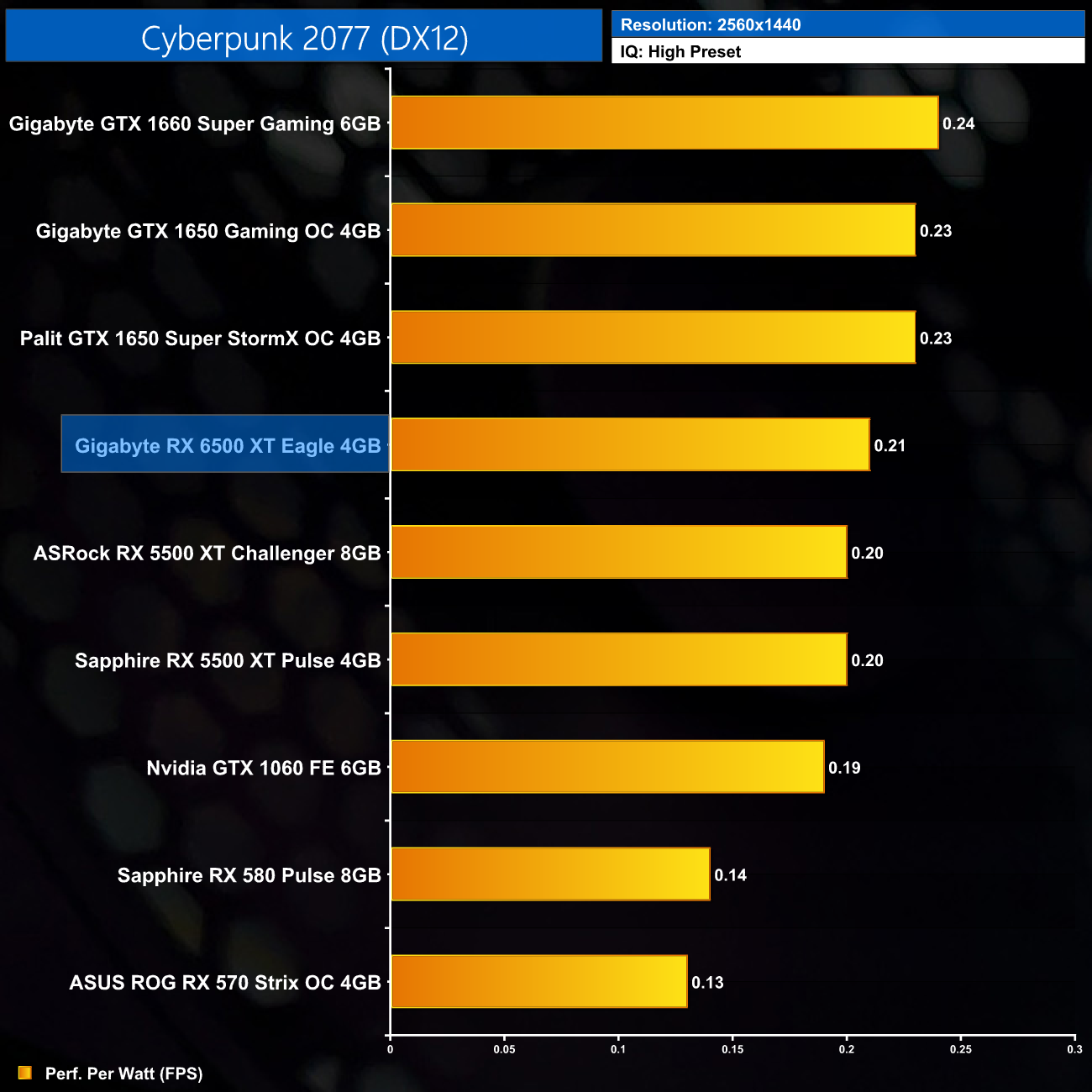
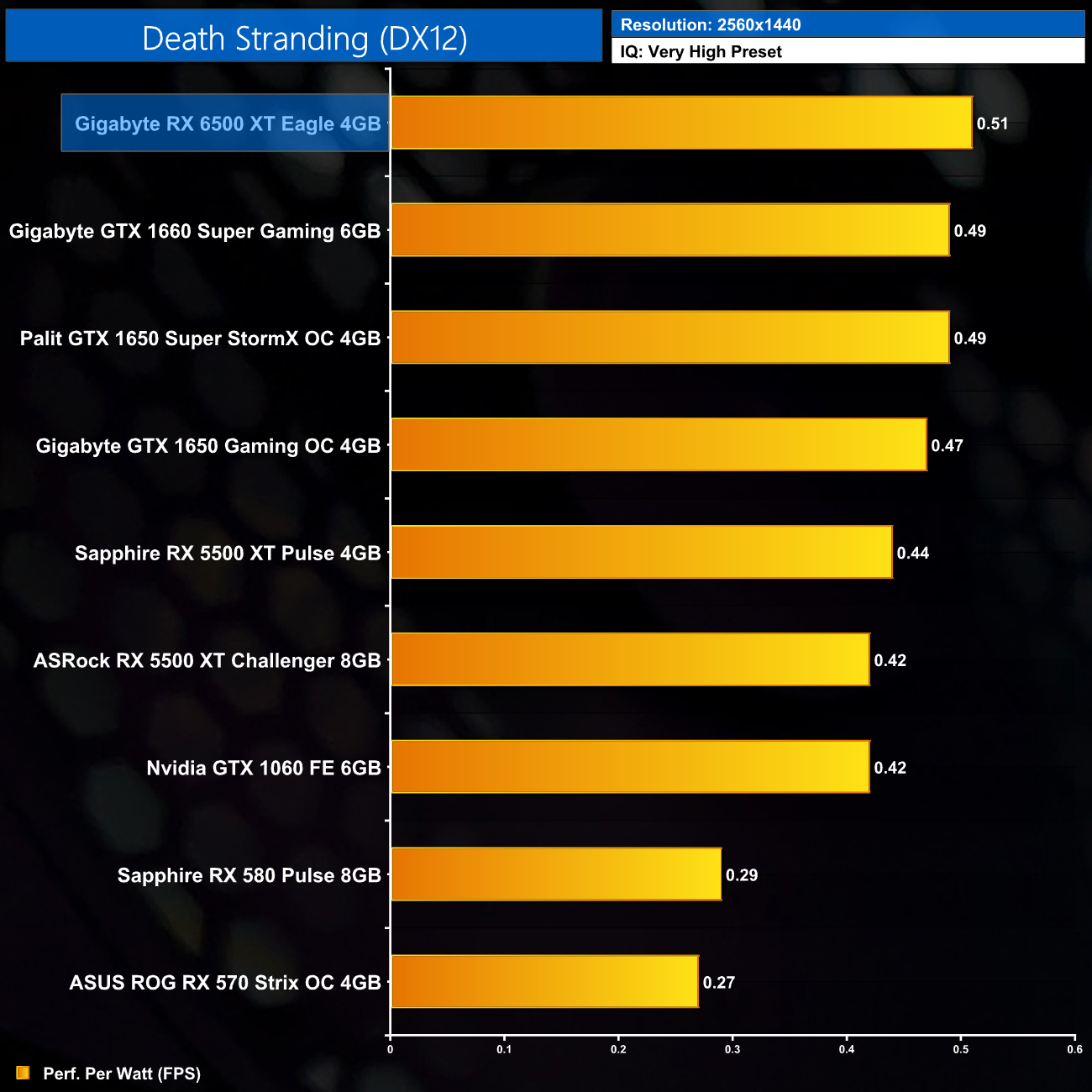
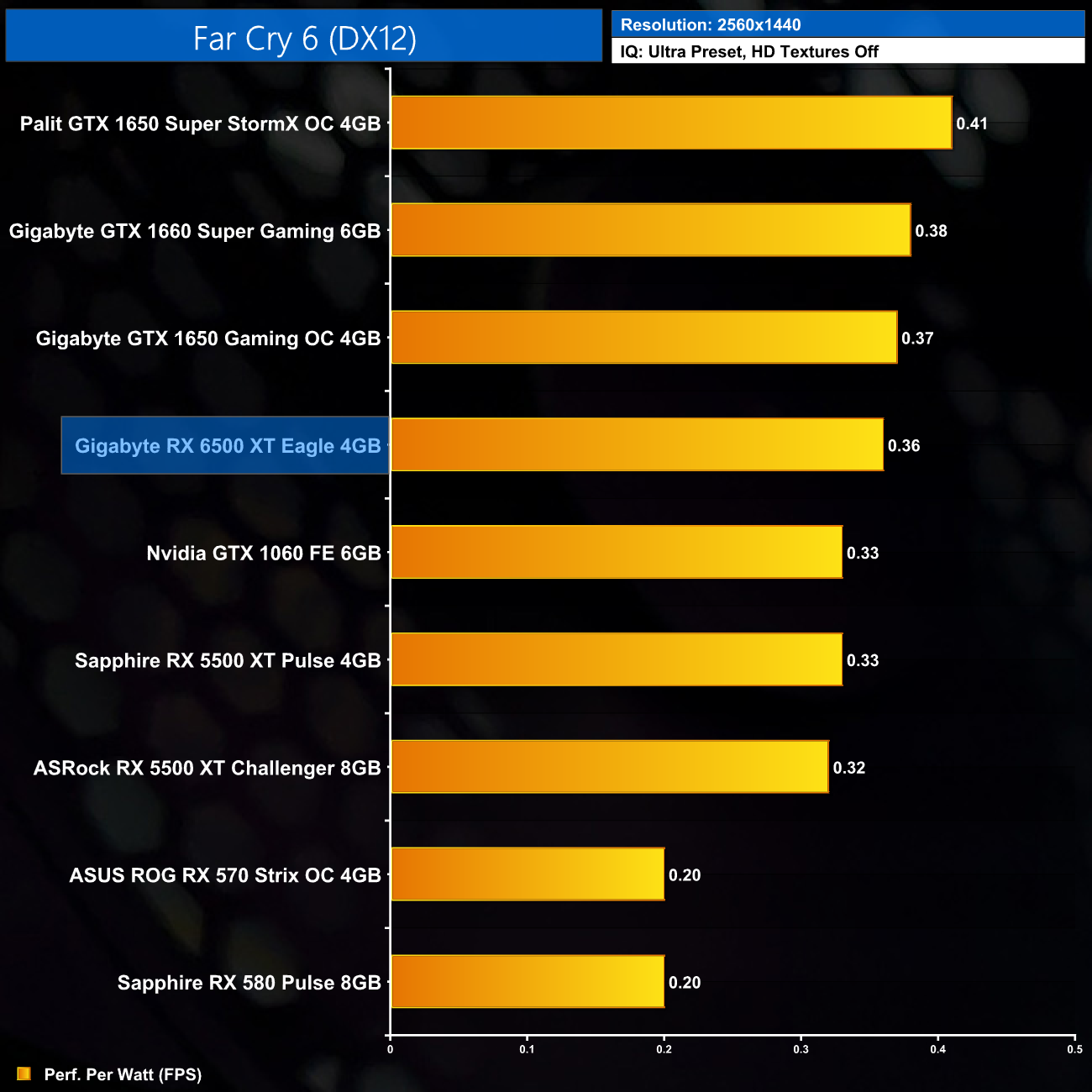
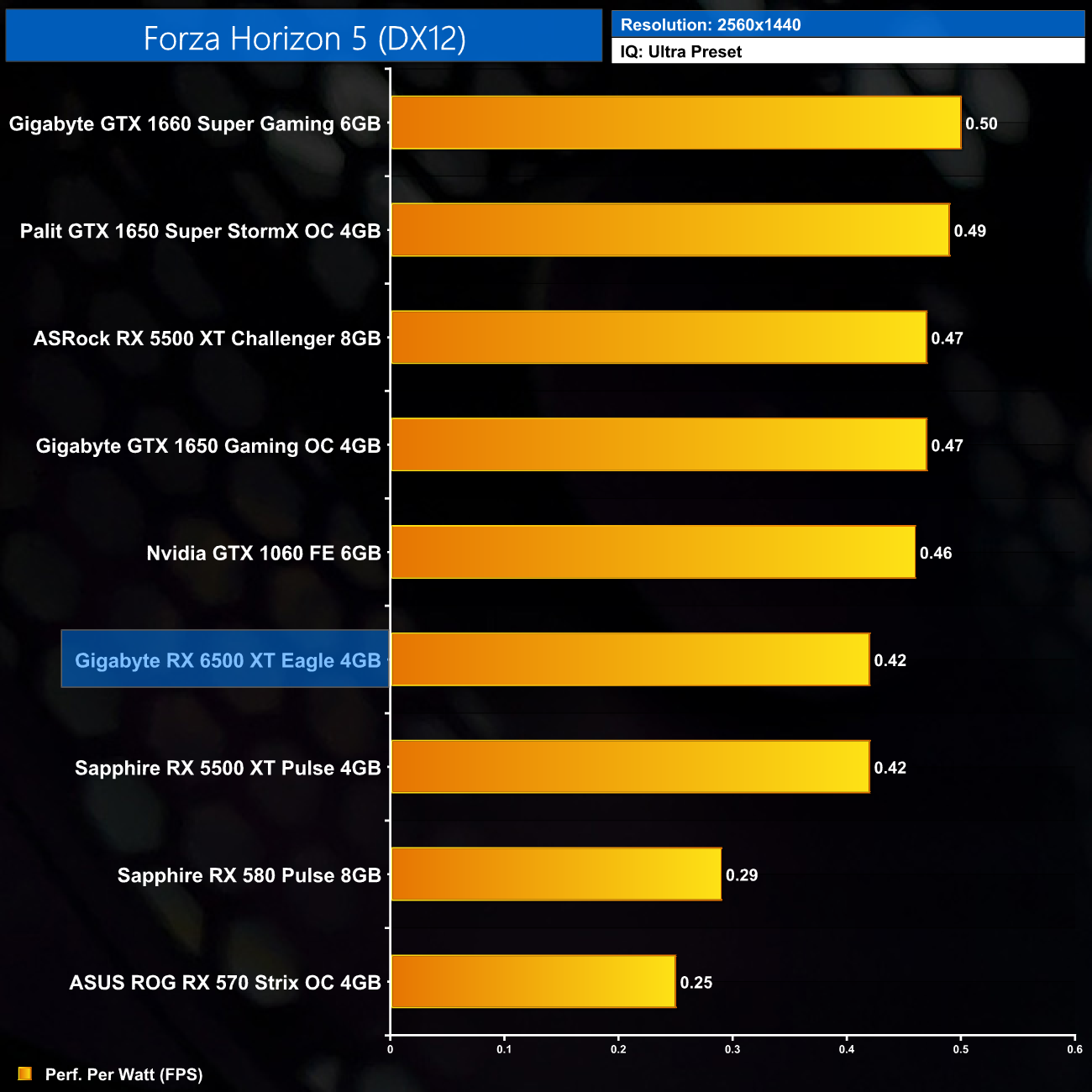
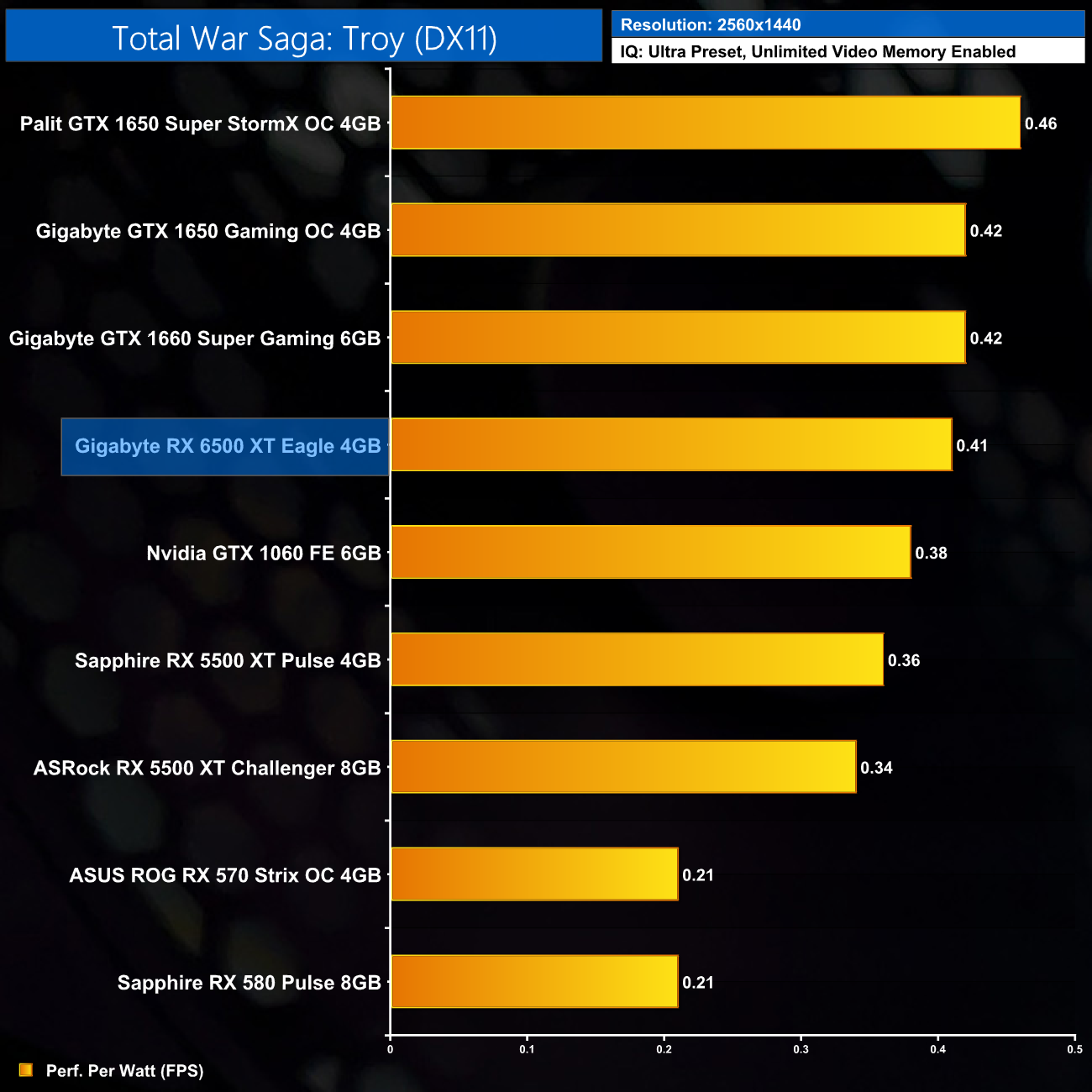
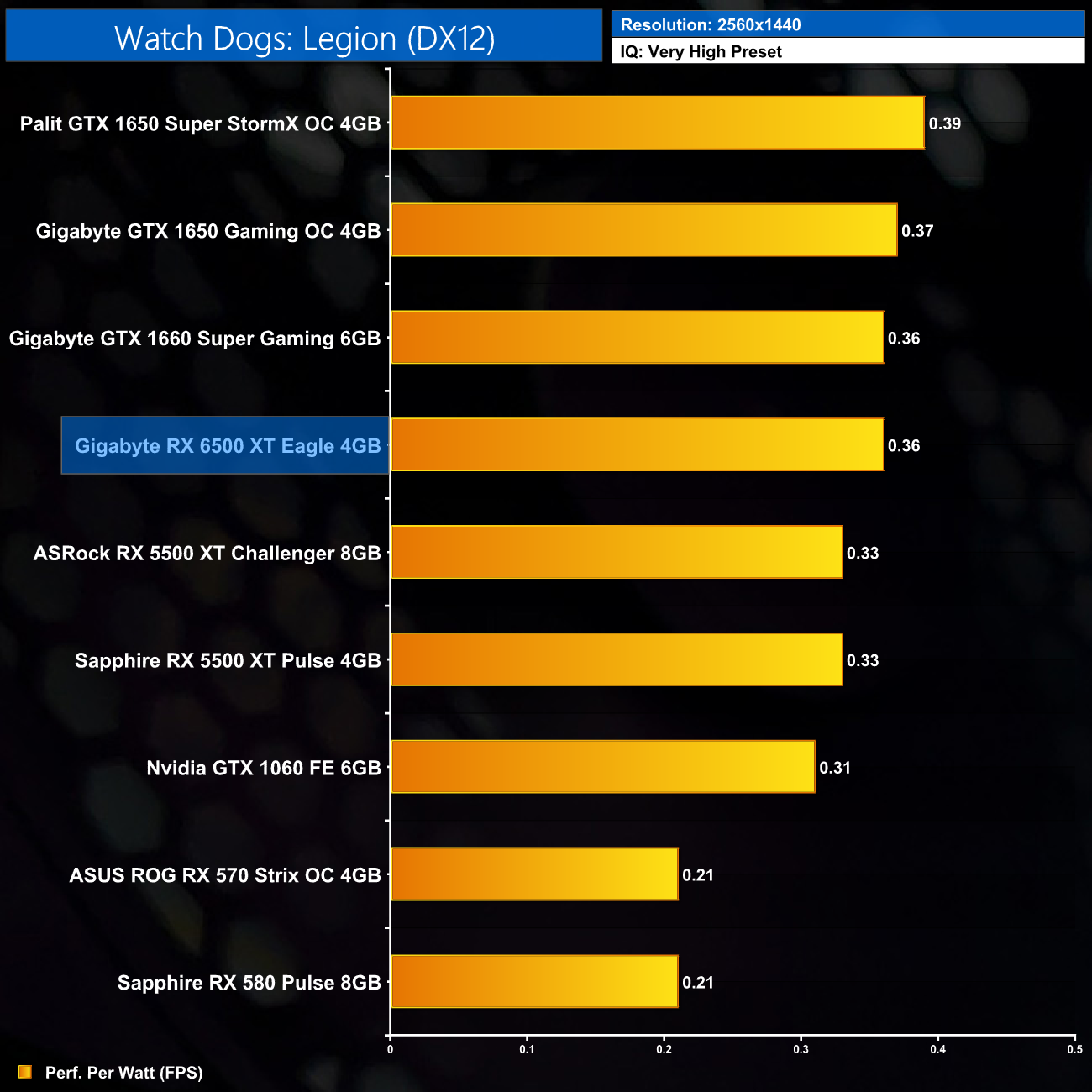
Using the graphics card-only power draw figures presented earlier in the review, here we present performance per Watt on a per-game basis for all twelve games we tested at 1440p.
Per-Game Results at 1440p:
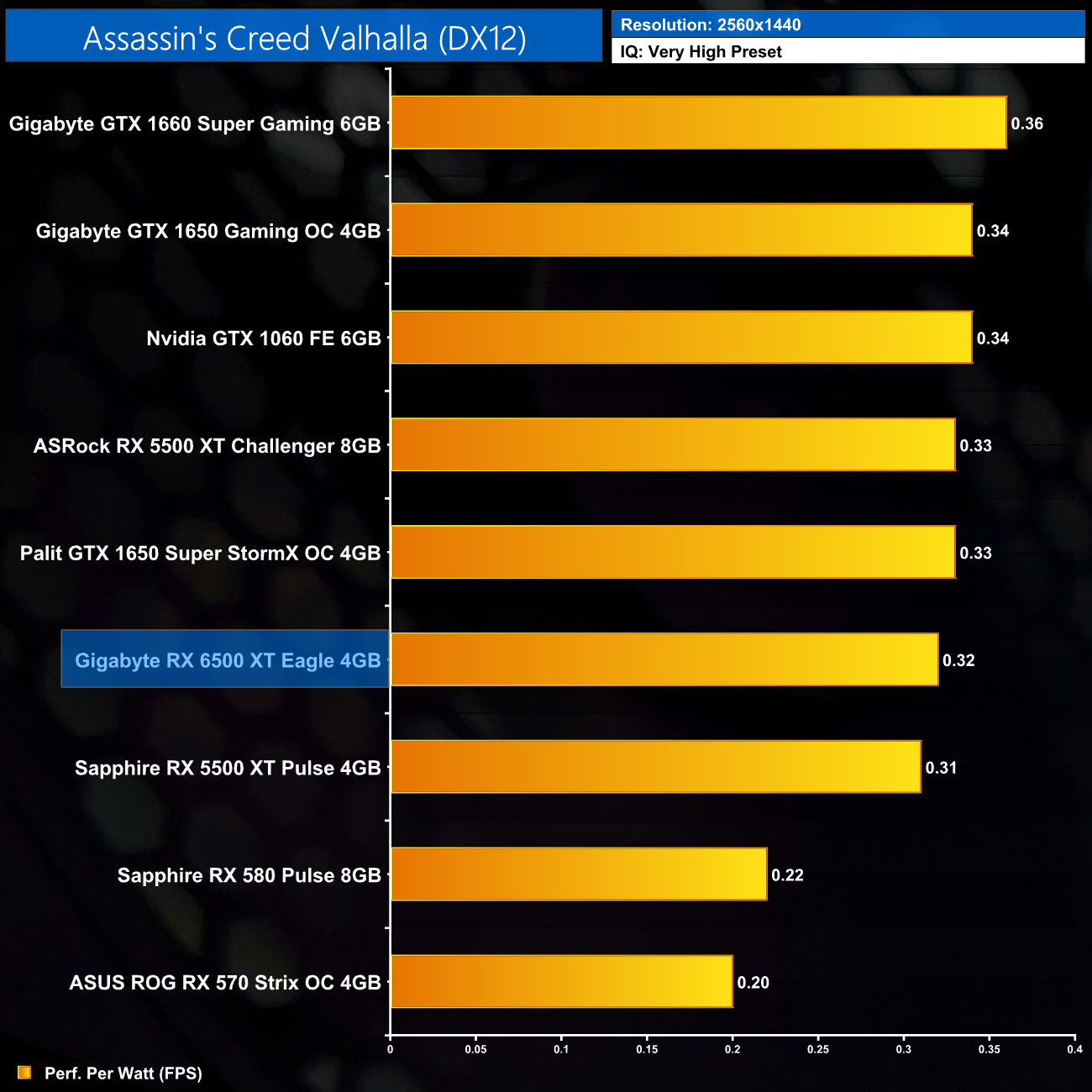
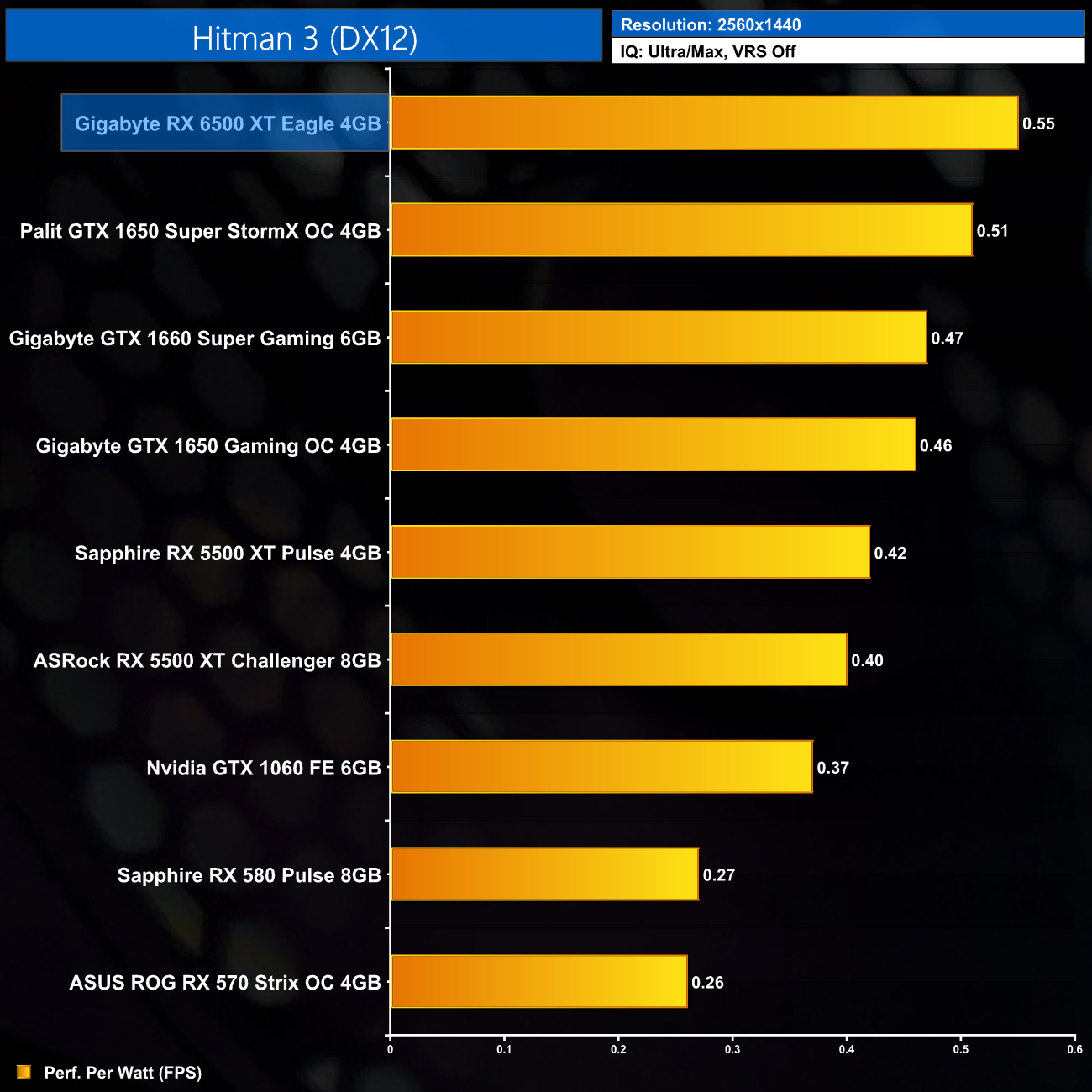
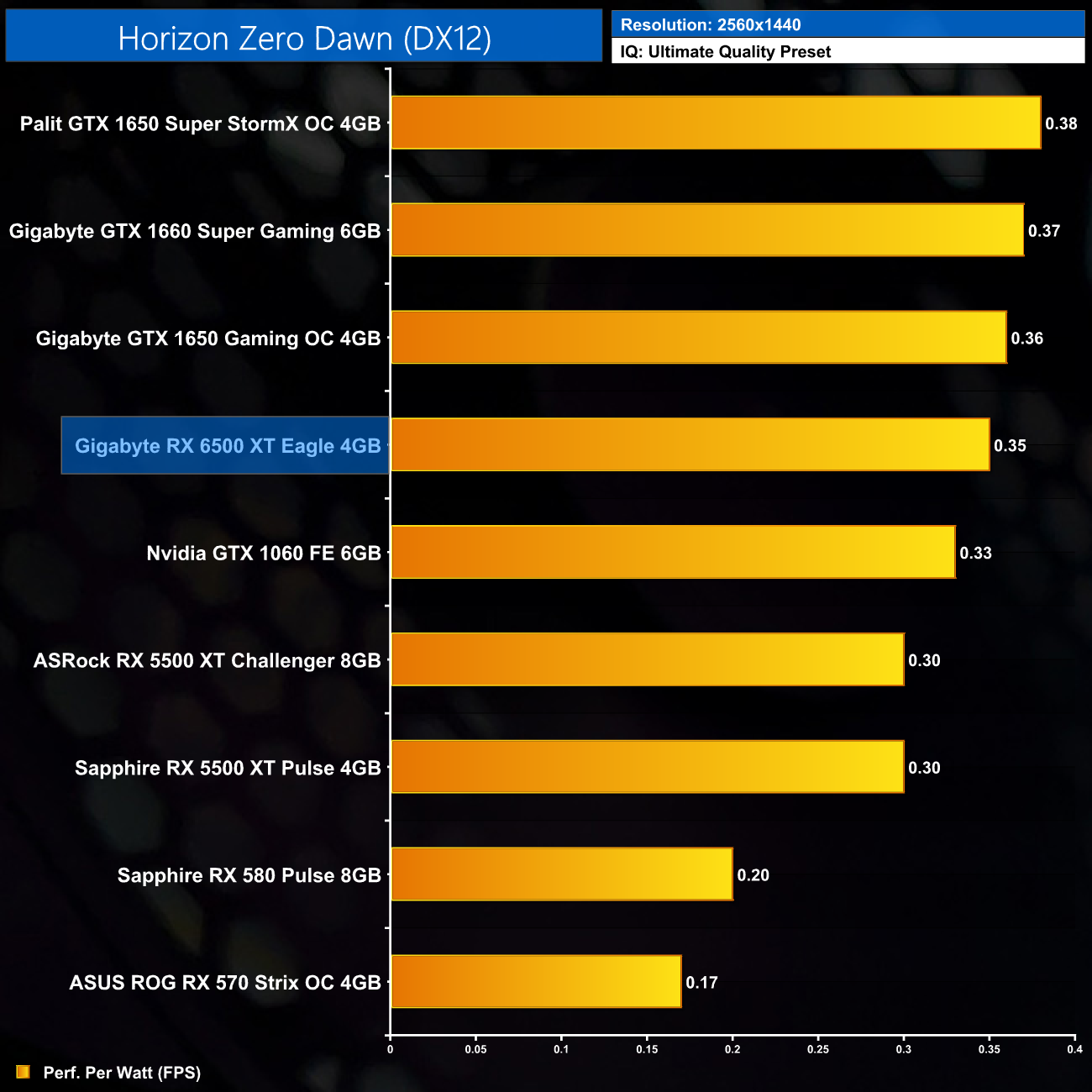

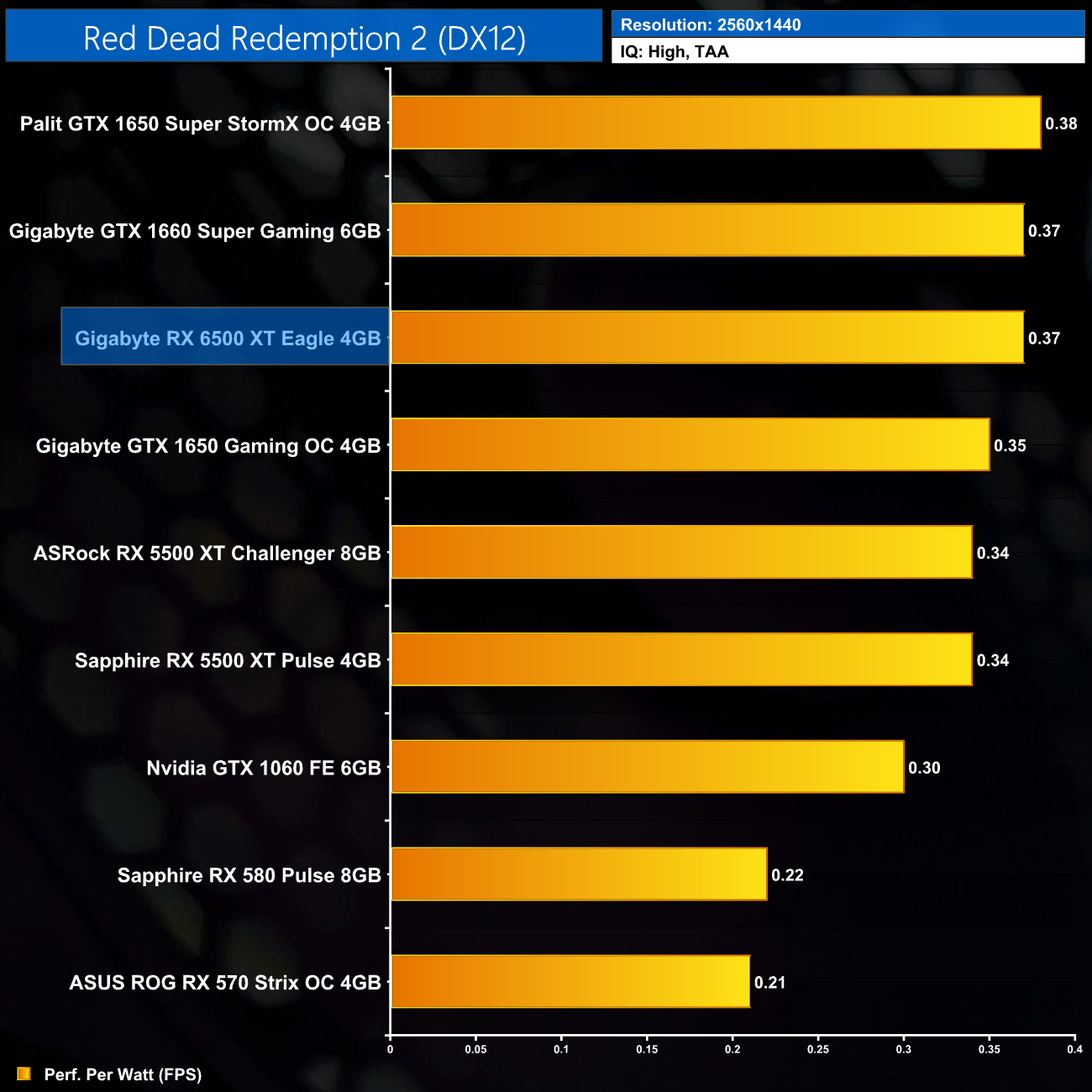
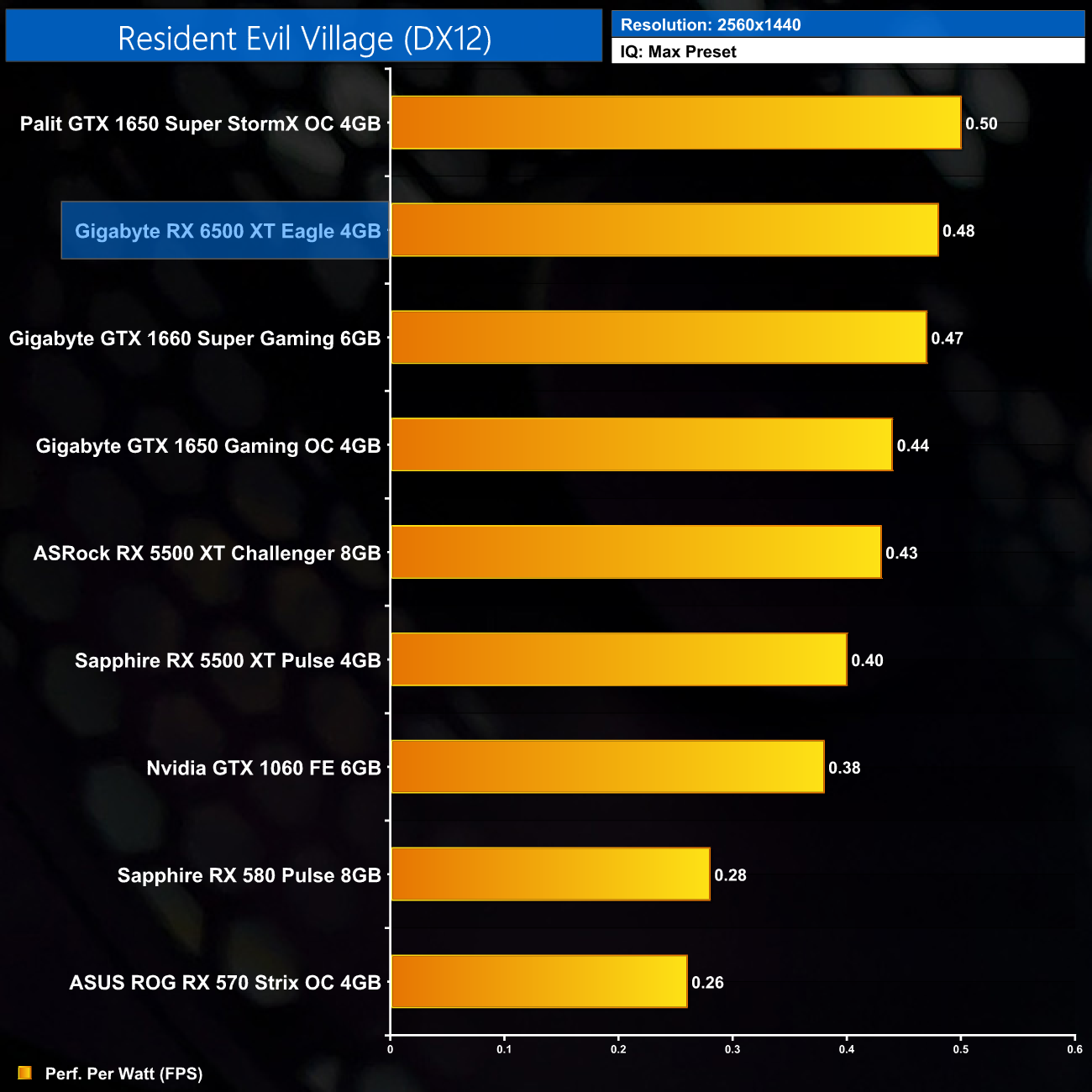
Click to enlarge.
12-Game Average at 1440p:
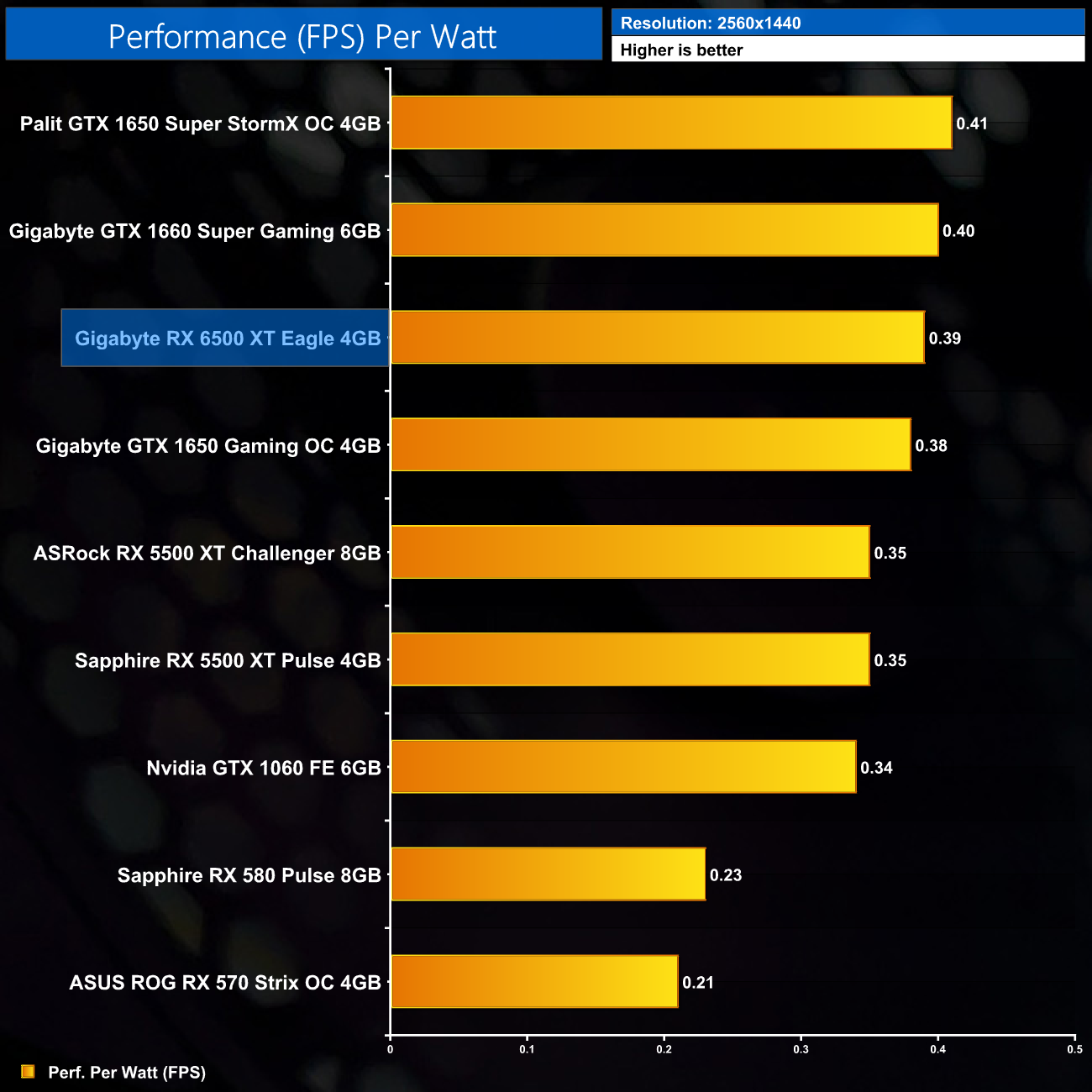
Overall efficiency is slightly worse at 1440p too, slipping behind the GTX 1660 Super, whereas the GTX 1650 Super offers 5% more performance per Watt.
We measure system-wide power draw from the wall while running Cyberpunk 2077 for 30 minutes.
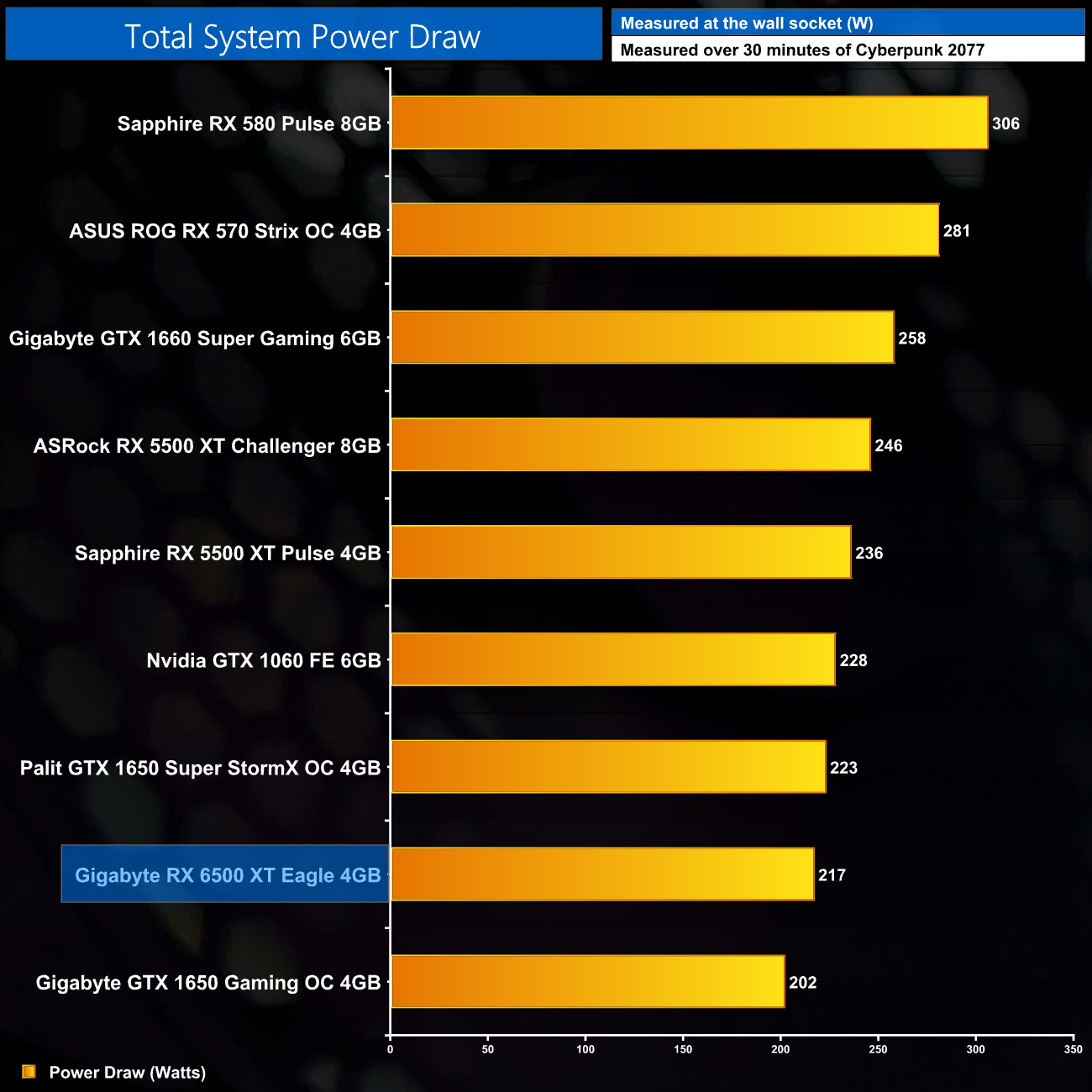
For those wondering about total system power draw, we saw just under 220 Watts consumed at the wall socket. Bearing in mind that is with a 12900K CPU as well, so with something like a Ryzen 5 3600, it could go even lower. AMD recommends a 400W power supply.
For our manual overclocking tests, we used AMD's driver tuning tools. Our best results are as below.

Interestingly, AMD has capped both the GPU and memory frequency sliders, to 2975MHz and 2400MHz respectively. I was able to put both sliders at their maximum values without instability.
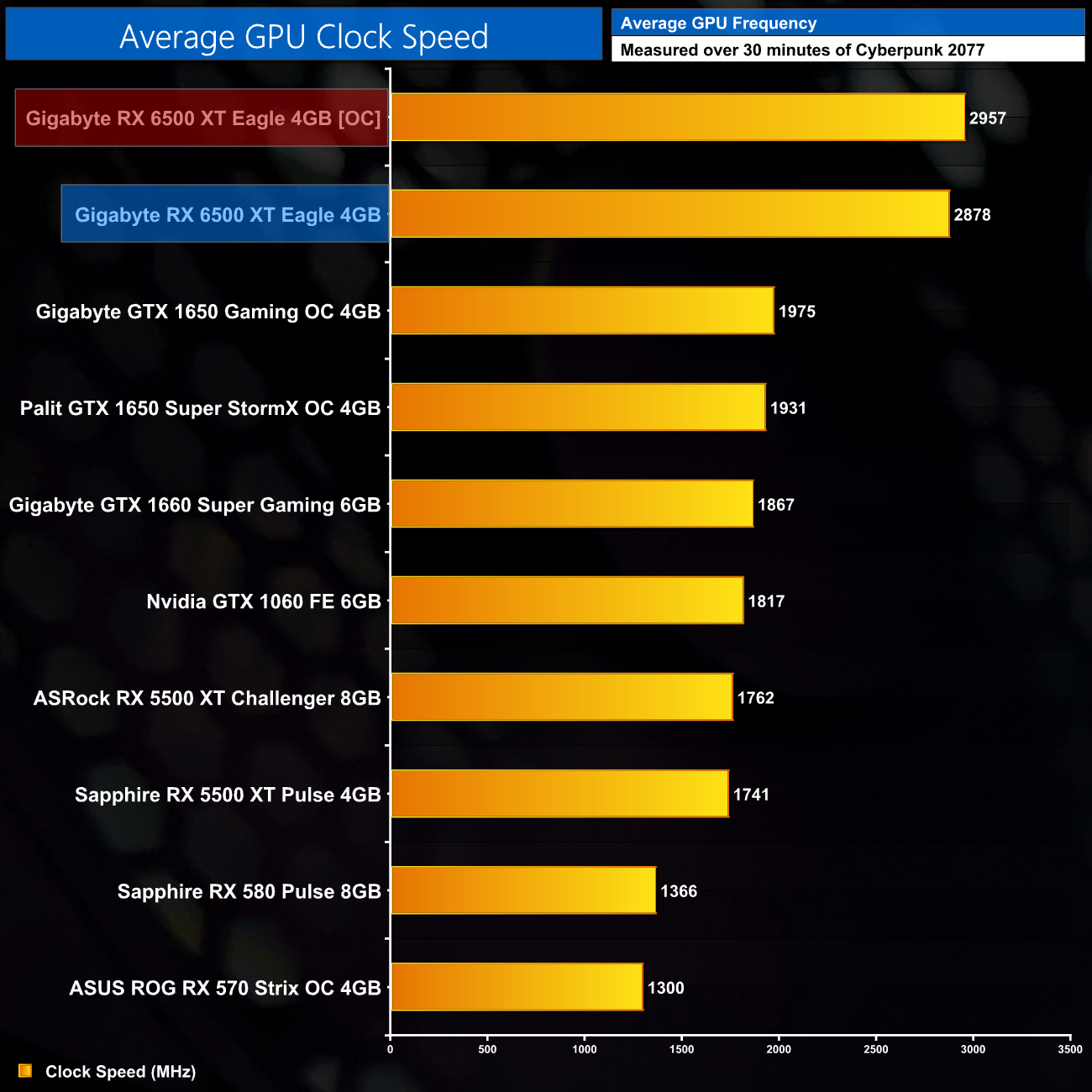
That saw average clock speed increase to 2957MHz.
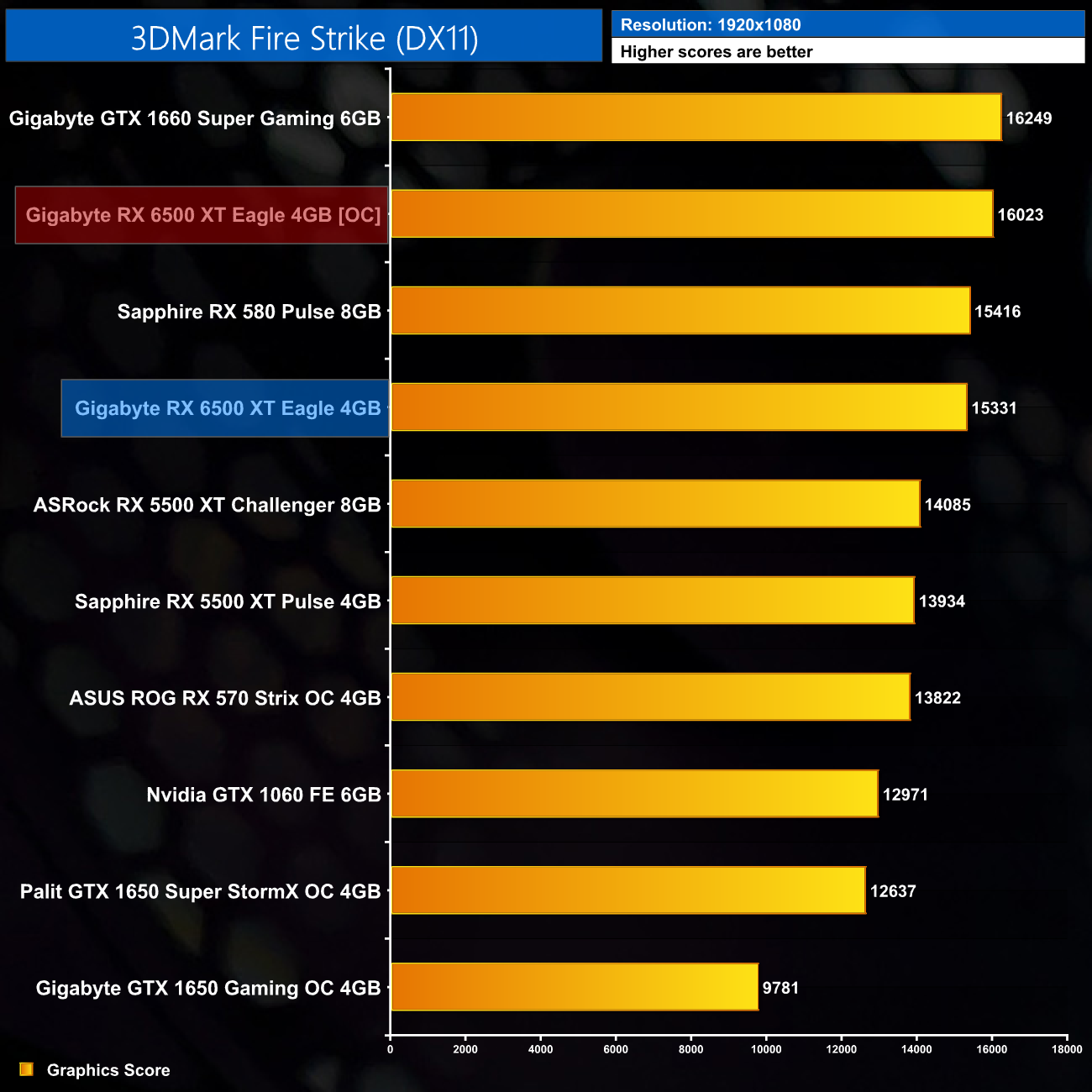
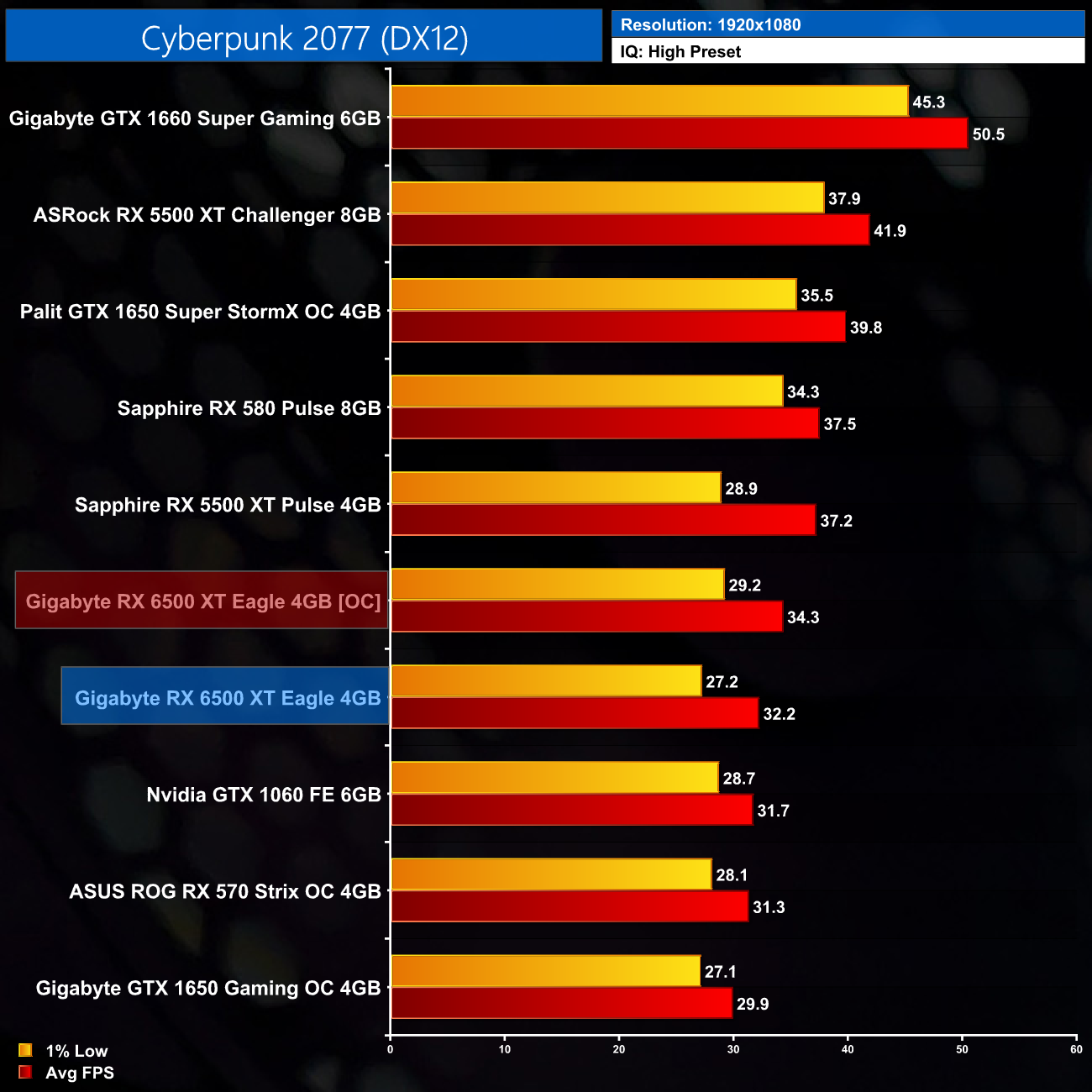
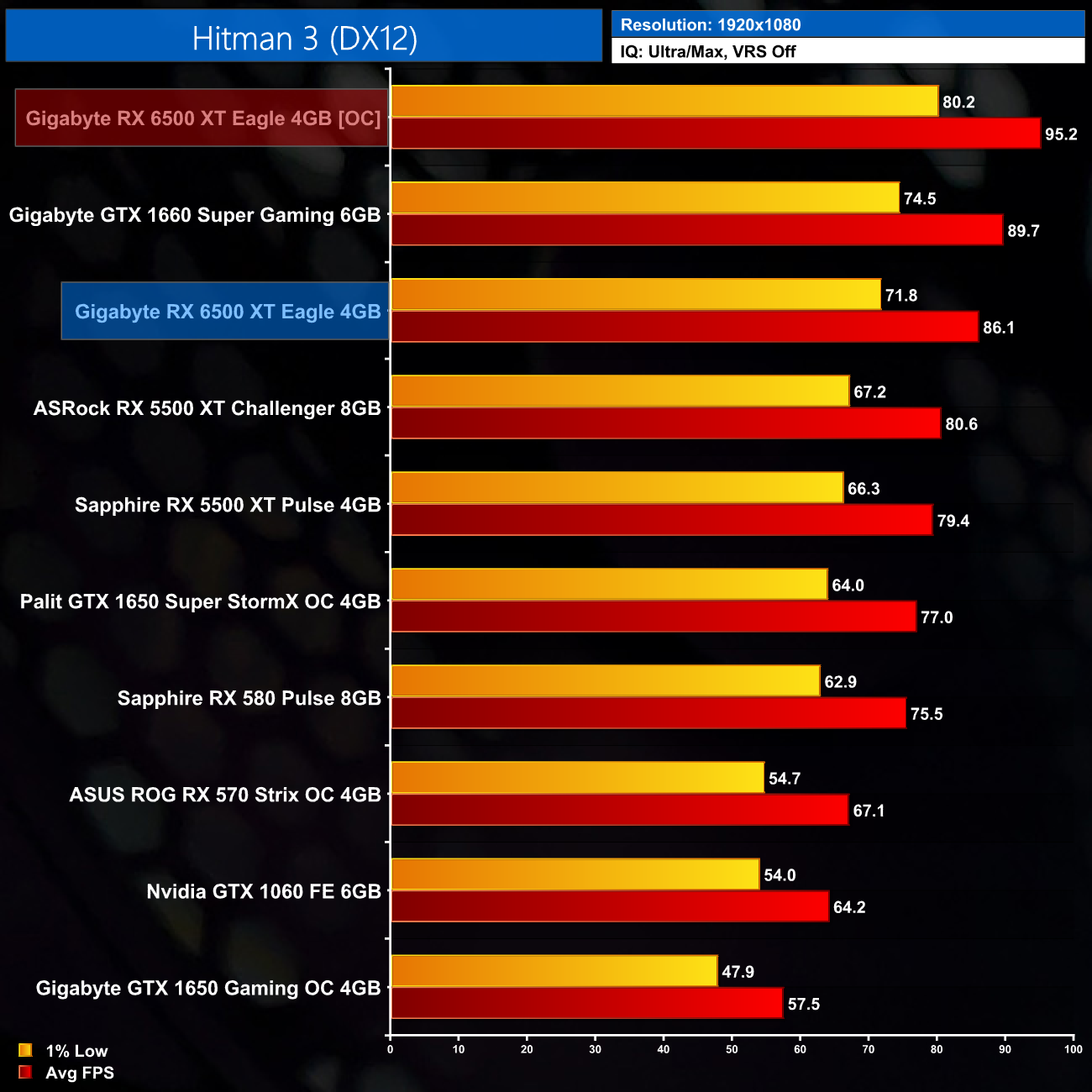
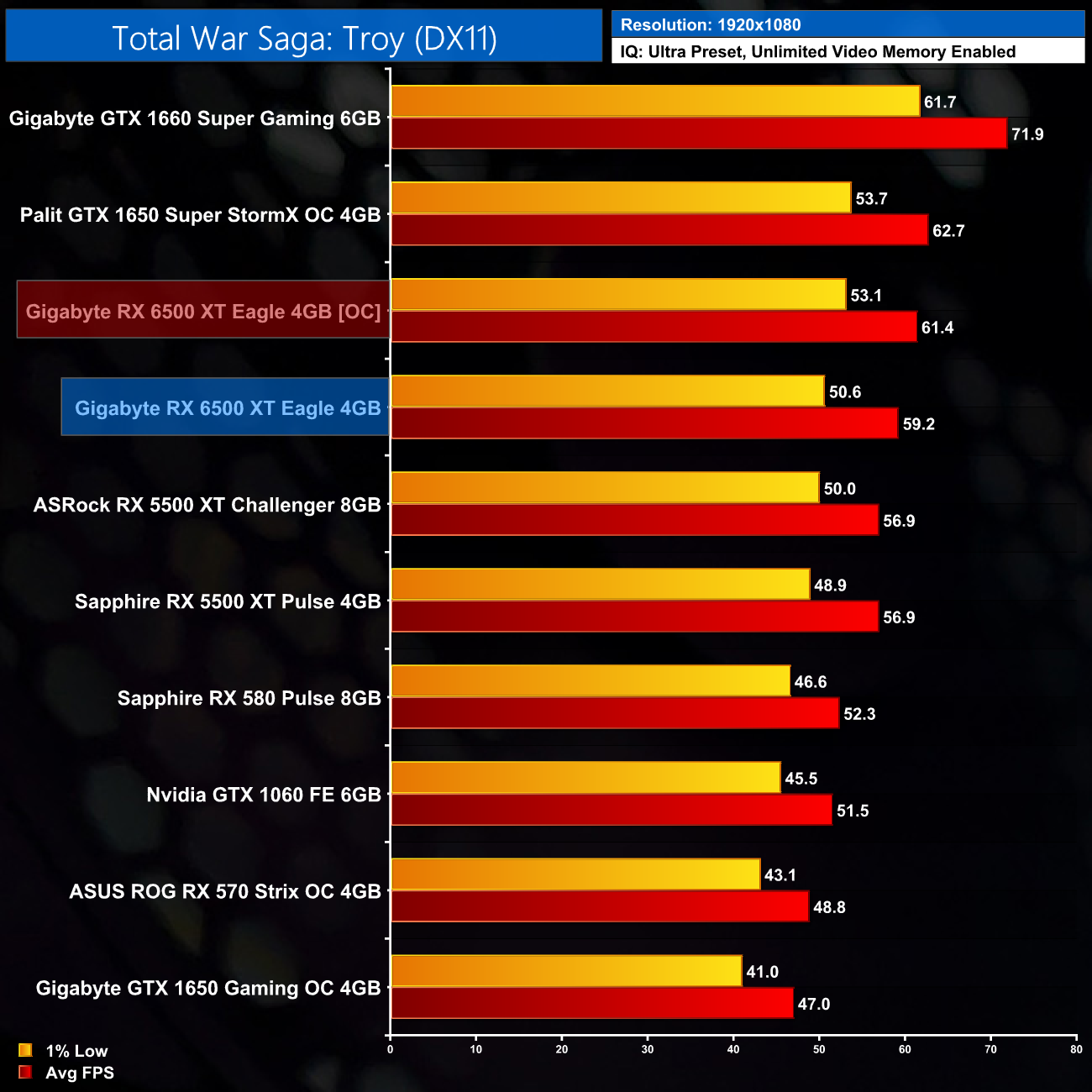
Performance didn't really increase by much at all as a result of this overclock, with the one exception being in Hitman 3.
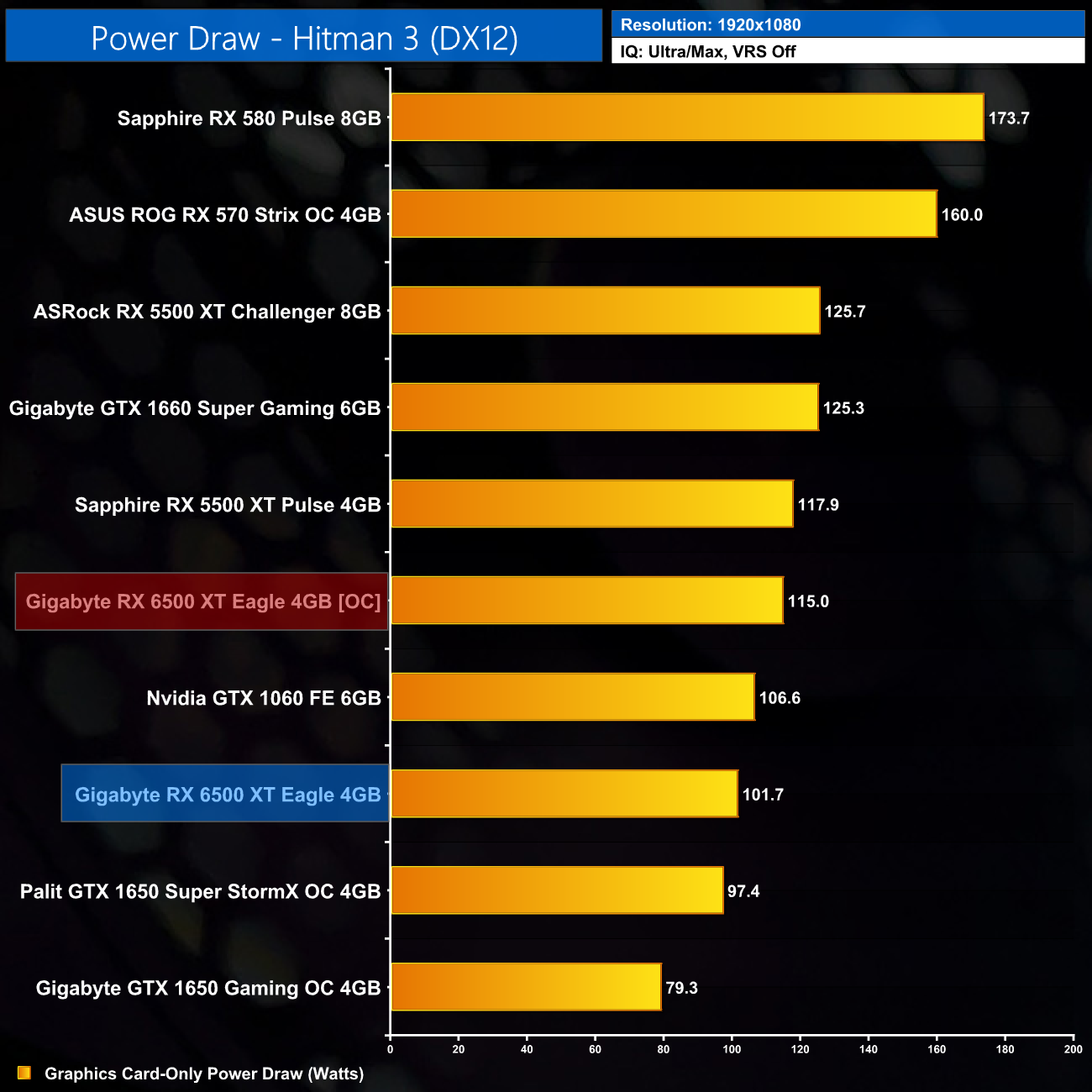
Power draw did bump up by around 14 Watts or so, however.
It has been an interesting few days testing AMD's RX 6500 XT graphics card. Using the new Navi 24 GPU, fabbed on TSMC's 6nm process, the RX 6500 XT is the lowest-end RDNA 2 desktop product that we have seen so far, targeting a $199 MSRP, or £179.99 for those of us in the UK.
However, after thoroughly testing this card, we can only come away feeling bitterly, bitterly disappointed with what AMD has brought to the market.
That starts with the overall performance. Designed as a 1080p card, across the twelve games we tested, the RX 6500 XT proved slower than the GTX 1650 Super and only fractionally (less than 4%) faster than the RX 5500 XT 4GB and RX 580 8GB – the results being so close we would call them functionally the same. That alone is pretty shocking, that 1080p gaming performance hasn't advanced since the RX 580 from 2017. But it gets worse.
The thing is, that data comes when testing the card on a PCIe 4.0 interface. The 6500 XT is a PCIe 4.0 card, so that testing is valid. However, as a $199 1080p graphics card, I would say the majority of people who would buy such a product are likely on a PCIe 3.0 platform. And given the RX 6500 XT features just four PCIe lanes, gaming performance is significantly reduced when tested with PCIe 3.0.
On average, the RX 6500 XT is 17% slower on PCIe 3.0 than it is on PCIe 4.0, but games including Forza Horizon 5, Cyberpunk 2077, Horizon Zero Dawn and Resident Village all saw performance drops of over 20%. In fact, Hitman 3 was the only game we tested where changing the PCIe bandwidth to Gen3 made next to no difference.
The consequences of this are dire. Such a crippled PCIe interface means, for those with a PCIe 3.0 platform, that the GTX 1060 6GB is actually faster on average than the RX 6500 XT, while the RX 570 offers equivalent average frame rates, but often provided more stable 1% lows. In other words, on a PCIe 3.0 interface, the RX 6500 XT is worse than AMD's $169/£165 product from 2017.
It might sound surprising off the back of that, but I actually think that elements of RX 6500 XT GPU – the 16 compute units, 1024 stream processors and super-high clock speeds – are actually OK. Not a step forward or particularly good, but OK. With that in mind, I would suggest it is a number of very questionable decisions AMD made which really rendered this card dead on arrival.
Of course, we touched on the PCIe interface issue, but 4GB of VRAM in 2022 is also completely unacceptable, along with an exceptionally narrow 64-bit memory interface. I have never seen a desktop ‘gaming' card use such a narrow memory bus, and certainly not at this price-point.
On the topic of the VRAM capacity however, this deserves some further attention as I do believe AMD is really insulting the enthusiast audience. That's because the issues with the PCIe interface and VRAM capacity are very much linked – if the RX 6500 XT had 8GB VRAM, the GPU wouldn't have to offload as much data back and forth across the PCIe interface, which is what hurts performance as a result of the 4-lane limitation (and that is exacerbated on PCIe 3.0).
But despite that, AMD is somehow claiming that 4GB of VRAM is ‘optimized' and is a ‘really nice frame buffer size'. It is utter nonsense and completely dishonest, not to mention exceedingly hypocritical considering AMD itself wrote, in June 2020, that ‘4GB of VRAM… is evidently not enough for todays games.' In fact, as I went to access the blog post today where those words were written, we found that post is no longer live on the AMD website – a truly terrible look for AMD on the launch day of the RX 6500 XT.
All we can say in closing is – please don't buy this graphics card. If you know anyone thinking about buying it, tell them to wait, or get something else. At the expected retail prices once the initial batch of MSRP cards has sold out, consumers would be getting both a cheaper and overall better product by purchasing the six year-old RX 480 than AMD's newest graphics card, something which can only be described as an utter travesty, and frankly, an insult to gamers.

AMD told us RX 6500 XT cards will be available at the SEP from Overclockers UK, eBuyer and Scan. We have been told by other sources to expect significantly higher prices once the initial batch is sold out.
Discuss on our Facebook page HERE.
Pros
- Very high clock speed.
- Low power draw (but still requires 6-pin connector).
Cons
- Performance on PCIe 4.0 is no better than the RX 580, GTX 1650 Super or RX 5500 XT.
- Performance on PCIe 3.0 is worse than the GTX 1060 and RX 570.
- Only 4GB VRAM.
- 64-bit memory interface.
- Less efficient than GTX 1650 Super.
- Only two video outputs.
- No H.264 or H.265 video encode.
KitGuru says: Do NOT buy the AMD RX 6500 XT.