KitGuru KitGuru.net – Tech News | Hardware News | Hardware Reviews | IOS | Mobile | Gaming | Graphics Cards


CINEBENCH R15 is a cross-platform testing suite that measures hardware performance and is the de facto standard benchmarking tool for leading companies and trade journals for conducting real-world hardware performance tests. With the new Release 15, systems with up to 256 threads can be tested.
CINEBENCH is available for both Windows and OS X and is used by almost all hardware manufacturers and trade journals for comparing CPUs and graphics cards.
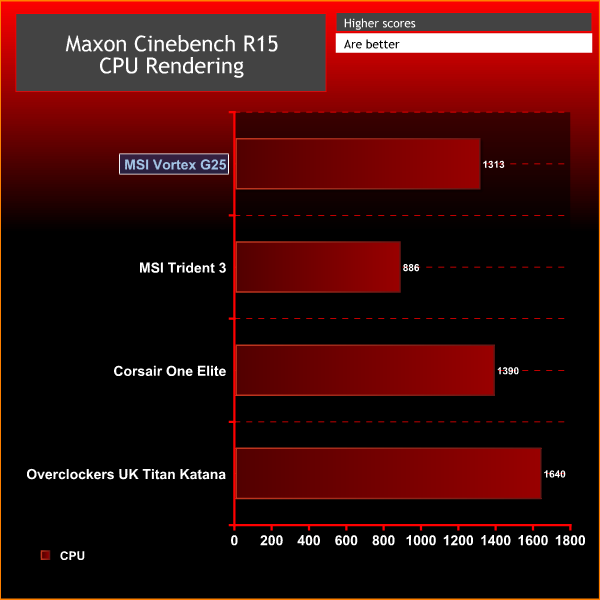
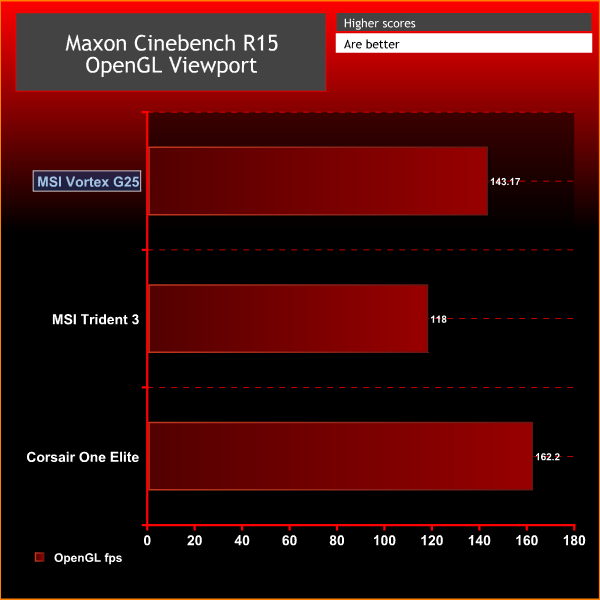
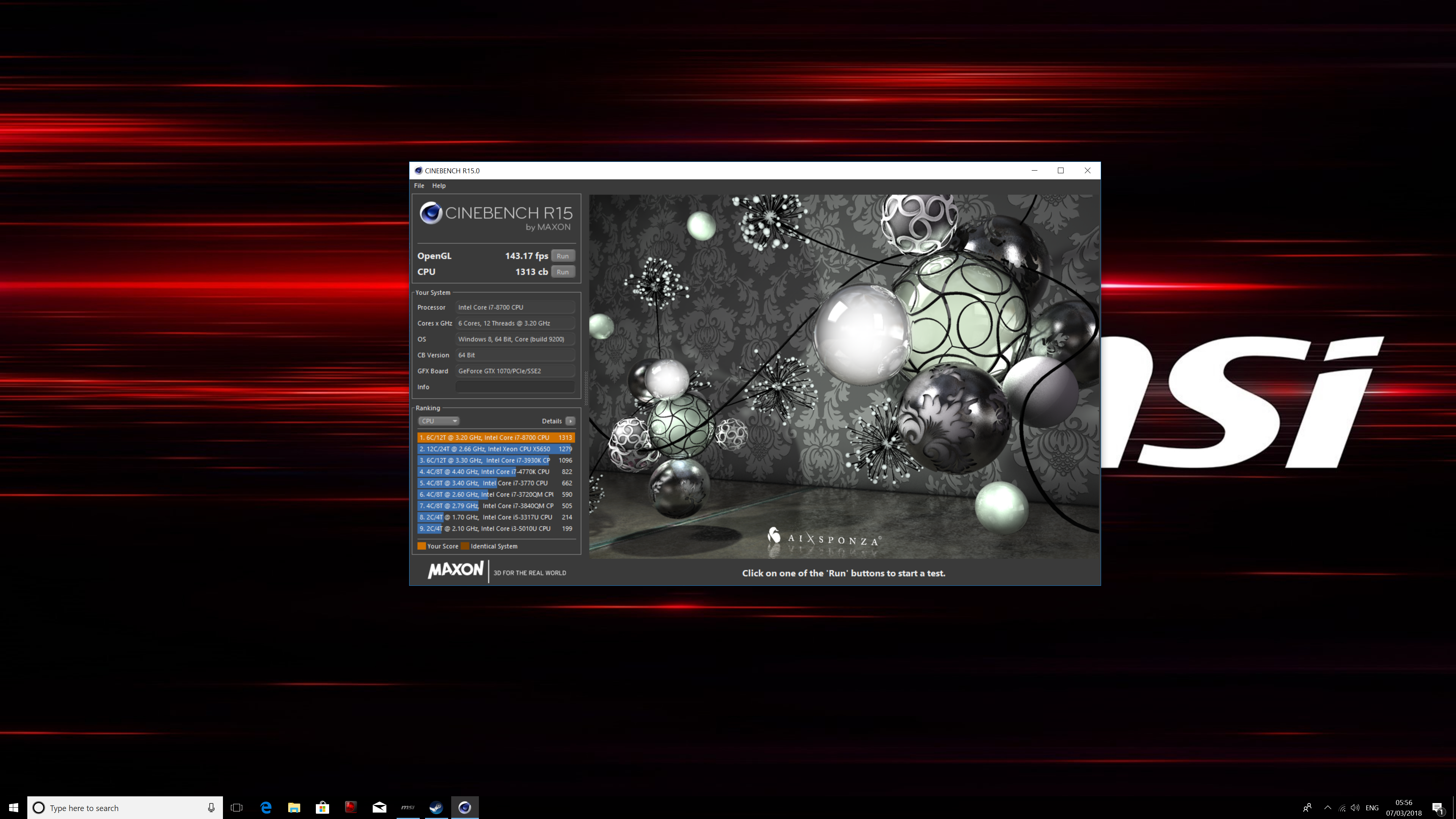
The current-generation Core i7 chip inside the MSI may not be overclocked, but its result of 1,313cb easily outpaces the i7-7700K chip inside the MSI Trident 3 – that rig only scored 886cb.
That’s the difference made by two extra cores, and that improvement bodes well for multi-tasking and multi-threaded applications. It also means that the CPU will avoid any games bottlenecks.
There’s also hardly any difference between the i7-8700 in the MSI and the i7-8700K in the Corsair machine.
However, AMD machines with eight cores are noticeably faster, with scores that head beyond 1,600cb. That won’t make a big difference in games, but if you want to run productivity tools or use this machine for work then you’ll get more out of those rigs.