 KitGuru KitGuru.net – Tech News | Hardware News | Hardware Reviews | IOS | Mobile | Gaming | Graphics Cards


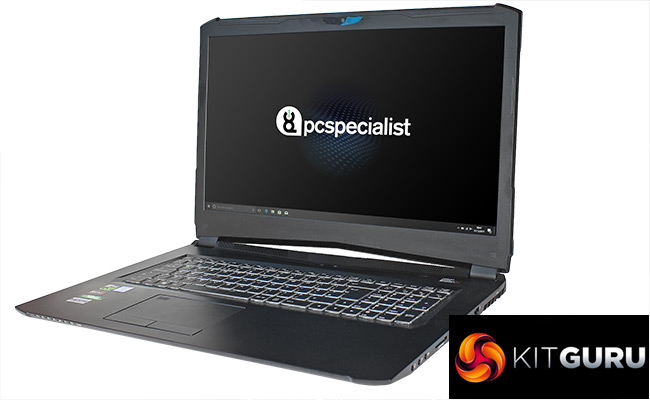
The PC Specialist Defiance IV is a large, subtle gaming laptop that eschews extravagant features for solid specifications and a low price – but can this £1,399 machine outpace rivals that offer more glamour?
It certainly gets off to a good start – at least when it comes to the components. The GTX 1070 is one of the world’s most popular graphics chips, and it’s paired with a familiar Core i7 processor. There’s the usual 16GB of memory alongside an SSD and a hard disk.
It’s got a 17.3in screen, too, so it’s got the size advantage over many smaller notebooks – and the screen can rattle through the frames at 120Hz, which means gaming will appear smoother than on panels that rely on lesser refresh rates.
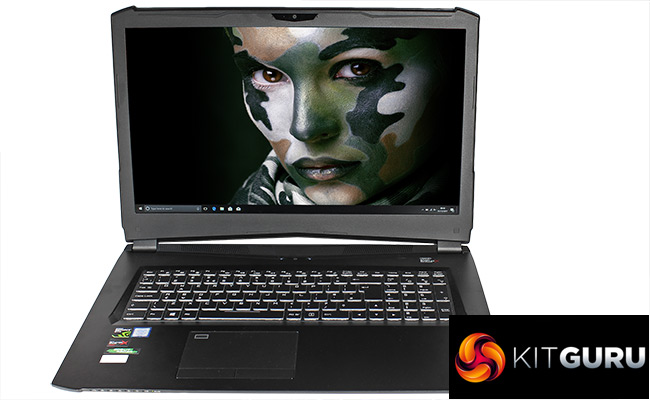
Specifications:
- OS: Windows 10 64-bit
- CPU: Intel core i7 7700HQ (2.8Ghz – 3.8GHz)
- Display: 17.3” 120Hz Full HD LCD in LED backlight 1920×1080 16:9
- Memory Supplied: 1 x 16GB
- Memory Type: DDR4
- Memory Speed: 2133
- Max Memory Support: 32GB
- Graphics Chipset: nVidia GeForce GTX 1070
- Graphics Memory: 8GB GDDR5
- Storage: 256GB M.2 SSD
- Keyboard Type: Chiclet
- 1 Ports: 5
- HDMI Port(s): 1
- Microphone/headphone Jack(s): 3
- Card Reader: SD (XC/HC)
- Audio: 2.0 sound by Realtek
- Wireless LAN – Intel 2×2 802.11ac
- Bluetooth: V4.2
- Webcam: Full HD type (30fps@1080p)
- Warranty: 3yr Labour w/ 1mth C&R, 1yr parts
Total cost £1,399 inc vat
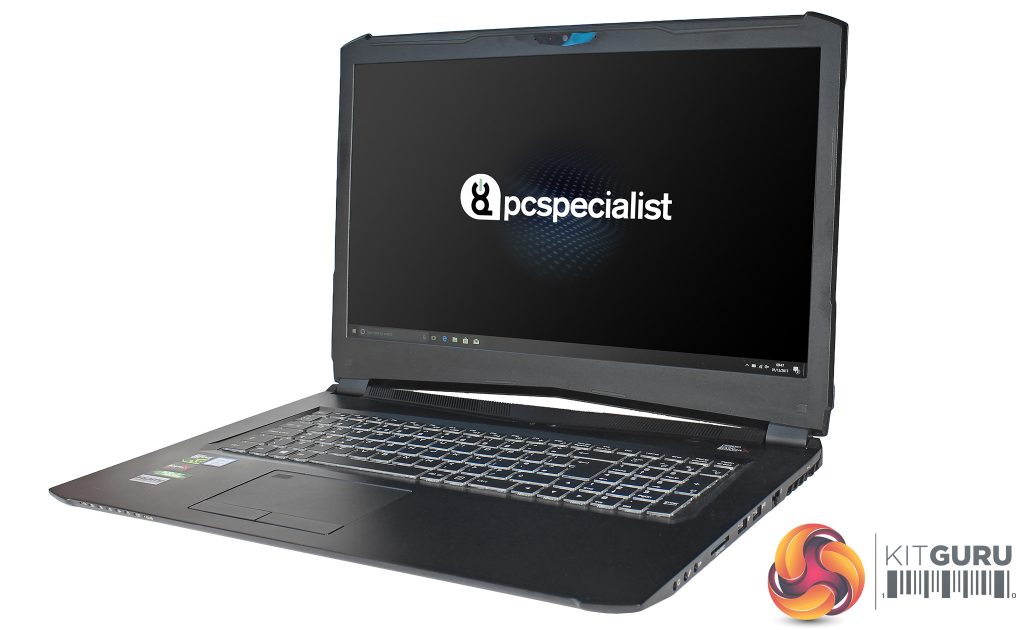
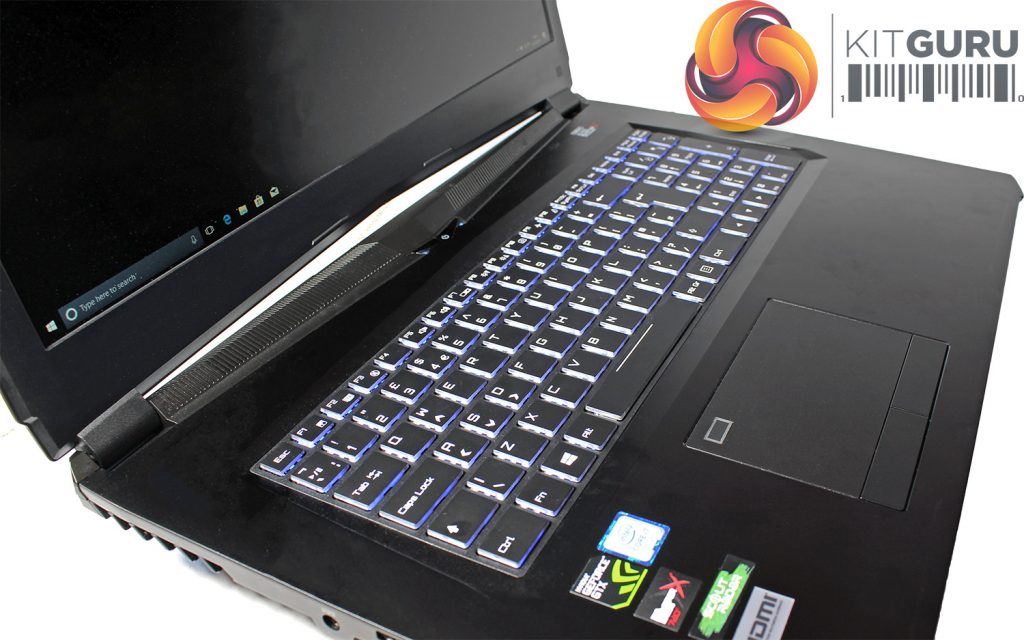
The laptop doesn’t look like much at first glance. It doesn’t have a PC Specialist logo on the lid or below the screen, and the only lighting can be found beneath the keyboard.
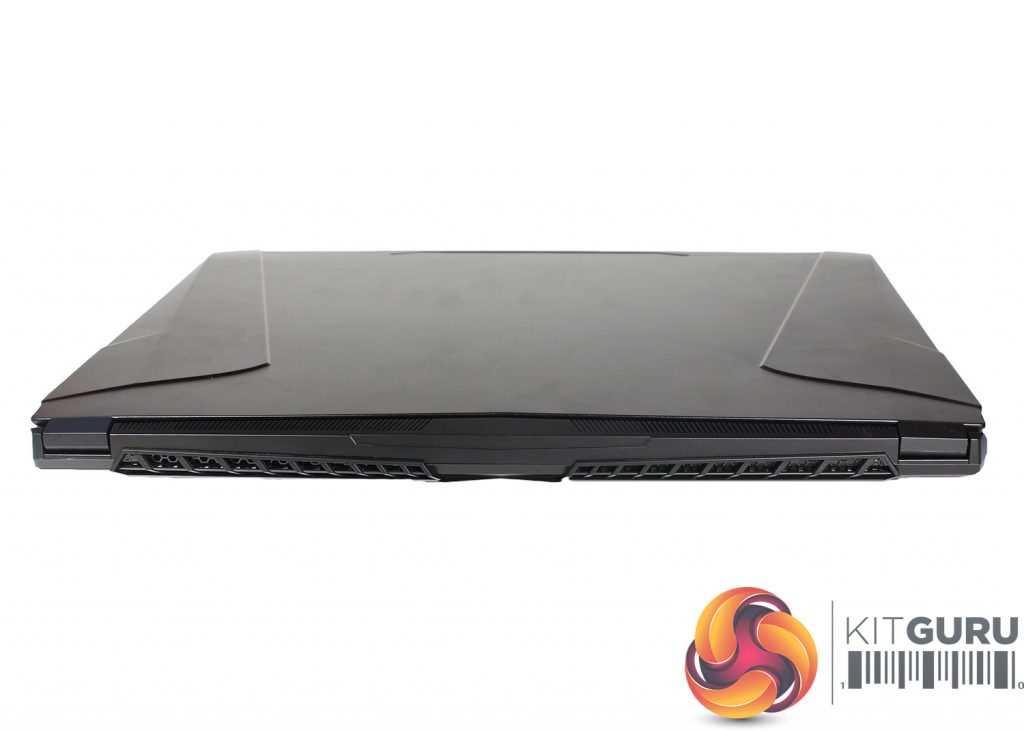
The angled power button is surrounded by modest speaker grilles, and hot air is ejected through subtle vents at the rear of the unit. The entire system is made from plain black metal and plastic.
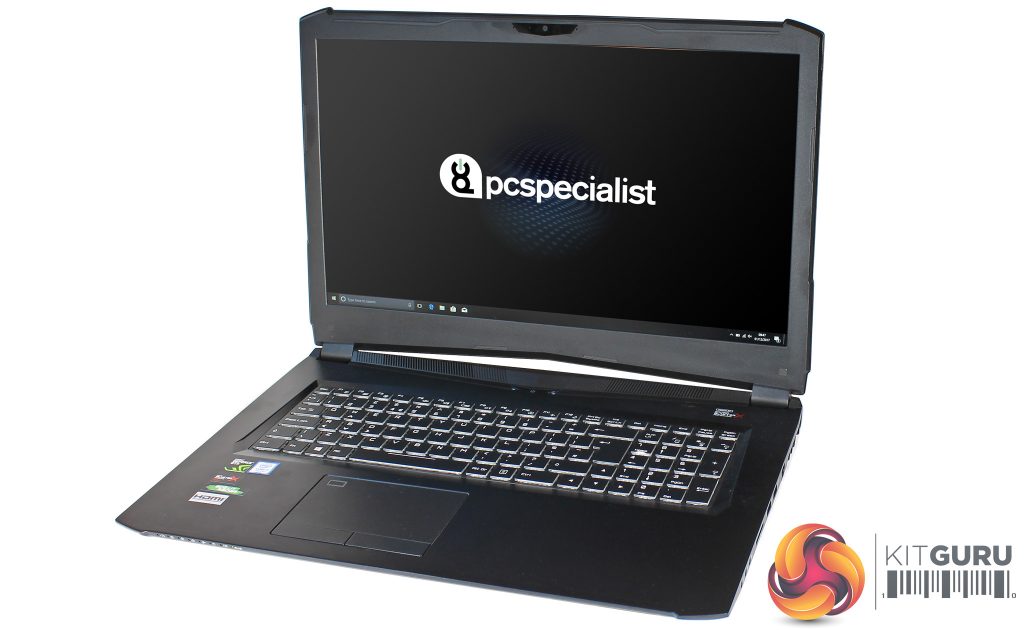
The Defiance isn’t as loud as some laptops – the Asus ROG Strix Scar GL703VW has more obvious logos, and its metal is coated with a carbon-fibre finish. The only real decoration is a row of branding stickers on the left-hand side of the wrist-rest, and we’d have them off as soon as we got the Defiance out of its box.
The PC Specialist pairs its underwhelming looks with solid build quality. There’s barely any give in the area around the keyboard, and the base panel is similarly sturdy. The screen feels a bit flimsier, but we tugged it back and forth and the desktop itself never distorted. Its thickness of 25mm is reasonable, too; many other 17.3in gaming laptops are much chunkier.
It’s a 3kg machine, though, so you’ll notice it when you’re carrying it around in a bag. And, as with any laptop, we’d always recommend using a protective sleeve to avoid scuffs or scratches. The size is similar to the Asus, which is only a few grams lighter.
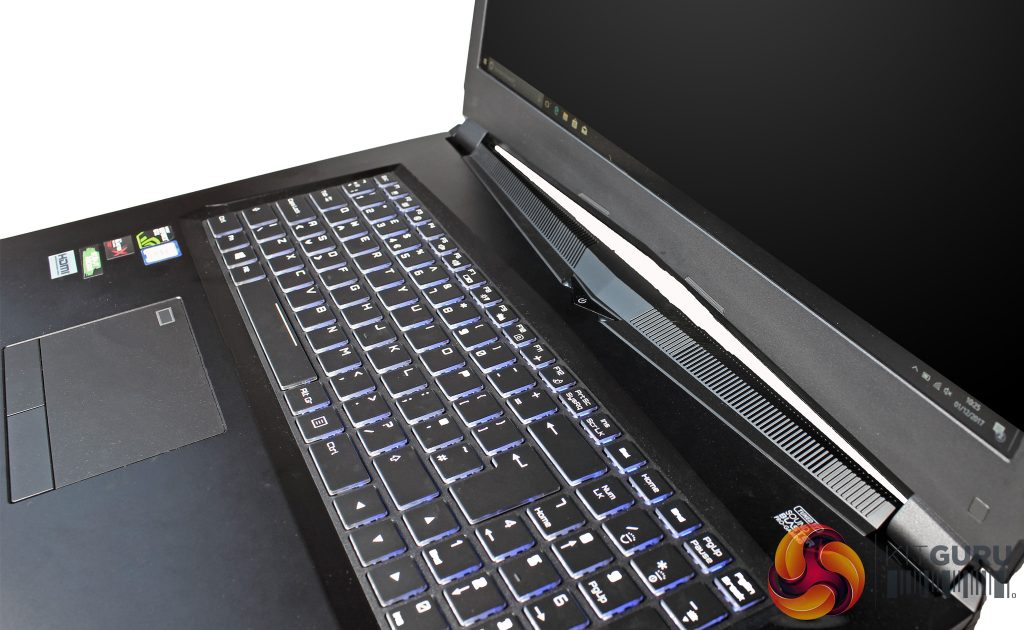
This isn’t a machine that dabbles in decoration – instead, it concentrates on the practical aspects. It’s got four USB 3 ports and a USB 3.1 Type-C connection and two mini-DisplayPort outputs alongside an HDMI port – so plenty of scope for attaching a VR headset. It’s one of the only laptops we’ve seen with three audio jacks, and it’s got a card reader too.
It’s possible to get inside this machine, although it does require removing plenty of screws and tugging hard at the base panel.
Once it’s off, you can get to the storage, the memory slots, the battery and the cooling hardware, so it’s an easy laptop to manage and potentially upgrade.
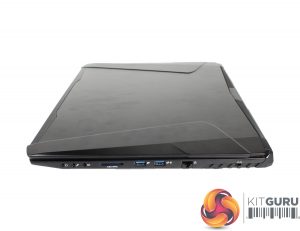
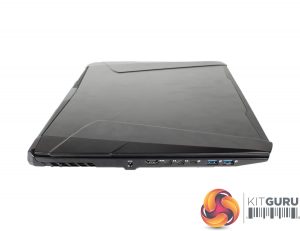
The PC Specialist is subtle, solid and versatile when it comes to hardware, but there’s not much software. We’re used to seeing big-brand machines with apps to modify their lighting, clock speeds, networking and screen modes, but there’s none of that here.
Instead, you get PC Specialist’s Control Centre app, which handles the keyboard’s RGB LEDs and the machine’s fan controls – but that’s it.
Of course, some people may prefer to have a laptop that isn’t cluttered with extraneous applications, but that’s down to personal preference.
The key gaming part is the GTX 1070. It’s one of the Nvidia’s beefier mobile parts, and there’s no sign of the low-power Max-Q edition here – PC Specialist has used the full-fat chip. That means you get 2,048 stream processors, a 1,442MHz base clock and a mighty 8GB of dedicated memory.
It’s also a step beyond the Asus ROG Strix Scar, which was a more expensive machine that relied on a weaker GTX 1060 chip.
The GTX 1070 sits alongside the familiar Core i7-7700HQ processor. It’s a quad-core chip with Hyper-Threading, so it’s got the chops for multi-tasking, and its 2.8GHz base speed can accelerate to 3.4GHz across all of its cores, or 3.8GHz on one core.
The processor doesn’t use the latest Coffee Lake architecture, but that’s fine – Kaby Lake is still easily good enough for gaming and work tasks. The PC Specialist will never feel slow, and it’s also the same chip that was used in the rival Asus.
The 256GB Samsung PM961 SSD is another familiar component, and it’s bolstered by a 1TB hard disk – so there’s plenty of room for games.
Sadly, though, the memory is a little underwhelming. We have no problem with the 16GB capacity, but the 2,133MHz speed is the bare minimum – and it’s single-channel, which means performance will suffer when compared to more conventional dual-channel arrangements.
It’s especially disappointing, because PC Specialist’s configurator indicates that there’s hardly any price difference between single- and dual-channel memory in this laptop.
Connectivity is conventional. There’s Gigabit Ethernet, Bluetooth and dual-band 802.11ac wireless, which is fine – but there’s no sign of Killer networking or any of the other beefed-up hardware that we see on other gaming laptops. To get that, you’ll have to pay extra.
The benefit of buying from a firm like PC Specialist is a huge amount of customisation – more than you’d get with any big-brand laptop builder.
It’s possible to save £181 by dropping down to a GTX 1060 graphics chip, which has half as many stream processors as the GTX 1070, and 2GB less dedicated memory.
There are more than a dozen DDR4 memory configurations, from affordable 4GB options to monster 32GB arrays. There are even more storage options: you can kit out this machine with dual SSDs or huge hard disks, or save money here with a smaller, slower drive.
Better networking, beefier power packs, and even better thermal paste are available on this machine.
The machine is covered by PC Specialist’s standard warranty, which is a three-year labour deal with a year of parts coverage. That’s better than the warranties offered with most other notebooks, and it can be upgraded to deals with longer periods of parts coverage and collect-and-return service.
The 17.3in screen has a 1080p resolution, which is fine – although it hardly pushes the envelope,
Instead of adding extra pixels, the PC Specialist’s screen has an improved refresh rate. This panel runs at 120Hz, which is twice as quick as most laptops. That means the screen can keep up with games running at up to 120fps, which means smoother gameplay – ideal for esports in particular, where added speed can mean the difference between victory and defeat.
The screen uses TN technology, which means several pros and cons. They’re usually the best for gaming, because they have the best response times.
However, TN panels often suffer when it comes to colour accuracy and viewing angles. If response time is key, that’s less of an issue – but it’s not ideal if you’re after an all-round panel.
We had no issue with the screen’s response times or refresh rates, which is good for gaming, and the PC Specialist’s panel is certainly bright enough – its backlight level of 282cd/m2 is ample enough for bright lights and even the outdoors.
The PC Specialist’s TN panel paired the good brightness level with a great black level of 0.2cd/m2. That’s lower than most laptops, and it means that darker areas in games and movies will look truly inky. They combine for a contrast ratio of 1,410:1.
That’s also better than most gaming notebooks, and it helps create bright, light shades and subtle colour variations, with no banding or obvious gradients.
TN screens suffer when it comes to colours, though. Its average Delta E of 6.5 is poor, and its Gamma measurement of 3.47 is a long distance from the ideal result of 2.2. Both of those figures mean that colours won’t be entirely accurate, despite this panel’s 99% sRGB coverage ratio.
Games and movies will look fine, despite that, but this screen is certainly not suitable for colour-sensitive work. The screen’s viewing angles aren’t great, with clear distortion if you move your head to the side or on a vertical axis, and the screen lost a middling 11% of its backlight strength in the corners.
The PC Specialist’s screen doesn’t have the colour accuracy for work, but it’s got the colour coverage, contrast and response times to prove good for gaming – especially for esports.
The speakers are fine, with ample volume and a clear high-end and mid-range, but the bass is a little underwhelming. They’re good enough for gaming and movies, but not fantastic.
The keyboard is a conventional chiclet unit that offers solid quality. The base is sturdy, and the buttons move with a reasonable amount of travel and a consistent action – they never feel weak or hollow. They’re quiet, and the layout is good, with a number pad and a double-height return key.
That said, chiclet keyboards are better for typing and for casual gaming, and for high-end titles or esports we usually prefer a mechanical unit or a more traditional laptop keyboard.
The trackpad is solid, too. The surface is smooth and responsive, and the buttons are reliable and fast. They push down a little further than a proper gaming mouse, but they’re decent – only the twitchiest of gamers will want to defer to a USB rodent.
To test the PC Specialist Defiance IV, we have pushed it through our standard array of benchmarks and tests. We have tested CPU performance, GPU performance, drive performance, thermals, power usage and battery life to give a comprehensive view of the laptop.
Here are the benchmarks you can expect to find in this review:
- Cinebench R15
- CrystalDiskMark
- 3DMark Fire Strike
- 3DMark Fire Strike Extreme
- 3DMark Time Spy
Given that this laptop does have a discrete GPU inside, we also tried some 1080p gaming at high settings on:
- Deus Ex Mankind Divided
- Rise of the Tomb Raider
CINEBENCH R15 is a cross-platform testing suite that measures hardware performance and is the de facto standard benchmarking tool for leading companies and trade journals for conducting real-world hardware performance tests. With the new Release 15, systems with up to 256 threads can be tested.
CINEBENCH is available for both Windows and OS X and is used by almost all hardware manufacturers and trade journals for comparing CPUs and graphics cards.
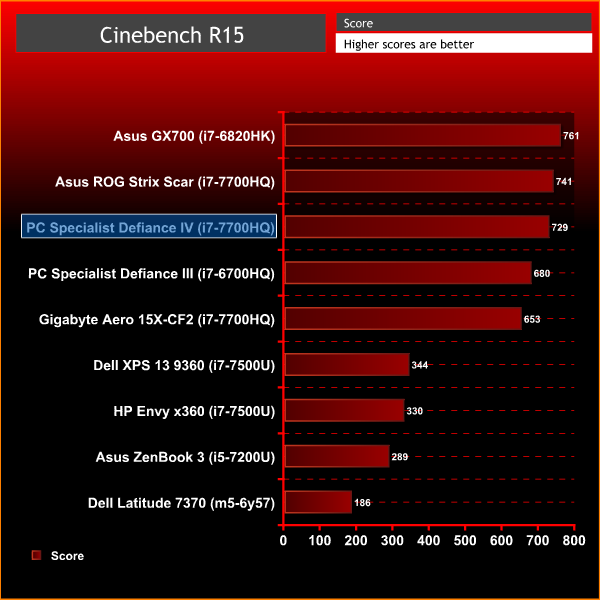
The PC Specialist’s Cinebench multi-core result is among the best around, but it’s still a tad slower than the Asus machine.
That rival laptop may have had a weaker GPU, but it did have dual-channel memory, and that’s what makes the difference in such a close application test.
Nevertheless, the PC Specialist’s score is still good, so we’re not concerned about it bottlenecking games or struggling with other software.
Here we test the PC Specialist Defiance IV‘s storage performance, using CrystalDiskMark 5.1.1.
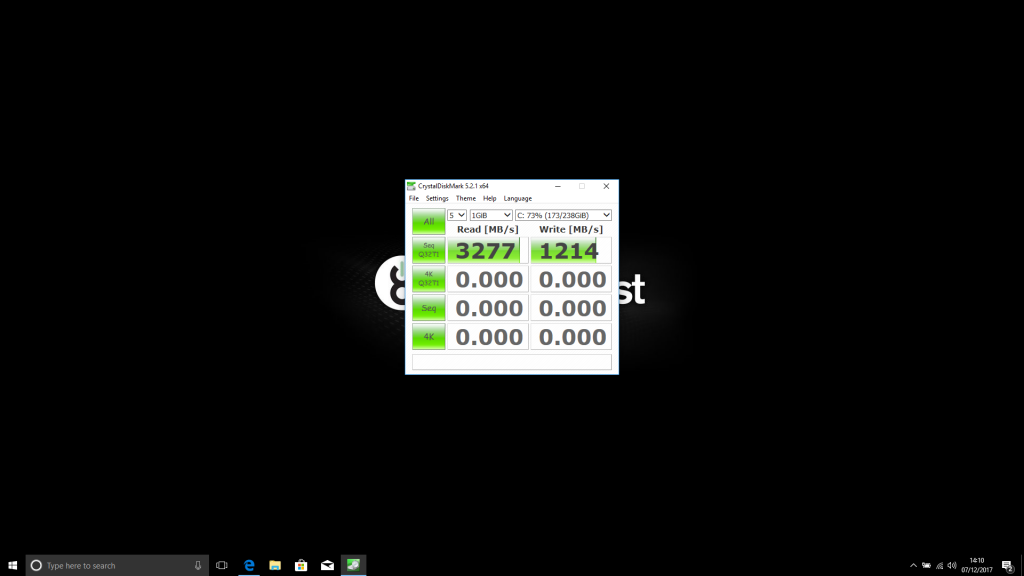
Samsung always produces great SSDs, and there’s no surprise here from the PM961 drive used in this machine. Its sequential read speed of 3277MB/s is great, and not far off Samsung’s best consumer drives, and its write pace of 1214MB/s is fine.
There won’t be any storage issues on this machine – application loading speeds and boot times will be fine. There’s plenty of space to store games, too, thanks to the 1TB hard disk.
For this test, we ran the PC Specialist Defiance IV through Time Spy, Fire Strike and Fire Strike Extreme. We have listed results for the overall score, the CPU only score, the GPU-only score and physics.
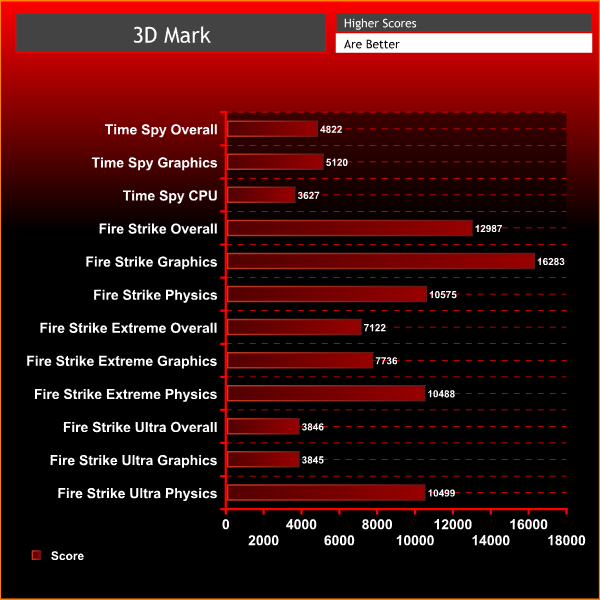
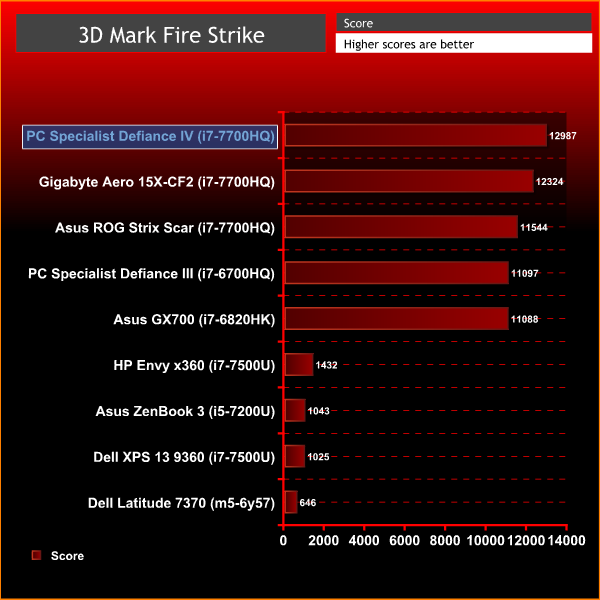
The GTX 1070 is a capable GPU that delivered great results in most of the 3D Mark tests.

Its Fire Strike result of 12,987 is more than 1,000 points ahead of the Asus ROG Strix Scar, which is no surprise – the GTX 1070 is a clear step ahead of the GTX 1060 inside the Asus machine.
The GTX 1070 doesn’t quite have enough power to enable smooth outputting to 4K screens or VR headsets without compromising on quality, but these test results indicate that it’ll handle anything on its 1080p screen without breaking a sweat.
The PC Specialist Defiance IV comes with a discrete graphics chip in the form of Nvidia’s GTX 1070. For our tests today, we have ran Deus Ex: Mankind Divided and Rise of the Tomb Raider on this laptop. We used 1080p resolution both times and used the highest available graphics settings while running each game’s in-built benchmark.
The GTX 1070 is a fantastic chip for 1080p gaming – as our benchmarks demonstrate.
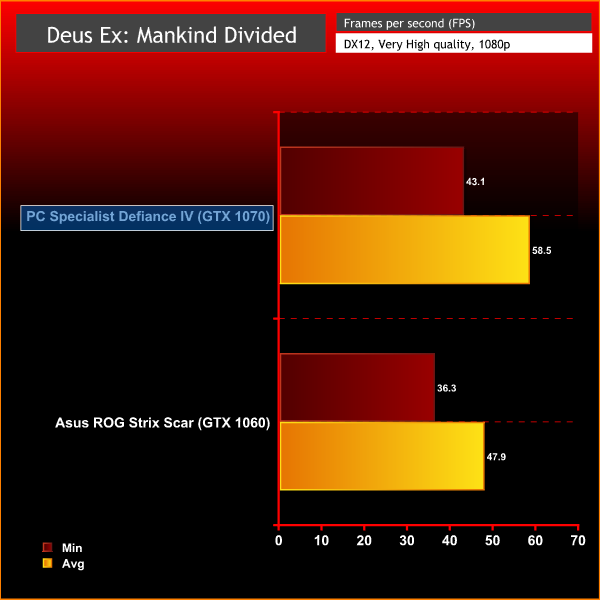
With Deus Ex running at its High settings the PC Specialist delivered a solid average of 60.9fps, and that figure only dropped by about five frames when we moved the graphics settings to Very High and Ultra. Minimum framerates are good, too, ranging from 48.1fps to 37.6fps – so gaming will always be smooth, even in frenetic moments.
As expected, that’s a step above the Asus, which returned an average that was more than ten frames slower in the Very High benchmark.
It’s a similar story in Rise of the Tomb Raider. The PC Specialist’s averages hit at least 60.9fps, so gameplay will always run well – although its minimums hovered around the 30fps mark, so there might be the occasional slowdown in frenetic moments.
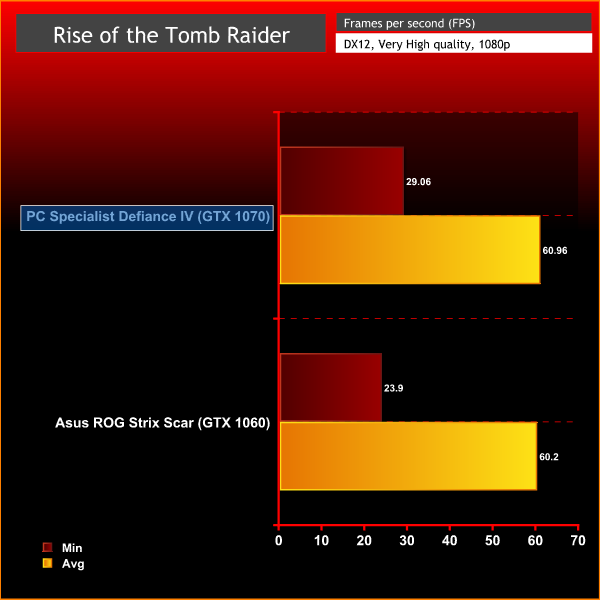
These results are great for 1080p gaming, but they do call the 120Hz screen into question: that panel will only look at its best when games average nearer to 120fps, and neither of our test titles could manage it.
Of course, those higher framerates can be achieved by graphical tweaks – if you’re happy to drop graphics settings to get higher, smoother playback in particularly challenging games, that’s your call.
And, happily, the GTX 1070 will run every popular esports game at 100fps or beyond, so they’ll look particularly smooth on the 120Hz panel. That’s important, when smooth, consistent framerates can be important for wins in competitive titles. It’s just a shame that G-Sync isn’t included to keep those framerates and screen refresh rates coordinated.
To measure idle temperatures, a reading was taken after having Windows open on the desktop for 30 minutes. A reading under load was taken with Prime 95’s SmallFFt test running alongside 3DMark Fire Strike.
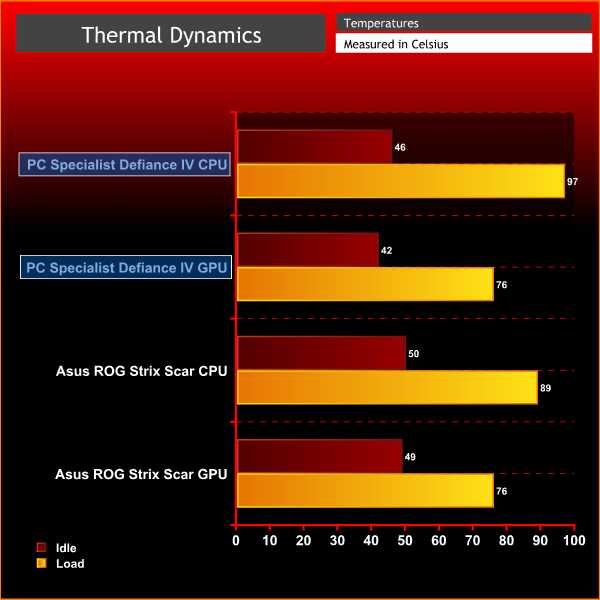
We had no problem with this machine when it’s idle or running low-intensity tasks. It’s virtually silent, and its temperatures were fine – neither the CPU or the GPU got beyond 46°C or 42°C.
It was fine during work applications, too. The fans ramped up a tiny bit and the processor peaked at temperatures in the mid-60s, but none of the heat made its way to the outside and the noise was never intrusive.
However, gaming tests pushed the PC Specialist harder – and created more heat and noise. The fans were more noticeable here, the keyboard became a little warmer, and the area above the keyboard – presumably where the graphics chip is located – was almost too hot to touch.
Adding a processor stress-test saw the noise remain consistent, but that area above the keyboard was even hotter.
The heat above the keyboard is a slight issue, and the processor’s peak temperature of 96°C is about as hot as we’d want to go – but these problems only appeared during system-wide stress-tests, and those are not necessarily normal operating conditions for a gaming laptop.
During gaming, the PC Specialist was better – it’s quieter than the Asus, and its components remained cool.
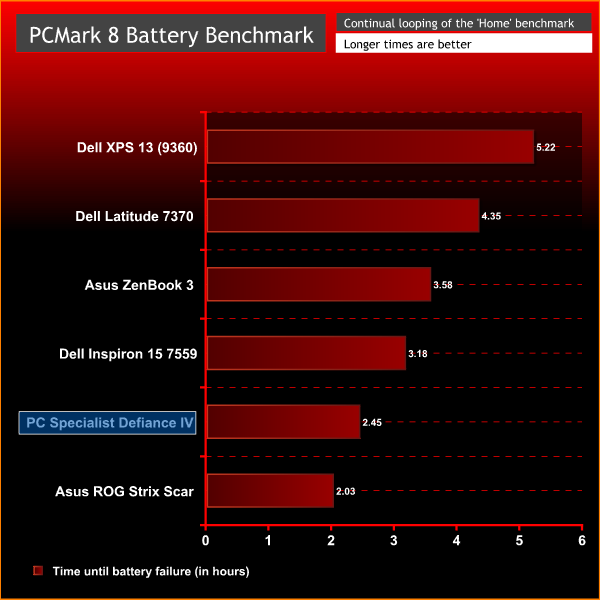
There were no surprises in battery benchmarks. The PC Specialist has a four-cell battery, which lasted for two hours and 45 minutes in our PC Mark 8 test.
That’s an entirely conventional result that falls behind most of the consumer laptops on the market. Pleasingly, though, it’s 42 minutes more than the Asus could manage in the same test.
If you’re gaming, expect a little more than an hour from the PC Specialist – so make sure you’re not far from a plug socket.
The PC Specialist Defiance IV system may look blander than most of its gaming rivals, but there’s a lot to like beyond the subtle exterior design.
The GTX 1070 graphics core is a great chip that’ll handle anything at this machine’s 1080p resolution, and it’s a clear step ahead of the GTX 1060 installed in the Asus ROG Strix Scar.
The Core i7 processor is great and the storage is solid, too. We’re a little disappointed to see slow single-channel memory in this machine, although we’re relieved that it can be easily changed for little extra cash in PC Specialist’s configurator.
In fact, that’s one of this machine’s main strengths: most of the main components can be changed to save money or beef up the Defiance. That’s something you won’t get with the Asus or any other big-brand rival.
Elsewhere, the PC Specialist has a screen that has good contrast and response times, even if its colours aren’t great, and the speakers are similarly fine. Ergonomically, it’s solid too – the keyboard has good consistency and travel, and the trackpad is responsive enough for casual gaming. Anyone who’s serious will use a USB mouse anyway.
The PC Specialist isn’t the slimmest, lightest or best-looking gaming notebook around, but few other machines offer this much power for £1,399 – the Asus machine had a weaker graphics chip for more cash, for instance. If you’re not fussed about frippery and want to spend your cash on power instead, it’s well worth consideration.
The model we’ve reviewed here is available from PC Specialist for £1,399 HERE.
Discuss on our Facebook page, over HERE.
Pros
- GTX 1070 is consistently fast in games
- Core i7 processor is fast and versatile
- Fast SSD and large hard disk
- 120Hz Screen offers good response times and contrast
- Decent chiclet keyboard with RGB backlighting
Cons
- Underwhelming aesthetic design
- Speakers are a little tinny
- Not much on-board software
- Single-channel memory
- A tad noisy and hot during tougher stress-tests
KitGuru Says: The PC Specialist Defiance IV isn’t a great-looking machine, but it has loads of gaming power, a solid screen and decent ergonomics. It’s got more customisation options than many of its rivals – and a lower price. It’s a great option if you want a no-nonsense gaming notebook.


Low carbon economy is here.
cool specs look okay
Gonna have to install a hard drive or second large cappacity SSD for main storage of game libraries. 256GB aint jack for storage space anymore.
uuuugh its a laptop !
This is one of many laptops based on the Clevo PA70HS chassis.
96c on a 7700hq? Looks like it needs a thermal paste replacement…
Didn’t you read? There’s already a 1TB HDD.
Must be a typo on front page then. Under storage in the list of specifications it only mentions the SSD not the hard drive.
I can’t find the laptop with these specs at the price given on here (£1,399). I have put the specs into the website and it is coming out at £1,544. Have I got it wrong or has the review?
It was me. The link wasn’t working correctly on my mobile device.