KitGuru KitGuru.net – Tech News | Hardware News | Hardware Reviews | IOS | Mobile | Gaming | Graphics Cards


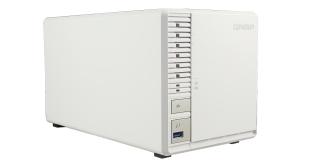
QNAP have long been champions of the 3-bay NAS, from entry-level models up to those with even 10GbE SFP+ connectivity. The latest model to join the clan is the TS-364, which comes with 2.5GbE support and a pair of M.2 NVMe slots. Price around the £450 mark, we put this NAS through its paces and find out what it is capable of.
The TS-364-4G is powered by either an Intel Celeron N5105 or N5095 quad-core CPU. Our review sample came with the N5105 (2.00GHz, burst up to 2.9GHz) fitted. The processor also provides an AES-NI hardware encryption engine and hardware-accelerated transcoding. The TS-364-4G comes with 4GB of DDR4-2666MHz memory as standard but if you feel the need for more memory then it's not a problem as the motherboard / CPU of the TS-364 supports up to 16GB of RAM via two SODIMM slots.
QNAP quotes Sequential throughput performance for the TS-364-4G as up to 271MB/s for reads and up to 251MB/s for writes. QNAP has also equipped the TS-364 with a pair of M.2 PCIe Gen 3 NVMe slots that can be used for storage pools, cache acceleration or Edge TPU for AI image recognition which is all good but on the downside, the slots only run at x2 speed.
QNAP back the TS-364-4G with a 2-year warranty but this can be extended up to 5 years by purchasing a warranty extension.
Physical Specifications
- Processor: Intel Celeron N5105 (2.00GHz, burst up to 2.9GHz).
- Memory: 4GB DDR4-2666MHz.
- Gigabit Ethernet Ports: 1 x 2.5GbE.
- Rear panel connectors: 2 x USB 3.2 Gen 2, 1 x HDMI 1.4b.
- Front panel connectors: 1 x USB 3.2 Gen1.
- RAID support: JBOD, RAID 0,1, 5.
- Cooling: 1 x 92mm.
- Drive Bays Supported: 3.
- Maximum hard drive size supported: 18TB.
- Maximum Capacity: 54TB (3 x 18TB, 20TB drive compatibility not listed) at time of writing.
- Internal File System support: EXT4.
- Dimensions (D x W x H): 260 x 150 x 142mm.
- Weight: 1.64kg.
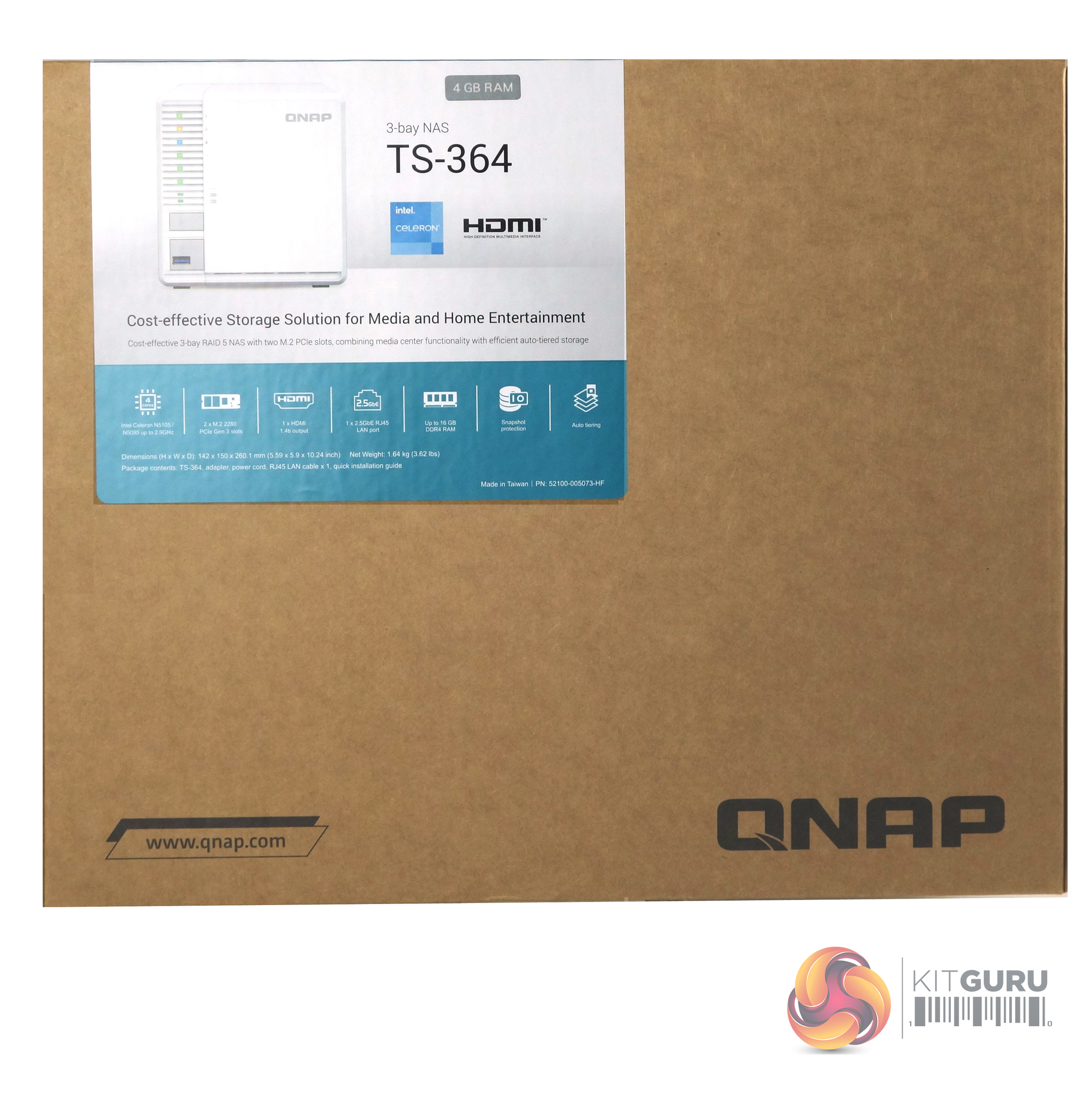
The TS-364 comes in a compact box with an image of the drive on the front label. A sticker on the top right of the label displays the amount of memory the unit comes with (4GB). Under the image is a couple of lines of text about what the NAS can do and under this is a row of icons listing some of the TS-364’s features; Quad-core CPU, 2 M.2280 slots, 1.4b HDMI output, 2.5GbE, supports up to 16GB of DDR4 memory, Snapshot protection and auto-tiering.
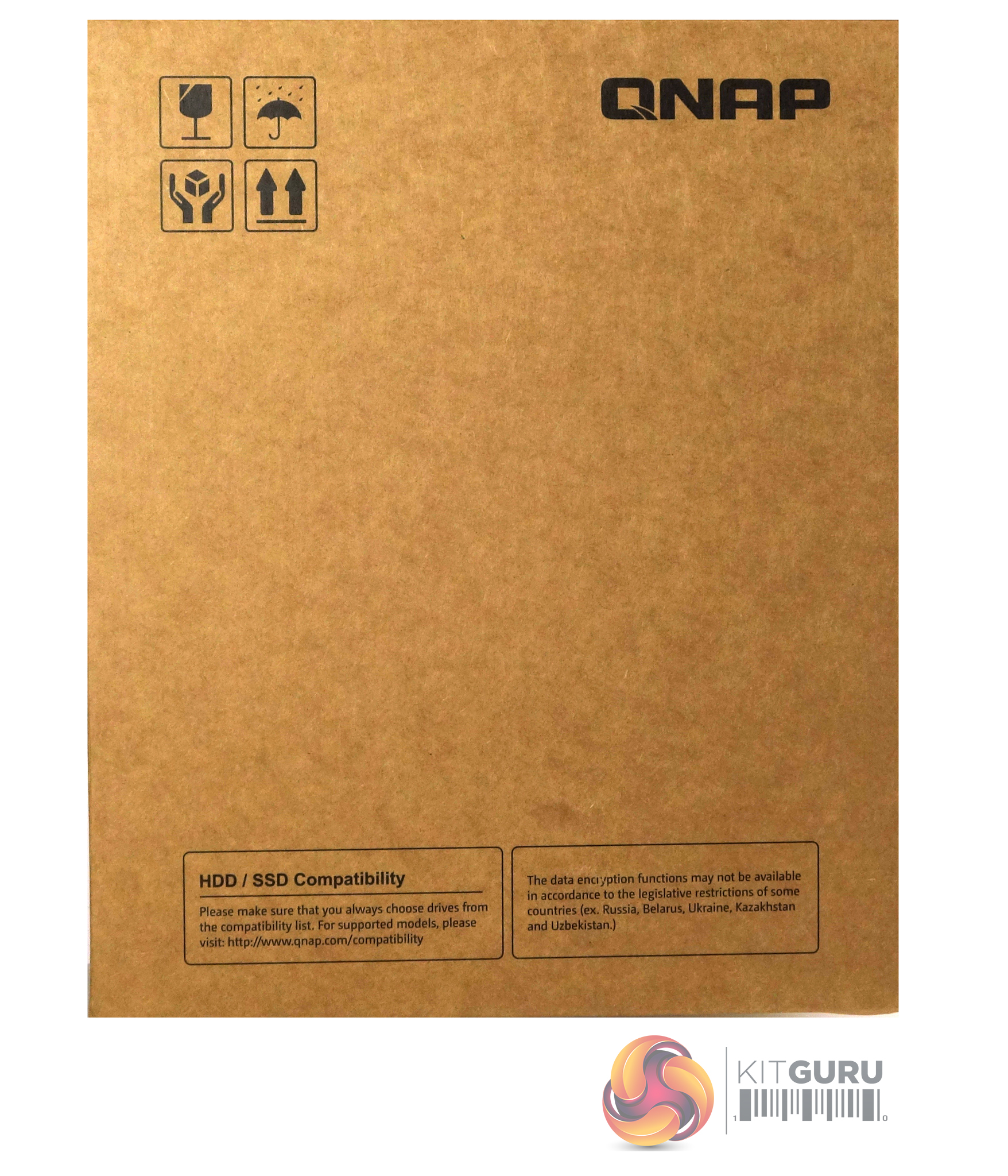
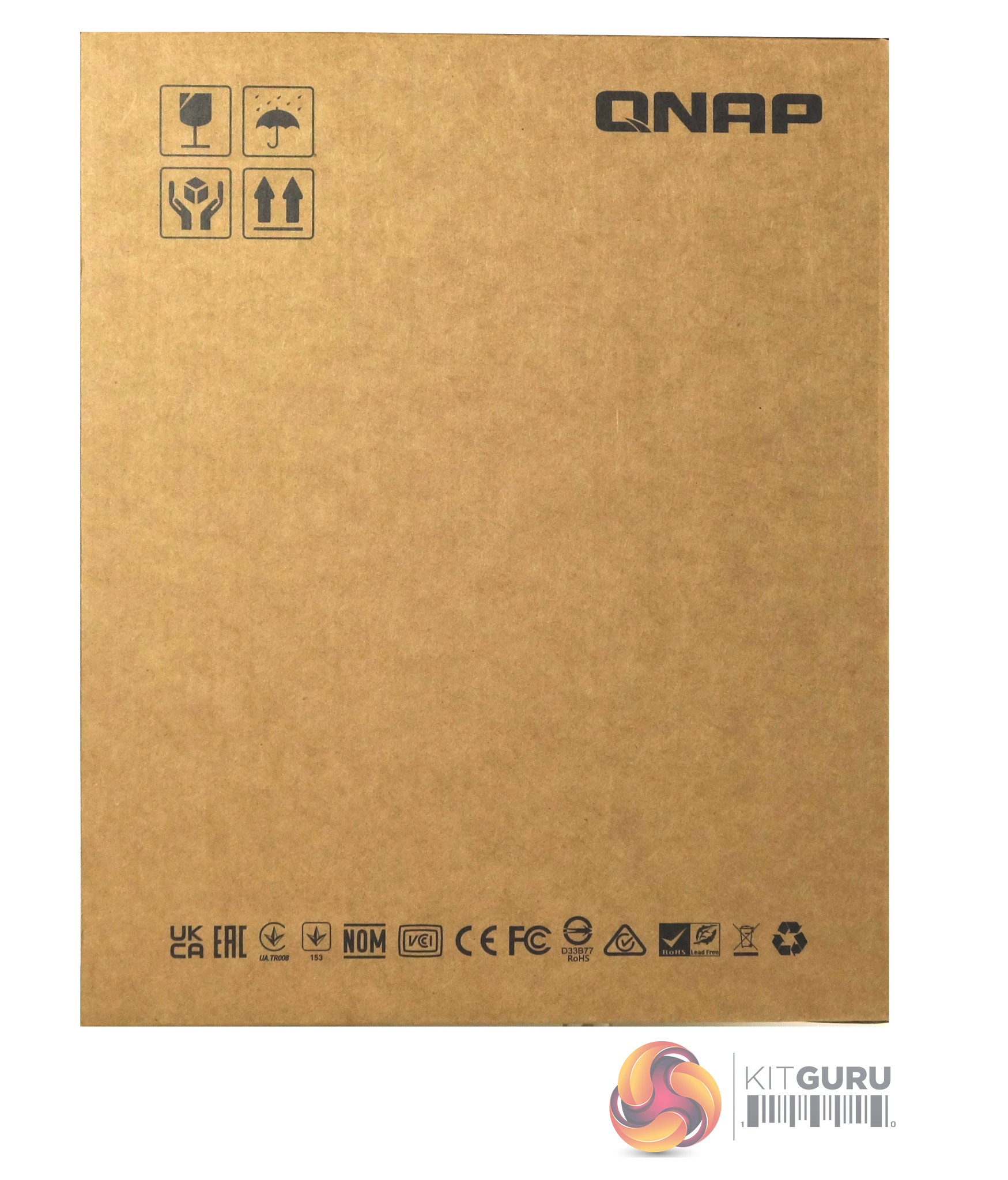
One side of the box has carriage icons on the top right and an HDD/SSD compatibility panel on the bottom. The other side just has a double row of carriage and storage icons and marks of the various standards the NAS passes.
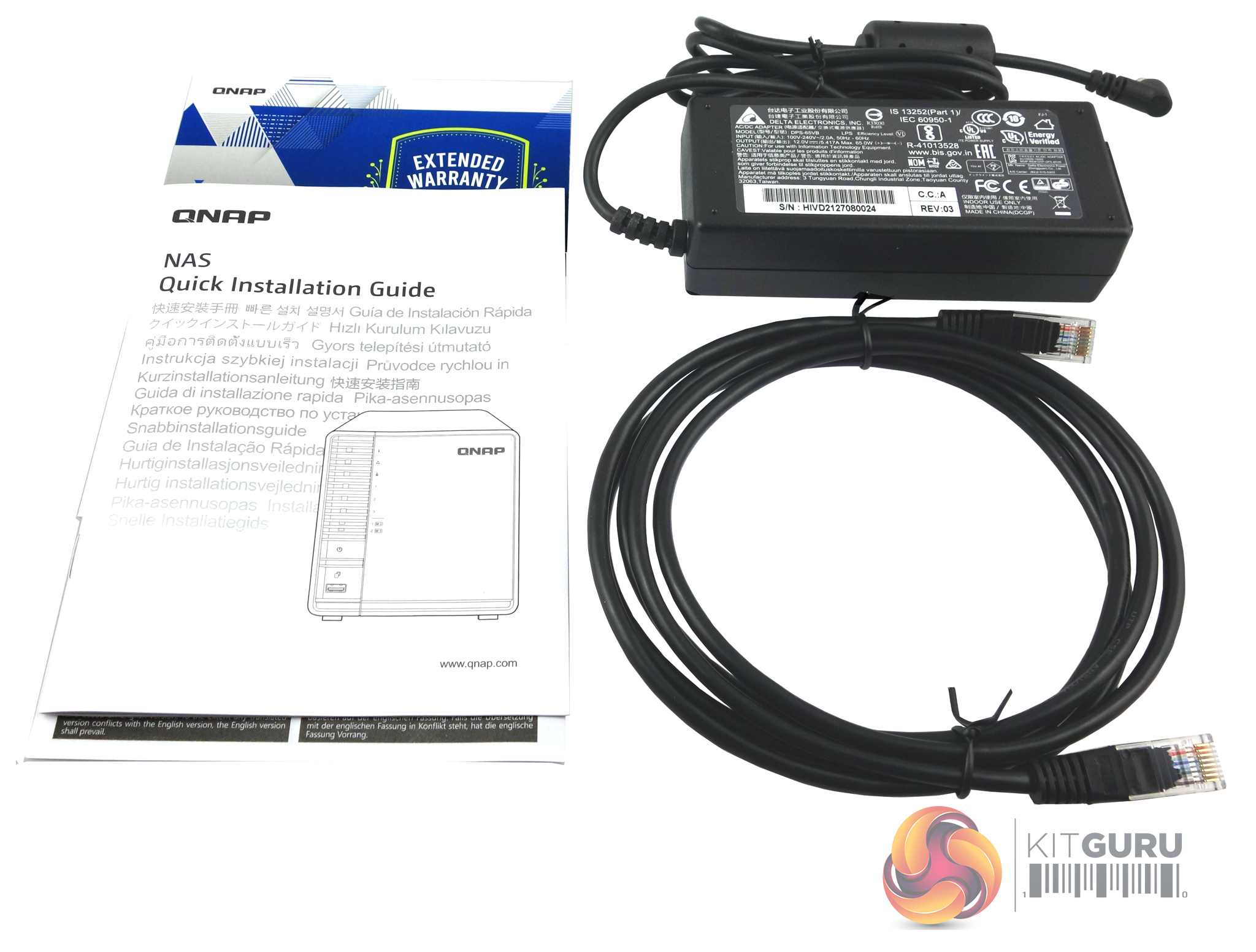
The box bundle has everything you need to get started with the TS-364; Ethernet cable, mains cable, 65W power brick (Delta DPS-65VB LPS) and a Quick Installation Guide (QIG).
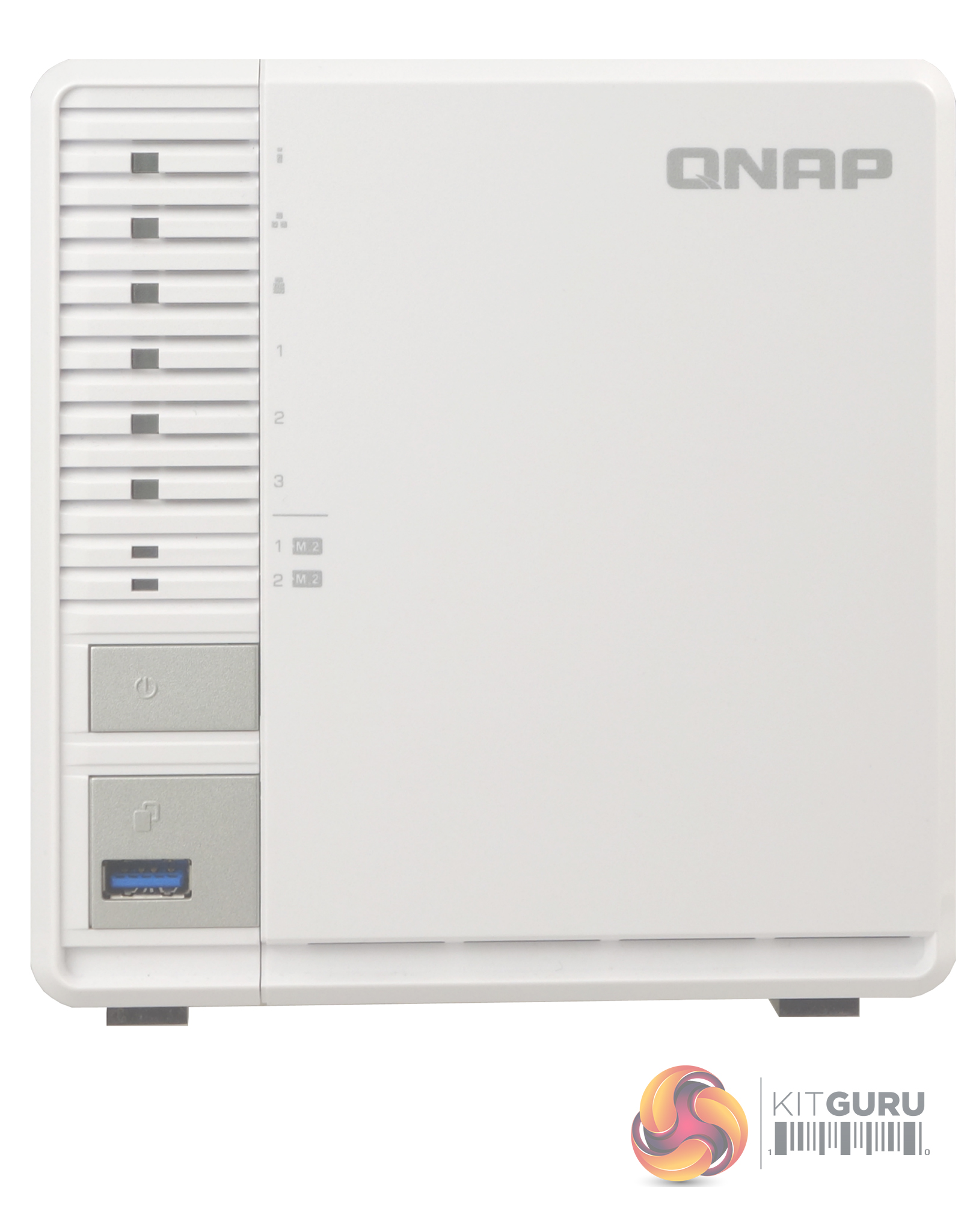
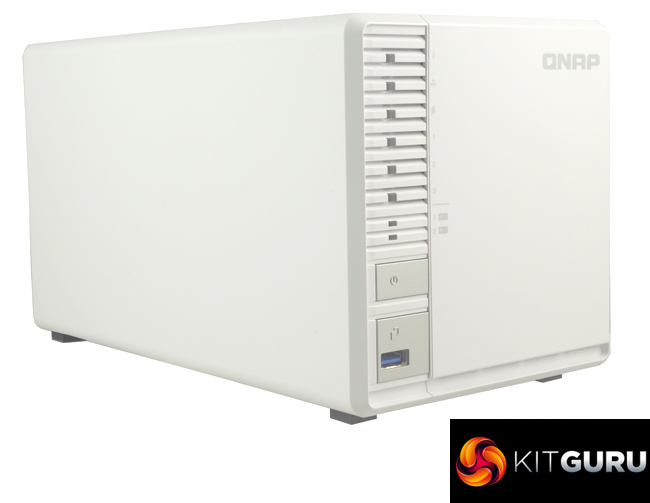
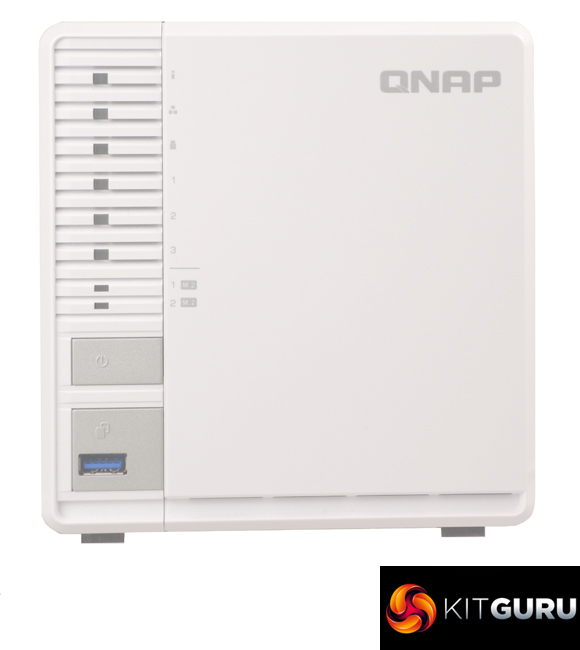
QNAP’s TS-364-4G is a quite attractive looking NAS with its white front bezel and side panels. The TS-364 measures in at 142 × 150 × 260 mm (HxWxD). As you might expect that makes it wider than a two-bay unit but narrower than a four-bay NAS, however, that 260mm depth figure makes the NAS deeper than any 4-bay in QNAP's current SOHO/Home range by around 38mm, something to keep in mind if you are planning to put the NAS on a shelf.
Dominating the left side of the front bezel are the eight indicator LEDs (reading from top to bottom they are: status, LAN, USB and five disk activity (three for 3.5/2.5in drive activity and a pair for the M.2 slots). We say ‘dominating', as these LEDs certainly grab your attention as they seem so much bigger than normal. So big in fact that we actually measured them – 4mm x 3mm. One thing is for certain you’re not likely to miss them blinking away, but in any case you can turn them down in QTS OS. Under the indicators sit the silver-grey power and the USB One Touch Copy buttons. The copy button has a USB 3.2 Gen 1 port built into it.
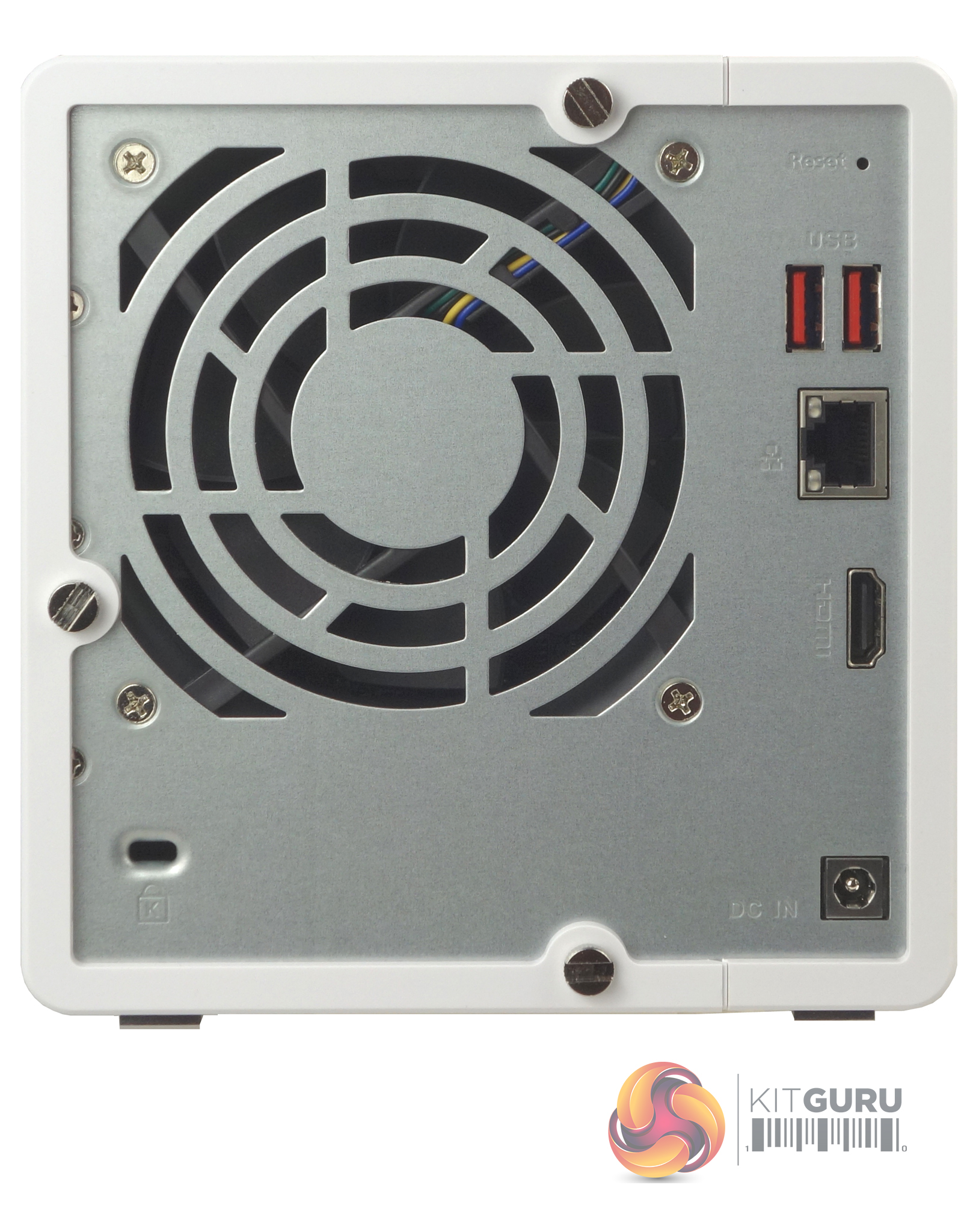
The real panel is dominated by the grill for the 92mm cooling fan (92mm Y.S.Tech FD129225LB-Q, spin speed, 2,000rpm, 25.9CFM of air movement @ 16.7 dB(A).) To the right of the grill sit all the external ports; a pair of USB 3.2 Gen 2 (10Gb/s) Type-A ports under which sits the 2.5 GbE RJ45 port and finally an HDMI 1.4b port.
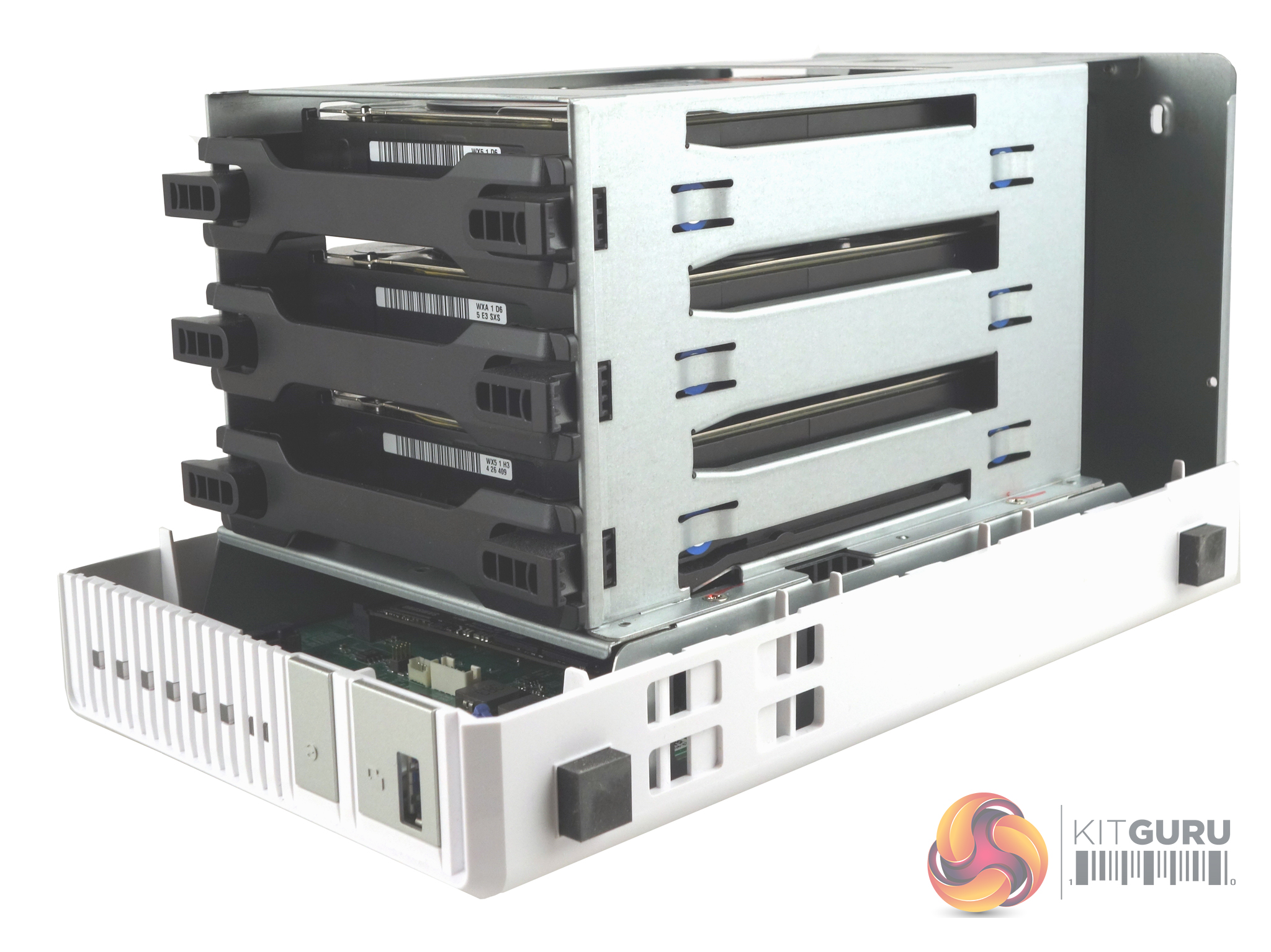
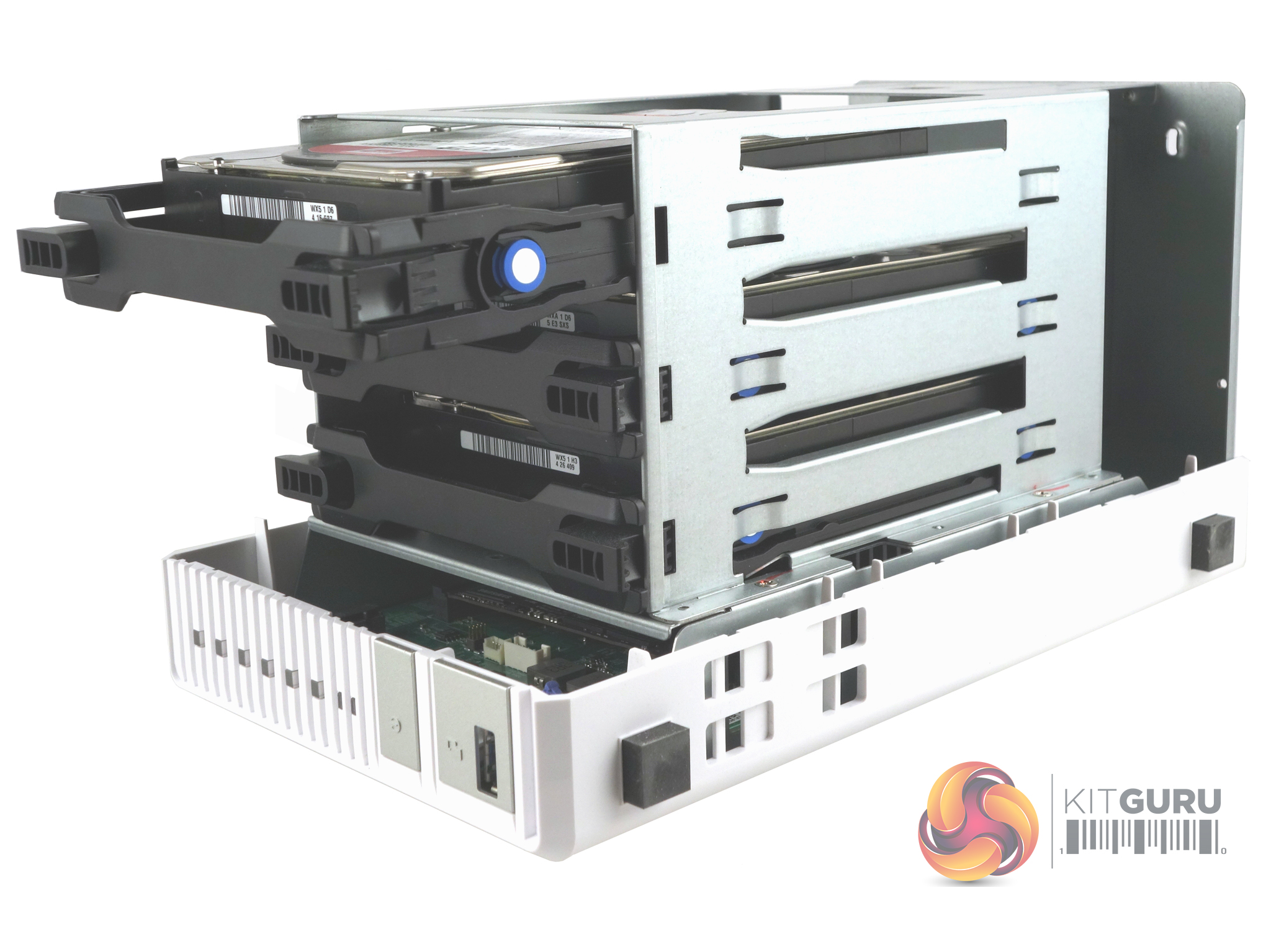
To get to the internal drive cage (which means no hot-swap support) and the three drive trays you undo the three small thumbscrews on the rear panel and slide the two sides of the TS-364 apart. The hard drive trays are held in place by a simple but effective pair of sprung clips on the front of each tray. Pushing on the clips allows you to pull a drive tray out.
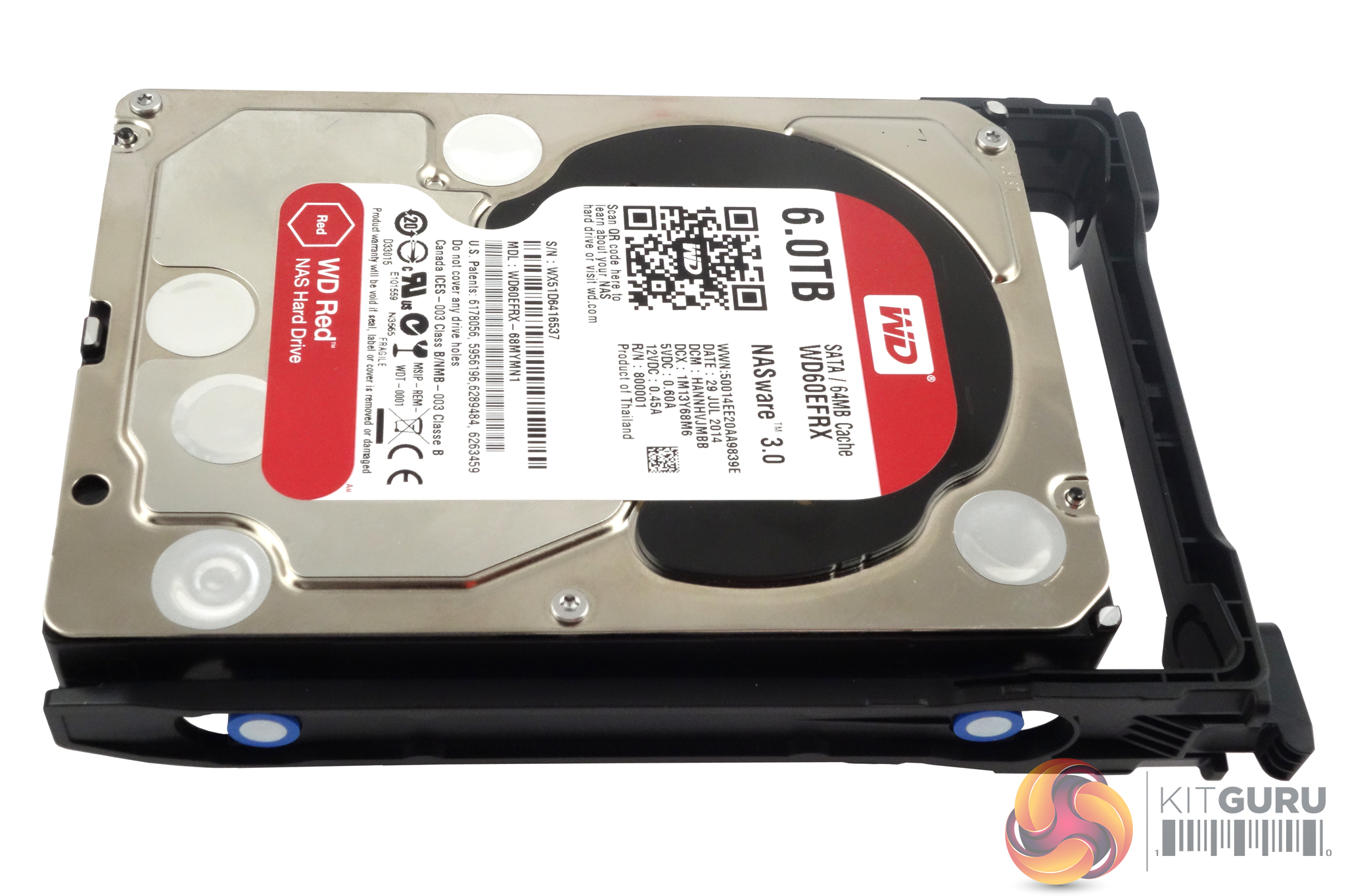
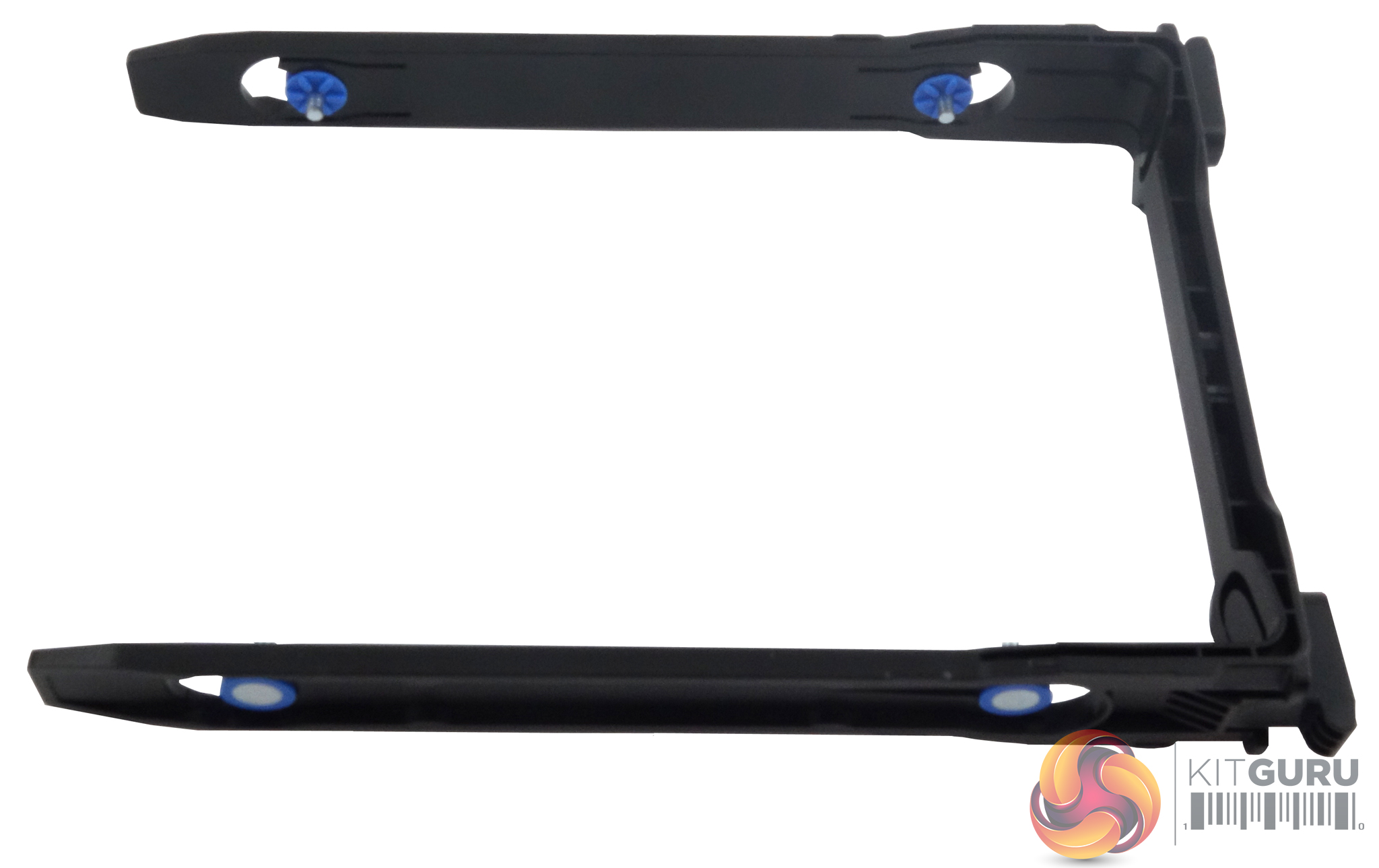
The back of the drive tray is open, allowing the tray side arms to open out a little to get the drive inside. Each side arm has a pair of pins that fit into the side mounting holes of the hard drive. It’s a little more flimsy than a standard NAS drive tray but it works well enough. If you want to use 2.5in drives in the TS-364 then you will have to buy an optional 2.5″ drive tray base (TRAY-25-NK-BLK03).
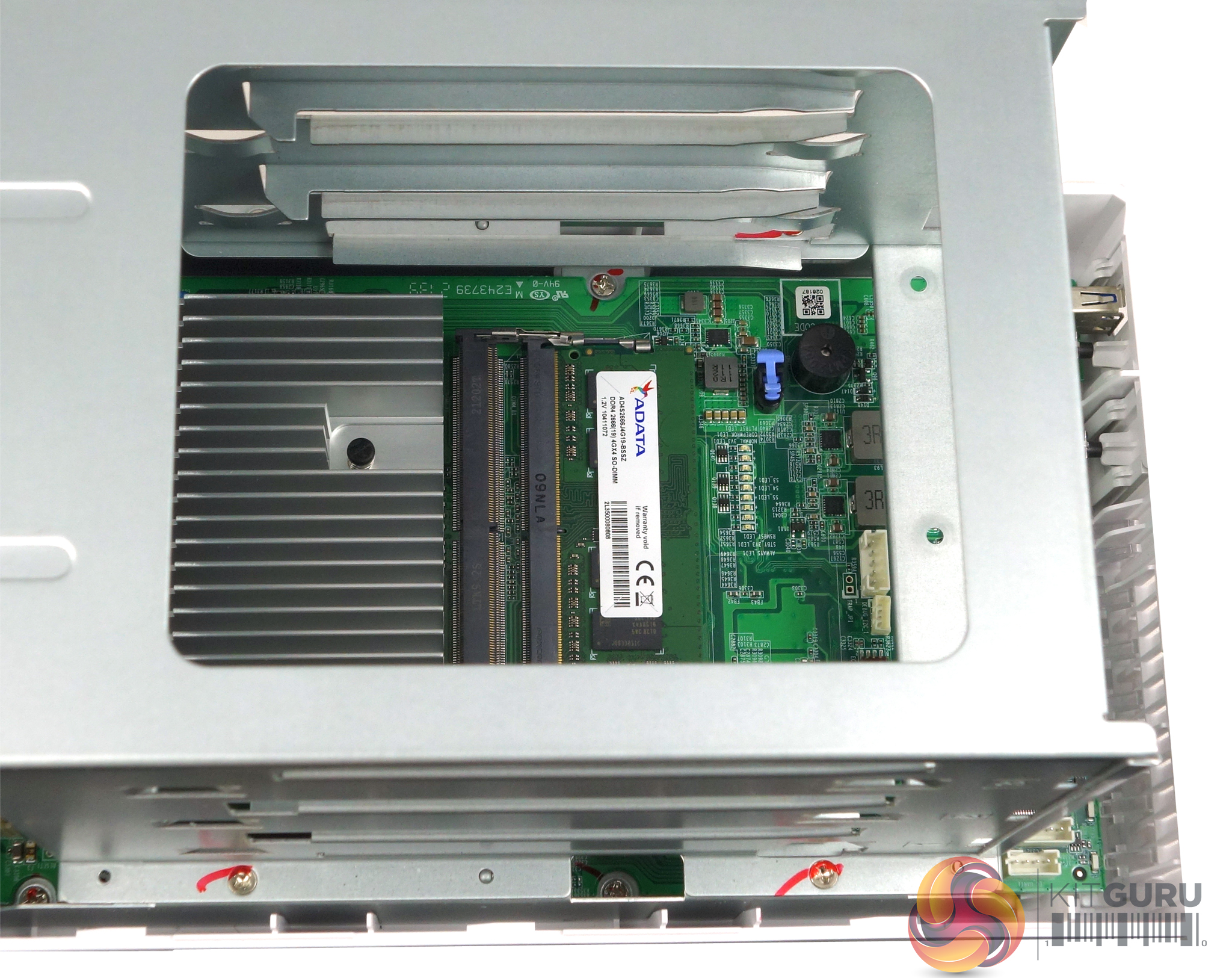
The TS-364-4G comes with 4GB of DDR4-2666MHz memory but the NAS supports up to 16GB of RAM via two SODIMM slots. To access the slots, the drive trays have to be removed. The two slots support up to 16GB of DDR4-2666MHz memory.
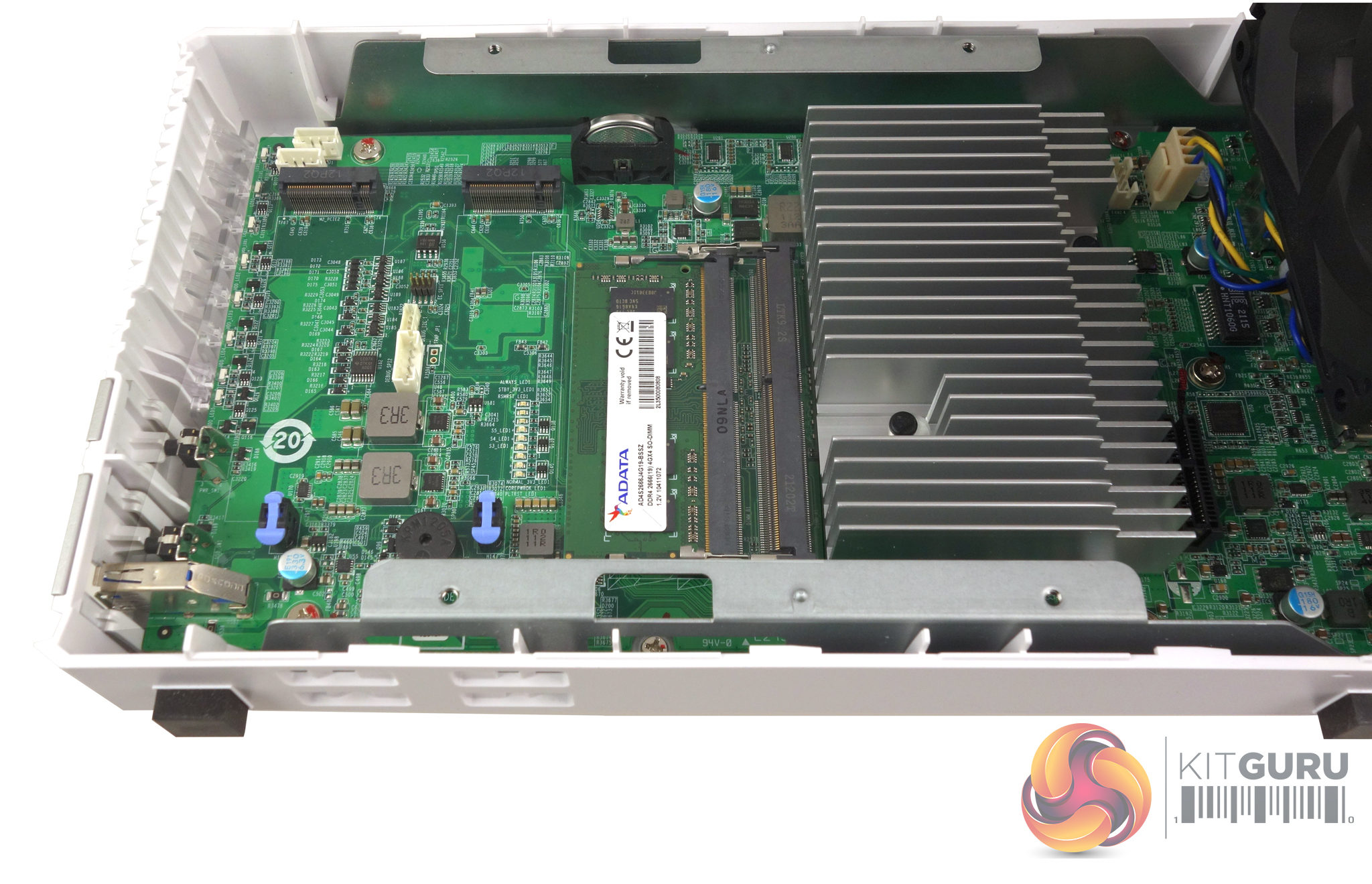
In this photo, we've removed the drive cage to get a better view of the SODIMM slots and the M.2 drive ports. The TS-364 sports a pair of PCIe Gen 3 NVMe M.2 2280 slots which can be used for storage pools, cache acceleration or Edge TPU for AI image recognition. These slots are a tool-free design using a plastic clip to secure the drives rather than the usual small screw. So far good but now the not so good news is the slots are only running at x2 speed instead of the usual x4, so the NAS won't be breaking any speed records, but even so, it's still really good to see them included.
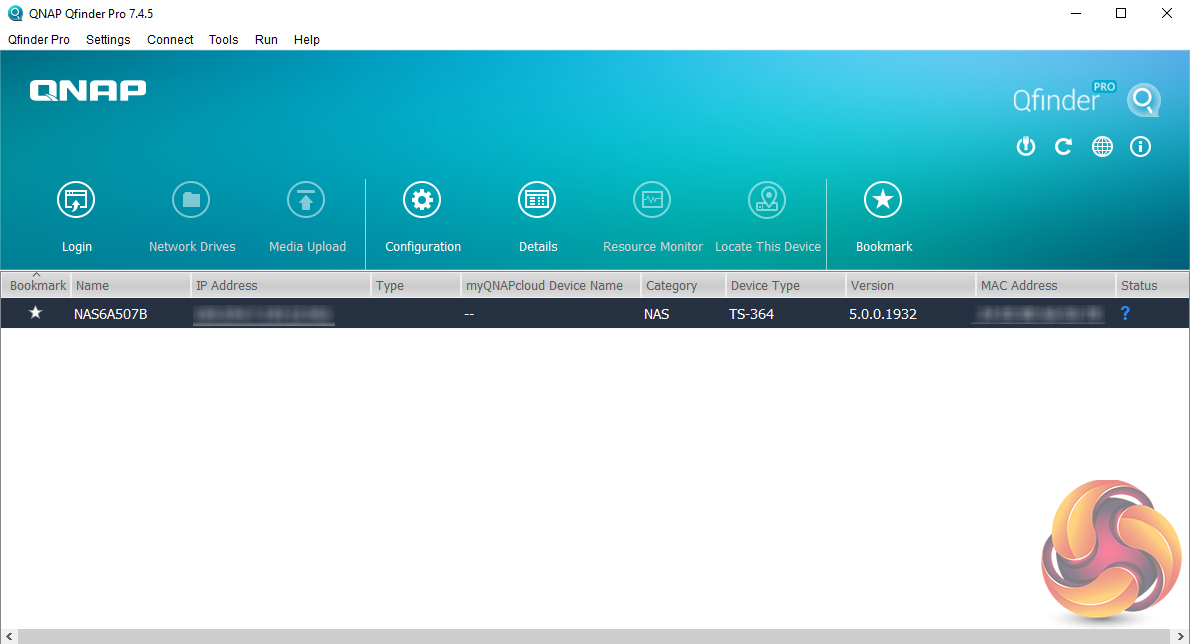
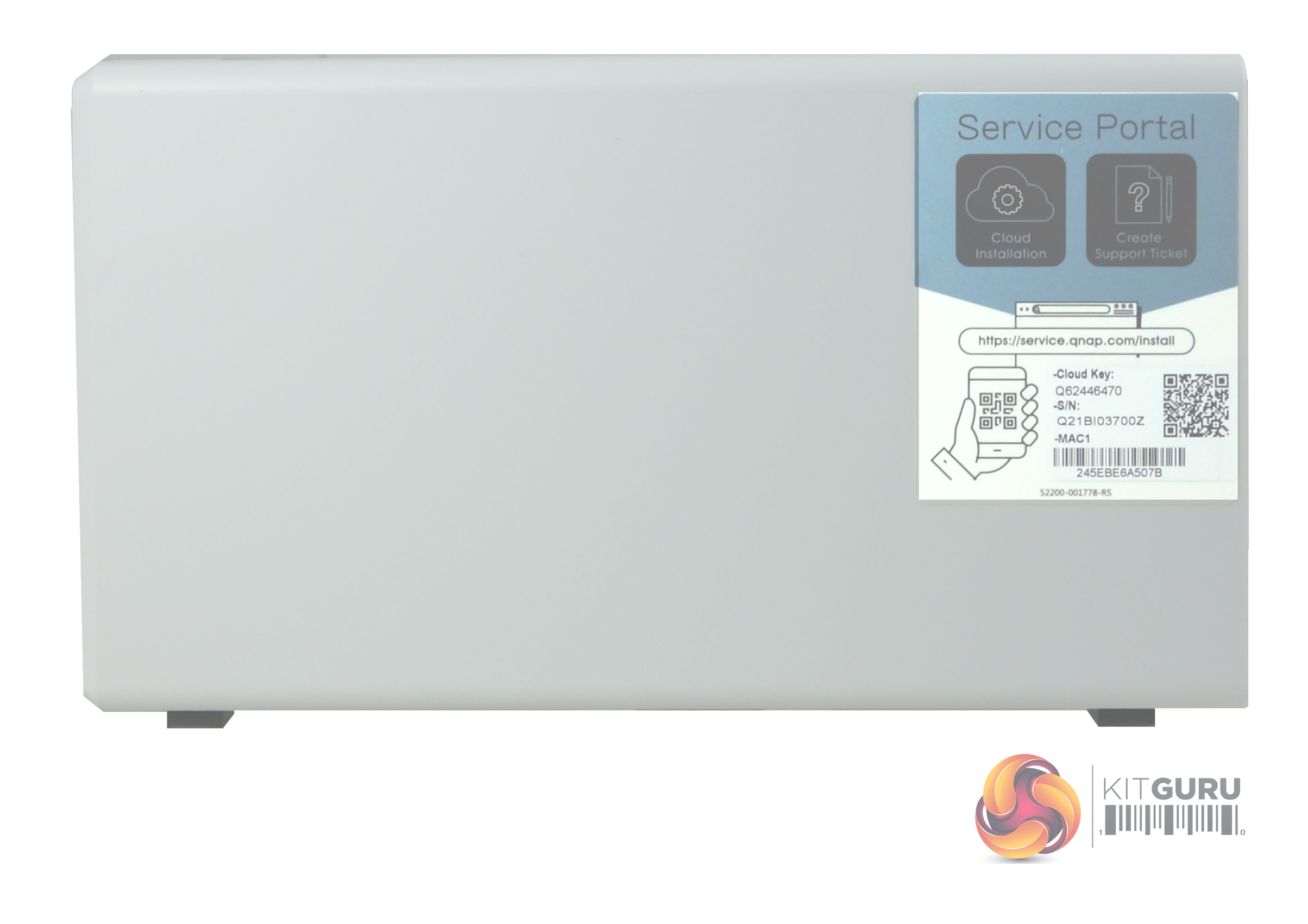
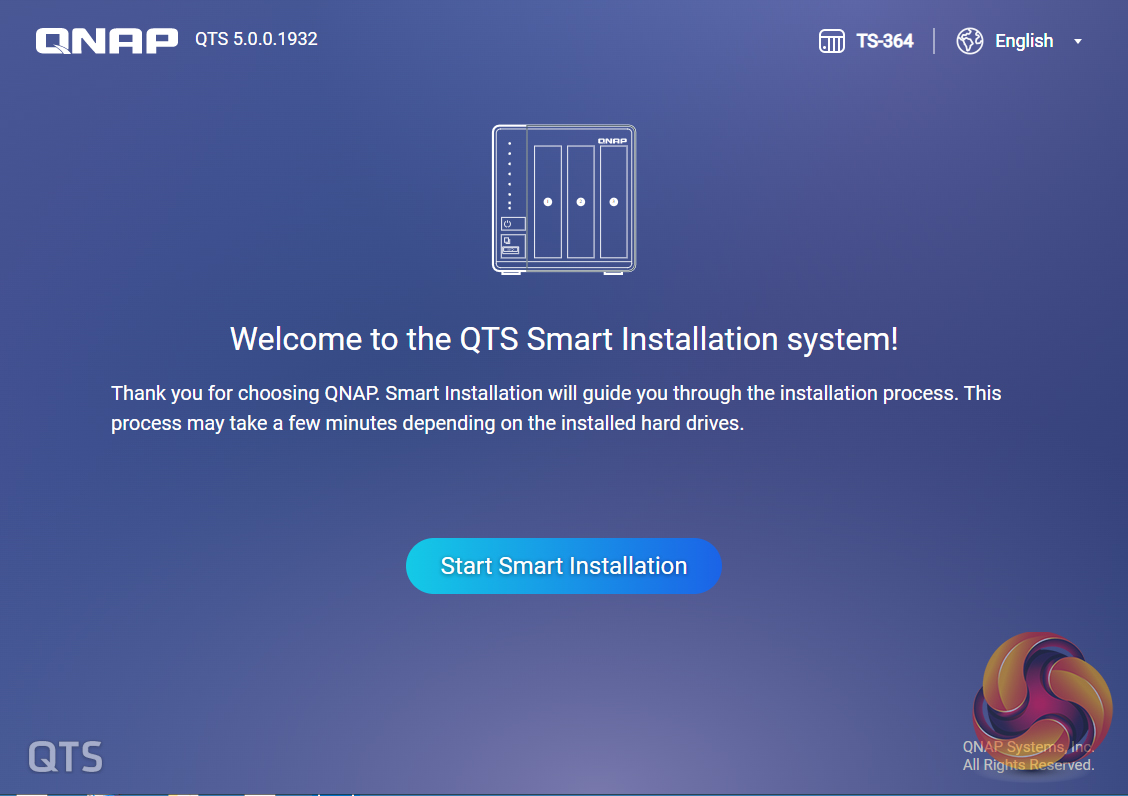
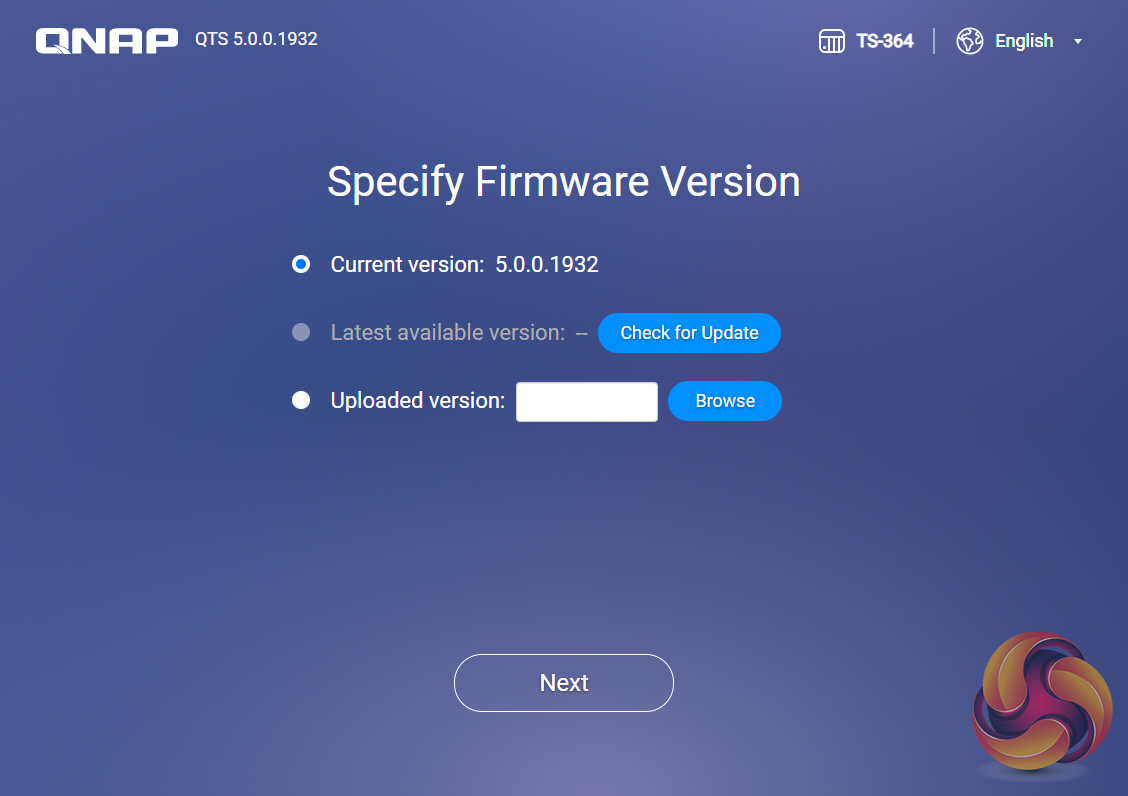
As is usual with a QNAP NAS there are two ways of setting up the TS-364, either online by entering the Cloud key which is written on a sticker on the side of the unit, or by using QNAP’s Qfinder Pro utility which can be downloaded from the QNAP website. Qfinder Pro searches for QNAP devices on the network. Whichever way you choose to start, it’s just a simple matter of following the installation wizard.
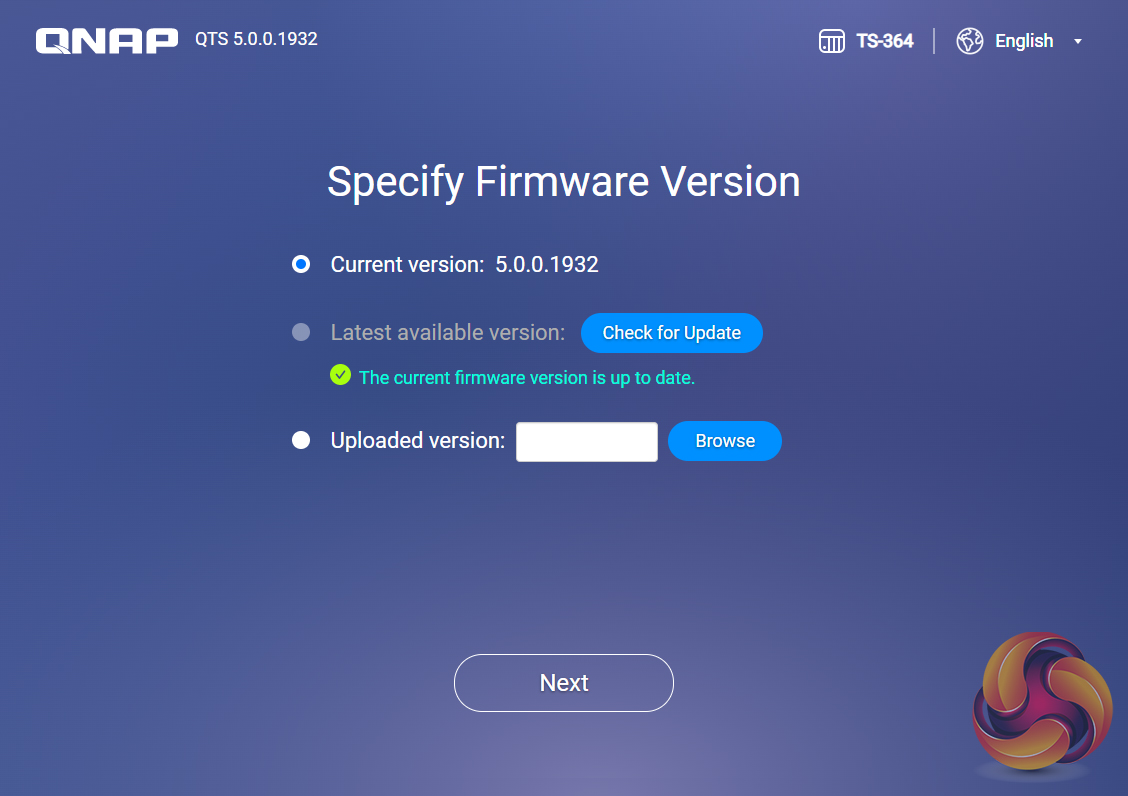
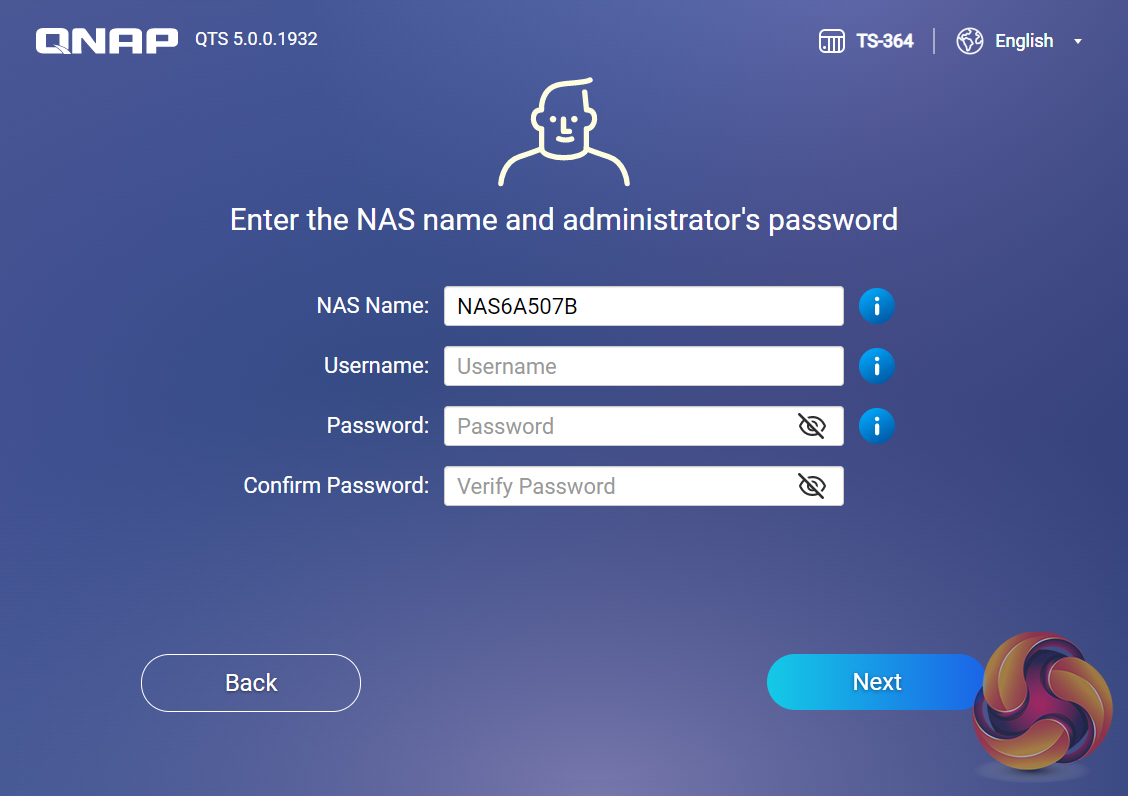
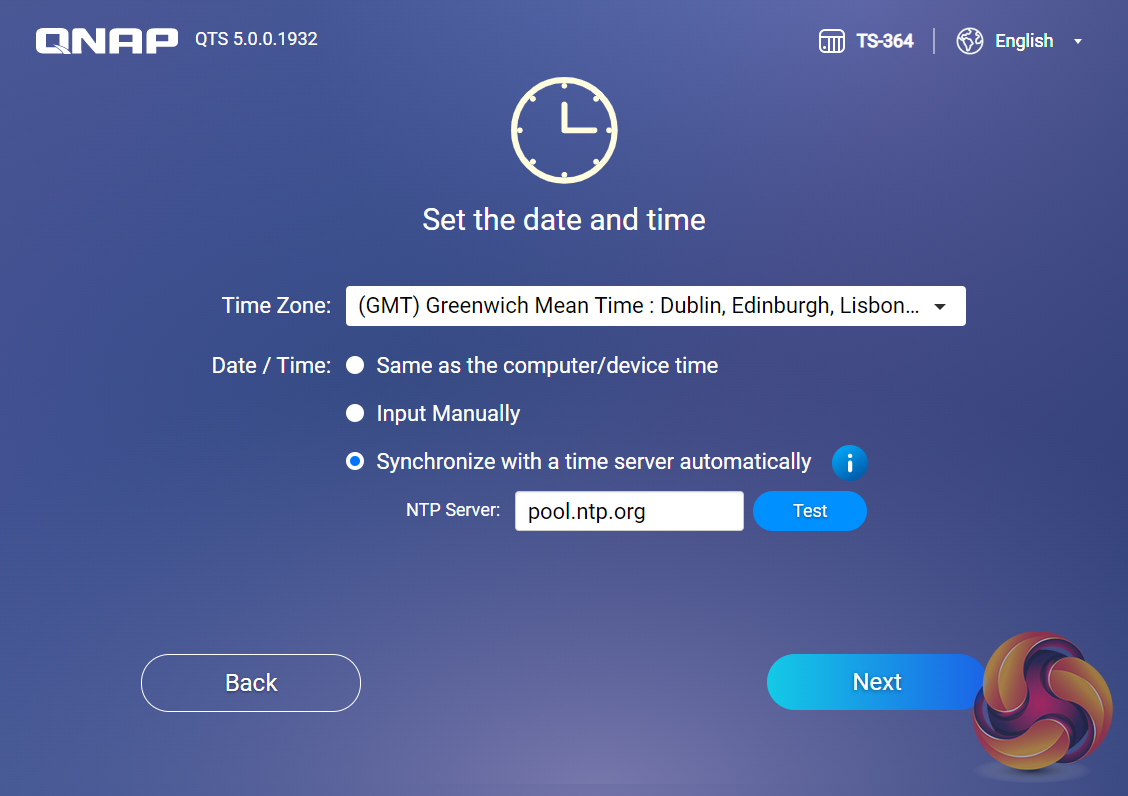
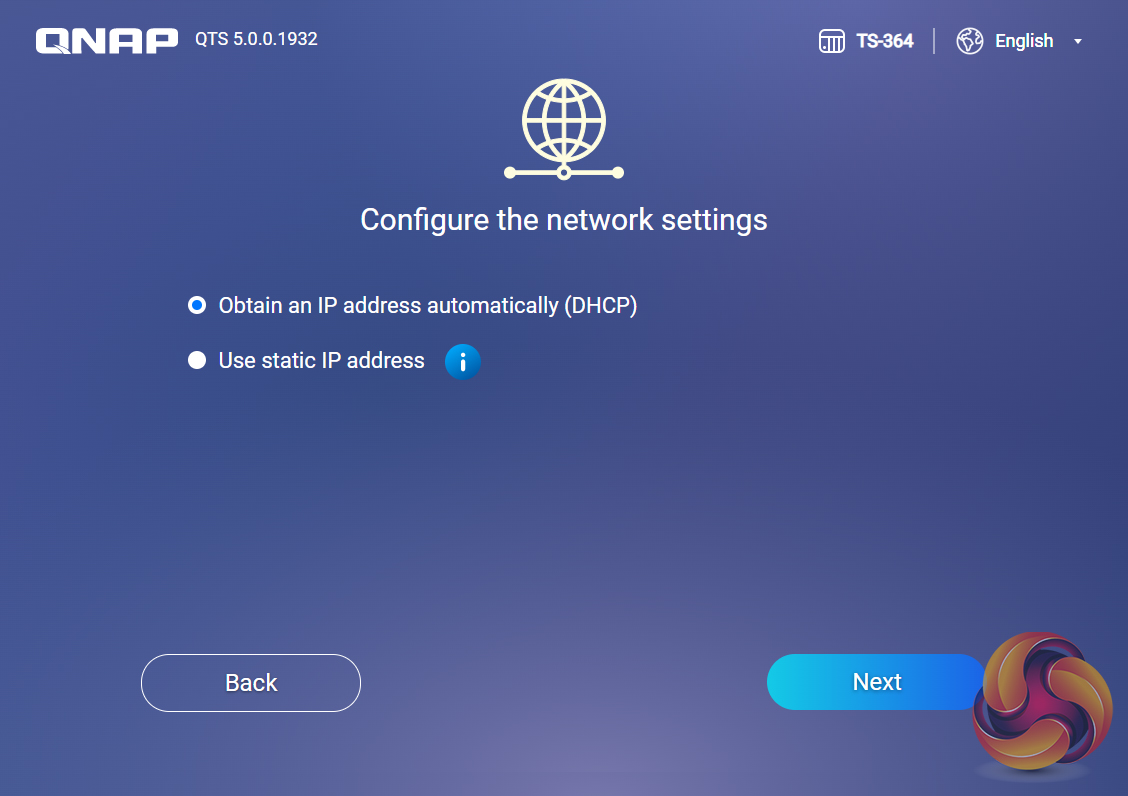
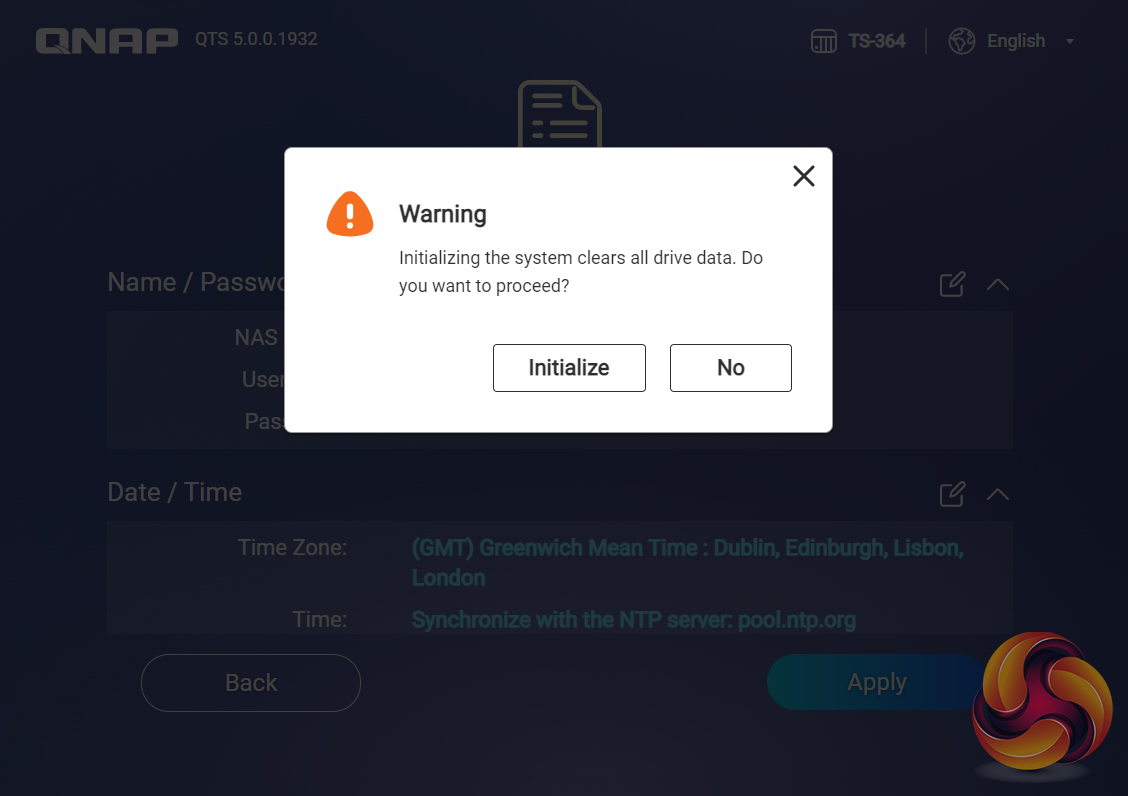
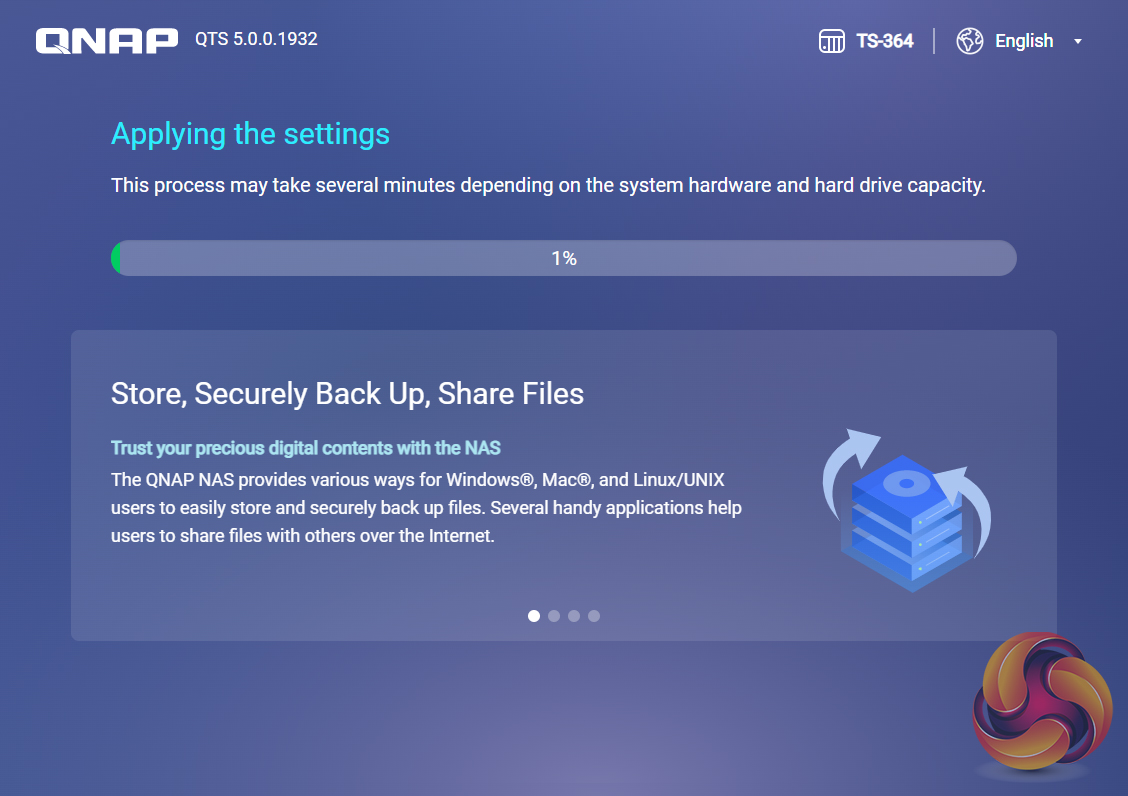
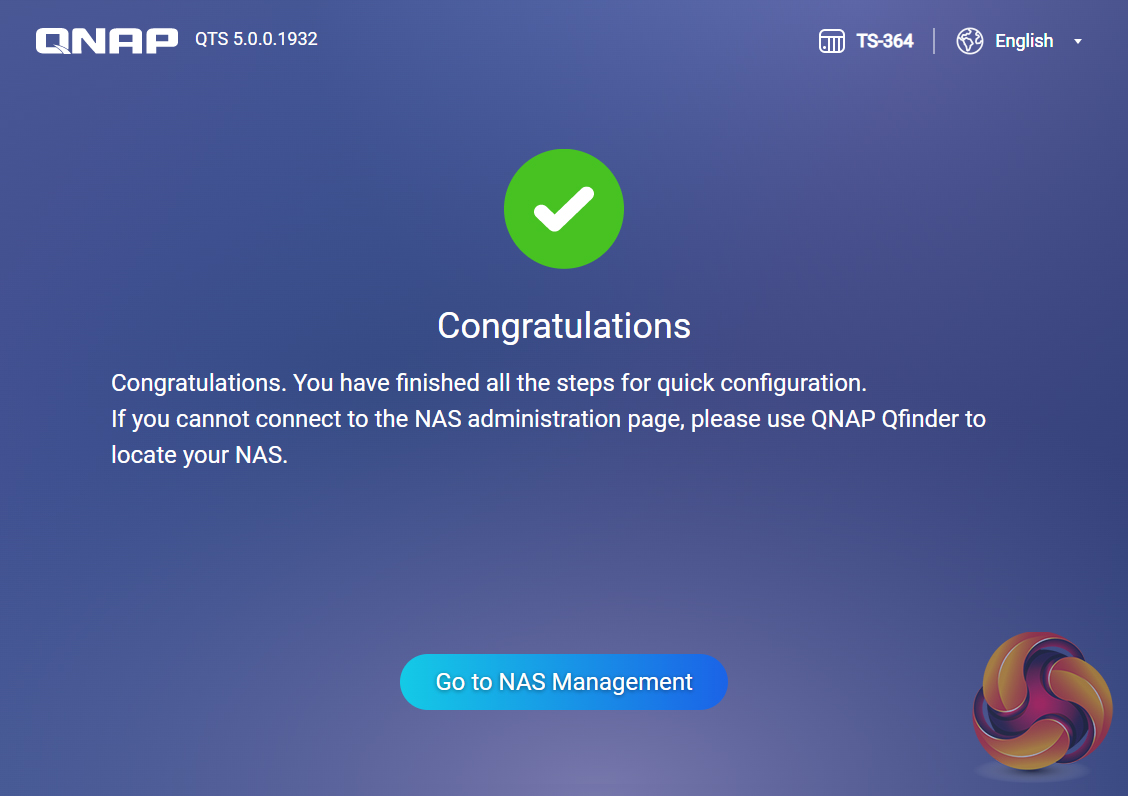
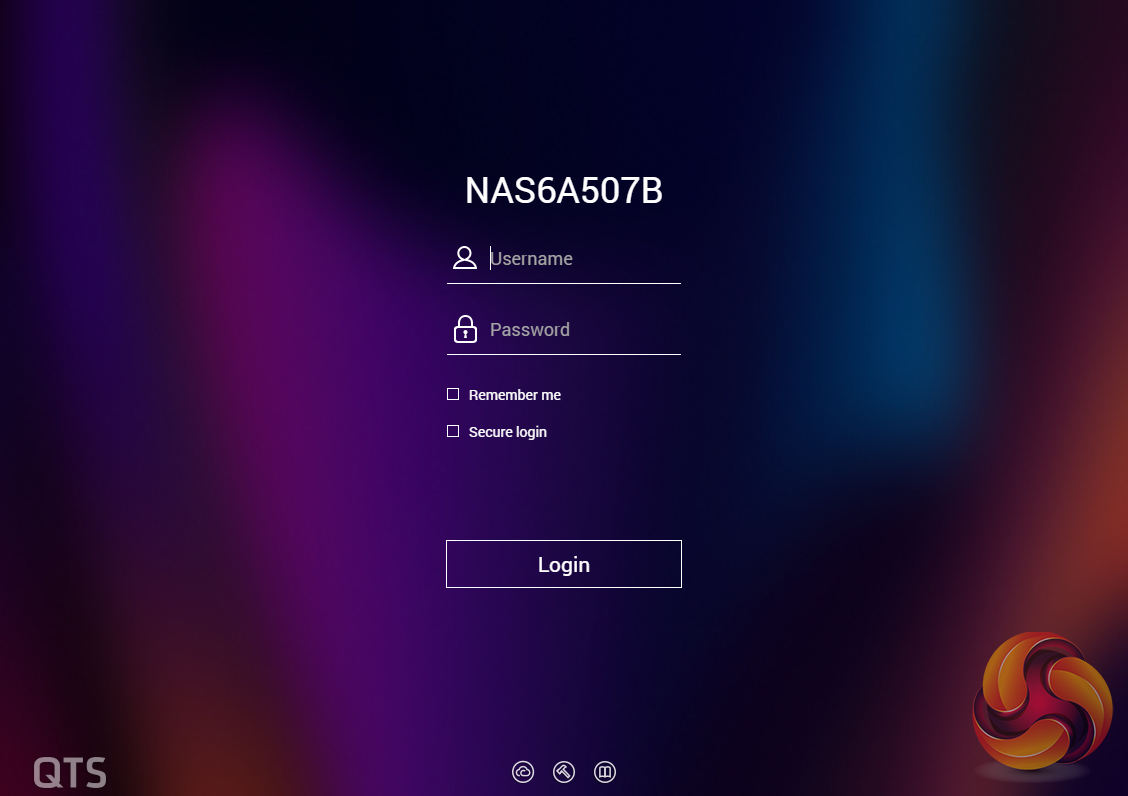
The login page can be customised to add your own photographs or corporate logo to the photo wall and messages can be added to the page as well.
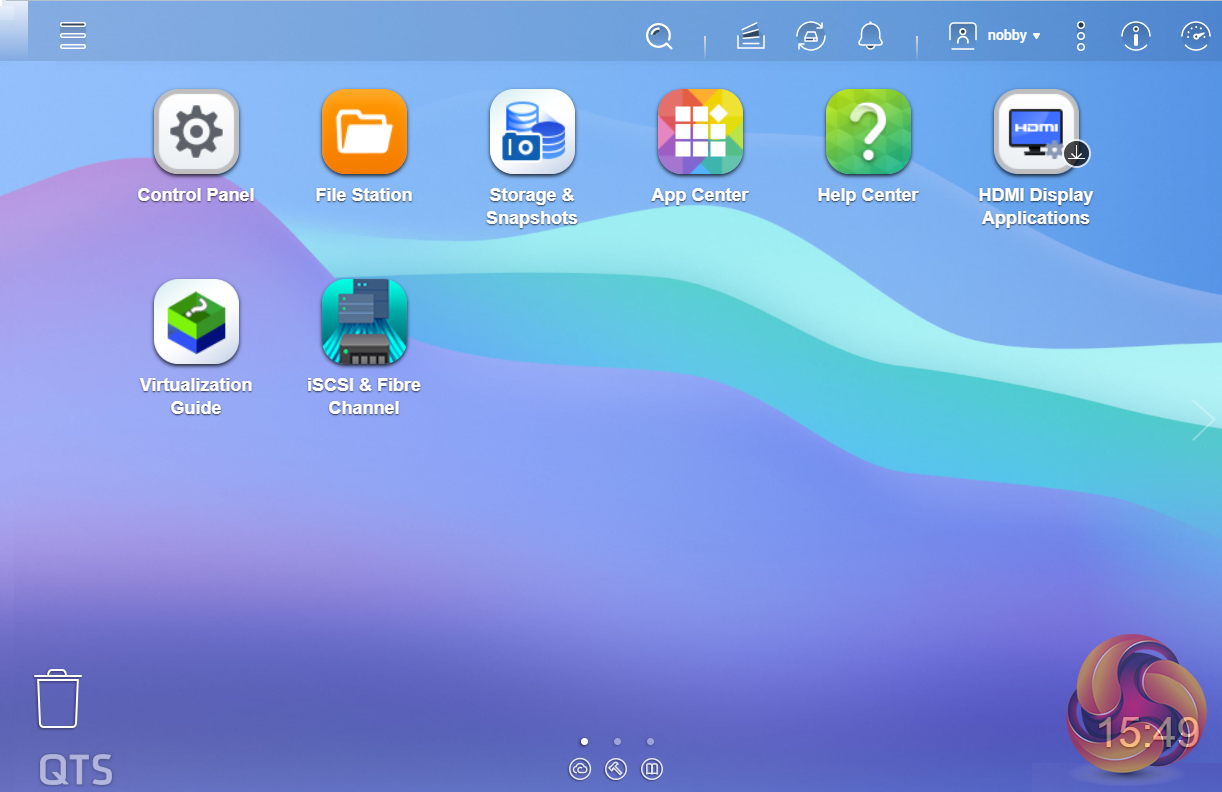
To test the TS-364 we used the latest 1932 build (the latest version at the time of testing) of QNAP's QTS 5.0.0 OS. QTS is a graphically rich OS with links to the major functions appearing as icons on the main page. QTS 5.0 uses the new Linux Kernal 5.10 which brings with it improved security (TLS1.3 support), better PCIe performance (which in turn brings improvements in NVMe SSD performance) and WireGuard VPN support.
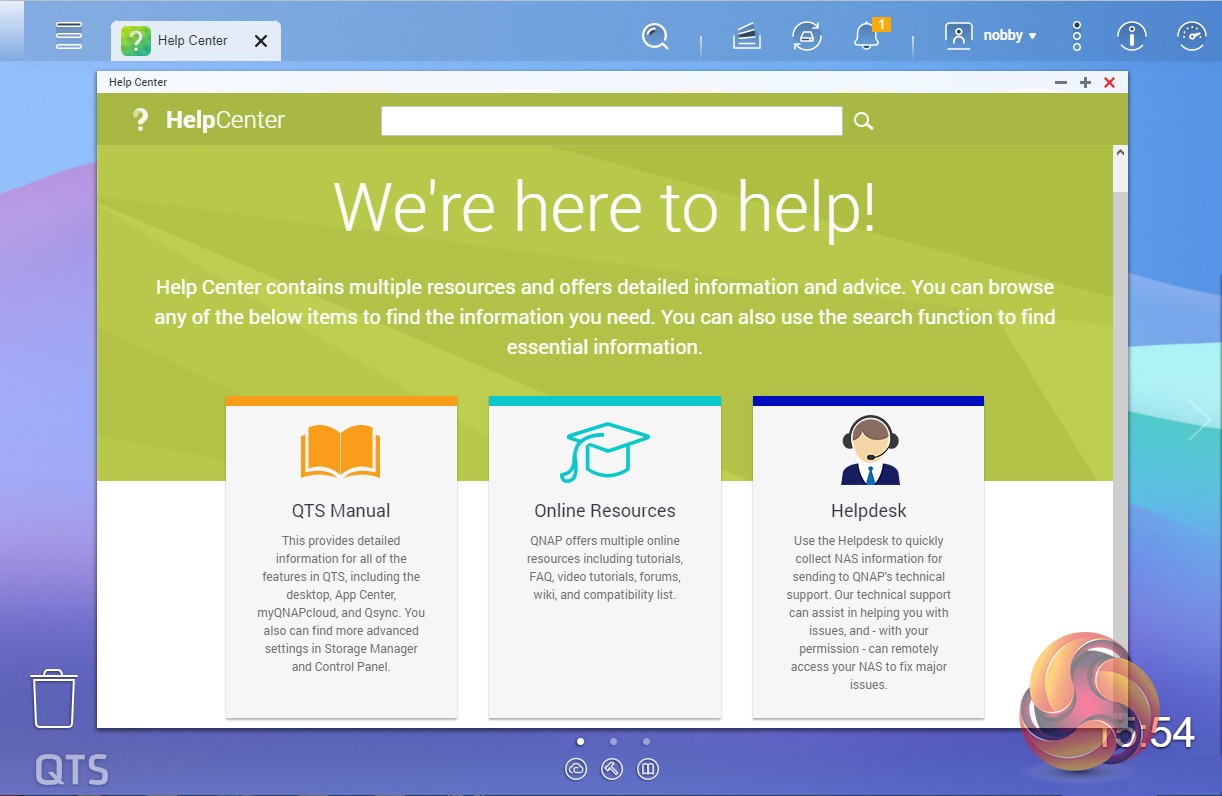
When you access the NAS for the first time you are met by the HelpCenter app. This comprehensive help utility provides access to the QTS manual, Online Resources including tutorials, video tutorials, FAQs, and forums – or if all else fails you can connect to the QNAP Helpdesk for technical support.
If you don’t want to see this page every time you access the NAS, don’t forget to uncheck the ‘show on startup’ option.
Main Screen
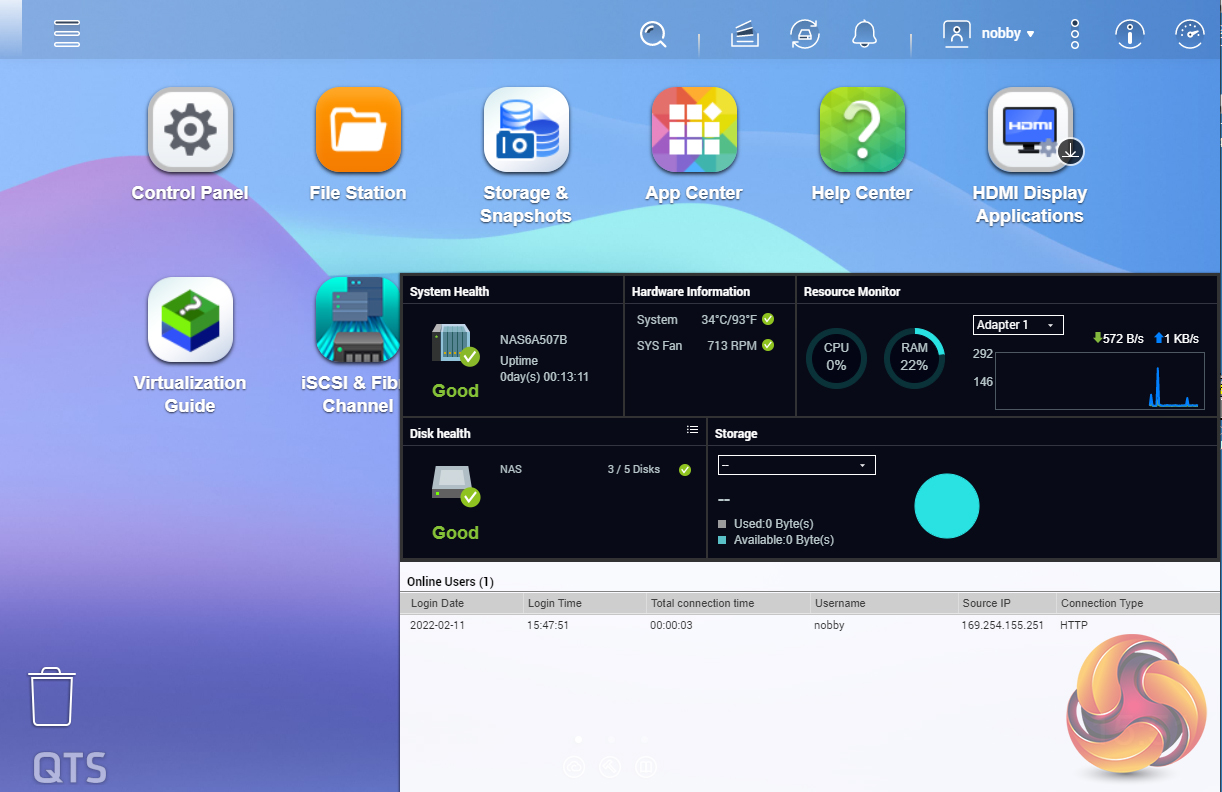
Clicking the icon in the top right of the main screen activates the Dashboard page which gives a snapshot of what’s happening with the NAS. To the left of the Dashboard shortcut are a number of other shortcuts to options and services; More (including help and desktop preferences), Options (allows changes to profile, wallpapers, the login screen and email accounts), Event Notifications, Background task monitor and Search.
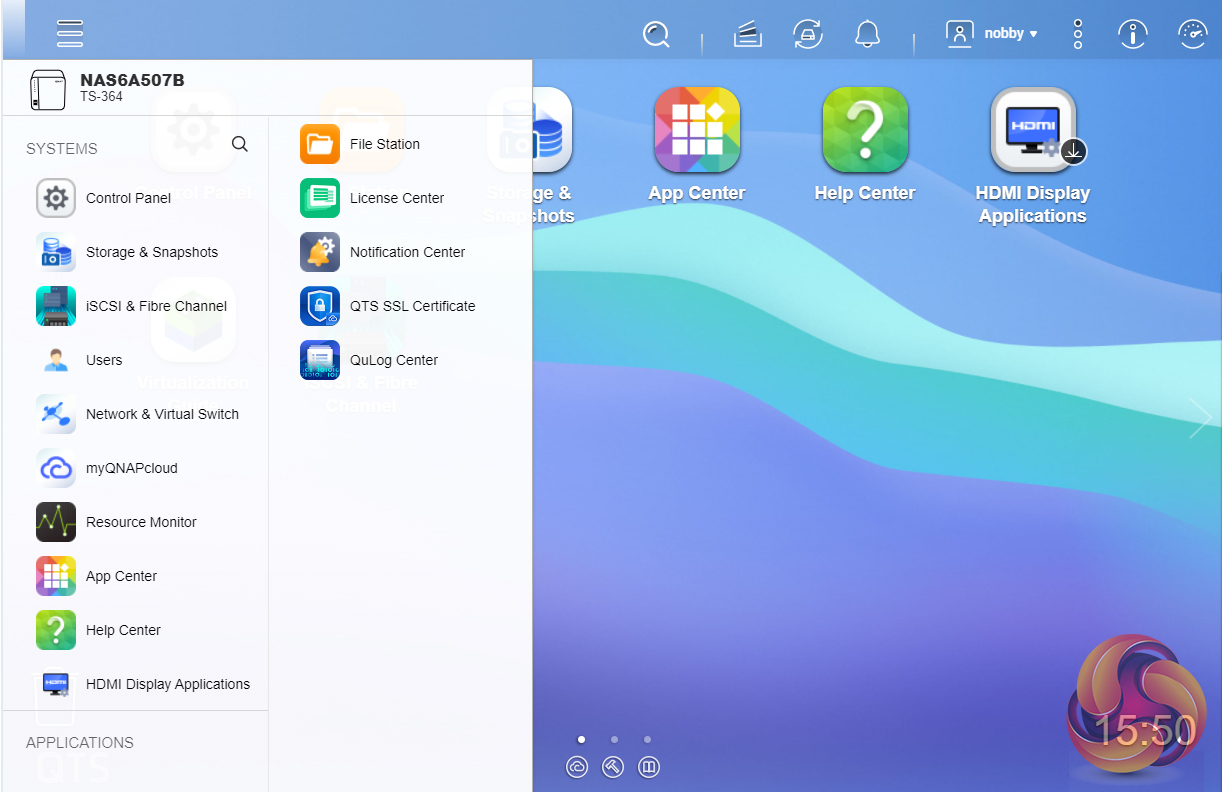
Clicking on the ‘hamburger’ menu icon in the top left-hand corner of the screen drops down a very useful side menu with the most commonly used control panel items. Any of these can be dragged and dropped onto the main page for easy access.

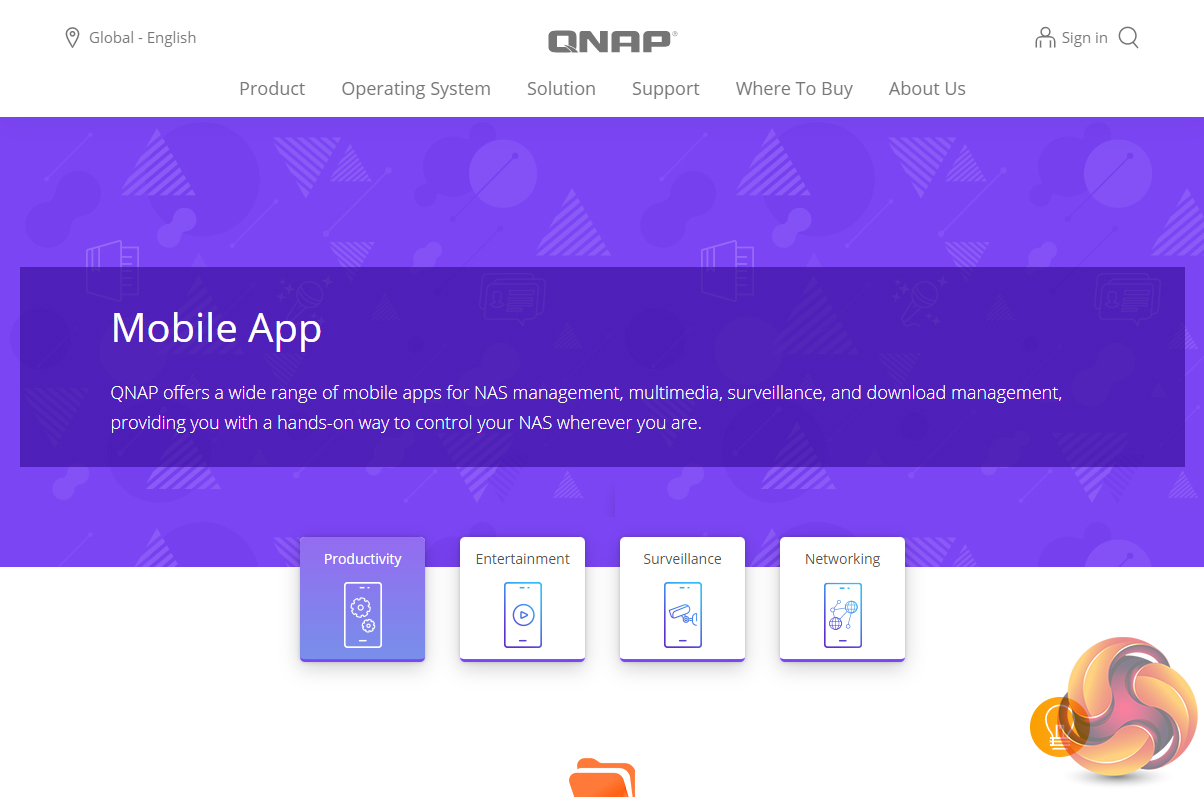
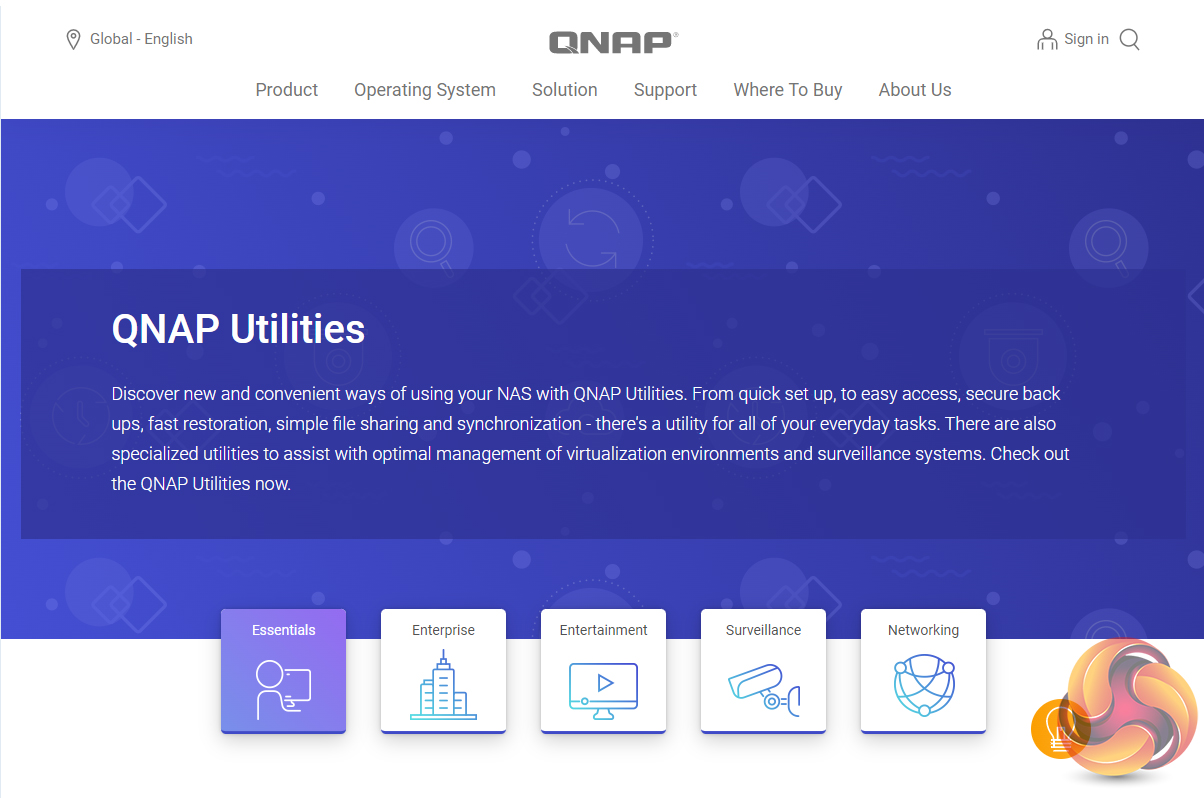
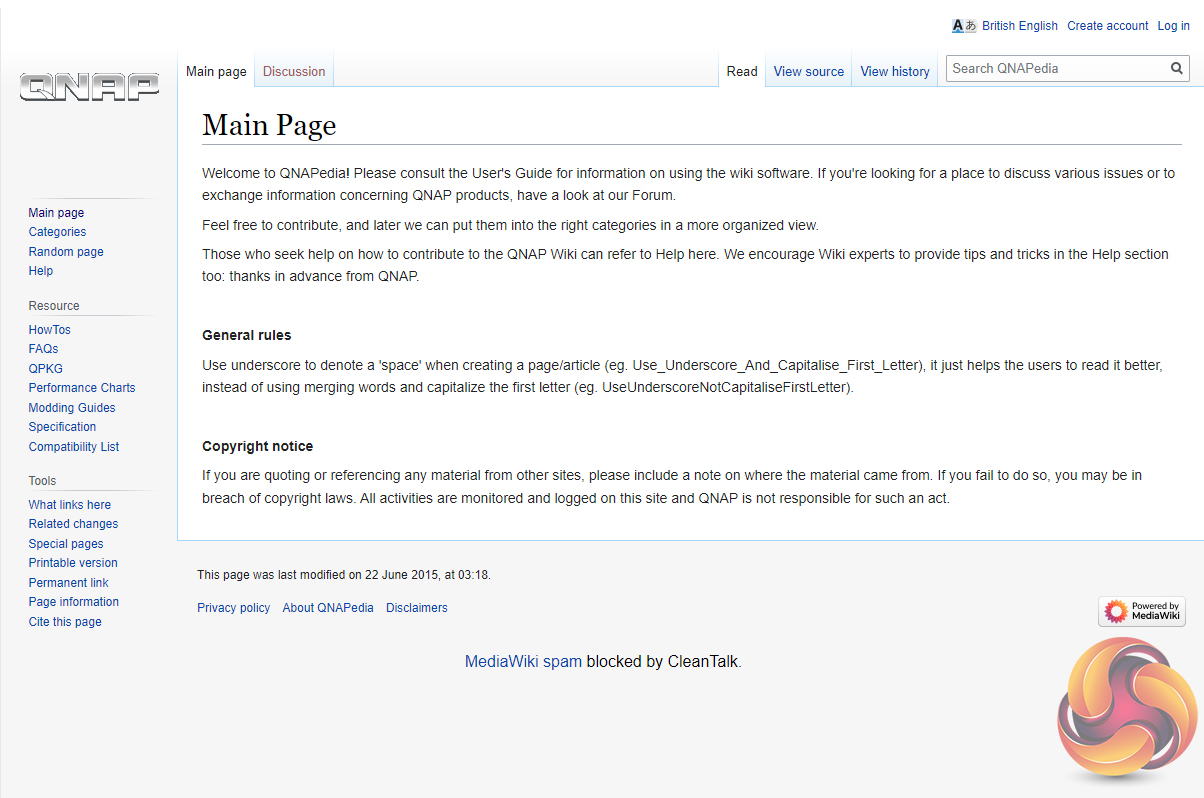

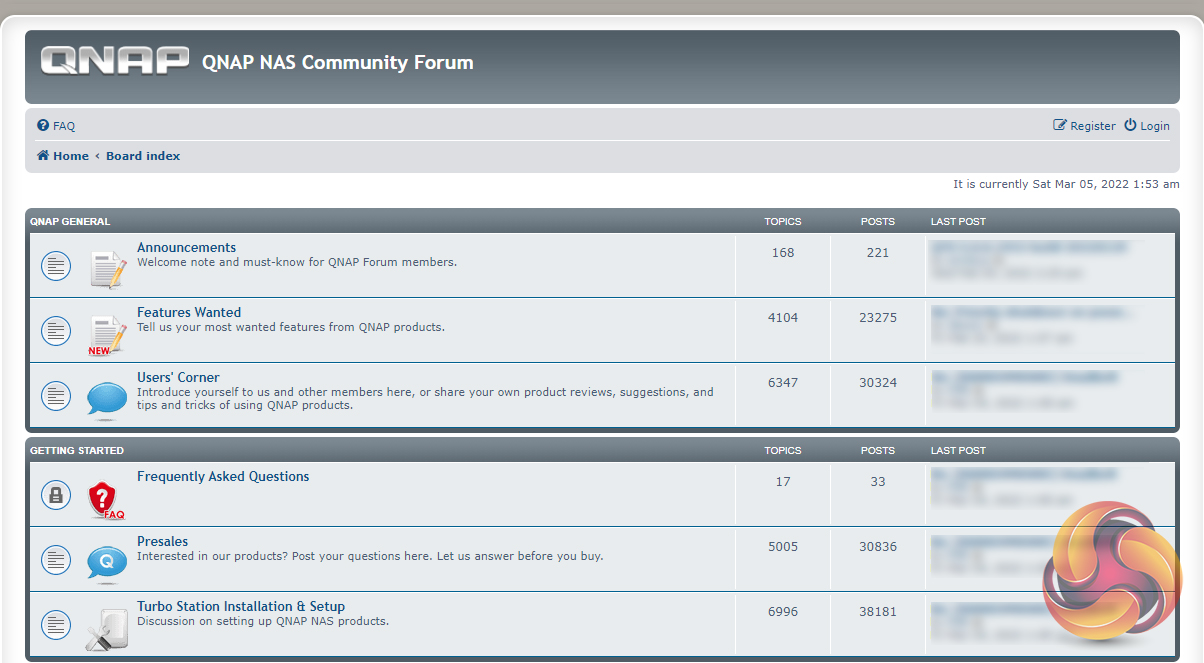
At the bottom of the main screen are three small icons. These are shortcut links to four pages on Qnap's website; my QNAPcloud website, the middle one has two options, Mobile App and Utility, which link into the mobile apps and utility pages. The last button is for feedback, linking to a Wiki page, the Qnap Community Forum or customer service splash screen.
Control Panel
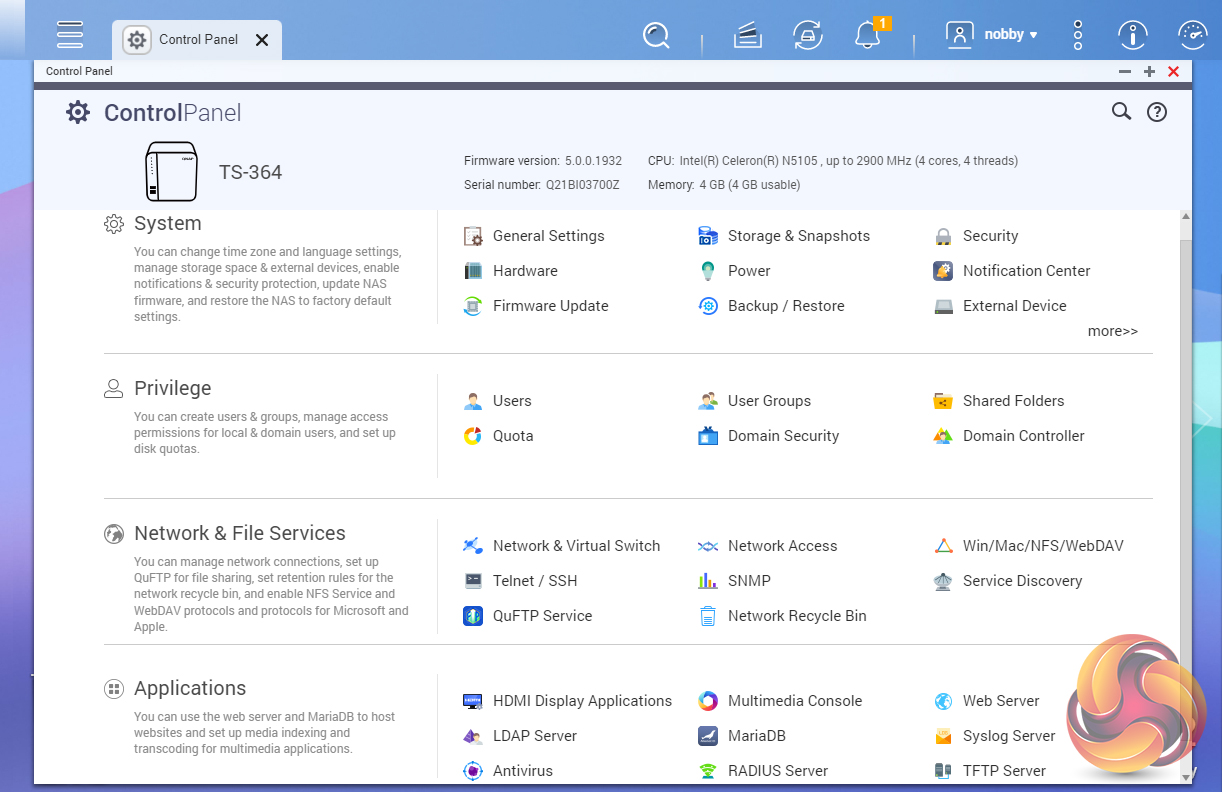
Clicking on the Control Panel icon on the main menu screen brings the complete control panel window with all the various functions of the NAS neatly divided up into four sections; System, Privilege, Network & File Services and Applications. Again any of the icons in these sections can be dragged onto the main page for easier access.
Storage & Snapshots Manager.
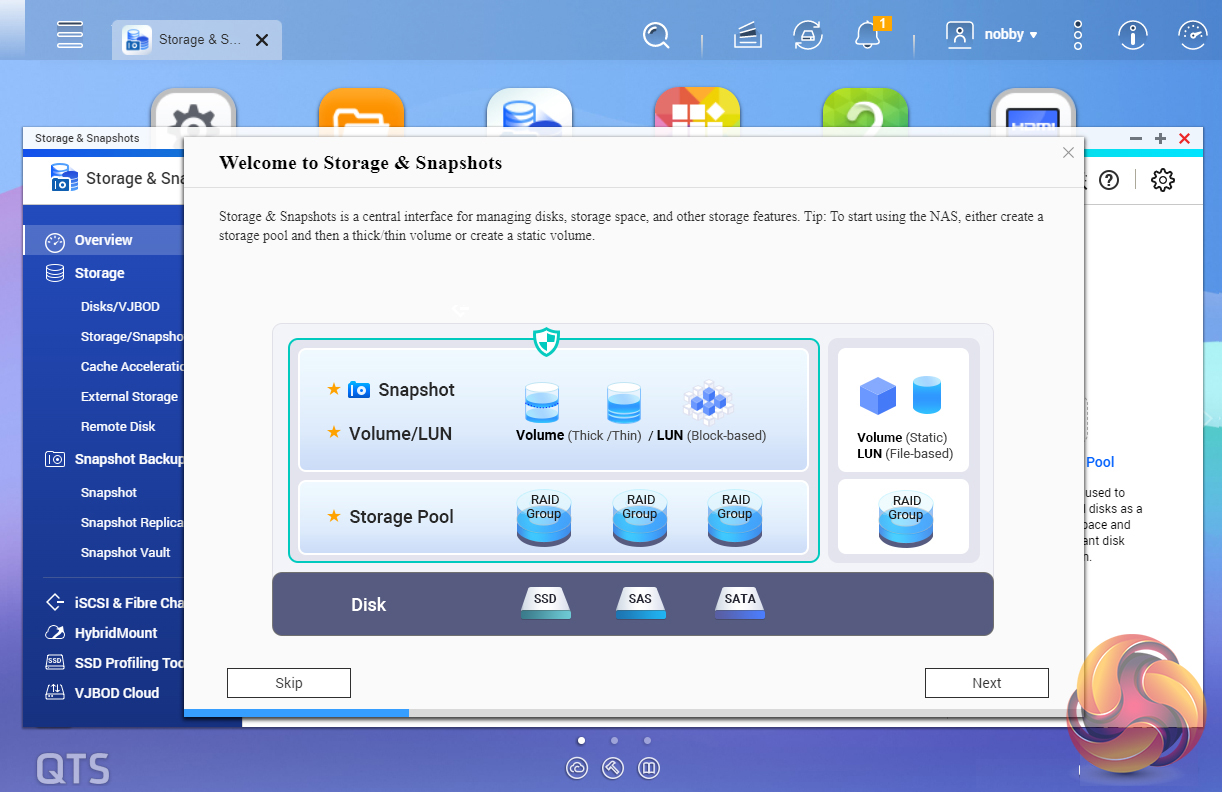
As with any NAS, disk management, RAID and volume creation are at the heart of things. Setting up storage pools and volumes up are pretty straightforward thanks to the clear and precise step-by-step setup pages and wizards in the QTS Storage & Snapshots Manager.
Storage.
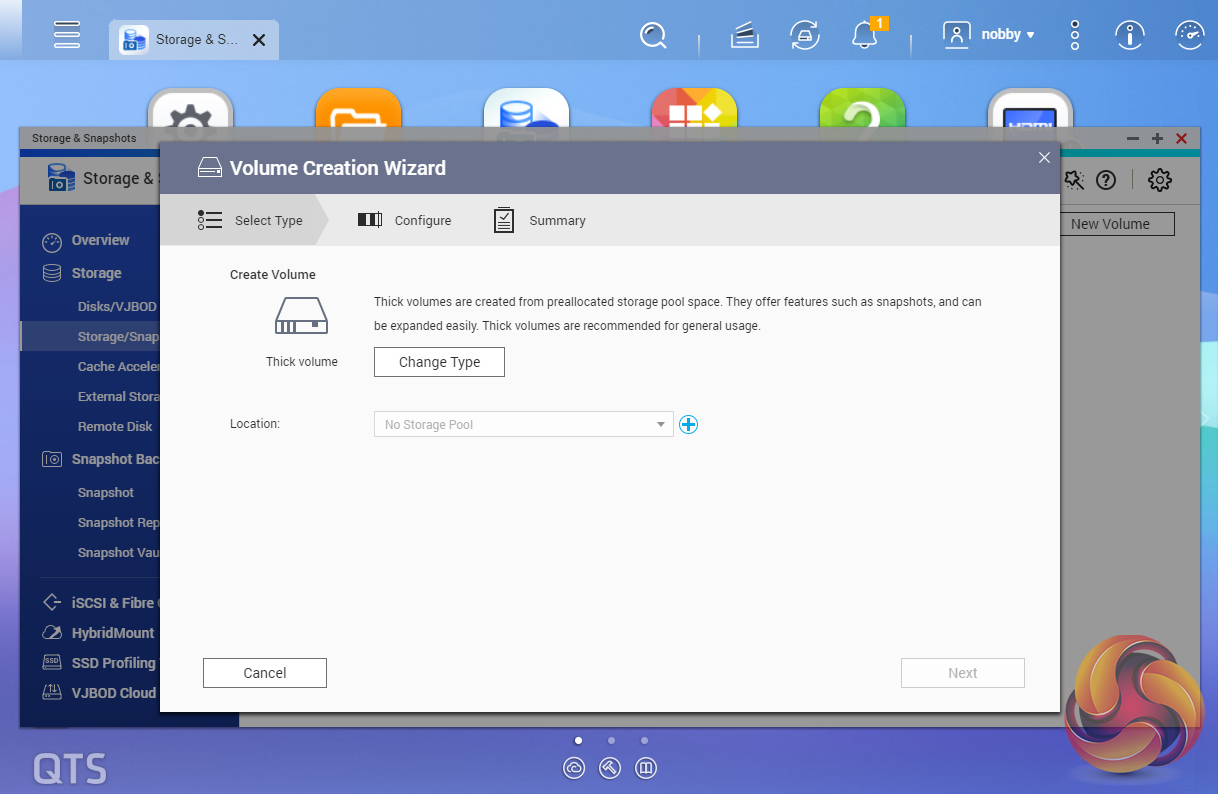
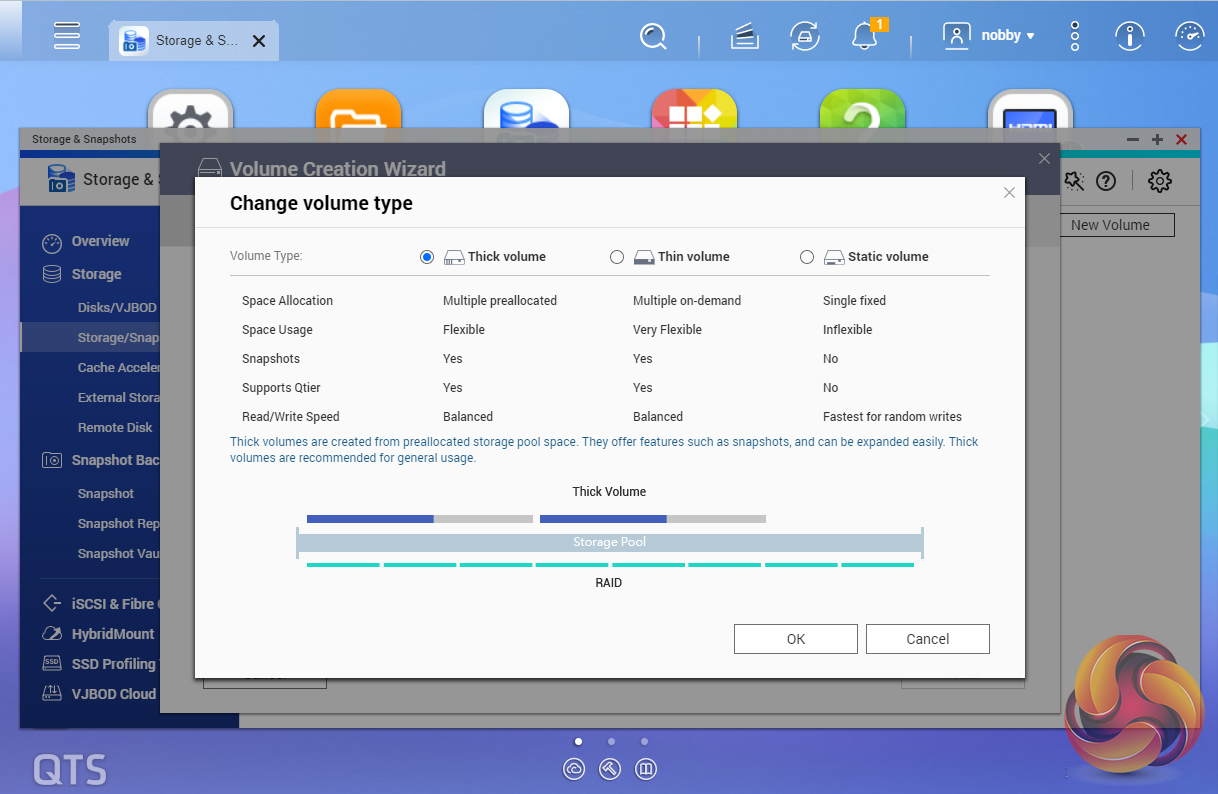
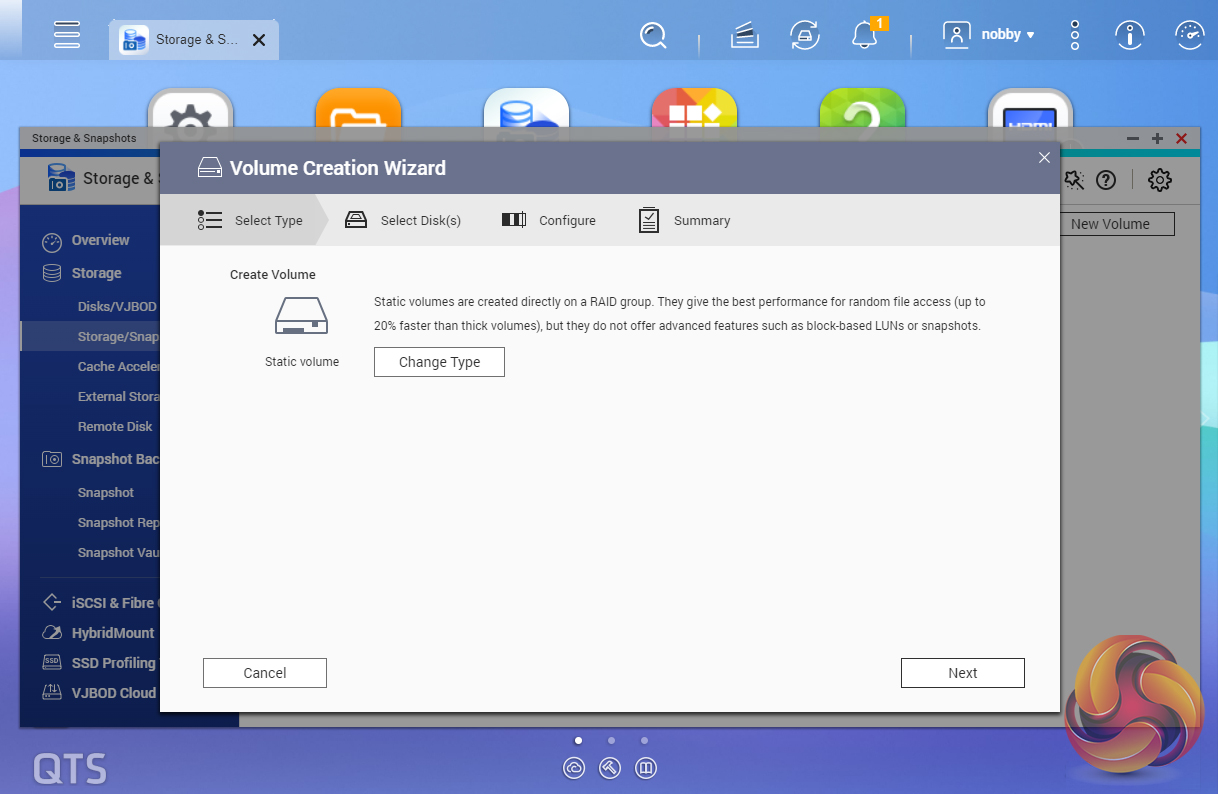
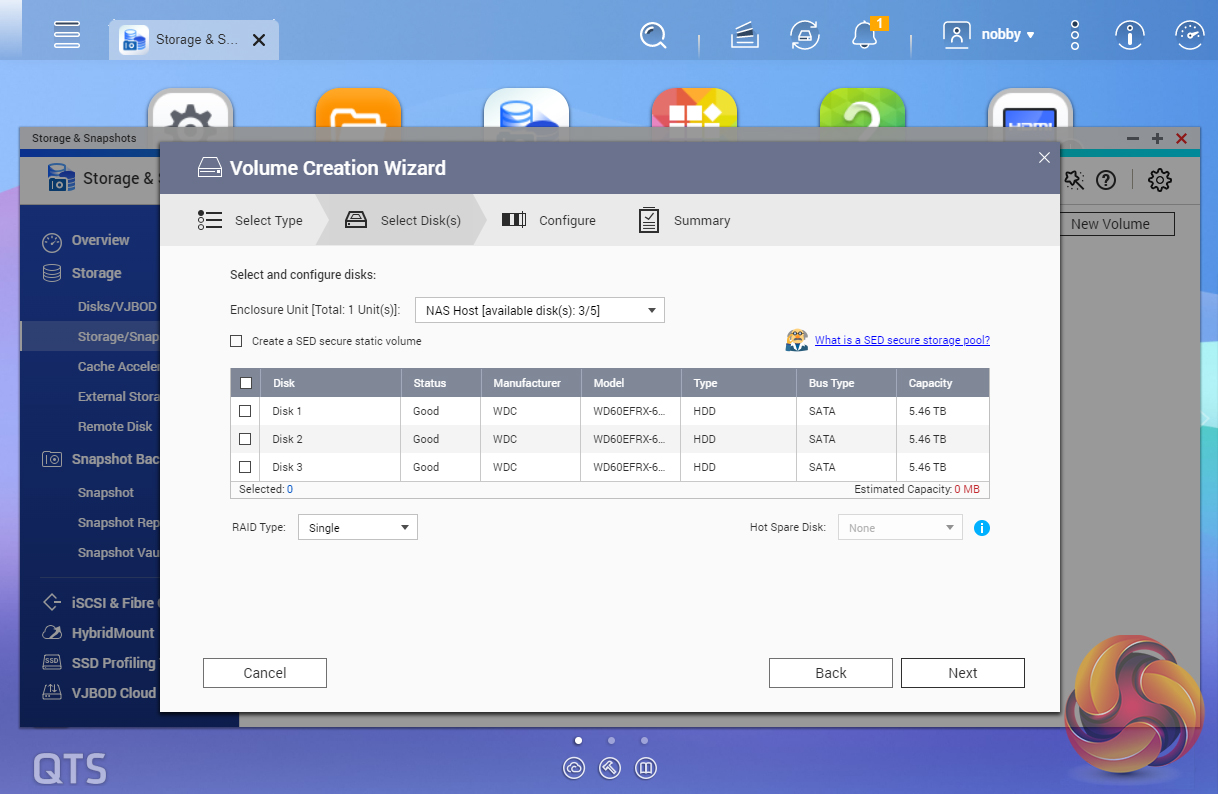
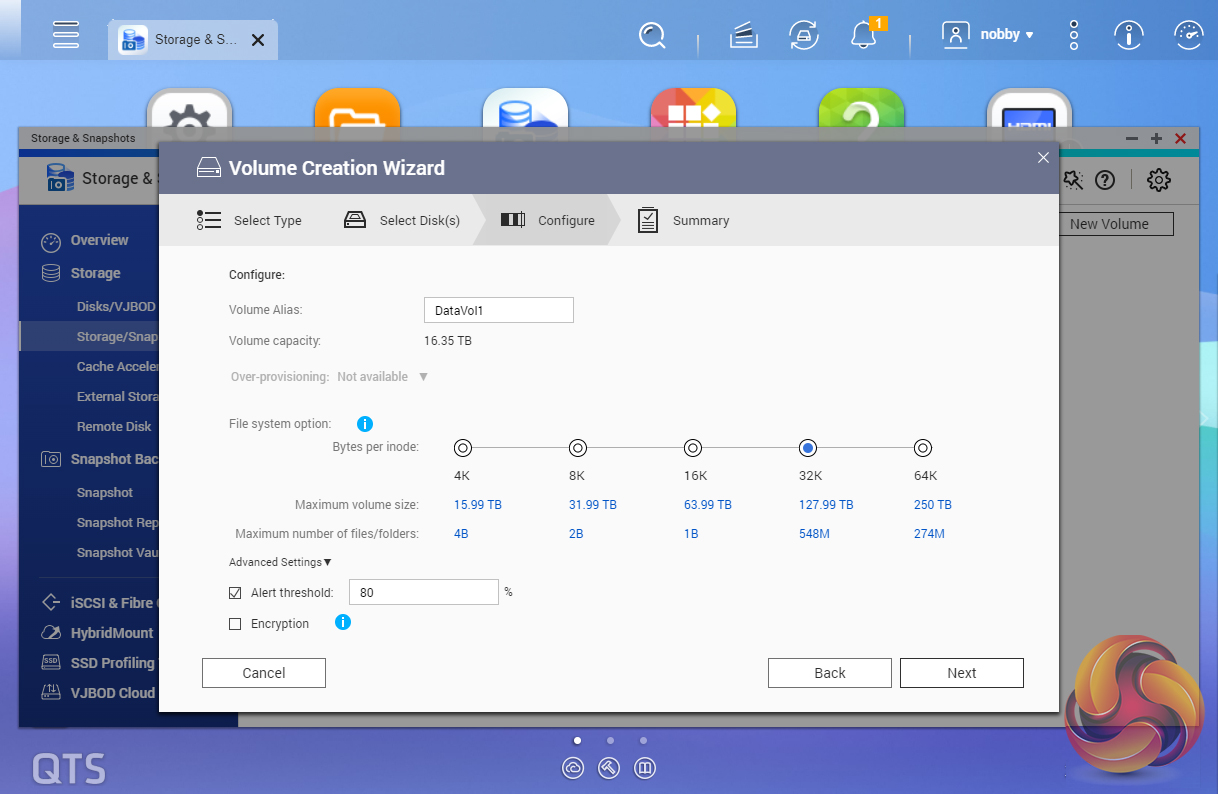
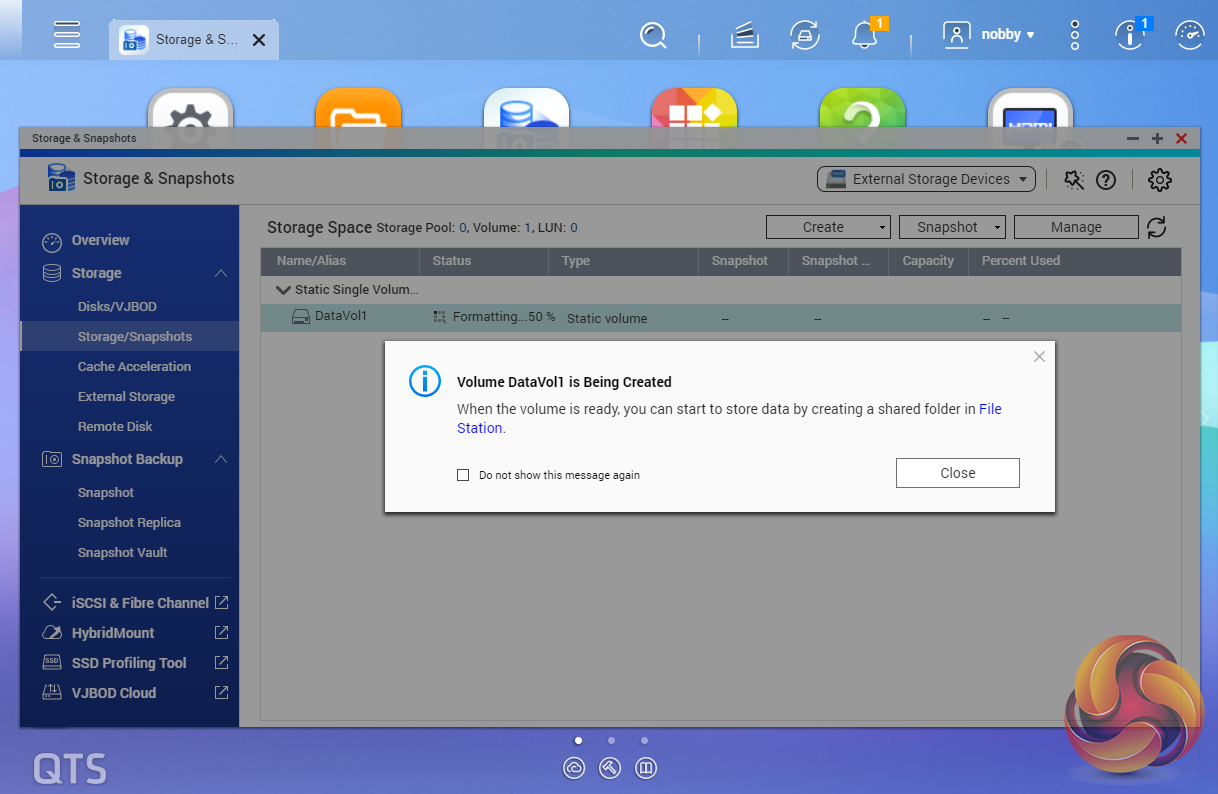
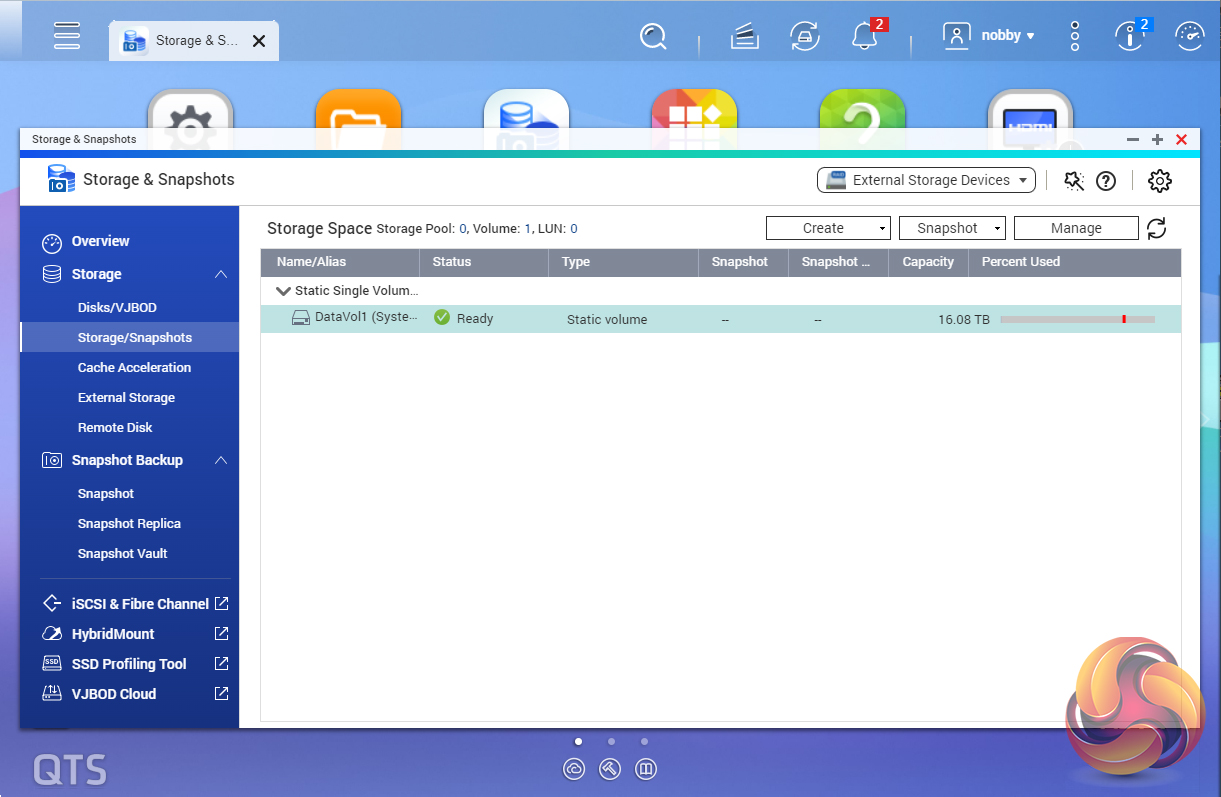
Volume Creation Wizard.
The Volume Creation Wizard is an easy-to-follow step-by-step guide to creating volumes. You can choose between single Static (best for overall read/write performance but without support for the most advanced features), Thick Multiple (a good between performance and flexibility) and Thin Multiple (enables for efficient use of storage space) and then RAID type.
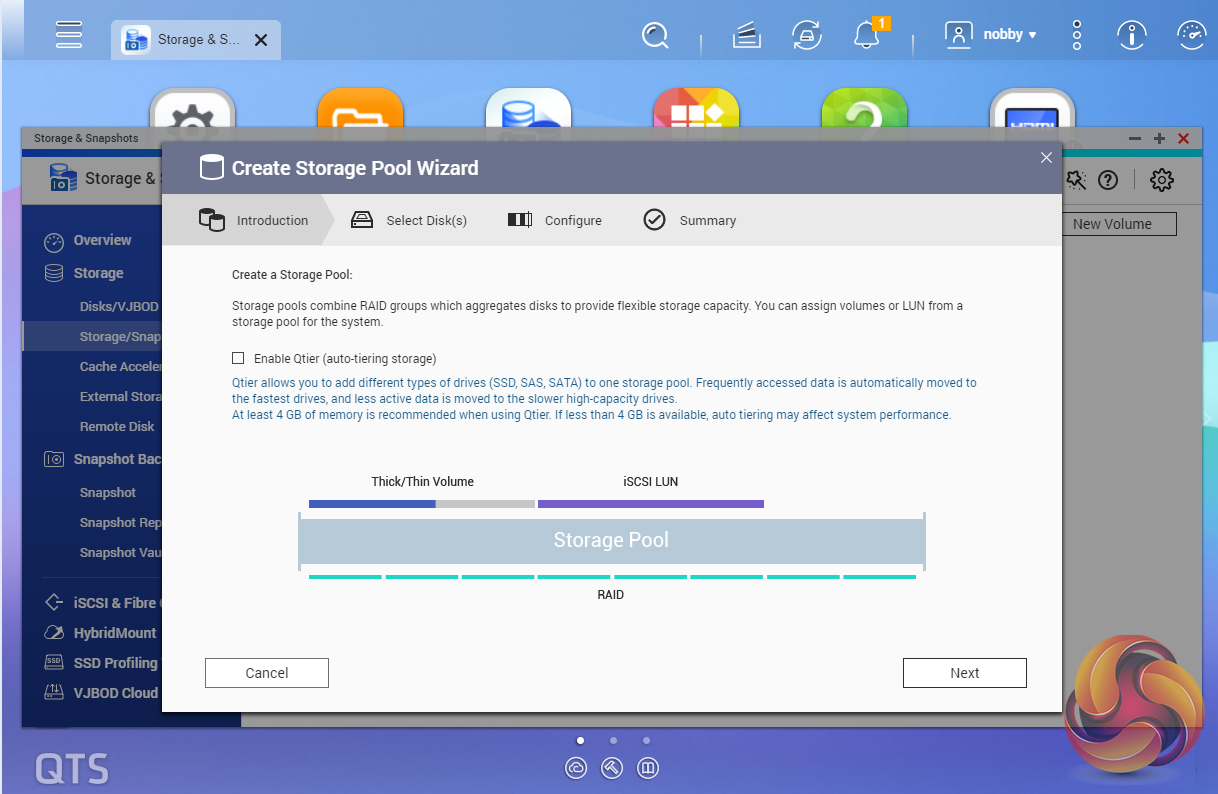
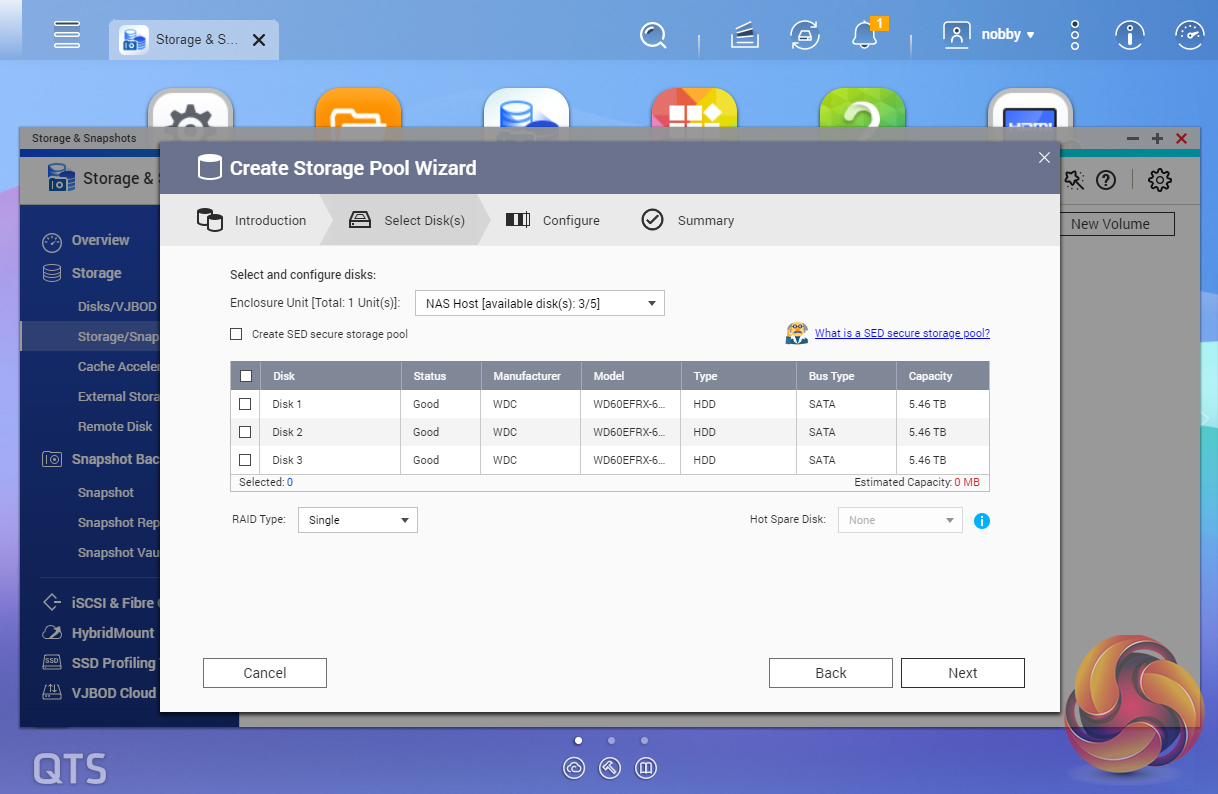
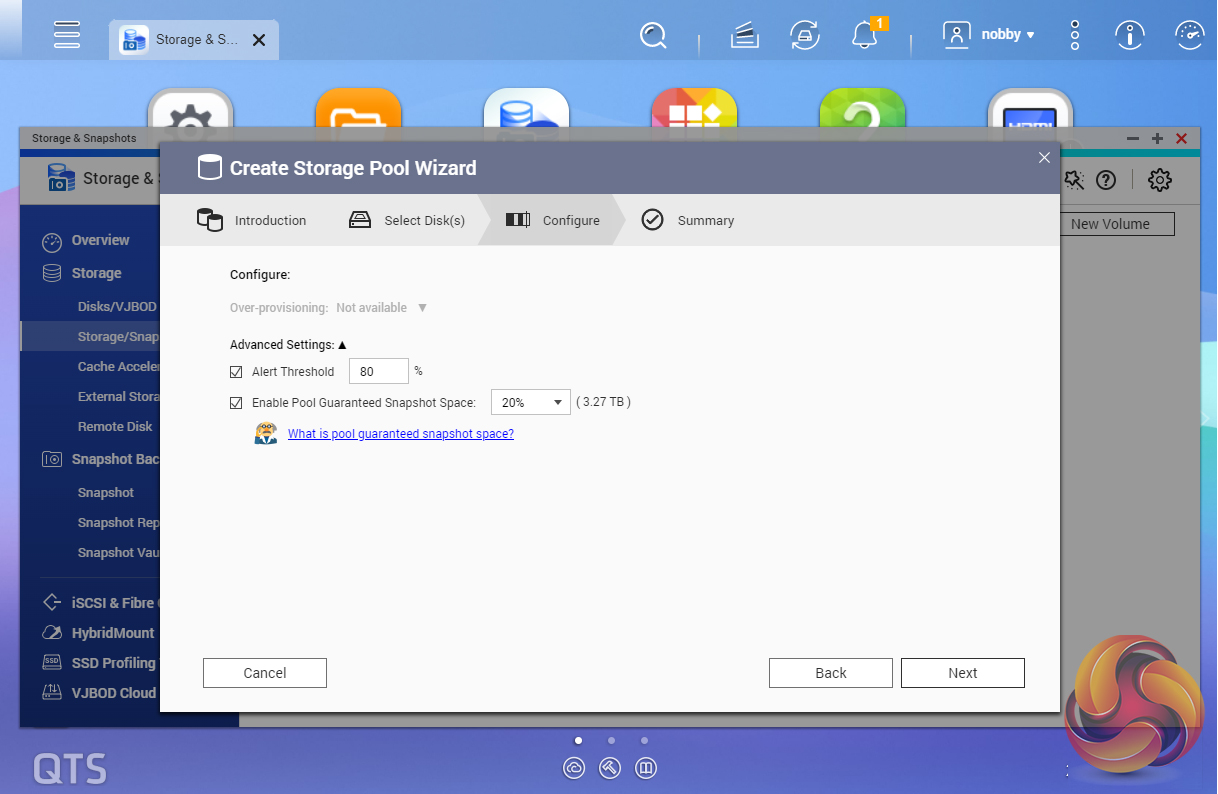
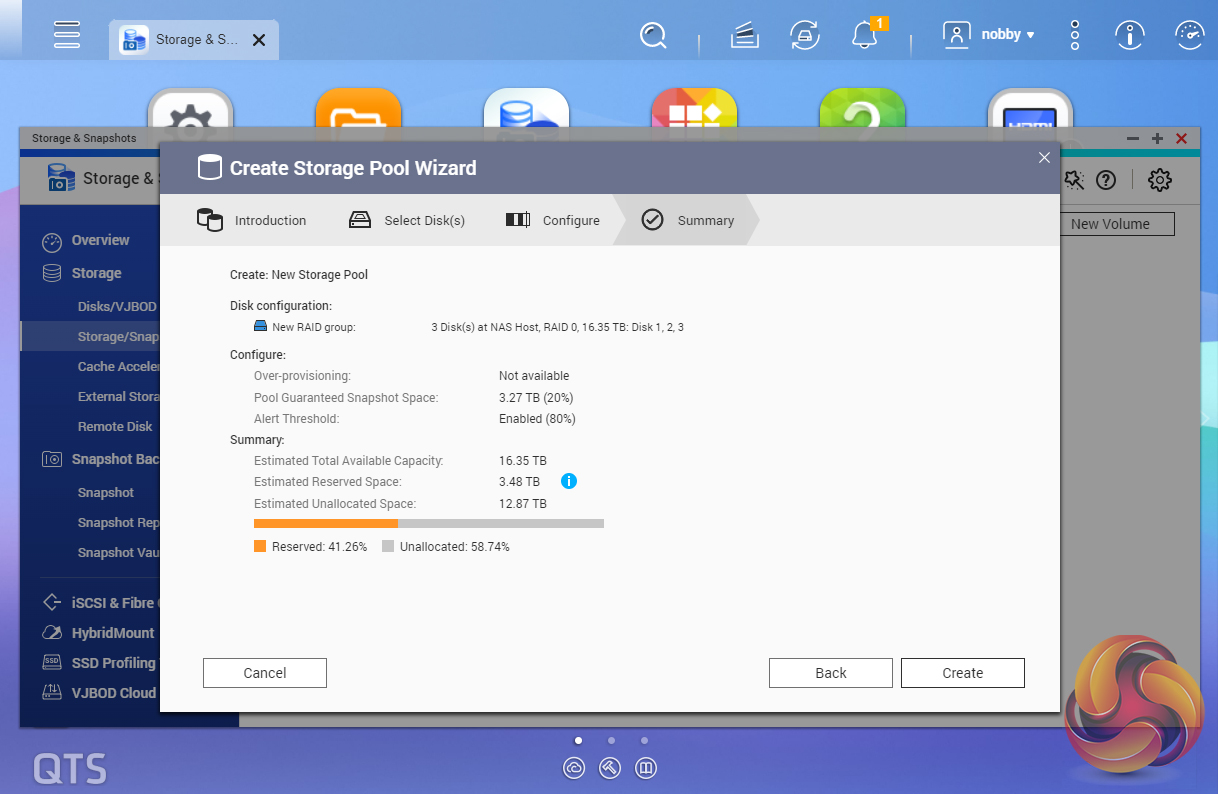
Storage Pool Creation Wizard.
Storage Pool Creation Wizard. As with the Volume Creation Wizard, this is an easy-to-follow step-by-step walkthrough of creating storage pools on the TS-364.
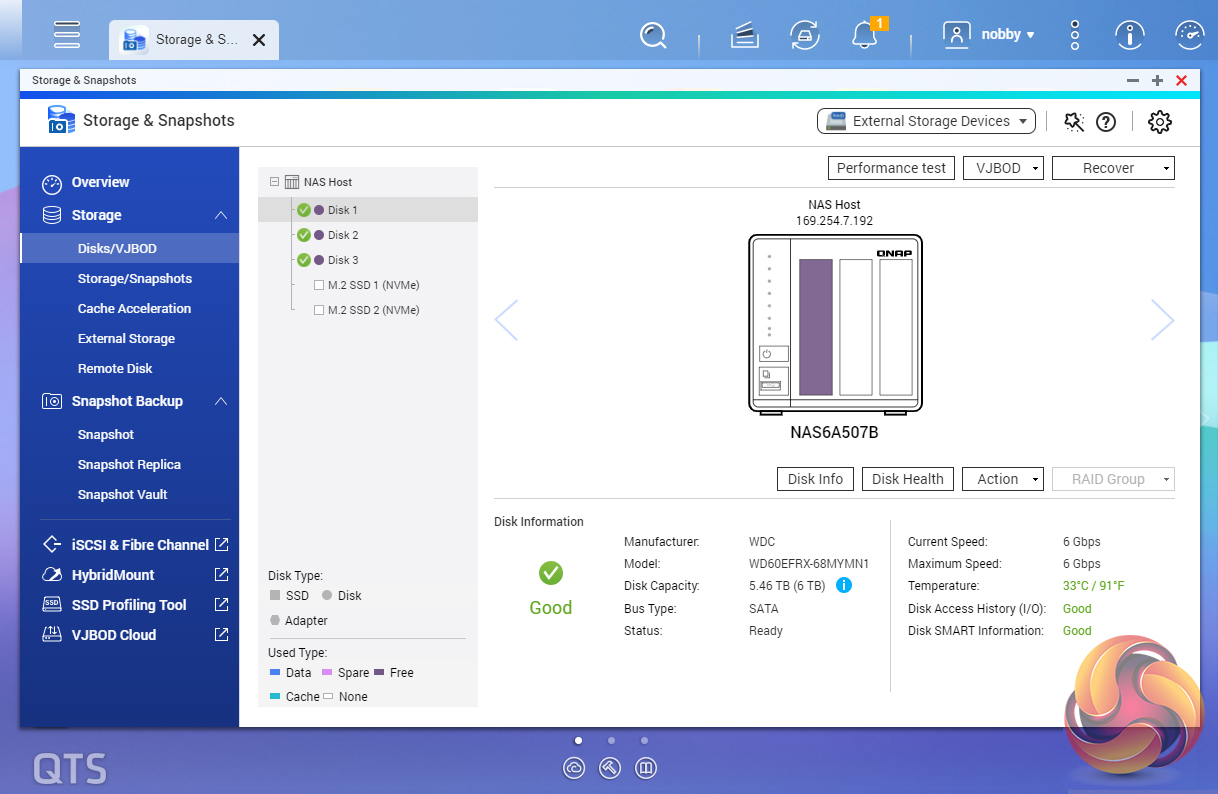
Diskd/VJBPOD.
This page displays information about all the drives used in the NAS system including active drives, drive type, data type, drive temperature and which bay the drive occupies. There is even a performance test you can run to see how the drives are shaping up.
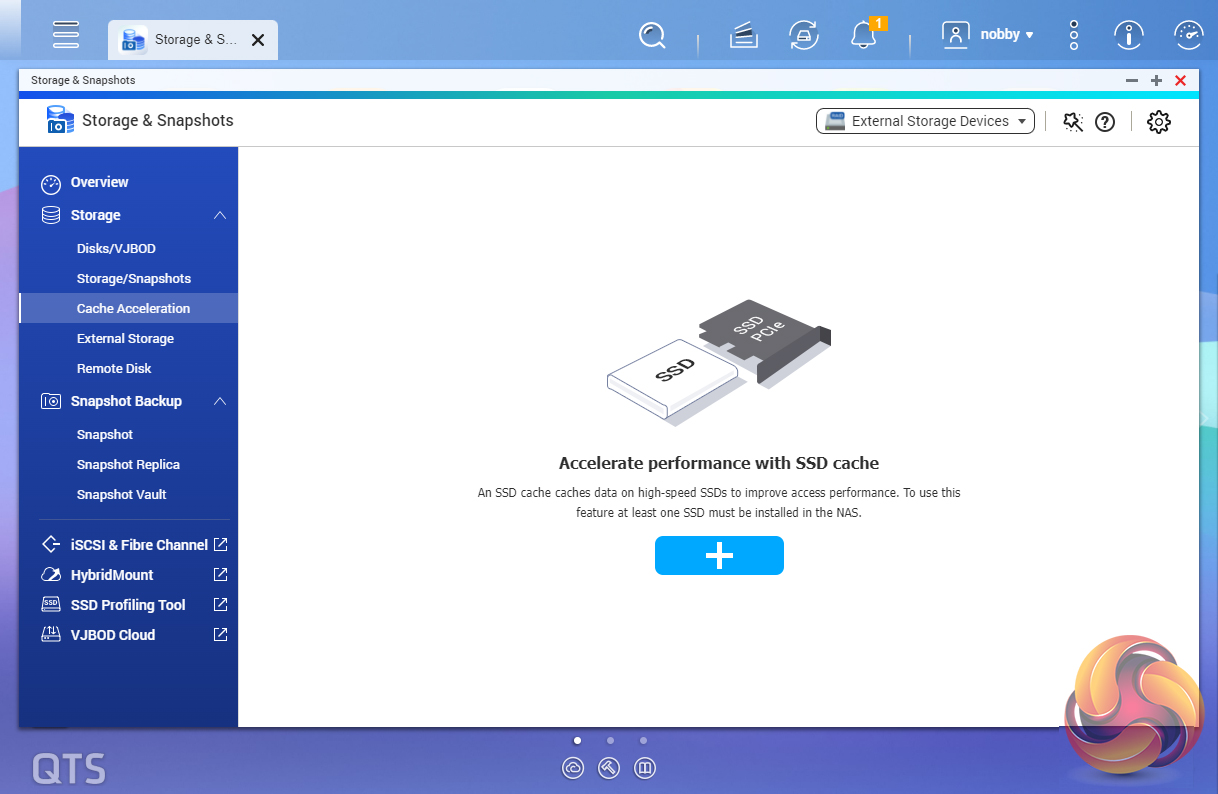
Cache Acceleration.
This is the launch page for setting SSD caching on the storage drives. Again this uses an easy to follow wizard.
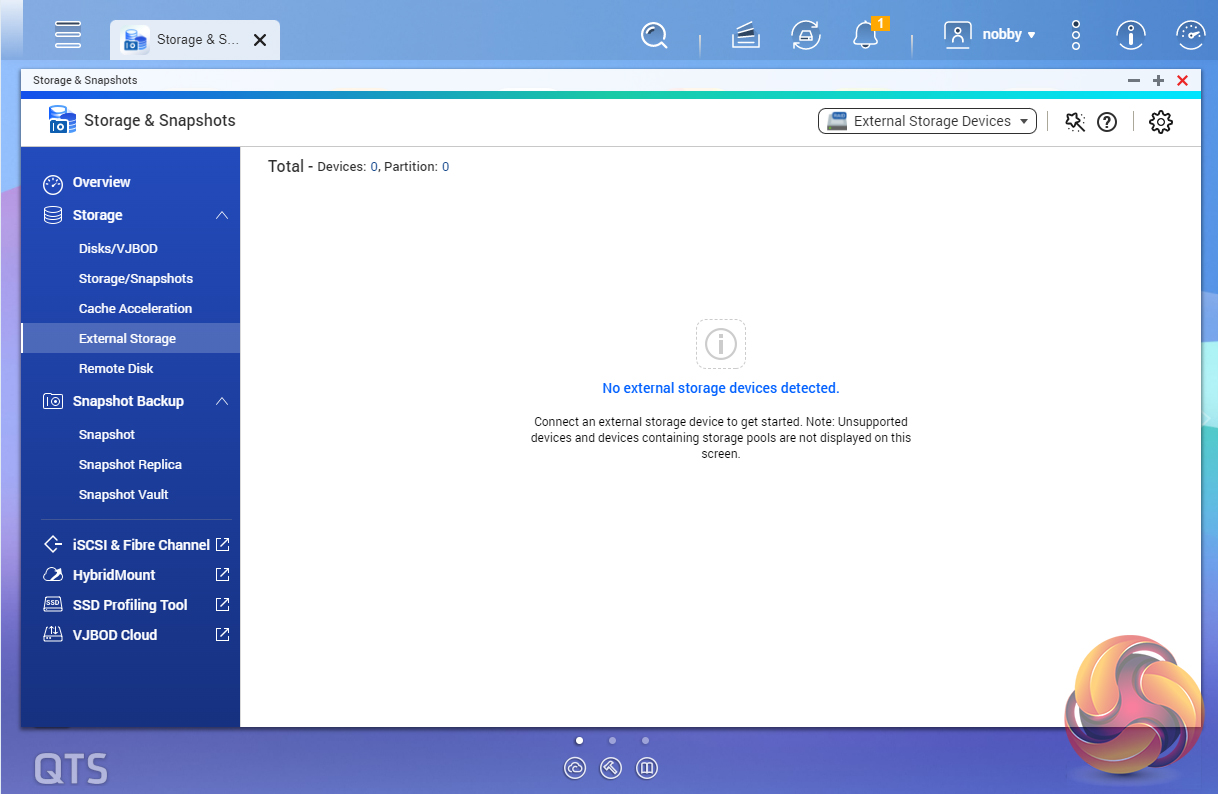
External Storage / Remote Storage.
These pages allow the setting up of external storage devices.
Snapshots.
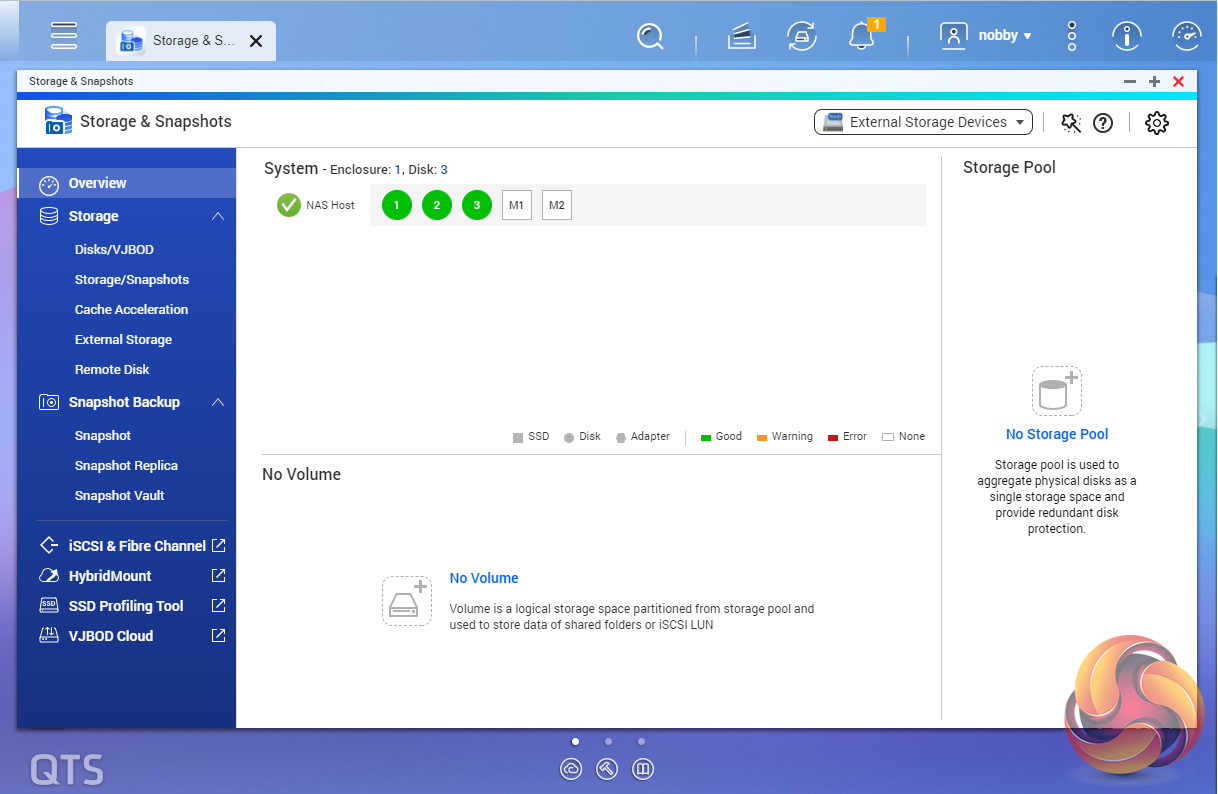
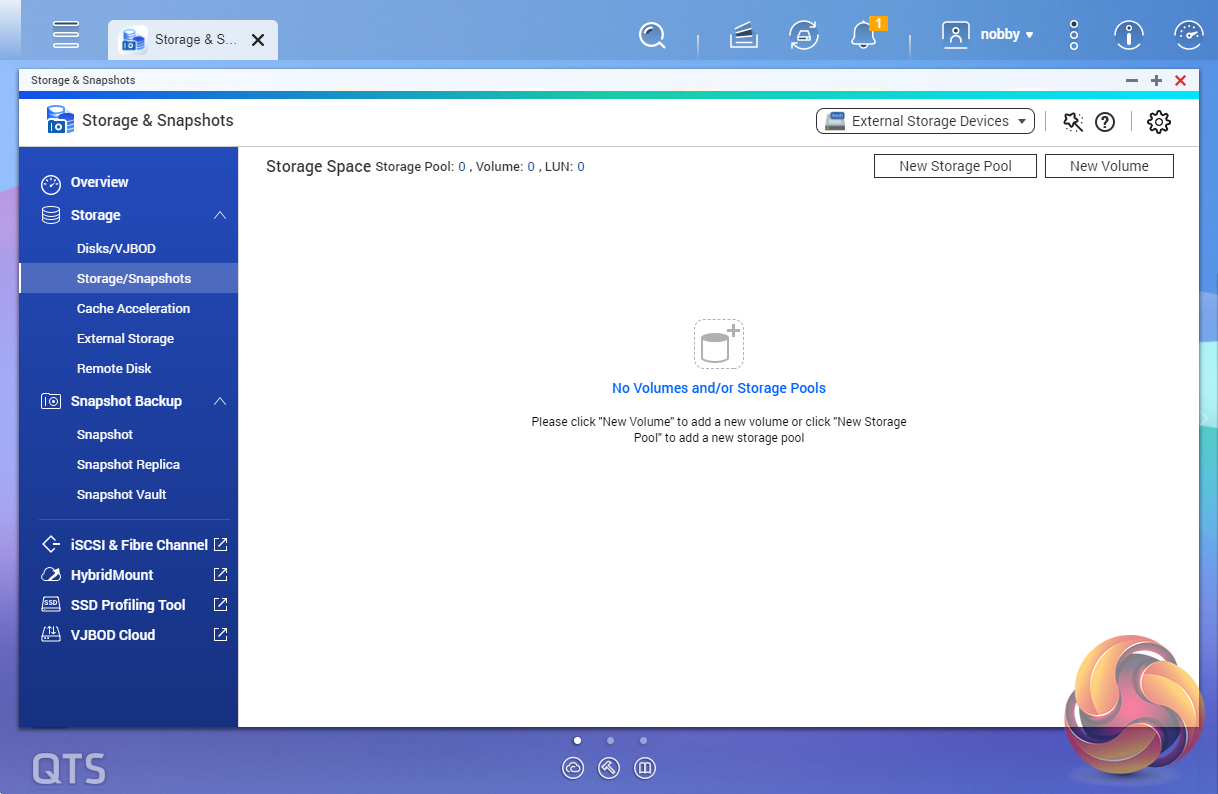
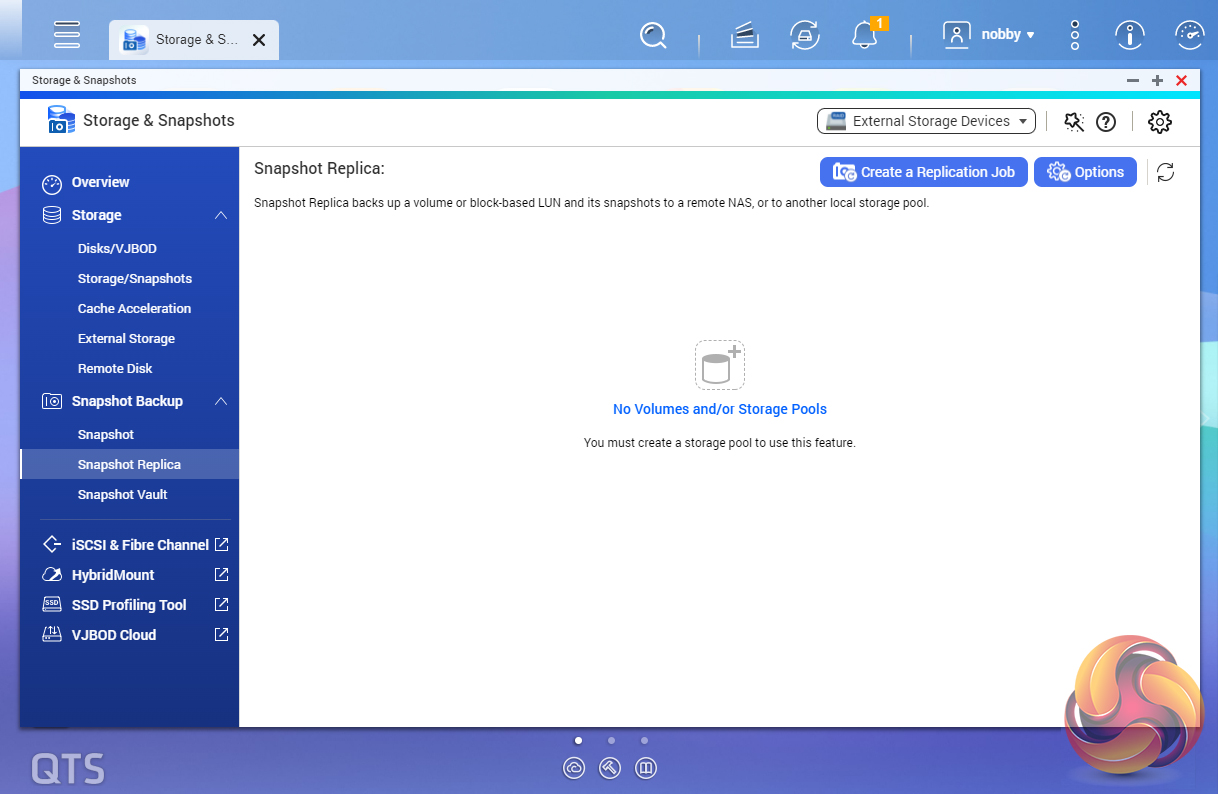
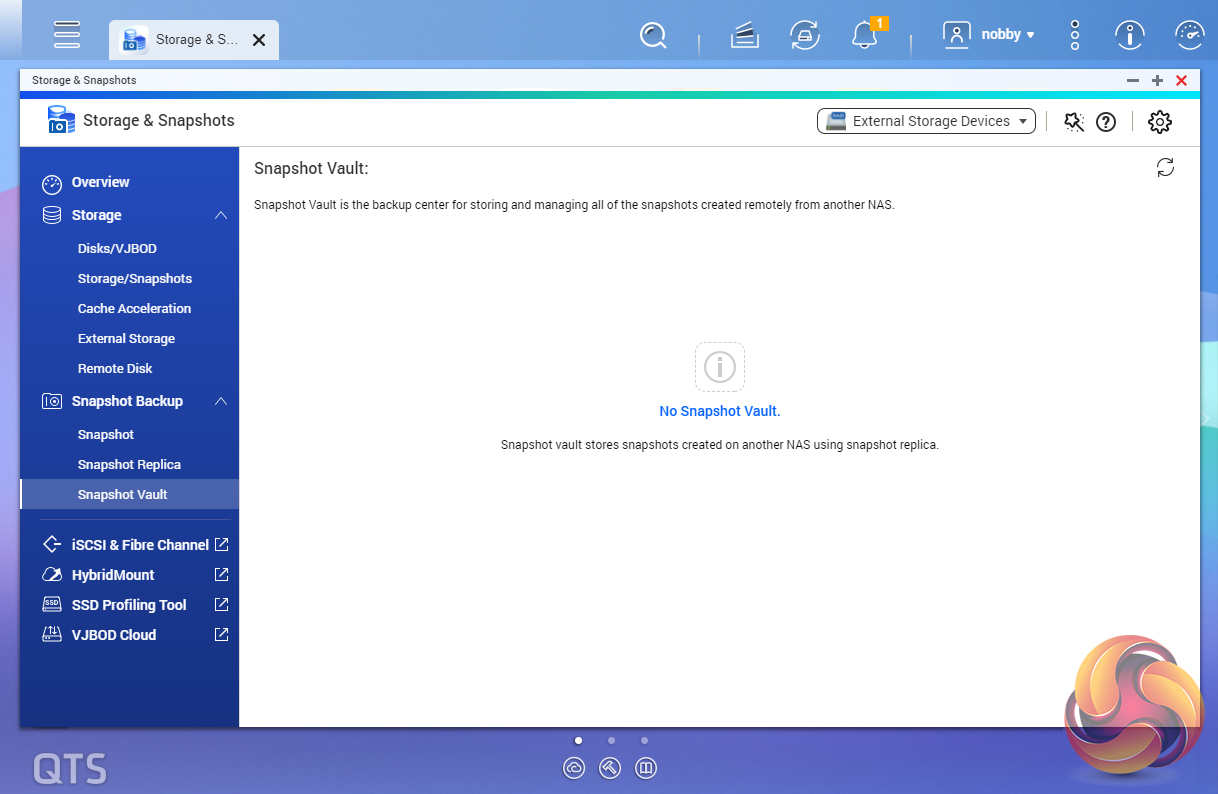
Snapshots used to be the preserve of high-end business and enterprise systems but QNAP has brought it to this NAS as well. Using snapshots you can record the state of the system and data at any time using Storage & Snapshots Manager. It displays the status of all volumes and storage pools at a glance in a very clear, well-laid-out manner. Global settings for disks, storage and snapshots can all be adjusted from within the management window.
File Station 5
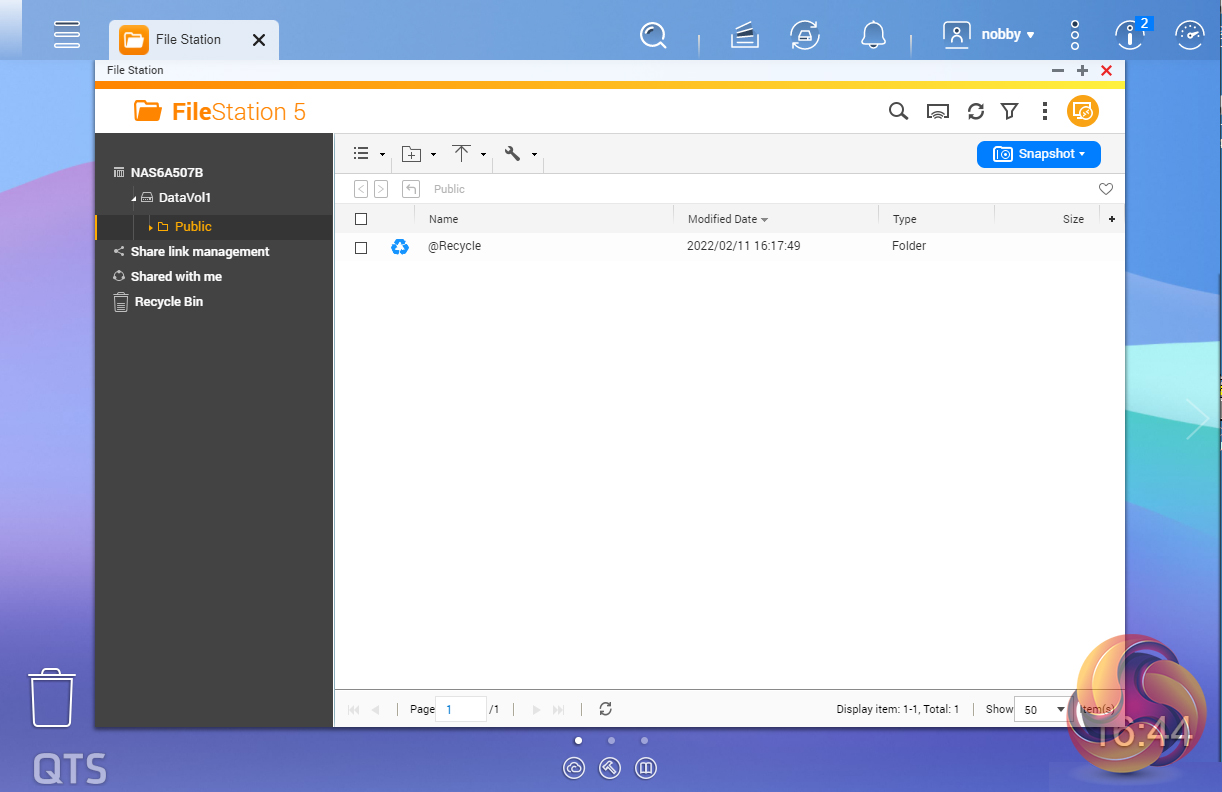
File Station, is a complete file management system. It supports browsing and transfer of files from the NAS to public cloud services including Dropbox, Google Drive, Microsoft OneDrive and OneDrive for Business, Yandex Disk and Box, Amazon Cloud Drive and HiDrive. It also allows the mounting of shared folders from a remote NAS to a local NAS via FTP and CIFS/SMB.
Qfiling
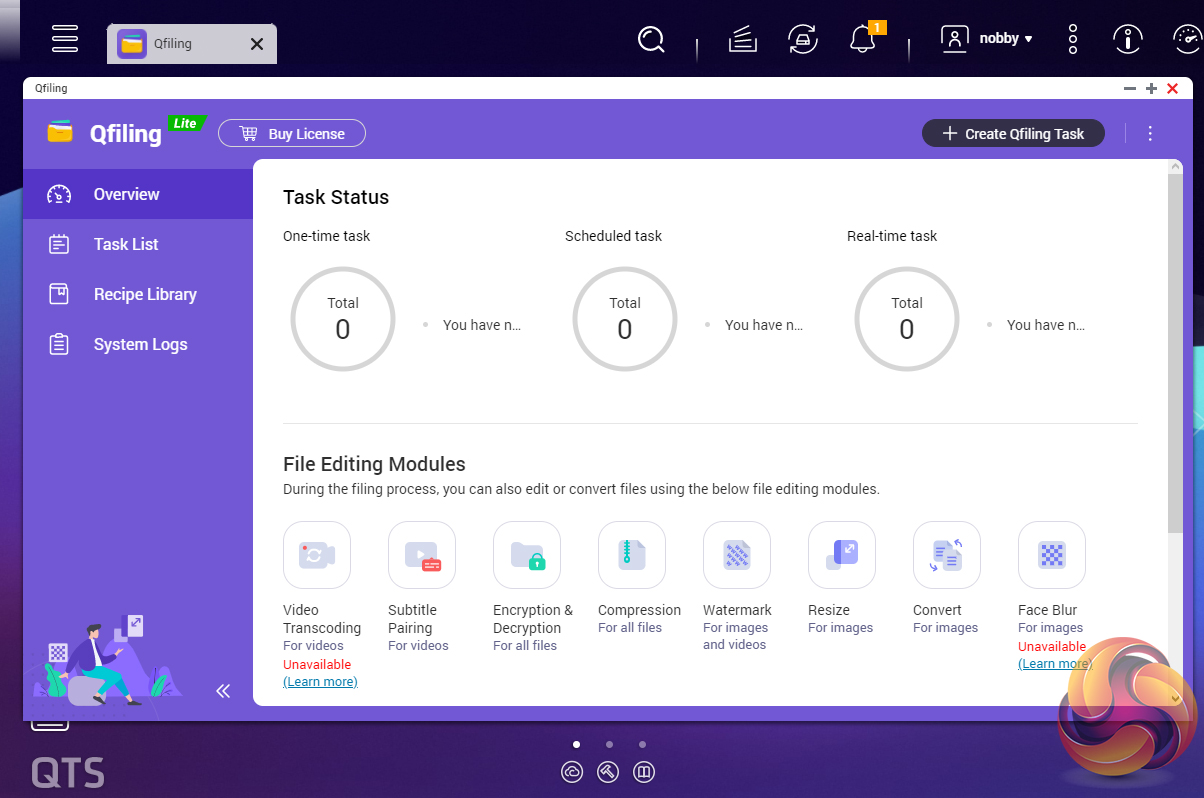
Qfiling makes the job of archiving and organising large numbers of files much easier by allowing the setting of various filing conditions and schedules to enable automatic filling jobs.
Qboost
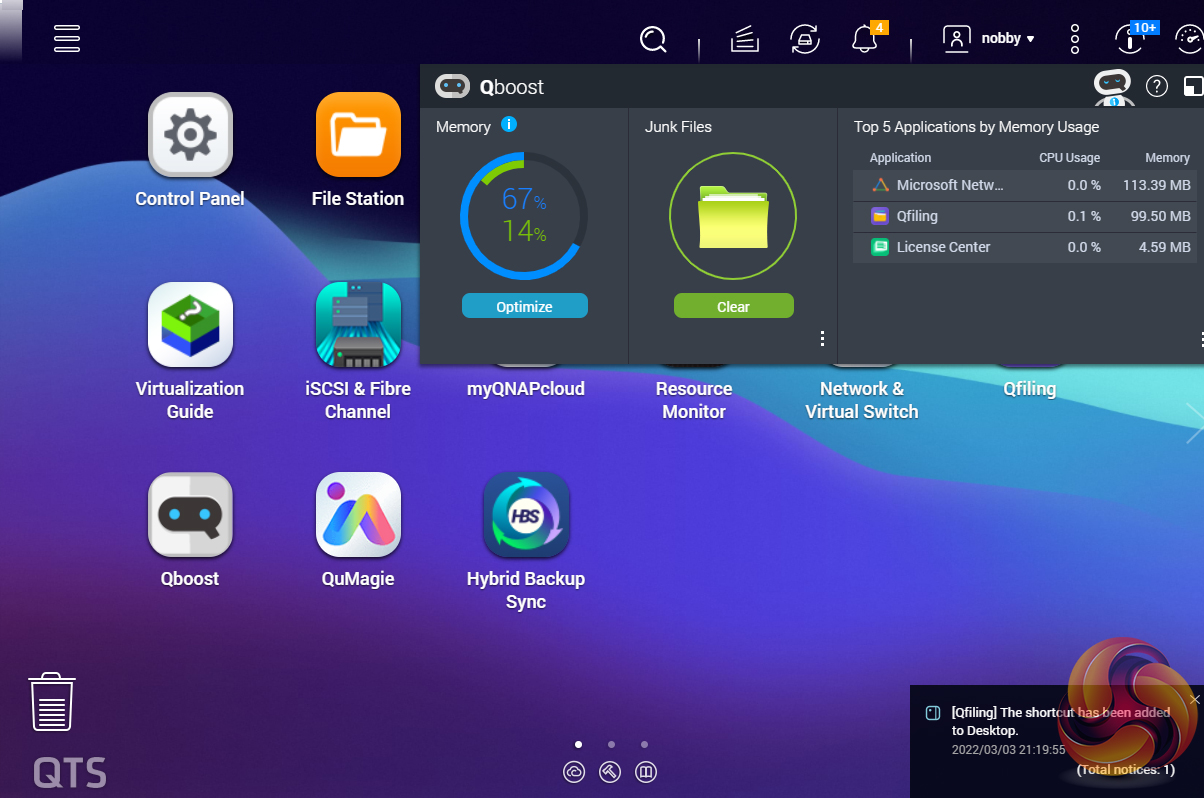
Qboost is an optimisation app that helps maintain the NAS at peak performance. It can free up system memory, reclaim storage space by clearing unnecessary system files and the recycle bin and help balance system load by managing schedules for most applications and services.
Qsync Central.
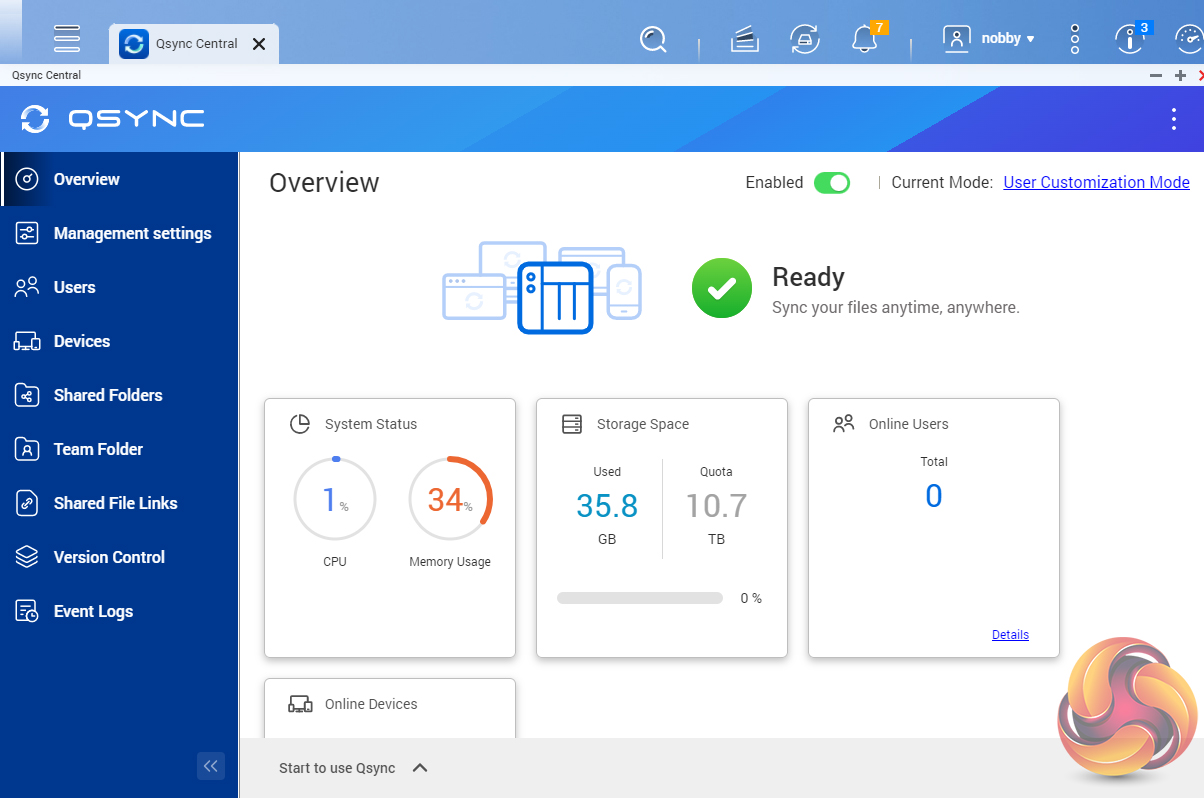
To access files from anywhere there is Qsync Central. Files added to the Qsync folder are available to the local NAS and all devices that are connected to it, including mobile devices.
myQNAPcloud.
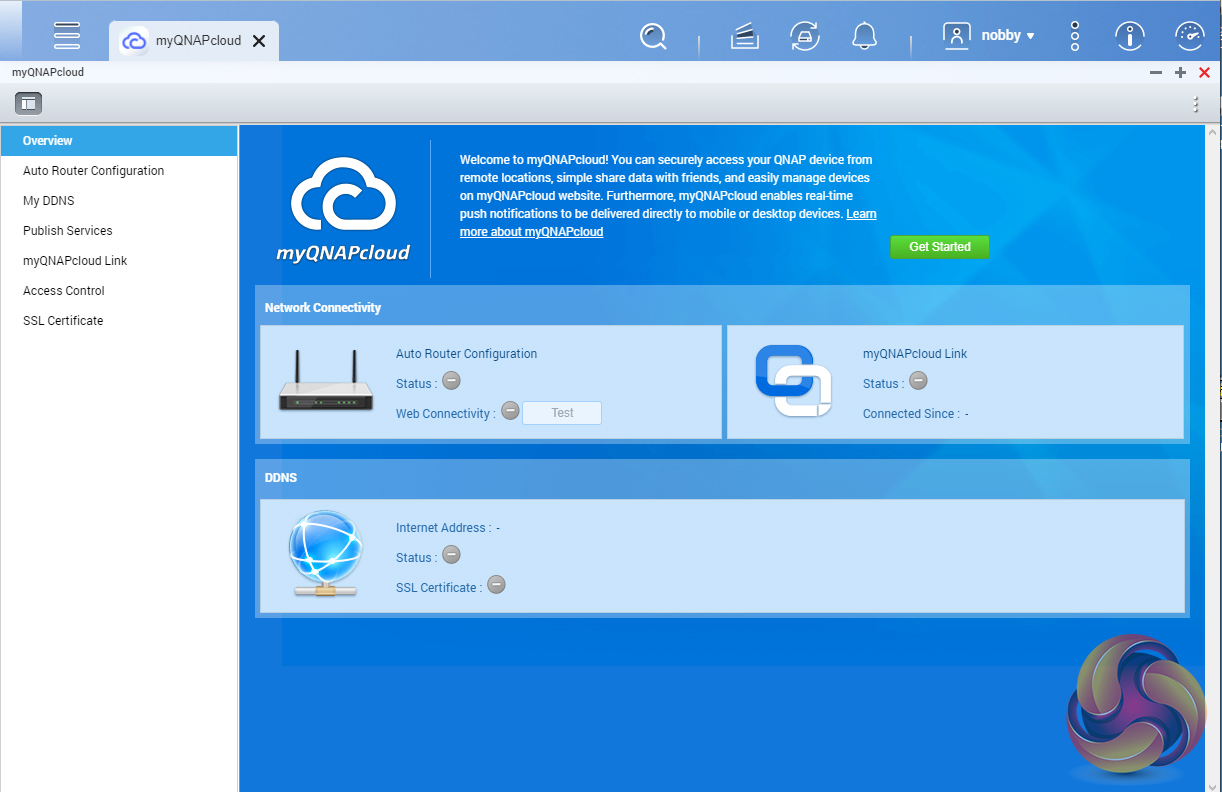
myQNAPcloud allows for easy and safe access to a remote device. It allows multiple devices to connect to one central location to share and manage files. For even more secure connections, SSL certification is available.
Hybrid Backup Sync
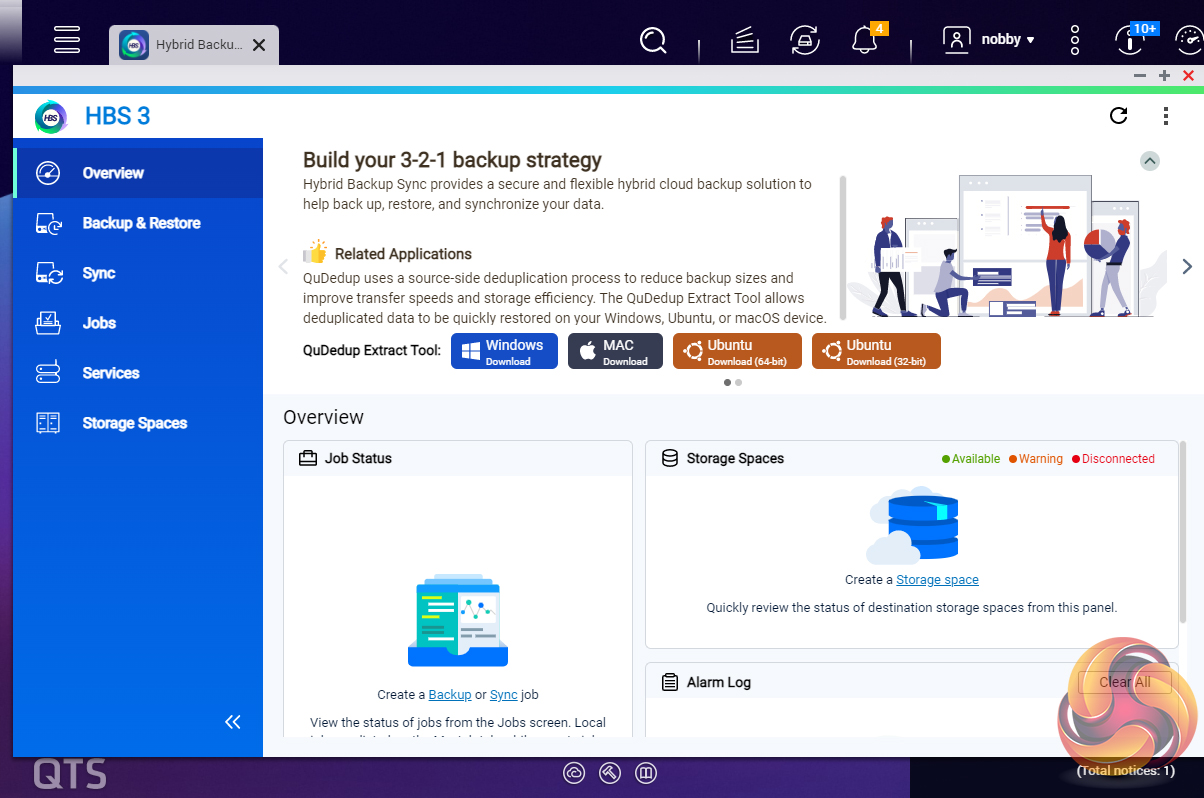
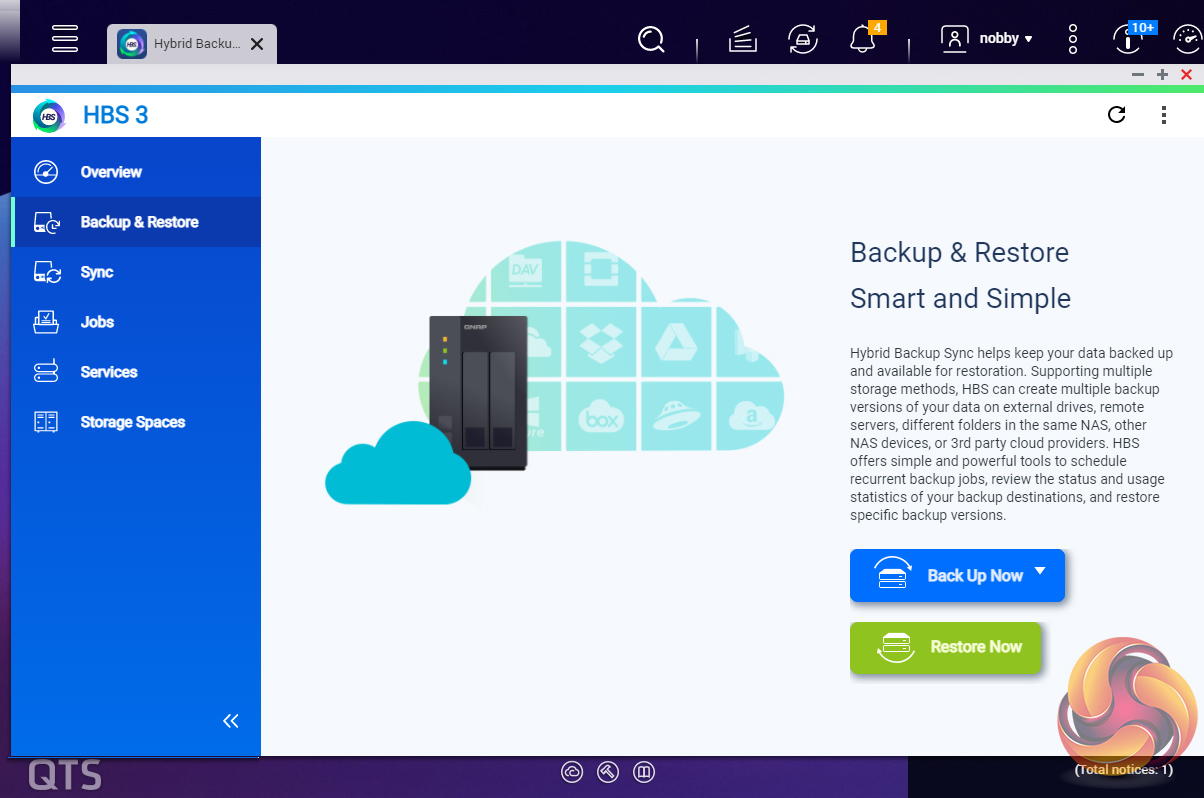
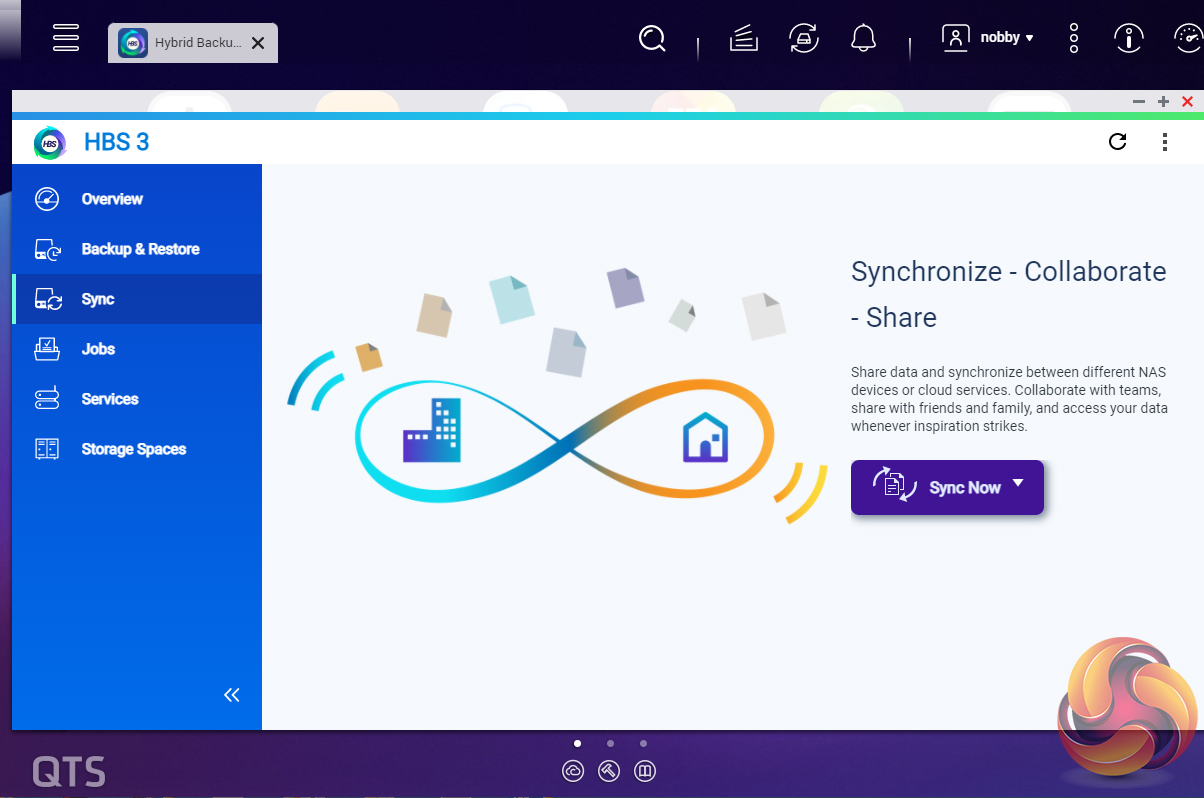
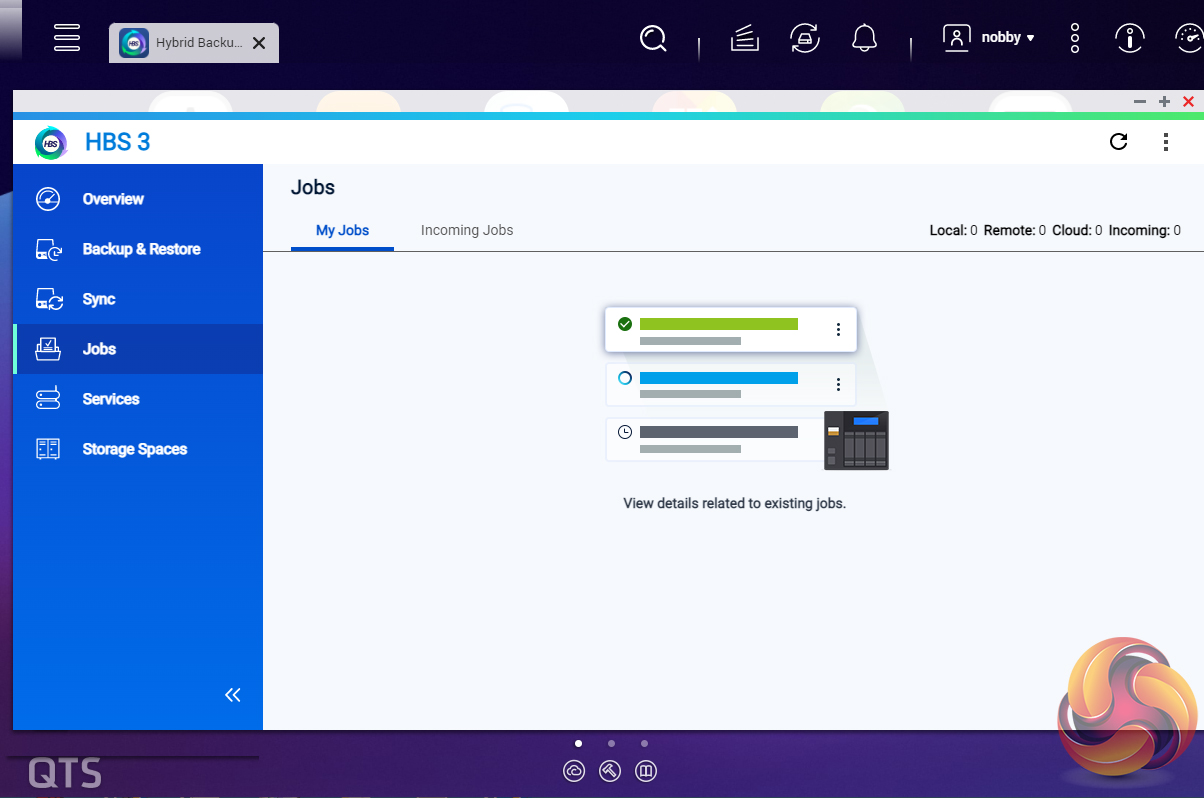
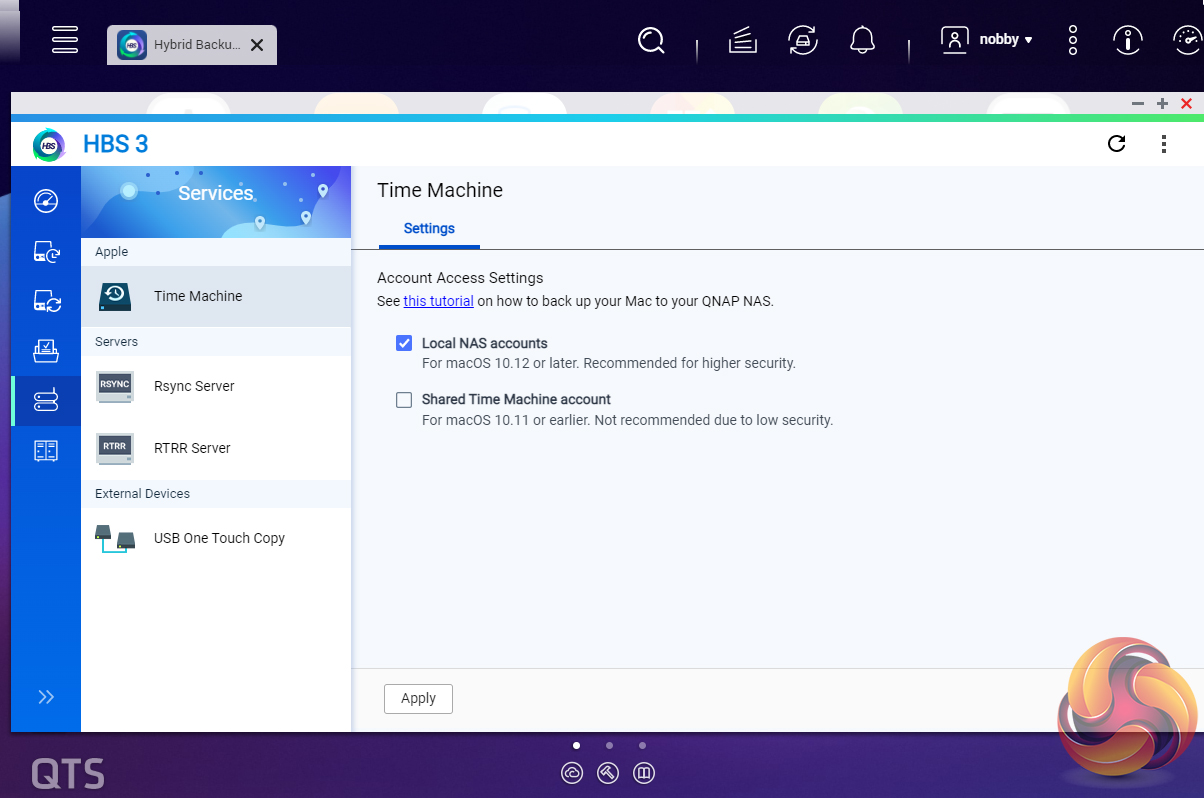
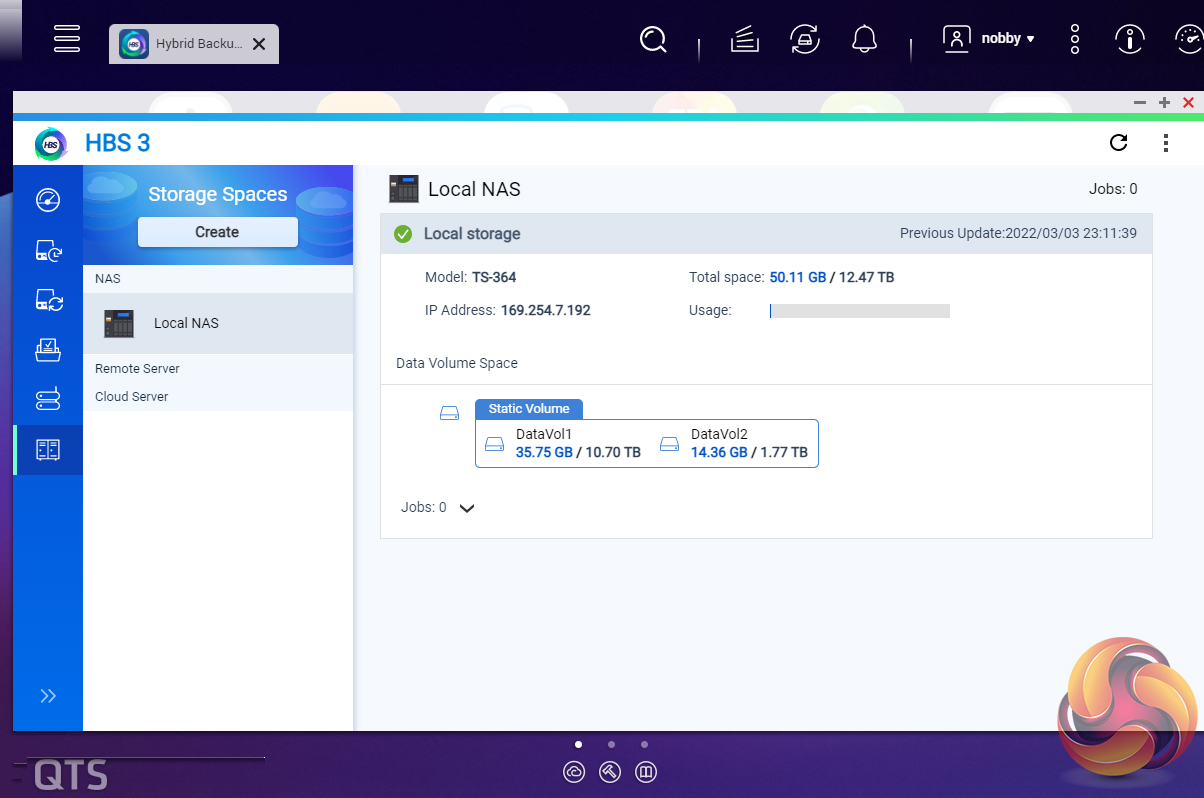
Hybrid Backup Sync (the replacement for the old Backup Station), is a comprehensive data backup and disaster recovery solution which brings together backup, recovery and sync functions allowing data to be backed up to local storage devices, cloud services or remote servers. The One-Touch button on the front bezel can be set up to either upload or download files/folders or backup the NAS to an external USB drive. Setting up what you want the button to do is done via Hybrid Backup Sync.
Network & Virtual Switch
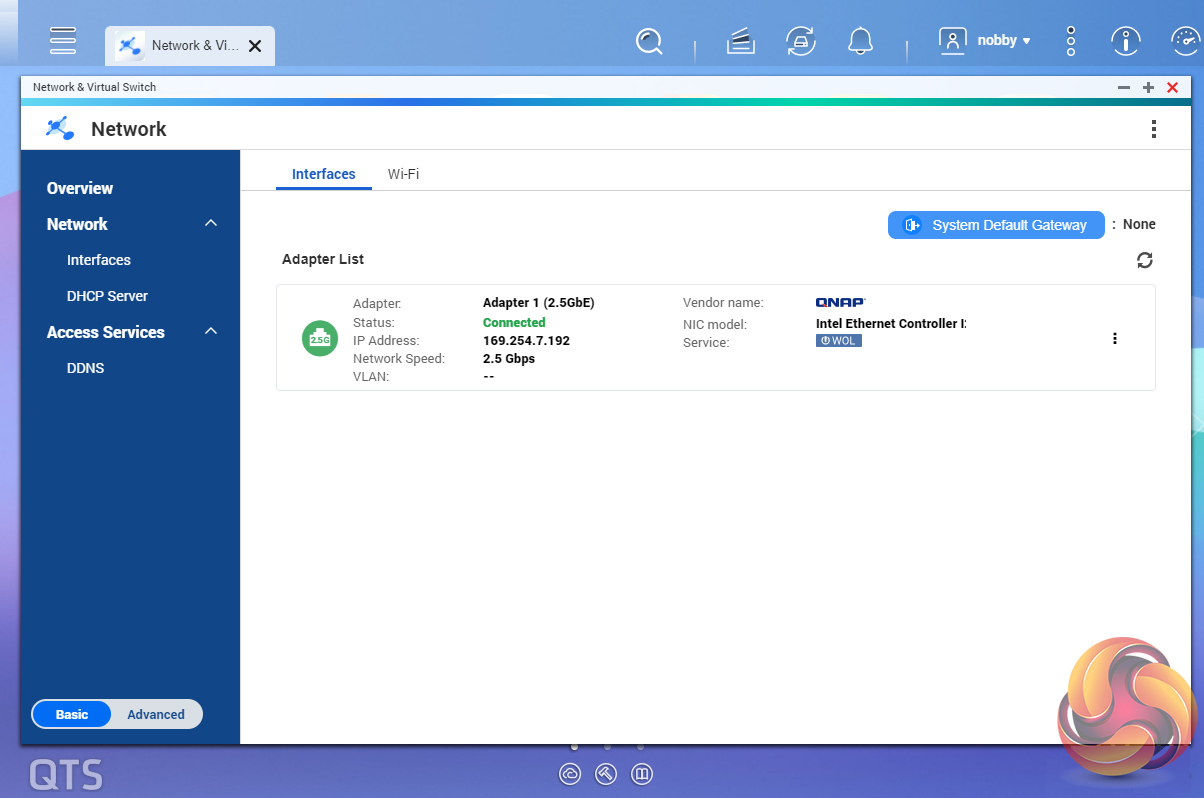
Network & Virtual Switch is a utility that centralises the creation, configuration, and control of network connections. It allows easy management of physical network interfaces, Thunderbolt and Wi-Fi connections as well as virtual adapters. It also makes controlling DHCP, DDNS and gateway services easier. It has both basic and advanced options, the advanced option gives you much more details about any connected networks and it also displays which port(s) are being used by highlighting them green in the graphics on the page.
Resource Monitor
Resource Monitor – System
Resource Monitor – Storage
Resource Monitor – Processes
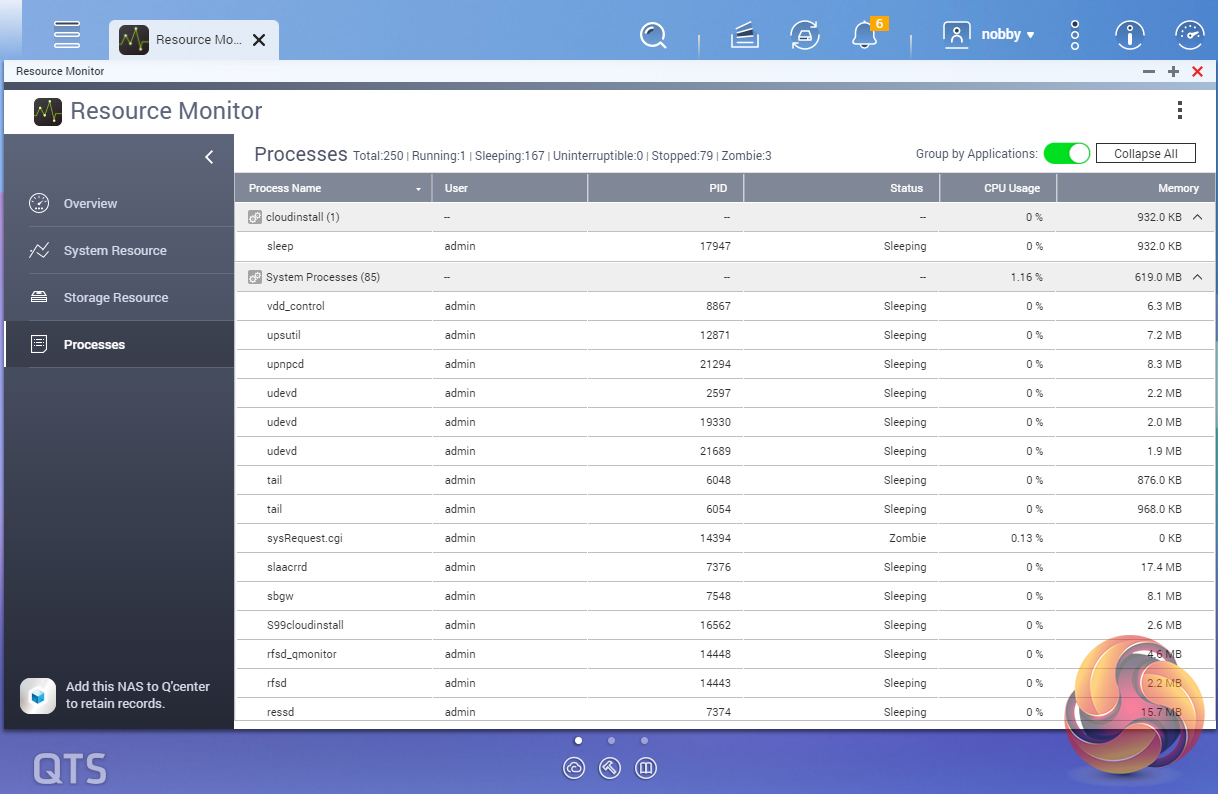
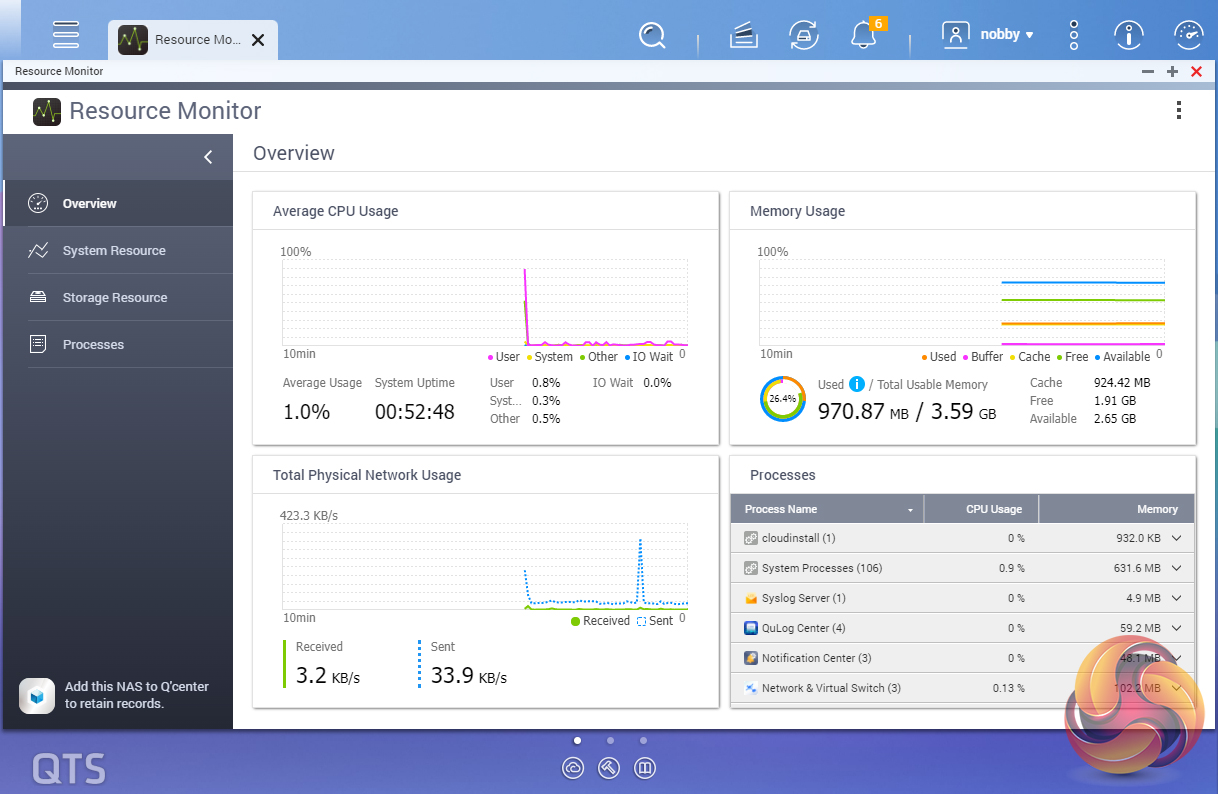
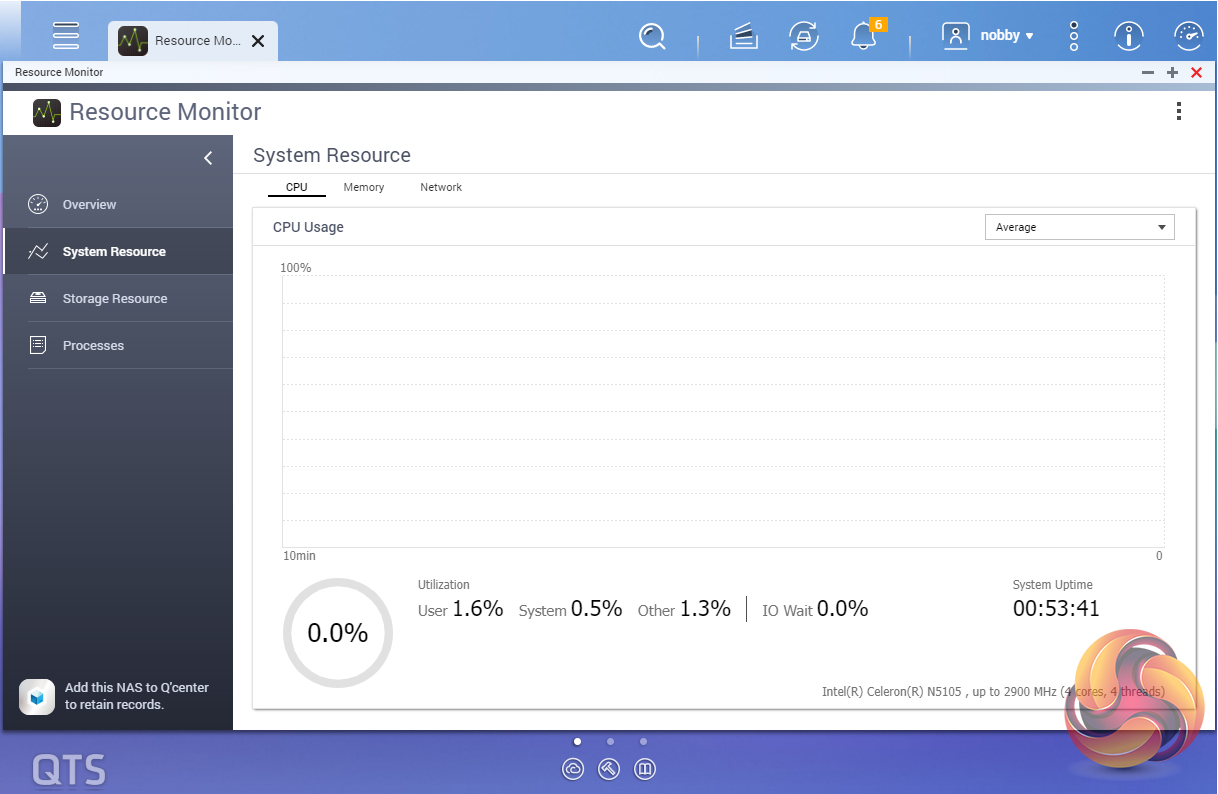
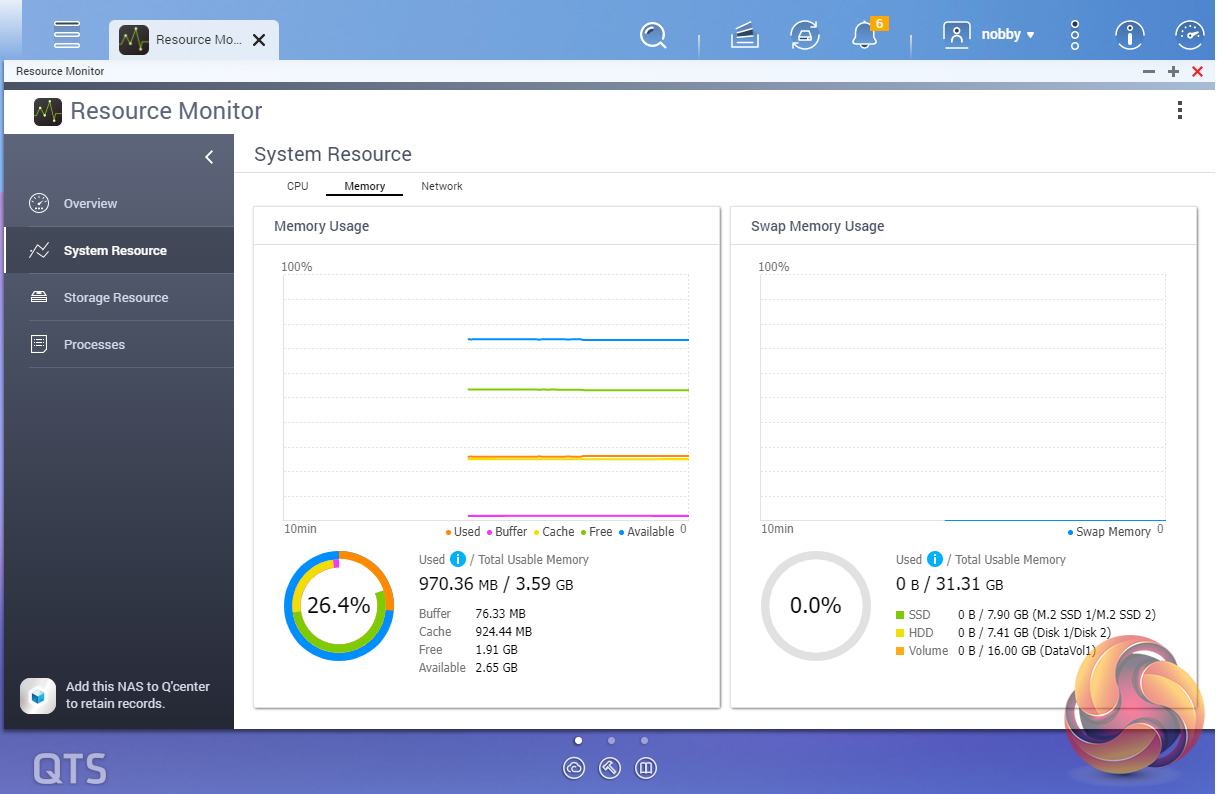
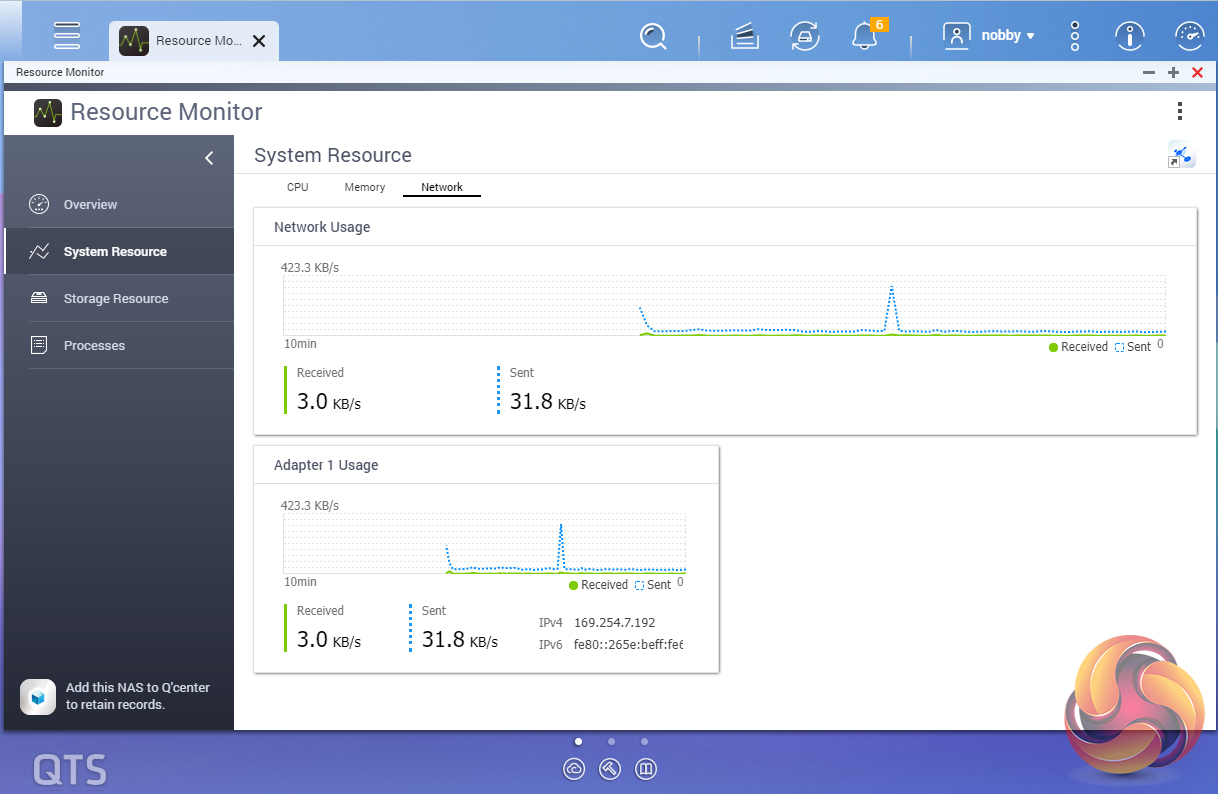
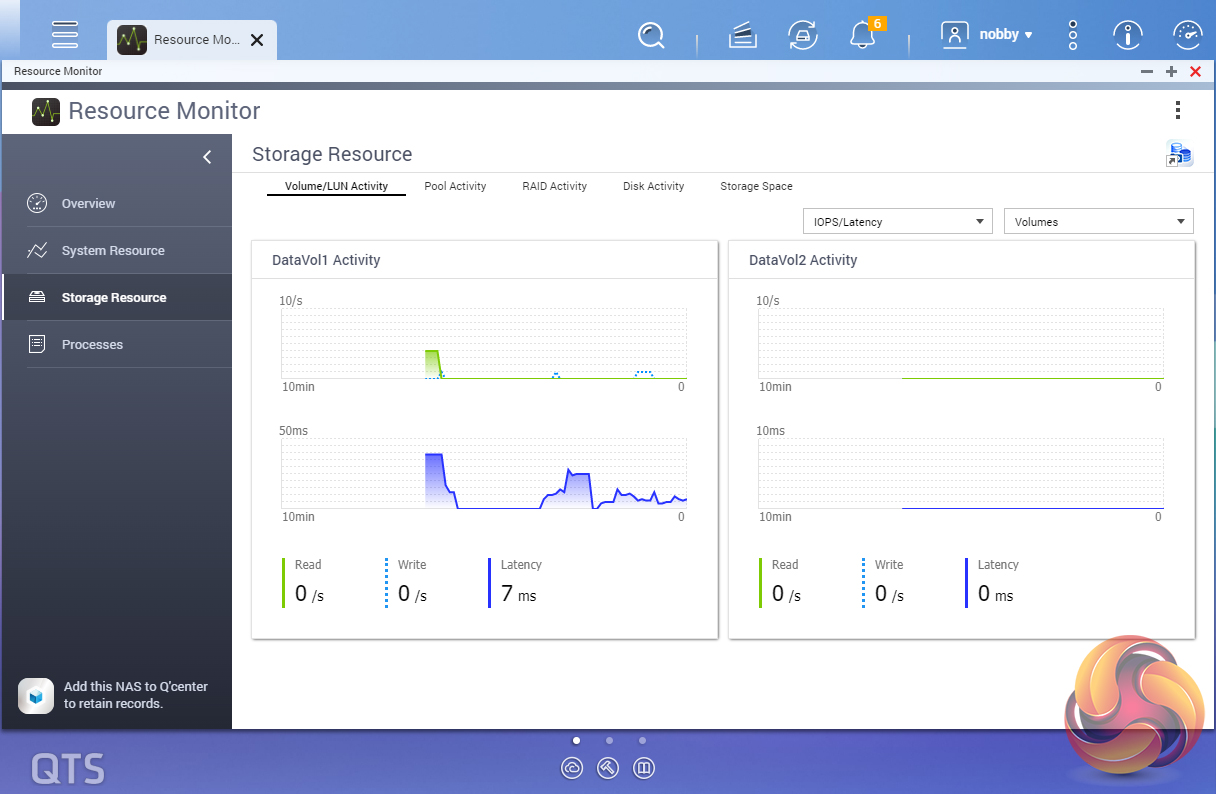
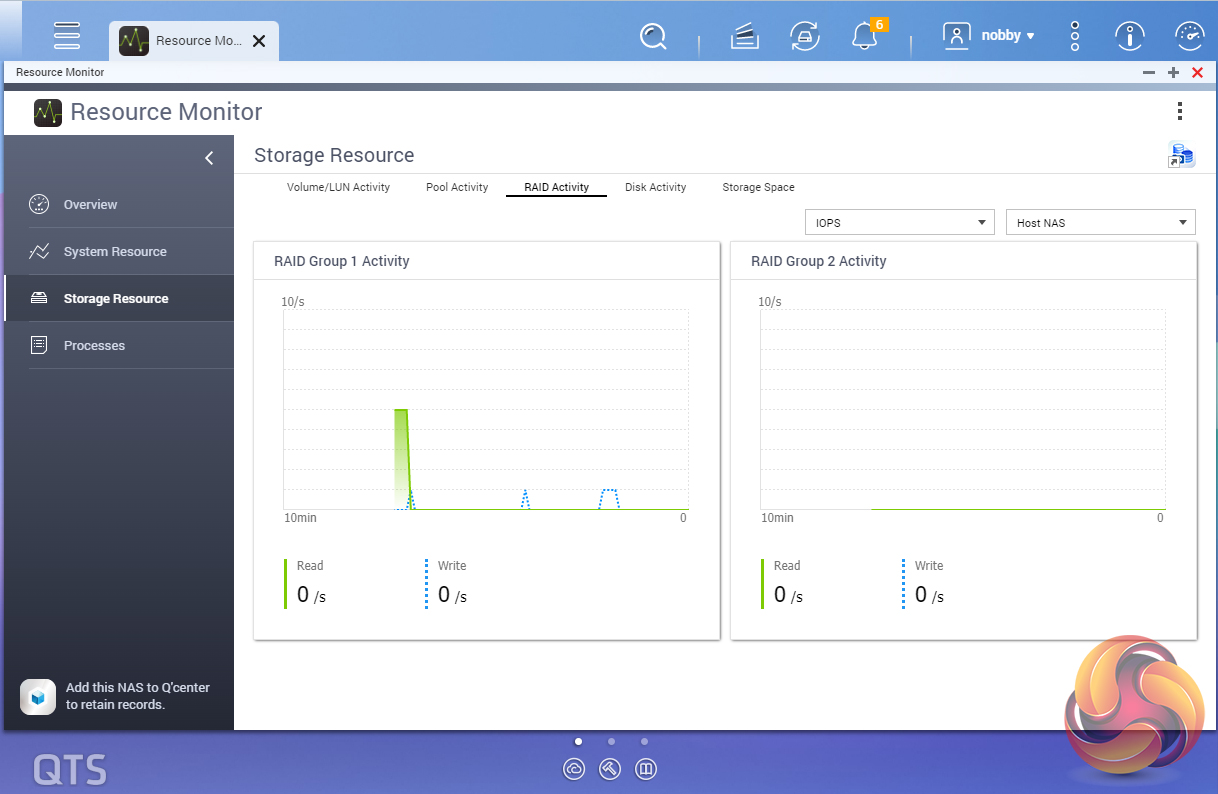
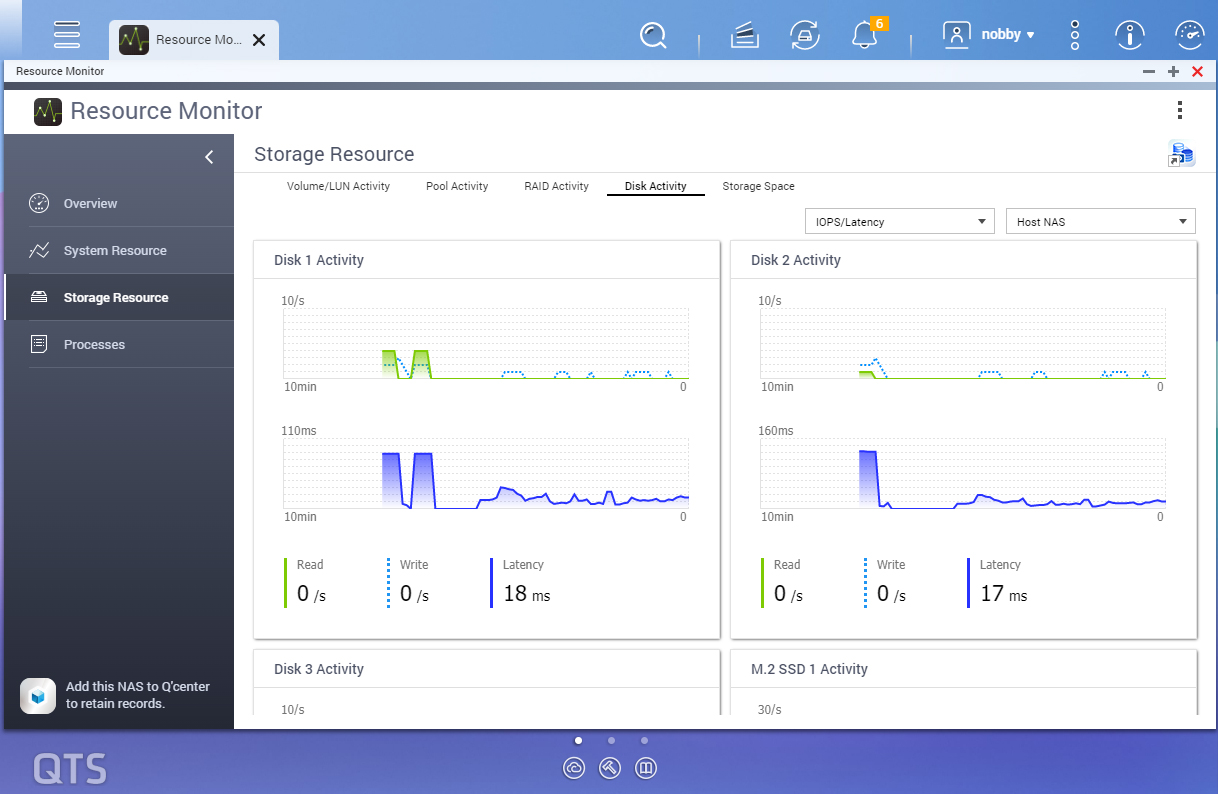
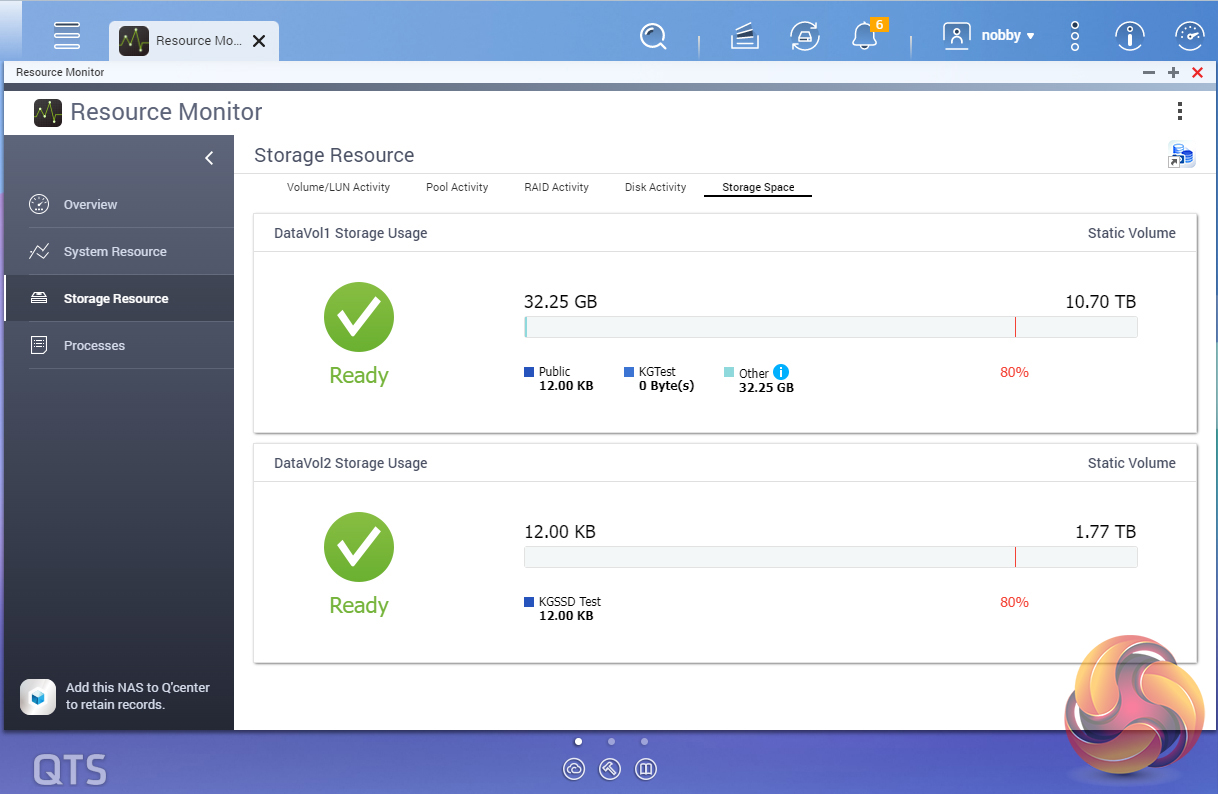
The Resource Monitor is a one-stop shop for monitoring various elements of the NAS and offering detailed information on how the storage is being used. It is divided into four sections; Overview, System (with separate tabs for the CPU, Memory and Network), Storage (with separate pages for pool, RAID and disk activities and how the storage space is being used) and Processes.
Notification Center
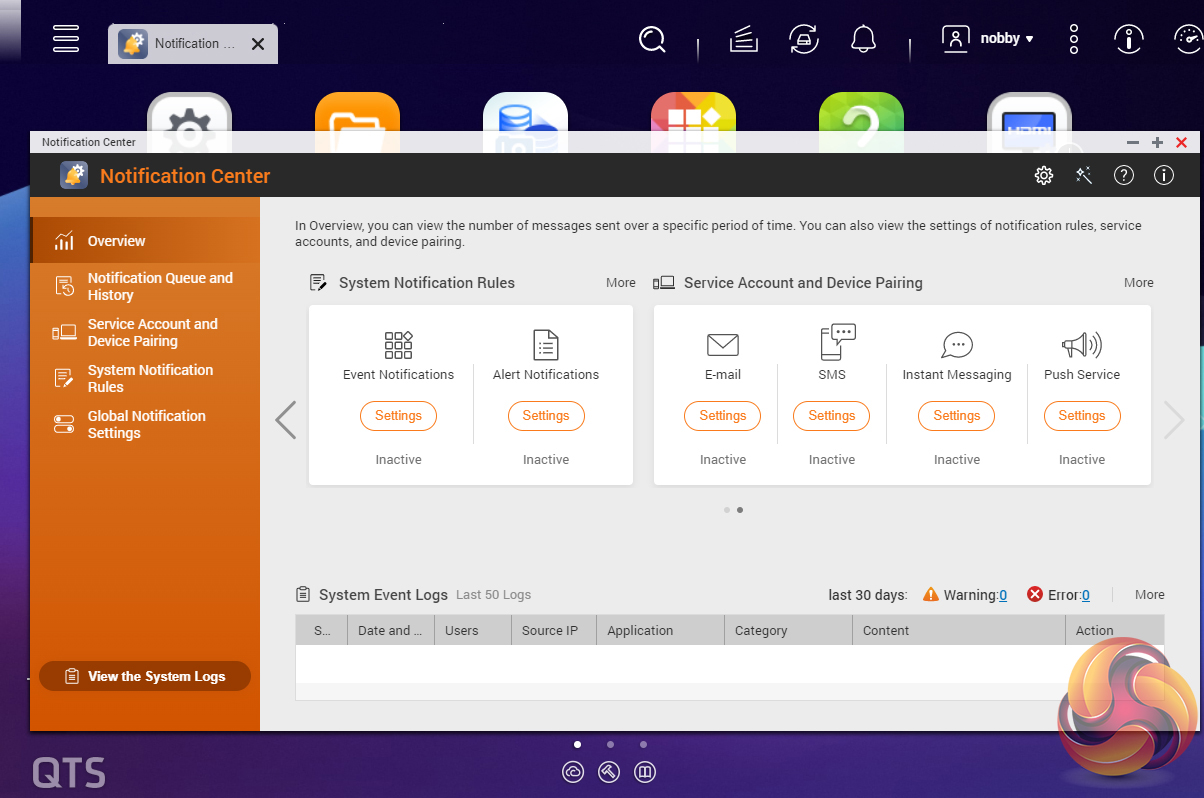
Notification Center is a very useful app that consolidates system logs and notifications for all the apps on the NAS into one single app. It supports flexible rule settings for easier NAS management and allows for more notification methods including email, SMS, instant message, and push notification.
HybridDesk Station
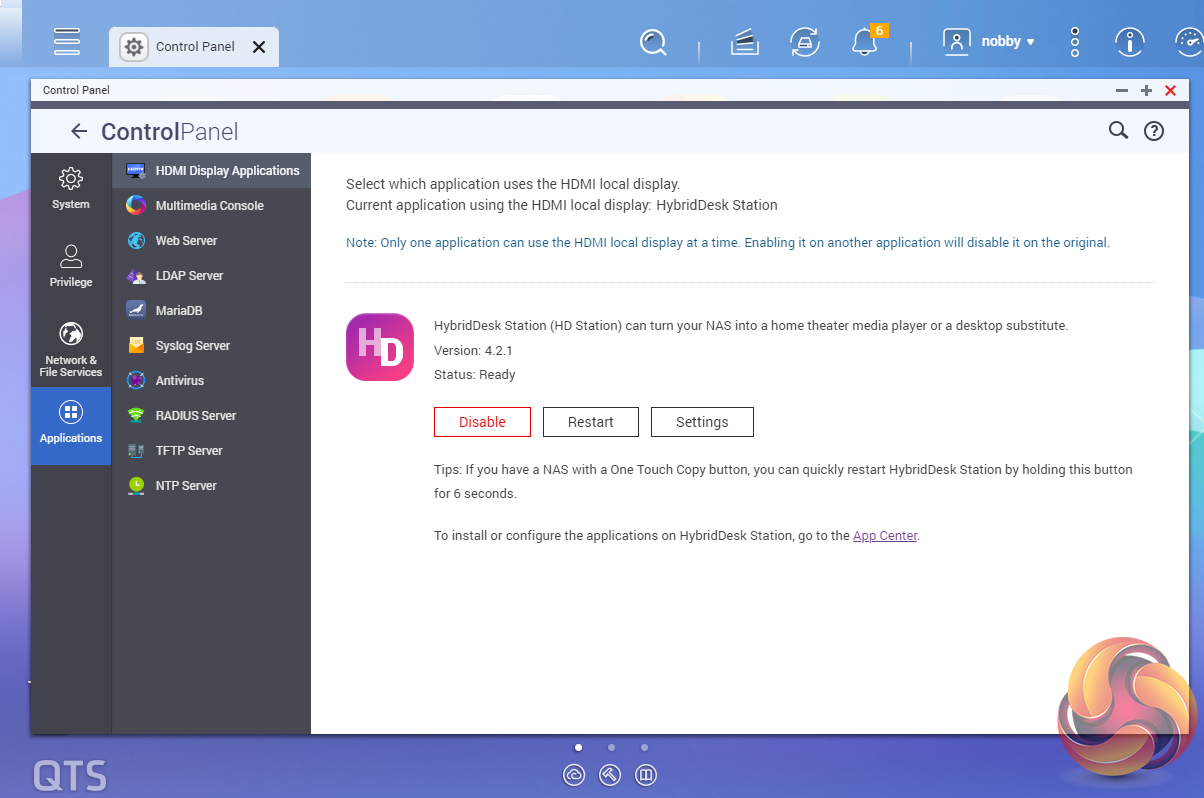
HybridDesk Station is a platform that connects a NAS to an HDMI-compatible TV or monitor enabling direct access to multimedia content and other applications. By installing HD Station and then connecting a USB keyboard and mouse together with an HDMI equipped display, the TS-364 can be used as a 4K output HTPC with the bonus of not needing a PC to use it.
App Center
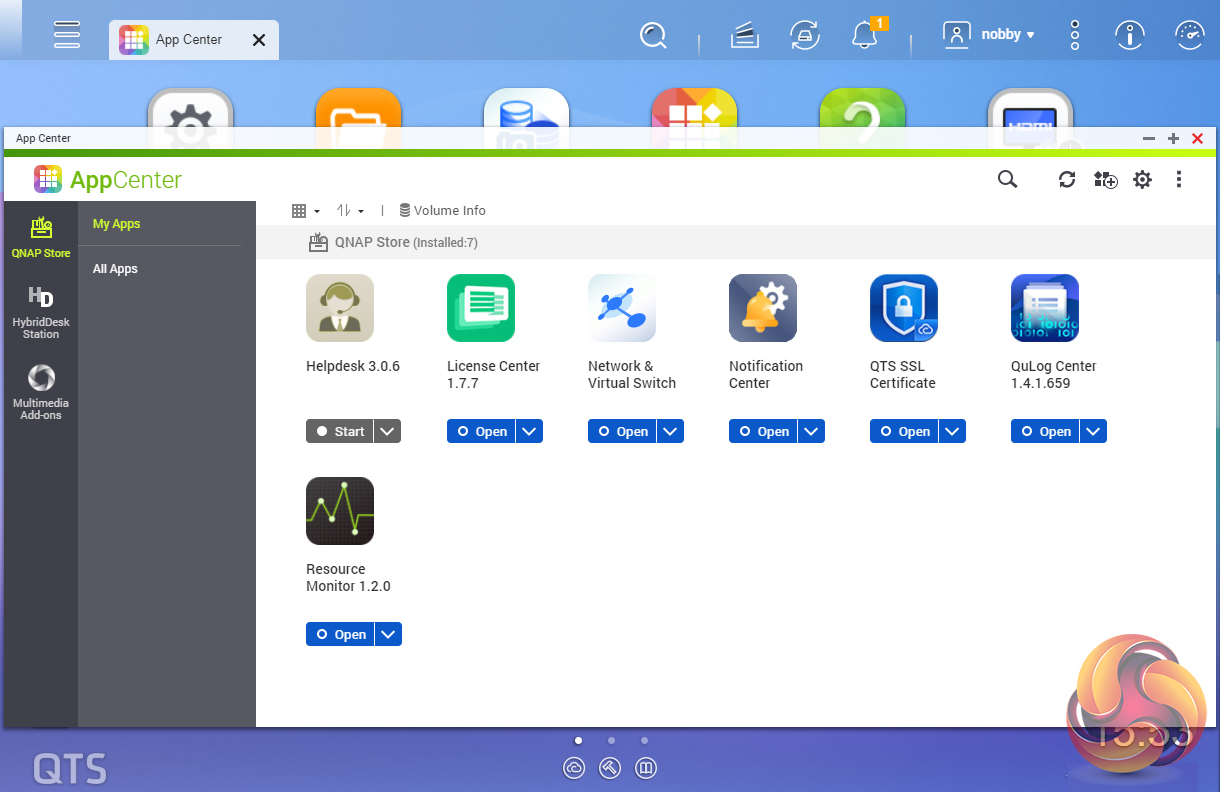
The App Center is a platform for third-party application providers to upload their applications to and users to download them from. It's divided into 11 sections covering most things that people are most likely to use; Backup/Sync, Content Management, Coms, Business, Download, Entertainment, Home Automation, Surveillance, Security, Utilities and Developer Tools and totals around 138 apps at the current time.
To test the TS-364, we used 3 WD Red 6TB drives ( 5,400rpm class, 64MB cache), built into the RAID arrays supported by the device; RAID 0 (3 disks),1, (2 disks) and 5 (3 disks) then tested.
Software:
Atto Disk Benchmark.
IOMeter.
Intel NASPT.
PCMark10 Data Drive Benchmark.
To test the 2.5GbE connectivity of the TS-264 we used a Gigabyte GG-AQC107, 10Gbe card. Thanks to Gigabyte for their support with this. You can see more information on this card on the Gigabyte site, over HERE.
The ATTO Disk Benchmark performance measurement tool is compatible with Microsoft Windows. Measure your storage systems' performance with various transfer sizes and test lengths for reads and writes. Several options are available to customize your performance measurement including queue depth, overlapped I/O and even a comparison mode with the option to run continuously. Use ATTO Disk Benchmark to test any manufacturer's RAID controllers, storage controllers, host adapters, hard drives and SSD drives and notice that ATTO products will consistently provide the highest level of performance to your storage.
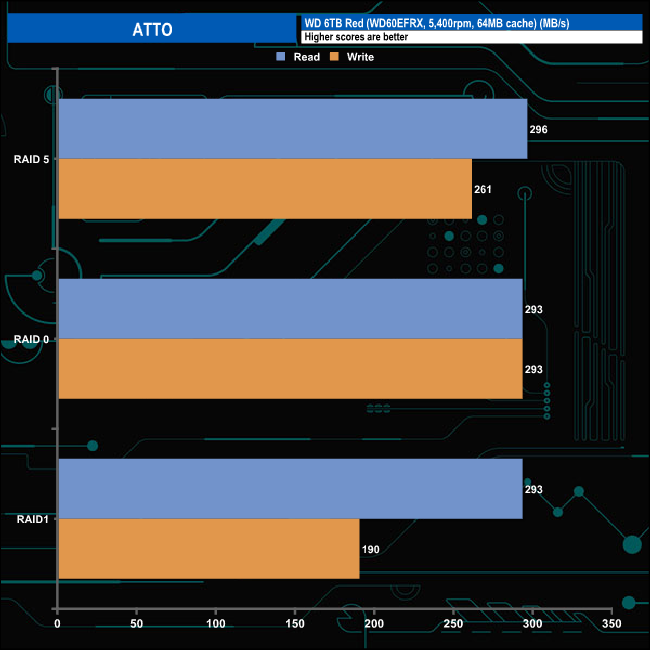
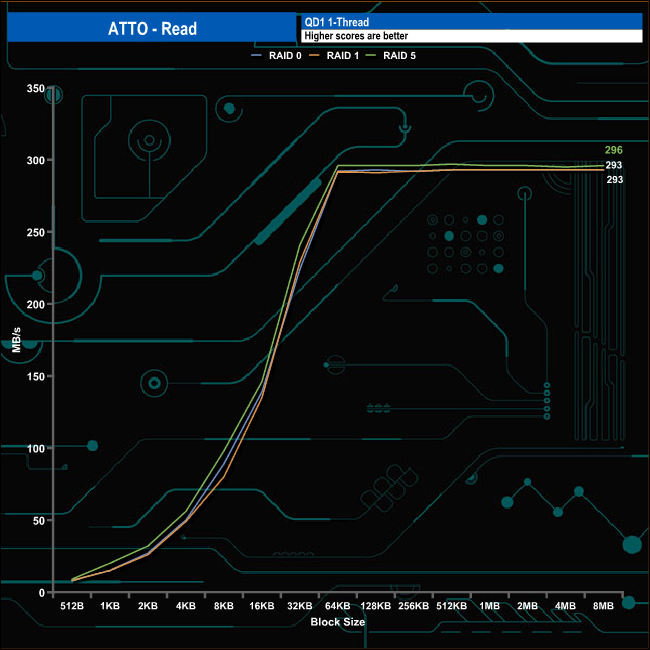
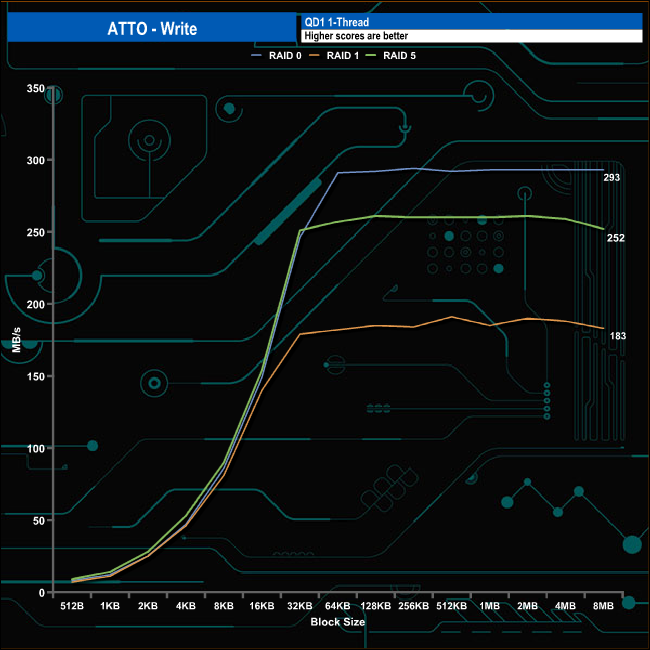
QNAP quote throughput figures for the TS-364 using a RAID 5 array as up to 271MB/s with writes at 251MB/s. Using the ATTO benchmark we could confirm those RAID 5 figures and even better them a little with test results of 296MB/s and 261MB/s for read and writes respectively. In RAID 0 we saw a figure of 293MB/s for both reads and writes while a RAID 1 array gave 293MB/s for reads and 190MB/s for writes.
Intel’s NASPT (NAS Performance Toolkit ) is a benchmark tool designed to enable direct measurement of home network-attached storage (NAS) performance. NASPT uses a set of real world workload traces (high definition video playback and recording, video rendering/content creation and office productivity) gathered from typical digital home applications to emulate the behaviour of an actual application.
We’ve used some of the video and office apps results to highlight a NAS device’s performance.:
- HD Video Playback: This trace represents the playback of a 1.3GB HD video file at 720p using Windows Media Player. The files are accessed sequentially with 256kB user-level reads.
- 4x HD Playback: This trace is built from four copies of the Video Playback test with around 11% sequential access.
- HD Video Record: Trace writes a 720p MPEG-2 video file to the NAS. The single 1.6GB file is written sequentially using 256kB accesses.
- HD Playback and Record: Tests the NAS with simultaneous reads and writes of a 1GB HD Video file in the 720p format.
- Content Creation: This trace simulates the creation of a video file using both video and photo editing software using a mix of file types and sizes. 90% of the operations are writes to the NAS with around 40% of these being sequential.
- Office Productivity: A trace of typical workday operations. 2.8GB of data made up of 600 files of varying lengths is divided equally between read and writes. 80% of the accesses are sequential.
- Photo Album: This simulates the opening and viewing of 169 photos (approx 1.2GB). It tests how the NAS deals with a multitude of small files.
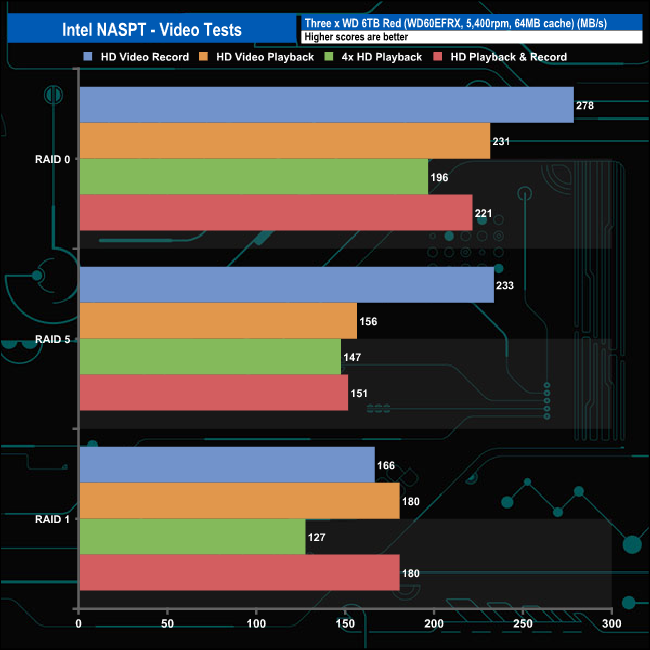
In the video tests of Intel’s NASPT benchmark, the TS-364 showed strong performance breaking the the100MB/s mark for all tests, with the fastest performance, 278MB/s, coming from the HD Video Record test trace while the drives were in a RAID 0 array.
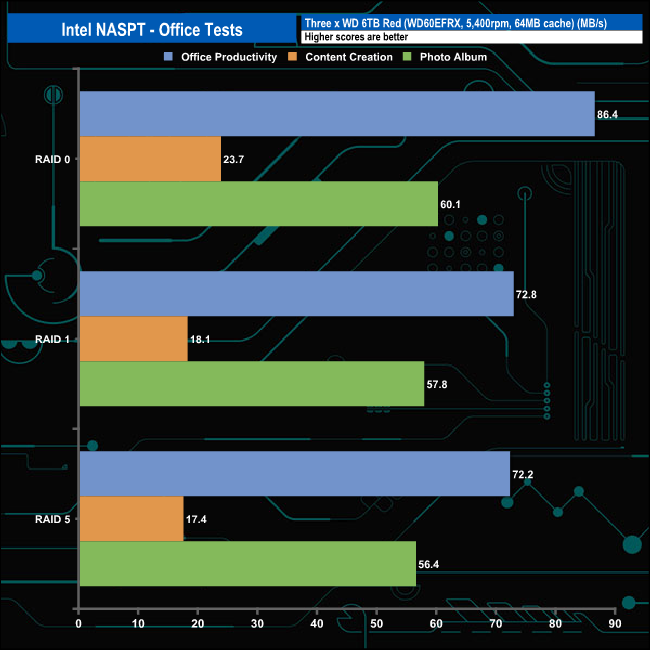
In the office tests, the NAS displayed strong performance with a pretty good level of consistency across the tested arrays. The best performance came in the Office Productivity test where it averaged 77.1MB/s for the three arrays. When dealing with the multitude of small files that make up the Photo Album test it averaged 58.1MB/s while in the Content Creation test it averaged 19.73MB/s.
IOMeter is another open-source synthetic benchmarking tool that is able to simulate the various loads placed on the hard drives and solid-state drive technology.
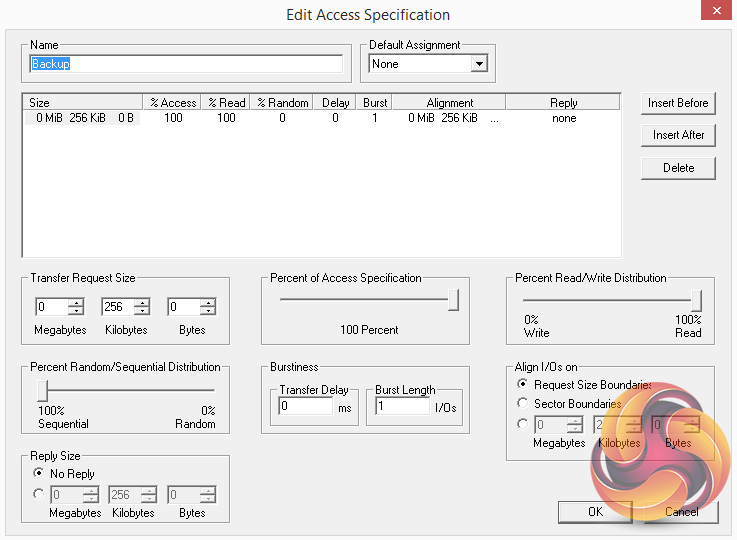
We set IOmeter up (as shown above) to test both backup and restore performance on a 100GB partition.
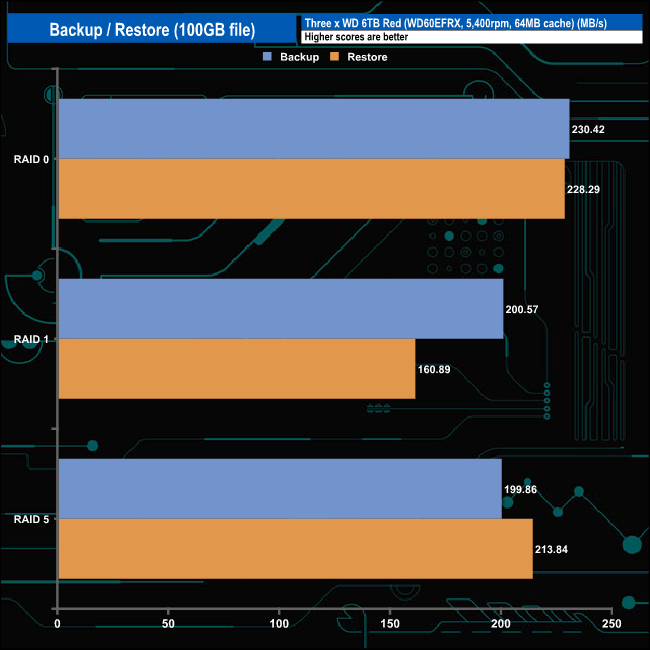
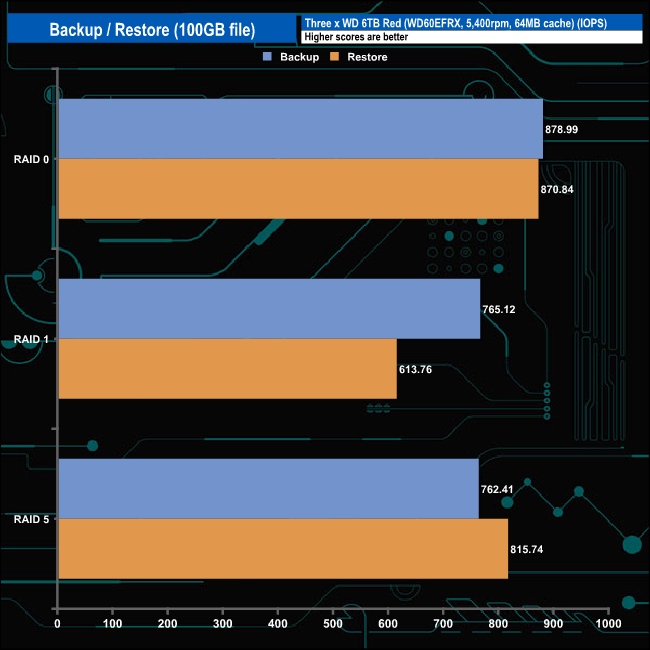
Our backup and restore tests proved no obstacle for any of the RAID arrays, averaging 209MB/s for backups and 200MB/s for restoring the data back across the three tested arrays.
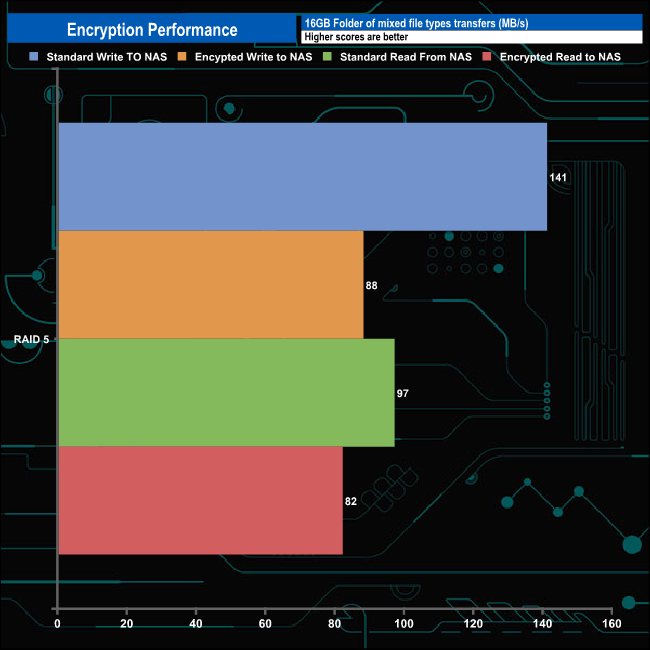
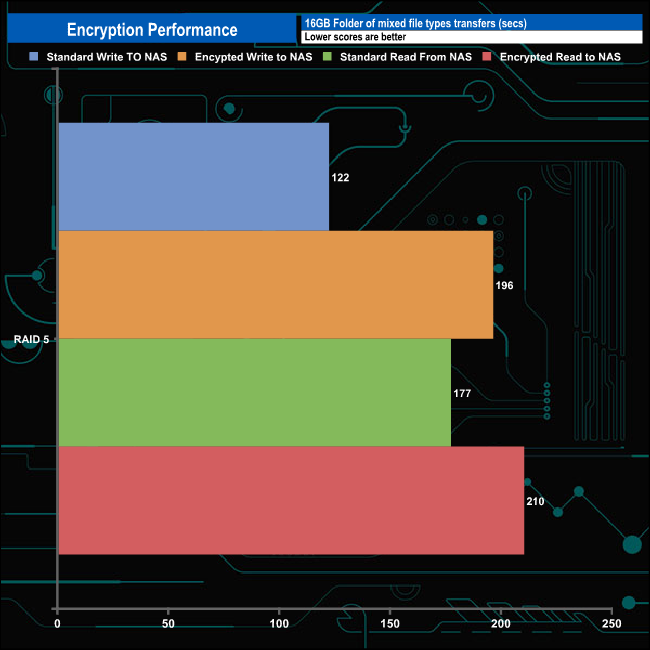
The AES-NI hardware encryption engine in the Intel Celeron N5105 does a reasonable job of negating the effects of dealing with encrypted data. With the discs built into a RAID 5 array, it dropped 53MB/s when writing encrypted data to the NAS but reading the data back saw a drop in performance of just 15MB/s.
The PCMark 10 Data Drive Benchmark has been designed to test drives that are used for storing files rather than applications. You can also use this test with NAS drives, USB sticks, memory cards, and other external storage devices.
The Data Drive Benchmark uses 3 traces, running 3 passes with each trace.
- Trace 1. Copying 339 JPEG files, 2.37 GB in total, in to the target drive (write test).
- Trace 2. Making a copy of the JPEG files (read-write test).
- Trace 3. Copying the JPEG files to another drive (read test)
Here we show the total bandwidth performance for each of the individual traces.
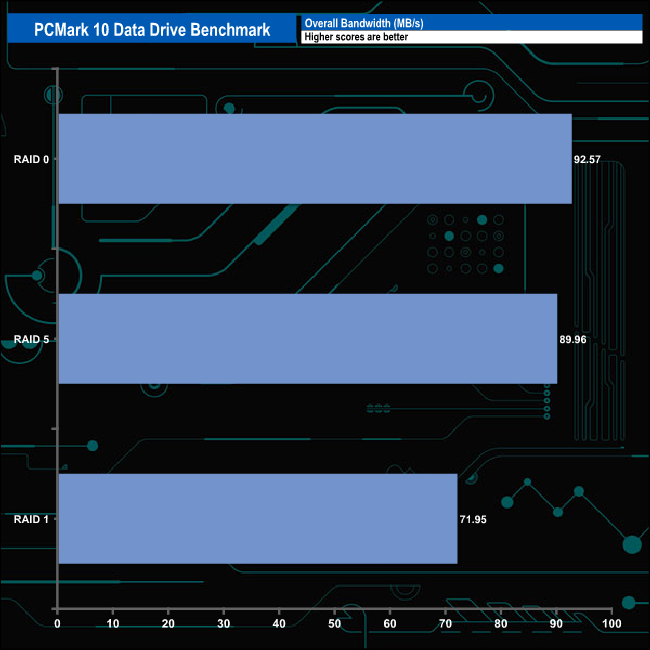
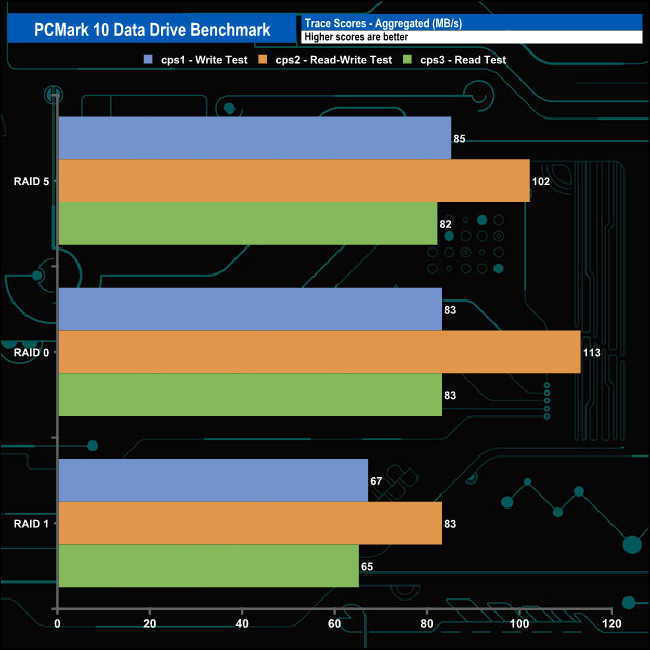
QNAP's TS-364 handles PCMark's 10 Data Drive Benchmark very well. In terms of overall bandwidth, there's not much to choose between RAIDs 0 and 5. The same also applies to the individual cps1, 2 and 3 test traces.
To test real life performance of an NAS we use a mix of folder/file types and by using the FastCopy utility (which gives a time as well as MB/s result) we record the performance of drive reading from & writing to a 256GB Samsung SSD850 PRO.
We use the following folder/file types:
- 100GB data file.
- 60GB iso image.
- 60GB Steam folder – 29,521 files.
- 50GB File folder – 28,523 files.
- 12GB Movie folder – (15 files – 8 @ .MKV, 4 @ .MOV, 3 @ MP4).
- 10GB Photo folder – (304 files – 171 @ .RAW, 105 @ JPG, 21 @ .CR2, 5 @ .DNG).
- 10GB Audio folder – (1,483 files – 1479 @ MP3, 4 @ .FLAC files).
- 5GB (1.5bn pixel) photo.
- BluRay Movie – 42GB.
- 21GB 8K Movie demos – (11 demos)
- 16GB 4K Raw Movie Clips – (9 MP4V files).
- 4.25GB 3D Printer File Folder – (166 files – 105 @ .STL, 38 @ .FBX, 11 @ .blend, 5 @ .lwo, 4 @ .OBJ, 3@ .3ds).
- 1.5GB AutoCAD File Folder (80 files – 60 @ .DWG and 20 @.DXF).
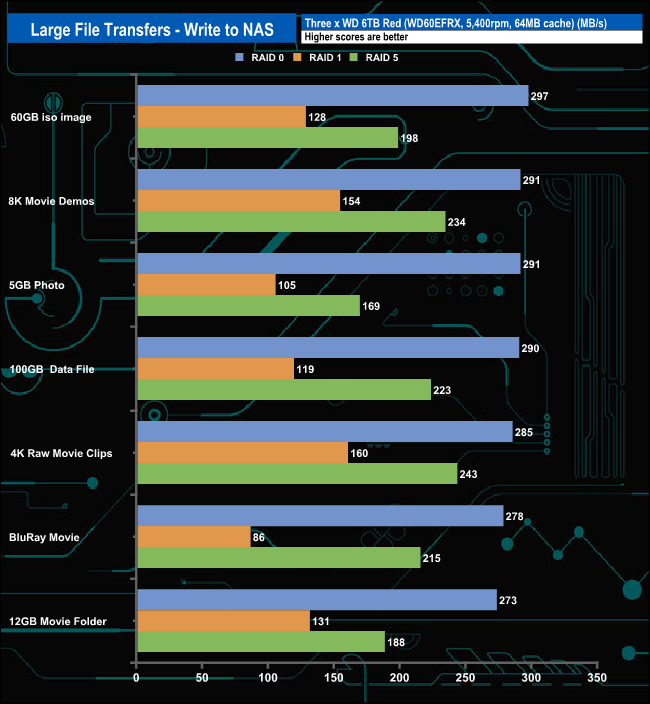
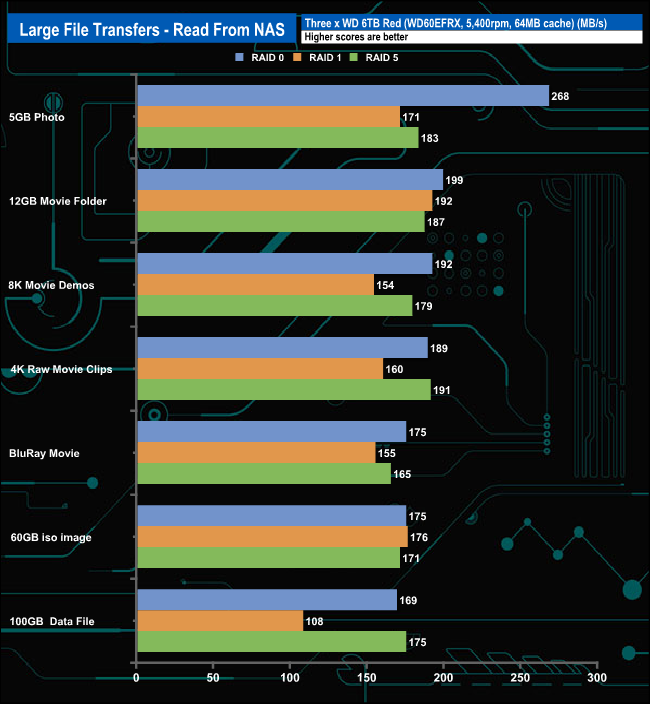
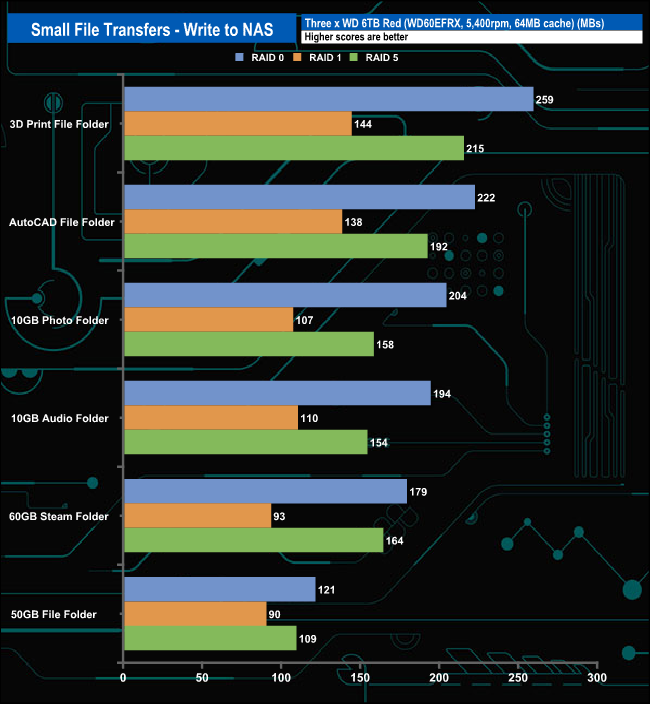
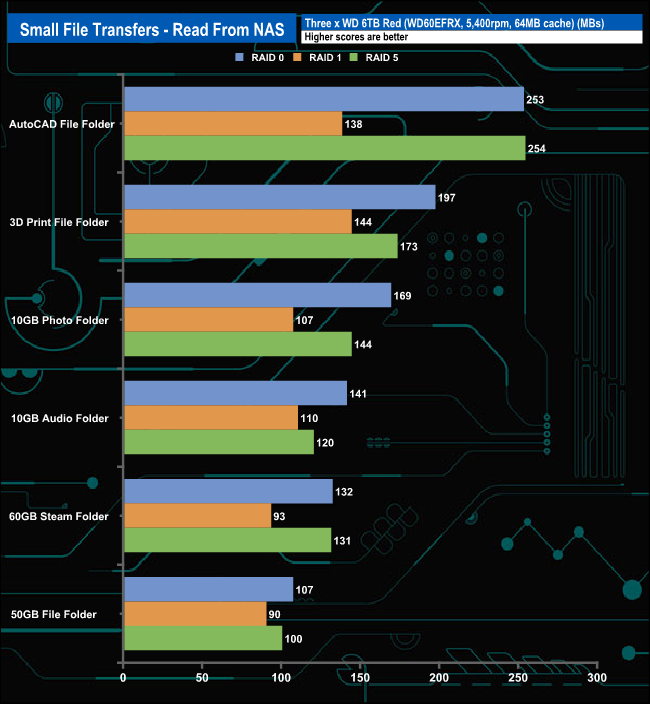
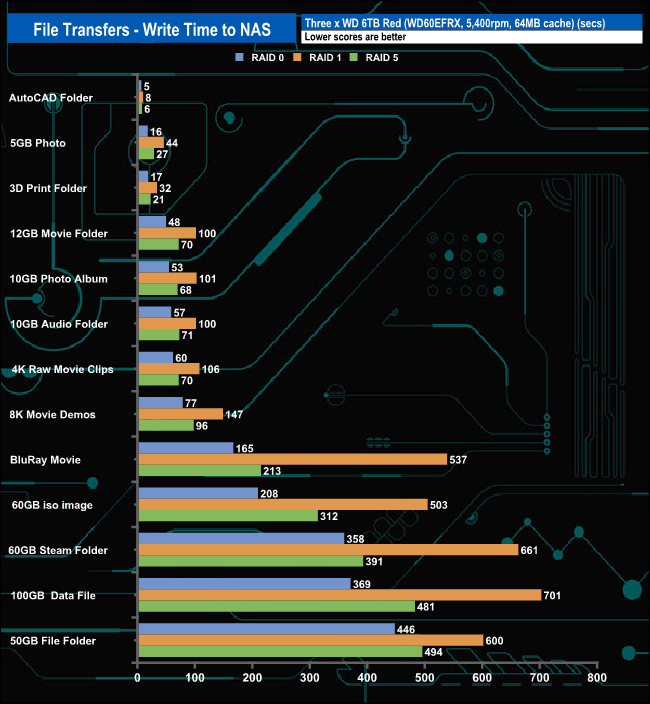
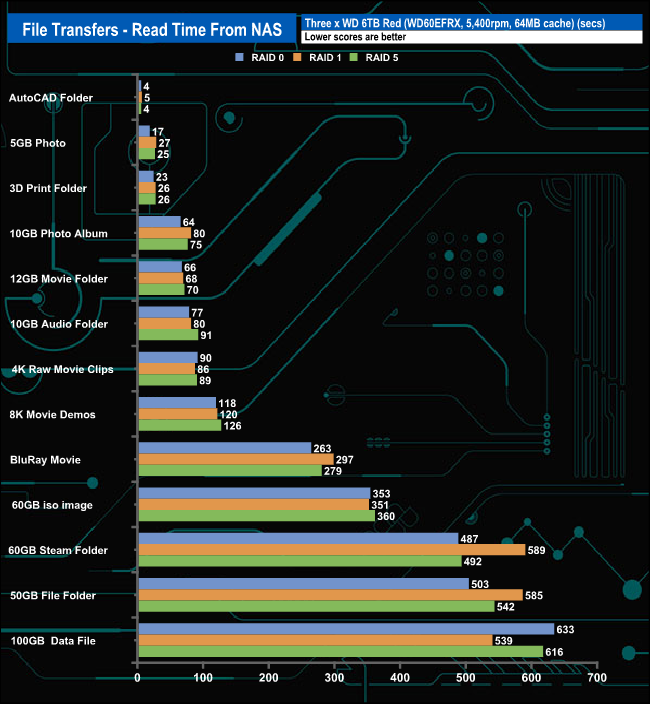
The TS-364 dealt with our real-life file transfer tests without any real problems and displayed a good deal of consistency across the tested arrays.
The TS-364 comes with a pair of M.2 2280 NVMe Gen 3 slots for caching duties. Unfortunately, they run at just PCIe x2 instead of the usual x4. There's a list of recommended SSDs on QNAP's website.
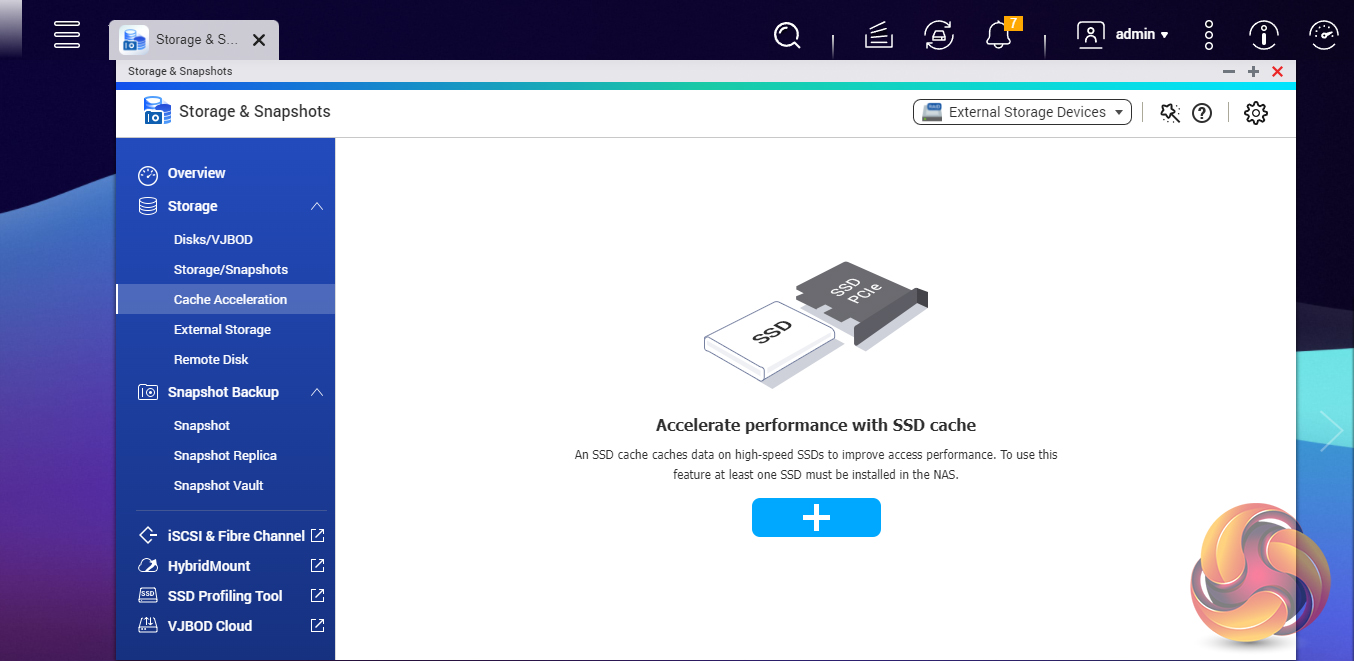
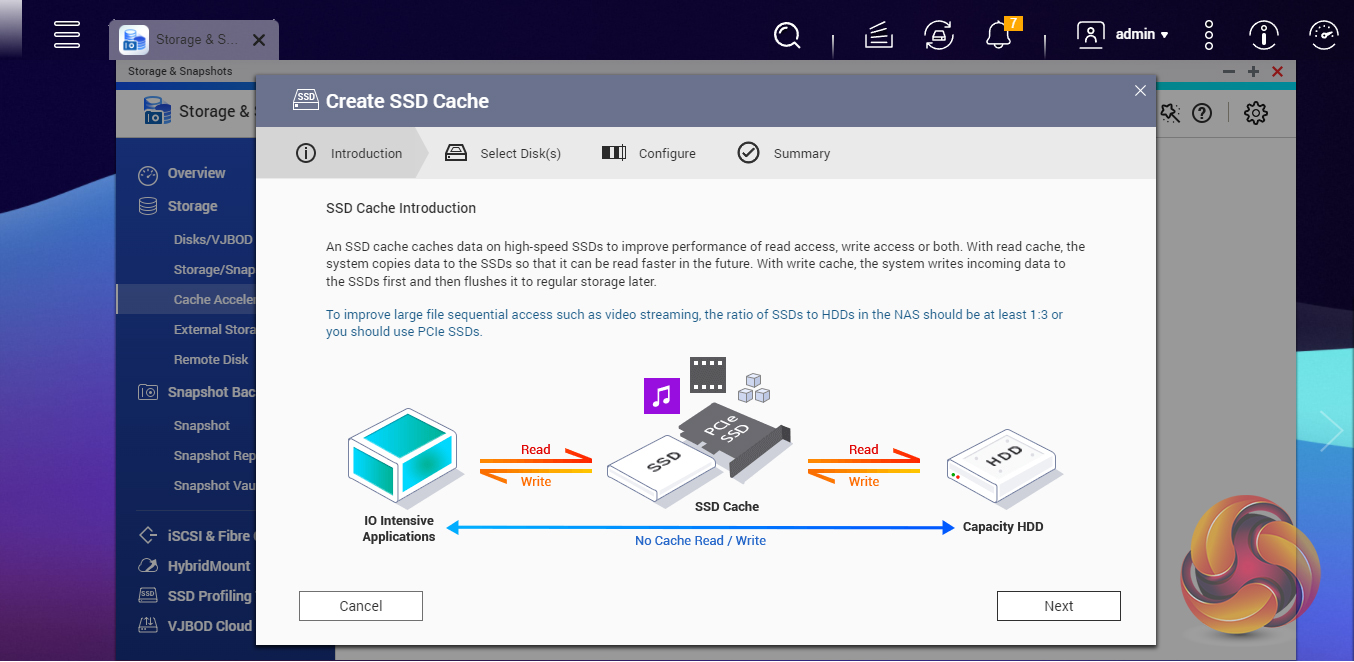
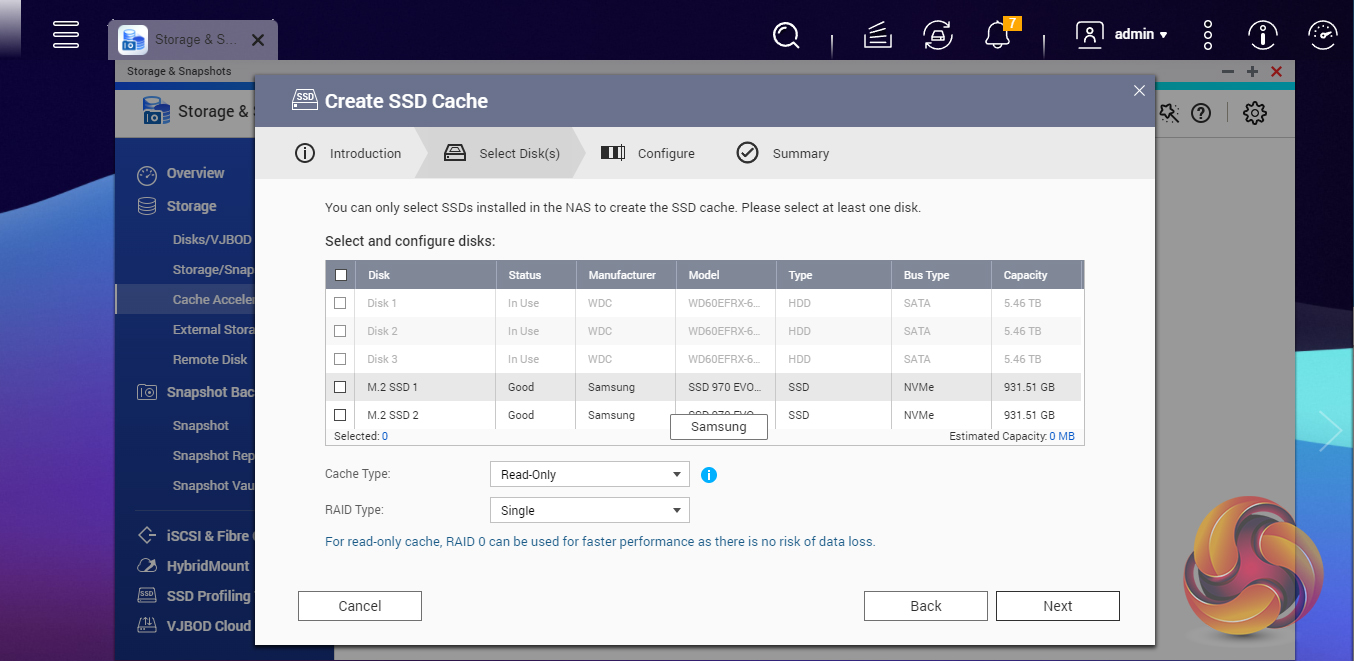
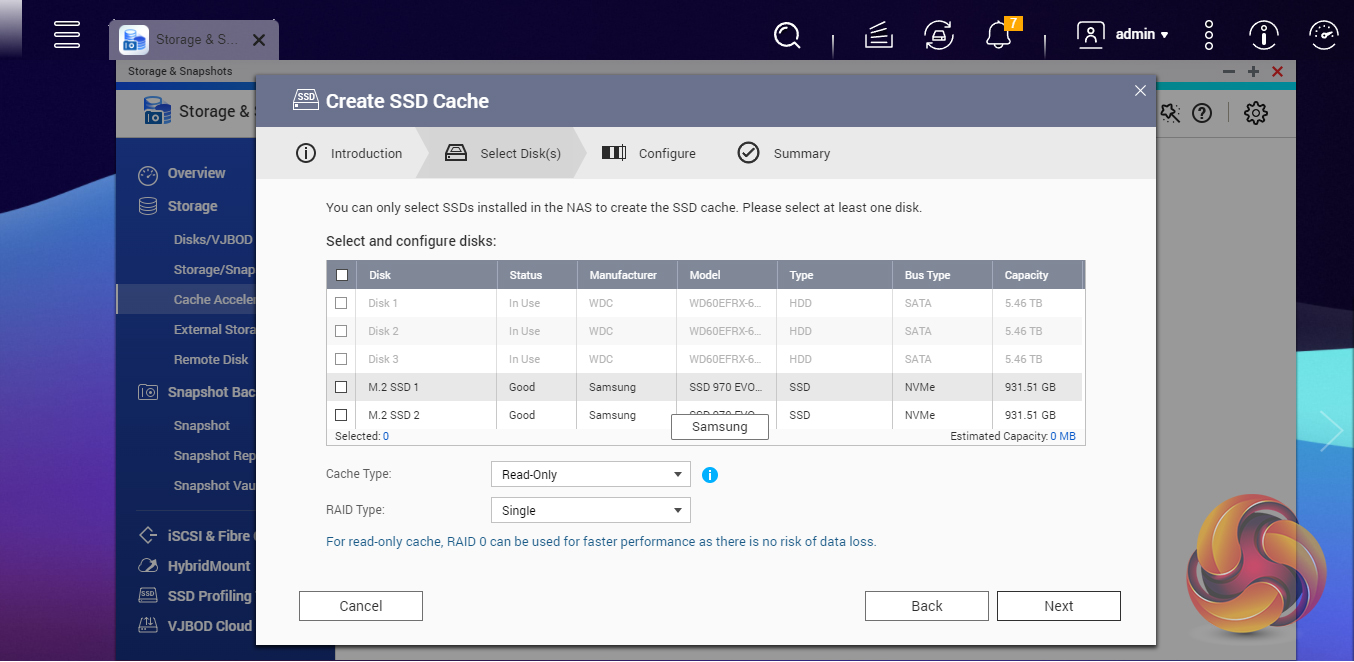
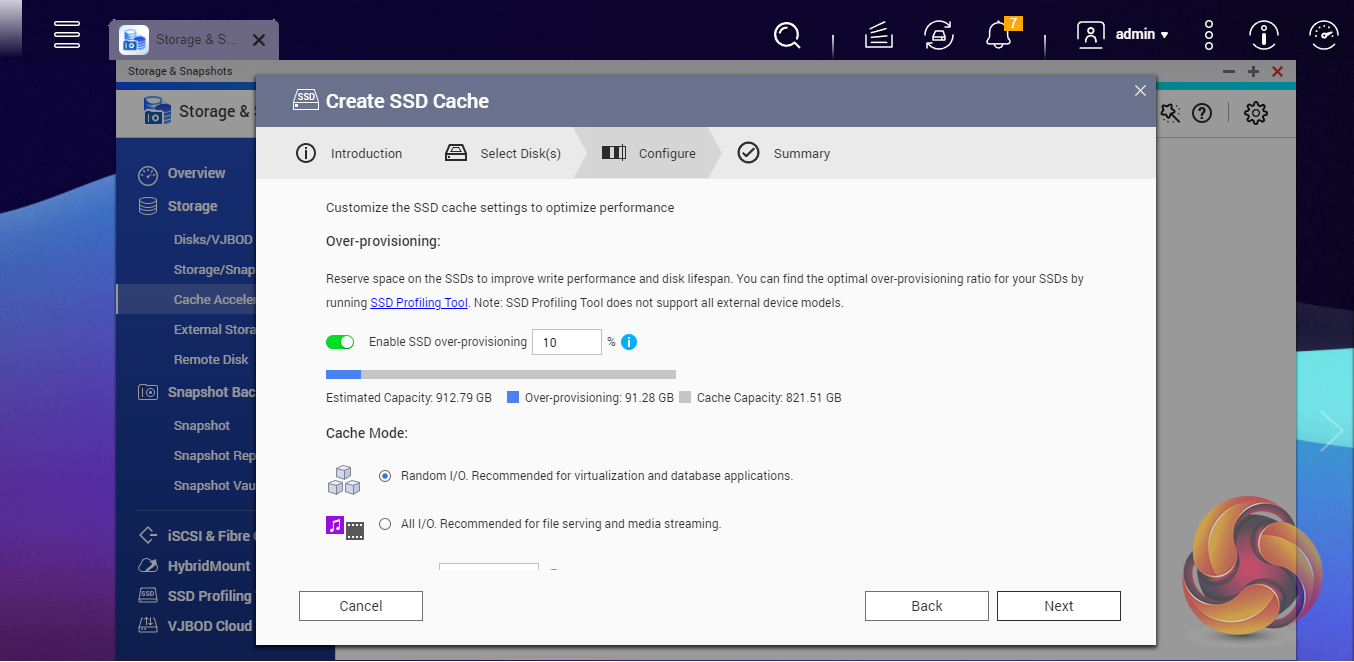
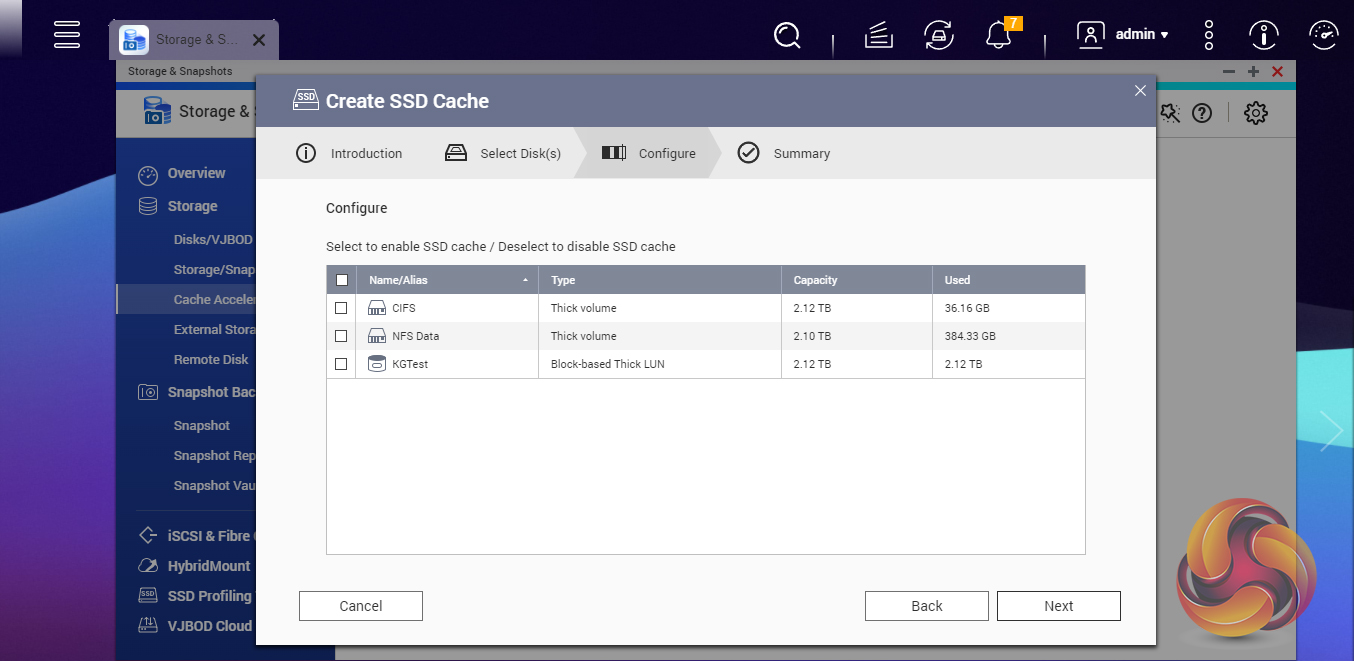
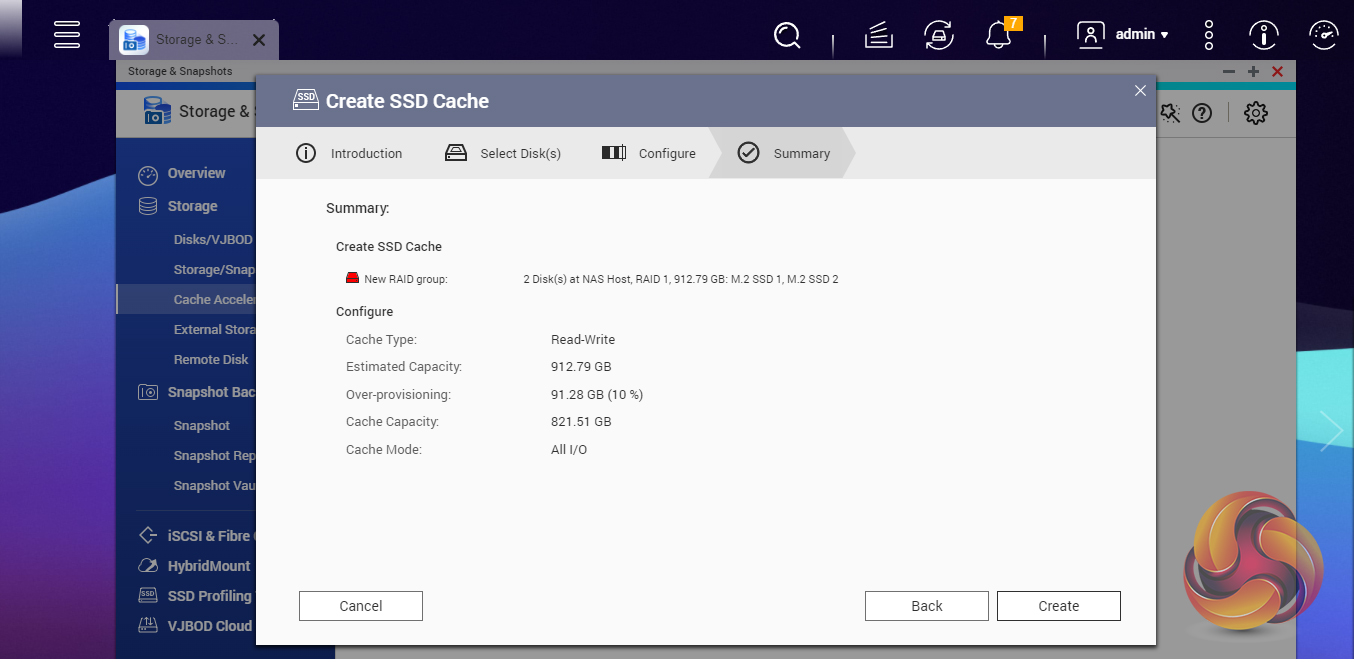
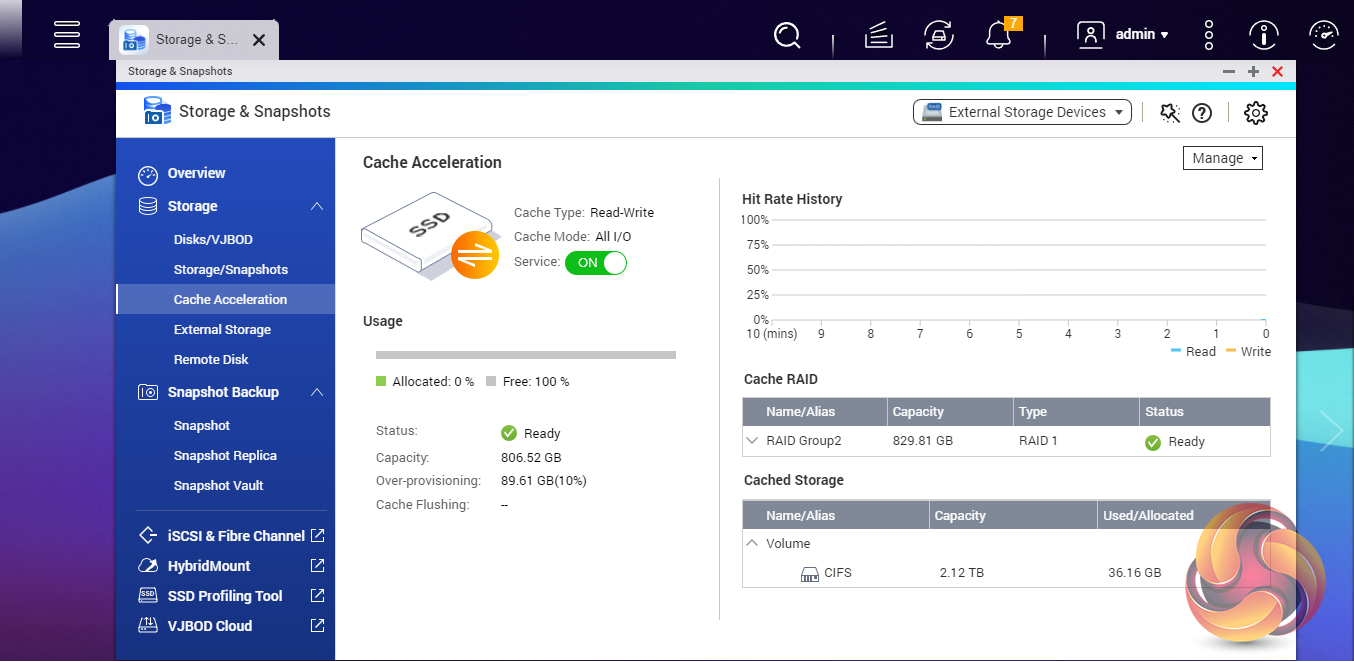
Setting up SSD caching duties is really straightforward thanks to QNAP's easy to follow wizard in the Cache Acceleration subsection of the Storage & Snapshots element of the QTS OS. The cache can be set up as read-only, write-only or read-write using a single drive or a pair built into a RAID array.
To test the cache performance of the TS-364 we used Samsung's 1TB 970 EVO Plus, firstly we used two drives built in a RAID 1 array as recommended by QNAP and secondly we used a single drive.
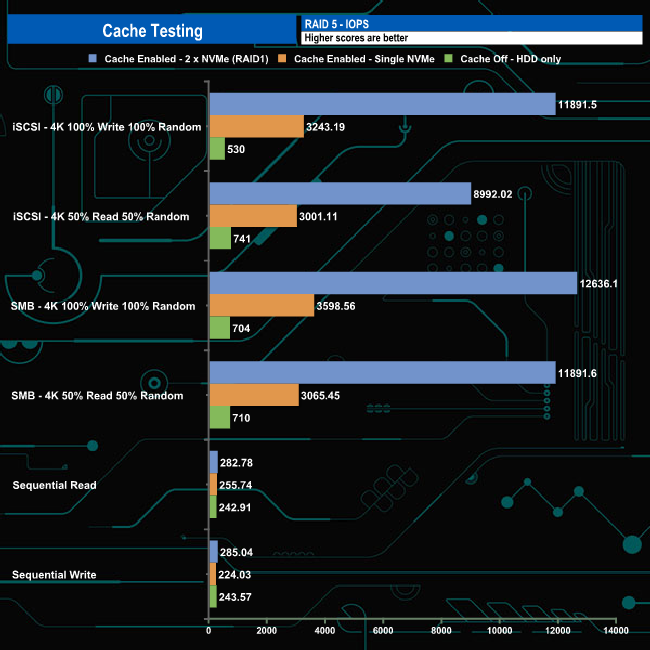
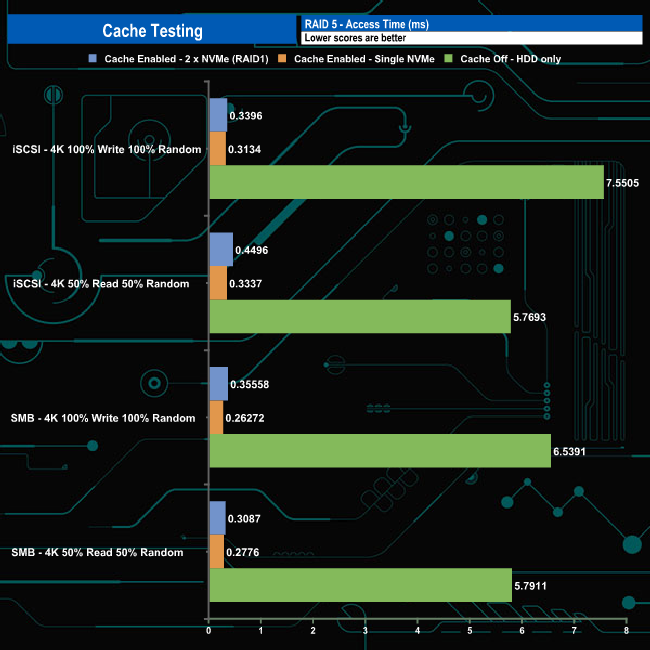
As you can see from the results, cache acceleration can give huge gains in performance but only with certain workloads. For example, it makes very little or no difference to Sequential read or write operations compared to the gains when dealing with random workloads.
We tested the peak power consumption of a NAS at the wall during a run of CrystalDiskMark 7.0.0. as this version of the benchmark runs the read and write benchmark suites separately so its easier to monitor what power the device is using during each function.
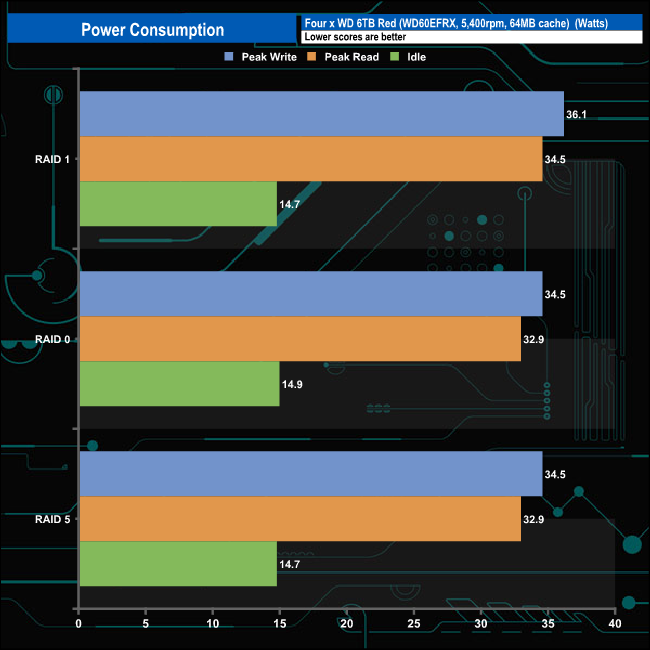
The lntel Celeron N5105 quad-core processor that powers the TS-364 has a 10W TDP. QNAP quote a typical operating power consumption figure of 32.8W for the TS-364. To test the unit we used three 6TB WD Red drives (WD60EFRX) which are rated at 5.3W (active read/write), 3.4W (idle) and 0.4W sleep which gave figures in the ballpark of the official ratings.
The TS-364 is the latest incarnation of QNAP’s 3-bay NAS design. Aimed at the home/office environment, the TS-364 comes with a quad-core processor, 2.5GbE as standard, a pair of NVMe M.2 ports supporting SSD caching, and a mix of USB 3.2 Gen1 and Gen2 ports.
At the heart of the TS-364 is an lntel Celeron N5105 quad-core CPU (2.00GHz, boost up to 2.9GHz, 4MB L3 cache) which is backed by 4GB DDR4-2666MHz memory. Fear not, if you feel that you need a bit more oomph in the memory department, the two SO-DIMM slots provided support for up to 16GB of RAM. The CPU also adds an AES-NI encryption engine to the mix. Additionally, there is support for a pair of PCIe Gen 3 NVMe M.2 2280 slots which, although only running at x2 speed, can be used for storage pools, cache acceleration or Edge TPU for AI image recognition.
Any NAS is only as good as its operating software and the latest v5 of QNAP’s QTS is a very good one. It’s a quick and easy to install OS thanks to the wizard that walks you through the installation process. QTS has a graphically rich interface which is useful for first-time users to navigate around the software and get to grips with NAS and all its features. For more experienced users delving behind graphic interface reveals a whole host of options for the more advanced users to get to grips with. With over 130 apps in the App Center, there are plenty of software options available to tune the NAS to your specific needs.
The TS-364 comes with a pair of USB3.2 Gen 2 ports and a single USB3.2 Gen 1 port that is built into the One Touch Copy button on the front of the NAS. The pair of Gen2 ports on the rear panel allows the TS-364 to be connected to a number of QNAP's expansion enclosures to increase its storage capacity. There are three tower units (TL-D800C 8-bay, TR-002 2-bay and TR-004, 4-bay. The TL-D800C & TR-002 are USB3.2 Gen 2 and the TR-004 is USB3.2 Gen 1) and a couple of rack mounted ones (TL-R1200C-RP 12-bay USB 3.2 Gen 2 and TR-004U, 4-bay USB3.2 Gen 1).
QNAP's TS-364 solves the problem of providing better data protection for a NAS in the entry-level market sector where budgets may not stretch to units with more bays. A 2-bay NAS can provide RAID 1 data protection but if you want RAID 5 protection then you need to opt for a more costly 4-bay NAS option. The TS-364 gets around this by offering a more cost-effective RAID 5 solution by using the least number of drives needed to build a RAID 5 array; three.
We found the QNAP TS-364 on Box for £450.99 (inc VAT) HERE.
Pros
- 2.5GbE Ethernet.
- NVMe M.2 support.
- RAID 5 support.
- QTS 5.
Cons
- M.2 ports only run at x2 speed.
KitGuru says: QNAP’s TS-364 is a feature-rich 3-bay NAS with 2.5GbE connectivity, NVMe based SSD caching and USB 3.2 Gen 2 and is just the job if you want more data protection than a 2-bay NAS can offer but don’t want to stretch the budget to a 4-bay unit.