KitGuru KitGuru.net – Tech News | Hardware News | Hardware Reviews | IOS | Mobile | Gaming | Graphics Cards


The SPECviewperf 12.1 benchmark is the worldwide standard for measuring graphics performance based on professional applications. The benchmark measures the 3D graphics performance of systems running under the OpenGL and Direct X application programming interfaces. The benchmark’s workloads, called viewsets, represent graphics content and behaviour from actual applications.
The latest version is SPECviewperf 12.1, released on August 24, 2016. SPECgpc members at the time of V12.1 release include AMD, Dell, Fujitsu, HP, Intel, Lenovo, NVIDIA, and VMware. SPECviewperf 12.1 features a new Autodesk 3ds Max viewset, Microsoft Windows 10 support, and GUI and reporting improvements.
SPECviewperf 12.1 has been tested and is supported under the 64-bit version of Microsoft Windows 7 and Windows 10. Results from SPECviewperf 12.1 remain comparable to those from V12.0.1 and V12.0.2.
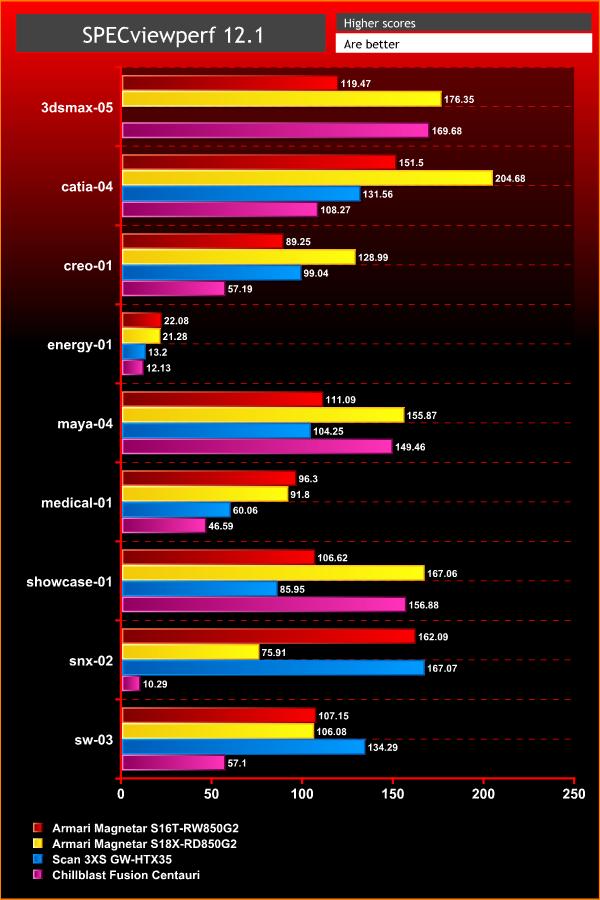
The Chillblast served up an interesting set of results when compared to its rivals, but the stock-speed processor, consumer graphics cards and marginally slower memory meant that it couldn’t often beat Armari’s workstation systems.
Chillblast’s machine was able to outpace Armari’s Threadripper rig in the 3DSMax, Maya and Showcase – undoubtedly helped by its two graphics cards. However, it was still behind the overclocked Intel machine in those tests.
Indeed, the Fusion Centauri was also behind both rigs in most of the SPECviewperf 12.1 tests. This is still a quick system, but the lack of a processor overclock, the lesser memory speed and consumer-grade graphics cards have an undoubted impact.