KitGuru KitGuru.net – Tech News | Hardware News | Hardware Reviews | IOS | Mobile | Gaming | Graphics Cards


3DMark
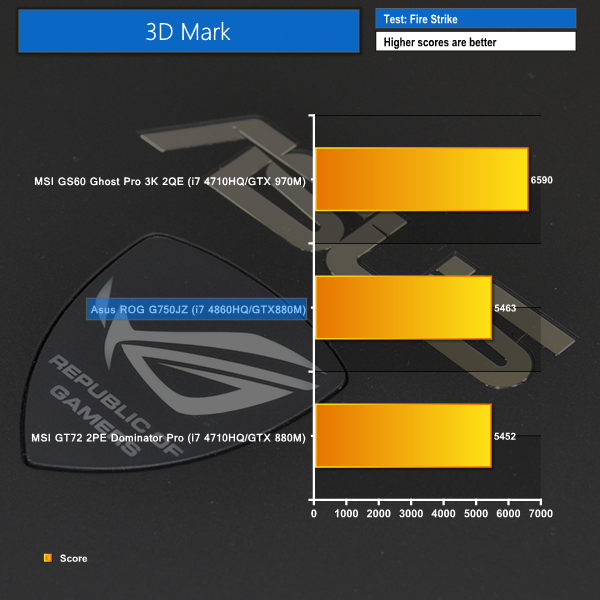
We used 3DMark‘s ‘Fire Strike’ benchmark which is designed to be used on gaming PCs. We opted for the Normal setting, NOT the Extreme mode.
PCMark 8 v2
We used the ‘Home’ test in PCMark 8 v2 to analyse the general-usage performance of each processor configuration.
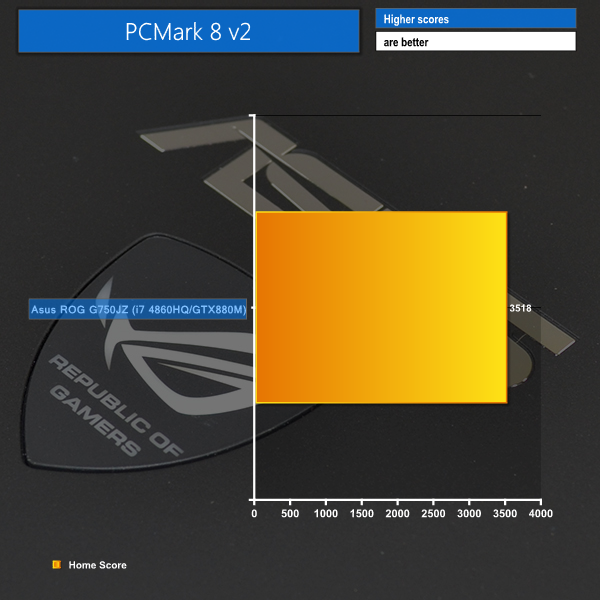
System-wide performance of the Asus G750JZ is promising. The powerful i7 4860HQ processor boosts its performance in tasks which harness CPU power, but the last-generation 8GB GTX 880M cannot compete with Nvidia's excellent GTX 970M, which is based on the efficient Maxwell architecture.