KitGuru KitGuru.net – Tech News | Hardware News | Hardware Reviews | IOS | Mobile | Gaming | Graphics Cards


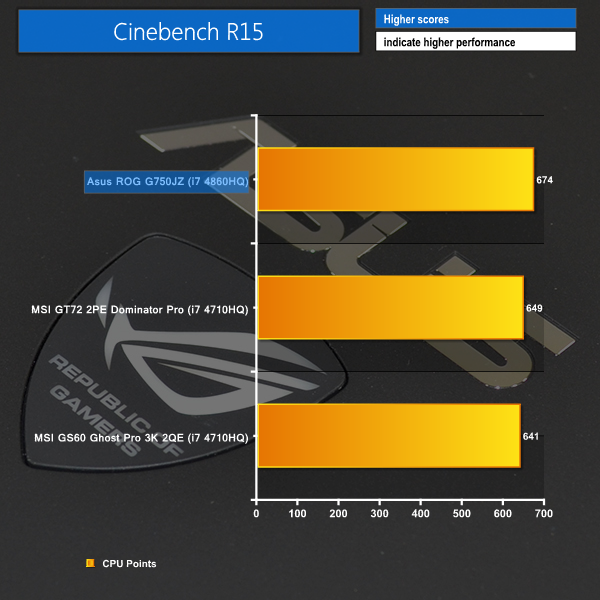
Cinebench
We used the ‘CPU’ test built into Cinebench R15 .
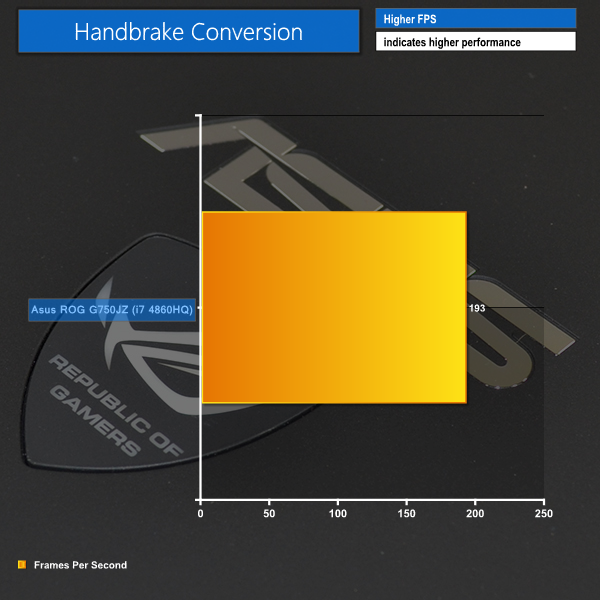
Handbrake Conversion
We measured the average frame rate achieved for a task of converting a 4.36GB 720P H.264 movie (in the MKV container) to one in the MP4 container.
Cinebench harnesses the extra power of Intel's Haswell-based 4860HQ processor, boosting the Asus laptop to a performance lead over a pair of MSI competitors.
Our Handbrake conversion test registers a 193 FPS average frame rate. That translates into around 70% of the performance of a desktop 4790K processor clocked at 4.4Ghz.