KitGuru KitGuru.net – Tech News | Hardware News | Hardware Reviews | IOS | Mobile | Gaming | Graphics Cards


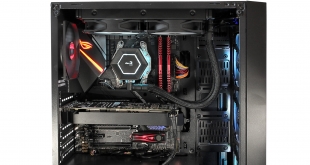
The Falcon Project X VR Ready Gaming PC is a mid-range PC that attempts to provide ample gaming power inside a chassis that’s impressively compact – and for a price that undercuts most of its competition. We give you the full low-down on this system to let you know if it is worth buying.
This £1,150 rig serves up processing grunt from a second-generation AMD Ryzen chip, and it’s paired with an Nvidia GeForce GTX 1060 graphics card plus solid memory and storage options. And, impressively, Falcon allows for loads of customisation on its website – so it’s easy to change the parts if they don’t take your fancy.
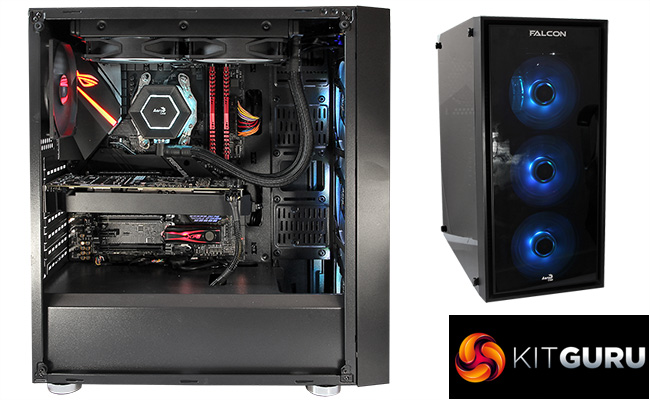
Specifications:
- CPU: AMD Ryzen 5 2600X (3.6Ghz – 4.2GHz)
- CPU cooling: Aerocool P7-L240 with 2 x 120mm fans
- Motherboard: Asus ROG Strix X470-F Gaming
- Memory: 8GB AData XPG Z1 2,666MHz DDR4
- Graphics Chipset: Nvidia GeForce GTX 1060 3GB
- Storage: 256GB AData SX6000 SSD, 1TB Seagate Barracuda HDD
- Case: Aerocool Quartz RGB
- Front ports: 1 x USB 3, 2 x USB 2, 2 x audio
- Rear ports: 7 x USB 3.1, 1 x USB 3.1 Type-C, 1 x Gigabit Ethernet, 1 x PS/2, 1 x optical S/PDIF, 5 x audio
- Networking: Gigabit Ethernet
- Power supply: Aerocool Integrator 600W
- Operating system: Microsoft Windows 10 Home 64-bit
- Warranty: 3yr labour with 2yr parts
Total cost £1149.99 inc VAT.