 KitGuru KitGuru.net – Tech News | Hardware News | Hardware Reviews | IOS | Mobile | Gaming | Graphics Cards


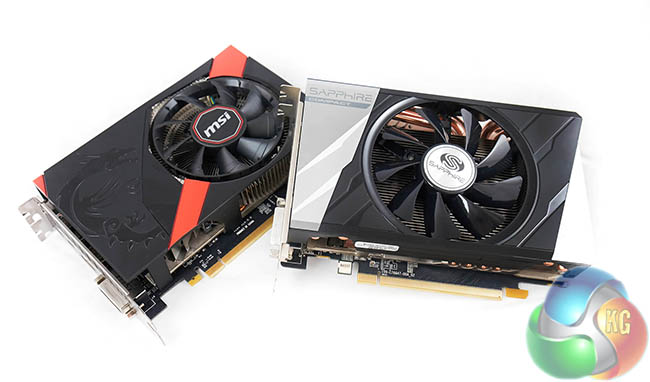
If you are building a new Mini ITX system then the graphics choices can be limited. Two of the leading solutions on the market right now are the MSI GTX760 Gaming Mini ITX and the Sapphire R9 285 ITX Compact. Both of these diminutive cards ship in a moderately overclocked state with custom coolers. Both solutions are priced below the £200 ‘sweet spot', but how do they compare?
The R9 285 was a recent release by AMD and we covered multiple reviews of partner cards on launch day back at the start of September. The R9 285, along with the R9 290/X and R7 260X features a programmable audio pipeline. This TrueAudio technology is designed for game audio artists and engineers, so they can ‘bring their artistic vision beyond sound production into the realm of sound processing’.
The R9 285 is a 256 bit architecture design, which seems like a downgrade when compared directly to the 384 bit R9 280. AMD however are using a lossless delta colour compression (DCC) algorithm to get a 40% efficiency improvement. The colour data is being stored in a lossless compressed format using delta encoding – this is handled automatically on the fly.
Geometry performance has improved dramatically over the older part. Their 4xPrim rate has improved tessellation (2-4x) when compared to the R9 280. They have managed to enhance performance from improving their work distribution between geometry front end units and improved vertex re-use when dealing with many small triangles.
Multimedia areas have been improved including a new Unified Video Decoder which provides a full fixed function decode engine with support for H.264, VC-1, MPEG4, MPEG2 and MJPEG. It also adds support for high frame rate 4K H.264 content (High Profile Level 5.2). The new Video Coding Engine provides (up to) 12x faster than real time encoding for full HD and support for 4K resolutions.
The Sapphire R9 285 ITX Compact is available from Overclockers UK for £199.99 inc vat.
Nvidia's GTX760 is getting a bit long in the tooth and is due for replacement to bring it into line with the latest Maxwell hardware. Still, it is a big seller for Nvidia and is widely available online. This card was a direct replacement for Nvidia's GTX660 ti back in June 2013. The basespeed of the solution at launch was 980mhz, however as we will see the MSI GTX760 Gaming Mini ITX has received a moderate clock increase to deliver extra performance.
The MSI GTX760 Gaming Mini ITX is available from Amazon with a recent price reduction to £175.59 inc vat.
| GPU | MSI GTX760 Gaming Mini ITX | Sapphire R9 285 ITX Compact |
| Shaders | 1152 Cuda Cores | 1792 Stream Processors |
| Base Clock (mhz) | 1006 | 928 |
| GPU Boost Clock (mhz) | 1072 | // |
| Pixel Fillrate (GPixel/s) | 32.2 | 59.4 |
| Texture Units | 96 | 112 |
| Texture fill-rate (GTexel/s) | 96.6 | 103.9 |
| Memory Clock (mhz) | 1502 | 1375 |
| ROPs | 32 | 64 |
| Bus Width (bit) | 256 | 256 |
| Bandwidth (Gb/s) | 192.3 | 176.0 |
The AMD card on paper looks more powerful, especially when factoring in the 64 ROP's and 112 texture units – compared to Nvidia's 32 ROP's and 96 texture units. The GTX760 definitely has a edge in regards to memory performance/bandwidth, so it will be interesting to see how both MINI ITX solutions stack up in the real world tests.
First let us take a closer look at both cards.

The Sapphire R9 285 ITX Compact box artwork is the stuff of nightmares. Not the kind of chap you would want to meet in a dark alleyway at night.
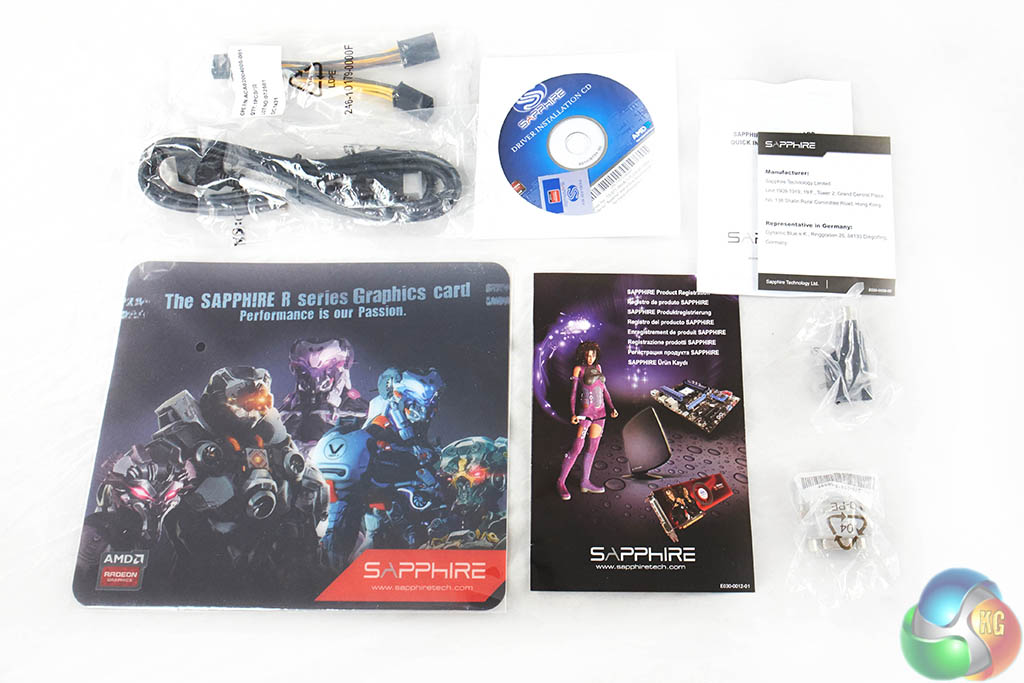
Sapphire have not left any stone unturned – the bundle is fantastic. They supply multiple video converter cables, including a mini DisplayPort to DisplayPort adapter. They also include a high grade HDMI 1.4a cable which is ideal for connection to a HDTV. Considering the Sapphire R9 285 ITX Compact targets the HTPC market specifically, it is a welcome addition. Other extras include a mouse pad, literature, software disc, Sapphire branded case sticker and some power converter cables.


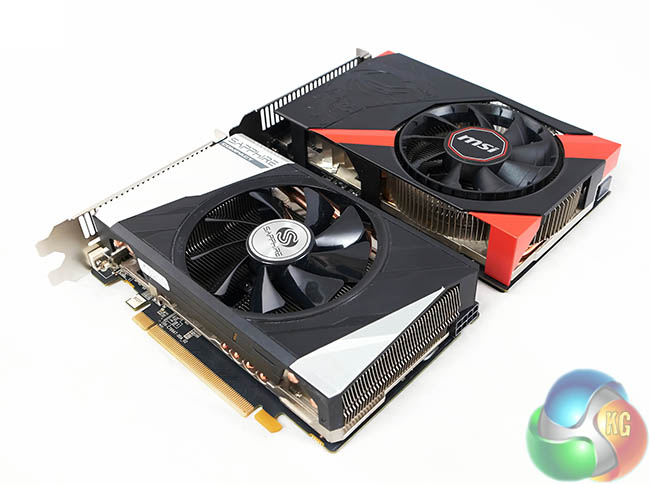
The Sapphire R9 285 ITX Compact Edition may be tiny, but it is still quite the looker – built around a black PCB with a black and silver two tone cooler. A large fan is positioned in the centre of the card. This is a dual slot card and it measures 171 x 110 x 35mm (LxWxH).

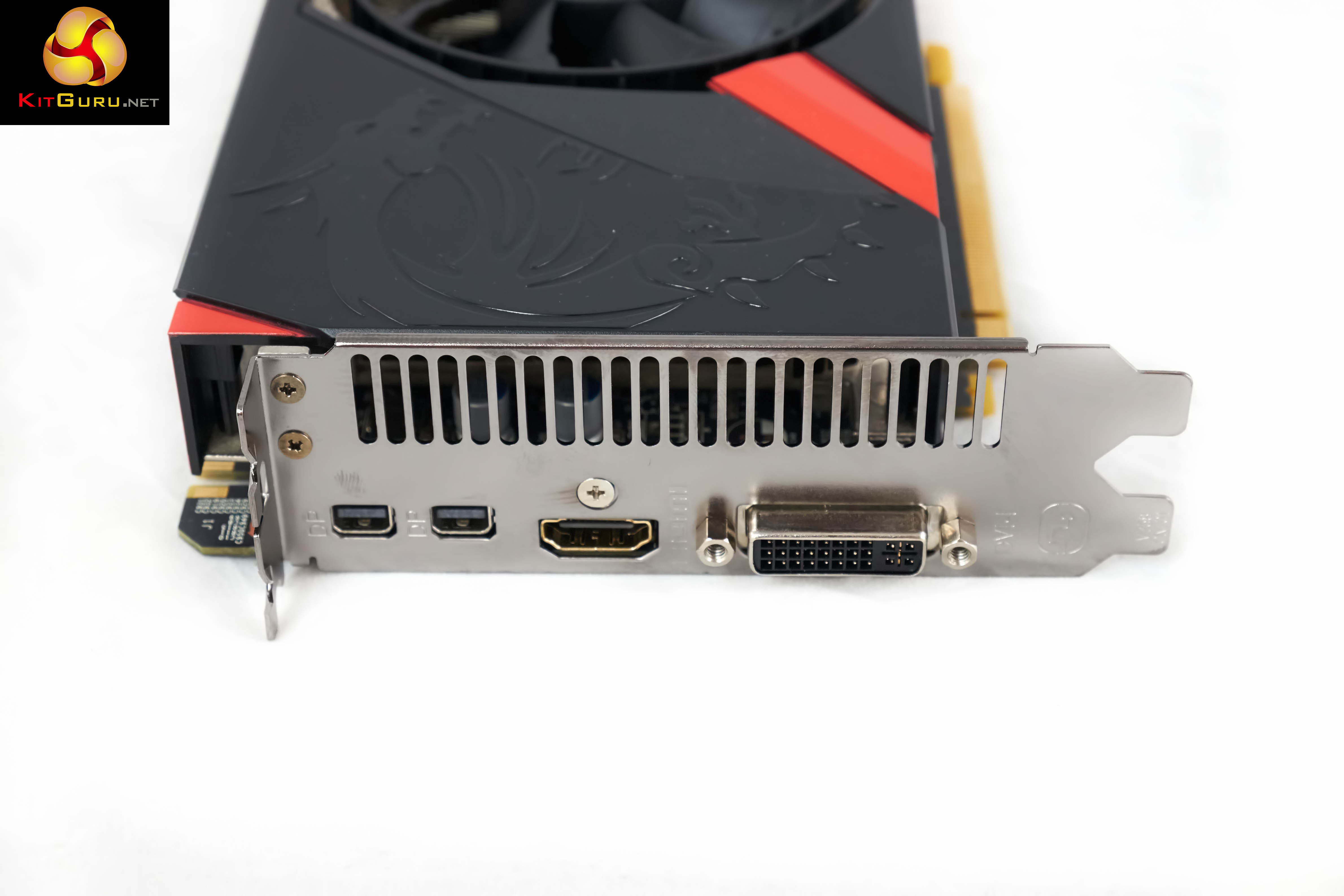
The Sapphire R9 285 ITX Compact Edition ships with a DVI-D, HDMI and two Mini DisplayPort connectors.

The card demands power from a single 8 pin power connector. The R9 285 has bridgeless Crossfire support.
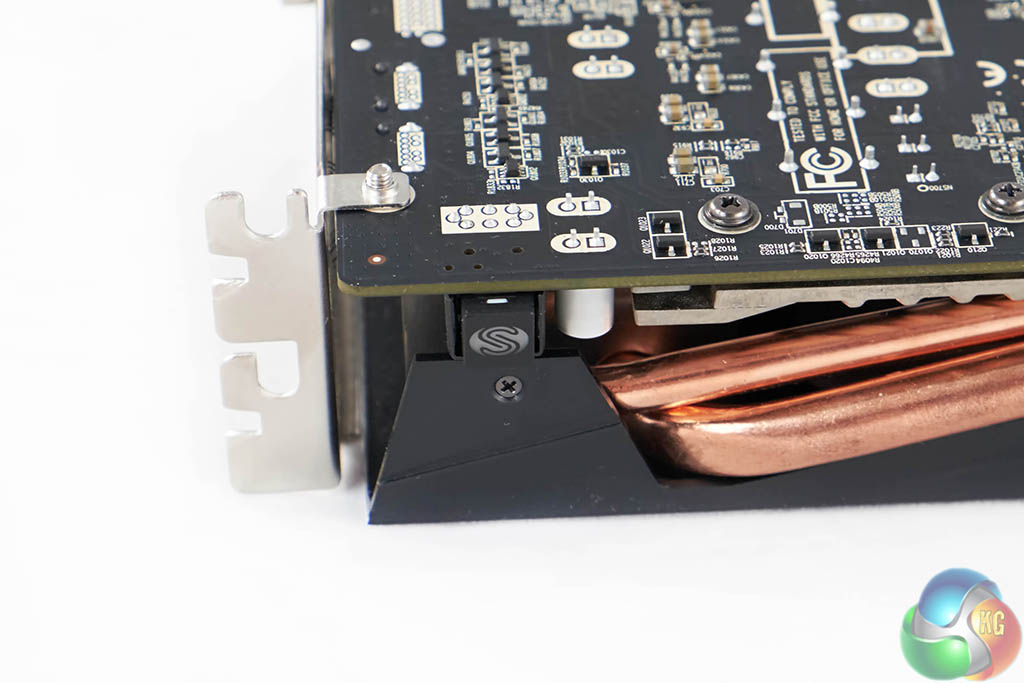
The Sapphire button switches between UEFI BIOS and standard modes.
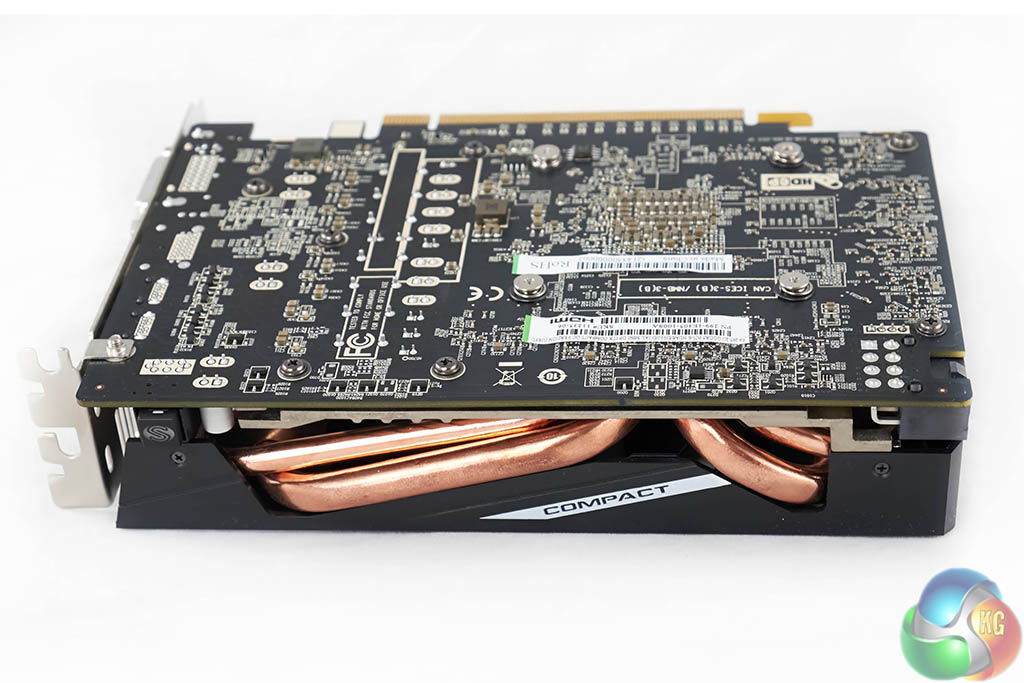
Looking down on the card from the top, we can see the compact cooling system, with several thick copper heatpipes.

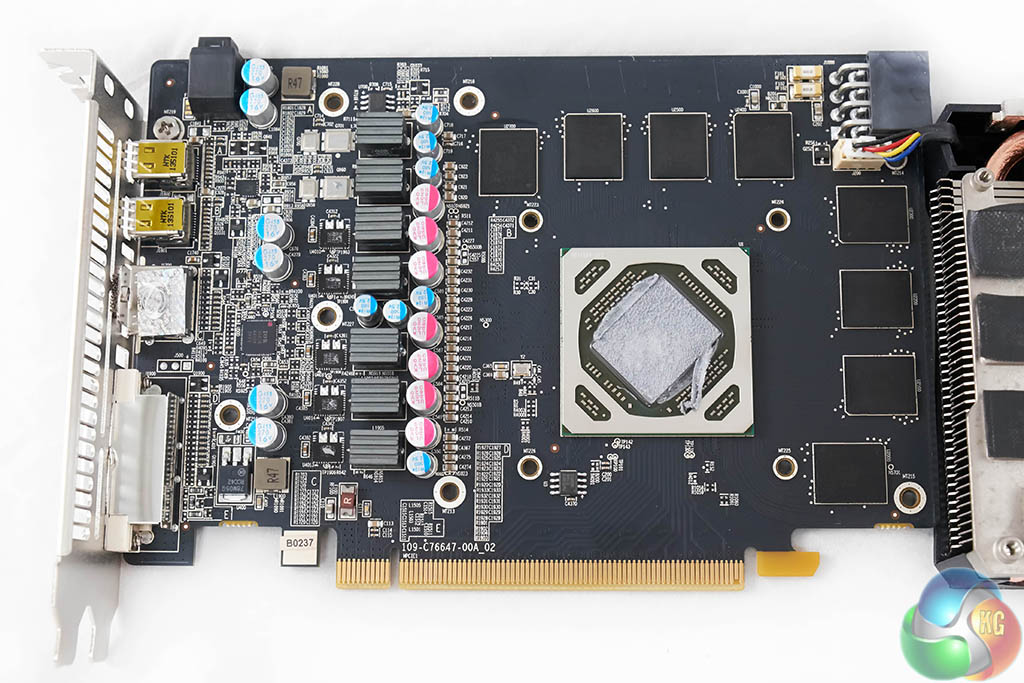
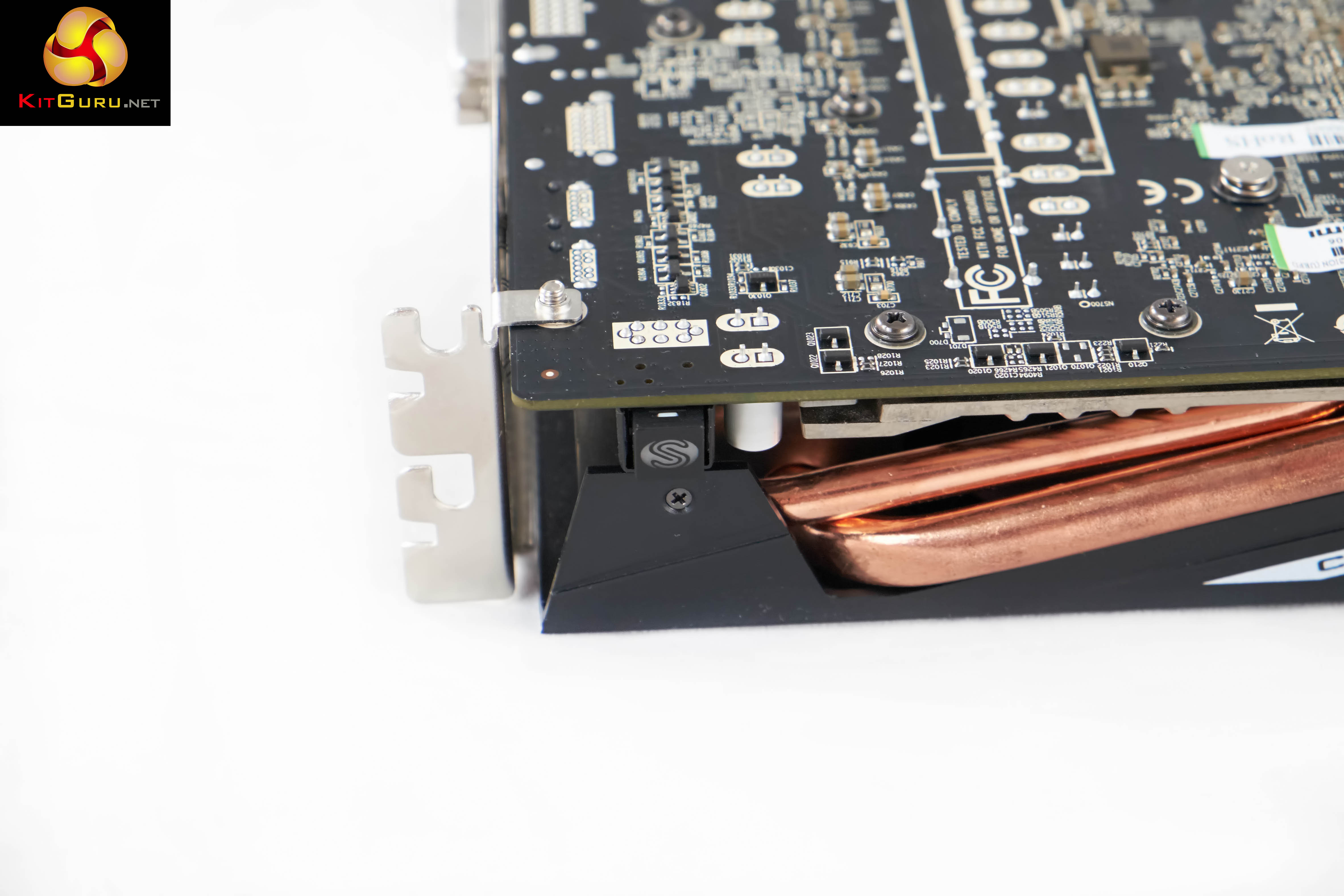
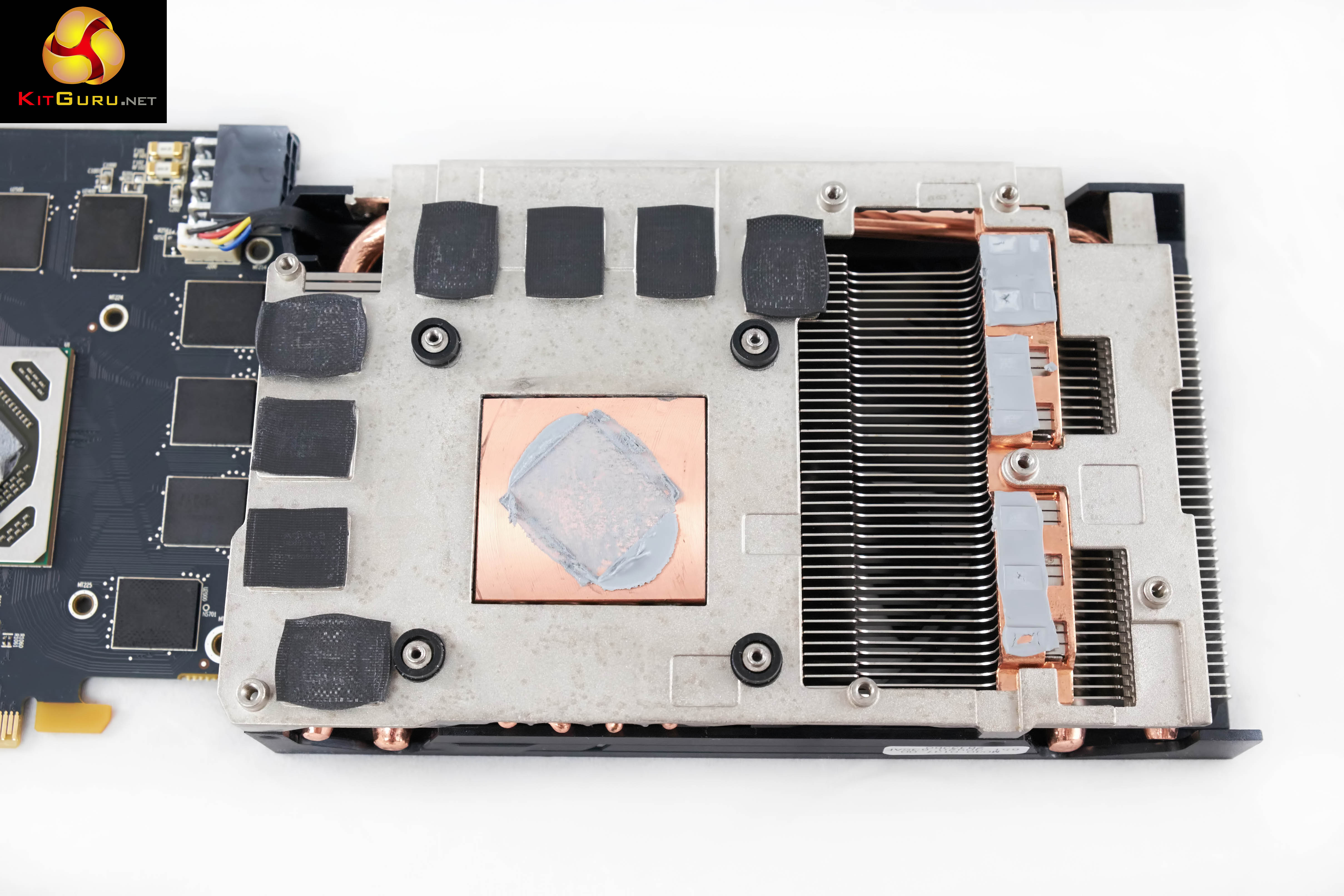
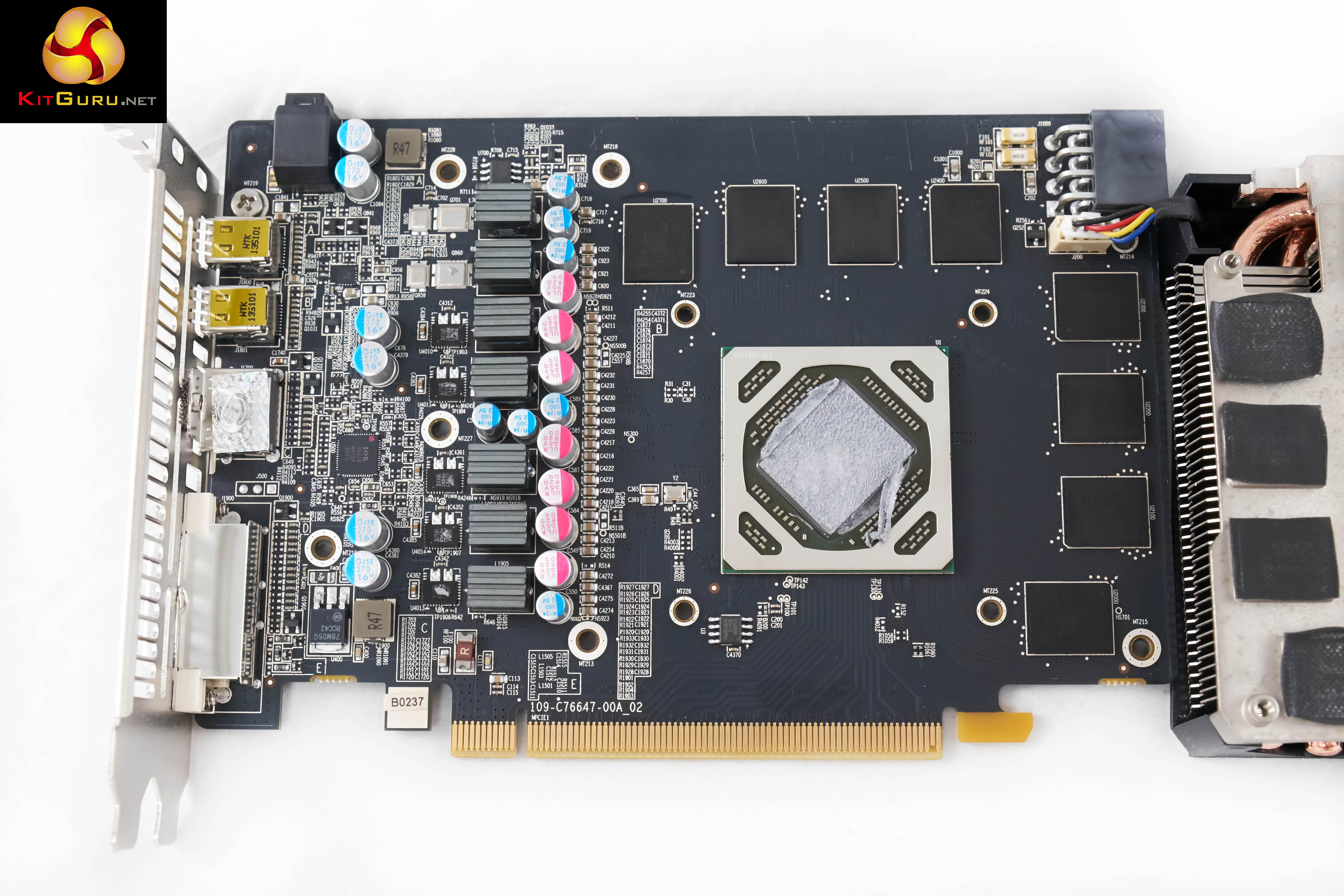
The cooling system is hidden behind a metal plate – which offers active cooling for the 2GB of GDDR5 memory. There are 2 thick copper heatpipes which connect to the copper heatsink and they run into aluminum fins on either side. Sapphire are using Elpida GDDR5 memory.

The R9 285 is built on the 28nm process. It has 64 ROPS, 112 texture units and 1,792 Stream processors. The 2GB of GDDR5 memory is connected via a 256 bit memory bus. The core is overclocked to 928mhz, and the memory is running at 1,375mhz (5.5Gbps effective).
On this page we present some high resolution images of the product taken with a Fuji XT1 and a Sigma SD1 camera. These will take much longer to open due to the dimensions, especially on slower connections. If you use these pictures on another site or publication, please credit Kitguru.net as the owner/source.




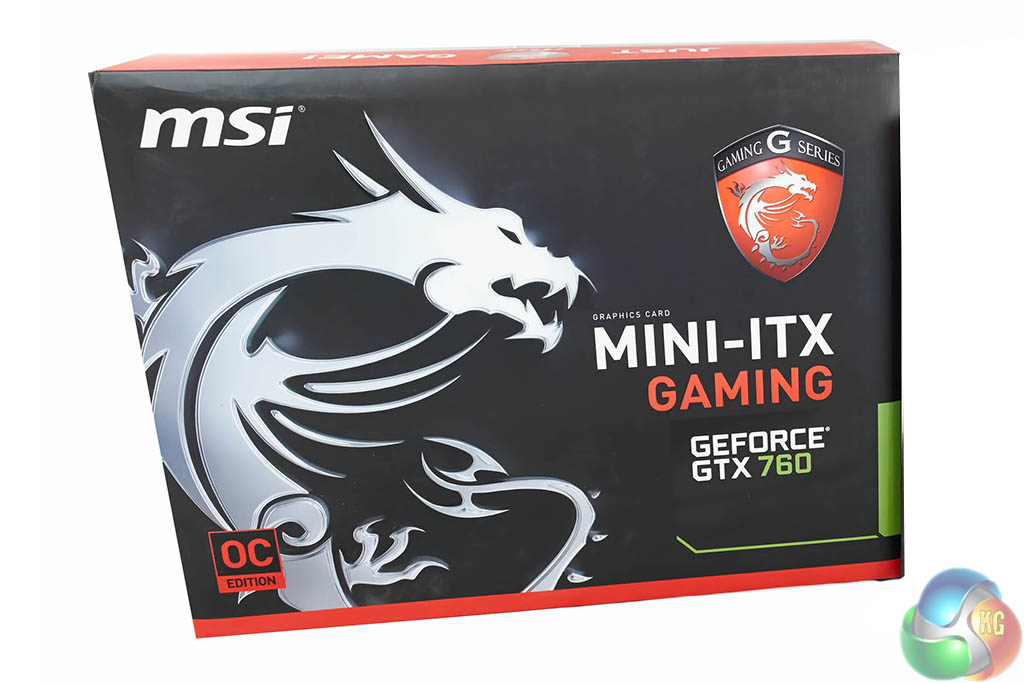
The MSI Dragon is one of the best looking mascots on the market. Its a simple box, but one that we immediately associate with MSI.
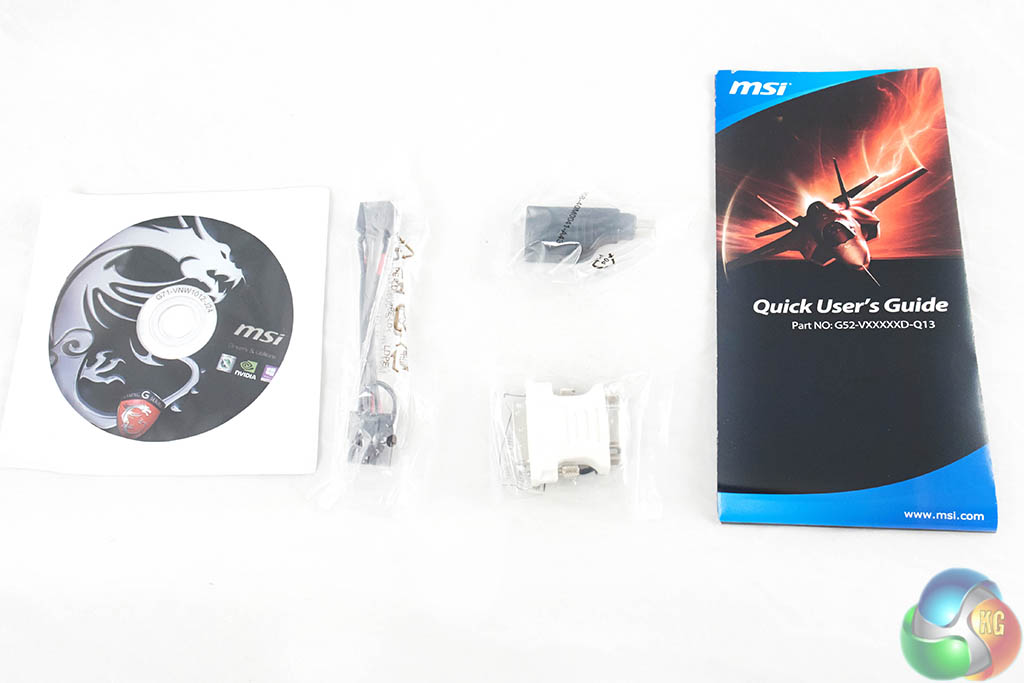
The bundle includes a software disc, converter cables, and a quick start guide.
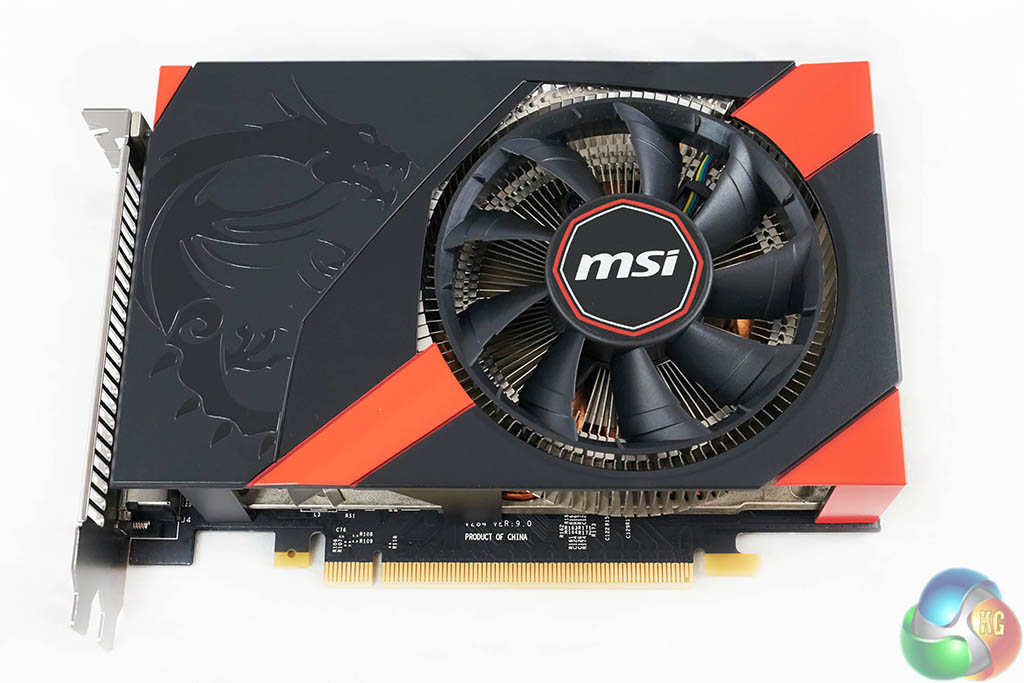
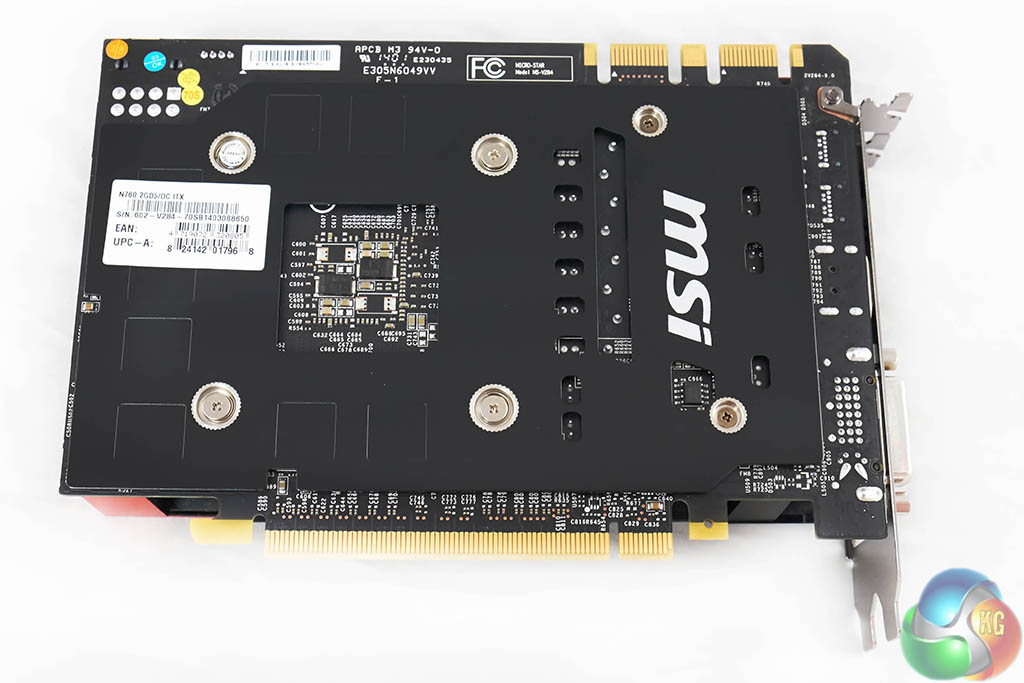
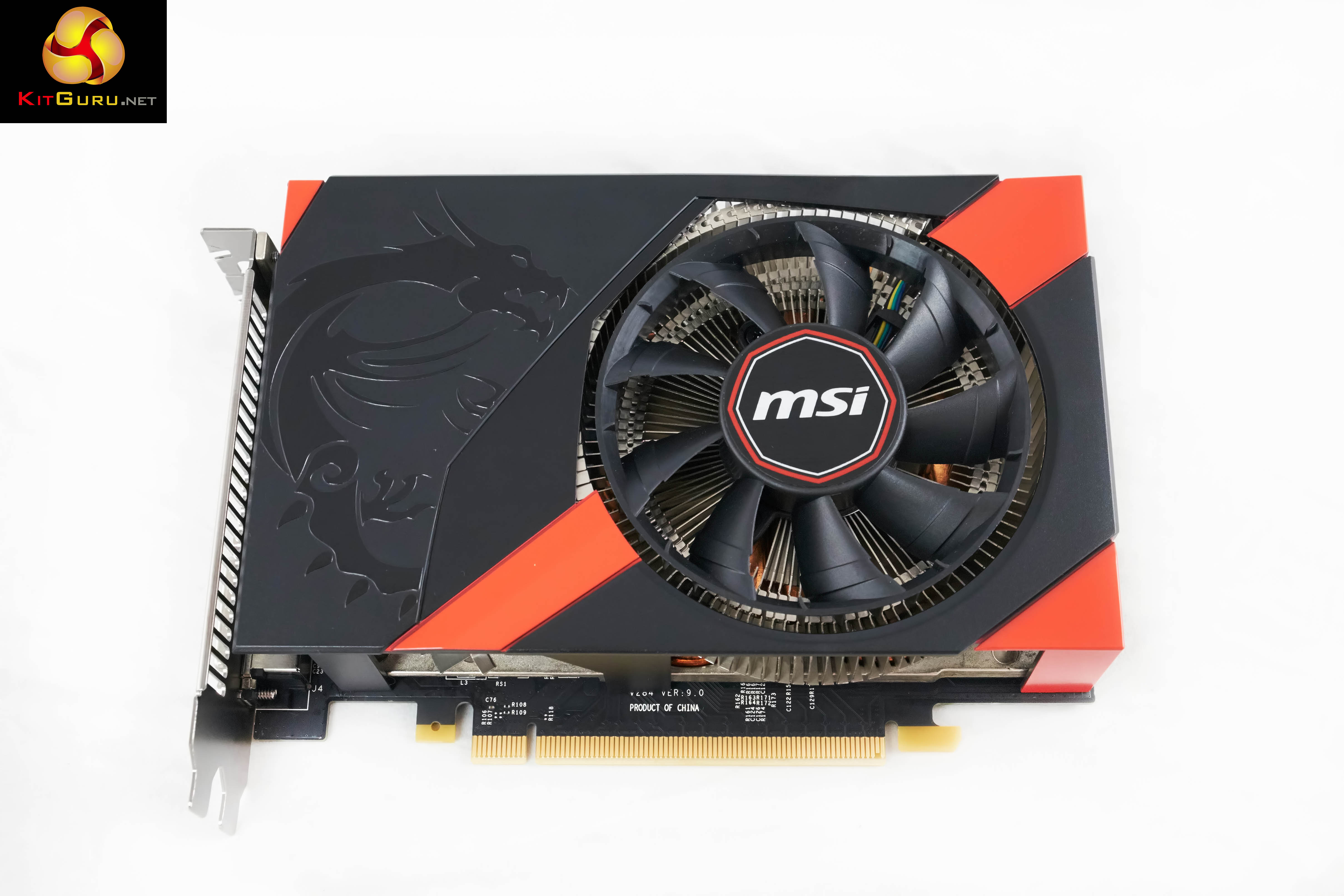
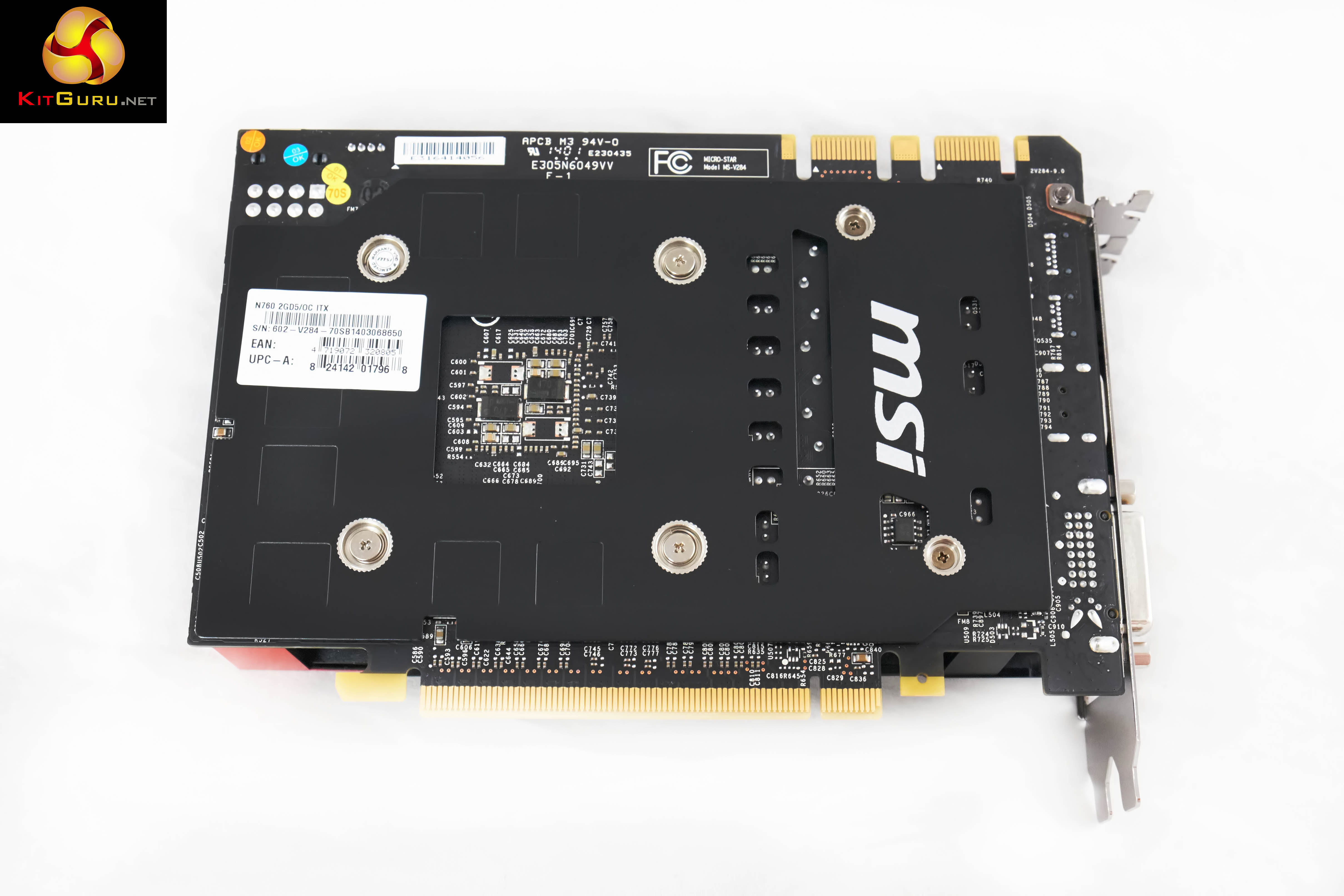
The MSI GTX760 Gaming Mini ITX is a great looking card. It is built around a black PCB and even includes a backplate. Bonus points for MSI before we even get to testing the hardware.
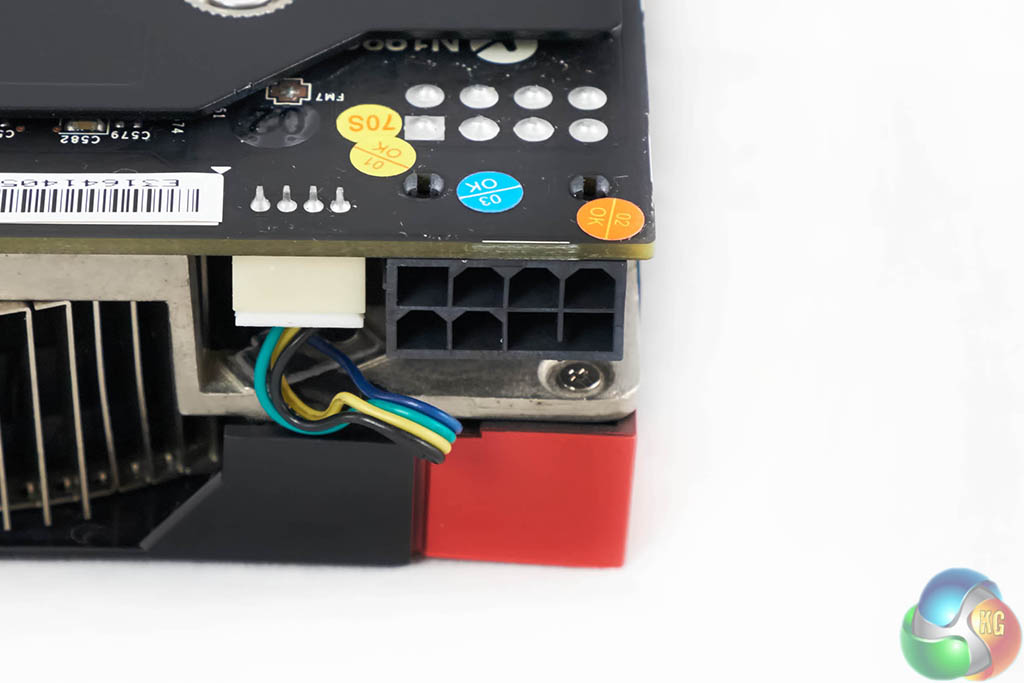
The card takes power from a single 8 pin power connector.
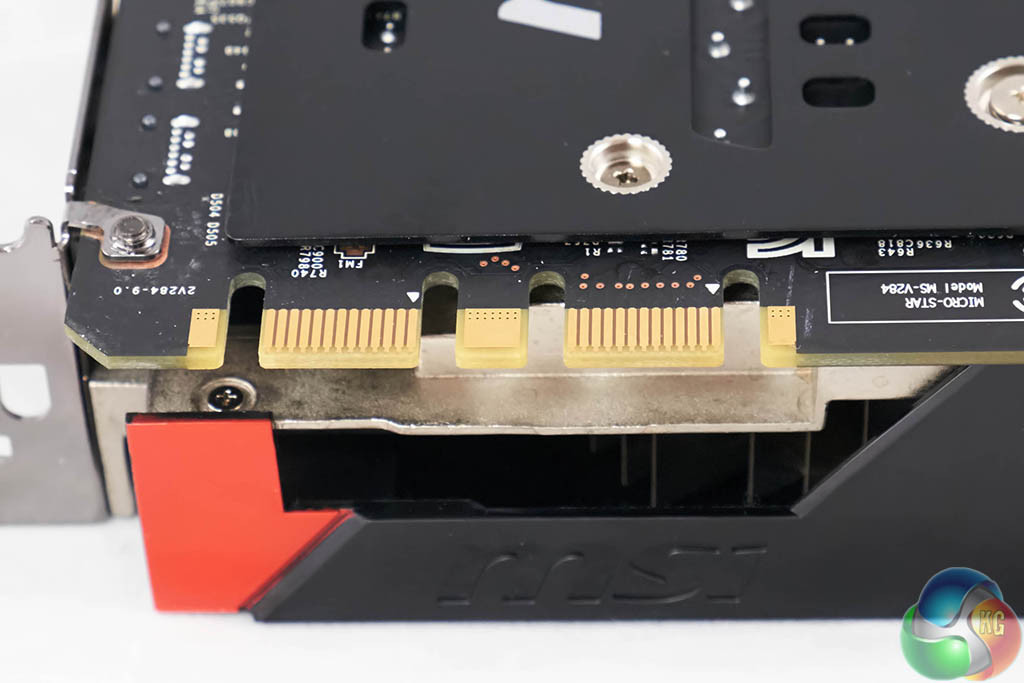
The MSI GTX760 Gaming Mini ITX is SLi capable.
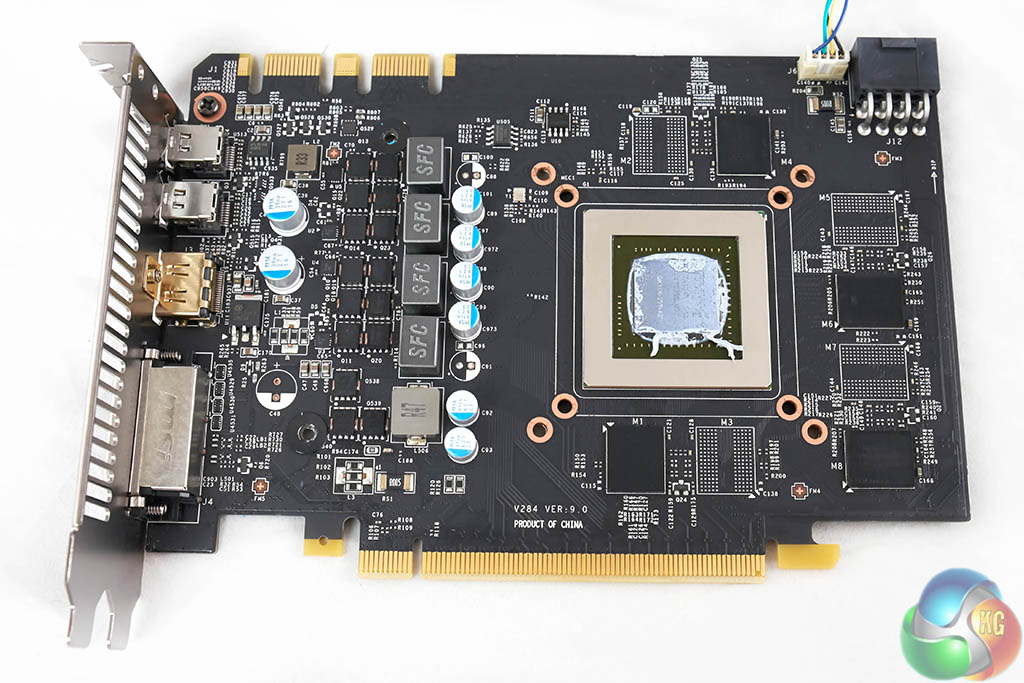
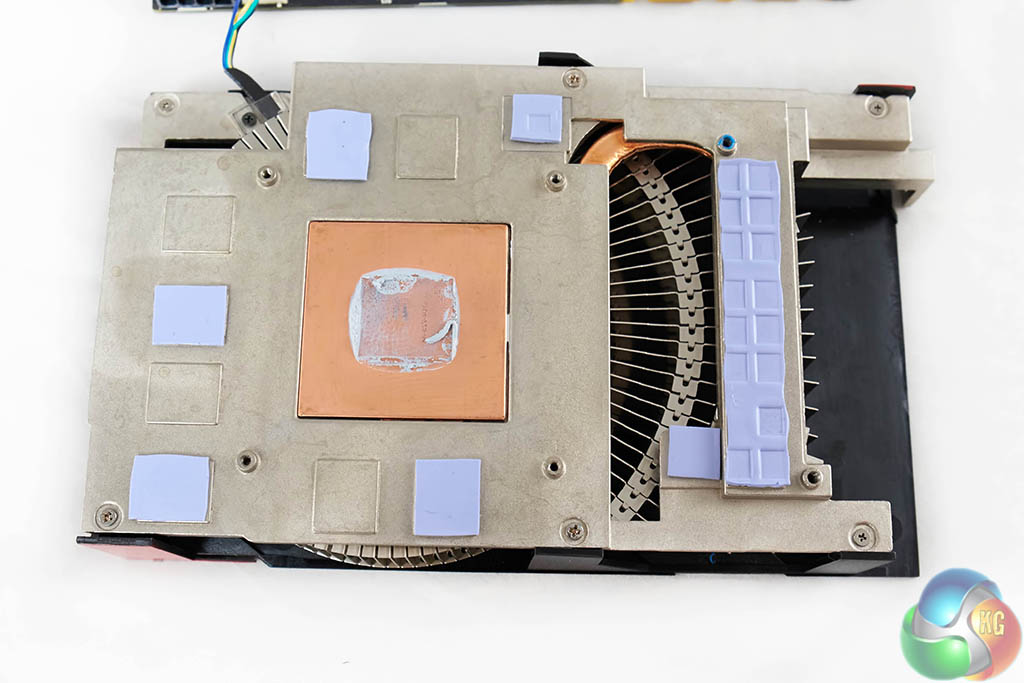
The cooler itself is enclosed, however there are several copper heatpipes that run from the central copper block which cools the core. MSI are using Hynix 2GB of GDDR5 memory.
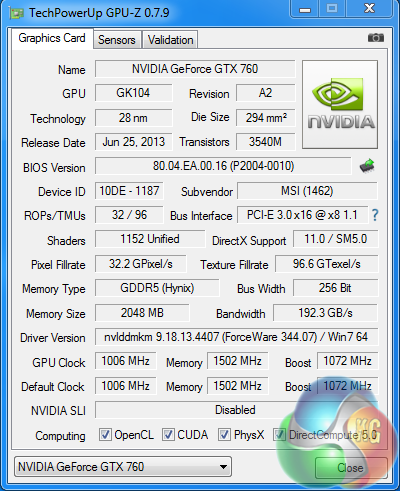
The MSI GTX760 Gaming Mini ITX is built on the 28nm process. It has 32 ROP's, 96 texture units and 1,152 Cuda Cores. The 2GB of GDDR5 memory is connected via a 256 bit interface it is clocked at 1,500mhz (6Gbps effective). The core clock speed has been increased to 1,006mhz with a boost to 1,072mhz.
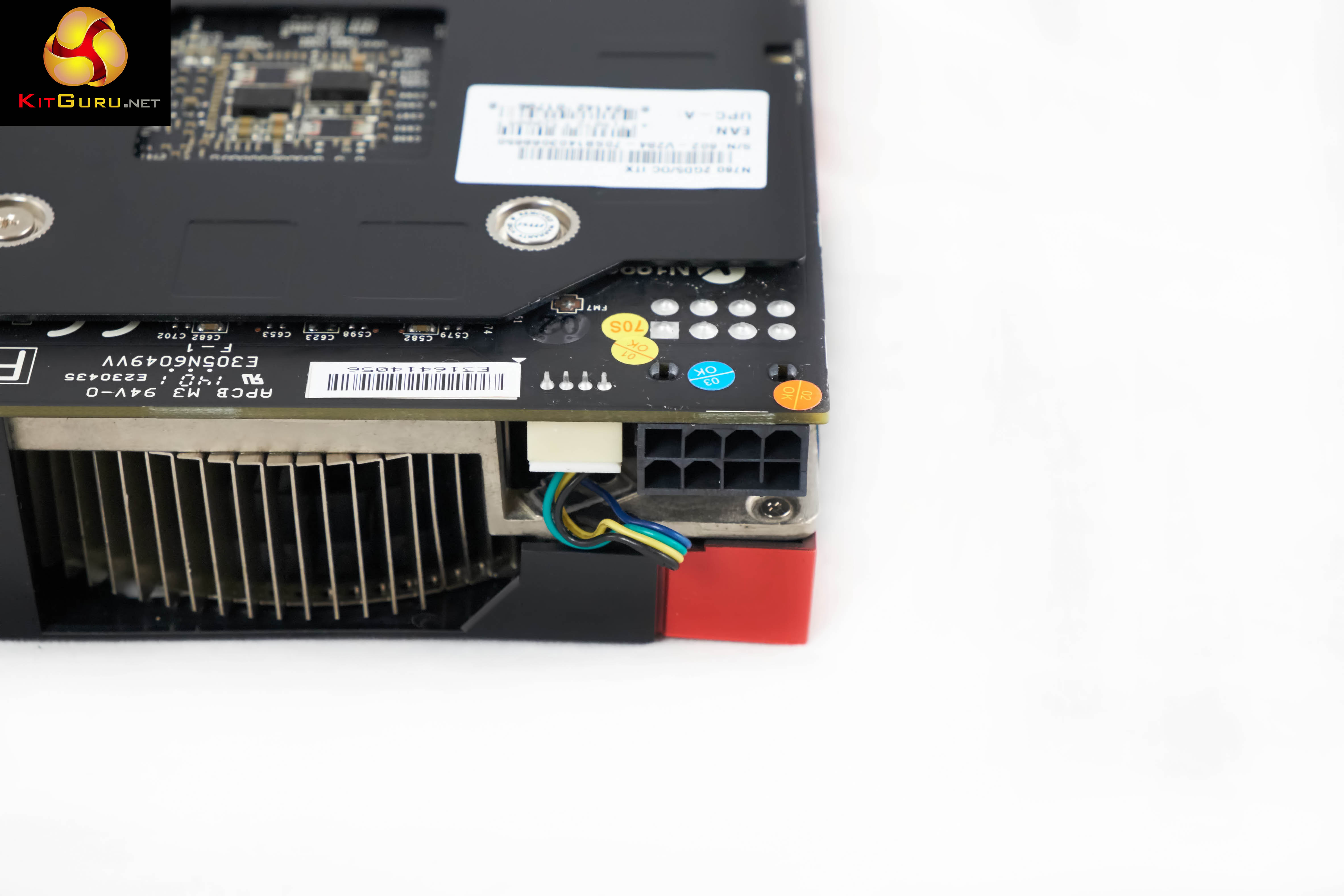
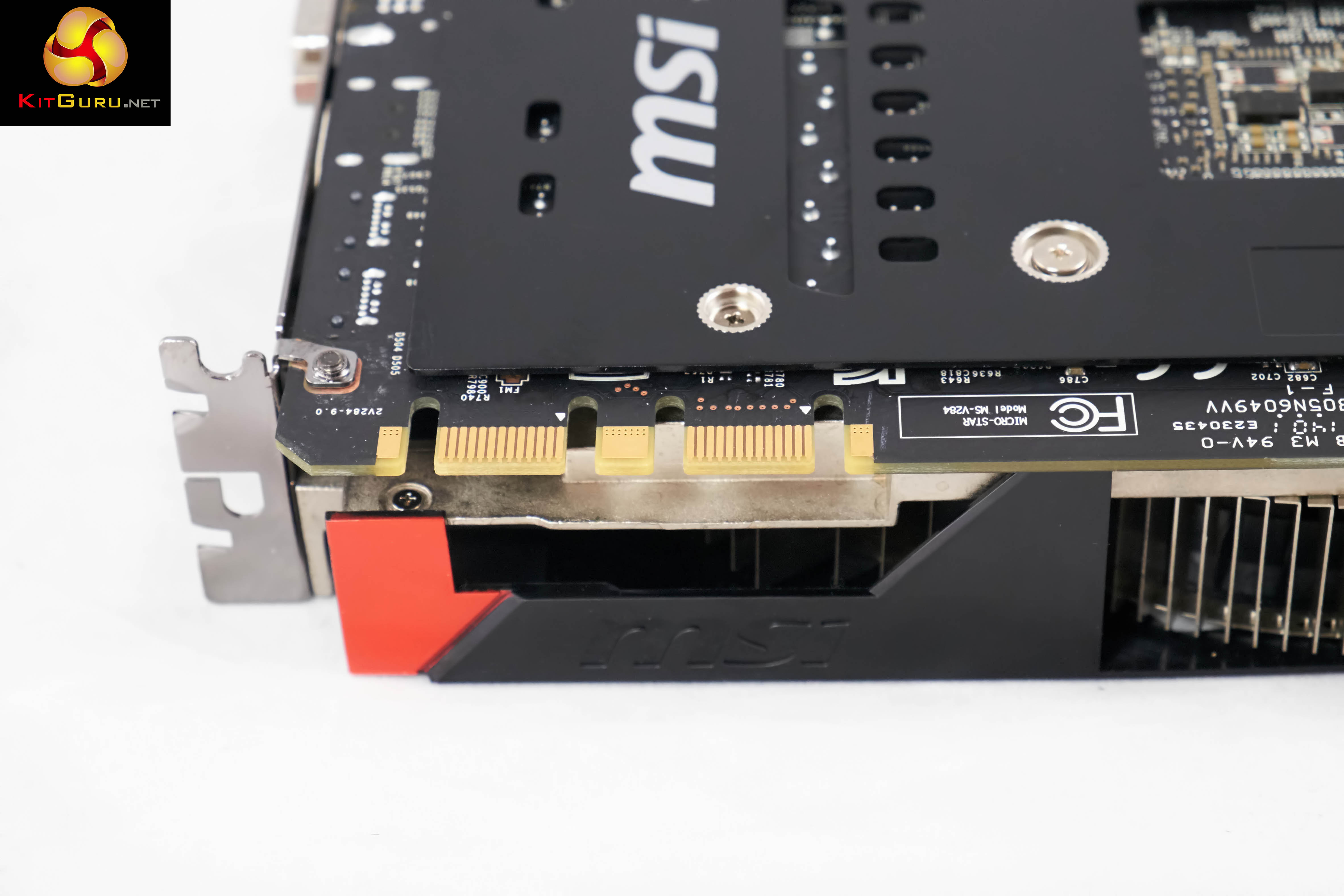
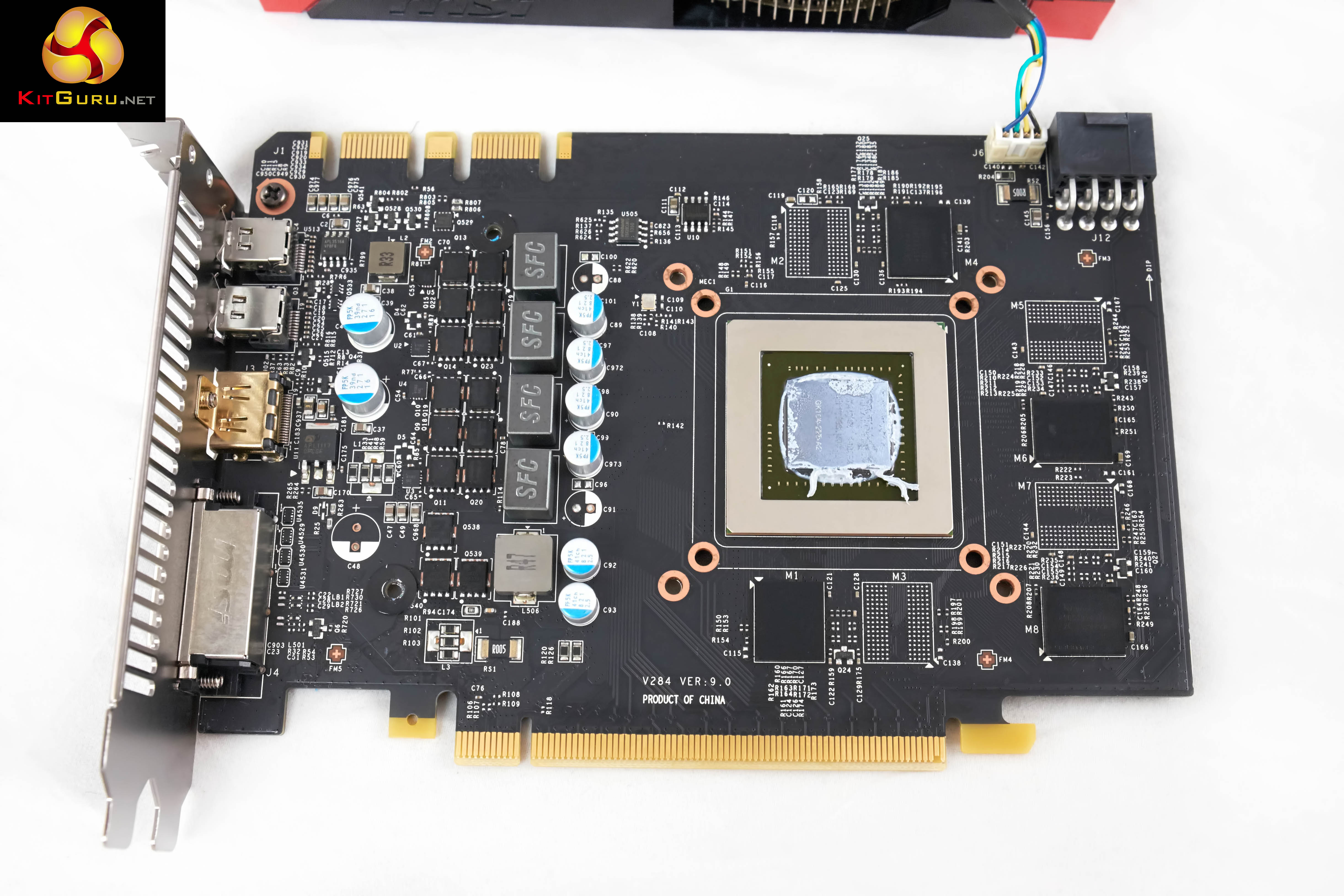
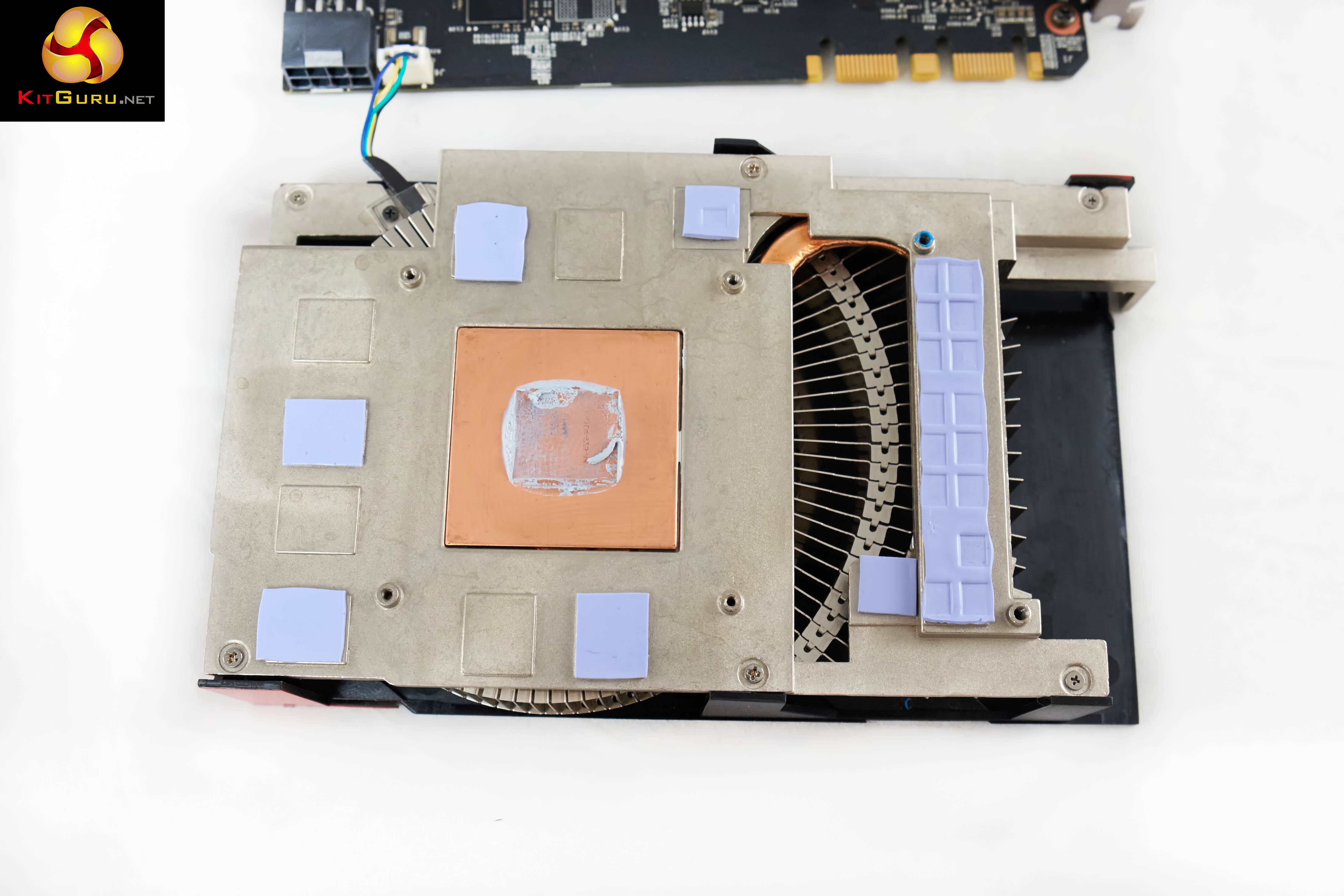
For the review today we are using the latest Nvidia Forceware 344.07 and AMD Catalyst 14.7 beta drivers. All of the AMD and Nvidia hardware in our reviews today used these drivers.
We are using one of our brand new test rigs supplied by DINOPC and built to our specifications. If you want to read more about this, or are interested in buying the same Kitguru Test Rig, check out our article with links on this page. We are using an Asus PB287Q 4k and Apple 30 inch Cinema HD monitor for this review today.
We include test we have run with other graphics cards in the last 10 days. We test at 1080p and 1600p and some game engines we try to push to 4k – just to see how the hardware fares.

Comparison cards:
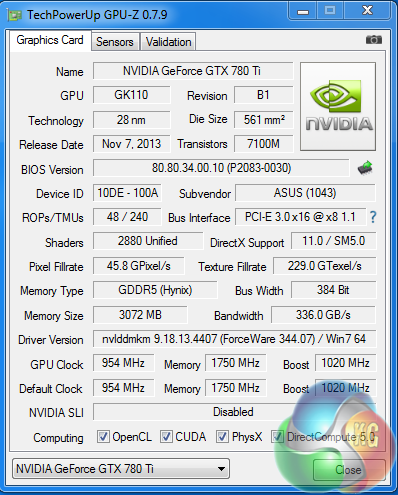


Asus GTX780 Ti Direct CU II OC (954mhz core / 1750 mhz memory)
Nvidia GTX980 Reference (1126 mhz core / 1753mhz memory)
Sapphire R9 290X Tri-X OC (1040 mhz core / 1300 mhz memory)
MSI GTX970 Gaming 4G (1140 mhz core / 1753 mhz memory)
Palit GTX780 6GB (902 mhz core / 1502mhz memory)
Asus GTX970 StriX OC (1114 mhz core / 1753 mhz memory)
Asus R9 290 Direct CU II OC (1000 mhz core / 1260 mhz memory)
Software:
Windows 7 Enterprise 64 bit
Unigine Heaven Benchmark
Unigine Valley Benchmark
3DMark Vantage
3DMark 11
3DMark
Fraps Professional
Steam Client
FurMark
Games:
Grid AutoSport
Tomb Raider
Metro Last Light Redux
Thief 2014
All the latest BIOS updates and drivers are used during testing. We perform generally under real world conditions, meaning KitGuru tests games across five closely matched runs and then average out the results to get an accurate median figure. If we use scripted benchmarks, they are mentioned on the relevant page.
Game descriptions edited with courtesy from Wikipedia.
Futuremark released 3DMark Vantage, on April 28, 2008. It is a benchmark based upon DirectX 10, and therefore will only run under Windows Vista (Service Pack 1 is stated as a requirement) and Windows 7. This is the first edition where the feature-restricted, free of charge version could not be used any number of times. 1280×1024 resolution was used with performance settings.


The Sapphire R9 285 ITX Compact has a clear performance advantage in this older Direct X 10 benchmark.
3DMark 11 is designed for testing DirectX 11 hardware running on Windows 7 and Windows Vista the benchmark includes six all new benchmark tests that make extensive use of all the new features in DirectX 11 including tessellation, compute shaders and multi-threading. After running the tests 3DMark gives your system a score with larger numbers indicating better performance. Trusted by gamers worldwide to give accurate and unbiased results, 3DMark 11 is the best way to test DirectX 11 under game-like loads. If you want to learn more about this benchmark, or to buy it yourself, head over to this page.


3DMark 11 is the last generation Direct X 11 benchmark from Futuremark – it highlights a clear performance edge for the Sapphire R9 285 ITX Compact.
3DMark is an essential tool used by millions of gamers, hundreds of hardware review sites and many of the world’s leading manufacturers to measure PC gaming performance.
Futuremark say “Use it to test your PC’s limits and measure the impact of overclocking and tweaking your system. Search our massive results database and see how your PC compares or just admire the graphics and wonder why all PC games don’t look this good.
To get more out of your PC, put 3DMark in your PC.”


The latest benchmark from Futuremark shows a clear 1,200 point advantage for the Sapphire R9 285 ITX Compact solution.
Unigine provides an interesting way to test hardware. It can be easily adapted to various projects due to its elaborated software design and flexible toolset. A lot of their customers claim that they have never seen such extremely-effective code, which is so easy to understand.
Heaven Benchmark is a DirectX 11 GPU benchmark based on advanced Unigine engine from Unigine Corp. It reveals the enchanting magic of floating islands with a tiny village hidden in the cloudy skies. Interactive mode provides emerging experience of exploring the intricate world of steampunk. Efficient and well-architected framework makes Unigine highly scalable:
- Multiple API (DirectX 9 / DirectX 10 / DirectX 11 / OpenGL) render
- Cross-platform: MS Windows (XP, Vista, Windows 7) / Linux
- Full support of 32bit and 64bit systems
- Multicore CPU support
- Little / big endian support (ready for game consoles)
- Powerful C++ API
- Comprehensive performance profiling system
- Flexible XML-based data structures

We set Quality to ‘High', Tessellation to ‘Normal' and resolution to 1600p.


These benchmarks tend to run better on Nvidia hardware and we can see the MSI GTX760 Gaming Mini ITX claims a 0.1 average frame rate advantage.Valley Benchmark is a new GPU stress-testing tool from the developers of the very popular and highly acclaimed Heaven Benchmark. The forest-covered valley surrounded by vast mountains amazes with its scale from a bird’s-eye view and is extremely detailed down to every leaf and flower petal. This non-synthetic benchmark powered by the state-of-the art UNIGINE Engine showcases a comprehensive set of cutting-edge graphics technologies with a dynamic environment and fully interactive modes available to the end user.
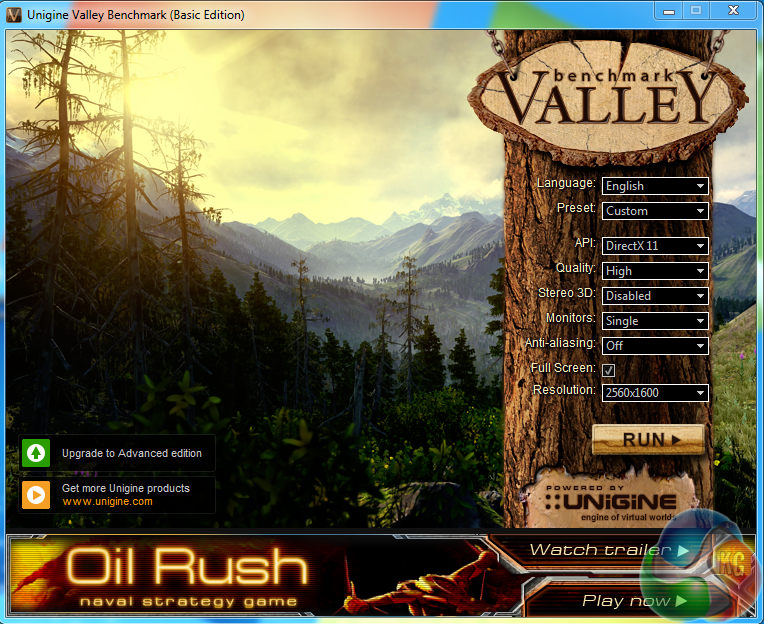
We toggle quality to HIGH, and resolution to 1600p.
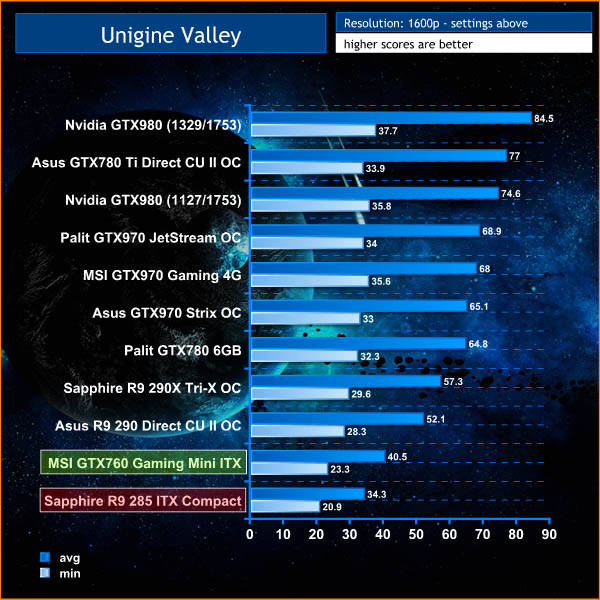
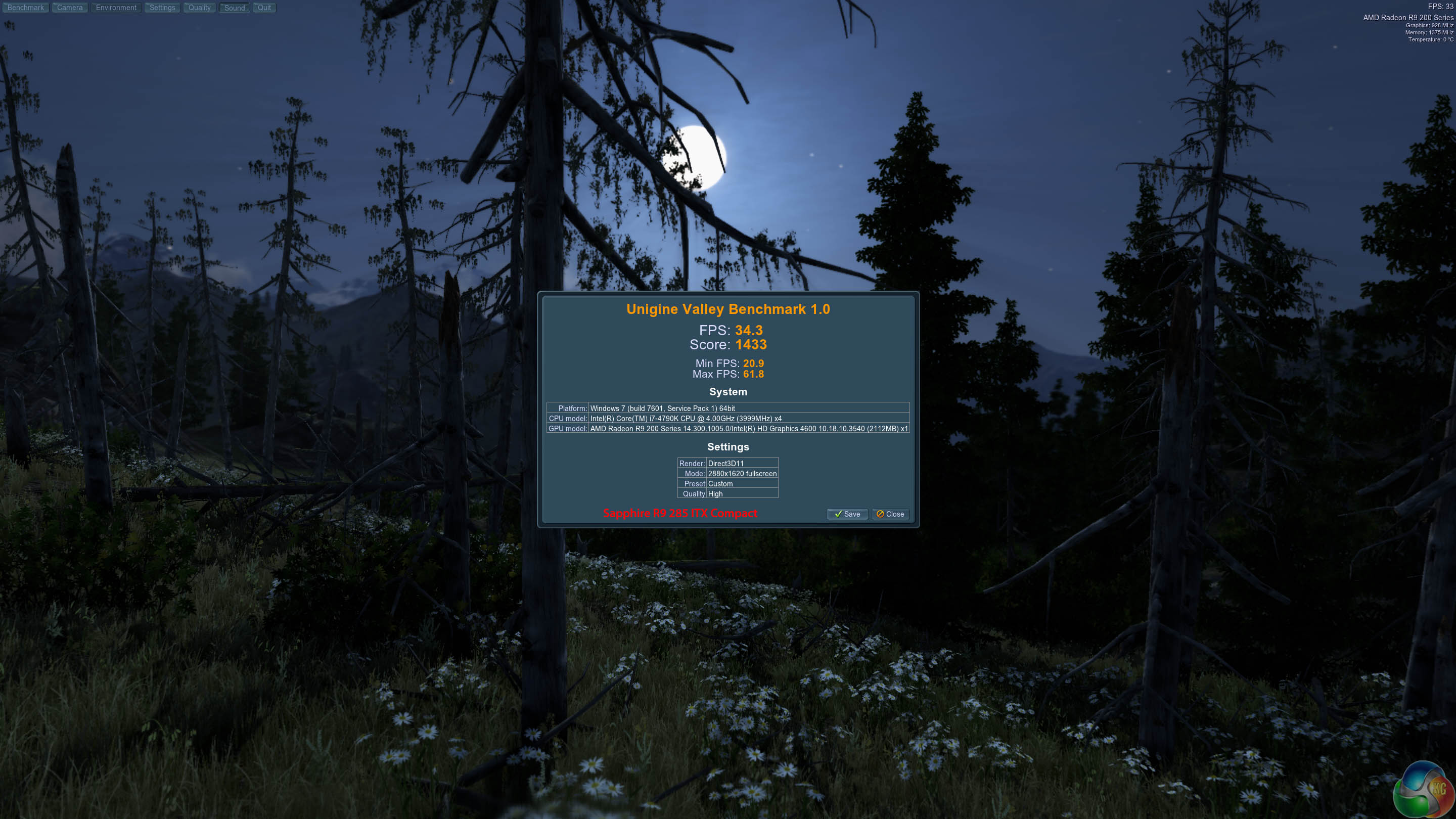
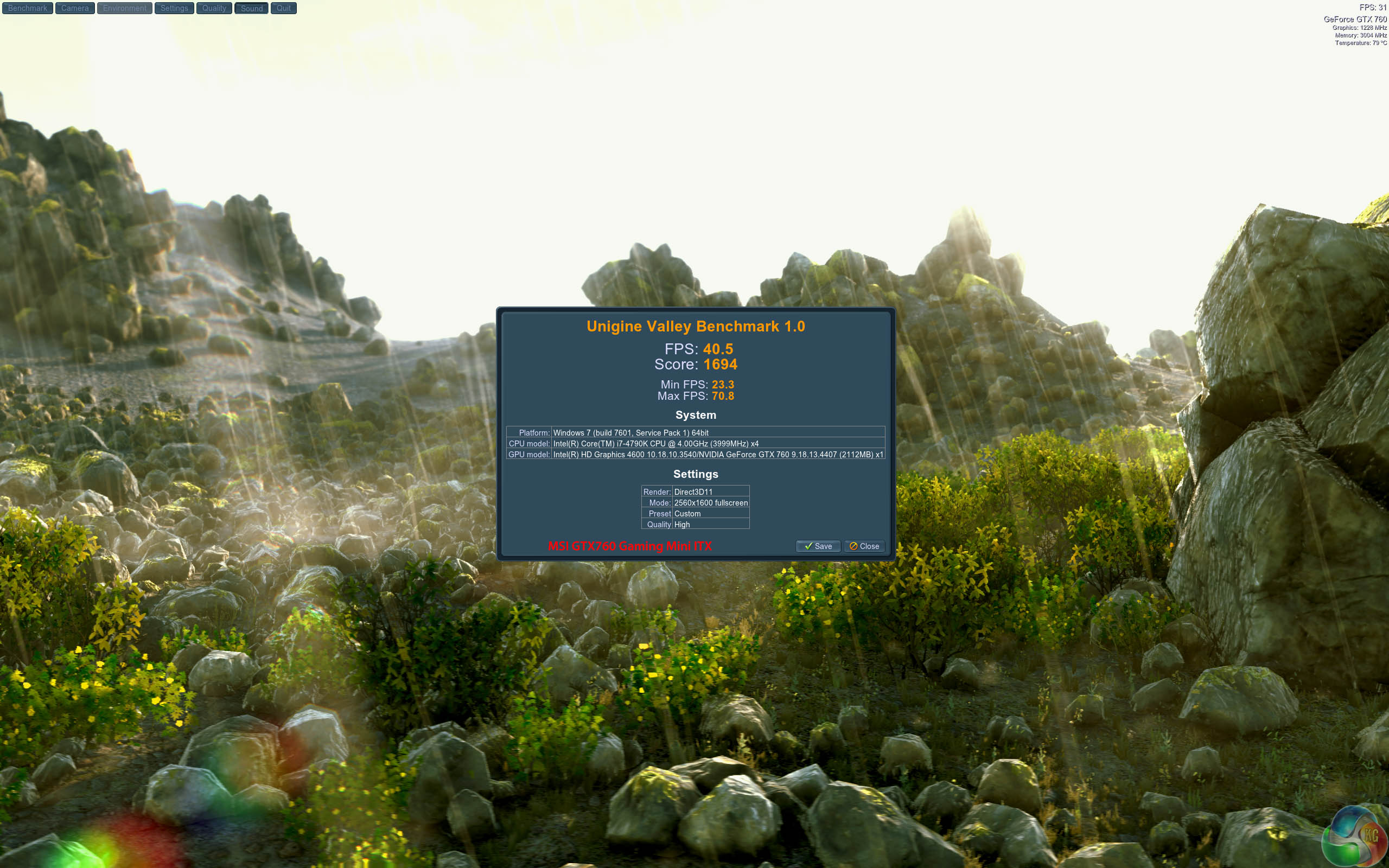
Again, we see similar results from this Tessellation heavy benchmark with the GTX760 claiming a performance benefit over the AMD part.Grid Autosport (styled as GRID Autosport) is a racing video game by Codemasters and is the sequel to 2008′s Race Driver: Grid and 2013′s Grid 2. The game was released for Microsoft Windows, PlayStation 3 and Xbox 360 on June 24, 2014. (Wikipedia).


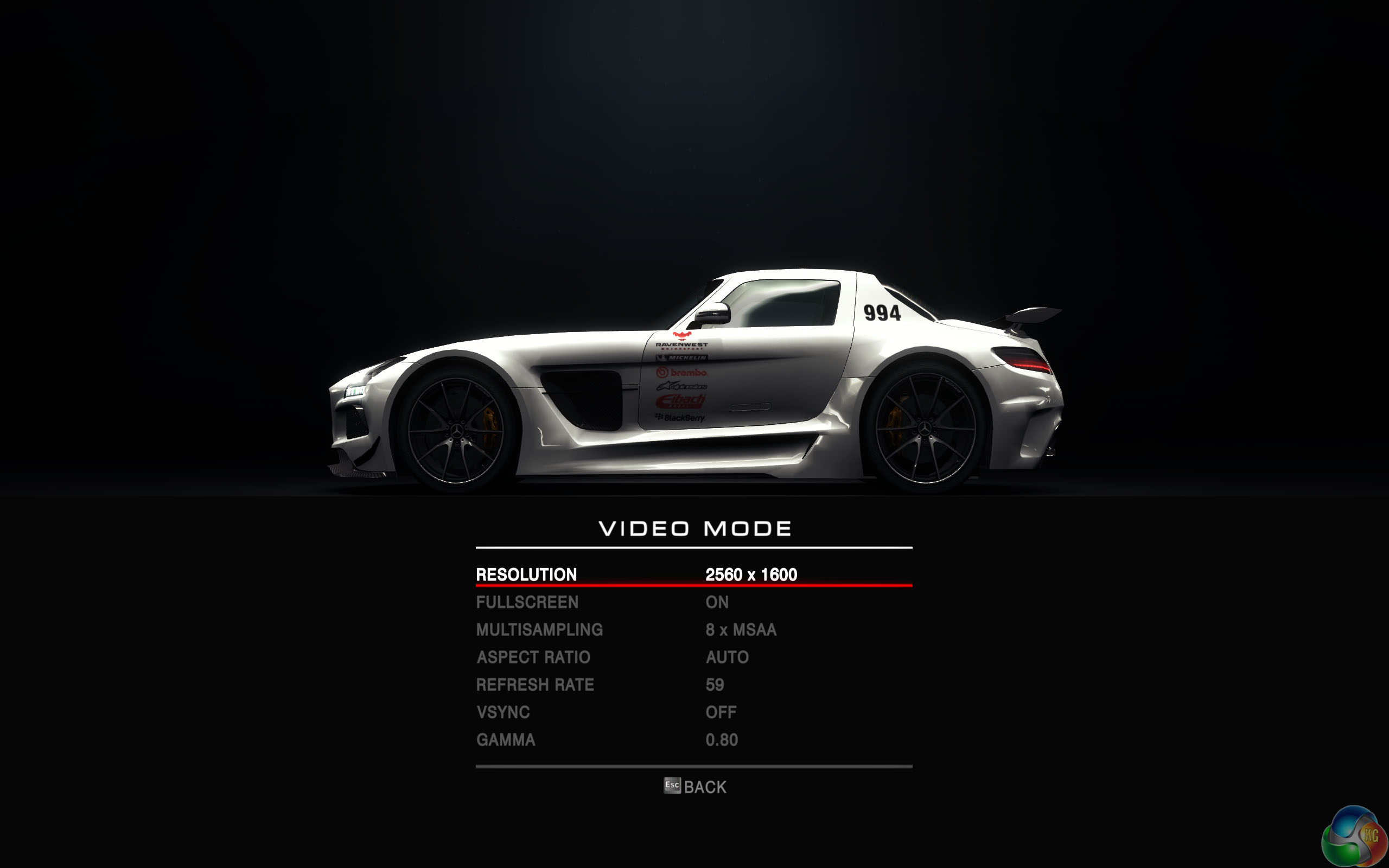
On this page we test at 1080p and 1600p using the ‘Ultra' image quality profile with 8x MSAA.
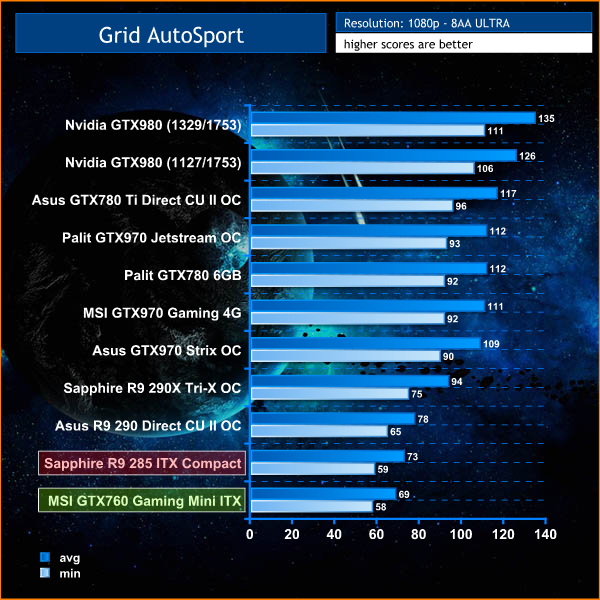
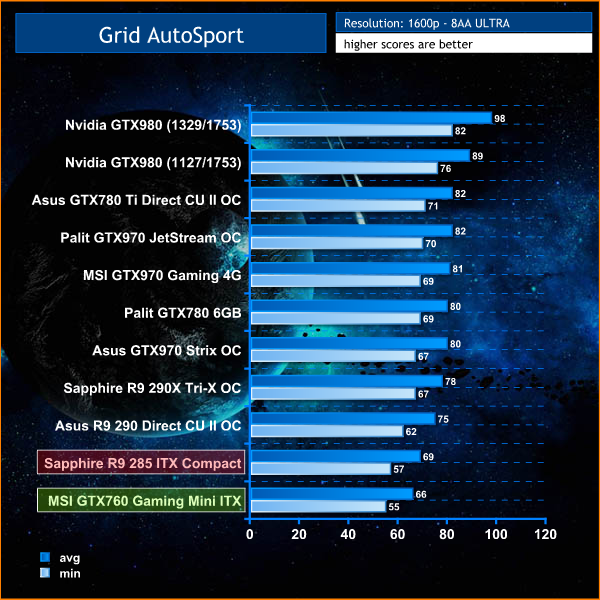
Grid AutoSport is perfectly playable on both GTX760 and R9 285 solutions, at 1080p and 1600p.
Grid Autosport (styled as GRID Autosport) is a racing video game by Codemasters and is the sequel to 2008′s Race Driver: Grid and 2013′s Grid 2. The game was released for Microsoft Windows, PlayStation 3 and Xbox 360 on June 24, 2014. (Wikipedia).
We test at Ultra HD 4k with 8MSAA. The Ultra Profile is selected for maximum image quality.
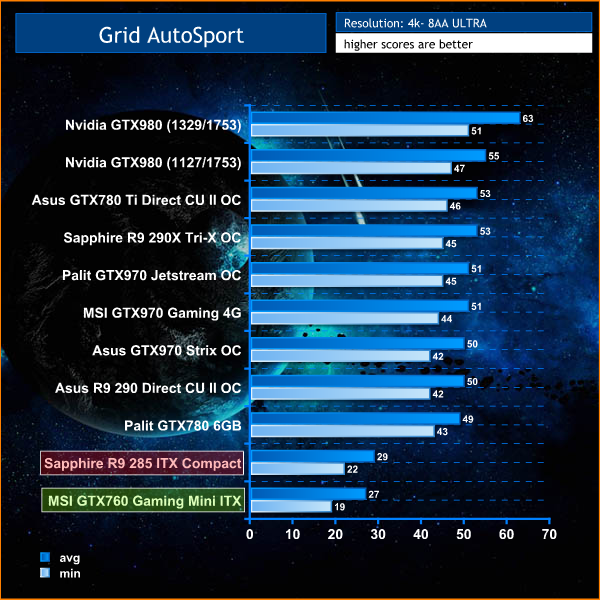
Both Sapphire R9 285 ITX Compact and MSI GTX760 Gaming Mini ITX just don't have the power to handle this engine at 4K, unless we were to lower image quality substantially.Thief is set in a dark fantasy world inspired by Victorian, gothic, and steampunk aesthetics. Garrett, a master thief who has been away from his hometown for a long time, returns to it, a place known only as The City, and finds it ruled with an iron grip by a tyrant called The Baron. While The City is ravaged by a plague, the rich continue to live in isolation and good fortune while the poor are forming numerous mobs against the authorities, Garrett intends to use the volatile situation to his favor. (Wikipedia).


We test with the ‘very high' image quality preset at 1080p and 1600p.


Thief is an immensely demanding title and while playable at 1080p, these settings prove too intensive for smooth frame rates. We won't even test 4K Thief performance with these cards.Tomb Raider received much acclaim from critics, who praised the graphics, the gameplay and Camilla Luddington’s performance as Lara with many critics agreeing that the game is a solid and much needed reboot of the franchise. Much criticism went to the addition of the multiplayer which many felt was unnecessary. Tomb Raider went on to sell one million copies in forty-eight hours of its release, and has sold 3.4 million copies worldwide so far. (Wikipedia).

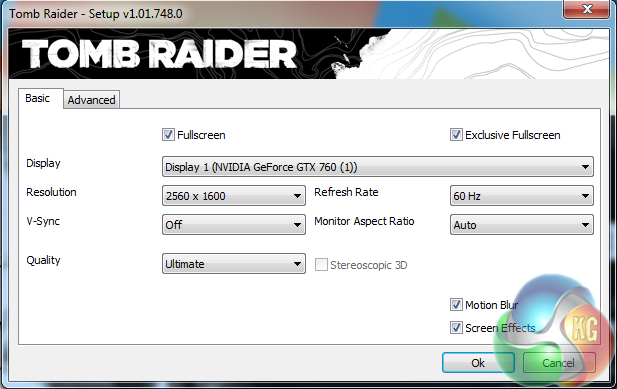

We test with the ‘ultimate' image quality profile at 1080p and 1600p.
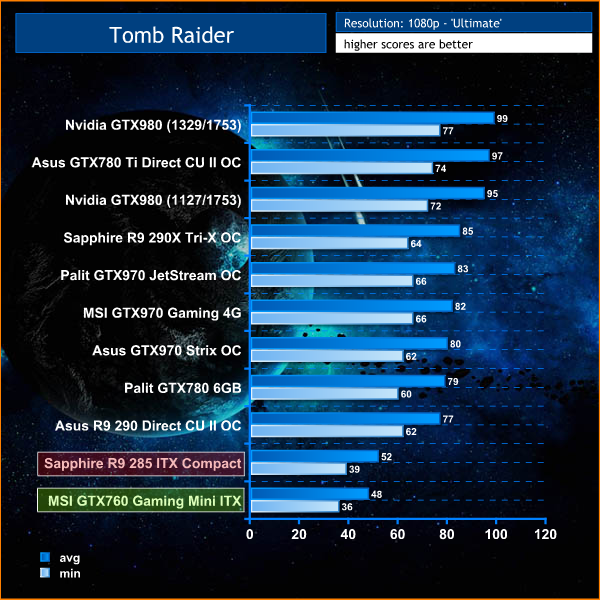
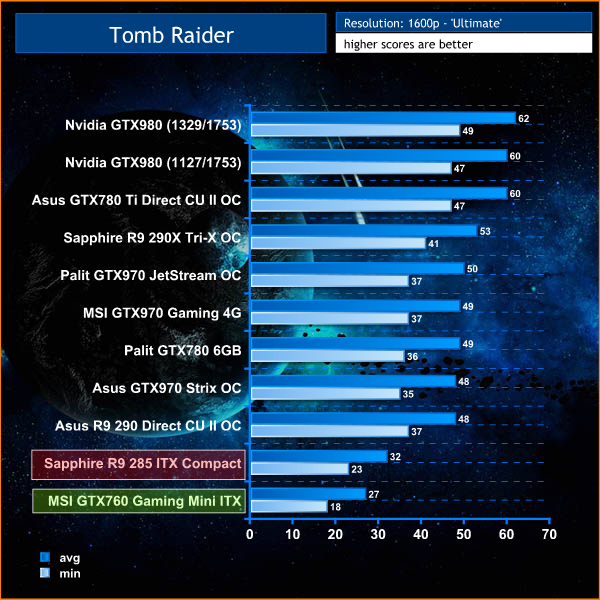
1080p is perfectly playable with both R9 285 and GTX760, although 1600p proves a challenge at these image quality settings. The R9 285 ITX almost manages to maintain a smooth 25+ frame rate, but the GTX760 falls short of the mark.
Tomb Raider received much acclaim from critics, who praised the graphics, the gameplay and Camilla Luddington’s performance as Lara with many critics agreeing that the game is a solid and much needed reboot of the franchise. Much criticism went to the addition of the multiplayer which many felt was unnecessary. Tomb Raider went on to sell one million copies in forty-eight hours of its release, and has sold 3.4 million copies worldwide so far. (Wikipedia).
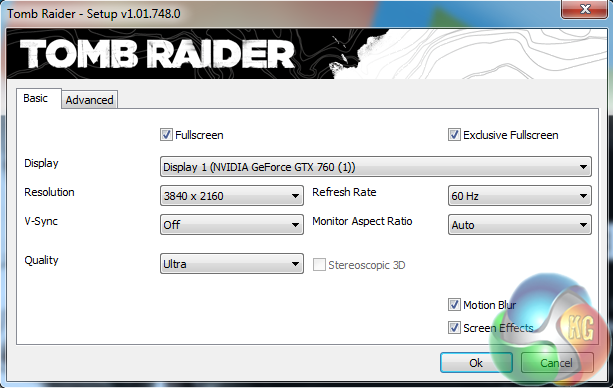

We test at Ultra HD 4k resolution with the ‘Ultra' image profile enabled. Single GPU solutions find the ‘Ultimate' image quality preset too difficult to power properly.

If we dropped the image quality setting to normal, both cards were playable, but we didn't really appreciate the noticeable reduction in graphics quality.On May 22, 2014, a Redux version of Metro Last Light was announced. It was released on August 26, 2014 in North America and August 29, 2014 in Europe for the PC, PlayStation 4 and Xbox One. Redux adds all the DLC and graphical improvements. A compilation package, titled Metro Redux, was released at the same time which includes Last Light and 2033. (Wikipedia). We test with following settings: Quality-Very High, SSAA-off, Texture Filtering-16x, Motion Blur-Normal, Tessellation-Normal, Advanced Physx-On.

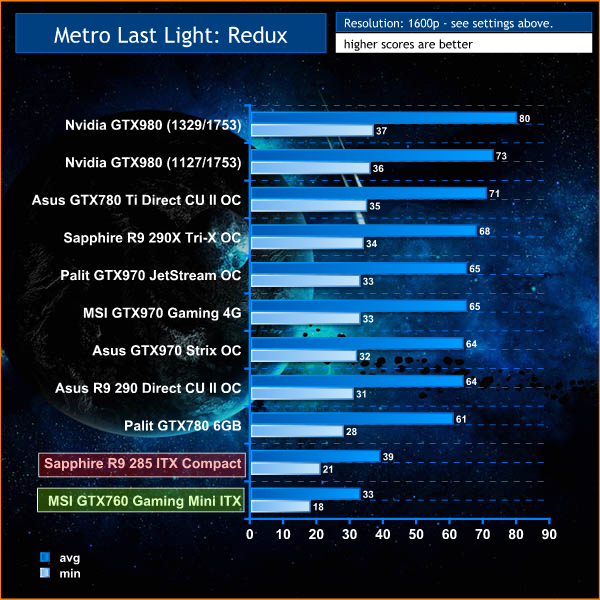
1080p performance is good. Unless you are happy lowering image quality, both GTX760 and R9 285 will not be able to hold smooth 25+ frame rates powering this engine at 1600p. No point trying 4k testing.The tests were performed in a controlled air conditioned room with temperatures maintained at a constant 23c – a comfortable environment for the majority of people reading this.Idle temperatures were measured after sitting at the desktop for 30 minutes. Load measurements were acquired by playing Crysis Warhead for 30 minutes and measuring the peak temperature. We also have included Furmark results, recording maximum temperatures throughout a 30 minute stress test. All fan settings were left on automatic.


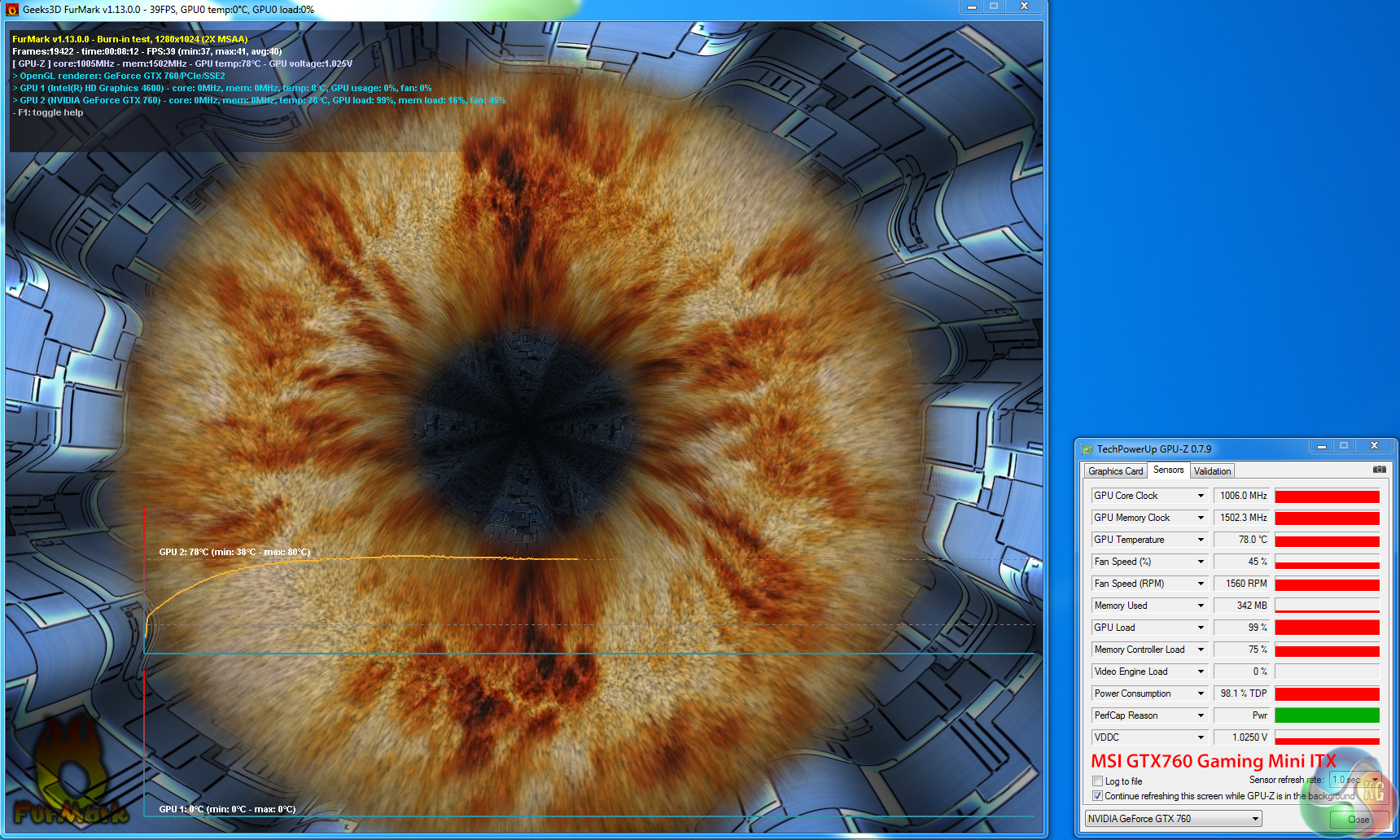
The Sapphire cooler performs very well, holding at 62c under gaming load – this rises to 70c under Furmark. The cooler on the MSI GTX760 doesn't perform to the same level, holding at 72c when gaming, and rising to 80c in Furmark.We have built a system inside a Lian Li chassis with no case fans and have used a fanless cooler on our CPU. The motherboard is also passively cooled. This gives us a build with almost completely passive cooling and it means we can measure noise of just the graphics card inside the system when we run looped 3dMark tests.
We measure from a distance of around 1 meter from the closed chassis and 4 foot from the ground to mirror a real world situation. Ambient noise in the room measures close to the limits of our sound meter at 28dBa. Why do this? Well this means we can eliminate secondary noise pollution in the test room and concentrate on only the video card. It also brings us slightly closer to industry standards, such as DIN 45635.
KitGuru noise guide
10dBA – Normal Breathing/Rustling Leaves
20-25dBA – Whisper
30dBA – High Quality Computer fan
40dBA – A Bubbling Brook, or a Refrigerator
50dBA – Normal Conversation
60dBA – Laughter
70dBA – Vacuum Cleaner or Hairdryer
80dBA – City Traffic or a Garbage Disposal
90dBA – Motorcycle or Lawnmower
100dBA – MP3 player at maximum output
110dBA – Orchestra
120dBA – Front row rock concert/Jet Engine
130dBA – Threshold of Pain
140dBA – Military Jet takeoff/Gunshot (close range)
160dBA – Instant Perforation of eardrum

Both cards are quiet when gaming, although the Sapphire R9 285 ITX Compact performs slightly better, holding at 34.4dBa. That said, it is worth pointing out that a moderate spinning chassis cooler is likely to mask any noise emissions from either card.To test power consumption today we are using a Keithley Integra unit and we measure power consumption from the VGA card inputs, not the system wide drain. We measure results while gaming in Tomb Raider at 4k resolution and the synthetic stress test Furmark – recording both results.
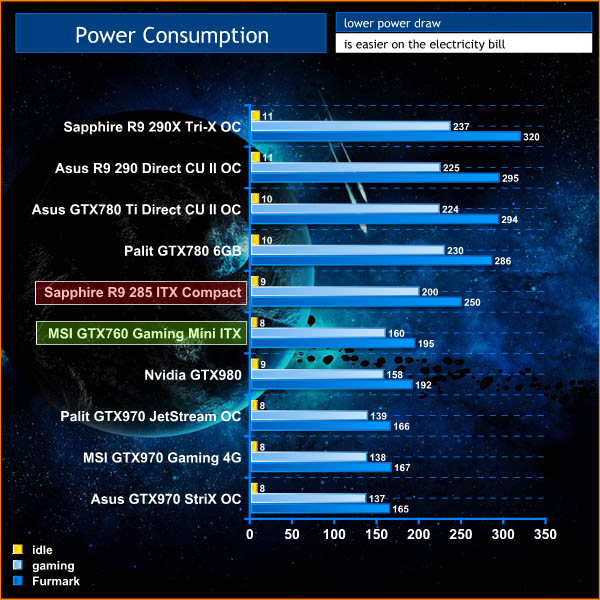
The Sapphire R9 285 ITX Compact is the more power hungry graphics card, taking around 200 watts when gaming. This rises to 250 watts under synthetic Furmark load. The MSI GTX760 Gaming Mini ITX by comparison only takes 160 watts when gaming.
Obviously when we compare these Mini ITX solutions to the latest Nvidia Maxwell architecture we can see massive differences. The reference Nvidia GTX980 demands 2 watts less than the GTX760 we tested today when gaming. Incredible really.
To overclock the MSI GTX760 Gaming Mini ITX today we are using the latest V4.0.0 of MSI's Afterburner based on the excellent Rivatuner. We use AMD's Catalyst Control Center to overclock the Sapphire R9 285 ITX Compact.
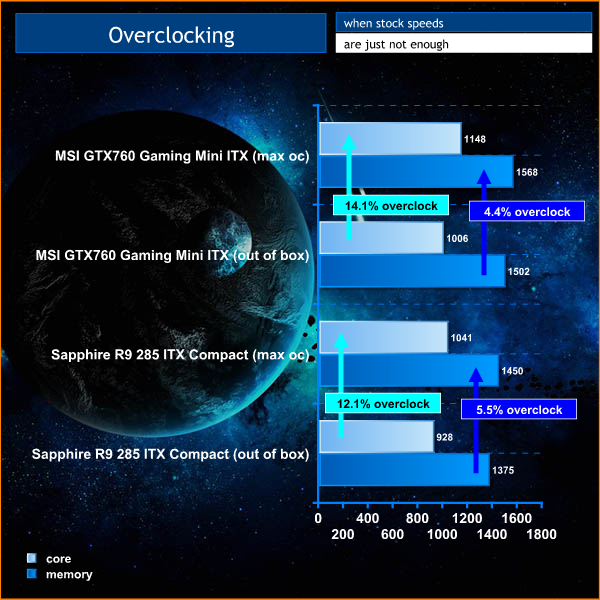

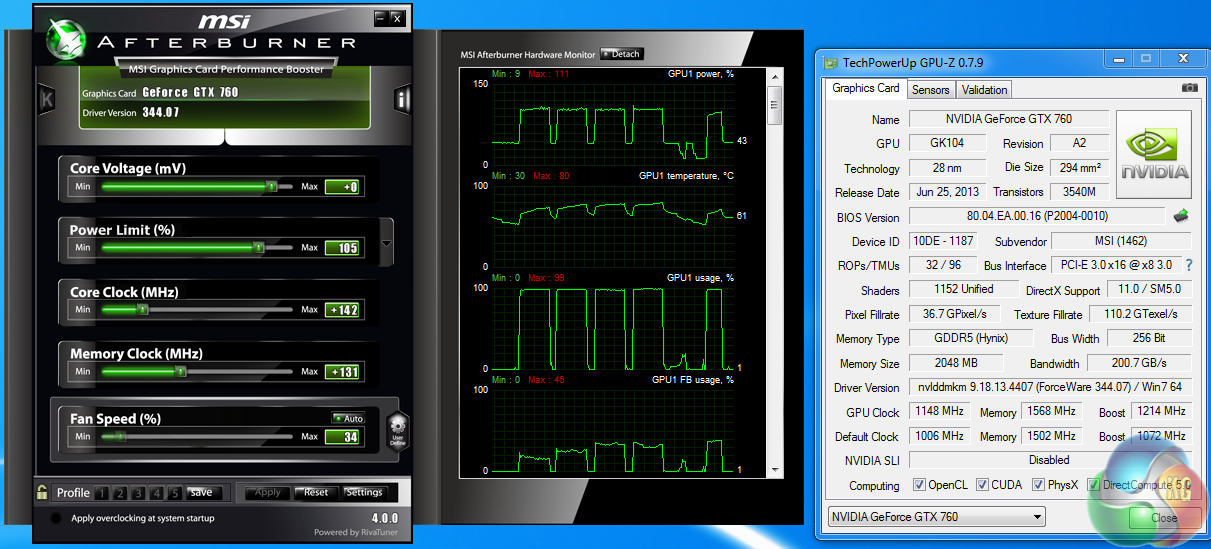
Both cards indicate decent levels of overclocking headroom. The GTX760 could be pushed by a further 14.1% before artifacting would occur. The R9 285 exhibited 12.1% extra core clock speed. Let us see how this affects performance.
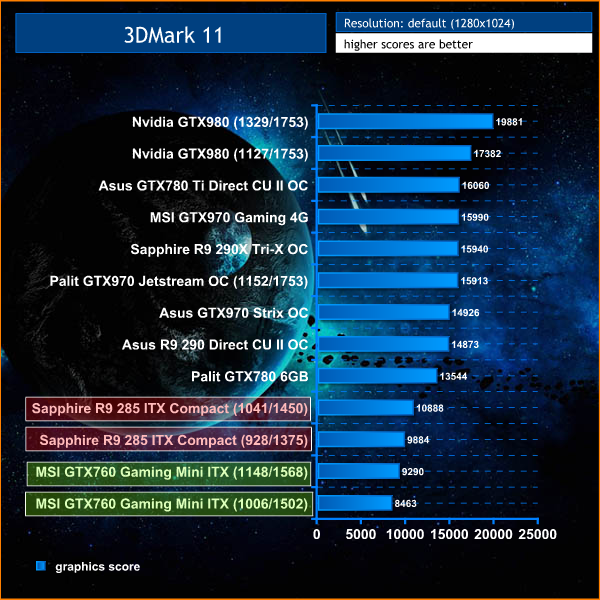


The clock increases help drive a little extra performance from both solutions.With all the news and reviews lately on Nvidia's latest Maxwell architecture, it has been interesting to ‘take a detour' into the MINI ITX market for this article today.
It would be fair to say that if you are building a new media center or Mini ITX system then both Sapphire and MSI card will serve you well. Closer analysis on the different graphics cards reveals some interesting facts.
 The MSI GTX760 Gaming Mini ITX card is beautifully finished and like many of the latest MSI products, it has been built to very highest standards. We love the two tone colour scheme, high grade fan and the attention to detail – such as the companies decision to incorporate a backplate on the PCB.
While the MSI GTX760 Gaming Mini ITX solution is more than capable of powering the latest games at 1080p it does run out of steam at 1600p. The target for this card is likely the audience who will be using it with a 1080p high definition television set so it will be powerful enough. The final analysis isn't quite so straightforward however.
Nvidia's GTX760 was released in June 2013 and the aging cracks are starting to show. While the power consumption of the MSI GTX760 Gaming Mini ITX is lower than the Sapphire R9 285 ITX Compact, it is interesting to see that it actually consumes more power than the reference Nvidia GTX980 which we reviewed last week.
This is part of the reason why the card is running a little hotter than we would like to see. When gaming the core hit 72c, however this was in a cool chassis rating at 23c. Within a confined, warm running HTPC chassis, temperatures of 80c+ are likely very possible. The fan is generally slow spinning, but when loaded for extended periods it does spin up to compensate. Noise is never really an issue, but the temperatures are higher than we would have expected.
In closing, we do like the MSI GTX760 Gaming Mini ITX but it only manages to claim our WORTH CONSIDERING award. It delivers decent overall performance at 1080p, but it is massively outclassed by the Sapphire R9 285 ITX Compact at a similar price point.
It is available at £175.59 inc vat on Amazon right now, but I would hold fire for Nvidia to release their Maxwell based solution which will slot in between the GTX 750ti and GTX970 just below £200. Maxwell will ensure lower power demand at the socket, a reduction in temperatures and likely performance increases with massive overclocking headroom.
Pros:
- Looks great, well built with backplate.
- overclocked out of the box.
- reasonably quiet under load.
- solid performance at 1080p.
Cons:
- runs quite hot.
- dated next to Maxwell architecture.
- outperformed by AMD's R9 285.
Kitguru says: This MINI ITX solution will suit the Nvidia audience who need a tiny card for new HTPC system build. We would wait for the Maxwell replacement however.

 The Sapphire R9 285 ITX Compact has impressed us. This MINI ITX solution is able to significantly outperform the MSI GTX760 Gaming Mini ITX. It is even capable of handling some engines at 1600p with reasonable to high image quality.
Sapphire build quality is always very high and the R9 285 ITX Compact is no exception. We would argue that the MSI GTX760 Gaming Mini ITX is actually the better looking of the two cards, especially with the addition of the backplate.
There is no doubt that the Sapphire cooling solution is superior to the one incorporated on the MSI card. We know this because not only is the core running 10c cooler under load, but the AMD card demands substantially more power at the socket. We measured around 40 watts more power consumption for the Tonga core.
The Sapphire R9 285 ITX Compact doesn't generate a lot of noise, even when pushed to the extreme. The cooler maintained load temperatures around the 60c threshold, so even in a hot running chassis they are likely to be held well below 70c, which bodes well for stability and longevity.
The biggest issue for AMD is what is coming from Nvidia in the coming months. While the GTX760 is easily outperformed by the R9 285, this Nvidia solution is due for replacement and based on what we have seen from the Maxwell architecture, it is likely to kick some serious ass in the sub £200 market.
The Sapphire R9 285 ITX Compact is available right now from Overclockers UK for £199.99 inc vat. This is more expensive than many R9 285's currently available, however the Compact nature of the design is targeting a very specific, niche market. Right now, we can see no better solution available for this audience.
Discuss on our Facebook page, over HERE.
Pros:
- very quiet
- runs cool.
- outclasses the GTX760 easily.
- good overclocking headroom.
Cons:
- consumes a lot of power, even by last generation Nvidia standards.
- £200.
Kitguru says: An excellent, high performance solution from Sapphire which outperforms the MSI GTX760 Gaming Mini ITX.

Why are many reviewers of the R9 285 card saying that it has 32 ROPs when it has 64 ROPs? (GPU-Z) its funny because they state that it has 32 ROPs and they have a picture of GPU-Z saying 64 in the same page lol
The fact that the Sapphire card is able to consume so much more power and stay cool and quiet while being that size really is quite impressive, and I hope it means we see more high-end cards in that form factor. But yeah also means the new 970 ITX that’s coming will likely stomp it quite badly, 20nm can’t come soon enough!
970 is in other range of performance, but product and price too. it would be more comparable to a itx 960 or 950 ti.
That is very fair and I must admit I didn’t even consider what the price difference is, I was mainly thinking from a performance in ITX perspective.
I have this exact problem: GPU-z the latest version says 32 ROPs whereas most of the online reviews of the R9 285 ITX state 64 ROPs. Does anyone have a clue what the issue is here? Software bug in GPU-z? Thanks.