KitGuru KitGuru.net – Tech News | Hardware News | Hardware Reviews | IOS | Mobile | Gaming | Graphics Cards


AMD Radeon Pro WX 9100
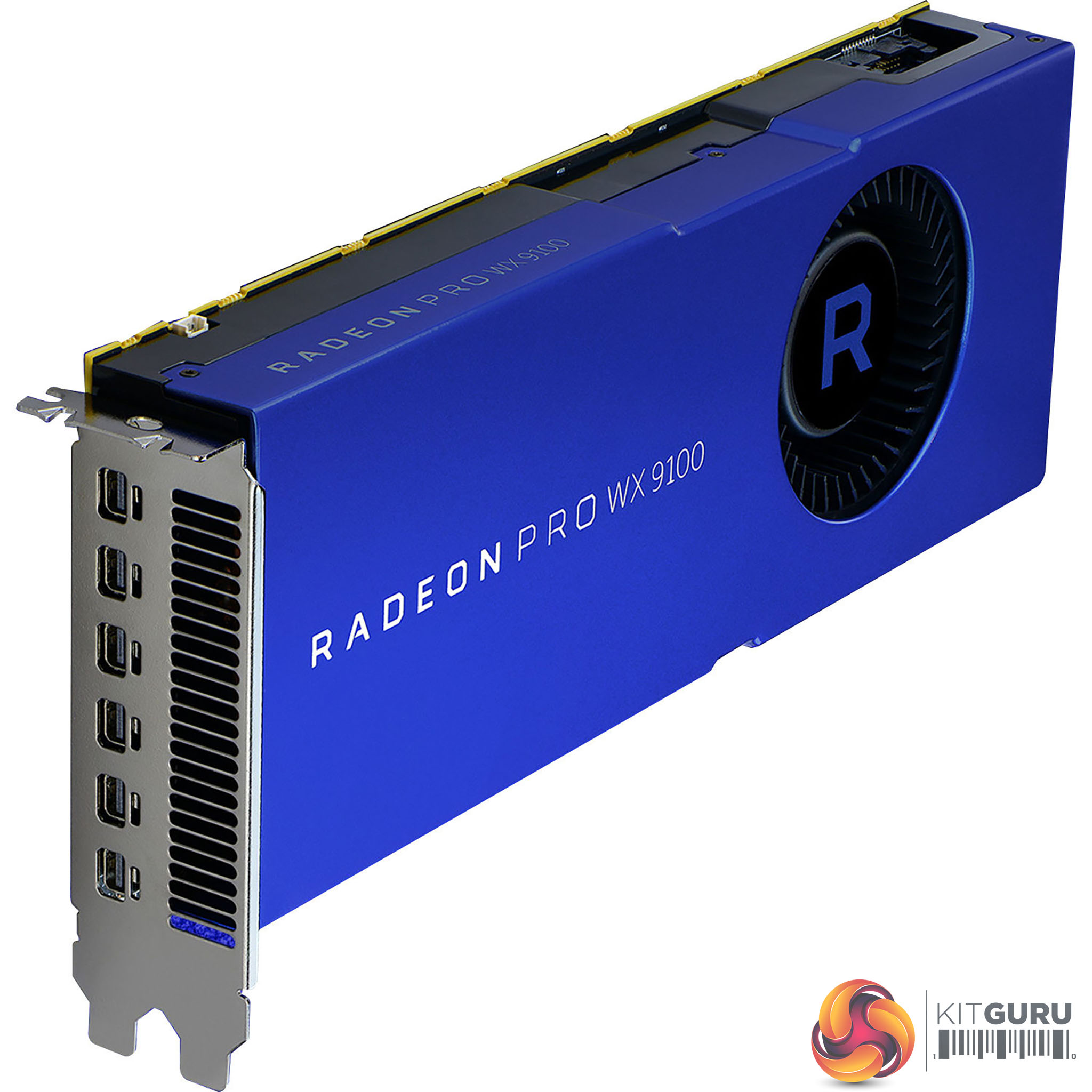
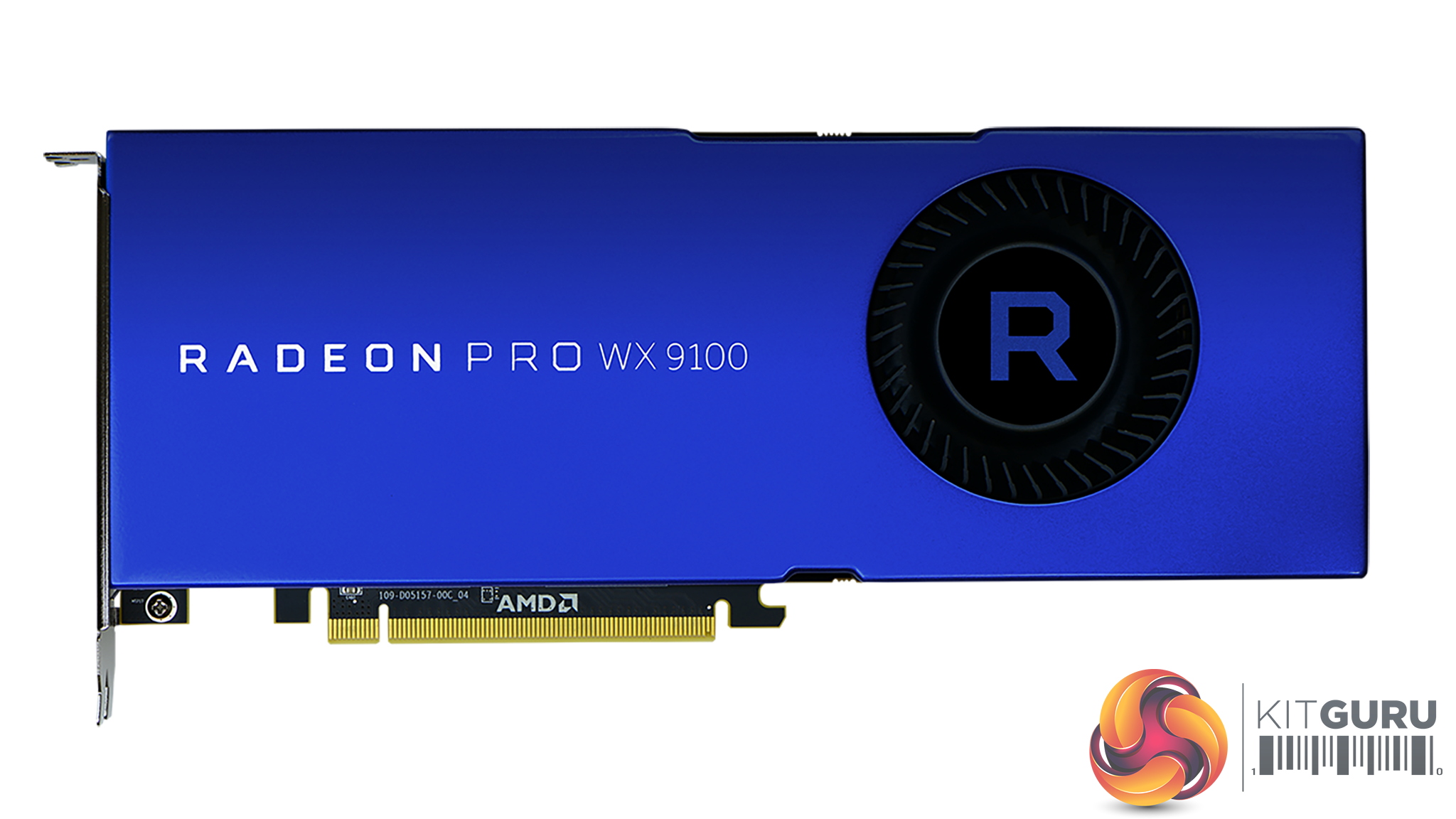
Due to graphics card availability, our system actually came with a graphics card called the AMD Radeon Pro SSG, which is a slightly insane niche GPU with four 512GB NVMe SSDs included, and is aimed at 8K video editing. It's also extremely pricey at around £5,000. However, for the purposes of this review we are treating this graphics card as the more modestly priced Radeon Pro WX 9100, because the GPU and memory specifications are identical to the latter.
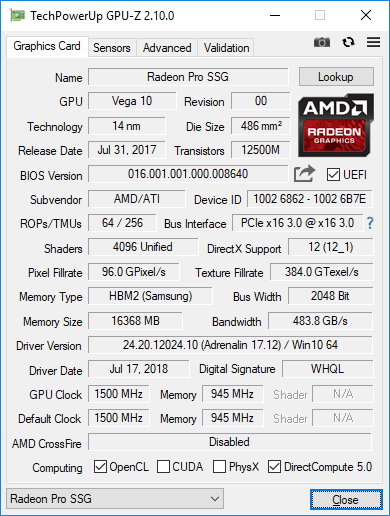
The Radeon Pro SSG and WX 9100 both use High Bandwidth Memory. They both have 16GB of this HBM2 frame buffer running on a 2,048-bit bus at 945MHz, providing a whopping 483.8GB/sec of bandwidth. The GPU in both cards is home to an equally huge 4,096 Stream Processors running at 1,500MHz. This provides a potential 12.3TFLOPS of single-precision and 769GFLOPS of double-precision performance.