KitGuru KitGuru.net – Tech News | Hardware News | Hardware Reviews | IOS | Mobile | Gaming | Graphics Cards


3DMark
The 3Dmark benchmark is always a good indication of a system’s performance and is a handy tool for comparing your system against others in the database to see if it’s performing as it should. We ran a series of 3DMark benchmarks to test the system’s performance and show the scores achieved for CPU (Physics), GPU and an overall score in our charts below, to compare performance against recent systems we have tested.
Comparison systems:
Box Titanium X – £3379.99
PCSpecialist Ignite X1 – £1350
Cyberpower Ultra 9 RTX Super – £2099
PCSpecialist Vortex S3 – £1649
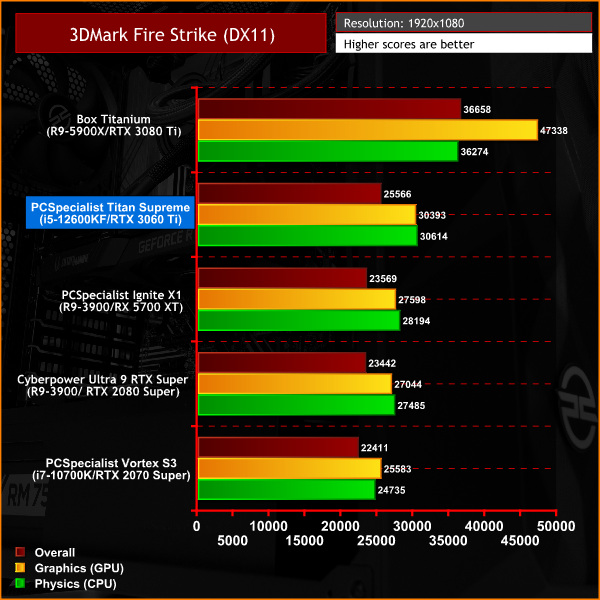
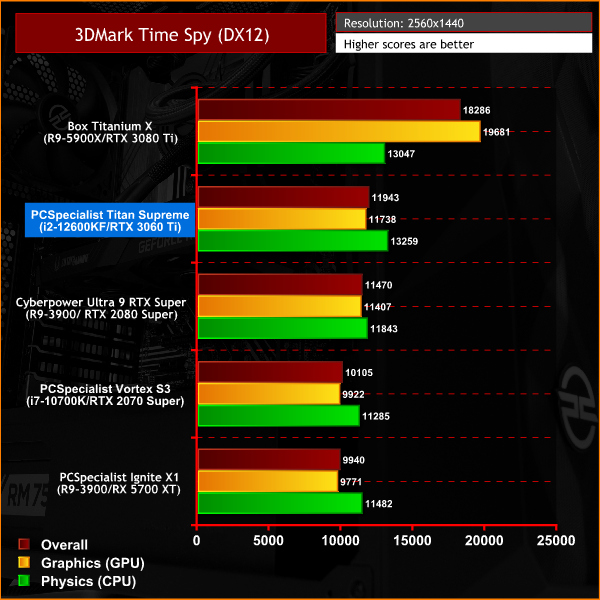
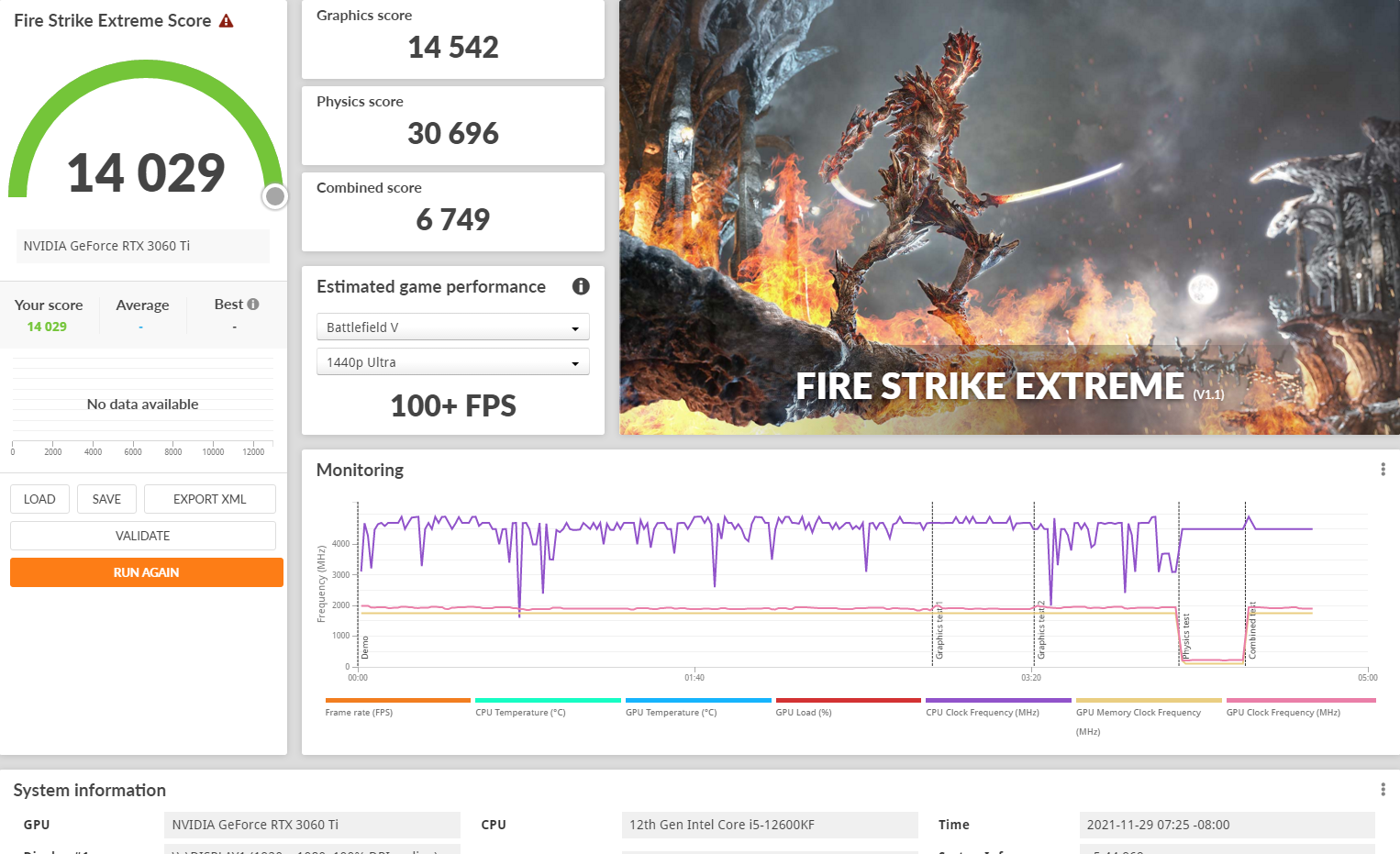
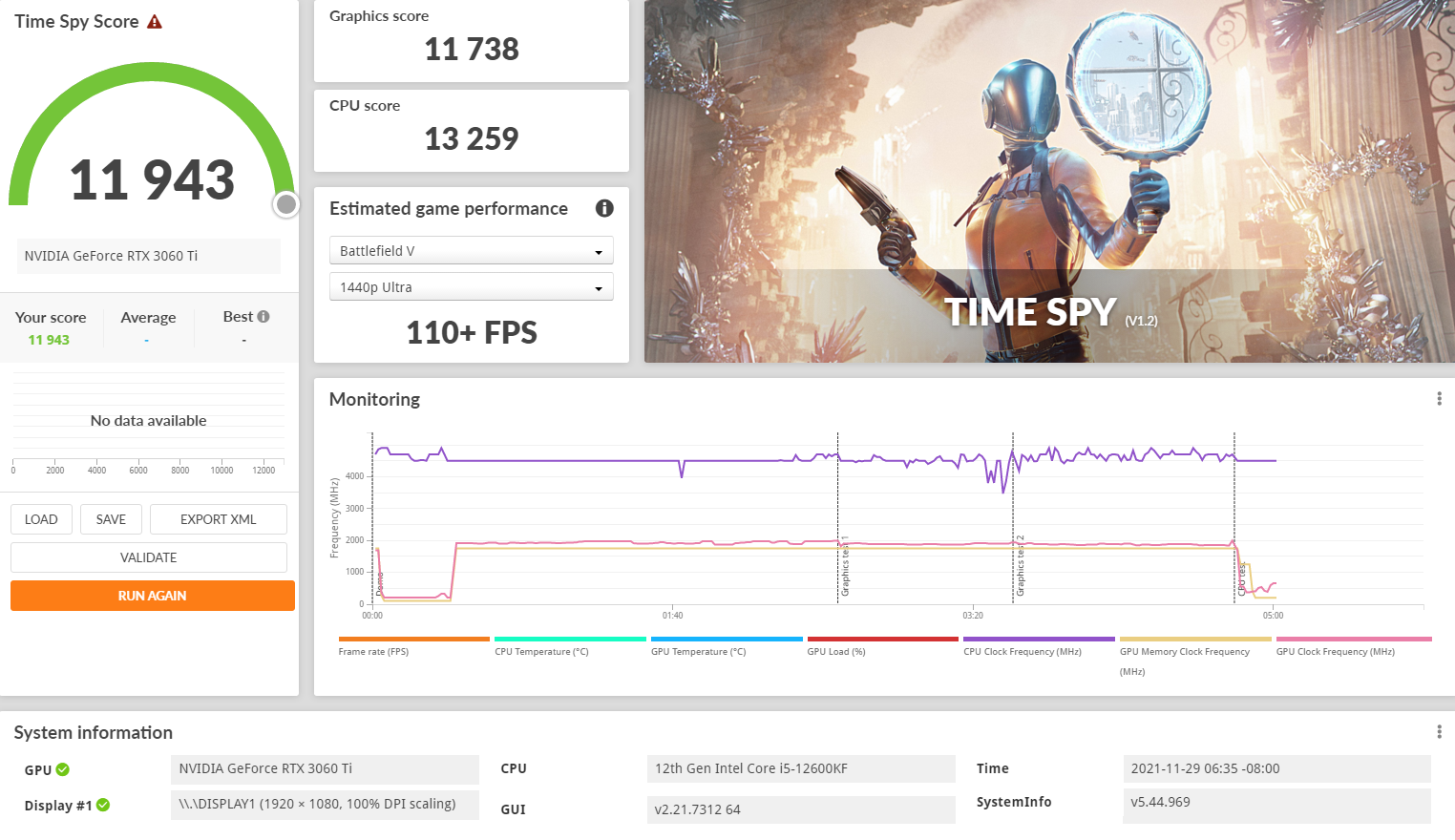
During the 3DMark tests, the PCSpecialist Titan Supreme shows good performance. The majority of the comparison systems are from older generations of hardware so it's not a great surprise to see the Titan Supreme outperform them but it is a good indication that the system is running as it should be.
Cinebench
PCSpecialist has equipped the Titan Supreme with a new Intel Core i5-12600KF processor, not only is it a great CPU for gaming but also very capable at multitasking, which makes it an ideal CPU for general windows tasks and demanding productivity work. With this in mind, we ran a series of tests on both Cinebench R20 and R23 and compiled a chart below to compare the results against other pre-built systems we have reviewed.
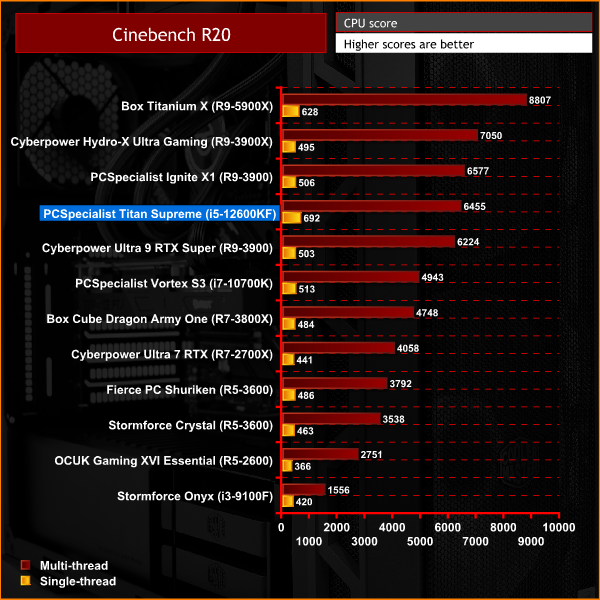
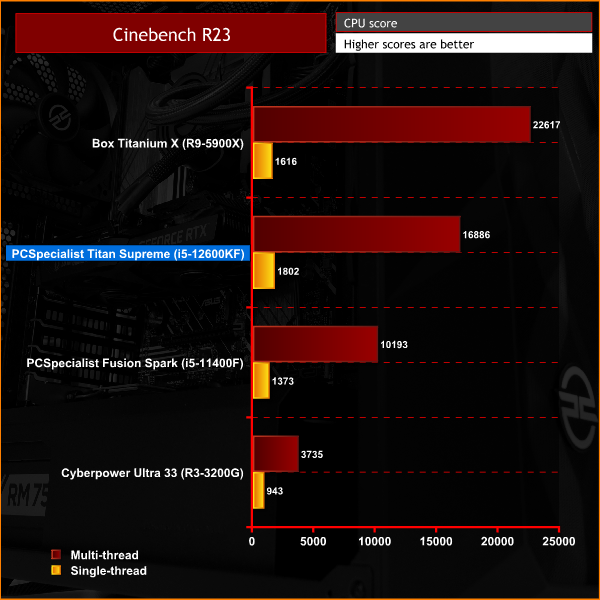
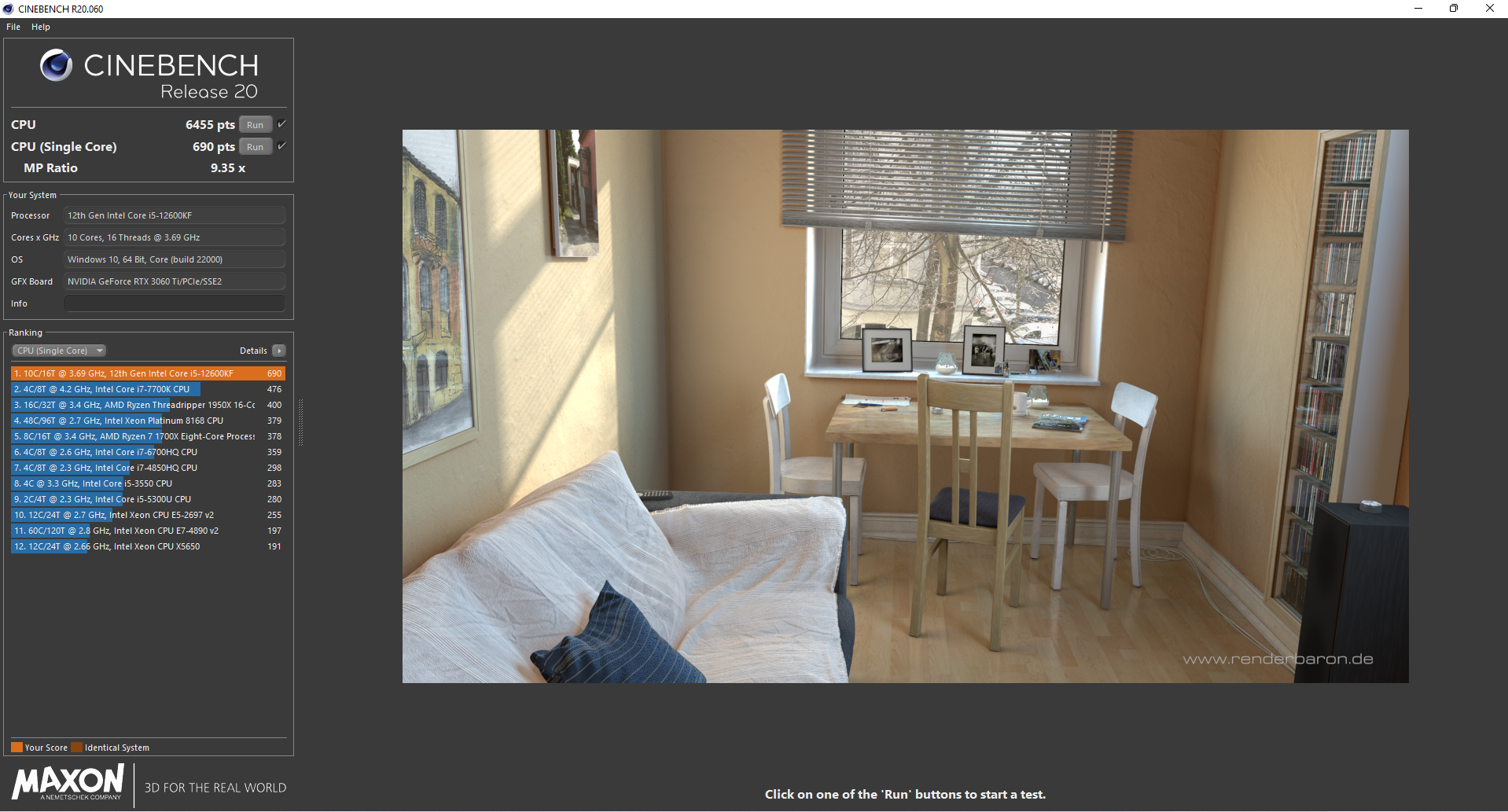
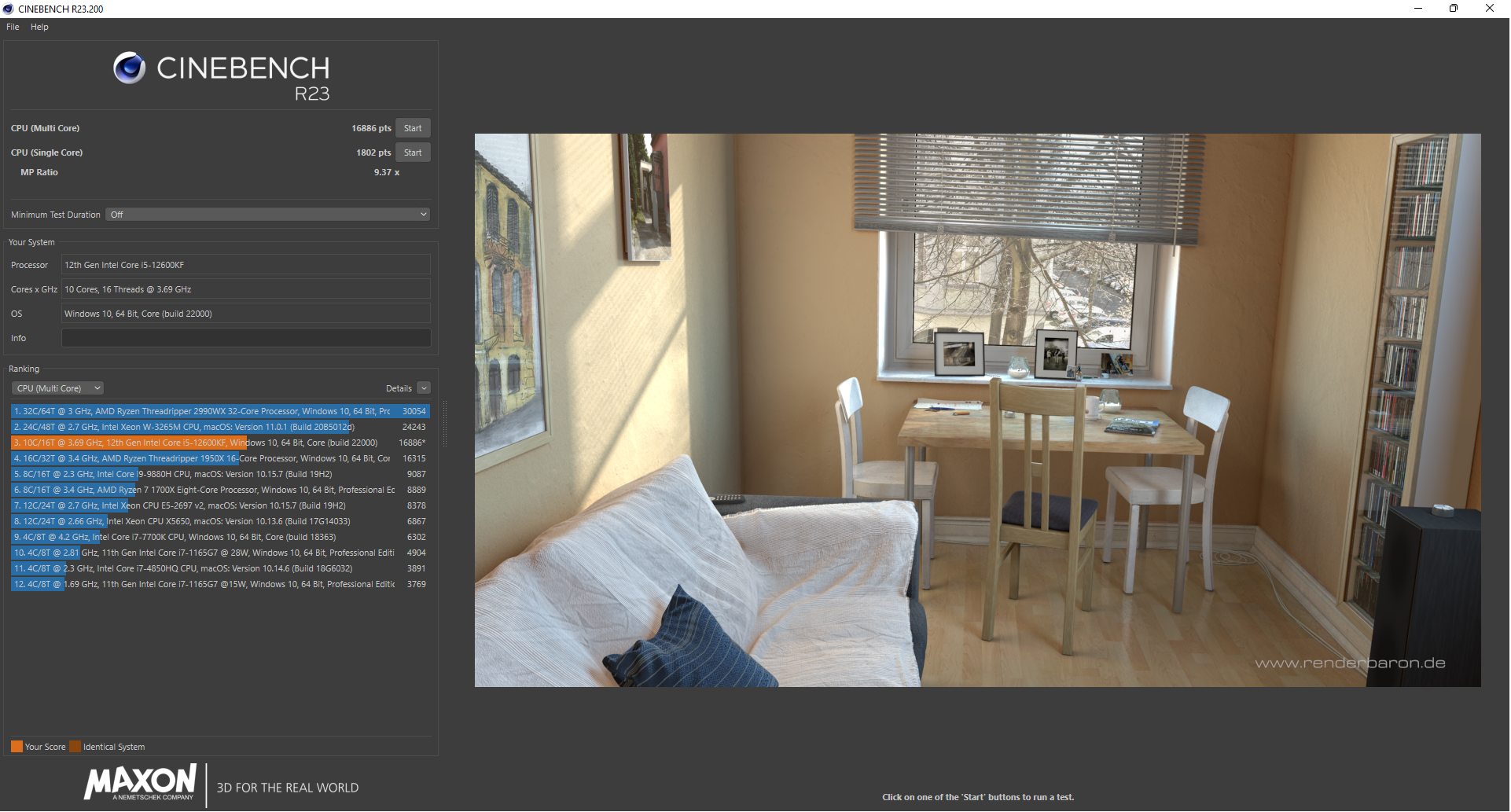
For the first time, Intel has equipped the Core i5 with 10 logical cores which give the new 12600KF a huge boost in multi-core performance. Beating older 12-core Ryzen 3000 and previous generation Intel Core i7 processors in Cinebench workloads, so this should be an excellent CPU for multitasking and productivity as well as gaming.