KitGuru KitGuru.net – Tech News | Hardware News | Hardware Reviews | IOS | Mobile | Gaming | Graphics Cards


To measure idle temperatures, a reading was taken after having Windows open on the desktop for 30 minutes. A reading under load was taken with Prime 95’s SmallFFt test running alongside 3DMark Fire Strike.
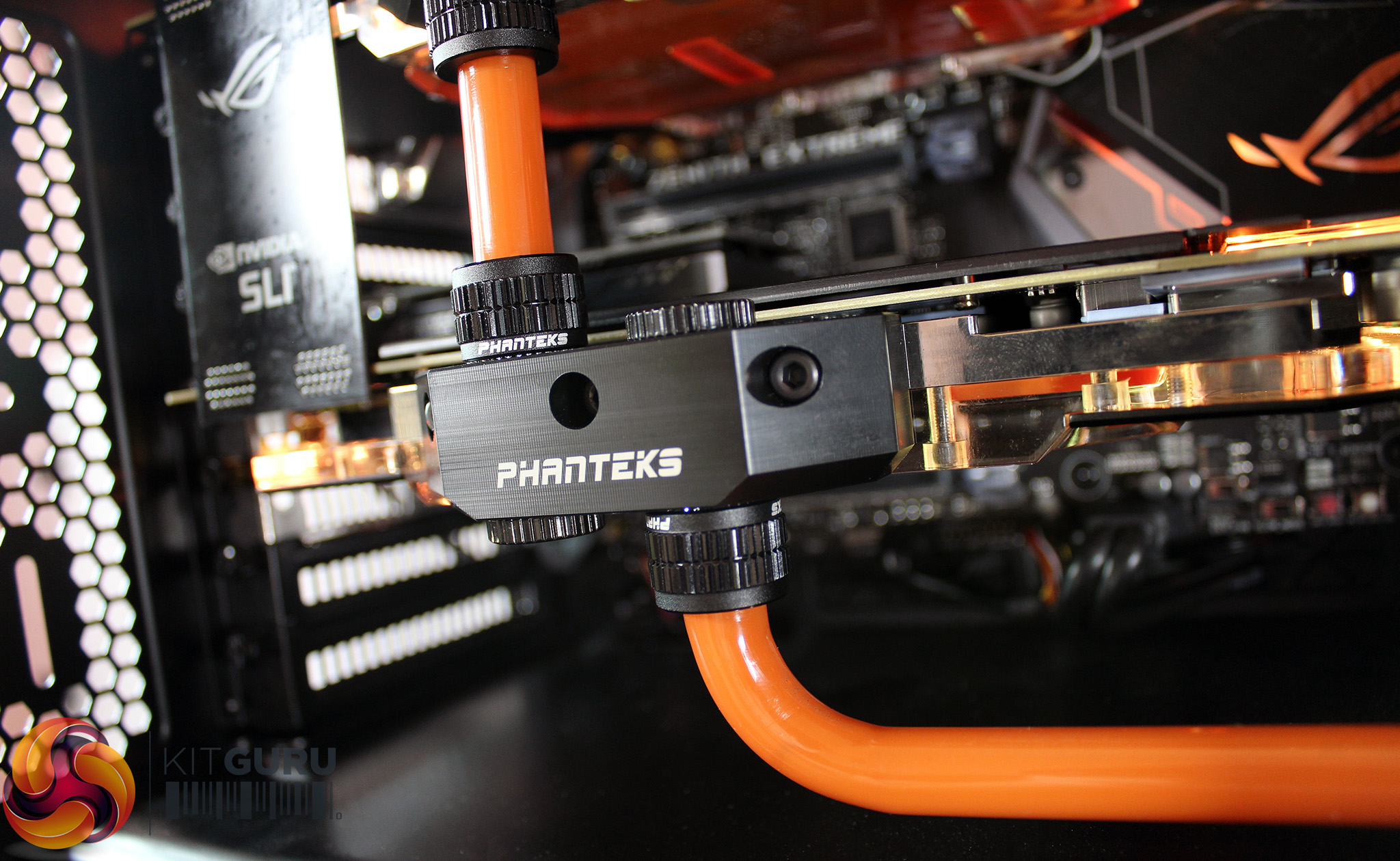
The Chillblast’s thermal results were a mixed bag.
Its idle noise output of 59db is pretty average, and its peak noise level of 73db is higher – the Armari machines were both quieter in both tests.
The Chillblast’s total noise output isn’t ruinous, but you’ll certainly notice this machine if you’re working or gaming in an otherwise-quiet room. We’re confident, though, that a headset or a beefy set of speakers will drown out this huge, liquid-cooled rig.
Its component temperatures were mixed, too. The graphics cards reached a peak figure of 45°C, which is excellent – the water-cooling clearly works well, and no other machine could match these low figures.
The processor, though, topped out at 92°C. That’s higher than most other machines, even if it’s just below the level where we’d begin to worry. It also means that there’s not much headroom for overclocking the CPU in this machine – any extra voltage will overheat the processor.
Both Armari machines consumed more power when idling and at load them the Chillblast machine. None of these machines are particularly frugal, but that’s no surprise – the extra juice required to overclock the Armari processors will put higher demands on the PSU.