 KitGuru KitGuru.net – Tech News | Hardware News | Hardware Reviews | IOS | Mobile | Gaming | Graphics Cards


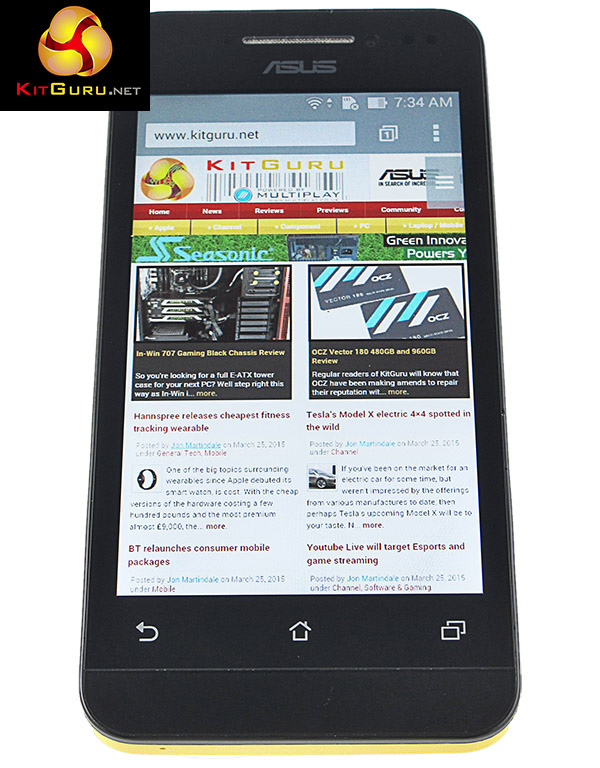
Continuing our look at the ASUS ZenFone range – today we review the smallest of the lot, the ZenFone 4. Very competitively priced at just £99, the ZenFone 4 aims for those on the tightest of budgets but who still want a complete smartphone experience. We’ll see how well it stacks up for the money.
The ASUS ZenFone 4 is a completely different device from the ZenFone 6 we reviewed last month – which you can read here. Much smaller and more pocket-friendly, it still uses a similar Intel Atom processor amongst other features from the 6-inch variant, which we’ll explore in more detail.
Features
- 4” WVGA (800*480) display
- Intel Atom Z2520 multi-core processor 1.2GHz
- 1GB RAM
- Android 4.3, upgradable to Android 4.4.2
- 8GB internal memory with microSD cards up to 64GB supported
- 1200 mAh battery
- 5MP rear camera and 0.3MP front camera
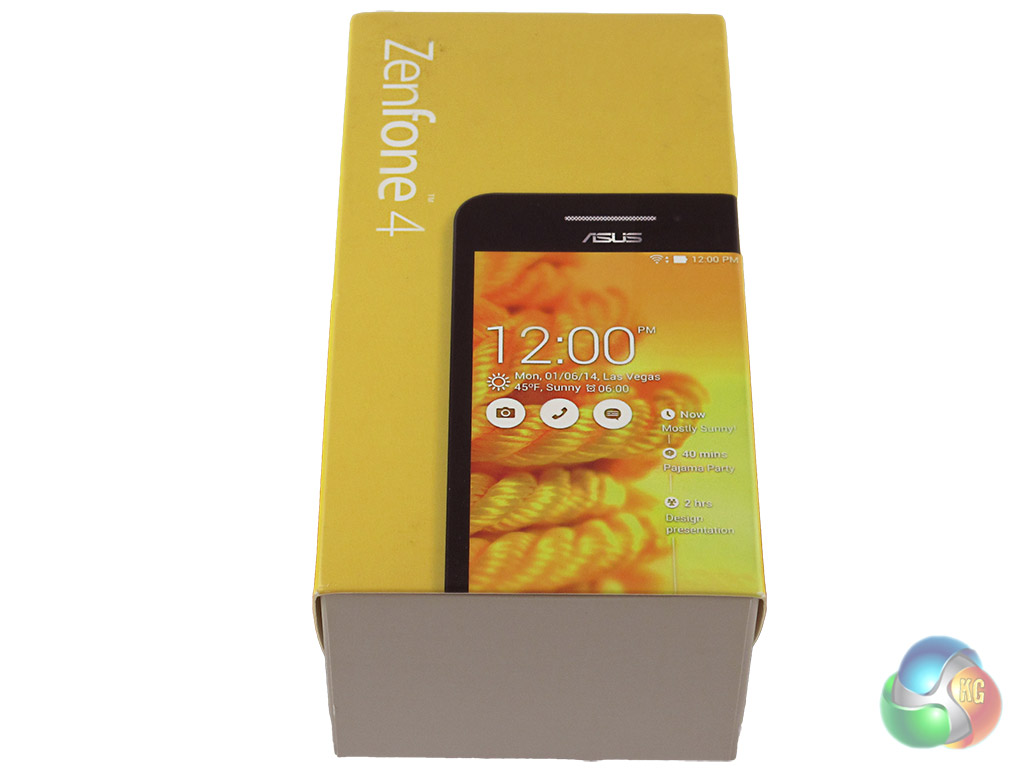
The packaging in which the Asus ZenFone 4 came is very similar to that of it’s bigger brother. A yellow box, to match the yellow back on our sample, features a clean design, with the front taken up by a photo of the device, as well as the words ‘ZenFone 4.’
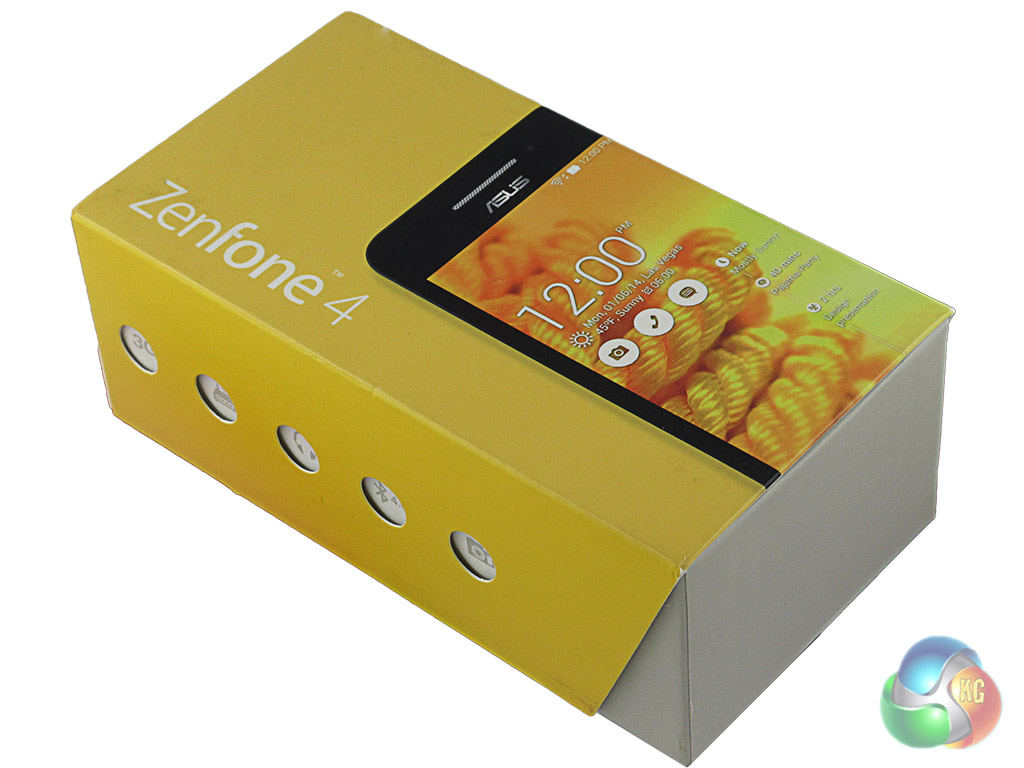
Key features of the phone are – again – placed on the side of the box, showing through cut-out holes.
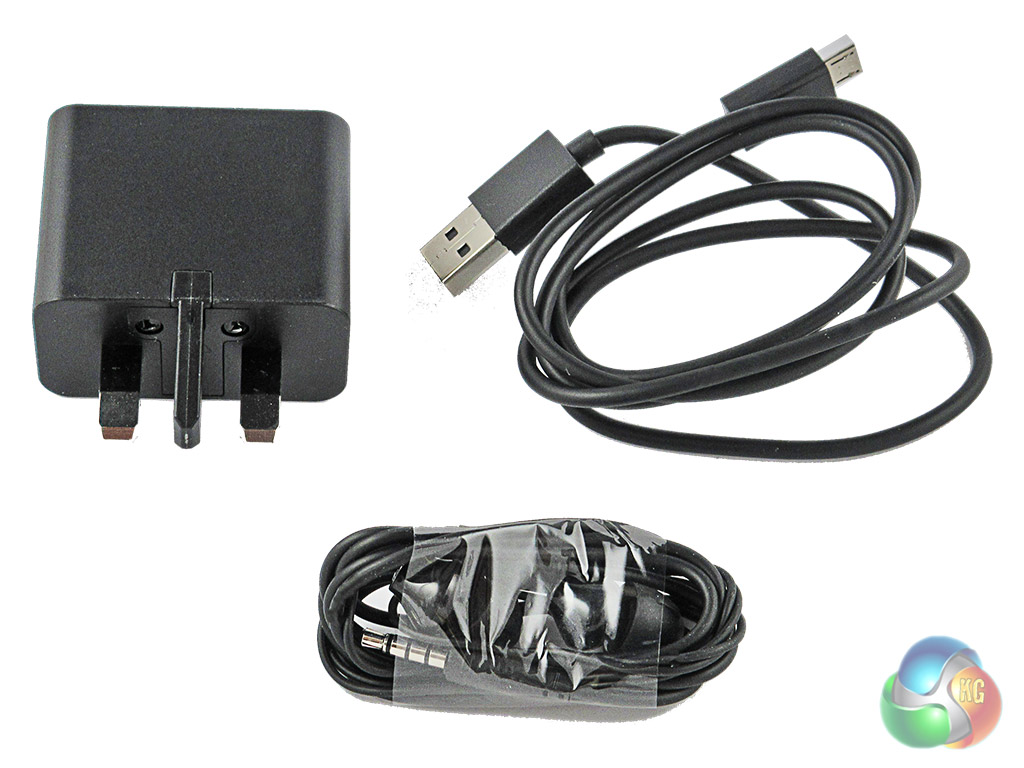
Inside is everything you would expect from a modern smartphone. An AC adapter, microUSB cable, headphones – which aren’t half bad – and a small user guide complete the set.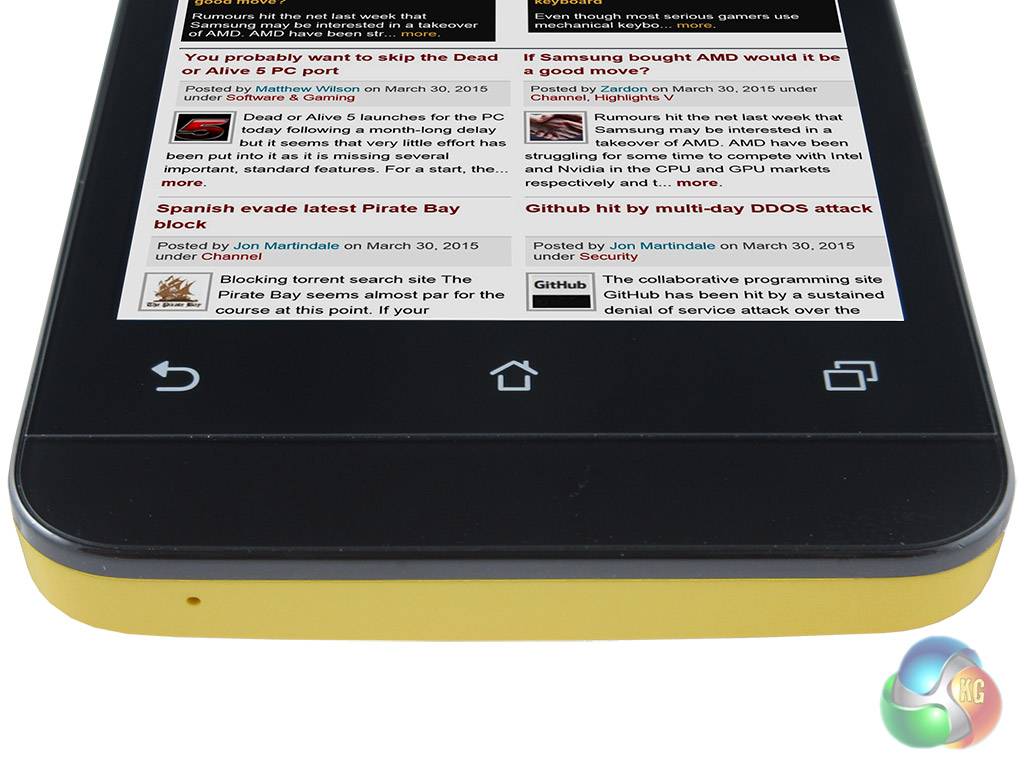
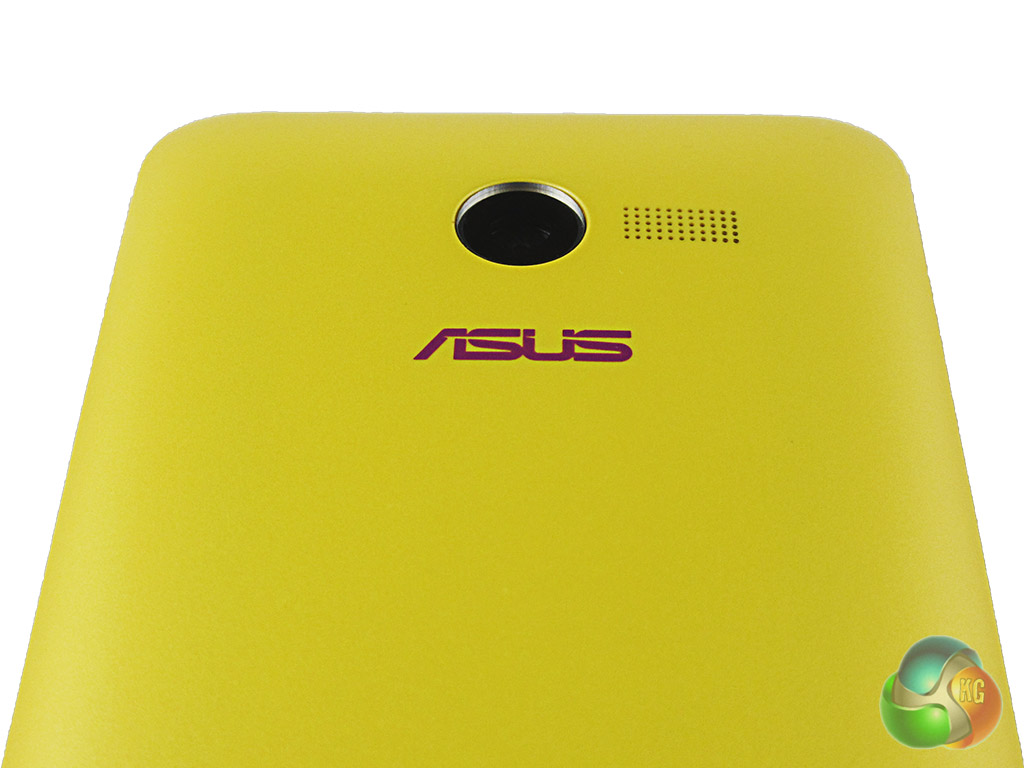
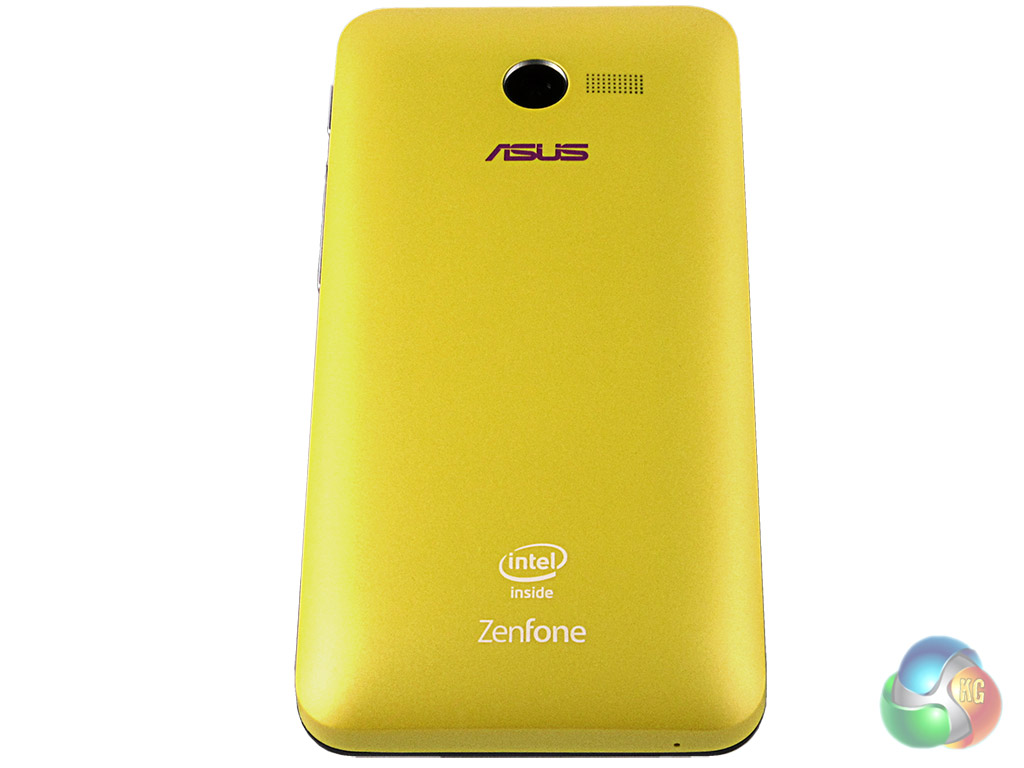
The design is where differences between the handsets begin to creep in. The first thing to note is the handset colour. Ours came with a yellow back, which, despite being unconventional – isn’t unappealing. The back is replaceable so you can swap out the yellow for black, white or red.
We think the colours are aimed to appeal for those who may like the bright design of the iPhone 5C.
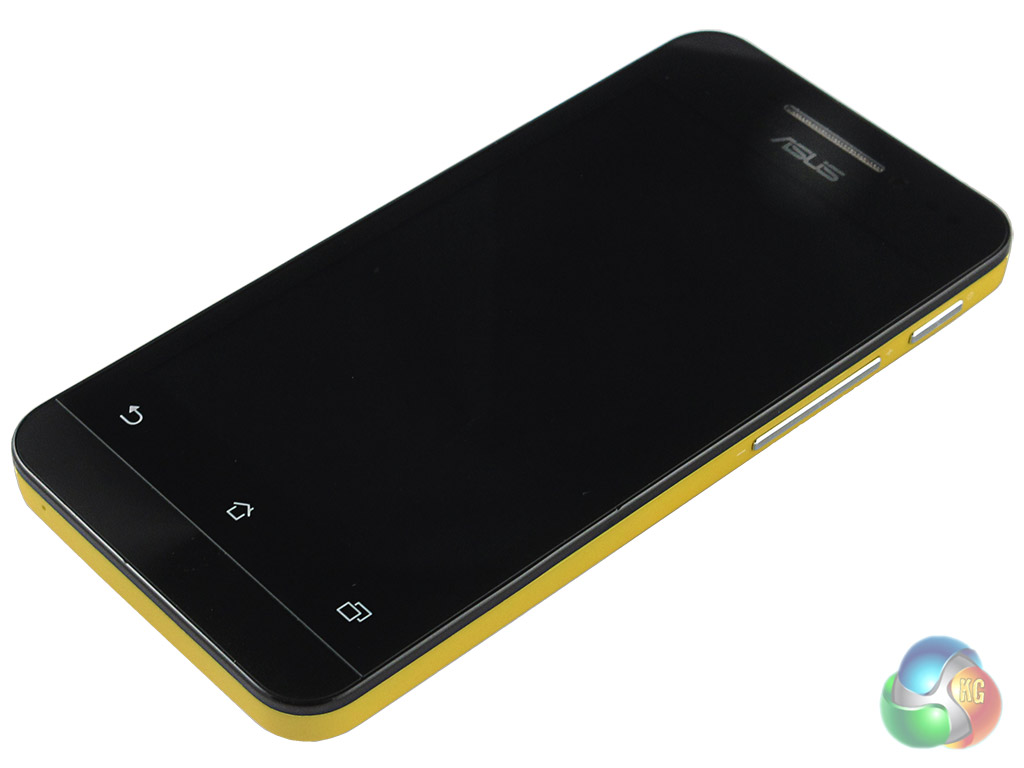
Due to the inexpensive nature of the phone, some compromises have been made, too.
The phone is quite thick, coming in at 11.5mm – a common feature with cheaper phones. It’s not so bulky as to be impossible to manage, just don’t expect it to feel like you’re holding the Oppo R5.
The bezel is also quite large – not hugely, just bigger than we have come to expect with modern day smartphones. This means that the ZenFone has a 59.6% screen-to-body ratio, which is among the lowest. It’s no deal breaker, just a reminder that for a budget phone you don’t get the sleek and slim design of flagships five times the price.
The ZenFone also features a headphone socket at the top of the phone, whilst a microUSB port is on the left side. The touch-sensitive home buttons – which aren’t part of the display – remain from the ZenFone 6.
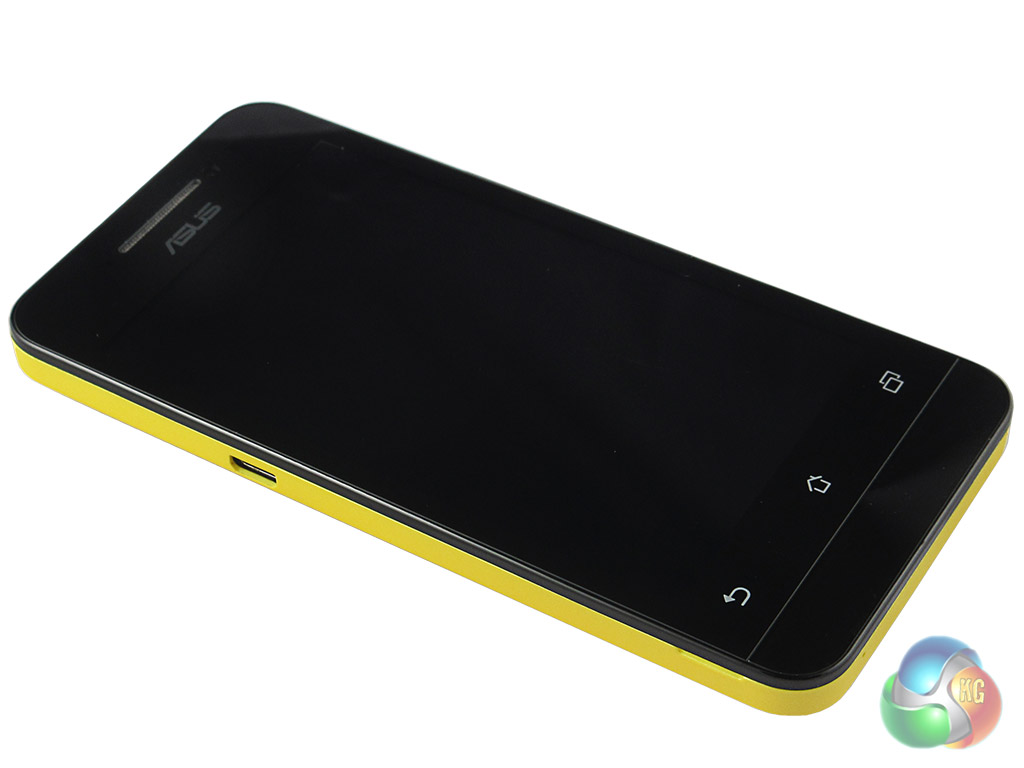
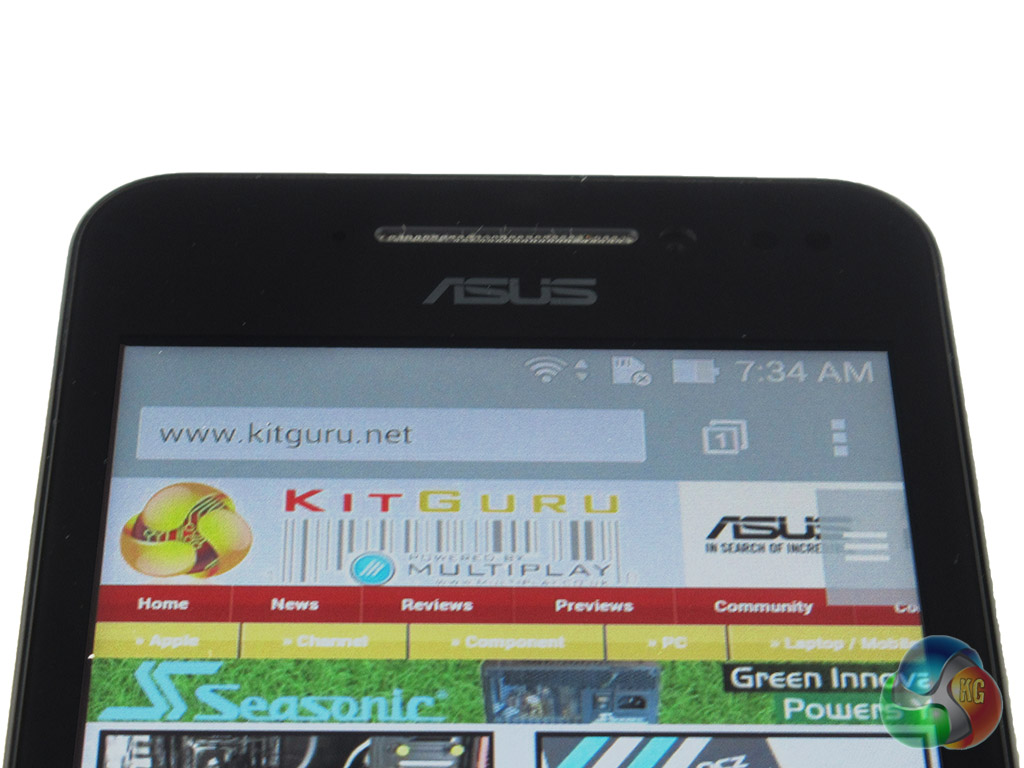
Packed into the 4-inch display is a WVGA resolution – so 800*480. This gives a PPI density of 233. This is not great, the pixels are visible upon close examination, and it just means text and the edges of images lose clarity and smoothness.
However, we can’t expect more for £99. If you’re going to buy a budget phone, chances are you’re not fussed if images aren’t crystal clear so we can’t really hold it against the ZenFone. But for those used to rich FHD displays, this is quite a step down.
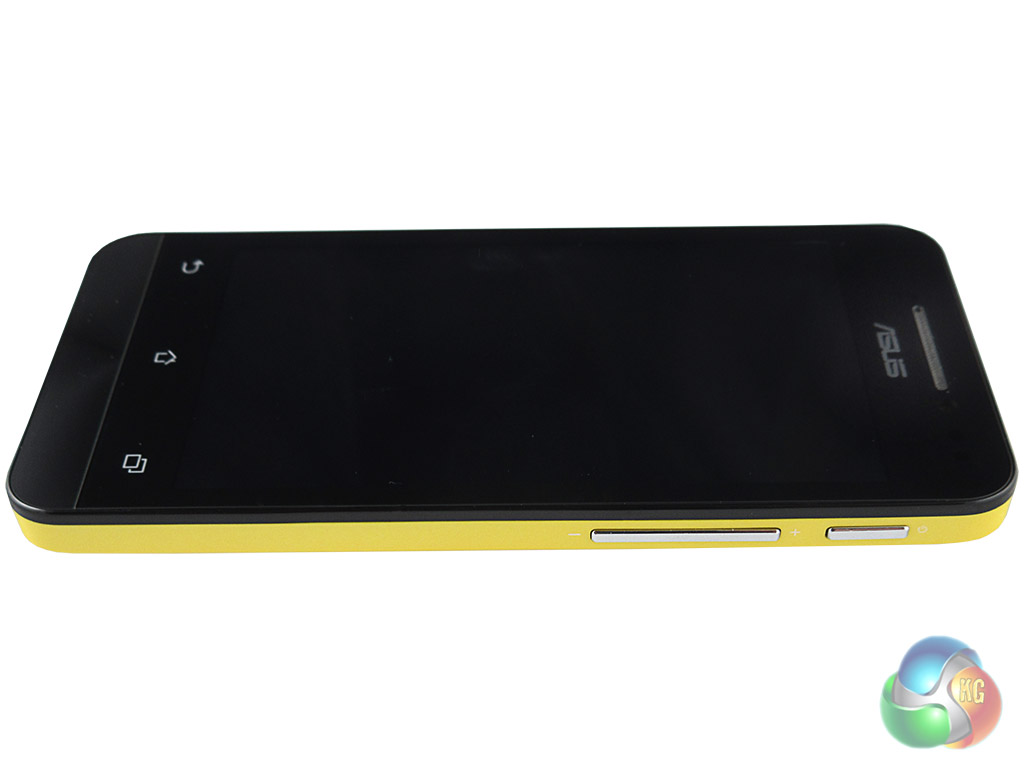
It is a similar story for the other aspects of the display. Viewing angles aren’t so great – a rainbow effect tarnishes what’s being shown – and colour reproduction, whilst passable, lacks the deep blacks and sharp contrast which we found on the ZenFone 6. Whites, too, become over-saturated at a slight tilt, meaning text becomes slightly trickier to read.
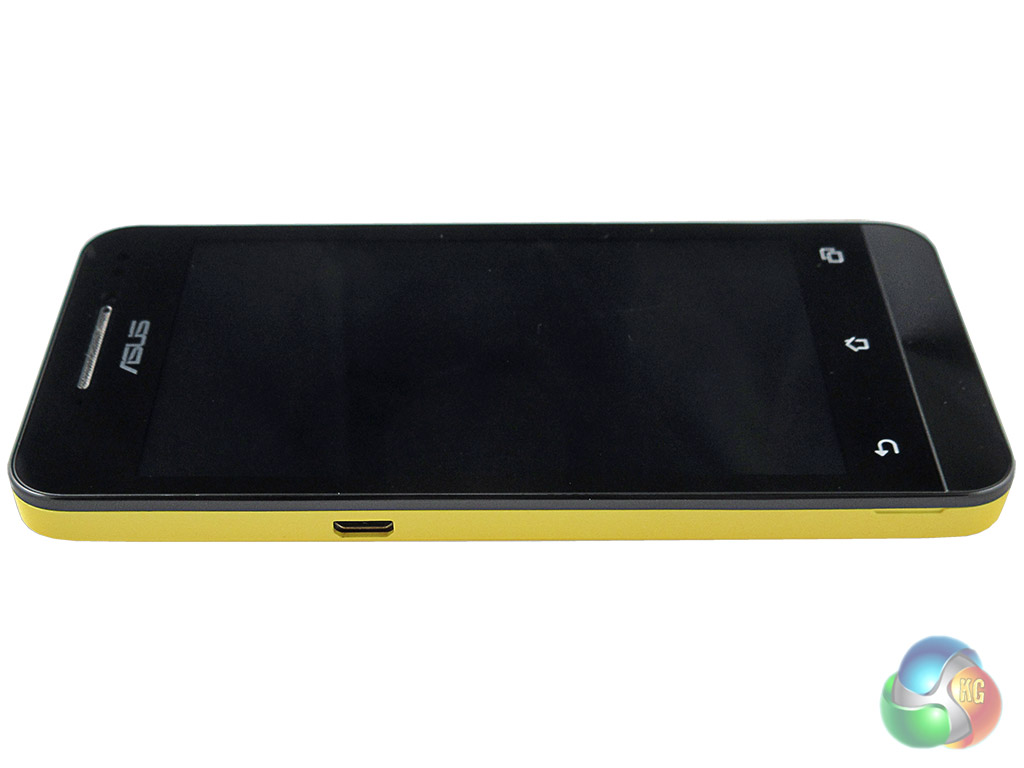
But again, with budget phones everything is relative to the price. The ZenFone 4 has a colourful touchscreen, it’s not flagship standard, but it was never meant to be. It works for a 4-inch device, and that’s all that really matters when it costs £99.
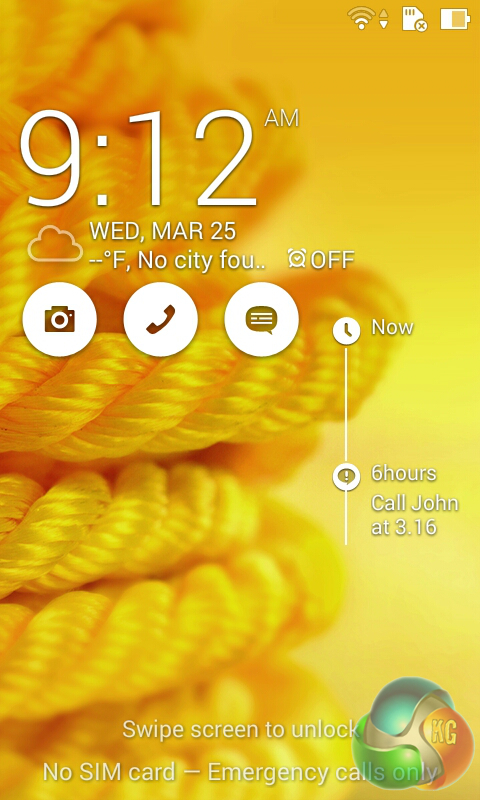
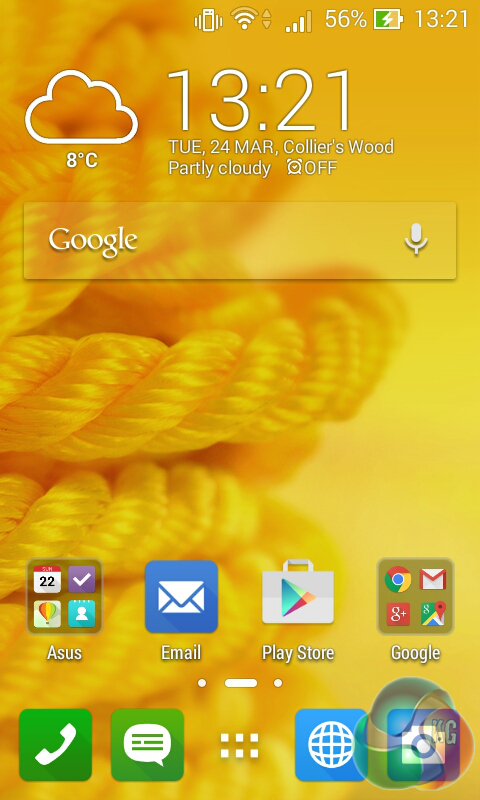
As the ZenFone 4 comes with the same version of Android – 4.4.2 KitKat – and the ZenUI interface as found on the ZenFone 6, we won't go into the same things we mentioned in our review of the 6-inch variant. To summarise what was said previously, we loved ZenUI and praised it's clean layout, but we found ASUS Launcher too clunky.
Here, we will instead focus on what we didn't mention in our review of the ZenFone 6, and differences between the software on the two phones.
One major thing we left out was the amount of bloatware ASUS pack into their handsets – it is a lot.
We counted 27 ASUS apps that come pre-installed on the ZenFone 4 and cannot be uninstalled. And as with most bloatware, it's things you never use or that is unnecessary – a custom ASUS music app when all Android devices come with Play Music, for instance. It is too much and is far from ideal, particularly on a slower device like the ZenFone 4.
Bloatware is rife on the ZenFone 4
The ZenFone 4 also keeps the split notification panel from its bigger brother. Here, swiping from the left-hand side of the notification bar brings, whilst swiping from the right brings quick settings. This is useful on a bigger screen – like the ZenFone 6 – but on a 4-inch display it means you really have quite a narrow window to get the desired drop-down menu. It's not much, just small niggles like this which just make it that bit harder to use the ZenFone 4.
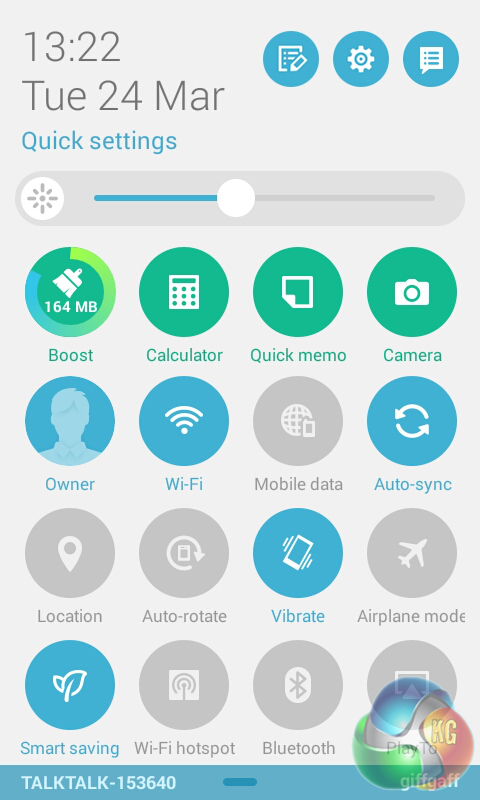
What is useful is a RAM boost tool found in the quick settings menu. It tells you how much free RAM your system has available, whilst a tap frees up extra RAM, boosting performance. This is a good feature, especially for devices with less memory, as it doesn't take as much to use up the memory and slow your device down. With this feature, we were able to track our RAM usage and free up more when the device started to slow.
On the whole, we found the OS not quite as user-friendly as the software included with the ZenFone 6, but it does remaim as beautiful and sleek, something we still haven't got over.
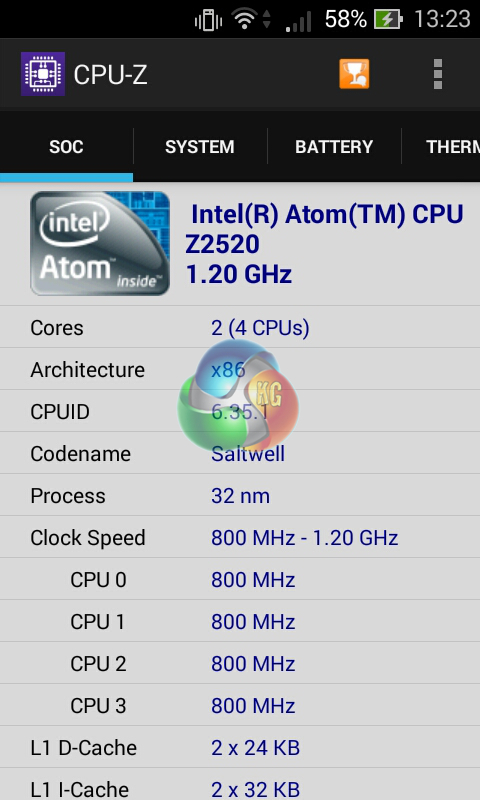
Powering the ZenFone 4 is another Intel Atom processor, this time the Z2520. It is clocked at 1.2GHz, and has two cores with four threads, just like it's bigger brother.
It runs well, too, for a £99 phone. It's not as smooth as the ZenFone 6, but we wouldn't expect it to be. Apps open speedily, but multi-tasking can be occasionally slow, particularly with several apps open.
Most annoying was the on/off button registering late, leaving you waiting for several seconds before finally coming to life. Again, it's nothing major – apps run and mostly run well, but it's the small things like this, as well as occasional lag when typing at pace, which bring home the fact that the ZenFone is a budget phone – so don't expect anything near flagship performance.
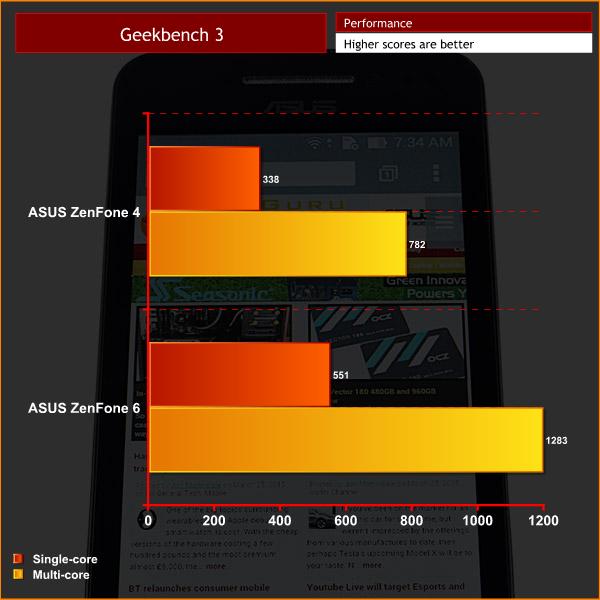
The benchmarks were as expected, too. In Geekbench 3, the ZenFone 4 scored 338 for single-core performance in with a multi-core score of 782. The 6-inch ZenFone scored 551 and 1283 respectively.
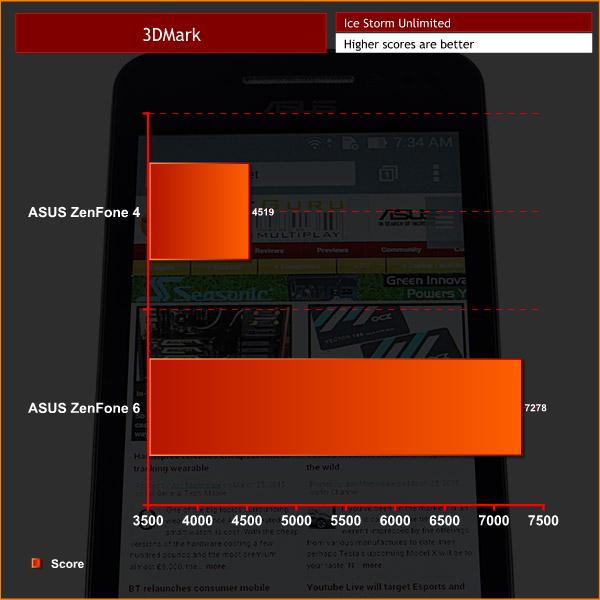
3DMark's Ice Storm Unlimited was a similar story. Here it scored 4519, less than the 7278 of the ZenFone 6.The ZenFone 4 primary camera is a 5MP unit, with images having a native resolution of 2592*1944. A secondary camera on the front of the phone is 0.3MP.
Included with the phone is the same camera app we used on the ZenFone 6.

The primary camera itself proved to be surprisingly passable. We didn't have high hopes as most budget phones cut corners on the camera, but the ZenFone's images weren't half bad.
Colour reproduction was strong, although in bright sunlight images did appear to be washed out. Here we found the HDR mode very effective, as a good test of HDR is often not how it makes dark scenes brighter, but how it makes bright scenes darker. This mode proved successful at the latter.


HDR mode off (left) compared with HDR on in bright sunlight
Detail in the images isn't stunning, and there are moment where it seems the camera doesn't focus well or particularly quickly, but 5MP is the standard for low-end phones, and we wouldn't expect more for the money.
On the whole it's a decent camera and will capture your experiences on the go – mostly – satisfactorily.

Night mode off (left) compared with night mode on
The battery is definitely the weakest aspect of the phone. Powering things is a 1200 mAh battery, which ASUS have made removable, so you could carry a second one around – you would need it.
This is because the phone won't last you a day's use, not even close. As we used it, with auto-sync and WiFi or data always on, we needed a recharge just after lunch else the battery would've run dry. Heavy users probably wouldn't even last that long.
If you use your phone for a couple of minutes every hour or two, it'll last you. But nobody does that with a smartphone in 2015, and ASUS really should've given the device a better battery. The simple fact of the matter is you will have to recharge or swap in a second battery, so if that's a problem for you we'd advise you to stay away.
Charging speeds, to make up for it, are half-way decent. In half-an-hour, using the accompanying ASUS charger, the device gained 31% of battery – which may just be enough to see you through until you can give the phone a full charge.
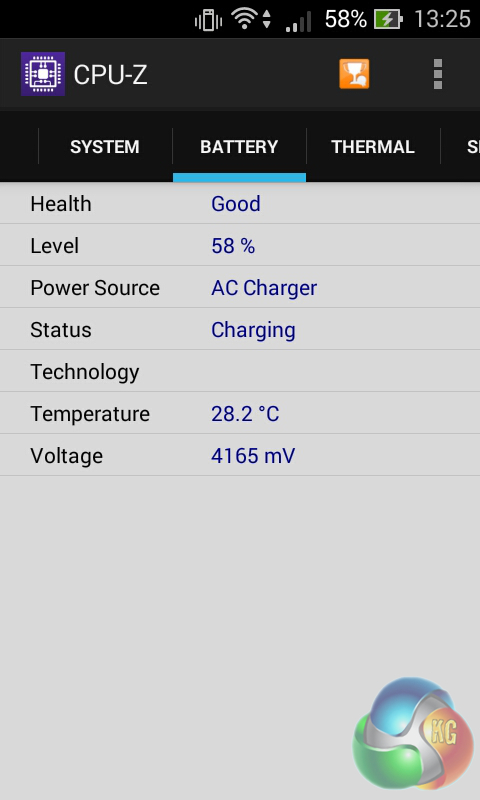
As it is, the battery is far from good, and it sadly ruins the overall experience, which is generally good.
On the whole, the ASUS ZenFone 4 is a decent little phone. It doesn't do anything exceptionally well, but it doesn't try to. What it tries to be is a dependable budget phone, and it mostly succeeds.
The display works fine. Granted, it's not the vivid display on the iPhone 5s, though they may be the same size – but the ZenFone is a whole lot cheaper. ZenUI, too, remains sleek and simple, though slightly more fiddly due to the smaller screen.
A decent camera paired with acceptable performance continue the phone's good points, but the major downfall is the battery life. It simply cannot last a day so you will have to re-charge often if you buy the ZenFone 4.
Despite this, we were generally quite impressed with the phone, and is definitely worth a look if you are on a tight budget. You can buy the ASUS ZenFone 4 from John Lewis for £99 inc VAT.
Discuss on our Facebook page, over HERE.
Pros
- Pocket-friendly.
- Decent camera.
- Beautiful UI.
- Very cheap at £99.
Cons
- Awful battery life.
- Lots of bloatware.
- Fairly thick.
KitGuru says: the ASUS ZenFone 4 looks a good option if you need a decent phone on a budget, though the Moto E 2nd Gen may be worth a look too.

I think you’re confusing bloatware with useful system apps. Most of the preinstalled apps from Asus are very useful. There is little actual bloatware.
rtye5 . true that Patricia `s report is impossible… on wednesday I bought Saab 99 Turbo since I been making $8569 thiss month and also ten/k this past month
. it’s actualy my favourite-work I’ve had . I began this three months/ago and pretty much straight away was earning more than $75… p/h . you could try here HERE’S MORE DETAIL
“which ASUS have made removable, so you could carry a second one around – you would need it” trust me you cannot actually remove the battery.