 KitGuru KitGuru.net – Tech News | Hardware News | Hardware Reviews | IOS | Mobile | Gaming | Graphics Cards


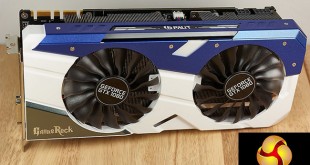
Today we take a look at another GTX 1080 card, the Palit GTX 1080 GameRock Premium Edition. This card features one of the highest boost clock speeds we have seen as well as the G-PANEL front panel which highlights system data. At £619.99 it also undercuts recent releases from MSI, Gigabyte and ASUS. Does it deliver?
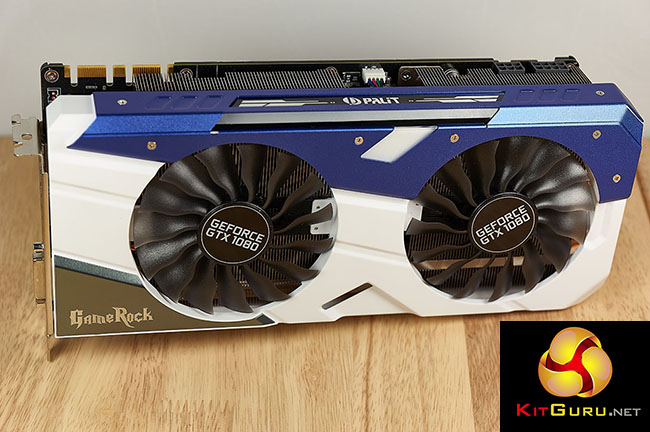
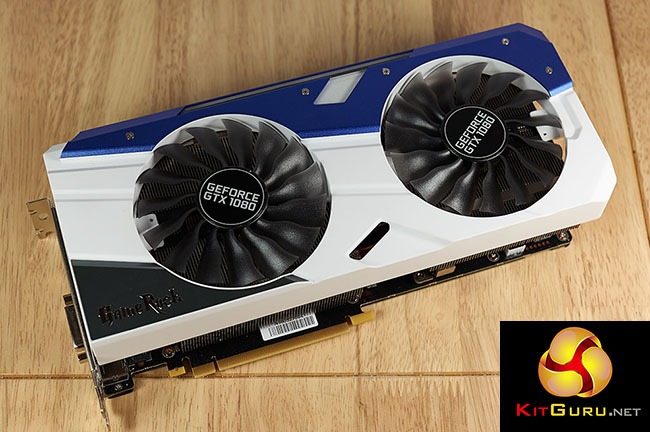
Palit have opted for a predominately white card, with blue accenting on the cooler. In a similar fashion to MSI they have opted for a twin fan cooling system, rather than triple.
| GPU | Geforce GTX970 | GeForce GTX980 |
Geforce GTX 980 Ti | Geforce GTX Titan X | Geforce GTX 1080 | Geforce GTX 1070 |
| Streaming Multiprocessors | 13 | 16 | 22 | 24 | 20 | 15 |
| CUDA Cores | 1664 | 2048 | 2816 | 3072 | 2560 | 1920 |
| Base Clock | 1050 mhz | 1126 mhz | 1000 mhz | 1000 mhz | 1607 mhz | 1506 mhz |
| GPU Boost Clock | 1178 mhz | 1216 mhz | 1075 mhz | 1076 mhz | 1733 mhz | 1683 mhz |
| Total Video memory | 4GB | 4GB | 6GB | 12GB | 8GB | 8GB |
| Texture Units | 104 | 128 | 176 | 192 | 160 | 120 |
| Texture fill-rate | 109.2 Gigatexels/Sec | 144.1 Gigatexels/Sec | 176 Gigatexels/Sec | 192 Gigatexels/Sec | 257.1 Gigatexels/Sec | 180.7 GigaTexels/sec |
| Memory Clock | 7000 mhz | 7000 mhz | 7000 mhz | 7000 mhz | 1250mhz | 2002mhz |
| Memory Bandwidth | 224 GB/s | 224 GB/sec | 336.5 GB/sec | 336.5 GB/sec | 320GB/s | 256GB/s |
| Bus Width | 256bit | 256bit | 384bit | 384bit | 256bit | 256 bit |
| ROPs | 56 | 64 | 96 | 96 | 64 | 64 |
| Manufacturing Process | 28nm | 28nm | 28nm | 28nm | 16nm | 16nm |
| TDP | 145 watts | 165 watts | 250 watts | 250 watts | 180 watts | 150 watts |
The Nvidia GTX1080 ships with 2560 CUDA cores and 20 SM units. The 8GB of GDDR5X memory is connected via a 256 bit memory interface. This new G5X memory offers a huge step up in bandwidth, when compared against the older GDDR5 standard. It runs at a data rate of 10Gbps, giving 43% more bandwidth than the GTX980 GPU.
The Palit GTX 1080 GameRock Premium Edition ships with the core clock overclocked to 1,747mhz, with one of the highest boost clocks we have seen, resting at 1886mhz. Memory is overclocked as well, to 1,314mhz (5,256mhz effective).
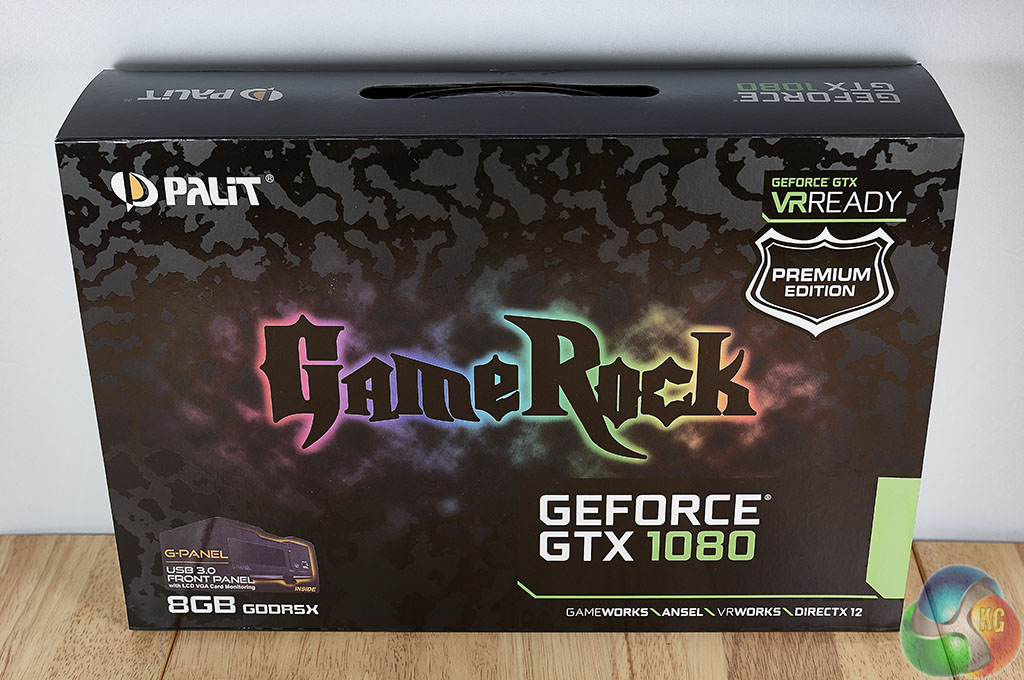
Palit have adopted very colourful box artwork, but fail to showcase the card itself on the front, which is a little disappointing. We can see the ‘Premium Edition' badge top right as well.
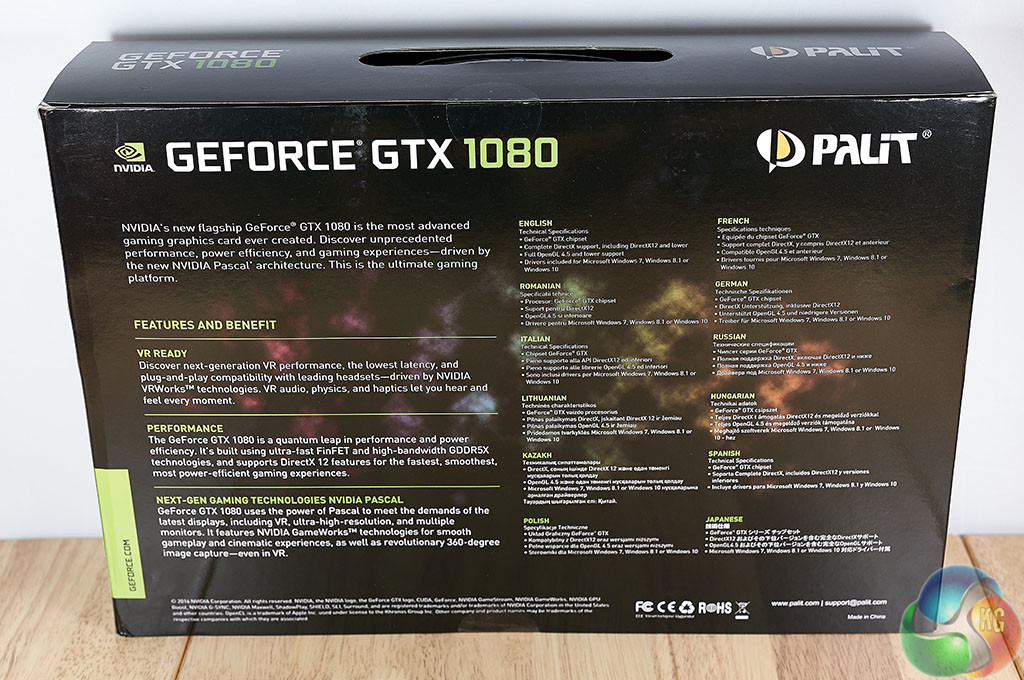
Not much is highlighted on the rear of the box, just a list of text based features.
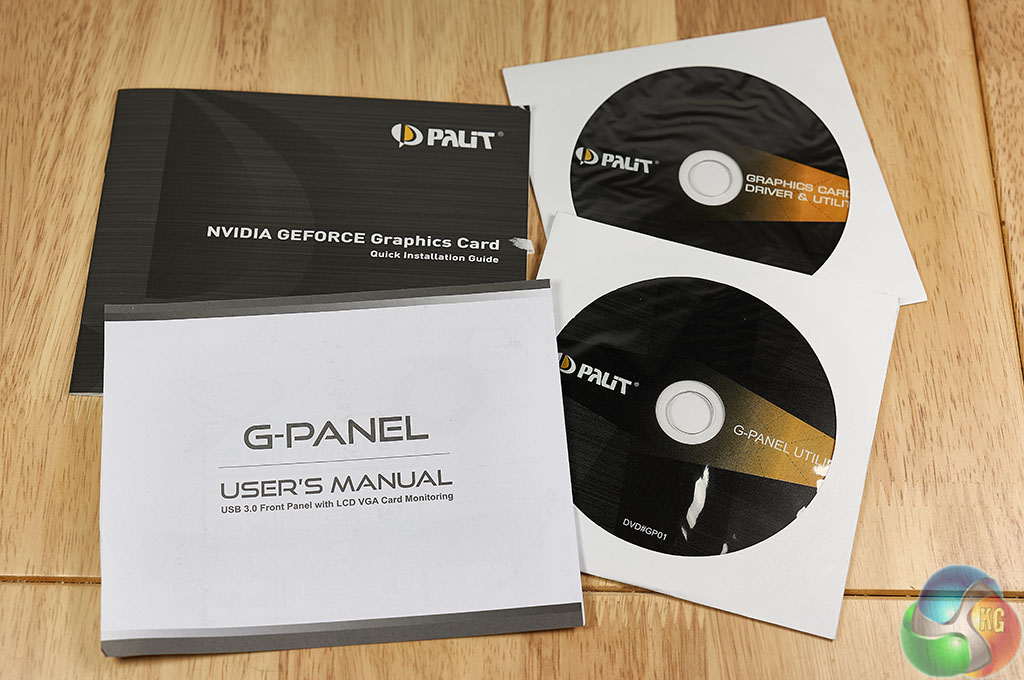
Inside, literature on the product, as well as two CD's features drivers and software for the GPANEL. We do advise heading over to the Palit website and snagging the latest versions of the software. Be aware that Forceware drivers on these discs could also likely be months out of date by the time you end up installing the card in your system. Head to the official Nvidia website for the latest drivers.
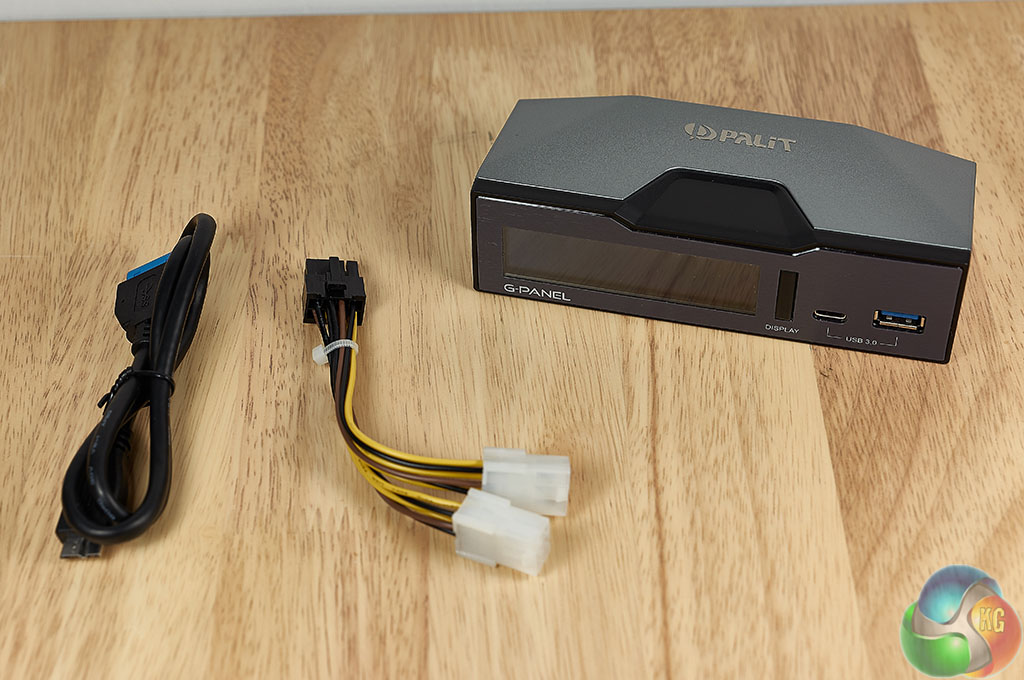
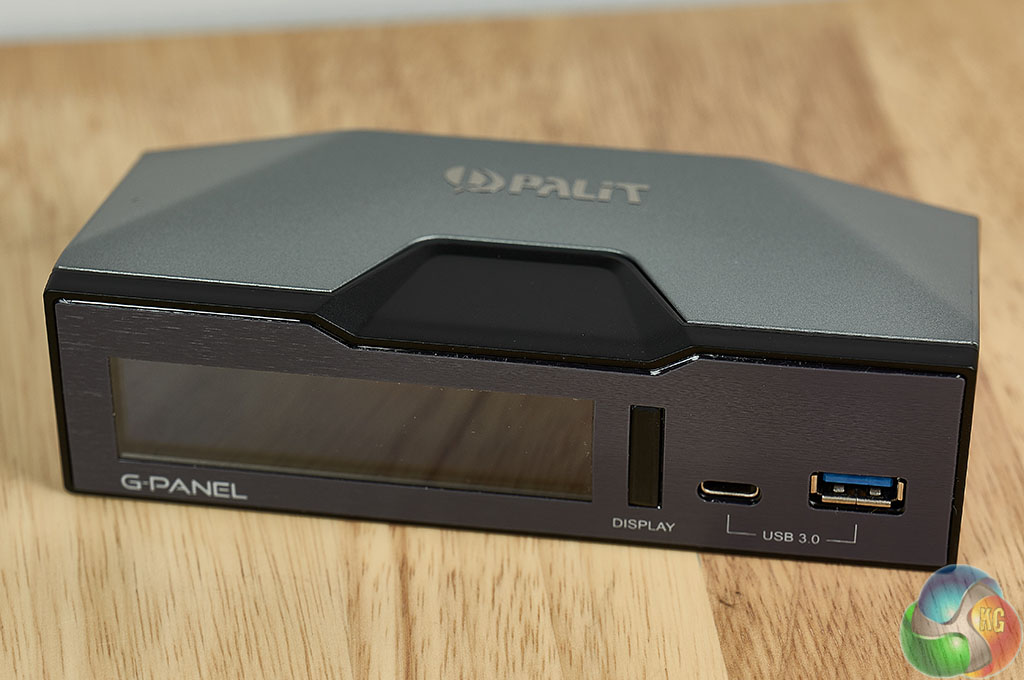
The Palit GPANEL is included with the Premium Edition card, as shown above. It can be installed in a case to offer various text based system information, generally related to the graphics card.
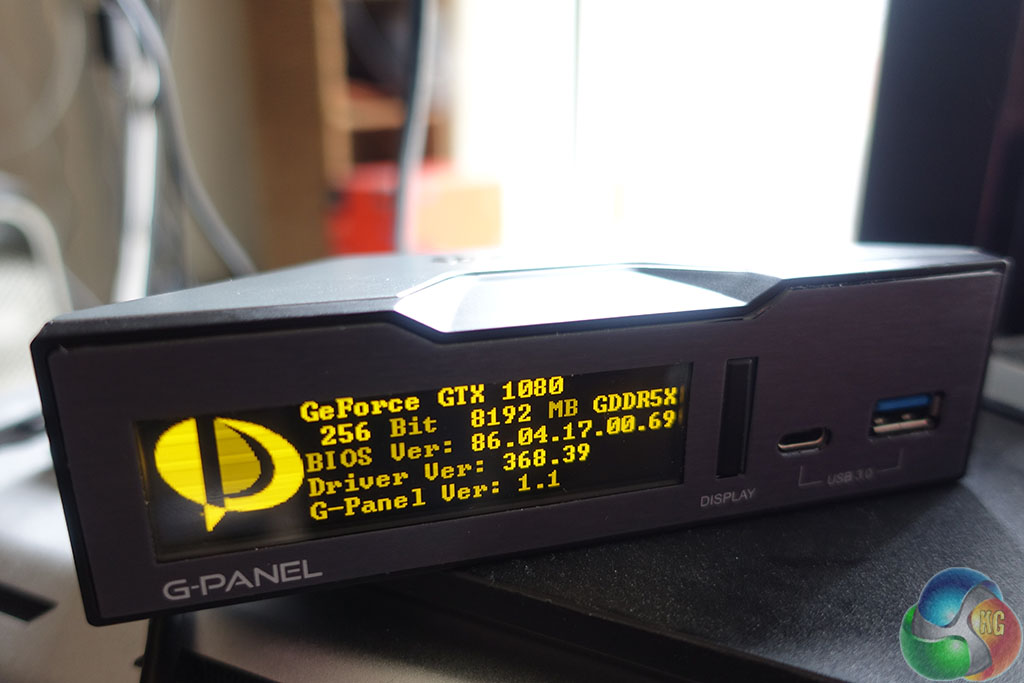
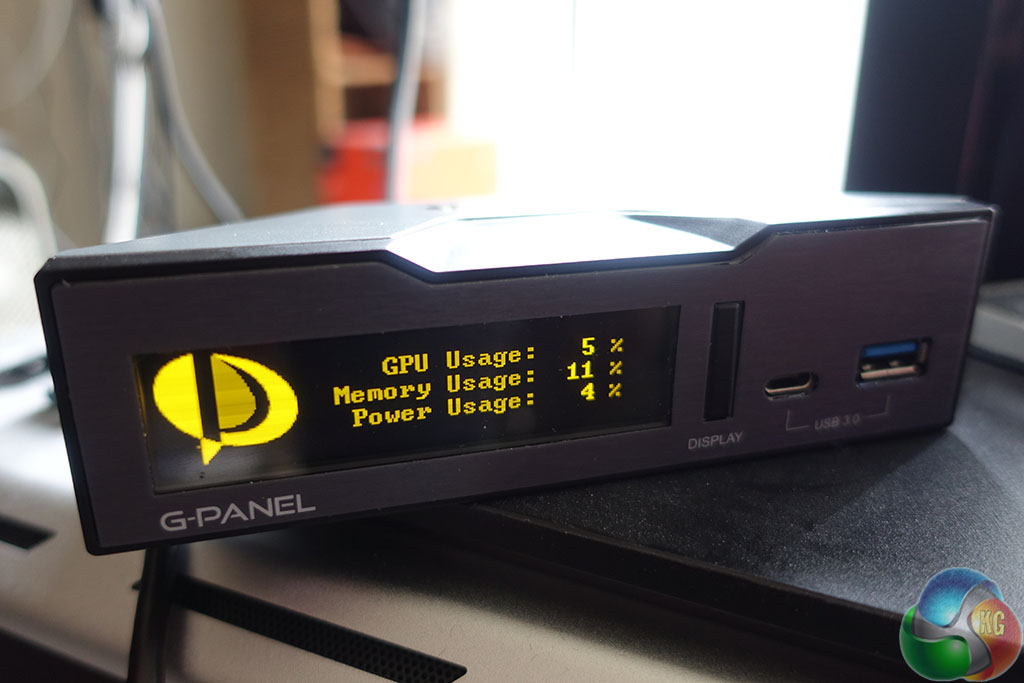
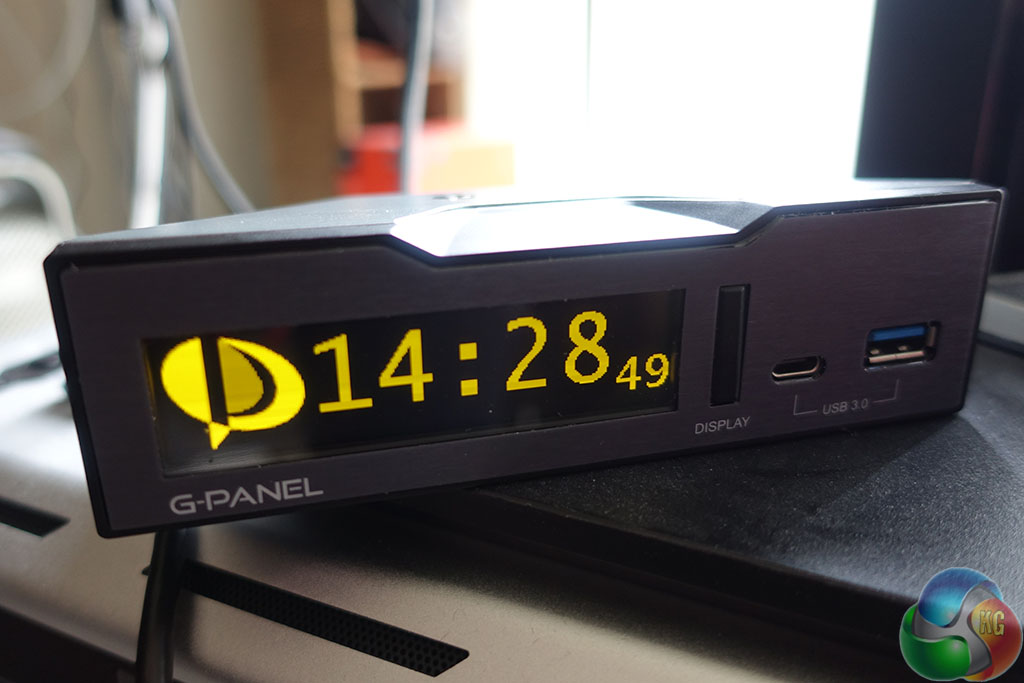
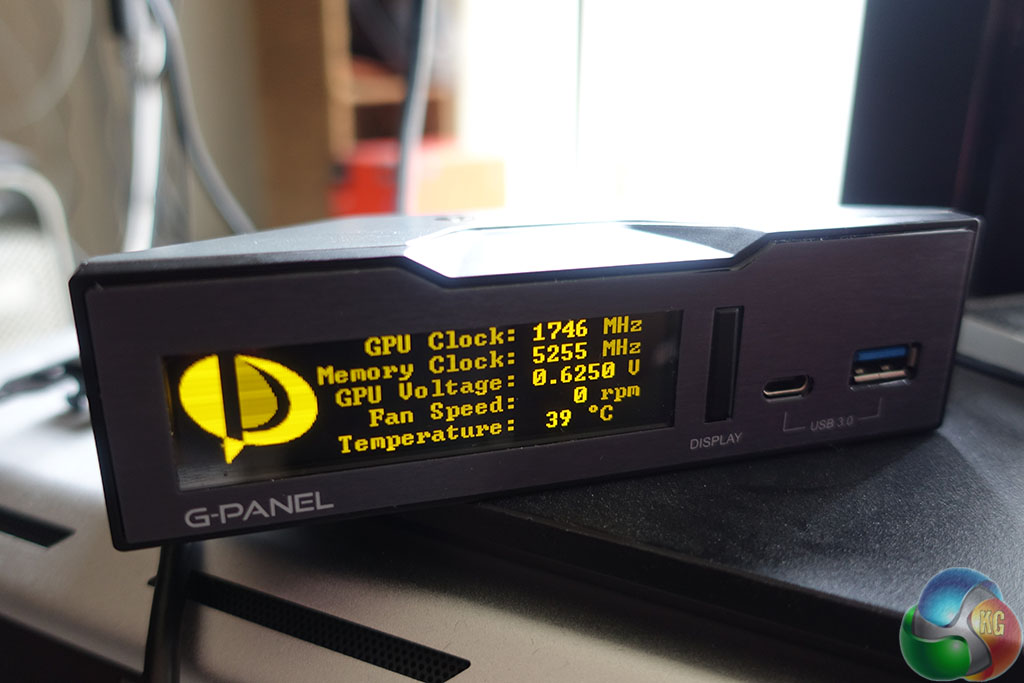
Above, some of the details you can get from the GPANEL system. Its actually really effective and easy to read, even in daylight conditions.
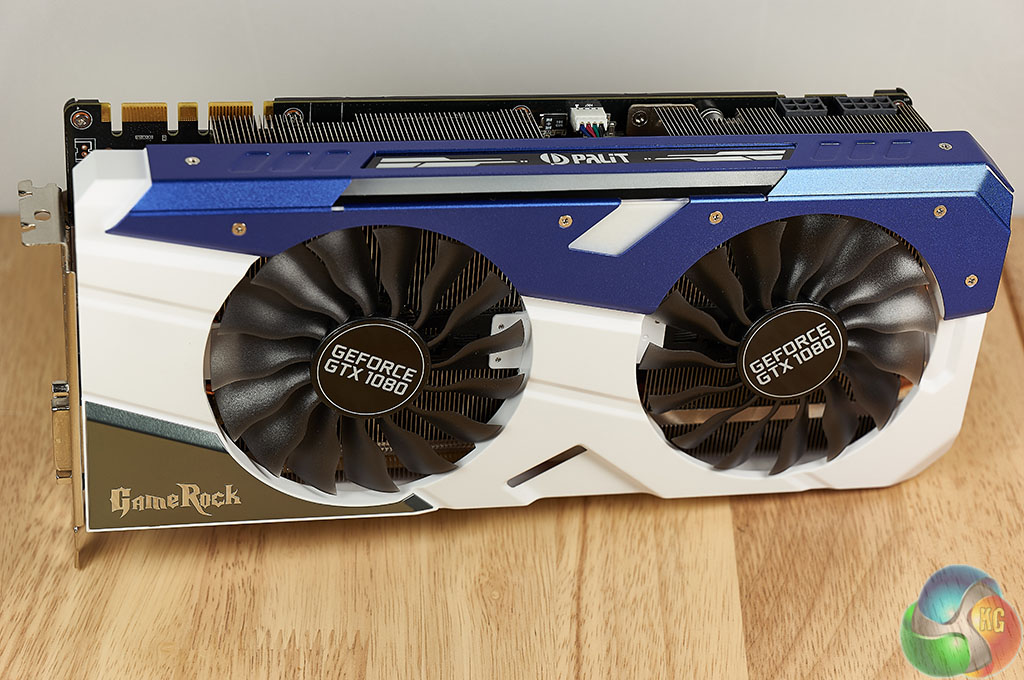
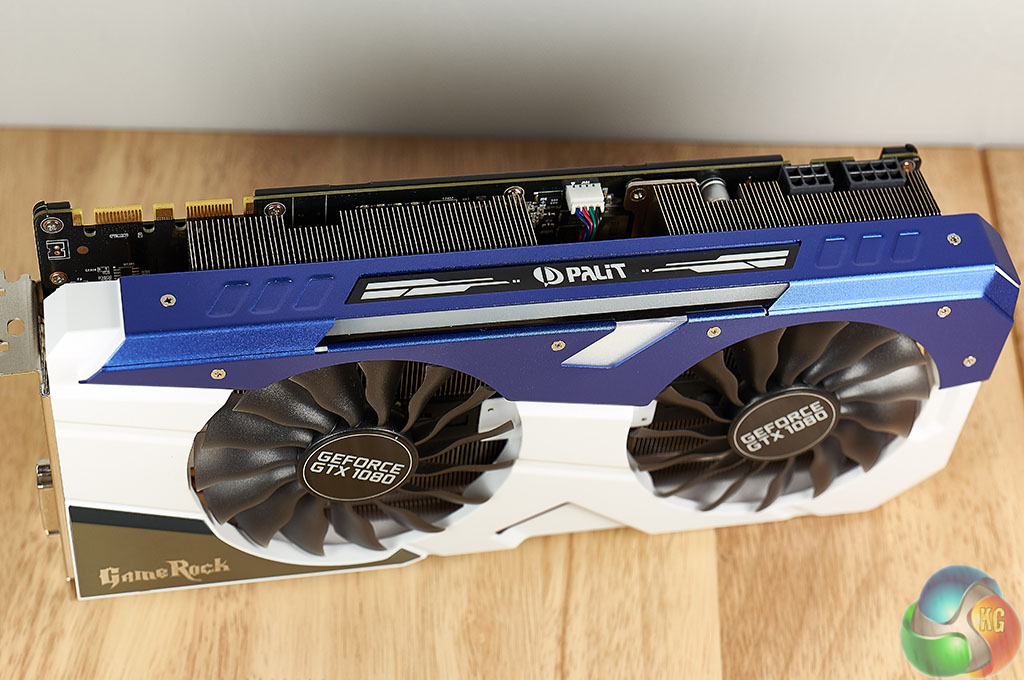
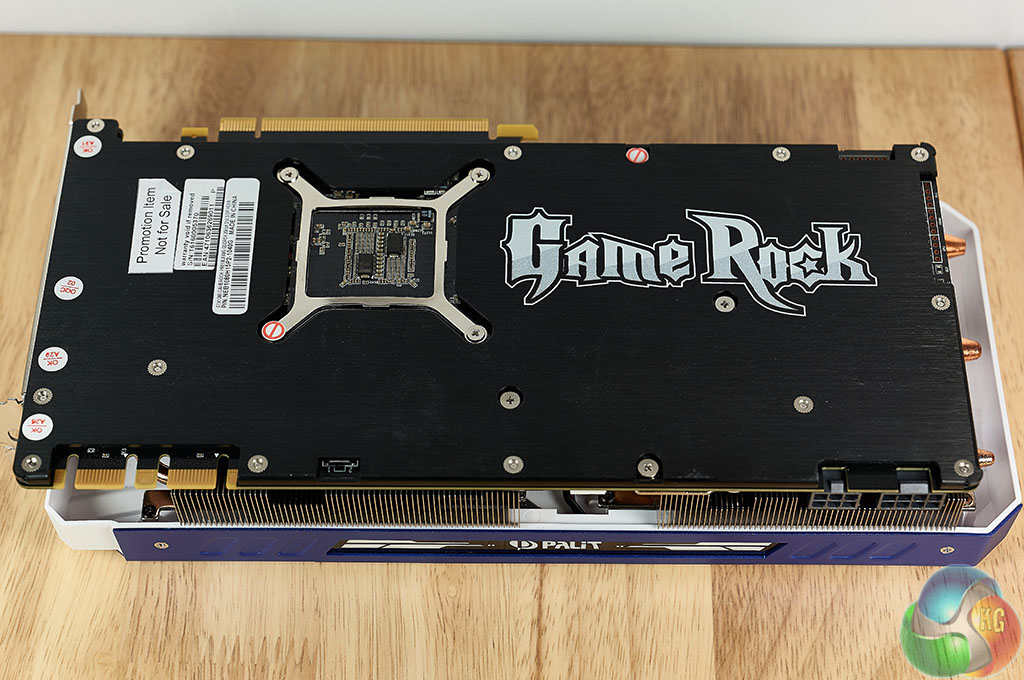
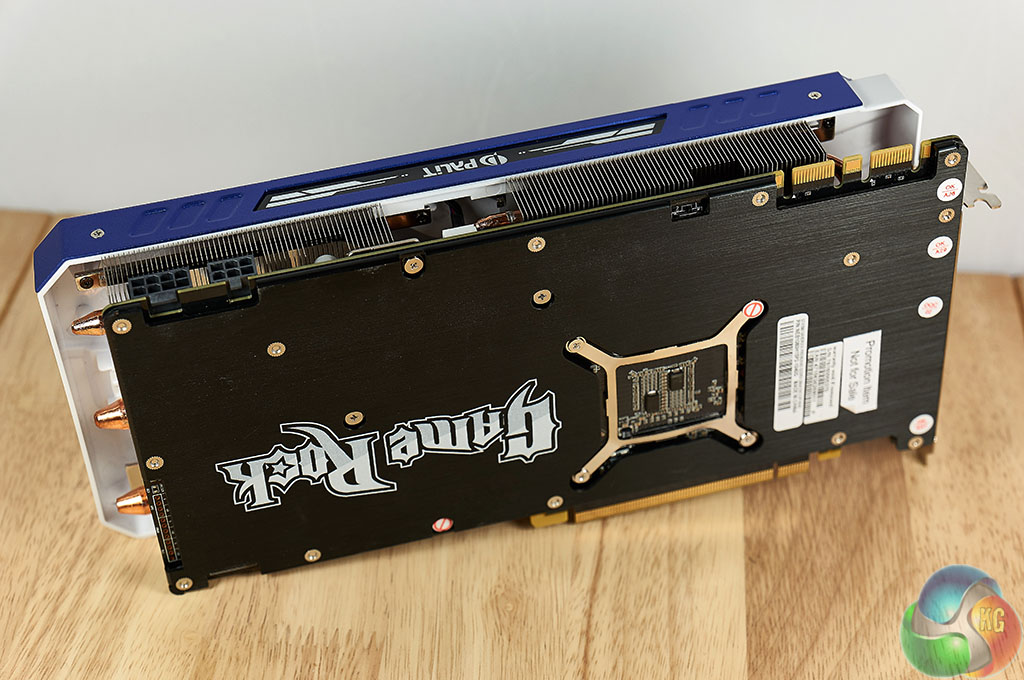
The Palit GTX 1080 GameRock Premium Edition is a huge triple slot GTX 1080 and the colour scheme is probably going to appeal to enthusiast users building a system inside a white case, such as those available from NZXT. Not quite sure I like the whole ‘GameRock' angle done in the Guitar Hero font, but its hardly that big a deal.
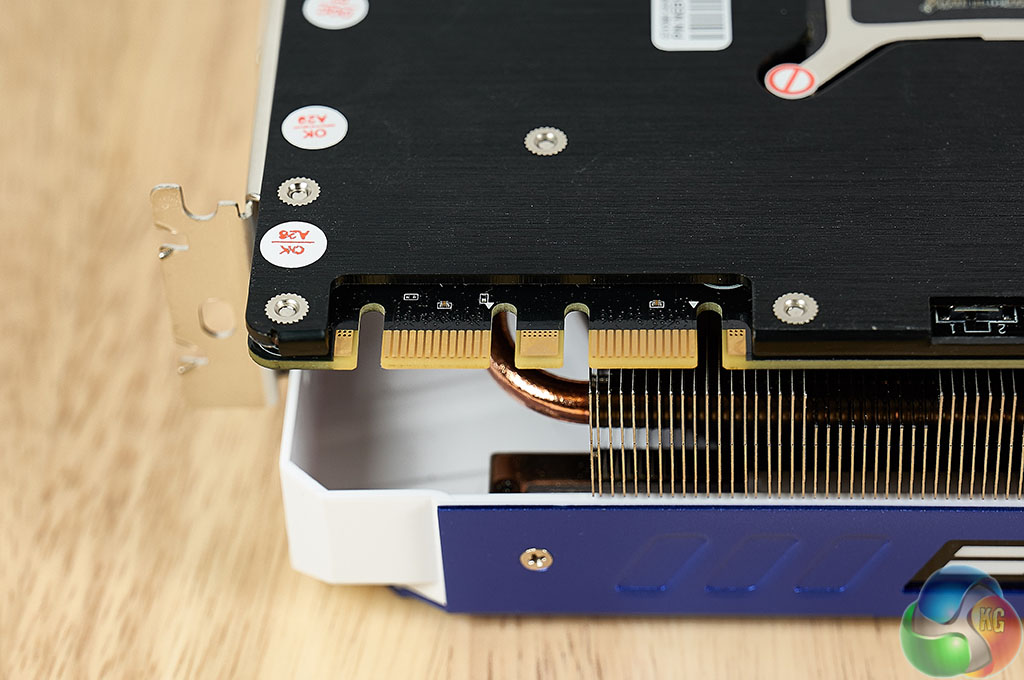
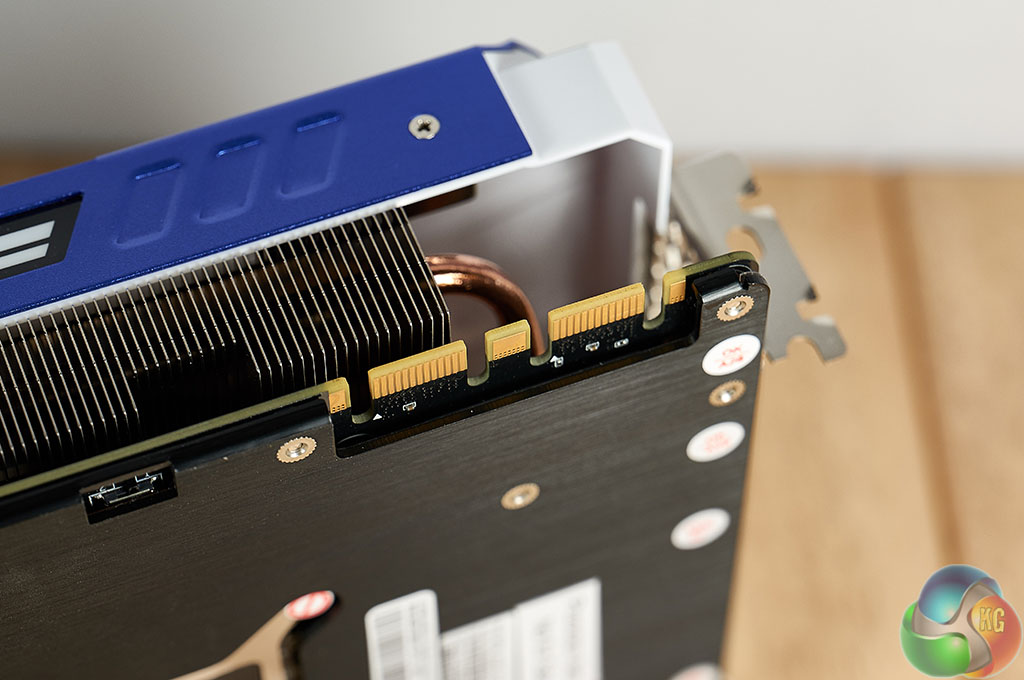
The SLI connectors are shown in the image above. If you haven’t already, then I recommend you head to THIS PAGE to get detailed information on the new SLI configuration introduced in May with Pascal hardware.
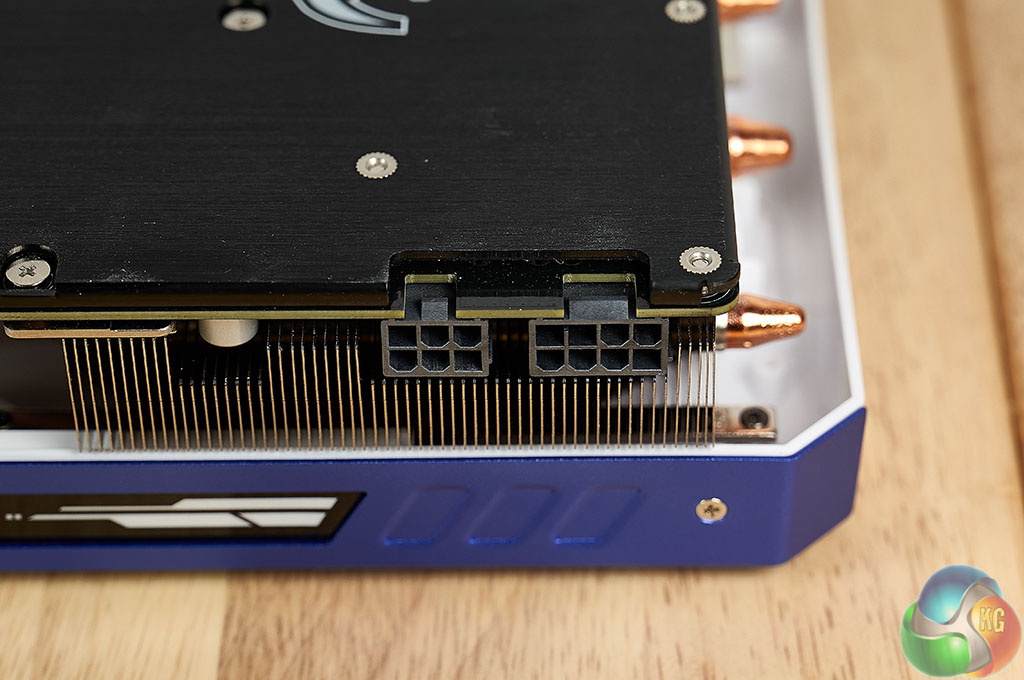
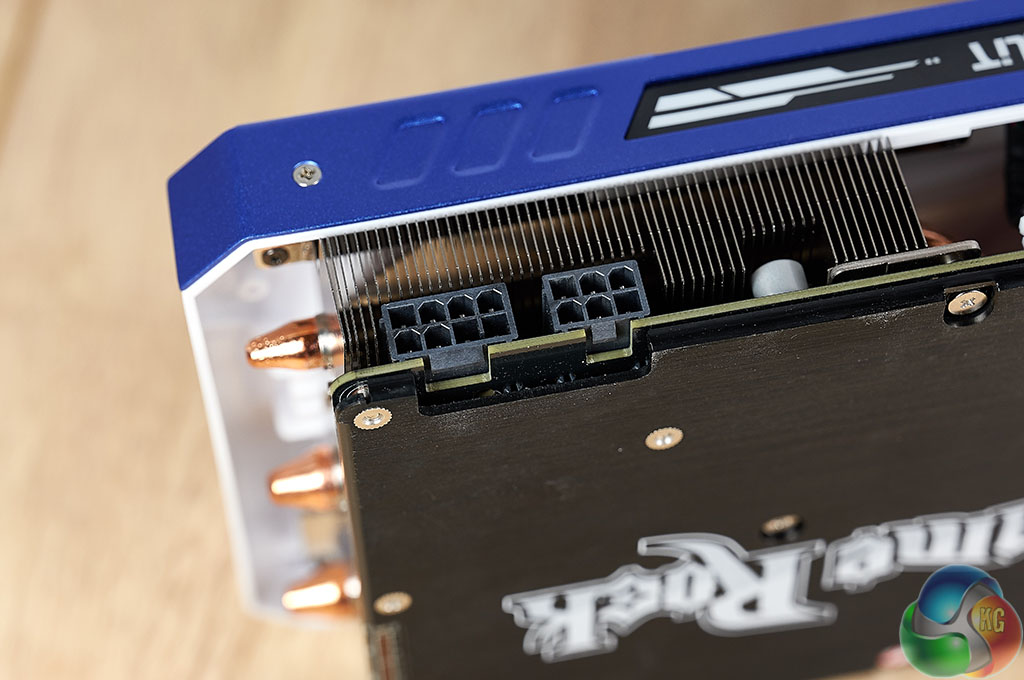
The Palit card takes power from the slot along with a single 8 pin and an extra single 6 pin (75 watt) PCIe power connector – identical to the MSI GTX 1080 Gaming X 8G solution. The Gigabyte GTX 1080 G1 Gaming RGB took all the power it needed from a single 8 pin power connector, and the ASUS GTX 1080 Strix OC was equipped with two 8 Pin PCI e power connectors.
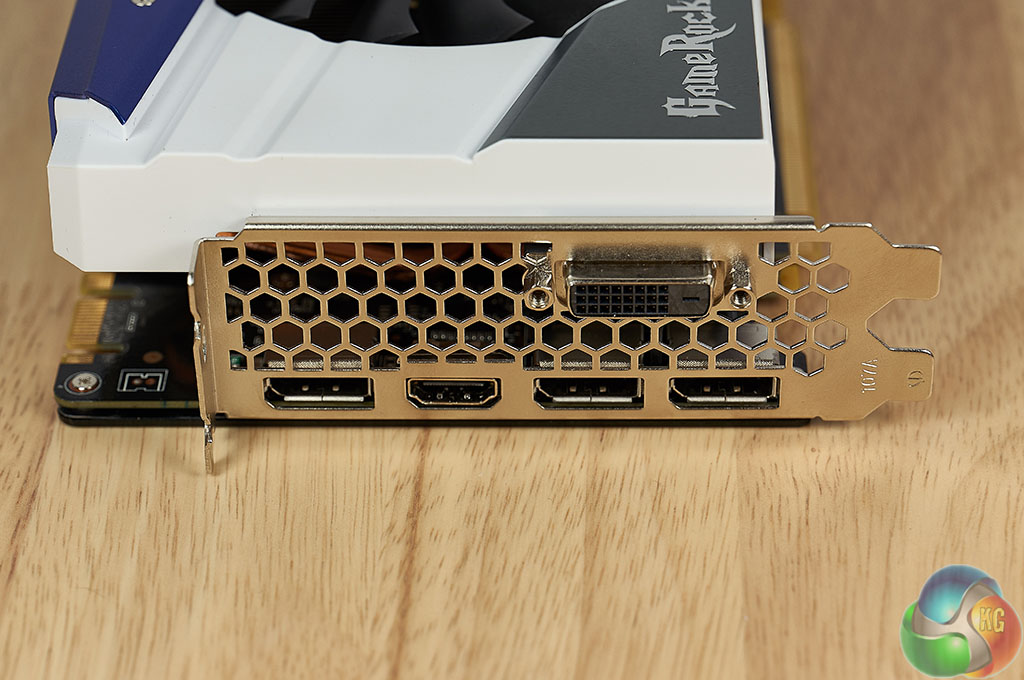
The Palit GTX 1080 GameRock Premium Edition has a dual DVI connector, 3 DisplayPort connectors, and a single HDMI connector. The Asus ROG Strix GTX 1080 Aura ditched one of the DisplayPort connectors in favour of another HDMI connector.
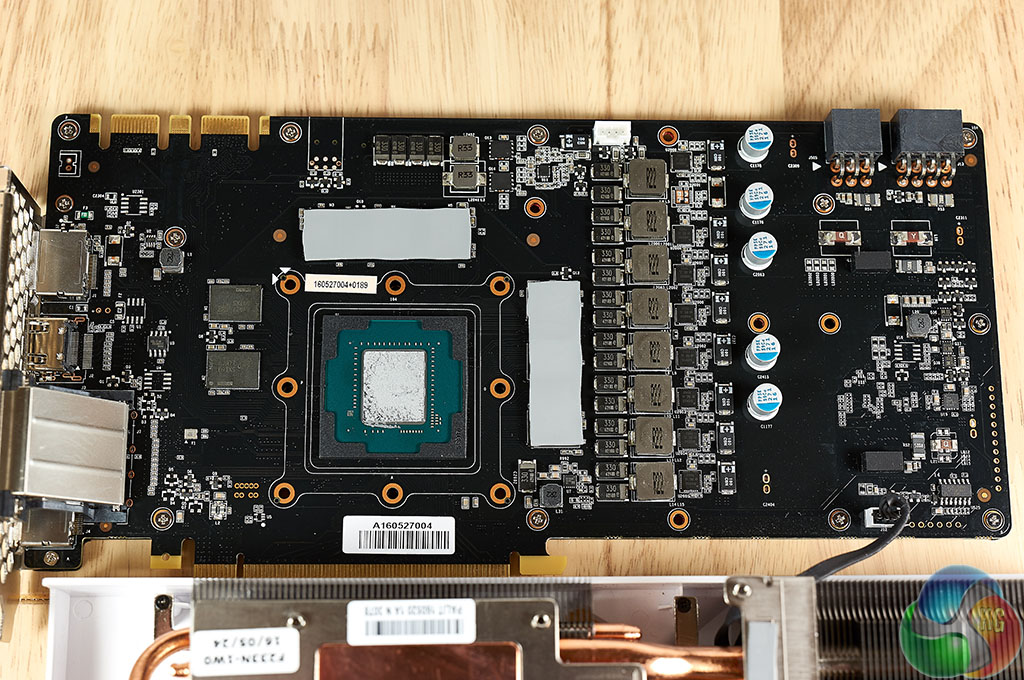
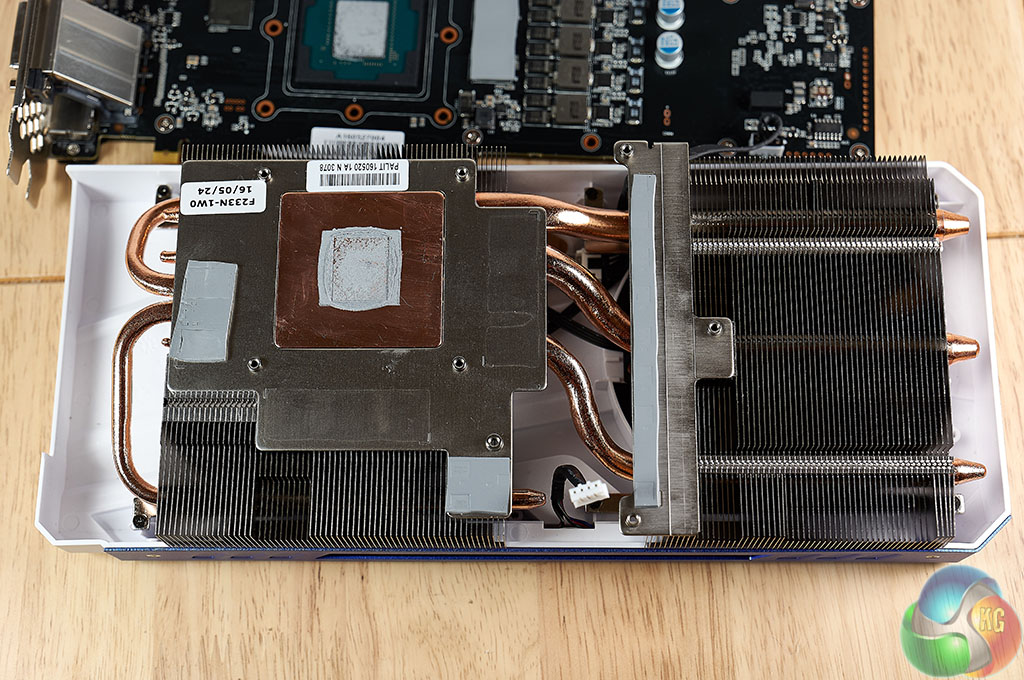
The Palit cooler is substantial, with very thick copper heatpipes running into thick, densely populated aluminum heatsinks across the full width of the shroud above.
As a matter of note, the Palit GTX 1080 GameRock Premium Edition is the only GTX1080 we have tested so far that would hold a boost speed over 2,000mhz during a lot of the testing, this is reflected in the scores.
I have spent the last couple of weeks benchmarking a selection of AMD and NVIDIA cards with the latest drivers on one of our new 6700k test beds. We are using the AMD Crimson Edition Display Driver, Version 16.15.2211 and Nvidia ForceWare 368.39 driver. Due to public demand we also add in a range of tests at 1080p to supplement the results at 1440p and Ultra HD 4K resolutions.
We list each resolution test for every game on its own page – meaning if you are just interested in 4K resolutions for instance, you can skip the other resolutions without effort. If you want to read the whole review and find all the page changes annoying – click on our menu system top right of these pages, and head to ’32. view all pages’.
We are using a custom Titan Bayonet system supplied by Overclockers UK as the basis of our test system today. Read more on this system over HERE.
Case: Phanteks Enthoo Evolv ATX Mid Tower
Processor: Intel 6700K @ 4.4ghz
Memory: Corsair Vengeance LPX 16GB (2x8GB) @ 3000mhz
Motherboard: ASUS Z170-E DDR4 ATX Motherboard
Power Supply: Super Flower Leadex 850W Gold Certified
Software: Microsoft Windows 10 64 Bit
SSD: Samsung 250GB 850 EVO
HDD: Seagate 1TB 7,200 rpm 64MB Cache.

If you want to purchase this system yourself head to THIS page on OCUK.
Graphics cards:
Palit GTX 1080 GameRock Premium Edition – (1,747mhz core / 1,886mhz boost / 5256 mhz memory)
Comparison Cards on test:
MSI GTX 1080 Gaming X 8G RGB – OC Mode (1,709mhz core / 1,849mhz boost / 5,056 mhz memory)
Gigabyte GTX 1080 G1 Gaming RGB (1721 mhz core / 1860 mhz boost / 5,005 mhz memory)
Nvidia GTX 1080 Founders Edition (1607mhz core/ 1733mhz boost / 5,005 mhz memory)
Nvidia GTX 1070 Founders Edition (1506mhz core/ 1683mhz boost / 4,006 mhz memory)
Sapphire R9 390 Nitro 8GB (Rev 2 w/ backplate). (1040mhz core / 1,500 mhz memory)
Sapphire R9 295X2 (1,018 mhz core / 1,250mhz memory)
AMD R9 Fury X (1,050 mhz core / 500 mhz memory)
AMD R9 Nano (1,000mhz core / 500 mhz memory)
Gigabyte GTX980 Ti XTREME Gaming (1,216 mhz core / 1800mhz memory)
Nvidia GTX Titan Z (706 mhz core / 1,753 mhz memory)
Nvidia GTX Titan X (1,000 mhz core / 1,753 mhz memory)
Asus GTX980 Strix (1,178 mhz core / 1,753 mhz memory)
Nvidia GTX980 Ti (1,000 mhz core / 1,753 mhz memory)
Sapphire R9 390X Tri-X 8GB (1,055 mhz core / 1,500 mhz memory)
Sapphire R9 390 Nitro 8GB (1,010 mhz core / 1,500 mhz memory)
Software:
Windows 10 64 bit
Unigine Heaven Benchmark
3DMark 11
3DMark
Fraps Professional
Steam Client
FurMark
Games:
Ashes Of the Singularity
Dirt Rally
Hitman 2016
Middle Earth: Shadow Of Mordor
Rise Of the Tomb Raider
Grand Theft Auto 5
Metro Last Light Redux
Additional equipment:
Leica S-E (006) medium format camera with 100mm Leica F2 lens.
We perform under real world conditions, meaning KitGuru tests games across five closely matched runs and then average out the results to get an accurate median figure. If we use scripted benchmarks, they are mentioned on the relevant page.
Game descriptions edited with courtesy from Wikipedia.
3DMark 11 is designed for testing DirectX 11 hardware running on Windows 7 and Windows Vista. The benchmark includes six all new benchmark tests that make extensive use of all the new features in DirectX 11 including tessellation, compute shaders and multi-threading. After running the tests 3DMark gives your system a score with larger numbers indicating better performance. Trusted by gamers worldwide to give accurate and unbiased results, 3DMark 11 is the best way to test DirectX 11 under game-like loads.
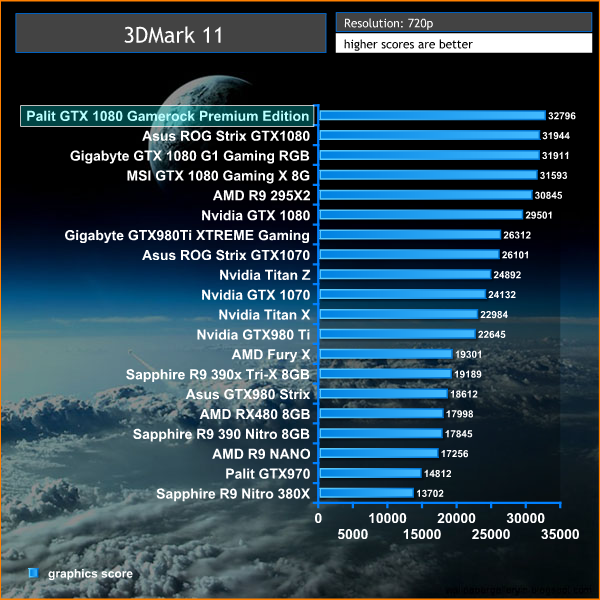
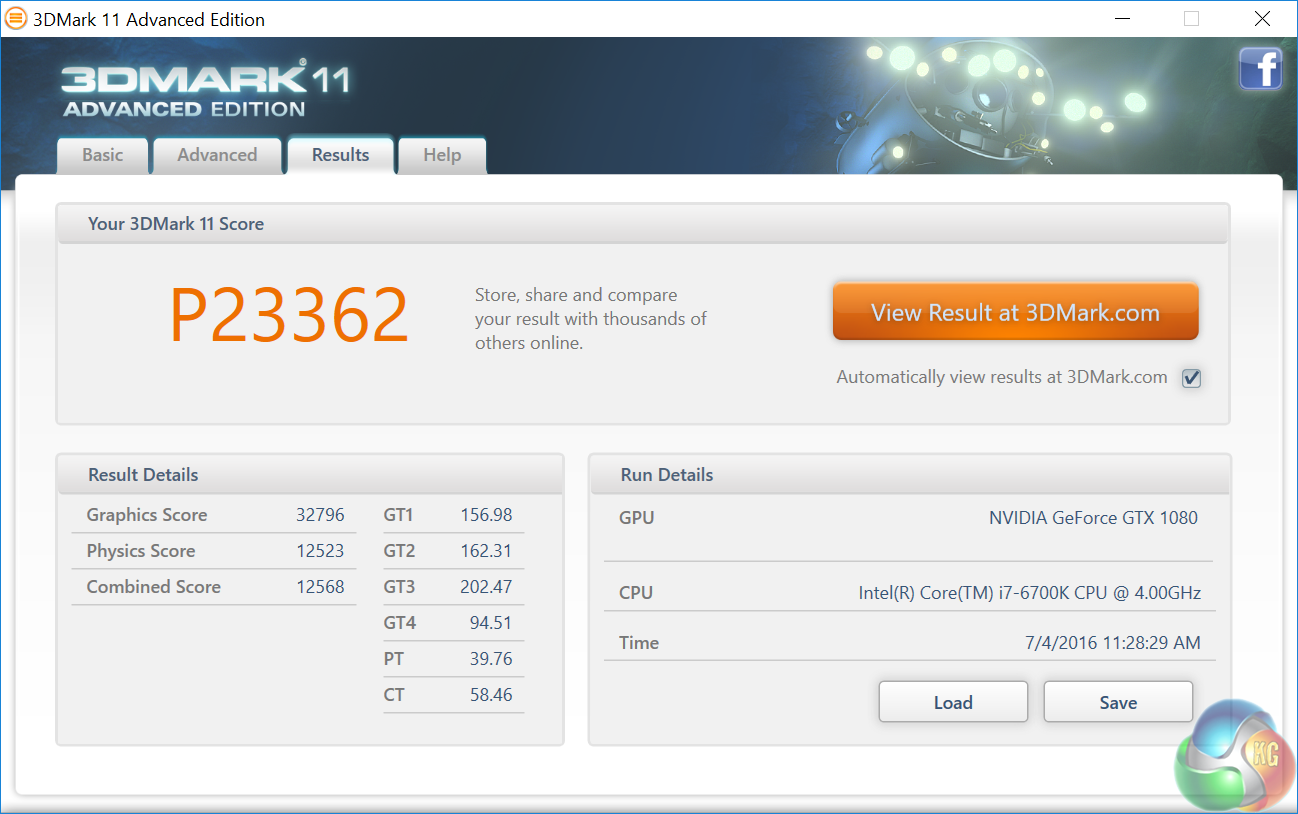
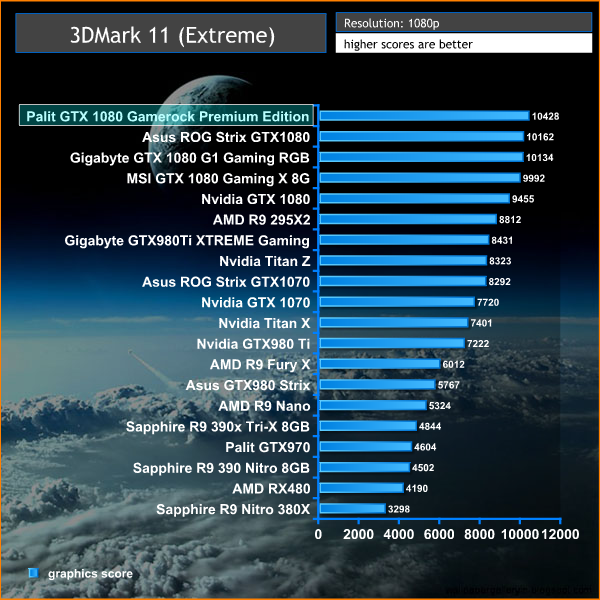
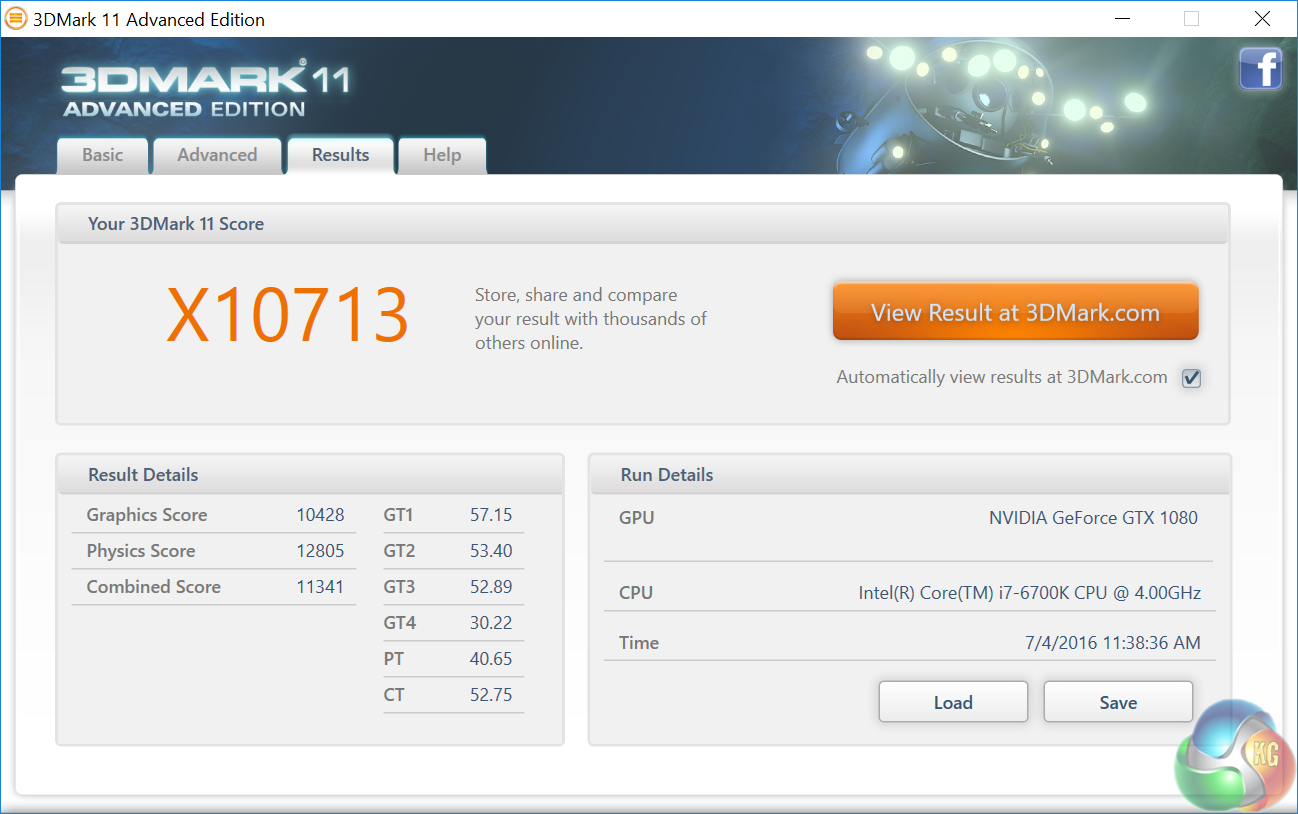
Staggering performance from the Palit GTX 1080 GameRock Premium Edition, topping the chart, even ahead of the ASUS ROG Strix GTX1080.
3DMark is an essential tool used by millions of gamers, hundreds of hardware review sites and many of the world’s leading manufacturers to measure PC gaming performance.
Futuremark say “Use it to test your PC’s limits and measure the impact of overclocking and tweaking your system. Search our massive results database and see how your PC compares or just admire the graphics and wonder why all PC games don’t look this good.
To get more out of your PC, put 3DMark in your PC.”
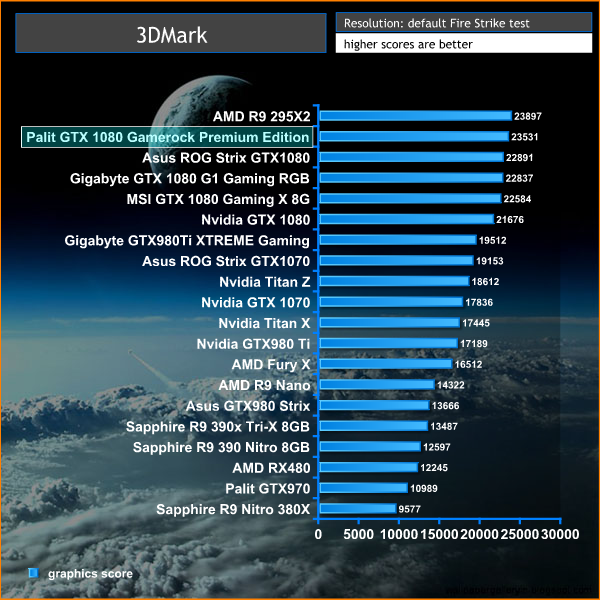
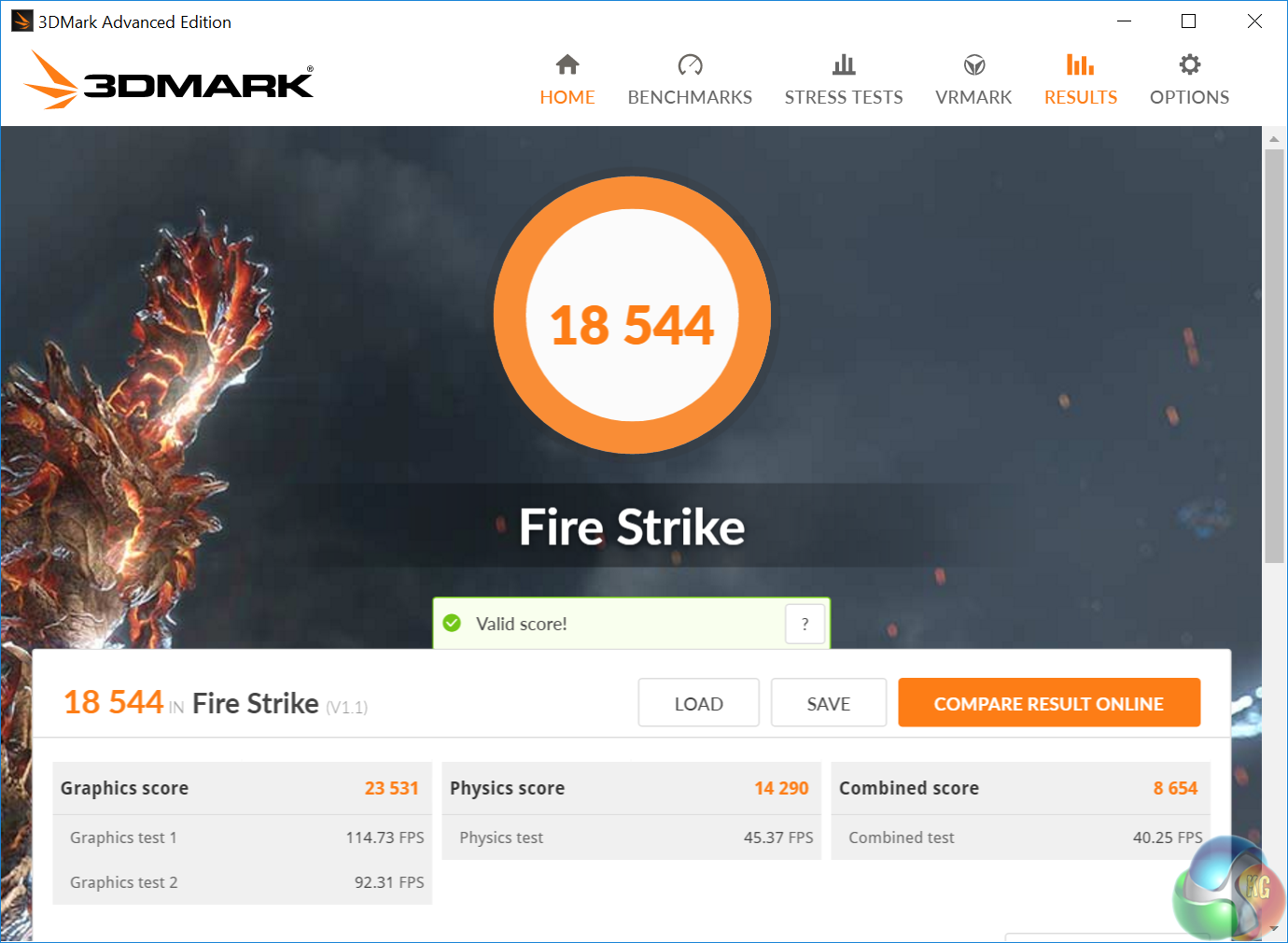
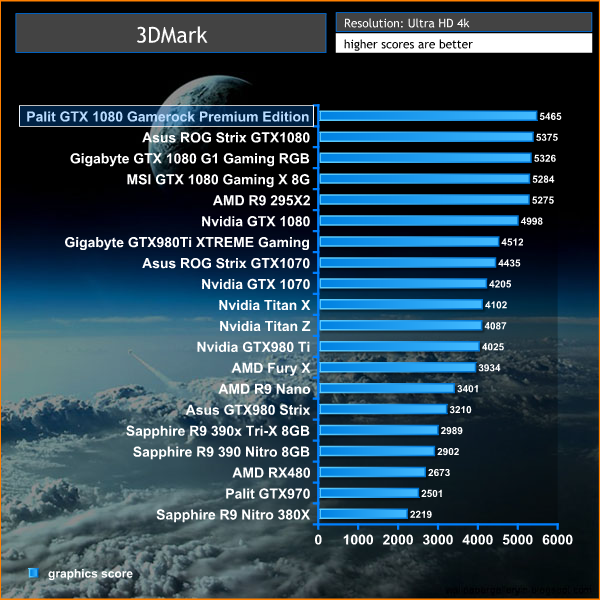
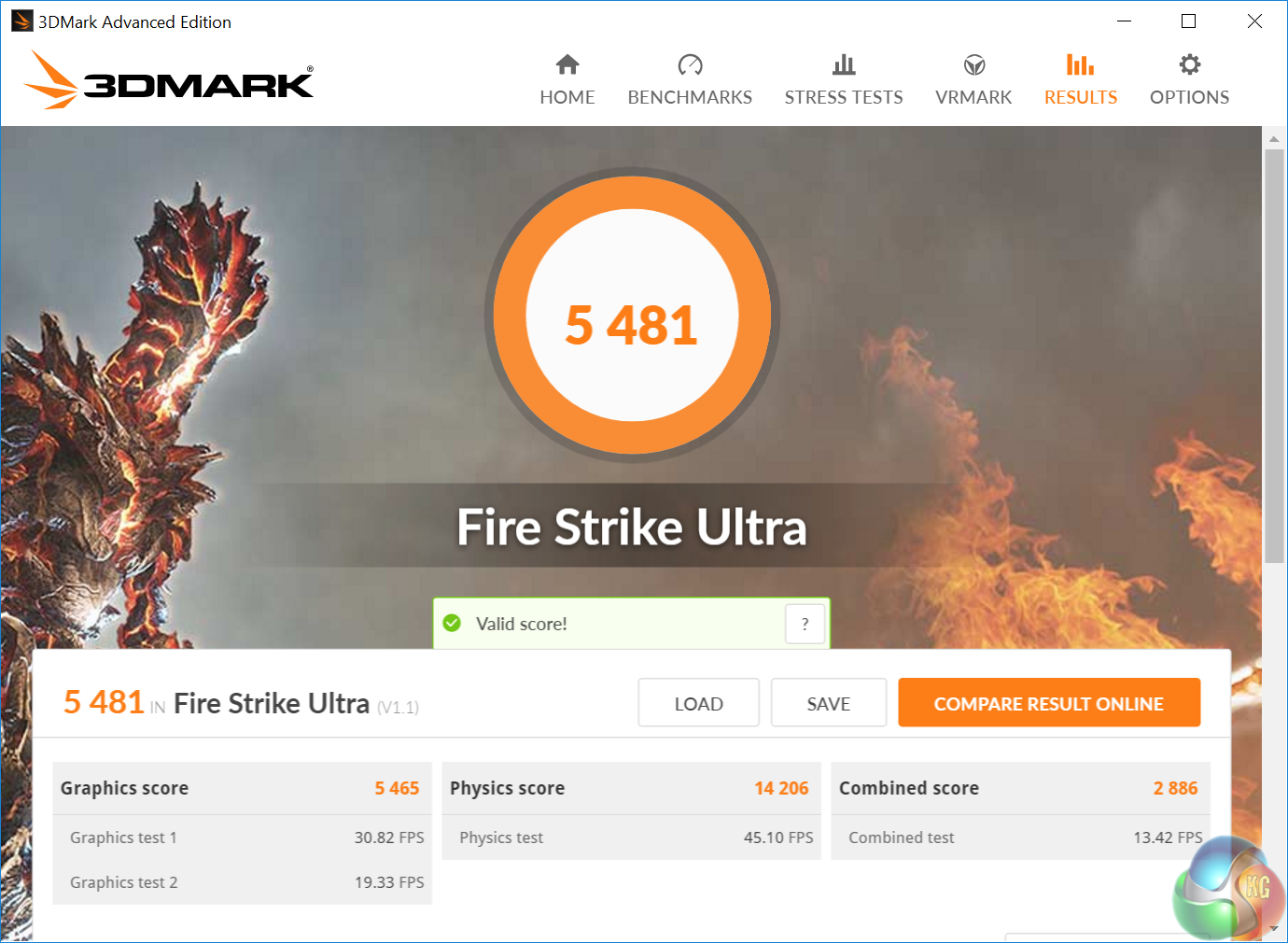
Fantastic performance in the latest Direct X 11 benchmark from Futuremark. The Palit GTX 1080 GameRock Premium Edition claims single GPU top spot in both graphs.
Unigine provides an interesting way to test hardware. It can be easily adapted to various projects due to its elaborated software design and flexible toolset. A lot of their customers claim that they have never seen such extremely-effective code, which is so easy to understand.
Heaven Benchmark is a DirectX 11 GPU benchmark based on advanced Unigine engine from Unigine Corp. It reveals the enchanting magic of floating islands with a tiny village hidden in the cloudy skies. Interactive mode provides emerging experience of exploring the intricate world of steampunk. Efficient and well-architected framework makes Unigine highly scalable:
- Multiple API (DirectX 9 / DirectX 10 / DirectX 11 / OpenGL) render
- Cross-platform: MS Windows (XP, Vista, Windows 7) / Linux
- Full support of 32bit and 64bit systems
- Multicore CPU support
- Little / big endian support (ready for game consoles)
- Powerful C++ API
- Comprehensive performance profiling system
- Flexible XML-based data structures
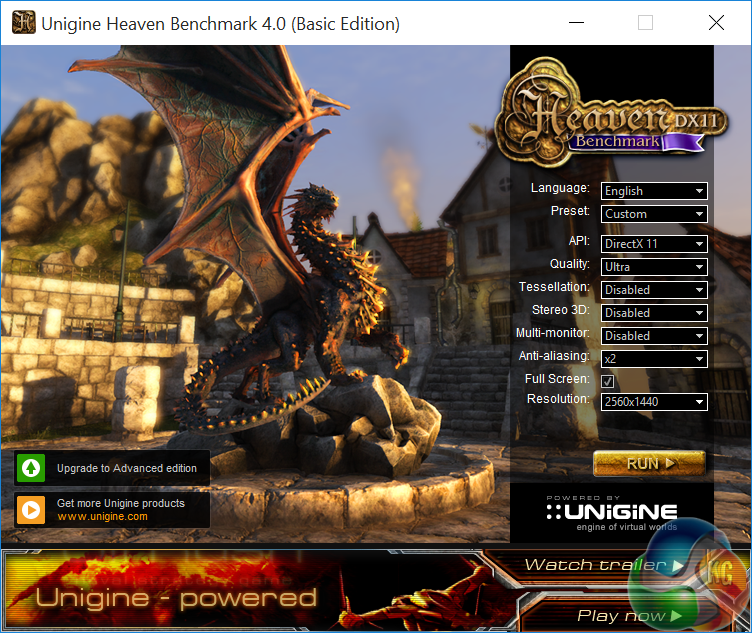
We test at 2560×1440 with quality setting at ULTRA, Tessellation at NORMAL, and Anti-Aliasing at x2.
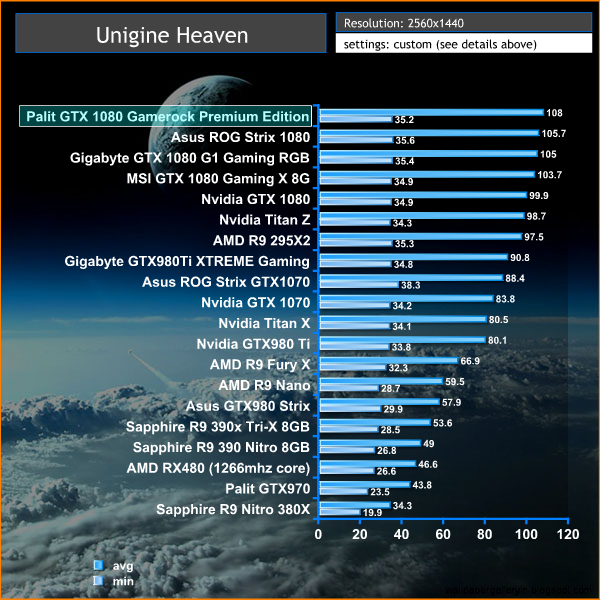

This tessellation heavy benchmark tends to favour Nvidia hardware. As such we can expect great performance from a GTX 1080. The Palit GTX 1080 GameRock Premium Edition takes top spot, averaging 108 frames per second.
Ashes of the Singularity is a real-time strategy game set in the future where descendants of humans (called Post- Humans) and a powerful artificial intelligence (called the Substrate) fight a war for control of a resource known as Turinium.
Players will engage in massive-scale land/air battles by commanding entire armies of their own design. Each game takes place on one area of a planet, with each player starting with a home base (known as a Nexus) and a single construction unit.
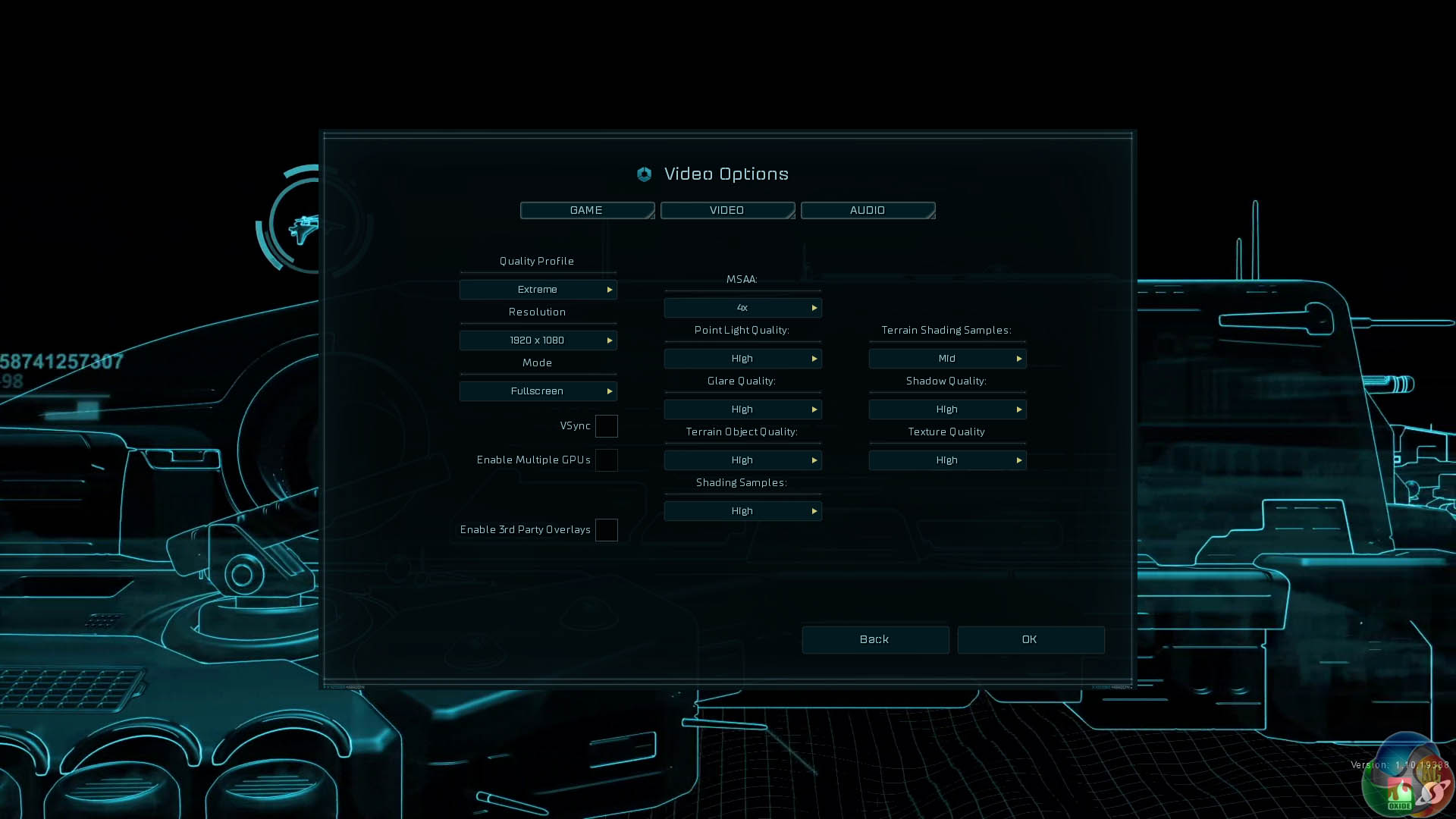
We test the final retail game at 1080p resolution and with EXTREME image quality settings, shown above.
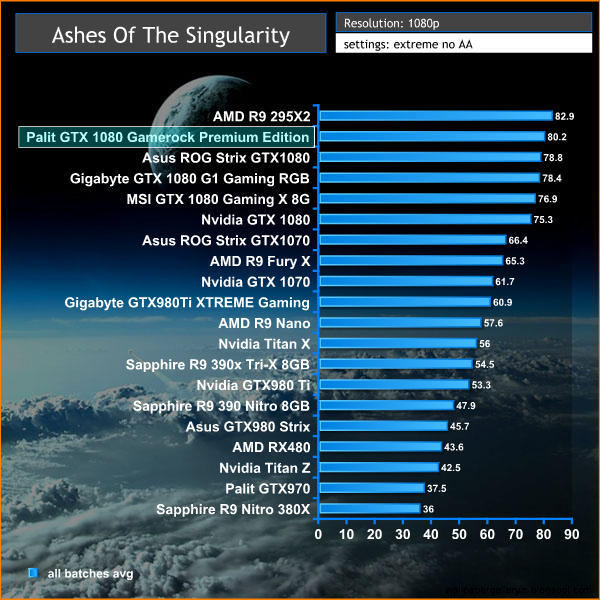
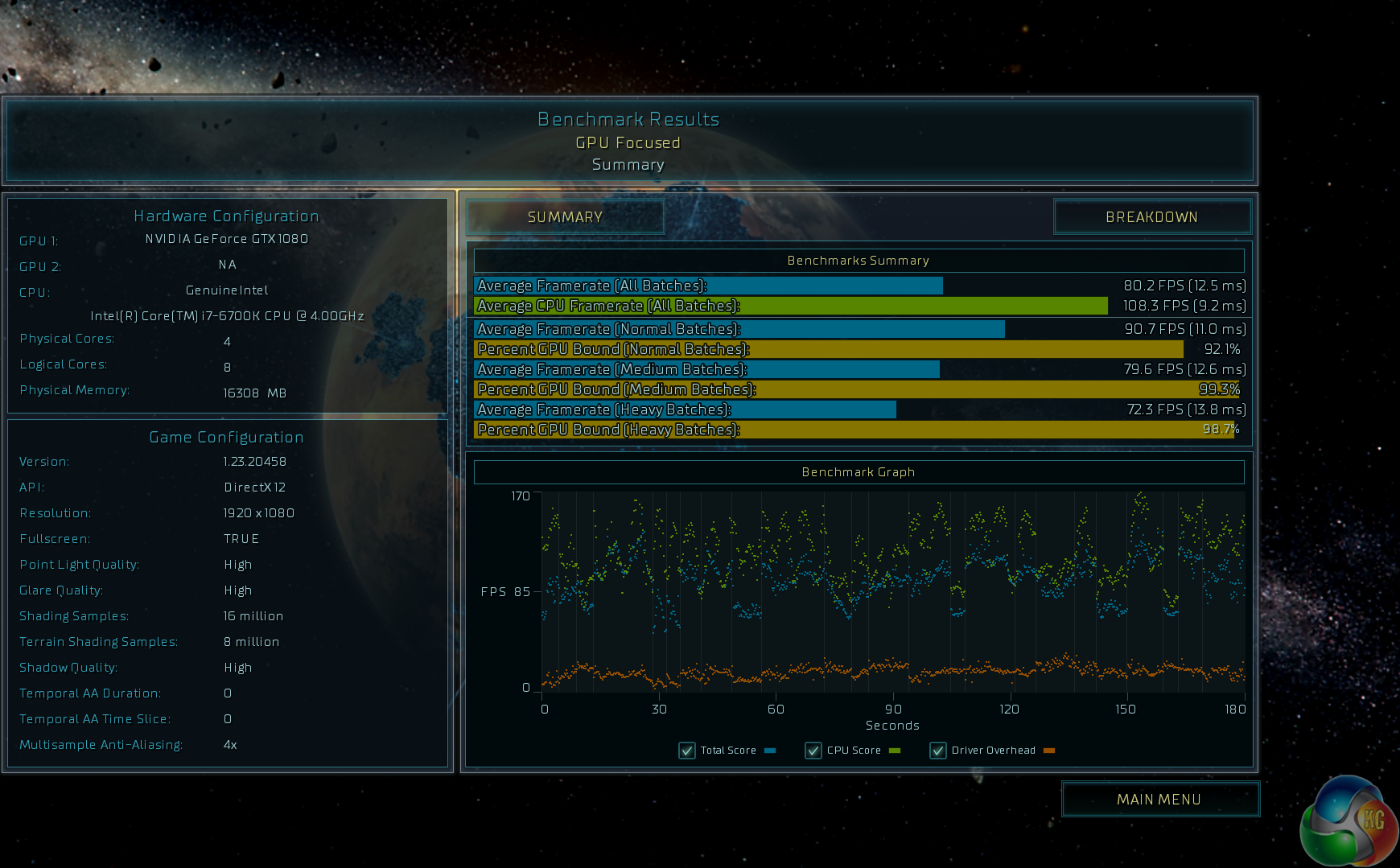
At 1080p in the Direct X 12 game, the Palit GTX 1080 GameRock Premium Edition takes second place, behind the dual GPU R9 295X2.
Ashes of the Singularity is a real-time strategy game set in the future where descendants of humans (called Post- Humans) and a powerful artificial intelligence (called the Substrate) fight a war for control of a resource known as Turinium.
Players will engage in massive-scale land/air battles by commanding entire armies of their own design. Each game takes place on one area of a planet, with each player starting with a home base (known as a Nexus) and a single construction unit.
We test the final retail game at 1440p resolution and with EXTREME image quality settings, shown above.
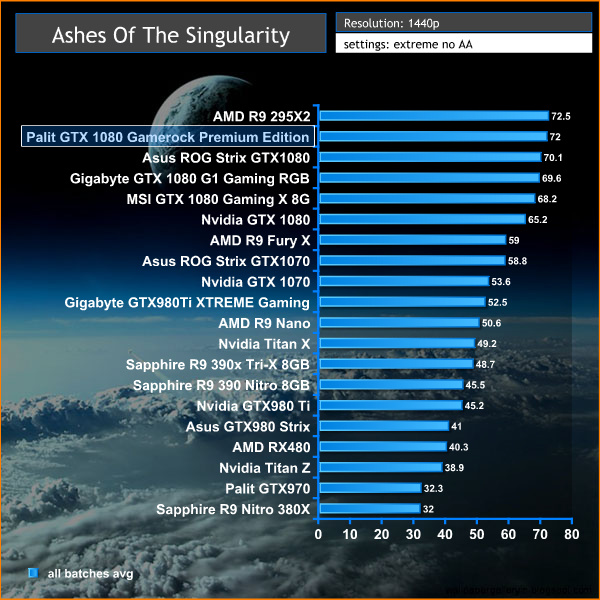
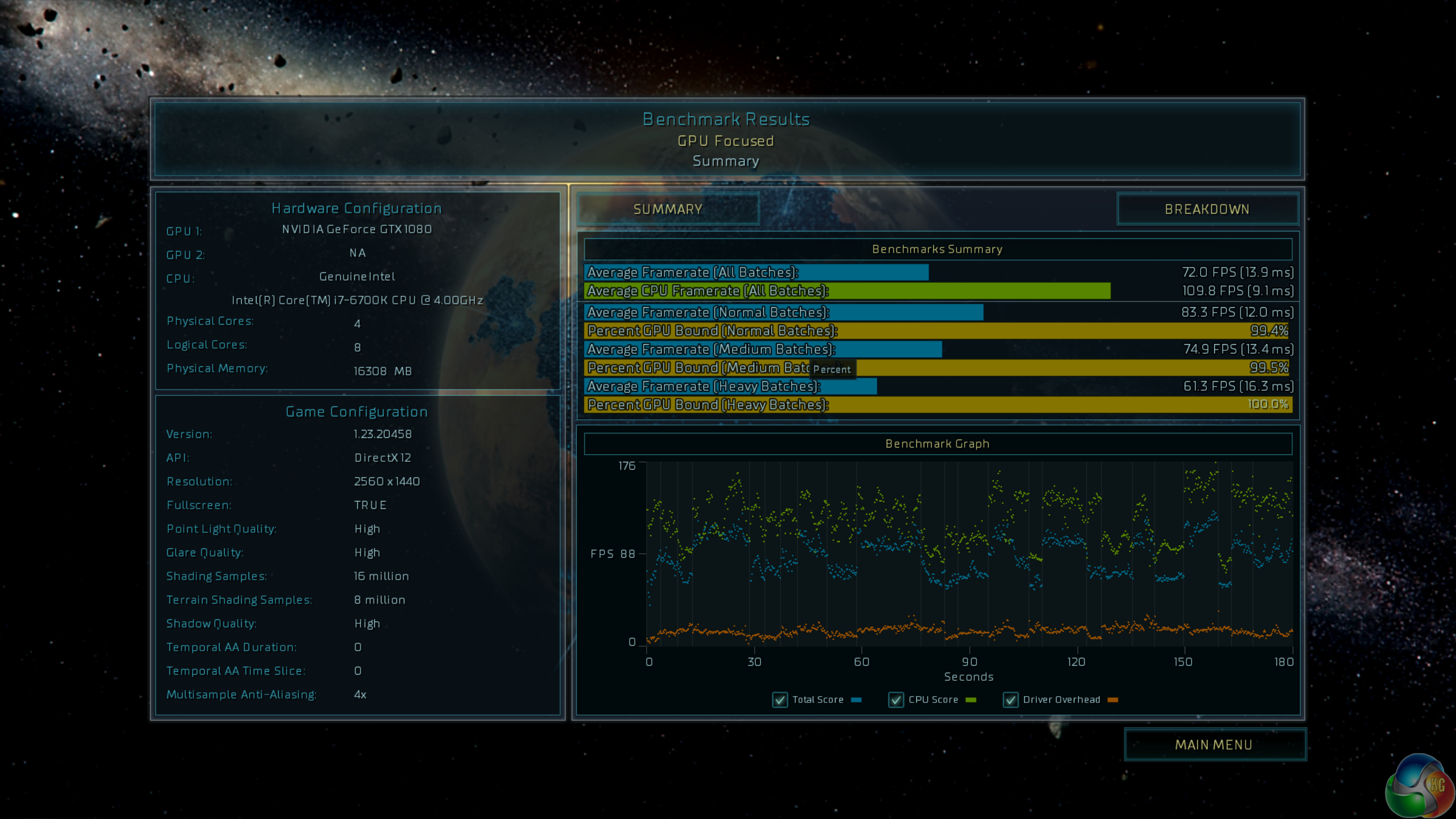
Another single GPU chart topping result for the Palit GTX 1080 GameRock Premium Edition, holding a 72 frames per second average.
Ashes of the Singularity is a real-time strategy game set in the future where descendants of humans (called Post- Humans) and a powerful artificial intelligence (called the Substrate) fight a war for control of a resource known as Turinium.
Players will engage in massive-scale land/air battles by commanding entire armies of their own design. Each game takes place on one area of a planet, with each player starting with a home base (known as a Nexus) and a single construction unit.
We test the final retail game at 4k resolution and with EXTREME image quality settings, shown above.
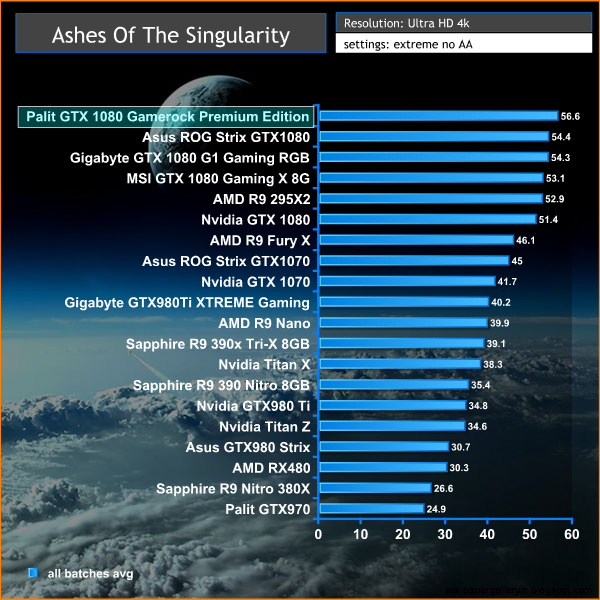
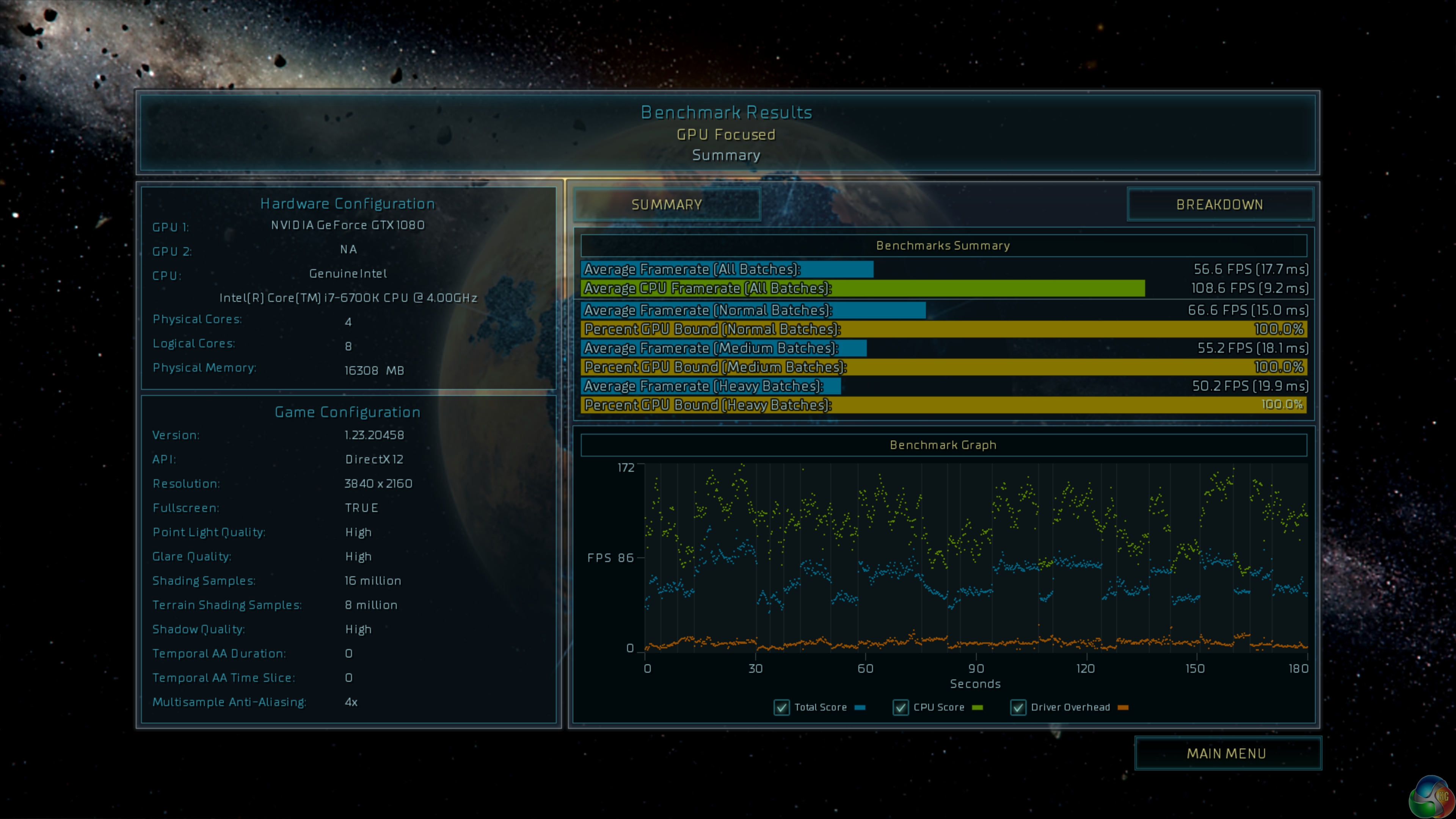
At Ultra HD 4k the Palit card averages almost 57 frames per second.
Middle-earth: Shadow of Mordor is a third-person open world video game, where the player controls a ranger by the name of Talion who seeks revenge on the forces of Sauron after his family, including his wife, are killed. Players can travel across locations in the game through parkour, riding monsters, or accessing Forge Towers, which serve as fast travel points.

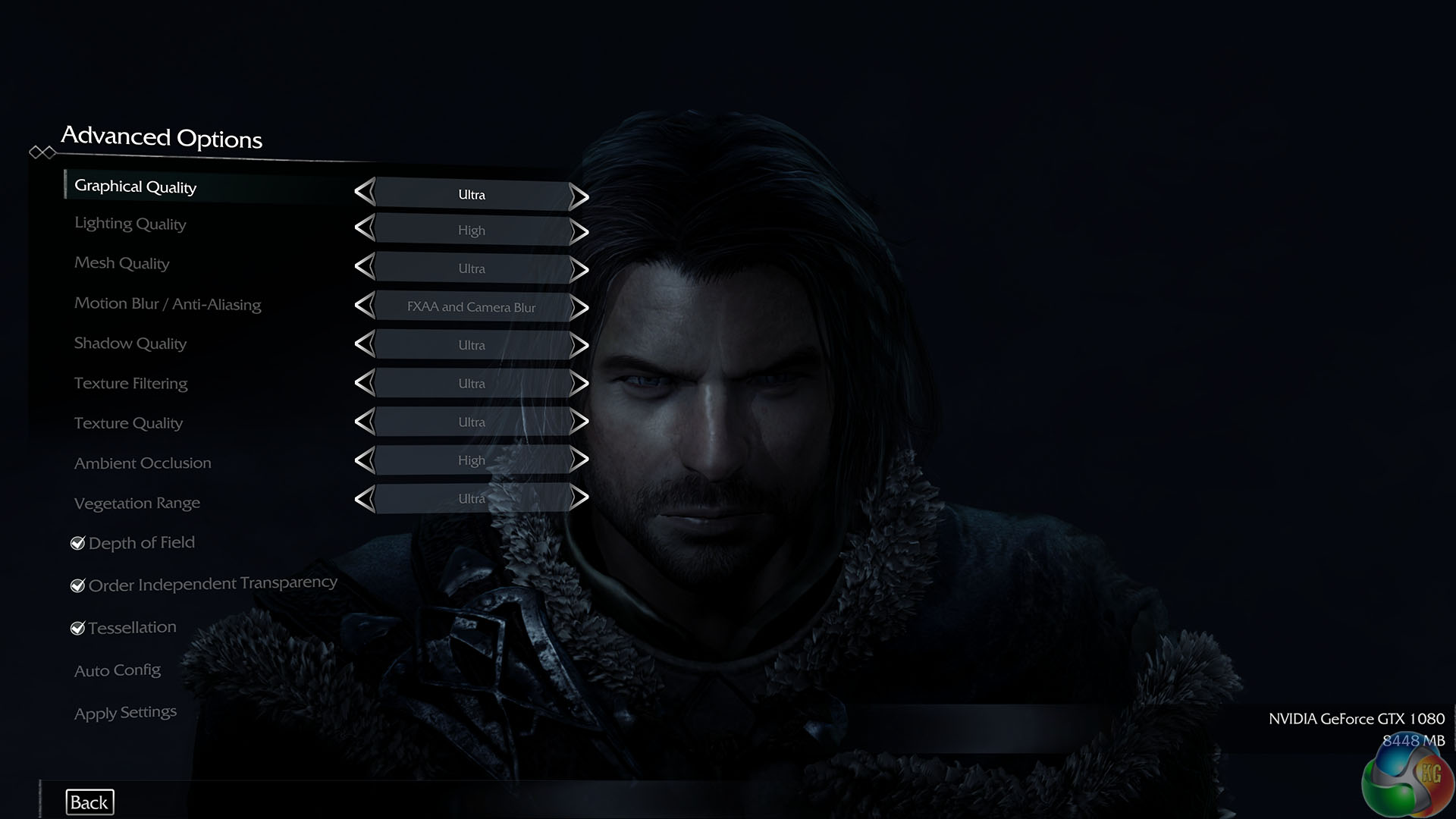
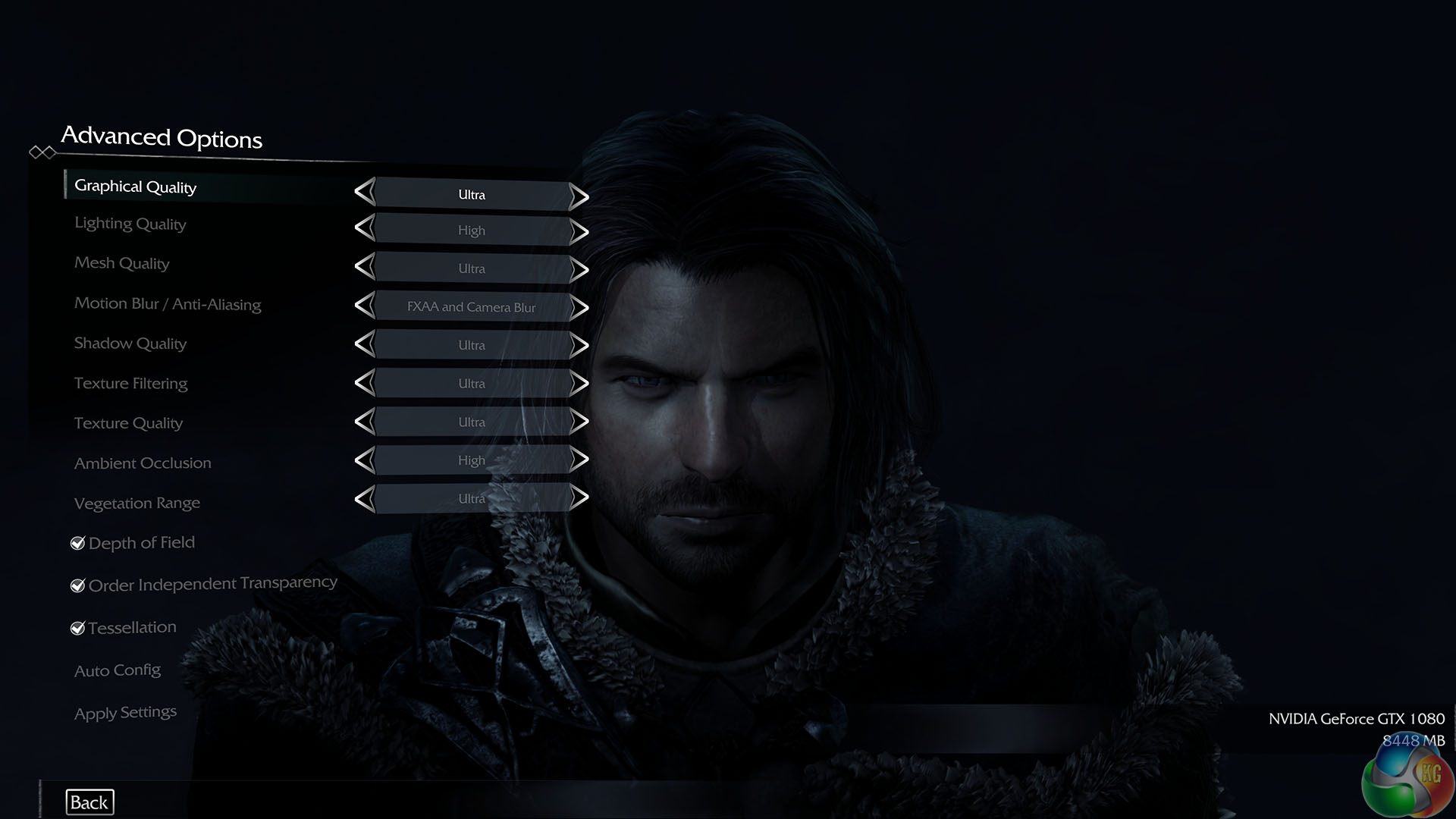
We test at 1440p with the image quality settings at Ultra.
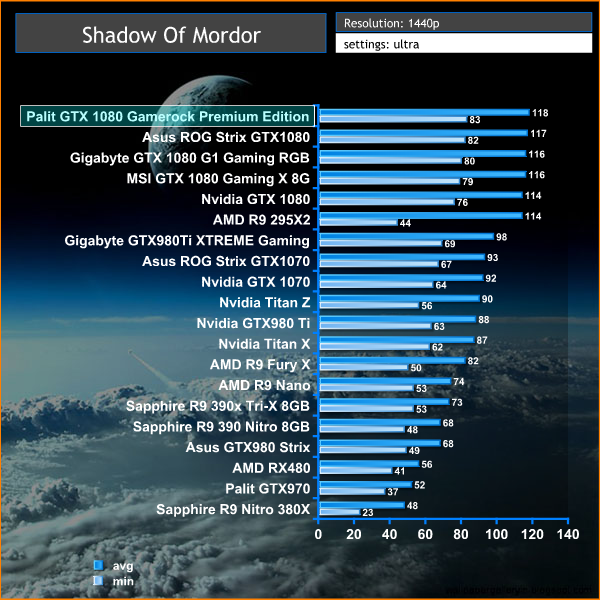
Excellent results, topping the graph at 118 frames per second.
Middle-earth: Shadow of Mordor is a third-person open world video game, where the player controls a ranger by the name of Talion who seeks revenge on the forces of Sauron after his family, including his wife, are killed. Players can travel across locations in the game through parkour, riding monsters, or accessing Forge Towers, which serve as fast travel points.

With test at Ultra HD 4k resolution with Ultra image settings enabled.
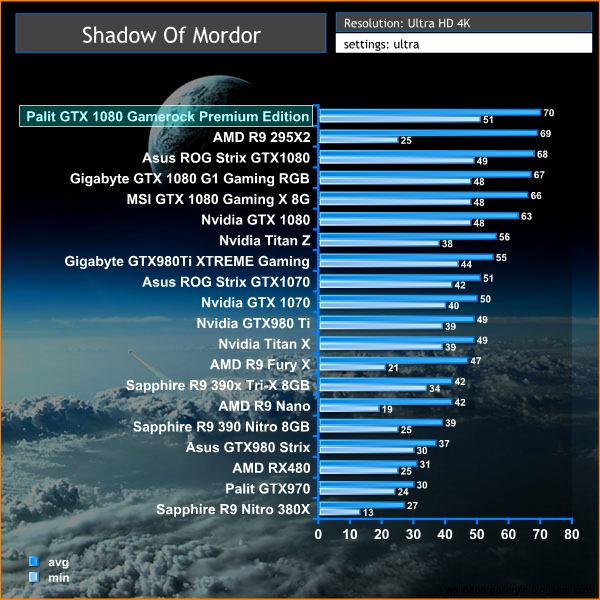
The higher boost speed helps the Palit GTX 1080 GameRock Premium Edition take top spot in the chart, even above the AMD R9 295X2, which is a first.
Dirt Rally is developed by British video game developer Codemasters using the in house Ego engine. Development began with a small team of individuals following the release of their 2012 video game Dirt: Showdown. Codemasters have emphasised a desire to create a simulation with Dirt Rally. They started by prototyping a handling model and creating tracks based on map data. The game employs a different physics model from previous titles, rebuilt from the ground up.
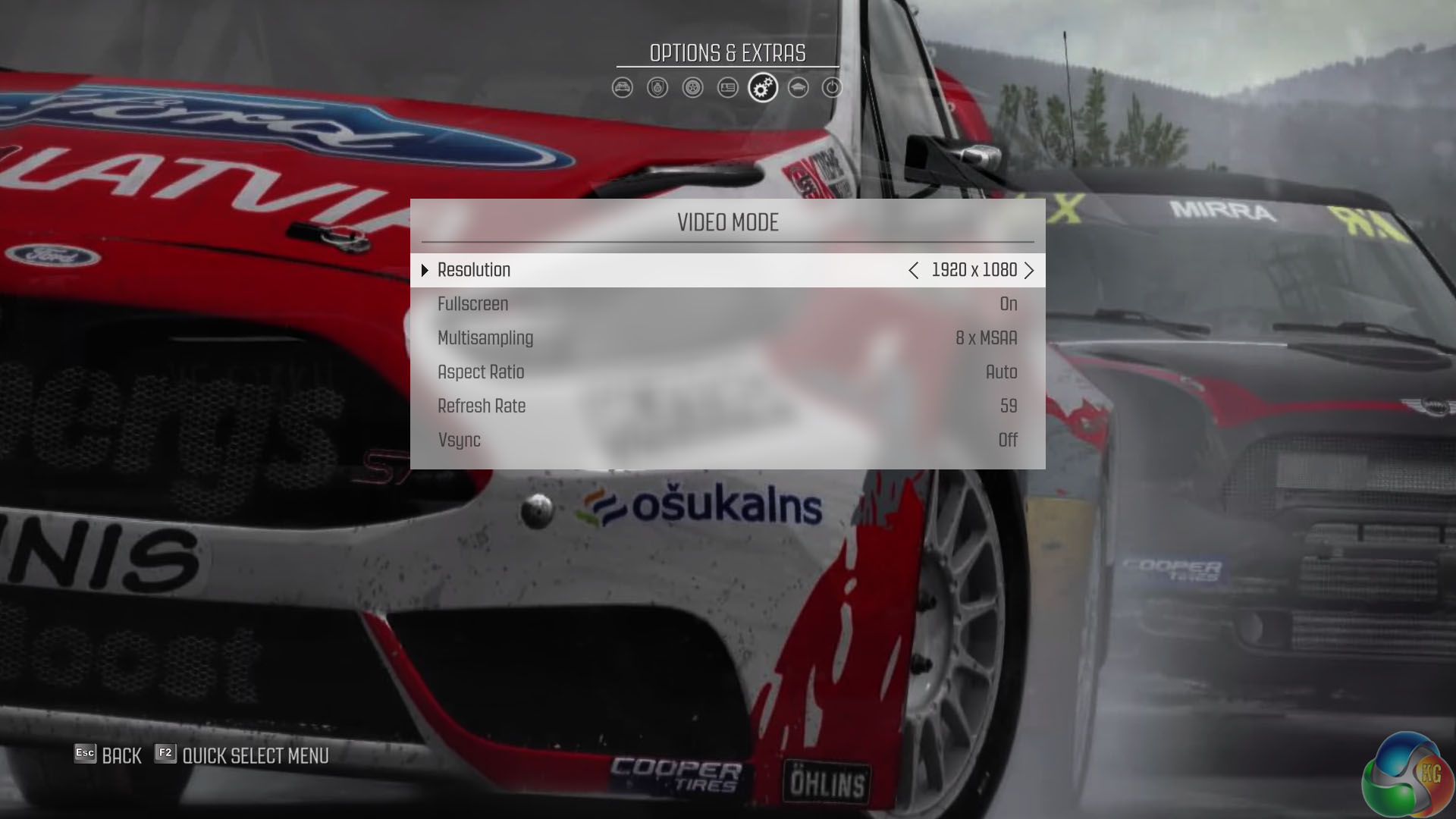
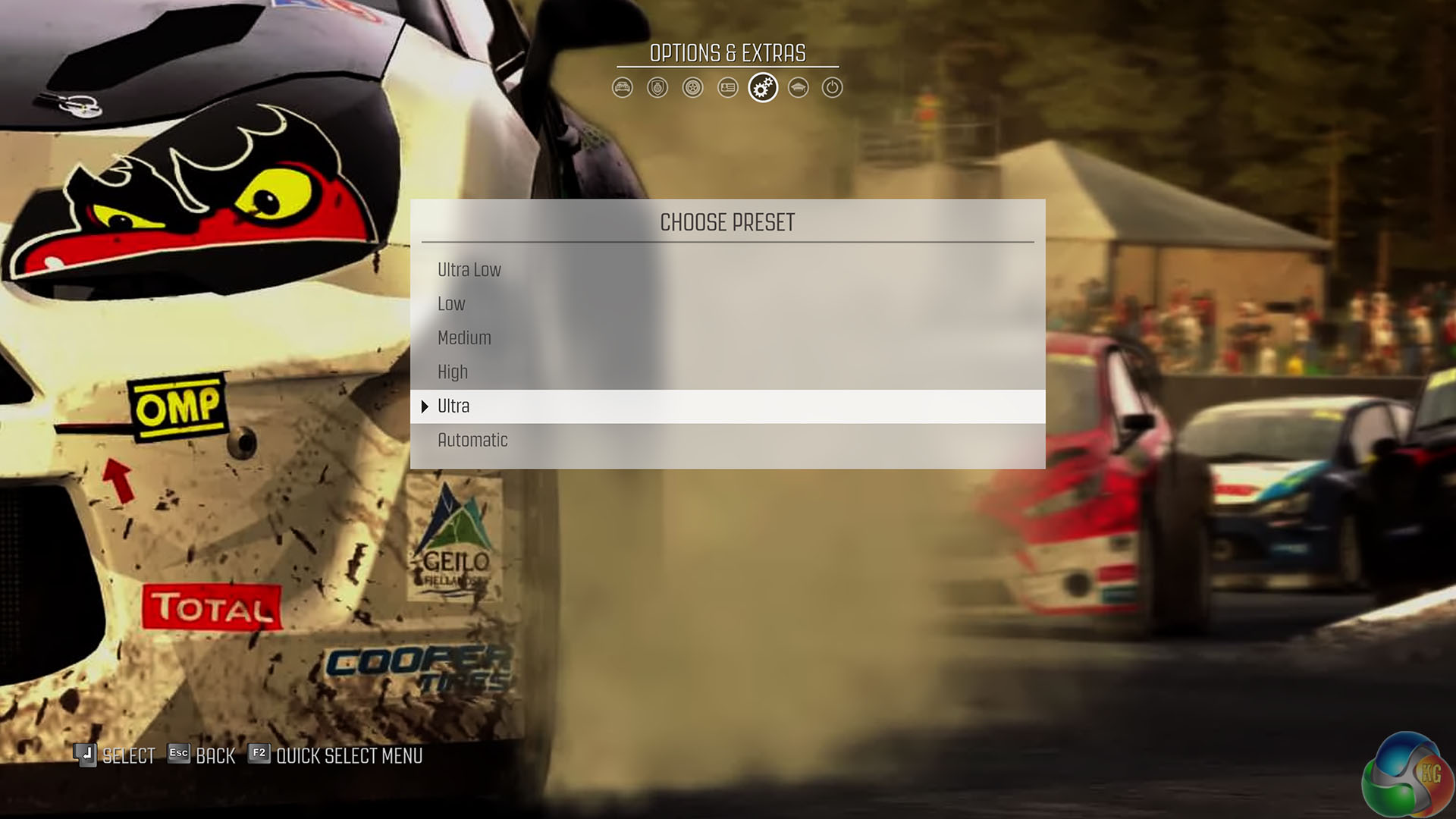
We test at 1080p with 8x MSAA and the ultra image quality setting enabled.
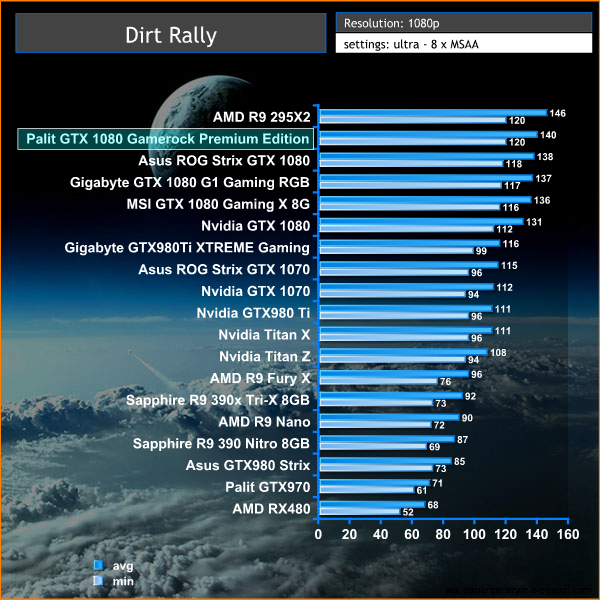
No problems hitting an average of 140 frames per second at 1080p, ideal for a high refresh 120hz gaming panel.
Dirt Rally is developed by British video game developer Codemasters using the in house Ego engine. Development began with a small team of individuals following the release of their 2012 video game Dirt: Showdown. Codemasters have emphasised a desire to create a simulation with Dirt Rally. They started by prototyping a handling model and creating tracks based on map data. The game employs a different physics model from previous titles, rebuilt from the ground up.
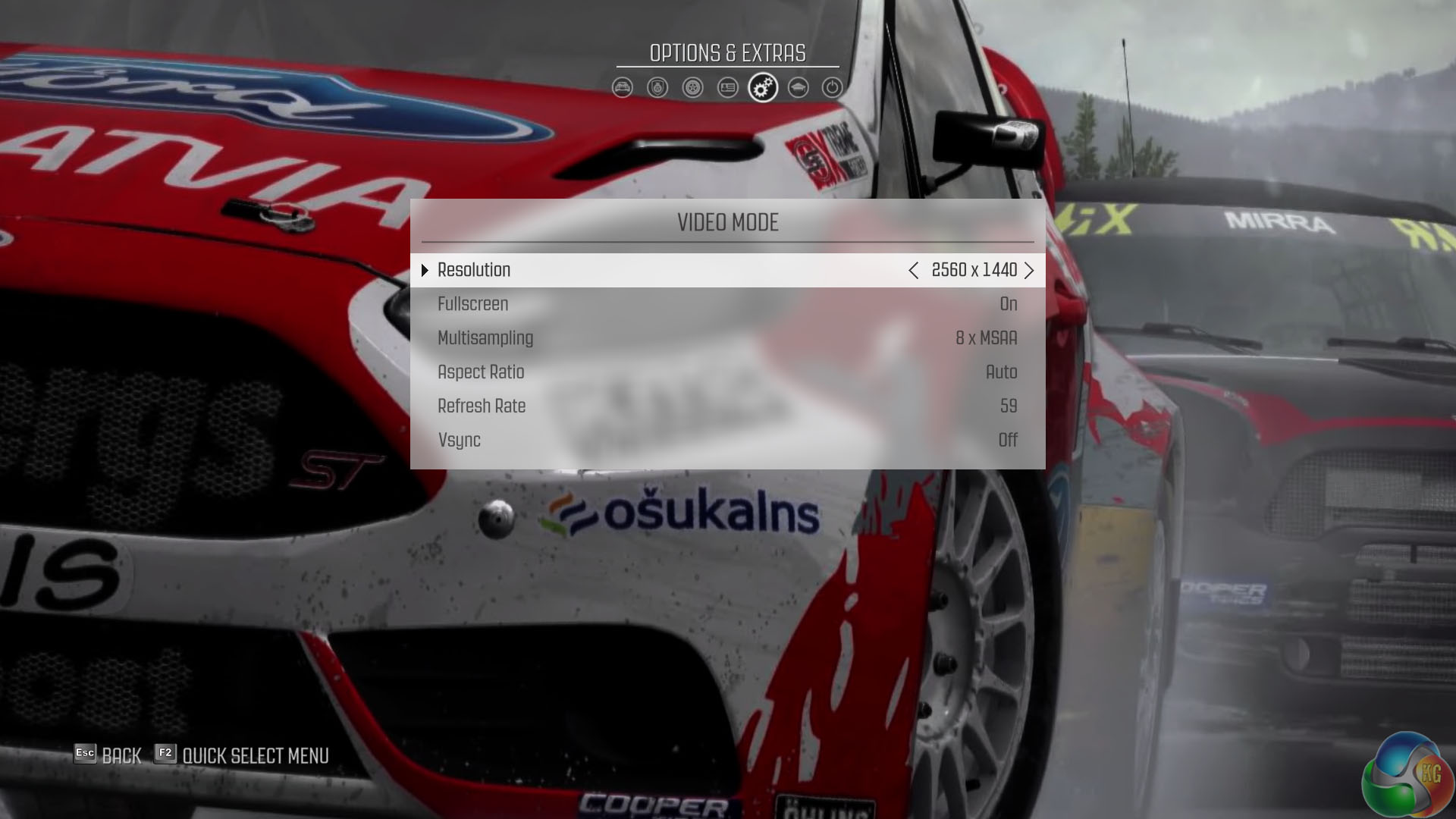
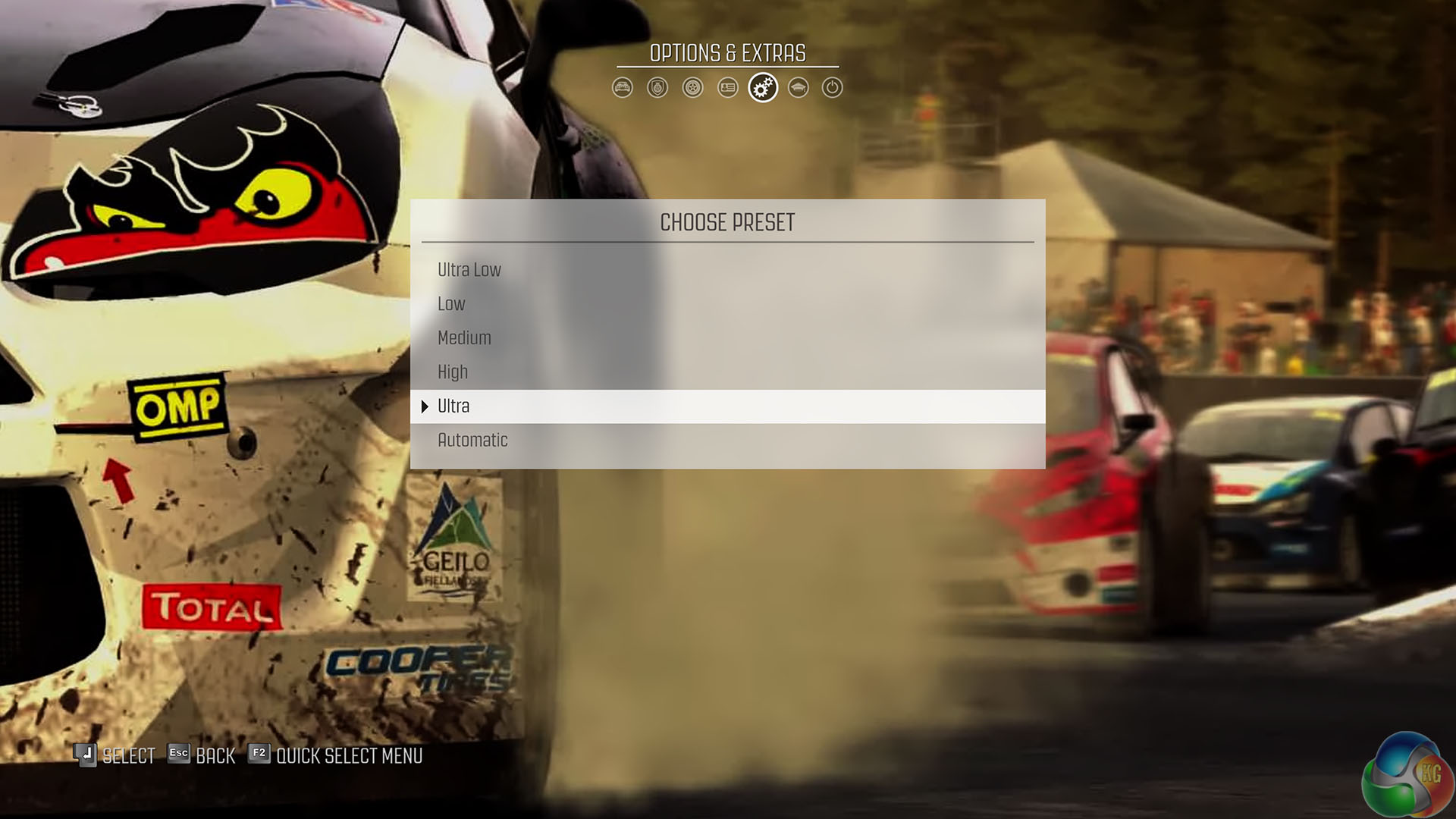
We test at 1440 with 8x MSAA and the ultra image quality setting enabled.
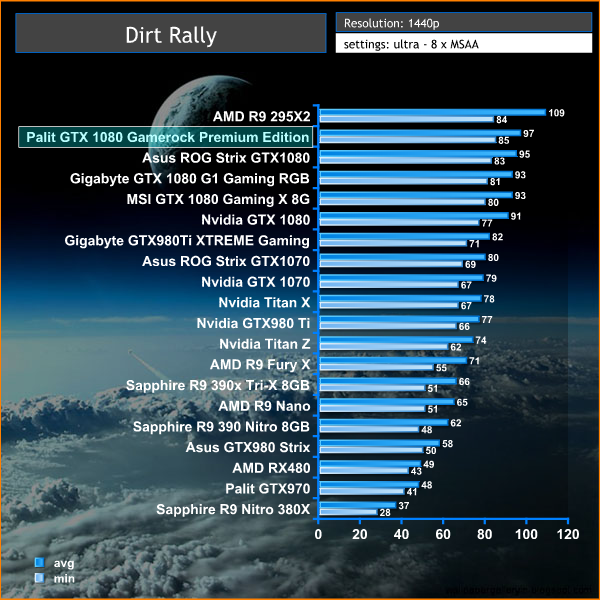
We are seeing a trend here, with the Palit GTX 1080 GameRock Premium Edition at top position in the graph.
Dirt Rally is developed by British video game developer Codemasters using the in house Ego engine. Development began with a small team of individuals following the release of their 2012 video game Dirt: Showdown. Codemasters have emphasised a desire to create a simulation with Dirt Rally. They started by prototyping a handling model and creating tracks based on map data. The game employs a different physics model from previous titles, rebuilt from the ground up.
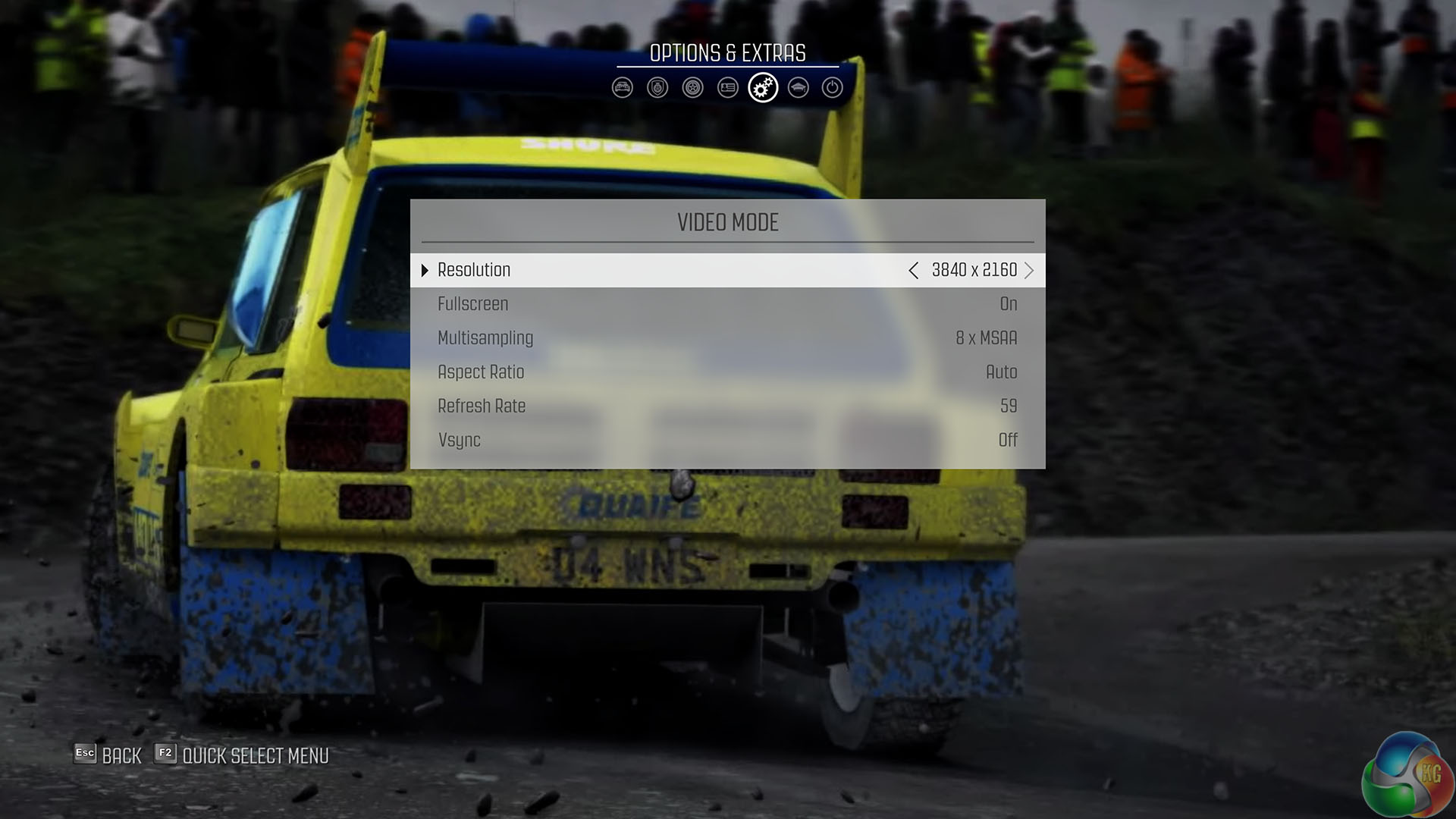
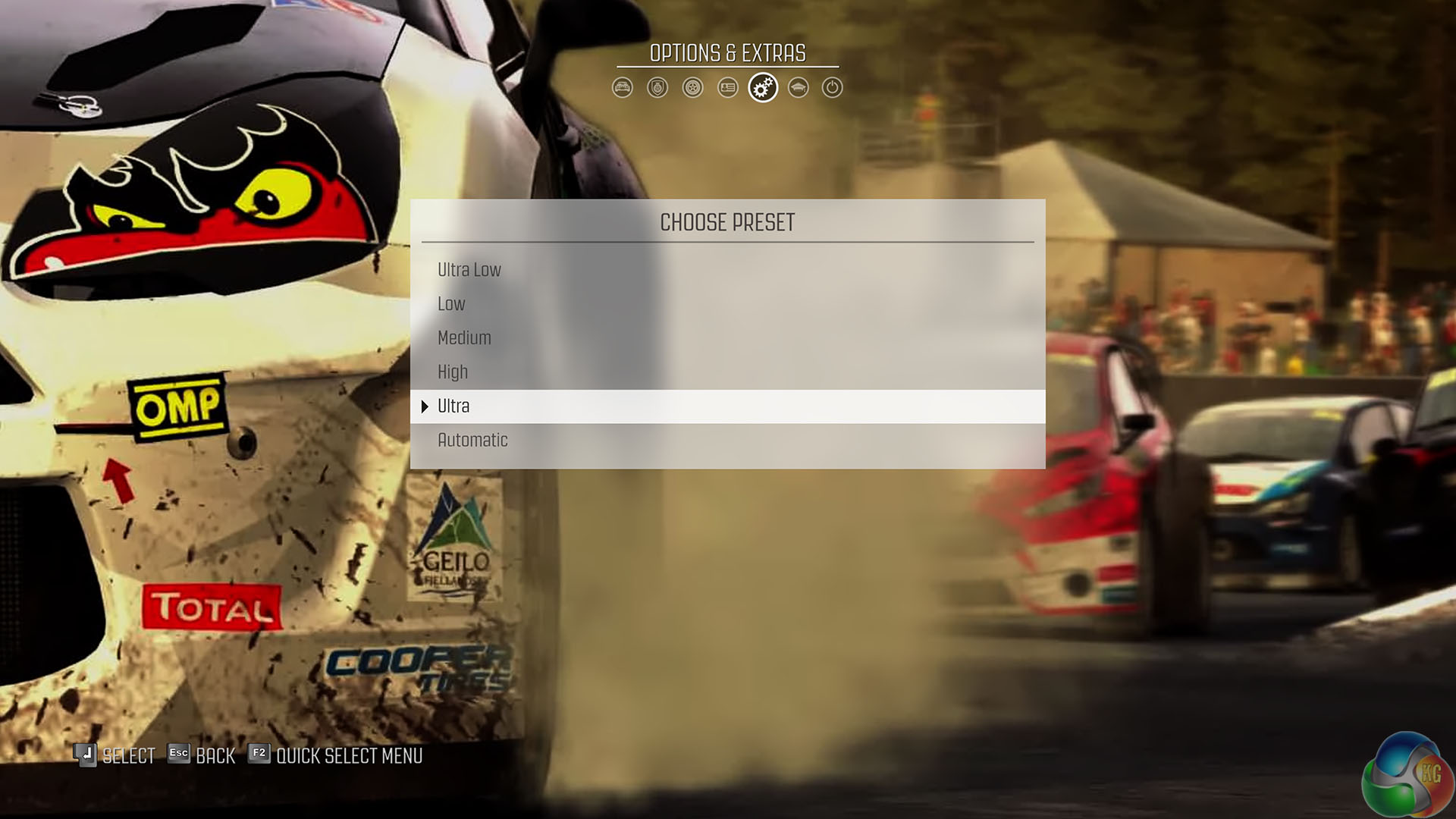
We test at Ultra HD 4k with 8x MSAA and the ultra image quality setting enabled.
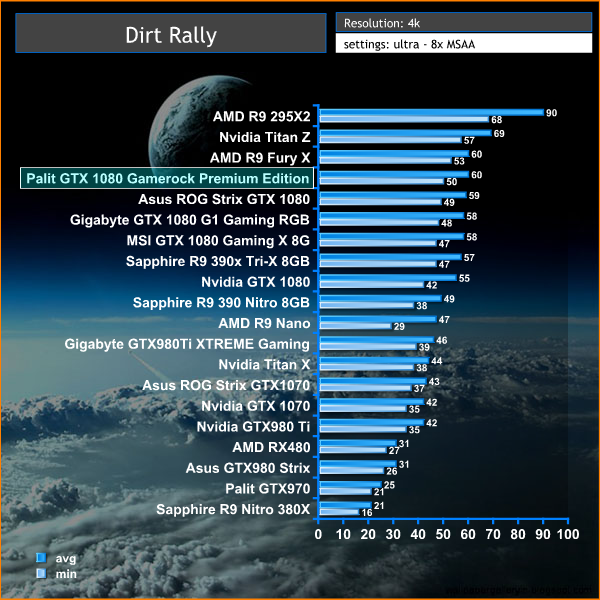
At Ultra HD 4K resolution, the Dual GPU cards score highly, taking top positions in the chart. The Palit GTX 1080 GameRock Premium Edition holds a 60 frame rate average however, which is impressive.
Rise of the Tomb Raider is a third-person action-adventure game that features similar gameplay found in 2013's Tomb Raider. Players control Lara Croft through various environments, battling enemies, and completing puzzle platforming sections, while using improvised weapons and gadgets in order to progress through the story. It uses a Direct X 12 capable engine.
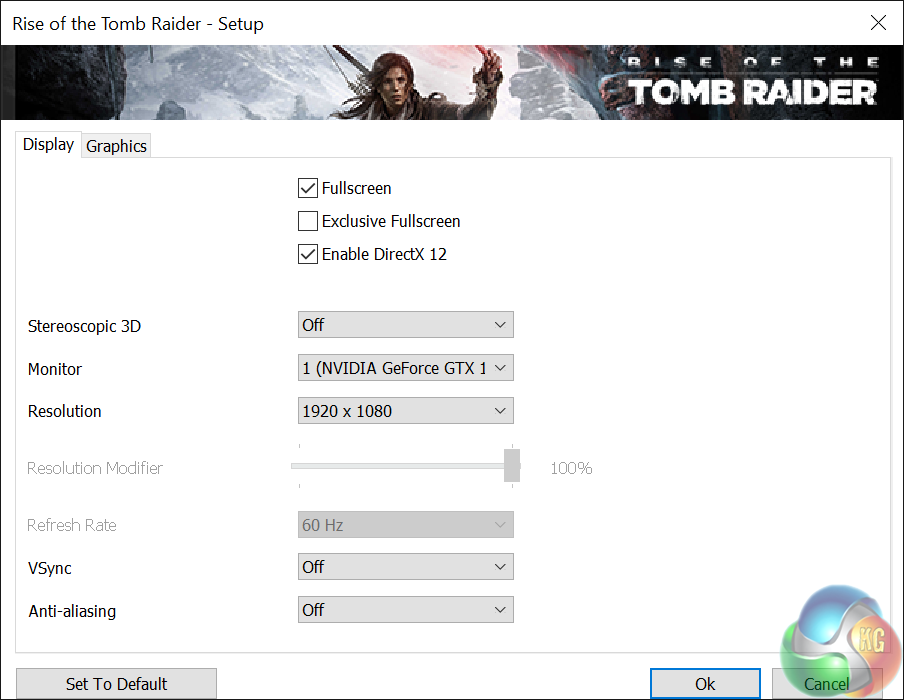
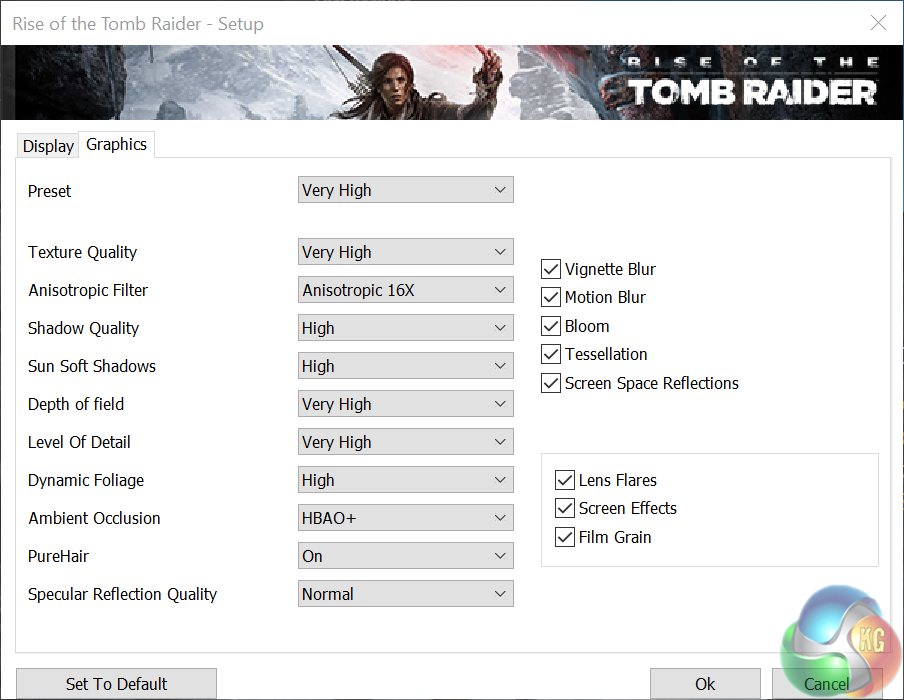
We enable Direct X 12, Vsync is off and graphics are set to the ‘very high' profile, shown above. We test the Nvidia Titan Z with the SLi optimisation both disabled, then enabled. This is clearly marked in the graph. See more HERE.
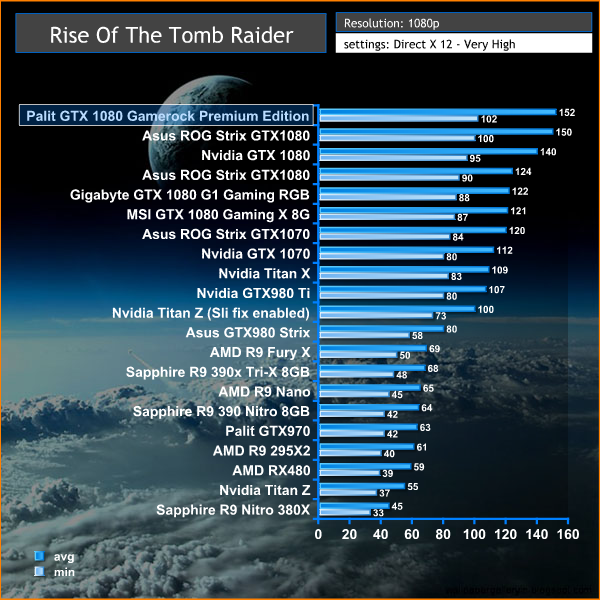
At 1080p this engine is super smooth, with even the GTX1070 cards delivering a great gaming experience, with the eye candy maxed.
Rise of the Tomb Raider is a third-person action-adventure game that features similar gameplay found in 2013's Tomb Raider. Players control Lara Croft through various environments, battling enemies, and completing puzzle platforming sections, while using improvised weapons and gadgets in order to progress through the story. It uses a Direct X 12 capable engine.
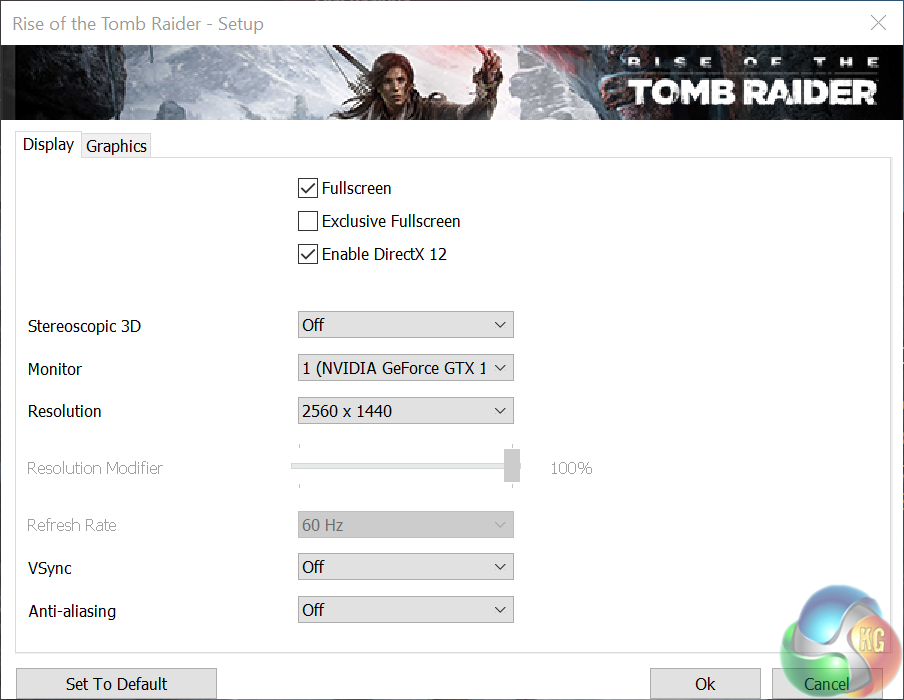
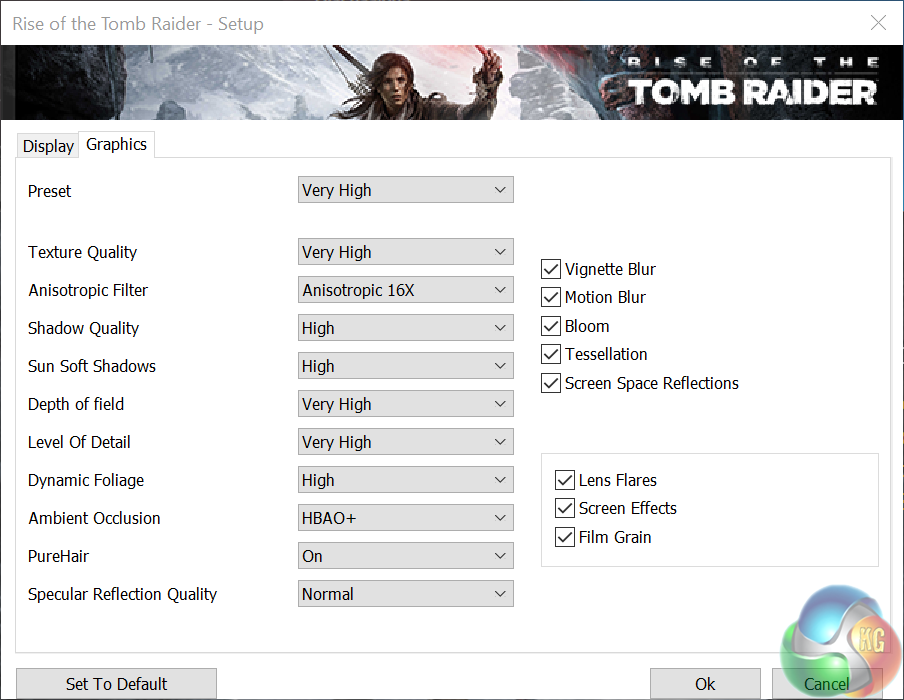
We enable Direct X 12, Vsync is off and graphics are set to the ‘very high' profile, shown above. We test the Nvidia Titan Z with the SLi optimisation both disabled, then enabled. This is clearly marked in the graph. See more HERE.
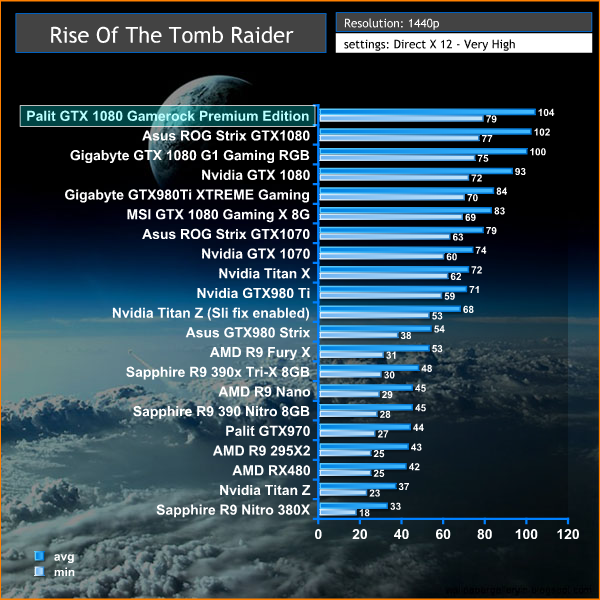
At 1440p performance levels are still over the 100 fps mark, with the Palit GTX 1080 GameRock Premium Edition holding an average of 104 fps.
Rise of the Tomb Raider is a third-person action-adventure game that features similar gameplay found in 2013's Tomb Raider. Players control Lara Croft through various environments, battling enemies, and completing puzzle platforming sections, while using improvised weapons and gadgets in order to progress through the story. It uses a Direct X 12 capable engine.
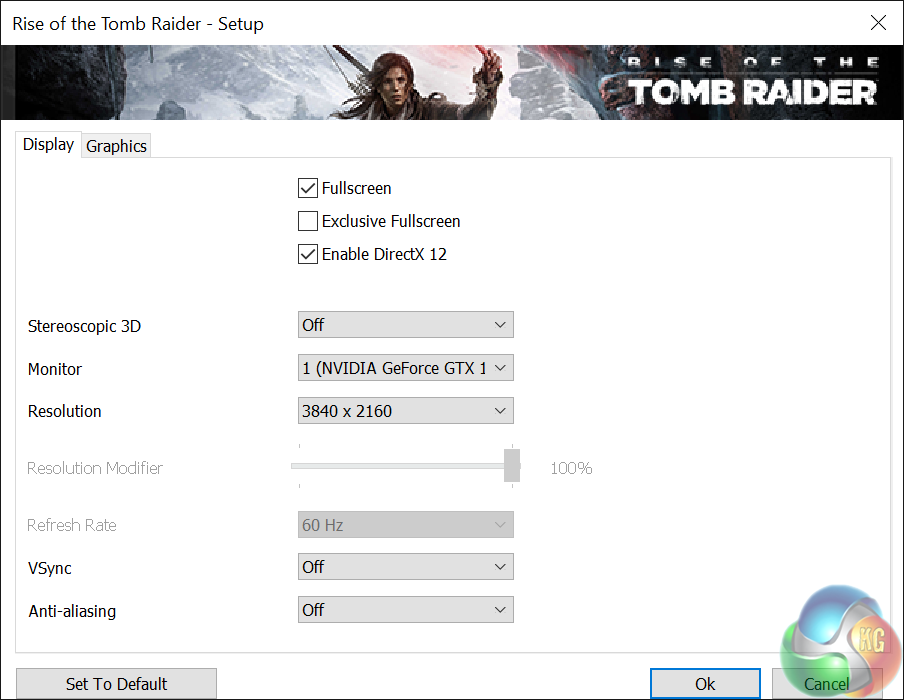

We enable Direct X 12, Vsync is off and graphics are set to the ‘very high' profile, shown above. We test the Nvidia Titan Z with the SLi optimisation both disabled, then enabled. This is clearly marked in the graph. See more HERE.
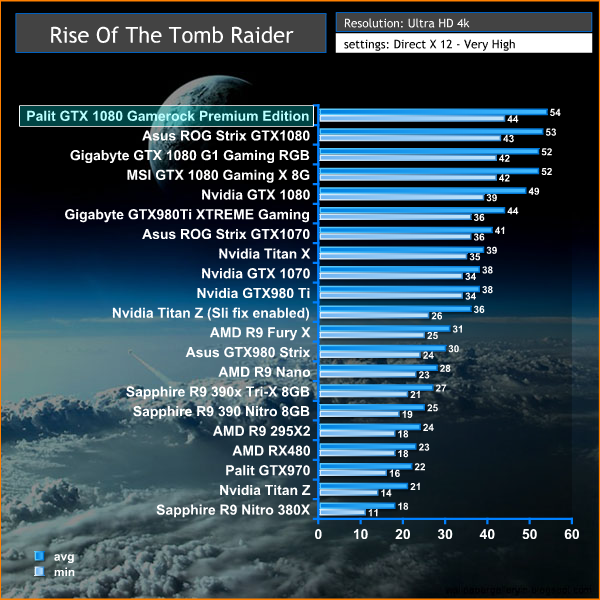
At Ultra HD 4k, even the Palit GTX 1080 GameRock Premium Edition can't maintain a 60 frame rate. Still performance will be perfectly acceptable for many gamers, holding well above 40 at all times.
Grand Theft Auto V is an action-adventure game played from either a first-person or third-person view. Players complete missions—linear scenarios with set objectives—to progress through the story. Outside of missions, players may freely roam the open world. Composed of the San Andreas open countryside area and the fictional city of Los Santos, the world is much larger in area than earlier entries in the series. It may be fully explored after the game's beginning without restriction, although story progress unlocks more gameplay content.
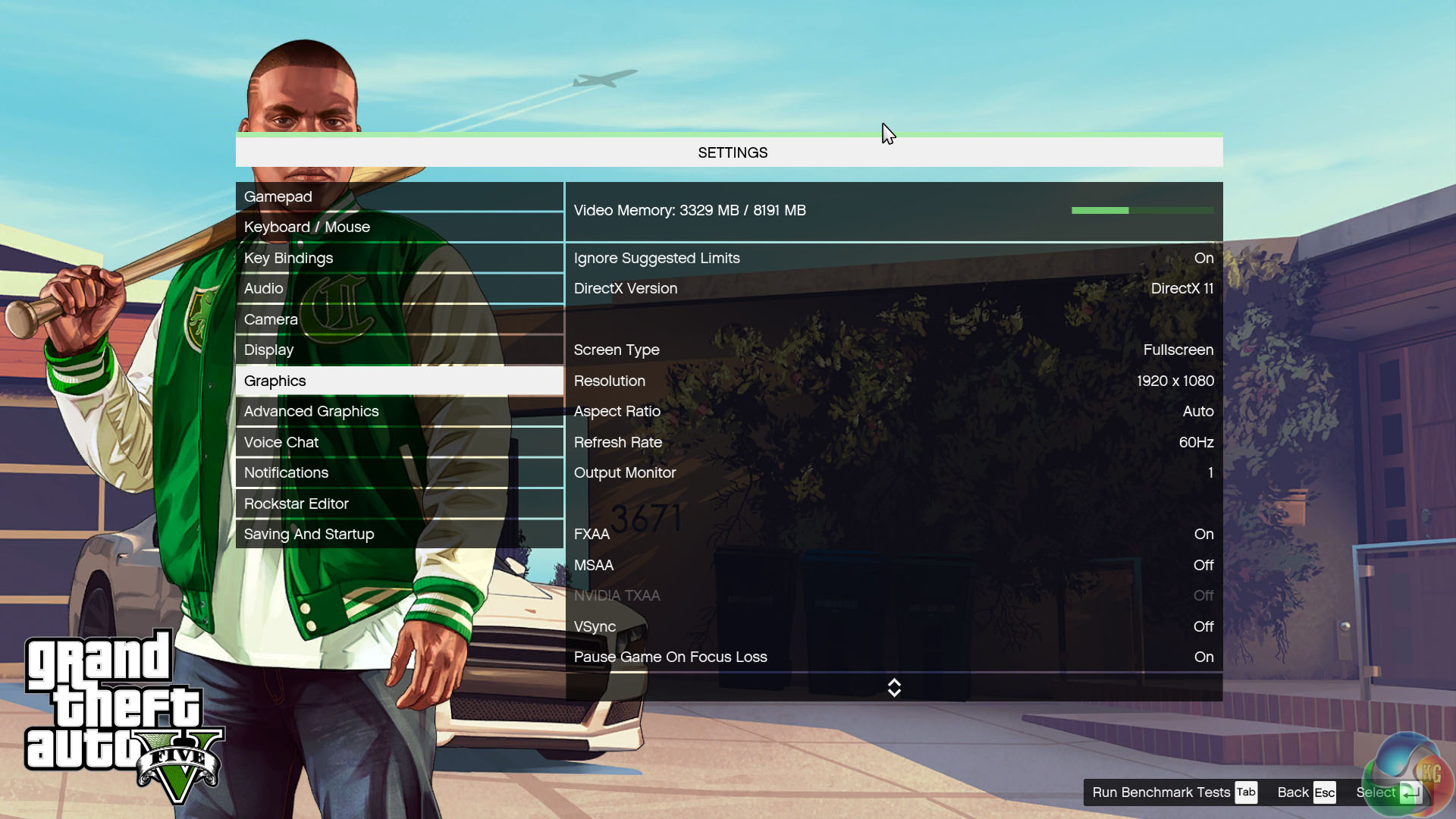
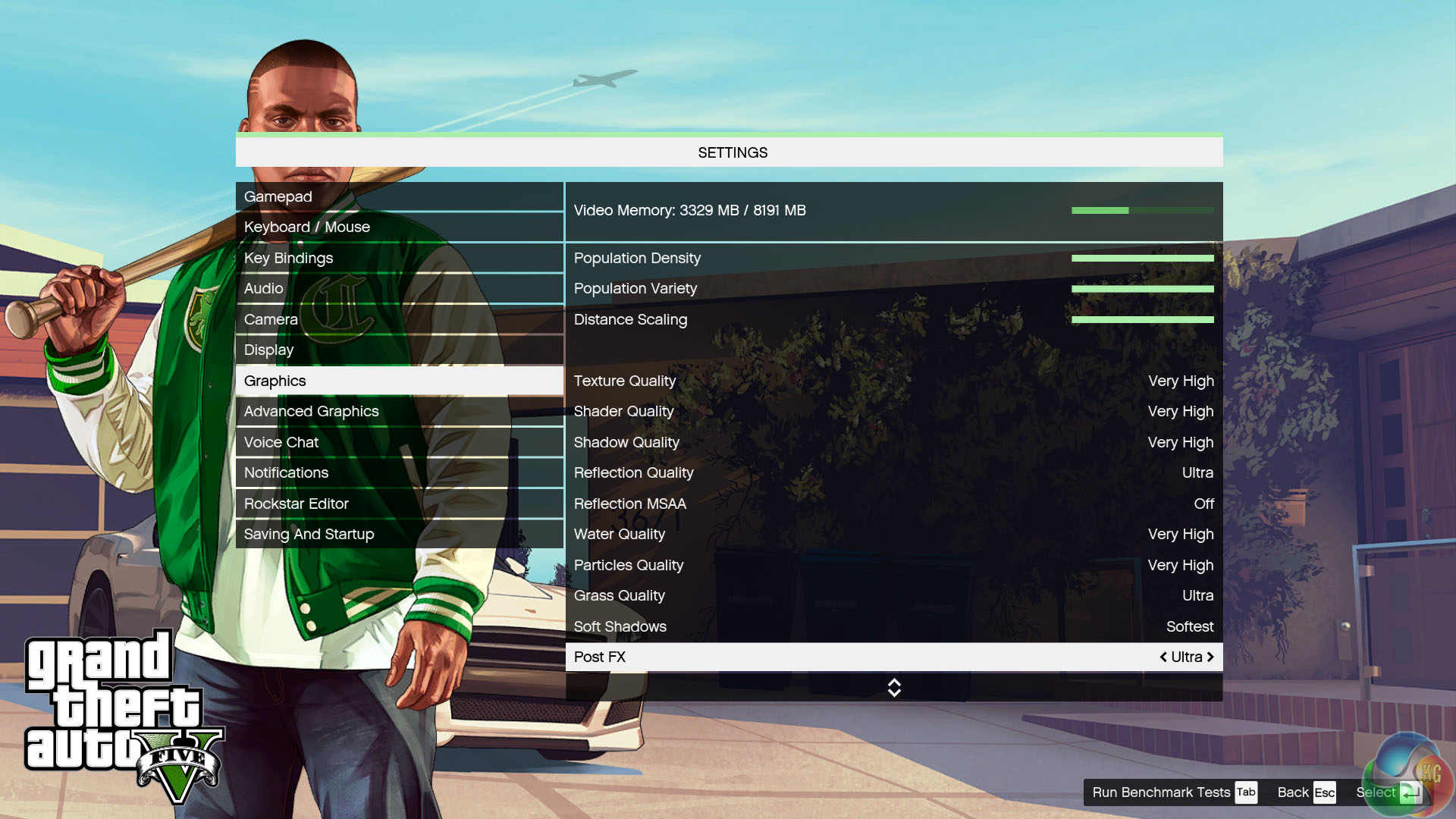
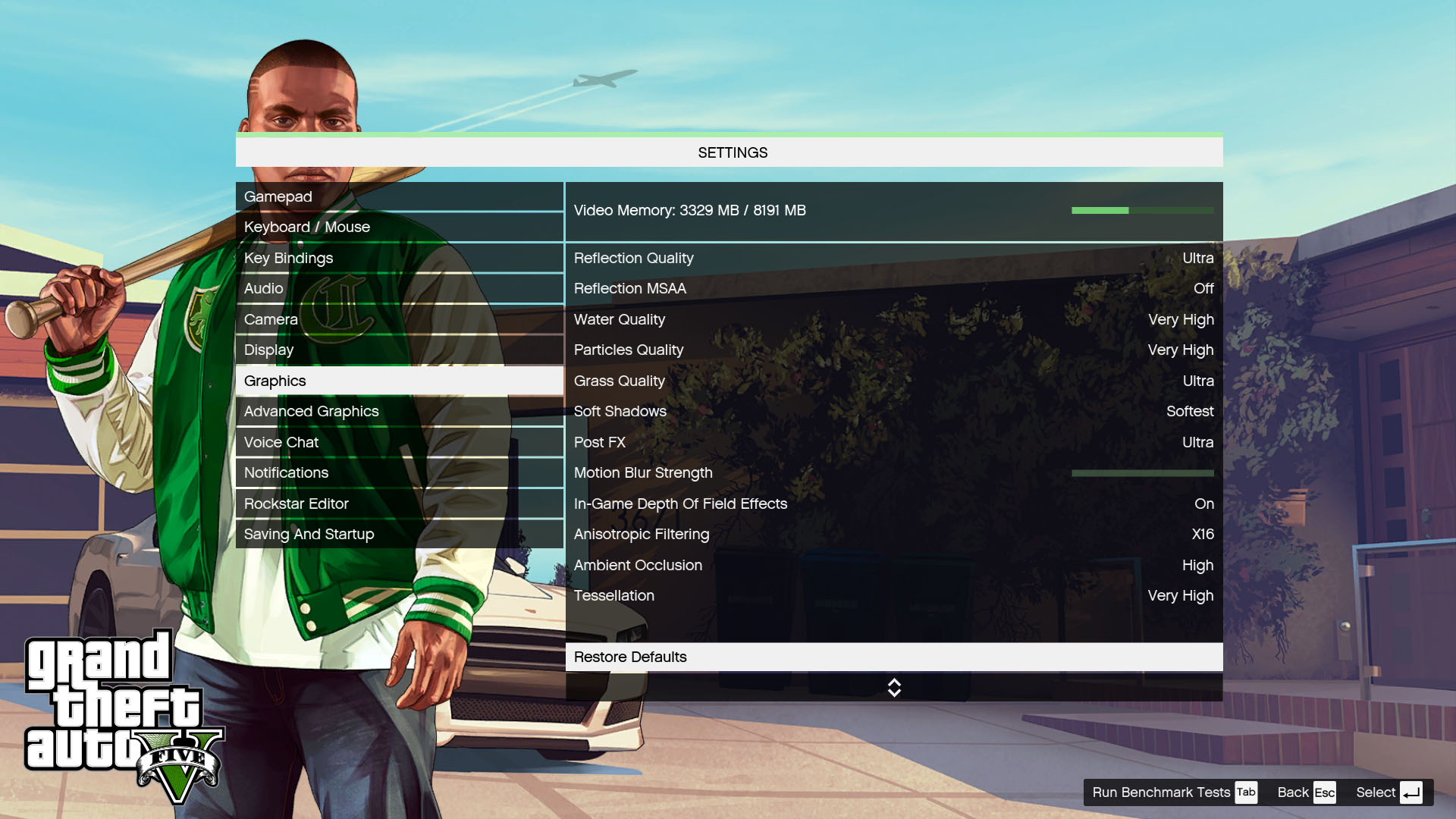

We maximise all the image quality settings, but leave anti aliasing turned off, as it dramatically impacts performance.
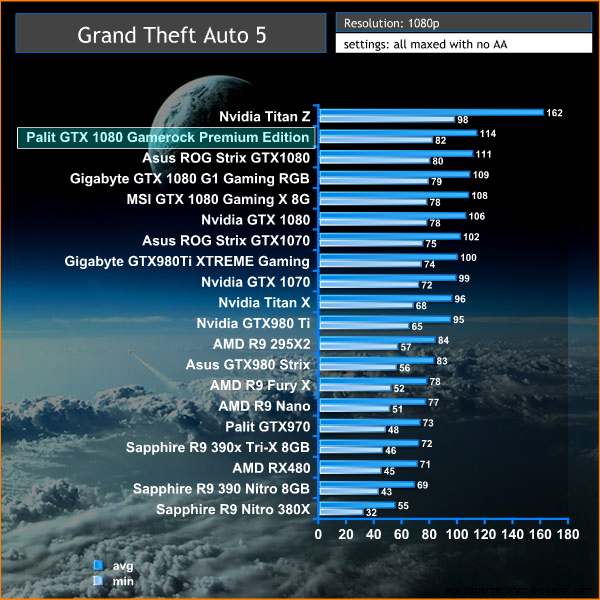
At 1080p Grand Theft Auto 5 runs very well on the Palit GTX 1080 GameRock Premium Edition averaging 114 frames per second.
Grand Theft Auto V is an action-adventure game played from either a first-person or third-person view. Players complete missions—linear scenarios with set objectives—to progress through the story. Outside of missions, players may freely roam the open world. Composed of the San Andreas open countryside area and the fictional city of Los Santos, the world is much larger in area than earlier entries in the series. It may be fully explored after the game's beginning without restriction, although story progress unlocks more gameplay content.
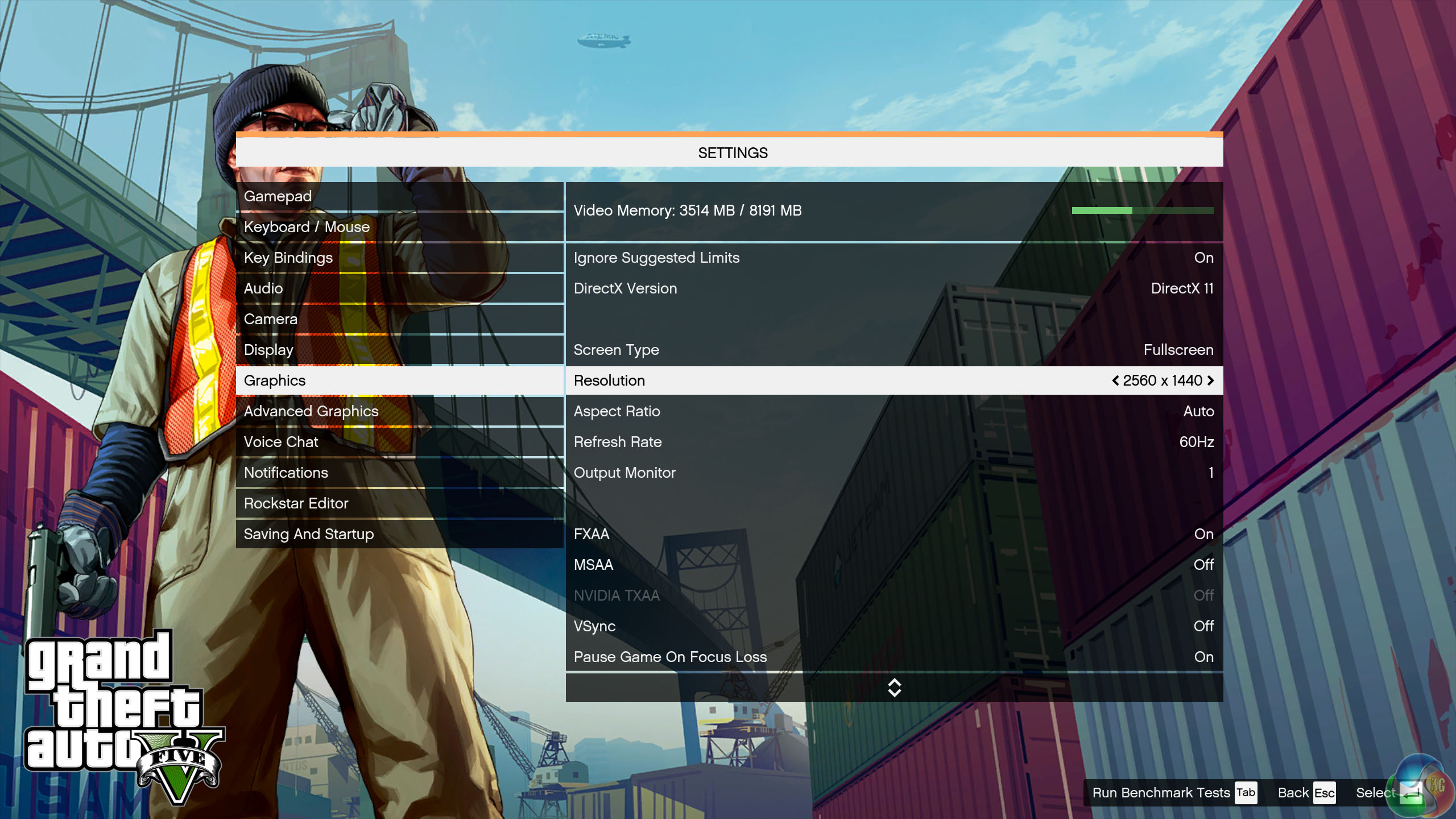
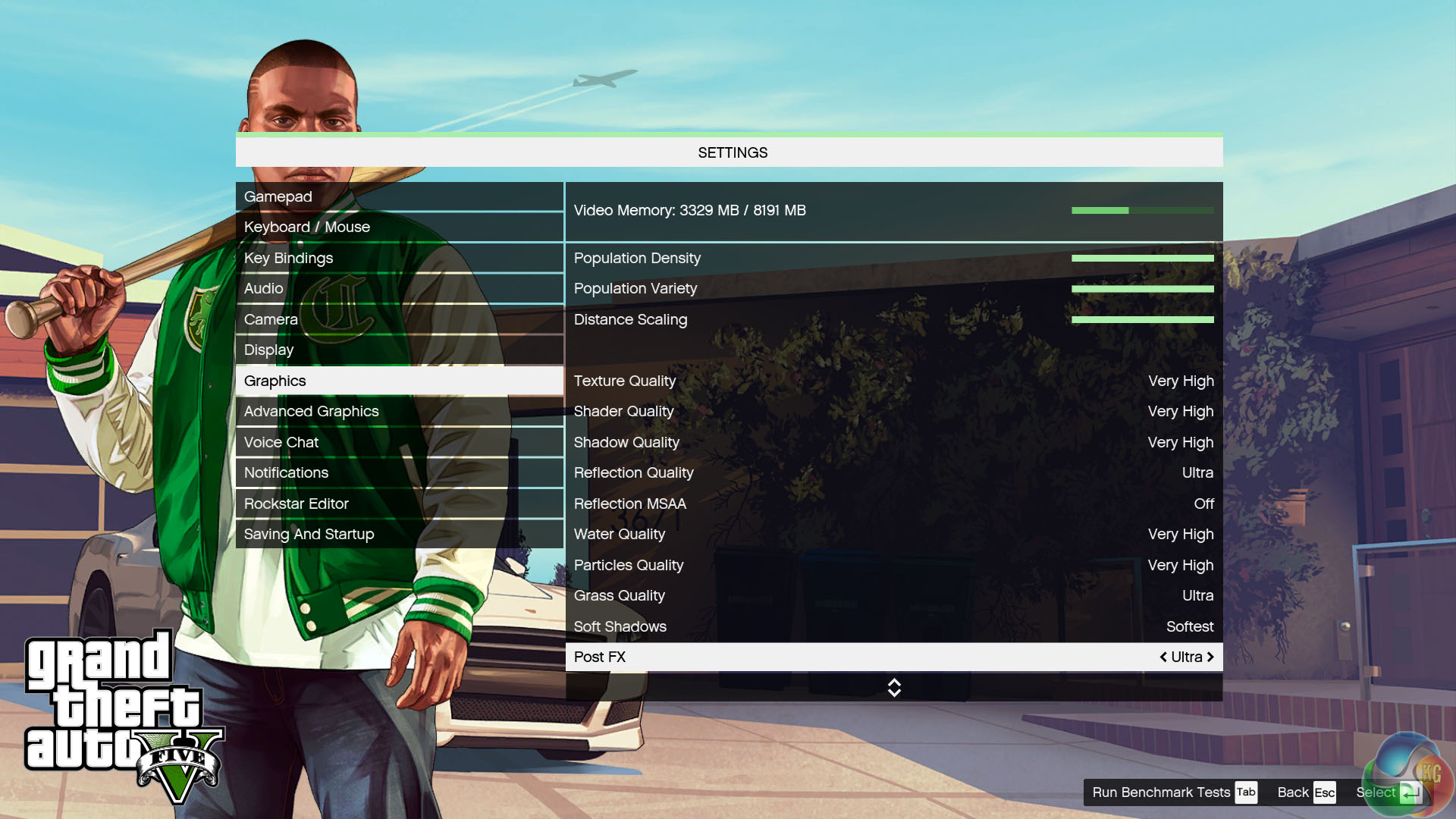
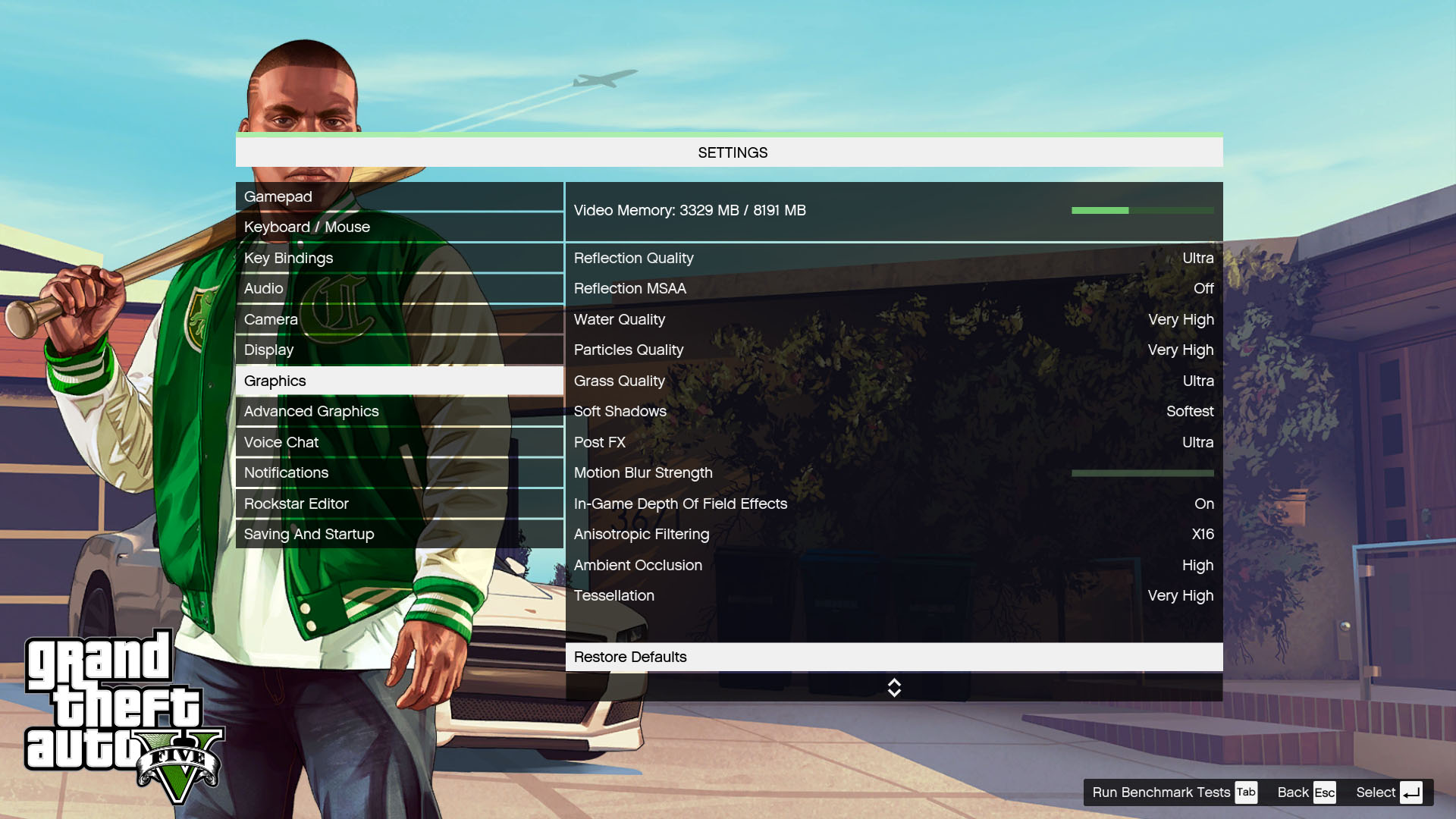
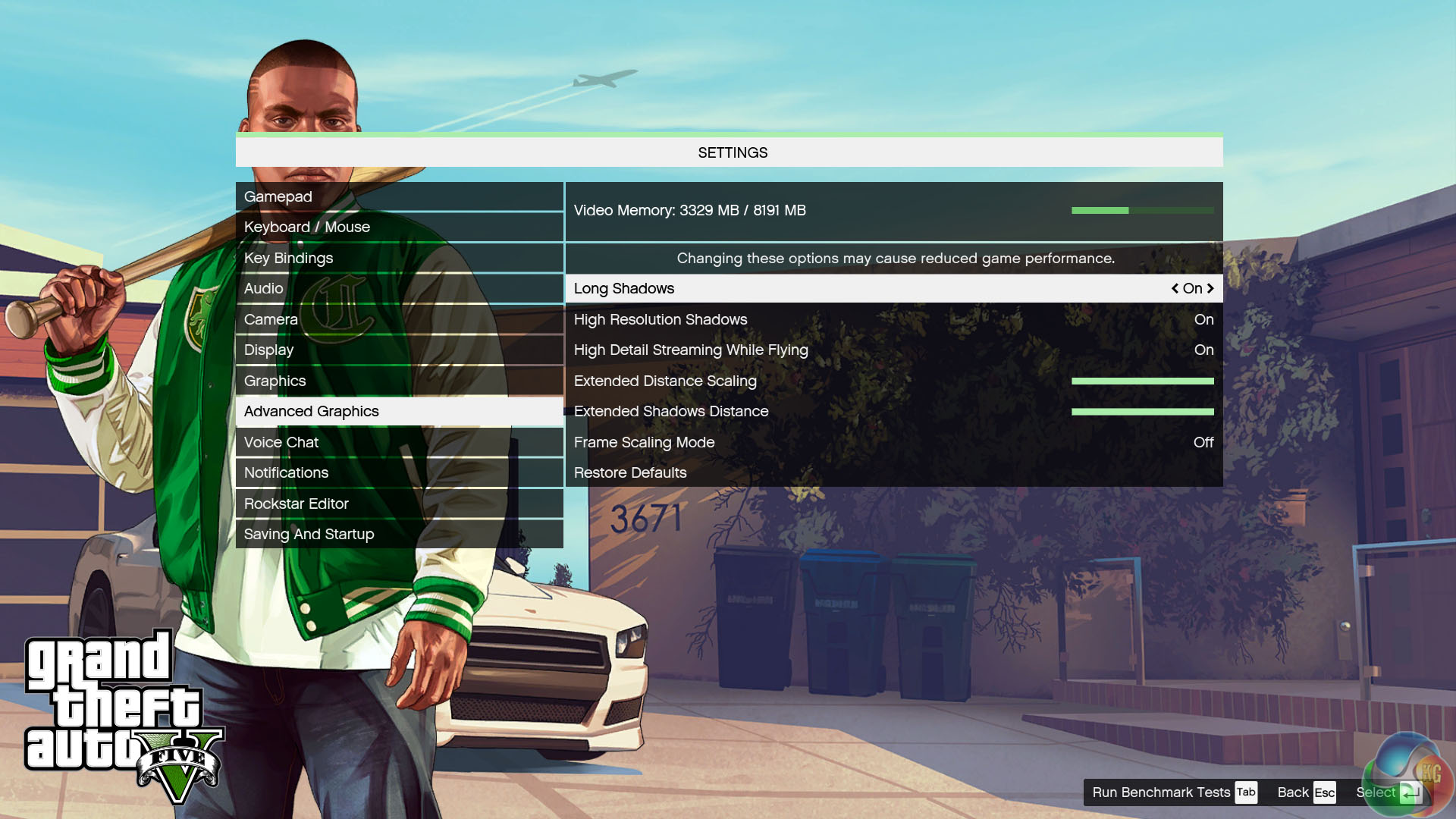
We maximise all the image quality settings, but leave anti aliasing turned off, as it dramatically impacts performance.
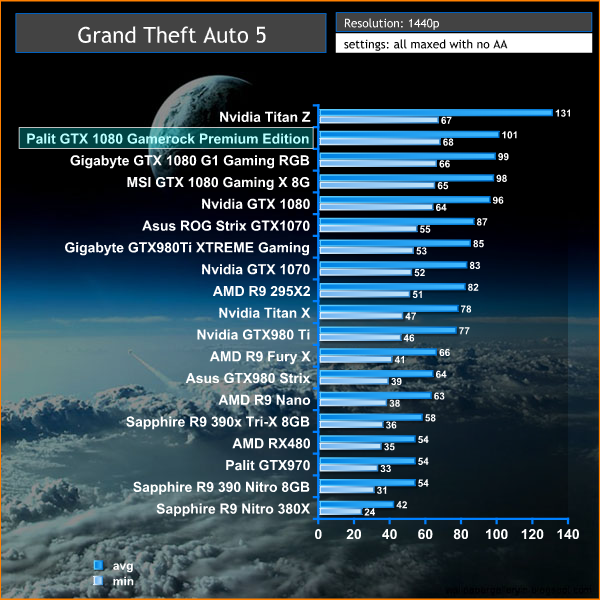
At 1440p the Palit GTX 1080 GameRock Premium Edition averages over 100 frames per second, which is fantastic.
Grand Theft Auto V is an action-adventure game played from either a first-person or third-person view. Players complete missions—linear scenarios with set objectives—to progress through the story. Outside of missions, players may freely roam the open world. Composed of the San Andreas open countryside area and the fictional city of Los Santos, the world is much larger in area than earlier entries in the series. It may be fully explored after the game's beginning without restriction, although story progress unlocks more gameplay content.
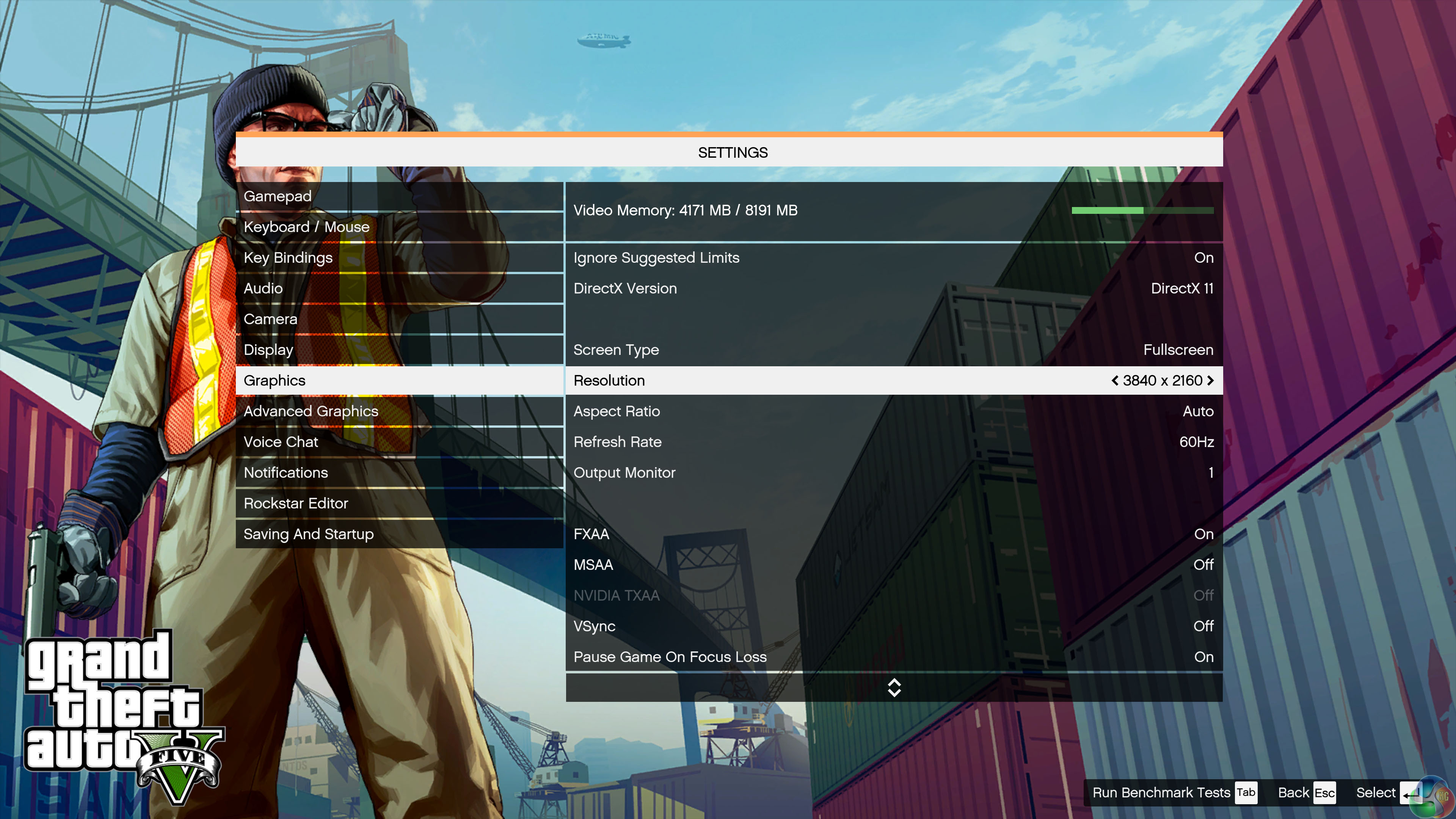
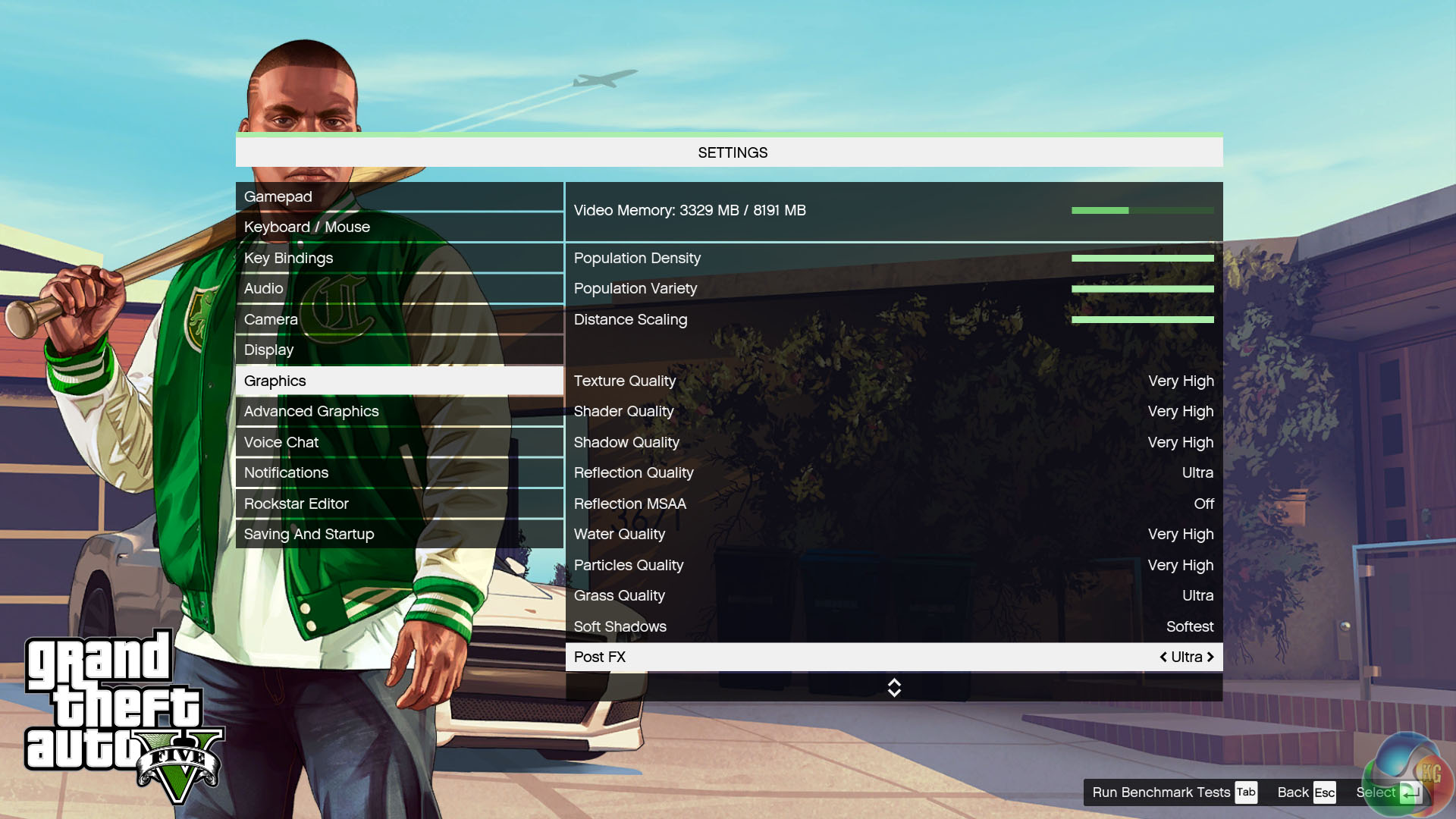
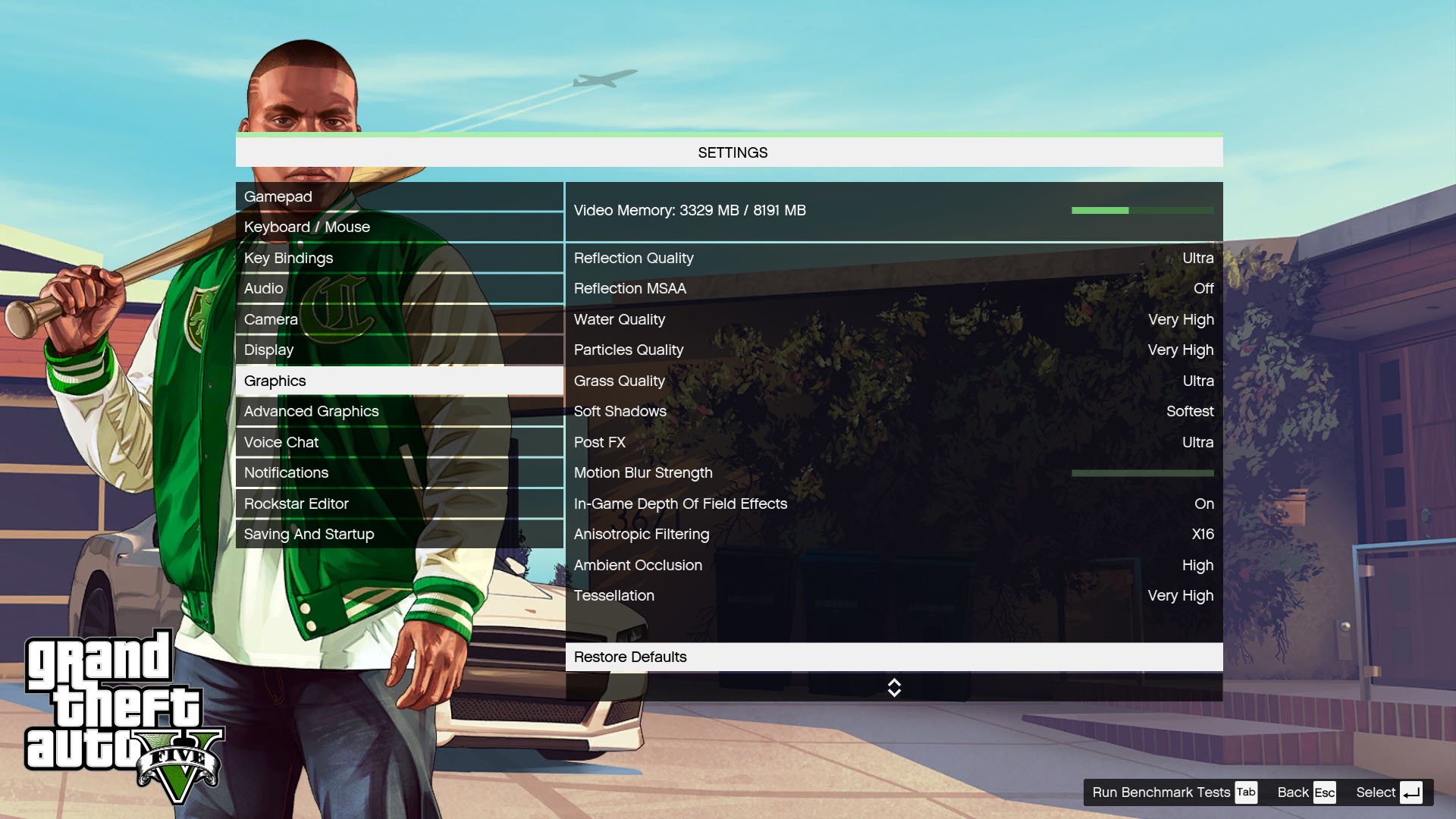

We maximise all the image quality settings, but leave anti aliasing turned off, as it dramatically impacts performance.
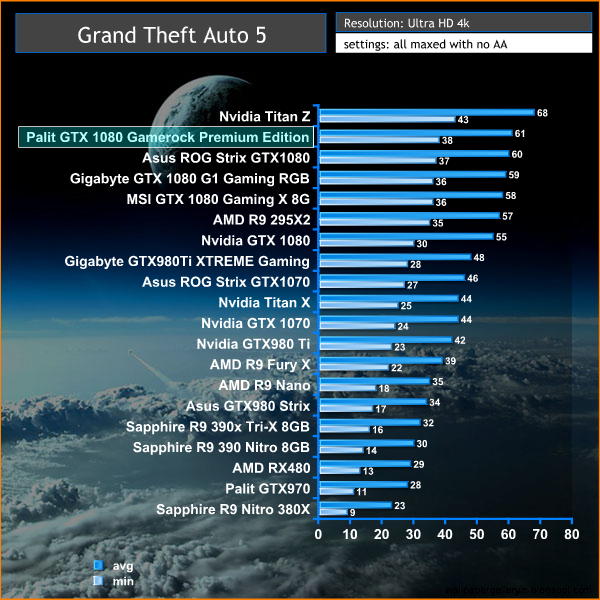
This engine is very demanding at Ultra HD 4k, especially with all the eye candy cranked. To get the best experience at these settings, you really will need two cards in SLi.
Just like the original game Metro 2033, Metro: Last Light is played from the perspective of Artyom, the player-character. The story takes place in post-apocalyptic Moscow, mostly inside the metro system, but occasionally missions bring the player above ground. Metro: Last Light takes place one year after the events of Metro 2033, following the canonical ending in which Artyom chose to proceed with the missile strike against the Dark Ones (this happens regardless of your actions in the first game). Redux adds all the DLC and graphical improvements.
Quality-Very High, SSAA-on, Texture Filtering-16x, Motion Blur-Normal, Tessellation-Normal, Advanced Physx-off.
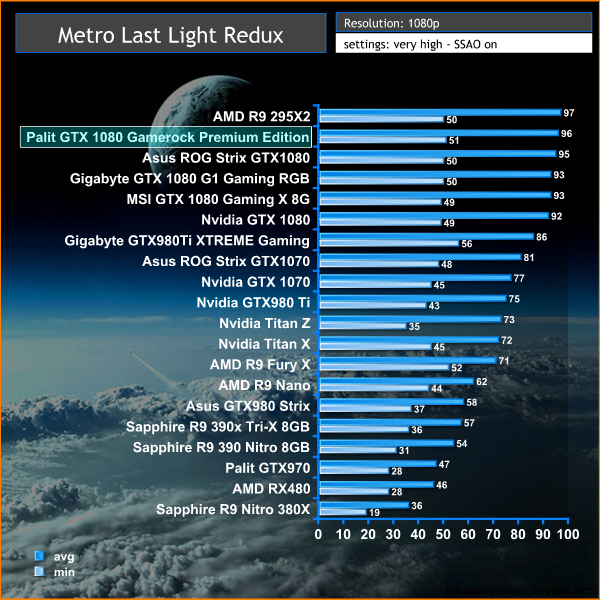
At 1080p the Palit GTX 1080 GameRock Premium Edition just manages to outperform the Asus ROG Strix GTX1080, by a single frame per second.Just like the original game Metro 2033, Metro: Last Light is played from the perspective of Artyom, the player-character. The story takes place in post-apocalyptic Moscow, mostly inside the metro system, but occasionally missions bring the player above ground. Metro: Last Light takes place one year after the events of Metro 2033, following the canonical ending in which Artyom chose to proceed with the missile strike against the Dark Ones (this happens regardless of your actions in the first game). Redux adds all the DLC and graphical improvements.
Quality-Very High, SSAA-on, Texture Filtering-16x, Motion Blur-Normal, Tessellation-Normal, Advanced Physx-off.
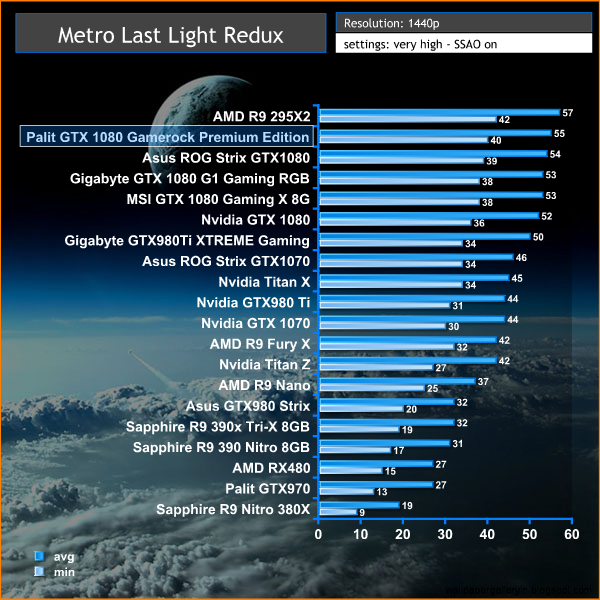
At 1440p at such high settings, even the Palit GTX 1080 GameRock Premium Edition struggles to hold frame rates close to 60 at all times. Still its the fastest performing single GPU solution we have tested.
Just like the original game Metro 2033, Metro: Last Light is played from the perspective of Artyom, the player-character. The story takes place in post-apocalyptic Moscow, mostly inside the metro system, but occasionally missions bring the player above ground. Metro: Last Light takes place one year after the events of Metro 2033, following the canonical ending in which Artyom chose to proceed with the missile strike against the Dark Ones (this happens regardless of your actions in the first game). Redux adds all the DLC and graphical improvements.
Quality-High, SSAA-off, Texture Filtering-16x, Motion Blur-Normal, Tessellation-Normal, Advanced Physx-off.
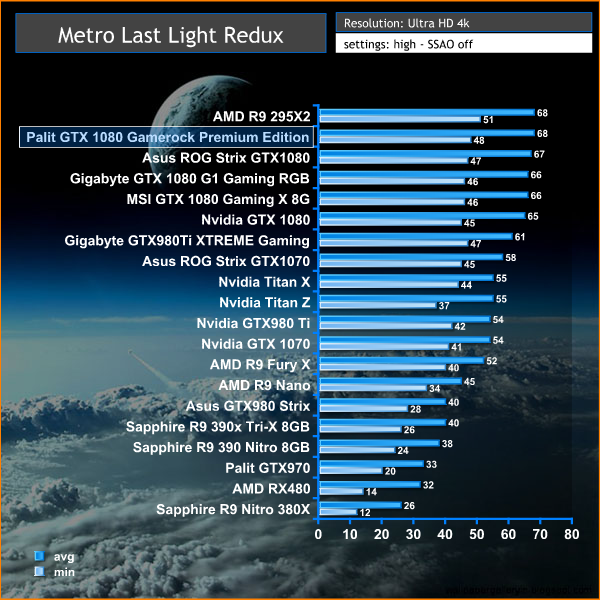
We have to lower image quality settings at 4K to maintain smooth frame rates. The Palit GTX 1080 GameRock Premium Edition outperforms all the other GTX1080 solutions to hit the top position in the chart.
Hitman (2016) is a third-person stealth video game in which players take control of Agent 47, a genetically enhanced, superhuman assassin, travelling to international locations and eliminating contracted targets. As in other games in the Hitman series, players are given a large amount of room for creativity in approaching their assassinations. The game is being released in stages, which hasn't proved too popular with a large audience.
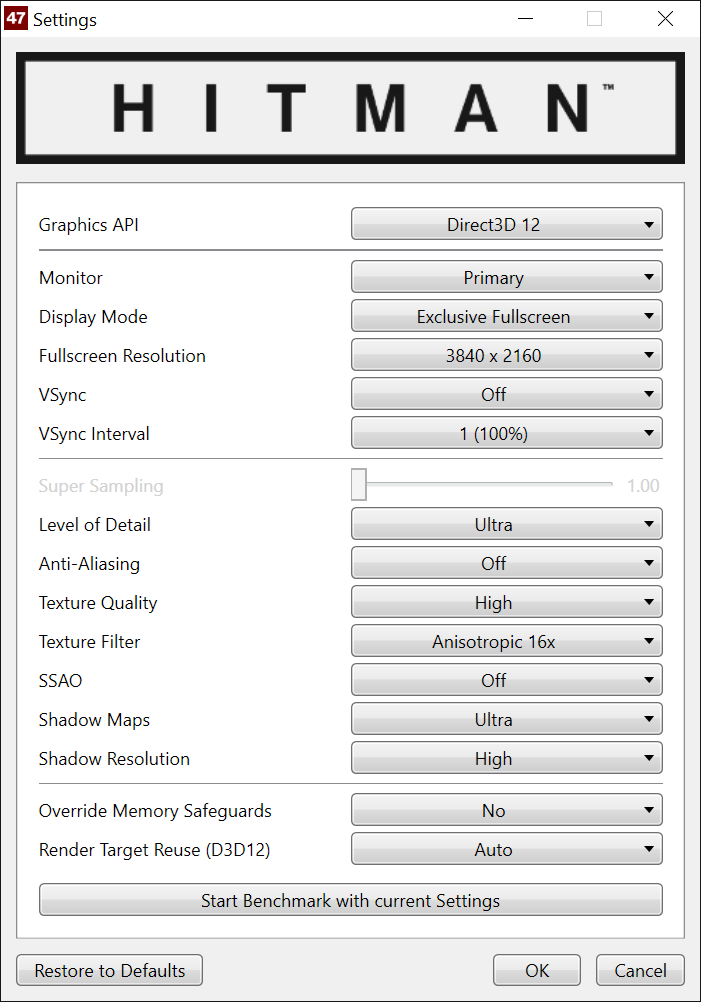
We test with many of the settings maximised, SSAO is disabled however as I found it causes some crashing. I have to say that Hitman is a little unstable at times under the best of situations, but we managed to get it running well enough to benchmark. The built in benchmark is very flaky indeed however, so real world runs had to be used.
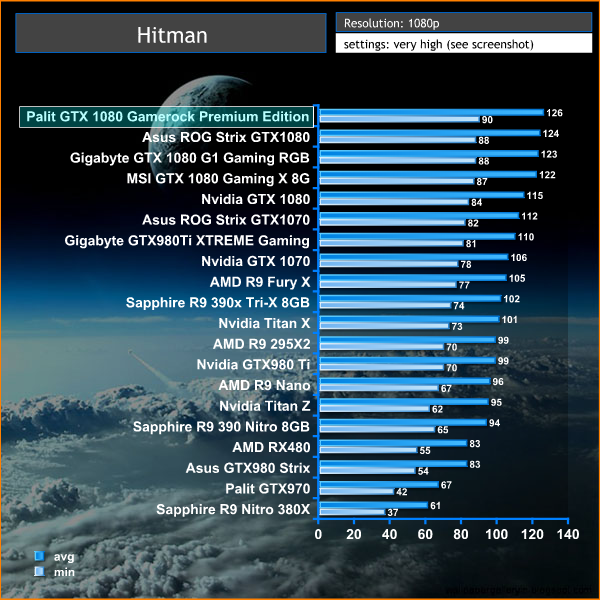
The Palit GTX 1080 GameRock Premium Edition is faster than the ASUS ROG Strix GTX1080, hitting an average of 126 frames per second.
Hitman (2016) is a third-person stealth video game in which players take control of Agent 47, a genetically enhanced, superhuman assassin, travelling to international locations and eliminating contracted targets. As in other games in the Hitman series, players are given a large amount of room for creativity in approaching their assassinations. The game is being released in stages, which hasn't proved too popular with a large audience.
We test with many of the settings maximised, SSAO is disabled however as I found it causes some crashing. I have to say that Hitman is a little unstable at times under the best of situations, but we managed to get it running well enough to benchmark. The built in benchmark is very flaky indeed however, so real world runs had to be used.
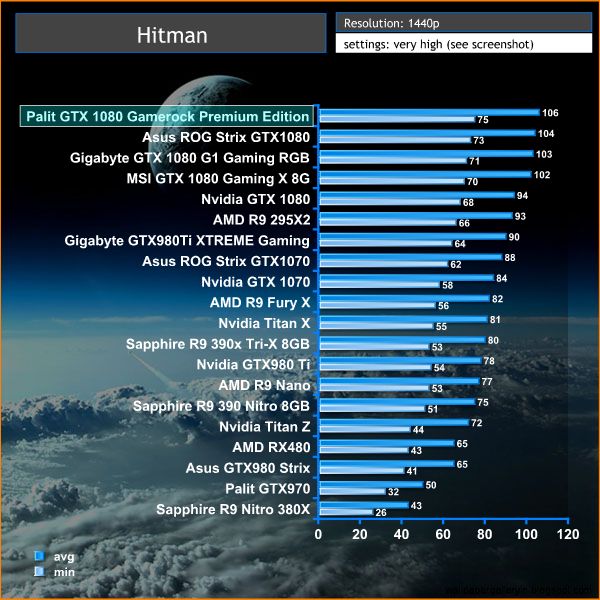
At 1440p the average frame rate is still well over 100, in the top position.
Hitman (2016) is a third-person stealth video game in which players take control of Agent 47, a genetically enhanced, superhuman assassin, travelling to international locations and eliminating contracted targets. As in other games in the Hitman series, players are given a large amount of room for creativity in approaching their assassinations. The game is being released in stages, which hasn't proved too popular with a large audience.
We test with many of the settings maximised, SSAO is disabled however as I found it causes some crashing. I have to say that Hitman is a little unstable at times under the best of situations, but we managed to get it running well enough to benchmark. The built in benchmark is very flaky indeed however, so real world runs had to be used.
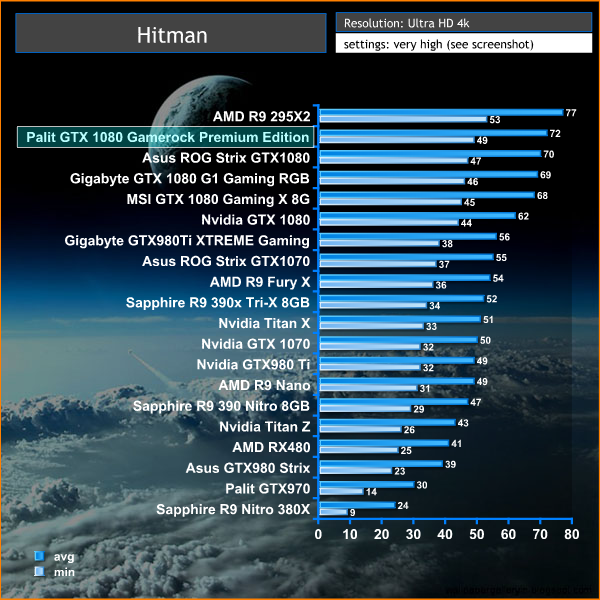
At Ultra HD 4K the AMD R9 295X2 takes top position, although the Palit GTX 1080 GameRock Premium Edition commands second place, ahead of other GTX1080 cards.
We have built a system inside a Lian Li chassis with no case fans and have used a fanless cooler on our CPU. The motherboard is also passively cooled. This gives us a build with almost completely passive cooling and it means we can measure noise of just the graphics card inside the system when we run looped 3dMark tests.
We measure from a distance of around 1 meter from the closed chassis and 4 foot from the ground to mirror a real world situation. Ambient noise in the room measures close to the limits of our sound meter at 28dBa. Why do this? Well this means we can eliminate secondary noise pollution in the test room and concentrate on only the video card. It also brings us slightly closer to industry standards, such as DIN 45635.
KitGuru noise guide
10dBA – Normal Breathing/Rustling Leaves
20-25dBA – Whisper
30dBA – High Quality Computer fan
40dBA – A Bubbling Brook, or a Refrigerator
50dBA – Normal Conversation
60dBA – Laughter
70dBA – Vacuum Cleaner or Hairdryer
80dBA – City Traffic or a Garbage Disposal
90dBA – Motorcycle or Lawnmower
100dBA – MP3 player at maximum output
110dBA – Orchestra
120dBA – Front row rock concert/Jet Engine
130dBA – Threshold of Pain
140dBA – Military Jet takeoff/Gunshot (close range)
160dBA – Instant Perforation of eardrum
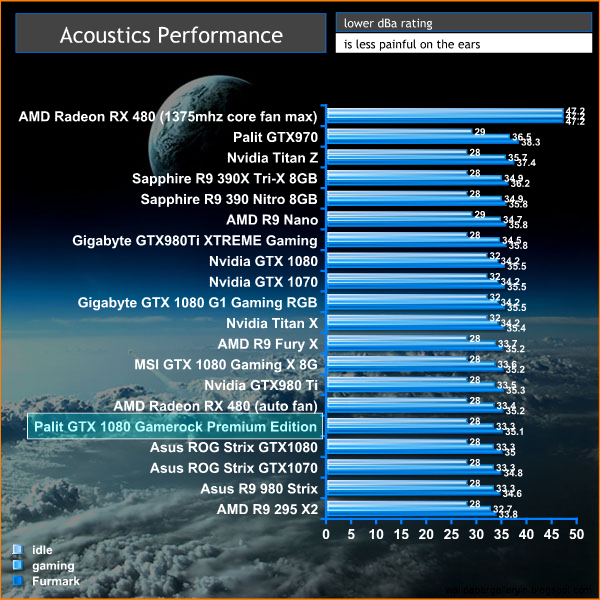
The triple slot cooler with dual fans proves very effective. The Palit GTX 1080 GameRock Premium Edition is very quiet under gaming load, basically inaudible behind a couple of case fans. We did not notice any coil whine during our review, which is good to note.
The fans disable when the card is at idle or when running with a low demand.
The tests were performed in a controlled air conditioned room with temperatures maintained at a constant 21c – a comfortable environment for the majority of people reading this. Idle temperatures were measured after sitting at the desktop for 30 minutes. Load measurements were acquired by playing Rise Of The Tomb Raider for 90 minutes and measuring the peak temperature. We also have included Furmark results, recording maximum temperatures throughout a 10 minute stress test. All fan settings were left on automatic.
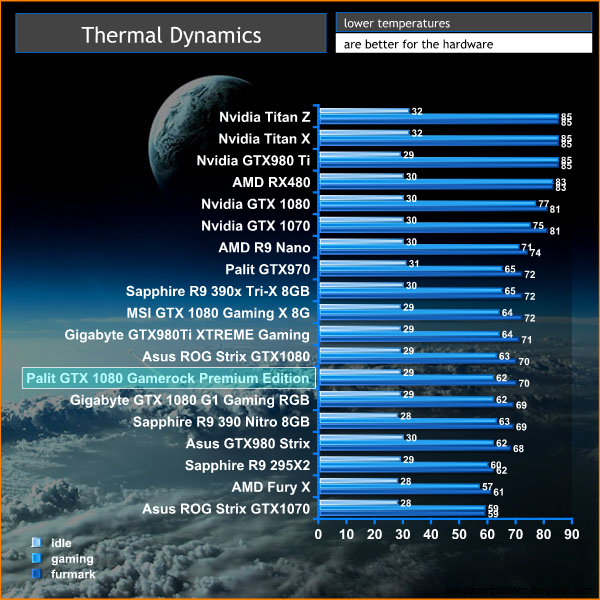
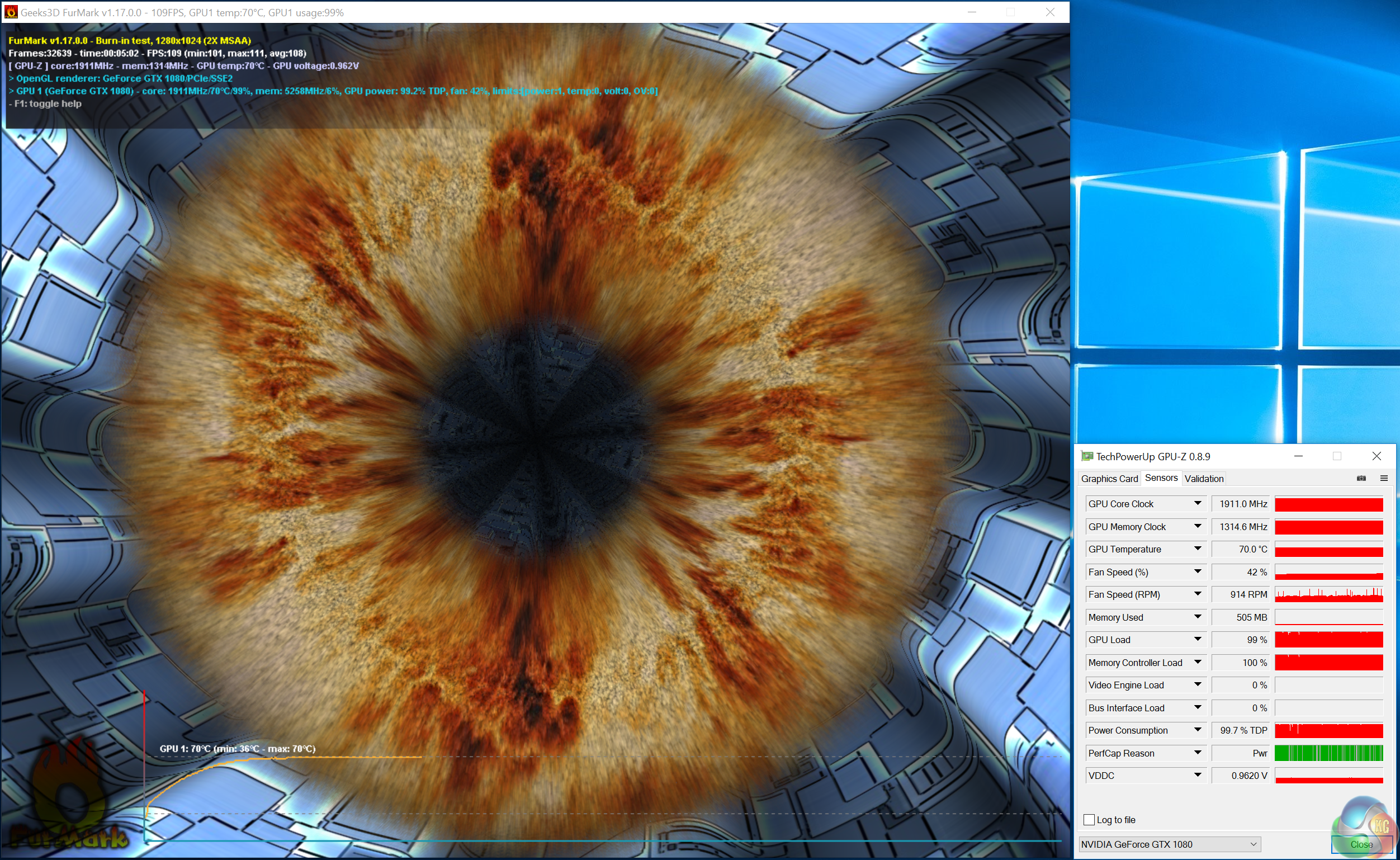
The Palit GTX 1080 GameRock Premium Edition cooler proves to be very effective with performance very similar to the cooler fitted to the Gigabyte GTX 1080 G1 Gaming.
We install the graphics card into the system and measure temperatures on the back of the PCB with our Fluke Visual IR Thermometer/Infrared Thermal Camera. This is a real world running environment playing Rise Of The Tomb Raider for extended periods of time.
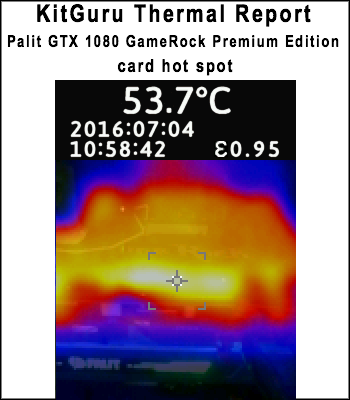
The back of the PCB holds at just below 50c under extended load, which is very cool. The heatpipes are the hottest part of the exposed card, running between 52c and 55c.
We measure power consumption from the whole system when idle and when gaming, excluding the monitor.
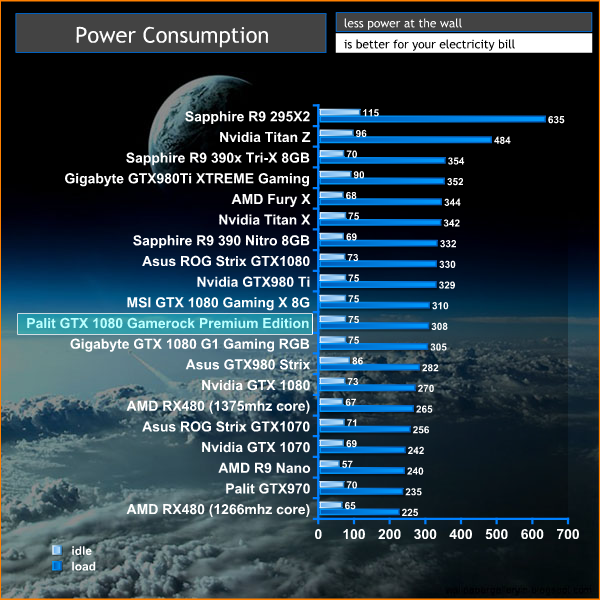
The system with the MSI GTX 1080 Gaming X 8G RGB installed demands around 308 watts, which is around 3 watts more than the Gigabyte GTX 1080 G1 Gaming card and 2 watts less than the MSI GTX1080 Gaming X 8G.
We overclock using the latest version of MSI Afterburner V4.3.0. beta 4.
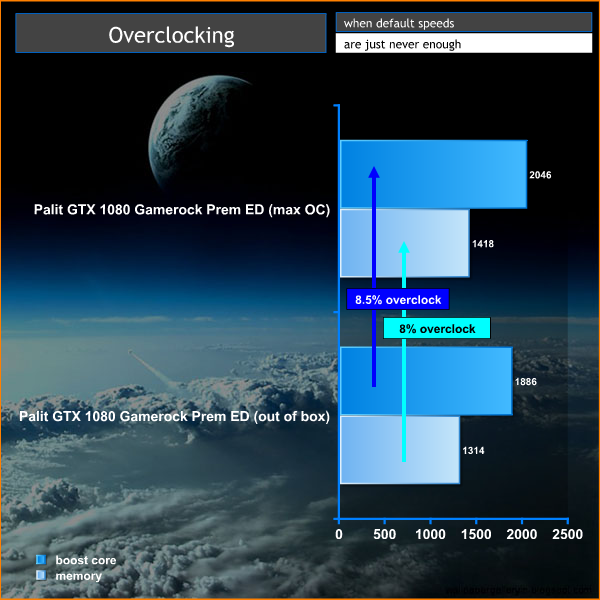
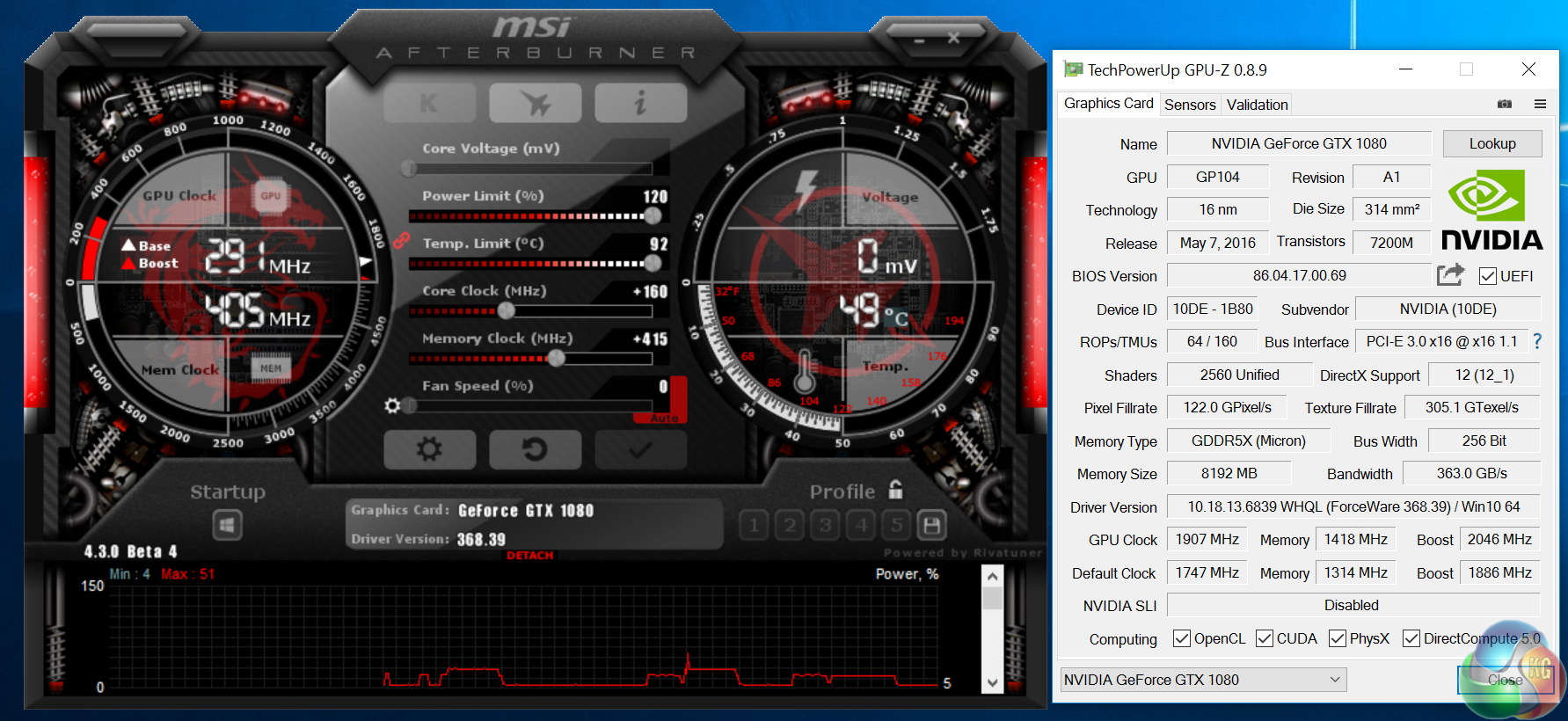
We pushed the core as far as we could before instability would occur. We hit a boost speed limit around 2046mhz, although we noticed when gaming that it was often peaking over 2,100mhz.
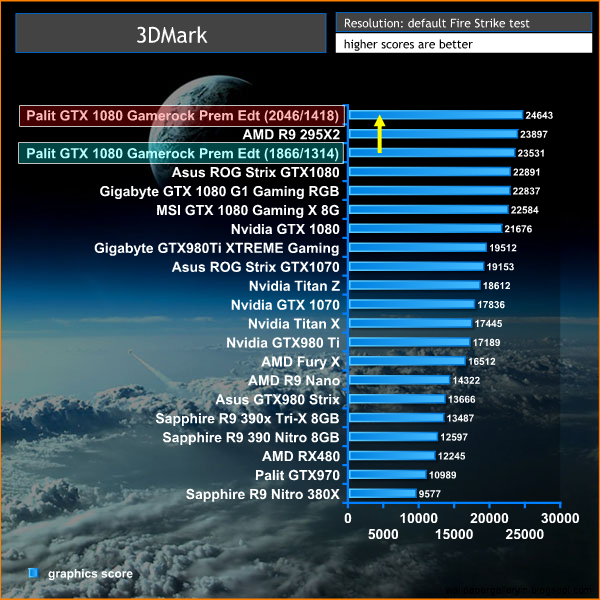
When overclocked to the limit, the Palit GTX 1080 GameRock Premium Edition scores 24,643 points, putting it ahead of the AMD R9 295X2.
Nvidia's GTX1080 has been at the top of the performance charts since it was released back in May. At this stage we have already reviewed the MSI, Gigabyte and ASUS models so it was interesting to look at the GameRock Premium Edition from Palit.
Palit are often a company who fly under the radar, but based on our experiences reviewing their cards over the last 5 years they can certainly create some of the fastest solutions on the market.
The Palit GTX 1080 GameRock Premium Edition may not be clocked quite as highly as the Asus Strix GTX 1080 OC however in real world terms, the boost clock holds at a higher level. In our tests it proved to be the fastest GTX 1080 we have tested to date, also surpassing the Gigabyte G1 and the MSI Gaming X.
The cooler performs very well and can keep up with competitor solutions from any of the major players. Palit have hit a good balance of low noise levels with stellar cooling performance. The dual fan solution works very well and it is quiet running too, helping maintain low noise temperatures within a new system build.
The GPANEL extra may not be something that everyone will use, but at least in practical terms you could monitor GPU temperatures and clock speeds or load while gaming. Its a worthy little extra.
The only real negative for me would be the appearance. I can't say I am fond of the white glossy, plastic looking cooler shroud with blue accenting. Its not terrible, but the ‘GameRock' branding resplendent in ‘Guitar Hero' font would be something I would want to hide, rather than show off to my friends and colleagues.

Overclockers UK stock the Palit GTX 1080 GameRock Premium Edition. It is one of the most competitively priced high end GTX 1080 cards on the market, especially when you factor in the performance out of the box and the GPanel extra. It is priced at £619.99 inc vat and you can buy it HERE.
Discuss on our Facebook page, over HERE.
Pros:
- performance is class leading.
- excellent cooling and noise balance.
- runs around 2ghz out of the box.
- fans disable below 60c.
- GPANEL extra is welcomed.
- Lighting works well.
Cons:
- Not the prettiest GTX1080 available.
Kitguru says: The Palit GTX 1080 GameRock Premium Edition is a stellar performer, topping our single GPU performance charts. The GPANEL is a welcomed extra, ideal for those who like to read figures or measure temperatures when gaming. It is also competitively priced in the UK, at £619.99 inc vat in the UK.


What about EVGA FTW? I’ve heard it the fastest card isn’t it why it didn’t include in this test?
No it’s not. Actually it’s the weakest of the whole lot.
http://www.pcworld.com/article/3088145/components-graphics/evga-gtx-1080-ftw-review-the-most-powerful-graphics-card-in-the-world-made-better.html
Lol, no. He meant the reference Nvidia 1080 as the fastest card in the world (which actually was) and the EVGA has improved its performance and cooling (which also is true). That said, the others AIB cards do that too, and better as the EVGA (bar the Gigabyte Gaming G1).
At the moment you have the Zotac AMP Extreme as fastest 1080 closely followed by the Palit. The EVGA is rather noisy and hot.
Very good reveiw… enjoying KitGuru..
So glad I picked one of these up for only £480 off amazon.
I like the looks but is this going to give the 11gb/s upgrade like everybody else is?