KitGuru KitGuru.net – Tech News | Hardware News | Hardware Reviews | IOS | Mobile | Gaming | Graphics Cards


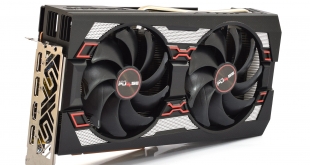
It has been a turbulent week for AMD's latest GPU. Announced at CES 2020, the RX 5600 XT was meant to take the fight directly to Nvidia's GTX 16-series product line, with a $279 MSRP and cut-down specs compared to the RX 5700. Thanks to a new BIOS update, however, pushed just days before the GPU's official launch, the 5600 XT is now positioned against the RTX 2060. What exactly has been going on, and is this GPU actually any good?
To begin explaining the events of the past five days, we need to cast our minds back to the announcement of the RX 5600 XT GPU at CES 2020. Using the same Navi 10 GPU configuration as the RX 5700 – meaning 36 Compute Units, 2304 Stream Processors – but with 2GB less VRAM and a narrower memory interface, AMD billed the 5600 XT as an ‘Ultimate 1080p' GPU, designed solely to crush the GTX 1660 Super and GTX 1660 Ti.
That product positioning was confirmed again when I sat in on an online press briefing for the 5600 XT, as AMD went into some detail about how the 5600 XT was very much a 16-series competitor and it was not designed to face up against the RTX 2060. Regardless, Nvidia was working in the background to make the RTX 2060 more competitive and render the 5600 XT DOA. First we saw EVGA's RTX 2060 KO priced at $299 (or $279 for early pre-orders), and then the official Nvidia product page dropped the Founders Edition price to $299/£275.
During this time, I had received my Sapphire Pulse RX 5600 XT model for review and started testing on Wednesday 15th, ahead of the launch on the 21st. The very next day – Thursday 16th – I received an email from AMD, saying:
‘SAPPHIRE will be providing a BIOS update for the Radeon RX 5600 XT graphics card, expected to be available this morning, January 16, European time. The update is expected to deliver increased performance and may impact your existing testing results.'
Initially I was confused – I'd already successfully completed most of my testing, the card's performance was more-or-less where I expected it to be (as we will see later on in this review), so I wasn't sure what was going on with a new BIOS being pushed out. I remember thinking that perhaps some reviewers had been experiencing issues, that cards weren't running as fast as they were meant to.
But that was not the case. What actually happened was, just five days before the official launch of the 5600 XT, AMD significantly adjusted some key specifications of the card. The power limit was raised from 150W TBP (total board power) to 160W TBP, with boost clock increasing from 1620MHz to 1750MHz, alongside a 2Gbps speed increase for the GDDR6 memory – up to 14Gbps, from 12Gbps.
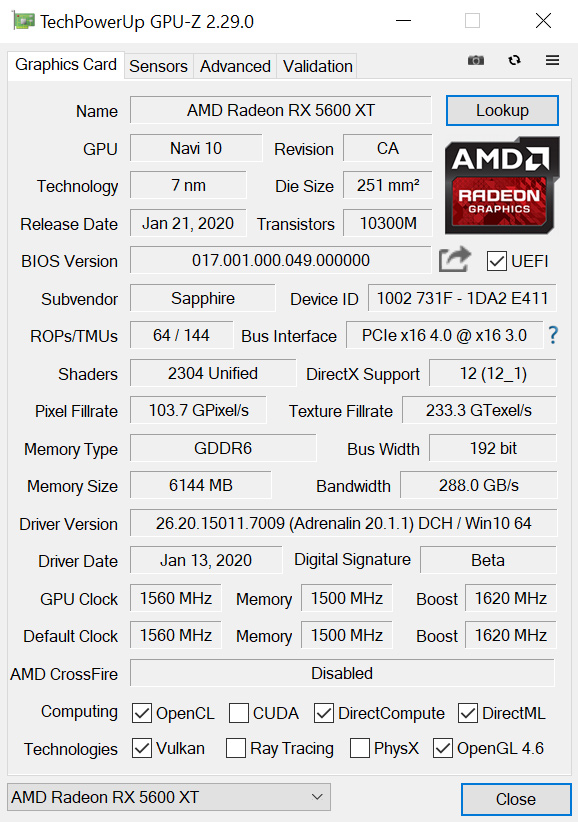
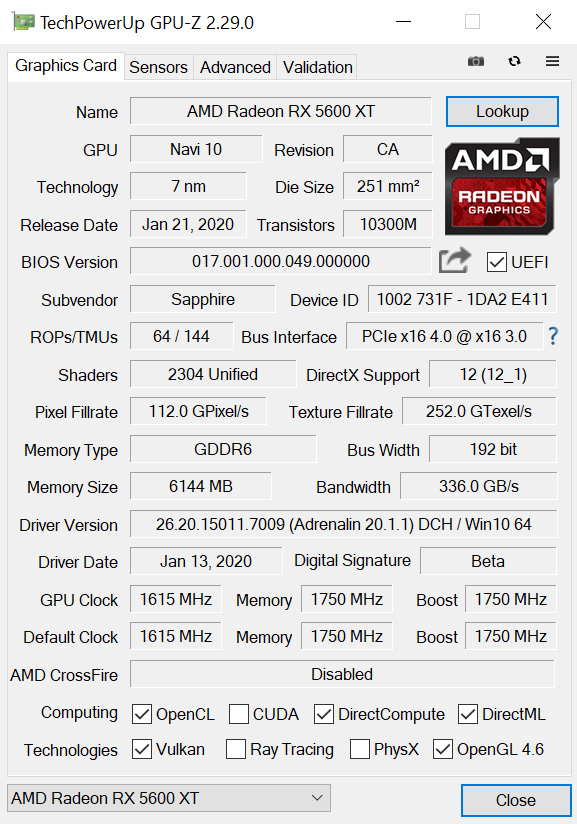
Original BIOS spec, left, compared with updated BIOS spec, right.
Here is the official statement from AMD regarding this change:
‘Based on ongoing testing with our board partners, we have raised the GPU core and memory frequencies for overclocked Radeon RX 5600 XT SKUs to take advantage of increased thermal and electrical headroom built into partner’s custom designs. The updated VBIOS has been made available to our board partners for inclusion in select OC SKUs at launch. AMD is dedicated to disrupting the market with industry-leading compute products, and the new VBIOS makes the Radeon RX 5600 XT an even more powerful contender for high-performance 1080p gaming. Previously announced product specs are unchanged, as they remain AMD’s recommended reference design specs.'
Upon further clarification from AMD, the updated BIOS only applies to factory overclocked cards. In other words, reference spec of the card remains unchanged, as it was announced with 12Gbps memory and lower boost clocks. Now, if AMD's partners wish to do so, they can make use of the new BIOS to get better performance for their factory overclocked models. This means there may still be some cards which adhere to the reference spec, but this is up to each manufacturer to decide.
Either way, in all the time I have been reviewing GPUs for KitGuru – and speaking with Allan Campbell, Editor in Chief who previously reviewed GPUs for KitGuru – neither of us can remember such a significant or late change to a graphics card's specification. I'd go as far to say that this is an unprecedented move from AMD. Clearly the company felt the need to respond to Nvidia's price cuts of the RTX 2060, so short of dropping the already announced $279 MSRP, AMD did what it could to make its cards run faster.
Aside from the immediate increase to performance, which we will observe throughout this review, this move has several implications. First, and I confirmed this with a number of AMD's partners, is that there is already existing 5600 XT stock in the channel ready to be sold on the 21st. There is no way to now update the BIOS on those cards, so the responsibility will fall on the consumer. This is far from ideal – firstly, the end-user would have to know that the BIOS needs updating. They would also have to be comfortable doing it themselves, and even though it is a simple process, things can easily go wrong.
To prove that last point, I can share from my personal experience. I received three 5600 XT cards – the Sapphire card, I updated successfully and saw increased memory and clock speeds. However, I also updated a Gigabyte model too, which saw increased clock speed but memory speed was unchanged. Lastly, I also received an MSI card which simply would not update the BIOS due to a ‘subsystemID mismatch' issue. MSI later sent us a second BIOS, but got in touch to say that a third BIOS would be arriving in the next couple of days, as the second one was also not final.
Three cards, three varying levels of success. To be clear, I am not blaming the partners here. To my mind, AMD pushing a new BIOS only five days before the launch has somewhat pulled the rug out from the AIB's feet. Of course, AMD may say that the BIOS update is optional and up to each manufacturer, but realistically if one company does it, they all have to do it or their card is going to perform noticeably slower.
If these specifications had been announced at CES 2020, or even if the cards had arrived with the new BIOS and we were simply told that specs had been updated since the announcement, this would not be an issue and we could've got on with testing no problem. The issue is that the update was so last-minute, everyone was left scrambling to catch up.
| RX 5600 XT | RX 5700 | RX 5700 XT | RX Vega 56 | RX Vega 64 | ||
| Architecture | Navi | Navi | Navi | Vega 10 | Vega 10 | |
| Manufacturing Process | 7nm | 7nm | 7nm | 14nm | 14nm | |
| Transistor Count | 10.3 billion | 10.3 billion | 10.3 billion | 12.5 billion | 12.5 billion | |
| Die Size | 251mm² | 251mm² | 251mm² | 486mm² | 495mm² | |
| Compute Units | 36 | 36 | 40 | 56 | 64 | |
| Stream Processors | 2304 | 2304 | 2560 | 3584 | 4096 | |
| Base GPU Clock | n/a | Up to 1465MHz | Up to 1605MHz | 1156 MHz | 1274 MHz | |
| Game GPU Clock | 1375MHz | Up to 1625MHz | Up to 1755MHz | n/a | n/a | |
| Boost GPU Clock | Up to 1560MHz | Up to 1725MHz | Up to 1905MHz | 1471 MHz | 1546 MHz | |
| Peak Engine Clock | n/a | n/a | n/a | 1590 MHz | 1630 MHz | |
| Peak SP Performance | Up to 7.19 TFLOPS | Up to 7.95 TFLOPS | Up to 9.75 TFLOPS | Up to 10.5 TFLOPS | Up to 12.7 TFLOPS | |
| Peak Half Precision Performance | Up to 14.4 TFLOPS | Up to 15.9 TFLOPS | Up to 19.5 TFLOPS | Up to 21.0 TFLOPS | Up to 25.3 TFLOPS | |
| Peak Texture Fill-Rate | Up to 224.6 GT/s | Up to 248.4 GT/s | Up to 304.8 GT/s | Up to 330.0 GT/s | Up to 395.8 GT/s | |
| ROPs | 64 | 64 | 64 | 64 | 64 | |
| Peak Pixel Fill-Rate | Up to 99.8 GP/s | Up to 110.4 GP/s | Up to 121.9 GP/s | Up to 94.0 GP/s | Up to 98.9 GP/s | |
| Memory | 6GB GDDR6 | 8GB GDDR6 | 8GB GDDR6 | 8GB HBM | 8GB HBM | |
| Memory Bandwidth | 288 GB/s | 448 GB/s | 448 GB/s | 410 GB/s | 483.8 GB/s | |
| Memory Interface | 192-bit | 256-bit | 256-bit | 2048-bit | 2048-bit | |
| Board Power | 150W | 185W | 225W | 210W | 295W | |
Above we have a table of key specifications for the card. These are the reference figures, which according to AMD remain unchanged. Our Sapphire Pulse card in for review, however, has received the new BIOS and is a factory overclocked model. Its rated boost clock is 1750MHz, with a game clock of 1615MHz, while memory clock is now 14Gbps. That last change is enough to raise memory bandwidth from 288GB/s to 336GB/s, a 17% increase.
I wasn't initially sure how much difference the new BIOS would make, but considering I'd already tested the card with the original (reference spec) BIOS, we can directly compare results in this review.
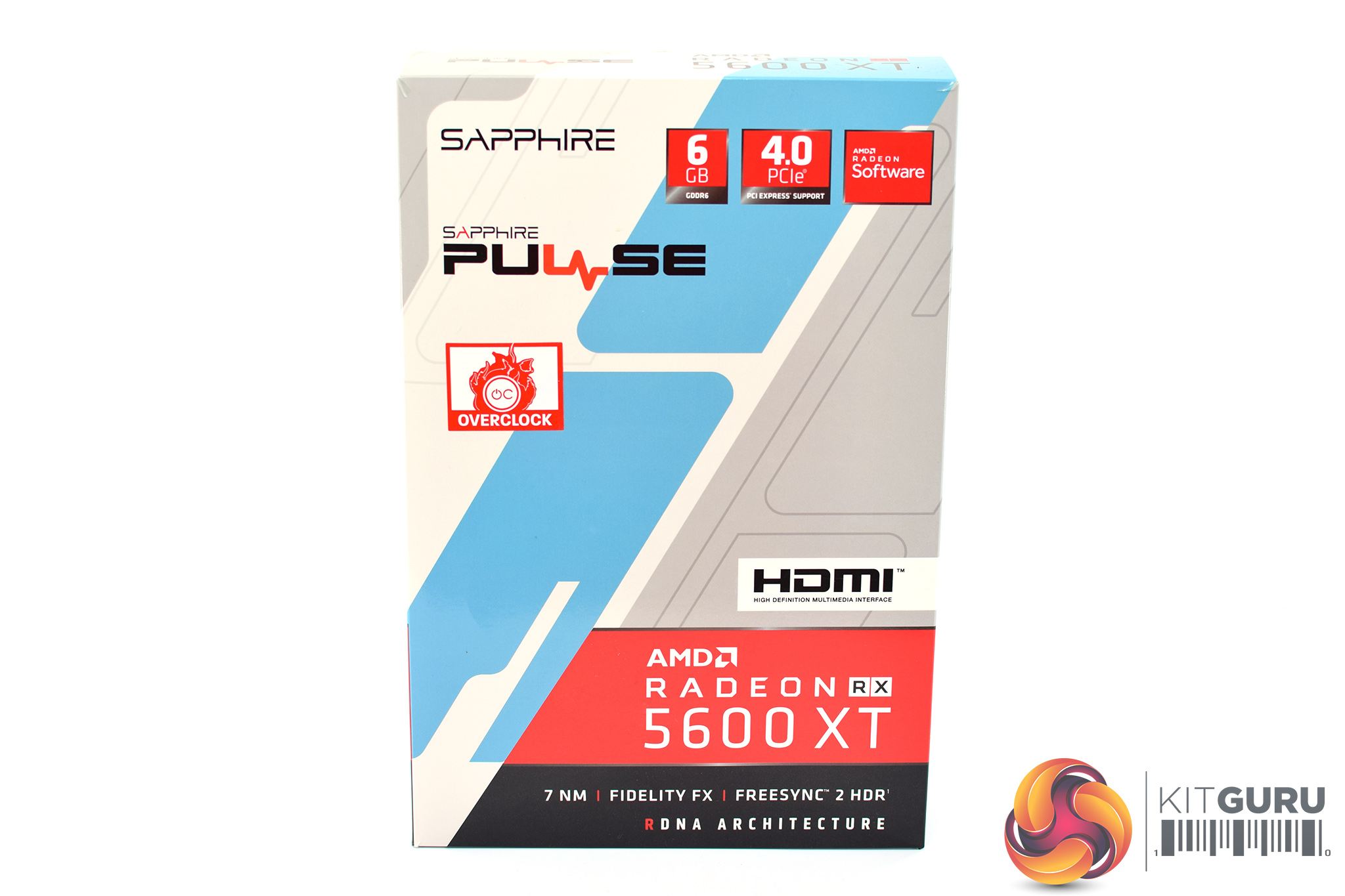
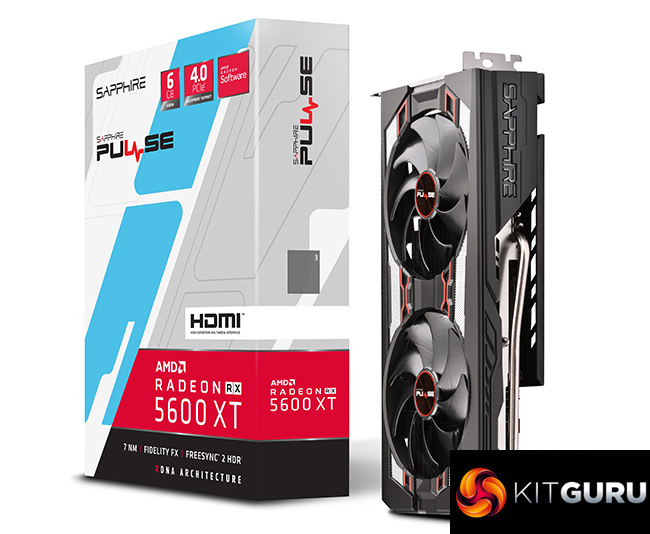
Taking a look at the card in question, the Sapphire RX 5600 XT Pulse ships in a multi-colour box, with the Pulse and Radeon branding visible on the front.
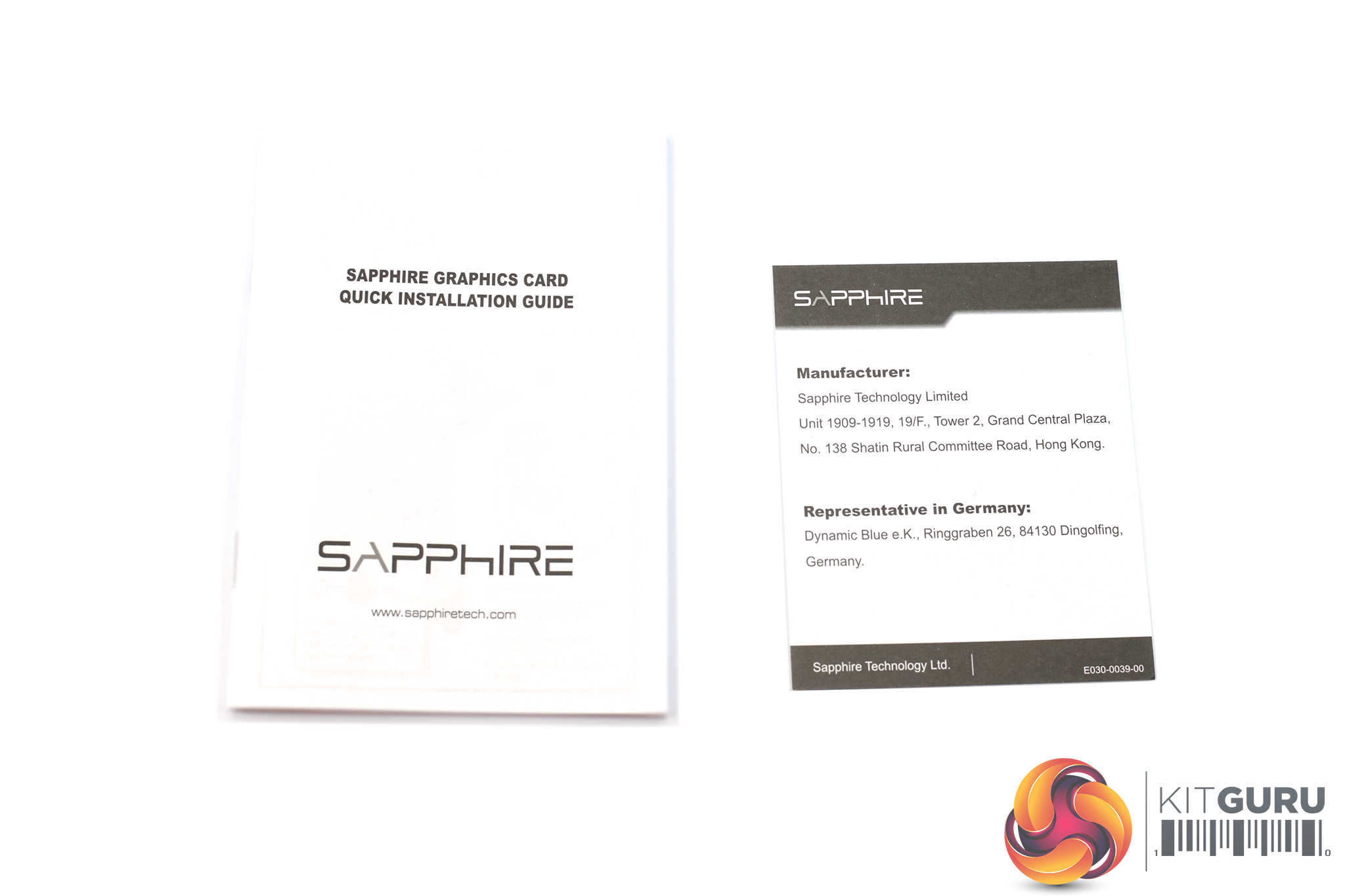
Inside, there are just two pieces of documentation – a quick start guide and a manufacturer's note.
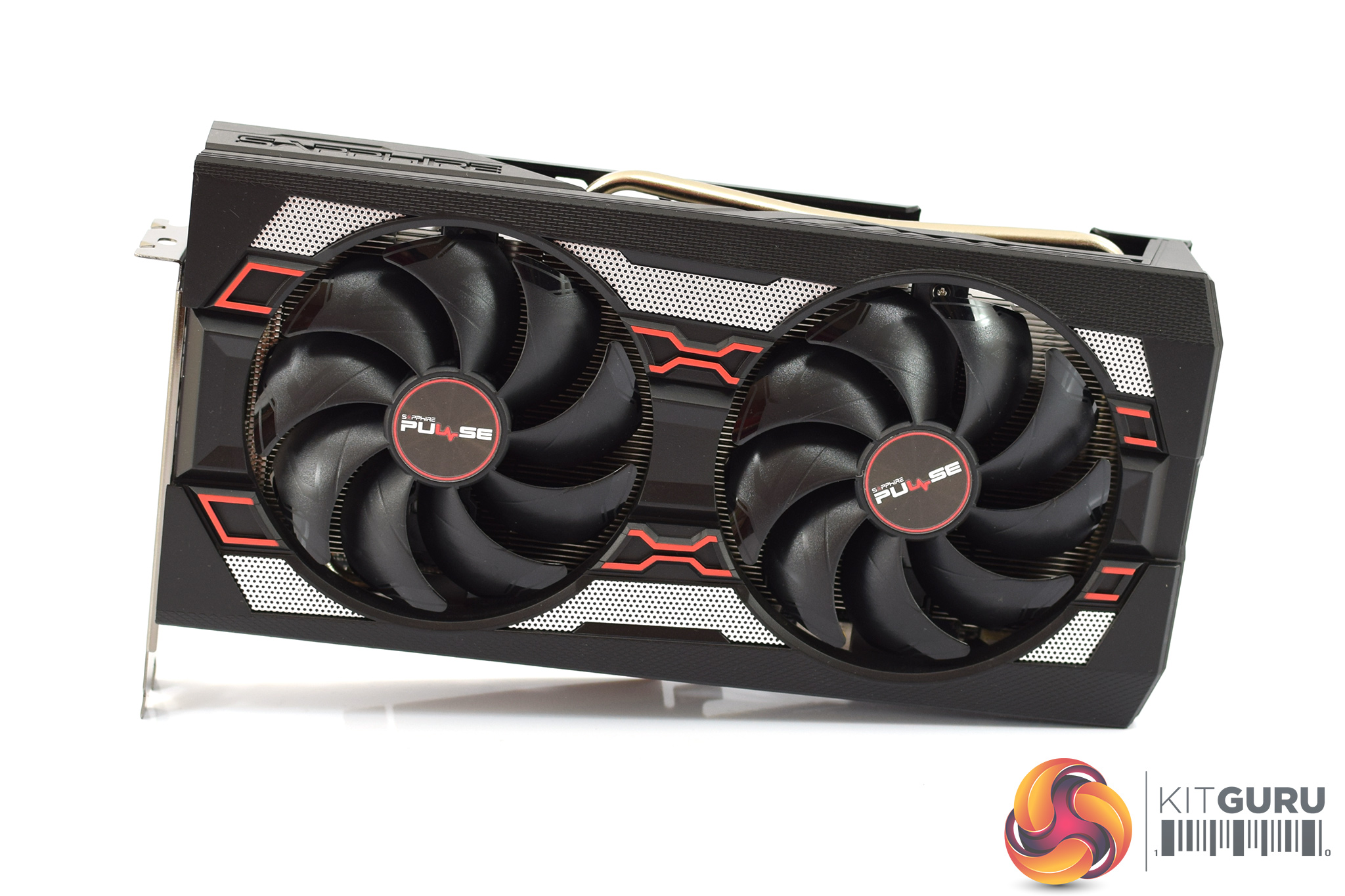
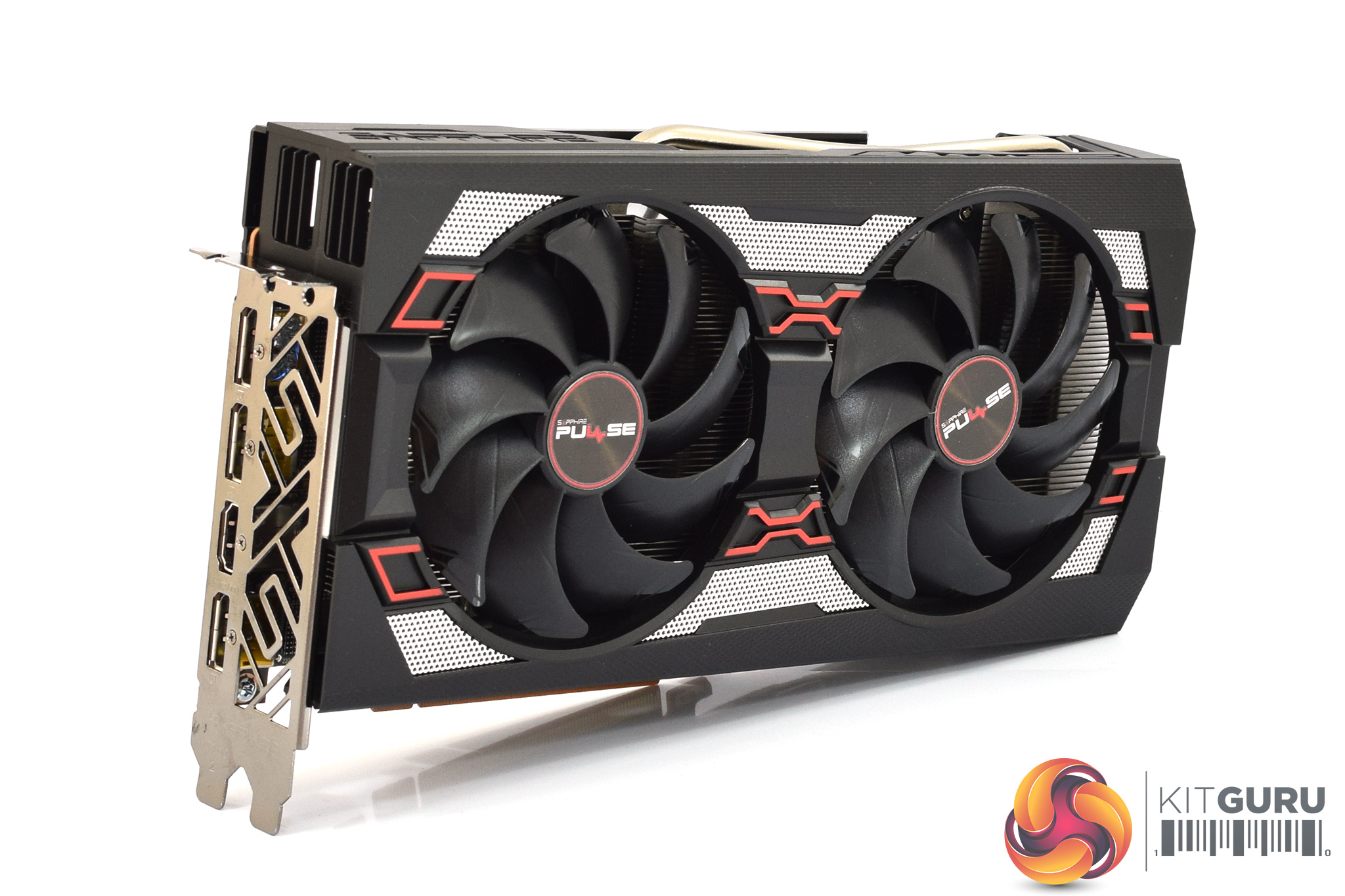
The card itself is… well, it's a Pulse RX 5700. Yep, Sapphire is re-using the same Pulse RX 5700 cooler and shroud for the RX 5600 XT, which does make sense – they are, after all, both using the same GPU configuration. The only disappointment there is that it marks a return to the silver and red accents. I remarked in my review of the Pulse 5500 XT that the all-black design is much smarter, but by using the 5700 shroud, this feels like a backward step.
As for the two fans, these are dual ball bearing designs, each measuring 95mm. Sapphire says these ‘have an approximately 85% longer lifespan than sleeve bearings in our tests' while ‘the improvements to the fan blades means the solution is up to 10% quieter than the previous generation.'
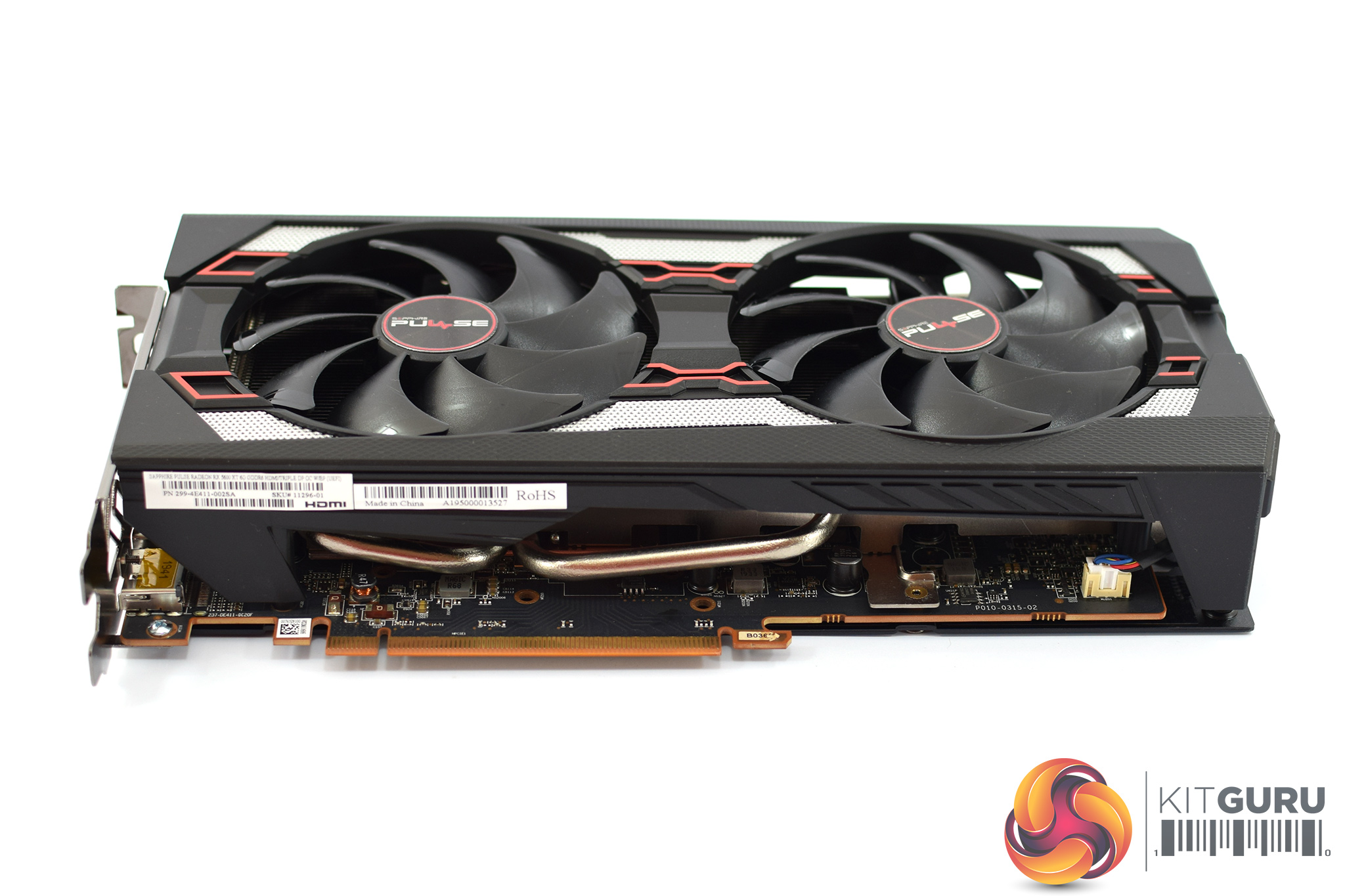
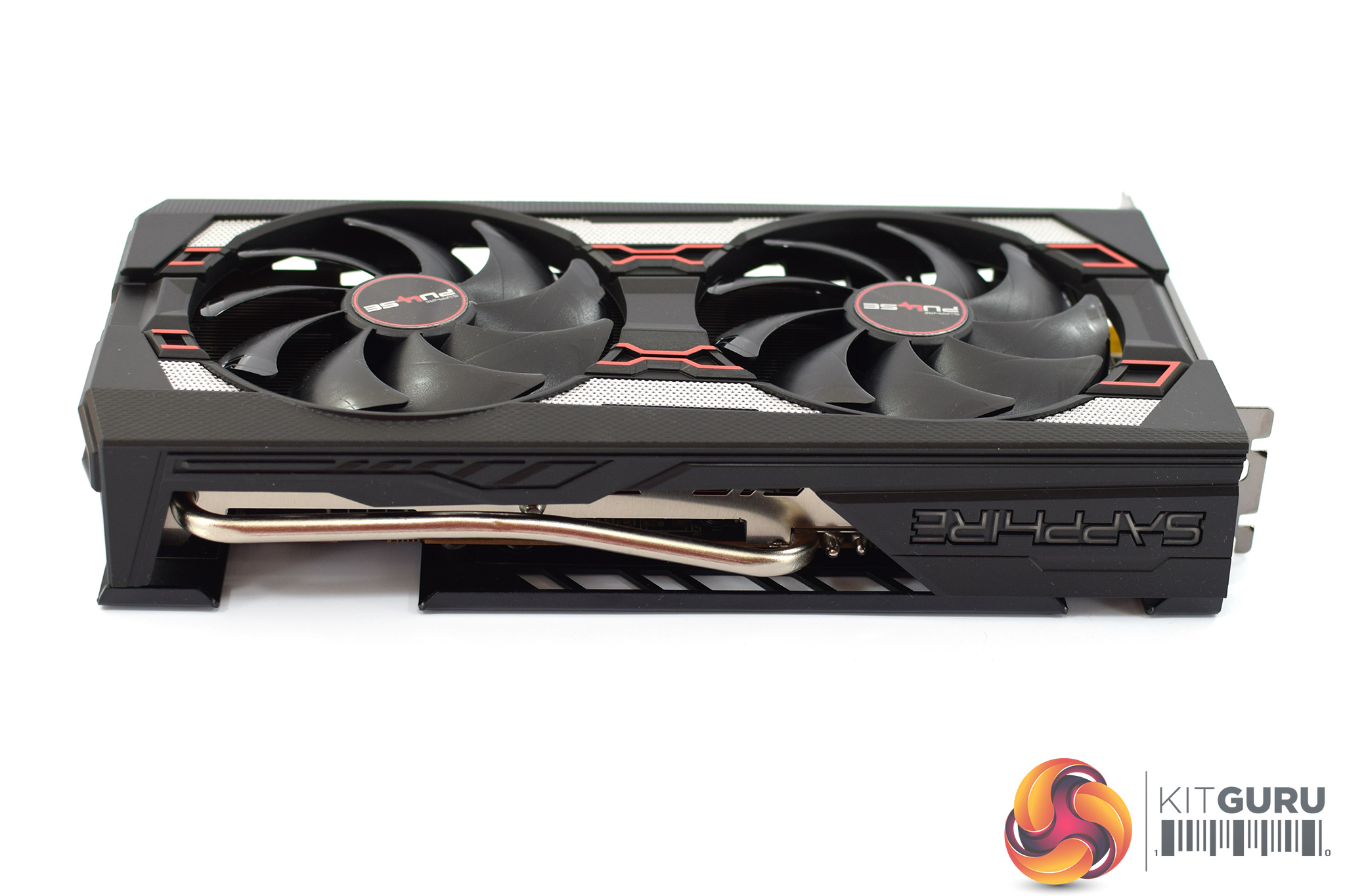
Overall dimensions of the card are, of course, the same as the RX 5700 Pulse model: it measures 254(L)x 135(W)x 46.5 (H)mm. The length and 2.5-slot thickness aren't really anything out of the ordinary, but this is quite a tall card – extending well beyond the height of the PCIe bracket. As always, it's worth double checking this will fit in your case – if the chassis is particularly narrow, the Pulse may cause an issue there.
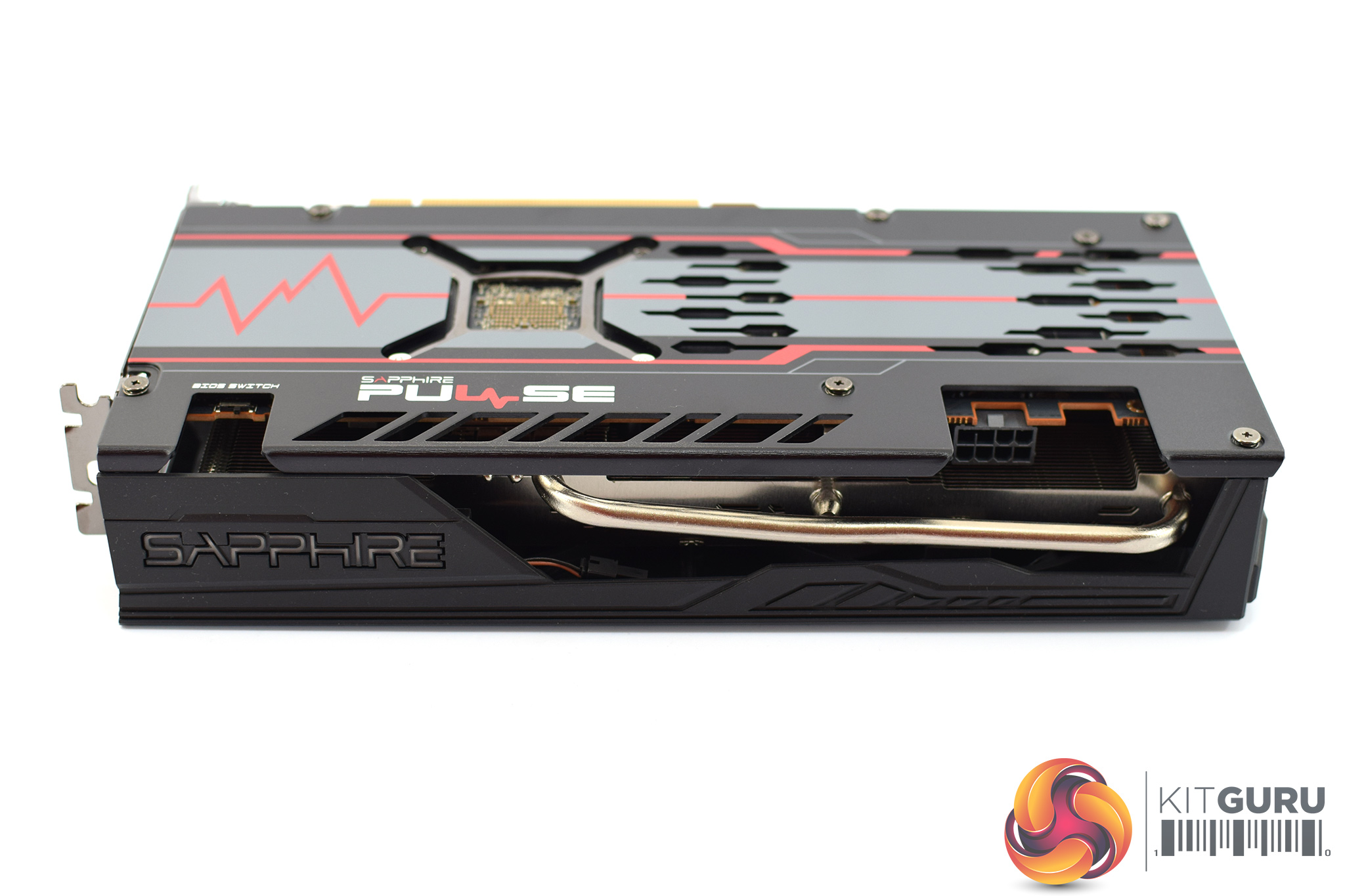
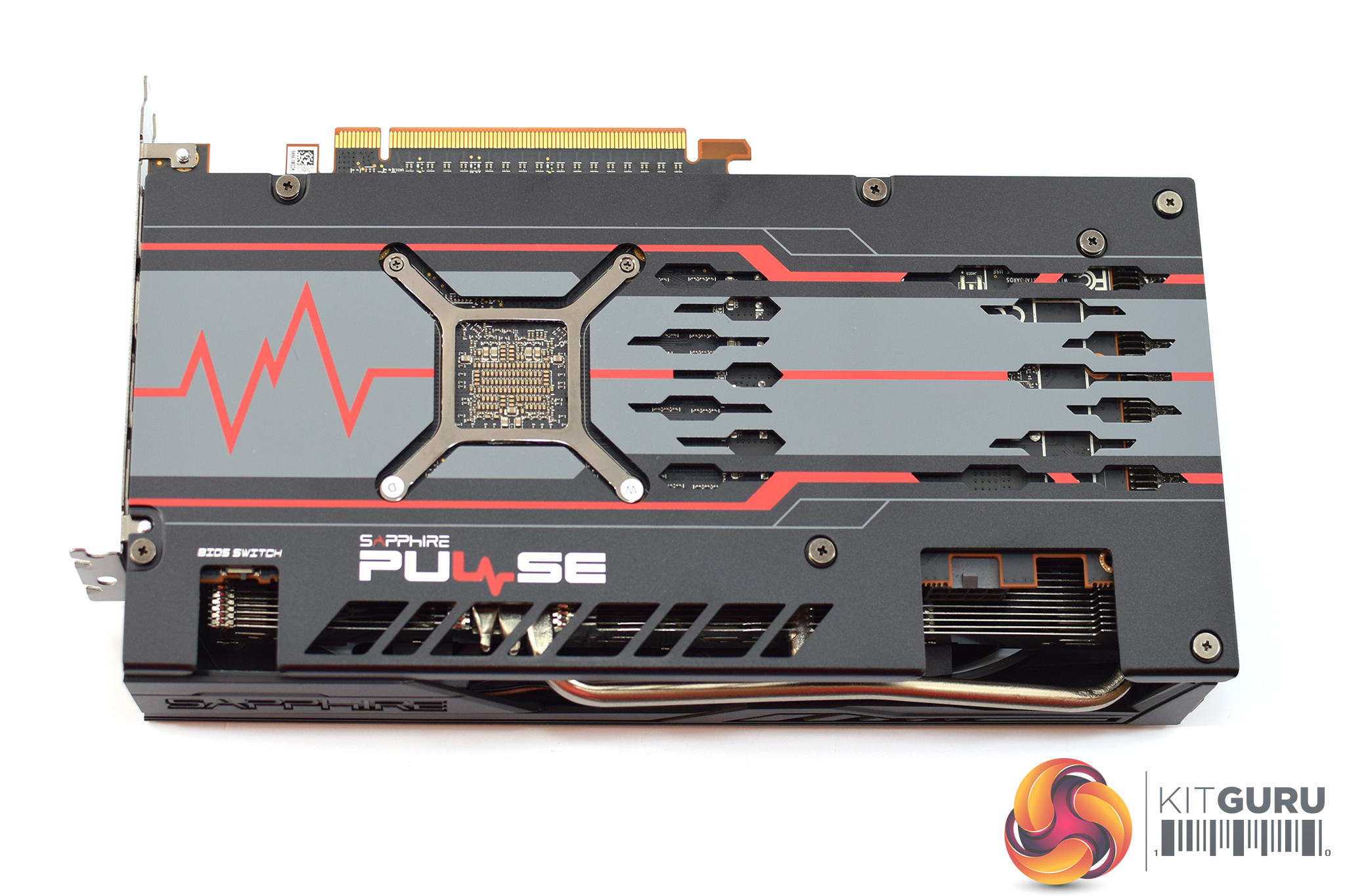
On the front side of the card, we get a look at the small Sapphire logo, and just above this is a dual-BIOS switch where users can engage the ‘performance' or ‘silent' BIOS depending on your preference. Both were updated when I received the new BIOS ahead of launch, here is a breakdown of each one:
Performance BIOS: TGP: 160W, memory 14Gbps, Boost Clock 1750 MHz, Game Clock 1615 MHz.
Silent BIOS: TGP: 135W, memory 12Gbps, Boost Clock 1620 MHz, Game Clock 1460 MHz.
As for the backplate, this is a full-length design with a cut-out behind the GPU core and some additional cut-outs to the side. It is made of aluminium and carries on with the red and grey accents.
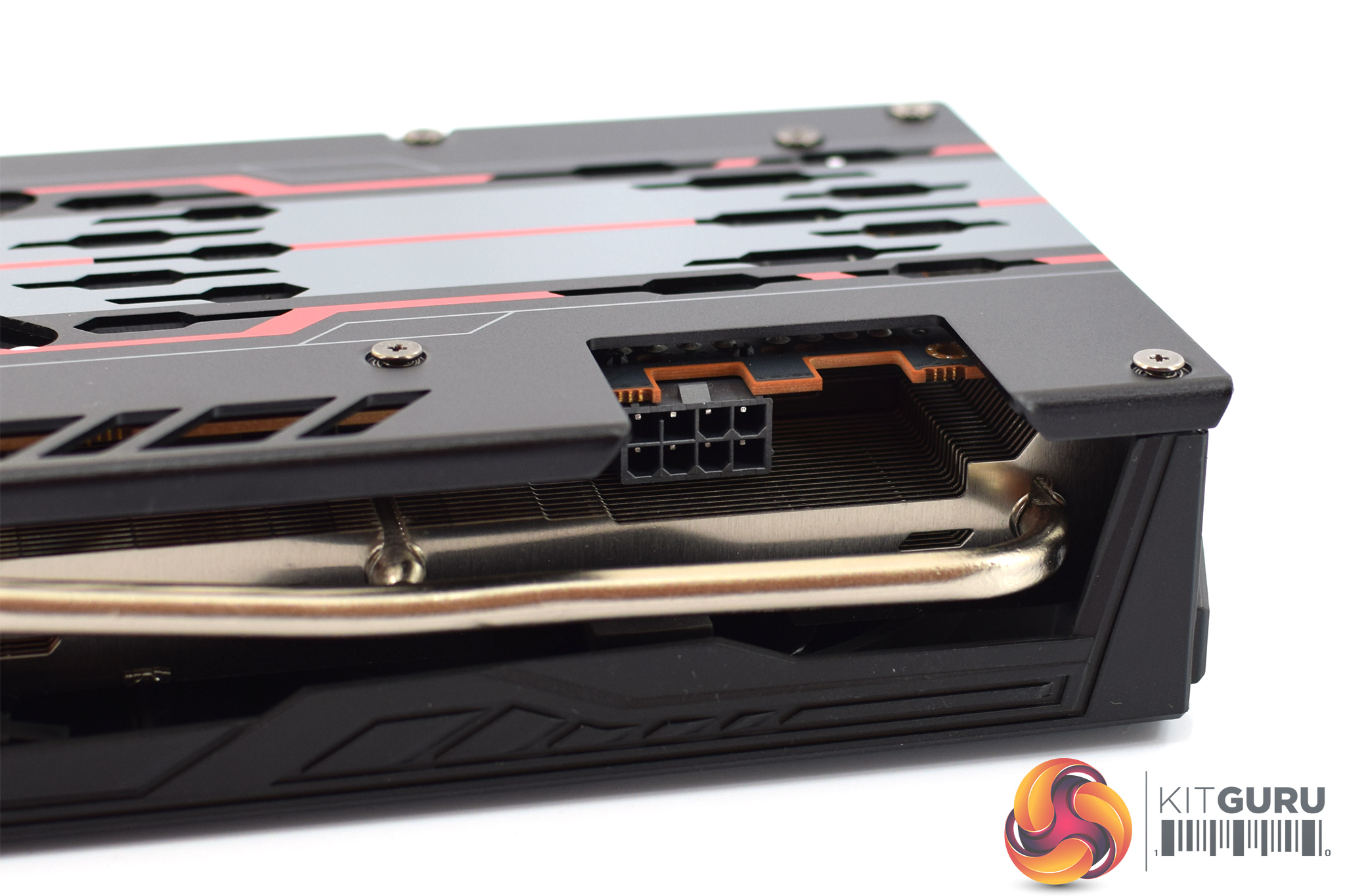
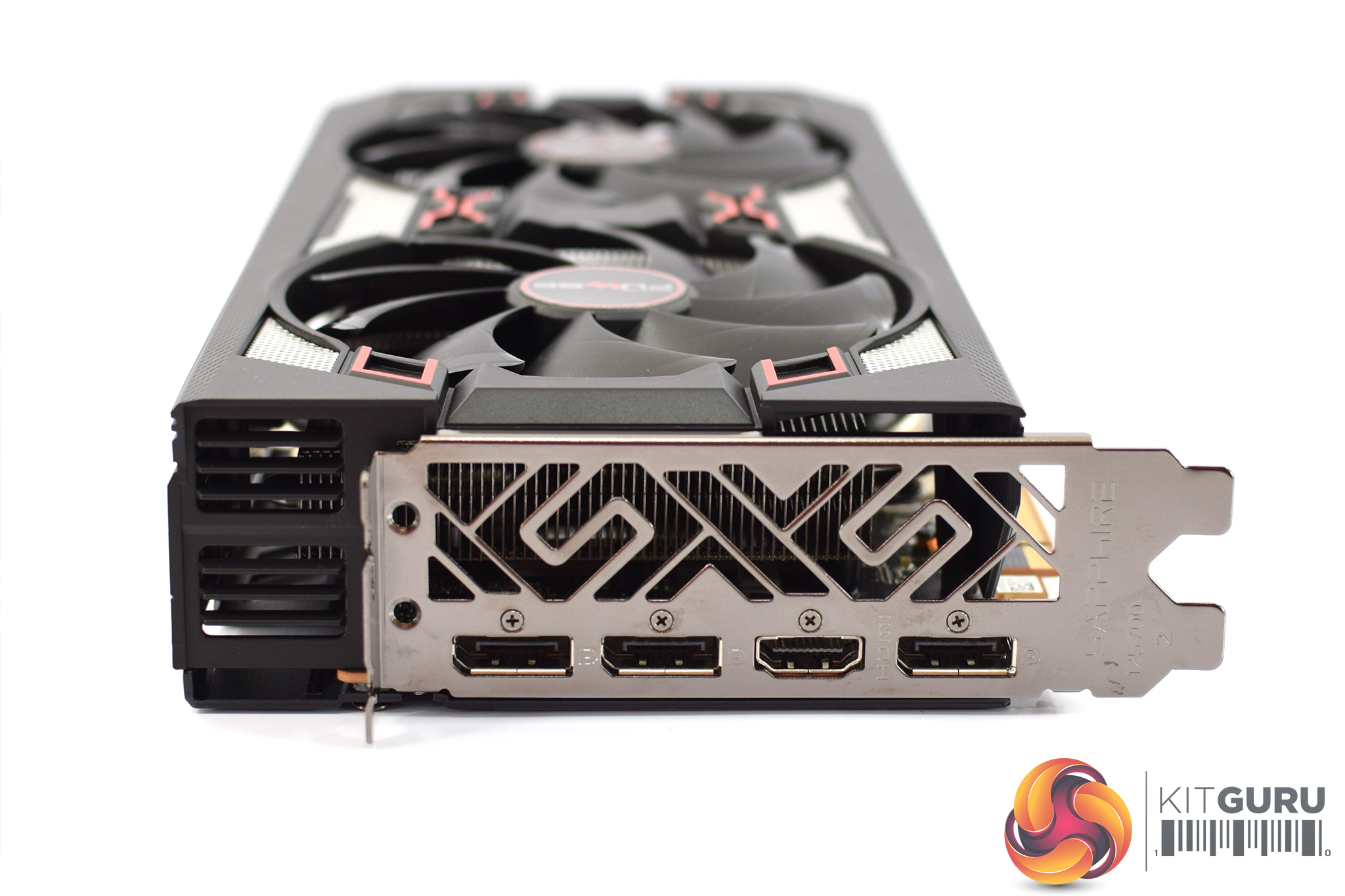
Power requirements for the 5600 XT consist of a single 8-pin connector. We can also see the standard display output allocation, with 3x DisplayPort and 1x HDMI.
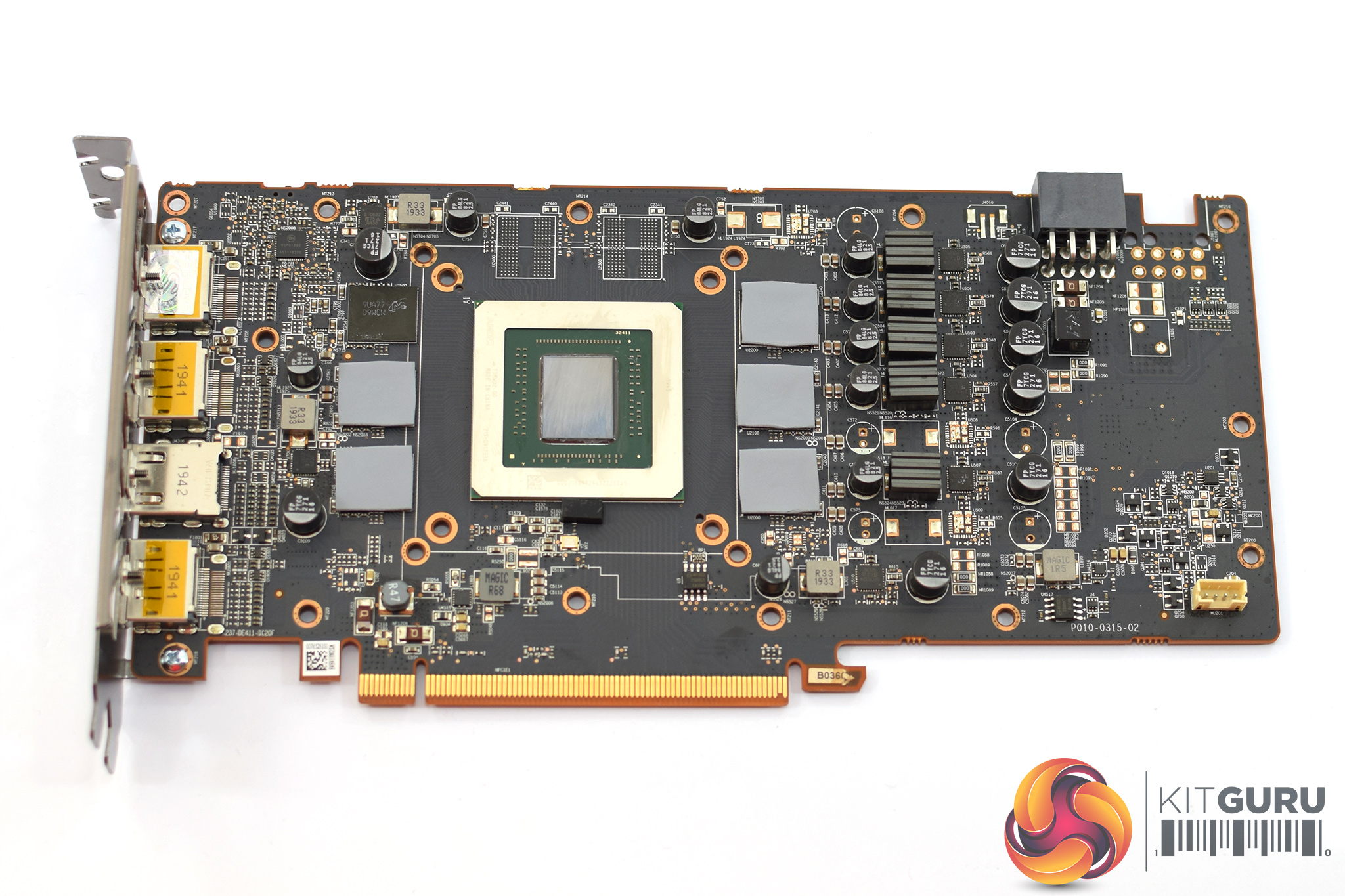
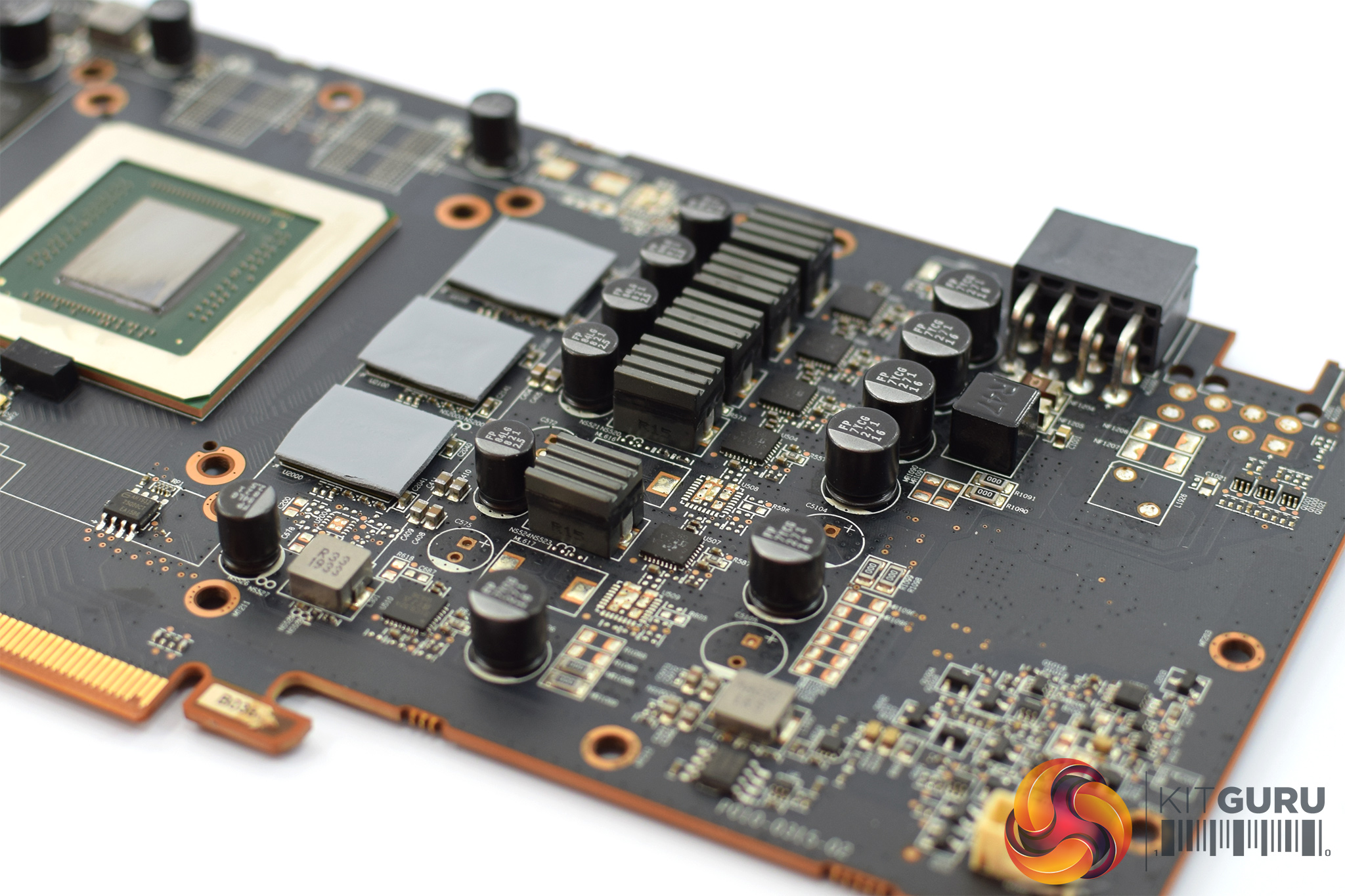
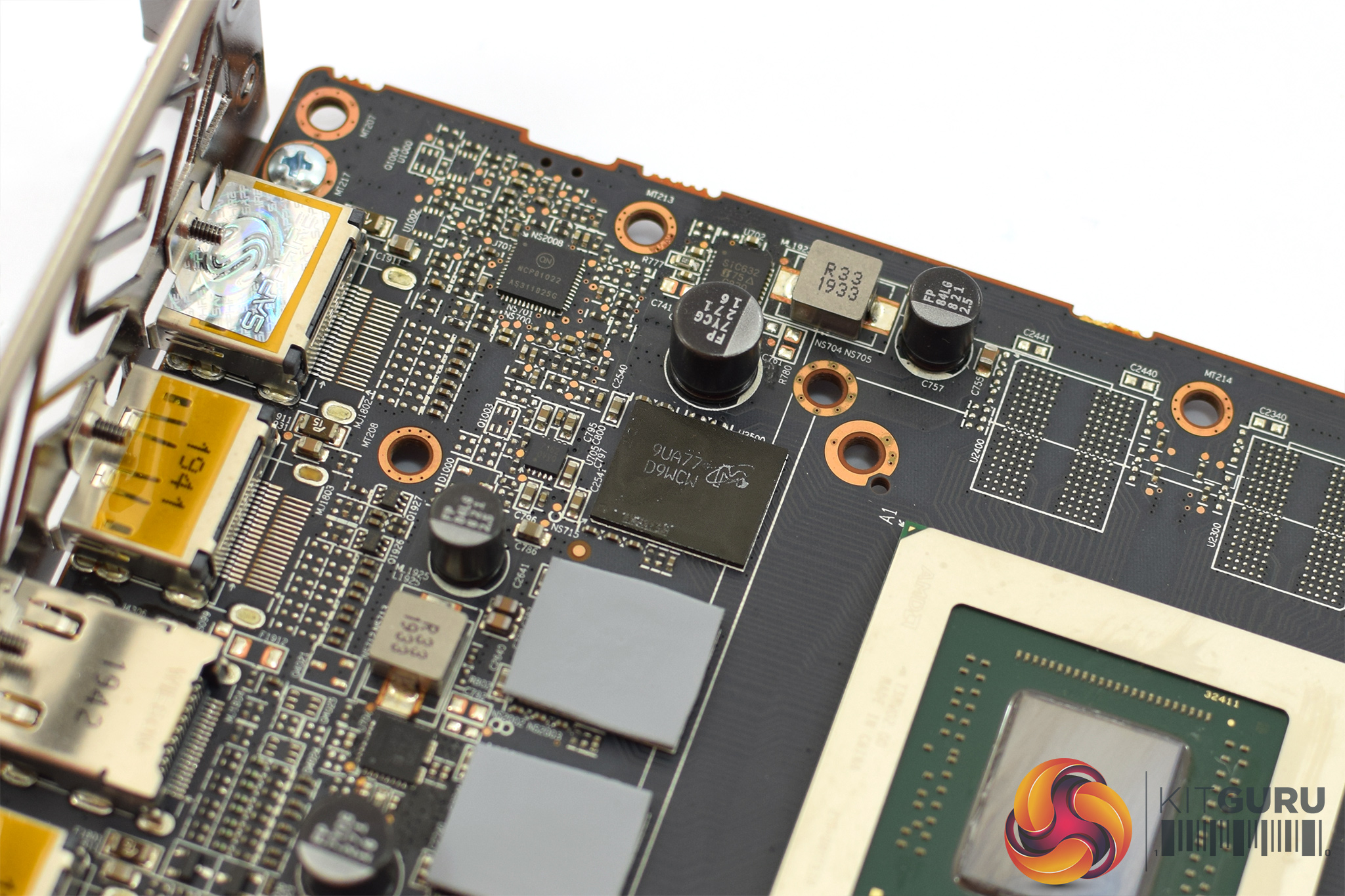
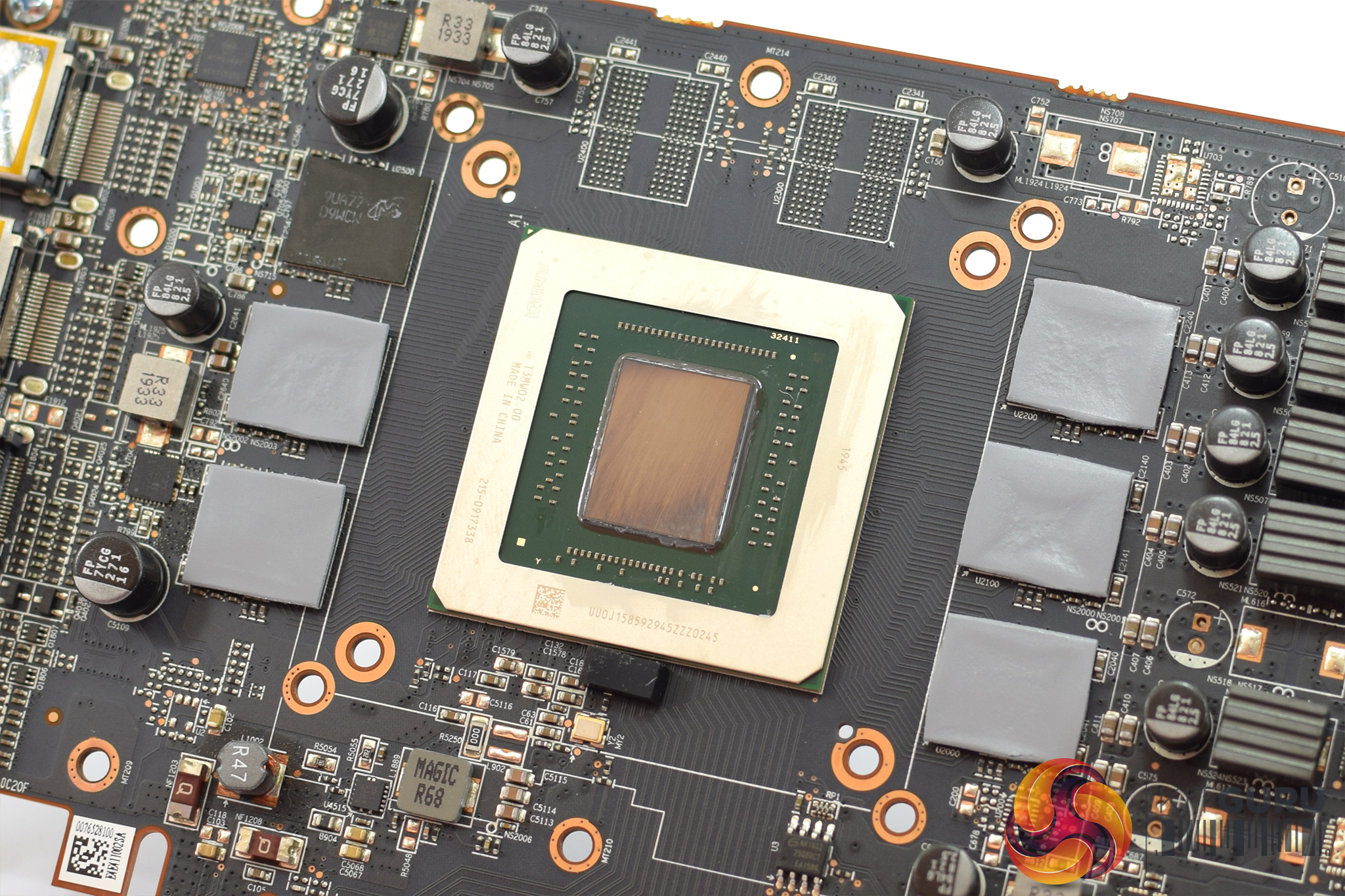
Opening up the card reveals a look at the PCB. This has some slight differences to the PCB of the RX 5700, but to my eye it is the same overall design, which again makes sense. Primarily, this Pulse uses a 5+1 VRM design, when most 5700-series cards have a 6 or 7-phase VRM for the GPU.
Arguably more interesting is the choice of memory – it's 6GB GDDR6 as we know, but the modules are produced by Micron, and are labelled ‘9UA77D9WCW'. That model code decodes to ‘MT61K256M32JE-14‘, which for me is very interesting as that is 14Gbps memory as rated by Micron themselves. The reason I find that interesting is because these modules would have been used for 5600 XT PCBs well before the BIOS was updated, yet the spec was only ever going to be 12Gbps. Instead of using actual 12Gbps modules, it seems AMD was ‘nerfing' 14Gbps modules by speccing them to run at 12Gbps instead.
Of course, now the BIOS update has got these back running at 14Gbps things are as they should be, but I still find it somewhat intriguing that AMD was going to run these modules slower than they were rated for by Micron, prior to the BIOS update situation.
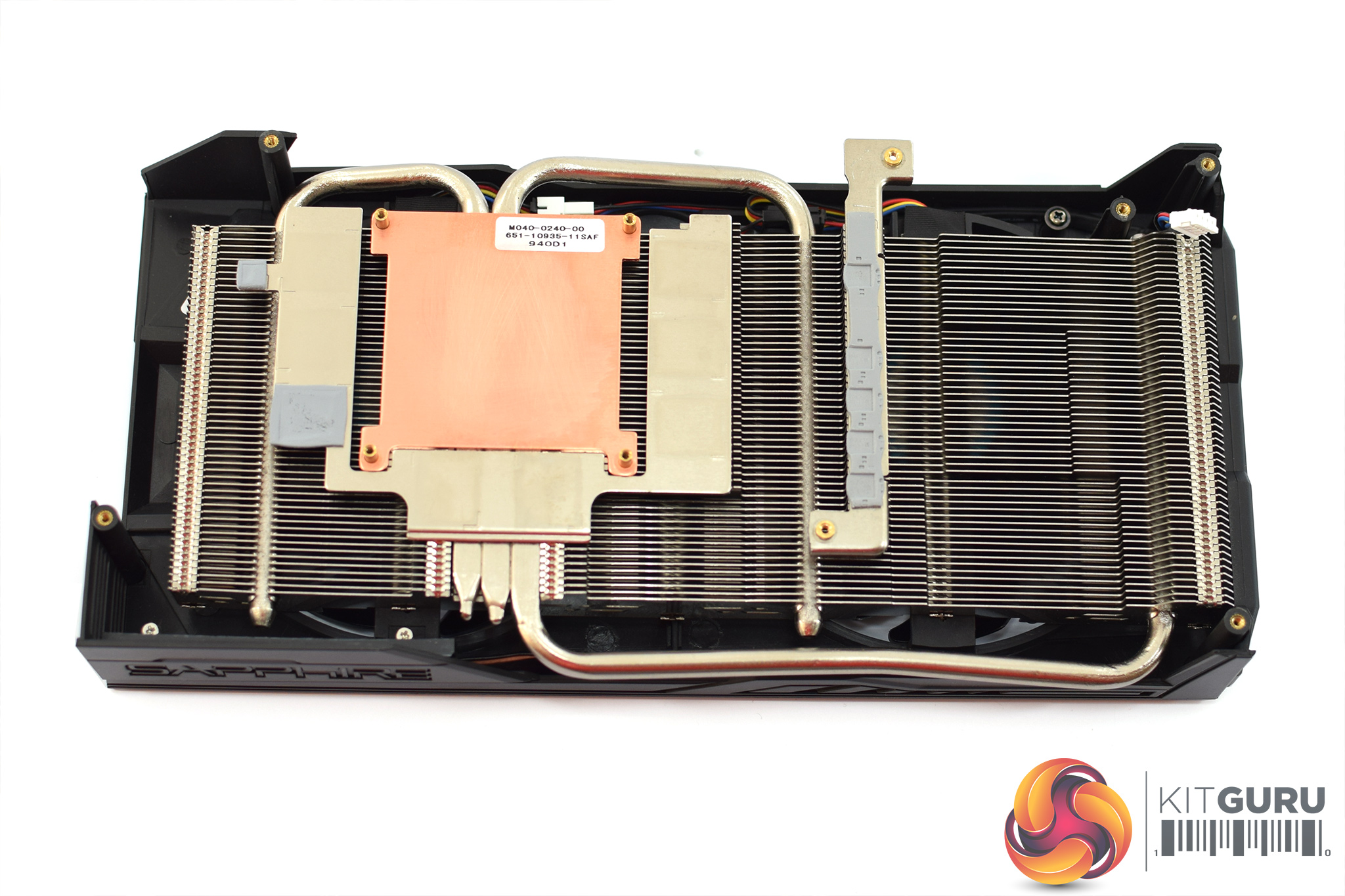
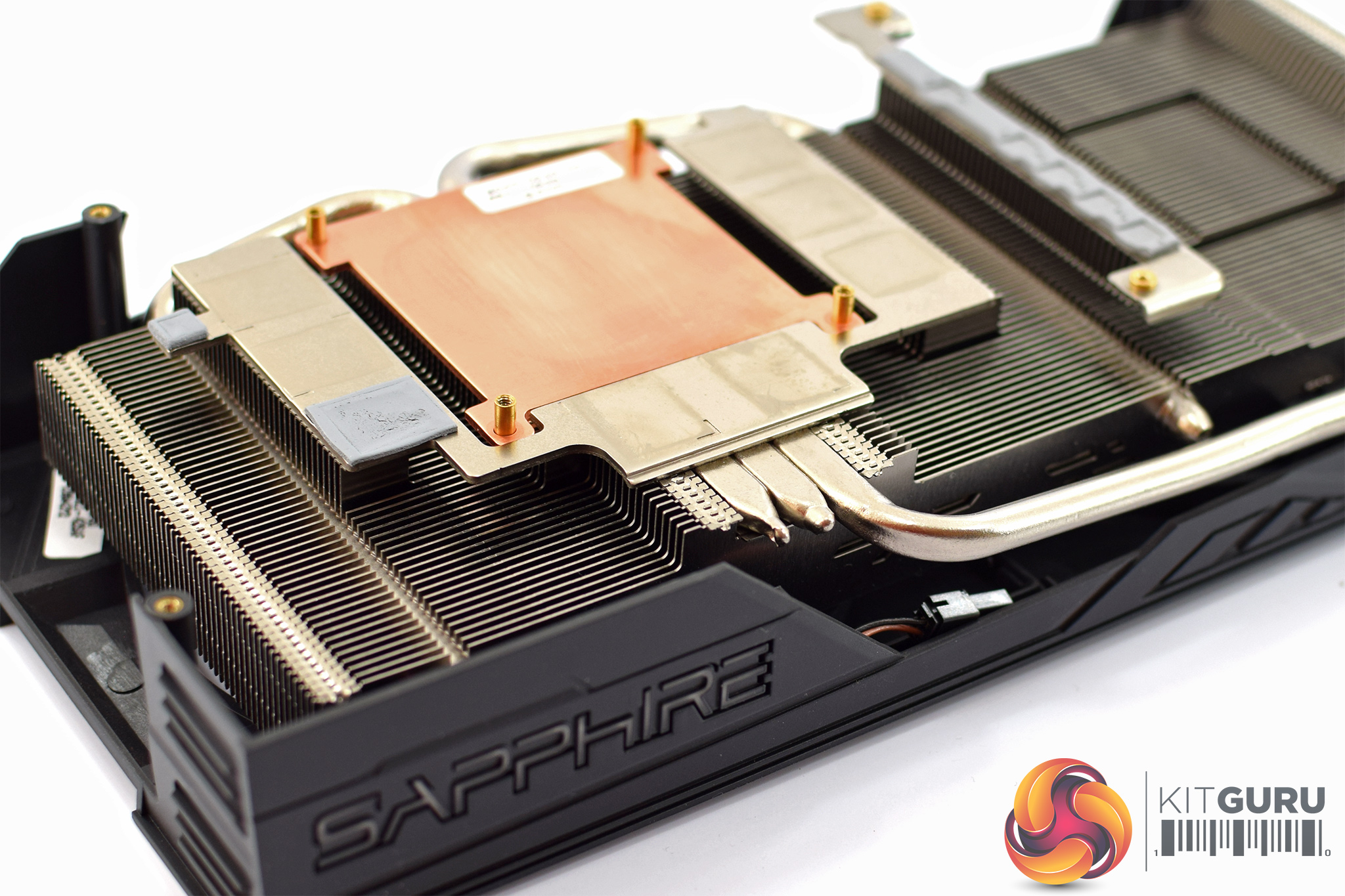
Lastly, as for the heatsink, this is again the same as the Pulse 5700. It is comprised of a single fin stack and uses three 6mm heatpipes. These draw heat from the copper coldplate for the GPU, while there is a separate plate around that for the memory modules. One much smaller plate is also positioned off to the side for the VRM.
Our newest GPU test procedure has been built with the intention of benchmarking high-end graphics cards. We test at 1920×1080 (1080p), 2560×1440 (1440p), and 3840×2160 (4K UHD) resolutions.
We try to test using the DX12 API if titles offer support. This gives us an interpretation into the graphics card performance hierarchy in the present time and the near future, when DX12 becomes more prevalent. After all, graphics cards of this expense may stay in a gamer’s system for a number of product generations/years before being upgraded.
Due to the BIOS situation, we tested our 5600 XT twice – firstly with the original BIOS, and then with the new BIOS which was sent five days before the launch. For each benchmark, the results are marked with ‘(original)' and ‘(new)' so you can see the difference made by updating the BIOS.
Original BIOS spec, left, compared with updated BIOS spec, right.
Driver Notes
- All AMD graphics cards (except RX 5600 XT) were benchmarked with the Adrenalin 20.1.1 public driver.
- RX 5600 XT graphics cards were benchmarked with the Adrenalin 20.1.1 driver supplied to press.
- All Nvidia graphics cards were benchmarked with the Nvidia 441.87 public driver.
Test System
We test using the Overclockers UK Germanium pre-built system, though it has been re-housed into an open-air test bench. You can read more about it over HERE.
| CPU |
Intel Core i7-8700K
Overclocked to 5.0GHz |
| Motherboard |
ASUS ROG Strix Z370-F Gaming
|
| Memory |
Team Group Dark Hawk RGB
16GB (2x8GB) @ 3200MHz 16-18-18-38 |
| Graphics Card |
Varies
|
| System Drive |
Samsung 960 EVO 500GB
|
| Games Drive | Crucial M4 512GB |
| Chassis | Streacom ST-BC1 Bench |
| CPU Cooler |
OCUK TechLabs 240mm AIO
|
| Power Supply |
Corsair AX1500i 80+ Titanium PSU
|
| Operating System |
Windows 10 1903
|
Comparison Graphics Cards List
- Nvidia RTX 2060 SUPER Founders Edition (FE) 8GB
- Nvidia RTX 2060 Founders Edition (FE) 6GB
- Gigabyte GTX 1660 Ti Gaming OC 6G
- EVGA GTX 1660 SUPER SC Ultra 6GB
- Palit GTX 1650 SUPER StormX OC 4GB
- Nvidia GTX 1060 Founders Edition (FE) 6GB
- Sapphire RX 5500 XT Pulse 4GB
- ASRock RX 5500 XT Challenger OC Edition 8GB
- AMD RX 5700 8GB
- AMD RX Vega 56 8GB
- Sapphire RX 590 Nitro+ SE 8GB
Software and Games List
- 3DMark Fire Strike & Fire Strike Ultra (DX11 Synthetic)
- 3DMark Time Spy (DX12 Synthetic)
- Battlefield V (DX12)
- The Division 2 (DX11)
- F1 2019 (DX12)
- Far Cry New Dawn (DX11)
- Gears 5 (DX12)
- Ghost Recon: Breakpoint (DX11)
- Metro: Exodus (DX12)
- Middle Earth: Shadow of War (DX11)
- Red Dead Redemption 2 (DX12)
- Shadow of the Tomb Raider (DX12)
- Total War: Three Kingdoms (DX11)
We run each benchmark/game three times, and present averages in our graphs.
3DMark Fire Strike is a showcase DirectX 11 benchmark designed for today’s high-performance gaming PCs. It is our [FutureMark’s] most ambitious and technical benchmark ever, featuring real-time graphics rendered with detail and complexity far beyond what is found in other benchmarks and games today.
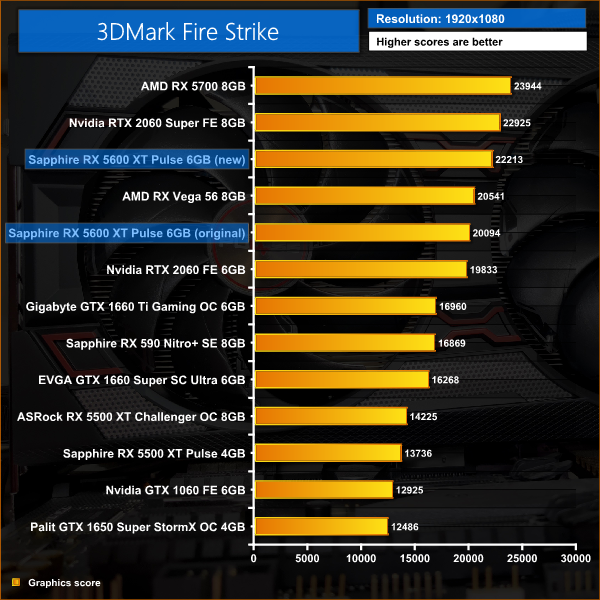
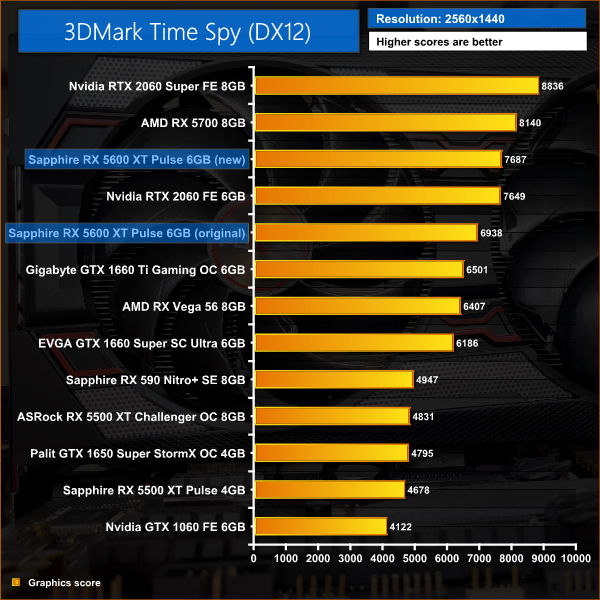
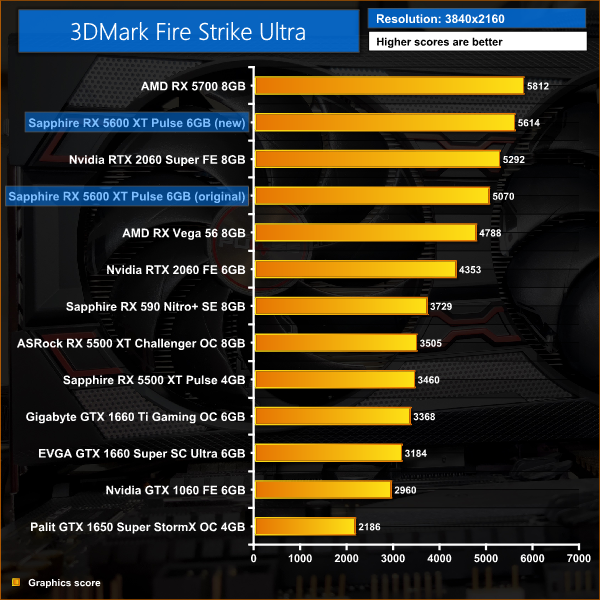
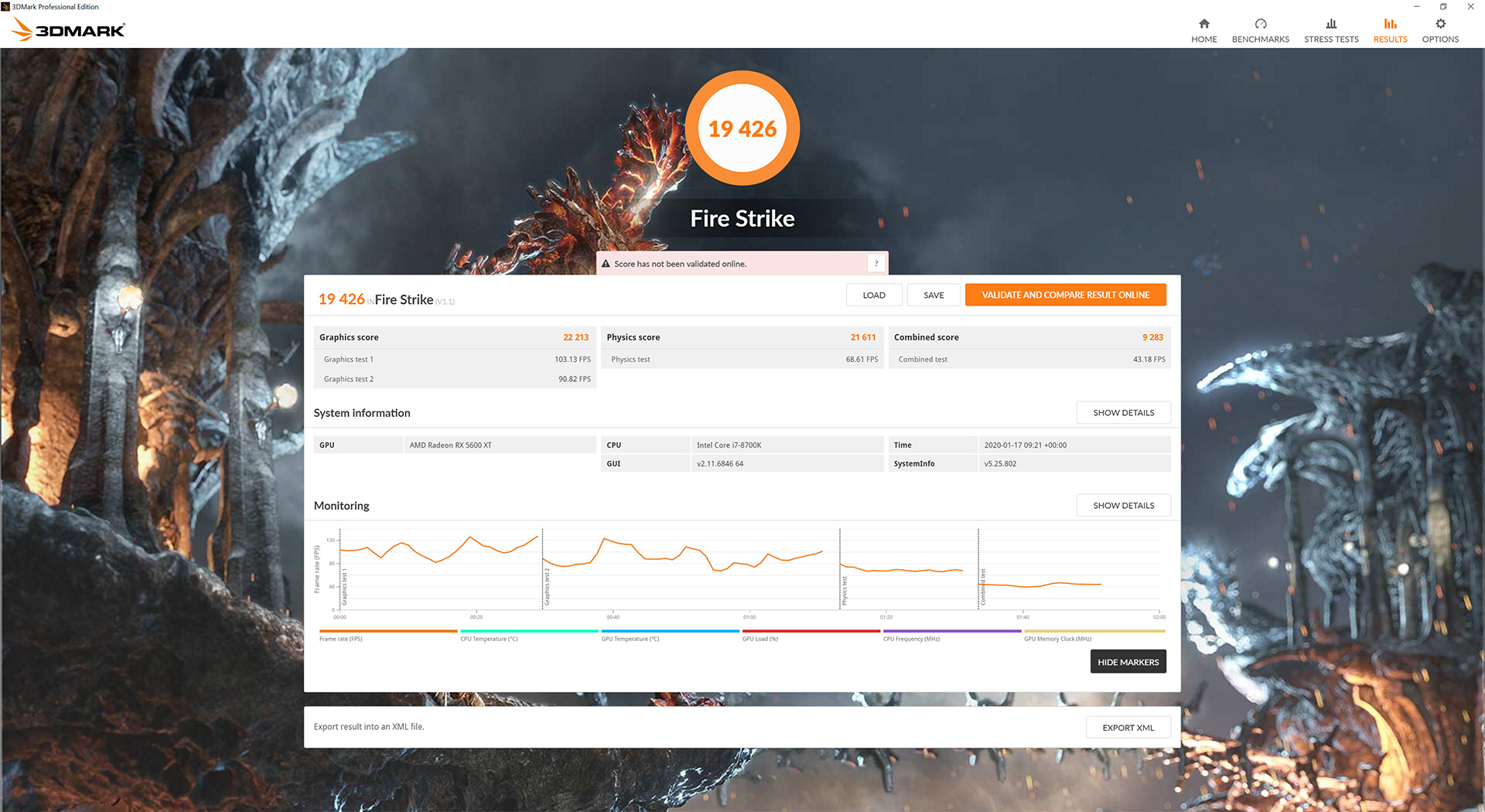
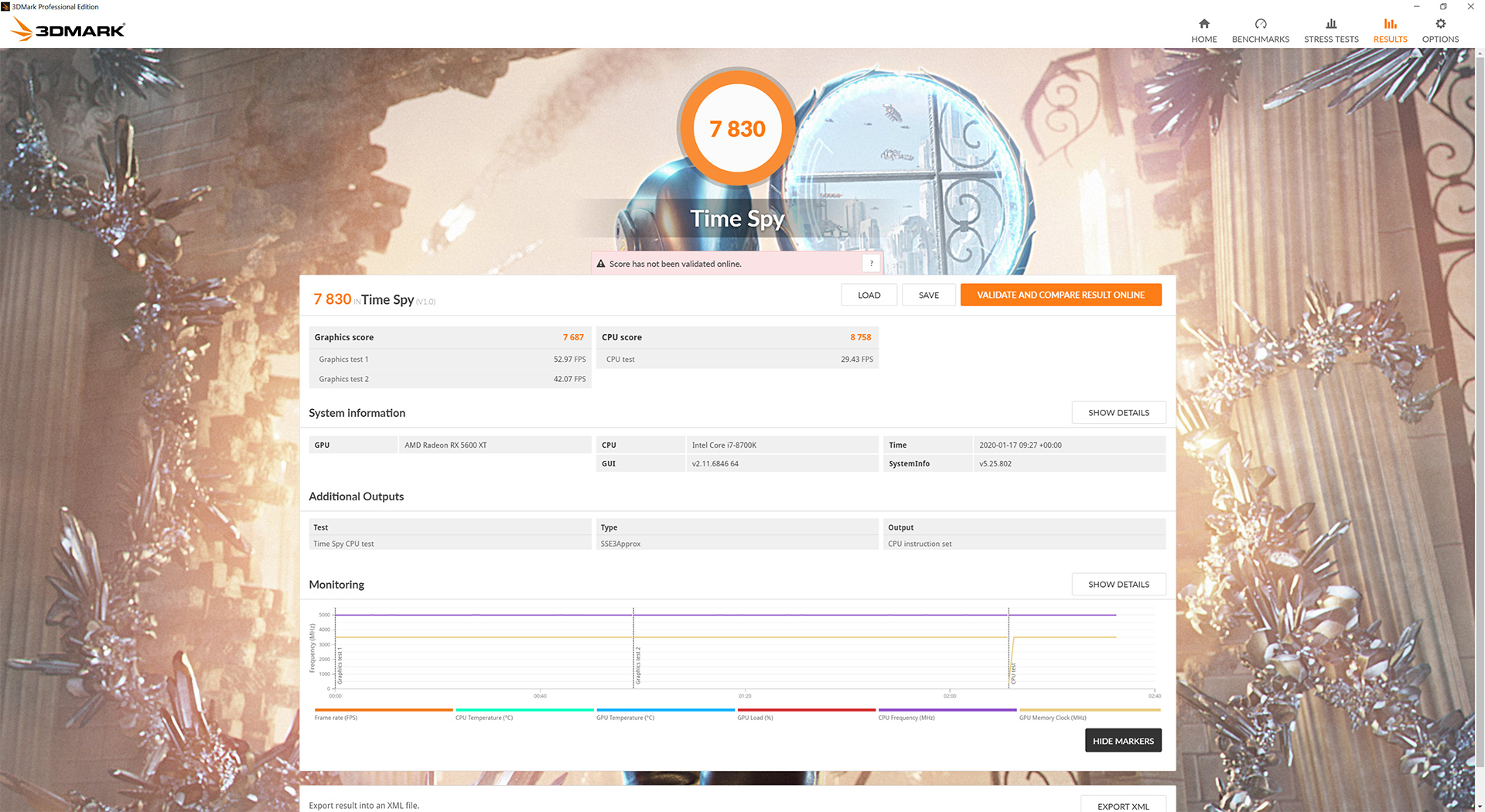
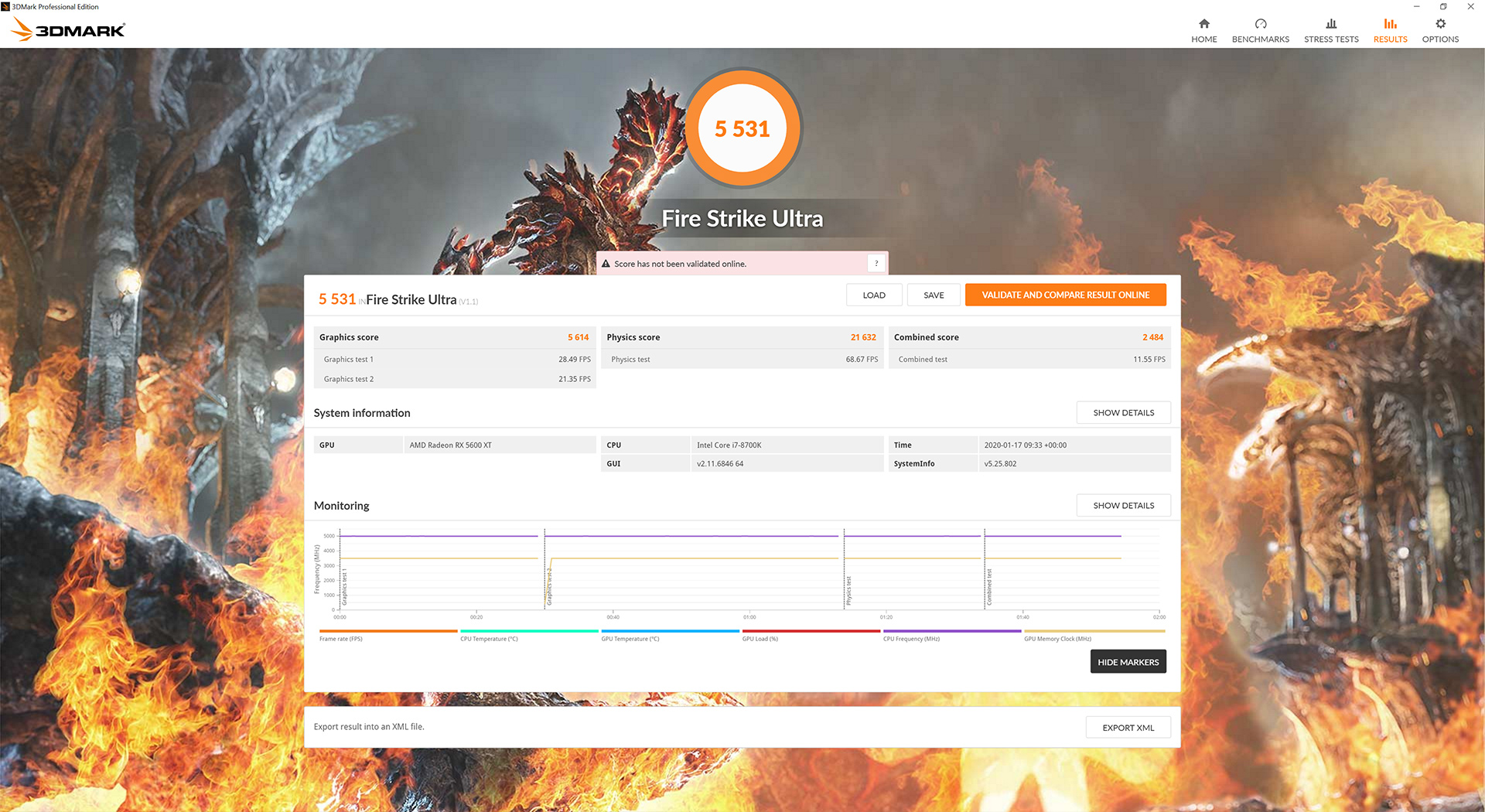
We start our look at performance with 3DMark – and just as reminder, we tested both the original BIOS (with reference spec) and the new BIOS (with increased power, GPU clock and memory clock).
With the 1080p Fire Strike strike benchmark, both the original and new 5600 XT BIOS out-scored the RTX, which is not bad at all. In Time Spy, however, the original 5600 XT BIOS was 9% slower than the RTX 2060, but with the BIOS update there is now parity between the two cards in that benchmark.
Battlefield V is a first-person shooter video game developed by EA DICE and published by Electronic Arts. Battlefield V is the sixteenth instalment in the Battlefield series. It was released worldwide for Microsoft Windows, PlayStation 4, and Xbox One on November 20, 2018. (Wikipedia).
We test using the Ultra preset, DX12 API.

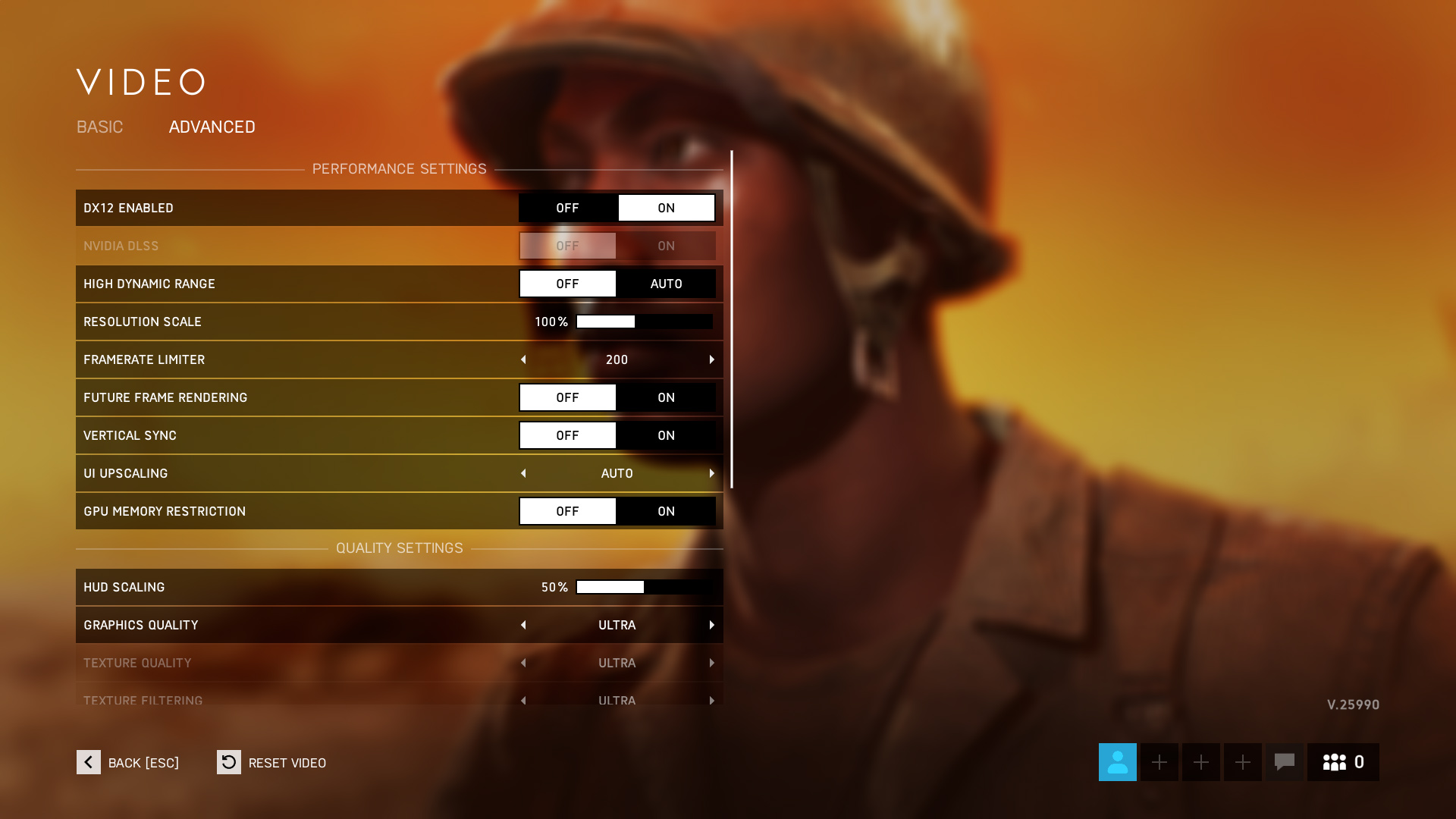
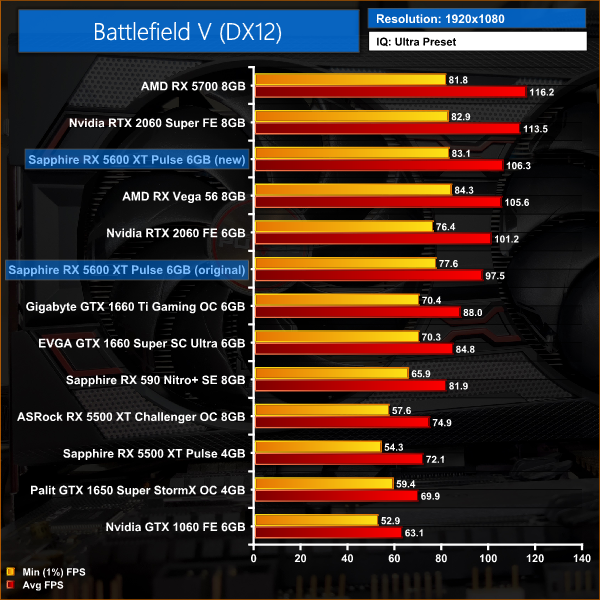
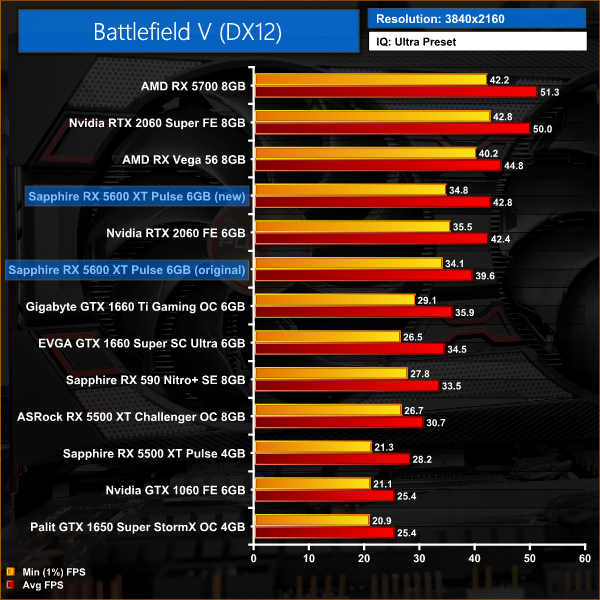
For our first game, we start with Battlefield V. At 1080p, there are some very interesting results – not least that the 5600 XT original BIOS came in just 4% behind the RTX 2060, and with the new BIOS the card is able to out-perform the 2060 by 5%. This means the new BIOS for the 5600 XT results in a 9% performance improvement.
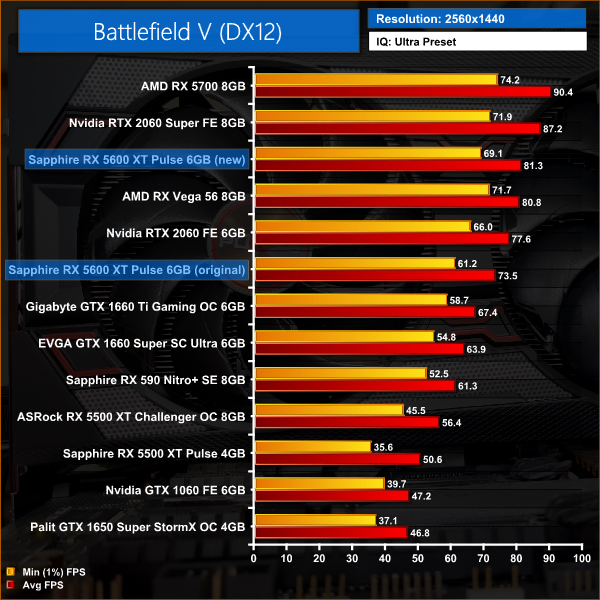
At 1440p, things are pretty similar. The 5600 XT with updated BIOS is 5% faster than the RTX 2060, where the original BIOS was 5% slower. This means we see an 11% performance uplift comparing the new BIOS on the 5600 XT, to the old one.
Tom Clancy's The Division 2 is an online action role-playing video game developed by Massive Entertainment and published by Ubisoft. The sequel to Tom Clancy's The Division (2016), it is set in a near-future Washington, D.C. in the aftermath of a smallpox pandemic, and follows an agent of the Strategic Homeland Division as they try to rebuild the city. (Wikipedia).
We test using the Ultra preset, but with V-Sync disabled, DX11 API.
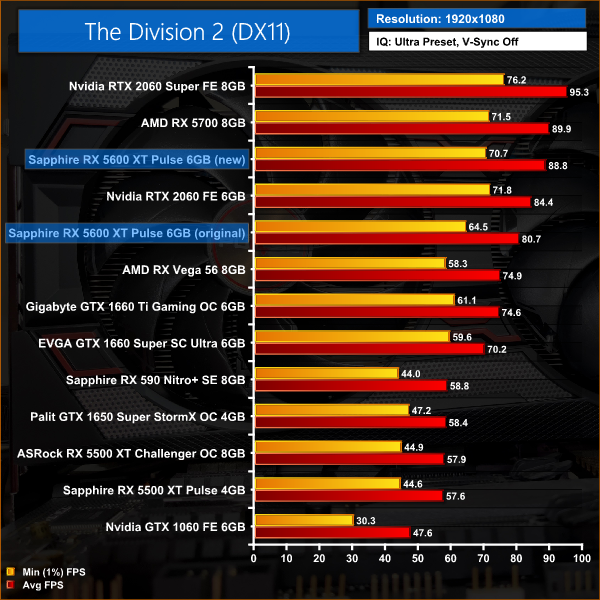
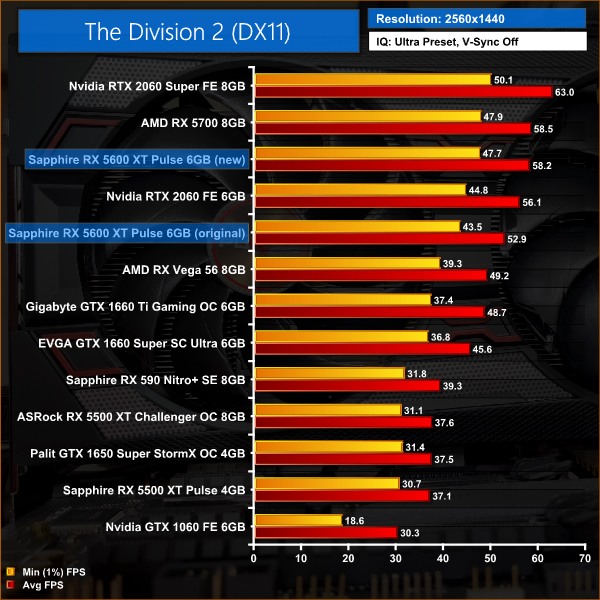
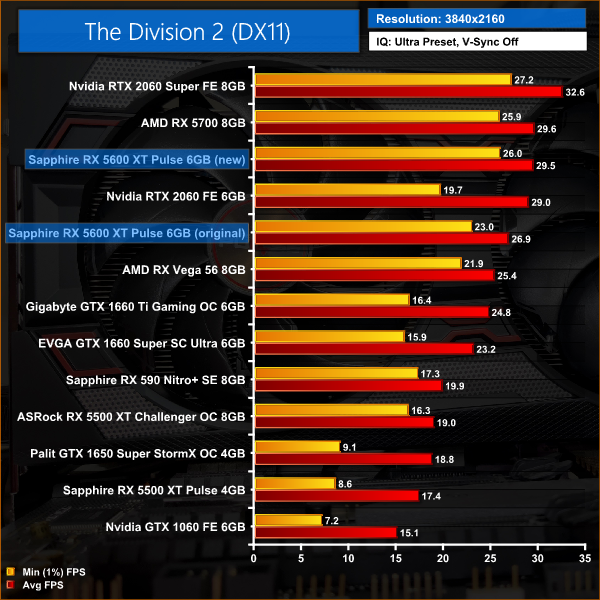
The performance trend in The Division 2 closely resembles what we see from Battlefield V. At 1080p, the 5600 XT with its original BIOS was not far behind the RTX 2060 at all, with just a 4% deficit, but the updated BIOS turns this into a 5% performance lead over the 2060.
At 1440p, it's more of the same with the 5600 XT's updated BIOS providing a 10% performance uplift compared to the original BIOS. This means the card is 4% faster than the 2060 at this resolution.
F1 2019 is a racing video game based on the 2019 Formula One and Formula 2 Championships. The game is developed and published by Codemasters and is the twelfth title in the Formula One series developed by the studio. The game was announced by Codemasters on 28 March 2019. (Wikipedia).
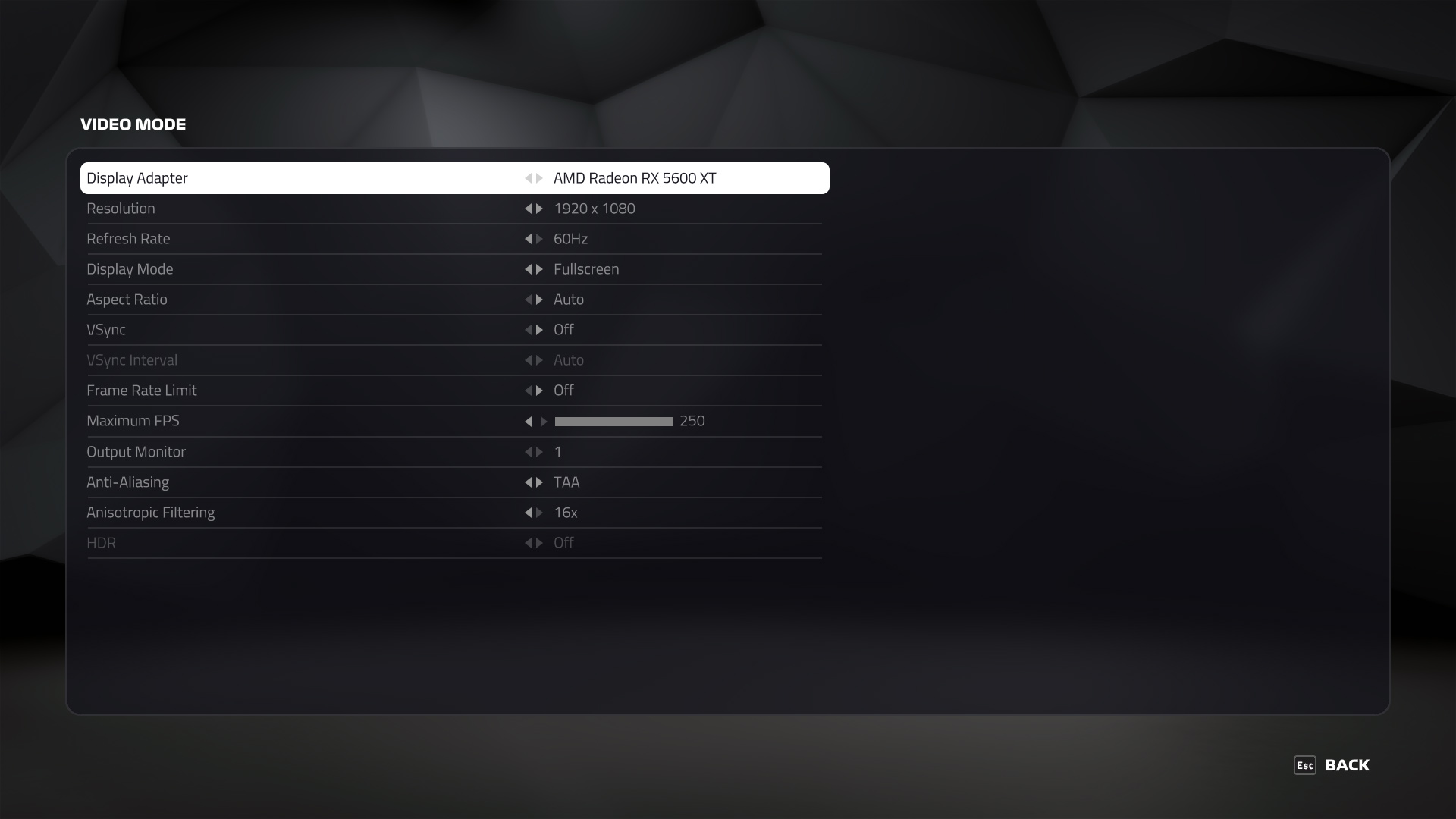
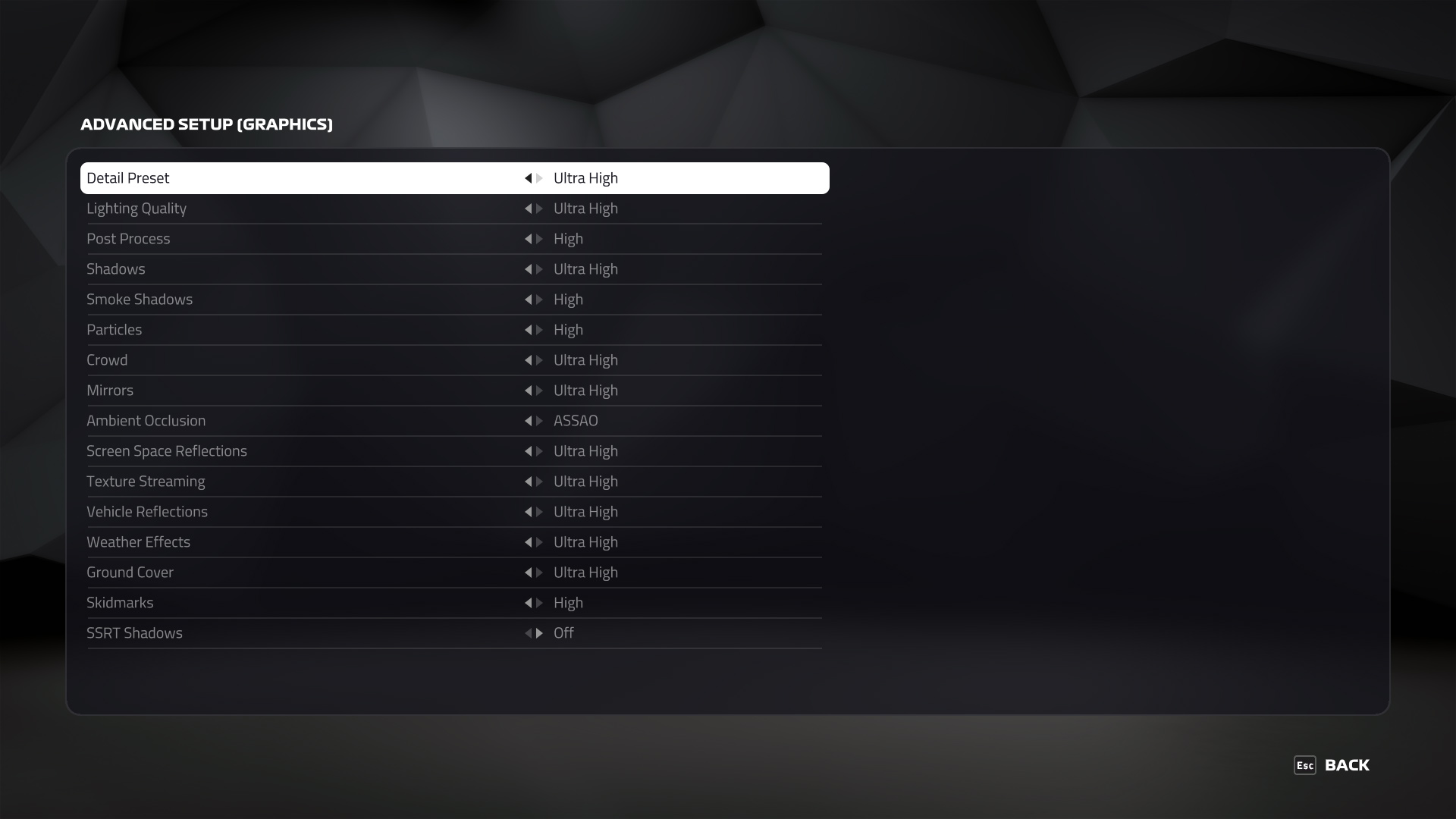
We test using the Ultra High preset, with TAA and 16x Anisotropic Filtering, DX12 API.
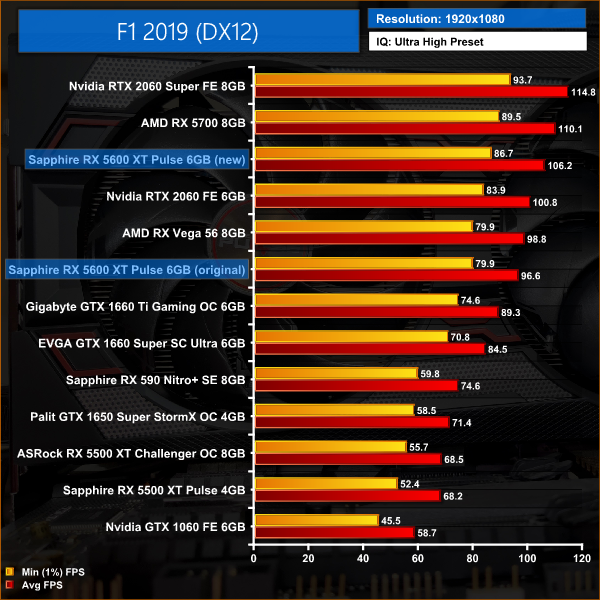
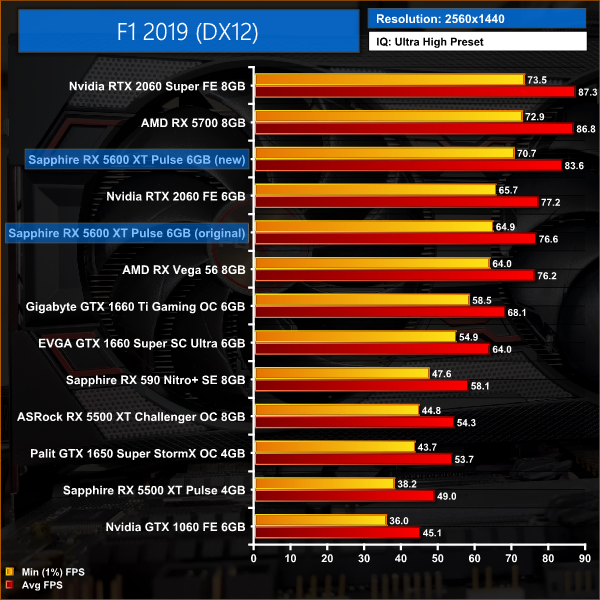
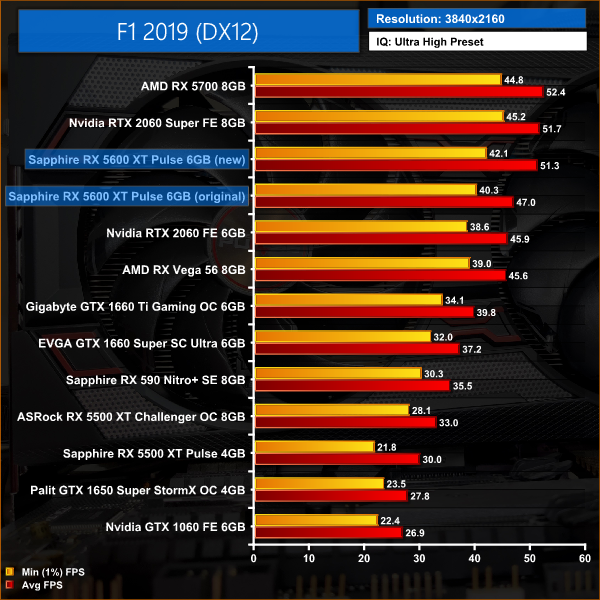
Moving onto F1 2019, once more at 1080p the 5600 XT with its original BIOS was marginally slower than the RTX 2060, with a 4% performance deficit. The updated BIOS turned that into a 5% performance lead at 1080p, and as high as 8% at 1440p versus the RTX 2060.
Far Cry New Dawn is an action-adventure first-person shooter developed by Ubisoft Montreal and published by Ubisoft. The game is a spin-off of the Far Cry series and a narrative sequel to Far Cry 5. It was released for Microsoft Windows, PlayStation 4 and Xbox One on February 15, 2019. (Wikipedia).
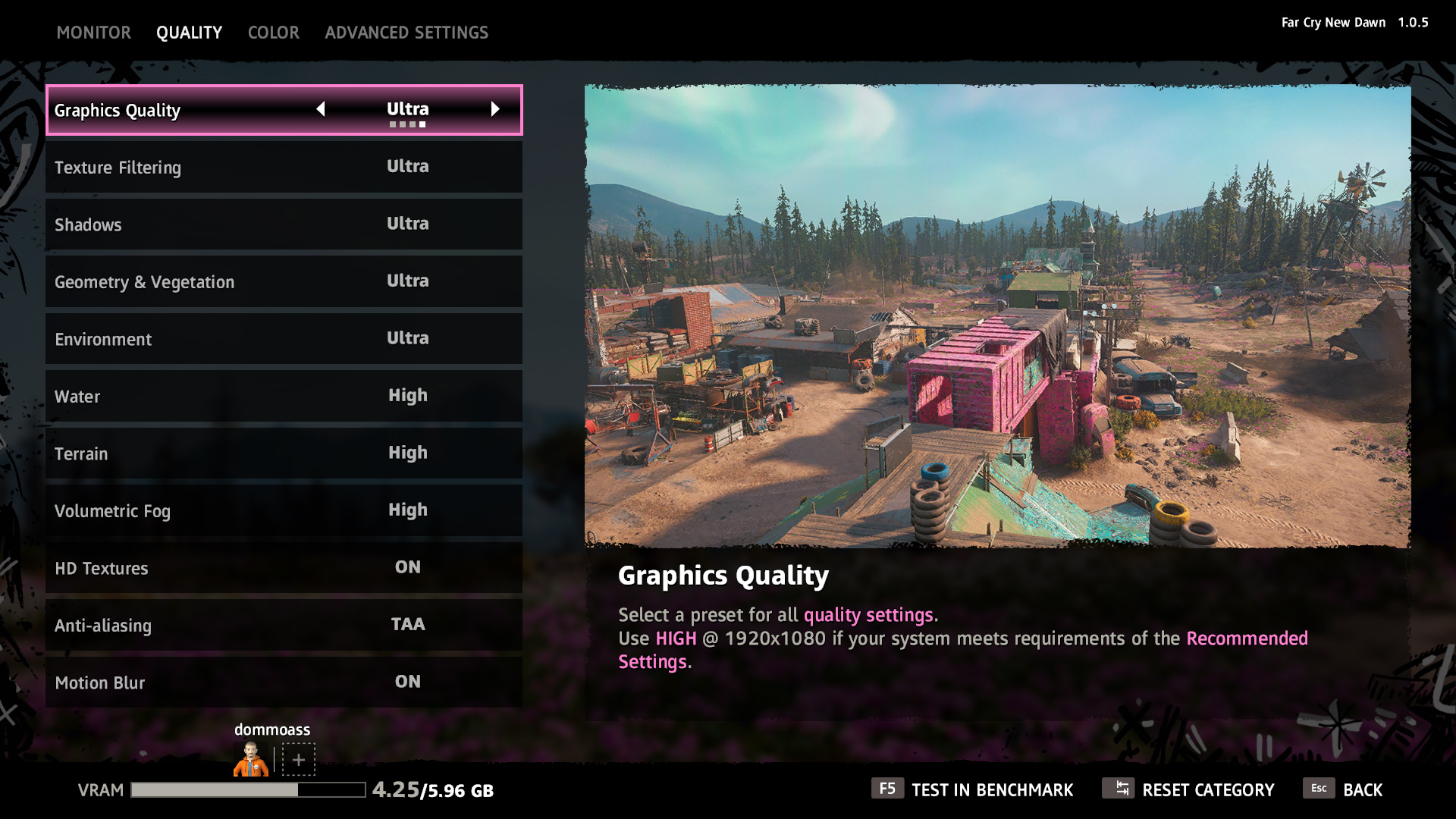
We test using the Ultra preset, with the HD Textures pack, DX11 API.
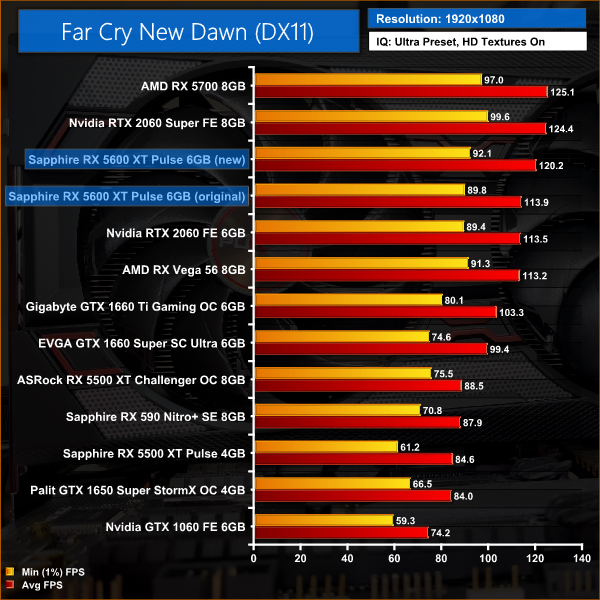
Far Cry New Dawn provides more interesting results, here at 1080p we can see the 5600 XT with original BIOS effectively tied with the RTX 2060, with less than a single frame in it. Once the BIOS was updated, though, this turned into a 6% performance advantage for the 5600 XT.
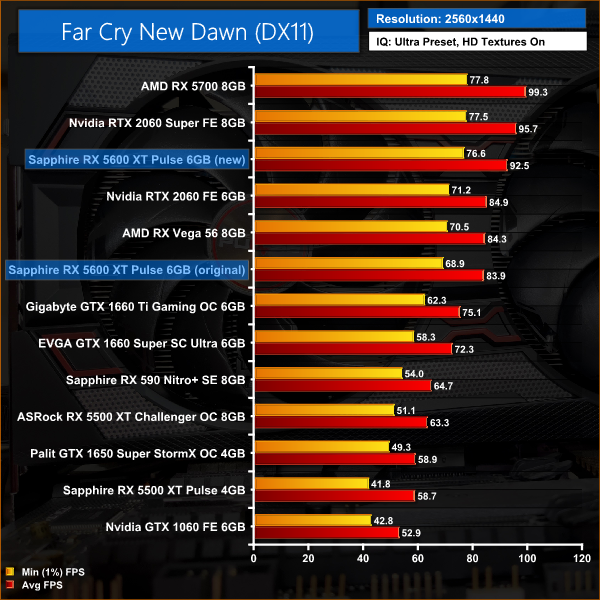
At 1440p, things improved even further, with now a 9% lead for the 5600 XT over the RTX 2060. That puts the card just below the 2060 SUPER, which is not a bad result at all.
Gears 5 is a third-person shooter video game developed by The Coalition and published by Xbox Game Studios for Microsoft Windows and Xbox One. It is the sixth instalment of the Gears of War series, and is the second Gears of War game not to be developed by Epic Games.
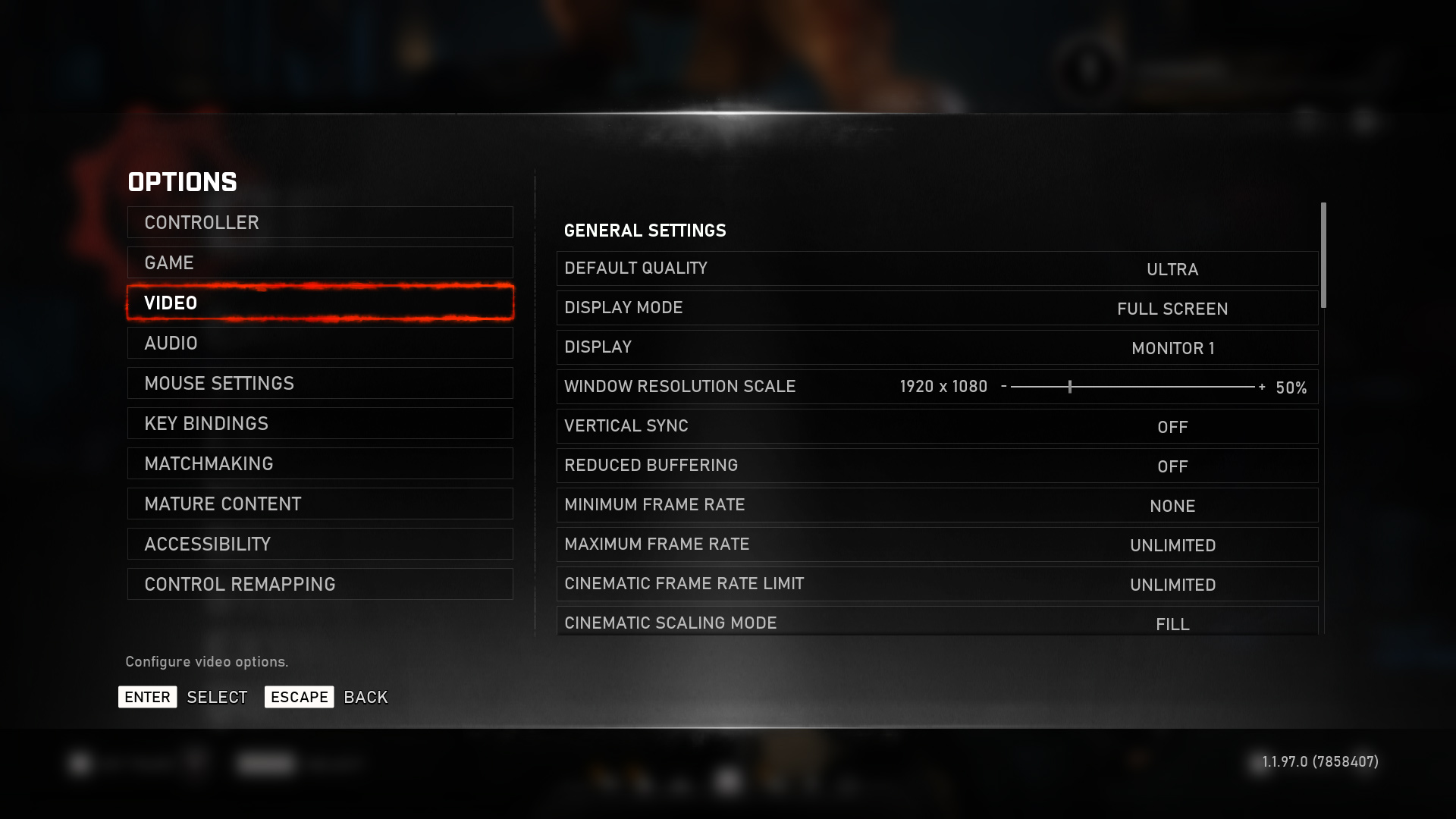
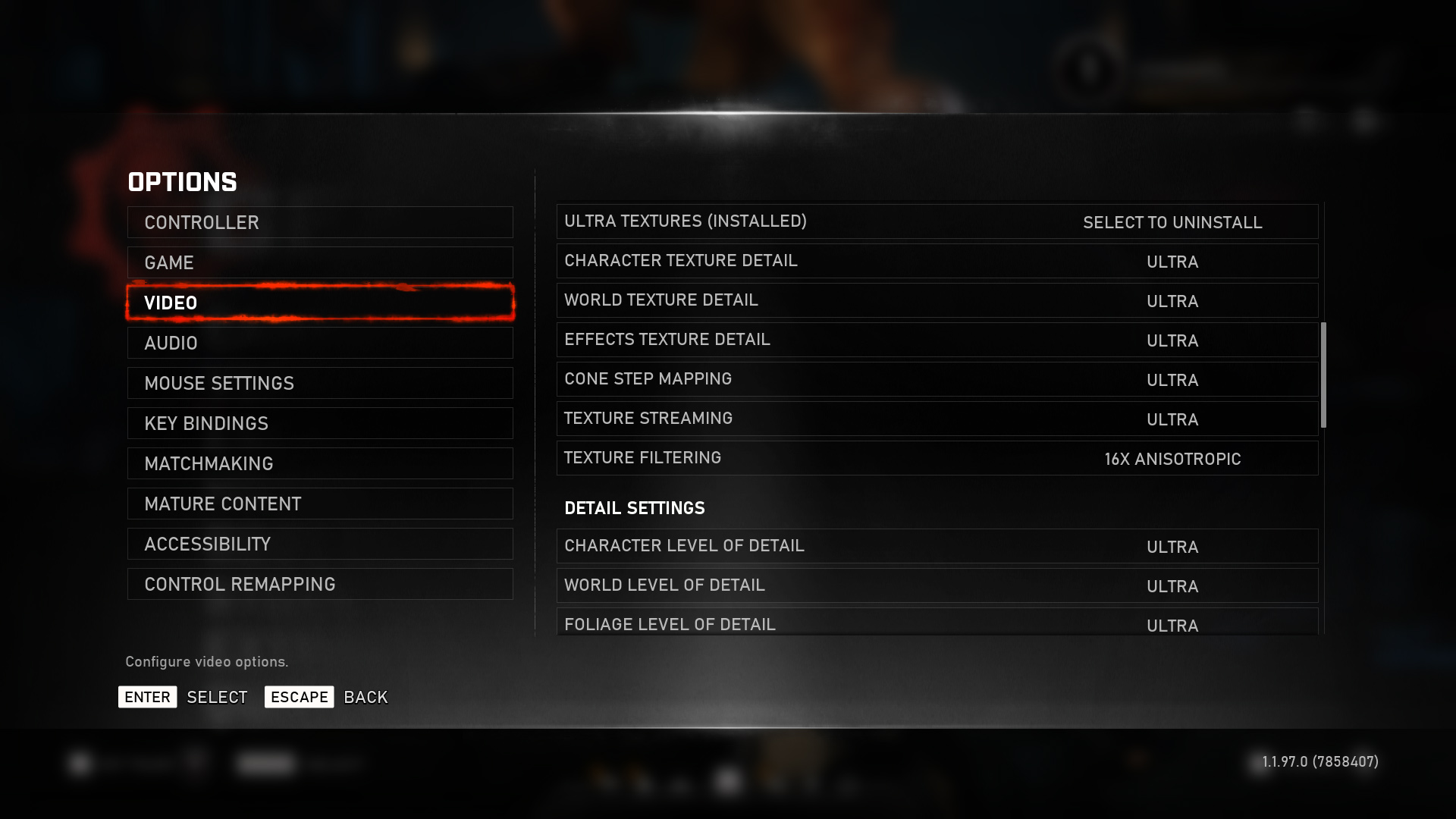
We test using the Ultra preset, with Best Animation Quality (instead of Auto), DX12 API.
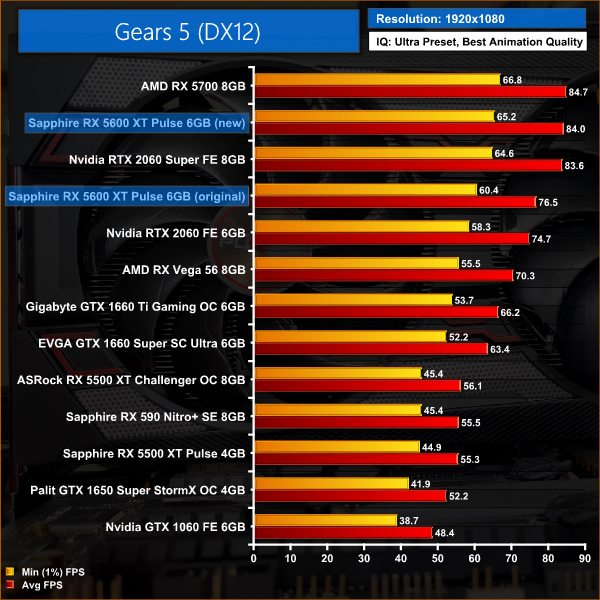
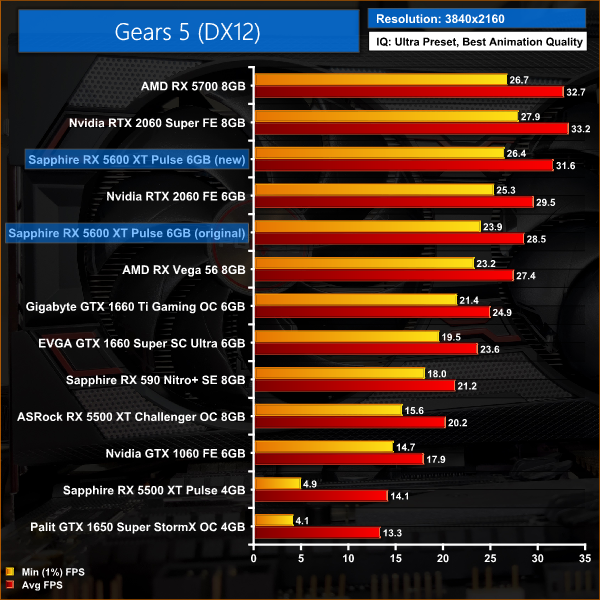
So far things have looked pretty rosy for the 5600 XT with the games we've tested, and it's no different in Gears 5. This is an AMD title so at 1080p it's not a huge surprise to see the 5600 XT original BIOS 2% ahead of the RTX 2060 already, and with the updated BIOS this stretches to a 12% lead, above even the 2060 Super.
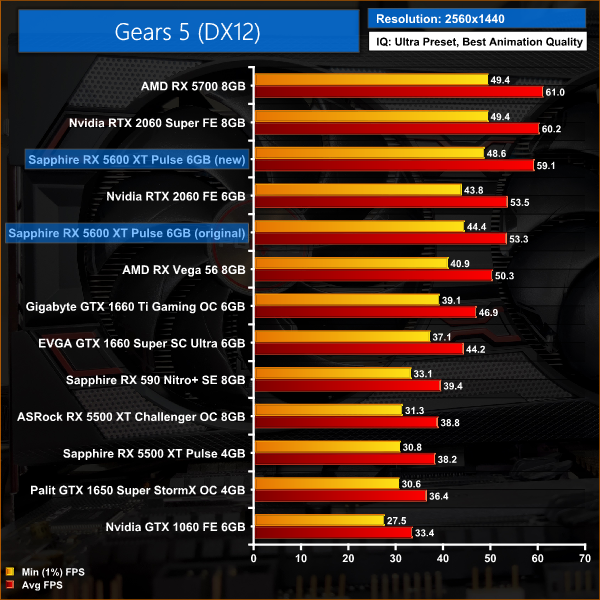
At 1440p, too, the updated BIOS is able to score 10% higher frame rates than the RTX 2060, indicative of an 11% improvement in performance when compared the original 5600 XT BIOS to the updated one.
Tom Clancy's Ghost Recon Breakpoint is an online tactical shooter video game developed by Ubisoft Paris and published by Ubisoft. The game was released worldwide on 4 October 2019, for Microsoft Windows, PlayStation 4 and Xbox One, (Wikipedia).
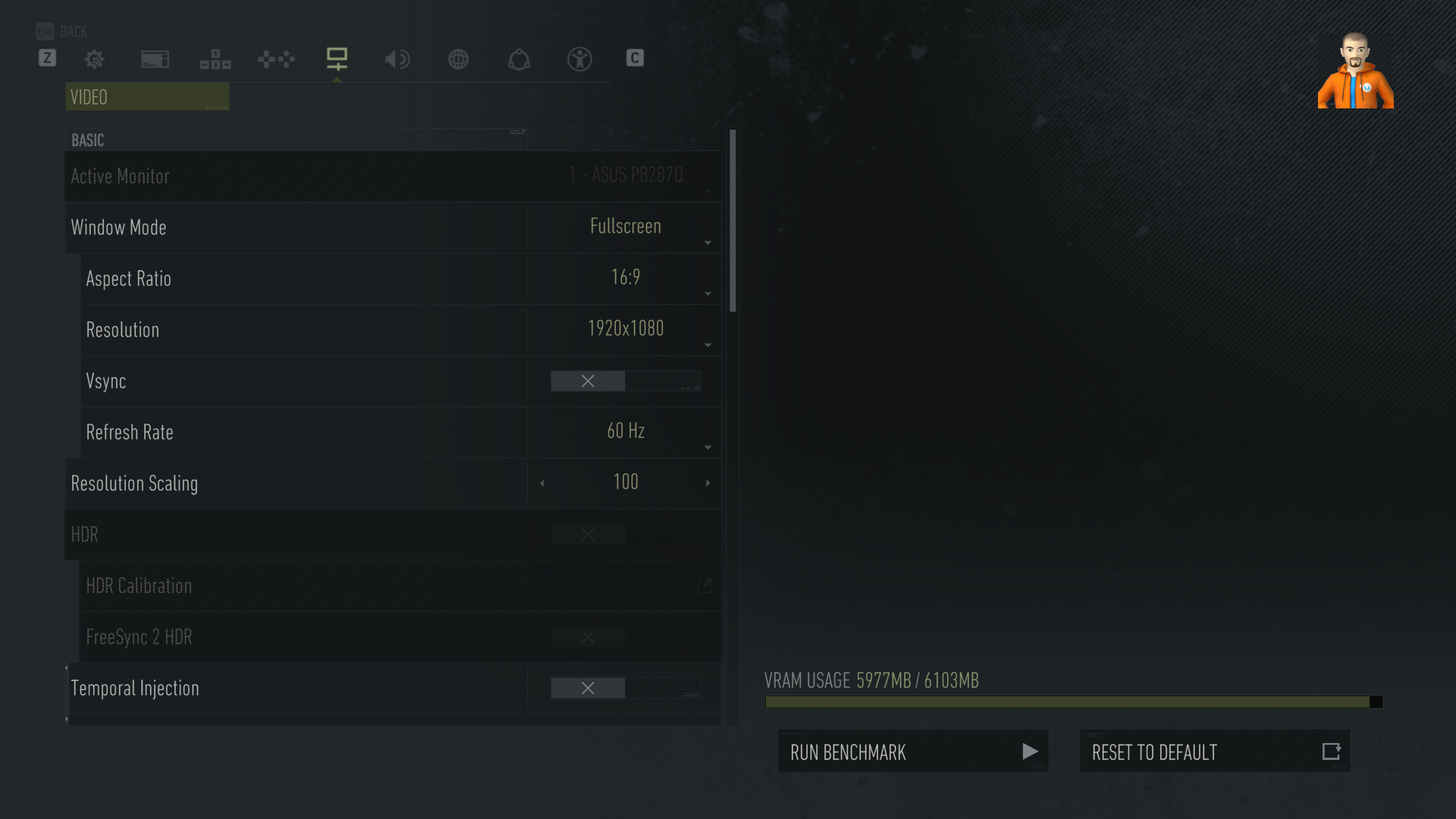
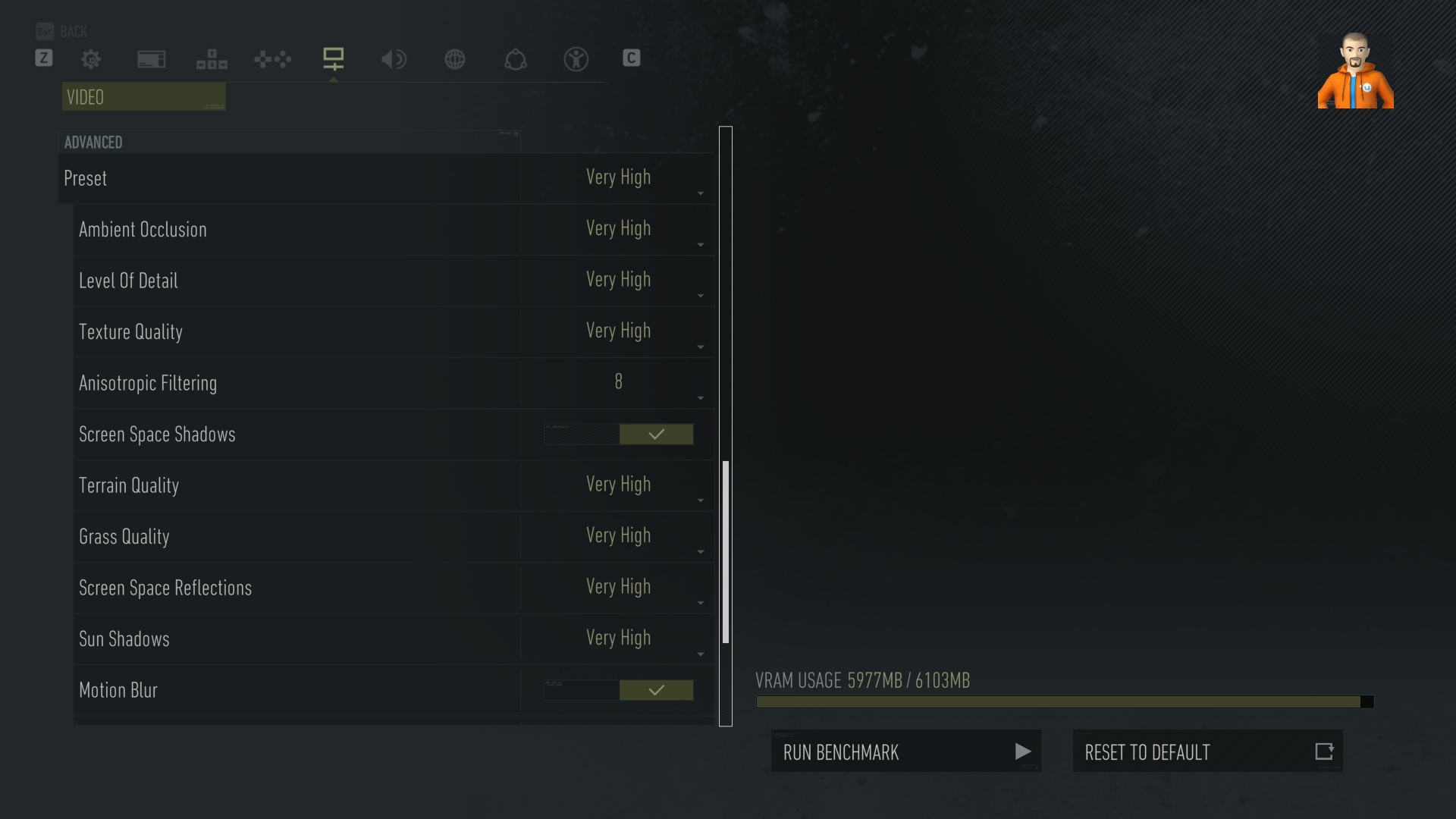
We test using the Very High preset, with AA disabled, DX11 API.
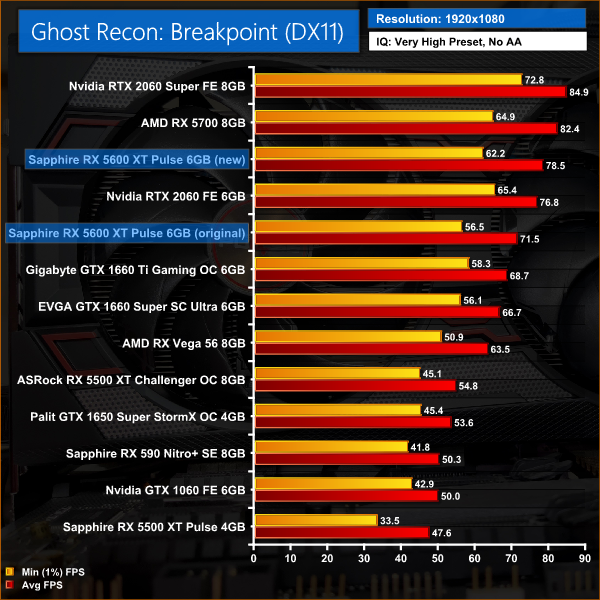
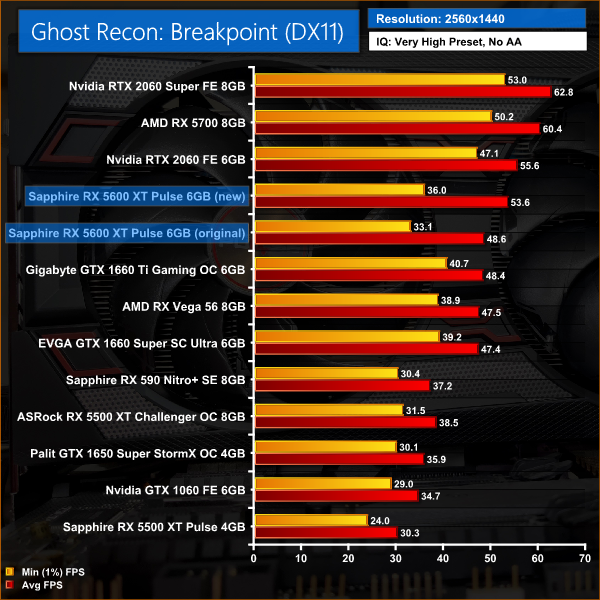
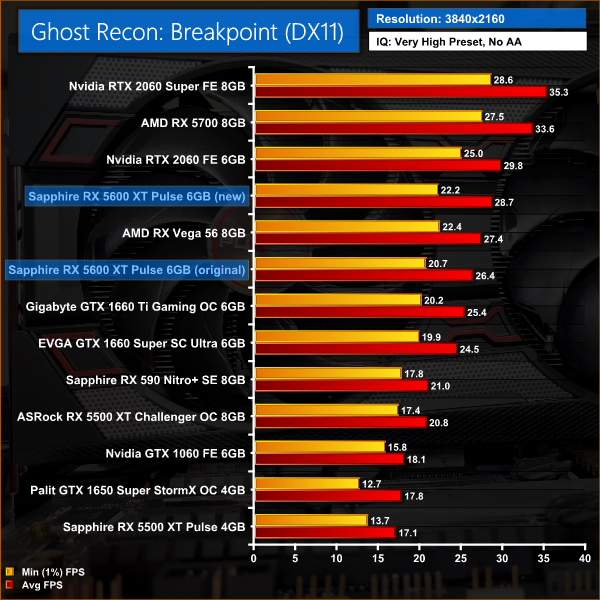
Ghost Recon: Breakpoint is a tougher test for the 5600 XT, and despite being an AMD title this game does seem to run better on Nvidia hardware. At 1080p, the original 5600 XT BIOS was 7% behind the RTX 2060 and only 4% ahead of the GTX 1660 Ti. Updating the BIOS did push the 5600 XT just ahead of the RTX 2060, but not by much at all.
At 1440p, even with the updated BIOS the 5600 XT is slower than the RTX 2060 by 4%. Without the BIOS update, the card is 13% slower so it is still a significant improvement for the AMD GPU, just not enough to beat the 2060.
Metro Exodus is a first-person shooter video game developed by 4A Games and published by Deep Silver in 2019. It is the third instalment in the Metro video game series based on Dmitry Glukhovsky's novels, following the events of Metro 2033 and Metro: Last Light. (Wikipedia).
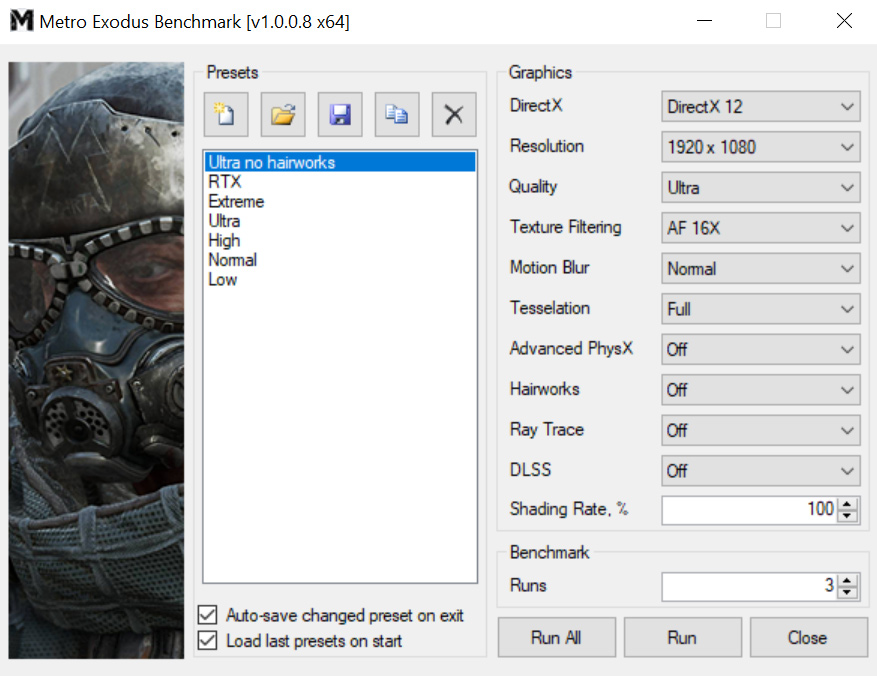
We test using the Ultra preset, but with Hairworks and Advanced PhysX turned off, DX12 API.
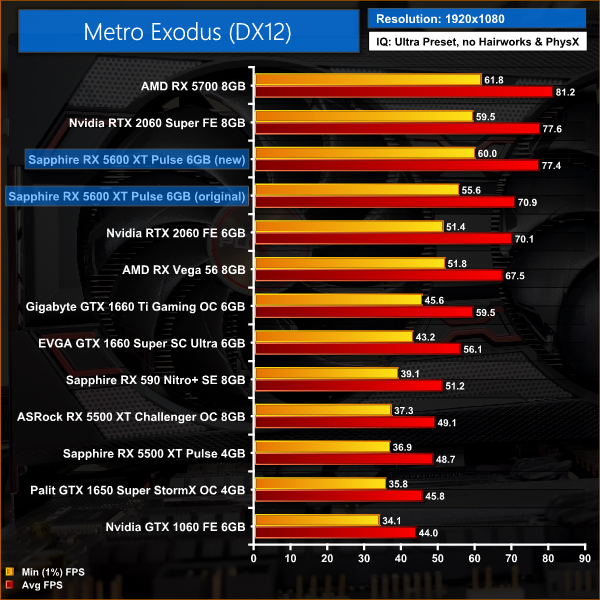
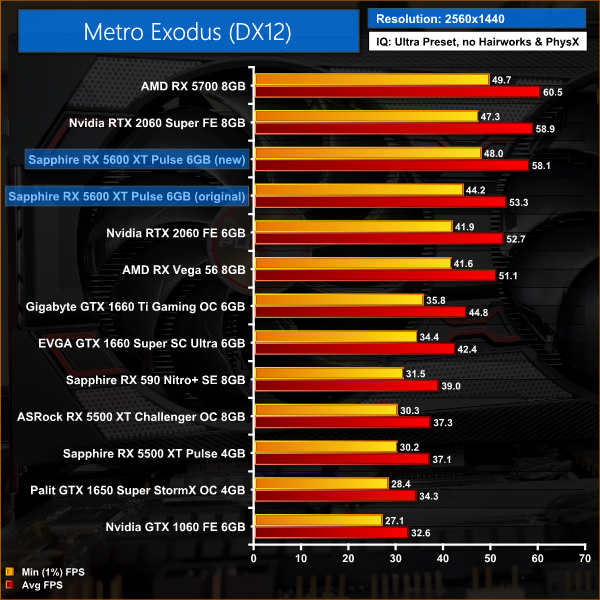
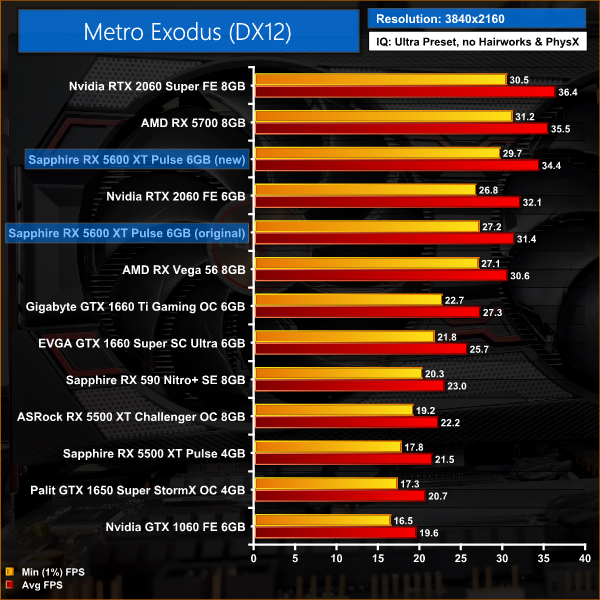
Metro Exodus is another interesting title that, despite being one of the first games with RTX support, does seem to favour AMD hardware. At 1080p, even without the BIOS update our 5600 XT is the marginally faster card when compared to the RTX 2060. With the new update, the 5600 XT outperforms the 2060 by 10%, the second biggest margin across all of our games today.
Those margins don't change at all once the resolution is upped to 1440p, with the updated 5600 XT holding a 10% lead over the RTX 2060, putting it on-par with the 2060 Super. Another impressive result for AMD.
Middle-earth: Shadow of War is an action role-playing video game developed by Monolith Productions and published by Warner Bros. Interactive Entertainment. It is the sequel to 2014’s Middle-earth: Shadow of Mordor, and was released worldwide for Microsoft Windows, PlayStation 4, and Xbox One on October 10, 2017. (Wikipedia).
We test using the Ultra preset, DX11 API.
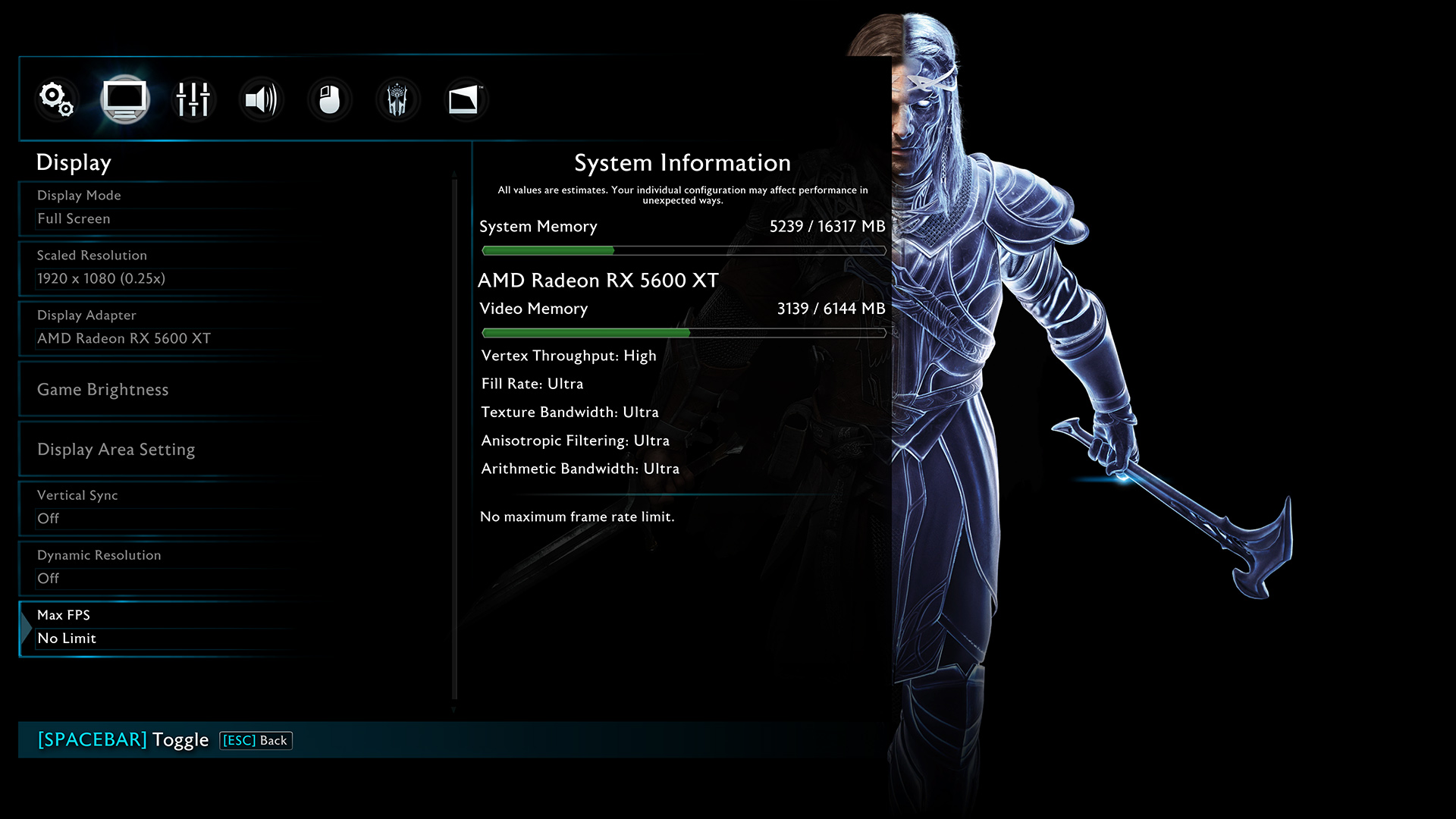
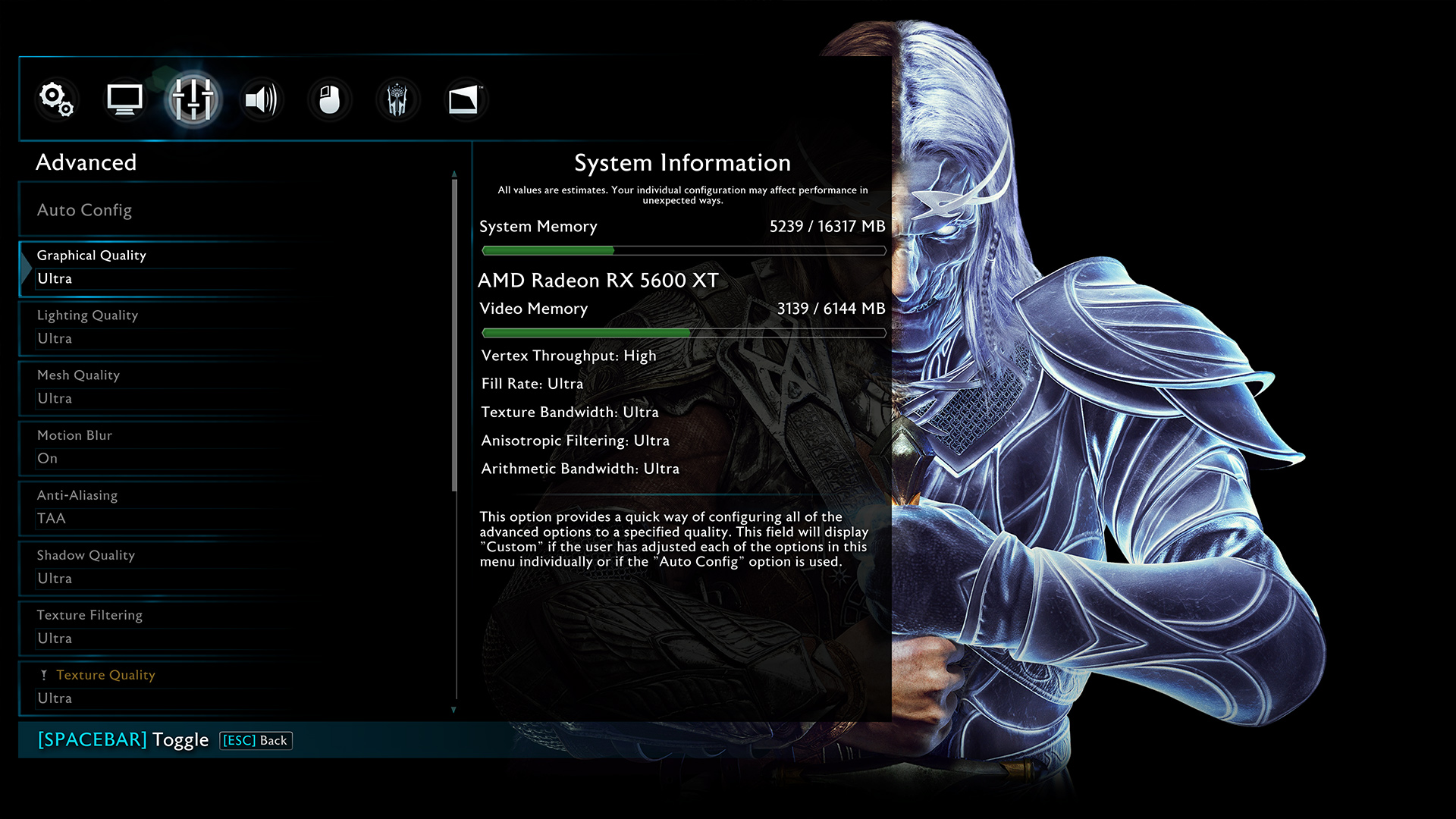
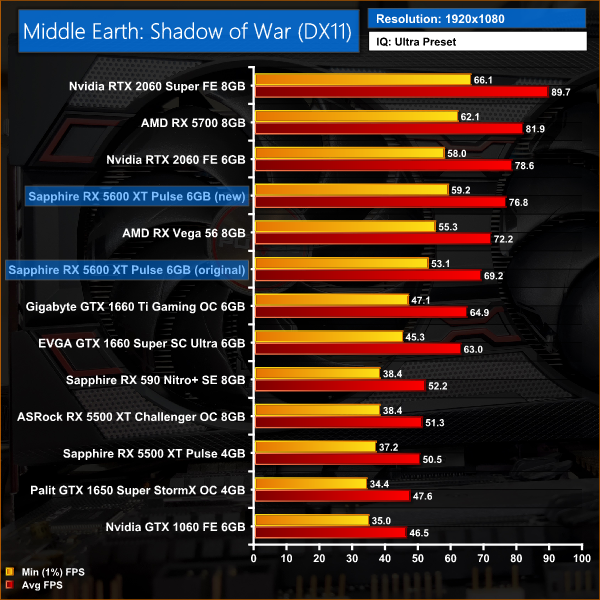
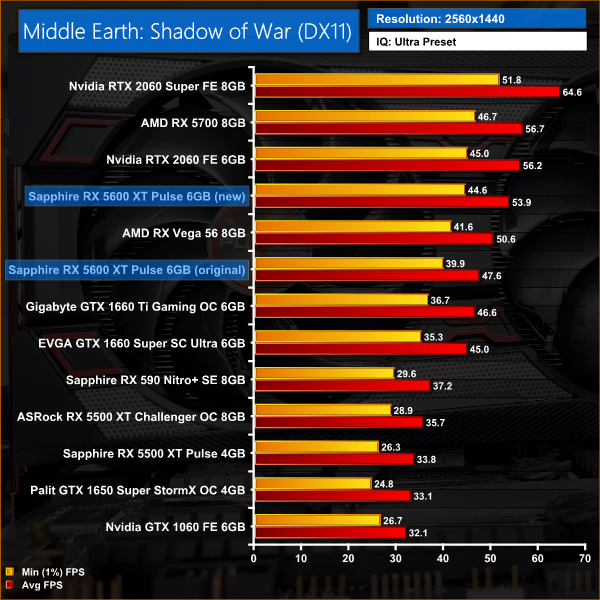
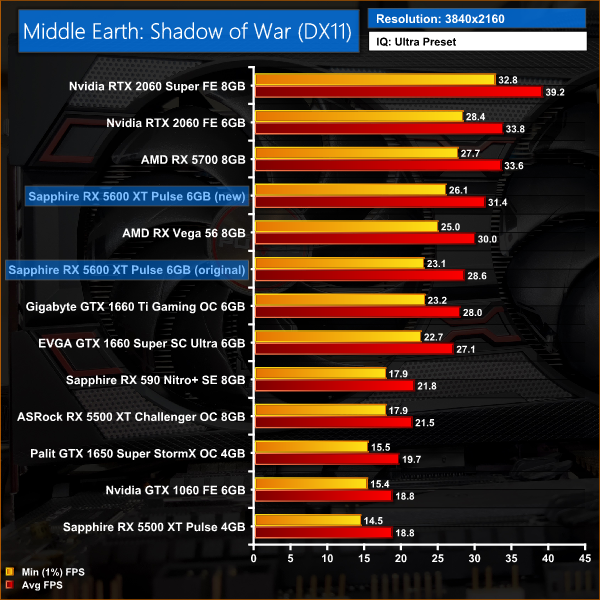
Moving onto Middle Earth Shadow of War, here we see one of the biggest performance wins for the RTX 2060 – before updating the 5600 XT BIOS, the Nvidia card was 12% faster at 1080p. While updating the BIOS brought about an 11% improvement for the 5600 XT, it still couldn't match the 2060.
At 1440p, the 5600 XT falls further behind – not by much, but there's now a 4% gap between it and the RTX 2060. Before updating the BIOS, however, that gap was 15%, so again we can see just how much difference that extra GPU and memory frequency makes.
Red Dead Redemption 2 is a 2018 action-adventure game developed and published by Rockstar Games. The game is the third entry in the Red Dead series and is a prequel to the 2010 game Red Dead Redemption. Red Dead Redemption 2 was released for the PlayStation 4 and Xbox One in October 2018, and for Microsoft Windows and Stadia in November 2019. (Wikipedia).
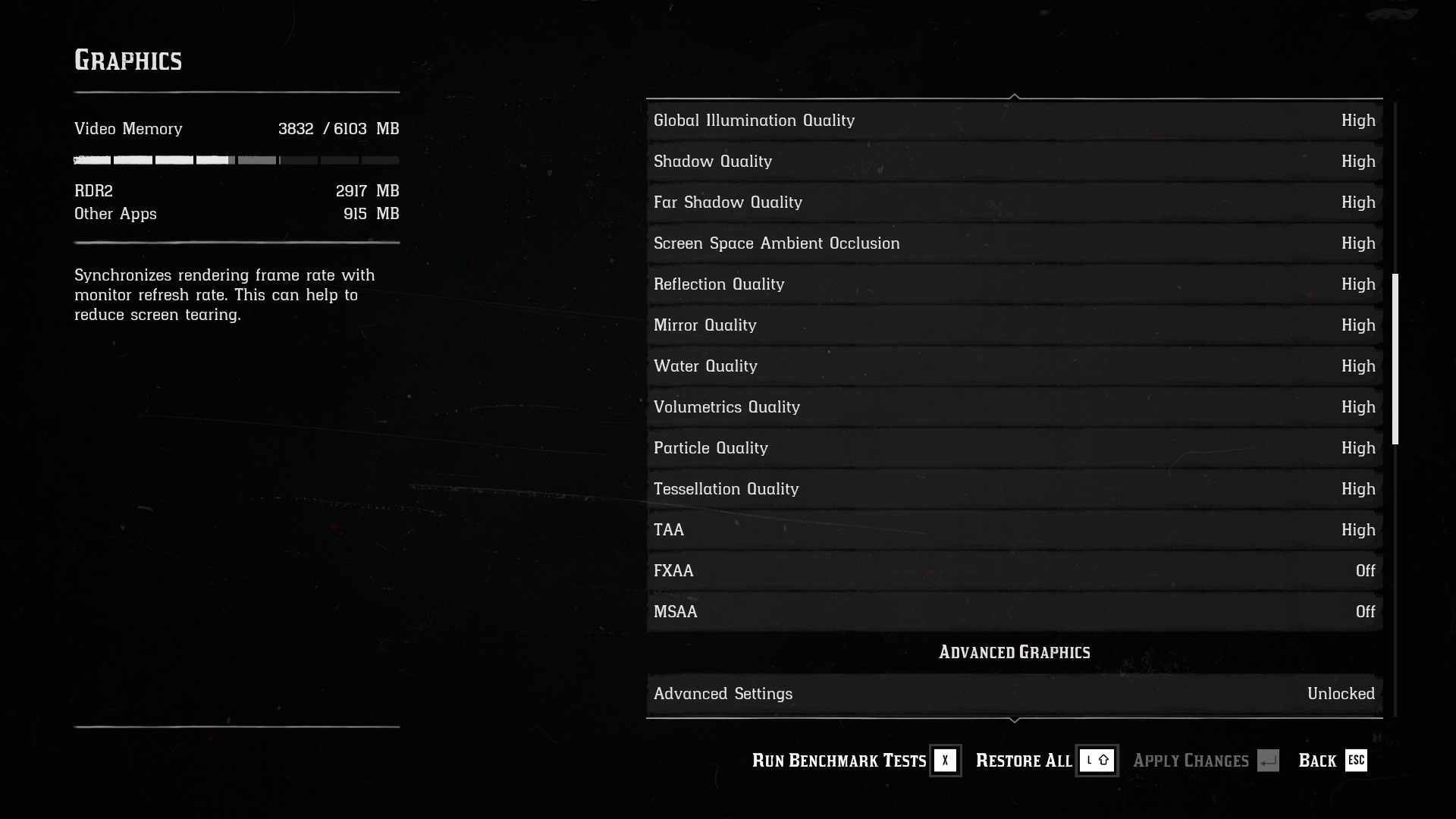
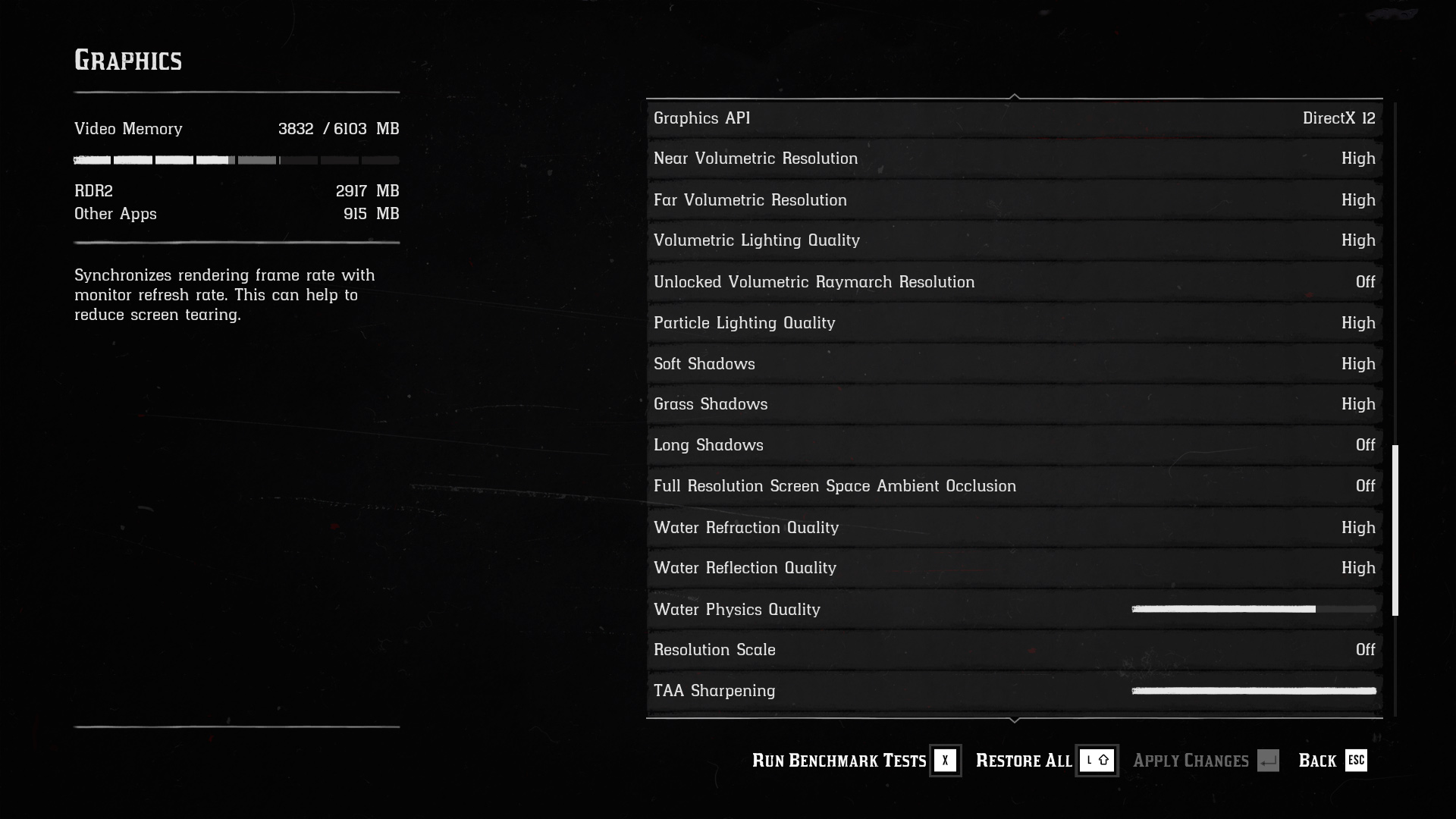
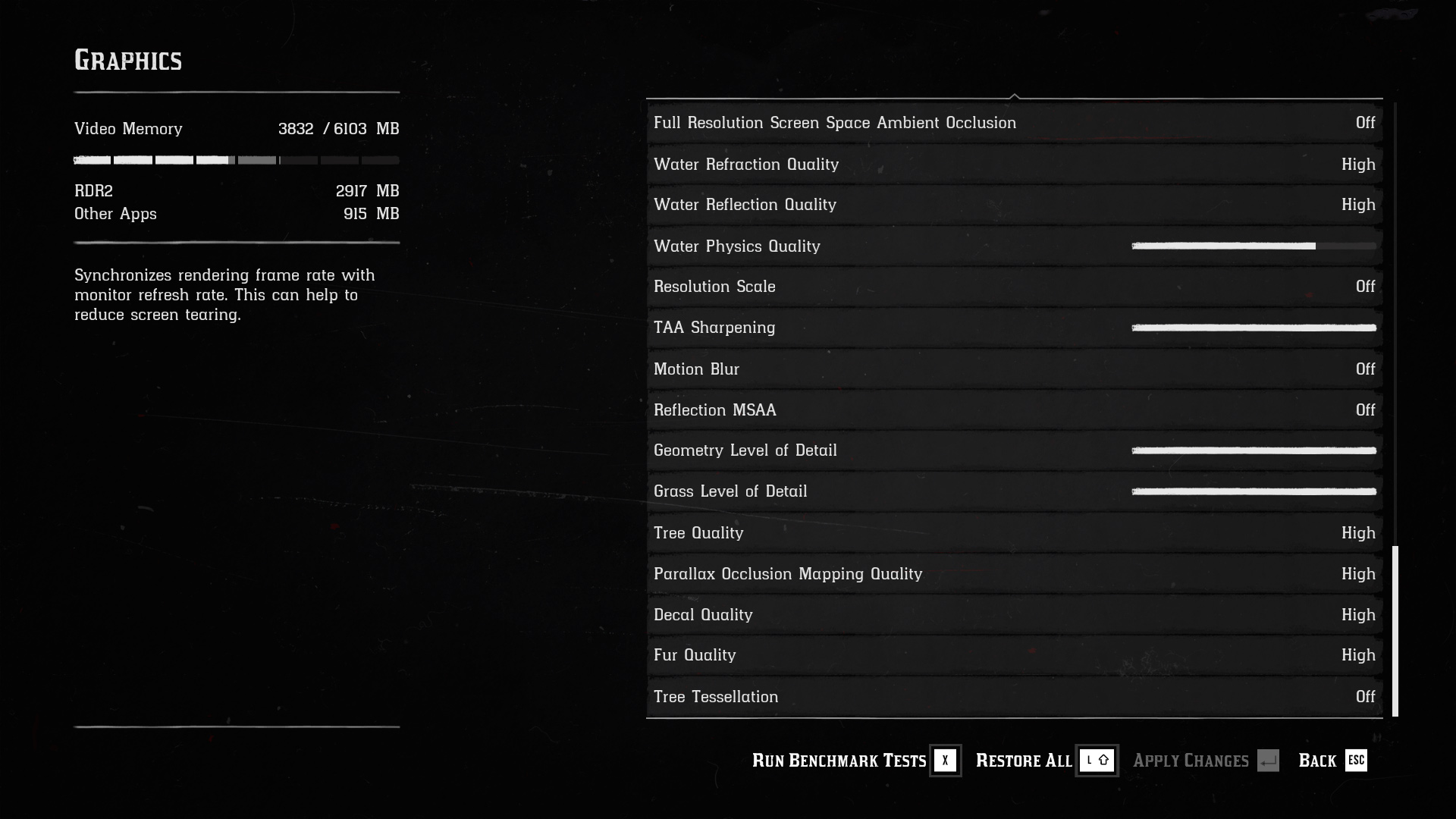
We test using High settings – we don't use a preset for this game – and the DX12 API.
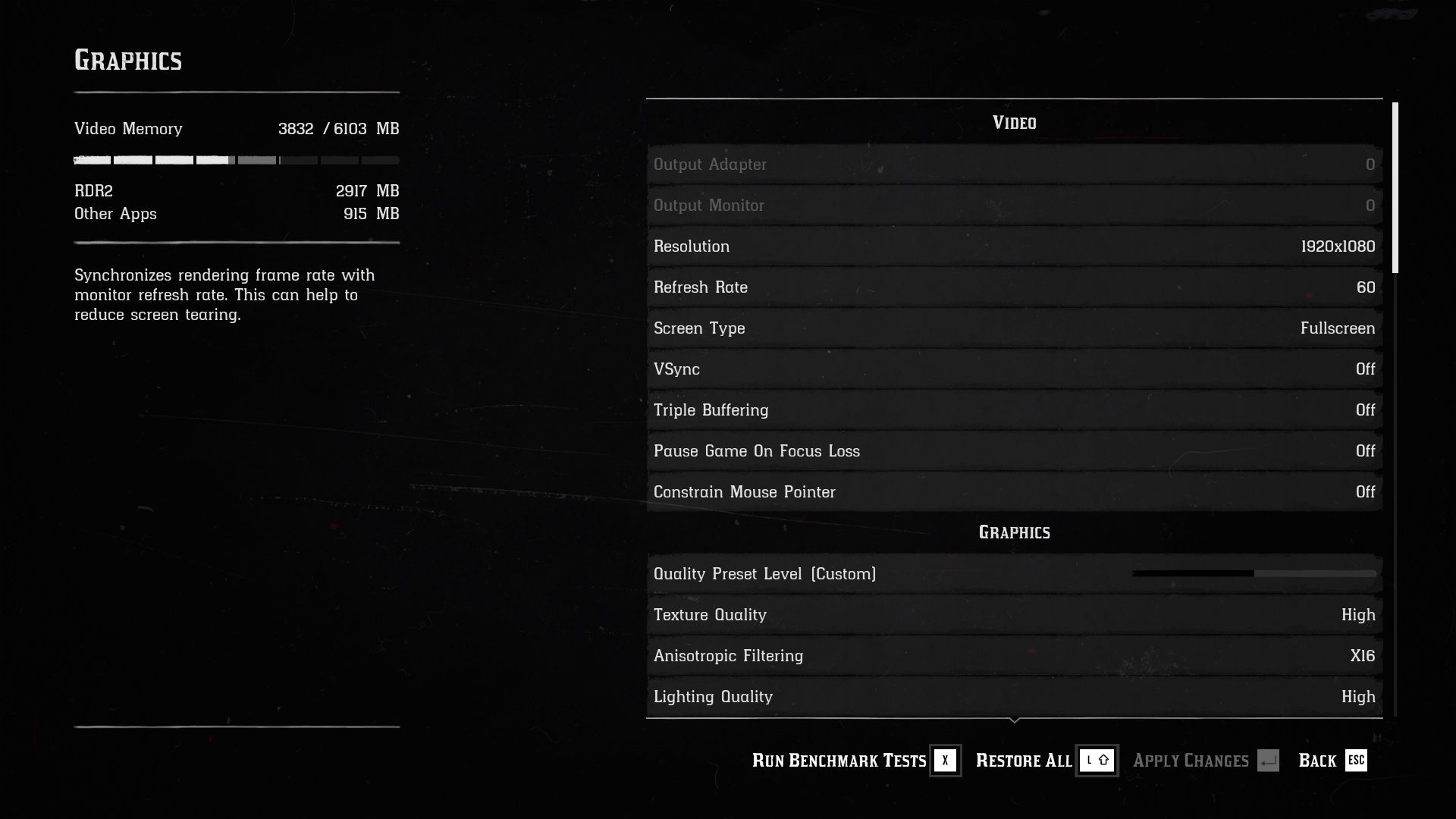
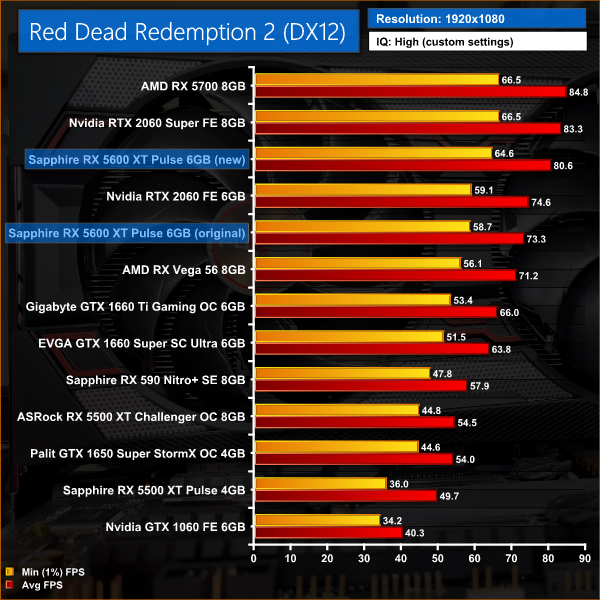
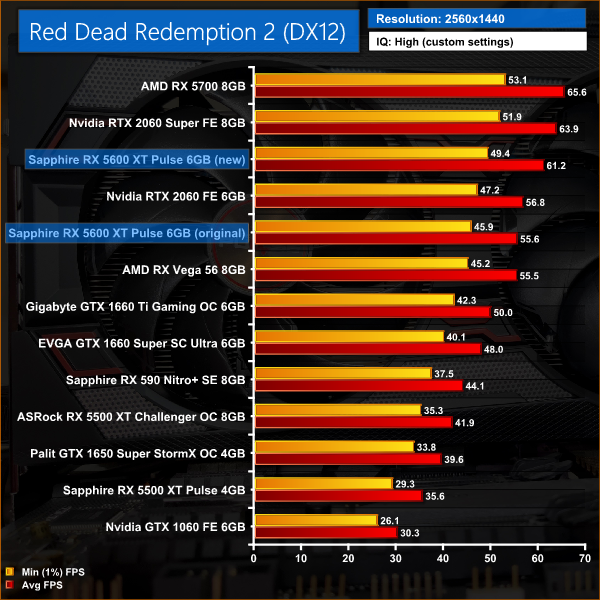
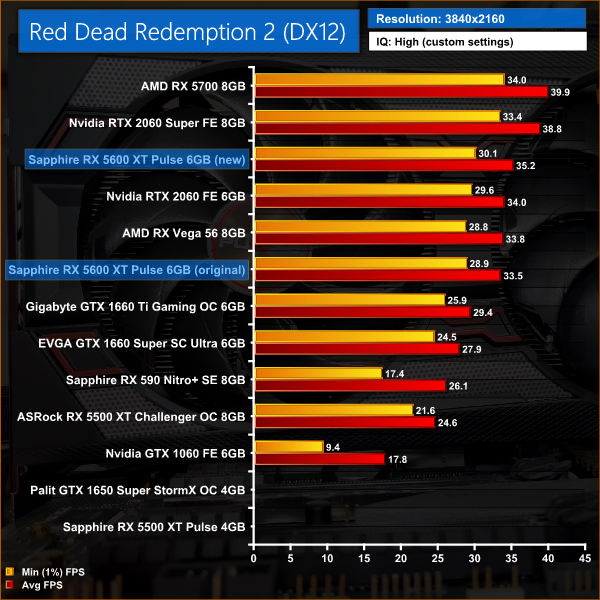
Red Dead Redemption 2 is another interesting title to look at. At 1080p, the 5600 XT with original BIOS was only 2% behind the the RTX 2060. Updating the BIOS gave the card a 10% performance boost, so it came in 8% above the RTX 2060 and only 3% behind the 2060 Super.
At 1440p, those performance margins stay pretty consistent, with the updated BIOS giving the 5600 XT another 8% lead over the RTX 2060.
Shadow of the Tomb Raider is an action-adventure video game developed by Eidos Montréal in conjunction with Crystal Dynamics and published by Square Enix. It continues the narrative from the 2013 game Tomb Raider and its sequel Rise of the Tomb Raider, and is the twelfth mainline entry in the Tomb Raider series. The game released worldwide on 14 September 2018 for Microsoft Windows, PlayStation 4 and Xbox One. (Wikipedia).
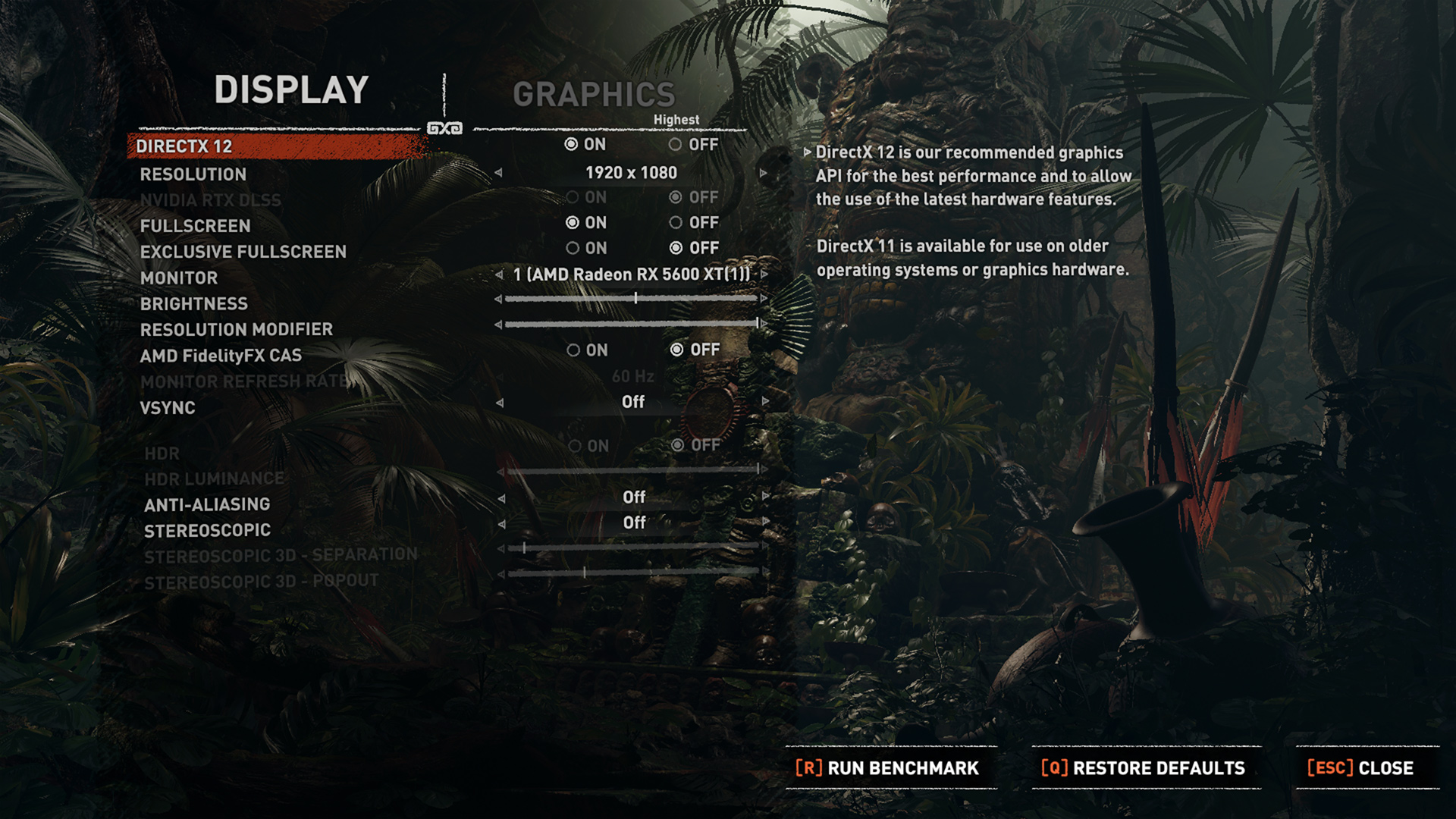
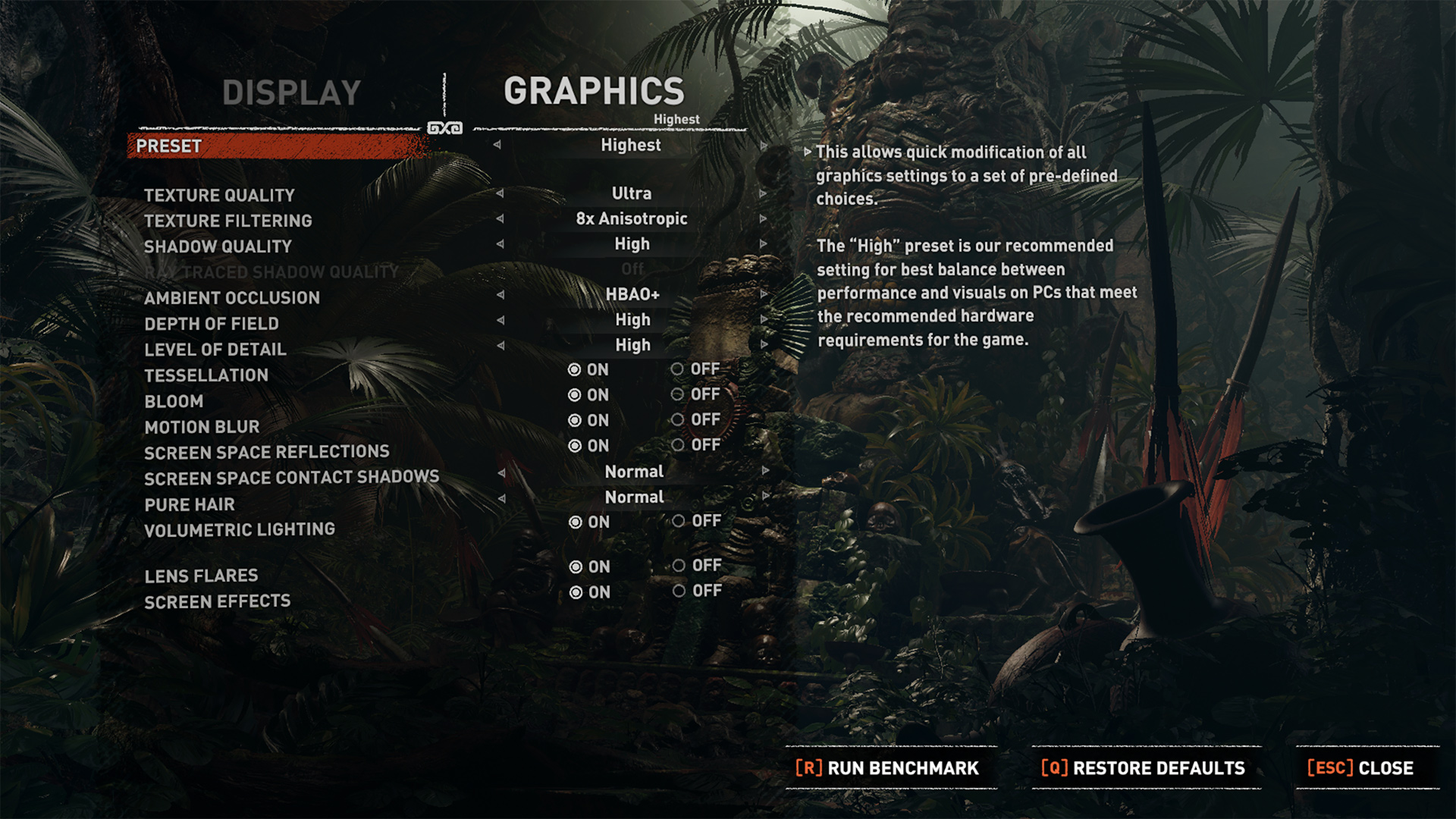
We test using the Highest preset, with AA disabled, DX12 API.
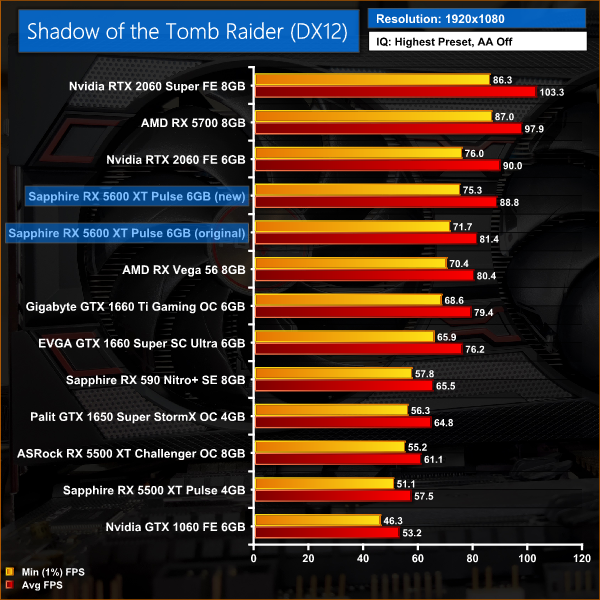
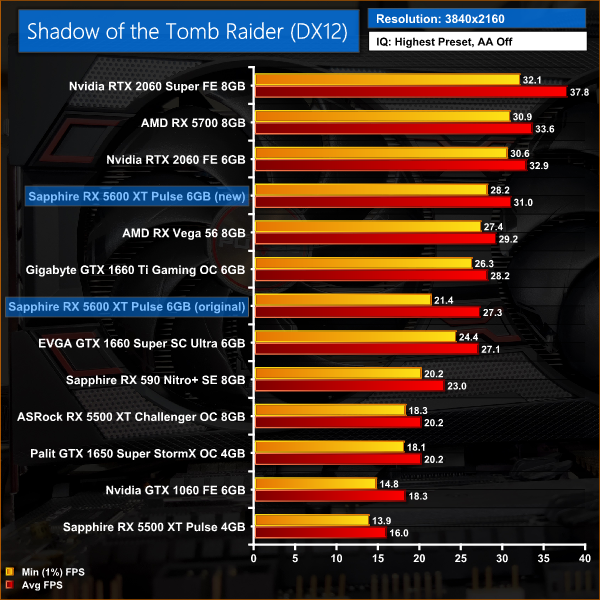
Shadow of the Tomb Raider is another game where Nvidia typically has the edge over AMD, so the BIOS update here really helped close the gap on the RTX 2060. Without the update, the card was running 10% behind the RTX 2060 at 1080p and only 3% ahead of the 1660 Ti. With the updated applied, it still couldn't catch the 2060 but the deficit shrunk to just 1%.
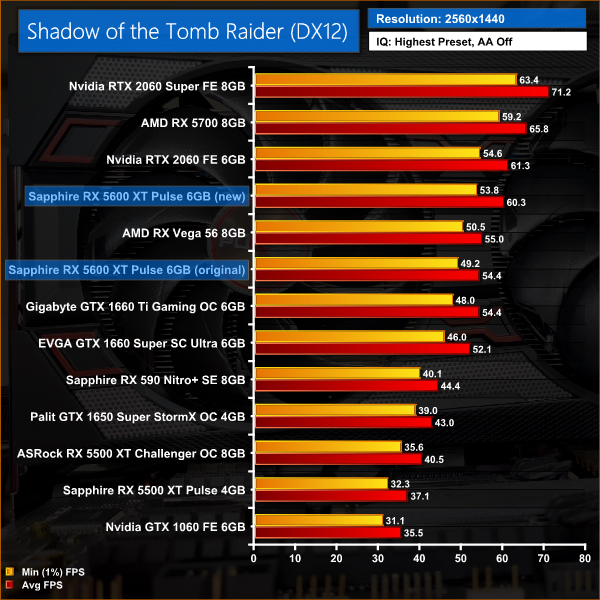
Similarly, at 1440p, without the BIOS update the 5600 XT was 12% behind the RTX 2060, but this shrunk to 2% with the update. To my mind, that's a small enough gap to make no difference to your actual gameplay.
Total War: Three Kingdoms is a turn-based strategy real-time tactics video game developed by Creative Assembly and published by Sega. As the 12th mainline entry (the 13th entry) in the Total War series, the game was released for Microsoft Windows on May 23, 2019.
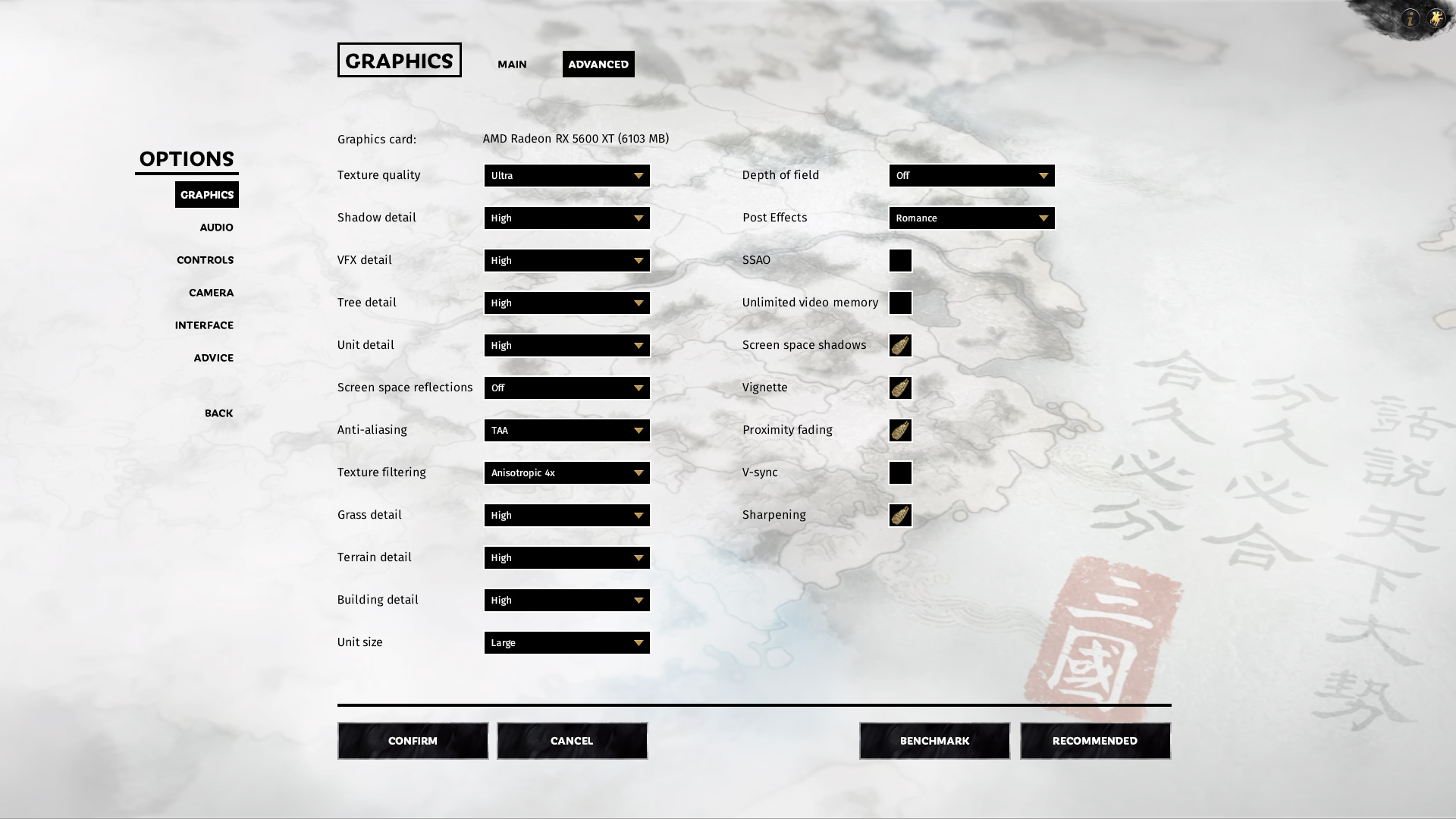
We test using the High preset, DX11 API.
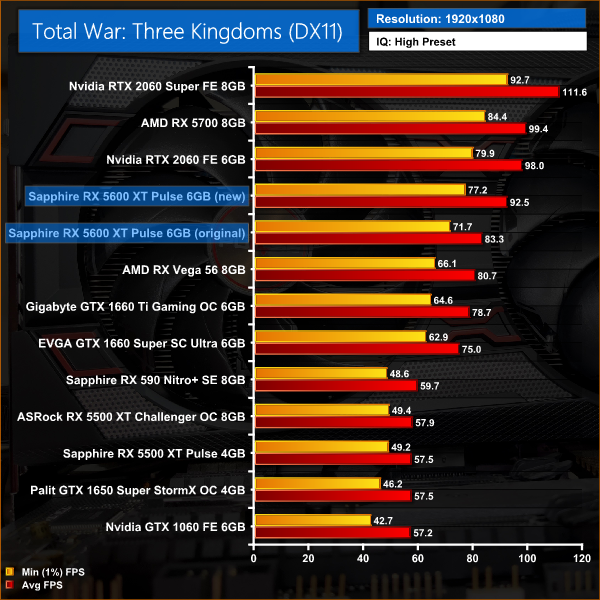
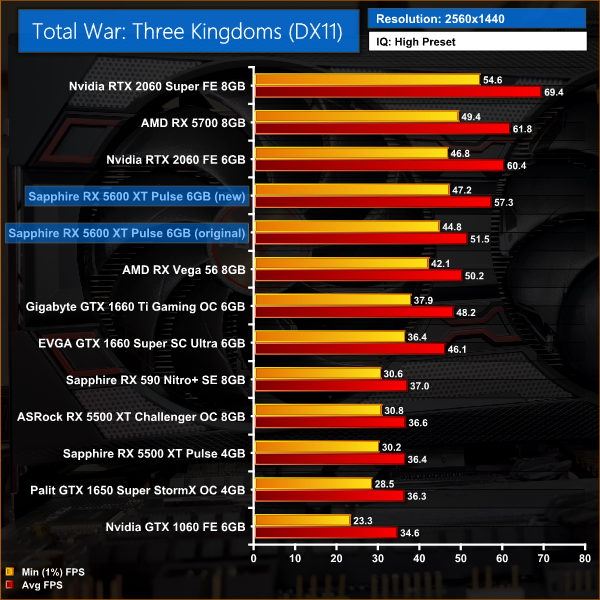
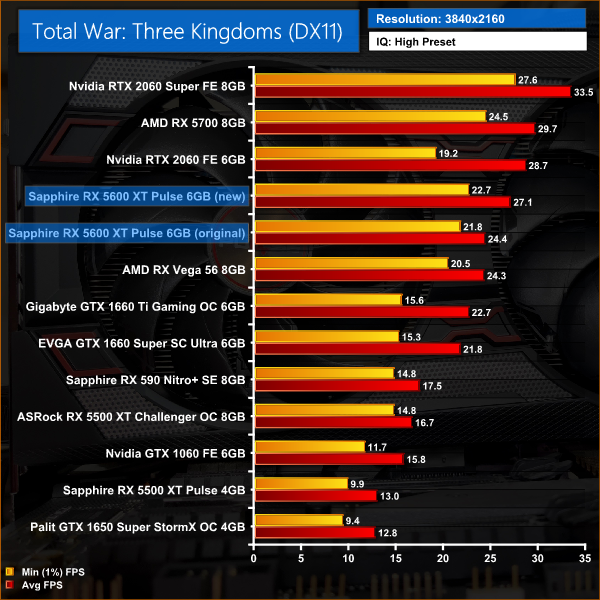
Our final game of the day is Total War Three Kingdoms, and this is actually the game where – relatively speaking – the 5600 XT produced its worst results against the RTX 2060. At 1080p, without the BIOS update, the card was 15% behind its Nvidia rival, and even with the BIOS update there was still a 6% gap between the two cards.
Once more, at 1440p there's no real change to that, the updated 5600 XT is 5% behind the RTX 2060 when it was 15% behind before the BIOS update. That said, the updated BIOS is still well ahead of the 1660 Ti, with a 19% performance lead.
Here we present the average clock speed for each graphics card while running the 3DMark Time Spy stress test for 30 minutes. We use GPU-Z to record the GPU core frequency during the Time Spy runs. We calculate the average core frequency during the 30 minute run to present here.
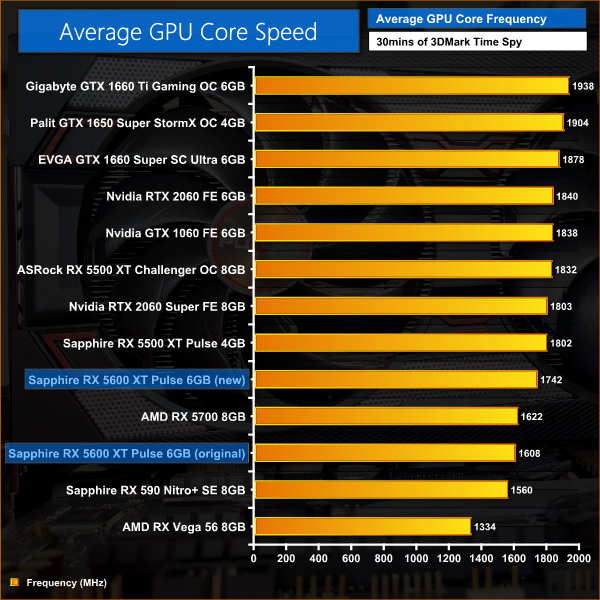
Here we can see a fascinating breakdown of the difference in core frequencies between the original, reference BIOS, and the updated one. When testing the original BIOS, we observed an average operating frequency of 1608MHz for the Pulse, which is above the 1560MHz game clock but just below the 1620MHz boost clock.
Once the BIOS was updated, frequency rose considerably – up to 1742MHz, which is a 134MHz increase, or 8%. This actually takes the 5600 XT beyond the RX 5700 in terms of GPU clock speed – before the update landed, I think you could see AMD trying to protect the 5700's position by launching the 5600 XT with lower speeds, but now it seems to me that thinking has changed.
For our temperature testing, we measure the peak GPU core temperature under load. A reading under load comes from running the 3DMark Time Spy stress test for 30 minutes.
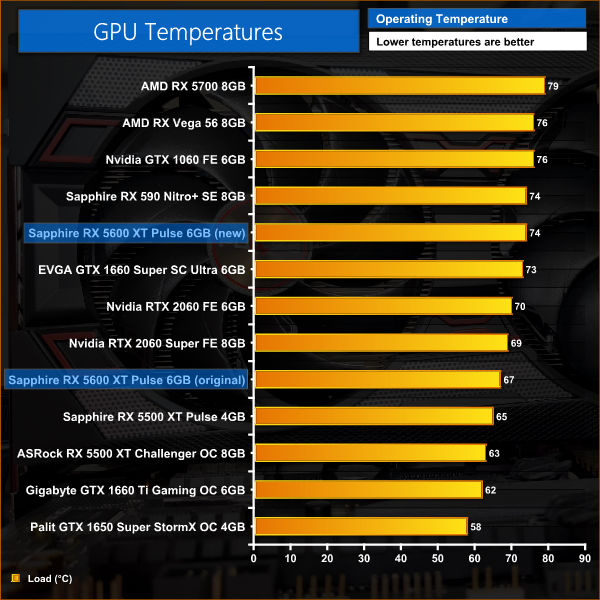
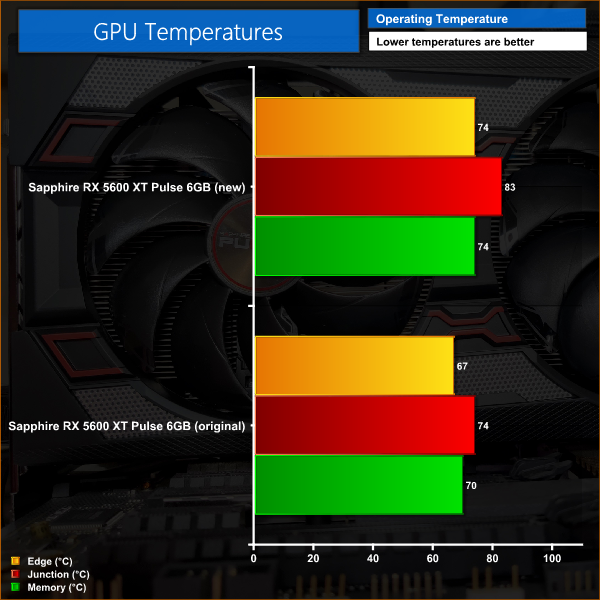
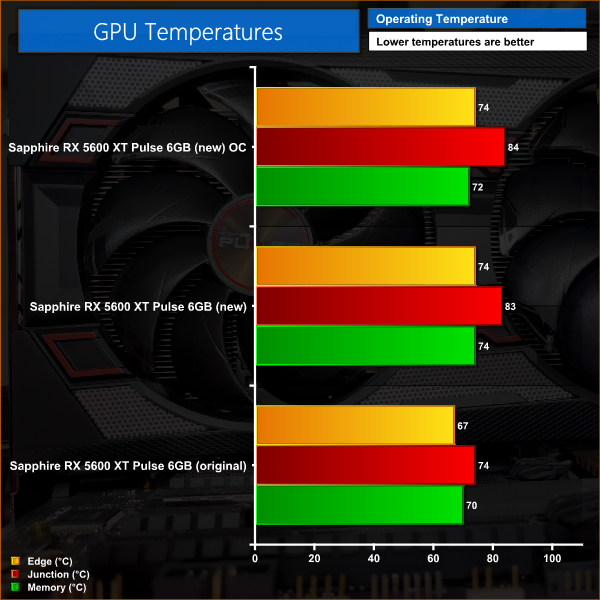
As for temperature testing, it's again fascinating to compare the Pulse's results from before and after the BIOS update. Results before the update are stellar, with a 67C edge temperature and 74C junction temperature. Naturally, these do increase up to 74C and 83C, respectively, once the card is operating with higher clocks and power target, but those are still very respectable results.
We will be testing other AIB cards in the coming days as well, stay tuned for more direct thermal comparisons with other models on the market.
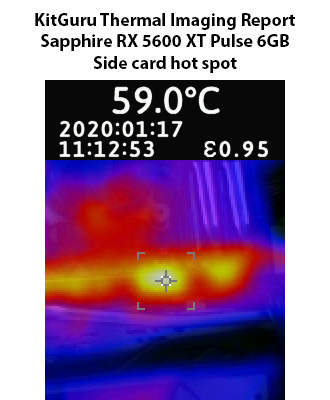
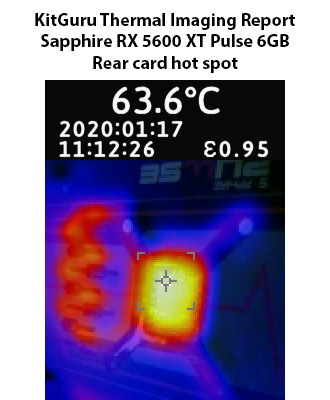
Lastly, it was more of the same with the images from our thermal gun – we saw hotspots between 59 and 64C, so really nothing to worry about there.
We take our noise measurements with the sound meter positioned 1 foot from the graphics card. I measured the noise floor to be 32 dBA, thus anything above this level can be attributed to the graphics cards. The power supply is passive for the entire power output range we tested all graphics cards in, while all CPU and system fans were disabled. A reading under load comes from running the 3DMark Time Spy stress test for 30 minutes.
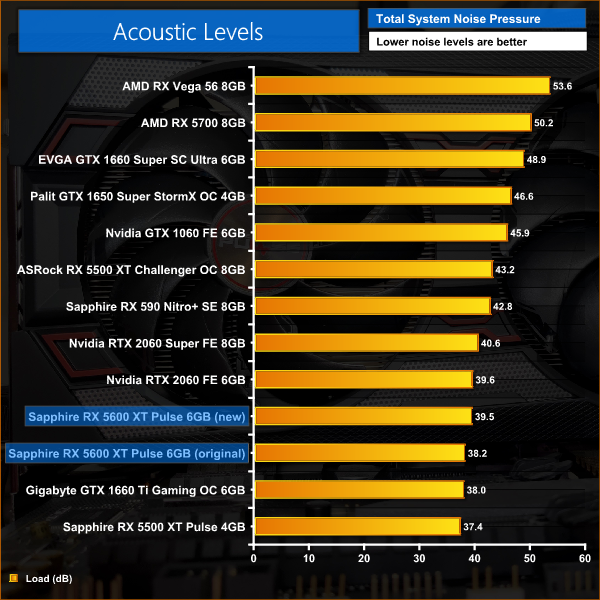
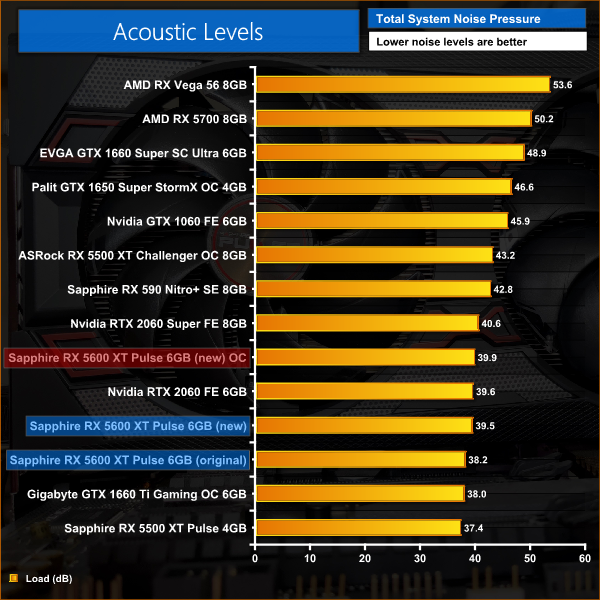
Noise levels for the Pulse are very impressive, irrespective of the BIOS used, as I didn't see noise levels exceed 40dB. Just to illustrate the slight difference in fan speed between the two BIOS tested, the original BIOS saw its fans peak at 35%, or around 1150rpm. With the new BIOS applied, this increased to 39% fan speed, or around 1250rpm. It's not much of a difference at all, but the fans do work slightly harder with the new BIOS applied as there is extra heat to deal with.
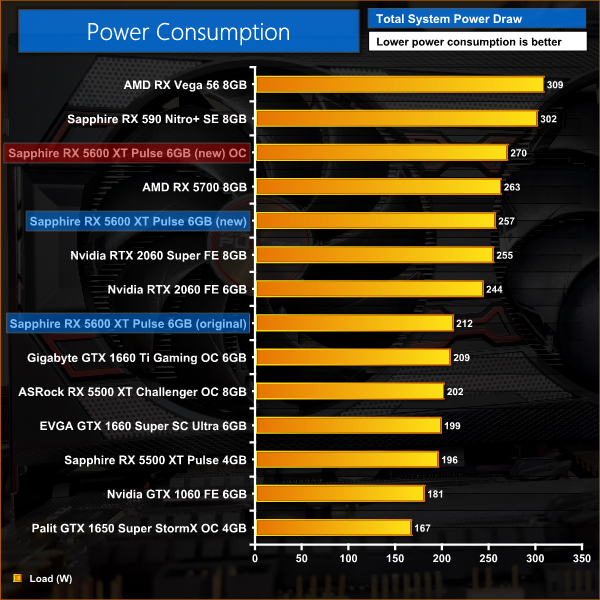
We measure system-wide power draw from the wall while running the 3DMark Time Spy stress test for 30 minutes.
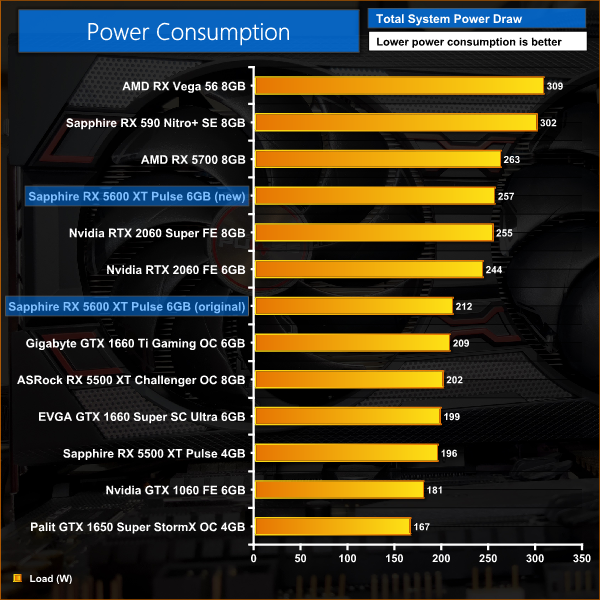
Our final comparison between the two BIOS comes with a look at total system power draw. The difference here is bigger than I expected, with a 45W increase to power consumption once the BIOS is updated. That puts total system draw around the same level of the RTX 2060 Super, yet also about 50W less than Vega 56. As with other Navi-based cards, this means overall efficiency is much better than previous AMD products, yet still not quite as good as Nvidia GPUs.
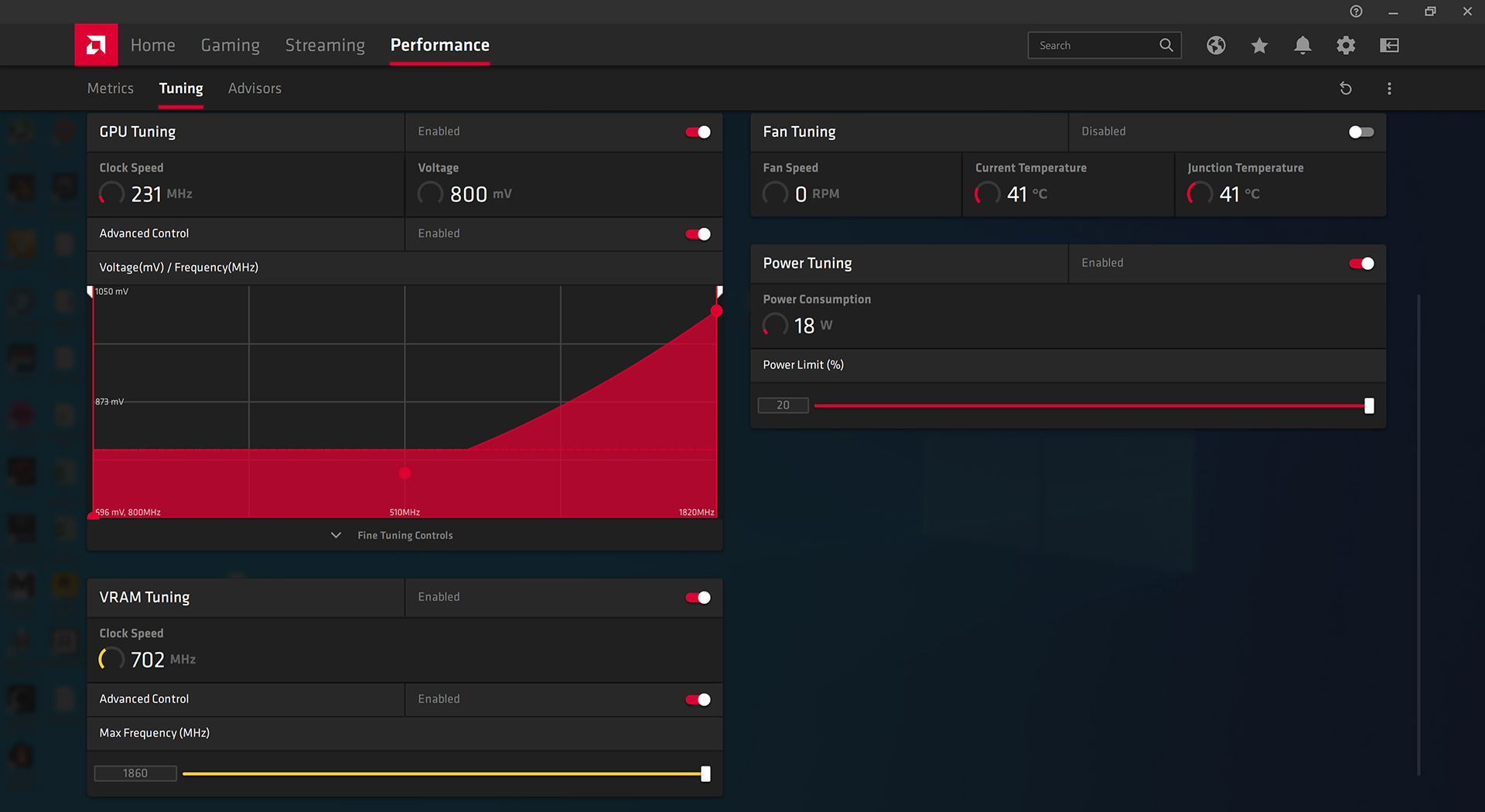
Overclocking the 5600 XT using the new AMD tuning tool in its 2020 software is very straightforward. There's an 1820MHz clock speed limit that my card could run at no problem, and there is also an 1860MHz (14.88Gbps) memory limit that my card could also achieve. I would not be surprised if the cards could run even faster, but currently that is locked down without some sort of mod.
Average clock speed under load
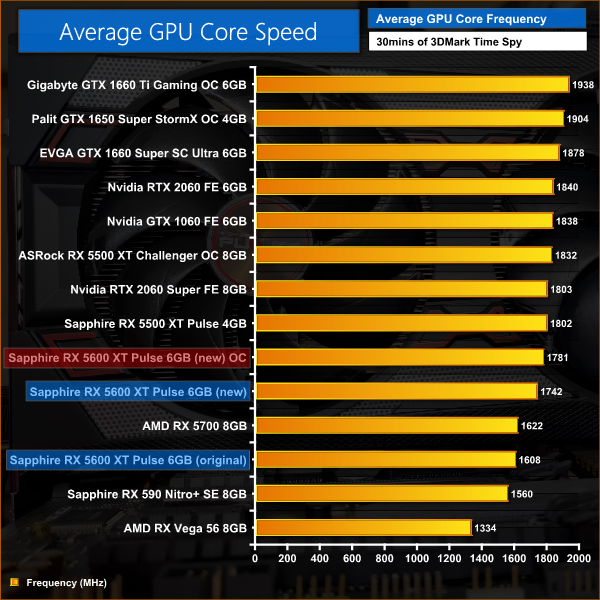
Maxing out the frequency slider didn't make that much difference to our average clock speed as we saw just a 39MHz (2%) increase.
Games
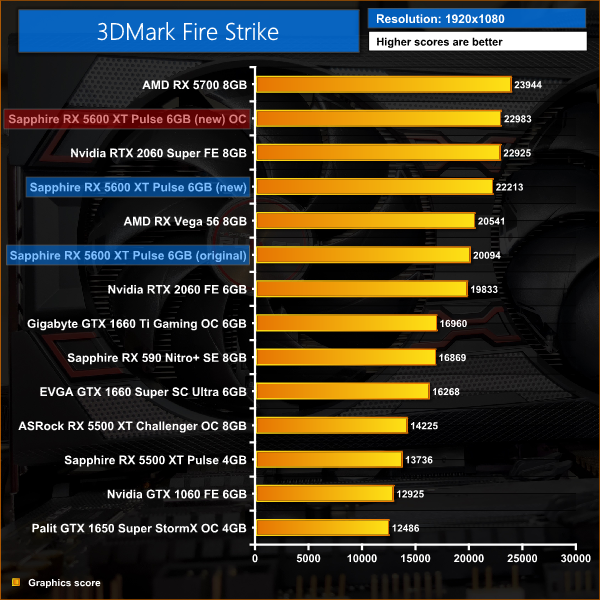
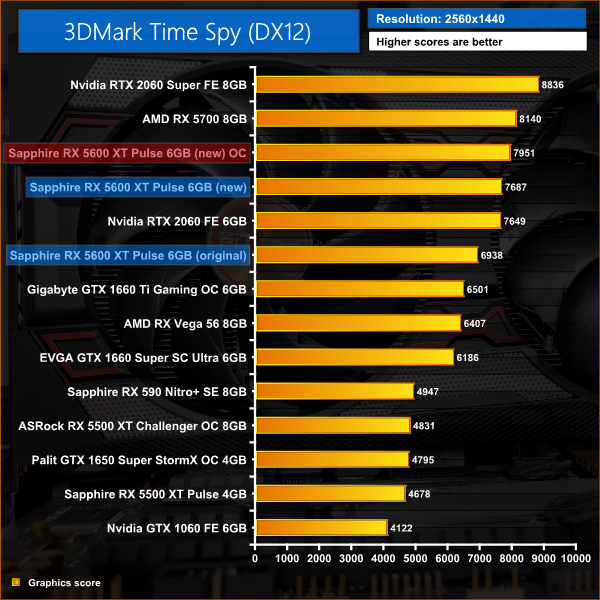
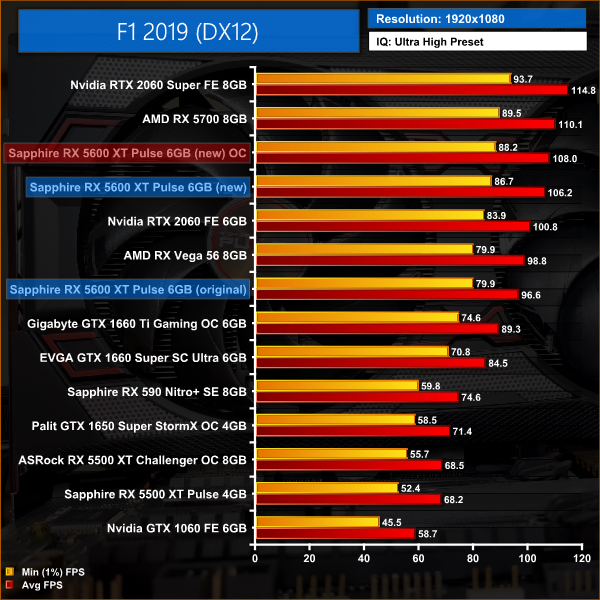
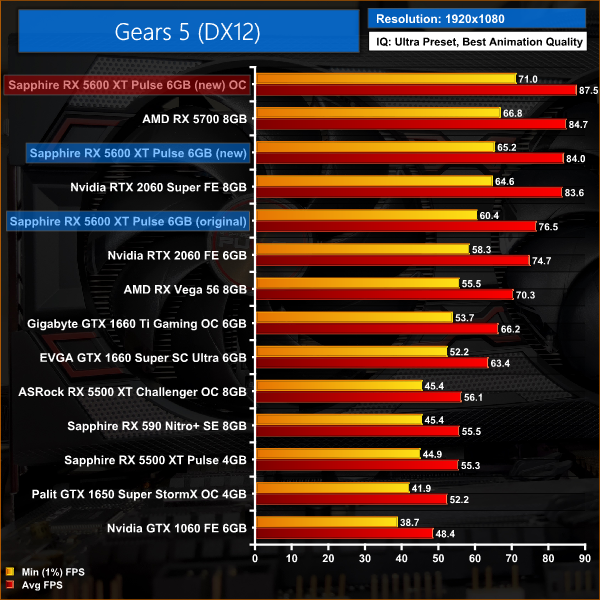
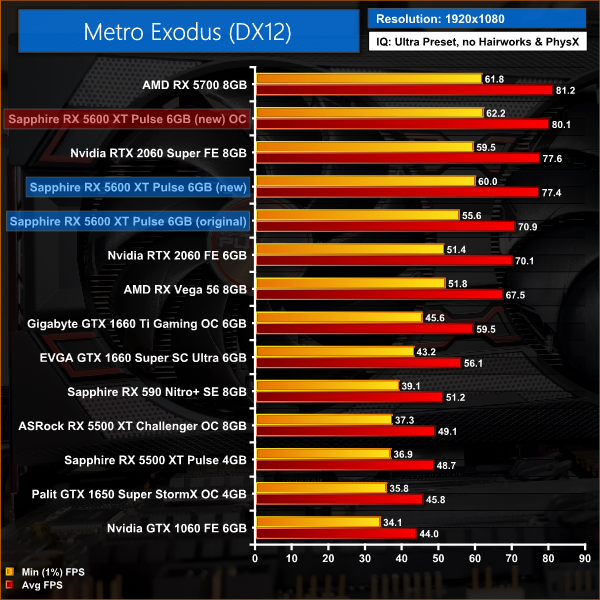
With 2% higher GPU clocks, and 6% higher memory clock, it's not a huge surprise that real-world performance didn't change much with this overclock applied. 3DMark scores increased by 3%, as did Metro Exodus frame rates. F1 2019 saw just a 2% frame rate increase, while the best result came from Gears 5 which saw a 4% performance boost.
Here, we take a further look at the impact of our overclock, looking at the increased temperatures, acoustics and power draw.
Temperatures
Acoustics
Power consumption
Overview
Overall this really is a very weak manual overclock – real-world performance hardly changed, and neither did the card's noise levels or operating temperature. Power draw did rise by around 5%, but realistically you're not going to notice the difference between a stock and manually overclocked 5600 XT.
After a tumultuous week for AMD's latest GPU, today we have been able to present our review of the Sapphire RX 5600 XT Pulse. With a last-minute BIOS update which changed key specifications including power target, GPU speed and memory speed, the positioning of this card has shifted somewhat and created a fair amount of confusion.
If we start this conclusion with a look at how the card would have been positioned before it received the updated BIOS, there's no doubt it was already significantly faster than Nvidia's GTX 16-series competitors with a 9% (average) performance lead over the 1660 Ti that increases to 14% when compared to 1660 Super. That said, Nvidia did well to shift the goalposts and drop the price of the RTX 2060 to $299/279. Up against the 2060, the 5600 XT with its original BIOS proved 6% slower on average, but up to 15% slower in certain games.
In my opinion, if AMD hadn't issued the new BIOS, the 5600 XT would've been stuck in a bit of a no-man's land – faster than the 1660 Super, but also significantly more expensive (14% faster but 21% pricier, in terms of MSRPs), while RTX 2060 price drops mean that card is now just 7% more expensive, or even the same price if you snagged an EVGA RTX 2060 KO for $279 during pre-orders.
There's no doubt in my mind that AMD had also realised this, which is why the 5600 XT received such a last-minute BIOS update. In this case of this Sapphire card at least, total board power (TBP) was raised from 150W to 160W, boost clock improved from 1620MHz to 1750MHz, while memory speed also increased from 12Gbps to 14Gbps.
We will discuss this decision as a whole below, but from a pure performance perspective it has undoubtedly helped matters. In fact, comparing results from the original BIOS with data from the new BIOS shows a very consistent 10% performance improvement across the games we tested today thanks to that update.
That extra 10% actually takes average performance beyond the RTX 2060, admittedly not by much, but at 1080p and 1440p we now see a 4% margin in favour of the 5600 XT. That means the AMD GPU is actually just 9% behind the RTX 2060 Super, and in a completely different league to the 1660 Super with a 26% performance advantage.
The 5600 XT is now much more competitive than it would've been without the BIOS update. I wouldn't say it has killed the RTX 2060 at its new price-point, but AMD's GPU is faster in 7 of the 11 games we tested today, in some cases by up to 10% as per Gears 5, and it is slightly cheaper too. Still, the 2060 is not far behind at all and you could also point to support for RTX ray tracing as a value-add.
So while it is ultimately good that we are now getting faster cards than what we would've done a week ago, I have to be honest and say this whole launch has been a mess. I first heard about a new BIOS for this Sapphire 5600 XT just five days before the launch, which is cutting it fine at the best of times, but I also had cards from Gigabyte and MSI – MSI have already sent me two new BIOS, with a third and ‘final' BIOS expected to land shortly. Gigabyte have also sent me two BIOS and a third may be on the way.
This is not me having a go at the AIBs, not at all. To me, it is clear this was a last-minute decision from AMD which its partners had to go along with – yes, AMD has said that implementing the new BIOS is up to the partners, but not doing so would leave your card looking 10% slower than the competition, so realistically as soon as the new BIOS was happening, the manufacturers had to start scrambling to come up with solutions.
As a reviewer, I'm used to last-minute changes and information tweaks (though nothing on this scale) so I can live with the extra hassle. What's more important is the knock-on effect this has for the consumer – you. Now we have a situation where there are already 5600 XT cards in the retail channel, waiting to be sold, that do not have the updated BIOS, and it is too late to update them. Therefore the responsibility falls onto the end-user.
This is never a good place to be. As said on the first page, the first thing is making the customer aware that a BIOS update is actually available. Secondly, I would imagine many customers may find this uncomfortable, updating a GPU BIOS is not exactly a common experience. Lastly, even though it is a relatively straightforward process, in the event something goes wrong, you may well end up with a very expensive paperweight should the card become bricked.
One other point to mention there as well is, it is not yet clear which cards will get updates and which won't. I say this as, while the Pulse is well-built enough to deal with the extra power and heat caused as a result of the BIOS, it is not unreasonable to suggest that some cheaper cards or blower-style cards may struggle. In that case, it is going to become very tricky to tell which are factory OC cards with the new BIOS, and which are running at reference speeds.
Now, I will be honest and say I simply do not know how many cards there are that will need updates. AMD was preparing for the 21st as a ‘hard' launch, with stock in the channel, but I really don't know how many cards that will be. Either way, even one card that is shipping with an old BIOS is one too many, so I really would hope AMD will learn a lesson here.
Aside from the logistical issues regarding the BIOS update, I also find it quite interesting when looking at the 5600 XT versus the 5700. AMD has surely sacrificed its 5700 now in order to make the 5600 XT competitive at $279 – after all, both cards are already using the same Navi 10 GPU with 2304 stream processors. With the new update, increasing 5600 XT memory and GPU speeds, the 5700 is now just 7% faster yet it costs 25% more. In other words, there is now no reason to buy that card in my opinion.
But, that wouldn't necessarily have been the case if the BIOS update hadn't happened. Without the update, the 5700 would be 17% faster on average, so still not amazing value, but definitely the next tier of gaming performance. AMD's decision to initially launch the 5600 XT with lower clock speeds (1620MHz boost for most cards) and also slower memory (12Gbps) seems to have been made to keep 5700 competitive at its higher price-point, while also making a decent-enough product in the 5600 XT at $279.
That has all changed now, but in doing so it does seem like AMD was holding back the 5600 XT for no real reason other than profit margins. Take the memory for instance – I verified by disassembling this Sapphire card, that the 5600 XT is indeed using 14Gbps memory modules from Micron. Unless I am missing something, this means AMD had initially and artificially capped the speeds at 12Gbps instead of their actual speed, just for product differentiation. I can see no other reason why a manufacturer would run its memory chips slower than their rated speeds.
Thankfully, the BIOS update has undone this and we now have a competitive graphics card on our hands. Like I said, it is slightly faster and slightly cheaper than the RTX 2060, so if you were looking at getting a new card at our around the $280 price-point, this is definitely a strong contender for you money. It is just a shame it seems to have taken a lot more complication to arrive here than really necessary.
The RX 5600 XT has officially launched today, 21st January. The MSRP is $279 in the US, and we have been told the Sapphire Pulse model will cost £254.99 from Overclockers UK HERE.
Discuss on our Facebook page HERE.
Update: We have been in touch with Sapphire directly and the company has sent us the following about the BIOS situation:
To ensure that we have the right support in place for customers who purchase a card and wish to update the BIOS, we have arranged the following items to be ready by Monday the 20th January.
– V BIOS Package with Installation Instructions Available to Download from SAPPHIRE’s PULSE RX 5600 XT Product Page.
– V BIOS Installation Video Tutorial Available from SAPPHIRE You Tube Channel and SAPPHIRETech.com Home Page
– Support Contact Information: https://support.sapphiretech.com/Default.asp?lang=eng
– Tech Support on Standby to walk people through the installation procedure (if required)
– All of this Information posted on SAPPHIRE’s Social Channels
Pros
- Slightly faster than RTX 2060 (with the BIOS update).
- Still cheaper than RTX 2060 when using the $279 MSRP, even after Nvidia dropped the price.
- Improved efficiency compared to previous AMD GPUs, like Vega 56.
- Sapphire Pulse runs quiet and cool.
- Pulse at £254.99 is a good price.
Cons
- BIOS update situation has created a lot of uncertainty.
- RTX 2060 offers ray tracing.
KitGuru says: When looking at a 5600 XT that has received the updated clock speeds as a result of the new BIOS, it is a competitive card at $279. However, the launch has proved to be very messy and there are several questions that need answering.