KitGuru KitGuru.net – Tech News | Hardware News | Hardware Reviews | IOS | Mobile | Gaming | Graphics Cards


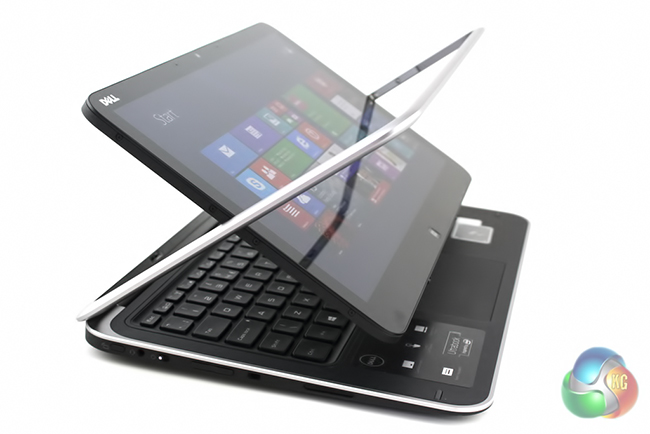
Today we are going to look at one of the latest, and perhaps most interesting notebooks in Dell’s range, the XPS 12. This aluminum convertible Ultrabook offers a ‘flip and fold' motion and features a Corning Gorilla glass screen with Full HD Display.
Dell refer to the XPS 12 as a ‘convertible Ultrabook’, which does a reasonable job of explaining the dual purpose nature of this model. There are a few other convertible notebooks on the market which compete directly with the Dell XPS 12, most notably the Lenovo YOGA which uses a slightly different mechanism.
With prices starting at £899.00, we find out today if the XPS 12 2-in-1 Ultrabook is worth the money.
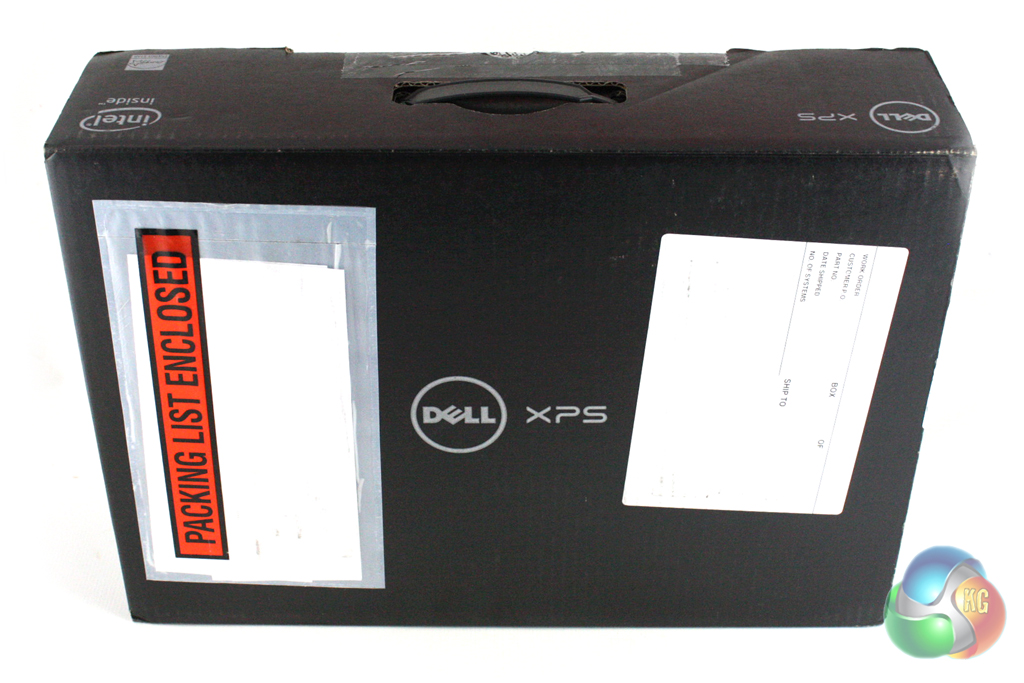
The XPS 12 2-in-1 is supplied in a rather large outer box. Inside the outer packaging there is a smaller box which contains the notebook itself.
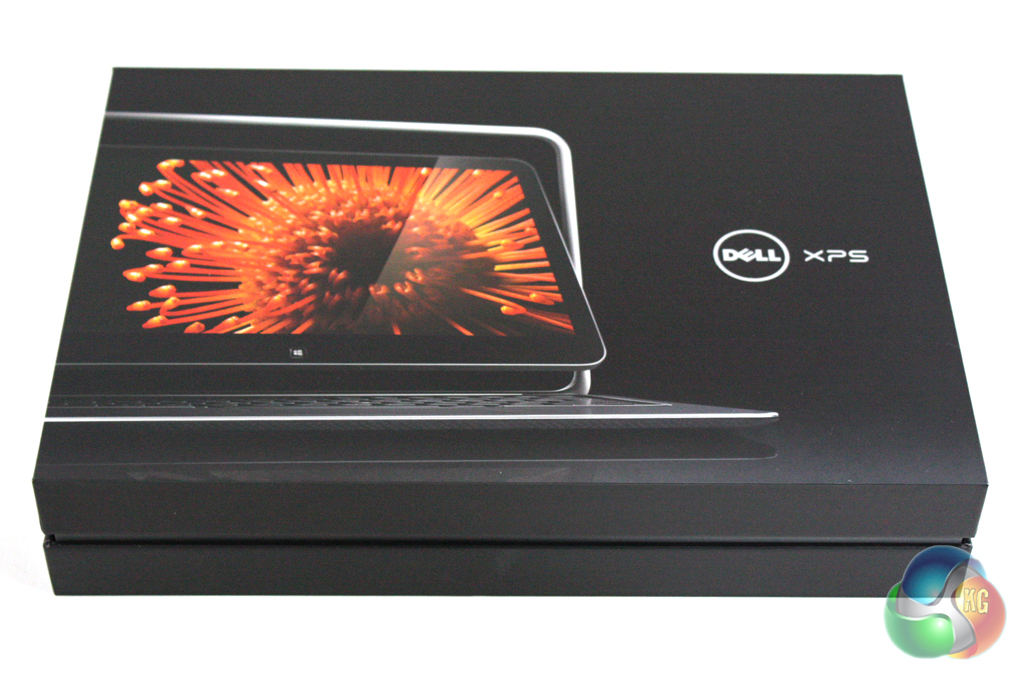
The inner box is much more attractively designed, sporting a glossy black livery. The design is very minimalistic, only featuring an image of the notebook on the front alongside Dell and XPS logos.
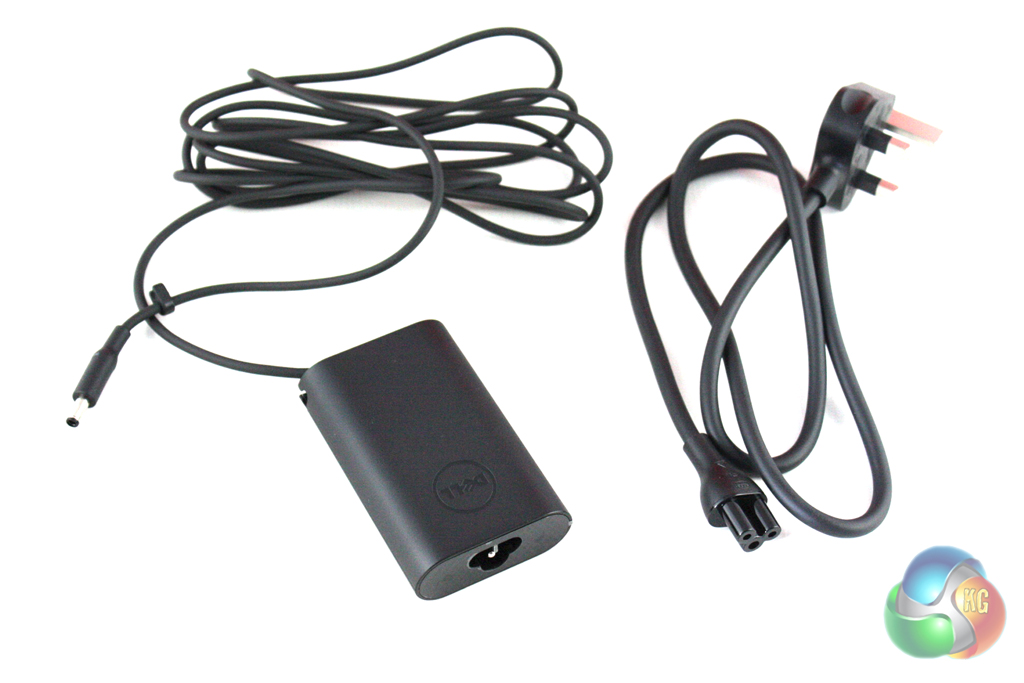
In terms of included accessories, the XPS 12 is pretty thin on the ground. Aside from the AC adapter and some paperwork, there isn’t anything included in the box.
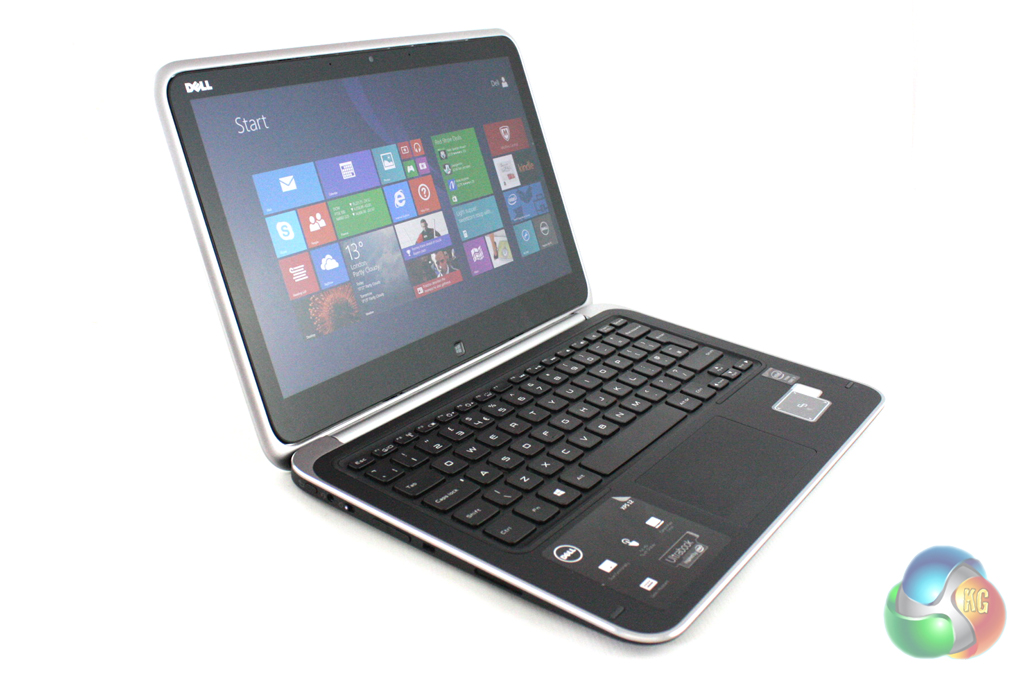
It isn’t immediately obvious that there is anything different about the XPS 12 2-in-1.
From a glance it doesn’t look much different to any other 12” notebook. It is pretty attractive though, with aluminium and soft-touch plastic used throughout the construction.
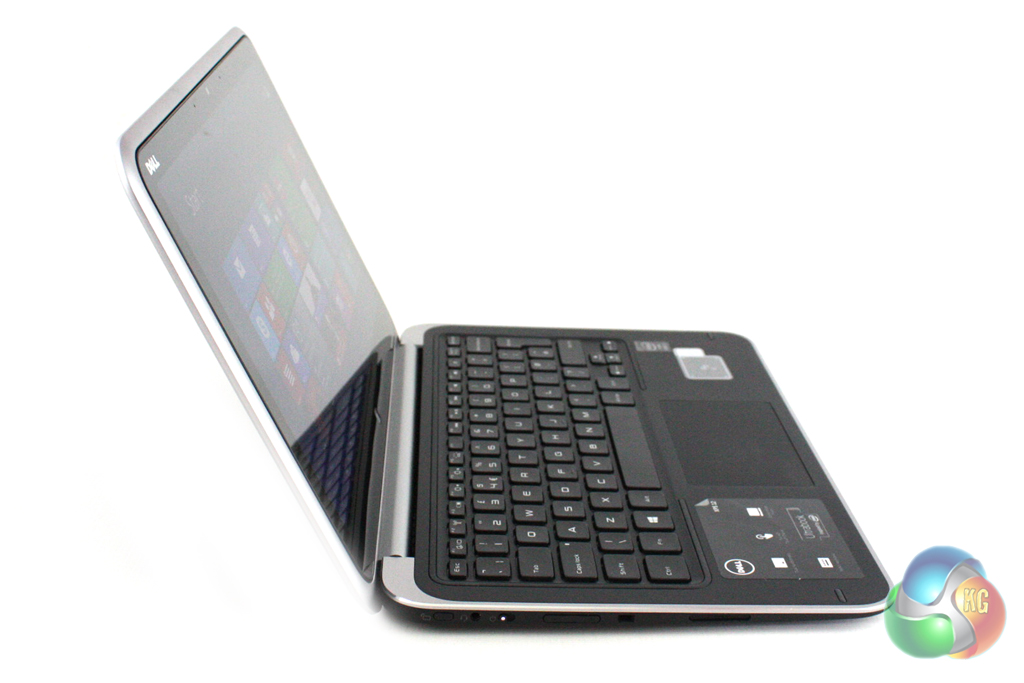
These materials give the XPS 12 a premium appearance which goes some way to justifying the rather steep price tag. It feels very well put together so we imagine it will last a good number of years.
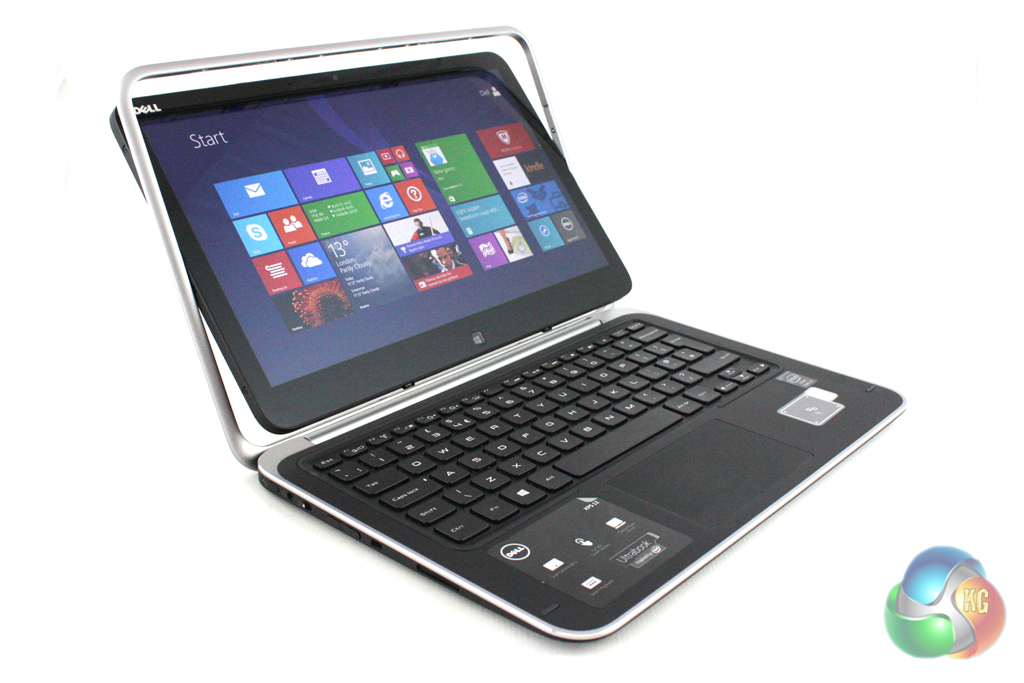
The XPS 12’s party trick is the swiveling screen which can rotate through 180 degrees. This gives you the flexibility to transform the laptop into a tablet form factor. Unlike the Lenovo YOGA, the XPS 12’s screen covers the keyboard in tablet mode which is preferable in our opinion.
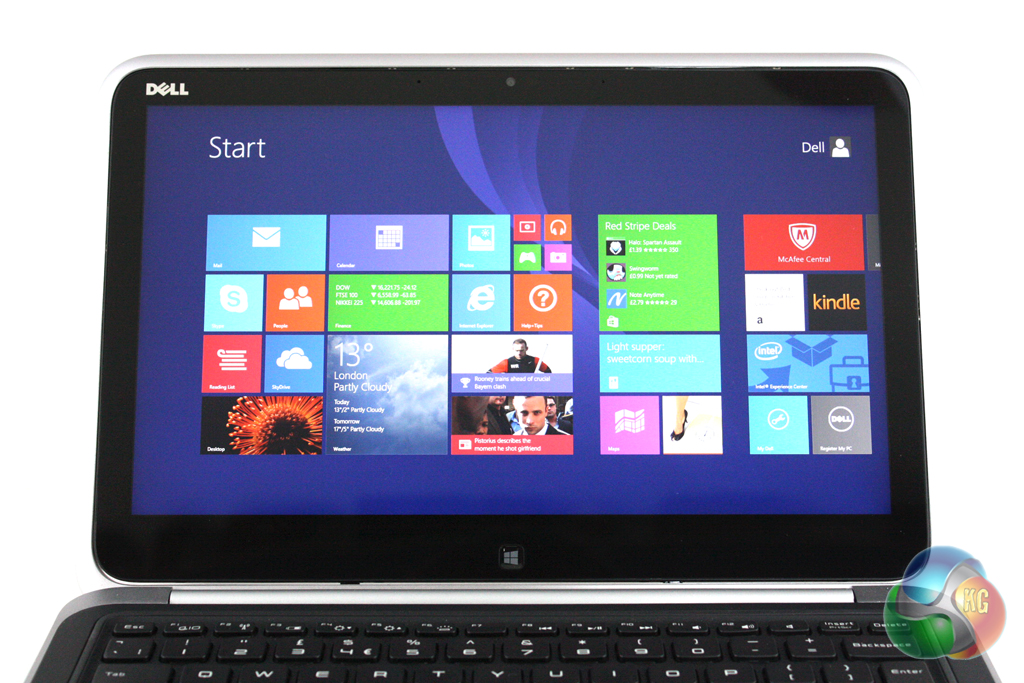
Dell haven’t neglected the quality of the screen itself either. The XPS 12 features a 12.5” display which boasts a massive Full HD (1920 x 1080) resolution, meaning that it has a very high pixel density.
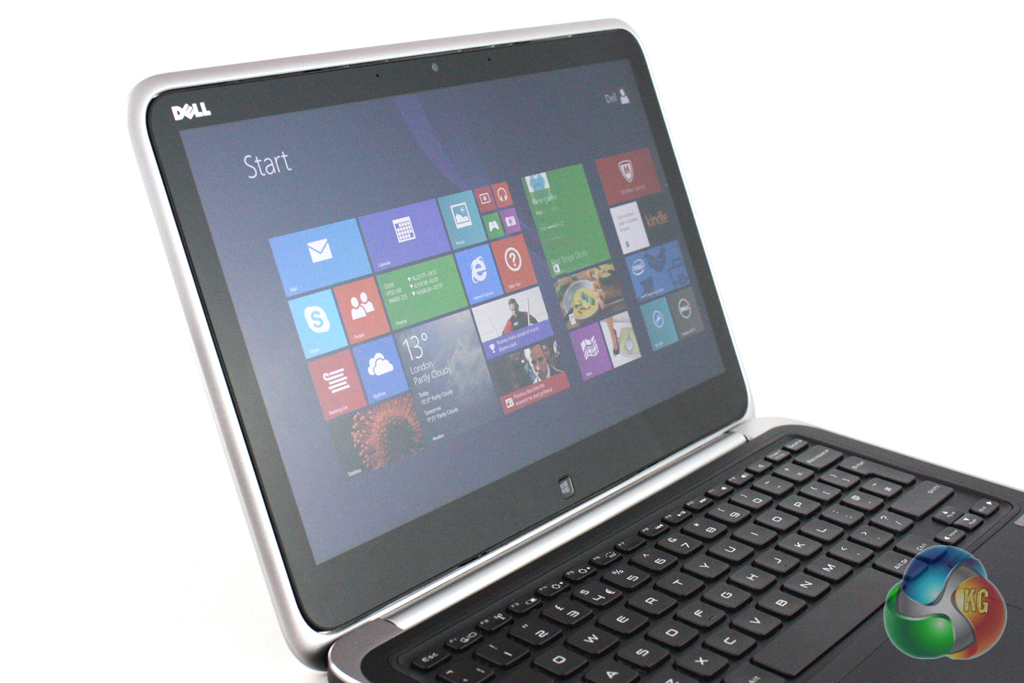
The panel Dell has chosen to use is an IPS model, meaning viewing angles are excellent. This is particularly useful when using the XPS 12 in tablet mode. The screen is covered in touch-sensitive hard glass which feels great to use.
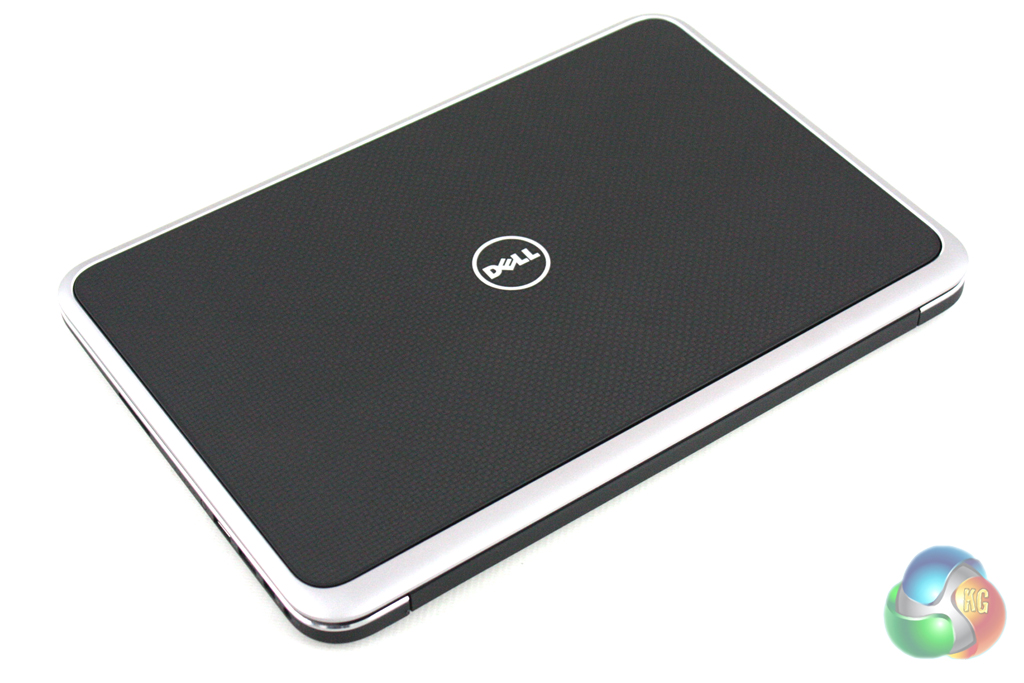
Dell have chosen to cover the lid of the notebook with a carbon fibre design which looks and feels great. It feels very similar in texture to the rubberised plastic used for the palmrest.
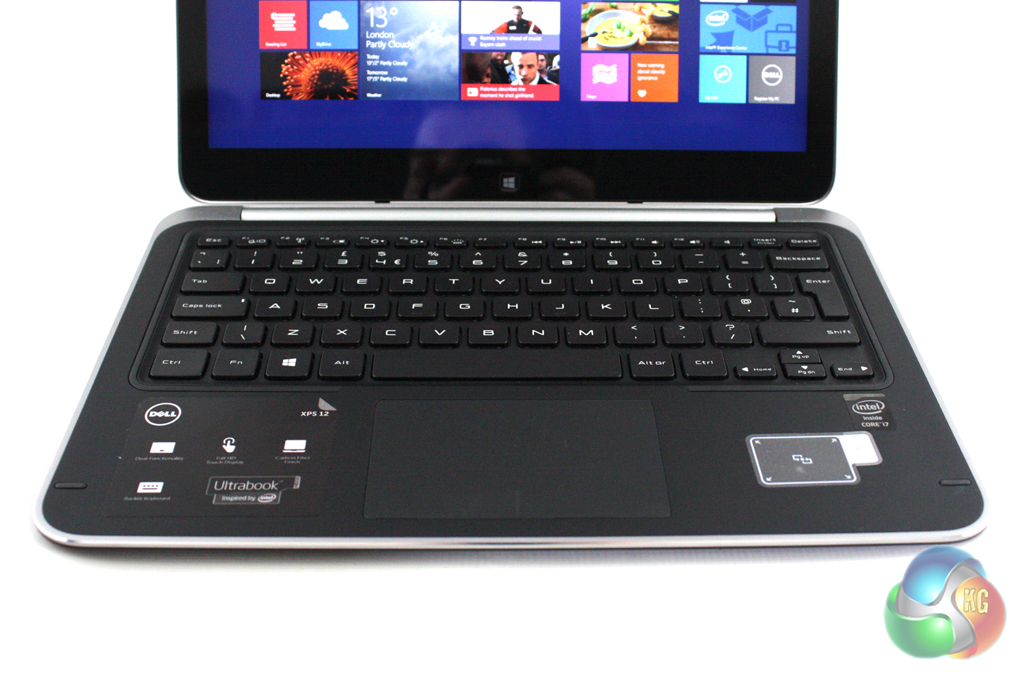
It is clear that Dell haven’t neglected the regular input methods as the keyboard and touchpad are excellent.
Even though this is a compact model, Dell have found room for a full-size keyboard. This is a backlit chiclet-style keyboard which has an unusually deep travel for a laptop. This takes a little while to get used to but feels great after an hour or so.
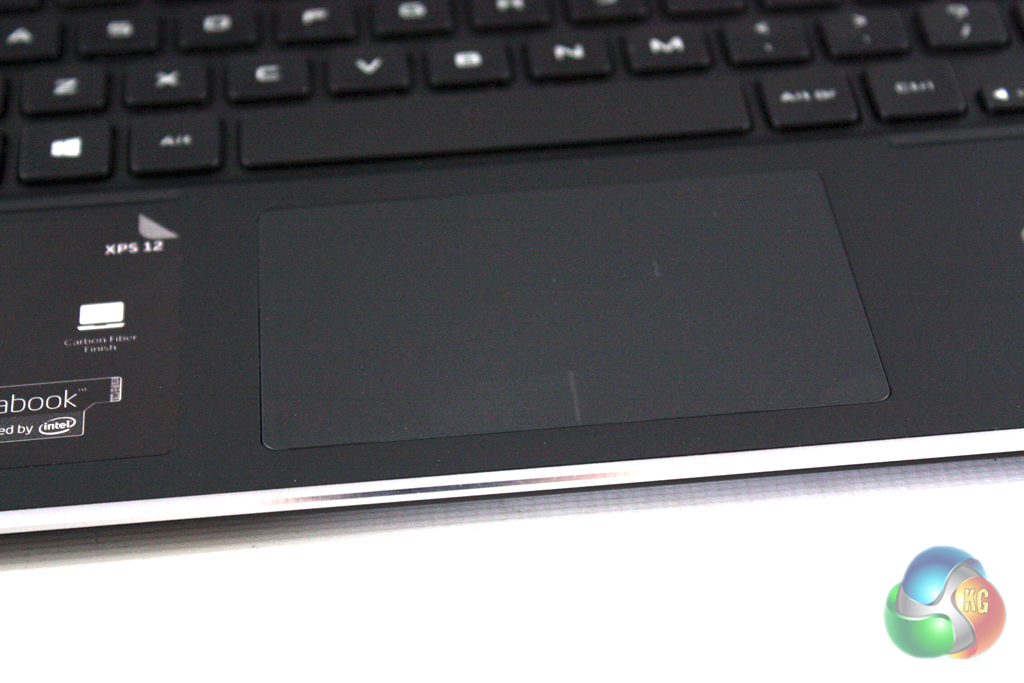
The touchpad is also large considering the compact nature of this macine. It has a smoother coating than the surrounding plastics, letting you effortlessly slide your fingers across it. Like most touchpads these days, it features integrated buttons which further expand the touchpad area.
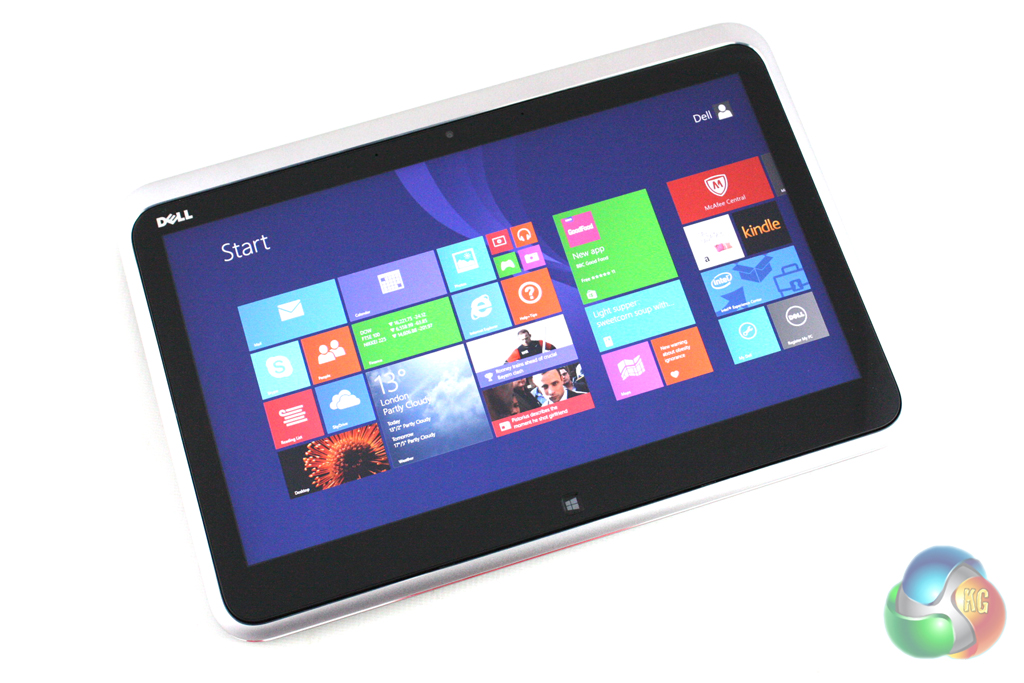
The connectivity options available on the XPS 12 are limited slightly by the dimensions of the machine, but most users’ needs should be satisfied. It is quite fat in tablet mode, which isn't ideal.
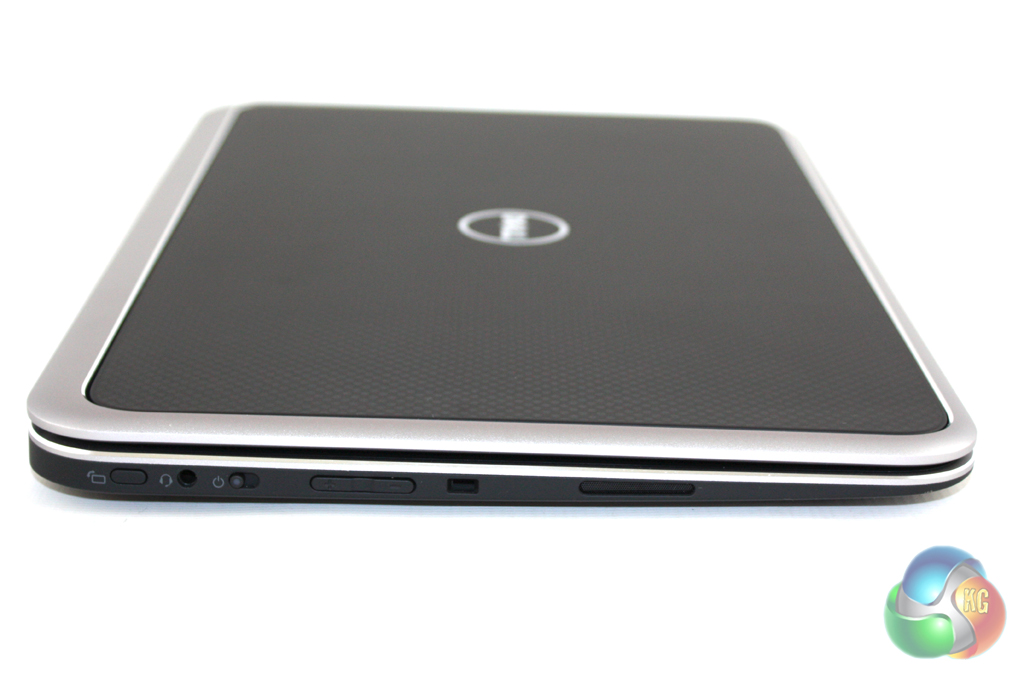
On the left hand side of the machine, we find a display lock button, a 3.5” headset jack, volume up and down buttons, a Kensington lock slot and a speaker grille.
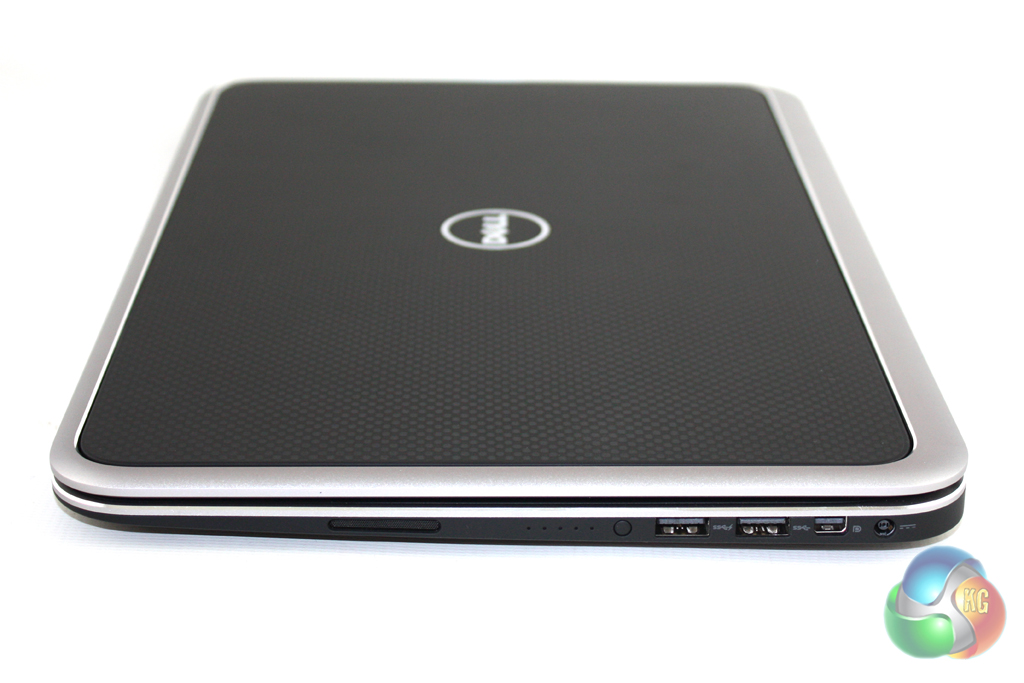
Moving round to the right side of the machine we find a speaker grille, a battery level indicator, two USB connectors, a mini Displayport connector and the DC-in jack.
Configuration
Our review sample is the higher specified £949.00 model, which features a Core i7 processor, 256GB Solid State Drive and a full 8GB of DDR3 memory.
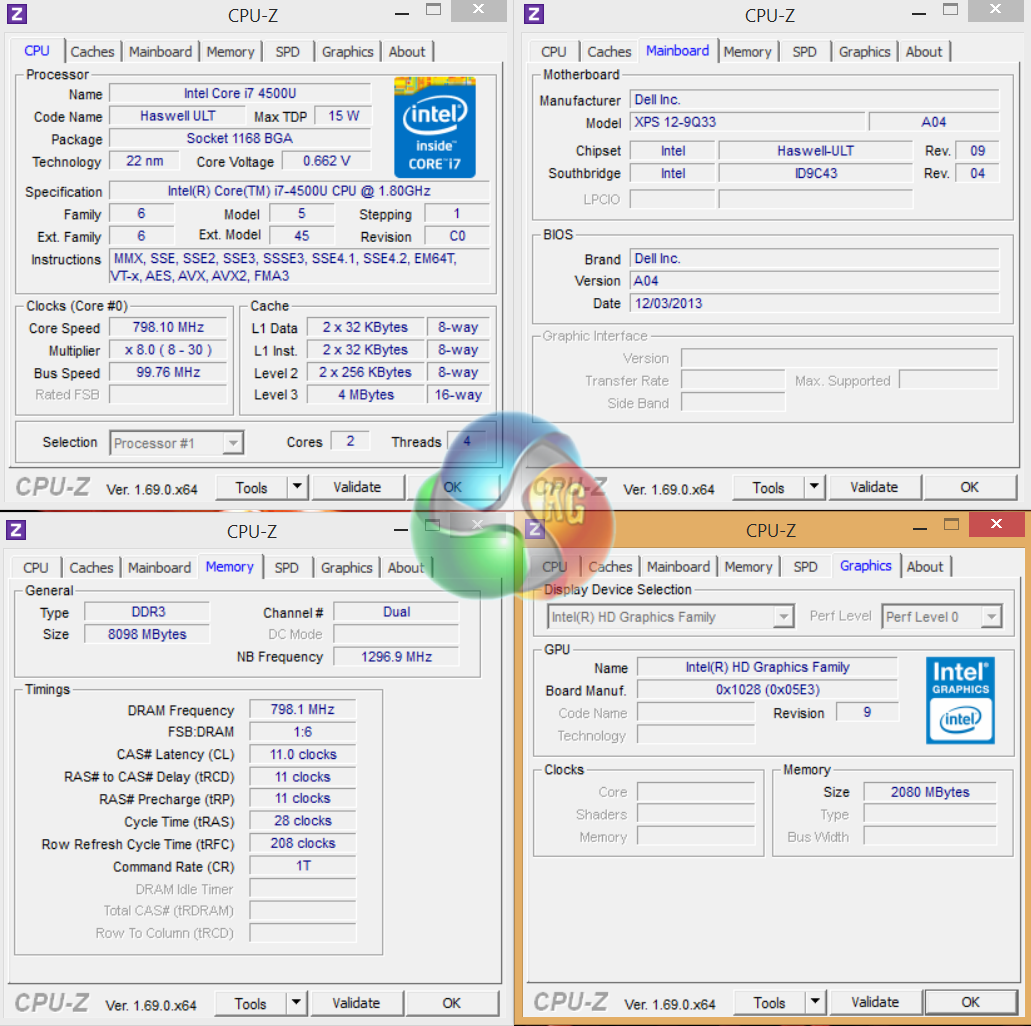
Our sample of the Dell XPS 12 is based around one of the most powerful low voltage mobile processors currently on the market, the Intel Core i7-4500U. This boasts a 1.8 GHz clock speed, increasing to 3.0 GHz in turbo mode.
It is a dual core model which supports Hyper Threading, so there are four logical cores available. This machine also features 8 GB (2x 2GB of DDR3 RAM clocked at 1600 MHz.
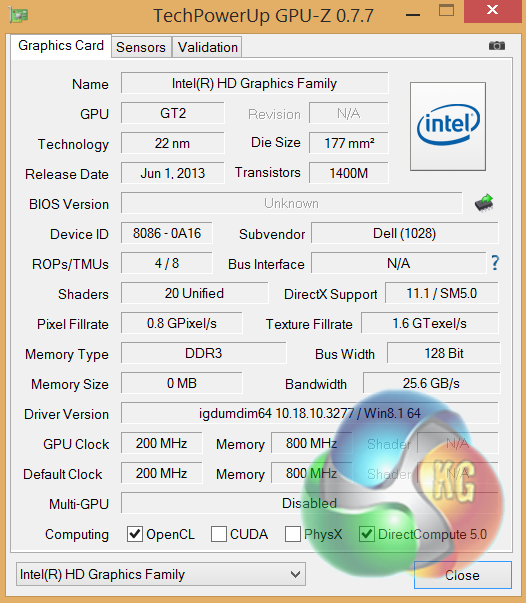
This particular machine makes use of Intel's integrated graphics as it isn't exactly designed for gaming. We doubt many users will be purchasing this notebook with gaming in mind so it isn't a big issue.
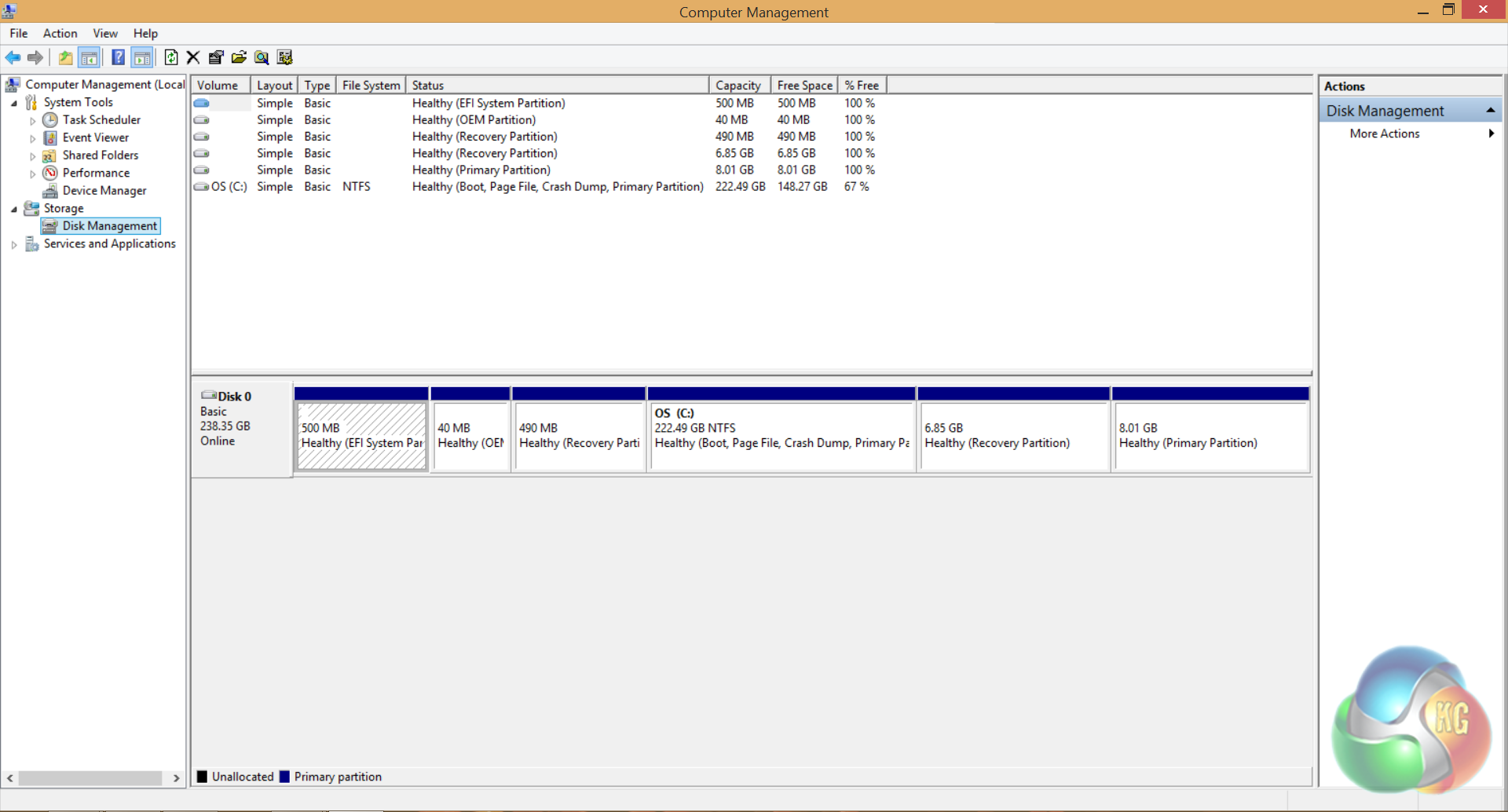
This Dell XPS 12 is configured with a 256 GB solid state drive, which isn't supplemented with a large storage drive like most larger notebooks. This should be more than adequate for most users, though. Dell create a number of partitions on this drive, however, meaning there is only around 220 GB left available. This is reduced to under 200 GB when Windows has been installed, although Dell thoughtfully doesn't pre-install too much bloatware.
Testing Methodology
Today we are going to use a combination of synthetic and real world benchmarks to showcase the performance of the Dell XPS 12.
Specification
- Display: 12.5″ LED Backlit Touch Display with Truelife and FHD resolution (1920 x 1080).
- Graphics Card: Intel HD Graphics 4400.
- Processor: Intel Core i7-4500U Processor (4M Cache, up to 3.0 GHz).
- Memory: 8GB Dual Channel DDR3 at 1600MHz.
- Hard Drive: 256 GB Solid State Drive
- WIFI Card: Intel Dual Band Wireless-AC 7260 + Bluetooth
- Keyboard: Backlit Keyboard UK.
- Warranty: 1 Year NBD with Premium Phone Support.
- Operating System: Microsoft Windows 8 64-bit.
Software:
- PCMark 7
- 3DMark
- 3DMark 11
- 3DMark Vantage
- SiSoft Sandra 2013
- Cinebench R11.5
- CrystalDiskMark
- Cyberlink MediaEspresso 6.7
- VLC Media Player
- Performance Monitor
- Unigine Heaven Benchmark
- Super Pi 1.5 Mod
- CPUID Hardware Monitor
- CPU-Z
- GPU-Z
- WinRAR
- DiRT Showdown
- Battlefield 3
- Call of Duty: Black Ops 2
PCMark 8 is the latest version in the popular series of PC benchmarking tools. Improving on previous releases, PCMark 8 includes battery life measurement tools and new tests using popular applications from Adobe and Microsoft. Whether you are looking for long battery life, or maximum power, PCMark 8 helps you find the devices that offer the perfect combination of efficiency and performance for your needs.
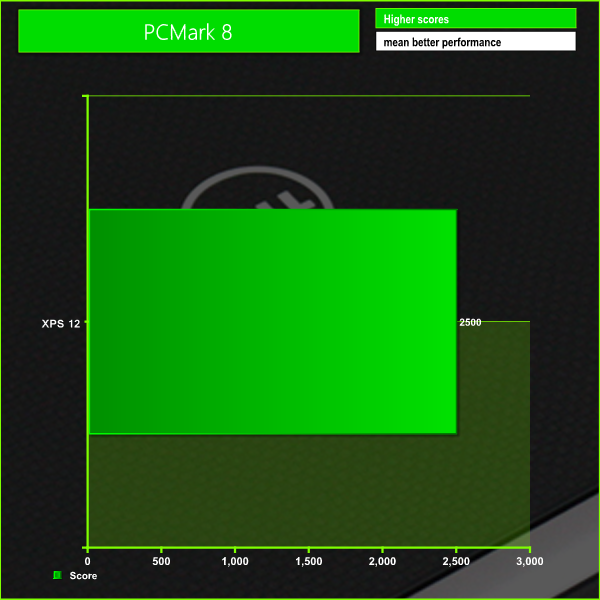
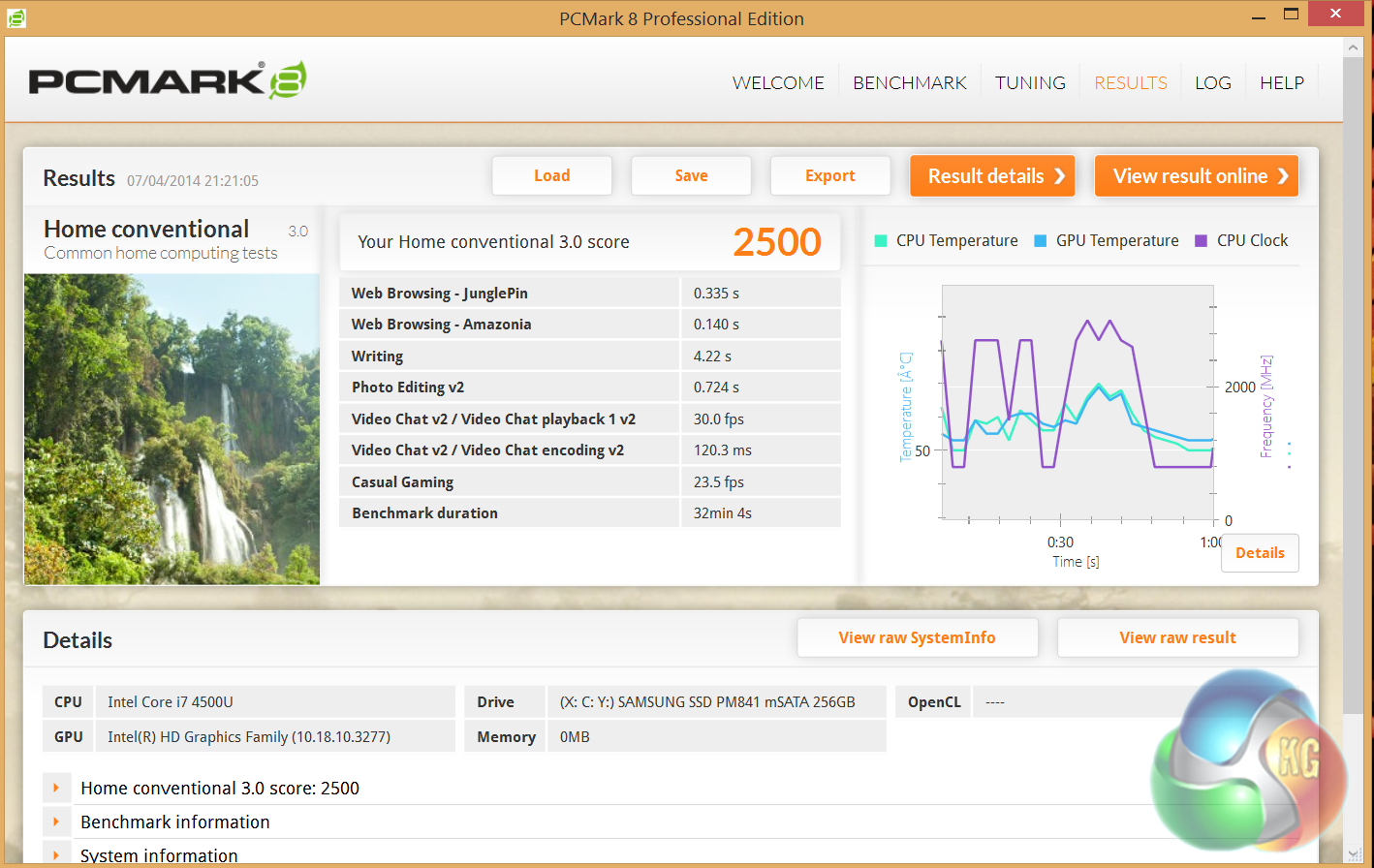
This is a fairly respectable score for the notebook in this test.
3DMark is Futuremark’s latest benchmark. It can be used to benchmark and compare everything from mobile devices, such as smart phones, tablets and laptops, to high-end gaming systems. The benchmark is available for Windows, Windows RT Android and iOS.
With 3 separate tests, each of which is intended to be used alongside a specific classification of hardware, 3DMark is a very versatile benchmark. Ice Storm is intended to be used with mobile devices, Cloud Gate is good for use with laptops and home PCs, and Fire Strike can be used to push the performance of gaming PCs.
We used the ‘Fire Strike’ benchmark which is designed to be used on gaming PCs. We opted for the Normal setting, NOT the Extreme mode.
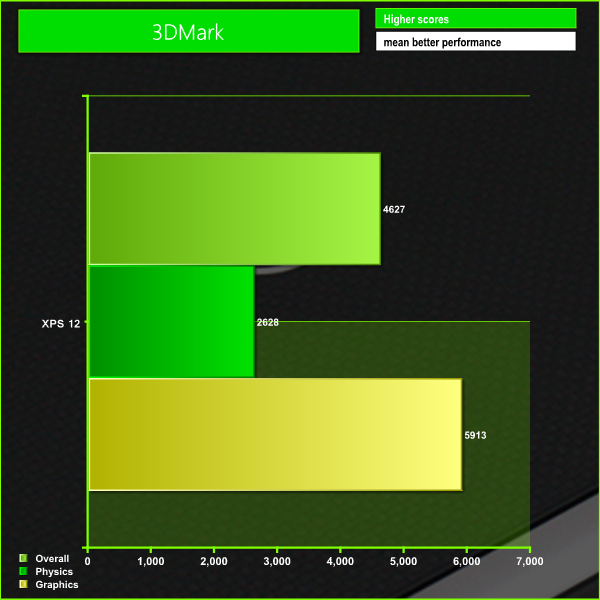
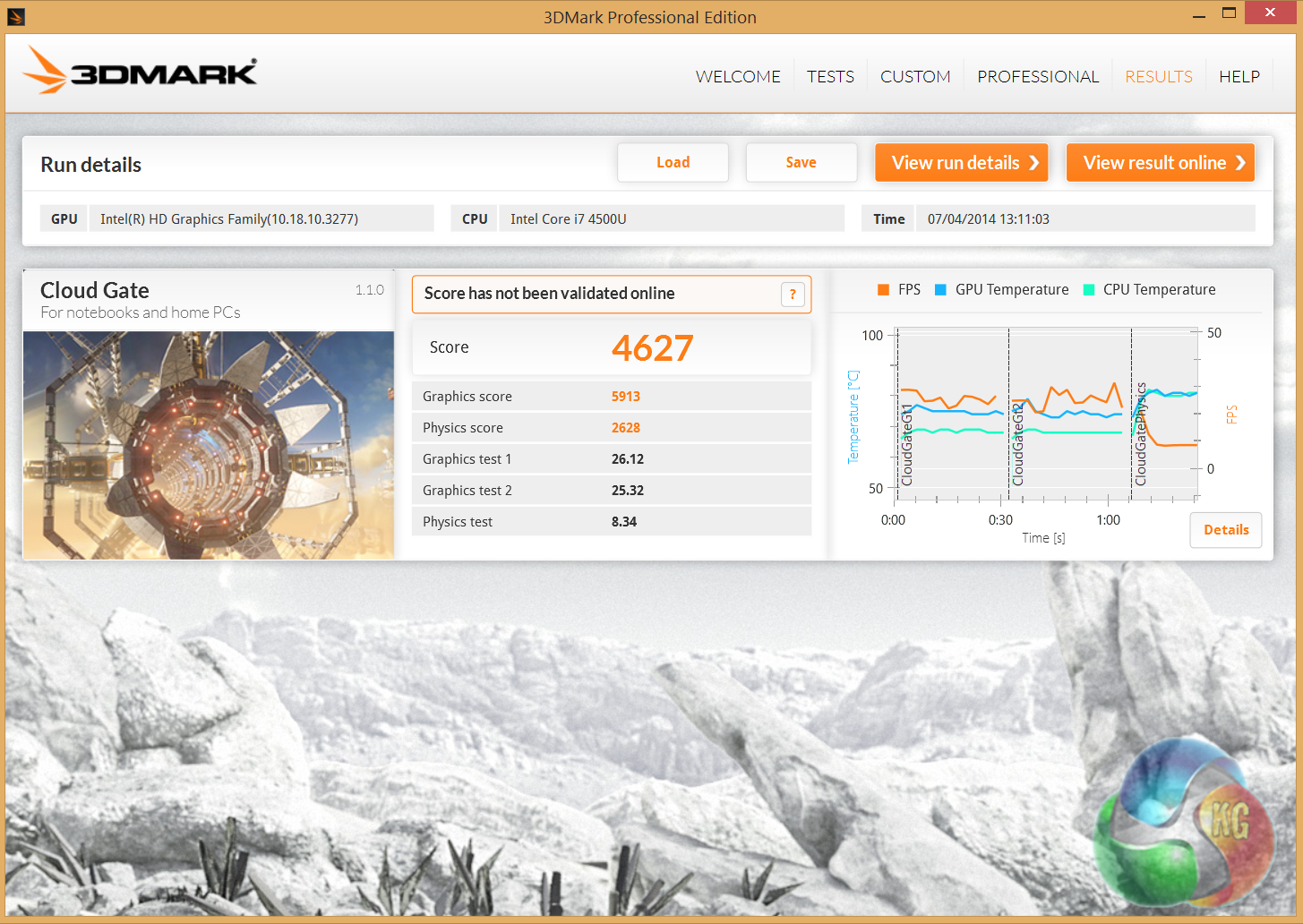
Despite the integrated graphics card, this system performed reasonably well in this test.
3DMark 11 is designed for testing DirectX 11 hardware running on Windows 7 and Windows Vista. The benchmark includes six all new benchmark tests that make extensive use of all the new features in DirectX 11 including tessellation, compute shaders and multi-threading.
After running the tests 3DMark gives your system a score with larger numbers indicating better performance. Trusted by gamers worldwide to give accurate and unbiased results, 3DMark 11 is the best way to test DirectX 11 under game-like loads.
If you want to learn more about this benchmark, or to buy it yourself, head over to this page.
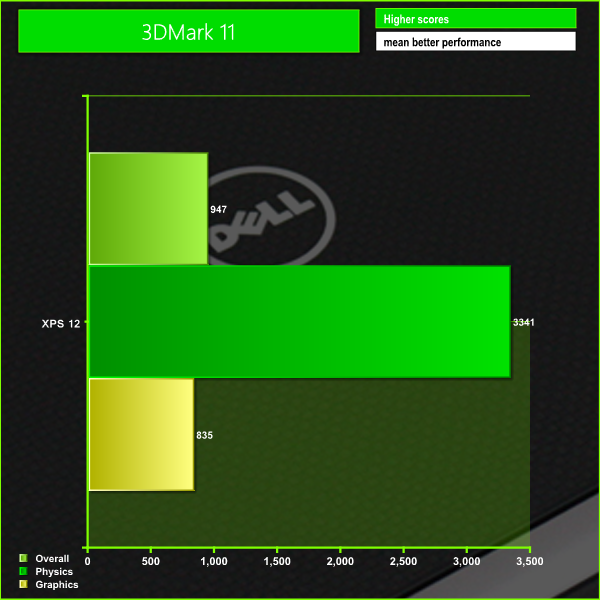
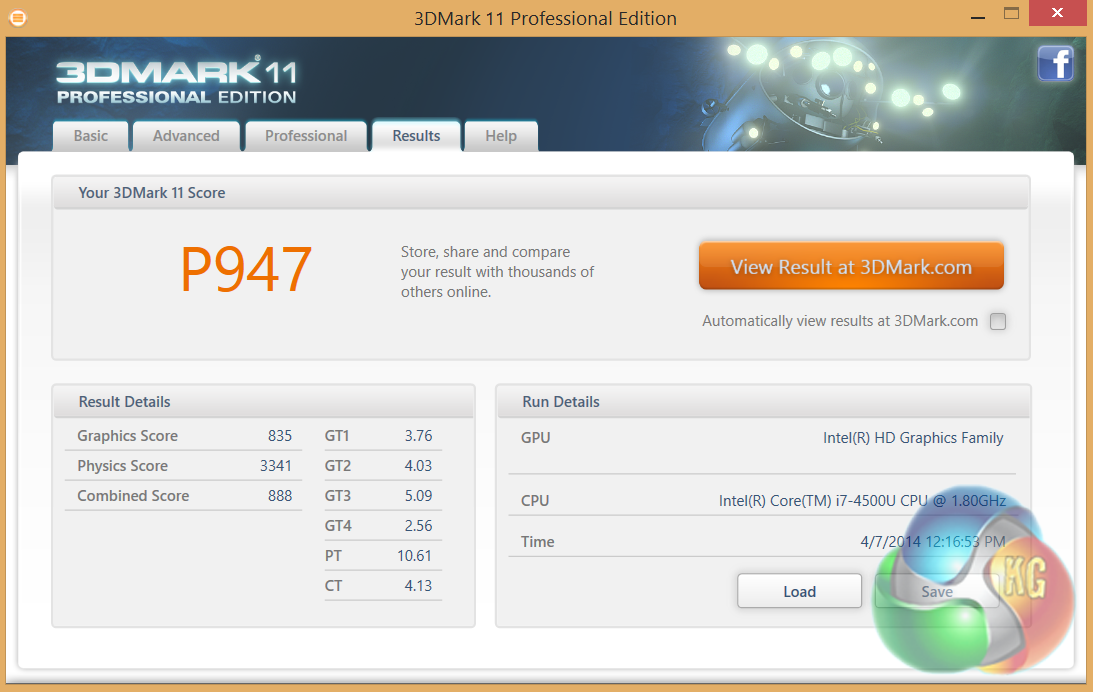
Again, the score in this test is quite respectable considering the lack of a dedicated graphics card.
Futuremark released 3DMark Vantage, on April 28, 2008. It is a benchmark based upon DirectX 10, and therefore will only run under Windows Vista (Service Pack 1 is stated as a requirement) and Windows 7. This is the first edition where the feature-restricted, free of charge version could not be used any number of times. 1280×1024 resolution was used with performance settings.
As we would expect, overclocking significantly boosts the CPU score of the system.
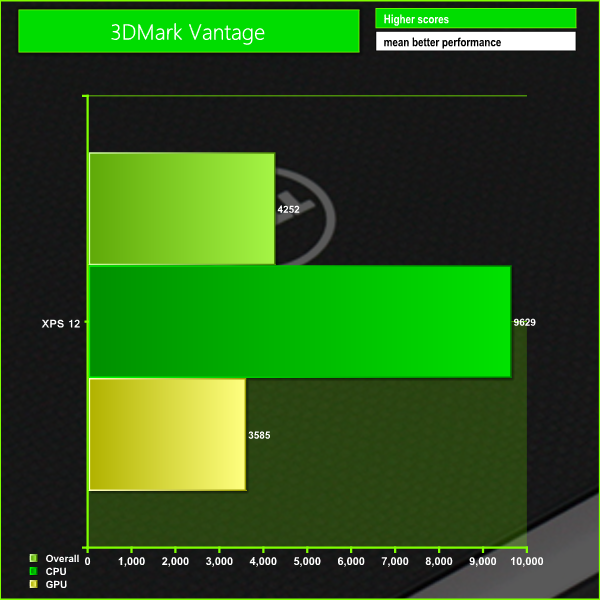
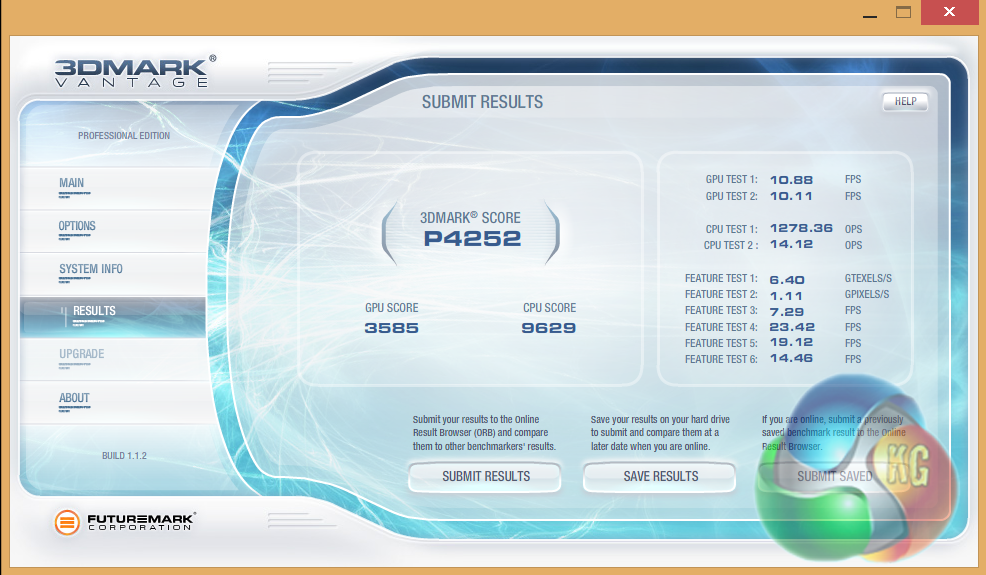
Once again, this notebook performed well considering the integrated graphics.
Unigine provides an interesting way to test hardware. It can be easily adapted to various projects due to its elaborated software design and flexible toolset. A lot of their customers claim that they have never seen such extremely-effective code, which is so easy to understand.
Heaven Benchmark is a DirectX 11 GPU benchmark based on advanced Unigine engine from Unigine Corp. It reveals the enchanting magic of floating islands with a tiny village hidden in the cloudy skies. Interactive mode provides emerging experience of exploring the intricate world of steampunk.
Efficient and well-architected framework makes Unigine highly scalable:
- Multiple API (DirectX 9 / DirectX 10 / DirectX 11 / OpenGL) render
- Cross-platform: MS Windows (XP, Vista, Windows 7) / Linux
- Full support of 32bit and 64bit systems
- Multicore CPU support
- Little / big endian support (ready for game consoles)
- Powerful C++ API
- Comprehensive performance profiling system
- Flexible XML-based data structures
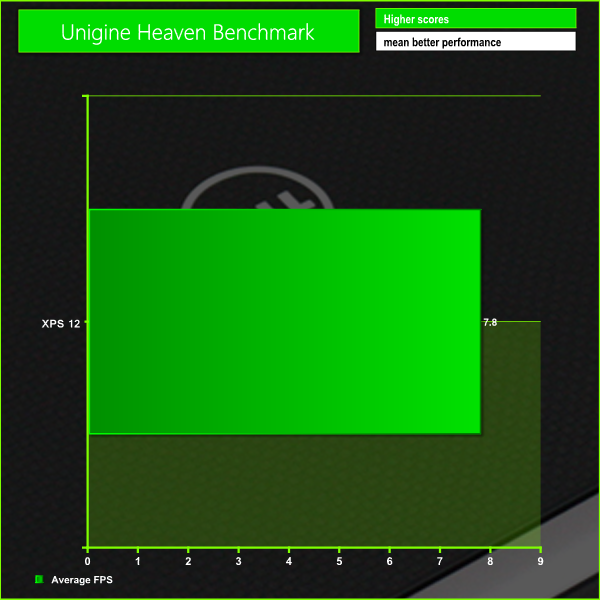
The XPS 12 offers fairly respectable performance again in this test.
SiSoftware Sandra (the System ANalyser, Diagnostic and Reporting Assistant) is an information & diagnostic utility. It should provide most of the information (including undocumented) you need to know about your hardware, software and other devices whether hardware or software.
Sandra is a (girl’s) name of Greek origin that means “defender”, “helper of mankind”. We think that’s quite fitting.
It works along the lines of other Windows utilities, however it tries to go beyond them and show you more of what’s really going on. Giving the user the ability to draw comparisons at both a high and low-level. You can get information about the CPU, chipset, video adapter, ports, printers, sound card, memory, network, Windows internals, AGP, PCI, PCI-X, PCIe (PCI Express), database, USB, USB2, 1394/Firewire, etc.
Native ports for all major operating systems are available:
- Windows XP, 2003/R2, Vista, 7, 2008/R2 (x86)
- Windows XP, 2003/R2, Vista, 7, 2008/R2 (x64)
- Windows 2003/R2, 2008/R2* (IA64)
- Windows Mobile 5.x (ARM CE 5.01)
- Windows Mobile 6.x (ARM CE 5.02)
All major technologies are supported and taken advantage of:
- SMP – Multi-Processor
- MC – Multi-Core
- SMT/HT – Hyper-Threading
- MMX, SSE, SSE2, SSE3, SSSE3, SSE 4.1, SSE 4.2, AVX, FMA – Multi-Media instructions
- GPGPU, DirectX, OpenGL – Graphics
- NUMA – Non-Uniform Memory Access
- AMD64/EM64T/x64 – 64-bit extensions to x86
- IA64 – Intel* Itanium 64-bit
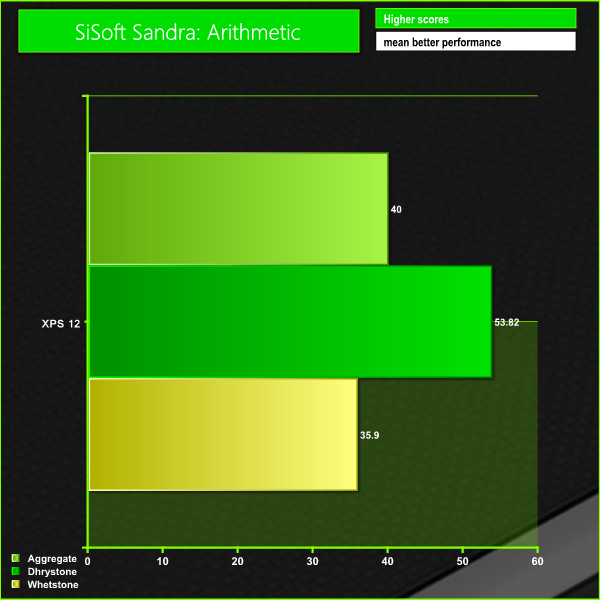
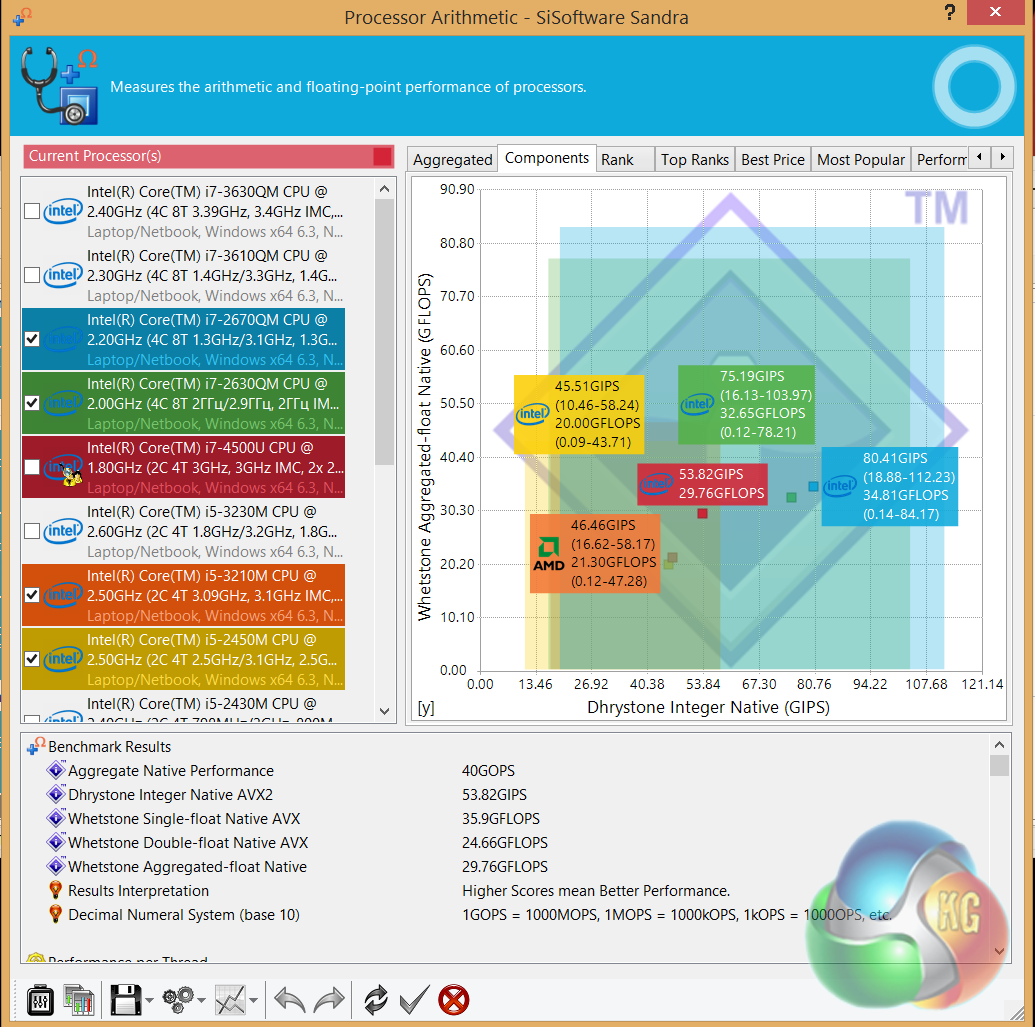
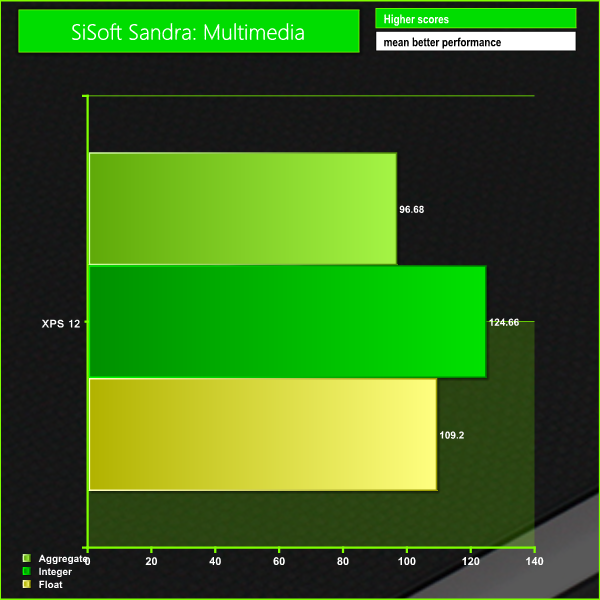
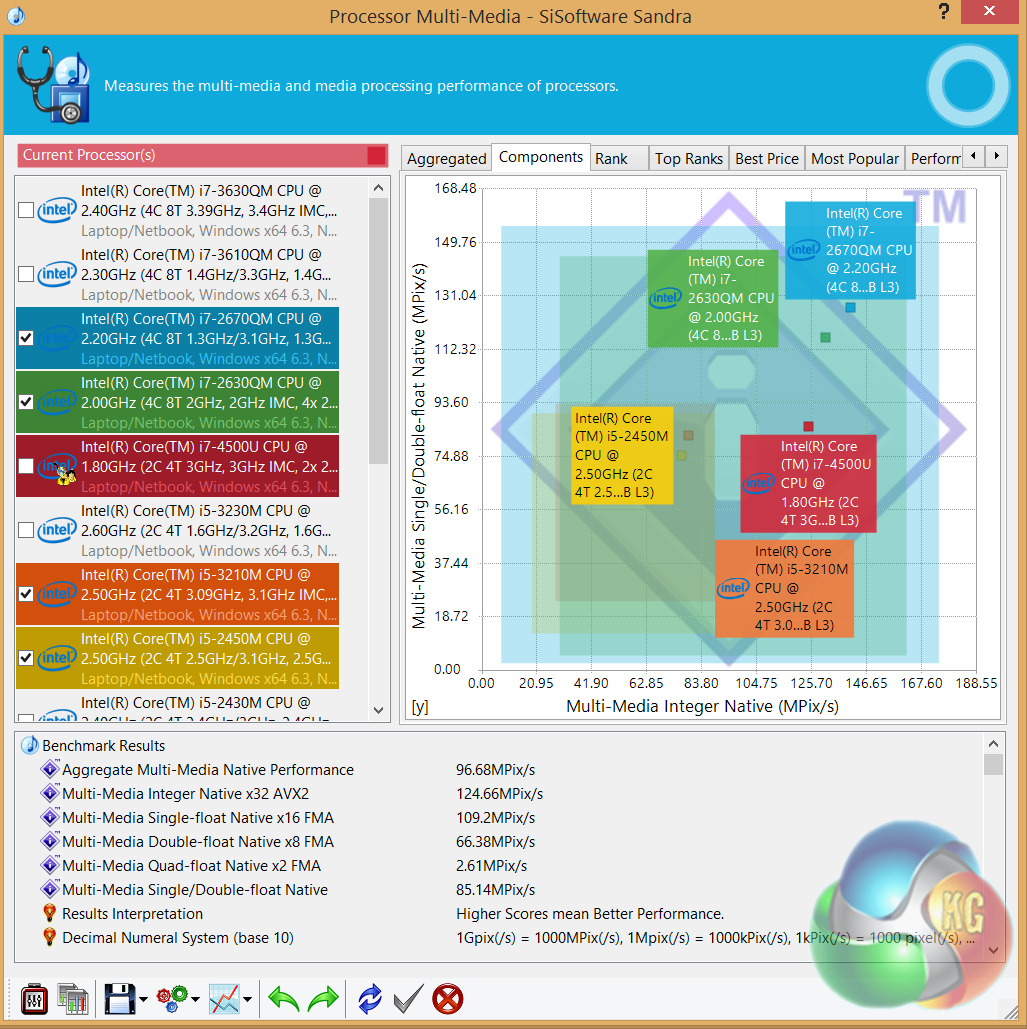
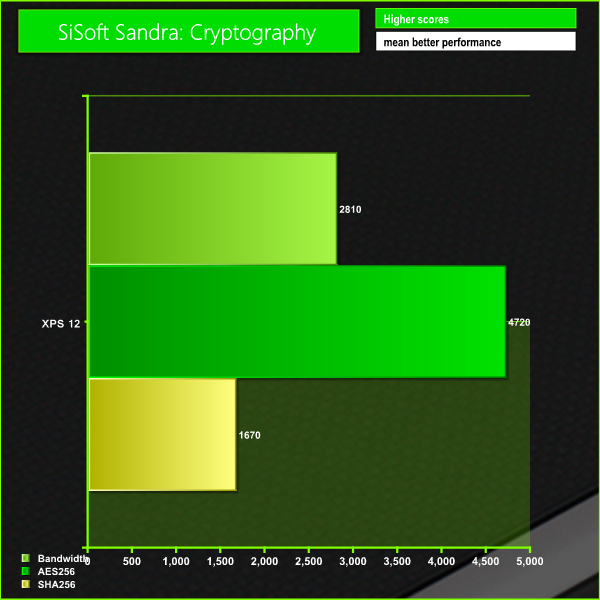
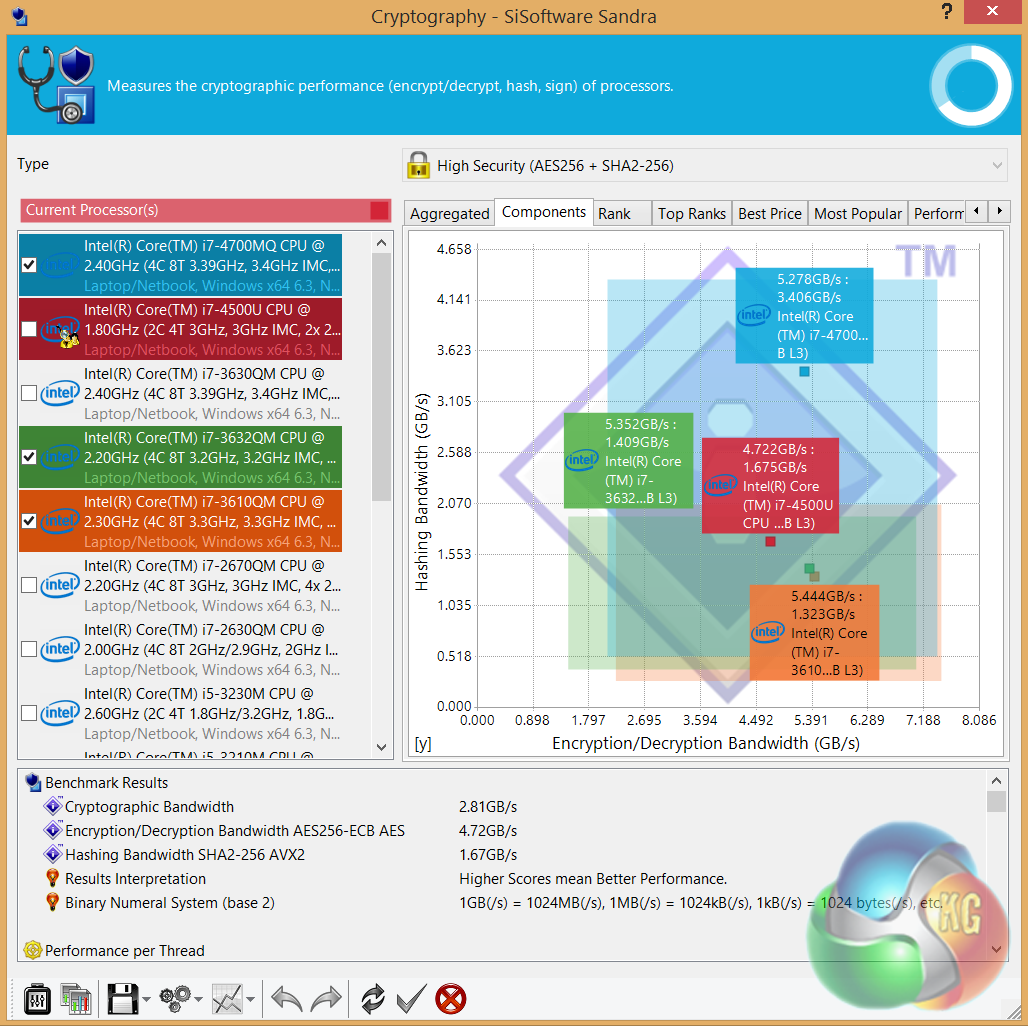
These tests showcase the stellar raw processing performance of this notebook.
Cinebench R11.5 is the second newest revision of the popular benchmark from Maxon. The test scenario uses all of your system’s processing power to render a photorealistic 3D scene (from the viral “No Keyframes” animation by AixSponza). This scene makes use of various different algorithms to stress all available processor cores.
In fact, CINEBENCH can measure systems with up to 64 processor threads. The test scene contains approximately 2,000 objects containing more than 300,000 total polygons and uses sharp and blurred reflections, area lights and shadows, procedural shaders, antialiasing, and much more. The result is given in points (pts). The higher the number, the faster your processor.
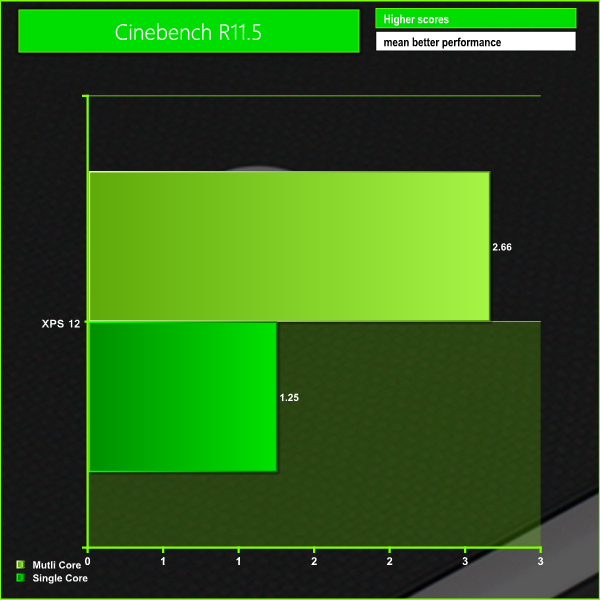
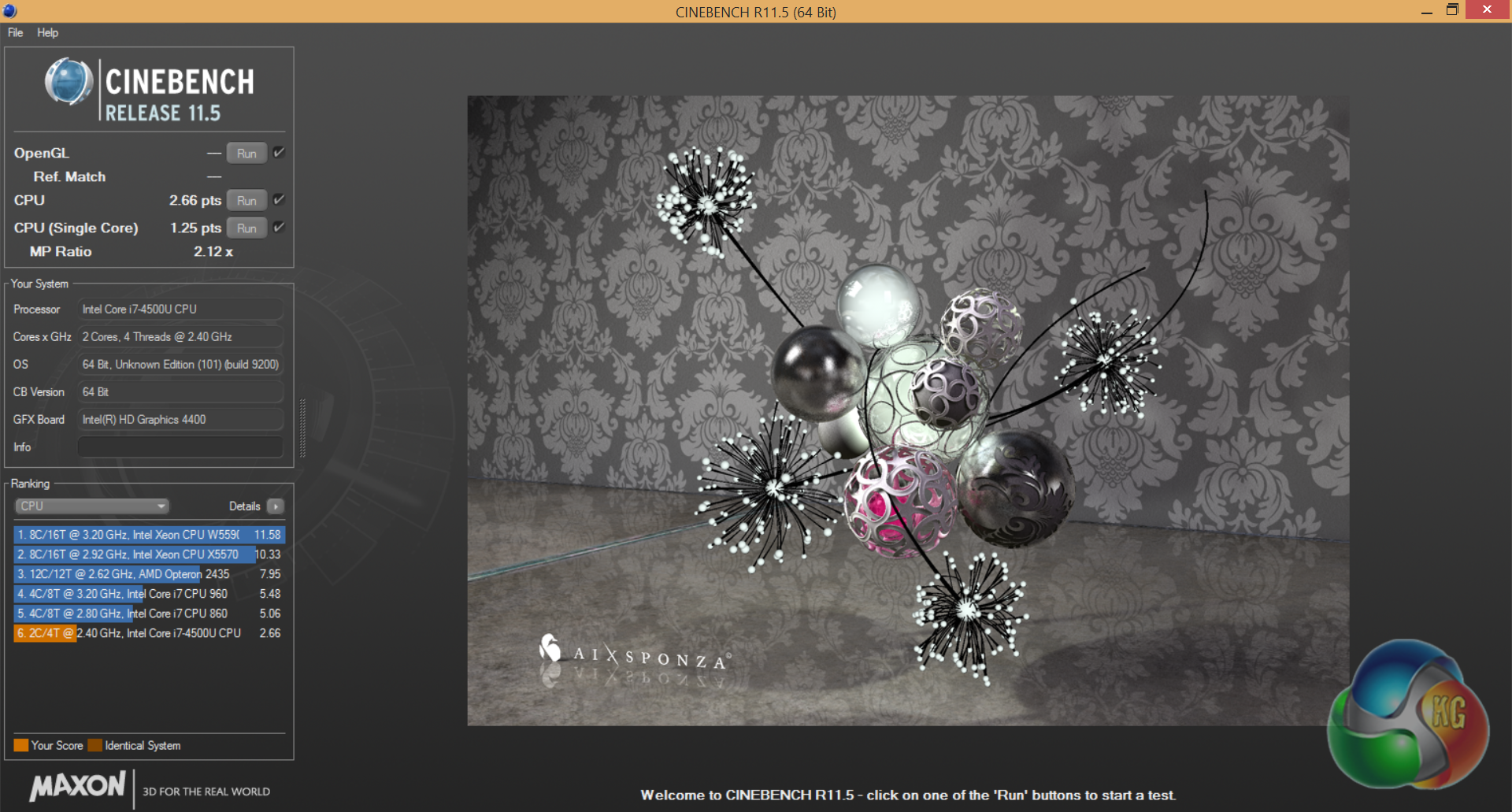
This test shows us the performance advantages available from having hyper threading in addition to two cores as performance is increased by more than four times when the program is allowed to use multiple threads.
CINEBENCH is a real-world cross platform test suite that evaluates your computer's performance capabilities. CINEBENCH is based on MAXON's award-winning animation software CINEMA 4D, which is used extensively by studios and production houses worldwide for 3D content creation. MAXON software has been used in blockbuster movies such as Iron Man 3, Oblivion, Life of Pi or Prometheus and many more. Cinbench R15 is the latest version of this benchmark.
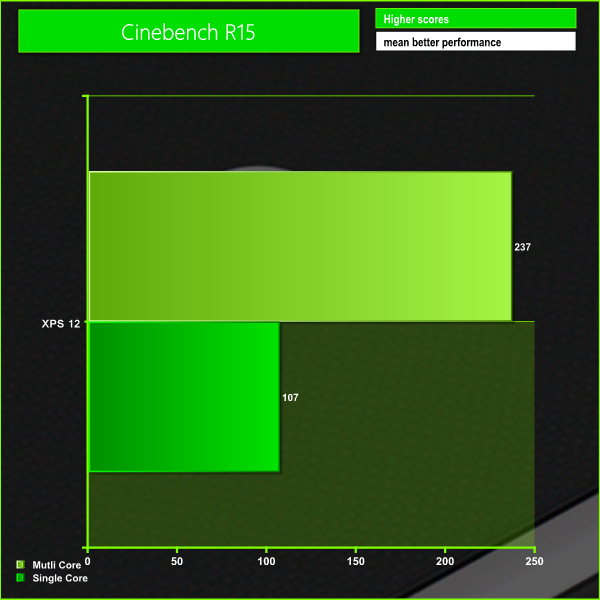
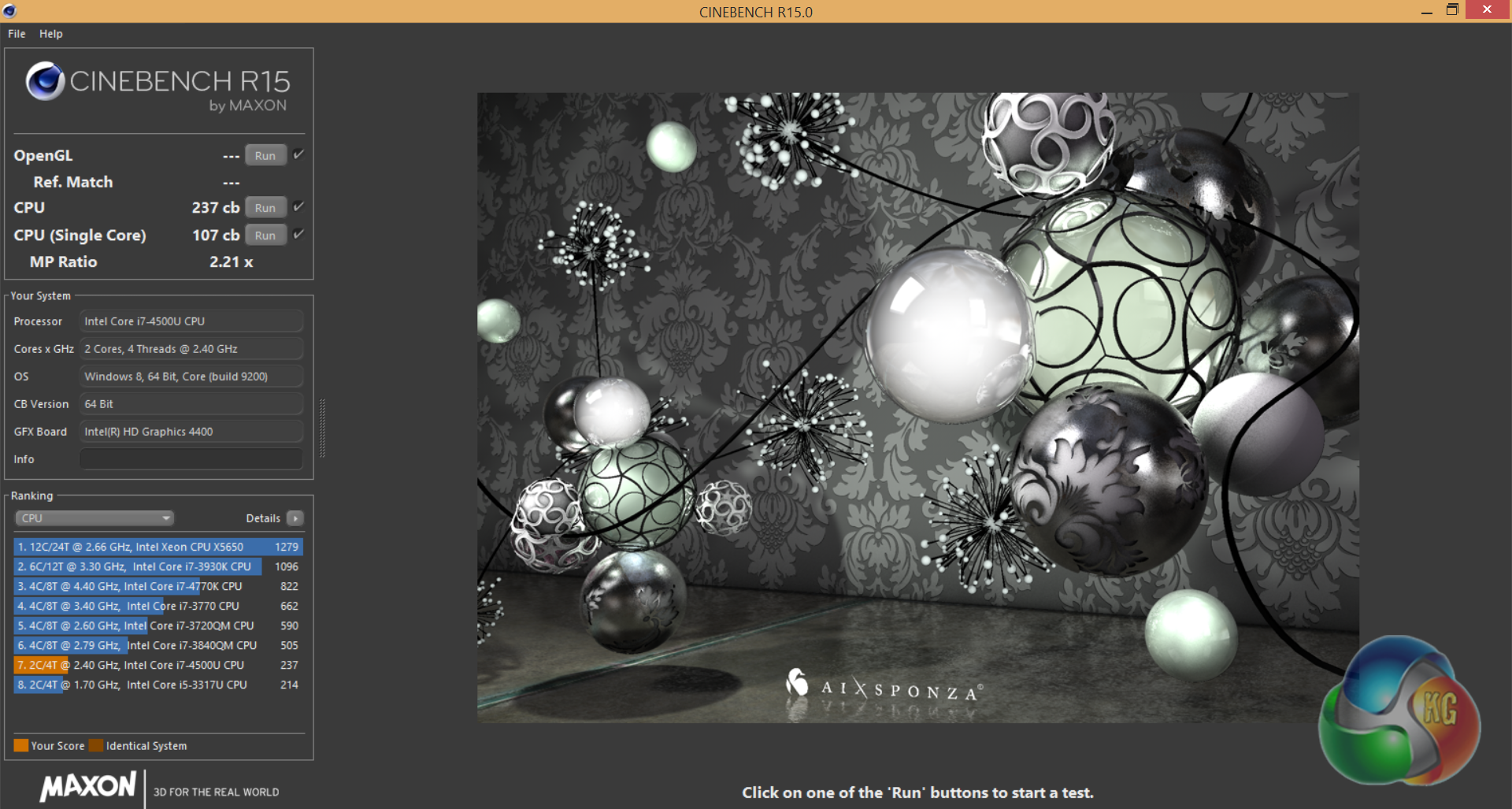
This benchmark is very new so it's more difficult to judge how these results compare to other systems, however we see a significant boost in performance when the program is allowed to use multiple threads.
Super Pi is used by a huge audience, particularly to check stability when overclocking processors. If a system is able to calculate PI to the 32 millionth place after the decimal without mistake, it is considered to be stable in regards to RAM and CPU.
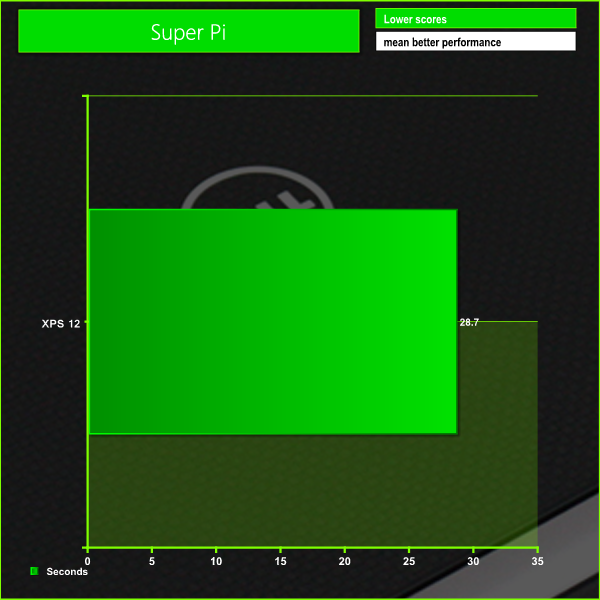
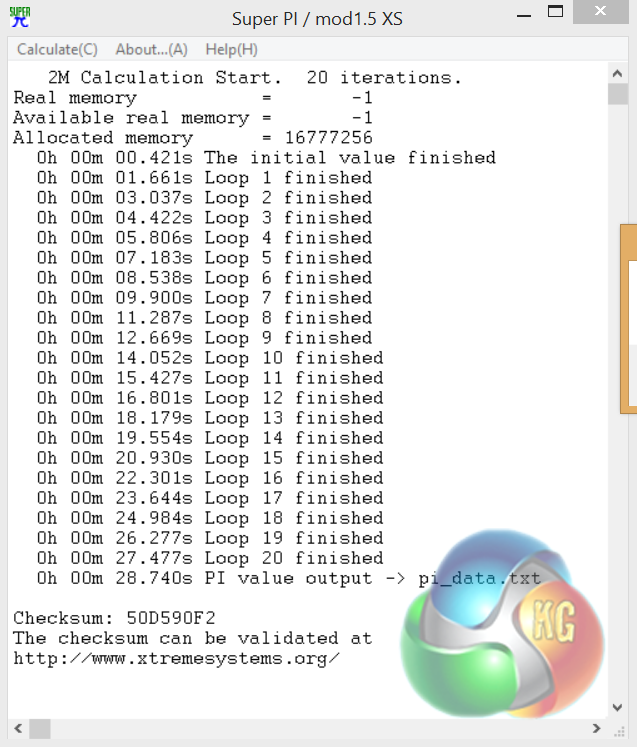
This test showcases the excellent single threaded processing performance of the system.
WinRAR is one of the most popular archive manager programs available. It can backup your data and reduce the size of email attachments, decompress RAR, ZIP and other files downloaded from Internet and create new archives in RAR and ZIP file format. You can try WinRAR before buy, its trial version is available in downloads. We measured the performance using the inbuilt benchmark.

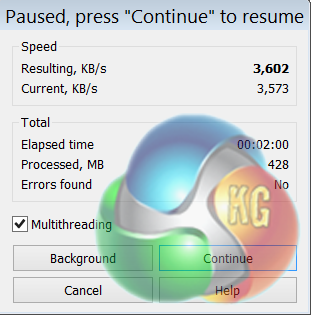
Impressive performance from the system in this test.
The Matroska Media container is a very popular, open standard Multimedia container which is usually found as .MKV files. It is a very popular format in enthusiast circles and can be played directly in VLC or Windows Media Player with suitable codecs installed.
We played our 1080P MKV movie using the latest version of VLC Media Player and measured the CPU usage with the Performance Monitor built into Windows.
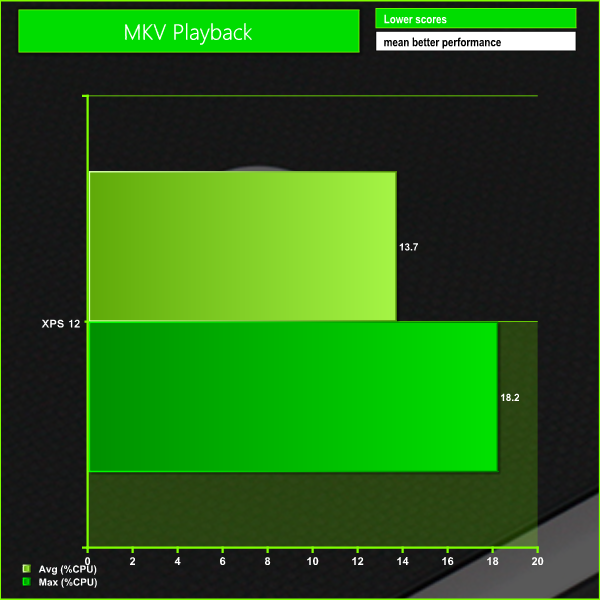
These results are pretty impressive, with the MKV file barely stressing the CPU at all.
CyberLink MediaEspresso 6 is the successor to CyberLink MediaShow Espresso 5.5. With its further optimized CPU/GPU-acceleration, MediaEspresso is an even faster way to convert not only your video but also your music and image files between a wide range of popular formats.
Now you can easily playback and display your favourite movies, songs and photos not just on your mobile phone, iPad, PSP, Xbox, or Youtube and Facebook channels but also on the newly launched iPhone 4. Compile, convert and enjoy images and songs on any of your computing devices and enhance your videos with CyberLink’s built-in TrueTheater Technology.
New and Improved Features
- Ultra Fast Media Conversion – With support from the Intel Core i-Series processor family, ATI Stream & NVIDIA CUDA, MediaEspresso’s Batch-Conversion function enables multiple files to be transcoded simultaneously.
- Smart Detect Technology – MediaEspresso 6 automatically detects the type of portable device connected to the PC and selects the best multimedia profile to begin the conversion without the need for user’s intervention.
- Direct Sync to Portable Devices – Video, audio and image files can be transferred in a few easy steps to mobile phones including those from Acer, BlackBerry, HTC, Samsung, LG, Nokia, Motorola, Sony Ericsson, and Palm, as well as Sony Walkman and PSP devices.
- Enhanced Video Quality – CyberLink TrueTheater Denoise and Lighting enables the enhancement of video quality through optical noise filters and automatic brightness adjustment.
- Video, Music and Image File Conversion – Convert not only videos to popular formats such as AVI, MPEG, MKV, H.264/AVC, and FLV at the click of a button, but also images such as JPEG and PNG and music files like WMA, MP3 and M4A.
- Online Sharing – Conversion to video formats used by popular social networking websites and a direct upload feature means posting videos to Facebook and YouTube has never been easier.
For our testing today we are converting a 1.43 GB 720p MKV file to Apple Mp4 format for playback on a portable device using the Apple preset. This is a common procedure for many people and will give a good indication of system power. Hardware acceleration was enabled to give you a good idea of system wide real world performance.
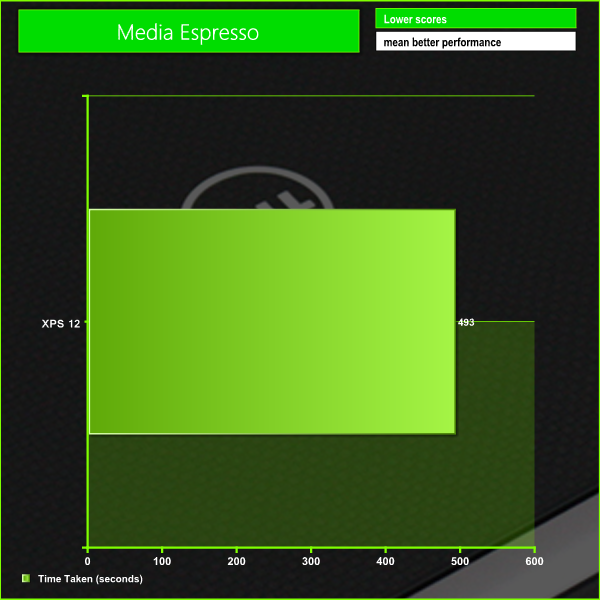
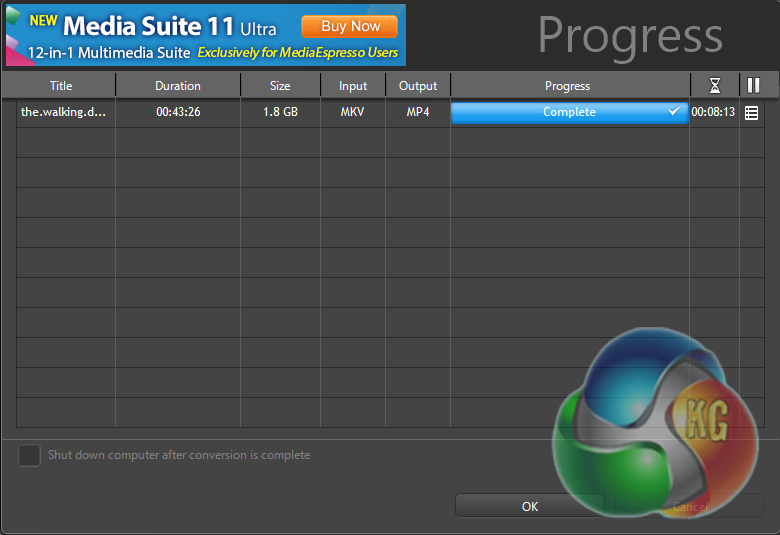
A decent score for the system in this test, showcasing its real world performance ability.
Dirt Showdown is the latest title in the franchise from Codemasters, based around the famous Colin McRae racing game series, although it no longer uses his name, since he passed away in 2007.
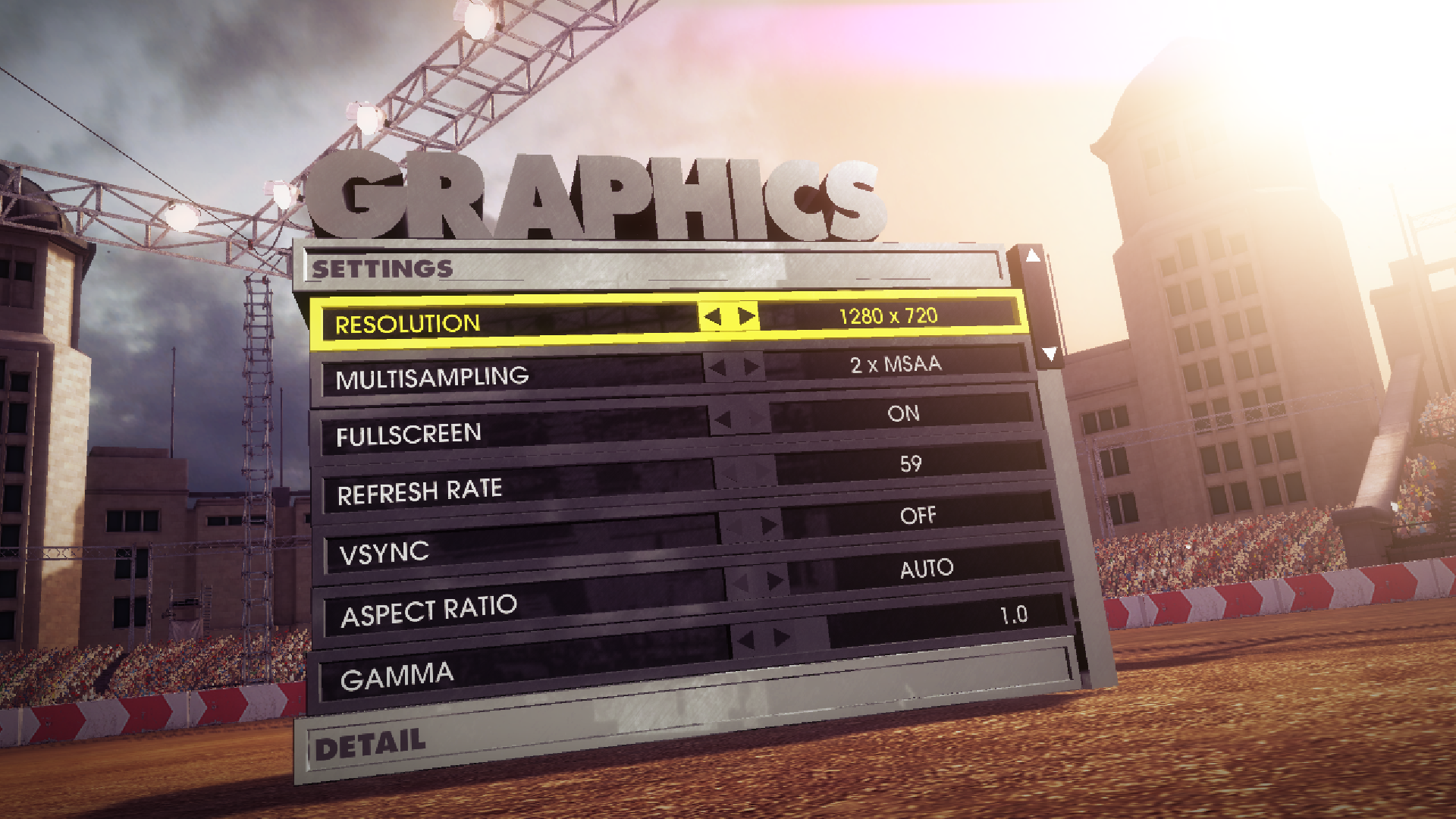
We used the settings illustrated in the screenshot above for testing with all other settings set to the ‘Ultra' presets.
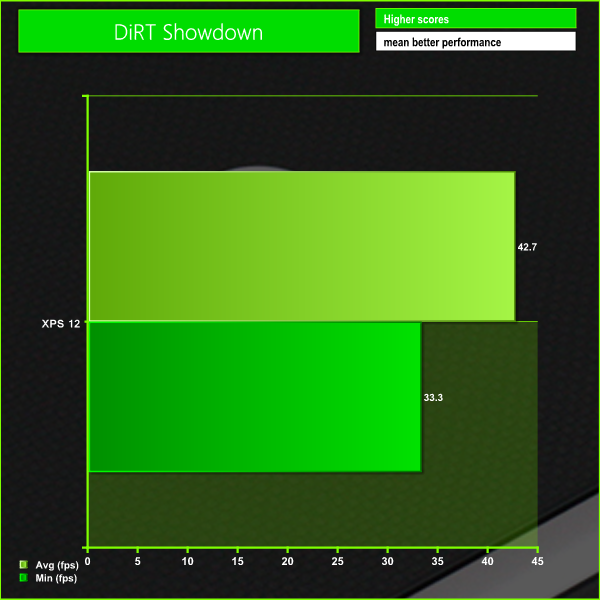
These framerates aren't too bad considering the lack of a dedicated graphics card.
We measured the noise level of the system while loading the Intel CPU using Prime95 and GTX780M using FurMark. We also recorded the noise level with the system idling at the desktop.
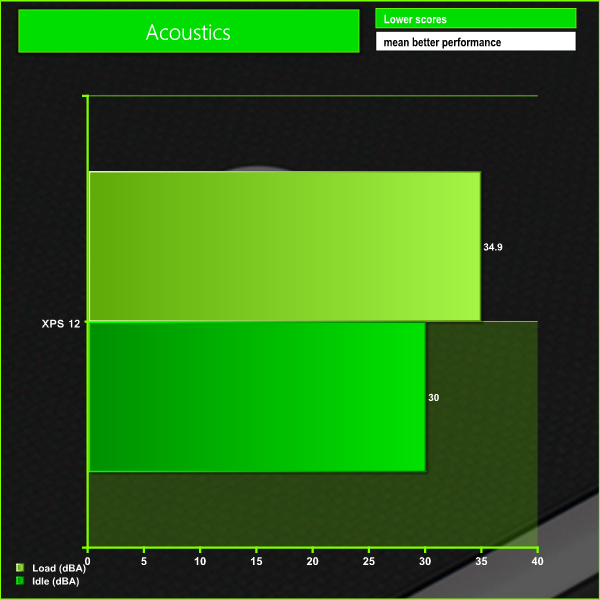
Even though this notebook is almost silent when idle, the fan becomes audible under load.
We measured the temperatures of the system while loading the Intel CPU using Prime95. We also recorded the temperatures with the system idling at the desktop. The ambient temperature was maintained at 20 degrees C for the duration of our tests.
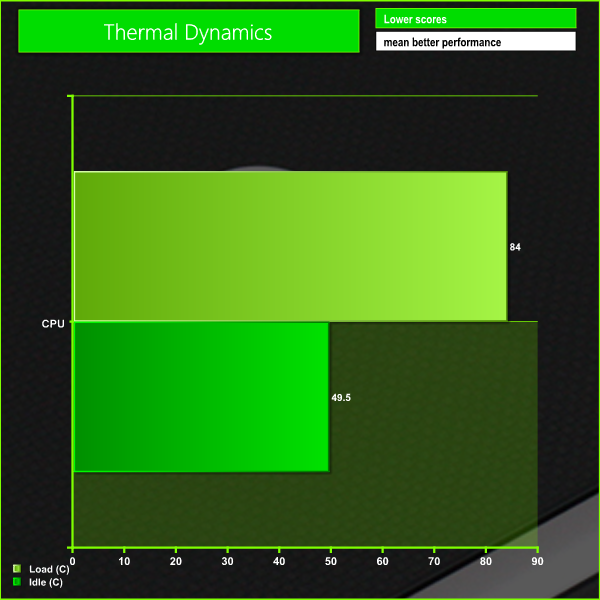
Even though the fan spins up and makes a lot of noise under load, this notebook runs very hot indeed.
To test the battery life we put the machine through two real world situations. Firstly we tested the machine while browsing the internet with WLAN enabled (General). Secondly we tested the machine while gaming with SLI and full brightness active.
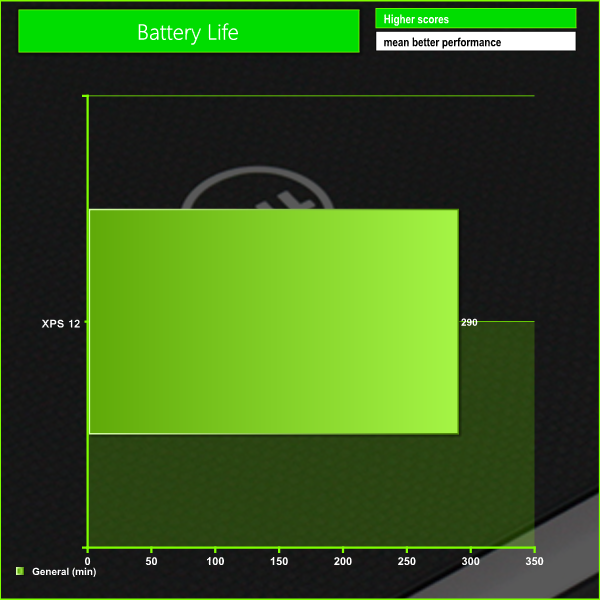
This battery life is quite good, although there are other models out there which offer more.
Overall we are very impressed with the Dell XPS 12 Convertible Ultrabook. In terms of the design and functionality, it is actually quite unique.
Dell have clearly pulled out all the stops in terms of the design of the XPS 12. The screen mechanism is very innovative and the quality of the materials used in construction are some of the best we have seen from a Dell machine.
Even though the XPS 12 is a compact notebook, Dell have still managed to shoe-horn in an Intel i7-4500U processor – a fairly potent low voltage design. We are impressed with its performance in this system, even without a dedicated graphics card. It should provide more than enough power for the majority of users.
The party trick of the XPS 12 is the rotatable screen which lets you operate it both as a notebook and as a tablet. We found ourselves using this more than we had initially expected, and is a handy feature for those looking to avoid buying both a tablet and a laptop. Negatively, the notebook is quite bulky so when in tablet mode it is rather hefty to handle.
Despite the tablet functionality of the XPS 12 Dell hasn't neglected the keyboard and touchpad. Both are built to very high standards and a pleasure to use long term.
At a price of £949.00 as configured, we feel that the Dell XPS 12 offers good value for money, especially considering you get a powerful Core i7 processor and a 256 GB solid state drive included.
The only slightly lacking factor is the short 1-year standard warranty, which we would recommend upgrading if you want to protect your investment. It is an ‘on-site warranty', though, so you shouldn't have to wait long to get back up and running if anything did go wrong.
Pros:
- Innovative design.
- Attractive.
- Impressive build quality.
- Surprisingly powerful.
- Solid State Drive as standard.
Cons:
- Short warranty.
- Bulky as a tablet.
KitGuru says: An excellent option for those looking to replace two devices with one.