 KitGuru KitGuru.net – Tech News | Hardware News | Hardware Reviews | IOS | Mobile | Gaming | Graphics Cards


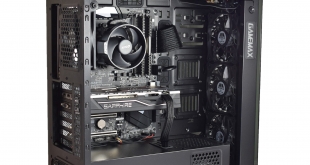
With both AMD's RX 500-series GPUs and Ryzen 5 processors launching over the past few weeks, Fierce PC thought it would be a good idea to bring both components together in an all-AMD gaming rig. Priced at £1199.95, does the Blackfire Hammerhead hit the price-to-performance sweet-spot?
While I have seen a few different PCs with Ryzen processors over the past month, this is the first all-AMD system I have seen in nearly a year. A lot has happened since then, so it will be very interesting to see how the Fierce PC Blackfire Hammerhead gets on with our testing. In this review, we look at build quality, performance and pricing before giving our final verdict.
Specification
- Game Max Onyx RGB Mid Tower ATX 3 x RGB Fans Tempered Glass Sides & Front
- AMD Ryzen 5 1500X 3.5Ghz (3.7Ghz Turbo) Quad-Core Processor
- Overclocked at 3.8GHz
- AMD Radeon RX 580 8GB Graphics Card
- Aorus AX370-Gaming 5 Motherboard
- 16GB Corsair Vengeance LPX 2400MHz DDR4 Memory (2 x 8GB)
- 500GB Samsung 850 Evo Solid State Drive
- 2TB Seagate FireCuda Solid State Hybrid Drive
- Cooler Master MasterWatt Lite 230V 600W 80+ Power Supply with black cable extensions
- Microsoft Windows 10 Home 64 Bit
- 3 Year Protect Warranty (Return to Base – 3 year labour, 1 yr Parts)
Price: £1199.95 delivered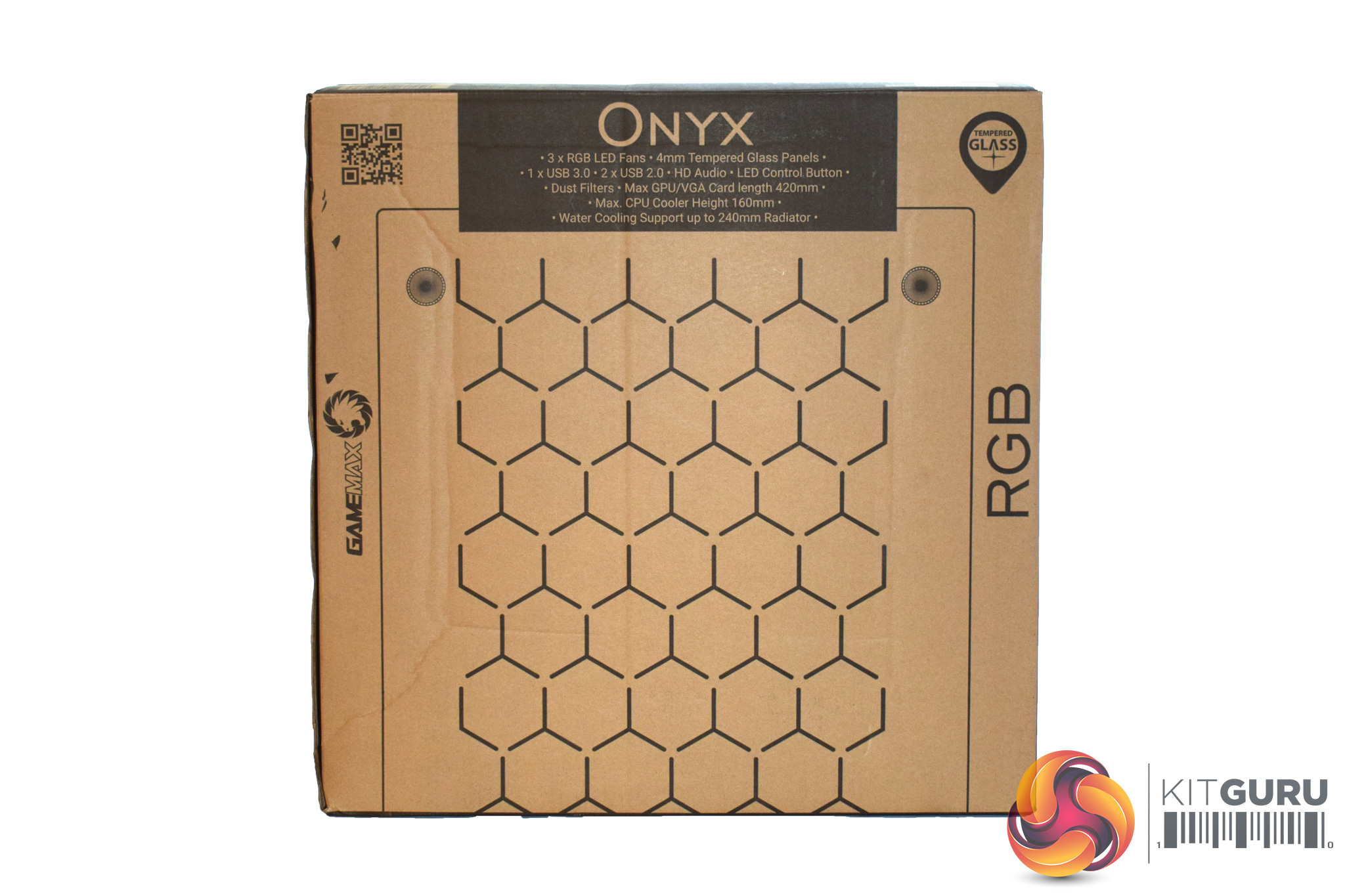
The Fierce PC Blackfire Hammerhead ships in the Game Max Onyx case box. The motherboard box is also included, filled with the necessary ‘documents & accessories'.
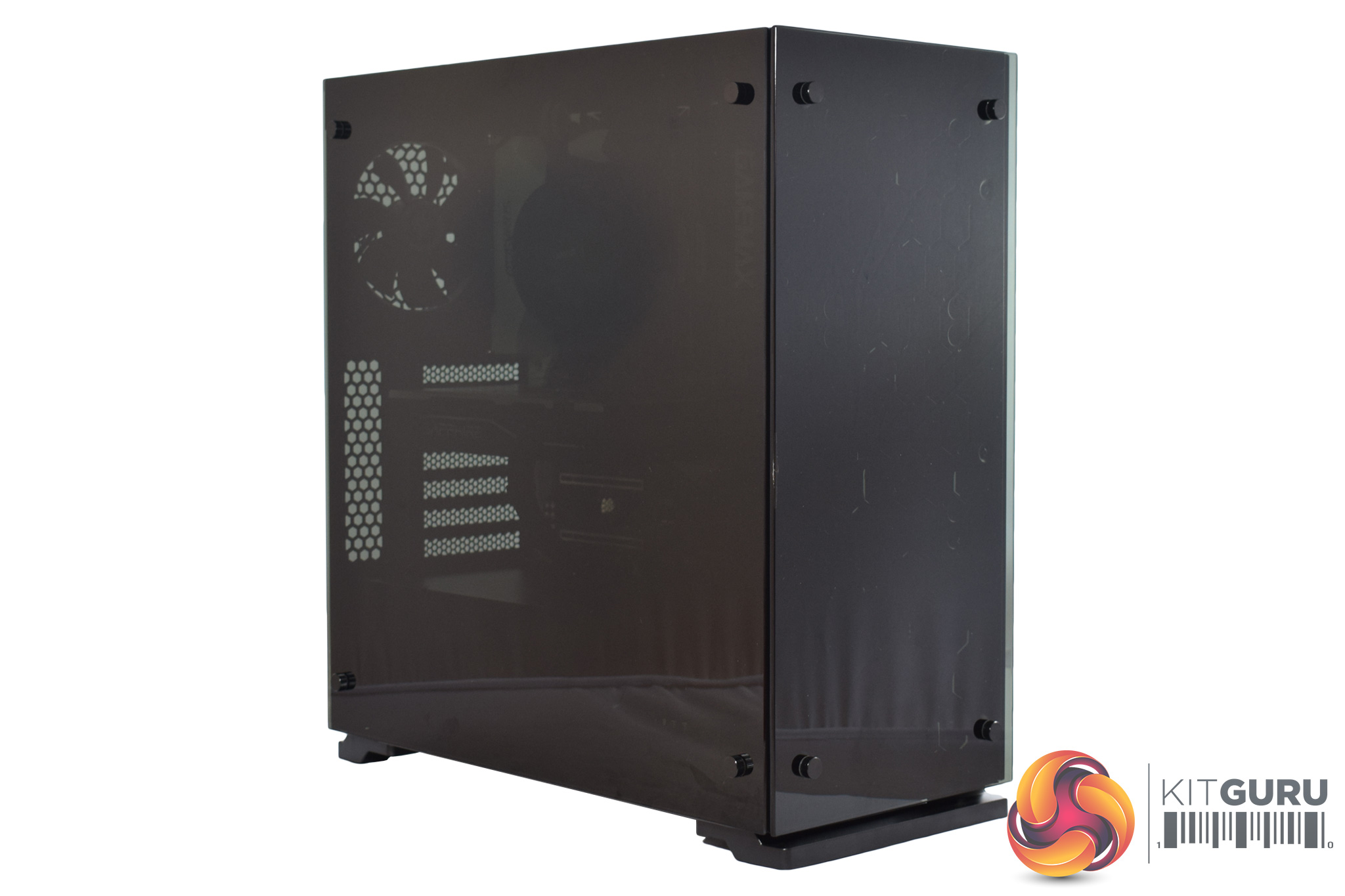
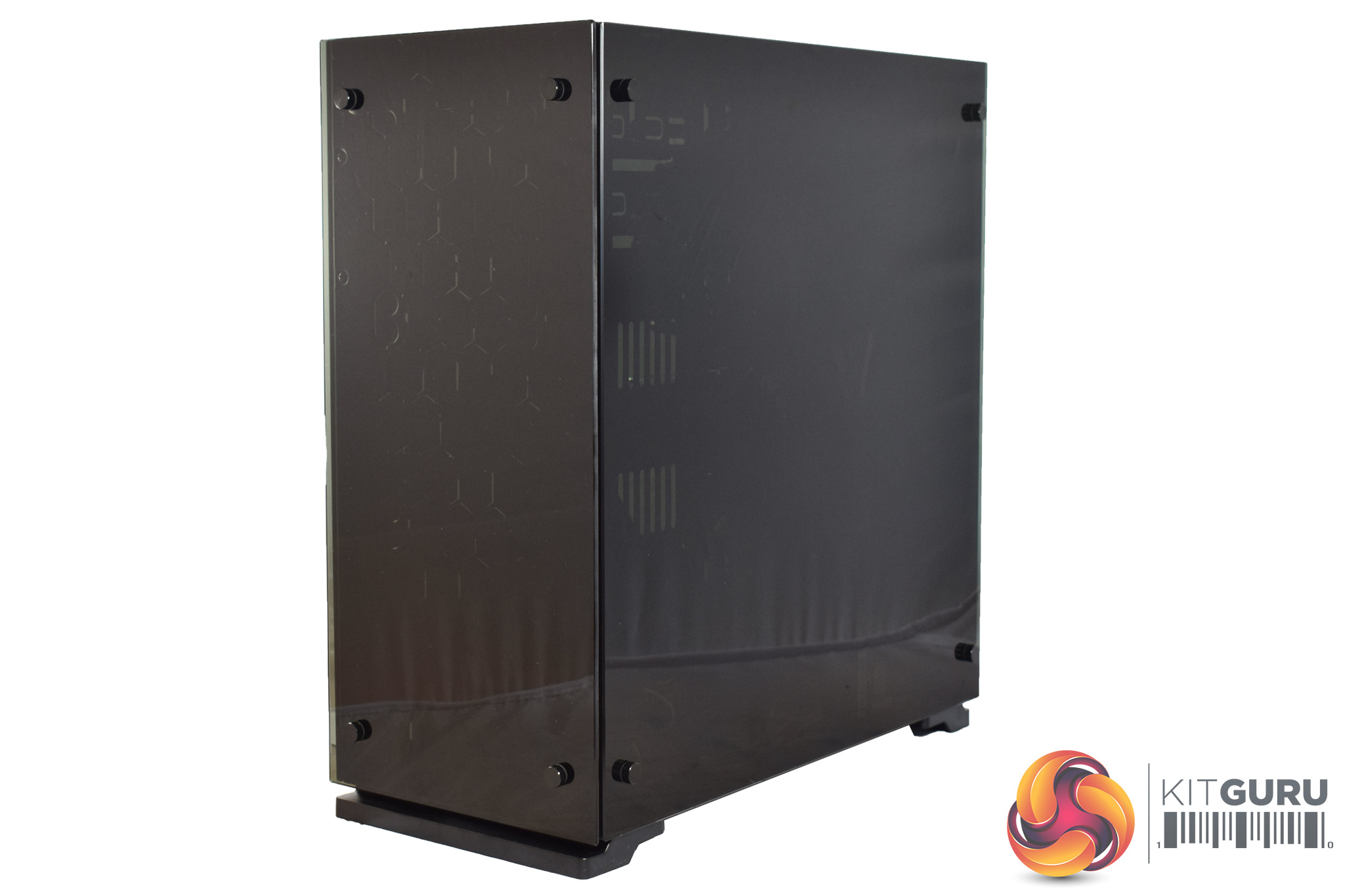
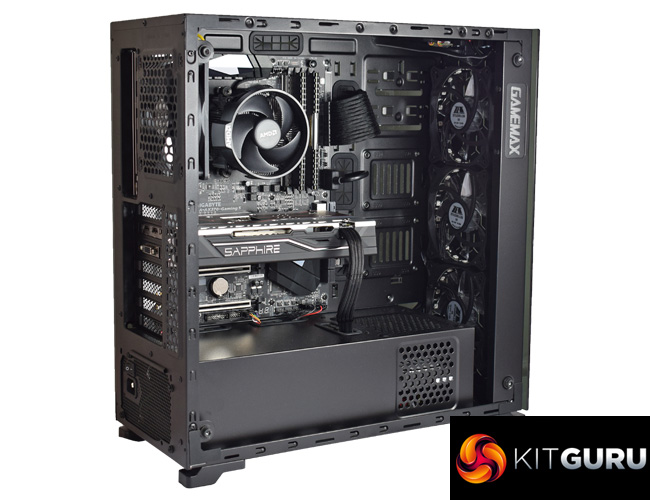
Getting our first look at the system, we must first dedicate our attention to the Game Max Onyx case, as it is definitely a looker. It features no less than three tempered glass panels in a way which draws comparisons with the Corsair 570X, but that is certainly not a bad thing. It is also worth noting that the glass is quite dark, so some system lighting will be required to get a good look at the internal components.
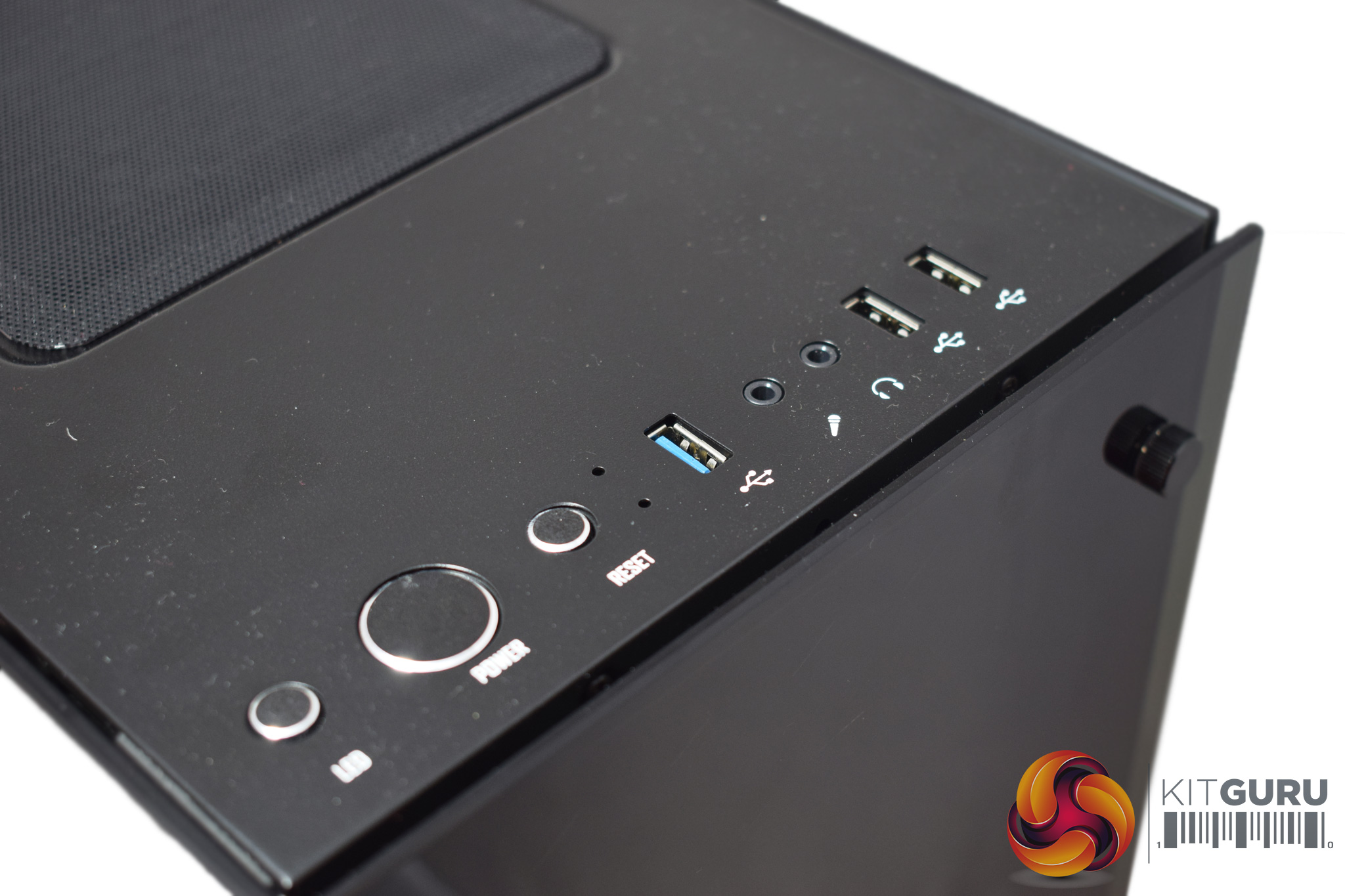
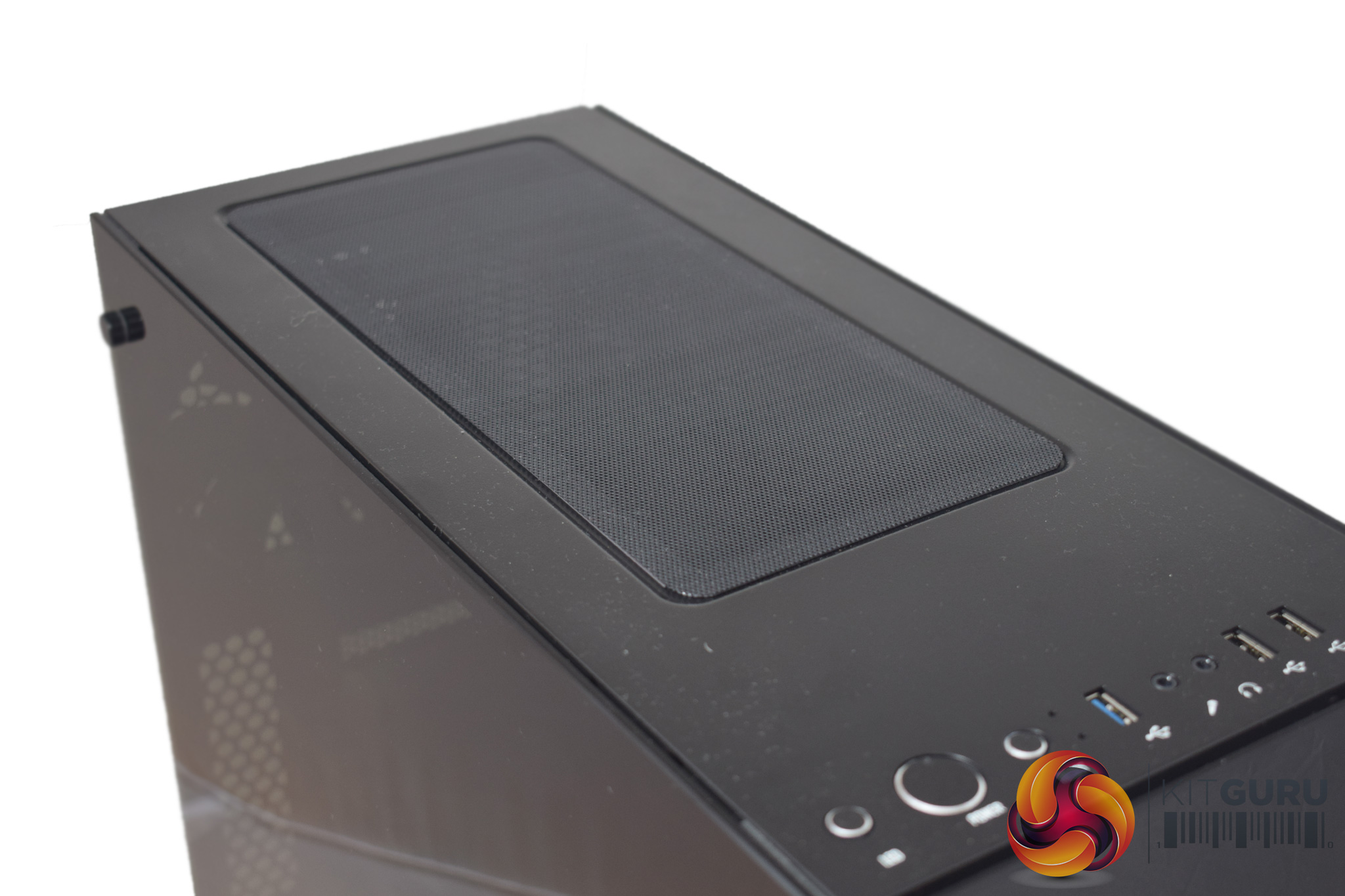
The case's front I/O is decent, with 1x USB 3.0 and 2x USB 2.0 ports. There is also an LED button (for controlling the RGB fans), a reset switch and headset jacks.
Before moving on, it is also good to see that a 240mm magnetic dust filter is included on the roof of the Onyx.
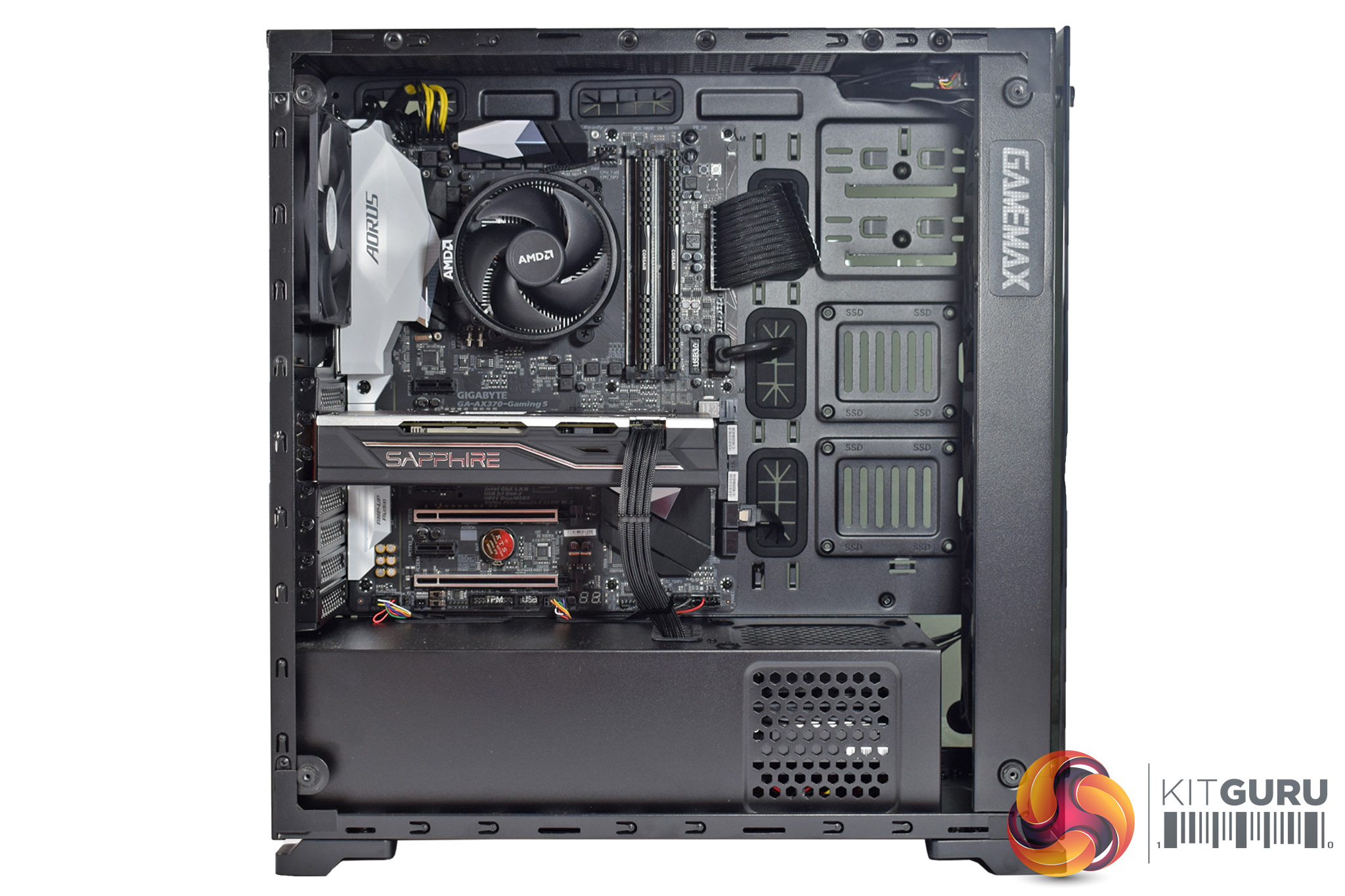
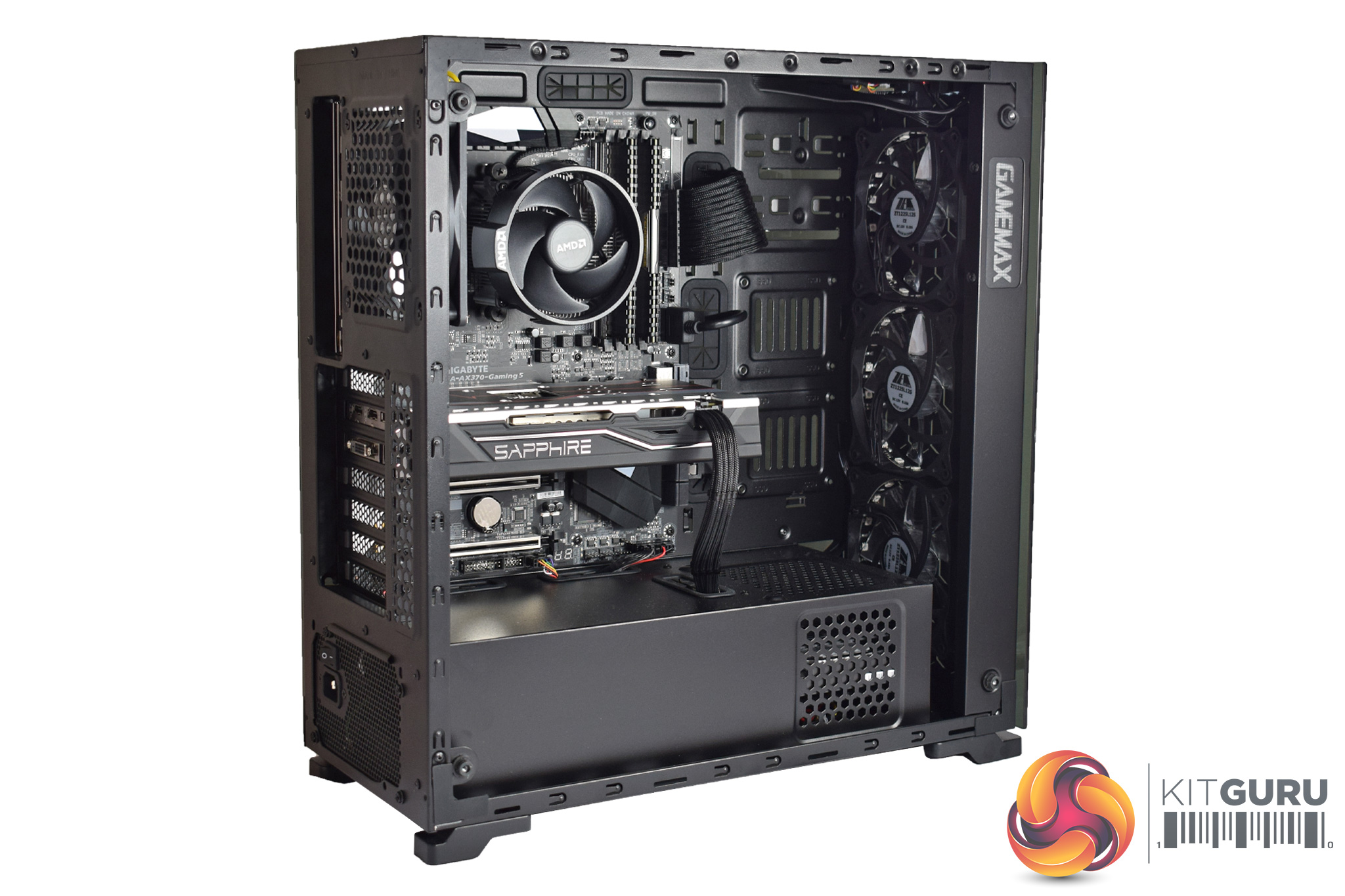
Taking off the glass reveals the innards of the system. It is all quite dark, with little colour across the components, and black cable extensions have been used as well – all of which adds up to create quite a stealthy PC. Cable management is excellent, too, with only the bare minimum of cabling on-show.
Regular readers will know I am not a fan of ketchup-and-mustard cables, and there is just a hint of that in the top left-hand corner as the EPS 8-pin power connector is unsleeved. However, I will not be too critical of this as it is only a very small amount of yellow, and you can't see it through the dark tempered glass panels anyway.
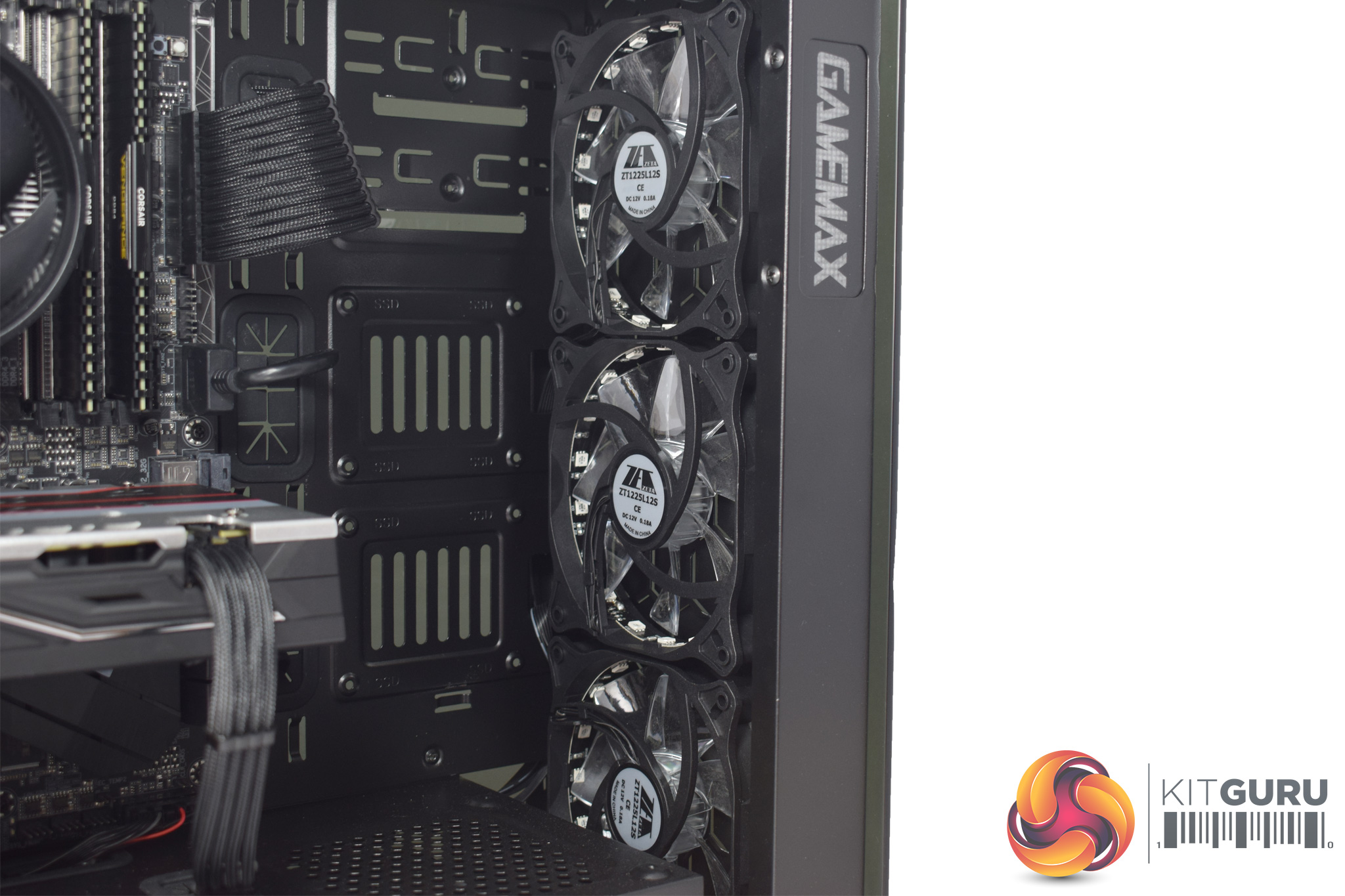
Starting with the cooling configuration, the Blackfire Hammerhead features 3x 120mm RGB fans at the front of the chassis, in-taking air. The fans' LEDs can be controlled via the case's front panel button.
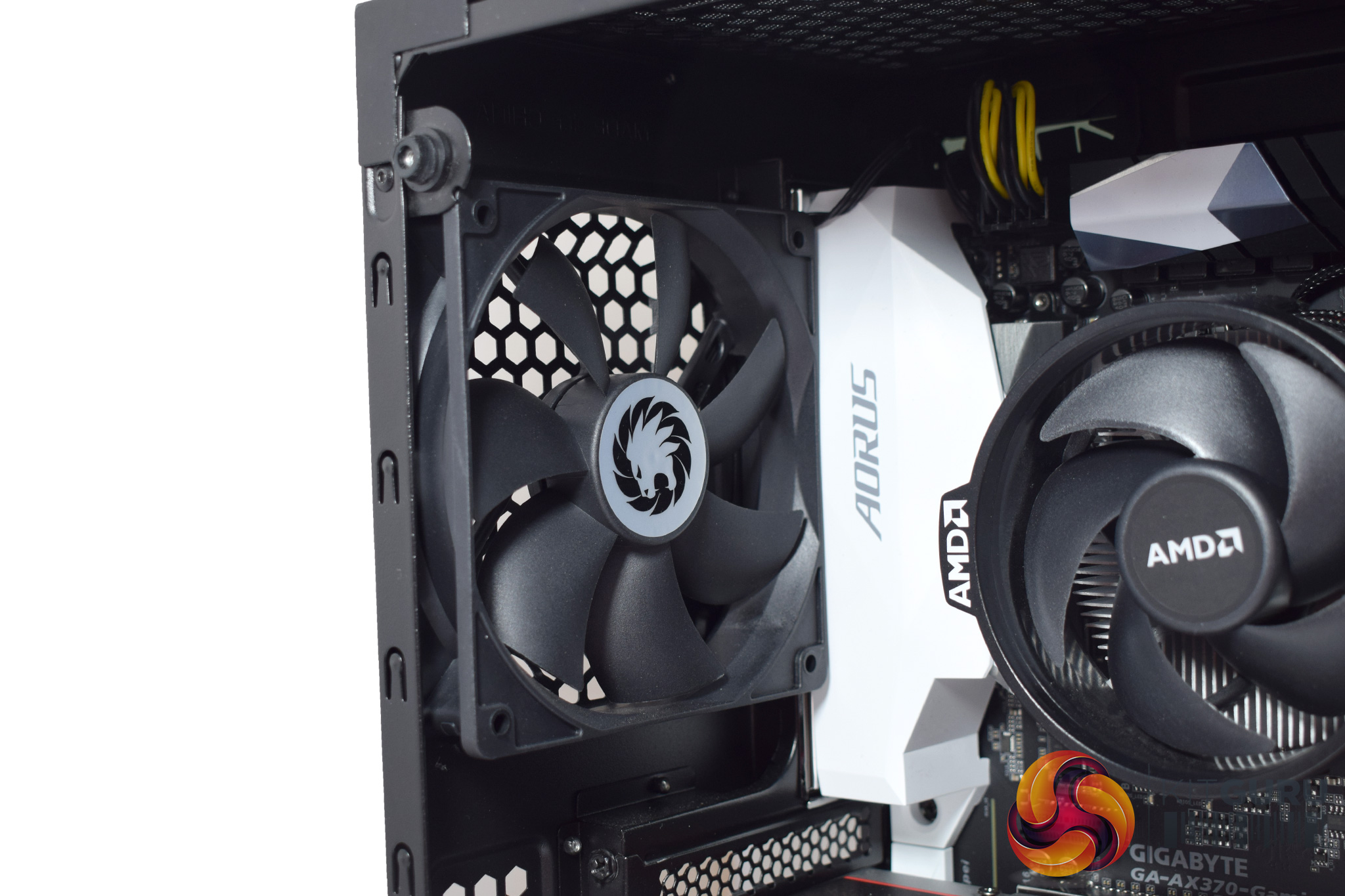
At the back of the case we find a single, plain black 120mm fan acting as an exhaust.
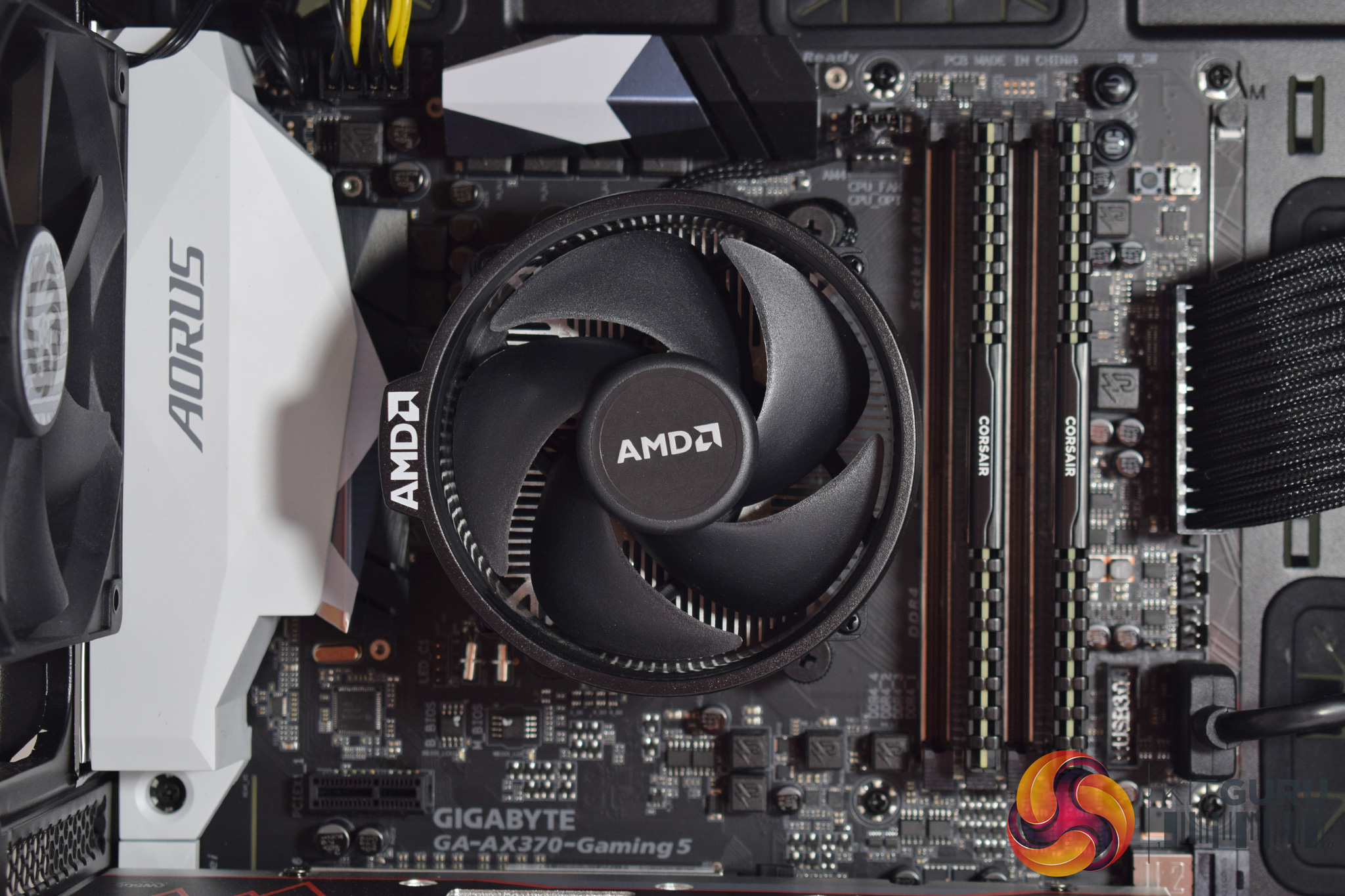
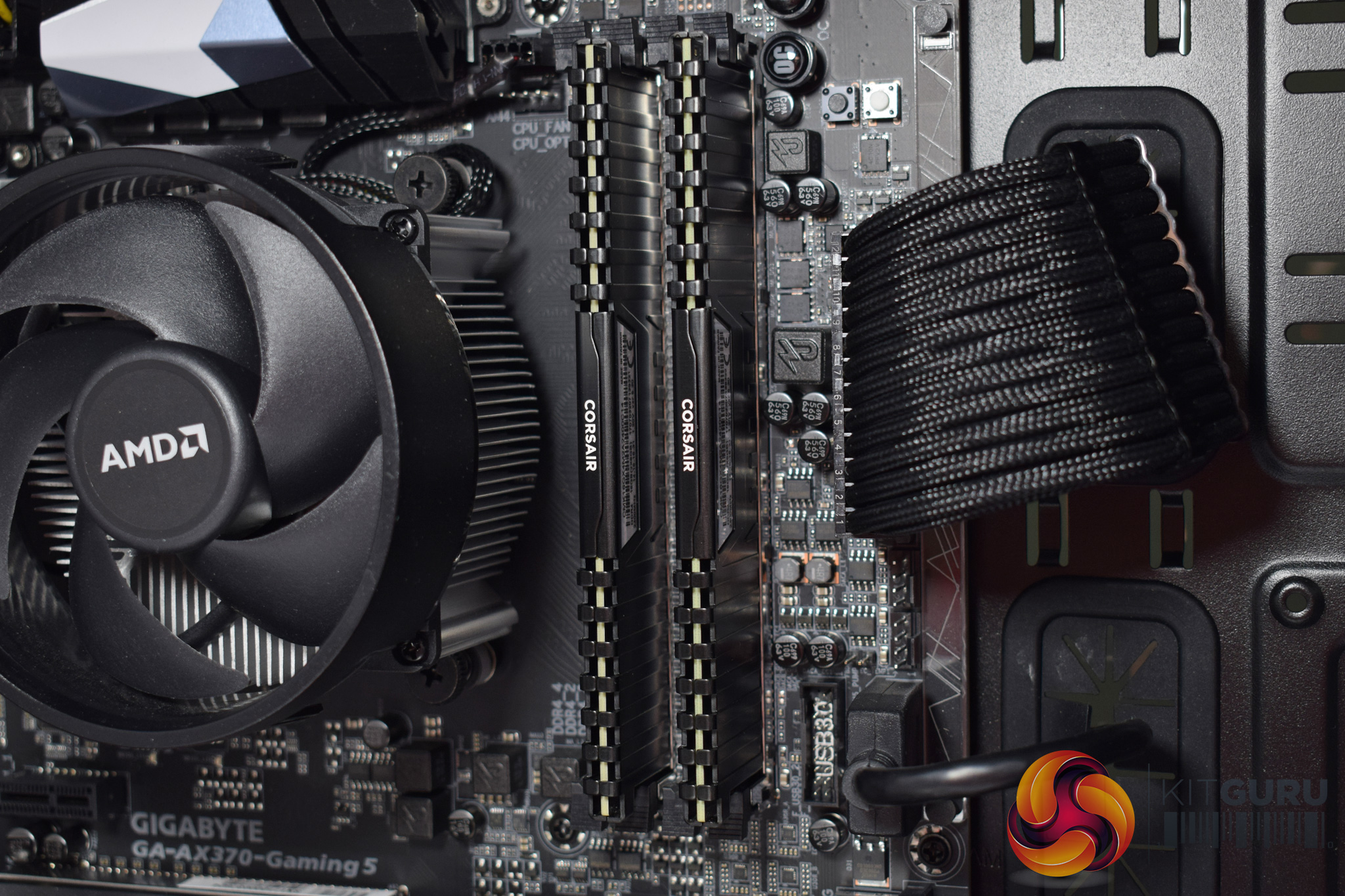
Also on the topic of cooling, it is interesting that Fierce PC include the stock Wraith Spire heatsink, which is obviously cooling the Ryzen 5 1500X. Considering the processor has only been given a modest overclock to 3.8GHz, it should be fine, but we will of course assess thermals and acoustics later in this review.
Next to the cooler we find 2x8GB of Corsair Vengeance LPX 2400MHz DDR4. Fierce PC told us that they tried a 3000MHz kit, which would've improved performance, but that caused instability – so they had to dial the speed down.
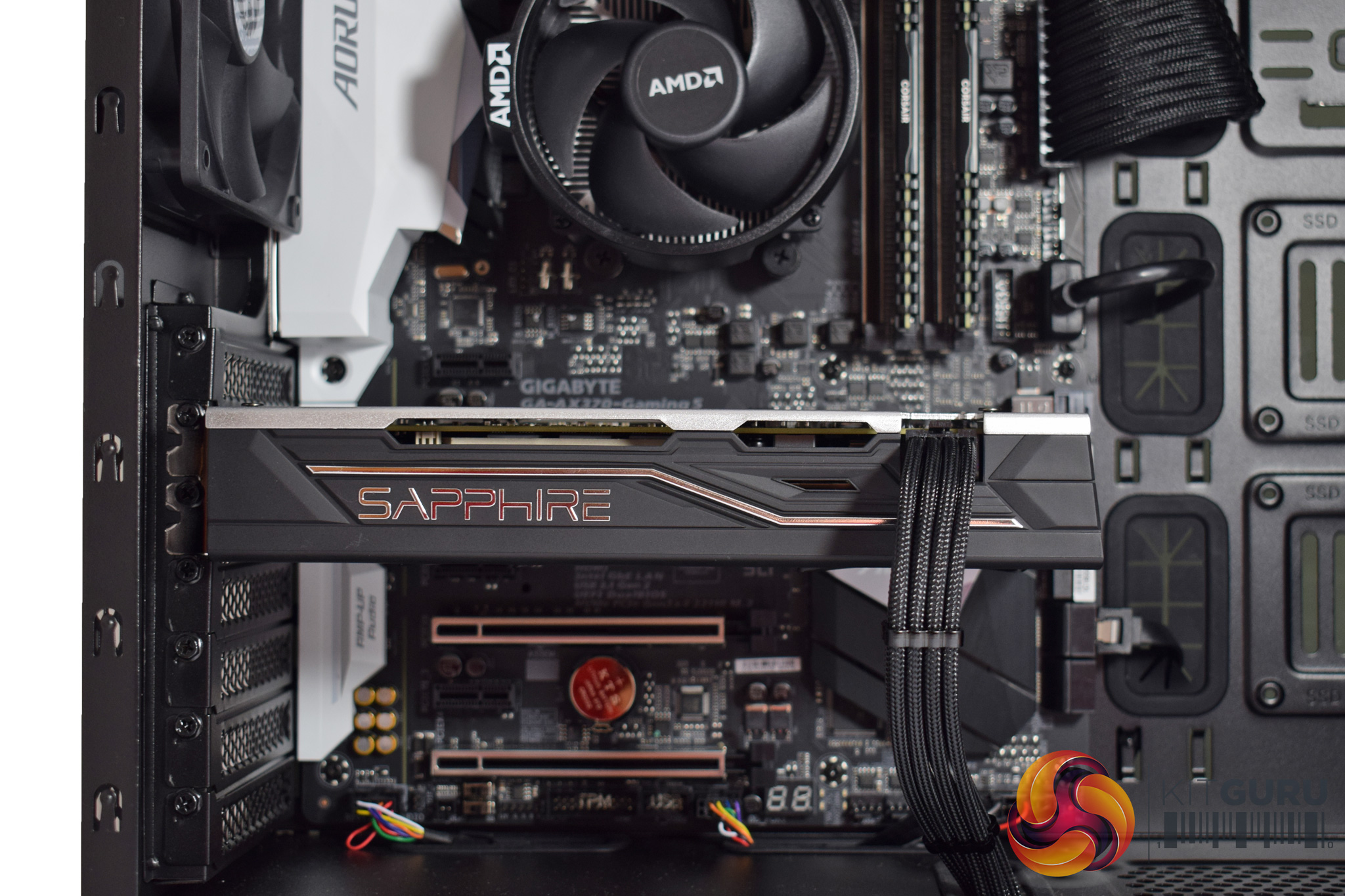
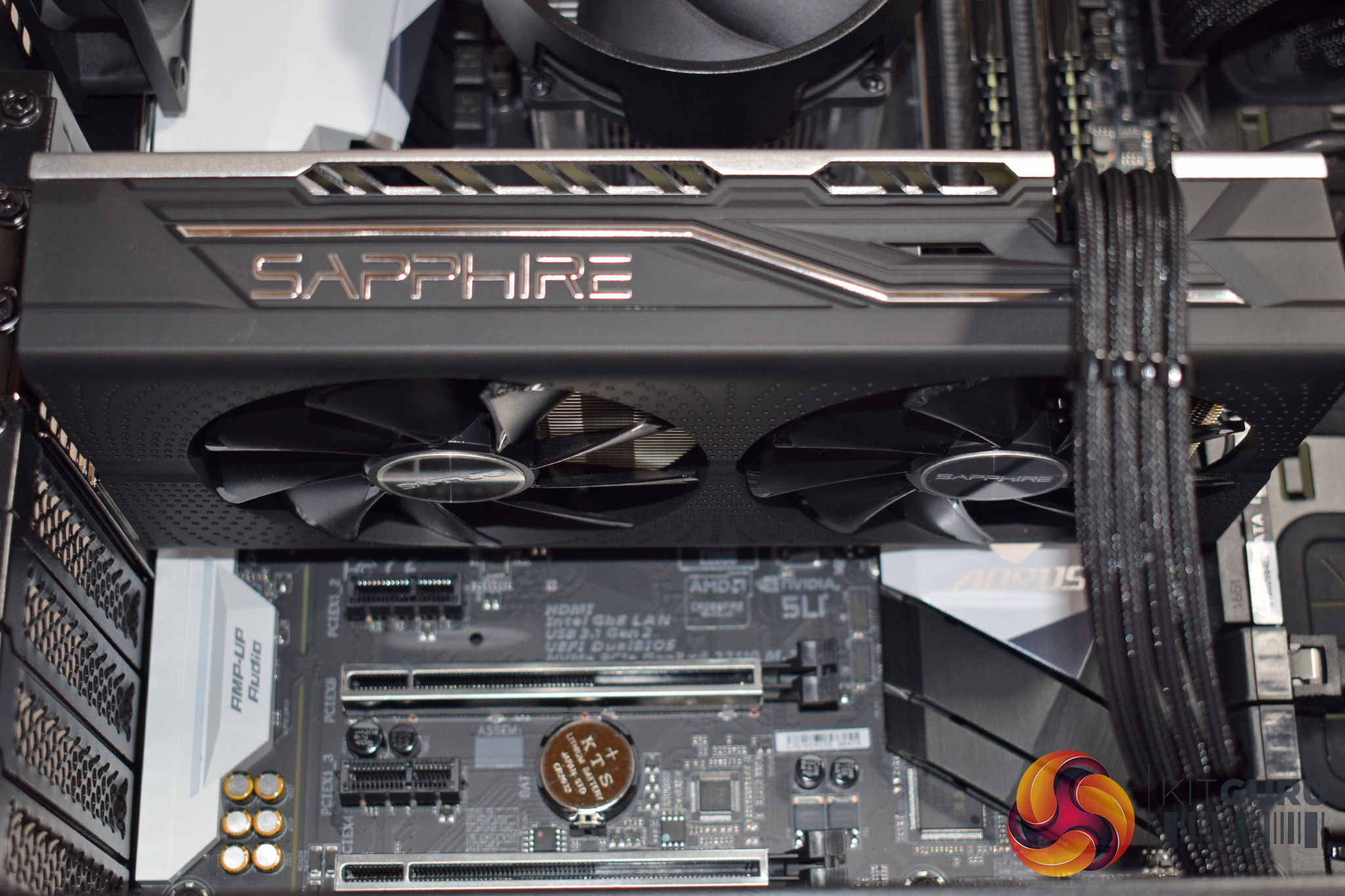
The graphics card is another point of interest as it is a brand-new RX 580. This particular model is from Sapphire's Pulse family, so it uses a dual-fan configuration and is relatively short.

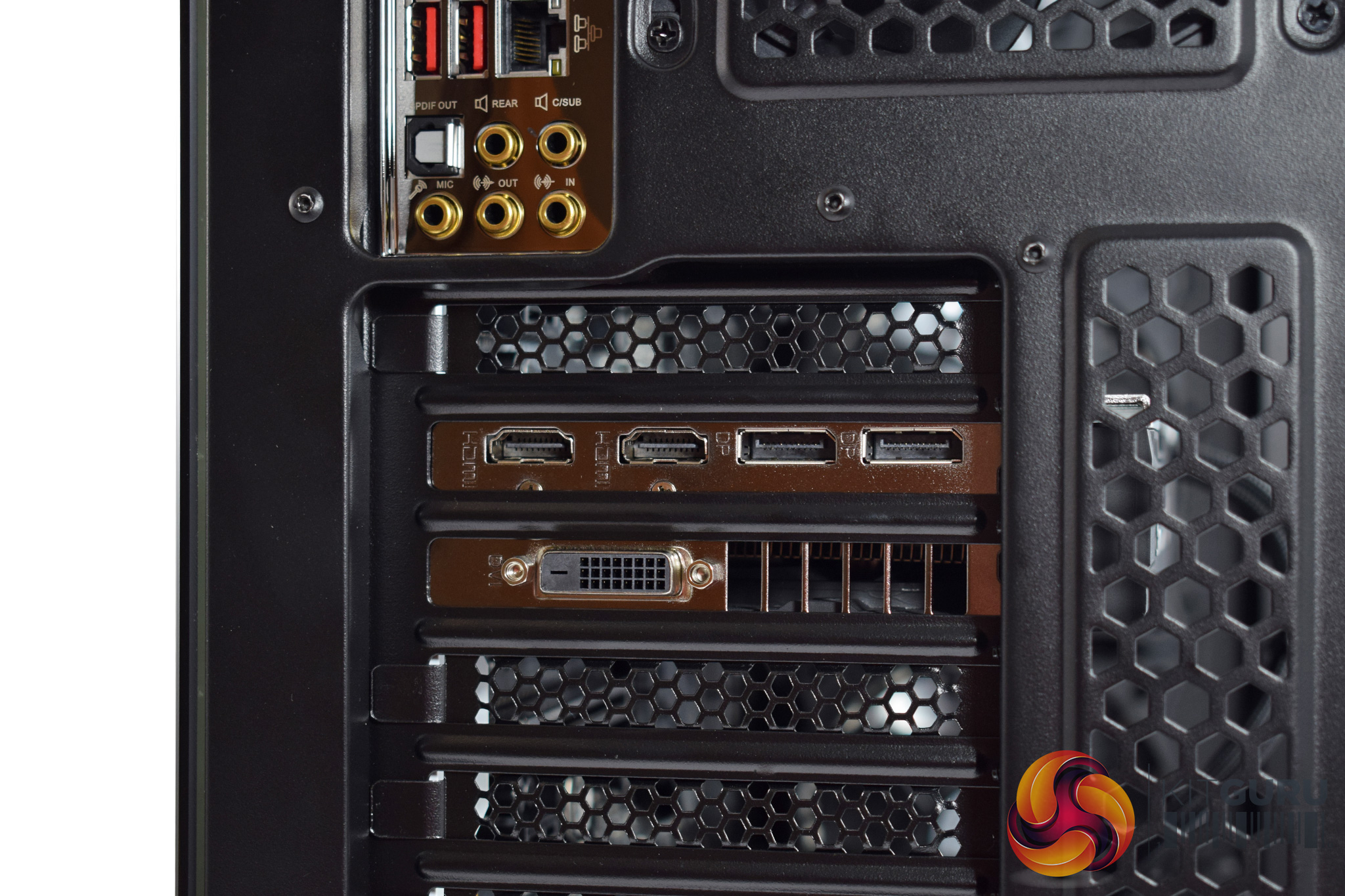
The Aorus AX370-Gaming 5 features the following rear ports: 1 x PS/2 keyboard/mouse port, 1 x HDMI port, 1 x USB Type-C™ port, with USB 3.1 Gen 2 support, 3 x USB 3.1 Gen 2 Type-A ports (red), 6 x USB 3.1 Gen 1 ports, 2 x RJ-45 ports, 1 x optical S/PDIF Out connector, 5 x audio jacks (Center/Subwoofer Speaker Out, Rear Speaker Out, Line In, Line Out, Mic In).
The RX 580 sports 2x DisplayPort, 2x HDMI and 1x DVI connectors.
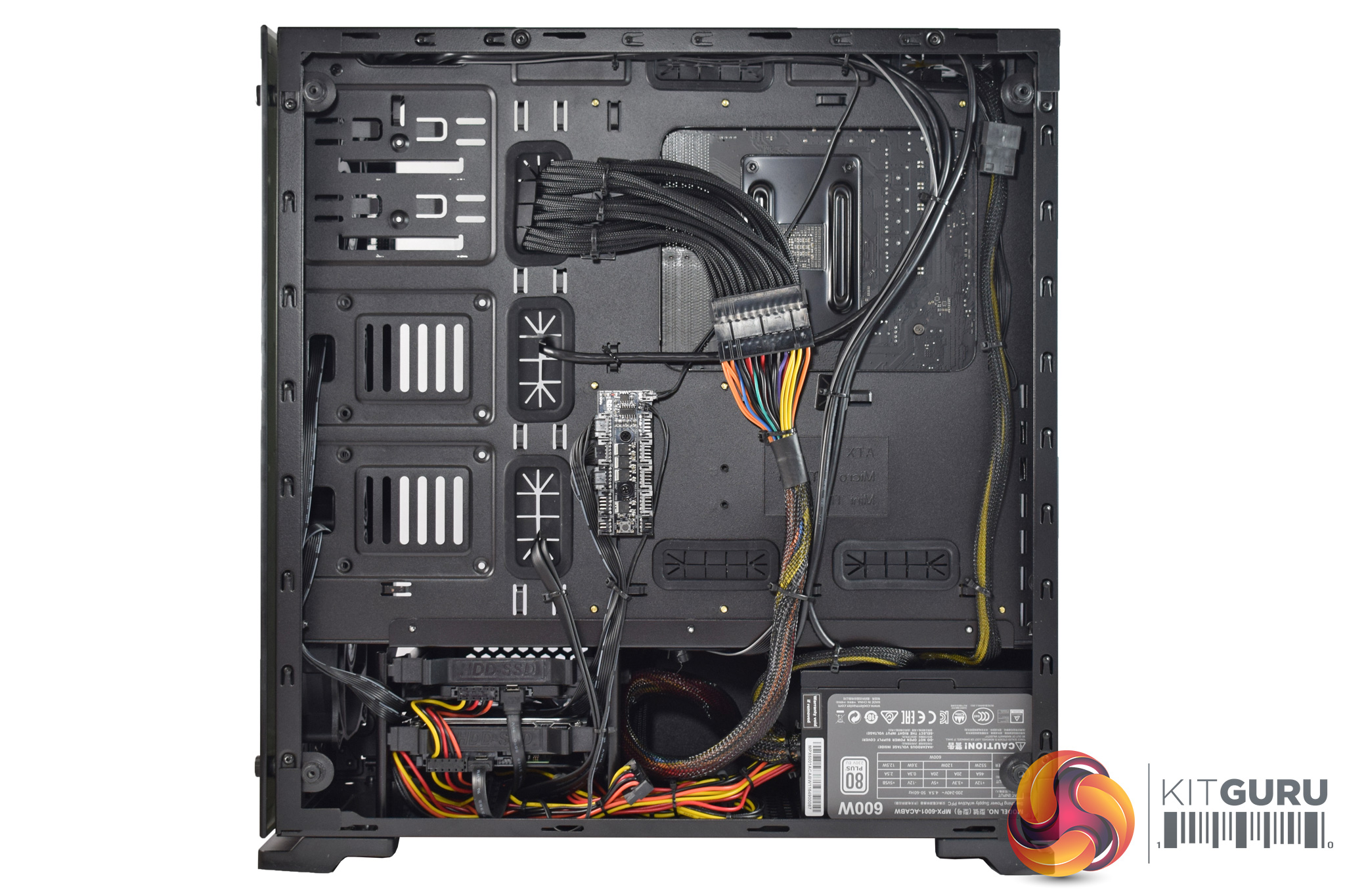
Looking behind the motherboard tray, cable management is also good here. The 24-pin cable extension does cover the CPU socket cut-out, so installing a 3rd-party cooler could be tricky if you want to upgrade down-the-line, but it is not a problem for the system as we see it now.
In the bottom left corner we find a 2-bay drive cage, and Fierce PC has populated this with a 500GB Samsung 850 EVO SSD, as well as a 2TB Seagate FireCuda solid stage hybrid drive (SSHD) for mass-storage.
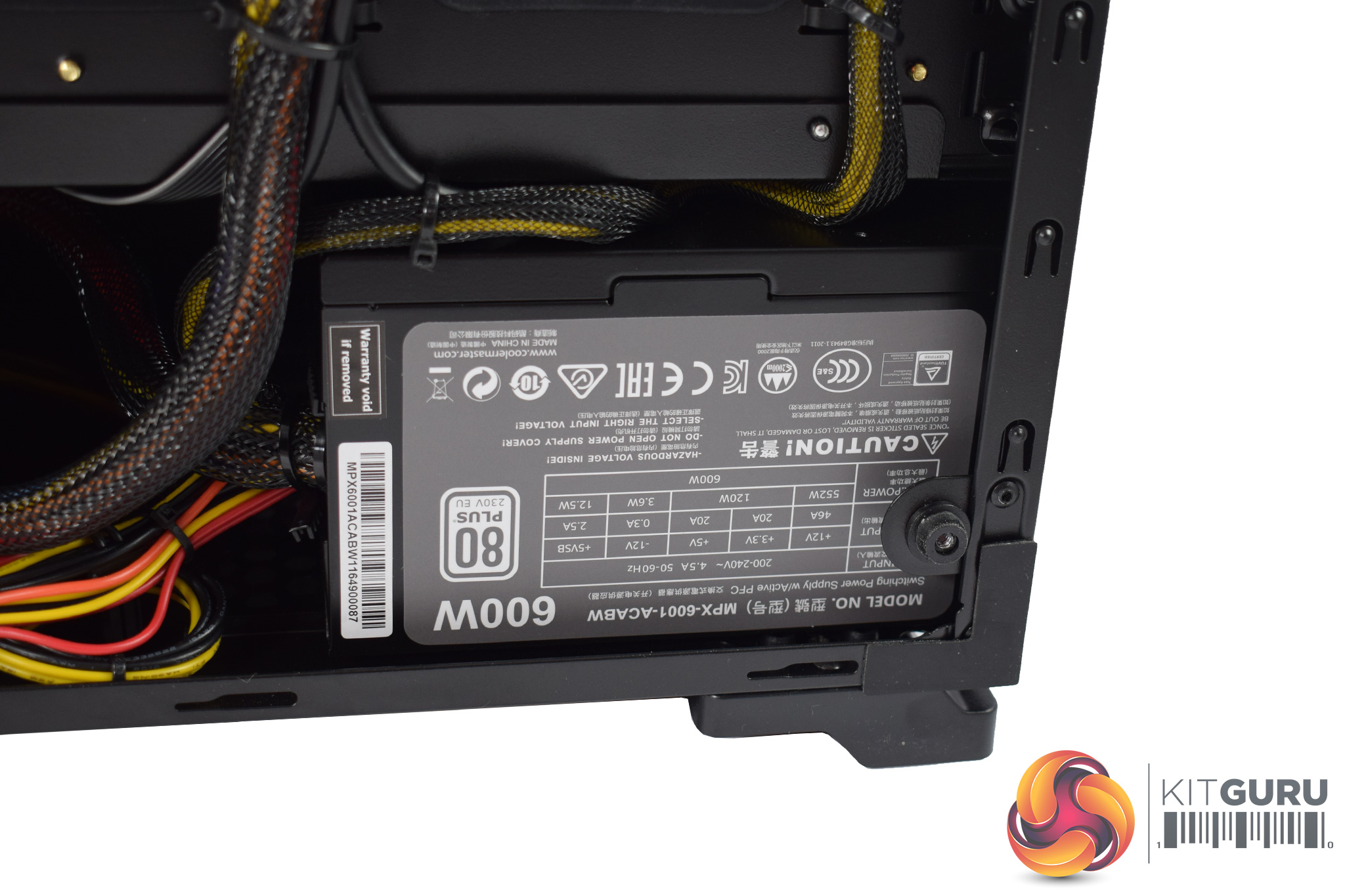
The power supply is also worth noting as it is the Cooler Master MasterWatt Lite 600W model, the same unit as used by Chillblast in their Fusion Hex system. What strikes me most about this unit is its 80+ White (or just 80+) efficiency rating, which definitely seems a bit ‘behind the times'. I wouldn't expect anything to go wrong with it, but we are used to 80+ Gold, Platinum and even Titanium models these days, so having the bare minimum 80+ White certification is definitely worth noting.
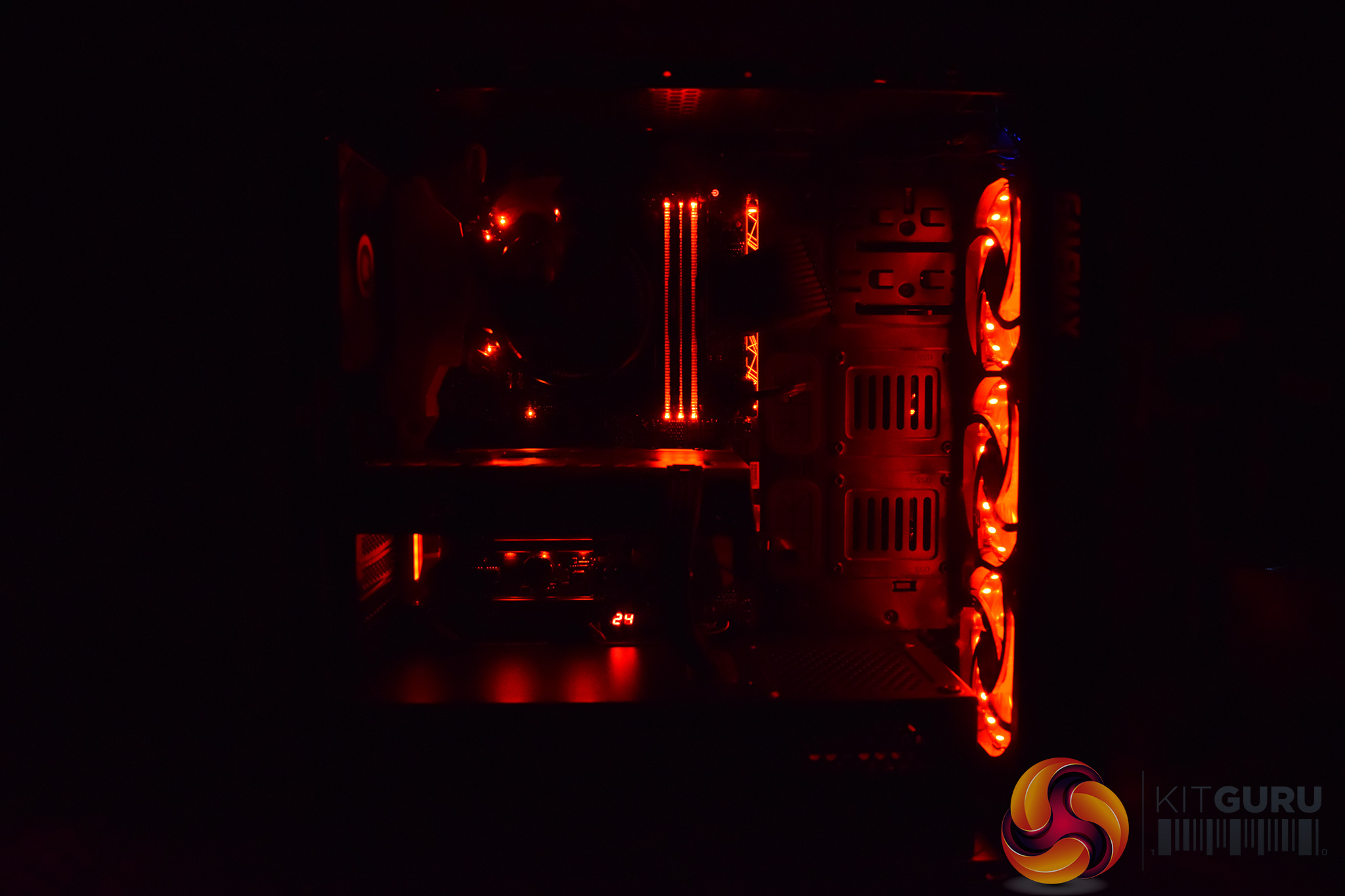
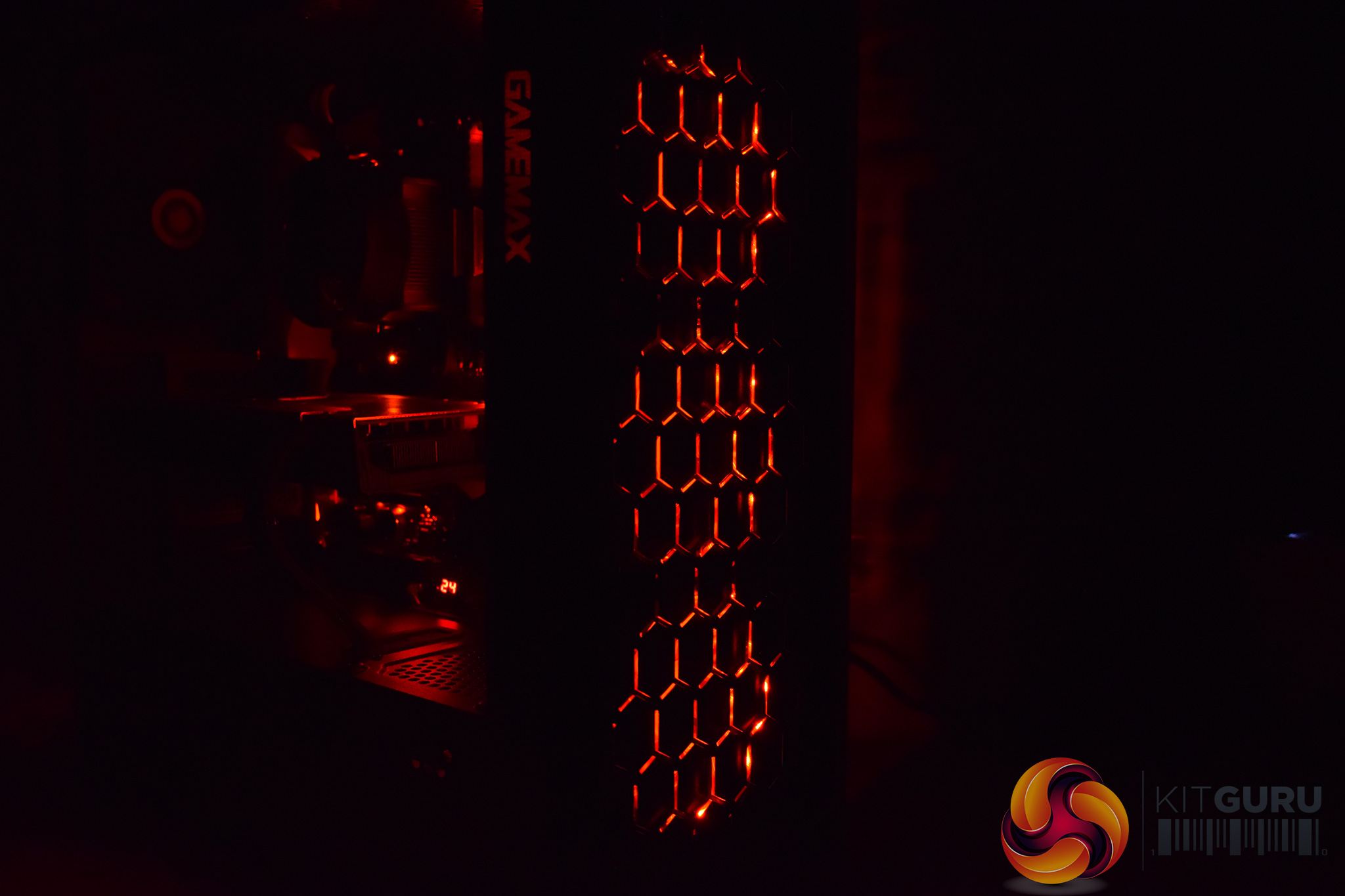
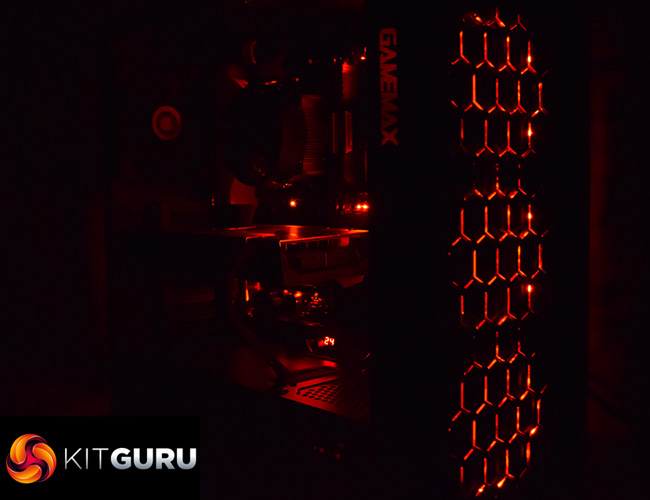
Lastly, it is worth looking at the system's lighting. While it is not as flashy as the Dragon Flair Inferno GR4, the RGB fans and motherboard LEDs have both been set to red, and it does look pretty good.
The front of the case also sports a cool-looking honeycomb mesh section which is illuminated by the 3 RGB fans, another feature of the case that works quite well.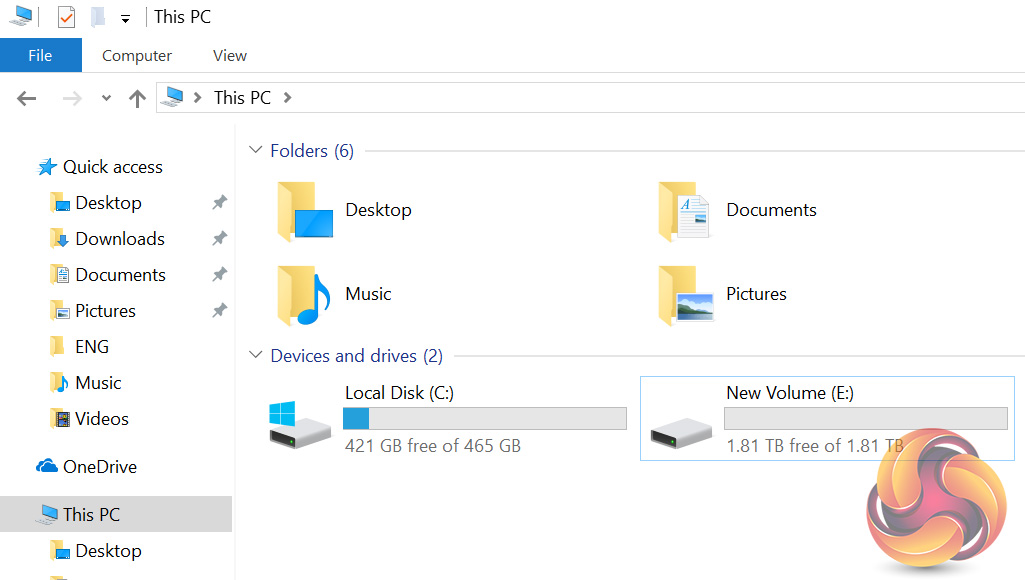
First of all, it is worth mentioning that the Blackfire Hammerhead ships with 421GB of free SSD space, while the SSHD has the full 1.81TB of free space.
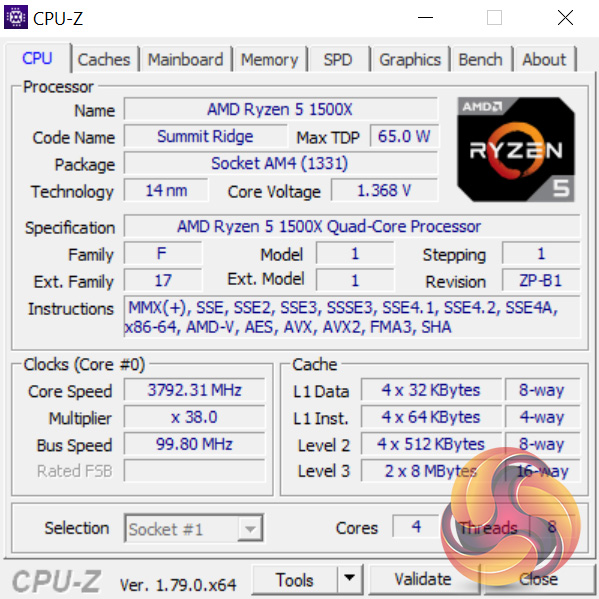
The Ryzen 5 1500X processor is a new quad-core chip that also supports SMT for a total of 8 threads. You can read out full review of it over HERE. Fierce PC has overclocked this particular chip to 3.8GHz using 1.35 vcore.
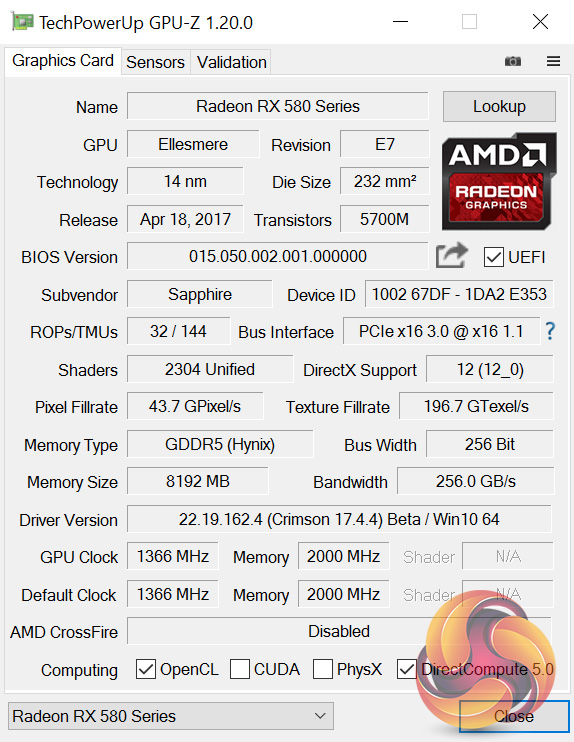
The Sapphire Pulse RX 580 is the 8GB model, and its core is also factory-overclocked to 1366MHz boost. We will have a stand-alone review of this card published soon.
Comparison systems
- Intel Core i7-6700HQ
- Nvidia GTX 960M
- 16GB Dual-Channel 1600MHz DDR3 RAM
- 128GB SSD + 1TB HDD
- Intel Bay Trail-M Celeron N2808 SoC
- Intel HD Graphics
- 4GB DDR3L RAM
- 64GB eMMc storage
- Intel Braswell N3050 SoC
- Intel HD Graphics
- 2GB DDR3L RAM
- 32GB eMMC storage
- Intel Core i3 i3-5010U
- Intel HD Graphics 5500
- 8GB Kingston SODIMM DDR3 1600MHz (1 x 8GB)
- 240GB Kingston V300 SSD
- Intel Core™ m5-6Y57
- Intel HD Graphics 515
- 8GB LPDDR3 1866MHz Memory
- 256GB Solid State Drive M2 2280 PCIe
- Intel Core i5-6500
- Asus Turbo GTX 960
- 8GB Corsair Vengeance LPX 2400MHz DDR4 RAM
- 500GB Samsung 850 EVO SSD
- Intel Core i7-6820HK
- Nvidia GTX 980 (desktop)
- 32GB DDR4 2400MHz RAM
- 2x 256GB Samsung SM951 PCIe SSDs in RAID0
- AMD FX-8320
- AMD RX-480
- 16GB DDR3 2133MHz RAM
- 240GB Adata Premier SP550
PCSpecialist Defiance III 17.3
- Intel i7-6700HQ
- Nvidia GTX 1060
- 16GB HyperX DDR4 2133MHz RAM
- 512GB SanDisk X400 M.2 SATA SSD
- Intel i7-6700HQ
- Nvidia GTX 950
- 16GB Crucial DDR4 2133MHz RAM
- 512GB Samsung Pro M.2 SSD
- Intel i7-7500U
- Intel HD Graphics 620
- 16GB G.Skill DDR4 2133MHz RAM
- 256GB Toshiba OCZ RD400 M.2 SSD
- Intel i7-6700K
- Nvidia GTX 1070
- 16GB Corsair Vengeance 3000MHz DDR4 RAM
- 500GB Samsung 750 EVO SSD
- Intel i5-6402P
- Nvidia GTX 1060
- 16GB Corsair Vengeance LED 3000MHz DDR4 RAM
- 256GB Intel 600p M.2 SSD
- Intel i5-6200U
- Intel HD Graphics 520
- 16GB G.Skill Ripjaws 1600MHz DDR3 RAM
- 256GB Toshiba OCZ RD400 M.2 SSD
- Intel i5-6600K
- Nvidia GTX 1070
- 16GB Corsair Vengeance 3000MHz DDR4 RAM
- 256GB Intel 600p M.2 SSD
- Intel i5-7600K
- Nvidia GTX 1060
- 16GB HyperX 2133MHz DDR4 RAM
- 250GB SK Hynix SL308 SSD
- Intel i7-7500U
- Intel HD Graphics 620
- 8GB 1866MHz DDR3L RAM
- 256GB PCIe SSD
- Intel i5-7600K
- Nvidia GTX 1060
- 16GB Corsair Vengeance 3000MHz DDR4 RAM
- 250GB WD Blue M.2 SSD
- Intel i5-7200U
- Intel HD Graphics 620
- 8GB 2133MHz DDR3L RAM
- 512GB SATA M.2 SSD
- Ryzen 7 1700X
- Nvidia GTX 1080
- 16GB 2933MHz DDR4 RAM
- 256GB Intel 600p M.2 SSD
- Ryzen 5 1600
- Nvidia GTX 1070
- 16GB 2400MHz DDR4 RAM
- 250GB Samsung 960 EVO M.2 SSD
- Intel i7-7700K
- Nvidia GTX 1080
- 16GB 3200MHz DDR4 RAM
- 500GB Samsung 960 EVO M.2 SSD
Test software
- SiSoft Sandra
- Cinebench R15
- Handbrake
- CrystalDiskMark
- ATTO Disk Benchmark
- 3DMark 11
- 3DMark
- VRMark
- Prime 95 (version 26.6)
- CPUID HWMonitor
- AIDA64 Engineer
- Fraps
Test games
- Rise of the Tomb Raider
- Ashes of the Singularity
- Doom (2016)
- Deus Ex: Mankind Divided
- Tom Clancy’s Ghost Recon: Wildlands
Today we are testing the Blackfire Hammerhead at 1080p, 1440p and 2160p (Ultra HD 4K). All tests were conducted using the Radeon ReLive 17.4.4 driver, the latest at the time of writing.SiSoftware Sandra (the System ANalyser, Diagnostic and Reporting Assistant) is an information & diagnostic utility. It should provide most of the information (including undocumented) you need to know about your hardware, software and other devices whether hardware or software.
Sandra is a (girls’) name of Greek origin that means “defender”, “helper of mankind”. We think that’s quite fitting.
It works along the lines of other Windows utilities, however it tries to go beyond them and show you more of what’s really going on. Giving the user the ability to draw comparisons at both a high and low-level. You can get information about the CPU, chipset, video adapter, ports, printers, sound card, memory, network, Windows internals, AGP, PCI, PCI-X, PCIe (PCI Express), database, USB, USB2, 1394/Firewire, etc.
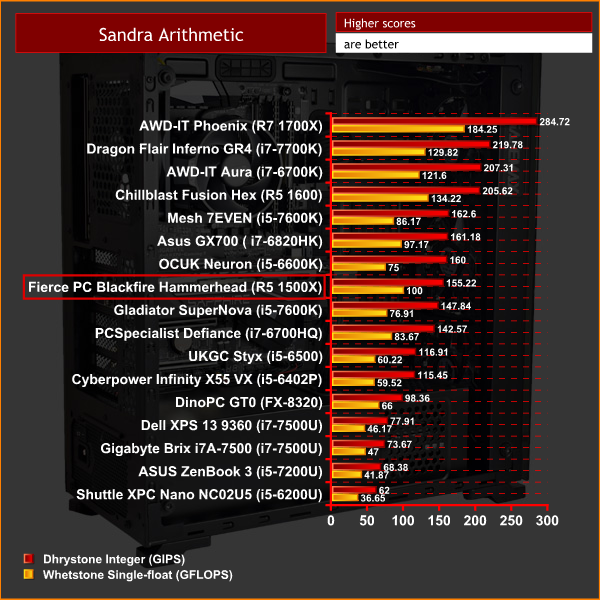
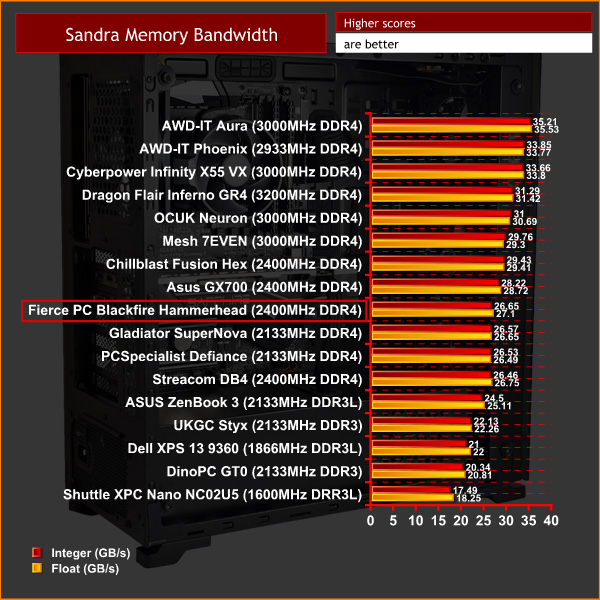
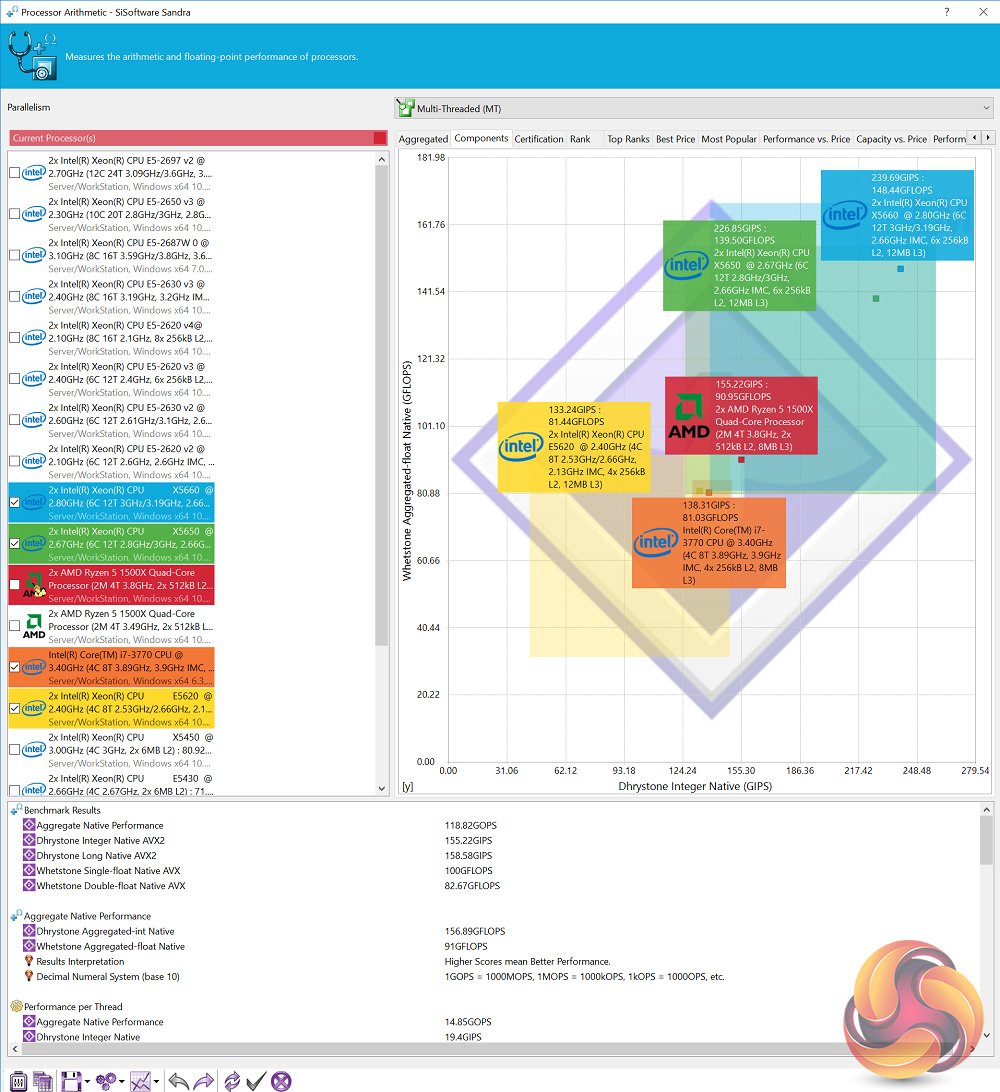
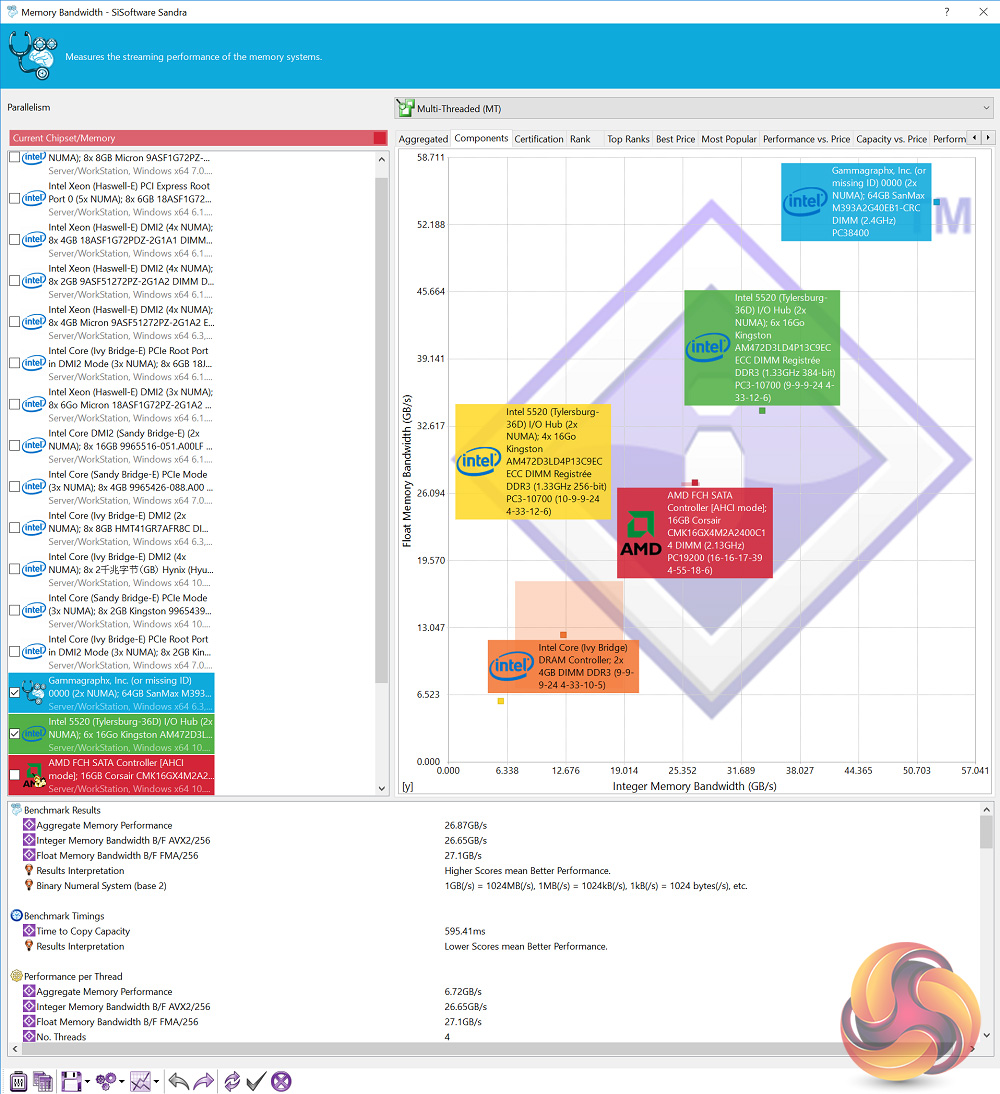
It's a decent start for the Blackfire Hammerhead here. Both results may appear quite ‘middling', but given the components used and the cost of the system, I think the performance is as expected.CINEBENCH R15 is a cross-platform testing suite that measures hardware performance and is the de facto standard benchmarking tool for leading companies and trade journals for conducting real-world hardware performance tests. With the new Release 15, systems with up to 256 threads can be tested.
CINEBENCH is available for both Windows and OS X and is used by almost all hardware manufacturers and trade journals for comparing CPUs and graphics cards.
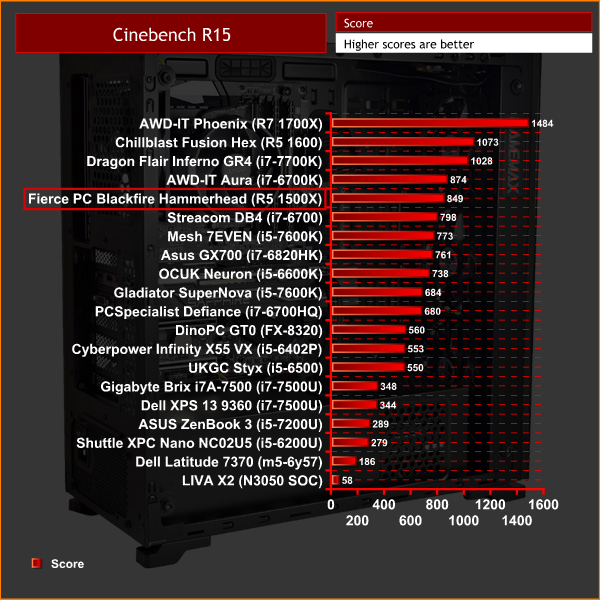
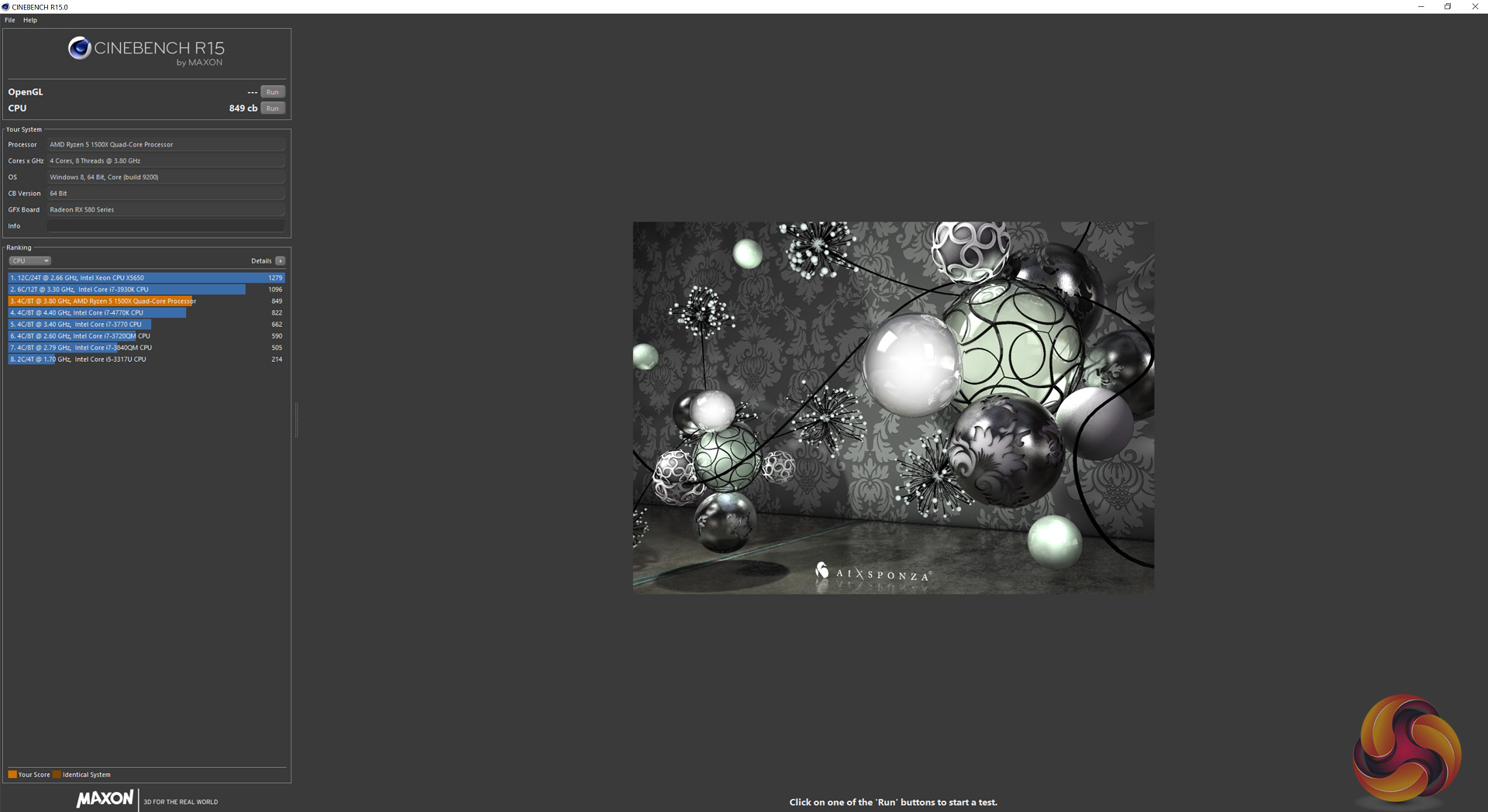
Cinebench R15 puts the R5 1500X processor just behind Intel's i7-6700K chip. Considering systems using the i7-6700K or now i7-7700K retail for significantly more than the Blackfire Hammerhead, this is definitely a good result.HandBrake is a tool for converting video from nearly any format to a selection of modern, widely supported codecs.
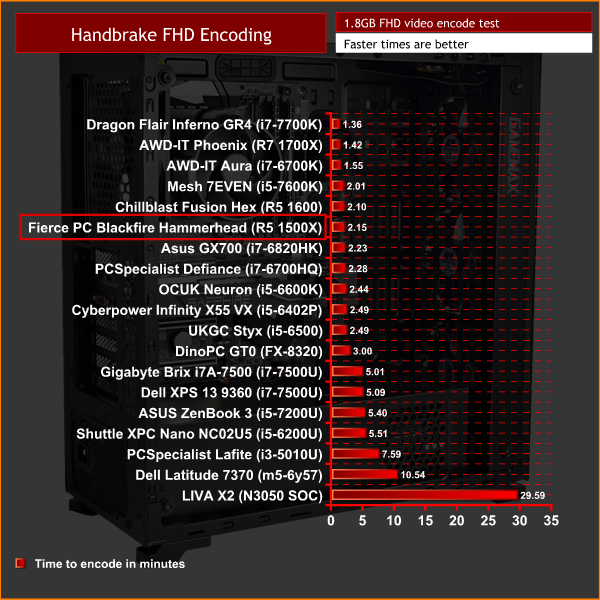
It is a similar story here – the four cores, eight threads of the 1500X deliver solid performance in Handbrake. It is not class-leading, but we wouldn't expect that considering the price of this system.Here we test the Inferno’s storage performance, using CrystalDiskMark 5.1.1 and ATTO Disk Benchmark 2.47.
SSD Performance
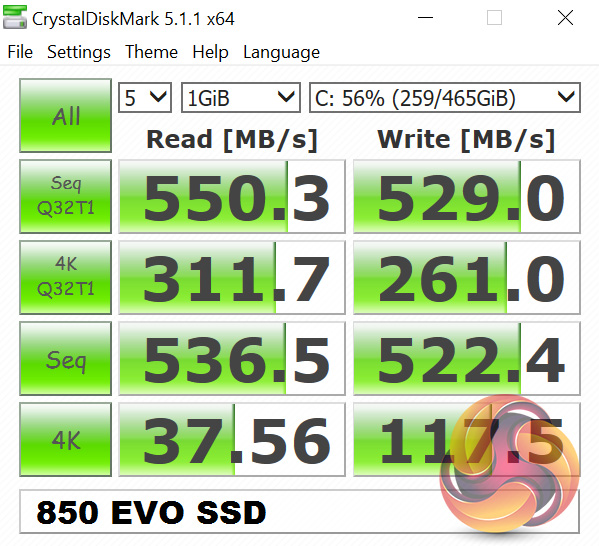

The Samsung 850 EVO SSD is a drive that I am sure many of our readers use at home; it delivers excellent performance for a 2.5-in SATA SSD.
SSHD Performance
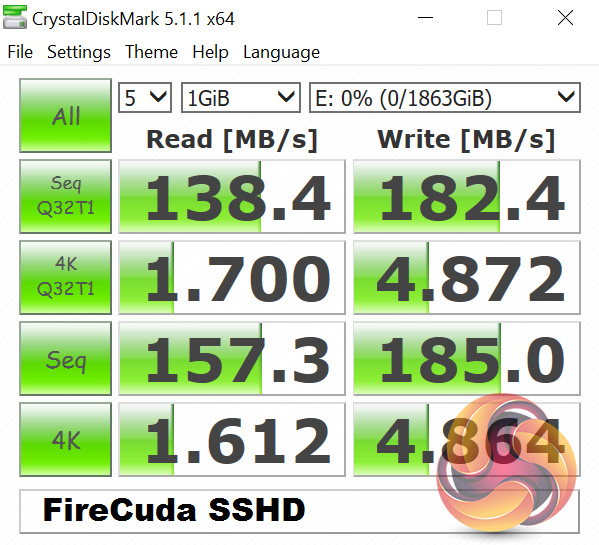
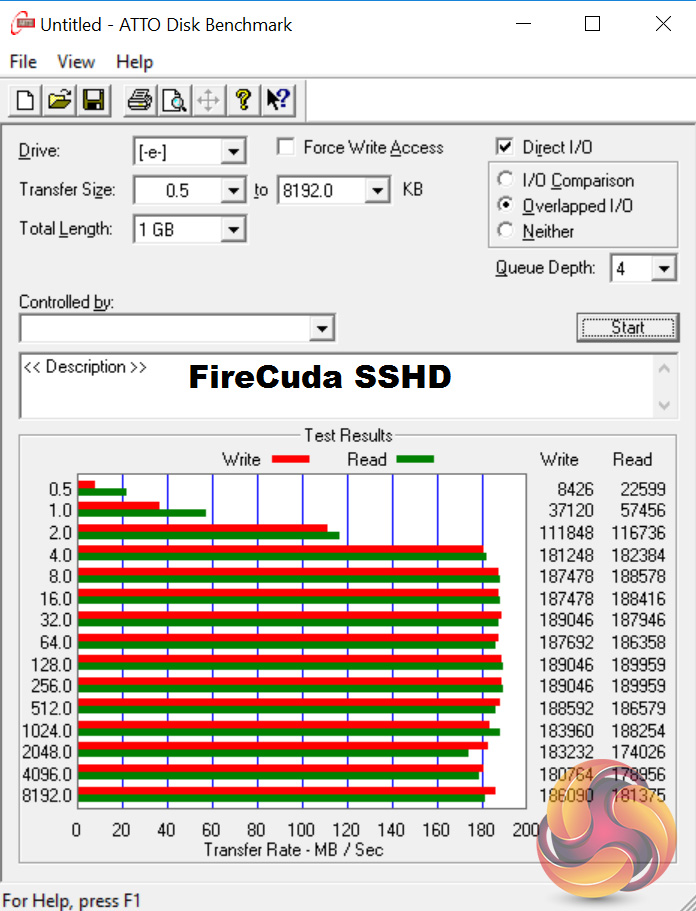
The Seagate FireCuda SSHD may not perform so well in our synthetic tests, but considering it uses an 8GB solid state cache, it should help in real-world scenarios – such as giving games slightly faster boot times. In any case, the 2TB capacity is welcome.To test the USB 3.0 ports on the Blackfire Hammerhead, I plugged in an OCZ Trion 150 SSD via a SATA-to-USB 3.0 5Gbps adapter, which uses the ASMedia ASM1053 controller. We reviewed the SSD HERE, finding it delivers good speed at a budget price.
Most importantly, it is capable of saturating the USB 3.0 bus, allowing us to test the speeds the USB 3.0 ports deliver. To test this, I ran both CrystalDiskMark and ATTO Disk Benchmark on the Trion 150 drive.

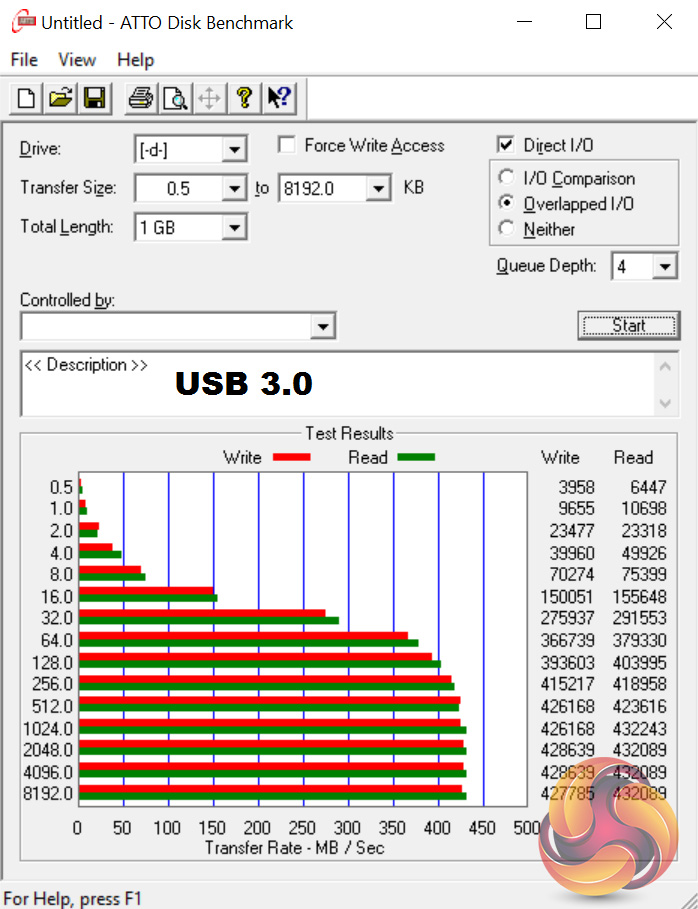
As expected, speeds of around 400 MB/s indicate no issues with the USB 3.0 ports.3DMark 11 is designed for testing DirectX 11 hardware running on Windows 7 and Windows Vista. The benchmark includes six all new benchmark tests that make extensive use of all the new features in DirectX 11 including tessellation, compute shaders and multi-threading.
After running the tests 3DMark gives your system a score with larger numbers indicating better performance. Trusted by gamers worldwide to give accurate and unbiased results, 3DMark 11 is the best way to test DirectX 11 under game-like loads.
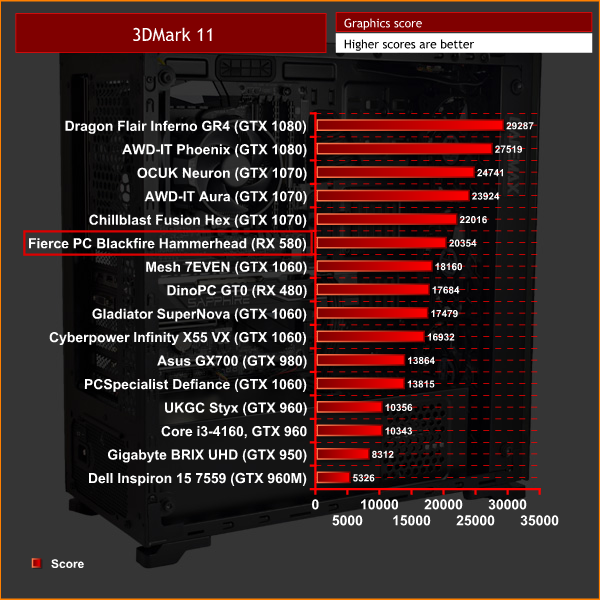
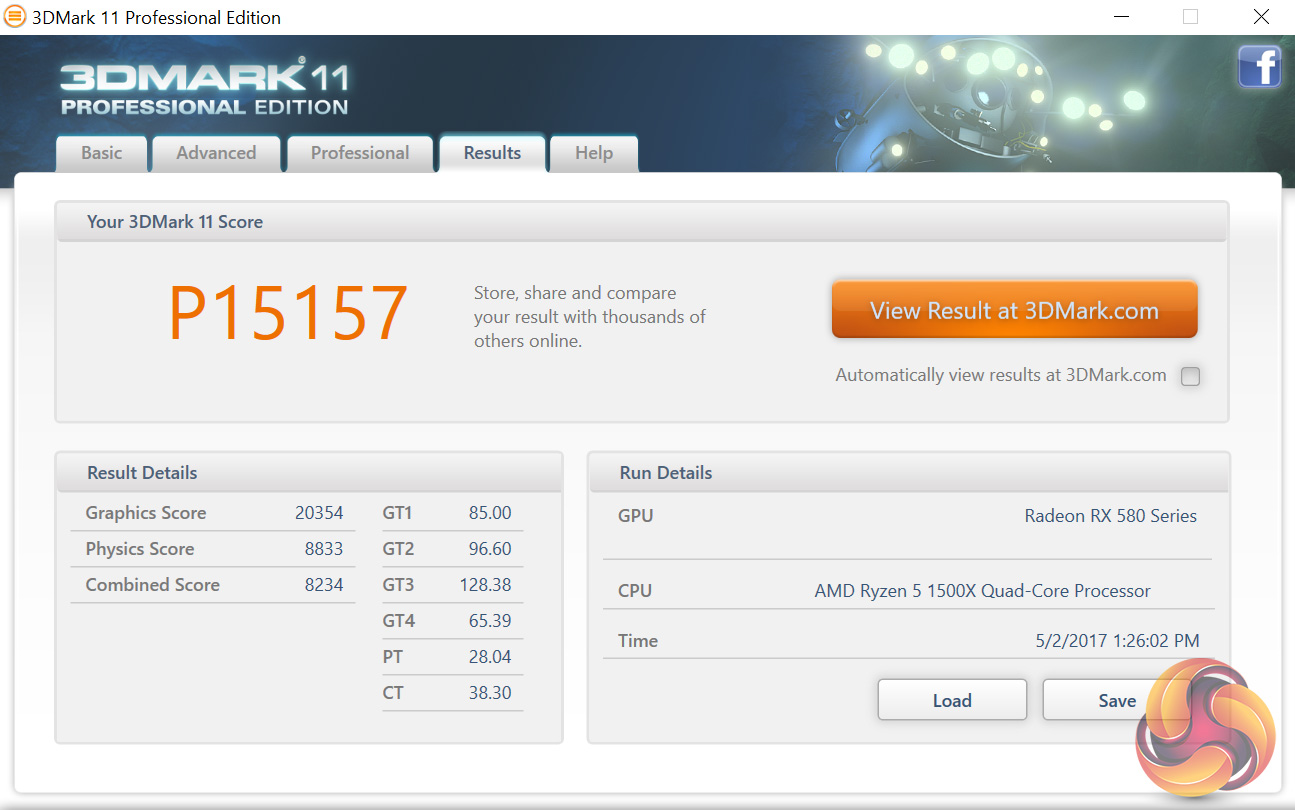
The Blackfire Hammerhead performs very well in 3DMark 11. The RX 580 comes in around 2500 points faster than the RX 480-based DinoPC GT0, while it also beats out the other GTX 1060 cards on-test.3DMark is an essential tool used by millions of gamers, hundreds of hardware review sites and many of the world’s leading manufacturers to measure PC gaming performance. Futuremark say “Use it to test your PC’s limits and measure the impact of overclocking and tweaking your system. Search our massive results database and see how your PC compares or just admire the graphics and wonder why all PC games don’t look this good. To get more out of your PC, put 3DMark in your PC.”


The RX 580 also does very well in Fire Strike, again proving faster than all of the GTX 1060-based systems I have seen to-date.VRMark is a benchmark designed specifically with virtual reality gaming in mind. Futuremark say: ‘the performance requirements for VR games are much higher than for typical PC games. So if you’re thinking about buying an HTC Vive or an Oculus Rift, wouldn’t it be good to know that your PC is ready for VR? VRMark includes two VR benchmark tests that run on your monitor, no headset required, or on a connected HMD. At the end of each test, you’ll see whether your PC is VR ready, and if not, how far it falls short.’
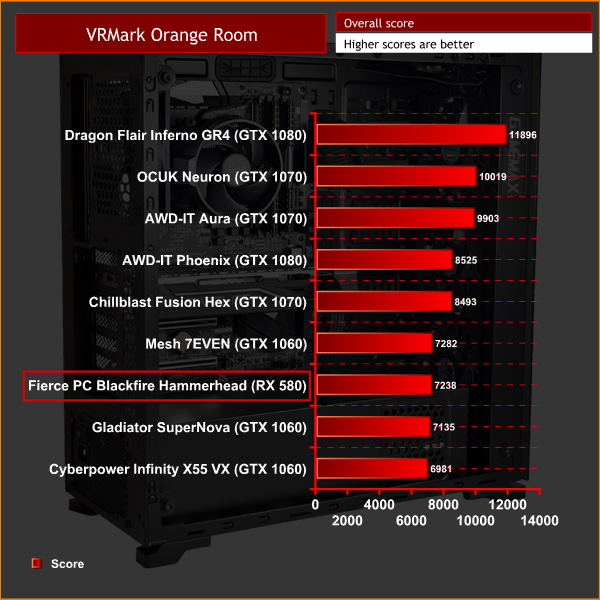
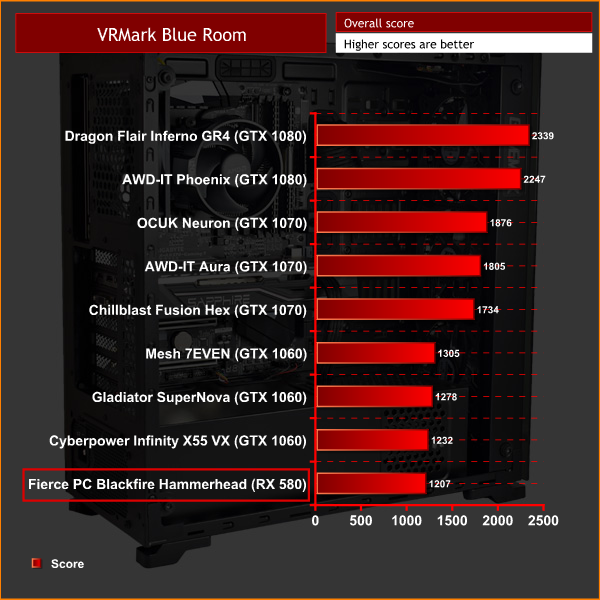
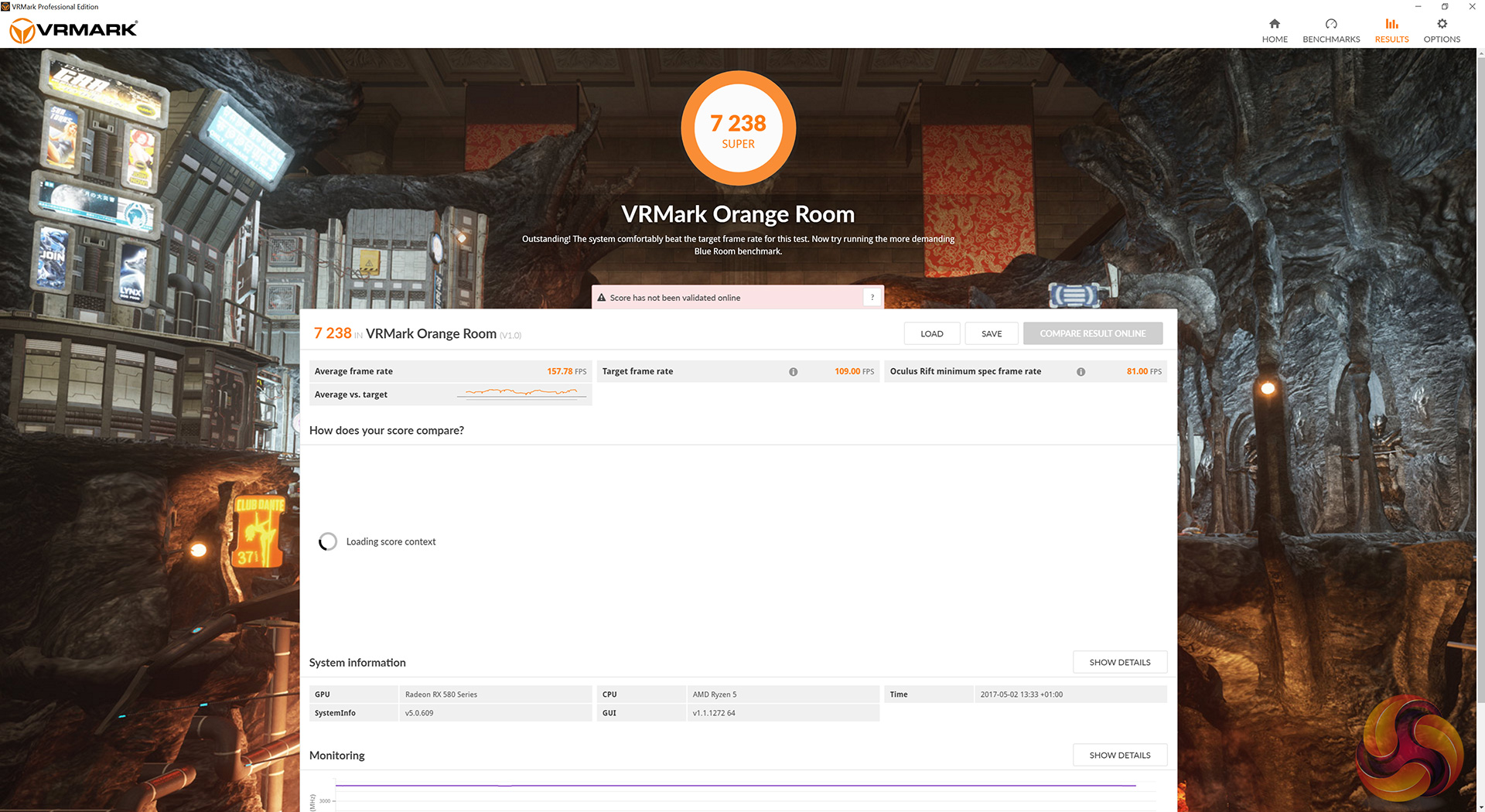
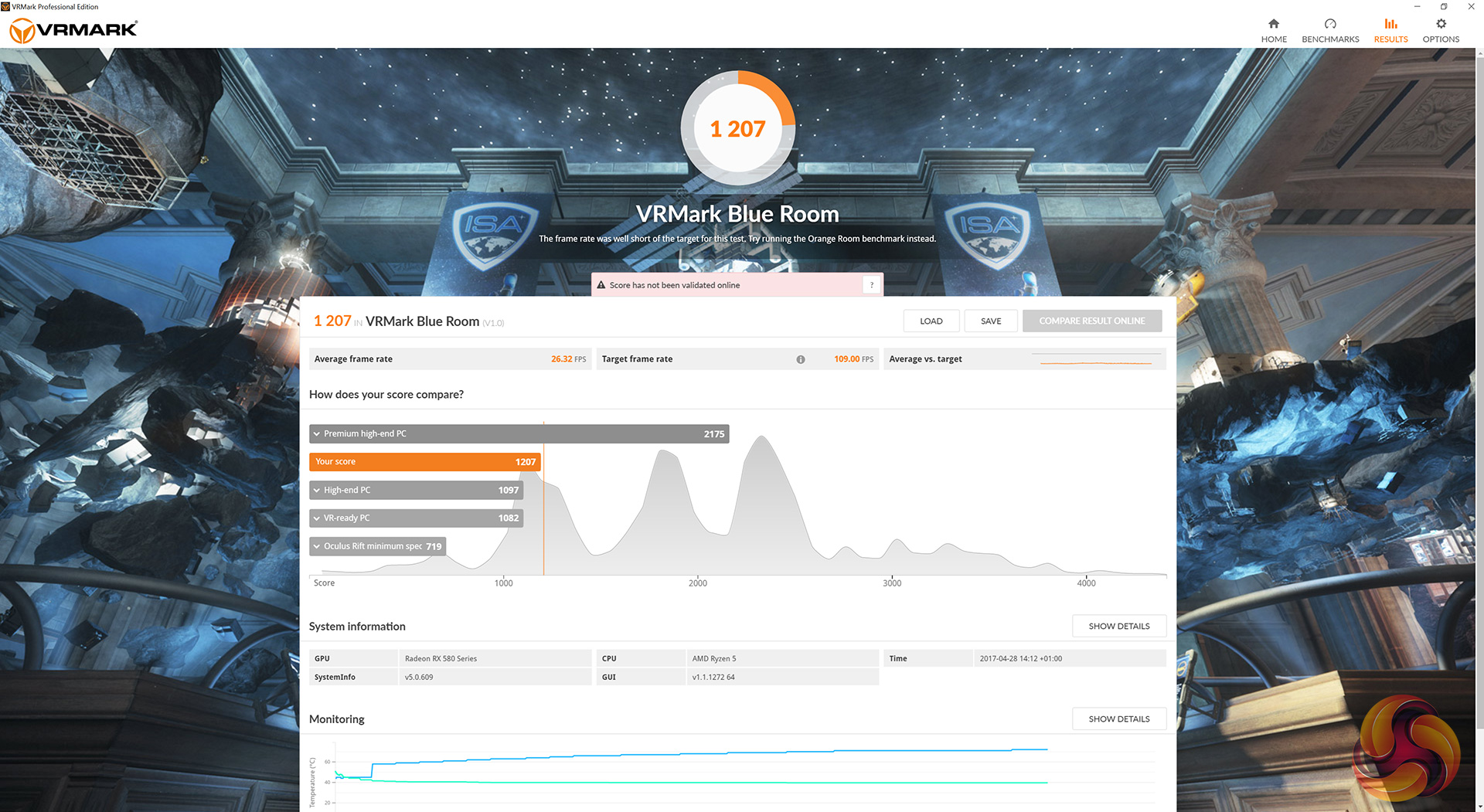
A new addition to our benchmarking suite, VRMark looks like one of the few valid ways of testing the VR capabilities of a PC. Consisting of two ‘rooms’, or benchmark tests, the Orange Room is the standard test, while the Blue Room is much more demanding.
In both tests, we find the Blackfire Hammerhead towards the bottom of the charts, though it is still fully VR-capable.Rise of the Tomb Raider is a third-person action-adventure game that features similar gameplay found in 2013’s Tomb Raider. Players control Lara Croft through various environments, battling enemies, and completing puzzle platforming sections, while using improvised weapons and gadgets in order to progress through the story. It uses a Direct X 12 capable engine.
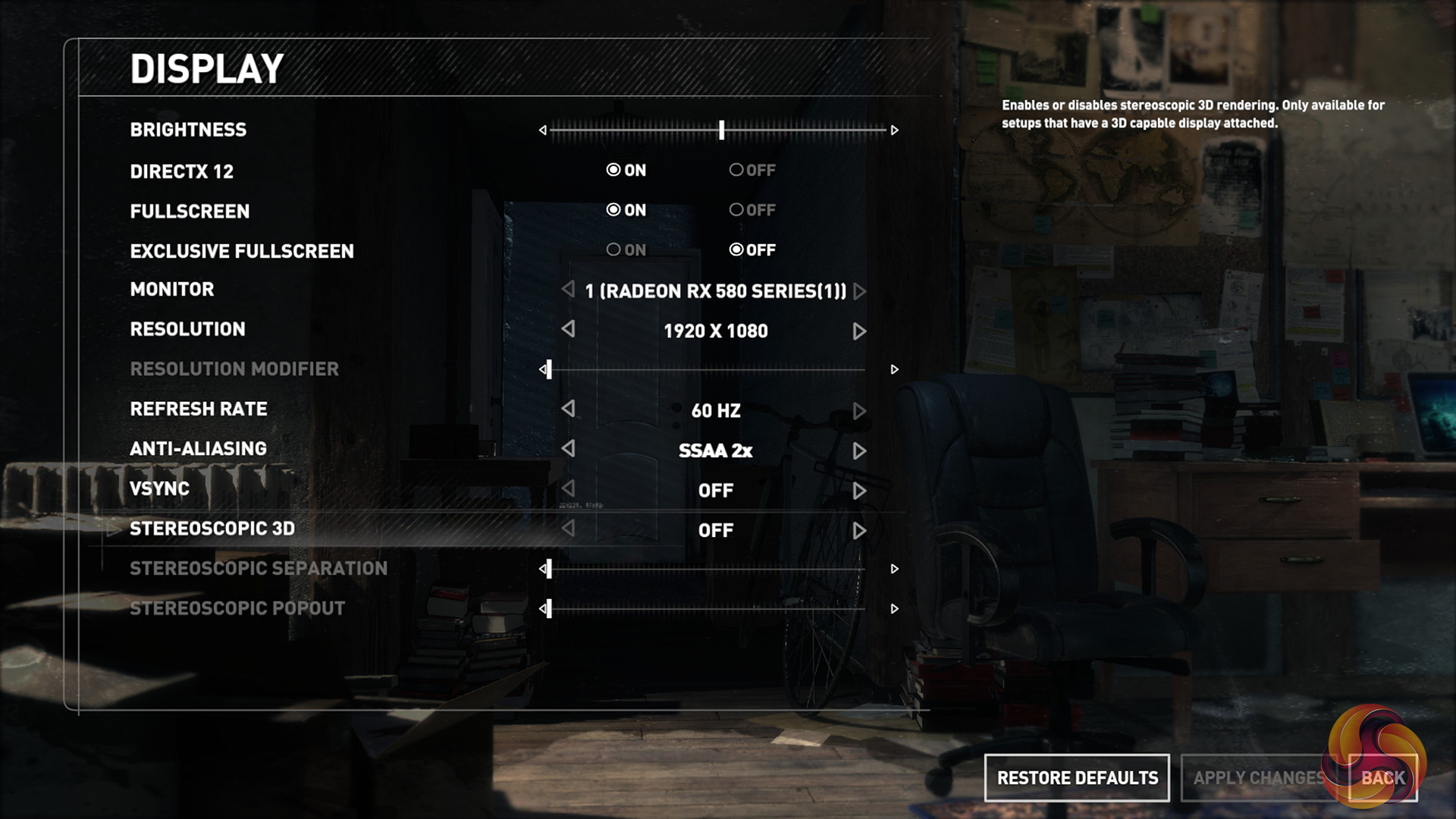
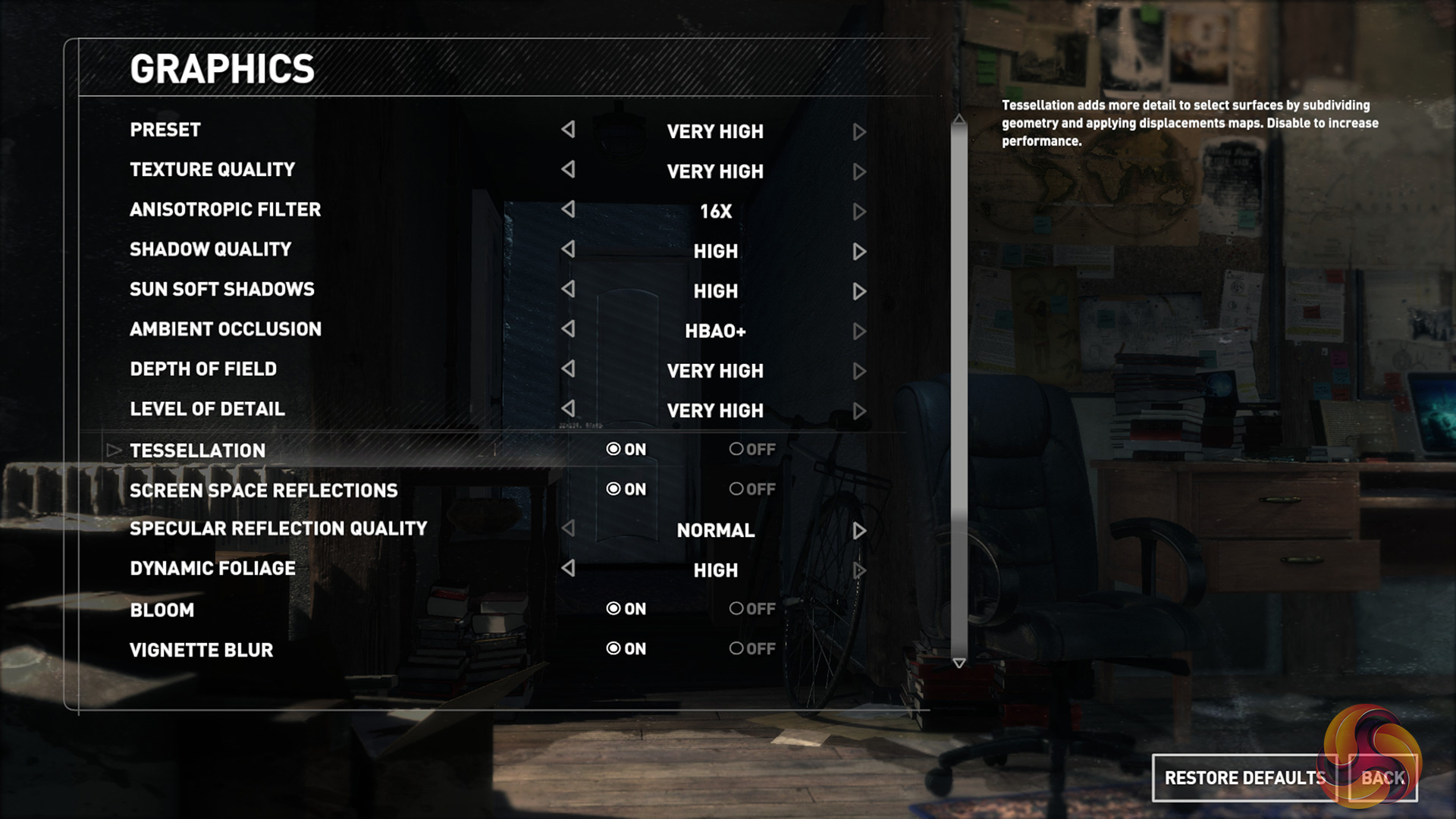
We test using the DX12 API, the ‘very high' IQ preset and 2x SSAA.
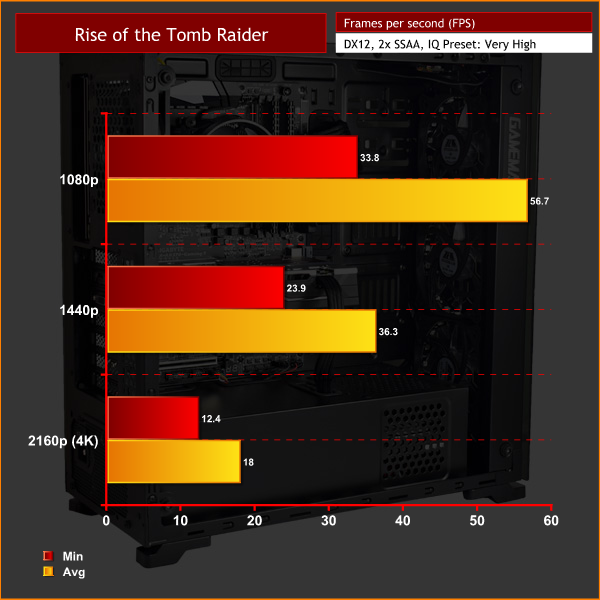
Only 1080p performance is comfortably smooth here, though a few IQ tweaks would easily bump-up the 1440p frame rates. 4K is simply not playable.Ashes of the Singularity is a real-time strategy game set in the future where descendants of humans (called Post- Humans) and a powerful artificial intelligence (called the Substrate) fight a war for control of a resource known as Turinium.
Players will engage in massive-scale land/air battles by commanding entire armies of their own design. Each game takes place on one area of a planet, with each player starting with a home base (known as a Nexus) and a single construction unit.
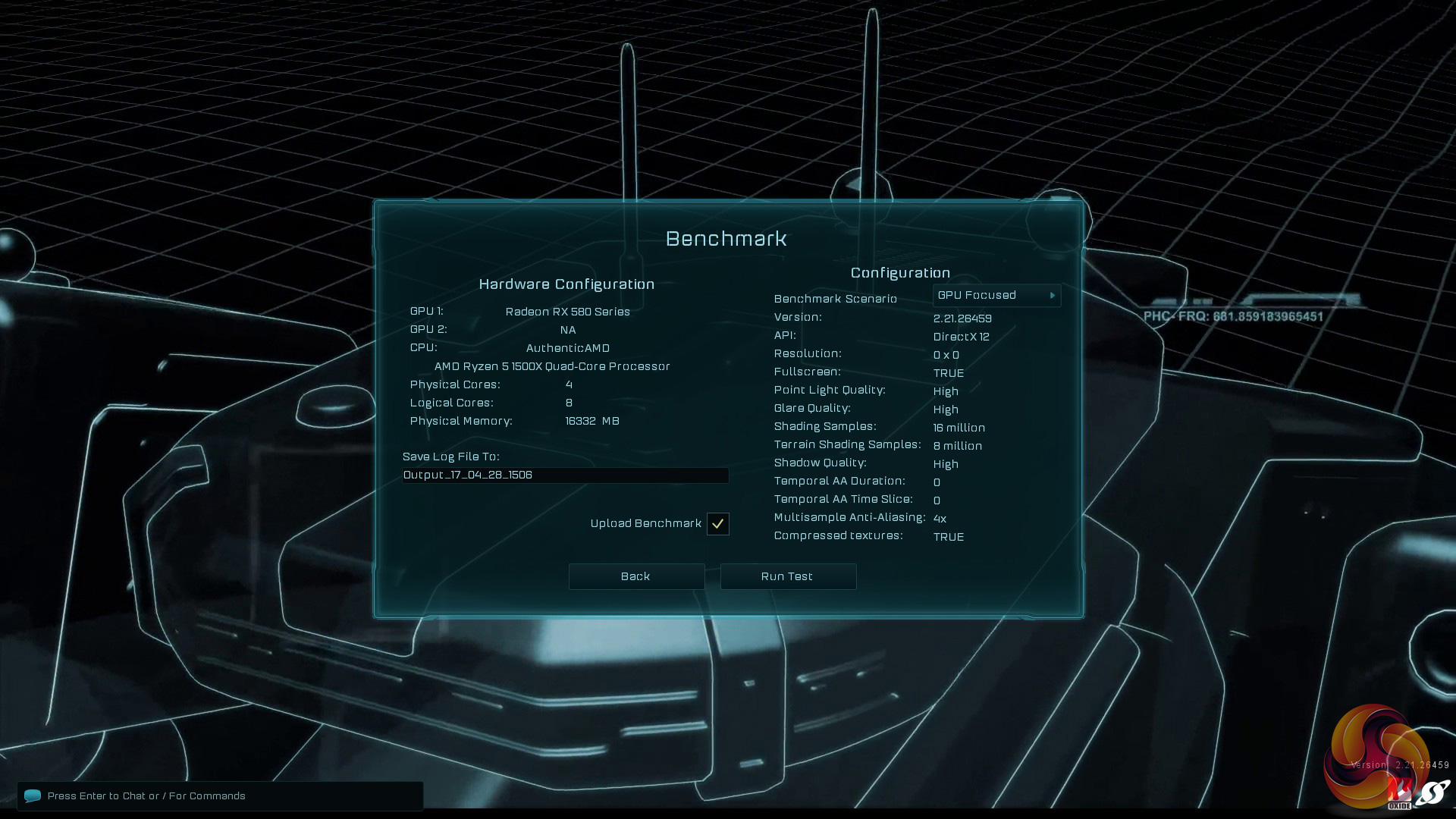

We test using the DX12 API and the ‘extreme' IQ preset.
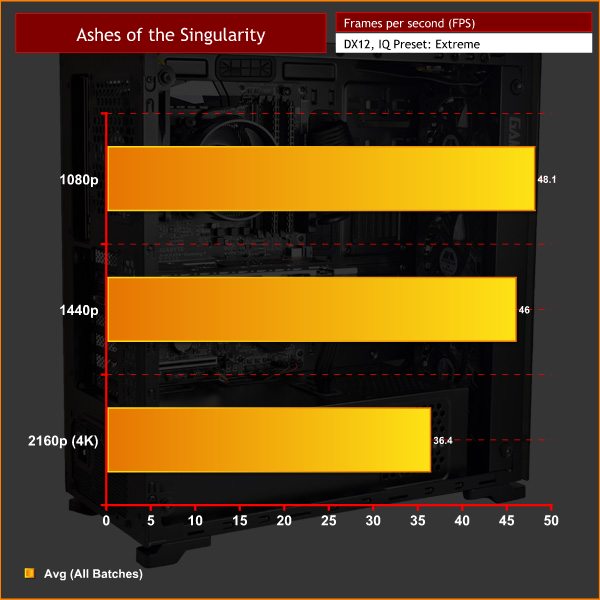
‘Ashes' is playable at all three resolutions, though we do see evidence of a CPU bottleneck given the frame rate hardly dropped when switching from 1080p to 1440p.DOOM is a science fiction horror first-person shooter video game developed by id Software and published by Bethesda Softworks. It is a reboot of the Doom series and is the first major instalment in the series since the release of Doom 3 in 2004 and the fourth title in the main series of games.
The game is played entirely from a first-person perspective, with players’ taking the role of an unnamed marine, as he battles demonic forces from Hell that have been unleashed by the Union Aerospace Corporation on a future-set colonised planet Mars.
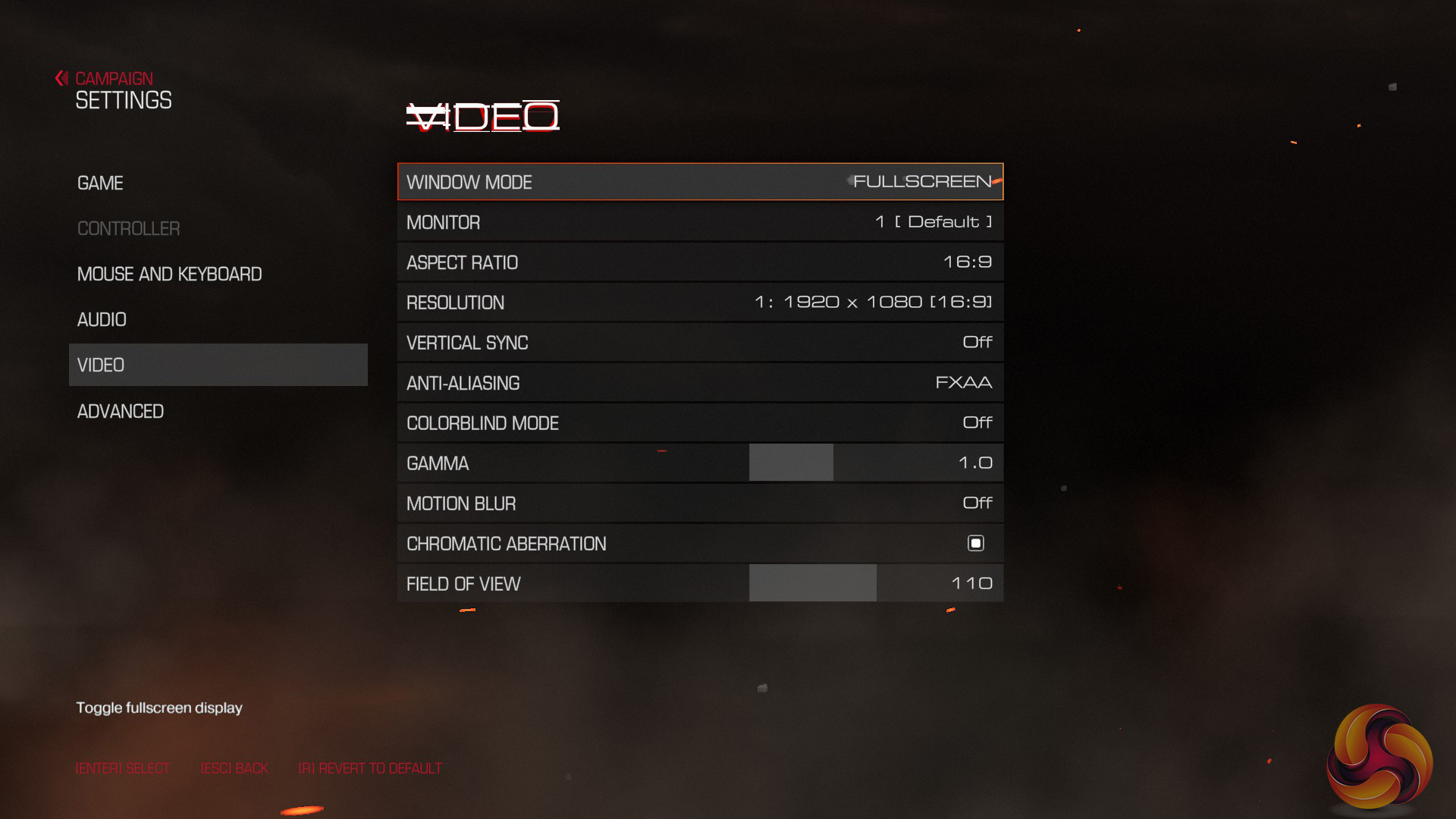
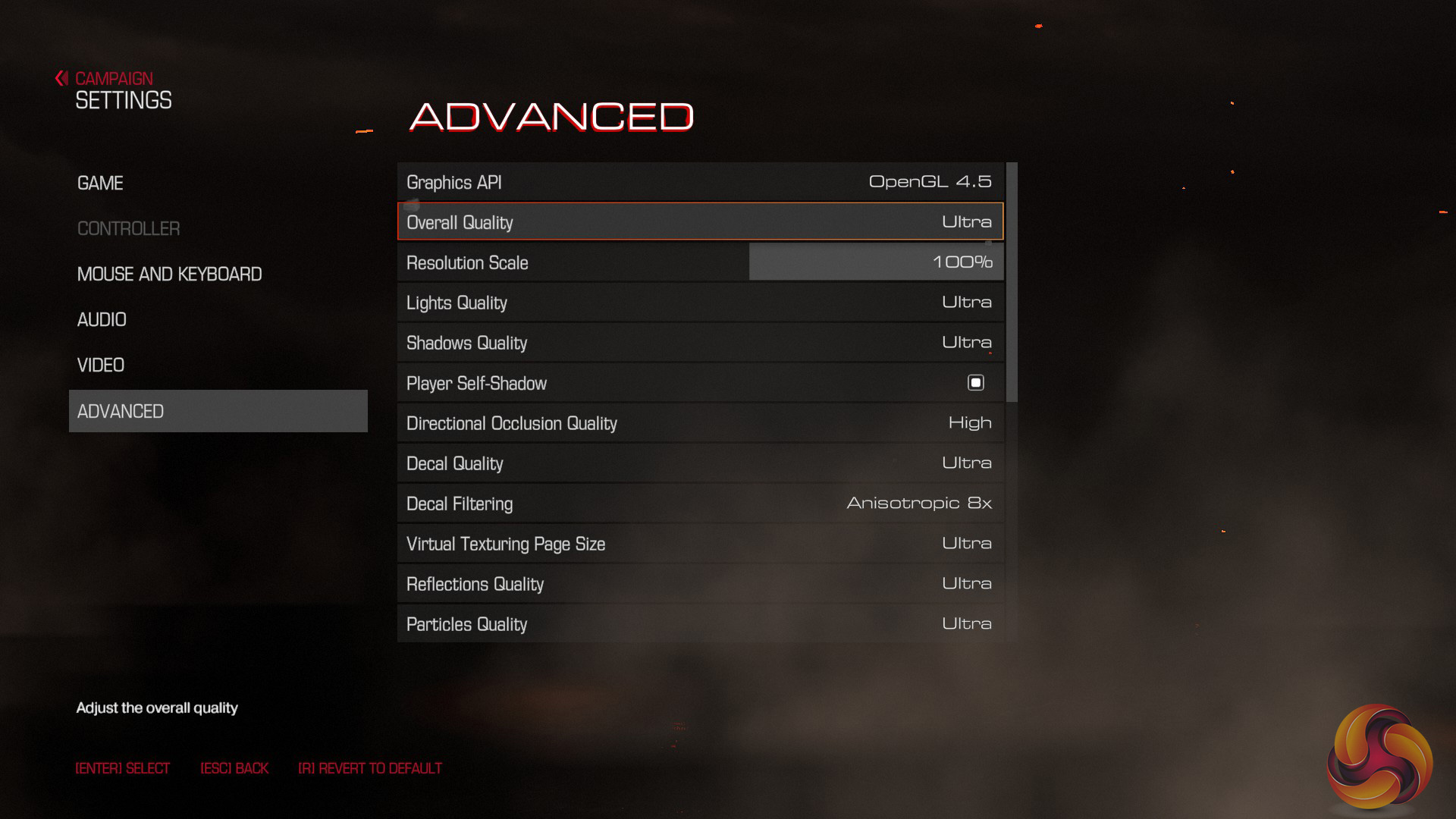
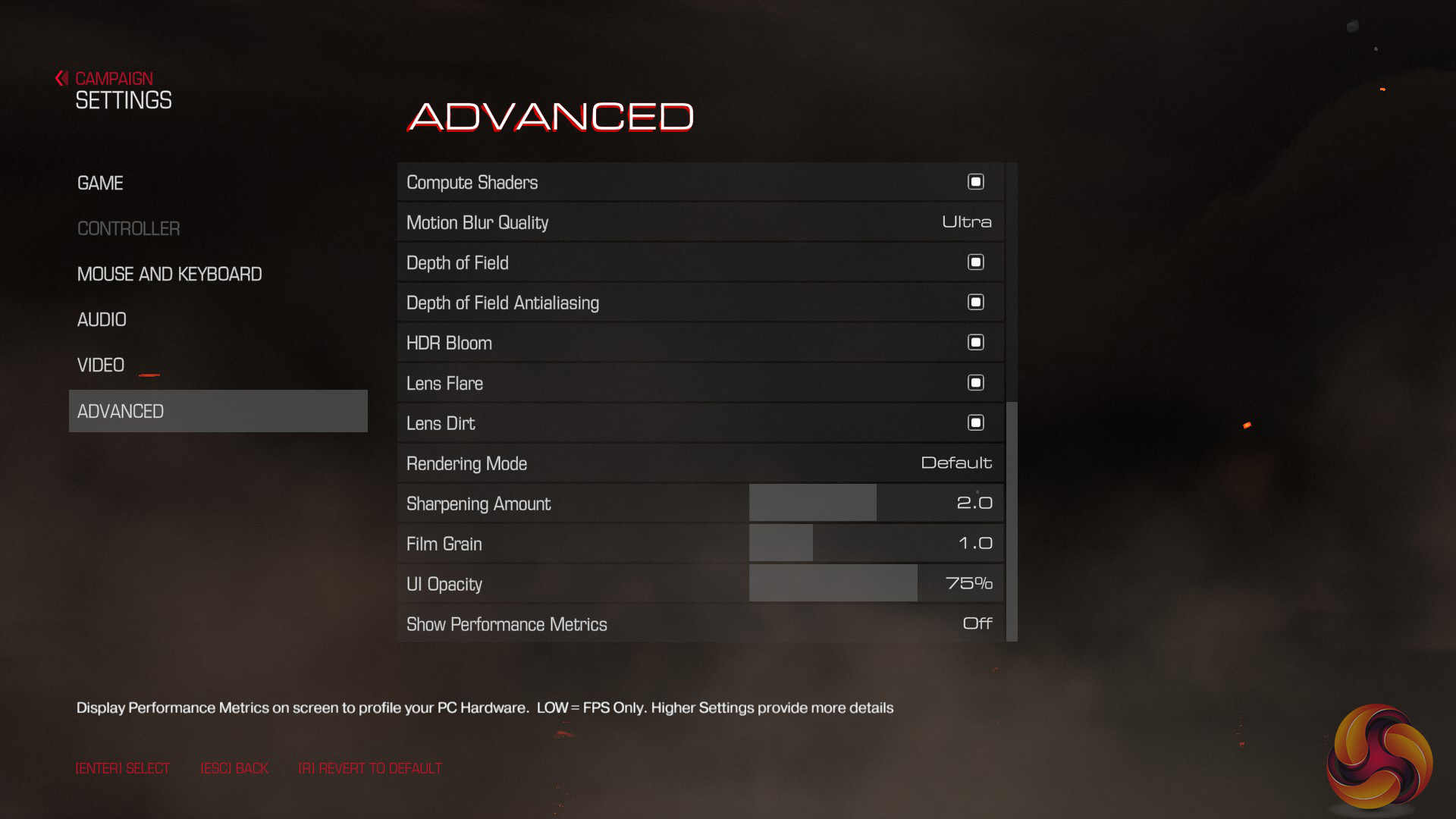
We test using the ‘ultra’ IQ preset. Given Doom does not have its own in-built benchmark, I tested at the beginning of the game as the player destroys the very first Gore Nest. I benchmarked 3 closely-matched runs and then took the average figures from those runs to present here.
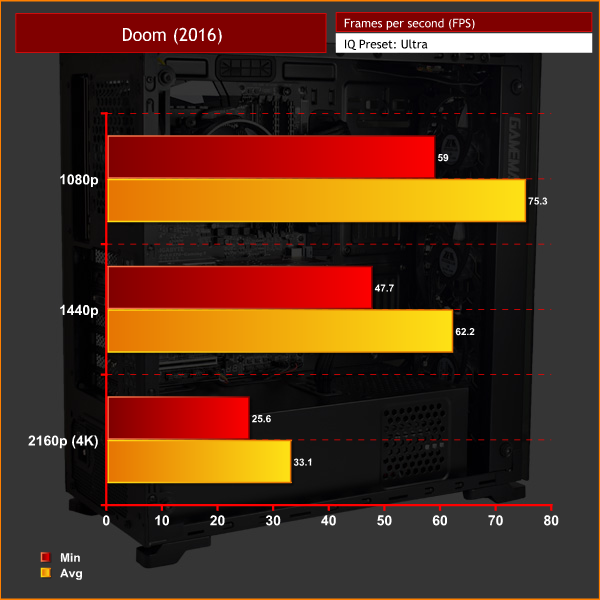
Doom delivers very respectable frame rates at 1080p and 1440p, while even the 4K result is not too far from being playable.
Deus Ex: Mankind Divided is set in the year 2029, two years after the events of Human Revolution and the “Aug Incident”—an event in which mechanically augmented humans became uncontrollable and lethally violent.
Unbeknownst to the public, the affected augmented received implanted technology designed to control them by the shadowy Illuminati, which is abused by a rogue member of the group to discredit augmentations completely. (Wikipedia).
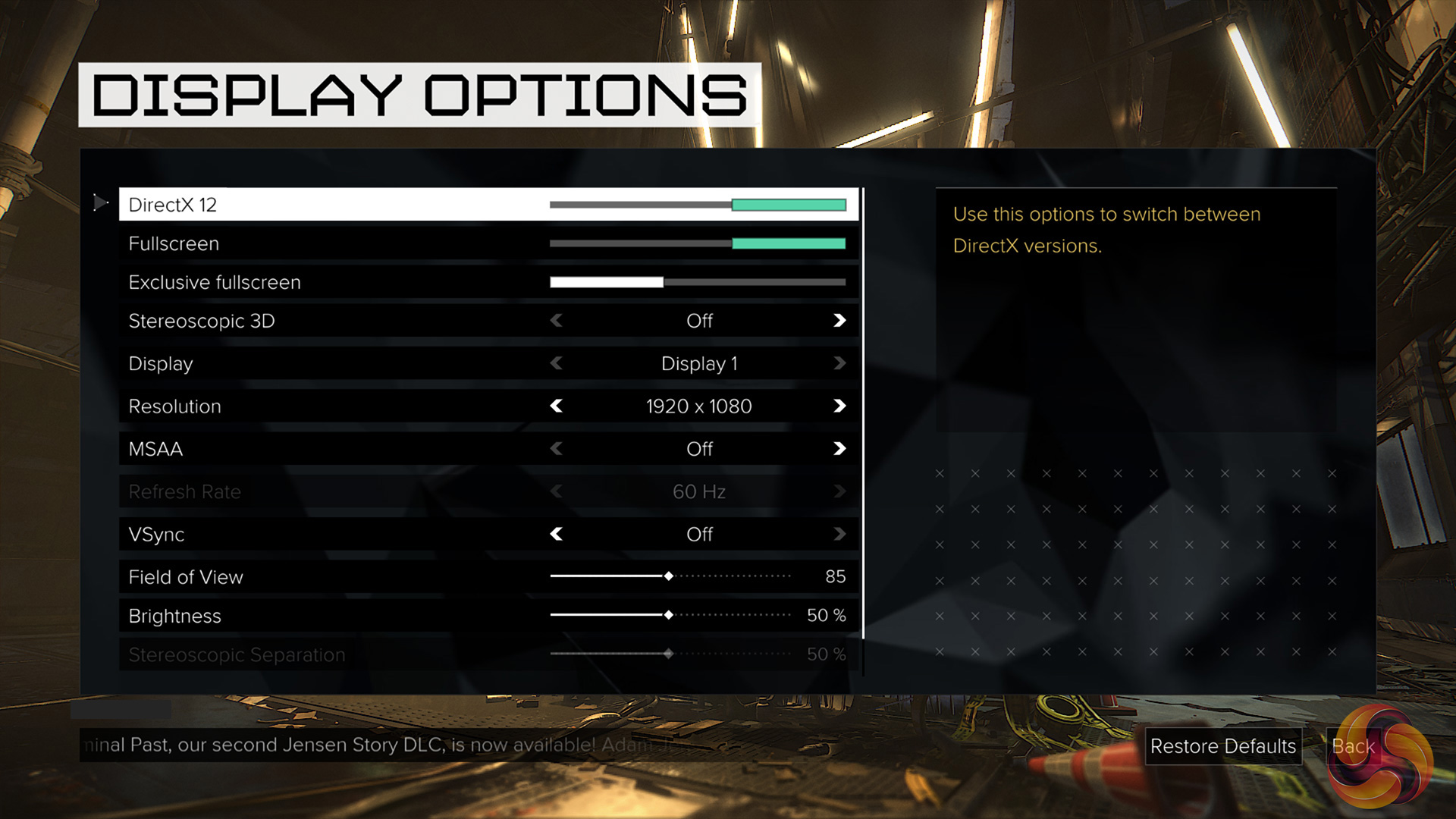
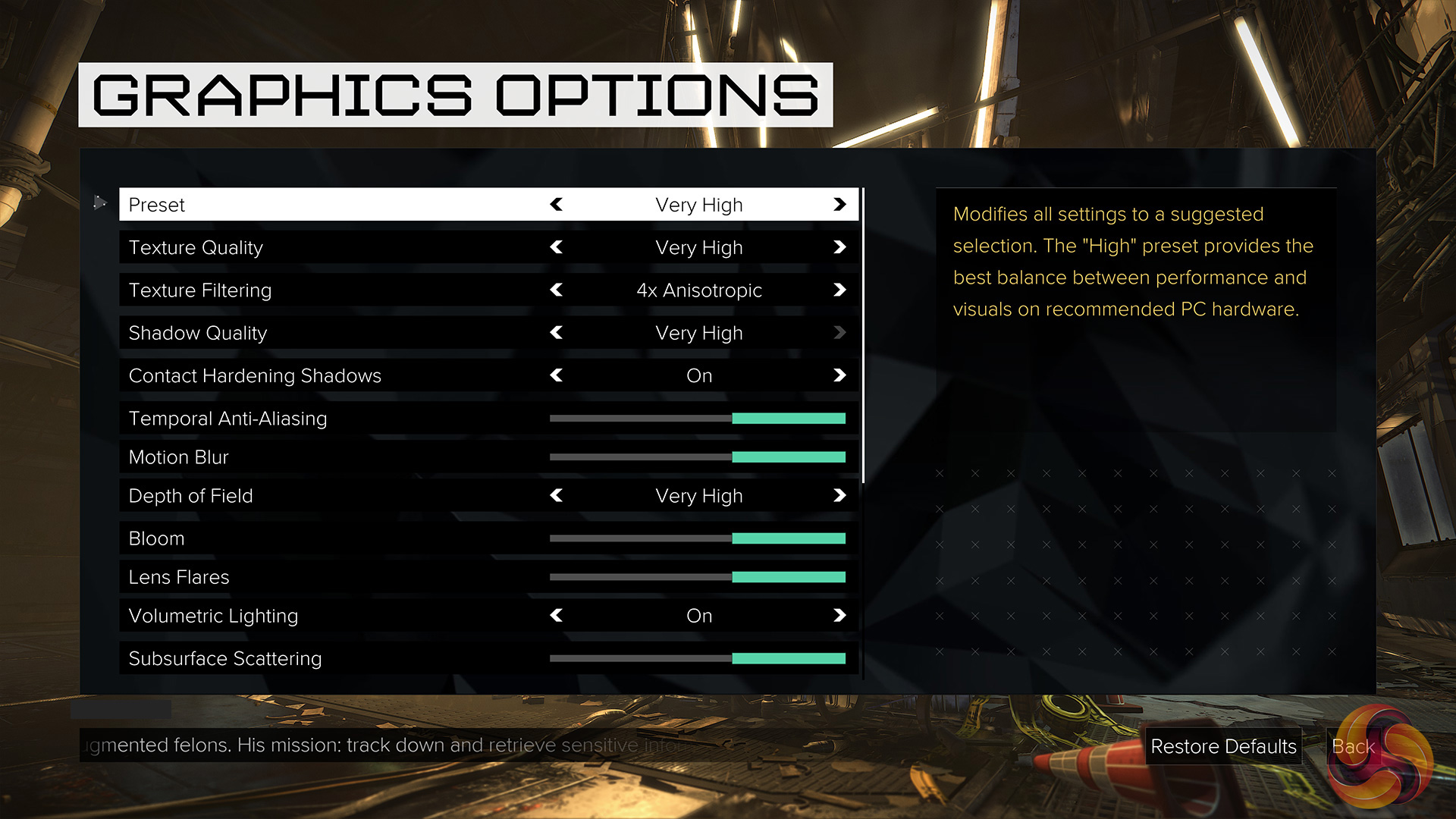
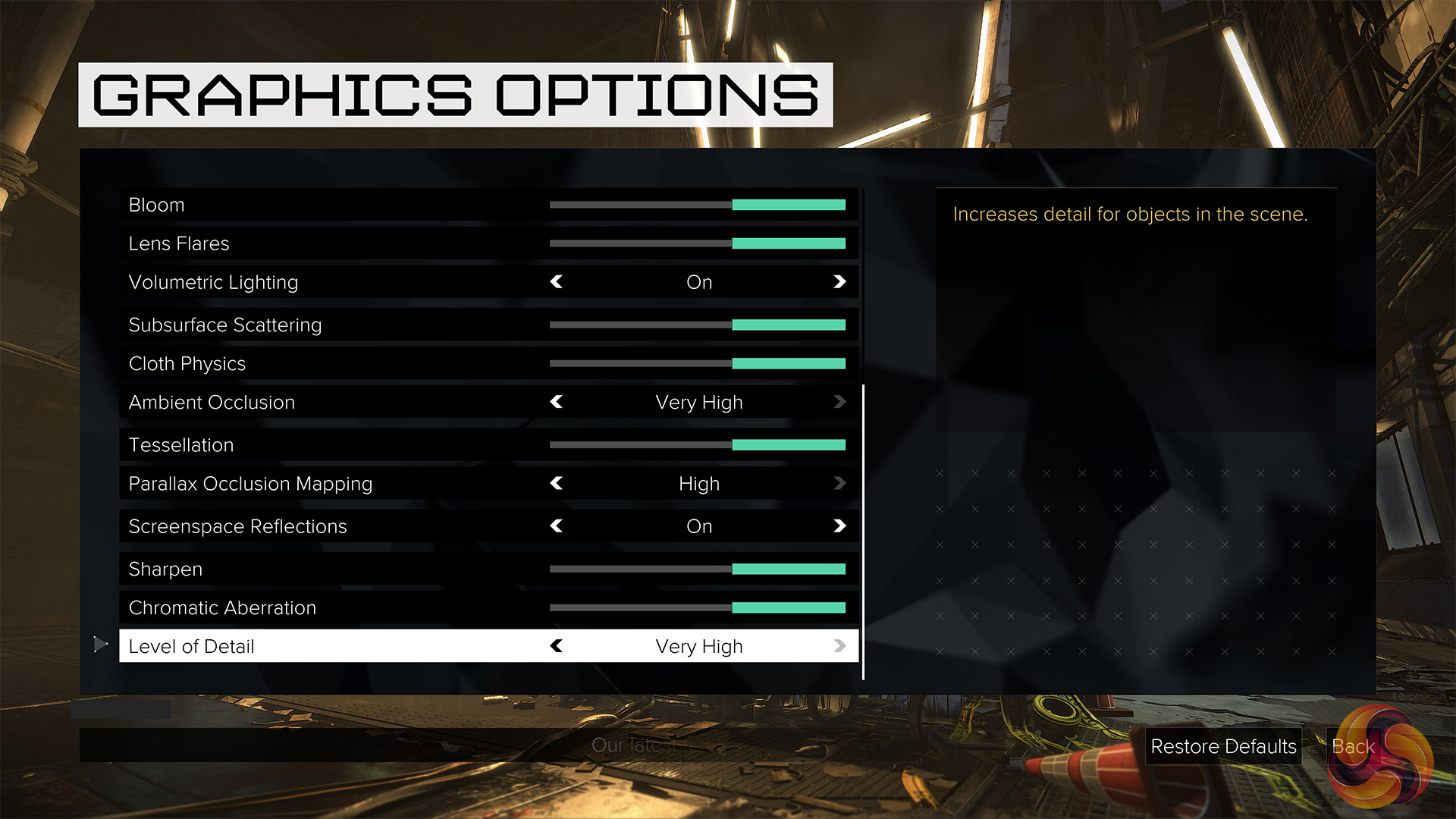
We test using the DX12 API and the ‘very high’ IQ preset.
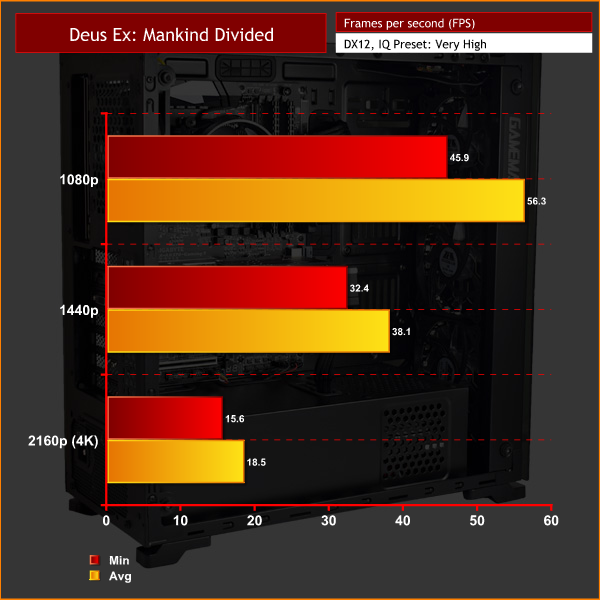
Both 1080p and 1440p resolutions deliver playable results, though 4K is again out of the question.Tom Clancy’s Ghost Recon Wildlands is an open world tactical shooter video game developed by Ubisoft Paris. It is the tenth instalment in the Tom Clancy’s Ghost Recon franchise and is the first Ghost Recon game to feature an open world environment. Ubisoft described it as one of the biggest open world games that they have ever published, with the game world including a wide variety of environments such as mountains, forests, deserts and salt flats. The game was released on March 7, 2017 for Microsoft Windows, PlayStation 4 and Xbox One. (Wikipedia).
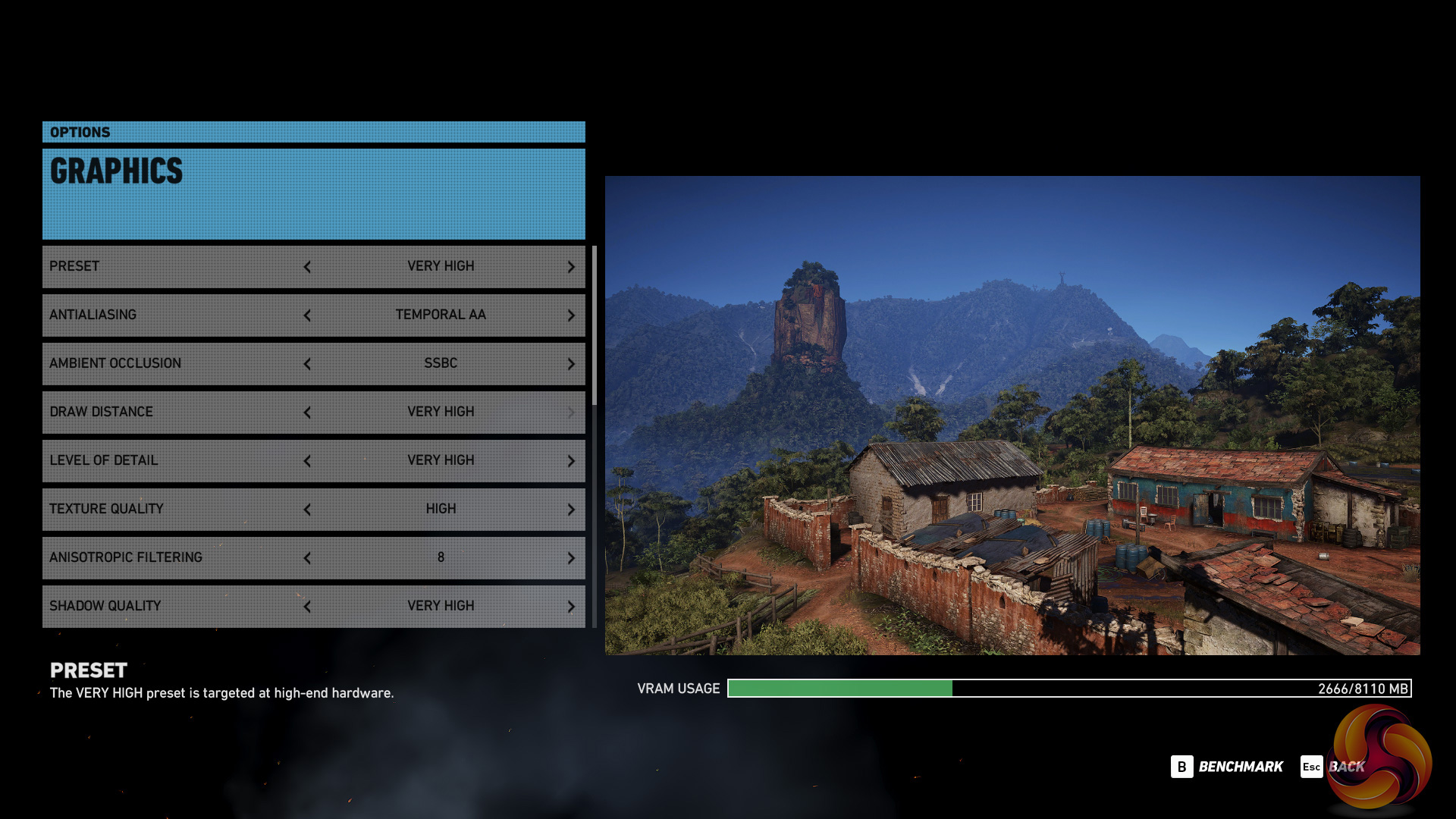

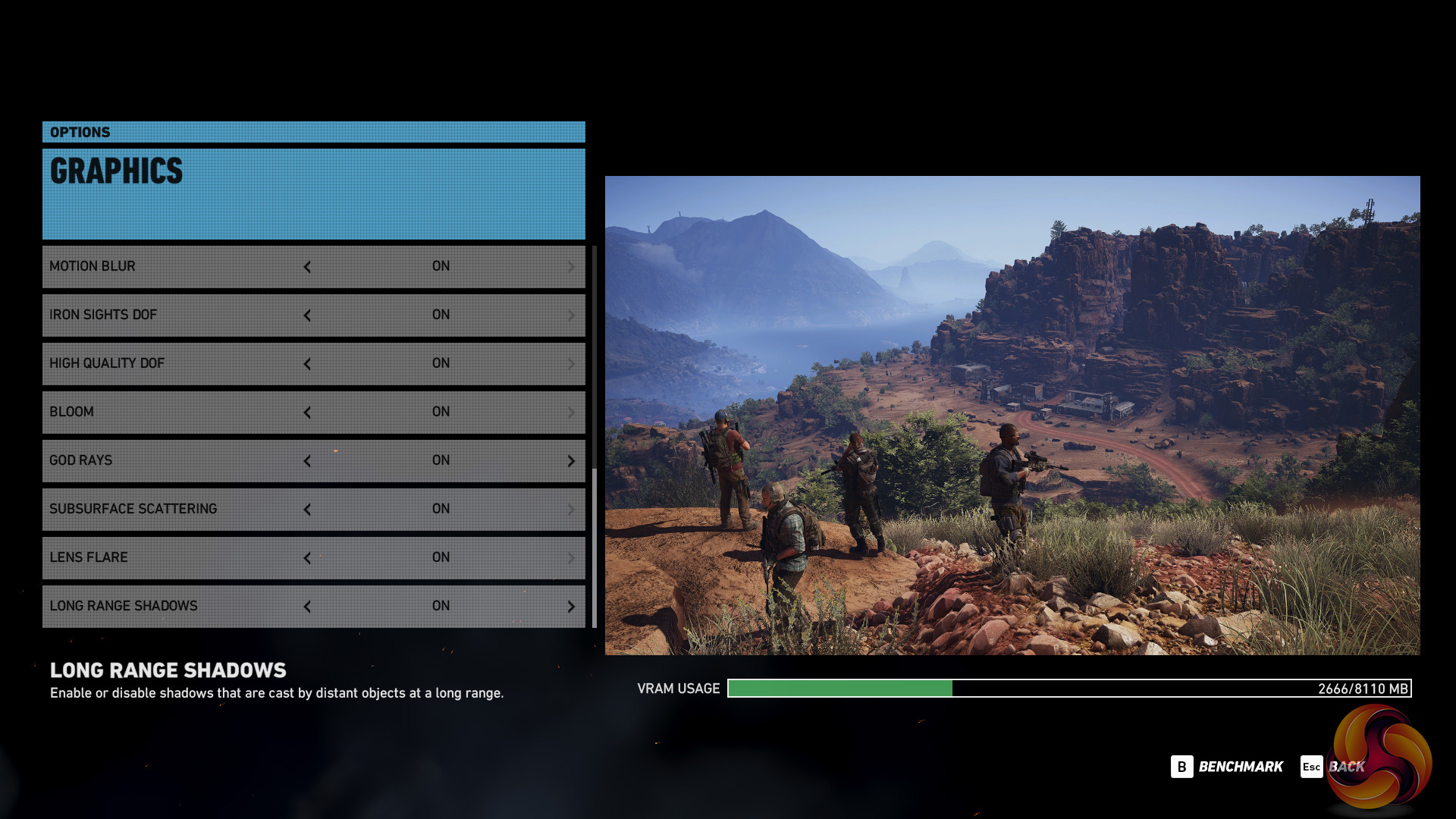
We test using the ‘very high’ IQ preset.
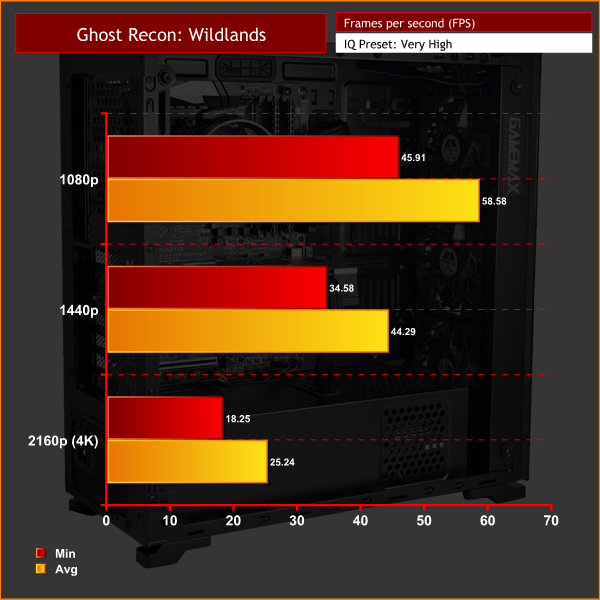
Just like Deus Ex: Mankind Divided, we see 1080p and 1440p results that are very playable. Clearly, though, the RX 580 is not a 4K-gaming card.Thermal dynamics
To measure idle temperatures, a reading was taken after having Windows open on the desktop for 30 minutes. A reading under load was taken with Prime 95’s SmallFFt test running alongside 3DMark Fire Strike.
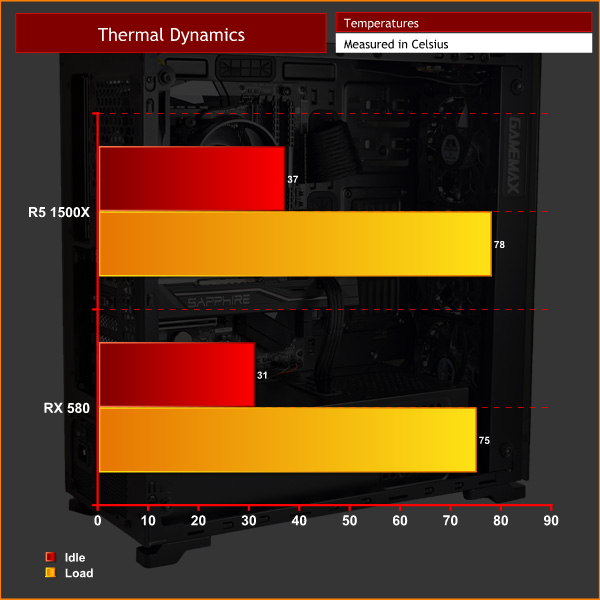
The temperature results are just fine – the Sapphire Pulse RX 580 is a certainly capable card, peaking at 75 degrees under load. I am most interested in the 1500X's peak temperature of 78 degrees, though, as that is using the stock Wraith Spire cooler. This is a very good result for a stock cooler, and I must admit I am a bit surprised!
Acoustics
The Blackfire Hammerhead is also pleasantly quiet. At idle, its fans are inaudible above background noise, while even under load the noise is only a low-pitched whirr. Again, credit to the Wraith Spire as I thought it would be quite noisy – in actual fact, the whole system is relatively quiet.For ‘idle’ power draw, a reading was taken after having Windows open on the desktop for 30 minutes. A reading under load was taken with Prime 95’s SmallFFt test running alongside 3DMark Fire Strike.
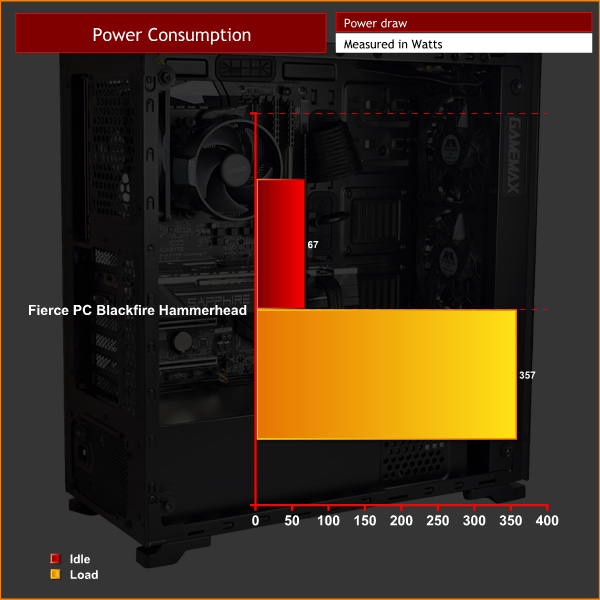
Total power draw is barely half of the power supply's 600W rating, so adding in a second RX 580 for CrossFire down-the-line would be no problem.The Fierce PC Blackfire Hammerhead is an all-AMD gaming PC utilising the latest tech from ‘Team Red' – a Ryzen 5 1500X processor and a RX 580 graphics card.
Immediately, it is clear that the system is very well-built. The Game Max Onyx case is a tempered-glass beast and provides a great home for the components, and the RGB fans only adds to its success. Fierce PC has also done a great job with cable management, while the black cable extensions create a very stealthy look.
Performance is also pretty solid considering the hardware used. The Ryzen 5 1500X has been overclocked to 3.8GHz, and provides decent computational performance. It may not be as quick as an overclocked Core i7, or Core i5, but it is very good value.
The brand-new RX 580 is also a strong performer. While it is best for 1080p gaming, we saw some decent 1440p frame rates as well, so that definitely adds some versatility to the system.
So, overall, the system is very capable. The Ryzen 5 + RX 580 combination delivers the goods and, accordingly, the Blackfire Hammerhead would be a solid choice for gamers looking for a low-to-mid-range rig. However, I do have to question some of the component choices considering the system's price of £1199.95.
For example, take the Aorus AX370-Gaming 5 motherboard. It is undeniably a superb X370 board, and perhaps one of the best on the market right now. However, it is also a bit unnecessary – the only real benefit of the X370 chipset (over B350) is its support for SLI, but this is obviously irrelevant considering the Blackfire Hammerhead uses an AMD card. A B350 board would deliver the same levels of performance for significantly less, without hurting future upgrades.
Storage is also worth looking at, as we find a 500GB Samsung 850 EVO and a 2TB Seagate FireCuda. While it is certainly very useful to have a large SSD, something smaller – along with a regular HDD, instead of a more expensive SSHD – would bring the cost down further, also without hurting frame rates in the slightest.
Just by changing those two things, the motherboard and storage, I think this system could be a fair bit cheaper without sacrificing gaming performance at all.
That's not to say there's anything wrong with the Blackfire Hammerhead, it just doesn't offer the best bang-per-buck. Instead, a fair bit of money seems to have been spent on high-grade components across-the-board, instead of on the core components which give you better frame rates (the processor and graphics card). Obviously there's nothing wrong with that at all, but I just feel at this price, prospective buyers would be more concerned about raw frame rates than having a snazzy X370 board or hybrid hard drive.
Regardless, I am still happy to recommend the Fierce PC Blackfire Hammerhead. It is a well-built, good-looking PC that offers solid frame rates for 1080p and 1440p gaming. Its only downfall is pricing, as I do think the price could have been closer to the £1000 mark if Fierce PC had been a bit smarter with the choice of components.
You can buy the system for £1199.95 inc. VAT and delivery HERE.
Discuss on our Facebook page, over HERE.
Pros
- Looks good.
- Tidy.
- Nice and quiet.
- Solid 1080p and 1440p gaming performance.
Cons
- The price could be a fair bit lower, without hurting performance, if component choice been a bit smarter.
KitGuru says: The Fierce PC Blackfire Hammerhead will definitely appeal to those looking for a high-quality 1080p/1440p gaming machine. However, those looking for the best bang-per-buck system should look elsewhere.


The X370 mobo would have been a good choice if the PSU could handle crossfire. The CPU is also a bit on the edge for crossfire – a 1600 or 1600X would have cut it imo. Then again, those two things would have driven up the price. I have to agree that a B350 mobo would have been the best choice.