KitGuru KitGuru.net – Tech News | Hardware News | Hardware Reviews | IOS | Mobile | Gaming | Graphics Cards


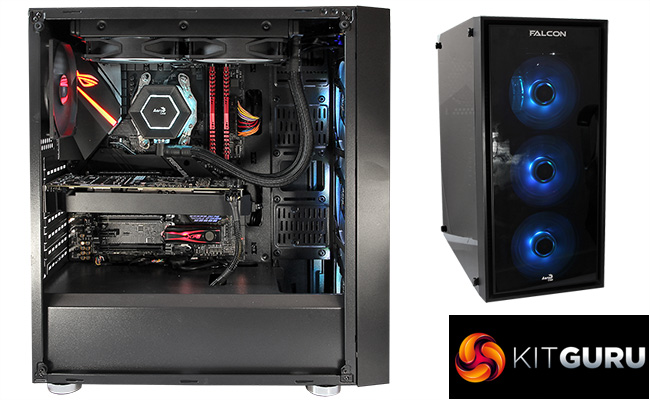
The Falcon Project X VR Ready Gaming PC is a mid-range PC that attempts to provide ample gaming power inside a chassis that’s impressively compact – and for a price that undercuts most of its competition. We give you the full low-down on this system to let you know if it is worth buying.
This £1,150 rig serves up processing grunt from a second-generation AMD Ryzen chip, and it’s paired with an Nvidia GeForce GTX 1060 graphics card plus solid memory and storage options. And, impressively, Falcon allows for loads of customisation on its website – so it’s easy to change the parts if they don’t take your fancy.
Specifications:
- CPU: AMD Ryzen 5 2600X (3.6Ghz – 4.2GHz)
- CPU cooling: Aerocool P7-L240 with 2 x 120mm fans
- Motherboard: Asus ROG Strix X470-F Gaming
- Memory: 8GB AData XPG Z1 2,666MHz DDR4
- Graphics Chipset: Nvidia GeForce GTX 1060 3GB
- Storage: 256GB AData SX6000 SSD, 1TB Seagate Barracuda HDD
- Case: Aerocool Quartz RGB
- Front ports: 1 x USB 3, 2 x USB 2, 2 x audio
- Rear ports: 7 x USB 3.1, 1 x USB 3.1 Type-C, 1 x Gigabit Ethernet, 1 x PS/2, 1 x optical S/PDIF, 5 x audio
- Networking: Gigabit Ethernet
- Power supply: Aerocool Integrator 600W
- Operating system: Microsoft Windows 10 Home 64-bit
- Warranty: 3yr labour with 2yr parts
Total cost £1149.99 inc VAT.
The Falcon Project X VR Ready Gaming PC is one of the smallest ATX PCs we’ve seen for a long time, thanks to its Aerocool Quartz RGB chassis. The dimensions are impressive: this enclosure is just 206mm wide and 455mm tall.
That makes the Falcon machine more compact than many rivals. The PC Specialist Enigma Pro used a Corsair case that was almost 500mm tall, and while the CyberPower Infinity X66 GTX and Overclockers UK Cobalt were a tiny bit shorter, they were a little longer and wider, too.
There may not seem like a huge size difference between the Falcon and its rivals, but it’s important to bear that in mind if you’re planning a rig for a home office, a living room or another location where space is at a premium.
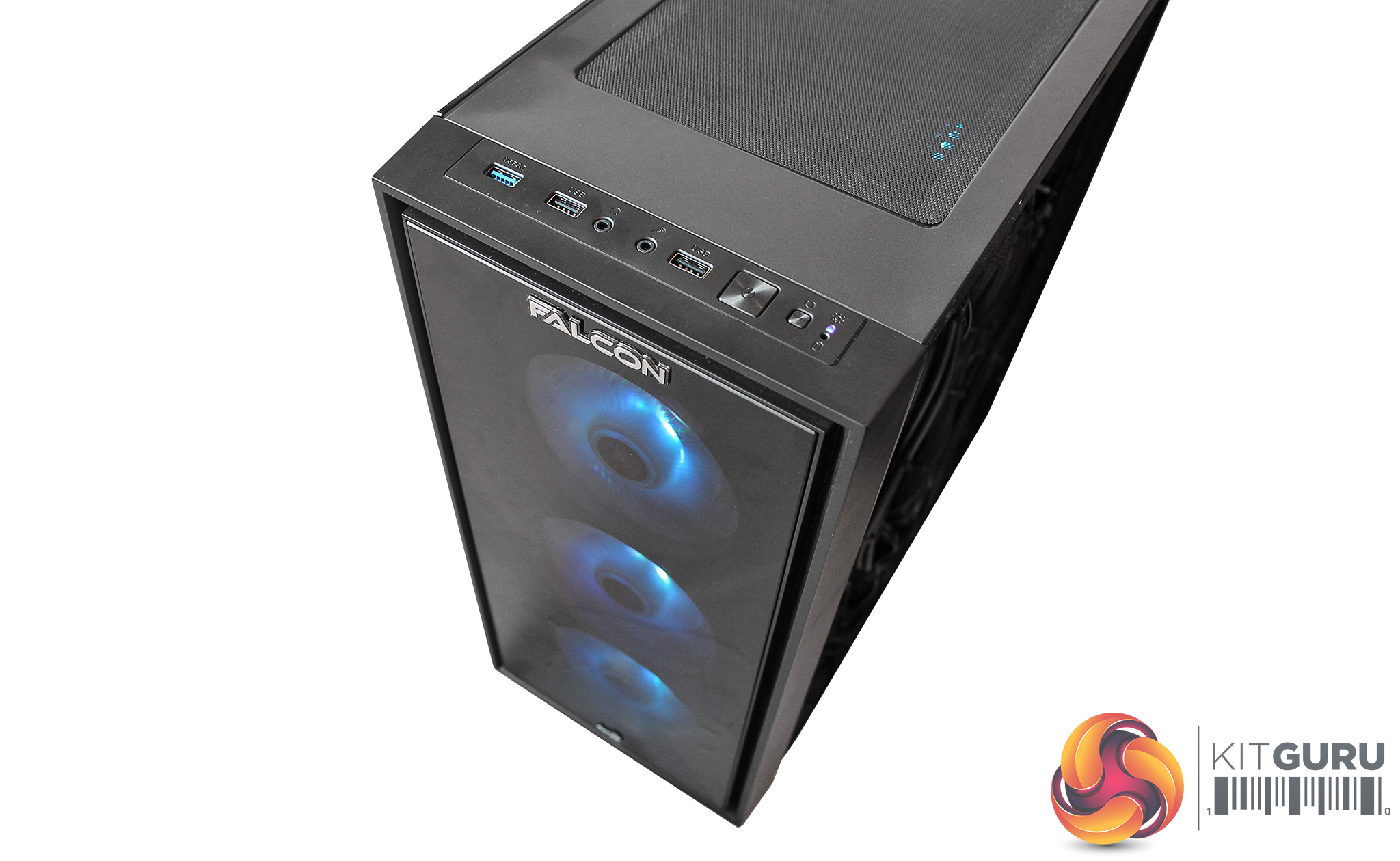
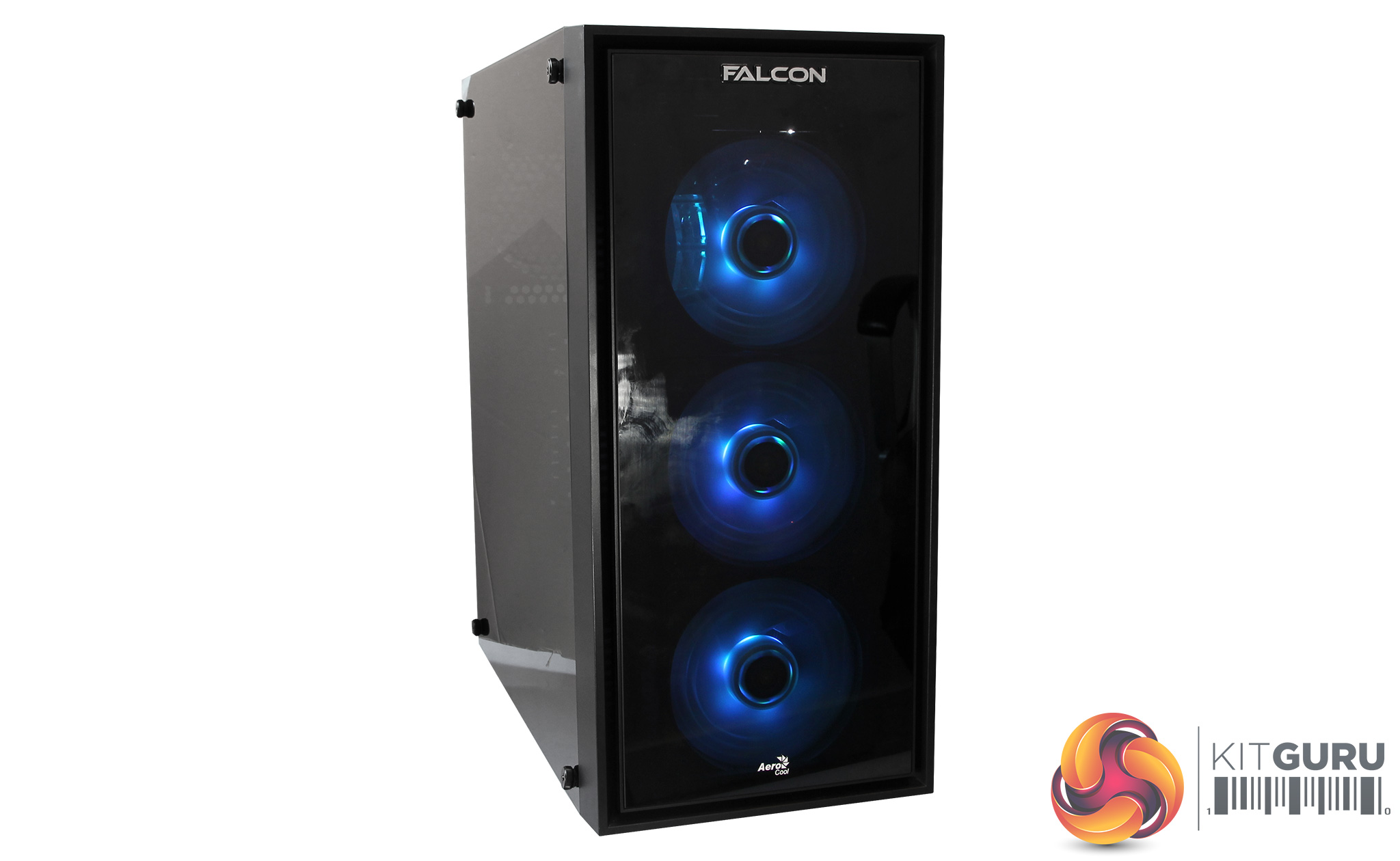
The compact Quartz chassis looks smart, too, and offers solid build quality. The front panel is made from tempered glass with a rim around the edge to allow for air intake, and the top is dominated by a magnetic dust filter. Build quality is excellent on the outside, with sturdy metal and glass used throughout – so there'd be no problem transporting this compact computer to gaming events.
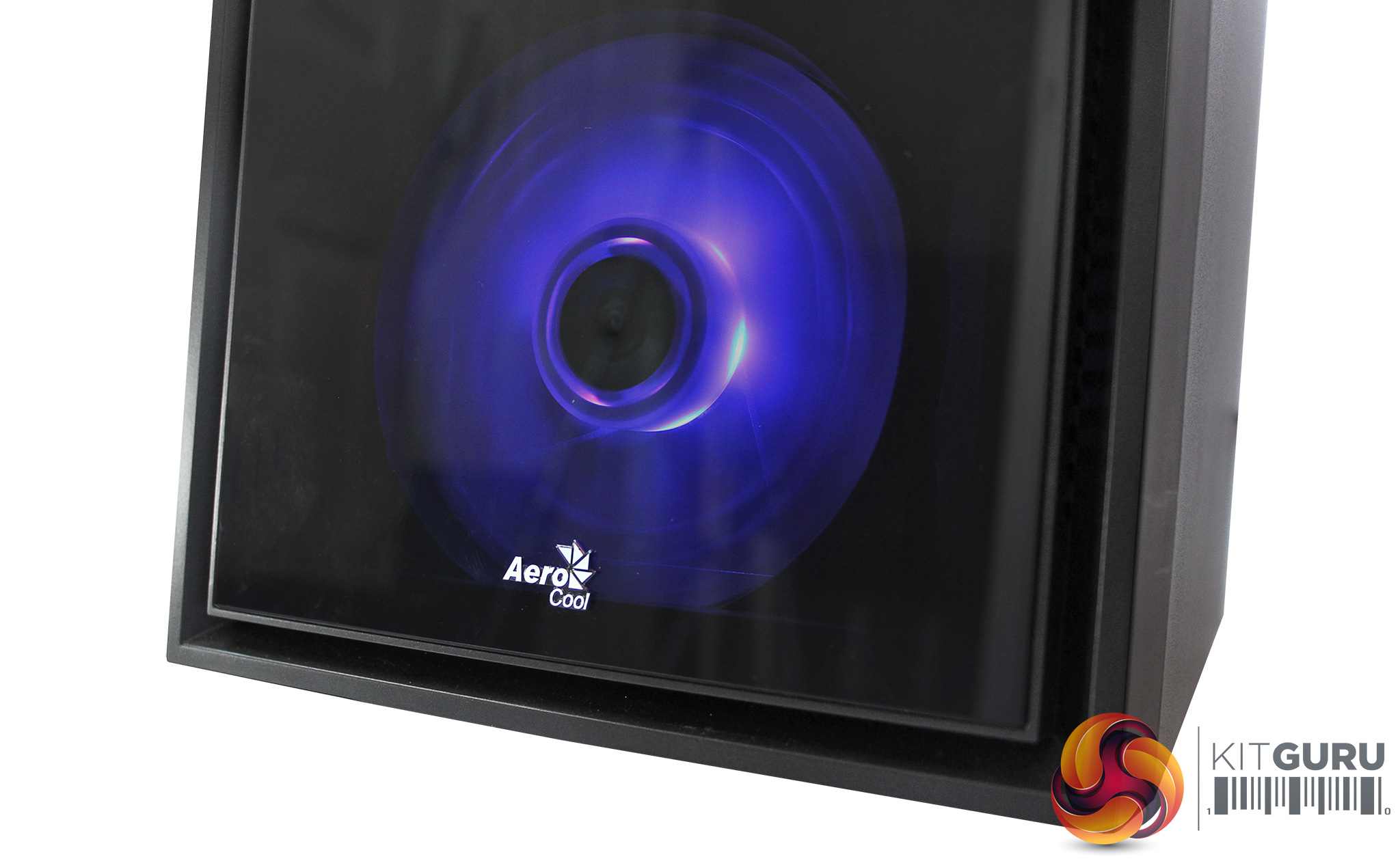
The dark, glossy design looks smart at first – almost like a business PC. Turn the Falcon on, though, and the Quartz comes alive. The front panel houses three 120mm fans that glow with RGB LEDs that rotate through a selection of soft shades. Smartly, the lighting can also be customised using an Aerocool app from within Windows.
It’s a solid start for this mid-range PC, but there are also some features missing. There’s no hardware button on the front of the case to alter the lighting, and there’s only one USB 3.0 port – the other two use the older, slower USB 2.0 standard. There’s no USB 3.1 Type-C at the front, either.
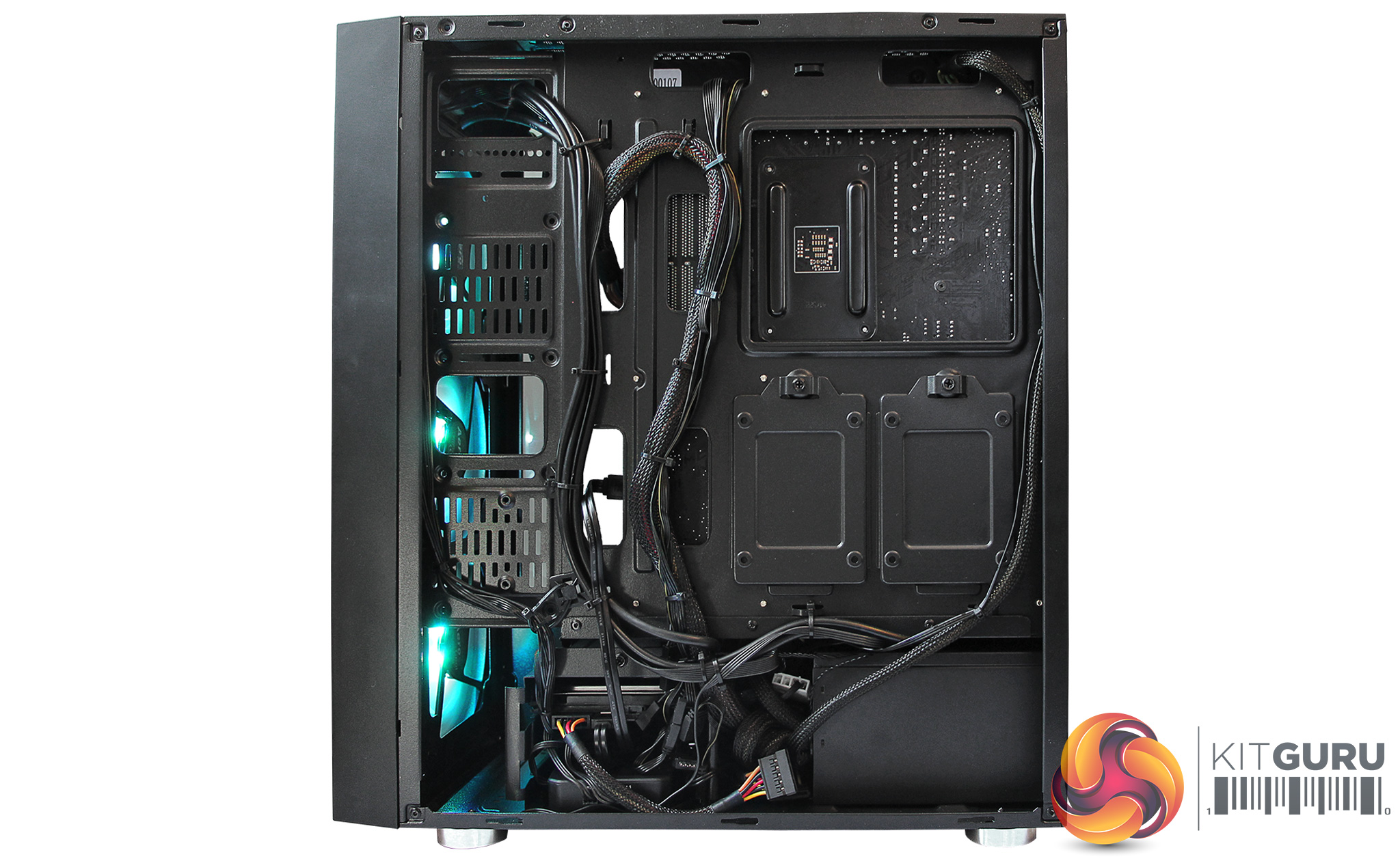
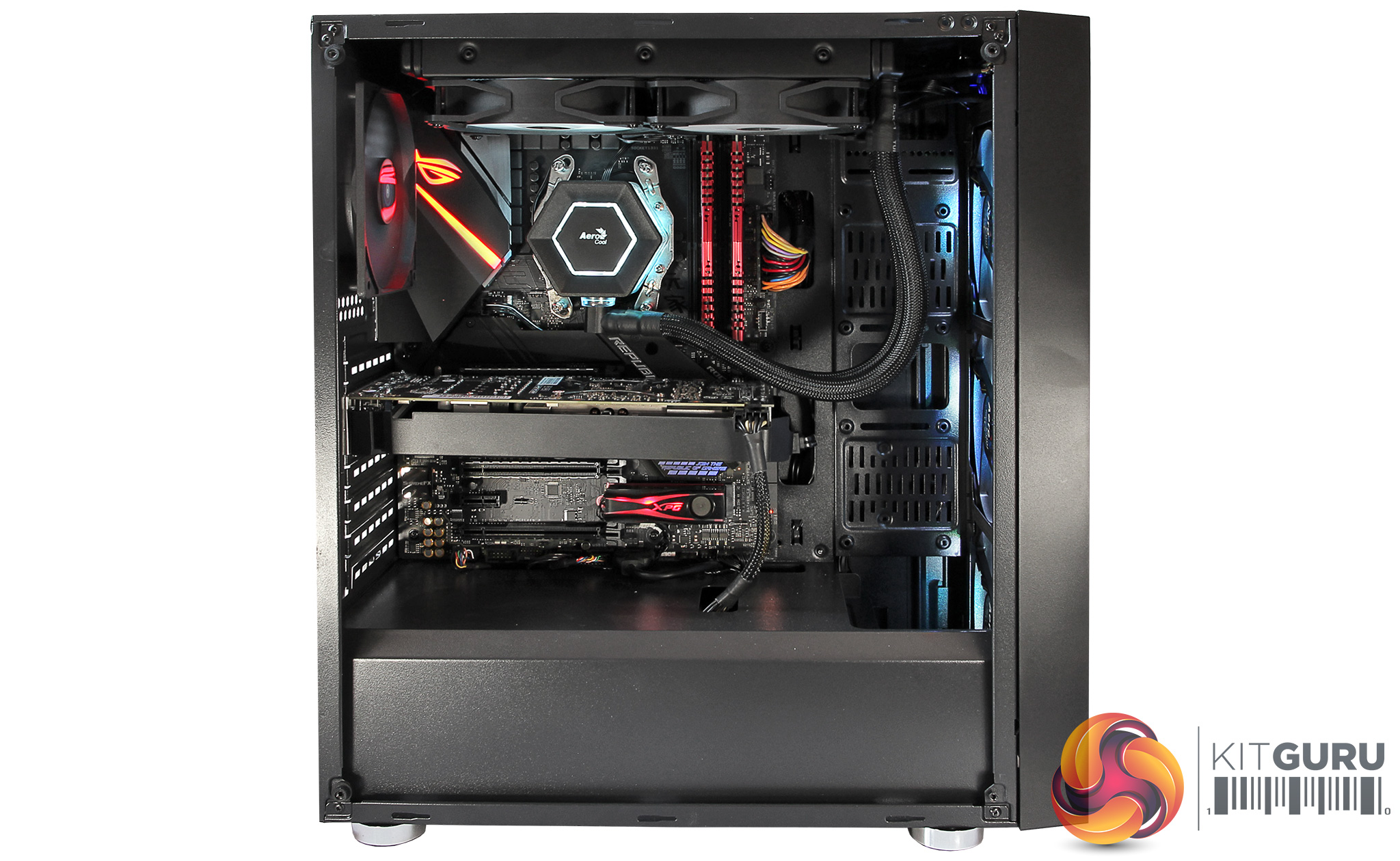
The tempered glass side panel is secured with four thumbscrews. It’s a sturdy panel, and removing it reveals a smart and well-designed interior. At the bottom is a PSU shroud – the kind of addition that’s found on most PCs these days. This keeps the bottom of the machine tidy by hiding the power supply and its cables, and it also houses two hard disk bays.
Around the back you’ll find two 2.5in mounts for adding SSDs or small hard disks.
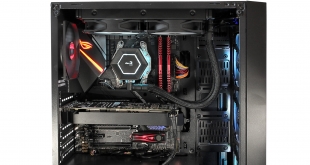
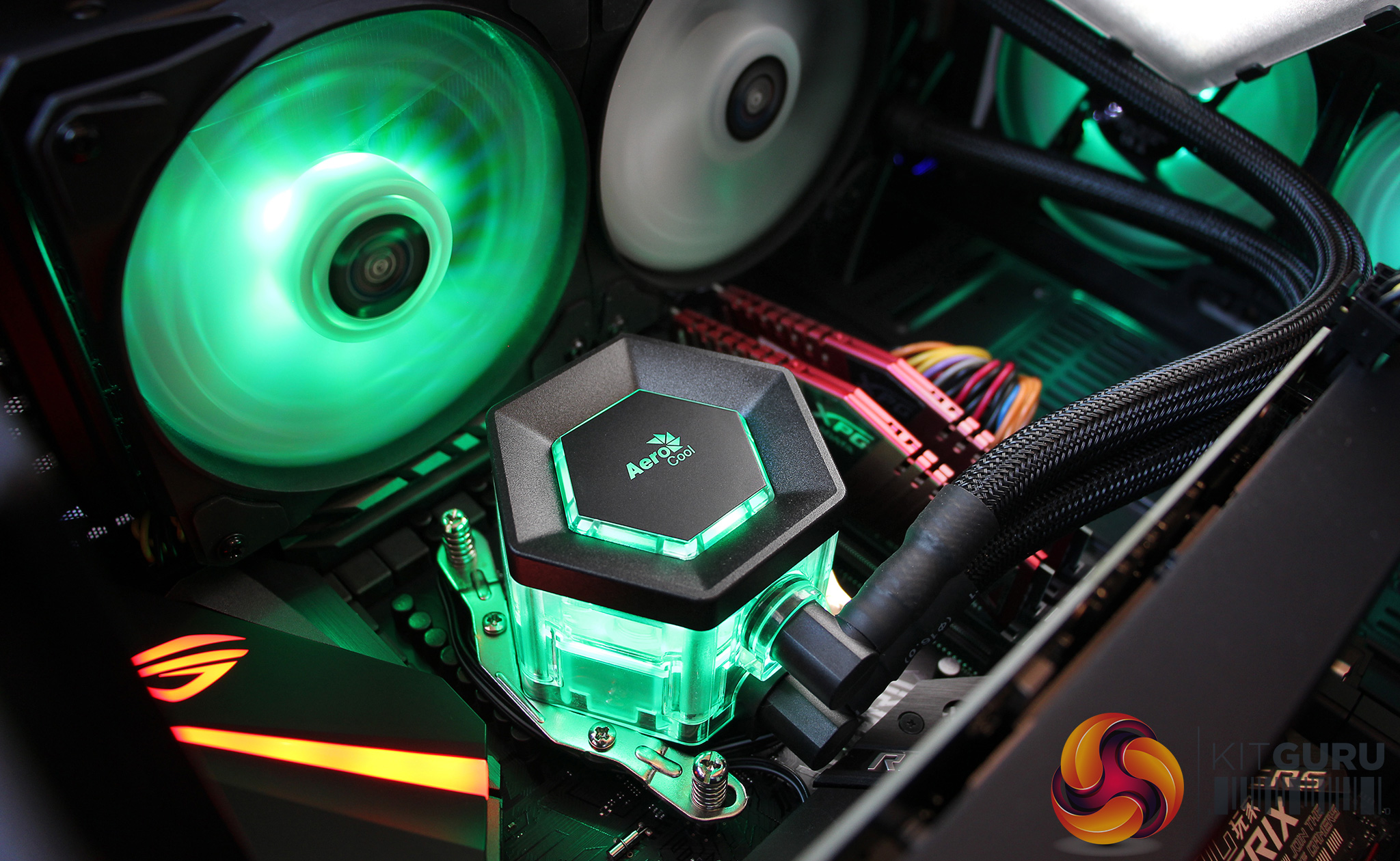
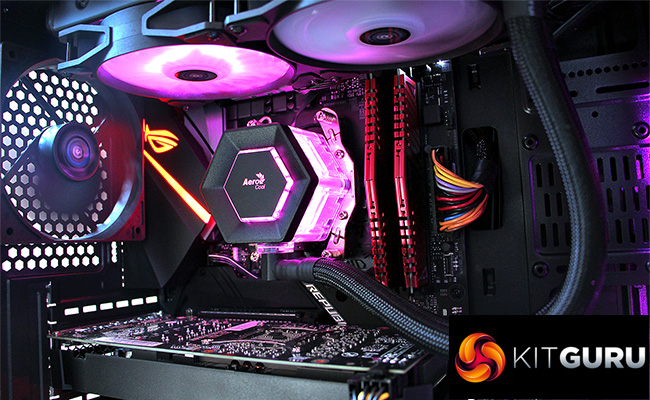
An Aerocool P7-L240 liquid cooling unit is installed in the roof, and its two cables snake down to the processor. The waterblock is smart, with an angled top and an acrylic body that glows with RGB LEDs in sync with the PC’s intake fans. The two fans on the water-cooling unit are RGB-equipped, too.
Falcon has done a good job building this PC. The cables at the bottom of the rig are tied down and kept out of the way, and the main power cables are routed sensibly – so it’s easy to work inside this machine.
There’s a lot to like about the Aerocool Quartz case and Falcon’s tidy building, but this smaller chassis does have its limits. There may be two hard disk bays, for instance, but they’re both occupied – one with the hard disk, and the other with the fan controller. That restricts the amount of storage you can add to this machine.
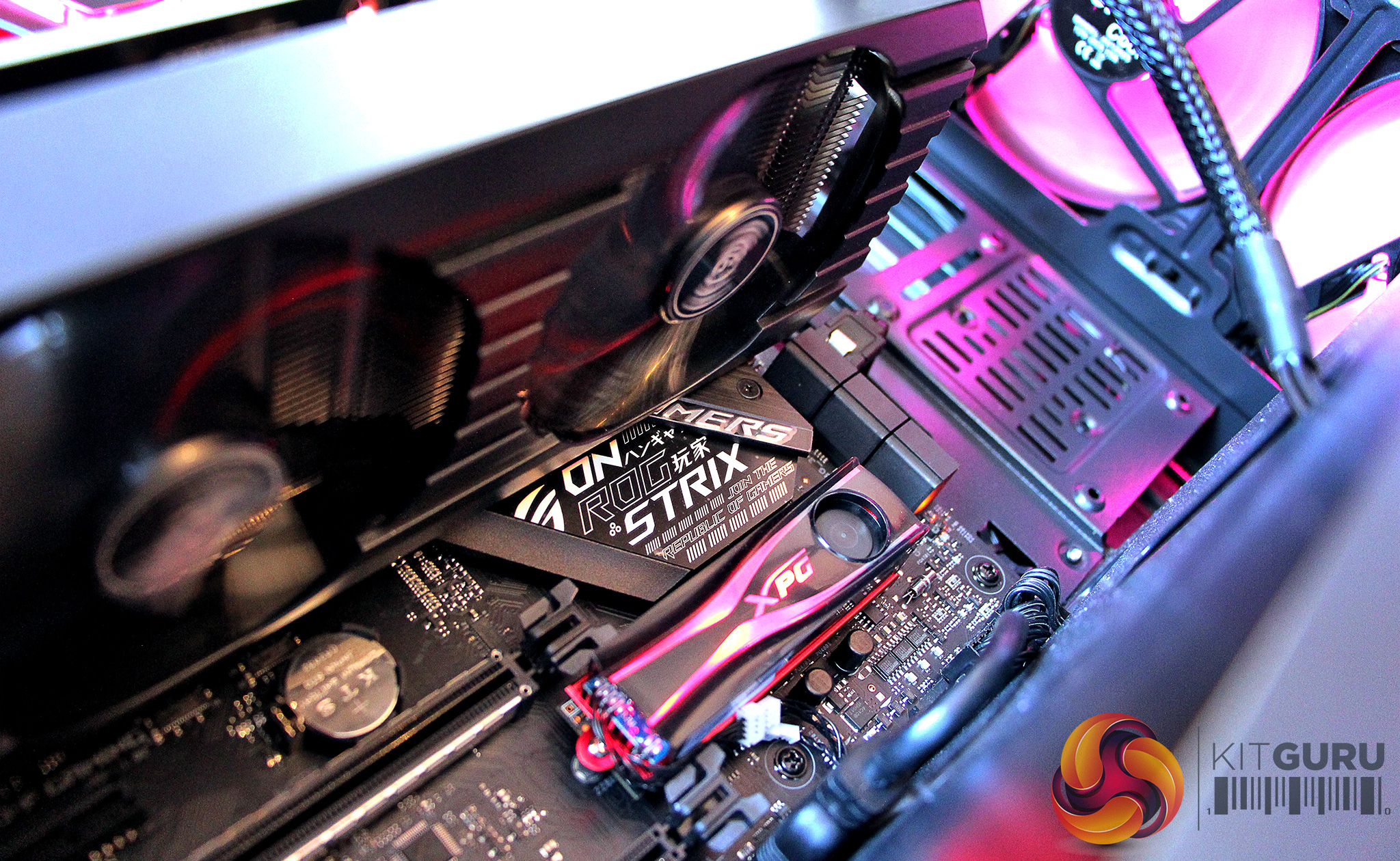
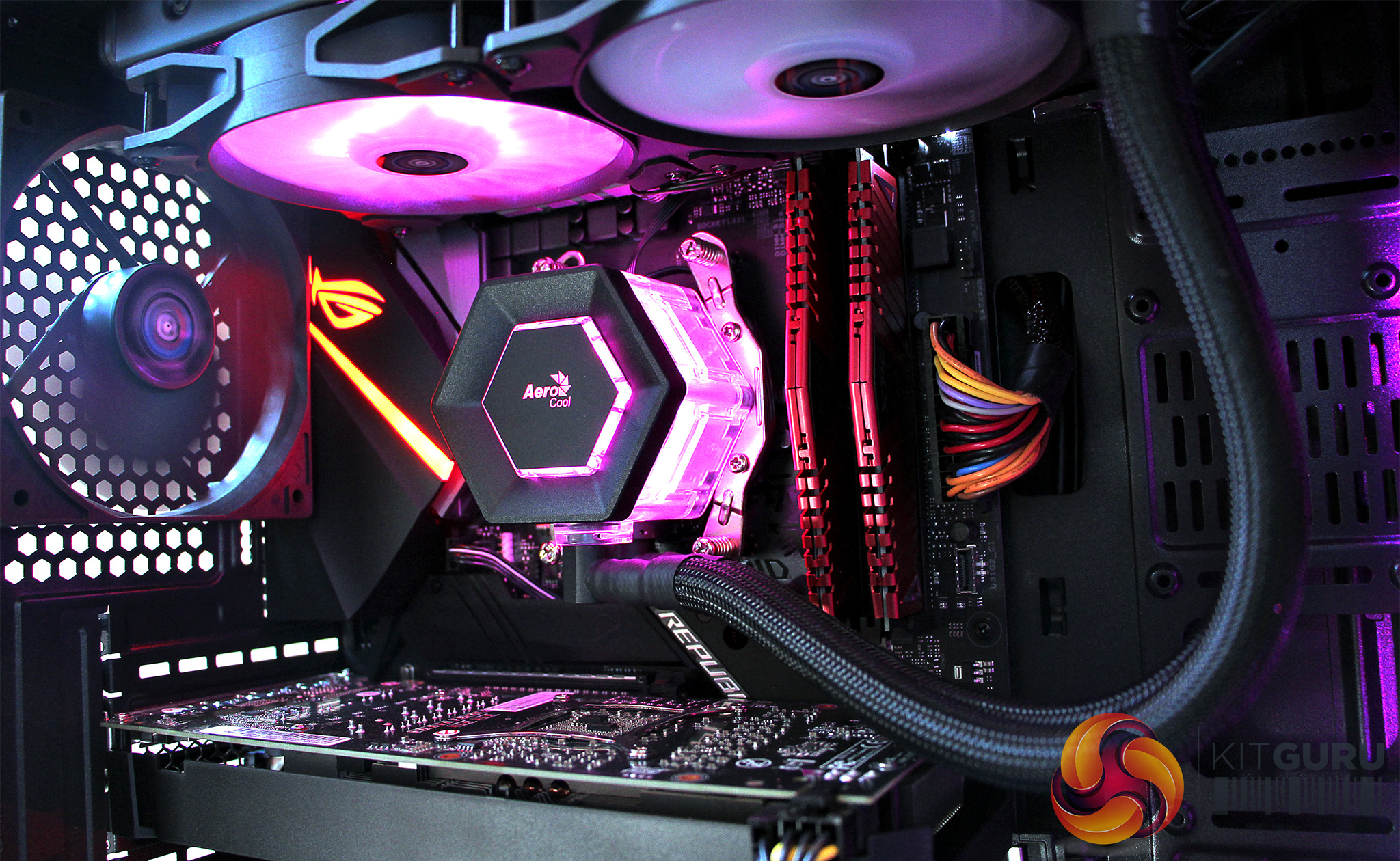
Elsewhere, the PSU shroud is smart but a little flimsy, and it can be difficult to reach certain parts of this machine for upgrade work. The water-cooling unit and its two fans make accessing the top of the memory slots difficult. The graphics card almost encroaches on the SATA ports, and the PSU shroud and connectors at the bottom of the board make it difficult to use the bottom PCI-E slot.
If you don’t plan to upgrade this machine, that won’t be a problem. However, if you are keen to tinker, it may be worth looking into rivals that have a little more room.
Still, it’s a good bill of health for a PC at this price. The interior is smarter and easier to work with than the Phanteks case included in the Overclockers PC, and the PSU shroud ensures that it’s much neater than the Corsair case included with the PC Specialist – even if that case is more spacious. Only the In-Win 101 used by the CyberPower system offers a little more in terms of expansion, but that case is a little untidy and flimsy.
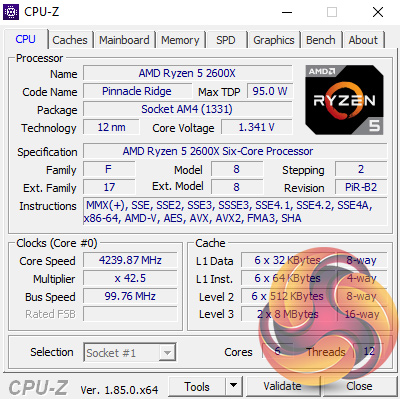
The Falcon’s most exciting component is its second-generation AMD Ryzen processor. The Ryzen 5 2600X has a 3.6GHz stock speed with a 4.2GHz peak – and don't forget it delivers six multi-threaded cores.
That specification compares well to other machines. It’s got more cores than the overclocked i3-8350K inside the Overclockers UK system, and it’s even further ahead of the stock-speed i3-8100 inside the PC Specialist. The only chip that may provide a comprehensive challenge is the i5-8600K inside the CyberPower, which has six cores and an overclocked speed of 4.3GHz – but no multi-threading.
The processor is supported by a conventional array of components. There’s 8GB of dual-channel 2,666MHz DDR4 memory, and Windows 10 Home sits on a 256GB AData SX6000 SSD along with a 1TB hard disk.
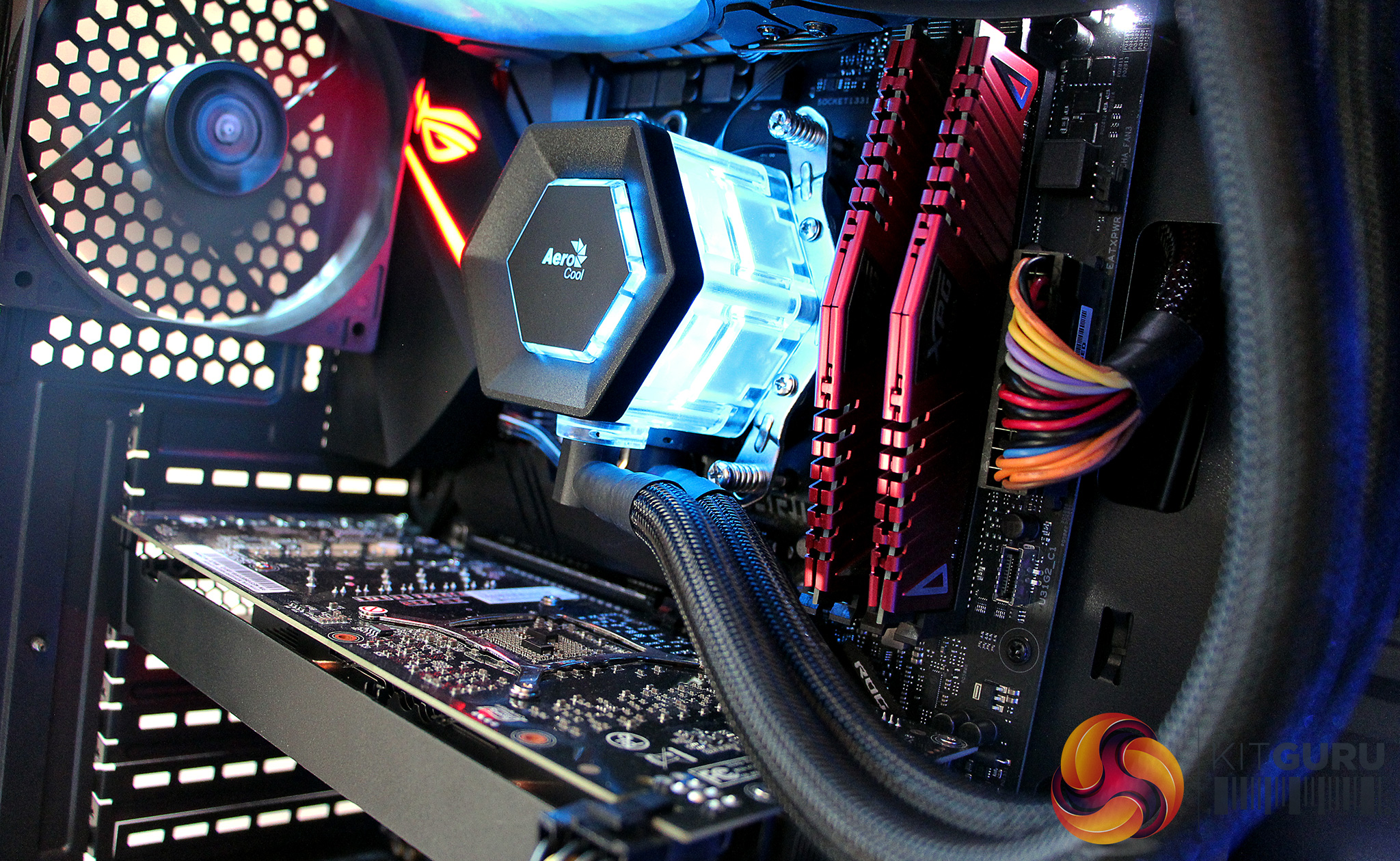
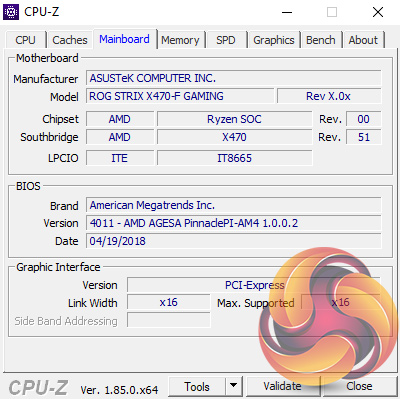
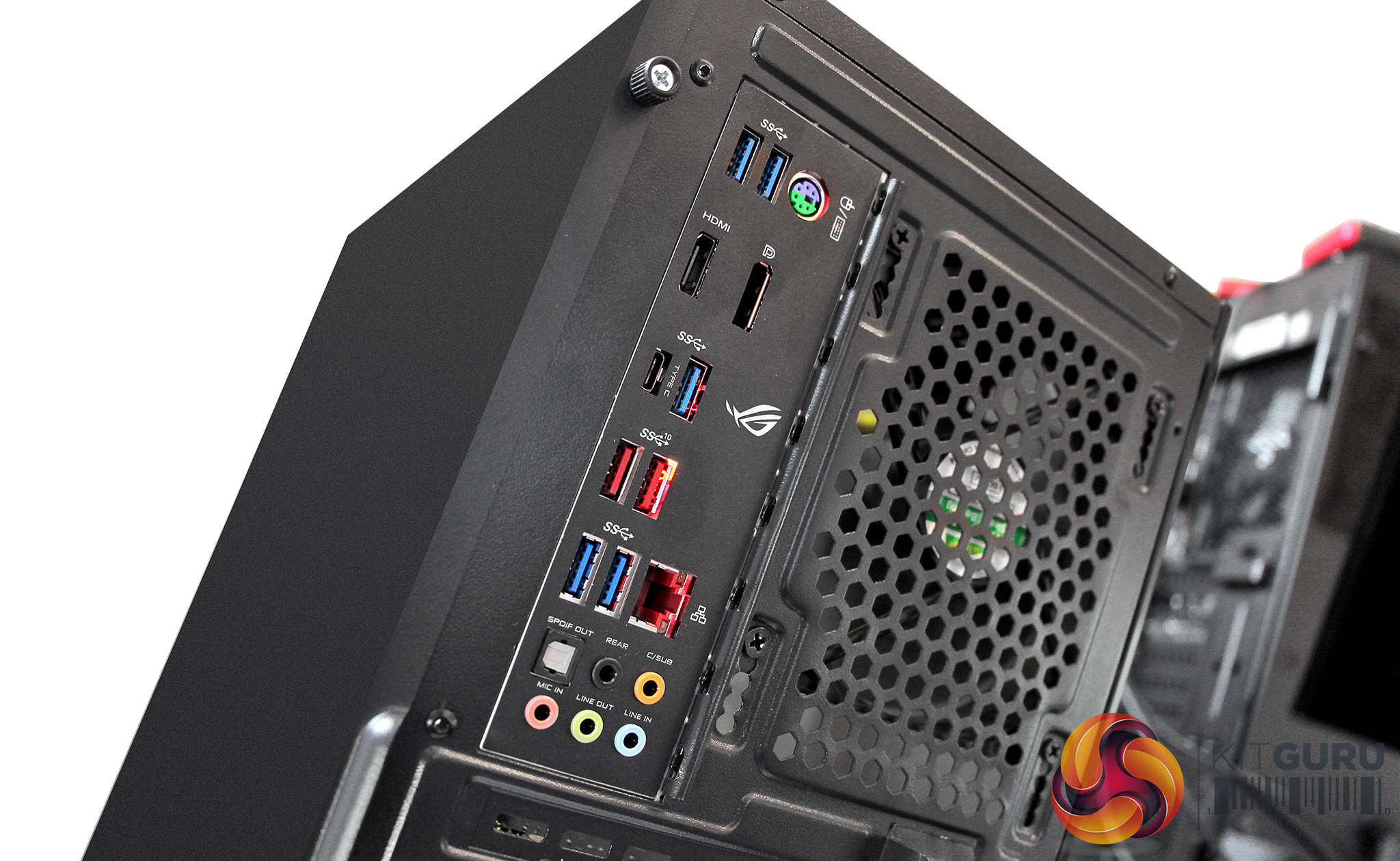
Those parts plug in to an Asus ROG Strix X470-F Gaming motherboard. It’s a smart ATX board that serves up many of the familiar features from the Asus gaming range. It’s got chunky metal heatsinks that illuminate with RGB LEDs, and a rear I/O that serves up loads of USB 3.1 ports, five audio jacks and a Type-C connector.
The Asus board has reinforced steel PCI slots, and it has two memory slots free – even if they’re tricky to reach. A second M.2 slot is also free in the centre of the board – although the water-cooling pipes make it awkward to access. Users also get the usual Intel gaming-friendly Ethernet and SupremeFX audio, both of which will be good enough for the vast majority of users.
This is a mid-range board, though, so you do miss some features – and others are compromised because of the Falcon’s tight confines. There are no on-board buttons, and no on-board POST display – both of which are useful for tinkerers. You don’t get on-board Wi-Fi, either. And, while the board does have diagnostic LEDs, they’re hidden at the top of the case, behind the water-cooling unit.
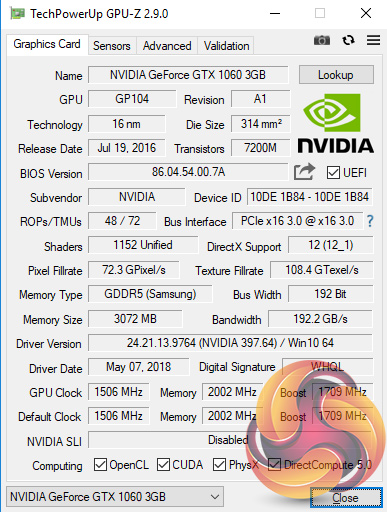
Disappointingly, the GTX 1060 included in this machine may well be the most underwhelming component. That's because Falcon has deployed the weaker 3GB version of the card, which not only has less GDDR5 memory, but it also has 128 less CUDA cores than its 6GB brother. That will hurt performance when it comes to gaming and synthetic benchmarks.
The good news is that Falcon allows for plenty of PC customisation. Virtually every component in this PC can be changed, and upgrading to the 6GB GTX 1060 will only cost around £35.
To test the Falcon Project X VR Ready Gaming PC, we have pushed it through a broad array of benchmarks and tests. We have tested CPU performance, GPU performance, drive performance, thermals and power usage to give a comprehensive view of the desktop.
Here are the benchmarks you can expect to find in this review:
- Cinebench R15
- CrystalDiskMark
- 3DMark Fire Strike
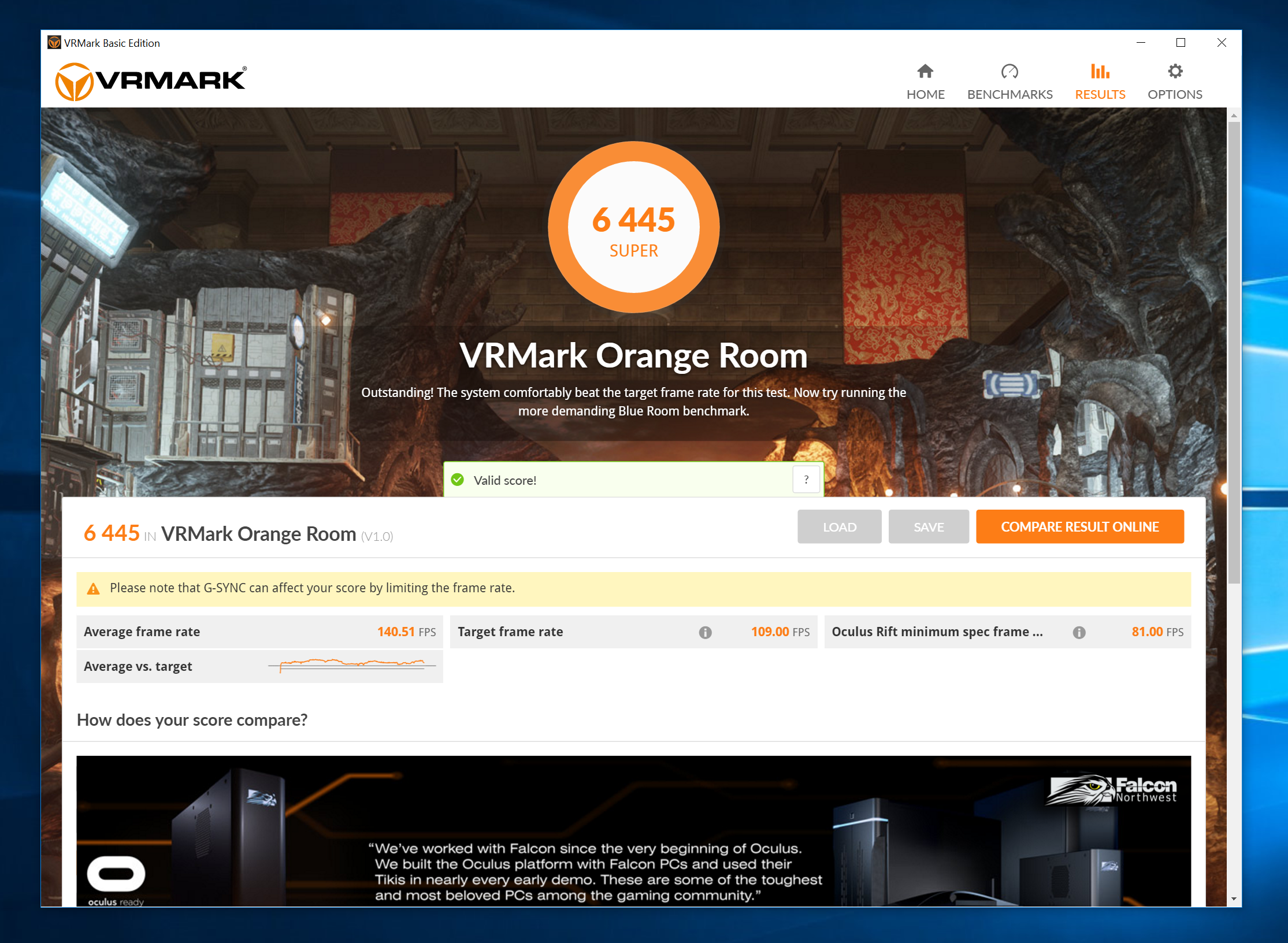
- VRMark
The Falcon Project X VR Ready Gaming PC has an Nvidia GeForce GTX 1060 graphics card. To that end, we’ve also used high-end games to put the GPU through its paces.
- Deus Ex: Mankind Divided
- Rise of the Tomb Raider
We’ve compared the Falcon to three keen rivals.
The Overclockers UK Cobalt is a £1,235 machine with an overclocked Core i3 processor, the 6GB version of the GTX 1060 graphics card and 16GB of memory.
The PC Specialist Enigma Pro costs just under £900 and serves up a GTX 1070 for that money – but elsewhere you get a weaker Core i3-8100 processor and no SSD.
The final challenger is the £1,199 CyberPower Infinity X66 GTX, which has an overclocked Core i5-8600K processor and the 6GB GTX 1060 graphics card.
CINEBENCH R15 is a cross-platform testing suite that measures hardware performance and is the de facto standard benchmarking tool for leading companies and trade journals for conducting real-world hardware performance tests. With the new Release 15, systems with up to 256 threads can be tested.
CINEBENCH is available for both Windows and OS X and is used by almost all hardware manufacturers and trade journals for comparing CPUs and graphics cards.
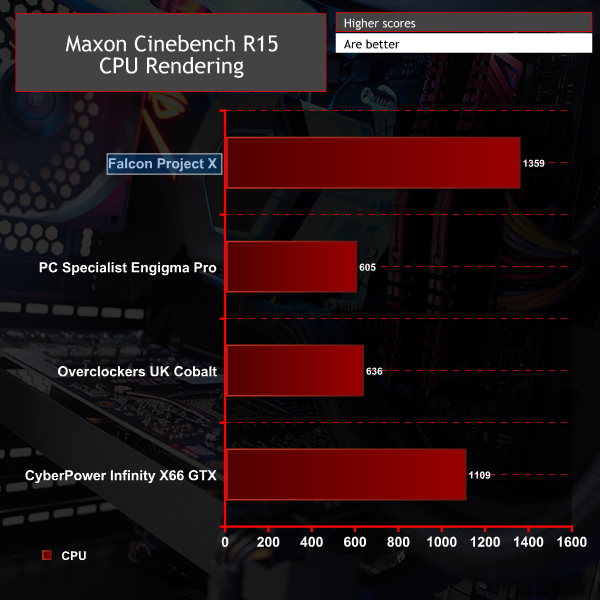
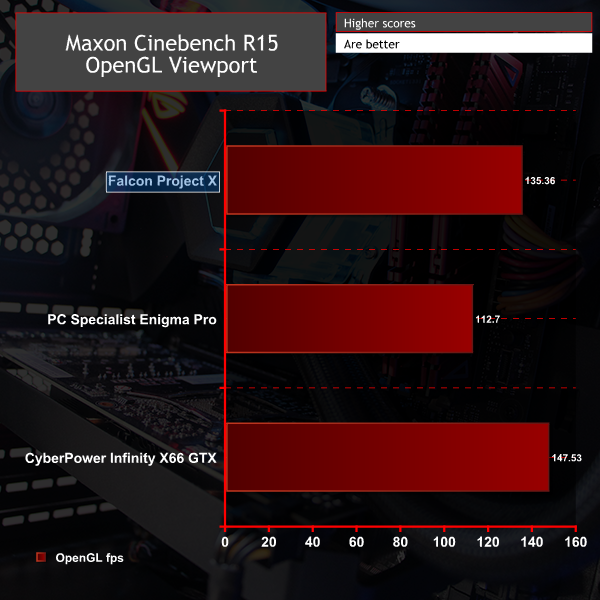
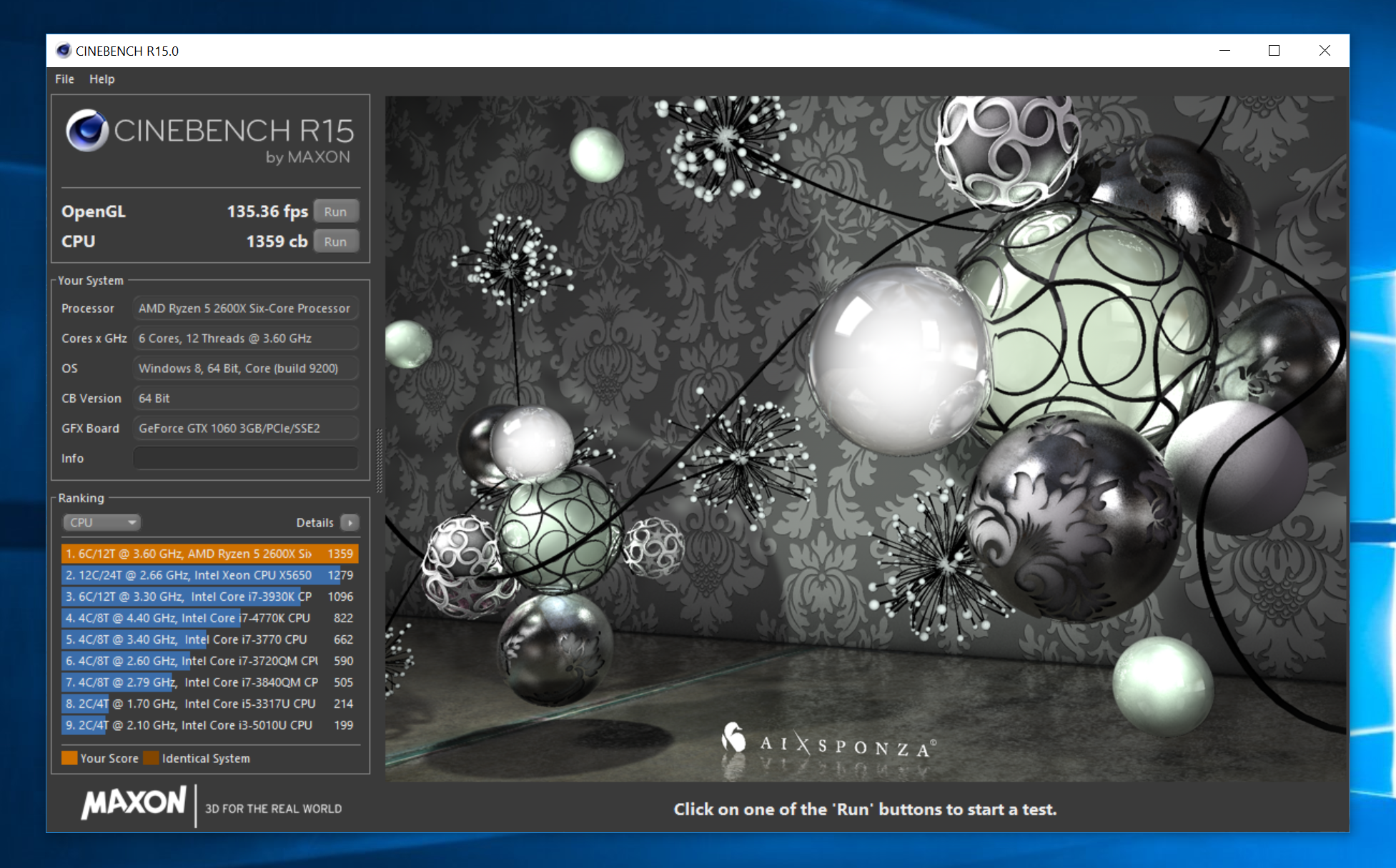
The Falcon’s result of 1,359cb is twice as good as the Overclockers UK machine, which had an overclocked Core i3 processor with a far poorer core count. It’s also a couple of hundred points faster than the CyberPower machine, which had the tweaked Core i5-8600K processor. The final contender, PC Specialist’s stock-speed Core i3 machine, could only muster 605cb.
That fantastic result bodes well for several important usage scenarios. The huge score largely comes from the extra multi-threaded cores, and that extra punch means the Falcon will be far faster when it comes to handling multi-tasking and tough work applications.
You won’t have any issues running low-end tasks with this machine either. Whether it’s web browsing or Office tools, the Falcon will prove to offer a smooth experience.
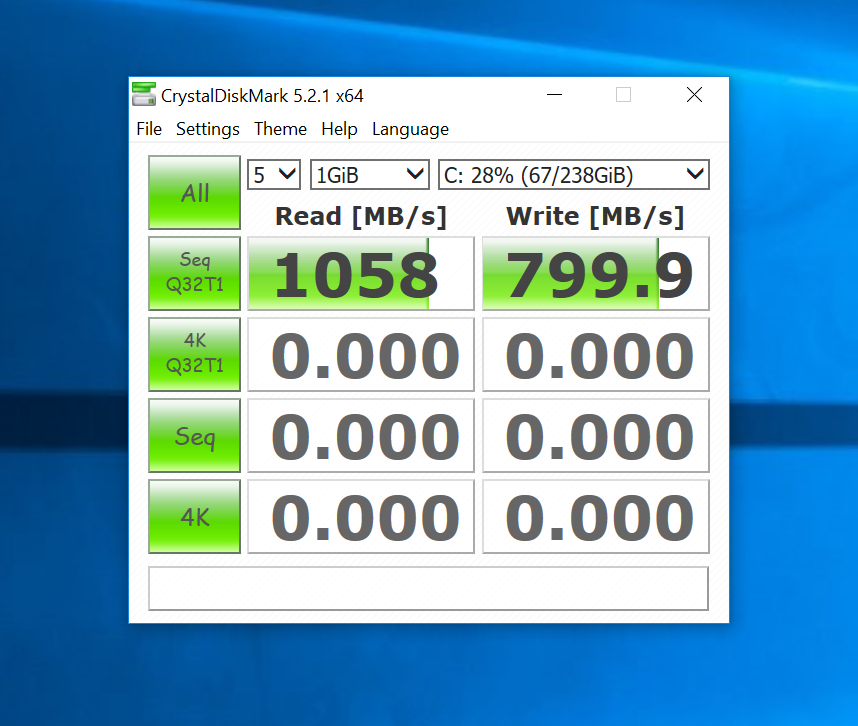
Here we test the Falcon Project X VR Ready Gaming PC ‘s storage performance, using CrystalDiskMark 5.2.1.
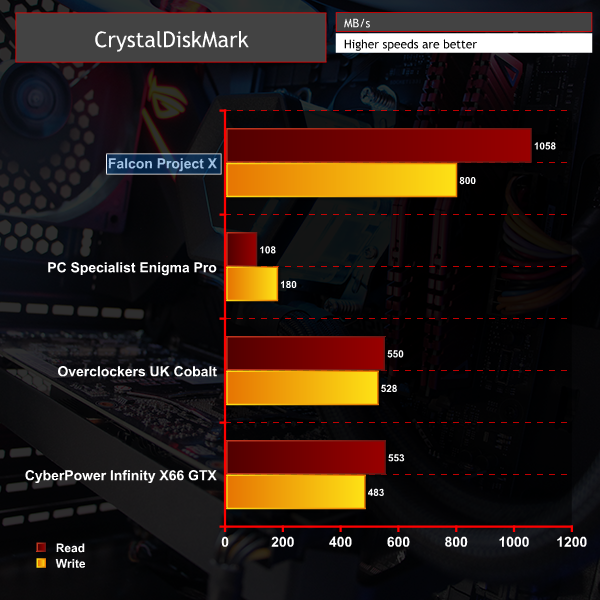
The AData SSD inside the Falcon delivered read and write speeds of 1,058MB/s and 800MB/s. That’s about twice the speed that you’ll get from a SATA SSD, sure, and it’s better than any of the drives in any rival machines.
However, it’s still disappointing for a NVMe drive. The best NVMe SSDs will treble those benchmark speeds easily, and upgrading isn’t a particularly expensive change: swapping to a Samsung 960 EVO on the Falcon website will cost you around £30.
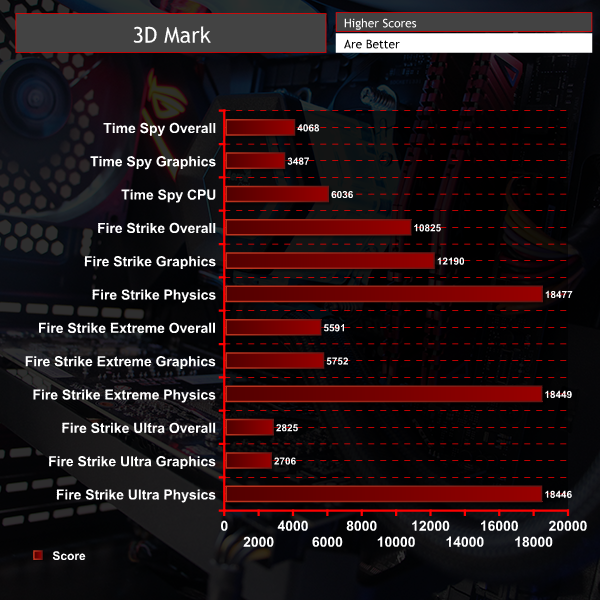
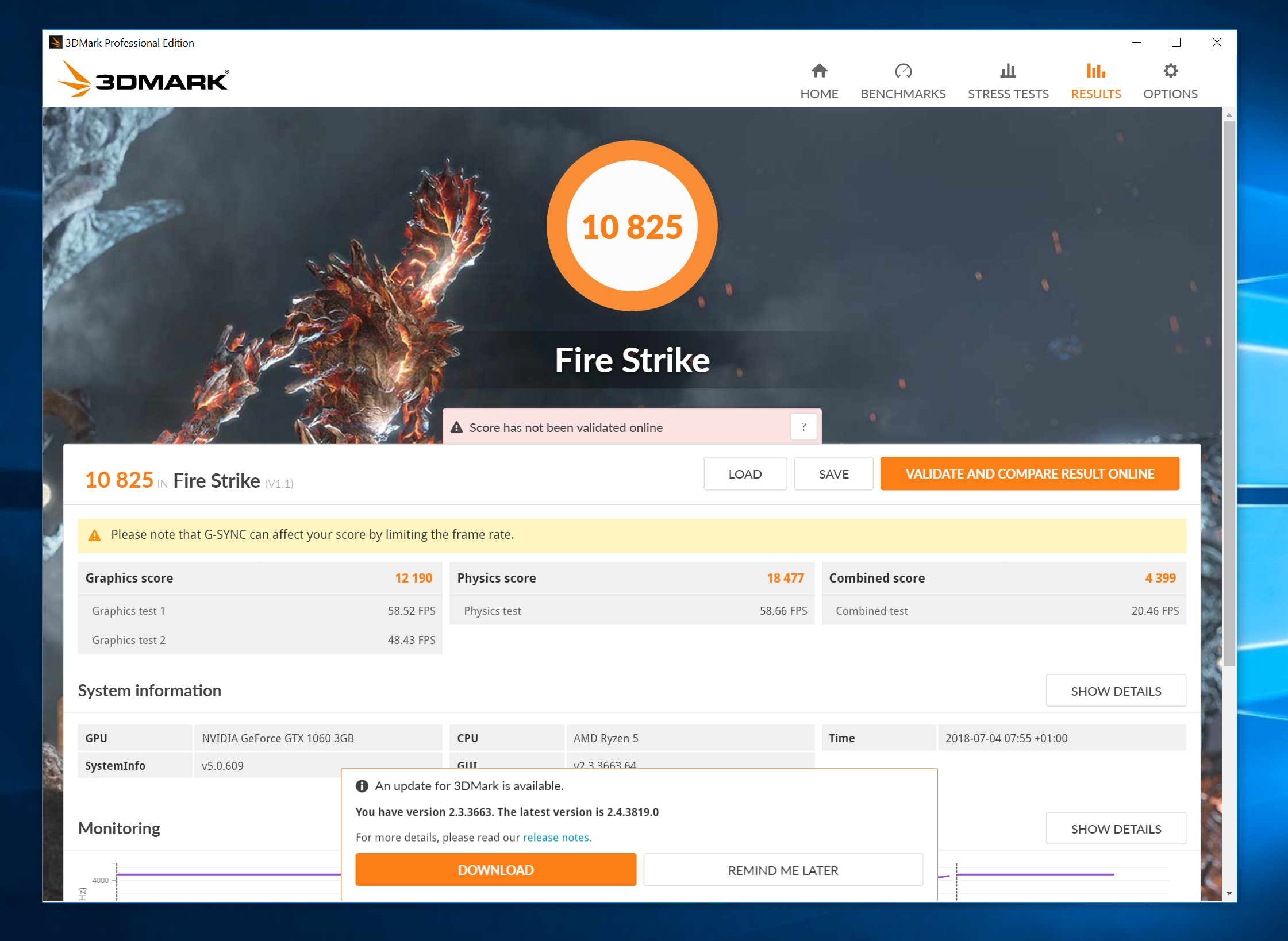
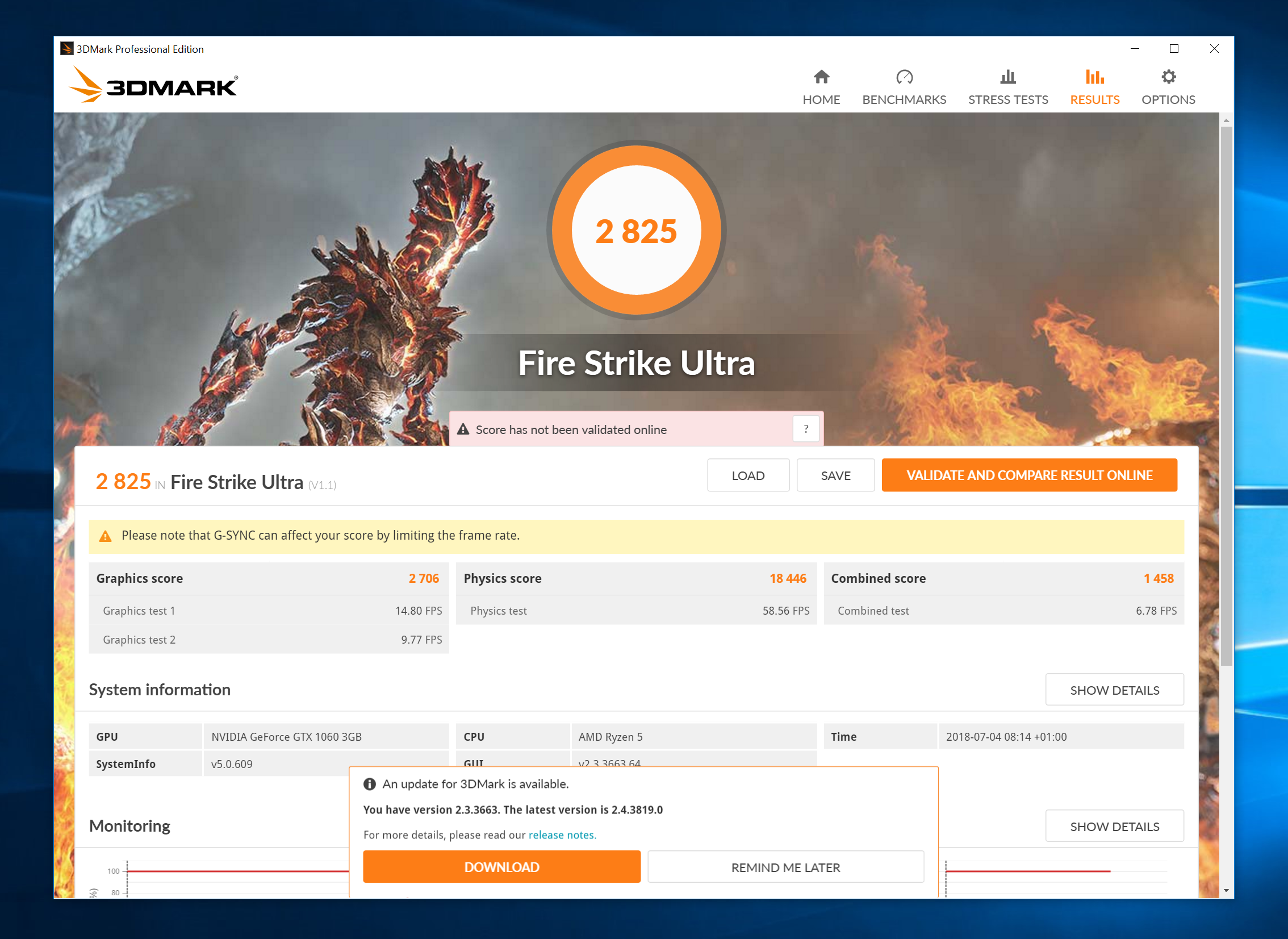
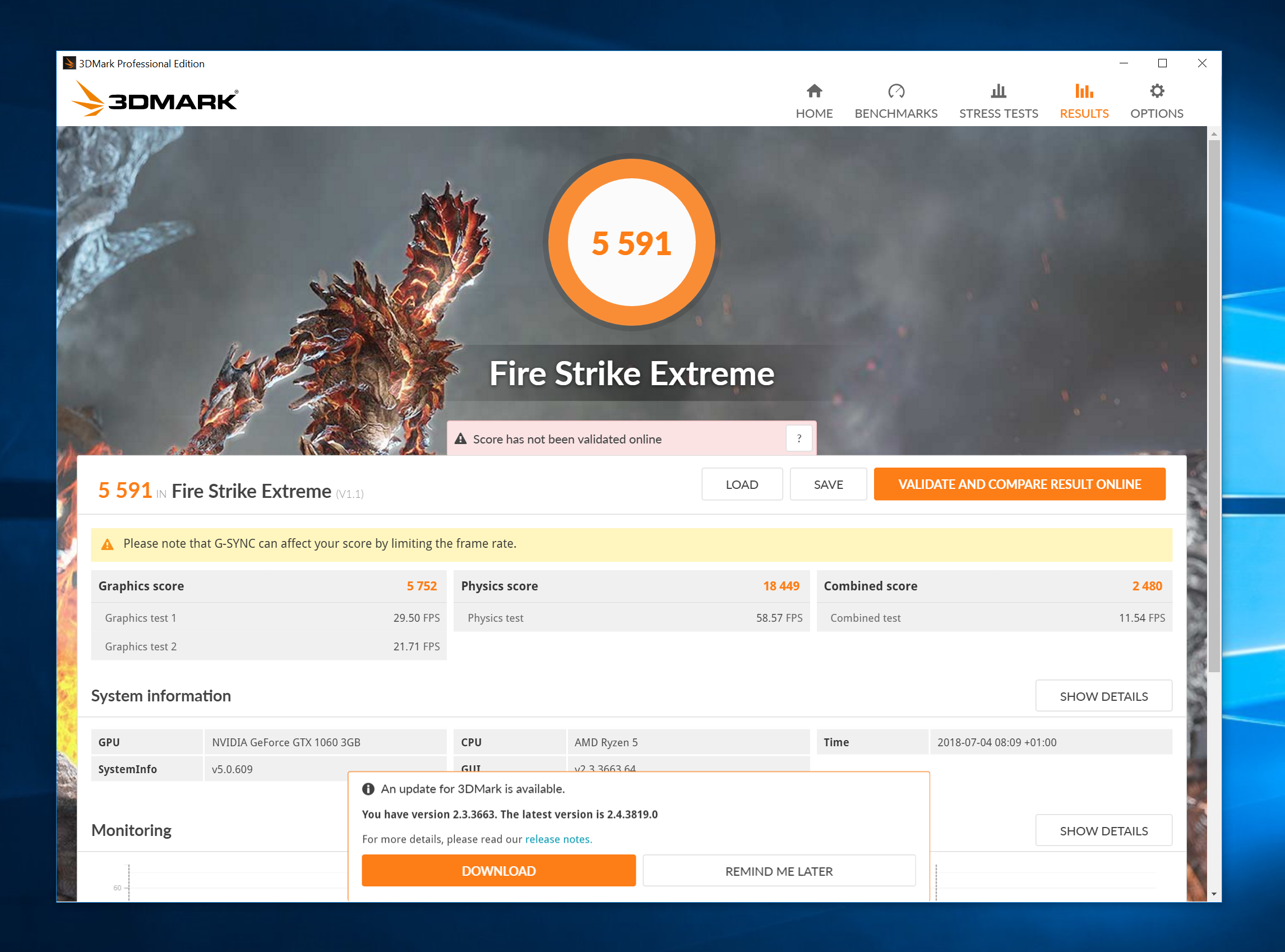
For this test, we ran the Falcon Project X VR Ready Gaming PC through Time Spy, Fire Strike and Fire Strike Extreme. We have listed results for the overall score, the CPU only score, the GPU-only score and physics.
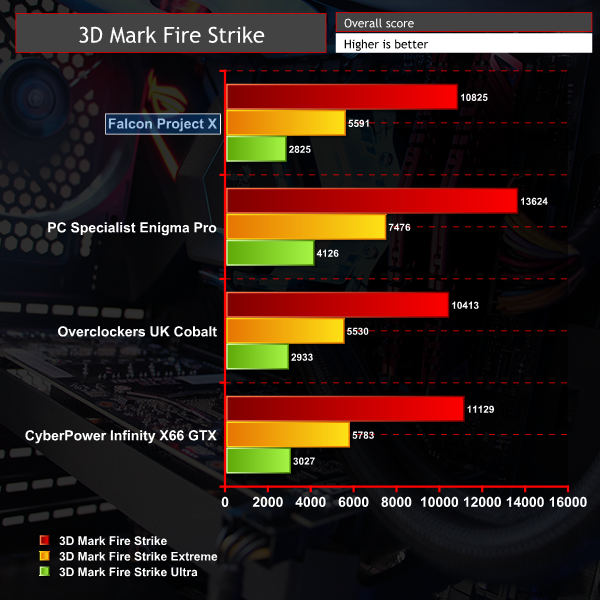
The Falcon machine may have the weaker 3GB version of the GTX 1060, but it traded blows with rival machines that feature the 6GB variant of the card – undoubtedly with the superb processor picking up some of the slack.
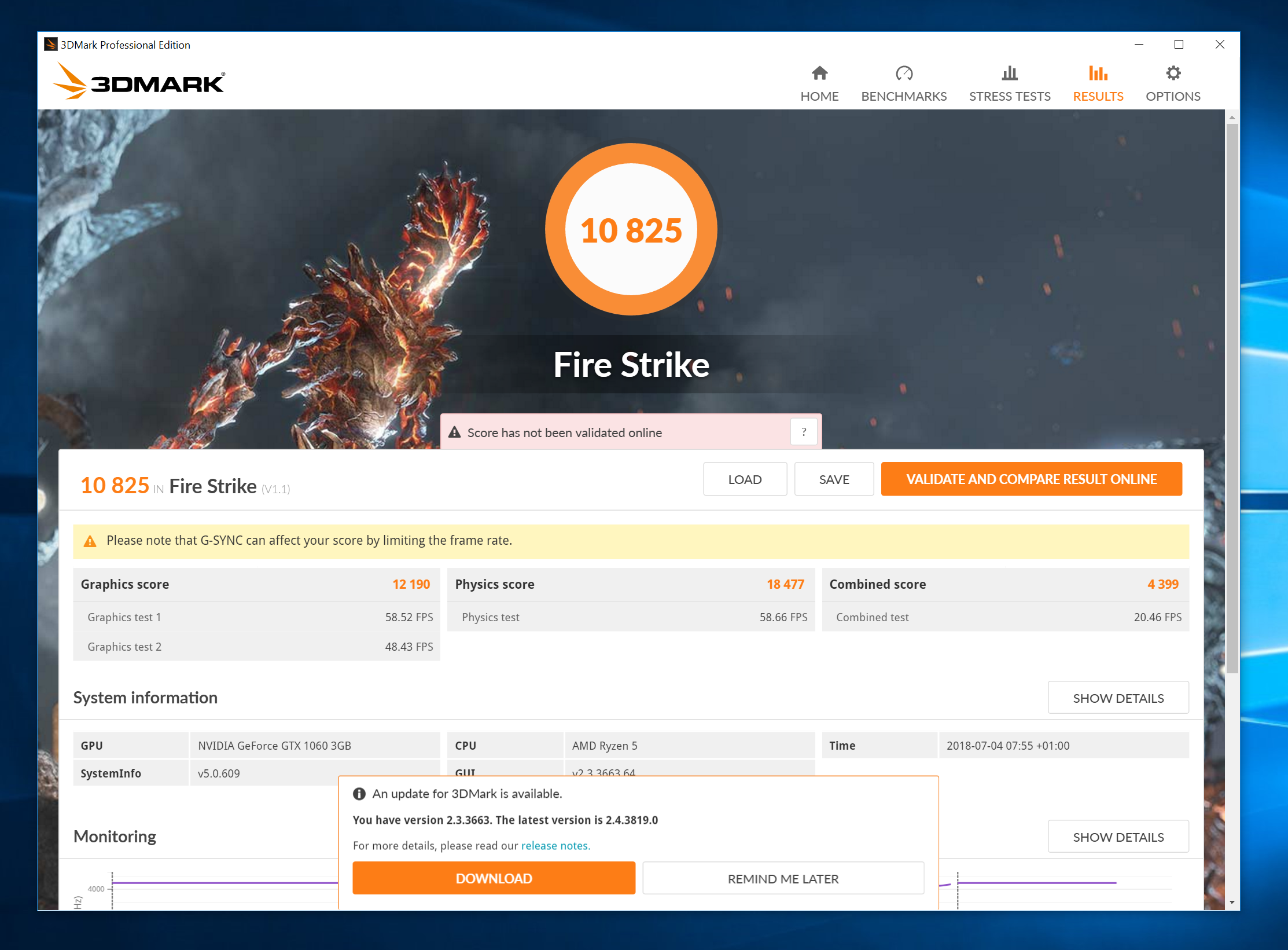
The Falcon scored 10,825 points in the standard Fire Strike test. That’s around 400 points better than the Overclockers UK Cobalt, but a little behind the CyberPower Infinity X66 GTX, with both of those rival rigs featuring the 6GB GTX 1060.
Unsurprisingly, the Falcon was a long way behind the PC Specialist rig, which used a GTX 1070 to deliver a score of 13,624.
The lesser memory and CUDA cores of the 3GB card has more of an impact in tougher tests. In the Fire Strike Ultra benchmark, for instance, the Falcon falls behind both machines with the 6GB version of the card – it no longer sits between the two.
The Falcon Project X VR Ready Gaming PC comes with one Nvidia GeForce GTX 1060 graphics chip. For our tests today, we have ran two high-end games, starting at 1080p and working our way up to 4K to see how much this machine can cope with.
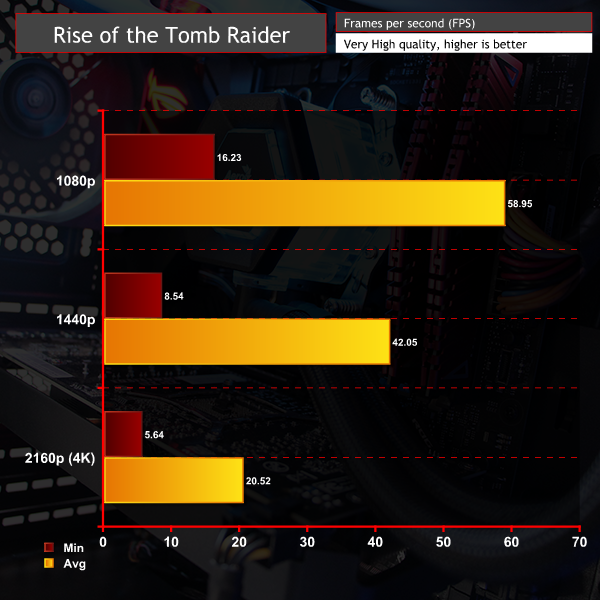
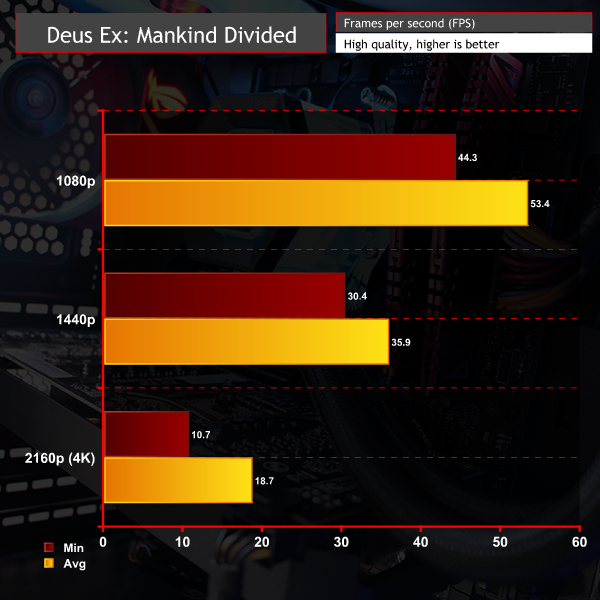
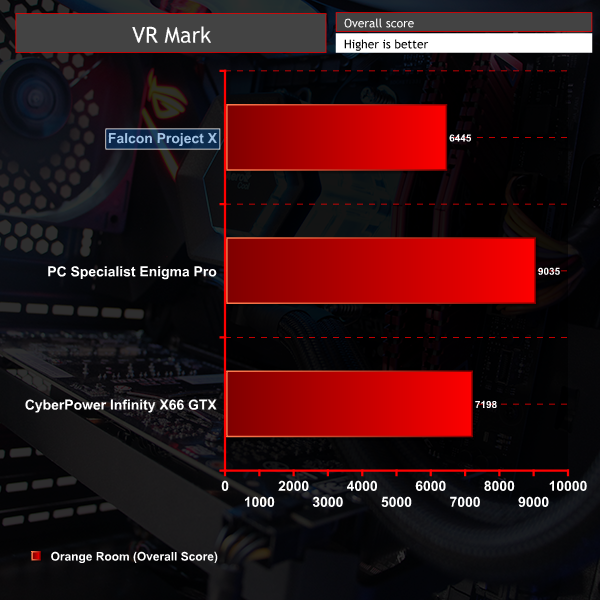
There wasn’t much between the 3GB and 6GB versions of the GTX 1060 in the 3D Mark tests, but the difference between the two cards was more obvious in real-world gaming benchmarks.
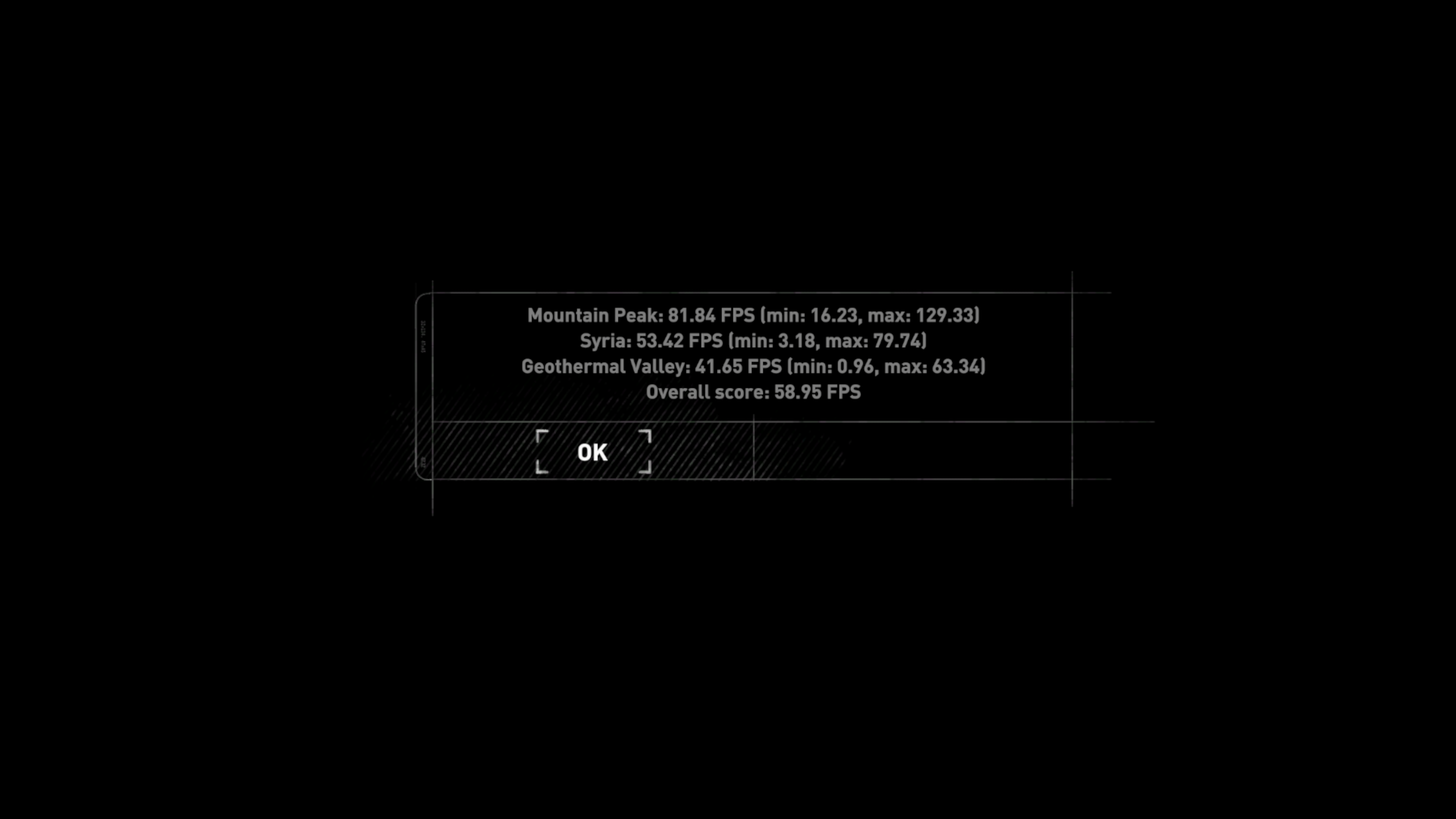
In Tomb Raider’s Very High benchmark at 1080p, for instance, the Falcon system averaged 58.9fps. That’s a good result that ensures games are playable, but it’s a long way behind the Overclockers and CyberPower machines, which returned averages of 74.7fps and 79fps.
The Falcon’s card returned a playable framerate at 1440p, but it remained about 15 frames behind its rivals that have the better GTX 1060.
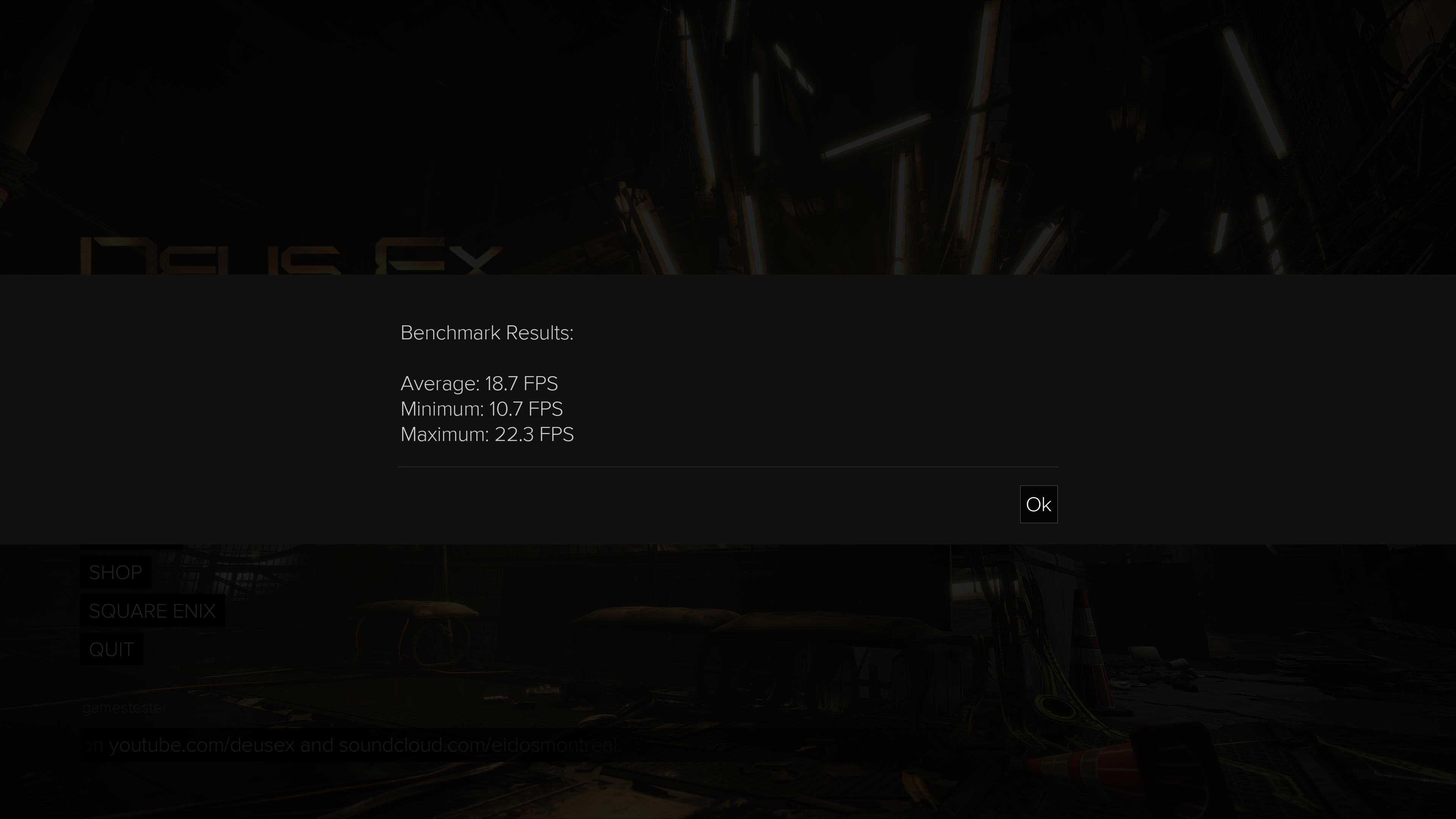
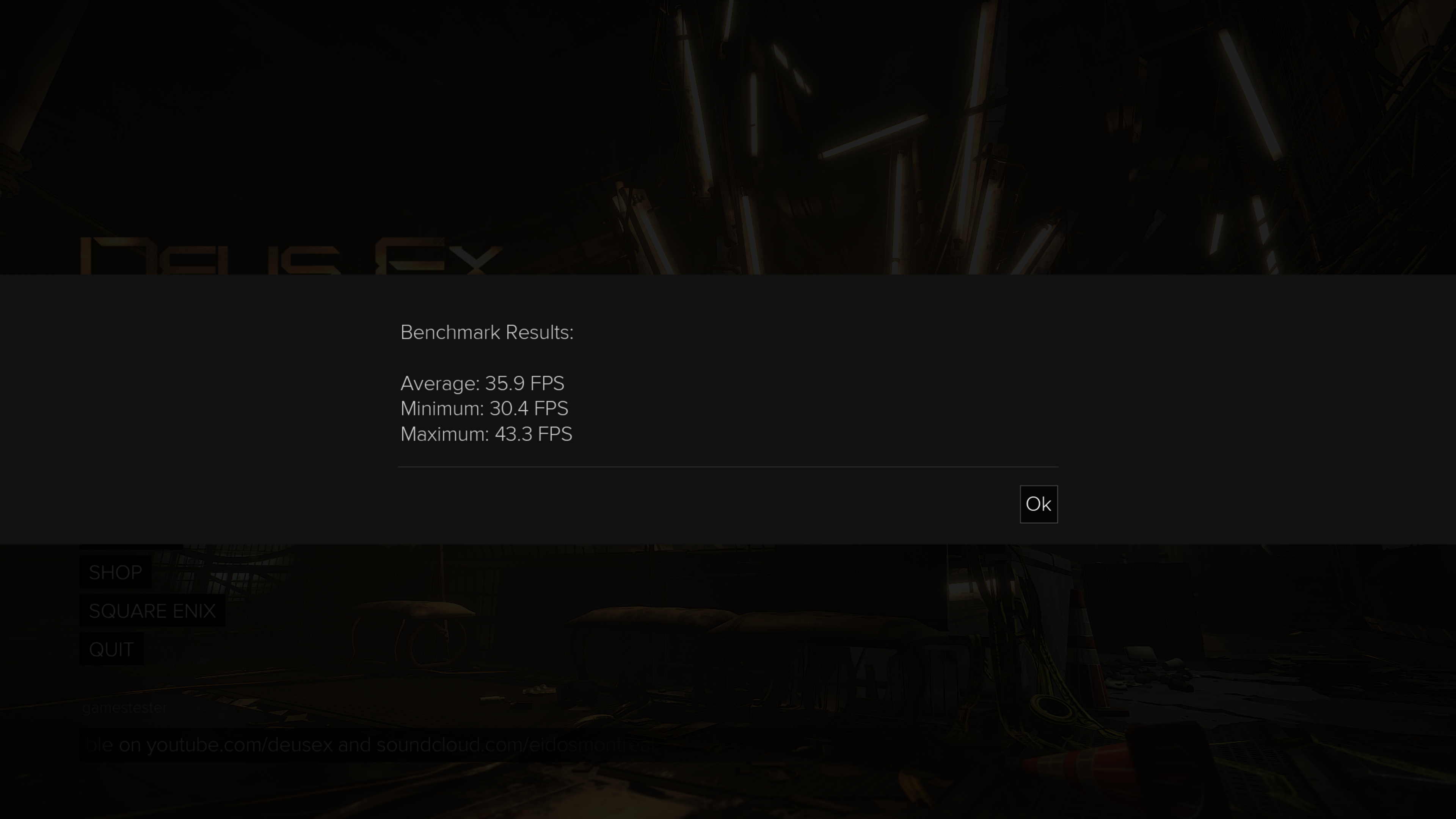
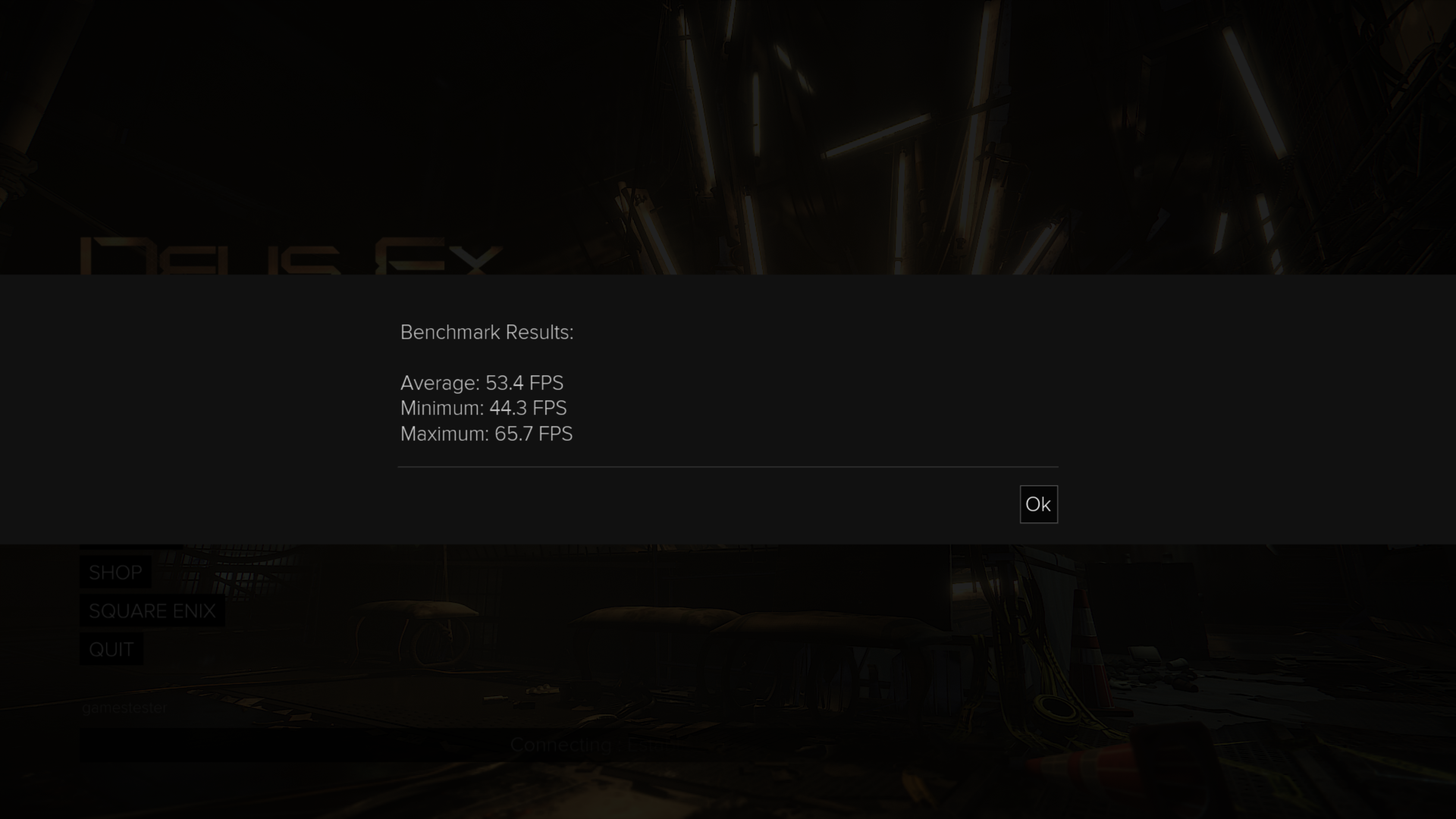
The same situation occurred in Deus Ex: Mankind Divided. While the Falcon’s 1080p result of 53.4fps is good, the Overclockers machine managed 62fps. It was playable at 1440p, but newer, tougher games will quickly prove too much for the 3GB card to handle – whereas the 6GB version of the GTX 1060 will always have more graphical headroom thanks to its increased CUDA core count.
Unsurprisingly, there’s no competition between the Falcon and the PC Specialist, because the latter includes a GTX 1070 graphics card.
The PC Specialist will always be quicker in games, but the gulf can really be seen in the VR Mark test. The Falcon’s Orange Room score of 6,445 is fine, and it means you can play VR games if you’re willing to dial back the settings – but the PC Specialist machine scored more than 9,000 points in the same test.
In essence, then, the Falcon is a capable rig for 1080p gaming – but it’ll struggle in many other scenarios. The toughest games won’t play at 1440p unless you dial back the settings, and the same is true of VR headsets. It also won’t handle 4K at all.
To measure idle temperatures, a reading was taken after having Windows open on the desktop for 30 minutes. A reading under load was taken with Prime 95’s SmallFFt test running alongside 3DMark Fire Strike.
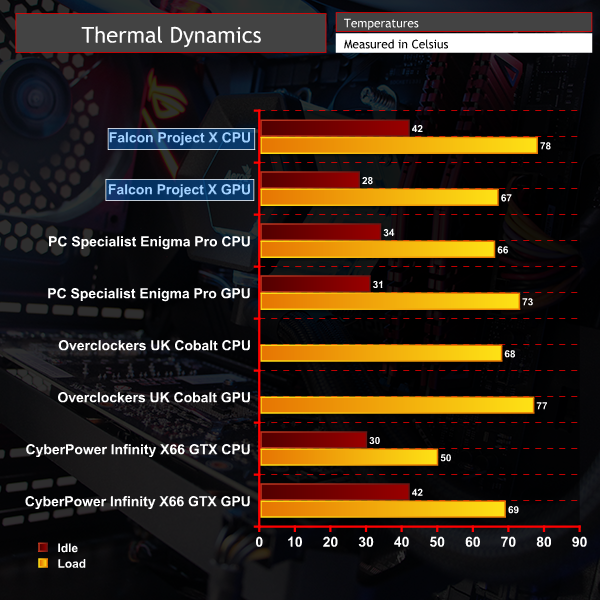
The Falcon didn’t have any temperature issues during any of our benchmarks. In a full-system stress-test the CPU and GPU peaked at 83°C and 67°C respectively, with the processor a little cooler when that component was tested on its own. There were no throttling issues during stress-tests, either: the CPU ran at a solid 3.975GHz, with the GPU rattling along at 1,860MHz.
The issue wasn’t temperature – it was noise. When idling the Falcon rig pumped out a low rumble that was still noisier than most of its rivals in the same situation. When stressed, the rig was still louder than most its competitors – not irritating or intrusive, but certainly noticeable.
If you’re using a headset or speakers, it’s easy enough to mask the Falcon’s noise. But the fact remains that it’s louder than most of its rivals in most scenarios, so that’s worth remembering if you want a system that’s particularly quiet.
The Falcon Project X VR Ready Gaming PC has a great processor and some impressive touches – but deficiencies in other departments mean that it doesn’t come with a clean bill of health.
First, the good. The AMD Ryzen 5 2600X is a barnstorming chip that delivers higher scores in our benchmarks than any similarly-priced rival. At this price, the memory, storage and motherboard are all solid, with no major issues bar a minor lack of speed. The case has good build quality and design, too – our only concerns are the cramped internals and the absence of a couple of ports.
It’s not all good news, however. The inclusion of the 3GB version of the GTX 1060 is disappointing, and the lack of performance can really be seen in gaming benchmarks. It’s also a bit louder than its rivals, and people who want to tinker or upgrade will want a larger case.
While those are certainly issues, Falcon’s extensive customisation options mean they can be easily rectified – and these upgrades aren’t expensive, which means this rig would still be good value, even with a beefier GPU and bigger case.
Be prepared to change the specification slightly to get the most out of this machine, then, but still consider the Falcon Project X VR Ready Gaming PC if you need a small, versatile system that’ll deliver a huge amount of CPU power for a relatively low price.
The model we've reviewed here is available for £1149.99.
Pros
- Ryzen 2 CPU is far quicker than rival CPUs.
- Motherboard has decent features and design.
- Case is smart, solid and well-built.
- Loads of potential upgrades on the Falcon website.
Cons
- 3GB version of the GTX 1060 is slow.
- SSD offers underwhelming NVMe speed.
- Case can be a little cramped.
- Noisier than rivals, especially when stressed.
KitGuru says: The Falcon Project X VR Ready Gaming PC delivers huge CPU power inside a neat, tidy and compact build, and many of its components are fine – but the GPU and noise levels are both disappointing. Still, it is worth considering thanks to the 6-core processor and decent price.