KitGuru KitGuru.net – Tech News | Hardware News | Hardware Reviews | IOS | Mobile | Gaming | Graphics Cards


The new Threadripper processors from AMD already push the envelope when it comes to multi-threaded performance, and the Chillblast Fusion Centauri Ryzen Threadripper Ultimate takes the red team’s fantastic hardware and pairs it with a stupendous, eye-catching build – complete with two GTX 1080 Tis. At £7500, however, you're going to need very deep pockets to be able to get one for yourself.
The Centauri is a monster machine that links the Threadripper 1950X with two overclocked Nvidia GeForce GTX 1080 Ti cards, fantastic storage and one of the most expensive motherboards on the market. This machine looks the part, too, with a huge case, bespoke water-cooling throughout and a consistent orange theme.
It costs, though: at £7,500 the Chillblast is one of the most expensive PCs we’ve ever seen, and it’s pricier than other high-end rigs we’ve reviewed recently. But, if you’re into video production and other high-end tasks, it is worth it?
Specifications:
- CPU: AMD Ryzen Threadripper 1950X (3.4Ghz – 4GHz)
- CPU cooling: Phanteks Glacier C399a waterblock, EKWB X3 250 reservoir, EKWB Revo D5 PWM pump, XSPC EX360 radiator with 3 x 120mm fans
- Motherboard: Asus ROG Zenith Extreme
- Memory: 64GB Corsair Vengeance RBG 2,666MHz DDR4
- Graphics Chipset: 2 x 2 x Asus Nvidia GeForce GTX 1080 Ti 11GB
- Graphics cooling: 2 x Phanteks Glacier GTX 1080 Ti waterblocks, XSPC EX240 radiator with 2 x 120mm fans
- Storage: 1TB Samsung 960 PRO M.2 SSD, 10TB Seagate Barracuda HDD
- Case: Phanteks Enthloo Luxe
- Front ports: 2 x USB 3, 2 x USB 2, 2 x audio
- Rear ports: 9 x USB 3.1, 1 x USB 3.1 Type-C, 1 x Gigabit Ethernet, 1 x optical S/PDIF, 5 x audio
- Networking: Gigabit Ethernet, dual-band 802.11ac WiFi
- Audio: ROG SupremeFX S1220
- Power supply: Corsair AX1500i 1500W
- Operating system: Microsoft Windows 10 Pro 64-bit
- Warranty: 5yr labour with 2yr C&R
Total cost £7,500 inc. VAT.
The Threadripper 1950X is a formidable bit of silicon. This new chip has sixteen multi-threaded cores, which means it supports thirty-two concurrent threads. This chip is the beefiest part from the new Ryzen range, and it’s basically two 8-core Ryzen processors stuck together – which means huge power. The 1950X has 512KB of L2 cache per core and a mighty 32MB of L3 cache, and it serves up a monster 64 PCI lanes.
The 1950X inside Chillblast’s machine runs at its stock speed of 3.4GHz, with a boost peak of 4GHz and an XFR ceiling that’s 200Hz higher than that.
The choice of chip highlights who Chillblast reckons will buy this PC. The sixteen-core Centauri isn’t necessarily meant for gamers – instead, it’s designed for people who undertake professional content creation and design work, as well as streamers and those who run other intensive applications.
That’s enough power for anyone here, although another system has pushed the 1950X further. The Armari Magnetar S16T-RW850G2 used the same chip, but overclocked its core to a constant 4GHz.
Armari’s other recent rig, the S18X-RD850G2, used an overclocked Intel Core i9-7980XE – the top chip from the Core i9 range. It’s got a whopping 18 cores that can address 36 threads.
Back to the Centauri, though, the stock-speed processor is bolstered by two overclocked graphics cards. The GTX 1080 Ti’s stock speed of 1,480MHz has been upped to 1,630MHz, which means a boost peak of 1,744MHz. Overclocking aside, the two cards are formidable. They each serve up 11GB of GDDR5X memory, and between them they deliver 7,168 stream processors and 24bn transistors.
The SLI graphics cards make an interesting comparison to the Armari machines, both of which used single cards geared for more professional scenarios.
The Threadripper-based Amari system used an AMD Radeon Vega Frontier Edition, which is a new card designed for work scenarios. It’s got 16GB of HBM memory, 4,096 stream processors and a 1,382MHz core. Armari’s Intel-based machine uses an Nvidia GeForce GTX Titan Xp, which has 3,840 stream processors, 12GB of GDDR5X and a 1,405MHz core.
Elsewhere, the Centauri ticks most of the boxes that we expect from a high-end productivity PC. It’s got 64GB of DDR4 quad-channel memory, just like the Armari rigs, although we’re a little disappointed that it runs at 2,666MHz rather than 3,200MHz – when it comes to Ryzen/Threadripper, the general rule is ‘the faster the better'.
Storage comes from a whopping 1TB Samsung 960 PRO SSD that’s around twice as large as the drives in the Armari systems, and it has a 10TB hard disk – while its rivals made do with 4TB drives.
And then there’s the motherboard. The Asus ROG Zenith Extreme costs nearly £500 on its own, and it covers every base. It’s got support for 128GB of memory and quad-SLI and Crossfire, it has three M.2 connectors and a U.2 port, and it has six SATA ports and PCI-Express x1 and x4 slots. It also has the X399 chipset, which provides more ports and sockets than we’d know what to do with.
It impresses beyond the basics, too. At the rear it’s got ten USB 3.1 ports, a Type-C connection and Clear CMOS and BIOS Flashback buttons. It has Intel I211-AT Ethernet, dual-band 802.11ac wireless and SupremeFX audio. It doesn’t have Thunderbolt, though, which the Armari machines do include.
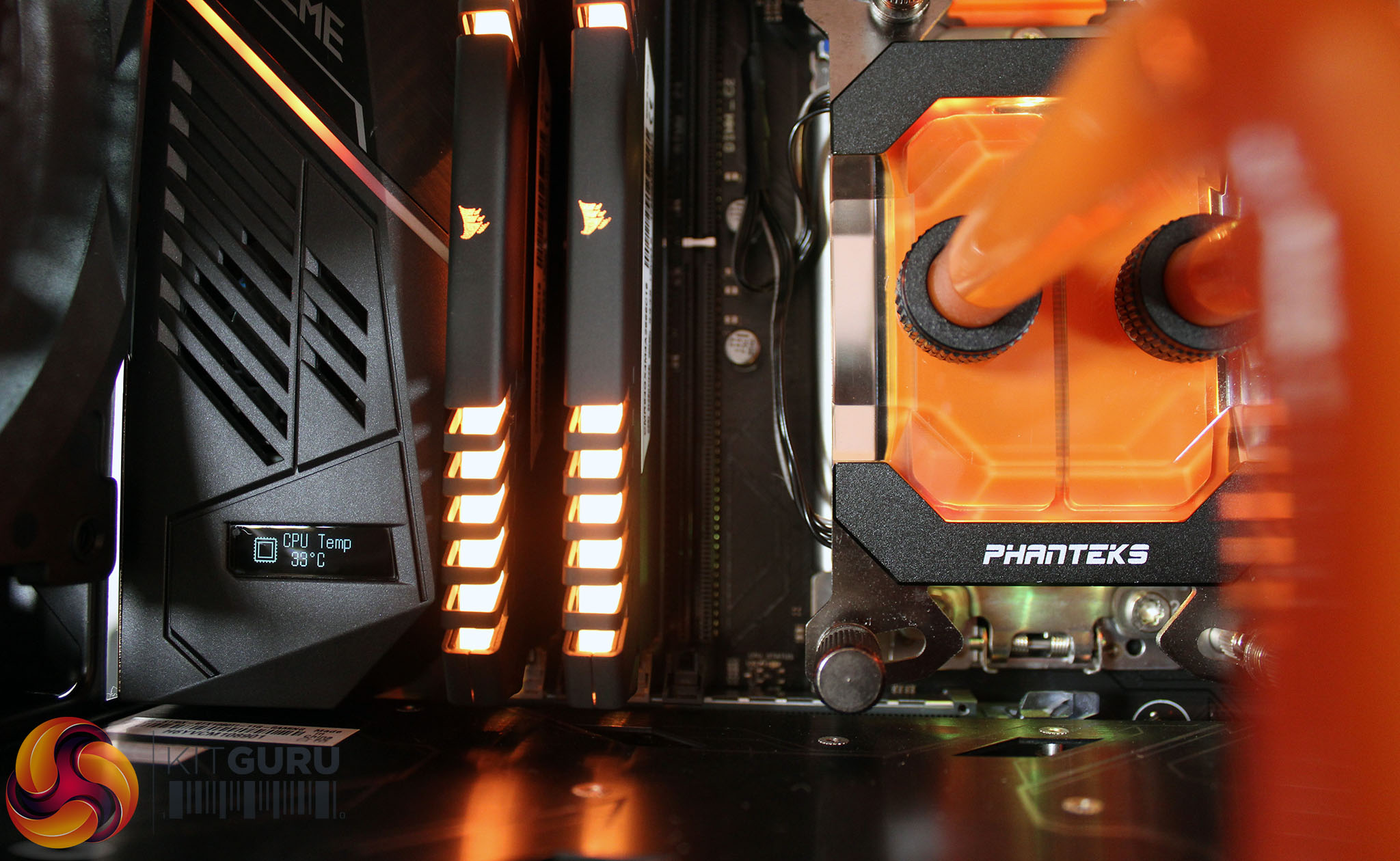
It’s also got more buttons than almost any other motherboard. At the top it has power and reset switches and a POST display, and at the bottom there are PCI and safe mode switches alongside more headers and connectivity.
The board is covered with attractive metal heatsinks, and the metal around the rear IO and the socket has a built-in fan and a tiny display that provides temperatures and frequencies. There’s even a ninth DIMM slot that can be used to connect two extra M.2 SSDs, and the board comes with an Asus ROG Areion 10G networking card, which enables wired networking at speeds of up to 10Gbps. That’s helpful, because the board doesn’t include dual Gigabit Ethernet.
It’s one of the busiest boards on the market, although the Chillblast’s graphics cards and water-cooling does mean that you need to be delicate if you want to get to some of its features – and some of them are blocked entirely.
The board also has more features than either of the motherboards on offer in the Armari systems – but that’s no surprise given the price differences. Armari’s Threadripper machine used an ASRock X399 Taichi, while its Core i9 rig deployed an Asus Prime X299-A. They’re both excellent boards that only really miss the extreme high-end features that are included on the Zenith, and they won’t dramatically impede performance.
A machine like this needs a hefty power supply, and Chillblast has delivered. The Centauri is powered by a Corsair AX1500i that delivers 1,500W of power in a fully modular design that’s got an 80Plus Titanium certification. The Armari machines had 1,000W PSUs with Gold efficiency ratings.
Lastly, the Centauri runs Windows 10 Professional 64-bit, and the firm’s usual five-year labour warranty that includes two years of collect-and-return service. The deal is two years longer than the Armari warranties, but those deals also offered a year of on-site service.
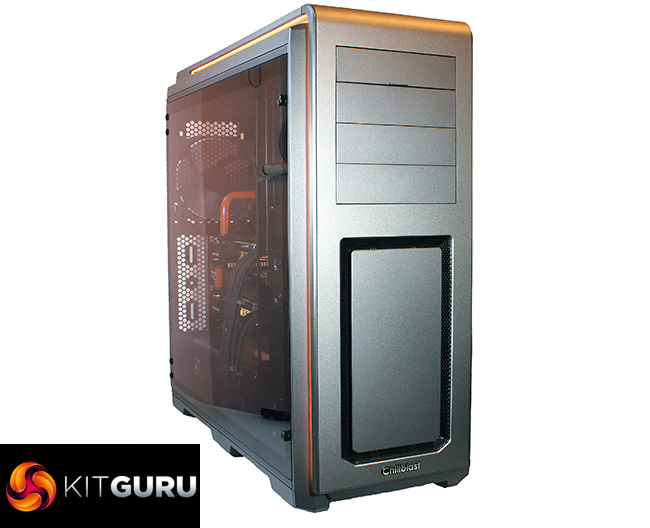
The Chillblast is a PC designed for productivity, but it looks fantastic – a big departure from the cheaper Armari machines, which use a smaller enclosure. Those machines were modest on the inside and the exterior, with little extra cash spent on decoration.
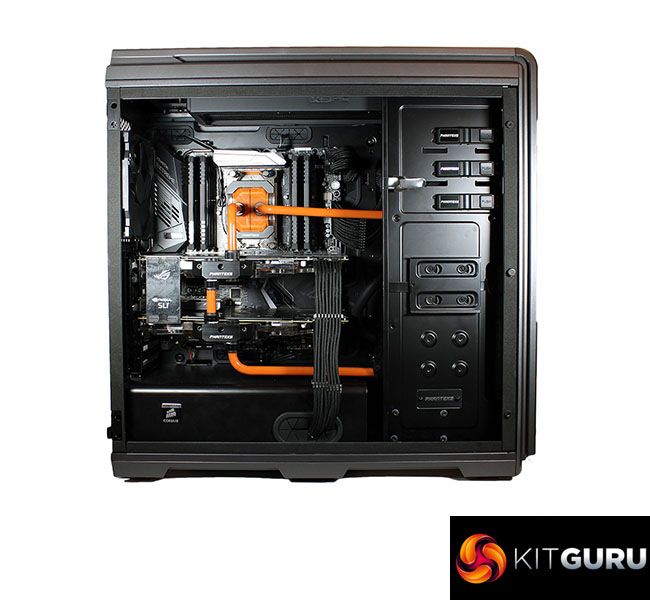
Chillblast’s machine is built around the Phanteks Enthoo Luxe, which is a great starting point: it’s huge and has rock-solid build quality, and its hinged, tempered glass side panels made it easy to see the interior and get at the components.
The Phanteks case looks the part, but it’s undeniably huge at 560mm tall and 550mm deep, while the entire machine weighs around 25kg. Armari’s machines aren’t as eye-catching, but they’re far smaller: just 430mm tall and 420mm deep.
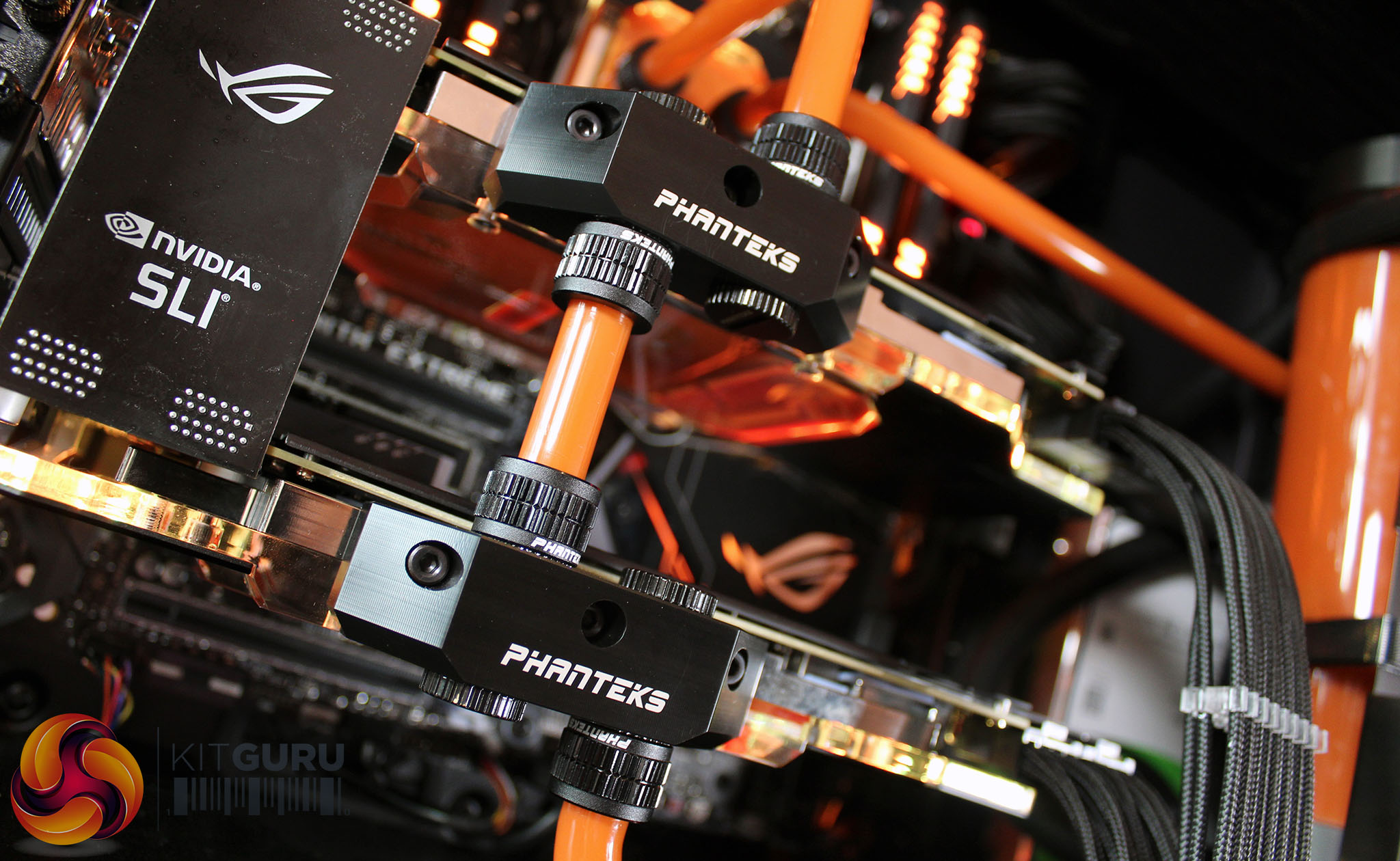
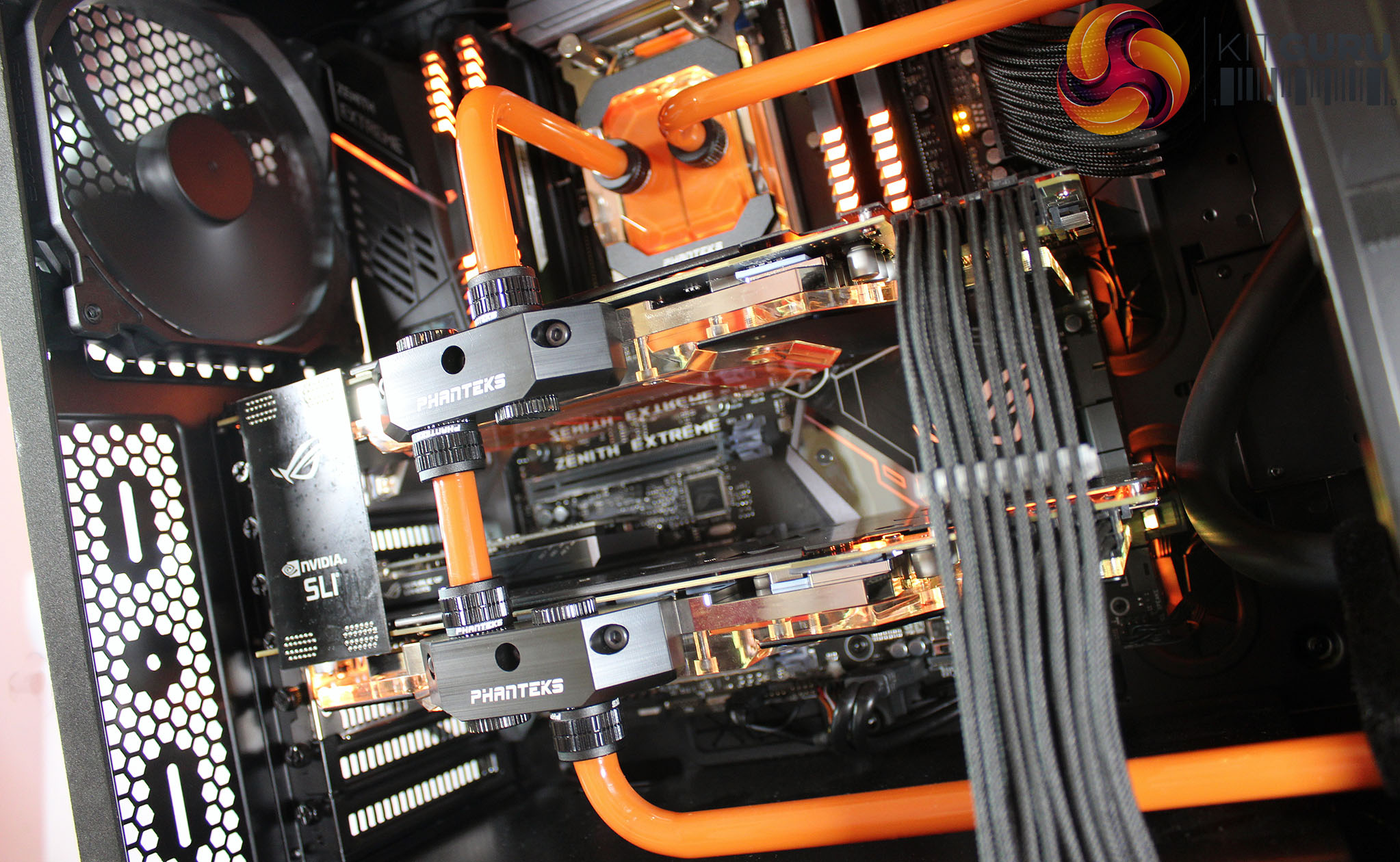
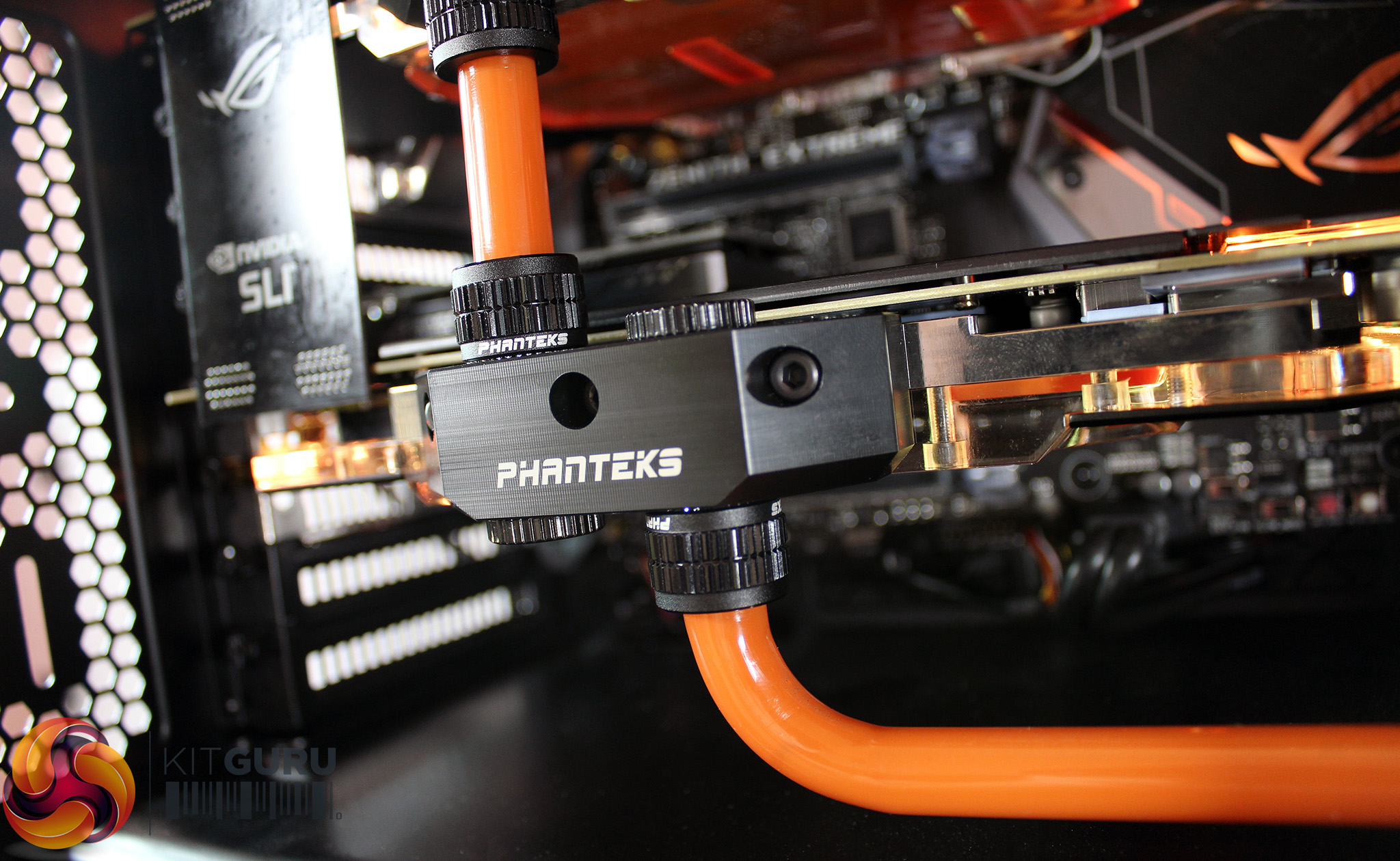
The real hard work can be seen through the tempered glass. Chillblast has hidden an XSPC EX360 in the machine’s roof, and a 240mm unit and the EKWC X3 250 reservoir are hidden behind the metal shroud at the front of the machine.
That means your eyes are drawn to the headline hardware. The CPU is topped with a Phanteks Glacier waterblock that uses clear Perspex, and two Phanteks blocks are also used for the GPUs. Solid acrylic tubing flows between all of the components, and Chillblast has used orange Mayhems coolant. The bright liquid can be seen in the tubes and coursing through the waterblocks, and it really stands out against the darker metal found elsewhere on the inside.
The system’s various RGB LEDs are configured in orange, and more orange LEDs run around the exterior of the enclosure.
The wealth of water-cooling means that the Chillblast looks fantastic – but it also makes interior access a little tricky when compared to the Armari machines. Adding more storage down the line would also be a challenge.
At £7500, too, this machine is obviously not cheap. Of course, anyone buying this machine will know that the custom water-cooling will increase the cost – and many people will be willing to pay extra for a machine that looks this brilliant.
To test the Chillblast Fusion Centauri Ryzen Threadripper Ultimate, we have pushed it through a broad array of benchmarks and tests. We have tested CPU performance, GPU performance, drive performance, thermals and power usage to give a comprehensive view of the desktop.
Here are the benchmarks you can expect to find in this review:
- Cinebench R15
- SPECviewperf 12.1
- LuxMark 3.1 & Blender 2.79
- Adobe Media Encoder CC 2017
- CrystalDiskMark
- 3DMark Fire Strike
This machine is designed for professional users, but it’s also a great-looking rig with two high-end consumer graphics cards. To that end, we’ve also used high-end games to put the two GTX 1080 Ti cards through their paces.
- Deus Ex: Mankind Divided
- Rise of the Tomb Raider
- Witcher 3
We’ve compared the Chillblast Fusion Centauri Ryzen Threadripper Ultimate with the two Armari machines we’ve already mentioned. We’ve also compared it with the Scan 3XS GW-HT35 – an older machine, but one that came with two Xeon processors and was even more expensive than the Chillblast. That’s so we can see just how far technology has progressed in a couple of years.
Here are their specifications:
Armari Magnetar S16T-RW850G2 Specifications:
- AMD Ryzen Threadripper 1950X @4GHz
- Armari SPX-A57LX Water Cooling
- 64GB Corsair Vengeance LPX DDR4-3200 SDRAM @ 2,933MHz
- Asrock X399 Taichi Motherboard
- 16GB HBM AMD Radeon Vega Frontier Edition Graphics
- 512GB Samsung SM961 M.2 NVMe PCI Express SSD
- 4TB Western Digital Gold Datacenter 7,200rpm SATA HDD
- LiteOn Slimline SATA DVD-RW
- 1000W Gold Efficiency PSU
- Armari Magnetar S-Series Chassis
- Windows 10 Professional 64-bit
- 3 Years Warranty (1st Year On-Site, 2nd and 3rd Years RTB Parts and Labour)
Price: £4,554.00 inc VAT (Buy from Armari HERE)
Armari Magnetar S18X-RD850G2 Specifications:
- Intel Core i9 7980XE @3.8GHz
- Armari SPX-A57LX Water Cooling
- 64GB Corsair Vengeance LPX DDR4-3200 SDRAM @ 3,600MHz
- ASUS PRIME X299-A Motherboard
- 12GB GDDR5X NVIDIA GeForce GTX Titan Xp Graphics
- 480GB Kingston KC1000 M.2 NVMe PCI Express SSD
- 4TB Western Digital Gold Datacenter 7,200rpm SATA HDD
- LiteOn Slimline SATA DVD-RW
- 1000W Gold Efficiency PSU
- Armari Magnetar S-Series Chassis
- Windows 10 Professional 64-bit
- 3 Years Warranty (1st Year On-Site, 2nd and 3rd Years RTB Parts and Labour)
Price: £5,754.00 inc VAT (Buy from Armari HERE)
Scan 3XS GW-HT35 Specifications:
- 2x Intel Xeon E5-2687W V3 @ 3.1GHz
- 64GB Crucial ECC Registered DDR4 SDRAM @ 2,133MHz
- ASUS Z10PE-D8 WS Motherboard
- 512GB Samsung 850 Pro SATA III 6Gb/s SSD
- 2TB Seagate Barracuda 7200.14 SATA III 6Gb/s 7,200rpm HDD
- 12GB GDDR5 NVIDIA Quadro M6000 Graphics
- 2x 3XS customised Corsair H80 water cooling
- 1,000W Corsair RM PSU
- Fractal Design Define XL Titanium Grey chassis
- Windows 7 Professional 64bit
- 3 Years warranty, 1 Year Onsite, 2 Years RTB
Price: £9,179 inc VAT & Delivery (Buy from SCAN HERE)
We’ve also compared the Chillblast with a handful of gaming machines – because the Fusion Centauri does also include two overclocked consumer graphics cards and its high-end water-cooling loop, which indicates that it’s also meant for gaming enthusiasts.
The PC Specialist Apollo X01 includes a single GTX 1080 Ti and costs £2,149, while the Overclockers UK Infin8 Express MK3 deploys two GTX 1080 cards and costs £4,500.
Finally, we’ve also locked and loaded the PC Specialist Leviathan X, which cost £3,899 when it was released and uses two Nvidia Titan X (Pascal) cards.
CINEBENCH R15 is a cross-platform testing suite that measures hardware performance and is the de facto standard benchmarking tool for leading companies and trade journals for conducting real-world hardware performance tests. With the new Release 15, systems with up to 256 threads can be tested.
CINEBENCH is available for both Windows and OS X and is used by almost all hardware manufacturers and trade journals for comparing CPUs and graphics cards.
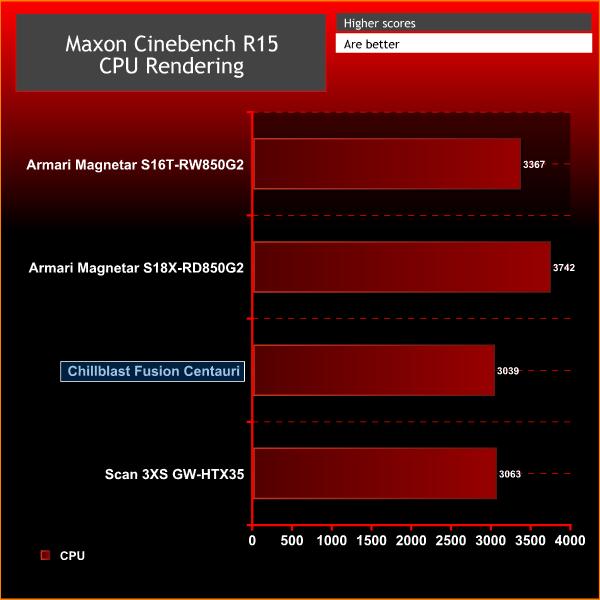
The Chillblast machine isn’t overclocked, so its multi-core result of 3,039 immediately falls behind the two tweaked Armari machines: it’s around 300 points behind Amari's Threadripper model, and about 700 points back from the Intel Core i9 system.
Those machines may be faster in this test, but it’s not like the Chillblast system is slow. The Centauri’s result of 3,039 is about level with the Scan 3XS GW-HT35, which arrived in 2015. That machine cost around £2,000 more than the Chillblast and it relied and two monster Intel Xeon processors – and now, in 2017, the Chillblast’s sole Threadripper chip is just as quick.
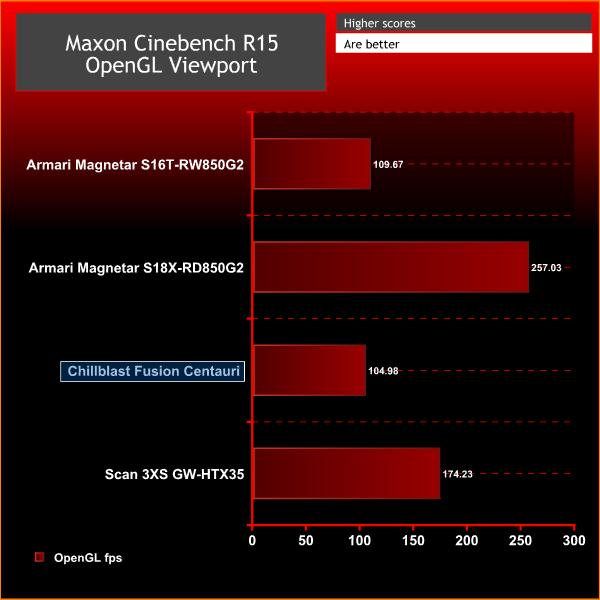
The Centauri’s OpenGL result of 104.98fps is far more ordinary, though. It’s only a couple of frames behind Armari’s Threadripper machine, and miles behind the Intel-based rig. We’re intrigued to see how the Chillblast performs in other OpenGL benchmarks.
The SPECviewperf 12.1 benchmark is the worldwide standard for measuring graphics performance based on professional applications. The benchmark measures the 3D graphics performance of systems running under the OpenGL and Direct X application programming interfaces. The benchmark’s workloads, called viewsets, represent graphics content and behaviour from actual applications.
The latest version is SPECviewperf 12.1, released on August 24, 2016. SPECgpc members at the time of V12.1 release include AMD, Dell, Fujitsu, HP, Intel, Lenovo, NVIDIA, and VMware. SPECviewperf 12.1 features a new Autodesk 3ds Max viewset, Microsoft Windows 10 support, and GUI and reporting improvements.
SPECviewperf 12.1 has been tested and is supported under the 64-bit version of Microsoft Windows 7 and Windows 10. Results from SPECviewperf 12.1 remain comparable to those from V12.0.1 and V12.0.2.
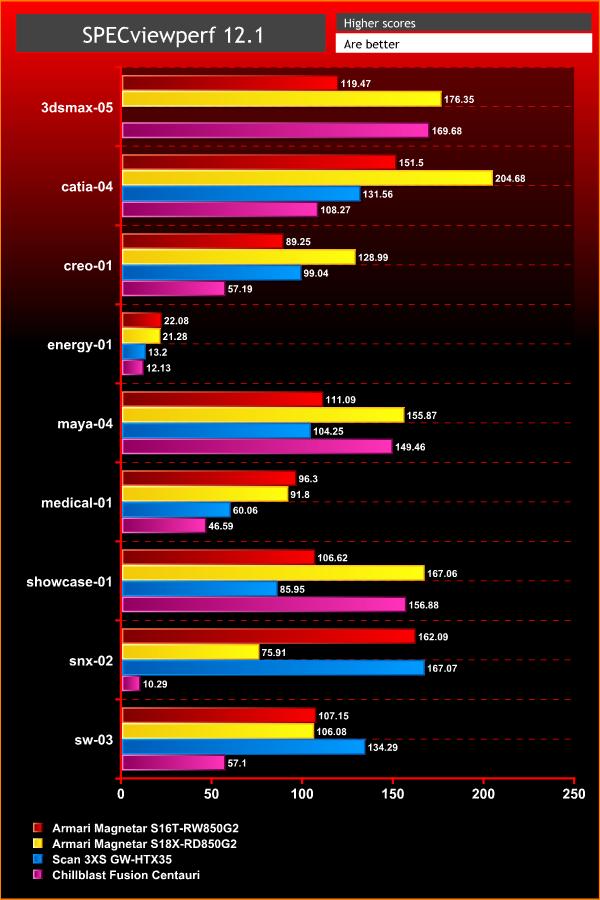
The Chillblast served up an interesting set of results when compared to its rivals, but the stock-speed processor, consumer graphics cards and marginally slower memory meant that it couldn’t often beat Armari’s workstation systems.
Chillblast’s machine was able to outpace Armari’s Threadripper rig in the 3DSMax, Maya and Showcase – undoubtedly helped by its two graphics cards. However, it was still behind the overclocked Intel machine in those tests.
Indeed, the Fusion Centauri was also behind both rigs in most of the SPECviewperf 12.1 tests. This is still a quick system, but the lack of a processor overclock, the lesser memory speed and consumer-grade graphics cards have an undoubted impact.
OpenCL is a platform for harnessing GPU power for activities other than real-time 3D rendering to screen, also known as GPGPU. Unlike NVIDIA’s CUDA platform, OpenCL is open source and can be ported to anything with processing power. So drivers are available for CPUs as well, both from Intel and AMD.
A popular tool for testing OpenCL performance is LuxMark. We haven’t run this on many workstations before, so we only have one comparison amongst our past reviews. We ran the Sala scene on CPU only, GPU only, and then both.
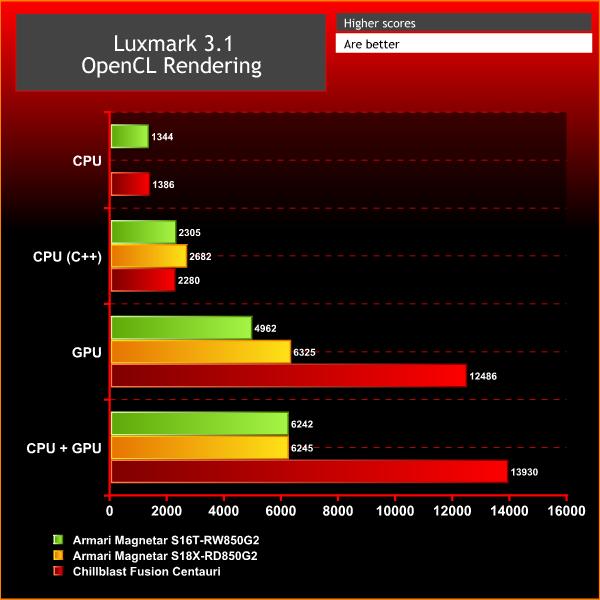
The Chillblast returned an extremely strong set of scores in the Luxmark test. Its CPU result of 1,386 was actually a little bit ahead of the Threadripper-based Armari machine, indicating that the overclock hasn’t made any significant difference to performance.
The Chillblast led the way in other component-based Luxmark tests. Its GPU result of 13,390 is miles faster than both Armari machines, which only used one graphics card rather than two. And when we combined the CPU and GPUs, the Chillblast’s score of 12,486 was about three times quicker than the Threadripper machine and twice as fast as the Intel rig.
The Chillblast’s C++ score of 2,280 is a little slower than both of those overclocked machines, but that’s the only area where this machine falters. If you’re using this kind of OpenCL tool, the dual-GPU Chillblast fits the bill.
Blender is a free and open source 3D creation suite. It supports the entirety of the 3D pipeline—modeling, rigging, animation, simulation, rendering, compositing and motion tracking, even video editing and game creation. The latest version at the time of writing, 2.79, supports rendering on the GPU as well as the CPU. In GPU mode, it will render using OpenCL with AMD graphics cards, and CUDA with NVIDIA graphics cards. For this test, we used the Gooseberry Production Benchmark. Project Gooseberry is the code name for the Blender Institute’s 6th open movie, Cosmos Laundromat — a 10-minute short, the pilot for the planned first-ever free/open source animated feature film. The benchmark renders a single frame from this film in intermediate quality.
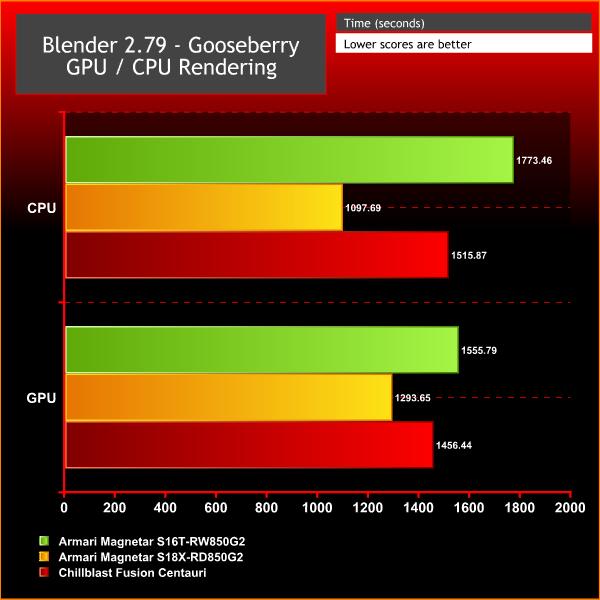
The Chillblast completed Blender’s CPU-based benchmark in 1,515 seconds. That’s quicker than the Armari Threadripper machine, but slower than the Core i9 rig. That’s a surprise, and it indicates that in this application the Threadripper’s clock speed doesn’t make much difference. It also proves that Intel’s chip is faster than both AMD machines when it comes to rendering in Blender.
It’s the same story in the GPU test. The Chillblast’s completion time of 1,456 seconds is quicker than the Armari Threadripper machine, which used an AMD Radeon Vega Frontier Edition card, but it’s still slower than the Intel rig, which has a couple of extra cores and better clock speed thanks to Armari’s tweaking.
Once again, then, the Chillblast is not slow here – but the Intel-based Armari machine is often better.
Like 3D rendering, video encoding is a task that now takes very good advantage of multi-core processors. Although a lot of reviews focus on Open Source encoders such as Handbrake, this is a review of professional applications, so we have chosen Adobe Media Encoder CC 2017 (AME) for our test bed instead. You can download a trial of this software from Adobe. For an encoding source, we used the 4K UHD (3,840 x 2,160) version of the Blender Mango Project Tears of Steel movie.
We encoded with the Vimeo 1080p HD preset in AME. This is a MP4 H.264 preset, using High Profile and Level 4.2. There are two modes available for the AME rendering engine (called the Mercury Playback Engine, presumably because it’s smooth and, erm, shiny). One uses software only, so will just employ the CPU. But you can also call in CUDA on NVIDIA graphics and OpenCL on AMD graphics. We tried both GPU-accelerated and CPU-only options on both systems.
We were pleasantly surprised by the Chillblast’s Adobe encoding performance. With the CPU and both GPUs deployed with Adobe’s Mercury engine our test took 369 seconds to complete.
That’s only ten seconds behind Armari’s Threadripper machine, which had the overclocked processor and Vega professional-tier graphics card. It’s also a solid distance ahead of the Intel Core i9 system. f you’re editing on Adobe, then, it looks like AMD is the way to go.
Here we test the Chillblast Fusion Centauri Ryzen Threadripper Ultimate ‘s storage performance, using CrystalDiskMark 5.1.1.
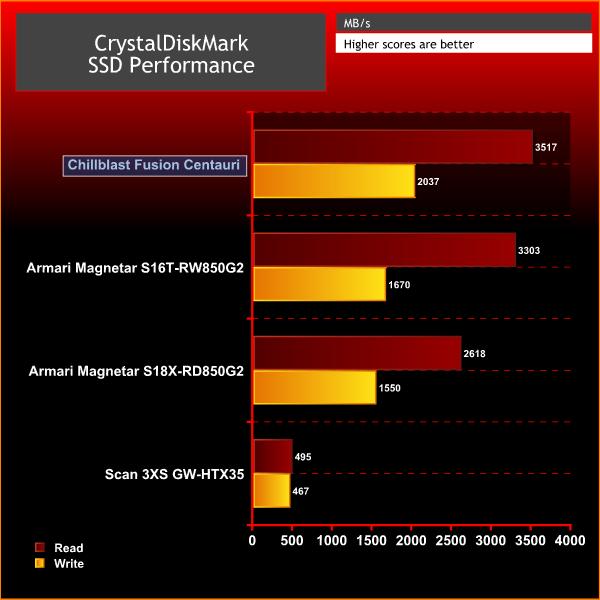
There’s little to choose between the Samsung SM961 SSD used in Armari’s AMD machine and the Samsung 960 Pro drive used in the Chillblast – at least when it comes to speed. The Chillblast’s read and write speeds of 3,517MB/s and 2,037MB/s are a couple of hundred megabytes ahead, but both are among the fastest drives on the market.
That means the Chillblast’s boot times will be exceptional, and that its application and file loading times will be top-notch.
The Centauri is further ahead of Armari’s Intel machine, which returned more ordinary read and write speeds alongside lesser drive capacity.
For this test, we ran the Chillblast Fusion Centauri Ryzen Threadripper Ultimate through Time Spy, Fire Strike and Fire Strike Extreme. We have listed results for the overall score, the CPU only score, the GPU-only score and physics.
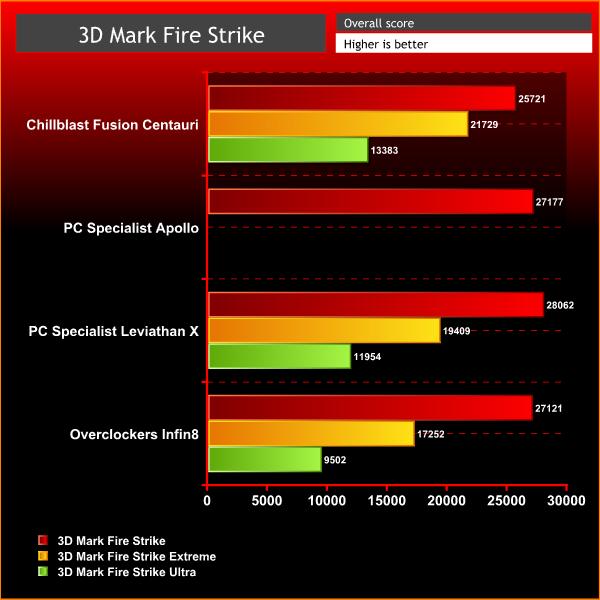
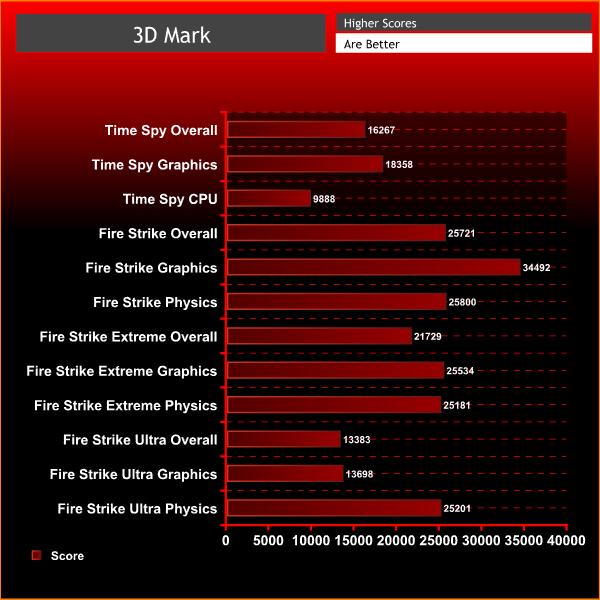
The Chillblast machine did very well in these theoretical gaming tests, and its results in the tough Extreme and Ultra benchmarks indicate just how quick two GTX 1080 Ti cards can be.
The Chillblast Fusion Centauri Ryzen Threadripper Ultimate comes with two GTX 1080 Ti graphics chips. For our tests today, we have ran several high-end games, starting at 1080p and working our way up to 4K to see how much this machine can cope with.
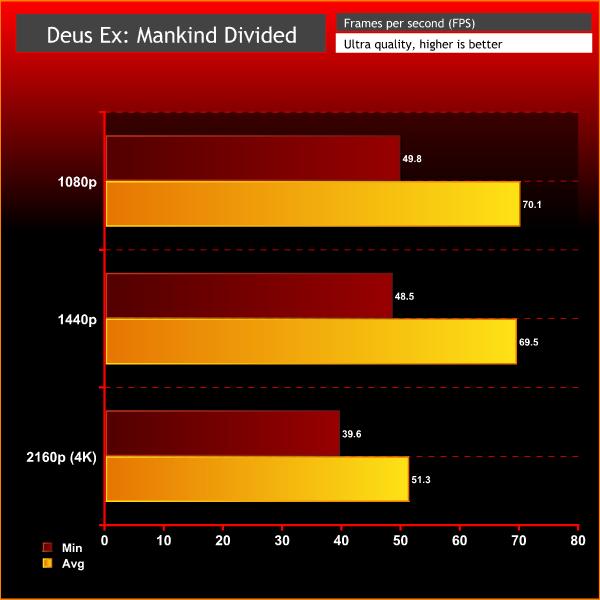
This machine will play the demanding Deus Ex at any resolution and at its highest levels of quality. The OCUK Infin8 Express MK3 had two GTX 1080 cards, and its 4K average of 37fps is actually below the Chillblast’s minimum frame rate – so we’ve no concerns about smooth gaming on the Centauri.
The closest contender to the Chillblast that we’ve seen is the PC Specialist Leviathan X, which deployed two GTX Titan X cards. But, even then, its average of 47.9fps was a couple of frames behind the Centauri.
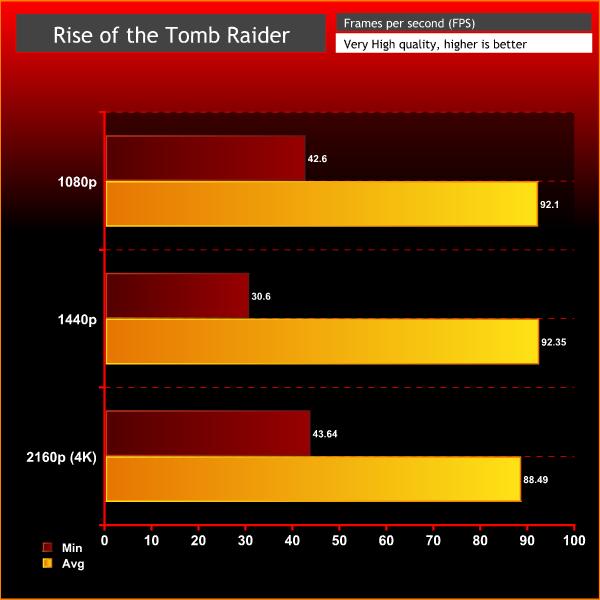
The tables turned in Tomb Raider, however. The Titan SLI machine from PC Specialist averaged 106.9fps, and the Overclockers Infin8 returned a score of 90fps.
The Chillblast machine managed an average of 88fps in this test – hardly slow, then, and only just behind those rival machines. Suffice to say it’ll still handle this game at any resolution and top graphics levels.
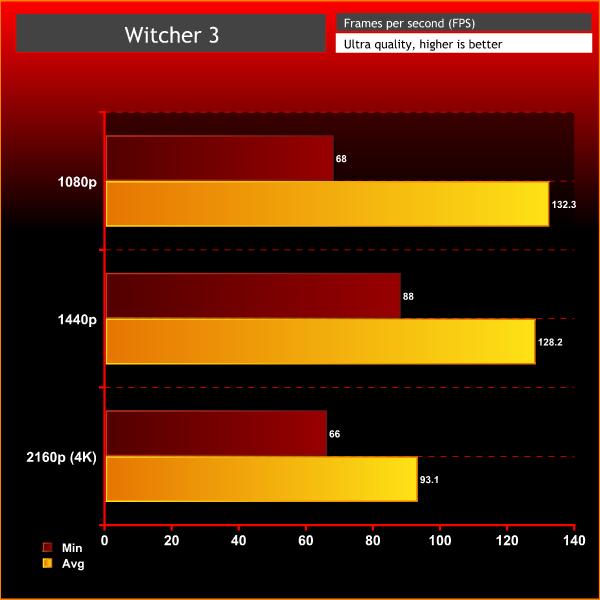
Here’s another game where the Chillblast proved its performance credentials. We don’t have any direct comparisons for this title, but its 4K minimum and average results of 66fps and 93.1fps are stellar – the Chillblast barely broke a sweat at 3,840 x 2,160.
To measure idle temperatures, a reading was taken after having Windows open on the desktop for 30 minutes. A reading under load was taken with Prime 95’s SmallFFt test running alongside 3DMark Fire Strike.
The Chillblast’s thermal results were a mixed bag.
Its idle noise output of 59db is pretty average, and its peak noise level of 73db is higher – the Armari machines were both quieter in both tests.
The Chillblast’s total noise output isn’t ruinous, but you’ll certainly notice this machine if you’re working or gaming in an otherwise-quiet room. We’re confident, though, that a headset or a beefy set of speakers will drown out this huge, liquid-cooled rig.
Its component temperatures were mixed, too. The graphics cards reached a peak figure of 45°C, which is excellent – the water-cooling clearly works well, and no other machine could match these low figures.
The processor, though, topped out at 92°C. That’s higher than most other machines, even if it’s just below the level where we’d begin to worry. It also means that there’s not much headroom for overclocking the CPU in this machine – any extra voltage will overheat the processor.
Both Armari machines consumed more power when idling and at load them the Chillblast machine. None of these machines are particularly frugal, but that’s no surprise – the extra juice required to overclock the Armari processors will put higher demands on the PSU.
The Chillblast Fusion Centauri Ryzen Threadripper Ultimate is a stunning system, but it’s not without its frustrations.
First, the good: the Chillblast looks incredible, with its orange water-cooling and huge case, and it offers near-unbeatable performance in gaming benchmarks. Few systems are able to match its gaming pace, and it won’t struggle with any game or task – even at 4K, even at high settings, and even in a VR headset.
It’s got a fast SSD, the motherboard is packed with features, and the stock-speed AMD Threadripper processor is fast in virtually every scenario.
Indeed, this machine can handle basically anything: hard-nosed professional applications will run well thanks to the new AMD chip, and graphical software will be swatted aside by the dual GPUs.
The stock-speed Threadripper chip is fearsomely quick, but its rival machines are faster still. Both of Armari’s machines have overclocked processors that regularly deliver a little more performance, and the AMD chip in particular is impressive in Adobe’s applications – key for content creators.
Those Armari machines are smaller and quieter than the Chillblast, too, and they’re also cheaper – their more conventional motherboards, single graphics cards and lack of custom waterloops keep the cost down.
And, in the case of Armari’s AMD-based machine, the Vega graphics card has the kind of professional certifications that aren’t present on the two GTX 1080 Tis in the Chillblast machine.
The Chillblast looks fantastic, has enviable power, and has almost every feature we could ever want, then – but few people will genuinely need this level of performance, and even fewer people will have the sort of money required for this rig.
If you need want a machine that holds nothing back when it comes to looks and power, and if you have got a bottomless pit of money, the Centauri is a stunning option. But, if you’re just interested in productivity and would like to spend a little less, the two Armari machines are more sensible alternatives.
The model we’ve reviewed here is available from Chillblast for £7,500.
Pros
- Incredible design and water-cooling.
- Fantastic AMD Threadripper processor.
- Dual graphics cards are great in games.
- Fully-featured motherboard.
- Huge SSD, vast storage and plenty of memory.
Cons
- Overclocked rivals are a little faster in some applications.
- Larger and louder than rival machines.
- Competitors are cheaper.
- No professional GPU certification.
KitGuru says: The Chillblast looks the part and offers incredible performance across a wide range of tasks. It’s expensive, though, and other machines are both cheaper and a little better in work applications. If you want a no-holds-barred machine that looks good and gets the job done, this is an expensive and worthwhile rig – but other systems are better if pure productivity is preferred.