KitGuru KitGuru.net – Tech News | Hardware News | Hardware Reviews | IOS | Mobile | Gaming | Graphics Cards


Here we present the average clock speed for each graphics card while running the 3DMark Time Spy stress test for 30 minutes. We use GPU-Z to record the GPU core frequency during the Time Spy runs. We calculate the average core frequency during the 30 minute run to present here.
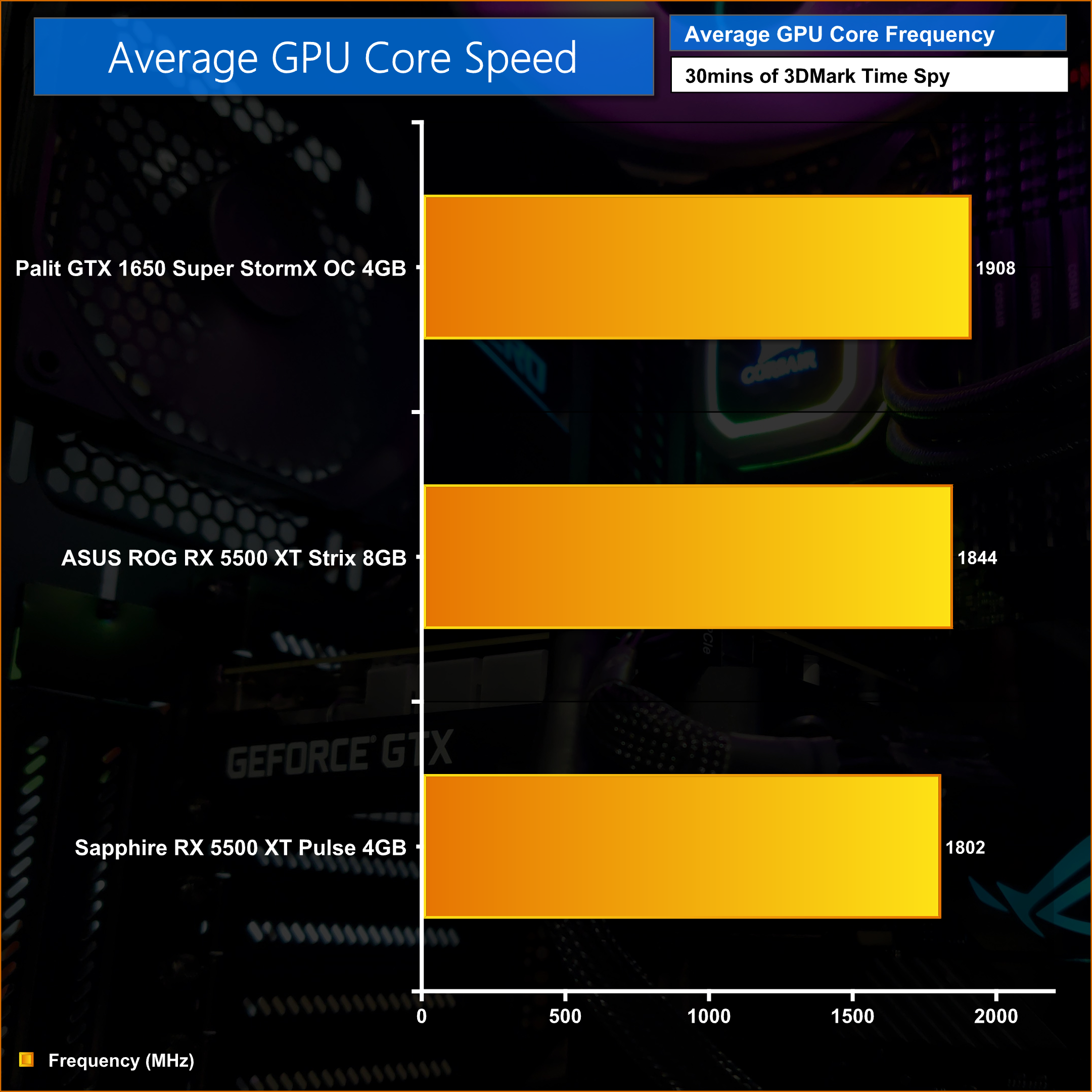
Diving into some testing specific to our cards today, we start with average clock speed. Bear in mind that the Nvidia and AMD GPUs are based on different architectures so these figures aren't directly comparable, we have simply combined the operating speeds into a single chart for ease of viewing.